So, you will go forth from exile in joy, you will be led into a whole and complete life. The mountains, and hills will lead the parade with song. All Creation Resonates with Praise. Isaiah 55:6-13

Isaiah 55:12-13 English Standard Version

12 “For you shall go out in joy
    and be led forth in peace;
the mountains and the hills before you
    shall break forth into singing,
    and all the trees of the field shall clap their hands.
13 Instead of the thorn shall come up the cypress;
    instead of the brier shall come up the myrtle;
and it shall make a name for the Lord,
    an everlasting sign that shall not be cut off.”

The Word of God for the Children of God

Glory be to the Father,
and to the Son, and to the Holy Ghost;
as it was in the beginning,
is now, and ever shall be,
world without end. Amen, amen.

Isaiah 55 captures the deep, joyful relationship between God and the world he has made.

This chapter overflows with delight in the connection between Creator and creation.

What Isaiah describes is resonance— the voice of God and the voice of the world echoing back and forth in harmony.

Isaiah points to the remarkable life cycle of the earth: the seasons for planting and harvesting, and the gifts of rain and snow that water the ground.

We may not see the immediate effects of a rainfall; seeds planted in the soil respond to the moisture and begin to sprout.

Those sprouts grow into crops, and the crops provide food. What begins quietly ends in abundance.

This imagery carried a profoundly deep meaning for God’s people.

Even if they had a river or a spring for water, they knew they could not survive without the gift of rain or snow.

In periods of drought, some of the people turned to worship the gods of other nations, as if maybe those gods could bring rain for their crops.

But those ideas yielded only false hope.

Through Isaiah, God called the people back to trust and celebrate the only One who truly rules the world and everything in it.

Isaiah 55:12 expresses a message of joy and peace.

The verse states:

  • Joyful Departure: “You will go out in joy”
  • Peaceful Guidance: “and be led forth in peace”
  • Creation’s Response: “the mountains and hills will burst into song before you, and all the trees of the field will clap their hands.”
Joy and Peace
  • Our verse emphasizes a future filled with joy and peace, symbolizing liberation and hope.
Celebration of Creation
  • The imagery of mountains singing and trees clapping illustrates the harmony between humanity and nature when God’s promises are ultimately fulfilled.
  • The joyous exodus is not just a human experience; the natural world is also depicted as rejoicing. The mountains and hills burst into singing, while the trees clap their hands. This imagery speaks to the holistic nature of joy—it transcends our fragile human experiences and encompasses all of creation.
  • For the creation waits with eager longing for the revealing of the sons of God.
  • that the creation itself will be set free from its bondage to corruption and obtain the freedom of the glory of the children of God.
  • And not only the creation, but we ourselves, who have the first fruits of the Spirit, groan inwardly as we wait eagerly for adoption as sons, the redemption of our bodies.
Contextual Significance
  • This passage reflects the joy of the Israelites as they anticipate freedom from their Babylonian exile, echoing familiar themes from the Exodus narrative.
  • It symbolizes spiritual liberation and the ultimate joy found in divine salvation.

Isaiah 55:12 serves as a powerful reminder of the joy and peace that accompany God’s deliverance and the celebration of creation in response to His promises.

Romans 8:37-39 English Standard Version

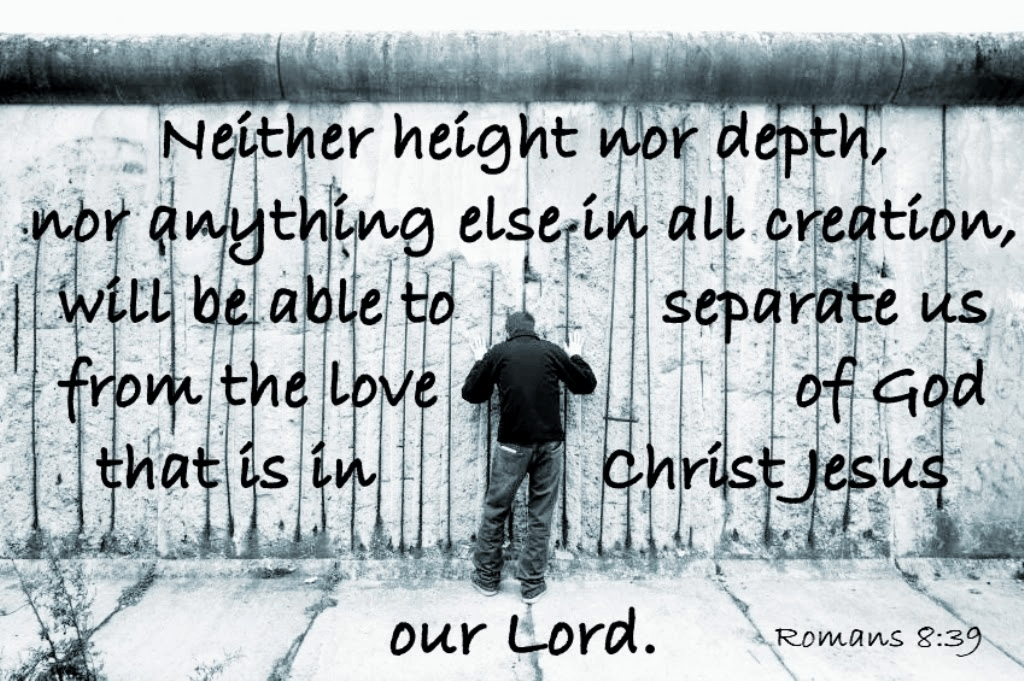
37 No, in all these things we are more than conquerors through him who loved us. 38 For I am sure that neither death nor life, nor angels nor rulers, nor things present nor things to come, nor powers, 39 nor height nor depth, nor anything else in all creation, will be able to separate us from the love of God in Christ Jesus our Lord.

Take time today to reflect on the beauty of creation, hear the invitation to seek and trust the one, true, faithful God, who sent His Son, to die, for all our needs.

Hallelujah! Hallelujah! Hallelujah! Amen

In the name of God, the Father and the Son and the Holy Spirit …

Praying ….

Psalm 104:1-13 English Standard Version

O Lord My God, You Are Very Great

104 Bless the Lord, O my soul!
    O Lord my God, you are very great!
You are clothed with splendor and majesty,
    covering yourself with light as with a garment,
    stretching out the heavens like a tent.
He lays the beams of his chambers on the waters;
he makes the clouds his chariot;
    he rides on the wings of the wind;
he makes his messengers winds,
    his ministers a flaming fire.

He set the earth on its foundations,
    so that it should never be moved.
You covered it with the deep as with a garment;
    the waters stood above the mountains.
At your rebuke they fled;
    at the sound of your thunder they took to flight.
The mountains rose, the valleys sank down
    to the place that you appointed for them.
You set a boundary that they may not pass,
    so that they might not again cover the earth.

10 You make springs gush forth in the valleys;
    they flow between the hills;
11 they give drink to every beast of the field;
    the wild donkeys quench their thirst.
12 Beside them the birds of the heavens dwell;
    they sing among the branches.
13 From your lofty abode you water the mountains;
    the earth is satisfied with the fruit of your work.

Glory be to the Father,
and to the Son, and to the Holy Ghost;
as it was in the beginning,
is now, and ever shall be,
world without end. Amen, amen.

https://translate.google.com

Faithful, Empowered, Activated and Equipped, Resourced by his divine power alone: What should “Life and Godliness” look like? 2 Peter 1:3-9

2 Peter 1:3-9 New Living Translation

Growing in Faith

By his divine power, God has given us everything we need for living a godly life. We have received all of this by coming to know him, the one who called us to himself by means of his marvelous glory and excellence. And because of his glory and excellence, he has given us great and precious promises. These are the promises that enable you to share his divine nature and escape the world’s corruption caused by human desires.

In view of all this, make every effort to respond to God’s promises. Supplement your faith with a generous provision of moral excellence, and moral excellence with knowledge, and knowledge with self-control, and self-control with patient endurance, and patient endurance with godliness, and godliness with brotherly affection, and brotherly affection with love for everyone.

The more you grow like this, the more productive and useful you will be in your knowledge of our Lord Jesus Christ. But those who fail to develop in this way are shortsighted or blind, forgetting that they have been cleansed from their old sins.

The Word of God for the Children of God

Glory be to the Father,
and to the Son, and to the Holy Ghost;
as it was in the beginning,
is now, and ever shall be,
world without end. Amen, amen.

2 Peter 1:3-9 is about the divine power of God alone providing believers with everything they need for a godly life through knowledge of Him,

urging us to keep growing in virtue, knowledge, self-control, perseverance, godliness, brotherly kindness, and love, so to avoid being unproductive and unfruitful in their knowledge, hands on ministry experience, of Jesus Christ.

In 2 Peter chapter 1, we find Peter is writing to the early Christian believers, encouraging them to grow in their faith and reminding them of the blessings and promises of God.

The scene unfolds in a humble meeting room in what amounts to a small house church in one of the early Christian communities where Peter is ministering.

Among those present are Peter himself, a weathered fisherman turned disciple turned Apostle of Jesus, now a central pillar of the early 1st century church.

Also present are several other believers, both men and women, from various backgrounds and walks of life.

They have come together to in various stages of understanding to study the scriptures, pray, and encourage and empower one another, in their faith.

As Peter speaks, his words are filled with passion and conviction, urging his fellow believers to always be attuned for opportunities to their faith goodness, knowledge, self-control, perseverance, godliness, mutual affection, and love.

He reminds them of the precious promises of God and the importance of living a life which consistently reflects their faith and their implicit trust in Jesus.

One gets a sense the room is filled with a sense of unity and purpose, drive, as they listen intently, are eager to grow in their understanding of God’s word and deepen their relationship with Him and their neighbors and a strangers knock.

Philippians 4:18-20 New American Standard Bible

18 But I have received everything in full and have an abundance; I am [a]amply supplied, having received from Epaphroditus [b]what you have sent, [c]a fragrant aroma, an acceptable sacrifice, pleasing to God. 19 And my God will supply [d]all your needs according to His riches in glory in Christ Jesus. 20 Now to our God and Father be the glory [e]forever and ever. Amen.

This text holds a powerful message about the abundant provisions God has made available to us.

It is a reminder that as believers, we are not lacking in anything necessary for our lives and our spiritual growth.

God’s divine power is never limited or lacking in any way.

It is through this power we are equipped with everything we need to navigate through life and grow in godliness.

Consider how this truth may impact your own life.

How does knowing that God’s power provides for all your needs impact the way you approach challenges and difficulties?

How does it shape your perspective on what is truly important in life?

Reflect on those ways in which you have personally experienced God’s provision and how it has strengthened your faith and reliance on Him.

Often it comes at what we call “last minute,” but it is certainly never too late.

I love what Peter reminds us of in this passage here. God has granted us every resource we need, whether in our poverty or our riches, for life and godliness.

In addition to caring for our spiritual needs, God cares about our material needs as well.

When it comes to the practical side, what do we need for life?

In Matthew 6:25-34, Jesus tells the disciples not to worry about what they will eat, wear, or drink.

And in verse 26 (ESV), he says:

“Look at the birds of the air: they neither sow nor reap nor gather into barns, and yet your heavenly Father feeds them. Are you not of more value than they?”

Let that soak in.

If God cares for the birds of the air and also provides everything they need, how much more abundance and timely provision will He provide for His children?

Intersecting Faith & Life:

Look around you.

Do you have food to eat?

Clothes on your back?

Maybe you don’t know how you’ll pay the bills this month, but maybe you’re not supposed to know right now.

I heard a story once about a man who needed money for his little son’s birthday party, but he and his wife didn’t even have that.

They didn’t know what to do.

They did not want to diminish or disappoint their son’s birthday celebration.

While out on a walk, the Lord led him to the exact amount of money he needed to bless their little boy.

When you need it, God will find a way to provide it.

Sometimes, He’ll provide through a family that gives eggs from their farm to yours all summer. Or who invites you over and offers to pray over you.

Maybe God will use the kindness of a friend who will introduce you into a very important leadership position at company, hopes it may open a door for a job.

Or what about my friend who took 8 hours out of his workday to point me to the Lord, becoming a listening ear when I didn’t even realize how much I needed it?

In view of all this, make every effort to respond to God’s promises. Supplement your faith with a generous provision of moral excellence, and moral excellence with knowledge, and knowledge with self-control, and self-control with patient endurance, and patient endurance with godliness, and godliness with brotherly affection, and brotherly affection with love for everyone. (2 Peter 1:5-7)

Sometimes, it’s simple things.

“We but mirror the world. All the tendencies present in the outer world are to be found in the world of our body. If we could change ourselves, the tendencies in the world would also change.” Mahatma Gandhi.

This statement emphasizes the importance of inner transformation as a true and necessary precursor to effecting meaningful change in the external world.

Philippians 2:1-4 New American Standard Bible

Be like Christ

2 Therefore if there is any encouragement in Christ, if any consolation of love, if any fellowship of the Spirit, if any [a]affection and compassion, make my joy complete [b]by being of the same mind, maintaining the same love, united in spirit, intent on one purpose. Do nothing [c]from [d]selfishness or empty conceit, but with humility consider one another as more important than yourselves; do not merely look out for your own personal interests, but also for the interests of others.

Sometimes, we get to be that person for someone else, not realizing how such a small impulsive simple act of unexpected obedience can truly bless someone’s day, becomes for them what inspiration we didn’t even realize they needed.

Other times, the Lord surprises us and allows us to be on the receiving end of His abundant goodness through His children.

There’s a reason Scripture reminds us to focus on:

Philippians 4:5-9 English Standard Version

Let your reasonableness[a] be known to everyone. The Lord is at hand; do not be anxious about anything, but in everything by prayer and supplication with thanksgiving let your requests be made known to God. the peace of God,  which surpasses all understanding, will guard your hearts and your minds in Christ Jesus.

Finally, brothers, whatever is true, whatever is honorable, whatever is just, whatever is pure, whatever is lovely, whatever is commendable, if there is any excellence, if there is anything worthy of praise, think about these things. What you have learned[b] and received and heard and seen in me—practice these things, and the God of peace will be with you.

In the name of God, the Father and God the Son and God the Holy Spirit

Praying …

Psalm 20 English Standard Version

Trust in the Name of the Lord Our God

To the choirmaster. A Psalm of David.

20 May the Lord answer you in the day of trouble!
    May the name of the God of Jacob protect you!
May he send you help from the sanctuary
    and give you support from Zion!
May he remember all your offerings
    and regard with favor your burnt sacrifices! Selah

May he grant you your heart’s desire
    and fulfill all your plans!
May we shout for joy over your salvation,
    and in the name of our God set up our banners!
May the Lord fulfill all your petitions!

Now I know that the Lord saves his anointed;
    he will answer him from his holy heaven
    with the saving might of his right hand.
Some trust in chariots and some in horses,
    but we trust in the name of the Lord our God.
They collapse and fall,
    but we rise and stand upright.

O Lord, save the king!
    May he answer us when we call.

Glory be to the Father,
and to the Son, and to the Holy Ghost;
as it was in the beginning,
is now, and ever shall be,
world without end. Amen, amen.

https://translate.google.com

Someone please explain how my life is orchestrated by seasons, each one having God’s own purpose and time? Ecclesiastes 3:1-8 

Ecclesiastes 3:1-8 Complete Jewish Bible

3 For everything there is a season,
a right time for every intention under heaven —
a time to be born and a time to die,
a time to plant and a time to uproot,
a time to kill and a time to heal,
a time to tear down and a time to build,
a time to weep and a time to laugh,
a time to mourn and a time to dance,
a time to throw stones and a time to gather stones,
a time to embrace and a time to refrain,
a time to search and a time to give up,
a time to keep and a time to discard,
a time to tear and a time to sew,
a time to keep silent and a time to speak,
a time to love and a time to hate,
a time for war and a time for peace.

The Word of God for the Children of God

Glory be to the Father,
and to the Son, and to the Holy Ghost;
as it was in the beginning,
is now, and ever shall be,
world without end. Amen, amen.
“How time flies!” we often say.

Time seems to trickle through our fingers so quickly!

Yet in the book of Ecclesiastes, the Preacher tells us,

“There is a time for everything.”

“There is a time for everything under the Heavens.”

“There is a time for everything under the Sun.”

We are given time from God to attend to the things in life that truly matter.

There is, I suppose, time for us to chase the winds, put them in a canning jar.

Another question here would be … chasing time itself, stuff it in a canning jar.

Has anyone out there ever caught the winds … bottle them up in a canning jar?

Has anyone out there got their hands on time … bottled it up in a canning jar?

So how does God want people to use time?

There are great answers to that question on the pages of Scripture!

But what does God want me to do today?

Capture the winds in your bottle and keep hurricanes and tornados at bay?

Capture time, keep it until when you alone know when the “right time” arrives?

Ecclesiastes 3:2 highlights the natural rhythms of life, emphasizing that there are highly specific times for various insignificant an significant life events.

The verse states:

  • A time to be born
  • A time to die
  • A time to plant
  • A time to uproot

This passage reflects the idea that our life is governed by seasons and cycles, suggesting each life event has its own uniquely exact appropriate moment.

Life’s Cycles
  • Birth and Death: The verse begins with the fundamental aspects of existence—birth and death. It acknowledges both are predetermined events in the human experience.
  • Planting and Uprooting: This part of the verse relates to agricultural practices, symbolizing beginnings and endings. Planting represents new endeavors, while uprooting signifies the coming conclusion of a season or the need for change.
Divine Timing
  • The verse implies these times are not random but are part of a divine order. It suggests understanding, accepting these cycles can lead to a more meaningful life.

God’s ultimate answer is found in 2 Corinthians 6:2:

“Now is the time of God’s favor, now is the day of salvation.”

Ecclesiastes 3:2 serves as an essential reminder of the importance of our recognizing those appropriate times for various life events, encouraging individuals to trust God’s timing, in faith embrace the natural flow of life.

The nature of this exact moment is it is filled with the awesome possibility of our experiencing the redeeming grace of God for the very first time in our life.

If you are a Christian, thank God for the exact moment of your salvation.

If you are not (yet) a believer in Christ, in this exact moment is God calling you into a saving relationship with him through your heartfelt faith in Christ Jesus?

Is this the exact moment, the very first day of your salvation, the first day of God’s favor! Is now the time to be saved, believe in God for all you’re worth?

Suggestions and Thoughts to Ponder and Pray over (at the exact right time) ….

Ecclesiastes 3:2, is one of the most quoted verses in the Bible, reminding us that our lives are not just a series of random events.

They are punctuated by seasons and moments that have their own purpose and significance.

When we read this verse, we see it encapsulates the tension of life experiences: birth and death, planting and uprooting.

Each of us is born into this world at a specific moment, and inevitably there comes a time when we must leave this life behind. This truth can evoke a range of emotions, but at its core lies a sobering profound reminder of the cycle of life.

The idea of a time to plant and a time to harvest is particularly poignant.

It speaks to the rhythm of life, where we experience growth and then must also reckon with times of inevitable loss or change.

Understanding this brings wisdom; it teaches us that while we can intervene and make choices, there are also natural forces and seasons beyond our control.

We can work diligently in our lives, planting seeds of hope, love, and wisdom, but also recognize the Lord’s day of harvest encompasses challenges and trials.

This duality is often confusing, yet it is a necessary part of human existence.

To truly grasp the depth of Ecclesiastes 3:2, we need to consider the moment and the context in which it was written.

The author, traditionally identified as King Solomon, explores various aspects of life, often expressing a sense of futility and the transience of earthly pursuits.

Throughout the book, he reflects on the vanity and futility of human existence, seeking to find an ultimate meaning in the dour face of life’s inevitable cycles.

This verse serves as a centerpiece to his reflections on time, encouraging us to observe the seasons of our lives without becoming overwhelmed by the chaos that they can often bring. To acknowledge and to recognize God’s sovereignty.

Where is the Gospel?

On the surface, this sounds like bad news.

But the Preacher is giving us true (if painful) wisdom about life on earth.

Life under the sun is full of things that seem solid but turn out to be smoke.

And even if something seems solid for a time, death always reveals its futility.

The Preacher’s goal is for us to trust the world less, and God more (Ecclesiastes 12:13).

And the good news of Ecclesiastes is that God is not like smoke or wind.

His commands are wise and his judgment about the good life is 100% rock solid (Ecclesiastes 12:14).

And this truth is ultimately seen in Jesus.

In Jesus, God’s wisdom becomes solid, becomes human, in a world of smoke.

In the name of God, the Father and God the Son and God the Holy Spirit ….

Praying ….

John 1:1-5 English Standard Version

The Word Became Flesh

1 In the beginning was the Word, and the Word was with God, and the Word was God. He was in the beginning with God. All things were made through him, and without him was not any thing made that was made. In him was life,[a]  and the life was the light of men. The light shines in the darkness, and the darkness has not overcome it.

Glory be to the Father,
and to the Son, and to the Holy Ghost;
as it was in the beginning,
is now, and ever shall be,
world without end. Amen, amen.
https://translate.google.com

Now that we have been brought very near to Him, I do not suppose anyone is going to suddenly slam the brakes on their ‘junkyard jalopy’ lifestyles? Ephesians 2:11-16

Ephesians 2:11-16 English Standard Version

One in Christ

11 Therefore remember that at one time you Gentiles in the flesh, called “the uncircumcision” by what is called the circumcision, which is made in the flesh by hands— 12 remember that you were at that time separated from Christ,  alienated from the commonwealth of Israel and strangers to the covenants of promise, having no hope and without God in the world. 13 But now in Christ Jesus you who once were  far off have been brought near by the blood of Christ. 14 For he himself is our peace,  who has made us both one and has broken down in his flesh the dividing wall of hostility 15 by abolishing the law of commandments expressed in ordinances, that he might create in himself one new man in place of the two, so making peace, 16  might reconcile us both to God in one body through the cross, thereby killing the hostility.

The Word of God for the Children of God

Glory be to the Father,
and to the Son, and to the Holy Ghost;
as it was in the beginning,
is now, and ever shall be,
world without end. Amen, amen.
Our devotional text for today, Ephesians 2:13 emphasizes that through the blood of Christ, those who were once far from God have been brought near, highlighting the transformative power of Jesus’ sacrifice.

Today’s verse serves as a reminder of the grace which reconciles believers to God and to one another, fostering unity and hope.

Ephesians 2:13 (KJV) states: “But now in Christ Jesus ye who sometimes were far off are made nigh by the blood of Christ.”

Our single verse today encapsulates the profound truth of our transformation through the sacrifice of Jesus Christ.

It contrasts our previous state of separation from God with the now intimate closeness we experience through Him.

Our devotional, will explore what it means to be ‘far off’ and how the blood of Christ brings us near to God, enabling a deeper relationship with our Creator.

Themes of the Verse
  • Reconciliation: The verse emphasizes the reconciliation between God and humanity. It illustrates how Jesus’ sacrifice bridges the gap created by sin.
  • Grace: The transformation is not based on human effort but solely on God’s grace. This underscores the importance of faith in Christ for salvation.
  • Unity: Ephesians 2:13 also points to the unity among believers, as those who were once ‘far off’ separated (like Gentiles) are now part of God’s family.

To understand the significance of being ‘far off,’ we must first examine the context of Ephesians.

The Apostle Paul wrote this epistle to the believers in Ephesus, highlighting both Jewish and Gentile divisions.

Before  Christ’s atoning work, Gentiles were alienated from the promises of God, and likewise excluded from the covenant community of Israel.

They were considered outsiders, lost to the life and love of God.

Paul’s use of “far off” paints a vivid picture of not only distance but a growing and ever widening chasm of hopelessness and despair.

However, the verse pivots dramatically with the phrase,

“But now in Christ Jesus.”

This transition is monumental.

It signifies a change in position and status.

‘But now’ signals a divine intervention which brings with it hope, redemption, and reconciliation.

The word “now” is a fascinating word that holds great significance in the Bible.

It refers to the present moment or without any further delay.

Throughout the Bible, the Holy Spirit inspired the writers and translators to use this word frequently.

Let’s explore seven instances where the word “now” appears in the Scriptures.

The Present Sacrifice (Hebrews 9:26)

Hebrews 9:26 Amplified Bible

Otherwise, He would have needed to suffer over and over since the foundation of the world; but now once for all at the consummation of the ages He has now appeared and been publicly manifested to put away sin by the sacrifice of Himself.

During the last 2000 years, starting with Christ’s first coming, we have come to understand He came to earth as a sacrifice for the sins of the entire world.

Christ’s sacrifice is complete and perfect, needing no repetition (Hebrews 10:10, 12).

Through Christ alone, we can approach the Father in heaven.

There is no other way.

The Assurance of Safety (Jude 1:24)

Jude 24 Amplified Bible

24 Now to Him who is able to keep you from stumbling or falling into sin, and to present you unblemished [blameless and faultless] in the presence of His glory with triumphant joy and unspeakable delight,

The Bible assures us Christ is able to keep believers from falling and failing.

We are secure in God’s care through the powerful cleansing blood of Christ and the sealing and indwelling of the Holy Spirit.

If you are a genuine Christian, you can experience a sense of safety now, not just after death.

We are safe in the arms of the Father and Son, whether we live or die on earth (John 10:28-29).

The Peace of Serenity (Romans 15:13)

Romans 15:13 Amplified Bible

13 May the God of hope fill you with all joy and peace in believing [through the experience of your faith] that now by the power of the Holy Spirit you will abound in hope and overflow with confidence in His promises.

In this verse, we learn that God fills us with joy and peace as we trust in Him.

Even in the midst of challenging circumstances, every believer can experience divine joy, peace, and hope.

Trust in the Lord, for He is the God of peace.

His peace gives us hope all will be well in His timing because He is Almighty and in control (Isaiah 26:3).

The Certainty of Faith (Hebrews 11:1)

Hebrews 11:1 Amplified Bible

The Triumphs of Faith

11 Now faith is the assurance (title deed, confirmation) of things hoped for (divinely guaranteed), and the evidence of things not seen [the conviction of their reality—faith comprehends as fact what cannot be experienced by the physical senses].

Faith is being sure of what we hope for and certain of what we do not see.

It allows us to perceive the invisible and understand what is beyond the natural realm.

Faith is a fruit of the Holy Spirit and comes by hearing God’s Word (Romans 10:17).

The Present Sonship (1 John 3:2)

1 John 3:2 Amplified Bible

Beloved, we are [even here and] now children of God, and it is not yet made clear what we will be [after His coming]. We know that when He comes and is revealed, we will [as His children] be like Him, because we will see Him just as He is [in all His glory].

We are told that we are now the children of God.

We can be confident that we have been spiritually born and are now God’s children. The testimony of God’s Spirit assures us of our divine sonship (Romans 8:15-16). Do you have the assurance of being a child of God now?

The Urgency of Salvation (2 Corinthians 6:2b)

2 Corinthians 6:2Amplified Bible

For He says,

“At the acceptable time (the time of grace) I listened to you,
And I helped you on the day of salvation.”

Behold, now is “the acceptable time,” behold, now is “the day of salvation”—

Delaying or procrastinating personal salvation is unwise.

We never know when it might be too late to be saved.

We should accept Jesus as our Savior now because life is passing by, and Jesus is calling.

Each rejection of Jesus may make it harder to be saved later on.

That’s why God says, “Now is the day of salvation.”

If you are not yet saved, pray for God’s mercy and salvation (Psalm 69:13).

The Danger of Stubbornness (2 Timothy 3:8)

2 Timothy 3:8 Amplified Bible

Just as Jannes and Jambres [the court magicians of Egypt] opposed Moses, so these men also oppose the truth, men of depraved mind, unqualified and  worthless [as teachers] in regard to the faith.

This verse refers to Pharaoh’s chief magicians, Jannes and Jambres, who opposed Moses and Aaron during the Exodus.

When they resisted God’s truth spoken through His messengers, it was as if they were fighting against God Himself (1 Timothy 6:5a).

As believers, we should avoid stubbornness and be open to God’s truth.

In Christ, all barriers established by sin and separation are breached.

The cross of Jesus acts as an indestructible bridge for reconciliation;

He took our sins upon Himself, allowing the rift to be healed and estrangement to be transformed into fellowship.

Next, we must reflect on the phrase “made nigh by the blood of Christ.”

Blood, throughout the Scriptures, signifies life, sacrifice, and covenant.

In the Old Testament, sacrifices were made to atone for sin, allowing temporary reconciliation with God.

Yet, these sacrifices were wholly insufficient to fully remove the barrier of sin.

The blood of Christ, however, fulfills this need completely.

It provides complete atonement for our sins, cleansing us and enabling us to draw near to God.

This is the crux of the Gospel—the perfect sacrifice of Jesus was necessary to bring us close to where we belong.

Suggested Reflection Points
  • Personal Transformation: Reflect on your own journey of faith. Consider how you have experienced being “brought near” to God through Christ.
  • Community: Think about the unity within your faith community. How can you foster relationships that reflect the reconciliation described in this verse?
  • Gratitude: Cultivate a spirit of thankfulness for the grace that has allowed you to draw near to God.

What does it mean to be made nigh or brought near?

It means that we now have access to a personal relationship with God.

No longer are we mere strangers or distant acquaintances; we are now children of the Most High.

We can approach God with confidence, knowing we have been accepted and beloved in Christ.

This nearness transforms our identity, calling us from spiritual isolation into a community of believers bound by the love and grace of God.

Meditating on this incredible truth, it is essential to acknowledge the impact of the blood of Christ.

Many of us may feel far from God due to past mistakes, guilt, or shame.

Ephesians 2:13 reminds us that the sacrifice of Christ is wholly sufficient.

As believers in Christ, we possess several blessings that unbelievers do not have: sacrifice, safety, serenity, certainty, sonship, and salvation.

However, stubbornness should not be among our attributes.

If you are unsure of your salvation, you can be 100% certain right now. Embrace the power of “now” and experience the transformative work of God in your life.

Through it, we are no longer far off!

This truth should evoke tremendous gratitude and awe in our hearts.

Christ’s blood not only covers our sin but assures us of our standing before God.

Finally,

Ephesians 2:13 serves as a powerful reminder of the transformation Christ accomplished for us.

Reflecting on our journey from separation to intimacy is crucial in nurturing our faith.

Let us live in the light of this incredible truth—no longer ‘far off’ but drawn near, drawn nigh, by His love and sacrifice.

As we go about our days, let’s remember that we carry this nearness with us, empowering us to share His love with others who may still feel lost, distant.

Now, beloved of God, may we rejoice in being made nigh by the blood of Christ!

In the name of God, the Father and God the Son and God the Holy Spirit

Praying,

Prayer for Victory over Enemies.

To the Chief Musician. A Psalm of David.

20 [a]May the Lord answer you (David) in the day of trouble!
May the name of the God of Jacob set you securely on high [and defend you in battle]!

May He send you help from the sanctuary (His dwelling place)
And support and strengthen you from Zion!

May He remember all your meal offerings
And accept your burnt offering. Selah.


May He grant you your heart’s desire
And fulfill all your plans.

We will sing joyously over your victory,
And in the name of our God we will set up our banners.
May the Lord fulfill all your petitions.


Now I know that the Lord saves His anointed;
He will answer him from His holy heaven
With the saving strength of His right hand.

Some trust in chariots and some in horses,
But we will remember and trust in the name of the Lord our God.

They have bowed down and fallen,
But we have risen and stood upright.

O Lord, save [the [b]king];
May the [c]King answer us in the day we call.

Glory be to the Father,
and to the Son, and to the Holy Ghost;
as it was in the beginning,
is now, and ever shall be,
world without end. Amen, amen.
https://translate.google.com

Struggling with staying motivated? Enough to do everything you have to do? Our battles to overcome apathy. Ephesians 5:11-16

Ephesians 5:11-16 Living Bible

11 Take no part in the worthless pleasures of evil and darkness, but instead, rebuke and expose them. 12 It would be shameful even to mention here those pleasures of darkness that the ungodly do. 13 But when you expose them, the light shines in upon their sin and shows it up, and when they see how wrong they really are, some of them may even become children of light! 14 That is why God says in the Scriptures, “Awake, O sleeper, and rise up from the dead; and Christ shall give you light.”

15-16 So be careful how you act; these are difficult days. Don’t be fools; be wise: make the most of every opportunity you have for doing good.

The Word of God for the Children of God

Glory be to the Father,
and to the Son, and to the Holy Ghost;
as it was in the beginning,
is now, and ever shall be,
world without end. Amen, amen.
Are we struggling with staying motivated enough to do even the most basic tasks we have to do?

Too much stress or too much frustration or discouragement in this fallen world can leave us physically and spiritually burned out. In such a state of mind, like dragging a diesel locomotive, to care about what God wants us to care about.

We may still go through the motions of daily life. We can even complete most of your responsibilities and keep moving forward even when you feel apathetic.

But it’s exhausting to lose your enthusiasm for life. Both your mental health and our relationship with God can suffer when we’re struggling with apathy.

Apathy

Apathy, also referred to as indifference, is a lack of feeling, emotion, interest, and/or concern about something. It is that state of indifference, and/or the suppression of emotions such as concern, excitement, motivation, or passion.

An apathetic individual has an absence of interest in or minimal concern about their emotional, social, spiritual, philosophical, virtual, or physical life and the world. Apathy can also be defined as a person’s lack of clear goal orientation.

  • Disengagement from work and hobbies
  • Lack of emotional expression
  • Reduced interest in social interactions
  • Difficulty initiating or completing tasks

The Bible describes apathy as a spiritual sleep. It urges us to wake up from that sleep as if we are rising from the dead.

Then it promises that “Christ will shine on you.”

God doesn’t intend for us to live in a kind of spiritual sleepiness, where we’re alive but not fully aware of the life God wants us to enjoy.

God designed and created our body, mind, and spirit to be connected.

All those important parts need rest and care regularly for us to be well.

God’s invitation in Ephesians 5:13-14 isn’t meant to shame us.

Through these words, God is gently calling us back into the light of Christ, where we can start to recover.

This Bible passage points out that light makes things visible.

When light enters a dark room, it reveals what we couldn’t see physically.

In the same way, the light of Christ helps us see what’s happening spiritually in your life.

Sometimes that light illuminates areas where we’ve grown spiritually tired.

Other times, it reveals habits which drain our energy or thinking patterns that weigh down our minds.

Instead of leaving us in the dark, Christ’s light offers something much better:  renewal and revival.

The call to “wake up” is really an open invitation to step back into that light.

You can start waking up with just small steps.

Caring for our physical and mental health in simple ways – like getting the rest we need, spending time outside in nature – we make progress toward recovery.

At the same time, we can take small steps closer to God. Pray! ask him to help us overcome apathy.

Try a new prayer discipline, or starting a discipline of reading the Bible again every day in a manageable way, such as just one verse a day.

God will meet us where we are, to keep walking toward the healing we need.

We just need to reach out for help and rely on the guidance and strength that God will send us.

The more we let Christ’s light shine into our lives, the more we’ll experience how light can overcome darkness in this world. Over time, Christ’s light will restore your energy and motivation.

We’ll feel less indifferent and start to care more about what matters most.

Our thoughts will become brighter.

Oour sense of purpose will start to return.

Step by step, the light of our Savior Christ will reach every part of our lives.

Then we can thrive in every way – spiritually, mentally, and physically.

All we have to do to start our healing process is reach out to God for help.

John 1:1-5 New American Standard Bible

1 In the beginning was the Word, and the Word was with God, and the Word was God. 2 [a]He was in the beginning with God. All things came into being through Him, and apart from Him [b]not even one thing came into being that has come into being. In Him was life, and the life was the Light of mankind. And the Light shines in the darkness, and the darkness did not [c]grasp it.

He is ready to meet us where we are and gently motivate us back into His light.

So, beloved of God, arise, wake up, rise, and let Christ’s light shine on us again.

In the name of God, the Father and God the Son and God the Holy Spirit

Praying …

God’s Omnipresence and Omniscience.

For the music director. A Psalm of David.

139 Lord, You have searched me and known me.
You know [a]when I sit down and [b]when I get up;
You understand my thought from far away.
You [c]scrutinize my [d]path and my lying down,
And are acquainted with all my ways.
4 [e]Even before there is a word on my tongue,
Behold, Lord, You know it all.
You have encircled me behind and in front,
And placed Your hand upon me.
Such knowledge is too wonderful for me;
It is too high, I cannot comprehend it.

Where can I go from Your Spirit?
Or where can I flee from Your presence?
If I ascend to heaven, You are there;
If I make my bed in [f]Sheol, behold, You are there.
If I take up the wings of the dawn,
If I dwell in the remotest part of the sea,
10 Even there Your hand will lead me,
And Your right hand will take hold of me.
11 If I say, “Surely the darkness will [g]overwhelm me,
And the light around me will be night,”
12 Even darkness is not dark [h]to You,
And the night is as bright as the day.
Darkness and light are alike to You.

Glory be to the Father,
and to the Son, and to the Holy Ghost;
as it was in the beginning,
is now, and ever shall be,
world without end. Amen, amen.
https://translate.google.com

Renounce Retaliation; do you have it in you? to get along with everybody? Not insisting on getting our revenge? Romans 12:17-19

Romans 12:17-19 Amplified Bible

17 Never repay anyone evil for evil. Take thought for what is right and gracious  and proper in the sight of everyone. 18 If possible, as far as it depends on you, live at peace with everyone. 19 Beloved, never avenge yourselves, but leave the way open for God’s wrath [and His judicial righteousness]; for it is written [in Scripture], “Vengeance is Mine, I will repay,” says the Lord.

The Word of God for the Children of God

Glory be to the Father,
and to the Son, and to the Holy Ghost;
as it was in the beginning,
is now, and ever shall be,
world without end. Amen, amen.
Romans 12:17-19 states,

“Recompense to no man evil for evil. Provide things honest in the sight of all men. If it be possible, as much as lieth in you, live peaceably with all men. Dearly beloved, avenge not yourselves, but rather give place unto wrath: for it is written, Vengeance is mine; I will repay, saith the Lord.”

This text from the book of Romans offers much needed, highly valued guidance to Christians of any generation on how to live in accordance with their faith and values, their morals and ethics particularly in their interactions with others.

Our reading begins with an admonition; “Recompense to no man evil for evil.”

This call for non-retaliation stresses the importance of responding to negative actions or treatment with kindness and forgiveness rather than revenge.

This principle reflects the teachings of Jesus, who urged his followers to

“turn the other cheek” and to love their enemies (Matthew 5:38-48).

Revenge is one of our most natural instincts.

Unfortunately, it is fast becoming how our world preferably works, for we live in a “dog eat dog” world, where if you get in my way I will forcibly remove you.

It is a natural response to being our wronged, then—but it is not a Christian one. Therefore, we should guard against it continuously. Even if we avoided it yesterday, a dangerous circle that’s not guaranteed we will do so again today.

Perhaps the sports arena is the place where we see most how easily revenge becomes the motivator for our plans and actions.

If an opposing player fouls you and it is not picked up on and punished by the referee or umpire, what are you and I most apt todo?

Our natural instinct is to find a way to get them back. So we plot and plan and pick our moment and “make it even.” And as it goes on the sports fields, so it goes in life—at least in our imaginations if not in any of our actual behaviors.

But then the Scripture cuts across, looking to permanently separate that natural instinct from our consciousness with the words “Never avenge yourselves.”

The passage then urges individuals to “whenever possible live peaceably with all men,” recognizing the value of our maintaining peaceful relations with others to the best of one’s ability.

This demonstrates our commitment to fostering harmony and understanding in relationships, even in the face of hardcore adversity or conflict.

Our pursuit of peace aligns with the broader biblical message of reconciliation and our promotion of unity among all believers and the broader community.

Paul did not only outlined the principle; he demonstrated it.

He was ministering in an environment giving him every reason for lethal retaliation: he himself was defamed, beaten, mocked, and imprisoned.

He was most likely still alive when Emperor Nero and his government were on a blood lust rampage turning the Christians into torches in the palace backyard.

They tied faithful followers of Jesus to stakes, drove those stakes deep into the ground, covered them in wax, and set them on fire—and still the command was “Never avenge yourselves!”

These verses provide a powerful reminder to believers, urging them not to take vengeance into their own hands.

Instead, they are most strongly urged to yield to the divine prerogative of justice, as it is written,

“Vengeance is mine; I will repay, saith the Lord.”

Deuteronomy 32:34-36 New American Standard Bible

34 ‘Is it not stored up with Me,
Sealed up in My treasuries?
35 Vengeance is Mine, and retribution;
In due time their foot will slip.
For the day of their disaster is near,
And the impending things are hurrying to them.’
36 For the Lord will vindicate His people,
And will have compassion on His servants,
When He sees that their [a]strength is gone,
And there is none remaining, bond or free.

These verses echo the Old Testament teachings found in Deuteronomy 32:34-36, emphasizing responsibility for administering justice ultimately rests with God.

Leviticus 19:18 New American Standard Bible

18 You shall not take vengeance, nor hold any grudge against the sons of your people, but you shall love your neighbor as yourself; I am the Lord.

Surrendering our sinful desires for retaliation, trusting in God’s judgment, we discover His Shalom and release the burdens of carrying out justice ourselves.

The sad truth is too often we fail to distinguish between the application of divine law, which is solely God’s prerogative; the application of criminal law, which is solely the state’s God-ordained responsibility (Romans 13:1-4); and our practice of personal revenge, for which our Bible provides us no mandate.

We are permitted to pursue criminal justice from the state, seek legal recourse in our multi-tiered judicial systems, always remembering it will not be perfect, was not designed to be final; but most of all, though, we are called to entrust ourselves to God’s ultimate divine justice, just as His Son did (1 Peter 2:22-24).

1 Peter 2:22-24 New American Standard Bible

22 He who committed no sin, nor was any deceit found in His mouth; 23 [a]and while being abusively insulted, He did not insult in return; while suffering, He did not threaten, but kept entrusting Himself to Him who judges righteously; 24 and He Himself [b]brought our sins in His body up on the [c]cross, so that we might die to [d]sin and live for righteousness; by His [e]wounds you were healed.

We must live into and out from our faith remembering that today is probably not the day of final judgment, and we are certainly not qualified as a judge.

We have a supreme calling as citizens of an eternal kingdom rather than any earthly kingdom.

Unbelievers won’t be drawn to Christ if they see His followers proclaiming that, First, God is the only just Judge and then second, acting as though we ourselves are the only ones who have that exclusive right to mete out summary judgment.

Our hypocritical actions will affect those around us who are struggling with sin.

Let it be that they are won to Christ by His love and never be driven away from considering Christ by our misuse of judgment, wholly inappropriate retaliation.

Finally, Romans 12:17-19 offers a timeless, profound message for believers, urging them to embody forgiveness, integrity, and mercy in their interactions.

It calls individuals to relinquish their desire for retaliation and trust in God’s ultimate justice.

By adhering to these principles, believers exemplify the transformative power of the gospel in their lives, fostering harmonious relationships and upholding the values of their faith which is taught, retaught and demonstrated by Jesus.

In the name of God, the Father and God the Son and God the Holy Spirit …

The Works and the Word of God.

For the music director. A Psalm of David.

19 The heavens tell of the glory of God;
And their expanse declares the work of His hands.
Day to day pours forth speech,
And night to night reveals knowledge.
There is no speech, nor are there words;
Their voice is not heard.
Their [a]line has gone out into all the earth,
And their words to the end of the world.
In them He has placed a tent for the sun,
Which is like a groom coming out of his chamber;
It rejoices like a strong person to run his course.
Its rising is from [b]one end of the heavens,
And its circuit to the [c]other end of them;
And there is nothing hidden from its heat.

The Law of the Lord is [d]perfect, restoring the soul;
The testimony of the Lord is sure, making wise the simple.
The precepts of the Lord are right, rejoicing the heart;
The commandment of the Lord is pure, enlightening the eyes.
The fear of the Lord is clean, enduring forever;
The judgments of the Lord are true; they are righteous altogether.
10 They are more desirable than gold, yes, than much pure gold;
Sweeter also than honey and drippings of the honeycomb.
11 Moreover, Your servant is warned by them;
In keeping them there is great reward.
12 Who can discern his errors? Acquit me of hidden faults.
13 Also keep Your servant back from presumptuous sins;
Let them not rule over me;
Then I will be innocent,
And I will be blameless of great wrongdoing.
14 May the words of my mouth and the meditation of my heart
Be acceptable in Your sight,
Lord, my rock and my Redeemer.

Glory be to the Father,
and to the Son, and to the Holy Ghost;
as it was in the beginning,
is now, and ever shall be,
world without end. Amen, amen.
https://translate.google.com

The most subtle most blatant lie; the naivete by which it is acknowledged; the ignorance by which we partook; the eternal sin, separation from God. Genesis 3:1-5

Genesis 3:1-5 New American Standard Bible

The Fall of Mankind

Now the serpent was more cunning than any animal of the field which the  Lord  God had made. And he said to the woman, “Has God really said, ‘You shall not eat from any tree of the garden’?” The woman said to the serpent, “From the fruit of the trees of the garden we may eat; but from the fruit of the tree which is in the middle of the garden, God has said, ‘You shall not eat from it or touch it, or you will die.’” The serpent said to the woman, “You certainly will not die! For God knows that on the day you eat from it your eyes will be opened, and you will [a]become like God, knowing good and evil.”

Word of God for the Children of God

Glory be to the Father,
and to the Son, and to the Holy Ghost;
as it was in the beginning,
is now, and ever shall be,
world without end. Amen, amen.

Sometimes we might hear or even tell little lies in attempts to be polite or to spare someone’s feelings.

Though not recommended, those kinds of lies are far different from lies that are told out of callous disrespect. self-interest for personal gain or even malice to harm others.

Of all the lies told in history, the most blatant, malicious lie of all took place when the devil tempted Adam and Eve in the Garden of Eden (Genesis 3).

There Satan, appearing as a serpent, lied about the consequences of disobeying God’s command not to eat the fruit of one of the trees in the garden.

In this way the devil aimed to thwart God’s design for his creation and to mar his human creatures forever.

Satan lied about God’s own truthfulness.

His false insinuation awakened a jealousy and desire in our first parents, and the results have reverberated across our world ever since that day, causing hostility, suffering, and death.

Jesus came to save us from the certain destruction we would face, and he called Satan out as “the father of lies.”

How do we overcome the deadly shadow of lies in our world?

We do so by acknowledging God never lies (Hebrews 6:18) and he hates lying.

And we turn to Jesus, the true light and living truth (John 14:6), asking him to help us recognize the truth and to share it with our neighbors everywhere.

Doing so, begins our initiation into God’s redemption plan by learning of and listening to, His Voice of truth, sharing his truthfulness, love with all people. 

The Voice That Should Not Be Heard

Adam had named the animals.

None of them had named him.

None of them spoke.

But here, one does.

Eve should have recoiled.

Her instincts should have screamed.

Instead, she listened ….. “Did God really say…?”

It was not a question.

It was a seed of suspicion.

A carefully baited hook.

God had offered abundance.

The serpent framed it as restriction.

He painted the Giver as a hoarder.

He cast God as the villain.

Eve replies.

She knows what God said.

But already, the wind has shifted.

She entertains the serpent’s tone.

She meets him on his terms.

And once she gives her attention, he gives her a lie:

“You will not surely die.”

The most dangerous lies are the ones that wear truth like perfume.

This one smelled like enlightenment.

But it stank of death.

The Moment the World Tilted

They didn’t fall by accident.

They didn’t stumble into rebellion.

They wanted what God had withheld.

They desired the thing He had called forbidden.

They looked at the serpent, looked at the fruit, and decided that God was not providing enough abundace.

Eve reached.

Adam stood beside her.

Silent.

Watching.

The man who had walked with God chose to follow his wife, who was following a snake.

She handed him the fruit. He took it.

And the earth groaned.

But the fall did not begin with the bite.

The fall happened in the silence.

In the desire.

In the shift of allegiance that happened quietly inside them before the fruit ever touched their lips.

The Tactics Have Not Changed

The serpent has no new tricks.

He still whispers.

He still distorts God’s words, maligns God’s heart, promises what he cannot give. He still makes sin look like freedom and obedience look like slavery.

And fallen hearts still believe him.

We don’t fall like Adam.

We fell in Adam.

He was our representative.

Our federal head.

When he listened to the serpent, so did we.

When he chose sin, so did we.

And since that day, we’ve been born loving what we ought to hate.

We don’t start in Eden.

We start east of it.

The First Fruits of Rebellion

“Their eyes were opened.”

Not to beauty.

Not to wisdom.

But to utter shame.

They saw themselves, and they couldn’t bear the sight.

They grabbed leaves.

They stitched fig and fear into coverings.

For the first time, they felt the need to hide.

Then came the sound.

The familiar footfall of God walking in the cool of the day.

A sound that once brought joy now triggered dread.

They ran.

They didn’t want to be found.

Shame had shifted their compass.

Guilt weighed like stone in their chests.

The One who formed them now terrified them.

The presence that once gave life now promised judgment.

And so they hid in the trees, like children caught in the act.

Their innocence had curdled into fear.

Their openness had twisted into evasion.

The Shattered Illusion of Innocence

All of it…every broken marriage, every hospital room, every open grave…traces back to this garden.

This moment.

The ache of our world is not random.

It has visible roots.

And they grow here.

Sin did not arrive as any grand display of cataclysmic rain, thunder lightning..

It came with a barely audible whisper.

A question. A look. A silence. A bite.

And now every child is born into a world where our shame is native and guilt is inherited. Every conscience carries that imprint of that first slip of the tongue.

Everyone is guilty.

Everyone is exposed.

And no one can ever sew enough fig leaves to become clean again.

The Gospel Truth of this that the Master Gardener Still Walks His garden.

He still comes walking.

Not with a sword, but with a question:

With a still small, quiet voice shouting ….

(Your Name) … “Where are you?”

Not because He doesn’t know.

But because He wants you to know.

(Your Name) … “I AM is still here … Where are you?”

Still hiding?

Still covering yourself in effort and shame?

Still listening for the hiss of the serpent wrongly saying;

“Did God really promise that He will always with you until the end of time?”

“So, (your name) … where is God’s promise to always be with you now?”

Step out.

He is calling.

The One created us, set our feet in His Garden of Eden, who showed mercy when He clothed Adam and Eve, freely offers robes of righteousness soaked in blood.

The Life Blood of His only Begotten Son … Jesus

John 19:28-30 New American Standard Bible

28 After this, Jesus, knowing that all things had already been accomplished, in order that the Scripture would be fulfilled, *said, “I am thirsty.” 29 A jar full of sour wine was standing there; so they put a sponge full of the sour wine on a branch of hyssop and brought it up to His mouth. 30 Therefore when Jesus had received the sour wine, He said, “It is finished!” And He bowed His head and gave up His spirit.

The One who banished Adam and Eve from His Garden, now invites us back…not by works, but by grace.

(Your Name) … are you ready this time to receive of the abundance of His grace?

Are you telling the truth?

Or are you lying to God … still … again?

In the name of God, the Father and God the Son and God the Holy Spirit ….

Praying …

Prayer for Protection, Guidance, and Pardon.

A Psalm of David.

25 To You, Lord, I lift up my soul.
My God, in You I trust,
Do not let me be ashamed;
Do not let my enemies rejoice over me.
Indeed, none of those who wait for You will be ashamed;
[a]Those who deal treacherously without cause will be ashamed.

Make me know Your ways, Lord;
Teach me Your paths.
Lead me in Your truth and teach me,
For You are the God of my salvation;
For You I wait all the day.
Remember, Lord, Your compassion and Your faithfulness,
For they have been [b]from of old.
Do not remember the sins of my youth or my wrongdoings;
Remember me according to Your faithfulness,
For Your goodness’ sake, Lord.

The Lord is good and upright;
Therefore He instructs sinners in the way.
He leads the [c]humble in justice,
And He teaches the [d]humble His way.
10 All the paths of the Lord are faithfulness and truth
To those who comply with His covenant and His testimonies.
11 For the sake of Your name, Lord,
Forgive my wrongdoing, for it is great.

12 Who is the person who fears the Lord?
He will instruct him in the way he should choose.
13 His soul will dwell in [e]prosperity,
And his [f]descendants will inherit the [g]land.
14 The [h]secret of the Lord is for those who fear Him,
[i]And He will make them know His covenant.
15 My eyes are continually toward the Lord,
For He will [j]rescue my feet from the net.

16 Turn to me and be gracious to me,
For I am lonely and afflicted.
17 [k]The troubles of my heart are enlarged;
Bring me out of my distresses.
18 Look at my misery and my trouble,
And forgive all my sins.
19 Look at my enemies, for they are many,
And they hate me with violent hatred.
20 Guard my soul and save me;
Do not let me be ashamed, for I take refuge in You.
21 Let integrity and uprightness protect me,
For I wait for You.
22 Redeem Israel, God,
From all his distress.

Glory be to the Father,
and to the Son, and to the Holy Ghost;
as it was in the beginning,
is now, and ever shall be,
world without end. Amen, amen.
https://translate.google.com

Truth and Justice? The high priest has torn his robes, shouting, “What need do we have of any further well paid witnesses? You have heard that blasphemy. What do we think now?” Mark 14:63-64

Mark 14:63-64 Amplified Bible

63 Then [a]tearing his robe [to express his indignation], the high priest said, “What further need do we have of witnesses? 64 You have heard the blasphemy [that is, His claim to be the Son of God]. What is your decision?” And they all condemned Him to be [guilty and] deserving of death.

Word of God for the Children of God

Glory be to the Father,
and to the Son, and to the Holy Ghost;
as it was in the beginning,
is now, and ever shall be,
world without end. Amen, amen.
Truth and Justice?

Truth and/or Justice?

Truth without Justice?

No Truth and No Justice?

For a few extra dollars … Truth? Justice?

Exodus 20:16 Amplified Bible

16 “You shall not testify falsely [that is, lie, withhold, or manipulate the truth] against your neighbor (any person).

Courtroom dramas can make for interesting and engaging stories. Why?

Because often in a court of law, two of the most basic concerns for living together in society come into sharp focus: truth and justice.

These two main concepts are the foundational principles behind the ninth commandment: “You shall not give false testimony against your neighbor.”

In settling a dispute between two parties, the ancient people of Israel had neither a police force nor crime labs to produce evidence.

They had to rely on the testimony of witnesses to resolve legal disputes.

This was especially true in high-stakes cases involving murder, treason.

Only on the testimony of at least two witnesses could the truth of a crime be discovered.

Then justice could be served to protect the innocent and hold the guilty accountable. And if a witness was found to be a liar, that person received the harshest of penalties (Deuteronomy 19:16-19).

Deuteronomy 19:16-19 Amplified Bible

16 If a malicious witness rises up against a man to [falsely] accuse him of wrongdoing, 17 then both parties to the controversy shall stand before the Lord, before the priests and the judges who will be in office at that time. 18 The judges shall investigate thoroughly, and if the witness is a false witness, and he has accused his brother falsely, 19 then you shall do to him just as he had intended to do to his brother. So you shall remove the evil from among you.

Authentic justice in any society is impossible without authentic truth-telling.

When all people ever hear is lies, their life together as citizens and neighbors is severely undermined, reduced to uncertainty and chaos, seriously mistrusted.

Sadly, because of rampant lying and disinformation in our societies today, it’s difficult to trust anything some people say.

True or False or Who Cares or What Difference Will it Make?

We need to have the fullest trust, the utter importance of telling the truth.

God never lies.

Nor should we, as we seek to love him and our neighbors. 

What is there to gain?

What is there to lose?

Who is going to know our testimony is bought and paid for?

Who is going to care our testimony is bought and paid for?

The Shredded Garment: A Reflection on the Weight of Witness

In Mark 14:63, we find a powerful moment in the trial of Jesus: “Then the high priest rent his clothes, and saith, What need we any further witnesses?”

This verse offers profound insight into the intensity of this scene and provides deep theological reflection on the nature of truth, testimony, and the unwitting revelation of the divine.

The act of the high priest tearing his garments is laden with symbolism and significance.

In Jewish culture, such an action signified extreme grief, anger, or protest.

It was a public demonstration of what was perceived to be a blasphemous act by Jesus.

High Priest’s represented the pinnacle of religious authority among the Jewish people, charged with upholding laws and traditions that governed their faith.

Yet here he stands, torn between duty, the growing realization of the professed identity of the one who is now standing in judgment before him. In this tableau of high tension, we witness the clash between human tradition and divine truth.

First, let us examine the significance of witnesses.

The high priest’s question, “What need we any further witnesses?” reveals his desperation for affirmation of his own beliefs.

Faced with the undeniable, unfathomable truth of Jesus’ divine claims, he seeks closure and validation, vastly eager to mark the verdict against the blasphemer.

But do we not also live in a world where we seek validation of our own beliefs?

Are we not often like the high priest—seeking truth not in its entirety but also in fragments that align with our biased assumptions and pre-trial conclusions?

Truth is a rare commodity in the world today.

We are bombarded by social media opinions, yet discerning the objective truth is often clouded by personal biases and societal pressures and political agendas.

The high priest was confronted not only by the man standing before him but also by the incalculable weight of the truth that came with Jesus’ presence.

In tearing his clothes, he revealed not only his “righteous” anger at Jesus, but also the unraveling of Old Covenant practices in the face of the coming of the New Covenant which within a relative short time period, Jesus will embody.

Furthermore, this moment reveals the consequences of human conviction when it meets divine revelation.

The high priest’s need for proof exposes a heart unwilling to recognize the truth directly in front of him—the Messiah.

Jesus had performed miracles, taught with unmatched authority, and fulfilled prophecies long anticipated.

Yet, when it came to the crux of their beliefs, the high priest was ensnared by the fear of losing faith, his power, his wealth and the established temple order.

We, too, in our Christian lives, must ask ourselves: what truths are we unwilling to confront because they threaten our worldview or the comfort of our beliefs?

As followers of Christ, we are called to bear witness to the truth of who He is.

Each of us carries the weight of testimony, not just in grand declarations but in everyday actions and attitudes.

The high priest’s refusal to acknowledge Jesus gives us a sobering reflection on how easily rejection of the truth, truth giver, can lead to spiritual blindness and estrangement from God- how can our orthodoxy be any less true than Christ’s?

Are there areas in our lives where we, likewise, dismiss the truth of God’s word?

Are we resistant to allowing the Holy Spirit to convict us, convert us and lead us into all truth no matter what could, should do to us, promised in John 16:12-14?

In the tearing of his garments, the high priest signified a rending not just the fabric, but a metaphorical tearing of the old ways as he faced the New Covenant being brought forth by Jesus.

In our daily lives, may we be willing to allow the truths of Scripture to challenge us and tear away the misconceptions and falsehoods that bind us.

Thus, as we meditate on Mark 14:63, let it remind us not only of the urgency of our witness but too sacred, call to take off our shoes or sandals and embrace the truth of Jesus passionately and courageously, purposefully and authentically.

Let us be people who will intentionally discern truth from falsehood, willing to allow God’s transformative work to ‘rend’ our hearts toward Him and propel us forth as witnesses of the Gospel message and testimony of His grace and love.

May we be ready to embrace the truth, which is not just a set of beliefs but the very person of Jesus Christ, who is the way, the truth, and the life (John 14:6).

In the name of God, the Father and God the Son and God the Holy Spirit,

Praying ….

Psalm 16 Complete Jewish Bible

16 (0) Mikhtam. By David:

(1) Protect me, God,
for you are my refuge.
I said to Adonai, “You are my Lord;
I have nothing good outside of you.”
The holy people in the land are the ones
who are worthy of honor; all my pleasure is in them.

Those who run after another god
multiply their sorrows;
To such gods I will not offer
drink offerings of blood
or take their names on my lips.

Adonai, my assigned portion, my cup:
you safeguard my share.
Pleasant places were measured out for me;
I am content with my heritage.

I bless Adonai, my counselor;
at night my inmost being instructs me.
I always set Adonai before me;
with him at my right hand, I can never be moved;
so my heart is glad, my glory rejoices,
and my body too rests in safety;
10 for you will not abandon me to Sh’ol,
you will not let your faithful one see the Abyss.
11 You make me know the path of life;
in your presence is unbounded joy,
in your right hand eternal delight.

Glory be to the Father,
and to the Son, and to the Holy Ghost;
as it was in the beginning,
is now, and ever shall be,
world without end. Amen, amen.
https://translate.google.com

O’ God! Your righteousness is always eternally right, Your revelation is the only truth I require. Psalm 119:142

Psalm 119:137-144 Complete Jewish Bible

צ (Tzadeh)

137 You are righteous, Adonai;
and your rulings are upright.
138 You have commanded your instructions
in righteousness and great faithfulness.
139 My zeal is destroying me,
because my foes have forgotten your words.
140 Your word is refined to complete purity,
and your servant loves it.
141 I may be small and despised,
but I do not forget your precepts.
142 Your righteousness is eternal righteousness,
and your Torah is truth.
143 Trouble and distress have overtaken me,
but your mitzvot are my delight.
144 Your instruction is righteous forever;
give me understanding, and I will live.

Word of God for the Children of God

Glory be to the Father,
and to the Son, and to the Holy Ghost;
as it was in the beginning,
is now, and ever shall be,
world without end. Amen, amen.
Eternal Truth: The Righteousness of God

142 Your righteousness is eternal righteousness,
and your Torah is truth.

In our chaotic, ever-changing world, where truths can often feel fluid, we find ourselves grabbing our compasses and endlessly walking from one horizon to another in search of a foundation that withstands the shifting sands of popular opinion and circumstance.

The Bible, divine in nature, offers such a stabilizing force through the words of the psalmist in Psalms 119:142, which proclaims,

“Thy righteousness is an everlasting righteousness, and thy law is the truth.”

This powerful declaration invites us to delve deeper into the nature of God’s righteousness and the enduring truth as manifested, as revealed, in His law.

Understanding God’s Righteousness

To comprehend the impact of the psalmist’s assertion, we must first explore the nature of God’s righteousness.

Unlike human righteousness, which is very subjective and swayed by culture or circumstance, God’s righteousness remains constant—eternal and unchanging.

In Psalm 119, we are reminded that His righteousness is “everlasting.”

This indicates that it transcends time, existing before creation and enduring beyond the end of the world.

This aspect of God’s character offers us many assurances.

In a world rife with injustice, confusion, ethical and moral ambiguity, we can take solace in the fact that God’s standards of right and wrong do not shift.

They remain steadfast, providing a reliable guide for living.

Furthermore, God’s everlasting righteousness reveals His justice and holiness.

The law He established ensures we draw closer to understand the significance of righteousness in our relationship with Him and with one another.

The Law as Truth

“Thy law is the truth.”

This statement emphasizes that God’s law is not merely a set of rules to follow; rather, it embodies the very essence of truth.

In John 14:6, with uplifted untroubled hearts, we discover that Jesus Himself is the way, the truth, and the life.

Just as Jesus is the fulfillment of the law, the law reflects God’s character and His desire for humanity to live in steadfast harmony with His will.

The law conveys God’s expectations, reveals sin, points to the righteousness that is fulfilled through Christ.

In every commandment and statute, we see a glimpse of the divine nature.

Thus, when we adhere to God’s laws, we align ourselves with the eternal truth that leads to abundant life and blessing.

The law exposes deceit, protecting us from the falsehoods that seek to ensnare our hearts.

Living in Response

How then, should we respond to such profound declarations about God’s righteousness and truth?

First, we must cultivate a heart that seeks after His righteousness.

Matthew 5:6 reminds us, “Blessed are they which do hunger and thirst after righteousness: for they shall be filled.”

Psalm 34:8-10 Amplified Bible


O taste and see that the Lord [our God] is good;
How blessed [fortunate, prosperous, and favored by God] is the man who takes refuge in Him.

O [reverently] fear the Lord, you His saints (believers, holy ones);
For to those who fear Him there is no want.
10 
The young lions lack [food] and grow hungry,
But they who seek the Lord will not lack any good thing.

This hunger is not passive; it generates action and determination to know God’s Word and apply it in our lives.

Moreover, acknowledging that God’s law is truth propels us into intentional obedience.

It compels us to study His Word daily, seeking wisdom and understanding to navigate the complexities of life.

As we grow in wisdom, knowledge, we are reminded that obedience to God’s commandments is not burdensome but a pathway to freedom (John 8:31-32).

John 8:31-32Amplified Bible

The Truth Will Make You Free

31 So Jesus was saying to the Jews who had believed Him, “If you abide in My word [continually obeying My teachings and living in accordance with them, then] you are truly My disciples. 32 And you will know the truth [regarding salvation], and the truth will set you free [from the penalty of sin].”

In Psalm 119:142, we encounter a profound reminder of God’s nature as a righteous judge and the law as His unwavering truth.

As we diligently reflect on this verse, let us strive to embrace His everlasting righteousness and walk in His truth with devoted hearts.

May we likewise find strength and courage to proclaim His righteousness and adhere to His truth—daily living as beacons of His hope in a world yearning for genuine justice and authenticity and His Shalom.

May our lives reflect the righteousness of God, anchoring ourselves in His eternal truth and without hesitation, freely sharing that light with others.

Psalm 19 Amplified Bible

The Works and the Word of God.

To the Chief Musician. A Psalm of David.

19 The heavens are telling of the glory of God;
And the expanse [of heaven] is declaring the work of His hands.

Day after day pours forth speech,
And night after night reveals knowledge.

There is no speech, nor are there [spoken] words [from the stars];
Their voice is not heard.

Yet their voice [in quiet evidence] has gone out through all the earth,
Their words to the end of the world.
In them and in the heavens He has made a tent for the sun,

Which is as a bridegroom coming out of his chamber;
It rejoices as a strong man to run his course.

The sun’s rising is from one end of the heavens,
And its circuit to the other end of them;
And there is nothing hidden from its heat.


The law of the Lord is perfect (flawless), restoring and refreshing the soul;
The statutes of the Lord are reliable and trustworthy, making wise the simple.

The precepts of the Lord are right, bringing joy to the heart;
The commandment of the Lord is pure, enlightening the eyes.

The fear of the Lord is clean, enduring forever;
The judgments of the Lord are true, they are righteous altogether.
10 
They are more desirable than gold, yes, than much fine gold;
Sweeter also than honey and the drippings of the honeycomb.
11 
Moreover, by them Your servant is warned [reminded, illuminated, and instructed];
In keeping them there is great reward.
12 
Who can understand his errors or omissions? Acquit me of hidden (unconscious, unintended) faults.
13 
Also keep back Your servant from presumptuous (deliberate, willful) sins;
Let them not rule and have control over me.
Then I will be blameless (complete),
And I shall be acquitted of great transgression.
14 
Let the words of my mouth and the meditation of my heart
Be acceptable and pleasing in Your sight,
O Lord, my [firm, immovable] rock and my Redeemer.

Glory be to the Father,
and to the Son, and to the Holy Ghost;
as it was in the beginning,
is now, and ever shall be,
world without end. Amen, amen.
https://translate.google.com

Would that I could see the limits to everything human, no horizons can contain God’s boundless commands! Psalm 119:89-96

Psalm 119:89-96 New King James Version

ל LAMED

89 Forever, O Lord,
Your word [a]is settled in heaven.
90 Your faithfulness endures to all generations;
You established the earth, and it [b]abides.
91 They continue this day according to Your ordinances,
For all are Your servants.
92 Unless Your law had been my delight,
I would then have perished in my affliction.
93 I will never forget Your precepts,
For by them You have given me life.
94 I am Yours, save me;
For I have sought Your precepts.
95 The wicked wait for me to destroy me,
But I will [c]consider Your testimonies.
96 I have seen the consummation of all perfection,
But Your commandment is exceedingly broad.

Word of God for the Children of God

Glory be to the Father,
and to the Son, and to the Holy Ghost;
as it was in the beginning,
is now, and ever shall be,
world without end. Amen, amen.

Psalms 119:96 encapsulates a profound truth about the limitations of human understanding and the infinite horizons of God’s commandments.

“I have seen a limit to all perfection, but your commandment is exceedingly broad.”

This verse invites us to reflect on the contrast between the fleeting nature of human achievements and the boundless wisdom of God’s word.

In a world where perfection is often sought yet seldom attained, this scripture reassures us that while human endeavors will fall short, God’s teachings are boundless and provide guidance that transcends all time and circumstances.

Psalms 119:96 delves deep into the recognition of human limitations.

The psalmist acknowledges that while humanity strives for perfection—whether in moral actions, achievements, or societal standards—there exists a uncrossable boundary to such endeavors.

This recognition of “a limit to all perfection” serves as our humbling reminder that teaches no matter how hard we try, we will inevitably encounter flaws and failures, imperfections and incompleteness in our lives.

In contrast, psalm 96 celebrates the boundless nature of God’s commandments.

The phrase “your commandment is exceedingly broad” suggests that divine instruction extends far beyond human comprehension and capability.

It implies God’s law is not only extensive in its scope but rich in depth, offering wisdom and direction which leads, guides, and moves individuals through the intricate complexities of life.

This verse encourages believers to seek solace and guidance within the depths of God’s word, which stands firm and reliable when our human efforts falter. 

Additionally, verse 96 underscores the importance of divine guidance in navigating life’s challenges.

While human understanding is finite, God’s commandments offer infinite living wisdom that can lead to a more meaningful fulfilling transformed life.

The psalmist expresses an intense love for God’s law and reflects upon the inexhaustible blessings coming from a believers adherence, obedience to it.

Throughout the psalm, there is a recurring emphasis on the need for guidance, understanding, and the transformative power of God’s word.

In this context, verse 96 serves as a pivotal reflection on the limitations of our human endeavors compared to the incalculable vastness of divine instruction.

Reflecting on Psalms 119:96 invites us to confront the nature of perfection in our own lives.

In a society that often glorifies success and perfection, this verse challenges us to embrace our imperfections and recognize the limits of our understanding.

It encourages us to shift our focus from striving for unrealistic standards to our seeking guidance in God’s word, which is evermore-relevant and applicable. 

This verse prompts us to consider how we can integrate God’s commandments into our daily lives.

Are we allowing the teachings of scripture to test and transform our thoughts, inform our decisions, shape our characters, and influence our relationships?

The Psalmist’s acknowledgment of God’s commandments “exceedingly broad” informs, suggests, teaches, there’s always going to be more to learn and apply, encouraging a lifelong engagement, roller coaster journey of  spiritual growth.

Moreover, Psalms 119:96 can serve as an invaluable source of comfort during moments of our greatest temporary failures and our deepest disappointments.

It reassures us that while we may face limitations, God’s guidance is infinite and can lead, guide and direct us to greater understanding and fulfillment.

By embracing the breadth of God’s commandments, we find peace and purpose, knowing we are guided by a wisdom that far transcends our human experience.

As we each day try to navigate through all of our life’s complexities, may we continually seek the boundless richness of God’s law, allowing it to illuminate our paths and transform our hearts, reminding us that true perfection lies not in our temporary achievements but in our eternal relationship with the divine.

In the name of God, the Father and God the Son and God the Holy Spirit. Amen

Praying ….

18-20 “Come. Sit down. Let’s argue this out.”
    This is God’s Message:
“If your sins are blood-red,
    they’ll be snow-white.
If they’re red like crimson,
    they’ll be like wool.
If you’ll willingly obey,
    you’ll feast like kings.
But if you’re willful and stubborn,
    you’ll die like dogs.”
That’s right. God says so.

61 1-2 God, listen to me shout,
    bend an ear to my prayer.
When I’m far from anywhere,
    down to my last gasp,
I call out, “Guide me
    up High Rock Mountain!”

3-5 You’ve always given me breathing room,
    a place to get away from it all,
A lifetime pass to your safe-house,
    an open invitation as your guest.
You’ve always taken me seriously, God,
    made me welcome among those who know and love you.

6-8 Let the days of the king add up
    to years and years of good rule.
Set his throne in the full light of God;
    post Steady Love and Good Faith as lookouts,
And I’ll be the poet who sings your glory—
    and live what I sing every day.

Glory be to the Father,
and to the Son, and to the Holy Ghost;
as it was in the beginning,
is now, and ever shall be,
world without end. Amen, amen.

https://translate.google.com