
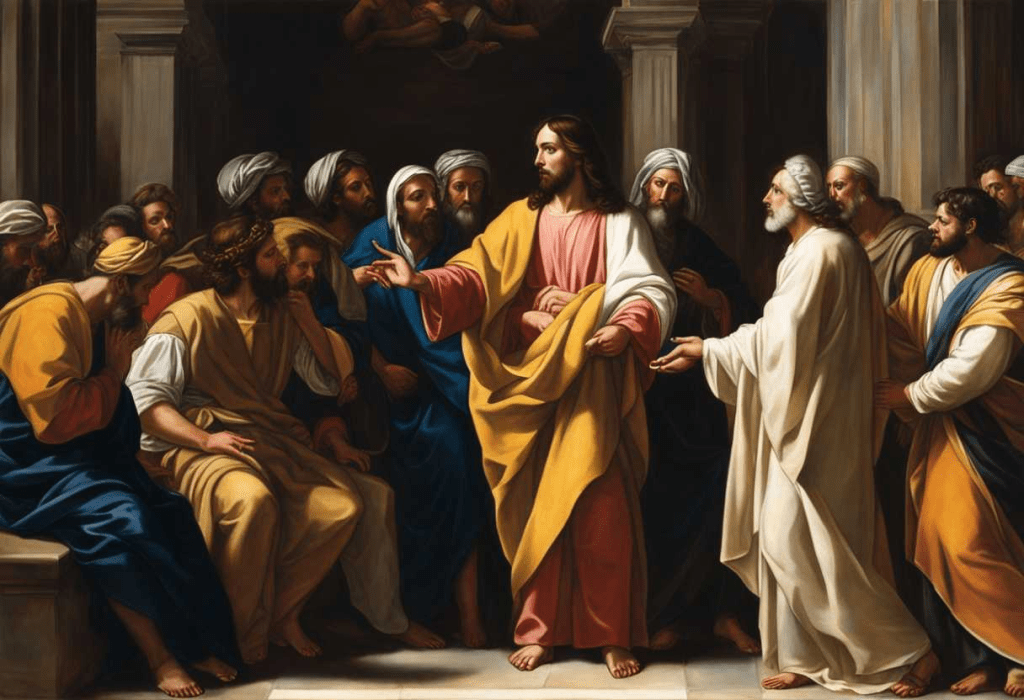
Mark 11:27-33 New International Version
The Authority of Jesus Questioned
27 They arrived again in Jerusalem, and while Jesus was walking in the temple courts, the chief priests, the teachers of the law and the elders came to him. 28 “By what authority are you doing these things?” they asked. “And who gave you authority to do this?”
29 Jesus replied, “I will ask you one question. Answer me, and I will tell you by what authority I am doing these things. 30 John’s baptism—was it from heaven, or of human origin? Tell me!”
31 They discussed it among themselves and said, “If we say, ‘From heaven,’ he will ask, ‘Then why didn’t you believe him?’ 32 But if we say, ‘Of human origin’ …” (They feared the people, for everyone held that John really was a prophet.)
33 So they answered Jesus, “We don’t know.”
Jesus said, “Neither will I tell you by what authority I am doing these things.”
Word of God for the Children of God
Glory be to the Father,
and to the Son, and to the Holy Ghost;
as it was in the beginning,
is now, and ever shall be,
world without end. Amen, amen.
The power of God is a theme that runs through the entire Bible.
It’s seen in the creation of the world, the creation of man and women and the parting of the Red Sea, the resurrection of Jesus from the dead, countless more.
This power isn’t just something that was only active in the far past, but it’s also something that is very much at work in our lives today.
God’s power is seen in the way He provides for our needs.
Think about the times when you were in need, when you didn’t know how you were going to make ends meet, or facing any situation that seemed impossible.
In those moments, did you acknowledge, recognize, testify, God provisions?
Acknowledge, recognize, testify He made a way where there seemed to be none?
His power is also seen in the way He changes lives.
We have all heard stories of people who were lost in their struggles against sin, who were living lives that were so far from any connection with God, but then encountered the power of God and their lives were completely transformed.
They were set free from the power of sin and became new creations in Christ.
But God’s power isn’t just about what He does for us, it’s also about what He does in us. He gives us the power to live godly lives, to resist temptation, to stand strong in the face of high risk adversity, even right up to life threatening.
That’s His power at work in us.
And finally, God’s power is seen in the way He works through us.
He uses us to accomplish His purposes, to spread the Good News of His love and forgiveness, His indelible Words of truth unto a world that desperately needs it.
He uses us to be His hands and feet, to be His voice, to be His love in real action.
Kneading Our Will
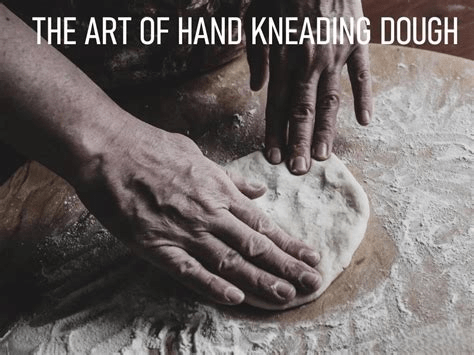
Consider the gathering of religious leaders in our passage.
They were men who held respected positions of authority, power and influence.
They were used to having their own way, to being in control.
But when confronted with Jesus, their will was challenged. Their responses reveals a will that was hardened, resistant to the kneading hands of God.
This brings us to the first aspect of kneading our will: the utter necessity of softening. As a lump of dough needs to be softened before it can be kneaded, so our wills needs to be softened before it can be shaped by God.
This softening process often involves experiences and circumstances that breaks us down, humble us, which makes us realize our greatest need for God.
It’s in these moments of vulnerability and surrender that God can begin to knead our will, to shape us according to His purposes.
The second aspect of kneading our will involves the process of shaping.
Once the dough is softened, the baker can begin to shape it.
This shaping process is not always comfortable.
It involves pressure, folding, stretching.
Similarly, the shaping of our will often involves harsh trials and challenges which stretches us, that push us far outside of our comfort zone.
But it’s through these experiences that our will becomes more aligned with God’s will. We begin to desire what He desires, and to value what He values.
Next is the proofing stage.
After the dough is shaped, it needs to rest.
It needs time to rise, to expand.
This is a crucial stage in the baking process.
Without it, the bread will not have the right texture and flavor.
In the same way, our will needs time to be proofed by God.
This involves periods of waiting, of trusting in God’s timing.
It’s in these moments of quiet trust that our will is strengthened and solidified, ready to be used by God.
Returning to our metaphor of kneading dough, there’s an additional aspect worth considering: the role of heat.
Once the dough has been kneaded, shaped, proofed, it’s placed in a hot oven.
Heat causes the dough to rise and solidify, transforming it into a loaf of bread.
In our lives, heat often comes in the form of trials and difficulties.
These experiences, while painful, can serve to harden, solidify our wills, to work it to temper it’s blade and make it sharper, more resilient and steadfast.
Keeping to God’s Way
The first aspect of Keeping to God’s Way we need to consider is the importance of obedience.
Obedience is not a popular word in our culture.
We value independence, autonomy, freedom to do what we want when we want.
But the Bible paints a different picture.
Biblically, obedience isn’t a burden or restriction; it’s a blessing and a privilege.
Next is the necessity of perseverance.
The Christian life is not a sprint; it’s a marathon.
It’s not about how fast we run, but about how long we keep running.
It’s about staying the course, about pressing on, about not giving up.
The third aspect of Keeping to God’s Way is the power of prayer.
Prayer is not just about asking God for things.
It’s about aligning our hearts with God’s heart.
It’s about seeking His will, not our own.
In James, we read, ‘The prayer of a righteous person is powerful and effective.’ (James 5:16)
This is a promise, a promise that our prayers make a difference. But it’s also a challenge, a challenge to pray consistently, to pray fervently, to pray with faith.
The fourth and final aspect of Keeping to God’s Way is the call to love.
Love is the hallmark of the Christian life.
It’s the distinguishing mark of a follower of Jesus.
It says in John 13:34-35, ‘A new command I give you: Love one another. As I have loved you, so you must love one another. By this everyone will know that you are my disciples, if you love one another.’
This is not a suggestion but a command, a command to love as Jesus loved.
But it’s also a challenge, a challenge to put love into action, to demonstrate our love in practical, tangible ways.
Let’s remember that God’s authority is not something to be questioned, but rather, it’s something to be embraced.
His power is not a threat to us, but a promise.
He’s not a distant deity, but a loving Father who wants the best for us.
He’s not a harsh taskmaster, but a gentle Shepherd guiding us along the right paths.
We’ve been reminded today that knowing God’s power is the key to truly living. It’s not about our strength, our wisdom, or our abilities.
It’s all about Him.
It’s about our surrendering our will to His, allowing Him to shape us and mold us into the people He needs us to be, he requires us to be and he wants us to be.
It’s about walking in His ways, even when the path seems difficult or uncertain.
Remember, we serve a God who loves us with an everlasting love, a God who is for us, not against us.
He’s our greatest cheerleader, our most faithful friend.
He’s the one who picks us up when we fall, who comforts us with an everlasting love us when we’re hurting, who guides us when we’re lost.
What do we believe, what do we think of Jesus’ authority and credentials?
Do we accept Jesus as the Son of God, sent into the world by the Father as our Savior?
So, as we go from here, let’s go with confidence, knowing that we are loved, we are cherished, and we are held in the mighty hands of our God.
And now, may the grace of our Lord Jesus Christ, the love of God, and the fellowship of the Holy Spirit be with us all, now and forevermore. Amen.
In the name of the Father and of the Son and of the Holy Spirit … Amen
Praying …
Psalm 8 New American Standard Bible
The Lord’s Glory and Mankind’s Dignity.
For the music director; on the Gittith. A Psalm of David.
8 Lord, our Lord,
How majestic is Your name in all the earth,
You who have [a]displayed Your splendor above the heavens!
2 From the mouths of infants and nursing babies You have established [b]strength
Because of Your enemies,
To do away with the enemy and the revengeful.
3 When I [c]consider Your heavens, the work of Your fingers,
The moon and the stars, which You have set in place;
4 What is man that You think of him,
And a son of man that You are concerned about him?
5 Yet You have made him a little lower than [d]God,
And You crown him with glory and majesty!
6 You have him rule over the works of Your hands;
You have put everything under his feet,
7 All sheep and oxen,
And also the animals of the field,
8 The birds of the sky, and the fish of the sea,
Whatever passes through the paths of the seas.
9 Lord, our Lord,
How majestic is Your name in all the earth!
Glory be to the Father,
and to the Son, and to the Holy Ghost;
as it was in the beginning,
is now, and ever shall be,
world without end. Amen, amen.


