
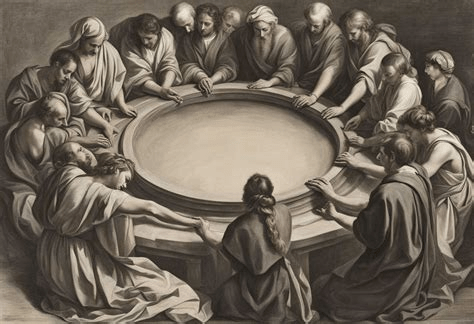
Lamentations 3:40-42 New International Version
40 Let us examine our ways and test them,
and let us return to the Lord.
41 Let us lift up our hearts and our hands
to God in heaven, and say:
42 “We have sinned and rebelled
and you have not forgiven.
Word of God for the Children of God
Glory be to the Father,
and to the Son, and to the Holy Ghost;
as it was in the beginning,
is now, and ever shall be,
world without end. Amen, amen.
Letting God Name What’s Going On Inside …
Harder than the hardest Graphene, the hardest man-made material, 200 times more powerful than steel. Diamonds, strongest material we can find in nature.
Softer than the softest Vicuna fabric considered to be the softest fabric in the world, known for its ultra luxurious feel, fine fibers thinner than human hair.
It is highly prized for its exceptional softness and is often used in high-end garments like scarves and sweaters.
What then, does Lamentations 3:40-42 really mean?
Lamentations 3:40-42 is about our acknowledging and repenting of our sins, returning to the Lord in prayer and seeking forgiveness, and examining our ways against those of God, to turn back to Him with sincerity and humility.
The scene opens in the ancient city of Jerusalem, a once bustling and vibrant place now reduced to ruins and desolation.
The sun is setting, casting a golden hue over the broken walls and scattered debris.
A group of survivors, including Jeremiah the prophet, are gathered in the midst of the destruction.
They have come together in a solemn assembly, seeking solace and guidance in the midst of their suffering.
Jeremiah, with tears in his eyes, raises his voice to address the group. He urges them to examine their ways and return to the Lord with repentant hearts.
The people are listening intently, their faces are etched with deep sorrow and despair.
They have witnessed the consequences of their disobedience and now long for restoration and forgiveness.
As the evening shadows lengthen, a sense of heaviness hangs in the air.
The group bows their heads in prayer, seeking forgiveness and mercy from the God they have forsaken.
In this moment of brokenness and humility, they look to cling to the hope of redemption and restoration, knowing that only through sincerest repentance and faith, trust, obedience, can they find healing for their land and their souls.
The author in Lamentations 3:40-42 calls for deep reflection and introspection.
The verses emphasize the importance of our accepting responsibility for our actions and seeking forgiveness and mercy from God.
It prompts us to look closely at our behaviors, attitudes, and choices, and with brutal honesty, rigorously assess whether or not they align with God’s will.
We don’t test our ways for several reasons.
Could be as simple as laziness, but often it comes down to some sort of pride.
We arrogantly believe we couldn’t possibly be wrong, or we know we are and don’t want to feel challenged, lacking or embarrassingly wrong on any issue.
Such a discipline of self-examination proves uncomfortable on several levels.
We don’t like finding deficits or confessing to any hidden weaknesses in our character or spiritual life.
And yet, this is the only way we grow, going through temporary suffering and adversity to reach God’s greater joy and peace.
On the negative side, our flat rejection, refusal of such challenges, allows lies and weakness to destroy us.
The prophet Jeremiah writes during such consequences in Lamentations 3:40.
Judah had dismissed the prophetic calls to repentance away from idols and sin.
Ultimately, God allowed them to fall to chaos and oppression as a consequence.
In the midst of these dismissive sorrowful verses of Lamentations, attributed to the prophet Jeremiah, penned during the Babylonian exile, we find God’s call to action that continuously, unmistakably, indelibly resonates through the ages.
These specific verses urge us to examine our ways, test them, and ultimately return to the Lord.
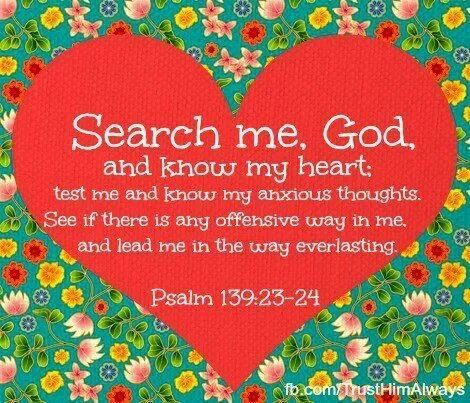
The essence of self-reflection and introspection is crucial in our spiritual walk, akin to David’s plea in Psalm 139 for God to search his heart, test his thoughts.
By our submission, giving God free access, delving and digging deep into our innermost thoughts and motives, we pave the way for personal growth and a significantly deeper, more intimate communion with Father, Son, Holy Spirit.
Repentance stands at the central core of the prophets’ messages, urging us to turn back to God wholeheartedly.
Just as Joel implores in the Old Testament, our return to the Lord necessitates a genuine transformation of heart and deeds.
The act of lifting our hearts and hands in worship symbolizes surrender and adoration, echoing exhortations in 1 Timothy to pray with uplifted, holy hands.
True worship involves not just our outward gestures but a profound connection with the Almighty.
Our acknowledgment of sin and rebellion, coupled with our sincere plea for forgiveness, reflects a profound understanding of fallibility and God’s justice.
John’s assurance in his epistle that God is faithful to forgive those who confess their sins underscores the indelibly timeless need for mercy and reconciliation.
These verses serve as a poignant reminder of our continual need for God’s grace and the humility required to seek His forgiveness.
In today’s fast-paced world, the principles of self-examination, repentance, and genuine worship remain as relevant as ever.
Taking a moment to pause, reflect on our actions, and realign our priorities with God’s will is essential for spiritual growth.
Consider the story of someone who, amidst their plethora of demands of life, realized the need to recalibrate their focus, leading to a restored balance and a deepened relationship with God.
Such narratives inspire us to embark on our own journey of introspection and renewal.
As we conclude, let us remember the vital lessons from Lamentations 3:40-42:
the significance of self-examination, the transformative power of repentance, and the beauty of genuine worship.
May we each be encouraged to set aside time with Jesus for reflection, to seek reconciliation with God, and to worship Him wholeheartedly.
Let us close with a prayer, asking for God’s guidance and grace as we navigate our paths of faith and repentance, trusting in His unfailing love and mercy.
In the name of the Father, and of the Son, and of the Holy Spirit, Amen
Praying …
Psalm 26 New American Standard Bible
Protestation of Integrity and Prayer for Protection.
A Psalm of David.
26 [a]Vindicate me, Lord, for I have walked in my integrity,
And I have trusted in the Lord [b]without wavering.
2 Examine me, Lord, and put me to the test;
Refine my [c]mind and my heart.
3 For Your [d]goodness is before my eyes,
And I have walked in Your truth.
4 I do not sit with [e]deceitful people,
Nor will I go with [f]pretenders.
5 I hate the assembly of evildoers,
And I will not sit with the wicked.
6 I will wash my hands in innocence,
And I will go around Your altar, Lord,
7 That I may proclaim with the voice of thanksgiving
And declare all Your [g]wonders.
8 Lord, I love the dwelling of Your house,
And the place [h]where Your glory remains.
9 Do not [i]take my soul away along with sinners,
Nor my life with men of bloodshed,
10 In whose hands is a wicked scheme,
And whose right hand is full of bribes.
11 But as for me, I will walk in my integrity;
Redeem me, and be gracious to me.
12 My foot stands on level ground;
In the congregations I will bless the Lord.
Glory be to the Father,
and to the Son, and to the Holy Ghost;
as it was in the beginning,
is now, and ever shall be,
world without end. Amen, amen.


The Jewish People bear full responsibility for the Torah curse of Amalek – understood through the ערב רב which lacked ‘יראת אלהים’, as the basis for the Golden Calf interpretation of the 2nd Sinai Commandment. The Torah curse of g’lut has its Amalek antisemitism consequences.
The Torah brit obligation of Blessing Curse defines Amalek antisemitism throughout the 2000+ years of לא לשמה cursed Jewish g’lut. Jewish assimilation to foreign cultures customs and manners, coupled with intermarriage defines the wisdom k’vanna of the 2nd Sinai commandment. Goyim simply the reactionary consequences of g’lut Jewry worshipping Av tuma avoda zarah.
When an institution claims a monopoly on ultimate truth, governance undergoes a fundamental shift. Legal status tied directly to ideological alignment. Populations divided into a caste system: orthodox (the inner circle), the tolerated/subjugated: dhimmi stateless Jewish refugees – European land restriction during an Agricultural based economy where crops produced national wealth.
The legal apparatuses designed to root out “heresy” established administrative precedents for state surveillance, ideological tribunals, and mandatory public alignment. Laid the deep cultural and institutional groundwork upon which 19th-century “scientific” racial anti-Semitism built and stands upon to this day. The failure to intervene during catastrophic moral crises often stems from cold geopolitical calculation rather than mere ignorance. While Leo Tolstoy denounced the horrific 1903 Kishinev pogrom and CS Lewis explicitly condemned Nazi racism and Hitler’s persecution of the Jews as early as 1933 in his private correspondence and published works (such as The Pilgrim’s Regress); arguing that Western civilization owed its fundamental moral concepts directly to Israel – their rebukes had little or no effect.
When secular political ideologies—such as totalitarian collectivism or radical ethno-nationalism—adopt the totalizing, non-negotiable structures of dogmatic belief, they replicate the same mechanisms of forced conformity, purging of “heretics,” and mass violence. The structure of dogmatic belief—whether religious or secular—creates a template for totalitarianism, where “heresy” (dissent or difference) justifies purification, segregation, and mass violence.
Religious institutions, when fused with state power, transform theological categories into tools of governance: Michel Foucault argued that power operates through “regimes of truth”, where institutions define what qualifies as “normal” or “deviant.” Reinhold Niebuhr held that religious absolutism, when unchecked by humility, can justify violence as “moral necessity.” Elie Wiesel stated that the Shoah, not just a failure of humanity but a failure of theology—when God’s silence was interpreted as permission for evil; effectively saying “Where was JeZeus during the Shoah or Allah during the ’48 & ’67 Nakba — Nietzsche ‘God is Dead’ philosophy which denounced the whole of both religious institutional belief in their “idol” Gods.
Both Stalinism, Nazism, and Maoism made absolute claims possessing a monopoly on truth. The Nazis converted “historical truth” unto “racial purity”, effectively defines the premise: Thought Crimes of heresy – from the Church concealing the ancient Greek polytheistic texts of philosophy to Pol Pot, Pinochet dictatorships consequent to Kissinger/Nixon great power imperialism. The modern Surveillance State simply replaces confession booths and kapo informants. Orwell’s 1984 directly addresses the concept of “thought crimes”. Dehumanized Jews as “Christ-killers” (John Chrysostom’s homilies), economic scapegoating (usury laws, guild exclusions), eschatological violence (Crusades, blood libels) etc. By these fruits produced later generations of hatred without cause.
Martin Luther’s On the Jews and Their Lies (1543), often cited as a precursor to Nazi rhetoric. Xtian anti-Judaism created a cultural template model which later morphed into Hitlers’ modern bureaucratic efficiency and pseudoscientific racism. Bolshevism, Nazism, and even post WWII UN – replicate religious structures. All had their “sacred texts, despised heretics such as Stalin’s “kulaks”, and public show trials to purge the Party! The Soviet gulag and Boar War concentration camps set the stage for Auschwitz.
The Inquisition served as a classic—purifying the body politic of “corruption” or “contagion;” similar to the Black Plague slander: “the Jews poisoned the wells”…ideological purity codes double as mechanisms for wealth extraction and state consolidation reappears whenever totalizing political systems operate without institutional checks. Religion used for power coercion, segregation, expulsions, and mass violence; forced conformity; violence framed as “truth” … Xtianity a 2000+ year thought crime against Humanity which reached apex crisis during the Inquisition, 30 Years War, and the Shoah…religious doctrine + centralized power + incentives to remove rivals + fear of revolutionary unrest against the corrupt status quo by peasants enslaved by church authorities who employed their cheap labor to build gross Cathedral abominations of church or mosque injustice against dhimmin minority populations.
Religious truth-claims repeatedly functioned as an authorized language of governance: when clergy/faith movements merged with centralized state or imperial power, theological categories used to define who belonged, who disloyal, and who could be removed—making coercion, segregation, expulsions, and mass violence easier to justify as moral necessity. The comparison to Bolshevik theology vs Menshevik and Social Revolutionaries counter “theology” smells similar to church heresy stench – such as the slaughter of French Huguenots! The war crimes of the Crusades which slaughtered almost all the Jews in Germany, coupled with the Blood-slander almost every Easter which resulted in pogroms and mass population transfers which post WWII so hardily condemns today!
Thought-Crimes against Humanity defined through church and mosque theological creeds at the point of a sword. The slaughter of Indian populations across the New World & Pacific by missionaries working with their great power Armies; which plundered South American civilizations such as the Aztec and Inca. The American First Amendment and French ‘Rights of Man’ fundamentally abhorred church + state, or missionary + empire slavery of feudal peasant populations. Citizen Rights + people living in cities rather than upon feudal villages defines the industrial revolution. Church and mosque forced conformity inquisition purity…race, expulsion/segregation, mass violence—control over the “Pravda-press”; salvation “monopoly” defines the 2000+ years of church/mosques thought crimes against Humanity.
The theology of Luther and Calvin compare to the Great Schism between the Orthodox and Catholic church – both of which claimed inheritance to the revived Roman Empire; the post WWII attempt to stamp “Palestine” upon Judea a harsh example of thought crimes against Humanity. The Shoah, the most powerful example of the Dreyfus Trial racism which infects the disease inherited by Europeans expressed through Church thought crimes. Church and Mosque religious theological fanaticism across medieval and early modern Eurasia and the colonial world, religious truth-claims repeatedly became tools of centralized power, enabling coercion of dissent, forced conformity of minorities, and conquest justified as moral necessity.
Religious institutions and imperial/state power merged, authorities used theology to delegitimize rivals and define outsiders as threats, making violence and forced conformity easier to authorize and carry out. Guilds in medieval Europe enforced by courts, armies, and property systems, belief and religious identity the primary weapons where religious doctrine functioned as an ideological weapon at the point of a sword. The annual Easter pogroms, taxation without representation, denuded Jews of all their wealth prior to forced mass population transfers England in 1290, France 1306, Germanic kingdoms; the fruits of crushing Par’o like judicial corruption and injustice produced the ghetto gulags of three Centuries duration and the mass population Jewish retreat to the Ukraine and Poland which thereafter witnessed the brutal Cossack revolts!
Neither the Dreyfus Trial nor the later Shoah occurred in a political vacuum. Attempts to declare the Shoah a Nazi crime ignores the 1939 White Paper and FDR’s closure of the Golden Medina to Jews attempts to flee. The contrast between the FDR policy and pre-WWI welcome of Jewish refugees from the Pale of Russia a day and night difference.
The Allied refusal to bomb the rail lines leading to the death camps coupled with the Red Army stopping its advance in sight of the Warsaw Ghetto revolt and the post War rat-lines and complicity of Pope Pius XII and Prostestant Luthern Church pro Nazi alignment against the Communists cannot stand exiled and excluded from the contexts of the Big Picture of European historical barbarism.
Nature/Nurture – genetics did not cause the Shoah. Rather the guilt rests upon the environmental cultural history of European and Muslim great power politics throughout the Ages passed down from generation to generations – straight from their mothers’ milk. Hannah Arendt’s banality of evil (ordinary people, indoctrinated by systems) support’s the “mother’s milk” cultural-historical conditioning metaphor.
Can faith in God be redeemed? Emphatically NO. Can Herzl’s dream of a Jewish State which righteously pursues righteous judicial justice among the Jewish people within the borders of our homeland, despite Jews being just like Goyim – only more so, define the definition of faith affixed to Sanhedrin common law Federal Courts which practice legislative review over the tribal economic autonomy and statute law Parliament in Jerusalem prosper? Emphatically YES. Why? Because this defines the vision of Zionist self determination.
LikeLiked by 1 person