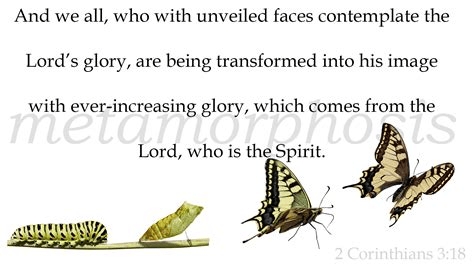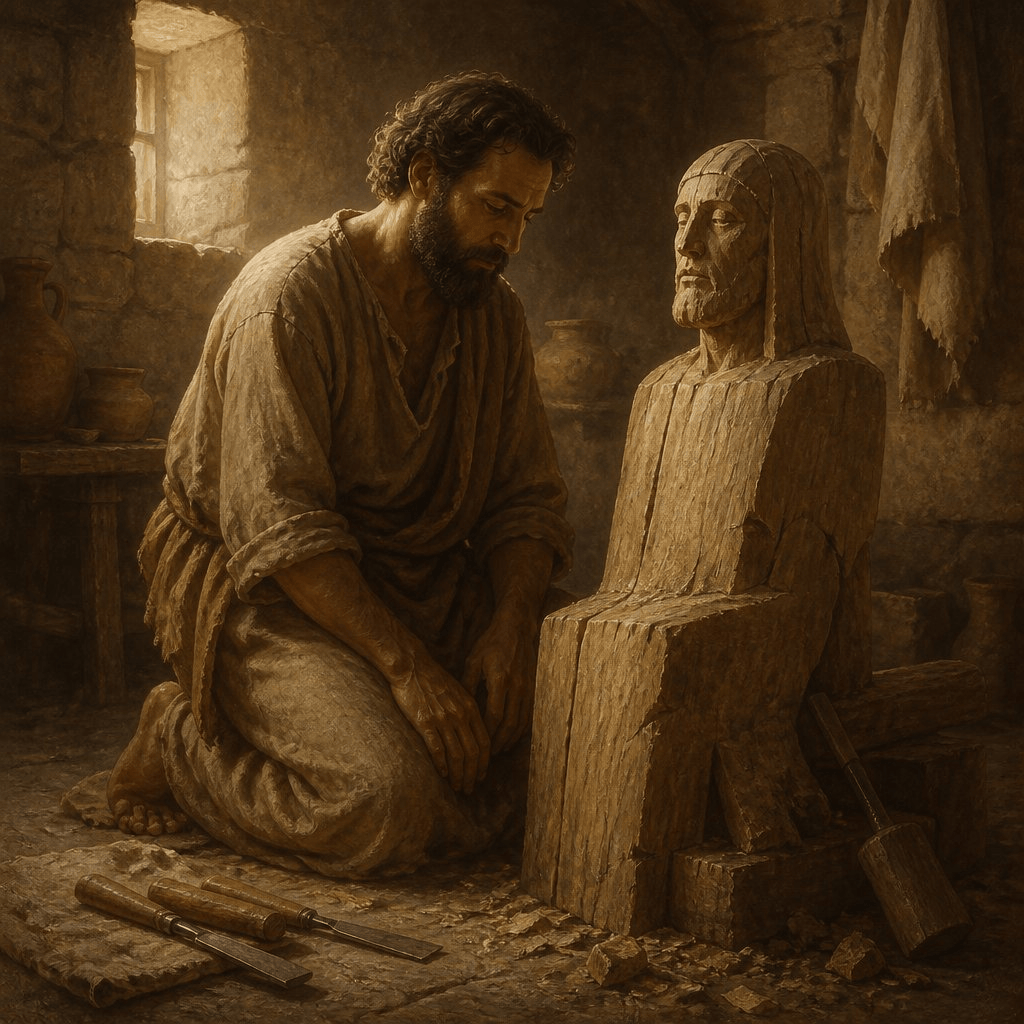
Tell God; do you understand praying all thanks be unto God for Creation’s miraculous depths of beauty beyond what the eye of mankind can behold? Job 38:1-7

Job 38:1-7 Common English Bible

The Lord answers from a whirlwind

38 Then the Lord answered Job from the whirlwind:

Who is this darkening counsel
    with words lacking knowledge?
Prepare yourself like a man;
    I will interrogate you, and you will respond to me.

The establishing of order

Where were you when I laid the earth’s foundations?
    Tell me if you know.
Who set its measurements? Surely you know.
    Who stretched a measuring tape on it?
On what were its footings sunk;
    who laid its cornerstone,
    while the morning stars sang in unison
        and all the divine beings shouted?

Word of God for the Children of God

Glory be to the Father,
and to the Son, and to the Holy Ghost;
as it was in the beginning,
is now, and ever shall be,
world without end. Amen, amen.
The opening chapters of Genesis teaches us just how the universe was created.

The Voice of God booming forth from the Whirlwind in the end of The Book of Job tells us that and much more.

God set the foundation of the universe, stretched out the measuring lines in the dawn of creation (when the morning stars sang together with all the heavenly host), but God is also very much still in the act of creation.

He knows where the storehouses of snow and hail are, where all the bolts of lightening gather before their use.

He carries the light of day to its place every morning, and then ushers it out again every night.

He helps the eagle soar, the lion roar, He watches over and tames Leviathan when it roils the deep waters.

God announces he is present in the terrific and the mundane.

God is everywhere.

Active.

Thoughtful.

Crafting the ebb and flow of creation, and each day’s journey.

But, why is this here?

Why in Job?

Literarily it serves as the answer to all of Job’s questions: 

Sit down you silly boy, you have no idea what’s going on in the universe around you. You have no idea Who it is that you’re talking to.

But, in a book about dealing with 1000/1000 magnitude of tragedy, and dealing with it in a truly faithful manner, it serves as a reminder of the Bigger Picture.

Yes, our problems matter.

And when we’re grieving and mourning, those who we mourn for matter.

Our tears are real.

Our pain is real.

Our confusion, denial, and anger are real.

But, we begin the process of healing when we re-engage the world around us.

When we pick up our heads and we look around at the vastness of earth, and the intricacies of life.

In the midst of grief we feel rudderless and beyond help.

Adrift.

Lost.

But, we aren’t.

The world still turns on its God assigned axis.

The sun still rises and sets.

God is still on his throne in heaven, and the mighty eagle still soars above.

The Whirlwind comes across as a reproach—in the context of Job’s narrative, that’s indeed what it is.

But, it’s more than that.

It’s the first dawn when we are lifted out of the fog, and remember that we’re in the Presence of God Almighty.

The God who created the heavens and the earth, and the God who still creates.

“Life is but a Weaving” (The Tapestry Poem) by Corrie ten Boom

February 21, 2018 by Jane Beal

My life is but a weaving
Between my God and me.
I cannot choose the colors
He weaveth steadily.

Oft’ times He weaveth sorrow;
And I in foolish pride
Forget He sees the upper
And I the underside.

Not ’til the loom is silent
And the shuttles cease to fly
Will God unroll the canvas
And reveal the reason why.

The dark threads are as needful
In the weaver’s skillful hand
As the threads of gold and silver
In the pattern He has planned

He knows, He loves, He cares;
Nothing this truth can dim.
He gives the very best to those
Who leave the choice to Him.

Corrie ten Boom

In this poem, the Dutch writer Corrie Ten Boom compares her life to a tapestry woven by God.

She says that God weaves both joy and sorrow into her life, and it is as though she sees only the back of the tapestry.

She says she cannot understand how the strands could ever make something beautiful.

But God understands and has a plan for how everything in her life will come together for his beautiful purpose.

Job, to whom God is speaking in our reading today, is a bit like that—seeing only the back of the tapestry of his life.

Job has had to deal with terrible suffering and tragedy, he does not understand why it all happened.

God responds with a poetic speech about the creation of the world.

God is the one who created everything, including things that are so mysterious that we don’t even know how to speak about them.

God reminds Job of this in order to both challenge and assure him.

God challenges Job to be humble about his own knowledge.

And God assures Job he has a plan, even though it may be hard to under­stand.

We are like Job in this way too.

There are many things about God’s purposes that we do not understand.

But God promises to provide for us and for the world he has beautifully made.

Psalm 23 Expanded Bible

The Lord the Shepherd

A psalm of David.

23 The Lord is my shepherd;
    I ·have everything I need [L will lack nothing].
He ·lets me rest [makes me lie down] in green pastures.
    He leads me to ·calm [quiet] water.
He ·gives me new strength [T renews my soul].
He leads me on paths that are ·right [righteous; or straight]
    for the ·good [sake] of his ·name [reputation].
Even if I walk through ·a very dark valley [or the shadow of death],
    I will ·not be afraid [T fear no evil],
because you are with me.
    Your rod and your shepherd’s staff comfort me.

You prepare a ·meal [L table] for me
    in ·front [the presence] of my enemies.
You ·pour oil of blessing on my head [anoint my head with oil; C oil was a means of refreshment in a hot, dry environment];
    you ·fill my cup to overflowing [L make my cup overflow; C a cup of blessing].
Surely your goodness and ·love [loyalty; T mercy] will ·be with [pursue; T follow] me
    all my life,
and I will live in the house of the Lord ·forever [L for length of days].


In the name of the Father and of the Son and of the Holy Spirit. Amen

Praying ….

Psalm 56:8-13 Expanded Bible

God,

You have ·recorded [recounted] my ·troubles [wanderings].
    You have ·kept a list of my tears [L put my tears in your bottle].
Aren’t they in your records?

On the day I call for help, my enemies will ·be defeated [L turn back].
    I know that God is on my side.
10 I praise God for his word to me;
    I praise the Lord for his word.
11 I ·trust [have confidence] in God. I will not be afraid.
    What can people do to me?

12 God, I must keep my ·promises [vows] to you.
    I will give you my ·offerings to thank you [thank offerings],
13 because you have ·saved [protected] me from death.
    You have kept ·me from being defeated [L my feet from falling].
So I will walk ·with [L in the presence of] God
    in light ·among [of] the living.

Glory be to the Father,
and to the Son, and to the Holy Ghost;
as it was in the beginning,
is now, and ever shall be,
world without end. Amen, amen.
https://translate.google.com/

He came from heaven to earth and He took on the status of a Slave so, if you have a heart, if you care, do not try to smart talk your way into all the very best of everything. Philippians 2:3-8

Philippians 2:3-8 Expanded Bible

When you do things, do not let ·selfishness [rivalry; selfish ambition] or pride be your guide. Instead, be humble and give more ·honor [regard; value] to others than to yourselves. Do not ·be interested only in your own life [look out for your own interests], but ·be interested in the lives of others [look out for others’ interests].

Be Unselfish like Christ

In your lives you must ·think and act like [have the same attitude as] Christ Jesus. [C What follows may be from an early Christian hymn.]

·Christ himself was like God in everything [L Who, being in the form of God].
    But he did not think that being equal with God was something to be ·used for his own benefit [or grasped; seized; held on to].
But he ·gave up his place with God and made himself nothing [L emptied himself].
    He ·became like [L took the form of] a ·servant [slave; bondservant]
    and was born ·as a man [L in the likeness of humanity/men].
And ·when he was living [L being found in appearance/likeness] as a ·man [human being],
    he humbled himself and was fully obedient to God,
    even ·when that caused his [to the point of] death—death on a cross.

Word of God for the Children of God

Glory be to the Father,
and to the Son, and to the Holy Ghost;
as it was in the beginning,
is now, and ever shall be,
world without end. Amen, amen.
Consider Others More Significant Than Ourselves

Humility is almost a foreign word in today’s often self-centered world.

Our society today has a tendency to hyper focus on personal happiness and individual freedoms over the good of the community. 

Yet it wasn’t terribly different in the days Jesus walked the earth.

Back then, just as today, people scrambled to look after themselves and the needs of their families.

They sought to protect their own interests, and we know how many times Jesus criticized the Pharisees for their hypocrisy and arrogance. 

Time and again, Jesus spoke out against the desire to put the self first — taking the best seat at the table or hosting parties knowing others would reciprocate, wearing fancy robes, lapping up adoration, gloating respect bestowed on them. 

In his Sermon on the Mount, Jesus taught us we should strive to be humble, noting, “Blessed are the meek, for they shall inherit the earth” (Matthew 5:5).

The original Greek used for “meek” is praus, meaning being gentle of heart and behaving toward others with humility and consideration.

It is the very same thing Paul urges in his letter to the early church in Philippi.

In Philippians 2:3, Paul urges Christians,

When you do things, do not let ·selfishness [rivalry; selfish ambition] or pride be your guide. Instead, be humble and give more ·honor [regard; value] to others than to yourselves.

What does this mean? How do we count others as more significant than ourselves, and why should we bother to do so?

In short, Paul is urging us in the same way Jesus did — and we should take his words to heart.

What Is Humility?

Humility is the essence of piety, according to the Encyclopedia of the Bible. The Dictionary of Bible Themes calls it an attitude of lowliness and obedience. Dictionary.com describes it as a modest opinion or estimate of one’s own importance and rank.

In everyday terms, we can understand humility as understanding that we, on our own, aren’t of any special importance, nor are we better than anyone else. No matter our wealth, our physical attractiveness, our intelligence, our status, or any other manner in which we might compare ourselves to others (or even perhaps lift ourselves above others), we’re all on the same level. Indeed, in understanding this, we acknowledge our own low status even further, which helps us lift up others’ needs before our own and consider them as more important than ourselves. 

It’s the polar opposite of the messaging we often hear today that lifts up self-focus, self-confidence, self-concern, self-absorption, and self-indulgence.    

Here, Paul is telling us to be humble and consider others higher than ourselves. He’s telling us to act like a servant, not a master.

What Is the Context of This Verse?

In the previous chapter, Philippians 1, Paul urges the early church to live in a manner “worthy of the gospel of Christ” (Philippians 1:27) and also to be united, much like one body in perfect balance in the Holy Spirit, even in our suffering.

Now, in Philippians 2, he further urges the church to accomplish this by following Christ’s example of humility.

Be “of the same mind,” verse 2 says, rejecting selfish concerns, wants, or needs.

Be like Jesus, he said, and, “Let each of you look not only to his own interests, but also to the interests of others” (v. 4).

He’s echoing Christ’s words in Mark 12:31 to love your neighbor as yourself.

Then Paul goes further, giving us an example of how Christ modeled this for us.

As Paul said, even though Jesus was divine, God in fully human form, he didn’t act this way.

He acted like a humble slave, born a lowly man, humbling himself by serving others, and ultimately unto dying a horrific and humiliating death on a cross. 

That’s what our Savior did, and we need to study and pray and act to follow his example and be this way, too.

Jesus said about Considering Others as Greater Than Ourselves?

Jesus consistently modeled, demonstrated and taught humility throughout his earthly ministry, and this is Paul’s great point. 

Not only did Jesus lift up humility as a virtue in the Sermon on the Mount (Matthew 5), but he told us to be like children.

At that time in society, children were of little consequence and assigned the lowest status in society. 

Yet in Matthew 18, Jesus called a child over to him and told his disciples they must become like children — lowly. 

Jesus said,

Who Is the Greatest?

18 At that time the ·followers [disciples] came to Jesus and asked, “Who is greatest in the kingdom of heaven?”

Jesus called a little child to him and stood the child before his ·followers [disciples]. Then he said, “I tell you the truth, you must ·change [turn from your sins; convert; L turn] and become like little children. Otherwise, you will never enter the kingdom of heaven. The greatest person in the kingdom of heaven [L therefore] is the one who makes himself humble [and becomes] like this [little] child.(Matthew 18:1-4).

Humility is a requirement for heaven.  

Later, he told them to hear the words of the Pharisees, but don’t behave like them and don’t exalt yourself, for we are all brothers and sisters.

As he said,

11 ·Whoever is your servant is the greatest among you [L The greatest among you will be your servant]. 12 Whoever ·makes himself great [lifts up/exalts himself] will be made humble. Whoever makes himself humble will be ·made great [exalted; lifted up].(Matthew 23:11-12).

Further, the night before his arrest, at the Last Supper, Jesus modeled humility by kneeling to wash the filthy feet of his twelve disciples.

John 13:4-8Expanded Bible

So ·during the meal [L from supper] Jesus stood up and took off his outer clothing. Taking a towel, he wrapped it around his waist. Then he poured water into a bowl and began to wash the ·followers’ [disciples’] feet, ·drying [wiping] them with the towel that was wrapped around him. [C This act was considered so demeaning by some people that they only allowed Gentile slaves to do it.]

Jesus came to Simon Peter, who said to him, “Lord, are you going to wash my feet?”

Jesus answered, “You don’t understand now what I am doing, but you will understand later.”

Peter said, “No, you will never wash my feet.”

Jesus answered, “If I don’t wash your feet, you ·are not one of my people [L have no share/part with me].”

His followers were shocked, and Peter objected at first, but Jesus insisted on performing this subservient act.

Then he asked if they understood what he had done, explaining,

“You call me Teacher and Lord, and you are right, for so I am. If I then, your Lord and Teacher, have washed your feet, you also ought to wash one another’s feet. For I have given you an example, that you also should do just as I have done to you. Truly, truly, I say to you, a servant is not greater than his master, nor is a messenger greater than the one who sent him. If you know these things, blessed are you if you do them” (John 13:13-17).

How Can We Have Humility Today?

Humility starts within.

First, understand God is the most important, the highest.

God is our ruler and king, now and forever. We belong to him.

Then, understand what that looks like in our relationship to him.

We are blessed to receive his gift of salvation and are not entitled to this.

We do not deserve it and cannot possibly achieve it on our own.

Recognize and confess our wrongdoings and shortcomings.

Recognize we are not God and never will be. 

Finally, in honor of this, model Jesus, even knowing we will never achieve this goal.

Sacrifice yourself for others.

Share what you have.

Give generously of your money, your time, and your talents. 

Don’t boast or celebrate your accomplishments.

Serve and help others.

Lift them higher than yourself.

Share your food and your clothing, your money and your home.

Share even if you risk hardship.

Understand that we are all one, and nothing belongs to me alone. 

Listen well, ask questions, admit when you’re wrong, and don’t worry about your status or earning respect.

Save respect for the only one worthy: the Lord.  

Pray how you can apply all of this to your own life, in whatever setting you work or live.

If we are truly followers of Christ, we are obligated to behave like him.

Jesus behaved with humility, and we must, too, whatever that looks like.

Amen, and thanks be to God for all God’s precious and perfect gifts.

In the name of the Father and of the Son and of the Holy Spirit. Amen

Praying ….

Micah 6:1-8 Expanded Bible

The Lord’s Case

Now hear what the Lord says:

“Get up; plead ·your [or my] case in front of the mountains;
    let the hills hear your ·story [L voice].
Mountains, listen to the Lord’s ·legal case [accusation; indictment].
    ·Strong [Enduring] foundations of the earth, listen.
The Lord has a ·legal case [accusation; indictment] against his people,
    and he will ·accuse [contend with] Israel.”

He says, “My people, what did I do to you?
    How ·did I make you tired of me [have I wearied you]?
    ·Tell [Answer] me.
I brought you from the land of Egypt [Ex. 12:51]
    and ·freed [redeemed] you from slavery;
    I sent Moses, Aaron, and Miriam [Ex. 15:20] to you.
My people, remember
    the evil plans of Balak king of Moab [Num. 22:5]
    and what Balaam son of Beor told Balak [Num. 22–24].
Remember what happened from Acacia to Gilgal [Josh. 3:14:19–24]
    so that you will know the ·Lord does what is right [righteousness/justice of the Lord]!”

You say, “What can I bring with me
    when I come before the Lord,
    when I bow before ·God on high [the exalted God]?
Should I come before him with burnt offerings [Lev. 1:1–17],
    with year-old calves?
Will the Lord be pleased with a thousand ·male sheep [rams]?
    Will he be pleased with ten thousand rivers of oil?
Should I give my ·first child [firstborn] for ·the evil I have done [my transgression]?
    Should I give ·my very own child [L the fruit of my body] for ·my sin [L the sin of my soul]?”
The Lord has told you, ·human [T O man], what is good;
    he has told you what ·he wants [the Lord requires] from you:
to do what is ·right to other people [just],
    love ·being kind to others [mercy; lovingkindness],
and ·live humbly, obeying [walk humbly with] your God.

Glory be to the Father,
and to the Son, and to the Holy Ghost;
as it was in the beginning,
is now, and ever shall be,
world without end. Amen, amen.

https://translate.google.com/

Praying for when we are tempted to think much too highly of ourselves: story of the tax man and the Pharisee. Luke 18:9-14

Luke 18:9-14 Expanded Bible

Being Right with God

Jesus told this ·story [parable] to some people who ·thought they were very good [were confident of their own righteousness] and ·looked down on [scorned; despised] everyone else: 10 “Two men went up to the Temple [courts] to pray, one a Pharisee and the other a tax collector [C despised by their fellow Jews because they worked for the hated Romans and were notorious for extortion]. 11 The Pharisee ·stood alone and prayed [or stood and prayed about himself], ‘God, I thank you that I am not like other people—thieves, ·cheaters [evildoers; unrighteous people], adulterers—or even like this tax collector. 12 I fast twice a week [C Pharisees commonly fasted on Monday and Thursday], and I ·give one-tenth of [pay tithes on] everything I get!’

13 “[L But] The tax collector, standing at a distance, would not even ·look up  [L raise his eyes] to heaven. But he beat on his chest [C a sign of sorrow and remorse] and said, ‘God, have mercy on me, a sinner.’ 14 I tell you, when this man went home, he was ·right with God [justified], ·but the Pharisee was not [L rather than that (other) man]. [L Because] All who ·make themselves great [exalt themselves] will be made humble, but all who make themselves humble will be ·made great [exalted].”

Word of God for the Children of God

Glory be to the Father,
and to the Son, and to the Holy Ghost;
as it was in the beginning,
is now, and ever shall be,
world without end. Amen, amen.
The parable of the Pharisee and the tax collector (also called the publican) is a surprising story full of plot twists and rich spiritual truths.

The meaning of Luke 18:9-14 is one that we shouldn’t ignore. 

The problem is we often miss the shocking nature of this parable because it’s become so commonplace. We tend to immediately associate the Pharisees with being self-righteous hypocrites and tax collectors as the model of righteous. 

But in Jesus’ day it was reversed. It was the Pharisees who were the models of righteousness and the tax collectors who epitomized sinners. When Jesus told this parable it was a shock to his audience and surely made a lasting impact. 

Let’s take a fresh look at the parable of the Pharisee and the tax collector and see how the Luke 18:9-14 meaning applies to our life today. 

The parable of the Pharisee and the tax collector is a parable of two contrasting prayers from two very different people. 

Luke tells us up front:

“To some who were confident of their own righteousness and looked down on everyone else, Jesus told this parable.”

This parable is about pride and humility. 

Now, the audience is likely expecting the Pharisee to be the prime example of what we would look like. After all, no one expected the low-life tax collector who betrayed his own people for money to be the prime example to follow. 

But Jesus is about to shock his audience. 

The Pharisee’s Prayer

Two men went up to the temple to pray, one a Pharisee and the other a tax collector.

The Pharisee stood by himself and prayed:

“God, I thank you that I am not like other people—robbers, evildoers, adulterers—or even like this tax collector. I fast twice a week and give a tenth of all I get.” Luke 18:10-12

Look very closely at this prayer that the Pharisee prayed, who’s he praying to?

He’s not praying to God, he’s praying to himself. 

The Pharisees considered themselves worthy of God’s grace based off their religious performance. They thought they earned the right to demean others and to make demands. And this prayer shows this self-righteous attitude. 

In Luke 18:11 he’s demeaning others so that he can elevate himself.

Even going so far to point out a particular person around him, the tax collector.

He thinks he’s better than them. 

In the next verse he reports all the wonderful things he does.

He fasts twice a week and gives a tenth of all he gets.

He’s showing off, bragging. 

The Old Testament Law only required a fast once a year.

But the Pharisees fasted twice a week on Mondays and Thursdays.

But really this is just a ploy to attract attention to themselves.

These were the days the market convened and many people came to town.

They were just showing off.

And the Pharisee in this parable is proud of his religious piousness. 

His entire prayer centers around how great he considers himself to be and how low class and terrible everyone else is, especially the traitorous tax collector.

If you count it up he uses the pronoun “I” five times in this prayer.

His prayer is all about himself.

The Tax Collector’s Prayer

Nobody in Jesus’ day would expect a tax collector to be the optimum example for anything good.

They were considered the lowest of the low. 

When the Romans invaded they set up a tax collecting system that leveraged Jews to collect taxes on their own people.

The deal was you sent Rome their tax and then you were allowed to keep an additional amount you chose to collect.

This lead to tax collectors getting rich by effectively stealing from their own people.

To say they were hated is too mild. 

But Jesus flips the script.

Look at the tax collectors prayer:

“But the tax collector stood at a distance. He would not even look up to heaven, but beat his breast and said, ‘God, have mercy on me, a sinner.” Luke 18:13

His prayer is a stark contrast from the Pharisee’s prayer.

He stands at a distance and refuses to assume the normal posture of prayer of looking to heaven, as the Pharisee did.

The tax collector recognizes his unworthiness and is like a child who knows he’s in trouble and refuses to look his parents in the eyes. 

While the Pharisee used his prayer to beat down others, the tax collector beats his own chest, further showing that he fully understands his own sinfulness. 

And when the tax collector prays he doesn’t pray to himself, he prays to God.

It’s a simple prayer in which he recognizes his only hope is for God to save him. 

The Pharisee used his prayer to elevate himself as the righteous.

The tax collector used his prayer to humble himself as the sinner. 

In this parable Jesus describes two very different prayer attitudes.

At the temple, where he went to pray, the Pharisee felt right at home.

This was where he belonged, of course, and anyone listening to his prayer would be duly impressed, right?

But the Pharisee did not come to pray to God; he came to talk about himself.

He did not come to thank God for his grace, mercy, and forgiveness; he came to declare how glad he was that he was not like other people.

He followed all the prescribed religious duties and always gave a tenth of what he made.

Compared to others, the Pharisee seemed nearly perfect.

God had to be pleased with him, right?

Certainly he was much better than that tax collector standing “at a distance.”

But Jesus quickly set the record straight.

The Pharisee went home just as he had come, unrepentant and full of himself.

But the tax collector went home forgiven and justified.

What matters to the Lord is not how good we think we are, how much we give, or how ­often we go to church.

What matters is our prayer attitude—that we ­realize our need for God’s grace, mercy, and forgiveness.

Only then will we be justified.

Before you approach God in worship today, or before you spend anytime with the Lord God at home, ask yourself, “What is my attitude before the Lord?”

Who Do You Relate To? 

We have a tendency to think higher of ourselves than we ought to.

We see ourselves through rose-colored glasses.

But the parable of the Pharisee and the tax collector forces us to take off those glasses and see who we really are. 

So, who are you more like?

The Pharisee and his pride or the tax collector and his humility? 

The Pharisee’s Pride 

The Pharisee’s prayer is all about himself.

His pride oozes out of his prayer.

It’s plain to see that the only one he cares about is himself. 

And he gets exactly what he asks for. NOTHING. 

Look at your prayers.

Who are they about?

Who are they to?

Maybe they aren’t as obviously prideful as the Pharisee’s obnoxious prayer, but what are they centered around? 

I find in my life that my prayers tend to drift towards myself if I’m not careful.

I naturally head towards pride if I don’t set the course for humility. 

How about for you?

Is there pride seeping into your prayers? 

The Tax Collector’s Humility

The tax collector in contrast understood his sinfulness and unworthiness.

He understood that on his own he had no hope. 

The irony of the story is the Pharisee was in the same boat.

While he might look good on the outside he was just as sinful on the inside (Matthew 23:25).

Matthew 23:25 Expanded Bible

25 “·How terrible for [L Woe to] you, ·teachers of the law [scribes] and Pharisees! You are hypocrites! You ·wash [clean] the outside of your cups and dishes [C for ceremonial purity], but inside they are full of ·things you got by cheating others and by pleasing only yourselves [L greed/robbery and self-indulgence].

The Pharisee needed mercy too.

But he couldn’t get past his pride to see his need. 

We all need God’s mercy and grace.

But unless we humble ourselves we will never see it OR receive it. 

Rather than justifying our sin and comparing ourselves to others we need to come to God with humility.

And when we do that God will not just forgive us he will exalt us. 

So, one final time.

Who do you relate to?

The meaning of Luke 18:9-14 asks us this questions.

Spend some time praying about how you can take the tax collector’s posture and rid yourself of the Pharisee’s pride. 


In the name of the Father and of the Son and of the Holy Spirit. Amen

Praying …

Praise to the Lord of Love

Of David.

103 ·All that I am [T O my soul], ·praise [bless] the Lord;
    ·everything in me [L all my inward parts], ·praise [bless] his holy name.
·My whole being [T O my soul], ·praise [bless] the Lord
    and do not forget all his ·kindnesses [gifts; benefits].
He forgives all ·my [or your] ·sins [iniquity]
    and heals all ·my [or your] ·diseases [ills].
He ·saves [redeems] ·my [or your] life from the ·grave [L pit]
    and ·loads [or crowns] ·me [or you] with ·love [loyalty] and ·mercy [compassion].
He satisfies ·me [or you] with good things [L as long as you live; or according to your desires]
    and ·makes me young again [L renews your youth], like the eagle [Is. 40:31].

The Lord does what is ·right [righteous] and ·fair [just]
    for all who are ·wronged by others [oppressed; exploited].
He ·showed [revealed] his ways to Moses [Ex. 34:5–7]
    and his deeds to the ·people [sons] of Israel.
The Lord shows ·mercy [compassion] and ·is kind [grace].
    He ·does not become angry quickly [is slow to anger], and he has great ·love [loyalty; 86:15145:8–9Ex. 34:6–7Neh. 9:1731Joel 2:13Jon. 4:2].
He will not always ·accuse [charge; contend with] us,
    and he will not ·be angry forever [L keep watch forever].
10 He ·has not punished us as our sins should be punished [L does not act toward us according to our sins];
    he has not repaid us ·for the evil we have done [L according to our iniquity].
11 As high as the ·sky [heaven] is above the earth,
    so great is his ·love [loyalty] for those who ·respect [fear] him [Prov. 1:7].
12 He has taken our ·sins [transgressions] away from us
    as far as the east is from west.
13 The Lord has ·mercy [compassion] on those who ·respect [fear] him [Prov. 1:7],
    as a father has ·mercy [compassion] on his children.
14 He knows how we were ·made [formed];
    he remembers that we are dust [Gen. 2:73:19Job 4:1910:934:15Eccl. 3:2012:7].

15 Human ·life [L days] is like grass [90:5–6Is. 51:12];
    we ·grow [sprout; flourish] like a flower in the field [Job 14:2Is. 40:6–7].
16 After the wind ·blows [passes by], ·the flower [L it] is gone,
    and ·there is no sign of where it was [L no one can recognize its place].
17 But the Lord’s ·love [loyalty] for those who ·respect [fear] him [Prov. 1:7]
    continues forever and ever,
    and his ·goodness [righteousness] continues to their ·grandchildren [L children’s children]
18 and to those who ·keep [observe; guard] his ·agreement [covenant; treaty; Ex. 19–24]
    and who remember to ·obey [L do] his ·orders [precepts].

19 The Lord has ·set [established] his throne in heaven,
    and his kingdom rules over everything [93:196:1099:1].
20 You who are his ·angels [or messengers], ·praise [bless] the Lord.
    You are the mighty warriors who do what he says
    and who ·obey [listen to] his voice.
21 You, his ·armies [hosts; C perhaps the angelic army], ·praise [bless] the Lord;
    you are his ·servants [ministers] who do what he ·wants [desires].
22 Everything the Lord has made
    should ·praise [bless] him in all the places he rules.
·My whole being [T O my soul], ·praise [bless] the Lord.

Glory be to the Father,
and to the Son, and to the Holy Ghost;
as it was in the beginning,
is now, and ever shall be,
world without end. Amen, amen.
https://translate.google.com/

“Lord, I confess! I am so unsettled by nagging fears and doubts.” When it is far too hard to trust God in all those day to day worst case circumstances. Genesis 15:1-7

Genesis 15:1-7 English Standard Version

God’s Covenant with Abram

15 After these things the word of the Lord came to Abram in a vision: “Fear not, Abram, I am your shield; your reward shall be very great.” But Abram said, “O Lord God, what will you give me, for I continue[a] childless, and the heir of my house is Eliezer of Damascus?” And Abram said, “Behold, you have given me no offspring, and a member of my household will be my heir.” And behold, the word of the Lord  came to him: “This man shall not be your heir; your very own son[b] shall be your heir.” And he brought him outside and said, “Look toward heaven, and number the stars, if you are able to number them.” Then he said to him, “So shall your offspring be.” And he believed the Lord, and he counted it to him as righteousness.

And he said to him, “I am the Lord who brought you out from Ur of the Chaldeans to give you this land to possess.”

Word of God for the Children of God

Glory be to the Father,
and to the Son, and to the Holy Ghost;
as it was in the beginning,
is now, and ever shall be,
world without end. Amen, amen.
How much do I trust God? ⁠

That question is something God has really been challenging me on recently.

I mean, when you look at the Scripture as a whole, it is one long test of faith and trust after another. ⁠

Adam and Eve, don’t eat from this one tree. Do you trust me? ⁠

Noah, build a boat the size of a football stadium. Do you trust me? ⁠

Abraham, leave your native land and go to the land I will show you. Oh, and I want you to sacrifice your son too. Do you trust me?⁠

Joseph, be a good slave and prisoner and you’ll eventually be a ruler. Do you trust me? ⁠

I’m not even out of Genesis yet. Moses, Gideon, Hannah, David, Esther, Daniel, Jeremiah, Mary, Jesus, Paul. Over and over and again. How much do I trust God? ⁠

Then last week I was reading in 1 Samuel to prepare for our small group and I read about Samuel telling Eli some horrible news from God about him and his family. Basically, that God was going to wipe them out for their disobedience. ⁠

1 Samuel 3:18 So Samuel told Eli everything; he didn’t hold anything back. “It is the LORD’s will,” Eli replied. “Let him do what he thinks best.”⁠

Wow! “Let Him do what He thinks is best.” Now, I don’t know if that was said in apathy or sadness, acceptance, surrender, either way, God is God and I am not! ⁠

Psalm 135:6 The LORD does whatever pleases him throughout all heaven and earth, and on the seas and in their depths. ⁠

Psalm 115:3 Our God is in heaven; He does as He pleases.⁠

The reality is just that: God is in heaven and He does as He pleases. ⁠

The greatness of God is that He always does what He knows is good. Always! ⁠

Not everything that happens is caused by God, but everything God causes is always good! ⁠

So, how much do I trust God? ⁠

That no matter what He asks me to do. No matter where He asks me to go. No matter what He asks me to sacrifice. No matter what He says is coming my way. Am I willing to say, “It is the LORD’s will. Let him do what he thinks best.”?

How much do I trust God? ⁠

How much do you? ⁠

I want to trust Him with ALL my heart! ⁠

But …

However, …

Despite having great faith, Abra­ham could still be unsettled by nagging fears and doubts.

That is why, in the opening of Genesis 15, God says to him,

“Do not be afraid. . . . I am your shield, your very great reward.”

Abraham was struggling to believe. God’s promise to make him the father of a great nation was now about ten years old, and he and Sarai did not have a child.

Could you, Would you, Should you, Will you, still trust God?⁠

We all know the pain of promises unfulfilled; they can leave an aching void in our hearts and homes.

Perhaps we follow God’s call and step out in faith.

We risk something for his kingdom, but we don’t see the hoped-for results.

At times like that, it can be hard to keep trusting in God.

Like the psalmist we cry out, “How long, Lord, how long?” (Psalm 6:3).

The good news is that God understands our doubts and fears.

He graciously responds to the prayer that says, “Lord, I believe. Help me overcome my unbelief.

Help me trust you more—even when I don’t see or understand your ways, even when it seems to be taking so long” (see Mark 9:24).

God explains that his ways are higher than we can imagine (Isaiah 55:9).

And his timing is impeccable—never early, ­never late.

Trusting in these truths allows us to experience God’s peace and rest.

Contemplate ….

Psalm 13 English Standard Version

How Long, O Lord?
To the choirmaster. A Psalm of David.

13 How long, O Lord? Will you forget me forever?
    How long will you hide your face from me?
How long must I take counsel in my soul
    and have sorrow in my heart all the day?
How long shall my enemy be exalted over me?

Consider and answer me, O Lord my God;
    light up my eyes, lest I sleep the sleep of death,
lest my enemy say, “I have prevailed over him,”
    lest my foes rejoice because I am shaken.

But I have trusted in your steadfast love;
    my heart shall rejoice in your salvation.
I will sing to the Lord,
    because he has dealt bountifully with me.

Still, “How can I know if this will actually come true … ?”

Genesis 15:8 Expanded Bible

But Abram said, “Lord God, how can I · be sure [L know] that I will ·own this land [possess/inherit it]?”

“How can I know … ?”

Whatever age we are, we can all think of a time when we wanted to be sure of something.

We have all wanted someone to repeat a promise they’ve made or to make clear what is still not certain.

Abram asked God to affirm his promises one more time. While our reading today confirms that Abram believed, it’s also clear that he asked for certainty.

Is it all right to ask God to repeat his promises, or make clear what seems cloudy?

We may not immediately receive an answer from the Lord, but one thing we can be sure of is that God understands we are like young inquisitive children on a long bus journey to the zoo, who will inevitably ask, “Mom, are we there yet?”

God shows his patience with Abram, and we can be sure God is patient with us.

What is the source of certainty, the key to the promise?

In this conversation, God not only repeats his promise to Abram but also makes clear that in this covenant arrangement the key is our own trust in God himself.

Instead of asking Abram to walk between the halves of the animals, God moves through them as pictured by a smoking firepot and a blazing torch.

God explains Abram’s descendants will be enslaved and mistreated for a time but that they will also prosper and will eventually have all the land Abram could see around him. And God would be with them always–ever faithful, ever sure.

In the name of the Father and of the Son and of the Holy Spirit. Amen

Praying ….

Psalm 16 Expanded Bible

The Lord Takes Care of His People
A miktam [C perhaps “inscription”] of David.

16 ·Protect [Guard] me, God,
    because I ·trust [take refuge] in you.
I said to the Lord, “You are my Lord.
    ·Every good thing I have comes from you [I have no good apart from you].”
As for the ·godly people [holy ones; saints] in the ·world [or land],
    they are the ·wonderful [noble] ones I ·enjoy [take pleasure in].
But those who ·turn to [run/hurry after] ·idols [other gods]
    ·will have much [multiply] pain.
I will not ·offer [pour out offerings of] blood to those idols
    or even ·speak [L take on my lips] their names.

No, the Lord is ·all I need [L my portion and my cup].
    ·He takes care of me [L You hold my lot; C a device like the Urim and Thummim whereby God reveals one’s future; Ex. 28:30].
·My share in life has been pleasant [L The boundary lines fall for me in pleasant places];
    my ·part [inheritance] has been beautiful.

I ·praise [bless] the Lord because he advises me.
    Even at night, ·I feel his leading [L my innards instruct me].
I keep the Lord before me always.
    Because he is ·close by my side [L at my right hand],
    I will not be ·hurt [L moved; Acts 2:25].
So ·I rejoice and am glad [L my heart exults and my glory/soul/or innards is glad].
    Even my body ·has hope [dwells securely; Acts 2:26],
10 because you will not ·leave [abandon] me in ·the grave [or the underworld; L Sheol].
    You will not let your ·holy one [saint; loyal one] ·rot [L see the Pit; C the grave; Acts 2:2713:35].
11 You will teach me ·how to live a holy [L the path of] life.
    ·Being with you will fill me with joy [L In your face/presence is the fullness of joy; Acts 2:28];
at your right hand I will find pleasure forever.

Glory be to the Father,
and to the Son, and to the Holy Ghost;
as it was in the beginning,
is now, and ever shall be,
world without end. Amen, amen.
https://translate.google.com/

Make Insight Your Priority! Pray for a Curious Mind. Tune your ears to the world of Wisdom; set your heart on a life of Understanding. Proverbs 2:1-5

Proverbs 2:1-5 Expanded Bible

Rewards of Wisdom

My ·child [or son], ·listen to [grasp] what I say
    and ·remember [L store up] what I command you.
·Listen carefully [L Bend your ear] to wisdom;
    ·set your mind on [L stretch your heart to] understanding.
Cry out for wisdom,
    and ·beg [shout out loud] for understanding.
·Search [Seek] for it like silver,
    and ·hunt [search] for it like hidden treasure.
Then you will understand ·respect [fear; awe; 1:7] for the Lord,
    and you will find ·that you know God [the knowledge of God].

Word of God for the Children of God

Glory be to the Father,
and to the Son, and to the Holy Ghost;
as it was in the beginning,
is now, and ever shall be,
world without end. Amen, amen.

A subtle, amusing illustration of a group of church elders, and Rabbi’s tired and weary from a lengthy two day discussion; Joshua before the Walls of Jericho.

Finally, one of them throws his arms into the air and suggests, “I don’t care how the walls of Jericho crumbled down. I move we have it rebuilt stone by stone and just make a resolution to take the funds from the facilities budget.

Most Sunday school students know who “broke the wall of Jericho” and what God said about it (see Joshua 6).

Yet, considering its subtle point, the illustration reminds us that our biblical knowledge is declining today even where church attendance may be booming.

Who is still curious enough to plumb the depths of the Word of God? Storing up God’s commands, turning both of our ears to his wisdom does not, nor will not, come naturally.

It takes a disciplined program of regular prayer, Bible reading and reflection.

Living as disciples of Jesus Christ, we must make an authentic effort to learn, learn from God’s Word—its context, his words and its covenant commands.

Wise living in our technologically complex, internet, AI, social media driven “no God allowed” education systems calls for serious reading of Scripture.

It requires our learning details about the life of Jesus as told in the gospels.

Learning what Jesus said and did will make us appreciate his ultimate sacrifice.

It will encourage us to imitate his life, de­voted to obeying his Father’s will.

A wise and curious heart and a knowledgeable walk are pleasant to the soul and will truly yield eternal blessings.

Can a true disciple in 2026 desire anything less?

Do we?

Human beings are naturally curious, but that God-given sense of curiosity does get cast off along the way to our adulthood when those responsibilities pile up.

As an adult, it may seem like you don’t have enough time to be curious – even though you do wonder about a lot of things. 

But God never meant for you to stop being curious. 

Proverbs 2 describes that someone who cries out for insight and searches for understanding, like a person seeking hidden treasure.

That shows the power of a curious mind at work as it seeks God.

Knowing God better only happens when you want to learn because you’re curious. Curiosity inspires you to ask questions instead of settling for easy answers, so you can keep right on learning more about God. 

A curious mind can strengthen your faith.

God invites you to seek, to search, and to discover.

He isn’t threatened by your questions, offended by your desire to understand.

When you wonder about God and his work in the world, you’re responding to an invitation God has already given you.

God wants you to keep seeking him, keep asking, no matter how long you’ve been in a relationship with him.

He encourages you to seek him, and promises that you’ll find him.

Jeremiah 29:10-14 Expanded Bible

10 This is what the Lord says: “·Babylon will be powerful for seventy years. After that time I will come to [L Only after the seventy years of Babylon are filled will I visit;  25:11] you, and I will ·keep my promise [L confirm my good word] to ·bring  [restore] you back to ·Jerusalem [L this place]. 11 I say this because I know ·what [L the plans] I am planning for you,” says the Lord. “I have ·good plans for you [L plans for your peace/security], not plans ·to hurt you [L for your harm]. I will give you hope and a good future. 12 Then you will call ·my name [L me]. You will come to me and pray to me, and I will listen to you. 13 You will search for me. And when you search for me with all your heart, you will find me [Dan. 9:4–19]! 14 I will let you find me,” says the Lord. “And I will ·bring you back from your captivity [restore your fortunes]. I ·forced you to leave [drove you from] this place, but I will gather you from all the nations, from the places I have ·sent you as captives [exiled you],” says the Lord. “And I will ·bring you back [restore you]  to this place.” 

You can never stop being amazed by who God is!

So, keep your mind curious as you go through each day.

Read the Bible with a sense of curiosity, and ask the Holy Spirit to teach you what each passage means for you, and how to apply it to your life.

Pay attention to the world around you and notice the evidence you see of God’s creativity, order, and care.

Every time you find something that points you to the reality of God at work in your life – His love spread by faithful people, or something inspiring in nature such as a sunset or fish swimming, birds singing, butterflies fluttering around your backyard – let that motivate you to stay curious and to keep seeking God.

The more you seek God with an ever more curious mind and a devoted heart, the more you’ll be able to find him. 

Proverbs 2:3-5 also reminds you that seeking wisdom takes time and effort.

The passage tells you to call out for insight, to cry aloud for understanding, and to search for knowledge of God like hidden treasure.

Curiosity is active, not passive.

You have to choose to open your Bible instead of reading something that’s a lot less valuable.

You have to choose to listen to new information rather than assume you already know everything there is to know about something.

You also have to choose to reflect on what God might be teaching you through all of your daily experiences, and to keep asking God’s Spirit your unanswered questions until he answers them, in his timing. 

But all of your effort is worthwhile.

God promises that when you seek to learn more about him like you’re seeking treasure, you will find the knowledge of him.

You’ll find more than just facts about God, but a deeper understanding of who God is.

You’ll start to see God’s character more clearly and notice his faithfulness in new ways. 

A curious mind also keeps your faith alive when you’re dealing with challenges.

When a situation you’re going through doesn’t make sense, curiosity helps you ask better questions.

Instead of just asking why the situation is happening, you can ask what God is revealing about himself through it, and what you can learn through it that will help you grow spiritually. 

Seeking God day by day with a curious mind will always lead you to learn something new about him.

Even while you do, though, you’ll also learn how much there still is to discover.

God’s wisdom is infinite, so you’ll never reach the end of it.

There is always more to learn about God! 

Well, isn’t there?

In the name of the Father and of the Son and of the Holy Spirit. Amen

Praying ….

Praying …..

Psalm 19 Expanded Bible

God’s Works and Word
For the director of music. A psalm of David.

19 The heavens ·declare [recount; narrate] the glory [C the manifest presence] of God,
    and the ·skies [firmament; dome; Gen. 1:6] ·announce [speak out] ·what his hands have made [L the works of his hands].
Day after day they ·tell the story [L bubble/pour forth speech];
    night after night they ·tell it again [L declare knowledge].
They have no speech or words;
    they have no voice to be heard.
But their ·message [L line] goes out through all the world;
    their words go ·everywhere on [L to the ends of the] earth.
·The sky [Heaven; L In them] is like a ·home [L tent] for the sun.
The sun comes out like a bridegroom from his ·bedroom [L wedding chamber].
    It rejoices like an ·athlete [strong man] eager to run a race.
The sun rises at one end of the ·sky [heavens]
    and ·follows its path [L its circuit is] to the other end.
Nothing hides from its heat.

The ·teachings [laws; instructions] of the Lord are perfect;
    they ·give new strength [T revive the soul].
The ·rules [testimonies] of the Lord ·can be trusted [are faithful/sure];
    they make ·plain [simpleminded; immature] people wise [Prov. 1:4].
The orders of the Lord are ·right [virtuous];
    ·they make people happy [L rejoicing the heart].
The commands of the Lord are pure;
    ·they light up the way [L giving light to the eyes].
·Respect [Fear] for the Lord [Prov. 1:7] is ·good [pure];
    it will ·last [endure] forever.
The judgments of the Lord are true;
    they are ·completely [altogether] ·right [righteous].
10 They are ·worth [desired; coveted] more than gold,
    even ·the purest [fine] gold.
They are sweeter than honey,
    even the ·finest honey [L droppings of the honeycomb].
11 By them your servant is warned.
    ·Keeping [Observing] them brings great reward.

12 ·People cannot [L Who can…?] ·see [detect; L understand] their own ·mistakes [errors].
    ·Forgive [Clear] me for my ·secret [hidden] sins.
13 ·Keep me [L Restrain your servant] from ·the sins of pride [proud thoughts];
    don’t let them ·rule [dominate] me.
Then I can be pure
    and innocent of the greatest of sins.

14 ·I hope my ·words [L The words of my mouth] and ·thoughts [meditations of my heart] ·please [L be before] you.
Lord, you are my Rock, ·the one who saves me [L and my redeemer].

Glory be to the Father,
and to the Son, and to the Holy Ghost;
as it was in the beginning,
is now, and ever shall be,
world without end. Amen, amen.
https://translate.google.com/

Finish what you started in me, God. Your love is eternal—don’t quit on me now. Do not let me quit on You! Psalm 138

Psalm 138 Complete Jewish Bible

138 (0) By David:

(1) I give you thanks with all my heart.
Not to idols, but to you I sing praise.
I bow down toward your holy temple
and give thanks to your name for your grace and truth;
    for you have made your word [even] greater
    than the whole of your reputation.
When I called, you answered me,
you made me bold and strong.

All the kings of the earth will thank you, Adonai,
when they hear the words you have spoken.
They will sing about Adonai’s ways,
“Great is the glory of Adonai!”
For though Adonai is high, he cares for the lowly;
while the proud he perceives from afar.

You keep me alive when surrounded by danger;
you put out your hand when my enemies rage;
with your right hand you save me.
Adonai will fulfill his purpose for me.
Your grace, Adonai, continues forever.
Don’t abandon the work of your hands!

Word of God for the Children of God

Glory be to the Father,
and to the Son, and to the Holy Ghost;
as it was in the beginning,
is now, and ever shall be,
world without end. Amen, amen.

Most of us get excited to start something new.

Keeping that excitement in the middle of that project as it grows in complexity, is what potentially wears us down – then to keep on going and reach that goal of a finished product becomes less a priority and we put it away for another day.

Usually, there may be at least one unfinished project somewhere in our lives.

Undoubtedly, confession or no confession, many of us have too many to count.

God’s not like that.

He finishes what He begins, no matter how much time it will take.

That includes each of us.

Philippians 1:3-6 Christian Standard Bible

Thanksgiving and Prayer

I give thanks to my God for every remembrance of you,[a] always praying with joy for all of you in my every prayer, because of your partnership in the gospel from the first day until now. I am sure of this, that he who started a good work in you[b] will carry it on to completion until the day of Christ Jesus.

He will ‘bring to an end’ – which is what ‘perfect’ means i n the Hebrew – work and labor which is about what His Plan desires from us to grow His Kingdom on earth, spread the Gospel, and He will not forsake the work He has started in us.

Of course, you can also highly desire those things outside of God’s will for you.

He does not help with those things, but works either around them, or though them, to bring you closer to Himself.

That is always His goal – to bring us closer to Himself, either here in this life, and certainly, in the eternal life.

God created humanity to labor in His Garden, harvest the first fruits of His love and when our work is accomplished on earth to go and live with Him in heaven.

Sin, because of our selfish human desires, complicated that original goal, but God has worked so His original goal is still possible – our eternal life with Him.

We are always major works in progress, but we will not be unfinished projects—because His love endures forever. Jesus’s life, death and resurrection shows that God keeps going in the middle of this project that is us seeing Him face-to-face.

You don’t have to worry – God will fulfill His purpose for you!

The Lord will fulfill His purpose for me – Psalm 138:8

Read Psalm 138:8: (Click on the verse to read it in various translations.)

“The Lord will fulfill his purpose for me; your steadfast love, O Lord, endures forever. Do not forsake the work of your hands.” ESV

What a powerful declaration!

The psalmist acknowledges that God has a specific purpose for his life, and he expresses his unwavering faith that the Lord will see it through to completion.

This verse reminds us; each of us has a unique purpose and calling in this world.

Our lives have meaning and significance in the grand tapestry of God’s plan, and because God’s great love for us endures forever, we can have confidence that faithfully, He will never forsake that sacred work He has begun in our lives.

It is important to note that God’s purpose for our lives may not always match up with our own expectations or desires.

Sometimes, we may face challenges, setbacks, or detours along the way.

But even in those moments, don’t worry, you can take heart in the truth that God’s purpose remains unshakable.

He is not limited by our circumstances or hindered by our failures.

In fact, He often works through them to shape you and me, teach us, and ultimately bring His vision of our future reality which is His perfect plan.

This past year I have wrestled with the idea that God accomplishes His purpose and His plan, His way, without my help.

I thought my labor was to help Him achieve His plan for me and my family.

But He clearly showed me that is not the case!

1 Corinthians 15:58 Amplified Bible

58 Therefore, my beloved brothers and sisters, be steadfast, immovable, always excelling in the work of the Lord [always doing your best and doing far more than is needed], being continually aware that your labor [even to the point of exhaustion] in the Lord is not futile nor wasted [it is never without purpose].

We labor in His fields tilling up those soils which are classed as impossible.

No matter how long it will take to do it, new ground will be made ready for planting, previously impossible will transformed into new opportunities.

Do you ever wrestle with this notion too?

Matthew 9:35-38 Christian Standard Bible

The Lord of the Harvest

3Jesus continued going around to all the towns and villages, teaching in their synagogues, preaching the good news of the kingdom, and healing every[a]  disease and every sickness.[b][c] 36 When he saw the crowds, he felt compassion for them, because they were distressed and dejected, like sheep without a shepherd. 37 Then he said to his disciples, “The harvest is abundant, but the workers are few. 38 Therefore, pray to the Lord of the harvest to send out workers into his harvest.”

Do you find it hard to remain still, plant yourself in your brand new Lazy Boy recliner, as the God of the universe (Elohim) works out His purpose in your life?

In the name of the Father and of the Son and of the Holy Spirit. Amen ….

Praying …..

Psalm 16
Confidence in the Lord
Miktam of David.

Protect me, God, for I take refuge in you.
I[a] said to the Lord, “You are my Lord;
I have nothing good besides you.”[b]
As for the holy people who are in the land,
they are the noble ones.
All my delight is in them.
The sorrows of those who take another god
for themselves will multiply;
I will not pour out their drink offerings of blood,
and I will not speak their names with my lips.

Lord, you are my portion[c]
and my cup of blessing;
you hold my future.
The boundary lines have fallen for me
in pleasant places;
indeed, I have a beautiful inheritance.

I will bless the Lord who counsels me—
even at night when my thoughts trouble me.[d]
I always let the Lord guide me.[e]
Because he is at my right hand,
I will not be shaken.

Therefore my heart is glad
and my whole being rejoices;
my body also rests securely.
10 For you will not abandon me to Sheol;
you will not allow your faithful one to see decay.
11 You reveal the path of life to me;
in your presence is abundant joy;
at your right hand are eternal pleasures.

Glory be to the Father,
and to the Son, and to the Holy Ghost;
as it was in the beginning,
is now, and ever shall be,
world without end. Amen, amen.
https://translate.google.com/

Surly His Word shall not fail you–He promised; Believe Him, and all will be well: Then go to a world that is dying, His perfect salvation forever to tell! Hebrews 12:1-3

Hebrews 12:1-3 Lexham English Bible

The Example of Jesus’ Suffering

12 Therefore, since[a] we also have such a great cloud of witnesses surrounding us, putting aside every weight and the sin that so easily ensnares us[b], let us run with patient endurance the race that has been set before us, fixing our eyes on Jesus, the originator and perfecter of faith, who for the joy that was set before him endured the cross, disregarding the shame, and has sat down at the right hand of the throne of God. For consider the one who endured such hostility by sinners against himself,[c] so that you will not grow weary in your souls and give up.

Word of God for the Children of God

Glory be to the Father,
and to the Son, and to the Holy Ghost;
as it was in the beginning,
is now, and ever shall be,
world without end. Amen, amen.
Eyeballing The Example of Jesus’ Suffering

How many of us know and love the famous hymn, Turn Your Eyes Upon Jesus?

There really is a sense of purity and weightiness to many of the hymns we sing.

But this one strikes a particularly intimate chord, beckoning us to look up and out beyond our distractions, disappointments, and even our despair.

Not only is it calling us to shift our perspective, but to fix our gaze on the face of our Lord.

It is there that all of the cares of this world dim and fade in the light of His love and glory.

This hymn truly is one of my absolute favorites.

I actually wasn’t exposed to it until a bit later in life, but it was so influential that decades later, I still have a vivid memory of the first time I heard it.

I was driving my car to Gatlinburg Tennessee when Michael W. Smith first shared a beautiful rendition of these beloved lyrics. 

“Turn your eyes upon Jesus, Look full in His wonderful face,
And the things of earth will grow strangely dim,
In the light of His glory and grace.”

There is so much in our world that clamors for our attention.

In such a time of turbulent and volatile days as we are embroiled in right now, it is difficult to know exactly what or who we should be looking at or looking for.

Our challenges, our worries, our incessant need to be busy, and our constant pursuit of “happiness.”

All of which depletes our faith, steals our peace, and leaves us feeling lost, anxious, and hopeless.  

This is the slippery slope that can so easily lead us astray.  

Often, our distance from the Lord is not due to intentional rebellion but rather to a slow fading of affection.

As famously quoted by Corrie ten Boom,

“If the devil can’t make you bad, he’ll make you busy.”

True satisfaction can only be found in Him.

Nothing else will ever satisfy. 

In preparation for sharing about this hymn in today’s devotional, I conducted a little research to learn more about its origin and authorship.

The hymn was penned by Helen Lemmel in 1922.

Her own words were inspired by the life and poetry of a female missionary named Lilias Trotter, who encouraged those around her to

“turn your soul’s vision to Jesus, and look and look at Him… for ‘He is worthy’ to have all there is to be had in the heart that He has died to win.”

Jesus was, is, and always will be the answer to our questions, the treasure to our pursuit of riches, and the fulfillment of our innermost desires.

The God-shaped hole in each of our hearts will never be satisfied by the lesser things of this world.

The struggle truly is real.

The noise and allure of all that surrounds us will constantly bombard our hearts and minds. It will never go away while we remain in this fallen world. As such, it requires focused intentional effort on our part to break free of earthly bonds. 

But when we really think about it, the effort is so minimal.

All we have to do is look up and gird ourselves for what our Savior presents.

Just set down our phones, walk away from our planners, close our computers, or turn off the TV, and simply shift our gaze from the temporal to the eternal.

The Lord has already done all the hard work for us. 

For the joy set before him he endured the cross, scorning its shame, and sat down at the right hand of the throne of God.” – Hebrews 12:2 (NIV)

The thing He is asking of us is to turn our eyes upon Him. As soon as we do, the things of this world will grow strangely dim in the light of His glory and grace.

Hebrews 8:6-13 The Message

6-13 But Jesus’ priestly work far surpasses what these other priests do, since he’s working from a far better plan. If the first plan—the old covenant—had worked out, a second wouldn’t have been needed. But we know the first was found wanting, because God said,

Heads up! The days are coming
    when I’ll set up a new plan
    for dealing with Israel and Judah.
I’ll throw out the old plan
    I set up with their ancestors
    when I led them by the hand out of Egypt.
They didn’t keep their part of the bargain,
    so I looked away and let it go.
This new plan I’m making with Israel
    isn’t going to be written on paper,
    isn’t going to be chiseled in stone;
This time I’m writing out the plan in them,
    carving it on the lining of their hearts.
I’ll be their God,
    they’ll be my people.
They won’t go to school to learn about me,
    or buy a book called God in Five Easy Lessons.
They’ll all get to know me firsthand,
    the little and the big, the small and the great.
They’ll get to know me by being kindly forgiven,
    with the slate of their sins forever wiped clean.

By coming up with a new plan, a new covenant between God and his people, God put the old plan on the shelf. And there it stays, gathering dust. 

The New Covenant of Grace

I can still remember the first time I really understood the gift of God’s grace.

I had been used to the idea of “earning” favor and approval from people, and that extended into ultimately seeking that everlasting approval from God.

It was a familiar pattern: Perform well, and you will be rewarded. Fail, and you are left with guilt and consequences. 

But grace is not like that.

It depends not on our performance but on God’s promises—sealed through Jesus. 

The writer of Hebrews contrasts the old covenant, which was based on laws and rituals, with the new covenant of grace established by the sacrifice of Jesus.

The old covenant required continuous sacrifices for sin, but Jesus, through his sacrifice of himself once for all, has made it possible for us to draw near to God, being loved and forgiven. 

The new covenant means that we no longer need to fear God’s judgment.

We are invited into an intimate relationship with God, marked not by our obedience but by God’s perfect love.

No matter what our mistakes are, God’s grace is always greater.

This is the good news of salvation—the new covenant in our Savior Jesus. 

As we reflect on all this, let’s envision the freedom that comes with His grace.

No longer bound by old rules, we can live, love and move in His hope and peace, knowing God has established a new way for us to be fully loved and forgiven.

Do you feel overwhelmed, distracted, or lost?

If so, how do you attempt to comfort yourself or ease your worries?

I encourage you to take some time today to listen to the timeless truths of this hymn.

I pray it ministers to your aching or anxious soul as we finally lift our sin laden, sin poisoned human eyes to ultimately cast your gaze upon Him and Him alone.

And may we all remove our blinders to behold Him in His light, love, and grace. 

In the name of the Father and of the Son and of the Holy Spirit. Amen

Praying ….

Psalm 19 New American Standard Bible

The Works and the Word of God.

For the music director. A Psalm of David.

19 The heavens tell of the glory of God;
And their expanse declares the work of His hands.
Day to day pours forth speech,
And night to night reveals knowledge.
There is no speech, nor are there words;
Their voice is not heard.
Their [a]line has gone out into all the earth,
And their words to the end of the world.
In them He has placed a tent for the sun,
Which is like a groom coming out of his chamber;
It rejoices like a strong person to run his course.
Its rising is from [b]one end of the heavens,
And its circuit to the [c]other end of them;
And there is nothing hidden from its heat.

The Law of the Lord is [d]perfect, restoring the soul;
The testimony of the Lord is sure, making wise the simple.
The precepts of the Lord are right, rejoicing the heart;
The commandment of the Lord is pure, enlightening the eyes.
The fear of the Lord is clean, enduring forever;
The judgments of the Lord are true; they are righteous altogether.
10 They are more desirable than gold, yes, than much pure gold;
Sweeter also than honey and drippings of the honeycomb.
11 Moreover, Your servant is warned by them;
In keeping them there is great reward.
12 Who can discern his errors? Acquit me of hidden faults.
13 Also keep Your servant back from presumptuous sins;
Let them not rule over me;
Then I will be innocent,
And I will be blameless of great wrongdoing.
14 May the words of my mouth and the meditation of my heart
Be acceptable in Your sight,
Lord, my rock and my Redeemer.

Glory be to the Father,
and to the Son, and to the Holy Ghost;
as it was in the beginning,
is now, and ever shall be,
world without end. Amen, amen.
https://translate.google.com/

What’s in a name anyway? Therefore God has highly exalted him, bestowed upon him the only name that is above every other name. Philippians 2:5-11

Philippians 2:5-11 Modern English Version

Let this mind be in you all, which was also in Christ Jesus,

who, being in the form of God,
    did not consider equality with God something to be grasped.
But He emptied Himself,
    taking upon Himself the form of a servant,
    and was made in the likeness of men.
And being found in the form of a man,
    He humbled Himself
    and became obedient to death,
        even death on a cross.
Therefore God highly exalted Him
    and gave Him the name which is above every name,
10 that at the name of Jesus every knee should bow,
    of those in heaven and on earth and under the earth,
11 and every tongue should confess that Jesus Christ is Lord,
    to the glory of God the Father.[a]

Word of God for the Children of God

Glory be to the Father,
and to the Son, and to the Holy Ghost;
as it was in the beginning,
is now, and ever shall be,
world without end. Amen, amen.
The famous passage about Christ in Philippians 2:5-11 is usually described as a “hymn,” and is usually taken to celebrate the inverted parabola of Christ’s descent from heaven, his incarnation as man, nadir of his death on the cross, followed by his return to heaven and exaltation to a position equal to or perhaps higher than the one he left.

The phrase “being in the form of God” is understood to be a reference to his pre-existent divinity, though scholars disagree wildly over how exactly en morphē theou would express that idea. Perhaps the commonest views would be that morphē somehow refers either to the inner nature of God or to his glory.

Christ made the decision not to exploit his pre-existent status—not to hold on to the equality with God that he had by virtue of being in the form of God.

Instead, he emptied himself of at least some part of his divinity and became incarnate as a man.

At the lowest point of his cosmic journey, he was crucified, as though of no more value than a slave.

God, however, raised him from the dead, and restored him to his former heavenly position and status.

The “name” given to him has been variously interpreted (Lord? God?), but there is general agreement Jesus now receives the worship to which only YHWH was entitled according to Isaiah:

Turn to me and be saved, all the ends of the earth! For I am God, and there is no other. By myself I have sworn; from my mouth has gone out in righteousness a word that shall not return: “To me every knee shall bow, every tongue shall swear allegiance.” (Is. 45:22–23)

In a very real sense the best summary of the message of the Bible and the most fundamental truth in this universe is simply this: Jesus Christ is Lord.

Most theologians agree that “the name” that Paul refers to in verse 9 can only be “Lord” (Philippians 2:11).

Here, the Greek word for “Lord” is kyrios, which is also used as the translation of God’s divine name, Yahweh, over 6,000 times in the Septuagint (the Greek translation of the Old Testament)—the name that is rendered in most English Bibles today as Lord.

Paul’s implied use of God’s divine name emphasizes Jesus’ divinity, just after he has reminded us about Jesus’ humiliation during His time on earth.

Comprising four consonants (YHWH), Yahweh is basically unpronounceable in Hebrew—and purposefully so, for Jews did not dare take this divine name of God upon their lips.

Yet Yahweh, the indescribable God, came to earth as the incarnate Christ and revealed Himself to men and women.

He humbly went to the cross, and then He was raised to the highest place—His rightful place—and given this name “above every name.”

Says one commentator, “He has changed the ineffable name, into a name uttered by man and desirable by all the world.”

In the one who bears this name, God’s majesty “is all arrayed in robes of mercy.”

Old Testament prophecy reinforces this idea again and again.

In Isaiah 45, God gives a description that applies exclusively to Himself: “There is no other god besides me, a righteous God and a Savior; there is none besides me” (Isaiah 45:21).

Paul, once an aggressive opponent of Christ and His followers, applies this very description to Christ, making an impressive declaration of His deity.

He points out that Jesus has been publicly exalted to the position that was rightfully His even before He came to earth to suffer humiliation on our behalf.

He is now seated at the Father’s right hand.

His majesty is there for all who know Him as Savior to see.

His identity is unclouded and undoubted.

God is the only Savior—and Jesus is that Savior, of whom it was said, “You shall call his name Jesus, for he will save his people from their sins” (Matthew 1:21).

Years after Paul first had his eyes opened to the truth about who Jesus is, we can still catch a sense of awed reverence and love in his words to the Philippians.

Jesus Christ is LORD.

He possesses the name above all names.

Paul never allowed familiarity with this truth to breed complacency about it.

Neither must we.

Pause now and allow each word to prompt you to an awed praise of this man: Jesus, the Savior of His people… Christ, the long-promised King… is LORD, the indescribable, revealed God. And you get to call Him “brother” (Hebrews 2:11).

The Higher Glory

We have been talking about having the mindset of Christ and following his example of ­humility.

When it comes to humility, no one can be humbler than Christ, who gave up his own life so that all who call on his name can be saved to have new life forever.

And because Jesus did that, God also raised him from the grave and “­exalted him to the highest place.”

He started out as the Son of God in heaven,

Then he willingly became a suffering servant who swooped down to the lowest of depths by dying on a cross for our sake. Then God reversed it all and swung Jesus upward to rule in heaven over everything.

The words Paul uses to ­describe this position have to do with the power of the highest name: “God . . . gave him the name that is above every name.”

And what is that name?

It is Jesus (meaning “Savior”), and it is Christ (meaning “Anointed One”).

Jesus Christ is the Lord, the sovereign ruler, over all things.

His name is so glorious the day will come when every knee will bow to honor him, every tongue will sing songs to “acknowledge that Jesus Christ is Lord.”

Jesus Christ, who died and rose again, is Lord of the cosmos.

All glory be to him forever and ever!

In the Name of the Father, Son, and Holy Spirit ….

Praying ….

Psalm 19

For the Music Director. A Psalm of David.

The heavens declare the glory of God,
    and the firmament shows His handiwork.
Day unto day utters speech,
    and night unto night declares knowledge.
There is no speech and there are no words;
    their voice is not heard.
Their line has gone out through all the earth,
    and their words to the end of the world.

In them has He set a tent for the sun,
    which is like a bridegroom coming out of his chamber;
    it rejoices as a strong man to run a race.
Its going forth is from one end of the heavens,
    and its circuit extends to the other end,
    and there is nothing hidden from its heat.

The law of the Lord is perfect,
    converting the soul;
the testimony of the Lord is sure,
    making wise the simple;
the statutes of the Lord are right,
    rejoicing the heart;
the commandment of the Lord is pure,
    enlightening the eyes;
the fear of the Lord is clean,
    enduring forever;
the judgments of the Lord are true
    and righteous altogether.

10 More to be desired are they than gold,
    yes, than much fine gold;
    sweeter also than honey and the honeycomb.
11 Moreover by them is Your servant warned,
    and by keeping them comes great reward.
12 Who can understand his errors?
    Cleanse me from secret faults.
13 Keep back Your servant also from presumptuous sins;
    may they not rule over me.
Then I will be upright
    and innocent from great transgression.

14 Let the words of my mouth and the meditation of my heart
    be acceptable in Your sight,
    O Lord, my strength and my Redeemer.

https://translate.google.com/

Bucket list Ultimate Adrenaline Rush; Being, Going, on an once in a lifetime Adventure with God. Psalm 139:7-12

Psalm 139:7-12 Modern English Version

Where shall I go from Your spirit,
    or where shall I flee from Your presence?
If I ascend to heaven, You are there;
    if I make my bed in Sheol, You are there.
If I take the wings of the morning
    and dwell at the end of the sea,
10 even there Your hand shall guide me,
    and Your right hand shall take hold of me.
11 If I say, “Surely the darkness shall cover me,
    and the light shall be as night about me,”
12 even the darkness is not dark to You,
    but the night shines as the day,
    for the darkness is like light to You.

Word of God for the Children of God

Glory be to the Father,
and to the Son, and to the Holy Ghost;
as it was in the beginning,
is now, and ever shall be,
world without end. Amen, amen.
What’s a new adventure you hope to experience this year?

Is there a place you’re excited about traveling to visit, a new skill you’d like to learn, or a project or role you desperately want to start at work or at church? 

No matter what kind of adventure it is, you probably feel a mix of both excitement and fear because of all the responsibility, uncertainty involved.

The fear may be causing you to hesitate, but don’t let fear take over.

If you have prayed for God’s guidance to make the best decisions, and you sense God leading you to go on that adventure, you can move forward with confidence even while still feeling afraid. 

Psalm 139:9-10 vividly describes why you can be confident: God will go with you, God will be with you, God will shield you all time anytime and anywhere! 

There’s no time of day or night when God won’t be with you.

There’s no place you can go where God won’t be with you.

What are the five extreme environments?

Examples of extreme environments include the geographical poles, very arid deserts, volcanoes, deep ocean trenches, upper atmosphere, outer space, and the environments of every planet in the Solar System except the Earth.

https://www.sciencefocus.com/planet-earth/earths-most-extreme-towns

Psalm 139:7-12Expanded Bible

Where can I go to get away from your Spirit?
    Where can I ·run [flee] from you?
If I ·go [climb] up to the heavens, you are there.
    If I ·lie down [spread out; make my bed] in ·the grave [L Sheol; C the grave or the underworld], you are there.
If I rise with the ·sun in the east [L wings of the dawn]
    and settle in the ·west beyond [L back of] the sea,
10 even there ·you [L your hand] would guide me.
    With your right hand you would ·hold [grab; seize] me.

11 I could say, “The darkness will ·hide [cover] me.
    Let the light around me turn into night.”
12 But even the darkness is not dark to you.
    The night ·is as light as [shines like] the day;
darkness and light are the same to you.

As these verses point out, even if you leave as soon as the dawn of a new day or go somewhere far away like overseas, you will always still be in God’s hands. 

Adventures are vital for your spiritual growth.

Any trip or class you want to take, any professional or volunteer opportunity to serve in new ways, Acts 1:8 spread the Gospel to all points of a compass, is truly worth praying over and planning for the day God leads you to move forward.

Staying in your comfort zone won’t help you grow closer to God, but adventures will! When you step into an adventure, you realize you cannot do it alone, which motivates you to look for, seek after, God’s own presence to connect with him. 

An adventure stretches your faith so it can become more resilient.

As you travel somewhere new, you can see the vastness of the world God created and discover more about how unlimited God’s love and power are.

If you take on a new project at work, you can discover talents God tucked away inside you that never would have surfaced if you hadn’t worked on that project.

If you serve people, your neighbor’s, in a new way at church, you can experience the blessings of experiencing God’s love flow through your life in fresh ways. 

Whenever you start a new adventure – whenever you “rise on the wings of the dawn” – you can count on God to show up on time to meet you.

Wherever “the far side of the sea” is for you, you don’t have to worry about what might happen there, because God will go there with you.

An adventure may lead you to a new schedule or take you to a new place on a map, but God doesn’t just give you a schedule and a map and then leave you alone to figure it out.

These verses promise that God’s hand will “hold you fast.”

God isn’t watching you from a distance. 

God is walking beside you as your personal guide, no matter when and where you go. 

So, pray on an adventure with God sometime soon!

If you take a risk and feel like an impostor, don’t worry, because God will hold you fast.

If you start a new journey and feel afraid of what might happen along the way, God will hold you fast.

You can afford to be brave because you have your loving and powerful Heavenly Father right beside you.

Don’t let the fear of the “far side of the sea” keep you stuck on the shore.

The dawn is rising, and God is already there, waiting to guide you on a new adventure that will bless you!

Intersecting Faith & Life:

As you consider why it’s important to go on adventures and to trust God to go with you, reflect on these questions:

  • What’s one adventure (like a trip or a project) you’ve been putting off because of fear of what might happen if you moved forward? 
  • Looking back at a past challenge, how can you see now that God was holding your hand when you were in the middle of that challenge? 
  • In what ways do you find it easier to trust yourself rather than trusting God when your circumstances are comfortable? 
  • How does the idea that God will be there for you anytime and anywhere change your perspective on taking risks? 
  • What’s one step you can take this week to move toward the next adventure God is calling you to go on? 

Psalm 139:1-6 is a profound declaration of God’s complete and intimate knowledge of us.

The psalmist, David, acknowledges that God sees every aspect of our lives—our actions, thoughts, and even our unspoken words.

It is awe-inspiring to think that God knows us so thoroughly; not just the surface level but the innermost depths of our hearts and minds.

There is no place in our lives where God’s gaze does not reach.

This all-knowing nature of God reminds us that we cannot hide from Him, yet it also assures us of His constant presence and care.

This recognition of God’s omniscience invites us to approach Him with sacred humility.

We don’t need to pretend or hide parts of ourselves.

There is comfort in knowing that God understands us fully, even when we struggle to understand ourselves.

His perfect knowledge of us is an important reminder that we can trust Him completely with our lives. The psalmist’s declaration also shows us that God is actively involved in every detail of our lives—nothing escapes His attention.

This brings us (John 14:27) Shalom, knowing we are never alone in our journey.

“In the Name of the Father, Son, and Holy Spirit” ….

Praying …..

God’s Works and Word

For the director of music. A psalm of David.

19 The heavens ·declare [recount; narrate] the glory [C the manifest presence] of God,
    and the ·skies [firmament; dome; Gen. 1:6] ·announce [speak out] ·what his hands have made [L the works of his hands].
Day after day they ·tell the story [L bubble/pour forth speech];
    night after night they ·tell it again [L declare knowledge].
They have no speech or words;
    they have no voice to be heard.
But their ·message [L line] goes out through all the world;
    their words go ·everywhere on [L to the ends of the] earth.
·The sky [Heaven; L In them] is like a ·home [L tent] for the sun.
The sun comes out like a bridegroom from his ·bedroom [L wedding chamber].
    It rejoices like an ·athlete [strong man] eager to run a race.
The sun rises at one end of the ·sky [heavens]
    and ·follows its path [L its circuit is] to the other end.
Nothing hides from its heat.

The ·teachings [laws; instructions] of the Lord are perfect;
    they ·give new strength [T revive the soul].
The ·rules [testimonies] of the Lord ·can be trusted [are faithful/sure];
    they make ·plain [simpleminded; immature] people wise [Prov. 1:4].
The orders of the Lord are ·right [virtuous];
    ·they make people happy [L rejoicing the heart].
The commands of the Lord are pure;
    ·they light up the way [L giving light to the eyes].
·Respect [Fear] for the Lord [Prov. 1:7] is ·good [pure];
    it will ·last [endure] forever.
The judgments of the Lord are true;
    they are ·completely [altogether] ·right [righteous].
10 They are ·worth [desired; coveted] more than gold,
    even ·the purest [fine] gold.
They are sweeter than honey,
    even the ·finest honey [L droppings of the honeycomb].
11 By them your servant is warned.
    ·Keeping [Observing] them brings great reward.

12 ·People cannot [L Who can…?] ·see [detect; L understand] their own ·mistakes [errors].
    ·Forgive [Clear] me for my ·secret [hidden] sins.
13 ·Keep me [L Restrain your servant] from ·the sins of pride [proud thoughts];
    don’t let them ·rule [dominate] me.
Then I can be pure
    and innocent of the greatest of sins.

14 ·I hope my ·words [L The words of my mouth] and ·thoughts [meditations of my heart] ·please [L be before] you.
Lord, you are my Rock, ·the one who saves me [L and my redeemer].

Glory be to the Father,
and to the Son, and to the Holy Ghost;
as it was in the beginning,
is now, and ever shall be,
world without end. Amen, amen.

https://translate.google.com/

I wish I could see God’s will for a decision I have to make. I wish I could just see Jesus face-to-face. Luke 24:28-31

Luke 24:28-31 Amplified Bible

28 Then they approached the village where they were going, and He acted as if He were going farther. 29 But they urged Him [not to go on], saying, “Stay with us, because it is almost evening, and the day has just about ended.” So He went inside to stay with them. 30 And it happened that as He reclined at the table with them, He took the bread and blessed it, and breaking it, He began giving it to them. 31 Then their eyes were [suddenly] opened [by God] and they [clearly] recognized Him; and He vanished from their sight.

Word of God for the Children of God

Glory be to the Father,
and to the Son, and to the Holy Ghost;
as it was in the beginning,
is now, and ever shall be,
world without end. Amen, amen.

I often wish I could see better.

I wish I could see Jesus face-to-face.

I wish I could see God’s will for a decision I have to make.

I wish I could see God’s power so clearly that I have courage to do what is right even when the risks seem immense.

I am reminded of a quote by Alister McGrath, who once said,

“Within each of us exists the image of God, however disfigured and corrupted by sin it may presently be. God is able to recover this image through grace as we are conformed to Christ.”

The two followers of Jesus in our text for today received the gift of seeing how the Old Testament Scriptures pointed to Jesus and his resurrection—and they even saw the resurrected Jesus himself!

What an miraculous day for them!

Ironically, just as they began to see that the person breaking the bread before them was actually the Lord himself, Jesus disappeared.

So they had to continue to believe and act faithfully even when they didn’t see Jesus face to face.

For all of us: We all have moments when we fail to recognize Jesus in our lives.

We get caught up in our problems and worries. We feel lost and hopeless. But Jesus is always there. He is always ready to reveal Himself to us.

All we need to do is open our eyes and recognize Him.

It’s about understanding: It is about knowing Jesus personally.

It is about having a relationship with Him.

When we recognize Jesus, we acknowledge His presence in our lives.

We accept His love and grace.

It’s about understanding: It is about knowing Jesus personally.

It is about having a relationship with Him.

When we recognize Jesus, we acknowledge His presence in our lives.

We accept His love and grace.

We commit to following His teachings.

This recognition brings us closer to Jesus.

It deepens our faith.

It gives us hope and peace.

We commit to following His teachings.

This recognition brings us closer to Jesus.

It deepens our faith. It gives us hope and peace.

It’s a joy to see those two disciples respond by making a faith-filled run back to Jerusalem to report to the other disciples what, who, they had seen and heard.

Truth be told, Jesus invites all of us who don’t see him to live in his presence anyway, as if he is with us, breaking the bread.

He does promise, after all, that he is with us always (Matthew 28:20).

And as we live in his presence, by the power of God’s Spirit, we can testify to the authentic reality of God’s new creation in us, launched with Jesus’ resurrection.


“In the name of the Father and of the Son and of the Holy Spirit. Amen”

Praying ….

Psalm 16 Complete Jewish Bible

16 (0) Mikhtam. By David:

(1) Protect me, God,
for you are my refuge.
I said to Adonai, “You are my Lord;
I have nothing good outside of you.”
The holy people in the land are the ones
who are worthy of honor; all my pleasure is in them.

Those who run after another god
multiply their sorrows;
To such gods I will not offer
drink offerings of blood
or take their names on my lips.

Adonai, my assigned portion, my cup:
you safeguard my share.
Pleasant places were measured out for me;
I am content with my heritage.

I bless Adonai, my counselor;
at night my inmost being instructs me.
I always set Adonai before me;
with him at my right hand, I can never be moved;
so my heart is glad, my glory rejoices,
and my body too rests in safety;
10 for you will not abandon me to Sh’ol,
you will not let your faithful one see the Abyss.
11 You make me know the path of life;
in your presence is unbounded joy,
in your right hand eternal delight.

Glory be to the Father,
and to the Son, and to the Holy Ghost;
as it was in the beginning,
is now, and ever shall be,
world without end. Amen, amen.

https://translate.google.com/