Rebellious sinners; with and without a cause or calling! God’s Word comes unto the rebel’s heart and commands commitment and humble obedience. 1 Peter 1:22-25

1 Peter 1:22-25 New King James Version

The Enduring Word

22 Since you have purified your souls in obeying the truth [a]through the Spirit in [b] sincere love of the brethren, love one another fervently with a pure heart,  23 having been born again, not of [c]corruptible seed but [d] incorruptible, through the word of God which lives and abides [e]forever, 24 because

“All flesh is as grass,
And all [f]the glory of man as the flower of the grass.
The grass withers,
And its flower falls away,
25 But the [g]word of the Lord endures forever.”

Now this is the word which by the gospel was preached to you.

The Word of God for the Children of God

Glory be to the Father,
and to the Son, and to the Holy Ghost;
as it was in the beginning,
is now, and ever shall be,
world without end. Amen, amen.

The gospel is not an exhortation to well-meaning people, inviting us to add a little religion to our lives every now and then.

Like a a hammer and chisel, God’s Word comes into our rebellious heart and is, hammer strike by hammer strike gradually chipped away revealing obedience.

It is a Word which brings the dead to life.

How is this work accomplished?

Only by God’s Spirit.

It is the Spirit’s work to achieve what cannot be done in any other way, by any other means: to bring about new life.

By nature, we are all rebels against God.

No one seeks after Him (Romans 3:11).

Even if I call myself an agnostic or a seeker or kind of open-minded, in reality I am rebelling.

And God “commands all people everywhere to repent” (Acts 17:30).

God calls every one of us to do an about-turn—to turn decisively from sin and rebellion and to come under His reins.

Apart from a miracle, we cannot do this.

Left to ourselves, we are dead and without hope for eternity.

Thankfully, it is the very task of God’s Spirit to perform that miracle for us.

New life is something God achieves, not something we engender.

The Spirit convicts us of sin and convinces us that Jesus, by His death on the cross, has decisively dealt with it.

Scripture is absolutely clear on this:

when we were dead in our sins, we were made alive in Christ (Ephesians 2:1-5).

The Spirit brings us to understand what by ourselves we are unprepared to face—namely, that we have a deep, endemic problem we cannot fix.

We need a miracle.

And that’s what God does.

He brings about new life.

He saves us by His grace.

Everything about us fades; as the grass, Peter says, all of us will one day fall.

But there is a seed which produces that which is imperishable, which is planted in us by the Spirit, which will bloom and thrive for all eternity: the life that has been born anew through the gospel.

The word of God remains forever, and so does the one who has been brought to new life as the Spirit works through it.

Once that has happened to us, we no longer see the Bible merely as some history book or inspiring story.

By the work of the Spirit, it becomes a light, illuminating true life, and our eyes are opened to understand who God is.

This is why we study the Bible: to better see and know the one who has saved us and with whom we will spend eternity.

1 Peter 1:22–25 teaches believers should purify their souls by obeying the truth and then love one another deeply and sincerely from the heart.

As followers of Christ, we often find ourselves navigating the complexities of our relationships and our own spiritual growth.

These verses from 1 Peter 1:22-25 help illuminate the profound relationship between love, truth, and our rebirth through the Word of God.

In these verses, the apostle Peter encourages us to continually reflect on our transformed nature and the covenant responsibilities which comes with it.

“Since ye have purified your souls in obeying the truth through the Spirit unto unfeigned love of the brethren, see that ye love one another with a pure heart fervently” (1 Peter 1:22).

This call to love is rooted in the incredible work the Holy Spirit accomplishes within us.

Purification of the soul occurs not merely through an act of will, but through our obedience to the truth, which the Spirit reveals.

This obedience is the refining process that leads us to sincere love—“unfeigned love of the brethren.”

As believers, we should ask ourselves: Are our actions a true reflection of this unfeigned love?

Love is the greatest commandment, and Jesus has modeled this for us.

It isn’t simply an emotion but is an active choice demonstrated through our behaviors and our attitudes toward others.

In a world flooded with all manner of deceit and superficiality, our love must be a genuine reflection, coming from the purity of a heart transformed by Christ.

Peter encourages us to love one another with greatest intensity: “with a pure heart fervently.”

This fervor highlights the significance of our love not being lukewarm or half-hearted.

It requires a relentless passion, a dedication that mirrors the fervency with which Christ first loved us.

Are there relationships in our lives that need more fervent love?

More patience?

More understanding?

As we purify our souls and align ourselves with the truth, we become vessels of His everlasting love.

The Word of God is the foundation of our new life, and it stands securely, and timeless against the backdrop of a transient world.

Peter references the frailty of human existence by stating,

“For all flesh is as grass, and all the glory of man as the flower of grass. The grass withereth, and the flower thereof falleth away” (1 Peter 1:24).

Here, Peter paints a vivid picture of the ephemerality of human status and accolades—an urgent reminder that apart from God, we too wither and fade.

How often do we chase after what is temporal, neglecting the eternal?

In our spiritual journey, we must maintain an enduring, eternal perspective, and understanding that our true worth is anchored in our relationship with God, not in worldly achievements. (Hebrews 6:19)

In contrast, Peter concludes with a powerful proclamation: “But the word of the Lord endureth for ever” (1 Peter 1:25).

This truth is our anchor and our hope.

Unlike the grass, which wilts and fades, the Word of God is alive, powerful, and everlasting. It feeds our spirit, strengthens our resolve, and guides our steps.

The verses remind us not just of the importance of reading the scriptures, but the necessity of allowing them to permeate our hearts and transform our lives.

It says new life comes through God’s living word, while people’s bodies are temporary like grass that withers, but the word of the Lord endures forever.

Peter’s exhortation culminates in action.

The gospel—recalling that the very Word that was preached to us—is not merely for our personal consumption but a living breathing message to share.

As we move out into the kingdom, embodying the love and truth of the gospel, let us remember in a fluid world that is ever-shifting, our faith grounded in His Word, our fervent love for one another is an enduring legacy that glorifies Him.

As we pray over these insights, may we live out this love,

remain anchored in His Word,

nurture the body of Christ fervently with renewed hearts purified by the Spirit.

So, may the love of Jesus draw you to Him.

May the joy of Jesus enable you to serve Him.

May the Shalom and contentment which comes in knowing Savior Jesus grant to you stability and clarity as you reflect on where you’ve been, consider where you are being lead to go, and diligently meditate upon where you are headed.

In the name of God, the Father and God the Son and God the Holy Spirit …

Praying …

A Psalm of Praise.

150 [a]Praise [b]the Lord!
Praise God in His sanctuary;
Praise Him in His mighty [c]expanse.
Praise Him for His mighty deeds;
Praise Him according to His excellent greatness.

Praise Him with trumpet sound;
Praise Him with harp and lyre.
Praise Him with tambourine and dancing;
Praise Him with stringed instruments and flute.
Praise Him with loud cymbals;
Praise Him with resounding cymbals.
Everything that has breath shall praise [d]the Lord.
[e]Praise [f]the Lord!

Glory be to the Father,
and to the Son, and to the Holy Ghost;
as it was in the beginning,
is now, and ever shall be,
world without end. Amen, amen.

https://translate.google.com

What have we achieved with God’s Generosity? Nakedness and Shame. What God has Wrought? Judgment, Exile, Clothing, Labor, Restoration. Genesis 3:1 – 11

Genesis 3:1-11 New King James Version

The Temptation and Fall of Man

Now the serpent was more cunning than any beast of the field which the Lord God had made. And he said to the woman, “Has God indeed said, ‘You shall not eat of every tree of the garden’?”

And the woman said to the serpent, “We may eat the fruit of the trees of the garden; but of the fruit of the tree which is in the midst of the garden, God has said, ‘You shall not eat it, nor shall you touch it, lest you die.’ ”

Then the serpent said to the woman, “You will not surely die. For God knows that in the day you eat of it your eyes will be opened, and you will be like God, knowing good and evil.”

So when the woman saw that the tree was good for food, that it was [a]pleasant to the eyes, and a tree desirable to make one wise, she took of its fruit and ate. She also gave to her husband with her, and he ate. Then the eyes of both of them were opened, and they knew that they were naked; and they sewed fig leaves together and made themselves [b]coverings.

And they heard the [c]sound of the Lord God walking in the garden in the  [d]cool of the day, and Adam and his wife hid themselves from the presence of the Lord God among the trees of the garden.

Then the Lord God called to Adam and said to him, “Where are you?”

10 So he said, “I heard Your voice in the garden, and I was afraid because I was naked; and I hid myself.”

11 And He said, “Who told you that you were naked? Have you eaten from the tree of which I commanded you that you should not eat?”

Word of God for the Children of God

Glory be to the Father,
and to the Son, and to the Holy Ghost;
as it was in the beginning,
is now, and ever shall be,world without end. Amen, amen.

The Question of Innocence: Understanding Our Nakedness

In the lush, untainted paradise of the Garden of Eden, Adam and Eve enjoyed a perfect communion with God.

They walked in innocence, unencumbered by shame or fear, until the fateful moment when their defiance introduced them to a new reality.

The verse from Genesis 3:11 opens a profound dialogue between God and man, encapsulating the unfolding of sin and the loss of innocence:

“And he said, Who told thee that thou wast naked? Hast thou eaten of the tree, whereof I commanded thee that thou shouldest not eat?”

This query is not merely rhetorical; but a deep, revealing question speaking volumes about the nature of sin, guilt, and our relationship with the Creator.

In coming to understand this passage, we embark on a journey that leads us inward, prompting us to reflect on our own lives.

When God asks, “Who told thee that thou wast naked?” we must consider the implications of knowing one’s nakedness.

To be “naked” in this context is not merely a physical state of no clothing; it symbolizes a loss of innocence, a revelation of one’s exposed, vulnerable self.

Prior to disobedience, Adam and Eve experienced life without shame, their nakedness was simply an aspect of their existence, not a cause for concern.

However, through sin, they became aware of their nakedness—a profound realization that is often mirrored in our own lives when we too confront our unworthiness and imperfection. This awareness leads us down a rocky path of hiding from God, something we instinctively replicate because of our shame.

His question also highlights the necessity of accountability.

God’s inquiry seeks to bring Adam and Eve to a moment of realization about their choices. They had free will, and with that freedom came responsibility.

By eating from the forbidden tree, they made a conscious choice that directly contradicted God’s command.

In a world where moral relativism often reigns, we are challenged to grapple with the hard core truth that our actions have very real consequences.

We are reminded of the importance of heeding God’s guidance—not just for our own comfort and safety but for the sanctity of our relationship with Him.

Moreover, God’s words evoke a sense of grace amidst judgment.

The divine inquiry shrouded in gentleness rather than wrath allows us to ponder the complexities of God’s character.

Rather than immediately condemning Adam and Eve, He chooses instead to ask questions that invite introspection and dialogue. This interaction encourages us to bravely, humbly come before God rather than hide away, even when we fail.

Reflecting upon this, we find ourselves in similar situations when we too are confronted with our own nakedness—moments when we are made painfully aware of our shortcomings, vulnerabilities, faults, failures, and sins.

In those times, we question, “Who told you that you are unworthy or flawed?”

Just as God approached Adam and Eve, He approaches us today with loving inquiry, urging us to acknowledge our actions and their consequences.

We must understand that God’s desire is not to cast us away, but to draw us closer into the light of His truth.

As we meditate on Genesis 3:11, let us examine our own lives in light of God’s questions:

– Who or what informs our sense of shame?

– In what ways have we strayed from God’s commandments?

– How do we respond to God’s gentle nudges urging us back into His embrace?

Instead of succumbing to the fear of exposure, may we choose vulnerability before God, seeking reconciliation and restoration.

The beauty of the Gospel is that despite our nakedness, we are invited to be wrapped in the righteousness of Christ.

Our nakedness strips us bare, but God’s mercy covers us, offering us hope and renewal.

In returning to Him, we honor the grace that brings redemption from the fall.

Thus, as we reflect upon this powerful question from God, may we choose honesty over shame, confessing our disobedience while trusting in the restoration offered through Jesus Christ.

Let our response echo the desire to be known, loved, and redeemed—naked yet unashamed in His presence.

Where Are You?

“Where are you?” God asks Adam. This question is not about where Adam and Eve are hiding. Something bigger than that is happening here.

Genesis 1 and 2 give the glorious account of our creative God creating everything—including us human beings. Then Genesis 3 tells of Adam and Eve’s disobedience, their fall into sin, which now infects all of us. The fruit looked delicious and desirable, but all it revealed was that they were naked. They tried to hide from God in their shame, making simple garments of fig leaves. Where were they? To answer God’s question, they were lost.

God’s footsteps echoed in the garden, and his voice boomed, “Where are you?”

God knew, but they needed to know they were lost.

“Who told you that you were naked?” God asked.

Like naughty children, they tried the blame game.

“The woman you put here gave me the fruit,” whimpered Adam.

“The serpent (you made) fooled me,” Eve whined.

Today God still asks, “Where are you?”

I heard it when I was in my Officer Basic Course in San Antonio on our land navigation course; even with my compass I was lost, vulnerable, and scared.

God pursued me into my wilderness, where the haunting question suddenly turned comforting.

He wasn’t out to get me into trouble but to give me the promise that he had provided the least, the lost and most vulnerable a Savior, his Son.

“Stay where you are. I’ve sent my Son for you!” God assured me.

Even in our embarrassment, our nakedness, our loss of innocence unclothed state do we know the fullest magnitude of this God, who desires be with us?

“What is this that you have done?”

We have all believed the lie that our way is better than God’s.

He has gone to the extreme of sending His Son in order that the hardness of our hardest rebellion be overwhelmed by His kindness, which “is better than life”

He has shone His word right into our hearts, that we might see His splendor now and forevermore, and that we might be remade in His image and restored to the glory God always intended His image-bearing creatures to have.

Seeing His goodness and faithfulness coming under His rule are what liberates each of us from the mastery of deceit, darkness, despair, and, yes, even death.

In the name of God, the Father and God the Son and God the Holy Spirit

Praying …

The Sovereignty of the Lord in Creation and History

33 Rejoice in the Lord, O you righteous!
For praise from the upright is beautiful.
Praise the Lord with the harp;
[a]Make melody to Him with an instrument of ten strings.
Sing to Him a new song;
Play skillfully with a shout of joy.

For the word of the Lord is right,
And all His work is done in truth.
He loves righteousness and justice;
The earth is full of the goodness of the Lord.

By the word of the Lord the heavens were made,
And all the host of them by the breath of His mouth.
He gathers the waters of the sea together [b]as a heap;
He lays up the deep in storehouses.

Let all the earth fear the Lord;
Let all the inhabitants of the world stand in awe of Him.
For He spoke, and it was done;
He commanded, and it stood fast.

10 The Lord brings the counsel of the nations to nothing;
He makes the plans of the peoples of no effect.
11 The counsel of the Lord stands forever,
The plans of His heart to all generations.
12 Blessed is the nation whose God is the Lord,
The people He has chosen as His own inheritance.

13 The Lord looks from heaven;
He sees all the sons of men.
14 From the place of His dwelling He looks
On all the inhabitants of the earth;
15 He fashions their hearts individually;
He [c]considers all their works.

16 No king is saved by the multitude of an army;
A mighty man is not delivered by great strength.
17 A horse is a [d]vain hope for safety;
Neither shall it deliver any by its great strength.

18 Behold, the eye of the Lord is on those who fear Him,
On those who hope in His mercy,
19 To deliver their soul from death,
And to keep them alive in famine.

20 Our soul waits for the Lord;
He is our help and our shield.
21 For our heart shall rejoice in Him,
Because we have trusted in His holy name.
22 Let Your mercy, O Lord, be upon us,
Just as we hope in You.

Glory be to the Father,
and to the Son, and to the Holy Ghost;
as it was in the beginning,
is now, and ever shall be,
world without end. Amen, amen.

https://translate.google.com

What future in God? With temporary, transient, worldly truth, or the Holy, everlasting, indelible, Words of God? 1 Peter 1:13-21

1 Peter 1:13-21 The Message

A Future in God

13-16 So roll up your sleeves, get your head in the game, be totally ready to receive the gift that’s coming when Jesus arrives. Don’t lazily slip back into those old grooves of evil, doing just what you feel like doing. You didn’t know any better then; you do now. As obedient children, let yourselves be pulled into a way of life shaped by God’s life, a life energetic and blazing with holiness. God said, “I am holy; you be holy.”

17 You call out to God for help and he helps—he’s a good Father that way. But don’t forget, he’s also a responsible Father, and won’t let you get by with sloppy living.

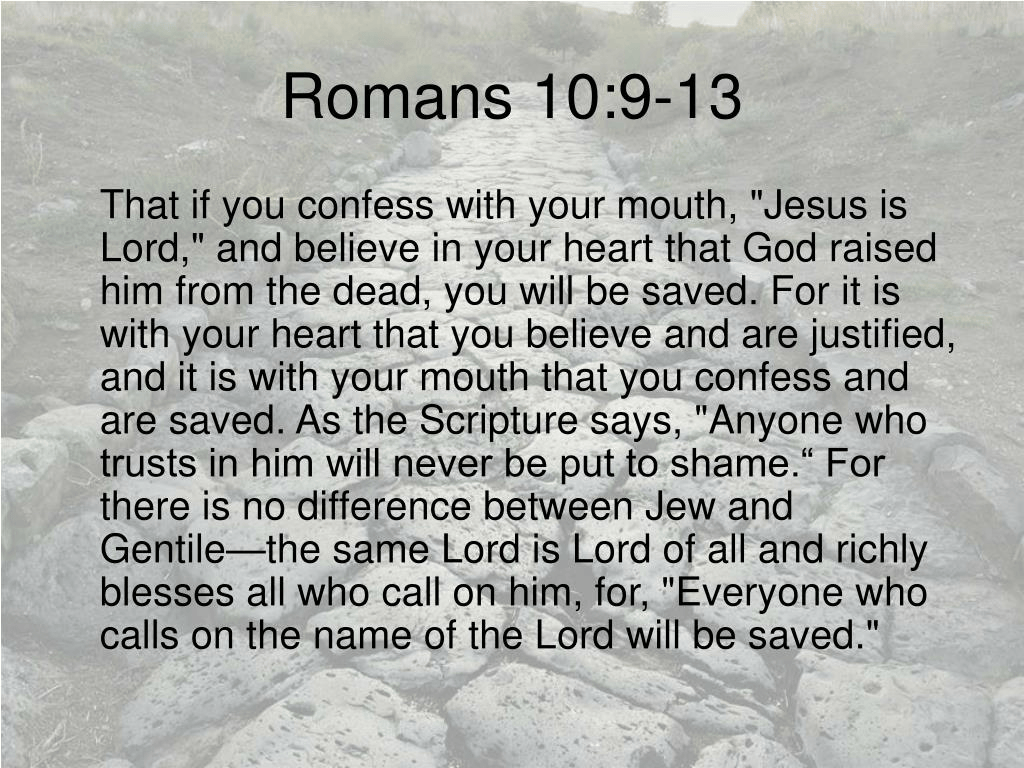
18-21 Your life is a journey you must travel with a deep consciousness of God. It cost God plenty to get you out of that dead-end, empty-headed life you grew up in. He paid with Christ’s sacred blood, you know. He died like an unblemished, sacrificial lamb. And this was no afterthought. Even though it has only lately—at the end of the ages—become public knowledge, God always knew he was going to do this for you. It’s because of this sacrificed Messiah, whom God then raised from the dead and glorified, that you trust God, that you know you have a future in God.

22-25 Now that you’ve cleaned up your lives by following the truth, love one another as if your lives depended on it. Your new life is not like your old life. Your old birth came from mortal sperm; your new birth comes from God’s living Word. Just think: a life conceived by God himself! That’s why the prophet said,

The old life is a grass life,
    its beauty as short-lived as wildflowers;
Grass dries up, flowers wilt,
    God’s Word goes on and on forever.

This is the Word that conceived the new life in you.

Word of God for the Children of God

Glory be to the Father,
and to the Son, and to the Holy Ghost;
as it was in the beginning,
is now, and ever shall be,
world without end. Amen, amen.
We live in a “disposable” culture.

We use things for a moment and then toss them away.

We see fashions change, buildings crumble, and even our own bodies feel the effects of time.

It is easy to get caught up in the “temporary”—the things that won’t matter in a hundred years.

But Peter concludes his first chapter by pointing us to the only two things on this earth that are eternal:

The Word of God and the souls of people.

Because these two things are eternal, they are where our focus should be.

In this passage, Peter explains that because we have been changed by an eternal Word, we must now practice an eternal love.

The Proof of Purification: Unfeigned Love (v. 22)

Peter begins with a statement of fact: you have “purified your souls.”

How did this happen?

It happened through our “obeying the truth.”

When we responded positively to the Gospel, the Holy Spirit began a work of inward cleansing.

But what is the evidence of that cleansing?

Is it how many verses we know?

Is it how long we pray?

Peter says the evidence of that purification is “unfeigned love of the brethren.”

The word “unfeigned” means “without a mask” or “not hypocritical.”

Because the Spirit has started this work, Peter gives a command:

“see that ye love one another with a pure heart fervently.”

The word “fervently” in Greek is a dynamic word; it means “stretched out” or “at full capacity.”

It’s the image of an athlete straining every last muscle to reach the finish line.

Our love for each other shouldn’t be “if I feel like it” or “if they deserve it.”

It should be an intense, deliberate, and sincere effort.

The Source of the New Life: Incorruptible Seed (v. 23)

Why are we capable of this kind of love?

Why can we love when it’s hard?

Because our nature has changed.

Peter reminds us that we are “born again.”

This isn’t any human makeover; it’s a divine miracle.

The Quality of the Seed:

Every plant grows according to its seed.

If you plant a corruptible (perishable) seed, you get a plant that dies.

But we were born of “incorruptible seed.”

That seed is “the word of God.”

The Word entered our hearts, took root, and produced a new kind of life—a life that is eternal because its source “liveth and “abideth for ever.”

Because we have “eternal DNA” in us through the Word, we have the capacity to practice “eternal love.”

The Contrast of Two Worlds (vv. 24–25)

To drive home the point, Peter quotes the ancient prophet Isaiah to show us the difference between man’s best and God’s Word.

Isaiah 40:1-8 New American Standard Bible

The Greatness of God

40 “Comfort, comfort My people,” says your God.
“Speak [a]kindly to Jerusalem;
And call out to her, that her [b]warfare has ended,
That her [c]guilt has been removed,
That she has received of the Lord’s hand
Double for all her sins.”

The voice of one calling out,
“Clear the way for the Lord in the wilderness;
Make [d]straight in the desert a highway for our God.
Let every valley be lifted up,
And every mountain and hill be made low;
And let the uneven ground become a plain,
And the rugged terrain a broad valley;
5 [e]Then the glory of the Lord will be revealed,
And all flesh will see it together;
For the mouth of the Lord has spoken.”
A voice says, “Call out.”
Then [f]he answered, “What shall I call out?”
All flesh is grass, and all its [g]loveliness is like the flower of the field.
The grass withers, the flower fades,
[h]When the breath of the Lord blows upon it;
The people are indeed grass!
The grass withers, the flower fades,
But the word of our God stands forever.

The Frailty of Man: “All flesh is as grass.”

A wise person once said, “You live in the presence of God; act accordingly.”

Those words capture the essence of God’s will: to be holy in everything we do.

Unlike a life driven by endless do’s and don’ts, a holy life is both gift and a goal.

The Bible tells us much about God’s holiness.

The Bible praises God’s infinite holiness and celebrates his steadfast love and care, making clear that we owe the Lord all praise and honor.

God’s holiness sets us apart from him and exposes our sin.

But the Father has given us Jesus, his Son, to set us free from our guilt.

God’s gift to us is a holiness we receive through faith in the Savior.

Set apart by God for service, we become “eager to do what is good” (Titus 2:14).

Our goal then becomes holiness, like that of our heavenly Father.

God’s gift becomes our passion.

The psalmist asks, “How can those who are young keep their way pure?”

And God’s child willingly answers,

“I seek you with all my heart; do not let me stray from your commands. I have hidden your word in my heart that I might not sin against you” (Psalm 119:9-11).

God’s great love invites us to live in his holy presence.

We show our love by joyfully embracing a life lived before God’s face.

Is this the measure of wisdom of our life?

Consider the most powerful leaders, famous celebrities, the greatest athletes.

Peter says their glory is like a wildflower.

It’s beautiful for a day, but then the sun scorches it, and it’s gone.

Everything the world produces is subject to decay.

The Endurance of the Word:

The Works and the Word of God.

For the music director. A Psalm of David.

19 The heavens tell of the glory of God;
And their expanse declares the work of His hands.
Day to day pours forth speech,
And night to night reveals knowledge.
There is no speech, nor are there words;
Their voice is not heard.
Their [a]line has gone out into all the earth,
And their words to the end of the world.
In them He has placed a tent for the sun,
Which is like a groom coming out of his chamber;
It rejoices like a strong person to run his course.
Its rising is from [b]one end of the heavens,
And its circuit to the [c]other end of them;
And there is nothing hidden from its heat.

But in stark contrast, “the word of the Lord endureth for ever.”

Governments fall, languages change, civilizations disappear, but God’s Word remains exactly as it has it always has been.

It does not go out of style.

It does not lose its power.

Peter brings it home:

“And this is the word which by the gospel is preached unto you.”

This isn’t just an abstract “Word” in the heavens; it is the very Gospel message we heard and we believed.

The same message that saved us is the message that will sustain us forever.

Investing in What Lasts

As we arrive at the finish of Chapter 1, we are left with a choice.

Where will we invest our lives?

Will we spend our energy on the “grass” and the “flowers”—the temporary riches and reputations of this world?

Or will we invest in the eternal?

To live lives which matter, anchor our souls to the Word of God that never fails, pour ourselves out as a tall drink offering into the people who will live forever.

Purify our hearts, roll up our sleeves, love our brothers and sisters “fervently.”

When everything else has withered and fallen away, the love we shared in Christ and the Truth of the Gospel we stood upon, will be the only things still standing.

In the name of God, the Father and God the Son and God the Holy Spirit … Amen

Praying …

The Voice of the Lord in the Storm.

A Psalm of David.

29 Ascribe to the Lord, [a]sons of the mighty,
Ascribe to the Lord glory and strength.
Ascribe to the Lord the glory [b]due His name;
Worship the Lord in holy attire.

The voice of the Lord is on the waters;
The God of glory thunders,
The Lord is over [c]many waters.
The voice of the Lord is powerful,
The voice of the Lord is majestic.
The voice of the Lord breaks the cedars;
Yes, the Lord breaks the cedars of Lebanon in pieces.
He makes Lebanon skip like a calf,
And Sirion like a young wild ox.
The voice of the Lord divides [d]flames of fire.
The voice of the Lord [e]shakes the wilderness;
The Lord shakes the wilderness of Kadesh.
The voice of the Lord makes the deer give birth
And strips the forests bare;
And in His temple everything says, “Glory!”

10 The Lord sat as King at the flood;
Yes, the Lord sits as King forever.
11 [f]The Lord will give strength to His people;
[g]The Lord will bless His people with peace.

Glory be to the Father,
and to the Son, and to the Holy Ghost;
as it was in the beginning,
is now, and ever shall be,
world without end. Amen, amen.

https://translate.google.com

Stepping out in faith when we cannot see what is before us, slow walking in full retreat, when we do see what is in front of us when GOD calls us to move into the unknowable horizons ahead. Hebrews 11:8-12

Hebrews 11:8-12 The Message

8-10 By an act of faith, Abraham said yes to God’s call to travel to an unknown place that would become his home. When he left he had no idea where he was going. By an act of faith he lived in the country promised him, lived as a stranger camping in tents. Isaac and Jacob did the same, living under the same promise. Abraham did it by his keeping his eye on an unseen city with real, eternal foundations—the City designed and built by God.

11-12 By faith, barren Sarah was able to become pregnant, old woman as she was at the time, because she believed the One who made a promise would do what he said. That’s how it happened that from one man’s dead and shriveled loins there are now people numbering into the millions.

Word of God for the Children of God

Glory be to the Father,
and to the Son, and to the Holy Ghost;
as it was in the beginning,
is now, and ever shall be,
world without end. Amen, amen.

Faith believes God has revealed something about the future; not everything, but something.

And what he has revealed is quite enough for us to know.

Faith seizes upon a revealed event and begins to live in anticipation of it.

Therefore, faith gives our life a goal, a purpose, a destination and horizon.

It is a look into the future.

We see this in the biblical example of the Patriarch Abraham.

He is an illustration of the meaninglessness of time in the life of faith.

It is amazing how far Abraham saw.

Abraham lived about two thousand years before Christ.

We live about two thousand years after Christ.

Yet Abraham, looking forward by faith, believing what God had said would take place, looked across the expanse of forty centuries of time and beyond, to that one day when God would bring to pass on earth, a city with eternal foundations.

Abraham saw what John sees in the book of Revelation, a city coming down out of heaven onto earth.

That is a symbol of that which we pray in the Lord’s Prayer, Thy will be done on earth as it is in heaven, (Matthew 6:10).

That is the unseen horizon Abraham longed for, an earth run after God’s order, where people dwell together in peace, harmony, blessing, beauty, fulfillment.

Because of that he was content to dwell in tents, looking for horizons coming.

You can see this quality of anticipation also in Isaac, Jacob and Joseph.

Isaac and Jacob both knew God intended to make nations from their sons, and their final prayers were based upon that fact.

They prayed in anticipation of what God had said would come, and blessed their children on that basis.

Joseph, when he was dying, saw four hundred years ahead to the coming exodus from Egypt, and arranged by faith for a funeral service in the promised land.

He did not want his bones to be buried in Egyptian soil.

Thus he symbolized his own conviction that God was going to do exactly what he had said, and eventually it happened exactly that way. (Genesis 50:24-26) and (Exodus 13:18-20)

You can see how faith anticipates in the case of Moses’ parents who, when he was born, saw he was beautiful in God’s sight (Acts 7:20-21) they acted by faith to save him from the edict of the king all newborn male children should be slain (Exodus 1:16,22).

This was more than the natural inclination of parents to preserve their children from death.

But these parents knew there was a promise of deliverance from Egypt for their people, and they knew the time was near.

God had foretold how long it would be.

They were given assurance this boy, Moses, had been singled out by God, they trusted God’s word and, acting on that, they defied the king and hid the child for three months (Hebrews 11:23).

This quality of faith, accepts as certain, that on God’s appointed day, a promise of the future will truly be fulfilled, a sure measure of a faith which always acts.

There is a common misconception that thinks of men and women of faith as so occupied with the future, they sit around, twiddle their thumbs, doing nothing.

We have heard of those who are so heavenly-minded they are no earthly good.

That is the common concept of faith.

But that is not faith; that is fatalism!

Faith works!

Faith is doing something now, in view of the future.

If you are folding your hands and waiting for the Second Coming you are not living the life of faith.

The life of faith is that which acts now in view of that coming event.

If we seek to understand better what it means to put faith into action and to take God at His word, then we need look no further than the life of Abraham.

He’s described in Romans as the father of all who have faith (Romans 4:16).

He was “fully convinced that God was able to do what he had promised” (v 21), and this was the conviction which spurred him on to faithful obedience and action.

God’s call to Abraham was costly and radical:

“The LORD said to Abram, ‘Go from your country and your kindred and your father’s house to the land that I will show you’” (Genesis 12:1).

Abraham was asked to leave his country, his friends, and his extended family—essentially, all that he knew and held dear.

God did not stop at that command, though.

He promised to bless Abraham in the new land, to make him “a great nation” and to make his name great (v 2).

And Abraham obeyed and went.

Genesis 15:4-7 New American Standard Bible

Then behold, the word of the Lord came to him, saying, “This man will not be your heir; but one who will come from your own [a]body shall be your heir.” 5 And He took him outside and said, “Now look toward the heavens and count the stars, if you are able to count them.” And He said to him, “So shall your [b] descendants be.”  Then he believed in the Lord; and He [c]credited it to him as righteousness. And He said to him, “I am the Lord who brought you out of Ur of the Chaldeans, to give you this land to [d]possess it.”

Why would anybody ever do that?

Abraham had nothing save the command of God, the accompanying promises.

But that was enough for him! That is faith in action. That is faith in every day and in every generation: taking God at His word and stepping out in obedience.

The callings of God, will seldom leave anyone where the calling finds them.

If we fail to go forth when God says ‘Go,’ then what? For by faithful obedience, Abraham’s example of faithful obedience, we should not remain stationary.

Refusing to step out and act in faith results in backward movement even as we never take a step.

Abraham, though, walked forward.

He departed in obedience, “not knowing where he was going.”

It was sufficient for him that God had told him to go, and so he did not need to be told where he would end up.

And by stepping out in faith, Abraham stepped into the heart of God’s plan to save His people and bring (how many stars in heaven?) blessings to His world.

Abraham’s example of faith and obedience leads us to discover that the only place to be is exactly where God wants us to be, and the only purpose that we should ever seek to fulfill is that which God has surely made known to us.

Has God been speaking to you through His word about stepping out in faith and obedience to His leading?

Then “today, if you hear his voice, do not harden your hearts” (Hebrews 3:15).

God’s commands, summons’, may run absolutely contrary to everything we have been planning and thinking about, and it may require us to leave behind everything that represents security to us—but if God be calling, we must go!

In the name of the Father and of the Son and of the Holy Spirit. Amen

Praying …

God Sustains His Servant.

For the music director. A Psalm of David.

40 I waited [a]patiently for the Lord;
And He reached down to me and heard my cry.
He brought me up out of the pit of [b]destruction, out of the mud;
And He set my feet on a rock, making my footsteps firm.
He put a new song in my mouth, a song of praise to our God;
Many will see and fear
And will trust in the Lord.

How blessed is the man who has made the Lord his trust,
And has not turned to the [c]proud, nor to those who become involved in falsehood.
Many, Lord my God, are the wonders which You have done,
And Your thoughts toward us;
There is no one to compare with You.
If I would declare and speak of them,
They would be too numerous to count.

You have not desired [d]sacrifice and meal offering;
You have [e]opened my ears;
You have not required burnt offering and sin offering.
Then I said, “Behold, I have come;
It is [f]written of me in the scroll of the book.
I delight to do Your will, my God;
Your Law is within my [g]heart.”

I have proclaimed good news of righteousness in the great congregation;
Behold, I will not restrain my lips,
Lord, You know.
10 I have not hidden Your righteousness within my heart;
I have spoken of Your faithfulness and Your salvation;
I have not concealed Your mercy and Your truth from the great congregation.

11 You, Lord, will not withhold Your compassion from me;
[h]Your mercy and Your truth will continually watch over me.
12 For evils beyond number have surrounded me;
My guilty deeds have overtaken me, so that I am not able to see;
They are more numerous than the hairs of my head,
And my heart has [i]failed me.

13 Be pleased, Lord, to rescue me;
Hurry, Lord, to help me.
14 May those be ashamed and humiliated together
Who seek my [j]life to destroy it;
May those be turned back and dishonored
Who delight [k]in my hurt.
15 May those be [l]appalled because of their shame
Who say to me, “Aha, aha!”
16 May all who seek You rejoice and be glad in You;
May those who love Your salvation continually say,
“The Lord be exalted!”
17 But I am afflicted and needy;
May the Lord be mindful of me.
You are my help and my savior;
Do not delay, my God.

Glory be to the Father,
and to the Son, and to the Holy Ghost;
as it was in the beginning,
is now, and ever shall be,
world without end. Amen, amen.
https://translate.google.com

Confronting, Overcoming, Tearing Down the Barriers and Strongholds, Erected high against the truth of God. 2 Corinthians 10:1-6

2 Corinthians 10:1-6 The Message

Tearing Down Barriers

10 1-2 And now a personal but most urgent matter; I write in the gentle but firm spirit of Christ. I hear that I’m being painted as cringing and wishy-washy when I’m with you, but harsh and demanding when at a safe distance writing letters. Please don’t force me to take a hard line when I’m present with you. Don’t think that I’ll hesitate a single minute to stand up to those who say I’m an unprincipled opportunist. Then they’ll have to eat their words.

3-6 The world is unprincipled. It’s dog-eat-dog out there! The world doesn’t fight fair. But we don’t live or fight our battles that way—never have and never will. The tools of our trade aren’t for marketing or manipulation, but they are for demolishing that entire massively corrupt culture. We use our powerful God-tools for smashing warped philosophies, tearing down barriers erected against the truth of God, fitting every loose thought and emotion and impulse into the structure of life shaped by Christ. Our tools are ready at hand for clearing the ground of every obstruction and building lives of obedience into maturity.

Word of God for the Children of God.

Glory be to the Father,
and to the Son, and to the Holy Ghost;
as it was in the beginning,
is now, and ever shall be,
world without end. Amen, amen.
Some mornings feel like you wake up to a battle you didn’t see coming.

The coffee is perfect, but the thoughts are as loud as 76 trombones and drums.

A whisper worries you.

A memory needles you.

A headline makes your heart heavy.

Your calendar says Tuesday, but your soul says “tired.”

Ever been there?

The pressure you can’t put your finger on?

The tug-of-war in your mind you can’t quite name?

You love Jesus, yet the waves keep rising.

You pray, yet the wind still howls.

Friend, you’re not alone.

And you’re not powerless.

Psalm 119:105-112 The Message

105-112 By your words I can see where I’m going;
    they throw a beam of light on my dark path.
I’ve committed myself and I’ll never turn back
    from living by your righteous order.
Everything’s falling apart on me, God;
    put me together again with your Word.
Adorn me with your finest sayings, God;
    teach me your holy rules.
My life is as close as my own hands,
    but I don’t forget what you have revealed.
The wicked do their best to throw me off track,
    but I don’t swerve an inch from your course.
I inherited your book on living; it’s mine forever—
    what a gift! And how happy it makes me!
I concentrate on doing exactly what you say—
    I always have and always will.

Scripture sheds light into the darkness, lifts the curtain on this moment.

It names what you face and supplies what you need.

The Word tells us our true struggle isn’t staged on streets or screens; it plays out in thoughts and in the will.

The battleground is between the ears and within the chest.

But here’s the good news: God arms His people.

He gives weapons that work, truth that steadies, and grace that guards.

He strengthens soldiers, renews minds, and teaches hearts to hold the line.

“Prayer is, beyond any question, the highest activity of the human soul.” — Martyn Lloyd-Jones.

If that is true—and it is—today we are calling on the Author and Creator of our salvation.

We will pick up what He hands us: His mighty strength, His renewing mercy, His living Word.

We’ll speak to fear with faith.

We’ll answer lies with Scripture.

We’ll lift our thoughts to Christ and watch Him lift our heads.

Ephesians 6:13-18 The Message

13-18 Be prepared. You’re up against far more than you can handle on your own. Take all the help you can get, every weapon God has issued, so that when it’s all over but the shouting you’ll still be on your feet. Truth, righteousness, peace, faith, and salvation are more than words. Learn how to apply them. You’ll need them throughout your life. God’s Word is an indispensable weapon. In the same way, prayer is essential in this ongoing warfare. Pray hard and long. Pray for your brothers and sisters. Keep your eyes open. Keep each other’s spirits up so that no one falls behind or drops out.

Take that in.

Weapons that are mighty through God.

Minds made new.

Armor for the evil day.

Steady, steel-spined standing.

This is not fantasy language.

This is family language—your Father speaking courage to His children.

Can you picture it?

Christ, with kindness in His eyes, teaching you to marshal your thoughts, to lace up the gospel boots, to lift the shield, to breathe steady under pressure.

He trains our arms and hands, legs and feet for war, our hearts for worship.

He is with you in your Monday meeting and your midnight worries.

He knows the friction you feel and the fatigue you carry.

He supplies a calm that holds in a crisis and a courage that holds on in the night.

So, as we begin, let’s set our hearts to receive.

Let’s let the Lord teach us how to fight the unseen battle through His power, to renew our thinking until our thoughts are taken prisoner by Savior Jesus, and to endure with grace, standing ready in His armor.

If your mind has been noisy, if your heart has been heavy, lean in.

The Shepherd is here.

The Word is living.

The Spirit is near.

Strength is on the way.

We prepare ourselves to fight the unseen battle through God’s power

There is more going on in your day than what your eyes can see.

Thoughts move.

Desires pull.

Words shape the minutes and hours and the days.

In all of this, real help comes from God. He gives strength that holds.

He gives light that guides.

He gives wisdom that works in real life.

We cannot force our way through on willpower.

We receive what God gives.

We ask for help.

We act on His Word.

We keep in step with His Spirit.

We keep going when it is quiet and simple.

That is where strength grows.

This shows up in normal places.

In the kitchen.

In the car.

In the meeting.

In the text thread.

In the habit you keep choosing.

God meets you there.

He does not run away nor hide from pressure.

He walks into it with you.

Call things by their right name.

A thought can be a lie.

A mood can be fear.

An excuse can be pride.

A pattern can be sin.

When you name it, you can bring it to God.

He is ready to deal with it.

His Word is living.

His Spirit is working.

They move together.

They change how you think.

They shape how you choose.

They set your mind on Christ.

Little by little, you see what is true and good.

This takes practice.

You will repeat many small steps.

Pray again.

Read again.

Speak truth again.

Ask for help again.

Over time, your reflexes change.

You reach for God faster.

You also need people.

A friend who prays.

A group that cares.

A leader who teaches the Bible with clarity.

We fight side by side.

We do not make excuses when someone asks hard questions.

We tell the truth and we keep going.

Expect pushback.

Expect fresh mercy.

Expect the Lord to keep His word.

Take today as it comes.

Take the next right step.

God supplies what He commands.

Paul says the tools God gives carry His power.

Human tools cannot move a heart or break patterns that have hardened over years.

God’s tools can.

Think of deep grooves in your mind.

Certain lies run through them like water in a channel. “I am alone.” “I cannot change.” “God won’t care about this.”

The passage speaks of tearing down prideful ideas and every claim that sets itself up against the knowledge of God.

So here is what you can do.

Catch a thought as it starts to form.

Hold it up to what God has said.

Ask, “Does this sound like the Lord’s voice?”

If it does not, do not give it your trust or your time.

Speak a better word from Scripture.

Pray it out loud.

Tell a brother or sister what you’re thinking, ask them to answer you with the Bible.

Keep a small list of verses near you, in your notes or on a card.

When an old lie walks in, meet it at the door with God’s truth.

This is hard at first.

It becomes quicker with practice.

You are not arguing with air.

You are handing thought over to Christ like a guard hands a captive to the king.

He rules there.

He decides what stays and what goes.

Over weeks and months, the channels in your mind change course.

New grooves form.

Hope runs in them.

Trust runs in them.

The Lord trains you to think with Him.

God wants your whole self.

Your body, your plans, your energy, your time.

Place it all before Him as a living act of worship.

This is a daily discipline.

It happens in errands and emails as much as in church.

Then comes the inner work.

God renews your mind.

He is not only adding facts.

He is reshaping the way you see.

He is tracing over your old maps with a better map.

When you let Him correct you, He also heals you.

When you sit under Scripture often, your thoughts begin to agree, align with His thoughts.

You begin to sense what He calls “good” without a tug of war inside.

You can test a choice and weigh it with a clear head.

You learn how to ask simple questions. “Will this honor Jesus?” “Will this help me love people?” “Is this wise for me right now?”

You start to notice which inputs shape you.

Some music, shows, feeds, and friendships pull your mind away from the Lord.

Others push you toward Him.

Set patterns that give God access to your thinking.

Read the Bible out loud.

Meditate slowly on small parts.

Memorize a line and carry it through the day.

Far from noise.

Serve someone in secret.

Thank God on purpose.

As your mind is renewed, obedience feels less like a push and more like a path you know how to walk.

Ephesians speaks to a rough day and a firm stance.

There are hours when pressure hits from many sides.

God tells you to take up everything He provides and to hold your ground.

This is not passive.

It is active trust.

Readiness is part of it.

Before the hard hour comes, build habits that fit the fight.

Tell the truth when a small lie would be easy.

Keep clean hands when corners look tempting.

Let the good news of Jesus settle your steps so you can walk into tense rooms with peace.

Raise trust like a shield when false claims fly at you.

Keep the rescue of God in front of your mind so shame does not set the tone.

Speak Scripture, not as a slogan, but as a sharp, timely word.

There are going to be days when all you can do is stand.

That still honors God.

Plant your feet.

Breathe.

Pray simple prayers. “Lord, help.” “Lord, lead.” “Lord, guard my mouth.”

Picture a soldier staying at his post while the wind rages.

He is not flashy.

He is faithful.

By grace, so are you.

God’s supply does not run thin in the late hour.

He holds you up when your own strength shakes.

When the surge passes, you will still be there.

Paul also talks like a field commander to a younger man.

“Endure hardship” is straight talk.

Hard seasons come.

Do not look for the nearest escape hatch every time pressure rises.

Stay under the weight you are meant to carry, and let God make you stronger.

Then he warns about the snare of a busy life that is full of good things but empty of focus.

Picture cords around your ankles.

You keep trying to run and keep getting yanked.

Untie the cords.

Clear the clutter.

Decide what you are about in Christ, and then order your days around that aim.

Create margins.

Set limits on screens.

Choose a few deep friendships.

Be early to church.

Keep a short list of debts and sins.

Pay and confess quickly.

Make room for prayer and the Word at the top of the day.

A soldier cares what his commander thinks.

So ask often, “Lord, what would please You here?”

This brings a steady peace.

You will make hard calls and let go of lesser gains.

You will miss some trends.

You will gain a free heart.

The Lord sees that kind of single-minded life.

He gives grace and mercy to live it.

Friends, go with this: God is good, and His love won’t let you go.

When your thoughts press in, He’s the voice that steadies; when your strength runs out, He’s the hand that holds.

You’re not facing the fight alone—Jesus is with you, faithful in the trenches and gentle in the quiet.

Let that truth settle into your spirit and soul and shape the next step you take.

Rest in His goodness.

Walk in His love.

Keep lifting your thoughts to Christ.

In the name of the Father and of the Son and of the Holy Spirit. Amen

Praying …

Psalm 25 The Message

25 1-2 My head is high, God, held high;
I’m looking to you, God;
No hangdog skulking for me.

I’ve thrown in my lot with you;
You won’t embarrass me, will you?
Or let my enemies get the best of me?

Don’t embarrass any of us
Who went out on a limb for you.
It’s the traitors who should be humiliated.

Show me how you work, God;
School me in your ways.

Take me by the hand;
Lead me down the path of truth.
You are my Savior, aren’t you?

Mark the milestones of your mercy and love, God;
Rebuild the ancient landmarks!

Forget that I sowed wild oats;
Mark me with your sign of love.
Plan only the best for me, God!

God is fair and just;
He corrects the misdirected,
Sends them in the right direction.

He gives the rejects his hand,
And leads them step-by-step.

10 From now on every road you travel
Will take you to God.
Follow the Covenant signs;
Read the charted directions.

11 Keep up your reputation, God;
Forgive my bad life;
It’s been a very bad life.

12 My question: What are God-worshipers like?
Your answer: Arrows aimed at God’s bull’s-eye.

13 They settle down in a promising place;
Their kids inherit a prosperous farm.

14 God-friendship is for God-worshipers;
They are the ones he confides in.

15 If I keep my eyes on God,
I won’t trip over my own feet.

16 Look at me and help me!
I’m all alone and in big trouble.

17 My heart and mind are fighting each other;
Call a truce to this civil war.

18 Take a hard look at my life of hard labor,
Then lift this ton of sin.

19 Do you see how many people
Have it in for me?
How viciously they hate me?

20 Keep watch over me and keep me out of trouble;
Don’t let me down when I run to you.

21 Use all your skill to put me together;
I wait to see your finished product.

22 God, give your people a break
From this run of bad luck.

Glory be to the Father,
and to the Son, and to the Holy Ghost;
as it was in the beginning,
is now, and ever shall be,
world without end. Amen, amen.

https://translate.google.com

It is 2026. Fight or Flight? Publicly acknowledge God’s power, publicly recognize, testify, of His authority. Identifying the credentials of Jesus. Mark 11:27-33

Mark 11:27-33 New International Version

The Authority of Jesus Questioned

27 They arrived again in Jerusalem, and while Jesus was walking in the temple courts, the chief priests, the teachers of the law and the elders came to him. 28  “By what authority are you doing these things?” they asked. “And who gave you authority to do this?”

29 Jesus replied, “I will ask you one question. Answer me, and I will tell you by what authority I am doing these things. 30 John’s baptism—was it from heaven, or of human origin? Tell me!”

31 They discussed it among themselves and said, “If we say, ‘From heaven,’ he will ask, ‘Then why didn’t you believe him?’ 32 But if we say, ‘Of human origin’ …” (They feared the people, for everyone held that John really was a prophet.)

33 So they answered Jesus, “We don’t know.”

Jesus said, “Neither will I tell you by what authority I am doing these things.”

Word of God for the Children of God

Glory be to the Father,
and to the Son, and to the Holy Ghost;
as it was in the beginning,
is now, and ever shall be,
world without end. Amen, amen.
The power of God is a theme that runs through the entire Bible.

It’s seen in the creation of the world, the creation of man and women and the parting of the Red Sea, the resurrection of Jesus from the dead, countless more.

This power isn’t just something that was only active in the far past, but it’s also something that is very much at work in our lives today.

God’s power is seen in the way He provides for our needs.

Think about the times when you were in need, when you didn’t know how you were going to make ends meet, or facing any situation that seemed impossible.

In those moments, did you acknowledge, recognize, testify, God provisions?

Acknowledge, recognize, testify He made a way where there seemed to be none?

His power is also seen in the way He changes lives.

We have all heard stories of people who were lost in their struggles against sin, who were living lives that were so far from any connection with God, but then encountered the power of God and their lives were completely transformed.

They were set free from the power of sin and became new creations in Christ.

But God’s power isn’t just about what He does for us, it’s also about what He does in us. He gives us the power to live godly lives, to resist temptation, to stand strong in the face of high risk adversity, even right up to life threatening.

That’s His power at work in us.

And finally, God’s power is seen in the way He works through us.

He uses us to accomplish His purposes, to spread the Good News of His love and forgiveness, His indelible Words of truth unto a world that desperately needs it.

He uses us to be His hands and feet, to be His voice, to be His love in real action.

Kneading Our Will

Consider the gathering of religious leaders in our passage.

They were men who held respected positions of authority, power and influence.

They were used to having their own way, to being in control.

But when confronted with Jesus, their will was challenged. Their responses reveals a will that was hardened, resistant to the kneading hands of God.

This brings us to the first aspect of kneading our will: the utter necessity of softening. As a lump of dough needs to be softened before it can be kneaded, so our wills needs to be softened before it can be shaped by God.

This softening process often involves experiences and circumstances that breaks us down, humble us, which makes us realize our greatest need for God.

It’s in these moments of vulnerability and surrender that God can begin to knead our will, to shape us according to His purposes.

The second aspect of kneading our will involves the process of shaping.

Once the dough is softened, the baker can begin to shape it.

This shaping process is not always comfortable.

It involves pressure, folding, stretching.

Similarly, the shaping of our will often involves harsh trials and challenges which stretches us, that push us far outside of our comfort zone.

But it’s through these experiences that our will becomes more aligned with God’s will. We begin to desire what He desires, and to value what He values.

Next is the proofing stage.

After the dough is shaped, it needs to rest.

It needs time to rise, to expand.

This is a crucial stage in the baking process.

Without it, the bread will not have the right texture and flavor.

In the same way, our will needs time to be proofed by God.

This involves periods of waiting, of trusting in God’s timing.

It’s in these moments of quiet trust that our will is strengthened and solidified, ready to be used by God.

Returning to our metaphor of kneading dough, there’s an additional aspect worth considering: the role of heat.

Once the dough has been kneaded, shaped, proofed, it’s placed in a hot oven.

Heat causes the dough to rise and solidify, transforming it into a loaf of bread.

In our lives, heat often comes in the form of trials and difficulties.

These experiences, while painful, can serve to harden, solidify our wills, to work it to temper it’s blade and make it sharper, more resilient and steadfast.

Keeping to God’s Way

The first aspect of Keeping to God’s Way we need to consider is the importance of obedience.

Obedience is not a popular word in our culture.

We value independence, autonomy, freedom to do what we want when we want.

But the Bible paints a different picture.

Biblically, obedience isn’t a burden or restriction; it’s a blessing and a privilege.

Next is the necessity of perseverance.

The Christian life is not a sprint; it’s a marathon.

It’s not about how fast we run, but about how long we keep running.

It’s about staying the course, about pressing on, about not giving up.

The third aspect of Keeping to God’s Way is the power of prayer.

Prayer is not just about asking God for things.

It’s about aligning our hearts with God’s heart.

It’s about seeking His will, not our own.

In James, we read, ‘The prayer of a righteous person is powerful and effective.’ (James 5:16)

This is a promise, a promise that our prayers make a difference. But it’s also a challenge, a challenge to pray consistently, to pray fervently, to pray with faith.

The fourth and final aspect of Keeping to God’s Way is the call to love.

Love is the hallmark of the Christian life.

It’s the distinguishing mark of a follower of Jesus.

It says in John 13:34-35, ‘A new command I give you: Love one another. As I have loved you, so you must love one another. By this everyone will know that you are my disciples, if you love one another.’

This is not a suggestion but a command, a command to love as Jesus loved.

But it’s also a challenge, a challenge to put love into action, to demonstrate our love in practical, tangible ways.

Let’s remember that God’s authority is not something to be questioned, but rather, it’s something to be embraced.

His power is not a threat to us, but a promise.

He’s not a distant deity, but a loving Father who wants the best for us.

He’s not a harsh taskmaster, but a gentle Shepherd guiding us along the right paths.

We’ve been reminded today that knowing God’s power is the key to truly living. It’s not about our strength, our wisdom, or our abilities.

It’s all about Him.

It’s about our surrendering our will to His, allowing Him to shape us and mold us into the people He needs us to be, he requires us to be and he wants us to be.

It’s about walking in His ways, even when the path seems difficult or uncertain.

Remember, we serve a God who loves us with an everlasting love, a God who is for us, not against us.

He’s our greatest cheerleader, our most faithful friend.

He’s the one who picks us up when we fall, who comforts us with an everlasting love us when we’re hurting, who guides us when we’re lost.

What do we believe, what do we think of Jesus’ authority and credentials?

Do we accept Jesus as the Son of God, sent into the world by the Father as our Savior?

So, as we go from here, let’s go with confidence, knowing that we are loved, we are cherished, and we are held in the mighty hands of our God.

And now, may the grace of our Lord Jesus Christ, the love of God, and the fellowship of the Holy Spirit be with us all, now and forevermore. Amen.

In the name of the Father and of the Son and of the Holy Spirit … Amen

Praying …

Psalm 8 New American Standard Bible

The Lord’s Glory and Mankind’s Dignity.
For the music director; on the Gittith. A Psalm of David.

Lord, our Lord,
How majestic is Your name in all the earth,
You who have [a]displayed Your splendor above the heavens!
From the mouths of infants and nursing babies You have established [b]strength
Because of Your enemies,
To do away with the enemy and the revengeful.

When I [c]consider Your heavens, the work of Your fingers,
The moon and the stars, which You have set in place;
What is man that You think of him,
And a son of man that You are concerned about him?
Yet You have made him a little lower than [d]God,
And You crown him with glory and majesty!
You have him rule over the works of Your hands;
You have put everything under his feet,
All sheep and oxen,
And also the animals of the field,
The birds of the sky, and the fish of the sea,
Whatever passes through the paths of the seas.

Lord, our Lord,
How majestic is Your name in all the earth!

Glory be to the Father,
and to the Son, and to the Holy Ghost;
as it was in the beginning,
is now, and ever shall be,
world without end. Amen, amen.
https://translate.google.com

Dare we reorder our lives under God? Around this old quote from Socrates, recommending and teaching us “The unexamined life is not worth living.” Lamentations 3:40-42

Lamentations 3:40-42 New International Version

40 Let us examine our ways and test them,
    and let us return to the Lord.
41 Let us lift up our hearts and our hands
    to God in heaven, and say:
42 “We have sinned and rebelled
    and you have not forgiven.

Word of God for the Children of God

Glory be to the Father,
and to the Son, and to the Holy Ghost;
as it was in the beginning,
is now, and ever shall be,
world without end. Amen, amen.
Letting God Name What’s Going On Inside …

Harder than the hardest Graphene, the hardest man-made material, 200 times more powerful than steel. Diamonds, strongest material we can find in nature.

Softer than the softest Vicuna fabric considered to be the softest fabric in the world, known for its ultra luxurious feel, fine fibers thinner than human hair.

It is highly prized for its exceptional softness and is often used in high-end garments like scarves and sweaters. 

What then, does Lamentations 3:40-42 really mean?

Lamentations 3:40-42 is about our acknowledging and repenting of our sins, returning to the Lord in prayer and seeking forgiveness, and examining our ways against those of God, to turn back to Him with sincerity and humility.

The scene opens in the ancient city of Jerusalem, a once bustling and vibrant place now reduced to ruins and desolation.

The sun is setting, casting a golden hue over the broken walls and scattered debris.

A group of survivors, including Jeremiah the prophet, are gathered in the midst of the destruction.

They have come together in a solemn assembly, seeking solace and guidance in the midst of their suffering.

Jeremiah, with tears in his eyes, raises his voice to address the group. He urges them to examine their ways and return to the Lord with repentant hearts.

The people are listening intently, their faces are etched with deep sorrow and despair. 

They have witnessed the consequences of their disobedience and now long for restoration and forgiveness.

As the evening shadows lengthen, a sense of heaviness hangs in the air.

The group bows their heads in prayer, seeking forgiveness and mercy from the God they have forsaken.

In this moment of brokenness and humility, they look to cling to the hope of redemption and restoration, knowing that only through sincerest repentance and faith, trust, obedience, can they find healing for their land and their souls.

The author in Lamentations 3:40-42 calls for deep reflection and introspection.

The verses emphasize the importance of our accepting responsibility for our actions and seeking forgiveness and mercy from God.

It prompts us to look closely at our behaviors, attitudes, and choices, and with brutal honesty, rigorously assess whether or not they align with God’s will.

We don’t test our ways for several reasons.

Could be as simple as laziness, but often it comes down to some sort of pride.

We arrogantly believe we couldn’t possibly be wrong, or we know we are and don’t want to feel challenged, lacking or embarrassingly wrong on any issue.

Such a discipline of self-examination proves uncomfortable on several levels.

We don’t like finding deficits or confessing to any hidden weaknesses in our character or spiritual life.

And yet, this is the only way we grow, going through temporary suffering and adversity to reach God’s greater joy and peace.

On the negative side, our flat rejection, refusal of such challenges, allows lies and weakness to destroy us.

The prophet Jeremiah writes during such consequences in Lamentations 3:40.

Judah had dismissed the prophetic calls to repentance away from idols and sin.

Ultimately, God allowed them to fall to chaos and oppression as a consequence. 

In the midst of these dismissive sorrowful verses of Lamentations, attributed to the prophet Jeremiah, penned during the Babylonian exile, we find God’s call to action that continuously, unmistakably, indelibly resonates through the ages.

These specific verses urge us to examine our ways, test them, and ultimately return to the Lord.

The essence of self-reflection and introspection is crucial in our spiritual walk, akin to David’s plea in Psalm 139 for God to search his heart, test his thoughts.

By our submission, giving God free access, delving and digging deep into our innermost thoughts and motives, we pave the way for personal growth and a significantly deeper, more intimate communion with Father, Son, Holy Spirit.

Repentance stands at the central core of the prophets’ messages, urging us to turn back to God wholeheartedly.

Just as Joel implores in the Old Testament, our return to the Lord necessitates a genuine transformation of heart and deeds.

The act of lifting our hearts and hands in worship symbolizes surrender and adoration, echoing exhortations in 1 Timothy to pray with uplifted, holy hands.

True worship involves not just our outward gestures but a profound connection with the Almighty.

Our acknowledgment of sin and rebellion, coupled with our sincere plea for forgiveness, reflects a profound understanding of fallibility and God’s justice.

John’s assurance in his epistle that God is faithful to forgive those who confess their sins underscores the indelibly timeless need for mercy and reconciliation.

These verses serve as a poignant reminder of our continual need for God’s grace and the humility required to seek His forgiveness.

In today’s fast-paced world, the principles of self-examination, repentance, and genuine worship remain as relevant as ever.

Taking a moment to pause, reflect on our actions, and realign our priorities with God’s will is essential for spiritual growth.

Consider the story of someone who, amidst their plethora of demands of life, realized the need to recalibrate their focus, leading to a restored balance and a deepened relationship with God.

Such narratives inspire us to embark on our own journey of introspection and renewal.

As we conclude, let us remember the vital lessons from Lamentations 3:40-42:

the significance of self-examination, the transformative power of repentance, and the beauty of genuine worship.

May we each be encouraged to set aside time with Jesus for reflection, to seek reconciliation with God, and to worship Him wholeheartedly.

Let us close with a prayer, asking for God’s guidance and grace as we navigate our paths of faith and repentance, trusting in His unfailing love and mercy.

In the name of the Father, and of the Son, and of the Holy Spirit, Amen

Praying …

Psalm 26 New American Standard Bible

Protestation of Integrity and Prayer for Protection.

A Psalm of David.

26 [a]Vindicate me, Lord, for I have walked in my integrity,
And I have trusted in the Lord [b]without wavering.
Examine me, Lord, and put me to the test;
Refine my [c]mind and my heart.
For Your [d]goodness is before my eyes,
And I have walked in Your truth.
I do not sit with [e]deceitful people,
Nor will I go with [f]pretenders.
I hate the assembly of evildoers,
And I will not sit with the wicked.
I will wash my hands in innocence,
And I will go around Your altar, Lord,
That I may proclaim with the voice of thanksgiving
And declare all Your [g]wonders.

Lord, I love the dwelling of Your house,
And the place [h]where Your glory remains.
Do not [i]take my soul away along with sinners,
Nor my life with men of bloodshed,
10 In whose hands is a wicked scheme,
And whose right hand is full of bribes.
11 But as for me, I will walk in my integrity;
Redeem me, and be gracious to me.
12 My foot stands on level ground;
In the congregations I will bless the Lord.

Glory be to the Father,
and to the Son, and to the Holy Ghost;
as it was in the beginning,
is now, and ever shall be,
world without end. Amen, amen.
https://translate.google.com

True or False or I do not know nor do I even care that trauma and loss make believing we’re all loved, challenging. Job 16:6-17

Job 16:6-17 New American Standard Bible

Job Says God Shattered Him

“If I speak, my pain is not lessened,
And if I refrain, what pain leaves me?
But now He has exhausted me;
You have laid waste all my group of loved ones.
And You have shriveled me up,
[a]It has become a witness;
And my infirmity rises up against me,
It testifies to my face.
His anger has torn me and [b]hunted me down,
He has gnashed at me with His teeth;
My enemy [c]glares at me.
10 They have gaped at me with their mouths,
They have [d]slapped me on the cheek with contempt;
They have massed themselves against me.
11 God hands me over to criminals,
And tosses me into the hands of the wicked.
12 I was at ease, but He shattered me,
And He has grasped me by my neck and shaken me to pieces;
He has also set me up as His target.
13 His arrows surround me.
He splits my kidneys open without mercy;
He pours out my bile on the ground.
14 He breaks through me with breach after breach;
He runs at me like a warrior.
15 I have sewed sackcloth over my skin,
And thrust my horn in the dust.
16 My face is flushed from weeping,
And deep darkness is on my eyelids,
17 Although there is no violence in my hands,
And my prayer is pure.

Word of God for the Children of God

Glory be to the Father,
and to the Son, and to the Holy Ghost;
as it was in the beginning,
is now, and ever shall be,
world without end. Amen, amen.
We are loved!

We are held together by God’s love!

We are held together by God’s unbreakable, unshakeable perfect love.

We are genuinely loved!

We are authentically loved!

We are perfectly loved!

We are loved with an everlasting love! (Jeremiah 31:3)

We are unconditionally loved by God the Father, the Son, God the Holy Spirit!

1 John 4:7-12 New American Standard Bible

God Is Love

Beloved, let’s love one another; for love is from God, and everyone who loves has been born of God and knows God. The one who does not love does not know God, because God is love. By this the love of God was revealed [a]in us, that God has sent His only Son into the world so that we may live through Him. 10 In this is love, not that we loved God, but that He loved us and sent His Son to be the [b]propitiation for our sins. 11 Beloved, if God so loved us, we also ought to love one another. 12 No one has ever seen God; if we all love one another, God remains in us, and His love is perfected in us.

These are simple sounding, deeply comforting, reassuring biblical truths that we all too often, tragically, catastrophically, we always remember to forget.

For some reason our believing we are loved, secure, precious, forgiven, and too created for a purpose, are inevitably something we will all have to struggle with.

Abraham … ordered by God to take the only son of his body, the one to whom Abraham would pass his inheritance to, Isaac, up a mountain, to be sacrificed.

Jacob who in his old age, learning that his youngest son, Joseph, had just been ravaged by a wild animal and was killed. Except his other sons had lied to him showing him a blood soaked garment, lied to, by his envious sons to cover up a conspiracy to kill Joseph, when in fact they had sold him into slavery in Egypt.

Then they had deliberately concealed the truth from their father for many long years until they needed food to stave off a severe famine throughout the region.

Then there is the 400 years of hardcore dehumanizing murderous unrelenting bondage in Egypt meant to destroy spirits, to starve a nation into submission.

The magnitude of the trauma cannot be imagined, measured nor quantified.

The short and long-term significance of God’s absence upon the spirits of the enslaved humanity believing there would be no relief, rescue and no freedom, redemption, likewise cannot be conceived, imagined, measured, nor quantified.

The promised love of God … transformed into what magnitude of anger, hatred?

Great is thy faithfulness, O’ God my Father?

Greater still thy faithlessness, O God!

Greater still shall be my growing hatred, growing disbelief, growing mistrust!

What about all that always faithful, always available love?

Wait, God … I will ask my taskmaster if he knows where your “love” went!

He said … “right here in my whip, right there on your breaking, laboring, body.”

So, Lord … just keep your alleged love to yourself … I cannot long bear it nor can I long survive it. Your love is literally killing me and my brethren. Please, STOP!

Please Lord, stop loving me so much…it is hard enough for me to just stay alive.

God, get out of my life!

I do not need nor do I want or desire your kind of love!

God, your “love” just brutalizes me, demeans me, hurts me too much!

God … just keep your love locked away in your house!

No one wants any part of it, anymore!

Get lost! God …

And stay lost … forever and ever … Amen!

 In the name of the Father and of the Son and of the Holy Spirit. Amen

Praying ….

An Experience of the Captivity.

137 By the rivers of Babylon,
There we sat down and wept,
When we remembered Zion.
Upon the [a]willows in the midst of it
We hung our [b]harps.
For there our captors [c]demanded of us [d]songs,
And our tormentors, jubilation, saying,
“Sing for us one of the songs of Zion!”

How can we sing the Lord’s song
In a foreign land?
If I forget you, Jerusalem,
May my right hand [e]forget its skill.
May my tongue cling to the roof of my mouth
If I do not remember you,
If I do not [f]exalt Jerusalem
Above my chief joy.

Remember, Lord, against the sons of Edom
The day of Jerusalem,
Those who said, “Lay it bare, lay it bare
To its foundation!”
Daughter of Babylon, you [g]devastated one,
Blessed will be one who repays you
With [h]the retribution with which you have repaid us.
Blessed will be one who seizes and dashes your children
Against the rock.

Glory be to the Father,
and to the Son, and to the Holy Ghost;
as it was in the beginning,
is now, and ever shall be,
world without end. Amen, amen.
https://translate.google.com

Do not be obsessed with getting more material things? Be relaxed with what we have? We never require any castle. Hebrews 13:5-6

Hebrews 13:5-6 New American Standard Bible

Make sure that your character is free from the love of money, being content with what you have; for He Himself has said, “I will never desert you, nor will I ever abandon you,” so that we confidently say,

“The Lord is my helper, I will not be afraid.
What will man do to me?”

Word of God for the Children of God

Glory be to the Father,
and to the Son, and to the Holy Ghost;
as it was in the beginning,
is now, and ever shall be,
world without end. Amen, amen.
Did you ever read the story, The Fisherman’s Wife? 

https://americanliterature.com/childrens-stories/the-fisherman-and-his-wife

It’s a wonderful story published by the Brothers Grimm in about 1812 about a fisherman who catches a magic flounder fish.

When the fisherman shared this with his wife she called him foolish, told him go have the fish give them a cottage instead of the small house they lived in.

The fisherman obeyed and came home to a nice cottage.

But a day later, the wife was dissatisfied and insisted he go back and ask for a castle.

The fisherman reluctantly did that, and there was a castle in place of their cottage.

A day later, the wife wanted to be the queen of the whole land.

Once again, the husband went to the fish and told him what his wife wanted.

And even though that wish was also granted, the wife wanted to be ruler over the sun and moon.

When the husband left the fish after telling him that, he came home to find something that surprised him. He found his wife in the very same little house they first had. The story’s moral is: We should be content with what we have.

It’s easy to look around and see what others own and to be dissatisfied with what we have at the moment. We get envious, we get jealous, and depressed.

In this age of technology, we are forever being shown things we should own.

We are shown houses, estates, mansions of the rich and famous.

When I was in Scotland and London several years ago, a church tour we toured Edenborough Castle, we toured many other castles which were in complete and utter ruins barely recognizable as castles.

We finally returned to London there was the Royal House of Windsor Castle the oldest castle in the world.

Of course, we dare not miss mentioning the grandeur of Buckingham Palace.

Being owned by the Royal Family King Charles III, none of the above stately properties will ever go up for sale to anyone especially any of us commoners.

For all us regular folks, even millionaires and billionaires and trillionaire, the whole psychology behind real estate marketing is to make the potential buyer feel like he/she is missing out, if they do not have the newest of everything. 

Instead of the glut and lure, temptation of material things, all the latest highest technologies, God’s Word is what we should be immersed in, not the world and modest, low budget, fancy and 5 star expensive AI generated advertisements.

Place Your Life Before God

12 1-2 So here’s what I want you to do, God helping you: Take your everyday, ordinary life—your sleeping, eating, going-to-work, and walking-around life—and place it before God as an offering. Embracing what God does for you is the best thing you can do for him. Don’t become so well-adjusted to your culture that you fit into it without even thinking. Instead, fix your attention on God. You’ll be changed from the inside out. Readily recognize what he wants from you, and quickly respond to it. Unlike the culture around you, always dragging you down to its level of immaturity, God brings the best out of you, develops well-formed maturity in you.

Read Romans 12:1-2 very carefully.

So here’s what I want you to do, God helping you: Take your everyday, ordinary life—your sleeping, eating, going-to-work, and walking-around life—and place it all before God as an offering.

Embracing what God does for you is the best thing you can do for him.

Don’t become so well-adjusted to your culture that you fit into it without even thinking. Instead, fix your attention on God.

God wants us to not be conformed to this world.

We should not have to follow the world’s pattern.

If we read, study, apply God’s Word, we see how important it is to be content.

When we think we lack things we’re entitled to, it’s a very real temptation to be dissatisfied with God’s provision.

Philippians 4:10-14 The Message

Content Whatever the Circumstances

10-14 I’m glad in God, far happier than you would ever guess—happy that you’re again showing such strong concern for me. Not that you ever quit praying and thinking about me. You just had no chance to show it. Actually, I don’t have a sense of needing anything personally. I’ve learned by now to be quite content whatever my circumstances. I’m just as happy with little as with much, with much as with little. I’ve found the recipe for being happy whether full or hungry, hands full or hands empty. Whatever I have, wherever I am, I can make it through anything in the One who makes me who I am. I don’t mean that your help didn’t mean a lot to me—it did. It was a beautiful thing that you came alongside me in my troubles.

Read Philippians 4:18-20.

Philippians 4:18-20 New American Standard Bible

18 But I have received everything in full and have an abundance; I am [a]amply supplied, having received from Epaphroditus [b]what you have sent, [c]a fragrant aroma, an acceptable sacrifice, pleasing to God. 19 And my God will supply [d]all your needs according to His riches in glory in Christ Jesus. 20 Now to our God and Father be the glory [e]forever and ever. Amen.

God says he will supply all our needs.

And he does this according to the riches in Christ Jesus.

That’s Radical Generosity.

When we are discontent, it’s easy to have quarrels about material possessions.

The Bible calls us to be thankful for and be content with everything we have.

Our family, health, meals, resources we can share with loved ones, and of course life itself— all are precious gifts from the Lord.

But our discontentment, envy, jealousy, greed, or fears doesn’t allow us to fully appreciate and treasure the precious gifts of life.

We don’t know what the future holds.

We might have to go through difficult times of having “no food on the tables, in the cupboards or shelves”—or worse.

But as the beloved children of God we are each assured of his continuous love and care. The Lord himself is our helper and our provider in this perilous life.

In the name of the Father and of the Son and of the Holy Spirit. Amen

Praying …

Psalm 23 Complete Jewish Bible

(0) A psalm of David:

(1) Adonai is my shepherd; I lack nothing.
He has me lie down in grassy pastures,
he leads me by quiet water,
he restores my inner person.
He guides me in right paths
for the sake of his own name.
Even if I pass through death-dark ravines,
I will fear no disaster; for you are with me;
your rod and staff reassure me.

You prepare a table for me,
even as my enemies watch;
you anoint my head with oil
from an overflowing cup.

Goodness and grace will pursue me
every day of my life;
and I will live in the house of Adonai
for years and years to come.

Glory be to the Father,
and to the Son, and to the Holy Ghost;
as it was in the beginning,
is now, and ever shall be,
world without end. Amen, amen.
https://translate.google.com

I love You God because You listened to me, listened as I begged for mercy. God listened so intently as I laid out my case before him. Lord, I am tired and ready for change, ready for rest. Psalm 116

Psalm 116 Christian Standard Bible

Psalm 116
Thanks to God for Deliverance

I love the Lord because he has heard
my appeal for mercy.
Because he has turned his ear to me,
I will call out to him as long as I live.

The ropes of death were wrapped around me,
and the torments of Sheol overcame me;
I encountered trouble and sorrow.
Then I called on the name of the Lord:
“Lord, save me!”

The Lord is gracious and righteous;
our God is compassionate.
The Lord guards the inexperienced;
I was helpless, and he saved me.
Return to your rest, my soul,
for the Lord has been good to you.
For you, Lord, rescued me from death,
my eyes from tears,
my feet from stumbling.
I will walk before the Lord
in the land of the living.
10 I believed, even when I said,
“I am severely oppressed.”
11 In my alarm I said,
“Everyone is a liar.”

12 How can I repay the Lord
for all the good he has done for me?
13 I will take the cup of salvation
and call on the name of the Lord.
14 I will fulfill my vows to the Lord
in the presence of all his people.

15 The death of his faithful ones
is valuable in the Lord’s sight.
16 Lord, I am indeed your servant;
I am your servant, the son of your female servant.
You have loosened my bonds.

17 I will offer you a thanksgiving sacrifice
and call on the name of the Lord.
18 I will fulfill my vows to the Lord
in the presence of all his people,
19 in the courts of the Lord’s house—
within you, Jerusalem.
Hallelujah!

The Word of God for the Children of God

Glory be to the Father,
and to the Son, and to the Holy Ghost;
as it was in the beginning,
is now, and ever shall be,
world without end. Amen, amen.
Return, O my soul, to your rest;  for the LORD has dealt bountifully with you. For you have delivered my soul from death, my eyes from tears, my feet from stumbling”  Psalm 116:7-8

Today I don’t want to get caught up in words…I find myself just wanting to sit quietly and listen.

To not think about everything too much and instead open my heart to hear God singing over me.

The Lord has dealt bountifully with me. He has delivered my soul from death, my eyes from tears, and my feet from stumbling. He is faithful. He is for me. As I calm and quiet my soul, He beckons me to rest in the shadow of His wings.

As I paused today to dwell on this, I simply, fervently prayed that God would open up my heart to hear His songs and recognize His sweet angelic melody.

I asked Him to speak His peace onto my soul.

Sitting here, moving through music videos, the next song that appeared was “My Beloved” by Kari Jobe.

Soon, tears came to my eyes as I realized what a perfect choice it was.

What a beautiful example of the faithful, compassionate care of our God.

Psalm 116 has a trio of uplifting verses tucked away in its third stanza.

The first two verses describe the writers thankfulness for God’s response.

The next section (verses three to six) recall God’s deliverance.

That’s where the trio of encouragement comes in.

Speaking about himself, the author tells himself to “return to your rest” (v. 7).

It’s clear from the verses above, that deliverance is in view, not a nap.

The Psalmist is able to rest easy, knowing God has taken action in his behalf.

Speaking about the Lord, the author praises the Lord for “delivering me from death” (v. 8).

This might seem a little overly dramatic at first, but God never wastes His energy.

The Psalmist cried out for help, and God intervened.

Speaking about the world around him, the author praises the Lord for delivering him “into the land of the living” (v. 9).

This phrase can be used literally or figuratively.

Figuratively, it means to live life before God and in fellowship with other believers.

These verses remind me that prayer is about more than asking God for things.

It’s about more than getting Him to meet my needs.

Prayer is one of the ways we experience eternal life.

We call out to God and He hears us. He moves on our behalf and we are saved.

We are free to live a new identity in connection with the God our Creator.

From our text today, the psalmist begins with a profound declaration of his love for God, rooted in the fact that God has heard his cries for mercy.

This is a response to God’s attentiveness—His willingness to listen and respond to His people.

It’s not just about hearing, but about God’s active participation in our lives.

The phrase “He inclined His ear” signifies a direct movement of God toward us, showing His personal involvement in our struggles and desires.

This understanding should lead us to marvel at God’s constant presence, ready to listen and act in our lives, no matter how dire our situation may seem.

Recognizing God’s deliverance is about acknowledging that His help has been consistent in both large and small ways.

When we look back at our lives, we see those countless moments where God’s mercy intervened in ways we couldn’t have anticipated.

The psalmist’s decision to call upon the Lord as long as he lives reflects a deep commitment born out of gratitude.

It’s a recognition that God’s attentiveness isn’t just a once in a lifetime event; it’s a reason to continuously engage with Him.

Our response, like the psalmist’s, should be to continuously call on God, not just in our times of discomfort and distress but in all of life’s moments also.

In the name of the Father, and of the Son, and of the Holy Spirit

Praying …

Psalm 119:49-56 New Living Translation

Zayin

49 Remember your promise to me;
    it is my only hope.
50 Your promise revives me;
    it comforts me in all my troubles.
51 The proud hold me in utter contempt,
    but I do not turn away from your instructions.
52 I meditate on your age-old regulations;
    O Lord, they comfort me.
53 I become furious with the wicked,
    because they reject your instructions.
54 Your decrees have been the theme of my songs
    wherever I have lived.
55 I reflect at night on who you are, O Lord;
    therefore, I obey your instructions.
56 This is how I spend my life:
    obeying your commandments.

Glory be to the Father,
and to the Son, and to the Holy Ghost;
as it was in the beginning,
is now, and ever shall be,
world without end. Amen, amen.
https://translate.google.com