

Psalm 73 New Living Translation
A psalm of Asaph.
1 Truly God is good to Israel,
to those whose hearts are pure.
2 But as for me, I almost lost my footing.
My feet were slipping, and I was almost gone.
3 For I envied the proud
when I saw them prosper despite their wickedness.
4 They seem to live such painless lives;
their bodies are so healthy and strong.
5 They don’t have troubles like other people;
they’re not plagued with problems like everyone else.
6 They wear pride like a jeweled necklace
and clothe themselves with cruelty.
7 These fat cats have everything
their hearts could ever wish for!
8 They scoff and speak only evil;
in their pride they seek to crush others.
9 They boast against the very heavens,
and their words strut throughout the earth.
10 And so the people are dismayed and confused,
drinking in all their words.
11 “What does God know?” they ask.
“Does the Most High even know what’s happening?”
12 Look at these wicked people—
enjoying a life of ease while their riches multiply.
13 Did I keep my heart pure for nothing?
Did I keep myself innocent for no reason?
14 I get nothing but trouble all day long;
every morning brings me pain.
15 If I had really spoken this way to others,
I would have been a traitor to your people.
16 So I tried to understand why the wicked prosper.
But what a difficult task it is!
17 Then I went into your sanctuary, O God,
and I finally understood the destiny of the wicked.
18 Truly, you put them on a slippery path
and send them sliding over the cliff to destruction.
19 In an instant they are destroyed,
completely swept away by terrors.
20 When you arise, O Lord,
you will laugh at their silly ideas
as a person laughs at dreams in the morning.
21 Then I realized that my heart was bitter,
and I was all torn up inside.
22 I was so foolish and ignorant—
I must have seemed like a senseless animal to you.
23 Yet I still belong to you;
you hold my right hand.
24 You guide me with your counsel,
leading me to a glorious destiny.
25 Whom have I in heaven but you?
I desire you more than anything on earth.
26 My health may fail, and my spirit may grow weak,
but God remains the strength of my heart;
he is mine forever.
27 Those who desert him will perish,
for you destroy those who abandon you.
28 But as for me, how good it is to be near God!
I have made the Sovereign Lord my shelter,
and I will tell everyone about the wonderful things you do.
Word of God for the Children of God
Glory be to the Father,
and to the Son, and to the Holy Ghost;
as it was in the beginning,
is now, and ever shall be,
world without end. Amen, amen.
There are seasons when evil seems to be winning.
Proud men strut.
Corrupt people rise.
The shameless appear comfortable, loud, wealthy, and untouchable.
Meanwhile, those who are trying to walk uprightly often carry grief, pressure, and affliction.
Psalm 73 speaks directly to that tension.
It does not pretend the struggle is imaginary.
It tells the truth about how easy it is to look at the wicked and wonder whether faithfulness is worth it.
But it also tells the deeper truth.
What looks like prosperity is not the whole story, and what looks like loss for the righteous is not the end of the matter.
Psalm 73 explores the contrast between the prosperity of the wicked and the struggles of the righteous, highlighting how envy can distort one’s perception of God’s goodness.
The psalmist ultimately realizes that true value lies in God’s presence rather than material wealth, emphasizing that the apparent success of the wicked is temporary and deceptive.
What Psalm 73 is about ….
At the center of Psalm 73 is a hard question:
Where is God when the wicked seem to have the upper hand?
an all to familiar question countless numbers of people have asked since ….
Where is God when …. ?
Where was God when ….?
One of those questions virtually no one can give a satisfactory, nor meaningful, nor quick fix, nor calming, quieting, nor comforting, nor pastoral response to.
One seriously rhetorical question for which there are no responses to offer.
So, what does the Psalmist offer us for assurance or reassurance of heart?
Our Psalmist opens with a settled confession.
God is good to His people, to those who are pure in heart.
That is the fixed point.
But almost immediately the psalmist admits his own feet had nearly slipped.
He had begun to descend into envying the arrogant because he saw the apparent injustice of the prosperity of the wicked versus suffering of the impoverished.
Where is that promise from God that all people are equal in His sight?
That is what makes this psalm so useful.
It does not come from a man who has not been untouched by temptation.
It comes from a man who nearly lost his footing, then recovered it by seeing reality through the truth of God.
The problem is not particularly hard to understand.
The wicked often seem to have what many people want.
- Ease
- Influence
- Power
- Recognition
- Entitlement
- Abundance
- Freedom to sin without immediate consequences or judgment.
- Resources …. Money, Property, Protected Status – friends in high places.
- Shielded Untouchables …. “Diplomatic Immunity” “No Jurisdiction”
Psalm 73 describes them as entitled, proud, violent, boastful, and full of abundance, rich beyond the dreams of avarice. conceited, untouchable.
They speak as though even heaven itself were beneath their notice.
They act as if God is less than, does not see, does not know, and will not judge.
That socio-economic cultural perception, that combination is what stings.
It is not merely that wicked people sin.
It is that they are free to sin as much as they want and seem to get away with it.
If you have ever looked around and thought, “The dishonest are advancing, while the obedient are burdened,” then you are standing in the same place the psalmist once stood.
The first danger: envying what should be pitied
The psalmist says plainly that he was envious.
That is the first trap of our adversary.
Envy does not, will not always announce itself.
Sometimes it sounds more respectable.
- “Why do they get away with everything?”
- “Maybe compromise is the only practical way to live.”
- “What is the use of trying to stay clean?”
- “Maybe faithfulness just makes life harder.”
- “Maybe God really does not care about anyone or anything.
But underneath all that is a bottomless cistern called envy.
It is the maturing desire for the apparent advantages of rebellion.
This is why Psalm 73 is not merely about “those bad people out there.”
It presses much closer than that.
Before using the psalm to identify public villains, it is better to let it search your own heart. The dividing line in the psalm is not simply between religious people and irreligious people. It is between those who desire God and those who do not.
Psalm 73 gives an all to vivid portrait of unhinged pride, raging ungodliness.
Pride is not a side issue here.
It hangs on them like a Monarchy’s crown jewels at coronation time.
They wear self-exaltation openly.
They do not blush over it.
They display it without conscience, without any semblance of shame.
The threat of violence born of power, of influence covers them like a garment.
That does not only mean physical aggression, though it can include that.
Also includes social cultural economic political, force of arms oppression, torture, cruelty, hard-heartedness, and the use of power to crush others.
Their desires rule their Hearts and Souls
They have more ambition, avarice, than heart could ever contain.
Their lives are driven by appetite.
They do not merely enjoy what God gives.
They organize themselves around getting more.
Their mouths and their words will betray them
They speak eloquently, with charisma.
They speak confidently.
They speak loftily.
They speak as if they are immune, untouchable from prosecution.
They speak against heaven.
They speak against God.
Their words reveal the harder than diamonds nature of their hearts and souls.
Man talks as if he answers to no one is telling you exactly what he thinks of God.
This matters because Scripture consistently treats speech as a window into the dark heart. What comes out of a person tells you much about what lives within.
Are they really prospering?
Here is where careful rigorous critical thinking is needed.
Do their words speak the Gospel truth?
Are they consistent with what Scriptures say?
Psalm 73 records the psalmist’s perception before his understanding was corrected.
Things appeared smooth for the wicked.
They looked untroubled.
They looked secure.
They looked stronger than everyone else.
But appearances are not the same as reality.
A person can project confidence while being inwardly tormented.
Someone can look established while living one step from collapse.
Wealth, influence, and public applause are not proof of peace. In many cases, they only hide turmoil better.
More importantly, even if the wicked truly enjoy temporary ease, Psalm 73 insists this is not lasting prosperity.
It is brief, it is fleeting like the winds, it is as fragile as a newborn child..
It belongs to this age only.
By the Word of God it will end, come undone as a house built on loose sand. (Matthew 7:24-28, Luke 6:46-49, 1 Corinthians 3:10-15, 2 Timothy 2:15-19)
Why the righteous can be tempted to despair
Further, he psalmist reached a dark conclusion for a time.
He began to believe that he “lost touch” had kept his heart clean in vain.
Had sought innocence, yet felt plagued, chastened while the wicked grew fat.
That is the second danger.
Not just envy, but weariness in obedience.
When a believer starts measuring God’s goodness only by immediate outward circumstances, confusion follows quickly.
If your standard is “good people should have the easiest lives now,” then much of providence will seem upside down.
That mistake is still common.
People see a hard season, an unanswered prayer, or the temporary success of evil, and then begin quietly putting God in storage boxes then storage facility.
They assess Him by their limited sight.
That is what the psalm corrects.
The key turning point: understanding comes in the sanctuary
The hinge of Psalm 73 is one of the most important lines in the whole psalm: the confusion lasted until the psalmist went into the sanctuary of God.
Then he understood the inevitable end of the wicked by God’s own hand.
This means his thinking was corrected where God’s truth was declared.
He stopped interpreting reality through envy, frustration, and raw observation.
He began interpreting reality through the Word of God.
That is the remedy – the Word of God. (Isaiah 55:8-13, Hebrews 4:12)
When providence is hard to read, do not trust your first emotional draft.
Bring your confusion under the electron microscope of Scripture.
God’s truth does not erase the difficulty, but it puts it in its proper focus.
What the psalmist finally understood about the wicked
Once his perspective was corrected, the psalmist saw several things clearly.
1. The wicked stand on slippery ground
The very people he had envied were not standing on solid footing at all. They were in slippery places. Their downfall could come swiftly and decisively.
That is a devastating reversal. The one who thought he was slipping discovers that the wicked are the ones in true peril.
2. Their end is sudden
Their ruin can arrive in a moment. What looked permanent can vanish quickly. Their confidence is paper thin and fragile. Their security is false, imaginary.
3. Their prosperity is temporary
Even at its brightest, worldly success for the ungodly lasts only for this life. It is as good as it gets for them. Beyond that comes judgment – God’s judgment!
4. God is not indifferent
The wicked may talk as if heaven is silent, but heaven is not asleep. (Psalm 121)
Divine patience is not divine approval.
Delay is not indifference.
God sees, and God will judge.
How to read present success in light of final judgment
One of the clearest lessons of Psalm 73 is that we must not treat temporary comfort as the highest category.
If all we can see is the present moment, then the wicked may seem enviable.
But if we include their end by the Word of God, envy dies.
This is why Scripture repeatedly trains believers to think beyond appearances.
A life can be full and empty at the same time.
A man can be celebrated and cursed.
An individual can be envied and miserable.
A movement can be fashionable and doomed.
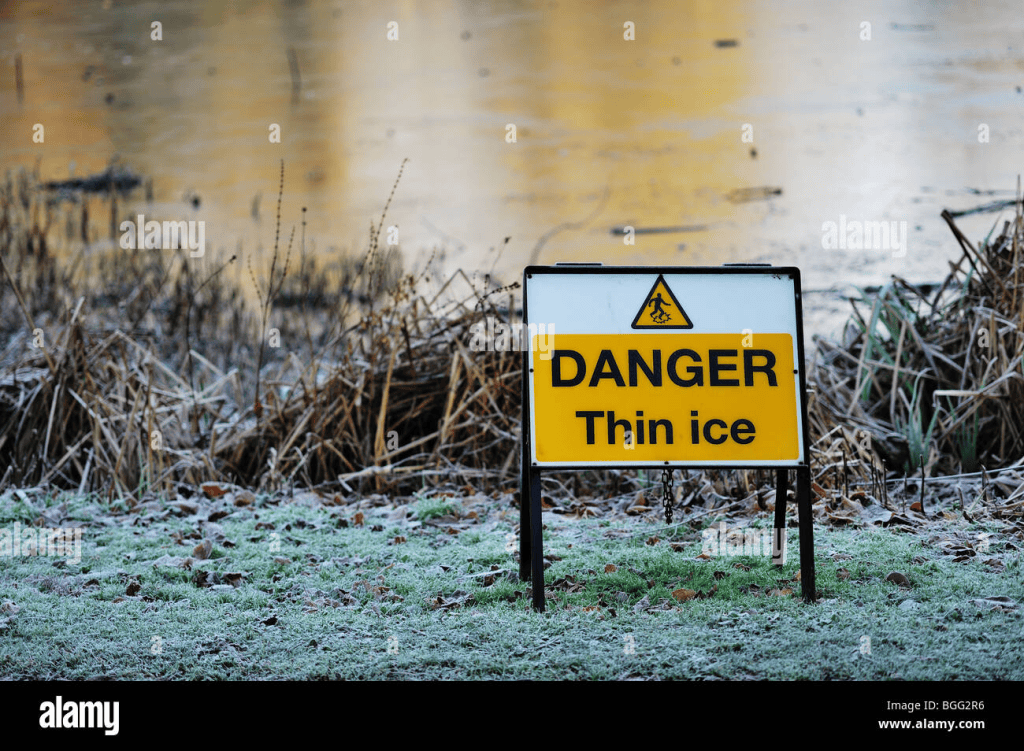
If God is absent, all such “success” is thin ice.
The psalmist’s repentance
After seeing rightly, the psalmist looks back on his earlier thoughts with shame.
He says he had been foolish and ignorant, like a beast before God.
That is strong language, but it is fitting.
To judge reality only by immediate sense experience is to live beneath what God has given man to do.
Feelings matter, but they are not safe guides by themselves.
Instinct is not wisdom.
Outrage is not understanding.
The believer must be governed by God’s counsel. (Proverbs 3:1-35)
What kept him from falling completely
One of the most comforting notes in Psalm 73 is this: although his feet had nearly slipped, he did not ultimately fall away.
Why not?
Because God held him.
The psalmist says, “You hold me by my right hand.” (Psalm 16, Isaiah 43:1-28)
That is a wonderful line for troubled saints.
If perseverance rested on the strength of our grip on God, all would be lost.
But the psalmist points us to the other direction.
The believer endures because God keeps hold of His own.
That does not make drifting harmless.
The psalmist came close enough to know the danger of drifting away was real. (Parable of the Prodigal Son Luke 15:11-32)
But it does mean that divine keeping is much stronger than human wavering.
What the righteous actually have
Once his eyes were cleared, the psalmist no longer measured life by the wicked man’s abundance.
He measured it by possession of God.
This leads to one of the great confessions in all of Scripture:
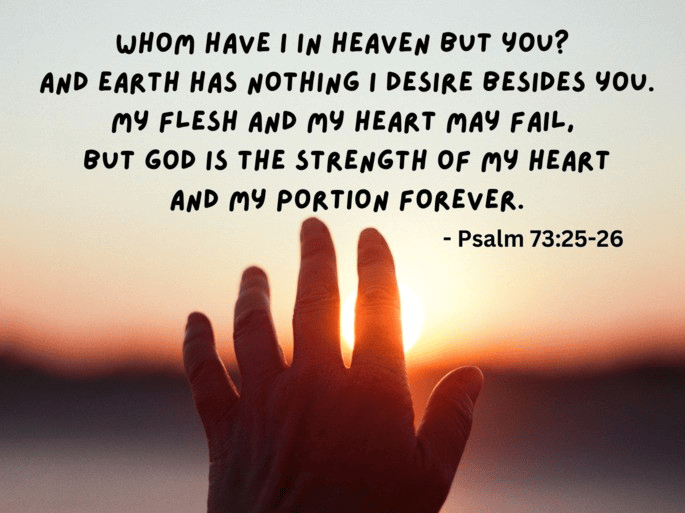
“Whom have I in heaven but You? And there is none upon earth that I desire besides You.” (Psalm 73:25-26)
Psalm 73:25-26 English Standard Version
25 (A)Whom have I in heaven but you?
And there is nothing on earth that I desire besides you.
26 (B)My flesh and my heart may fail,
but God is (C)the strength[a] of my heart and my (D)portion (E)forever.
This is the true dividing line.
Not church language alone.
Not outward respectability alone.
Not mere avoidance of scandal.
The real question is this: Do you desire God above all?
The righteous are not defined simply by cleaner behavior.
They are defined by rightly ordered love.
How to know if Psalm 73 is pressing on our conscience
This psalm invites self-examination.
That should be done honestly, not morbidly.
The aim is not endless self-obsession, but truth.
Ask yourself questions like these:
- Do I mainly want God, or do I mainly want His gifts?
- Would I still count Him enough if earthly comforts were stripped away?
- Do I envy, resent the success of the wicked because I secretly want their life?
- When I think of heaven, is God Himself the great attraction?
- Am I content in Him, or am I always demanding something else complete me?
These are not small questions.
Psalm 73 does not let a man hide behind a religious shell.
It asks whether God is truly his portion.
Psalm 139:23-24 English Standard Version
23 Search me, O God, and know my heart!
(A)Try me and know my thoughts![a]
24 And see if there be any grievous way in me,
and (B)lead me in (C)the way everlasting![b]
“God is the strength of my heart and my portion forever”
This line is the answer to envy.
Our flesh may fail.
Our heart may fail.
Our body may weaken, our plans may collapse, our outward circumstances may remain difficult.
But if God is our portion, then we have not been robbed of our true inheritance.
This is how believers have endured poverty, persecution, and even martyrdom with steadiness.
They were not pretending pain was pleasant.
They simply knew union with God outweighed everything they could lose.
A man who has God is not empty, even if he is poor.
A man without God is not rich, even if he has every last dollar in circulation.
In the name of God, the Father and God the Son and God the Holy Spirit …
Praying …
Psalm 16 English Standard Version
You Will Not Abandon My Soul
A (A)Miktam[a] of David.
16 Preserve me, O God, for in you I (B)take refuge.
2 I say to the Lord, “You are my Lord;
(C)I have no good apart from you.”
3 As for (D)the saints in the land, they are the excellent ones,
in whom is all my delight.[b]
4 The sorrows of those who run after[c] another god shall multiply;
their drink offerings of blood I will not pour out
or (E)take their names on my lips.
5 The Lord is (F)my chosen portion and my (G)cup;
you hold my (H)lot.
6 (I)The lines have fallen for me in pleasant places;
indeed, I have a beautiful inheritance.
7 I bless the Lord who (J)gives me counsel;
in (K)the night also my (L)heart instructs me.[d]
8 (M)I have (N)set the Lord always before me;
because he is at my (O)right hand, I shall not be (P)shaken.
9 Therefore my heart is glad, and my (Q)whole being[e] rejoices;
my flesh also dwells secure.
10 For you will not abandon my soul to (R)Sheol,
(S)or let your (T)holy one see (U)corruption.[f]
11 You make known to me (V)the path of life;
in your presence there is (W)fullness of joy;
at your right hand are (X)pleasures forevermore.
Glory be to the Father,
and to the Son, and to the Holy Ghost;
as it was in the beginning,
is now, and ever shall be,
world without end. Amen, amen.


