
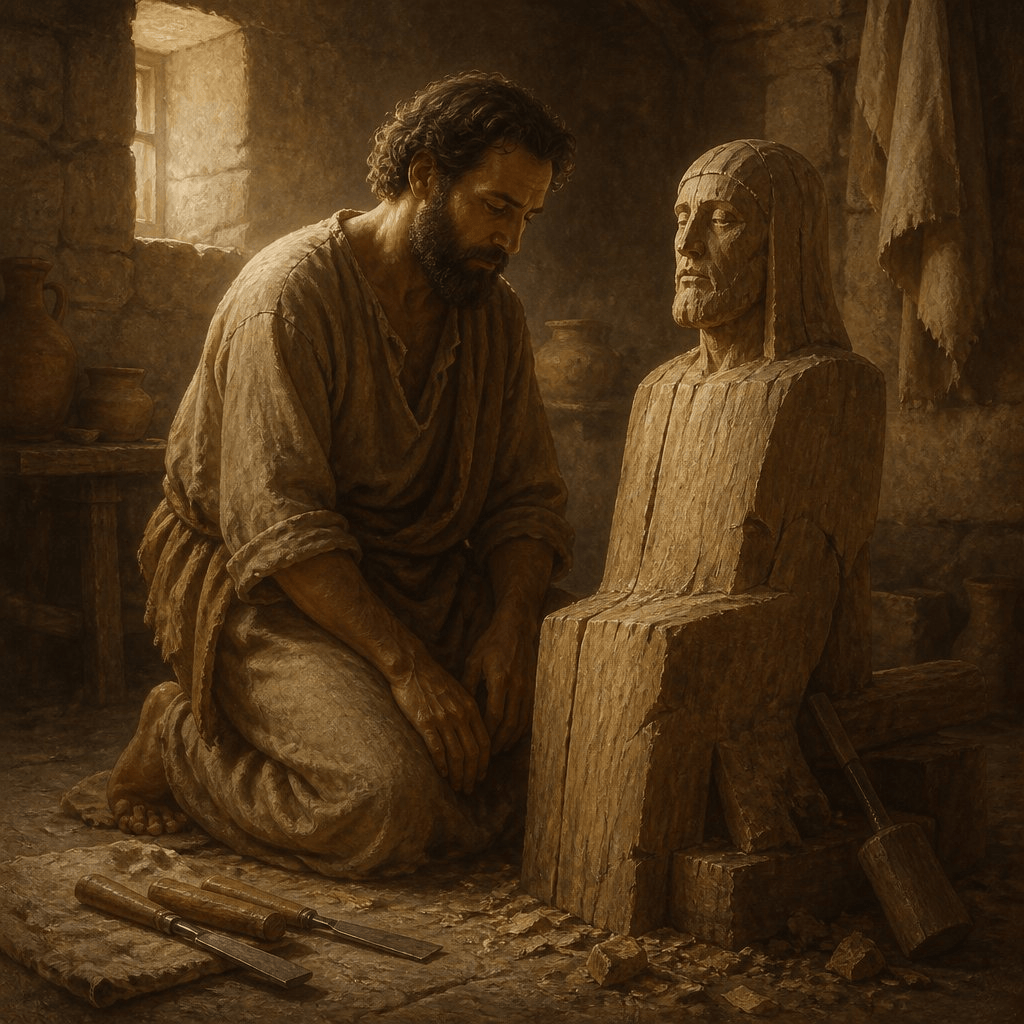
Psalm 115:1-8 Complete Jewish Bible
115 Not to us, Adonai, not to us,
but to your name give glory,
because of your grace and truth.
2 Why should the nations ask,
“Where is their God?”
3 Our God is in heaven;
he does whatever pleases him.
4 Their idols are mere silver and gold,
made by human hands.
5 They have mouths, but they can’t speak;
they have eyes, but they can’t see;
6 they have ears, but they can’t hear;
they have noses, but they can’t smell;
7 they have hands, but they can’t feel;
they have feet, but they can’t walk;
with their throats they can’t make a sound.
8 The people who make them will become like them,
along with everyone who trusts in them.
Word of God for the Children of God
Glory be to the Father,
and to the Son, and to the Holy Ghost;
as it was in the beginning,
is now, and ever shall be,
world without end. Amen, amen.
Twenty-First-Century Idol Worship ….
In today’s devotion, we are going to talk about a hot-button issue of the cult of personality—that is, the temptation to place people on pedestals and give them too much influence or power over us.
To frame our discussion properly, we need to go back to Moses’ encounter with God on Mount Sinai.
God gave Moses the Ten Commandments for His people to obey.
Those commandments still play a significant role in the lives of God’s people, although some may seem to play a larger, more obvious role than others.
At first glance, the Second Commandment might seem like the least necessary of the ten today.
We will find the second Commandment in Exodus 20:4-6:
Exodus 20:4-6 Complete Jewish Bible
4 You are not to make for yourselves a carved image or any kind of representation of anything in heaven above, on the earth beneath or in the water below the shoreline. 5 You are not to bow down to them or serve them; for I, Adonai your God, am a jealous God, punishing the children for the sins of the parents to the third and fourth generation of those who hate me, 6 but displaying grace to the thousandth generation of those who love me and obey my mitzvot.
Some people might argue that golden calves and other graven images aren’t twenty-first-century problems.
And while it’s true that most believers today aren’t tempted to smelt gold to create pagan tchotchkes, the second Commandment is still extremely relevant.
The reality is that idols come in all shapes and sizes because people come in all shapes and sizes.
Many well-meaning believers fall head first into the trap of making idols out of people they admire.
Have you ever heard of a sports hero?
How about American Idol?
How about the winners of Survivor?
How about a high energy, ultra rich, ultra influential celebrity …. film, music?
We use the phrases somewhat jokingly: “That person is a sports god” or “I idolize that person. He’s a guitar god.”
But the way too many people look at certain individuals, it could be that they have obsessively, compulsively, shaped and molded a person into their ‘god.’
We can make idols out of people in the church, too.
We can make an idol out of a man or woman of God, someone whom the Lord has powerfully used to bless us.
We can start to admire them too much.
But here’s what we need to remind ourselves: Those people are human just like us. They will be wrong. They will fail us. They will disappoint us. They will give in to temptation. They will struggle in certain areas of their lives just we ourselves do.
The problem is that people become like the gods they worship.
Psalm 115 sternly warns, “Their idols are merely things of silver and gold, shaped by human hands. . . . And those who make idols are just like them, as are all who trust in them” (verses 4, 8).
The only ONE who deserves that position in our lives is God, the Father, God the Son and God the Holy Spirit. He alone is 1000% deserving of our worship.
Reflection question: How can we keep ourselves from elevating people too high too much in our life? And God, Jesus and the Holy Spirit – not nearly enough?
The Echoes of Our Trust: Becoming Like What We Reverence
Psalm 115:8 states Amplified Bible, Classic Edition
8 They who make idols are like them; so are all who trust in and lean on them.
This profound verse serves as a reflective mirror that brings to light the nature of our affections and the broken impulsive state of our hearts.
In a world saturated with distractions and competing allegiances, politics. this scripture calls us to examine precisely what— or whom— we place our trust in.
The context of Psalm 115 paints a vivid picture of the futility of idolatry.
Psalmist contrasts the living God with lifeless idols crafted by human hands.
The idols made of silver and gold are worthless, unable to see, hear, or speak— they possess no genuine power or life.
Those who create these idols, and subsequently trust in them, do so at the risk of becoming blind, deaf, and mute in their own spiritual journeys.
When we rely on anything created by human imagination, than by the Creator, we risk becoming like those very things— powerless and devoid of true life.
Trust is an intimate act.
It isn’t merely a passive acknowledgment of something’s existence; rather, it is an investment of our hearts, minds, and spirits into something we believe can provide for us, protect us, or give us purpose.
The psalmist warns us that our investments shape us.
What we trust will inform our actions, our character, and ultimately, our relationship with God.
When we place our trust in the ephemeral— whether it’s material possessions, social status, or individuals— we run the risk of our mirroring their limitations rather than reflecting the glory of our Creator.
Consider the significance of trust in practical terms.
When we trust in money, we might find ourselves consumed by greed and anxiety, always longing for more and never satisfied.
This anxiety birthed from misplaced trust impacts, how we do interact with others, often twisting our relationships into transactional exchanges rather than genuine bonds of love and grace.
On the contrary, trusting in the living God cultivates confidence and peace, and strength and generosity, marking us as mirrored reflections of His character.
Moreover, as images of God, our identity finds itself shaped by higher ideals and virtues.
In Isaiah 40:31, we are reminded that those who trust in the Lord will renew their strength; they will soar on wings like eagles.
This paints a beautiful contrast to the idea of becoming like the idols we craft.
Instead of becoming powerless like lifeless idols, we can be invigorated and empowered by the Most High.
As we further meditate on Psalm 115:8, let us ask ourselves: what are all those “idolized” commitments of our heart?
What has captured our trust?
Are we turning to our careers, our relationships, our pensions or perhaps the impulsive reckless pursuit of worldly pleasures in times of stress and anxiety?
Do we anchor our trust in God, the Creator who is alive, active, and incessantly working on our behalf?
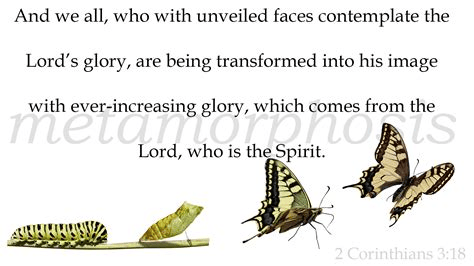
True trust leads us toward transformation into His likeness.
When we place our faith in God, we become participants in His divine nature (2 Peter 1:4).
Our lives begin to reflect His attributes— love, joy, peace, patience— qualities that cannot be replicated through idols or worldly concerns.
Instead of becoming stagnant imitations of that which cannot fulfill, we’ll become vibrant testimonies of faith, emerging from the depths of His grace.
So today, let this verse sit heavily upon our hearts.
Let it compel us to evaluate our engagements and reassess our trust.
Pray fervently, asking the Holy Spirit to illuminate areas where we may have erected idols, knowingly or unknowingly.
Let us rush toward the living God, anchoring our trust in Him alone, allowing His majestic character to transform our lives and reflect His glory to the world around us.
In doing so, we break free from the voluminous echoes of lifeless idols and step lively into the vibrant abundant life He offers us.
In the name of God, the Father and God the Son and God the Holy Spirit …
Praying ….
Psalm 113 Complete Jewish Bible
113 Halleluyah!
Servants of Adonai, give praise!
Give praise to the name of Adonai!
2 Blessed be the name of Adonai
from this moment on and forever!
3 From sunrise until sunset
Adonai’s name is to be praised.
4 Adonai is high above all nations,
his glory above the heavens.
5 Who is like Adonai our God,
seated in the heights,
6 humbling himself to look
on heaven and on earth.
7 He raises the poor from the dust,
lifts the needy from the rubbish heap,
8 in order to give him a place among princes,
among the princes of his people.
9 He causes the childless woman
to live at home happily as a mother of children.
Halleluyah!
Glory be to the Father,
and to the Son, and to the Holy Ghost;
as it was in the beginning,
is now, and ever shall be,
world without end. Amen, amen.

