
Genesis 3:1-11 New King James Version
The Temptation and Fall of Man
3 Now the serpent was more cunning than any beast of the field which the Lord God had made. And he said to the woman, “Has God indeed said, ‘You shall not eat of every tree of the garden’?”
2 And the woman said to the serpent, “We may eat the fruit of the trees of the garden; 3 but of the fruit of the tree which is in the midst of the garden, God has said, ‘You shall not eat it, nor shall you touch it, lest you die.’ ”
4 Then the serpent said to the woman, “You will not surely die. 5 For God knows that in the day you eat of it your eyes will be opened, and you will be like God, knowing good and evil.”
6 So when the woman saw that the tree was good for food, that it was [a]pleasant to the eyes, and a tree desirable to make one wise, she took of its fruit and ate. She also gave to her husband with her, and he ate. 7 Then the eyes of both of them were opened, and they knew that they were naked; and they sewed fig leaves together and made themselves [b]coverings.
8 And they heard the [c]sound of the Lord God walking in the garden in the [d]cool of the day, and Adam and his wife hid themselves from the presence of the Lord God among the trees of the garden.
9 Then the Lord God called to Adam and said to him, “Where are you?”
10 So he said, “I heard Your voice in the garden, and I was afraid because I was naked; and I hid myself.”
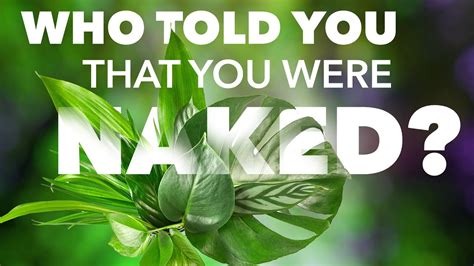
11 And He said, “Who told you that you were naked? Have you eaten from the tree of which I commanded you that you should not eat?”
Word of God for the Children of God
Glory be to the Father,
and to the Son, and to the Holy Ghost;
as it was in the beginning,
is now, and ever shall be,world without end. Amen, amen.
The Question of Innocence: Understanding Our Nakedness …
In the lush, untainted paradise of the Garden of Eden, Adam and Eve enjoyed a perfect communion with God.
They walked in innocence, unencumbered by shame or fear, until the fateful moment when their defiance introduced them to a new reality.
The verse from Genesis 3:11 opens a profound dialogue between God and man, encapsulating the unfolding of sin and the loss of innocence:
“And he said, Who told thee that thou wast naked? Hast thou eaten of the tree, whereof I commanded thee that thou shouldest not eat?”
This query is not merely rhetorical; but a deep, revealing question speaking volumes about the nature of sin, guilt, and our relationship with the Creator.
In coming to understand this passage, we embark on a journey that leads us inward, prompting us to reflect on our own lives.
When God asks, “Who told thee that thou wast naked?” we must consider the implications of knowing one’s nakedness.
To be “naked” in this context is not merely a physical state of no clothing; it symbolizes a loss of innocence, a revelation of one’s exposed, vulnerable self.
Prior to disobedience, Adam and Eve experienced life without shame, their nakedness was simply an aspect of their existence, not a cause for concern.
However, through sin, they became aware of their nakedness—a profound realization that is often mirrored in our own lives when we too confront our unworthiness and imperfection. This awareness leads us down a rocky path of hiding from God, something we instinctively replicate because of our shame.
His question also highlights the necessity of accountability.
God’s inquiry seeks to bring Adam and Eve to a moment of realization about their choices. They had free will, and with that freedom came responsibility.
By eating from the forbidden tree, they made a conscious choice that directly contradicted God’s command.
In a world where moral relativism often reigns, we are challenged to grapple with the hard core truth that our actions have very real consequences.
We are reminded of the importance of heeding God’s guidance—not just for our own comfort and safety but for the sanctity of our relationship with Him.
Moreover, God’s words evoke a sense of grace amidst judgment.
The divine inquiry shrouded in gentleness rather than wrath allows us to ponder the complexities of God’s character.
Rather than immediately condemning Adam and Eve, He chooses instead to ask questions that invite introspection and dialogue. This interaction encourages us to bravely, humbly come before God rather than hide away, even when we fail.
Reflecting upon this, we find ourselves in similar situations when we too are confronted with our own nakedness—moments when we are made painfully aware of our shortcomings, vulnerabilities, faults, failures, and sins.
In those times, we question, “Who told you that you are unworthy or flawed?”
Just as God approached Adam and Eve, He approaches us today with loving inquiry, urging us to acknowledge our actions and their consequences.
We must understand that God’s desire is not to cast us away, but to draw us closer into the light of His truth.
As we meditate on Genesis 3:11, let us examine our own lives in light of God’s questions:
– Who or what informs our sense of shame?
– In what ways have we strayed from God’s commandments?
– How do we respond to God’s gentle nudges urging us back into His embrace?
Instead of succumbing to the fear of exposure, may we choose vulnerability before God, seeking reconciliation and restoration.
The beauty of the Gospel is that despite our nakedness, we are invited to be wrapped in the righteousness of Christ.
Our nakedness strips us bare, but God’s mercy covers us, offering us hope and renewal.
In returning to Him, we honor the grace that brings redemption from the fall.
Thus, as we reflect upon this powerful question from God, may we choose honesty over shame, confessing our disobedience while trusting in the restoration offered through Jesus Christ.
Let our response echo the desire to be known, loved, and redeemed—naked yet unashamed in His presence.
Where Are You?
“Where are you?” God asks Adam. This question is not about where Adam and Eve are hiding. Something bigger than that is happening here.
Genesis 1 and 2 give the glorious account of our creative God creating everything—including us human beings. Then Genesis 3 tells of Adam and Eve’s disobedience, their fall into sin, which now infects all of us. The fruit looked delicious and desirable, but all it revealed was that they were naked. They tried to hide from God in their shame, making simple garments of fig leaves. Where were they? To answer God’s question, they were lost.
God’s footsteps echoed in the garden, and his voice boomed, “Where are you?”
God knew, but they needed to know they were lost.
“Who told you that you were naked?” God asked.
Like naughty children, they tried the blame game.
“The woman you put here gave me the fruit,” whimpered Adam.
“The serpent (you made) fooled me,” Eve whined.
Today God still asks, “Where are you?”
I heard it when I was in my Officer Basic Course in San Antonio on our land navigation course; even with my compass I was lost, vulnerable, and scared.
God pursued me into my wilderness, where the haunting question suddenly turned comforting.
He wasn’t out to get me into trouble but to give me the promise that he had provided the least, the lost and most vulnerable a Savior, his Son.
“Stay where you are. I’ve sent my Son for you!” God assured me.
Even in our embarrassment, our nakedness, our loss of innocence unclothed state do we know the fullest magnitude of this God, who desires be with us?
“What is this that you have done?”
We have all believed the lie that our way is better than God’s.
He has gone to the extreme of sending His Son in order that the hardness of our hardest rebellion be overwhelmed by His kindness, which “is better than life”
He has shone His word right into our hearts, that we might see His splendor now and forevermore, and that we might be remade in His image and restored to the glory God always intended His image-bearing creatures to have.
Seeing His goodness and faithfulness coming under His rule are what liberates each of us from the mastery of deceit, darkness, despair, and, yes, even death.
In the name of God, the Father and God the Son and God the Holy Spirit
Praying …
The Sovereignty of the Lord in Creation and History
33 Rejoice in the Lord, O you righteous!
For praise from the upright is beautiful.
2 Praise the Lord with the harp;
[a]Make melody to Him with an instrument of ten strings.
3 Sing to Him a new song;
Play skillfully with a shout of joy.
4 For the word of the Lord is right,
And all His work is done in truth.
5 He loves righteousness and justice;
The earth is full of the goodness of the Lord.
6 By the word of the Lord the heavens were made,
And all the host of them by the breath of His mouth.
7 He gathers the waters of the sea together [b]as a heap;
He lays up the deep in storehouses.
8 Let all the earth fear the Lord;
Let all the inhabitants of the world stand in awe of Him.
9 For He spoke, and it was done;
He commanded, and it stood fast.
10 The Lord brings the counsel of the nations to nothing;
He makes the plans of the peoples of no effect.
11 The counsel of the Lord stands forever,
The plans of His heart to all generations.
12 Blessed is the nation whose God is the Lord,
The people He has chosen as His own inheritance.
13 The Lord looks from heaven;
He sees all the sons of men.
14 From the place of His dwelling He looks
On all the inhabitants of the earth;
15 He fashions their hearts individually;
He [c]considers all their works.
16 No king is saved by the multitude of an army;
A mighty man is not delivered by great strength.
17 A horse is a [d]vain hope for safety;
Neither shall it deliver any by its great strength.
18 Behold, the eye of the Lord is on those who fear Him,
On those who hope in His mercy,
19 To deliver their soul from death,
And to keep them alive in famine.
20 Our soul waits for the Lord;
He is our help and our shield.
21 For our heart shall rejoice in Him,
Because we have trusted in His holy name.
22 Let Your mercy, O Lord, be upon us,
Just as we hope in You.
Glory be to the Father,
and to the Son, and to the Holy Ghost;
as it was in the beginning,
is now, and ever shall be,
world without end. Amen, amen.


