If? What do we mean by ‘if’? Are there any reasons for anyone uttering such phrases as ‘if,’ among His believers? Mark 9:22-25

Mark 9:22-25 New American Standard Bible

22 It has often thrown him both into the fire and into the water to kill him. But if You can do anything, take pity on us and help us!” 23 But Jesus said to him, “‘If You can?’  All things are possible for the one who believes.” 24 Immediately the boy’s father cried out and said, “I do believe; help my unbelief!” 25 When Jesus saw that a crowd was [a]rapidly gathering, He rebuked the unclean spirit, saying to it, “You mute and deaf spirit, I [b]command you, come out of him and do not enter him [c]again!”

Word of God for the Children of God

Glory be to the Father,
and to the Son, and to the Holy Ghost;
as it was in the beginning,
is now, and ever shall be,
world without end. Amen, amen.

Mark 9:24 Amplified Bible

24 Immediately the father of the boy cried out [with a desperate, piercing cry], saying, “I do believe; help [me overcome] my unbelief.”

This cry came from a man who was heartbroken over the state of his son.

He was desperately hoping Jesus’ disciples could help, when they couldn’t, he began to feel more and more doubt if help was going to materialize for his son.

Jesus’ words that prompted this cry for help were both the gentle rebuke and the reminder that he needed in that moment – refocus on what God can do!

Everything is possible for one who believes.’ (Mark 9:23)

I have needed to hear that on my Christian journey as well.

For, as much as I love the Lord, there have been times when I’ve veered into doubt. Every other word churning from deep within my crying soul was “if”

If my attitude came out of fear, discouragement, even impatience, it’s revealed a weakness in me. But within the conversations and the healing in this account, I’ve found great reassurance and hope that my faith can mature beyond “if?”.

Becoming stronger in our faith is a lifelong process.

The great news is that we are not expected to mature on our own.

God will do the work in our hearts.

We do have an important part to play in His plan, though.

The Meaning of ‘Lord, I Believe; Help My Unbelief’ in Mark 9:24

What the man shouts here can sound contradictory.

He claims to believe, yet, in the same breath he also confesses to unbelief.

It took me a whole bunch of studying to appreciate the wisdom in his words.

Now I see that this father understood that faith in God is not a one-and-done choice or just a simple switch that God turns on at our moment of salvation.

Early on as a believer, I had been taught the idea that God changes us gradually, as the layers of an onion are peeled off.

This can apply to faith.

How much we grow in our belief over time depends on “if” we are willing to:

  • Let go of trying to control
  • Submit to God’s will
  • Trust in God’s ability
  • being teachable in the truth of the Word of God.
  • believe that the word “if” loses its value when face to face with the Word of God.
  • feast upon the deeper implications from this truth: 30 He (Jesus) must increase [in prominence], but I must decrease. (John 3:30 Amplified)

The father quickly realized he needed to admit his inability to heal his son.

Then he declared that Jesus could do the healing.

“If” He could help. “If” He was inclined to help. “If” He was being truthful.

“If” he would not require a fee for His service – not moving until he was paid.

Mark 9:23 Amplified Bible

23 Jesus said to him, “[You say to Me,] ‘If You can?’ All things are possible for the one who believes and trusts [in Me]!”

The result was joyous—his child’s health was renewed, and his faith increased.

“”If” only someone, anyone, would take pity and “Help My Unbelief!””

A (sincere, insincere), prayer for faith that God wants us to give our answer to.

Suggestions and Prayers to Ask God to Help Our Unbelief

This account describes a parent that has been engaged in a long-term struggle for his son’s life.

Most situations we find ourselves dealing with are not quite so dramatic.

But if we can take the principles in Mark 9, apply them to prevent doubt from creeping in during all sorts of momentary or ongoing challenges in our lives.

1. Help My Unbelief About Reconciliation

Relationships are an integral part of God’s design for us.

But as imperfect humans, we can easily find ourselves estranged from Him, and others who are important to us.

In some cases the problems get resolved right away. But on occasion, for whatever reason, we stay separated longer. While a personal connection is “on hold,” we can choose to let pessimism set in, or we can keep pursuing God.

Lord, I admit my doubt that this relationship (with You, with another person) can be reconciled. It has been damaged, and has stayed broken for a long time. Your Word says that Jesus came so that we could be reconciled to You, and calls us to be reconciled to each other. I ask that You help me do my part, and then to rest in expectation that You are working for good here. I pray this in Jesus’ name, Amen.

2. Help My Unbelief When I Struggle to Forgive

The command to forgive is woven all through the Bible. But when we are hurt or betrayed by someone, our tendency is to automatically turn far away from that person rather than going toward them. In those difficult moments, we can let our feelings lead us, or we can choose to faithfully obey God’s call to seek peace.

Heavenly Father, I am struggling to forgive, and wonder if I’ll ever be able to. The pain I feel is real, and I don’t know when it will ease. But Jesus taught that we are to forgive others so that we may be forgiven ourselves. So, even as I’m still feeling anger and hurt, Lord, help me to decide to have grace for this person. Please make me willing to release my feelings, trusting that You will take care of both of us in this situation and bring peace. In Jesus’ name I pray, Amen.

3. Help My Unbelief About Healing

When we study God’s promises about healing, our natural response to physical or mental health conditions is to sigh in relief, and lift them up. Sometimes an answer to our prayer comes right away. But other times, healing is very slow in coming. We can allow the waiting lead us to despair, or to draw closer to God.

Father God, I confess that I am battling doubt that You will heal me (my family member, friend, etc.). Health conditions are always worrisome, and this one has gone on for a while. I know You promise in Your Word to “heal all our diseases” and make us whole. But as I wait, Lord, let me not fall into despair, but to become more confident that I will see Your goodness. I pray this in Jesus’ name. Amen.

4. Help My Unbelief About Provision

Scripture gives us so many great examples of how God cares for His people. But if our needs do not get met as quickly as we would expect, it can be challenging to remain quiet, settled and keep calm in our spirit. We can navigate this season impatiently, in expectation of how God will work. God answers sincere prayers.

Gracious Lord, I come to You and confess my doubt that You will provide for me. All through history, You have watched over Your people, knowing what we need before we ever pray about it. So, Father, help me to believe those truths, and to know in my heart You are already working. Replace my fear with hope. I pray in Jesus’ name, Amen.

Mark 9:14-27 is a stirring description of one of Jesus’ miraculous healings.

With His words, He saved a boy from a tormenting spirit. With other words, Jesus brought the father to a new level of belief and faith.

I relate to that father’s plea about weakness, because if I’m honest, it echoes my own. I’m so grateful God invites us to grow, and then walks side by side with us.

Each step we to take, from confession to proclaiming our confidence, pleases Him.

So, “if” we are indeed ready and sincere, let’s start the next part of the journey.

In the name of God, the Father and the Son and the Holy Spirit … Amen

Psalm 42

Longing for God
For the choir director. A Maskil of the sons of Korah.

As a deer longs for flowing streams,
so I long for you, God.
I thirst for God, the living God.
When can I come and appear before God?
My tears have been my food day and night,
while all day long people say to me,
“Where is your God?”
I remember this as I pour out my heart:
how I walked with many,
leading the festive procession to the house of God,
with joyful and thankful shouts.

Why, my soul, are you so dejected?
Why are you in such turmoil?
Put your hope in God, for I will still praise him,
my Savior and my God.
I[a] am deeply depressed;
therefore I remember you from the land of Jordan
and the peaks of Hermon, from Mount Mizar.
Deep calls to deep in the roar of your waterfalls;
all your breakers and your billows have swept over me.
The Lord will send his faithful love by day;
his song will be with me in the night—
a prayer to the God of my life.

I will say to God, my rock,
“Why have you forgotten me?
Why must I go about in sorrow
because of the enemy’s oppression?”
10 My adversaries taunt me,
as if crushing my bones,
while all day long they say to me,
“Where is your God?”
11 Why, my soul, are you so dejected?
Why are you in such turmoil?
Put your hope in God, for I will still praise him,
my Savior and my God.

Glory be to the Father,
and to the Son, and to the Holy Ghost;
as it was in the beginning,
is now, and ever shall be,
world without end. Amen, amen.

https://translate.google.com

Exploring the importance of prayer, solace, solitude, seeking God amidst all the distractions of life’s busyness. Mark 1:29-39

Mark 1:29-39 New American Standard Bible

Crowds Healed

29 And immediately after they left the synagogue, they entered the house of Simon and Andrew, with [a]James and John. 30 Now Simon’s mother-in-law was lying sick with a fever; and they immediately *spoke to [b]Jesus about her. 31 And He came to her and raised her up, taking her by the hand, and the fever left her, and she served them.

32 Now when evening came, after the sun had set, they began bringing to Him all who were ill and those who were demon-possessed. 33 And the whole city had gathered at the door. 34 And He healed many who were ill with various diseases, and cast out many demons; and He would not permit the demons to speak, because they knew [c]who He was.

35 And in the early morning, while it was still dark, Jesus got up, left the house, and went away to a secluded place, prayed there for a time. 36 Simon and his companions eagerly searched for Him; 37 and they found Him and *said to Him, “Everyone is looking for You.” 38 He *said to them, “Let’s go somewhere else to the towns nearby, so that I may also [d]preach there; for this is why I came.” 39  And He went into their synagogues [e]preaching throughout Galilee, and casting out the demons.

Word of God for the Children of God.

Glory be to the Father,
and to the Son, and to the Holy Ghost;
as it was in the beginning,
is now, and ever shall be,
world without end. Amen, amen.

As we come together in faith and fellowship, our hearts stirred by the power of God’s Word, the quiet comfort of His presence, and the unity of the Holy Spirit.

Our hearts are like parched ground, thirsty for the Living Water, and today, we are here to drink deeply from the deep well of His Word.

We turn our attention to the Gospel of Mark, specifically Mark 1:29-39. 

In this passage, we see our Rabbi Jesus, not just as a healer and miracle-worker, but also as a man of prayer and solitude.

We see Him seeking God in the quiet places, away from the hustle and bustle of daily life.

We see Him prioritizing His relationship with the Father, even amidst the noisy, pressing demands of His earthly ministry.

Isn’t it true that we too often find ourselves caught up in the busyness of life, with little time for prayer and solitude?

How often do we prioritize our relationship with the Father?

How often do we purposely seek God in the quiet places?

The great British preacher Charles H. Spurgeon once said,

“True prayer is neither a mere mental exercise nor a vocal performance. It is far deeper than that – it is spiritual transaction with the Creator of Heaven and Earth.”

This quote holds a mirror to our souls, quietly urging us to reflect on the depth and sincerity of our own prayer life.

Today, we will focus on three main points:

the significance of prayer in Jesus’ life,

solitude as a spiritual discipline,

and seeking God in solitude.

As we delve into these important topics, may our hearts likewise be open to the transformative power of God’s Word and His Spirit.

Significance of Prayer in Jesus’ Life

When we look at the life of Jesus, we see a man constantly in communication with His Father.

This communication was deep, intimate, and consistent.

It was a lifeline, a source of strength, wisdom, and direction.

It was a priority.

This is evident in our Scripture today, where we see Jesus rising very early in the morning, while it was still dark, to go to a quiet and secluded place to pray.

The first thing that stands out for us is the timing.

Jesus chose to pray early in the morning, while it was still dark.

This was an intentional decision to start the day with God, seek His face before anything else.

It was a decision to prioritize prayer over sleep, comfort, or convenience.

This shows us the importance Jesus placed on prayer.

It was not an afterthought or a last resort.

It was the first order of business, the foundation of His day.

Secondly, we see Jesus chose to pray in a secluded place.

He did not pray in the synagogue, in the marketplace, or the midst of the crowd.

He chose a quiet, solitary place, away from distractions, demands of the world.

This shows us that Jesus valued solitude in prayer. He understood the need for silence, for stillness, for a space where He could hear the voice of God clearly.

Another thing we see is prayer was a regular part of Jesus’ life.

It was not a sporadic activity, but a consistent habit.

In Luke 5:16, we read “Jesus often withdrew to lonely places and prayed.”

This shows us prayer was not just a part of Jesus’ routine, but of His lifestyle.

It was not just something He did, but something which He lived.

It was not just an event, but a way of life.

Lastly, prayer wasn’t a personal practice for Jesus, but also a public example.

In Matthew 6:9-13, Jesus teaches His disciples how to pray.

He does not just tell them to pray, but shows them how to pray.

He gives them a model, a pattern, a blueprint.

This shows us Jesus saw prayer not just as a private discipline, but also as a communal duty.

He understood that prayer is not just about individual communion with God, but also about corporate connection with God.

In all these, we see a picture of Jesus as a man of prayer.

We see His commitment to prayer, His dependence on prayer, His discipline in prayer, and His teaching on prayer.

We see His reverence for prayer, His respect for prayer, His reliance on prayer, and His instruction on prayer.

We see His passion for prayer, His practice of prayer, His persistence in prayer, and His propagation of prayer.

As we quietly reflect on these, let us ask ourselves:

Is prayer a priority in our lives?

Do we seek God first thing in the morning?

Do we find a quiet place to pray?

Is prayer a consistent habit in our lives?

Do we teach others how to pray?

These are challenging questions, but they are necessary questions.

They confront us with the stark reality of the necessity for our prayer life and compel us to evaluate our relationship with God.

They push us to examine our hearts, align our lives with the example of Jesus.

They inspire us to strive for a deeper, more meaningful, powerful prayer life.

Solitude as a Spiritual Discipline

As we continue to reflect on the life of Jesus as depicted in the Gospel of Mark, we find solitude was a vital aspect of His spiritual practice.

Amid His busy ministry, Jesus often withdrew to solitary places to commune with the Father.

This intentional solitude, far from being a mere escape from the demands of His ministry, was a spiritual discipline which Jesus practiced to nurture His relationship with the Father.

We see this clearly in Mark 1:35, where it is written,

“And rising very early in the morning, while it was still dark, he departed and went out to a secluded place, and there he prayed.”

Here, Jesus models for us the discipline of solitude. He rises early, while it is still dark, and goes to a secluded place to pray.

This is not a casual, incidental act.

It is a deliberate, intentional purposeful practice.

Jesus makes time for solitude.

He prioritizes it.

He seeks it out.

And in that solitude, He prays.

This act of Jesus seeking solitude for prayer is not an isolated incident in the Gospels.

In Luke 5:16, we read, “But Jesus often withdrew to lonely places and prayed.”

This phrase “often withdrew” indicates this was a regular practice for Jesus.

It was a rhythm of His life.

He regularly sought out solitude for prayer.

This was not something He did only when He felt like it or when He had some spare time.

It was a discipline He practiced consistently.

In solitude, Jesus found a space to be alone with the Father, away from the distractions and demands of the world.

He found a place where He could focus solely on the Father, where He could pour out His heart in prayer, where He could listen to the Father’s voice.

This solitude was not a luxury for Jesus.

It was a necessity.

It was a vital part of His relationship with the Father.

Greek word study.

The Greek word used for “secluded” in Mark 1:35 is eremos, which can be translated as “desert,” “wilderness,” or “lonely place.”

This word is used in several other passages in the New Testament.

For instance, in Matthew 4:1, we read that Jesus was led by the Spirit into the “ἔρημος” to be tempted by the devil.

In Luke 15:4, Jesus uses the word “ἔρημος” in His parable of the lost sheep, where the shepherd leaves the ninety-nine sheep in the open country and goes after the lost sheep until he finds it.

In these passages, “ἔρημος” is a place of testing and seeking.

It is a place of solitude and isolation.

It is a place where one is stripped of distractions and comforts, a place where one is confronted with one’s own vulnerability and dependence on God.

This is the kind of place Jesus sought for prayer.

He sought a place of solitude, a place of undistracted communion with the Father.

In our own spiritual lives, we too need to practice the discipline of solitude.

Like Jesus, we need to find our own “ἔρημος,” our own place of solitude where we can be alone with God, where we can focus on Him without distractions, where we can cry out, then pour out our burdened hearts to Him in prayer.

Seeking God in Solitude

As we now find ourselves standing on the threshold of a compelling truth: the practice of seeking God in solitude.

This is not a fleeting idea or a momentary pause in the narrative.

It is a recurring theme, a rhythm in the life of Jesus that we too are invited to embrace.

The first truth we encounter in this practice is the power of solitude to foster intimacy with God.

In the quiet, away from the distractions and demands of the world, we are able to focus our hearts and minds solely on God.

It is in these most precious moments of solitude we are able to hear the still, small voice of God, speaking to us, guiding us, and drawing us closer to Himself.

Henri Nouwen quote.

In his book, “The Way of the Heart,” Henri Nouwen, a respected Christian writer, captures this thought beautifully when he says,

“Solitude is the furnace of transformation.”

In the solitude, in the quiet, we are transformed.

Our hearts are softened, our minds are renewed, our spirits are refreshed.

We are drawn into a deeper relationship with God, a relationship marked by intimacy and transformation.

Next is the power of solitude to provide direction.

In the solitude, away from the noise and confusion of the world, we are able to discern the voice of God, guiding us and leading us in the way we should go.

It is in these moments of solitude that we gain clarity and direction for our lives.

Psalm 46:10 says, “Be still, cease striving and know that I am God.”

Matthew 6:6 The Message

“Here’s what I want you to do: Find a quiet, secluded place so you won’t be tempted to role-play before God. Just be there as simply and honestly as you can manage. The focus will shift from you to God, and you will begin to sense his grace.

In the stillness, in the quiet, in that secluded place of Shalom, where there is no pretense, no fanciness, we come to know God in a deeper, more personal way.

We come to understand His heart, His will, discern His purpose for our lives.

The third truth we encounter in this practice is the power of solitude to bring renewal.

In the solitude, away from the weariness and burdens of the world, we find rest, refreshment, and physical and spiritual renewal in the hushed presence of God.

It is in these moments of solitude that we are refreshed and restored, equipped and empowered to continue in our walk with God.

Isaiah 54:9-10 The Message

9-10 “This exile is just like the days of Noah for me:
    I promised then that the waters of Noah
    would never again flood the earth.
I’m promising now no more anger,
    no more dressing you down.
For even if the mountains walk away
    and the hills fall to pieces,
My love won’t walk away from you,
    my covenant commitment of peace won’t fall apart.”
    The God who has compassion on you says so.

The fourth and final truth we encounter in this practice is the power of solitude to foster a deeper commitment to God.

In the solitude, miles away from the distractions and temptations of the world, we are able to focus our hearts and minds solely on God.

It is in these moments of solitude that our commitment to God is deepened and our resolve to follow Him is strengthened.

God is always there, waiting for us to come to Him.

He’s not just a God of the Sunday service or midweek Bible study or meal table..

He’s a God of those earliest mornings, the latest nights, the quietest moments, the loudest ones, and everything in between.

He’s a God who wants to be involved in every part of our lives.

So, let’s make the effort to seek Him, to spend time with Him, to listen to Him.

Let’s make prayer and solitude a priority, not just something we do when we find the time to think about it or because our smart phones batteries are zero.

Because truth is, we will never remember to set an alarm to just find the time.

We have to make the time.

And when we do, we’ll find that our relationship with God deepens, our faith strengthens, and our lives become more aligned with His will.

We’ll find that we’re not just going through the motions of religion, but living out a relationship with our Creator, the very author of everything we are now.

There’s nothing more fulfilling, more satisfying, or more beautiful than that.

In the name of God, the Father and God the Son and God the Holy Spirit, Amen

Praying …

The Works and the Word of God.

For the music director. A Psalm of David.

19 The heavens tell of the glory of God;
And their expanse declares the work of His hands.
Day to day pours forth speech,
And night to night reveals knowledge.
There is no speech, nor are there words;
Their voice is not heard.
Their [a]line has gone out into all the earth,
And their words to the end of the world.
In them He has placed a tent for the sun,
Which is like a groom coming out of his chamber;
It rejoices like a strong person to run his course.
Its rising is from [b]one end of the heavens,
And its circuit to the [c]other end of them;
And there is nothing hidden from its heat.

The Law of the Lord is [d]perfect, restoring the soul;
The testimony of the Lord is sure, making wise the simple.
The precepts of the Lord are right, rejoicing the heart;
The commandment of the Lord is pure, enlightening the eyes.
The fear of the Lord is clean, enduring forever;
The judgments of the Lord are true; they are righteous altogether.
10 They are more desirable than gold, yes, than much pure gold;
Sweeter also than honey and drippings of the honeycomb.
11 Moreover, Your servant is warned by them;
In keeping them there is great reward.
12 Who can discern his errors? Acquit me of hidden faults.
13 Also keep Your servant back from presumptuous sins;

Let them not rule over me;
Then I will be innocent,
And I will be blameless of great wrongdoing.
14 May the words of my mouth and the meditation of my heart
Be acceptable in Your sight,
Lord, my rock and my Redeemer.

Glory be to the Father,
and to the Son, and to the Holy Ghost;
as it was in the beginning,
is now, and ever shall be,
world without end. Amen, amen.

https://translate.google.com

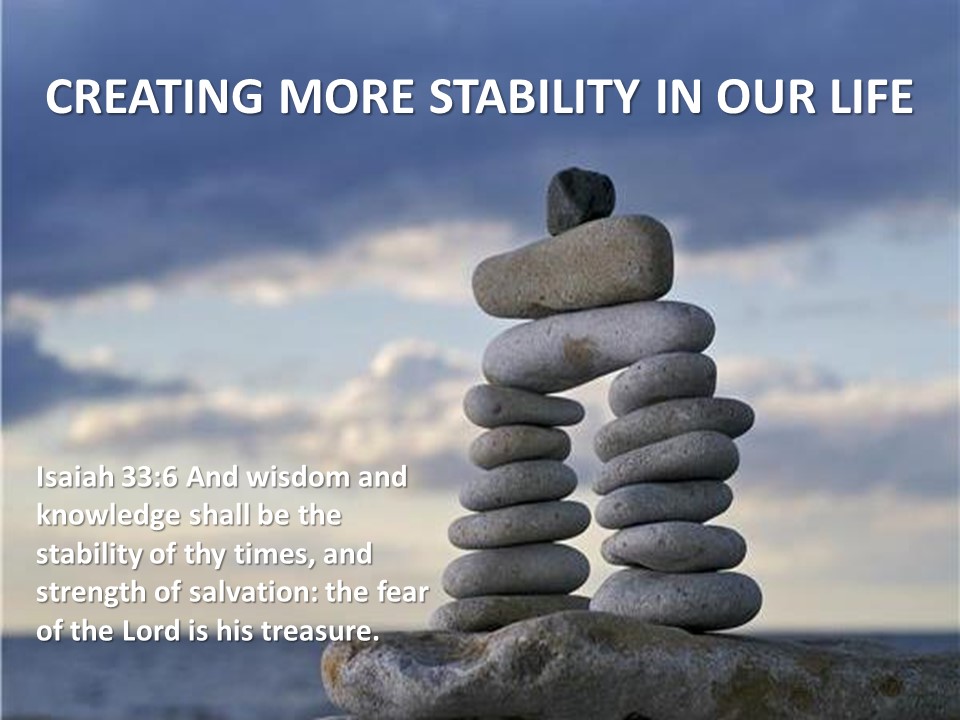
God will keep all your days stable and secure—salvation and wisdom, and knowledge in abundance and surplus. Ephesians 1:15-23

Ephesians 1:15-23Evangelical Heritage Version
A Prayer for Knowledge and Strength

15 This is why, ever since I heard about your faith in the Lord Jesus and your love for all the saints, 16 I never stop giving thanks for you, remembering you in my prayers. 17 I keep praying that the God of our Lord Jesus Christ, the glorious Father, will give you the Spirit[a] of wisdom and revelation in knowing Christ fully. 18 I pray that the eyes of your heart may be enlightened, so that you may know the hope to which he has called you, just how rich his glorious inheritance among the saints is, 19 and just how surpassingly great his power is for us who believe. 20 It is as great as the working of his mighty strength, which God worked in Christ when he raised him from the dead and seated him at his right hand in the heavenly places, 21 far above all rule, authority, power, and dominion, and above every name that is given, not only in this age but also in the one to come. 22 God also placed all things under his feet and made him head over everything for the church. 23 The church is his body, the fullness of him[b]  who fills everything in every way.

Word of God for the Children of God

Glory be to the Father,
and to the Son, and to the Holy Ghost;
as it was in the beginning,
is now, and ever shall be,
world without end. Amen, amen.
True knowledge is a gift from God.

When we know God for who he truly is, that is the most important and basic truth that anyone can accept.

The apostle Paul prays that God will give his readers the spiritual powers of wisdom and revelation.

Paul knows that God is eager to give Christians these gifts. When we have godly wisdom, we understand how God’s world works, and we understand what to do.

When we receive the spiritual power of revelation (vision), we can see what lies ahead and be confident that the future is in God’s hands.

Wisdom and revelation from God lead us to know God better.

Our increasingly wise thoughts inform us that the power and love and goodness of God are without end.

Through revelation the Spirit shows that no matter how much we meditate on God and his Word, we will never see to the end of his goodness, power, and love.

Increasing knowledge of God sets us on the path toward holiness.

This is not just a matter of accepting facts about God.

We learn and experience that God is good and loving and just.

When we grow in the knowledge of God, we begin to offer him our reverence and obedience, which he truly deserves.

Paul began his prayer for the Ephesian church by asking God to give them the Spirit of wisdom and revelation.

Paul was not asking God to provide them with the Holy Spirit – they already had him (Eph. 1:13-14).

It would be best to understand this as a spirit of wisdom and revelation. That God would to grant them wisdom. And that he would reveal himself to them.

The goal of this prayer request was for them to know God better. You might understand knowing God better in two different but related ways. First, that they would come to experience more about God. An intellectual knowledge.

And as they learn more about him, they would also grow in their relationship with him.

This is true in most relationships.

The more I learn about a person, the deeper our relationship can grow.

It is important, though, not to be content with just an intellectual knowledge.

That, in itself, has little value for us.

Paul’s prayer here is still appropriate.

That you pray this for yourself.

And that you pray this for other believers.

None of us will ever outgrow the need to know God better.

Let’s step forth, storm the gates of heaven and pray daily, fervently, for wisdom and revelation so our knowledge of, connection to God continuously increases.

In the name of the Father and of the Son and of the Holy Spirit. Amen

Praying …

Psalm 90:12-17 Evangelical Heritage Version

Mortal Man Needs God’s Grace

12 Teach us to number our days in such a way
    that we bring a heart of wisdom.
13 Turn, O Lord! How long!
Change your mind toward your servants.
14 Satisfy us in the morning with your mercy,
so that we may sing for joy and be glad all our days.
15 Make us glad for as many days as you have afflicted us,
for as many years as we have seen trouble.
16 Let your deeds be seen by your servants
and your majesty by their children.
17 May the kindness of the Lord our God rest upon us.
Establish the work of our hands for us.
Yes, establish the work of our hands.

Glory be to the Father,
and to the Son, and to the Holy Ghost;
as it was in the beginning,
is now, and ever shall be,
world without end. Amen, amen.

https://translate.google.com

Praying for when we are tempted to think much too highly of ourselves: story of the tax man and the Pharisee. Luke 18:9-14

Luke 18:9-14 Expanded Bible

Being Right with God

Jesus told this ·story [parable] to some people who ·thought they were very good [were confident of their own righteousness] and ·looked down on [scorned; despised] everyone else: 10 “Two men went up to the Temple [courts] to pray, one a Pharisee and the other a tax collector [C despised by their fellow Jews because they worked for the hated Romans and were notorious for extortion]. 11 The Pharisee ·stood alone and prayed [or stood and prayed about himself], ‘God, I thank you that I am not like other people—thieves, ·cheaters [evildoers; unrighteous people], adulterers—or even like this tax collector. 12 I fast twice a week [C Pharisees commonly fasted on Monday and Thursday], and I ·give one-tenth of [pay tithes on] everything I get!’

13 “[L But] The tax collector, standing at a distance, would not even ·look up  [L raise his eyes] to heaven. But he beat on his chest [C a sign of sorrow and remorse] and said, ‘God, have mercy on me, a sinner.’ 14 I tell you, when this man went home, he was ·right with God [justified], ·but the Pharisee was not [L rather than that (other) man]. [L Because] All who ·make themselves great [exalt themselves] will be made humble, but all who make themselves humble will be ·made great [exalted].”

Word of God for the Children of God

Glory be to the Father,
and to the Son, and to the Holy Ghost;
as it was in the beginning,
is now, and ever shall be,
world without end. Amen, amen.

The parable of the Pharisee and the tax collector (also called the publican) is a surprising story full of plot twists and rich spiritual truths.

The meaning of Luke 18:9-14 is one that we shouldn’t ignore. 

The problem is we often miss the shocking nature of this parable because it’s become so commonplace. We tend to immediately associate the Pharisees with being self-righteous hypocrites and tax collectors as the model of righteous. 

But in Jesus’ day it was reversed. It was the Pharisees who were the models of righteousness and the tax collectors who epitomized sinners. When Jesus told this parable it was a shock to his audience and surely made a lasting impact. 

Let’s take a fresh look at the parable of the Pharisee and the tax collector and see how the Luke 18:9-14 meaning applies to our life today. 

The parable of the Pharisee and the tax collector is a parable of two contrasting prayers from two very different people. 

Luke tells us up front:

“To some who were confident of their own righteousness and looked down on everyone else, Jesus told this parable.”

This parable is about pride and humility. 

Now, the audience is likely expecting the Pharisee to be the prime example of what we would look like. After all, no one expected the low-life tax collector who betrayed his own people for money to be the prime example to follow. 

But Jesus is about to shock his audience. 

The Pharisee’s Prayer

Two men went up to the temple to pray, one a Pharisee and the other a tax collector.

The Pharisee stood by himself and prayed:

“God, I thank you that I am not like other people—robbers, evildoers, adulterers—or even like this tax collector. I fast twice a week and give a tenth of all I get.” Luke 18:10-12

Look very closely at this prayer that the Pharisee prayed, who’s he praying to?

He’s not praying to God, he’s praying to himself. 

The Pharisees considered themselves worthy of God’s grace based off their religious performance. They thought they earned the right to demean others and to make demands. And this prayer shows this self-righteous attitude. 

In Luke 18:11 he’s demeaning others so that he can elevate himself.

Even going so far to point out a particular person around him, the tax collector.

He thinks he’s better than them. 

In the next verse he reports all the wonderful things he does.

He fasts twice a week and gives a tenth of all he gets.

He’s showing off, bragging. 

The Old Testament Law only required a fast once a year.

But the Pharisees fasted twice a week on Mondays and Thursdays.

But really this is just a ploy to attract attention to themselves.

These were the days the market convened and many people came to town.

They were just showing off.

And the Pharisee in this parable is proud of his religious piousness. 

His entire prayer centers around how great he considers himself to be and how low class and terrible everyone else is, especially the traitorous tax collector.

If you count it up he uses the pronoun “I” five times in this prayer.

His prayer is all about himself.

The Tax Collector’s Prayer

Nobody in Jesus’ day would expect a tax collector to be the optimum example for anything good.

They were considered the lowest of the low. 

When the Romans invaded they set up a tax collecting system that leveraged Jews to collect taxes on their own people.

The deal was you sent Rome their tax and then you were allowed to keep an additional amount you chose to collect.

This lead to tax collectors getting rich by effectively stealing from their own people.

To say they were hated is too mild. 

But Jesus flips the script.

Look at the tax collectors prayer:

“But the tax collector stood at a distance. He would not even look up to heaven, but beat his breast and said, ‘God, have mercy on me, a sinner.” Luke 18:13

His prayer is a stark contrast from the Pharisee’s prayer.

He stands at a distance and refuses to assume the normal posture of prayer of looking to heaven, as the Pharisee did.

The tax collector recognizes his unworthiness and is like a child who knows he’s in trouble and refuses to look his parents in the eyes. 

While the Pharisee used his prayer to beat down others, the tax collector beats his own chest, further showing that he fully understands his own sinfulness. 

And when the tax collector prays he doesn’t pray to himself, he prays to God.

It’s a simple prayer in which he recognizes his only hope is for God to save him. 

The Pharisee used his prayer to elevate himself as the righteous.

The tax collector used his prayer to humble himself as the sinner. 

In this parable Jesus describes two very different prayer attitudes.

At the temple, where he went to pray, the Pharisee felt right at home.

This was where he belonged, of course, and anyone listening to his prayer would be duly impressed, right?

But the Pharisee did not come to pray to God; he came to talk about himself.

He did not come to thank God for his grace, mercy, and forgiveness; he came to declare how glad he was that he was not like other people.

He followed all the prescribed religious duties and always gave a tenth of what he made.

Compared to others, the Pharisee seemed nearly perfect.

God had to be pleased with him, right?

Certainly he was much better than that tax collector standing “at a distance.”

But Jesus quickly set the record straight.

The Pharisee went home just as he had come, unrepentant and full of himself.

But the tax collector went home forgiven and justified.

What matters to the Lord is not how good we think we are, how much we give, or how ­often we go to church.

What matters is our prayer attitude—that we ­realize our need for God’s grace, mercy, and forgiveness.

Only then will we be justified.

Before you approach God in worship today, or before you spend anytime with the Lord God at home, ask yourself, “What is my attitude before the Lord?”

Who Do You Relate To? 

We have a tendency to think higher of ourselves than we ought to.

We see ourselves through rose-colored glasses.

But the parable of the Pharisee and the tax collector forces us to take off those glasses and see who we really are. 

So, who are you more like?

The Pharisee and his pride or the tax collector and his humility? 

The Pharisee’s Pride 

The Pharisee’s prayer is all about himself.

His pride oozes out of his prayer.

It’s plain to see that the only one he cares about is himself. 

And he gets exactly what he asks for. NOTHING. 

Look at your prayers.

Who are they about?

Who are they to?

Maybe they aren’t as obviously prideful as the Pharisee’s obnoxious prayer, but what are they centered around? 

I find in my life that my prayers tend to drift towards myself if I’m not careful.

I naturally head towards pride if I don’t set the course for humility. 

How about for you?

Is there pride seeping into your prayers? 

The Tax Collector’s Humility

The tax collector in contrast understood his sinfulness and unworthiness.

He understood that on his own he had no hope. 

The irony of the story is the Pharisee was in the same boat.

While he might look good on the outside he was just as sinful on the inside (Matthew 23:25).

Matthew 23:25 Expanded Bible

25 “·How terrible for [L Woe to] you, ·teachers of the law [scribes] and Pharisees! You are hypocrites! You ·wash [clean] the outside of your cups and dishes [C for ceremonial purity], but inside they are full of ·things you got by cheating others and by pleasing only yourselves [L greed/robbery and self-indulgence].

The Pharisee needed mercy too.

But he couldn’t get past his pride to see his need. 

We all need God’s mercy and grace.

But unless we humble ourselves we will never see it OR receive it. 

Rather than justifying our sin and comparing ourselves to others we need to come to God with humility.

And when we do that God will not just forgive us he will exalt us. 

So, one final time.

Who do you relate to?

The meaning of Luke 18:9-14 asks us this questions.

Spend some time praying about how you can take the tax collector’s posture and rid yourself of the Pharisee’s pride. 


In the name of the Father and of the Son and of the Holy Spirit. Amen

Praying …

Praise to the Lord of Love

Of David.

103 ·All that I am [T O my soul], ·praise [bless] the Lord;
    ·everything in me [L all my inward parts], ·praise [bless] his holy name.
·My whole being [T O my soul], ·praise [bless] the Lord
    and do not forget all his ·kindnesses [gifts; benefits].
He forgives all ·my [or your] ·sins [iniquity]
    and heals all ·my [or your] ·diseases [ills].
He ·saves [redeems] ·my [or your] life from the ·grave [L pit]
    and ·loads [or crowns] ·me [or you] with ·love [loyalty] and ·mercy [compassion].
He satisfies ·me [or you] with good things [L as long as you live; or according to your desires]
    and ·makes me young again [L renews your youth], like the eagle [Is. 40:31].

The Lord does what is ·right [righteous] and ·fair [just]
    for all who are ·wronged by others [oppressed; exploited].
He ·showed [revealed] his ways to Moses [Ex. 34:5–7]
    and his deeds to the ·people [sons] of Israel.
The Lord shows ·mercy [compassion] and ·is kind [grace].
    He ·does not become angry quickly [is slow to anger], and he has great ·love [loyalty; 86:15145:8–9Ex. 34:6–7Neh. 9:1731Joel 2:13Jon. 4:2].
He will not always ·accuse [charge; contend with] us,
    and he will not ·be angry forever [L keep watch forever].
10 He ·has not punished us as our sins should be punished [L does not act toward us according to our sins];
    he has not repaid us ·for the evil we have done [L according to our iniquity].
11 As high as the ·sky [heaven] is above the earth,
    so great is his ·love [loyalty] for those who ·respect [fear] him [Prov. 1:7].
12 He has taken our ·sins [transgressions] away from us
    as far as the east is from west.
13 The Lord has ·mercy [compassion] on those who ·respect [fear] him [Prov. 1:7],
    as a father has ·mercy [compassion] on his children.
14 He knows how we were ·made [formed];
    he remembers that we are dust [Gen. 2:73:19Job 4:1910:934:15Eccl. 3:2012:7].

15 Human ·life [L days] is like grass [90:5–6Is. 51:12];
    we ·grow [sprout; flourish] like a flower in the field [Job 14:2Is. 40:6–7].
16 After the wind ·blows [passes by], ·the flower [L it] is gone,
    and ·there is no sign of where it was [L no one can recognize its place].
17 But the Lord’s ·love [loyalty] for those who ·respect [fear] him [Prov. 1:7]
    continues forever and ever,
    and his ·goodness [righteousness] continues to their ·grandchildren [L children’s children]
18 and to those who ·keep [observe; guard] his ·agreement [covenant; treaty; Ex. 19–24]
    and who remember to ·obey [L do] his ·orders [precepts].

19 The Lord has ·set [established] his throne in heaven,
    and his kingdom rules over everything [93:196:1099:1].
20 You who are his ·angels [or messengers], ·praise [bless] the Lord.
    You are the mighty warriors who do what he says
    and who ·obey [listen to] his voice.
21 You, his ·armies [hosts; C perhaps the angelic army], ·praise [bless] the Lord;
    you are his ·servants [ministers] who do what he ·wants [desires].
22 Everything the Lord has made
    should ·praise [bless] him in all the places he rules.
·My whole being [T O my soul], ·praise [bless] the Lord.

Glory be to the Father,
and to the Son, and to the Holy Ghost;
as it was in the beginning,
is now, and ever shall be,
world without end. Amen, amen.
https://translate.google.com/

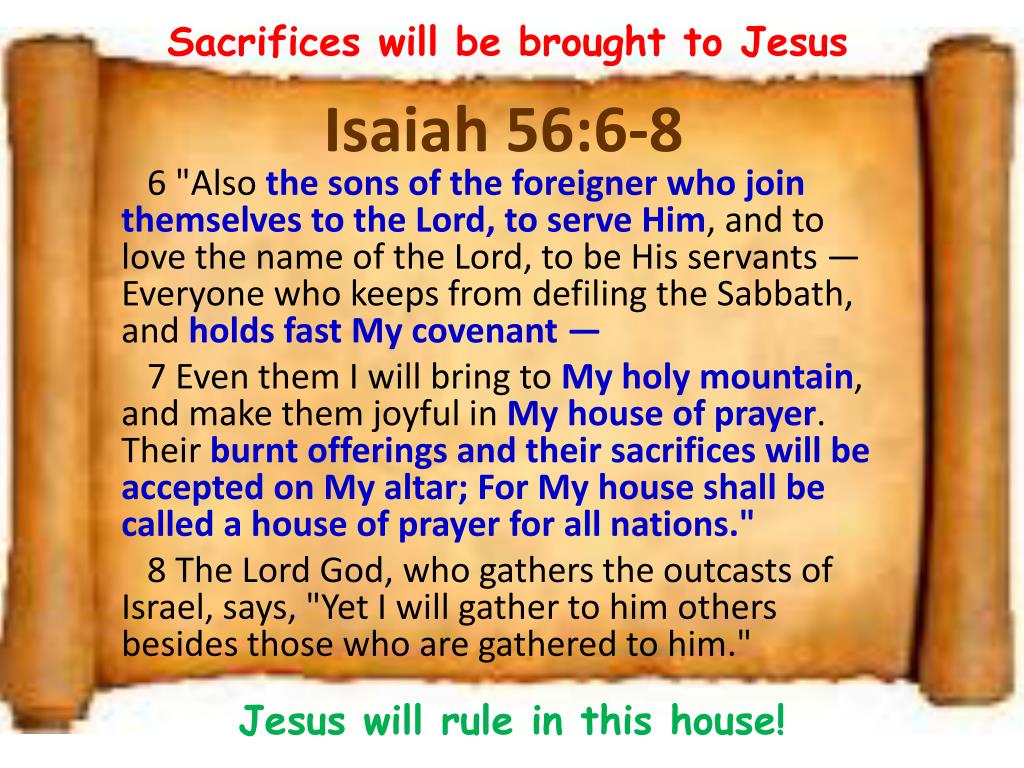
Decree from the Master, God himself; Today, shall we all gather to reclaim, to rededicate our homes back to God? Isaiah 56:6-8

Isaiah 56:6-8 Amplified Bible


“Also the foreigners who join themselves to the Lord,
To minister to Him, and to love the name of the Lord,
To be His servants, everyone who keeps the Sabbath without profaning it
And holds fast to My covenant [by conscientious obedience];


All these I will bring to My holy mountain
And make them joyful in My house of prayer.
Their burnt offerings and their sacrifices will [a]be accepted on My altar;
For My house will be called a house of prayer for all the peoples.”

The Lord God, who gathers the dispersed of Israel, declares:
“I will gather yet others to them (Israel), to those [already] gathered.”

Word of Word for the Children of God

Glory be to the Father,
and to the Son, and to the Holy Ghost;
as it was in the beginning,
is now, and ever shall be,
world without end. Amen, amen.

Today, can we gather to reclaim and rededicate our homes back to God?

The Power of Dedication

Dedication is a powerful act that can shape the spiritual atmosphere of a place.

When a home or property is dedicated to, mired, sinking inside, drowning in dysfunction (drugs, alcohol, domestic abuse and so on), it attracts significant negative energies into the home, leading to various forms of suffering, and loss.

However, by redirecting negativity to the seas of forgetfulness, into the positive empowering light of God, we can gradually transform the spiritual landscape of our homes and property.

A Step-by-Step Guide

To redirect the dedication of your home and property to God, follow these steps:

1. Renounce and Rebuke: Renounce any distractions, dysfunction or influences, and consign and rebuke those forces of darkness which are most surly present.

2. Cover with the Blood of Jesus: Pray! claim God’s power over your home and property with the blood of Jesus, declaring His protection and redemption.

3. Hedge of Protection: Pray for a hedge of thorns to encircle, envelop, surround your home and property, preventing any negative forces from entering.

4. Surrender everything to Jesus: Surrender your home, property, family and life unto Savior Jesus, acknowledging Him as your only true King and Savior.

God’s Blessings and Protection

By redirecting the dedication of your home and property to God, you can expect:

– Abundant blessings and favor

– God’s protection from evil forces

– Restoration of losses and sufferings

– A transformed spiritual atmosphere, conducive to peace, joy, and worship

Prayer of Rededication:

“Heavenly Father, I come before You today to rededicate my home to You. I now renounce any evil, idolatry, or sinful practices that have taken place within these walls. I claim this space for Your glory, Lord. Make my home a house of prayer, a sanctuary for Your presence, and a refuge for Your people. In Jesus’ name, Amen.”

Declaration:

I declare my home is now a holy sanctuary, dedicated to God’s glory and purposes. I claim God’s presence, protection, and peace to fill every room, every corner, and for every heart which gathers within these walls.”

Actions

– Remove any idols, symbols, or objects associated with dysfunctional practices

– Cleanse and consecrate your home with prayer and anointing oil

– Establish a prayer altar or dedicated space for worship

– Invite God’s presence and glory to fill your home

Remember:

It will soon be Easter on April 5,2026 , a day of new beginnings in Christ, claim the cleansing blood of Jesus, redirect all that negativity unto the one true God.

By doing so, you’ll experience the transformative power of God’s blessings, protection, and redemption.

Your home can become a ray of hope, a place of refuge, a sanctuary for God’s presence.

Rededicate yourselves, your homes to Him today and watch His transformation and redemption unfold!

Here are supporting Bible verses for redirecting a home’s dedication to God:

Renounce and Rebuke

– “Renounce all sinful practices” (2 Timothy 2:19)

– “Rebuke the devil and he will flee” (James 4:7)

Cover with the Blood of Jesus

– “The blood of Jesus cleanses us from all sin” (1 John 1:7)

– “The blood of Jesus protects us from evil” (Exodus 12:13Revelation 12:11)

Hedge of Thorns

– “God will surround you with a hedge of protection” (Job 1:10Psalm 91:4)

Surrender to Jesus

– “Surrender your life to God” (Romans 12:1-2)

– “Jesus is the Lord of your life” (Romans 10:9-10)

God’s Blessings and Protection

– It is a great blessing
    when people are forgiven for the wrongs they have done,
    when their sins are erased.[a]
It is a great blessing
    when the Lord says they are not guilty,
    when they don’t try to hide their sins. (Psalm 32:1-2)

– “God will bless and protect you” (Psalm 91:1-2, 4-7)

– “God will restore what was lost” (Job 42:10Joel 2:25-26)

– “God will transform your home” (Malachi 3:10Psalm 107:30)

Declare, these verses over your home property as you redirect it back to God.

May God, Lord of Creation, truly bless, inhabit your home with His glory!

In the name of the Father and of the Son and of the Holy Spirit. Amen

Praying …..

2 Samuel 7:18-29 English Standard Version

David’s Prayer of Gratitude

18 Then King David went in and sat before the Lord and said, “Who am I, O Lord God, and what is my house, that you have brought me thus far? 19 And yet this was a small thing in your eyes, O Lord God. You have spoken also of your servant’s house for a great while to come, and this is instruction for mankind, O Lord God! 20 And what more can David say to you? For you know your servant, O Lord God! 21 Because of your promise, and according to your own heart, you have brought about all this greatness, to make your servant know it. 22  Therefore you are great, O Lord God. For there is none like you, and there is no God besides you, according to all that we have heard with our ears. 23 And who is like your people Israel, the one nation on earth whom God went to redeem to be his people, making himself a name and doing for them[a] great and awesome things by driving out before your people,[b] whom you redeemed for yourself from Egypt, a nation and its gods? 24 And you established for yourself your people Israel to be your people forever. And you, O Lord, became their God. 25  now, O Lord God, confirm forever the word that you have spoken concerning your servant and concerning his house, and do as you have spoken. 26 And your name will be magnified forever, saying, ‘The Lord of hosts is God over Israel,’ and the house of your servant David will be established before you. 27 For you, O Lord of hosts, the God of Israel, have made this revelation to your servant, saying, ‘I will build you a house.’ Therefore your servant has found courage to pray this prayer to you. 28 And now, O Lord God, you are God, and your words are true, and you have promised this good thing to your servant. 29 Now therefore may it please you to bless the house of your servant, so that it may continue forever before you. For you, O Lord God, have spoken, and with your blessing shall the house of your servant be blessed forever.”

Glory be to the Father,
and to the Son, and to the Holy Ghost;
as it was in the beginning,
is now, and ever shall be,
world without end. Amen, amen.
https://translate.google.com/

Perseverance in Prayer: Evidence of our personal relationship with God is often found not in our public words but in our own private prayer closets. Luke 11:5-13

Luke 11:5-13 New American Standard Bible

And He said to them, “[a]Suppose one of you has a friend, and goes to him at midnight and says to him, ‘Friend, lend me three loaves, because a friend of mine has come to me from a journey and I have nothing to serve him’; and from inside he answers and says, ‘Do not bother me; the door has already been shut and my children [b]and I are in bed; I cannot get up and give you anything.’ I tell you, even if he will not get up and give him anything just because he is his friend, yet because of his [c]shamelessness he will get up and give him as much as he needs.

“So I say to you, [d]ask, and it will be given to you; [e]seek, and you will find; [f]knock, and it will be opened to you. 10 For everyone who asks receives, and the one who seeks finds, and to the one who knocks, it will be opened. 11 Now [g] which one of you fathers will his son ask for a [h]fish, and instead of a fish, he will give him a snake? 12 Or he will even ask for an egg, and his father will give him a scorpion? 13So if you, despite being [i]evil, know how to give good gifts to your children, how much more will [j]your heavenly Father give the Holy Spirit to those who ask Him?”

Word of God for the Children of God

Glory be to the Father,
and to the Son, and to the Holy Ghost;
as it was in the beginning,
is now, and ever shall be,
world without end. Amen, amen.

“What a man is on his knees before God, that he is—and nothing more.”  Robert Murray McCheyne, 1813-1843

What a man is before God that he is and nothing more?

🕊️ “A man is what he is on his knees before God—nothing ...

“A man is what he is on his knees before God—nothing more.” — Robert Murray M’Cheyne 

Our truest identity is not in our title, following, or platform… It’s who we are alone with God.

This phrase “He who kneels before God can stand before anyone” means that having faith and humility before God gives one the strength and courage to face any challenge or person.

It suggests that spiritual strength empowers one to overcome worldly obstacles.

“What a person is before God, that he is and no more,” is perhaps the most powerful thing that Saint Francis of Assisi ever said

It’s tempting to think that talking about God is the principal expression of our relationship with Him.

It’s possible, though, for us to talk about God without any intimate knowledge of who He truly is.

Evidence of our personal relationship with God is often found not in our public words but in our private prayers—not in what we say about Him but in what we say to Him.

Indeed, as Robert Murray M’Cheyne was said to have observed, “What a man is on his knees before God, that he is—and nothing more.”

Therein lies a challenge!

If we’re honest, many of our prayers reflect a static or distant relationship, not the dynamism that should mark a warm friendship.

But if this is true of us, then we can be assured that we are not alone.

Jesus’ disciples also desired to grow in intimacy with their heavenly Father but knew they needed the Lord to teach them how to do so (Luke 11:1)—and by way of answer, Jesus, having outlined what came to be called the “Lord’s Prayer,” told them a parable about a friend’s bold request.

Jesus begins His illustration by establishing the relationship of the two men within His story: they are friends.

He then continues to explain how the one man, wishing to show hospitality to a traveling guest, goes to the other’s home at midnight to borrow bread.

He even risks waking his friend’s entire family just to make his request.

Because of his bold persistence, Jesus says, the second man rises and gives the first what he needs.

What we need to grasp from Jesus’ story is this: if a sincere human friendship produces such a generous response, we can rest assured that God will never refuse us anything we truly need when we come to Him in prayer.

The man’s request is a bold one, but as demanding as it may seem, it is heard by a friend and answered because of his persistence.

How much more, then, can we be absolutely confident that our heavenly Father is prepared to respond when we approach Him with a sincere, humble heart.

Assurance before God is not necessarily presumptuous.

Rather, we can have confidence before His throne because of the friendship He has established with us through Jesus.

Because of Him, we can speak to our Creator with the “impudence” of a close friend.

What a thought!

There is no midnight with God, nor will there ever be a moment when He is inconvenienced by our coming to Him as our Friend. All we must do is knock.

In the name of God the Father, and of the Son, and of the Holy Spirit

praying ….

Psalm 16 The Message

16 1-2 Keep me safe, O God,
    I’ve run for dear life to you.
I say to God, “Be my Lord!”
    Without you, nothing makes sense.

And these God-chosen lives all around—
    what splendid friends they make!

Don’t just go shopping for a god.
    Gods are not for sale.
I swear I’ll never treat god-names
    like brand-names.

5-6 My choice is you, God, first and only.
    And now I find I’m your choice!
You set me up with a house and yard.
    And then you made me your heir!

7-8 The wise counsel God gives when I’m awake
    is confirmed by my sleeping heart.
Day and night I’ll stick with God;
    I’ve got a good thing going and I’m not letting go.

9-10 I’m happy from the inside out,
    and from the outside in, I’m firmly formed.
You canceled my ticket to hell—
    that’s not my destination!

11 Now you’ve got my feet on the life path,
    all radiant from the shining of your face.
Ever since you took my hand,
    I’m on the right way.

Glory be to the Father,
and to the Son, and to the Holy Ghost;
as it was in the beginning,
is now, and ever shall be,
world without end. Amen, amen.

https://translate.google.com/

Here is something new, exciting and different to pray about: Let the Grace of God alone define your whole story! Romans 5:18-21

Romans 5:18-21 New International Version

18 Consequently, just as one trespass resulted in condemnation for all people, so also one righteous act resulted in justification and life for all people. 19 For just as through the disobedience of the one man the many were made sinners, so also through the obedience of the one man the many will be made righteous.

20 The law was brought in so that the trespass might increase. But where our sin has increased, grace increased all the more, 21 so that, just as sin reigned in death, so also grace might reign through righteousness to bring eternal life through Jesus Christ our Lord.

Word of God for the Children of God

Glory be to the Father,
and to the Son, and to the Holy Ghost;
as it was in the beginning,
is now, and ever shall be,
world without end. Amen, amen.
Today, we need to start in the beginning.

Paul is going to talk about Adam so we must remember what happened.

God gave Adam one command in Gen 2:17, “Do not eat of the tree of knowledge of good and evil, for in the day you eat of it you will surely die.”

Then, in Chapter 3, what did he do?

He ate of the tree of knowledge of good and evil and verse 7 says that his eyes were opened and he knew that he was naked.

The knowledge of good and evil made him and his wife aware and ashamed of their current situation.

So they made clothes out of fig leaves.

Then, verse 8 says they hid themselves from the presence of God.

When God comes walking into the garden, he finds them and immediately God knows what they have done so he immediately strikes them dead?

No, that’s not what happened.

God clothes them with animal skins and then he removes them from the garden in verses 22-24.

Cherubim with flaming swords were placed outside, preventing them from entering the garden again.

They did not die physically on that day, but their relationship was severed because of their transgression.

They lost access to the tree of life, eventually leading to physical decay, death.

“Father, I am an athlete. I know I only have a few years; then I will be too old for playing this game. My body is hurt and aging, I can hardly admit it to myself. I come to church once a year at this service. So rub the ashes on. Rub them hard.”

During the coming season of Lent we’ll return to a years long tradition: with futility, confess again and again, sin is in our hearts and death is in our bones.

We make our home in the valley of the shadow of death.

We are decaying and we are dying.

Like the Israelites in exile, we lament: “Our bones are dried up and our hope is gone; we are cut off” (Ezekiel 37:11).

We have no future.

Jesus Christ, the one greater than Adam, enters our “valley of dry bones” to get us out of the mess Adam got us into, undo what Adam did, succeed where Adam failed.

During these coming days of holy week, as our battles grows fierce, and fiercer still, pray we “fix our eyes on Jesus … who for the joy set before him [the joy of bringing us to glory], endured the cross” (Hebrews 12:2). Let us be astonished!

SOMETHING TO PONDER?

When you study the characters of the Bible, especially the people God used in mighty ways, there is one thing most of them had in common.

On their journey, at some point, they failed miserably.

For most, their failures did not come before God called them or used them, but after.

Here are some examples:

-Abraham, the father of the faith, twice lied and called Sarah his sister, lost hope, slept with Hagar to attempt to bring forth a son to fulfill God’s promise.
-Jacob deceived his brother Esau out of his birthright. Lied to his blind father, Isaac and stole Esau’s rightful first born blessing, running away into slavery.
-At Meribah, Moses got angry with the Israelites and struck the rock a second time after God told him to speak to it, was denied his place in the promised land.
-Rahab was a prostitute who betrayed her people and hid the Israelite spies.
-David committed adultery with Bathsheba, conspired, murdered her husband.
-Peter publicly denied Jesus three times before looking directly into His eyes.
-Paul zealously killed Christians.

The names listed above are iconic in the halls of faith. (Hebrews 11)

We often stand amazed at what these people accomplished for God, often in the face of extreme challenges.

Yet, when we study deeper, we see they were simply imperfect people who were used by a perfect God to accomplish, fulfill, what he long desired for them to do.

My friends, that is exactly what grace is.

Grace that works despite…

If I were telling the story of heroes of the faith, I would probably leave the failing parts out.

After all, why do we need to tell that part of the story, anyway?

The reason God tells the story is that it gives generations of “you and me” hope.

God didn’t use these people because of who they were but despite of who they were in their time periods.

The stories of your life and mine are no different.

You have failed and made poor choices, and so have I, more than I can confess.

Yet what we discover is God doesn’t kick us aside because of the mistakes and past failures in our lives. If he did, none of us would be left standing or available for use. Instead, those places of our greatest failures can become the places of our greatest growth because we’ll experience the greatest amount of his grace. 

There is no sin, mistake, or failure that is too great for God’s grace to cover.

If God can take a murderer (Moses) and turn him into the greatest apostle, then there is authentic hope for all of us.

God’s grace specializes in taking sinners and turning them into something they could never become on their own.

That is God’s love on display, his compassion on display, and his grace on display. Remember, it is not because of who you are but despite who you are. 

Grace does not cancel but restores

We live in the age of cancel culture.

At least in baseball, you get three strikes before you are out, but today, you may only get one.

That is the culture of the world and, sadly, of some in the church as well.

That is not God’s character.

Romans tells us, where sin increases, grace increases even more.

This means that God’s grace is not intimidated by our sins or failures, but it is there to help you overcome it. (John 16:31-33, 2 Corinthians 12:7-10)

In fact, God’s grace exists to deal with the failures in our lives.

My friend, if you are wrestling with the things you have done, thinking God is done with you, rest assured, he is not.

His capacity to love is too great and his reservoirs of grace run too deep to leave us where you are.

I encourage all of you today to bring all your sins, failures, and mistakes to him and allow his boundless grace to heal you.

Regardless of what we have done, he is not here to cancel us but to restore us.

When we finally grasp that, then we will understand what His grace is all about.

Your daily Prayer

ABBA, Father,

I come before you, weighed down by the enormous burden of my past mistakes.

As much as I try, I can’t seem to let them go.

I have allowed them to define me for far too long and I cannot get past them.

Today, I pray for a fresh revelation of your grace that lets me know you have not forsaken me and you love me as just much today as you have from conception.

I pray you would allow your grace to heal those past failures and allow me to walk in the freedom that comes from your grace.

I repent and wait to receive your forgiveness and move forward knowing your grace is than sufficient for me, assured of continual service unto your kingdom .
In Jesus’ name, Amen.

THREE THINGS TO MEDITATE UPON

1. You don’t stand in Christ in your own strength, but in the power of his grace.

2. Grace is a reminder that we were never worthy to begin with, so don’t think you have to try to be worthy now. 

3. Rather than focusing on our inefficiencies, focus on His sufficiency of grace.

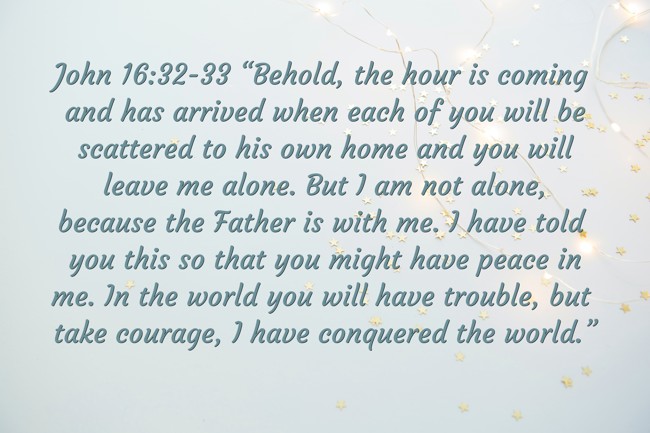
John 16:31-33 The Message

31-33 Jesus answered, “Do you finally believe? In fact, you’re about to make a run for it—saving your own skins and abandoning me. But I’m not abandoned. The Father is with me. I’ve told you all this so that trusting me, you’ll be unshakable and assured, deeply at peace. In this godless world you’ll continue to experience difficulties. But take heart! I’ve conquered the world.”

23 1-3 God, my shepherd!
    I don’t need a thing.
You have bedded me down in lush meadows,
    you find me quiet pools to drink from.
True to your word,
    you let me catch my breath
    and send me in the right direction.

Even when the way goes through
    Death Valley,
I’m not afraid
    when you walk at my side.
Your trusty shepherd’s crook
    makes me feel secure.

You serve me a six-course dinner
    right in front of my enemies.
You revive my drooping head;
    my cup brims with blessing.

Your beauty and love chase after me
    every day of my life.
I’m back home in the house of God
    for the rest of my life.

Glory be to the Father,
and to the Son, and to the Holy Ghost;
as it was in the beginning,
is now, and ever shall be,
world without end. Amen, amen.
https://translate.google.com/

I am convinced I will always/never see God’s goodness in the exuberant earth. Walk with God! Take heart. Do not quit. Do confidently say it again: Walk with God/I will give up on God. 2 Kings 20:1-11

2 Kings 20:1-11 New American Standard Bible

Hezekiah’s Illness and Recovery

20 In those days Hezekiah became [a]mortally ill. And Isaiah the prophet, the son of Amoz, came to him and said to him, “This is what the Lord says: ‘Set your house in order, for you are going to die and not live.’” Then he turned his face to the wall and prayed to the Lord, saying, “Please, Lord, just remember how I have walked before You wholeheartedly and in truth, and have done what is good in Your sight!” And Hezekiah wept [b]profusely. And even before Isaiah had left the middle courtyard, the word of the Lord came to him, saying, 5 “Return and say to Hezekiah the leader of My people, ‘This is what the Lord, the God of your father David says: “I have heard your prayer, I have seen your tears; behold, I am going to heal you. On the third day you shall go up to the house of the Lord. And I will add fifteen years to your [c]life, and I will save you and this city from the hand of the king of Assyria; and I will protect this city for My own sake and for My servant David’s sake.”’” Then Isaiah said, “Take a cake of figs.” And they took it and placed it on the inflamed spot, and he recovered.

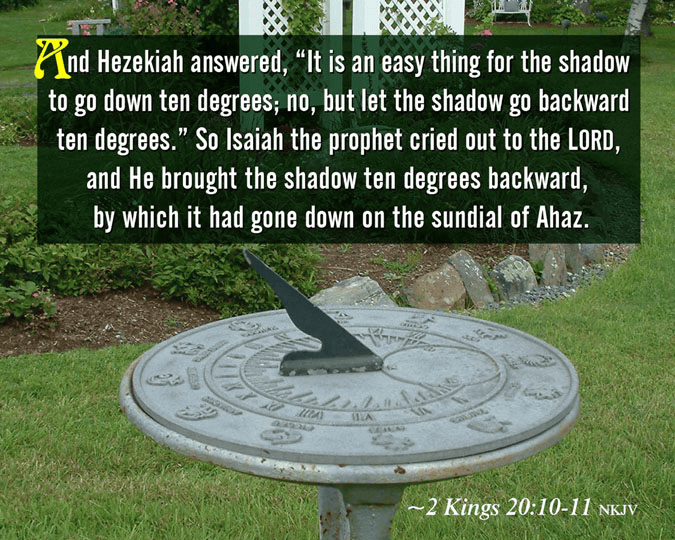
Now Hezekiah said to Isaiah, “What will be the sign that the Lord will heal me, and that I will go up to the house of the Lord on the third day?” Isaiah said, “This shall be the sign to you from the Lord, that the Lord will perform the word that He has spoken: shall the shadow go forward ten steps or go back ten steps?” 10 So Hezekiah said, “It is easy for the shadow to decline ten steps; no, but have the shadow turn backward ten steps.” 11 Then Isaiah the prophet called out to the Lord, and He brought the shadow on the [d]stairway back ten steps by which it had gone down on the [e]stairway of Ahaz.

Word of God for the Children of God

Glory be to the Father,
and to the Son, and to the Holy Ghost;
as it was in the beginning,
is now, and ever shall be,
world without end. Amen, amen.

Hezekiah Walked With God

Hezekiah “did what was right in the eyes of the LORD, just as his [ancestor] David had done” (2 Kings 18:3).

Hezekiah’s father, Ahaz, had been a king who did evil in God’s sight.

Hezekiah tore down the altars and sacred stones his father had used to worship other gods, and the Lord blessed Hezekiah’s devotion and his zeal by giving him victories over enemy oppressors who tried to ruin God’s people.

But then Hezekiah became critically ill, the Lord said that he would soon die.

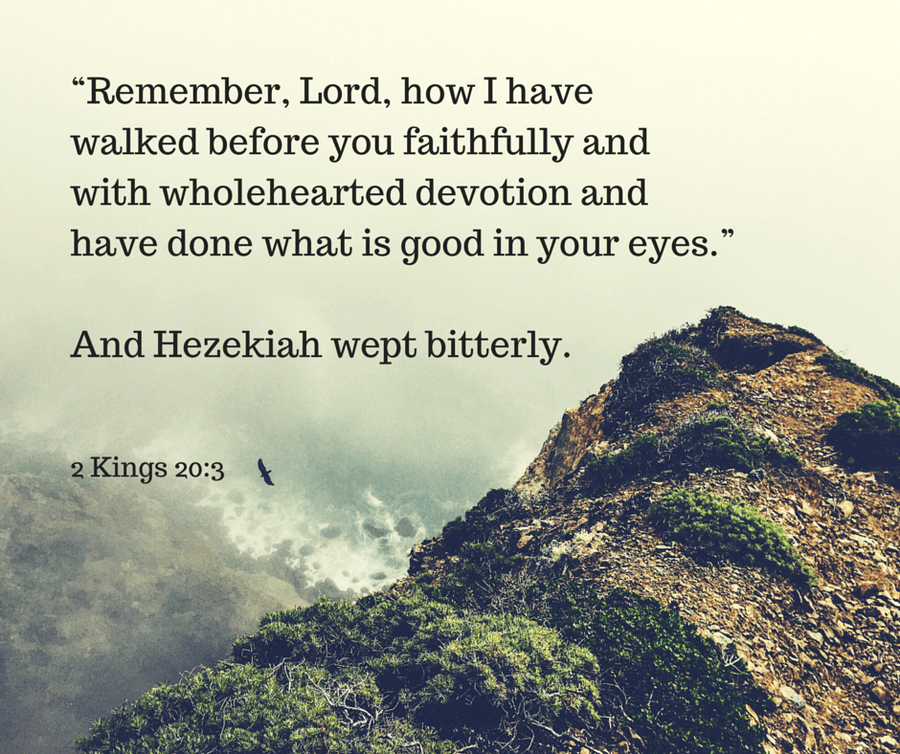
So Hezekiah cried. pleaded with God for healing, reminding the Lord in prayer he had always walked before him “faithfully and with wholehearted devotion.”

And he wept bitterly.

God answered Hezekiah’s prayer by adding fifteen years to his life. Hezekiah was thankful, but he did not always use his extra time wisely.

He had a weakness in that he was proud of all the treasures of his kingdom. And when visitors came from Babylon, he proudly showed them all his treasures.

Later the prophet Isaiah said that one day those treasures would be carried off to Babylon. God’s cure of Hezekiah’s illness did not cure him of his pride.

A mountain-top spiritual experience doesn’t protect us against a fall back into the valley of sin. If you have been to the mountaintop, pray for sustaining grace.

And if you have fallen, Psalm 51 repent knowing God’s forgiving grace is great.

Since the days of David and Solomon, there had not been a king of Judah as faithful as Hezekiah. Not only did he purge idolatry from Judah, but he also humbled himself, trusted the Lord to deliver him from the Assyrian Empire.

Given Assyria’s successful imperial expansion, it would have made more sense, humanly speaking, for Hezekiah to surrender and ask for mercy. But Hezekiah walked by faith, not by sight, and Assyria was turned away (2 Kings 18–19).

We see another example of Hezekiah’s trust in the Lord in today’s passage, which tells us of a critical moment when the king almost lost his life.

At the point of death, King Hezekiah received a visit from Isaiah the great prophet who played a critical role during the righteous monarch’s reign.

Isaiah delivered a message from the Lord that Hezekiah was about to die (20:1).

But Hezekiah did not take God’s words as an unalterable decree; instead, he chose faith over fear, courage not timidity, went to the Lord in prayer (vv. 2–3).

In the vulnerability of King Hezekiah’s desperate prayer, we see the essence of our relationship with God. It’s not about eloquence or perfection but coming to Him just exactly as we are: spiritually broken, seeking strength, being hopeful.

God’s response to Hezekiah isn’t just about the promise of healing; it’s a crystal clear declaration of His congoing, continuous nearness in our deepest struggles.

This interaction reminds us that our tears are never invisible to God. Each one a silent prayer, seen and too understood by Him. In our moments of helplessness, as words fail us, our tears speak volumes to the heart of our Father. Psalm 56:8

This illustrates the reality that not everything the prophets declared from God was part of His unchangeable decree that determines whatsoever comes to pass (Eph. 1:11).

Sometimes the Lord, through His prophets, announced things that He knew would not ultimately occur in order to spur His people to action.

Consider Jeremiah 18:5–10, that the Lord will relent and not fulfill a warning to sinful people when they repent, or He will bring judgment and not fulfill an announced blessing when men and women turn away from heeding His law.

In light of the Lord’s omniscience—He knows all things past, present, and future—God obviously knows how people will respond confronted by crisis.

In Hezekiah’s case, His ultimate intention was to heal the king and not to end his life through the illness described in 2 Kings 20:1–11.

But our actions are one means through which the Lord brings His plans to pass, He makes our decisions meaningful by acting in ways that prompt us to pray.

So, the Lord called for Hezekiah to be restored to health through the means of a poultice made from figs, He even added fifteen years to the king’s life (vv. 4–7).

Moreover, God did not refuse Hezekiah’s request for a sign the healing would be accomplished. This request shows that Hezekiah’s faith was true but imperfect, for he needed confirmation of God’s words when the promise should have been enough. But our Creator is kind, and He bolstered Hezekiah’s faith with a sign (vv. 8–11).

When we pray, we must remember God is sovereign, will answer us according to His eternal purposes. That does not mean, however, we should not be earnest in prayer. Hezekiah prayed earnestly, and he was healed. We should express our needs to God earnestly as well, knowing that He just may grant us what we ask.

In the name of the Father, and of the Son, and of the Holy Spirit. Amen.

Praying ….

Psalm 16

Confidence in the Lord

Miktam of David.

Protect me, God, for I take refuge in you.
I[a] said to the Lord, “You are my Lord;
I have nothing good besides you.”[b]
As for the holy people who are in the land,
they are the noble ones.
All my delight is in them.
The sorrows of those who take another god
for themselves will multiply;
I will not pour out their drink offerings of blood,
and I will not speak their names with my lips.

Lord, you are my portion[c]
and my cup of blessing;
you hold my future.
The boundary lines have fallen for me
in pleasant places;
indeed, I have a beautiful inheritance.

I will bless the Lord who counsels me—
even at night when my thoughts trouble me.[d]
I always let the Lord guide me.[e]
Because he is at my right hand,
I will not be shaken.

Therefore my heart is glad
and my whole being rejoices;
my body also rests securely.
10 For you will not abandon me to Sheol;
you will not allow your faithful one to see decay.
11 You reveal the path of life to me;
in your presence is abundant joy;
at your right hand are eternal pleasures.

Glory be to the Father,
and to the Son, and to the Holy Ghost;
as it was in the beginning,
is now, and ever shall be,
world without end. Amen, amen.
https://translate.google.com/

Lord, make me an instrument of your Compassion, your Generosity, and of your Grace. Lord, instruct us how to Live the Kingdom Life: Where Injury, Pardon. Prayer St. Francis of Assisi 

Matthew 6:9-15 Authorized (King James) Version

After this manner therefore pray ye: Our Father which art in heaven, Hallowed be thy name. 10 Thy kingdom come. Thy will be done in earth, as it is in heaven. 11 Give us this day our daily bread. 12 And forgive us our debts, as we forgive our debtors. 13 And lead us not into temptation, but deliver us from evil: For thine is the kingdom, and the power, and the glory, for ever. Amen. 14 For if ye forgive men their trespasses, your heavenly Father will also forgive you: 15 but if ye forgive not men of their trespasses, neither will your Father forgive your trespasses.

Word of God for the Children of God

Glory be to the Father,
and to the Son, and to the Holy Ghost;
as it was in the beginning,
is now, and ever shall be,
world without end. Amen, amen.

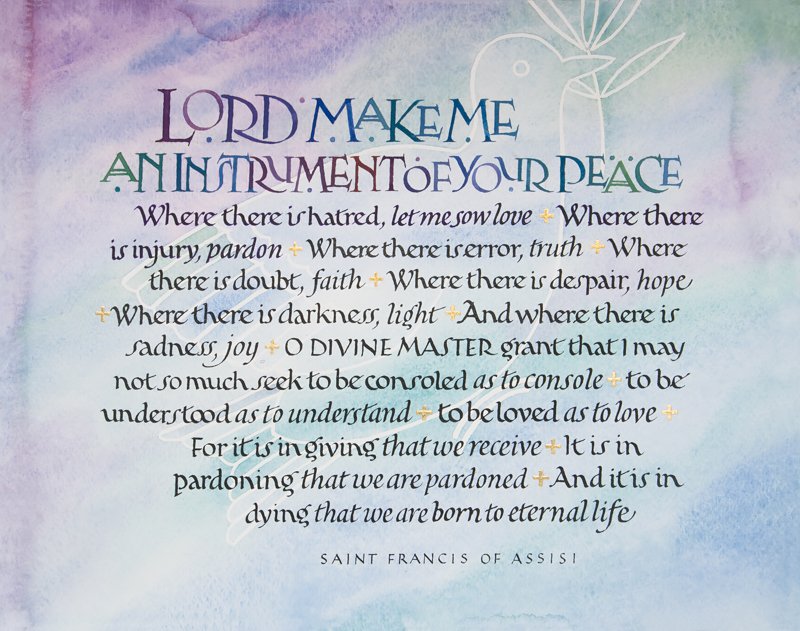
Foundational biblical truths found in The Peace Prayer of St. Francis of Assisi: Lord, Make Me an Instrument of Your Peace.

Lord, make me an instrument of Your peace.

Where there is hatred, let me sow love;

where there is injury, pardon;

where there is doubt, faith;

where there is despair, hope;

where there is darkness, light;

and where there is sadness, joy.

O, Divine Master,

grant that I may not so much seek

to be consoled as to console;

to be understood as to understand;

to be loved as to love;

for it is in giving that we receive;

it is in pardoning that we are pardoned;

and it is in dying that we are born to eternal life.

Today we are going to look at: Where there is injury, pardon.

Have you ever been injured by someone?

Have you ever caused injury to someone?

Injury:

Words spoken. Failed relationships. Life circumstances – minimal to horrific.

Injury is everywhere. In the church, in the world. At work. In marriages. In families. It is very easy to take offense and to cause offense. We don’t easily let go of our offenses. We keep that someone in jail so to speak. The incident locked tight in our heart. Injury is common, pardoning is not.

Here are a few common responses when we have been injured.

Where there is injury let me – have at it.

Where there is injury, let me pardon and then let them pay.

Where there is injury, let me major on the minors.

Where there is injury, let me always have the last word.

Where there is injury, let me always be right.

Knowing that these responses are not very Jesus – like:

What does Jesus have to say about this?

Matthew 6: 9-15

“This, then, is how you should pray: “ ‘Our Father in heaven, hallowed be your name, 10) your kingdom come, your will be done on earth as it is in heaven. 11) Give us today our daily bread. 12) Forgive us our debts, as we also have forgiven our debtors. 13) And lead us not into temptation, but deliver us from the evil one.’ 14) For if you forgive men when they sin against you, your heavenly Father will also forgive you. 15) But if you do not forgive men their sins, your Father will not forgive your sins.

Sobering stuff.

We are asking in this prayer for Jesus to pardon us just as much as we choose to pardon those who have injured us. No more. No less.

For us it is about settling accounts.

Being right.

For Jesus it is about pardoning.

Being reconciled.

Matthew 18: 21-22 “Then Peter came to Jesus and asked, ‘Lord, how many times shall I forgive my brother when he sins against me? Up to seven times? Jesus answered, ‘I tell you, not seven times, but seventy-seven times.’

Seventy-seven means times without number.

No limit how many times we are to pardon, forgive those who have injured us.

It is clear that Jesus means business.

There is no wiggle room when it comes to pardoning.

The cool part about that challenge is that Jesus didn’t just tell us to do it but He modeled it for us.

The ultimate act of forgiveness was going to the cross for all of us.

The ultimate pardon.

When He hung on the cross, He said, “Father forgive them, for they do not know what they are doing. Luke 23:34

Is it more important to you to be right than to reconcile?

Is it more important to you to hold onto your grudges and injuries than it is to be pardoning?

To hold on to your offenses rather than pardon?

To hold that person in the jail of your heart?

Not far from dying, in a condition of unspeakable sufferings, we have Jesus’ spoken words about pardoning as well as His model, yet as we stand here today with our injuries and the memories of injuries that we have afflicted on others.

We may end up looking like the elder son in the Prodigal story.

Let’s look at the Rembrandt painting “The Return of the Prodigal Son.”

Let’s put a face on this.

The elder son was angry, cold hearted, unforgiving. He was one that kept his heart locked tight. Kept his younger brother locked in the jail of his hard heart.

We don’t know what happened to the elder son. Scary.

He would rather be right in his own thinking, to hang on to his offenses than trying to welcome home and forgive his brother.

BEING RIGHT VS. BEING RECONCILED.

Remember: Forgive us our sins as we forgive those who have sinned against us.

We are asking for Jesus to pardon us just as much as we are willing to pardon all those who have injured us.

“Search us, Help us Lord to stop settling accounts, stop holding our offenders prisoners in our jails and to pardon out of obedience to You and Your word.”

PRAYER: “Lord, show us where we are hanging on at all costs as if our very lives would utterly crumble to being right and are unwilling to be reconciling.” “Show us areas where we have been injured and have chosen to carry the grudge until…that person comes to us and apologizes.” “Show us where we have now hardened our hearts to receive forgiveness from You, there by passing up the attempts of the Father to love up on us.”

Our Kingdom Living for What Purpose? God’s Kingdom to Come ….

Matthew 6:9-10 Authorized (King James) Version

After this manner therefore pray ye: Our Father which art in heaven, Hallowed be thy name. 10 Thy kingdom come. Thy will be done in earth, as it is in heaven.

From simple to complex, most of us face many, many choices each day.

What clothes will I wear?

What will I have for breakfast?

What route will I take to work?

What do I need at the store?

Which projects, which tasks will I focus on?

There is one choice, however, far more important than all the others:

Which kingdom will I serve?

How will I spend my money, time; on what efforts—the kingdom of God or the kingdom or domain or country or community or family that I am dwelling in?

Jesus teaches us to pray, “Father . . . your kingdom come.”

As we pray these words, we are making a true commitment to living God’s way.

“Your kingdom come” means, first of all,

“Rule over me! Master my soul. Make me a loyal citizen of your kingdom.”

It means,

“Lord, rule in my whole life, master me such a way my deepest desire is to walk only with you. May your principles and ways be the only air that I breathe.”

“Your kingdom come” also means God’s Kingdom alone.

“Help me to see your kingdom advance in the people around me—my family, friends, classmates, coworkers, and neighbors, to foster a love and a depth of integrity, truth and highest respect for thy kingdom, living in them as well.”

This also means seeing churches, High Schools, institutions and organizations align with the principles of God’s kingdom. And as the Lord’s kingdom comes, any forces that dare to revolt against him will be overwhelmed and shattered.

https://translate.google.com/

I am now calling Heaven and Earth to be an eyewitness against you today: Choose this day to be an encourager, Choose this day to be a discourager? Deuteronomy 30:11-20

Deuteronomy 30:11-20 New King James Version

The Choice of Life or Death

11 “For this commandment which I command you today is [a]not too mysterious for you, nor is it far off. 12 It is not in heaven, that you should say, ‘Who will ascend into heaven for us and bring it to us, that we may hear it and do it?’ 13  Nor is it beyond the sea, that you should say, ‘Who will go over the sea for us and bring it to us, that we may hear it and do it?’ 14 But the word is very near you, in your mouth and in your heart, that you may do it.

15 “See, I have set before you today life and good, death and evil, 16 in that I command you today to love the Lord your God, to walk in His ways, keep His commandments, His statutes, and His judgments, that you may live and multiply; and the Lord your God will bless you in the land which you go to possess. 17 But if your heart turns away so that you do not hear, and are drawn away, and worship other gods and serve them, 18 I announce to you today that you shall surely perish; you shall not prolong your days in the land which you cross over the Jordan to go in and possess. 19 I call heaven and earth as witnesses today against you, that I have set before you life and death, blessing and cursing; therefore choose life, that both you, your descendants may live; 20 that you may love the Lord your God, that you may obey His voice, and that you may cling to Him, for He is your life and the length of your days; and that you may dwell in the land which the Lord swore to your fathers, to Abraham, Isaac, and Jacob, to give them.”

Word of God for the Children of God

Glory be to the Father,
and to the Son, and to the Holy Ghost;
as it was in the beginning,
is now, and ever shall be,
world without end. Amen, amen.
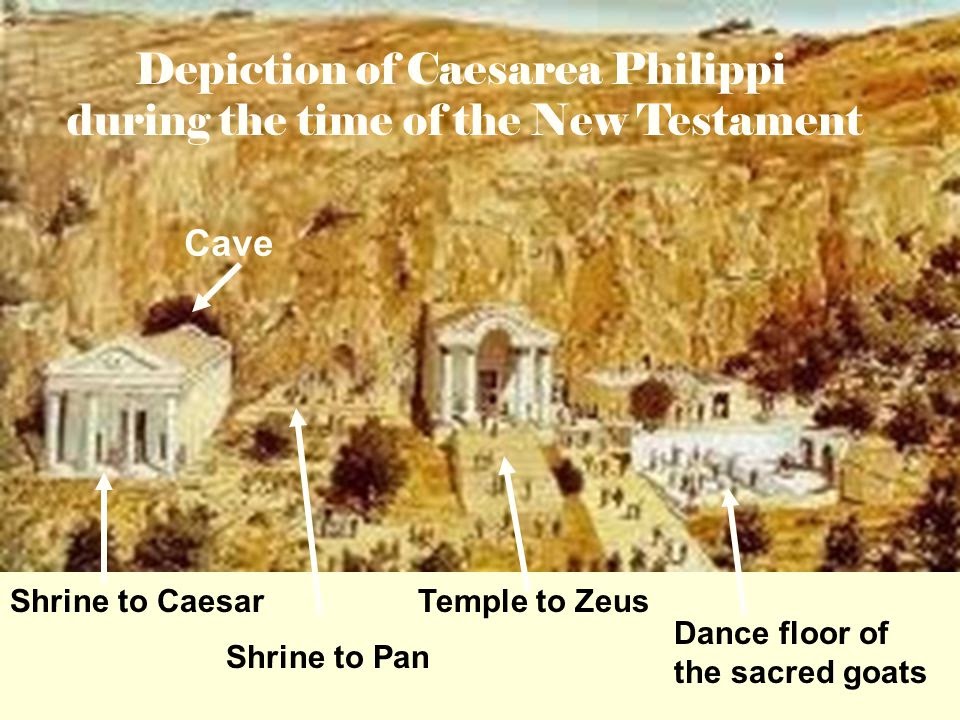
When I first became a Christian, I decided I would somehow find a way to live in two different worlds.

I was planning to hang out with my old friends and still be a Christian.

For a time, I felt as though I were in a state of suspended animation.

I wasn’t comfortable with my old buddies, but I wasn’t quite comfortable with the Christians, either.

So, I decided to be Mr. Solo Christian.

I even said to my friends,

“Don’t worry about me. You’re thinking that I’ll become a fanatic and carry a Bible, spontaneously say, ‘Praise the Lord.’ It will never happen. I’m going to be cool about this. I won’t embarrass you, but I’m going to believe in God now.”

However, as God became more real to me, I began to follow Him more closely, He changed my life and my outlook. As a result, my priorities began to change.

Without exception, on our Christian journey, we’ll find that there are always going to be people who will impede, discourage us, from growing spiritually.

They’ll say things like,

“I think it’s truly wonderful that you’re a Christian. I go to church too—but only at Christmas and Easter and for weddings. But you’re getting a little too fanatical. You brought a Bible to work the other day. That’s going a little too far. We were both so embarrassed. You’re no fun anymore. We are glad you’ve made changes in your life, but we’re afraid that you’re going to become too extreme.”

When we’re confronted with people like this, we have the choice of either to do what God wants us to do or to go with the flow of their lukewarm commitment.

We’ll find that there are biblical consequences for each option.

Deuteronomy 30:19 

“Today I have given you the choice between life and death, between blessings and curses. Now I call on heaven and earth to witness the choice you make. Oh, that you would choose life, so that you and your descendants might live!” Choosing life includes choosing people who encourage you to live the life God offers.

Luke 18:9-14 New American Standard Bible

The Pharisee and the Tax Collector

Now He also told this parable to some people who trusted in themselves that they were righteous, and viewed others with contempt: 10 “Two men went up into the [a] temple to pray, one a Pharisee and the other a tax collector. 11 The Pharisee  stood and began praying this in regard to himself: ‘God, I thank You that I am not like other people: swindlers, crooked, adulterers, or even like this tax collector. 12 I fast twice a week; I pay tithes of all that I get.’ 13 But the tax collector, standing some distance away, was even unwilling to raise his eyes toward heaven, but was beating his chest, saying, ‘God, be [b]merciful to me, the sinner!’ 14 I tell you, this man went to his house justified rather than the other one; for everyone who exalts himself will be humbled, but the one who humbles himself will be exalted.”

Which Would We Despise, Be Discouraged By Today?

Tax collectors were despised for two reasons.

They are traitors because they collected taxes for the oppressive Roman Empire.

And they knowingly overcharged their fellow Jews and kept the extra money for themselves.

Because of these sins against God’s people, tax collectors were considered unclean. So it’s a surprise that in his parable Jesus speaks of a tax collector observed, set apart, praying at the temple, where he wouldn’t be welcome.

The Pharisees, however, worked hard to be pure and spotless, to be able to say, with

Psalm 26:4-5, “I do not sit with the deceitful … I … refuse to sit with the wicked.”

If any of the Jews were righteous, it was the Pharisees.

But Jesus says the tax collector in this story was justified—and not the Pharisee.

That surely shocked his first listeners!

Today, however, we may have to avoid a similar pitfall.

We might tend to despise the Pharisee and treat the tax collector as a hero.

But that would be a mistake.

We have to be careful not to be like the Pharisee, the one who despises others, even as we see that he’s a hypocrite.

Jesus’ judgment in this parable raises the question of how our assessment of people squares with God’s assessment.

If we judge people as less than ourselves—whether Pharisee or tax collector—we are in serious danger of excluding ourselves from God. It’s that serious.

The apostle Paul’s instructions in 1 Thessalonians 5:11 are clear:

“So encourage each other and build each other up, just as you are already doing.”

The believers who take those instructions to heart are the ones we should be surrounding ourselves with.

The Christian life is a challenge.

The people who recognize that and offer words of comfort, wisdom, and encouragement along the way are extremely valuable resources. They counteract the negativity and discouragement that others throw our way.

Why are we going to let people hold us back?

Why are we going to let people discourage us from wholehearted commitment to Jesus Christ?

Reflection question:

Where can we find encouragement and support in our walks with Christ?

Jesus Chooses Life for Us

Deuteronomy 30:15-20 Complete Jewish Bible

(RY: iv, LY: vii) 15 “Look! I am presenting you today with, on the one hand, life and good; and on the other, death and evil — 16 in that I am ordering you today to love Adonai your God, to follow his ways, to obey his mitzvot, regulations and rulings ; for if you do, you will live and increase your numbers; and Adonai your God will bless you in the land you are entering in order to take possession of it. 17 But if your heart turns away, if you refuse to listen, if you are drawn away to prostrate yourselves before other gods and serve them; (LY: Maftir) 18 I am announcing to you today that you will certainly perish; you will not live long in the land you are crossing the Yarden to enter and possess.

19 “I call on heaven and earth to witness against you today that I have presented you with life and death, the blessing and the curse. Therefore, choose life, so that you will live, you and your descendants, 20 loving Adonai your God, paying attention to what he says and clinging to him — for that is the purpose of your life! On this depends the length of time you will live in the land Adonai swore he would give to your ancestors Avraham, Yitz’chak and Ya‘akov.”

Haftarah Nitzavim: Yesha‘yahu (Isaiah) 61:10–63:9

B’rit Hadashah suggested readings for Parashah Nitzavim: Romans 9:30–10:13; Messianic Jews (Hebrews) 12:14 –15

In Deuteronomy, Moses is giving his farewell speech to God’s people Israel.

So he tells the Israelites straight up: “You can go one of two ways—the way of blessings and life, or the way of curses and death. Choose life!”

The choice seems rather simple and obvious, right?

I can’t imagine people saying, “Well, I’ll choose curses and death.”

But some do.

Some people reject or ignore the choice that God gives them.

The same thing happens today.

People reject or ignore the choice to follow Christ.

In Moses’ day, God laid the choice in front of Israel in terms of a “covenant.”

That was a pact between God and his people—a pledge of fidelity on both sides.

God promised to be faithful to his people, and the people were summoned to reciprocate.

They needed to be faithful to God.

They needed to keep the terms of the covenant.

Those terms made up the law, summarized in the Ten Commandments:

do not worship or serve other gods; do not harm your neighbor; and so on.

Yet no human could keep the terms of that covenant perfectly—till Jesus came.

John 3:16-21 Complete Jewish Bible

16 “For God so loved the world that he gave his only and unique Son, so that everyone who trusts in him may have eternal life, instead of being utterly destroyed. 17 For God did not send the Son into the world to judge the world, but rather so that through him, the world might be saved. 18 Those who trust in him are not judged; those who do not trust have been judged already, in that they have not trusted in the one who is God’s only and unique Son.

19 “Now this is the judgment: the light has come into the world, but people loved the darkness rather than the light. Why? Because their actions were wicked. 20 For everyone who does evil things hates the light and avoids it, so that his actions won’t be exposed. 21 But everyone who does what is true comes to the light, so that all may see that his actions are accomplished through God.”

Jesus is, will be, the only human who kept every stipulation of the covenant.

And he not only chose life for himself but, once and for all time, also made it available to all who would choose life in him.

Thanks to Jesus, we have blessings and life!

In summation ….

In the name of God, the Father the Son and the Holy Spirit …..

Praying …..

Psalm 40 Complete Jewish Bible

40 (0) For the leader. A psalm of David:

2 (1) I waited patiently for Adonai,
till he turned toward me and heard my cry.
3 (2) He brought me up from the roaring pit,
up from the muddy ooze,
and set my feet on a rock,
making my footing firm.
4 (3) He put a new song in my mouth,
a song of praise to our God.
Many will look on in awe
and put their trust in Adonai.

5 (4) How blessed the man who trusts in Adonai
and does not look to the arrogant
or to those who rely on things that are false.

6 (5) How much you have done, Adonai my God!
Your wonders and your thoughts toward us —
none can compare with you!
I would proclaim them, I would speak about them;
but there’s too much to tell!

7 (6) Sacrifices and grain offerings you don’t want;
burnt offerings and sin offerings you don’t demand.
Instead, you have given me open ears;
8 (7) so then I said, “Here I am! I’m coming!
In the scroll of a book it is written about me.
9 (8) Doing your will, my God, is my joy;
your Torah is in my inmost being.
10 (9) I have proclaimed what is right in the great assembly;
I did not restrain my lips, Adonai, as you know.
11 (10) I did not hide your righteousness in my heart
but declared your faithfulness and salvation;
I did not conceal your grace and truth
from the great assembly.”

12 (11) Adonai, don’t withhold your mercy from me.
Let your grace and truth preserve me always.
13 (12) For numberless evils surround me;
my iniquities engulf me — I can’t even see;
there are more of them than hairs on my head,
so that my courage fails me.
14 (13) Be pleased, Adonai, to rescue me!
Adonai, hurry and help me!
15 (14) May those who seek to sweep me away
be disgraced and humiliated together.
May those who take pleasure in doing me harm
be turned back and put to confusion.
16 (15) May those who jeer at me, “Aha! Aha!”
be aghast because of their shame.

17 (16) But may all those who seek you
be glad and take joy in you.
May those who love your salvation say always,
“Adonai is great and glorious!”

18 (17) But I am poor and needy;
may Adonai think of me.
You are my helper and rescuer;
my God, don’t delay!

Glory be to the Father,
and to the Son, and to the Holy Ghost;
as it was in the beginning,
is now, and ever shall be,
world without end. Amen, amen.

https://translate.google.com/