
Ecclesiastes 3:1-8 Complete Jewish Bible
3 For everything there is a season,
a right time for every intention under heaven —
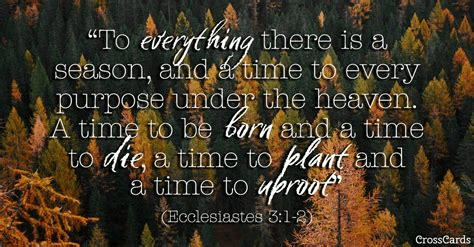
2 a time to be born and a time to die,
a time to plant and a time to uproot,
3 a time to kill and a time to heal,
a time to tear down and a time to build,
4 a time to weep and a time to laugh,
a time to mourn and a time to dance,
5 a time to throw stones and a time to gather stones,
a time to embrace and a time to refrain,
6 a time to search and a time to give up,
a time to keep and a time to discard,
7 a time to tear and a time to sew,
a time to keep silent and a time to speak,
8 a time to love and a time to hate,
a time for war and a time for peace.
The Word of God for the Children of God
Glory be to the Father,
and to the Son, and to the Holy Ghost;
as it was in the beginning,
is now, and ever shall be,
world without end. Amen, amen.
“How time flies!” we often say.
Time seems to trickle through our fingers so quickly!
Yet in the book of Ecclesiastes, the Preacher tells us,
“There is a time for everything.”
“There is a time for everything under the Heavens.”
“There is a time for everything under the Sun.”
We are given time from God to attend to the things in life that truly matter.
There is, I suppose, time for us to chase the winds, put them in a canning jar.
Another question here would be … chasing time itself, stuff it in a canning jar.
Has anyone out there ever caught the winds … bottle them up in a canning jar?
Has anyone out there got their hands on time … bottled it up in a canning jar?
So how does God want people to use time?
There are great answers to that question on the pages of Scripture!
But what does God want me to do today?
Capture the winds in your bottle and keep hurricanes and tornados at bay?
Capture time, keep it until when you alone know when the “right time” arrives?
Ecclesiastes 3:2 highlights the natural rhythms of life, emphasizing that there are highly specific times for various insignificant an significant life events.
The verse states:
- A time to be born
- A time to die
- A time to plant
- A time to uproot
This passage reflects the idea that our life is governed by seasons and cycles, suggesting each life event has its own uniquely exact appropriate moment.
Life’s Cycles
- Birth and Death: The verse begins with the fundamental aspects of existence—birth and death. It acknowledges both are predetermined events in the human experience.
- Planting and Uprooting: This part of the verse relates to agricultural practices, symbolizing beginnings and endings. Planting represents new endeavors, while uprooting signifies the coming conclusion of a season or the need for change.
Divine Timing
- The verse implies these times are not random but are part of a divine order. It suggests understanding, accepting these cycles can lead to a more meaningful life.
God’s ultimate answer is found in 2 Corinthians 6:2:
“Now is the time of God’s favor, now is the day of salvation.”
Ecclesiastes 3:2 serves as an essential reminder of the importance of our recognizing those appropriate times for various life events, encouraging individuals to trust God’s timing, in faith embrace the natural flow of life.
The nature of this exact moment is it is filled with the awesome possibility of our experiencing the redeeming grace of God for the very first time in our life.
If you are a Christian, thank God for the exact moment of your salvation.
If you are not (yet) a believer in Christ, in this exact moment is God calling you into a saving relationship with him through your heartfelt faith in Christ Jesus?
Is this the exact moment, the very first day of your salvation, the first day of God’s favor! Is now the time to be saved, believe in God for all you’re worth?
Suggestions and Thoughts to Ponder and Pray over (at the exact right time) ….
Ecclesiastes 3:2, is one of the most quoted verses in the Bible, reminding us that our lives are not just a series of random events.
They are punctuated by seasons and moments that have their own purpose and significance.
When we read this verse, we see it encapsulates the tension of life experiences: birth and death, planting and uprooting.
Each of us is born into this world at a specific moment, and inevitably there comes a time when we must leave this life behind. This truth can evoke a range of emotions, but at its core lies a sobering profound reminder of the cycle of life.
The idea of a time to plant and a time to harvest is particularly poignant.
It speaks to the rhythm of life, where we experience growth and then must also reckon with times of inevitable loss or change.
Understanding this brings wisdom; it teaches us that while we can intervene and make choices, there are also natural forces and seasons beyond our control.
We can work diligently in our lives, planting seeds of hope, love, and wisdom, but also recognize the Lord’s day of harvest encompasses challenges and trials.
This duality is often confusing, yet it is a necessary part of human existence.
To truly grasp the depth of Ecclesiastes 3:2, we need to consider the moment and the context in which it was written.
The author, traditionally identified as King Solomon, explores various aspects of life, often expressing a sense of futility and the transience of earthly pursuits.
Throughout the book, he reflects on the vanity and futility of human existence, seeking to find an ultimate meaning in the dour face of life’s inevitable cycles.
This verse serves as a centerpiece to his reflections on time, encouraging us to observe the seasons of our lives without becoming overwhelmed by the chaos that they can often bring. To acknowledge and to recognize God’s sovereignty.
Where is the Gospel?
On the surface, this sounds like bad news.
But the Preacher is giving us true (if painful) wisdom about life on earth.
Life under the sun is full of things that seem solid but turn out to be smoke.
And even if something seems solid for a time, death always reveals its futility.
The Preacher’s goal is for us to trust the world less, and God more (Ecclesiastes 12:13).
And the good news of Ecclesiastes is that God is not like smoke or wind.
His commands are wise and his judgment about the good life is 100% rock solid (Ecclesiastes 12:14).
And this truth is ultimately seen in Jesus.
In Jesus, God’s wisdom becomes solid, becomes human, in a world of smoke.

In the name of God, the Father and God the Son and God the Holy Spirit ….
Praying ….
John 1:1-5 English Standard Version
The Word Became Flesh
1 In the beginning was the Word, and the Word was with God, and the Word was God. 2 He was in the beginning with God. 3 All things were made through him, and without him was not any thing made that was made. 4 In him was life,[a] and the life was the light of men. 5 The light shines in the darkness, and the darkness has not overcome it.
Glory be to the Father,
and to the Son, and to the Holy Ghost;
as it was in the beginning,
is now, and ever shall be,
world without end. Amen, amen.

