Romans 15:4 "For whatever was written in earlier times was written for our instruction, so that through perseverance and the encouragement of the Scriptures we might have hope."
19 The Lord said to Moses, 2 Say to the whole community of the Israelites: You must be holy, because I, the Lord your God, am holy. 3 Each of you must respect your mother and father, and you must keep my sabbaths; I am the Lord your God. 4 Do not turn to idols or make gods of cast metal for yourselves; I am the Lord your God.
Gloria! In Excelsis Deo! Alleluia, Alleluia, Alleluia, Amen.
Though it is often ridiculed by those that have not read it, or misunderstood by those who do not have spiritual discernment, the fourth book of the Torah, Leviticus, is a book that directly concentrates its readers upon holiness – the 100% ultimate holiness of God and the need for the nation of Israel to be holy.
“You shall be holy,” God informed His chosen nation through Moses.
“You shall be holy, for I the LORD your God am holy.” Leviticus 19:2
From start to finish, Leviticus is a book that points the faithful to Christ.
He is pictured in the perfect Law of Moses in many ways, and by careful reading and studying its words, He can be identified in the various sacrificial offerings.
The person and work of Christ can also be seen in the holy articles of the Tabernacle, the function of the priesthood, and the feasts of the Lord.
The book of Leviticus points to Christ in many ways – for His “One and Done” atoning sacrifice of his own blood alone forever takes away the sin of the world.
Jesus is the Second Person of the Trinity, Who was fully and finally, ultimately revealed to the world through the birth, life, death, and Resurrection, Ascension of the Lord Jesus Christ.
He is undeniably the eternal Son of God, Who did tabernacle among us, for a time and a season while He walked and talked and who had taught, healed and ministered unto the ancient people of the early first century Israel.
He is the perfect Word of God made flesh, through Whom the world was made and in Whom is life eternal, through which darkness and death have no power.
He is the eternal Lamb of God, Who takes away the sin of the world.
And He is the sinless Son of Man, Who was sent by His Father to live among us, to set the example of life, set aside His heavenly glory to become like one of us.
Jesus is the Second Person of the immortal, invisible, almighty, HOLY God.
He is the only Member of the Holy Trinity Who was clothed in human flesh, so sinful men and women might be saved by grace – through faith in His sacrificial work at Calvary.
Throughout the Hebrew [Old] Testament, God gradually revealed His character, His attributes, His name, His miraculous redemptive plan for mankind, through the writings of specifically anointed holy men of God, many prophetic voices.
But in these last days, God has spoken to us in His Son, Whom He appointed Heir of all things, and through Whom also He made the world.
However, hidden deep within the pages of the Hebrew [Old] Testament, are many concealed references to Christ Jesus.
For those with eyes to see and a teachable spirit, we discover many ‘types’ and pictures of His person, His mission, His atoning work, and His supernatural life.
Numerous prophecies give details of His coming to earth as a newborn babe in a manger in Bethlehem, His ministry on earth, His sacrificial death, His glorious Resurrection, His ultimate victory over sin, over death and ultimately, Satan.
And Scripture records His coming millennial rule as King of kings and Lord of lords, for He is God’s appointed Messiah of Israel, He is the Savior of the world.
Moses was one such prophetic voice in Scripture, and he was inspired by God to write the book of Leviticus.
He was the man that God chose to become the first great leader of His people.
He was God’s anointed mouthpiece unto Pharaoh and the one who finally led millions of God’s redeemed people out of Egypt, on that first Passover night.
It was Moses through whom the Law was first written down and given to God’s chosen nation, and it was Moses who led, guided, directed, and instructed His people how to live as God’s own people, if they were to receive God’s blessings.
It was Moses who warned them what would happen if they disobeyed the Lord’s command and Moses was instructed by God to
“Speak to all the congregation of the sons of Israel and say to them, ‘You shall be holy, for I the LORD your God am holy.'”
Israel was to be set apart from the gentile nations.
They were to be a separated nation, a covenanted people, an atypical race that was holy to the Lord.
They were to be God’s unique nation and a people for His own possession.
They were chosen out of all the people groups who live on the face of the earth, to have a holy relationship with the one and only, holy God.
Israel was to be a holy people unto the Lord their God.
They were to be sanctified unto the Lord – a peculiar people unto Himself.
They were to be an example of a nation that was consecrated to God.
Israel was to be God’s earthly light to the pagan nations and an example of a holy community, who honored the Lord.
They had seen God move before them as pillars of fire and smoke and they had witnessed the mighty miracles that decimated their proud Egyptian overlords.
They had made a covenant with the Lord and had promised to do all that the Lord had commanded – which is why God said to Moses,
“speak to all the congregation of the sons of Israel and say to them, ‘You shall be holy, for I the LORD your God am holy.'”
The call to holiness still stands for Christians in this epoch of the grace of God.
Like Israel, we are also instructed to be obedient children who are to be holy unto the Lord.
Like them, we are not to be conformed to the lusts of the flesh and pride of life.
Like Israel we are also instructed to be holy ourselves also in all of our behaviors – because as it was covenanted and written then and is still covenanted, written for us today, “You shall be holy, for I am holy.”
As God’s “Holy” People in the World Today?
Proverbs 27:17-19 Common English Bible
17 As iron sharpens iron, so one person sharpens a friend. 18 Those who tend a fig tree will eat its fruit, and those who look after their master will be honored. 19 As water reflects the face, so the heart reflects one person to another.
When God created us, He created us in His image.
Because we are, we should reflect every aspect of who He is because His image in stamped and engraved in us.
In Leviticus 19:2 God instructs Moses to tell the Children of Israel to be holy because God is holy.
That applies to us today as well.
Our words should be holy.
Our actions should be holy.
Our thoughts should be holy.
The way we live should be holy.
Other characteristics of God includes: merciful, forgiving, grace, truthful, keeps his promises, righteous, just, faithful, and unconditional and unfailing love.
As beings created in our Creator’s image, we should reflect these attributes in our everyday lives.
Colossians 3:10 says, “And have put on the new self, which is being renewed in knowledge after the image of its creator.”
And in Ephesians 4:24, Paul wrote, “And to put on the new self, created after the likeness of God in true righteousness and holiness.”
In Proverbs 27:19, Solomon wrote, “As water reflects the face, so the heart reflects the person.”
Whatever is living in and within our hearts is what is reflected in our lives.
Is our heart reflecting the holiness of God and His attributes/characteristics?
In the name of God, the Father and God the Son and God the Holy Spirit,
Let us Pray,
God, my Heavenly Father, thank You for the uncountable, invaluable lessons that Your Church can learn through the history of Israel and for the many types and pictures of Jesus that are hidden within the sacred pages of Scripture. Thank You that like Israel, I have also been called to be holy, because You are holy. It is humbling to realize that as part of Christ’s Body, we have also been chosen, in Him, to be kings and priests unto God – to be a chosen people, who tell the world that Jesus died for their sin and rose again, so that by faith in Him we may be holy, as He is holy. Thank You that by faith in Christ, I have been called to be Your very own, and to proclaim the wonderful deeds of Him Who called me out of darkness into His marvelous light. May I live and work from this day forward, to be more like Jesus, and to live a holy life that is separated from this fallen world system. In Jesus’ name I pray, AMEN.
2 I will stand at my guard post And station myself on the tower; And I will keep watch to see what He will say to me, And what answer I will give [as His spokesman] when I am reproved. 2 Then the Lord answered me and said, “Write the vision And engrave it plainly on [clay] tablets So that the one who reads it will run. 3 “For the vision is yet for the appointed [future] time It hurries toward the goal [of fulfillment]; it will not fail. Even though it delays, wait [patiently] for it, Because it will certainly come; it will not delay.
4 “Look at the proud one, His soul is not right within him, But the righteous will live by his faith [in the true God].
The Word of God for the Children of God.
Adeste Fidelis! Venite Adoremus! Dominum.
Gloria! In Excelsis Deo! Alleluia, Alleluia, Alleluia, Amen.
God is constantly speaking to people.
But too often, they miss out on hearing God’s messages because they seek His guidance only occasionally – usually when they are going through a crisis or they are about to be facing a major life decision – family, health, finance, career.
Then, with a dire need to hear from God, people will become confused and then become sad, and frustrated when they do not clearly hear what they should do.
They start to wonder when and how to hear from God and why they are not.
It does not have to be that way.
God wants everyone to hear His messages clearly, and it’s possible to do so.
The key is to forget about formulas and gimmicks for hearing from God, and to focus instead on developing the kind of relationship with God will empower you and me to hear God speaking regularly.
The closer you get to God, the more you can enjoy ongoing conversations with Him, both listening and hearing from Him, and the more God will use those conversations to transform you into the person He wants me, you to become.
Simple Keys to Hearing God’s Voice
There are a few simple keys that can be found in Habakkuk 2:1-2, which unlocks the treasure of hearing God’s voice.
Using these simple keys together allows the hearer of God’s voice on a daily basis.
Being intentional about hearing God’s voice is a critical step.
In Habakkuk 2:2, Habakkuk knew the sound of God speaking to him.
Elijah also described this as a still, small voice (1 Kings 19:12-13).
Do you know that we can listen to God in an inner audible voice?
God does speak that way to us at times.
However, we find that God’s voice usually comes as spontaneous thoughts or flowing thoughts.
Have you ever experienced driving down the road, and had a thought come to you to pray for a certain person or situation?
Don’t you think it’s God’s voice telling you to pray?
It’s not really an audible voice most of the time.
Instead, it’s a spontaneous thought.
It’s God who is already giving us a prophetic discernment to pray for this person.
Usually, humans are able and capable to experience, Holy Spirit-level communication as spontaneous thoughts, impressions, and visions, and Scripture communicates in many ways.
For example, one definition of ‘paga’, a Hebrew word for intercession, is “a chance encounter or an accidental intersecting.”
When God gives us a burden for specific people, He does it through ‘paga’, a chance-encounter thought “accidentally” coming into our minds.
The inexperienced prophet might consider it a chance encounter, spontaneous or owing thoughts.
Even Satan can plant deception in our minds through spontaneous thoughts.
Paul tells us to take captive of those thoughts (2 Corinthians 10:5).
Have you encountered evil thoughts coming to you in the middle of prayer and worship times?
There are different things going on in our minds.
Humans are usually responsible for analytical thoughts.
Spontaneous good thoughts come from the Holy Spirit, and spontaneous evil thoughts come from evil spirits.
God’s thoughts line up with Scripture and His different names and roles: Comforter, Counselor, Teacher, Giver of Life, Healer, and Deliverer.
God’s thoughts edify, exhort, and comfort you.
They are pure, peaceable, gentle, reasonable, full of mercy, good fruits, and are unwavering (James 3:17).
On the other hand, Satan’s thoughts line up with his different names as well: Accuser, adversary, thief who comes to steal, kill, and destroy. Satan’s thoughts condemn, bring despair, rejection, fear, doubt, unbelief, and misery all together. Satan’s thoughts also bring jealousy and selfish ambition (James. 3:14-15).
Studying, Pondering, Meditating, Ways to Regularly Hear from God
1. Recognize that God created you for a very personal relationship.
By design, the way we hear best from God is in the context of a friendship with Him.
God intends for us to figure out His will freely and intelligently as you engage in regular conversations with Him.
God’s will is to be personally present with you and speaking with you moment by moment as you go through life.
Then we’ll grow to understand Him more and become more like His Son, Jesus.
2. Consider your motives for wanting to hear from God.
Honestly reflect on why you want to hear from God.
Is it because we are truly open to whatever God has to say and committed to putting His guidance into action and fulfilling His purposes, even when doing so is so fully, completely and utterly enveloping, overwhelming, challenging?
Or is it for a selfish reason, such as wanting to feel righteous or comforted?
Confess and repent of any wrong motives.
Ask God to give you an openness to hear and respond faithfully to what He wants to tell you.
3. Make your goal more than just hearing God.
But seek first his kingdom and his righteousness, and all these things will be given to you as well. – Matthew 6:33
While it’s important to hear from God, that shouldn’t be your ultimate goal.
Instead, make your main goal to become a spiritually mature person in a close relationship with God.
That’s the only way we’ll clearly and correctly hear what God has to say to us.
4. Know that you’re important to God, but be humble.
Have the confidence that God is willing to speak to you just as powerfully as He did to the ancient people in the Bible, because He values you, me, just as much.
However, do not let pride creep into your soul, because you must be humble in order to faithfully receive and respond to the messages God has for you and me.
5. Don’t try to force God to tell you something.
No matter how much you want to hear from God about something or how hard you may try to convince Him to speak to you.
We will only hear from God when He chooses to communicate with us.
Focus on developing a respectful relationship with God and wait for His timing to deliver messages to you.
Also, if God chooses not to give you specific guidance about something you’ve prayed about, what you’re considering is within the Bible’s moral principles,
we can confidently go ahead and make our own decision about what to do and still be within God’s will.
6. Recognize that God communicates in many forms.
God may choose any one of many different ways to communicate to you, me, according to what’s best at particular times and in particular circumstances.
You may sometimes hear God’s message in dramatic ways, such as through angels, visions, or miraculous events.
But more often, we will hear God speaking through our thoughts, and He will use ordinary practices such as reading and studying the Bible, praying quietly, learning from circumstances, or seeking counsel from other Christians to reach out to us as you think about them.
God will also use dramatic, even miraculous means to get our attention when necessary, but His goal is for you and me to be so closely connected to Him that you and I will pay attention whenever He speaks to us.
Usually, God speaks through what people have described as a “still, small voice” (1 Kings 19:12-13) to encourage those He loves to choose to keep walking closely with Him through life.
7. Renew your mind.
Since God often speaks to you through your mind and wants you to develop what the Bible calls the “mind of Christ” (the ability to make decisions as Jesus would), it’s crucial for you to follow the Bible’s urging in Romans 12:2:
“Do not conform to the pattern of this world, but be transformed by the renewing of your mind. Then you will be able to test and approve what God’s will is – His good, pleasing and perfect will.”
As we invite the Holy Spirit to renew your mind every day, He will cleanse it from such dirt and clutter as false beliefs and attitudes, unhealthy feelings, and misguided plans.
Then the Holy Spirit will minister to us, intercede, work to replace all of that spiritual mess with true thoughts that more genuinely reflect God’s purposes.
8. Invite the living Word to help you when you read scripture.
The Word of God is a living, creative force – Jesus Himself – and He is actively at work when you read God’s written word – the Bible – prayerfully.
Hebrews 4:12 Amplified Bible
12 For the word of God is living and active and full of power [making it operative, energizing, and effective]. It is sharper than any two-edged [a]sword, penetrating as far as the division of the [b]soul and spirit [the completeness of a person], and of both joints and marrow [the deepest parts of our nature], exposing and judging the very thoughts and intentions of the heart.
As we read the Bible, as we study the Bible, we ask Jesus to make the Bible’s words come alive for us and through the ministry of the Holy Spirit, become conduits through which He sends His thoughts, faith, and love into your soul.
1 Timothy 4:12-14 Amplified Bible
12 Let no one look down on [you because of] your youth, but be an example and set a pattern for the believers in speech, in conduct, in love, in faith, and in [moral] purity. 13 Until I come, devote yourself to public reading [of Scripture], to preaching and to teaching [the sound doctrine of God’s word]. 14 Do not neglect the spiritual gift within you, [that special endowment] which was intentionally bestowed on you [by the Holy Spirit] through prophetic utterance when the [a]elders laid their hands on you [at your ordination].
Then discipline yourself to focus on what He sends you and strive and work to orient yourself towards a pattern of faith so it will begin to transform your life.
9. Recognize God’s voice above all others.
By experience, you can learn to recognize God’s voice when He speaks, and to confidently respond to what He says.
When thoughts recur, pray about them to discern if they may be coming from God.
Keep in mind that God will never send you and me any message that contradicts the Bible’s principles.
Also, God’s voice carries the weight of authority within it, and expresses a spirit of compassion, peace, confidence, joy, assurance, reasonableness and goodwill.
If you think or believe that God may speaking to you, ask Him to confirm so as we study and meditate on the Bible, as we are alert to the circumstances we’ll encounter, or as we experience the Holy Spirit’s impressions in our mindsets.
10. Set aside time regularly to listen for God’s messages.
2 Timothy 2:14-15 Amplified Bible
An Unashamed Workman
14 Remind the people of these facts, and solemnly charge them in the presence of God to avoid petty controversy over words, which does no good, and [upsets and undermines and] ruins [the faith of] those who listen. 15 Study and do your best to present yourself to God approved, a workman [tested by trial] who has no reason to be ashamed, accurately handling and skillfully teaching the word of truth.
Make a plan to discipline your mind and your heart and soul, make a habit of intentionally and expectantly listening for whatever God may want to tell you.
It’s more important to become a person who listens regularly to God than it is to constantly ask God to give you guidance.
Set aside sometime today to begin listening for God’s voice and hearing his promises and plans for you.
Perhaps even keep a journal to remember the things he brings to life in you.
You open your Bible, but quickly become distracted.
You want to dig deeper, but you don’t know where to begin.
Frustrated, you close the book.
It’s not that you don’t love God—in fact, you long for more intimacy with God.
Maybe God is calling you to deeper waters . . .
Imagine yourself purposely, randomly, opening to a passage of God’s Word and by spending time, its becoming so engaging that you actually lose track of time.
Imagine yourself digging deep, and deeper still into God’s Word and seeing it, and hearing it come alive in amazing ways you had never experienced before.
Imagine starting each day—not with a tiny nugget of truth you hope will get you through—but through hearing a fresh encounter with our living Savior.
In the name of God, the Father and God the Son and God the Holy Spirit,
Let us Pray,
Come, Holy Spirit, fill the hearts of Your faithful and kindle in us the fire of Your love. Send forth Your Spirit and we shall be created. And You shall renew the face of the earth. O, God, Who by the light of the Holy Spirit did instruct the hearts of the faithful, grant that by the same Holy Spirit we may be truly wise and ever enjoy Your consolations. Through Christ our Lord. Alleluia, Amen.
Adeste Fidelis! Venite Adoremus! Dominum.
Gloria! In Excelsis Deo! Alleluia, Alleluia, Alleluia, Amen.
3 Now the boy Samuel was ministering to the Lord in the presence of Eli. And the word of the Lord was rare in those days; there was no frequent vision.
2 At that time Eli, whose eyesight had begun to grow dim so that he could not see, was lying down in his own place. 3 The lamp of God had not yet gone out, and Samuel was lying down in the temple of the Lord, where the ark of God was.
4 Then the Lord called Samuel, and he said, “Here I am!” 5 and ran to Eli and said, “Here I am, for you called me.” But he said, “I did not call; lie down again.” So he went and lay down.
6 And the Lord called again, “Samuel!” and Samuel arose and went to Eli and said, “Here I am, for you called me.” But he said, “I did not call, my son; lie down again.” 7 Now Samuel did not yet know the Lord, and the word of the Lord had not yet been revealed to him.
8 And the Lord called Samuel again the third time. And he arose and went to Eli and said, “Here I am, for you called me.” Then Eli perceived that the Lord was calling the boy. 9 Therefore Eli said to Samuel, “Go, lie down, and if he calls you, you shall say, ‘Speak, Lord, for your servant hears.’” So Samuel went and lay down in his place.
10 And the Lord came and stood, calling as at other times, “Samuel! Samuel!” And Samuel said, “Speak, for your servant hears.”
The Word of God for the Children of God.
Adeste Fidelis! Venite Adoremus! Dominum.
Gloria! In Excelsis Deo! Alleluia, Alleluia, Alleluia, Amen.
Hearing the voice of God is something that everyone, Christian or not, wants to experience.
Although we all want to hear God, actually doing it, for most of us, is sort of a mysterious process.
We often don’t know how to hear God consistently, if at all.
Yet hearing and understanding what God is saying is critical for our spiritual development.
As we look at people in the Bible who heard from God, Samuel was one of the best.
The story of Samuel is found in 1 Samuel 3:1-10.
Samuel, who was just a boy, was living and serving the priest in the temple.
We are told that, “the word of the LORD was rare in those days” (v.1 ESV).
Not many people were hearing the voice of God.
Yet this rare young man was about to experience something people in the land of Israel had not seen nor had heard for quite some time; Samuel was about to clearly and succinctly hear his name called from the LORD three times.
As we look at this story about Samuel, we can discern there are six steps which can take some of the mystery out of clearly, succinctly hearing the voice of God:
1. Position Yourself Close to God
Samuel set his bed up in the temple, “where the ark of God was” (v.3 ESV).
Samuel had never heard God speak before.
Samuel did not know what to expect, but what he did know was that if he hung around the temple, God would eventually show up.
Through Bible Study, personal devotions, times of fellowship, and regular church attendance, are we now putting ourselves in a place where God is?
2. Find a Place of Regular Service to God
In v.1 it says, “Samuel was ministering to the LORD in the presence of Eli” (ESV).
If we want to hear the voice of God, we have to be doing the things of God.
If we’re not serving, don’t wonder why we are not hearing the voice of God.
3. Listen for God’s voice
Eli was “lying down in his usual place” (v.2 NIV), too set in his own ways, too set, too accepting in the past lack, the rarity of revelation, too preoccupied with his own, son’s interests, his own physical and spiritual limitations to hear God.
When God began speaking, he was not used to listening.
He too easily accepted the unchangeable; the precious rarity of God’s voice.
Status Quo was the Status Quo …
Who before him had taught and mentored him on how to listen for God?
Many times to hear what God is saying we have to slow down and take time to get close to God.
We have to put aside our interests and lean in to hear what God is saying.
How close was Eli to God?
How accepting was Eli that even at his current season and stage and condition of life, he could still get closer to God – “teaching an old soul new ‘God’ truths?
How accepting are we ourselves, in our current seasons, stages and conditions of life, that we too can still get closer to God – “teaching us new ‘God’ truths?
4. When God Calls, Respond Eagerly
When we hear our parents calling to us, we look to respond eagerly.
When we hear our spouses calling to us, we look to respond eagerly.
When we hear our children calling to us, we look to respond eagerly.
When Samuel first heard his name called, even in the middle of the night he got out of his bed, rushed to Eli’s bedside to inquire of Eli: “why have you called?”
This repeated itself three times until Eli finally realized it was truly God calling.
When Samuel heard, recognized the voice of the Lord he was immediately up and moving (v.4) and declaring – “Speak Lord, for Your Servant is Listening!”
If we want to hear the voice of God, we need to be not just ready to put ourselves into action eager to do what He tells us – we need to be obedient enough to do it!
James 1:17-22 English Standard Version
17 Every good gift and every perfect gift is from above, coming down from the Father of lights, with whom there is no variation or shadow due to change.[a]18 Of his own will he brought us forth by the word of truth, that we should be a kind of first fruits of his creatures.
Hearing and Doing the Word
19 Know this, my beloved brothers: let every person be quick to hear, slow to speak, slow to anger; 20 for the anger of man does not produce the righteousness of God. 21 Therefore put away all filthiness and rampant wickedness and receive with meekness the implanted word, which is able to save your souls.
22 But be doers of the word, and not hearers only, deceiving yourselves.
5. When God Speaks, Obey Him
Starting in this passage and throughout the rest of his life, Samuel consistently obeyed the Lord.
No matter what God told him, Samuel did it.
From that point on, “the LORD was with him and let none of his words fall to the ground” (1 Samuel 3:19 ESV).
For us, probably the quickest way to turn off God’s voice is to disobey him.
6. Read and Study the Word of God
After God spoke to him in this passage, the Bible tells us,
“The LORD continued to appear at Shiloh, and there He revealed Himself to Samuel through His Word”(1 Samuel 3:21 NIV).
If you want to hear from God, you have to know what the Bible says.
God is speaking.
God wonders to what extent we are genuinely listening.
God wonders to what extent we are genuinely hearing Him.
He wants to give you wisdom to lead your family, at your job, in your church, and in every area of life.
The questions we have to be asking ourselves is not whether God is speaking, but whether or not we are hearing Him, and whether or not we are listening?
In the name of God, the Father and God the Son and God the Holy Spirit,
Let us Pray,
Savior Jesus, Giver of boundless peace and wisdom, I so easily get distracted when I’m trying to focus and hear your Holy Spirit. Help me to quiet my mind in the middle of my busy life. Help me to pause and to make space to listen to the most important voice of all. Empower me to be a good listener to the gentle whispers of your Spirit. Help me follow the example of Jesus, who would slip away in the evening or the early morning to be alone with you. Teach me to listen, to hear and to abide in you. Amen.
128 Blessed [happy and sheltered by God’s favor] is everyone who fears the Lord [and worships Him with obedience], Who walks in His ways and lives according to His commandments. 2 For you shall eat the fruit of [the labor of] your hands, You will be happy and blessed and it will be well with you. 3 Your wife shall be like a fruitful vine Within the innermost part of your house; Your children will be like olive plants Around your table. 4 Behold, for so shall the man be blessed and divinely favored Who fears the Lord [and worships Him with obedience].
5 May the Lord bless you from Zion [His holy mountain], And may you see the prosperity of Jerusalem all the days of your life; 6 Indeed, may you see your [family perpetuated in your] children’s children. Peace be upon Israel!
The Word of God for the Children of God.
Adeste Fidelis! Venite Adoremus! Dominum.
Gloria! In Excelsis Deo! Alleluia, Alleluia, Alleluia, Amen.
Psalm 128 tells us, “Blessed are all who fear the Lord.”
And then it uses the picture of an ideal family to teach us about that blessing.
The ideal family in Psalm 128 is similar to the ideal man in Psalm 1, the ideal wife in Proverbs 31, and ideal love as described in 1 Corinthians 13.
We sometimes read these passages and are tempted to say, “Get real!
That’s not the way life is.”
Well, perhaps nowadays that is stating a more contemporary truth, it may not be the way life is, but these passages tell us it is the way life can be – with God!
In other words these passages of the ideal man, the ideal wife, the ideal family with the ideal children and with the ideal love are not meant to discourage us as being unachievable, unrealistic, but rather to inspire us to greater possibilities.
And so Psalm 128 paints the picture of a happy home and presents the home as the center of God’s blessing.
Who doesn’t want a happy home?
Happy and God-fearing, God Loving, God Serving, Neighbor Serving Homes and Serving communities too are, according to Psalm 128 an essential part of edifying, building up God’s kingdom right where we are, here on our earth.
So let’s get into the Psalm now.
Psalm 128 breaks into two main parts.
The first part is a statement of blessing.
The second part is a prayer of blessing.
I. Blessed are all who fear the Lord (1-4)
Psalm 128:1-4 English Standard Version
Blessed Is Everyone Who Fears the Lord
A Song of Ascents.
128 Blessed is everyone who fears the Lord, who walks in his ways! 2 You shall eat the fruit of the labor of your hands; you shall be blessed, and it shall be well with you.
3 Your wife will be like a fruitful vine within your house; your children will be like olive shoots around your table. 4 Behold, thus shall the man be blessed who fears the Lord.
Let’s take a look at the statement of blessing first in verses 1-4:
“Blessed are all who fear the Lord, who walk in his ways.
2 You will eat the fruit of your labor; blessings and prosperity will be yours.
3 Your wife will be like a fruitful vine within your house; your sons will be like olive shoots around your table.
4 Thus is the man blessed who fears the Lord.” (Psalm 128:1)
The psalmist begins by stating the theme of the psalm: “Blessed are all who fear the Lord.”
To fear the Lord does not mean to be afraid of God so we run away from him.
Rather it means to be in awe of God’s majesty so that you approach him with great reverence and respect.
It means you take God seriously, and you put him first in your life.
After stating the theme, the psalmist then further defines it: those who fear the Lord are those who walk in God’s ways.
In other words a right attitude towards God leads to right actions in your life. Jesus said something similar in John 14:21:
“Whoever has my commands and obeys them, he is the one who loves me. He who loves me will be loved by my Father, and I too will love him and show myself to him.” (John 14:21)
God has laid out his ways for us in his Word.
Do you and I want to understand how life works?
Then we read the instructions!
God has laid it all out for you in His Word.
John Phillips calls this the center and the circumference.
First put God at the center of our life.
That’s the fear of the Lord.
And then let God’s law mark the circumference of our life.
Let God’s Word mark the limits of what we will and will not do.
And if you do that, if you put God at the center of our life and make his law the circumference of our life, then God will take care of everything else in between.
You and I will be blessed by God in all that you and I do.
The word blessed means happy.
In fact in the Hebrew the word is in the plural, so you could even translate it, “Happy, happy!” True happiness, Real happiness in life is found only in those who fear the Lord and walk in his ways.
As Charles Spurgeon says: “We must reverence the ever-blessed God before we can be blessed ourselves.”
This blessing from God is not for everyone, but only for a certain subset of people: those who fear the Lord and walk in his ways.
However, although God’s blessing is not for everyone, it is for everyone within that subset.
“Blessed are all who fear the Lord.”
There are no exceptions here.
If you will fear God in your life and walk in his ways, you will be blessed.
Psalm 128 gives us the example of a father and husband in the following verses, but verse one tells us up front that this psalm applies to us all who fear the Lord.
So whether you are male or female, married or single, with or without children, know this blessed truth – blessed are all who fear the Lord and walk in his ways.
We find this truth confirmed for us in other Scriptures as well.
For example compare the opening verses of two other wisdom psalms:
Psalm 1 and Psalm 119.
Psalm 1 says: “Blessed is the man who does not walk in the counsel of the wicked or stand in the way of sinners or sit in the seat of mockers. But his delight is in the law of the Lord, and on his law he meditates day and night. He is like a tree planted by streams of water, which yields its fruit in season and whose leaf does not wither. Whatever he does prospers.”(Psalm 1:1-3)
Psalm 119 says: “Blessed are they whose ways are blameless, who walk according to the law of the Lord. Blessed are they who keep his statutes and seek him with all their heart.” (Psalm 119:1-2)
“Blessed are all who fear the Lord, who walk in his ways”
This is the foundation on which to build a family life that is blessed by God.
A. God will bless your work.
And then Psalm 128 goes on to share specific examples of the ways God will bless you as you fear him and walk in his ways.
First of all, God will bless your work and your service.
Look at verse 2:“You will eat the fruit of your labor; blessings and prosperity will be yours.” (Psalm 128:2)
This does not necessarily mean we will become wealthy or rich, but rather we will find fulfillment in our work and that our work will provide for our needs.
God’s promise to bless our work is especially striking when we recall God put a curse upon human work and labor after Adam and Eve sinned back in Genesis.
Too often in life we work hard but we still don’t seem to be getting anywhere.
Is it because we are not fearing God and walking in his ways?
It is certainly something to consider.
The prophet Haggai in the Old Testament warned the Jews who returned to Jerusalem:
“Give careful thought to your ways. You have planted much, but have harvested little. You eat, but never have enough. You drink, but never have your fill. You put on clothes, but are not warm. You earn wages, only to put them in a purse with holes in it.” (Haggai 1:5-6)
The Jews were working hard but not getting anywhere.
That is the opposite of the blessing God offers to those who fear him and walk in his ways.
God wants you and me to enjoy the fruit of our work.
That was his plan from the start.
We read in Genesis 2:15: “The Lord God took the man and put him in the Garden of Eden to work it and take care of it.”(Genesis 2:15)
Before Adam and Eve sinned they worked the garden and knew God’s blessing on their work.
It was good work with good rewards.
Psalm 127 English Standard Version
Unless the Lord Builds the House
A Song of Ascents. Of Solomon.
127 Unless the Lord builds the house, those who build it labor in vain. Unless the Lord watches over the city, the watchman stays awake in vain. 2 It is in vain that you rise up early and go late to rest, eating the bread of anxious toil; for he gives to his beloved sleep.
3 Behold, children are a heritage from the Lord, the fruit of the womb a reward. 4 Like arrows in the hand of a warrior are the children[a] of one’s youth. 5 Blessed is the man who fills his quiver with them! He shall not be put to shame when he speaks with his enemies in the gate.[b]
Psalm 127, without God work becomes toil.
We will not find true blessing or satisfaction in your work apart from God.
As Ecclesiastes 2 says:“A man can do nothing better than to eat and drink and find satisfaction in his work. This too, I see, is from the hand of God, for without him, who can eat or find enjoyment?” (Ecclesiastes 2:24-25)
B. God will bless your marriage.
So first of all, God will bless your work.
Secondly, he will bless your marriage.
Look at verse 3:“Your wife will be like a fruitful vine within your house.” (Psalm 128:3a)
This speaks of both fruitfulness and faithfulness.
The vine is a picture of fruitfulness.
Remember God’s initial blessing on Adam and Eve when he first created them?
Genesis 1:28 says: “God blessed them and said to them, ‘Be fruitful and increase in number; fill the earth and subdue it.’” (Genesis 1:28)
God’s blessing is related to productivity and fruitfulness.
And this doesn’t just mean bearing children, but it means having a full and productive life.
The picture here is of a beautiful vine that is thriving, flourishing, fruitful and productive.
And then there is faithfulness.
The fact that the vine is “within the house” speaks of faithfulness in marriage.
This is in contrast to the adulterous wife described in Proverbs 7 who is never at home: “She is loud and defiant, her feet never stay at home; now in the street, now in the squares, at every corner she lurks.” (Proverbs 7:11-12)
What’s the sign of a happy marriage? Fruitfulness and faithfulness. Who could ask for anything more?
Marriage is one of God’s great blessings in life.
Proverbs 18:22 says: “He who finds a wife finds what is good and receives favor from the Lord.”
(Proverbs 18:22) We could also turn that around and say: “She who finds a husband also finds what is good and receives favor from the Lord.”
Marriage is a blessing from God, but God also wants to bless your marriage.
Husbands and wives, how you live your life has a huge impact on whether you will know God’s blessing in your marriage.
Blessed are all who fear the Lord and walk in his ways.
C. God will bless your family.
God will bless your work.
God will bless your marriage.
And then thirdly, God will bless your family.
Look at verse 3 again: “Your sons will be like olive shoots around your table.” (Psalm 128:3b)
The olive tree is a basic part of agriculture in Israel.
In the Bible it is also a picture of productivity and blessing.
For example we read in Isaiah 52:8: “But I am like an olive tree flourishing in the house of God; I trust in God’s unfailing love for ever and ever.” (Isaiah 52:8)
Images of olive shoots around the table is the picture of a mature, established olive tree with young shoots springing up out of the soil all around it.
This was a common sight in Israel.
The olive shoots represent youth and energy and, above all, promise.
When you sit down to eat with your family, your children are the hope and promise of the future sitting around your table.
Psalm 144:12 offers a similar image when it says:
“Then our sons in their youth will be like well-nurtured plants, and our daughters will be like pillars carved to adorn a palace.” (Psalm 144:12)
The olive is a slow growing tree.
It can take ten to fifteen years before it bears any fruit, but once established the olive tree needs little maintenance or supervision, and it will produce fruit for decades to come.
It’s the same way with your children.
It will take some time before they grow to independence and maturity.
As parents we need to be patient with our children as we raise them in the training and instruction of the Lord.
But all our discipline and training will pay off.
Proverbs 22:6 tells us: “Train a child in the way he should go, and when he is old he will not turn from it.” (Proverbs 22:6)
I love that Psalm 128uses the image of the table for the family.
The family table or mealtime is especially important for us as families.
It’s where the family gathers together and shares about their day, where stories and experiences and values are passed on.
It seems it’s getting harder and harder for families to get together even for a few meals a week these days.
I would encourage you, no matter what the age of your children, no matter what the makeup of your home, carve out the time in your schedules and make family mealtime a priority in your home.
This first section of Psalm 128 paints a beautiful picture for us.
A godly husband, a faithful wife and eager children full of promise – all this is a great sign of God’s blessing in the home.
Once again, what more can we ask than God’s blessing on us and those we love?
Notice this first section of Psalm 128 highlights God’s blessing on our work, our marriage and our family.
All three of these were God’s provision for us in creation.
All three of these were also cursed by God following our fall into sin.
But now here in Psalm 128 we see God reverse the curse and bring blessing in all three of these areas when you fear the Lord and walk in his ways.
These verses do not mean that God grants marriage and family to all, but rather this is one of ways he blesses the godly.
“Make [God] your home, and He will make your home a happy home.”
Psalm 128:4 says: “Thus is the man blessed who fears the Lord.” (Psalm 128:4)
In the name of God, the Father and God the Son and God the Holy Spirit,
II. A prayer of blessing for those who fear the Lord (5-6a)
The first part of Psalm 128 is a statement of blessing for those who fear the Lord.
The second part is a prayer of blessing for those who fear the Lord.
Look at verses 5-6 with me now: “May the Lord bless you from Zion all the days of your life. May you see the prosperity of Jerusalem. And may you live to see your children’s children. Peace be upon Israel.” (Psalm 128:5-6)
The first part of Psalm 128 presents God’s blessing as his reward for those who fear him, but this second part reminds us that God’s blessing is not automatic.
We do not earn it from our obedience.
Even God’s rewards are all gifts of his grace.
God’s blessing must be received as a gift from God.
And we receive things by asking for them in prayer.
A. May God bless you all the days of your life.
There are three parts to this prayer of blessing.
First of all, may God bless you all the days of your life.
Verse 5:“May the Lord bless you from Zion all the days of your life.” (Psalm 128:5a)
This is a prayer of blessing not just for a time or a season, but for the duration of your life.
It picks up the language of Psalm 23 which says: “Surely goodness and love will follow me all the days of my life, and I will dwell in the house of the Lord forever.” (Psalm 23:6)
God is the source of all blessing, and this prayer is a reminder that every blessing comes from God
Notice the psalmist prays for the Lord to bless you “from Zion.”
Once again Zion is the place where God dwells.
It is the place where God meets with his people.
Blessing in your life comes as you meet daily with the Lord in his presence.
Psalm 48:1 says: “Great is the Lord, and most worthy of praise, in the city of our God [that is, Jerusalem], his holy mountain [that is, Mount Zion].” (Psalm 48:1)
It was a blessing for the Jews to be in Zion for the feasts, but Psalm 128 asks for God to bless you from Zion all the days of your life.
It’s a peek ahead to the very last psalm of triumph in the Psalms of Ascent –
Psalm 134 which says: “May the Lord, the Maker of heaven and earth, bless you from Zion.” (Psalm 134:3)
For God to bless you from Zion means that God’s blessing extends to you wherever you go.
This is fulfilled in the gift of the Holy Spirit for the believer today.
As Jesus said in John 14: “And I will ask the Father, and he will give you another Counselor to be with you forever – the Spirit of truth.” (John 14:16-17)
God the Father and God the Son are present with you through God the Spirit at all times wherever you go.
B. May God bless you within the community of his people.
So first of all, may God bless you all the days of your life.
And then secondly, may God bless you within the community of his people.
We see this in the second half of verse 5: “May you see the prosperity of Jerusalem.” (Psalm 128:5b)
God is not only concerned with individuals.
He is concerned for all his people.
And therefore so should we.
One of the greatest blessings for the believer is to see all of God’s people prosper.
The church is bigger than you, and God’s blessing on the church is your blessing as well.
This part of the prayer looks back to Psalm 122 and its particular focus on the gathering of God’s people.
We read in Psalm 122:
Psalm 122:6-9 English Standard Version
6 Pray for the peace of Jerusalem! “May they be secure who love you! 7 Peace be within your walls and security within your towers!” 8 For my brothers and companions’ sake I will say, “Peace be within you!” 9 For the sake of the house of the Lord our God, I will seek your good.
This is not only a prayer for Israel and Jerusalem.
We need to be praying for Israel and Jerusalem, but it is also a prayer for all of God’s people – it’s a prayer for the well-being of God’s church.
Psalm 122 was the first of the psalms of triumph in the Psalms of Ascent.
Psalm 128 is the middle of the psalms of triumph.
We see how Psalm 128 looks ahead to Psalm 134 which is the last of the psalms of triumph.
And so this middle psalm of triumph looks back to the first psalm of triumph in Psalm 122 and also looks forward to the last psalm of triumph in Psalm 134.
C. May God bless you with a long and fulfilling life.
May God bless you all the days of your life.
May God bless you within the community of his people.
And then thirdly, may God bless you with a long and fulfilling life.
Look at verse 6 now which says: “. . . and may you live to see your children’s children.” (Psalm 128:6a)
In the fifth commandment God promised a long life and a good life to those who honor their mother and father.
Now here in Psalm 128 the blessings of the fifth commandment are applied to all those who fear the Lord.
These prayers of blessing for those who fear the Lord not only stretch outward to the community of God’s people but also onward towards future generations of children.
Verse 6 is a prayer both for long life and the continuation of your family.
This is part of God’s blessing or reward for those who fear him.
Proverbs 10:27 says: “The fear of the Lord adds length to life, but the years of the wicked are cut short.” (Proverbs 10:27)
Proverbs 17:6 says: “Children’s children are a crown to the aged.” (Proverbs 17:6)
Many of you know the blessings of having grandchildren.
Psalm 128 reminds you that they are God’s blessing on your life!
So make sure you tell others not just “I love my grandchildren!” but also, “I thank God he has blessed me with my grandchildren.
I thank God that he has blessed me with length of life to see and know my children’s children.”
Also make sure that you pass on your faith to your children and grandchildren.
The apostle Paul writes to Timothy in 2 Timothy 1:5: “I have been reminded of your sincere faith, which first lived in your grandmother Lois and in your mother Eunice and, I am persuaded, now lives in you also.” (2 Timothy 1:5)
What a rich blessing you leave for your children and grandchildren when you live a godly life in fear of the Lord!
What a blessing to pass on a godly heritage to your children’s children!
Proverbs 22:4says: “Humility and the fear of the Lord bring wealth and honor and life.” (Proverbs 22:4)
And so we find this beautiful prayer of blessing in Psalm 128 for those who fear the Lord.
May God bless you all the days of your life.
May God bless you within the community of his people.
May God bless you with a long and fulfilling life that you may live to see your children’s children.
In Conclusion … Our Actions Will Speak Louder Than Our Words
Psalm 128 is a beautiful psalm that speaks of God’s blessing on all those who fear the Lord, and it describes this blessing in terms of the ideal family.
You might be wondering this day or season, “That’s all well and good, but what if I don’t have an ideal family?”
Well, first of all, welcome to the club!
But secondly, in holding up the ideal family, the psalm points beyond our broken, sinful families here on earth to the beauty and perfection of God’s family in heaven.
None of us have a perfect family here on earth, but we will all experience the blessing of an ideal family in heaven.
God may or may not bless you with marriage or children in this life.
But either way the promise of this psalm remains.
Blessed are all who fear the Lord. God has promised to bless all those who fear him and walk in his ways.
When you long for the same things God longs for, you will see you desires fulfilled.
Psalm 128 teaches us that there is a direct relationship between your attitudes and actions and God’s blessing in your life.
God’s blessing is available to everyone.
You can choose to either welcome God’s blessing in your life or you can choose to chase it away – it all comes down to fearing the Lord and walking in His ways.
Psalm 128 teaches us that how you live your life matters, both for you and for so many other people in your life.
There is a ripple effect in each of our lives that flows outward.
Your attitude and actions have an impact not only on your personal life, but also on your family, on your community and on future generations.
Psalm 128 teaches us that the influence of the godly person is great, that God’s blessing flows outward from the individual, to your family, to your church, to the whole people of God.
The Bible tells us that Jesus Christ became a curse for us, so that we might receive the blessing of God. (Galatians 3:13-14)
Jesus died on the cross for our sins.
He took the penalty that was due us.
He took the curse of God for sin upon his own flesh.
He paid it in full so that we could come and know God’s blessing.
So don’t miss out on God’s blessing!
Fear God and walk in his ways that you may know the fullness of God’s blessing in your life.
Blessed are all who fear the Lord and walk in his ways.
In the name of God, the Father and God the Son and God the Holy Spirit,
Let us Pray,
Heavenly Father, You are my God and my Savior. Thank You for your free gift of grace, which I receive by faith. Thank you for my family. May we reverence Your name forever and walk in Your ways all the days of our lives. All our blessings are permanently rooted and grounded in Christ Jesus my Lord, in Whose name I pray.
Adeste Fidelis! Venite Adoremus! Dominum.
Gloria! In Excelsis Deo! Alleluia, Alleluia, Alleluia, Amen
13 Let love of your fellow believers continue. 2 Do not neglect to extend hospitality to strangers [especially among the family of believers—being friendly, cordial, and gracious, sharing the comforts of your home and doing your part generously], for by this some have entertained angels without knowing it. 3 Remember those who are in prison, as if you were their fellow prisoner, and those who are mistreated, since you also are in the body [and subject to physical suffering].
The Word of God for the Children of God.
Adeste Fidelis! Venite Adoremus! Dominum.
Gloria! In Excelsis Deo! Alleluia! Alleluia! Alleluia! Amen.
Love’s Generous Expression
Hebrews 13:1-3 Common English Bible
Our acts of service and sacrifice
13 Keep loving each other like family. 2 Don’t neglect to open up your homes to guests, because by doing this some have been hosts to angels without knowing it. 3 Remember prisoners as if you were in prison with them, and people who are mistreated as if you were in their place.
Keep Loving each other like family.
Do not neglect to open your homes to guests.
Remember the prisoners as if you were in prison with them.
What an incredibly interesting array of both ancient, contemporary ideas!
Loving each other like family – respecting and honoring one another!
Respecting the home, respecting the life of the family and their belongings.
By showing kindness to strangers, you could be showing kindness to a messenger of God.
Paying it forward, buying an extra burger to share with a homeless person, helping someone change a flat tire on their car, offering a ride to a colleague who needs one—in these ways and countless more, our God often gives us all opportunities to show hospitality and compassion for someone who has a need.
As I encounter people who are not part of a faith community, it saddens me when they describe Christians as less-than-compassionate people.
Words I often hear in these conversations are that Christians are aloof,not friendly or forthcoming; cool and distant.and judgmental and condescending.
Many people see church buildings in their communities as little more than social clubs, entertainment centers or worse, only occupied on any Sunday.
Any other day, the parking lots are 99.99% empty of cars and any activity.
They hear church people speak out mostly about what the members oppose.
Where is that sound of “little children of all ages” glorifying God and Jesus?
The world needs to see the Body of Christians as people of compassion—good-news people who minister and act like Jesus.
That will happen only when we finally nurture a habit of practicing compassion.
It is not by accident that the writer of Hebrews urges readers to love each other and to look out for the needs of strangers.
It’s easy to overlook the unusual or the unfamiliar.
It takes the love of Christ to step out, move out and reach out to the stranger who might just bring a singularly unique blessing that you never saw coming.
Learning, Growing, Living, in the Family of Faith
There’s all the difference in the world between describing what it means to ride a bicycle and actually helping somebody learn to get on the seat and pedal away.
Making a layer cake seems to be fairly straightforward when I look at the recipe books, but I haven’t had much success in making one that actually tastes right!
What I need is hands-on guidance: somebody to actually take the time to teach me to do it in front of me and then patiently allow me to try my hand at it too.
The moral instruction provided for us in Hebrews 13 is to be trained and formed in our lives not by learning to apply abstract principles but as a result of seeing these principles successfully or erroneously worked out in the family of faith.
We can read, for example, about what it means to love one another, but it is far better to observe such love in the lives of loving people.
We can understand that we are supposed to care for strangers, but we can experience it firsthand if we are brought up and raised in a home where such care, consideration and compassion for one another is faithfully practiced.
We can read the principles and hear sermons, demands for sexual purity, but we will do far better if we are raised in a flourishing home where they are modeled or we are even able to sit in such homes as we visit other families in our church.
Praise God, the list of mission and ministry opportunities goes on and on.
Establishing these ethical norms is demanding.
It takes the first love of God, our time, effort and patience, and involvement.
The miracles wrought through purposeful discipleship, transformation cannot be achieved by searching the internet, watching a video or reading an article.
If information was enough to bring about transformation, then all we would need to do is write it down or say it.
But you can’t learn love, honor, and faithfulness from the content on a screen.
No, if you are to be content, pure, loving, and hospitable, then that is going to have to be proactively discovered and actively worked out in the family of faith.
Look, then, to your brothers and sisters who exemplify Christ-likeness in these ways.
Read Hebrews 13:1-3 again, praise God for those you know who live these verses out, then be sure to learn from them so in these ways you become like them.
Make it your aim to follow their example that you, like Paul, might humbly be able to say to others, “Be imitators of me, as I am of Christ” (1 Corinthians 11:1).
Easter is but a short time away.
Celebrating the ultimate act of agape love and sacrifice and service.
What will your efforts at discipleship and transformation in preparation for this coming Easter look like, sound like, be more Christ like in these coming weeks?
I have heard repeatedly: “it takes an entire community, an entire village.”
According to Wikipedia, the original quote “it takes a village to raise a child” is an African proverb meaning it takes a whole community of people interacting with a child to ensure he or she grows in a healthy and safe environment.
Regardless of which stage of life we are all in: parents raising children, married with no children, single, or late adulthood, even a church, we need community.
In these times of recovery, perhaps we need to go back to the essential basics of the Gospel to learn it all over again – to teach it unto each other all over again?
In the name of God, the Father and God the Son and God the Holy Spirit,
Let us Pray,
Heavenly Father, thank You that while we were yet sinners You loved us and gave Christ to be the propitiation for our sins. Help us in word and deed to increase and abound in brotherly love for one another, just as we also do for You. Give us wisdom as we enter into mission and ministry to our brothers and sisters in Christ and may we speak the truth in love to Your praise and glory. This we ask in Jesus name, AMEN.
Adeste Fidelis! Venite Adoremus! Dominum.
Gloria! In Excelsis Deo! Alleluia, Alleluia, Alleluia, Amen.
Honoring your father and your mother is the only commandment out of the Ten Commandments that is followed by a promise, Honor your father and your mother, as the Lord your God has commanded you, that your days may be long, and that it may be well with you in the land which the Lord your God is giving you. (Deuteronomy 5:16)
Exodus 20:12Amplified Bible
12 “Honor (respect, obey, care for) your father and your mother, so that your days may be prolonged in the land the Lord your God gives you.
The Word of God for the Children of God.
Adeste Fidelis. Venite Adoremus. Dominum.
Gloria. In Excelsis Deo. Alleluia, Alleluia, Alleluia, Amen.
Most Christians are very familiar with the verse “honor your father and mother”, but few actually know of it’s origin in the Bible.
The command to honor your father and mother actually comes from the Old Testament book of Exodus 20 in the story of the 10 Commandments.
However, it is also a command that is repeated several times in both the Old and New Testament.
Chapter 20 of the Book of Exodus serves as a powerful reminder of the intimate relationship God has with humankind.
This passage specifically reveals the intense care and concern that God shows toward His Children.
Today this chapter remains popular because of a very special occurrence – the Ten Commandments.
At eighty plus years old, after venturing up to Mount Sinai, Moses, a father, brought down the Ten Commandments, rules given Him directly from God.
The Ten Commandments described ten precepts for how God expected His people to behave.
This monumental moment follows after the Israelites fled Egypt.
Chapter 19 in the Book of Exodus details how the Israelites camped in the wilderness, now living a life outside of slavery for a few months.
God informs Moses that He desires to bless the nation of Israel.
However, He also wants them to keep a covenant with Him (Exodus 19:5-6).
The Ten Commandments serve as part of that covenant.
One of these commandments spoke to the relationship between a child and parent and is a guideline we as Christians still ought to be following today.
Exodus 20:12The Message
12 Honor your father and mother so that you’ll live a long time in the land that God, your God, is giving you.
The reason this commandment in addition to the other nine is still relevant today is because Jesus indicated such to later believers (Matthew 5:17-20).
Jesus did not abolish the law, but rather came to fulfill it.
The Apostle Paul wrote to the followers at the church at Ephesus;
Ephesians 5:1-2 Amplified Bible
Be Imitators of God
5 Therefore become imitators of God [copy Him and follow His example], as well-beloved children [imitate their father]; 2 and walk continually in love [that is, value one another—practice empathy and compassion, unselfishly seeking the best for others], just as Christ also loved you and gave Himself up for us, an offering and sacrifice to God [slain for you, so that it became] a sweet fragrance.
We are to do our part yet today in abiding in Jesus, by these commandments.
Today, I do not believe there is little to no controversy about whether or not the Ten Commandments are still relevant.
What has been up for rather contentious debate in the meaning of “honor” in the context of parents and children.
There are many instances of children being the victims of incest, abandonment, neglect, or other severe and seriously exploitive forms of ultra damaging abuse.
In these situations, how does a child honor a parent, when the parent lacks any concept or context of abiding in God, His Son Jesus and have honor for the child.
To understand this commandment, we have to examine the original context.
What Is the Original Meaning of Honor Your Father and Mother in Exodus 20?
The commandment to honor our father and mother is the fifth of the ten mentioned.
The commandment to precedes this one is honoring the Sabbath, followed by the commandment to not murder.
Scripture explains the reason why the commandment should be followed.
Exodus 20:12Amplified Bible
12 “Honor (respect, obey, care for) your father and your mother, so that your days may be prolonged in the land the Lord your God gives you.
The benefit of abiding by this commandment is longer life, specifically for the Israelites venturing on toward the Promised Land.
Dennis Prager [https://dennisprager.com/] emphasizes that though this could be viewed as a reward, this is also a reason.
And many of the other commandments are not given explicit reasons to be followed.
Prager suggests in a society where parents are honored by children, the society is bound to survive longer, than a society with a weaker family structure.
This commandment in Exodus is mentioned a number of other times in the Bible, each time as an admonishment to God’s people to better establish them.
Deuteronomy 5:16 tells us, “Honor your father and your mother, as the LORD your God has commanded you, so that your days may be long and that it may go well with you in the land that the LORD your God is giving you.”
Ephesians 6:2 states: “Honor your father and mother” – which is the first commandment with a promise”
God blesses the people when their parents are honored, but the people are punished when they do not.
To honor is to hold someone in high regard or reverence.
The word honor does not mean agree with or even obey, but does suggest in this context a child should hold the highest utmost respect for both of their parents.
Now that we better understand the original context and interpretation of the commandment to honor thy mother and father, we can try to discern how this precept applies to modern-day life.
How Can Christians ‘Honor Your Father and Mother’ Today?
With an understanding of the word honor, there need not be a change in how parents are respected by children today.
However, with modern cultural shifts, this commandment for some has taken on a different interpretation.
We can perhaps better, more prayerfully understand the proper ways of honoring parents by first understanding how honoring should not appear.
As Dennis Prager discusses in his video analysis of the commandment, some parents yearn to be loved, rather than honored.
The visual example given in his video is that of a parent showering their child with gifts in order to receive affection.
This same parent when trying to discipline their child instead receives severe retaliation from them.
This is definitively not an example of a child honoring their parent because instead of respecting them as an “authority” figure, they are simply seeking what else, exactly how much more they can manipulate, gain from the parent.
Much like the Bible commands us to love others, the call to honor our parents is an outward action – something we do for others.
Honoring our parents is therefore not contingent upon what they give in return.
Within the Ten Commandments, verse 12 of Exodus 20 gives no clarification as to what parents are to be honored or even how.
We can conclude then that all parents are deserving of honor, and we can use the context of love within the Bible to discern appropriate ways to show honor.
We can even in some instances see how people have honored God as Father as an example.
Ways we can appropriately honor our parents include:
Expressing Gratitude Parents invest time and effort into raising children.
Those reasons alone are enough to show them gratitude for the sacrifices they make.
Parents provide shelter, food, clothing.
For every action they do in their support of their child is in itself a far more than sufficient reason for expressing their appreciation and gratitude.
Spending Time Together When physically possible, children can and should get together with their parents.
This acknowledges their existence and places a level of importance upon the relationship.
If being together physically is not an option, calling a parent on the phone for a check-in is also beneficial.
Dennis Prager shares with fellow believers he called his parents once a week.
Serve Another way for children to honor their parents is to find creative ways to serve their desires, wants and needs, much like parents perform on behalf of children.
To Honor or Not to Honor
It goes without saying and preaching to the choir that modern parenting is not equivalent to the parenting in ancient biblical Jewish culture.
Children today learn differently and have certain responsibilities such as owning a cell phone [I never did], which was not true for past generations.
No matter the time, parents should always be honored.
One concern followers, nonbelievers have with the commandment is the issue of bad parents, individuals who have abused their children by various means.
The Bible does not qualify which parents deserve honoring.
Additionally, Jesus mentions we are to love others as ourselves (Matthew 22:39) and to bless those who persecute us (Romans 12:14).
We, therefore, know that even when seemingly impossible, we should all do our best to express love for our parents, our children as we express love for our God.
This fifth commandment, however, does not advocate for putting ourselves in danger with bad parents.
Applying this commandment for children who have been abused will look different in terms of how they show their honoring.
Spending time together may be an impossibility but talking on the phone or writing a letter could prayerfully be an option depending on the circumstance.
Sometimes we have to set boundaries in relationships, and whenever that is the case we have to pray unto our ABBA God for wisdom, so that we may honor His commandment and honor our parents while keeping ourselves safe (James 1:5).
There are no easy or set human answers how to be complete, perfect parents.
As Mom’s and Dad’s together …
The very best we can do is diligently consult the Word of God for His Children.
Study it …
Like Jesus did, intentionally plumb its depths, its ways, its truths and its life.
Pray without ceasing over every aspect of it, revelation from it …
Koinonia, Fellowship with our ABBA Father, His Son Jesus, Holy Spirit, other Parents …
Finally,
Be Still, Be Quiet, know only God is God, and can, should be, exalted as God.
Matthew 6:25-33New King James Version
Do Not Worry
25 “Therefore I say to you, do not worry about your life, what you will eat or what you will drink; nor about your body, what you will put on. Is not life more than food and the body more than clothing? 26 Look at the birds of the air, for they neither sow nor reap nor gather into barns; yet your heavenly Father feeds them. Are you not of more value than they? 27 Which of you by worrying can add one [a]cubit to his [b] stature?
28 “So why do you worry about clothing? Consider the lilies of the field, how they grow: they neither toil nor spin; 29 and yet I say to you that even Solomon in all his glory was not [c]arrayed like one of these. 30 Now if God so clothes the grass of the field, which today is, and tomorrow is thrown into the oven, will He not much more clothe you, O you of little faith?
31 “Therefore do not worry, saying, ‘What shall we eat?’ or ‘What shall we drink?’ or ‘What shall we wear?’ 32 For after all these things the Gentiles seek. For your heavenly Father knows that you need all these things. 33 But seek first the kingdom of God and His righteousness, and all these things shall be added to you.
In the name of God, the Father and God the Son and God the Holy Spirit,
Let us Pray,
Heavenly Father, thank You for my parents and for giving me life. Thank You for the pleasant and harsh lessons I have learned and the good times and the bad we have shared together. Forgive me for the times when I have not sufficiently honored my father and mother as I ought – for I am now acutely aware that this is dishonoring to You. From this day forward, I pray that I should honour You in all my interactions with my own family and with my friends, and may my life be honoring to You.
Adeste Fidelis. Venite Adoremus. Dominum.
Gloria. In Excelsis Deo. Alleluia, Alleluia, Alleluia, Amen.
8 “Remember the Sabbath (seventh) day to keep it holy (set apart, dedicated to God). 9 Six days you shall labor and do all your work, 10 but the seventh day is a Sabbath [a day of rest dedicated] to the Lord your God; on that day you shall not do any work, you or your son, or your daughter, or your male servant, or your female servant, or your livestock or the temporary resident (foreigner) who stays within your [city] gates. 11 For in six days the Lord made the heavens and the earth, the sea and everything that is in them, and He rested (ceased) on the seventh day. That is why the Lord blessed the Sabbath day and made it holy [that is, set it apart for His purposes].
The Word of God for the Children of God.
Adeste Fidelis. Venite Adoremus. Dominum.
Gloria. In Excelsis Deo. Alleluia, Alleluia, Alleluia, Amen.
Keep the Sabbath [verse 8]
Remember the Sabbath day, to keep it holy. Exodus 20:8
Throughout history there have been well-meaning, earnest Christians who have, perhaps without their ever knowing it, who have come to functionally believe the Ten Commandments are really only the Nine Commandments.
Somewhere along the way, some have decided the fourth commandment is not like the rest of the commandments but rather as a relic that belongs in the past.
In truth, though, the ancient command to remember the Sabbath and keep it holy has abiding significance for us all, even today.
Why has this simple command fallen on such hard times?
Some have claimed that its regulations and penalties were tied to the old covenant, so it must no longer be relevant.
Yet we do not treat the other commandments this way.
Others have said that the way Jesus spoke of being “lord of the Sabbath” (Matthew 12:8) diminished the commandment’s significance and force.
What about Jesus’ apparent intent here?
What the man Rabbi Jesus sought to overturn was not the Sabbath itself but the host of hypocritical external rules of the Pharisees.
I have long suspected what keeps most Christians from thinking of the fourth commandment as we ought to is simply that we do not like its implications.
We do not like, nor appreciate all of the subtle and not so subtle ways it intrudes into our lives, into our leisure and whatever else takes precedence in our hearts.
So we act as though this command is in a different category from the other nine.
However, If we truly want to grasp the significance of the Sabbath and respond to it in a God-honoring way, we must all embrace, as a conviction, the real truth that God has intentionally set aside the Sabbath day as distinct from the rest.
This was the case in the week of creation, with God resting on the seventh day and declaring it sanctified.
The church, in the age of the new covenant, then changed the day from the seventh day of the week to the first day to mark the resurrection of Christ.
In both cases, we see that the distinction of the day is woven into God’s work of creation and redemption.
With that conviction in place, we can see that the day is not simply a day set apart from other days, but it is, in Gospel Truth, a day set apart unto the Lord.
By not seeing it this way, we’ll be tempted to view our spiritual exercises on the Lord’s Day as something to “get over with” in order to “get on with” our week.
If this is our mentality, we stand condemned by the fourth commandment.
The Sabbath ought to be treasured for what it is: a gift of a day on which we enjoy, uninterrupted by leisure commitments or (if possible) by employment, the privilege of God’s presence, the study of God’s word, and the fellowship of God’s people.
Seen like that, this command becomes an invitation: not only to just something we should do but something we will each come to learn how to love to do.
If this is not how you have been viewing God’s Sabbath, then ask yourself:
What’s preventing you from honoring the Lord’s Day?
Take stock of your habits and receive the gift of the Sabbath.
From that next Sunday, be sure that your priority is not to make the Lord’s Day convenient but to make the Lord’s day exclusively about God, to keep it holy.
Keep the Sabbath [verses 9-10]
9 Six days you shall labor and do all your work, 10 but the seventh day is a Sabbath [a day of rest dedicated] to the Lord your God; on that day you shall not do any work, you or your son, or your daughter, or your male servant, or your female servant, or your livestock or the temporary resident (foreigner) who stays within your [city] gates.[verses 9, 10]
Having established the fourth commandment remains what it has always been—a commandment of the Lord—and as such it is relevant to our lives, we can now turn our hearts, souls, minds, to thinking profitably about how to keep it.
But we must be careful as we get specific about honoring the Sabbath.
The Lord Jesus, after all, had some very harsh, strong words for the Pharisees regarding the way their moral specificity had become a means not of obedience but of self-righteousness (Mark 2:23 – 3:6).
With “quaking and trembling knees” and maturing humility, let’s take some quality time to consider how are we to remember the Sabbath and keep it holy.
Let us try to explore: How do we prevent worldly concerns—those of leisure, recreation, and work—from infringing on our enjoyment and worship of God?
Let’s think first of public worship.
What kinds of conversations do you typically have prior to the worship service?
Are they concerned at any point with exclusively the things of God, or only ever with sports – making it to the home team game, family, and every other thing?
It takes a conscious and a thoroughly intentional act of the will to give eternal matters the very highest measure of maxed priority in our minds and mouths.
If you were to determine that in your preparation for worship you would set aside every priority which looms, loomed so large on other days, I guarantee the focus of your time at church would be changed.
The same goes for after the service.
When the last song has been sung and the service is over, how long does it take for your mind and conversation to return to worldly matters?
If we were instead to:
commit to spending time after the service speaking to one another about the greatness of God, the truth of His word, and the wonder of His dealings with us,
and praying with one another about the week ahead and the trials we face, then we would begin to understand better the “one another” passages in the New Testament about:
encouraging one another (Hebrews 10:25),
speaking the truth to one another (Ephesians 4:25), and
building one another up (1 Thessalonians 5:11)
—for we would then be prioritizing ourselves to actually living them out.
Similarly, in our private affairs on the Lord’s Day, spiritual improvement should still take priority.
That may mean additional family worship, reading edifying books, prayer, discussion of what was preached that morning, and more—but whatever it means, we should make it our aim not to let the cares of the other six days push into our efforts of growing our spiritual enjoyment of the first day of the week.
If we want to profit from keeping the Sabbath, and if we want to take the fourth commandment more seriously, then our convictions must fuel our actions, and our daily aspirations must turn into daily practices.
Avoid making unique rules that only serve to foster self-righteousness, but consider whether anything worldly needs to change, be re-prioritized Godly.
How would, should, could you change to keep the Sabbath holy the next time Sunday comes round, then Monday, then Tuesday then Wednesday and so on?
Our Sabbath Rest as Our Witness
[sermon illustrations]
The college student broke down in tears over his coffee.
Driven by competition for limited space in a pre-law program, he had just poured himself into studying virtually nonstop, eight hours a day seven days a week. After seven months he found he lost the ambition for learning—and nearly for life itself.
Driven by the desire for promotion and the prospect for more money for him an his growing family, [……….] takes extra work home every single night to get the one up on his fellow workers – he stays up till midnight every night for weeks. Taking no time for dinner with his wife or leisure time his young kids, he hears them crying.
Our reading today states that “in six days the LORD made the heavens and the earth … but he rested on the seventh day.”
The ambition and creativity we bring to work is a reflection of our mindset on our Creator’s sovereignty over our lives and over the lives we genuinely value.
It’s part of how we reflect his image and a big part of how we serve as witnesses for him.
God also rested on the seventh day, however, and he calls us to do the same.
For us, good work hinges on good rest.
Without good rest our good work suffers.
The discipline of regular rest is a witness in our fast-paced world, especially when that time is focused on enjoying our Creator.
It speaks of God’s love to command what’s good for us.
Our ambitions would otherwise serve only to distract us from him and drive us into the ground if we let them.
How will you take our rest the rest of this week and this next weekend?
For the sake of good work later, let’s rest.
For the sake of sanity, let’s rest.
For the sake of glory to God in regular worship and fellowship, let’s rest.
God blesses those who “work hard” at resting in the Lord Jesus Christ.
Let’s trust him to establish the work and rest of our hands (see Psalm 90:17).
In the name of God, the Father and God the Son and God the Holy Spirit,
Let us Pray,
God, grant us and all our loved ones true rest on this Sabbath Day. May Your Holy and Sacred Presence drive out from among us anger and fear, worry and regret. Send your blessing upon us, that we may be people of the Word. Lord of work and of rest, thank you for these gifts. Help us to work hard and rest well. Please provide work where we need it. Please also bless whatever years of retirement rest we may have.
Adeste Fidelis. Venite Adoremus. Dominum.
Gloria. In Excelsis Deo. Alleluia, Alleluia, Alleluia, Amen.
2 “I am the Lord your God, who has brought you out of the land of Egypt, out of the house of slavery.
3 “You shall have no other gods before Me.
4 “You shall not make for yourself any idol, or any likeness (form, manifestation) of what is in heaven above or on the earth beneath or in the water under the earth [as an object to worship].
The Word of God for the Children of God.
Adeste Fidelis. Venite Adoremus. Dominum.
Gloria. In Excelsis Deo. Alleluia, Alleluia, Alleluia, Amen.
The Ten Commandments
The Ten Commandments are the supreme expression of God’s will in the Old Testament and merit our close attention.
They are to be thought of not as the ten most important commands among hundreds of others, but as a digest of the entire Torah.
The foundation of all of the Torah rests in these Ten Commandments, and somewhere within them we should be able to find all the law.
Jesus expressed the essential unity of the Ten Commandments with the rest of the law when he summarized the law in the famous words,
“ ‘You shall love the Lord your God with all your heart, and with all your soul, and with all your mind.’ This is the greatest and first commandment. And a second is like it: ‘You shall love your neighbor as yourself.’ On these two commandments hang all the law and the prophets”(Matthew 22:37-40).
All the law, as well as laws of the prophets, is indicated whenever the Ten Commandments are expressed.
The essential unity of the Ten Commandments with the rest of the law, and their continuity with the New Testament, invites each and every on us to apply them to today’s ministries broadly in light of the rest of the Holy Scriptures.
That is, when applying the Ten Commandments, we will take into account related passages of Scripture in both the Hebrew [Old] and New Testaments.
“You Shall Have No Other Gods before Me” (Exodus 20:3)
The first commandment reminds us that everything in the Torah flows from the love we have for God, which in turn is a response to the love he has for us.
This unconventional, inexpressible miracle of love was demonstrated by God’s deliverance of Israel “out of the house of slavery” in Egypt (Exodus 20:2).
In our heart of hearts, from within the deepest depths of our souls, nothing else in our lives should concern us more than our desire to love and be loved by God.
If we do have some other concern stronger to us than our love for God, and who of us does not have other “stronger concerns,” they are not so much that we are breaking God’s rules, but that we are not really in relationship with Father God.
The other concern—be it money, power, security, recognition, sex, or anything else—has become our god.
These gods will have their own commandments at odds with God’s, and we will inevitably violate the Torah as we try to comply with these god’s requirements.
Observing the Ten Commandments is only conceivable for those who start by being determined to diligently study, to pray at having no other god than God.
In the realm of work, this means that we are not to let work or its requirements and fruits displace God as our most important concern in life.
“Never allow anyone or anything to threaten God’s central place in your life,” as Dr. David W. Gill [https://www.davidwgill.org/] puts it.
Because many people work primarily to make money for their and their family’s future, we might just conclude that an inordinate desire for money is probably one of the most common work-related dangers to the first commandment.
Jesus warned of exactly this danger. “No one can serve two masters…. You cannot serve God and wealth”(Matthew 6:24).
But almost anything related to work can become twisted in our desires to the point that it interferes with our love for God.
How many promising up and coming, careers come to a tragic end because the means to accomplish things for the love of God—such as political power, financial sustainability, steadfast commitment to the job, status among peers, or superior performance—become their alpha to omega ends in themselves?
When, for example, recognition on the job becomes simply far more important than character on the job, is it not a sign that their reputation is displacing their love of God the Father, Son, Holy Spirit, as ultimate Alpha to Omega concern?
A practical touchstone in balancing life lived in the world of man and God is to just ask whether our love of God is shown by the way we treat people on the job.
“Those who say, ‘I love God,’ and hate their brothers or sisters, are liars; for those who do not love a brother or sister whom they have seen, cannot love God whom they have not seen. The commandment we have from him is this: those who love God must love their brothers and sisters also” (1 John 4:20-21).
If we put our individual concerns ahead of our concern for the people we work with, for, and among, then we have made our individual concerns our god.
In particular, if we treat other people as things to be manipulated, obstacles to overcome, instruments to obtain what we want, or simply neutral objects in our field of view, then we starkly demonstrate that we do not love God with all our heart, soul, and mind as required by the Word of God for the Children of God.
In this context, we can begin to list some work-related actions that have a high potential to interfere with our love for God.
Doing work that violates our conscience.
Working in an organization where we have to harm others to succeed.
Working such long hours that we have little time to pray, worship, rest, and otherwise deepen our relationship with God.
Working among people who demoralize us or seduce us away from our love for God.
Working where alcohol, drug abuse, violence, sexual harassment, corruption, disrespect, racism, or other inhumane treatments mar the image of God in us and the people we encounter in our work – our co-workers and our neighbors.
If we can find ways to avoid these dangers at work—even if it means finding a new job—it would be wise for us to seek God, study, pray, to consider to do so.
If that is not possible, we can at least be aware that we need help and support to maintain our love of God in the face of our work.
“You Shall Not Make for Yourself an Idol” (Exodus 20:4)
The second commandment raises the issue of idolatry.
Making and then Naming our Golden calves then marketing them for all to see.
Idols are gods of our own creation, gods that have nothing to them that did not originate with us, gods that we feel we control.
In ancient times, idolatry often took the form of worshiping physical objects.
But the issue is really one of trust and devotion.
On what “shirt” do we ultimately pin our hope of well-being and success upon?
On whose “lapel” should we ultimately pin our hopes of well-being and success upon?
Anything, Anyone, which is not capable of fulfilling our hope—that is, anything other than God—is an idol, whether or not it is a physical object, even a person.
The story of a family forging an idol with the intent to manipulate God, and the disastrous personal, social, and economic consequences which then tragically follow, are memorably told in Judges 17-21.
In the world of work, it is common to speak of money, fame, and power as potential idols, and rightly so.
They are not idolatrous, per se, and in fact may be utterly necessary for us to accomplish our roles in God’s creative and redemptive work in the world.
Yet when we then imagine that we have ultimate control over them, or that by achieving them our safety and prosperity will be secured, we have begun the so inevitable “foot to shovel to earth to digging our grave” descent into idolatry.
The same may occur with virtually every other element of success, including our preparation, hard work, creativity, risk, wealth and other resources, and favorable circumstances.
As Christian workers, we have to recognize how important these are.
As God’s people, we must recognize when we begin to idolize them.
By God’s grace alone, we can overcome the temptation to worship these good things in their own right.
The development of genuinely godly wisdom and skill for any task is “so that your entire trust may be in the Lord alone”[Proverbs 22:19].
The distinctive element of idolatry is the human-made nature of the idol.
At work, a danger of idolatry arises when we mistake our power, knowledge, and opinions for reality.
When we stop holding ourselves accountable to the standards we set for others, cease listening to others’ ideas, or seek to crush those who disagree with us, are we not beginning to make and shape, obsess over our graven idols of ourselves?
No Image Engraved or in Mind [eXODUS 20:4]
Exodus 20:4 Amplified Bible
4 “You shall not make for yourself any idol, or any likeness (form, manifestation) of what is in heaven above or on the earth beneath or in the water under the earth [as an object to worship].
If the first commandment
—“You shall have no other gods before me” (Exodus 20:3)—deals with the object of our worship, the second commandment deals with the manner of our worship.
What the second commandment tells us is that it is not enough that we worship the correct God; we must also worship Him correctly.
The crystal clear and immediate meaning of the command is that God is to be worshiped without any visual symbols of Him.
Why the prohibition?
Because God is spirit: infinite and unfathomably great.
No physical representation could ever do justice to His glory and grandeur.
The problem with statues, shrines, and pictures is not that they don’t look good but that no matter how good they look, they will all inevitably severely blur the truth about God’s nature and character.
Such images will tend to distract men and women from genuinely worshiping the true and living God, [John 4:20-24] instead leading them to naively worship whatever physical representation of God is placed before them in the sanctuary.
Yet the second commandment takes us beyond mere images and idol-making and into our own thought life.
Our hands may be innocent of the skills and craftsmanship of hand making graven images, but our thoughts and imaginations are so seldom unskilled.
Any conception of God in our minds and hearts that is not derived from Scripture runs foul of this command.
When God gave strict instructions for the building of the temple, He ordered that the ark of the covenant, on which His presence would dwell, should reside in the Most Holy Place (Exodus 26:34).
What was inside the ark?
Perhaps most significant is what was not in it: it contained no visible, physical, hand shaped representation of God.
Instead, there were the two tablets of the Ten Commandments.
It was as if God was saying to His people, as He says to us, Don’t look for Me in shrines, paintings, or statues. I’m not there. Look for Me in My word.
So we take our cues from God. If we want to worship Him—if we want to meet with Him and know what He is like—we must conform our minds to His word.
Our own attempts to conceive of God apart from divine revelation will utterly, invariably fail.
He has published His truth in His word, and so we are to tether ourselves to what is revealed there.
What’s at stake in this is the integrity not only of our worship but also of our lives—because when people go wrong in their worship, they’ll end up going wrong in their living.
Anything and anyone that encourages us to worship the correct God incorrectly will prove to be a detriment to our spiritual growth.
What an absolute tragedy it would be to embrace an image and miss the person of Christ, to sit at a shrine and miss the Savior, to worship a misconception and fail to know our Lord and Savior Jesus Christ through the Holy Words of God.
Instead, resist the temptation to modify God in your mind or to conform Him to your own graven image, and be sure to KNOW Him as He has revealed Himself.
In the name of God, the Father and God the Son and God the Holy Spirit,
Let us Pray,
The Joy of Integrity Prayer
God, my Father, my Guide and Guardian of my life, illuminate my mind so I can better understand just how you want me to live. Your Living Word tells me that people of integrity who diligently follow after your instructions are joyful. You have said that those who obey your laws and search for you with all their hearts are blessed and happy. I plead with you for my own share of that indescribable joy! Intercessor Holy Spirit, please guard me and my thoughts against allowing evil to influence what I believe and do. Help me walk only in your paths. May my actions, and my worship more consistently reflect what you have said is right, good.
Adeste Fidelis. Venite Adoremus. Dominum.
Gloria. In Excelsis Deo. Alleluia, Alleluia, Alleluia, Amen.
5 Then the Lord descended in the cloud and stood there with Moses as he proclaimed the Name of the Lord. 6 Then the Lord passed by in front of him, and proclaimed, “The Lord, the Lord God, compassionate and gracious, slow to anger, and abounding in lovingkindness and truth (faithfulness); 7 keeping mercy and lovingkindness for thousands, forgiving iniquity and transgression and sin; but He will by no means leave the guilty unpunished, visiting (avenging) the iniquity (sin, guilt) of the fathers upon the children and the grandchildren to the third and fourth generations [that is, calling the children to account for the sins of their fathers].” 8 Moses bowed to the earth immediately and worshiped [the Lord]. 9 And he said, “If now I have found favor and lovingkindness in Your sight, O Lord, let the Lord, please, go in our midst, though it is a stiff-necked (stubborn, rebellious) people, and pardon our iniquity and our sin, and take us as Your possession.”
The Word of God for the Children of God.
Adeste Fidelis. Venite Adoremus. Dominum.
Gloria. In Excelsis Deo. Alleluia, Alleluia, Alleluia, Amen.
What is God Like?
A little boy was working hard on drawing a picture from his Sunday School and his daddy came up from behind, asked him what he was working so hard on.
The son replied, “Drawing a picture of God.”
His daddy said, “You can’t do that, son, Nobody knows what God looks like.”
But the little boy remained undeterred, continued to draw for several minutes.
Without stopping his work, he looked at his picture with satisfaction and said very matter-of-factly, held it in his daddy’s face : “They will in a few minutes.”
We may never know what God’s physical features are, but from the beginning, He does reveal His attributes to us so we can each know what He is about, like.
In Exodus 34:6-7, rather than painting a picture a visual description of God, he writes a list about God’s invisible qualities.
From this, we learn God is merciful and gracious.
Keeping mercy and lovingkindness for the thousands.
He is slow to anger and abounding in steadfast love.
He is abounding in goodness and truth
He is longsuffering and willing to forgive.
Forgiving iniquity, transgression and sin.
We also learn that God will not spare the wicked from punishment.
We also learn that God expects us to automatically respond to who He is with an attitude of repentance and with worship that is worthy of being in His Presence.
“Show Me Your Ways Lord, That I May Find Favor”
Exodus 33:12-13Amplified Bible
Moses Intercedes
12 Moses said to the Lord, “See, You say to me, ‘Bring up this people,’ but You have not let me know whom You will send with me. Yet You have said, ‘I know you by name, and you have also found favor in My sight.’ 13 Now therefore, I pray you, if I have found favor in Your sight, let me know Your ways so that I may know You [becoming more deeply and intimately acquainted with You, recognizing and understanding Your ways more clearly] and that I may find grace and favor in Your sight. And consider also, that this nation is Your people.”
In Exodus 33:12-13, Moses asked God to teach him more about God’s ways.
Moses said,
“See, You say to me, ‘Bring up this people.’ But You have not let me know whom You will send with me. Yet You have said, ‘I know you by name, and you have also found grace in My sight.’ Now therefore, I pray, if I have found grace in Your sight, show me now Your way, that I may know You and that I may find grace in Your sight.”
In gracious response to Moses’ request for God to show him more about who He was, God shows Moses favor, God passes by Moses and proclaims the attributes about Himself, revealing to a much humbled Moses more about His character.
God wanted Moses (and us) to know that He is not an angry, impersonal God.
Instead, He is a God that loves us, unconventionally, while also being a just God who will hold His Children to account for their words and deeds and punish sin.
The result of God’s revelation to Moses was that Moses bowed to the ground at once and worshiped God because Moses knew all he needed to accomplish the task God had called him to do was to be in and remain in, the presence of God.
“Hear My Cry Lord, Show Me More of Your Ways”
When was the last time we cried out to God and said,
“Lord show me more of your ways?”
Just as God answered Moses, God will answer us today.
It might be through the Words of truth and life found through scripture that you read and study or in a sermon from your pastor or a song on the radio.
When our desire to know more about God is a longing that is from the heart, God will most abundantly, decisively, definitely and directly reveal Himself.
Where are the “Crying Christians?”
Isaiah 2:2-3 Amplified Bible
2 Now it will come to pass that In the last days The mountain of the house of the Lord Will be [firmly] established as the [a]highest of the mountains, And will be exalted above the hills; And all the nations will stream to it. 3 And many peoples shall come and say, “Come, let us go up to the mountain of the Lord, To the house (temple) of the God of Jacob; That He may teach us His ways And that we may walk in His paths.” For the law will go out from Zion And the word of the Lord from Jerusalem.
“All nations” is one of my favorite phrases in the Bible.
God is an inclusive God. When he established a beachhead in our fallen world by starting a little nation called Israel, he was already thinking big.
God’s plan was to reach out through Israel to call all nations to himself.
Now, in 2023, Revival has broken out quite literally all over the world.
Thousands upon thousands are responding … they are crying out to God …
Onto the street Corners, into the streets of cities all across the globe …
Into College Campuses …
Into Churches whose pews had more accumulated dust than congregants.
Into malls and supermarkets …
Into the maximum security prisons …
Into the incarcerated for life hearts of violent life long criminals …
Into countries where Jesus Christ is not necessarily the most favored name.
The Word of God for the Children of God goes forth …
Repentance and Baptisms …
“Show us Your Ways, O’ Lord, that we may find Grace and Favor IN THY sight.”
Transformations …
The Message of Salvation through Christ and Christ alone.
God has a Plan …
Jeremiah 29:11-14Amplified Bible
11 For I know the plans and thoughts that I have for you,’ says the Lord, ‘plans for peace and well-being and not for disaster, to give you a future and a hope. 12 Then you will call on Me and you will come and pray to Me, and I will hear [your voice] and I will listen to you. 13 Then [with a deep longing] you will seek Me and require Me [as a vital necessity] and [you will] find Me when you search for Me with all your heart. 14 I will be found by you,’ says the Lord, ‘and I will restore your fortunes and I will [free you and] gather you from all the nations and from all the places where I have driven you,’ says the Lord, ‘and I will bring you back to the place from where I sent you into exile.’
Jeremiah 29:13 says,
“You will seek me and find me, when you seek me with all your heart.”
How bad do you really want to know more about the Exodus 34:6-7 God?
How badly do you want people to know more about the Exodus 34:6-7 God?
How much do you long for the presence of the Exodus 34:6-7 God to lead you to what He’s called you to do?
With what effort do you seek the Goodness and Mercy, the Slow to Anger and abounding in Steadfast Love, the Faithful and Forgiving and Max Truth of God?
What effort do you bring your Worship, cry out to God: “Show Me Your Ways?”
What strength of plea arises from your heart and soul: “If I have found Favor?”
What percentage of your prayer life includes … “That I May Know God’s Grace?”
What percentage of your heart is “firmly prostrated” before the Lord, your God?
What percentage of thy soul is “squarely grounded” in the life of Savior Christ?
Percentage of thy only hope is saturated in nothing less than the blood of Jesus?
God’s promise of a gospel that reaches “to the ends of the earth” is being realized (Acts 1:8).
All nations are streaming toward the mountain of the Lord’s temple—not by pilgrimage to a physical temple in Jerusalem, but by coming to Jesus, the one alone who fulfills the temple’s deepest meaning of God’s presence among us.
Praise God for the amazing things He alone is doing right now within us.
Praise God for the amazing things He alone is doing right now among us.
Praise God for the amazing things He alone is doing within our homes.
Praise God for the amazing things He alone is doing within our families.
Praise God for the amazing things He alone is doing among our friends.
Praise God for the amazing things He alone is doing among our neighbors.
Praise God for the amazing things He alone is doing within our schools.
Praise God for the amazing things He alone is doing upon, within our streets.
Praise God for the amazing things He alone is doing upon, within our prisons.
Praise God for the amazing things He alone is doing within our communities.
Praise God for all the amazing things He alone is doing within our country.
Praise God for the amazing things He alone is doing right now in our world.
And thank Him that in a tragically shrinking world we can yet experience, be a thriving community with fellow believers from across all cultures and nations.
In the name of God, the Father and God the Son and God the Holy Spirit,
Let us Pray,
Psalm 150 The Message
150 1-6 Hallelujah! Praise God in his holy house of worship, praise him under the open skies; Praise him for his acts of power, praise him for his magnificent greatness; Praise with a blast on the trumpet, praise by strumming soft strings; Praise him with castanets and dance, praise him with banjo and flute; Praise him with cymbals and a big bass drum, praise him with fiddles and mandolin. Let every living, breathing creature praise God! Hallelujah!
Adeste Fidelis. Venite Adoremus. Dominum.
Gloria. In Excelsis Deo. Alleluia, Alleluia, Alleluia, Amen.
To the Chief Musician. A Psalm of the sons of Korah, set to soprano voices. A Song.
46 God is our refuge and strength [mighty and impenetrable], A very present and well-proved help in trouble. 2 Therefore we will not fear, though the earth should change And though the mountains be shaken and slip into the heart of the seas, 3 Though its waters roar and foam, Though the mountains tremble at its roaring. Selah.
4 There is a river whose streams make glad the city of God, The holy dwelling places of the Most High. 5 God is in the midst of her [His city], she will not be moved; God will help her when the morning dawns. 6 The nations made an uproar, the kingdoms tottered and were moved; He raised His voice, the earth melted. 7 The Lord of hosts is with us; The God of Jacob is our stronghold [our refuge, our high tower]. Selah.
8 Come, behold the works of the Lord, Who has brought desolations and wonders on the earth. 9 He makes wars to cease to the end of the earth; He breaks the bow into pieces and snaps the spear in two; He burns the chariots with fire. 10 “Be still and know (recognize, understand) that I am God. I will be exalted among the nations! I will be exalted in the earth.” 11 The Lord of hosts is with us; The God of Jacob is our stronghold [our refuge, our high tower]. Selah.
The Word of God for the Children of God.
Adeste Fidelis. Venite Adoremus. Dominum.
Gloria. In Excelsis Deo. Alleluia, Alleluia, Alleluia, Amen.
Be Still and Know that I Am God.
We will tend to believe of being “busy” as something positive—something of a measure of our true success in life, maybe even a compliment—especially when we consider the negative implications of its opposites, being “idle” or “lazy.”
But we should not always assume, consider “busyness” as a Christian virtue.
Have you ever thought that busyness might just be a sign of Christian betrayal rather than Christian commitment?
We should definitely be thankful that many believers are busy for the Lord.
Giving, sacrificing our time and ourselves in service to God’s kingdom is an absolutely essential part of the believer’s life and the Christian experience.
But mere busyness does not necessarily equal faithfulness in the Christian life.
In a time of great social economic political upheaval and national crisis, God emphatically urged his people to simply “be still” and know that he was God.
Twice in Psalm 46, God’s people heard the assurance that the Lord Almighty was with them.
He would be their comfort and mighty fortress.
The key to experiencing that assurance, though, would be to approach God with a stilled heart and quiet trust.
When we actually withdraw from our busy lives to spend time with God, we find ourselves discovering, enjoying, experiencing the truest reality of his presence.
While we are not called by God to be either lazy or idle, neither are we called to a life of non-stop activity and service.
God’s gently emphatic invitation, “be still” unlocks for us the opportunity to experience the maximum allowable joy of actually, genuinely, knowing him.
What a blessed comfort this verse has been to multitudes of believers in Christ, down through the ages, who have heeded God’s invitation and rested on these words of the Psalmist and had their hearts stilled in the presence of the Lord.
What refreshment these simple words have bestowed on many little lambs who have listened to the voice of their Good Shepherd – that Great Shepherd of the sheep Who opens His arms wide to embrace all who will truly trust in His name.
But in context, we see another component to these words of reassurance.
We see a genuine plan to glorify His Name and to exult His Person among the nations of the world who rage against the God of heaven and His anointed King.
He is our Defense and our Defender against the enemies of our soul, and all who rest in Him find courage and strength.
He is our impenetrable refuge from the storms of life and our shelter in the midst of oppression, and we are called to be still and to know that He is God – for His purposes will never fail, He will be glorified throughout the whole earth.
It is of the greatest encouragement, both to His people Israel, and to His children of every age, that men who follow their own atheistic ‘will’ and construct their own anti-God plans, will finally be brought to nothing.
For God, and God alone will be exulted among the heathen and His purposes alone will come to fruition – but we who have trusted Him for salvation are to sit serenely in His presence, in quiet assurance, confidence and in godly trust.
Like the people of Israel in times past, Church-age believers are invited, called upon to ponder, remember the mighty deeds that God has done and to recall the myriad beyond myriads of miraculous, wondrous works that He has performed.
We are to rest confidently in the knowledge that He is our faithful God – the supreme Creator of all and Commander of the armies of heaven Who redeems us by faith in the shed blood of Christ, and will never leave us nor forsake us.
We are to:
rest peacefully in the truth of His Word and be still in His holy presence.
We are to know in our heart, by faith with thanksgiving, that He is the Lord our God Who alone pardons all our iniquities, heals all our diseases, Who redeems our life from the pit, and Who crowns us with lovingkindness and compassion.
He alone is our God Who satisfies our years with good things, renews our youth like the eagle.
He performs righteous deeds and judgments for all who are oppressed.
The LORD is compassionate and gracious… slow to anger and abounding in steadfast and immovable lovingkindness.
He is our Redeemer our Saviour and Friend.
He alone is our hope and strength, He will be exalted, for it is He who has made us, not we ourselves, for we are His beloved people, the sheep of His pasture.
Although the nations rage like the billows of the sea and the people imagine a vain thing against the Lord God Almighty, we are invited, called to be still in the presence of the Lord and to know Him in our heart by faith, with thanksgiving.
May we ponder what it means to be still in His presence and cease from all our strivings… and truly be at peace in His company – Whom to know is life eternal.
The Importance of How I View God
In light of the past few weeks’ of worldwide revival events, I have been taking more time to reflect and ponder.
My emotions have created a mixed bag, from skepticism to doubt, disbelief, questions, and indescribable awe.
On one hand, I decisively, definitely praise God if He is using these services to truly speak and to deeply ignite and inspire and move to transform lives.
I have not been to any of the services, but I have watched many of the streams and videos and I have been “stilled” and moved to tears of indescribable joy.
I know that God is powerful and can do anything He chooses, especially when we are not expecting it – but witnessing those students, images of people into the streets of our nation’s cities, into prisons and many international cities?
Such an inexplicably powerful experience to see the people acting on their belief that God, the Father and God the Son and God the Holy Spirit is “on the move.”
On the other, however, I think it’s a good and righteous thing to be cautious and careful with what we quickly interpret as come to believe to be the Spirit of God.
Even the Bereans in Acts 17 do this when Paul presents the gospel message to them.
Though eager to hear Paul’s teachings, they move to test them themselves in the Holy Scriptures, Study, Pray, Ponder, and then decide what is from God.
“As soon as it was night, the believers sent Paul and Silas away to Berea. On arriving there, they went to the Jewish synagogue. Now the Berean Jews were of more noble character than those in Thessalonica, for they received the message with great eagerness and examined the Scriptures every day to see if what Paul said was true. As a result, many of them believed, as did also a number of prominent Greek women and many Greek men” (Acts 17:10-12, NIV).
Paul was known as an excellent teacher and an even better friend.
He truly cared that every person heard and had access to the Bible after his conversion from Saul to Paul.
This is why Paul felt called to attend as many missionary journeys as he did!
But no matter how great the speaker, one’s credibility and ability to represent the gospel should always be prudently studied analyzed in light of the Bible.
People are not the source of light themselves but are the ones pointing to the Light.
For this reason, 1 Thessalonians 5:19-22 further notes,
“Do not quench the Spirit. Do not treat prophecies with contempt but test them all; hold on to what is good, reject every kind of evil” (NIV).
While I am not one to debate or judge if these revival services are real or not, their appearance has caused me to think about how I view God.
And more importantly, if I understand Him.
How Do You View God?
I was born into the Evangelical United Church of the Brethren.
Growing up, I was raised in a traditional EUB Church until 1968 when the churches merged to become the United Methodist Church.
I remember every service, worship session, and layout for an event looked exactly the same.
Over time, I didn’t know why I was doing or saying what I did.
Being so young as I was [7 years old] I didn’t even understand the Apostle’s Creed that I recited by heart every Sunday.
Quickly, God and my relationship with Him became routine, just rehearsed words that needed to be prayed to maintain my perfection status.
By the time I reached high school, my father had remove us from the Methodist Church and we then became members of a local conservative Jewish Synagogue.
My view of a God as my father became fractured was immensely distorted, and I truly started to wonder and ask, where is God, Jesus in the midst of my separation?
Verses that call God our Abba, or Father, have been an enormous challenge for me to understand and accept.
I have wrestled for years with how God can be “One God,” for everyone, angry and loving, forgiving and punishing, reachable, yet above and beyond us all.
But it wasn’t until a recent “live” revival streaming session that I realized I should give my current view of God so much more contemplation – and that led me to todays verse, to ask these questions: “Be Still?” “Do I Understand Him?”
Do I Understand Him?
While I might dare to believe we would all like to say we know and understand God fully, from how He works to why things happen the way they do, I do not think nor do I believe that “understanding God” is even remotely possible.
It is possible to know and have an intimate, close, and personal relationship with Jesus Christ.
This is why Jesus came and died for us, so we could partake in this personal relationship with Him.
That’s the core essence of the gospel message.
However, God never expected us to try and figure out all His ways.
Isaiah 55:8-9 notes, “For my thoughts are not your thoughts, neither are your ways my ways, declares the Lord. For as the heavens are higher than the earth, so are my ways higher than your ways and my thoughts than your thoughts” (Isaiah 55:8-9, ESV).
1 Corinthians 2:15-16 furthers this point when it says:
“The spiritual person judges all things, but is himself to be judged by no one. “For who has understood the mind of the Lord so as to instruct him?” But we have the mind of Christ” (ESV).
While we can obtain a mind like Christ’s, in purity, hope, and love, this does not mean that we will know and understand all that He does.
He is still God, and we are not.
He is still all-powerful, and we are not.
His ways are not our ways, and that is for a reason.
Should We Know It All?
When I was younger, and far more naïve than I am right now, I used to believe that if I knew “everything that would happen to me”, my life would be better.
If I always knew exactly what God wanted me to do, where He wanted me to go, and what He was doing, my life would be easier.
I look back now over the course of the last 43 years and I can only laugh.
As an anxious person, not only would I find all of this information to be rather overwhelming and paralyzing, but I’m confident that if I indeed “knew it all,”
two things would happen:
one, I would not rely on God to get through them,
two, I would try to convince Him, like Moses or Jonah, that I was never ever going to be the right person for whatever task He “dared” called me into.
In Jonah 1, beginning in verse 1, Jonah runs from God because of his fears.
God calls him to a high-caliber task, but Jonah doesn’t feel up for the journey.
Even later, when he runs back to God, he becomes angry at God for His grace, the same grace that was given to him earlier in the chapter.
Countless people in the Bible tried to understand God.
From Abraham, to Moses to Aaron, Job, and David and all the biblical writers.
But if I’ve learned anything from their interactions, it’s that God cannot be entirely understood, and while we can have a close fellowship with Him, He will still be above and beyond anything we could fully comprehend here on earth.
What Have I Learned About How I View God?
So what have I learned about how I view God?
I have learned that while God is a loving Father figure.
He is also so much more than I will ever be able to grasp.
He is unpredictable.
He is unlikely.
He moves in ways we’d think He would and ways we wouldn’t.
He is a quiet, still whisper but also a mighty and powerful storm.
He’s an oxymoron to those who don’t believe in Him and a mystery to those who do.
Today, I am learning that I have many more years of learning to go.
I will not understand Him entirely, but I’m choosing every day to grow closer to Him through prayer, reading the Bible, studying, meditating, and experiencing Him as I live – and something tells me that it’s okay-This is a life-long process.
How I view God is still growing.
I anticipate your view of God is growing as well.
I want to know Him as a Father.
I want you the reader to know Him as a Father.
I’ve known Him as a Friend.
I want you the reader to know Him as a Friend.
And I want to know and view Him for all that He is.
And I want you the reader to know and view Him for all that He is.
Even if it takes the maxed our entirety of a thousand lifetimes to experience:
“Be still and know (recognize, understand) that I am God. I will be exalted among the nations! I will be exalted in the earth.” 11 The Lord of hosts is with us; The God of Jacob is our stronghold [our refuge, our high tower]. Selah.[Psalm 46:10-11 AMP]
The predicted and the unpredicted.
The known and the unknown.
However He is, that’s how I want to know and view Him.
Why ever He is, that is how I want to know and view Him.
Whenever He is, that is how I want to know and view Him.
Where ever He is, that is how I want to know and view Him.
Perhaps, you the reader, from wherever you are, will join in the joy?
In the name of God, the Father and God the Son and God the Holy Spirit,
Let us Pray,
Lord God Almighty, we rejoice that you are with us. Teach us to be still so that increasingly we can experience your presence in our lives through your Holy Spirit within. Father, I praise You that Your Word stands fast for ever and ever and that Your precious promises encourage me to rest in Your love and drink deeply from the Rock of my salvation. Draw near to every member of Christ’s Body and protect Your people Israel against the increasing roar of the nations. I pray for the salvation of the lost and for Your soon return, when Your name be exalted throughout all the earth and the nations will KNOW that You are God. I ask in the name of my Savior Jesus.









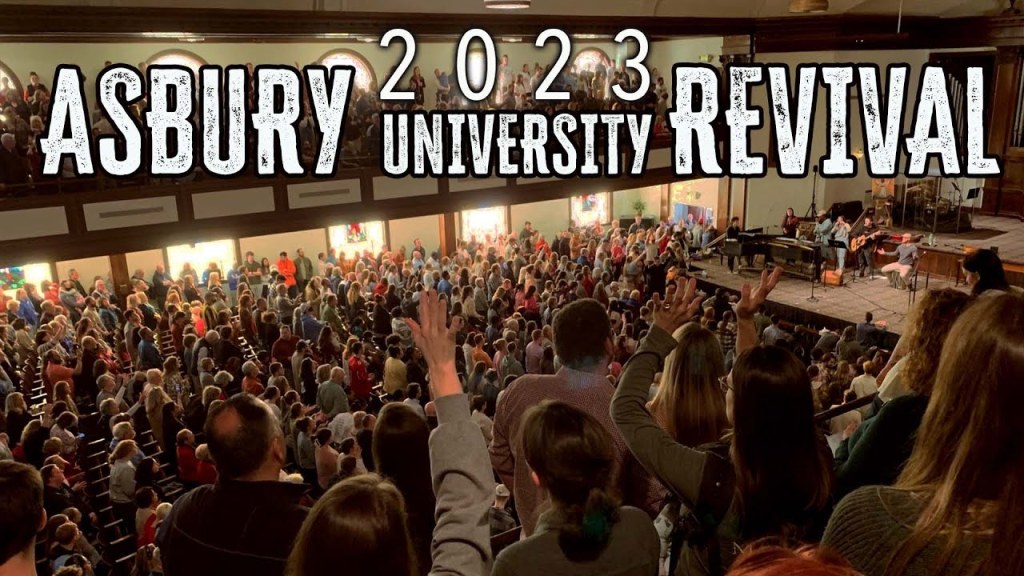
 Loving God, Living God, Loving Hope, Living Hope, Loving Living Life His Way! "Many things are possible for the person who has hope. Even more is possible for the person who has faith. And still more is possible for the person who knows how to love. But everything is possible for the person who practices all three virtues." - Brother Lawrence (1605-1691), Practicing the Presence of God (1692).