Romans 15:4 "For whatever was written in earlier times was written for our instruction, so that through perseverance and the encouragement of the Scriptures we might have hope."
2 1-7 So, my son, throw yourself into this work for Christ. Pass on what you heard from me—the whole congregation saying Amen!—to reliable leaders who are competent to teach others. When the going gets rough, take it on the chin with the rest of us, the way Jesus did. A soldier on duty doesn’t get caught up in making deals at the marketplace. He concentrates on carrying out orders. An athlete who refuses to play by the rules will never get anywhere. It’s the diligent farmer who gets the produce. Think it over. God will make it all plain.
Word of God for the Children of God
Glory be to the Father, and to the Son, and to the Holy Ghost; as it was in the beginning, is now, and ever shall be, world without end. Amen, amen.
It is not unusual—in fact, it’s quite common—for Christian faith to be regarded as a kind of illogical belief in utterly improbable events. For some, faith is seen as a crutch to prop up less rational people as they navigate life’s challenges.
Such critics may be surprised to learn that in reality, Christianity calls on its followers not to neglect their minds but unconditionally critically engage them.
Psalm 139:23-24 The Message
23-24 Investigate my life, O God, find out everything about me; Cross-examine and test me, get a clear picture of what I’m about; See for yourself whether I’ve done anything wrong— then guide me on the road to eternal life.
When we read the Bible, we discover that it never invites us simply to feel things; it never attempts merely to sweep us up in an emotional surge. God never once asks for or endorses the disengagement of our thinking processes.
Instead, God’s word repeatedly shows us that Christianity is actually a call to think rightly and deeply about God, His world, His covenants and our place in it.
When the apostle Paul addressed the Ephesians, we read that he was “reasoning daily in the hall of Tyrannus,” which was likely a school for philosophy or rhetoric (Acts 19:9).
Paul wasn’t just singing songs or attempting to stir up some high emotional experience. No, he essentially said, Citizens of Ephesus, I want you to think and reason with me today.
In Thessalonica, too, Acts tells us that Paul “reasoned” with the people, “explaining and proving that it was necessary for the Christ to suffer and to rise from the dead” (17:2-3). The book of Isaiah begins with a similar call to think earnestly: “Come now, let us reason together, says the LORD” (Isaiah 1:18).
This exhortation to think and reason isn’t just for proclaiming the gospel but for growth in Christian maturity too. Writing to the Corinthians, Paul said, “Brothers, do not be children in your thinking” (1 Corinthians 14:20).
He wanted the church to think intently and intensely about the issues they were facing.
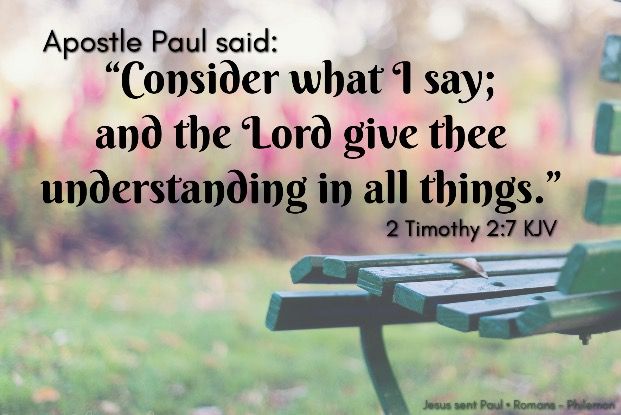
Paul was even more direct when he wrote to Timothy: “Think over what I say, for the Lord will give you understanding in everything.”
We do need God’s Spirit to be at work in order to think rightly (Luke 24:45; 1 Corinthians 12:3), for our intellects are as affected by sin as every other part of ourselves (Ephesians 4:17).
But it is as we expend mental energy to consider the wisdom of the Scriptures that God will give us greater and greater understanding.
To follow Christ, then, is not to take a step of blind faith into the darkness but to have your eyes opened to the light of rigorous truth.
It will take a disciplined lifetime—and more!—to unearth the riches of the truth you encounter in God’s Word about His Son, but one thing is sure: today, as every day, God wants you to know Him and honor Him with all your mind.
In the journey of faith, understanding is imperative for spiritual growth and application of God’s truths.
The apostle Paul, writing to Timothy, emphasizes the importance of deep contemplation on the teachings he imparts.
He encourages Timothy to actively engage his mind with what has been said and seeks divine help for clarity and insight. Such understanding is not merely intellectual but transformative, influencing one’s actions and spiritual life.
Hebrews 4:12-13 The Message
12-13 God means what he says. What he says goes. His powerful Word is sharp as a surgeon’s scalpel, cutting through everything, whether doubt or defense, laying us open to listen and obey. Nothing and no one can resist God’s Word. We can’t get away from it—no matter what.
Consideration and contemplation are both repeated themes in the scriptures, underscoring that true knowledge of God comes from disciplined meditation on His Word and allowing the Holy Spirit go to work and to illuminate our hearts.
This aligns with the recurring biblical principle that wisdom and understanding are gifts from God, necessary for fulfilling our calling. (Proverbs 3:5-8)
By inviting Timothy to reflect and pray for divine guidance, Paul stresses that God alone can grant the understanding needed to navigate life’s challenges and to serve effectively in ministry.
In essence, our own thoughtful and prayerful approach to Scripture leads us to a far deeper understanding and more fruitful living, highlighting the significance of seeking God’s truth, God’s Life, God’s Way, also God’s wisdom in all matters.
In the name of God, the father and God the Son and God the Holy Spirit,
Praying …
Psalm 1 The Message
1 How well God must like you— you don’t walk in the ruts of those blind-as-bats, you don’t stand with the good-for-nothings, you don’t take your seat among the know-it-alls.
2-3 Instead you thrill to God’s Word, you chew on Scripture day and night. You’re a tree replanted in Eden, bearing fresh fruit every month, Never dropping a leaf, always in blossom.
4-5 You’re not at all like the wicked, who are mere windblown dust— Without defense in court, unfit company for innocent people.
6 God charts the road you take. The road they take leads to nowhere.
Glory be to the Father, and to the Son, and to the Holy Ghost; as it was in the beginning, is now, and ever shall be, world without end. Amen, amen.
2 You therefore, my son, be strong in the grace that is in Christ Jesus. 2 And the things that you have heard from me among many witnesses, commit these to faithful men who will be able to teach others also. 3 You therefore must endure [a] hardship as a good soldier of Jesus Christ. 4 No one engaged in warfare entangles himself with the affairs of this life, that he may please him who enlisted him as a soldier. 5 And also if anyone competes in athletics, he is not crowned unless he competes according to the rules. 6 The hardworking farmer must be first to partake of the crops. 7 Consider what I say, and [b]may the Lord give you understanding in all things.
Gloria! In Excelsis Deo! Alleluia, Alleluia, Alleluia, Amen.
Pondering Upon the Deeper Matters of Our Faith
It is not unusual—in fact, it’s quite common—through the eyes of unbelievers and believers for the Christian faith to be regarded as a kind of illogical, unusual belief in improbable and even impossible events.
For some, faith in God is seen as a crutch to prop up less rational people as they navigate through the more weighty morals, great diversity of life’s challenges.
Such critics may be surprised to learn that in reality, pondering our Christianity calls its followers not to neglect their minds but to critically, deeply, engage them.
When we read the Word of God, we discover that it never invites us simply to feel things; it never attempts merely to “sweep us up” in an emotional surge.
God never once asks for or endorses the total disengagement of our thinking processes.
Instead, God’s Word repeatedly reveals that our Christianity, our faith in God is actually a call to think rightly and deeply about God, His world, our place in it.
When the apostle Paul addressed the Ephesian followers, we read that he was “reasoning daily in the hall of Tyrannus,” which was very likely an early school building which could be rented for debating philosophy or rhetoric (Acts 19:9).
In this place, Paul was not just singing songs or attempting to stir up some emotional experience.
No, by renting the hall from its owner he essentially said, “Citizens of Ephesus, I want you to spend some significant time thinking and also reasoning with me today. Not just today alone, but to come back frequently more curious than the day before.”
In Thessalonica, too, Acts tells us Paul “reasoned” with the people, “explaining and proving that it was necessary for the Christ to suffer and to rise from the dead” (17:2-3).
The book of God’s Prophet Isaiah begins with a similar call to think earnestly: “Come now, let us reason together, says the LORD” (Isaiah 1:18).
This exhortation from Isaiah to think and reason deeply over our lives isn’t just for proclaiming the gospel but for repentance, growth in Christian maturity too.
Desiring people to know God more, writing to the followers in Corinth, Apostle Paul said, “Brothers, do not be children in your thinking” (1 Corinthians 14:20).
He wanted the young church their to think intently and intensely about both the current, longer term issues they were all facing in this emerging Christian faith.
Paul was even more direct when writing to the young Pastor Timothy: “Think over what I say, for the Lord will give you understanding in everything.” (2 v. 7)
Whatever time we are living and ministering in, we do need God’s Holy Spirit to be at work in order to think rightly (Luke 24:45; 1 Corinthians 12:3), for our own intellects are as affected by sin as every other part of ourselves (Ephesians 4:17).
But it is as we expend significant mental energy to consider the deeper wisdom, truths of the Scriptures that God will give us greater and greater understanding.
To follow Christ, then, is not to take a step of blind faith into the darkness but to have your eyes opened, our souls better informed to the light of rigorous truth.
It will take a lifetime—and more!—to unearth the deeper and deepest riches of the truth we encounter in God’s Word about Jesus, but one thing is sure: today, as every day, God wants you, me to love Him and honor Him with all your mind.
My Own Faith and Pondering Upon God’s Deeper Call
Proverbs 3:5-12 The Message
5-12 Trust God from the bottom of your heart; don’t try to figure out everything on your own. Listen for God’s voice in everything you do, everywhere you go; he’s the one who will keep you on track. Don’t assume that you know it all. Run to God! Run from evil! Your body will glow with health, your very bones will vibrate with life! Honor God with everything you own; give him the first and the best. Your barns will burst, your wine vats will brim over. But don’t, dear friend, resent God’s discipline; don’t sulk under his loving correction. It’s the child he loves that God corrects; a father’s delight is behind all this.
“And when I think that God, His Son not sparing Sent Him to die, I scarce can take it in That on the cross, my burden gladly bearing He bled and died to take away my sin”
How is God calling me to think deeply?
How is God calling me to think differently?
How is God calling me to think critically?
How is God calling me to think Scripturally?
How is God calling me into a deeper contemplation of God?
How is God calling me into a deeper contemplation of my faith in God?
How is God calling me into a deeper expression of faith?
How is God calling me into a deeper expression of my faith in God?
How is God calling me into a deeper understanding of God?
How is God calling me into a deeper understanding of my faith in God?
How is God calling me into a deeper appreciation of God?
How is God calling me into a deeper appreciation of my faith in God?
How is God reordering, reshaping, my heart’s affections — what I love?
What is God calling me to do as I go about my day today?
“My God! How Great IS our God?”
2 Timothy 2:7 The Message
Doing Your Best for God
2 1-7 So, my son, throw yourself into this work for Christ. Pass on what you heard from me—the whole congregation saying Amen!—to reliable leaders who are competent to teach others. When the going gets rough, take it on the chin with the rest of us, the way Jesus did. A soldier on duty doesn’t get caught up in making deals at the marketplace. He concentrates on carrying out orders. An athlete who refuses to play by the rules will never get anywhere. It’s the diligent farmer who gets the produce. Think it over. God will make it all plain.
“It is the diligent farmer who gets the produce …”
“Think it over.”
“God will make it plain …”
“Plainer than the nose on your face!”
When we finally “do see” the diligent farmer who gets the produce …
Wiping all of the sweat off of their noses with the sleeves of their shirts …
“Then sings my soul, my Savior God to Thee How great Thou art, how great Thou art Then sings my soul, my Savior God to Thee How great Thou art, how great Thou art How great Thou art, how great Thou art”
In the name of God, the Father and God the Son and God the Holy Spirit,
Let us Pray,
Heavenly Father, thank You for the Word of God and the truths that it contains within its sacred pages. Help me to read, mark, learn, and act upon all the things that Christ has done for me so that I may live my life in a manner that pleases You and honors and glorifies Your holy name. I pray I may endure life’s hardships like a good soldier of Christ and run, with patience, and faith, the race of life that is set before me. Keep me pressing on to the goal of my calling and equip me with knowledge and understanding of all that Christ has done for me. This I ask in Jesus’ name, AMEN.
2 So you, my son, be strong [constantly strengthened] and empowered in the grace that is [to be found only] in Christ Jesus. 2 The things [the doctrine, the precepts, the admonitions, the sum of my ministry] which you have heard me teach [a]in the presence of many witnesses, entrust [as a treasure] to reliable and faithful men who will also be capable and qualified to teach others. 3 Take with me your share of hardship [passing through the difficulties which you are called to endure], like a good soldier of Christ Jesus. 4 No soldier in active service gets entangled in the [ordinary business] affairs of civilian life; [he avoids them] so that he may please the one who enlisted him to serve. 5 And if anyone competes as an athlete [in competitive games], he is not crowned [with the wreath of victory] unless he competes according to the rules. 6 The hard-working farmer [who labors to produce crops] ought to be the first to receive his share of the crops. 7 Think over the things I am saying [grasp their application], for the Lord will grant you insight and understanding in everything.
The Word of God for the Children of God. Gloria! In Excelsis Deo! Alleluia! Amen.
The hardcore truth and reality is we wrestle everyday with ourselves and others with complex, divisive, highly charged emotional issues in the Christian faith.
Somewhere on television or social media or the internet, we are all presented with matters of the faith which challenge our adherence to the precepts of God.
We wrestle with ourselves over whether or not what we are presented with is in the “will of God” according to what we read, how we interpret the Word of God.
“What does the Word of God for the Children of God say about (fill in the blank)
There is no denomination which does not wrestle and struggle with something which is near and dear and much beloved and much cherished and protected.
Denominations raise and denominations fall.
Churches raise and thrive or Churches wither away and cease being churches, all on how/what a particular group of “faith-filled” faithful Christians believe.
Matters of doctrine ….
Matters of dogma ….
Matters of understanding and administering the Sacraments ….
If it Matters to God then it should Matter to Man All the Time … Yes? … No?
All People Matter All of the Time > just some of the Time? > not at Anytime?
God Matters All of the Time > just some of the Time > not at Anytime at all?
The “sum total” of each of our life experiences leads us to our understanding of “believing or not believing or flat denial” of God the Father, Son, Holy Spirit.
It comes down to our obedience to God and adherence faith being “black and white” either all of one set standard of beliefs or the other – no compromise.
We wrestle with ourselves and our brothers and sisters in our Savior Jesus and the end result is basically and unfortunately what the Apostle Paul described:
1 Corinthians 1:10-13 (Amplified)
10 But I urge you, believers, by the name of our Lord Jesus Christ, that all of you be in full agreement in what you say, and that there be no divisions or factions among you, but that you be perfectly united in your way of thinking and in your judgment [about matters of the faith]. 11 For I have been informed about you, my brothers and sisters, by those of Chloe’s household, that there are quarrels and factions among you. 12 Now I mean this, that each one of you says, “I am [a disciple] of Paul,” or “I am [a disciple] of Apollos,” or “I am [a disciple] of Cephas (Peter),” or “I am [a disciple] of Christ.” 13 Has Christ been divided [into different parts]? Was Paul crucified for you? Or were you baptized into the name of Paul? [Certainly not!]
We wrestle with ourselves, with our brothers and sisters in Christ to the point where our own pre-occupation and over zealousness for the coming wrestling match overshadows our pre-occupation and zealousness for the Lord our God.
Try and describe that indescribable and unnecessary infliction of suffering on those who are observing us – upon those who are on the very cusp of belief?
Try and describe that indescribable and unnecessary infliction of suffering on the accepted, perceived character, reputation of “the Christian” by the athiest.
By our zealousness for fighting each other and creating division – who is not coming to koinonia, relationship and connection with God, Jesus, the Spirit?
As the Apostle Paul tries to “hammer home” in 1 Corinthians 1:17 (Amplified)
17 For Christ did not send me [as an apostle] to baptize, but [commissioned and empowered me] to preach the good news [of salvation]—not with clever and eloquent speech [as an orator], so that the cross of Christ would not be [a]made ineffective [deprived of its saving power].
“SO THAT THE CROSS OF CHRIST WOULD NOT BE MADE INEFFECTIVE – DEPRIVED OF ITS SAVING POWER! by our harsh divisive squabbling …
Philippians 4:5-7 Amplified
5 Let your gentle spirit [your graciousness, unselfishness, mercy, tolerance, and patience] be known to all people. The Lord is near. 6 Do not be anxious or worried about anything, but in everything [every circumstance and situation] by prayer and petition with thanksgiving, continue to make your [specific] requests known to God. 7 And the peace of God [that peace which reassures the heart, that peace] which transcends all understanding, [that peace which] stands guard over your hearts and your minds in Christ Jesus [is yours].
Pre-occupation, Zealousness for the fight which leads to insufferable division.
Pre-occupation, Zealousness for the fight which leads us to the Peace of Christ.
Wrestling with God ….
Wrestling with the Cross of our Lord and Savior Jesus Christ ….
Having koinonia, connection, a relationship with God changes everything.
Many images and terms are used to describe the change that happens when we enter an intimate, vibrant and indescribably meaningful relationship with God.
“Salvation,” “adoption,” “redemption,” being “born again” and many other terms describe what miracles happen when the fullest measure of God’s grace enters our lives and transforms us, literally re-makes us his beloved children.
Not only are we called new creatures who now relate to God differently, but we begin koinonia, connecting, relating to other people and nature differently too.
What does wrestling with God mean?
Is wrestling with God “allowed,” or is that off-limits?
Should we wrestle with God?
Depending on your understanding of who God is, you might initially think that the answer to this question is “No.”
God is a lofty, powerful being you shouldn’t trifle with.
So, the idea of wrestling with him seems flippant, arrogant, and even disrespectful. It seems too much like playing with or disobeying God.
However, one of the ways God describes himself is
“The Lord, the Lord, the compassionate and gracious God, slow to anger, abounding in love and faithfulness” (Exodus 34:6).
Another passage reminds us that
“The high and lofty one who lives in eternity, the Holy One, says this: “I live in the high and holy place with those whose spirits are contrite and humble. I restore the crushed spirit of the humble and revive the courage of those with repentant hearts.”” (Isaiah 57:15).
Isaiah 1:18-20
“Let Us Reason”
18 “Come now, and let us reason together,” Says the Lord. “[a]Though your sins are like scarlet, They shall be as white as snow; Though they are red like crimson, They shall be like wool. 19 “If you are willing and obedient, You shall eat the best of the land; 20 But if you refuse and rebel, You shall be devoured by the sword.” For the mouth of the Lord has spoken.
Isaiah 2:1-4
God’s Universal Reign
2 The word [from God] which Isaiah son of Amoz saw [in a vision] concerning [the nation of] Judah and [its capital city] Jerusalem.
2 Now it will come to pass that In the last days The mountain of the house of the Lord Will be [firmly] established as the [a]highest of the mountains, And will be exalted above the hills; And all the nations will stream to it. 3 And many peoples shall come and say, “Come, let us go up to the mountain of the Lord, To the house (temple) of the God of Jacob; That He may teach us His ways And that we may walk in His paths.” For the law will go out from Zion And the word of the Lord from Jerusalem. 4 And He will judge between the nations, And will mediate [disputes] for many peoples; And they will beat their swords into plowshares and their spears into pruning hooks. Nation will not lift up the sword against nation, And never again will they learn war.
God will judge between the nations ….
God will mediate disputes for many peoples ….
Then they will beat their swords into plowshares and their spears into pruning hooks …..
Nation will not lift up the sword against nation,
And never again will they learn war.
Those Word of God for His Children are nearly three thousand years old.
Now, here we are in the Year of Our Lord and Savior – 2022 ….
Now, substitute the word ‘nation(s) with the word ‘denomination(s) …
And what, how, might that vision of the Kingdom of God manifest itself as?
God dwells with those who are humble and repentant, and if we are his children, that means us. In many other places, we are reminded that God is willing to meet us in our weakness, that he knows us through and through.
All this is in the Hebrew [Old] Testament!
The God of the Hebrew [Old] Testament is the same as the God and Father of Jesus in the New Testament. (Hebrews 13:8)
To help us understand God better, and what wrestling with God is all about,
we can take a long and well prayed and considered look at a few examples of people wrestling with God throughout the Bible, such as Abraham, Moses, Daniel, Jacob, Hannah, Paul, the unnamed Canaanite woman, the unnamed Samaritan woman, and Jesus with his Father in the garden of Gethsemane.
This wrestling took several forms.
Sometimes wrestling with God is about going back repeatedly in prayer over something that is confusing us that he has said or that is happening in our lives.
Sometimes, the wrestling looks a bit like negotiating with God, and at other times it looks like reminding God of his promises while asking him to act.
At other times wrestling with God is about struggling to come to terms with obedience, God’s will for our lives and seeking strength to go with God’s plan.
Abraham (Genesis 18:16-33)
When God was about to destroy the city of Sodom because its people were high-handed sexual sinners, Abraham “bargained” – pleaded with the Lord and entered what can best be described as negotiations for the lives of the others.
Abraham approached the Lord and said, “Will you sweep away the righteous with the wicked? What if there are fifty righteous people in the city? Will you really sweep it away and not spare the place for the sake of the fifty righteous people in it?… Far be it from you! Will not the Judge of all the earth do right?”
God agreed to spare the city if fifty righteous people were found in it. Abraham then went on to lower that number, each time asking God not to be angry with him. The Lord wasn’t angry with him. “What if there are only forty-five?… what if there are only thirty?… what if there are only twenty?… let me speak just once more. What if only ten can be found there?”
The Lord relented, saying that he would spare the city if only ten righteous people were found in it.
We know, as it turned out, Sodom didn’t have even ten righteous people in it, and so it was destroyed.
The key thing to note is that Abraham was bold with God, even going as far as to remind God of his righteous character, that surely he would do the right thing!
Jacob (Genesis 32:22-32)
Jacob, who was Abraham’s grandson, also wrestled with God.
This one was a little different because Jacob wrestled with God all night and God dislocated Jacob’s hip, which gave him a limp for the rest of his life.
This is one of those strange stories from the Bible that are a tad baffling.
Jacob wrestled with what he thought was a man but turned out to be God, and he received a blessing because he “would not let go until he had his blessing.”
This blessing was a confirmation of the steadfast promises and blessings God had given his grandfather before him. Why would God wrestle with any human being? Why would it even be anything like a wrestling contest lasting all night?
Jacob was a “deceitful” man who all his life had struggled with relating to family and to people – though God’s sure promises for his life were clear, he innately lied, conned, and manipulated situations and people to get his way.
His name Jacob means “deceiver,” and when he wrestled with God that night, he was facing his biggest challenge, and the situation was out of his hands –
he had just fled from his uncle who had for years repeatedly deceived him and was about to face his estranged brother Esau, who could very well take his life.
He was at his wit’s end, and powerless to control the situation.
He wrestled with God and was blessed, his name changed from “deceiver” to “Israel” which means “he struggles with God,” and from this encounter, he was changed – not only because of his limp but in how he related with people.
The Canaanite woman (Matthew 15:21-28) A woman who wasn’t part of Israel dared it all, came to Jesus asking him to help her demon-possessed daughter.
Jesus didn’t answer.
She could have felt great shame, hidden her face, gone away at once, but she dared to be persistent, even when Jesus’ disciples urged him to send her away.
When Jesus does answer her, he tells her that he was sent for the “lost sheep of Israel,” of whom she isn’t part.
Does she give up?
On the contrary, she dares to persist.
He then tells her “It is not right to take the children’s bread and toss it to the dogs.”
In saying this, Jesus isn’t calling her a dog, he’s pointing out that his ministry was primarily aimed at Israel.
But the woman dares to be persistent. She doesn’t take “no” for an answer.
She tells Jesus in no uncertain terms that even dogs get the crumbs that fall from their master’s table, meaning that even though she knows Jesus was sent to minister to the people of Israel, she too can still benefit from his ministry.
Jesus said to her, “Woman, you have great faith! Your request is granted.”
That woman didn’t take Jesus’ responses at face value.
She courageously, for the benefit of her daughter, fought hard with and against herself, yet she persisted despite the many obstacles, and this is like what Jesus said to his disciples when he told them to be persistent in prayer (Luke 18:1-8).
Paul (2 Corinthians 12:1-10)
Lastly, we look to God’s Apostle to the Gentiles, Apostle Paul, who was given a “thorn in the flesh, a messenger of Satan, to persistently torment” him.
We don’t know for sure what the real nature of this thorn was, but we do know he was given this thorn to keep him from becoming overly conceited about the amazing spiritual experiences he had received throughout his many journey’s.
He asked God three times to remove that thorn, but the Lord told him “My grace is sufficient for you, for my power is made perfect in weakness.”
This is one of those situations, just as when Jesus wrestled with the Father if there was any other way to accomplish his task without having to go to the cross (Luke 22:39-46), where the wrestling naturally just happens through our circumstances, but we gain wisdom to accept God’s will and His way as best.
Sometimes, people in the Bible wrestle with God and God grants that for which they are praying.
Other times, we can wrestle with God and be transformed by the experience so that we gain wisdom to accept the answer that God has already given.
The Word of God appears to encourage wrestling with God because God is not far off from us, and we are called to be active participants in our lives of faith.
From Genesis to Revelation, people throughout the Bible wrestled with God over childlessness, their fears, anxieties, with many other life an death issues.
We wrestle with God in an effort to gain clarity about his purposes for our lives, to make requests known to him, and sometimes even as part of the process of confessing, acknowledging, and obediently accepting what God plans for us.
127 Unless the Lord builds the house, They labor in vain who build it; Unless the Lord guards the city, The watchman keeps awake in vain. 2 It is vain for you to rise early, To retire late, To eat the bread of anxious labors— For He gives [blessings] to His beloved even in his sleep.
3 Behold, children are a heritage and gift from the Lord, The fruit of the womb a reward. 4 Like arrows in the hand of a warrior, So are the children of one’s youth. 5 How blessed [happy and fortunate] is the man whose quiver is filled with them; They will not be ashamed When they speak with their enemies [in gatherings] at the [city] gate.
When and where two or three – they dare to gather, to speak (in the name of the Lord their God) with each man their enemies [in gatherings] at the [city] gate ….
Invited to wrestle God, knowing we can wrestle with God, being able to wrestle with God is part of what it truly means for us to be the children, friends of God.
In the name of God, the Father and God the Son and God the Holy Spirit,
Let us Pray,
My Strong Father, You are the only author and sustainer of my soul. Lord, I thank You for the measure of strength that You give. You embolden me with courage and cause me to stand upright. I am so grateful for Your presence in my life. In all of life, may I turn to You for an increase in these qualities. Keep me from looking within myself or to sources other than You. I thank You in the name of the Son. Amen.
2 So you, my son, be strong [constantly strengthened] and empowered in the grace that is [to be found only] in Christ Jesus. 2 The things [the doctrine, the precepts, the admonitions, the sum of my ministry] which you have heard me teach [a]in the presence of many witnesses, entrust [as a treasure] to reliable and faithful men who will also be capable and qualified to teach others. 3 Take with me your share of hardship [passing through the difficulties which you are called to endure], like a good soldier of Christ Jesus. 4 No soldier in active service gets entangled in the [ordinary business] affairs of civilian life; [he avoids them] so that he may please the one who enlisted him to serve. 5 And if anyone competes as an athlete [in competitive games], he is not crowned [with the wreath of victory] unless he competes according to the rules. 6 The hard-working farmer [who labors to produce crops] ought to be the first to receive his share of the crops. 7 Think over the things I am saying [grasp their application], for the Lord will grant you insight and understanding in everything.
The Word of God for the Children of God. Gloria! In Excelsis Deo! Alleluia! Amen.
Our lives today are pretty easy.
We expect that others (conscientious Christians) will automatically work hard, ponder how they will sacrifice over much just to make our lives easier for us.
We don’t know what it means to wait for something anymore.
If you want food, simply go to a fast food joint.
If you want a new record, click a link on your computer instead of waiting in line at a record store.
If you want to know what a friend is doing, text them instead of calling or check out their Facebook or Twitter page.
We have became a people who consume food, entertainment, news, and so on.
But the obvious observation to be made here is – have we become a people who consume the manna of God, the Father and God the Son and God the Holy Spirit.
Unfortunately we have brought this into the church as well.
We go to church because we know we can consume a great worship experience.
We don’t have to do anything on our part because the lights are set low, the music is excellently performed, and we don’t have to think about the Bible because we are told by our Pastors precisely what to believe and how to act.
It dawned on me: this can foster a consumerist mentality in the body of Christ.
The consumerist mentality not only deals with our experience at church, but extends back into our personal experience as we read the Bible individually.
We have a study Bible which gives us the answer right away, or we are one click away from a Bible site to explain to us the meaning of a given text.
Or even the daily devotion in the email every morning (yes we know). These are not bad resources, but can cause us to be dependent on them instead of God.
In 2 Timothy, Paul is imparting his wisdom, giving instructions to Timothy.
Some of these instructions were hard to understand, even harder to grasp and then give it application and Paul did not want Timothy to just depend on him.
Instead, he said Timothy should “read Paul’s words” “try to understand the message,” but depend on God, the Holy Spirit alone that was dwelling in Him.
Paul’s message to his student Timothy: We must be very careful that we don’t become a simple consumer, but learn to pray over everything, think long and hard over what we have read and ask God to give us wisdom, understanding.
Through my own experience, there tends to be much greater joy in God’s word when we think and pray often over it than just read what others have said of it.
The Apostle Paul was acutely aware that at any time the Emperor himself could come down from his throne, knock on Paul’s prison door and demand his life.
The Apostle Paul here knows and accepts that his life is near its appointed end and he feels deep within his soul the message of Savior Christ must go forth.
When we become older, and prayerfully wiser, we start pondering our spiritual heritage and too our “faith-filled” faith in Jesus Christ, and we begin to wonder whether or not the succeeding generations will carry on what we have learned.
So, we try to provide up and coming generations of young and younger people with positive exposure to our morals, ethics, worship attitudes and practices, hoping against hope that our values and worship practices will rub off on them;
However, it can sometimes be very difficult to efficiently, effectively instill our hard fought, harder won morals ethics, “Godly” values in another generation.
Usually, when separate generations convene together, viewpoints tend to clash.
In families we witness the soils of bitterness and divisiveness raise up between young people and adults, leading to sowing the seeds of generational divisions.
There are a few examples in Scripture that might lead us to strongly conclude that it’s difficult to accomplish the task of ministering into other generations.
For example,
Acts 13:36 says, “For David, after he had served the purpose of God in his own generation, fell asleep, and was laid among his fathers, and underwent decay.”
This verse from Dr. Luke implies his deep and deeper belief that the ‘great’ King David was only able to effectively “reach,” to disciple, “of his own generation.”
The pages of Scripture frequently records that it “normally” takes a new and younger generation to provide leadership to communicate to new generations.
Perhaps the best example in the Bible is that of Moses and Joshua.
God selected Moses to lead the children of Israel out of the land of Egypt, but he used Joshua, not Moses, to teach, lead, reach a new generation into a new land.
It appears as though, even in 2022 we are only able to effectively minister to our own generation, but we still observe with a crystal clarity in the Bible where we are supposed to try and reach other generations with the gospel of Jesus Christ.
For example, David said in Psalm 71:17-18,
“Since my youth, O God, you have taught me, and to this day I declare your marvelous deeds. Even when I am old and gray, do not forsake me, O God, till I declare your power to the next generation, your might to all who are to come.”
We can see from these verses that we are not exempt from sharing the love of Christ with our generation but with the “next generation” and with “all who are to come.” We might not be as effective with another age group as with our own, but we still need to teach the ways of Jesus to the succeeding generations.
Put yourself into Timothy’s shoes for a moment – he was the pastoral leader of his rather sizable faith community – he has just read this letter from his mentor Apostle Paul – which leads him to think he will not be hearing from him again.
He still has his responsibilities to the people he leads – but n0w what becomes of the future where the words and writings of Paul cease to come from Paul?
There is suddenly this vacuum – and all one’s hope seems to get sucked out.
Have you ever been in a situation when you just didn’t know what to do?
There just didn’t seem to be any good options or maybe there were several good possibilities but you didn’t know which one to pursue? You’ve made pro and con lists of all your choices, but it’s not clear what your next step should be.
Your heart cries out,
“I wish God would just tell me what to do.”
But all you get is silence.
Wouldn’t it be nice if we could talk to God just like we talk to our friends and ask Him what to do?
Imagine this scenario as Timothy might have:
You ask God a question.
He answers. You hear His voice. You answer. He responds, then asks you a question. You respond. He tells you what to do. You have a conversation.
How do you have a conversation with anyone?
You ask questions.
You share your ideas.
More importantly, you listen ….
Think over what I say, for the Lord will give you understanding in everything. 2 Timothy 2:7 ESV
Imagine young Timothy trying to have a “final” conversation with his mentor:
Timothy: Okay, wait a minute, Paul. You tell me to think before I preach and act, but isn’t the organ of our thinking fallen and unreliable and unwise too?
Paul: Yes, your mind lacks wisdom is fallen and fallible. Yes, it is prone to self-justifying errors. But Christ alone is in the business of “renewing our minds” (Romans 12:2; Ephesians 4:23).
Do you think there is some unfallen part of you that you could substitute for your mind? We are fallen and depraved in every part. You can’t retreat from thinking yourself into some other safe, untainted faculty of knowing.
Take note, Timothy: even in raising the objection against thinking you are thinking! You can’t escape the necessity of thinking. God’s call is to do it well.
Timothy: But, Paul, I don’t want to become a cold, impersonal intellectual.
Paul: There is danger on both sides, Timothy. There is cold knowledge, and there is a red hot zeal that “is not according to knowledge” (Romans 10:2).
But thinking does not have to cool your zeal. In fact, in my life the vigorous exercise of my mind in spiritual things causes me to boil inside, not to freeze.
You are right not to want to become “impersonal.”
That happens when thinking is emphasized to the exclusion of feeling about people; and reason is exalted above love.
But note this, Timothy: abandonment of thinking is the destruction of persons.
Yes, there is significantly more to personal relationships than thinking, but they are less human without it. God honored his image in us when he said, “Come, let us reason together” (Isaiah 1:18). Should we do less?
Timothy: But, Paul, should I not just take you at your obviously wiser words, and not ‘think’ ask so many questions? You’re an apostle, and speak for God.
Paul: Take what, Timothy?
Timothy: Your words, what you say in your letters.
Paul: Do you mean the black marks on some fleeting piece of parchment?
Timothy: No. What they are meant to stand for. You know. What they mean.
Paul: How do you think or believe you genuinely know what I mean, Timothy?
Timothy: I carefully and deeply read each word and though of what you write.
Paul: You mean you pass your eyes over the black marks on the parchment?
Timothy: No, do not just glance over them – I . . . I try hard to think about it. I pray and ask how the words and sentences fit together. I look for what it means.
Paul: That’s right, Timothy. Thinking and asking questions is the only way you will ever understand what I want to communicate in my letters.
And either you do it poorly, or you do it well. So “do not be a child in your thinking: be a babe in evil, but in thinking be mature” (1 Corinthians 14:20).
As the Master said, “wise as serpents and innocent as doves” (Matthew 10:16).
Timothy: But, Paul, I am confused here – won’t I become arrogant and boastful by using my mind on my own won’t I discover not too Godly things on my own?
Paul: Timothy, you never have and never will discover anything “on your own.”
And you would know this if you had thought more deeply about what I said.
What I said was:
And what you apparently overlooked was …
“Think over and about what I say, but remember this only exhortation:
“for God ALONE will grant you a measure of understanding in everything.”
The Lord, Timothy, the Lord! “From him, through him, and to him are all things. To him be the glory!” (Romans 11:36)
He is the only ground on which all the Word of God stands and speaks to us.
He is the only true Foundation of your faith and only true goal of all thought.
So, be strong, Timothy – for you stand upon the faith of your fathers who stood most upright, the firmest, surest on ALL of the promises of the Lord your God.
So think, Timothy. Gird up your mind and think on all of the Promises of God!
Pray to God the Holy Spirit to Bring this wisdom to the forefront of your mind …
Savior Jesus said, 33 But first and most importantly seek (aim at, strive after) His kingdom and His righteousness [His way of doing and being right—the attitude and character of God], and all these things will be given to you also.
34 “So do not worry about tomorrow; for tomorrow will worry about itself. Each day has enough trouble of its own.(Matthew 6:33-34 Amplified)
Remain steadfast and immovable upon all of the promises of God which came true through the coming of Christ – his life – his ministry – his teachings – his crucifixion – his death – his resurrection and ascension – grasp them – to LIVE!
In the name of God the Father and God the Son and God the Holy Spirit,
Let us Pray,
God of my whole life, My God of encouragement, there are so many philosophies and views out there. Give me an acceptable measure of understanding of your truth, so I can know what is right. May the Word of God through the Holy Spirit of God guide me into a daily measure of all truth. May I also be taught by Spirit-filled ministers and teachers of your word. I pray that through Your Scriptures, I will be pure in heart and mind, so that I don’t block your truth through my sin and stubbornness. I know your truth is my only foundation for spiritual maturity and for wisdom in all parts of my life. As I walk in your truth, help me better live out your purpose for my life. Amen.




 Loving God, Living God, Loving Hope, Living Hope, Loving Living Life His Way! "Many things are possible for the person who has hope. Even more is possible for the person who has faith. And still more is possible for the person who knows how to love. But everything is possible for the person who practices all three virtues." - Brother Lawrence (1605-1691), Practicing the Presence of God (1692).