Romans 15:4 "For whatever was written in earlier times was written for our instruction, so that through perseverance and the encouragement of the Scriptures we might have hope."
7 Beloved, let us love one another: for love is of God; and every one that loveth is born of God, and knoweth God. 8 He that loveth not knoweth not God; for God is love. 9 In this was manifested the love of God toward us, because that God sent his only begotten Son into the world, that we might live through him. 10 Herein is love, not that we loved God, but that he loved us, and sent his Son to be the propitiation for our sins.
The Word of God for the Children of God.
Adeste Fidelis. Venite Adoremus. Dominum.
Gloria. In Excelsis Deo. Alleluia, Alleluia, Alleluia, Amen.
As believers in Jesus, we should be loving other people.
Yes, even those that are unlovely.
Why?
Because God loves us and forgives us even when we don’t deserve it.
And out of that love that we have been given, we should be loving others and leading them closer to Jesus.
1 John 4:8 Amplified Bible
8 The one who does not love has not become acquainted with God [does not and never did know Him], for God is love. [He is the originator of love, and it is an enduring attribute of His nature.]
Part of knowing God, and being His follower is developing love in your life.
And it might take a little effort on your part.
And it might take a substantial effort on your part.
And it might even take a miraculous effort on your part.
Somewhere there might a hurt so unconscionable, it is beyond redemption.
You might be holding onto a grudge whose origin is utterly lost to the ages.
You might be used to gossiping, maybe even spreading rumors about others.
If you are reading this and can find no of God, love for God and for others, love bears all things at all times and perseveres for as long as forever lasts for You.
The encouragement is to keep praying even when praying is too difficult and keep hoping even when hope is the furthest thing from your mind, your soul –
God will always wait.
God will always and forever come to you when you choose to come to Him.
Luke 15:17-24 English Standard Version
17 “But when he came to himself, he said, ‘How many of my father’s hired servants have more than enough bread, but I perish here with hunger! 18 I will arise and go to my father, and I will say to him, “Father, I have sinned against heaven and before you. 19 I am no longer worthy to be called your son. Treat me as one of your hired servants.”’ 20 And he arose and came to his father. But while he was still a long way off, his father saw him and felt compassion, and ran and embraced him and kissed him. 21 And the son said to him, ‘Father, I have sinned against heaven and before you. I am no longer worthy to be called your son.’[a]22 But the father said to his servants,[b] ‘Bring quickly the best robe, and put it on him, and put a ring on his hand, and shoes on his feet. 23 And bring the fattened calf and kill it, and let us eat and celebrate. 24 For this my son was dead, and is alive again; he was lost, and is found.’ And they began to celebrate.
And God will forever feel compassion for, to embrace, to celebrate, your life.
Psalm 42:1-3 English Standard Version
Book Two
Why Are You Cast Down, O My Soul?
To the choirmaster. A Maskil[a] of the Sons of Korah.
42 As a deer pants for flowing streams, so pants my soul for you, O God. 2 My soul thirsts for God, for the living God. When shall I come and appear before God?[b] 3 My tears have been my food day and night, while they say to me all the day long, “Where is your God?”
“Christ Loved Me – Yes, Even Me.”
The distinguishing mark of a Christian is their measure of confidence in their Savior Christ’s love for him and in the offering of his love to their Savior Christ.
First, faith sets her seal upon the person by enabling their heart and soul to say with the apostle John, “Christ loved me and gave himself for me.”
Then love gives the countersign and stamps upon the heart and soul gratitude and love to Jesus in return. “We love because he first loved us.”
In those grand old ages, which are the heroic period of the Christian religion, this double mark was clearly seen in all believers in Jesus.
They were men and women who knew the love of Christ and rested upon it as a man leans upon a staff whose trustworthiness Christ, the Shepherd has proved.
The love they felt toward the Lord was not a quiet emotion that they hid within themselves in the secret place of their souls and that they only spoke about in private or when they met on the first day of the week and sang hymns in honor of Christ Jesus the crucified.
It was a limitless passion with them of such a vehement and an all-consuming energy that it was visible in all their actions, evident in their conversation, and unmistakably seen in their eyes, even in their casual glances – Boy, what a Love.
Love for Jesus was a flame that fed upon the core and heart of their being and therefore by its own force burned its way into their demeanor and shone there.
Zeal for the glory of King Jesus was the seal and mark of all genuine Christians.
Because of their dependence upon Christ’s love they dared much, and because of their love for Christ they did much, and it is the same now.
The children of God are ruled in their inmost powers by love.
The love of Christ constrains them; they rejoice divine love is set upon them, they feel it shed abroad in their hearts by the Holy Spirit, who is given to them, and then by force of gratitude they love the Savior with a pure and fervent heart.
My reader, do you love Him with that self same passion He first had for You?
Before you sleep, give your Savior an honest answer to that weighty question!
When you wake up again, then give unto your Savior an honest answer to this next weighty question –
For waking me up, how will I give all my Love to my Savior today?
In the name of God, the Father and God the Son and God the Holy Spirit,
Let us Pray,
Prayer to Love Others as God Loves Me
Heavenly Father, I am so utterly blessed to be Your child, and that I can call You “My Abba Father,” for You are my loving Daddy! My heart overflows with gratitude. You have made me a partaker of Your divine nature, and Your love for me is so wide, so deep – it is beyond my comprehension. May the truth of my identity in You sink deep into my psyche, and impact my relationship with others. Dear Loving Father, may I come to love others as You have first loved me, with compassion and care. Amen.
Adeste Fidelis. Venite Adoremus. Dominum.
Gloria. In Excelsis Deo. Alleluia, Alleluia, Alleluia, Amen.
28 Then one of the scribes [an expert in Mosaic Law] came up and listened to them arguing [with one another], and noticing that Jesus answered them well, asked Him, “Which commandment is first and most important of all?” 29 Jesus answered, “The first and most important one is: ‘Hear, O Israel, the Lord our God is one Lord; 30 and you shall love the Lord your God with all your heart, and with all your soul (life), and with all your mind (thought, understanding), and with all your strength.’ 31 This is the second: ‘You shall [unselfishly] [a]love your neighbor as yourself.’ There is no other commandment greater than these.” 32 The scribe said to Him, “Admirably answered, Teacher; You truthfully stated that He is One, and there is no other but Him; 33 and to love Him with all the heart and with all the understanding and with all the strength, and to [unselfishly] love one’s neighbor as oneself, is much more than all burnt offerings and sacrifices.” 34 When Jesus saw that he had answered thoughtfully and intelligently, He said to him, “You are not far from the kingdom of God.” And after that, no one would dare to ask Him any more questions.
The Word of God for the Children of God.
Adeste Fidelis. Venite Adoremus. Dominum.
Gloria. In Excelsis Deo. Alleluia, Alleluia, Alleluia, Amen.
Sometimes, the most important things aren’t difficult to grasp.
If they seem difficult to grasp, it is most likely because we ourselves, in our all too clumsy humanity have made it so because we ourselves have deemed it to be infinitely more important to be complex than simplified – it just feels “better.”
God desires us to be exclusively devoted to Him with all of our being, and to also be loving to others who surround us.
The covenant demands of God placed square upon our character boil down to the observance of these two fundamental principles that go echelons beyond laws and reveal God’s character [God IS Love] to the very hearts of all people.
Love Your Neighbor As Yourself
Mark 12:29-31Authorized (King James) Version
29 And Jesus answered him, The first of all the commandments is, Hear, O Israel; The Lord our God is one Lord: 30 and thou shalt love the Lord thy God with all thy heart, and with all thy soul, and with all thy mind, and with all thy strength: this is the first commandment. 31 And the second is like, namely this, Thou shalt love thy neighbour as thyself. There is none other commandment greater than these.
We learn many rules growing up:
Brush your teeth,
Look both ways before crossing the street,
Always tell the truth.
Which of these is most important?
What do you believe is the single most important Truth you have ever heard?
Rabbi Jesus was asked a similar question by an expert in the Mosaic Law: Of the many commands and regulations in the law of God, which one tops the list?
Jesus did not hesitate: “Love God above all”—and he quickly added the second: “Love your neighbor as yourself.”
And what kind of love does this refer to?
In connection with God’s love for us, this is unconditional, unconventional, love—totally gracious, totally generous, and totally with no strings attached.
Notice especially that Jesus says, “Love your neighbor as yourself.”
This means that if we are to love our neighbors unconditionally and generously, we will be required by God to love ourselves that self same way too!
God does not make junk.
God does not make mistakes.
We are created in God’s image; we are his masterpieces.
It’s not to just okay to love myself: God expects me to celebrate the person he created me to be – every moment celebrate God exactly as God celebrates us!
The Golden Rule Jesus gave us—“Do to others what you would have them do to you” (Matthew 7:12)—is another way of saying this command to love God and honor God and love and honor our neighbor as we love and honor ourselves.
Loving others well depends at least partly on our capacity to love ourselves.
What Does it Mean to Love Your Neighbor as Yourself?
Would it, Should it, Could it, surprise you to learn that loving your neighbor as yourself is found eight times in the Bible.
Not once, Not even twice but Eight times.
Go ahead and search for them – Seek Ye First the Kingdom of God.
Loving your neighbor as yourself is so important to God that He not only repeats Himself, He makes it a command.
And not just one in a list of many commands.
Rabbi Jesus coupled the command to love your neighbor as yourself with loving God with all our heart, all our soul, all our mind, and with all of our strength.
James calls it the royal law.
It sounds beautiful, and it is when we obey it.
But loving your neighbor as yourself isn’t always easy.
That’s why God made it a command.
He knew we’d struggle.
Making it a commandment is actually to our benefit.
How is that?
We have to be reverently and deliberately obedient
We have to do it on purpose.
We have to be intentional about it.
Sometimes even out of our need.
But if we love God as God love us … obedience just flows from us naturally.
This is what it means to love your neighbor as yourself:
1. Loving your neighbor means receiving God’s love.
Too begin to love your neighbor as yourself, you need to know two things:
you need to know what love is and that you are loved.
The Bible tells us “this is love. Not that we loved God but that He loved us and sent his Son as a propitiation…” (1 John 4:10).
You and I are the object of this love.
God loves you.
God loves me.
Knowing this is imperative.
And not just that we are loved in a general kind of way, but deeply loved and unconditionally and unconventionally loved.
We tap into this when we understand that God loved us first. [John 3:16-17]
He’s the source of our love.
God loved us even before Jesus gave Himself for us.
God the Father is the source of all love.
Before we can give this love we need to receive it for ourselves.
You cannot give to someone what you yourself do not have.
2. Loving your neighbor means loving ourselves as well.
To love your neighbor as yourself as commanded, you need to measure love correctly.
The measurement within this command is—as yourself.
To love your neighbor as yourself you need to love yourself.
This is something that gets badly misunderstood in the body of Christ often.
It gets mixed up with dying to self and denying self as if we need to destroy our self.
This is not true.
Jesus died for each and every one of us.
If Jesus valued us enough to go through what He went through, we each have a sacred responsibility to Him to value what He values exactly as He valued it .
We need to love what He loves – us.
The Bible tells us the Father loves us as much as He loves Jesus (John 17:20-23).
20 Neither pray I for these alone, but for them also which shall believe on me through their word; 21 that they all may be one; as thou, Father, art in me, and I in thee, that they also may be one in us: that the world may believe that thou hast sent me. 22 And the glory which thou gavest me I have given them; that they may be one, even as we are one: 23 I in them, and thou in me, that they may be made perfect in one; and that the world may know that thou hast sent me, and hast loved them, as thou hast loved me.[Authorized King James Version]
When we dare to simplify it: How dare we not love what the Father loves?
Learning to love ourselves prepares and helps us to love our neighbor.
3. Loving your neighbor means showing grace.
Knowing God is love and that this love is for you is not enough.
It needs to be developed and matured.
Imagine if you had a field of good soil and a bag of top notch seeds.
Would they produce a crop all by themselves?
No. The seeds must be planted and cared for.
Grace takes the seed of His love and the soils of our hearts and souls and creates fruit for the kingdom of God.
The Bible says,“it’s God who works in us both to will and to do of His good pleasure” (Philippians 2.13).
Loving Him and our neighbor pleases Him.
Grace helps us do this.
Grace teaches us proper love, honor and respect for ourselves and for our neighbor – our freely receiving His grace empowers us all to freely give it.
4. Loving your neighbor means acting with compassion.
From Luke’s Narrative of the Gospel, when Jesus was asked, “Who is my neighbor?” He responded with a story: the Good Samaritan [10:25-37].
Even those who have no love for God see the value of the story.
What is the bottom line of this story?
Who did Jesus say was being a neighbor?
The one who had compassion.
Compassion is not simply a warm fuzzy feeling in our hearts.
Compassion does something.
A heart moved by compassion cannot sit idly by while someone suffers a need.
Loving God and Loving your neighbor as you are Loving yourself is being moved by God, the Father, Son and Holy Spirit to help to the full extent of your ability.
5. Loving your neighbor means looking out for their wellbeing.
The NIV translation of 1 Corinthians 13 says, “love protects.”
In Philippians 2:4 it says, “Let each of you look not only to his own interests, but also to the interests of others.”
Loving your neighbor as yourself is to look out for other people’s wellbeing.
To look out for them is to pay attention.
You notice if they need something and then you help.
For example, their clothing tag is sticking out or they have food on their face so you let them know.
Or something more serious like when a neighbor has surgery or becomes sick.
Concerned for their health, well-being, I head over to their home with a meal or a loaded gift card so if they aren’t able to cook, they won’t have to cook, can eat.
6. Loving your neighbor means serving them.
Serving from the heart is kindness in action.
Kindness is one of the attributes of love listed in 1 Corinthians 13.
The surprisingly wonderful thing about kindness, though, is you can do acts of kindness without kindness residing in your heart.
If the kind thing is done out of duty then it isn’t love.
Jesus said he came to serve (Mark 10:45, Luke 19:10, Matthew 20:28).
God, who is love, came to serve.
Love serves.
For you to love your neighbor as yourself, you’ll have a heart to serve them.
Let them know you’re there for them.
If they need a ride somewhere, you drive them.
If they need their dog or cat checked on while out of town, you do that for them.
Other examples are getting their mail for them or taking them a meal if they’re not well.
Examples in a public setting are to let people in front of you in line at the store or in traffic.
7. Loving your neighbor means speaking kindly.
The childhood rhyme about sticks and stones versus words is not true.
To love your neighbor as yourself is to use words to build them up.
Speaking words of encouragement to someone who’s down is the most obvious example but there are hosts upon hosts and myriads and myriads of others.
We can be more intentional with our words by looking for and magnifying the good.
We can always find something good if we’ll take the time to look for it.
Examples of this are giving someone a simple smile, a simple compliment and simply telling someone how much you genuinely appreciate them.
8. Loving your neighbor means making allowances for other people’s humanity.
We live in a day and age when offense is as common as breathing.
Criticism is running rampant.
Love is not easily offended or critical.
Everyone does dumb things; no one is always right or knows everything.
We’re all a work in progress.
I remember sitting through a green light.
I wasn’t trying to inconvenience anyone.
I got stuck in grieving daze because a family member might die.
I remember that when I encounter people driving too slow, sitting at lights, or even cutting me off.
Maybe they have a reason.
Maybe they’re just being human.
We’re imperfect beings that do perfectly dumb things often.
Giving people the benefit of the doubt is loving your neighbor.
For example, I had someone honking their truck horn flailing their arms and cursing because I didn’t speed through an almost red light.
They were behind me and so they got stuck at the red light with me.
I don’t know why they were so angry but they may have had other pressing circumstances surrounding them that day – I prayed for them.
9. Loving your neighbor means sharing in their joys and sorrows.
The Bible says we are to“rejoice with those who rejoice, mourn with those who mourn” (Romans 12:15).
Celebrating can be difficult for us at times, especially if our neighbor is getting something we have longed for.
For example, a new job, a raise, or a pregnancy.
Celebrating with them in spite of our own pain is a strong show of love.
Likewise, mourning with our neighbor can be hard if we don’t know what to say, or have recently lost something or someone ourselves.
Loving God, Loving your neighbor as yourself is showing up and being there with your heart open, allowing them to be what they are, and support them.
10. Loving your neighbor means forgiving.
Forgiveness is a big deal to God.
Bible says He planned it for us from the foundation of the world (Ephesians 1:4).
Jesus frequently spoke forgiveness over others that resulted in the healing of their bodies.
Forgiveness is freely given to us and to love your neighbor as yourself you’ll pass the forgiveness on.
Jesus highlighted this in His story in Matthew 18 when Peter asks how many times is he to forgive.
He tells the story of a king who forgave an enormous debt to one of his servants.
This servant failed to pass the forgiveness on.
He demanded payment of a small debt from his neighbor.
When the king heard of it, he had his servant remanded for his debt, revoking the debt cancellation.
Jesus’ story tells us that love always forgives.
We all need forgiveness, so loving your neighbor is to forgive them as you have been forgiven.
In both the Hebrew [Old] and New Testaments we are commanded by God to love our neighbors as ourselves.
On several occasions Jesus himself says that is a part of fulfilling God’s law.
Again and again God shows us how to love others.
The call to love our neighbor is not complicated, but it can be challenging to follow.
It means more than being hospitable, tolerant, patient, and kind.
It means more than showing respect and honoring others.
It also means more than just being civil with people you disagree with—even though it also means all of that.
Loving our neighbor implies that the well-being of others matters—so we should work for justice, protection, and opportunities for others to thrive.
It means listening to others.
It also shows that the possibilities for showing love and care for our neighbors is endless and could leave us overwhelmed by all the needs for neighborly love!
Yet all of us can love our neighbors in the name of Jesus Christ.
We can honor, love and respect them enough to show how the love of Jesus is forever shaping us to love God with all our heart, soul, mind, and strength.
As you are loved, Jesus says, so love one another (see John 13:34).
In the name of God, the Father and God the Son and God the Holy Spirit,
Let us Pray,
Dear God, thank You for Your unconditional love. Lord, help me to know myself and to love myself. If I don’t feel self-worth, how can I expect someone else to cherish me? Help me to develop a healthy self-identity, remembering that I am a child of the King, created in Your image. Help me know who I really am, what I really want from life, and what I want in the person I will spend my life with. Thank you, Lord, for loving me so completely that I am being completely changed! Help me to be more aware of your Love so I may love my neighbor with the love you have for the world.
Adeste Fidelis. Venite Adoremus. Dominum
Gloria. In Excelsis Deo. Alleluia, Alleluia, Alleluia, Amen.
27 So God created man in his own image, in the image of God created he him; male and female created he them.
Psalm 139:14Authorized (King James) Version
14 I will praise thee; for I am fearfully and wonderfully made: marvellous are thy works; and that my soul knoweth right well.
The Word of God for the Children of God.
Adeste Fidelis. Venite Adoremus. Dominum.
Gloria. In Excelsis Deo. Alleluia, Alleluia, Alleluia, Amen.
The Infinite, Personal God
After God flung the galaxies into the vast universe; after He created the sun, earth, and moon, the sea, dry land, plants, and animals, God made humankind.
God made us like himself in many ways—in his image.
He gave us a soul/spirit and a physical body.
Each of us has a heart, a mind, a personality, and power to rule the earth and to make it fruitful and beautiful.
We each have inalienable dignity, something which cannot be taken from us, because we are made in the image of God – in His Image we are fearfully and most wonderfully made – and our hearts, souls ought to know this quite well.
God’s infinite, intimate and personal nature showed itself when the Creator nit just created us but He too, walked and talked with Adam and Eve in the garden.
It showed itself when God came to Abraham as a traveler, ate lunch with him.
God desires to be our friend because He is personal.
At the same time God is infinitely powerful, the Master of the universe who created it all by his word.
What an amazing God we serve!
So great, so mightily amazing—and yet He loves each one of us personally!
Wonderfully Made—and Remade
I praise you because I am fearfully and wonderfully made. . . . Search me, God. . . See if there is any offensive way in me, and lead me in the way everlasting. — Psalm 139:14, 23-24
These verses from Psalm 139 ought to remind each and every single one of us that while each one of us is a beautiful creation of the Lord, there are likewise offensive ways inside us that need to be dealt with.
After the fall into sin (Genesis 3), we human beings continue to live as precious works of the Creator while also needing to be redeemed from sin, brokenness.
So in his great and amazing love for us, God sent his Son, Jesus Christ, to pay the price for our sin and to give us new life forever with him.
And now the Spirit of God lives in us, guiding us to become like Jesus.
He leads us “in the way everlasting.”
The apostle Paul describes it this way: “I no longer live, but Christ lives in me” (Galatians 2:20), giving each and every single one of us, one of the very clearest statements in the Bible about dying to live.
The fact that we are fearfully and wonderfully made—and remade—leads us to some of the most glorious announcements in Scripture, like this one:
“You are a chosen people, a royal priesthood, a holy nation, God’s special possession, that you may declare the praises of him who called you out of darkness into his wonderful light. Once you were not a people, but now you are the people of God; once you had not received mercy, but now you have received mercy” (1 Peter 2:9-10).
Question of the day: What Does it Mean to Be Fearfully and Wonderfully Made? Psalm 139:14
Psalm 139:14 says that God made all the delicate, inner parts of my body.
He knit me together within my mother’s womb.
I was made Infinitely, Intimately, Wonderfully complex.
God knew me as He was painstakingly designing me with much loving care.
I didn’t just evolve into what I am.
I was created and designed with a purpose.
And the blueprints of me are similar to other human beings but they’re not exactly the same.
I am unique—and so are you.
Our human body is a unique design of multiple systems that all work intricately together.
The cardiovascular system gives you the heart and lungs to pump our blood to carry oxygen through veins and arteries, throughout our whole body to move.
The muscular system gives you the ability to move, lift, and hold things.
The digestive system processes food into energy and discards waste.
The immune system keeps you healthy.
The DNA determines your gender.
The eyes cause you to see.
The nose lets you smell.
The tongue and mouth let you eat and taste.
The ears enable you to hear.
And your skin enables you to feel textures.
You have the ability to uniquely encounter an incredibly unique diverse world with an equally amazing diverse body!
Then you were also blessed with a brain so you can think, process, and create.
Isaac Asimov said the brain is “the most complex and orderly arrangement of matter in the universe.”
Your emotions help you to relate to other people and feel compassion.
All of these systems (plus many more) were uniquely designed to make you who you are.
God Created You and Me With Love On Purpose
You have the innate ability to discern right from wrong.
Although, that ability is hindered somewhat until we connect with your Creator.
He didn’t just design you to do your own thing.
He created you so you would desire an ongoing relationship with Him.
You were made with a hole in the center of your soul that only one thing fits.
Until you find that very specific something, you will never be fulfilled.
And that very specific something is God Himself.
You were designed with an intense need of your Creator, God.
Without a relationship with Him, you will always be searching for something to fill that void.
Drugs, alcohol, food, money, sex, material goods, occupations, hobbies, travel, success, fame—these are just some of the myriad of ways in which we try to fill that empty space inside.
But none of those things will ever, can ever fill it.
They are like round pegs in square holes.
The vacant areas at the edges will still leave you desiring more of something else.
Whatever we attempt to put in there will dissipate because it never completely fills the space.
Those things were never meant to fill the space; they never can.
Sadly, many continue to shove mismatched pegs into that hole.
A little of this, a little of that… hoping that one day they will feel complete.
They surmise that this thing over here didn’t work but maybe this other thing will do it.
They just have not found the one right thing yet but one day they hope they will.
One day…
I’ll have enough money to feel safe and secure.
I’ll find the perfect spouse that will complete me.
I’ll get my dream sports car and life will be grand.
I’ll be on television and people will know my name.
I’ll be the best in my field and people will scout me out.
“One day” will never come.
If you’re not happy with who you are today, right here and right now, you’ll never be.
You’ll never be happy with who you are today unless you begin to praise God for creating us just as we are – male, female, both fearfully and wonderfully made. [Genesis 1:27]
Stop Looking at Everyone Else, Look Only Unto God
Isaiah 64:7-8Authorized (King James) Version
7 And there is none that calleth upon thy name, that stirreth up himself to take hold of thee: for thou hast hid thy face from us, and hast consumed us, because of our iniquities. 8 But now, O Lord, thou art our father; we are the clay, and thou our potter; and we all are the work of thy hand.
When you do finally realize that without God you are unable to make the most of yourself, that’s when those things of old subtly, suddenly begin to change.
The clay cannot mold itself no matter how hard it tries.
However, God, the Potter, cannot only mold His clay but He also knows what His original design of you was.
He is both a Master Potter and a Master Architect with an Infinite Master Plan.
Sometimes in this fallen world, people are born with birth defects that disrupt one or more of the intricate systems of the body.
God foresaw even those defects and uses them for good when we look to Him.
Even our weaknesses are fearfully and wonderfully made. [2Corinthians 12:7-10]
A blind person can develop hearing beyond the normal capacity.
Conjoined twins can teach us about getting along with one another, for they have to do it 24/7.
Someone born without arms develops the ability to use their feet in wondrous ways.
Another born without legs develops the upper body strength to get around smoothly.
We all have weaknesses that sometimes make us feel like we are of no use.
But God’s grace is sufficient to cover our weaknesses.
More than that, God’s power is made perfect in our weaknesses.
Weaknesses keep me humble and leaning on God’s strength which is much more sufficient than my own.
One More Question for Today: Should I always feel like I am “Fearfully and Wonderfully” made?
No. Sin and pride always want to drag me back into my own way of thinking.
The same thinking that kept me reaching for those mismatched pegs.
Those thoughts tell me that I can do whatever I want, by myself, without God.
They lie and they don’t even make sense.
They say I can do anything but then turn around and also say that I’m not good enough to do what I want to do.
Feelings can’t be trusted unless they line up with the Word of God.
And the Word of God tells me that I’m fearfully and wonderfully made for a specific purpose.
Therefore, with God’s help, I will love walking in that purpose as often as I can.
Whether I always feel it or not, I can trust God and His plans for my very life.
“For we are God’s masterpiece. He has created us anew in Christ Jesus, so we can do the good things he planned for us long ago.” (Ephesians 2:10)
God doesn’t call us his children because we measure up to some standard of behavior.
God adopts us as his children because he has chosen us in love.
It’s that simple.
The Apostle Paul wrote,
“Because of his great love for us, God, who is rich in mercy, made us alive with Christ even when we were dead in transgressions—it is by grace you have been saved.”
In other words, God created us, fearfully, wonderfully, weaved us together.
God made us alive in Christ before there was any spiritual fruit in our lives!
We were as good as dead before God’s grace touched our lives, and dead trees certainly can’t bear any fruit.
Soil that has no nutrients isn’t any good for growing a crop.
It’s not the growth of fruit in our life that saves us; it’s simply the gracious favor of our Creator God shown to us in the life, resurrection of his Son, Jesus.
Our God is an Awesome God.
With Wisdom Power and Love,
He Reigns from Heaven Above,
With Wisdom, Power and Love,
Our God is an Awesome God.
In the name of God, the Father and God the Son and God the Holy Spirit,
Dear Lord, Thank You for fearfully and wonderfully creating each of us. Thank You for our uniqueness, thank You for giving us worth in Your eyes. Help us live as the one You uniquely intended us to be. Help us abide instead of strive, living peacefully, fully and joyfully as heirs to Your Kingdom and co-heirs with Christ. In Jesus’ Name.
Adeste Fidelis. Venite Adoremus. Dominum.
Gloria. In Excelsis Deo. Alleluia, Alleluia, Alleluia, Amen.
6 Grandchildren are the crown of aged men, And the glory of children is their fathers [who live godly lives].
The Word of God for the Children of God.
Adeste Fidelis. Venite Adoremus. Dominum.
Gloria. In Excelsis Deo. Alleluia, Alleluia, Alleluia, Amen.
What our Grand parents are to us …
“What children need most are the essentials that grandparents provide in abundance. They give unconditional love, kindness, patience, humor, comfort, lessons in life. Most importantly, milk and cookies and plenty of Ice Cream.”
“A grandfather is someone with silver in his hair and gold in his heart.”—Anonymous
If nothing is going well, call your grandmother. —Italian Proverb
“When Grand Ma smiles, the lines in her face become epic narratives that trace the stories of generations that no book can replace.” Anonymous
To a small child, the perfect granddad is unafraid of big dogs and fierce storms but absolutely terrified of the word “boo.” Anonymous
I still remember the simple lessons taught to me by my grandmother Lou. She taught me how special I was simply by telling me what a coconut looked like.
The time she spent with me, and the things she passed on with her simple, yet gentle words, pats upon my head, are still invaluable treasures that I cherish.
Throughout history, grandparents have played a central role in the lives of their children and grandchildren.
There is even a Grandparents Day the first Sunday after Labor day, put into its place by President Carter in 1978, to genuinely celebrate how important the contribution and impact our grandparents make to families, communities.
Today, let’s give honor where honor is long overdue, to take a few moments to stop and reflect on the value of grandparents—past or present and future.
Let’s dive into a few Scriptures that offer beautiful words of affirmation about the aged—timely words that show just how important grandparents truly are.
Does the Bible say anything about Honoring Our Grandparents?
When most of the books of the Bible were written, parents and grandparents held positions of high honor in the life of the family and of the community.
Children were expected to revere their elders and learn from them.
When God introduced the Law to the Israelite nation, He even included a commandment to “honor your father and your mother” (Exodus 20:12).
God also made it part of His Law that the younger person should stand in the presence of the elderly as a sign of respect (Leviticus 19:32).
Implied within this command is a multi-generational attitude of respect and honor toward a family and communities senior relatives.
As children observed their parents honoring the grandparents, they, in turn, at some point in life, would shoulder that responsibility when their time came.
Proverbs 17:6 says that “children’s children are the crown of old people.”
Every grandparent understands that comparison.
There is a special kind of bond between a grandparent and a grandchild that benefits both.
Someone has humorously stated that “grandchildren are God’s reward for not killing your own children when they were teenagers.”
Humor aside, there is some truth to that.
Grandchildren, like children, are a reward—a blessing from the Lord and one way that He is good to us (Psalm 127:3).
“Grandchildren are the crown of the aged, and the glory of children is their fathers.” – Proverbs 17:6
What a picture of God’s design for the good of families.
Think about it.
There’s three generations here.
You have got grandparents, parents, and children.
All of us fit into this spectrum in some sense.
We all are children with parents.
We all are grandchildren.
Some of us are parents or step parents of children who pray about being blessed with Grand Children, perhaps even Great Grand Children.
Some are grandparents with grandchildren.
This Proverb Calls Us to Honor Generations of Our Families
And the picture here is ABBA Father God has designed our lives to honor and respect our own parents and our grandparents.
God has designed our lives as parents and grandparents to be glorified in the way we love and raise our children, in the very way we love our grandchildren.
So, as we see these three generations, I just want to encourage you to think about life and think about how you can honor your parents, even just to thank God for them, to pray for them, and grand and great grand parents, as well.
How can you honor them?
How can you pray for them?
I think in my own life, none of my grandparents are living.
My mom and my dad have long gone to be the Lord.
So when it comes to these groups in my life, I think about my mom.
I thank God so much for my mom and my dad and their parents, and by God’s grace, for the legacy, blossoming revelation of faith, they’ve passed on to me.
I could go on and on and on far, far beyond the scope of this devotional just talking about God’s grace toward me.
God, I want to honor all generations of my parents, I’m so thankful for them.
Proverbs 17:6 Encourages Us to Glorify God in Our Families
And then I look the other way and think about my stepson.
I think about how precious he is, what a gift he is, and how much I pray for him.
I want to glorify God by loving him and caring for him well, and then I pray for his growing son.
So I pray for my grandson all the time.
I have no children of my own, but my sister does so I pray for her grandkids.
I pray that they would know God, they would love God, they would know God’s love for them and model God’s love for others.
So, just think about your life and where you are right now in the spectrum, whether you are single, married, a parent, or a grandparent, So I just pray.
1 Timothy 5:1-5 Common English Bible
Caring for God’s family
5 Don’t correct an older man, but encourage him like he’s your father; treat younger men like your brothers, 2 treat older women like your mother, and treat younger women like your sisters with appropriate respect.
3 Take care of widows who are truly needy. 4 But if a particular widow has children or grandchildren, they should first learn to respect their own family and repay their parents, because this pleases God. 5 A widow who is truly needy and all alone puts her hope in God and keeps on going with requests and prayers, night and day.
In the New Testament, the duty of an adult grandchild is made explicit:
“If a widow has children or grandchildren, they should learn to serve God by taking care of her, as she once took care of them. This is what God wants them to do” (1 Timothy 5:4, CEB).
So the honor shown to a grandparent in need is more than mere respect; it is taking practical steps to support the grandparent and doing whatever it takes to meet his or her needs.
Doing so is a natural part of honoring and serving and giving glory to the Lord.
Grand Parent Responsibility Towards Grand Children
Proverbs 13:22 Christian Standard Bible
22 A good man leaves an inheritance to his[a] grandchildren, but the sinner’s wealth is stored up for the righteous.
Just as grandchildren have sacred obligations to love, honor, and assist their grandparents, so do grandparents have responsibilities toward their children’s children.
Proverbs 13:22says that “a good man leaves an inheritance to his children’s children.”
Righteous people live wisely and pass on their wisdom, their knowledge, and their material blessings to their grandchildren.
In our day, it has become common for grandparents to have full custody of their grandchildren from the parents’ inability [drugs, alcohol, mental illness, legal issues] or their unwillingness to rear their own children.
While this is sad, it also demonstrates the unique love grandparents have that creates a willingness to begin the task of bringing up a child just when child-rearing was supposed to be finished.
Few retirees would volunteer for the emotional, financial, and physical burden of rearing children again, but, because they are grandparents, they’ll set aside their own desires for the needs of a grandchild.
Honoring and Respecting All Grand Parents?
The Bible gives examples of grandparents, and some of those grandparents were wicked:
2 Kings 11 recounts the sad story of Athaliah, mother of King Ahaziah of Judah.
When Ahaziah died, the Queen Mother ordered the execution of all her royal family so that she could take the throne.
Unknown to her, one of Ahaziah’s sisters, Jehosheba, hid a baby grandson, Joash, in a bedroom so that he escaped his grandmother’s bloody rampage.
He and his nurse remained hidden in the temple for six years while his grandmother ruled Judah.
When Joash was seven years old, the high priest brought him out, anointed him, put the crown on his head, and proclaimed little Joash king of Judah.
When Athaliah saw this, she flew into a rage, but the godly high priest ordered her to be executed.
Thus, it was the murder of his entire family by his own grandmother that had ushered in the forty-year reign of King Joash of Judah.
Did Joash, at some point in his 4o year kingly reign privately or publicly forgive the scriptures do not say.
If there is some reason, legitimate or otherwise, and you are at severe odds with your grandparents, the matter of extending or not extending mercy, granting or not granting forgiveness is between Father God, Jesus, the Holy Spirit and you.
Scripture repeatedly says mercy and forgiveness are always the right choices.
Matthew 5:7Christian Standard Bible
7 Blessed are the merciful, for they will be shown mercy.
Matthew 9:13 Christian Standard Bible
13 Go and learn what this means: I desire mercy and not sacrifice.[a] For I didn’t come to call the righteous, but sinners.”[b]
Kinsman Redeemer
Leviticus 25:25-27 Christian Standard Bible
25 If your brother becomes destitute and sells part of his property, his nearest relative may come and redeem what his brother has sold. 26 If a man has no family redeemer, but he prospers[a] and obtains enough to redeem his land, 27 he may calculate the years since its sale, repay the balance to the man he sold it to, and return to his property.
Ruth 4:14-17 Christian Standard Bible
14 The women said to Naomi, “Blessed be the Lord, who has not left you without a family redeemer today. May his name become well known in Israel. 15 He will renew your life and sustain you in your old age. Indeed, your daughter-in-law, who loves you and is better to you than seven sons, has given birth to him.” 16 Naomi took the child, placed him on her lap, and became a mother to him. 17 The neighbor women said, “A son has been born to Naomi,” and they named him Obed. He was the father of Jesse, the father of David.
An unusual grandparenting relationship is found in the book of Ruth.
The story of Ruth is a beautiful tale of love and loyalty between a young widow and her bereaved mother-in-law, Naomi.
Although her husband is dead, Ruth chooses to stay with her mother-in-law to care for her.
She even leaves her own people, the Moabites, to follow Naomi back to Israel where she meets and marries Boaz.
When their first child is born, the townspeople congratulate Naomi, saying, “Naomi has a son!”(Ruth 4:14–17).
The child was no blood relation to Naomi, but, because of the great love and connection between her and Ruth, she adopted the baby as her own grandchild.
This reminds us that grandparenting can come in many forms.
In this day of broken and dysfunctional families, divorce, and step-parenting, godly men and women who will prayerfully step forward, adopt their children’s step-children as their own grandchildren are blessed, as Naomi was blessed.
Her adopted grandchild, Obed, became the grandfather of King David.
When God designed this world, He instituted the ministry of the family as His means of propagating the earth and teaching us about love and relationship.
He intended for the elder to teach the younger and for the younger to revere the elder.
Grandparents, Great Grandparents play a uniquely special role in this design.
Free from the responsibility to train and discipline a child, grandparents can offer open arms, acceptance, and a safe place for a child to run when things are not going well with Mom and Dad.
Grandparents can provide wisdom beyond that of the parents, since they have already walked this road many years before.
A wise grandparent, though, will never intrude upon a parental decision in front of the child.
A grandparent’s role is not to supersede the parent but to support, encourage, and counsel as needed.
When parents, grandparents, and children are living out their roles as God first designed, the entire family, entire generations of families, communities thrive.
If I could give gold crowns to each one of my wonderful grandparents, I would.
They have invested so much into my life, and made such an impact,
I believe they ought to be treated like royalty.
However, I pray, that the way in which I’ve lived my life, would be such an abundant blessing to them, it feels like a crown of honor.
Not only are grandchildren a crown to the aged, the aged are the pride of their family – What a truly excellent reminder of the importance of grandparents!
In the name of God, the Father and God the Son and God the Holy Spirit,
Let us Pray,
ABBA Father, Every good and perfect gift comes from You. I thank you, Lord, for the joy and happiness, the moments of learning, and the guidance and care you have brought to us through our wonderful grandparents. I truly appreciate the kind of life, love, and nurturing they have given our parents, for through these, I was taught to depend on You by faith, and I was raised with the morals and values to respect others and be concerned for their welfare. Thank you, Lord, for our godly grandparents.
Gracious God, I pray also that each and every grandparent would be able to see their grandchildren as crowns of joy. I also ask that every child would be able to see their grandparents as people of steadfast faith they can look up to. Thank you, Lord, for the beautiful legacies they leave behind. I pray these things in Jesus’ name. Amen.
Honoring your father and your mother is the only commandment out of the Ten Commandments that is followed by a promise, Honor your father and your mother, as the Lord your God has commanded you, that your days may be long, and that it may be well with you in the land which the Lord your God is giving you. (Deuteronomy 5:16)
Exodus 20:12Amplified Bible
12 “Honor (respect, obey, care for) your father and your mother, so that your days may be prolonged in the land the Lord your God gives you.
The Word of God for the Children of God.
Adeste Fidelis. Venite Adoremus. Dominum.
Gloria. In Excelsis Deo. Alleluia, Alleluia, Alleluia, Amen.
Most Christians are very familiar with the verse “honor your father and mother”, but few actually know of it’s origin in the Bible.
The command to honor your father and mother actually comes from the Old Testament book of Exodus 20 in the story of the 10 Commandments.
However, it is also a command that is repeated several times in both the Old and New Testament.
Chapter 20 of the Book of Exodus serves as a powerful reminder of the intimate relationship God has with humankind.
This passage specifically reveals the intense care and concern that God shows toward His Children.
Today this chapter remains popular because of a very special occurrence – the Ten Commandments.
At eighty plus years old, after venturing up to Mount Sinai, Moses, a father, brought down the Ten Commandments, rules given Him directly from God.
The Ten Commandments described ten precepts for how God expected His people to behave.
This monumental moment follows after the Israelites fled Egypt.
Chapter 19 in the Book of Exodus details how the Israelites camped in the wilderness, now living a life outside of slavery for a few months.
God informs Moses that He desires to bless the nation of Israel.
However, He also wants them to keep a covenant with Him (Exodus 19:5-6).
The Ten Commandments serve as part of that covenant.
One of these commandments spoke to the relationship between a child and parent and is a guideline we as Christians still ought to be following today.
Exodus 20:12The Message
12 Honor your father and mother so that you’ll live a long time in the land that God, your God, is giving you.
The reason this commandment in addition to the other nine is still relevant today is because Jesus indicated such to later believers (Matthew 5:17-20).
Jesus did not abolish the law, but rather came to fulfill it.
The Apostle Paul wrote to the followers at the church at Ephesus;
Ephesians 5:1-2 Amplified Bible
Be Imitators of God
5 Therefore become imitators of God [copy Him and follow His example], as well-beloved children [imitate their father]; 2 and walk continually in love [that is, value one another—practice empathy and compassion, unselfishly seeking the best for others], just as Christ also loved you and gave Himself up for us, an offering and sacrifice to God [slain for you, so that it became] a sweet fragrance.
We are to do our part yet today in abiding in Jesus, by these commandments.
Today, I do not believe there is little to no controversy about whether or not the Ten Commandments are still relevant.
What has been up for rather contentious debate in the meaning of “honor” in the context of parents and children.
There are many instances of children being the victims of incest, abandonment, neglect, or other severe and seriously exploitive forms of ultra damaging abuse.
In these situations, how does a child honor a parent, when the parent lacks any concept or context of abiding in God, His Son Jesus and have honor for the child.
To understand this commandment, we have to examine the original context.
What Is the Original Meaning of Honor Your Father and Mother in Exodus 20?
The commandment to honor our father and mother is the fifth of the ten mentioned.
The commandment to precedes this one is honoring the Sabbath, followed by the commandment to not murder.
Scripture explains the reason why the commandment should be followed.
Exodus 20:12Amplified Bible
12 “Honor (respect, obey, care for) your father and your mother, so that your days may be prolonged in the land the Lord your God gives you.
The benefit of abiding by this commandment is longer life, specifically for the Israelites venturing on toward the Promised Land.
Dennis Prager [https://dennisprager.com/] emphasizes that though this could be viewed as a reward, this is also a reason.
And many of the other commandments are not given explicit reasons to be followed.
Prager suggests in a society where parents are honored by children, the society is bound to survive longer, than a society with a weaker family structure.
This commandment in Exodus is mentioned a number of other times in the Bible, each time as an admonishment to God’s people to better establish them.
Deuteronomy 5:16 tells us, “Honor your father and your mother, as the LORD your God has commanded you, so that your days may be long and that it may go well with you in the land that the LORD your God is giving you.”
Ephesians 6:2 states: “Honor your father and mother” – which is the first commandment with a promise”
God blesses the people when their parents are honored, but the people are punished when they do not.
To honor is to hold someone in high regard or reverence.
The word honor does not mean agree with or even obey, but does suggest in this context a child should hold the highest utmost respect for both of their parents.
Now that we better understand the original context and interpretation of the commandment to honor thy mother and father, we can try to discern how this precept applies to modern-day life.
How Can Christians ‘Honor Your Father and Mother’ Today?
With an understanding of the word honor, there need not be a change in how parents are respected by children today.
However, with modern cultural shifts, this commandment for some has taken on a different interpretation.
We can perhaps better, more prayerfully understand the proper ways of honoring parents by first understanding how honoring should not appear.
As Dennis Prager discusses in his video analysis of the commandment, some parents yearn to be loved, rather than honored.
The visual example given in his video is that of a parent showering their child with gifts in order to receive affection.
This same parent when trying to discipline their child instead receives severe retaliation from them.
This is definitively not an example of a child honoring their parent because instead of respecting them as an “authority” figure, they are simply seeking what else, exactly how much more they can manipulate, gain from the parent.
Much like the Bible commands us to love others, the call to honor our parents is an outward action – something we do for others.
Honoring our parents is therefore not contingent upon what they give in return.
Within the Ten Commandments, verse 12 of Exodus 20 gives no clarification as to what parents are to be honored or even how.
We can conclude then that all parents are deserving of honor, and we can use the context of love within the Bible to discern appropriate ways to show honor.
We can even in some instances see how people have honored God as Father as an example.
Ways we can appropriately honor our parents include:
Expressing Gratitude Parents invest time and effort into raising children.
Those reasons alone are enough to show them gratitude for the sacrifices they make.
Parents provide shelter, food, clothing.
For every action they do in their support of their child is in itself a far more than sufficient reason for expressing their appreciation and gratitude.
Spending Time Together When physically possible, children can and should get together with their parents.
This acknowledges their existence and places a level of importance upon the relationship.
If being together physically is not an option, calling a parent on the phone for a check-in is also beneficial.
Dennis Prager shares with fellow believers he called his parents once a week.
Serve Another way for children to honor their parents is to find creative ways to serve their desires, wants and needs, much like parents perform on behalf of children.
To Honor or Not to Honor
It goes without saying and preaching to the choir that modern parenting is not equivalent to the parenting in ancient biblical Jewish culture.
Children today learn differently and have certain responsibilities such as owning a cell phone [I never did], which was not true for past generations.
No matter the time, parents should always be honored.
One concern followers, nonbelievers have with the commandment is the issue of bad parents, individuals who have abused their children by various means.
The Bible does not qualify which parents deserve honoring.
Additionally, Jesus mentions we are to love others as ourselves (Matthew 22:39) and to bless those who persecute us (Romans 12:14).
We, therefore, know that even when seemingly impossible, we should all do our best to express love for our parents, our children as we express love for our God.
This fifth commandment, however, does not advocate for putting ourselves in danger with bad parents.
Applying this commandment for children who have been abused will look different in terms of how they show their honoring.
Spending time together may be an impossibility but talking on the phone or writing a letter could prayerfully be an option depending on the circumstance.
Sometimes we have to set boundaries in relationships, and whenever that is the case we have to pray unto our ABBA God for wisdom, so that we may honor His commandment and honor our parents while keeping ourselves safe (James 1:5).
There are no easy or set human answers how to be complete, perfect parents.
As Mom’s and Dad’s together …
The very best we can do is diligently consult the Word of God for His Children.
Study it …
Like Jesus did, intentionally plumb its depths, its ways, its truths and its life.
Pray without ceasing over every aspect of it, revelation from it …
Koinonia, Fellowship with our ABBA Father, His Son Jesus, Holy Spirit, other Parents …
Finally,
Be Still, Be Quiet, know only God is God, and can, should be, exalted as God.
Matthew 6:25-33New King James Version
Do Not Worry
25 “Therefore I say to you, do not worry about your life, what you will eat or what you will drink; nor about your body, what you will put on. Is not life more than food and the body more than clothing? 26 Look at the birds of the air, for they neither sow nor reap nor gather into barns; yet your heavenly Father feeds them. Are you not of more value than they? 27 Which of you by worrying can add one [a]cubit to his [b] stature?
28 “So why do you worry about clothing? Consider the lilies of the field, how they grow: they neither toil nor spin; 29 and yet I say to you that even Solomon in all his glory was not [c]arrayed like one of these. 30 Now if God so clothes the grass of the field, which today is, and tomorrow is thrown into the oven, will He not much more clothe you, O you of little faith?
31 “Therefore do not worry, saying, ‘What shall we eat?’ or ‘What shall we drink?’ or ‘What shall we wear?’ 32 For after all these things the Gentiles seek. For your heavenly Father knows that you need all these things. 33 But seek first the kingdom of God and His righteousness, and all these things shall be added to you.
In the name of God, the Father and God the Son and God the Holy Spirit,
Let us Pray,
Heavenly Father, thank You for my parents and for giving me life. Thank You for the pleasant and harsh lessons I have learned and the good times and the bad we have shared together. Forgive me for the times when I have not sufficiently honored my father and mother as I ought – for I am now acutely aware that this is dishonoring to You. From this day forward, I pray that I should honour You in all my interactions with my own family and with my friends, and may my life be honoring to You.
Adeste Fidelis. Venite Adoremus. Dominum.
Gloria. In Excelsis Deo. Alleluia, Alleluia, Alleluia, Amen.
12 “Honor (respect, obey, care for) your father and your mother, so that your days may be prolonged in the land the Lord your God gives you.
The Word of God for the Children of God.
Adeste Fidelis. Venite Adoremus. Dominum.
Gloria. In Excelsis Deo. Alleluia, Alleluia, Alleluia, Amen.
The fifth commandment is simultaneously a simple instruction and an indispensable element of the well-being of entire societies.
When the Lord gives the command “Honor your father and mother,” He is laying down the essential blueprint for maintaining the stability of families, communities, the Body of Christ and His churches and hosts of all nations.
What does it mean to honor your parents?
The word for “honor” carries the notion of weight and heaviness; children ought to feel the weight of respect for their parents.
By this fifth commandment, God places the full weight of responsibility for the lifetime of moral and ethical upbringing of the children and their instruction in righteous living, firmly and squarely on the shoulders of the father and mother.
By this “God” weight, this weight of God, Parents are owed such high regard because God has placed upon them in their roles, the stewardship of such a role, accountability to such a role, to raise the next generation of children, is worth many times over, far beyond its utmost maximum possible weight in honor.
While children are in view here, the Bible also has much to say about parenting that honors God (see also Ephesians 6:4; Colossians 3:21). — More on this later.
How does a child display this honor?
In several ways.
For one, a child ought to show practical respect to his or her parents.
This can be as simple as speaking well of our parents, showing them courtesy, looking them in the eye, and addressing them with a due sense of deference.
Second, it involves genuine love; there should be heartfelt expressions of affection between parents and their children.
Third, unless it would involve disobeying God, a child ought to obey what his or her mom and dad say.
This expectation is found all over Proverbs: for example, “Hear, my son, your father’s instruction, and forsake not your mother’s teaching” (Proverbs 1:8).
Fourth, a child should submit to their parents’ discipline and authority.
All good parents discipline their children (though it must not be done in anger nor vindictively or disproportionately), and children should ought to be taught to implicitly trust such discipline is for their long-term good (Hebrews 12:5-11).
In ancient Israel, respect for ones parents was valued so highly that those who disregarded it flagrantly or persistently faced the death penalty (Deuteronomy 21:18-21).
Why such a significant consequence?
Because the home provides the most essential and vital training ground, the success of which affects how the child will relate to authorities of all kinds.
We never outrun authority in our lives.
There are political authorities we are called to obey (Romans 13:1-7).
Spiritual authorities we are to respect (Hebrews 13:17; 1 Thessalonians 5:12).
And those of advanced years we are commanded to honor (Leviticus 19:32).
Most significantly, when children are taught how, when they learn over time to honor their parents, even despite their parents’ many imperfections, they learn what it too means to learn how to honor our ABBA, our perfect heavenly Father.
Reverence for parents is an integral part of reverence for God.
Because parental authority is God-given, for children to learn to honor their parents is to come to that place of spiritual maturity and honor God Himself.
So if you are a parent [age not specific] with children [age?] at home, it is not loving (though it may be easier) to fail to insist that your children honor you.
If you are an adult with parents still living, it is a matter of obedience to God you still show them the honor they are due, not according to how well (or other- wise) you feel they raised you but according to the position the Lord gave them.
As you honor them, you will be pleasing Him and showing those around you that God-given authority, when exercised in a godly way, is a blessing to all.
Honoring Parents …
It may come as a surprise to many of us this commandment is not age-specific.
It’s a commandment not just for the young but for children of all ages.
God asks parents be worthy of honor in the way they relate to their children.
And God commands that children obey and show respect for their parents in line with doing what is right.
This means both are to act appropriately at each stage of their lives together.
This commandment came to a society without the support systems that many of us are used to.
Adult children were totally responsible to look after aging parents.
God reminds us that as long as we have parents, we are to honor them, seeing that their living is respectable and they are well cared for.
It’s not just a matter of doing what our parents tell us to do when we are young.
It’s a matter of showing our utmost respect, life-long honor to the parents who gave us life, sacrificed incredibly all to raise us, launched us upon life’s journey.
The apostle Paul calls this “the first commandment with a promise.”
God indicates when we honor the parents with whom we are in relationship, he will honor us and He will surely and certainly bless us.
Some parents are easier to honor than others.
But respecting to the utmost those whom the Lord has chosen to place over us opens a door to abundant blessings.
By honoring our parents and others whom God places in authority over us, we honor and glory and our utmost worship and praise unto our Father in heaven.
Which is what each and everyone of us were created, shaped by God, to do …
In the name of God, the Father and God the Son and God the Holy Spirit.
Let us Pray,
Heavenly Father, ABBA Father, thank You for my parents and for giving me life. My First ABBA, Thank You for the lessons I have learned and the good times we have shared together. Forgive me for the times when I have not honored my father and mother as I ought – for I am aware that this is dishonoring to You. From this day forward, I pray that I may honour You in all my interactions with my family and my friends, and may my whole life be honoring unto You. This I pray in Jesus’ name.
Adeste Fidelis. Venite Adoremus. Dominum.
Gloria. In Excelsis Deo. Alleluia, Alleluia, Alleluia, Amen.
13 For You formed my innermost parts; You knit me [together] in my mother’s womb. 14 I will give thanks and praise to You, for I am fearfully and wonderfully made; Wonderful are Your works, And my soul knows it very well. 15 My frame was not hidden from You, When I was being formed in secret, And intricately and skillfully formed [as if embroidered with many colors] in the depths of the earth. 16 Your eyes have seen my unformed substance; And in Your book were all written The days that were appointed for me, When as yet there was not one of them[even taking shape].
17 How precious also are Your thoughts to me, O God! How vast is the sum of them! 18 If I could count them, they would outnumber the sand. When I awake, I am still with You.
The Word of God for the Children of God.
Adeste Fidelis. Venite Adoremus. Dominum.
Gloria. In Excelsis Deo. Alleluia, Alleluia, Alleluia, Amen.
Finding God’s Purpose for My Life
I can remember being a young teenager, on summer vacation at my family’s country place.
A lot of time was spent in the back of my Dad’s old 1968 International Pick Up truck, staring out into the vast fields and meadows and trees and ponds beyond wondering: WHAT my purpose in life was.
I fully knew that God created me for a reason, but I couldn’t understand what he wanted me to do with my life.
I was so busy trying to think my own way to live my own life, not finding God’s purpose for my life, that I had basically immobilized myself in that idyllic place.
It was naïve of me to think at that time that this feeling of uncertainty would disappear as I got older and smarter and wiser and I thought far more mature.
“It’s only teenagers who struggle with the big life questions,” I thought to myself – adults [Mom and Dad] have it made in the shade with their careers.
After – all, Mom and Dad had bought this great 40 acre place in the country.
I laugh now, thinking about how much I had to learn then.
Now, as a 60 plus year old adult, I find myself thinking and praying through so many of life’s biggest questions I never thought to ask myself then.
A lot of those questions, I’m no more certain of the answer now than I was as a teenager.
But I am more confident in God’s word, and I’m able to rest in that more than I did back then.
God’s word has been the biggest answer for me on my quest to finding God’s purpose for my life.
Does God Have a Purpose For Me and My Life?
If you’re asking yourself this question, I know from experience that it’s likely causing you some stress.
I want you to know that God wants you to rest in the knowledge of something beautiful:
“For you formed my inward parts; you knitted me together in my mother’s womb. I praise you , for I am fearfully and wonderfully made.” – Psalm 139:13-14
Does that sound like a God who wants you to live in stress and toil away about missing your purpose?
It certainly doesn’t sound that way to me.
The God described in that beautiful psalm (my personal favorite psalm) is an intricately and intimately involved God.
That is not the kind of God who doesn’t have a plan for us, or is content to let us waste away our remaining days in the worry of being unsure of your purpose.
Life Makes Sense: God’s Story of You
Psalm 139:15-16Amplified Bible
15 My frame was not hidden from You, When I was being formed in secret, And intricately and skillfully formed [as if embroidered with many colors] in the depths of the earth. 16 Your eyes have seen my unformed substance; And in Your book were all written The days that were appointed for me, When as yet there was not one of them [even taking shape].
We love stories, but it’s surprising how easily we can end up missing the stories God has written for our lives.
Winston Churchill once famously claimed that history was simply “one big years long collection of one thing after another.”
In other words, he was claiming there was no “just one” story behind our experiences in life, only a years long weaving of numerous series of events.
Few things are more deadening to your soul than thinking that your life ultimately means little more than we live through several one thing after another.
Yet that’s how we often find ourselves feeling – no matter how old we are in life.
On many days we view our jobs or careers or families as where we have “ended up” in life.
In fact, it can seem a bit overly presumptuous to think there’s only one master plan and master planner behind whatever situation you and I are in right now.
But the Bible tells us that the events of our lives make sense because they are part of a much larger story.
The struggles of last month or the victories of yesterday that we may claim in the next few weeks are not simply chance occurrences.
They are part of a intricately weaved story line that is going somewhere.
The work you do, the people you share life with, the abilities you have, and the weaknesses you struggle with are all part of a collection of elements intended to make for a really good story—the story of you – that’s really God’s story of you.
Do you believe this?
What Does God’s Living Word Say About Purpose?
I want to share a couple more Bible verses about purpose with you.
I’m sharing them in a specific order as it’s going to help round out the edges of this devotional, and I pray will truly help you to be able to say with confidence, “God has a purpose for my life.”
“For I know the plans I have for you,” declares the Lord, “plans to prosper you and not to harm you, plans to give you a hope and a future.” – Jeremiah 29:11
God has a plan for your life… and what’s better, it’s a good plan. There’s nothing in that plan that says God intends harm or unhappiness for your life. God KNOWS the plans he has for you, and that includes plans to prosper you, keep you safe, give you beautiful hope, and the promise of a future.
Now, I want you to keep that knowledge and promise in mind as we read the next couple verses together.
“I know you can do all things; no purpose of yours can be thwarted.” – Job 42:2
That verse is referring to God, not us.
God can do all things.
His plans cannot be thwarted.
So when you’re trying to find your God-given purpose, take comfort in the fact that there is NOTHING that can ruin God’s plans.
Not even your own indecision, or fear, or pride… NOTHING.
I want you to whisper that to yourself and pray thanks to God for that fact.
God has a purpose for my life, and God has a purpose for your life.
There’s absolutely, positively nothing we (or our circumstances can do) to ruin, or destroy or ever erase that purpose.
Now when David had served God’s purpose in his own generation, he fell asleep; he was buried with his ancestors and his body decayed.” –Acts 13:36
There’s a couple really interesting things in this Bible verse about purpose.
As I’ve struggled through finding God’s purpose for my life, I’ve forgotten a couple key things that this verse makes very clear:
We are serving God’s purpose... not our own. Did you notice that in the verse above? It says David had served God’s purpose in his life. I think often (whether innocent or not), we end up searching for and serving our own purposes instead of God’s. This is something we need to avoid.
The other thing I want to pull out of that verse is that David didn’t pass away until he had fulfilled God’s purpose in his life. So when you think about fulfilling your God given purpose, know with confidence that the purpose is actually God’s, and he’ll keep you on this earth until that purpose is fulfilled.
How to Know God’s Purpose For Our Lives
“For in him all things were created: things in heaven and on earth, visible and invisible, whether thrones or powers or rulers or authorities; all things have been created through him and for him.” –Colossians 1:16
This Bible verse about purpose, like the one above about David, is also helpful as I find myself, along with you, on the journey of finding God’s purpose for my life.
This verse makes it clear again, that the purpose is ultimately God’s, and not our own.
This doesn’t mean we are devoid of purpose… in fact, our purpose is FOR him.
We were created through him and for him.
This is where the lights, for me, started to come on while I was finding God’s purpose for my life.
Check out this next Bible verse about purpose:
“But you are a chosen people, a royal priesthood, a holy nation, God’s special possession, that you may declare the praises of him who called you out of darkness into his wonderful light.” –1st Peter 2:9
Isn’t that beautiful?
If we know Jesus as our Savior, we are chosen, royal, holy… his special possession.
And why do we get this privilege?
So that we can declare his praises! Bingo!
Right there we have uncovered and discovered our main purpose for God.
We do each have different and unique ways of living out our purpose.
Down at the root of it all, as Christ followers, our main purpose is to glorify God and to declare his praises and to point our neighbors to Christ through our love.
If you seek to do this in everything you do… you won’t miss out on fulfilling your God given purpose.
Identifying Your Unique Purpose
16 I do not cease to give thanks for you, remembering you in my prayers; 17 [I always pray] that the God of our Lord Jesus Christ, the Father of glory, may grant you a spirit of wisdom and of revelation [that gives you a deep and personal and intimate insight] into the true knowledge of Him [for we know the Father through the Son]. 18 And [I pray] that the eyes of your heart [the very center and core of your being] may be enlightened [flooded with light by the Holy Spirit], so that you will know and cherish the [a]hope [the divine guarantee, the confident expectation] to which He has called you, the riches of His glorious inheritance in the [b]saints (God’s people), 19 and [so that you will begin to know] what the immeasurable and unlimited and surpassing greatness of His [active, spiritual] power is in us who believe. These are in accordance with the working of His mighty strength 20 which He [c]produced in Christ when He raised Him from the dead and seated Him at His own right hand in the heavenly places, 21 far above all rule and authority and power and dominion [whether angelic or human], and [far above] every name that is named [above every title that can be conferred], not only in this age and world but also in the one to come.Ephesians 1:16-21 Amplified
God’s Desire and Purpose: Our Growing in Wisdom
Growing in wisdom is about cultivating a character that is Christlike.
If we want that wisdom, then the words of Ephesians 1 are a great discovery and and an even greater source of divine encouragement.
What is striking about these verses is how they tell us we don’t have to figure this all out on our own.
It’s not a project for which God gives us a textbook and tests us with a final exam at the end of life.
God, the Father, Son and Holy Spirit is absolutely never a “hands off” teacher.
In Ephesians 1 Paul explains that he prays for people to have wisdom, and he asks God to be involved in the process—because that is what God promises. Paul goes on to mention “the Spirit of wisdom,” and he isn’t asking only for the Spirit to help us; Paul asks that the Spirit of wisdom be given to us.
Why? So that we may know God better.
Suddenly this matter of gaining wisdom is not just about anyone or everyone learning some Christian way of living.
It is about an interactive God who wants to live in interaction with and within us and be the absolute most vital part of our faith growth by becoming part of us.
We can simplify all that to this: God wants us to have wisdom.
So we can make this prayer our own, saying, “I want to have the Spirit of wisdom and revelation because I absolutely want to know my God better.”
God’s Desire For Us: Eyes Open, Mind Illuminated
Ephesians 1:18-21Amplified Bible
18 And [I pray] that the eyes of your heart [the very center and core of your being] may be enlightened [flooded with light by the Holy Spirit], so that you will know and cherish the [a]hope [the divine guarantee, the confident expectation] to which He has called you, the riches of His glorious inheritance in the [b]saints (God’s people), 19 and [so that you will begin to know] what the immeasurable and unlimited and surpassing greatness of His [active, spiritual] power is in us who believe. These are in accordance with the working of His mighty strength 20 which He [c]produced in Christ when He raised Him from the dead and seated Him at His own right hand in the heavenly places, 21 far above all rule and authority and power and dominion [whether angelic or human], and [far above] every name that is named [above every title that can be conferred], not only in this age and world but also in the one to come.
What a blessing it is to read this prayer of the apostle Paul!
He asks that God will open, or enlighten, the eyes of our hearts.
Why?
That we may “know him better,” have “the Spirit of wisdom and revelation,” and know the hope of all that God promises to us.
With hearts open to the wonder of all that God has done, we are empowered by his Spirit to live faithfully and purposely and wisely for him, as Jesus did.
When we are open to God’s working in and through our lives, we are like a blank page on which he writes his poetry, a blank empty canvas on which he works his artistry, softened clay with which he molds, shapes and transforms his vessels.
Perhaps the right combination is openheartedness and singlemindedness—our heart and mind, hands and feet, equally devoted to the God of infinite wisdom.
Lent is an excellent time to have the eyes of our hearts opened and our ears and our minds illuminated to absolutely all of that our Lord has done, all that he can do in our lives, and all that we can look absolutely look forward to in sure hope.
In the name of God, the Father and God the Son and God the Holy Spirit,
Let us Pray,
God of ALL truth, sometimes I not sure if I’m actually hearing your voice, or if it’s just my own thoughts or even another spirit. Sharpen my spiritual hearing, Lord, so I can recognize your words when you are speaking to me. Help me know it’s really you, with no doubt or second-guessing. When I’m asking for your guidance in important decisions, give me your peace that surpasses understanding with your answer. Help me remember that your words to me will never go against your written word in the Bible. Give me a clear mind and push out all my confusion. Savior Jesus, encourage us in the single minded pursuit of being open and opened up to your greater wisdom and your working and your desires and purposes in our lives. In your name we live.
Adeste Fidelis. Venite Adoremus. Dominum.
Gloria. In Excelsis Deo. Alleluia, Alleluia, Alleluia, Amen.
62 1-2 God, the one and only— I’ll wait as long as he says. Everything I need comes from him, so why not? He’s solid rock under my feet, breathing room for my soul, An impregnable castle: I’m set for life.
3-4 How long will you gang up on me? How long will you run with the bullies? There’s nothing to you, any of you— rotten floorboards, worm-eaten rafters, Anthills plotting to bring down mountains, far gone in make-believe. You talk a good line, but every “blessing” breathes a curse.
5-6 God, the one and only— I’ll wait as long as he says. Everything I hope for comes from him, so why not? He’s solid rock under my feet, breathing room for my soul, An impregnable castle: I’m set for life.
7-8 My help and glory are in God —granite-strength and safe-harbor-God— So trust him absolutely, people; lay your lives on the line for him. God is a safe place to be.
9 Man as such is smoke, woman as such, a mirage. Put them together, they’re nothing; two times nothing is nothing.
10 And a windfall, if it comes— don’t make too much of it.
11 God said this once and for all; how many times Have I heard it repeated? “Strength comes Straight from God.”
12 Love to you, Lord God! You pay a fair wage for a good day’s work!
The Word of God for the Children of God.
Adeste Fidelis. Venite Adoremus. Dominum.
Gloria. In Excelsis Deo. Alleluia, Alleluia, Alleluia, Amen.
Psalm 62 … God and God Alone is Our Only Rest and Salvation
When you wait on God, you find He is your salvation and provider of all you need. Only God can fill the need of your soul.
Your Salvation
If you are like me, my first response when faced with a significant problem is to gather up all my resources and do everything I can to fix it.
The bigger the problem, the more frantic and anxious I become.
King David wrote this psalm during a particularly difficult time in his life.
He was facing constant attacks from his son, who was trying to overthrow his rule as king.
Instead of gathering his army and advisors, the first thing he did was go to the Lord.
David understood that trusting in men was foolish.
It was not about his strength or wisdom but God’s deliverance.
David saw God as his only true source of salvation.
He stopped everything to get with the Lord.
David didn’t come to God with loud cries or pleas for help.
He came to God in silence.
He waited before the Lord without speaking.
When I face a problem, I want to tell God all about it.
Too often, I come before Him filled with fear and anxiety.
David came before God in complete rest.
David had a quiet confidence that God would see him through.
So often, we think prayer is about what we say and how we say it.
If we can just use the right words, God will surely see our needs and answer our prayers.
David understood it was not about his words but his faith.
When you set your mind and soul to wait silently before the Lord, it’s not only an expression of your openness to God but a complete dependence on Him.
Salvation and deliverance are always gifts of grace from God and God alone.
David didn’t trust in his strength or the wisdom of others.
He didn’t panic and try to fix everything.
He went to the source of his salvation and waited silently for Him to provide.
One of the great truths of life—if not perhaps the greatest truth—is that when all else fails, when everything else falls apart, there is one and only one person on whom you and I and everyone else can absolutely rely.
And that person is not yourself: it is God. God and God alone.
That is the theme of this psalm. “For God alone my soul waits in silence”(62:1).
“He alone is my rock and salvation” (62:2).
“For God alone, O my soul, wait in silence” (62:5).
“He alone is my rock and my salvation” (62:6).
“Yes, my soul, find rest in God; my H.O.P.E. comes from him.” Psalm 62:5
As Christians, we are called to hope.
Not wishful thinking, imagining things, or pining for better days.
Hope.
Hope is not a pipe dream or a fairy tale.
It is a strong action instead of a reaction.
Hope is always alive in Christ Jesus, Our Lord and Savior.
When we choose to live in Christ Jesus …
When we choose to live and choose live in our Savior’s complete hope we:
H – Heed His Word. Hang onto encouraging verses in Scripture in times of trouble, stress or doubt. Recall His promises, read, mark and memorize helpful verses, and repeat them often.
O – Obey. Sometimes we have to do things simply because someone in authority says so. If we can trust God and obey, then in hindsight we may look back and see more clearly why He told us.
P – Pray. Instead of fretting, if we can drop to our knees and lay it at the cross we will find an inner peace which, as Paul states, surpasses our understanding. Much better than jogging in a hamster wheel of worry and churning it over and over in our minds. Pray, lay it down, walk away.
E – Expect. The more we rely on God’s promises and His timing, then experience will show us things work out for the best when we “let go and let God” handle it.
So pry your fingers off the situation and relax.
A Prayer for the Sabbath – Your Daily Prayer
Exodus 20:8-11 Amplified Bible
8 “Remember the Sabbath (seventh) day to keep it holy (set apart, dedicated to God). 9 Six days you shall labor and do all your work,10 but the seventh day is a Sabbath [a day of rest dedicated] to the Lord your God; on that day you shall not do any work, you or your son, or your daughter, or your male servant, or your female servant, or your livestock or the temporary resident (foreigner) who stays within your [city] gates. 11 For in six days the Lord made the heavens and the earth, the sea and everything that is in them, and He rested (ceased) on the seventh day. That is why the Lord blessed the Sabbath day and made it holy [that is, set it apart for His purposes].
Rest is so important to God that he put it in the Ten Commandments.
He wants you to take a day off every week.
That’s called the Sabbath, which literally means a day of rest, and God wants us to do it every seventh day.
The day isn’t important.
It doesn’t have to be a certain day, just every seventh day.
It’s so important that even God rested on the seventh day when he created everything — not because He was tired but to give us the ultimate example of how we should be more like God and take that gift of the seventh day to rest.
What do you do on this Sabbath day to actually have it be a day of rest?
1. Rest your body.
God has made us so that we need rest.
If your car engine heat light were showing red, you would stop because you would know it’s going to damage the engine.
God says if you don’t take one day out of seven to rest, if you keep pumping the adrenaline all day, every day, seven days a week, your engine is going to break.
So for your heart to be at its best, your body, mind and soul all requires rest.
You have to take the time to rest.
2. Recharge your emotions.
Just Be Still and Know only God can be, and is God … Psalm 46:10-11
Just be quiet before the Lord!
David’s Prayer
18 Then King David went in and sat [in prayer] before the Lord, and said, “Who am I, O Lord [a]God, and what is my house (family), that You have brought me this far? 19 Yet this was very insignificant in Your eyes, O Lord God, for You have spoken also of Your servant’s house (royal dynasty) in the distant future. And this is the law and custom of man, O Lord God. 20 What more can David say to You? For You know (acknowledge, choose) Your servant, O Lord God. [2 Samuel 7:18-20 AMP]
Like King David, take time for God, just sit still, be quiet before the Lord God.
Maybe you need to reconnect in your relationships.
Maybe there’s some kind of recreation that rejuvenates you.
I’m not talking about competitive recreation.
Some of you are not recharging your emotions out on the golf course.
You are just getting angry at your golf clubs or at the other guys golf clubs!
3. Refocus your spirit.
During your Sabbath, you do not take a day off from God.
You worship!
Worship puts life into perspective.
If you’re too busy for God, you’re just too busy.
To make this happen, you have to schedule it.
Psalm 127:2 “It’s useless to rise early and go to bed late, and work your worried fingers to the bone. Don’t you know he enjoys giving rest to those he loves?” (MSG)
God enjoys giving rest to those he loves.
Be intentional about taking your Sabbath, and make it count!
62 1-2 God, the one and only— I’ll wait as long as he says. Everything I need comes from him, so why not? He’s solid rock under my feet, breathing room for my soul, An impregnable castle: I’m set for life.
5-6 God, the one and only— I’ll wait as long as he says. Everything I hope for comes from him, so why not? He’s solid rock under my feet, breathing room for my soul, An impregnable castle: I’m set for life.
11 God said this once and for all; how many times Have I heard it repeated? “Strength comes Straight from God.”
12 Love to you, Lord God! You pay a fair wage for a good day’s work!
be quiet, sit still, Make these confessions.
My salvation comes only from the Lord.
When I face troubles, I look to the Lord.
It’s not about my words but about God’s grace.
I will sit still in the Presence of God my Savior.
I will wait quietly before the God of my salvation.
I will shut my mouth, close both my eyes and open my ears.
Thanksgiving for the Lord’s Favor.
A Psalm of David.
138 I will give You thanks with all my heart; I sing praises to You before the [pagan] gods. 2 I will bow down [in worship] toward Your holy temple And give thanks to Your name for Your lovingkindness and Your truth; For You have magnified Your word together with Your name. 3 On the day I called, You answered me; And You made me bold and confident with [renewed] strength in my life.
4 All the kings of the land will give thanks and praise You, O Lord, When they have heard of the promises of Your mouth [which were fulfilled]. 5 Yes, they will sing of the ways of the Lord [joyfully celebrating His wonderful acts], For great is the glory and majesty of the Lord. 6 Though the Lord is exalted, He regards the lowly [and invites them into His fellowship]; But the proud and haughty He knows from a distance.
7 Though I walk in the midst of trouble, You will revive me; You will stretch out Your hand against the wrath of my enemies, And Your right hand will save me. 8 The Lord will accomplish that which concerns me; Your [unwavering] lovingkindness, O Lord, endures forever— Do not abandon the works of Your own hands.
Have faith God will see you through it, and claim His promise as your own.
In the name of God the Father and God, the Son and God the Holy Spirit,
Let us Pray,
Father God, let us always choose to hope in You instead of fretting, or getting stressed over things we have no control over. Replace our qualms with quiet, our fears with faith, and our worries with wisdom. Dear Lord, help us make every Sabbath about you alone. Quiet my heart, give rest to my soul, refocus my spirit—for true renewal, true revival, comes only from you. Holy Spirit please help me to be intentional with my time and worship, and encourage me to find rest in you alone. In Jesus’ name.
Adeste Fidelis. Venite Adoremus. Dominum
Gloria. In Excelsis Deo. Alleluia, Alleluia, Alleluia, Amen.
8 “Remember the Sabbath (seventh) day to keep it holy (set apart, dedicated to God). 9 Six days you shall labor and do all your work, 10 but the seventh day is a Sabbath [a day of rest dedicated] to the Lord your God; on that day you shall not do any work, you or your son, or your daughter, or your male servant, or your female servant, or your livestock or the temporary resident (foreigner) who stays within your [city] gates. 11 For in six days the Lord made the heavens and the earth, the sea and everything that is in them, and He rested (ceased) on the seventh day. That is why the Lord blessed the Sabbath day and made it holy [that is, set it apart for His purposes].
The Word of God for the Children of God.
Adeste Fidelis. Venite Adoremus. Dominum.
Gloria. In Excelsis Deo. Alleluia, Alleluia, Alleluia, Amen.
Keep the Sabbath [verse 8]
Remember the Sabbath day, to keep it holy. Exodus 20:8
Throughout history there have been well-meaning, earnest Christians who have, perhaps without their ever knowing it, who have come to functionally believe the Ten Commandments are really only the Nine Commandments.
Somewhere along the way, some have decided the fourth commandment is not like the rest of the commandments but rather as a relic that belongs in the past.
In truth, though, the ancient command to remember the Sabbath and keep it holy has abiding significance for us all, even today.
Why has this simple command fallen on such hard times?
Some have claimed that its regulations and penalties were tied to the old covenant, so it must no longer be relevant.
Yet we do not treat the other commandments this way.
Others have said that the way Jesus spoke of being “lord of the Sabbath” (Matthew 12:8) diminished the commandment’s significance and force.
What about Jesus’ apparent intent here?
What the man Rabbi Jesus sought to overturn was not the Sabbath itself but the host of hypocritical external rules of the Pharisees.
I have long suspected what keeps most Christians from thinking of the fourth commandment as we ought to is simply that we do not like its implications.
We do not like, nor appreciate all of the subtle and not so subtle ways it intrudes into our lives, into our leisure and whatever else takes precedence in our hearts.
So we act as though this command is in a different category from the other nine.
However, If we truly want to grasp the significance of the Sabbath and respond to it in a God-honoring way, we must all embrace, as a conviction, the real truth that God has intentionally set aside the Sabbath day as distinct from the rest.
This was the case in the week of creation, with God resting on the seventh day and declaring it sanctified.
The church, in the age of the new covenant, then changed the day from the seventh day of the week to the first day to mark the resurrection of Christ.
In both cases, we see that the distinction of the day is woven into God’s work of creation and redemption.
With that conviction in place, we can see that the day is not simply a day set apart from other days, but it is, in Gospel Truth, a day set apart unto the Lord.
By not seeing it this way, we’ll be tempted to view our spiritual exercises on the Lord’s Day as something to “get over with” in order to “get on with” our week.
If this is our mentality, we stand condemned by the fourth commandment.
The Sabbath ought to be treasured for what it is: a gift of a day on which we enjoy, uninterrupted by leisure commitments or (if possible) by employment, the privilege of God’s presence, the study of God’s word, and the fellowship of God’s people.
Seen like that, this command becomes an invitation: not only to just something we should do but something we will each come to learn how to love to do.
If this is not how you have been viewing God’s Sabbath, then ask yourself:
What’s preventing you from honoring the Lord’s Day?
Take stock of your habits and receive the gift of the Sabbath.
From that next Sunday, be sure that your priority is not to make the Lord’s Day convenient but to make the Lord’s day exclusively about God, to keep it holy.
Keep the Sabbath [verses 9-10]
9 Six days you shall labor and do all your work, 10 but the seventh day is a Sabbath [a day of rest dedicated] to the Lord your God; on that day you shall not do any work, you or your son, or your daughter, or your male servant, or your female servant, or your livestock or the temporary resident (foreigner) who stays within your [city] gates.[verses 9, 10]
Having established the fourth commandment remains what it has always been—a commandment of the Lord—and as such it is relevant to our lives, we can now turn our hearts, souls, minds, to thinking profitably about how to keep it.
But we must be careful as we get specific about honoring the Sabbath.
The Lord Jesus, after all, had some very harsh, strong words for the Pharisees regarding the way their moral specificity had become a means not of obedience but of self-righteousness (Mark 2:23 – 3:6).
With “quaking and trembling knees” and maturing humility, let’s take some quality time to consider how are we to remember the Sabbath and keep it holy.
Let us try to explore: How do we prevent worldly concerns—those of leisure, recreation, and work—from infringing on our enjoyment and worship of God?
Let’s think first of public worship.
What kinds of conversations do you typically have prior to the worship service?
Are they concerned at any point with exclusively the things of God, or only ever with sports – making it to the home team game, family, and every other thing?
It takes a conscious and a thoroughly intentional act of the will to give eternal matters the very highest measure of maxed priority in our minds and mouths.
If you were to determine that in your preparation for worship you would set aside every priority which looms, loomed so large on other days, I guarantee the focus of your time at church would be changed.
The same goes for after the service.
When the last song has been sung and the service is over, how long does it take for your mind and conversation to return to worldly matters?
If we were instead to:
commit to spending time after the service speaking to one another about the greatness of God, the truth of His word, and the wonder of His dealings with us,
and praying with one another about the week ahead and the trials we face, then we would begin to understand better the “one another” passages in the New Testament about:
encouraging one another (Hebrews 10:25),
speaking the truth to one another (Ephesians 4:25), and
building one another up (1 Thessalonians 5:11)
—for we would then be prioritizing ourselves to actually living them out.
Similarly, in our private affairs on the Lord’s Day, spiritual improvement should still take priority.
That may mean additional family worship, reading edifying books, prayer, discussion of what was preached that morning, and more—but whatever it means, we should make it our aim not to let the cares of the other six days push into our efforts of growing our spiritual enjoyment of the first day of the week.
If we want to profit from keeping the Sabbath, and if we want to take the fourth commandment more seriously, then our convictions must fuel our actions, and our daily aspirations must turn into daily practices.
Avoid making unique rules that only serve to foster self-righteousness, but consider whether anything worldly needs to change, be re-prioritized Godly.
How would, should, could you change to keep the Sabbath holy the next time Sunday comes round, then Monday, then Tuesday then Wednesday and so on?
Our Sabbath Rest as Our Witness
[sermon illustrations]
The college student broke down in tears over his coffee.
Driven by competition for limited space in a pre-law program, he had just poured himself into studying virtually nonstop, eight hours a day seven days a week. After seven months he found he lost the ambition for learning—and nearly for life itself.
Driven by the desire for promotion and the prospect for more money for him an his growing family, [……….] takes extra work home every single night to get the one up on his fellow workers – he stays up till midnight every night for weeks. Taking no time for dinner with his wife or leisure time his young kids, he hears them crying.
Our reading today states that “in six days the LORD made the heavens and the earth … but he rested on the seventh day.”
The ambition and creativity we bring to work is a reflection of our mindset on our Creator’s sovereignty over our lives and over the lives we genuinely value.
It’s part of how we reflect his image and a big part of how we serve as witnesses for him.
God also rested on the seventh day, however, and he calls us to do the same.
For us, good work hinges on good rest.
Without good rest our good work suffers.
The discipline of regular rest is a witness in our fast-paced world, especially when that time is focused on enjoying our Creator.
It speaks of God’s love to command what’s good for us.
Our ambitions would otherwise serve only to distract us from him and drive us into the ground if we let them.
How will you take our rest the rest of this week and this next weekend?
For the sake of good work later, let’s rest.
For the sake of sanity, let’s rest.
For the sake of glory to God in regular worship and fellowship, let’s rest.
God blesses those who “work hard” at resting in the Lord Jesus Christ.
Let’s trust him to establish the work and rest of our hands (see Psalm 90:17).
In the name of God, the Father and God the Son and God the Holy Spirit,
Let us Pray,
God, grant us and all our loved ones true rest on this Sabbath Day. May Your Holy and Sacred Presence drive out from among us anger and fear, worry and regret. Send your blessing upon us, that we may be people of the Word. Lord of work and of rest, thank you for these gifts. Help us to work hard and rest well. Please provide work where we need it. Please also bless whatever years of retirement rest we may have.
Adeste Fidelis. Venite Adoremus. Dominum.
Gloria. In Excelsis Deo. Alleluia, Alleluia, Alleluia, Amen.
2 “I am the Lord your God, who has brought you out of the land of Egypt, out of the house of slavery.
3 “You shall have no other gods before Me.
4 “You shall not make for yourself any idol, or any likeness (form, manifestation) of what is in heaven above or on the earth beneath or in the water under the earth [as an object to worship].
The Word of God for the Children of God.
Adeste Fidelis. Venite Adoremus. Dominum.
Gloria. In Excelsis Deo. Alleluia, Alleluia, Alleluia, Amen.
The Ten Commandments
The Ten Commandments are the supreme expression of God’s will in the Old Testament and merit our close attention.
They are to be thought of not as the ten most important commands among hundreds of others, but as a digest of the entire Torah.
The foundation of all of the Torah rests in these Ten Commandments, and somewhere within them we should be able to find all the law.
Jesus expressed the essential unity of the Ten Commandments with the rest of the law when he summarized the law in the famous words,
“ ‘You shall love the Lord your God with all your heart, and with all your soul, and with all your mind.’ This is the greatest and first commandment. And a second is like it: ‘You shall love your neighbor as yourself.’ On these two commandments hang all the law and the prophets”(Matthew 22:37-40).
All the law, as well as laws of the prophets, is indicated whenever the Ten Commandments are expressed.
The essential unity of the Ten Commandments with the rest of the law, and their continuity with the New Testament, invites each and every on us to apply them to today’s ministries broadly in light of the rest of the Holy Scriptures.
That is, when applying the Ten Commandments, we will take into account related passages of Scripture in both the Hebrew [Old] and New Testaments.
“You Shall Have No Other Gods before Me” (Exodus 20:3)
The first commandment reminds us that everything in the Torah flows from the love we have for God, which in turn is a response to the love he has for us.
This unconventional, inexpressible miracle of love was demonstrated by God’s deliverance of Israel “out of the house of slavery” in Egypt (Exodus 20:2).
In our heart of hearts, from within the deepest depths of our souls, nothing else in our lives should concern us more than our desire to love and be loved by God.
If we do have some other concern stronger to us than our love for God, and who of us does not have other “stronger concerns,” they are not so much that we are breaking God’s rules, but that we are not really in relationship with Father God.
The other concern—be it money, power, security, recognition, sex, or anything else—has become our god.
These gods will have their own commandments at odds with God’s, and we will inevitably violate the Torah as we try to comply with these god’s requirements.
Observing the Ten Commandments is only conceivable for those who start by being determined to diligently study, to pray at having no other god than God.
In the realm of work, this means that we are not to let work or its requirements and fruits displace God as our most important concern in life.
“Never allow anyone or anything to threaten God’s central place in your life,” as Dr. David W. Gill [https://www.davidwgill.org/] puts it.
Because many people work primarily to make money for their and their family’s future, we might just conclude that an inordinate desire for money is probably one of the most common work-related dangers to the first commandment.
Jesus warned of exactly this danger. “No one can serve two masters…. You cannot serve God and wealth”(Matthew 6:24).
But almost anything related to work can become twisted in our desires to the point that it interferes with our love for God.
How many promising up and coming, careers come to a tragic end because the means to accomplish things for the love of God—such as political power, financial sustainability, steadfast commitment to the job, status among peers, or superior performance—become their alpha to omega ends in themselves?
When, for example, recognition on the job becomes simply far more important than character on the job, is it not a sign that their reputation is displacing their love of God the Father, Son, Holy Spirit, as ultimate Alpha to Omega concern?
A practical touchstone in balancing life lived in the world of man and God is to just ask whether our love of God is shown by the way we treat people on the job.
“Those who say, ‘I love God,’ and hate their brothers or sisters, are liars; for those who do not love a brother or sister whom they have seen, cannot love God whom they have not seen. The commandment we have from him is this: those who love God must love their brothers and sisters also” (1 John 4:20-21).
If we put our individual concerns ahead of our concern for the people we work with, for, and among, then we have made our individual concerns our god.
In particular, if we treat other people as things to be manipulated, obstacles to overcome, instruments to obtain what we want, or simply neutral objects in our field of view, then we starkly demonstrate that we do not love God with all our heart, soul, and mind as required by the Word of God for the Children of God.
In this context, we can begin to list some work-related actions that have a high potential to interfere with our love for God.
Doing work that violates our conscience.
Working in an organization where we have to harm others to succeed.
Working such long hours that we have little time to pray, worship, rest, and otherwise deepen our relationship with God.
Working among people who demoralize us or seduce us away from our love for God.
Working where alcohol, drug abuse, violence, sexual harassment, corruption, disrespect, racism, or other inhumane treatments mar the image of God in us and the people we encounter in our work – our co-workers and our neighbors.
If we can find ways to avoid these dangers at work—even if it means finding a new job—it would be wise for us to seek God, study, pray, to consider to do so.
If that is not possible, we can at least be aware that we need help and support to maintain our love of God in the face of our work.
“You Shall Not Make for Yourself an Idol” (Exodus 20:4)
The second commandment raises the issue of idolatry.
Making and then Naming our Golden calves then marketing them for all to see.
Idols are gods of our own creation, gods that have nothing to them that did not originate with us, gods that we feel we control.
In ancient times, idolatry often took the form of worshiping physical objects.
But the issue is really one of trust and devotion.
On what “shirt” do we ultimately pin our hope of well-being and success upon?
On whose “lapel” should we ultimately pin our hopes of well-being and success upon?
Anything, Anyone, which is not capable of fulfilling our hope—that is, anything other than God—is an idol, whether or not it is a physical object, even a person.
The story of a family forging an idol with the intent to manipulate God, and the disastrous personal, social, and economic consequences which then tragically follow, are memorably told in Judges 17-21.
In the world of work, it is common to speak of money, fame, and power as potential idols, and rightly so.
They are not idolatrous, per se, and in fact may be utterly necessary for us to accomplish our roles in God’s creative and redemptive work in the world.
Yet when we then imagine that we have ultimate control over them, or that by achieving them our safety and prosperity will be secured, we have begun the so inevitable “foot to shovel to earth to digging our grave” descent into idolatry.
The same may occur with virtually every other element of success, including our preparation, hard work, creativity, risk, wealth and other resources, and favorable circumstances.
As Christian workers, we have to recognize how important these are.
As God’s people, we must recognize when we begin to idolize them.
By God’s grace alone, we can overcome the temptation to worship these good things in their own right.
The development of genuinely godly wisdom and skill for any task is “so that your entire trust may be in the Lord alone”[Proverbs 22:19].
The distinctive element of idolatry is the human-made nature of the idol.
At work, a danger of idolatry arises when we mistake our power, knowledge, and opinions for reality.
When we stop holding ourselves accountable to the standards we set for others, cease listening to others’ ideas, or seek to crush those who disagree with us, are we not beginning to make and shape, obsess over our graven idols of ourselves?
No Image Engraved or in Mind [eXODUS 20:4]
Exodus 20:4 Amplified Bible
4 “You shall not make for yourself any idol, or any likeness (form, manifestation) of what is in heaven above or on the earth beneath or in the water under the earth [as an object to worship].
If the first commandment
—“You shall have no other gods before me” (Exodus 20:3)—deals with the object of our worship, the second commandment deals with the manner of our worship.
What the second commandment tells us is that it is not enough that we worship the correct God; we must also worship Him correctly.
The crystal clear and immediate meaning of the command is that God is to be worshiped without any visual symbols of Him.
Why the prohibition?
Because God is spirit: infinite and unfathomably great.
No physical representation could ever do justice to His glory and grandeur.
The problem with statues, shrines, and pictures is not that they don’t look good but that no matter how good they look, they will all inevitably severely blur the truth about God’s nature and character.
Such images will tend to distract men and women from genuinely worshiping the true and living God, [John 4:20-24] instead leading them to naively worship whatever physical representation of God is placed before them in the sanctuary.
Yet the second commandment takes us beyond mere images and idol-making and into our own thought life.
Our hands may be innocent of the skills and craftsmanship of hand making graven images, but our thoughts and imaginations are so seldom unskilled.
Any conception of God in our minds and hearts that is not derived from Scripture runs foul of this command.
When God gave strict instructions for the building of the temple, He ordered that the ark of the covenant, on which His presence would dwell, should reside in the Most Holy Place (Exodus 26:34).
What was inside the ark?
Perhaps most significant is what was not in it: it contained no visible, physical, hand shaped representation of God.
Instead, there were the two tablets of the Ten Commandments.
It was as if God was saying to His people, as He says to us, Don’t look for Me in shrines, paintings, or statues. I’m not there. Look for Me in My word.
So we take our cues from God. If we want to worship Him—if we want to meet with Him and know what He is like—we must conform our minds to His word.
Our own attempts to conceive of God apart from divine revelation will utterly, invariably fail.
He has published His truth in His word, and so we are to tether ourselves to what is revealed there.
What’s at stake in this is the integrity not only of our worship but also of our lives—because when people go wrong in their worship, they’ll end up going wrong in their living.
Anything and anyone that encourages us to worship the correct God incorrectly will prove to be a detriment to our spiritual growth.
What an absolute tragedy it would be to embrace an image and miss the person of Christ, to sit at a shrine and miss the Savior, to worship a misconception and fail to know our Lord and Savior Jesus Christ through the Holy Words of God.
Instead, resist the temptation to modify God in your mind or to conform Him to your own graven image, and be sure to KNOW Him as He has revealed Himself.
In the name of God, the Father and God the Son and God the Holy Spirit,
Let us Pray,
The Joy of Integrity Prayer
God, my Father, my Guide and Guardian of my life, illuminate my mind so I can better understand just how you want me to live. Your Living Word tells me that people of integrity who diligently follow after your instructions are joyful. You have said that those who obey your laws and search for you with all their hearts are blessed and happy. I plead with you for my own share of that indescribable joy! Intercessor Holy Spirit, please guard me and my thoughts against allowing evil to influence what I believe and do. Help me walk only in your paths. May my actions, and my worship more consistently reflect what you have said is right, good.
Adeste Fidelis. Venite Adoremus. Dominum.
Gloria. In Excelsis Deo. Alleluia, Alleluia, Alleluia, Amen.


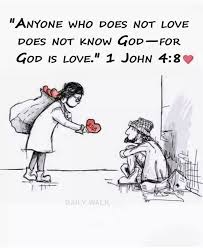


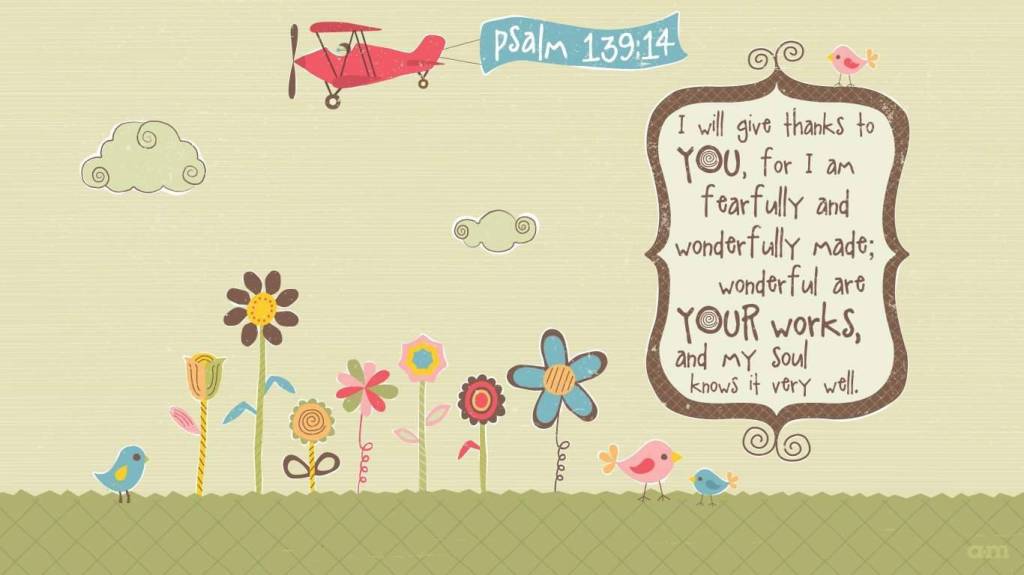






 Loving God, Living God, Loving Hope, Living Hope, Loving Living Life His Way! "Many things are possible for the person who has hope. Even more is possible for the person who has faith. And still more is possible for the person who knows how to love. But everything is possible for the person who practices all three virtues." - Brother Lawrence (1605-1691), Practicing the Presence of God (1692).