
When Someone You Love Seems to Walk Away from the Faith? Psalm 42

Psalm 42 New American Standard Bible 1995

BOOK 2

Thirsting for God in Trouble and Exile.

For the choir director. A [a]Maskil of the sons of Korah.

42 As the deer [b]pants for the water brooks,
So my soul [c]pants for You, O God.
My soul thirsts for God, for the living God;
When shall I come and [d]appear before God?
My tears have been my food day and night,
While they say to me all day long, “Where is your God?”
These things I remember and I pour out my soul within me.
For I used to go along with the throng and [e]lead them in procession to the house of God,

With the voice of joy and thanksgiving, a multitude keeping festival.

Why are you [f]in despair, O my soul?
And why have you become disturbed within me?
[g]Hope in God, for I shall [h]again praise [i]Him
For the [j]help of His presence.
O my God, my soul is [k]in despair within me;
Therefore I remember You from the land of the Jordan
And the [l]peaks of Hermon, from Mount Mizar.
Deep calls to deep at the sound of Your waterfalls;
All Your breakers and Your waves have rolled over me.
The Lord will command His lovingkindness in the daytime;
And His song will be with me in the night,
A prayer to the God of my life.

I will say to God my rock, “Why have You forgotten me?
Why do I go mourning [m]because of the oppression of the enemy?”
10 As a shattering of my bones, my adversaries revile me,
While they say to me all day long, “Where is your God?”
11 Why are you [n]in despair, O my soul?
And why have you become disturbed within me?
[o]Hope in God, for I shall yet praise Him,
The [p]help of my countenance and my God.

The Word of God for the Children of God.

Glory be to the Father,
and to the Son, and to the Holy Ghost;
as it was in the beginning,
is now, and ever shall be,
world without end. Amen, amen.

Doesn’t Anybody Hear Me? My Soul Thirsts for God!

My tears have been my food day and night,
While they say to me all day long, “Where is your God?”

Why are you [f]in despair, O my soul?
And why have you become disturbed within me?

I will say to God my rock, “Why have You forgotten me?
Why do I go mourning [m]because of the oppression of the enemy?”

10 As a shattering of my bones, my adversaries revile me,
While they say to me all day long, “Where is your God?”

11 Why are you [n]in despair, O my soul?
And why have you become disturbed within me?

Does anyone get the obvious gest of the Psalmists state of mind?

What is NOT happening in the Psalmists life he would not immediately if not sooner exchange it out or run away as fast as he could in any other direction?

Been there, done that, too many times to try and count?

Right there, right now – world is just a whirling and a swirling and a twirling?

If not you the reader, then someone you know, someone you love a whole lot?

Psalm 42 New King James Version

BOOK TWO

Psalms 42–72

Yearning for God in the Midst of Distresses

To the Chief Musician. A [a]Contemplation of the sons of Korah.

42 As the deer [b]pants for the water brooks,
So pants my soul for You, O God.
My soul thirsts for God, for the living God.
When shall I come and [c]appear before God?
My tears have been my food day and night,
While they continually say to me,
“Where is your God?”

When I remember these things,
I pour out my soul within me.
For I used to go with the multitude;
I went with them to the house of God,
With the voice of joy and praise,
With a multitude that kept a pilgrim feast.

Why are you [d]cast down, O my soul?
And why are you disquieted within me?
Hope in God, for I shall yet praise Him
[e]For the help of His countenance.

6 [f]O my God, my soul is cast down within me;
Therefore I will remember You from the land of the Jordan,
And from the heights of Hermon,
From [g]the Hill Mizar.
Deep calls unto deep at the noise of Your waterfalls;
All Your waves and billows have gone over me.
The Lord will command His lovingkindness in the daytime,
And in the night His song shall be with me—
A prayer to the God of my life.

I will say to God my Rock,
“Why have You forgotten me?
Why do I go mourning because of the oppression of the enemy?”
10 As with a [h]breaking of my bones,
My enemies [i]reproach me,
While they say to me all day long,
“Where is your God?”

11 Why are you cast down, O my soul?
And why are you disquieted within me?
Hope in God;
For I shall yet praise Him,
The [j]help of my countenance and my God.

The author of Psalm 42 is mired in the quicksand’s of deep distress.

He is longing for God, and people around him have been taunting him, saying, “Where is your God?”

People in this world also taunt and judge us sometimes.

But we should not let that bother us, because people judge others by their own standards.

God’s standards are infinitely more important.

Isaiah 55:8-9 New King James Version

“For My thoughts are not your thoughts,
Nor are your ways My ways,” says the Lord.
“For as the heavens are higher than the earth,
So are My ways higher than your ways,
And My thoughts than your thoughts.

The psalmist also didn’t see any sign of help from anyone and could not go to worship God in the sanctuary—and that caused him to feel forgotten by God.

It made the psalmist ache inside.

If we are not able to worship God with his people, we too can feel lonely and hurt inside.

The poet longed to be with God and to meet with God.

“As the deer pants for streams of water, so my soul pants for you, my God.”

This Psalm helps us to see that our faith can be jostled around, so badly shaken, wildly stirred up – our faith’s dizziness scale might never seem to stop raising.

Within this Psalm are many issues and concerns which have been left inside the pressure cooker for too long, might just lead us to disastrous results-giving up!

This psalm also helps us to envision that God is giving us his permission to be optimistic-possibly keep faith despite the stresses of feeling distant from God.

In God’s strength, the psalmist keeps talking to his soul, saying, “Why, my soul, are you downcast? Why so disturbed within me? Put your hope in God, for I will yet praise him, my Savior and my God” (42:5, 10; see also Psalm 43:5).

When Someone Seems to Walk Away from the Faith

Psalm 42 The Message

42 1-3 A white-tailed deer drinks
    from the creek;
I want to drink God,
    deep drafts of God.
I’m thirsty for God-alive.
I wonder, “Will I ever make it—
    arrive and drink in God’s presence?”
I’m on a diet of tears—
    tears for breakfast, tears for supper.
All day long
    people knock at my door,
Pestering,
    “Where is this God of yours?”

These are the things I go over and over,
    emptying out the pockets of my life.
I was always at the head of the worshiping crowd,
    right out in front,
Leading them all,
    eager to arrive and worship,
Shouting praises, singing thanksgiving—
    celebrating, all of us, God’s feast!

Why are you down in the dumps, dear soul?
    Why are you crying the blues?
Fix my eyes on God—
    soon I’ll be praising again.
He puts a smile on my face.
    He’s my God.

6-8 When my soul is in the dumps, I rehearse
    everything I know of you,
From Jordan depths to Hermon heights,
    including Mount Mizar.
Chaos calls to chaos,
    to the tune of whitewater rapids.
Your breaking surf, your thundering breakers
    crash and crush me.
Then God promises to love me all day,
    sing songs all through the night!
    My life is God’s prayer.

9-10 Sometimes I ask God, my rock-solid God,
    “Why did you let me down?
Why am I walking around in tears,
    harassed by enemies?”
They’re out for the kill, these
    tormentors with their obscenities,
Taunting day after day,
    “Where is this God of yours?”

11 Why are you down in the dumps, dear soul?
    Why are you crying the blues?
Fix my eyes on God—
    soon I’ll be praising again.
He puts a smile on my face.
    He’s my God.

From the very beginning, people walked away from the faith.

Even one of Jesus’ closest disciples, Judas, betrayed him for money.

The apostle Paul talks about those who have rejected truth and left the church.

In the end, the Bible tells us many will fall away, what many call the Great Apostasy. 

2 Timothy 4:1-5 New American Standard Bible 1995

“Preach the Word”

4 I solemnly charge you in the presence of God and of Christ Jesus, who is to judge the living and the dead, and by His appearing and His kingdom:  2 preach the word; be ready in season and out of season; reprove, rebuke, exhort, with [a]great patience and instruction. For the time will come when they will not endure sound doctrine; but  wanting to have their ears tickled, they will accumulate for themselves teachers in accordance to their own desires, 4  and will turn away their ears from the truth and will turn aside to myths. But you, be sober in all things, endure hardship, do the work of an evangelist, fulfill your ministry.

Part of living a life of faith is watching others fall away.

People who we felt followed Jesus with all their hearts one day reject their faith, usually after a process of compromise and doubt. 

A young man I discipled in Christ once sat with me at lunch and admitted he was now an atheist.

I appealed to him in love, of course, but he made up his mind. It broke my heart. 

And it should break our hearts.

But what should we do about it? 

1. Ask Questions to Understand

When someone we love appears to be straying from their faith, it’s essential to engage them with compassion and understanding.

Begin by asking questions and seeking to understand their perspective and journey better.

This method not only demonstrates care and empathy but also provides an opportunity for meaningful dialogue and support. 

Proverbs 20:5 states, 

“The purposes of a person’s heart are deep waters, but one who has insight draws them out.” 

We need to prioritize discerning individuals’ underlying motivations and struggles, especially when it comes to matters of faith.

By asking questions with genuine curiosity and openness, we can help uncover the root causes behind their doubts or struggles, paving the way for authentic conversation and connection.

Asking questions allows us to listen actively and attentively to their perspective without judgment or condemnation.

Instead of imposing our own beliefs or attempting to provide quick solutions, we create a safe space for them to express thoughts, feelings, and uncertainties openly.

Generally, someone giving up on their faith has come to the decision with some grief, great struggle, they may feel unsure or awkward sharing with someone of faith.

This approach prayerfully fosters building trust and respect in the relationship, building and edifying a foundation for deeper understanding, mutual support.

Not only does this help us engage with compassion, but the person walking away from God may not fully understand their journey yet.

Asking questions encourages self-reflection and introspection, prompting them to articulate their beliefs and values more clearly. 

2. Keep Conversation Going

After asking questions to understand better, it’s crucial to maintain an ongoing conversation with those who walk away from the faith, with the goal fostering an atmosphere of openness, understanding, and support.

This approach not only demonstrates our genuine care and concern but also provides an opportunity to journey alongside them through their spiritual struggles and uncertainties.

In Galatians 6:1-2, the apostle Paul exhorts believers, 

“Brothers and sisters, if someone is caught in a sin, you who live by the Spirit should restore that person gently. But watch yourselves, or you also may be tempted. Carry each other’s burdens, and in this way, you will fulfill the law of Christ.” 

The principle here can apply to entering into their picture, walking alongside our loved ones in their times of spiritual struggle, offering gentle and careful support as they try to sort out how they can again navigate their faith journey. 

Many who begin to fall away from the faith may fear losing relationships with family or close friends. Being willing to keep that conversation going assures people we aren’t ending associations or relationships. 

Keeping the conversation going involves creating a safe and non-judgmental space for them to express the weight of their doubts, questions, and concerns openly, knowing that they are being heard and they are likewise being valued.

In addition, continuing the conversation allows us to demonstrate our own unconditional love and acceptance, regardless of spiritual beliefs or choices.

This continued conversation provides an opportunity to share our own faith journey and experiences, offering a perspective of hope and encouragement. 

3. As much as possible, Stay Involved in Their Lives

Along with keeping the conversation going, we must continue to be active in their life, attending events and always willing to offer support in major areas.

In Hebrews 10:24-25, believers are urged, 

“And let us consider how we may spur one another on toward love and good deeds, not giving up meeting together, as some are in the habit of doing, but encouraging one another—and all the more as you see the Day approaching.” 

By staying involved, we can continue to spur them on toward love and good deeds, offering encouragement and support along the way.

Staying involved in their lives entails remaining present and attentive to their needs, concerns, and experiences.

It involves actively participating in their day-to-day activities, celebrations, and challenges, demonstrating our commitment to walking alongside them through every season of life.

There may be times and decisions we can’t support or attend, but there will be several other opportunities to show we love them.

By investing time and energy in building and nurturing our relationship, we can work to create a safe and supportive environment for them to open up, to share their doubts, questions, and struggles openly.

Staying involved also provides an opportunity to model Christ-like love and compassion in action.

Through completely random acts of kindness, service, and generosity, we can demonstrate the transformative power of the gospel in our lives, inspiring our loved ones to one day re-think, reconsider their faith and draw closer to God.

4. Continue to Invite Them into Your Life

As we stay involved in their lives, we also need to keep inviting them into ours, demonstrating hospitality and acceptance.

In 1 Peter 4:9, believers are encouraged, 

“Offer hospitality to one another without grumbling.” 

If these are people we genuinely and authentically love, we should demonstrate God’s brand of hospitality and extend God’s brand of kindness and His brand of generosity to them, even if we don’t have even share the same spiritual beliefs.

By inviting them into our lives, we create a welcoming space for them to feel loved, valued, and accepted.

This entails extending invitations to spend time together, share meals, and engage in meaningful conversations.

It involves demonstrating genuine interest and care in their well-being, making them feel included and they are cherished as part of our community and family.

Showing hospitality allows us to cultivate deeper connections and relationships with our loved ones, fostering trust, openness, vulnerability in the relationship.

Furthermore, showing hospitality provides an opportunity to model Christ-like love and compassion in action.

Through random acts of kindness, service, and generosity, we exemplify the transformative power of the gospel in our lives, inspiring our loved ones to re-think and one day reconsider their faith and draw closer to God.

Also, as we keep inviting them to events important to us, our church activities are one of many. 

Remember, we can invite them, but that doesn’t ensure they will respond or attend.

However, others may walk away from the faith; we should show love even if they never come back to God.

This hospitality demonstrates our commitment to Christ-like love, as encouraged in 1 Peter 4:9. 

1 Peter 4:9-11 The Message

7-11 Everything in the world is about to be wrapped up, so take nothing for granted. Stay wide-awake in prayer. Most of all, love each other as if your life depended on it. Love makes up for practically anything. Be quick to give a meal to the hungry, a bed to the homeless—cheerfully. Be generous with the different things God gave you, passing them around so all get in on it: if words, let it be God’s words; if help, let it be God’s hearty help. That way, God’s bright presence will be evident in everything through Jesus, and he’ll get all the credit as the One mighty in everything—encores to the end of time. Oh, yes!

5. Keep Speaking Truth in Love

Through the previous actions—asking questions, keeping the conversation going, and continuing to be involved in various aspects of life—we will have the trust and relational capital to share truth in love.

In Ephesians 4:15, believers are urged to 

“Speak the truth in love.” 

The idea isn’t simply to share a Bible verse but to share truth in love.

Love means desiring the best for a person, even at our own expense.

Because we are spiritual beings with an eternal destiny, the greatest love shares truth for eternal good.

Christ revealed this type of love, sacrificing and humbling himself to share the eternal gospel of the Kingdom of God.

We communicate with honesty, sincerity, and compassion, especially when it comes to matters of faith.

By speaking truth in love, we can offer prayerful gentle correction, guidance, and encouragement to our loved ones, helping them navigate their spiritual journey with wisdom and discernment.

We also don’t randomly share verses.

Since we continue having relationships, our conversations, including faith, will be relevant, relatable, and accessible to our loved ones.

With established open conversation, we encourage addressing doubts, questions and struggles with grace.

Additionally, our conversations allow us to confront misconceptions, misunderstandings, falsehoods that may lead our loved ones astray from faith.

Gently guiding them back to the foundational truths of the Bible, we help them rediscover the hope, peace, and joy that come from a vibrant relationship with Christ.

6. Pray Regularly, Pray Ceaselessly

None of this works without prayer.

We must commit to praying regularly for those who have fallen away from the faith, seeking God’s guidance, comfort, and intervention in their lives.

This demonstrates our dependence on God’s power and sovereignty to do his work and acknowledges our loved one’s need for His divine intervention and transformation.

In James 5:16, believers are encouraged, 

“Therefore confess your sins to each other and pray for each other so that you may be healed. The prayer of a righteous person is powerful and effective.” 

This biblical exhortation emphasizes the significance of prayer in believers’ lives and underscores the transformative impact of intercession on the spiritual well-being of others.

The verse includes a specific type of person whose prayers are effective—a righteous person.

Our actions and lives must reflect faith, this integrity gives our prayers power. 

Praying regularly for our loved ones entails lifting them up before the throne of grace and interceding on their behalf with fervency and perseverance.

It involves an ongoing pouring out of our hearts to God and expressing our concerns, hopes, and our desires for their spiritual restoration and renewal.

Moreover, regular prayer allows us to align our hearts and minds with God’s will, seeking His wisdom, discernment, and guidance in how best to support and encourage our loved ones in their faith journey.

By surrendering our concerns and burdens to God in prayer, we acknowledge he is the one who saves and trusts his perfect timing and plan for their lives.

From the very beginning, people walked away from the faith. Even one of Jesus’ closest disciples, Judas, betrayed him for money. The apostle Paul talks about those who have rejected truth and left the church. In the end, the Bible tells us many will fall away, what many call the Great Apostasy. 

Part of living a life of faith is watching others fall away. People who we felt followed Jesus with all their hearts one day reject their faith, usually after a process of compromise and doubt. 

A young man I discipled in Christ once sat with me at lunch and admitted he was now an atheist. I appealed to him in love, of course, but he had made up his mind. It broke my heart. 

And it should break our hearts. But what should we do about it? 

Here are seven things to do when someone you love seems to walk away from the faith.

Photo Credit: @Pexels/Ankit Sihagmom and daughter having a talk on the couch

1. Ask Questions to Understand

When someone we love appears to be straying from their faith, it’s essential to engage them with compassion and understanding. Begin by asking questions and seeking to understand their perspective and journey better. This method not only demonstrates care and empathy but also provides an opportunity for meaningful dialogue and support. Proverbs 20:5 states, 

“The purposes of a person’s heart are deep waters, but one who has insight draws them out.” 

We need to prioritize discerning individuals’ underlying motivations and struggles, especially when it comes to matters of faith. By asking questions with genuine curiosity and openness, we can help uncover the root causes behind their doubts or struggles, paving the way for authentic conversation and connection.

Asking questions allows us to listen actively and attentively to their perspective without judgment or condemnation. Instead of imposing our own beliefs or attempting to provide quick solutions, we create a safe space for them to express their thoughts, feelings, and uncertainties openly. Generally, someone giving up on their faith has come to the decision with some grief and great struggle, and they may feel unsure or awkward sharing with someone of faith. This approach fosters trust and respect in the relationship, building a foundation for deeper understanding and support.

Not only does this help us engage with compassion, but the person walking away from God may not fully understand their journey yet. Asking questions encourages self-reflection and introspection, prompting them to articulate their beliefs and values more clearly. 

Photo Credit: © Getty Images/fizkes serious multicultural conversation

2. Keep Conversation Going

After asking questions to understand better, it’s crucial to maintain an ongoing conversation with those who walk away from the faith, fostering an atmosphere of openness, understanding, and support. This approach not only demonstrates our genuine care and concern but also provides an opportunity to journey alongside them through their spiritual struggles and uncertainties. In Galatians 6:1-2, the apostle Paul exhorts believers, 

“Brothers and sisters, if someone is caught in a sin, you who live by the Spirit should restore that person gently. But watch yourselves, or you also may be tempted. Carry each other’s burdens, and in this way, you will fulfill the law of Christ.” 

The principle here can apply to walking alongside our loved ones in their times of spiritual struggle, offering gentle and careful support as they navigate their faith journey. 

Many who begin to fall away from the faith may fear losing relationships with family or close friends. Being willing to keep the conversation going assures people we aren’t ending associations or relationships. 

Keeping the conversation going involves creating a safe and non-judgmental space for them to express their doubts, questions, and concerns openly, knowing that they are heard and valued.

In addition, continuing the conversation allows us to demonstrate our unconditional love and acceptance, regardless of their spiritual beliefs or choices. This continued conversation provides an opportunity to share our own faith journey and experiences, offering a perspective of hope and encouragement. 

Photo Credit: ©GettyImages/fizkesMom friends in different stages of motherhood

3. Stay Involved in Their Lives

Along with keeping the conversation going, we must continue to be active in their life, attending events and willing to offer support in major areas. In Hebrews 10:24-25, believers are urged, 

“And let us consider how we may spur one another on toward love and good deeds, not giving up meeting together, as some are in the habit of doing, but encouraging one another—and all the more as you see the Day approaching.” 

By staying involved, we can continue to spur them on toward love and good deeds, offering encouragement and support along the way. Staying involved in their lives entails remaining present and attentive to their needs, concerns, and experiences. It involves actively participating in their day-to-day activities, celebrations, and challenges, demonstrating our commitment to walking alongside them through every season of life. There may be times and decisions we can’t support or attend, but there will be several other opportunities to show we love them. By investing time and energy in building and nurturing our relationship, we create a safe and supportive environment for them to share their doubts, questions, and struggles openly.

Staying involved also provides an opportunity to model Christ-like love and compassion in action. Through acts of kindness, service, and generosity, we can demonstrate the transformative power of the gospel in our lives, inspiring our loved ones to reconsider their faith and draw closer to God.

Photo Credit: ©Getty Images/Stígur Már Karlsson /Heimsmyndir4. Continue to Invite Them into Your Life

4. Continue to Invite Them into Your Life

As we stay involved in their lives, we also need to keep inviting them into ours, demonstrating hospitality and acceptance. In 1 Peter 4:9, believers are encouraged, 

“Offer hospitality to one another without grumbling.” 

If these are people we love, we should demonstrate hospitality and extend kindness and generosity to them, even if we don’t have the same spiritual beliefs. By inviting them into our lives, we create a welcoming space for them to feel loved, valued, and accepted. This entails extending invitations to spend time together, share meals, and engage in meaningful conversations. It involves demonstrating genuine interest and care in their well-being, making them feel included and cherished as part of our community and family.

Showing hospitality allows us to cultivate deeper connections and relationships with our loved ones, fostering trust, openness, and vulnerability in the relationship. Furthermore, showing hospitality provides an opportunity to model Christ-like love and compassion in action. Through acts of kindness, service, and generosity, we exemplify the transformative power of the gospel in our lives, inspiring our loved ones to reconsider their faith and draw closer to God. Also, as we keep inviting them to events important to us, our church activities are one of many. 

Remember, we can invite them, but that doesn’t ensure they will respond or attend. However, others may walk away from the faith; we should show love even if they never come back to God. This hospitality demonstrates our commitment to Christ-like love, as encouraged in 1 Peter 4:9

Photo Credit: ©GettyImages/william87group of men talking outside, go and make disciples

5. Keep Speaking Truth in Love

Through the previous actions—asking questions, keeping the conversation going, and continuing to be involved in various aspects of life—we will have the trust and relational capital to share truth in love. In Ephesians 4:15, believers are urged to 

“Speak the truth in love.” 

The idea isn’t simply to share a Bible verse but to share truth in love. Love means desiring the best for a person, even at our own expense. Because we are spiritual beings with an eternal destiny, the greatest love shares truth for eternal good. Christ revealed this type of love, sacrificing and humbling himself to share the eternal gospel of the Kingdom of God. We communicate with honesty, sincerity, and compassion, especially when it comes to matters of faith. By speaking truth in love, we can offer gentle correction, guidance, and encouragement to our loved ones, helping them navigate their spiritual journey with wisdom and discernment.

We also don’t randomly share verses. Since we continue having relationships, our conversations, including faith, will be relevant, relatable, and accessible to our loved ones. With established open conversation, we encourage addressing doubts, questions and struggles with grace. Additionally, our conversations allow us to confront misconceptions, misunderstandings, and falsehoods that may lead our loved ones astray from faith. Gently guiding them back to the foundational truths of the Bible, we help them rediscover the hope, peace, and joy that come from a vibrant relationship with Christ.

Photo Credit: ©GettyImages/Morsa Imageswoman praying eyes closed, how to start a prayer

6. Pray Regularly

None of this works without prayer. We must commit to praying regularly for those who have fallen away from the faith, seeking God’s guidance, comfort, and intervention in their lives. This demonstrates our dependence on God’s power and sovereignty to do his work and acknowledges our loved one’s need for divine intervention and transformation. In James 5:16, believers are encouraged, 

“Therefore confess your sins to each other and pray for each other so that you may be healed. The prayer of a righteous person is powerful and effective.” 

This biblical exhortation emphasizes the significance of prayer in believers’ lives and underscores the transformative impact of intercession on the spiritual well-being of others. The verse includes a specific type of person whose prayers are effective—a righteous person. Our actions and lives must reflect faith, and this integrity gives our prayers power. 

Praying regularly for our loved ones entails lifting them up before the throne of grace and interceding on their behalf with fervency and perseverance. It involves pouring out our hearts to God and expressing our concerns, hopes, and desires for their spiritual restoration and renewal.

Moreover, regular prayer allows us to align our hearts and minds with God’s will, seeking His wisdom, discernment, and guidance in how best to support and encourage our loved ones in their faith journey. By surrendering our concerns and burdens to God in prayer, we acknowledge he is the one who saves and trusts his perfect timing and plan for their lives.

Photo Credit: ©GettyImages/fizkesAsian man standing outside in a city, looking up, hopeful

7. Don’t Give Up Hope

Paul, when describing the divine love of God, finishes with love, hopes, and believes all things (1 Corinthians 13).

There is still hope in God. 

Romans 15:1-6 New American Standard Bible 1995

Self-denial on Behalf of Others

15 Now we who are strong ought to bear the weaknesses of those without strength and not just please ourselves. Each of us is to please his neighbor [a] for his good, to his edification. For even Christ did not please Himself; but as it is written, “The reproaches of those who reproached You fell on Me.” For whatever was written in earlier times was written for our instruction, so that through perseverance and the encouragement of the Scriptures we might have hope. Now may the God [b]who gives perseverance and encouragement grant you to be of the same mind with one another according to Christ Jesus, so that with one accord you may with one [c] voice glorify the God and Father of our Lord Jesus Christ.

It’s essential not to give up hope on people but instead to persistently extend invitations and offer resources that may help reignite their spiritual journey.

This approach demonstrates our unwavering commitment to their well-being and also acknowledges the transformative power of community and spiritual guidance.

In Hebrews 10:24-25, believers are encouraged, 

“And let us consider how we may spur one another on toward love and good deeds, not giving up meeting together, as some are in the habit of doing, but encouraging one another—and all the more as you see the Day approaching.” 

Through maintaining fellowship and community, especially in times of spiritual struggle, we continue to engage and create opportunities to show and share the love of Christ.

As time goes on, it becomes easy to give up on a person on a destructive path.

However, God doesn’t give up on us, even when we continue in our rebellion.

Remember the story of the Prodigal Son?

The younger son technically wished his father (God) dead and wanted his inheritance now. As final as that seemed, the father in the story was waiting at the window, expectantly, for the son to return. There’s always hope with God. 

Through our relationship with them, we can exhibit this continual hope in God’s work and love. We can only accomplish this through his power and Spirit. 

We have all walked away from the Father at some point or another; each of us rebels against God and is deserving of wrath and rejection.

However, God is love; in that abundant love, he bestowed mercy and grace upon us, reaching out to us and saving us by his power.

Lamentations 3:19-23 New American Standard Bible 1995

Hope of Relief in God’s Mercy

19 Remember my affliction and my [a]wandering, the wormwood and bitterness.
20 Surely my soul remembers
And is bowed down within me.
21 This I recall to my mind,
Therefore I have hope.
22 The Lord’s lovingkindnesses [b]indeed never cease,
For His compassions never fail.
23 They are new every morning;
Great is Your faithfulness.

We couldn’t save ourselves; neither can we save anyone else.

Salvation belongs to God alone.

Repentance and faith are both spoken of as gifts in the Bible (2 Timothy 2:25; Ephesians 2:8-9), granted by the Father. 

Let us pray for those we love, God will grant them the gifts of repentance and faith, and when they return, we will receive them back as sons and daughters once again. 

It may take awhile to feel close to God again, especially if we cannot worship God with his people.

But God is always with us, watching over us. Our souls are in his hands. Our own destiny is safe in his care. Like the psalmist, we can keep reminding ourselves of these good truths in faith. We can praise the Lord, for he is our Savior and God.

In the name of God, the Father and God the Son and God the Holy Spirit,

Let us Pray,

Psalm 23 New American Standard Bible 1995

The Lord, the Psalmist’s Shepherd.

A Psalm of David.

23 The Lord is my shepherd,
[a]shall not want.
He makes me lie down in green pastures;
He leads me beside [b]quiet waters.
He restores my soul;
He guides me in the [c]paths of righteousness
For His name’s sake.

Even though I walk through the [d]valley of the shadow of death,
I fear no [e]evil, for You are with me;
Your rod and Your staff, they comfort me.
You prepare a table before me in the presence of my enemies;
You [f]have anointed my head with oil;
My cup overflows.
6 [g]Surely goodness and lovingkindness will follow me all the days of my life,
And I will [h]dwell in the house of the Lord [i]forever.

Glory be to the Father,
and to the Son, and to the Holy Ghost;
as it was in the beginning,
is now, and ever shall be,
world without end. Amen, amen.

https://translate.google.com

Seeking God is never meant to be a one-time event! 1 Chronicles 16:8-11

1 Chronicles 16:8-11 New American Standard Bible 1995

Psalm of Thanksgiving

Oh give thanks to the Lord, call upon His name;
Make known His deeds among the peoples.
Sing to Him, sing praises to Him;
[a]Speak of all His [b]wonders.
10 [c]Glory in His holy name;
Let the heart of those who seek the Lord be glad.
11 Seek the Lord and His strength;
Seek His face continually.

The Word of God for the Children of God.

Glory be to the Father,
and to the Son, and to the Holy Ghost;
as it was in the beginning,
is now, and ever shall be,
world without end. Amen, amen.

Continual Revelation

Seeking God is not meant to be a one-time event.

We’re not meant to run off the fuel of an occasional encounter with our Father’s love. Rather, seeking, finding, God’s heart is to be the foundation of all we do.

It’s to be intertwined in our thoughts, actions, and emotions.

He longs to reveal himself to us whether we’re at home, working, watching movies, in a church service, or out with friends.

Life with God is meant to be about continual revelation of his heart.

In Jeremiah 29:13-14 God says, “You will seek me and find me, when you seek me with all your heart. I will be found by you, declares the Lord.” 

God longs to be found by us.

He longs for us to seek out a revelation of his invisible nature, unconditional love, and abounding grace.

He longs for us to taste and see that he is good (Psalm 34:8).

Psalm 34:8-14 New American Standard Bible 1995

O taste and see that the Lord is good;
How blessed is the man who takes refuge in Him!
O fear the Lord, you His saints;
For to those who fear Him there is no want.
10 The young lions do lack and suffer hunger;
But they who seek the Lord shall not be in want of any good thing.
11 Come, you children, listen to me;
I will teach you the fear of the Lord.
12 Who is the man who desires life
And loves length of days that he may see good?
13 Keep your tongue from evil
And your lips from speaking deceit.
14 Depart from evil and do good;
Seek peace and pursue it.

When you seek out God you won’t be met with nothingness.

When you seek to know the will, attributes, feelings, and reality of your heavenly Father, you will find what you seek. His presence is his promise.

We go through too much of our days apart from a revelation of God’s heart.

We suffer through insecurities, disappointments, fear, doubt, and worry as if we are continually on our own.

We take too much of our own lives into our own hands and work to feel valued, continually fight for what we feel is owed to us, we feel like quitting when we fail, and wallow in our inabilities to live life perfectly, when all the while our heavenly Father waits, beckoning us with his grace to simply ask for his heart.

All the while he longs to root and ground me in his love that isn’t based on what we do, but based on his unwavering, unchanging character.

The best news we have today is that God is continually available to us.

He’s continually ready and continually willing to pour out a love so rich, so real, and so continually powerful that everything continually changes.

He’s continually knocking on the door of our hearts, continually hoping that we will simply and continually take the time to continually open up and let him in.

Please take an extended period of time today as we will now enter into guided pray to seek a fresh revelation of God’s heart.

Begin a lifestyle of continually seeking God by giving God all you have right now: yourself.

May you be continually empowered and set free today to live in continual communion with your loving heavenly Father.

Guided Prayer:

1. Reflect on the importance of continually seeking God that he might be continually found.

“You will seek me and find me, when you seek me with all your heart. I will be found by you, declares the Lord.” Jeremiah 29:13-14

“Seek the Lord and his strength; seek his presence continually!” 1 Chronicles 16:11

2. Ask God for a fresh revelation of his heart today. 

Take an extended time to quiet yourself and open your heart to receive.

3. Spend some time in solitude simply being with God. 

Rather than asking him questions, journal what you are discovering about God.

Write down how you feel, aspects of his character you are noticing, and what he seems to be speaking to you.

“Be still, and know that I am God.” Psalm 46:10

Sometimes simply being with God teaches us more than a thousand questions he could answer.

In being still and knowing he is God we learn the reality of his presence and the communion we have with him.

We discover his personality and learn to trust in his quiet, calm assurance.

There’s nothing as comforting as sitting with him and simply knowing that he has us. May you find continual peace and comfort in the nearness of God today.

In the name of God, the Father and God the Son and God the Holy Spirit,

Let us Pray,

Psalm 34 New American Standard Bible 1995

The Lord, a Provider and Deliverer.

A Psalm of David when he [a]feigned madness before [b]Abimelech, who drove him away and he departed.

34 I will bless the Lord at all times;
His praise shall continually be in my mouth.
My soul will make its boast in the Lord;
The humble will hear it and rejoice.
O magnify the Lord with me,
And let us exalt His name together.

I sought the Lord, and He answered me,
And delivered me from all my fears.
They looked to Him and were radiant,
And their faces will never be ashamed.
This [c]poor man cried, and the Lord heard him
And saved him out of all his troubles.
The angel of the Lord encamps around those who fear Him,
And rescues them.

O taste and see that the Lord is good;
How blessed is the man who takes refuge in Him!
O fear the Lord, you His saints;
For to those who fear Him there is no want.
10 The young lions do lack and suffer hunger;
But they who seek the Lord shall not be in want of any good thing.
11 Come, you children, listen to me;
I will teach you the fear of the Lord.
12 Who is the man who desires life
And loves length of days that he may see good?
13 Keep your tongue from evil
And your lips from speaking deceit.
14 Depart from evil and do good;
Seek peace and pursue it.

15 The eyes of the Lord are toward the righteous
And His ears are open to their cry.
16 The face of the Lord is against evildoers,
To cut off the memory of them from the earth.
17 The righteous cry, and the Lord hears
And delivers them out of all their troubles.
18 The Lord is near to the brokenhearted
And saves those who are [d]crushed in spirit.

19 Many are the afflictions of the righteous,
But the Lord delivers him out of them all.
20 He keeps all his bones,
Not one of them is broken.
21 Evil shall slay the wicked,
And those who hate the righteous will be [e]condemned.
22 The Lord redeems the soul of His servants,
And none of those who take refuge in Him will be [f]condemned.

Glory be to the Father,
and to the Son, and to the Holy Ghost;
as it was in the beginning,
is now, and ever shall be,
world without end. Amen, amen.
https://translate.google.com

Our Sunday will be Coming! Our Sin, Suffering, and our Salvation: Have We Lost Our Grief over Sin? Psalm 38

Psalm 38 New American Standard Bible 1995

Prayer of a Suffering Penitent.

A Psalm of David, for a memorial.

38 O Lord, rebuke me not in Your wrath,
And chasten me not in Your burning anger.
For Your arrows have sunk deep into me,
And Your hand has pressed down on me.
There is no soundness in my flesh because of Your indignation;
There is no health in my bones because of my sin.
For my iniquities are gone over my head;
As a heavy burden they weigh too much for me.
My [a]wounds grow foul and fester
Because of my folly.
I am bent over and greatly bowed down;
I go mourning all day long.
For my loins are filled with burning,
And there is no soundness in my flesh.
I am benumbed and [b]badly crushed;
[c]groan because of the [d]agitation of my heart.

Lord, all my desire is [e]before You;
And my sighing is not hidden from You.
10 My heart throbs, my strength fails me;
And the light of my eyes, even [f]that [g]has gone from me.
11 My [h]loved ones and my friends stand aloof from my plague;
And my kinsmen stand afar off.
12 Those who seek my life lay snares for me;
And those who seek to injure me have [i]threatened destruction,
And they devise treachery all day long.

13 But I, like a deaf man, do not hear;
And I am like a mute man who does not open his mouth.
14 Yes, I am like a man who does not hear,
And in whose mouth are no arguments.
15 For I [j]hope in You, O Lord;
You will answer, O Lord my God.
16 For I said, “May they not rejoice over me,
Who, when my foot slips, would magnify themselves against me.”
17 For I am ready to fall,
And my [k]sorrow is continually before me.
18 For I [l]confess my iniquity;
I am full of anxiety because of my sin.
19 But my enemies are vigorous and [m]strong,
And many are those who hate me wrongfully.
20 And those who repay evil for good,
They oppose me, because I follow what is good.
21 Do not forsake me, O Lord;
O my God, do not be far from me!
22 Make haste to help me,
O Lord, my salvation!

The Word of God for the Children of God.

Glory be to the Father,
and to the Son, and to the Holy Ghost;
as it was in the beginning,
is now, and ever shall be,
world without end. Amen, amen.

As I was preparing my presentation for Good Friday, I was reading the Psalms.

I eventually got to reading David’s disquieting words from Psalm 38 and there was my profound reaction to a reaction by David that leaped off the page at me.

His reaction was over his sin, and when I read it, I thought deeply about how we view sin in our lives.

I know how we often view sin in other people’s lives, many times being quick to highlight it, even quicker to cancel its relevance, or quicker to condemn them.

My concern is not about sin found in other people, but for us to consider what happens within our own hearts, souls and spirits when we sin in our own lives.

King David in and throughout the Old Testa­ment had his fair share of suffering.

That’s clear from Psalm 38, ­described as “a psalm of David.”

He speaks often of being wounded and filled with pain.

Friends and neighbors abandon him. Enemies hate him and accuse him.

Even his own family dynamics turns against him as his son Absalom kills his brother and gathers an angry army against his father to over throw him as King.

Many are sick and tired of all the intrigue emanating from his throne room.

Many do not believe he is not the least bit worthy of such a high office as a King.

Some want to kill him.

It’s “because of my sin,” he says.

And he’s painfully right.

Not every sin leads to a particular suffering.

And not all suffering is from particular sins.

But rebellion against God’s ways does unleash a torrent of suffering into our human experience. So David the sinner suffers, and from the very throne of his self inflicted suffering he cries out to God. Maybe you know what that’s like.

We are no different in our own ways making questionable choices, decisions and getting people all hopping mad, consistently questioning our motives.

God certainly knows all about His creation’s sinfulness. (Genesis 3)

Jesus certainly knows having in these last days of his own life witnessed the fickleness of the human heart and soul, limitless depths of human depravity.

It’s all profoundly expressed there in Psalm 38.

Perhaps Psalm 38 was rolling through Jesus’ heart and soul in Gethsemane.

Yes, this psalm is about sin.

And no, Jesus himself never sinned.

But he did suffer enormously – echelons more than anyone else in all history.

He suffered because the full weight of all the sins of the world, including my sins and yours, were laid on him. He carried that immense burden to the cross.

One cannot imagine the measure of weight of all that sin upon his shoulders.

The silent anguish, the pounding heart, the failing strength, the pained cry of forsakenness—it’s all right there in Psalm 38, and it was all there on the cross.

But that was not the end. From his own suffering, Jesus cried out to God.

And his cry was heard. On the third day, God raised him from the dead.

Jesus had won the ultimate victory over sin.

Yes, we still sin.

And we still suffer.

But sin no longer has the power to separate us from God. Jesus saw to that!

Have we lost our Psalm 38 Grief over our own Sins?

2 Corinthians 5:20-21 New American Standard Bible 1995

20 Therefore, we are ambassadors for Christ, as though God were making an appeal through us; we beg you on behalf of Christ, be reconciled to God. 21 He made Him who knew no sin to be sin on our behalf, so that we might become the righteousness of God in Him.

I am wondering where that attitude toward sin has gone in our westernized interpretation of “Christian” culture – where sin is dismissed all too easily.

The Sheer Horror of Sin Has Not Changed one bit

Hebrews 13:5-8 New American Standard Bible 1995

Make sure that your character is free from the love of money, being content with what you have; for He Himself has said, “I will never desert you, nor will I ever forsake you,” so that we confidently say,

“The Lord is my helper, I will not be afraid.
What will man do to me?”

Remember those who led you, who spoke the word of God to you; and considering the [a]result of their conduct, imitate their faith. Jesus Christ is the same yesterday and today and forever.

Regardless of how the world feels, or refuses to believe about God and sin, the way God feels about it has not changed and we should expect, will never change.

It seems as if the church has slowly been adopting worldly attitudes toward sin.

Instead of living out our call as “Ambassadors”, calling people to repentance, and reconciliation, it is as if we give people justifications for continuing in sin.

Yet, the way God sees sin is still the same.

He hates it.

He hates it because it destroys you and also because it drives a wedge in your relationship with him because he is a holy God. 

I want to be clear, I am not saying we become judges of people in the world.

We need to spare no amount of personal effort and suffering to share the gospel with them and to allow the Holy Spirit to convict them of their sinful condition.

We also shouldn’t expect people in the world to react like David did over his sin.

But, for those in the church, it is a different story.

We have God, we have the Word of God and we have the Spirit of God, so our personal mindset towards sin should radically differ from those in the world.

Instead of focusing on what people in the world are doing first, instead of our cancelling everyone left and right, I am saying we start by calling the people in the church to repent because we all need to change our attitude towards sin. 

Psalm 38 questions to ask yourself about our own Sin

As I stated earlier, I don’t want this to be a focus on someone else.

I want you to ponder about yourself.

Here are some questions that are introspective.

Ask them of yourself, as I am doing the same thing.       

  • When was the last time you felt guilt over sinful behavior?
  • When was the last time you grieved over sin?
  • When was the last time you felt burdened because of sinful actions you had taken?

Think on these questions for a moment, but go to the micro level.

So often we think of the big sins, maybe adultery or some kind of fornication, but we miss the little things such as how we love our neighbor or harbor anger towards someone – up to and including the worst kind of anger against “self.”

When was the last time your heart was anguished over those “insignificant” sins that are just as destructive?

I don’t know the answer to these questions in your life, I do not have all the answers about myself, but I know if we are not careful, the attitudes the world displays toward sin can become the attitude those in the church display towards it as well.

Key Motivators for Changing Your Attitude toward Sin

1. Because You Love Him

John 14:12-15 New American Standard Bible 1995

12 Truly, truly, I say to you, he who believes in Me, the works that I do, he will do also; and greater works than these he will do; because I go to the Father. 13  Whatever you ask in My name, that will I do, so that the Father may be glorified in the Son. 14 If you ask Me anything in My name, I will do it.

15 “If you love Me, you will keep My commandments.

Could it be that part of David’s anguish and grief over his sin was because he knew God and loved him?

I think so.

After all, the Bible called him a man after God’s own heart.

When you love God, then you know how much sin hurts him and if you love the Lord, why would you want to hurt him? 

I have colleague and I can see the disappointment that wells up in their eyes when they do something that they feels lets so many people down.

They are devastated over it.

For those of us who claim to love Jesus, we simply cannot continue to have casual attitudes towards sin in our lives.

Again, I am not saying we become judges of others; I am saying we become too harsh a judges of ourselves.

2. Because You Know Him

1 John 3:1-8 New American Standard Bible 1995

Children of God Love One Another

3 See [a]how great a love the Father has bestowed on us, that we would be called children of God; and such we are. For this reason the world does not know us, because it did not know Him. Beloved, now we are children of God, and it has not appeared as yet what we will be. We know that when He appears, we will be like Him, because we will see Him just as He is. And everyone who has this hope fixed on Him purifies himself, just as He is pure.

Everyone who practices sin also practices lawlessness; and sin is lawlessness. You know that He appeared in order to take away sins; and in Him there is no sin. No one who abides in Him sins; no one who sins has seen Him or [b] knows Him. Little children, make sure no one deceives you; the one who practices righteousness is righteous, just as He is righteous; the one who practices sin is of the devil; for the devil [c]has sinned from the beginning. The Son of God appeared for this purpose, to destroy the works of the devil.

If you claim to know God, then sin cannot be an ongoing part of your life.

These verses are not saying you will never sin.

These verses are saying you don’t live to sin or for sin.

When you do sin, your response becomes like David, one of grief and a call to repentance. This happens because you know him and are in fellowship with him. When that fellowship is broken, you quickly seek to repent and restore it.

3. Because His Life Is in You

Since God’s life is in you, in the person of the Holy Spirit, and you have been born of God, this should change your attitude toward sin.

If your attitudes towards sin are growing lukewarm, then maybe you need more of God’s Spirit working in your life. Remember, he has not changed, nor has his attitude toward sin. If yours has, then we know exactly where the problem lies.

Psalm38 Final Thoughts

This devotion is not about judgment or condemnation.

This devotion is really about a call to holiness.

We must be holy because God is holy.

For those who don’t know what that means, holiness is not a state of perfection.

Holiness is when you are set apart for God’s use.

When we are walking in holiness, we see sin the way God sees it and we see people the way God sees them. 

I can’t say where, when, or how the church got off course, but the remedy is simple.

Return to your first love.

It is mu personal belief it’s long past the time we should suffer for Christ as Christ suffered for us to rekindle that love for Jesus we had when we first got saved, that deep passion that sought to please him in every area of our lives.

When we get back to that place, then our attitudes towards sin will change. Not only will we turn away from it, but we will grieve over it should we fall into it.

In the name of God, the Father and God the Son and God the Holy Spirit,

Let us Pray,

Psalm 13 New American Standard Bible 1995

Prayer for Help in Trouble.

For the choir director. A Psalm of David.

13 How long, O Lord? Will You forget me forever?
How long will You hide Your face from me?
How long shall I take counsel in my soul,
Having sorrow in my heart all the day?
How long will my enemy be exalted over me?

Consider and answer me, O Lord my God;
Enlighten my eyes, or I will sleep the sleep of death,
And my enemy will say, “I have overcome him,”
And my adversaries will rejoice when I am shaken.

But I have trusted in Your lovingkindness;
My heart shall rejoice in Your salvation.
I will sing to the Lord,
Because He has dealt bountifully with me.

Glory be to the Father,
and to the Son, and to the Holy Ghost;
as it was in the beginning,
is now, and ever shall be,
world without end. Amen, amen.
 https://translate.google.com/

Seeking Authentic Transformation: “Create in me a clean heart, O God, renew a steadfast spirit within me.” Psalm 51

Psalm 51 New American Standard Bible 1995

A Contrite Sinner’s Prayer for Pardon.

For the choir director. A Psalm of David, when [a]Nathan the prophet came to him, after he had gone in to Bathsheba.

51 Be gracious to me, O God, according to Your lovingkindness;
According to the greatness of Your compassion blot out my transgressions.
Wash me thoroughly from my iniquity
And cleanse me from my sin.
For [b]I know my transgressions,
And my sin is ever before me.
Against You, You only, I have sinned
And done what is evil in Your sight,
So that You [c]are justified [d]when You speak
And [e]blameless when You judge.

Behold, I was brought forth in iniquity,
And in sin my mother conceived me.
Behold, You desire truth in the [f]innermost being,
And in the hidden part You will make me know wisdom.
[g]Purify me with hyssop, and I shall be clean;
[h]Wash me, and I shall be whiter than snow.
[i]Make me to hear joy and gladness,
Let the bones which You have broken rejoice.
Hide Your face from my sins
And blot out all my iniquities.

10 Create [j]in me a clean heart, O God,
And renew [k]a steadfast spirit within me.
11 Do not cast me away from Your presence
And do not take Your Holy Spirit from me.
12 Restore to me the joy of Your salvation
And sustain me with a willing spirit.
13 Then I will teach transgressors Your ways,
And sinners will [l]be converted to You.

14 Deliver me from bloodguiltiness, O God, the God of my salvation;
Then my tongue will joyfully sing of Your righteousness.
15 O Lord, [m]open my lips,
That my mouth may declare Your praise.
16 For You do not delight in sacrifice, otherwise I would give it;
You are not pleased with burnt offering.
17 The sacrifices of God are a broken spirit;
A broken and a contrite heart, O God, You will not despise.

18 By Your favor do good to Zion;
[n]Build the walls of Jerusalem.
19 Then You will delight in [o]righteous sacrifices,
In burnt offering and whole burnt offering;
Then [p]young bulls will be offered on Your altar.

The Word of God for the Children of God.

Glory be to the Father,
and to the Son, and to the Holy Ghost;
as it was in the beginning,
is now, and ever shall be,
world without end. Amen, amen.
Our devotional verses today comes from David’s song of confession and prayer after his multiple, grievous sins against Uriah, Bathsheba, and God are placed before him by Nathan – David had tried to be so clever but God misses nothing.

His sins were especially heinous because God had blessed David with an eternal deliverance, and given him the very highest responsibility as Israel’s new King. 

We serve a God of powerful transformations.

All throughout Scripture God takes those whom the world deemed the lowest, the hopeless, and the helpless and uses them to change the world.

You are not beyond transformation.

God longs to break off that which inhibits you from experiencing fullness of life.

He longs to heal you, deliver you, and set you free.

As humans burdened and suffering from both our sins and the fallen nature of the world around us, we are in desperate need of relational transformation.

We are in desperate need of help from a God who has the power to not just clean us up on the outside but to transform us at the core of who we are.

But this God doesn’t force transformation on us.

He works when we make space for him to do so.

If we are going to authentically experience the freedom, joy, and purpose that can only come from the inner working of the Holy Spirit, we must be those who seek transformation in our relationship with God, with all our fellow neighbors.

Psalm 51:10-12 says, “Create in me a clean heart, O God, and renew a right spirit within me. Cast me not away from your presence, and take not your Holy Spirit from me. Restore to me the joy of your salvation, and uphold me with a willing spirit.” 

Here in Psalm 51 David exemplifies the heart of one who seeks transformation.

He models for us a posture of humility that will lead to powerful encounters with God’s transformative love. He doesn’t sit back and merely live with that which plagues him but goes to God with his problems that he might be changed.

David begins as we all should in asking for God to do a mighty work in his heart.

And in this contrite act of asking God to create in him a clean heart, David opens himself up, leaves his throne so to receive the powerful work of the Holy Spirit.

To receive transformation from God we have to come before him humbly and honestly that he might have all time, space, to do the impossible in our lives.

Often we spend a majority of our efforts trying to convince others and ourselves that we don’t need help.

We work tirelessly to build up a façade that we always have it all together.

We do everything we can to maintain a sense of control in our lives—even in regard to our spirituality. But in doing so we place appearances above reality.

We allow that which is destroying us from the inside to persist simply because we are unwilling to acknowledge that we have need.

It’s as if we deliberately tried to cover up an external wound with our jewelry expecting the surface-level beauty of something to contain the power to heal what’s underneath. We don’t need that which covers up. We need the healing that only comes from going with an honest, open heart to the one true Healer.

God’s heart for you and me today is that we would put down our guards, take an honest look at our hearts, and recognize our need for the truest transformation.

He longs for us to take a moment and call out that which is robbing us of the abundant life he so willingly died to give us.

Your God is willing and able to transform you.

That which has plagued you for so long will be healed and broken off your life if you will continually seek transformation from your merciful heavenly Father.

As we come to relive those momentous moments in the Upper Room, in the Garden of Gethsemane, moments of hardcore betrayal, witness the long and brutal march to Golgotha, watch as he is nailed, listen as he tries to speak his final words above the din of laughing mocking witnesses, may you experience some powerful transformation today as you enter into a time of guided prayer.

When we listen to the false witnesses, see Pilate wash his hands, may our life be forever changed as we spend time discovering God’s heart for transformation.

In the name of God, the Father and God the Son and God the Holy Spirit,

Guided Prayer:

1. Meditate on the importance of seeking transformation. 

Allow Psalm 51:10-12 to be your model.

“Create in me a clean heart, O God, and renew a right spirit within me. Cast me not away from your presence, and take not your Holy Spirit from me. Restore unto me the joy of your salvation, and uphold me with a willing spirit.” Psalm 51:10-12

2. Take an honest look at your heart. 

Psalm 139:23-24 New American Standard Bible 1995

23 Search me, O God, and know my heart;
Try me and know my anxious thoughts;
24 And see if there be any [a]hurtful way in me,
And lead me in the everlasting way.

Where do you need transformation?

What lie, habitual sin, perspective, or fear is robbing you of abundant life? What’s chaining you to the backward ways, cares, and burdens of the world?

3. Declare your need for transformation in that area to God. 

Psalm 25:1-7 New American Standard Bible 1995

Prayer for Protection, Guidance and Pardon.

A Psalm of David.

25 To You, O Lord, I lift up my soul.
O my God, in You I trust,
Do not let me be ashamed;
Do not let my enemies exult over me.
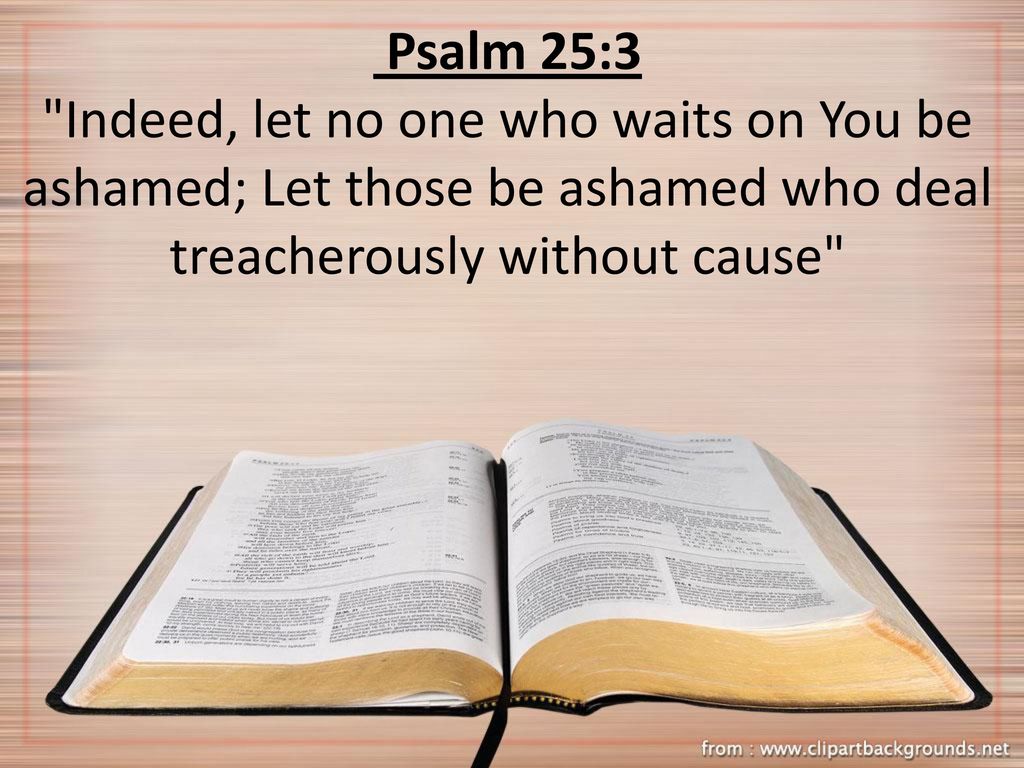
Indeed, none of those who wait for You will be ashamed;
[a]Those who deal treacherously without cause will be ashamed.

Make me know Your ways, O Lord;
Teach me Your paths.
Lead me in Your truth and teach me,
For You are the God of my salvation;
For You I wait all the day.
Remember, O Lord, Your compassion and Your lovingkindnesses,
For they have been [b]from of old.
Do not remember the sins of my youth or my transgressions;
According to Your lovingkindness remember me,
For Your goodness’ sake, O Lord.

Tell him you need his help.

Ask him to come and do a mighty work in your heart.

Listen to whatever he would speak over you, and trust that he will transform you if you continually seek his help.

“If we confess our sins, he is faithful and just to forgive us our sins and to cleanse us from all unrighteousness.” 1 John 1:9

We all have areas in which we need transformation.

We all are in need of God’s help.

Not one of us is perfect.

Proverbs 3:5-8 New American Standard Bible 1995

Trust in the Lord with all your heart
And do not lean on your own understanding.
In all your ways acknowledge Him,
And He will make your paths straight.
Do not be wise in your own eyes;
Fear the Lord and turn away from evil.
It will be healing to your [a]body
And refreshment to your bones.

Rather than spending all our energy trying to keep up appearances with others, yourself, with God, devote yourself completely to living honestly and humbly.

Stop exhausting yourself doing that which is of no value and seek help.

If you will commit to seeking continual transformation, your efforts will produce life and peace rather than more burden.

May your heart be filled with hope as the Holy Spirit works in your life today.

Psalm 32 New American Standard Bible 1995

Blessedness of Forgiveness and of Trust in God.

A Psalm of David. A [a]Maskil.

32 How blessed is he whose transgression is forgiven,
Whose sin is covered!
How blessed is the man to whom the Lord does not impute iniquity,
And in whose spirit there is no deceit!

When I kept silent about my sin, my [b]body wasted away
Through my [c]groaning all day long.
For day and night Your hand was heavy upon me;
My [d]vitality was drained away as with the fever heat of summer. [e]Selah.
I acknowledged my sin to You,
And my iniquity I did not hide;
I said, “I will confess my transgressions to the Lord”;
And You forgave the [f]guilt of my sin. Selah.
Therefore, let everyone who is godly pray to You [g]in a time when You may be found;
Surely in a flood of great waters they will not reach him.
You are my hiding place; You preserve me from trouble;
You surround me with [h]songs of deliverance. Selah.

I will instruct you and teach you in the way which you should go;
I will counsel you with My eye upon you.
Do not be as the horse or as the mule which have no understanding,
Whose trappings include bit and bridle to hold them in check,
Otherwise they will not come near to you.
10 Many are the sorrows of the wicked,
But he who trusts in the Lord, lovingkindness shall surround him.
11 Be glad in the Lord and rejoice, you righteous ones;
And shout for joy, all you who are upright in heart.

Glory be to the Father,
and to the Son, and to the Holy Ghost;
as it was in the beginning,
is now, and ever shall be,
world without end. Amen, amen.

https://translate.google.com

A Prayer for Healing and Wholeness This Easter Season. Psalm 107:19-20

Psalm 107:17-22 New American Standard Bible 1995

17 Fools, because of [a]their rebellious way,
And because of their iniquities, were afflicted.
18 Their soul abhorred all kinds of food,
And they drew near to the gates of death.
19 Then they cried out to the Lord in their trouble;
He saved them out of their distresses.
20 He sent His word and healed them,
And delivered them from their [b]destructions.
21 Let them give thanks to the Lord for His lovingkindness,
And for His [c]wonders to the sons of men!
22 Let them also offer sacrifices of thanksgiving,
And tell of His works with joyful singing.

The Word of God for the Children of God.

Glory be to the Father,
and to the Son, and to the Holy Ghost;
as it was in the beginning,
is now, and ever shall be,
world without end. Amen, amen.
Have you ever asked yourself if can you or you will ever be healed or whole?

Life has a way of breaking you down.

Piece by piece, no peace by absent peace, sin has an insidious way of destroying you from the inside out.

When we take the time, and we dare ourselves to look at our world and the mess it is in, and even our own personal lives, this side of eternity can feel hopeless.

Corrie Ten Boom, a holocaust survivor who lost her father and sister in a concentration camp, said, “If you look at the world, you’ll be distressed. If you look within, you’ll be depressed. If you look at God, you’ll be at rest.”

As I looked up verses on healing and wholeness, I came across this verse in Psalm 107:20. “He sent his word and healed them.”

When I saw “He sent his word,” I was reminded of John 1:14, which says,

“The Word became flesh and made his dwelling among us. We have seen his glory, the glory of the one and only Son, who came from the Father, full of grace and truth.”

Jesus is the Word that John is referring to here. Sometimes, the Lord doesn’t change our situation because He wants to change us. He wants us to depend on Him and to rely on the truth about His character and His promises in His Word.

In Exodus 15:26, the Lord refers to Himself as the Lord who heals you.

No one is beyond healing.

But we also must acknowledge that this is not heaven.

We live in a fallen world, and on this side of eternity, we will never be fully whole, but in Christ, we are enough because He is enough.

He is sufficient.

Yet, He can still heal, restore, and make whole, but it has to be His will, in His way and in His timing. 

One thing we can cling to is truth!

John 8:32, it says, “Then you will know the truth, and the truth will set you free.”

So if you’re struggling because you’re believing sins lies, if you know the truth, the truth will set You free. God’s Word also transforms us (Romans 12:2).

Appreciating the Word of God Sent From Psalm 107

Psalm 107 New American Standard Bible 1995

BOOK 5

The Lord Delivers Men from Manifold Troubles.

107 Oh give thanks to the Lord, for He is good,
For His lovingkindness is everlasting.
Let the redeemed of the Lord say so,
Whom He has redeemed from the hand of the adversary
And gathered from the lands,
From the east and from the west,
From the north and from the [a]south.

Four dramatic stories of reversal and rescue make up the heart of this psalm.

These are hard, perilous circumstances: lost in the desert, locked up in prison, afflicted and near death, and perishing at sea.

In all of the situations in the Psalm, God unhesitatingly, directly and decisively, acts in powerful, life-giving, life transforming ways to rescue and restore.

If we think or believe that our lives are beyond help or rescue, we are wrong.

God guides us into the desert, to springs of water, out of the desert, breaks our chains, opens prison doors, speaks words of healing, and calms the stormy sea.

We may go down, even stay down for awhile, but God will always bring us back.

Whatever it takes, however long it takes, by all means necessary, God can do it.

Many readers and students note that the stories in this psalm remind them of Jesus’ ministry.

1 John 1:1-4 New American Standard Bible 1995

Introduction, The Incarnate Word

1 What was from the beginning, what we have heard, what we have seen with our eyes, what we have looked at and touched with our hands, concerning the Word of Life— and the life was manifested, and we have seen and testify and proclaim to you the eternal life, which was with the Father and was manifested to us— what we have seen and heard we proclaim to you also, so that you too may have fellowship with us; and indeed our fellowship is with the Father, and with His Son Jesus Christ. These things we write, so that our joy may be made complete.

John 3:16-17 New American Standard Bible 1995

16 “For God so loved the world, that He gave His [a]only begotten Son, that whoever believes in Him shall not perish, but have eternal life. 17 For God did not send the Son into the world to judge the world, but that the world might be saved through Him.

Jesus comes to connect, to relate, refresh, to rescue, deliver, free, and restore.

He feeds the hungry and provides living water, releases people from chains of disability and illness, rescues people from the grave, and calms the stormy sea.

The gospel Jesus indelibly proclaims is the good news of God’s steadfast love.

In all that Christ does, we see all of God’s love in ceaseless, continuous action.

We may not have stories like these to tell, but all have the story of Ephesians 2: we were dead in our sins, following the ways of this world, deserving of wrath.

But even though we were unable to utter a simple cry for help, God—out of his steadfast love and mercy—He rescued us all through the work of Jesus Christ.

Jeremiah 17:14 New American Standard Bible 1995

14 Heal me, O Lord, and I will be healed;
Save me and I will be saved,
For You are my praise.

Do we acknowledge this?

Do we believe this?

Do we believe we can be healed and made whole?

Do you believe that you can be healed and made whole?

In the name of God, the Father and God the Son and God the Holy Spirit,

Let us Pray,

Psalm 30 New American Standard Bible 1995

Thanksgiving for Deliverance from Death.

A Psalm; a Song at the Dedication of the House. A Psalm of David.

30 I will extol You, O Lord, for You have lifted me up,
And have not let my enemies rejoice over me.
O Lord my God,
I cried to You for help, and You healed me.
O Lord, You have brought up my soul from [a]Sheol;
You have kept me alive, [b]that I would not go down to the pit.
Sing praise to the Lord, you His godly ones,
And give thanks to His holy [c]name.
For His anger is but for a moment,
His favor is for a lifetime;
Weeping may last for the night,
But a shout of joy comes in the morning.

Now as for me, I said in my prosperity,
“I will never be moved.”
O Lord, by Your favor You have made my mountain to stand strong;
You hid Your face, I was dismayed.
To You, O Lord, I called,
And to the Lord I made supplication:
“What profit is there in my blood, if I go down to the pit?
Will the dust praise You? Will it declare Your faithfulness?

10 “Hear, O Lord, and be gracious to me;
O Lord, be my helper.”
11 You have turned for me my mourning into dancing;
You have loosed my sackcloth and girded me with gladness,
12 That my [d]soul may sing praise to You and not be silent.
O Lord my God, I will give thanks to You forever.

Glory be to the Father,
and to the Son, and to the Holy Ghost;
as it was in the beginning,
is now, and ever shall be,
world without end. Amen, amen.

https://translate.google.com/

Finding God, our Hope: “For my soul has had enough troubles, And my life has drawn near to Sheol.” Psalms 88

Psalm 88 New King James Version

A Prayer for Help in Despondency

A Song. A Psalm of the sons of Korah. To the Chief Musician. Set to “Mahalath Leannoth.” A [a]Contemplation of Heman the Ezrahite.

88 O Lord, God of my salvation,
I have cried out day and night before You.
Let my prayer come before You;
[b]Incline Your ear to my cry.

For my soul is full of troubles,
And my life draws near to the grave.
I am counted with those who go[c] down to the pit;
I am like a man who has no strength,
[d]Adrift among the dead,
Like the slain who lie in the grave,
Whom You remember no more,
And who are cut off from Your hand.

You have laid me in the lowest pit,
In darkness, in the depths.
Your wrath lies heavy upon me,
And You have afflicted me with all Your waves. Selah
You have [e]put away my acquaintances far from me;
You have made me an abomination to them;
I am shut up, and I cannot get out;
My eye wastes away because of affliction.

Lord, I have called daily upon You;
I have stretched out my hands to You.
10 Will You work wonders for the dead?
Shall [f]the dead arise and praise You? Selah
11 Shall Your lovingkindness be declared in the grave?
Or Your faithfulness in the place of destruction?
12 Shall Your wonders be known in the dark?
And Your righteousness in the land of forgetfulness?

13 But to You I have cried out, O Lord,
And in the morning my prayer comes before You.
14 Lord, why do You cast off my soul?
Why do You hide Your face from me?
15 have been afflicted and ready to die from my youth;
I suffer Your terrors;
I am distraught.
16 Your fierce wrath has gone over me;
Your terrors have [g]cut me off.
17 They came around me all day long like water;
They engulfed me altogether.
18 Loved one and friend You have put far from me,
And my acquaintances into darkness.

The Word of God for the Children of God.

Glory be to the Father,
and to the Son, and to the Holy Ghost;
as it was in the beginning,
is now, and ever shall be,
world without end. Amen, amen.

Who Knows This Measure of Agony?

We come now to psalm 88, the lowest point of lament and despair in the entire psalter, it is the only psalm which does not have any ‘yet’ or a ‘nevertheless’ to redeem its pain, but, considered as a psalm in itself, ends in the same agony and loneliness with which it began:

My lovers and friends hast thou put away from me: and hid mine acquaintance out of my sight.” Verse 18 AKJV

That is the end of the psalm, but not the end of the psalter, the book of praises.

In fact, as Paula Gooder points out in the Introduction to David’s Crown, it is, in terms of the number of verses in total, the exact mid-point of the psalter, it is the middle, and not the end of the story.

This is vital for us to remember: both that we can freely tell God our worst fears and feelings, as the psalmist does here, and also that we can know that those fears and doubts are not the end of our story, any more than they are the close of the psalter, for the psalter re-ascends from this darkness, closes with praise.

It is this, which enables us, in this devotional response to psalm 88 to trust God with the uppermost uncensored bleakness of our own personal experienced of spiritual darkness and depression-maybe even give insight into Jesus’ Calvary.

Hello Darkness my old friend, again I come to talk …

We may be more used to the idea of darkness as a friend from that Simon and Garfunkel classic the sound of silence with its opening line “hello darkness my old friend, I’ve come to talk with you again”… than the closing line of a psalm, but that is exactly how psalm 88 finishes ..with the psalmist saying darkness…it is the darkness which is my closest confidant, my dearest most trusted friend.

It is the ‘saddest and darkest psalm in the whole psalter.

IT is one wail of sorrow from beginning to end.

You could say that from go to woe… well it’s just all woe.

Another commentator says… its uniqueness is in its bleakness.

“Psalm 88 is unmatched in its tone of darkness and despair”.  

The only glimmer of light is the first line, “Lord, you are the God who saves me”, kind of like the last comforting rays of the sunset before the long dark night envelops the psalmist as he waits and waits and waits for God to help.

One of the amazing things about the psalms is that within them the whole of human experience is raised up before God.  

AS such it is “proper that it should contain the record of an hour so dark that no relief comes” (EM Blaiklock).

From the introduction to this psalm we see it was put to a tune, it was a song that was designed for corporate worship, so it was meant not only as a personal expression of suffering and waiting for God to act but as a corporate one as well, drawing together people, acknowledge a shared pain and longing and disquiet.

I could imagine the exiles by the rivers of Babylon singing this sort of psalm as they wept, as they remembered Zion (Psalm 137).

It reverberates with the loudest cries of people who have suffered oppression down through the ages.

It echoes the cries of people of faith who have wrestled with unanswered prayer.

In fact the psalm comes from a place where there seems to be no simple answer, it’s part of the wisdom literature in the Hebrew Scriptures that wrestles with the deep question of good versus evil, why bad things happen to good people.

It has many similarities with the book of Job, the Psalmist is sick and facing death and disaster, he feels like Job, God is unjustly turned away from him and he finds no comfort in friends or neighbors, they simply add to his suffering.

While there are good theological answers to the question of suffering and evil in the end, it is the greatest testimony to the strength of faith in God, the people of God resort to poetry, to song to bring out the depth of that suffering. (Psalm 23)

Praying, Finding Hope in the Darkest Psalm

Psalm 88:1-2 New Living Translation

Psalm 88

For the choir director: A psalm of the descendants of Korah. A song to be sung to the tune “The Suffering of Affliction.” A psalm[a] of Heman the Ezrahite.

O Lord, God of my salvation,
    I cry out to you by day.
    I come to you at night.
Now hear my prayer;
    listen to my cry.

One of the most difficult seasons we can endure is when we feel God is silent, especially if we’re already going through challenging situations.

When it seems everything is going wrong and your Help seems to be nowhere in sight, sadly too leaves a person feeling forgotten, in disparity, simply rejected.

Our major frustrations from these harsh times and seasons come not from simply being in this pit but thinking that God’s silence means His absence.

If this is you, you’re not alone.

The author of Psalm 88 has not only been through this type of heartbreaking situation, he wrote about. 

As I said, Psalm 88 appears to be one of the saddest and most dismal chapters in the Bible. Dare yourself, just feel free to check it out and I’m sure you will agree.

The writer expresses feelings of being overwhelmed, cut off, forgotten, grieved, rejected, terrified, and despaired. 

Worst of all, he is crying out to God wondering where God is in all his suffering. 

The Psalm ends saying, darkness is my closest friend” (Psalm 88:18 NIV).

However, the hope this Psalm offers is not in its ending, but in its beginning.

LORD, you are the God who saves me; day and night I cry out to you.” (Psalm 88:1 NIV)

Before his laundry list of everything that’s going wrong, the Psalmist acknowledges that there is hope for salvation in the Lord, even when God appears silent.

We learn that just because God is silent does not mean He is absent, and it certainly does not mean He is not working behind the scenes on our behalf.

Do not be deceived by the darkness in your life, it is never greater than where your help comes from. (John 1:1-5)

Even when you feel you are in an inescapable pit, as the writer of Psalm 88 describes, God is there with you.

One of the things this psalm does is allow us to know we are not alone in wrestling with God, we are not alone in facing seemingly insurmountable difficulties, we are not alone in feeling alone and unloved.

We are not alone in still having redeeming faith and trusting in God even in the face of what may seem like God’s absence.

Four times in this Psalm the writer calls out to God.

His plea echoes through time, reminds me of Jesus suffering horribly on the cross crying out in his darkest moment to the Father.

About three in the afternoon Jesus cried out in a loud voice, “Eli, Eli, lema sabachthani?” (which means “My God, my God, why have you forsaken me?  Matthew 27:46 NIV

I want to ask, do you think God stopped loving Jesus because He was dying a horrible death on the cross? Was Jesus’ suffering a sign God dismissed His Son?

Absolutely not!

If God didn’t stop loving Jesus on the cross then no matter what dark season you are in He has not, and will not stop loving you.

And if He’s promised to never leave you for forsake you (Deuteronomy 31:6) please trust He’s right in the darkness with you friend.

He walks through the valley of the show of death with us (Psalm 23:4). 

We may not always feel or hear God but we can always believe His promise is greater than our darkness.

This darkest season only served to push the writer of Psalm 88 closer to God.

He was not calling out to another person or thing for help.

He called out to the ONLY One he knew could save.

This Psalm reminds us that our dark seasons don’t serve to show us that God is absent but actually, emphatically, just how desperately we need His presence.

The Psalmist felt his life was near death so he cries out to the very One who raises the dead. 

He does not look for salvation from people or things.

When you’re near death you cry out to the One who overcame death.

There is purpose in our pain and hope in our dark season to push us to the light.

I encourage each of you readers to pray to God just as the writer of Psalm 88.

John 14:1-4 New Living Translation

Jesus, the Way to the Father

14 “Don’t let your hearts be troubled. Trust in God, and trust also in me.  There is more than enough room in my Father’s home.[a] If this were not so, would I have told you that I am going to prepare a place for you?[b] When everything is ready, I will come and get you, so that you will always be with me where I am. And you know the way to where I am going.”

In my own experience, I’ve learned that sometimes God empties us so He can fill us back up. Sometimes He’s silent so we can learn to listen. Sometimes He allows the deepest darkness so we can see that He is the true light of our life.

In the name of God, the Father and God the Son and God the Holy Spirit,

Let us Pray,

Psalm 27 New American Standard Bible 1995

A Psalm of Fearless Trust in God.

A Psalm of David.

27 The Lord is my light and my salvation;
Whom shall I fear?
The Lord is the [a]defense of my life;
Whom shall I dread?
When evildoers came upon me to devour my flesh,
My adversaries and my enemies, they stumbled and fell.
Though a host encamp against me,
My heart will not fear;
Though war arise against me,
In spite of this I [b]shall be confident.

One thing I have asked from the Lord, that I shall seek:
That I may dwell in the house of the Lord all the days of my life,
To behold the [c]beauty of the Lord
And to [d]meditate in His temple.
For in the day of trouble He will conceal me in His [e]tabernacle;
In the secret place of His tent He will hide me;
He will lift me up on a rock.
And now my head will be lifted up above my enemies around me,
And I will offer in His tent sacrifices [f]with shouts of joy;
I will sing, yes, I will sing praises to the Lord.

Hear, O Lord, when I cry with my voice,
And be gracious to me and answer me.
When You said, “Seek My face,” my heart said to You,
“Your face, O Lord, I shall seek.”
Do not hide Your face from me,
Do not turn Your servant away in anger;
You have been my help;
Do not abandon me nor forsake me,
O God of my salvation!
10 [g]For my father and my mother have forsaken me,
But the Lord will take me up.

11 Teach me Your way, O Lord,
And lead me in a level path
Because of [h]my foes.
12 Do not deliver me over to the [i]desire of my adversaries,
For false witnesses have risen against me,
And such as breathe out violence.
13 [j]I would have despaired unless I had believed that I would see the goodness of the Lord
In the land of the living.
14 Wait for the Lord;

Be strong and let your heart take courage;
Yes, wait for the Lord.

Glory be to the Father,
and to the Son, and to the Holy Ghost;
as it was in the beginning,
is now, and ever shall be,
world without end. Amen, amen.

https://translate.google.com

“When my heart is overwhelmed; Lead me to the rock that is higher than I.” Psalm 61

Psalm 61 New King James Version

Assurance of God’s Eternal Protection

To the Chief Musician. On [a]a stringed instrument. A Psalm of David.

61 Hear my cry, O God;
Attend to my prayer.
From the end of the earth I will cry to You,
When my heart is overwhelmed;
Lead me to the rock that is higher than I.

For You have been a shelter for me,
A strong tower from the enemy.
I will abide in Your [b]tabernacle forever;
I will trust in the shelter of Your wings. Selah

For You, O God, have heard my vows;
You have given me the heritage of those who fear Your name.
You will prolong the king’s life,
His years as many generations.
He shall abide before God forever.
Oh, prepare mercy and truth, which may [c]preserve him!

So I will sing praise to Your name forever,
That I may daily perform my vows.

The Word of God for the Children of God.

Glory be to the Father,
and to the Son, and to the Holy Ghost;
as it was in the beginning,
is now, and ever shall be,
world without end. Amen, amen.

One thing I love about reading through the book of Psalms is that each Psalm usually begins with a heavy heart, and ends in praise and rejoicing.

Psalm 61 is no exception.

There are several reasons I love Psalm 61, and verse 2 is a bit part of that.

Here are some of the reasons that Psalm 61:2 is such a huge encouragement:

  • No matter where we are on this earth, God hears us. There is no where we can go that God cannot reach (Psalm 139:7). This fact alone should provide comfort and encouragement.
  • We all feel overwhelmed at some point or another. David says, “when my heart is overwhelmed”. Not if, when. It is completely normal for our hearts to feel overwhelmed on occasion. The key is that we need to take it to the Lord.
  • God is our rock. What an encouraging and reassuring fact, to know that we have a rock which cannot be moved (Psalm 62:6).

A Prayer for When the Heart and the Hurt Is too Heavy

Psalm 61 New Living Translation

Psalm 61

For the choir director: A psalm of David, to be accompanied by stringed instruments.

O God, listen to my cry!
    Hear my prayer!
From the ends of the earth,
    I cry to you for help
    when my heart is overwhelmed.
Lead me to the towering rock of safety,
    for you are my safe refuge,
    a fortress where my enemies cannot reach me.
Let me live forever in your sanctuary,
    safe beneath the shelter of your wings! Interlude

For you have heard my vows, O God.
    You have given me an inheritance reserved for those who fear your name.
Add many years to the life of the king!
    May his years span the generations!
May he reign under God’s protection forever.
    May your unfailing love and faithfulness watch over him.
Then I will sing praises to your name forever
    as I fulfill my vows each day.

On those days when I Pray: “Lead me to the Towering Rock of Safety …”

I cannot know what is going on in your life the exact same way God does, but I do know that God knows and reveals that no one goes through life unscathed.

Some of my darkest and heaviest moments were moments of loss — the loss of one’s health, a dream job, the loss of a relationship, the loss of family members.

The Lord does not promise an easy life.

In fact, in his final discourse in the Upper Room before being betrayed, before being arrested, before the kangaroo court, before the massive beatings, before being spat upon, the public scorn and humiliation, before the crown of thorns, being slammed down on his head, the march to Calvary, John 16:33, Jesus said,

“These things I have spoken to you, that in Me you may have peace. In the world you will have tribulation; but be of good cheer, I have overcome the world.”

I am not so sure our hearts can ever get as heavy as Jesus’ did in those hours.

But when we feel as though they do, where do we go when our hearts are heavy?

Did you see the first part of John 16:33?

It says, “that in Me you may have peace.” 

Deuteronomy 33:27 says, “The eternal God is your refuge, and underneath are the everlasting arms…”

Psalm 61 New American Standard Bible 1995

Confidence in God’s Protection.

For the choir director; on a stringed instrument. A Psalm of David.

61 Hear my cry, O God;
Give heed to my prayer.
From the end of the earth I call to You when my heart is faint;
Lead me to the rock that is higher than I.
For You have been a refuge for me,
A tower of strength [a]against the enemy.
Let me [b]dwell in Your tent forever;
Let me take refuge in the shelter of Your wings. [c]Selah.

For You have heard my vows, O God;
You have given me the inheritance of those who fear Your name.
You will [d]prolong the king’s [e]life;
His years will be as many generations.
He will [f]abide before God forever;
Appoint lovingkindness and truth that they may preserve him.
So I will sing praise to Your name forever,
That I may pay my vows day by day.

Although we may wrestle mightily with why God has allowed certain things to take place, He offers Himself as a refuge when there is no other refuge available.

He is not timid, nor scared nor unprepared for your questions, tears, or anger.

His hands are strong enough to hold us when we are certainly falling apart.

I want to encourage you to do what David did and wrote about in Psalm 62:5-8,

Psalm 62:5-8 New American Standard Bible 1995

My soul, wait in silence for God only,
For my hope is from Him.
He only is my rock and my salvation,
My stronghold; I shall not be shaken.
On God my salvation and my glory rest;
The rock of my strength, my refuge is in God.
Trust in Him at all times, O people;
Pour out your heart before Him;
God is a refuge for us. Selah.

Pour out your heart and your hurt to God.

Meditate and Pray through each verse of Psalm 62:5-8 separately …

And when You are struggling to trust Him, like we all do, ask Him to help you trust Him. 

2 Timothy 2:13 “If we are faithless, He remains faithful; He cannot deny Himself.”

If you find yourself struggling to pray today, I can surely empathize.

Somedays Life hurts.

It sometimes and some days leaves us utterly incapacitated and speechless.

Again, I can empathize, I want to encourage you that God never stops working. 

John 5:14-17 New American Standard Bible 1995

14 Afterward Jesus *found him in the temple and said to him, “Behold, you have become well; do not sin anymore, so that nothing worse happens to you.” 15 The man went away, and told the Jews that it was Jesus who had made him well. 16 For this reason the Jews were persecuting Jesus, because He was doing these things on the Sabbath. 17 But He answered them, “My Father is working until now, and I Myself am working.”

John 5:17 says, “In his defense Jesus said to them, ‘My Father is always at his work to this very day, and I too am working.’”

And from our “wrecks and ruins” God does refresh, repair and restore and heal.

Isaiah 58:11-12 New American Standard Bible 1995

11 “And the Lord will continually guide you,
And satisfy your [a]desire in scorched places,
And give strength to your bones;
And you will be like a watered garden,
And like a spring of water whose waters do not [b]fail.
12 “Those from among you will rebuild the ancient ruins;
You will raise up the age-old foundations;
And you will be called the repairer of the breach,
The restorer of the [c]streets in which to dwell.

I want to pray into your wreckage and ruin for you, even if you cannot join me.

As much as these temporary moments and the world may lead you to believe I absolutely, definitely, unequivocally, want you to know you are never alone!

In the name of God, the Father and God the Son and God the Holy Spirit,

Let us Pray,

Psalm 40 New American Standard Bible 1995

God Sustains His Servant.

For the choir director. A Psalm of David.

40 I waited [a]patiently for the Lord;
And He inclined to me and heard my cry.
He brought me up out of the pit of destruction, out of the [b]miry clay,
And He set my feet upon a rock making my footsteps firm.
He put a new song in my mouth, a song of praise to our God;
Many will see and fear
And will trust in the Lord.

How blessed is the man who has made the Lord his trust,
And has not [c]turned to the proud, nor to those who lapse into falsehood.
Many, O Lord my God, are the wonders which You have done,
And Your thoughts toward us;
There is none to compare with You.
If I would declare and speak of them,
They would be too numerous to count.

6 [d]Sacrifice and meal offering You have not desired;
My ears You have [e]opened;
Burnt offering and sin offering You have not required.
Then I said, “Behold, I come;
In the scroll of the book it is [f]written of me.
I delight to do Your will, O my God;
Your Law is within my heart.”

I have proclaimed glad tidings of righteousness in the great congregation;
Behold, I will not restrain my lips,
O Lord, You know.
10 I have not hidden Your righteousness within my heart;
I have spoken of Your faithfulness and Your salvation;
I have not concealed Your lovingkindness and Your truth from the great congregation.

11 You, O Lord, will not withhold Your compassion from me;
[g]Your lovingkindness and Your truth will continually preserve me.
12 For evils beyond number have surrounded me;
My iniquities have overtaken me, so that I am not able to see;
They are more numerous than the hairs of my head,
And my heart has [h]failed me.

13 Be pleased, O Lord, to deliver me;
Make haste, O Lord, to help me.
14 Let those be ashamed and humiliated together
Who seek my [i]life to destroy it;
Let those be turned back and dishonored
Who delight [j]in my hurt.
15 Let those be [k]appalled because of their shame
Who say to me, “Aha, aha!”
16 Let all who seek You rejoice and be glad in You;
Let those who love Your salvation say continually,
“The Lord be magnified!”
17 Since I am afflicted and needy,
[l]Let the Lord be mindful of me.
You are my help and my deliverer;
Do not delay, O my God.

Glory be to the Father,
and to the Son, and to the Holy Ghost;
as it was in the beginning,
is now, and ever shall be,
world without end. Amen, amen.

https://translate.google.com

“O Lord, how many are my foes? Many are now rising against me!” Psalm 3

Psalm 3 New American Standard Bible 1995

Morning Prayer of Trust in God.

A Psalm of David, when [a]he fled from Absalom his son.

O Lord, how my adversaries have increased!
Many are rising up against me.
Many are saying [b]of my soul,
“There is no [c]deliverance for him in God.” [d]Selah.

But You, O Lord, are a shield about me,
My glory, and the One who lifts my head.
I was crying to the Lord with my voice,
And He answered me from His holy [e]mountain. Selah.
[f]I lay down and slept;
I awoke, for the Lord sustains me.
I will not be afraid of ten thousands of people
Who have set themselves against me round about.

Arise, O Lord; save me, O my God!
For You [g]have smitten all my enemies on the [h]cheek;
You [i]have shattered the teeth of the wicked.
[j]Salvation belongs to the Lord;
Your blessing [k]be upon Your people! Selah.

The Word of God for the Children of God.

Glory be to the Father,
and to the Son, and to the Holy Ghost;
as it was in the beginning,
is now, and ever shall be,
world without end. Amen, amen.

When Opposition Comes (and It Will)

Of all the things that are uncertain in this life, there is something we can be sure of—opposition.

Opposition will always come, in one form or another, and we won’t always be prepared for it.

In the work place, it may come as a challenge to our ideas or strategies.

In our families, it may be against our parenting styles, it may be a retaliation against our principles, it may be the children demanding their own bedtimes.

And in faith, as Jesus lived, opposition may come as a mockery or even a threat.

King David truly knew the severity of opposition and experienced it regularly throughout his reign. More than once, he fled into the mountains, fearing for his life. Frequently, he cried out to God over the extreme opposition he faced.

The title of Psalm 3 is “A Psalm of David When he fled from his son Absalom.”

“Many are my foes! Many are rising against me!”

David’s experiences with his adversaries were most likely far greater than anything we have experienced or will experience.

But no matter what, we can be sure of this: God is our Great Defender.

There is no greater defense than that of our Father in heaven.

And He urges us to allow Him to deal with our opposer instead of taking matters into our own hands.

Faith—Overcoming Evil

Romans 12:17-21 New American Standard Bible 1995

17 Never pay back evil for evil to anyone. [a]Respect what is right in the sight of all men. 18 If possible, so far as it depends on you, be at peace with all men. 19 Never take your own revenge, beloved, but [b]leave room for the wrath of God, for it is written, “Vengeance is Mine, I will repay,” says the Lord. 20 “But if your enemy is hungry, feed him, and if he is thirsty, give him a drink; for in so doing you will heap burning coals on his head.” 21 Do not be overcome by evil, but overcome evil with good.

If you’re anything like me, it’s easy to jump into “defense” mode.

It can be difficult to let things roll off my back, especially when I feel wronged.

Yet, so often in my rehearsed plans of retaliation, I sense the gentle voice of the Spirit saying, “Peace…be still. Let Me go before you in this.”

It began as a peaceful march to protest the killing of George Floyd.

But as the darkness deepened, it became a dark night of riotous behavior.

Images of angry people smashing store fronts, of police cars ablaze, and of businesses going up in flames brought me to my knees in earnest prayer and disturbed my anxious sleep. What I saw was way beyond bad, frightening, evil.

In the morning I checked as much of the news as I could access by internet.

The rioters were gone, but they had left a disturbing mess: smashed windows, burned cars, rocks and bricks and vile graffiti, sad ruins in the heart of the city.

A reporter surveying the damage approached a young mother with two children.

He asked her, “Why are you here this morning?” She said, “We saw the news; we decided that this city needs someone to show the love of God.”

Others were there too—sweeping glass shards, trying to restore order to chaos.

The mom and her children, who were perhaps about 5 and 7 years old, were there with buckets, their brushes and soap, trying to erase stubborn graffiti.

To me, they sacrificed their time, they brought some light into the darkness, some of God’s love into a broken place where the evidence of evil was very real.

In that mother and her little ones, I saw the presence of the resurrected Jesus.

She and her children were being the church, Christ’s body—overcoming evil by doing good.

As I watched, my anger was transformed, replaced by warm and grateful tears welled up from within me in a prayer of thanks to God.

When we surrender our will to the Father, no matter how justified we feel, there will be an unexplainable peace that comes.

Surrendering all of our “fists-in-the-air” attitudes and plans of pay-back will always result in a better outcome—an outcome that is surrounded by certainty that reminds us, “God’s got this.”

The more we live out our faith in Christ, the more people will oppose what they don’t fully understand.

It’s a way of retaliating against something that challenges them in some way.

If you and I are actively living out our faith, walking in the fruit of the Spirit and showing God’s love, that will be a challenge for some.

And in that challenge, we may find ourselves greatly opposed.

Harsh words, divisive questions, and rude comments might be the ways in which people come against us.

But just as David, in Psalm 3, took those oppositions to the Lord, we, too, can release them to our Mighty Defender.

Psalm 3:3-6 New American Standard Bible 1995

But You, O Lord, are a shield about me,
My glory, and the One who lifts my head.
I was crying to the Lord with my voice,
And He answered me from His holy [a]mountain. Selah.
5 [b]I lay down and slept;
I awoke, for the Lord sustains me.
I will not be afraid of ten thousands of people
Who have set themselves against me round about.

For in the end, as David knew from vast measures and degrees of experience his whole life long, God, and only God, can right those wrongs of unjust opposition.

In the name of God, the Father and God the Son and God the Holy Spirit,

Let us Pray,

Psalm 121 New American Standard Bible 1995

The Lord the Keeper of Israel.

A Song of Ascents.

121 I will lift up my eyes to the mountains;
From where shall my help come?
My help comes from the Lord,
Who made heaven and earth.
He will not allow your foot to slip;
He who keeps you will not slumber.
Behold, He who keeps Israel
Will neither slumber nor sleep.

The Lord is your keeper;
The Lord is your shade on your right hand.
The sun will not smite you by day,
Nor the moon by night.
The Lord will [a]protect you from all evil;
He will keep your soul.
The Lord will [b]guard your going out and your coming in
From this time forth and forever.

Glory be to the Father,
and to the Son, and to the Holy Ghost;
as it was in the beginning,
is now, and ever shall be,
world without end. Amen, amen.

https://translate.google.com

How long, O Lord? Will you forget me forever? The Lie of Isolation Psalm 13

Psalm 13 New American Standard Bible 1995

Prayer for Help in Trouble.

For the choir director. A Psalm of David.

13 How long, O Lord? Will You forget me forever?
How long will You hide Your face from me?
How long shall I take counsel in my soul,
Having sorrow in my heart all the day?
How long will my enemy be exalted over me?

Consider and answer me, O Lord my God;
Enlighten my eyes, or I will sleep the sleep of death,
And my enemy will say, “I have overcome him,”
And my adversaries will rejoice when I am shaken.

But I have trusted in Your lovingkindness;
My heart shall rejoice in Your salvation.
I will sing to the Lord,
Because He has dealt bountifully with me.

The Word of God for the Children of God.

Glory be to the Father,
and to the Son, and to the Holy Ghost;
as it was in the beginning,
is now, and ever shall be,
world without end. Amen, amen.

People say time flies when you’re having fun.

But when things shift into a minor key, life seems to move in slow motion.

We find ourselves thinking, “Where is God now? I don’t know if I’m ever going to get out of these circumstances. And I don’t know how I can endure them.”

Our reading today, Psalm 13, contains a recurring question: “How long? How long?” David’s circumstances aren’t described, but he clearly feels forgotten and forsaken—a feeling we all can relate to.

It’s circumstance akin to what we feel when we lose a loved one or when we feel we are stuck in life drudgery, that we must walk through a valley of trial alone.

To be isolated from human relationships is, without question, crushing.

But what David writes and sings of here in Psalm 13 is even more significant.

He’s expressing a bottomless feeling of isolation from God Himself.

This sentiment is shared by many of God’s people throughout Scripture.

In Isaiah, God’s exiled people cry out, “The LORD has forsaken me; my Lord has forgotten me” (Isaiah 49:14).

Christian pilgrims—genuine followers and servants of Jesus—do sometimes feel like saying, “I believe the Lord has actually forgotten us.

If He has not forgotten us, if He was still with us, how would we be in this predicament?

If He truly was watching over us, surely we would not have to endure these ceaseless, unyielding trials.

Yet in David’s emerging depression, we discover that his perception (as is often the case with our own) does not reflect reality.

And David has the spiritual maturity and humility to acknowledge that what he feels is true does not align with what he knows is actually true.

So he reminds himself of God’s steadfast love, His salvation, and His generosity—and David resolves to rejoice in those things instead even as he struggles and suffers (Psalm 13:5-6).

This is the hope-filled tension of the Christian life.

As we get stuck, as we stare long and hard into the drudgery of life and ministry and mission and church in the 21st century, and wonder of God, do we see hope?

We keep asking, “How long, Lord? Where are you, God?” even as we remind our own hearts that God has not stopped loving us, delivering us, or working in us?

Where is Your Hope?

Proverbs 11:4-8 New American Standard Bible 1995

Riches do not profit in the day of wrath,
But righteousness delivers from death.
The righteousness of the blameless will smooth his way,
But the wicked will fall by his own wickedness.
The righteousness of the upright will deliver them,
But the treacherous will be caught by their own greed.
When a wicked man dies, his expectation will perish,
And the hope of strong men perishes.
The righteous is delivered from trouble,
But the wicked [a]takes his place.

In a worship song from the early 2000s, singer/songwriter Brian Doerksen sings, “Jesus, hope of the nations/ Jesus, comfort for all who mourn/ You are the source of heaven’s hope on earth.”

As believers in Christ, we recognize and worship Jesus as the true hope of the world, and yet it’s astounding how often we pin our hopes on ­human beings.

In all of our history books, it is clear that people are inclined to find more hope in their leaders, politicians, and celebrities rather than in the one true God.

Why do we do this?

These timely timeless words from Proverbs warns that placing hope in humans is infinitely worse than futile because any human power will come to nothing.

As the apostle Paul tells us, “There is no authority except that which God has established” (Romans 13:1).

By saying this, Paul is assuring believers that in all situations, even in the midst of national turmoil’s and global crises, God is the # One who holds all ­authority.

Any human who has “power” has it only because God allows it to be so.

In other words, our hopes and desires must lie with the One who is on the throne of the universe.

Our prayers must be exclusively oriented toward Jesus Christ, for he is truly the only hope—the only resurrected one, the one who can change minds, transform hearts, disperse principalities and powers, can bring restoration and revival.

Do not believe the lie of abandonment that your emotions can feed you.

Please just make an honest and concerted effort to rest in God’s comforting response to His forgetful people:

“Can a woman forget her nursing child, that she should have no compassion on the son of her womb? Even these may forget, yet I will not forget you. Behold, I have engraved you on the palms of my hands; your walls are continually before me” (Isaiah 49:15-16).

God’s care for His children is like the sun: it’s constant.

Even when the clouds obscure it, it’s still there.

It’s always going to be “still there.”

Will you trust in God’s constancy today?

When you are next feeling forsaken, know that God looks at His hands, engraved with each and every one of His children’s names, and He says, 

There you are. Do you see now that I have not forgotten you?” (John 19:30)

30 Therefore when Jesus had received the sour wine, He said, “It is finished!” And He bowed His head and gave up His spirit.

In the name of God, the Father and God the Son and God the Holy Spirit,

Let us Pray,

Psalm 24 New American Standard Bible 1995

The King of Glory Entering Zion.

A Psalm of David.

24 The earth is the Lord’s, and [a]all it contains,
The world, and those who dwell in it.
For He has founded it upon the seas
And established it upon the rivers.
Who may ascend into the hill of the Lord?
And who may stand in His holy place?
He who has clean hands and a pure heart,
Who has not lifted up his soul [b]to falsehood
And has not sworn deceitfully.
He shall receive a blessing from the Lord
And [c]righteousness from the God of his salvation.
6 [d]This is the generation of those who seek Him,
Who seek Your face—even Jacob. [e]Selah.

Lift up your heads, O gates,
And be lifted up, O [f]ancient doors,
That the King of glory may come in!
Who is the King of glory?
The Lord strong and mighty,
The Lord mighty in battle.
Lift up your heads, O gates,
And lift them up, O [g]ancient doors,
That the King of glory may come in!
10 Who is this King of glory?
The Lord of hosts,
He is the King of glory. Selah.

Glory be to the Father,
and to the Son, and to the Holy Ghost;
as it was in the beginning,
is now, and ever shall be,
world without end. Amen, amen.

https://translate.google.com

It’s One and Done! Now and Forever, Jesus has Removed All of Our Shame. Psalm 25

Psalm 25 New American Standard Bible 1995

Prayer for Protection, Guidance and Pardon.

A Psalm of David.

25 To You, O Lord, I lift up my soul.
O my God, in You I trust,
Do not let me be ashamed;
Do not let my enemies exult over me.
Indeed, none of those who wait for You will be ashamed;
[a]Those who deal treacherously without cause will be ashamed.

Make me know Your ways, O Lord;
Teach me Your paths.
Lead me in Your truth and teach me,
For You are the God of my salvation;
For You I wait all the day.
Remember, O Lord, Your compassion and Your lovingkindnesses,
For they have been [b]from of old.
Do not remember the sins of my youth or my transgressions;
According to Your lovingkindness remember me,
For Your goodness’ sake, O Lord.

Good and upright is the Lord;
Therefore He instructs sinners in the way.
He leads the [c]humble in justice,
And He teaches the [d]humble His way.
10 All the paths of the Lord are lovingkindness and truth
To those who keep His covenant and His testimonies.
11 For Your name’s sake, O Lord,
Pardon my iniquity, for it is great.

12 Who is the man who fears the Lord?
He will instruct him in the way he should choose.
13 His soul will abide in [e]prosperity,
And his [f]descendants will inherit the [g]land.
14 The [h]secret of the Lord is for those who fear Him,
[i]And He will make them know His covenant.
15 My eyes are continually toward the Lord,
For He will [j]pluck my feet out of the net.

16 Turn to me and be gracious to me,
For I am lonely and afflicted.
17 [k]The troubles of my heart are enlarged;
Bring me out of my distresses.
18 Look upon my affliction and my [l]trouble,
And forgive all my sins.
19 Look upon my enemies, for they are many,
And they hate me with violent hatred.
20 Guard my soul and deliver me;
Do not let me be ashamed, for I take refuge in You.
21 Let integrity and uprightness preserve me,
For I wait for You.
22 Redeem Israel, O God,
Out of all his troubles.

The Word of God for the Children of God.

Glory be to the Father,
and to the Son, and to the Holy Ghost;
as it was in the beginning,
is now, and ever shall be,
world without end. Amen, amen.

From Matthew Henry’s Commentary on Psalm 25:3 …

“In worshipping God, we must lift up our souls to him. It is certain that none who, by a believing attendance, wait on God, and, by a believing hope, wait for him, shall be ashamed of it. The most advanced believer both needs and desires to be taught of God. If we sincerely desire to know our duty, with resolution to do it, we may be sure that God will direct us in it. The psalmist is earnest for the pardon of his sins. When God pardons sin, he is said to remember it no more, which denotes full remission. It is God’s goodness, and not ours, his mercy, and not our merit, that must be our plea for the pardon of sin, and all the good we need. This plea we must rely upon, feeling our own unworthiness, and satisfied of the riches of God’s mercy and grace. How boundless is that mercy which covers for ever the sins and follies of a youth spent without God and without hope! Blessed be the Lord, the blood of the great Sacrifice can wash away every stain.” https://www.christianity.com/bible/esv/psalm/25-3

Shame is different from guilt.

Shame: a painful feeling of humiliation or distress caused by the consciousness  of wrong or foolish behavior.

Guilt: the fact of having committed a specified or implied offense or crime. The fact of having committed a breach of conduct especially violating law and which is involving a specific penalty according to the seriousness of that breach of law.

If you are guilty, you did something wrong, and you realize you are responsible for it.

You can feel shame from being guilty, but feelings of shame are not always tied to guilt.

Shame has more to do with a lack of self-worth, and that can come from not measuring up to a standard, from feeling insecure, from being bullied or abused in various ways, from public disgrace, ridicule, and more.

When you are ashamed, you may or may not have done something wrong, but when others see you, you feel exposed, dirty, vulnerable, unworthy of respect.

When Adam and Eve fell into sin, they realized they had done wrong.

They saw that they were naked and vulnerable.

They were exposed and felt shame.

They tried to cover up and hide behind trees. But they couldn’t hide from God—and that was a good thing, because God loved them and valued them, despite what they had done wrong. God loves us all too, despite any bad we have done.

Matthew 26:26-29 New American Standard Bible 1995

The Lord’s Supper Instituted

26 While they were eating, Jesus took some bread, and [a]after a blessing, He broke it and gave it to the disciples, and said, “Take, eat; this is My body.” 27  And when He had taken a cup and given thanks, He gave it to them, saying, “Drink from it, all of you; 28 for this is My blood of the covenant, which is poured out for many for forgiveness of sins. 29 But I say to you, I will not drink of this fruit of the vine from now on until that day when I drink it new with you in My Father’s kingdom.”

John 19:28-30 New American Standard Bible 1995

28 After this, Jesus, knowing that all things had already been accomplished, to fulfill the Scripture, *said, “I am thirsty.” 29 A jar full of sour wine was standing there; so they put a sponge full of the sour wine upon a branch of hyssop and brought it up to His mouth. 30 Therefore when Jesus had received the sour wine, He said, “It is finished!” And He bowed His head and gave up His spirit.

Jesus came to permanently take away the guilt and shame of our sin.

And he did that by taking on the most shameful death possible: crucifixion on a Roman cross.

He hung there naked, in public disgrace, exposed to the abuse of the jeering crowd.

And yet he was innocent.

Luke 23:46-48 New American Standard Bible 1995

46 And Jesus, crying out with a loud voice, said, “Father, into Your hands I commit My spirit.” Having said this, He breathed His last. 47 Now when the centurion saw what had happened, he began praising God, saying, “Certainly this man was [a]innocent.” 48 And all the crowds who came together for this spectacle, when they observed what had happened, began to return, [b]beating their breasts.

“He endured the cross, scorning its shame” (Hebrews 12:2), so that we can be, now and forever more, permanently freed from all shame, live fully with him.

Now, because of Jesus, we are forever clean.

In the name of God, the Father and God, the Son and God the Holy Spirit,

Let us Pray,

Psalm 119:25-32 New American Standard Bible 1995

Daleth.

25 My soul cleaves to the dust;
Revive me according to Your word.
26 I have told of my ways, and You have answered me;
Teach me Your statutes.
27 Make me understand the way of Your precepts,
So I will meditate on Your wonders.
28 My soul [a]weeps because of grief;
Strengthen me according to Your word.
29 Remove the false way from me,
And graciously grant me Your law.
30 I have chosen the faithful way;
I have [b]placed Your ordinances before me.
31 I cling to Your testimonies;
O Lord, do not put me to shame!
32 I shall run the way of Your commandments,
For You will enlarge my heart.

My Lord and My Savior Jesus, My Alpha and My Omega, My first and last, thank you for taking on the shame of all the world to free us from shame forever. In your name,

Glory be to the Father,
and to the Son, and to the Holy Ghost;
as it was in the beginning,
is now, and ever shall be,
world without end. Amen, amen.

https://translate.google.com