Romans 15:4 "For whatever was written in earlier times was written for our instruction, so that through perseverance and the encouragement of the Scriptures we might have hope."
(1) Bless Adonai, my soul! Everything in me, bless his holy name! 2 Bless Adonai, my soul, and forget none of his benefits!
3 He forgives all your offenses, he heals all your diseases, 4 he redeems your life from the pit, he surrounds you with grace and compassion, 5 he contents you with good as long as you live, so that your youth is renewed like an eagle’s.
The Word of God for the Children of God.
Glory be to the Father, and to the Son, and to the Holy Ghost; as it was in the beginning, is now, and ever shall be, world without end. Amen, amen.
This is a special Psalm for me, so much so that I just feel like sliding deep into a comfortable chair and breathe, contentedly breathe. But there is so much more.
The Psalm is not only a familiar Psalm, but it opens our eyes and ears to the sheer totality of what God has done for His people. In Psalm 103:1–5, the author highlights the individual aspects of God’s love for his people. In 103:6–12 he binds, focuses, upon God’s concern with the community of believers together.
Psalm 103:1 The Psalmist acknowledges that being a person of faith in this God of Israel cannot praise half-heartedly.
“Bless the Lord, O my soul; And all that is within me, bless His holy name!”
The “soul” and “all that is within me” stresses that there is no medium ground with God. Either we are all in with God, or we are all outside of His realm. The Psalmist claims pointedly that with his whole heart and whole soul, the believer is committed in blessing/praising/worshipping Adonai God for all He has done.
Deuteronomy 6:4-19 Complete Jewish Bible
(A:vi, S: v) 4 “Sh’ma, Yisra’el! Adonai Eloheinu, Adonai echad [Hear, Isra’el! Adonai our God, Adonai is one]; 5 and you are to love Adonai your God with all your heart, all your being and all your resources. 6 These words, which I am ordering you today, are to be on your heart; 7 and you are to teach them carefully to your children. You are to talk about them when you sit at home, when you are traveling on the road, when you lie down and when you get up. 8 Tie them on your hand as a sign, put them at the front of a headband around your forehead, 9 and write them on the door-frames of your house and on your gates.
(S: vi) 10 “When Adonai your God has brought you into the land he swore to your ancestors Avraham, Yitz’chak and Ya‘akov that he would give you — cities great and prosperous, which you didn’t build; 11 houses full of all sorts of good things, which you didn’t fill; water cisterns dug out, which you didn’t dig; vineyards and olive trees, which you didn’t plant — and you have eaten your fill; 12 then be careful not to forget Adonai, who brought you out of the land of Egypt, where you lived as slaves. 13 You are to fear Adonai your God, serve him and swear by his name. 14 You are not to follow other gods, chosen from the gods of the peoples around you; 15 because Adonai, your God, who is here with you, is a jealous God. If you do, the anger of Adonai your God will flare up against you and he will destroy you from the face of the earth. 16 Do not put Adonai your God to the test, as you tested him at Massah [testing]. 17 Observe diligently the mitzvot of Adonai your God, and his instructions and laws which he has given you. 18 You are to do what is right and good in the sight of Adonai, so that things will go well with you, and you will enter and possess the good land Adonai swore to your ancestors, 19 expelling all your enemies ahead of you, as Adonai said.
In Psalm 103 v. 3, he notes that when we are in that relationship with God, the first aspect means that we remember: do not forget even one of God’s benefits.
In the swirl of life, anxiety, pressures, threats to life, we can easily slip into forgetfulness, especially with regard to what God has done for us.
Hence the Psalmists strong exhortation “And forget not all His benefits.” As an individual believer we are each called to remember, not forgetting one thing of what God has done, 100% refreshing our memory with all that God has done.
The first item of required remembrance is “Who forgives all your iniquities.”
We live in a sinful world, we are too often tempted, and more than we’d like to admit, we sin. But God… reaches out to forgive us. We need to recall that such is our heritage as people of God. How often we need reminding? Thank You, Lord.
More remembrances: “Who heals all your diseases, Who redeems your life from destruction, Who crowns you with lovingkindness and tender mercies.”
I look back at the so many times I have been injured and those scars to prove it.
Even greater is God’s protection in the midst of injuries, diseases that affect all of us. Several times over the past six decades I am reminded of these “benefits” continually. The phrase “forget not all His benefits” is a call for us to take stock of our hard circumstances bless God, praise His name, repeatedly, continually.
In Psalm 103:6–12 the author now directs our attention to our life together as the people of God, as one people.
Some of the statements are looking back to the ancient days of Moses when God delivered the people.
“The Lord executes righteousness and justice for all who are oppressed…”
Think of the great Exodus and recall the words exchanged between Moses and God at the burning bush, recall the indescribable holiness of that moment and when God sent the plagues to provoke the Egyptians to allow Israel to escape.
God not only delivered, God decisively delivered. As they were receiving the Law they rebelled and built for themselves their golden calf, God executed His own judgement. Yet, when, as he punished the one’s of that rebellious generation, He also sustained them with water and food in the wilderness for forty years.
“The Lord is merciful and gracious, slow to anger, and abounding in mercy. He will not always strive with us, nor will He keep His anger forever” (vv. 8-9).
The generation of Israelites learned in the hardest ways about God’s anger against sin. But they also began to learn that God does not retain His anger forever. Rather they learned of His mercy, grace, forgiveness—repeatedly.
He further illustrates this with
“For as the heavens are high above the earth, so great is His mercy toward those who fear Him; As far as the east is from the west, so far has He removed our transgressions from us.” (vv. 11–12).
See also Jeremiah 31:34No more shall every man teach his neighbor, and every man his brother, saying, “Know the LORD,’ for they all shall know Me, from the least of them to the greatest of them, says the LORD. For I will forgive their iniquity, and their sin I will remember no more.”
Note that some of these actions of God are seen only in part in present our lives.
The key; healing, transformation, forgiveness, freedom are foremost in God’s work.
That sustains us until Jesus Christ returns and He brings the complete blessing of God’s salvation and deliverance.
Today we see glimpses of that, but the day will come when the fullness of what God has already accomplished for us will be proclaimed throughout creation.
All of these promises are foreshadowed in Psalm 103.
What a blessing that we can read, refresh, and remember all of this.
May the whole of Psalm 103 become an essential part of our memory work, and our surest, truest, proclamation of all what God has done, is doing, and will do.
In the name of God, the Father and God the Son and God the Holy Spirit,
Let us Pray,
Psalm 16 Complete Jewish Bible
16 (0) Mikhtam. By David:
(1) Protect me, God, for you are my refuge. 2 I said to Adonai, “You are my Lord; I have nothing good outside of you.” 3 The holy people in the land are the ones who are worthy of honor; all my pleasure is in them.
4 Those who run after another god multiply their sorrows; To such gods I will not offer drink offerings of blood or take their names on my lips.
5 Adonai, my assigned portion, my cup: you safeguard my share. 6 Pleasant places were measured out for me; I am content with my heritage.
7 I bless Adonai, my counselor; at night my inmost being instructs me. 8 I always set Adonai before me; with him at my right hand, I can never be moved; 9 so my heart is glad, my glory rejoices, and my body too rests in safety; 10 for you will not abandon me to Sh’ol, you will not let your faithful one see the Abyss. 11 You make me know the path of life; in your presence is unbounded joy, in your right hand eternal delight.
Glory be to the Father, and to the Son, and to the Holy Ghost; as it was in the beginning, is now, and ever shall be, world without end. Amen, amen.
2 (1) The heavens declare the glory of God, the dome of the sky speaks the work of his hands. 3 (2) Every day it utters speech, every night it reveals knowledge. 4 (3) Without speech, without a word, without their voices being heard, 5 (4) their line goes out through all the earth and their words to the end of the world.
In them he places a tent for the sun, 6 (5) which comes out like a bridegroom from the bridal chamber, with delight like an athlete to run his race. 7 (6) It rises at one side of the sky, circles around to the other side, and nothing escapes its heat.
8 (7) The Torah of Adonai is perfect, restoring the inner person. The instruction of Adonai is sure, making wise the thoughtless. 9 (8) The precepts of Adonai are right, rejoicing the heart. The mitzvah of Adonai is pure, enlightening the eyes. 10 (9) The fear of Adonai is clean, enduring forever. The rulings of Adonai are true, they are righteous altogether, 11 (10) more desirable than gold, than much fine gold, also sweeter than honey or drippings from the honeycomb. 12 (11) Through them your servant is warned; in obeying them there is great reward.
13 (12) Who can discern unintentional sins? Cleanse me from hidden faults. 14 (13) Also keep your servant from presumptuous sins, so that they won’t control me. Then I will be blameless and free of great offense.
15 (14) May the words of my mouth and the thoughts of my heart be acceptable in your presence, Adonai, my Rock and Redeemer.
Glory be to the Father, and to the Son, and to the Holy Ghost; as it was in the beginning, is now, and ever shall be, world without end. Amen, amen.
There’s nothing quite like a triumphant hymn to truly make you feel closer to the Lord. When you sing out those lyrics, it’s almost like His power, strength and majesty and love just wash over us. And one of the most powerful hymns of all time is ‘How Great Thou Art.’ I just love hearing this amazing hymn and now that I know the story behind the song, it makes it that much more beautiful.
The hymn “How Great Thou Art” is a timeless worship song, cherished by generations of believers for its inspiring description of God’s greatness.
Its verses resonate deeply in our souls, leading us into genuine moments of awe as we contemplate the wonder of who God is and how God works in our world.
“How Great Thou Art” is a classic hymn that remains popular today because it invites us to marvel in fresh ways at our Creator’s beautifully designed creation, His majesty, His Power and his inspiring, wonderful presence in our lives.
Each verse of this song serves as one gateway after another to understanding God more deeply and celebrating our great God in worship. When we sing the beloved hymn “How Great Thou Art,” we can grow closer to our great God.
The hymn originated as a poem written by Swedish pastor Carl Boberg in 1885.
Boberg was inspired to write the poem after experiencing a wondrous sight in nature: a sudden thunderstorm followed by a clear, beautiful view over a bay.
The poem was set to music in Sweden, and the song later went through various translations. In the 20th century, British missionary Stuart Hine translated the hymn into English and expanded it with additional verses. Hine’s version of “How Great Thou Art” became popular around the world after George Beverly Shea sang it during Reverend Billy Graham’s evangelistic crusades in the 1950s.
Just as a subtle or most likely, not so subtle reminder, here are some truths for us to contemplate an awesome God, “How Great Thou Art,” reveals about God.
1. God’s indescribable glory in creation.
The opening lines of “How Great Thou Art” exclaim:
“O Lord my God,/when I in awesome wonder,/consider all the worlds thy hands have made./I see the stars/I hear the rolling thunder,/Thy power throughout the universe displayed.”
This echoes Psalm 19:1, which declares: “The heavens declare the glory of God; the skies proclaim the work of his hands.”
It also evokes the imagery revealed in Psalm 29:3-4: “The voice of the Lord is over the waters; the God of glory thunders, the Lord thunders over the mighty waters. The voice of the Lord is powerful; the voice of the Lord is majestic.”
As we enjoy God’s creation – from the sparkling stars to the powerful thunder, to the forest glades we each wander through – we can’t help but marvel at the wondrous beauty of its precise design and power.
Nature itself is evidence of God’s glory and creativity. Romans 1:20 points out:
“For since the creation of the world God’s invisible qualities – his eternal power and divine nature – have been clearly seen, being understood from what has been made, so that people are without excuse.”
Psalm 104:24 celebrates God’s creative power: “How many are your works, LORD! In wisdom you made them all; the earth is full of your creatures.”
Job 9:10 says about God: “He performs wonders that cannot be fathomed, miracles that cannot be counted.”
Throughout the entire song, “How Great Thou Art” emphasizes the importance ofnoticing the wonder of God’s work around us. Every single part of God’s creation shows us something valuable about God that can inspire us with awe. Singing “How Great Thou Art” can motivate us to spend time in nature as often as possible, experiencing environments that help us discover God’s greatness.
2. God’s holiness and righteousness.
Another profound truth “How Great Thou Art” reveals about God is his perfect holiness and righteousness.
The awe expressed in the hymn’s refrain, “Then sings my soul, My Savior God, to Thee,/How great Thou art, How great Thou art!” reminds us of the vision of God’s holiness the Bible describes in Isaiah 6:3, where the seraphim angels call to one another:
“Holy, holy, holy is the Lord Almighty; the whole earth is full of his glory.”
God’s holiness means that he is absolutely uncorrupted by sin and completely morally pure.
Psalm 145:17“The Lord is righteous in all his ways and faithful in all he does.”
The hymn’s refrain captures the reverent awe we feel when we think about God’s great holiness and righteousness.
In 2 Corinthians 5:21, we see that God’s holiness and righteousness are accessible to us through relationships with Jesus: “God made him who had no sin to be sin for us, so that in him we might become the righteousness of God.”
This profound truth should inspire us to praise God like the hymn’s refrain does. It aught also to motivate us all to live lives that reflect God’s character by growing to be more holy ourselves.
Ephesians 4:24 encourages us to: “… put on the new self, created to be like God in true righteousness and holiness.” The refrain of “How Great Thou Art” calls us to strive for a greater, deeper, reverence for God’s majesty. It highlights a grateful response to God’s perfect nature, inspires us to make that response our own.
3. God’s constant presence with us.
“How Great Thou Art” reflects on God’s constant presence with us as it describes experiencing the extraordinary presence of God during ordinary moments like walking in nature: “When through the woods and forest glades I wander,/and hear the birds sing sweetly in the trees./ When I look down, from lofty mountain grandeur/And see the brook, and feel the gentle breeze.”
In Psalm 23:4, King David also uses the imagery of walking to describe the power of God’s constant presence:
“Even though I walk through the darkest valley, I will fear no evil, for you are with me; your rod and your staff, they comfort me.”
Throughout the Bible, God promises us to be present with us.
In Exodus 33:14, God assures Moses, “My presence will go with you, and I will give you rest.”
In Matthew 28:20, Jesus promises his disciples: “…And surely I am with you always, to the very end of the age.”
God’s presence is a tangible reality we each can experience regularly through reading, study, prayer, meditation, other spiritual disciplines and practices.
In fact, if we have saving relationships with Jesus, God’s Holy Spirit comes to live right inside our souls, as 1 Corinthians 3:16 points out: “Don’t you know that you yourselves are God’s temple and that God’s Spirit dwells in your midst?”
Psalm 139 beautifully describes God’s presence with us everywhere, pointing out in verses 7-10:
“Where can I go from your Spirit? Where can I flee from your presence? If I go up to the heavens, you are there; if I make my bed in the depths, you are there. If I rise on the wings of the dawn, if I settle on the far side of the sea, even there your hand will guide me, your right hand will hold me fast.”
In its refrain, “How Great Thou Art” encourages us all to notice God’s loving presence with us wherever we go – even unto the furthest reaches of eternity.
4. God’s plan to save us.
One of the most moving verses in “How Great Thou Art” declares: “And when I think that God, his Son not sparing, sent him to die, I scarce can take it in./That on the cross, my burden gladly bearing,/He bled and died to take away my sin.”
This verse reminds us of what is perhaps the most famous Bible verse of all, John 3:16: “For God so loved the world that he gave his one and only Son, that whoever believes in him shall not perish but have eternal life.”
John 3:17 Complete Jewish Bible
17 For God did not send the Son into the world to judge the world, but rather so that through him, the world might be saved.
The timeless hymn’s reflection onGod’s profound love for us through Jesus’s coming and ultimate sacrifice invites each and every single one of us to feel a reverent awe at God’s wondrous plan to save our souls from sin and death.
Jesus’ death on the cross made it possible for humanity to connect with God again, as 2 Corinthians 5:17-18:
“Therefore, if anyone is in Christ, the new creation has come: The old has gone, the new is here! All this is from God, who reconciled us to himself through Christ and gave us the ministry of reconciliation.”
In Ephesians 1:7-8, The Bible highlights the enormous generosity of God’s grace through his plan to save us:
“In him we have redemption through his blood, the forgiveness of sins, in accordance with the riches of God’s grace that he lavished on us…”.
Isaiah 53:5 prophesies about Jesus’ healing work for us on the cross:
“But he was pierced for our transgressions, he was crushed for our iniquities; the punishment that brought us peace was on him, and by his wounds we are healed.”
Jesus offers forgiveness from sins to all who place their faith in him, fulfilling God’s plan to save us.
Singing “How Great Thou Art” can help us focus on the greatest gift of all that God has given us through Jesus, the world’s Savior. Just like the song says, we “scarce can take it in,” but it’s still important to remember it on a regular basis.
5. God’s Unchanging promise of eternal life.
“How Great Thou Art” concludes with a triumphant declaration of hope:
“When Christ shall come with shout of acclamation/And take me home, what joy shall fill my heart./ Then I shall bow, in humble adoration,/And then proclaim: ‘My God, how great Thou art!’”
This evokes the promise of Revelation 21:4, which envisions our future joy in heaven, saying about God:
“He will wipe every tear from their eyes. There will be no more death or mourning or crying or pain, for the old order of things has passed away.”
Jesus describes our eternal life with him when he says in John 14:2-3:
“My Father’s house has many rooms; if that were not so, would I have told you that I am going there to prepare a place for you? And if I go and prepare a place for you, I will come back and take you to be with me that you also may be where I am.”
Titus 1:2 assures us that we have “…the hope of eternal life, which God, who does not lie, promised before the beginning of time.”
When we sing the song “How Great Thou Art,” we joyfully celebrate the reality of this unending hope. “How Great Thou Art” reminds us that our great God has prepared great joy for us to experience in heaven with him for eternity.
In conclusion, “How Great Thou Art” is an incredibly stirring powerful worship hymn that resoundingly declares and proclaims and celebrates God’s greatness.
It invites us to
explore the wonders of God’s glory displayed in creation,
explore God’s perfect holiness and righteousness,
explore God’s constant presence with us,
explore God’s loving plan to save us,
discover God’s promise of eternal life for all who choose relationships with him.
As we sing “How Great Thou Art,” we cannot help but to perceive, to receive so much more of God’s awe-inspiring greatness and worship him with gratitude.
In the name of God, the Father and God the Son and God the Holy Spirit,
Let us Pray,
Psalm 29 Complete Jewish Bible
29 (0) A psalm of David:
(1) Give Adonai his due, you who are godly; give Adonai his due of glory and strength; 2 give Adonai the glory due his name; worship Adonai in holy splendor.
3 The voice of Adonai is over the waters; the God of glory thunders, Adonai over rushing waters, 4 the voice of Adonai in power, the voice of Adonai in splendor.
5 The voice of Adonai cracks the cedars; Adonai splinters the cedars of the L’vanon 6 and makes the L’vanon skip like a calf, Siryon like a young wild ox.
7 The voice of Adonai flashes fiery flames; 8 the voice of Adonai rocks the desert, Adonai convulses the Kadesh Desert. 9 The voice of Adonai causes deer to give birth and strips the forests bare — while in his temple, all cry, “Glory!” 10 Adonai sits enthroned above the flood! Adonai sits enthroned as king forever! 11 May Adonai give strength to his people! May Adonai bless his people with shalom!
Glory be to the Father, and to the Son, and to the Holy Ghost; as it was in the beginning, is now, and ever shall be, world without end. Amen, amen.
(1) Protect me, God, for you are my refuge. 2 I said to Adonai, “You are my Lord; I have nothing good outside of you.” 3 The holy people in the land are the ones who are worthy of honor; all my pleasure is in them.
4 Those who run after another god multiply their sorrows; To such gods I will not offer drink offerings of blood or take their names on my lips.
5 Adonai, my assigned portion, my cup: you safeguard my share. 6 Pleasant places were measured out for me; I am content with my heritage.
7 I bless Adonai, my counselor; at night my inmost being instructs me. 8 I always set Adonai before me; with him at my right hand, I can never be moved; 9 so my heart is glad, my glory rejoices, and my body too rests in safety; 10 for you will not abandon me to Sh’ol, you will not let your faithful one see the Abyss. 11 You make me know the path of life; in your presence is unbounded joy, in your right hand eternal delight.
The Word of God for the Children of God.
Glory be to the Father, and to the Son, and to the Holy Ghost; as it was in the beginning, is now, and ever shall be, world without end. Amen, amen.
I Will Have No Good Apart From God …
Psalm 16:1-3 New American Standard Bible 1995
The Lord the Psalmist’s Portion in Life and Deliverer in Death.
16 Preserve me, O God, for I take refuge in You. 2 [b]I said to the Lord, “You are [c]my Lord; I have no good besides You.” 3 As for the [d]saints who are in the earth, [e]They are the majestic ones in whom is all my delight.
What do you treasure in this life?
We all have something that brings us great delight or somewhere that just seems restful and right.
Sometimes, though, we catch a glimpse of life without those earthly pleasures.
Maybe it’s illness or even bereavement that clarifies things for us.
What kind of car you drive away from the hospital when you find out that your loved one has been diagnosed with malignant cancer doesn’t matter, does it?
The same goes for your clothes, your jewelry, your gadgets, your house—all of a sudden, they’re not nearly as important as they once seemed.
We can and should enjoy what God has graciously given us.
He “richly provides us with everything to enjoy” (1 Timothy 6:17). It’s not that the good things of the earth are bad. But what we have in God is so delightful, so rich, that coming to know Him is like discovering a treasure hidden in a field.
That treasure so enraptures us that in our fullness of joy, we will do whatever it takes to get that field and the abundant delights it contains (Matthew 13:44).
Matthew 13:44 New American Standard Bible 1995
Hidden Treasure
44 “The kingdom of heaven is like a treasure hidden in the field, which a man found and hid again; and from joy over it he goes and sells all that he has and buys that field.
Without the treasure we have in God, as Psalm 16 tells us, we ultimately have no other good.
When we sit down to a bowl of toast, cereal or oatmeal or whatever breakfast may be, in our minds we ought to be saying,Apart from You, Lord, I have no good thing. You’re the one that made the grain to grow. You’re the one who provides my food.
When we get up and walk out of the door, and have health and strength to do so, who makes it possible for us to walk? When we lie on our beds at night and we can enter into the rest of the evening, who alone makes it possible?
You have no ability even to see these letters, to hold up this book, or to comprehend what you are reading apart from the enabling grace of God.
Only He can preserve and sustain us. Only God gives to us “life and breath and everything” (Acts 17:25).
In the end, we will have no good apart from Him—but He has way more than enough goodness to go around. He is the source of all our treasures—and He is Himself our greater treasure.
When we see Him as He truly is, our natural response will be to make Him the center of our life, around which revolve thoughts, decisions, feelings, actions.
That is, you will say to Him, “You are my Lord,” for in His presence “there is fullness of joy,” and at His right hand are “pleasures forevermore” (Psalm 16:11).
Where else would you possibly prefer to take refuge, and what else would you treasure more than Him?
The Source of Happiness: our One pathway to God’s life
Psalm 16:7-11 Complete Jewish Bible
7 I bless Adonai, my counselor; at night my inmost being instructs me. 8 I always set Adonai before me; with him at my right hand, I can never be moved; 9 so my heart is glad, my glory rejoices, and my body too rests in safety; 10 for you will not abandon me to Sh’ol, you will not let your faithful one see the Abyss. 11 You make me know the path of life; in your presence is unbounded joy, in your right hand eternal delight.
God created us to enjoy the greatest of happiness: communion with him. We experience true happiness by loving God and enjoying intimacy with him.
In the presence of God there is fullness of joy.
The best gifts in life come from God.
But some people prefer to look elsewhere.
Many seek happiness in money; others, in fame and political power.
People also seek happiness in pleasures, or they follow their dreams of success, hoping to find fulfillment in their lives. But, in the end, they will only discover that those things offer only drugged fleeting. mirage and not true happiness.
Happiness is a legitimate desire.
Many people look for it eagerly every day of their lives, but they end up empty-handed.
The source of happiness is not in things or in our own selfish pursuits, but in God. The best things of this world cannot make us happy, but God can, because he created us, calls us by name, and makes us his own. We become truly happy only when we know God and love him, share Him, with all our heart and soul.
If we do not have a safe guide, it is impossibly easy to take the wrong pathways in life. And whom can we utterly trust but God to faithfully show us the way?
It’s been said that Psalm 16 is a psalm of lament. Yet by the time we finish reading it we can also come to a conclusion that it is a celebratory psalm. Just notice the ending of this psalm, “You make known to me the path of life; you will fill me with joy in your presence, with eternal pleasures at your right hand.”
“The path of life” – everyone’s talking about how to find it.
Books in Walmart are filled with such title.
“Joy in your presence” – in a world so dysfunctional and empty joy is the one missing ingredient. “Eternal pleasures at Your right hand” – while earthly goods only offer temporary pleasure God-derived pleasure offers a better alternative, a more lasting fulfillment in the pursuit of His will.
Who would not want any of these?
Psalm 16 also echoes Psalm 14’s assertion that there is no one who does good.
It states, “You are my Lord; apart from you I have no good thing.”
This is why we teach that goodness in and of ourselves alone is never enough to earn our ticket to heaven.
We need someone outside of us to redeem us from the sin nature passed down on us.
This is where a Savior needs to come in to save us – a Savior who once proclaimed through unequivocal terms, “I am the way, the truth, and the life, and no one can come to the Father except through Me” (John 14:6).
And this Savior’s name is Jesus.
Psalm 16 also contains an admonition, “Those who run after other gods will suffer more and more.”
King Solomon, touted to be the wisest person who ever lived, knows this principle all too well.
He pursued various gods in his lifetime – wealth, fame, education, sex and pleasure. He held nothing back and got everything he desired. When he assessed all that he had done and achieved in life, he astonishingly concluded that apart from God everything is but an absolute futility, like chasing after the wind.
The things that truly matter most in life are few and far between.
Faith in a a living and sovereign God is foremost of them. As the psalmist David looks up to this God and affirms His mighty presence he begins to worship, “I will praise the Lord, who counsels me; even at night my heart instructs me.”
While this psalm is considered a Messianic psalm which is ascribed to the suffering Jesus prophetically, we can say with David, “You will not leave my soul among the dead or allow your holy one to rot in the grave.”
In God, death loses its sting. Make God your refuge and He will keep you safe and secure – not from trouble but in spite of or in the midst of it all (Psalm 16:1).
In the name of God, the Father, and God the Son and God the Holy Spirit,
Let us Pray,
Psalm 40 Complete Jewish Bible
40 (0) For the leader. A psalm of David:
2 (1) I waited patiently for Adonai, till he turned toward me and heard my cry. 3 (2) He brought me up from the roaring pit, up from the muddy ooze, and set my feet on a rock, making my footing firm. 4 (3) He put a new song in my mouth, a song of praise to our God. Many will look on in awe and put their trust in Adonai.
5 (4) How blessed the man who trusts in Adonai and does not look to the arrogant or to those who rely on things that are false.
6 (5) How much you have done, Adonai my God! Your wonders and your thoughts toward us — none can compare with you! I would proclaim them, I would speak about them; but there’s too much to tell!
7 (6) Sacrifices and grain offerings you don’t want; burnt offerings and sin offerings you don’t demand. Instead, you have given me open ears; 8 (7) so then I said, “Here I am! I’m coming! In the scroll of a book it is written about me. 9 (8) Doing your will, my God, is my joy; your Torah is in my inmost being. 10 (9) I have proclaimed what is right in the great assembly; I did not restrain my lips, Adonai, as you know. 11 (10) I did not hide your righteousness in my heart but declared your faithfulness and salvation; I did not conceal your grace and truth from the great assembly.”
12 (11) Adonai, don’t withhold your mercy from me. Let your grace and truth preserve me always. 13 (12) For numberless evils surround me; my iniquities engulf me — I can’t even see; there are more of them than hairs on my head, so that my courage fails me. 14 (13) Be pleased, Adonai, to rescue me! Adonai, hurry and help me! 15 (14) May those who seek to sweep me away be disgraced and humiliated together. May those who take pleasure in doing me harm be turned back and put to confusion. 16 (15) May those who jeer at me, “Aha! Aha!” be aghast because of their shame.
17 (16) But may all those who seek you be glad and take joy in you. May those who love your salvation say always, “Adonai is great and glorious!”
18 (17) But I am poor and needy; may Adonai think of me. You are my helper and rescuer; my God, don’t delay!
Glory be to the Father, and to the Son, and to the Holy Ghost; as it was in the beginning, is now, and ever shall be, world without end. Amen, amen.
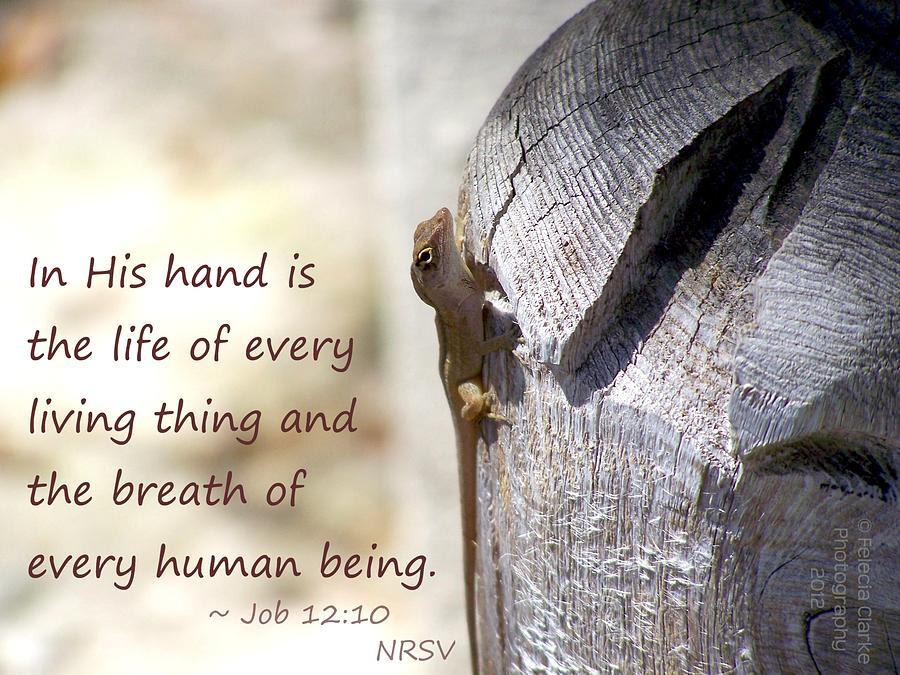
7 “But ask the animals — they will teach you — and the birds in the air — they will tell you; 8 or speak to the earth — it will teach you — and the fish in the sea will inform you: 9 every one of them knows that the hand of Adonai has done this! 10 In his hand is the life of every living thing and the spirit of every human being. 11 Shouldn’t the ear test words, just as the palate tastes food? 12 Is wisdom [only] with aged men? discernment [only] with long life?
The Word of God for the Children of God.
Glory be to the Father, and to the Son, and to the Holy Ghost; as it was in the beginning, is now, and ever shall be, world without end. Amen, amen.
All year round, we have many opportunities to immerse ourselves in the beauty and grandeur of nature. From hiking in majestic forests and swimming in clear lakes to simply basking in the warmth of the sun, our seasons invites us to step outside and experience the world around us.
These precious moments in nature help us discover more about God because every last part of creation displays evidence of our Creator’s wondrous work.
The Bible often points us to nature as a way to learn more about God.
In this ancient passage from Job, the scriptures encourages us to look to the animals, the birds, the fields of earth, and the fish to renew our perspective by remembering that God has made every creature and natural setting we enjoy.
When we encounter God’s wonder in nature and feel awe, we’re experiencing more than just admiration for the grandeur, beauty around us.
We’re also sensing, witnessing to something infinitely greater, which points us infinitely beyond ourselves and inspires, encourages, motivates us to seek God.
Aspects of nature that inspire us with awe – such as the vastness of the sky, the the power of the thunder and lightning storm streaking across the vastness of the heavens, intricacy of a butterfly alighting on a flower, and the rhythm of ocean waves – can all lead us to contemplate the Creator who designed them.
Nature’s grandeur speaks untold numbers of volumes about God’s power and creativity. The great expanses of an ocean reminds us of God’s infinite love.
Towering mountains show us God’s powerful strength. The sun directs our attention to the light of hope God shines in the darkness of our broken world.
These incredibly diverse elements of nature are not just beautiful; they are deep and true revelations of God’s character, inviting us to know God more deeply.
Whenever we experience God’s wonder, we feel awe – a feeling that expands our perspective, allows us to see beyond our immediate circumstances to God.
This shift in perspective reminds us of our Creator’s caring presence with us.
It also reminds us of our finite place in the grand scheme of creation, showing us that we don’t have to become preoccupied with our worries and stresses, and we can implicitly trust our caring God to help us overcome our challenges and give us a sense of true peace. The wonderful God who holds all of creation in his hands, gave us the gift of order from chaos also holds our lives with loving care.
Regularly taking breaks from our daily routines to spend time in nature can be a powerful, disciplined, practice to relieve stress. In the middle of our busy lives, it can be too easy to become consumed by our responsibilities and challenges.
But when we step outside and allow ourselves to be captivated by the beauty of God’s creation, we are reminded that we are not ever going to be left alone.
The same God who cares for the birds of the sky, the fish of the sea cares for us.
Matthew 6:25-34 Complete Jewish Bible
25 “Therefore, I tell you, don’t worry about your life — what you will eat or drink; or about your body — what you will wear. Isn’t life more than food and the body more than clothing? 26 Look at the birds flying about! They neither plant nor harvest, nor do they gather food into barns; yet your heavenly Father feeds them. Aren’t you worth more than they are? 27 Can any of you by worrying add a single hour to his life?
28 “And why be anxious about clothing? Think about the fields of wild irises, and how they grow. They neither work nor spin thread, 29 yet I tell you that not even Shlomo in all his glory was clothed as beautifully as one of these. 30 If this is how God clothes grass in the field — which is here today and gone tomorrow, thrown in an oven — won’t he much more clothe you? What little trust you have!
31 “So don’t be anxious, asking, ‘What will we eat?,’ ‘What will we drink?’ or ‘How will we be clothed?’ 32 For it is the pagans who set their hearts on all these things. Your heavenly Father knows you need them all. 33 But seek first his Kingdom and his righteousness, and all these things will be given to you as well. 34 Don’t worry about tomorrow — tomorrow will worry about itself! Today has enough tsuris already!
As we let God’s peace wash over us during nature breaks, we can notice God’s presence more clearly, free from distractions. Nature provides a sanctuary where we can meet with God, lay down our burdens, and receive his peace.
So, enjoy as much time in nature as possible this year. Let all the animals, the birds, the winds, the waters, the whole breadth of the earth, and the fish teach you more about God and his wonderful care for everyone and everything. Enjoy feeling the ceaseless feelings of awe, allow it to renew your perspective on life!
In the name of God, the Father and God the Son and God the Holy Spirit,
Let us Pray,
Creator God, Author and Giver of all life, as I look at the wonder of your work in creation, I’m filled with awe. Thank you for the beauty of nature that surrounds me and for the way it reveals your power and love. Help me take time to immerse myself in your creation, to listen to the lessons it teaches, and to be reminded of your ever constant presence and care. When I feel overwhelmed by the stresses and challenges of life, draw me back to the peace of your creation. Help me to see so far beyond my circumstances and trust you as you hold all things together. May the beauty of nature be a constant reminder of your wonder and your loving care for me. Show, teach me through the animals, the birds, and the sea. Open my eyes to see all your wonderful work and my heart to receive your peace. I trust you, my Creator. Thank you, amen.
Psalm 29 Complete Jewish Bible
29 (0) A psalm of David:
(1) Give Adonai his due, you who are godly; give Adonai his due of glory and strength; 2 give Adonai the glory due his name; worship Adonai in holy splendor.
3 The voice of Adonai is over the waters; the God of glory thunders, Adonai over rushing waters, 4 the voice of Adonai in power, the voice of Adonai in splendor.
5 The voice of Adonai cracks the cedars; Adonai splinters the cedars of the L’vanon 6 and makes the L’vanon skip like a calf, Siryon like a young wild ox.
7 The voice of Adonai flashes fiery flames; 8 the voice of Adonai rocks the desert, Adonai convulses the Kadesh Desert. 9 The voice of Adonai causes deer to give birth and strips the forests bare — while in his temple, all cry, “Glory!” 10 Adonai sits enthroned above the flood! Adonai sits enthroned as king forever! 11 May Adonai give strength to his people! May Adonai bless his people with shalom!
Glory be to the Father, and to the Son, and to the Holy Ghost; as it was in the beginning, is now, and ever shall be, world without end. Amen, amen.
2 (1) The heavens declare the glory of God, the dome of the sky speaks the work of his hands. 3 (2) Every day it utters speech, every night it reveals knowledge. 4 (3) Without speech, without a word, without their voices being heard, 5 (4) their line goes out through all the earth and their words to the end of the world.
In them he places a tent for the sun, 6 (5) which comes out like a bridegroom from the bridal chamber, with delight like an athlete to run his race. 7 (6) It rises at one side of the sky, circles around to the other side, and nothing escapes its heat.
8 (7) The Torah of Adonai is perfect, restoring the inner person. The instruction of Adonai is sure, making wise the thoughtless. 9 (8) The precepts of Adonai are right, rejoicing the heart. The mitzvah of Adonai is pure, enlightening the eyes. 10 (9) The fear of Adonai is clean, enduring forever. The rulings of Adonai are true, they are righteous altogether, 11 (10) more desirable than gold, than much fine gold, also sweeter than honey or drippings from the honeycomb. 12 (11) Through them your servant is warned; in obeying them there is great reward.
13 (12) Who can discern unintentional sins? Cleanse me from hidden faults. 14 (13) Also keep your servant from presumptuous sins, so that they won’t control me. Then I will be blameless and free of great offense.
15 (14) May the words of my mouth and the thoughts of my heart be acceptable in your presence, Adonai, my Rock and Redeemer.
The Word of God for the Children of God.
Glory be to the Father, and to the Son, and to the Holy Ghost; as it was in the beginning, is now, and ever shall be, world without end. Amen, amen.
Then Sings My Soul, My Savior God to Thee …
The hymn “How Great Thou Art” is a timeless worship song, cherished by generations of believers for its inspiring description of God’s greatness.
Its verses resonate deeply in our souls, leading us into moments of awe as we contemplate the wonder of who God is and how God works in our world.
“How Great Thou Art” is a classic hymn that remains popular today because it invites us to marvel in fresh ways at our Creator’s beautifully designed creation and his wonderful presence in our lives.
Each verse of this song serves as a gateway to understanding God more deeply and celebrating our great God in worship. When we are all singing this most beloved hymn “How Great Thou Art,” we truly grow closer to our great God.
The hymn originated as a poem written by Swedish pastor Carl Boberg in 1885. Boberg was inspired to write the poem after experiencing a wondrous sight in nature: a sudden thunderstorm followed by a clear, beautiful view over a bay.
The poem was set to music in Sweden, and the song later went through various translations. In the 20th century, British missionary Stuart Hine translated the hymn into English and expanded it with additional verses. Hine’s version of “How Great Thou Art” became popular around the world after George Beverly Shea sang it during the Billy Graham’s evangelistic crusades in the 1950s.
Here are five truths “How Great Thou Art” reveals about God.
1. God’s great glory in creation.
The opening lines of “How Great Thou Art” exclaim:
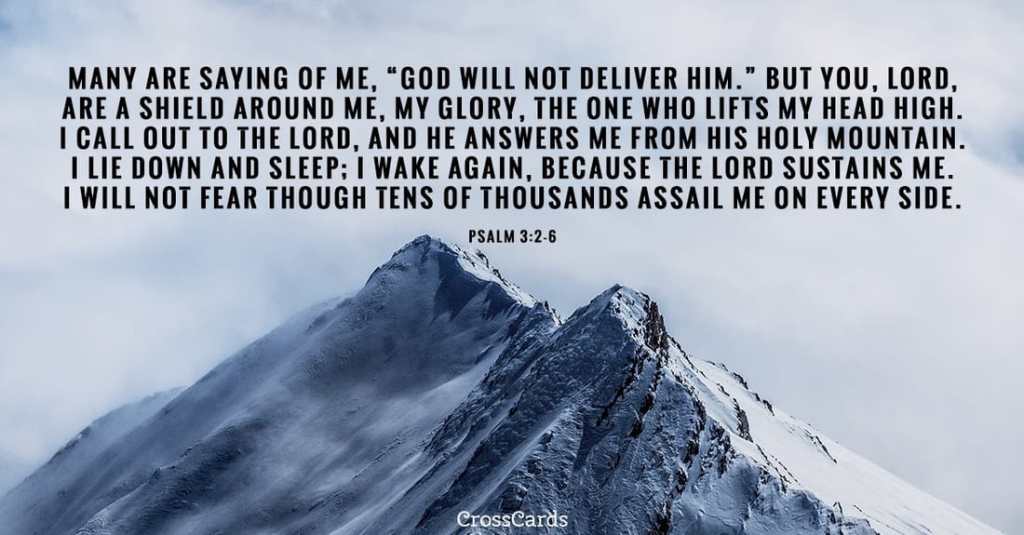
“O Lord my God,/when I in awesome wonder,/consider all the worlds thy hands have made./I see the stars/I hear the rolling thunder,/Thy power throughout the universe displayed.”
This echoes Psalm 19:1, which declares: “The heavens declare the glory of God; the skies proclaim the work of his hands.”
It also evokes the imagery in Psalm 29:3-4: “The voice of the Lord is over the waters; the God of glory thunders, the Lord thunders over the mighty waters. The voice of the Lord is powerful; the voice of the Lord is majestic.”
As we enjoy God’s creation – from the sparkling stars to the powerful thunder – we can’t help but marvel at the wondrous beauty of its precise design, power.
Nature itself is evidence of God’s glory and creativity.
Romans 1:20 points out: “For since the creation of the world God’s invisible qualities – his eternal power and divine nature – have been clearly seen, being understood from what has been made, so that people are without excuse.”
Psalm 104:24 celebrates God’s creative power: “How many are your works, LORD! In wisdom you made them all; the earth is full of your creatures.”
Job 9:10 says about God: “He performs wonders that cannot be fathomed, miracles that cannot be counted.”
Throughout the entire song, “How Great Thou Art” emphasizes the importance of noticing the wonder of God’s work around us.
Every single part of God’s creation shows us something valuable about God that can inspire us with awe.
Singing “How Great Thou Art” can motivate us to spend time in nature as often as possible, experiencing environments that help us discover God’s greatness.
2. God’s holiness and righteousness.
Another profound truth “How Great Thou Art” reveals about God is his perfect holiness and righteousness.
The awe expressed in the hymn’s refrain, “Then sings my soul, My Savior God, to Thee,/How great Thou art, How great Thou art!” reminds us of the vision of God’s holiness the Bible describes in Isaiah 6:3, where the seraphim angels call to one another: “Holy, holy, holy is the Lord Almighty; the whole earth is full of his glory.”
God’s holiness means that he is absolutely uncorrupted by sin and completely morally pure.
As Psalm 145:17 says: “The Lord is righteous in all his ways and faithful in all he does.” The hymn’s refrain captures the full reverent awe we feel when we think, search Scriptures and meditate about God’s great holiness and righteousness.
In 2 Corinthians 5:21, we read that God’s holiness and righteousness are accessible to us through relationships with Jesus: “God made him who had no sin to be sin for us, so that in him we might become the righteousness of God.”
This profound truth should inspire us to praise God like the hymn’s refrain does. It should also motivate us to live lives that reflect God’s character by growing to be more holy ourselves. (1 Peter 1:15-16)
15 But like the Holy One who called you, be holy yourselves in all your conduct [be set apart from the world by your godly character and moral courage]; 16 because it is written, “You shall be holy (set apart), for I am holy.”
Ephesians 4:24 encourages us to: “… put on the new self, created to be like God in true righteousness and holiness.” The refrain of “How Great Thou Art” calls us to a deeper reverence for God’s majesty. It highlights a grateful response to God’s perfect nature and inspires us, motivates us, to make that response our own.
3. God’s constant presence with us.
“How Great Thou Art” reflects on God’s constant presence with us as it describes experiencing the extraordinary presence of God during ordinary moments like walking in nature: “When through the woods and forest glades I wander,/and hear the birds sing sweetly in the trees./ When I look down, from lofty mountain grandeur/And see the brook, and feel the gentle breeze.”
In Psalm 23:4, King David also uses the imagery of walking to describe the power of God’s constant presence: “Even though I walk through the darkest valley, I will fear no evil, for you are with me; your rod and your staff, they comfort me.”
Throughout the Bible, God promises us to be present with us.
In Exodus 33:14, God assures Moses, “My presence will go with you, and I will give you rest.”
In Matthew 28:20, Jesus promises his disciples: “…And surely I am with you always, to the very end of the age.”
God’s presence is a tangible reality we can experience regularly through prayer, meditation, and other spiritual practices.
In fact, if we have saving relationships with Jesus, God’s Holy Spirit comes to live right inside our souls, as 1 Corinthians 3:16 points out: “Don’t you know that you yourselves are God’s temple and that God’s Spirit dwells in your midst?”
Psalm 139 beautifully describes God’s presence with us everywhere, pointing out in verses 7-10: “Where can I go from your Spirit? Where can I flee from your presence? If I go up to the heavens, you are there; if I make my bed in the depths, you are there. If I rise on the wings of the dawn, if I settle on the far side of the sea, even there your hand will guide me, your right hand will hold me fast.”
In its refrain, “How Great Thou Art” encourages us to notice God’s loving presence with us wherever we go.
4. God’s plan to save us.
One of the most moving verses in “How Great Thou Art” declares: “And when I think that God, his Son not sparing, sent him to die, I scarce can take it in./That on the cross, my burden gladly bearing,/He bled and died to take away my sin.”
This verse reminds us of what is perhaps the most famous Bible verse of all, John 3:16: “For God so loved the world that he gave his one and only Son, that whoever believes in him shall not perish but have eternal life.”
The hymn’s reflection onGod’s profound love for us through Jesus’s ultimate sacrifice invites us to feel awe at God’s wondrous plan to save our souls from sin and death.
Jesus’ death on the cross made it possible for humanity to connect with God again, as 2 Corinthians 5:17-18:
“Therefore, if anyone is in Christ, the new creation has come: The old has gone, the new is here! All this is from God, who reconciled us to himself through Christ and gave us the ministry of reconciliation.”
In Ephesians 1:7-8, The Bible highlights the enormous generosity of God’s grace through his plan to save us:
“In him we have redemption through his blood, the forgiveness of sins, in accordance with the riches of God’s grace that he lavished on us…”.
Isaiah 53:5 prophesies about Jesus’ healing work for us on the cross:
“But he was pierced for our transgressions, he was crushed for our iniquities; the punishment that brought us peace was on him, and by his wounds we are healed.”
Jesus offers forgiveness from sins to all who place their faith in him, fulfilling God’s plan to save us.
Singing “How Great Thou Art” can help us focus on the greatest gift of all that God has given us through Jesus, the world’s Savior. Just like the song says, we “scarce can take it in,” but it’s still important to remember it on a regular basis.
5. God’s promise of eternal life.
“How Great Thou Art” concludes with a triumphant declaration of hope:
“When Christ shall come with shout of acclamation/And take me home, what joy shall fill my heart./ Then I shall bow, in humble adoration,/And then proclaim: ‘My God, how great Thou art!’”
This evokes the promise of Revelation 21:4, which envisions our future joy in heaven, saying about God:
“He will wipe every tear from their eyes. There will be no more death or mourning or crying or pain, for the old order of things has passed away.”
Jesus describes our eternal life with him when he says in John 14:2-3:
“My Father’s house has many rooms; if that were not so, would I have told you that I am going there to prepare a place for you? And if I go and prepare a place for you, I will come back and take you to be with me that you also may be where I am.”
Titus 1:2 assures us that we have “…the hope of eternal life, which God, who does not lie, promised before the beginning of time.”
When we sing the song “How Great Thou Art,” we joyfully celebrate the reality of this hope. “How Great Thou Art” reminds us that our great God has prepared great joy for us to experience in heaven with him for eternity.
In conclusion, “How Great Thou Art” is a powerful worship hymn that declares and celebrates God’s greatness.
It beckons us, it invites us, it empowers us. to explore, to discover, the wonders of God’s glory displayed in creation, God’s perfect holiness and righteousness, God’s constant presence with us, God’s loving plan to save each of us, and also God’s total promise of eternal life for all who choose relationships with him.
As we sing “How Great Thou Art,” we can perceive so much more of God’s awe-inspiring greatness and worship him with reverence and with gratitude.
Gather with your friends, start a hymn sing to the tune “row, row your boat.”
Lose yourself, fully and completely and utterly in the fullness of our God …
In the name of God the Father and God the Son and God the Holy Spirit,
Let us Pray,
Psalm 29 Complete Jewish Bible
29 (0) A psalm of David:
(1) Give Adonai his due, you who are godly; give Adonai his due of glory and strength; 2 give Adonai the glory due his name; worship Adonai in holy splendor.
3 The voice of Adonai is over the waters; the God of glory thunders, Adonai over rushing waters, 4 the voice of Adonai in power, the voice of Adonai in splendor.
5 The voice of Adonai cracks the cedars; Adonai splinters the cedars of the L’vanon 6 and makes the L’vanon skip like a calf, Siryon like a young wild ox.
7 The voice of Adonai flashes fiery flames; 8 the voice of Adonai rocks the desert, Adonai convulses the Kadesh Desert. 9 The voice of Adonai causes deer to give birth and strips the forests bare — while in his temple, all cry, “Glory!” 10 Adonai sits enthroned above the flood! Adonai sits enthroned as king forever! 11 May Adonai give strength to his people! May Adonai bless his people with shalom!
Glory be to the Father, and to the Son, and to the Holy Ghost; as it was in the beginning, is now, and ever shall be, world without end. Amen, amen.
A Psalm of David. When he fled from Absalom his son.
3 O Lord, how my enemies have increased! Many are rising up against me. 2 Many are saying of me, “There is no help [no salvation] for him in God.” [a]Selah.
3 But You, O Lord, are a shield for me, My glory [and my honor], and the One who lifts my head. 4 With my voice I was crying to the Lord, And He answered me from His holy mountain. Selah. 5 I lay down and slept [safely]; I awakened, for the Lord sustains me. 6 I will not be intimidated or afraid of the ten thousands Who have set themselves against me all around.
7 Arise, O Lord; save me, O my God! For You have struck all my enemies on the cheek; You have shattered the teeth of the wicked. 8 Salvation belongs to the Lord; May Your blessing be upon Your people. Selah.
The Word of God for the Children of God.
Glory be to the Father, and to the Son, and to the Holy Ghost; as it was in the beginning, is now, and ever shall be, world without end. Amen, amen.
If your relationship with Jesus doesn’t put a spring in your step and cause you to dance a happy dance once in awhile, maybe you’ve hit a spiritual funk?
Maybe it’s time to re-evaluate your realization of how much Jesus loves you and exactly what you should be expecting from your relationship with God?
Sometimes we, and I say we as the church collectively, forget our salvation belongs to the Lord.
Far too often we want to defeat ourselves, beat ourselves up, work out our own situations and bring our own answers to the table. By doing so, our efforts fit our own agenda, personal narrative better, to the dilemma we may be facing.
The human will is powerful and our genuine willingness to try to work out our own truer answers without God’s help, only ends in the self deprecating, self defeating spiritual exhaustion, a frustration of our own inability and failure!
Re-read what David writes:
“Lord, how they have increased who trouble me! verse 1
Many are they who rise up against me. verse 1
Many are they who say of me, verse 2
“There is no help for him in God.” verse 2
Psalm 3:1-2 The Message
3 1-2 God! Look! Enemies past counting! Enemies sprouting like mushrooms, Mobs of them all around me, roaring their mockery: “Hah! No help for him from God!”
Not unlike David in his problem, we who are Christians today face similar situations. Our liberties, our morals, our values and our way of life as we know it are substantially threatened by those who mock, say, act as if there is no God!
The atmosphere created by what some want to call a new normal, a progressive normal, a socialist normal, is repeatedly trying to be established! Without God being any substantial part of it! Some say, get used to what we’re witnessing.
God would have me tell you, “things are not always as they appear to be!”
Matthew 6:4-13 The Message
2-4 “When you do something for someone else, don’t call attention to yourself. You’ve seen them in action, I’m sure—‘playactors’ I call them—treating prayer meeting and street corner alike as a stage, acting compassionate as long as someone is watching, playing to the crowds. They get applause, true, but that’s all they get. When you help someone out, don’t think about how it looks. Just do it—quietly and unobtrusively. That is the way your God, who conceived you in love, working behind the scenes, helps you out.
Pray with Simplicity
5 “And when you come before God, don’t turn that into a theatrical production either. All these people making a regular show out of their prayers, hoping for fifteen minutes of fame! Do you think God sits in a box seat?
6 “Here’s what I want you to do: Find a quiet, secluded place so you won’t be tempted to role-play before God. Just be there as simply and honestly as you can manage. The focus will shift from you to God, and you will begin to sense his grace.
7-13 “The world is full of so-called prayer warriors who are prayer-ignorant. They’re full of formulas and programs and advice, peddling techniques for getting what you want from God. Don’t fall for that nonsense. This is your Father you are dealing with, and he knows better than you what you need. With a God like this loving you, you can pray very simply. Like this:
Our Father in heaven, Reveal who you are. Set the world right; Do what’s best— as above, so below. Keep us alive with three square meals. Keep us forgiven with you and forgiving others. Keep us safe from ourselves and the Devil. You’re in charge! You can do anything you want! You’re ablaze in beauty! Yes. Yes. Yes.
As in David’s time and in the moment as we watch history in the making, fear is still the primary propellant and pusher of the enemies agenda and plans today.
After all the different diversions of attack throughout history, the devil is still stuck with the same playbook of lies, being manipulate, steal, kill and destroy!
Only God has the ability to create new, only God knows what the future holds and only God wants you to have an abundant life! Only Jesus came to give life.
2 Timothy 1:4-7 The Message
To Be Bold with God’s Gifts
3-4 Every time I say your name in prayer—which is practically all the time—I thank God for you, the God I worship with my whole life in the tradition of my ancestors. I miss you a lot, especially when I remember that last tearful good-bye, and I look forward to a joy-packed reunion.
5-7 That precious memory triggers another: your honest faith—and what a rich faith it is, handed down from your grandmother Lois to your mother Eunice, and now to you! And the special gift of ministry you received when I laid hands on you and prayed—keep that ablaze! God doesn’t want us to be shy with his gifts, but bold and loving and sensible.
Sometimes it’s far too easy for us to get caught up in the moment like David by the rise of circumstances and lose our focus of how big God is. When we focus exclusively on all our circumstances, the opportunity for fear not only raises its ugly head, but gains the confidence to become our primary center of attention!
Isaiah 55:11-13 The Message
8-11 “I don’t think the way you think. The way you work isn’t the way I work.” God’s Decree. “For as the sky soars high above earth, so the way I work surpasses the way you work, and the way I think is beyond the way you think. Just as rain and snow descend from the skies and don’t go back until they’ve watered the earth, Doing their work of making things grow and blossom, producing seed for farmers and food for the hungry, So will the words that come out of my mouth not come back empty-handed. They’ll do the work I sent them to do, they’ll complete the assignment I gave them.
12-13 “So you’ll go out in joy, you’ll be led into a whole and complete life. The mountains and hills will lead the parade, bursting with song. All the trees of the forest will join the procession, exuberant with applause. No more thistles, but giant sequoias, no more thorn bushes, but stately pines— Monuments to me, to God, living and lasting evidence of God.”
Right there my friend proclaims the promise of our standing on Gods word!
Giving every believer the right to go through life doing the happy dance!
Gods word assures us He is willing to pull out all the stops in the removal of the burdens of life, if we let Him search our hearts, test us, to be a part of our lives!
If your relationship with Jesus doesn’t put a spring in your step and cause you to dance a happy dance once in awhile, just maybe you’ve hit a spiritual funk?
Maybe it’s time to re-evaluate your realization of how much Jesus loves you and exactly what you should be expecting from your relationship with God?
God’s word is still the full truth and will always be looking for ways to prosper God’s people, establish joy for their lives and accomplishing the impossible!
Constantly searching for those who want to become aware of His Promises and are willing to believe, and 100% trust that “nothing is impossible for God!”
Fear is the opposite of faith!
Fear’s main driving force is self efforts lack of ability!
Faiths driving force is resting in the strength of Gods ability and the peace of mind stemming from it!
David had faced a similar situation of faith and fear we read of in
1 Samuel 30:1-7 The Message
David’s Strength Was in His God
30 1-3 Three days later, David and his men arrived back in Ziklag. Amalekites had raided the Negev and Ziklag. They tore Ziklag to pieces and then burned it down. They captured all the women, young and old. They didn’t kill anyone, but drove them like a herd of cattle. By the time David and his men entered the village, it had been burned to the ground, and their wives, sons, and daughters all taken prisoner.
4-6 David and his men burst out in loud wails—wept and wept until they were exhausted with weeping. David’s two wives, Ahinoam of Jezreel and Abigail widow of Nabal of Carmel, had been taken prisoner along with the rest. And suddenly David was in even worse trouble. There was talk among the men, bitter over the loss of their families, of stoning him.
6-7 David strengthened himself with trust in his God. He ordered Abiathar the priest, son of Ahimelech, “Bring me the Ephod so I can consult God.” Abiathar brought it to David.
There was definite fear that all was lost, by all of David’s men including David.
There was also a glimmer of hope, stemming from the God given faith they all possessed!
Remember these men were warriors of many battles and triumphs following David and his pursuit of becoming King of Israel! They had no doubt many miraculous displays of David’s walk, connection and relationship with God!
Many a lesser man would have contemplated a different strategy resulting in failure and possibly great loss of life, as faced with the same circumstances.
But David, didn’t look to his own ability.
David looked only to Gods amazing ability!
I’m sure there was talk among his men, saying something to the effect of look what doing the Lords work has gotten us!
The voices of those grew against David to the point of the talk of Stoning him!
TBS.
David strengthened himself in the Lord and God answered him with a victory over his adversary’s and the returning of everything that had been taken from him and his men!
David’s realization of his own humility, allowed God to fully work out an amazing end to what seemed a hopeless situation!
David chose to do same again, with complete reliance on God, as we read from verse three again of our text.
3 But You, O Lord, are a shield for me,
My glory and the One who lifts up my head.
4 I cried to the Lord with my voice,
And He heard me from His holy hill. Selah
5 I lay down and slept;
I awoke, for the Lord sustained me.
Selah, means to pause. David paused, or rested and strengthened himself in the amazing ability of God.
David could’ve been mad, he could have been thinking of retribution against Absalom. David could’ve been thinking a lot of things, but what he chose to be calm, do was rest and strengthen himself in what he knew to be his salvation.
David realized looking to God for his salvation, was what had sustained him every time he had ever faced any circumstance!
God had never let David down before!
His adversaries were too powerful and too numerous to count, but David remembered what God had helped him to be victorious over in the past!
David knew God had never let him down before and God would be willing to accomplish the impossible for him again, in the moment of his great needs!
Lions, bears, giants, adversaries, warriors, enemies, yes God had sustained David through each and every one!
Gods calling and anointing is without repentance!
Romans 11:29 The Message
A Complete Israel
25-29 I want to lay all this out on the table as clearly as I can, friends. This is complicated. It would be easy to misinterpret what’s going on and arrogantly assume that you’re royalty and they’re just rabble, out on their ears for good. But that’s not it at all. This hardness on the part of insider Israel toward God is temporary. Its effect is to open things up to all the outsiders so that we end up with a full house. Before it’s all over, there will be a complete Israel. As it is written,
A champion will stride down from the mountain of Zion; he’ll clean house in Jacob. And this is my commitment to my people: removal of their sins.
From your point of view as you hear and embrace the good news of the Message, it looks like the Jews are God’s enemies. But looked at from the long-range perspective of God’s overall purpose, they remain God’s oldest friends. God’s gifts and God’s call are under full warranty—never canceled, never rescinded.
Today because of God’s loving act of grace to the world, We look to Jesus and our connectional relationship with Savior Jesus for our sustaining salvation and promise of deliverance!
We have David’s example, to not look at our circumstance, but to the one who controls and determines the outcome of our circumstances!
Knowing when we humble ourselves and ask for God’s help, God hears and responds to our needs!
Reading on from verse seven
7 Arise, O Lord;
Save me, O my God!
For You have struck all my enemies on the cheekbone;
You have broken the teeth of the ungodly.
Your blessing is upon Your people. Selah
David calls on God to rescue him and bring salvation to the situation!
And then reflects on the times that God has rescued him and rescued Israel, and to seemingly have done the impossible time after time.
Asking for Gods blessing once again, and then pauses or rest in the assurance God will deliver!
Is it really that easy?
Under who’s ability?
Under mans ability, what David ask was impossible!
Under God’s ability, our requests really are that easy!
We repeatedly have the tendency to try making things for God harder than what they are!
Philippians 4:6-7 The Message
6-7 Don’t fret or worry. Instead of worrying, pray. Let petitions and praises shape your worries into prayers, letting God know your concerns. Before you know it, a sense of God’s wholeness, everything coming together for good, will come and settle you down. It’s wonderful what happens when Christ displaces worry at the center of your life.
Paul tells us, to let God know what we need and have faith God will meet the need and to rest in the peace that passes all understanding God supplies through Christ Jesus until the need is no longer a need!
There is no harder or easier for God!
God can do anything He wants, anytime He wants, for anyone who has the faith the size of the tiniest mustard seed, which God has also already miraculously has provided and is willing to believe God can meet the need!
We find our true identity in Jesus Christ our Saviour and Lord, when we finally kick fear to the curb and take our rightful place of resting in Jesus willingness, to show us unmerited favor!
Have we earned it? No!
Are we worthy of such reward?
If Jesus is our Savior then yes we are worthy!
Because of the cross, Jesus has made us worthy and able to receive the Favor God freely offers to all!
The only thing there is no room for in a Christians life today and what we face in the never ending onslaught of condemnation and attack by the accuser, is fear!
Because fear triggers and is fuel for doubt and unbelief!
Whatever you’re facing today doesn’t matter, because nothing is out of the realm of the possibilities of the One True Living God!
Whether it’s an addiction, or a financial need, or a physical condition makes absolutely no difference! If you’re trusting the results and outcome of what you’re facing to God!
Don’t let the fear caused by the failure of self effort, keep you from receiving the miracle your seeking.
Put your mustard sized God given seed of faith in the God of all things possible and rest in God’s willingness to split your mountain in half while making those same mountains of adversity sing for joy, while the trees clap with thunderous applause, in the glorious midst of clearing the pathway to your victory!
Do you know how much God loves you today?
Jesus established on the cross amount of Gods love for you is immeasurable.
God willingly gave His very best, so you could live in, walk in and experience His very best, all along your way to eternity!
Aren’t you glad you know Him?
In the name of God, the Father and God the Son and God the Holy Spirit,
Let us Pray,
Psalm 23 The Message
23 1-3 God, my shepherd! I don’t need a thing. You have bedded me down in lush meadows, you find me quiet pools to drink from. True to your word, you let me catch my breath and send me in the right direction.
4 Even when the way goes through Death Valley, I’m not afraid when you walk at my side. Your trusty shepherd’s crook makes me feel secure.
5 You serve me a six-course dinner right in front of my enemies. You revive my drooping head; my cup brims with blessing.
6 Your beauty and love chase after me every day of my life. I’m back home in the house of God for the rest of my life.
Glory be to the Father, and to the Son, and to the Holy Ghost; as it was in the beginning, is now, and ever shall be, world without end. Amen, amen.
13-15 This is what happens to those who live for the moment, who only look out for themselves: Death herds them like sheep straight to hell; they disappear down the gullet of the grave; They waste away to nothing— nothing left but a marker in a cemetery. But me? God snatches me from the clutch of death, he reaches down and grabs me.
16-19 So don’t be impressed with those who get rich and pile up fame and fortune. They can’t take it with them; fame and fortune all get left behind. Just when they think they’ve arrived and folks praise them because they’ve made good, They enter the family burial plot where they’ll never see sunshine again.
20 We aren’t immortal. We don’t last long. Like our dogs, we age and weaken. And die.
The Word of God for the Children of God.
Glory be to the Father, and to the Son, and to the Holy Ghost; as it was in the beginning, is now, and ever shall be, world without end. Amen, amen.
For centuries, Western society has benefited from the widespread influence of the Christian faith.
While the history of the West is filled with examples of human depravity, where there has been a consistent Christian presence it has, in many ways and at many times, stayed the hand of evil.
Most of us have not had to grieve and groan through the experience of what a society looks like when it completely abandons and rejects and forgets God.
The Scriptures, however, do give us a grim picture of what happens when people have convinced themselves that there is no God.
It is a picture of a rejection of humility, where “the wicked boasts of the desires of his soul” and rejects God in his pride (Psalm 10:3-4). Humility is where the knowledge of God begins; therefore, those who reject God reject humility too.
Not only do such proud people reject God; they also revile Him, cursing and renouncing Him (Psalm 10:3). Too often prosperity leads people to curse God.
Their lives are going so well that they believe nothing can touch them and they will give no account to their Maker. Their prosperity gives them a false sense of security. They think they can live as they like, that “God has forgotten, he has hidden his face, he will never see it” (v 11), that there will be no repercussions for their behavior.
With no accountability for how people live, there is no need for the powerful to serve or the strong to be gentle: we can treat others however we please, and so the godless man “sits in ambush … he murders the innocent … he lurks that he may seize the poor” (v 8-9).
It is with good reason, then, that the psalmist says, “Man in his pomp yet without understanding is like the beasts that perish.” Psalm 49:20
When we abandon, reject and revile God, we foolishly think we are secure, which inevitably convinces us that it’s acceptable for us to mistreat others.
It is tempting to think that passages like this one only describe other people.
But we should not be too quick to look away from ourselves. Are there ways we have rejected humility, believing ourselves to be sufficient without God?
Have we let our prosperity numb us to our neediness and accountability before God? Has our treatment of those around us been marked by self-interest and arrogance instead of love and service? We may confess to have faith in God, but perhaps there are just a few hidden areas of our lives that require repentance.
The picture of man “in his pomp yet without understanding” is indeed a bleak one—both in this life and at its end. So praise God that this is not the whole picture.
Psalm 16:9-11 The Message
9-10 I’m happy from the inside out, and from the outside in, I’m firmly formed. You canceled my ticket to hell— that’s not my destination!
11 Now you’ve got my feet on the life path, all radiant from the shining of your face. Ever since you took my hand, I’m on the right way.
Psalm 16:9-11 Amplified Bible
9 Therefore my heart is glad and my glory [my innermost self] rejoices; My body too will dwell [confidently] in safety, 10 For You will not abandon me to Sheol (the nether world, the place of the dead), Nor will You allow Your Holy One to undergo decay. 11 You will show me the path of life; In Your presence is fullness of joy; In Your right hand there are pleasures forevermore.
If you and I ever dare ourselves to come to understand that we have a Creator to whom we are utterly invaluable and accountable, and that that this Creator has ransomed mine, your, soul and will receive you into eternal life (Psalm 49:15), then the pomp of this world will soon assume its rightful place, and in Jesus Christ you, I, will enjoy purpose, hope, forgiveness, and pleasures forevermore.
In the name of God, the Father and God the Son and God the Holy Spirit,
Let us Pray,
Psalm 15 Amplified Bible
Description of a Citizen of Zion.
A Psalm of David.
15 O Lord, who may lodge [as a guest] in Your tent? Who may dwell [continually] on Your holy hill? 2 He who walks with integrity and strength of character, and works righteousness, And speaks and holds truth in his heart. 3 He does not slander with his tongue, Nor does evil to his neighbor, Nor takes up a reproach against his friend; 4 In his eyes an evil person is despised, But he honors those who fear the Lord [and obediently worship Him with awe-inspired reverence and submissive wonder]. He keeps his word even to his own disadvantage and does not change it [for his own benefit]; 5 He does not put out his money at interest [to a fellow Israelite], And does not take a bribe against the innocent. He who does these things will never be shaken.
Glory be to the Father, and to the Son, and to the Holy Ghost; as it was in the beginning, is now, and ever shall be, world without end. Amen, amen.
To the director: With stringed instruments, on the sheminith. A song of David.
6 Lord, don’t punish me. Don’t correct me when you are so angry. 2 Lord, be kind to me. I am sick and weak. Heal me, Lord! My bones are shaking. 3 I am trembling all over. Lord, how long until you heal me?[a] 4 Lord, come back and make me strong again. Save me because you are so loyal and kind. 5 If I am dead, I cannot sing about you. Those in the grave don’t praise you.
6 Lord, I am so weak. I cried to you all night. My pillow is soaked; my bed is dripping wet from my tears. 7 My enemies have caused me such sorrow that my eyes are worn out from crying.
8 Go away, you wicked people, because the Lord has heard my cries. 9 The Lord has heard my request for mercy. The Lord has accepted my prayer.
10 All my enemies will be filled with fear and shame. They will be sorry when disgrace suddenly comes upon them.
The Word of God for the Children of God.
Glory be to the Father, and to the Son, and to the Holy Ghost; as it was in the beginning, is now, and ever shall be, world without end. Amen, amen.
Troubled Souls and the Glory of God
The wailing cry of anguish is the tone of Psalm 6.
The emotional expression in it reaches a fever pitch.
And yet here is the remarkable thing that we’re going to look at about this psalm: the motivating factor for David’s deliverance from the state of his troubled soul is not primarily comfort and reprieve.
What David’s troubled soul longed for the most was the glory of God.
Have you ever been so overwhelmed at the circumstances of your life that all you can do is curl up in the fetal position on your bed and cry?
I know we are trying to be the church and the sun is sometimes shining and then sometimes the dark clouds of an impending Category 5 storm are nearby.
Most of us are pretty strong looking on the outside today, but let’s not pretend or play games here.
For one reason or another, at one time or another – you’ve been there.
Completely in distress – whether it be from the consequences of your own sin, grief over the loss of a loved one, or guilt, or fear, or the utter inability to vent your anger, or debt, or danger.
Anguish in this life is universal.
If I dropped you in a remote part of the world where they spoke another language, you’d not need an interpreter to understand the wailing cry of anguish – it is pretty much a universally recognized, understood sound.
Someone somewhere is in a desperate state of needing immediate assistance.
So, we have David, somewhere in sometime of his life desperately calling out.
Psalm 6 The Message
6 1-2 Please, God, no more yelling, no more trips to the woodshed. Treat me nice for a change; I’m so starved for affection.
2-3 Can’t you see I’m black-and-blue, beaten up badly in bones and soul? God, how long will it take for you to let up?
4-5 Break in, God, and break up this fight; if you love me at all, get me out of here. I’m no good to you dead, am I? I can’t sing in your choir if I’m buried in some tomb!
6-7 I’m tired of all this—so tired. My bed has been floating forty days and nights On the flood of my tears. My mattress is soaked, soggy with tears. The sockets of my eyes are black holes; nearly blind, I squint and grope.
8-9 Get out of here, you Devil’s crew: at last God has heard my sobs. My requests have all been granted, my prayers are answered.
10 Cowards, my enemies disappear. Disgraced, they turn tail and run.
What was causing David this extreme trouble in his body and soul?
Some have wondered if he was ill because of the reference to his bones.
But as one commentator put it: “neither the reference to bones in agony nor the ambivalent word heal necessarily implies some sort of illness.
The agony of “my bones” means the same as “my soul is in anguish.”
The truth is… regardless of his state of health, there are two things that are certainly implied as background to the psalmist’s anguish.
The Primary One is his sin.
In verses 2 and 9 we see that he needs God’s mercy and in verse 1 we see that he fears God’s anger.
So David’s anguish is a compound anguish of his own sinfulness and the sinfulness of others.
A lot of you can testify from experience that both the guilt from our own sin and the ill-intended accusations of others can make us feel physically sick at times.
David had them both going on.
Interestingly – the malice of others appears to be God’s means of discipline for David’s sin.
Here in this psalm David does not cry out to God and ask him to withhold correction and discipline. Instead, because of David’s uneasy conscience he appeals to God’s grace to temper the discipline he knows he deserves.
David knows that his only plea…his only hope… is the mercy of God.
Our Praying When It Hurts
We’ve sung this song by Matt Redman called “Blessed Be Your Name.”
The first verse says,
Blessed Be Your Name, in the land that is plentiful, where Your streams of abundance flow. Blessed be Your name.
The 2nd verse starts out: Blessed be Your name, when the sun’s shining down on me, when the world’s ‘all as it should be.’ Blessed be Your name.
Every blessing You pour out I’ll turn back to praise!
But there are other lines in that song too – lines that deal with real life:
Blessed Be Your name when I’m found in the desert place, though I walk through the wilderness
Blessed be Your name on the road marked with suffering. Though there’s pain in the offering,
Blessed be Your name.
I love the honesty and validity of that song.
When everything in life is as it should be, prayer is easy.
It tends to be vague and general.
It rolls out of our mouths, and it doesn’t even have to come from very deep inside.
You know the prayer – the one you don’t really think about, but you’re supposed to pray out loud so you end up saying something like,
“God, thank You for this day and thank You for everything.” Really? It’s like tossing a hand grenade. It’s so unspecific, you’re bound to hit something!
But then there are prayers like the one where you say,
“God, whatever it takes to change my completely messed up life, just do it!”
There are prayers in the hard times.
There are prayers in the harder times.
There are prayers in the hardest times.
There are prayers in the most catastrophic of times.
Those prayers are all different.
Prayer in the hard times is more like an arrow shot straight for the mark.
We tend to get very specific.
We tend to speak more from our hearts.
Psalm 6 is a prayer that David fired off that’s more like an flaming arrow.
It was obviously written during one of his many hard times in his life:
O LORD, do not rebuke me in your anger or discipline me in your wrath. Be merciful to me, LORD, for I am faint; O LORD, heal me, for my bones are in agony. My soul is in anguish. How long, O LORD, how long? Turn, O LORD, and deliver me; save me because of your unfailing love. No one remembers you when he is dead. Who praises you from the grave? I am worn out from groaning; all night long I flood my bed with weeping and drench my couch with tears. My eyes grow weak with sorrow; they fail because of all my foes.
At first glance, David may just sound like someone who’s going through a devastating hardship in life.
I want something a little more upbeat – something that isn’t written in a minor key! Let’s read something David wrote when life was peachy, sunshine, roses!”
But I want us to see there’s something for us to do in regards to praying in the hard times of life – something besides swallowing them, just ignoring them.
In other words, I want each of us to get more skilled at praying when it hurts.
I believe that this Psalm can help us with that.
First, it will help us to…
I. Get In Touch With the Reason for Sorrow
Why does David ask God to turn to him?
(verse 4) Where has God gone?
Why is David’s couch soaked with tears?
Look again at verse 1:
“O LORD, do not rebuke me in your anger or discipline me in your wrath.”
Rebuke…discipline.
David recognized that sizable part of the problem in his life were his own sins.
The fact is much of the sorrow we’re faced with in life is mostly our own doing.
Look at the faces of inmates down a row of prison cells and understand that our own wrong choices can bring us sorrow.
Look at the faces of the homeless aimlessly walking the streets or in a shelter. It grieves me greatly that nearly all of them go to great lengths to hide their face.
It can bring us sorrow because we don’t like the consequences: We don’t like traffic tickets, stitches, or being grounded by our parents when we are wrong.
Those things happen to us, with resolve, we suffer through them, and if we’ll be honest with ourselves, they’ll happen because we chose to do what was wrong.
“If you suffer, it should not be as a murderer or thief or any other kind of criminal, or even as a meddler.”
1 Peter 4:15-16 The Message
14-16 If you’re abused because of Christ, count yourself fortunate. It’s the Spirit of God and his glory in you that brought you to the notice of others. If they’re on you because you broke the law or disturbed the peace, that’s a different matter. But if it’s because you’re a Christian, don’t give it a second thought. Be proud of the distinguished status reflected in that name!
That’s not the only reason our sin makes us sorry.
There’s a very real form of suffering called guilt that David seems to speak of in this Psalm.
Most of us are familiar with that concept of Guilt.
Have you noticed; dogs have a unique way of looking guilty.
Now, scientists tell us that they don’t really “feel guilty.”
They just put on that face because it has a tendency to stop the yelling when you find out what they did.
We don’t like it, but the feeling of guilt is truthfully a good thing, if you’re a guilty person – and Romans 3:23 admonishes us that we are all guilty of sin.
Romans 3:23-24 Easy-to-Read Version
23 All have sinned and are not good enough to share God’s divine greatness. 24 They are made right with God by his grace. This is a free gift. They are made right with God by being made free from sin through Jesus Christ.
It’s like the light on the car dashboard that comes on when there’s a problem.
Now, that red light on the dashboard may have been annoying – maybe even distressing – but it has a purpose.
It indicates that there’s a problem.
Driving on down the road absent addressing the problem could damage the car.
Guilt is that way.
That stressful feeling that you get when you lie, that nervous feeling you get when you see someone you’ve mistreated, that uneasiness that sweeps over you when you cheat someone – that feeling is guilt, and it’s a warning light that you have a problem, definitely something which needs to be fixed and forgiven too.
The answer isn’t to ignore it or run from it.
You need to get in touch with the reason for your sorrow, deal with the reason.
Guilty feelings shouldn’t be wasted!
They’re supposed to send us to God.
The way we get rid of them is for Him to take away our guilt, so that we don’t have to feel guilty anymore!
I love the passage in II Corinthians 7 where Paul talks about some of the strong words in a previous letter he wrote to them. Make a note Paul did not say God wants you happy. In fact, he says the opposite.
2 Corinthians 7:8-13 Easy-to-Read Version
8 Even if the letter I wrote you made you sad, I am not sorry I wrote it. I know that letter made you sad, and I was sorry for that. But it made you sad only for a short time. 9 Now I am happy, not because you were made sad, but because your sorrow made you decide to change. That is what God wanted, so you were not hurt by us in any way. 10 The kind of sorrow God wants makes people decide to change their lives. This leads them to salvation, and we cannot be sorry for that. But the kind of sorrow the world has will bring death. 11 You had the kind of sorrow God wanted you to have. Now see what that sorrow has brought you: It has made you very serious. It made you want to prove that you were not wrong. It made you angry and afraid. It made you want to see me. It made you care. It made you want the right thing to be done. You proved that you were not guilty in any part of that problem. 12 The main reason I wrote that letter was not because of the one who did the wrong or the one who was hurt. I wrote so that you would realize, before God, how very much you care for us. 13 And that is what was so encouraging to us.
When you are feeling sorrow, consider if you yourself are the reason for it.
If so, you have some Psalm 51 level of changing to do.
There’s another source of sorrow, though, and we don’t control it. It’s…
2. Other Peoples’ Sin
In verse 7 David says, “My eyes grow weak with sorrow; they fail because of all my foes.”
Life has always had its share of sorrow caused by other people.
Someone steals your money, you suffer because of their theft.
Someone bullies you at school, you suffer because of their meanness.
Someone says something mean to you, you suffer because of their words.
Someone treats you rudely, you suffer because of their selfishness.
There are definitely times when our sorrow is caused by someone else’s sin.
Even diseases and natural disasters and death itself are a part of a creation that has been tainted by Adam and Eve’s sin – just because they beat me to it.
But even in the middle of all that unfair suffering that you didn’t cause, God is doing something with you.
In your struggle against sin, you have not yet resisted to the point of shedding your blood. And you have forgotten that word of encouragement that addresses you as sons: “My son, do not make light of the Lord’s discipline, and do not lose heart when he rebukes you, because the Lord disciplines those he loves, and he punishes everyone he accepts as a son.”
Endure hardship as discipline; God is treating you as sons…God disciplines us for our good, that we may share in his holiness.
No discipline seems pleasant at the time, but painful.
Later on, however, it produces a harvest of righteousness and peace for those who have been disciplined and trained by it.
Do you realize that when you suffer at the hand of someone else’s sin it’s an opportunity for God to grow you and mature you?
When we get in touch with the reason for sorrow in our life, we are far better equipped to handle it.
David’s Psalm here is an open study of the source of our sorrows.
It’s also a way that we can…
II. Restudy the Reasons We Can Ask for Help
From a very young age, our parents teach us that if we are ever lost or in trouble, and we find a sheriff or a policeman, you can go to him for help.
He will be a safe person, and he’s there to help you.
By the way, parents, I’m glad that’s still a good thing we can teach our children.
We can ask for help when someone is there to help us.
If I go to visit my doctor at her office, and I look at her medical school diploma on the wall, that’s a sign to me she’s someone who can help me with medical issues.
I find 3 reasons in this Psalm that reassure us that we can ask for God’s help in hard times.
The first one has to do with ourselves, and then the next 2 have to do with something that’s true about God.
Do you want to be able to ask God for help?
Then come to Him with…
1. A right heart
When David writes Psalm 6, he’s not only acknowledging that he needs help from God, he’s also acknowledging he needs forgiveness and mercy from God.
Jesus said, “Blessed are those who mourn, for they will be comforted.”
Being sorry for our sin – to the point where it causes us to mourn, is one of the first prerequisites for asking God for His help.
If you’re heart isn’t right in this matter, if you think you can ask God to help you feel better without ever wanting Him to change you, you’ve neglected to pay closest attention to the first reason you can ask God for help.
Create in me a pure heart, O God, and renew a steadfast spirit within me.
If you can’t have genuine heartfelt regret for your sin against God, then you have no place to ask Him to help you with it.
I wonder how often we’ve failed to ask God’s help because, deep inside, we’re unwilling to deal with something in our lives that we know shouldn’t be there.
Satan somehow convinces us to hang onto it, and the result is we forfeit God’s help because we know we can’t ask for it.
Let it go!
Get rid of it.
Bring a heart to God that’s ready to be whatever He wants you to be, and you’ll find that you can ask Him for the help you need. That one is very much up to us.
2. God’s mercy
David was very open with God about his sin and his littleness. He said,
Against you, you only, have I sinned and done what is evil in your sight, so that you are proved right when you speak and justified when you judge.
So often we get frustrated that there isn’t more justice on the earth.
I’m pretty sure I don’t want to plead with God for justice for me.
What we need to appeal to is God’s mercy.
We need to be thanking Him daily He hasn’t dealt with us according to our sins.
I can tell you, there’s a whole lot more peace to be found in appealing to God’s mercy than trying to convince Him He owes me better than what I’m getting!
A 3rd reason we can ask for God’s help is His glory. Actually, the basis for all true requests that we make to God is His glory. That’s the point of v5 “No one remembers you when he is dead. Who praises you from the grave?” In other words, “Lord, if I’m killed off, there will be one less person on earth to bring you glory.” Someone put it this way, “Churchyards are silent places; the vaults of the sepulcher echo not with songs; Damp earth covers dumb mouths.”
Even though he was asking God for help, David realized that the reason he could do that was because he was seeking God’s glory. Think about that the next time you want to ask God for something. James said,
When you ask, you do not receive, because you ask with wrong motives, that you may spend what you get on your pleasures.
Our lives need to be lived to bring glory to God.
You are not your own, you were bought with a price.
The reason for all true prayer is ultimately to bring God glory.
You can ask for help.
If you need some reassurance of that, Psalm 6 is a prayer of David, a man who had frequently, magnificently messed up, asking God for help! Does he get it? …
III. Look at the Difference Prayer Makes
David’s struggling through.
He realizes his own failings.
His enemies are pressing in.
He realizes he’s going to need to throw himself on God’s mercy, that there are some reasons he’s even able to do this at all.
Away from me, all you who do evil, for the LORD has heard my weeping. The LORD has heard my cry for mercy; the LORD accepts my prayer. All my enemies will be ashamed and dismayed; they will turn back in sudden disgrace.
(1. Real repentance)
One of the ways you can tell if someone has truly changed from his former way of life is by the changed attitude he has toward sin.
In fact, that’s the main change in the life of anyone who accepts Jesus – your whole attitude toward sin. Someone who has repented of sin may still stumble, but that person will hate the sins that cost His Savior’s blood.
It will make you want to say, “Away from me, all you who do evil! Get it away from me!” Like Jesus, we have to cleanse the temple!
We have to throw out the money changers!
Look at the difference that prayer makes here in David’s words!
(2. Genuine Tears)
In other cultures, even though the language is quite different from English, there are some things that are universal.
One is the word, “Hey!” Another is a smile.
That’s the same everywhere.
Another one is tears. When you look into the eyes of someone who’s deeply suffering, there’s no need for an interpreter. Tears mean the same in every language. David knew that his tears were something God truly understood.
Psalm 56:8Record my lament; list my tears on your scroll…
Too often we’re taught to hide our tears – especially if you’re a man.
Tears are an admission. Tears mean weakness. Tears mean dependence.
I want to tell you, the manliest of men ever to live cried real tears. John 11:35
And if we’re engaging in real, effective prayer, it’s going to involve some tears sometimes.
God isn’t turned off by that.
“…the LORD has heard my weeping. The LORD has heard my cry for mercy; the LORD accepts my prayer…”
Genuine tears are a definite part of the picture here. And so is the last part!
In conclusion, Psalm 6:3 is a emotionally poignant expression of the psalmist’s very deepest anguish, loudest pleading with God and longing for deliverance.
This verse, along with the larger context of Psalm 6, offers a powerful reflection on human suffering, trust in God, and the timeless significance of lament. It too serves as a source of encouragement and comfort for believers, reminding them of God’s faithfulness, God’s mercy and compassion in the midst of life’s trials.
In the name of God, the Father and God the Son and God the Holy Spirit,
Let us Pray,
Psalm 16 The Message
16 1-2 Keep me safe, O God, I’ve run for dear life to you. I say to God, “Be my Lord!” Without you, nothing makes sense.
3 And these God-chosen lives all around— what splendid friends they make!
4 Don’t just go shopping for a god. Gods are not for sale. I swear I’ll never treat god-names like brand-names.
5-6 My choice is you, God, first and only. And now I find I’m your choice! You set me up with a house and yard. And then you made me your heir!
7-8 The wise counsel God gives when I’m awake is confirmed by my sleeping heart. Day and night I’ll stick with God; I’ve got a good thing going and I’m not letting go.
9-10 I’m happy from the inside out, and from the outside in, I’m firmly formed. You canceled my ticket to hell— that’s not my destination!
11 Now you’ve got my feet on the life path, all radiant from the shining of your face. Ever since you took my hand, I’m on the right way.
Glory be to the Father, and to the Son, and to the Holy Ghost; as it was in the beginning, is now, and ever shall be, world without end. Amen, amen.
7-15 Soak me in your laundry and I’ll come out clean, scrub me and I’ll have a snow-white life. Tune me in to foot-tapping songs, set these once-broken bones to dancing. Don’t look too close for blemishes, give me a clean bill of health. God, make a fresh start in me, shape a Genesis week from the chaos of my life. Don’t throw me out with the trash, or fail to breathe holiness in me. Bring me back from gray exile, put a fresh wind in my sails! Give me a job teaching rebels your ways so the lost can find their way home. Commute my death sentence, God, my salvation God, and I’ll sing anthems to your life-giving ways. Unbutton my lips, dear God; I’ll let loose with your praise.
The Word of God for the Children of God.
Glory be to the Father, and to the Son, and to the Holy Ghost; as it was in the beginning, is now, and ever shall be, world without end. Amen, amen.
A Daily Prayer for Every Christian
Psalm 51:10-13 Complete Jewish Bible
10 (8) Let me hear the sound of joy and gladness, so that the bones you crushed can rejoice. 11 (9) Turn away your face from my sins, and blot out all my crimes.
12 (10) Create in me a clean heart, God; renew in me a resolute spirit. 13 (11) Don’t thrust me away from your presence, don’t take your Ruach Kodesh away from me.
“It happened to me because I did not think it could happen to me.”
That’s what a homeless man said to me after getting involved in a relationship that almost destroyed his marriage, his children almost being taken from him.
Taking the “reasonably good” life he had made for himself and his family for granted, He never thought anything like that could, would, ever happen to him.
He’s not alone.
It’s easy to think we are immune to sin and temptation. Many of us go to church and try to live right. Sometimes we even shake our heads when others fall into sin, and more than one Christian has said, “That will never happen to me.”
But that’s when we become extremely vulnerable. Paul warns against that when he says, “Watch yourselves, or you also may be tempted” (Galatians 6:1).
We would do well to make David’s prayer in verses 10-11 our daily prayer.
No matter how strong we might think we are or however good our intentions might be, in our own strength we are never going to be a match for Satan.
David was speaking from life long experienced when he prayed, “Create in me a pure heart, O God, and renew a steadfast spirit within me. Do not cast me from your presence or take your Holy Spirit from me.”
Take some time over the next few days to memorize that prayer, or write it out and put it on your refrigerator door or bathroom mirror. Pray it often. Only with God, Jesus Christ and the Holy Spirit do we have the power to resist temptation.
In the face of sin and separation from God, grace is a refreshing stream that restores salvation. But the joy of salvation is found only when we realize and accept the forgiveness, grace, and restoration God has given us — when we drink from the stream of grace. The joy of salvation is sustained in a changed lifestyle, changed mindset, and an ongoing recognition that we walk with God.
Search Me, Investigate Me, Test Me, and Uphold Me
I believe that deep, abiding joy is largely missing in much of the church today.
I have heard Christians say, “We did not do enough when we had the chance, We prayed down a revival in our church, we did not give revival a real chance.”
Yet revival cannot happen by prayer alone. There cannot be any such awakening unless people hunger diligently for God’s Word. And they must wholly commit, sacrifice their lives to being guided and governed by the Scriptures. We cannot obtain heaven’s joy until the pure Word has convicted us of our backslidings.
When David was disobedient, he tried to hide it from everyone, he tried to cover it up and in doing so, all of his bones felt like they were crushed within him, he utterly lost the joy of the Lord, a joy would only be restored by true repentance.
David knew this, so he prayed, “Wash me thoroughly from my iniquity, and cleanse me from my sin. For I acknowledge my transgressions, and my sin is always before me. . . . Purge me” (Psalm 51:2–3, 7). David also prayed to regain what he had lost: “Restore to me the joy of your salvation” (Psalm 51:12).
Ezra told the people rebuilding Jerusalem, in essence, “You have hungered so long for God’s Word and allowed it to work in your hearts. You have repented and mourned, and God is pleased. But now it is time to rejoice! Take out your handkerchiefs and wipe away your tears. It is a time for uncompromising joy!”
The glory of the Lord fell on Israel, and the people spent the next seven days rejoicing: “All the people went their way to eat, and to drink . . . and to make great mirth, because they understood the words that were declared unto them” (Nehemiah 8:12, KJV).
The Hebrew word for “mirth” here means “gladness, happiness.” This isn’t just a good feeling, but a deep, inner exuberance. It is clear to everyone around that this wellspring of uncompromising joy has only come from God in heaven.
When God’s Word is revered, the result is an outpouring of genuine “Jesus joy.”
Test Me, Cleanse Me, Uphold Me With A Willing Spirit
Psalm 51:7-13 Complete Jewish Bible
7 (5) True, I was born guilty, was a sinner from the moment my mother conceived me. 8 (6) Still, you want truth in the inner person; so make me know wisdom in my inmost heart.
9 (7) Sprinkle me with hyssop, and I will be clean; wash me, and I will be whiter than snow. 10 (8) Let me hear the sound of joy and gladness, so that the bones you crushed can rejoice. 11 (9) Turn away your face from my sins, and blot out all my crimes.
12 (10) Create in me a clean heart, God; renew in me a resolute spirit. 13 (11) Don’t thrust me away from your presence, don’t take your Ruach Kodesh away from me.
David’s request to be sustained (thoroughly supported) with a willing spirit (a heart quick and ready to respond) could be viewed as a culmination of the Lord creating in him a clean heart, giving him an unwavering spirit of obedience, not grieving the Holy Spirit (Ephesians 4:30) and a restoration, renewal of his joy.
The Evidence of Being Sustained by the Lord with a Willing Spirit:
1. Remembering and rejoicing (vv.1-3) that the Lord:
Stooped down,
Drew the believer out of the pit of despair and destruction,
Gave a place to stand and a path that leads to flourishing, and
Gave a new song to the Lord of all mercy.
2. Understanding foundational truths:
Happy/blessed is the one who trusts in the Lord (whose ultimate confidence is in the Lord). Those who TRUST/DEPEND upon the Lord display trust by not turning to, or seeking counsel from, the self-sufficient proud or those who believe lies.
The Lord has multiplied our joys beyond measure and we continuously recount the tender mercies of the Lord (vv.5, 11).
The Lord delights in heart-felt obedience. We are to delight to do the will of the Lord with an open ear (receiving the Scripture) and treasuring the Word in our hearts.
We are to speak of his tender mercies, proclaiming the goodness/mercy of the Lord (vv. 9a, 9b, 10a, 10b).
QUESTIONS:
1. How does the reality of verses 5 and 11 lead to an “unspeakable obligation” on the part of those who have received mercy?
2. What lies do we most readily believe in our current culture?
3. How do we speak of the mercies of the Lord (Malachi 3:16)?
4. To whom should you speak within the next two weeks regarding the mercies of Jesus in their life?
In the name of God, the Father and God the Son and God the Holy Spirit,
Let us Pray,
Psalm 32 Complete Jewish Bible
32 (0) By David. A maskil:
(1) How blessed are those whose offense is forgiven, those whose sin is covered! 2 How blessed those to whom Adonai imputes no guilt, in whose spirit is no deceit!
3 When I kept silent, my bones wasted away because of my groaning all day long; 4 day and night your hand was heavy on me; the sap in me dried up as in a summer drought. (Selah)
5 When I acknowledged my sin to you, when I stopped concealing my guilt, and said, “I will confess my offenses to Adonai”; then you, you forgave the guilt of my sin. (Selah)
6 This is what everyone faithful should pray at a time when you can be found. Then, when the floodwaters are raging, they will not reach to him.
7 You are a hiding-place for me, you will keep me from distress; you will surround me with songs of deliverance. (Selah)
8 “I will instruct and teach you in this way that you are to go; I will give you counsel; my eyes will be watching you.”
9 Don’t be like a horse or mule that has no understanding, that has to be curbed with bit and bridle, or else it won’t come near you.
10 Many are the torments of the wicked, but grace surrounds those who trust in Adonai. 11 Be glad in Adonai; rejoice, you righteous! Shout for joy, all you upright in heart!
Glory be to the Father, and to the Son, and to the Holy Ghost; as it was in the beginning, is now, and ever shall be, world without end. Amen, amen.
118 Give thanks to the Lord, for He is good; For His lovingkindness is everlasting. 2 Oh let Israel say, “His lovingkindness is everlasting.” 3 Oh let the house of Aaron say, “His lovingkindness is everlasting.” 4 Oh let those who [a]fear the Lord say, “His lovingkindness is everlasting.”
5 From my distress I called upon [b]the Lord; [c]The Lord answered me and set me in a large place. 6 The Lord is for me; I will not fear; What can man do to me? 7 The Lord is for me among those who help me; Therefore I will look with satisfaction on those who hate me. 8 It is better to take refuge in the Lord Than to trust in man. 9 It is better to take refuge in the Lord Than to trust in princes.
The Word of God for the Children of God.
Glory be to the Father, and to the Son, and to the Holy Ghost; as it was in the beginning, is now, and ever shall be, world without end. Amen, amen.
“What can mere mortals do to me?”
Pushed to the wall, I called to God; from the wide open spaces, he answered. God’s now at my side and I’m not afraid; who would dare lay a hand on me? (Psalm 118:6 – 8 Message)
Lately, I am running into days that I feel; Am I the only one who balks at the question that the psalmist asks here—“What can mere mortals do to me?”
“What can mere mortals do to me that I have not already done to myself twice?”
I think we all know what the psalmist is getting at here, but people can be mean!
They can hurt us verbally, emotionally, psychologically, and physically. And my guess is that we’ve all experienced at least one of those hurts, if not all of them.
I don’t necessarily live in daily fear of their physical harm, but some people do—and that can be devastating. I am learning, relearning the limits of my heart.
However, I do live in an irrational fear of being hurt by other people’s words.
Every time I do stretch the limits of my surgically repaired heart, I find myself subconsciously feeling “watched and assessed and evaluated,” for limitations.
Limitations I want no part of, self assigned, self imposed limitations I struggle mightily against believing even exist, limitations I feel I am too young to have at my age, limitations I may just have to listen to others who’ll say: “accept it.”
That is not the sort, measure, of “acceptance” which I will surrender myself to.
Still, the psalmist knew all of that “acceptance” as well as we do. He was pursued, threatened with bodily and spiritual harm. But even in the midst of threats and dangers, he was able to give thanks to God, confess the Lord was with him, and be certain that mere mortals could not ultimately destroy him.
Even if the mere mortal was himself turning against himself, body, mind, spirit.
While people might be able to hurt our bodies or minds, they can’t hurt our souls. And while people can hurt us in this world, they can’t hurt us forever.
That is the message the psalmist wants us to hear.
We aren’t assured of health and safety on this earth.
But we don’t need to fear what anyone on this earth can do to us. They cannot control our destiny. With God, we can be certain that our destiny is in his hands.
A Stone Worth Accepting? A Savior Worth Following?
Psalm 118:17-29 The Message
17-20 I didn’t die. I lived! And now I’m telling the world what God did. God tested me, he pushed me hard, but he didn’t hand me over to Death. Swing wide the city gates—the righteous gates! I’ll walk right through and thank God! This Temple Gate belongs to God, so the victors can enter and praise.
21-25 Thank you for responding to me; you’ve truly become my salvation! The stone the masons discarded as flawed is now the capstone! This is God’s work. We rub our eyes—we can hardly believe it! This is the very day God acted— let’s celebrate and be festive! Salvation now, God. Salvation now! Oh yes, God—a free and full life!
26-29 Blessed are you who enter in God’s name— from God’s house we bless you! God is God, he has bathed us in light. Adorn the shrine with garlands, hang colored banners above the altar! You’re my God, and I thank you. O my God, I lift high your praise. Thank God—he’s so good. His love never quits!
“I didn’t die. I lived! And now I’m telling the world what God did. God tested me, he pushed me hard, but he didn’t hand me over to Death.”
Most of my life, I’ve known the facts of the Christian faith: God made the world, Jesus came into the world, Jesus died for the sins of the world, and Jesus came back to life. If I believe in Him, I get to be with Him forever. But I ignored truth.
But as I got older, I met people who questioned the truth of what I believed, of what truth I ignored at unexpected moments, doubts crept through my mind:
Is any of it really true?
What have I been ignoring?
What have I not been purposely paying attention to?
Confusingly, some people told me it didn’t matter who or what I believed in.
“As long as you believe in something, that’s what counts,” one told me. “Believe in yourself because you are the only one you know you can count on.”
“Nothing really matters, all roads either lead to heaven, or to hell.” another said. so it is easier to say You believe what you want, and I’ll believe my way.”
And I wondered more. Would I reach the end of life and find out none of what I believed or purposely ignored about Jesus was true? Was I wrong for thinking or believing there was only one way to reach God? Why would Jesus ever say that no one could come to God except through Him (John 14:6)? That’s allot of Ego!
When others came to me and challenged my beliefs, face to face, challenged my faith, I realized what I longed for was a clear example of why only Jesus saves.
I found my answer in the form of a rock.
Someone then showed me a very large rock, close to being a boulder, which had clearly been stuck in the ground for a very long time – and that someone dared, challenged me, to try and move it even one inch from its present firm position.
That someone taught me, in that moment, that rock was part of an illustration which Jesus Himself gave to show that even the weight and measure of our day to day burdens, our earthly lives contain problems that have only one solution.
According to Matthew 21:38-46, in the last week of His life, Jesus used the fitting image of a cornerstone to describe His unique purpose and identity, quoting a prophecy about Himself in Psalm 118:22: “The stone the builders rejected has become the cornerstone.”Asking those people around them if they had ever seriously bothered to even read and study and share the Scriptures?
In ancient buildings and walls, certain unique stones, different from typical, rectangular building stones, were used at pivotal points in the structure.
For example, a cornerstone could set a foundation or anchor a wall.
Just as a stone different from all the rest is the only one that will fit the need to hold up a wall or establish a firm foundation, only Jesus can restore our world to what God wants it to be.
Jesus may not fit the mold of what people are looking for in a Savior, but as the the only authentic Cornerstone, He has a specific, essential purpose: to save the world from sin, to provide those who accept Him, believe, the gift of eternal life.
When we encounter others who insist that all belief systems are equal, it is hard to stand apart as having a different view.
We may be accused of being insensitive, narrow-minded and unaccepting.
We may suffer socially, spiritually, or even physically, for believing there’s only one way, one truth, one life, to salvation. But I’m so very thankful Jesus lovingly invites all people to accept Him and trust in Him, and teach He has given us an everyday example to clarify how He is, and must be, the only way to get to God.
Lord, thank You for Your patience in showing me, teaching, why Your Son is the essential piece I need to draw near to You. Give me courage to share that beautiful message even with those who’ll challenge my confidence in You. In Jesus’ Name, Amen.
In the name of God, the Father and God the Son and God the Holy Spirit,
Let us Pray,
Psalm 91 The Message
91 1-13 You who sit down in the High God’s presence, spend the night in Shaddai’s shadow, Say this: “God, you’re my refuge. I trust in you and I’m safe!” That’s right—he rescues you from hidden traps, shields you from deadly hazards. His huge outstretched arms protect you— under them you’re perfectly safe; his arms fend off all harm. Fear nothing—not wild wolves in the night, not flying arrows in the day, Not disease that prowls through the darkness, not disaster that erupts at high noon. Even though others succumb all around, drop like flies right and left, no harm will even graze you. You’ll stand untouched, watch it all from a distance, watch the wicked turn into corpses. Yes, because God’s your refuge, the High God your very own home, Evil can’t get close to you, harm can’t get through the door. He ordered his angels to guard you wherever you go. If you stumble, they’ll catch you; their job is to keep you from falling. You’ll walk unharmed among lions and snakes, and kick young lions and serpents from the path.
14-16 “If you’ll hold on to me for dear life,” says God, “I’ll get you out of any trouble. I’ll give you the best of care if you’ll only get to know and trust me. Call me and I’ll answer, be at your side in bad times; I’ll rescue you, then throw you a party. I’ll give you a long life, give you a long drink of salvation!”
Glory be to the Father, and to the Son, and to the Holy Ghost; as it was in the beginning, is now, and ever shall be, world without end. Amen, amen.