God’s Gift of Grace For Every Failure. John 21:15-19

John 21:15-19 New American Standard Bible

The Love Question

15 Now when they had finished breakfast, Jesus *said to Simon Peter, “Simon, son of John, do you [a]love Me more than these?” He *said to Him, “Yes, Lord; You know that I [b]love You.” He *said to him, “Tend My lambs.” 16 He *said to him again, a second time, “Simon, son of John, do you [c]love Me?” He *said to Him, “Yes, Lord; You know that I [d]love You.” He *said to him, “Shepherd My sheep.” 17 He *said to him the third time, “Simon, son of John, do you [e]love Me?” Peter was [f]hurt because He said to him the third time, “Do you [g]love Me?” And he said to Him, “Lord, You know all things; You know that I [h]love You.” Jesus *said to him, “Tend My sheep.

Our Times Are in His Hand

18 Truly, truly I tell you, when you were younger, you used to put on your belt and walk wherever you wanted; but when you grow old, you will stretch out your hands and someone else will put your belt on you, and bring you where you do not want to go.” 19 Now He said this, indicating by what kind of death he would glorify God. And when He had said this, He *said to him, “Follow Me!”

The Word of God for the Children of God.

Adeste Fideles! Laeti Triumphantes! Venite Adoremus! Dominum.

Gloria! In Excelsis Deo! Alleluia, Alleluia, Alleluia, Amen.
The Gift of Failure

“You’ve got to crack a few eggs to make an omelet. Sometimes you’re the eggs; a baker’s dozen, But dang it, I’ll be the finest of all omelets one day. 

Failure is a fact.

Repeated Failure is a fact.

Recovery from repeated failures – not so much a fact but a condition for living.

We could sugar coat it and dress it up as something out of my control but that won’t tell the whole story.

We fail and we repeatedly fail.

Sometimes privately, but most times our failures are cannon fodder for the public eye, a place for others to publicly point their fingers and opinions in our general directions – at every opportunity I remember I am embarrassed about it and the thought of repeatedly coming back empty handed makes me nauseous.

Failure is an inevitable part of life that everyone experiences at some point.

It is a natural occurrence that shapes our character develops our resilience, and teaches us valuable lessons that can eventually, by God’s Grace, lead to success.

Many people see failure as the end of their journey, but in reality, it is just the beginning of a new one.

Failure is an opportunity to learn, grow, and become better.

By embracing failure, we open ourselves to new experiences, perspectives, and opportunities that would otherwise be unavailable.

Failure is not a measure of our worth as a person.

We are not defined by our failures but by how we respond to them.

The fear of failure can prevent people from pursuing their dreams, trying new things, and taking risks, risking humiliation and public defeat and reputations.

But it’s important to remember that failure is necessary for success.

Even When We Do Everything Right, We Can Still And Do Fail

Despite our very best efforts and intentions, we may still experience repeated failures of various and diverse degrees and measures and resultant setbacks.

This can be a brutal reality, the more times we fail, the harder we fail, and the harder we fall but we must understand success is not always within our control.

Many believe success results only from remembering what our parents taught us, their discipline, hard work, determination, and making the right decisions.

While these qualities are essential, they do not guarantee success.

No matter how well-prepared or competent we are, sometimes things don’t work out as planned.

Whether due to internal or external factors, wrong timing, or bad luck, bad calls by the umpires, failure can occur even when we have done everything “right.”

By learning that failure does not define us, by embracing this perspective and focusing on the process rather than the outcome, we can develop a healthier relationship with failure and be more “God” resilient in the face of setbacks.

Doing so can increase our chances of success, success being not letting failure win, and experience greater fulfillment in our personal and professional lives.

Peter’s Very Public “Catastrophic” Failure in the Courtyard

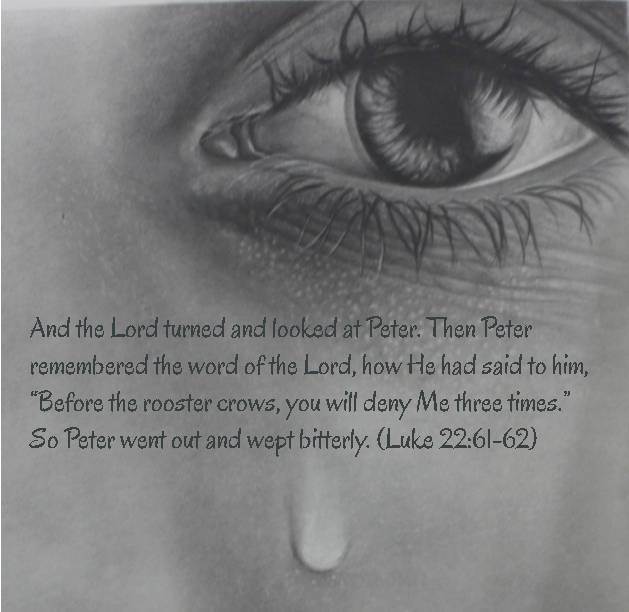
Luke 22:61-62 New American Standard Bible

61 And then the Lord turned and looked at Peter. And Peter remembered the word of the Lord, how He had told him, “Before a rooster crows today, you will deny Me three times.” 62 And he went out and wept bitterly.

These verses are right after Peter has denied that he knew him the third time, and thus fulfilled the prophesy earlier in the evening.  

The Peter that we see here is a very different Peter than we see Peter become later in the scriptures.  

This Luke 22:61-62 Peter’s world is shattered, and what he has trusted in for so long seems to be lost.  

He did so many things, he said so many strong, brave, bold and courageous things because he trusted in Jesus as the Christ, but now that seems to be gone, he’s in a severe state of spiritual crisis–not sure what to do, or how to stop it.  

God’s Gift of Grace For Every Failure

Luke 24:28-35 English Standard Version

28 So they drew near to the village to which they were going. He acted as if he were going farther, 29 but they urged him strongly, saying, “Stay with us, for it is toward evening and the day is now far spent.” So he went in to stay with them. 30 When he was at table with them, he took the bread and blessed and broke it and gave it to them. 31 And their eyes were opened, and they recognized him. And he vanished from their sight. 32 They said to each other, “Did not our hearts burn within us while he talked to us on the road, while he opened to us the Scriptures?” 33 And they rose that same hour and returned to Jerusalem. And they found the eleven and those who were with them gathered together, 34  saying, “The Lord has risen indeed, and has appeared to Simon!” 35 Then they told what had happened on the road, and how he was known to them in the breaking of the bread.

The New Testament mentions twice that the risen Christ appeared to Peter: once in this passage from Luke 24 :34 and again in 1 Corinthians 15:5.

Why would the poster boy for failure Peter, of all people, receive such special treatment from the writers of the New Testament Canon?

After all, not long before this event on the Road to Emmaus, Peter had quite severely failed himself, his friends, his family, his Master in His darkest hour.

Just before Jesus was arrested, He told Peter that a trial lay ahead:

“Simon, Simon, behold, Satan demanded to have you, that he might sift you like wheat, but I have prayed for you that your faith may not fail.” Peter responded, rather audaciously, “Lord, I am ready to go with you both to prison and to death.”

But Jesus knew Peter’s heart: “I tell you, Peter, the rooster will not crow this day, until you deny three times that you know me” (Luke 22:31-34).

As it turned out, Peter heart and soul were not as ready to face prison and death as he had boasted, blustered and falsely allowed himself, everyone else around him within ear shot, to have imagined – quite a public display of false bravado.

We all know now, as did Jesus that very day, that Peter would, did indeed go on to very publicly and very loudly deny his Lord three times in the courtyard.

And afterward, when Peter recalled what Jesus had predicted and realized what he had done, he was suddenly reduced to tears (Matthew 26:75; Luke 22:62).

So why does the New Testament emphasize that the risen Lord Jesus appeared specifically to the afore named Peter – why are our eyes, ears and souls here?

Certainly not because Peter deserved it more than anybody else.

But it’s fair to wonder if Jesus appeared to Peter because in these make or break moments, the resurrected Jesus knew Peter needed it more than anybody else.

Peter knew that he had blown it completely—and yet while Peter had denied Jesus, Jesus didn’t deny Peter.

What mercy, what goodness, what kindness, what grace, what compassion, what forgiveness, what Grace that Jesus still chose to go to the cross for His flawed disciple and then specially chose to make a special appearance to him!

We have stumbled. We have been deniers, deserters, swaggerer’s.

We know that we do not deserve for God to specifically, especially, come to us.

And yet as we go to God’s word and as we open our lives to its truth, it’s almost as though Jesus comes, sits right down beside us, and says, “I’m here. I LOVE you, I want to speak to you. I want to assure and reassure you. I want to forgive you. I want you to be able to forgive yourself and I want to send you out in My power.”

John 21:15-19 English Standard Version

Jesus and Peter

15 When they had finished breakfast, Jesus said to Simon Peter, “Simon, son of John,  do you love me more than these?” He said to him, “Yes, Lord; you know that I love you.” He said to him, “Feed my lambs.” 16 He said to him a second time, “Simon, son of John, do you love me?” He said to him, “Yes, Lord; you know that I love you.” He said to him, “Tend my sheep.” 17 He said to him the third time, “Simon, son of John, do you love me?” Peter was grieved because he said to him the third time, “Do you love me?” and he said to him, “Lord, you know everything; you know that I love you.” Jesus said to him, “Feed my sheep. 18 Truly, truly, I say to you, when you were young, you used to dress yourself and walk wherever you wanted, but when you are old, you will stretch out your hands, and another will dress you and carry you where you do not want to go.” 19 (This he said to show by what kind of death he was to glorify God.) And after saying this he said to him, “Follow me.”

Peter knew he had failed Jesus.

No one had to tell him twice.

But the resurrected Jesus used that catastrophic failure to help Peter grow.

How can Jesus use failure for our spiritual growth?

Failure in whatever measure or degree is never fatal in the eyes of Jesus.

God’s Gift of Failure teaches us that we have an answer – we need a Savior.

God, the Father and God the Son and God the Holy Spirit are the only answer!

From the inconceivable depths of his failure, Peter suddenly, repeatedly and quietly heard the word “love” from the lips of the resurrected Jesus again.

Jesus was not testing him but reaffirming His unconventional, everlasting love for Peter by gently and repeatedly asking him to reaffirm his own love for Jesus.

Peter also learned the answer to the most important question on his mind – that Jesus had cast him aside, not forsaken him, and had not given up on him.

Jesus came directly to him and called him to lead again.

Jesus offered Peter an opportunity to lead by dying to himself.

Jesus even predicted that in his death Peter would glorify God.

Peter had wandered, so Jesus had to get him back on track.

As Lord and Savior, Jesus Christ, He calls all of the shots in our lives.

Failure of whatever degree and measure mankind can generate, can bring us back to the Lord, who finds us and gives us another opportunity to follow him.

From behind our own eyes, behind our own thoughts and application of justice, from behind our own reluctance to forgive as Jesus did, Peter didn’t deserve one ounce of the compassion he received from Jesus—and honestly, neither do we.

Our failures show us time and time again that we are immeasurably far from being .0000000000000000000000000000000001% worthy of God’s grace.

But in His mercy, He is pleased to give it anyway—and then give some more.

He is just that kind of Best Forever Friend. (Proverbs 17:17, 18:24, 27:17)

He is just that kind of God. (Isaiah 53:5)

He is just that kind of Savior. (Romans 5:7-10)

And you and me, like Peter, get to be His beloved disciple.

Acts 10:34-43 English Standard Version

Gentiles Hear the Good News

34 So Peter opened his mouth and said: “Truly I understand that God shows no partiality, 35 but in every nation anyone who fears him and does what is right is acceptable to him. 36 As for the word that he sent to Israel, preaching good news of peace through Jesus Christ (he is Lord of all), 37 you yourselves know what happened throughout all Judea, beginning from Galilee after the baptism that John proclaimed: 38 how God anointed Jesus of Nazareth with the Holy Spirit and with power. He went about doing good and healing all who were oppressed by the devil, for God was with him. 39 And we are witnesses of all that he did both in the country of the Jews and in Jerusalem. They put him to death by hanging him on a tree, 40 but God raised him on the third day and made him to appear, 41 not to all the people but to us who had been chosen by God as witnesses, who ate and drank with him after he rose from the dead. 42 And he commanded us to preach to the people and to testify that he is the one appointed by God to be judge of the living and the dead. 43 To him all the prophets bear witness that everyone who believes in him receives forgiveness of sins through his name.”

Later though, after Christ has been resurrected and returned, Peter transforms, and instead of just being an advocate, believer in, and supporter of Christ’s teachings, he starts becoming more like him… taking on his characteristics.  

To be clear, I’m not trying to knock Peter at all.  

He was an amazing man, and stronger than I will likely ever be.

I think his story is highly instructive and valuable because it shows us so much growth, and it is a transition that I think maybe we all have to make in our lives.

We have to move beyond just praising God and believing that God can do anything, to believing that WE

“can do all things through Christ which strengthens” us (Philippians 4:13).  

That’s a tough transition.  

Although we have a lot of pride to believe we know which way things should go, having confidence and a steadfast and immovable faith in ourselves is different than, and mostly opposite to, our pride–especially when we have to be humble enough to kick failure to the curb, to listen to God’s plan instead of our own plan.

Peter learned God was always going to be there for him even when he wasn’t always going to be physically present.  

He learned that he could be powerful and lead and help and work to feed God’s sheep, even without his Lord and mentor beside him.  

He still worshipped and praised God, but now he worked and loved and spread the gospel further, not just as a follower, but as a leader of others.  

Today, let’s try working on that same transition.  

Let’s realize how powerful we can be, echelons beyond our failures, as we work to forgive ourselves, love and have mercy upon ourselves, to do the Lord’s will.  

Let’s stop ourselves every now and then from knocking ourselves to the ground, talk to God, discern what He wants to do for us, by us, to help us feed his sheep.  

Let’s not deny our beliefs out of fear of failure or shame.  

Let’s not deny ourselves access to the Gift of God’s Grace and His Favor.

Let’s stand up for God, and share our hope and blessings with others.

Let’s walk for awhile, sit for a while longer with the resurrected Jesus.

Listen to His Words. (Hebrews 4:12)

Digest His Words. (Psalm 34:8)

Receive the Gift of the Holy Spirit that we may recall the works of the Lord!

In the name of God, the Father and God the Son and God the Holy Spirit,

Let us Pray,

Psalm 34 The Message

34 I bless God every chance I get;
my lungs expand with his praise.

I live and breathe God;
if things aren’t going well, hear this and be happy:

Join me in spreading the news;
together let’s get the word out.

God met me more than halfway,
he freed me from my anxious fears.

Look at him; give him your warmest smile.
Never hide your feelings from him.

When I was desperate, I called out,
and God got me out of a tight spot.

God’s angel sets up a circle
of protection around us while we pray.

Open your mouth and taste, open your eyes and see—
    how good God is.
Blessed are you who run to him.

Worship God if you want the best;
worship opens doors to all his goodness.

10 Young lions on the prowl get hungry,
but God-seekers are full of God.

11 Come, children, listen closely;
I’ll give you a lesson in God worship.

12 Who out there has a lust for life?
Can’t wait each day to come upon beauty?

13 Guard your tongue from profanity,
and no more lying through your teeth.

14 Turn your back on sin; do something good.
Embrace peace—don’t let it get away!

15 God keeps an eye on his friends,
his ears pick up every moan and groan.

16 God won’t put up with rebels;
he’ll cull them from the pack.

17 Is anyone crying for help? God is listening,
ready to rescue you.

18 If your heart is broken, you’ll find God right there;
if you’re kicked in the gut, he’ll help you catch your breath.

19 Disciples so often get into trouble;
still, God is there every time.

20 He’s your bodyguard, shielding every bone;
not even a finger gets broken.

21 The wicked commit slow suicide;
they waste their lives hating the good.

22 God pays for each slave’s freedom;
no one who runs to him loses out.

Lord, forgive me when I fail, and help me to learn that even my failure can be used for your glory. Keep me focused on you, and help me to serve you faithfully. In Jesus,

Adeste Fideles! Laeti Triumphantes! Venite Adoremus! Dominum.

Gloria! In Excelsis Deo! Alleluia, Alleluia, Alleluia, Amen.
https://translate.google.com/

When We Feel Stuck, When We Are Not At All Convinced We Can Still Make a Difference With Our Life. John 21:15-19

John 21:15-19 Amplified Bible

The Love Motivation

15 So when they had finished breakfast, Jesus said to Simon Peter, “Simon, son of John, do you love Me more than these [others do—with total commitment and devotion]?” He said to Him, “Yes, Lord; You know that I [a]love You [with a deep, personal affection, as for a close friend].” Jesus said to him, “Feed My lambs.” 16  Again He said to him a second time, “Simon, son of John, do you love Me [with total commitment and devotion]?” He said to Him, “Yes, Lord; You know that I love You [with a deep, personal affection, as for a close friend].” Jesus said to him, “Shepherd My sheep.” 17 He said to him the third time, “Simon, son of John, do you love Me [with a deep, personal affection for Me, as for a close friend]?” Peter was grieved that He asked him the third time, “Do you [really] [b]love Me [with a deep, personal affection, as for a close friend]?” And he said to Him, “Lord, You know everything; You know that I love You [with a deep, personal affection, as for a close friend].” Jesus said to him, “Feed My sheep.

Our Times Are in His Hand

18 I assure you and most solemnly say to you, when you were younger you dressed yourself and walked wherever you wished; but when you grow old, you will stretch out your hands and arms, and someone else will dress you, and carry you where you do not wish to go.” 19 Now He said this to indicate the [c]kind of death by which Peter would glorify God. And after saying this, He said to him, “Follow Me [walk the same path of life that I have walked]!”

The Word of God for the Children of God.

Adeste Fideles! Laeti Triumphantes! Venite Adoremus! Dominum.

Gloria! In Excelsis Deo! Alleluia, Alleluia, Alleluia, Amen.

(Psalm 144:4) Man is like a mere breath;
His days are like a shadow that passes away.

Perhaps there exists something so natural to us we take it too much for granted.

Perhaps that something which so very natural to us is our time alive, our time allotted to us by God to simply breathing and moving and living on this earth.

Do we take the time to ponder exactly how Time is so precious — time with our families, children, parents, friends, brothers and sisters in Christ – With God?

How do we invest our time?

When do we invest our time?

Where do we invest our time?

With whom do we invest our time?

Why do we invest our time with whomever we invest our times?

You know, when it comes right down to it, getting back to the basics of life, our time with God and each other is really more valuable than the money we invest.

Once the present time and its opportunities are gone, they can’t be reclaimed.

So as we begin each day, as we look at the sunshine through the rain, perhaps contemplate “time management” “thought management,” ask God we will be able to “know His time,” to see it for what it is, to use it for its greatest good.

Irretrievably so, time – God’s Time” passes quickly, like the shadows of early evening, it’s not long before it is absorbed into the gathering darkness of night.

When We Feel “Forever Stuck” In The Moment?

From time to time, while in the process of drafting a new devotional, I find myself in a deep mental conundrum – my mind and my spirit seem to go blank.

The kind of blankness I so desperately want to escape, but as every cliched movie villain always says, “escape is futile, resistance to change is futile”

Sometimes the same conundrum affects me on an emotional level, even spiritually – what difference is anything I write about a particular subject I believe the Holy Spirit provides, going to make in anyone I truly care about?

I feel a certain way and don’t want to, but the villain tells me yet again, escape is futile – In other words, I’m feeling stuck in my moment- or so I tell myself.

The first kind of hindrance is writer’s block, something every author eventually faces during his or her artistic pursuits.

Then there’s the kind of barrier we can all relate to, where we’re looking for a change on an emotional or spiritual level, but find ourselves confused, maybe even miserable – we are longing for answers but find none – That’s a life block.

We encounter them in our relationship with God, with each other.

We find them on the job and at home and on vacations.

We find them in ourselves and of ourselves.

In other words, we contend with a seemingly insurmountable problem; but only to us, the problem is not seemingly, but definitely perceived as insurmountable.

We’re stuck in a moment of time, or in a memory, or so we will take great pains to try to sell it that way to ourselves.

Escape is futile, we keep talking to ourselves and therefore we come to believe.

Yet, the reality is, deep down, we know the movie villain is 100% exaggerating.

For the dramatic effect and for their audiences, they will always exaggerate.

There is a way through the barrier, a way to get unstuck, a way back to writing those stories, transforming perspectives, having the right perspective of God.

Though the frustration and confusion may be too deep, ceaseless, unrelenting, too aggravating, too anger provoking, the solution is simple and two-fold.

First, take a break; not in the sense of giving up, but in the sense of ending your striving.

There’s only so much we can control in our lives.

The sooner we realize this, the more peace we will find.

After you take a break, either wait or look for inspiration.

Sometimes finishing a devotional requires that I stop writing for ten minutes so that I can go for a walk or have a quick moment to wander around my home.

Sometimes finishing a devotional requires me to temporarily set it aside, to pray to God and then as God will’s it, come back after a day or longer.

That time off from the writing effort is useful for conjuring up, discerning new ideas, letting the Holy Spirit work and gaining insight from God or other people.

Creating distance from the problem at hand often helps with developing a more objective perspective.

The same applies when we’re navigating relational conflict, battling addiction, battling mental health issues, family issues or just trying to discern God’s will.

After we take a break from all the struggles of doing things our own way, we can find “Father, Son and Holy Spirit” inspiration for tackling our circumstances.

Proverbs 16:1-4 Amplified Bible

Contrast the Upright and the Wicked

16 The plans and reflections of the heart belong to man,
But the [wise] answer of the tongue is from the Lord.

All the ways of a man are clean and innocent in his own eyes [and he may see nothing wrong with his actions],
But the Lord weighs and examines the motives and intents [of the heart and knows the truth].

[a]Commit your works to the Lord [submit and trust them to Him],
And your plans will succeed [if you respond to His will and guidance].

The Lord has made everything for its own purpose,

Even the wicked [according to their role] for the day of evil.

Inspiration comes only through our connection to God, sometimes through people, sometimes through nature, and sometimes through so much more.

Inspiration also finds us through God’s Word, the wisdom of the Cross, and a visit from Jesus helping us see with a perspective that doesn’t come naturally.

Stuck in His Guilt, Peter is Restored to Discipleship

John 21:18-19 Amplified Bible

Our Times Are in His Hand

18 I assure you and most solemnly say to you, when you were younger you dressed yourself and walked wherever you wished; but when you grow old, you will stretch out your hands and arms, and someone else will dress you, and carry you where you do not wish to go.” 19 Now He said this to indicate the [a]kind of death by which Peter would glorify God. And after saying this, He said to him, “Follow Me [walk the same path of life that I have walked]!”

On the night Jesus was arrested, Peter had instantly revoked his discipleship.

Under threat of arrest and exposure and potential death sentence, by those in the courtyard he had denied three times that he was a follower of Jesus – each time he publicly proclaimed his denials more desperate than the previous one.

Luke 22:54-62 Amplified Bible

Peter’s Denials

54 Then they seized Him, and led Him away and brought Him to the [elegant] house of the [Jewish] [a]high priest. And Peter was following at a [safe] distance. 55 After they had kindled a fire in the middle of the courtyard and had sat down together, Peter sat among them. 56 And a servant-girl, seeing him as he sat in the firelight and looking intently at him, said, “This man was with Him too.” 57 But Peter denied it, saying, “Woman, I do not know Him!” 58 A little later someone else saw him and said, “You are one of them too.” But Peter said, “Man, I am not!” 59 After about an hour had passed, another man began to insist, “This man was with Him, for he is a Galilean too.” 60 But Peter said, “Man, I do not know what you are talking about.” Immediately, while he was still speaking, a rooster crowed. 61 The Lord turned and looked at Peter. And Peter remembered the word of the Lord, how He had told him,  “Before a rooster crows today, you will deny Me three times.” 62 And he went out and wept bitterly [deeply grieved and distressed].

Again, to emphasis, the power of the moment, its deep significance, when he realized what he had done, he went out and wept bitterly (Matthew 26:69-75).

In that moment frozen forever in time, He was indescribably overwhelmed by incalculable shame and immeasurable guilt.

Luke 24:36-43 Amplified Bible

Other Appearances

36 While they were talking about this, Jesus Himself [suddenly] stood among them and said to them, “Peace be to you.” 37 But they were startled and terrified and thought that they were seeing a spirit. 38 And He said, “Why are you troubled, and why are doubts rising in your hearts? 39 Look at [the marks in] My hands and My feet, [and see] that it is I Myself. Touch Me and see; a spirit does not have flesh and bones, as you see that I have.” 40 After saying this, He showed them His hands and His feet. 41 While they still did not believe it because of their joy and amazement, He asked them, “Do you have anything here to eat?” 42 They gave Him a piece of broiled fish, 43 and He took it and ate it in front of them.

Even as Peter with the other disciples in the Upper Room, heard the words from the resurrected Jesus – “Peace be To You,” the question – “why are you troubled and why are doubts rising in your hearts,” having been offered the opportunity to look at the marks in His hands and feet, to even touch them for his own self,

We can say that Peter’s heart, despite all of the irrefutable evidence offered by the resurrected Jesus to the contrary, Peter kept significant doubts of himself.

He looked directly into his Messiah’s eyes when he betrayed Him and wept bitterly and inconsolably – only an exchange of words with eye to eye contact would make any significant and lasting difference which did not happen here.

Such a moment required utmost discretion couples with the utmost presence of God in Christ and the utmost intimacy and the utmost compassion, forgiveness.

Jesus comes to the lakeshore.

After breakfast, Jesus and Peter together, go much further down the beach.

Jesus quietly looked into Peter’s eyes and quietly asked Peter a few questions.

But the questions were not “What were you thinking?” “Why did you abandon me when I needed you?” or “Why didn’t you have the guts to stick up for me?”

It was simply “Do you love me?”

Jesus had died on the cross for Peter’s sins.

What Jesus wanted to know now was only whether or not Peter still loved him.

Peter’s sins were in the past; Peter’s expression of love would shape his future.

When Peter said, “Yes, Lord, you know that I love you,”

Jesus, the conqueror of sin and death and the Lord of life, graciously invited him to take up his discipleship again and forgiven, follow him into the future.

Doing the same with us, Jesus is astonishingly gracious.

He doesn’t bring up our past sins, betrayals, or infidelities.

He simply wants to know if we love him.

He simply wants to know, to hear He can still make a difference in Peter’s life.

He simply wants to hear Peter acknowledge he still believed in himself, in his ability to move through and beyond his transgressions, to make a difference in the lives he will come to engage with until his own death at some future point.

Did Peter believe, though still being stuck in the brutality of his mistakes, he could still make a significant difference, significant impact in God’s kingdom?

Forward through the Ages for Christ’s sake – for that makes all the difference.

Whatever horrendous mess you might be stuck in now, are you seeking Jesus?

Forward in His Forgiveness, Forward through the Ages,

Do you Still love Him as He still loves you?

Will you still serve Him as He first Served you (Mark 10:35-45, Luke 19:9-10)?

Micah 6:6-8 Amplified Bible

What God Requires of Man


With what shall I come before the Lord [to honor Him]
And bow myself before God on high?
Shall I come before Him with burnt offerings,
With yearling calves?


Will the Lord be delighted with thousands of rams,
Or with ten thousand rivers of oil?
Shall I present my firstborn for my acts of rebellion,
The fruit of my body for the sin of my soul?


He has told you, O man, what is good;
And what does the Lord require of you
Except to be just, and to love [and to diligently practice] kindness (compassion),
And to walk humbly with your God [setting aside any overblown sense of importance or self-righteousness]?

He invites us to go out and serve him today!

Steadfast and Immovable Gracious and Compassionate In Him.

In the name of God, the Father and God the Son and God the Holy Spirit,

Let us Pray,

Eternal God, please give me the wisdom to use the time given me today to do what is best, right, good, and profitable for Your Kingdom. I want to better invest my time in what is truly enduring and redemptive and transformative, living in and loving out from the depths of resurrection, from the depths of your mercy and forgiveness for all my sins. Please help me use my time to influence and bless all those with whom I may interact with so that they too are brought closer to you. In Jesus’ name, I pray.

Adeste Fideles! Laeti Triumphantes! Venite Adoremus! Dominum.

Gloria! In Excelsis Deo! Alleluia, Alleluia, Alleluia, Amen.

https://translate.google.com/

Will My God Ever Give Up On Me As I Have Given Up on Him? Luke 22:54-62

Luke 22:54-62 Amplified Bible

Peter’s Denials

54 Then they seized Him, and led Him away and brought Him to the [elegant] house of the [Jewish] [a]high priest. And Peter was following at a [safe] distance. 55 After they had kindled a fire in the middle of the courtyard and had sat down together, Peter sat among them. 56 And a servant-girl, seeing him as he sat in the firelight and looking intently at him, said, “This man was with Him too.” 57 But Peter denied it, saying, “Woman, I do not know Him!” 58 A little later someone else saw him and said, “You are one of them too.” But Peter said, “Man, I am not!” 59 After about an hour had passed, another man began to insist, “This man was with Him, for he is a Galilean too.” 60 But Peter said, “Man, I do not know what you are talking about.” Immediately, while he was still speaking, a rooster crowed. 61 The Lord turned and looked at Peter. And Peter remembered the word of the Lord, how He had told him,  “Before a rooster crows today, you will deny Me three times.” 62 And he went out and wept bitterly [deeply grieved and distressed].

The Word of God for the Children of God.

Adeste Fidelis! Laeti Triumphantes! Venite Adoremus! Dominum.

Gloria! In Excelsis Deo! Alleluia, Alleluia, Alleluia, Amen.

I remember a secular song popular many years ago called “River”.

To this day, lines from that rather somber Joni Mitchell song stick with me.

She sang, “I’m always hard to handle. I’m selfish and I’m sad. Now I’ve gone and lost the best baby that I ever had.”

The words came to mind again this week while reading a post from a Christian who said, “I still struggle with being angry, ungrateful, and cranky.”

I added her words to what several people have written recently about Apostle Peter in today’s discourse from Luke 22.

As much effort as Peter made to assure and then reassure Jesus and the other disciples to never give up on Jesus – no matter the circumstances – He failed.

He failed in the worst way possible.

He failed himself.

He failed his friends and fellow disciples.

He failed his mother and his father

He failed to uphold every single thing he held to about his faith in God.

He failed his sworn and covenanted oath to God.

He failed his Messiah – denying him thrice times and very publicly.

When his Messiah needed and required him to be there for Him, as Messiah had predicted, before the cock crowed three times, Peter was nowhere declaring his his utmost confidence and faith in his Messiah nor his willingness to even die.

How much worse could it possibly get in that moment?

Then that fateful glance in the courtyard where Peter’s and Jesus’ eyes met after Peter thrice times emotionally, very publicly refuted his association with Jesus.

61 The Lord turned and looked at Peter. And Peter remembered the word of the Lord, how He had told him, “Before a rooster crows today, you will deny Me three times.” 62 And he went out and wept bitterly [deeply grieved and distressed].

They have preached this passage, taken a long look at this passage, been very self-introspective of this text as it was preached to them – and they CRIED TOO!

We can probably, without much effort, safely guess what emotions were going on in Peter’s much anguished heart and soul: “Will God Now Give Up On Me?!?”

They cried, proclaimed – “I was not there when my Savior needed me most!”

They cried and declared – “I got so very tired, so very much worn out by it all!”

The cried and declared – “I feel like I have simply given up on God, My Savior!”

They have likewise asked of themselves, “Will God ever give up on me?” 

Gravely worried because they think they have already and repeatedly done the one single thing that’s “finally too much for God to take,” they are feeling fear.

Many Will Worry About Keeping God’s Love

Now, their concerns aren’t just about their repeated failures toward conquering their anger, their fears, their broken promises, their ingratitude, or crankiness.

Some are worried about other things like unrelenting unswerving doubts, their waning and waxing faith, a fresh sin committed, or a repeated sin committed.

But, this lingering question comes rushing back to many people at different times, at too many inopportune times

Does God give up on us as we all too often give up on Him?

A significant question with what they believe has severe eternal implications.

I can safely confess here that despite what I staunchly believe is a steadfast and immovable faith – a “Superman Faith” if you will, I’ve certainly had that fear. 

Have you?

At times, I’ve wondered if I have let God down too much or too severely or made that “one too big a mistake” with the severest of eternal implications possible.

It hurts my spirit.

It puts a giant strain, an immovable millstone upon my heart and upon my soul.

I will simply never have the necessary knowledge nor the required wisdom nor any of the maximum allowable strength to even begin to move it or remove it.

Responding to the Lord’s “Once In a Lifetime” Look

Luke 22:61-62 Amplified Bible

61 The Lord turned and looked at Peter. And Peter remembered the word of the Lord, how He had told him, “Before a rooster crows today, you will deny Me three times.” 62 And he went out and wept bitterly [deeply grieved and distressed].

Two captivating stories are happening at the same time.

Inside the high priest’s court Jesus reveals his true identity as the Messiah.

Outside near the fire in the courtyard Peter denies his Lord three times.

Then the climax brings the two story lines crashing together.

Jesus’ eyes look directly at Peter’s eyes and quite literally changes everything.

Peter surrendered to the paralyzing fear of his faith’s ability at standing alone.

But fortunately Jesus enabled Peter to break out of the cage of conformity.

The rooster’s crow activated the alarm of Peter’s conscience.

Immediately he repented.

In extreme sorrow, Peter wept bitterly.

Do We Lose God When We Are Selfish and Sad?

As in Joni Mitchell’s sobering song, do we lose the best loved one we’ve ever had – our God and our Savior – when we are selfish and/or broken or sad? 

No!

Absolutely Not!

It’s a guarantee that after we receive Jesus Christ as Savior, we still won’t be perfect! 

And God knows that! 

Instead, we all have a lot of “cleaning up” to do even at that point. 

But, that is something only God can do in your life.

Yes, you and I must cooperate, we must be and remain willing participants.

The way we do that is to believe Him that He loves us and has changed us.

That He IS always and forever changing us.

And, in addition, you and I must learn, and re-learn, how to receive His love.

With regards to Peter and His coming to terms with his catastrophic failures;

Later in the Upper Room he reaffirmed his love for Jesus by being there and not running away, fleeing from His presence, when Jesus appeared to the disciples.

Still later, doubts intact, Peter is recommissioned as the Lord’s representative.

John 21:15-17 Amplified Bible

The Love Motivation

15 So when they had finished breakfast, Jesus said to Simon Peter, “Simon, son of John, do you love Me more than these [others do—with total commitment and devotion]?” He said to Him, “Yes, Lord; You know that I [a]love You [with a deep, personal affection, as for a close friend].” Jesus said to him, “Feed My lambs.” 16  Again He said to him a second time, “Simon, son of John, do you love Me [with total commitment and devotion]?” He said to Him, “Yes, Lord; You know that I love You [with a deep, personal affection, as for a close friend].” Jesus said to him, “Shepherd My sheep.” 17 He said to him the third time, “Simon, son of John, do you love Me [with a deep, personal affection for Me, as for a close friend]?” Peter was grieved that He asked him the third time, “Do you [really] [b]love Me [with a deep, personal affection, as for a close friend]?” And he said to Him, “Lord, You know everything; You know that I love You [with a deep, personal affection, as for a close friend].” Jesus said to him, “Feed My sheep.

In John 21 we find that Jesus refused to let Peter cover up his unresolved past.

Three times the Resurrected Jesus asked Peter how much he loved his Lord.

And Peter asserted repeatedly, “Lord, you know that I love you.”

Jesus then empowered Peter, gave divine approval and permission, God’s own blessings, to just put his past behind him and walk confidently into his future.

Jesus’ aim is to come to us, bless us, reassure us, reconcile with and rehabilitate us whenever we feel the full weight of our millstones, when we fall from grace.

And our conscience can halt us before we yield to temptation.

But even when if we inevitably slip back into sin, God wants to restore us.

God does not stand behind home plate like an umpire at a baseball game with a great cloud of witnesses present waiting to signal and then shout, “You’re out!”

Instead, He comes to us on our lakeshores, draws us to Himself with kindness.

For us this means responding to the raucous alarm of our conscience, removing ourselves from the moment and place of temptation, repenting of our sin, give God permission to take our millstone, to reaffirming our loyalty to Jesus Christ.

In the name of God, the Father and God the Son and God the Holy Spirit,

Let us Pray,

Psalm 13 The Message

13 1-2 Long enough, God—
    you’ve ignored me long enough.
I’ve looked at the back of your head
    long enough. Long enough
I’ve carried this ton of trouble,
    lived with a stomach full of pain.
Long enough my arrogant enemies
    have looked down their noses at me.

3-4 Take a good look at me, God, my God;
    I want to look life in the eye,
So no enemy can get the best of me
    or laugh when I fall on my face.

5-6 I’ve thrown myself headlong into your arms—
    I’m celebrating your rescue.
I’m singing at the top of my lungs,
    I’m so full of answered prayers.

Psalm 139:23-24 The Message

23-24 Investigate my life, O God,
    find out everything about me;
Cross-examine and test me,
    get a clear picture of what I’m about;
See for yourself whether I’ve done anything wrong—
    then guide me on the road to eternal life.

Lord, we read Your text from Luke’s Gospel and we know that your convicting look is filled with thy convincing, affirming grace. Thank you for your transforming power!

Adeste Fidelis! Laeti Triumphantes! Venite Adoremus! Dominum.

Gloria! In Excelsis Deo! Alleluia, Alleluia, Alleluia, Amen.

https://translate.google.com/

20/20 Hindsight. The “Right Ways” and The “Wrong Ways,” All the “Ways” that Seem So Right to Us. Proverbs 14:11-13

Proverbs 14:11-13 The Message

11 Lives of careless wrongdoing are run-down shacks;
    holy living builds soaring cathedrals.

12-13 There’s a way of life that looks harmless enough;
    look again—it leads straight to hell.
Sure, those people appear to be having a good time,
    but all that laughter will end in heartbreak.

The Word of God for the Children of God.

Adeste Fidelis. Venite Adoremus. Dominum.

Gloria. In Excelsis Deo. Alleluia, Alleluia, Alleluia, Amen.

Reflections: 20/20 Hindsight and Run Down Cabins in the Woods

Many of us have had moments when we have looked back on a past decision and wondered, “How did I ever think that was a good idea?”

Yet at the time, that decision or choice probably seemed right to us.

There’s a reason why people say, “Hindsight is 20/20.”

This means that you and I can often see a situation more clearly (as with 20/20 vision) after it has passed and you have had time to learn and also lament from some of the choices or lack of choices you have or have not made.

Our own ability to see clearly in the present moment is limited.

And what appears to be a right decision or right thinking in the moment can sometimes do more harm than good.

There is a reason why people also seriously lament that “Hindsight is 20/20.”

Paint a portrait “Hindsight is 20/20” for your living room wall might look strikingly, an infinity mirrored vision of one man looking at his own back.

illustration of man reflecting himself in the mirror, loop surreal concept

9-13 But in the end, does it really make a difference what anyone does? I’ve had a good look at what God has given us to do—busywork, mostly. True, God made everything beautiful in itself and in its time—but he’s left us in the dark, so we can never know what God is up to, whether he’s coming or going. I’ve decided that there’s nothing better to do than go ahead and have a good time and get the most we can out of life. That’s it—eat, drink, and make the most of your job. It’s God’s gift. [Ecclesiastes 3:11-13 Message]

Solomon was a wise son who paid attention to his father, David.

He also sought to be a wise father by sharing his wisdom with his own sons and compiling his own set of righteous guidelines and the learned sayings of others, into a compendium, then, today, and tomorrow, is called the Book of Proverbs.

He did this to encourage his own children towards righteous living.

Reverence for the Lord our God and trust in His Word is the foundation upon which true wisdom is based and we in the Church age have discovered that in our Savior Christ Jesus are hidden all the treasures of wisdom and knowledge.

Living and Learning from our wise and foolish choices in life are of a true and lasting benefit and these ‘Proverbs of Solomon’ are an amazing collection of maxims for profitable living – ancient learning from the wisest of the wise.

They cover an extraordinarily wide range of subject matter which can surely help the reader to prevent foolish behaviour and ungodly decisions in areas like relationships and friendships, laboring, working, finances, and a fruitful life.

This not only pleases God and demonstrates faith in His Word, but gives every day measured advice on peaceful living while avoiding troublesome situations.

Like much of the book of the Proverbs, Chapter 14 is written in couplets which contrast wise and foolish behaviour.

We read a wise woman builds her home, but the foolish woman tears it down; the one who walks in uprightness fears God, while the devious despises Him.

This chapter also compares and contrasts a trustworthy witness with a false one, bitterness with joy, also foolish and wise attitude towards sin, and the inevitable destruction of wicked men with the upright man, who will flourish.

In this verse the couplet has a poignant twist, demonstrating the truly chilling consequences of self-deception.

It explains that a bad decision… which may seem to be a good and wise choice from a human perspective, will in fact result in disaster.

“There is a way which seems right to a man, but its end is the way of death.”

The collection of people in this proverb are deluded and devoid of true wisdom and understanding, which comes from God alone.

By falsely judging a situation to be beneficial, they find that the thing which appeared so enticing and which they thought was so right, had the opposite effect and only brought them to disaster. 

This saying is a ‘stand-alone’ truth that is applicable to every man, but in order to discover the godly way to go, the correct choices to make, the true path that leads to life and light, peace and hope… the entire book of Proverbs needs to be seriously taken into account for it records every aspect of living a godly life.

Perhaps the key to the entire book of Proverbs, upon which all every piece of good advice is founded, is the truth Solomon taught his son in chapter 3,

Proverbs 3:5-8 English Standard Version

Trust in the Lord with all your heart,
    and do not lean on your own understanding.
In all your ways acknowledge him,
    and he will make straight your paths.
Be not wise in your own eyes;
    fear the Lord, and turn away from evil.
It will be healing to your flesh[a]
    and refreshment[b] to your bones.

Guidance for godly and ungodly living can be found throughout these Proverbs and it is attributed to lifelong observations of Solomon – the wisest of the wise by God’s gift [1 Kings 3:5-15] but also the very pinnacle of fools [1 Kings 11:1-4]

Illustration of man, face hidden, looking down at the end of his life’s surreal path

Jesus also spoke to the interested, disinterested, about 20/20 hindsight …

20/20 Examining Our Faith and How We Choose to Look at Things

Matthew 6:25-34 New King James Version

Do Not Worry

25 “Therefore I say to you, do not worry about your life, what you will eat or what you will drink; nor about your body, what you will put on. Is not life more than food and the body more than clothing? 26 Look at the birds of the air, for they neither sow nor reap nor gather into barns; yet your heavenly Father feeds them. Are you not of more value than they? 27 Which of you by worrying can add one [a]cubit to his [b] stature?

28 “So why do you worry about clothing? Consider the lilies of the field, how they grow: they neither toil nor spin; 29 and yet I say to you that even Solomon in all his glory was not [c]arrayed like one of these. 30 Now if God so clothes the grass of the field, which today is, and tomorrow is thrown into the oven, will He not much more clothe you, O you of little faith?

31 “Therefore do not worry, saying, ‘What shall we eat?’ or ‘What shall we drink?’ or ‘What shall we wear?’ 32 For after all these things the Gentiles seek. For your heavenly Father knows that you need all these things. 33 But seek first the kingdom of God and His righteousness, and all these things shall be added to you. 34 Therefore do not worry about tomorrow, for tomorrow will worry about its own things. Sufficient for the day is its own trouble.

Six years ago, in the atrium of our church one Sunday, I noticed one of our senior members standing quietly.

Her face wasn’t happy, but it was welcoming. I understood the look of tiredness and concern he showed.

Her husband of 63 years had just recently passed away from Lung Cancer.

She told me her 60 year old son was battling several serious health issues.

At 88 years of age, it was obvious that her own health was not robust.

And yet he was there, at church among the worshipers.

I reached out to shake her hand and asked, “How are you doing?”

Her less-than-enthusiastic response: “Okay, I guess.”

After a pause she stated bluntly, “I don’t care about anything anymore.”

Caught by Surprise, I asked, “Nothing?”

She shifted a bit and then said, “There was a time when I liked boats and cars and lots of things.

I got excited about them.

They kept our family together, gave our lives genuine meaning,

But they don’t mean anything to me anymore.”

I began to understand.

Material things no longer grabbed her attention.

Desire for stuff no longer preoccupied her.

As her husband suffered for so long with cancer, lost his ability to relate to others, and as he increasingly depended on others to care for his every need, she had grown to know the wearing and weary­ing effects of caring for him.

That she had to sometimes also care for her ailing son at the same time,

Her outlooks and perspectives on life had drastically changed.

Things decreased in importance, and relationships—with God, with family, with church—became her priority.

This sister was learning more deeply the meaning of seeking first the kingdom of God and his righteousness and her quiet strength was truly heartwarming.

That at any age we should come to such a time in life where we are able to sit down long enough with ourselves and our Savior Jesus and seriously converse.

20/20 Hindsight … All Those Choices that Seemed Right to Us

Jesus warned his disciples that following him would not be easy or even look like a good idea at times.

He spoke about the costs of being his disciple, but he also promised that his way leads to life.

He said, “Enter through the narrow gate. For wide is the gate and broad is the road that leads to destruction, and many enter through it. But small is the gate and narrow the road that leads to life, and only a few find it” (Matthew 7:13-14).

In other words, there will be many right and wrong choices that appear to be right (even religiously) and seem more attractive than the way of Jesus, but in the end they will bring grief and misery and destruction, poverty and despair.

We cannot just stop living life, making choices and making decisions simply because we fear for the future – we first line up all our infinite regrets in a row.

A spiritually stagnant Christian …

A steadfastly immovable, ice cold, immobile, spiritually stagnant Christian …

A steadfastly immovable, ice cold, immobile, spiritually stagnant Church …

Struggling mightily to rediscover their first choice, and how and why and where and when all salvation came by grace alone through faith alone in Christ alone, for there is no other name given among men whereby we must each be saved…  

In the name of God, the Father and God the Son and God the Hoy Spirit,

Let us Pray,

Heavenly Father, thank You for my great salvation in Christ and that in Him is found all wisdom and knowledge. Thank You for the many principles and precepts that are so helpful and encouraging in the book of Proverbs. I pray that throughout my life, I would Come to more wisely apply its wise concepts and trust in You in all things, and not seek to choose to do anything according to my own limited understanding. Give me discernment I pray, keep me from all forms of self-delusion and self-deception. May I never be foolish enough to journey along the paths that may seem right to me but ends in destruction. Thank You that You have promised to guide my steps and may my ear be ever open to Your direction. This I ask in Jesus’ name, AMEN.

Adeste Fidelis. Venite Adoremus. Dominum.

Gloria. In Excelsis Deo. Alleluia, Alleluia, Alleluia, Amen.
One Possible Choice When Choosing Your Source for Help In Daily Living

https://translate.google.com/

Asking Ourselves the Hard Questions, Preparing for Lent, How Is God’s Power Made Perfect in All of Our Weaknesses? 2 Corinthians 12:7-10

2 Corinthians 12:7-10Amplified Bible

A Thorn in the Flesh

Because of the surpassing greatness and extraordinary nature of the revelations [which I received from God], for this reason, to keep me from thinking of myself as important, a thorn in the flesh was given to me, a messenger of Satan, to torment and harass me—to keep me from exalting myself! Concerning this I pleaded with the Lord three times that it might leave me; but He has said to me, “My grace is sufficient for you [My lovingkindness and My mercy are more than enough—always available—regardless of the situation]; for [My] power is being perfected [and is completed and shows itself most effectively] in [your] weakness.” Therefore, I will all the more gladly boast in my weaknesses, so that the power of Christ [may completely enfold me and] may dwell in me. 10 So I am well pleased with weaknesses, with insults, with distresses, with persecutions, and with difficulties, for the sake of Christ; for when I am weak [in human strength], then I am strong [truly able, truly powerful, truly drawing from God’s strength].

The Word of God for the Children of God.

Adeste Fidelis. Venite Adoremus. Dominum.

Gloria. In Excelsis Deo. Alleluia, Alleluia, Alleluia, Amen.

A Thorn in the Flesh …

The apostle Paul was dedicated to God.

But Paul had a “thorn in the flesh”—possibly a persistently challenging and spiritually demanding circumstance or disease that bothered him quite a lot.

He called it “a messenger of Satan, to torment” him.

We don’t know exactly what it was, but somehow it made Paul physically or spiritually [or both] weaker than he wanted to be.

Thorns prick, scratch, and wound.

However, the point of Paul’s example is that because of his thorn in the flesh, God was able to work through him and his weaknesses ever more powerfully.

Although Paul had pleaded three times with the Lord to take his thorn away, the Lord only responded saying to Paul,

“My grace is sufficient for you, for my power is made perfect in weakness.”

Paul notes that he was given his thorn “in order to keep . . . from becoming conceited.”

This means Paul knew if he did not have this thorn, he could have become self-reliant and proud of his ability to “power through anything by his own will.”

So Paul is teaching us that his thorn in the flesh was actually a good thing.

It was a sign of God’s grace to keep him focused on God, dependent on God, reliant on God and away from his becoming a proud “iron willed” follower.

And we can surely thank God for that.

This does not mean we should ask God to give us a thorn in the flesh.

We can trust that God knows what is best for us.

But if God does allow us to have a particular kind of suffering, we can also trust that he can use it to do good.

As Paul writes in another place,

“We know that in all things God works for the good of those who love him, who have been called according to his purpose” (Romans 8:28).

How Is God’s Power Made Perfect in Weakness?

Although being a Christian doesn’t grant us the power to endure every physical difficulty, it does grant us ready access to the Holy Spirit who abides within us.

His Holy Spirit may not be a superpower, but it’s a genuine supernatural power.

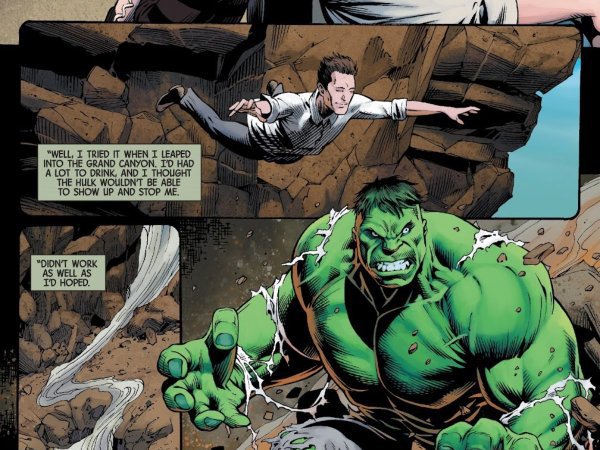
It may not enable us to look like the Hulk when it comes to both spiritual and physical challenges, but Holy Spirit provides us with an otherworldly strength to live into our oncoming circumstances and to conquer the challenges of life.

This is the kind of strength that can only be manifested in our weaknesses.

In 2 Corinthians 12:9, Paul wrote, “But he said to me, ‘My grace is sufficient for you, for my power is made perfect in weakness.’” 

So what is this power, and how can we, as believers, come to access it during the up and coming Post-Pandemic Lenten season and strenuous challenges of life?

What Does ‘My Power Is Made Perfect in Weakness’ Mean?

We often try to come across as the I-can-do-it-all Christian—making perfect grades in school or raising well-behaved children while maintaining the ultra squeaky-clean Christian reputation in church.

If we come across a challenge that seems too much for us to handle, we often blame ourselves for not being “strong enough.”

As though we some how an in some way believe that God automatically expects us to do all the things with “ease” and never cave beneath the pressures of life.

But we were simply never created to bear this life through our own strength.

In fact, we don’t even have within ourselves the ability to bear its weight!

So why should we or do we, try so hard to look like Miss or Mr. Independent “Iron” Christian when, really, God frowns upon this type of approach to life?

It is impossible for us to conquer anything apart from God’s sufficient grace.

Writing this, I wonder if God purposely created our bodies to cave beneath pressure—so we could realize we can do nothing apart from Him (see John 15:5).

But rather than allowing this to make us frustrated, get all of our faults and all failures and failings all bunched up inside our heads, perhaps we should instead use these weaknesses to propel us closer to our Savior Jesus Christ, and drawing supernatural strength from the power of the Holy Spirit – to rely more on God?.

God intended us to rely on this Holy Spirit day-by-day, moment-by-moment.

This is why Jesus said this to His disciples before He was crucified:

“But in fact, it is best for you that I go away, because if I don’t, the Advocate won’t come. If I do go away, then I will send him to you.” [John 16:7]

John 16:7Amplified Bible

But I tell you the truth, it is to your advantage that I go away; for if I do not go away, the [a]Helper (Comforter, Advocate, Intercessor—Counselor, Strengthener, Standby) will not come to you; but if I go, I will send Him (the Holy Spirit) to you [to be in close fellowship with you].

It is for our benefit that Jesus left the “Advocate,” which is the Holy Spirit.

If we did not have the Spirit abiding within us, then we would not have access to this power.

We would struggle through life, relying only on our own mental an physical muscles to face life’s battles.

But we do have the Holy Spirit.

This means as we abide in Him, we can draw strength from Him rather than ourselves.

We can ask Him to give us what we need to overcome this life.

Confessing ourselves before Him: “No, me, myself, I, simply cannot do it all.”

That’s a good thing!

If we could, then we would never have the opportunity to allow God’s power—which is far stronger than any human strength—to be made apparent within us.

We would continue through life as Miss or Mrs. or Mr. Iron Clad Independent Christian, never having a need to depend on God alone and gain access to His grave-conquering power.

What Is the Context of 2 Corinthians 12:9?

In this chapter, Paul shares about a heavenly vision God gave him that gained him access to spiritual revelations.

He was not permitted to share these insights with anyone and did not want to receive the credit for them.

To keep him humble, he says that God intentionally allowed him to have a “thorn in the flesh” (see verse 7).

Paul goes on to discuss the pain of this suffering, as well as its eventual advantage, in verses 8-10:

“Three times I pleaded with the Lord to take it away from me. But he said to me, ‘My grace is sufficient for you, for my power is made perfect in weakness.’ Therefore I will boast all the more gladly about my weaknesses, so that Christ’s power may rest on me. That is why, for Christ’s sake, I delight in weaknesses, in insults, in hardships, in persecutions, in difficulties. For when I am weak, then I am strong.”

Obviously, the strength he refers to in the final verse is not human strength but a supernatural strength.

And it is only through experiencing the weakness that he was he able to receive this power.

In other words, Paul recognized that it was not through an independent attitude that he could boast, but rather a complete dependency, reliance upon God.

It was this dependency and reliance on God that kept him humble as well.

It is also interesting to take a look at the meaning of the Greek words used in this passage.

The phrase “is sufficient” is arkei, which means to assist, benefit, and to be satisfied.

Christ’s grace benefits us in our weaknesses by allowing us to grow stronger—not in our might, but in His.

Thus, we are more equipped to face the challenges and sufferings of life.

The word “power” here is dynamis, which implies a force and miraculous power.

It is pretty miraculous when His strength becomes manifested in our weaknesses!

“Is perfected” is teleitai, which implies bringing to completion, to accomplish and fulfill.

When we receive His miraculous power to strengthen us, we don’t just receive a portion of it.

We can receive it to the full—and all for the singular purpose of accomplishing His perfect will.

Finally, the phrase “may rest” is episkēnōsē.

This is translated to mean to pitch a tent upon or to dwell and abide within.

How interesting is that?

So, If you like camping out under the stars …

So, if you like staying dry against the rains …

In a strong, dependable, reliable, long lasting, enduring, well staked tent,

Psalm 19Amplified Bible

The Works and the Word of God.

To the Chief Musician. A Psalm of David.

19 The heavens are telling of the glory of God;
And the expanse [of heaven] is declaring the work of His hands.

Day after day pours forth speech,
And night after night reveals knowledge.

There is no speech, nor are there [spoken] words [from the stars];
Their voice is not heard.

Yet their voice [in quiet evidence] has gone out through all the earth,
Their words to the end of the world.
In them and in the heavens He has made a tent for the sun,

Which is as a bridegroom coming out of his chamber;
It rejoices as a strong man to run his course.


The sun’s rising is from one end of the heavens,
And its circuit to the other end of them;
And there is nothing hidden from its heat.


The law of the Lord is perfect (flawless), restoring and refreshing the soul;
The statutes of the Lord are reliable and trustworthy, making wise the simple.

The precepts of the Lord are right, bringing joy to the heart;
The commandment of the Lord is pure, enlightening the eyes.

The fear of the Lord is clean, enduring forever;
The judgments of the Lord are true, they are righteous altogether.

10 
They are more desirable than gold, yes, than much fine gold;
Sweeter also than honey and the drippings of the honeycomb.
11 
Moreover, by them Your servant is warned [reminded, illuminated, and instructed];
In keeping them there is great reward.
12 
Who can understand his errors or omissions? Acquit me of hidden (unconscious, unintended) faults.
13 

Also keep back Your servant from presumptuous (deliberate, willful) sins;
Let them not rule and have control over me.
Then I will be blameless (complete),
And I shall be acquitted of great transgression.
14 
Let the words of my mouth and the meditation of my heart
Be acceptable and pleasing in Your sight,
O Lord, my [firm, immovable] rock and my Redeemer.

Let that love for camping become one more “JEHOVAH” sized reminder …

Christ’s power can literally descend upon us as we dwell and abide in Him.

This “tent” of Christ can remain our safe place of refuge.

It’s interesting to note, too, how the phrase “may rest” in this passage compares to the phrase “made His dwelling” in John 1:14:

“The Word became flesh and made his dwelling among us.”

The passage “made His dwelling” is translated eskēnōsen, which means to dwell in a tent, to occupy or to reside.

So, Jesus came to earth so that He could dwell with us—and when He departed, He gave us the Holy Spirit so that He could continue to do the same.

He still dwells with us, and we can dwell in Him.

But we must crucify our desires to work and face this life apart from Christ.

After all, it is only as we abide and dwell in Him that we will display His full power within us, bearing “much fruit,” as mentioned in John 15.

What Does the Bible Have to Say about Weakness?

The word “weakness” in 2 Corinthians 12:9 implies suffering, insults, and persecution.

These aren’t exactly physical limitations but rather limitations we face in our everyday lives, such as the temptation to sin, heartache, and distress.

It is evident throughout the Bible that God does not intend to remove these weaknesses from our life.

If He did, then we would never have the pleasure of witnessing His power overcome.

We would never have the privilege of allowing our weaknesses to find their rest and completion in His strength.

Sadly, the idea of depending on someone may look like a weakness itself to our society.

We love to come across as strong, independent, and self-reliant, needing nothing and no one.

It is true humans are strong and intelligent—but this type of “Iron and Steel” independent mentality is frowned upon in God’s eyes.

And our strength is nothing to boast about, because according to 1 Corinthians 1:25, “God’s weakness is stronger than the greatest of human strength.”

So if God’s weakness is even stronger than our greatest strength, then why shouldn’t we willingly want to receive His power?

One of the reasons why God allowed His Son to come to earth was so that He could understand our human condition.

Basically, He wanted to become familiar with our weaknesses. 

Hebrews 4:15-16 makes this clear:

For we do not have a high priest who is unable to sympathize with our weaknesses, but one who in every respect has been tempted as we are, yet without sin. Let us then with confidence draw near to the throne of grace, that we may receive mercy and find grace to help in time of need.”

Jesus understands our sufferings.

Why, then, should we try to stubbornly fix our issues by ourselves when the One who has already conquered this world invites each and every single one of us to completely, utterly, and fully, rely on Him?

It is only when we relent in our own efforts and apply the above Scripture to our lives that we will then fully appreciate and abundantly receive the help we need.

God’s power being made evident in our weaknesses is also illustrated in stories throughout the Old Testament, such as David conquering Goliath, as well as in the following verses:

“He gives power to the weak, And to those who have no might He increases strength” Isaiah 40:29.

“So he said to me, “This is the word of the Lord to Zerubbabel: ‘Not by might nor by power, but by my Spirit,’ says the Lord Almighty” Zechariah 4:6.

Apostle Paul also spoke of God’s strength being made known in his weakness in Philippians 4:11-13: 

“Not that I was ever in need, for I have learned how to be content with whatever I have. I know how to live on almost nothing or with everything. I have learned the secret of living in every situation, whether it is with a full stomach or empty, with plenty or little. For I can do everything through Christ, who gives me strength.”

When I read these passages of scripture, enormous joy arises within me because I realize just exactly how empowered I am.

Whatever trials or temptations God allows into my life, I can overcome.

Not in my own strength, of course, but in God’s power being made perfect in my weakness.

Another reference to our fragility finding completion in God’s strength is in 2 Corinthians 4:7, where Paul wrote: 

“We now have this light shining in our hearts, but we ourselves are like fragile clay jars containing this great treasure. This makes it clear that our great power is from God, not from ourselves.”

Perhaps this is why God often uses the weak of the world to demonstrate His greatest power and to “shame the wise” (see 1 Corinthians 1:27):

So that more of His glory can be on display.

When we overcome a weakness we would not be able to conquer on our own, then it is obvious, just like the above verse says, the great power came from God and not from ourselves.

And shouldn’t that remain our main goal as Christians?

To spread more of His glory rather than our own? 

But the only way we can gain this strength is to give up our independent tendencies and learn how to rely on the Holy Spirit within us. 

Ephesians 3:16 says, “I ask that out of the riches of His glory He may strengthen you with power through His Spirit in your inner being.”

I believe God is searching for Christians who can admit their weaknesses and shortcomings, because only in doing that will His purposes be accomplished.

This is why Jesus left behind the Holy Spirit, after all.

So as we dwell in Him, we could be empowered to embrace the uncomfortable, including sufferings and persecution.

All for the sake of extending His Kingdom.

This means that the weaker we are, the more His power can be displayed within us and through us.

Apostle Paul was right—we now have every right to boast in our weaknesses!

This Lenten Season, Let’s choose to Go ‘camping’ with God, Son, Holy Spirit.

In the name of God, the Father and God the Son and God the Holy Spirit,

Let us Pray,

Heavenly Father, thank You that Your grace is sufficient for all my needs. Help me to recognise and rejoice in the knowledge that Your power is made perfect in my own weakness. Help me to boast all the more gladly in my inabilities so that Your great ability may be manifest in my life. By thy Holy Spirit, May everything I do be to Your praise and glory, my Lord and my God. Creating and eternal God, whose grace is sufficient for us and whose power is made perfect in weakness, in our weakness and insufficiency, we offer our lives and the gifts of our living for the work of your mustard seed kingdom; in our Lord, King and Savior Jesus’ name. AMEN.

https://translate.google.com/

“Do You Really Want to be Made Well?” Surrender to God’s Healing in Your Life! John 5:1-9

John 5:1-9Amplified Bible

The Healing at Bethesda

Later on there was a Jewish feast (festival), and Jesus went up to Jerusalem.

Now in Jerusalem, near the Sheep Gate, there is a [a]pool, which is called in Hebrew (Jewish Aramaic) Bethesda, having five porticoes (alcoves, colonnades). In these  porticoes lay a great number of people who were sick, blind, lame, withered, [b][waiting for the stirring of the water; for an angel of the Lord went down into the pool at appointed seasons and stirred up the water; the first one to go in after the water was stirred was healed of his disease.] There was a certain man there who had been ill for thirty-eight years. When Jesus noticed him lying there [helpless], knowing that he had been in that condition a long time, He said to him, “Do you want to get well?” The invalid answered, “Sir, I have no one to put me in the pool when the water is stirred up, and while I am coming [to get into it myself], someone else steps down ahead of me.” Jesus said to him, “Get up; pick up your pallet and walk.” Immediately the man was healed and recovered his strength, and [c]picked up his pallet and walked.

Now that day was the Sabbath.

The Word of God for the Children of God.

Adeste Fidelis! Venite Adoremus! Dominum.

Gloria! In Excelsis Deo! Alleluia! Alleluia! Alleluia! Amen.

Picture the scene: a pool of water surrounded by covered porches.

Bethesda was known as a place of healing.

At certain times of the year, an angel of the Lord stirred the waters.

It was then that the porticoes were often crowded with destitute people who were blind, lame, and paralyzed – waiting to be the ones who were 1st healed.

Among them lay a man who had been lame for thirty-eight long years.

He came! Except there was no one willing to help him get into the pool.

Jesus was watching the proceedings from a short distance away.

Jesus approached asked the man, asking him; “Do you want to get well?”

On the surface, the answer would seem obvious.

Of course the man wanted to be well!

But here, Jesus was asking a deeper question.

He was probing the man’s heart.

Did he really want to be made whole-

-Did he really want to be healed, to be transformed inside and out, healed in body, mind, and soul?

Without waiting for the man to give his response, to tell Jesus his story ….

Jesus spoke to him a second time: “Get up! Pick up your mat and walk.”

From a human standpoint, it was impossible for the man to get up.

To others who were listening, this may even have sounded a bit cruel.

But at that moment the healing power of Jesus touched the man, filling his body, mind, and spirit with wholeness.

As Jesus healed the man, he was saying, in effect, “Pick up your mat and be out of here. You never have to think of coming back to this kind of life again.”

The steps Jesus took in healing this man give us an outline of how our Lord meets us today.

He probes our hearts, commands the impossible, provides the power, and tells us, up close and personal, to “be healed, ” get up and leave our old life behind.

What Presence …

What Authority …

What Sovereignty …

What a Savior!

How to Surrender to God’s Healing in Your Life …

At first glance, one may raise an eyebrow at the title of this devotional.

Why would one need to surrender to healing?

We pray for, ache for, pray without ceasing, generally get on our hands and knees searching for healing in so many aspects of our lives.

So why would someone resist it when it is offered to them?

Or is it resistance?

Perhaps, surrendering to God’s healing has nothing to do with fighting against it so much as it is our coming to the realization and acceptance that we need it.

This means coming to a point of humility and admitting our shortcomings or, perhaps worse, the vast diversity our very worst faults, failures and failings.

But then, we may be well aware we need healing.

So then, surrendering to God’s healing isn’t something fraught with resistance or stained with denial, but it is shrouded in the most severest spoken, unspoken actions, expressions, of doubt that God really can bring healing to a broken life.

Or that after an extended period of suffering, He will ever really bring healing.

Have you ever found yourself thinking,

“I know God can heal my life, but I do not know if I believe He ever will.”

Whether surrendering to God’s healing has to do with resistance to healing, denial of the need for healing, or doubting the possibility of recovery, it’s good to step back when in need of healing and take a “selfie” – a clear photograph of your spirit and heart.

What part of “self” might stand in the way of our surrender to God’s healing?

Here are some areas to self-examine and see if any of these may be a part of your surrendering difficulties or process:

1. To heal means to freely and fully admit your weakness.

There’s a verse in II Corinthians 12 that is often quoted when it comes to recognizing one’s weaknesses. “For when I am weak (in human strength), then I am strong (truly able, powerful, drawing from God’s strength),”

2 Corinthians 12:7-10Amplified Bible

A Thorn in the Flesh

Because of the surpassing greatness and extraordinary nature of the revelations [which I received from God], for this reason, to keep me from thinking of myself as important, a thorn in the flesh was given to me, a messenger of Satan, to torment and harass me—to keep me from exalting myself! Concerning this I pleaded with the Lord three times that it might leave me; but He has said to me, “My grace is sufficient for you [My lovingkindness and My mercy are more than enough—always available—regardless of the situation]; for [My] power is being perfected [and is completed and shows itself most effectively] in [your] weakness.” Therefore, I will all the more gladly boast in my weaknesses, so that the power of Christ [may completely enfold me and] may dwell in me. 10 So I am well pleased with weaknesses, with insults, with distresses, with persecutions, and with difficulties, for the sake of Christ; for when I am weak [in human strength], then I am strong [truly able, truly powerful, truly drawing from God’s strength].

Apostle Paul clearly states his beliefs of strength in the last part of verse ten.

The idea is that to gain strength, one is best set by first coming to the end of themselves.

Only in that weakness can their strength be infused with the might of the Holy Spirit, thus bringing about a strength that only comes from God, Himself.

But let’s step back a bit to a portion not as often quoted in verse 9. Jesus said, “My grace is sufficient for you, my power is made perfect in weakness.”

This is a critical portion of the text when looking at the final part of verse ten and coming to terms with your weakness.

Admitting our weaknesses can make us feel as though we’ve been put into a vulnerable and exposed position.

In a way, it’s “waving our white flag” coming before God for healing with naked souls and our sins, failings, hurts, and brokenness splayed with no disguises.

But His “straight to the point” answer in this healing process has nothing to do with pointing out the errors of our ways or making sure we are valid in our hurt, or our ideations or perceptions or our reality of our brokenness is .01% justified.

His answer is straightforward and strong:

“My grace is sufficient for you.”

His grace is enough.

Enough.

1. Marvelous grace of our loving Lord,
grace that exceeds our sin and our guilt!
Yonder on Calvary’s mount outpoured,
there where the blood of the Lamb was spilt.
Refrain:
Grace, grace, God’s grace,
grace that will pardon and cleanse within;
grace, grace, God’s grace,
grace that is greater than all our sin!

To first admit our weakness is to place ourselves into the submissive role of someone who needs to be rescued – sit still and accept Jesus Christ is God.

And Who better to do this with than the one whose power is made perfect in weakness?

2. Abandoning denial means you embrace the truth.

The truth can be a painful place to go.

The whole “the truth will set you free” concept from John 8 may be remarkably true, it can also mean “coming to terms” with some very harsh, frank realities.

It may mean you must face the abuses that have broken you.

You may need to travel to some dark places to come out the other side into a place of everlasting living hope.

Denial can be a protective mechanism.

If it doesn’t exist, therefore, there is no problem.

Or, stated differently, if everything is working, then nothing needs fixing.

But are you thriving just because you have duct-taped and paper-clipped an industrially stapled your life together in a way you can only barely function?

Are you experiencing the strength and power of God’s grace being sufficient for you when pretending to be healthier than you truly are?

Surrendering to healing may mean ripping off some bandages that have dried onto the wounds.

The hurts may need to bleed again in order to, this time, be healed properly with as minimal scarring as God will allow.

Can you find the courage to be honest and say, “I need to experience God’s healing in my life”?

3. Surrendering means acting in faith God will keep His promises.

Nothing can kill a dream faster than the disappearance of hope.

So when doubt and trepidation enter the healing process of our brokenness, we can begin to embrace the complexity and diversity of the all of the lies and the insinuations we have weaved that God may not do what He has said he will do.

However, God has promised to heal the brokenhearted.

He has promised to meet our needs (Psalm 23).

He has promised to be the Savior to a bleeding and busted soul (Psalm 22).

Coming before God in surrender may mean we go to Him with speculation and concern.

It might also mean you come to Him and lay aside your perceived ideas of how He will heal you.

In the same way physical healing may not be provided to you in the way you imagine it, your emotional, spiritual, and mental healing may come through avenues and processes you have not considered.

To surrender genuinely does mean to step out in faith, trusting and believing that He is sufficient and can bring healing; not presenting Him with a list of ways you believe He absolutely needs to bring that healing into your life and then stepping back to gnash teeth, bite your fingernails, doubting He’ll read it.

Can you fully, genuinely say, “I trust God to do what He has promised without expecting Him to tell me how and without putting a timeline on it?” (Psalm 24)

Healing is a process.

It’s not a simple one, nor is it straightforward and standardized.

Plus, let’s be honest.

Since when is God predictable in the journeys He takes his people on?

Surrendering to the Lord for healing is, in and of itself, a process.

It’s coming to terms with admitting you need healing, it’s realizing that there will be some tough stuff to relive, walk through, evaluate, and even admit; it’s recognizing you probably won’t know how healing will come—just that it will.

In the end, healing isn’t a simple process with an easy answer.

Neither is “white flag” surrendering.

You may find yourself surrendering to God’s healing in one moment,

then in the next, you’re taking it all back, trying with all remaining strength to wrestle it back from Jesus and rebuilding up your defensive walls once again.

So hold on to and grasp that His strength will be made perfect in your weakness.

That His grace is sufficient for this journey on which you will embark.

And also, know that His healing isn’t a three-step process.

His healing will be customized for His relationship with you and for His glory to be seen and shown to the world around you.

Be ready for great things.

“White Flag ” healing is miraculous, so hold on tight, proceed with great hope!

In the name of God, the Father and God the Son and God the Holy Spirit,

Let us Pray,

Father, Son and Holy Spirit, we give all glory to You, for through Your mighty power at work within us, You are able to accomplish infinitely more than we might ask or think. By thy grace help us not to grieve You, dear Spirit, but to kneel, “wave our white flags” to wholly submit to You, allow Your power to have full an maximum sway in us. We thank You for Your gracious presence dwelling within us. We thank You for thy intercession on our behalf. Glory to You in the Church and in Christ Jesus.

Adeste Fidelis! Venite Adoremus! Dominum.

Gloria! In Excelsis Deo! Alleluia! Alleluia! Alleluia! Amen.

https://translate.google.com/

Attitude Adjustment: Our Leaving Matters in God’s Hands. Genesis 16

Genesis 16Amplified Bible

Sarai and Hagar

16 Now Sarai, Abram’s wife, had not borne him any children, and she had an Egyptian maid whose name was Hagar. So Sarai said to Abram, “See here, the Lord has prevented me from bearing children. I am asking you to go in to [the bed of] my maid [so that she may bear you a child]; perhaps I will [a]obtain children by her.” And Abram listened to Sarai and did as she said. After Abram had lived in the land of Canaan ten years, Abram’s wife Sarai took Hagar the Egyptian [maid], and gave her to her husband Abram to be his [secondary] wife. He went in to [the bed of] Hagar, and she conceived; and when she realized that she had conceived, she looked with contempt on her mistress [regarding Sarai as insignificant because of her infertility]. Then Sarai said to Abram, “May [the responsibility for] the wrong done to me [by the arrogant behavior of Hagar] be upon you. I gave my maid into your arms, and when she realized that she had conceived, I was despised and looked on with disrespect. May the Lord judge [who has done right] between you and me.” 6 But Abram said to Sarai, “Look, your maid is entirely in your hands and subject to your authority; do as you please with her.” So Sarai treated her harshly and humiliated her, and Hagar fled from her.

But [b]the Angel of the Lord found her by a spring of water in the wilderness, on the road to [Egypt by way of] Shur. And He said, “Hagar, Sarai’s maid, where did you come from and where are you going?” And she said, “I am running away from my mistress Sarai.” The Angel of the Lord said to her, “Go back to your mistress, and submit [c]humbly to her authority.” 10 Then the Angel of the Lord said to her, “I will greatly multiply your descendants so that they will be too many to count.” 11 The Angel of the Lord continued,

“Behold, you are with child,
And you will bear a son;
And you shall name him Ishmael (God hears),
Because the Lord has heard and paid attention to your persecution (suffering).
12 
“He (Ishmael) will be a wild donkey of a man;
His hand will be against every man [continually fighting]
And every man’s hand against him;
And he will dwell in defiance of all his brothers.”

13 Then she called the name of the Lord who spoke to her, “You are [d]God Who Sees”; for she said, “Have I not even here [in the wilderness] remained alive after [e]seeing Him [who sees me with understanding and compassion]?” 14  Therefore the well was called Beer-lahai-roi (Well of the Living One Who Sees Me); it is [f]between Kadesh and Bered.

15 So Hagar gave birth to Abram’s son; and Abram named his son, to whom Hagar gave birth, [g]Ishmael (God hears). 16 Abram was eighty-six years old when Hagar gave birth to Ishmael.

The Word of God for the Children of God

Adeste Fidelis! Venite Adoremus! Dominum.

Gloria! In Excelsis Deo! Alleluia! Alleluia! Alleluia! Amen.

Today’s story centers on the painful triangle of relationships between Abram, Sarai, and Sarai’s slave Hagar.

The ancient story contains moral weakness, self pity, jealousy, competition, contempt, scorn, rejection, revenge, meanness, and other emotional violence.

When the situation becomes unbearable, Sarai sends Hagar to Abram that Abram should have sexual relations with her and then bear the family a child.

A child is conceived and this is where things really break down.

Hagar looks down with jealousy and contempt upon Sarai in her infertility.

What had started with Sarai good intentions, her self sacrifice to give Abram a lasting hope for the continued future of his lineage, just turned seriously sour.

Sarai blamed Abram ….

Sarai wanted maximum accountability from Abram for Hagar’s behaviors.

Then Sarai said to Abram, “May [the responsibility for] the wrong done to me [by the arrogant behavior of Hagar] be upon you. I gave my maid into your arms, and when she realized that she had conceived, I was despised and looked on with disrespect. May the Lord judge [who has done right] between you and me.” 

Abram washes his hands of the matter ….

But Abram said to Sarai, “Look, your maid is entirely in your hands and subject to your authority; do as you please with her.” So Sarai treated her harshly and she humiliated her, and Hagar fled from her.

But now she is in a desperate situation: pregnant and alone in the desert with barely enough provisions for survival.

It all began with a promise from God to secure Abram’s family future.

Time had lapsed and a hopeful, hope-filled promise turned into a situation of impatience and desperation, a lapse of personal faith in God to change lives.

We are greatly shocked by the sequence of events – great promise to an even greater descent into great jealously, rage, humiliation – threatening the family.

Putting the prospect of great hope in a blessed and abundant future in jeopardy.

But the one thing we notice which seems to be missing from this tragic story is anyone’s attempt to seek out God, to pray for change, courage, patience, mercy.

The one thing we do not see is any sincere desire for an “attitude adjustment.”

To caught up in their very raw emotions …. there is no offer of prayer to God.

This instantaneous moment when all Abram, Hagar and Sarai can see is each other trying to sort out an extraordinarily volatile situation by their own wills.

Was grace an unknown commodity?

Was the thought of compassion or mercy an unknown commodity lost to anger?

On the human side … very much so.

Too fast to respond with raw unfiltered emotions is all too soon our first hope, first response for lasting meaningful successful resolution to a hopeless cause.

But, what if we were to counsel these parties and try to insert a moment or two of “attitude adjustment” – set these people apart – insert another perspective?

Remind them in the midst of this, there’s grace and mercy in this raw story too.

Remind them and ourselves of the promise: the presence, sovereignty of God?

The name for God in this text draws from the Hebrew word ‘roi’, which has to do with “looking,” “appearance,” “seeing,” and “sight.”

Abram and Sarai seem to have lost their sight, vision, of God’s faithfulness.

Yet, alone and utterly forsaken in the desert—in her darkest moment—Hagar realizes that El Roi, “the God who sees,” sees her, has never lost sight of her.

Some choose to see God, envision God, prayed, inserted into their situations.

Look for hope in seemingly hopeless situations ….

Believe all things “impossible in our eyes” are always possible in God’s eyes.

Others?

Like Abram and Sarai (and perhaps us?) in that moment …. not so much ….

Don’t we all find ourselves at times in desperate situations?

Even if our circumstances are not desperate, they can certainly be difficult at times, and we can absolutely feel as if we will never have a hope for any future.

Life was harsh and difficult in those ancient of days and even today is difficult, and living in today as a Christian does not mean we are spared those difficulties.

As we will continue to confront and face illness, unemployment, heartache, broken relationships, separations and divorces and other moral challenges, we are always and forever will be confronted by this single fundamental question:

Is their an “Attitude Adjustment” anywhere in our futures?

Is there time for a “God sized” “Attitude Adjustment” anywhere in our plans?

Is God’s perspective going to be even minimally, voluntarily sought out?

Remember the faithful Promises of God for an abundant future of hope?

Not our own hope or lack of hope we exclusively reserved for ourselves?

Lose sight of God’s wisdom to know how we should respond to adversity?

Walk the narrow paths of God’s promises?

Walk the broad pathways which lead to our destruction? (Matthew 7:13-14)

Walk the path of faith or will we try to take matters into our own hands?

Abraham was a man who was just like us—he experienced both triumph and failure in his walk of faith.

God had personally promised Abram to make his family a nation and to bless the world through someone from that nation (Genesis 12:1-3).

Though childless, elderly Abraham and his wife, Sarah, would have their “very own son” who would be their heir (Genesis 15:4).

Abraham “believed the LORD, and he counted it to him as righteousness” an even Sarah herself received the ability to conceive Isaac. (Hebrews 11:8-11)

But after years and years of waiting, Abram and Sarai’s faith had wavered.

They were expecting God to act in good faith, but now had grown impatient.

Presumably, on a monthly basis, their hopes would rise and collapse—and with every passing month and year, Sarah grew older, sadder, and more impatient.

So it was that they reached an explosive crisis of faith.

They knew that God is real, that God is all-powerful, and that God had promised them a son, but they also knew they both got older and didn’t yet have a son.

Would they allow the questions of their hearts to overturn their faith or would they allow their vision of faith in God to overturn the questions of their hearts?

The verses above narrate the sorry conclusion: they took matters into their own hands, and the “best” solution that they adopted was a destructive self-effort.

In doubting and despair, Sarai ordered Abram to sleep with her maid servant, Hagar, in hopes of bringing about the promised child, and Abraham complied.

Perhaps this was acceptable practice in that time and culture, based on the idea that the children of such a union would belong to the owner of the slave-girl.

Abram undoubtedly informed Sarai of God’s promise to him, and Sarai perhaps thought that this was necessary in order to bring about God’s plan for them.

Ancient and Contemporary 20/20 hindsight being what it is, always will be;

It was the wrong decision.

Doubting that God would keep His promise, they instead sought to bring it about by their own (immoral) actions.

They made their decision based on expediency.

They didn’t ask, What is right? 

They asked, What can we do for ourselves that will “work things out” for us? 

They allowed pragmatism to be their guide over and against faith—and in doing so, they brought about more suffering, more pain, and more heartache for themselves and for Hagar.

They thought intervening by their own devices and their understanding of human nature would simplify things; instead, it complicated everything.

Making Attitude Adjustment, Leaving Matters in God’s Hands

Whenever we set faith aside and apply self-effort, we complicate our lives.

Whenever we seek to take things into our own hands and make our own plans instead of trusting God to keep His promises, we end up with chaos, heartache.

Faith and waiting go hand in hand.

Do not lose heart as you sit in life’s waiting rooms.

It is always right to wait upon God, and it is always right to wait for God.

God sees and knows everything and everyone.

We do not know everything and everyone.

But we can know God more than we do now – if we want to know Him more.

If we want to surrender the sum total of who we believe we are in our eyes.

What areas of life do we need to “make adjustments” to live this out today?

But even in times of hopelessness,

can we adjust our way of thinking an believing we are each Blessedly Assured:

El Roi, “the God who sees,” is 100% watching over us, 100% seeing us, 100% protecting, 100% providing for us all in our darkest hour of need (Psalm 23)?

It is too deep in our human nature, our bleakest moments we too feel all alone.

What is my natural response?

What is your natural response?

What is our natural response?

With a bit of tweaking (attitude adjustment) by the Lord our Savior,

By God’s matchless grace, faithful mercy. one and done forgiveness and love,

What might our “God-Adjusted” responses become?

Job 19:23-27Amplified Bible

Job Says, “My Redeemer Lives”

23 
“Oh, that the words I now speak were written!
Oh, that they were recorded in a scroll!
24 
“That with an iron stylus and [molten] lead
They were engraved in the rock forever!
25 
“For I know that my Redeemer and Vindicator lives,
And at the last He will take His stand upon the earth.
26 
“Even after my [mortal] skin is destroyed [by death],
Yet from my [immortal] flesh I will see God,
27 
Whom I, even I, will see for myself,
And my eyes will see Him and not another!
My heart faints within me.

El Roi, “the God who sees,” has never lost sight of us, promises to care for us.

Surely, the Goodness and Mercy of God do follow us all the days of our lives!

What greater, more blessed assurance can we “adjust” ourselves to believing?

In the name of God, the Father and God the Son and God the Holy Spirit,

Let us Pray,

Psalm 16 The Message

16 1-2 Keep me safe, O God,
    I’ve run for dear life to you.
I say to God, “Be my Lord!”
    Without you, nothing makes sense.

And these God-chosen lives all around—
    what splendid friends they make!

Don’t just go shopping for a god.
    Gods are not for sale.
I swear I’ll never treat god-names
    like brand-names.

5-6 My choice is you, God, first and only.
    And now I find I’m your choice!
You set me up with a house and yard.
    And then you made me your heir!

7-8 The wise counsel God gives when I’m awake
    is confirmed by my sleeping heart.
Day and night I’ll stick with God;
    I’ve got a good thing going and I’m not letting go.

9-10 I’m happy from the inside out,
    and from the outside in, I’m firmly formed.
You canceled my ticket to hell—
    that’s not my destination!

11 Now you’ve got my feet on the life path,
    all radiant from the shining of your face.
Ever since you took my hand,
    I’m on the right way.

Adeste Fidelis! Venite Adoremus! Dominum.

Gloria! In Excelsis Deo! Alleluia! Alleluia! Alleluia! Amen.

https://translate.google.com/

The Quickest and Most Courageous Way to Make an Attitude Adjustment. Hebrews 4:10-13

Hebrews 4:10-13 Amplified Bible

10 For the one who has once entered His rest has also rested from [the weariness and pain of] his [human] labors, just as God rested from [those labors uniquely] His own. 11 Let us therefore make every effort to enter that rest [of God, to know, experience it for ourselves], so that no one will fall by following the same example of disobedience [as those who died in the wilderness]. 12 For the word of God is living and active and full of power [making it operative, energizing, and effective]. It is sharper than any two-edged [a]sword, penetrating as far as the division of the [b]soul and spirit [the completeness of a person], and of both joints and marrow [the deepest parts of our nature], exposing and judging the very thoughts and intentions of the heart. 13 And not a creature exists that is concealed from His sight, but all things are open and exposed, and revealed to the eyes of Him with whom we have to give account.

The Word of God for the Children of God.

Adeste Fidelis! Venite Adoremus! Dominum.

Gloria! In Excelsis Deo! Alleluia! Alleluia! Alleluia! Amen.

The 19th-century English preacher Charles Haddon Spurgeon once said the Reformation began when Martin Luther found an old discarded Bible in his monastery.

As he postured himself, he began to read it, subtly God’s Word grew like a seed in his heart and his soul, and the result was a world-transforming movement.

But this gentle image of a seed is not the way the incomparable power of God’s Word is described in Hebrews 4:12, one of the key verses in the foundational idea of sola Scriptura, or “Scripture alone.”

Here God’s Word is described as a sharp, powerful, and precise blade, dividing the whole complete truth from all of the rebellious lies we harbor in our hearts.

Only Scripture has this power—not the traditions of any church, nor the acutely accurate insights of any leader.

As Luther said, “A simple layman armed with Scripture is greater than the mightiest pope without it.”

Indeed, in speaking about the Reformation that he initiated, Luther said, “I did nothing. The Word did everything.”

God’s Word, the Bible, has a precision and a power we will find nowhere else.

Will you let it be active in you?

Read it with an open heart?

Let it form the words that come from your mouth?

Let it shape the actions you take?

Adjusting (without our permission and utterly against our wills) our attitudes?

Eventually arriving at the God anointed place where only by knowing and living in and through God’s Word can we please him and serve him in our daily lives?

Is there enough moral courage to let the Word of God take command of our life?

What Does it take to be Courageous?

Isaiah 45:5-7Amplified Bible


“I am the Lord, and there is no one else;
There is no God except Me.
I will embrace and arm you, though you have not known Me,

That people may know from the rising to the setting of the sun [the world over]
That there is no one except Me.
I am the Lord, and there is no other,

The One forming light and creating darkness,
Causing peace and creating disaster;
I am the Lord who does all these things.

Courage back-builds as we spend time soaked in the Truth of God’s Word.

Understanding who God is and who we are as His children allows us to realize our need for Him.

When we don’t know what’s going to happen, God is already there.

He is all-knowing, everywhere, all of the time.

There is no other God, …..

Isaiah repeated three times in today’s key verses.

Any time a word or phrase is repeated in Scripture, we can assume it’s of heightened importance. 

There is no other God. 

He alone is mighty to save.

He gives us what we need to live the lives He’s put us on earth to live, before we even know who He is.

We have a never-ending supply of courage available to us, through Christ Jesus.

His Holy Spirit lives in us, activating a supernatural bravery in each of us who dare to publicly proclaim Him our Lord and our Savior.

The One True God, Father, Son, and Holy Spirit.

There is no other – period!

There can never be another – period!

There will never be another – period!

Our only living hope is in living for Him.

Our only living hope comes from living from Him,

…. as does the courage and bravery we need to wait patiently on Him. 

How does the Word of God define Courage?

Joshua 1:5-9Amplified Bible

No man will [be able to] stand before you [to oppose you] as long as you live. Just as I was [present] with Moses, so will I be with you; I will not fail you or abandon you. Be strong and confident and courageous, for you will give this people as an inheritance the land which I swore to their fathers (ancestors) to give them. Only be strong and very courageous; be careful to do [everything] in accordance with the entire law which Moses My servant commanded you; do not turn from it to the right or to the left, so that you may prosper and be successful wherever you go. This Book of the Law shall not depart from your mouth, but you shall read [and meditate on] it day and night, so that you may be careful to do [everything] in accordance with all that is written in it; for then you will make your way prosperous, and then you will be [a]successful. Have I not commanded you? Be strong and courageous! Do not be terrified or dismayed (intimidated), for the Lord your God is with you wherever you go.”

Courage is born from confidence in our Creator.

Courage shows up 124 times in the Amplified translation of the Bible.

https://www.biblegateway.com/quicksearch/?quicksearch=courage&version=AMP

The dictionary definition of courage is “the quality of mind or spirit that enables a person to face difficulty, danger, pain, etc., without fear; bravery.”

We aren’t promised an easy life following Christ Jesus, but we are guaranteed all we need is the courage drawn from living into, out from, the unchangeable moral, ethical truths in, and throughout the length and breadth of the Word of God to move forward boldly to accomplish what the Lord has set us here to do.

Halley’s Bible Handbook Notes explains “God’s superiority over idols is proven by His ability to foretell the future.

Says Isaiah, our God, whom we worship in our Hebrew nation, not only can do what human beings do, He can do some things that they cannot do: He can foretell things to come.” 

Psalm 27:14 says, 

“Wait patiently for the LORD. Be brave and courageous. Yes, with patiently for the LORD.”

Courage can be stillness, seeking the Lord and waiting patiently for His direction and wisdom.

Instead of rushing to the aid of others to download a situation in exchange for opinions, we wait on the Lord.

Instead of allowing our reactions to go unfiltered, we wait on the Lord’s direction.

It sometimes takes more courage to be still and silent.

Jesus often retreated to pray to the Lord, and returned strengthened.

Isaiah wrote:

“Don’t be afraid, for I am with you. Don’t be discouraged, for I am your God. I will strengthen you and help you. I will hold you up with my victorious right hand” (Isaiah 41:10).

God is doing all of the work!

He is with us, and He is God!

He strengthens us and helps us. He holds us up in His victorious right hand. Christ Jesus sits at the right hand of the Father, victorious over death.

He willingly sacrificed His life for us on the cross, rose three days later, and then ascended into heaven to be seated at the right hand of His Father.

It’s His sacrifice and His victory we draw strength from!

Moses told God’s people, and Joshua, before they entered the promised land:

“So be strong and courageous! Do not be afraid and do not panic before them. For the LORD you God will personally go ahead of you. He will neither fail you nor abandon you” (Deuteronomy 31:6).

God is doing all of the work!

He is with us, and He is God!

He strengthens us and helps us. He holds us up in His victorious right hand.

Christ Jesus sits at the right hand of the Father, victorious over death.

He willingly sacrificed His life for us on the cross, rose three days later, and then ascended into heaven to be seated at the right hand of His Father.

It’s His sacrifice and His victory we draw strength from!

Moses told God’s people, and Joshua, before they entered the promised land:

“So be strong and courageous! Do not be afraid and do not panic before them. For the LORD you God will personally go ahead of you. He will neither fail you nor abandon you” (Deuteronomy 31:6).

Quickest Way From Timidity to Courage to Attitude Adjustment

Hebrews 4:12Amplified Bible

12 For the word of God is living and active and full of power [making it operative, energizing, and effective]. It is sharper than any two-edged [a]sword, penetrating as far as the division of the [b]soul and spirit [the completeness of a person], and of both joints and marrow [the deepest parts of our nature], exposing and judging the very thoughts and intentions of the heart.

Have you ever found yourself in need of an attitude adjustment?

If so, be encouraged, as you’ve reached the most critical step in receiving one by acknowledging and recognizing, confessing and believing you are in need of it. 

Realizing and recognizing there are wrong attitudes in your heart and mind is the breakthrough moment to a new attitude.

So many of us walk around, living day-to-day with no idea we might need some adjustments. 

For sure, God is quick to recognize wrong attitudes in us, even if we think we’re covering them up with our words.

“These people honor Me with their lips, but their hearts are far from Me” (Matthew 15:8).

Although wrong attitudes are often easy for us to see in others, for some reason, they are usually very difficult to see in ourselves.

Because it is sometimes almost impossible to see wrong attitudes within us, what is the quickest way to an attitude adjustment? 

As Hebrews 4:12 explains, when we commit to reading God’s Word, it has the power to cut through our soul and spirit and to judge our heart’s attitudes.

Nothing else in the world has the ability to do so like the living Word of God.

God’s Word Actively Exposes and Corrects Wrong Attitudes

God’s Word is so vital to our daily lives and the quickest way to recognize and reveal hidden mindsets, especially helpful in addressing and adjusting wrong and sinful attitudes.

Because it is alive and active, it doesn’t ever grow outdated or irrelevant to correct current incorrect thoughts and ways of thinking. 

Before wrong attitudes can enter our hearts, God’s Word has the power to stop them before we accept them into our thinking.

As 2 Timothy 3:16 explains, “All Scripture is God-breathed and is useful for teaching, rebuking, correcting and training in righteousness”

Three Ways God’s Word Adjusts Attitudes

As well, Proverbs 6:21,22 describes three ways it has the ability to help us live daily with the right attitude when we take the time to make it the top priority in our lives by reading, studying, and applying it to our lives. 

”Bind them always on your heart; fasten them around your neck. When you walk, they will guide you; when you sleep, they will watch over you; when you awake, they will speak to you.”

1. God’s Word guides our attitudes.

His Living Word will not ask our permission to take the lead in our lives to help us guide our thoughts, Words, and actions each and every day to be aligned with His ways over worldly wisdom and philosophies. 

As 2 Corinthians 10:5 explains, with God’s Living and Active Word,

“We demolish arguments and every pretension that sets itself up against the knowledge of God, and we take captive every thought to make it obedient to Christ.”

2. God’s Word protects our attitudes as we sleep.

Have you ever woken up in a bad mood, feeling disgruntled, upset, negative, and on edge, not knowing why?

Well, that isn’t just by accident.

The enemy of our souls works through the night to influence our thoughts and attitudes. 

But as Christians, we don’t have to wake up with wrong thinking and mindsets because God says His words will protect and watch over us when we’re sleeping, guarding our hearts and minds against the onslaught of the enemy’s attacks.

His Word works as a shield against the enemy’s midnight assaults.

As Proverbs 30:5 assures, “Every word of God is flawless; He is a shield to those who take refuge in Him.”

3. God’s Word speaks to our attitudes during the day.

When we’re awake, God will personally speak to us through His Word.

Because it is alive and active, when we take the time to read it, study it and too, know it, God will speak to us through it at times when we need to hear His voice.

Although some think and believe God’s Word only speaks to us in a general way, truth and Holy Spirit reality reveals He speaks through it to our hearts, to our souls and minds in very personal deep, life-changing, transformational ways.

Intersecting Faith and Life:

How is your attitude today?

How is your attitude right exactly in this exacting moment?

Did you wake up in a bad mood?

Wake up on the Wrong side of the bed or the leftover grounds Coffee Pot?

Too many twists and turns and not enough “straight roads ahead?”

Everybody and their grandmother honking their horns behind a stalled car?

Most of us often don’t recognize wrong attitudes within ourselves, or even worse, until somebody else notices us, repeatedly, annoyingly starts tapping on our shoulder, or nudges their elbows in our ribcage and we justify having them.

If you and I are not sure how you and I are doing today, Pray to God to expose any wrong attitudes in your heart and correct wrong thinking with His Word.

A Hand holding a wrench to adjust the brain in an opened human head.
adjusting, fixing or changing, or creating a new ,better way of thinking.

In the name of God, the Father and God the Son and God the Holy Spirit,

Let us Pray,

Lord, today, in this moment I must confess that sometimes I choose to focus on the contraries and negatives, instead of focusing on what you’ve called me to focus on. Help me take the words of Philippians 4:8 to heart. Help me to find those Words of Scripture which in every moment of every day, will help me to narrow my focus onto whatever is true, noble, right, pure, lovely and admirable, so that my attitude may adjusted, fine tuned to reflect and honor you. As I practice shifting my perspective, keep my heart from growing cold or bitter. Teach me to remember that I am not a slave to my negative emotions. Because of your Holy Spirit, I can tell those emotions to be removed and turn my eyes to the things of you, instead. In Jesus’ name, amen.

Adeste Fidelis! Venite Adoremus! Dominum.

Gloria! In Excelsis Deo! Alleluia! Alleluia! Alleluia! Amen.

https://translate.google.com/

Benefits and Value of God’s Wisdom. Proverbs Chapter 2

Proverbs 2:1-5 English Standard Version

The Value of Wisdom

My son, if you receive my words
    and treasure up my commandments with you,
making your ear attentive to wisdom
    and inclining your heart to understanding;
yes, if you call out for insight
    and raise your voice for understanding,
if you seek it like silver
    and search for it as for hidden treasures,
then you will understand the fear of the Lord
    and find the knowledge of God.

The Word of God for the Children of God.

Adeste Fidelis! Venite Adoremus! Dominum.

Gloria! In Excelsis Deo! Alleluia! Alleluia! Alleluia! Amen.

Wisdom, Knowledge and Happiness

As a boy, Charles Dickens knew poverty from bitter experience.

He never forgot what he had learned.

Many of his novels deal with the huge gap between wealth and poverty.

Perhaps the most unforgettable is A Christmas Carol.

Its main character, Ebenezer Scrooge, is a “grasping, clutching, covetous old sinner” who can squeeze blood out of a stone.

Bob Cratchit, his underpaid bookkeeper, shivers in his unheated corner of the office.

But Bob has learned to be content in his situation.

At the meager Cratchit-family Christmas dinner, Bob proposes a toast: “Merry Christmas to Mr. Scrooge, the founder of the feast!”

Mrs. Cratchit objects with the scornful words about Scrooge, but Bob, in all humility replies mildly, “My dear, it’s Christmas … and for the children!”

For all his poverty, Cratchit has wisdom and happiness.

But Scrooge, for all his wealth, has a bleak and miserable “business sense” life.

Here is something of the complexity and mystery about wealth and poverty.

Most people think and deeply believe that wealth brings happiness.

But that is not always so.

Happiness and contentment can exist in the midst of scarcity.

What’s more, the rich can be righteous, and they can be a blessing to the poor.

And just the opposite is equally true, the righteous poor can be a humble and humbled and humbling blessing to the rich – all one needs is a bit more wisdom.

Knowledge of God, Understanding of God through study of His Word, Faith in God, Wisdom from God and living by his love are the keys to finding happiness.

The “Keys” to “Finding” Happiness

Have you ever had someone try to sell you something? What’s the typical pattern a salesperson uses? First, they tell you all the amazing benefits of their service or product. “Our miracle product…

…will lower cholesterol…”
…will help you burn fat and lose weight…”
…will keep your information safe and secure…”
…will give you better gas mileage…”
…will make you happy and content…”

And then once you’re convinced they show you the price tag…

“For only four payments of $999.99…”
“If you only eat Subway for breakfast, lunch, and dinner every day…”
“If you sign up for our monthly never-ending subscription-based service…”
“Your monthly car payment can be as low as…”
“If you sign your life and soul over we will…”

The typical pattern is—here’s the benefits and then here’s how you get them.

Today, I want to reverse that pattern.

First, I want to tell you how to get wisdom, then I want to tell you its benefits.

This is the pattern our passage takes and I like it because when I finally tell you the benefits of wisdom you’ll be able to weigh in your own mind if it’s worth it.

So first… 

How to get Wisdom

Wisdom is “skill for living”, but living God’s way instead of our own way.

Once again the father-figure in Proverbs is teaching his son (who we can all put ourselves in the place of) how to get wisdom.

He tells him four ways to get wisdom (not four different ways).

You should do them all if you want to get wisdom.

Proverbs 2:1-5New International Version

Moral Benefits of Wisdom

My son, if you accept my words
    and store up my commands within you,
turning your ear to wisdom
    and applying your heart to understanding—
indeed, if you call out for insight
    and cry aloud for understanding,
and if you look for it as for silver
    and search for it as for hidden treasure,
then you will understand the fear of the Lord
    and find the knowledge of God.

The first way to get wisdom we find in verse one.

1. BELIEF IN GOD’S WORD (VERSE 1)

The father-figure says, “My son, if you accept my words and store up my commands within you…”

The author Solomon is talking about a father’s words found in the book of Proverbs, but he’s also talking about God’s whole Word, the Hebrew Scriptures.

The word for commands (mitzvah) can also mean the laws God gave his people Israel (Genesis 26:5; Exodus 26:28).

So it’s like Solomon or the father-figure is saying, “My son, if you want wisdom, believe in God’s Word.” 

Each one of us comes to a turning point in our lives where we have to decide the final rule for our lives.

Is it going to be God’s unchanging perfect words and commands that although they are hard we know they are good, true, and best?

Or are we going to choose our own feelings and intuitions and desires and what the world says is best?

God’s Word offers us a firm-foundation for our lives, a foundation that won’t let us down.

But if we choose anything else we’re choosing something that might say one thing today and a different thing tomorrow.

Eggs are good for you. Eggs are bad for you.

Drink coffee. Coffee is bad for you.

Drink more milk. Drink soy milk. Drink almond milk.

Turn right when we should have turned left or stayed straight and narrow.

Stay with Gasoline Vehicles or “Go Green” with Hybrids and Electric cars.

This career path or that career path

How about with what we understand to be the “serious things” of our lives?

Changing and Shifting winds, sands, and crashing waves “defining” what our “correct” Morals and Ethics are “supposed to be” according to the wisest of the most educated, connected, influential, powerful, wealthy “people” on internet.

How many issues can you think or heard of where 10-20 years ago everyone said one things was seriously averse, now today people say just the opposite?

That is generational shifting sands, that’s stormy waters (James 1:5-8).

How about those who “stay the course on the narrow road” and stay steadfast:

“I only want to build my life on the rock of God’s Word that never changes!” 

Resolving the Ceaseless Conflict between belief and unbelief in Christ the Lord.

Does knowledge and understanding the Word of God for His Children and the outpouring of the anointing oils its blessed wisdom still have any relevance?

First, we get wisdom by believing in God’s Word.

2. MEMORIZATION OF GOD’S WORD (VERSE 1)

We’re still in verse one. What does it mean to “store up” something?

Did any of you prepare for the Y2K bug?

So kids, a long time ago everyone was worried that when the clocks on our computers turned from December 31st 1999 to January 1st 2000 there was going to be a computer meltdown that would cause world food shortages and financial errors—basically, the apocalypse to end all apocalypses.

So prepare people stored up canned food, powdered food, dried food, and water and drinks that would not go bad.

Our single person household bought whole shelves of Kool-Aid powdered drink.

So by golly if the world failed I am still going to have a storehouse of Kool-Aid.

And when Y2K came and no one but Blockbuster video had problems I still had my Kool-Aid powdered drink, for a while it tasted good, then I got tired of it all.

Wisdom ended up throwing most of it out, to this day wisdom will not drink it.

I “stored up” for the long term to avert disaster.

But so much of what I had stored up for the long term spoiled, went to waste.

Likewise, God calls us to “store up” his Word within us to avert disaster in our lives.

How do we do that?

By memorizing themes and passages weaved in and throughout the Bible.

I want to encourage everyone to “store up” God’s Word in our own hearts because God uses it to strengthen us, give us hope, and teach us how to live.

Outline, underline, color mark foundational verses from the bible – what text speaks to your heart and to your soul and to your life at the moment you read it.

Put it on your mirror or fold it over in your Bible, somewhere you will see it and memorize it.

Read, study, pray and memorize other verses too, one’s that will remind you of the never ending relevance, significance of hope and God’s love and promises. 

Second, we get wisdom by memorizing God’s Word. 

3. ACCEPTANCE OF GOD’S WORD (VERSE 2)

Proverbs 2:2 says to turn our ears to wisdom and apply our hearts to understanding.

Do you ever get in a disagreement and the person you are fighting with says, “You’re not listening to me!”

Sometimes that’s true.

One person is not paying attention because they’re too busy talking or thinking.

But usually that means “You’re not agreeing with me.” 

Proverbs 2:2 is saying to get wisdom we need to hear it with our ears and accept it with our hearts and agree to it with our lives.

We need to open ourselves up and let God’s Words and ways sink deep into who we are.

In Hebrew culture the heart was the core of a person, their true identity.

We do not want God’s Word to go in one ear and out the other, but go in through the ear, through the mind, and down deep into our heart.

When I prepare devotionals that’s one of the things I think about.

I want God’s Word to affect me first but then I want it to affect you all too.

We don’t want to just sit here and hear without listing or agreeing.

The absolute significance of God’s Word and truth is too eternally important. 

Third, we get wisdom by accepting God’s Word. 

4. ASK GOD FOR IT THROUGH PRAYER (VERSES 3 AND 4)

This is perhaps the simplest way to get wisdom, ask God for it.

Verse 3 tells us to “call out for insight and cry aloud for understanding” (NIV).

If you and I want wisdom, pray that God will give us some.

Sometimes prayer is the only step we take.

We ask God for wisdom but we don’t try to memorize and understand his Word.

Prayer goes hand and hand with God’s Word.

It’s like peanut butter and jelly or eggs and bacon or it is like fish and chips.

God’s Word and prayer together make a delicious wisdom platter.

If you and I want wisdom, we have to ask God for it. (1 Kings 3:5-15) 

James 1:5 If any of you lacks wisdom, you should ask God, who gives generously to all without finding fault, and it will be given to you. (NIV) 

One of the points Spurgeon makes is that wisdom isn’t just knowing how to “be wise ‘enough’ to make the ‘right decisions’,” but wisdom is a character quality molded, shaped, then reshaped by “interpreting” our experiences.

When you and I pray for wisdom it’s not only that we would make the right choice (it is that) but it’s also praying that God would make us into the kind of people who would make the right choice.

It’s praying God would mold, shape, develop and transform our moral and our ethical character so we choose to do we do it with integrity and discernment. 

So how do we get wisdom? 

First, by believing in God’s Word.

Second, by studying and memorizing God’s Word.

Third, by accepting God’s Word,

and fourth, by asking God for wisdom through prayer. 

Now I’ve told you how to get wisdom, but what are the benefits of wisdom?

What makes it worth doing all those things?

What makes it worth signing up for and sitting inside a classroom for?

The Benefits and Value of Wisdom

The point of these things is not just to do them for the sake of doing them, but for the sake of something greater.

Did you ever watch those old Mastercard commercials?

A man and woman walk into a gas station.

As the gas station attendant rings up their purchases he says:

chips: $3
frozen beverage: $2
gas: $31
starting a new life together: priceless… 

But then the woman shakes her head “no” so the gas station attendant tries again.

rekindling a fire that never went out? (she shakes her head again)
satisfying a much-needed slushy fix?… Priceless.

So what’s the priceless things we are seeking by pursuing wisdom?

God himself. 

Proverbs 2:5-6New International Version

then you will understand the fear of the Lord
    and find the knowledge of God.
For the Lord gives wisdom;
    from his mouth come knowledge and understanding.

Verse 5 says if we seek wisdom, “then you will understand the fear of the Lord and find the knowledge of God.”

The fear of the Lord is believing that God’s “threats are real and his promises are true”.

Jesus’ death on the cross and resurrection from the grave shows us that God’s threats are real—that if we don’t deal with our sins he will put us to death—but his promises are real—that if we put our faith and trust in him he will forgive us of our sins and cleanse us from all unrighteousness.

It’s as we come to understand who God is through Christ Jesus that we begin to actually know God.

Do you want to know about God or know God?

You might know a lot of things about your favorite celebrity or professional sports athlete, you might know what movies they’re in or their batting average, but that doesn’t mean you know them.

There’s a simple test for if you know them.

Do they know you?

If I were to walk up to Tom Cruise or Tom Brady and if I were to name drop your name what would they say?

“Oh yeah. I know him!” Or more likely … “I am sorry, Who?” 

Come with me one step further.

If I were to walk up to God and to name drop your name what would he say?

“Oh yes, I know him/her. I love him/her very much … Or “I am sorry, Who?”

We seek wisdom because we’re seeking God.

We want to know him.

But the next verse tells us this is only possible by God’s grace.

Proverbs 2:6 
For the Lord gives wisdom;
from his mouth come knowledge and understanding. (NIV)

We can only know God if we want to acknowledge God, to know us.

We can only acquire wisdom if God wants to give it to us.

It’s both an “as we seek” and an “as he gives” kind of exchange.

We seek to obey and know God and God gives us a relationship with him.

Or put it in the reverse.

God gives us a relationship with him and so we obey and know God. 

What’s the priceless benefit of wisdom? Knowing God himself. 

The benefits just keep growing out of this.

If you know God you are part of the family and God protects you.

Proverbs 2:7-8New International Version

He holds success in store for the upright,
    he is a shield to those whose walk is blameless,
for he guards the course of the just
    and protects the way of his faithful ones.

Benefit and Value of God’s Protection (Verses 7-19)

Proverbs 2:7-19 New International Version

He holds success in store for the upright,
    he is a shield to those whose walk is blameless,
for he guards the course of the just
    and protects the way of his faithful ones.

Then you will understand what is right and just
    and fair—every good path.
10 For wisdom will enter your heart,
    and knowledge will be pleasant to your soul.
11 Discretion will protect you,
    and understanding will guard you.

12 Wisdom will save you from the ways of wicked men,
    from men whose words are perverse,
13 who have left the straight paths
    to walk in dark ways,
14 who delight in doing wrong
    and rejoice in the perverseness of evil,
15 whose paths are crooked
    and who are devious in their ways.

16 Wisdom will save you also from the adulterous woman,
    from the wayward woman with her seductive words,
17 who has left the partner of her youth
    and ignored the covenant she made before God.[a]
18 Surely her house leads down to death
    and her paths to the spirits of the dead.
19 None who go to her return
    or attain the paths of life.

God’s wisdom grants us protection from potential disasters.

I don’t mean natural disasters but rather God’s wisdom protect us from ourselves, from bad things we might do.

God’s wisdom protects us from:

  • Committing injustice (v9-11) – Sinning against others by treating them unfairly. If God gives us his wisdom we will want to treat others with fairness and equity even at cost to ourselves.
  • Wicked men (or women) who love sin (v12-15) – “those who take advantage of others for their own gain.” As God grants us wisdom and character like His we won’t be drawn to them but will learn how to recognize them for who they are.
  • Unfaithful women (or men) who break their marriage promise (v16-19) Verse 16 says that “Wisdom will save you […] from the wayward woman with her seductive words.” (NIV) Sometimes beauty might cause a break in marriage vows but often it is words, words of affirmation and acceptance. It’s a listening ear. Emotional adultery comes before acting it out. God gives us wisdom so we know how to stay away from relationships that lead to this kind of disaster.

But there’s one more benefit to wisdom. 

A FOREVER HOME WITH GOD (VERSES 20 to 22)

Proverbs 2:20-22New International Version

20 Thus you will walk in the ways of the good
    and keep to the paths of the righteous.
21 For the upright will live in the land,
    and the blameless will remain in it;
22 but the wicked will be cut off from the land,
    and the unfaithful will be torn from it.

Proverbs 2:21 says, “For the upright will live in the land, and the blameless will remain in it;” (NIV)

It’s an interesting way to close this passage in Proverbs because it’s a reminder to the Israelite people that they get to stay in the promised land if they obey God and keep his commandments (Exodus 20:1-17). 

But where’s the promise for us?

The benefits of wisdom are knowing God, protection from mistakes in this life, and an eternal home with God in the life to come.

Hebrews says that the heroes of our faith “were longing for a better country—a heavenly one” (Hebrews 11:16).

If that’s you, if you are the one longing for a better home, then pursue wisdom.

Seek God by believing his Word, memorizing it, accepting it, and prayer.

John 14:5-14New International Version

Jesus the Way to the Father

Thomas said to him, “Lord, we don’t know where you are going, so how can we know the way?”

Jesus answered, “I am the way and the truth and the life. No one comes to the Father except through me. If you really know me, you will know[a] my Father as well. From now on, you do know him and have seen him.”

Philip said, “Lord, show us the Father and that will be enough for us.”

Jesus answered: “Don’t you know me, Philip, even after I have been among you such a long time? Anyone who has seen me has seen the Father. How can you say, ‘Show us the Father’? 10 Don’t you believe that I am in the Father, and that the Father is in me? The words I say to you I do not speak on my own authority. Rather, it is the Father, living in me, who is doing his work. 11 Believe me when I say that I am in the Father and the Father is in me; or at least believe on the evidence of the works themselves. 12 Very truly I tell you, whoever believes in me will do the works I have been doing, and they will do even greater things than these, because I am going to the Father. 13 And I will do whatever you ask in my name, so that the Father may be glorified in the Son. 14 You may ask me for anything in my name, and I will do it.

Wisdom is a gift, but it’s a gift we help work for.

Knowing God is a gift!

Spending eternity with him is a gift!

His protection is a gift!

But they are gifts we have to choose to seek by choosing to seek His wisdom.

John 14:1-3New International Version

Jesus Comforts His Disciples

14 “Do not let your hearts be troubled. You believe in God[a]; believe also in me. My Father’s house has many rooms; if that were not so, would I have told you that I am going there to prepare a place for you? And if I go and prepare a place for you, I will come back and take you to be with me that you also may be where I am.

Let our hearts not be troubled.

Believe in God!

Believe in His Resurrected Son, Jesus!

Believe in God’s Holy Spirit!

Let our Hearts Seek His wisdom and we WILL find our forever home with God!

In the name of God, the Father and God the Son and God the Holy Spirit,

Let us Pray,

Holy God, Word made flesh,
let us come to this word open to being surprised.
Silence our agendas; banish our assumptions; cast out our casual detachment.
Confound our expectations; clear the cobwebs from our ears;
penetrate the corners of our hearts with this word.
We know that you can, we pray that you will,
and we wait with great anticipation. Amen.

Empty us, Great God, of all that prevents us
from hearing what you want us to hear.
Empty us of our preconceptions,
our preoccupations and our prejudices.
Empty us that we might be filled
with your Spirit and your Word.
Empty us that we might be filled for ministry and mission.
In Christ’s name we pray, Amen.

Calm us now, O Lord, into a quietness that heals and listens.
Open wounded hearts to the balm of your Word.
Speak to us in clear tones so that we might feel our spirits leap for joy
and skip with a living hope as your resurrection witnesses. Amen.

Adeste Fidelis! Venite Adoremus! Dominum.

Gloria! In Excelsis Deo! Alleluia! Alleluia! Alleluia! Amen.

https://translate.google.com/

Prerequisites for Purposeful Living: “Give Ear and Hear My voice, Listen and Hear My Speech.” Proverbs 2:1-5

Proverbs 2:1-5 The Message

Make Insight Your Priority

1-5 Good friend, take to heart what I’m telling you;
    collect my counsels and guard them with your life.
Tune your ears to the world of Wisdom;
    set your heart on a life of Understanding.
That’s right—if you make Insight your priority,
    and won’t take no for an answer,
Searching for it like a prospector panning for gold,
    like an adventurer on a treasure hunt,
Believe me, before you know it Fear-of-God will be yours;
    you’ll have come upon the Knowledge of God.

The Word of God for the Children of God.

Adeste Fidelis! Venite Adoremus! Dominum.

Gloria! In Excelsis Deo! Alleluia! Alleluia! Alleluia! Amen.

On a brochure I saw in the Narthex of a new church I read these words in red:

“If I am really a Christian … then why isn’t Jesus Christ more real in my life?”

It made for rather interesting reading considering the church was a new plant and had only opened its doors to the community a scant ninety days before.

It was actually quite thought provoking – even more so than I first expected.

If you have ever wondered about that, “why isn’t Jesus more real to me,” you should know that you are not the first and you will not be the last one either.

Even writers of the Bible, especially the psalmists, wrestled with this question.

Even the Book of Proverbs offers its readers many intriguing statements which even today have turned into contemporary Parent to Children admonishments.

1. Many hands make light work

When many people work together to accomplish a difficult task, it doesn’t seem so difficult. That is the general meaning of this proverb. In other words, if many people work together, the work is easier and is usually completed more quickly.

2. Honesty is the best policy

It is best to always be honest and tell the truth, even when telling the truth hurts you. By doing so, humbling self will win the trust and respect of others.

3. Don’t judge a book by its cover

Don’t be too quick to form an opinion or make a judgment about someone or something based on its outward appearance – you could embarrass yourself.

4. Where there’s a will, there’s always a way

If your desire to accomplish something is strong enough, you will find a way to do it.

5. Actions speak louder than words

A person’s true character can be seen by what he does, not by what he says. A person can talk as much as he wants, but he may not actually do anything to back up his words. All the bluster and bravado of leadership loses its luster if the one doing all of the bragging inevitably does nothing, retreats from their words.

6. Always put your best foot forward

The meaning of this proverb is that you should always try your best to make a good first impression on others; reveal and show your best traits and qualities.

7. Do not be wise in thine own eyes

The meaning of this proverb is very clear: the consistent witness of Scripture is that Jehovah God and God alone is the One, only true source of wisdom and life.

If we are faith-filled and faithful in following Him, He will “abundantly” bless us; if not, in our own self righteousness, we risk significant peril and judgment.

One of the most dangerous traps we can fall prey to is justifying ourselves based on our own self reported, ideals, definitions and understandings of judgment.

When we assume that we are more in the right than not and others are more in the wrong than not, including “God is more wrong,” it is a recipe for disaster.

When we automatically assume we are smarter than others, then find out we are not … much to our detriment and personal embarrassment – “eating crow.”

When we try to assume that our understanding of smart is the same as God’s and we come up square against the mirrors of our wildest display of ignorance.

The Book of Proverbs puts our perspective of our lives directly in God’s face, the end result is we invariably learn we are neither smarter nor wiser than anyone.

God desires we understand balancing our life, morals and ethics with His Ways.

We desire and boast of our own abilities, about how we ourselves balance our own lives with our own understanding of own morals and ethics absent God.

There are many reasons, of course, why people might sometimes feel that way.

I will let each reader draw from their own experiences for their own rationales.

Wisdom of Self Reliance versus Wisdom of Reliance on God and God alone?

One place to start in reflecting on this is to recognize that God highly desires and also highly values an ever growing spiritual depth, maturity in his people.

Not necessarily intellectual depth or all kinds of biblical knowledge —though these things are good—but connectional depth in relationship with God, as opposed to the shallowness, superficiality of human to human relationships.

“That we may know HIM more, that we may know OUR selves less.” (John 3:30)

Proverbs 2:1-5 talks about accepting and storing up and turning our ear and soul and applying our heart and calling out for insight and crying aloud for greater and greater understanding of God and looking and searching for God.

It uses action words like these; applying, calling, crying, looking, searching for, to describe what we should be actively engaging in our daily pursuit of wisdom.

Bottom line?

If we want to have it,

If we have to want it,

We have to be willing to engage in a process which involves actual action.

We have to be fully committed to the pursuit, wantonly going after wisdom.

It will take an enormous amount of work, and it will take your whole heart.

Most things, which nowadays, humanity is quite more reluctant to engage in.

But, without that, God, Jesus and Holy Spirit—and wisdom—won’t seem real.

With my eyes being widened from their slumber ….

With a constant sensation of a “tap tap tap” upon my shoulders ….

With someone or something putting their “elbows” into my side ….

With my interest being peaked ….

With my soul being quickened by something or someone ….

It makes me want to dig a little deeper, again.

It makes me want to listen more to what the Holy Spirit is trying to say to me.

“Where is Jehovah God nudging me towards … what future with what hope?”

What if we really listen and hear what God really says in Proverbs?

Proverbs 2:1-5 Amplified Bible

The Pursuit of Wisdom Brings Security

2 My son, if you will receive my words
And treasure my commandments within you,

So that your ear is attentive to [skillful and godly] wisdom,
And apply your heart to understanding [seeking it conscientiously and striving for it eagerly];


Yes, if you cry out for insight,
And lift up your voice for understanding;

If you seek skillful and godly wisdom as you would silver
And search for her as you would hidden treasures;


Then you will understand the [reverent] fear of the Lord [that is, worshiping Him and regarding Him as truly awesome]
And discover the knowledge of God.

Have you ever thought about the difference between hearing and listening?

Did you know there was a real difference?

To “listen” means that we are paying attention to the sound, thoughtful and considerate attention to the sound.

To “hear” refers to perceiving something with our ears, kind of like seeing with our ears.

In the long and winding concourse of living and loving life today there are quite literally hundreds of diverse noises a day which are competing for our attention.

There are so many different noises and sounds that most of us do not pay very much attention to most of them – we shut them out as “background noises.”

The television can be on, the phone ringing, video games blasting, radios in our ears and everyone in my house talking at once and I can still tune most of it out.

It is not I am not hearing all the cacophony of noise, but I am not listening to it.

But all of that discipline of “tuning out,” and “not listening” carries a big risk.

What else am I “tuning out,” or “not hearing” or “listening to?”

Psalm 19:1-3 Amplified Bible

The Works and the Word of God.

To the Chief Musician. A Psalm of David.

19 The heavens are telling of the glory of God;
And the expanse [of heaven] is declaring the work of His hands.

Day after day pours forth speech,
And night after night reveals knowledge.

There is no speech, nor are there [spoken] words [from the stars];
Their voice is not heard.

My Mom used to tell me when everything seemed to be going backwards;

“Look unto the sun by day and the stars by night and know it will be alright!”

God gave us eyes to see the sunshine, beauty and grandeur of nature around us.

God gave us a curiosity that when we see the stars at night – we have to know just how many of them we can count – so we lie back on the ground and count.

God also gave each and everyone of us two ears to hear the beauty of sound and one mouth, He gave us the ability to listen so that the sound can be understood.

When both hearing and listening and minimal speaking working together in unison, we have a quiet, quieted, understanding of the purpose of the sound.

You can hear music and feel music but not actually listen to the words.

When both music and lyrics are understood, the beauty and meaning of the whole song is revealed to you.

You can hear the words of a person speaking to you, but if you truly listen to the person, you will better understand their heart, the meaning behind their words.

The same principle holds true with God’s Word.

We can hear the Word preached, taught and read.

We can read the Word ourselves and hear our own voices speak it.

But, when we really listen to God’s Word, then our understanding begins to change.

So many times, people leave church after having heard a sermon and not ever remember anything about it.

When we look up to the heavens, we may only hear the sound of the winds rushing through the trees, crickets or the frogs in the pond, birds in the air.

We cannot see the winds nor the crickets nor the frogs nor the birds in the air.

We know they are there because we can hear the sounds of the winds through the leaves, from rubbing of the crickets legs, frogs croaking and birds singing

When we are listening and giving consideration to what we are hearing, we will leave thinking about what we just heard.

The next step is to start talking back to God, asking Him to open up more of our hearts and souls to understanding what is being communicated from all sides.

Take time today, think about how much you hear versus how much you listen.

How much are you missing of what God has for you?

Is He talking to you but you are not paying attention?

Take your Bible, dust off its cover and read today’s text from Proverbs 2:1-5.

Instead of just reading the words and hearing them in our heads, pray the Holy Spirit will give us the power to listen, to understand the message God has for us.

When the Word of God truly becomes His voice in our life, then our hearing and our listening will open up our souls unto a new world of understanding for us.

Our lives are guaranteed to change.

But it all begins with God’s wisdom which comes from understanding the difference between hearing and listening—so, start listening to God today.

In the name of God, the Father and God the Son and God the Holy Spirit,

Let us Pray,

Jehovah God, Lord of wisdom, Author of my life, there are so any truths to sort out, so many ways of understanding what my eyes behold and what my ears hear, I cannot listen to it all for it is just too overwhelming. Being overwhelmed, I am sometimes finding understanding the wisdom of Bible to be difficult. I know you want me to apply your word to my life. I thank you for giving me your word so I can grow in my relationship with you. Help me to grasp what you want me to know as I read your revealed word. Open my eyes to see the wonderful truths in your instructions. Be my teacher, so I can live and obey your word. Thank you for your wise advice. Amen.

Adeste Fidelis! Venite Adoremus! Dominum.

Gloria! In Excelsis Deo! Alleluia! Alleluia! Alleluia! Amen.

https://translate.google.com/