A Comforting Question, Thought, For Today: Scripturally Speaking, What Do We Believe Heaven is Like? John 14:1-6

John 14:1-6Amplified Bible

Jesus Comforts His Disciples

14 “Do not let your heart be troubled (afraid, cowardly). Believe [confidently] in God and trust in Him, [have faith, hold on to it, rely on it, keep going and] believe also in Me. In My Father’s house are many dwelling places. If it were not so, I would have told you, because I am going there to prepare a place for you. And if I go and prepare a place for you, I will come back again and I will take you to Myself, so that where I am you may be also. And [to the place] where I am going, you know the way.” Thomas said to Him, “Lord, we do not know where You are going; so how can we know the way?” Jesus said to him, “[a]I am the [only] Way [to God] and the [real] Truth and the [real] Life; no one comes to the Father but through Me.

The Word of God for the Children of God.

Adeste Fidelis. Venite Adoremus. Dominum.

Gloria. In Excelsis Deo. Alleluia, Alleluia, Alleluia. Amen.

An experienced traveler knows the value of making hotel reservations.

They spend some time working on their itinerary – the quality of the hotel they will be staying in, the quality of the food from local restaurants, entertainment venues which will help them pass their time while they are away from family.

The very thought of a comfortable room, a comfortable bed, the possibility of a good meal waiting for us at your destination just makes one feel more relaxed.

If we have to be away from our families, we might as well know the best ways we will be able to relax, get our share of work and rest, enjoy that time away.

The trip goes ever more smoothly when you have those advanced reservations.

In our reading for today from John’s Narrative, Rabbi Jesus speaks of hospitable lodging at the end of a long trip.

To comfort his disciples then, He tells us, his followers now , not to be worried during our journey on the road to eternity, on the road to our heavenly abode.

We have to trust in the Father.

In his heavenly abode there are many rooms.

And the Son prepares a special place for us.

The best medicine for a heavenly travelers heart is to utterly trust in God.

As we study this passage, we discover two important facts.

https://www.blueletterbible.org/kjv/jhn/14/1-3/t_conc_1011002

First, Jesus promises us more than just temporary housing.

https://www.blueletterbible.org/lexicon/g3438/kjv/tr/0-1/

The Greek words refer to “dwelling places,” and that implies permanence and stability.

Once we travel into that heavenly sanctuary, we won’t have to worry about finding new shelter again.

Second, we won’t have to look for that place on our own.

https://www.blueletterbible.org/kjv/jhn/14/1-3/t_conc_1011003

On this earth, it can be challenging to find an unfamiliar location, even with good directions.

But Jesus himself will return to show us the way.

https://www.blueletterbible.org/lexicon/g2064/kjv/tr/0-1/

The reservation confirmation for this heavenly lodging is going to be very simple.

BELIEVE IN GOD …

BELIEVE ALSO IN HIS SON, JESUS …

BELIEVE It’s forever safe for us in the hands of our Savior, Jesus Christ.

Have you trusted him fully?

But, I can imagine that such a complete level of trust should have come from Rabbi Jesus’ disciples in that Upper Room after they have been told their Rabbi was going away – was going to be arrested, humiliated, brutalized, and killed.

I can also probably safely guess that if we were the ones in that Upper Room, our hearts too would be greatly disquieted and visibly shocked, out of sorts.

Setting aside the indescribable shock of learning your Messiah is about to be [voluntarily] walking down the roadway into his own grave, from which there is no return, is the lingering question for them of exactly what comes afterwards.

A Place, A heavenly place, A heavenly Abode …. A Mansion with many rooms.

Prepared by Jesus Himself … who will return for us one day … take us “home.”

What About this “Heavenly Mansion, Heavenly Home?”

“I have come home at last! This is my real country! I belong here. This is the land I have been looking for all my life, though I never knew it till now…Come further up, come further in!” ― C.S. Lewis, The Last Battle

Everyone wants to know about heaven and everyone wants to go there.

Except, who has actually been there and will testify, paint that masterpiece everyone will automatically point to and believe is the true and actual place?

Recent polls suggest that nearly 80% of all Americans believe there is a place called heaven.

I find that statistic encouraging because it tells me that even in this skeptical age there is something deep inside the human heart that cries out,

“There has got to be something more, something better.”

Something more than the pain and suffering of this life.

Something more than 70 or 80 years on planet earth. Something more than being born, living, suffering an dying, and then being buried in the ground.

Sometimes we talk about a “God-shaped vacuum” inside the human heart.

I believe there is also a “heaven-shaped vacuum,” a sense that we were made for something more than this life.

Ecclesiastes 3:11-13Amplified Bible

God Set Eternity in the Heart of Man

11 He has made everything beautiful and appropriate in its time. He has also planted eternity [a sense of divine purpose] in the human heart [a mysterious longing which nothing under the sun can satisfy, except God]—yet man cannot find out (comprehend, grasp) what God has done (His overall plan) from the beginning to the end.

12 I know that there is nothing better for them than to rejoice and to do good as long as they live; 13 and also that every man should eat and drink and see and enjoy the good of all his labor—it is the gift of God.

God Himself, despite our own self-opinions, has made everything and everyone beautiful and appropriate in their own time, their own unique, individual place.

God has also planted eternity, a sense of divine purpose into our human hearts.

And then gifted us with an insatiable desire we always refer to as “curiosity.”

Considering this notion of “curiosity” and the always and forever lingering question “what comes next for us when Jehovah Ra’ah the shepherd comes?”

It is reasonable to say and then to believe that …

“We were definitely made to live forever somewhere.”

In a very real sense we were made for heaven.

There is another fascinating statistic I should mention.

Not only do most Americans believe in heaven, most people expect to go there when they die.

If you took a microphone to the streets of where ever you live and asked, “Do you think you will go to heaven when you die?”

the vast majority of people would answer, “I hope so,” or “I think so,” or perhaps “I think I’ve got a good chance.

Not very many people would say they aren’t going to heaven.

Perhaps one modest point is in order.

Whenever you talk about living forever somewhere, it would help to know for sure where you are going.

After all, if you’re wrong about heaven, you’re going to be wrong for a long, long time.

With that background, I now consider some what I believe are some of the most frequently asked questions about heaven.

But before I jump in, I should make one preliminary point.

The only things we can know for certain about heaven are the things revealed in the Bible.

Everything else is just speculation and hearsay.

The Bible tells us everything we need to know and I believe it also tells us everything we can know for certain about heaven.

Where is Heaven?

There are three things I can try to tell you in answer to this question.

John 14:1-3Easy-to-Read Version

Jesus Comforts His Followers

14 Jesus said, “Don’t be troubled. Trust in God, and trust in me. There are many rooms in my Father’s house. I would not tell you this if it were not true. I am going there to prepare a place for you. After I go and prepare a place for you, I will come back. Then I will take you with me, so that you can be where I am.

1. The most important fact is that heaven is a real place

Twice in three verses Jesus calls heaven a place.

He means that heaven (“my Father’s house”) is a real place, as real as New York, London or Chicago.

The place called heaven is just as real as the place you call home.

It’s a very real place which is why the Bible sometimes compares heaven to a mansion with many rooms (John 14:1-3) and sometimes to an enormous city teeming with people (Revelation 21).

2. The Bible also tells us that heaven is the dwelling place of God.

His throne is there, the angels are there, the Lord Jesus Christ is in heaven.

Philippians 3:20 says very plainly that “our citizenship is in heaven. And we eagerly await a Savior from there, the Lord Jesus Christ.”

That’s why Jesus told the thief on the Cross, “Today you will be with me in paradise” (Luke 23:43).

3. Third (and I find this fact fascinating), the Bible hints heaven is not as far away as we might think.

Because heaven is a real place, we will sometimes think it must be outside our present universe – which would mean billions and billions of light years away.

However, it’s very clear that the early Christians understood that they would pass immediately from this life into the presence of Christ in heaven.

How can that be possible if heaven is “beyond the farthest universal bounds?”

Hebrews 12:22-24Amplified Bible

22 But you have come to Mount Zion and to the city of the living God, the heavenly Jerusalem, and to myriads of angels [in festive gathering], 23 and to the general assembly and assembly of the firstborn who are registered [as citizens] in heaven, and to God, who is Judge of all, and to the spirits of the righteous (the redeemed in heaven) who have been made perfect [bringing them to their final glory], 24 and to Jesus, the Mediator of a new covenant [uniting God and man], and to the sprinkled blood, which speaks [of mercy], a better and nobler and more gracious message than the blood of Abel [which cried out for vengeance].

Hebrews 12:22-24 tells us something amazing about what the gospel has done for us:

“But you have come to Mount Zion, to the heavenly Jerusalem, the city of the living God. You have come to thousands upon thousands of angels in joyful assembly, to the church of the firstborn, whose names are written in heaven. You have come to God, the judge of all men, to the spirits of righteous men made perfect, to Jesus the mediator of a new covenant, and to the sprinkled blood that speaks a better word than the blood of Abel.”

The writer is here comparing Mt. Sinai with Mt. Zion.

Under the old covenant no one could come near God except under very strict conditions – and then only by one person – the High Aaronic High Priest .

That’s why the mountain shook with thunder and lightning.

https://www.blueletterbible.org/kjv/heb/12/22-24/s_1145022

[Note: three times the writer of Hebrews uses a Greek word that means “to come near” or “to approach closely.]

But now in Christ, we have been brought near to heavenly realities.

Think very carefully and very prayerfully of what the author is saying:

  • We’re not that far from heaven.
  • We’re not that far from the angels.
  • We’re not that far from our loved ones in heaven.
  • We’re not that far from God.
  • We’re not that far from Jesus himself.
  • Heaven is a real place, it’s where Jesus is right now, and it’s not far away from us.
What is Heaven Like?

I would have to answer this by saying that the Bible doesn’t give us a great deal of information.

By the Word of God for the Children of God are images and pictures and visions of heaven and comparisons with life on earth.

What is heaven like? Here are seven biblical facts about heaven. It is …

  1. God’s dwelling place (Psalms 33:13).
  2. Where Christ is today (Acts 1:11).
  3. Where Christians go when they die (Philippians 1:21-23).
  4. The Father’s house (John 14:2).
  5. A city designed and built by God (Hebrews 11:10).
  6. A better country (Hebrews 11:16).
  7. Paradise (Luke 23:43).

Most of us have heard that heaven is a place where the streets are paved with gold, the gates are made of pearl, and the walls made of precious jewels.

Those images come from Revelation 21, which offers us the most extended picture of heaven in the entire Bible.

If you ask me if I believe those things are literally true, the answer is yes and no.

Yes, they are literally true but no, heaven won’t be anything like we imagine.

It will be infinitely greater.

When John writes about a street paved with gold, I do not doubt his words.

He simply reports what he saw in his vision.

Thus, I believe his words are literally true.

They are also meant to tell us that the things we value so highly in this life will be used to pave the roads in heaven.

Each of the stones and gems mentioned in the chapter represent something to the readers, have very well known and very specific spiritual qualities to them.

They are also meant to tell us that the things of this earth we value so highly in this life will be used to pave the roads in heaven.

https://biblehub.com/commentaries/revelation/21-19.htm

You may also google each stone individually … Educate Yourself.

Jesus Has Our Eternal Travel Itinerary Already Prepared For Us

John 14:1-7 The Message

The Road

14 1-4 “Don’t let this rattle you. You trust God, don’t you? Trust me. There is plenty of room for you in my Father’s home. If that weren’t so, would I have told you that I’m on my way to get a room ready for you? And if I’m on my way to get your room ready, I’ll come back and get you so you can live where I live. And you already know the road I’m taking.”

Thomas said, “Master, we have no idea where you’re going. How do you expect us to know the road?”

6-7 Jesus said, “I am the Road, also the Truth, also the Life. No one gets to the Father apart from me. If you really knew me, you would know my Father as well. From now on, you do know him. You’ve even seen him!”

Believe in God the Father …

Believe in God the Son …

Believe in God the Holy Spirit …

Believe in the Word of God for the Children of God …

Believe in the Life, Death, and Resurrection and Ascension of Jesus Christ.

In the name of God, the Father and God the Son and God the Holy Spirit,

Let us Pray,

Loving Father, thank You for Christ’s wonderful words of comfort, “Let not your heart be troubled…” Thank You that God the Son came to earth as the Son of Man to bring comfort to my heart, healing to my soul, and live in my spirit. Enable me, in the power of the Spirit, to hold fast to this wonderful truth in Your Word, and I pray that You endow me with the wisdom, the words, and the grace, to pour forth Your great comfort to others who are facing their own difficult trials. Our Father, what a total joy it is to know that Jesus has prepared a place for us in your presence! Help us to overcome our worries and to trust in you fully as we journey with you. Amen.

Adeste Fidelis. Venite Adoremus. Dominum.

Gloria. In Excelsis Deo. Alleluia, Alleluia, Alleluia, Amen.

https://translate.google.com/

Are we Looking Through Heaven’s Open Door? 10 Reasons We Should Believe in Heaven. Revelation 4:1-4

Revelation 4:1-4Amplified Bible

Scene in Heaven

After this I looked, and behold, [a]a door standing open in heaven! And the first voice which I had heard, like the sound of a [war] trumpet speaking with me, said, “Come up here, and I will show you what must take place after these things.” At once I was in [special communication with] the Spirit; and behold, a throne stood in heaven, with One seated on the throne. And He who sat there appeared like [the crystalline sparkle of] [b]a jasper stone and [the fiery redness of] a sardius stone, and encircling the throne there was a rainbow that looked like [the color of an] emerald. Twenty-four [other] thrones surrounded the throne; and seated on these thrones were [c]twenty-four elders dressed in white clothing, with crowns of gold on their heads.

The Word of God for the Children of God.

Adeste Fidelis. Venite Adoremus. Dominum.

Gloria! In Excelsis Deo! Alleluia! Alleluia! Alleluia! Amen.

Once John was charged to write the book of Revelation, when he met with the resurrected, glorified Lord Jesus in chapter 1, and having received Christ’s 7 letters to the 7 churches in chapters 2-3, he is given a vision of the throne room of God and commanded to, “Come up hither, and I will shew thee things which must be hereafter.”

Not only was John given important information for the Churches, but he was also commanded to ‘see’ and to ‘hear’ what was going to happen beyond the current Church age, “after these things.”

After acting as God’s heavenly, High Priest to the Church-age saints and interceding as heaven’s Mediator between God and man, John is shown how Christ will begin to take on His role of Judge, before returning to earth to claim His position as King of kings and Lord of lords.

“I looked, and, behold, a door was opened in heaven,” John writes, “and the first voice which I heard was as it were of a trumpet talking with me.”

The angel who met John in the prologue was the same angel who accompanied him throughout the entire revelation of Jesus Christ – which the Father gave to His Son… to give to John through His angel.

The apostle John was about to receive a preview of the future, which began with a vision of heaven in chapter 4 and moved to the worship of the Lamb of God in chapter 5.

He saw One seated on the throne which had the appearance of crystal-clear jasper and a blood-red Sardis stone, and John recorded that there was a rainbow surrounding the throne that reminded him of a brilliant green emerald. 

Twice he was summoned to, “come up here.”

The same voice which sounded like that of a trumpet in chapter 1, commanded him to join the heavenly host of angelic beings that surrounded the throne of God, by means of a door which was standing open in heaven.

And being, “in the spirit on the Lord’s day,” John was given an amazing insight into the future.. and greater revelation of Jesus Christ the Lamb of God and Lion of the tribe of Judah.

After Christ’s revelation to the Churches ended, John’s vison changed, and he was ushered into heaven – in spirit and in truth.

He discovered that the heavenly scene into which he had been brought, was preparing to unseal a special scroll which had been securely sealed by God Himself with seven seals.

As the heavenly scene unfolded, John discovered that he was witnessing to the precursor of the prophesied judgement on earth – the Day of the Lord which he recorded in chapters 6-19 when the wrath of God is revealed from heaven against all ungodliness and unrighteousness of men who hold the truth in unrighteousness. 

The sight that John saw during chapters 4-5, were the heavenly preparation for that future time of Great Tribulation, recorded in chapters 6-19, which is to fall on a Christ-rejecting sinful world and which will bring Israel to national repentance and punishment to the God-hating, Christ-rejecting, sinful world.

While John’s body remained on earth, his spirit was translated into heaven where he witnessed a vision of the angelic host that surround the throne of Almighty God – the Ancient of Days.

As he looked, John was introduced to four living creatures who worship God day and night and 24 elders who were clothed in white raiment with crowns of gold on their heads. 

The vison of the throne-room of God, the worship of the Lamb Who was slain, and the presentation of a seven-sealed scroll, which no-one but Lamb could break, are all part-and-parcel of the heavenly vision John saw in chapters 4 and 5.

It was after he had received Christ’s revelation to the Church (chapters 1-3) but before the revelation of Christ to the world in His role as Judge (chapters 6-19) when the wrath of God is poured out upon the children of disobedience, that the aged apostle John looked,

“and behold, a door was standing open in heaven, and the first voice which I had heard, like the sound of a trumpet speaking with me, said to him, ‘Come up here, and I will show you what must take place after these things.'”

In chapters 4 and 5 of Reve­la­tion, the focus shifts to a new and powerful story of God’s ongoing mission.

This new section begins with John seeing “a door standing open in heaven.”

This picture surprises us because we know that an open door often extends an invitation to come in.

This is an enticing opportunity to believe because heaven is often considered a place of mysteries that we do not have access to.

For the most part, it is God’s secret—at least from our day-to-day living in this life.

But here Jesus opens heaven’s door.

And in a voice like a trumpet, he welcomes us, saying, “Come up here.”

The invitation promises to reveal “what must take place after this.”

But as John tells the story of walking through heaven’s open door, the future is not the first thing that catches his attention.

Instead, he sees “a throne in heaven with someone sitting on it.”

Heaven’s open door has us standing before the throne of all thrones, from which everything in heaven and on earth is loved and cared for.

Still today, the Holy Spirit opens heaven’s door wide so that we can visualize, believe, this scene and let its story encourage us to live by faith in Jesus today.

Considering Reasons to Believe in Heaven

Let us strive to remember that the one who reads, hears, and takes to heart this amazing revelation is blessed.

“Blessed is he that reads, and those that hear the words of this prophecy, and keep those things which are written therein, for the time is at hand.”

Believing in Heaven …

“Heaven is a fairy tale for people afraid of the dark.” –Stephen Hawking

I’m afraid of the dark.

If we are talking about the endless kind of darkness which offers us no light anywhere, no hope ever, and nothing but nothingness, who among us would not panic at the thought of that?

I expect people like Mr. Hawking simply find the idea of Heaven too good to be true, and thus conclude that it must be a product of man’s delusional yearning for “pie in the sky by and by.”

And yet, there are solid reasons for reasonable people to believe in the concept of a Heavenly home after this earthly life.

Here are some that mean a lot to me.

By no means is this list exhaustive.

It’s simply my laymen’s thinking on the subject.

The God who made us created us with a longing for Himself and a satisfaction in nothing less. {Ecclesiastes 3:1-22}

When we get to Heaven, we will finally be satisfied, but not until then.

“I shall be satisfied with Thy likeness when I awake” (Psalm 17:15).

“I go to prepare a place for you,” said our Lord. “And if I go and prepare a place for you, I will come again and receive you unto myself, that where I am, there you may be also.” (John 14:3).

If it were not so, I would have told you.

Jesus said that.

I believe Him.

I choose to believe.

1. Jesus Believed in Heaven

In fact, He claimed to be a native.

The Lord said to Nicodemus, “No one has been to Heaven except the One who came from there, even the Son of Man.” (John 3:13). No one knows a place like a native.

Jesus told the dying thief, “Today you will be with me in Paradise.” (Luke 23:43).

So, wherever we go when we die, it’s a paradise.

True, He left us a thousand unanswered questions on the subject, but what He told us is pure gold.

For instance, when He returns, the dead in Christ accompany Him (I Thessalonians 4:14).

It appears that our eventual destination is somewhere different from the initial, intermediate place called “Paradise,” but we should have no trouble leaving the details to Him – after all, we can trust the One who died for us.

2. Scripture consistently teaches the existence of Heaven.

We must not let people get by with saying the Old Testament knew nothing of Heaven. 

“I shall dwell in the house of the Lord forever,” said David in everyone’s favorite psalm.

Or this one: “As for me, I shall behold thy face in righteousness; I will be satisfied with Thy likeness when I awake” (Psalm 17:15).

Job said, “My Redeemer liveth and at last shall stand upon the earth; yet even after my skin is destroyed, yet from my flesh I shall see God; whom I myself shall behold, and whom my eyes shall see and not another” (Job 19:25-27).

Neither must we cave to those who say the only way to understand such verses is to get inside the mind of the one who said those words originally, as if what they said is determinative and authoritative.

Peter said the prophets said more than they understood and even angels could not fathom some of these things. (I Peter 1:12).

3. I believe in Heaven because I believe in earth.

It’s so wonderful.

There is nothing else like it in the universe.

Suppose we lived in some distant world and all we knew was the planets we have seen–the barren, rocky planets that are molten in the day and frigid at night, those covered with acidic clouds or endless hurricanes–

and if someone told us about earth, with its steadiness, its atmosphere, its lovely scenery and its plant life and the richness of its minerals and a thousand other delights, we would find it hard to believe.

And yet here it is.

We are residents of this amazing planet.

We take the earth in stride because it’s all we know.

4. There has to be a heaven to even up the earthly hell God’s most faithful sometimes endure for Jesus’ sake.

Those of us who are “carried to the skies on flowery beds of ease,” to use Isaac Watts’ unforgettable image, have little idea of the price some have paid for their loyalty to Jesus Christ through the centuries.

Many live under oppressive regimes in our day, punished for doing nothing more than meeting in someone’s living room to worship or giving a friend a Bible.

I’m tempted to say “God owes them, big time,” but I don’t believe I want to be presumptuous or blasphemous.

“God is not unjust so as to forget your work and the love that you have shown toward His name in having ministered to the saints, and in still ministering” is how Hebrews 6:10 puts it.

If God were not to reward the faithfulness of the most loyal, it would be sin on His part.

After all, “this momentary light affliction is working for us an exceeding weight of glory far beyond all comparison” says 2 Corinthians 4:17.

5. Every caterpillar/butterfly testifies to our heavenly future.

Suppose we could inform that caterpillar crawling across a leaf of the glorious future just ahead of him (it?).

Would that humble creature believe he (it) would someday have gorgeous wings and flit through the sky?

So, why do we have such difficulty believing in the destiny God has planned for and promised to His own?

6. I believe in Heaven because the alternative belief is in despair.

“I would have despaired had I not believed I would see the goodness of God in the land of the living” (Psalm 27:13).

This world, by the way, is not the land of the living, but is the land of the dying.

The “land of the living” is just over the next ridge, immediately following our final breath here.

Jesus said, “Because I live, you too shall live.”

Who among us has not grieved at the thought of never seeing a precious loved one again, as we have left the cemetery.  

The alternative to faith is despair.

7. I believe in Heaven because some of the best people who ever lived believed in Heaven.

Pick up a Bible and read it ….

A whole lot of formerly ordinary people from literally all walks of life had come to faith in God, the Father, Son and Holy Spirit long before I was ever even told there was a God, the Father, Son and Holy Spirit. [Hebrews 11, Hebrews 12:1-2.]

8. I believe in Heaven because I believe in hell.

Luke 16:27-28Amplified Bible

27 So the rich man said, ‘Then, father [Abraham], I beg you to send Lazarus to my father’s house— 28 for I have five brothers—in order that he may solemnly warn them and witness to them, so that they too will not come to this place of torment.’

There has to be a hell.

I don’t like to think much about hell.

But I have to because God’s Word teaches about it.

The plain truth is that hell is real, and real people go there forever.

Several times in the Gospels we read Jesus was grieved when people turned away from him–grieved because he knew they were walking down the road that eventually would lead to hell.

The message Jesus brought is simple: Unless you turn and put your trust in me, you will die in your sins and face an eternity without me.

In Jesus’ parable of the rich man and Lazarus, we see the rich man begging for a little relief from his suffering.

Father Abraham explains that this kind of relief is not possible.

The rich man then turns his attention toward his brothers who are still living.

“Then I beg you … send Lazarus… Let him warn them, so that they will not also come to this place of torment.”

Notice a short time in hell turned this unbeliever into a motivated evangelist.

In a sense the rich man is saying,

“Someone has got to warn people that hell is real and that real people go there.”

How tragic that the man in this story found out too late.

What’s it going to take for you to become motivated?

Pray God’s grace, not his wrath, will fill your heart with a passion to save the lost.

9. I believe in Heaven because it’s a great incentive to responsible living and compassionate everything.

Skeptics will point to the shallow sayings of some believers that for the Heaven-bound this world does not matter, and that improving life on Earth is just so much arranging the deck chairs on the Titanic.

Those who say such are wrong, their thinking unbiblical, their teachings are misleading.  

We have great responsibilities here in this life, and it’s not just to get people to (ahem) “pray the sinner’s prayer” so they can go to heaven.

We were commissioned to make disciples, a far bigger thing.

“The heavens are the heavens of the Lord,” says Psalm 115:16, “but the earth He has given to the sons of men.” 

We are stewards of this planet, and thus answerable to Him.

I’ll go so far as to say those who are working to give the planet clean air and pure water, safe streets, are also doing the work of the Lord in their own way.

10. I believe in Heaven because of reasons I’m yet to discover.

There is so much more.

As some have said, we are “hard-wired” to believe in God and likewise in Heaven.

I willingly accept that and see it as residue of the creation.

The God who made us created us with a longing for Himself and a satisfaction in nothing less.

When we get to Heaven, we will finally be satisfied, but not until then. “I shall be satisfied with Thy likeness when I awake” (Psalm 17:15).

“I go to prepare a place for you,” said our Lord. “And if I go and prepare a place for you, I will come again and receive you unto myself, that where I am, there you may be also.” (John 14:3).

“If it were not so, I would have told you.”

Jesus said that. I believe Him.

I simply choose to believe.

God, the Father …

God, the Son …

God, the Holy Spirit …

The Revealed Word of God …

The Resurrection ….

In Heaven …

In the name of God, the Father and God the Son and God the Holy Spirit,

Let us Pray,

Heavenly Father, thank You for the book of Revelation and for the greater insight and understanding it gives us into the Person and Work of the Lord Jesus, of what is to take place after He comes to take the members of His mystic Body to be with Himself, and how we should live in this present age. I pray that You would bless me as I read and take to heart all that is written in this final book of Scripture. Thank You that You are the eternal and immutable God Whose plans and purposes can never fail. Thank You for the Cross of Christ and His glorious Resurrection, which secured for us an eternal inheritance, by faith. I pray that all I say and do would give glory to You and that one day I may cast my crown before His feet. Thank you for all Your goodness and grace to me and to all men. This I pray in Jesus’ wonderful name.

Adeste Fidelis. Venite Adoremus. Dominum.

Gloria. In Excelsis Deo. Alleluia, Alleluia, Alleluia, Amen

https://translate.google.com/

“Stones of Remembrance!” God’s Call to Remember Revival. Joshua 4:4-7, 19-24

Joshua 4:4-7 Amplified Bible

Then Joshua called the twelve men whom he had appointed from the sons of Israel, one man from each tribe; and Joshua said to them, “Cross over again to the ark of the Lord your God into the midst of the Jordan, and each of you take up a stone on his shoulder, according to the number of the tribes of the sons of Israel, so that this may be a sign among you; when your children ask later, ‘What do these stones mean to you?’ then you shall say to them that the waters of the Jordan were cut off before the ark of the covenant of the Lord; when it crossed the Jordan, the waters of the Jordan were cut off. So these stones shall become a memorial for Israel forever.”

Joshua 4:19-24 Amplified Bible

19 Now the people came up from the Jordan on the tenth [day] of the first month and encamped at Gilgal on the eastern border of Jericho. 20 And those twelve stones which they had taken from the Jordan, Joshua set up in Gilgal. 21 He said to the sons of Israel, “When your children ask their fathers in time to come, ‘What do these stones mean?’ 22 then you shall let your children know, ‘Israel crossed this Jordan on dry ground.’ 23 For the Lord your God dried up the waters of the Jordan for you until you crossed over, just as the Lord your God did to the Red Sea, which He dried up before us until we had crossed; 24 so that all the peoples of the earth may know [without any doubt] and acknowledge that the hand of the Lord is mighty and extraordinarily powerful, so that you will fear the Lord your God [and obey and worship Him with profound awe and reverence] forever.”

The Word of God for the Children of God. 

Adeste Fidelis! Venite Adoremus! Dominum.

Gloria! In Excelsis Deo! Alleluia! Alleluia! Alleluia! Amen.

The Christian life is, in a sense, one big call to remember.

Our Lord Jesus, speaking of the new-covenant meal of Communion, told us, “Do this in remembrance of me” (Luke 22:19, emphasis added).

Every Lord’s Supper, then, offers us the opportunity to remember together all that is pictured in the bread and wine.

Deuteronomy similarly envisions a scenario in which a son asks his father;

“What is the meaning of the testimonies and statutes and the rules that the LORD our God has commanded you?” (Deuteronomy 6:20).

The father responds by telling Israel’s story of redemption, highlighting that what God instructs is “for our good always” (v 24).

The book of Joshua, too, commends the same kind of commemoration when the Lord instructs the people to set up 12 memorial stones at the Jordan River, so the stones would become revival “to the people of Israel a memorial forever.”

God wanted His people then—and wants His people today—to ever remember His faithfulness and to tell, testify, confess, to teach others what He has done.

Such remembrances and memorials have always been a significant time to worship and praise for the miraculous works only Himself demonstrates.

But in a day [like now] with endless competing claims on our attention and affections, we need more reminders of God’s faithfulness than ever before.

It’s notable that the examples above are concrete and interpersonal.

We participate in the Lord’s Supper together, and it offers us a multisensory experience to help us remember.

The twelve stones at the Jordan River constituted a physical memorial.

The instruction of Deuteronomy encourages us to have conversations about God’s faithfulness and goodness in our homes.

Please note that the word “conversations” is PLURALIZED.

Meaning more than one –

But not just conversations … but full blown WORSHIP and PRAISE and PRAYER.

But not just one person conversing with the Lord, but a whole bunch of people, putting themselves in front of their “memorial stones” to remember the Lord.

For today’s Christians, every Sunday presents us with the opportunity to gather and remember with God’s people.

But we are going to need more than a weekly touchpoint to sustain ourselves.

Ask yourself: 

What habits can I cultivate to remember God’s goodness?

How can I catalog His faithfulness to me and share that with others?

What “memorials” can I set up so that I can remember how God delivered me?

Opportunities to continuously see, instantly recall God’s faithfulness abound.

All we need to do is constantly, continuously look and instantly remember.

Revival at Asbury University in Wilmore, Kentucky – 2023

I do hope and pray that Christians have stable and established faith in Christ. 

I feel prayerful. Hopeful.

In fact, I’ve gotten choked up more than once over the last couple days at the thought that a genuine outpouring of the Holy Spirit could be happening among our Methodist brothers and sisters.

So I have mainly been praying two things:

1. Oh, God. Let it be. Let your mercy pour down in genuine revival, and let these reports be true. And let it not end in Wilmore.

2. Pass me not, O gentle Savior. Hear my humble cry. While on others Thou art calling, Do not pass me by. Savior, Savior, Hear my humble cry. While on others Thou art calling, Do not pass me by.

Maybe you will be moved mightily to pray, praise and worship this way as well.

It is of the nature of revival that we cannot know the true extent of it until days, months, and even years afterward.

Acts 5:33-39Amplified Bible

Gamaliel’s Counsel

33 Now when they heard this, they were infuriated and they intended to kill the apostles. 34 But a Pharisee named [a]Gamaliel, a teacher of the Law [of Moses], highly esteemed by all the people, stood up in the Council (Sanhedrin, Jewish High Court) and ordered that the men be taken outside for a little while. 35 Then he said to the Council, “Men of Israel, be careful in regard to what you propose to do to these men. 36 For some time ago Theudas rose up, claiming to be somebody [of importance], and a group of about four hundred men allied themselves with him. But he was killed, and all who followed him were scattered and came to nothing. 37 After this man, Judas the Galilean rose up, [and led an uprising] during the time of the census, and drew people after him; he was also killed, and all his followers were scattered. 38 So in the present case, I say to you, stay away from these men and let them alone, for if this plan or action is of men [merely human in origin], it will fail and be destroyed; 39 but if it is of God [and it appears that it is], you will not be able to stop them; or else you may even be found fighting against God!”

The distinguishing marks of revival may begin with an outpouring of the Spirit of grace, but that is only the commencement if the work of the Holy Spirit is to prove real and to be authentic and unstoppable, and a major mover of people.

“How do you tell if it is really a work of God? It’s not how high you jump, it’s how straight and how far you will walk when you finally land.”

The last great spiritual awakening in America took place during the late 1960s and early 1970s.

It was a nation divided by war, and things were very dark.

But when things are really dark, God’s light can shine brightly.

Cover headlines from Time magazine went from “Is God Dead?” in 1968 to “Jesus Revolution” in 1971.

What a difference a few years can make, especially when God intervenes.

America needs a spiritual awakening, and the church needs a revival.

The World needs a spiritual awakening ….

An awakening takes place when God sovereignly pours out His Spirit and it impacts a culture.

That is what happened during the Jesus Revolution, and that is what happened during multiple spiritual awakenings in the long history of these United States, predating its establishment as a nation.

A revival, on the other hand, is what the church must experience.

A revival occurs when the church comes back to life, when it becomes what it was always meant to be.

It’s a returning to passion.

I think many times we overly mystify the idea of revival.

We don’t really need to.

Another word we could use for revival is restoration, and that is what the church needs.

Speaking at a conference in 1917, R. A. Torrey gave this prescription for revival:

Let a few of God’s people, they don’t need to be many, get thoroughly right with God themselves—the rest will count for nothing unless you start right there; then let them band themselves together to pray for a revival until God opens the heavens and comes down. Then let them put themselves at God’s disposal to use them as He sees fit. That will bring a revival to any church, any community.

We can’t organize a revival, but we can agonize for it in prayer.

We can call on God to send it.

We can call on the people to come, to consider and to receive God [Acts 2:37-47]

Draw near unto the Lord our God and the Lord will draw near to us.

Psalm 73:28 Amplified Bible

28 
But as for me, it is good for me to draw near to God;
I have made the Lord God my refuge and placed my trust in Him,
That I may tell of all Your works.

Ecclesiastes 5:1Amplified Bible

Your Attitude Toward God

Guard your steps and focus on what you are doing as you go to the house of God and draw near to listen rather than to offer the [careless or irreverent] sacrifice of fools; for they are too ignorant to know they are doing evil.

Matthew 11:25-30Amplified Bible

Come to Me

25 At that time Jesus said, “I praise You, Father, Lord of heaven and earth [I openly and joyfully acknowledge Your great wisdom], that You have hidden these things [these spiritual truths] from the wise and intelligent and revealed them to infants [to new believers, to those seeking God’s will and purpose]. 26  Yes, Father, for this way was well-pleasing in Your sight. 27 All things have been handed over to Me by My Father; and no one fully knows and accurately understands the Son except the Father; and no one fully knows and accurately understands the Father except the Son, and anyone to whom the Son [deliberately] wills to reveal Him.

28 “Come to Me, all who are weary and heavily burdened [by religious rituals that provide no peace], and I will give you rest [refreshing your souls with salvation]. 29 Take My yoke upon you and learn from Me [following Me as My disciple], for I am gentle and humble in heart, and you will find rest (renewal, blessed quiet) for your souls. 30 For My yoke is easy [to bear] and My burden is light.”

James 4:8Amplified Bible

Come close to God [with a contrite heart] and He will come close to you. Wash your hands, you sinners; and purify your [unfaithful] hearts, you double-minded [people].

Where is our Hope for Revival and Remembrance?

Psalm 85 Amplified Bible

Prayer for God’s Mercy upon the Nation.

To the Chief Musician. A Psalm of the sons of Korah.

85 O Lord, You have [at last] shown favor to Your land [of Canaan];
You have restored [from Babylon] the captives of Jacob (Israel).

You have forgiven the wickedness of Your people;
You have covered all their sin. Selah.

You have withdrawn all Your wrath,
You have turned away from Your burning anger.


Restore us, O God of our salvation,
And cause Your indignation toward us to cease.

Will You be angry with us forever?
Will You prolong Your anger to all generations?

Will You not revive us and bring us to life again,
That Your people may rejoice in You?

Show us Your lovingkindness, O Lord,
And grant us Your salvation.


I will hear [with expectant hope] what God the Lord will say,
For He will speak peace to His people, to His [a]godly ones—
But let them not turn again to folly.

Surely His salvation is near to those who [reverently] fear Him [and obey Him with submissive wonder],
That glory [the manifest presence of God] may dwell in our land.
10 
Steadfast love and truth and faithfulness meet together;
Righteousness and peace kiss each other.
11 
Truth springs from the earth,
And righteousness looks down from heaven.
12 
Indeed, the Lord will give what is good,
And our land will yield its produce.
13 
Righteousness will go before Him
And will make His footsteps into a way [in which to walk].

In a worship song from the early 2000s, singer/songwriter Brian Doerksen sings,

“Jesus, hope of the nations/ Jesus, comfort for all who mourn/ You are the source of heaven’s hope on earth.”

As believers in Christ, we recognize and worship Jesus as the true hope of the world, and yet it’s astounding how often we pin our hopes on ­human beings.

In all of our history books, it is clear that people are far more inclined to find hope in leaders, politicians, and celebrities rather than in the one true God.

Why do we do this?

Proverbs 11:4-8 warns that placing hope in humans is futile because any human power will come to nothing.

As the apostle Paul tells us, “There is no authority except that which God has established” (Romans 13:1).

By saying this, Paul is assuring believers that in all situations, even in the midst of national turmoil’s and global crises, God is the one who holds all ­authority.

Any human who has “power” has it only because God allows it to be so.

2 Chronicles 7:1-3Amplified Bible

The Shekinah Glory

When Solomon had finished praying, fire came down from heaven and consumed the burnt offering and the sacrifices, and the [[a]Shekinah] glory and brilliance of the Lord filled the house. The priests could not enter the house of the Lord because the glory and brilliance of the Lord had filled the Lord’s house. When all the people of Israel saw how the fire came down and saw the glory and brilliance of the Lord upon the house, they bowed down on the stone pavement with their faces to the ground, and they worshiped and praised the Lord, saying, “For He is good, for His mercy and lovingkindness endure forever.”

In other words, through our continuous praise and worship, all our hopes and all our desires must lie with the Only One who is on the throne of the universe.

Our prayers and our worship must be oriented toward Christ, for he is truly the only hope—the only one who can change minds and transform hearts, disperse powers, and bring edification, and redemption and restoration, to bring revival.

In the name of God, the Father and God the Son and God the Holy Spirit,

Let us Pray ….

Creator God, you made every living thing, and you hold all things together. Lord, we your Children now pray for you bring restoration to this world that desperately needs your leadership and authority. Please use Your church and their lives as catalysts for renewal, restoration and revival. We have heard of Your great works; please do them again, “stones of remembrance” in our day. And all for the glory, honor and praise of Jesus Christ, our only crucified, Resurrected and returning Lord, Savior and King.

Adeste Fidelis! Venite Adoremus! Dominum.

Gloria! In Excelsis Deo! Alleluia! Alleluia! Alleluia! Amen.

https://translate.google.com/

Our Lives For the Sake of the Gospel. Philippians 1:12-14.

Philippians 1:12-14The Message

They Can’t Imprison the Message

12-14 I want to report to you, friends, that my imprisonment here has had the opposite of its intended effect. Instead of being squelched, the Message has actually prospered. All the soldiers here, and everyone else, too, found out that I’m in jail because of this Messiah. That piqued their curiosity, and now they’ve learned all about him. Not only that, but most of the followers of Jesus here have become far more sure of themselves in the faith than ever, speaking out fearlessly about God, about the Messiah.

The Word of God for the Children of God.

Adeste Fidelis! Venite Adoremus! Dominum.

Gloria! In Excelsis Deo! Alleluia! Alleluia! Alleluia! Amen.

How passionate are we about sharing the Gospel?

How much or how little are we willing to extend ourselves, sacrifice and take risks so that unbelievers may become followers of Jesus and believers may become that much better equipped to share the good news of our salvation?

As we approach the Lenten Season and consider these questions, are we helped by the example of the apostle Paul, who heroically, single-mindedly, pursued God’s call through all manner of difficulties and persecutions and throughout the Mediterranean world—all so that others may come to know Christ as Lord?

If nothing else, we we learn that nothing would stop Paul from preaching and teaching about Jesus—not a trial before royalty, a storm at sea, a shipwreck, a poisonous snake bite, chains, or even prolonged wrongful imprisonment.

Paul was hyper-zealous to make all of his days and deeds count for the Gospel.

His dramatic missionary journeys, and finally his journey to Rome to face down the Roman authorities on their home ground, illustrates God’s faithfulness and encourages us to see our circumstances as “God” opportunities for us to throw all of ourselves into our own mission, ministry journey’s to share the Gospel.

As I sit on a pillow in my dining room recovering from “urological surgery,” yesterday, my only thoughts were to start writing another devotional entry.

I can sit here in some fair measure of discomfort with my God, my Savior and the Holy Spirit and my caregiving wife at my side, to feel enormously blessed, so fully and completely grateful for what is stirring me to write and not rest.

God has formed and shaped out a place of such an enormous and intense joy in my heart, in my soul just for sharing of His Gospel, no matter the discomfort.

I have this ministry and mission of writing which Reverend John Wesley states:

“I look on all the world as my parish, thus far I mean, that, in whatever part of the world I am in … I judge it meet, right, and my bounden duty, to declare unto all that are willing to hear, the glad tidings of salvation.”

Even if my only place in the world is my very own dining room in my own home.

As of now, by God’s grace, the matchless power and purpose of His scriptures, His own grand plan, [Isaiah 55:10-13] these writings have reached 125 nations.

I cannot speak to the work God has done, but I am still writing after 18 months.

For GOD my Savior and for the Sake of the Gospel

Philippians 1:12-14Amplified Bible

The Gospel Is Preached

12 Now I want you to know, [a]believers, that what has happened to me [this imprisonment that was meant to stop me] has actually served to advance [the spread of] the good news [regarding salvation]. 13 My imprisonment in [the cause of] Christ has become common knowledge throughout the whole [b] praetorian (imperial) guard and to everyone else. 14 Because of my chains [seeing that I am doing well and that God is accomplishing great things], most of the [c]brothers have renewed confidence in the Lord, and have far more courage to speak the word of God [concerning salvation] without fear [of the consequences, seeing that God can work His good in all circumstances].

Follow Paul through Acts and he leaves you breathless.

He’s constantly on the move, going from place to place.

One moment he’s stitching tents together, then he’s bringing Eutychus back to life, and then he survives a snakebite and heals the sick on Malta.

It’s almost as if you can’t imagine ever being able to keep up with him.

Surely the worst thing that could ever happen to someone like Paul is to be stuck in one house for two years.

But at the conclusion of Acts, that’s exactly how we find him (Acts 28:30-31).

You can just imagine the devil’s response to Paul’s imprisonment: 

Now I’ve shut him down! That’ll get rid of him. He won’t be able to go anywhere for a long while. He’ll just shrivel up and die a prisoner. 

Not a chance!

It is during Paul’s imprisonment that he penned some of his most noteworthy letters under the inspiration of the Holy Spirit—letters that God is still using to transform lives these long and tornado twisting, storm driven 2,000 years later.

And, remarkably, the gospel has continually advanced not only despite Paul’s chains but because of them.

Paul was likely very different from other prisoners.

The soldiers who guarded him would have probably said to one another, 

He is the most remarkable person we’ve ever had. We’re used to people constantly cussing, screaming, agitating, and complaining. But this Paul has joy and purpose, and he just preaches!

As a result of Paul’s daily ministry among these soldiers, word began to spread throughout the entire palace guard: The reason this guy is a prisoner is because of Jesus. 

They got the point: He’s chained to us, he says, because he’s chained to this man Jesus Christ. 

And it appears that some of these guards not only heard the gospel but responded to it.

As they were redeployed throughout the Roman Empire, arriving at their new posts as new men, the gospel would advance to different places through them.

And so Paul’s imprisonment, which at first appeared to be diametrically opposed to the spread of the gospel, actually proved to be essential to it.

You do not need to be a prisoner, a missionary, or an apostle to be used by God in spreading the gospel, nor do you need to wait for all the circumstances in your life to line up just as you want them to before you simply talk about Jesus.

Whether you are in your home, prison, a hospital, an office, a field, or wherever, and whether you realize it or not, you are never far from someone who needs to hear the amazing story of God’s grace.

What are the situations you face that you naturally see as obstacles to sharing the gospel, and how might they in fact be opportunities?

Who are the lost and longing people that God has placed in your life today?

They need God.

And they might only meet Him through your loving, sacred, holy boldness.

In the name of God, the Father and God the Son and God the Holy Spirit,

Let us Pray,

Psalm 40The Message

40 1-3 I waited and waited and waited for God.
    At last he looked; finally he listened.
He lifted me out of the ditch,
    pulled me from deep mud.
He stood me up on a solid rock
    to make sure I wouldn’t slip.
He taught me how to sing the latest God-song,
    a praise-song to our God.
More and more people are seeing this:
    they enter the mystery,
    abandoning themselves to God.

4-5 Blessed are you who give yourselves over to God,
    turn your backs on the world’s “sure thing,”
    ignore what the world worships;
The world’s a huge stockpile
    of God-wonders and God-thoughts.
Nothing and no one
    compares to you!
I start talking about you, telling what I know,
    and quickly run out of words.
Neither numbers nor words
    account for you.

Doing something for you, bringing something to you—
    that’s not what you’re after.
Being religious, acting pious—
    that’s not what you’re asking for.
You’ve opened my ears
    so I can listen.

7-8 So I answered, “I’m coming.
    I read in your letter what you wrote about me,
And I’m coming to the party
    you’re throwing for me.”
That’s when God’s Word entered my life,
    became part of my very being.

9-10 I’ve preached you to the whole congregation,
    I’ve kept back nothing, God—you know that.
I didn’t keep the news of your ways
    a secret, didn’t keep it to myself.
I told it all, how dependable you are, how thorough.
    I didn’t hold back pieces of love and truth
For myself alone. I told it all,
    let the congregation know the whole story.

11-12 Now God, don’t hold out on me,
    don’t hold back your passion.
Your love and truth
    are all that keeps me together.
When troubles ganged up on me,
    a mob of sins past counting,
I was so swamped by guilt
    I couldn’t see my way clear.
More guilt in my heart than hair on my head,
    so heavy the guilt that my heart gave out.

13-15 Soften up, God, and intervene;
    hurry and get me some help,
So those who are trying to kidnap my soul
    will be embarrassed and lose face,
So anyone who gets a kick out of making me miserable
    will be heckled and disgraced,
So those who pray for my ruin
    will be booed and jeered without mercy.

16-17 But all who are hunting for you—
    oh, let them sing and be happy.
Let those who know what you’re all about
    tell the world you’re great and not quitting.
And me? I’m a mess. I’m nothing and have nothing:
    make something of me.
You can do it; you’ve got what it takes—
    but God, don’t put it off.

Adeste Fidelis. Venite Adoremus. Dominum.

Gloria, In Excelsis Deo, Alleluia, Alleluia, Alleluia Amen.

https://translate.google.com/

Love Divine, All Loves Excelling: My Reflections on the Sure Love of God on Valentine’s Day. Ephesians 5:22-32

Ephesians 5:22-32 Amplified Bible

Marriage Like Christ and the Church

22 Wives, be subject [a]to your own husbands, as [a service] to the Lord. 23 For the husband is head of the wife, as Christ is head of the church, Himself being the Savior of the body. 24 But as the church is subject to Christ, so also wives should be subject to their husbands in everything [respecting both their position as protector and their responsibility to God as head of the house].

25 Husbands, love your wives [seek the highest good for her and surround her with a caring, unselfish love], just as Christ also loved the church and gave Himself up for her, 26 so that He might sanctify the church, having cleansed her by the washing of water with the word [of God], 27 so that [in turn] He might present the church to Himself in glorious splendor, without spot or wrinkle or any such thing; but that she would be holy [set apart for God] and blameless. 28  Even so husbands should and are morally obligated to love their own wives as [being in a sense] their own bodies. He who loves his own wife loves himself. 29 For no one ever hated his own body, but [instead] he nourishes and protects and cherishes it, just as Christ does the church, 30 because we are members (parts) of His body. 31 For this reason a man shall leave his father and his mother and shall be joined [and be faithfully devoted] to his wife, and the two shall become [b]one flesh. 32 This mystery [of two becoming one] is great; but I am speaking with reference to [the relationship of] Christ and the church.

The Word of God for the Children of God.

Adeste Fidelis Venite Adoremus! Dominum.

Gloria! In Excelsis Deo! Alleluia! Alleluia! Alleluia! Amen.

My Reflections on Saint Valentine’s Day

You are all probably acutely aware of all the pink and red an whites decorating many of our stores in the month of February.

I have been thinking a lot about what it represents, and what we can learn.

It occurred to me that many of us Christians will preach lovely messages on Thanksgiving, Mother’s Day, Father’s Day, Easter, and even Christmas.

Yet, I find when it come to Valentine’s Day, we usually pass that one over.

I had to ask myself the question, “why?”

I can’t speak for others, but I think the answer for myself is that this seems too worldly to merit preaching a message related to it.

But is God completely silent on the themes this day brings to us?

You can’t avoid it.

The commercials, the decorations in the stores, the parties in school, the gifts at the office, and many other things confront us all whether we like it or not.

We are talking about romantic love.

Why do we Christians avoid that topic so much at church and in religious settings?

Is it completely worldly?

Is it ungodly?

Does the Bible condemn it?

Maybe the Bible ignores it?

I think what we will find it that it is far from worldly.

In fact, it is a reflection of our God.

1. Love divine, all loves excelling,
joy of heaven, to earth come down;
fix in us thy humble dwelling;
all thy faithful mercies crown!
Jesus thou art all compassion,
pure, unbounded love thou art;
visit us with thy salvation;
enter every trembling heart.
[Charles Wesley, 1707-1788]

My Reflections on the Sure Love of God

God is love.

When I say love, I am not talking about the little miniature fat guy Cupid that goes around shooting people with arrows.

That is almost too cute for my taste.

In fact, it can make romantic love seem almost silly or frivolous.

What I am talking about is the special love a man and a woman have for each other.

The love a man and woman have for each other is part of God’s design from the very beginning when he saw that it was not good for man to be alone.

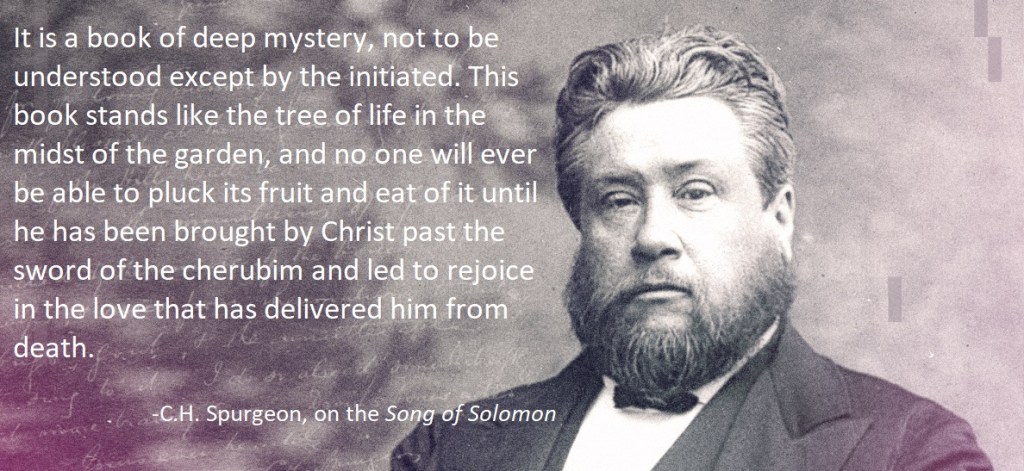
If you never read the Song of Solomon, which is really titled the “Song of Songs” in the first chapter, which means “The Best of Songs,” then you are definitely and decisively missing out on the best love poetry ever written.

Key Words throughout the Book are: “Love” and “Marriage.”

The Song of Solomon beautifully portrays the qualities of a pure “love” and the ingredients for a “successful marriage.”

To develop this kind of a relationship requires total honesty, unselfishness and unconditional an unconventional support.

The whole book is a love poem between a betrothed couple, who later appear to have gotten married.

It is romantic, sensual and is part of the word of God.

The couple refers to each other as the “one whom my soul loves.”

It speaks of being faint with love.

It describes the admiration for and the delight they have in each other.

In poetically describes the precious beauty that they see in each other.

Some people have had a real problem with taking this book literally, as if romantic love poetry is not worthy of scripture.

As a result, they interpret it as an allegory of God’s love for his bride Israel or as an allegory of Christ’s love for the church.

But that doesn’t eliminate the fact that it is still romantic love poetry.

If it were merely figurative of God’s love for us, the conclusion is still the same.

Romantic love is not worldly but comes from God. In fact, if it were figurative, then the case is even stronger that romantic love is godly, good, and beautiful.

It is a reflection of the love that God has for us.

Imagine that!

God describing is love for his people in romantic love poetry!

However, I think we should take it as what it is. It is simply beautiful and romantic love poetry.

Romantic love does not originate from the world.

It comes from the God of love.

In fact, all throughout the Bible, God presents himself as the greatest lover of all.

God fondly recalls the early days of his marriage to his bride, Israel.

Look at this passage of scripture:

“Then I passed by you and saw you, and behold, you were at the time for love; so I spread My skirt over you and covered your nakedness. I also swore to you and entered into a covenant with you so that you became Mine,” declares the Lord GOD.

Then I bathed you with water, washed off your blood from you, anointed you with oil. I also clothed you with embroidered cloth and put sandals of porpoise skin on your feet; and I wrapped you with fine linen and covered you with silk.

I adorned you with ornaments, put bracelets on your hands and a necklace around your neck. I also put a ring in your nostril, earrings in your ears and a beautiful crown on your head. Thus you were adorned with gold and silver, and your dress was of fine linen, silk and embroidered cloth. You ate fine flour, honey and oil; so you were exceedingly beautiful and advanced to royalty. Then your fame went forth among the nations on account of your beauty, for it was perfect because of My splendor which I bestowed on you,” declares the Lord GOD” (Ezekiel 16:8-14)

God loves his bride passionately.

He showered all of the symbols of his love on her.

Nothing was too good for her.

God is the lover of lovers.

When God loves, He loves very passionately, and with passionate love can come intense anger and fury, jealousy and pain when the one whom your soul loves is unfaithful to you. 

Notice what happens next in this passage:

“But you trusted in your beauty and played the harlot because of your fame, and you poured out your harlotries on every passer-by who might be willing. You took some of your clothes, made for yourself high places of various colors and played the harlot on them, which should never come about nor happen. You also took your beautiful jewels {made} of My gold and of My silver, which I had given you, and made for yourself male images that you might play the harlot with them…” (Ezekiel 16:15-17).

And God continues for many more verses describing how his perfect bride was unfaithful to him using the very jewels, clothes, other things God gave to her.

It was as if his “perfect bride committed adultery in their own bed! After going into more details about how he beloved was unfaithful to him, He concludes:

“Thus I will judge you like women who commit adultery or shed blood are judged; and I will bring on you the blood of wrath and jealousy. I will also give you into the hands of your lovers, and they will tear down your shrines, demolish your high places, strip you of your clothing, take away your jewels, and will leave you naked and bare. They will incite a crowd against you and they will stone you and cut you to pieces with their swords. They will burn your houses with fire and execute judgments on you in the sight of many women. Then I will stop you from playing the harlot, and you will also no longer pay your lovers” (Ezekiel 16:38-41).

Do you think God is angry?

Of course!

Wouldn’t you be angry and hurt if the one your soul loves cheated on you?

In fact, many of us would divorce our spouse in a heartbeat.

But God does no such thing.

In his passionate, relentless, undying love, God does not close the book on his beloved bride.

His love never dies.

Notice:

“Therefore, behold, I will allure her (or “woo” her), Bring her into the wilderness And speak kindly to her. Then I will give her her vineyards from there, And the valley of Achor as a door of hope. And she will sing there as in the days of her youth, As in the day when she came up from the land of Egypt. It will come about in that day,” declares the LORD, “That you will call Me Ishi And will no longer call Me Baali” (Hosea 2:14-16).

Maybe some of the flavor of this is lost in translation.

God woos his bride back to him after a period of anger and wrath.

He puts a song in her heart again.

In that day, she will no longer call him “Ba-ali,” which translated means “my Lord.”

No longer will God be “my Lord,” but “Ishi,” which means “my husband.”

Do you see the kind of love that God has for his bride?

In fact, one of the final pictures we have in scripture of the consummation of God’s plan is that of a marriage feast.

In Revelation 19:7-9, God uses the image of a wedding to describe the time when his heart’s desire will be fulfilled.

We, God’s people, are the bride, and he is eagerly anticipating that wedding day when we will be together forever.

“Let us rejoice and be glad and give the glory to Him, for the marriage of the Lamb has come and His bride has made herself ready. It was given to her to clothe herself in fine linen, bright and clean; for the fine linen is the righteous acts of the saints. Then he said to me, Write, ‘Blessed are those who are invited to the marriage supper of the Lamb.’ And he said to me, ‘These are true words of God'” (Revelation 19:7-9).

In the next scene is the arrival of the groom.

But it is unlike anything you have ever seen.

Notice:

“And I saw heaven opened, and behold, a white horse, and He who sat on it is called Faithful and True, and in righteousness He judges and wages war. His eyes are a flame of fire, and on His head are many diadems; and He has a name written on Him which no one knows except Himself. He is clothed with a robe dipped in blood, and His name is called The Word of God. And the armies which are in heaven, clothed in fine linen, white and clean, were following Him on white horses. From His mouth comes a sharp sword, so that with it He may strike down the nations, and He will rule them with a rod of iron; and He treads the wine press of the fierce wrath of God, the Almighty. And on His robe and on His thigh He has a name written, “KING OF KINGS, AND LORD OF LORDS” (Revelation 19:11-16).

The groom comes riding in on a white horse.

His robe is dipped in blood, his own blood.

Jesus died and was willing to go to Hades and back for his bride.

Even though she has been unfaithful, he will come riding in, swoop her up on his steed and ride off into Heaven with her arms around his waist.

Yes, Jesus loves his bride with an undying love.

You know, love does strange things.

It makes people look past the warts and the rough edges.

Sometimes people will say, “I just don’t understand what he sees in her!”

Maybe she is a “Plain Jane” with several flaws.

Maybe she is overweight.

Maybe her hair is stringy.

Maybe her clothes are out of style.

Maybe she is mismatched.

Maybe her nose is too big.

Maybe she is nothing to look at.

Maybe she is a mess.

But to her man she is the most beautiful thing in the world.

Love causes him to look past those things to see who she really is.

Isn’t that what God does?

He looks past all of our rough edges, all of our filth, all of the ugliness in us.

He sees what we can truly become.

They say that “true love is blind.”

I disagree with this.

Oh, I know that there can be the star struck person who is no longer capable of thinking with good judgment, but that is not what I am talking about.

I am talking about true love.

True love is not unaware of the flaws, the warts, and the dirt.

Instead, true love looks beyond these things. 

Now, please turn in your bibles to our devotional text from Ephesians 5:22-32.

Ephesians 5:22-33The Message

22-24 Wives, understand and support your husbands in ways that show your support for Christ. The husband provides leadership to his wife the way Christ does to his church, not by domineering but by cherishing. So just as the church submits to Christ as he exercises such leadership, wives should likewise submit to their husbands.

25-28 Husbands, go all out in your love for your wives, exactly as Christ did for the church—a love marked by giving, not getting. Christ’s love makes the church whole. His words evoke her beauty. Everything he does and says is designed to bring the best out of her, dressing her in dazzling white silk, radiant with holiness. And that is how husbands ought to love their wives. They’re really doing themselves a favor—since they’re already “one” in marriage.

29-33 No one abuses his own body, does he? No, he feeds and pampers it. That’s how Christ treats us, the church, since we are part of his body. And this is why a man leaves father and mother and cherishes his wife. No longer two, they become “one flesh.” This is a huge mystery, and I don’t pretend to understand it all. What is clearest to me is the way Christ treats the church. And this provides a good picture of how each husband is to treat his wife, loving himself in loving her, and how each wife is to honor her husband.

A Beautiful Bride ….

In many weddings, the moment a bride begins her walk down the aisle is very important.

Everyone stands to join the groom in watching her as she processes to meet him.

That moment is important for the groom too, of course.

He loves his bride and longs to have her with him.

Her walk down the aisle is a picture of the approach that began before they met.

And their meeting at the end of the aisle symbolizes the beginning of their new life together, which they pledge before God to continue throughout their lives.

Jesus loves his bride too.

Our text makes that clear even as it calls earthly husbands to give themselves up in loving service to their wives.

After all, for all to see, Jesus gave himself up for his bride, the church, at the cross at Calvary.

Christians are not frigid prudes that do not know what love is.

Christians are passionate people full of life that comes from the giver of life.

Remember this, the next time your anniversary comes up, or the next time your beloved’s birthday comes, or any time when you are driving on your way home.

We serve a God who is full of passionate love, and nothing is godlier when you display the same passionate love of God toward the one whom your soul loves.

Rejoice! Together we are the one for whom Christ waits at the end of the aisle.

The toughest love

Valentine’s Day, also known as the “day of love”, is one of the most widely celebrated holidays.

It’s the day when we’re supposed to tell those near and dear to us how much we cherish them.

Because everyone needs to feel loved.

Love is powerful.

So powerful, Jesus summarized the greatest Commandments using only love:

Mark 12:28-34Amplified Bible

28 Then one of the scribes [an expert in Mosaic Law] came up and listened to them arguing [with one another], and noticing that Jesus answered them well, asked Him, “Which commandment is first and most important of all?” 29 Jesus answered, “The first and most important one is: ‘Hear, O Israel, the Lord our God is one Lord; 30 and you shall love the Lord your God with all your heart, and with all your soul (life), and with all your mind (thought, understanding), and with all your strength.’ 31 This is the second: ‘You shall [unselfishly] [a]love your neighbor as yourself.’ There is no other commandment greater than these.” 32  The scribe said to Him, “Admirably answered, Teacher; You truthfully stated that He is One, and there is no other but Him; 33 and to love Him with all the heart and with all the understanding and with all the strength, and to [unselfishly] love one’s neighbor as oneself, is much more than all burnt offerings and sacrifices.” 34 When Jesus saw that he answered thoughtfully and intelligently, He said to him, “You are not far from the kingdom of God.” And after that, no one would dare to ask Him any more questions.

Now, when it comes to loving those closest to us, we should, of course, tell those people that we love them—and often.

However, in reality, doing so requires very little faith on our part because chances are our love will be returned to us in equal measure. (Luke 6:32–33)

Once we have experienced the true nature of God’s unending, unconditional love, the only reasonable response is to share that love with others who have not yet experienced it.

But this is where Jesus asks us to lean on our faith.

He gave another commandment that often seems quite illogical and at times, impossible.

“Love your enemies, do good to those who hate you (Luke 6:27).”

We are also called to love the unlovable.

This selfless love He’s describing can only be expressed with the supernatural help of the Holy Spirit.

When we put aside our emotions and trust the healing power of the Holy Spirit to help us and work through us for the benefit of those on the receiving end, we become a sure and certain eye witness of God’s transforming love and power.

Today,

“My beloved is mine and I am his; He pastures his flock among the lilies…..” Song of Solomon 2:16

In addition to telling your special someone how much they mean to you, maybe we should also reach out to those who wouldn’t normally come to mind on Valentine’s Day – Cherish Christ’s church, even when church is not so lovable.

You will be loving what Christ himself loves!

In the name of God, the Father and God the Son and God the Holy Spirit,

Let us Pray,

A Valentine’s Day Prayer for True Love

Dear God, Help me today to understand what love really means.

I need a love that’s big enough to include all of us. Big enough for the dating and engaged couples, of course, with their giddy daydreams of a future together. But also big enough for the married folks, whether their passion for each other is still blazing brightly or barely more than a smoldering wick. Big enough for the singles toasting their independence, and for the singles wishing someone would come along and make that independence disappear. For the lonely and widowed and brokenhearted, I need a love that understands, a love that welcomes in hurt and sorrow instead of excluding them.

The love I need more than anything is Your love. Without Your love, no other love will ever be sufficient. And with it, every other love becomes richer and truer and more life-giving than it could have been otherwise. We have learned all our best loves from You: the love of faithful friends, of spouses and significant others, of parents and siblings and children. Love that commits. Love that sacrifices. Love that lays down its life. You authored each of these loves, taught us how to recognize them and long for them and give them away. Our best efforts at Valentine’s Day are just a fraction of the wholeness of love.

Father, Son and Holy Spirit, Today, let everything I see remind me of Your great love for all of God’s Children. Let today be a day for love. Real love. Big love. Your love.

Adeste Fidelis! Venite Adoremus! Dominum.

Gloria! In Excelsis Deo! Alleluia! Alleluia! Alleluia! Amen.

https://translate.google.com/

Utterly Unconventional Love of God and Saint Valentine’s Day. Ephesians 3:17-19

Ephesians 3:14-21Amplified Bible

14 For this reason [grasping the greatness of this plan by which Jews and Gentiles are joined together in Christ] I bow my knees [in reverence] before the Father [of our Lord Jesus Christ], 15 from whom every family in heaven and on earth [a]derives its name [God—the first and ultimate Father]. 16 May He grant you out of the riches of His glory, to be strengthened and spiritually energized with power through His Spirit in your inner self, [indwelling your innermost being and personality]17 so that Christ may dwell in your hearts through your faith. And may you, having been [deeply] rooted and [securely] grounded in love, 18 be fully capable of comprehending with all the saints (God’s people) the width and length and height and depth of His love [fully experiencing that amazing, endless love]; 19 and [that you may come] to know [practically, through personal experience] the love of Christ which far surpasses [mere] knowledge [without experience], that you may be filled up [throughout your being] to all the fullness of God [so that you may have the richest experience of God’s presence in your lives, completely filled and flooded with God Himself].

20 Now to Him who is able to [carry out His purpose and] do superabundantly more than all that we dare ask or think [infinitely beyond our greatest prayers, hopes, or dreams], according to His power that is at work within us, 21 to Him be the glory in the church and in Christ Jesus throughout all generations forever and ever. Amen.

The Word of God for the Children of God.

Adeste Fidelis! Venite Adoremus! Dominum.

Gloria! In Excelsis Deo! Alleluia! Alleluia! Alleluia! Amen.

God gave us Jesus as a way of saying, “I love you and you are special to me.”

That is a really great gift, isn’t it?

Much better than Valentine’s cards, or candy, or flowers.

Still, we have those special people in our lives whom we need to give our fullest possible attention to – our wives, our sweethearts, our very good friends, those co-workers who work with us and beside us and those whom we may supervise.

Treat them special because they are special – who and what and why they are is absolutely 100% irreplaceable – every single one of their lives utterly matters.

They need to know that they are truly respected, loved and deeply appreciated.

God’s Unconventional Love versus Valentine’s Day

Ephesians 3:14-19The Message

14-19 My response is to get down on my knees before the Father, this magnificent Father who parcels out all heaven and earth. I ask him to strengthen you by his Spirit—not a brute strength but a glorious inner strength—that Christ will live in you as you open the door and invite him in. And I ask him that with both feet planted firmly on love, you’ll be able to take in with all followers of Jesus the extravagant dimensions of Christ’s love. Reach out and experience the breadth! Test its length! Plumb the depths! Rise to the heights! Live full lives, full in the fullness of God.

Everyday is a special day when we open our eyes, take that next breath, set our feet upon the floor, walk forth into the kitchen get that very first cup of coffee.

We look outside, greet the morning, are welcomed by the dawn’s new sun.

A hand that raises the blades of a Venetian blind to look out the window at the sky of a sunny day.

Tomorrow, however, is a wee bit more of a special day.

Yes, it is Valentine’s Day.

But does everyone know the origin of this day?

It is a very old tradition which started because of a Bishop named Valentinus.

He lived back in the days of the Roman Empire.

Long ago, Roman officials were against young people getting married in the church.

Many young Christians wanted to be married by the priest, in the church, with God’s blessing.

Valentinus was sympathetic to these people and continued to help marry them, even though he was often threatened by the government authorities.

Sadly, he was taken to Rome and put to death for his faith and his defiance of the Emperor’s rule.

In memory and honor of Saint Valentinus, young couples started talking about choosing a Valentine, when they were actually talking about choosing a bride.

Now we call this day, Saint Valentine’s Day.

In the modern era, many people give their sweethearts Valentine’s Day cards with hearts all over them.

Some people give candies or flowers.

A red carnation or a red rose means “I love you.”

These are all ways that people show their love.

But God also gave us a gift to show us that He loved us.

It was Jesus. God gave us Jesus as a way of saying, “I love you and you are special to me.”

That is a really great gift, isn’t it?

Much better than cards, or candy, or flowers.

Today, let us meditate on biblical love, the greatest love of all time.

There once was a very old pastor, who was suffering from a long battle with cancer.

A few days before his death, he continued to hold on to a special verse that was the source of his inspiration.

He placed a bookmark where his favorite scripture passage was written:

“Who shall separate us from the love Christ? Shall tribulation, or distress, or persecution, or famine, or nakedness, or peril, or sword?” (Romans 8:34-35 KJV).

Despite facing such a trail in his life, the old pastor was most certainly blessed with the power “to grasp how wide and long and high and deep is the love of Christ;” a love that surpasses knowledge.

As children of God, we understand the fact that the root and foundation of creation is love.

It “surpasses knowledge.”

We know about human love.

Human love comes with the understanding that love comes as a reward for being good, for being faithful, being trustworthy and true, for being kind, for giving gifts, and for acting and for responding with appropriate behavior.

But this is not the same as the love which is embedded in the foundation of creation.

This is not the love that surpasses knowledge.

This is not the love that Paul prays we might have the power to grasp.

God’s love flows freely, without consideration of reward or any plan of equal or unequal or non-existent compensation.

This is a love that is not inherent to human nature.

We are more inclined to return love for love.

But the Scripture says,

“… how is it to your credit if you receive a beating for doing wrong and endure it? But if you suffer for doing good and you endure it, this is commendable before God. To this you were called, because Christ suffered for you, leaving you an example that you should follow in his steps” (1 Peter 2:20-21).

If we are to approach love in the way of biblical love, we must meditate on what it means when the Bible says, we must love God and each other as ourselves.

“Greater love has no one than this: to lay down one’s life for one’s friends. You are my friends if you do what I command. I no longer call you servants, because a servant does not know his master’s business. Instead, I have called you friends, for everything that I learned from my Father I have made known to you. You did not choose me, but I chose you and appointed you so that you might go and bear fruit–fruit that will last–and so that whatever you ask in my name the Father will give you. This is my command: Love each other.” (John 15:13-17)

Today, I would like to meditate on 3 questions about this amazing kind of love.

The first question is this:

Where does Love come from?

Where Does Love Come From?

Now some of you would answer, ‘that’s easy–it comes from within.’

Some may say, ‘It’s something that happens naturally as we mature as human beings.’

However, remember how hard it is to teach children to share?

That sharing instinct is not natural to them, but it is taught.

A human instinct is: self-survival.

C.S. Lewis, the famed English scholar, studied the various Greek words for love.

He came to distinguish the difference between what he called “needed love” and “gift love.”

Needed love is described as self-evident.

It is the most common kind of love in our world.

It is a mortal and human concept of love.

I love you, BECAUSE you love me.

I love you, because you provide for me, because you support me, and because you meet my needs.

Mr. Lewis illustrates that when we humans say to another, “I love you,” what we are really meaning is, “I need you, I want you. You hold value in my life.”

Now in contrast to “needed love” Mr. Lewis describes “gift love.”

This form of loving is born of fullness and wholeness.

The goal of gift love is to enrich and enhance the person whom it loves.

It does not require anything in return, nor does it hold requirements.

“Gift love moves out to bless and to increase rather than to acquire or to diminish. Gift love is more like a bountiful, artesian well that continues to overflow than a vacuum or a black hole. (C.S. Lewis)”

Mr. Lewis concludes this is what God’s love is all about. God’s love is gift love, not needed love.

This, of course, is the meaning of agape love; unconditional love.

Are we capable of agape love– loving as God loves?

To an extent we are.

But, we must go to the source of love, and the source of all love is God.

Jesus says in John’s narrative today, “As the Father has loved me, so have I loved you. (John 15:13)”

Perfect love does not come from within, it only comes from above.

And when God lives within us, we become capable of expressing perfect love.

Please take secure hold of your BIBLES and turn with me to 1 John 4:7-11.

In his first epistle, John writes,

“Dear friends, let us love one another, for love comes from God. Everyone who loves has been born of God and knows God. Whoever does not love does not know God, because God is love.” So, that is the answer to the first question: where does love come from? It comes from God. Then John adds, “This is how God showed his love among us: He sent his one and only Son into the world that we might live through him. This is love: not that we loved God, but that he loved us and sent his Son as an atoning sacrifice for our sins.” (1 John 4:7-11).

The Second Question is ….

What does this Love look like?

A young girl came home one day bursting with good news.

“Mom, Dad, I know why we had to learn grammar!” she exclaimed.

“It is so we can understand God.”

Her mom and dad gave her a puzzled look, so the young girl explained.

“God is love, and love can be a noun, an adjective, an adverb, or a verb.”

What a powerful concept!

Now doesn’t that preach a sermon or three lasting all the live long day!

Love isn’t just a vague feeling.

It is an action, an attitude, a spirit, and a character trait.

Since Jesus was filled with the Spirit of God, his every attitude, thought, word, action and deed was motivated by the love of God for Him and too, vice versa.

He was motivated completely and without reservation by love.

So, what does love look like?

Gift love is best illustrated with Jesus, a blameless man, hanging on a cross simply and solely because of God’s love for us.

We cannot meet any of God’s needs or even all of God’s commands.

But God’s nature is to give love, unconditionally, unconventionally, even at times when we do not deserve it.

As John writes,

“This is how God showed his love among us: He sent his one and only Son into the world that we might live through him. This is love: not that we loved God, but that he loved us and sent his Son as an atoning sacrifice for our sins.” (1 John 4:9-10)

God’s gift love is a pure and perfect love.

It is an unconventional, never-ending, and everlasting kind of love.

It does not ask for you to meet up to requirements, and it does not ask for compensation.

No matter how many times we sin or fall short of the Glory of God, His love never left us.

No matter how many times the world rebuked Him, His love never left us.

What does love look like?

There is no Greater and more Powerful image than Jesus on the Cross.

That is perfect love.

Perfect love looks like God, for He is love.

God and love are not two realities; they are one.

God’s infinite power of being is: the infinite power of love.

In every movement of love we are dwelling in God and God in us.

And when we accept the Holy Spirit into our lives, we allow God’s perfect love to be pictured through us.

We can also illustrate perfect love through the way we live.

Through every attitude, thought, word, and deed, we have.

Christians are called to be a reflection of the image of God.

We reflect God’s perfect love so that others can also see what true perfect love looks like.

Love unconditionally, unconventionally to all.

Now, the third and last question is:

What does such love require from us?

Jesus answers this question in John 15:13-17,

“My command is this: Love each other as I have loved you. Greater love has no one than this: to lay down one’s life for one’s friends. You are my friends if you do what I command. I no longer call you servants, because a servant does not know his master’s business. Instead, I have called you friends, for everything that I learned from my Father I have made known to you. You did not choose me, but I chose you and appointed you so that you might go and bear fruit–fruit that will last–and so that whatever you ask in my name the Father will give you. This is my command: Love each other.”

Jesus has issued the command: “Love each other as I have loved you.”

We are required by God’s command to love others as he has loved us–not with needed love, but with gift love.

Not because of anything they can or have done for us, but because of what our Lord and Savior Jesus Christ has done for us.

Luke 6:27-32Amplified Bible

27 “But I say to you who hear [Me and pay attention to My words]: [a]Love [that is, unselfishly seek the best or higher good for] your enemies, [make it a practice to] do good to those who hate you, 28 bless and show kindness to those who curse you, pray for those who mistreat you. 29 Whoever [b]strikes you on the cheek, offer him the other one also [simply ignore insignificant insults or losses and do not bother to retaliate—maintain your dignity]. Whoever takes away your coat, do not withhold your shirt from him either. 30 Give to everyone who asks of you. [c]Whoever takes away what is yours, do not demand it back. 31 Treat others the same way you want them to treat you. 32 If you [only] love those who love you, what credit is that to you? For even sinners love those who love them.

The world lives by the philosophy: “Scratch my back and I’ll scratch yours.”

To do good for people who are incapable of doing anything for you in return.

This is gift love, agape love. It is the love of God.

And of course, dear brother and sisters, this is the hardest form of love to give.

It is hard to love someone unconventionally when they cannot or will not or refuse to do the same for you.

But when the Spirit of the Lord is within, He will give you the strength to love.

The strength to be patient and compassionate.

The strength to reflect agape love to others who do not know God.

For the greatest command was to love God, and the second greatest command was to love one another.

Concluding Reflection’s: Love That Surpasses Knowledge

Ephesians 3:16-19Easy-to-Read Version

16 I ask the Father with his great glory to give you the power to be strong in your spirits. He will give you that strength through his Spirit. 17 I pray that Christ will live in your hearts because of your faith. I pray that your life will be strong in love and be built on love. 18 And I pray that you and all God’s holy people will have the power to understand the greatness of Christ’s love—how wide, how long, how high, and how deep that love is. 19 Christ’s love is greater than anyone can ever know, but I pray that you will be able to know that love. Then you can be filled with everything God has for you.

Love is commonly considered an emotion—a feeling, inclination of the heart.

Love involves knowing the person we love, and yet even that knowledge is not the end of love.

Paul reminds his readers of this basic truth when he prays that they may “know this love that surpasses knowledge.”

Paul is talking here about the love of God, and he’s saying that it’s not enough to know about God without having love for God.

The standard of love that believers strive for is to “be filled to the measure of all the fullness of God.”

That’s a high standard indeed!

God is, in every way, far beyond what our minds can comprehend or our hearts can contain.

We will never achieve this total fullness!

But what a powerful prayer this is—and what a wonderful goal to guide us in living our life!

To be continually growing in this “fullness of God” and his love is the delight of discipleship.

This is a wonderful prayer offered for us—but it’s also a prayer to offer on behalf of others.

What a transformation of our relationships when an entire community of Christ’s disciples experiences together a growing fullness of God’s love.

It’s beyond our ability to imagine!

Valentines Day is known as the day of love.

But God’s love lasts for eternity.

It is a perfect LOVE that loves unconditionally and unconventionally.

Where does perfect love come from?

It comes from God alone, and works within us when we become His children.

What does perfect love look like?

It looks like Jesus, a blameless man, hanging on a cross, for a world which did not deserve Him.

And as His children we reflect that image through our actions, our attitudes, thoughts, words, and deeds.

And what does such perfect love require out of us?

It requires us to move beyond “needed love” and give “gift love”.

To look around at others who are in need of God’s love and to give it to them–not asking what they can do for us, remembering what Christ has done for us.

In the name of God, the Father and God the Son and God the Holy Spirit,

Let us Pray,

We bow our hearts before You, Father God. You are the Creator of everything we see in heaven and on earth. We pray that out of Your glorious, unlimited resources, You would strengthen our hearts and minds through the power of Your Holy Spirit. May Your love be the rich soil in which our lives are rooted. May Your love be the only firm foundation upon which we build, so that, together with all Your people everywhere, we would come to truly understand how long, how high, how wide and how deep Your love really is—how it far surpasses anything we can imagine. God, fill us with the fullness and the power that comes from You alone, so that our lives would reflect your goodness and grace to the world around us.  Lord, fill us to overflowing with the knowledge and the wisdom of your fullness so that we love you more and serve you better. Help us to keep offering this prayer for others, that we may all grow in you.

Adeste Fidelis! Venite Adoremus! Dominum.

Gloria! In Excelsis Deo! Alleluia! Alleluia! Alleluia! Amen.

https://translate.google.com/

“Ambitious” Guests of Honor: Jesus Teaches About Humility and Service. Luke 14:7-14

Luke 14:7-14 Amplified Bible

Parable of the Guests

Now Jesus began telling a parable to the invited guests when He noticed how they had been selecting the places of honor at the table, saying to them, “When you are invited by someone to a wedding feast, do not sit down [to eat] at the place of honor, since a more distinguished person than you may have been invited by the host, and he who invited both of you will come and say to you, ‘Give this man your place,’ and then, in disgrace you proceed to take the last place. 10 But when you are invited, go and sit down [to eat] at the last place, so that when your host comes, he will say to you, ‘Friend, move up higher’; and then you will be honored in the presence of all who are at the table with you. 11 For everyone who exalts himself will be humbled [before others], and he who habitually humbles himself (keeps a realistic self-view) will be exalted.”

12 Jesus also went on to say to the one who had invited Him, “When you give a luncheon or a dinner, do not invite your friends or your brothers or your relatives or wealthy neighbors, otherwise they may also invite you in return and that will be your repayment. 13 But when you give a banquet or a reception, invite the poor, the disabled, the lame, and the blind, 14 and you will be blessed because they cannot repay you; for you will be repaid at the resurrection of the [a]righteous (the just, the upright).”

The Word of God for the Children of God.

Adeste Fidelis! Venite Adoremus! Dominum.

Gloria! In Excelsis Deo! Alleluia! Alleluia! Alleluia! Amen.

Parable of the Honored Ambitious Guests …

The guests and host of a banquet met Jesus.

At the banquet, the guests tried to sit in seats of honor, near the place where the host would sit.

This was common in that society, which cared about honor for people who were respectable and had status in the community.

It was also common to invite people over who would invite you back, because you could then benefit socially from attending another dinner party hosted by someone else.

But Jesus introduced a different kind of world by what he said to the guests and the host.

He told them to sit in the least honorable seats, and to invite guests who were too poor to return the invitation.

In this way Jesus revealed a way of life in which status doesn’t matter, and in which shame and honor are erased.

Jesus revealed this way of life in his teachings, and he made this way of life possible by becoming the most despised outsider of all.

He died on a cross and bore the worst of all rejections in order to make God’s kingdom a reality in our world.

God’s kingdom is the only place where the only status that matters is that we are “loved by God.”

God’s kingdom is a gift that Jesus Christ gives to us.

Jesus Teaches About Ambition, Humility, Service

Ambition can be a powerful ally or a destructive enemy.

If your ambition is misplaced and fueled by shallow wants and superficial desires, you will find yourself perpetually dissatisfied, ultimately discontent.

The Bible talks about that type of ambition in Matthew 6:24, warning against greed and the insatiable desire to earn more money than you could ever spend.

If wealth and riches and status are your ambition, you will never be satisfied.

There is nothing wrong with ambition or about being ambitious ….

There is nothing wrong with Christian or with a Christian being ambitious.

There’s nothing wrong with making money, but you have to own the money; you can’t let it own youlove of money is not supposed to be our ambition.

You and I have to have a more sacred purpose that’s greater than money.

The money will come to you through hard work and God’s blessing.

Your greater purpose should be what your ambitions push you towards.

Matthew 6:33 affirms this by giving us the insight that God knows our desires.

God knows what fuels us, and if we aren’t scheming and plotting to send someone to ruination, He wants to bless us with the things that we seek.

Jesus advises that if you and I seek first the Kingdom of God then He will give you and I everything that you and I need, and more.

Humility and service are just two of the other values that Jesus not only taught but exemplified during His earthly ministry.

On so many occasions in the Bible, we read Jesus teaching His disciples to always consider others before themselves. Jesus repeatedly emphasized the importance of self-denial and service to others.

In Luke 14:7-14, Jesus used the occasion of a banquet to give insight into humility and service.

He addressed the guest regarding humility in verses 7 to 10, And in verses 12 to 14, He spoke to the host about serving others.

Luke 14:7-14The Message

Invite the Misfits

7-9 He went on to tell a story to the guests around the table. Noticing how each had tried to elbow into the place of honor, he said, “When someone invites you to dinner, don’t take the place of honor. Somebody more important than you might have been invited by the host. Then he’ll come and call out in front of everybody, ‘You’re in the wrong place. The place of honor belongs to this man.’ Embarrassed, you’ll have to make your way to the very last table, the only place left.

10-11 “When you’re invited to dinner, go and sit at the last place. Then when the host comes he may very well say, ‘Friend, come up to the front.’ That will give the dinner guests something to talk about! What I’m saying is, If you walk around all high and mighty, you’re going to end up flat on your face. But if you’re content to be simply yourself, you will become more than yourself.”

12-14 Then he turned to the host. “The next time you put on a dinner, don’t just invite your friends and family and rich neighbors, the kind of people who will return the favor. Invite some people who never get invited out, the misfits from the wrong side of the tracks. You’ll be—and experience—a blessing. They won’t be able to return the favor, but the favor will be returned—oh, how it will be returned!—at the resurrection of God’s people.”

Be Ambitious and Humble Yourself and Be Exalted …

Jesus’ teaching is clear – do not think so highly of yourself that you always come expect the very best treatment at all times.

No matter who you think or believe or perceive yourself to be when you are in public or in society, remember that there’s always somebody higher than you.

Being ambitious might be good at times but certainly not on many occasions.

Imagine a famous big city mayor who went to a wedding banquet along with his bodyguards and servicemen.

Upon his arrival, the host was too busy attending to other guests so he could not personally welcome him.

Thinking he was the most highly regarded guest, the mayor naturally walked into the dining hall and sat, took the best seat and made himself comfortable.

When the host noticed his presence, he came and whispered to his ear that the seat he occupied is reserved for the governor.

At this very public event, the mayor had no choice but to get up so the governor could take his rightful seat.

With all of the media outlets present, and their cameras following his every move, what a huge embarrassment for the mayor knowing all eyes are on him.

Humility and the “Ambitious Famous” Christian

Humility is a fundamental grace in the Christian life, and yet it is elusive.

There may be times when we think we deserve VIP treatment because of who we are in the church or society.

We are the Pastor – therefore we are entitled to the very best parking space.

Head of Table: We were the chairperson for the building committee and we just carried out the most successful capital campaign in the history of the church.

The Matriarch and the Patriarch of the Church – Head of the Line meal tickets.

Or perhaps there have been times when we ourselves exhibited false humility.

Do you think you have this “I am all this, that and the other, ergo…” virtue?

Please allow me to say, “If you know you have it, you have already flaunted it!”

As someone rightly said, “Humility is not thinking meanly of ourselves; it is simply not thinking of ourselves at all.” 

Jesus is the greatest example of humility, and we would do well to ask the Holy Spirit to enable us to more imitative of Him and significantly less of ourselves.

A True Act of Ambitious Charity

The Lord Jesus also emphasized the importance of treating people equally regardless of their social and economic status.

Unfortunately, when we are the one’s who are hosting a banquet, we prefer to invite rich and powerful people – trying to increase our status and self esteem.

But Jesus told the host of the banquet that when he holds a feast, he should be extraordinarily radical and also invite the poor, the lame, and the blind.

Why should the host do what Jesus said?

It’s because these people won’t be able to repay him.

They could not invite him back because they couldn’t afford to host a banquet!

However, the host will raise his standard of living in the eyes of the community he is living, showing true compassion, receiving his reward at the resurrection.

The reality is that whenever we host a party, we just prefer to invite our friends, relatives, and the rich and famous.

We want to have people who can bring the very best, most expensive gifts or those who can invite us to their party in the future.

Of course, there’s nothing wrong with inviting these people.

When Rabbi Jesus said, “Do not invite your friends, brothers, relatives, or rich neighbors,” He did not mean absolute prohibition.

Such language is common in Semitic discourse and is used for emphasis.

Jesus’ point here is that inviting one’s friends and relatives cannot be classified as a spiritual act of charity.

It may also be a rebuke against those prone to reserve their hospitality for rich neighbors.

They intentionally do this knowing that these guests will automatically feel obligated to return the favor.

And if they fail to automatically invite us back we take an automatically offense and as an excuse to discontinue the relationship – bear an everlasting grudge.

Greatness and Servanthood and Ambition …

Matthew 20:20-28Amplified Bible

Preferred Treatment Asked

20 Then [Salome] the [a]mother of Zebedee’s children [James and John] came up to Jesus with her sons and, kneeling down [in respect], asked a favor of Him. 21 And He said to her, “What do you wish?” She answered Him, “Command that in Your kingdom these two sons of mine may sit [in positions of honor and authority] one on Your right and one on Your left.” 22 But Jesus replied, “You do not realize what you are asking. Are you able to drink the cup [of suffering] that I am about to drink?” They answered, “We are able.” 23 He said to them, “You will drink My cup [of suffering]; but to sit on My right and on My left this is not Mine to give, but it is for those for whom it has been prepared by My Father.”

24 And when the [other] ten heard this, they were resentful and angry with the two brothers. 25 But Jesus called them to Himself and said, “You know that the rulers of the Gentiles have absolute power and lord it over them, and their great men exercise authority over them [tyrannizing them]. 26 It is not this way among you, but whoever wishes to become great among you shall be your servant, 27 and whoever wishes to be first among you shall be your [willing and humble] slave; 28 just as the Son of Man did not come to be served, but to serve, and to give His life as a ransom for many [paying the price to set them free from the penalty of sin].”

In Matthew 20:26-27, Jesus taught His disciples that greatness is parallel to servanthood.

Jesus said in response to the request of James and John’s mother for them to be given high places in God’s Kingdom.

In his reply, Jesus poignantly highlighted about being a “servant.” 

The word here means a “slave” and our English word “deacon” comes from it.

Not every servant was a slave, but every slave was a servant.

The Lord was teaching His disciples that the style of greatness and leadership for believers is different.

The Gentile leaders dominate in a dictatorial fashion, using carnal power and authority.

Believers are to do the opposite.

They lead must by being servants and giving themselves away for others, as Jesus did.

Sadly, in the church today we have many “celebrities” but so very few servants.

There are many who want to “flaunt” their authority but few who want to take the towel and water filled basin and get on their knees and wash “dirty” feet.

But while there are people who are still willing to serve, it’s interesting to note that they also have their motives.

Some are sincerely serving only to glorify God but others serve for honor and place and recognition of their “ambitious,” “obviously superior spirituality.”

What’s your motive for serving God and others?

Some final reflections and ambitious thoughts …

In Philippians 2:3-4, Paul uses the example of Jesus’ humility and service to encourage believers to do the same.

He uses the word “selfishness” which is sometimes rendered “strife” because it refers to “us versus them versus everybody, anybody else” rivalry.

It speaks of the pride that prompts people to push for their own way.

And then Paul encourages the church to have humility of mind.

It was a term of derision with the idea of being low, shabby, and humble.

The basic definition of true humility is regarding others as more important than yourself.

Our motive for being humble and serving others must be the praise of God and not the applause of men.

We must care significantly more about our eternal reward in heaven and not the temporary “we cannot take it with us to the grave” pseudo recognition on earth.

Remember, “You can’t get your reward twice” (Matthew 6:1-8).

On the day of judgment, many who today are first in the eyes of men will be last in God’s eyes.

And many who are last in the eyes of men will be first in the eyes of God (Luke 13:30).

The story is told about a wise man who shunned publicity.

He would speak every once in a while and when he speaks everyone listens to him.

After speaking he would immediately hide away into his own private place.

There would be rare times that he granted interviews and when he does he would always point to God as the giver of whatever wisdom that he possesses.  

Many of us may be tempted to own to ourselves the wisdom or material wealth that we presently have.

But we should not allow ourselves to be possessed by that temptation, for who are we to own to ourselves what we have?

We have to always remember that we are mere vessels of God, whatever we have comes from God.     

In our gospel text, Jesus highlights the great virtue of humility.

Jesus tells us to always be humble and not to crave for attention and adulation.

Why?

For the simple reason that the more humbler we are the more that Jesus is seen both with us and within us and emanating outward into the world from us.

The humbler we are the more the we become His effective vessels in this world. 

The humbler you are the more that you allow Jesus’ light to shine upon you.

The humbler you are the more that you allow Jesus’ light to shine out from you.

The more light which emanates from us, more the light of Savior Jesus shines.

Maybe in some part of the earth we still walk on, the light of His Salvation;

Overly Ambitious Thoughts and Overly Ambitious Christians

Matthew 5:13-16 Amplified Bible

Disciples and the World

13 “You are the [a]salt of the earth; but if the salt has [b]lost its taste (purpose), how can it be made salty? It is no longer good for anything, but to be thrown out and walked on by people [when the walkways are wet and slippery].

14 “You are the light of [Christ to] the world. A city set on a hill cannot be hidden; 15 nor does anyone light a lamp and put it under a basket, but on a lampstand, and it gives light to all who are in the house. 16 Let your light shine before men in such a way that they may see your good deeds and moral excellence, and [recognize and honor and] glorify your Father who is in heaven.

Do we walk/talk the kind of “shining” humility, our Savior now requires of us?

We walk/talk the kind of “shining” servanthood our Savior now requires of us?

I am pondering the imponderable possibilities if the answers are actually: YES!

In the name of God, the Father and God the Son and God the Holy Spirit,

Let us Pray,

Lord God, we are shocked and awed by the kind of kingdom Jesus has introduced—it seems upside down and backwards to us. Its simple wisdom is wonderfully radical to us, the possibilities which would come from actual practice are enormous. We thank you for the great love that your kingdom reveals when we allow it to shape our lives.

Hospitable God, you invite us to a banquet where the last may be first, where the humble and the mighty trade places. Let us share your abundance with no fear of scarcity; let us greet strangers as angels you have sent! Send your Holy Spirit now so that we may find a place at your table and welcome others with radical hospitality. In the name of our Lord and Savior Jesus, Guest at all our tables, we pray.  Amen.

Adeste Fidelis! Venite Adoremus! Dominum!

Gloria! In Excelsis Deo! Alleluia! Alleluia! Alleluia! Amen.

https://translate.google.com/

Growing Up to Become a Child – Descriptions of a Childlike Faith. Matthew 18:1-5

Matthew 18:1-6Amplified Bible

Rank in the Kingdom

18 At that time the disciples came to Jesus and asked, “Who is greatest in the kingdom of heaven?” He called a little child and set him before them, and said, “I assure you and most solemnly say to you, unless you repent [that is, change your inner self—your old way of thinking, live changed lives] and become like children [trusting, humble, and forgiving], you will never enter the kingdom of heaven. Therefore, whoever [a]humbles himself like this child is greatest in the kingdom of heaven. Whoever receives and welcomes one [b] child like this in My name receives Me; but whoever causes one of these little ones who believe in Me to stumble and sin [by leading him away from My teaching], it would be better for him to have a heavy millstone [as large as one turned by a donkey] hung around his neck and to be drowned in the depth of the sea.

The Word of God for the Children of God.

Adeste Fidelis! Venite Adoremus! Dominum.

Gloria! In Excelsis Deo! Alleluia! Alleluia! Alleluia! Amen.

Growing Up to Become a Child

What does the man, Rabbi Jesus, mean by saying to his disciples that we each need to “change and become like the little children who are among us”?

One clue we have here is that Jesus is responding to the question “Who is the greatest in the kingdom of heaven?”

And he replies, “Whoever takes the lowly position of this child is the greatest in the kingdom of heaven.”

In the Gospel narratives about Jesus and his disciples (Matthew, Mark, Luke, and John), we somehow find that the disciples often argued over which of them was, is and is about to become greatest; they seem to have been a competitive group.

And it seems they were thinking of greatness in terms of authority, leadership, knowledge, ­power, influence, “one above equals,” thrones and of other things.

So Jesus is seemingly telling all of his disciples that they need to change their attitudes about greatness and to become lowly and humble like little children.

Jesus’ followers, whether ancient or contemporary need to die to their selfish ambitions, realize that, just as little children depend on parents and caregivers, we are all totally dependent on Father God for all our needs and future living.

Here’s another hypothetical thought. A man in his sixties said, “Last week my five-year-old grandson said he wanted to be a firefighter when he grew up. I replied, ‘And when I grow up, I want to be a five-year-old boy.’ My grandson stared at me with wide, wondering eyes.”

Have you looked around at your own children or grandchildren and pictured yourself having such a “wide eyed wondering hypothetical conversation?”

Have you looked around at God’s world with “wide, wondering eyes” lately?

That’s something which I long for when I look at my own almost nine year old grandson when hear the clarion call to change and to become like a little child.

Descriptions of a Childlike Faith

Rabbi Jesus’ statement to His disciples in Matthew 18:3 about them not entering the kingdom of heaven unless they are converted and become as little children speak volumes and volumes of truth of the importance of living a childlike faith.

But what is childlike faith?

What makes one’s faith childlike?

Faith which is Rooted in Security

During the days of childhood, one learns how to survive and prosper, how to live under authority, how to live, love and share, and how to serve and praise.

A well-cared-for child has no worries about house or car or any credit card payments, no anxious moments over getting married to the right one, career or job opportunities, no apprehensions about failure, no thoughts of vengeance.

David exemplified this kind of faith while he was on the run from Saul.

Psalm 131:1-2Amplified Bible

Childlike Trust in the Lord.

A Song of [a]Ascents. Of David.

131 Lord, my heart is not proud, nor my eyes haughty;
Nor do I involve myself in great matters,
Or in things too difficult for me.


Surely I have calmed and quieted my soul;
Like a weaned child [resting] with his mother,
My soul is like a weaned child within me [composed and freed from discontent].

In Psalm 131:1-2, David compared the calmness and serenity he had in the Lord to that of a weaned child with his mother.

Composed, content with God and the works He was doing in his life, David did not concern himself with great matters such as any selfish ambition and self-promotion – rather, he found serenity and security in his relationship with God.

Surely goodness and mercy and unfailing love shall follow me all the days of my life,
And I shall dwell forever [throughout all my days] in the house and in the presence of the Lord. (Psalm 23:6)

To have a childlike faith is to find serenity and security in our relationship with God no matter the circumstance.

Faith Which Praises

Jesus loved children. He loved to use children to teach hard-headed and hard-hearted grown-ups about faith and praise.

While preaching in the region of Judea, Christ was encircled by a great crowd.

Matthew 19:13-15Amplified Bible

Jesus Blesses Little Children

13 Then children were brought to Jesus so that He might place His hands on them [for a blessing] and pray; but the disciples reprimanded them. 14 But He said, “Leave the children alone, and do not forbid them from coming to Me; for the kingdom of heaven belongs to such as these.” 15 After placing His hands on them [for a blessing], He went on from there.

He later reminded the priests and scribes that “the mouth of babes and nursing infants” would offer praise fitting for God’s Anointed (Matthew 21:16).

When Jesus entered Jerusalem riding on a colt, a very great multitude that included children cried out saying, “Hosanna to the Son of David! Blessed is He who comes in the name of the Lord! Hosanna in the highest” (Matthew 21:9)!

The sound of the children praising Jesus in the temple courts made the chief priests and scribes indignant.

In response, Jesus quoted from Psalm 8:2.

God does not only want prayer in His house, He also delights in praise.

To have a childlike faith is to have a heart that always longs to praise and glorify God in each and every life’s circumstance.

Faith Which Believes

Jesus used the lad with the five barley loaves and the two small fish to feed five thousand people (John 6:9).

To show His power over death, Jesus used a little girl. Jairus, a ruler in the synagogue, fell at Jesus’ feet begging Him to come to his house and save his dying twelve-year-old daughter.

Jesus agreed and tried to make His way with Jairus, but the surrounding crowd made the trip difficult.

Word came that Jairus’ daughter had died.

But Jesus responded, “Do not be afraid, only believe and she will be made well” (Luke 8:50).

At the house, as the parents wept over their loss, Jesus said, “She is not dead but sleeping” (Luke 8:52).

Through tears, the people laughed at the impossibility of what they heard.

Jesus then asked everyone to leave the room, and then He said, “Little girl, arise” (Luke 8:54), and she did!

Romans 4:17 says that “God gives life to the dead and calls those things which do not exist as though they did.”

Jesus spoke to the girl with the power of God, and she was raised from the dead.

Jairus’ faith definitely played a part in the miracle healing of his daughter just like the faith of the woman who had been bleeding for 12 years had made her well (Luke 8:43-48).

Nothing is impossible with God if we would just believe.

This is what it means to have childlike faith.

Faith Which is Humble

Another time, Jesus used a child to teach humility.

In Matthew 18:1-5, we read how the disciples came to Jesus asking, “Who then is the greatest in the kingdom of heaven?” and how did Jesus respond?

He called a little child to Him, set the little child in the midst of them, and said, “Assuredly I say to you, unless you are converted and become as little children, you will by no means enter the kingdom of heaven.”

He then went on to say, “Therefore whoever humbles himself as this little child is the greatest in the kingdom of heaven. And whoever receives one little child like this in My name receives Me.”

The fact that Jesus had been sharing with the disciples that truth about His approaching suffering and death did not affect them for they were thinking only of, about themselves and what position they would have in His Kingdom.

So self-absorbed were the disciples in this matter that they actually argued with each other in the presence of Rabbi Jesus himself (Luke 9:46).

Pride – the very sin that caused Satan to be cast down from heaven is what’s causing people to think of themselves more highly than others.

When Christians are living for themselves and not for others, conflict and division are bound to result (James 4:1-2).

True humility means knowing ourselves, accepting ourselves, and being ourselves – our best self – to the glory of God ALONE!.

It means avoiding two extremes:

Thinking less of ourselves than we ought to (as did Moses when God called him, Exodus 3:11), or thinking more of ourselves than we should (Romans 12:3).

The truly humble person does not deny the gifts God has given him or her but uses them to the glory of God.

The truly humble person also helps to build up others, not to tear them down.

Hebrews 12:1-3Amplified Bible

Jesus, the Example

12 Therefore, since we are surrounded by so great a cloud of [a]witnesses [who by faith have testified to the truth of God’s absolute faithfulness], stripping off every unnecessary weight and the sin which so easily and cleverly entangles us, let us run with endurance and active persistence the race that is set before us, [looking away from all that will distract us and] focusing our eyes on Jesus, who is the Author and Perfecter of faith [the first incentive for our belief and the One who brings our faith to maturity], who for the joy [of accomplishing the goal] set before Him endured the cross, [b]disregarding the shame, and sat down at the right hand of the throne of God [revealing His deity, His authority, and the completion of His work].

Just consider and meditate on Him who endured from sinners such bitter hostility against Himself [consider it all in comparison with your trials], so that you will not grow weary and lose heart.

This person is a stepping-stone, not a stumbling block.

This person is a building block not a stumbling block.

Thus, we must seek to remove from our lives anything that makes us stumble.

If we don’t, we will cause others to stumble as well.

Which Jesus Himself said was not a very good, very healthy, very wise, idea.

Matthew 18:6Amplified Bible

but whoever causes one of these little ones who believe in Me to stumble and sin [by leading him away from My teaching], it would be better for him to have a heavy millstone [as large as one turned by a donkey] hung around his neck and to be drowned in the depth of the sea.

An unspoiled child has the characteristics that make for humility: trust, dependence, a desire to make others happy, and an absence of boasting or selfish desires to be greater than others.

By our nature, we are all rebels who want to be celebrities instead of servants.

And so we need a great deal of teaching for us to learn the lesson of humility.

Concluding Thoughts ….

As Christians, we are encouraged to have childlike faith.

To have faith like a child is to completely embrace, trust our heavenly Father’s goodness, care, provision, leadership, His security, vigilance and protection.

Have you experienced the peace of a well-cared-for child in letting Jesus take care of your worries?

Have you found the healing that faith in Jesus brings?

Have you praised His name with the joy of a child?

Have you answered Jesus’ call in childlike faith, asking Him to be your Savior?

In the name of God, the Father and God the Son and God the Holy Spirit,

Let us Pray,

Psalm 17The Message

17 1-2 Listen while I build my case, God,
    the most honest prayer you’ll ever hear.
Show the world I’m innocent—
    in your heart you know I am.

Go ahead, examine me from inside out,
    surprise me in the middle of the night—
You’ll find I’m just what I say I am.
    My words don’t run loose.

4-5 I’m not trying to get my way
    in the world’s way.
I’m trying to get your way,
    your Word’s way.
I’m staying on your trail;
    I’m putting one foot
In front of the other.
    I’m not giving up.

6-7 I call to you, God, because I’m sure of an answer.
    So—answer! bend your ear! listen sharp!
Paint grace-graffiti on the fences;
    take in your frightened children who
Are running from the neighborhood bullies
    straight to you.

8-9 Keep your eye on me;
    hide me under your cool wing feathers
From the wicked who are out to get me,
    from mortal enemies closing in.

10-14 Their hearts are hard as nails,
    their mouths blast hot air.
They are after me, nipping my heels,
    determined to bring me down,
Lions ready to rip me apart,
    young lions poised to pounce.
Up, God: beard them! break them!
    By your sword, free me from their clutches;
Barehanded, God, break these mortals,
    these flat-earth people who can’t think beyond today.

I’d like to see their bellies
    swollen with famine food,
The weeds they’ve sown
    harvested and baked into famine bread,
With second helpings for their children
    and crusts for their babies to chew on.

15 And me? I plan on looking
    you full in the face. When I get up,
I’ll see your full stature
    and live heaven on earth.

Adeste Fidelis! Venite Adoremus! Dominum.

Gloria! In Excelsis Deo! Alleluia! Alleluia! Alleluia! Amen.

https://translate.google.com/

What Is this Spiritual Gift of Faith? 1Corinthians 12:4-11

1 Corinthians 12:4-11Amplified Bible

Now there are [distinctive] varieties of spiritual gifts [special abilities given by the grace and extraordinary power of the Holy Spirit operating in believers], but it is the same Spirit [who grants them and empowers believers]. And there are [distinctive] varieties of ministries and service, but it is the same Lord [who is served]. And there are [distinctive] ways of working [to accomplish things], but it is the same God who produces all things in all believers [inspiring, energizing, and empowering them]. But to each one is given the manifestation of the Spirit [the spiritual illumination and the enabling of the Holy Spirit] for the common good. To one is given through the [Holy] Spirit [the power to speak] the message of wisdom, and to another [the power to express] the word of knowledge and understanding according to the same Spirit; to another [wonder-working] faith [is given] by the same [Holy] Spirit, and to another the [extraordinary] gifts of healings by the one Spirit; 10 and to another the working of [a]miracles, and to another prophecy [foretelling the future, speaking a new message from God to the people], and to another discernment of spirits [the ability to distinguish sound, godly doctrine from the deceptive doctrine of man-made religions and cults], to another various kinds of [unknown] tongues, and to another interpretation of tongues. 11 All these things [the gifts, the achievements, the abilities, the empowering] are brought about by one and the same [Holy] Spirit, distributing to each one individually just as He chooses.

The Word of God for the Children of God.

Adeste Fidelis! Venite Adoremus! Dominum.

Gloria! In Excelsis Deo! Alleluia! Alleluia! Alleluia! Amen.

Spiritual Gift of Faith

Today, let’s learn something about the spiritual gift of faith.

Your first reaction to this might be, “How can faith be a gift?

Aren’t we all supposed to have faith as believers in Jesus Christ?”

Faith is absolutely a gift!

It is specifically mentioned as a spiritual gift in scripture (1 Corinthians 12:9).

Because it is a spiritual gift, that means not everyone has the gift of faith.

And that’s okay.

We can all strive for faith, but for some people the confidence in the truth of God comes more naturally than to others.

Do you know a person who can continue to trust in God no matter what comes their way?

A person who can see where God is working in your life when you can’t see it?

People with the spiritual gift of faith are unshakeable in their reliance on God’s promises and are a source of encouragement for the rest of us when we feel like embracing the world or giving up on God or think that God has given up on us.

Here is how we can define the gift of faith:

Faith is the exceptional ability to hold fast to the truth of God in Jesus Christ in spite of pressures, problems, and obstacles to faithfulness.

Much more than just belief, faith is a gift which empowers an individual or a group of people to hold fast to its identity in Christ in the face of any challenge.

The gift of faith enables believers to rise above pressures and problems that might otherwise cripple them.

Faith is characterized by an unshakable trust in Jehovah God to deliver on God’s promises, no matter what.

The gift of faith inspires those who might be tempted to give up to hold on.

Those gifted with Faith create a foundation upon which true community can be built and sustained.

It is critical for people possessing the gift of Faith to make, take opportunities to share their beliefs, their learning, most importantly, their life experiences.

Faith stories have powerful and transforming effects.

Faith is a prominent gift in witnessing congregations, where personal stories are shared in group settings, worship, Sunday school classes, or Bible studies.

Faith is the exceptional ability to hold fast to the truth of God in Jesus Christ in spite of pressures, problems, and obstacles to faithfulness.

Our Bible gives us many examples of individuals with the spiritual gift of faith.

Hebrews 11:1-12 The Message

Faith in What We Don’t See

11 1-2 The fundamental fact of existence is that this trust in God, this faith, is the firm foundation under everything that makes life worth living. It’s our handle on what we can’t see. The act of faith is what distinguished our ancestors, set them above the crowd.

By faith, we see the world called into existence by God’s word, what we see created by what we don’t see.

By an act of faith, Abel brought a better sacrifice to God than Cain. It was what he believed, not what he brought, that made the difference. That’s what God noticed and approved as righteous. After all these centuries, that belief continues to catch our notice.

5-6 By an act of faith, Enoch skipped death completely. “They looked all over and couldn’t find him because God had taken him.” We know on the basis of reliable testimony that before he was taken “he pleased God.” It’s impossible to please God apart from faith. And why? Because anyone who wants to approach God must believe both that he exists and that he cares enough to respond to those who seek him.

By faith, Noah built a ship in the middle of dry land. He was warned about something he couldn’t see, and acted on what he was told. The result? His family was saved. His act of faith drew a sharp line between the evil of the unbelieving world and the rightness of the believing world. As a result, Noah became intimate with God.

8-10 By an act of faith, Abraham said yes to God’s call to travel to an unknown place that would become his home. When he left he had no idea where he was going. By an act of faith he lived in the country promised him, lived as a stranger camping in tents. Isaac and Jacob did the same, living under the same promise. Abraham did it by keeping his eye on an unseen city with real, eternal foundations—the City designed and built by God.

11-12 By faith, barren Sarah was able to become pregnant, old woman as she was at the time, because she believed the One who made a promise would do what he said. That’s how it happened that from one man’s dead and shriveled loins there are now people numbering into the millions.

  • Verse 4 – By faith, Abel brought a better sacrifice to God than Cain
  • Verse 5 – By faith, Enoch skipped death
  • Verse 7 – By faith, Noah built a ship
  • Verse 8 – By faith, Abraham said yes to God
  • Verse 11 – By faith, barren Sarah became pregnant
Faith in Scripture ….

Mark 9:23 (NRSV)
Jesus said to him, “If you are able!—All things can be done for the one who believes.”

Luke 8:48 (NRSV)
He said to her, “Daughter, your faith has made you well; go in peace.”

Luke 17:19 (NRSV)
Then he said to him, “Get up and go on your way; your faith has made you well.”

Luke 18:42 (NRSV)
Jesus said to him, “Receive your sight; your faith has saved you.”

Romans 4:18-21 (NRSV)
Hoping against hope, he believed that he would become “the father of many nations,” according to what was said, “So numerous shall your descendants be.” He did not weaken in faith when he considered his own body, which was already as good as dead (for he was about a hundred years old), or when he considered the barrenness of Sarah’s womb. No distrust made him waver concerning the promise of God, but he grew strong in his faith as he gave glory to God, being fully convinced that God was able to do what he had promised.

God gives us believers gifts of the Holy Spirit.

We do not know why exactly God’s will is for us to have any of these gifts, but we are thankful for any blessings, gifting’s, and corrections that He gives us.

Faith — it is a gift, and all we need is about the size of a mustard seed (Matthew 17:20).

To each and every one of us, a measure of faith has been assigned by God (Romans 12:3).

Moses had faith to lead Israel to the Promised Land, Sarah had faith that she would conceive even in her old age, and Noah had faith that God had spoken to him to build the ark even when everyone thought he was crazy (Hebrews 11).

There isn’t any formula that is alongside this gift of faith, and to think that there would be, it would be much more difficult to have faith.

Believing in faith is easy, but in our finite minds, thoughts barricade what is truly simple.

For by grace you have been saved through faith. And this is not your own doing; it is the gift of God, not a result of works, so that no one may boast (Ephesians 2:8-9).

Faith without proof

There are miracles everywhere mentioned in the New Testament.

Many people today have seen what the goodness of God can do through miracles.

In Mark 2, Jesus was in a crowded house in Capernaum.

There were four men carrying a paralytic man, trying to reach Jesus.

They had to make a hole in the roof of the house in order to bring the paralyzed man to be healed by Jesus.

This act was an act of faith by the four men, and Jesus saw their faith in the man being healed of his affliction.

Well, the man not only got healed but his sins were forgiven.

Miracles are a wondrous gift, but having faith without seeing is believing that it is possible even though it seems impossible (2 Corinthians 5:7).

“Now faith is the substance of things hoped for, the evidence of things not seen” (Hebrews 11:1). 

Our hope is in Christ alone.

Without faith, there is no hope.

We have faith that when winter begins to thaw, and all the snow begins to fade away, that the seeds that were planted in the previous season shall burst forth.

Springtime is a time of refreshment, a time of anticipated, expectant joy to see what was planted, will be planted and is to soon come up from the cold ground.

We don’t see the seeds with our own eyes, but by faith, we have the hope to see green leaves, diverse colors of flowers coming up to bring out joy and harvest.

Childlike Faith ….

Matthew 18:1-6 Amplified Bible

Rank in the Kingdom

18 At that time the disciples came to Jesus and asked, “Who is greatest in the kingdom of heaven?” He called a little child and set him before them, and said, “I assure you and most solemnly say to you, unless you repent [that is, change your inner self—your old way of thinking, live changed lives] and become like children [trusting, humble, and forgiving], you will never enter the kingdom of heaven. Therefore, whoever [a]humbles himself like this child is greatest in the kingdom of heaven. Whoever receives and welcomes one [b] child like this in My name receives Me; but whoever causes one of these little ones who believe in Me to stumble and sin [by leading him away from My teaching], it would be better for him to have a heavy millstone [as large as one turned by a donkey] hung around his neck and to be drowned in the depth of the sea.

Children are like sponges.

Children are naturally inquisitive about almost everything in their little world.

They max out their efforts absorbing everything they can see, smell, taste, and touch, and hear.

In a classroom, it is a teacher’s job to assure that the children are learning what is being taught.

Children learn from their families as to what is wrong and what is right.

But what they are the best at is having faith.

Think about the inquisitiveness of your own children right now.

What are they constantly getting themselves into?

What holds their “undivided” attention?

What is their “wish-list?”

What are their dreams?

As it might be applicable, be observant and give an answer to those questions for those of us who have grandchildren or great grandchildren inside our lives.

Think about when you were a child, what did you have hope for?

I hoped that I could see the world that God created.

As I got older, I realized what goes into making those dreams come true.

I then began to see that it may not ever happen, and my faith became less in that area of my life.

I let my fears become more and more of my reality because I didn’t truly believe that I could travel the world.

But, perhaps, one season, by God’s Grace, that dream of travel will come true.

I believe and have faith God will bring me to places that He wills for my life. 

In Romans 10:17, the Bible states, “So faith comes from hearing, and hearing through the word of Christ.” 

Our thoughts can be louder than the Word of God if we let them.

The Holy Spirit within us shows us what is truth and what is not.

The gift of faith is truth and grace that has been given to us through the sacrifice of Jesus Christ.

The spiritual gift of faith is steadfastly believing the truth, God’s truth alone.

No matter what happens whether you receive what you are believing in or not, your confidence cannot be swayed.

The fear, worry, and circumstances do not determine your level of faith.

If God has given you this spiritual gift of faith, then trust, without doubt, that He will absolutely do as He absolutely wills for your life.

In the name of God, the Father and God the Son and God the Holy Spirit,

Let us Pray,

All-Powerful Father, I bow before You because You are awesome and worthy of all the praise. Your word declares that I can do all things through You who strengthens me! I put all my trust in You. You alone are my God. You alone are my joy. You are my heart and my soul. You are the grass under my feet and the sky above. You are seen and unseen, Father. Keep me at Your right hand forever, fill me with Your grace, and make me Yours all the days of my life. Father, we thank you for everything, and we love you with all that we are. I pray that those that have been given this spiritual gift of faith will never waiver. I pray that we will trust and believe you always God. 

 Adeste Fidelis! Venite Adoremus! Dominum.

Gloria! In Excelsis Deo! Alleluia! Alleluia! Alleluia! Amen.

https://translate.google.com/

For We Walk by Faith and Not by Sight. 2 Corinthians 5:6-10

2 Corinthians 5:6-10Amplified Bible

6 So then, being always filled with good courage and confident hope, and knowing that while we are at home in the body we are absent from the Lord— for we walk by faith, not by sight [living our lives in a manner consistent with our confident belief in God’s promises]— we are [as I was saying] of good courage and confident hope, and prefer rather to be absent from the body and to be at home with the Lord. 9 Therefore, whether we are at home [on earth] or away from home [and with Him], it is our [constant] ambition to be pleasing to Him. 10 For we [believers will be called to account and] must all appear before the [a]judgment seat of Christ, so that each one may be repaid for what has been done in the body, whether good or [b]bad [that is, each will be held responsible for his actions, purposes, goals, motives—the use or misuse of his time, opportunities and abilities].

The Word of God for the Children of God.

Adeste Fidelis! Venite Adoremus! Dominum.

Gloria! In Excelsis Deo! Alleluia! Alleluia! Alleluia! Amen.

What does it mean to live by Faith?

Those words seem simple enough, yet it may be a lot tougher than we think.

It requires tremendous courage and strength.

Preaching the gospel to the world brought Paul and his co-workers much suffering.

Yet they continued the work contending for the faith.

They refused to quit and “pressed toward the mark of the high calling of God in Christ Jesus.” (Philippians 3:14)

Living in the end times requires living by faith and not by what we see going on around us.

Yet it is a journey of tremendous hope, blessing and reward.

Walking by faith and not by sight requires you to trust God, not knowing where you are at times in the larger scope of God’s plan and purpose.

Take the example of Abraham, “when called to go to a place he would later receive as his inheritance, obeyed and went, even though he did not know where he was going”. (Hebrews 11:8)

That’s walking by faith.

Walking by faith requires a strong determination to follow God’s plan as outlined in the bible, regardless what life throws your way.

Like 2 Corinthians 4:18 urges us, “So we fix our eyes not on what is seen, but on what is unseen, since what is seen is temporary, but what is unseen is eternal.”

It is a deep trust in what cannot be seen that provides hope.

Paul wrote to the church at Corinth that “we walk by faith and not by sight” (2 Corinthians 5:7).

Jesus stated, “Blessed are those who have not seen and yet have believed” (John 20:29).

Jesus ascended and left his Spirit as a guarantee.

Walking by faith is sometimes lonely, except for the presence of Christ by his Spirit, left to all believers as a “guarantee” (2 Corinthians 5:5).

Christians are frequently called to stand firm in spite of the isolated place their faith leads them to.

Our faith is reasonable, but there are aspects of the gospel we accept on faith and are unable to see.

What are these invisible things?

And what is the walk of faith?

The Second Letter to Corinth

First of all, here is some context for 2 Corinthians 5:7.

Paul’s relationship with the church at Corinth was a difficult one.

Paul had led them to faith with the assistance of mature believers in Christ, but when Paul was gone the church was easily swayed by outsiders who opposed his teaching.

In Paul’s absence, they fell apart and it was easy for opponents to convince the church that his suffering was a sign that Paul’s faith was actually folly.

If Jesus Christ has really come to save sinners, how could the apostle’s life be so horrendous?

To Paul’s mind, his way of life represented faith.

How else could someone suffer so much, if not for the reasonable expectation of eternal gain? (ESV Study Bible, Introduction to 2 Corinthians).

The Corinthian church was struggling, and Apostle Paul’s letter suggests a big part of the problem was the followers trusting the Holy Spirit to work in their lives and coming to that place in their life of trusting in the promise of Heaven.

Faith is trust.

Fabulous Adventures In Trusting Him!

Fantastic Adventures In Trusting Him!

Fulfilling Adventures In Trusting Him!

Futuristic Adventures In Trusting Him!

But faith in Christ does not come in the exact instant we snap our fingers.

Time and effort, trials and tribulations, radically counter cultural responses.

Faith not in what we see ‘Now’ but what we cannot see in Eternity

2 Corinthians 5:1-5Amplified Bible

The Temporal and Eternal

5 For we know that if the earthly tent [our physical body] which is our house is torn down [through death], we have a building from God, a house not made with hands, eternal in the heavens. For indeed in this house we groan, longing to be clothed with our [immortal, eternal] celestial dwelling, so that by putting it on we will not be found naked. For while we are in this tent, we groan, being burdened [often weighed down, oppressed], not that we want to be unclothed [separated by death from the body], but to be clothed, so that what is mortal [the body] will be swallowed up by life [after the resurrection]. Now He who has made us and prepared us for this very purpose is God, who gave us the [Holy] Spirit as a pledge [a guarantee, a down payment on the fulfillment of His promise].

What does the gospel tell us which we cannot prove by way of anything other than faith?

For one thing, we cannot see what awaits the faithful around the next bend in their roadways, over the next mountain— eternal life in the Kingdom of God.

Apostle Paul is confident: “For we know that if the tent that is our earthly home is destroyed, we have a building from God” (verse 1).

That building is the individual body, the church body, a real Kingdom, invisible to us for now. “We know,” says Paul; not “we believe,” or “we imagine.”

The original Greek uses “eidó,” which means “be aware, behold, consider, perceive.” “Knowing” in this sense combines knowledge with an intelligent perception of an idea, which cannot be physically represented —just yet.

Paul based his belief in eternal life on sound, objective evidence as well as his subjective, personal experience of Christ.

His suffering could have become a distraction from this truth — it certainly was for the Corinthians.

To Paul, his counter cultural response to immediate suffering was supposed to demonstrate his deep trust in what could not be seen, provide a reason to hope.

Christians “look not to the things that are seen but to the things that are unseen. For the things that are seen are transient, but the things that are unseen are eternal” (2 Corinthians 4:18).

A Connecting Faith

Christ’s message of eternal salvation through his death and resurrection was explosive.

Master Pharisee Saul, before becoming Paul, had originally sought to persecute these blasphemers, run them all to ground, imprison them all until he realized that the Old Testament had been leading Israel unto the empty tomb all along.

When Apostle Paul described the body as a “tent” (2 Corinthians 5:1), he was also connecting the new church with the Old Testament.

God’s people had frequently been sojourners, both in the days before Solomon and during Jesus’ ministry.

Moses and the Israelites followed a pillar of smoke and a pillar of fire, setting up temporary Sukkoth shelters to cover themselves against cold desert nights.

They had nowhere to permanently call “home” until Solomon built the temple.

The body as a “tent” evokes the Israelite’s trust God would meet their needs day by day.

A tent is impermanent, just like a body is temporary, but once this covering is shed God provides something eternally better.

Faith in the Spirit

2 Corinthians 3:15-18Amplified Bible

15 But to this day whenever Moses is read, a veil [of blindness] lies over their heart; 16 but whenever a person turns [in repentance and faith] to the Lord, the veil is taken away. 17 Now the Lord is the Spirit, and where the Spirit of the Lord is, there is liberty [emancipation from bondage, true freedom]. 18 And we all, with unveiled face, continually seeing as in a mirror the glory of the Lord, are progressively being transformed into His image from [one degree of] glory to [even more] glory, which comes from the Lord, [who is] the Spirit.

As believers, to some extent, we already see more than those who choose to turn their faces from God.

We have an “unveiled face,” although we only see “in a mirror dimly” for now, it is by faith we believe we will one day see Christ “face to face” (1 Corinthians 13:12).

Meanwhile, we have the Holy Spirit.

Here is one aspect of the Christian life we cannot lay hands on and inspect up close.

There are ways to detect the Spirit in us; evidence of “fruit.” 

Galatians 5:22-23 describes this fruit: “Love, joy, peace, patience, kindness, goodness, faithfulness, gentleness, self-control.”

When one has grown in any of these ways, the Holy Spirit is responsible, and we are invited to delve into and recognize this gift living inside of us and in others.

The Spirit is not a virus or an implant; it cannot be scrutinized with the naked eye or under a microscope.

Everyone holds a belief in something, and Paul says we can be confident.

That is the word used in the NIV and KJV for “courage” so “we are always of good courage” (2 Corinthians 5:6, ESV) is a statement of certainty.

Faith is not blind; it merely sees in other ways.

Every Faithful, Faith-Filled Christian

1 Peter 3:13-15Amplified Bible

13 Now who is there to hurt you if you become enthusiastic for what is good? 14  But even if you should suffer for the sake of righteousness [though it is not certain that you will], you are still blessed [happy, to be admired and favored by God]. Do not be afraid of their intimidating threats, nor be troubled or disturbed [by their opposition]15 But in your hearts set Christ apart [as holy—acknowledging Him, giving Him first place in your lives] as Lord. Always be ready to give a [logical] defense to anyone who asks you to account for the hope and confident assurance [elicited by faith] that is within you, yet [do it] with gentleness and respect.

Every faithful believer sees something that is not visceral but still real — much of our knowledge is like that.

We believe someone is trustworthy based on actions, which demonstrate their character.

We know that an event took place in history based on statements of witnesses and on physical remains.

We must examine the evidence and be ready to give our testimony, “always being prepared to make a defense to anyone who asks you for a reason for the hope that is in you” (1 Peter 3:15).

We all live by faith in something, although not the same things.

It is theologically accurate to say and to insist that the Christian must always seek to live by faith and trust in God and his promises, and not be motivated by only what he or she can see and hear in their present circumstances.

But the Apostle Paul says the church at Corinth is already doing that.

Apostle Paul “directly and unequivocally says that we, all believers, do, in fact, live by faith.”

This faith must also stand firmly by the strength of internal reasoning, against external forces, and without an apostle to hold one’s hand in a spiritual sense.

The Corinthians’ faith was strong in the presence of mature disciples such as Priscilla and Aquila (Acts 18:18) but definitely blindsided by “partisanship, with the Corinthians factionalizing behind rival leaders.”

Paul knew what made “considerate and appropriate relating especially hard at Corinth,” which was an “unusually diverse” and tough, working-class culture.

Paul sought to “overcome the tensions these differences were bringing into the community” by talking about how to just love one another in Christ-like ways.

What Does it Mean to Walk by Faith?

Ephesians 4:1-6 Amplified Bible

Unity of the Spirit

4 So I, the prisoner for the Lord, appeal to you to live a life worthy of the calling to which you have been called [that is, to live a life that exhibits godly character, moral courage, personal integrity, and mature behavior—a life that expresses gratitude to God for your salvation], with all humility [forsaking self-righteousness], and gentleness [maintaining self-control], with patience, bearing with one another [a]in [unselfish] love. Make every effort to keep the oneness of the Spirit in the bond of peace [each individual working together to make the whole successful]. There is one body [of believers] and one Spirit—just as you were called to one hope when called [to salvation]— one Lord, one faith, one baptism,one God and Father of us all who is [sovereign] over all and [working] through all and [living] in all.

And what about the action of walking in faith? “I therefore, a prisoner for the Lord, urge you to walk in a manner worthy of the calling to which you have been called,” wrote Paul (Ephesians 4:1).

Our walk as Christians should be identifiably different from the walk of one who does not believe and has been saved by grace.

There is a practical element, which must not be overlooked, for if we love God there will be an outpouring of that love towards others.

Jesus embodied a unifying love for the marginalized and Paul taught that their Savior was the best example of “what a Christian leader should look like. It could hardly be more dramatically countercultural, and Paul lived out this leadership style in person.”

Yet walking, or living, by faith, is also about our relationship with Christ “God is looking for not only a clinging bride but also a walking partner.”

13 No one has greater love [nor stronger commitment] than to lay down his own life for his friends. 14 You are my friends if you keep on doing what I command you. 15 I do not call you servants any longer, for the servant does not know what his master is doing; but I have called you [My] friends, because I have revealed to you everything that I have heard from My Father. 16 You have not chosen Me, but I have chosen you and I have appointed and placed and purposefully planted you, so that you would go and bear fruit and keep on bearing, and that your fruit will remain and be lasting, so that whatever you ask of the Father in My name [as My representative] He may give to you. (John 15:13-16)

When we walk with him, we recognize that worship of Christ is not so much a “catalyst” to action but “an everyday walk of unbroken communion with our Lord and friend.”

Jesus calls us “friend,” and we are called to live our lives close to him, confident and worshipful.

This is personal and real — other people cannot fill in for Jesus, whether they are our pastors or mentors or BFFs.

Such individuals promote growth, but they are not the vine.

Only Jesus is the vine (John 15).

Is Sight Coming?

Will we see Jesus when we die?

Paul says it himself: We see dimly today, but the mist will lift one day revealing his face – the veil between God and man was torn when Jesus died on the cross.

John 20:11-18Amplified Bible

11 But Mary [who had returned] was standing outside the tomb sobbing; and so, as she wept, she stooped down and looked into the tomb; 12 and she saw two angels in white sitting there, one at the head and one at the feet, where the body of Jesus had lain. 13 And they said to her, “Woman, why are you crying?” She told them, “Because they have taken away my Lord, and I do not know where they have laid Him.”  14  After saying this, she turned around and saw Jesus standing there, but she did not know that it was Jesus. 15 Jesus said to her, “Woman, why are you crying? For whom are you looking?” Supposing that He was the gardener, she replied, “Sir, if you are the one who has carried Him away from here, tell me where you have put Him, and I will take Him away.” 16  Jesus said to her, “Mary!” She turned and said to Him in [a] Hebrew, “Rabboni!” (which means, Teacher)17 Jesus said to her, “[b]Do not hold Me, for I have not yet ascended to the Father; but go to My brothers and tell them, ‘I am ascending to My Father and your Father, and to My God and your God.’” 18 Mary Magdalene came, reporting to the disciples that she had seen the Lord and that He had said these things to her.

So, while we cannot fully see him as Mary Magdalene did right now, this definitely does not mean that we are cut off from fellowship with the Lord.

Living by faith, not by sight, is no hindrance to communion with our Savior.

In the name of God, the Father and God the Son and God the Holy Spirit,

Let us Pray,

Psalm 24The Message

24 1-2 God claims Earth and everything in it,
    God claims World and all who live on it.
He built it on Ocean foundations,
    laid it out on River girders.

3-4 Who can climb Mount God?
    Who can scale the holy north-face?
Only the clean-handed,
    only the pure-hearted;
Men who won’t cheat,
    women who won’t seduce.

5-6 God is at their side;
    with God’s help they make it.
This, Jacob, is what happens
    to God-seekers, God-questers.

Wake up, you sleepyhead city!
Wake up, you sleepyhead people!
    King-Glory is ready to enter.

Who is this King-Glory?
    God, armed
    and battle-ready.

Wake up, you sleepyhead city!
Wake up, you sleepyhead people!
    King-Glory is ready to enter.

10 Who is this King-Glory?
    God-of-the-Angel-Armies:
    he is King-Glory.

Adeste Fidelis! Venite Adoremus! Dominum.

Gloria! In Excelsis Deo! Alleluia! Alleluia! Alleluia! Amen.

https://translate.google.com/