Romans 15:4 "For whatever was written in earlier times was written for our instruction, so that through perseverance and the encouragement of the Scriptures we might have hope."
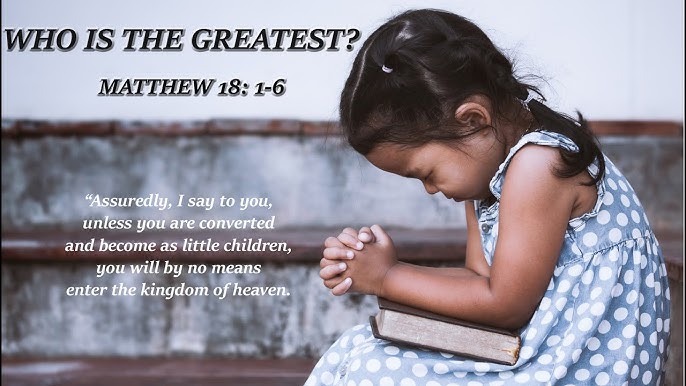
18 At that time the disciples came to Jesus and asked, “Who is greatest in the kingdom of heaven?” 2 He called a little child and set him before them, 3 and said, “I assure you and most solemnly say to you, unless you repent [that is, change your inner self—your old way of thinking, live changed lives] and become like children [trusting, humble, and forgiving], you will never enter the kingdom of heaven. 4 Therefore, whoever [a]humbles himself like this child is greatest in the kingdom of heaven. 5 Whoever receives and welcomes one [b] child like this in My name receives Me; 6 but whoever causes one of these little ones who believe in Me to stumble and sin [by leading him away from My teaching], it would be better for him to have a heavy millstone [as large as one turned by a donkey] hung around his neck and to be drowned in the depth of the sea.
Word of God for the Children of God
Glory be to the Father, and to the Son, and to the Holy Ghost; as it was in the beginning, is now, and ever shall be, world without end. Amen, amen.
What does Jesus mean by saying we need to “change and become like little children”?
One clue we have here is that Jesus is responding to the question “Who is the greatest in the kingdom of heaven?”
And he replies, “Whoever takes the lowly position of this child is the greatest in the kingdom of heaven.”
In the books about Jesus and his disciples (Matthew, Mark, Luke, and John), we find the disciples often argued over which of them w,as greatest.
They seem to have been a competitive group.
And they were thinking of greatness in terms of leadership, knowledge, power, influence, and other things.
So Jesus is telling his disciples they need to repent, stop staring at their image in the mirror, put that mirror away and change their attitudes about greatness and surrender their worldly ambitions become lowly and humble like little children.
Jesus’ followers need to set aside any claims to their selfish ambitions and to realize that, just as little children depend on parents and caregivers, we are all totally dependent on God for all our current needs and all of our future living.
Here’s another thought.
(sermon illustration) A man in his sixties said,
“Last week my four-year-old grandson said he wanted to be a firefighter when he grew up.
I replied, ‘And when I grow up, I want to be a four-year-old boy again.’
My grandson stared at me with wide, wondering eyes.”
Have you looked around at God’s world with “wide, wondering eyes” lately?
That’s something I long for when I hear the word repentance, that summons us to change and become like a little child.
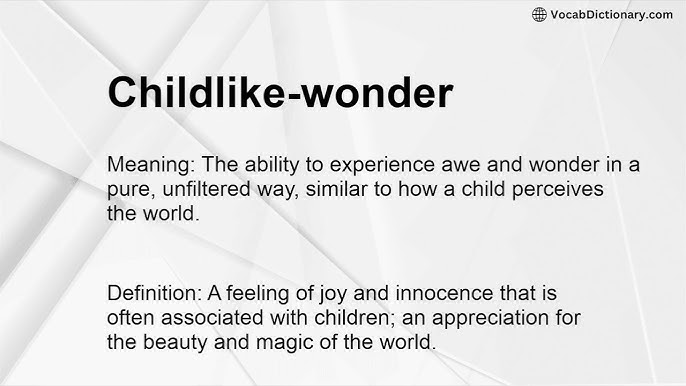
A Prayer to Experience Childlike Wonder …
Matthew 18:1-3 English Standard Version
Who Is the Greatest?
18 At that time the disciples came to Jesus, saying, “Who is the greatest in the kingdom of heaven?” 2 And calling to him a child, he put him in the midst of them 3 and said, “Truly, I say to you, unless you turn and become like children, you will never enter the kingdom of heaven.
Have you ever noticed how often children are excited about something simple?
They can splash in a puddle, sing a song, or laugh at a silly joke over and over without getting bored.
They often feel amazed, as well, by lots of experiences – such as playing with a pet, watching a sunset, and eating their favorite foods.
But somewhere along the way, when those children grow up, they can lose their sense of wonder.
As adults, they often focus too much on responsibilities and routines, missing out on the wonder happening around them. Their lives shrink down to the level of their to-do lists, even though God wants them to enjoy much bigger lives.
Have you lost your sense of wonder, too?
If so, Jesus’ words in Matthew 18:3 invite you to reclaim a life lived in childlike wonder, the key unlocking the kingdom experience he wants us all to enjoy.
You can start bychoosing to live a life of humility.
Doing so can help you learn much more about God’s wondrous love and power.
When you’re humble, our perspective expands, allowing us to see how God is infinitely big, is also close to you, because you’re one of His beloved children.
Standing in awe of God expands your ability to trust him, so you can rely more on God’s strength working through your life.
Just like children have faith that what a trusted person tells them is reliable, Jesus wants you to trust and rely on his promises to you.
You don’t need to try to go through any complicated analysis that leads you to doubt or worry about what Jesus tells you.
When you have childlike wonder, you can just look forward to Jesus keeping his promises. You can expect the best from God in any, all, circumstances you face.
When you stop and wonder at the magnitude of how God has saved your soul for eternity, it becomes far easy to trust him with your life right now.
1 Corinthians 15:55-58 Amplified Bible
55 O death, where is your victory? O death, where is your sting?” 56 The sting of death is sin, and the power of sin [by which it brings death] is the law; 57 but thanks be to God, who gives us the victory [as conquerors] through our Lord Jesus Christ.
58 Therefore, my beloved brothers and sisters, be steadfast, immovable, always excelling in the work of the Lord [always doing your best and doing more than is needed], being continually aware that your labor [even to the point of exhaustion] in the Lord is not futile nor wasted [it is never without purpose].
God conquered death, can’t he conquer any situation where you need his help?
Wonder changes your focus away from your challenges and toward God’s immeasurable power.
It gets you excited about what amazing way God will show up for you next!
Childlike wonder leads to joy.
Children find joy in the extraordinary wrapped up in the ordinary – and you can do so too, at any age.
Consider the Christmas season.
As an adult, it can be stressful because of pressures with time, money, and family issues.
But remember the pure joy you felt during the Christmas season as a child.
Jesus invites you to focus on the simple yet profound wonder of the Gospel: He loves you so much that he made the ultimate sacrifice to save you!
When you truly wonder at what this good news means, that can give you lasting joy that nothing can take away.
So, letwonder become part of your worship.
Become like a little child again by letting go of trying to be the adult in charge of everything and putting your trust in your amazing Father, God.
Let’s Pray:
Dear God, I confess that I’ve let my life shrink down to the level of my to-do list. I’ve focused so much on my routine and responsibilities I’ve lost the simple joy and open-hearted trust that comes from living in wonder of you.
Please change my heart. Reawaken the spirit of the child within me so I can fully enter into your wonderful kingdom here on earth.
I pray that wonder will lead me to humility. Help me to stand in awe of your unlimited love and power, so I can see how much I can really depend on you to help me with whatever I need.
I choose to depend on you completely.
Let me reflect on the miracle of Jesus saving my soul and everything you’ve already done in my life, and let that inspire me to expect the best from what you will do next. Let me stop over-analyzing and simply believe your promises.
I pray that wonder will restore my joy. Please help me strip away distractions and fully appreciate the simple truth of your love.
Let me feel the excitement of being your child,discovering the wonder of your work in my life every day.
I want to live a life full of wonder and gratitude as I experience your amazing presence! Amen
Glory be to the Father, and to the Son, and to the Holy Ghost; as it was in the beginning, is now, and ever shall be, world without end. Amen, amen.
13 Now before the Feast of the Passover, when Jesus knew that His hour had come that He should depart from this world to the Father, having loved His own who were in the world, He loved them to the end.
2 And [a]supper being ended, the devil having already put it into the heart of Judas Iscariot, Simon’s son, to betray Him, 3 Jesus, knowing that the Father had given all things into His hands, and that He had come from God and was going to God, 4 rose from supper and laid aside His garments, took a towel and girded Himself. 5 After that, He poured water into a basin and began to wash the disciples’ feet, and to wipe them with the towel with which He was girded. 6 Then He came to Simon Peter. And Peter said to Him, “Lord, are You washing my feet?”
7 Jesus answered and said to him, “What I am doing you do not understand now, but you will know after this.”
8 Peter said to Him, “You shall never wash my feet!”
Jesus answered him, “If I do not wash you, you have no part with Me.”
9 Simon Peter said to Him, “Lord, not my feet only, but also my hands and my head!”
10 Jesus said to him, “He who is bathed needs only to wash his feet, but is completely clean; and you are clean, but not all of you.” 11 For He knew who would betray Him; therefore He said, “You are not all clean.”
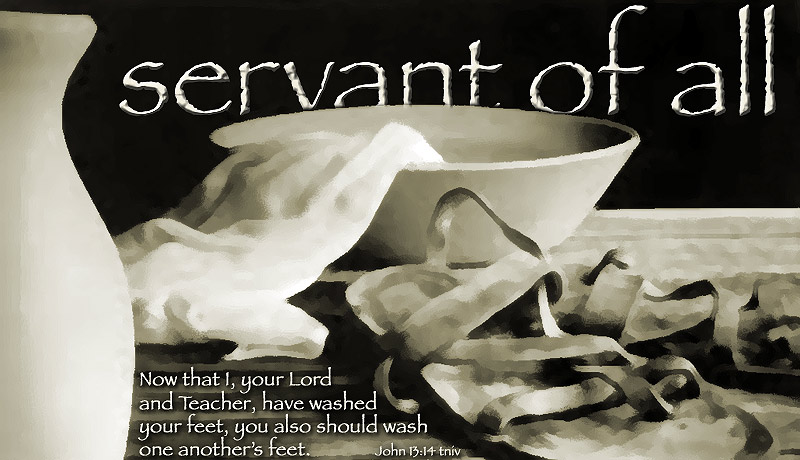
12 So when He had washed their feet, taken His garments, and sat down again, He said to them, “Do you [b]know what I have done to you? 13 You call Me Teacher and Lord, and you say well, for so I am. 14 If I then, your Lord and Teacher, have washed your feet, you also ought to wash one another’s feet. 15 For I have given you an example, that you should do as I have done to you. 16 Most assuredly, I say to you, a servant is not greater than his master; nor is he who is sent greater than he who sent him. 17 If you know these things, blessed are you if you do them.
The Word of God for the Children of God.
Adeste Fidelis! Venite Adoremus! Dominum.
Gloria! In Excelsis Deo! Alleluia, Alleluia, Alleluia, Amen.
Jesus came to model for us, show us what the Kingdom of Heaven is so we could become a dynamic, functional and living part of it.
Spending time reading the Gospels and studying and praying about who he was is a great way to remind ourselves that of all the rich and transformational ways Jesus is never what we expect but, in every way, is better than our expectations.
The story of Jesus redefining kingdom expectations, of kneeling to the floor and as host, gently handing his disciples feet so all could comfortably dine together is truly one of the most profound pictures of our Savior’s heart of love for us!
Jesus, like His Father in Heaven, cared so very much about the minutest details of his followers’ lives!
He was willing to completely surrender himself to the moment His Father set aside, to move into his destiny, to not shy away from God’s plan, get messy, to reach, teach, and show undeserved compassion to his ragtag group of disciples.
This is still true today!
Jesus cares about even the most minute details of your life and still come to us, still willing to model, set the example get messy to show you that you are loved.
None of your fears are too small, too inconsequential, needs much too silly, or stresses too insignificant or too great that God does not care about them all.
He cares about it all… even our stinky feet!
Jesus’ actions in this passage set an example of what it means to imitate him with our lives.
We are called to be more and more like Jesus every day, without exception, the servant of others, selflessly to live with humility, and love in every situation.
Christ-Followers are called to a selfless life as servant, conduct themselves in a very radical counter-cultural fashion – in unity, healing, instead of dividing.
Let’s learn more about what we can learn from the story of Jesus washing his disciples’ feet at Passover.
Where Does the Bible Talk about Jesus Washing the Disciples’ Feet?
The story of Jesus washing his disciples’ feet is recorded in John 13:1-17.
This event occurred in the upper room during the Last Supper.
In the biblical account, we read that when Jesus’ disciples arrived at a special gathering Jesus took the role of the ultimate servant of the house and humbly surrendered to His Father’s will and began washing each of his disciples’ feet.
This gathering, this time of communion, of the breaking and sharing of the bread, fruit of the vine, would later come to be known as the Last Supper.
It was the last time Jesus and his disciples broke bread together before his death on the cross.
It was during this Passover meal that Rabbi Jesus served as host, took the first communion with the disciples and also quietly identified Judas as his betrayer.
The act of feet washing was a necessary custom during this time period when gathering to have a communal meal.
The men would have come in with their feet dust-covered and dirty from their walking the undoubtedly, the decidedly unhygienic sun baked Roman roads.
Cleaning of the feet would have been necessary because the group would have likely been reclining together at a low table and dirty feet would not be the least bit welcomed so close to their food.
It was the servant of a household’s job to wash the feet of incoming guests.
Why Did Jesus Do This and What Was the Significance of Washing Their Feet?
In the Old Testament, priests performed and received ceremonial foot washings before they entered the temple for worship.
Foot washing was a serious matter: a basin for foot washing would have been placed between the Tent of Meeting and the altar so Aaron and his sons could wash before entering the Tent of Meeting,“Whenever they enter the Tent of Meeting, they shall wash with water so that they will not die”(Exodus 30:20).
Disregarding the ritual cleansing meant death to a priest.
In John 13:4-5, Jesus “got up from the meal, took off his outer clothing, and wrapped a towel around his waist. After that, he poured water into a basin and began to wash his disciples’ feet, drying them with the towel that was wrapped around him.”
Jesus has placed the basin between the disciples and the altar, His cross.
Through the witness of His death and the testimony of His resurrection, Jesus makes holy all who do come to the cross through the power of the Holy Spirit.
Through Christ’s atoning work on the cross the disciples and all believers are made holy and righteous before God and then cleansed of their sin and set apart by GOD for service in His body, the Church, a holy priesthood of believers.
Jesus set himself aside, washes his disciples’ feet to purify and cleanse them for their service to God: “Unless I wash you, you have no part with me” (John 13:8).
Jesus, knowing his coming destiny, washing the feet of his disciples came with so much significance for both his disciples in this intimate moment and for all Christians who strive to live, to love, to follow Jesus’ example and teachings.
This selfless act displayed Jesus’ amazing humility!
He took the role of a servant to wash the dusty and dirt-covered feet of his disciples.
Rabbi Jesus was setting an incredible example of what it is to be “Christ-like” through his decidedly humble actions.
Status, pride, or even dirt did not stop him from rolling up his sleeves to serve the men who had been at his side throughout the duration of his ministry.
Prior to this encounter, the disciples had been fighting amongst themselves trying to determine who was the “greatest” among them (Luke 22:24).
Jesus was in a very hands-on way showing them that in his Kingdom the last shall be first and the first shall be last (Matthew 20:16).
Jesus even prompts his disciples to show the same heart of service for each other (John 13:15).
He is clear that servanthood is essential to what it means to be his follower.
This washing also is symbolic of the cleansing power of the blood of Jesus to wash away our sins.
Peter objects to Jesus’ actions but then Jesus rebukes him by saying that unless he washed him, Peter had no part in him (John 13:7-8).
Peter then in a display of passion for the Lord asks him to then wash him from head to toe!
Jesus explains Peter does not need to be washed from head to toe because his actions were symbolic of the cleansing power that being a Christ-follower has in our lives (John 13:10).
Once washed by the blood of a lamb you are free from the stains of sin!
Jesus anoints the disciples for their new role as priests in the new temple that God Himself will raise up.
Jesus ordains them so they can serve His church when He leaves this world, returning to the Father.
Through the act of purification, Jesus imparts His holiness to the disciples so they will be set apart from the world even though they will remain in the world.
Jesus teaches his disciples that His holiness, salvation, and purity will all come through Him and His suffering.
Through the cleansing blood of our Savior – No repeat washing is necessary.
Our Healing is in our Becoming a Servant
John 13:14-15 New King James Version
14 If I then, your Lord and Teacher, have washed your feet, you also ought to wash one another’s feet. 15 For I have given you an example, that you should do as I have done to you.
In our culture today, sadly we don’t have an automatic equivalent to Jesus’ instruction to wash one another’s feet.
But we can figure out that it’s mainly about showing hospitality and serving one another.
The roads of Palestine were unpaved, and with sandals as common footwear, people’s feet would get really dirty—sometimes caked with dust and mud.
As a result, before you entered someone’s home, a servant would come with a pitcher of water, a basin and a towel and wash your feet, an act of hospitality.
It was a customary act of hospitality—like someone offering to hang up your coat and scarf on a cold day as you entered their warm home.
On the night of the last supper, Jesus took the role of a servant as he got up from the meal and began washing his disciple’s feet.
In doing this, Jesus was teaching his disciples an important spiritual principle.
We come to Jesus with nothing of our own, and we must receive from him and be ministered to by him before we have anything to give.
Then, having been served, we go and do the same, we surrender ourselves to God, serving, sharing with others the fullness God has poured into our hearts.
In this example, Jesus provided a profound symbol of his call to servanthood.
Following him is not about position, power, or prestige.
We serve because Jesus Christ came to us as sinners, yet he has served us first.
Jesus shows no squeamishness: He performs this ceremonial washing of His disciples’ feet with a solemn purpose – so others may be prepared to serve.
Setting aside their squeamishness to serve all others as Jesus first served all.
Jesus’ determination made me want to explore the Scriptures more deeply.
What Does Jesus Show When He Washes the Disciples’ Feet?
Through this simple act of foot washing, Jesus demonstrates to His disciples His eternal role as God’s High Priest and Mediator and the disciples part in the priesthood.
Even though He, Jesus must suffer and die and be raised again, the disciples can by faith in the empty tomb be certain He will never leave them or forsake them.
Scripture says, “During the days of Jesus’ life on earth, he offered up prayers and petitions with loud cries and tears to the one who could save him from death, and he was heard because of his reverent submission. Although he was a son, he learned obedience from what he suffered and, once made perfect, he became the source of eternal salvation for all who obey him and was designated by God to be high priest in the order of Melchizedek”(Hebrews 5:7-10).
Jesus is the High Priest of Heaven.
Through the foot washing, He ordained His disciples to be priests of the church in the world.
1 Peter 2:4-10 New King James Version
The Chosen Stone and His Chosen People
4 Coming to Him as to a living stone, rejected indeed by men, but chosen by God and precious, 5 you also, as living stones, are being built up a spiritual house, a holy priesthood, to offer up spiritual sacrifices acceptable to God through Jesus Christ. 6 Therefore it is also contained in the Scripture,
“Behold, I lay in Zion A chief cornerstone, elect, precious, And he who believes on Him will by no means be put to shame.”
7 Therefore, to you who believe, He is precious; but to those who [a]are disobedient,
“The stone which the builders rejected Has become the chief cornerstone,”
8 and
“A stone of stumbling And a rock of offense.”
They stumble, being disobedient to the word, to which they also were appointed.
9 But you are a chosen generation, a royal priesthood, a holy nation, His own special people, that you may proclaim the praises of Him who called you out of darkness into His marvelous light; 10 who once were not a people but are now the people of God, who had not obtained mercy but now have obtained mercy.
Christ, our permanent High Priest, sitting at the right hand of the Father;
He will offer up prayers on their behalf, “he always lives to intercede for them” (Hebrews 7:25), and will empower them through the Holy Spirit to perform their priestly duties to the glory of God.
3 Lessons from Jesus Washing the Disciples’ Feet
1. God’s Kingdom Works In Reverse Order
Matthew 18:4 says, “Therefore, whoever takes the lowly position of this child is the greatest in the kingdom of heaven.”
Humility, trust, simplicity, joy, full of wonder, and playfulness are all words that could be used to characterize children.
In Jesus’ Kingdom what seems logical to adults oftentimes goes against the way God works. Jesus calls the last to be first (Matthew 20:16).
His Word prompts us to serve one another in love (Galatians 5:13).
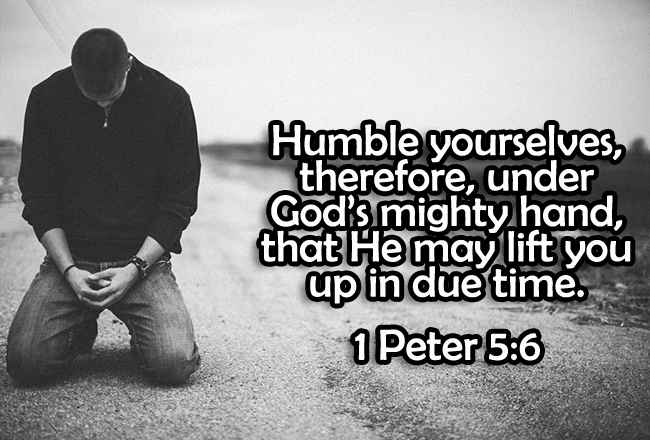
The Bible teaches us to humble ourselves before the Lord (James 4:10).
In Matthew 5:38-40, Jesus teaches that when we are wronged not to fight back but to offer our offenders more of ourselves!
All of these ideas go against everything that seems logical, right, or justified in our world!
We live in a world where pride, greed, and ambition rule our systems.
Money talks, looking out for yourself is prized, and caring for those who are hurt so you can get ahead is not often considered.
Jesus intentionally sets an example of how we are to live as his followers through his actions at the Last Supper.
He makes it clear that we are called to be the feet washers of our community.
Our mission as Believers is to be those who love beyond reason every chance we get.
2. Jesus Washes Us Clean
Isaiah 1:18 says, “Come now, let us reason together, says the Lord: though your sins are like scarlet, they shall be as white as snow; though they are red like crimson, they shall become like wool.”
The prophet foretold of the cleansing power of Jesus years before Jesus physically walked the earth.
His followers would have seen the feet washing and the breaking of bread and sharing of wine at the first communion that happened at the Last Supper as symbolic of Jesus’ cleansing power.
When we bring our sins to the Lord he is willing and able to wash us clean.
All Jesus did led up to the work of the cross, where he took the weight of our sins onto himself, so we could be forgiven.
Don’t be ashamed of your “dirty feet” bring all that you are to the Lord and he is willing and able to set you free.
3. Jesus Was Not What the World Expected
Peter was shocked by Jesus’ actions and asked him to stop because in his mind his king and Savior wouldn’t stoop to the level of a feet-washing-servant.
Jesus was not what the world expected.
They were looking for a political liberator, someone who would help restore power to the Jewish people, and they thought their Messiah would be powerful in the same way the world measures power.
Jesus was full of heavenly ability and did many miracles but he never strove for a place of worldly power or influence.
Jesus rebuked the Pharisees (Matthew 23), avoided political confrontation (John 18:10-11), and took the posture of a servant throughout his ministry.
Meanwhile, his disciples were concerned about who would get the best seat in Heaven next to Jesus.
It wasn’t until Jesus’ death and resurrection that the full picture of Jesus as a Messiah as their foretold Savior was fully understood because while on Earth he never did as they were expecting.
When we think of what it means to be a Christ-Follower do our expectations line up with the example of Jesus?
It is easy to put God in a box, thinking he should work in ways that make sense to our worldly sensibilities.
The Bible reminds us that God rarely plays by our rules.
Jesus came to show us what the Kingdom of Heaven is so we could become a part of it.
Spending time reading the Gospels and studying and Praying over who he was is a great way to remind ourselves of all the ways Jesus is never what we expect but, in every way, abundantly, utterly, infinitely better than our expectations.
In the name of God, the Father and God the Son and God the Holy Spirit,
Let us Pray,
“Unless I wash you
you have no share with me.”
If only it were otherwise.
If only I could present my credentials,
show my record of service,
get some kind of unlimited pass.
In every area of my life
I am more used
to proving how adequate I am,
presenting a polished image,
gaining certain privileges.
But you, Lord,
you bring me down
to where you are kneeling,
and take hold
of the feet I prefer to hide.
We are here together,
near the ground,
and in this humble position
I am touched by you
and made clean.
Adeste Fidelis! Venite Adoremus! Dominum.
Gloria! In Excelsis Deo! Alleluia, Alleluia, Alleluia, Amen.
18 At that time the disciples came to Jesus and asked, “Who is greatest in the kingdom of heaven?” 2 He called a little child and set him before them, 3 and said, “I assure you and most solemnly say to you, unless you repent [that is, change your inner self—your old way of thinking, live changed lives] and become like children [trusting, humble, and forgiving], you will never enter the kingdom of heaven. 4 Therefore, whoever [a]humbles himself like this child is greatest in the kingdom of heaven. 5 Whoever receives and welcomes one [b] child like this in My name receives Me; 6 but whoever causes one of these little ones who believe in Me to stumble and sin [by leading him away from My teaching], it would be better for him to have a heavy millstone [as large as one turned by a donkey] hung around his neck and to be drowned in the depth of the sea.
The Word of God for the Children of God.
Adeste Fidelis! Venite Adoremus! Dominum.
Gloria! In Excelsis Deo! Alleluia! Alleluia! Alleluia! Amen.
Growing Up to Become a Child
What does the man, Rabbi Jesus, mean by saying to his disciples that we each need to “change and become like the little children who are among us”?
One clue we have here is that Jesus is responding to the question “Who is the greatest in the kingdom of heaven?”
And he replies, “Whoever takes the lowly position of this child is the greatest in the kingdom of heaven.”
In the Gospel narratives about Jesus and his disciples (Matthew, Mark, Luke, and John), we somehow find that the disciples often argued over which of them was, is and is about to become greatest; they seem to have been a competitive group.
And it seems they were thinking of greatness in terms of authority, leadership, knowledge, power, influence, “one above equals,” thrones and of other things.
So Jesus is seemingly telling all of his disciples that they need to change their attitudes about greatness and to become lowly and humble like little children.
Jesus’ followers, whether ancient or contemporary need to die to their selfish ambitions, realize that, just as little children depend on parents and caregivers, we are all totally dependent on Father God for all our needs and future living.
Here’s another hypothetical thought. A man in his sixties said, “Last week my five-year-old grandson said he wanted to be a firefighter when he grew up. I replied, ‘And when I grow up, I want to be a five-year-old boy.’ My grandson stared at me with wide, wondering eyes.”
Have you looked around at your own children or grandchildren and pictured yourself having such a “wide eyed wondering hypothetical conversation?”
Have you looked around at God’s world with “wide, wondering eyes” lately?
That’s something which I long for when I look at my own almost nine year old grandson when hear the clarion call to change and to become like a little child.
Descriptions of a Childlike Faith
Rabbi Jesus’ statement to His disciples in Matthew 18:3 about them not entering the kingdom of heaven unless they are converted and become as little children speak volumes and volumes of truth of the importance of living a childlike faith.
But what is childlike faith?
What makes one’s faith childlike?
Faith which is Rooted in Security
During the days of childhood, one learns how to survive and prosper, how to live under authority, how to live, love and share, and how to serve and praise.
A well-cared-for child has no worries about house or car or any credit card payments, no anxious moments over getting married to the right one, career or job opportunities, no apprehensions about failure, no thoughts of vengeance.
David exemplified this kind of faith while he was on the run from Saul.
131 Lord, my heart is not proud, nor my eyes haughty; Nor do I involve myself in great matters, Or in things too difficult for me. 2 Surely I have calmed and quieted my soul; Like a weaned child [resting] with his mother, My soul is like a weaned child within me [composed and freed from discontent].
In Psalm 131:1-2, David compared the calmness and serenity he had in the Lord to that of a weaned child with his mother.
Composed, content with God and the works He was doing in his life, David did not concern himself with great matters such as any selfish ambition and self-promotion – rather, he found serenity and security in his relationship with God.
Surely goodness and mercy and unfailing love shall follow me all the days of my life, And I shall dwell forever [throughout all my days] in the house and in the presence of the Lord. (Psalm 23:6)
To have a childlike faith is to find serenity and security in our relationship with God no matter the circumstance.
Faith Which Praises
Jesus loved children. He loved to use children to teach hard-headed and hard-hearted grown-ups about faith and praise.
While preaching in the region of Judea, Christ was encircled by a great crowd.
Matthew 19:13-15Amplified Bible
Jesus Blesses Little Children
13 Then children were brought to Jesus so that He might place His hands on them [for a blessing] and pray; but the disciples reprimanded them. 14 But He said, “Leave the children alone, and do not forbid them from coming to Me; for the kingdom of heaven belongs to such as these.” 15 After placing His hands on them [for a blessing], He went on from there.
He later reminded the priests and scribes that “the mouth of babes and nursing infants” would offer praise fitting for God’s Anointed (Matthew 21:16).
When Jesus entered Jerusalem riding on a colt, a very great multitude that included children cried out saying, “Hosanna to the Son of David! Blessed is He who comes in the name of the Lord! Hosanna in the highest” (Matthew 21:9)!
The sound of the children praising Jesus in the temple courts made the chief priests and scribes indignant.
In response, Jesus quoted from Psalm 8:2.
God does not only want prayer in His house, He also delights in praise.
To have a childlike faith is to have a heart that always longs to praise and glorify God in each and every life’s circumstance.
Faith Which Believes
Jesus used the lad with the five barley loaves and the two small fish to feed five thousand people (John 6:9).
To show His power over death, Jesus used a little girl. Jairus, a ruler in the synagogue, fell at Jesus’ feet begging Him to come to his house and save his dying twelve-year-old daughter.
Jesus agreed and tried to make His way with Jairus, but the surrounding crowd made the trip difficult.
Word came that Jairus’ daughter had died.
But Jesus responded, “Do not be afraid, only believe and she will be made well” (Luke 8:50).
At the house, as the parents wept over their loss, Jesus said, “She is not dead but sleeping” (Luke 8:52).
Through tears, the people laughed at the impossibility of what they heard.
Jesus then asked everyone to leave the room, and then He said, “Little girl, arise” (Luke 8:54), and she did!
Romans 4:17 says that “God gives life to the dead and calls those things which do not exist as though they did.”
Jesus spoke to the girl with the power of God, and she was raised from the dead.
Jairus’ faith definitely played a part in the miracle healing of his daughter just like the faith of the woman who had been bleeding for 12 years had made her well (Luke 8:43-48).
Nothing is impossible with God if we would just believe.
This is what it means to have childlike faith.
Faith Which is Humble
Another time, Jesus used a child to teach humility.
In Matthew 18:1-5, we read how the disciples came to Jesus asking, “Who then is the greatest in the kingdom of heaven?” and how did Jesus respond?
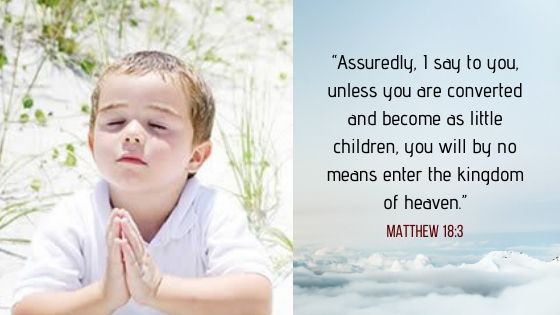
He called a little child to Him, set the little child in the midst of them, and said, “Assuredly I say to you, unless you are converted and become as little children, you will by no means enter the kingdom of heaven.”
He then went on to say, “Therefore whoever humbles himself as this little child is the greatest in the kingdom of heaven. And whoever receives one little child like this in My name receives Me.”
The fact that Jesus had been sharing with the disciples that truth about His approaching suffering and death did not affect them for they were thinking only of, about themselves and what position they would have in His Kingdom.
So self-absorbed were the disciples in this matter that they actually argued with each other in the presence of Rabbi Jesus himself (Luke 9:46).
Pride – the very sin that caused Satan to be cast down from heaven is what’s causing people to think of themselves more highly than others.
When Christians are living for themselves and not for others, conflict and division are bound to result (James 4:1-2).
True humility means knowing ourselves, accepting ourselves, and being ourselves – our best self – to the glory of God ALONE!.
It means avoiding two extremes:
Thinking less of ourselves than we ought to (as did Moses when God called him, Exodus 3:11), or thinking more of ourselves than we should (Romans 12:3).
The truly humble person does not deny the gifts God has given him or her but uses them to the glory of God.
The truly humble person also helps to build up others, not to tear them down.
Hebrews 12:1-3Amplified Bible
Jesus, the Example
12 Therefore, since we are surrounded by so great a cloud of [a]witnesses [who by faith have testified to the truth of God’s absolute faithfulness], stripping off every unnecessary weight and the sin which so easily and cleverly entangles us, let us run with endurance and active persistence the race that is set before us, 2 [looking away from all that will distract us and] focusing our eyes on Jesus, who is the Author and Perfecter of faith [the first incentive for our belief and the One who brings our faith to maturity], who for the joy [of accomplishing the goal] set before Him endured the cross, [b]disregarding the shame, and sat down at the right hand of the throne of God [revealing His deity, His authority, and the completion of His work].
3 Just consider and meditate on Him who endured from sinners such bitter hostility against Himself [consider it all in comparison with your trials], so that you will not grow weary and lose heart.
This person is a stepping-stone, not a stumbling block.
This person is a building block not a stumbling block.
Thus, we must seek to remove from our lives anything that makes us stumble.
If we don’t, we will cause others to stumble as well.
Which Jesus Himself said was not a very good, very healthy, very wise, idea.
Matthew 18:6Amplified Bible
6 but whoever causes one of these little ones who believe in Me to stumble and sin [by leading him away from My teaching], it would be better for him to have a heavy millstone [as large as one turned by a donkey] hung around his neck and to be drowned in the depth of the sea.
An unspoiled child has the characteristics that make for humility: trust, dependence, a desire to make others happy, and an absence of boasting or selfish desires to be greater than others.
By our nature, we are all rebels who want to be celebrities instead of servants.
And so we need a great deal of teaching for us to learn the lesson of humility.
Concluding Thoughts ….
As Christians, we are encouraged to have childlike faith.
To have faith like a child is to completely embrace, trust our heavenly Father’s goodness, care, provision, leadership, His security, vigilance and protection.
Have you experienced the peace of a well-cared-for child in letting Jesus take care of your worries?
Have you found the healing that faith in Jesus brings?
Have you praised His name with the joy of a child?
Have you answered Jesus’ call in childlike faith, asking Him to be your Savior?
In the name of God, the Father and God the Son and God the Holy Spirit,
Let us Pray,
Psalm 17The Message
17 1-2 Listen while I build my case, God, the most honest prayer you’ll ever hear. Show the world I’m innocent— in your heart you know I am.
3 Go ahead, examine me from inside out, surprise me in the middle of the night— You’ll find I’m just what I say I am. My words don’t run loose.
4-5 I’m not trying to get my way in the world’s way. I’m trying to get your way, your Word’s way. I’m staying on your trail; I’m putting one foot In front of the other. I’m not giving up.
6-7 I call to you, God, because I’m sure of an answer. So—answer! bend your ear! listen sharp! Paint grace-graffiti on the fences; take in your frightened children who Are running from the neighborhood bullies straight to you.
8-9 Keep your eye on me; hide me under your cool wing feathers From the wicked who are out to get me, from mortal enemies closing in.
10-14 Their hearts are hard as nails, their mouths blast hot air. They are after me, nipping my heels, determined to bring me down, Lions ready to rip me apart, young lions poised to pounce. Up, God: beard them! break them! By your sword, free me from their clutches; Barehanded, God, break these mortals, these flat-earth people who can’t think beyond today.
I’d like to see their bellies swollen with famine food, The weeds they’ve sown harvested and baked into famine bread, With second helpings for their children and crusts for their babies to chew on.
15 And me? I plan on looking you full in the face. When I get up, I’ll see your full stature and live heaven on earth.
Adeste Fidelis! Venite Adoremus! Dominum.
Gloria! In Excelsis Deo! Alleluia! Alleluia! Alleluia! Amen.
4 Now there are [distinctive] varieties of spiritual gifts [special abilities given by the grace and extraordinary power of the Holy Spirit operating in believers], but it is the same Spirit [who grants them and empowers believers]. 5 And there are [distinctive] varieties of ministries and service, but it is the same Lord [who is served]. 6 And there are [distinctive] ways of working [to accomplish things], but it is the same God who produces all things in all believers [inspiring, energizing, and empowering them]. 7 But to each one is given the manifestation of the Spirit [the spiritual illumination and the enabling of the Holy Spirit] for the common good. 8 To one is given through the [Holy] Spirit [the power to speak] the message of wisdom, and to another [the power to express] the word of knowledge and understanding according to the same Spirit; 9 to another [wonder-working] faith [is given] by the same [Holy] Spirit, and to another the [extraordinary] gifts of healings by the one Spirit;10 and to another the working of [a]miracles, and to another prophecy [foretelling the future, speaking a new message from God to the people], and to another discernment of spirits [the ability to distinguish sound, godly doctrine from the deceptive doctrine of man-made religions and cults], to another various kinds of [unknown] tongues, and to another interpretation of tongues. 11 All these things [the gifts, the achievements, the abilities, the empowering] are brought about by one and the same [Holy] Spirit, distributing to each one individually just as He chooses.
The Word of God for the Children of God.
Adeste Fidelis! Venite Adoremus! Dominum.
Gloria! In Excelsis Deo! Alleluia! Alleluia! Alleluia! Amen.
Spiritual Gift of Faith
Today, let’s learn something about the spiritual gift of faith.
Your first reaction to this might be, “How can faith be a gift?
Aren’t we all supposed to have faith as believers in Jesus Christ?”
Faith is absolutely a gift!
It is specifically mentioned as a spiritual gift in scripture (1 Corinthians 12:9).
Because it is a spiritual gift, that means not everyone has the gift of faith.
And that’s okay.
We can all strive for faith, but for some people the confidence in the truth of God comes more naturally than to others.
Do you know a person who can continue to trust in God no matter what comes their way?
A person who can see where God is working in your life when you can’t see it?
People with the spiritual gift of faith are unshakeable in their reliance on God’s promises and are a source of encouragement for the rest of us when we feel like embracing the world or giving up on God or think that God has given up on us.
Here is how we can define the gift of faith:
Faith is the exceptional ability to hold fast to the truth of God in Jesus Christ in spite of pressures, problems, and obstacles to faithfulness.
Much more than just belief, faith is a gift which empowers an individual or a group of people to hold fast to its identity in Christ in the face of any challenge.
The gift of faith enables believers to rise above pressures and problems that might otherwise cripple them.
Faith is characterized by an unshakable trust in Jehovah God to deliver on God’s promises, no matter what.
The gift of faith inspires those who might be tempted to give up to hold on.
Those gifted with Faith create a foundation upon which true community can be built and sustained.
It is critical for people possessing the gift of Faith to make, take opportunities to share their beliefs, their learning, most importantly, their life experiences.
Faith stories have powerful and transforming effects.
Faith is a prominent gift in witnessing congregations, where personal stories are shared in group settings, worship, Sunday school classes, or Bible studies.
Faith is the exceptional ability to hold fast to the truth of God in Jesus Christ in spite of pressures, problems, and obstacles to faithfulness.
Our Bible gives us many examples of individuals with the spiritual gift of faith.
Hebrews 11:1-12 The Message
Faith in What We Don’t See
11 1-2 The fundamental fact of existence is that this trust in God, this faith, is the firm foundation under everything that makes life worth living. It’s our handle on what we can’t see. The act of faith is what distinguished our ancestors, set them above the crowd.
3 By faith, we see the world called into existence by God’s word, what we see created by what we don’t see.
4 By an act of faith, Abel brought a better sacrifice to God than Cain. It was what he believed, not what he brought, that made the difference. That’s what God noticed and approved as righteous. After all these centuries, that belief continues to catch our notice.
5-6 By an act of faith, Enoch skipped death completely. “They looked all over and couldn’t find him because God had taken him.” We know on the basis of reliable testimony that before he was taken “he pleased God.” It’s impossible to please God apart from faith. And why? Because anyone who wants to approach God must believe both that he exists and that he cares enough to respond to those who seek him.
7 By faith, Noah built a ship in the middle of dry land. He was warned about something he couldn’t see, and acted on what he was told. The result? His family was saved. His act of faith drew a sharp line between the evil of the unbelieving world and the rightness of the believing world. As a result, Noah became intimate with God.
8-10 By an act of faith, Abraham said yes to God’s call to travel to an unknown place that would become his home. When he left he had no idea where he was going. By an act of faith he lived in the country promised him, lived as a stranger camping in tents. Isaac and Jacob did the same, living under the same promise. Abraham did it by keeping his eye on an unseen city with real, eternal foundations—the City designed and built by God.
11-12 By faith, barren Sarah was able to become pregnant, old woman as she was at the time, because she believed the One who made a promise would do what he said. That’s how it happened that from one man’s dead and shriveled loins there are now people numbering into the millions.
Verse 4 – By faith, Abel brought a better sacrifice to God than Cain
Verse 5 – By faith, Enoch skipped death
Verse 7 – By faith, Noah built a ship
Verse 8 – By faith, Abraham said yes to God
Verse 11 – By faith, barren Sarah became pregnant
Faith in Scripture ….
Mark 9:23 (NRSV) Jesus said to him, “If you are able!—All things can be done for the one who believes.”
Luke 8:48 (NRSV) He said to her, “Daughter, your faith has made you well; go in peace.”
Luke 17:19 (NRSV) Then he said to him, “Get up and go on your way; your faith has made you well.”
Luke 18:42 (NRSV) Jesus said to him, “Receive your sight; your faith has saved you.”
Romans 4:18-21 (NRSV) Hoping against hope, he believed that he would become “the father of many nations,” according to what was said, “So numerous shall your descendants be.” He did not weaken in faith when he considered his own body, which was already as good as dead (for he was about a hundred years old), or when he considered the barrenness of Sarah’s womb. No distrust made him waver concerning the promise of God, but he grew strong in his faith as he gave glory to God, being fully convinced that God was able to do what he had promised.
God gives us believers gifts of the Holy Spirit.
We do not know why exactly God’s will is for us to have any of these gifts, but we are thankful for any blessings, gifting’s, and corrections that He gives us.
Faith — it is a gift, and all we need is about the size of a mustard seed (Matthew 17:20).
To each and every one of us, a measure of faith has been assigned by God (Romans 12:3).
Moses had faith to lead Israel to the Promised Land, Sarah had faith that she would conceive even in her old age, and Noah had faith that God had spoken to him to build the ark even when everyone thought he was crazy (Hebrews 11).
There isn’t any formula that is alongside this gift of faith, and to think that there would be, it would be much more difficult to have faith.
Believing in faith is easy, but in our finite minds, thoughts barricade what is truly simple.
For by grace you have been saved through faith. And this is not your own doing; it is the gift of God, not a result of works, so that no one may boast (Ephesians 2:8-9).
Faith without proof
There are miracles everywhere mentioned in the New Testament.
Many people today have seen what the goodness of God can do through miracles.
In Mark 2, Jesus was in a crowded house in Capernaum.
There were four men carrying a paralytic man, trying to reach Jesus.
They had to make a hole in the roof of the house in order to bring the paralyzed man to be healed by Jesus.
This act was an act of faith by the four men, and Jesus saw their faith in the man being healed of his affliction.
Well, the man not only got healed but his sins were forgiven.
Miracles are a wondrous gift, but having faith without seeing is believing that it is possible even though it seems impossible (2 Corinthians 5:7).
“Now faith is the substance of things hoped for, the evidence of things not seen”(Hebrews 11:1).
Our hope is in Christ alone.
Without faith, there is no hope.
We have faith that when winter begins to thaw, and all the snow begins to fade away, that the seeds that were planted in the previous season shall burst forth.
Springtime is a time of refreshment, a time of anticipated, expectant joy to see what was planted, will be planted and is to soon come up from the cold ground.
We don’t see the seeds with our own eyes, but by faith, we have the hope to see green leaves, diverse colors of flowers coming up to bring out joy and harvest.
Childlike Faith ….
Matthew 18:1-6 Amplified Bible
Rank in the Kingdom
18 At that time the disciples came to Jesus and asked, “Who is greatest in the kingdom of heaven?” 2 He called a little child and set him before them, 3 and said, “I assure you and most solemnly say to you, unless you repent [that is, change your inner self—your old way of thinking, live changed lives] and become like children [trusting, humble, and forgiving], you will never enter the kingdom of heaven. 4 Therefore, whoever [a]humbles himself like this child is greatest in the kingdom of heaven. 5 Whoever receives and welcomes one [b] child like this in My name receives Me; 6 but whoever causes one of these little ones who believe in Me to stumble and sin [by leading him away from My teaching], it would be better for him to have a heavy millstone [as large as one turned by a donkey] hung around his neck and to be drowned in the depth of the sea.
Children are like sponges.
Children are naturally inquisitive about almost everything in their little world.
They max out their efforts absorbing everything they can see, smell, taste, and touch, and hear.
In a classroom, it is a teacher’s job to assure that the children are learning what is being taught.
Children learn from their families as to what is wrong and what is right.
But what they are the best at is having faith.
Think about the inquisitiveness of your own children right now.
What are they constantly getting themselves into?
What holds their “undivided” attention?
What is their “wish-list?”
What are their dreams?
As it might be applicable, be observant and give an answer to those questions for those of us who have grandchildren or great grandchildren inside our lives.
Think about when you were a child, what did you have hope for?
I hoped that I could see the world that God created.
As I got older, I realized what goes into making those dreams come true.
I then began to see that it may not ever happen, and my faith became less in that area of my life.
I let my fears become more and more of my reality because I didn’t truly believe that I could travel the world.
But, perhaps, one season, by God’s Grace, that dream of travel will come true.
I believe and have faith God will bring me to places that He wills for my life.
In Romans 10:17, the Bible states, “So faith comes from hearing, and hearing through the word of Christ.”
Our thoughts can be louder than the Word of God if we let them.
The Holy Spirit within us shows us what is truth and what is not.
The gift of faith is truth and grace that has been given to us through the sacrifice of Jesus Christ.
The spiritual gift of faith is steadfastly believing the truth, God’s truth alone.
No matter what happens whether you receive what you are believing in or not, your confidence cannot be swayed.
The fear, worry, and circumstances do not determine your level of faith.
If God has given you this spiritual gift of faith, then trust, without doubt, that He will absolutely do as He absolutely wills for your life.
In the name of God, the Father and God the Son and God the Holy Spirit,
Let us Pray,
All-Powerful Father, I bow before You because You are awesome and worthy of all the praise. Your word declares that I can do all things through You who strengthens me! I put all my trust in You. You alone are my God. You alone are my joy. You are my heart and my soul. You are the grass under my feet and the sky above. You are seen and unseen, Father. Keep me at Your right hand forever, fill me with Your grace, and make me Yours all the days of my life. Father, we thank you for everything, and we love you with all that we are. I pray that those that have been given this spiritual gift of faith will never waiver. I pray that we will trust and believe you always God.
Adeste Fidelis! Venite Adoremus! Dominum.
Gloria! In Excelsis Deo! Alleluia! Alleluia! Alleluia! Amen.






 Loving God, Living God, Loving Hope, Living Hope, Loving Living Life His Way! "Many things are possible for the person who has hope. Even more is possible for the person who has faith. And still more is possible for the person who knows how to love. But everything is possible for the person who practices all three virtues." - Brother Lawrence (1605-1691), Practicing the Presence of God (1692).