Becoming More Like Christ; Comfort and Encourage: God Shows Through Our Experiences. 2 Corinthians 1:3-7

2 Corinthians 1:3-7 Amplified Bible

Blessed [gratefully praised and adored] be the God and Father of our Lord Jesus Christ, the Father of mercies and the God of all comfort, who comforts and encourages us in every trouble so that we will be able to comfort and encourage those who are in any kind of trouble, with the comfort with which we ourselves are comforted by God. For just as Christ’s sufferings are ours in abundance [as they overflow to His followers], so also our comfort [our reassurance, our encouragement, our consolation] is abundant through Christ [it is truly more than enough to endure what we must]. But if we are troubled and distressed, it is for your comfort and salvation; or if we are comforted and encouraged, it is for your comfort, which works [in you] when you patiently endure the same sufferings which we [a]experience. And our [b]hope for you [our confident expectation of good for you] is firmly grounded [assured and unshaken], since we know that just as you share as partners in our sufferings, so also you share as partners in our comfort.

The Word of God for the Children of God.

Adeste Fideles! Laeti Triumphantes! Venite Adoremus! Dominum.

Gloria! In Excelsis Deo! Alleluia, Alleluia, Alleluia, Amen.

Come! Listen! Let Me Tell You What My Savior Has Done For Me.
Psalm 66:16-20 The Message

16-20 All believers, come here and listen,
    let me tell you what God did for me.
I called out to him with my mouth,
    my tongue shaped the sounds of music.
If I had been cozy with evil,
    the Lord would never have listened.
But he most surely did listen,
    he came on the double when he heard my prayer.
Blessed be God: he didn’t turn a deaf ear,
    he stayed with me, loyal in his love.

The writer of Psalm 66  wants to tell us his “GOD story” when he says, “Come and hear, all you who fear God; let me tell you what he has done for me.”

The psalmist does not want to talk about his accomplishments or achievements.

The Psalmist wants to talk about what God has done for him throughout his life.

His life had not been easy.

He had been tested and refined like silver.

He had experienced many burdens.

But through it all God had been with him and by listening to his cries for help,

God had led him, guided him, directed him to “a place of abundance.”

Like the Psalmist, each and every one of us has a strikingly similar story to tell.

All of us can bear great witness to the weight of burdens we have had to carry.

All of us can testify to hardships in our lives—but also to the one irrefutable fact that God, and God alone, has always been there and always acted on our behalf.

We must make sure we tell our story.

We must make sure you tell about God’s presence in our life and about his amazing grace in the midst of our much diverse and various degrees of trials.

We must wake sure we tell, re-tell it to our children and our grandchildren.

Someone once said to me,

“If something were to ever happen to you, I am sure I would not know anything about any legitimate kind of relationship to God or His Son or the Holy Spirit.”

Don’t let that happen to you.

Start contemplating your story.

Start writing or telling your story today!

A story which begins with (Song by Bill & Gloria Gaither and Ladye Love Smith)

Days are filled with sorrow
Days are filled with sorrow and care
Hearts are lonely and drear
Burdens are lifted at Calvary
Jesus is very near

Troubled soul, the Savior can see
Every heartache and tear
Burdens are lifted at Calvary
Jesus is very near

and ends with ….

A repetition of this guided affirmation of faith in our Savior Jesus Christ ….

Burdens are lifted at Calvary
Calvary, Calvary
Burdens are lifted at Calvary
Jesus is very near

Burdens are lifted at Calvary
Calvary, Calvary
Burdens are lifted at Calvary
Jesus is very near

Burdens are lifted at Calvary
Calvary, Calvary
Burdens are lifted at Calvary
Jesus is very near

Let Us Now Lift Up Our Hearts Unto Calvary Because Jesus is Very Near

I want us to imagine that we are each standing at the end of a long hallway.

The hallway represents the entirety of our life so far on earth.

To begin with, look down to your feet, where you are standing is todays date; all the way down at the far distant other end of the hallway is the day of your birth.

Now, just begin walking – please do not run, skip or jog or sprint or fast walk, Neither get on your skateboards, roller blades or roller skates or your bicycles.

Leave your car keys, your truck keys, your mini-van, your hybrid or EV car keys.

You are not driving anywhere – you are only and just walking with Savior Jesus.

Go outside of self and stretch your legs a bit, start working that heart muscle.

As you begin walking down the hallway heading back in your life, I want you to take notice of all of the notice various and diverse sizes of pictures on the wall.

These pictures are all of the “events” from your life; it’s like a photo album of your entire life which someone has taken the time to paint or print and hang.

Some are large framed pictures; they are the most significant experiences you have had so far.

Some are good; some are bad; some are happy; some are sad.

As you steadily walk down this hallway of your life, I want you to take a long and considered look at the content and context of all of these large pictures.

What significant events from your life do you see that stand out?

Is there a wedding?

The successful purchase of your first home?

The Birth of your first child?

Are there family vacations or sporting events pictured on the walls?

Is there an achievement like a high school or college diploma or an award?

Is there a significant milestone depicted – high professional achievements?

Is there a significant milestone depicted – your long awaited retirement?

Are there spiritual experiences like your coming to faith in Christ or a time God miraculously entered into your sub-conscience, especially touched your life?

Are there significantly painful experiences—a divorce, the death of someone you really loved, a failure, a betrayal, abuse, alcoholism, a difficult to care for child which leads to a hardcore challenging, difficult marriage, a significantly threatening health diagnosis, an over abundance of “no money,” an addiction?

Take some time now to walk beyond all of that, walk all the way to the end of this hallway of your, notice “self-portraits” in all these significant experiences in your life… contemplate, take notice of all the ones named “my aloneness.”

[NOW TAKE SOME QUALITY TIME WITH GOD IN SILENT REFLECTION].

As I pray, for you like the Psalmist did, I plead with you to realize that all these experiences have actually shaped who you are today, whether you like it or not.

I pray for you to realize there is no time for self-blame, or blame God, He didn’t cause all of these hard things to happen, but did allow them to happen to you.

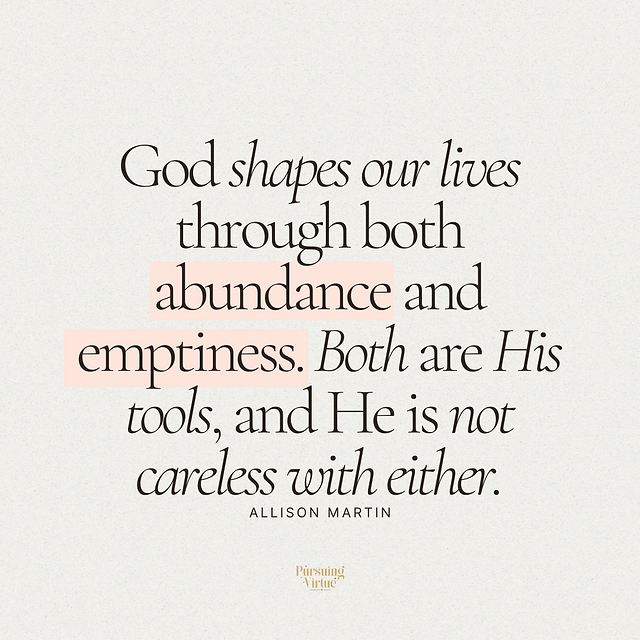
What GOD wants to do with us, within us, is to use all of these experiences–Good and Bad–to grow us spiritually and mold us into the likeness of our Lord and Savior Jesus and to shape us for the unique purposes He has for our lives.

His intent is not to cause us any harm (1 John 4:7-12 The Message)

God Is Love

7-10 My beloved friends, let us continue to love each other since love comes from God. Everyone who loves is born of God and experiences a relationship with God. The person who refuses to love doesn’t know the first thing about God, because God is love—so you can’t know him if you don’t love. This is how God showed his love for us: God sent his only Son into the world so we might live through him. This is the kind of love we are talking about—not that we once upon a time loved God, but that he loved us and sent his Son as a sacrifice to clear away our sins and the damage they’ve done to our relationship with God.

11-12 My dear, dear friends, if God loved us like this, we certainly ought to love each other. No one has seen God, ever. But if we love one another, God dwells deeply within us, and his love becomes complete in us—perfect love!

By the unmeasurable enormity of this love He expressed through Calvary,

He does not intend nor want even one of our life experiences to be wasted.

With a very God the Father, Son, and Holy Spirit specific long term intention:

Romans 8:28-30 Amplified Bible

28 And we know [with great confidence] that God [who is deeply concerned about us] causes all things to work together [as a plan] for good for those who love God, to those who are called according to His plan and purpose. 29 For those whom He foreknew [and loved and chose beforehand], He also predestined to be conformed to the image of His Son [and ultimately share in His complete sanctification], so that He would be the firstborn [the most beloved and honored] among many believers.  30 And those whom He predestined, He also called; and those whom He called, He also justified [declared free of the guilt of sin]; and those whom He justified, He also glorified [raising them to a heavenly dignity].

God takes every single one of our life experiences—whether positive or painful, intentional or accidental, known or unknown, avoided or not, caused by you or by someone else, to shape all His Children for His unique calling in their lives.

Romans 8:28-30 may be, for some of us, the most personal verses in the Bible:

We know that in all things God works for the good of those who love Him, who have been called according to His purpose.

Your life experience and my own are one of the most overlooked ways that God uses to mold, shape, and transform us for the way He wants each of us to serve Him and others in this world, to edify, that is, to build up, His Kingdom alone.

The Bible says that God is working in every experience you have—our mistakes, our decisions, our successes and failures, our education or lack thereof, all of our different jobs, relationships, our lack of relationships, our unemployment, our disabilities, our marriages, our health issues, our finances—you name it.

God is working in every single thing in our lives—even in and through our own continued and continuous bent to our sins–to accomplish His purpose for you.

What Is The “God Specific” Purpose For Which God Is Even Now Working In Every Single Thing In Our life?

He is always working for the good in our lives.

Reverend Rick Warren puts it this way:

God can take the mess in our lives and bring a message out of it.

He can take the tests in our lives and create a testimony out of it.

He can take any crisis and show all of our Savior Jesus Christ through them.

GOD does not, never will, waste any experience any one of His Children have.

Moses murdered a man and had to flee into the wilderness between Egypt and Israel to save his life.

Some 40 years later God came to him in the vision of a burning bush and said, Moses, I have chosen you to go back down to Egypt to set my people free from slavery and guide and lead them through the wilderness to the Promised Land.

Moses knew the wilderness; he had lived there, learned its ways for 40 years.

Likewise, as Moses did, that through God, not our wits, God wants to use the wildernesses of our lives to help guide others, to find God’s way for their lives.

Joseph, his father Jacob’s favorite, was conspired against, thrown down a well and eventually sold to merchants into slavery by his hyper jealous brothers.

He ended up a slave and a prisoner in Egypt, but God gifted him and made a way for him to become the Prime Minister of Egypt and second only to the Pharaoh.

When famine threatened the very existence of God’s people, God used Joseph to plant, grow, harvest, store, manage the supply the grain that His people needed.

And when his brothers came to him starving, Joseph said to them: You intended to harm me, but God long intended it for good to accomplish what is now being done, the housing, settling and feeding, ultimately the saving of many lives.

But notice carefully God does not just do this for everybody.

God works His good for those who love Him and follow His plan.

The promise of Romans 8:28 is not for everybody.

God does not work His good in our lives when we don’t love Him or we turn our backs on Him.

It’s not that God turns His back on those who don’t follow His plan for their lives – God loves everybody, but He cannot help and use those who close their hearts, souls, minds, strengths and lives to Him and His plan for their lives.

One of the most common ways God uses our life experiences for good is to help others – to empathize, give comfort and encouragement while God works.

God can and does take each and everyone of our experiences, especially the painful ones, and turns them around, transforming them in a positive way.

Who better to help someone who is struggling than another person who has gone through the same struggle?

2 Corinthians 1:4 says, God, through Christ at Calvary, comforts and encourages us in all of our troubles so we can then, in turn, comfort and encourage others.

From Calvary then, when others are troubled, we will be able to reciprocate, to give them the same comfort and encouragement from Calvary God has given us.

Our troubles can become the very ministry God will use to help other people.

That uniquely painful experience in your life that you keep locked in the inner recesses of your soul could become your singularly unique, greatest ministry.

God has used the failures and hurtful experiences of my own life more than anything else to mold, shape and transform me exclusively for His purposes.

Those bad life experiences of my have helped me grow uniquely, spiritually.

Truthfully, in the good and happy times of my life, I have usually just coasted spiritually, taking God’s grace for granted that He will always, forever be there.

I have to see, from the long shadow extending outward from Calvary, and into eternity, God does not want me to allow my experiences to count for nothing.

I have to become the better person, through Christ, God needs me to become.

Now, it is my relationship with God which continues to keep me looking more forward versus more backwards, instead, a day at a time – Sweet Savior Jesus.

He was my Best Forever friend, much better than a brother I never had.

I was so “at ease, more comforted, more encouraged” with my Sweet Savior Jesus, stark comparison to the “disease of sin” I was struggling to recover from.

He truly brought wholeness to my life, an indescribable joy and immeasurable degrees of comfort that will always and forever be etched deep in my memory.

In His time on earth; Jesus had completed God’s mission for His life; and there is no doubt God touched uncountable many lives through him.

Through Calvary, by my walk to Calvary, My Sweet Savior Jesus helped me to see how life is supposed to be lived—in tune with my GOD and the Holy Spirit.

He helped me to find God and my family, the church to which my wife and I go.

On more than one occasion, the Bible says that God chooses to use weaker vessels to do His work so that He may get the glory.

In 2 Corinthians 12:9, God says: “My grace is sufficient for you, for my power is made perfect in weakness.”

Paul responds: “Therefore I will boast all the more gladly about my weaknesses, so that Christ’s power may rest on me.”

God can help people more through their weakness than we can through our strengths.

That’s why we need each other; it’s why we need the supportive fellowship of the church.

You can learn from others who have gone or who are going through the same struggles you are.

Perfection, if we could achieve it, would help nobody.

What experiences have we had to confront in our own lives which GOD could use to help comfort and encourage others?

“I Thirst” and then “It is Finished”

John 19:28-30 Amplified Bible

28 After this, Jesus, knowing that all was now finished, said in fulfillment of the Scripture, “I am thirsty.” 29 A jar full of [a]sour wine was placed there; so they put a sponge soaked in the sour wine on [a branch of] hyssop and held it to His mouth. 30 When Jesus had received the sour wine, He said, “It is finished!” And He bowed His head and [voluntarily] [b]gave up His spirit.

At Golgotha, the Place of the Skull, At Calvary, the death of the perfect Son of God was the darkest moment in world history, but look back at the portraits in the length and breadth and width of your hallway at how God used Jesus’ death.

Jesus’ death atoned for every single one our sins and everybody else’s sins and made for each of us an unobstructed way back to God, into heaven when we die.

Out of Christ’s crucifixion, God brought to all mankind the ultimate comfort and encouragement – God brought salvation for all who trust and follow Jesus.

This is our hope in Jesus Christ!

On that first Easter Sunday two millennia ago, God brought life out of death.

Jesus Christ died, three days later he arose from the dead and is now a living presence among us right now— forgiving us, delivering us, shaping us, guiding us, loving us, living in and among us and wanting to use us for His purposes.

God can use all your life experiences, good and bad, to shape you for His unique calling in your life—if forego any resistance to any, all change, if we let Him.

Hebrews 3:12-16 Amplified Bible

The Peril of Unbelief

12 Take care, brothers and sisters, that there not be in any one of you a wicked, unbelieving [a]heart [which refuses to trust and rely on the Lord, a heart] that turns away from the living God. 13 But continually encourage one another every day, as long as it is called “Today” [and there is an opportunity], so that none of you will be hardened [into settled rebellion] by the deceitfulness of sin [its cleverness, delusive glamour, and sophistication]. 14 For we [believers] have become partakers of Christ [sharing in all that the Messiah has for us], if only we hold firm our newborn confidence [which originally led us to Him] until the end, 15 while it is said,

“Today [while there is still opportunity] if you hear His voice,
Do not harden your heart, as when they provoked Me [in the rebellion in the desert at Meribah].”

16 For who were they who heard and yet provoked Him [with rebellious acts]? Was it not all those who came out of Egypt led by Moses?

“Today, while there is still opportunity, if we WILL hear His voice …”

“Do not harden your hearts again and again, with further acts of open rebellion …”

God’s Call and Invitation to each and everyone of us through Mount Calvary:

God has 3 callings in the lives of each and everyone of His Children:

(1) He calls you to salvation and a new life in Jesus Christ;

(2) He calls you to be an active part of His church;

(3) He calls you to serve Him and comfort and encourage others in the unique way He has gifted and shaped you.

Encouraging one another is an important part of our daily walk with Christ.

Comforting one another is an important part of our daily walk with Christ.

We live in a world corrupted by unbelief, sin, and, at times, persecution.

How can we stay firm in our faith?

Scripture gives us this recipe:

Comfort, Love, Encourage, and Daily Pray for one another.

In God’s grace, the Holy Spirit uses these acts of mutual and shared comfort, care and encouragement to guide us, see us, through the most trying of times.

When fellow believers are struggling, be quick to extend your helpful, sharing hand.

Be graceful and be generous.

Be gentle and be merciful as unto the Lord.

Be comforting and be encouraging.

Offer words of comfort and prayer, as well as tangible acts of help, encourage people around you, and be surprised by how much you are encouraged yourself!

In the name of God, the Father and God the Son and God the Holy Spirit,

Would you pray this prayer with me?

Almighty God and my Everlasting Father, Lord of my life, I offer back my life to You. Everything I’ve been through, Lord, use it for Your glory. Jesus, I give You my all. In your name I pray and commit myself to Your continuing work in this world. Lead, Guide and Direct my Steps back towards Calvary from whence comes my Savior. That I may be a comfort as I was comforted, I may be an encourager as I was encouraged. For indeed, there is no other name under heaven through which mankind is saved.

Adeste Fideles! Laeti Triumphantes! Venite Adoremus! Dominum.

Gloria! In Excelsis Deo! Alleluia, Alleluia, Alleluia, Amen.

https://translate.google.com/

The Fourth Commandment: Our Rest, Our Witness. Remember the Sabbath. Exodus 20:8-11

Exodus 20:8-11 Amplified Bible

“Remember the Sabbath (seventh) day to keep it holy (set apart, dedicated to God). Six days you shall labor and do all your work, 10 but the seventh day is a Sabbath [a day of rest dedicated] to the Lord your God; on that day you shall not do any work, you or your son, or your daughter, or your male servant, or your female servant, or your livestock or the temporary resident (foreigner) who stays within your [city] gates. 11 For in six days the Lord made the heavens and the earth, the sea and everything that is in them, and He rested (ceased) on the seventh day. That is why the Lord blessed the Sabbath day and made it holy [that is, set it apart for His purposes].

The Word of God for the Children of God.

Adeste Fidelis. Venite Adoremus. Dominum.

Gloria. In Excelsis Deo. Alleluia, Alleluia, Alleluia, Amen.

Keep the Sabbath [verse 8]

Remember the Sabbath day, to keep it holy. Exodus 20:8

Throughout history there have been well-meaning, earnest Christians who have, perhaps without their ever knowing it, who have come to functionally believe the Ten Commandments are really only the Nine Commandments.

Somewhere along the way, some have decided the fourth commandment is not like the rest of the commandments but rather as a relic that belongs in the past.

In truth, though, the ancient command to remember the Sabbath and keep it holy has abiding significance for us all, even today.

Why has this simple command fallen on such hard times?

Some have claimed that its regulations and penalties were tied to the old covenant, so it must no longer be relevant.

Yet we do not treat the other commandments this way.

Others have said that the way Jesus spoke of being “lord of the Sabbath” (Matthew 12:8) diminished the commandment’s significance and force.

What about Jesus’ apparent intent here?

What the man Rabbi Jesus sought to overturn was not the Sabbath itself but the host of hypocritical external rules of the Pharisees.

I have long suspected what keeps most Christians from thinking of the fourth commandment as we ought to is simply that we do not like its implications.

We do not like, nor appreciate all of the subtle and not so subtle ways it intrudes into our lives, into our leisure and whatever else takes precedence in our hearts.

So we act as though this command is in a different category from the other nine.

However, If we truly want to grasp the significance of the Sabbath and respond to it in a God-honoring way, we must all embrace, as a conviction, the real truth that God has intentionally set aside the Sabbath day as distinct from the rest.

This was the case in the week of creation, with God resting on the seventh day and declaring it sanctified.

The church, in the age of the new covenant, then changed the day from the seventh day of the week to the first day to mark the resurrection of Christ.

In both cases, we see that the distinction of the day is woven into God’s work of creation and redemption.

With that conviction in place, we can see that the day is not simply a day set apart from other days, but it is, in Gospel Truth, a day set apart unto the Lord.

By not seeing it this way, we’ll be tempted to view our spiritual exercises on the Lord’s Day as something to “get over with” in order to “get on with” our week.

If this is our mentality, we stand condemned by the fourth commandment.

The Sabbath ought to be treasured for what it is: a gift of a day on which we enjoy, uninterrupted by leisure commitments or (if possible) by employment, the privilege of God’s presence, the study of God’s word, and the fellowship of God’s people.

Seen like that, this command becomes an invitation: not only to just something we should do but something we will each come to learn how to love to do.

If this is not how you have been viewing God’s Sabbath, then ask yourself:

What’s preventing you from honoring the Lord’s Day?

Take stock of your habits and receive the gift of the Sabbath.

From that next Sunday, be sure that your priority is not to make the Lord’s Day convenient but to make the Lord’s day exclusively about God, to keep it holy.

Keep the Sabbath [verses 9-10]

Six days you shall labor and do all your work, 10 but the seventh day is a Sabbath [a day of rest dedicated] to the Lord your God; on that day you shall not do any work, you or your son, or your daughter, or your male servant, or your female servant, or your livestock or the temporary resident (foreigner) who stays within your [city] gates. [verses 9, 10]

Having established the fourth commandment remains what it has always been—a commandment of the Lord—and as such it is relevant to our lives, we can now turn our hearts, souls, minds, to thinking profitably about how to keep it.

But we must be careful as we get specific about honoring the Sabbath.

The Lord Jesus, after all, had some very harsh, strong words for the Pharisees regarding the way their moral specificity had become a means not of obedience but of self-righteousness (Mark 2:23 – 3:6).

With “quaking and trembling knees” and maturing humility, let’s take some quality time to consider how are we to remember the Sabbath and keep it holy.

Let us try to explore: How do we prevent worldly concerns—those of leisure, recreation, and work—from infringing on our enjoyment and worship of God?

Let’s think first of public worship.

What kinds of conversations do you typically have prior to the worship service?

Are they concerned at any point with exclusively the things of God, or only ever with sports – making it to the home team game, family, and every other thing?

It takes a conscious and a thoroughly intentional act of the will to give eternal matters the very highest measure of maxed priority in our minds and mouths.

If you were to determine that in your preparation for worship you would set aside every priority which looms, loomed so large on other days, I guarantee the focus of your time at church would be changed.

The same goes for after the service.

When the last song has been sung and the service is over, how long does it take for your mind and conversation to return to worldly matters?

If we were instead to:

commit to spending time after the service speaking to one another about the greatness of God, the truth of His word, and the wonder of His dealings with us,

and praying with one another about the week ahead and the trials we face, then we would begin to understand better the “one another” passages in the New Testament about:

encouraging one another (Hebrews 10:25),

speaking the truth to one another (Ephesians 4:25), and

building one another up (1 Thessalonians 5:11)

—for we would then be prioritizing ourselves to actually living them out.

Similarly, in our private affairs on the Lord’s Day, spiritual improvement should still take priority.

That may mean additional family worship, reading edifying books, prayer, discussion of what was preached that morning, and more—but whatever it means, we should make it our aim not to let the cares of the other six days push into our efforts of growing our spiritual enjoyment of the first day of the week.

If we want to profit from keeping the Sabbath, and if we want to take the fourth commandment more seriously, then our convictions must fuel our actions, and our daily aspirations must turn into daily practices.

Avoid making unique rules that only serve to foster self-righteousness, but consider whether anything worldly needs to change, be re-prioritized Godly.

How would, should, could you change to keep the Sabbath holy the next time Sunday comes round, then Monday, then Tuesday then Wednesday and so on?

Our Sabbath Rest as Our Witness

[sermon illustrations]

The college student broke down in tears over his coffee.

Driven by competition for limited space in a pre-law program, he had just poured himself into studying virtually nonstop, eight hours a day seven days a week. After seven months he found he lost the ambition for learning—and nearly for life itself.

Driven by the desire for promotion and the prospect for more money for him an his growing family, [……….] takes extra work home every single night to get the one up on his fellow workers – he stays up till midnight every night for weeks. Taking no time for dinner with his wife or leisure time his young kids, he hears them crying.

Our reading today states that “in six days the LORD made the heavens and the earth … but he rested on the seventh day.”

The ambition and creativity we bring to work is a reflection of our mindset on our Creator’s sovereignty over our lives and over the lives we genuinely value.

It’s part of how we reflect his image and a big part of how we serve as witnesses for him.

God also rested on the seventh day, however, and he calls us to do the same.

For us, good work hinges on good rest.

Without good rest our good work suffers.

The discipline of regular rest is a witness in our fast-paced world, especially when that time is focused on enjoying our Creator.

It speaks of God’s love to command what’s good for us.

Our ambitions would otherwise serve only to distract us from him and drive us into the ground if we let them.

How will you take our rest the rest of this week and this next weekend?

For the sake of good work later, let’s rest.

For the sake of sanity, let’s rest.

For the sake of glory to God in regular worship and fellowship, let’s rest.

God blesses those who “work hard” at resting in the Lord Jesus Christ.

Let’s trust him to establish the work and rest of our hands (see Psalm 90:17).

In the name of God, the Father and God the Son and God the Holy Spirit,

Let us Pray,

God, grant us and all our loved ones true rest on this Sabbath Day. May Your Holy and Sacred Presence drive out from among us anger and fear, worry and regret. Send your blessing upon us, that we may be people of the Word. Lord of work and of rest, thank you for these gifts. Help us to work hard and rest well. Please provide work where we need it. Please also bless whatever years of retirement rest we may have.

Adeste Fidelis. Venite Adoremus. Dominum.

Gloria. In Excelsis Deo. Alleluia, Alleluia, Alleluia, Amen.

https://translate.google.com/

The Second Commandment: Have or Make No Image Engraved or in Mind. Exodus 20:1-4

Exodus 20:1-4 Amplified Bible

The Ten Commandments

20 Then God spoke all these words:

“I am the Lord your God, who has brought you out of the land of Egypt, out of the house of slavery.

“You shall have no other gods before Me.

“You shall not make for yourself any idol, or any likeness (form, manifestation) of what is in heaven above or on the earth beneath or in the water under the earth [as an object to worship].

The Word of God for the Children of God.

Adeste Fidelis. Venite Adoremus. Dominum.

Gloria. In Excelsis Deo. Alleluia, Alleluia, Alleluia, Amen.

The Ten Commandments

The Ten Commandments are the supreme expression of God’s will in the Old Testament and merit our close attention.

They are to be thought of not as the ten most important commands among hundreds of others, but as a digest of the entire Torah.

The foundation of all of the Torah rests in these Ten Commandments, and somewhere within them we should be able to find all the law.

Jesus expressed the essential unity of the Ten Commandments with the rest of the law when he summarized the law in the famous words,

“ ‘You shall love the Lord your God with all your heart, and with all your soul, and with all your mind.’ This is the greatest and first commandment. And a second is like it: ‘You shall love your neighbor as yourself.’ On these two commandments hang all the law and the prophets” (Matthew 22:37-40). 

All the law, as well as laws of the prophets, is indicated whenever the Ten Commandments are expressed.

The essential unity of the Ten Commandments with the rest of the law, and their continuity with the New Testament, invites each and every on us to apply them to today’s ministries broadly in light of the rest of the Holy Scriptures.

That is, when applying the Ten Commandments, we will take into account related passages of Scripture in both the Hebrew [Old] and New Testaments.

“You Shall Have No Other Gods before Me” (Exodus 20:3)

The first commandment reminds us that everything in the Torah flows from the love we have for God, which in turn is a response to the love he has for us.

This unconventional, inexpressible miracle of love was demonstrated by God’s deliverance of Israel “out of the house of slavery” in Egypt (Exodus 20:2).

In our heart of hearts, from within the deepest depths of our souls, nothing else in our lives should concern us more than our desire to love and be loved by God.

If we do have some other concern stronger to us than our love for God, and who of us does not have other “stronger concerns,” they are not so much that we are breaking God’s rules, but that we are not really in relationship with Father God.

The other concern—be it money, power, security, recognition, sex, or anything else—has become our god.

These gods will have their own commandments at odds with God’s, and we will inevitably violate the Torah as we try to comply with these god’s requirements.

Observing the Ten Commandments is only conceivable for those who start by being determined to diligently study, to pray at having no other god than God.

In the realm of work, this means that we are not to let work or its requirements and fruits displace God as our most important concern in life.

“Never allow anyone or anything to threaten God’s central place in your life,” as Dr. David W. Gill [https://www.davidwgill.org/] puts it. 

Because many people work primarily to make money for their and their family’s future, we might just conclude that an inordinate desire for money is probably one of the most common work-related dangers to the first commandment.

Jesus warned of exactly this danger. “No one can serve two masters…. You cannot serve God and wealth” (Matthew 6:24).

But almost anything related to work can become twisted in our desires to the point that it interferes with our love for God.

How many promising up and coming, careers come to a tragic end because the means to accomplish things for the love of God—such as political power, financial sustainability, steadfast commitment to the job, status among peers, or superior performance—become their alpha to omega ends in themselves?

When, for example, recognition on the job becomes simply far more important than character on the job, is it not a sign that their reputation is displacing their love of God the Father, Son, Holy Spirit, as ultimate Alpha to Omega concern?

A practical touchstone in balancing life lived in the world of man and God is to just ask whether our love of God is shown by the way we treat people on the job.

“Those who say, ‘I love God,’ and hate their brothers or sisters, are liars; for those who do not love a brother or sister whom they have seen, cannot love God whom they have not seen. The commandment we have from him is this: those who love God must love their brothers and sisters also” (1 John 4:20-21).

If we put our individual concerns ahead of our concern for the people we work with, for, and among, then we have made our individual concerns our god.

In particular, if we treat other people as things to be manipulated, obstacles to overcome, instruments to obtain what we want, or simply neutral objects in our field of view, then we starkly demonstrate that we do not love God with all our heart, soul, and mind as required by the Word of God for the Children of God.

In this context, we can begin to list some work-related actions that have a high potential to interfere with our love for God.

Doing work that violates our conscience.

Working in an organization where we have to harm others to succeed.

Working such long hours that we have little time to pray, worship, rest, and otherwise deepen our relationship with God.

Working among people who demoralize us or seduce us away from our love for God.

Working where alcohol, drug abuse, violence, sexual harassment, corruption, disrespect, racism, or other inhumane treatments mar the image of God in us and the people we encounter in our work – our co-workers and our neighbors.

If we can find ways to avoid these dangers at work—even if it means finding a new job—it would be wise for us to seek God, study, pray, to consider to do so.

If that is not possible, we can at least be aware that we need help and support to maintain our love of God in the face of our work.

“You Shall Not Make for Yourself an Idol” (Exodus 20:4)

The second commandment raises the issue of idolatry.

Making and then Naming our Golden calves then marketing them for all to see.

Idols are gods of our own creation, gods that have nothing to them that did not originate with us, gods that we feel we control.

In ancient times, idolatry often took the form of worshiping physical objects.

But the issue is really one of trust and devotion.

On what “shirt” do we ultimately pin our hope of well-being and success upon?

On whose “lapel” should we ultimately pin our hopes of well-being and success upon?

Anything, Anyone, which is not capable of fulfilling our hope—that is, anything other than God—is an idol, whether or not it is a physical object, even a person.

The story of a family forging an idol with the intent to manipulate God, and the disastrous personal, social, and economic consequences which then tragically follow, are memorably told in Judges 17-21.

In the world of work, it is common to speak of money, fame, and power as potential idols, and rightly so.

They are not idolatrous, per se, and in fact may be utterly necessary for us to accomplish our roles in God’s creative and redemptive work in the world.

Yet when we then imagine that we have ultimate control over them, or that by achieving them our safety and prosperity will be secured, we have begun the so inevitable “foot to shovel to earth to digging our grave” descent into idolatry.

The same may occur with virtually every other element of success, including our preparation, hard work, creativity, risk, wealth and other resources, and favorable circumstances.

As Christian workers, we have to recognize how important these are.

As God’s people, we must recognize when we begin to idolize them.

By God’s grace alone, we can overcome the temptation to worship these good things in their own right.

The development of genuinely godly wisdom and skill for any task is “so that your entire trust may be in the Lord alone” [Proverbs 22:19].

The distinctive element of idolatry is the human-made nature of the idol.

At work, a danger of idolatry arises when we mistake our power, knowledge, and opinions for reality.

When we stop holding ourselves accountable to the standards we set for others, cease listening to others’ ideas, or seek to crush those who disagree with us, are we not beginning to make and shape, obsess over our graven idols of ourselves?

No Image Engraved or in Mind [eXODUS 20:4]

Exodus 20:4 Amplified Bible

“You shall not make for yourself any idol, or any likeness (form, manifestation) of what is in heaven above or on the earth beneath or in the water under the earth [as an object to worship].

If the first commandment

“You shall have no other gods before me” (Exodus 20:3)—deals with the object of our worship, the second commandment deals with the manner of our worship.

What the second commandment tells us is that it is not enough that we worship the correct God; we must also worship Him correctly.

The crystal clear and immediate meaning of the command is that God is to be worshiped without any visual symbols of Him.

Why the prohibition?

Because God is spirit: infinite and unfathomably great.

No physical representation could ever do justice to His glory and grandeur.

The problem with statues, shrines, and pictures is not that they don’t look good but that no matter how good they look, they will all inevitably severely blur the truth about God’s nature and character.

Such images will tend to distract men and women from genuinely worshiping the true and living God, [John 4:20-24] instead leading them to naively worship whatever physical representation of God is placed before them in the sanctuary.

Yet the second commandment takes us beyond mere images and idol-making and into our own thought life.

Our hands may be innocent of the skills and craftsmanship of hand making graven images, but our thoughts and imaginations are so seldom unskilled.

Any conception of God in our minds and hearts that is not derived from Scripture runs foul of this command.

When God gave strict instructions for the building of the temple, He ordered that the ark of the covenant, on which His presence would dwell, should reside in the Most Holy Place (Exodus 26:34).

What was inside the ark?

Perhaps most significant is what was not in it: it contained no visible, physical, hand shaped representation of God.

Instead, there were the two tablets of the Ten Commandments.

It was as if God was saying to His people, as He says to us, Don’t look for Me in shrines, paintings, or statues. I’m not there. Look for Me in My word.

So we take our cues from God. If we want to worship Him—if we want to meet with Him and know what He is like—we must conform our minds to His word.

Our own attempts to conceive of God apart from divine revelation will utterly, invariably fail.

He has published His truth in His word, and so we are to tether ourselves to what is revealed there.

What’s at stake in this is the integrity not only of our worship but also of our lives—because when people go wrong in their worship, they’ll end up going wrong in their living.

Anything and anyone that encourages us to worship the correct God incorrectly will prove to be a detriment to our spiritual growth.

What an absolute tragedy it would be to embrace an image and miss the person of Christ, to sit at a shrine and miss the Savior, to worship a misconception and fail to know our Lord and Savior Jesus Christ through the Holy Words of God.

Instead, resist the temptation to modify God in your mind or to conform Him to your own graven image, and be sure to KNOW Him as He has revealed Himself.

In the name of God, the Father and God the Son and God the Holy Spirit,

Let us Pray,

The Joy of Integrity Prayer

God, my Father, my Guide and Guardian of my life, illuminate my mind so I can better understand just how you want me to live. Your Living Word tells me that people of integrity who diligently follow after your instructions are joyful. You have said that those who obey your laws and search for you with all their hearts are blessed and happy. I plead with you for my own share of that indescribable joy! Intercessor Holy Spirit, please guard me and my thoughts against allowing evil to influence what I believe and do. Help me walk only in your paths. May my actions, and my worship more consistently reflect what you have said is right, good.

Adeste Fidelis. Venite Adoremus. Dominum.

Gloria. In Excelsis Deo. Alleluia, Alleluia, Alleluia, Amen.

https://translate.google.com/