Romans 15:4 "For whatever was written in earlier times was written for our instruction, so that through perseverance and the encouragement of the Scriptures we might have hope."
29 “But I said to them, ‘Don’t be afraid! 30 The Lord God is your leader, and he will fight for you with his mighty miracles, just as you saw him do in Egypt. 31 And you know how he has cared for you again and again here in the wilderness, just as a father cares for his child!’
The Word of God for the Children of God.
Glory be to the Father, and to the Son, and to the Holy Ghost; as it was in the beginning, is now, and ever shall be, world without end. Amen, amen.
Echoing the ancient pleading words of God’s sure and ancient promises,
that our heavenly Father desires us to hear and hear and hear for all eternity …
“Do not be Afraid!”
“The Lord is your Leader!”
“The Lord will fight for you with His mighty miracles!”
“The same way as He did when He led His people from Egypt to His Mountain!”
“He has cared for you, He has carried you, again and again, as a loving father constantly, continually, cares for his children, carry’s them on His shoulders!”
Deuteronomy 1:29-31 Complete Jewish Bible
29 “I answered you, ‘Don’t be fearful, don’t be afraid of them. 30 Adonai your God, who is going ahead of you, will fight on your behalf, just as he accomplished all those things for you in Egypt before your eyes, 31 and likewise in the desert, where you saw how Adonai your God carried you, like a man carries his child, along the entire way you traveled until you arrived at this place.
The picture of a father gently carrying his son is an incredibly heart and soul grabbing image of God’s love, and protection extended unto us as his children.
When we cannot go any further, when we cannot take one more step to save our lives, we’re drained of our desire, drive to thrive, too exhausted to keep going.
We feel beat up by life’s circumstances and don’t want to show up anymore.
I remember vividly watching a replay of the 1992 Olympics men’s 400-meter semifinals in Barcelona when British runner Jim Redmond injured his leg.
The announcer said, “He’s out!” Redmond was in obviously severe pain and couldn’t run, but he stood up, hopped on one foot, heading for the finish line.
The crowd cheered and clapped because he didn’t stop. He refused to quit. He wouldn’t let anyone help him until his dad ran out onto the course and wrapped his arms around him, told the officials he was the runners father, supporting, carrying his crying hopping son to the finish on the Olympic and World stage.
Redmond’s dad wore a cap that said, “Just Do It.” But Redmond’s pain was too intense, barely able to go one hop further and he cried hard. Yet the crowd never stopped cheering. The father held up his son until he made it to the finish line.
When we’re running our race in life and we cannot see our way through, losing our desire, our will to continue, the angels are in heaven, cheering (Psalm 91:11) and our heavenly Father will come to us, hold us up, gently carry us all the way.
Sometimes, life walks and tries to balance itself on the most decrepit of fences.
Still we are summoned by God and our fellow brothers and sisters in Christ to stop trying to do our own healing, place our full trust in our Heavenly Father.
Proverbs 3:5-8 Complete Jewish Bible
5 Trust in Adonai with all your heart; do not rely on your own understanding. 6 In all your ways acknowledge him; then he will level your paths.
7 Don’t be conceited about your own wisdom; but fear Adonai, and turn from evil. 8 This will bring health to your body and give strength to your bones.
There’s no reason to feel shame or guilt because you failed or fell far behind. We cannot “just do it.” Trust God will carry us through the wilderness. God is 100% always with us, wherever we are, He promises us that we WILL make it through.
In the name of God, the Father and God the Son and God the Holy Spirit,
Let’s Pray,
Psalm 23 Authorized (King James) Version
Psalm 23
A Psalm of David.
1 The Lord is my shepherd; I shall not want. 2 He maketh me to lie down in green pastures: he leadeth me beside the still waters. 3 He restoreth my soul: he leadeth me in the paths of righteousness for his name’s sake. 4 Yea, though I walk through the valley of the shadow of death, I will fear no evil: for thou art with me; thy rod and thy staff they comfort me. 5 Thou preparest a table before me in the presence of mine enemies: thou anointest my head with oil; my cup runneth over. 6 Surely goodness and mercy shall follow me all the days of my life: and I will dwell in the house of the Lord for ever.
Glory be to the Father, and to the Son, and to the Holy Ghost; as it was in the beginning, is now, and ever shall be, world without end. Amen, amen.
153 Look down upon my sorrows and rescue me, for I am obeying your commands. 154 Yes, rescue me and give me back my life again just as you have promised. 155 The wicked are far from salvation, for they do not care for your laws. 156 Lord, how great is your mercy; oh, give me back my life again.
157 My enemies are so many. They try to make me disobey, but I have not swerved from your will. 158 I loathed these traitors because they care nothing for your laws. 159 Lord, see how much I really love your demands. Now give me back my life and health because you are so kind. 160 There is utter truth in all your laws; your decrees are eternal.
The Word of God for the Children of God.
Glory be to the Father, and to the Son, and to the Holy Ghost; as it was in the beginning, is now, and ever shall be, world without end. Amen, amen.
With every botched career move, failed relationship, and deferred hope, we hear that familiar, accusatory whisper in our ears getting louder. “It’s too late now.”
Are you now, have you already, going through that soul shredding separation, divorce? Didn’t get that promotion? “Don’t preach “Just be happy where you’re at.” Another loan rejection? Did you really think this time would be different?”
Your Primary Care Doctor just told you that your heart is showing how tired you are, that shortness of breath you have been having is not due to “just age” but is actually the arteries around your heart working too hard to keep up with stress, and you need to be admitted to the Hospital to determine how close your Heart Attack is. Trust in the Lord with all your Heart suddenly means something else!
Death from a badly diseased poorly cared for heart or Death to those whispers?
“It sucks getting older … it is really a major drain when our body breaks down! And then it becomes to late to do anything meaningful or .01% life preserving.
I still love God with everything I have, but I don’t have that much left anymore.
Does it mean that my love for God is exponentially diminishing, disappearing?
Is it too late for me to pray expectantly for God to lift high my recovery, my rehabilitation, my last ditch, my only once in a lifetime John 16:33 moment?
John 16:31-33 Living Bible
31 “Do you finally believe this?” Jesus asked. 32 “But the time is coming—in fact, it is here—when you will be scattered, each one returning to his own home, leaving me alone. Yet I will not be alone, for the Father is with me. 33 I have told you all this so that you will have peace of heart and mind. Here on earth you will have many trials and sorrows; but cheer up, for I have overcome the world.”
It’s never too late to overcome.
To think and act differently.
To see that dream become reality or overturn 50 years of hard living or regret.
Truth: There are no time constructs or limits in God’s Kingdom, so we need to cease our believing the lies and focus on His truth. Beginning with the best one.
#1: God Never Gives Up
Ecclesiastes 3:11-14 Complete Jewish Bible
11 He has made everything suited to its time; also, he has given human beings an awareness of eternity; but in such a way that they can’t fully comprehend, from beginning to end, the things God does. 12 I know that there is nothing better for them to do than to be happy and enjoy themselves as long as they live. 13 Still, the fact that everyone can eat and drink and enjoy the good that results from all his work, is a gift of God. 14 I know that
whatever God does will last forever; there is nothing to add or subtract from it; and God has done it so that people will fear him.
God is the giver of second, third, and 1,000 chances.
He never stops believing in us, and time is irrelevant for Him.
He knows our dreams because He’s the one who imparted them within our minds and hearts when He created us.
The most important truth to remember when being tempted to quit going after a dream or goal is that God never quits nor forsakes us.
He’s always working for our good, always there for strength, and never gets discouraged by our failures, setbacks, or snail-like progress.
Whether you’re attempting to finally get healthy, rebuild your marriage, or restore a broken part of yourself, He won’t give up on your efforts, so don’t let the enemy mortgage any living space in your Temple convince you otherwise!
1 Corinthians 6:15-20 English Standard Version
15 Do you not know that your bodies are members of Christ? Shall I then take the members of Christ and make them members of a prostitute? Never! 16 Or do you not know that he who is joined[a] to a prostitute becomes one body with her? For, as it is written, “The two will become one flesh.” 17 But he who is joined to the Lord becomes one spirit with him. 18 Flee from sexual immorality. Every other sin[b] a person commits is outside the body, but the sexually immoral person sins against his own body. 19 Or do you not know that your body is a temple of the Holy Spirit within you, whom you have from God? You are not your own, 20 for you were bought with a price. So glorify God in your body.
Read the Word of God, study the Word of God, pray the Word of God asking God to increase our faith that He will move you forward to finish a good work in you.
Whether it’s an entrepreneurial venture, new mission or ministry endeavor you’ve been chipping away at for years or a bad habit you’ve been half-kicking and half-bearing more of the burden for decades, it’s simply never too late.
Choose to believe every morning brings new mercies, pressing in with prayer and trust that in God’s timing will be just right. This leads us to the next truth.
#2 Sometimes the Wait is Supposed to Feel Like an Eternity
Isaiah 40:27-31 Complete Jewish Bible
27 Why do you complain, Ya‘akov; why do you say, Isra’el, “My way is hidden from Adonai, my rights are ignored by my God”? 28 Haven’t you known, haven’t you heard that the everlasting God, Adonai, the Creator of the ends of the earth, does not grow tired or weary? His understanding cannot be fathomed. 29 He invigorates the exhausted, he gives strength to the powerless. 30 Young men may grow tired and weary, even the fittest may stumble and fall; 31 but those who hope in Adonai will renew their strength, they will soar aloft as with eagles’ wings; when they are running they won’t grow weary, when they are walking they won’t get tired.
In today’s instantly gratified world, we want immediate if not quicker results.
“We’ve prayed every day for a year, for five years, a decade, for two, three and four of those now, Lord. Why the holdup now? Who, what’s, holding you back?”
But sometimes God’s “slowness” is quite intentional, purposeful and can be an unexpected blessing arriving at a (God only knows) critical moment in our life.
He may be allowing us to sit in the pain or growing process (think cocooned caterpillar) until we’re refined, prepared, and positioned for the right time.
Take relationship struggles, for example. Heart and soul lessons can be learned, and revelations can be experienced during our process of working through a difficult relationship or heavily challenged marriage or a serious health crisis.
Psalm 139:23-24 Complete Jewish Bible
23 Examine me, God, and know my heart; test me, and know my thoughts. 24 See if there is in me any hurtful way, and lead me along the eternal way.
When it comes to our personal ambitions, our circumstances, our crises, what if we’re not quite mature enough for the influence/following/success change we have been praying for and working towards…just yet? Our taste for seeing, for accepting, the works of the Lord in our challenges, isn’t sufficiently developed?
It’s easy to mistake God’s slower pace for ambivalence or even abandonment.
It can feel utterly defeating when we still haven’t seen a prayer answered or years of toil come to fruition, but God is faithfully working in the meantime.
When struggling to believe God’s ability or even desire to help us change, the enemy would love for us to believe one of three lies: God’s forgotten about us. He’s obviously punishing us. Or he’s just plain chosen ambivalence towards us.
Maybe God’s trying to “test us” to see if we’ll crack, backslide, complain, etc.
All lies!
Consider viewing perceived delays and elongated struggles as His desire for our completeness instead. Crow’s feet and laugh lines aside, one of the true perks to our aging is seeing so many “waits,” and unanswered prayers come to fruition in ways no one could, would, never have expected in uncountable generations.
Psalm 33:11 Complete Jewish Bible
11 But the counsel of Adonai stands forever, his heart’s plans are for all generations.
Psalm 89:1-3 Complete Jewish Bible
89 (0) A maskil of Eitan the Ezrachi:
2 (1) I will sing about Adonai’s acts of grace forever, with my mouth proclaim your faithfulness to all generations; 3 (2) because I said, “Grace is built to last forever; in the heavens themselves you established your faithfulness.”
When you’re tempted to feel like it’s just too late, try to shift your focus to expectation, thanking God ahead of time for the change you’re believing and striving for. This will increase your faith and convert anxiousness to His hope.
#3 If We’re Not Dead Yet, It’s Not Too Late
In this youth-obsessed culture, it’s common to feel pressured to achieve, overcome, and accomplish all our life’s goals before age 40 or even 30.
I remember hitting 35 and feeling so disappointed that I hadn’t fulfilled my dream of getting married. I eventually did, several years later – thirteen to be more precise, but I remember wondering why on Earth I felt so panicked.
I often reflect on Joel 2:28-32,
“In the last days, I will pour out my Spirit on all people; your sons and daughters will prophesy, your young men will see visions, your old men will dream dreams.”
Then I reflect upon this part of Peter’s sermon at Pentecost … several hundred years later;
Acts 2:14-21 Living Bible
14 Then Peter stepped forward with the eleven apostles and shouted to the crowd, “Listen, all of you, visitors and residents of Jerusalem alike! 15 Some of you are saying these men are drunk! It isn’t true! It’s much too early for that! People don’t get drunk by 9:00 A.M.! 16 No! What you see this morning was predicted centuries ago by the prophet Joel— 17 ‘In the last days,’ God said, ‘I will pour out my Holy Spirit upon all mankind, and your sons and daughters shall prophesy, and your young men shall see visions, and your old men dream dreams. 18 Yes, the Holy Spirit shall come upon all my servants, men and women alike, and they shall prophesy. 19 And I will cause strange demonstrations in the heavens and on the earth—blood and fire and clouds of smoke; 20 the sun shall turn black and the moon blood-red before that awesome Day of the Lord arrives. 21 But anyone who asks for mercy from the Lord shall have it and shall be saved.’
Why would God continuously bless both younger and older people with dreams if it’s always too late for dreams to be realized?
Think of all the people who were legitimately old, let alone past 30, when God had just started his “good work” in them.
Sarah had a baby at 90 after she’d given up hope. Elizabeth’s barren womb was dry as dirt until God gifted her with a baby, and Ruth is estimated to be 40 years old (very old for the time) when she married Boaz and conceived a son, and we all know about Abraham. We shouldn’t allow this frenetic, achievement-based culture get close enough to convince us it’s ever too late to experience change.
Not knowing if we’ll ever become better versions of ourselves can be scary and unsettling. But God knows the struggle, and he’s faithful. And from all I observe about Jesus in the Bible, He was never in a rush. God’s in it for the long haul.
He sees the big “forever” picture and understands what it really takes to grow.
He always wants the best for us and is 100 percent committed and invested in our growth. After all, He’s the one who created, imparted our talents, abilities, and passions in the first place. Why wouldn’t He want to see them to fruition?
When we learn to trust God completely, we will be more confident and more peaceful while we allow Him control to work everything for your good, in His timing. You are not the exception to Philippians 1:6: “…He who began a good work in you will carry it on to completion until the day of Christ Jesus.” Alleluia! Amen!
In the name of God, the Father and God the Son and God the Holy Spirit,
Let us Pray,
Psalm 139 Living Bible
139 O Lord, you have examined my heart and know everything about me. 2 You know when I sit or stand. When far away you know my every thought. 3 You chart the path ahead of me and tell me where to stop and rest. Every moment you know where I am. 4 You know what I am going to say before I even say it. 5 You both precede and follow me and place your hand of blessing on my head.
6 This is too glorious, too wonderful to believe! 7 I can never be lost to your Spirit! I can never get away from my God! 8 If I go up to heaven, you are there; if I go down to the place of the dead, you are there. 9 If I ride the morning winds to the farthest oceans, 10 even there your hand will guide me, your strength will support me. 11 If I try to hide in the darkness, the night becomes light around me. 12 For even darkness cannot hide from God; to you the night shines as bright as day. Darkness and light are both alike to you.
13 You made all the delicate, inner parts of my body and knit them together in my mother’s womb. 14 Thank you for making me so wonderfully complex! It is amazing to think about. Your workmanship is marvelous—and how well I know it. 15 You were there while I was being formed in utter seclusion! 16 You saw me before I was born and scheduled each day of my life before I began to breathe. Every day was recorded in your book!
17-18 How precious it is, Lord, to realize that you are thinking about me constantly! I can’t even count how many times a day your thoughts turn toward me.[a] And when I waken in the morning, you are still thinking of me!
19 Surely you will slay the wicked, Lord! Away, bloodthirsty men! Begone! 20 They blaspheme your name and stand in arrogance against you—how silly can they be? 21 O Lord, shouldn’t I hate those who hate you? Shouldn’t I be grieved with them? 22 Yes, I hate them, for your enemies are my enemies too.
23 Search me, O God, and know my heart; test my thoughts. 24 Point out anything you find in me that makes you sad, and lead me along the path of everlasting life.
Glory be to the Father, and to the Son, and to the Holy Ghost; as it was in the beginning, is now, and ever shall be, world without end. Amen, amen.
4-5 If you want favor with both God and man, and a reputation for good judgment and common sense, then trust the Lord completely; don’t ever trust yourself. 6 In everything you do, put God first, and he will direct you and crown your efforts with success.
7-8 Don’t be conceited, sure of your own wisdom. Instead, trust and reverence the Lord, and turn your back on evil; when you do that, then you will be given renewed health and vitality.
The Word of God for the Children of God.
Glory be to the Father, and to the Son, and to the Holy Ghost; as it was in the beginning, is now, and ever shall be, world without end. Amen, amen.
Throughout our lives, we will continue to need God’s direction. Without God’s direction, we will be prone to get lost in our Christian walk. The good news is that God never leaves us, nor does He make our paths blurry. Instead, He makes our paths straight the more we lean on Him instead of our own understanding (Proverbs 3:5-8).
Proverbs 3:5-8 Amplified Bible
5 Trust in and rely confidently on the Lord with all your heart And do not rely on your own insight or understanding. 6 [a]In all your ways know and acknowledge and recognize Him, And He will make your paths straight and smooth [removing obstacles that block your way]. 7 Do not be wise in your own eyes; Fear the Lord [with reverent awe and obedience] and turn [entirely] away from evil. 8 It will be health to your body [your marrow, your nerves, your sinews, your muscles—all your inner parts] And refreshment (physical well-being) to your bones.
First and Foremost; Turning to the Bible and going to God in prayer are the main ways to ascertain God’s direction. The Bible tells us the direct words of God and prayer enables us to speak personally with Him. By practicing these spiritual disciplines, we can sense where God is leading us. As we are following and obeying Him, it will be impossible to miss His guidance, direction, truth.
If you are seeking God’s direction today, you have come to the right place. Never doubt the Lord’s guidance—He will always lead us where we need to be.
Here are a few Bible verses to turn to when you need God’s direction. Through these passages, trust you will be directed by the Lord in the way you should go:
1. Psalm 32:8
“I will instruct you and teach you in the way you should go; I will counsel you with my loving eye on you.” Psalm 32:8
Whenever we need God’s direction, we can turn to Psalm 32:8.
In this ancient passage, we are told by God that He will instruct us, teach us, and counsel us.
Since this is true, we take comfort in knowing God is already directing our steps.
His direction has already been made known to us as we are following Him today.
He is instructing us and teaching us in the way we should go through the Bible.
It is also comforting to know God is counseling us with His loving eye on us.
This means God always has His eyes on us and is protecting us.
Never will the Lord fail us.
He is directing us and guiding us each day.
Listen to His gentle nudge and continue to follow Him. (1 Samuel 3:1-10)
God will keep you safe and protected as you continue to follow Him.
2. Psalm 37:23-24
“The Lord makes firm the steps of the one who delights in him; though he may stumble, he will not fall, for the Lord upholds him with his hand.” Psalm 37:23-24
If we are faithfully following God, He will make our steps certain.
Psalm 37:23-24 starts out by saying, “The Lord makes firm the steps of the one who delights in him.”
What this part of Psalm 37:23-24 tells us is the Lord will make our steps firm if we are delighting in Him.
Those who delight in Him are those who love Him, obey Him, and follow Him.
If we are delighting in the Lord, He will make our steps firm and steadfast.
We also see that although we know we will certainly stumble, we will not fall.
The Lord will uphold us with His hand.
Therefore, even if we weave off course sometimes, God will place us back on the path we should be walking.
There will be times when we do stray; however, God will not allow us to fall.
Trust that He will straighten our paths and ensure His directions are known.
3. Jeremiah 10:23
“Lord, I know that people’s lives are not their own; it is not for them to direct their steps.” Jeremiah 10:23
The prophet Jeremiah is calling out to the Lord. He tells the Lord he knows the people of Israel’s lives are not their own, it is not for them to direct their steps.
Instead, it should be God directing their steps.
The lives of Israel belong to Him just as the lives of everyone in the world today belong to Him. Never should we be as bold to say we should direct our own steps—instead, we need to wise up, look up, look forward, trust God’s instructions to allow the Lord to direct our steps (Genesis 12:1-3).
Allowing the Lord alone to direct our steps looks like faithfully following Him, obeying Him, trusting Him and loving Him. Jesus will direct our steps if we let Him. It might be hard to discern His direction at times, but as long as we are obeying Him, we can trust that we are following His direction in our lives.
God has detailed plans for each one of our lives, and He will ensure we follow the right directions in order to fulfill these plans (Jeremiah 29:10-14).
4. Proverbs 20:24
“A person’s steps are directed by the Lord. How then can anyone understand their own way?” Proverbs 20:24
Each and every step is directed by the Lord.
As the writer of Proverbs says, “How then can anyone understand their own way?”
While this can be a confusing statement, we can interpret it to mean that God will direct our steps even if we are not aware at the time.
This is because God will fulfill His purposes in our lives—even if we mess up, even if we don’t know what’s next.
Whether we fail or not, God will still work through us and ensure we are going in the right direction.
If you are unsure of where God is leading you today, go to Him in prayer.
Use Proverbs 20:24 as a passage to direct your prayer.
Trust the Lord will give you clarity and guidance.
While we will not know all parts of God’s will on this side of heaven, we can trust Him with our steps. His directions will guide us and make our paths level.
5. John 14:6
“Jesus answered, ‘I am the way and the truth and the life. No one comes to the Father except through me.’” John 14:6
Our ultimate map is Jesus.
Since Jesus is “The Way,” we can know we are following the Father’s direction by obeying the Lord.
Jesus is the Way, the Truth, and the Life.
Trust Him, with baby steps, Follow Him with your entire heart today.
The Lord is the way to everything we need for our life and the life to come.
His directions will never fail us because He is our Good Shepherd (Psalm 23).
As you follow Jesus, don’t be afraid of where He leads.
Sometimes His directions might feel intimidating or scary, but resolve to make the choice to trust Him. Trust He will protect you and keep you safe. Whether He guides you to go on short and or long-term mission trips in distant lands, start leading a Bible study, or break away from a bad relationship, trust His direction.
God has a way of speaking to us and making His directions clear.
Listen to His voice and obey Him (Psalm 19).
God truly knows what is best for us, even if we don’t understand it at the time.
Go to Him in prayer, ask for His directions, and faithfully follow His leading.
The Father, Jesus, and the Holy Spirit are worthy of our trust.
God’s guidance in our lives will bring about our ultimate joy and sanctification.
The path might be difficult and strenuous at times; however, we can know God is working it out for our good (Romans 8:28).
Be it resolved then …
Choose to follow His direction today, see how your life changes for the better.
In the name of God, the Father and God the Son and God the Holy Spirit,
Let us Pray,
Psalm 121 Authorized (King James) Version
Psalm 121
A Song of degrees.
1 I will lift up mine eyes unto the hills, from whence cometh my help. 2 My help cometh from the Lord, which made heaven and earth. 3 He will not suffer thy foot to be moved: he that keepeth thee will not slumber. 4 Behold, he that keepeth Israel shall neither slumber nor sleep.
5 The Lord is thy keeper: the Lord is thy shade upon thy right hand. 6 The sun shall not smite thee by day, nor the moon by night. 7 The Lord shall preserve thee from all evil: he shall preserve thy soul. 8 The Lord shall preserve thy going out and thy coming in from this time forth, and even for evermore.
Glory be to the Father, and to the Son, and to the Holy Ghost; as it was in the beginning, is now, and ever shall be, world without end. Amen, amen.
1 These are the words that Moses spoke to all Israel across the Jordan River, in the desert, on the plain across from Suph, between Paran and Tophel, Laban, Hazeroth, and Di-zahab. (2 It is eleven days from Horeb to Kadesh-barnea along the Mount Seir route.) 3 It was in the fortieth year, on the first day of the eleventh month, that Moses spoke to the Israelites precisely what the Lord had commanded him for them. (4 This was after the defeat of Sihon, the Amorite king who ruled in Heshbon, and Og, Bashan’s king, who ruled in Ashtaroth and[a] Edrei.) 5 Beyond the Jordan, in the land of Moab, Moses began to explain this Instruction. He said the following:
Leaving Mount Horeb
6 At Horeb, the Lord our God told us: You’ve been at this mountain long enough. 7 Get going! Enter the hills of the Amorites and the surrounding areas in the desert, the highlands, the lowlands, the arid southern region, and the seacoast—the land of the Canaanites—and the Lebanon range, all the way to the great Euphrates River. 8 Look, I have laid the land before you. Go and possess the land that I[b] promised to give to your ancestors Abraham, Isaac, and Jacob, as well as to their descendants after them.
The Word of God for the Children of God.
Glory be to the Father, and to the Son, and to the Holy Ghost; as it was in the beginning, is now, and ever shall be, world without end. Amen, amen.
Thanks be to God for this gift of life which we carry with us into this new year.
Thanks be to God for this gift of time which we are called by God to utilize for the sake of His glory, to edify and build His Kingdom, preaching, teaching the Good News of His Son, Jesus Christ unto new life, leading to salvation in Him.
Every new year brings new opportunities and challenges for both the secular world and the Kingdom of God – when two influential powerful worlds collide .
Proverbs 27:17 Authorized (King James) Version
17 Iron sharpeneth iron; so a man sharpeneth the countenance of his friend.
In this forge, sparks fly everywhere, a whole lot of fire and heat is generated, a whole lot of hard work from mighty men with muscles and wills as large as the largest mountains, try to their utmost to give perfect shape to their creations.
As these two mighty warriors clash for victory, May the Lord prepare us all to receive something new, exciting and different in this year to improve our lives.
Many people begin the year by making New Year’s resolutions and promises, but that approach rarely works well. To receive from God, we must believe that He has prepared something miraculous for us. We need to dismiss all old tired ideas, ancient thoughts of not being worthy or deserving of God’s blessings.
We are all brought here right now by the Grace of God for His purposes. We may imagine and speculate what God will do for us, but we do/can never really know. (see 1 Corinthians 2:9).
To receive from God, we must fully believe He will continue to do as He says.
We cannot lean into our own understanding or dwell too much on the past because we might miss seeing God’s hand at work (Isaiah 43:19).
Isaiah 43:16-20 Authorized (King James) Version
16 Thus saith the Lord, which maketh a way in the sea, and a path in the mighty waters; 17 which bringeth forth the chariot and horse, the army and the power; they shall lie down together, they shall not rise: they are extinct, they are quenched as tow.
18 Remember ye not the former things, neither consider the things of old. 19 Behold, I will do a new thing; now it shall spring forth; shall ye not know it? I will even make a way in the wilderness, and rivers in the desert. 20 The beast of the field shall honour me, the dragons and the owls: because I give waters in the wilderness, and rivers in the desert, to give drink to my people, my chosen.
When God nudges us forward, we cannot allow old tired doubts, ancient fears to keep us in our (dis)comfort zones or be .1% satisfied with our current situation.
We can’t allow ourselves to talk ourselves out of what God wants to do through us. Let us recount, recall, remember our history with God, be ready to receive.
Let us continue to struggle with our doubts, so we can all, through the Word of God, cast those doubts far into the Sea of Forgetfulness, trust him and we can be more responsive, more prepared, more confident, intentional in our obedience.
We can plead the Holy Spirit to help us receive God’s blessings in this new year.
Do we doubt God needs us to step out, receive the blessings He waits to give us?
In the name of God, the Father, and God the Son and God the Holy Spirit,
Let us Pray,
Psalm 103 Authorized (King James) Version
Psalm 103
A Psalm of David.
1 Bless the Lord, O my soul: and all that is within me, bless his holy name. 2 Bless the Lord, O my soul, and forget not all his benefits: 3 who forgiveth all thine iniquities; who healeth all thy diseases; 4 who redeemeth thy life from destruction; who crowneth thee with lovingkindness and tender mercies; 5 who satisfieth thy mouth with good things; so that thy youth is renewed like the eagle’s.
6 The Lord executeth righteousness and judgment for all that are oppressed. 7 He made known his ways unto Moses, his acts unto the children of Israel. 8 The Lord is merciful and gracious, slow to anger, and plenteous in mercy. 9 He will not always chide: neither will he keep his anger for ever. 10 He hath not dealt with us after our sins; nor rewarded us according to our iniquities. 11 For as the heaven is high above the earth, so great is his mercy toward them that fear him. 12 As far as the east is from the west, so far hath he removed our transgressions from us. 13 Like as a father pitieth his children, so the Lord pitieth them that fear him. 14 For he knoweth our frame; he remembereth that we are dust.
15 As for man, his days are as grass: as a flower of the field, so he flourisheth. 16 For the wind passeth over it, and it is gone; and the place thereof shall know it no more. 17 But the mercy of the Lord is from everlasting to everlasting upon them that fear him, and his righteousness unto children’s children; 18 to such as keep his covenant, and to those that remember his commandments to do them.
19 The Lord hath prepared his throne in the heavens; and his kingdom ruleth over all. 20 Bless the Lord, ye his angels, that excel in strength, that do his commandments, hearkening unto the voice of his word. 21 Bless ye the Lord, all ye his hosts; ye ministers of his, that do his pleasure. 22 Bless the Lord, all his works in all places of his dominion: bless the Lord, O my soul.
Glory be to the Father, and to the Son, and to the Holy Ghost; as it was in the beginning, is now, and ever shall be, world without end. Amen, amen.
3 Therefore if you have been raised with Christ [to a new life, sharing in His resurrection from the dead], keep seeking the things that are above, where Christ is, seated at the right hand of God. 2 Set your mind and keep focused habitually on the things above [the heavenly things], not on things that are on the earth [which have only temporal value]. 3 For you died [to this world], and your [new, real] life is hidden with Christ in God. 4 When Christ, who is our life, [a]appears, then you also will appear with Him in glory.
The Word of God for the Children of God.
Glory be to the Father, and to the Son, and to the Holy Ghost; as it was in the beginning, is now, and ever shall be, world without end. Amen, amen.
Knowing God and Knowing Ourselves
2 Set your mind and keep focused habitually on the things above [the heavenly things], not on things that are on the earth [which have only temporal value].
What does it mean to be habitual?
1. : regularly or repeatedly doing or practicing something or acting in some manner : having the nature of a habit : customary. habitual candor. habitual behavior. habitual drug use.
What is the meaning of habitual behavior?
Habitual behavior is a form of automatic and routine behavior. It is behavior that people repeat, because this behavior is easy, comfortable or rewarding.
Habitual behavior’s automatic character is demonstrated by the fact that it is often started by a cue or a change in the situation.
What does habitual mean in humans?
If the same behavior is performed more frequently in response to specific situational cues, this may become more automatic, or quicker and easier. As a result, it may be experienced as “automatic” by those who perform it (Verplanken & Orbell, 2003), and categorized as “habitual” by researchers.
Augustine wisely, habitually prayed that he might know God and then himself.
Christ is your Maker. Therefore, to know Him is to know yourself: “For you have died, and your life is hidden with Christ in God. (Colossians 3:3)”
The better we know Him, the more we’ll grasp who and whose we are.
And the more we see who and whose we are, the more secure we are.
We all have fundamental personal worth needs: a need for security, a sense of unconditional love and acceptance by other people, and a sense of significance—the assurance that our lives absolutely matter. Finally, we need satisfaction and purpose. Is there anything we can accomplish for God that will endure?
Because God Himself endowed us with these needs, they cannot be satisfied in the temporal realm of this world.
People habitually turn to others for their sense of security and worth. But other people habitually let us down, and we, in turn, habitually let them down.
We habitually look to wealth and prosperity for our sense of significance, but soon, the hollowness of hoarding worldly possessions becomes all too real.
Luke 12:16-20 Amplified Bible
Parable of the Wealthy Fool
16 Then He told them a parable, saying, “There was a rich man whose land was very fertile and productive. 17 And he began thinking to himself, ‘What shall I do, since I have no place [large enough in which] to store my crops?’ 18 Then he said, ‘This is what I will do: I will tear down my storehouses and build larger ones, and I will store all my grain and my goods there. 19 And I will say to my soul, “Soul, you have many good things stored up, [enough] for many years; rest and relax, eat, drink and be merry (celebrate continually).”’ 20 But God said to him, ‘You fool! This very night your soul is required of you; now who will own all the things you have prepared?’
We often turn to performance, position, popularity, and prestige to gain a sense of true satisfaction in this world. Once again, these will all let us down. The only place where we can find those needs fully met is in our relationship with Christ.
Empowered to Love Others Compassionately
Our relationship with Christ empowers us to love others compassionately.
Grasping our true identity in Christ is not a one-off once in a lifetime event but an ongoing journey of habitual discovery. But the more we come to grasp who and whose we are, the more we begin to realize that we are people who have a new identity and a new purpose. We’re no longer in Adam; we are in Christ. We have a new spiritual DNA, as it were. We have been adopted into His family.
We now have a foundation for understanding our true position in this world. At the beginning of the upper room discourse in John’s gospel, we get to listen to Jesus’s most intimate words to his disciples. Here, we discover that Jesus’s hour of departure was soon coming upon them, that He loved His own until the end.
But the key verse to highlight, and one that’s often overlooked, is John 13:3, which tells us, “Jesus, knowing that the Father had given all things into his hands and that he’d come forth from God and that he was going back to God.”
That little verse is the basis for what he was actually able to do.
He performed a visual parable when his disciples were too busy jockeying for higher positions regarding who was going to be first in the heavenly kingdom.
As His disciples are bickering over who will sit at His right hand, Christ lays his garments aside, putting on the clothing of a servant, began to wash their feet.
Though this was an integral part of Oriental hospitality, it appears that there was no “lowest” servant on hand to perform the ritual during the Last Supper.
Certainly, none of the disciples were going to do it if they were arguing, fighting and debating over what they believed was coming: highest honors and prestige.
So Jesus, to humbly, quietly, decisively settle the matter, took up the towel and the basin and began to wash their feet, giving them their model of servanthood.
Even today, too many of us are visibly repulsed, too much like Peter who was almost too embarrassed “no, not ever, my feet” to let Jesus wash his feet.
What gave Jesus the real security and the power to serve in this manner, even knowing that his arrest, humiliation and crucifixion was so very imminent?
My conviction is that Christ focused on these three things:
1) He knew that the Father had given all things into his hands, and this was the true source of his dignity
2) He knew he’d come forth from God
3) He knew that he was going back to God.
This was His security.
Because of these three great truths, He was able to serve—to wash the disciples’ feet as they were fighting for their greatness and as he was awaiting crucifixion.
As Jesus shows, true greatness consists in service to others. Once again, the washing of the disciples’ feet is a visual parable of this astonishing insight.
Mark 10:32-45 Amplified Bible
Jesus’ Sufferings Foretold
32 Now they were on the road going up to Jerusalem, and Jesus was walking on ahead of them; and they were perplexed [at what Jesus had said], and those who were following were alarmed and afraid. And again He took the twelve [disciples] aside and began telling them what was going to happen to Him, 33 saying, “Listen very carefully: we are going up to Jerusalem, and the Son of Man will be betrayed and handed over to the chief priests and the scribes; and they will condemn Him to death and hand Him over to the Gentiles (Romans). 34 They will mock and ridicule Him and spit on Him, and whip (scourge) Him and kill Him, and three days later He will rise [from the dead].”
35 James and John, the two sons of Zebedee, came to Him, saying, “Teacher, we want You to do for us whatever we ask of You.” 36 And He replied to them, “What do you want Me to do for you?” 37 They said to Him, “Grant that we may sit [with You], one on Your right and one on Your left, in Your glory [Your majesty and splendor in Your kingdom].” 38 But Jesus said to them, “You do not know what you are asking. Are you able to drink the cup that I drink, or to be baptized with the baptism [of suffering and death] with which I am baptized?” 39 And they replied to Him, “We are able.” Jesus told them, “The cup that I drink you will drink, and you will be baptized with the baptism with which I am baptized. 40 But to sit on My right or left, this is not Mine to give; but it is for those for whom it has been prepared [by My Father].”
41 Hearing this, the [other] ten became indignant with James and John. 42 Calling them to Himself, Jesus said to them, “You know that those who are recognized as rulers of the Gentiles lord it over them; and their powerful men exercise authority over them [tyrannizing them]. 43 But this is not how it is among you; instead, whoever wishes to become great among you must be your servant, 44 and whoever wishes to be first and most important among you must be slave of all. 45 For even the Son of Man did not come to be served, but to serve, and to give His life as a [a]ransom for many.”
Imagine if Jesus listened to what people said about him.
He would never have been secure enough to serve.
People would say, “Can any good thing come out of Nazareth?Why is he eating and drinking with tax collectors and sinners?The son of man came eating and drinking.” They went on, “Behold a gluttonous man and a drunkard, a friend of tax collectors and sinners.” Even His own siblings refused to believe in him.
We Have the limitless Resources of Christ
Jesus was continually the subject of scorn, criticism, and abuse.
If He’d listened to what people said about Him, He would not have been secure enough to serve—to love others compassionately.
Instead, Jesus chose to allow His Father’s words to define Him.
His true dignity, His true security, and His true destiny then empowered Him to be a habitual servant of other people.
And He invites us to do the very same thing because, astonishingly, His resources have now become our resources. When we think about the fact that we’ve become children of God and have been given the security and destiny that comes along with this knowledge, nothing can separate us from the love of God.
If I had to stop and sum up the entire Bible in one word, it would be the word relationships. From Genesis to Revelation, Scripture is all about relationships.
It’s about knowing the love of Christ that liberates us to love others. Once again, there’s a tremendous risk involved in this.
People can be habitually painful and we can be habitually painful to them, and yet, we are able to serve them because we know who we are and whose we are.
The great American theologian Jonathan Edwards was profoundly right when he said that real wisdom is for us to treat things according to their true value.
The perennial human temptation is to mistake the temporal for the eternal.
We habitually seek fulfillment in human relationships, wealth, fame, and power, only to have our hopes habitually shattered again and then again.
True wisdom, however, involves the recognition that you’re going to give your life in exchange for something.
As Paul, the apostle, informs us in Galatians 2:20,
“I have been crucified with Christ. It is no longer I who live, but Christ who lives in me. And the life I now live in the flesh, I live by faith in the Son of God, who loved me and gave Himself for me.”
If Christ authentically loves us and willingly, with no second thoughts, gave Himself for us, how can we not live for Him and for others? (Philippians 2:5-11)
5 Have this attitude [a]in yourselves which was also in Christ Jesus, 6 who, as He already existed in the form of God, did not consider equality with God something to be [b]grasped, 7 but [c]emptied Himself by taking the form of a bond-servant and [d]being born in the likeness of men. 8 And being found in appearance as a man, He humbled Himself by becoming obedient to the point of death: death [e]on a cross. 9 For this reason also God highly exalted Him, and bestowed on Him the name which is above every name, 10 so that at the name of Jesus every knee will bow, of those who are in heaven and on earth and under the earth, 11 and that every tongue will confess that Jesus Christ is Lord, to the glory of God the Father.
If we leverage the temporal for eternal gain, what we’re really doing is treating people according to their true value.
We are going to give our lives in exchange for something, and we’ll be wise if we give in exchange for something that’s never going to let us down in the end.
God will never fail us, Christ will never fail us. Holy Spirit will never fail us.
Embracing this crucial truth allows us to forgive others when we’ve been wronged. It liberates us to accept both the people who are gifts to us and those we find to be draining. If we’ve been forgiven all, we ought to forgive others.
Christ invites us then to treat people with mercy, forgiveness and to relinquish the demand for ultimate justice. Justice is getting what we richly deserve. Never ask God for justice. Not a one of us could ever hope to endure God’s real justice.
Rather, ask Him for mercy—not getting what we deserve—and ask Him for grace. When this is our habitual posture, we are freed to be people who navigate through this brief earthbound sojourn with an habitually eternal perspective.
In the coming year of our Lord and Savior 2025, habitually take the time to pray about your relationship with God and honestly pray how it shapes your identity.
In the name of God, the Father and God the Son and God the Holy Spirit,
Let us Pray,
Psalm 19 New American Standard Bible
The Works and the Word of God.
For the music director. A Psalm of David.
19 The heavens tell of the glory of God; And their expanse declares the work of His hands. 2 Day to day pours forth speech, And night to night reveals knowledge. 3 There is no speech, nor are there words; Their voice is not heard. 4 Their [a]line has gone out into all the earth, And their words to the end of the world. In them He has placed a tent for the sun, 5 Which is like a groom coming out of his chamber; It rejoices like a strong person to run his course. 6 Its rising is from [b]one end of the heavens, And its circuit to the [c]other end of them; And there is nothing hidden from its heat.
7 The Law of the Lord is [d]perfect, restoring the soul; The testimony of the Lord is sure, making wise the simple. 8 The precepts of the Lord are right, rejoicing the heart; The commandment of the Lord is pure, enlightening the eyes. 9 The fear of the Lord is clean, enduring forever; The judgments of the Lord are true; they are righteous altogether. 10 They are more desirable than gold, yes, than much pure gold; Sweeter also than honey and drippings of the honeycomb. 11 Moreover, Your servant is warned by them; In keeping them there is great reward. 12 Who can discern his errors? Acquit me of hidden faults. 13 Also keep Your servant back from presumptuous sins; Let them not rule over me; Then I will be innocent, And I will be blameless of great wrongdoing. 14 May the words of my mouth and the meditation of my heart Be acceptable in Your sight, Lord, my rock and my Redeemer.
Glory be to the Father, and to the Son, and to the Holy Ghost; as it was in the beginning, is now, and ever shall be, world without end. Amen, amen.
15 Afterwards Jehovah spoke to Abram in a vision, and this is what he told him: “Don’t be fearful, Abram, for I will defend you. And I will give you great blessings.”
2-3 But Abram replied, “O Lord Jehovah, what good are all your blessings when I have no son? For without a son, some other member of my household[a] will inherit all my wealth.”
4 Then Jehovah told him, “No, no one else will be your heir, for you will have a son to inherit everything you own.”
5 Then God brought Abram outside beneath the nighttime sky and told him, “Look up into the heavens and count the stars if you can. Your descendants will be like that—too many to count!” 6 And Abram believed God; then God considered him righteous on account of his faith.
The Word of God for the Children of God.
Glory be to the Father, and to the Son, and to the Holy Ghost; as it was in the beginning, is now, and ever shall be, world without end. Amen, amen.
Count your blessings, name them one by one! See what God has done, See what God is doing now, See what God will always do!
On a clear night, away from city lights, you should look up into the night sky. You will see all the stars you might want to see. Even with our sophisticated instruments today we still cannot count them all. But God knows their number.
The beginning of Genesis begins with Adam and a fertile Eve. But in Genesis 15 Sarai was long barren. Abram questioned God about his promise of children.
So God took Abram outside for a look at his promised future. Abram had seen the desert night sky ablaze with stars before. But this night was different. “Your descendants will be as many as the stars,” God promised. “Count them, if you can.”
Then Abram believed. He stopped questioning. Sometimes seeing is believing.
However, the promise did not arrive right away. Twenty-five long years would pass before Abraham cradled his firstborn, and many more years passed before there was a clan who called Abraham their father. Still, Abraham believed God’s promise of descendants as numerous as the stars, are in reality, uncountable.
Throughout history, their disobedience to God would take many promised sons and daughters: in Egypt, throughout the season of Judges, then in Babylonian exile for seventy years. Later in the Rome Empire, and today in the Diaspora.
But the count goes on. Uncountable stars still shine deep into the endless night sky. As countless as the stars in the night sky above, count all the followers of Christ, if you can. You’ll find them in the most unexpected places of the earth.
And God knows exactly what those numbers are.
He knew then when Abram looked into the reaches of the unsearchable depths of the sky. He knows now as 2024 comes to a close and the unknown future of 2025 is waiting for revelation as the hours and days, weeks and months arrive.
Even 100 years from now, when we are passed on into the eternal Glory of God, God will still know exactly how many stars are in the entirety of the night sky.
God patiently awaits the countless coming generations of Abram’s and Sarai’s.
For them to wonder about their believing, as Abram and Sarai believed, in their portion of the long promised, forever countless blessings of God, to bless them.
Seasons of Waiting, Seasons of Watching, for Seasons of Promise
Genesis 15:5-6 Amplified Bible
5 And the Lord brought Abram outside [his tent into the night] and said, “Look now toward the heavens and count the stars—if you are able to count them.” Then He said to him, “So [numerous] shall your descendants be.” 6 Then Abram believed in (affirmed, trusted in, relied on, remained steadfast to) the Lord; and He counted (credited) it to him [a]as righteousness (doing right in regard to God and man).
If our own faith is to remain steadfast in seasons of prolonged waiting, then we must be confident as Abraham, of these truths:
first, that God has the power to do what He promised to do;
and second, God Himself is sufficient to meet all of our needs, in every season.
Abraham’s faith was tested in the waiting room of life.
For years he lived in a foreign land which was not his own, waiting for his “very own firstborn son” to come into the world as God had promised (Genesis 15:4).
And it was his trust in God’s promises while he waited that God “counted … to him as righteousness.”
Paul, when he writes of Abraham’s faith during this time, says,
“No unbelief made him waver concerning the promise of God, but he grew strong in his faith as he gave glory to God, fully convinced that God was able to do what he had promised” (Romans 4:20-21).
In other words, Abraham believed that nothing and no one could stand in the way of God fulfilling His spoken word—even when he could not begin to see how God would keep His promises. His faith wasn’t a blind leap in the dark.
Rather, it was a belief based on God’s character.
Fast-forward to today, and one of the great promises to which we cling is that the Lord Jesus has promised to prepare a place for us and that He will come to take us to Himself (John 14:3).
Therefore, when we, as Abraham did, take Him at His word, we are filled with the hope of heaven.
We can be certain beyond any shadow of any doubt that Jesus is coming back personally, He is coming back visibly, and He is coming back for His own.
These promises to us are as sure as the promise God made to Abraham, for which he waited 25 long years before it was fulfilled.
Furthermore, through Abraham’s experience we see that it is God alone who is sufficient to bring us through seasons of waiting.
In Genesis 17, God appears once more to Abraham in order to strengthen his faith. How?
By revealing who He is: “When Abram was ninety-nine years old the LORD appeared to Abram and said to him, ‘I am God Almighty [El-Shaddai]; walk before me’” (17:1).
This Hebrew term, El-Shaddai, can mean “God who is sufficient.” God, in other words, affirmed His promises to Abraham on the strength of His character.
The Christian life is a life of waiting.
And all of God’s “hold-ons” and “not yets” are part and parcel of His purpose.
Every season of waiting and watching is an opportunity for you to take God at His word. And while you wait, you can surely trust Him to meet your every need.
Rest in this: the God in whom you believe is able to do all that He has promised.
In the name of God, the Father and God the Son and God the Holy Spirit,
Let us Pray,
Psalm 27 Amplified Bible
A Psalm of Fearless Trust in God.
A Psalm of David.
27 The Lord is my light and my salvation— Whom shall I fear? The Lord is the refuge and fortress of my life— Whom shall I dread? 2 When the wicked came against me to eat up my flesh, My adversaries and my enemies, they stumbled and fell. 3 Though an army encamp against me, My heart will not fear; Though war arise against me, Even in this I am confident.
4 One thing I have asked of the Lord, and that I will seek: That I may dwell in the house of the Lord [in His presence] all the days of my life, To gaze upon the beauty [the delightful loveliness and majestic grandeur] of the Lord And to meditate in His temple. 5 For in the day of trouble He will hide me in His shelter; In the secret place of His tent He will hide me; He will lift me up on a rock. 6 And now my head will be lifted up above my enemies around me, In His tent I will offer sacrifices with shouts of joy; I will sing, yes, I will sing praises to the Lord.
7 Hear, O Lord, when I cry aloud; Be gracious and compassionate to me and answer me. 8 When You said, “Seek My face [in prayer, require My presence as your greatest need],” my heart said to You, “Your face, O Lord, I will seek [on the authority of Your word].” 9 Do not hide Your face from me, Do not turn Your servant away in anger; You have been my help; Do not abandon me nor [a]leave me, O God of my salvation! 10 Although my father and my mother have abandoned me, Yet the Lord will take me up [adopt me as His child].
11 Teach me Your way, O Lord, And lead me on a level path Because of my enemies [who lie in wait]. 12 Do not give me up to the will of my adversaries, For false witnesses have come against me; They breathe out violence. 13 I would have despaired had I not believed that I would see the goodness of the Lord In the land of the living. 14 Wait for and confidently expect the Lord; Be strong and let your heart take courage; Yes, wait for and confidently expect the Lord.
Glory be to the Father, and to the Son, and to the Holy Ghost; as it was in the beginning, is now, and ever shall be, world without end. Amen, amen.
13-15 And now I have a word for you who brashly announce, “Today—at the latest, tomorrow—we’re off to such and such a city for the year. We’re going to start a business and make a lot of money.” You don’t know the first thing about tomorrow. You’re nothing but a wisp of fog, catching a brief bit of sun before disappearing. Instead, make it a habit to say, “If the Master wills it and we’re still alive, we’ll do this or that.”
The Word of God for the Children of God.
Glory be to the Father, and to the Son, and to the Holy Ghost; as it was in the beginning, is now, and ever shall be, world without end. Amen, amen.
With the coming of 2025 in just a few short days, it is time to remind ourselves; transitions in our lives can be exciting and challenging. Whether it’s a new job, a change in financial relationship status, or move to a different city, transitions require us to place trust in God’s guidance and to surrender our plans to him.
In times of transition, we may feel uncertain and overwhelmed. Yet we can find comfort in knowing that God is with us every step of the way. As we trust in the Lord with all our heart, mind soul and strength, as we wait, as He is directing our paths and providing the wisdom and strength we’ll need (Proverbs 3:5-6).
During transitions, we should first seek God’s will through prayer, aligning our desires with his Word, and by searching out the wise counsel of others. We trust that the Lord will make our paths straight, even when the way seems unclear.
Isaiah 35:8-10 The Message
8-10 There will be a highway called the Holy Road. No one rude or rebellious is permitted on this road. It’s for God’s people exclusively— impossible to get lost on this road. Not even fools can get lost on it. No lions on this road, no dangerous wild animals— Nothing and no one dangerous or threatening. Only the redeemed will walk on it. The people God has ransomed will come back on this road. They’ll sing as they make their way home to Zion, unfading halos of joy encircling their heads, Welcomed home with gifts of joy and gladness as all sorrows and sighs scurry into the night.
He knows the plans he has for us (Jeremiah 29:11), and his timing is perfect.
Jeremiah 29:10-14 The Message
10-11 This is God’s Word on the subject: “As soon as Babylon’s seventy years are up and not a day before, I’ll show up and take care of you as I promised and bring you back home. I know what I’m doing. I have it all planned out—plans to take care of you, not abandon you, plans to give you the future you hope for.
12 “When you call on me, when you come and pray to me, I’ll listen.
13-14 “When you come looking for me, you’ll find me.
“Yes, when you get serious about finding me and want it more than anything else, I’ll make sure you won’t be disappointed.” God’s Decree.
“I’ll turn things around for you. I’ll bring you back from all the countries into which I drove you”—God’s Decree—“bring you home to the place from which I sent you off into exile. You can count on it.
As we receive such assurances, as we ponder long and hard upon His promises, as we pull out our God Positioning System, turn it on, program it through our prayers to navigate transitions in life, let’s embrace them with faith and hope.
May we come to Fully Rely On God’s guidance and be open to the opportunities he presents to us. In every season of change, however small or large, easy or hard, we can trust God is surely busy working all things together for our good. (Romans 8:28).
With navigating through transitions in mind, to understand what is meant in James 4:14 that life is “even a vapor that appears for a little time and then vanishes away,” it’s important to look at the larger context of the passage.
James writes,
“Come now, you who say, ‘Today or tomorrow we will go into such and such a town and spend a year there and trade and make profit’—yet you do not know what tomorrow will bring. What is your life? For you are a mist that appears for a little time and then vanishes. Instead you ought to say, ‘If the Lord wills, we will live and do this or that.’ As it is, you boast in your arrogance. All such boasting is evil. So whoever knows the right thing to do and fails to do it, for him it is sin” (James 4:13–17).
In this passage, James is talking about people who live solely in the confidence of themselves.
They take for granted that each day is given to them and that their own plans will work out. They do not live depending on God for their needs because they are confident in their own plans and ability. They do not consider whether or not their plans are pleasing to God, nor are they making time to serve others.
This attitude stems from their belief of a guaranteed life.
While we are young, our time on earth seems like an eternity, but truly our days are like a vapor, here for one short moment and irretrievably gone the next.
A vapor cannot make its existence last any longer, and it leaves the space it once occupied virtually unchanged. James is pointing out the self-importance we all give to our lives and our instant, impulsive plans without considering eternity.
A psalm written by Moses says,
“For all our days pass away under your wrath; we bring our years to an end like a sigh. The years of our life are seventy or even by reason of strength eighty; yet their span is but toil and trouble; they are soon gone, and we fly away…So teach us to number our days that we may get a heart of wisdom” (Psalm 90:9–12).
When we finally get around to actually, authentically, learn to look at our lives as fleeting and short, we will come to understand that the true importance of our lives lies not with our business deals, fleeting schemes for success, rather we can make an eternal impact on peoples’ lives by being a witness for Christ.
The Bible says that we should live our lives ready for Christ’s coming in season and out of season (2 Timothy 4:2).
We are to consider ourselves only as short term sojourners on this green earth because our eternity will be spent elsewhere, and what we do here impacts our lives, and potentially the lives of others, for eternity (1 Chronicles 29:15).
Our lives should not be lived in arrogance towards God and confidence in ourselves.
Rather we should live as Paul directed:
“Only let your manner of life be worthy of the gospel of Christ, so that whether I come and see you or am absent, I may hear that you are standing firm in one spirit, with one mind striving side by side for the faith of the gospel” (Philippians 1:27).
“Set your minds on things that are above, not on things that are on earth. For you have died, and your life is hidden with Christ in God. When Christ who is your life appears, then you also will appear with him in glory” (Colossians 3:2–4).
In the name of God, the Father and God the Son and God the Holy Spirit,
Let us Pray,
Psalm 8 The Message
8 God, brilliant Lord, yours is a household name.
2 Nursing infants gurgle choruses about you; toddlers shout the songs That drown out enemy talk, and silence atheist babble.
3-4 I look up at your macro-skies, dark and enormous, your handmade sky-jewelry, Moon and stars mounted in their settings. Then I look at my micro-self and wonder, Why do you bother with us? Why take a second look our way?
5-8 Yet we’ve so narrowly missed being gods, bright with Eden’s dawn light. You put us in charge of your handcrafted world, repeated to us your Genesis-charge, Made us stewards of sheep and cattle, even animals out in the wild, Birds flying and fish swimming, whales singing in the ocean deeps.
9 God, brilliant Lord, your name echoes around the world.
Glory be to the Father, and to the Son, and to the Holy Ghost; as it was in the beginning, is now, and ever shall be, world without end. Amen, amen.
90 Lord, You have been our [b]dwelling place in all generations. 2 Before the mountains were born [c]Or You gave birth to the earth and the world, Even from everlasting to everlasting, You are God.
3 You turn man back into dust And say, “Return, O children of men.” 4 For a thousand years in Your sight Are like yesterday when it passes by, [d]Or as a watch in the night. 5 You have [e]swept them away like a flood, they [f]fall asleep; In the morning they are like grass which [g]sprouts anew. 6 In the morning it flourishes and [h]sprouts anew; Toward evening it fades and withers away.
7 For we have been consumed by Your anger And by Your wrath we have been [i]dismayed. 8 You have placed our iniquities before You, Our secret sins in the light of Your presence. 9 For all our days have declined in Your fury; We have finished our years like a [j]sigh. 10 As for the days of our [k]life, [l]they contain seventy years, Or if due to strength, eighty years, Yet their pride is but labor and sorrow; For soon it is gone and we fly away. 11 Who [m]understands the power of Your anger And Your fury, according to the fear [n]that is due You? 12 So teach us to number our days, That we may [o]present to You a heart of wisdom.
13 Do return, O Lord; how long will it be? And [p]be sorry for Your servants. 14 O satisfy us in the morning with Your lovingkindness, That we may sing for joy and be glad all our days. 15 Make us glad [q]according to the days You have afflicted us, And the years we have seen [r]evil. 16 Let Your work appear to Your servants And Your majesty [s]to their children. 17 Let the favor of the Lord our God be upon us; And [t]confirm for us the work of our hands; Yes, [u]confirm the work of our hands.
The Word of God for the Children of God.
Glory be to the Father, and to the Son, and to the Holy Ghost; as it was in the beginning, is now, and ever shall be, world without end. Amen, amen.
What does brevity mean?
: shortness of duration. especially : shortness or conciseness of expression.
What is brevity of a person?
the brevity of human life. the quality of expressing much in few words; terseness: Ironically, it is long-winded Polonius in Shakespeare’s Hamlet who famously says that brevity is the soul of wit.
Is brevity a good thing?
Maybe that’s why William Shakespeare said, “Brevity is the soul of wit.” One thing I know is brevity is powerful. People who can speak or write concisely and to the point are more successful.
Is brevity positive or negative?
Brevity rails against the non-essential, against filling time, against boredom, against self- indulgent long-windedness and against agonizing repetition.
Brevity guards against overconsumption and waste as brevity can be applied to space and things, as well as time. Brevity is economy.
Is brevity a skill?
Brevity is rare because it takes both skill and effort to simplify the complex.
It’s easier to remain ethereal, vague, and ambiguous than it is to communicate with purpose and clarity.
Or, I would have written a shorter sermon if God had given me the time.
Life is filled with “once in a lifetime” opportunities, but the big question is what we do with them when they present themselves? Do we so casually let them slip by, saying, “Maybe next time (if there is one). There is always another day”? Or, do we a John 3:16 moment seize them? Love them like God loved us, have a few more “come to Jesus” moments as we may not have as much time as we think?
Theologian Dr. Leslie Weatherhead calculated the average length of a life using the hours of 1 day to illustrate the importance of recognizing the value of time.
He concluded that if your age is 15, the time is 10:25 a.m. If your age is 20, the time is 11:34. If your age is 25, the time is 12:42 p.m. If you’re 30, the time is 1:51. If you’re 35, the time is 3:00. If you’re 40 the time is 4:08. At age 45, the time is 5:15. If you’re 50, the time is 6:25. By age 55, the time is 7:24. If you’re 60, the time is 8:42. If you’re 65, the time is 9:51. And if you’re 70 the time is 11 p.m.
Psalm 90:12 reminds us, “Teach us to number our days that we may apply our hearts to wisdom” (NKJV). Or as the Living Bible puts it, “Teach us to number our days and recognize how few they are; help us to spend them as we should.”
Ephesians 5:15 says, “So be careful how you live. Don’t live like fools, but like those who are wise” (NLT).
Paul wrote, “Don’t you realize that your body is the temple of the Holy Spirit, who lives in you and was given to you by God? You do not belong to yourself, for God bought you with a high price. So you must fully honor God with your body” (1 Corinthians 6:19–20 NLT).
Jesus said, “If any of you wants to be my follower, you must give up your own way, take up your cross daily, and follow me” (Luke 9:23NLT).
This doesn’t mean that we must take a vow of poverty. It simply means we that we ultimately recognize that it 100% all belongs to God. Our lives belong to God. Our families belong to God. All our possessions belong to God. Everything is his.
So, in the coming year of 2025, make your chief New Years resolution to take what God has given to you and do the most that you can with it for his glory.
Remind yourself; God can do a lot with a little. If you don’t believe me, just ask the boy with the five loaves and two fish who gave everything he had to Jesus. It didn’t seem like a lot, but Jesus used them to feed a hungry thousands. Jesus can take a little, bless it and multiply it. He can use it beyond our wildest dreams.
Seizing upon our God Opportunity: “God, Do teach me to “Number My Days””
Psalm 139:23-24 Amplified Bible
23 Search me [thoroughly], O God, and know my heart; Test me and know my anxious thoughts; 24 And see if there is any wicked or hurtful way in me, And lead me in the everlasting way.
If we will earnestly and fervently pray, humble ourselves, take what we have and offer it to God, if we will be willing to do what He has placed before us and be faithful in the little things, then we can trust He will give us more to do.
I would rather try and fail than never try at all.
Any time you take a chance, you can fail. But it’s better to try than to never take chances and never have anything happen in your life.
So seize the day. Seize the moment. Seize the opportunities before you.
Don’t put it off too long, because you may not have as much time as you think.
Be motivated, be productive, be resolute with your life. Resolve to be productive with your time, talents, ministries. Seize the opportunities God has given you.
In the name of God, the Father and God the Son and God the Holy Spirit,
Let us Pray,
Ecclesiastes 3:1-13 The Message
There’s a Right Time for Everything
3 There’s an opportune time to do things, a right time for everything on the earth:
2-8 A right time for birth and another for death, A right time to plant and another to reap, A right time to kill and another to heal, A right time to destroy and another to construct, A right time to cry and another to laugh, A right time to lament and another to cheer, A right time to make love and another to abstain, A right time to embrace and another to part, A right time to search and another to count your losses, A right time to hold on and another to let go, A right time to rip out and another to mend, A right time to shut up and another to speak up, A right time to love and another to hate, A right time to wage war and another to make peace.
9-13 But in the end, does it really make a difference what anyone does? I’ve had a good look at what God has given us to do—busywork, mostly. True, God made everything beautiful in itself and in its time—but he’s left us in the dark, so we can never know what God is up to, whether he’s coming or going. I’ve decided that there’s nothing better to do than go ahead and have a good time and get the most we can out of life. That’s it—eat, drink, and make the most of your job. It’s God’s gift.
Glory be to the Father, and to the Son, and to the Holy Ghost; as it was in the beginning, is now, and ever shall be, world without end. Amen, amen.
46 Three days later they found Him in the [court of the] temple, sitting among the teachers, both listening to them and asking them questions. 47 All who heard Him were amazed by His intelligence and His understanding and His answers. 48 When they saw Him, they were overwhelmed; and His mother said to Him, “Son, why have You treated us like this? Listen, Your [a]father and I have been [greatly distressed and] anxiously looking for You.” 49 And He answered, “Why did you have to look for Me? Did you not know that I had to be [b]in My Father’s house?” 50 But they did not understand what He had said to them.
The Word of God for the Children of God.
Glory be to the Father, and to the Son, and to the Holy Ghost; as it was in the beginning, is now, and ever shall be, world without end. Amen, amen.
Ponder their thoughts, picture the aged faces of the religious Doctors in the Jerusalem temple courtyard for those three days. They reveal to us a wide eyed mixture of astonishment, bewilderment, curiosity, true mystery and delight.
Some even show the beginning shades of alarm. These men are used to having all the answers, teaching all the answers, and giving all the answers, daily to be impressing others with their knowledge, and finding special fellowship with one another as members of the elite teaching class. But now listen to all those questions a 12-year-old boy, pushing them into places where no one else goes.
Eventually these experts start asking Jesus questions. At first their questions are fairly simple, aiming to gauge the depth of the boy’s knowledge. But then the questions get harder, intending to humble the boy and put him in his place.
At some point the answers he gives and the budding authority with which he speaks lead them to voice questions they themselves have wondered about.
A whole day of scholarly discussion flies by, and then another, and another.
Eventually the boy’s mother and father show up. The anxious parents hardly dare enter the circle of experts, but after three days of looking for Jesus, Mary can’t keep still. She demands to know: “Son, why have you treated us like this?”
Jesus’ answer likely surprises the religious Doctors even more, as it stirs up something deep inside Mary’s wondering heart hearing: “Didn’t you know I had to be in my Father’s house?” Clearly, this boy is someone worth watching!
Jesus doesn’t tell Anyone: “I am staying behind in the Temple!”
A disquieting situation is it not? Was 12 years old Jesus being willful, simply distracted, or purposeful when He stayed behind in the Temple at a young age?
What was going through His mind at the time? Was there something greater working within His young heart that motivated Him to linger in Jerusalem?
Let’s examine the backstory and some clues we see in Scripture.
1. Jesus Chose to Cultivate His Understanding
Why did Jesus stay behind in the Temple?
He chose to remain there because He was a good Jewish boy who desired to cultivate His understanding of the Scriptures.
Every year, Jewish believers are covenanted to celebrate the Passover.
Jesus’ hometown of Nazareth was about 80 miles from the Temple.
The narrative in Luke 2:41-52 likely did not describe Jesus’ first Passover trip to Jerusalem; but at the inquisitive age of 12, He was finally old enough to take His own place as a young law-keeping adult male in the thriving religious Temple community. Jesus would become a bar mitzvah, or “son of the commandment.”
At the Temple, Jesus would see the priests sacrificing innocent lambs to cover the sins of God’s people. We don’t know whether Jesus understood that these Temple sacrifices pointed to a future sacrifice as described by Isaiah. But Jesus’ parents and teachers likely taught Him about the promised “seed of a woman” that would crush the head of Satan (Genesis 3:15).
Whether or not the Synagogue and Sabbath school at Nazareth were fully constructed when Jesus was a child, He likely had ample religious training in His hometown.
Raised as an ordinary Jewish boy, He would learn about the Jewish feast days and the stories, commands, and God’s promises written in the Old Testament.
Knowing their son’s unique birth and calling, Joseph and Mary probably did all they could to promote His spiritual growth; but Jesus appears to have taken the initiative, without His parent’s awareness, to independently learn on His own.
2. Jesus is Acutely Aware of, committed to his Father’s Business
Why did Jesus stay behind in the Temple?
He was committed to tending to the Father’s business wherever it would lead.
When His parents asked why He caused them so much pain in looking for Him, Jesus asked them, “Why did you seek Me? why did you not know that I must be about My Father’s business?” (Luke 2:49).
In The Message version, this verse reads,
“Why were you looking for me? Didn’t you know that Ihad to be here, dealing with the things of my Father?”
Wondering; Why didn’t they automatically know He absolutely had to be there?
Didn’t they know all the habits, and ways of their son?
In His response, Jesus did not downplay His parents’ feelings or the time they had spent rigorously, vigorously, searching for Him. He was not disrespectful.
Rather, something profound was at work in His life. He wanted Joseph and Mary to know that He didn’t want to miss a moment of doing His Father’s business.
By this time, Jesus knew about His real Father: He called God “my Father” (verse 49).]
Perhaps Jesus learned about God’s plan for His life from His parents.
Maybe the Holy Spirit directly spoke to Him about His calling.
Jesus may have understood that His Father in heaven was preparing Him for a great and wondrous task, and even as a twelve-year-old, he was stirred enough to get busy, desired to increase His own understanding of His Father God’s will.
The young Messiah would grow in knowledge to follow God’s calling, even if no one understood, and even if it brought Him and those He loved personal pain.
Joseph and Mary were very baffled by Jesus’ response to them, yet there was no mention of their taking him aside and scolding Him.
Mary had pondered long and hard of many things, she knew well her son was born of the Spirit (Luke 1:35) and God had a specific purpose in sending Him.
Perhaps, like most Jews, Mary pondered everything but did not understand the Messiah’s two advents; but she fully rejoiced in God as Savior and for honoring her in God’s blessing her to be the birth mother of the Messiah (Luke 1:46-55).
From Simeon’s announcement (Luke 2:35), Mary also knew God’s purpose for Jesus would eventually, deeply wound her soul. She likely did not completely understand Jesus’ mission, He had come to sacrifice everything, die as the Lamb of God, but she knew He would someday rule over an everlasting kingdom.
3. Forewarning: Jesus’ intent to Confound the Religious Leaders
Why did Jesus Stay Behind in the Temple?
He had some questions. But He volunteered some answers to the religious leaders’ and teachers’ questions too. His responses deeply confounded them.
Jesus was probably a good student of the Scriptures in His childhood, listening carefully to His teachers. He learned to read, recite, memorize portions of the Tanakh.
Perhaps Mary and Joseph had created other ingenious ways to encourage His natural curiosity.
In the Luke 2 account, Jesus sat with the teachers in the Temple and absorbed their teachings.
His questions likely were highly thought-provoking.
And as if that were not enough, Jesus answered their probing questions.
Imagine the elders scratching their collective heads or stroking their beards as He spoke. They were confounded and amazed, Luke says, by Jesus’ wisdom and authority and understanding. That doesn’t mean they approved of His words.
In “The Son of God at 12 Years Old,” John Piper noted that Jesus knew and loved the law from an early age.
Piper also wrote, “Maybe the teachers of the law did not care for the implication of Jesus’ answers; but then a 12 year old is no threat. They can pat him on the head and say, ‘Smart kid,’ and return to their hair splitting and their hypocrisy.”
At this most crucial time in His young Jewish life, Jesus demonstrated that the far reaching scope of His bar mitzvah was indescribably far from ordinary.
Fully God and fully man, Jesus still continues to confound our finite thinking.
How, for example, can someone who is fully God, who already knows it all, “increase in wisdom” and “in favor with God” as Jesus did (Luke 2:52)?
Young Jesus’ insight into the Scriptures, His relationship with Father God were unique and telling. Sadly, although the elders marveled at His wisdom at age twelve, only two decades later the religious leaders despised and crucified Him.
4. Jesus Displayed Godly Character
Why did Jesus stay behind in the Temple?
In the will of God, to display not only His wisdom but also His humility and obedience.
In His childhood, Jesus observed how Joseph and Mary loved and obeyed the law of God, and His parents likely taught Jesus and His earthly siblings how to be godly, faith-filled, humble and obedient to the Commandments of God..
When Joseph and Mary believed that Jesus was missing after one day of their journey home, they searched for Him.
We know from verse 44 that they assumed Jesus was safe with relatives or friends in their traveling group, or perhaps with some playmates.
But when Jesus didn’t show up in their search they were rightly upset, worried Jesus was lost or even hurt. They immediately searched, returned to Jerusalem to look. Now, imagine how panicked they rushed to Jesus’ side in the Temple.
Jesus could have become argumentative, emphasizing that He was now an “adult.” Instead, He respectfully illustrated His submissive spirit and godly character as He obeyed Joseph and Mary in returning home with them.
Perhaps the religious leaders watched this scene, observing that Jesus obeyed the commandment of Exodus 20:12 to honor His parents. The whole experience would be yet another situation for Mary to treasure and ponder.
Jesus seemed mature for His age, but He still had to grow in the knowledge of the Scriptures. He would yet have many opportunities to practice the Word, will, and ways of His Father before He would be fully prepared for ministry.
Unlike young Samuel, who grew up in the Temple, Jesus returned to Nazareth.
In God’s plan, Jesus rubbed shoulders with the common people and observed their struggles with temptation and sin’s curse. The Bible says He was tempted in all ways like all humans, yet was without sin (Hebrews 4:15).
His character was impeccable.
Jesus developed physically after the Temple experience, but He continued to grow in other ways as well (Luke 2:52): mentally (with wisdom), socially (in favor with people), and spiritually (in favor with God).
Jesus’ encounter with the Temple elders was the last time we read about Him until His storyline jumps to His baptism by his cousin John (Matt. 3:13-17).
From His temple experience, the young Jesus teaches us many things — things Christians are instructed to do in the New Testament.
We are to choose (take the initiative) to learn more about God and His purposes in Scripture; to commit to obey the Father’s will in our calling from Him; to ask questions to grow in the grace and knowledge of God—even though our so many questions may confound or even surprise our spiritual leaders; and to shine with a growing, and maturing godly characterinside an ever closely watching world.
In the name of God, the Father and God the Son and God the Holy Spirit,
Psalm 19 Amplified Bible
The Works and the Word of God.
To the Chief Musician. A Psalm of David.
19 The heavens are telling of the glory of God; And the expanse [of heaven] is declaring the work of His hands. 2 Day after day pours forth speech, And night after night reveals knowledge. 3 There is no speech, nor are there [spoken] words [from the stars]; Their voice is not heard. 4 Yet their voice [in quiet evidence] has gone out through all the earth, Their words to the end of the world. In them and in the heavens He has made a tent for the sun, 5 Which is as a bridegroom coming out of his chamber; It rejoices as a strong man to run his course. 6 The sun’s rising is from one end of the heavens, And its circuit to the other end of them; And there is nothing hidden from its heat.
7 The law of the Lord is perfect (flawless), restoring and refreshing the soul; The statutes of the Lord are reliable and trustworthy, making wise the simple. 8 The precepts of the Lord are right, bringing joy to the heart; The commandment of the Lord is pure, enlightening the eyes. 9 The fear of the Lord is clean, enduring forever; The judgments of the Lord are true, they are righteous altogether. 10 They are more desirable than gold, yes, than much fine gold; Sweeter also than honey and the drippings of the honeycomb. 11 Moreover, by them Your servant is warned [reminded, illuminated, and instructed]; In keeping them there is great reward. 12 Who can understand his errors or omissions? Acquit me of hidden (unconscious, unintended) faults. 13 Also keep back Your servant from presumptuous (deliberate, willful) sins; Let them not rule and have control over me. Then I will be blameless (complete), And I shall be acquitted of great transgression. 14 Let the words of my mouth and the meditation of my heart Be acceptable and pleasing in Your sight, O Lord, my [firm, immovable] rock and my Redeemer.
Glory be to the Father, and to the Son, and to the Holy Ghost; as it was in the beginning, is now, and ever shall be, world without end. Amen, amen.
2 And it came to pass in those days that a decree went out from Caesar Augustus that all the world should be registered. 2 This census first took place while Quirinius was governing Syria. 3 So all went to be registered, everyone to his own city.
4 Joseph also went up from Galilee, out of the city of Nazareth, into Judea, to the city of David, which is called Bethlehem, because he was of the house and lineage of David, 5 to be registered with Mary, his betrothed [a]wife, who was with child. 6 So it was, that while they were there, the days were completed for her to be delivered. 7 And she brought forth her firstborn Son, and wrapped Him in swaddling cloths, and laid Him in a [b]manger, because there was no room for them in the inn.
Glory in the Highest
8 Now there were in the same country shepherds living out in the fields, keeping watch over their flock by night. 9 And [c]behold, an angel of the Lord stood before them, and the glory of the Lord shone around them, and they were greatly afraid. 10 Then the angel said to them, “Do not be afraid, for behold, I bring you good tidings of great joy which will be to all people. 11 For there is born to you this day in the city of David a Savior, who is Christ the Lord. 12 And this will be the sign to you: You will find a Babe wrapped in swaddling cloths, lying in a [d]manger.”
13 And suddenly there was with the angel a multitude of the heavenly host praising God and saying:
14 “Glory to God in the highest, And on earth peace, goodwill[e] toward men!”
15 So it was, when the angels had gone away from them into heaven, that the shepherds said to one another, “Let us now go to Bethlehem and see this thing that has come to pass, which the Lord has made known to us.” 16 And they came with haste and found Mary and Joseph, and the Babe lying in a manger. 17 Now when they had seen Him, they made [f]widely known the saying which was told them concerning this Child. 18 And all those who heard it marveled at those things which were told them by the shepherds. 19 But Mary kept all these things and pondered them in her heart. 20 Then the shepherds returned, glorifying and praising God for all the things that they had heard and seen, as it was told them.
Circumcision of Jesus
21 And when eight days were completed [g]for the circumcision of the Child, His name was called Jesus, the name given by the angel before He was conceived in the womb.
The Word of God for the Children of God.
Glory be to the Father, and to the Son, and to the Holy Ghost; as it was in the beginning, is now, and ever shall be, world without end. Amen, amen.
Undoubtedly, this Christmas season, Luke 2 will probably be the most-read passage of Scripture. It is the well known story that tells of Mary and Joseph’s journey to Bethlehem, the birth of Jesus, the angels’ announcement to the shepherds in the fields, the shepherds’ visit to the stable, and even Jesus’ childhood. This chapter of the New Testament tells us the age-old Christmas story, but it’s also extremely relevant to our lives today in practical ways.
Here are five takeaways from Luke 2 that we can apply to our lives today:
1. Even Jesus Wasn’t Above Simple Circumstances (Luke 2:7)
When you think of kings, you think of crowns and thrones and palaces…not stables full of smelly farm animals, feeding trough as a bed for a newborn baby.
Yet Jesus, King of Kings though He is, came into the world in a remarkably simple, lowly, and unassuming way.
His birth was the furthest thing from a King’s welcome.
Few of us are acquainted with the ways of royalty, and it’s hard to even fathom how elaborate and exquisite that lifestyle is.
Many more of us, however, can describe in detail what a barn is like.
I find this part of the Christmas story in Luke 2 so beautiful– Jesus didn’t come to earth as a mighty, majestic King who would be intimidating and untouchable.
He instead came as an innocent, needy, dependent baby born to parents who were poor and as simply normal as could be.
Everything about the very beginning moments of his life on earth was humble and unassuming, giving us a Savior we can easily relate to and understand, not one who is distant or on a lofty throne. This is such a comforting truth– we don’t have to have prestigious job titles or possess well-stocked bank accounts or fame to be used by God, because not even His Son required those things.
2. God’s Glory Is Worthy of Our Praise, Even when We Feel Afraid (Luke 2:9-10)
When the angel of the Lord stood before the shepherds who were keeping watch over their sheep during the night, Luke 2:9 says “they were terrified.” In truth I would be too! Even though they were afraid and probably trying to make sense of what they were seeing and hearing, and wondering if they were dreaming or if this really was happening, the angel’s first words were “Do not be afraid.”
3. When the Lord Makes a Promise, We Can Trust He Will Keep it (Luke 2:15-16)
The shepherds heard from the angels that the baby had been born, and they didn’t doubt it.
Luke 2:15 says, “when the angels had left them and gone into heaven, the shepherds said to one another, ‘Let’s go to Bethlehem and see this thing that has happened, which the Lord has told us about.’”
They heard the message and immediately acted upon it, never hesitating or questioning that what the angel of the Lord had said to them. For something new, exciting and different, we should do the exact same in our lives. We each have Scripture as tangible documentation of the Lord’s promises and truths, and we should act on them without questioning His faithfulness and trustworthiness.
4. Words From and About the Lord Are to Be Treasured (Luke 2:17-18)
When the shepherds visited Mary and Joseph and the baby in the manger, Luke 2:17-18 say, “they spread the word concerning what had been told them about this child, and all who heard it were amazed at what the shepherds said to them.”
Letting my spirit wander in new directions, I can’t even imagine what those shepherds’ stories must have been after seeing the angels in all the glory of the Lord out in the fields, but I know it must have been powerful and beautiful.
Verse 19 says, “ Mary treasured up all these things and pondered them in her heart.” Verse 51 later says, “His mother treasured all these things in her heart,” after Jesus was found in the temple learning from the teachers.
The things Mary had seen, heard and felt about her newborn son and the things she saw Him doing were beautiful mysterious treasures to her, and for a real big change, they should be for us too. Stories we have in Scripture tell us about who Jesus is, what He did on this earth, and we should hold them dear in our hearts.
5. We Should Make Time to Learn from Those Older than Us (Luke 2:47, Luke 2:52)
Jesus did this as a child in the temple, painting a beautiful picture for us.
Jesus was the all-knowing and all-powerful Son of God, yet even he sat among the temple’s teachers to listen, ask questions, and learn.
Luke 2:47 says, “Everyone who heard him was amazed at his understanding and his answers.”
Luke 2:52 later says, “And Jesus grew in wisdom and stature, and in favor with God and man.”
He knew as a boy that his elders had wisdom that he could grow from, and he stayed behind, entered into the Temple, sat down, most eagerly sought it out.
For a Godly change of our usual routine, we should do the same, seeking the advice and knowledge of those who are more mature and knowledgeable in their faith. We can learn so much from mentors, teachers, and pastors when we listen to their words, ask them questions, and just spend time among them.
When you hear Luke 2 this Christmas Eve, and maybe too, read it before our families on Christmas Day, ponder and cherish and remember these five things.
Purposely, please look deeper beyond just the familiar story of Christmas and see these verses are practically relevant for us even thousands of years later.
In the name of God, the Father and God the Son and God the Holy Spirit,
Let us Pray,
Psalm 85 Authorized (King James) Version
Psalm 85
To the chief Musician, A Psalm for the sons of Korah.
1 Lord, thou hast been favourable unto thy land: thou hast brought back the captivity of Jacob. 2 Thou hast forgiven the iniquity of thy people, thou hast covered all their sin. Selah. 3 Thou hast taken away all thy wrath: thou hast turned thyself from the fierceness of thine anger.
4 Turn us, O God of our salvation, and cause thine anger toward us to cease. 5 Wilt thou be angry with us for ever? wilt thou draw out thine anger to all generations? 6 Wilt thou not revive us again: that thy people may rejoice in thee? 7 Shew us thy mercy, O Lord, and grant us thy salvation.
8 I will hear what God the Lord will speak: for he will speak peace unto his people, and to his saints: but let them not turn again to folly. 9 Surely his salvation is nigh them that fear him; that glory may dwell in our land. 10 Mercy and truth are met together; righteousness and peace have kissed each other. 11 Truth shall spring out of the earth; and righteousness shall look down from heaven. 12 Yea, the Lord shall give that which is good; and our land shall yield her increase. 13 Righteousness shall go before him; and shall set us in the way of his steps.
Glory be to the Father, and to the Son, and to the Holy Ghost; as it was in the beginning, is now, and ever shall be, world without end. Amen, amen.



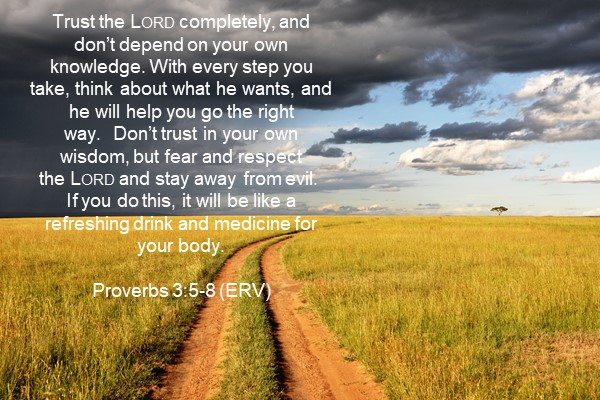
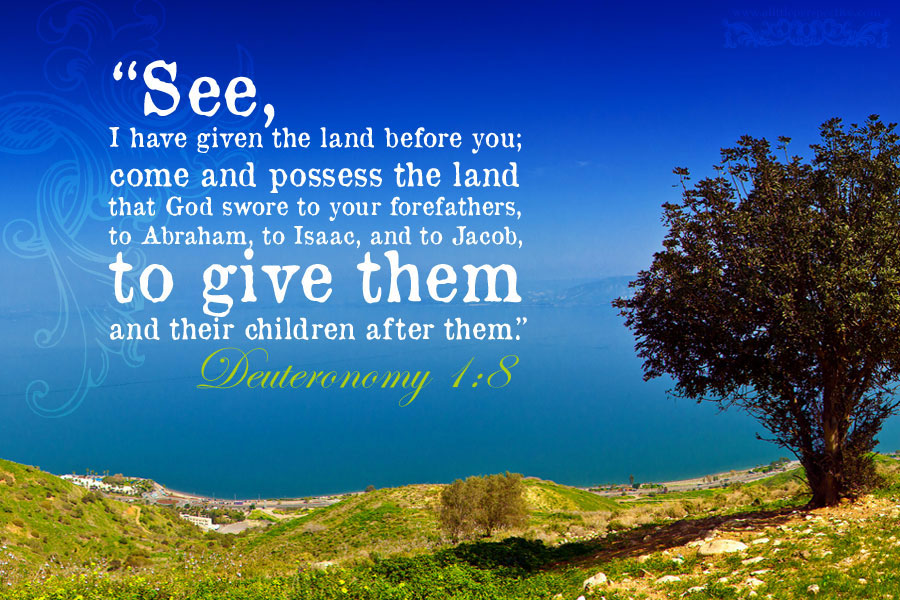


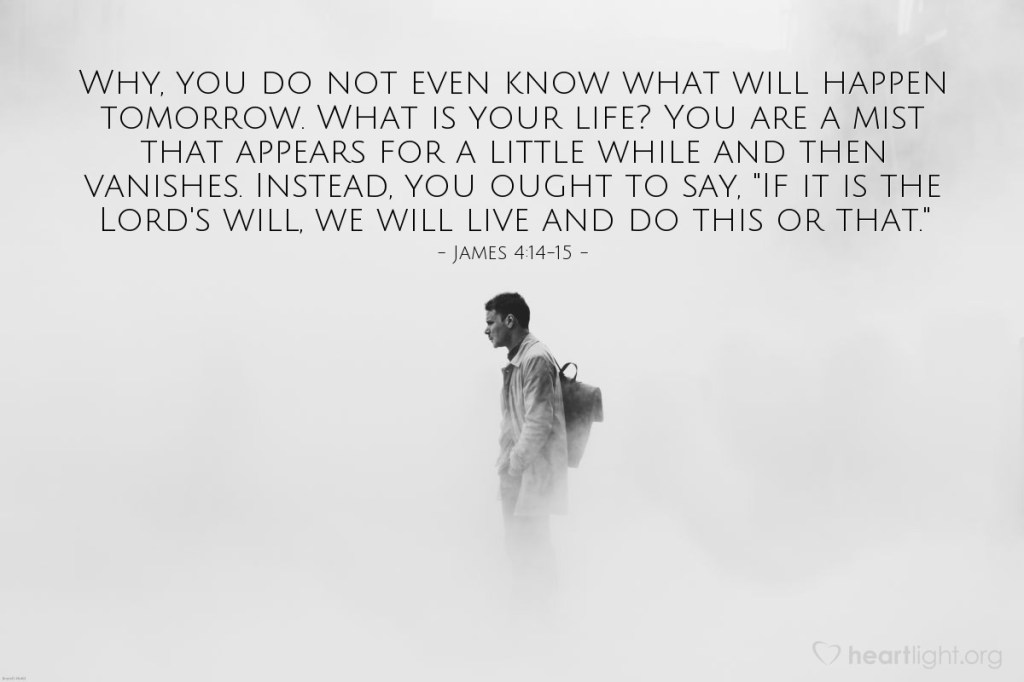



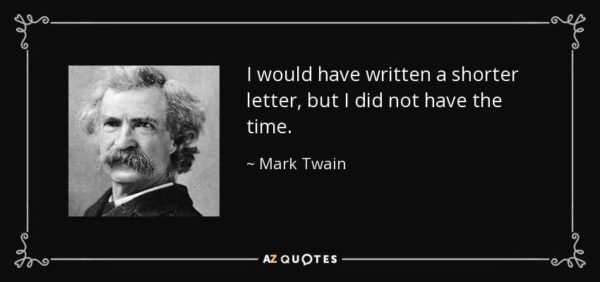


 Loving God, Living God, Loving Hope, Living Hope, Loving Living Life His Way! "Many things are possible for the person who has hope. Even more is possible for the person who has faith. And still more is possible for the person who knows how to love. But everything is possible for the person who practices all three virtues." - Brother Lawrence (1605-1691), Practicing the Presence of God (1692).