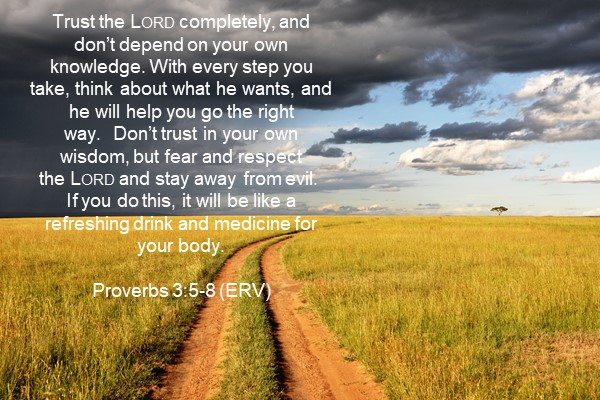
“Have faith in God?” “Whatever you ask in prayer, believe that you have received it, and it will be yours?” The seeds of faith to move the mountains. Mark 11:20-25

Mark 11:20-25 Revised Standard Version

The Lesson from the Withered Fig Tree

20 As they passed by in the morning, they saw the fig tree withered away to its roots. 21 And Peter remembered and said to him, “Master,[a] look! The fig tree which you cursed has withered.” 22 And Jesus answered them, “Have faith in God. 23 Truly, I say to you, whoever says to this mountain, ‘Be taken up and cast into the sea,’ and does not doubt in his heart, but believes that what he says will come to pass, it will be done for him. 24 Therefore I tell you, whatever you ask in prayer, believe that you have received[b] it, and it will be yours. 25 And whenever you stand praying, forgive, if you have anything against any one; so that your Father also who is in heaven may forgive you your trespasses.”[c]

The Word of God for the Children of God.

Glory be to the Father,
and to the Son, and to the Holy Ghost;
as it was in the beginning,
is now, and ever shall be,
world without end. Amen, amen.
As Jesus and his disciples walked along toward Jerusalem, they came across an unexpected surprise: a fig tree in full leaf.

This was a surprise because it was too early in the year for figs.

But where there was a fig tree in leaf, you could expect figs.

So Jesus and the disciples went over to the tree to see if it had any fruit.

It had none.

What seemed at first to be a remarkable tree turned out to be a disappointment.

So Jesus said to the tree: “May no one ever eat fruit from you again.”

And he walked away.

The next day, as they left Jerusalem and passed by the same tree, the disciples were astonished to find the tree totally withered.

When Peter expressed his surprise about the tree, Jesus used the opportunity to teach two lessons.

The first lesson was about failure. The empty tree serves as a stern hardcore warning we cannot pretend to be spiritually alive, for we won’t bear any fruit.

The second lesson is about faith. Jesus says, “Have faith in God.” We are to 100% trust in him for all the life and strength we need in order to serve him.

When we are rooted in Jesus through sincere prayer, our faith will bear fruit.

Our faith in Christ will be strong enough to help move people to believe in Jesus and enter his kingdom. Through his strength in us, we will show he is alive!

Probable or Improbable: Faith to Move Mountains

In reading our Bibles, we will come across verses that seem straightforward and easy to understand immediately.

On the other hand, there are also verses like this one!

“Whatever you ask in prayer, believe that you have received it, and it will be yours,” says Jesus.

We are tempted essentially to sidestep what these words say.

We try to bury them under a hundred qualifications.

The misapplication of such verses has scared some of us so much that we hardly give any attention to the sheer encouragement and the challenges they contain.

In this bold command, Jesus reminded His followers to trust God, because it is actually faith’s foundation in God that gives that faith significance. We should not have faith in faith or faith in ourselves, but 100% faith in God, God alone.

The metaphor that Jesus employed—that of someone commanding a mountain to be thrown into the sea—was perhaps familiar to the disciples; it was similar to a common rabbinic figure of speech for accepting an impossible challenge to then, with all effort accomplishing something that was seemingly impossible.[1] 

1 Alfred Edersheim, The Life and Times of Jesus the Messiah (Longmans, Green, and Co., 1898), Vol. 2, p 376 (footnote).

The way to get real-life results in prayer is to seek God with an attitude that says, “No matter how long it takes, or whatever I have to do, I will not be denied.”

This is not arrogance; it is Godly hunger. It is not about pushing God to give us what we want and how and when we want it, but about pushing yourself into God. It is not praying for the sake of praying. It is praying to see the hand of God move. It is desperate hardcore praying. It is the type of prayer that gets answers.

The disciples would not have misunderstood Jesus as suggesting that they  can literally hurl the Mount of Olives into the Dead Sea over 4,000 feet below them.

They would have understood his words as a proverbial statement indicating God wants to do extraordinary things through His children, for His children.

We discover vivid proof of Jesus’ teaching on faith and prayer throughout the book of Acts.

Early on, when a lame beggar asked Peter and John for money, Peter told him instead to look up, to stand up and walk in the name of Jesus Christ(Acts 3:6).

Perhaps as he spoke to this man, Peter was remembering Jesus’ words and he was thinking to himself, “Whatever you ask in my (Jesus) name … believe…”

When God is the object of our faith, we can have an audacious faith—a faith that believes the impossible to be possible with Him.

We can know that we are speaking to someone who is able to do far more than we can even imagine (Ephesians 3:20-21), we can do even greater works than Jesus (John 14:12-14).

12 “Truly, truly, I say to you, he who believes in me will also do the works that I do; and greater works than these will he do, because I go to the Father. 13  Whatever you ask in my name, I will do it, that the Father may be glorified in the Son; 14 if you ask[a] anything in my name, I will do it.

Jesus essentially says to us, I want you to pray in a way that says you actually truly believe in One God who is too wise to make mistakes, who is too kind to be cruel, and who is too powerful, unchangeable to be subdued by the great forces of the universe.

Don’t set aside these verses with hundred impossible improbable qualifications.

Just let them sit there in your spirit for a minute – preferably a whole lot longer.

Enjoy the truth that God is able to do things beyond anything you can imagine.

Rest secure in the indelible reality Father, Son, Spirit, know no impossibility.

And then ….

Pray Until Something Happens!

In the name of God, the Father and God the Son and God the Holy Spirit,

Psalm 20 Revised Standard Version

Prayer for Victory

To the choirmaster. A Psalm of David.

20 The Lord answer you in the day of trouble!
    The name of the God of Jacob protect you!
May he send you help from the sanctuary,
    and give you support from Zion!
May he remember all your offerings,
    and regard with favor your burnt sacrifices! Selah

May he grant you your heart’s desire,
    and fulfil all your plans!
May we shout for joy over your victory,
    and in the name of our God set up our banners!
May the Lord fulfil all your petitions!

Now I know that the Lord will help his anointed;
    he will answer him from his holy heaven
    with mighty victories by his right hand.
Some boast of chariots, and some of horses;
    but we boast of the name of the Lord our God.
They will collapse and fall;
    but we shall rise and stand upright.

Give victory to the king, O Lord;
    answer us when we call.[a]

Glory be to the Father,
and to the Son, and to the Holy Ghost;
as it was in the beginning,
is now, and ever shall be,
world without end. Amen, amen.

https://translate.google.com/

Will we ever allow ourselves to .01% believe the Lord is always close to the brokenhearted and saves those who are crushed in spirit? Psalm 34:17-18

Psalm 34:17-20 Revised Standard Version

17 When the righteous cry for help, the Lord hears,
    and delivers them out of all their troubles.
18 The Lord is near to the brokenhearted,
    and saves the crushed in spirit.

19 Many are the afflictions of the righteous;
    but the Lord delivers him out of them all.
20 He keeps all his bones;
    not one of them is broken.

The Word of God for the Children of God.

Glory be to the Father,
and to the Son, and to the Holy Ghost;
as it was in the beginning,
is now, and ever shall be,
world without end. Amen, amen.

On the radio the other day I heard a familiar song about how heartbreak feels.

There are probably hundreds, if not thousands, if not more of songs written throughout history about broken hearts and lost loves. Have you ever wondered why musicians and music producers keep writing about that same thing?

Songs like Psalm 13.

Songs like Psalm 137.

Which are the psalms of lament in the Word of God?

Individual psalms of Lament include: 3, 4, 5, 7, 9-10, 13, 14, 17, 22, 25, 26, 27, 28, 31, 36, 39, 40:12-17, 41, 42-43, 52, 53, 54, 55, 56, 57, 59, 61, 64, 70, 71, 77, 86, 89, 120, 139, 141, 142. Corporate psalms of Lament include: 12, 44, 58, 60, 74, 79, 80, 83, 85, 89, 90, 94, 123, 126, 129, 137.

Maybe people of whatever time frame -ancient or contemporary, do not tire of those types of songs because everyone can relate to them in some way. Nearly everyone has experienced those hard feelings of emptiness after a breakup, or they have asked themselves “What went so wrong?” after losing their love.

Thankfully God’s Word provides some guidelines to help us hard answer our questions and give us peace of mind when heartache and heartbreak happen.

Psalms of Lament

The psalms of lament are songs and poems in which the psalmist cries out to God in times of deep distress and despair.

In Psalms of lament, the psalmist asks God for intervention to deliver him from suffering, sorrow, great loss, failures, and enemies.

These petitions often give way to the Psalmists expressions of trust in God to act in the psalmist’s favor, leading to hope and joy, faith and peace and love.

There are more psalms of lament than any other type of Psalm.

These Psalms fall into the broad categories of individual or communal (or sometimes both).

Their basic structure includes:

  1. Address to God
  2. Description of complaint
  3. Request for God’s help
  4. Expression of trust in God

Psalm 13

For the choir director. A Psalm of David.

1 How long, O Lord? Will You forget me forever?
How long will You hide Your face from me?

2 How long shall I take counsel in my soul,
Having sorrow in my heart all the day?
How long will my enemy be exalted over me?

3 Consider and answer me, O Lord my God;
Enlighten my eyes, or I will sleep the sleep of death,

4 And my enemy will say, “I have overcome him,”
And my adversaries will rejoice when I am shaken.

5 But I have trusted in Your lovingkindness;
My heart shall rejoice in Your salvation.

6 I will sing to the Lord,
Because He has dealt bountifully with me.

When we hurt, Scripture can provide comfort.

It also gives us a way to express how we feel, especially when we don’t know what to say or how to say it.

Much of that language can be found in the Psalms, and many psalms were written by people who shared their feelings candidly and honestly.

https://www.christianity.com/wiki/bible/psalms-of-lament-to-remind-us-we-are-not-alone.html

David, the writer of Psalm 34, didn’t have to search long for peace, and neither do we. God is near to those who hurt, and we can trust today that the One who gave the sun its ability to shine, who told the waters how far they could go, and who constantly watches over the universe is also near to you—and he’s saying,

“I’ve got this, and I’ve got you.”

Why You Can Be Sure ‘the Lord Is Close to the Brokenhearted’ (Psalm 34:18)

When emotions are strong, I find comfort when reading Psalms.

The heart of a Psalmist is familiar with suffering and consistent in hope.

This pattern emerges time and time again.

The writer expresses an honest struggle, makes a request, and ends with a choice to trust in God.

Some Psalms focus on lament, which means to grieve the loss of something or someone.

Some focus on praise.

But many combine the two, even when several verses reveal the pain of suffering.

One of my favorites is Psalm 34.

The New Living Translation says, “The LORD is close to the brokenhearted; he rescues those whose spirits are crushed.”

Eugene Peterson interprets this verse the Message as, “If your heart is broken, you’ll find God right there; if you’re kicked in the gut, he’ll help you catch your breath.”

What Does Psalm 34:18 Mean for the Brokenhearted?

A brokenhearted person can literally feel the pain of brokenness.

We have physiological responses to loss, grief, and hurtful situations.

Emotional pain can be felt in a very real way, in the body, the mind, and the heart.

Our bodies are actually wired in such a way that emotional pain affects us physically. This is one reason it’s so vital to get honest with our emotions and pursue healing because it impacts all of who we are and how we live.

Brokenheartedness can feel so intense because we do not have what we once did, or what we thought we should have. We have lost something or someone. Also, we may feel all alone. Our body reacts to grief, anger, sadness, and fear.

When we are in this place, our need for something beyond ourselves becomes more evident.

Our enemy would love to keep us from knowing God’s love deeply and receiving the courage we need to move forward when life is hard.

God loves to help us know Him and know His presence with us, especially when life is hard.

Psalm 34:18 reminds us God is not only present with us, but near.

Near to the pain we feel.

Near to the loss we can’t fill.

Near to the needs we have and can’t yet express.

For the brokenhearted, God gives nearness.

God is not removed from knowing about the pain, or from our experience of pain. He is always available and close to those who suffer.

Not only is He near, but he stays with us and will help us get through.

He is not surprised or deterred, no matter how deep the brokenness feels.

God gives us the courage we need to breathe again.

Emotional pain sometimes leaves us speechless.

This Psalm provides words to remind our hearts and talk to God when we cannot find the words ourselves.

God’s presence with us in our messy moments is of great comfort.

What Does Psalm 34:18 Mean for the Crushed in Spirit?

I love the way Eugene Peterson describes how God saves, or rescues, us when our spirits are crushed.

When we feel kicked in the gut, He helps us catch our breath.

When everything has been knocked out of us, and we are depleted, He has what we need to take that first step of getting up again.

God sees and knows the impact of a soul that’s weary and worn.

Consider the following verses:

Proverbs 18:14 “The human spirit can endure in sickness, but a crushed spirit who can bear?”

Proverbs 17:22 “A cheerful heart is good medicine, but a crushed spirit dries up the bones.”

Proverbs 15:13 “A happy heart makes the face cheerful, but heartache crushes the spirit.”

These verses help me feel seen by God because He gets what it feels like to be crushed in spirit.

He’s been there, all alone at the Garden of Gethsemane preparing to suffer and die for us.

He knows it is painful.

It can feel like you’re emptied out, dried up because there’s nothing left to give.

It’s time to receive.

God rescues, or liberates, us from great pain and a weakened spirit, through His great love for each of us.

He sees the distraught places in our hearts and offers to fill them up again.

When we breakthrough to God, receive His love and the gift of His presence, our hearts are calmed, our hearts are sated, which frees us to finally move forward.

What Else Can We Glean from Psalm 34?

Encouragement and praise permeate Psalm 34, especially for the worn-down individual.

Verse 2, “I will glory in the Lord; let the afflicted hear and rejoice.”

Verses 6-7, “This poor man called, and the Lord heard him; he saved him out of all his troubles. The angel of the Lord encamps around those who fear him, and he delivers them.”

Verse 15, “The eyes of the Lord are on the righteous, and his ears are attentive to their cry;”

Verse 17, “The righteous cry out, and the Lord hears them; he delivers them from all their troubles.”

David also invites us to “taste and see that the Lord is good” (verse 8).

Because when we seek refreshment for weariness, we find goodness in God that renews us, restores us, refreshes us. And it’s available as often as we all need it.

God listens. God hears. God acts decisively.

And He is near – as close as the next breath you take.

In the name of God, the Father and God the Son and God the Holy Spirit,

Let us Pray,

Psalm 23 Revised Standard Version

The Divine Shepherd

A Psalm of David.

23 The Lord is my shepherd, I shall not want;
    he makes me lie down in green pastures.
He leads me beside still waters;[a]
    he restores my soul.[b]
He leads me in paths of righteousness[c]
    for his name’s sake.

Even though I walk through the valley of the shadow of death,[d]
    I fear no evil;
for thou art with me;
    thy rod and thy staff,
    they comfort me.

Thou preparest a table before me
    in the presence of my enemies;
thou anointest my head with oil,
    my cup overflows.
Surely[e] goodness and mercy[f] shall follow me
    all the days of my life;
and I shall dwell in the house of the Lord
    for ever.[g]

Glory be to the Father,
and to the Son, and to the Holy Ghost;
as it was in the beginning,
is now, and ever shall be,
world without end. Amen, amen.

https://translate.google.com/

Intentional or Unanswered? How long, Adonai? Will you forget me forever? How long, Adonai will you hide your face from me? Psalm 13

Psalm 13 Complete Jewish Bible

13 (0) For the leader. A psalm of David:

2 (1) How long, Adonai?
Will you forget me forever?
How long will you hide your face from me?
3 (2) How long must I keep asking myself what to do,
with sorrow in my heart every day?
How long must my enemy dominate me?

4 (3) Look, and answer me, Adonai my God!
Give light to my eyes, or I will sleep the sleep of death.
5 (4) Then my enemy would say, “I was able to beat him”;
and my adversaries would rejoice at my downfall.

6 (5) But I trust in your grace,
my heart rejoices as you bring me to safety.
(6) I will sing to Adonai, because he gives me
even more than I need.

The Word of God for the Children of God.

Glory be to the Father,
and to the Son, and to the Holy Ghost;
as it was in the beginning,
is now, and ever shall be,
world without end. Amen, amen.

David the psalmist had feelings of being God-forsaken.

He had times of being surrounding by enemies.

In Psalm 13, He wrote of the depths of aloneness one can feel when it seems God has turned away, failed to listen or act timely and now the enemy is at the gate.

“Has God lost track of me way out here in this God-forsaken, sun and wind, and scorched, waterless wilderness where only dust devils, tumbleweeds blow ?”

Psalm 137 expresses a similar depth of forsakenness and deep lament: “How long will God forget me, … How long will he keep forgetting, forsaking me?”

137 By the rivers of Bavel we sat down and wept
as we remembered Tziyon.
We had hung up our lyres
on the willows that were there,
when those who had taken us captive
asked us to sing them a song;
our tormentors demanded joy from us —
“Sing us one of the songs from Tziyon!”

Unanswered Prayer or Intentionally Forsaken?

John 11:4-7 Christian Standard Bible

When Jesus heard it, he said, “This sickness will not end in death but is for the glory of God, so that the Son of God may be glorified through it.” Now Jesus loved Martha, her sister, and Lazarus. So when he heard that he was sick, he stayed two more days in the place where he was. Then after that, he said to the disciples, “Let’s go to Judea again.”

John 11:28-37 Christian Standard Bible

Jesus Shares the Sorrow of Death

28 Having said this, she went back and called her sister Mary, saying in private, “The Teacher is here and is calling for you.”

29 As soon as Mary heard this, she got up quickly and went to him. 30 Jesus had not yet come into the village but was still in the place where Martha had met him. 31 The Jews who were with her in the house consoling her saw that Mary got up quickly and went out. They followed her, supposing that she was going to the tomb to cry there.

32 As soon as Mary came to where Jesus was and saw him, she fell at his feet and told him, “Lord, if you had been here, my brother wouldn’t have died!”

33 When Jesus saw her crying, and the Jews who had come with her crying, he was deeply moved[c] in his spirit and troubled. 34 “Where have you put him?” he asked.

“Lord,” they told him, “come and see.”

35 Jesus wept.

36 So the Jews said, “See how he loved him!” 37 But some of them said, “Couldn’t he who opened the blind man’s eyes also have kept this man from dying?”

Have you ever found yourself pleading and praying, yet seem to only receive delay after delay, silence and more silence as a response?

Or, arriving on the other side of the circumstances only to discover none of what you desired or anticipated came to pass?

Where was the Good Father in the midst of your trials?

The Bible is full of assurances that God will never leave or forsake us (Deut. 31:6), knows what we need before we ask (Matt. 6:8), and encourages us to bring our petitions to the Lord because what we request will be given to us (Matt. 7:7).

If all of these promises of God are true, why do our prayers go unanswered?

Is the Lord taking one of his Sabbath days rest (how long is a Sabbath days rest for an eternal God?), uncaring and aloof; standing just outside of our troubles and intentionally forgetting, or punishing or refusing to come unto our aid?

It can be disheartening and even confusing when we diligently pray as the Word directs us, yet apparent provision is not provided.

One of the most helpful examples of this in scripture can be found in John chapter eleven, we encounter the death and ultimate resurrection of Lazarus.

Jesus knew Lazarus was going to die.

He could have prevented this tragedy with a single thought as with Jairus’ daughter or the Centurion’s servant yet He chose to allow it to unfold without intervention. Lazarus continued to suffer his illness until his physical death.

His sisters and close friends mourned deeply for days.

Even Jesus, himself, wept when he arrived at the mournful scene.

Why would the Lord allow so much unnecessary sorrow when ultimately Lazarus would be spared the finality of death?

Our Heavenly Father sees far beyond our momentary light affliction (2 Cor. 4:17).

His ways are not our ways, and his thoughts are not our thoughts (Isa. 55:8).

He allowed great heartache and even physical pain for Mary, Martha, Lazarus, and others “for God’s glory so that God’s Son may be glorified through it” (John 11:4, NIV).

We see an even greater example of this in the crucifixion and resurrection of Jesus Christ.

How difficult is it for anyone to observe their kids, close family member, suffer?

For the sake of his treasured creation (John 3:16-17), God allowed his only son to take on mortal form and then endure horrific torture and temporal death so salvation could come to us.

Nothing could have possibly cost anyone more.

Yet, the final outcome far outweighed fleeting anguish.

It is unimaginable for us to comprehend the depth of this transaction, but it is clearly evident our Father’s love knows no bounds.

It far supersedes all worldly understanding.

How can this perspective alter our viewpoint on our own circumstances?

Despite our unwelcome travails, the Lord is working for the same good in our lives today that was displayed through Lazarus 2,000 years ago.

It is amid our own journeys that our Savior’s unfathomable love is evidenced to the desperate and hopeless. Even in our darkest hours, his light shines through.

Though your prayers may appear unanswered, there are actually intentional, eternal purposes at work. And his work is always for His glory, our greater good.

Intersecting Faith & Life:

Take time to read through the Psalms of Lament, entire chapter of John 11.

Test and challenge yourself … Can you see that although Jesus could have prevented the death of Lazarus, he intentionally chose not to answer the fervent prayers of Mary and Martha so that God’s glory may be made known?

Challenge yourselves … How can you see his omniscient plans displayed in your own life today, even when the outcome is long delayed or not what you desired?

Can you recall a time when an “unanswered” prayer was actually revealed by the Living Word of God and the divine work of the Holy Spirit to be a blessing?

There shall be showers of blessing:
This is the promise of love;
There shall be seasons refreshing,
Sent from the Savior above.

Showers of blessing,
Showers of blessing we need:
Mercy-drops round us are falling,
But for the showers we plead.
(refrain)

There shall be showers of blessing,
Precious reviving again;
Over the hills and the valleys,
Sound of abundance of rain. [Refrain]

There shall be showers of blessing:
Send them upon us, O Lord;
Grant to us now a refreshing,
Come and now honor Thy Word. [Refrain]

There shall be showers of blessing:
Oh, that today they might fall,
Now as to God we’re confessing,
Now as on Jesus we call! [Refrain]

https://hymnary.org/text/there_shall_be_showers_of_blessing_this

In the name of God, the Father and God the Son and God the Holy Spirit,

Let us Pray,

Psalm 23 Authorized (King James) Version

Psalm 23

A Psalm of David.

The Lord is my shepherd; I shall not want.
He maketh me to lie down in green pastures:
he leadeth me beside the still waters.
He restoreth my soul:
he leadeth me in the paths of righteousness for his name’s sake.
Yea, though I walk through the valley of the shadow of death,
I will fear no evil: for thou art with me;
thy rod and thy staff they comfort me.
Thou preparest a table before me in the presence of mine enemies:
thou anointest my head with oil; my cup runneth over.
Surely goodness and mercy shall follow me all the days of my life:
and I will dwell in the house of the Lord for ever.

Glory be to the Father,
and to the Son, and to the Holy Ghost;
as it was in the beginning,
is now, and ever shall be,
world without end. Amen, amen.

https://translate.google.com/

“What is the supposed plan here?” from the viewpoint of all those 5000 gathering, what are we be pondering, our viewpoint, thoughts, theirs, our 2024 expectations? Matthew 14:13-18

Matthew 14:13-18 Complete Jewish Bible

13 On hearing about this, Yeshua left in a boat to be by himself in the wilderness. But the people learned of it and followed him from the towns by land. 14 So when he came ashore, he saw a huge crowd; and, filled with compassion for them, he healed those of them who were sick.

15 As evening approached, the talmidim came to him and said, “This is a remote place and it’s getting late. Send the crowds away, so that they can go and buy food for themselves in the villages.” 16 But Yeshua replied, “They don’t need to go away. Give them something to eat, yourselves!” 17 “All we have with us,” they said, “is five loaves of bread and two fish.” 18 He said, “Bring them here to me.”

The Word of God for the Children of God.

Glory be to the Father,
and to the Son, and to the Holy Ghost;
as it was in the beginning,
is now, and ever shall be,
world without end. Amen, amen.
This story about Jesus feeding more than 5,000 people is usually told from the viewpoint of the disciples.

I see Jesus – this whole story revolves around his actions.

I see the twelve disciples.

I see the enormous expanse of curious people coming from all directions.

I sit here in my dining room writing this devotion, from a viewpoint focused squarely on what I know what Jesus is about to do – his healing of the sick and the disabled, his challenging his disciples to come up with a plan that will feed all those who have come right there in that moment – not sending them home.

I look at the wonderment coming from the confused minds of his 12 disciples at the enormous task that their Rabbi just handed over to them with that obvious expectation they will arrive at a workable doable solution and feed everyone.

I can see them scratching their collective heads, waving their collective arms all over the place, pushing, chattering and shouting and screaming at each other.

I can see Peter struggling to use some semblance of authority trying to gain some sense of control and give order – but the huge scope of the mission is not allowing for any fruitful results – and the longer that it goes on, the greater the chaos to fulfill their Rabbi’s command. From my 2024 eyes – I am bewildered.

I wonder what it was like to be those panicked disciples, a person in the crowd?

I would have loved to been that fly buzzing around from shoulder to shoulder trying to listen to their confused and chaotic efforts, a fly on Rabbi Jesus hands.

I can imagine walking around, or observe myself flying around surrounded by those thousands of people—men, women, children of all shapes, sizes, ages.

Everyone is trying to find their places to sit and keep their families together.

You would probably see oblivious young children rollicking, running around in play as their parents are desperately trying to corral them along the shoreline.

And seniors slowly shuffling to find a place close enough to Jesus so they could hear him speak.

It was probably an example of what people have called “organized chaos.” Even Jesus’ disciples didn’t know what to do with the hungry followers (vv. 15-17).

What was it like to observe the calm and measured face of Jesus in the midst of such a hectic scene? How did Jesus know he could actually feed all those hungry, exuberant newly healed people with just “five loaves of bread and two fish”?

Jesus always knew he could and would feed the healed, starving crowd because he was and is the compassionate Son of God, who not only provided the bread and fish but too created the earth, established everything in it, from the waters where the fish lived to the land which provided the grain used to bake bread.

Knowing the power of the Creator gave Jesus the opportunity to invite others to know him too. But in this moment, what was it that the twelve disciples knew of their Rabbi, could wrap their finite intellect around and the crowd of thousands, how much did they know, even care aside from the healings which stirred their “what is next” curiosity, did they come to expect a miracle or just full bellies?

What will happen to us if we are generous? We never run out of things to give be it money, goods, intellect or anything that we are generous of giving. Everything flows back in return a hundredfold.  Why is this so? The reason behind is, the moment we give; we don’t only give to the person who needs it we also give to Jesus. And Jesus whom we can never outdo in generosity gives back to us many times over what we give Him.

The crowd in the gospel who were following Jesus had nothing more left in them, they were hungry. And Jesus saw this that’s why He graciously did the miracle of loaves and fish. With five loaves and two fish He feed the nearly five thousand people not including women and children. After all of them had eaten from this miraculous abundance, they had an excess of twelve wicker baskets.

The simple message of the gospel for us from this text is we must be generous and thankful at all times. This is for the reason that God will never run out of anything to give and the more that he give the more that we would give also. God has no limits or boundaries on what He will provide, responding to us all.

As we witness Jesus being compassionate, merciful and generous to the utmost especially to the poor so we must be also make our own sacrifice of self. Let us not worry if our pockets will hurt from our being merciful and generous. For Jesus will always see to it we’ll be filled, motivated with anything that we need, observe with compassionate eyes, act with healing hands, not minding chaos. 

Having observed the twelve, the crowds, what are our 224 collective responses?

In the name of God, the Father and God the Son and God the Holy Spirit,

Let us Pray,

Psalm 23 King James Version

23 The Lord is my shepherd; I shall not want.

He maketh me to lie down in green pastures: he leadeth me beside the still waters.

He restoreth my soul: he leadeth me in the paths of righteousness for his name’s sake.

Yea, though I walk through the valley of the shadow of death, I will fear no evil: for thou art with me; thy rod and thy staff they comfort me.

Thou preparest a table before me in the presence of mine enemies: thou anointest my head with oil; my cup runneth over.

Surely goodness and mercy shall follow me all the days of my life: and I will dwell in the house of the Lord for ever.

Glory be to the Father,
and to the Son, and to the Holy Ghost;
as it was in the beginning,
is now, and ever shall be,
world without end. Amen, amen.

https://translate.google.com/

Spurring one Another On, Bringing Out The Best In Others: How Well Does Anyone Really Recognize The Truest Urgency of Encouragement? Hebrews 10:19-25

Hebrews 10:19-25 Christian Standard Bible

Exhortations to Godliness

19 Therefore, brothers and sisters, since we have boldness to enter the sanctuary through the blood of Jesus— 20 he has inaugurated[a] for us a new and living way through the curtain (that is, through his flesh)— 21 and since we have a great high priest over the house of God, 22 let us draw near with a true heart in full assurance of faith, with our hearts sprinkled clean from an evil conscience and our bodies washed in pure water. 23 Let us hold on to the confession of our hope without wavering, since he who promised is faithful. 24 And let us consider one another in order to provoke love and good works, 25 not neglecting to gather together, as some are in the habit of doing, but encouraging each other, and all the more as you see the day approaching.

The Word of God for the Children of God.

Glory be to the Father,
and to the Son, and to the Holy Ghost;
as it was in the beginning,
is now, and ever shall be,
world without end. Amen, amen.

The word for “encouraging” here means literally “to stand alongside.”

https://www.blueletterbible.org/lexicon/g3870/kjv/tr/0-1/

It has to do with assuring someone that you care, strengthening them by just being there, by coming alongside of them. It’s also similar to a word used to describe the Holy Spirit—parakletos, which means “counselor, advocate.”

Is there anyone out there who does not need to be encouraged today?

There is a high probability that the answer to that question is a resounding NO!

We all do!

Anyone who says they never need encouragement is probably a hurting person.

There’s nothing wrong with desiring or needing encouragement. Jesus did.

His Father encouraged him, saying, “You are my Son, whom I love; with you I am well pleased” (Luke 3:22). An angel encouraged him as he struggled alone one night, knowing he would soon be arrested and crucified (Luke 22:43).

In the Upper Room as they were all together celebrating their Passover, Jesus mightily stirred them up by declaring as he broke the bread – “this is my body which is broken for you, then declaring as he raised the cup – this is my blood which is being shed for you, then getting up he shed his tunic and he stated to wash everyone’s feet – John 13:6-8

He came to Simon Peter, who asked him, “Lord, are you going to wash my feet?”

Jesus answered him, “What I’m doing you don’t realize now, but afterward you will understand.”

“You will never wash my feet,” Peter said.

Jesus replied, “If I don’t wash you, you have no part with me.”

The disciples were completely stunned, disoriented by these declarations.

Jesus could easily sense this disorientation and moved quickly to encourage.

John 14:1-6 Amplified Bible

Jesus Comforts His Disciples

14 “Do not let your heart be troubled (afraid, cowardly). Believe [confidently] in God and trust in Him, [have faith, hold on to it, rely on it, keep going and]  believe also in Me. In My Father’s house are many dwelling places. If it were not so, I would have told you, because I am going there to prepare a place for you. And if I go and prepare a place for you, I will come back again and I will take you to Myself, so that where I am you may be also. And [to the place]  where I am going, you know the way.” Thomas said to Him, “Lord, we do not know where You are going; so how can we know the way?” Jesus said to him,  “[a]I am the [only] Way [to God]  and the [real] Truth and the [real] Life; no one comes to the Father but through Me.

How well do we recognize when our neighbors need anyone’s encouragement?

One may be a student leaving home for college. Another may be a tired, frazzled mother facing the stress of child care and a strained marriage. Another may be a new widow or widower or new mother whose young child is now facing a severe life threatening medical diagnosis and facing long, lonely and uncertain days, an addict or an alcoholic who is burning one bridge after the other in their days of active use and abuse – they are just about to become unsupported, homeless.

Or perhaps there’s someone you have not seen at worship in a while. When that person is contacted, you discover their life has been put on notice when words like marital separation or divorce are being showered by tears all around them, or their house is being foreclosed, sudden loss of job, and any other countless and diverse reasons for tears. People who need encouragement are not far away.

Our children’s teachers, our worship leaders, pastors, elders—all of these folks need encour­agement. Elderly members of our congregations going through a time of transition, moving into senior or assistive living, having to surrender their driver’s license. Being available, a daily encourager can be an addictive but healthy habit. Loving by encouraging, by exhorting, can bring energy and joy.

Will you ask for it?

Will you give it?

Will you do it?

Will you receive it?

Transformation Through Exhortation

2 Timothy 4:1-5 Amplified Bible

“Preach the Word”

4 I solemnly charge you in the presence of God and of Christ Jesus, who is to judge the living and the dead, and by His appearing and His kingdom: preach the word [as an official messenger]; be ready when the time is right and even when it is not [keep your sense of urgency, whether the opportunity seems favorable or unfavorable, whether convenient or inconvenient, whether welcome or unwelcome]; correct [those who err in doctrine or behavior], warn [those who sin], exhort and encourage [those who are growing toward spiritual maturity], with inexhaustible patience and [faithful] teaching. For the time will come when people will not tolerate sound doctrine and accurate instruction [that challenges them with God’s truth]; but wanting to have their ears tickled [with something pleasing], they will accumulate for themselves [many] teachers [one after another, chosen] to satisfy their own desires and to support the errors they hold, and will turn their ears away from the truth and will wander off into myths and man-made fictions [and will accept the unacceptable]. But as for you, be clear-headed in every situation [stay calm and cool and steady], endure every hardship [without flinching], do the work of an evangelist, fulfill [the duties of] your ministry.

Some of us need to be told to get off the sofa and be productive. Sometimes we just need to receive an order. That’s why there are many commands in the Bible.

Paul motivates Timothy through exhortations, such as Preach, be prepared, correct, rebuke, encourage.

Paul says, “You’ve got an important job to do. I have encouraged you; I have equipped you; I have given you an example; and now I charge you to get down to God’s business.”

The more I get to know myself, the more I realize that I often need a push to volunteer for service in God’s army. I need God himself as my drill sergeant.

We are all born with different personalities.

Hearing a command motivates some while frustrating others.

Prohibitions against disgraceful behavior can actually stir up a desire to disobey.

Something I frequently heard in my more mischievous youth; “Tell that child to stay away from the cookie jar,” and soon Mom would hear its lid rattling open.

Similarly, a “KEEP OFF THE GRASS” sign will actually prompt some soul to deliberately walk on the grass. But although commands might not work for all, most of us needed several stout words from our parents authority in our lives.

God is the ultimate authority in all of our lives.

We follow his commands because He has ultimate authority.

In awe, fear and deep reverence, we know he cares for us, has our best in mind, and acts from an eternal perspective and God’s criticism is always constructive.

And his exhortations are priceless advice. He charges us to hear, listen, obey.

Unswervingly Spur others to Greater Works …

John 14:12-13 Amplified Bible

12 I assure you and most solemnly say to you, anyone who believes in Me [as Savior] will also do the things that I do; and he will do even greater things than these [in extent and outreach], because I am going to the Father. 13 And I will do whatever you ask in My name [[a]as My representative], this I will do, so that the Father may be glorified and celebrated in the Son.

Unswervingly, in generic English translation it means to follow a direct path, to never turn aside and to be steadfast and loyal.

In Greek, the word is anthistemi, which means to set against or withstand without giving up or letting go.  We are to withstand without giving up on the hope we profess. We cannot turn or be turned aside from that hope.

We must hold tightly to it with a single-minded belief that this hope we have in Jesus, that which we profess is based on God’s promises which are unfailing.

The second word that grabbed me here was, spur

When I hear or see the word spur I think of an attachment to a cowboy’s boots which is meant to get their horses moving forward with a bit more urgency…

Spur also means to provoke or stir up, to goad in to action or to incite. 

It also means to urge or encourage to action, to move in vigorous pursuit of an object, to stimulate, to impel, to drive.

We are to spur each other on toward love and good deeds and not to neglect meeting together.

Spur does not mean suggest, imply, or consider.

It does not mean that we should think about it or wait for the right time or even to hold off till it’s convenient.

The sense of urgency here is clear.

We are to stand firm without turning aside, setting ourselves against all that comes at us in the hope of God’s promises.

Additionally, we are to drive and incite each other toward love and good deeds.

This is action! As I read this scripture with new eyes, I don’t see it as the warm fuzzy that I once did, encouraging me to remember God’s promises and to make sure I remain disciplined enough to continue to meet together with the Body.

This is a call to action.

A call for us to stand firm in the living Word of God, and the promises of God in our beliefs, our faith, to encourage one another to act as Christ has taught us.

In the name of God, the Father and God the Son and God the Holy Spirit,

Let us Pray,

Psalm 20 Complete Jewish Bible

20 (0) For the leader. A psalm of David:

2 (1) May Adonai answer you in times of distress,
may the name of the God of Ya‘akov protect you.
3 (2) May he send you help from the sanctuary
and give you support from Tziyon.
4 (3) May he be reminded by all your grain offerings
and accept the fat of your burnt offerings. (Selah)
5 (4) May he grant you your heart’s desire
and bring all your plans to success.

6 (5) Then we will shout for joy at your victory
and fly our flags in the name of our God.
May Adonai fulfill all your requests.

7 (6) Now I know that Adonai
gives victory to his anointed one —
he will answer him from his holy heaven
with mighty victories by his right hand.

8 (7) Some trust in chariots and some in horses,
but we praise the name of Adonai our God.
9 (8) They will crumple and fall,
but we will arise and stand erect.

10 (9) Give victory, Adonai!
Let the King answer us the day we call.

Glory be to the Father,
and to the Son, and to the Holy Ghost;
as it was in the beginning,
is now, and ever shall be,
world without end. Amen, amen.

https://translate.google.com/

But God’s not finished. He’s waiting around to be gracious to you. He is gathering strength to show mercy to you. God always takes the time to do literally everything right. Those who will wait for him are the lucky ones. Isaiah 30:18-21

Isaiah 30:18-21 Easy-to-Read Version

God Will Help His People

18 So the Lord is waiting to show his mercy to you. He wants to rise and comfort you. The Lord is the God who does the right thing, so he will bless everyone who waits for his help.

19 You people who live in Jerusalem on Mount Zion will not continue crying. The Lord will hear your crying, and he will comfort you. When he hears you, he will help you.

20 The Lord might give you sorrow and pain like the bread and water you eat every day. But God is your teacher, and he will not continue to hide from you. You will see your teacher with your own eyes. 21 If you wander from the right path, either to the right or to the left, you will hear a voice behind you saying, “You should go this way. Here is the right way.”

The Word of God for the Children of God.

Glory be to the Father,
and to the Son, and to the Holy Ghost;
as it was in the beginning,
is now, and ever shall be,
world without end. Amen, amen.

Good morning, church family! Today, we’re going to dive into a passage from the book of Isaiah, one that speaks to the very heart of our walk with Jesus.

It’s about God’s favor in times of trouble, His promise of comfort and restoration, and His blessing of divine guidance. These are themes that resonate deeply, especially in these uncertain and challenging times.

Reverend Charles Spurgeon once said, “God is too good to be unkind and He is too wise to be mistaken. And when we cannot trace His hand, we must trust His heart.”

I have to ask, Isn’t that a powerful reminder of God’s unfailing love, wisdom?

God’s Favour in Times of Trouble

In the midst of our trials and tribulations, it is often difficult to perceive God’s favor. Yet, the scripture passage from Isaiah 30:18-21 assures us that God’s favor is not absent in times of trouble, but rather, it is most profoundly present.

The first verse, “Therefore the Lord waits to be gracious to you, and therefore he exalts himself to show mercy to you,” is a powerful testament to God’s enduring love and favor towards us, even in our darkest hours.

Favor definition: The Hebrew word for favor, ‘hen’, connotes grace, kindness, and acceptance. It is a divine attribute that God bestows upon His people, not because we have earned it, but because of His utterly boundless love and mercy.

This favor is not a guarantee of a trouble-free life, but rather, it is the assurance of God’s living presence, guidance, and sustenance in the midst of our troubles.

Not a passive concept: It is not a mere comforting thought to hold onto when we are in distress. Rather, it is an active, dynamic force that propels us forward, enabling us to navigate through our trials with courage, resilience, and hope.

It is God’s favor that gives us the strength to endure, the wisdom to understand, the wisdom to stop, be still, sit still stay still and the faith to trust in His divine plan, even when the sum of our circumstances seem bleak and insurmountable.

God’s favor in times of trouble and uncertainty manifests itself in various ways:

For some, it may be the sudden provision of resources in times of need. For others, it may be the unexpected help from a stranger, the comforting words from a friend, or the inner peace that surpasses all understanding. (John 14:27)

Yet, for all, God’s sure and trustworthy promise of favor is the assurance of His utterly unfailing love, His unwavering presence, and His unchanging promises.

A transformative force:

It not only sustains us in our trials but also shapes us through them.

It molds our character, refines our faith, and deepens our dependence on God.

Through the fires of the very hottest of furnaces of affliction, we are so slowly, inexorably, transformed into vessels of honour, newly fit for the Master’s use.

Proverbs 27:17 Easy-to-Read Version

17 As one piece of iron sharpens another, so friends keep each other sharp.

A testament to His divine justice:

As the scripture says, “For the Lord is a God of justice; blessed are all those who wait for him.” God’s justice is not merely punitive; but it is also restorative.

He brings good out of evil, hope out of despair, strength from weakness, and life out of death.

His favor is His divine response to our human predicament, a testament to His commitment to restore, redeem, and renew all things in His time, in His way.

Not a magic wand that instantly removes our troubles;

Rather, it is the divine assurance that in the midst of our troubles, we are not alone, we are not forgotten, and we are not defeated. It is the divine promise that though we may walk through the valley of the shadow of death, we need fear no evil, for God is with us, His rod and His staff, they always comfort us.

The Promise of Comfort and Restoration

2 Corinthians 13:5-10 Amplified Bible

Test and evaluate yourselves to see whether you are in the faith and living your lives as [committed] believers. Examine yourselves [not me]! Or do you not recognize this about yourselves [by an ongoing experience] that Jesus Christ is in you—unless indeed you fail the test and are rejected as counterfeit? But I hope you will acknowledge that we do not fail the test nor are we to be rejected. But I pray to God that you may do nothing wrong. Not so that we [and our teaching] may appear to be approved, but that you may continue doing what is right, even though we [by comparison] may seem to have failed. For we can do nothing against the truth, but only for the truth [and the gospel—the good news of salvation]. We are glad when we are weak [since God’s power comes freely through us], but you [by comparison] are strong. We also pray for this, that you be made complete [fully restored, growing and maturing in godly character and spirit—pleasing your heavenly Father by the lives you live]. 10 For this reason I am writing these things while absent from you, so that when I come, I will not need to deal so severely [with you], in my use of the authority which the Lord has given me [to be used] for building you up and not for tearing you down.

The promises of comfort and restoration are not just a soothing balm for our present pain, but those promises of comfort and restoration also carries with them the solemn assurance of a future restoration that God has planned for us.

God, our Single, Only Greatest Best Friend Forever

Psalm 25:12-18 English Standard Version

12 Who is the man who fears the Lord?
    Him will he instruct in the way that he should choose.
13 His soul shall abide in well-being,
    and his offspring shall inherit the land.
14 The friendship[a] of the Lord is for those who fear him,
    and he makes known to them his covenant.
15 My eyes are ever toward the Lord,
    for he will pluck my feet out of the net.

16 Turn to me and be gracious to me,
    for I am lonely and afflicted.
17 The troubles of my heart are enlarged;
    bring me out of my distresses.
18 Consider my affliction and my trouble,
    and forgive all my sins.

I will often picture God sitting on an ornate throne made of rare metals, adorned with priceless jewels, and upholstered in the finest fabric.

Some Bible passages portray God in a similar way.

But, what if, for a moment, we close our eyes, quiet our souls, and imagine God differently? What if God—still in all his glory and splendor—isn’t sitting in lavishness associated with royalty but instead is sitting at the corner booth in a local coffee shop, or on the couch in your family room, eagerly waiting for you?

What if God, who is so excited to see you, suddenly, upon seeing you, leaps from his seated position and embraces you, hugs, like a friend who longs to hear how you are doing and what you have been up to? Would you run away or stay still?

While you are sharing a meal, what if God, in both his divine and human nature, gives you his undivided attention as you sit in a corner booth in Burger King and invites you to share with him your life, your story, your joys, your concerns too?

What if . . . ?

How do you see God today?

Or, maybe a better question: How do you need to see God today?

The beauty of God is that he is not only the King of all creation but also the single most patient most attentive of best friends who will always be near.

In the name of God, the Father and God the Son and God the Holy Spirit,

Let us Pray,

Psalm 8 Complete Jewish Bible

(0) For the leader. On the gittit. A psalm of David:

2 (1) Adonai! Our Lord! How glorious
is your name throughout the earth!
The fame of your majesty
spreads even above the heavens!

3 (2) From the mouths of babies and infants at the breast
you established strength because of your foes,
in order that you might silence
the enemy and the avenger.

4 (3) When I look at your heavens, the work of your fingers,
the moon and stars that you set in place —
5 (4) what are mere mortals, that you concern yourself with them;
humans, that you watch over them with such care?

6 (5) You made him but little lower than the angels,
you crowned him with glory and honor,
7 (6) you had him rule what your hands made,
you put everything under his feet —
8 (7) sheep and oxen, all of them,
also the animals in the wilds,
9 (8) the birds in the air, the fish in the sea,
whatever passes through the paths of the seas.

10 (9) Adonai! Our Lord! How glorious
is your name throughout the earth!

Glory be to the Father,
and to the Son, and to the Holy Ghost;
as it was in the beginning,
is now, and ever shall be,
world without end. Amen, amen.
https://translate.google.com/

Who Actually, Authentically, Believes Living a Life Without Complaining is not only possible, but, 100% doable? Philippians 2:14-16

Philippians 2:14-16 The Message

14-16 Do everything readily and cheerfully—no bickering, no second-guessing allowed! Go out into the world uncorrupted, a breath of fresh air in this squalid and polluted society. Provide people with a glimpse of good living and of the living God. Carry the light-giving Message into the night so I’ll have good cause to be proud of you on the day that Christ returns. You’ll be living proof that I didn’t go to all this work for nothing.

The Word of God for the Children of God.

Glory be to the Father,
and to the Son, and to the Holy Ghost;
as it was in the beginning,
is now, and ever shall be,
world without end. Amen, amen.

Thinking about our churches, brimming with nostalgic thoughts, we might imagine the early church to be different from any church we might visit today.

John the Baptist is our Senior Pastor, Imagine Peter as your associate preacher or John in charge of pastoral, congregational care. Imagine Thaddaeus is now in charge of the office, bulletin and Bartholomew coordinating church facilities.

Imagine listening to the stories of Jesus from witnesses who walked with him!

The first church in Jerusalem seemed to have everything going for it. Ministry and mission had reached far and wide. People were being converted. The church was growing. And, as in every church, growth brought problems. Greek widows weren’t being served as well or as not nearly as consistently as Hebrew widows.

When a church has problems, and which one doesn’t have its significant issues, what matters is how people respond to the problems. Some respond by leaving.

Other folks stay and murmur. They gongysmos. This Greek word describes the same kind of murmuring the Israelites did against Moses (see Exodus 16:1-3).

Exodus 16:1-3The Message

16 1-3 On the fifteenth day of the second month after they had left Egypt, the whole company of Israel moved on from Elim to the Wilderness of Sin which is between Elim and Sinai. The whole company of Israel complained against Moses and Aaron there in the wilderness. The Israelites said, “Why didn’t God let us die in comfort in Egypt where we had lamb stew and all the bread we could eat? You’ve brought us out into this wilderness to starve us to death, the whole company of Israel!”

Have you gongysmosed lately?

What does gongysmos mean?

a murmur, murmuring, muttering. a secret debate. a secret displeasure not openly avowed.

Maybe it was something big: “Lately, the preaching seems a bit weak.”

Maybe it was something small: “I hate that decaf we serve at coffeetime.” “I wish they would have more Boston Cream donuts and peanut butter muffins.”

But you may think, “I’m not murmuring, I’m offering a suggestion, I’m being more helpful. I’m highlighting the church problems so everyone can see them.”

Philippians 2:14-16 Amplified Bible

14 Do everything without murmuring or questioning [the providence of God], 15 so that you may prove yourselves to be blameless and guileless, innocent and uncontaminated, children of God without blemish in the midst of a [morally] crooked and [spiritually] perverted generation, among whom you are seen as bright lights [beacons shining out clearly] in the world [of darkness], 16 holding out and offering to everyone the word of life, so that in the day of Christ I will have reason to rejoice greatly because I did not run [my race] in vain nor labor without result.

As humans, we tend default to complain, grumble more often than not.

The other week I was silently complaining because the internet was not running as fast as I needed it to be.

I was trying to find specific Bible verses and hymns and the Internet decided to either freeze up on me or without warning, reset everything so I lost my places.

In a short period of time (a matter of milliseconds), I had instantly managed to become restless and I complained about how “slow” the Internet was moving. 

I paused and then I thought it was quite ironic as to how I was searching Bible verses on patience and peace while I myself was being anything except patient.

This moment of automatic complaining taught me a vital valuable lesson—I do need to slow down, choose not to complain, and be patient. The Bible verses did eventually load, I just had to wait a few extra milliseconds longer than normal. 

Similar to how I complained about the slow internet, many of us complain over frivolous things.

These things do not truly matter when we look at the grand spectrum of things.

Slow Internets, a delay in traffic, or a forgotten assignment is not going to be the end of the world. This is why we must stop constantly fretting over small things and choose to live our lives separated from a heart of complaining.

Complaining does not normally bring about the beautiful life God wants for us.

The life God has in store for us is one of hope, peace, love, and thankfulness.

The exact opposite of complaining is thankfulness.

The Bible repeatedly encourages us to be thankful as it tells us,

“Let the peace of Christ rule in your hearts, since as members of one body you were called to peace. And be thankful” (Colossians 3:15).

Jesus Comforts His Disciples

14 “Do not let your heart be troubled (afraid, cowardly). Believe [confidently] in God and trust in Him, [have faith, hold on to it, rely on it, keep going and] believe also in Me. In My Father’s house are many dwelling places. If it were not so, I would have told you, because I am going there to prepare a place for you. And if I go and prepare a place for you, I will come back again and I will take you to Myself, so that where I am you may be also. And [to the place]  where I am going, you know the way.” Thomas said to Him, “Lord, we do not know where You are going; so how can we know the way?” Jesus said to him, “[a]I am the [only] Way [to God] and the [real] Truth and the [real] Life; no one comes to the Father but through Me. (John 14:1-6 Amplified)

25 “I have told you these things while I am still with you. 26 But the [a]Helper (Comforter, Advocate, Intercessor—Counselor, Strengthener, Standby), the Holy Spirit, whom the Father will send in My name [in My place, to represent Me and act on My behalf], He will teach you all things. And He will help you remember everything that I have told you. 27 Peace I leave with you; My  [perfect] peace I give to you; not as the world gives do I give to you. Do not let your heart be troubled, nor let it be afraid. [Let My perfect peace calm you in every circumstance and give you courage and strength for every challenge.]  28  You heard Me tell you, ‘I am going away, and I am coming back to you.’ If you  [really] loved Me, you would have rejoiced, because I am going [back] to the Father, for [b]the Father is greater than I. (John 14:25-28 Amplified)

Rather than complaining, we need to rejoice and be thankful for all we have.

In my case, I need to be still, be quiet, rejoice and be thankful that I have God.

Internet connection, and a computer to work from, Jesus Christ as my Savior.

Pray and pray some more for serenity about those things you can change in order to turn your complaint into praise and a reason to be 1000% thankful.

By praying, by changing our prone-to-complaining hearts into hearts of thankfulness, we will be able to truly serve the Lord and bring Him glory. 

Intersecting Faith & Life:

Paul tells us in Philippians 2:14-15 we must do everything without grumbling or arguing in order for us to be blameless, pure, children of God without fault in this present too tightly wound up, too tightly wrapped and crooked generation.

Within the concept of grumbling and arguing, complaining can also be used as a synonym for grumbling.

Depending on the version you use, it will either say grumbling or complaining.  

In order to shine like stars in this warped and crooked generation, we have to let go of the habit of complaining and arguing.

There is no way for us to shine as stars if we are behaving in the same way as the present generation. In order to shine as glistening stars, we have to stand out from the rest of the world, and this can only be done by living for Jesus.

Living for Jesus means we follow His teachings and commands. Instead of complaining and arguing, we give thanks, rejoice, and be at peace with others.

In our Christian walk, there is no room for complaining or arguing anymore.

We need to repent and turn away from these practices.

From the moment we do this, we can truly shine as beautiful stars in the sky.

In this way, we will be able to help others see the love of Christ. 

“Dear Jesus, I often struggle with complaining. Please help me to stop complaining and to, instead, lift up Your Name in praise and thankfulness. Complaining turns me into somebody I’m not, and I don’t want to live in accordance with this practice anymore. Please enable me to shine like a star in the sky for You amongst this present generation. I want to glorify You in everything I do, and I know this is not possible unless I walk away from complaining. Thank You, Lord and Savior Jesus, for listening to, hearing, giving consideration to, my prayers. Amen.” 

  • Do you currently struggle with complaining? If so, what are some ways you can turn away from complaining today?
  • How can you turn your heart away from complaining and towards thankfulness and joy? 
  • You will shine like a start in the sky once you give up complaining and arguing. How will this help you point others to Jesus?

But the Holy Spirit never nudges us to murmur.

He nudges us to serenity, grace and truth.

And problem solving.

In the name of God, the Father and God the Son and God the Holy Spirit,

Let us Pray,

Psalm 46

For the choir director; a song by the descendants of Korah; according to alamoth.[a]

Elohim is our Machseh and strength,
    an ever-present help in times of trouble.
That is why we are not afraid
    even when the earth quakes
        or the mountains topple into the depths of the sea.
            Water roars and foams,
                and mountains shake at the surging waves. Selah

There is a river
    whose streams bring joy to the city of Elohim,
        the holy place where Elyon lives.
Elohim is in that city.
    It cannot fall.
        Elohim will help it at the break of dawn.
Nations are in turmoil, and kingdoms topple.
    The earth melts at the sound of God’s voice.

Yahweh Tsebaoth is with us.
    The Elohim of Jacob is our stronghold. Selah

Come, see the works of Yahweh,
    the devastation he has brought to the earth.
        He puts an end to wars all over the earth.
            He breaks an archer’s bow.
            He cuts spears in two.
            He burns chariots.
10 Let go of your concerns!
    Then you will know that I am Elohim.
        I rule the nations.
        I rule the earth.

11 Yahweh Tsebaoth is with us.
    The Elohim of Jacob is our stronghold. Selah

Glory be to the Father,
and to the Son, and to the Holy Ghost;
as it was in the beginning,
is now, and ever shall be,
world without end. Amen, amen.

https://translate.google.com/

When I walk the way long way around my neighborhood, as my shaken self stills, turns to praying: “Cast all your cares upon the LORD!” Let Go, let God for Your Wellbeing. Ecclesiastes 11:8 

Ecclesiastes 11:1-8 Complete Jewish Bible

11 Send your resources out over the seas;
eventually you will reap a return.
Divide your merchandise into seven or eight shares,
since you don’t know what disasters may come on the earth.
If the clouds are full of rain,
they empty themselves on the earth.
Whether a tree falls toward the north or the south,
the place where the tree falls is where it stays.
He who keeps watching the wind will never sow;
he who keeps looking at the clouds will never reap.
Just as you don’t know the way of the wind
or how bones grow in a pregnant woman’s womb,
so you don’t know the work of God,
the maker of everything.
In the morning, sow your seed;
and don’t slack off until evening;
for you don’t know which sowing will succeed,
this, or that, or if both will do well.
Then the light will be sweet,
and it will be a pleasure to see the sun.
For if a person lives many years,
let him take joy in them all;
yet remembering that there will be many days of darkness,
that all to come is futile.

The Word of God for the Children of God.

Glory be to the Father,
and to the Son, and to the Holy Ghost;
as it was in the beginning,
is now, and ever shall be,
world without end. Amen, amen.

Solomon exhorts men to live joyfully and responsibly while at the height of their energy—investing themselves wisely into living their life and making the most of every opportunity, knowing that God will evaluate every aspect of life.

What is the here and now, the hear and know, meaning of Ecclesiastes 11:8?

We should take care of ourselves, not everyday is going to be our very best day choose to honor God, honor Sabbath day, choose to enjoy every day of our lives.

We should not just try to forget the dark days, but to remember the days of darkness. It is from the days of darkness we can learn the most and grow.

In many respects, the days of darkness, the Category 5 days of what feels like all the worst days of our lives in one, brings potential for gratitude for God’s light.

Psalm 139:11-18 Easy-to-Read Version

11 Suppose I wanted to hide from you and said,
    “Surely the darkness will hide me.
    The day will change to night and cover me.”
12 Even the darkness is not dark to you.
    The night is as bright as the day.
    Darkness and light are the same.
13 You formed the way I think and feel.[a]
    You put me together in my mother’s womb.
14 I praise you because you made me in such a wonderful way.
    I know how amazing that was!

15 You could see my bones grow as my body took shape,
    hidden in my mother’s womb.[b]
16 You could see my body grow each passing day.[c]
    You listed all my parts, and not one of them was missing.
17 Your thoughts are beyond my understanding.[d]
    They cannot be measured!
18 If I could count them, they would be more than all the grains of sand.
    But when I finished, I would have just begun.[e]

How precious to me are your thoughts, O God?
    How vast is the sum of them?
If I should live long enough to count them, they are far far more than the sand.
    I awake, from my category 5 darkest moments and I am still with you and you are still with me, I discover that above even the greatest distractions, tumults of living my life, You are above them, You are bigger than them, give us Your rest.

IF I will, would, should, could, whether I want to or need to or not … honor God, honor His Sabbath and accept the day of His rest … it will go very well with me!

Isaiah 58:13-14 English Standard Version

13 “If you turn back your foot from the Sabbath,
    from doing your pleasure[a] on my holy day,
and call the Sabbath a delight
    and the holy day of the Lord honorable;
if you honor it, not going your own ways,
    or seeking your own pleasure,[b] or talking idly;[c]
14 then you shall take delight in the Lord,
    and I will make you ride on the heights of the earth;[d]
I will feed you with the heritage of Jacob your father,
    for the mouth of the Lord has spoken.”

Can you explain .01% the meaning of Ecclesiastes 11:8?

This verse, like much of the Book of Ecclesiastes, is laden with profound wisdom and existential reflection.

To fully grasp its meaning, we must examine the context of the verse within the broader narrative of Ecclesiastes and the theological and philosophical themes it addresses.

The Book of Ecclesiastes, traditionally attributed to King Solomon, is a unique piece of wisdom literature in the Old Testament.

It grapples with the complexities and apparent contradictions of human existence.

The author, often referred to as “the Teacher” or “Qoheleth,” explores the fleeting nature of life, the pursuit of meaning, and the inevitability of death. Ecclesiastes is characterized by its candid, almost melancholic tone, as it delves into the paradoxes of joy and sorrow, wisdom and folly, and life and death.

Ecclesiastes 11:8 is situated within a passage that encourages a balanced approach to life, recognizing both its joys and its inevitable hardships.

The verse can be divided into two parts:

the first part encourages the enjoyment of life, while the second part serves as a sobering reminder of life’s darker moments.

Enjoying Life

The opening phrase, “However many years anyone may live, let them enjoy them all,” underscores a recurring theme in Ecclesiastes: the importance of finding joy in the present moment.

This exhortation to enjoy life is not a call to hedonism or reckless indulgence, but rather an invitation to appreciate the simple pleasures and blessings that life offers.

Throughout Ecclesiastes, Teacher often emphasizes the value of enjoying the fruits of one’s labor, companionship of loved ones, and the beauty of creation.

For instance, Ecclesiastes 3:12-13 states, “I know that there is nothing better for people than to be happy and to do good while they live. That each of them may eat and drink, and find satisfaction in all their toil—this is the gift of God.”

This perspective is echoed in Ecclesiastes 9:7-9, where the Teacher advises,

“Go, eat your food with gladness, and drink your wine with a joyful heart, for God has already approved what you do. Always be clothed in white, and always anoint your head with oil. Enjoy life with your wife, whom you love, all the days of this meaningless life that God has given you under the sun—all your meaningless days.”

The Teacher’s counsel to enjoy life is rooted in the recognition that our time on earth is limited and unpredictable.

By encouraging us to embrace joy, the Teacher is not dismissing the reality of suffering but rather advocating for a balanced perspective that acknowledges both the good and the bad.

Remembering the Days of Darkness

The second part of the verse, “But let them remember the days of darkness, for there will be many,” serves as a poignant reminder of the inevitability of suffering and the transient nature of life.

The “days of darkness” can be interpreted in several ways.

They may refer to periods of hardship, grief, and loss that are an inescapable part of the human experience. Alternatively, they could symbolize the ultimate darkness of death, which casts a shadow over all our earthly endeavors.

The Teacher’s acknowledgment of the “days of darkness” is a recurring theme in Ecclesiastes.

In Ecclesiastes 7:2-4, he writes, “It is better to go to a house of mourning than to go to a house of feasting, for death is the destiny of everyone; the living should take this to heart. Frustration is better than laughter, because a sad face is good for the heart. The heart of the wise is in the house of mourning, but the heart of fools is in the house of pleasure.”

Here, Teacher suggests that facing forward, confronting the reality of death and suffering can lead to greater wisdom and a deeper appreciation of life.

By urging us to remember the days of darkness, the Teacher is not advocating for a pessimistic or fatalistic outlook.

Rather, he is encouraging a realistic and mature understanding of life that embraces both its joys and its sorrows. This balanced perspective can help us to wisely navigate the complexities of existence with greater resilience and grace.

Finding Meaning in the Midst of Meaninglessness

While Ecclesiastes often emphasizes the futility of earthly endeavors, it also contains glimpses of hope and wisdom that point us toward a more enduring source of meaning.

The Teacher acknowledges the limitations of human understanding and the mysteries of God’s purposes.

In Ecclesiastes 3:11, he writes,

“He has made everything beautiful in its time. He has also set eternity in the human heart; yet no one can fathom what God has done from beginning to end.”

This verse suggests that while we may not fully comprehend the divine plan, there is a sense of eternity and transcendence that God has placed within us.

Our seeking, our searching, our exploration, our discovery of that longing for meaning and our awareness of life’s fleeting nature can lead us to seek a deeper relationship with God, who is our only ultimate source of wisdom and purpose.

Moreover, the Teacher concludes the book with a summons to reverence and obedience to God.

Ecclesiastes 12:13-14, he writes, “Now all has been heard; here is the conclusion of the matter: Fear God and keep his commandments, for this is the duty of all mankind. For God will bring every deed into judgment, including every hidden thing, whether it is good or evil.”

This final exhortation underscores the importance of kingdom living a life that is grounded in faith, hope, trust and obedience to God. While the pursuits and pleasures of this world may be fleeting and ultimately unsatisfying, a life lived in reverence to God holds the promise of eternal significance and fulfillment.

Conclusion

Ecclesiastes 11:8, with its dual emphasis on enjoying life and remembering the days of darkness, encapsulates the paradoxical wisdom of the Teacher.

It covenants us to HUG, fully embrace the joys of life with gratitude while maintaining a sober awareness of life’s inevitable hardships and the transient nature of our earthly existence.

By acknowledging, recognizing the limitations of worldly pursuits and seeking a deeper relationship with God, we can go forth, to explore, discover, pray, find an enduring meaning and purpose in the midst of life’s Category 5 complexities.

As we reflect on this verse and the broader message of Ecclesiastes, we are now reminded of the importance of living with both joy and wisdom, embracing the present moment while keeping our eyes fixed on the eternal. In doing so, we can try to navigate the paradoxes of life with greater resilience, grace, and hope.

In the name of God, the Father and God the Son and God the Holy Spirit,

Let us Pray,

Psalm 92 English Standard Version

How Great Are Your Works

A Psalm. A Song for the Sabbath.

92 It is good to give thanks to the Lord,
    to sing praises to your name, O Most High;
to declare your steadfast love in the morning,
    and your faithfulness by night,
to the music of the lute and the harp,
    to the melody of the lyre.
For you, O Lord, have made me glad by your work;
    at the works of your hands I sing for joy.

How great are your works, O Lord!
    Your thoughts are very deep!
The stupid man cannot know;
    the fool cannot understand this:
that though the wicked sprout like grass
    and all evildoers flourish,
they are doomed to destruction forever;
    but you, O Lord, are on high forever.
For behold, your enemies, O Lord,
    for behold, your enemies shall perish;
    all evildoers shall be scattered.

10 But you have exalted my horn like that of the wild ox;
    you have poured over me[a] fresh oil.
11 My eyes have seen the downfall of my enemies;
    my ears have heard the doom of my evil assailants.

12 The righteous flourish like the palm tree
    and grow like a cedar in Lebanon.
13 They are planted in the house of the Lord;
    they flourish in the courts of our God.
14 They still bear fruit in old age;
    they are ever full of sap and green,
15 to declare that the Lord is upright;
    he is my rock, and there is no unrighteousness in him.

Glory be to the Father,
and to the Son, and to the Holy Ghost;
as it was in the beginning,
is now, and ever shall be,
world without end. Amen, amen.

https://translate.google.com/

“C’mon, all you dry throated, sleepy heads, wake up – we all get to go and worship the Lord today! As His Water is forever better than life.” Psalm 63

Psalm 63 Complete Jewish Bible

63 (0) A psalm of David, when he was in the desert of Y’hudah:

2 (1) O God, you are my God;
I will seek you eagerly.
My heart thirsts for you,
my body longs for you
in a land parched and exhausted,
where no water can be found.
3 (2) I used to contemplate you in the sanctuary,
seeing your power and glory;
4 (3) for your grace is better than life.
My lips will worship you.
5 (4) Yes, I will bless you as long as I live;
in your name I will lift up my hands.
6 (5) I am as satisfied as with rich food;
my mouth praises you with joy on my lips
7 (6) when I remember you on my bed
and meditate on you in the night watches.

8 (7) For you have been my help;
in the shadow of your wings I rejoice;
9 (8) my heart clings to you;
your right hand supports me.

10 (9) But those who seek to destroy my life —
may they go to the lowest parts of the earth.
11 (10) May they be given over to the power of the sword;
may they become prey for jackals.

12 (11) But the king will rejoice in God.
Everyone who swears by him will exult,
for the mouths of liars will be silenced.

The Word of God for the Children of God.

Glory be to the Father,
and to the Son, and to the Holy Ghost;
as it was in the beginning,
is now, and ever shall be,
world without end. Amen, amen.

Parched Throat and All: I am Longing for God

(1) O God, you are my God;
I will seek you eagerly.
My heart thirsts for you,
my body longs for you
in a land parched and exhausted,
where no water can be found.

“Earnestly I seek you.”

“Eagerly I seek you.”

Those dried cracked parched barely audible pleas struggling for expression from the body of someone too long wandering a desert, a heart of Psalm 63.

Though we might not use such poetic language, we can understand what the psalmist is saying here. he is wandering in sun baked sands with no water.

It strikes me that in these words the psalmist is exposing his heart.

He is not asking God for health for himself or his kids; he’s not asking for extra income or a happier marriage.

The psalmist is focusing on his relationship with God.

He longs to see the power of God in worship, take His refreshment of water, reflects on God in the dark of the night, and sings all about God’s protection.

Personally I do not wander around in deserts.

However, there are substantial populations across the globe who do and I can envision them looking at the great expanses of sun dried and wind baked sands.

Where is their next canteen to be filled with life giving water?

In every desert their is water – but one has to be educated on how to find it.

Where is the life giving drinkable water to fill their canteens to sate their thirst?

Search me, O’ God and know my utterly dried out, parched and cracked heart.

Test me, investigate me, and my barely audible, barely able to be spoken heart.

O’ God, see if there is even one tiny drop of any wicked waters remaining in me.

Is there even 1 cold drop of water remaining anywhere to moisten my tongue?

These desperate Psalmist words seeking any kind of expressible refreshment.

I wonder whether we show this kind of desire for God as clearly as the psalmist?

It probably depends on our measure of thirst, how close is it to being a grave threat to our staying alive, level of faith, where we are in our spiritual journey.

I know I am far less “thirsty” for God when I am physically well, when my work, and family are doing fine, when things in our homes are moving right along.

Yet I don’t want my “growing thirst” to even 1% depend on my circumstances.

If desiring God is a good thing, then I have to nurture that desire. My heart really needs to understand the “dry and weary land” in which I live. When I know the arid turf that I call home, I am prepared to pursue the things of real refreshment. As my soul thirsts for God, I will then also drink at the right place.

That is something I earnestly and most eagerly pray for.

A Psalm of David, when he was in the wilderness of Judah – King David had probably wrote this psalm when he was on the run from his son, Absalom. The lesson here is that the situation should not determine whether you call on God or not. Wherever whenever, why ever you are, no matter the situation, good or bad, you should most earnestly desire to communicate with God all the time.  

O God, thou art my God – You are a child of God by grace through Jesus Christ. There are assurances, blessings, promises available through Christ. Embrace Christ and you have access to the father. Be bold, enjoy the benefits of sonship.

early will I seek thee – Seeking God early shows eagerness on the part of the one who prays. A good example to follow is Jesus Christ who many times rose up early, went to a secluded place to pray. All His prayers were answered as we found out. Yes you are to pray without ceasing but eagerly learning to commit your day into the hands of your God can only be refreshment, beneficial to you.

my soul thirsteth for thee, my flesh longeth for thee in a dry and thirsty land, where no water is – Your most earnest and eager quest for God is meant to be all consuming because God is the all in all. There is no situation that He can’t change, cannot give refreshment to. The presence of God or the hand of God on any particular matter is all that is needed. When your lasered focus is solely on God without giving allowance for backup, God knows and always comes good.

He is in charge of the showers of blessing from heaven which will cause every desert situation to be Category 5 flooded in Jesus name. He is waiting for you.

In the name of God, the Father and God the Son and God the Holy Spirit,

Let us Pray,

Psalm 23 Authorized (King James) Version

Psalm 23

A Psalm of David.

The Lord is my shepherd; I shall not want.
He maketh me to lie down in green pastures:
he leadeth me beside the still waters.
He restoreth my soul:
he leadeth me in the paths of righteousness for his name’s sake.
Yea, though I walk through the valley of the shadow of death,
I will fear no evil: for thou art with me;
thy rod and thy staff they comfort me.
Thou preparest a table before me in the presence of mine enemies:
thou anointest my head with oil; my cup runneth over.
Surely goodness and mercy shall follow me all the days of my life:
and I will dwell in the house of the Lord for ever.

Glory be to the Father,
and to the Son, and to the Holy Ghost;
as it was in the beginning,
is now, and ever shall be,
world without end. Amen, amen.

https://translate.google.com/

The world offers so little guidance on finding real and lasting truth, but the Word of God has much to say about it. 2 Timothy 2:14-19

2 Timothy 2:14-18 Complete Jewish Bible

14 Keep reminding people of this, and charge them solemnly before the Lord not to engage in word-battles. They accomplish nothing useful and are a catastrophe for the hearers! 15 Do all you can to present yourself to God as someone worthy of his approval, as a worker with no need to be ashamed, because he deals straight forwardly with the Word of the Truth. 16 But keep away from godless babbling, for those who engage in it will only become more ungodly, 17 and their teaching will eat away at people like gangrene. Hymenaeus and Philetus are among these; 18 they have missed the mark, as far as the truth is concerned, by saying that our resurrection has already taken place; and they are overturning some people’s faith. 19 Nevertheless, God’s firm foundation stands, stamped with these words:

“The Lord knows his own,”[a]

and,

“Let everyone who claims he belongs to the Lord
stand apart from wrongdoing.”[b]

The Word of God for the Children of God.

Glory be to the Father,
and to the Son, and to the Holy Ghost;
as it was in the beginning,
is now, and ever shall be,
world without end. Amen, amen.

A recent blog I read celebrated the idea of a “never-ending vacation.”

Faced with the prospects of an unfulfilling rehabilitation from open heart surgery and the constant demands of everyday life, many people (me) dream of simply “leaving it all behind” and heading for a place with no responsibilities.

While it can definitely be good to have a change of pace in life, the temptation to run away from all our responsibilities will inevitably lead into so much trouble and will damage the relationships in our lives.

In 2 Timothy 2 the apostle Paul mentions two individuals who ran away from home spiritually. Apparently they got caught up in false teachings about the resurrection and undermined the hope that believers had in Christ.

The false teachers had painted an erroneous picture that misled the people to wander from the good news of Jesus—that we are saved by grace through faith in Christ, who died for our sins and rose again so we can live forever with him.

2 Timothy 2:11-15 Disciples’ Literal New Testament

If We Endure, We Will Reign With Him. He Will Be Faithful To Us

11 The saying is trustworthy— for if we died-with Him, we will also live-with Him; 12 if we are enduring, we will also reign-with Him; if we shall deny Him, that One also will deny us; 13 if we are faithless[a], that One remains faithful, for He cannot deny Himself. 14 Be reminding them of these things, solemnly-warning in the sight of God not to battle-about-words for nothing useful[b], to[c] the overthrow [d] of the ones hearing.

Be Diligent To Present Yourself As an Approved Worker of The Word of Truth

15 Be diligent to present yourself approved to God, a worker not-needing-to-be-ashamed, cutting-straight[e] the word of truth.

No matter how much we might enjoy learning new things in life, we need the “solid unshakeable indelible foundation” of truth through Jesus Christ that we can 100% depend on to provide us with our spiritual home. We need a place where we are known, accepted in grace. And that’s what God gives us in Christ.

Let’s be careful about the stories we tell and the “chatter” we might engage in.

In all that we say and do, we should rigorously ask ourselves, “Does it line up with the truth as revealed by the Word of God “Does it point people to Christ?”

How to Use the Bible to Discover What Is Truth?

We live in a world that increasingly values subjectivity over objective truth.

The World preaches and teaches in academia what is true for one person, may not be true for someone else.

Culture encourages people to discover their own truth, make conclusions solely based on their own personal experiences, promotes the message each person is empowered, entitled to create and envision, then make and take significantly transformational (irreversible) actions upon their bodies minds and spirits to go forth, live by their own set of truths.

The world in its current vast departure from what we have always been taught to be truth by our parents, of male and female, reproduction, offers very little guidance on finding real, lasting truth, but the Bible has much to say about it.

Believers, therefore, are given a most precious gift through God’s word that leads, guides, directs us to discover God’s truth in the midst of dishonesty, miscommunication, and confusion in the broken world in which we reside.

John 14:6 Amplified Bible

Jesus said to him, “[a]I am the [only] Way [to God] and the [real] Truth and the [real] Life; no one comes to the Father but through Me.

The world is constantly changing, but God remains the same. His truth has endured the history of humanity and is still true and valid. The Bible says that Jesus is the truth, and that truth is found in who God is, the ways of God, and the rhythms of the world around us which declare the glory of God.

What Is Truth?

There are many proven scientific and social facts that have been passed along throughout the history of humankind. Information is gained and shared. Truth, however, is far richer than facts or knowledge which the secular world values.

Scripture declares boldly that truth is tightly bound to God.

God is the God of truth (see Psalm 31:5), Jesus is the truth (see John 14:6), and the Holy Spirit is described as the Spirit of truth that was sent to guide believers (see John 16:13).

Truth is found within all three persons of the Trinity, and truth is found in the Word of God.

2 Timothy 3:16-17 Amplified Bible

16 All Scripture is God-breathed [given by divine inspiration] and is profitable for instruction, for conviction [of sin], for correction [of error and restoration to obedience], for training in righteousness [learning to live in conformity to God’s will, both publicly and privately—behaving honorably with personal integrity and moral courage]; 17 so that the [a]man of God may be complete and proficient, outfitted  and thoroughly equipped for every good work.

John 17:15-18 Amplified Bible

15 I do not ask You to take them out of the world, but that You keep them and protect them from the evil one. 16 They are not of the world, just as I am not of the world.  17 Sanctify them in the truth [set them apart for Your purposes, make them holy]; Your word is truth. 18 Just as You commissioned and sent Me into the world, I also have commissioned and sent them (believers) into the world.

Truth sanctifies us; making us holy and set apart. Truth sets us free; no longer bound by sin, death, and lies. Biblical truth does not change over time, it does not trend, and it cannot become less true.

Biblical truth is not dependent on anyone believing it to be the truth. Truth is what we find in Scripture, truth is who God is, truth is the way of God, and truth is ultimately that which aligns with who God is and what He does.

What Does the Bible Say Is True?

John 3:31-36 Amplified Bible

31 “He who comes from [heaven] above is above all others; he who is of the earth is from the earth and speaks [about things] of the earth [his viewpoint and experience are earthly]. He who comes from heaven is above all. 32 What He has [actually] seen and heard, of that He testifies; and yet no one accepts His testimony [as true]. 33  Whoever receives His testimony has set his seal [of approval] to this: God is true [and he knows that God cannot lie]. 34 For He whom God has sent speaks the words of God [proclaiming the Father’s own message]; for God gives the [gift of the] Spirit without measure [generously and boundlessly]! 35 The Father loves the Son and has given  and entrusted all things into His hand. 36 He who believes and trusts in the Son and  accepts Him [as Savior] has eternal life [that is, already possesses it]; but he who does not believe the Son and chooses to reject Him, [disobeying Him and denying Him as Savior] will not see [eternal] life, but [instead] the wrath of God hangs over him continually.”

God himself is true.

There is nothing false or deceitful about God.

His very nature is truthful. 

God is faithful, God is pure, and God is honest.

God is good in every way possible.

It is the very nature of God that makes Him trustworthy and worthy of all honor and praise.

Scripture teaches that God is true.

All God does is true. Just as God himself is true, so too are the works of His hands. All that God has done, is doing, and will do is true. The works of His hands, all of creation, and His continued involvement in humanity is true.

God’s ways are true.

Throughout Scripture, the ways and commands of the Lord are taught as they are woven into the narratives of God and His people. God invites us to set our heart on His truth. The Lord’s path is true and should be what guides believers in how we live, think, and act. God’s way of truth determines our steps when we set the fullness of our hearts on His laws rather than following our own desires.

The word of the Lord is true.

All Scripture is God-inspired (see 2 Timothy 3:16) and therefore, fully true.

We have full confidence that what we read in the Bible is true and reliable as it teaches us all about a wide variety of aspects in relation to God and humanity.

We can read the Bible knowing that it is a dependable source and entirely true.

How Can We Use the Bible to Determine What Is True?

The Bible teaches us that God is true, and that the word of the Lord and His ways are true. The Bible helps us to discern what is true when something is consistent with who God is, the ways of God, and what the Bible teaches.

“Then Jesus said to those Jews who believed Him, ‘If you abide in My word, you are My disciples indeed. And you shall know the truth, and the truth shall make you free’” (John 8:31-32).

The sobering reality is we have an enemy who is the father of lies, and there is no truth in him (see John 8:44).

The enemy tries to distract people with his lies and attempts at distorting the truth to lead people away from God and what is true. In Jesus we find truth.

When we face situations in life, have decisions to make, or are trying to find clarity, we can use Scripture to determine if something is true when it aligns with the teachings, ways, and works of the Lord as He laid out in the Bible.

We Follow a God of Truth

God is not the God of confusion, rather, He is the God of truth.

Followers of Jesus are to live truthfully and honestly, and aligning their lives, thoughts, and actions with the ways of God.

Jesus invites us to know Him, and to know the God of truth.

In the world around us, we are tempted to believe truth is something each of us can construct, or that truth is somehow unattainable.

The Bible, however, demonstrates that truth is found in God alone.

We cannot know truth apart from knowing God.

When one finds and knows Jesus, they have indeed found truth.

In the name of God, the Father and God the Son and God the Holy Spirit,

Let us Pray,

Psalm 111 Amplified Bible

The Lord Praised for His Goodness.

111 Praise the Lord! (Hallelujah!)
I will give thanks to the Lord with all my heart,
In the company of the upright and in the congregation.

Great are the works of the Lord,
Studied by all those who delight in them.

Splendid and majestic is His work,
And His righteousness endures forever.

He has made His wonderful acts to be remembered;
The Lord is gracious and merciful and full of loving compassion.

He has given food to those who fear Him [with awe-inspired reverence];
He will remember His covenant forever.

He has declared and made known to His people the power of His works,
In giving them the heritage of the nations.


The works of His hands are truth and [absolute] justice;
All His precepts are sure (established, reliable, trustworthy).

They are upheld forever and ever;
They are done in [absolute] truth and uprightness.

He has sent redemption to His people;
He has ordained His covenant forever;
Holy and awesome is His name—[inspiring reverence and godly fear].
10 
The [reverent] fear of the Lord is the beginning (the prerequisite, the absolute essential, the alphabet) of wisdom;
A good understanding and a teachable heart are possessed by all those who do the will of the Lord;
His praise endures forever.

Glory be to the Father,
and to the Son, and to the Holy Ghost;
as it was in the beginning,
is now, and ever shall be,
world without end. Amen, amen.

https://translate.google.com/