Romans 15:4 "For whatever was written in earlier times was written for our instruction, so that through perseverance and the encouragement of the Scriptures we might have hope."
6 Seek the Lord while He may be found; Call on Him [for salvation] while He is near. 7 Let the wicked leave (behind) his way And the unrighteous man his thoughts; And let him return to the Lord, And He will have compassion (mercy) on him, And to our God, For He will abundantly pardon. 8 “For My thoughts are not your thoughts, Nor are your ways My ways,” declares the Lord. 9 “For as the heavens are higher than the earth, So are My ways higher than your ways And My thoughts higher than your thoughts. 10 “For as the rain and snow come down from heaven, And do not return there without watering the earth, Making it bear and sprout, And providing seed to the sower and bread to the eater, 11 So will My word be which goes out of My mouth; It will not return to Me void (useless, without result), Without accomplishing what I desire, And without succeeding in the matter for which I sent it. 12 “For you will go out [from exile] with joy And be led forth [by the Lord Himself] with peace; The mountains and the hills will break forth into shouts of joy before you, And all the trees of the field will clap their hands. 13 “Instead of the thorn bush the cypress tree will grow, And instead of the nettle the myrtle tree will grow; And it will be a memorial to the Lord, For an everlasting sign [of His mercy] which will not be cut off.”
The Word of God for the Children of God.
Glory be to the Father, and to the Son, and to the Holy Ghost; as it was in the beginning, is now, and ever shall be, world without end. Amen, amen.
Our Thoughts and God’s Thoughts
Some years ago, pastor at a church in New Orleans Louisiana I visited on a volunteer in mission trip once told this story to the children in his church.
He showed the group of children a pumpkin and an acorn, and he said he could never figure out why God had created such a small seed for a large tree and why he had created such a large gourd for such a small plant, asked for their ideas.
Nearly all of the children just shrugged their shoulders, others just sat there.
The Pastor continued, saying it seemed that in a creation that was proportional an oak tree should have a large seed, about the size of a pumpkin, and a small plant like a pumpkin vine should have a small seed, about the size of an acorn.
But then he went on to explain that one day while he was walking through the woods, an bunch of acorns fell from a tree and they hit him on the head–and suddenly he realized that God, not him, must know exactly what he is doing.
Often in life we see and experience things that don’t seem to make sense to us, and just as often we are called to trust that God knows more about what he is doing, what he is going to do at any given time he chose, than the Pastor did.
God reminds us of this when he says, “My thoughts are not your thoughts, neither are your ways my ways … As the heavens are higher than the earth, so are my ways higher than your ways and my thoughts than your thoughts.”
Even in the confusion of life, we can be assured that when things do not make sense to us, God knows what he is doing and we can trust him to care for us.
Why Are You and I Second-Guessing God at All?
Have we ever second-guessed God, by wondering if He really knew what He was doing, if He really knew what He was talking about, He is communicating to us?
I remember when I applied for what seemed like the perfect job. At the perfect time. With a perfect salary. But when I didn’t get the job, I thought, believed was so perfect in every way, I became discouraged and began to question God.
I prayed, “Why not, God? This was so perfect for me. I prayed about it.
And I shouted to heaven, “I trusted You. Why did you not bless me with this?”
Yet God apparently knew what He was doing. Even though I didn’t. And now when I look back at what I thought was the perfect job at the perfect time, I can see that it wasn’t perfect for him, in His time after all, and it wasn’t the perfect time either. God knew what was coming…and He had something better in mind.
In Isaiah 55, verses 6-9, God told His people to seek Him, set aside their wicked ways and He would surely have mercy and compassion, that His thoughts were not like their thoughts, and neither were their ways like His. Seek God Out!
That’s because He knows all things and we don’t. But that passage also says His ways and thoughts are higher than ours, meaning better, more encompassing with far greater eternal purposes, while we tend to look at just the temporary.
In the next two verses, 10 and 11;
God told His people as sure as the rain and the snow come down from heaven, and do not return there without watering the earth and making it produce and sprout, and providing seed to the sower and bread to the eater; So will His word will be which goes out of His mouth; it will not return to Him empty, without accomplishing what exactly He alone desires, and without succeeding in the very exact and exacting purpose for which He alone sent it.
That passage assures us that God not only knows what’s best for us, but He has His eternal purposes at work in what He allows, as well as what He prevents.
How often do you and I ask God,
“Why now, in this moment of moments? Couldn’t have come at a worse time!”
How often do we wonder, Why this? We were faithful and we were hoping for the best! How many times do we say, “Why me? As if I haven’t been through enough already!” We even sometimes offer God our “rational list” of the reasons why we believe His timing was way off and His choice were not in our best interest.
And yet, God continues to know what He is doing. We cannot just second-guess Him. Sometimes He’s protecting us from something we can’t yet—or might not ever—see. Other times He is preparing for something even better for us that we have yet to discover. And I believe at all times, as long as we stay surrendered to Him, He is shaping our character and refining us through our circumstances.
Intersecting Life & Faith:
God has His own exclusive reasons, far above our own, because He is God and thanks be to God, we are not nor have to be. We are asked to simply trust that…
There is an occasion for everything and a time for every activity under heaven” (Ecclesiastes 3:1 – 11) that means He didn’t get the timing wrong in the slightest.
“His work is perfect; all his ways are just” (Deuteronomy 32:4), and He is a God who never makes mistakes.
He is a God who “does not slumber or sleep” (Psalm 121:3-4), meaning nothing takes Him by surprise.
Can you and I implicitly trust God today instead of second-guessing Him?
Can you and I live with the assurance that He loves us beyond comprehension and that nothing takes Him by surprise and He won’t let anything touch you that hasn’t already first passed through His loving hands? Can we make that your goal today and everyday, in every last circumstance that comes our way?
In the name of God, the Father and God the Son and God the Holy Spirit,
Let us Pray,
God of all creation, we acknowledge that our thoughts are not your thoughts and our ways are not your ways. Help us to trust in you and your ways. For Jesus’ sake, Amen.Lord, please help us to trust You with our disappointments and missed opportunities, and even when it seems like our world is turning all upside down. You are in control and, because You are loving and good, You wouldn’t have things any other way. In Your great, greater and greatest time and season. I pray only in Jesus’ name Amen
Psalm 121 The Message
121 1-2 I look up to the mountains; does my strength come from mountains? No, my strength comes from God, who made heaven, and earth, and mountains.
3-4 He won’t let you stumble, your Guardian God won’t fall asleep. Not on your life! Israel’s Guardian will never doze or sleep.
5-6 God’s your Guardian, right at your side to protect you— Shielding you from sunstroke, sheltering you from moonstroke.
7-8 God guards you from every evil, he guards your very life. He guards you when you leave and when you return, he guards you now, he guards you always.
Glory be to the Father, and to the Son, and to the Holy Ghost; as it was in the beginning, is now, and ever shall be, world without end. Amen, amen.
25 At that time Jesus said, “I praise You, Father, Lord of heaven and earth [I openly and joyfully acknowledge Your great wisdom], that You have hidden these things [these spiritual truths] from the wise and intelligent and revealed them to infants [to new believers, to those seeking God’s will and purpose]. 26 Yes, Father, for this way was well-pleasing in Your sight. 27 All things have been handed over to Me by My Father; and no one fully knows and accurately understands the Son except the Father; and no one fully knows and accurately understands the Father except the Son, and anyone to whom the Son [deliberately] wills to reveal Him.
28 “Come to Me, all who are weary and heavily burdened [by religious rituals that provide no peace], and I will give you rest [refreshing your souls with salvation]. 29 Take My yoke upon you and learn from Me [following Me as My disciple], for I am gentle and humble in heart, and you will find rest (renewal, blessed quiet) for your souls. 30 For My yoke is easy [to bear] and My burden is light.”
The Word of God for the Children of God.
Glory be to the Father, and to the Son, and to the Holy Ghost; as it was in the beginning, is now, and ever shall be, world without end. Amen, amen.
Jesus, the True Refuge
Life is never going to be a summer camp but a battlefield full of struggles.
In this long and hard journey, we will inevitably be distressed and tired.
Maybe we are groaning under the weight of a virtual steamroller of anguish, and we feel surrounded, hemmed in everywhere, just do not know what to do.
Jesus says, “Do not despair; come to me.”
He is our refuge, he invites us into a refreshing time of trust and fellowship.
He can relieve us of that heavy burden, remove grief from our hearts, and heal our wounds.
He invites us to share with him a deeply personal, deeply intimate experience: “Come to me, all you who are weary and burdened, and I will give you rest.”
Jesus’ command is for each of us: “Take my yoke upon you and learn from me.”
To do this requires a commitment to stop being surrounded, to submit, learn.
Pick up His Holy Scriptures, surround yourself with His resurrected presence.
Jesus even repeats his promise to you and me, and the church: not only does he say, “I will give you rest,” but he also says, “You will find rest” for your soul.
Do not walk hunched over under the weight of despair.
Turn to Jesus, because he has the resurrected power to relieve you, relieve me and relieve the church of their burdens and carry us in his omnipotent arms.
“Come to Me!” Always remember that the Son of God is our only true refuge.
Jesus is My True Yoke of Freedom
Matthew 11:28-30 The Message
28-30 “Are you tired? Worn out? Burned out on religion? Come to me. Get away with me and you’ll recover your life. I’ll show you how to take a real rest. Walk with me and work with me—watch how I do it. Learn the unforced rhythms of grace. I won’t lay anything heavy or ill-fitting on you. Keep company with me and you’ll learn to live freely and lightly.”
A yoke is a stout wooden frame placed across the back of oxen or other strong animals, joining them together in order to slowly, carefully haul a heavy load.
The yoke’s purpose is to evenly distribute the weight on both sides, making it possible for the animals to walk together, in unison, while bearing its weight.
Jesus uses this illustration to offer those who might follow Him the chance to find unparalleled freedom under His yoke. With His personal invitation to take His “easy” and “light” yoke, Jesus announces an easier way, he distinguishes Himself from mere religion, with its heavy burden of rules and regulations.
The Pharisees of Jesus’ time were consumed with doing what was right—not only seeking to abide by God’s law but adding a great number of their own rules as well. Such man-made obligations and expectations create crushing burdens.
Repeatedly saying, with the millstone of rules on your back; “Come on now, try harder; come on, you can do this,” will figuratively wear down anyone’s neck.
But Jesus’ yoke is different.
To be under the yoke—the authority—of Jesus is not a burden; it is a delight.
How can this be?
There is a definitely different freedom found in Christ—not a freedom to do what we want but a freedom to do what we ought. Since by nature we cannot do what we ought, we’re yoked to our own desires, promising much, delivers little.
We need somebody—Jesus—to set us free from our bondage to sin so that we might live in freedom and obedience to God’s will: to become the people we were designed to be.
So it is that Christ’s commands are “the perfect law that gives freedom,” and so it is those who obey them “will be blessed in what they do” (James 1:25, NIV).
James 1:25 The Message
25 But whoever catches a glimpse of the revealed counsel of God—the free life!—even out of the corner of his eye, and sticks with it, is no distracted scatterbrain but a man or woman of action. That person will find delight and affirmation in the action.
Jesus is My Lord
This is why we declare with joy, “Jesus is my Lord.”
This is His identity—and because of His lordship, when we respond to His invitation and receive His yoke upon our shoulders, we accept a newfound obligation to live freely under His perfect will.
The issues of ethics, morality, sexuality, business, family—all these things and more are gathered under the yoke, the true authority, of the Lord Jesus Christ.
For those who still feel yoked to a burdensome weight, be it impossible rules or sinful desires, Jesus extends the invitation to come, let Him lift these burdens.
You absolutely need to hear this today.
Where are you struggling with sin?
How are you seeing the commands of the Lord as burdensome?
In what ways might you be struggling against His ways?
Hear Him again:
Hear Him again:
Come to Me. I’m humble. I’m gentle. Your burden is so severe that I had to die on the cross for you, and I did so willingly. Come, be yoked to Me. My burden is light.
Matthew 11:28-30 Amplified Bible
28 “Come to Me, all who are weary and heavily burdened [by religious rituals that provide no peace], and I will give you rest [refreshing your souls with salvation]. 29 Take My yoke upon you and learn from Me [following Me as My disciple], for I am gentle and humble in heart, and you will find rest (renewal, blessed quiet) for your souls. 30 For My yoke is easy [to bear] and My burden is light.”
In the name of God, the Father and God the Son and God the Holy Spirit,
Let us Pray,
Lord of the Sabbath,In times of weakness and hour of need, yours is the strength by which we carry on, the shoulder we rest our head upon. When our load is heavy and too much to bear, yours are the arms stretched out to help us the true grace that we depend on. In times of weakness and hour of need, your truest voice is heard over the turmoil, ‘Come… find rest.’ This is grace divine, the path we tread to wholeness of body and spirit, the path that leads to you, for which we offer our offering of praise.
Psalm 119:9-16 Amplified Bible
Beth.
9 How can a young man keep his way pure? By keeping watch [on himself] according to Your word [conforming his life to Your precepts]. 10 With all my heart I have sought You, [inquiring of You and longing for You]; Do not let me wander from Your commandments [neither through ignorance nor by willful disobedience]. 11 Your word I have treasured and stored in my heart, That I may not sin against You. 12 Blessed and reverently praised are You, O Lord; Teach me Your statutes. 13 With my lips I have told of All the ordinances of Your mouth. 14 I have rejoiced in the way of Your testimonies, As much as in all riches. 15 I will meditate on Your precepts And [thoughtfully] regard Your ways [the path of life established by Your precepts]. 16 I will delight in Your statutes; I will not forget Your word.
Glory be to the Father, and to the Son, and to the Holy Ghost; as it was in the beginning, is now, and ever shall be, world without end. Amen, amen.
31 So Jesus was saying to the Jews who had believed Him, “If you abide in My word [continually obeying My teachings and living in accordance with them, then] you are truly My disciples. 32 And you will know the truth [regarding salvation], and the truth will set you free [from the penalty of sin].” 33 They answered Him, “We are Abraham’s descendants and have never been enslaved to anyone. [a]What do You mean by saying, ‘You will be set free’?”
34 Jesus answered, “I assure you and most solemnly say to you, everyone who practices sin habitually is a slave of sin. 35 Now the slave does not remain in a household forever; the son [of the master] does remain forever. 36 So if the Son makes you free, then you are unquestionably free. 37 I know that you are Abraham’s descendants; yet you plan to kill Me, because My word has no place [to grow] in you [and it makes no change in your heart]. 38 I tell the things that I have seen at My Father’s side [in His very presence]; so you also do the things that you heard from your father.”
The Word of God for the Children of God.
Glory be to the Father, and to the Son, and to the Holy Ghost; as it was in the beginning, is now, and ever shall be, world without end. Amen, amen.
The Bible – Our Free Pathway to God’s Personal Truth
The Truth Will Make You Free
31 So Jesus was saying to the Jews who had believed Him, “If you abide in My word [continually obeying My teachings and living in accordance with them, then] you are truly My disciples. 32 And you will know the truth [regarding salvation], and the truth will set you free [from the penalty of sin].”
Sometimes the Bible is described as a telescope.
A telescope is not something to look at but an instrument to look through.
When we do, we are free to see that what we see and believe is far away or hard to see is actually closer than we thought, when focused it becomes clearer to us.
When we look at life and history through the narrowed lens of the Bible, what once seemed distant and hard to understand will inevitably come into focus.
Through the Words of Scripture we are brought close to God and His truth.
Through the Words of Scripture we are brought near to events that happened thousands of years ago. We zoom in, for example, on the life and ministry of our Savior Jesus Christ, who became human and came to live among us (John 1:14).
Jesus wanted the people of his day to believe in him as the One who reveals the truth about God, what God is doing in this world, His freedom, through Christ.
But instead they wanted to hang on to old legalisms that enslaved them to a broken system, refusing to admit that they were slaves to sin, could not keep the law perfectly. Jesus urged them to accept him as the eternal truth and life who could bring them out of this slavery, give them new life forever with God.
Are we any different? As we daily encounter the Word of God, we must accept and meet God on his terms, not ours. By relying on the Spirit’s help, God speaks to us and breathes into us his life and truth. And that truth sets us free-free to serve him in our all daily work, play, relationships, and every other facet of life.
A Prayer of Gratefulness for our Nation’s Freedom
Galatians 5:1The Message
The Life of Freedom
5 Christ has set us free to live a free life. So take your stand! Never again let anyone put a harness of slavery on you.
Even though some American citizens may not feel too much gratitude for our nation in its present condition, we should want to view it with thankful hearts, treasuring how God worked in 1776, divinely established this nation in freedom.
As 2 Corinthians 3:17 explains, “Now the Lord is the Spirit, and where the Spirit of the Lord is, there is freedom.”
Regardless of how some feel about our nation’s present state, 1 Thessalonians 5:18 urges us to “Give thanks in all circumstances; for this is God’s will for you in Christ Jesus.”
Especially as Christians to recognize that God is the author of freedom.
As John 8:36 explains, Jesus is the One that sets us free. “So if the Son sets you free, you will be free indeed.”
Cultivating Ongoing Gratefulness for Our Nation’s Freedom
Long-lasting freedom requires citizens to practice ongoing gratitude.
Without continual appreciation and recognition of the efforts that fostered and shed blood, sacrificed for freedom, a nation starts to lose widespread support for it, leading to coming generations being uninformed and misconstruing events that led to the establishment of a free nation. Proverbs 11:14 explains, “For lack of guidance a nation falls, but victory is won through many advisers.”
Silence Equals Consent: The Sin of Omission author William J. Federerwrites how on March 30, 1961, America’s future 40th President, Ronald Reagan, spoke to the Phoenix Chamber of Commerce on the importance of passing on gratitude for the history, lessons, and sacrifices of freedom to our future generations:
“Freedom is never more than one generation away from extinction. We didn’t pass it on to our children in the bloodstream. The only way they can inherit the freedom we have known is if we fight for it, protect it, defend it, and then hand it to them with the well-taught lessons of how they in their lifetime must do the same. And if you and I don’t do this, then you and I may well spend our sunset years telling our children and our children’s children what it once was like in America when men were free.”
For America’s freedom to endure, it’s vital for us to pass on genuine, heartfelt gratitude for it by first giving glory, thanking God and, secondly, by recognizing exactly what it takes to maintain it. As Proverbs 15:22 explains, “Plans fail for lack of counsel, but with many advisers, they succeed.”
Passing Gratefulness for Our Freedom On to the Next Generation
Proverbs 13:22 urges parents to leave an inheritance to their children.
Teaching our children and their children to be thankful for America’s costly freedom is vital and a priceless gift.
Taking the time to pass on gratitude for it to our families is well worth our time.
A key to parents passing on gratitude for America to future generations is by example, expressing it ourselves, and researching, studying, and knowing and then sharing and celebrating its rich history – both its victories and its defeats.
Providence Forum Executive Director Dr. Jerry Newcombe encourages parents to “Learn the true history ourselves and teach it to our children. “
There are plenty of sound resources out there trying to get Americans to learn about what made our nation so special.” One such resource is the Providence Forum “Foundation of American Liberty” film series, written and produced by Newcombe. This series explores the foundation of American liberty, which is our Judeo-Christian heritage.
A Prayer to Prepare Our Hearts to Celebrate God and Our 248th Nation’s 4th of July Birthday.
John 8:36 Amplified Bible
36 So if the Son makes you free, then you are unquestionably free.
America’s 4th of July holiday is all about celebrating freedom. Although many citizens may be viewing it as a reason for an extended holiday, family gatherings, and setting off fireworks, there is much more behind this national holiday. Many Americans may not realize where the desire for freedom, the kind that stirs the hearts of men and women, originates. 2 Corinthians 3:17 explains its source, “Now the Lord is the Spirit, and where the Spirit of the Lord is, there is freedom.”
Many believe God’s way is to restrain people, but His way is freedom; as John 8:32 explains, “Then you will know the truth, and the truth will set you free.”
Humankind’s longing for freedom comes from God, who provides the way for us to be free. “It is for freedom that Christ has set us free. Stand firm, then, and do not let yourselves be burdened again by a yoke of slavery” (Galatians 5:1).
Freedom Came to America
Sadly, some Americans have no idea how America came to be the free nation it is today. They haven’t heard or learned how God divinely led Christians from across the ocean who longed to openly serve Him to leave everything behind and risk their lives to set sail for a world where they could freely worship God.
In The Pilgrim Chronicles, historian Rod Gragg traces the Pilgrims’ beginnings in 1606 England as Christian separatists who had faced severe persecution by the Church of England. But fleeing to Holland in 1609 brought them face-to-face with worldly Dutch ways, causing them to look beyond the Netherlands for the religious freedom they longed to find.
Journeying to the New World offered them the opportunity to find the freedom to worship their Savior Jesus in peace. Because they did, the Pilgrims laid the biblical foundation and influence, leading our Founding Fathers to base our Declaration of Independence on godly principles. These truths are exactly why we each have been given the right to worship God freely and without reserve.
Freedom Brings Unity
But as the New World grew, England’s King George ruled with a heavy hand, oppressing the citizens and cultivating a widespread desire for them to be free from his control. His oppression led to the Revolutionary War that led to the Declaration of Independence and the creation of the United States of America.
Behind this movement was the Church, consisting of Congregationalists, Anglicans, Catholics, Deists, Quakers, Dutch Reformed, Baptists, Lutherans, Puritans, and Presbyterians who came together to pray, overlooking their own denominational differences to unite 13 colonies together for a common goal.
Dennis Prager, an American conservative radio talk-show host and writer, explains, “Ultimately, they wanted people to be free to practice their religion and relate to God in their own way. They all knew God is the source of liberty.”
Freedom’s Ultimate Sacrifice
As Christians, we know freedom comes through Jesus’ sacrifice.
As 1 John 2:2 explains, “He is the atoning sacrifice for our sins, and not only for ours but also for the sins of the whole world.”
Likewise, sacrifice led the way for our nation’s freedom, too. Retired Judge Darrell White describes, “In a nutshell, our founders sacrificed their prosperity for their posterity, us. They pledged to give their entire lives, their fortunes, their reputations and their sacred honor to secure our blessings of liberty.”
Because Jesus loved us, freely laid down His life, we have been set free from sin.
John 3:16-17 Amplified Bible
16 “For God so [greatly] loved and dearly prized the world, that He [even] gave His [One and] [a]only begotten Son, so that whoever believes and trusts in Him [as Savior] shall not perish, but have eternal life. 17 For God did not send the Son into the world to judge and condemn the world [that is, to initiate the final judgment of the world], but that the world might be saved through Him.
This foundational freedom, this foundational truth, strengthened and led the way for men and women before us to sacrifice of themselves, lay down their lives so that we might live in a nation founded on liberty for all. As Dr. Jerry Newcombe, Executive Director of Providence Forum, explains, “We are free in large part because many others sacrificed on our behalf that we might be free.”
Thank You, God! Happy 248th Birthday – The United States of America!
In the name of God, the Father, and God the Son and God the Holy Spirit,
Let us Pray,
Psalm 22:27-28 Amplified Bible
27 All the ends of the earth will remember and turn to the Lord, And all the families of the nations will bow down and worship before You, 28 For the kingship and the kingdom are the Lord’s And He rules over the nations.
Dear Father, King of Eternity, thank You for the freedom You give to us through Jesus Christ, Your Son. Help us, as United States citizens, publicly and privately give thanks to You for the freedom we have as a nation. Lead Americans across our nation to be grateful for what You have given us and to recognize that true freedom is a gift from You. Let our hearts overflow with thankfulness to You for the true freedom our nation offers us because its foundation is based on the freedom we receive from You. Lead us in teaching our children, and our children’s children, to have hearts full of gratitude to You for providing the way to freedom through Jesus. Inspire future generations to treasure freedom and treasure You and to see that it comes from You and You alone.
Today and every day, we are freely able to celebrate the freedom You give us and how it laid the foundation for our nation to be free. Thank You for the freedom You give to us through Your Son, Jesus Christ. Because of You, true freedom is possible and stirs the hearts of Americans and people around the world. Let Your name be glorified in our celebrations. Help us celebrate in ways that bring You praise and honor. Remind Americans how You divinely led Christians to set sail and settle this land for Your glory. Show us, too, O Lord, how to be grateful and respectful to the men and women who came before us, sacrificing their lives and futures, braving and suffering hardship, to establish this land for Your glory so future generations could live free. In Jesus’ name, amen.
Glory be to the Father, and to the Son, and to the Holy Ghost; as it was in the beginning, is now, and ever shall be, world without end. Amen, amen.
To the director: With stringed instruments, on the sheminith. A song of David.
6 Lord, don’t punish me. Don’t correct me when you are so angry. 2 Lord, be kind to me. I am sick and weak. Heal me, Lord! My bones are shaking. 3 I am trembling all over. Lord, how long until you heal me?[a] 4 Lord, come back and make me strong again. Save me because you are so loyal and kind. 5 If I am dead, I cannot sing about you. Those in the grave don’t praise you.
6 Lord, I am so weak. I cried to you all night. My pillow is soaked; my bed is dripping wet from my tears. 7 My enemies have caused me such sorrow that my eyes are worn out from crying.
8 Go away, you wicked people, because the Lord has heard my cries. 9 The Lord has heard my request for mercy. The Lord has accepted my prayer.
10 All my enemies will be filled with fear and shame. They will be sorry when disgrace suddenly comes upon them.
The Word of God for the Children of God.
Glory be to the Father, and to the Son, and to the Holy Ghost; as it was in the beginning, is now, and ever shall be, world without end. Amen, amen.
Troubled Souls and the Glory of God
The wailing cry of anguish is the tone of Psalm 6.
The emotional expression in it reaches a fever pitch.
And yet here is the remarkable thing that we’re going to look at about this psalm: the motivating factor for David’s deliverance from the state of his troubled soul is not primarily comfort and reprieve.
What David’s troubled soul longed for the most was the glory of God.
Have you ever been so overwhelmed at the circumstances of your life that all you can do is curl up in the fetal position on your bed and cry?
I know we are trying to be the church and the sun is sometimes shining and then sometimes the dark clouds of an impending Category 5 storm are nearby.
Most of us are pretty strong looking on the outside today, but let’s not pretend or play games here.
For one reason or another, at one time or another – you’ve been there.
Completely in distress – whether it be from the consequences of your own sin, grief over the loss of a loved one, or guilt, or fear, or the utter inability to vent your anger, or debt, or danger.
Anguish in this life is universal.
If I dropped you in a remote part of the world where they spoke another language, you’d not need an interpreter to understand the wailing cry of anguish – it is pretty much a universally recognized, understood sound.
Someone somewhere is in a desperate state of needing immediate assistance.
So, we have David, somewhere in sometime of his life desperately calling out.
Psalm 6 The Message
6 1-2 Please, God, no more yelling, no more trips to the woodshed. Treat me nice for a change; I’m so starved for affection.
2-3 Can’t you see I’m black-and-blue, beaten up badly in bones and soul? God, how long will it take for you to let up?
4-5 Break in, God, and break up this fight; if you love me at all, get me out of here. I’m no good to you dead, am I? I can’t sing in your choir if I’m buried in some tomb!
6-7 I’m tired of all this—so tired. My bed has been floating forty days and nights On the flood of my tears. My mattress is soaked, soggy with tears. The sockets of my eyes are black holes; nearly blind, I squint and grope.
8-9 Get out of here, you Devil’s crew: at last God has heard my sobs. My requests have all been granted, my prayers are answered.
10 Cowards, my enemies disappear. Disgraced, they turn tail and run.
What was causing David this extreme trouble in his body and soul?
Some have wondered if he was ill because of the reference to his bones.
But as one commentator put it: “neither the reference to bones in agony nor the ambivalent word heal necessarily implies some sort of illness.
The agony of “my bones” means the same as “my soul is in anguish.”
The truth is… regardless of his state of health, there are two things that are certainly implied as background to the psalmist’s anguish.
The Primary One is his sin.
In verses 2 and 9 we see that he needs God’s mercy and in verse 1 we see that he fears God’s anger.
So David’s anguish is a compound anguish of his own sinfulness and the sinfulness of others.
A lot of you can testify from experience that both the guilt from our own sin and the ill-intended accusations of others can make us feel physically sick at times.
David had them both going on.
Interestingly – the malice of others appears to be God’s means of discipline for David’s sin.
Here in this psalm David does not cry out to God and ask him to withhold correction and discipline. Instead, because of David’s uneasy conscience he appeals to God’s grace to temper the discipline he knows he deserves.
David knows that his only plea…his only hope… is the mercy of God.
Our Praying When It Hurts
We’ve sung this song by Matt Redman called “Blessed Be Your Name.”
The first verse says,
Blessed Be Your Name, in the land that is plentiful, where Your streams of abundance flow. Blessed be Your name.
The 2nd verse starts out: Blessed be Your name, when the sun’s shining down on me, when the world’s ‘all as it should be.’ Blessed be Your name.
Every blessing You pour out I’ll turn back to praise!
But there are other lines in that song too – lines that deal with real life:
Blessed Be Your name when I’m found in the desert place, though I walk through the wilderness
Blessed be Your name on the road marked with suffering. Though there’s pain in the offering,
Blessed be Your name.
I love the honesty and validity of that song.
When everything in life is as it should be, prayer is easy.
It tends to be vague and general.
It rolls out of our mouths, and it doesn’t even have to come from very deep inside.
You know the prayer – the one you don’t really think about, but you’re supposed to pray out loud so you end up saying something like,
“God, thank You for this day and thank You for everything.” Really? It’s like tossing a hand grenade. It’s so unspecific, you’re bound to hit something!
But then there are prayers like the one where you say,
“God, whatever it takes to change my completely messed up life, just do it!”
There are prayers in the hard times.
There are prayers in the harder times.
There are prayers in the hardest times.
There are prayers in the most catastrophic of times.
Those prayers are all different.
Prayer in the hard times is more like an arrow shot straight for the mark.
We tend to get very specific.
We tend to speak more from our hearts.
Psalm 6 is a prayer that David fired off that’s more like an flaming arrow.
It was obviously written during one of his many hard times in his life:
O LORD, do not rebuke me in your anger or discipline me in your wrath. Be merciful to me, LORD, for I am faint; O LORD, heal me, for my bones are in agony. My soul is in anguish. How long, O LORD, how long? Turn, O LORD, and deliver me; save me because of your unfailing love. No one remembers you when he is dead. Who praises you from the grave? I am worn out from groaning; all night long I flood my bed with weeping and drench my couch with tears. My eyes grow weak with sorrow; they fail because of all my foes.
At first glance, David may just sound like someone who’s going through a devastating hardship in life.
I want something a little more upbeat – something that isn’t written in a minor key! Let’s read something David wrote when life was peachy, sunshine, roses!”
But I want us to see there’s something for us to do in regards to praying in the hard times of life – something besides swallowing them, just ignoring them.
In other words, I want each of us to get more skilled at praying when it hurts.
I believe that this Psalm can help us with that.
First, it will help us to…
I. Get In Touch With the Reason for Sorrow
Why does David ask God to turn to him?
(verse 4) Where has God gone?
Why is David’s couch soaked with tears?
Look again at verse 1:
“O LORD, do not rebuke me in your anger or discipline me in your wrath.”
Rebuke…discipline.
David recognized that sizable part of the problem in his life were his own sins.
The fact is much of the sorrow we’re faced with in life is mostly our own doing.
Look at the faces of inmates down a row of prison cells and understand that our own wrong choices can bring us sorrow.
Look at the faces of the homeless aimlessly walking the streets or in a shelter. It grieves me greatly that nearly all of them go to great lengths to hide their face.
It can bring us sorrow because we don’t like the consequences: We don’t like traffic tickets, stitches, or being grounded by our parents when we are wrong.
Those things happen to us, with resolve, we suffer through them, and if we’ll be honest with ourselves, they’ll happen because we chose to do what was wrong.
“If you suffer, it should not be as a murderer or thief or any other kind of criminal, or even as a meddler.”
1 Peter 4:15-16 The Message
14-16 If you’re abused because of Christ, count yourself fortunate. It’s the Spirit of God and his glory in you that brought you to the notice of others. If they’re on you because you broke the law or disturbed the peace, that’s a different matter. But if it’s because you’re a Christian, don’t give it a second thought. Be proud of the distinguished status reflected in that name!
That’s not the only reason our sin makes us sorry.
There’s a very real form of suffering called guilt that David seems to speak of in this Psalm.
Most of us are familiar with that concept of Guilt.
Have you noticed; dogs have a unique way of looking guilty.
Now, scientists tell us that they don’t really “feel guilty.”
They just put on that face because it has a tendency to stop the yelling when you find out what they did.
We don’t like it, but the feeling of guilt is truthfully a good thing, if you’re a guilty person – and Romans 3:23 admonishes us that we are all guilty of sin.
Romans 3:23-24 Easy-to-Read Version
23 All have sinned and are not good enough to share God’s divine greatness. 24 They are made right with God by his grace. This is a free gift. They are made right with God by being made free from sin through Jesus Christ.
It’s like the light on the car dashboard that comes on when there’s a problem.
Now, that red light on the dashboard may have been annoying – maybe even distressing – but it has a purpose.
It indicates that there’s a problem.
Driving on down the road absent addressing the problem could damage the car.
Guilt is that way.
That stressful feeling that you get when you lie, that nervous feeling you get when you see someone you’ve mistreated, that uneasiness that sweeps over you when you cheat someone – that feeling is guilt, and it’s a warning light that you have a problem, definitely something which needs to be fixed and forgiven too.
The answer isn’t to ignore it or run from it.
You need to get in touch with the reason for your sorrow, deal with the reason.
Guilty feelings shouldn’t be wasted!
They’re supposed to send us to God.
The way we get rid of them is for Him to take away our guilt, so that we don’t have to feel guilty anymore!
I love the passage in II Corinthians 7 where Paul talks about some of the strong words in a previous letter he wrote to them. Make a note Paul did not say God wants you happy. In fact, he says the opposite.
2 Corinthians 7:8-13 Easy-to-Read Version
8 Even if the letter I wrote you made you sad, I am not sorry I wrote it. I know that letter made you sad, and I was sorry for that. But it made you sad only for a short time. 9 Now I am happy, not because you were made sad, but because your sorrow made you decide to change. That is what God wanted, so you were not hurt by us in any way. 10 The kind of sorrow God wants makes people decide to change their lives. This leads them to salvation, and we cannot be sorry for that. But the kind of sorrow the world has will bring death. 11 You had the kind of sorrow God wanted you to have. Now see what that sorrow has brought you: It has made you very serious. It made you want to prove that you were not wrong. It made you angry and afraid. It made you want to see me. It made you care. It made you want the right thing to be done. You proved that you were not guilty in any part of that problem. 12 The main reason I wrote that letter was not because of the one who did the wrong or the one who was hurt. I wrote so that you would realize, before God, how very much you care for us. 13 And that is what was so encouraging to us.
When you are feeling sorrow, consider if you yourself are the reason for it.
If so, you have some Psalm 51 level of changing to do.
There’s another source of sorrow, though, and we don’t control it. It’s…
2. Other Peoples’ Sin
In verse 7 David says, “My eyes grow weak with sorrow; they fail because of all my foes.”
Life has always had its share of sorrow caused by other people.
Someone steals your money, you suffer because of their theft.
Someone bullies you at school, you suffer because of their meanness.
Someone says something mean to you, you suffer because of their words.
Someone treats you rudely, you suffer because of their selfishness.
There are definitely times when our sorrow is caused by someone else’s sin.
Even diseases and natural disasters and death itself are a part of a creation that has been tainted by Adam and Eve’s sin – just because they beat me to it.
But even in the middle of all that unfair suffering that you didn’t cause, God is doing something with you.
In your struggle against sin, you have not yet resisted to the point of shedding your blood. And you have forgotten that word of encouragement that addresses you as sons: “My son, do not make light of the Lord’s discipline, and do not lose heart when he rebukes you, because the Lord disciplines those he loves, and he punishes everyone he accepts as a son.”
Endure hardship as discipline; God is treating you as sons…God disciplines us for our good, that we may share in his holiness.
No discipline seems pleasant at the time, but painful.
Later on, however, it produces a harvest of righteousness and peace for those who have been disciplined and trained by it.
Do you realize that when you suffer at the hand of someone else’s sin it’s an opportunity for God to grow you and mature you?
When we get in touch with the reason for sorrow in our life, we are far better equipped to handle it.
David’s Psalm here is an open study of the source of our sorrows.
It’s also a way that we can…
II. Restudy the Reasons We Can Ask for Help
From a very young age, our parents teach us that if we are ever lost or in trouble, and we find a sheriff or a policeman, you can go to him for help.
He will be a safe person, and he’s there to help you.
By the way, parents, I’m glad that’s still a good thing we can teach our children.
We can ask for help when someone is there to help us.
If I go to visit my doctor at her office, and I look at her medical school diploma on the wall, that’s a sign to me she’s someone who can help me with medical issues.
I find 3 reasons in this Psalm that reassure us that we can ask for God’s help in hard times.
The first one has to do with ourselves, and then the next 2 have to do with something that’s true about God.
Do you want to be able to ask God for help?
Then come to Him with…
1. A right heart
When David writes Psalm 6, he’s not only acknowledging that he needs help from God, he’s also acknowledging he needs forgiveness and mercy from God.
Jesus said, “Blessed are those who mourn, for they will be comforted.”
Being sorry for our sin – to the point where it causes us to mourn, is one of the first prerequisites for asking God for His help.
If you’re heart isn’t right in this matter, if you think you can ask God to help you feel better without ever wanting Him to change you, you’ve neglected to pay closest attention to the first reason you can ask God for help.
Create in me a pure heart, O God, and renew a steadfast spirit within me.
If you can’t have genuine heartfelt regret for your sin against God, then you have no place to ask Him to help you with it.
I wonder how often we’ve failed to ask God’s help because, deep inside, we’re unwilling to deal with something in our lives that we know shouldn’t be there.
Satan somehow convinces us to hang onto it, and the result is we forfeit God’s help because we know we can’t ask for it.
Let it go!
Get rid of it.
Bring a heart to God that’s ready to be whatever He wants you to be, and you’ll find that you can ask Him for the help you need. That one is very much up to us.
2. God’s mercy
David was very open with God about his sin and his littleness. He said,
Against you, you only, have I sinned and done what is evil in your sight, so that you are proved right when you speak and justified when you judge.
So often we get frustrated that there isn’t more justice on the earth.
I’m pretty sure I don’t want to plead with God for justice for me.
What we need to appeal to is God’s mercy.
We need to be thanking Him daily He hasn’t dealt with us according to our sins.
I can tell you, there’s a whole lot more peace to be found in appealing to God’s mercy than trying to convince Him He owes me better than what I’m getting!
A 3rd reason we can ask for God’s help is His glory. Actually, the basis for all true requests that we make to God is His glory. That’s the point of v5 “No one remembers you when he is dead. Who praises you from the grave?” In other words, “Lord, if I’m killed off, there will be one less person on earth to bring you glory.” Someone put it this way, “Churchyards are silent places; the vaults of the sepulcher echo not with songs; Damp earth covers dumb mouths.”
Even though he was asking God for help, David realized that the reason he could do that was because he was seeking God’s glory. Think about that the next time you want to ask God for something. James said,
When you ask, you do not receive, because you ask with wrong motives, that you may spend what you get on your pleasures.
Our lives need to be lived to bring glory to God.
You are not your own, you were bought with a price.
The reason for all true prayer is ultimately to bring God glory.
You can ask for help.
If you need some reassurance of that, Psalm 6 is a prayer of David, a man who had frequently, magnificently messed up, asking God for help! Does he get it? …
III. Look at the Difference Prayer Makes
David’s struggling through.
He realizes his own failings.
His enemies are pressing in.
He realizes he’s going to need to throw himself on God’s mercy, that there are some reasons he’s even able to do this at all.
Away from me, all you who do evil, for the LORD has heard my weeping. The LORD has heard my cry for mercy; the LORD accepts my prayer. All my enemies will be ashamed and dismayed; they will turn back in sudden disgrace.
(1. Real repentance)
One of the ways you can tell if someone has truly changed from his former way of life is by the changed attitude he has toward sin.
In fact, that’s the main change in the life of anyone who accepts Jesus – your whole attitude toward sin. Someone who has repented of sin may still stumble, but that person will hate the sins that cost His Savior’s blood.
It will make you want to say, “Away from me, all you who do evil! Get it away from me!” Like Jesus, we have to cleanse the temple!
We have to throw out the money changers!
Look at the difference that prayer makes here in David’s words!
(2. Genuine Tears)
In other cultures, even though the language is quite different from English, there are some things that are universal.
One is the word, “Hey!” Another is a smile.
That’s the same everywhere.
Another one is tears. When you look into the eyes of someone who’s deeply suffering, there’s no need for an interpreter. Tears mean the same in every language. David knew that his tears were something God truly understood.
Psalm 56:8Record my lament; list my tears on your scroll…
Too often we’re taught to hide our tears – especially if you’re a man.
Tears are an admission. Tears mean weakness. Tears mean dependence.
I want to tell you, the manliest of men ever to live cried real tears. John 11:35
And if we’re engaging in real, effective prayer, it’s going to involve some tears sometimes.
God isn’t turned off by that.
“…the LORD has heard my weeping. The LORD has heard my cry for mercy; the LORD accepts my prayer…”
Genuine tears are a definite part of the picture here. And so is the last part!
In conclusion, Psalm 6:3 is a emotionally poignant expression of the psalmist’s very deepest anguish, loudest pleading with God and longing for deliverance.
This verse, along with the larger context of Psalm 6, offers a powerful reflection on human suffering, trust in God, and the timeless significance of lament. It too serves as a source of encouragement and comfort for believers, reminding them of God’s faithfulness, God’s mercy and compassion in the midst of life’s trials.
In the name of God, the Father and God the Son and God the Holy Spirit,
Let us Pray,
Psalm 16 The Message
16 1-2 Keep me safe, O God, I’ve run for dear life to you. I say to God, “Be my Lord!” Without you, nothing makes sense.
3 And these God-chosen lives all around— what splendid friends they make!
4 Don’t just go shopping for a god. Gods are not for sale. I swear I’ll never treat god-names like brand-names.
5-6 My choice is you, God, first and only. And now I find I’m your choice! You set me up with a house and yard. And then you made me your heir!
7-8 The wise counsel God gives when I’m awake is confirmed by my sleeping heart. Day and night I’ll stick with God; I’ve got a good thing going and I’m not letting go.
9-10 I’m happy from the inside out, and from the outside in, I’m firmly formed. You canceled my ticket to hell— that’s not my destination!
11 Now you’ve got my feet on the life path, all radiant from the shining of your face. Ever since you took my hand, I’m on the right way.
Glory be to the Father, and to the Son, and to the Holy Ghost; as it was in the beginning, is now, and ever shall be, world without end. Amen, amen.
8 But God clearly shows and proves His own love for us, by the fact that while we were still sinners, Christ died for us. 9 Therefore, since we have now been justified [declared free of the guilt of sin] by His blood, [how much more certain is it that] we will be saved from the [a]wrath of God through Him. 10 For if while we were enemies we were reconciled to God through the death of His Son, it is much more certain, having been reconciled, that we will be saved [from the consequences of sin] by His life [that is, we will be saved because Christ lives today].
The Word of God for the Children of God.
Glory be to the Father, and to the Son, and to the Holy Ghost; as it was in the beginning, is now, and ever shall be, world without end. Amen, amen.
The lonely—widows, orphans, prisoners, homeless
Psalm 68:5-6 Amplified Bible
5 A father of the fatherless and a judge and protector of the widows, Is God in His holy habitation. 6 God makes a home for the lonely; He leads the prisoners into prosperity, Only the stubborn and rebellious dwell in a parched land.
The lonely—widows, orphans, prisoners, the homeless—the sinner without Christ as their Savior, what can be done to ease their sense that no one cares?
Ultimately, God in his love is our dwelling place. As “a father to the fatherless,” he adopts us as his children. He defends the widow, cares for the orphans, sets the lonely in families, frees the prisoners, and puts a new song in their mouths.
When God led Israel through the desert wasteland of the Sinai Peninsula after freeing them from Egypt, he scattered their enemies and refreshed his weary people with manna from heaven and quail. And in his law he made special provisions for widows and orphans, for foreigners, visitors, all who were poor.
To be a part of the people of God, the church of Christ, heirs of the promise, recipients of salvation—this is a great, great blessing. There are people who think and believe of Christ’s church as boring, divided and a waste of time.
They go to worship once or twice and soon give up – they are not refreshed.
But they miss the fellowship that they could enjoy—the fellowship of all who share in God’s deep love and grace, made possible through Christ’s sufferings for all who believe. God’s caring people have a heart for those who are suffering.
Are we following God’s example, caring with His compassion for others today?
“Exactly, what in the hell has God ever done for me?”
“Exactly, what in the hell has God ever done for me?”
That question was the response I heard from the homeless veteran sitting in my office, who curtly delivered it as I offered him a place to recover from alcohol. I tried to strike up a conversation about our veterans programs, spiritual things.
“Let me tell you this,” the man went on. Getting emotional, the man said to me, “I laid on a battlefield in Vietnam, bleeding. If anything could atone for my sins, it was my own blood as I lay there in a country I did not care enough it existed, nearly dying in a jungle swamp for a country that obviously didn’t care for me!”
It was hard to decide which was more shocking: The pain this fellow carried for some many decades, or his apparent indifference to God. We ended up having a fairly cordial conversation, he seemed genuinely touched as I thanked him for serving as he did. I asked him to grasp God has proven His love; The Father demonstrated His love by sending the Son, Jesus, to set us free (Romans 5:8).
I do not know if he believed me or ever got around to believing in God as he left the program after only a month, long enough to get another temporary job. I heard several years later that he had been shot, killed on the streets in robbery.
Homelessness, loneliness, abandonment, betrayal are hardened prisons for the souls to survive – they are hardcore, ruthless, merciless environments to live in.
There’s no sense of safety, or freedom, no sense of confidence or independence, no reason for anyone to have any measure of faith in anyone but your own self, limited to no reason to believe in God in a place where you know that if God was about being God, loving and having compassion on everyone, why am I a wreck?
Why is everything and everyone and everywhere around me a prison, a wreck, an uncaring, dispassionate, soulless, mocking, scornful mass of humanity, is there any reason for anyone to believe in God and the freedoms He promises?
As Independence Day approaches and we thank God for the hard-won freedoms this country enjoys, because so many were willing to give their everything, up to their very lives, to lay the foundation of a radical dream, of founding a nation under the providence, protection and care of God, with liberty, justice for all.
A Declaration of Independence, a one of a kind Constitution To set a standard of true liberty and independence and freedom for everyone for the last 248 years.
It is also important to point out the freedoms we have through Jesus Christ.
Jesus Christ’s life giving sacrifice, on the Cross gives each of us these five liberties:
1. Freedom from the guilt that all inherit.
The Bible says in 1 Corinthians 15:22, “In Adam all die.” Physical death — and the risk of spiritual death — are universal realities because of the sin we inherit from Adam and Eve. In Christ, we are forgiven, not condemned, promised a home in heaven, and set free from guilt. (Romans 8:1 – 4)
Escape from Bondage
8 Therefore there is now no condemnation [no guilty verdict, no punishment] for those who are in Christ Jesus [who believe in Him as personal Lord and Savior]. 2 For the law of the Spirit of life [which is] in Christ Jesus [the law of our new being] has set you free from the law of sin and of death. 3 For what the Law could not do [that is, overcome sin and remove its penalty, its power] being weakened by the flesh [man’s nature without the Holy Spirit], God did: He sent His own Son in the likeness of sinful man as an offering for sin. And He condemned sin in the flesh [subdued it and overcame it in the person of His own Son], 4 so that the [righteous and just] requirement of the Law might be fulfilled in us who do not live our lives in the ways of the flesh [guided by worldliness and our sinful nature], but [live our lives] in the ways of the Spirit [guided by His power].
2. Freedom from sinful deeds we personally commit.
We have all known the right things but done the wrong things. Sinful actions not only put a big wedge between us and God, but they also result in numerous negative repercussions. Confessing Christ as Savior, He forgives our sins, and the indwelling Holy Spirit can give us the strength to overcome temptations.
Romans 7:14-20 Amplified Bible
The Conflict of Two Natures
14 We know that the Law is spiritual, but I am a creature of the flesh [worldly, self-reliant—carnal and unspiritual], sold into slavery to sin [and serving under its control]. 15 For I do not understand my own actions [I am baffled and bewildered by them]. I do not practice what I want to do, but I am doing the very thing I hate [and yielding to my human nature, my worldliness—my sinful capacity]. 16 Now if I habitually do what I do not want to do, [that means] I agree with the Law, confessing that it is good (morally excellent). 17 So now [if that is the case, then] it is no longer I who do it [the disobedient thing which I despise], but the sin [nature] which lives in me. 18 For I know that nothing good lives in me, that is, in my flesh [my human nature, my worldliness—my sinful capacity]. For the willingness [to do good] is present in me, but the doing of good is not. 19 For the good that I want to do, I do not do, but I practice the very evil that I do not want. 20 But if I am doing the very thing I do not want to do, I am no longer the one doing it [that is, it is not me that acts], but the sin [nature] which lives in me.
3. Freedom within ourselves over personal struggles.
If we are willing, God’s Spirit can even help us overcome sinful habits that may have held us in bondage for years. Whether the issue is gnawing remorse over past bad decisions, feelings of worthlessness, emotional pain from abuse, or just fear about tomorrow — Jesus gives us peace within. The Gospel is our way to an abundant peace with God and is also the key to peace with ourselves.
4. Freedom from judgment that is ultimately coming.
Jesus is in the process of restoring a broken world. “Eschatology” is an 85-cent word that refers to what the Bible says about “last things.” One day, the entire world and universe will be made brand-new (Revelation 21:5). Just as there is a global, universal eschatology — Jesus gives us a joyous personal eschatology. This fallen world is under judgment, but Jesus has made the believer exempt.
5. Freedom to face eternity—our soul’s final destiny.
“It is appointed for people to die once — and after this, judgment.” – Hebrews 9:27
We may not want to or like to think about our own pending mortality, but it is unavoidable. There is a date that we will leave this world, and God knows when that date is. It is very freeing, liberating to know that we are ready to face God!
Several years ago, I was asked to visit the neighbor of a friend who had been arrested and put in jail. As a minister of the Gospel, requests like this come along more than you might imagine.
It is an honor to do such things, and when people find themselves in the deepest of valleys, with prison bars between them and their independence, they are very often quite open to allowing Jesus Christ to become Lord, Savior of their lives.
The facility was very bleak, with rough gray concrete everywhere and seemingly endless hallways of bars and flaking paint. Not surprisingly, an air of gloom and hopelessness permeated the place, and reflected on the faces of all the inmates.
The particular jail where I visited the inmate in question had a very small, dark courtyard in the middle of the building. There were a few concrete squares in an otherwise dirty, rain soaked and muddy courtyard.
Suddenly, I noticed a small flower growing up against the concrete wall in one corner. It was the only bit of vegetation in this otherwise dank, lifeless place.
Invisibly, some minimal breeze had carried a seed over the roof and into this small open area within the prison facility. The bleakness of the surroundings made that one little flower all the more vivid to those who cared to notice.
When you think of the prison bars, bondage, sufferings, and entanglements that permeate this world, the freedoms that we have through Savior Christ appear all the more precious. Jesus is the flower of beauty in a muddy place.
Luke 4:16-21 Amplified Bible
16 So He came to Nazareth, where He had been brought up; and as was His custom, He entered the synagogue on the Sabbath, and stood up to read. 17 The scroll of the prophet Isaiah was handed to Him. He unrolled the scroll and found the place where it was written,
18 “The Spirit of the Lord is upon Me (the Messiah), Because He has anointed Me to preach the good news to the poor. He has sent Me to announce release (pardon, forgiveness) to the captives, And recovery of sight to the blind, To set free those who are oppressed (downtrodden, bruised, crushed by tragedy), 19 to proclaim the favorable year of the Lord [the day when salvation and the favor of God abound greatly].”
20 Then He rolled up the scroll [having stopped in the middle of the verse], gave it back to the attendant and sat down [to teach]; and the eyes of all those in the synagogue were [attentively] fixed on Him. 21 He began speaking to them: “Today this Scripture has been fulfilled in your hearing and in your presence.”
Jesus absolves the guilty, the homeless sinners, who are imprisoned by sin. The heart and soul cries out in silence, longs for freedom — and finds it in Christ.
Acts 4:8-12 Amplified Bible
8 Then Peter, filled with [the power of] the Holy Spirit, said to them, “Rulers and elders of the people [members of the Sanhedrin, the Jewish High Court], 9 if we are being put on trial today [to interrogate us] for a good deed done to [benefit] a disabled man, as to how this man has been restored to health, 10 let it be known and clearly understood by all of you, and by all the people of Israel, that in the name of Jesus Christ the Nazarene, whom you [demanded be] crucified [by the Romans and], whom God raised from the dead—in this name [that is, by the authority and power of Jesus] this man stands here before you in good health. 11 This Jesus is the stone which was despised and rejected by you, the builders, but which became the [a]chief Cornerstone. 12 And there is salvation in no one else; for there is no other name under heaven that has been given among people by which we must be saved [for God has provided the world no alternative for salvation].”
For there is salvation in no one else, no other name under heaven … Acts 4:12
In the name of God, the Father and God the Son and God the Holy Spirit,
Let us Pray,
Lord, “Whom have I in heaven but you? And earth has nothing I desire besides you. My flesh and my heart may fail, but God is the strength of my heart and my portion forever” (Psalm 73:25-26). May I reach out with your love to people who are lonely. In Jesus, Amen.
Psalm 42 Amplified Bible
Book Two
Thirsting for God in Trouble and Exile.
To the Chief Musician. A skillful song, or a didactic or reflective poem, of the sons of Korah.
42 As the deer pants [longingly] for the water brooks, So my [a]soul pants [longingly] for You, O God. 2 My soul (my life, my inner self) thirsts for God, for the living God. When will I come and see the face of God? 3 My tears have been my food day and night, While they say to me all day long, “Where is your God?” 4 These things I [vividly] remember as I pour out my soul; How I used to go along before the great crowd of people and lead them in procession to the house of God [like a choirmaster before his singers, timing the steps to the music and the chant of the song], With the voice of joy and thanksgiving, a great crowd keeping a festival.
5 Why are you in despair, O my soul? And why have you become restless and disturbed within me? Hope in God and wait expectantly for Him, for I shall again praise Him For the help of His presence. 6 O my God, my soul is in despair within me [the burden more than I can bear]; Therefore I will [fervently] remember You from the land of the Jordan And the peaks of [Mount] Hermon, from Mount Mizar. 7 Deep calls to deep at the [thundering] sound of Your waterfalls; All Your breakers and Your waves have rolled over me. 8 Yet the Lord will command His lovingkindness in the daytime, And in the night His song will be with me, A prayer to the God of my life.
9 I will say to God my rock, “Why have You forgotten me? Why do I go mourning because of the oppression of the enemy?” 10 As a crushing of my bones [with a sword], my adversaries taunt me, While they say continually to me, “Where is your God?” 11 Why are you in despair, O my soul? Why have you become restless and disquieted within me? Hope in God and wait expectantly for Him, for I shall yet praise Him, The [b]help of my countenance and my God.
15 And Moses built an altar and named it, “The Lord Is My Banner.”[a]16 He said, “Indeed, my hand is lifted up toward[b] the Lord’s throne. The Lord will be at war with Amalek from generation to generation.”
The Word of God for the Children of God.
Glory be to the Father, and to the Son, and to the Holy Ghost; as it was in the beginning, is now, and ever shall be, world without end. Amen, amen.
In the book of Exodus, we read the story of how God’s people had endured years of bondage under the Egyptians.
They were enslaved, oppressed, abused, mistreated people.
They needed rescue, they needed a way of escape, needed freedom. God saw their need, didn’t miss a thing, in his perfect timing, he acted on their behalf.
The people of Israel spent 40 years in the desert. 40 years of wandering. 40 years of journeying towards the Promised Land that God had given them.
That’s a very long time.
The days must have been intense, hot, dry, I’m sure they got weary.
But God met them where they were, he made sure they had what they needed.
They learned through every hard, grueling step, how much they relied on Him.
It is not so much faith that is important, but the One in Whom you place your trust. Some people trusted in chariots and some in world leaders.
Some trust in themselves, their finances, their family ties, or their talents.
Some trust in their physical strength, in their intelligence education, their personality, their artistic abilities, or performing lots of good works.. but what is most important is trusting Jehovah-Nissi, (the Lord our banner) for He has promised to fight for us, when our enemies come at us like a raging angry flood.
What is necessary for life and living, for death and dying, is our hope in God.
The strength that is needed for today and the blessed hope we have in the world to come, is a heart that trusts in Jesus Christ, and wholly relies on His sufficient grace and mighty strength to get them through all of their weakest moments.
Every person we know and each security in which we place our trust, will one day let us down – including reliance on our own strength and abilities.
What is needed is a willingness to admit our fullest need and have a dependent trust on God to timely supply all we will need according to His riches in glory.
In Exodus, the Lord revealed Himself to Israel as Jehovah-Nissi, (the Lord our banner). The people of God had just escaped from Egypt. They were no fighting army. They had no experience of defeating a fierce enemy.
But they had been brought out of slavery by God, Who provided food for their bodies and led them in the wilderness by pillars of fire and smoke.
The menacing army they faced carried a victorious standard at the head of their battalions of fierce, well trained fighting men, which was meant to intimidate their opponents, instill fear in their ranks, fear and second thoughts in leaders.
It was as they journeyed through the wilderness that the Amalekites came up and fought against Israel at Rephidim, and Moses said to Joshua, “Choose men for us and go out, fight against Amalek, and tomorrow I will station myself on the top of the hill with the staff of God in my hand.”
Trust in God to deliver you, was Moses’ crystal clear instruction.
While Moses held up the Staff of God, Israel prevailed, but whenever he put his hand down, Amalek prevailed, Aaron and Hur held up the tired arms of Moses until the Amalek’s army was defeated.
On that day, God revealed Himself as Jehovah-Nissi, (the Lord our banner), “and Moses built an altar and named it The LORD is My Banner.”
As Israel’s armies fought Amalek on the field of conflict in the physical realm.. so Moses battled the adversary in a parallel sphere, through spiritual warfare.
As the Israelites fought their physical enemy with sword and spear, so Moses battled a spiritual enemy in the heavenly realm – through prayer and through intercession. Moses defied the satanic realm as he held up the Standard of God.
What faith was demonstrated by Moses, Aaron, Hur, Joshua, and the entire army of God. They trusted Him to fight for them, and He did not disappoint.
As Israel raised weapons of war against their bitter foe, so Moses lifted high the Rod of the LORD against the principalities and powers in heavenly places.
The earthly foe could only be overcome in the spiritual realm. Victory or defeat of Joshua’s army would be determined by the effective prayer of Israel’s faithful watchman.. for the effective prayer of a righteous man can accomplish much – the effective prayer of a REDEEMED man.
Just as soldiers raise their battle standards high, proclaiming allegiance to king and country, so Moses lifted up his Banner to the Lord.
Moses raised up the Rod of God to proclaim Whose they were, Who was their true Champion, and in Whom they trusted.
The Lord God was their Defense and Defender, and so they fought under the authority, direction, and power of God, Who from that day on, became to Israel, “Jehovah-Nissi: The Lord Is My Banner.”
The arms of Moses grew weary and the legs of this prayer-warrior weakened as he travailed in intercession for those in his care.
Spiritual warfare is intense, and the arm of flesh fails when we face the enemy’s onslaught in our own strength.
But Aaron and Hur joined forces with Moses as together they raised high the standard of God, and the outnumbered armies of Israel continued to battle the Amalekites with swords and spears.
The long fatigued arms of an 80+ year old Moses were held aloft until sunset, against spiritual wickedness in high places, for only as he interceded for Israel was Joshua’s victory secure.
It was as Moses prayed for the people of Israel that the enemy was overcome.
Although he grew weary and rested his exhausted body on a stone, Moses kept the Rod of the Lord high, lifted up in prayer, so that we finally read, “Joshua overcame the Amalekite army with the sword.”
We too fight under the same standard, for Christ is our Banner.
Jesus is our Jehovah-Nissi. His is the Standard under which we stand and the Commander Whom we obey.
We too lift high the name of Jesus, for He is our Rod and our Staff.
We too rest our weary soul in Him, for His is the Rock of our salvation, and He is our Strong Tower to Whom we flee for safety.
The Lord is our Banner – the Lord is MY Banner.
Like the armies of Israel under the leadership of Joshua, we are not to rely on our own strength, for Christ’s strength is sufficient for all the difficulties and dangers we may face.
He is the One upon Whom we are to cast our heavy burdens and rest our weary souls for Jesus won every spiritual battle we will face, when He proclaimed from the Cross, “It is finished.”
5 Things We Can Learn from the Israelites’ Wandering Years in the Desert:
1. The way to our promised land is not always easy, in fact, it rarely is. But it’s worth it.
God had promised his people a land that would be full of blessing. But the way there would stretch their faith and lead them through journeys where they’d have to depend on God like nothing before.
Maybe you feel like the blessing is too long in coming, maybe you feel like giving up. Be assured again today that God is faithful and he will use all things to strengthen our faith and bring goodness to his people.
Stay strong, keep pressing through.
2. God will make a way where there doesn’t seem to be a way.
As the Israelites got closer that sea must have looked bigger and deeper.
Their eyes focused on the problem.
They forgot about the bigness of their God. But God didn’t forget about them.
Even if the way He’s leading doesn’t seem to make much sense and His timing seems off, or the wait feels long, and wandering in desert places is the last thing we want to do, we can trust Him.
Always. He knows our way. He sees the big picture. He has good in store.
3. God will lead us day and night.
“By day the Lord went ahead of them in a pillar of cloud to guide them on their way and by night in a pillar of fire to given them light…” Exodus 13:21
God never left his people alone in their journey. His presence was always there, a reminder to them that they hadn’t been left on their own in the wilderness.
God will not leave us to fend for ourselves, struggling to find our way.
He will lead us.
He promises to be faithful. We may not see him in a pillar of cloud or fire these days, but we have his Word, and the Holy Spirit to give guidance to our days.
4. God fights on behalf of his people
“Then the angel of God…withdrew and went behind them. The pillar of cloud also moved from in front and stood behind them…” Exodus 14:19
He gives us victory and power even when it doesn’t make sense. After a battle against the fierce Amalekites, when God gave his people a great victory, the Bible says, “Moses built an altar and called it The Lord is my Banner. He said, ‘For hands were lifted up to the throne of the Lord…” Exodus 17:15-16
We’re never left to wrestle through on our own in hard places. He doesn’t send us out to fight the enemy in our own strength. He just tells us to be still, to stand strong, and to know he’s fighting on our behalf.
5. God provides in miraculous ways
“Then the Lord said to Moses, ‘I will rain down bread from heaven for you…” Exodus 16:4
They were hungry. God sent manna. They were thirsty. God sent water gushing from a rock. Every day a miracle was right before their eyes. They just had to pick up the manna, drink the water, accept the blessing.
And just like the people of Israel had to look to God to meet their needs, so it is with us.
They couldn’t store it up, they had to look for it daily. And God always provided.
Sometimes we miss the miracles of his provision, out of busyness or stress. We try to get things going too fast all on our own, spinning around, trying to get it all done. Or other times we might start to forget what matters most.
But even for those days, there’s His grace. He waits for us. His provision and blessing, they never run dry. Every day, his miracles lie right before our eyes. We just have to choose to look for them and stay extra close in his presence.
In the name of God, the Father and God the Son and God the Hoy Spirit,
Let us Pray,
All glory, honor, praise and Thanks be unto You, Jehovah Nissi, for the spiritual lessons I can learn from faithful saints like Moses and Joshua, Aaron and Hur. May I recognize that in everything, Jesus is all I need, and that under Your banner I can face the future in full assurance and peace. I pray that my prayers and intercessions will be underpinned by Jesus, the Rock of my Salvation, the Hope of the whole earth and the Standard with Whom I am identified. With every passing day, I pray that I may trust in Him, stand against the enemy in prayer and intercession, and be upheld in truth, through Jesus Christ, my God and Savior, in Whose name I pray, AMEN.
Psalm 20 Christian Standard Bible
Psalm 20
Deliverance in Battle
For the choir director. A psalm of David.
1 May the Lord answer you in a day of trouble; may the name of Jacob’s God protect you. 2 May he send you help from the sanctuary and sustain you from Zion. 3 May he remember all your offerings and accept your burnt offering. Selah
4 May he give you what your heart desires and fulfill your whole purpose. 5 Let us shout for joy at your victory and lift the banner in the name of our God. May the Lord fulfill all your requests.
6 Now I know that the Lord gives victory to his anointed; he will answer him from his holy heaven with mighty victories from his right hand. 7 Some take pride in chariots, and others in horses, but we take pride in the name of the Lord our God. 8 They collapse and fall, but we rise and stand firm. 9 Lord, give victory to the king! May he[a] answer us on the day that we call.
Glory be to the Father, and to the Son, and to the Holy Ghost; as it was in the beginning, is now, and ever shall be, world without end. Amen, amen.
13-18 Be prepared. You’re up against far more than you can handle on your own. Take all the help you can get, every weapon God has issued, so that when it’s all over but the shouting you’ll still be on your feet. Truth, righteousness, peace, faith, and salvation are more than words. Learn how to apply them. You’ll need them throughout your life. God’s Word is an indispensable weapon. In the same way, prayer is essential in this ongoing warfare. Pray hard and long. Pray for your brothers and sisters. Keep your eyes open. Keep each other’s spirits up so that no one falls behind or drops out.
19-20 And don’t forget to pray for me. Pray that I’ll know what to say and have the courage to say it at the right time, telling the mystery to one and all, the Message that I, jailbird preacher that I am, am responsible for getting out.
The Word of God for the Children of God.
Glory be to the Father, and to the Son, and to the Holy Ghost; as it was in the beginning, is now, and ever shall be, world without end. Amen, amen.
Warfare of any kind doesn’t normally involve just individuals; it engages whole communities. This is also true with spiritual warfare. In spiritual battle, we are to be righteously concerned not only for ourselves but for all of God’s people.
Christians need to have a global perspective of who is at the forefront of the spiritual battles with the forces of evil. It is not uncommon to pray for people who are ill, who are facing hardened times, or who live in an environment of persecution. Prayers for people in physical need can be heard in many places.
It is less common to pray for someone’s spiritual well-being. But in this world, as Paul puts it, “our struggle is … against the spiritual forces of evil” (Ephesians 6:12). And when spiritual warfare is a big part of our daily experience, it is very difficult for any of us to legitimately claim that we have a sense of well-being.
So we all need each other’s prayers always.
Praying in the Spirit for others is itself a faith-building exercise. It involves giving of ourselves for the benefit of others who are part of the body of Christ.
We may not know precisely the nature of the battle, or the piece of armor that is most needed in a situation, but we know of the struggle—and that is sufficient reason to pray. It is an unselfish and blessed thing to do. Praying this way is also an exercise in obedience because we’re each instructed to be intercessors for all.
“And pray in the Spirit on all occasions with all kinds of prayers and requests.”
Ephesians 6:18-20Amplified Bible
18 With all prayer and petition pray [with specific requests] at all times [on every occasion and in every season] in the Spirit, and with this in view, stay alert with all perseverance and petition [interceding in prayer] for all [a]God’s people. 19 And pray for me, that words may be given to me when I open my mouth, to proclaim boldly the mystery of the good news [of salvation], 20 for which I am an ambassador in chains. And pray that in proclaiming it I may speak boldly and courageously, as I should.
Prayer reveals three facts:
When we pray we recognize, first, the existence of an invisible kingdom.
We would never pray at all if we did not have some awareness that someone is listening, that there is behind the realm of visibility an invisible kingdom.
It is not far off in space somewhere; it is right here. It surrounds us on every side. We are constantly in touch with it, though we do not always recognize it.
It lies behind the façade of life, and all through the Scriptures are exhortations to take heed of this, reckon with it, deal with it, and acknowledge that it exists.
The second fact prayer reveals is that we Christians have assurance, confidence that the kingdom of God is immeasurably significant, that it affects our lives directly, that the visible things which are happening in our world are a direct result of something happening in the realm of invisibility. Therefore, if you and I want to change the visibilities, you and I must start with the invisibilities.
Third, our prayers play an essential part in bringing God’s invisible power to bear on visible life. God answers prayer. Prayer is purposeful and powerful; it is not pitiful and pathetic pleading with only a rare chance it might be answered.
No, it is powerful. God answers! Prayer is an essential link in the working of God in the world today. Without it he does not often work; with it, he certainly does.
These three facts are all revealed in the matter of prayer.
But we must immediately add God answers prayer according to his promises.
This is so necessary to say today, for there is a very vague but widespread concept that God answers any kind of prayer, that no matter what you want or why and when, where and how you ask for it, he commits himself to give it.
This, of course, results frequently in disappointments and gives rise to the widespread belief that prayer is ineffectual. The truth is, God answers every prayer which is exclusively based upon a promise of God and the Will of God.
1 Kings 3:6-14 Amplified Bible
Solomon’s Prayer
6 Then Solomon said, “You have shown Your servant David my father great lovingkindness, because he walked before You in faithfulness and righteousness and with uprightness of heart toward You; and You have kept for him this great lovingkindness, in that You have given him a son to sit on his throne, as it is today. 7 So now, O Lord my God, You have made Your servant king in place of David my father; and as for me, I am but a little boy [[a]in wisdom and experience]; I do not know how to go out or come in [that is, how to conduct business as a king]. 8 Your servant is among Your people whom You have chosen, a great people who are too many to be numbered or counted. 9 So give Your servant an understanding mind and a hearing heart [with which] to judge Your people, so that I may discern between good and evil. For who is able to judge and rule this great people of Yours?”
God’s Answer
10 Now it pleased the Lord that Solomon had asked this thing. 11 God said to him, “Because you have asked this and have not asked for yourself a long life nor for wealth, nor for the lives of your enemies, but have asked for yourself understanding to recognize justice, 12 behold, I have done as you asked. I have given you a wise and discerning heart (mind), so that no one before you was your equal, nor shall anyone equal to you arise after you. 13 I have also given you what you have not asked, both wealth and honor, so that there will not be anyone equal to you among the kings, for all your days. 14 If you walk in My ways, keeping My statutes and My commandments, as your father David [b]did, then I will lengthen your days.”
This is what Paul means by his reminder we are to pray at all times in the Spirit.
In the Spirit!
Many will take this phrase as though it describes the powerful emotions we should have whenever we pray.
They think it is necessary to be greatly moved before prayer can be effectual.
Now this is possible at times, but it isn’t essential to the effectiveness of prayer.
And it is certainly not what is meant by this phrase, in the Spirit.
Praying in the Spirit means to pray according to the promises which the Spirit has given, and the character of God which the Holy Spirit has made known.
God has never promised to answer just any prayer, but he does promise to answer prayer in a way that he has already carefully outlined for each of us.
When you learn to pray on this basis, you and I will discover that exciting and unexpected things are constantly happening, and that there is a quiet but an indescribably mighty power busy at work upon which you can steadfastly rely.
As you and I learn to pray in this way, you find there is put at your disposal a tremendous weapon, a mighty power to influence your own life and the lives of others, especially as it relates to withstanding the hard attacks of the enemy.
Take some time to pick up your Bible and make a list of the promises of God.
How can those promises you identified will surely transform your prayer life?
In the name of God, the Father and God the Son and God the Holy Spirit,
Let us Pray,
Psalm 138 Amplified Bible
Thanksgiving for the Lord’s Favor.
A Psalm of David.
138 I will give You thanks with all my heart; I sing praises to You before the [pagan] gods. 2 I will bow down [in worship] toward Your holy temple And give thanks to Your name for Your lovingkindness and Your truth; For You have magnified Your word together with Your name. 3 On the day I called, You answered me; And You made me bold and confident with [renewed] strength in my life.
4 All the kings of the land will give thanks and praise You, O Lord, When they have heard of the promises of Your mouth [which were fulfilled]. 5 Yes, they will sing of the ways of the Lord [joyfully celebrating His wonderful acts], For great is the glory and majesty of the Lord. 6 Though the Lord is exalted, He regards the lowly [and invites them into His fellowship]; But the proud and haughty He knows from a distance.
7 Though I walk in the midst of trouble, You will revive me; You will stretch out Your hand against the wrath of my enemies, And Your right hand will save me. 8 The Lord will accomplish that which concerns me; Your [unwavering] lovingkindness, O Lord, endures forever— Do not abandon the works of Your own hands.
Glory be to the Father, and to the Son, and to the Holy Ghost; as it was in the beginning, is now, and ever shall be, world without end. Amen, amen.
21 For to me, to live is Christ [He is my source of joy, my reason to live] and to die is gain [for I will be with Him in eternity]. 22 If, however, it is to be life here and I am to go on living, this will mean useful and productive service for me; so I do not know which to choose [if I am given that choice]. 23 But I am hard-pressed between the two. I have the desire to leave [this world] and be with Christ, for that is far, far better; 24 yet to remain in my body is more necessary and essential for your sake. 25 Since I am convinced of this, I know that I will remain and continue with all of you for your progress and joy in the faith, 26 so that your rejoicing for me may overflow in Christ Jesus through my coming to you again.
27 Only [be sure to] lead your lives in a manner [that will be] worthy of the gospel of Christ, so that whether I do come and see you or remain absent, I will hear about you that you are standing firm in one spirit [and one purpose], with one [a]mind striving side by side [as if in combat] for the faith of the gospel. 28 And in no way be alarmed or intimidated [in anything] by your opponents, for such [constancy and fearlessness on your part] is a [clear] sign [a proof and a seal] for them of [their impending] destruction, but [a clear sign] for you of deliverance and salvation, and that too, from God. 29 For you have been granted [the privilege] for Christ’s sake, not only to believe and confidently trust in Him, but also to suffer for His sake, 30 [and so you are] experiencing the same [kind of] conflict which [b]you saw me endure, and which you hear to be mine now.
The Word of God for the Children of God.
Glory be to the Father, and to the Son, and to the Holy Ghost; as it was in the beginning, is now, and ever shall be, world without end. Amen, amen.
In today’s verses Paul tells his readers that he found ultimate meaning not in the length of his life but in his life of connectional relationship with the Lord.
Paul, feet shackled, wrote this letter from a prison. He didn’t know what his future held, and yet he trusted the risen Christ to carry him through any trial.
For Paul, even while chained and imprisoned, to live in the Lord and serve him in whatever capacity God entrusted him with is wonderful. And to die in the Lord is blessed, for death itself could not rip him away from his Savior’s care.
As we all face up to the inevitable which is our own mortality, that of our loved ones, our hope is rooted inside the everlasting grip our Savior has upon his own.
God might grant us a longer or shorter life. But to be truly fulfilling, worthy, our life in the world, but not of the world, but the cross, must be focused in Christ.
Living for Christ in the present age can get extremely difficult at times.
Rather than living for Christ, it can be easy to do the alternative — to live for ourselves or our own wants and desires.
Paul tells us in Philippians 1:21, “For to me, to live is Christ and to die is gain.”
It should be our heart and souls most sincere desire to follow Paul’s example, be able to echo these same words, “For to me, to live is Christ and to die is gain.”
In our greatly challenged stressed day to day lives, we need to continually pray, continually ask ourselves, are we truly living for Christ, or living for ourselves?
This is a difficult question for all of us to answer, yet there can only be growth if we are brutally honest with ourselves and then make the appropriate changes.
Breaking the Mold and Living for Christ goes against the teachings of the world.
The teachings of the world tell us to “live our best life” or to do all we can for our own ultimate pleasure and happiness.
Our wildly reckless abandon, our endless pursuit of pleasure and happiness will only end up leaving us physically and spiritually torn, worn out, and exhausted.
The things of the world may bring fleeting happiness, but this happiness will quickly fade away, and we will feel empty again. Only in the Cross of Christ are we given the lasting joy of knowing Him and having a relationship with Him.
The Bible tells us that the “god” of the world is Satan (2 Corinthians 4:4).
Since Satan is the “god” of this world, the world’s teachings are not in any kind of correct alignment with the Bible.
The world teaches us that lying, being selfish, and immoral acts are all normal or that we should do anything that is allegedly “true” to ourselves. As one can see, these teachings do not come from the Bible. If we are going to truly live for Christ in this present day and age, we are going to have to have a radical change.
When we stop giving into the lies, start truly living for Christ, we are going to break the mold of the world. No longer wanting to live according to the world.
Rather, we will simply want to live for Christ, serve Him with our whole heart.
Living for Christ is no easy task, yet it is something that we must strive for each day. We cannot make a difference for Christ if we are living according to the standards of the world. As Christians, we are called to stand out from the world.
From within His Beatitudes, Jesus teaches each of us, “You are the light of the world. A town built on a hill cannot be hidden. Neither do people light a lamp and put it under a bowl. Instead, they put it on its stand, and it gives light to everyone in the house. In the same way, let your light shine before others, that they may see your good deeds and glorify your Father in heaven” (Matthew 5:14-16).
As Jesus tells us, we are to be the light of the world. We cannot be the light of the world if we are “hiding in some darkened corner, under old tiny baskets, living abundantly in the darkness of the world’s teachings, conforming to its rules.”
Romans 12:2 tells us, “Do not conform to the pattern of this world, but be transformed by the renewing of your mind. Then you will be able to test and approve what God’s will is—his good, pleasing and perfect will.”
Romans 12:1-2 Amplified Bible
Dedicated Service
12 [a]Therefore I urge you, [b]brothers and sisters, by the mercies of God, to present your bodies [dedicating all of yourselves, set apart] as a living sacrifice, holy and well-pleasing to God, which is your rational (logical, intelligent) act of worship. 2 And do not be conformed to this world [any longer with its superficial values and customs], but be [c]transformed and progressively changed [as you mature spiritually] by the renewing of your mind [focusing on godly values and ethical attitudes], so that you may prove [for yourselves] what the will of God is, that which is good and acceptable and perfect [in His plan and purpose for you].
The Lord wants us to discipline ourselves, abstain from our conforming to the pattern of this world, to instead be transformed by the renewing of our minds.
We can be transformed by the renewing of our minds by reading the Bible, meditating on its truths, teaching and applying its teachings to our daily lives.
If we choose to conform to the pattern of this world, we cannot properly live for Christ. Living according to the pattern of this world will only result in a broken relationship with God, sin, and shame. As believers, we have the permanent indwelling Holy Spirit, who guides, helps, and convicts us (John 14:26, 16:7-13).
He will help us walk in the right path if we listen to Him (Galatians 5:16-18).
Unfortunately, as we will inevitably do, when we turn two deaf ears to the Holy Spirit, our hearts can become cold and calloused to the point that we no longer feel the conviction of the Holy Spirit. It is vital that we get disciplined, never let ourselves get to the point where we no longer feel the Holy Spirit’s conviction.
The Father and Jesus have given us the great gift of the indwelling Holy Spirit within our hearts, and He is there to help us live for God. In fact, the Holy Spirit is God because He is the third member of the Trinity. Therefore, when we are turning our deaf ears to the Holy Spirit, we’re turning a deaf ear to God Himself.
This is a very dangerous and high risk business and a road that is hard to return from. We cannot truly live out our all in all for our Savior Christ unless we are walking in the Spirit, allowing Him to shape and mold us to reflect Jesus better.
Surrendering Everything for Christ, Living for Christ, means that we have to be willing to make hardcore sacrifices, give up everything, however much value we assign to those, to follow Him, including all of our hopes, dreams, and desires.
Jesus tells us boldly, “In the same way, those of you who do not give up everything you have cannot be my disciples” (Luke 14:33).
Luke 14:25-35 Amplified Bible
Discipleship Tested
25 Now large crowds were going along with Jesus; and He turned and said to them, 26 “If anyone comes to Me, and does not [a]hate his own father and mother and wife and children and brothers and sisters, yes, and even his own life [in the sense of indifference to or relative disregard for them in comparison with his attitude toward God]—he cannot be My disciple. 27 Whoever does not carry his own cross [expressing a willingness to endure whatever may come] and follow after Me [believing in Me, conforming to My example in living and, if need be, suffering or perhaps dying because of faith in Me] cannot be My disciple. 28 For which one of you, when he wants to build a watchtower [for his guards], does not first sit down and calculate the cost, to see if he has enough to finish it? 29 Otherwise, when he has laid a foundation and is unable to finish [the building], all who see it will begin to ridicule him, 30 saying, ‘This man began to build and was not able to finish!’ 31 Or what king, when he sets out to meet another king in battle, will not first sit down and consider whether he is strong enough with ten thousand men to encounter the one who is coming against him with twenty thousand? 32 Or else [if he feels he is not powerful enough], while the other [king] is still a far distance away, he sends an envoy and asks for terms of peace. 33 So then, none of you can be My disciple who does not [carefully consider the cost and then for My sake] [b]give up all his own possessions.
34 “Therefore, salt is good; but if salt has become tasteless, with what will it be seasoned? 35 It is fit neither for the soil nor for the manure pile; it is thrown away. He who has ears to hear, let him hear and heed My words.”
In other words, we have to be willing to give up everything in order to follow Jesus and serve Him.
Christ can never be “second best” in our life. He has to always come first.
Placing Jesus as our number one priority each day is crucial for living for Him.
Whenever we place anything above Christ in our lives, it becomes an idol.
Even good things can become idols if we place them above Christ, such as marriage, family, or friends, material possessions, places of employment.
While it is deeply desired, great to be married, have a family, and have friends, we should never place them as being more important than God in our lives.
Choosing to live for our Savior Christ is something that we have to do each day intentionally. This means we should always be ready and willing to go out of our way to help someone else in our lives or to help out at our local church, a local ministry, or even to just help a neighbor who needs help carrying in groceries.
We do not have to be a missionary or an ordained pastor to live for Christ.
If we’re indeed authentic Christians, we can all live for Christ in our daily lives.
God has trusted us each with our own spiritual gifts and talents, skills, and gifts, and He wants us to use these things to be able to serve Him and others.
Each in our own unique capacity has the ability to do great things for Christ, regardless of age, gender, ethnicity, financial status, or relationship status.
Living for Christ can be quite difficult, yet living for Christ is always worth it because we are serving our great Savior and Redeemer.
Why Does This Matter?
Why should this matter?
What possible difference can it make?
What possible difference could I make?
Even if the end result is as minimal as it can get-say only .01% , as much as 100, God will be the One who will plant the seed of the change, nurture it to fullness.
Philippians 2:1-4 Amplified Bible
Be Like Christ
2 Therefore if there is any encouragement and comfort in Christ [as there certainly is in abundance], if there is any consolation of love, if there is any fellowship [that we share] in the Spirit, if [there is] any [great depth of] affection and compassion, 2 make my joy complete by being of the same mind, having the same [a]love [toward one another], knit together in spirit, intent on one purpose [and living a life that reflects your faith and spreads the gospel—the good news regarding salvation through faith in Christ]. 3 Do nothing from selfishness or empty conceit [through factional motives, or strife], but with [an attitude of] humility [being neither arrogant nor self-righteous], regard others as more important than yourselves. 4 Do not merely look out for your own personal interests, but also for the interests of others.
If you have been living for Christ for a while now, as you are familiar with the difficulties, trials, and hard times that come along with living for Christ, yet it is vital you continue to live for Christ even when it’s hard and even when it hurts.
Maybe at the end of our lives, we’ll be able to echo Paul’s words, “I have fought the good fight, I have finished the race, I have kept the faith” (2 Timothy 4:7).
2 Timothy 4:3-8 Amplified Bible
3 For the time will come when people will not tolerate sound doctrine and accurate instruction [that challenges them with God’s truth]; but wanting to have their ears tickled [with something pleasing], they will accumulate for themselves [many] teachers [one after another, chosen] to satisfy their own desires and to support the errors they hold, 4 and will turn their ears away from the truth and will wander off into myths and man-made fictions [and will accept the unacceptable]. 5 But as for you, be clear-headed in every situation [stay calm and cool and steady], endure every hardship [without flinching], do the work of an evangelist, fulfill [the duties of] your ministry.
6 For I am already being [a]poured out as a drink offering, and the time of [b]my departure [from this world] is at hand and I will soon go free. 7 I have fought the good and worthy and noble fight, I have finished the race, I have kept the faith [firmly guarding the gospel against error]. 8 In the future there is reserved for me the [victor’s] crown of righteousness [for being right with God and doing right], which the Lord, the righteous Judge, will award to me on that [great] day—and not to me only, but also to all those who have loved and longed for and welcomed His appearing.
Ralph Waldo Emerson and his son were struggling to get a calf to step into the barn. They tried poking, prodding, pushing, but the calf would not move.
Suddenly a servant girl shuffled by, and by thrusting her finger into the animal’s mouth, she rather easily lured him into its stall inside the barn.
The business world is built on the device of promise of reward for productive work. After a week’s hard work, we receive the reward of a paycheck.
We may also receive other benefits, such as health insurance and vacation time. Work that will be rewarded gets done.
God uses the promise of reward to motivate Christians as well.
Heaven, the gift of everlasting life in the presence of the eternal God, is an awesome reward for all who serve God. When the work is strenuous, the obstacles are foreboding, and our courage is waning, God reminds us of the reward we will receive in heaven.
Picture the crown of righteousness that God wants to place on your head.
Imagine the throne being prepared for you to reign with Christ.
Visualize the banquet table where all of God’s family will feast forever.
But the reward is also a gift; it’s already been earned for us by Christ.
And as he offers it freely, we already begin to live the new life that we’ll receive fully in God’s presence. The reward of the life to come summons us to give our best sacrifices, very best fruits of our labor, and to win the race here on earth.
In the name of God, the Father and God the Son and God the Holy Spirit,
Let us Pray,
Psalm 103 The Message
103 1-2 O my soul, bless God. From head to toe, I’ll bless his holy name! O my soul, bless God, don’t forget a single blessing!
3-5 He forgives your sins—every one. He heals your diseases—every one. He redeems you from hell—saves your life! He crowns you with love and mercy—a paradise crown. He wraps you in goodness—beauty eternal. He renews your youth—you’re always young in his presence.
6-18 God makes everything come out right; he puts victims back on their feet. He showed Moses how he went about his work, opened up his plans to all Israel. God is sheer mercy and grace; not easily angered, he’s rich in love. He doesn’t endlessly nag and scold, nor hold grudges forever. He doesn’t treat us as our sins deserve, nor pay us back in full for our wrongs. As high as heaven is over the earth, so strong is his love to those who fear him. And as far as sunrise is from sunset, he has separated us from our sins. As parents feel for their children, God feels for those who fear him. He knows us inside and out, keeps in mind that we’re made of mud. Men and women don’t live very long; like wildflowers they spring up and blossom, But a storm snuffs them out just as quickly, leaving nothing to show they were here. God’s love, though, is ever and always, eternally present to all who fear him, Making everything right for them and their children as they follow his Covenant ways and remember to do whatever he said.
19-22 God has set his throne in heaven; he rules over us all. He’s the King! So bless God, you angels, ready and able to fly at his bidding, quick to hear and do what he says. Bless God, all you armies of angels, alert to respond to whatever he wills. Bless God, all creatures, wherever you are— everything and everyone made by God.
And you, O my soul, bless God!
Glory be to the Father, and to the Son, and to the Holy Ghost; as it was in the beginning, is now, and ever shall be, world without end. Amen, amen.
17 Never repay anyone evil for evil. Take thought for what is right and gracious and proper in the sight of everyone. 18 If possible, as far as it depends on you, live at peace with everyone. 19 Beloved, never avenge yourselves, but leave the way open for God’s wrath [and His judicial righteousness]; for it is written [in Scripture], “Vengeance is Mine, I will repay,” says the Lord.
The Word of God for the Children of God.
Glory be to the Father, and to the Son, and to the Holy Ghost; as it was in the beginning, is now, and ever shall be, world without end. Amen, amen.
Peace That Is Possible
The Bible is a wonderfully practical book.
Its wisdom is both rich and realistic, the longer we live, the more meaningfully we hear it speaking to our every situation.
As we age, many of us will realize that our parents were often correct in their warnings and wisdom; and as we walk by the light of God’s word, so it will be proven right in time, every time to this and to us and subsequent generations.
Paul displays this timeless, realistic wisdom here.
On one hand, this sounds overly simplistic: just try to be at peace with everyone.
It’s not difficult to understand.
But that is not all he’s saying.
The instruction is preceded by two qualifications: “if possible” and “so far as it depends on you.” The implication is clear; that it may not always be possible!
Paul is not providing a loophole here.
He’s not telling us to be at peace so long as we can control our temper or hold in our emotions, but otherwise we’re free to harbor bitterness. His call to us is to ensure that any ongoing conflict in our lives is in spite of us, not because of us.
The responsibility for ongoing animosity must never be traceable to reluctance for reconciliation on our part.
2 Corinthians 5:17-21 Amplified Bible
17 Therefore if anyone is in Christ [that is, grafted in, joined to Him by faith in Him as Savior], he is a new creature [reborn and renewed by the Holy Spirit]; the old things [the previous moral and spiritual condition] have passed away. Behold, new things have come [because spiritual awakening brings a new life]. 18 But all these things are from God, who reconciled us to Himself through Christ [making us acceptable to Him] and gave us the ministry of reconciliation [so that by our example we might bring others to Him], 19 that is, that God was in Christ reconciling the world to Himself, not counting people’s sins against them [but canceling them]. And He has committed to us the message of reconciliation [that is, restoration to favor with God].
20 So we are ambassadors for Christ, as though God were making His appeal through us; we [as Christ’s representatives] plead with you on behalf of Christ to be reconciled to God. 21 He made Christ who knew no sin to [judicially] be sin on our behalf, so that in Him we would become the righteousness of God [that is, we would be made acceptable to Him and placed in a right relationship with Him by His gracious lovingkindness].
But even if, as Christ’s Ambassadors, we’ve done our part, we need to realize that there will always be two situations in which peace may not be possible.
One is when the other party is unwilling to be at peace with us.
We may be dealing with someone intent on harming us and with no interest in resolving the conflict.
In that situation, it may not be possible to change that person or prevent their cruelty—but it will be possible for us not to fight back.
When we ensure that we are not contributing to the conflict, we are pursuing peace “so far as it depends on” us.
The other obstacle arises when the terms of peace are incompatible with principles of holiness, truth, and righteousness.
The writer of Hebrews had such a situation in mind when he instructed his readers, “Strive for peace with everyone, and for the holiness without which no one will see the Lord” (Hebrews 12:14).
Hebrews 12:14-16 Amplified Bible
14 Continually pursue peace with everyone, and the sanctification without which no one will [ever] see the Lord. 15 See to it that no one falls short of God’s grace; that no root of resentment springs up and causes trouble, and by it many be defiled; 16 and [see to it] that no one is immoral or godless like Esau, who sold his own birthright for a single meal.
These are not two disjointed instructions; our striving for peace and for holiness must definitely, unequivocally, not take us in separate directions.
The pursuit of peace is not to become the pursuit of peace at any price.
Some of us need to take care that our distaste for conflict and confrontation does not lead us to pursue peace at the cost of our integrity and righteousness.
One cannot change a heart; that is the Lord’s business.
Ezekiel 36:26-27 Amplified Bible
26 Moreover, I will give you a new heart and put a new spirit within you, and I will remove the heart of stone from your flesh and give you a heart of flesh. 27 I will put my Spirit within you and cause you to walk in My statutes, and you will keep My ordinances and do them.
One must not compromise their integrity; that is the Lord’s chief concern. But God is giving you, me, an imperative, as much as it is up to us, that we pursue peace. Do you or I need to be prompted by this command to temper our words, change our behaviors, or make the first step toward repairing a conflict, today?
God Will Speak, God Freely Gives His Gift of His Peace
Psalm 85:8-13 Amplified Bible
8 I will hear [with expectant hope] what God the Lord will say, For He will speak peace to His people, to His [a]godly ones— But let them not turn again to folly. 9 Surely His salvation is near to those who [reverently] fear Him [and obey Him with submissive wonder], That glory [the manifest presence of God] may dwell in our land. 10 Steadfast love and truth and faithfulness meet together; Righteousness and peace kiss each other. 11 Truth springs from the earth, And righteousness looks down from heaven. 12 Indeed, the Lord will give what is good, And our land will yield its produce. 13 Righteousness will go before Him And will make His footsteps into a way [in which to walk].
Peace is a commodity that can only be found with time spent seeking the face of God. The world can’t offer us peace because it has nothing in which to place its hope, trust, and security. Kingdoms come and go. Leaders move in and out of power. What cultures and societies value changes like the passing of the tides.
Our only constant is God. He has been, is, and forever will be the Creator, Sustainer, and Lord of all. All authority has been given to him. He governs the change of seasons. He thwarts the plans of our enemy. And He longs to offer total and sustained peace to all who will place their full hope and trust in him.
Isaiah 26:3 says, “You keep him in perfect peace whose mind is stayed on you, because he trusts in you.”
Our God has peace in store for us in every situation if we will choose to keep our mind stayed on him and trust him.
The world says that peace can only come when you’ve worked your fingers to the bone and have finally attained all you want. You can only have peace when you have enough money, friends, the right job, or the right spouse. You can only have peace if friends, family, bosses like you. Peace as negotiated with enemies.
James 4:7-9 Amplified Bible teaches us …
7 So submit to [the authority of] God. Resist the devil [stand firm against him] and he will flee from you. 8 Come close to God [with a contrite heart] and He will come close to you. Wash your hands, you sinners; and purify your [unfaithful] hearts, you double-minded [people]. 9 Be miserable and grieve and weep [over your sin]. Let your [foolish] laughter be turned to mourning and your [reckless] joy to gloom.
God’s way is to draw you into himself and offer you peace in the midst of your circumstances. He doesn’t want you to wait until everything gets worked out before you can have rest—we submit yo Him, he’s offering you rest right now.
Psalm 23 says,“The Lord is my shepherd; I shall not want. He makes me lie down in green pastures. He leads me beside still waters. He restores my soul . . . . You prepare a table before me in the presence of my enemies; you anoint my head with oil; my cup overflows” (Psalm 23:1-3, 5).
God longs to prepare a table for you in the midst of whatever trouble surrounds you. He is calling upon each, every one of us to keep our minds stayed on him no matter what may lie before us. And he is asking us to seek his face, not ours and find our rest in him rather than toiling and striving for a circumstantial peace.
Romans 8:6 says, “To set the mind on the Spirit is life and peace.”
Romans 8:5-8 Amplified Bible
5 For those who are living according to the flesh set their minds on the things of the flesh [which gratify the body], but those who are living according to the Spirit, [set their minds on] the things of the Spirit [His will and purpose]. 6 Now the mind of the flesh is death [both now and forever—because it pursues sin]; but the mind of the Spirit is life and peace [the spiritual well-being that comes from walking with God—both now and forever]; 7 the mind of the flesh [with its sinful pursuits] is actively hostile to God. It does not submit itself to God’s law, since it cannot, 8 and those who are in the flesh [living a life that caters to sinful appetites and impulses] cannot please God.
It’s by the Holy Spirit alone that you and I will find abundant life and true peace.
Stop looking for your fulfillment in the things of the world. Stop asking the world to offer you what it never had to begin with. Look toward your heavenly Father for the peace that surpasses all understanding. May you be filled with rest and peace today as you spend time in prayer seeking the face of God.
In the name of God, the Father and God the Son and God the Holy Spirit,
Guided Prayer:
1. Meditate on the truth that God is your sole source of peace and rest.
Allow God’s word to mold and shape your perspective.
“The Lord is my shepherd; I shall not want. He makes me lie down in green pastures. He leads me beside still waters. He restores my soul.” – Psalm 23:1-3
“To set the mind on the Spirit is life and peace.” – Romans 8:6
“You keep him in perfect peace whose mind is stayed on you, because he trusts in you.” – Isaiah 26:3
2. Where have you been running to for peace?
Have you had much peace and rest in your life lately? Acknowledging your past pursuits will help you make present changes.
“Trust in the Lord with all your heart, do not lean on your own understanding. In all your ways acknowledge him, and he will make your paths straight.” Proverbs 3:5-6
3. Seek the peace coming from placing your hope and trust in God alone.
Ask the Spirit to fill you with peace in the midst of your circumstances. Let your requests be known to God, and receive the peace that comes from casting your burdens on the loving and capable shoulders of your heavenly Father.
“The Lord is at hand; do not be anxious about anything, but in everything by prayer and supplication with thanksgiving let your requests be made known to God. And the peace of God, which surpasses all understanding, will guard your hearts and your minds in Christ Jesus.” Philippians 4:5-7
You will be robbed of peace as soon as you turn your trust away from God and begin to live in your own strength.
The only source of consistent peace is keeping your mind stayed on God.
You can trust in the reality of God’s desire and ability to help you.
You can wait on him if he tells you to wait.
You can move when he tells you to move. Offer your understanding, actions, and emotions to him, and allow him to be sovereign Lord over them all today.
Psalm 29 Amplified Bible
The Voice of the Lord in the Storm.
A Psalm of David.
29 [a]Ascribe to the Lord, O [b]sons of the mighty, Ascribe to the Lord glory and strength. 2 Ascribe to the Lord the glory due His name; Worship the Lord in the beauty and majesty of His holiness [as the creator and source of holiness].
3 The voice of the Lord is upon the waters; The God of glory thunders; The Lord is over many waters. 4 The voice of the Lord is powerful; The voice of the Lord is full of majesty. 5 The voice of the Lord breaks the cedars; Yes, the Lord breaks in pieces the cedars of Lebanon. 6 He makes Lebanon skip like a calf, And Sirion (Mount Hermon) like a young, wild ox. 7 The voice of the Lord rakes flames of fire (lightning). 8 The voice of the Lord shakes the wilderness; The Lord shakes the wilderness of Kadesh. 9 The voice of the Lord [c]makes the doe labor and give birth And strips the forests bare; And in His temple all are saying, “Glory!”
10 The Lord sat as King at the flood; Yes, the Lord sits as King forever. 11 The Lord will give [unyielding and impenetrable] strength to His people; The Lord will bless His people with peace.
Glory be to the Father, and to the Son, and to the Holy Ghost; as it was in the beginning, is now, and ever shall be, world without end. Amen, amen.
13 How long, O Lord? Will You forget me forever? How long will You hide Your face from me? 2 How long must I take counsel in my soul, Having sorrow in my heart day after day? How long will my enemy exalt himself and triumph over me?
3 Consider and answer me, O Lord my God; Give light (life) to my eyes, or I will sleep the sleep of death, 4 And my enemy will say, “I have overcome him,” And my adversaries will rejoice when I am shaken.
5 But I have trusted and relied on and been confident in Your lovingkindness and faithfulness; My heart shall rejoice and delight in Your salvation. 6 I will sing to the Lord, Because He has dealt bountifully with me.
The Word of God for the Children of God.
Glory be to the Father, and to the Son, and to the Holy Ghost; as it was in the beginning, is now, and ever shall be, world without end. Amen, amen.
Being too hard on yourself can cause immense pressure and toxic stress.
Of course, not all stress is bad.
Stress can be good for you, but when you put pressure on yourself to live up to certain expectations and you don’t, this stress can become toxic, affecting your mental and physical and spiritual wellbeing.
It creates confusion and uses up your energy resources, throwing off your balance, much like putting too much pressure on an object can throw it off balance.
Pressure is a force, and if you are going to apply force in any direction, why are you applying directing it against yourself? Why not apply it in positive, uplifting direction? Why not make a .001% extra effort to turn this pressure around into your biggest fan, encouraging, instead of discouraging, your every step?
To do this, recognize the need for change, it is important to recognize the main signs you are putting too much pressure on yourself, what to do about them:
1. “I Didn’t Get ‘X’ Done.”
Often, we tend to focus on what we haven’t done instead of what we have accomplished, then get stuck feeling guilty, frustrated, edgy, and like a failure.
When you feel yourself falling into this way of thinking, stop and say or write down what you have done. Remind yourself of what you have achieved, and that there will be time to get the rest done tomorrow.
2. “I Have to Have it All Together.”
So many of us feel like we must have it all together all the time, but this denies our humanity and the fact that we all make mistakes, mess up and get things wrong at times.
When you feel like this, remind yourself that no one has it all together.
And try not to compare your life to what others are doing, because the way you think and act, and your experiences, make you completely and utterly unique!
You will never be able to be anyone else but you, and you are amazing, and even unique, however, even if you are not uniquely perfect all the time. No one is!
3. “I Must Succeed.”
It is easy to fall into the trap of thinking we must always succeed at something or achieve something to be worthy of attention. When you feel like this, remind yourself that God defines your own success based on His Standard, not yours!
God alone knows there is always something you can do that no one else can do.
4. “I Cannot Make a Mistake.”
Even though we all make mistakes, it is easy to think we shouldn’t mess up and we need to get things right all the time.
But it is critically important to recognize our failures are often as important as our successes, and teach us important life lessons that help us grow as a person.
So, next time you start beating yourself up over a mistake or two, ask yourself what this experience has just taught you and to focus on how you have grown.
5. “I Let Everyone Down.”
Sometimes, it is easy to feel like we always let people down and like we are just failures. Here, it is important to remind yourself that we all fail at times, that your failures help you grow, and that, at the end of the day, life is unpredictable.
We can’t always control everything to make sure things turn out well, because so much of life is out of our control. Also, remind yourself that trying your best is the only way forward, even when it doesn’t work, meet the minimal standard of your own definition of success, because you will learn and grow as a person.
6. “I Feel Exhausted All the Time.”
We often take on so much and expect ourselves to do so much that we quickly find ourselves stressed out, overwhelmed and full blown full bone exhausted.
If this sounds like you, do a lifestyle check, and ask yourself:
Do I take enough breaks to recharge?
Do I give my brain and body time to rest and reset?
Am I having enough fun?
Do I take time to take care of my mental and physical health?
See what you can change in your life to give yourself the time you need to rest! This is so vitally important for your mind, brain and body and spiritual health.
7. “I Can Hardly Smile Anymore.”
It is too easy for humanity to get into a pattern of living where we are so laser focused on what needs to get done that we forget how to enjoy life, which can have an impact on our wellbeing.
If you find yourself smiling less and forgetting why you are working yourself so hard, take a step back, pick up a bible and pray upon ways to enjoy life again.
Watch something funny, spend time with a loved one, or do something that makes you smile again! You can even deliberately schedule this anywhere into your day so you don’t forget to give yourself a break, take the time to enjoy life.
8. “I Need to Do Everything Perfect All the Time.”
If you find yourself emotionally “holding onto” “bear hugging” the mistakes you’ve made, noticing more of the finite details of what, where, why, how you have done wrong than what you’ve gotten right, and getting anxious when you do a good-but-not-so perfect job, you may have fallen into the perfectionism trap, where you can’t come to accepting all your weakness’ or anyone else’s.
If this sounds a little too much like you, take the time to notice when you do this, and remind yourself that there is a difference between wanting to achieve certain things and thinking you need to do everything perfect all the time.
Remind yourself that mistakes and learning are a necessary part of life, and that you can work hard and harder, if you take some breaks, set up self-boundaries.
And, when you find yourself spinning into outer space, thinking more and more about what you got wrong, remind yourself of what you have gotten right too!
9. “I Am Not Good Enough.”
Take the time to observe and analyze your internal conversations and dialogue.
How do you speak to yourself?
How do you think of yourself?
If you are using a lot of negative, pessimistic language to describe yourself, take the time to work on the way you think about yourself.
Consciously observe and write down your critical self-talk and how often it’s happening. Then, work on creating re-conceptualized statements to counter this negative way of thinking and change the way you speak to yourself.
For example, change
“I wish I could be as good as…” to “I will never be able to live up to someone else’s example of success because I am unique and define my own success.”
This will take time to become a habit, so make sure to practice it every day!
The Happiness of Abundant Life
John 10:11-18 Amplified Bible
11 [a]I am the Good Shepherd. The Good Shepherd [b]lays down His [own] life for the sheep. 12 But the hired man [who merely serves for wages], who is neither the shepherd nor the owner of the sheep, when he sees the wolf coming, deserts the flock and runs away; and the wolf snatches the sheep and scatters them. 13 The man runs because he is a hired hand [who serves only for wages] and is not concerned about the [safety of the] sheep. 14 I am the Good Shepherd, and I know [without any doubt those who are] My own and My own know Me [and have a deep, personal relationship with Me]— 15 even as the Father knows Me and I know the Father—and I lay down My [very own] life [sacrificing it] for the benefit of the sheep. 16 I have [c] other sheep [beside these] that are not of this fold. I must bring those also, and they will listen to My voice and pay attention to My call, and they will become [d]one flock with one Shepherd. 17 For this reason the Father loves Me, because I lay down My [own] life so that I may take it back. 18 No one takes it away from Me, but I lay it down voluntarily. I am authorized and have power to lay it down and to give it up, and I am authorized and have power to take it back. This command I have received from My Father.”
In our reading Jesus explains that he is our shepherd, “the good shepherd” who “lays down his life for the sheep.”
Jesus also says the purpose of his coming into the world is to give us life in abundance. Unlike the thief, who comes to steal, kill, destroy the sheep, Jesus came so we can experience permanent joy, lasting peace, and eternal happiness.
Once, during a feast in Jerusalem, Jesus stood up and declared, “Let anyone who is thirsty come to me and drink. Whoever believes in me, as Scripture has said, rivers of living water will flow from within them” (John 7:37-38).
John 7:37-38 Amplified Bible
37 Now on the last and most important day of the feast, Jesus stood and called out [in a loud voice], “If anyone is thirsty, let him come to Me and drink! 38 He who believes in Me [who adheres to, trusts in, and relies on Me], as the Scripture has said, ‘From his innermost being will flow continually rivers of living water.’”
True happiness is in knowing Jesus by experiencing him and enjoying him. This is not just a theoretical or intellectual knowledge. Jesus is the water of life. We need to drink this water. Whoever drinks this water will never be thirsty again.
Jesus quenches our existential thirst, our over abundant hunger for meaning.
Although we may feel like an insignificant speck in the vast universe, Jesus became human, just like us. He, more than anyone, values his creation and gives us an unmatched gift: abundant life, more than we could ever realize.
In the name of God, the Father and God the Son and God the Holy Spirit,
Let us Pray,
Psalm 27 Amplified Bible
A Psalm of Fearless Trust in God.
A Psalm of David.
27 The Lord is my light and my salvation— Whom shall I fear? The Lord is the refuge and fortress of my life— Whom shall I dread? 2 When the wicked came against me to eat up my flesh, My adversaries and my enemies, they stumbled and fell. 3 Though an army encamp against me, My heart will not fear; Though war arise against me, Even in this I am confident.
4 One thing I have asked of the Lord, and that I will seek: That I may dwell in the house of the Lord [in His presence] all the days of my life, To gaze upon the beauty [the delightful loveliness and majestic grandeur] of the Lord And to meditate in His temple. 5 For in the day of trouble He will hide me in His shelter; In the secret place of His tent He will hide me; He will lift me up on a rock. 6 And now my head will be lifted up above my enemies around me, In His tent I will offer sacrifices with shouts of joy; I will sing, yes, I will sing praises to the Lord.
7 Hear, O Lord, when I cry aloud; Be gracious and compassionate to me and answer me. 8 When You said, “Seek My face [in prayer, require My presence as your greatest need],” my heart said to You, “Your face, O Lord, I will seek [on the authority of Your word].” 9 Do not hide Your face from me, Do not turn Your servant away in anger; You have been my help; Do not abandon me nor [a]leave me, O God of my salvation! 10 Although my father and my mother have abandoned me, Yet the Lord will take me up [adopt me as His child].
11 Teach me Your way, O Lord, And lead me on a level path Because of my enemies [who lie in wait]. 12 Do not give me up to the will of my adversaries, For false witnesses have come against me; They breathe out violence. 13 I would have despaired had I not believed that I would see the goodness of the Lord In the land of the living. 14 Wait for and confidently expect the Lord; Be strong and let your heart take courage; Yes, wait for and confidently expect the Lord.
Glory be to the Father, and to the Son, and to the Holy Ghost; as it was in the beginning, is now, and ever shall be, world without end. Amen, amen.

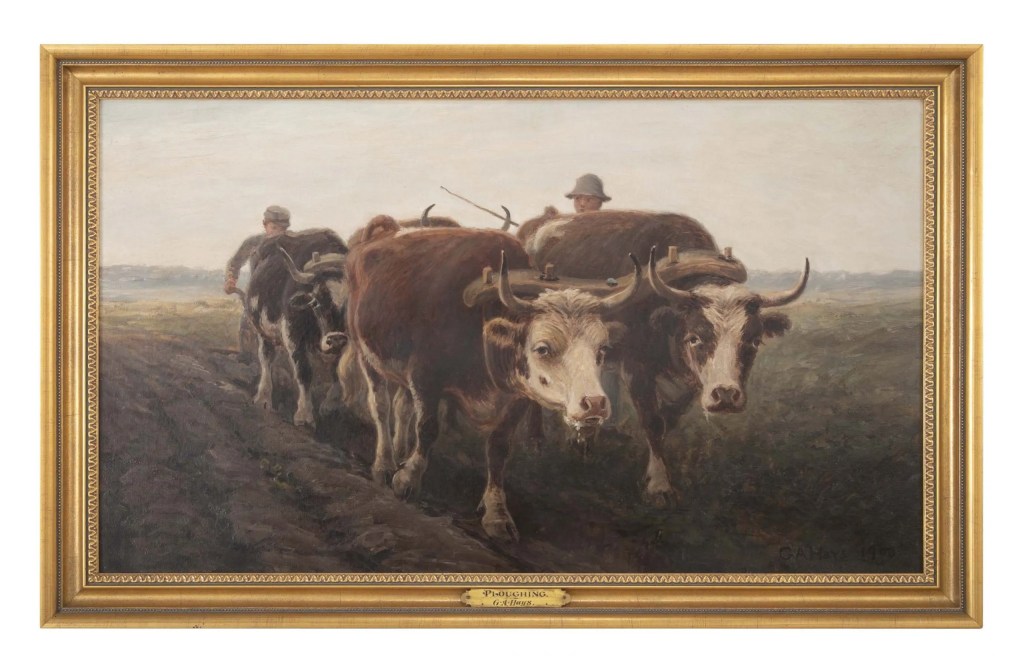




 Loving God, Living God, Loving Hope, Living Hope, Loving Living Life His Way! "Many things are possible for the person who has hope. Even more is possible for the person who has faith. And still more is possible for the person who knows how to love. But everything is possible for the person who practices all three virtues." - Brother Lawrence (1605-1691), Practicing the Presence of God (1692).