Romans 15:4 "For whatever was written in earlier times was written for our instruction, so that through perseverance and the encouragement of the Scriptures we might have hope."
63 (0) A psalm of David, when he was in the desert of Y’hudah:
2 (1) O God, you are my God; I will seek you eagerly. My heart thirsts for you, my body longs for you in a land parched and exhausted, where no water can be found. 3 (2) I used to contemplate you in the sanctuary, seeing your power and glory; 4 (3) for your grace is better than life. My lips will worship you. 5 (4) Yes, I will bless you as long as I live; in your name I will lift up my hands. 6 (5) I am as satisfied as with rich food; my mouth praises you with joy on my lips 7 (6) when I remember you on my bed and meditate on you in the night watches.
8 (7) For you have been my help; in the shadow of your wings I rejoice; 9 (8) my heart clings to you; your right hand supports me.
10 (9) But those who seek to destroy my life — may they go to the lowest parts of the earth. 11 (10) May they be given over to the power of the sword; may they become prey for jackals.
12 (11) But the king will rejoice in God. Everyone who swears by him will exult, for the mouths of liars will be silenced.
The Word of God for the Children of God.
Glory be to the Father, and to the Son, and to the Holy Ghost; as it was in the beginning, is now, and ever shall be, world without end. Amen, amen.
Parched Throat and All: I am Longing for God
(1) O God, you are my God; I will seek you eagerly. My heart thirsts for you, my body longs for you in a land parched and exhausted, where no water can be found.
“Earnestly I seek you.”
“Eagerly I seek you.”
Those dried cracked parched barely audible pleas struggling for expression from the body of someone too long wandering a desert, a heart of Psalm 63.
Though we might not use such poetic language, we can understand what the psalmist is saying here. he is wandering in sun baked sands with no water.
It strikes me that in these words the psalmist is exposing his heart.
He is not asking God for health for himself or his kids; he’s not asking for extra income or a happier marriage.
The psalmist is focusing on his relationship with God.
He longs to see the power of God in worship, take His refreshment of water, reflects on God in the dark of the night, and sings all about God’s protection.
Personally I do not wander around in deserts.
However, there are substantial populations across the globe who do and I can envision them looking at the great expanses of sun dried and wind baked sands.
Where is their next canteen to be filled with life giving water?
In every desert their is water – but one has to be educated on how to find it.
Where is the life giving drinkable water to fill their canteens to sate their thirst?
Search me, O’ God and know my utterly dried out, parched and cracked heart.
Test me, investigate me, and my barely audible, barely able to be spoken heart.
O’ God, see if there is even one tiny drop of any wicked waters remaining in me.
Is there even 1 cold drop of water remaining anywhere to moisten my tongue?
These desperate Psalmist words seeking any kind of expressible refreshment.
I wonder whether we show this kind of desire for God as clearly as the psalmist?
It probably depends on our measure of thirst, how close is it to being a grave threat to our staying alive, level of faith, where we are in our spiritual journey.
I know I am far less “thirsty” for God when I am physically well, when my work, and family are doing fine, when things in our homes are moving right along.
Yet I don’t want my “growing thirst” to even 1% depend on my circumstances.
If desiring God is a good thing, then I have to nurture that desire. My heart really needs to understand the “dry and weary land” in which I live. When I know the arid turf that I call home, I am prepared to pursue the things of real refreshment. As my soul thirsts for God, I will then also drink at the right place.
That is something I earnestly and most eagerly pray for.
A Psalm of David, when he was in the wilderness of Judah – King David had probably wrote this psalm when he was on the run from his son, Absalom. The lesson here is that the situation should not determine whether you call on God or not. Wherever whenever, why ever you are, no matter the situation, good or bad, you should most earnestly desire to communicate with God all the time.
O God, thou art my God – You are a child of God by grace through Jesus Christ. There are assurances, blessings, promises available through Christ. Embrace Christ and you have access to the father. Be bold, enjoy the benefits of sonship.
early will I seek thee – Seeking God early shows eagerness on the part of the one who prays. A good example to follow is Jesus Christ who many times rose up early, went to a secluded place to pray. All His prayers were answered as we found out. Yes you are to pray without ceasing but eagerly learning to commit your day into the hands of your God can only be refreshment, beneficial to you.
my soul thirsteth for thee, my flesh longeth for thee in a dry and thirsty land, where no water is – Your most earnest and eager quest for God is meant to be all consuming because God is the all in all. There is no situation that He can’t change, cannot give refreshment to. The presence of God or the hand of God on any particular matter is all that is needed. When your lasered focus is solely on God without giving allowance for backup, God knows and always comes good.
He is in charge of the showers of blessing from heaven which will cause every desert situation to be Category 5 flooded in Jesus name. He is waiting for you.
In the name of God, the Father and God the Son and God the Holy Spirit,
Let us Pray,
Psalm 23 Authorized (King James) Version
Psalm 23
A Psalm of David.
1 The Lord is my shepherd; I shall not want. 2 He maketh me to lie down in green pastures: he leadeth me beside the still waters. 3 He restoreth my soul: he leadeth me in the paths of righteousness for his name’s sake. 4 Yea, though I walk through the valley of the shadow of death, I will fear no evil: for thou art with me; thy rod and thy staff they comfort me. 5 Thou preparest a table before me in the presence of mine enemies: thou anointest my head with oil; my cup runneth over. 6 Surely goodness and mercy shall follow me all the days of my life: and I will dwell in the house of the Lord for ever.
Glory be to the Father, and to the Son, and to the Holy Ghost; as it was in the beginning, is now, and ever shall be, world without end. Amen, amen.
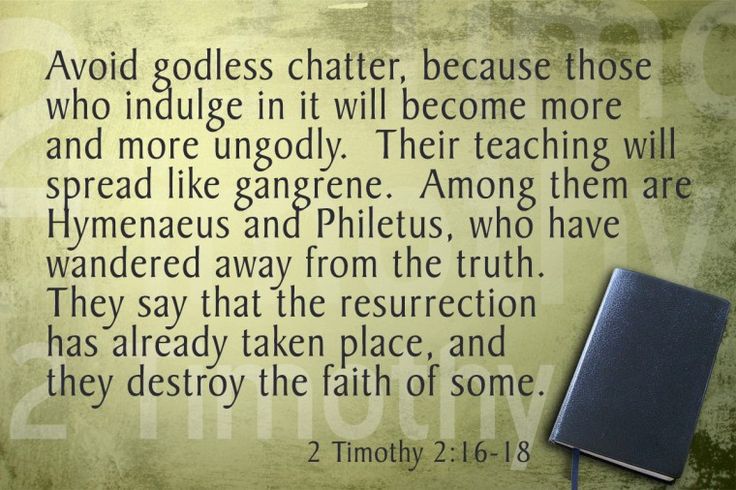
14 Keep reminding people of this, and charge them solemnly before the Lord not to engage in word-battles. They accomplish nothing useful and are a catastrophe for the hearers! 15 Do all you can to present yourself to God as someone worthy of his approval, as a worker with no need to be ashamed, because he deals straight forwardly with the Word of the Truth. 16 But keep away from godless babbling, for those who engage in it will only become more ungodly, 17 and their teaching will eat away at people like gangrene. Hymenaeus and Philetus are among these; 18 they have missed the mark, as far as the truth is concerned, by saying that our resurrection has already taken place; and they are overturning some people’s faith.19 Nevertheless, God’s firm foundation stands, stamped with these words:
“Let everyone who claims he belongs to the Lord stand apart from wrongdoing.”[b]
The Word of God for the Children of God.
Glory be to the Father, and to the Son, and to the Holy Ghost; as it was in the beginning, is now, and ever shall be, world without end. Amen, amen.
A recent blog I read celebrated the idea of a “never-ending vacation.”
Faced with the prospects of an unfulfilling rehabilitation from open heart surgery and the constant demands of everyday life, many people (me) dream of simply “leaving it all behind” and heading for a place with no responsibilities.
While it can definitely be good to have a change of pace in life, the temptation to run away from all our responsibilities will inevitably lead into so much trouble and will damage the relationships in our lives.
In 2 Timothy 2 the apostle Paul mentions two individuals who ran away from home spiritually. Apparently they got caught up in false teachings about the resurrection and undermined the hope that believers had in Christ.
The false teachers had painted an erroneous picture that misled the people to wander from the good news of Jesus—that we are saved by grace through faith in Christ, who died for our sins and rose again so we can live forever with him.
2 Timothy 2:11-15 Disciples’ Literal New Testament
If We Endure, We Will Reign With Him. He Will Be Faithful To Us
11 The saying is trustworthy— for if we died-with Him, we will also live-with Him; 12 if we are enduring, we will also reign-with Him; if we shall deny Him, that One also will deny us; 13 if we are faithless[a], that One remains faithful, for He cannot deny Himself. 14 Be reminding them of these things, solemnly-warning in the sight of God not to battle-about-words for nothing useful[b], to[c] the overthrow [d] of the ones hearing.
Be Diligent To Present Yourself As an Approved Worker of The Word of Truth
15 Be diligent to present yourself approved to God, a worker not-needing-to-be-ashamed, cutting-straight[e] the word of truth.
No matter how much we might enjoy learning new things in life, we need the “solid unshakeable indelible foundation” of truth through Jesus Christ that we can 100% depend on to provide us with our spiritual home. We need a place where we are known, accepted in grace. And that’s what God gives us in Christ.
Let’s be careful about the stories we tell and the “chatter” we might engage in.
In all that we say and do, we should rigorously ask ourselves, “Does it line up with the truth as revealed by the Word of God “Does it point people to Christ?”
How to Use the Bible to Discover What Is Truth?
We live in a world that increasingly values subjectivity over objective truth.
The World preaches and teaches in academia what is true for one person, may not be true for someone else.
Culture encourages people to discover their own truth, make conclusions solely based on their own personal experiences, promotes the message each person is empowered, entitled to create and envision, then make and take significantly transformational (irreversible) actions upon their bodies minds and spirits to go forth, live by their own set of truths.
The world in its current vast departure from what we have always been taught to be truth by our parents, of male and female, reproduction, offers very little guidance on finding real, lasting truth, but the Bible has much to say about it.
Believers, therefore, are given a most precious gift through God’s word that leads, guides, directs us to discover God’s truth in the midst of dishonesty, miscommunication, and confusion in the broken world in which we reside.
John 14:6 Amplified Bible
6 Jesus said to him, “[a]I am the [only] Way [to God] and the [real] Truth and the [real] Life; no one comes to the Father but through Me.
The world is constantly changing, but God remains the same. His truth has endured the history of humanity and is still true and valid. The Bible says that Jesus is the truth, and that truth is found in who God is, the ways of God, and the rhythms of the world around us which declare the glory of God.
What Is Truth?
There are many proven scientific and social facts that have been passed along throughout the history of humankind. Information is gained and shared. Truth, however, is far richer than facts or knowledge which the secular world values.
Scripture declares boldly that truth is tightly bound to God.
God is the God of truth (see Psalm 31:5), Jesus is the truth (see John 14:6), and the Holy Spirit is described as the Spirit of truth that was sent to guide believers (see John 16:13).
Truth is found within all three persons of the Trinity, and truth is found in the Word of God.
2 Timothy 3:16-17 Amplified Bible
16 All Scripture is God-breathed [given by divine inspiration] and is profitable for instruction, for conviction [of sin], for correction [of error and restoration to obedience], for training in righteousness [learning to live in conformity to God’s will, both publicly and privately—behaving honorably with personal integrity and moral courage]; 17 so that the [a]man of God may be complete and proficient, outfitted and thoroughly equipped for every good work.
John 17:15-18 Amplified Bible
15 I do not ask You to take them out of the world, but that You keep them and protect them from the evil one. 16 They are not of the world, just as I am not of the world. 17 Sanctify them in the truth [set them apart for Your purposes, make them holy]; Your word is truth. 18 Just as You commissioned and sent Me into the world, I also have commissioned and sent them (believers) into the world.
Truth sanctifies us; making us holy and set apart. Truth sets us free; no longer bound by sin, death, and lies. Biblical truth does not change over time, it does not trend, and it cannot become less true.
Biblical truth is not dependent on anyone believing it to be the truth. Truth is what we find in Scripture, truth is who God is, truth is the way of God, and truth is ultimately that which aligns with who God is and what He does.
What Does the Bible Say Is True?
John 3:31-36 Amplified Bible
31 “He who comes from [heaven] above is above all others; he who is of the earth is from the earth and speaks [about things] of the earth [his viewpoint and experience are earthly]. He who comes from heaven is above all. 32 What He has [actually] seen and heard, of that He testifies; and yet no one accepts His testimony [as true]. 33 Whoever receives His testimony has set his seal [of approval] to this: God is true [and he knows that God cannot lie]. 34 For He whom God has sent speaks the words of God [proclaiming the Father’s own message]; for God gives the [gift of the] Spirit without measure [generously and boundlessly]! 35 The Father loves the Son and has given and entrusted all things into His hand. 36 He who believes and trusts in the Son and accepts Him [as Savior] has eternal life [that is, already possesses it]; but he who does not believe the Son and chooses to reject Him, [disobeying Him and denying Him as Savior] will not see [eternal] life, but [instead] the wrath of God hangs over him continually.”
God himself is true.
There is nothing false or deceitful about God.
His very nature is truthful.
God is faithful, God is pure, and God is honest.
God is good in every way possible.
It is the very nature of God that makes Him trustworthy and worthy of all honor and praise.
Scripture teaches that God is true.
All God does is true. Just as God himself is true, so too are the works of His hands. All that God has done, is doing, and will do is true. The works of His hands, all of creation, and His continued involvement in humanity is true.
God’s ways are true.
Throughout Scripture, the ways and commands of the Lord are taught as they are woven into the narratives of God and His people. God invites us to set our heart on His truth. The Lord’s path is true and should be what guides believers in how we live, think, and act. God’s way of truth determines our steps when we set the fullness of our hearts on His laws rather than following our own desires.
The word of the Lord is true.
All Scripture is God-inspired (see 2 Timothy 3:16) and therefore, fully true.
We have full confidence that what we read in the Bible is true and reliable as it teaches us all about a wide variety of aspects in relation to God and humanity.
We can read the Bible knowing that it is a dependable source and entirely true.
How Can We Use the Bible to Determine What Is True?
The Bible teaches us that God is true, and that the word of the Lord and His ways are true. The Bible helps us to discern what is true when something is consistent with who God is, the ways of God, and what the Bible teaches.
“Then Jesus said to those Jews who believed Him, ‘If you abide in My word, you are My disciples indeed. And you shall know the truth, and the truth shall make you free’” (John 8:31-32).
The sobering reality is we have an enemy who is the father of lies, and there is no truth in him (see John 8:44).
The enemy tries to distract people with his lies and attempts at distorting the truth to lead people away from God and what is true. In Jesus we find truth.
When we face situations in life, have decisions to make, or are trying to find clarity, we can use Scripture to determine if something is true when it aligns with the teachings, ways, and works of the Lord as He laid out in the Bible.
We Follow a God of Truth
God is not the God of confusion, rather, He is the God of truth.
Followers of Jesus are to live truthfully and honestly, and aligning their lives, thoughts, and actions with the ways of God.
Jesus invites us to know Him, and to know the God of truth.
In the world around us, we are tempted to believe truth is something each of us can construct, or that truth is somehow unattainable.
The Bible, however, demonstrates that truth is found in God alone.
We cannot know truth apart from knowing God.
When one finds and knows Jesus, they have indeed found truth.
In the name of God, the Father and God the Son and God the Holy Spirit,
Let us Pray,
Psalm 111 Amplified Bible
The Lord Praised for His Goodness.
111 Praise the Lord! (Hallelujah!) I will give thanks to the Lord with all my heart, In the company of the upright and in the congregation. 2 Great are the works of the Lord, Studied by all those who delight in them. 3 Splendid and majestic is His work, And His righteousness endures forever. 4 He has made His wonderful acts to be remembered; The Lord is gracious and merciful and full of loving compassion. 5 He has given food to those who fear Him [with awe-inspired reverence]; He will remember His covenant forever. 6 He has declared and made known to His people the power of His works, In giving them the heritage of the nations.
7 The works of His hands are truth and [absolute] justice; All His precepts are sure (established, reliable, trustworthy). 8 They are upheld forever and ever; They are done in [absolute] truth and uprightness. 9 He has sent redemption to His people; He has ordained His covenant forever; Holy and awesome is His name—[inspiring reverence and godly fear]. 10 The [reverent] fear of the Lord is the beginning (the prerequisite, the absolute essential, the alphabet) of wisdom; A good understanding and a teachable heart are possessed by all those who do the will of the Lord; His praise endures forever.
Glory be to the Father, and to the Son, and to the Holy Ghost; as it was in the beginning, is now, and ever shall be, world without end. Amen, amen.
3 For we too once were foolish, disobedient, deceived, enslaved to various sinful desires and pleasures, spending and wasting our life in malice and envy, hateful, hating one another. 4 But when the goodness and kindness of God our Savior and His love for mankind appeared [in human form as the Man, Jesus Christ], 5 He saved us, not because of any works of righteousness that we have done, but because of His own compassion and mercy, by the cleansing of the new birth (spiritual transformation, regeneration) and renewing by the Holy Spirit, 6 whom He poured out richly upon us through Jesus Christ our Savior, 7 so that we would be justified [made free of the guilt of sin] by His [compassionate, undeserved] grace, and that we would be [acknowledged as acceptable to Him and] made heirs of eternal life [actually experiencing it] according to our hope (His guarantee). 8 This is a faithful and trustworthy saying; and concerning these things I want you to speak with great confidence, so that those who have believed God [that is, those who have trusted in, relied on, and accepted Christ Jesus as Savior,] will be careful to participate in doing good and honorable things. These things are excellent [in themselves] and profitable for the people.
The Word of God for the Children of God.
Glory be to the Father, and to the Son, and to the Holy Ghost; as it was in the beginning, is now, and ever shall be, world without end. Amen, amen.
While doing my morning studies I discovered The Greek word that is translated as “kindness” in Galatians 5:22 sounds similar to the Greek word for “Christ.”
In the days of the early 1st Century church, that sometimes led to confusion among unbelievers. They weren’t always sure if Christians actually believed in a person called Christ, or if they practiced a religion that focused on kindness.
When one sets their mind to it, when you think about it, that confusion was actually quite a compliment to the first Christians!
How wonderful it would be if the Spiritual Gift kindness stood out as the predominant impression that we Christians gave to unbelievers today.
Unfortunately, kindness may not always be the first impression that comes to mind when people think of Christians being Christians daily and the church.
This is why we must be diligent in our prayers that the Holy Spirit produce the fruit of kindness in us.
As Paul writes in today’s Scripture reading, the kindness of God was the only thing strong enough to conquer our foolishness, disobedience, and bondage to sin, spending and wasting our life in malice, envy, hateful, hating one another.
The Bible verse Titus 3:4-5 from the King James Version (KJV) states, “But after that the kindness and love of God our Savior toward man appeared, Not by works of righteousness which we have done, but according to his mercy he saved us, by the washing of regeneration, and renewing of the Holy Ghost.”
This verse is taken from the book of Titus, which is one of the pastoral epistles written by the apostle Paul.
In this letter, Paul addresses Titus, a trusted co-worker, and fellow missionary, giving him instructions for overseeing the churches in Crete and encouraging the believers there to live godly lives.
In Titus 3:4-5, Paul specifically emphasizes the kindness and love of God our Savior, and how it is not by our own works of righteousness that we are saved, but according to His mercy. This passage is packed with profound theological truths that speak to the heart of the Christian faith.
The first part of the verse highlights the kindness and love of God our Savior toward man. This demonstrates God’s surest loving and compassionate nature towards humanity. Despite our sin, malice and rebellion, God freely extends His kindness and love to us, ultimately through the person and work of Jesus Christ.
This is a central theme in the Christian message, emphasizing God’s love and grace are still freely extended to all people, regardless of their past or present circumstances.
Titus 3:4-5 is a powerful and profound passage that captures the heart of the Christian gospel. It specifically emphasizes the kindness and love of God our Savior, the centrality of His mercy in our salvation, and the transformative ever-ongoing work of the Holy Spirit in the lives of believers, unbelievers too.
These truths are foundational to the Christian faith, and they remind us of the amazing grace and love that God has shown toward us, despite our disgusting sinfulness, ultimately leading us to respond in humble obedience and gratitude.
We must pray that the power of God’s kindness that saved us will also be the power that is revealing Jesus Christ, continually transforming our character.
This is what the ministry of the Holy Spirit is all about.
He wants to make kindness flourish, like the trillions of stars of heaven in our lives so when others notice our abundance, they will naturally think of Christ.
The Kindness of God Saved Us (Titus 3:4-6)
God Saved Us!
Those Three, uncomplicated easy to understand but not accept, words.
That’s what we should take away from this passage.
Three simple words that form the grand slam summary of what it means that God’s goodness and loving kindness have appeared. Three words: He saved us.
God showed up in grace. This isn’t a new line, it’s a new act. The lock box of our condemnation was invaded with the light of God’s glory. The radiance of His majesty has beamed forth onto the stage of history in the Person of Jesus Christ our Savior and things are not the same anymore. God came. And God saved us.
God: the one and only true God, the Sovereign of all things, holy beyond our comprehension, righteous in unapproachable purity.
And then us: creatures with open malice against our Maker, our own neighbors, hyper valuing our goods more than our God, degrading, diminishing, devaluing our neighbors, thereby ourselves, serving our cravings instead of our Creator.
That God would save us. Save. Not disintegrate. Not damn. Not punish. But save.
He saved us.
He saved us.
We cannot fathom the wonder here.
We conspired against him.
We took money to betray him.
We openly, publicly, humiliated him.
We openly, publicly put him on trial, a sham trial that would only lead to one outcome – by deliberately perjuring ourselves against him, to his crucifixion.
This is His action towards us:
An Empty Tomb!
for us …
His Resurrection!
for us …
His Ascension!
for us …
He was still incomprehensively kind to us.
He saved us.
In the name of God, the Father and God the Son and God the Holy Spirit,
Let us Pray,
Psalm 8 Amplified Bible
The Lord’s Glory and Man’s Dignity.
To the Chief Musician; set to [a]a Philistine lute [or perhaps to a particular Hittite tune]. A Psalm of David.
8 O Lord, our Lord, How majestic and glorious and excellent is Your name in all the earth! You have displayed Your splendor above the heavens. 2 Out of the mouths of infants and nursing babes You have established strength Because of Your adversaries, That You might silence the enemy and make the revengeful cease.
3 When I see and consider Your heavens, the work of Your fingers, The moon and the stars, which You have established, 4 What is man that You are mindful of him, And the son of [earthborn] man that You care for him? 5 Yet You have made him a little lower than [b]God, And You have crowned him with glory and honor. 6 You made him to have dominion over the works of Your hands; You have put all things under his feet, 7 All sheep and oxen, And also the beasts of the field, 8 The birds of the air, and the fish of the sea, Whatever passes through the paths of the seas.
9 O Lord, our Lord, How majestic and glorious and excellent is Your name in all the earth!
Glory be to the Father, and to the Son, and to the Holy Ghost; as it was in the beginning, is now, and ever shall be, world without end. Amen, amen.
2 (1) It is good to give thanks to Adonai and sing praises to your name, ‘Elyon, 3 (2) to tell in the morning about your grace and at night about your faithfulness, 4 (3) to the music of a ten-stringed [harp] and a lute, with the melody sounding on a lyre.
5 (4) For, Adonai, what you do makes me happy; I take joy in what your hands have made. 6 (5) How great are your deeds, Adonai! How very deep your thoughts!
7 (6) Stupid people can’t know, fools don’t understand, 8 (7) that when the wicked sprout like grass, and all who do evil prosper, it is so that they can be eternally destroyed, 9 (8) while you, Adonai, are exalted forever.
10 (9) For your enemies, Adonai, your enemies will perish; all evildoers will be scattered. 11 (10) But you have given me the strength of a wild bull; you anoint me with fresh olive oil. 12 (11) My eyes have gazed with pleasure on my enemies’ ruin, my ears have delighted in the fall of my foes.
13 (12)The righteous will flourish like a palm tree, they will grow like a cedar in the L’vanon. 14 (13) Planted in the house of Adonai, they will flourish in the courtyards of our God. 15 (14) Even in old age they will be vigorous, still full of sap, still bearing fruit, 16 (15) proclaiming that Adonai is upright, my Rock, in whom there is no wrong.
The Word of God for the Children of God
Glory be to the Father, and to the Son, and to the Holy Ghost; as it was in the beginning, is now, and ever shall be, world without end. Amen, amen.
Today we pause from our regular Category 5 rhythms of our stormy daily lives to strictly focus on the God of the universe. And so he now calls us to worship!
This day, as we measure the gap between chaos and God, as we solemnly reflect on what it means to be Jesus’ witnesses wherever we go, it can be tempting to think that this work is on our shoulders. If we don’t do it, who will? So God’s gift of Sabbath helps us remember that ultimately this is God’s work, not ours.
Psalm 92 expresses very similar feelings toward God. “You make me glad by your deeds, Lord; I sing for joy at what your hands have done. How great are your works, Lord, how profound your thoughts!” What a relief it is to know that this world sits firmly in God’s capable, good hands. He has not stopped working; rather, has prepared good works for us to do in his kingdom (Ephesians 2:10).
Sabbath gives us an opportunity to step away from Category 5 days, join with our fellow brothers and sisters to praise and honor the One who has already done it all for us. We have a God who has already modeled Sabbath. We have a Savior who walks with us on mission, wherever God has called us! Hallelujah!
When I was involved in full-time or part-time church ministry, Sunday was usually my busiest and most stressful day of the week.
By Sunday night, I was whipped. Unfortunately, I gave myself no rest. I often got up on 0500Monday morning and hit the bible hard again. Sound familiar?
Granted, I took a week off in the summer and after Christmas, but not much else. I ran on adrenaline and two-liter bottles of Diet Coke.
About five years later, I’d got burned out and have to hit the “reset” button.
All work and no time for myself put me on the Coronary Care Unit in desperate need of a Triple Bypass Open Heart Surgery to save my life – 1% from a grave.
People admired my passion and applauded my high tenacity for my spiritual discipline – but the Heart Surgeon later admonished me for working too hard.
But looking back, working 24/7 wasn’t healthy…and it isn’t .01% scriptural.
The Lord commanded His people to observe a weekly Sabbath without work to commemorate that He created then rested (Genesis 1) and when He gave to Moses his mission and liberated the Hebrews from bondage, led them through the waters to His Mountain, then gave His 10 Commandments. (Exodus 20:8).
In Old Testament days, Sabbath-keeping, along with circumcision and other rituals, helped to distinguish Israel from the surrounding nations.
But Jesus makes it clear that “God made the Sabbath for man, not man for the Sabbath” (Mark 2:27). Our Heavenly Father ordained the gift of rest because our wellbeing, our “obedience to his commandments” gives Him delight and brings Him glory and gives us a disciplined pattern of taking care of ourselves.
Resting on the seventh day is therefore a blessing–not a burden. It’s not a measure of spiritual superiority; rather, it’s an admission that every single one of us needs rest, reflection and restoration…and we need it every week.
So how can people in ministry and mission–whether clergy or laity, especially worship ministry-finally come to discipline themselves to experience Sabbath?
Here are three suggestions:
Set Your Sabbath. Schedule a specific day (or consecutive half-days over a 24 hour period) as your “seventh day.” The Jews observed Saturday as their Sabbath and first century believers celebrated resurrection Sunday as “The Lord’s Day.” That makes me think God is not as concerned with which seventh day we observe as long as we set one aside.
What day is your Sabbath? Write it on your calendar.
Keep Your Sabbath. Let’s not be legalistic about this, but “not working” seems to be the operational phrase in Fourth Commandment. For me, “work” means earning my livelihood. Keeping my Sabbath means I consciously choose to defer my job to another day. It means I resist checking my office email or working on that spreadsheet.
What specific boundaries would you set to help you keep your Sabbath? Share these with a close friend or family member.
Celebrate Your Sabbath. Saying “no” to work for one day a week means I can say “yes” to things that working might otherwise prevent me from doing: spiritual enrichment, enjoying my family, friends, recreation at the beach or mountains, tending my lawn and garden, playing with my dog or napping on the couch. My Sabbath (which happens to be Sunday) is now my favorite day.
What can you do to make your Sabbath especially meaningful and restorative?
Commit to doing these things for the next four weeks and see what happens!
It wasn’t till later in my life that I really learned how invaluable a Sabbath could be. If I went seven straight days without a break, I got fried…and the next seven days were even worse. So I “religiously” began to observe a Sabbath, and the discipline of “not working” made the other 6 days more productive than ever.
Work is good. After all, we are created for good works (Ephesians 2:10).
But we are better workers–and worshippers–when we are disciplined, re-energized through the blessing of a weekly Sabbath.
So as God long ago commanded, give it a rest!
Set, keep and celebrate your Sabbath—and I sincerely believe you will soon be a significantly healthier person and a more effective ministry and mission leader.
In the name of God, the Father and God the Son and God the Holy Spirit,
Let us Pray,
Psalm 23 Complete Jewish Bible
23 (0) A psalm of David:
(1) Adonai is my shepherd; I lack nothing. 2 He has me lie down in grassy pastures, he leads me by quiet water, 3 he restores my inner person. He guides me in right paths for the sake of his own name. 4 Even if I pass through death-dark ravines, I will fear no disaster; for you are with me; your rod and staff reassure me.
5 You prepare a table for me, even as my enemies watch; you anoint my head with oil from an overflowing cup.
6 Goodness and grace will pursue me every day of my life; and I will live in the house of Adonai for years and years to come.
Glory be to the Father, and to the Son, and to the Holy Ghost; as it was in the beginning, is now, and ever shall be, world without end. Amen, amen.
4 The king went to Gibeon to offer sacrifices, for that was the most important high place, and Solomon offered a thousand burnt offerings on that altar. 5 At Gibeon the Lord appeared to Solomon during the night in a dream, and God said, “Ask for whatever you want me to give you.”
6 Solomon answered, “You have shown great kindness to your servant, my father David, because he was faithful to you and righteous and upright in heart. You have continued this great kindness to him and have given him a son to sit on his throne this very day.
7 “Now, Lord my God, you have made your servant king in place of my father David. But I am only a little child and do not know how to carry out my duties. 8 Your servant is here among the people you have chosen, a great people, too numerous to count or number. 9 So give your servant a discerning heart to govern your people and to distinguish between right and wrong. For who is able to govern this great people of yours?”
10 The Lord was pleased that Solomon had asked for this. 11 So God said to him, “Since you have asked for this and not for long life or wealth for yourself, nor have asked for the death of your enemies but for discernment in administering justice, 12 I will do what you have asked. I will give you a wise and discerning heart, so that there will never have been anyone like you, nor will there ever be. 13 Moreover, I will give you what you have not asked for—both wealth and honor—so that in your lifetime you will have no equal among kings. 14 And if you walk in obedience to me and keep my decrees and commands as David your father did, I will give you a long life.”
The Word of God for the Children of God.
Glory be to the Father, and to the Son, and to the Holy Ghost; as it was in the beginning, is now, and ever shall be, world without end. Amen, amen.
Grow the Church or give God all the glory and satisfy the needs and the wants of my tiny congregation and close the church and transfer the deed onto another younger growing church with significant demographics in our neighborhood?
So, many was the occasion which I just sat there next to their altar, looking up at the eternal light the church has had hanging there since its inception 1956.
I was praying, reading Scripture, twisting my hands, my stomach in knots, feeling intense pressure to make a forward thinking decision for which I had literally no education or experience or wisdom of the ages for me to make.
This small little church with only seven ladies in the congregation – needed a Pastor except thy literally had no funds from which to compensate them from.
I have no degrees in Ministry or Theology or any related discipline to know just how I was going to proceed. Usually, I am a quick on my feet thinker. I pride myself on my decisiveness. Yet, in this case, I struggled with moving forward when I read both the best options and the final outcomes appeared beneficial.
I knew what my supervisors wanted me to do with the church – be done with it, let it disappear, let it be forgotten about, from the dust it came so let it return.
It did not seem to matter to anyone in charge how it got done as long as it was done quickly, quietly, with no fanfare – just move it out of the way of progress.
So much to do, so many questions I was not smart enough nor wise enough to ask, so many decisions and so many answers and choices I never had to make.
Leading worship … insurance matters when a steam pipe original to 1956 had burst sending hot steam and water in their kitchen destroying what vestiges of a functional church campus had to offer any other interested congregations.
On top of that was a severe snow and ice weather event over our region which played havoc with our power and our heating system – and we had an adjacent Children’s Preschool Center attached to the Church educating kids since 1965.
It played havoc with getting an insurance adjustor to assess the damage and issue any checks for clean up and repair and restoration. Then someone had barreled their car headlong through our church sign in front of the church. So, now there was the no small matter of insurance money for replacement for a church that was being closed out of existence or under a new management.
It only got even more complicated when we had to work with the incoming church and their Pastor to work out the logistics of transference of the deed and keep the Preschool functioning and the various other community organizations which had a long history of highly positive community and neighborhood roots.
“Holy Spirit … Where are You? God, are you anywhere near this neighborhood? Savior Jesus, where is your promise of hope for a future, growth, prosperity?”
I was far outside my league taking on this level of responsibility without any sufficient knowledge, experience or wisdom – failure was written everywhere.
So, this became my go to verse for my prayers …
1 Kings 3:9 The Message
9 “Here’s what I want: Give me a God-listening heart so I can lead your people well, discerning the difference between good and evil. For who on their own is capable of leading your glorious people?” [In the name of My Savior Jesus, Alleluia! Amen]
I learned from this experience; Scripture often speaks of making wise decisions and reading, studying and using Scripture helps guide us and direct our choices.
There are numerous topics on which we can point to specific verses and see a black-and-white answer how we should respond properly in those situations.
Do you have a question about whether you should forgive your neighbor? Ephesians 4:32 says, “Be kind to one another, tenderhearted, forgiving one another, as God in Christ forgave you.”
Do you wonder if God cares if you stop going to church? Hebrews 10:25 shares, “Not giving up meeting together, as some are in the habit of doing, but encouraging one another—and all the more as you see the Day approaching.”
Do you question if God desires for you to submit to authority? Romans 13:1 admonishes, “Everyone must submit himself to the governing authorities, for there is no authority except that which God has established. The authorities that exist have been established by God.”
What if we simply do not believe in ourselves to take upon ourselves His calling?
Proverbs 3:5-12 The Message
5-12 Trust God from the bottom of your heart; don’t try to figure out everything on your own. Listen for God’s voice in everything you do, everywhere you go; he’s the one who will keep you on track. Don’t assume that you know it all. Run to God! Run from evil! Your body will glow with health, your very bones will vibrate with life! Honor God with everything you own; give him the first and the best. Your barns will burst, your wine vats will brim over. But don’t, dear friend, resent God’s discipline; don’t sulk under his loving correction. It’s the child he loves that God corrects; a father’s delight is behind all this.
As one of my favorite devotional writers says, there are places where the Bible man shouts to God. But what about the areas in which the Bible only faintly, barely audibly whispers? How do we know what prayerful decision to make?
In 1 Kings chapter 3, we find the young King Solomon.
He had just taken over the throne from his father, David. Solomon was likely in his early twenties, lacked any experience, and was understandably nervous and anxious about being a new Head of State leading the great nation of Israel.
One night, the Lord came to Solomon in a dream.
God told Solomon to ask for whatever he wanted, and God would give to him.
In essence, God gave young King Solomon, a “blank check” which had God’s own signature on the bottom line. “Ask anything and ye shall receive it all!”
9 “Here’s what I want: Give me a God-listening heart so I can lead your people well, discerning the difference between good and evil. For who on their own is capable of leading your glorious people?” [In the name of My Savior Jesus, Alleluia! Amen]
In our key verse, we find Solomon’s wise response, “So give your servant a discerning heart to govern your people and to distinguish between right and wrong. For who is able to govern this great people of yours?” 1 Kings 3:9 NIV.
Of all the things King Solomon could have asked for, he asked for wisdom and discernment to lead his nation for as long as God gave him the breath to do so.
Wisdom is the ability to use your given knowledge well, while discernment, specifically godly discernment, is the ability to unhesitatingly fully rely on God (FROG) when praying for the wisest decisions for even the very worst choices.
Solomon was already wise even before asking the Lord to give him wisdom. He knew that in his strength, he would fail at leading this great nation. But, with the Lord on his side, guiding and directing his steps, he would be prosperous.
The Lord did grant Solomon wisdom, blessing him with wealth and honor.
While Solomon’s reign was successful, and there were times when he followed the Lord’s ways, there were other times when he turned from God.
Throughout Solomon’s life, we see the consequences of choosing the very best of human wisdom over allowing the Lord alone to lead, guide and direct him.
Thankfully, the Lord quickly granted grace and mercy when Solomon strayed and asked for forgiveness. The Lord was more concerned with Solomon’s heart and the motivations behind his choices, not necessarily the choices themselves.
The same is true for us today.
The Lord desires we serve and submit to Him with our hearts, minds, and souls.
Mark 10:35-45 Disciples’ Literal New Testament
Two Disciples Jockey For Position In The Kingdom. He Says, It Is Not Mine To Give
35 And James and John, the sons of Zebedee, approach Him, saying to Him, “Teacher, we want You to do for us whatever we ask You”. 36 And the One said to them, “What do you want Me to do for you?” 37 And the ones said to Him, “Grant to us that we may sit one on Your right side and one on the left side in Your glory”. 38 But Jesus said to them, “You do not know what you are asking. Are you able to drink the cup which I drink, or to be baptized the baptism which I am baptized?” 39 And the ones said to Him, “We are able”. And Jesus said to them, “You will drink the cup which I drink. And you will be baptized the baptism which I am baptized. 40 But the sitting on My right side or on the left side is not Mine to give, but it is for whom it has been prepared”.
Whoever Wants To Be First Shall Be Your Slave. Even I Came To Serve
41 And having heard-of it, the ten began to be indignant about James and John. 42 And having summoned them, Jesus says to them, “You know that the ones having-the-reputation-of [a] being rulers of the Gentiles are lording-over[b] them, and their great ones are exercising-authority-over[c] them. 43 But it is not so among you. But whoever wants to become great among you shall be your servant, 44 and whoever wants to be first among you shall be slave of all. 45 For even the Son of Man did not come to be served, but to serve, and to give His life as a ransom for many”.
So next time you face even the most difficult, even most controversial decision, precisely one where whatever you choose will be received with anger, vitriol or positive affirmations, take time to pick up your Bibles, Read the Scriptures, pray and ask the Lord for His wisdom, discernment. Lean into the Holy Spirit, listen for the ways He speaks to your heart, and whatever you decide, glorify the Lord.
Let’s Pray:
Psalm 111 Complete Jewish Bible
111 Halleluyah!
I will wholeheartedly give thanks to Adonai in the council of the upright and in the assembly. 2 The deeds of Adonai are great, greatly desired by all who enjoy them. 3 His work is full of majesty and splendor, and his righteousness continues forever. 4 He has gained renown for his wonders. Adonai is merciful and compassionate. 5 He gives food to those who fear him. He remembers his covenant forever. 6 He shows his people how powerfully he works by giving them the nations as their heritage. 7 The works of his hands are truth and justice; all his precepts can be trusted. 8 They have been established forever and ever, to be carried out truly and honestly. 9 He sent redemption to his people and decreed that his covenant should last forever. His name is holy and fearsome — 10 the first and foremost point of wisdom is the fear of Adonai; all those living by it gain good common sense. His praise stands forever.
Heavenly Father, we are thankful that we don’t have to experience life alone; we have the presence of the Holy Spirit inside our hearts. When we are at a crossroads, please guide us and let us feel at peace. Thank you for giving us the Bible; its timeless truths help us live daily to glorify You. We love you, Lord. May our heart’s desire be to always seek to bring you honor and glory, forever and ever. In Jesus’ Name. Amen.
Glory be to the Father, and to the Son, and to the Holy Ghost; as it was in the beginning, is now, and ever shall be, world without end. Amen, amen.
7 “He who corrects a scoffer only gets insulted; reproving a wicked man becomes his blemish. 8 If you reprove a scoffer, he will hate you; if you reprove a wise man, he will love you. 9 Give to a wise man, and he grows still wiser; teach a righteous man, and he will learn still more. 10 The fear of Adonai is the beginning of wisdom, and knowledge of holy ones is understanding. 11 For with me, your days will be increased; years will be added to your life. 12 If you are wise, your wisdom helps you; but if you scoff, you bear the consequences alone.”
The Word of God for the Children of God.
Glory be to the Father, and to the Son, and to the Holy Ghost; as it was in the beginning, is now, and ever shall be, world without end. Amen, amen.
In today’s world, we are flooded with information – misinformation, fake news manipulated news to satisfy someone’s propaganda, someone’s ulterior motive someone else’s political or financial or “I need to be in control of it all” agenda.
From every manner of social media to 24-hour news cycles, covering just about every imaginable angle, from good, to bad to outright criminal or falsified, we have more access to more knowledge (%wisdom??) than any other generation.
Yet, despite this abundance of information, wisdom seems increasingly scarce.
People make decisions every day that lead to pain, confusion, and chaos.
Who is smart enough or discerning or wise enough to sort out fact from fiction?
What is missing?
Personally, I tend to err on the far side of caution. If there is risk involved, I will pause and evaluate, even over-evaluate the given situation so that I can make a rational and “well reasoned” decision that should keep me as safe as possible.
At an early age I learned from my parents that respecting things like the law of gravity, that rocks are always going to be harder than my skull, the authority of the people in charge was better than disrespecting things that I cannot control.
Basically what they did was to deeply ingrain, weave into my young soul the Ten Commandments.
Exodus 20 Complete Jewish Bible
20 Then God said all these words:
א 2 “I am Adonai your God, who brought you out of the land of Egypt, out of the abode of slavery.
ב 3 “You are to have no other gods before me. 4 You are not to make for yourselves a carved image or any kind of representation of anything in heaven above, on the earth beneath or in the water below the shoreline. 5 You are not to bow down to them or serve them; for I, Adonai your God, am a jealous God, punishing the children for the sins of the parents to the third and fourth generation of those who hate me, 6 but displaying grace to the thousandth generation of those who love me and obey my mitzvot.
ג 7 “You are not to use lightly the name of Adonai your God, because Adonai will not leave unpunished someone who uses his name lightly.
ד 8 “Remember the day, Shabbat, to set it apart for God. 9 You have six days to labor and do all your work, 10 but the seventh day is a Shabbat for Adonai your God. On it, you are not to do any kind of work — not you, your son or your daughter, not your male or female slave, not your livestock, and not the foreigner staying with you inside the gates to your property. 11 For in six days, Adonai made heaven and earth, the sea and everything in them; but on the seventh day he rested. This is why Adonai blessed the day, Shabbat, and separated it for himself.
ה 12 “Honor your father and mother, so that you may live long in the land which Adonai your God is giving you.
ו 13 “Do not murder.
ז (14) “Do not commit adultery.
ח (15) “Do not steal.
ט (16) “Do not give false evidence against your neighbor.
י 14 (17) “Do not covet your neighbor’s house; do not covet your neighbor’s wife, his male or female slave, his ox, his donkey or anything that belongs to your neighbor.”
(A: vii) 15 (18) All the people experienced the thunder, the lightning, the sound of the shofar, and the mountain smoking. When the people saw it, they trembled. Standing at a distance, 16 (19) they said to Moshe, “You, speak with us; and we will listen. But don’t let God speak with us, or we will die.” 17 (20) Moshe answered the people, “Don’t be afraid, because God has come only to test you and make you fear him, so that you won’t commit sins.”
What’s Missing? What has been/gone un-noticed?
The Bible gives us the answer.
I have found that the Bible contains all the answers to all the questions we will ever ask, even those answers to those questions we are not wise enough to ask.
Proverbs 9:10 (NLT) declares, “Fear of the Lord is the foundation of wisdom. Knowledge of the Holy One results in good judgment.”
Proverbs 9:10 Amplified Bible “The [reverent] fear of the Lord [that is, worshiping Him and regarding Him as truly awesome] is the beginning and the preeminent part of wisdom [its starting point and its essence], And the knowledge of the Holy One is understanding and spiritual insight.”
Proverbs 9:10 Easy-to-Read Version “10 Wisdom begins with fear and respect for the Lord. Knowledge of the Holy One leads to understanding.
Proverbs 9:10 Contemporary English Version
“10 Respect and obey the Lord! This is the beginning of wisdom.[a] To have understanding, you must know the Holy God.
Here, we see that true wisdom, the kind that emanates from the Word of God, which wisely used, leads to a flourishing life, begins with the fear of the Lord.
2 Timothy 3:14-17 Amplified Bible
14 But as for you, continue in the things that you have learned and of which you are convinced [holding tightly to the truths], knowing from whom you learned them, 15 and how from childhood you have known the sacred writings (Hebrew Scriptures) which are able to give you the wisdom that leads to salvation through faith which is in Christ Jesus [surrendering your entire self to Him and having absolute confidence in His wisdom, power and goodness]. 16 All Scripture is God-breathed [given by divine inspiration] and is profitable for instruction, for conviction [of sin], for correction [of error and restoration to obedience], for training in righteousness [learning to live in conformity to God’s will, both publicly and privately—behaving honorably with personal integrity and moral courage]; 17 so that the [a]man of God may be complete and proficient, outfitted and thoroughly equipped for every good work.
That truth, brought to remembrance by the Holy Spirit of God helps me to reason out, pray through, discern, what the author of Proverbs is saying here.
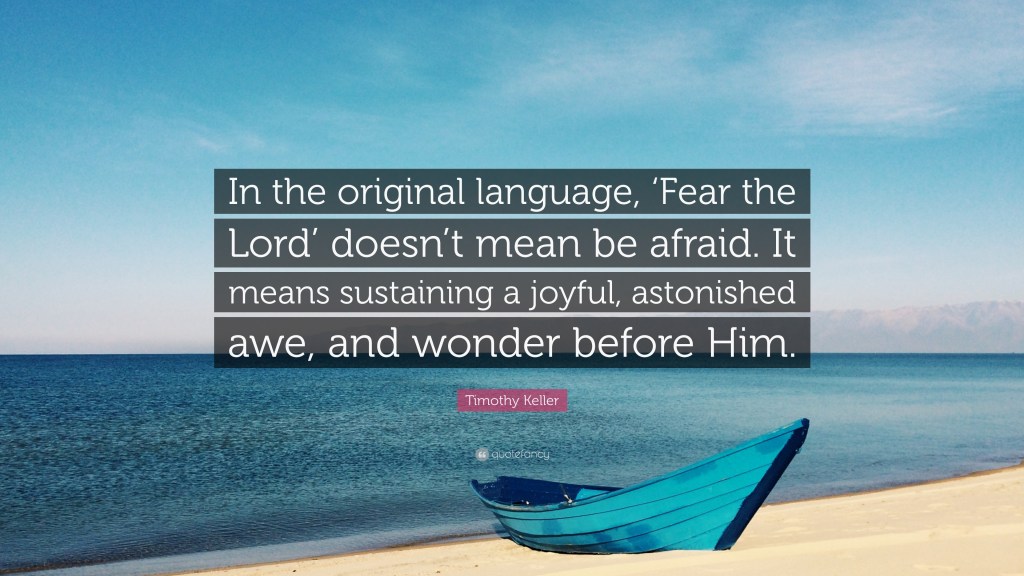
Fearing the Lord does not mean being scared of God, as if he were a tyrant waiting to take his anger out on us.
To fear the Lord is to give him respect and reverence.
After all, God is the Creator who graciously made a covenant with his people.
He deserves our respect.
God has promised to provide his people with all that they need. He deserves our reverence.
Revering the Lord is the first step in developing a vibrant relationship with him.
Revering God calls for us to submit ourselves humbly to him—seeking him, listening for him and to him, and obeying him, and serving with Him. Fearing the Lord puts us in the position of a true servant who loves God and trusts God.
That is precisely where God wants us to be, and that is where we need to be.
To understand the fear of the Lord, we must first clarify what it is not.
Fear in this context isn’t a terror making us cower in dread or guilt before God.
Instead, the Hebrew word for fear here, yirah, refers to a reverence, awe, and deep respect for God.
It is a recognition of His greatness, holiness, and authority over all creation.
Psalm 111:10 (NLT) reinforces this: “Fear of the Lord is the foundation of true wisdom. All who obey his commandments will grow in wisdom.”
To fear the Lord is to acknowledge, recognize Him as the sovereign King and Creator, to stand in awe of His power, majesty, to align our lives with His will.
In contrast, the opposite of fearing the Lord is living as though God does not matter or is irrelevant.
This is the essence of foolishness, according to the Bible. Psalm 14:1 (NLT) declares: “Only fools say in their hearts, ‘There is no God.’”
When we flat out reject or refuse to acknowledge the fear of the Lord, we turn away from the very source of wisdom.
” To fear God is not to be afraid of Him but to stand in awe of His majesty, power, and greatness.”
Proverbs 9:10 tells us that the fear of the Lord is the foundation of wisdom. Just as a building cannot stand without a strong foundation, our lives cannot, won’t flourish without the foundation of wisdom that begins with reverence for God.
Wisdom, in biblical terms, is not simply knowledge or intelligence.
The Hebrew word hokmah refers to skill in living—our knowing how to apply knowledge in the right way at the right time. It is the ability to to learn through experience to live well, to make choices that lead to life, peace, and godliness.
In James 1:5 (NLT), we are strongly encouraged to seek this wisdom: “If you need wisdom, ask our generous God, and he will give it to you. He will not rebuke you for asking.” The wisdom we need comes from God alone, and it begins when we humbly recognize our need for Him in every area of our lives.
The world offers many competing definitions of wisdom.
Some seek wisdom in self-help books, others in success, wealth, or power or by media produced over dramatized, paid appearance televised self help programs.
But true wisdom is found in God’s Word and through a relationship with Him.
Colossians 2:3 (NLT) tells us, “In him (Christ) lie hidden all the treasures of wisdom and knowledge.” Jesus is the living embodiment of God’s wisdom, and through Him, we can each access, act upon the wisdom that leads to eternal life.
Imagine trying to build a house on sand. No matter how beautiful or well-designed the house is, it will crumble because its foundation is weak.
This is what life is like when we build without God.
But when we build on the solid rock of God’s wisdom, our lives can withstand the storms of life (Matthew 7:24-27).
The Fear of the Lord and Good Judgment
The second part of Proverbs 9:10 promises that “Knowledge of the Holy One results in good judgment.” When we grow in our understanding of who God is—His holiness, His justice, His mercy—it leads to better decision-making.
The phrase good judgment can also be translated as discernment.
Discernment is the ability to distinguish between right and wrong, good and evil, truth and lies.
In a world filled with moral confusion, we desperately need this discernment.
Hebrews 5:14 (NLT) says: “Solid food is for those who are mature, who through training have the skill to recognize the difference between right and wrong.”
The more we grow in our knowledge of God, the more our minds are disciplined and trained to think as He thinks and to make decisions that align with His will.
This is why Romans 12:2 (NLT) instructs us all: “Don’t copy the behavior and customs of this world, but let God transform you into a new person by changing the way you think. Then you will learn to know God’s will for you, which is good and pleasing and perfect.”
When we fear the Lord and seek His wisdom, He transforms our minds and equips us with the discernment needed to navigate life’s challenges.
“True wisdom is the ability to see life from God’s perspective, and it comes as we grow in our relationship with Him.” – Reverend Dr. Charles Stanley
Living in the Fear of the Lord
So, what does it look like to live in the fear of the Lord?
First, it means living a life of obedience.
Proverbs 8:13 (NLT) says: “All who fear the Lord will hate evil.” When we fear the Lord, we align our lives with His Word, rejecting sin and pursuing holiness.
Second, it means living a life of trust.
Psalm 34:9 (NLT) encourages us: “Fear the Lord, you his godly people, for those who fear him will have all they need.”
When we revere God, we trust Him to provide for our needs and guide us in every situation.
Finally, living in the fear of the Lord means walking in humility.
Proverbs 22:4 (NLT) declares: “True humility and fear of the Lord lead to riches, honour, and long life.”
Recognizing our dependence on God, we approach life with humility, understanding that every blessing comes from Him.
Think of a compass.
Without it, a sailor can easily get lost at sea, drifting off course.
The fear of the Lord is like that compass—it keeps us on course, guiding us toward the life God intends for us.
Conclusion: A Call to Wisdom
In closing, the fear of the Lord is not just an abstract concept.
It is a way of life. It is the surest foundation upon which we build everything, and it leads us to true wisdom, good judgment, and a life that honor’s God.
Today, I challenge each and every one of us to examine our hearts. Are we living in the fear of the Lord? Are we sure, building our lives on the foundation of His wisdom, or are we following the world’s definitions of success and knowledge?
In the name of God the Father and God the Son and God the Holy Spirit,
Let us Pray,
Psalm 14 Complete Jewish Bible
14 (0) For the leader. By David:
(1) Fools say in their hearts, “There is no God.” They deal corruptly, their deeds are vile, not one does what is right.
2 From heaven Adonai observes humankind to see if anyone has understanding, if anyone seeks God. 3 But all turn aside, all alike are corrupt; no one does what is right, not a single one. 4 Don’t they ever learn, all those evildoers, who eat up my people as if eating bread and never call on Adonai? 5 There they are, utterly terrified; for God is with those who are righteous. 6 You may mock the plans of the poor, but their refuge is Adonai.
7 How I wish Isra’el’s salvation would come out of Tziyon! When Adonai restores his people’s fortunes, Ya‘akov will rejoice, Isra’el will be glad!
Psalm 139:23-24 The Message
23-24 Investigate my life, O God, find out everything about me; Cross-examine and test me, get a clear picture of what I’m about; See for yourself whether I’ve done anything wrong— then guide me on the road to eternal life.
Glory be to the Father, and to the Son, and to the Holy Ghost; as it was in the beginning, is now, and ever shall be, world without end. Amen, amen.
14-17 But how can people call for help if they don’t know who to trust? And how can they know who to trust if they haven’t heard of the One who can be trusted? And how can they hear if nobody tells them? And how is anyone going to tell them, unless someone is sent to do it? That’s why Scripture exclaims,
A sight to take your breath away! Grand processions of people telling all the good things of God!
But not everybody is ready for this, ready to see and hear and act. Isaiah asked what we all ask at one time or another: “Does anyone care, God? Is anyone listening and believing a word of it?” The point is: Before you trust, you have to listen. But unless Christ’s Word is preached, there’s nothing to listen to.
The Word of God for the Children of God.
Glory be to the Father, and to the Son, and to the Holy Ghost; as it was in the beginning, is now, and ever shall be, world without end. Amen, amen.
Perhaps one of the most beautiful, yet simple, and universal declarations of the good news of the gospel of grace, is found in Chapter 2 book of the Prophet Joel: “Whoever will call on the name of the Lord, will be delivered.”
Joel 2:32 English Standard Version
32 And it shall come to pass that everyone who calls on the name of the Lord shall be saved. For in Mount Zion and in Jerusalem there shall be those who escape, as the Lord has said, and among the survivors shall be those whom the Lord calls.
Originally, this was an ancient prophetic proclamation made to the nation of Israel in the Old Testament which was subsequently reiterated to the men of Israel in the book of Acts… following Christ’s Resurrection from the dead.
Acts 4:8-12 English Standard Version
8 Then Peter, filled with the Holy Spirit, said to them, “Rulers of the people and elders, 9 if we are being examined today concerning a good deed done to a crippled man, by what means this man has been healed, 10 let it be known to all of you and to all the people of Israel that by the name of Jesus Christ of Nazareth, whom you crucified, whom God raised from the dead—by him this man is standing before you well. 11 This Jesus[a] is the stone that was rejected by you, the builders, which has become the cornerstone.[b]12 And there is salvation in no one else, for there is no other name under heaven given among men[c] by which we must be saved.”
And then this good news of greatest joy was repeated to the Gentile nations in the epistle to the Romans, where we, who were dead in our sins, discover the beautiful truth that: “Whoever will call on the name of the Lord, will be saved.”
When God speaks, we should listen, but when He repeats an important truth, it should be received with our laser focused undivided attention.
But then comes the devastating reality from Romans 10:14-17 unless someone is prepared to go and tell lost sinners that “whoever will call on the name of the Lord, will be saved,” they will never hear: “For how can they call on the Lord, in Whom they have not believed? And how will they believe in Him, Whom they have not heard? And how will they hear about Him without a preacher?”
No matter how amazing the gospel of Christ may be, unless lost souls are told the truth about sin and salvation… and unless the good news of the gospel of grace is proclaimed universally, men and women, boys and girls, rich and poor, Jews and Gentiles alike, will remain dead in their trespasses and sins.
Not all of us may be called into the office of evangelist or preacher, but every one of God’s children has a Great Commission to be THE light in this darkened realm, salt in a putrefying world, God’s witnesses to those that are lost in their sins, a walking talking testimony of God’s grace to those who are dead in their trespasses, and messenger of hope to those that are without hope in the world.
God has long promised to hear the cries of all who call upon Him – but first they must believe in Him… and Jesus Christ, Whom He has sent. How shocking then to realize unless the gospel is preached to a world of unsaved people, they will neither hear the truth, nor be able to call out to the only One Who can save them from their sins and a lost eternity – but how will they hear without a preacher?
A deliberately silent gospel and a purposely hidden witness will not minister to anyone at anytime for those wandering in, stumbling in, the valley of decisions.
Matthew 9:35-38 English Standard Version
The Harvest Is Plentiful, the Laborers Few
35 And Jesus went throughout all the cities and villages, teaching in their synagogues and proclaiming the gospel of the kingdom and healing every disease and every affliction. 36 When he saw the crowds, he had compassion for them, because they were harassed and helpless, like sheep without a shepherd. 37 Then he said to his disciples, “The harvest is plentiful, but the laborers are few; 38 therefore pray earnestly to the Lord of the harvest to send out laborers into his harvest.”
Let us pray that God would send out His diligent, vigilant messengers, laborer’s into the ever expanding, ever present harvest-fields of all the souls that need to be saved by grace through their faith in Jesus Christ, and let us ask God to bring His whispers into our lives people, with whom we can share the good news that:
“Whoever will call on the name of the Lord, will be delivered – for how can they call on the Lord, in Whom they have not believed? And how will they believe in Him, Whom they have not heard? And how will they hear about His message of salvation without a preacher?”
As we assume whatever our “regularly scheduled” bodily or spiritual posture will be for the moment, for all of the live long days, and the longest darkest of nights, let us take careful consideration of what Romans 10:14-17 means to us.
Or not…just go about our regularly scheduled days with our governing attitudes.
Somebody else will surely come along eventually – maybe, perhaps, some day?
Heavenly Father, I guess that there are multitudes of souls in the world today that remain dead in their trespasses and sins. I gratefully, not so gratefully thank You(?) wondering if You have given me all I need for life and godliness.
Should I dare ask that You would use me to share the good news of Christ with others, and pray that You would send more laborer’s into the harvest-fields of the world and bring many souls to saving faith in Jesus, in Whose name I pray? Or should I not pray one prayer, nor utter even one syllable of even one word? or just cry out to be left alone under any all known circumstances? Hallelujah?
In the name of God, the Father and God the Son and God the Holy Spirit.
Let us Pray,
Psalm 91 Complete Jewish Bible
91 You who live in the shelter of ‘Elyon, who spend your nights in the shadow of Shaddai, 2 who say to Adonai, “My refuge! My fortress! My God, in whom I trust!” — 3 he will rescue you from the trap of the hunter and from the plague of calamities; 4 he will cover you with his pinions, and under his wings you will find refuge; his truth is a shield and protection.
5 You will not fear the terrors of night or the arrow that flies by day, 6 or the plague that roams in the dark, or the scourge that wreaks havoc at noon. 7 A thousand may fall at your side, ten thousand at your right hand; but it won’t come near you. 8 Only keep your eyes open, and you will see how the wicked are punished.
9 For you have made Adonai, the Most High, who is my refuge, your dwelling-place. 10 No disaster will happen to you, no calamity will come near your tent; 11 for he will order his angels to care for you and guard you wherever you go. 12 They will carry you in their hands, so that you won’t trip on a stone. 13 You will tread down lions and snakes, young lions and serpents you will trample underfoot. 14 “Because he loves me, I will rescue him; because he knows my name, I will protect him. 15 He will call on me, and I will answer him. I will be with him when he is in trouble. I will extricate him and bring him honor. 16 I will satisfy him with long life and show him my salvation.”
Glory be to the Father, and to the Son, and to the Holy Ghost; as it was in the beginning, is now, and ever shall be, world without end. Amen, amen.
31 So Jesus was saying to the Jews who had believed Him, “If you abide in My word [continually obeying My teachings and living in accordance with them, then] you are truly My disciples. 32 And you will know the truth [regarding salvation], and the truth will set you free [from the penalty of sin].”
The Word of God for the Children of God.
Glory be to the Father, and to the Son, and to the Holy Ghost; as it was in the beginning, is now, and ever shall be, world without end. Amen, amen.
Sometimes the Bible is described as a telescope. A telescope is not something to look at but an instrument to look through, to bring that which is too distant for us to see closer. When we do what is far away, hard to see becomes clearer to us.
When we look at our life and history through the lens of the Bible, what once seemed distant, hard to understand – God – slowly comes into focus. Through Scripture we are brought close to God. Through Scripture we are brought near to events that happened thousands of years ago. We zoom in, for example, on the life of Christ, who became human and came to live among us (John 1:14).
John 1:14 The Message
14 The Word became flesh and blood, and moved into the neighborhood. We saw the glory with our own eyes, the one-of-a-kind glory, like Father, like Son, Generous inside and out, true from start to finish.
God, unexpectedly, abruptly but gently, intruded into mankind’s experience.
Jesus walked among us. Jesus wanted the people of his day to believe in him as the One who reveals the truth about God and what God is doing in this world.
But instead they were slow to catch on, they wanted to hang on to old legalisms, refusing to admit to anyone that they were slaves to sin and could not keep the law perfectly. Jesus urged them to accept him as the eternal truth and life who could bring them out of this slavery and give them new life forever with God.
Are we any different?
As we daily encounter the Word of God, how challenging, how utterly complex is to accept God on his terms, not ours, moving from our world to His Kingdom?
Even those who profess hardcore belief, are we fully relying on the Spirit’s help?
Are we authentically listening, are we authentically hearing, as God speaks to us and breathes into us his life and truth? And believing the truth sets us free-free to serve him in our daily work, play, relationships, and every other facet of life?
Why is the Truth of Jesus even .01% Relevant Today?
The Book of John remains profoundly relevant today, offering readers profound insights into the deeper nature of faith, of hope and love, and eternal life also.
Its emphasis on the divinity of Christ and the transformative power of belief provides a foundation for personal spiritual growth. In a world seeking truth and meaning, John’s Gospel invites us readers to encounter Jesus in a deeply personal way, encouraging them to live out their faith with love and integrity.
John 8:31 New American Standard Bible 1995
The Truth Will Make You Free
31 So Jesus was saying to those Jews who had believed Him, “If you continue in My word, then you are truly disciples of Mine;
In this moment, Jesus speaks to those who have already shown belief in Him, urging them to deepen their faith through committing to actual visible action.
He underscores that true discipleship is characterized by our adherence to His teachings. This means that belief is not merely an intellectual agreement but a transformative process that involves living out His words in our everyday life.
The call to “hold to my teaching” suggests that Jesus had in mind a continuous, active effort to align one’s life with the principles that Jesus was teaching, such as love, mercy, forgiveness, a life grounded in genuine sacrifice and humility.
This passage from John invites believers to reflect on the nature of their faith.
In that moment, it is quite the confrontational statement, challenging them to consider whether their transitional actions now reflect the teachings of Jesus.
By doing so, by trying to shift their mindsets from their world to the Kingdom, they not only affirm their transitioning, transforming identity as His disciples but also committing themselves to experience a deeper relationship with Him.
This commitment to His teachings is a journey of growth and transformation, prayerfully leading to a more profound understanding of His truth and love.
John 8:32 New American Standard Bible 1995
32 and you will know the truth, and the truth will make you free.”
The idea of truth in this context is deeply connected to the teachings of Jesus and the gospel.
It implies that through reading, studying and understanding and accepting these teachings, one can move towards achieving a profound sense of freedom.
This sense of freedom is not merely physical or political but is spiritual and emotional, liberating individuals from the chains of sin, guilt, and ignorance.
The truth referred to here by Jesus is the truth of God’s love, grace, and the salvation offered exclusively through their confession of Jesus Christ Savior.
By embracing this truth, by bear hugging this truth, believers are then set free from the burdens that would otherwise hang a thousand pound millstone on their necks, weigh them down, such as fear, doubt, the pressures of the world.
This freedom allows for a life lived in alignment with God’s will, characterized by hope, peace, joy, and a sense of purpose. Moreover, it invites believers to live authentically, in harmony with their true selves as originally created by God.
The verse calls for a sure commitment to seeking and living by the truth, which in turn guides, leads, to a transformative experience of liberation, fulfillment.
Job 9:1-13 The Message
Job Continues
How Can Mere Mortals Get Right with God?
9 1-13 Job continued by saying:
“So what’s new? I know all this. The question is, ‘How can mere mortals get right with God?’ If we wanted to bring our case before him, what chance would we have? Not one in a thousand! God’s wisdom is so deep, God’s power so immense, who could take him on and come out in one piece? He moves mountains before they know what’s happened, flips them on their heads on a whim. He gives the earth a good shaking up, rocks it down to its very foundations. He tells the sun, ‘Don’t shine,’ and it doesn’t; he pulls the blinds on the stars. All by himself he stretches out the heavens and strides on the waves of the sea. He designed the Big Dipper and Orion, the Pleiades and Alpha Centauri. We’ll never comprehend all the great things he does; his miracle-surprises can’t be counted. Somehow, though he moves right in front of me, I don’t see him; quietly but surely he’s active, and I miss it. If he steals you blind, who can stop him? Who’s going to say, ‘Hey, what are you doing?’ God doesn’t hold back on his anger; even dragon-bred monsters cringe before him.
Psalm 31:3-5 New American Standard Bible 1995
3 For You are my [a]rock and my fortress; For Your name’s sake You will lead me and guide me. 4 You will pull me out of the net which they have secretly laid for me, For You are my strength. 5 Into Your hand I commit my spirit; You have ransomed me, O Lord, God of [b]truth.
Psalm 40:9-11 New American Standard Bible 1995
9 I have proclaimed glad tidings of righteousness in the great congregation; Behold, I will not restrain my lips, O Lord, You know. 10 I have not hidden Your righteousness within my heart; I have spoken of Your faithfulness and Your salvation; I have not concealed Your lovingkindness and Your truth from the great congregation.
11 You, O Lord, will not withhold Your compassion from me; [a]Your lovingkindness and Your truth will continually preserve me.
Psalm 51:5-11 New American Standard Bible 1995
5 Behold, I was brought forth in iniquity, And in sin my mother conceived me. 6 Behold, You desire truth in the [a]innermost being, And in the hidden part You will make me know wisdom. 7 [b]Purify me with hyssop, and I shall be clean; [c]Wash me, and I shall be whiter than snow. 8 [d]Make me to hear joy and gladness, Let the bones which You have broken rejoice. 9 Hide Your face from my sins And blot out all my iniquities.
10 Create [e]in me a clean heart, O God, And renew [f]a steadfast spirit within me. 11 Do not cast me away from Your presence And do not take Your Holy Spirit from me.
What or who is “the truth” that “will set you free” (John 8:32)?
What is the condition for being set free by “the truth”?
What qualifies as “the truth?”
What do you understand about the phrase “will set you free?”
When you see that word “freedom” what thoughts, feelings arise?
What qualifies people as Jesus’ disciples?
What is the flip side of what Jesus said in John 8:31?
What does John 8 32 us teach about?
What does it mean to worship him in spirit and truth?
What did Jesus mean when he said “I am the truth”?
What is the meaning of truth biblically?
Christ Jesus said, “Ye shall know the truth, and the truth shall make you free” (John 8:32). That’s a wonderful promise that can be taken seriously, especially when you and I feel the need for some sort of healing – whether the difficulty is injury, illness, financial hardship, a troubled relationship, or anything else.
In the name of God, the Father and God the Son and God the Holy Spirit,
Let us Pray,
25 (0) By David:
(1) I lift my inner being to you, Adonai; 2 I trust you, my God. Don’t let me be disgraced, don’t let my enemies gloat over me. 3 No one waiting for you will be disgraced; disgrace awaits those who break faith for no reason.
4 Make me know your ways, Adonai, teach me your paths. 5 Guide me in your truth, and teach me; for you are the God who saves me, my hope is in you all day long. 6 Remember your compassion and grace, Adonai; for these are ages old. 7 Don’t remember my youthful sins or transgressions; but remember me according to your grace for the sake of your goodness, Adonai.
8 Adonai is good, and he is fair; this is why he teaches sinners the way [to live], 9 leads the humble to do what is right and teaches the humble [to live] his way. 10 All Adonai’s paths are grace and truth to those who keep his covenant and instructions. 11 For the sake of your name, Adonai, forgive my wickedness, great though it is.
12 Who is the person who fears Adonai? He will teach him the way to choose. 13 He will remain prosperous, and his descendants will inherit the land. 14 Adonai relates intimately with those who fear him; he makes them know his covenant.
15 My eyes are always directed toward Adonai, for he will free my feet from the net. 16 Turn to me, and show me your favor; for I am alone and oppressed. 17 The troubles of my heart are growing and growing; bring me out of my distress. 18 See my affliction and suffering, and take all my sins away.
19 Consider my enemies, how many there are and how cruelly they hate me. 20 Protect me and rescue me; don’t let me be disgraced, for I take refuge in you. 21 Let integrity and uprightness preserve me, because my hope is in you.
22 God! Redeem Isra’el from all their troubles!
Glory be to the Father, and to the Son, and to the Holy Ghost; as it was in the beginning, is now, and ever shall be, world without end. Amen, amen.
5 “If you will earnestly seek God and plead for Shaddai’s favor, 6 if you are pure and upright; then he will rouse himself for you and fulfill your needs. 7 Then, although your beginnings were small, your future will be very great indeed.
The Word of God for the Children of God.
Glory be to the Father, and to the Son, and to the Holy Ghost; as it was in the beginning, is now, and ever shall be, world without end. Amen, amen.
Job 8:5-7 Christian Standard Bible
5 But if you earnestly seek God and ask the Almighty for mercy, 6 if you are pure and upright, then he will move even now on your behalf and restore the home where your righteousness dwells. 7 Then, even if your beginnings were modest, your final days will be full of prosperity.
What great, unsearchable, marvelous things has God earnestly done in your life? What great, unsearchable, marvelous things might God have done in your life, or would have been more aware of as having already been accomplished if…
5 “If you will earnestly seek God and plead for Shaddai’s favor, 6 if you are pure and upright; then he will rouse himself for you and fulfill your needs.
The verses emphasizes the importance of earnestly seeking God and pleading with Him, which is a call to earnestly approach God with sincerity and humility.
Earnestly seeking involves a deep, genuine desire to connect with God, fully acknowledging our complete total dependence on His wisdom and strength.
Pleading with the Almighty suggests a heartfelt, persistent prayer, reflecting a deep trust in God’s power and compassion.
This act of seeking and pleading is not just about asking for help, but too about building a connectional relationship with God, recognizing Him alone, as the only source of all wisdom and strength.
In the context of the Book of Job, this verse is part of Bildad’s response to Job, encouraging him to turn to God in his time of suffering.
It serves as a reminder that, regardless of our circumstances, God is always ready to listen and respond to those who approach Him with a sincere heart.
This message is universal, admonishing, encouraging believers to maintain a posture of humility and trust in their relationship with God, knowing that He is always present, will always be present, and willing to guide and support them.
Job 8:5 In today’s context – in a far more complex time, with more people tech savvy than God savvy.
I believe that untold tens, if not hundreds of millions of Christians, all over the world, would give anything to have the religious freedoms we have in America.
Not only to hold the Living Word in their hands, but to read and share it freely, would be like winning the greatest single lottery jackpot of all time to them.
Here, in our westernized culture, with Bibles gathering dust on bookshelves, and Bible apps stored away on our phones, and Bibles gathering mounds and pounds of dust long hidden away from us sinners somewhere in a church pew.
I’m so very afraid we’ve lost our fervor for the precious and holy Word of God.
John 1:29-34 English Standard Version
Behold, the Lamb of God
29 The next day he saw Jesus coming toward him, and said, “Behold, the Lamb of God, who takes away the sin of the world! 30 This is he of whom I said, ‘After me comes a man who ranks before me, because he was before me.’ 31 I myself did not know him, but for this purpose I came baptizing with water, that he might be revealed to Israel.” 32 And John bore witness: “I saw the Spirit descend from heaven like a dove, and it remained on him. 33 I myself did not know him, but he who sent me to baptize with water said to me, ‘He on whom you see the Spirit descend and remain, this is he who baptizes with the Holy Spirit.’ 34 And I have seen and have borne witness that this is the Son[a] of God.”
Let me now introduce to you our new Senior Rabbi Dr. Earnest Lamb of God.
Meet your new Senior Rabbi Earnest—the Lamb of God who is so well known for his eagerness and wholeheartedness to reveal God, to share God too—that seemingly long forgotten, so seldom acknowledged virtue of the Christian faith.
Do we possess the earnestness (once a week for an hour or too) to get up each day, meet with God in worship thereby replacing our to-do lists and agendas?
An earnestness to share not just the neighborhood gossip or sports, the Gospel within our circle of influence now badly hindered by tolerance, complacency?
Ergo, I am now writing these things to myself as well, sadly realizing how much earnestness has escaped my busy, daily life; how the zeal I once had for Christ has been severely overshadowed by worldly desires and restless temptations.
But now, more than ever before, we have an amazing opportunity to rekindle an earnestness for the Word of God; to read and to study, to share and uphold, and earnestly pray to shine the light of God’s truths in dark places. For the Word of God truly is living and active, able to penetrate the deepest intents of the heart.
For the word of God is living and powerful, and sharper than any two-edged sword, piercing even to the division of soul and spirit, and of joints and marrow, and is a discerner of the thoughts and intents of the heart. Hebrews 4:12
Meet Earnest—the attribute that ushers in an excitement for the things of God—rekindling our tiny smoldering flame of faith into a raging fire of conviction and motivation – to run in every which direction of the compass to declare God?
Luke 24:28-35 English Standard Version
28 So they drew near to the village to which they were going. He acted as if he were going farther, 29 but they urged him strongly, saying, “Stay with us, for it is toward evening and the day is now far spent.” So he went in to stay with them. 30 When he was at table with them, he took the bread and blessed and broke it and gave it to them. 31 And their eyes were opened, and they recognized him. And he vanished from their sight. 32 They said to each other, “Did not our hearts burn within us while he talked to us on the road, while he opened to us the Scriptures?” 33 And they rose that same hour and returned to Jerusalem. And they found the eleven and those who were with them gathered together, 34 saying, “The Lord has risen indeed, and has appeared to Simon!” 35 Then they told what had happened on the road, and how he was made known to them in the breaking of the bread. [and sharing of the Word!]
My prayer for Christians everywhere, dust off their Bibles, that we will awaken anew to the life-giving truths of the Bible and yearn for them as for daily bread.
I ask, in the precious name of Jesus, that we will pick up that Bible, dust it off, and open it as often as we can. I ask for the Holy Spirit to continue His work in us to reach a hurting and confused world, with the only absolute truth there is.
And, lastly, I pray for an earnestness, to once again declare God’s Word—a lamp for our feet and light for our path. (Psalm 119:105)
In the name of God, the Father and God the Son and God the Holy Spirit,
Let us Pray,
Psalm 40 English Standard Version
My Help and My Deliverer
To the choirmaster. A Psalm of David.
40 I waited patiently for the Lord; he inclined to me and heard my cry. 2 He drew me up from the pit of destruction, out of the miry bog, and set my feet upon a rock, making my steps secure. 3 He put a new song in my mouth, a song of praise to our God. Many will see and fear, and put their trust in the Lord.
4 Blessed is the man who makes the Lord his trust, who does not turn to the proud, to those who go astray after a lie! 5 You have multiplied, O Lord my God, your wondrous deeds and your thoughts toward us; none can compare with you! I will proclaim and tell of them, yet they are more than can be told.
6 In sacrifice and offering you have not delighted, but you have given me an open ear.[a] Burnt offering and sin offering you have not required. 7 Then I said, “Behold, I have come; in the scroll of the book it is written of me: 8 I delight to do your will, O my God; your law is within my heart.”
9 I have told the glad news of deliverance[b] in the great congregation; behold, I have not restrained my lips, as you know, O Lord. 10 I have not hidden your deliverance within my heart; I have spoken of your faithfulness and your salvation; I have not concealed your steadfast love and your faithfulness from the great congregation.
11 As for you, O Lord, you will not restrain your mercy from me; your steadfast love and your faithfulness will ever preserve me! 12 For evils have encompassed me beyond number; my iniquities have overtaken me, and I cannot see; they are more than the hairs of my head; my heart fails me.
13 Be pleased, O Lord, to deliver me! O Lord, make haste to help me! 14 Let those be put to shame and disappointed altogether who seek to snatch away my life; let those be turned back and brought to dishonor who delight in my hurt! 15 Let those be appalled because of their shame who say to me, “Aha, Aha!”
16 But may all who seek you rejoice and be glad in you; may those who love your salvation say continually, “Great is the Lord!” 17 As for me, I am poor and needy, but the Lord takes thought for me. You are my help and my deliverer; do not delay, O my God!
Glory be to the Father, and to the Son, and to the Holy Ghost; as it was in the beginning, is now, and ever shall be, world without end. Amen, amen.
1 Corinthians 10:31-33 Disciples’ Literal New Testament
In Summary, Do All For God’s Glory. Be Blameless To All And Seek Their Benefit
31 Therefore, whether you are eating or drinking or doing anything, be doing all for the glory of God. 32 Be blameless[a] both to Jews and Greeks, and to the church of God— 33 just as I also am pleasing all people as to all things, not seeking the benefit of myself, but the benefit of the many, in order that they might be saved.
The Word of God for the Children of God.
Glory be to the Father, and to the Son, and to the Holy Ghost; as it was in the beginning, is now, and ever shall be, world without end. Amen, amen.
In his discussion on Christian freedom, the apostle Paul touches on some important principles for following Jesus.
While emphasizing our personal freedom in Christ, he urges that we respect where others are in their spiritual maturity.
Embedded in this discussion is the most important principle for Christian living: that in everything we do, we are to live for God’s glory.
The Westminster Shorter Catechism lays out this lasting principle using the question “What is the chief end of man?”
And it decisively succinctly answers with a timeless, bedrock declaration: “Man’s chief end is to glorify God, and to enjoy him forever.”
In these days, though we have all been created to glorify God, because of our sin and rebellion against him we live only to glorify, enjoy ourselves. And the high tyranny of self-glorification brings us no enjoyment, just unending misery.
But, praise God, when we’ve been saved by grace through faith, the Holy Spirit begins to reorient our lives, elbowing us in our ribcages, nudging, prompting, stirring us to live not for ourselves but for God. And as we grow in glorifying our Lord and Savior, we discover our true, lasting joy and purpose in God alone.
Therefore, whether we are eating or drinking, whatever we are going to be doing today—from the most mundane of daily chores to making the most weightiest of decisions—let this be your Mantra “do it all for God’s glory.”
“If then you are wise, you will show yourself rather as a reservoir than as a canal. For a canal spreads abroad water as it receives it, but a reservoir waits until it is filled before overflowing, and thus communicates, without loss to itself, its superabundant water. In the Church at the present day, we have many canals, too few reservoirs.”
Bernard of Clairvaux
What does 1 Corinthians 10-31 teach us?
Paul is specifically teaching each and every one of us that each and every moment of our day, including those moments that seem too insignificant, presents an opportunity to be glorifying God.
Our actions to glorify God are NOT confined to the grandiose. Instead, even in the teeny little “tasks” each day, like eating and drinking, we can glorify God!
What does it mean to eat and drink to the glory of God?
We should strive to do everything in our lives for the greater glory of God–and this absolutely includes eating and drinking! Eating and drinking for the glory of God involves eating wisely, drinking temperately rather than immoderately. We need to take reasonable care of our health by exercising, eating healthfully.
So, give all the honor to God, eat your meals heartily, not worrying about what others say about you – you’re eating to God’s glory, after all, not to please them. As a matter of fact, do everything that way, heartily and freely to God’s glory.
In the name of God, the Father and God the Son and God the Holy Spirit,
Let us Pray,
115 Not to us, Adonai, not to us, but to your name give glory, because of your grace and truth.
2 Why should the nations ask, “Where is their God?” 3 Our God is in heaven; he does whatever pleases him. 4 Their idols are mere silver and gold, made by human hands. 5 They have mouths, but they can’t speak; they have eyes, but they can’t see; 6 they have ears, but they can’t hear; they have noses, but they can’t smell; 7 they have hands, but they can’t feel; they have feet, but they can’t walk; with their throats they can’t make a sound. 8 The people who make them will become like them, along with everyone who trusts in them.
9 Isra’el, trust in Adonai! He is their help and shield. 10 House of Aharon, trust in Adonai! He is their help and shield. 11 You who fear Adonai, trust in Adonai! He is their help and shield. 12 Adonai has kept us in mind, and he will bless. He will bless the house of Isra’el; he will bless the house of Aharon; 13 he will bless those who fear Adonai, great and small alike.
14 May Adonai increase your numbers, both yours and those of your children. 15 May you be blessed by Adonai, the maker of heaven and earth. 16 Heaven belongs to Adonai, but the earth he has given to humankind.
17 The dead can’t praise Adonai, not those who sink down into silence. 18 But we will bless Adonai from now on and forever.
Halleluyah!
Glory be to the Father, and to the Son, and to the Holy Ghost; as it was in the beginning, is now, and ever shall be, world without end. Amen, amen.