What Does it Really Look Like to ‘Honor Your Father and Mother’? Exodus 20:12, Deuteronomy 5:16

    Honoring your father and your mother is the only commandment out of the Ten Commandments that is followed by a promise, Honor your father and your mother, as the Lord your God has commanded you, that your days may be long, and that it may be well with you in the land which the Lord your God is giving you. (Deuteronomy 5:16)

    Exodus 20:12Amplified Bible

    12 “Honor (respect, obey, care for) your father and your mother, so that your days may be prolonged in the land the Lord your God gives you.

    The Word of God for the Children of God.

    Adeste Fidelis. Venite Adoremus. Dominum.

    Gloria. In Excelsis Deo. Alleluia, Alleluia, Alleluia, Amen.

    Most Christians are very familiar with the verse “honor your father and mother”, but few actually know of it’s origin in the Bible.

    The command to honor your father and mother actually comes from the Old Testament book of Exodus 20 in the story of the 10 Commandments.

    However, it is also a command that is repeated several times in both the Old and New Testament. 

    Chapter 20 of the Book of Exodus serves as a powerful reminder of the intimate relationship God has with humankind.

    This passage specifically reveals the intense care and concern that God shows toward His Children.

    Today this chapter remains popular because of a very special occurrence – the Ten Commandments.

    At eighty plus years old, after venturing up to Mount Sinai, Moses, a father, brought down the Ten Commandments, rules given Him directly from God.

    The Ten Commandments described ten precepts for how God expected His people to behave.

    This monumental moment follows after the Israelites fled Egypt. 

    Chapter 19 in the Book of Exodus details how the Israelites camped in the wilderness, now living a life outside of slavery for a few months.

    God informs Moses that He desires to bless the nation of Israel.

    However, He also wants them to keep a covenant with Him (Exodus 19:5-6).

    The Ten Commandments serve as part of that covenant.

    One of these commandments spoke to the relationship between a child and parent and is a guideline we as Christians still ought to be following today.

    Exodus 20:12The Message

    12 Honor your father and mother so that you’ll live a long time in the land that God, your God, is giving you.

    The reason this commandment in addition to the other nine is still relevant today is because Jesus indicated such to later believers (Matthew 5:17-20).

    Jesus did not abolish the law, but rather came to fulfill it.

    The Apostle Paul wrote to the followers at the church at Ephesus;

    Ephesians 5:1-2 Amplified Bible

    Be Imitators of God

    Therefore become imitators of God [copy Him and follow His example], as well-beloved children [imitate their father]and walk continually in love [that is, value one another—practice empathy and compassion, unselfishly seeking the best for others], just as Christ also loved you and gave Himself up for us, an offering and sacrifice to God [slain for you, so that it became] a sweet fragrance.

    We are to do our part yet today in abiding in Jesus, by these commandments.

    Today, I do not believe there is little to no controversy about whether or not the Ten Commandments are still relevant.

    What has been up for rather contentious debate in the meaning of “honor” in the context of parents and children.

    There are many instances of children being the victims of incest, abandonment, neglect, or other severe and seriously exploitive forms of ultra damaging abuse.

    In these situations, how does a child honor a parent, when the parent lacks any concept or context of abiding in God, His Son Jesus and have honor for the child.

    To understand this commandment, we have to examine the original context.

    What Is the Original Meaning of Honor Your Father and Mother in Exodus 20?

    The commandment to honor our father and mother is the fifth of the ten mentioned.

    The commandment to precedes this one is honoring the Sabbath, followed by the commandment to not murder.

    Scripture explains the reason why the commandment should be followed.

    Exodus 20:12Amplified Bible

    12 “Honor (respect, obey, care for) your father and your mother, so that your days may be prolonged in the land the Lord your God gives you.

    The benefit of abiding by this commandment is longer life, specifically for the Israelites venturing on toward the Promised Land.

    Dennis Prager [https://dennisprager.com/] emphasizes that though this could be viewed as a reward, this is also a reason.

    And many of the other commandments are not given explicit reasons to be followed.

    Prager suggests in a society where parents are honored by children, the society is bound to survive longer, than a society with a weaker family structure.

    This commandment in Exodus is mentioned a number of other times in the Bible, each time as an admonishment to God’s people to better establish them. 

    Deuteronomy 5:16 tells us, “Honor your father and your mother, as the LORD your God has commanded you, so that your days may be long and that it may go well with you in the land that the LORD your God is giving you.”

    Ephesians 6:2 states: “Honor your father and mother” – which is the first commandment with a promise”

    God blesses the people when their parents are honored, but the people are punished when they do not.

    To honor is to hold someone in high regard or reverence.

    The word honor does not mean agree with or even obey, but does suggest in this context a child should hold the highest utmost respect for both of their parents.

    Now that we better understand the original context and interpretation of the commandment to honor thy mother and father, we can try to discern how this precept applies to modern-day life.

    How Can Christians ‘Honor Your Father and Mother’ Today?

    With an understanding of the word honor, there need not be a change in how parents are respected by children today.

    However, with modern cultural shifts, this commandment for some has taken on a different interpretation.

    We can perhaps better, more prayerfully understand the proper ways of honoring parents by first understanding how honoring should not appear.

    As Dennis Prager discusses in his video analysis of the commandment, some parents yearn to be loved, rather than honored.

    The visual example given in his video is that of a parent showering their child with gifts in order to receive affection.

    This same parent when trying to discipline their child instead receives severe retaliation from them.

    This is definitively not an example of a child honoring their parent because instead of respecting them as an “authority” figure, they are simply seeking what else, exactly how much more they can manipulate, gain from the parent.

    Much like the Bible commands us to love others, the call to honor our parents is an outward action – something we do for others.

    Honoring our parents is therefore not contingent upon what they give in return.

    Within the Ten Commandments, verse 12 of Exodus 20 gives no clarification as to what parents are to be honored or even how.

    We can conclude then that all parents are deserving of honor, and we can use the context of love within the Bible to discern appropriate ways to show honor.

    We can even in some instances see how people have honored God as Father as an example.

    Ways we can appropriately honor our parents include:

    Expressing Gratitude
    Parents invest time and effort into raising children.

    Those reasons alone are enough to show them gratitude for the sacrifices they make.

    Parents provide shelter, food, clothing.

    For every action they do in their support of their child is in itself a far more than sufficient reason for expressing their appreciation and gratitude.

    Spending Time Together
    When physically possible, children can and should get together with their parents.

    This acknowledges their existence and places a level of importance upon the relationship.

    If being together physically is not an option, calling a parent on the phone for a check-in is also beneficial.

    Dennis Prager shares with fellow believers he called his parents once a week.

    Serve
    Another way for children to honor their parents is to find creative ways to serve their desires, wants and needs, much like parents perform on behalf of children.

    To Honor or Not to Honor

    It goes without saying and preaching to the choir that modern parenting is not equivalent to the parenting in ancient biblical Jewish culture.

    Children today learn differently and have certain responsibilities such as owning a cell phone [I never did], which was not true for past generations.

    No matter the time, parents should always be honored.

    One concern followers, nonbelievers have with the commandment is the issue of bad parents, individuals who have abused their children by various means.

    The Bible does not qualify which parents deserve honoring.

    Additionally, Jesus mentions we are to love others as ourselves (Matthew 22:39) and to bless those who persecute us (Romans 12:14).

    We, therefore, know that even when seemingly impossible, we should all do our best to express love for our parents, our children as we express love for our God.

    This fifth commandment, however, does not advocate for putting ourselves in danger with bad parents.

    Applying this commandment for children who have been abused will look different in terms of how they show their honoring.

    Spending time together may be an impossibility but talking on the phone or writing a letter could prayerfully be an option depending on the circumstance.

    Sometimes we have to set boundaries in relationships, and whenever that is the case we have to pray unto our ABBA God for wisdom, so that we may honor His commandment and honor our parents while keeping ourselves safe (James 1:5).

    There are no easy or set human answers how to be complete, perfect parents.

    As Mom’s and Dad’s together …

    The very best we can do is diligently consult the Word of God for His Children.

    Study it …

    Like Jesus did, intentionally plumb its depths, its ways, its truths and its life.

    Pray without ceasing over every aspect of it, revelation from it …

    Koinonia, Fellowship with our ABBA Father, His Son Jesus, Holy Spirit, other Parents …

    Finally,

    Be Still, Be Quiet, know only God is God, and can, should be, exalted as God.

    Matthew 6:25-33New King James Version

    Do Not Worry

    25 “Therefore I say to you, do not worry about your life, what you will eat or what you will drink; nor about your body, what you will put on. Is not life more than food and the body more than clothing? 26 Look at the birds of the air, for they neither sow nor reap nor gather into barns; yet your heavenly Father feeds them. Are you not of more value than they? 27 Which of you by worrying can add one [a]cubit to his [b] stature?

    28 “So why do you worry about clothing? Consider the lilies of the field, how they grow: they neither toil nor spin; 29 and yet I say to you that even Solomon in all his glory was not [c]arrayed like one of these. 30 Now if God so clothes the grass of the field, which today is, and tomorrow is thrown into the oven, will He not much more clothe you, O you of little faith?

    31 “Therefore do not worry, saying, ‘What shall we eat?’ or ‘What shall we drink?’ or ‘What shall we wear?’ 32 For after all these things the Gentiles seek. For your heavenly Father knows that you need all these things. 33 But seek first the kingdom of God and His righteousness, and all these things shall be added to you.

    In the name of God, the Father and God the Son and God the Holy Spirit,

    Let us Pray,

    Heavenly Father, thank You for my parents and for giving me life. Thank You for the pleasant and harsh lessons I have learned and the good times and the bad we have shared together. Forgive me for the times when I have not sufficiently honored my father and mother as I ought – for I am now acutely aware that this is dishonoring to You. From this day forward, I pray that I should honour You in all my interactions with my own family and with my friends, and may my life be honoring to You.

    Adeste Fidelis. Venite Adoremus. Dominum.

    Gloria. In Excelsis Deo. Alleluia, Alleluia, Alleluia, Amen.
    https://translate.google.com/

    Honoring Parents, Honoring God. Exodus 20:12

    Exodus 20:12Amplified Bible

    12 “Honor (respect, obey, care for) your father and your mother, so that your days may be prolonged in the land the Lord your God gives you.

    The Word of God for the Children of God.

    Adeste Fidelis. Venite Adoremus. Dominum.

    Gloria. In Excelsis Deo. Alleluia, Alleluia, Alleluia, Amen.
    The fifth commandment is simultaneously a simple instruction and an indispensable element of the well-being of entire societies.

    When the Lord gives the command “Honor your father and mother,” He is laying down the essential blueprint for maintaining the stability of families, communities, the Body of Christ and His churches and hosts of all nations.

    What does it mean to honor your parents?

    The word for “honor” carries the notion of weight and heaviness; children ought to feel the weight of respect for their parents.

    By this fifth commandment, God places the full weight of responsibility for the lifetime of moral and ethical upbringing of the children and their instruction in righteous living, firmly and squarely on the shoulders of the father and mother.

    By this “God” weight, this weight of God, Parents are owed such high regard because God has placed upon them in their roles, the stewardship of such a role, accountability to such a role, to raise the next generation of children, is worth many times over, far beyond its utmost maximum possible weight in honor.

    While children are in view here, the Bible also has much to say about parenting that honors God (see also Ephesians 6:4; Colossians 3:21). — More on this later.

    How does a child display this honor?

    In several ways.

    For one, a child ought to show practical respect to his or her parents.

    This can be as simple as speaking well of our parents, showing them courtesy, looking them in the eye, and addressing them with a due sense of deference.

    Second, it involves genuine love; there should be heartfelt expressions of affection between parents and their children.

    Third, unless it would involve disobeying God, a child ought to obey what his or her mom and dad say.

    This expectation is found all over Proverbs: for example, “Hear, my son, your father’s instruction, and forsake not your mother’s teaching” (Proverbs 1:8).

    Fourth, a child should submit to their parents’ discipline and authority.

    All good parents discipline their children (though it must not be done in anger nor vindictively or disproportionately), and children should ought to be taught to implicitly trust such discipline is for their long-term good (Hebrews 12:5-11).

    In ancient Israel, respect for ones parents was valued so highly that those who disregarded it flagrantly or persistently faced the death penalty (Deuteronomy 21:18-21).

    Why such a significant consequence?

    Because the home provides the most essential and vital training ground, the success of which affects how the child will relate to authorities of all kinds.

    We never outrun authority in our lives.

    There are political authorities we are called to obey (Romans 13:1-7).

    Spiritual authorities we are to respect (Hebrews 13:17; 1 Thessalonians 5:12).

    And those of advanced years we are commanded to honor (Leviticus 19:32).

    Most significantly, when children are taught how, when they learn over time to honor their parents, even despite their parents’ many imperfections, they learn what it too means to learn how to honor our ABBA, our perfect heavenly Father.

    Reverence for parents is an integral part of reverence for God.

    Because parental authority is God-given, for children to learn to honor their parents is to come to that place of spiritual maturity and honor God Himself.

    So if you are a parent [age not specific] with children [age?] at home, it is not loving (though it may be easier) to fail to insist that your children honor you.

    If you are an adult with parents still living, it is a matter of obedience to God you still show them the honor they are due, not according to how well (or other- wise) you feel they raised you but according to the position the Lord gave them.

    As you honor them, you will be pleasing Him and showing those around you that God-given authority, when exercised in a godly way, is a blessing to all.

    Honoring Parents …

    It may come as a surprise to many of us this commandment is not age-specific.

    It’s a commandment not just for the young but for children of all ages.

    God asks parents be worthy of honor in the way they relate to their children.

    And God commands that children obey and show respect for their parents in line with doing what is right.

    This means both are to act appropriately at each stage of their lives together.

    This commandment came to a society without the support systems that many of us are used to.

    Adult children were totally responsible to look after aging parents.

    God reminds us that as long as we have parents, we are to honor them, seeing that their living is respectable and they are well cared for.

    It’s not just a matter of doing what our parents tell us to do when we are young.

    It’s a matter of showing our utmost respect, life-long honor to the parents who gave us life, sacrificed incredibly all to raise us, launched us upon life’s journey.

    The apostle Paul calls this “the first commandment with a promise.”

    God indicates when we honor the parents with whom we are in relationship, he will honor us and He will surely and certainly bless us.

    Some parents are easier to honor than others.

    But respecting to the utmost those whom the Lord has chosen to place over us opens a door to abundant blessings.

    By honoring our parents and others whom God places in authority over us, we honor and glory and our utmost worship and praise unto our Father in heaven.

    Which is what each and everyone of us were created, shaped by God, to do …

    In the name of God, the Father and God the Son and God the Holy Spirit.

    Let us Pray,

    Heavenly Father, ABBA Father, thank You for my parents and for giving me life. My First ABBA, Thank You for the lessons I have learned and the good times we have shared together. Forgive me for the times when I have not honored my father and mother as I ought – for I am aware that this is dishonoring to You. From this day forward, I pray that I may honour You in all my interactions with my family and my friends, and may my whole life be honoring unto You. This I pray in Jesus’ name.

    Adeste Fidelis. Venite Adoremus. Dominum.

    Gloria. In Excelsis Deo. Alleluia, Alleluia, Alleluia, Amen.

    https://translate.google.com/

    “It is For God Alone My Soul Waits in Silence.” Psalmists Invitation to Pray a Prayer of Rest for Our Sabbath Days. Psalm 62. 

    Psalm 62 The Message

    62 1-2 God, the one and only—
        I’ll wait as long as he says.
    Everything I need comes from him,
        so why not?
    He’s solid rock under my feet,
        breathing room for my soul,
    An impregnable castle:
        I’m set for life.

    3-4 How long will you gang up on me?
        How long will you run with the bullies?
    There’s nothing to you, any of you—
        rotten floorboards, worm-eaten rafters,
    Anthills plotting to bring down mountains,
        far gone in make-believe.
    You talk a good line,
        but every “blessing” breathes a curse.

    5-6 God, the one and only—
        I’ll wait as long as he says.
    Everything I hope for comes from him,
        so why not?
    He’s solid rock under my feet,
        breathing room for my soul,
    An impregnable castle:
        I’m set for life.

    7-8 My help and glory are in God
        —granite-strength and safe-harbor-God—
    So trust him absolutely, people;
        lay your lives on the line for him.
        God is a safe place to be.

    Man as such is smoke,
        woman as such, a mirage.
    Put them together, they’re nothing;
        two times nothing is nothing.

    10 And a windfall, if it comes—
        don’t make too much of it.

    11 God said this once and for all;
        how many times
    Have I heard it repeated?
        “Strength comes
    Straight from God.”

    12 Love to you, Lord God!
        You pay a fair wage for a good day’s work!

    The Word of God for the Children of God.

    Adeste Fidelis. Venite Adoremus. Dominum.

    Gloria. In Excelsis Deo. Alleluia, Alleluia, Alleluia, Amen.
    Psalm 62 … God and God Alone is Our Only Rest and Salvation

    When you wait on God, you find He is your salvation and provider of all you need. Only God can fill the need of your soul.

    Your Salvation

    If you are like me, my first response when faced with a significant problem is to gather up all my resources and do everything I can to fix it.

    The bigger the problem, the more frantic and anxious I become.

    King David wrote this psalm during a particularly difficult time in his life.

    He was facing constant attacks from his son, who was trying to overthrow his rule as king.

    Instead of gathering his army and advisors, the first thing he did was go to the Lord.

    David understood that trusting in men was foolish.

    It was not about his strength or wisdom but God’s deliverance.

    David saw God as his only true source of salvation.

    He stopped everything to get with the Lord.

    David didn’t come to God with loud cries or pleas for help.

    He came to God in silence.

    He waited before the Lord without speaking.

    When I face a problem, I want to tell God all about it.

    Too often, I come before Him filled with fear and anxiety.

    David came before God in complete rest. 

    David had a quiet confidence that God would see him through. 

    So often, we think prayer is about what we say and how we say it.

    If we can just use the right words, God will surely see our needs and answer our prayers.

    David understood it was not about his words but his faith.

    When you set your mind and soul to wait silently before the Lord, it’s not only an expression of your openness to God but a complete dependence on Him.

    Salvation and deliverance are always gifts of grace from God and God alone.

    David didn’t trust in his strength or the wisdom of others.

    He didn’t panic and try to fix everything.

    He went to the source of his salvation and waited silently for Him to provide.

    One of the great truths of life—if not perhaps the greatest truth—is that when all else fails, when everything else falls apart, there is one and only one person on whom you and I and everyone else can absolutely rely.

    And that person is not yourself: it is God. God and God alone.

    That is the theme of this psalm. “For God alone my soul waits in silence” (62:1).

    “He alone is my rock and salvation” (62:2).

    “For God alone, O my soul, wait in silence” (62:5).

    “He alone is my rock and my salvation” (62:6).

    “Yes, my soul, find rest in God; my H.O.P.E. comes from him.” Psalm 62:5

    As Christians, we are called to hope.

    Not wishful thinking, imagining things, or pining for better days.

    Hope.

    Hope is not a pipe dream or a fairy tale.

    It is a strong action instead of a reaction.

    Hope is always alive in Christ Jesus, Our Lord and Savior.

    When we choose to live in Christ Jesus …

    When we choose to live and choose live in our Savior’s complete hope we:

    H – Heed His Word.
    Hang onto encouraging verses in Scripture in times of trouble, stress or doubt. Recall His promises, read, mark and memorize helpful verses, and repeat them often.

    O – Obey.
    Sometimes we have to do things simply because someone in authority says so. If we can trust God and obey, then in hindsight we may look back and see more clearly why He told us.

    P – Pray.
    Instead of fretting, if we can drop to our knees and lay it at the cross we will find an inner peace which, as Paul states, surpasses our understanding. Much better than jogging in a hamster wheel of worry and churning it over and over in our minds. Pray, lay it down, walk away.

    E – Expect.
    The more we rely on God’s promises and His timing, then experience will show us things work out for the best when we “let go and let God” handle it.

    So pry your fingers off the situation and relax.

    A Prayer for the Sabbath – Your Daily Prayer

    Exodus 20:8-11 Amplified Bible

    “Remember the Sabbath (seventh) day to keep it holy (set apart, dedicated to God). Six days you shall labor and do all your work, 10 but the seventh day is a Sabbath [a day of rest dedicated] to the Lord your God; on that day you shall not do any work, you or your son, or your daughter, or your male servant, or your female servant, or your livestock or the temporary resident (foreigner) who stays within your [city] gates11 For in six days the Lord made the heavens and the earth, the sea and everything that is in them, and He rested (ceased) on the seventh day. That is why the Lord blessed the Sabbath day and made it holy [that is, set it apart for His purposes].

    Rest is so important to God that he put it in the Ten Commandments.

    He wants you to take a day off every week.

    That’s called the Sabbath, which literally means a day of rest, and God wants us to do it every seventh day.

    The day isn’t important.

    It doesn’t have to be a certain day, just every seventh day.

    It’s so important that even God rested on the seventh day when he created everything — not because He was tired but to give us the ultimate example of how we should be more like God and take that gift of the seventh day to rest.

    What do you do on this Sabbath day to actually have it be a day of rest?

    1. Rest your body.

    God has made us so that we need rest.

    If your car engine heat light were showing red, you would stop because you would know it’s going to damage the engine.

    God says if you don’t take one day out of seven to rest, if you keep pumping the adrenaline all day, every day, seven days a week, your engine is going to break.

    So for your heart to be at its best, your body, mind and soul all requires rest.

    You have to take the time to rest.

    2. Recharge your emotions.

    Just Be Still and Know only God can be, and is God … Psalm 46:10-11

    Just be quiet before the Lord!

    David’s Prayer

    18 Then King David went in and sat [in prayer] before the Lord, and said, “Who am I, O Lord [a]God, and what is my house (family), that You have brought me this far? 19  Yet this was very insignificant in Your eyes, O Lord God, for You have spoken also of Your servant’s house (royal dynasty) in the distant future. And this is the law and custom of man, O Lord God. 20 What more can David say to You? For You know (acknowledge, choose) Your servant, O Lord God. [2 Samuel 7:18-20 AMP]

    Like King David, take time for God, just sit still, be quiet before the Lord God.

    Maybe you need to reconnect in your relationships.

    Maybe there’s some kind of recreation that rejuvenates you.

    I’m not talking about competitive recreation.

    Some of you are not recharging your emotions out on the golf course.

    You are just getting angry at your golf clubs or at the other guys golf clubs!

    3. Refocus your spirit.

    During your Sabbath, you do not take a day off from God.

    You worship!

    Worship puts life into perspective.

    If you’re too busy for God, you’re just too busy.

    To make this happen, you have to schedule it. 

    Psalm 127:2 “It’s useless to rise early and go to bed late, and work your worried fingers to the bone. Don’t you know he enjoys giving rest to those he loves?” (MSG)

    God enjoys giving rest to those he loves.

    Be intentional about taking your Sabbath, and make it count!

    62 1-2 God, the one and only—
        I’ll wait as long as he says.
    Everything I need comes from him,
        so why not?
    He’s solid rock under my feet,
        breathing room for my soul,
    An impregnable castle:
        I’m set for life.

    5-6 God, the one and only—
        I’ll wait as long as he says.
    Everything I hope for comes from him,
        so why not?
    He’s solid rock under my feet,
        breathing room for my soul,
    An impregnable castle:
        I’m set for life.

    11 God said this once and for all;
        how many times
    Have I heard it repeated?
        “Strength comes
    Straight from God.”

    12 Love to you, Lord God!
        You pay a fair wage for a good day’s work!

    be quiet, sit still, Make these confessions.

    • My salvation comes only from the Lord.
    • When I face troubles, I look to the Lord.
    • It’s not about my words but about God’s grace.
    • I will sit still in the Presence of God my Savior.
    • I will wait quietly before the God of my salvation.
    • I will shut my mouth, close both my eyes and open my ears.

    Thanksgiving for the Lord’s Favor.

    A Psalm of David.

    138 I will give You thanks with all my heart;
    I sing praises to You before the [pagan] gods.

    I will bow down [in worship] toward Your holy temple
    And give thanks to Your name for Your lovingkindness and Your truth;
    For You have magnified Your word together with Your name.

    On the day I called, You answered me;
    And You made me bold and confident with [renewed] strength in my life.


    All the kings of the land will give thanks and praise You, O Lord,
    When they have heard of the promises of Your mouth [which were fulfilled].


    Yes, they will sing of the ways of the Lord [joyfully celebrating His wonderful acts],
    For great is the glory and majesty of the Lord.

    Though the Lord is exalted,
    He regards the lowly [and invites them into His fellowship];
    But the proud and haughty He knows from a distance.


    Though I walk in the midst of trouble, You will revive me;
    You will stretch out Your hand against the wrath of my enemies,
    And Your right hand will save me.


    The Lord will accomplish that which concerns me;
    Your [unwavering] lovingkindness, O Lord, endures forever—
    Do not abandon the works of Your own hands.

    Have faith God will see you through it, and claim His promise as your own.

    In the name of God the Father and God, the Son and God the Holy Spirit,

    Let us Pray,

    Father God, let us always choose to hope in You instead of fretting, or getting stressed over things we have no control over. Replace our qualms with quiet, our fears with faith, and our worries with wisdom. Dear Lord, help us make every Sabbath about you alone. Quiet my heart, give rest to my soul, refocus my spirit—for true renewal, true revival, comes only from you. Holy Spirit please help me to be intentional with my time and worship, and encourage me to find rest in you alone. In Jesus’ name. 

    Adeste Fidelis. Venite Adoremus. Dominum

    Gloria. In Excelsis Deo. Alleluia, Alleluia, Alleluia, Amen.

    https://translate.google.com/

    Psalm 46 Be Still and Ponder Upon the Importance of How We Each View God.

    Psalm 46 Amplified Bible

    God the Refuge of His People.

    To the Chief Musician. A Psalm of the sons of Korah, set to soprano voices. A Song.

    46 God is our refuge and strength [mighty and impenetrable],
    A very present and well-proved help in trouble.

    Therefore we will not fear, though the earth should change
    And though the mountains be shaken and slip into the heart of the seas,

    Though its waters roar and foam,
    Though the mountains tremble at its roaring. Selah.


    There is a river whose streams make glad the city of God,
    The holy dwelling places of the Most High.

    God is in the midst of her [His city], she will not be moved;
    God will help her when the morning dawns.

    The nations made an uproar, the kingdoms tottered and were moved;
    He raised His voice, the earth melted.

    The Lord of hosts is with us;
    The God of Jacob is our stronghold [our refuge, our high tower]. Selah.


    Come, behold the works of the Lord,
    Who has brought desolations and wonders on the earth.

    He makes wars to cease to the end of the earth;
    He breaks the bow into pieces and snaps the spear in two;
    He burns the chariots with fire.
    10 
    “Be still and know (recognize, understand) that I am God.
    I will be exalted among the nations! I will be exalted in the earth.”
    11 
    The Lord of hosts is with us;
    The God of Jacob is our stronghold [our refuge, our high tower]. Selah.

    The Word of God for the Children of God.

    Adeste Fidelis. Venite Adoremus. Dominum.

    Gloria. In Excelsis Deo. Alleluia, Alleluia, Alleluia, Amen.
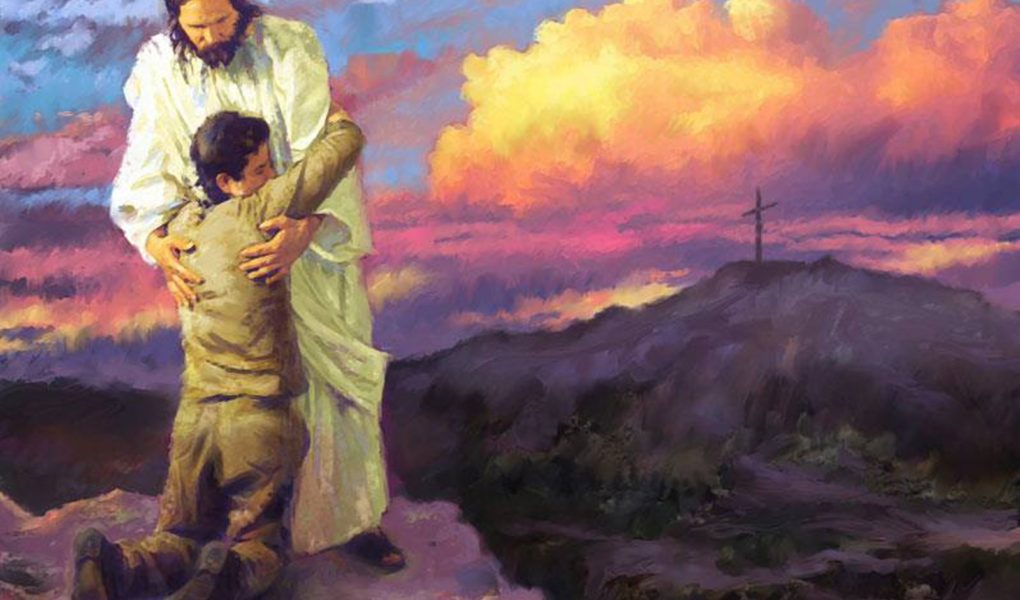
    Be Still and Know that I Am God.

    We will tend to believe of being “busy” as something positive—something of a measure of our true success in life, maybe even a compliment—especially when we consider the negative implications of its opposites, being “idle” or “lazy.”

    But we should not always assume, consider “busyness” as a Christian virtue.

    Have you ever thought that busyness might just be a sign of Christian betrayal rather than Christian commitment?

    We should definitely be thankful that many believers are busy for the Lord.

    Giving, sacrificing our time and ourselves in service to God’s kingdom is an absolutely essential part of the believer’s life and the Christian experience.

    But mere busyness does not necessarily equal faithfulness in the Christian life.

    In a time of great social economic political upheaval and national crisis, God emphatically urged his people to simply “be still” and know that he was God.

    Twice in Psalm 46, God’s people heard the assurance that the Lord Almighty was with them.

    He would be their comfort and mighty fortress.

    The key to experiencing that assurance, though, would be to approach God with a stilled heart and quiet trust.

    When we actually withdraw from our busy lives to spend time with God, we find ourselves discovering, enjoying, experiencing the truest reality of his presence.

    While we are not called by God to be either lazy or idle, neither are we called to a life of non-stop activity and service.

    God’s gently emphatic invitation, “be still” unlocks for us the opportunity to experience the maximum allowable joy of actually, genuinely, knowing him.

    What a blessed comfort this verse has been to multitudes of believers in Christ, down through the ages, who have heeded God’s invitation and rested on these words of the Psalmist and had their hearts stilled in the presence of the Lord.

    What refreshment these simple words have bestowed on many little lambs who have listened to the voice of their Good Shepherd – that Great Shepherd of the sheep Who opens His arms wide to embrace all who will truly trust in His name.

    But in context, we see another component to these words of reassurance.

    We see a genuine plan to glorify His Name and to exult His Person among the nations of the world who rage against the God of heaven and His anointed King.

    He is our Defense and our Defender against the enemies of our soul, and all who rest in Him find courage and strength.

    He is our impenetrable refuge from the storms of life and our shelter in the midst of oppression, and we are called to be still and to know that He is God – for His purposes will never fail, He will be glorified throughout the whole earth.

    It is of the greatest encouragement, both to His people Israel, and to His children of every age, that men who follow their own atheistic ‘will’ and construct their own anti-God plans, will finally be brought to nothing.

    For God, and God alone will be exulted among the heathen and His purposes alone will come to fruition – but we who have trusted Him for salvation are to sit serenely in His presence, in quiet assurance, confidence and in godly trust.

    Like the people of Israel in times past, Church-age believers are invited, called upon to ponder, remember the mighty deeds that God has done and to recall the myriad beyond myriads of miraculous, wondrous works that He has performed.

    We are to rest confidently in the knowledge that He is our faithful God – the supreme Creator of all and Commander of the armies of heaven Who redeems us by faith in the shed blood of Christ, and will never leave us nor forsake us.

    We are to:

    rest peacefully in the truth of His Word and be still in His holy presence.

    We are to know in our heart, by faith with thanksgiving, that He is the Lord our God Who alone pardons all our iniquities, heals all our diseases, Who redeems our life from the pit, and Who crowns us with lovingkindness and compassion.

    He alone is our God Who satisfies our years with good things, renews our youth like the eagle.

    He performs righteous deeds and judgments for all who are oppressed.

    The LORD is compassionate and gracious… slow to anger and abounding in steadfast and immovable lovingkindness.

    He is our Redeemer our Saviour and Friend.

    He alone is our hope and strength, He will be exalted, for it is He who has made us, not we ourselves, for we are His beloved people, the sheep of His pasture.

    Although the nations rage like the billows of the sea and the people imagine a vain thing against the Lord God Almighty, we are invited, called to be still in the presence of the Lord and to know Him in our heart by faith, with thanksgiving.

    May we ponder what it means to be still in His presence and cease from all our strivings… and truly be at peace in His company – Whom to know is life eternal.

    The Importance of How I View God

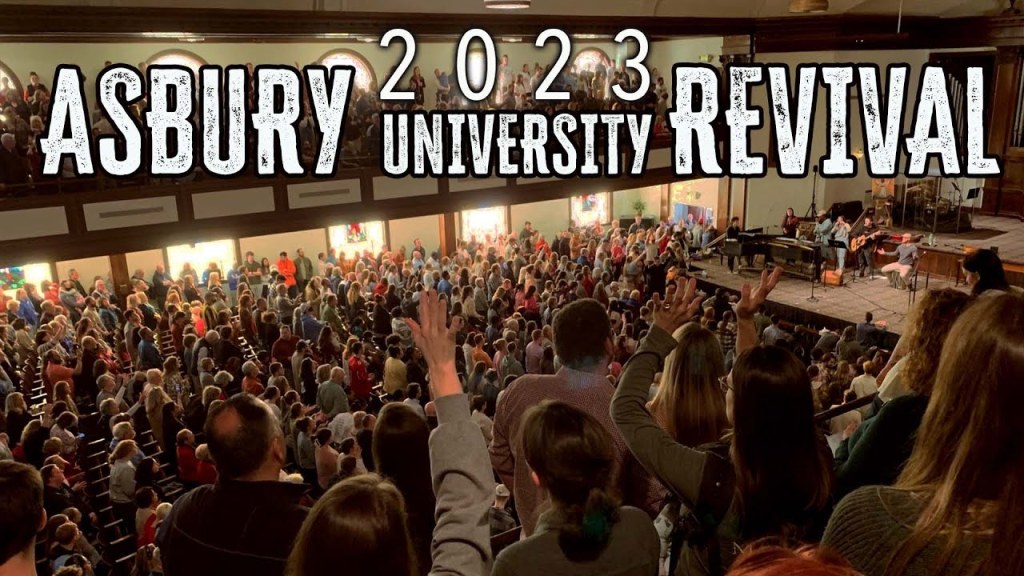
    In light of the past few weeks’ of worldwide revival events, I have been taking more time to reflect and ponder.

    My emotions have created a mixed bag, from skepticism to doubt, disbelief, questions, and indescribable awe. 

    On one hand, I decisively, definitely praise God if He is using these services to truly speak and to deeply ignite and inspire and move to transform lives.

    I have not been to any of the services, but I have watched many of the streams and videos and I have been “stilled” and moved to tears of indescribable joy.

    I know that God is powerful and can do anything He chooses, especially when we are not expecting it – but witnessing those students, images of people into the streets of our nation’s cities, into prisons and many international cities?

    Such an inexplicably powerful experience to see the people acting on their belief that God, the Father and God the Son and God the Holy Spirit is “on the move.”

    On the other, however, I think it’s a good and righteous thing to be cautious and careful with what we quickly interpret as come to believe to be the Spirit of God. 

    Even the Bereans in Acts 17 do this when Paul presents the gospel message to them.

    Though eager to hear Paul’s teachings, they move to test them themselves in the Holy Scriptures, Study, Pray, Ponder, and then decide what is from God. 

    “As soon as it was night, the believers sent Paul and Silas away to Berea. On arriving there, they went to the Jewish synagogue. Now the Berean Jews were of more noble character than those in Thessalonica, for they received the message with great eagerness and examined the Scriptures every day to see if what Paul said was true. As a result, many of them believed, as did also a number of prominent Greek women and many Greek men” (Acts 17:10-12, NIV). 

    Paul was known as an excellent teacher and an even better friend.

    He truly cared that every person heard and had access to the Bible after his conversion from Saul to Paul.

    This is why Paul felt called to attend as many missionary journeys as he did!

    But no matter how great the speaker, one’s credibility and ability to represent the gospel should always be prudently studied analyzed in light of the Bible.

    People are not the source of light themselves but are the ones pointing to the Light. 

    For this reason, 1 Thessalonians 5:19-22 further notes,

    “Do not quench the Spirit. Do not treat prophecies with contempt but test them all; hold on to what is good, reject every kind of evil” (NIV). 

    While I am not one to debate or judge if these revival services are real or not, their appearance has caused me to think about how I view God.

    And more importantly, if I understand Him. 

    How Do You View God?

    I was born into the Evangelical United Church of the Brethren.

    Growing up, I was raised in a traditional EUB Church until 1968 when the churches merged to become the United Methodist Church.

    I remember every service, worship session, and layout for an event looked exactly the same.

    Over time, I didn’t know why I was doing or saying what I did.

    Being so young as I was [7 years old] I didn’t even understand the Apostle’s Creed that I recited by heart every Sunday.

    Quickly, God and my relationship with Him became routine, just rehearsed words that needed to be prayed to maintain my perfection status. 

    By the time I reached high school, my father had remove us from the Methodist Church and we then became members of a local conservative Jewish Synagogue.

    My view of a God as my father became fractured was immensely distorted, and I truly started to wonder and ask, where is God, Jesus in the midst of my separation? 

    Verses that call God our Abba, or Father, have been an enormous challenge for me to understand and accept.

    I have wrestled for years with how God can be “One God,” for everyone, angry and loving, forgiving and punishing, reachable, yet above and beyond us all. 

    But it wasn’t until a recent “live” revival streaming session that I realized I should give my current view of God so much more contemplation – and that led me to todays verse, to ask these questions: “Be Still?” “Do I Understand Him?”

    Do I Understand Him?

    While I might dare to believe we would all like to say we know and understand God fully, from how He works to why things happen the way they do, I do not think nor do I believe that “understanding God” is even remotely possible. 

    It is possible to know and have an intimate, close, and personal relationship with Jesus Christ.

    This is why Jesus came and died for us, so we could partake in this personal relationship with Him.

    That’s the core essence of the gospel message.

    However, God never expected us to try and figure out all His ways. 

    Isaiah 55:8-9 notes, “For my thoughts are not your thoughts, neither are your ways my ways, declares the Lord. For as the heavens are higher than the earth, so are my ways higher than your ways and my thoughts than your thoughts” (Isaiah 55:8-9, ESV). 

    1 Corinthians 2:15-16 furthers this point when it says:

    “The spiritual person judges all things, but is himself to be judged by no one. “For who has understood the mind of the Lord so as to instruct him?” But we have the mind of Christ” (ESV). 

    While we can obtain a mind like Christ’s, in purity, hope, and love, this does not mean that we will know and understand all that He does.

    He is still God, and we are not.

    He is still all-powerful, and we are not.

    His ways are not our ways, and that is for a reason.

    Should We Know It All?

    When I was younger, and far more naïve than I am right now, I used to believe that if I knew “everything that would happen to me”, my life would be better.

    If I always knew exactly what God wanted me to do, where He wanted me to go, and what He was doing, my life would be easier.

    I look back now over the course of the last 43 years and I can only laugh. 

    As an anxious person, not only would I find all of this information to be rather overwhelming and paralyzing, but I’m confident that if I indeed “knew it all,”

    two things would happen:

    one, I would not rely on God to get through them,

    two, I would try to convince Him, like Moses or Jonah, that I was never ever going to be the right person for whatever task He “dared” called me into. 

    In Jonah 1, beginning in verse 1, Jonah runs from God because of his fears.

    God calls him to a high-caliber task, but Jonah doesn’t feel up for the journey.

    Even later, when he runs back to God, he becomes angry at God for His grace, the same grace that was given to him earlier in the chapter. 

    Countless people in the Bible tried to understand God.

    From Abraham, to Moses to Aaron, Job, and David and all the biblical writers.

    But if I’ve learned anything from their interactions, it’s that God cannot be entirely understood, and while we can have a close fellowship with Him, He will still be above and beyond anything we could fully comprehend here on earth.

    What Have I Learned About How I View God?

    So what have I learned about how I view God?

    I have learned that while God is a loving Father figure.

    He is also so much more than I will ever be able to grasp. 

    He is unpredictable. 

    He is unlikely. 

    He moves in ways we’d think He would and ways we wouldn’t. 

    He is a quiet, still whisper but also a mighty and powerful storm.

    He’s an oxymoron to those who don’t believe in Him and a mystery to those who do.

    Today, I am learning that I have many more years of learning to go.

    I will not understand Him entirely, but I’m choosing every day to grow closer to Him through prayer, reading the Bible, studying, meditating, and experiencing Him as I live – and something tells me that it’s okay-This is a life-long process.

    How I view God is still growing.

    I anticipate your view of God is growing as well.

    I want to know Him as a Father.

    I want you the reader to know Him as a Father.

    I’ve known Him as a Friend.

    I want you the reader to know Him as a Friend.

    And I want to know and view Him for all that He is.

    And I want you the reader to know and view Him for all that He is.

    Even if it takes the maxed our entirety of a thousand lifetimes to experience:

    “Be still and know (recognize, understand) that I am God. I will be exalted among the nations! I will be exalted in the earth.” 11 The Lord of hosts is with us; The God of Jacob is our stronghold [our refuge, our high tower]. Selah. [Psalm 46:10-11 AMP]

    The predicted and the unpredicted. 

    The known and the unknown.

    However He is, that’s how I want to know and view Him.

    Why ever He is, that is how I want to know and view Him.

    Whenever He is, that is how I want to know and view Him.

    Where ever He is, that is how I want to know and view Him.

    Perhaps, you the reader, from wherever you are, will join in the joy?

    In the name of God, the Father and God the Son and God the Holy Spirit,

    Let us Pray,

    Lord God Almighty, we rejoice that you are with us. Teach us to be still so that increasingly we can experience your presence in our lives through your Holy Spirit within. Father, I praise You that Your Word stands fast for ever and ever and that Your precious promises encourage me to rest in Your love and drink deeply from the Rock of my salvation. Draw near to every member of Christ’s Body and protect Your people Israel against the increasing roar of the nations. I pray for the salvation of the lost and for Your soon return, when Your name be exalted throughout all the earth and the nations will KNOW that You are God. I ask in the name of my Savior Jesus.

    https://translate.google.com/

    Ash Wednesday: Deciding, Will We Ever Consent to Give Any Living Hope to Our Ailing and Hurting Hearts? Joel 2:12-14

    Joel 2:12-14Amplified Bible

    12 
    “Even now,” says the Lord,
    “Turn and come to Me with all your heart [in genuine repentance],
    With fasting and weeping and mourning [until every barrier is removed and the broken fellowship is restored];
    13 
    Rip your heart to pieces [in sorrow and contrition] and not your garments.”
    Now return [in repentance] to the Lord your God,
    For He is gracious and compassionate,
    Slow to anger, abounding in lovingkindness [faithful to His covenant with His people];
    And He relents [His sentence of] evil [when His people genuinely repent].
    14 
    Who knows whether He will relent [and revoke your sentence],
    And leave a blessing behind Him,
    Even a grain offering and a drink offering [from the bounty He provides you]
    For the Lord your God?

    The Word of God for the Children of God.

    Adeste Fidelis. Venite Adoremus. Dominum.

    Gloria. In Excelsis Deo. Alleluia, Alleluia, Alleluia, Amen.

    Lent Begins … Does Hope Also Begin For Hurting Hearts?

    In a large number of churches today, the ancient words of today’s Scripture reading will be read every year in the traditional Ash Wednesday liturgy.

    Ash Wednesday, which falls this year on February 22, is the first day of Lent, a season in the church calendar that invites believers in God and non-believers as well, to maybe start paying special attention to the suffering and death of Jesus.

    Why are these instructions about rending hearts and not garments significant?

    In the Bible the rending and tearing of clothes is a sign of mourning and is often accompanied by the placing of ashes on one’s head.

    Biblically, Jacob tore his clothes when he heard a report that his son, Joseph, had been killed (Genesis 37:34).

    And when young King Josiah heard the words of the Book of the Law after it was rediscovered in the temple, he tore his robes as a sign of grief over the nation’s sin (2 Kings 22:11).

    The Patriarch Job, when he had suddenly lost everything – including his health, he sat down on the ground and covered himself from head to toe with ashes.

    Sometimes, the harsh and harshest realities of life will cause us to sit ourselves own on the ground and desire to “cover ourselves from head to toe with ashes.

    Sometimes the reality of sin is enough to break our hearts.

    The season of Lent reminds us that no one felt the pain of sin more than Jesus.

    Jesus had already given up everything he was at home with His Heavenly Father to come to us and to offer up to His maxed out example of genuine Godly living. [John 3:16-18, Philippians 2:1-11]

    John 3:16-18 The Message

    16-18 “This is how much God loved the world: He gave his Son, his one and only Son. And this is why: so that no one need be destroyed; by believing in him, anyone can have a whole and lasting life. God didn’t go to all the trouble of sending his Son merely to point an accusing finger, telling the world how bad it was. He came to help, to put the world right again. Anyone who trusts in him is acquitted; anyone who refuses to trust him has long since been under the death sentence without knowing it. And why? Because of that person’s failure to believe in the one-of-a-kind Son of God when introduced to him.

    Philippians 2:5-11 The Message

    5-8 Think of yourselves the way Christ Jesus thought of himself. He had equal status with God but didn’t think so much of himself that he had to cling to the advantages of that status no matter what. Not at all. When the time came, he set aside the privileges of deity and took on the status of a slave, became human! Having become human, he stayed human. It was an incredibly humbling process. He didn’t claim special privileges. Instead, he lived a selfless, obedient life and then died a selfless, obedient death—and the worst kind of death at that—a crucifixion.

    9-11 Because of that obedience, God lifted him high and honored him far beyond anyone or anything, ever, so that all created beings in heaven and on earth—even those long ago dead and buried—will bow in worship before this Jesus Christ, and call out in praise that he is the Master of all, to the glorious honor of God the Father.

    When he was arrested, beaten, humiliated, crowned then crucified, Jesus was fully and completely, utterly, publicly stripped of his dignity and his garments.

    More than that, his heart broke under the weight of our sin.

    Joel’s reading for today is God’s invitation to return to him is answered by our looking to the cross of Christ, asking forgiveness through his sacrifice for us.

    God promises to come unto us, wash away our sin and give us new life through the One whose torn garments, broken heart bring 100% healing for the world.

    We Must Answer the Question: Will I Give My Heart Any Hope?

    Joel 2:12-14 The Message

    Change Your Life

    12 But there’s also this, it’s not too late—
        God’s personal Message!—
    “Come back to me and really mean it!
        Come fasting and weeping, sorry for your sins!”

    13-14 Change your life, not just your clothes.
        Come back to God, your God.
    And here’s why: God is kind and merciful.
        He takes a deep breath, puts up with a lot,
    This most patient God, extravagant in love,
        always ready to cancel catastrophe.
    Who knows? Maybe he’ll do it now,
        maybe he’ll turn around and show pity.
    Maybe, when all’s said and done,
        there’ll be blessings full and robust for your God!

    Joel is the prophet who compares the coming Day of the Lord with a succession of locust invasions, which sequentially devour every crop and all vegetation in an unrelenting, visibly shocking, path of progressive destruction.

    Both grain and fruit harvests fail due to the devastating onslaught of this four-pronged locust infestation.

    The total destruction of Israel’s wheat and barley crops, along with the failure of the entire fruit harvest, causes all the people and priests alike to mourn and lament bitterly at how hopeless everything had become before their very eyes.

    Not only were the priests instructed to mourn and call for a sacred assembly, but the entire nation was commanded to fast and to cry out to the Lord their God, in sincere repentance of heart.

    Israel failed to heed the past prophetic warnings of earlier prophets.

    Joel’s heartfelt appeal for repentance, his warning of coming destruction, is one more demonstration of the nation’s continued rebellion against the God of their forefathers, their refusal to heed His Word and obey the covenant promises they made at Mount Sinai.

    What the chewing locusts left was eaten by the swarming locusts.

    And what they did not devour, was taken by the crawling locusts and then the consuming ones.

    In like manner, the prophesied day of the Lord will be one of the greatest destructions to befall the rebellious nation of Israel.

    It will be a time such as the world has never seen, nor would ever see again.

    However, it will be a time when Israel calls out to the Lord and He will hear and rescue His people.

    The entire passage compares the advance and destruction of this terrible locust invasion with speedy horses.

    It likens them to a vast army of marching men of war who steadily advance with unrelenting menace, in a strict formation – but who plunder everything in their path like a well organized band of marauders and thieves.

    Israel’s rebellion against the Lord, which included sloth and drunkenness, resulted in the barrage of these devouring locusts.

    And the consequences of their continued rebellion, apostasy, and disobedience, would result in judgement – the coming ‘Day of the Lord’.

    Joel’s entire prophecy was given to the nation of Israel.

    Although it was partially fulfilled on the day of Pentecost when many men of Israel repented of their sins and believed on the Lord Jesus Christ, the full and final fulfilment of Joel’s prophecy, which begins with a day of thick darkness and progresses into the glories of the Millennial Kingdom of Christ,

    will take place at the end of Daniel’s 70th week i.e. the Great Tribulation, which is sometimes called the Time of Jacobs Trouble.

    The continued grace and mercy of God can be seen in His divine appeal to the people of Judah to repent of their sins and return to the Lord – for we read:

    “Even now,” declares the LORD, “return to Me with all your heart, and with fasting, weeping and mourning.” [verse 12]

    Both for the nation of Israel and for unsaved Gentiles alike, the precious truth of this passage is that it is never too late for sinners or backsliders to turn away from their sins, to return to the Lord with all their heart, and to believe on the Lord Jesus Christ for forgiveness and salvation.

    It is a beautiful demonstration the goodness, grace, and mercy of our long-suffering God, remains fully open to ALL who will simply trust in His Word,

    remember His goodness, genuinely return to Him with heart and soul – and believe on the Lord Jesus Christ for the forgiveness of sins and life everlasting.

    It shows that fasting, with weeping and morning, is often associated with true repentance of heart.

    And although, there is no written covenant, set rules, or legalistic regulations which are required of Church-age believers, it is very important and wise to take note of things that outwardly demonstrate an inward change of heart.

    That is why the LORD says,
         “Turn to me now, while there is time.
    Give me your hearts.
         Come with fasting, weeping, and mourning.
    Don’t tear your clothing in your grief,
         but tear your hearts instead.”
    Return to the LORD your God,
         for he is merciful and compassionate,
    slow to get angry and filled with unfailing love.
         He is eager to relent and not punish.
    — Joel 2:13 NLT

    God is far more concerned about hearts genuinely loving Him and longing to be in a relationship with Him than He is about a lot of external religious trappings.

    The Hebrew Testament prophets emphasized that God’s people often lost their hearts to what was false and only gave lip service to God in their rituals. 

    Jesus also emphasized that God wanted us to love Him and serve Him from our hearts and not just by going through religious motions.

    For us to make the max best decision possible “hope for our hearts,” We must hear several of Joel’s key phrases passionately speaking God’s invitation to us:

    • “Give me your hearts…”
    • “Don’t tear your clothing… tear your hearts instead.”

    God pleads for us to return to Him, wholeheartedly: 

    “Turn to me now, while there is time.” 

    Why would the Almighty God plead with His lowly creations?

    Because YHWH loves us and longs for us to come home to Him, and love Him — heart, soul, mind, and strength.

    Our “Abba” Father is full and maxed out of unfailing love [John 3:16-18]

    even now yearns to be utterly received, “merciful and compassionate” to us!

    The amazing, awe-inspiring truth is as simple and straightforward as it is glorious: The Creator of the universe, with all of its vastness, mystery, and beauty, 100% knows us and longs for us to draw near to Him and know Him.

    Let’s come to this God seeking to hug Him, and embrace Him and love Him and know Him and experience Him exactly as we are now loved and known by Him!

    In the name of God, the Father and God the Son and God the Holy Spirit,  

    Let us Pray,

    Merciful God, you called us forth from the dust of the earth; you claimed us for Christ in the waters of baptism. Look upon us as with mercy and forgiveness as we enter these next Forty Days bearing the mark of ashes, and torn and rendered hearts and please bless the journey through the desert of Lent to the blessed font of rebirth. As we remember our mortality and seek penitence today, we know you to be a God who is rich in forgiveness and abounding in steadfast love, love that culminates in eternal life with you. Guide our steps this Lent, so that we might find greater fulfillment in your promises and better serve others with a heart that’s reflective of you. Amen.

    Adeste Fidelis. Venite Adoremus. Dominum.

    Gloria. In Excelsis Deo. Alleluia, Alleluia, Alleluia, Amen.

    https://translate.google.com/

    Lenten Preparation for Repentance: When Our Defenses Crumble, Where Will We Run to take Refuge? Psalm 11

    Psalm 11 Amplified Bible

    The Lord a Refuge and Defense.

    To the Chief Musician. A Psalm of David.

    11 In the Lord I take refuge [and put my trust];
    How can you say to me, “Flee like a bird to your mountain;

    For look, the wicked are bending the bow;
    They take aim with their arrow on the string
    To shoot [by stealth] in darkness at the upright in heart.

    “If the foundations [of a godly society] are destroyed,
    What can the righteous do?”


    The Lord is in His holy temple; the Lord’s throne is in heaven.
    His eyes see, His eyelids test the children of men.

    The Lord tests the righteous and the wicked,
    And His soul hates the [malevolent] one who loves violence.

    Upon the wicked (godless) He will rain coals of fire;
    Fire and [a]brimstone and a dreadful scorching wind will be the portion of their cup [of doom].

    For the Lord is [absolutely] righteous, He loves righteousness (virtue, morality, justice);
    The upright shall see His face.

    The Word of God for the Children of God.

    Adeste Fidelis. Venite Adoremus. Dominum.

    Gloria. In Excelsis Deo. Alleluia, Alleluia, Alleluia, Amen.

    What does it mean to ‘rend the heart,’ and not just the clothing?

    Much more than simply giving a whole array of apologies for bad behaviour.

    David the Psalmist is urging the people to remember God’s covenant promises.

    It’s easy to make outward shows of penitence without reaching inward to the heart.

    David calls for the same depth of repentance which Jesus calls for.

    To that end, as we once again prepare ourselves for tomorrow, Ash Wednesday for me to reminds each of us that Lent is so very much more than simply a time apologize for our “weaknesses” so just to ‘get my life back on track,’ as it were.

    Lent is a time of focusing what ought to be our habit of seeing the heart anyway.

    Above all, Lent reminds us of the character of God, which we all too easily lose sight of when we stray from those habits of the heart: forgiving and gracious, merciful and compassionate, slow to anger and abounding in steadfast love.

    But, once we commit ourselves to the works of God, the Father, Son and Holy Spirit, once we send our hearts into engaging with the sword of God’s Word,

    It is promised by the Lord that changes and transformations will take place.

    When those changes and transformations start and God is getting under our skins, into our souls, there is no stopping God from achieving His desired ends.

    It is only a matter of choosing our desired response – run to self or run to God.

    Build our own Castles, taking safe refuge in our own self defense mechanisms, or as the Prophet Isaiah predicted would one day have to happen to humanity;

    Isaiah 2:2-5Amplified Bible


    Now it will come to pass that
    In the last days
    The mountain of the house of the Lord
    Will be [firmly] established as the [a]highest of the mountains,
    And will be exalted above the hills;
    And all the nations will stream to it.


    And many peoples shall come and say,
    “Come, let us go up to the mountain of the Lord,
    To the house (temple) of the God of Jacob;
    That He may teach us His ways
    And that we may walk in His paths.”
    For the law will go out from Zion
    And the word of the Lord from Jerusalem.


    And He will judge between the nations,
    And will mediate [disputes] for many peoples;
    And they will beat their swords into plowshares and their spears into pruning hooks.
    Nation will not lift up the sword against nation,
    And never again will they learn war.


    O house of Jacob, come, let us walk in the light of the Lord.

    In our hearts an in our souls …

    The Mountain of the Lord is firmly established as the Highest Mountain.

    When the people say … come, let us go up to the Mountain of the Lord,

    To the House of the God of Jacob;

    That He may teach us His ways …

    That we may walk in His paths…”

    Then the Revival of our Hearts and our Souls may truly have their re-birth.

    O’ House of Jacob …

    O’ Body of Christ …

    O’ Child of God …

    COME …

    Choose This Day Where You Should Run For Refuge

    11 In the Lord I take refuge [and put my trust];
    How can you say to me, “Flee like a bird to your mountain;
    [Psalm 11:1]

    When it comes to degrees and measures of crises in our life, it is not a matter of whether they will come but when and then just how hardcore they will be.

    When they do arrive in whatever capacity and catastrophe, our response will be to flee to a safe refuge— a safe haven somewhere or something or someone we implicitly trust will keep us safe and protect us from all the pounding storms.

    So the question then will not be whether we will flee but where we will flee to.

    Some of us will take the advice of David’s friends in Psalm 11.

    These advisors urged him to “flee like a bird to your mountain.”

    Difficulty had come for David, seemingly in the form of threats to his life, with wicked people preparing to aim their arrows at him (Psalm 11:2).

    The counsel he received was essentially to head for the hills, to get away, to go somewhere that removed him from adversity as fast as he could if not faster.

    David did not heed this advice.

    But what about you?

    But what about me?

    While you and I likely will never face armed foes threatening you with violence, and for those whose lives intersected with combat zones, crisis will come to you someday, in one form or another, in some measure and some degree or another.

    It could be social pressure, peer pressure, to compromise biblical convictions, an unwanted diagnosis, or intense relational or financial or an personal strife.

    Where will you flee?

    Where will I flee?

    Will we too head for the hills, finding some form of escapism, be it an effort at numbing yourself with endless media consumption or abusing a substance, or throwing yourself into hyperdrive, frenetic activity in another part of your life?

    Or will you and I be able to say with David, “In the LORD I take refuge”?

    David had seen God deliver him from bears, lions, and a Philistine giant.

    The Lord had more than sufficiently proven Himself to be a trustworthy refuge, and David remembered those moments and took that to heart, relying on God.

    David knew the Lord was a mighty refuge; that had been borne out again and again in his life – his trust in God was grounded and rooted deep in experience, making it sturdy enough to withstand life’s darkness and the Evil One’s darts.

    Have your eyes been opened to God’s trustworthiness?

    Have you trusted Him in response?

    If you are a Christian, remember that your new life began by taking refuge in the Lord Jesus Christ.

    Once, you were facing the wrath of an eternal God, with no hope to be found.

    The only hope you had was to cast yourself on God’s mercy and embrace the salvation offered in Christ, and so you fled to Him and found eternal refuge.

    God desires for you and me to seek refuge in Him not only at the beginning of the journey but until Christ returns or calls us home, and not only for eternal salvation but in the measures and degrees of storms of this concourse of life.

    Trouble will come—and when it does, you can either head for the hills or you can lift up your eyes beyond the hills and to the Lord “who made heaven and earth” (Psalm 121:2), facing the crisis with 100% confidence and, yes, even joy.

    100% Trust, Confidence and yes, even Joy … in God, the Father.

    100% Trust, Confidence and yes, even Joy … in God, the Son.

    100% Trust, Confidence and yes, even Joy … in God, the Holy Spirit.

    In the name of God, the Father and God the Son and God the Holy Spirit,

    Let us Pray,

    Lord God Almighty, shaper and ruler of all creatures, we pray for your great mercy, that you guide us towards you, for we cannot find our way. And guide us to your will, to the need of our soul, for we cannot do it ourselves. And make our mind steadfast in your will and aware of our soul’s need. Pray, Lord, to shield us against our foes, seen and unseen. Teach us to do your will, that we may inwardly love you before all things with a pure mind. For you alone are our maker and our redeemer, our help, our very best friend, comfort, our trust, our hope; praise and glory be to you now and forever.

    Adeste Fidelis. Venite Adoremus. Dominum.

    Gloria. In Excelsis Deo. Alleluia, Alleluia, Alleluia, Amen.

    https://translate.google.com/

    Asking Ourselves the Hard Questions, Preparing for Lent, How Is God’s Power Made Perfect in All of Our Weaknesses? 2 Corinthians 12:7-10

    2 Corinthians 12:7-10Amplified Bible

    A Thorn in the Flesh

    Because of the surpassing greatness and extraordinary nature of the revelations [which I received from God], for this reason, to keep me from thinking of myself as important, a thorn in the flesh was given to me, a messenger of Satan, to torment and harass me—to keep me from exalting myself! Concerning this I pleaded with the Lord three times that it might leave me; but He has said to me, “My grace is sufficient for you [My lovingkindness and My mercy are more than enough—always available—regardless of the situation]; for [My] power is being perfected [and is completed and shows itself most effectively] in [your] weakness.” Therefore, I will all the more gladly boast in my weaknesses, so that the power of Christ [may completely enfold me and] may dwell in me. 10 So I am well pleased with weaknesses, with insults, with distresses, with persecutions, and with difficulties, for the sake of Christ; for when I am weak [in human strength], then I am strong [truly able, truly powerful, truly drawing from God’s strength].

    The Word of God for the Children of God.

    Adeste Fidelis. Venite Adoremus. Dominum.

    Gloria. In Excelsis Deo. Alleluia, Alleluia, Alleluia, Amen.

    A Thorn in the Flesh …

    The apostle Paul was dedicated to God.

    But Paul had a “thorn in the flesh”—possibly a persistently challenging and spiritually demanding circumstance or disease that bothered him quite a lot.

    He called it “a messenger of Satan, to torment” him.

    We don’t know exactly what it was, but somehow it made Paul physically or spiritually [or both] weaker than he wanted to be.

    Thorns prick, scratch, and wound.

    However, the point of Paul’s example is that because of his thorn in the flesh, God was able to work through him and his weaknesses ever more powerfully.

    Although Paul had pleaded three times with the Lord to take his thorn away, the Lord only responded saying to Paul,

    “My grace is sufficient for you, for my power is made perfect in weakness.”

    Paul notes that he was given his thorn “in order to keep . . . from becoming conceited.”

    This means Paul knew if he did not have this thorn, he could have become self-reliant and proud of his ability to “power through anything by his own will.”

    So Paul is teaching us that his thorn in the flesh was actually a good thing.

    It was a sign of God’s grace to keep him focused on God, dependent on God, reliant on God and away from his becoming a proud “iron willed” follower.

    And we can surely thank God for that.

    This does not mean we should ask God to give us a thorn in the flesh.

    We can trust that God knows what is best for us.

    But if God does allow us to have a particular kind of suffering, we can also trust that he can use it to do good.

    As Paul writes in another place,

    “We know that in all things God works for the good of those who love him, who have been called according to his purpose” (Romans 8:28).

    How Is God’s Power Made Perfect in Weakness?

    Although being a Christian doesn’t grant us the power to endure every physical difficulty, it does grant us ready access to the Holy Spirit who abides within us.

    His Holy Spirit may not be a superpower, but it’s a genuine supernatural power.

    It may not enable us to look like the Hulk when it comes to both spiritual and physical challenges, but Holy Spirit provides us with an otherworldly strength to live into our oncoming circumstances and to conquer the challenges of life.

    This is the kind of strength that can only be manifested in our weaknesses.

    In 2 Corinthians 12:9, Paul wrote, “But he said to me, ‘My grace is sufficient for you, for my power is made perfect in weakness.’” 

    So what is this power, and how can we, as believers, come to access it during the up and coming Post-Pandemic Lenten season and strenuous challenges of life?

    What Does ‘My Power Is Made Perfect in Weakness’ Mean?

    We often try to come across as the I-can-do-it-all Christian—making perfect grades in school or raising well-behaved children while maintaining the ultra squeaky-clean Christian reputation in church.

    If we come across a challenge that seems too much for us to handle, we often blame ourselves for not being “strong enough.”

    As though we some how an in some way believe that God automatically expects us to do all the things with “ease” and never cave beneath the pressures of life.

    But we were simply never created to bear this life through our own strength.

    In fact, we don’t even have within ourselves the ability to bear its weight!

    So why should we or do we, try so hard to look like Miss or Mr. Independent “Iron” Christian when, really, God frowns upon this type of approach to life?

    It is impossible for us to conquer anything apart from God’s sufficient grace.

    Writing this, I wonder if God purposely created our bodies to cave beneath pressure—so we could realize we can do nothing apart from Him (see John 15:5).

    But rather than allowing this to make us frustrated, get all of our faults and all failures and failings all bunched up inside our heads, perhaps we should instead use these weaknesses to propel us closer to our Savior Jesus Christ, and drawing supernatural strength from the power of the Holy Spirit – to rely more on God?.

    God intended us to rely on this Holy Spirit day-by-day, moment-by-moment.

    This is why Jesus said this to His disciples before He was crucified:

    “But in fact, it is best for you that I go away, because if I don’t, the Advocate won’t come. If I do go away, then I will send him to you.” [John 16:7]

    John 16:7Amplified Bible

    But I tell you the truth, it is to your advantage that I go away; for if I do not go away, the [a]Helper (Comforter, Advocate, Intercessor—Counselor, Strengthener, Standby) will not come to you; but if I go, I will send Him (the Holy Spirit) to you [to be in close fellowship with you].

    It is for our benefit that Jesus left the “Advocate,” which is the Holy Spirit.

    If we did not have the Spirit abiding within us, then we would not have access to this power.

    We would struggle through life, relying only on our own mental an physical muscles to face life’s battles.

    But we do have the Holy Spirit.

    This means as we abide in Him, we can draw strength from Him rather than ourselves.

    We can ask Him to give us what we need to overcome this life.

    Confessing ourselves before Him: “No, me, myself, I, simply cannot do it all.”

    That’s a good thing!

    If we could, then we would never have the opportunity to allow God’s power—which is far stronger than any human strength—to be made apparent within us.

    We would continue through life as Miss or Mrs. or Mr. Iron Clad Independent Christian, never having a need to depend on God alone and gain access to His grave-conquering power.

    What Is the Context of 2 Corinthians 12:9?

    In this chapter, Paul shares about a heavenly vision God gave him that gained him access to spiritual revelations.

    He was not permitted to share these insights with anyone and did not want to receive the credit for them.

    To keep him humble, he says that God intentionally allowed him to have a “thorn in the flesh” (see verse 7).

    Paul goes on to discuss the pain of this suffering, as well as its eventual advantage, in verses 8-10:

    “Three times I pleaded with the Lord to take it away from me. But he said to me, ‘My grace is sufficient for you, for my power is made perfect in weakness.’ Therefore I will boast all the more gladly about my weaknesses, so that Christ’s power may rest on me. That is why, for Christ’s sake, I delight in weaknesses, in insults, in hardships, in persecutions, in difficulties. For when I am weak, then I am strong.”

    Obviously, the strength he refers to in the final verse is not human strength but a supernatural strength.

    And it is only through experiencing the weakness that he was he able to receive this power.

    In other words, Paul recognized that it was not through an independent attitude that he could boast, but rather a complete dependency, reliance upon God.

    It was this dependency and reliance on God that kept him humble as well.

    It is also interesting to take a look at the meaning of the Greek words used in this passage.

    The phrase “is sufficient” is arkei, which means to assist, benefit, and to be satisfied.

    Christ’s grace benefits us in our weaknesses by allowing us to grow stronger—not in our might, but in His.

    Thus, we are more equipped to face the challenges and sufferings of life.

    The word “power” here is dynamis, which implies a force and miraculous power.

    It is pretty miraculous when His strength becomes manifested in our weaknesses!

    “Is perfected” is teleitai, which implies bringing to completion, to accomplish and fulfill.

    When we receive His miraculous power to strengthen us, we don’t just receive a portion of it.

    We can receive it to the full—and all for the singular purpose of accomplishing His perfect will.

    Finally, the phrase “may rest” is episkēnōsē.

    This is translated to mean to pitch a tent upon or to dwell and abide within.

    How interesting is that?

    So, If you like camping out under the stars …

    So, if you like staying dry against the rains …

    In a strong, dependable, reliable, long lasting, enduring, well staked tent,

    Psalm 19Amplified Bible

    The Works and the Word of God.

    To the Chief Musician. A Psalm of David.

    19 The heavens are telling of the glory of God;
    And the expanse [of heaven] is declaring the work of His hands.

    Day after day pours forth speech,
    And night after night reveals knowledge.

    There is no speech, nor are there [spoken] words [from the stars];
    Their voice is not heard.

    Yet their voice [in quiet evidence] has gone out through all the earth,
    Their words to the end of the world.
    In them and in the heavens He has made a tent for the sun,

    Which is as a bridegroom coming out of his chamber;
    It rejoices as a strong man to run his course.


    The sun’s rising is from one end of the heavens,
    And its circuit to the other end of them;
    And there is nothing hidden from its heat.


    The law of the Lord is perfect (flawless), restoring and refreshing the soul;
    The statutes of the Lord are reliable and trustworthy, making wise the simple.

    The precepts of the Lord are right, bringing joy to the heart;
    The commandment of the Lord is pure, enlightening the eyes.

    The fear of the Lord is clean, enduring forever;
    The judgments of the Lord are true, they are righteous altogether.

    10 
    They are more desirable than gold, yes, than much fine gold;
    Sweeter also than honey and the drippings of the honeycomb.
    11 
    Moreover, by them Your servant is warned [reminded, illuminated, and instructed];
    In keeping them there is great reward.
    12 
    Who can understand his errors or omissions? Acquit me of hidden (unconscious, unintended) faults.
    13 

    Also keep back Your servant from presumptuous (deliberate, willful) sins;
    Let them not rule and have control over me.
    Then I will be blameless (complete),
    And I shall be acquitted of great transgression.
    14 
    Let the words of my mouth and the meditation of my heart
    Be acceptable and pleasing in Your sight,
    O Lord, my [firm, immovable] rock and my Redeemer.

    Let that love for camping become one more “JEHOVAH” sized reminder …

    Christ’s power can literally descend upon us as we dwell and abide in Him.

    This “tent” of Christ can remain our safe place of refuge.

    It’s interesting to note, too, how the phrase “may rest” in this passage compares to the phrase “made His dwelling” in John 1:14:

    “The Word became flesh and made his dwelling among us.”

    The passage “made His dwelling” is translated eskēnōsen, which means to dwell in a tent, to occupy or to reside.

    So, Jesus came to earth so that He could dwell with us—and when He departed, He gave us the Holy Spirit so that He could continue to do the same.

    He still dwells with us, and we can dwell in Him.

    But we must crucify our desires to work and face this life apart from Christ.

    After all, it is only as we abide and dwell in Him that we will display His full power within us, bearing “much fruit,” as mentioned in John 15.

    What Does the Bible Have to Say about Weakness?

    The word “weakness” in 2 Corinthians 12:9 implies suffering, insults, and persecution.

    These aren’t exactly physical limitations but rather limitations we face in our everyday lives, such as the temptation to sin, heartache, and distress.

    It is evident throughout the Bible that God does not intend to remove these weaknesses from our life.

    If He did, then we would never have the pleasure of witnessing His power overcome.

    We would never have the privilege of allowing our weaknesses to find their rest and completion in His strength.

    Sadly, the idea of depending on someone may look like a weakness itself to our society.

    We love to come across as strong, independent, and self-reliant, needing nothing and no one.

    It is true humans are strong and intelligent—but this type of “Iron and Steel” independent mentality is frowned upon in God’s eyes.

    And our strength is nothing to boast about, because according to 1 Corinthians 1:25, “God’s weakness is stronger than the greatest of human strength.”

    So if God’s weakness is even stronger than our greatest strength, then why shouldn’t we willingly want to receive His power?

    One of the reasons why God allowed His Son to come to earth was so that He could understand our human condition.

    Basically, He wanted to become familiar with our weaknesses. 

    Hebrews 4:15-16 makes this clear:

    For we do not have a high priest who is unable to sympathize with our weaknesses, but one who in every respect has been tempted as we are, yet without sin. Let us then with confidence draw near to the throne of grace, that we may receive mercy and find grace to help in time of need.”

    Jesus understands our sufferings.

    Why, then, should we try to stubbornly fix our issues by ourselves when the One who has already conquered this world invites each and every single one of us to completely, utterly, and fully, rely on Him?

    It is only when we relent in our own efforts and apply the above Scripture to our lives that we will then fully appreciate and abundantly receive the help we need.

    God’s power being made evident in our weaknesses is also illustrated in stories throughout the Old Testament, such as David conquering Goliath, as well as in the following verses:

    “He gives power to the weak, And to those who have no might He increases strength” Isaiah 40:29.

    “So he said to me, “This is the word of the Lord to Zerubbabel: ‘Not by might nor by power, but by my Spirit,’ says the Lord Almighty” Zechariah 4:6.

    Apostle Paul also spoke of God’s strength being made known in his weakness in Philippians 4:11-13: 

    “Not that I was ever in need, for I have learned how to be content with whatever I have. I know how to live on almost nothing or with everything. I have learned the secret of living in every situation, whether it is with a full stomach or empty, with plenty or little. For I can do everything through Christ, who gives me strength.”

    When I read these passages of scripture, enormous joy arises within me because I realize just exactly how empowered I am.

    Whatever trials or temptations God allows into my life, I can overcome.

    Not in my own strength, of course, but in God’s power being made perfect in my weakness.

    Another reference to our fragility finding completion in God’s strength is in 2 Corinthians 4:7, where Paul wrote: 

    “We now have this light shining in our hearts, but we ourselves are like fragile clay jars containing this great treasure. This makes it clear that our great power is from God, not from ourselves.”

    Perhaps this is why God often uses the weak of the world to demonstrate His greatest power and to “shame the wise” (see 1 Corinthians 1:27):

    So that more of His glory can be on display.

    When we overcome a weakness we would not be able to conquer on our own, then it is obvious, just like the above verse says, the great power came from God and not from ourselves.

    And shouldn’t that remain our main goal as Christians?

    To spread more of His glory rather than our own? 

    But the only way we can gain this strength is to give up our independent tendencies and learn how to rely on the Holy Spirit within us. 

    Ephesians 3:16 says, “I ask that out of the riches of His glory He may strengthen you with power through His Spirit in your inner being.”

    I believe God is searching for Christians who can admit their weaknesses and shortcomings, because only in doing that will His purposes be accomplished.

    This is why Jesus left behind the Holy Spirit, after all.

    So as we dwell in Him, we could be empowered to embrace the uncomfortable, including sufferings and persecution.

    All for the sake of extending His Kingdom.

    This means that the weaker we are, the more His power can be displayed within us and through us.

    Apostle Paul was right—we now have every right to boast in our weaknesses!

    This Lenten Season, Let’s choose to Go ‘camping’ with God, Son, Holy Spirit.

    In the name of God, the Father and God the Son and God the Holy Spirit,

    Let us Pray,

    Heavenly Father, thank You that Your grace is sufficient for all my needs. Help me to recognise and rejoice in the knowledge that Your power is made perfect in my own weakness. Help me to boast all the more gladly in my inabilities so that Your great ability may be manifest in my life. By thy Holy Spirit, May everything I do be to Your praise and glory, my Lord and my God. Creating and eternal God, whose grace is sufficient for us and whose power is made perfect in weakness, in our weakness and insufficiency, we offer our lives and the gifts of our living for the work of your mustard seed kingdom; in our Lord, King and Savior Jesus’ name. AMEN.

    https://translate.google.com/

    What Is this Spiritual Gift of Faith? 1Corinthians 12:4-11

    1 Corinthians 12:4-11Amplified Bible

    Now there are [distinctive] varieties of spiritual gifts [special abilities given by the grace and extraordinary power of the Holy Spirit operating in believers], but it is the same Spirit [who grants them and empowers believers]. And there are [distinctive] varieties of ministries and service, but it is the same Lord [who is served]. And there are [distinctive] ways of working [to accomplish things], but it is the same God who produces all things in all believers [inspiring, energizing, and empowering them]. But to each one is given the manifestation of the Spirit [the spiritual illumination and the enabling of the Holy Spirit] for the common good. To one is given through the [Holy] Spirit [the power to speak] the message of wisdom, and to another [the power to express] the word of knowledge and understanding according to the same Spirit; to another [wonder-working] faith [is given] by the same [Holy] Spirit, and to another the [extraordinary] gifts of healings by the one Spirit; 10 and to another the working of [a]miracles, and to another prophecy [foretelling the future, speaking a new message from God to the people], and to another discernment of spirits [the ability to distinguish sound, godly doctrine from the deceptive doctrine of man-made religions and cults], to another various kinds of [unknown] tongues, and to another interpretation of tongues. 11 All these things [the gifts, the achievements, the abilities, the empowering] are brought about by one and the same [Holy] Spirit, distributing to each one individually just as He chooses.

    The Word of God for the Children of God.

    Adeste Fidelis! Venite Adoremus! Dominum.

    Gloria! In Excelsis Deo! Alleluia! Alleluia! Alleluia! Amen.

    Spiritual Gift of Faith

    Today, let’s learn something about the spiritual gift of faith.

    Your first reaction to this might be, “How can faith be a gift?

    Aren’t we all supposed to have faith as believers in Jesus Christ?”

    Faith is absolutely a gift!

    It is specifically mentioned as a spiritual gift in scripture (1 Corinthians 12:9).

    Because it is a spiritual gift, that means not everyone has the gift of faith.

    And that’s okay.

    We can all strive for faith, but for some people the confidence in the truth of God comes more naturally than to others.

    Do you know a person who can continue to trust in God no matter what comes their way?

    A person who can see where God is working in your life when you can’t see it?

    People with the spiritual gift of faith are unshakeable in their reliance on God’s promises and are a source of encouragement for the rest of us when we feel like embracing the world or giving up on God or think that God has given up on us.

    Here is how we can define the gift of faith:

    Faith is the exceptional ability to hold fast to the truth of God in Jesus Christ in spite of pressures, problems, and obstacles to faithfulness.

    Much more than just belief, faith is a gift which empowers an individual or a group of people to hold fast to its identity in Christ in the face of any challenge.

    The gift of faith enables believers to rise above pressures and problems that might otherwise cripple them.

    Faith is characterized by an unshakable trust in Jehovah God to deliver on God’s promises, no matter what.

    The gift of faith inspires those who might be tempted to give up to hold on.

    Those gifted with Faith create a foundation upon which true community can be built and sustained.

    It is critical for people possessing the gift of Faith to make, take opportunities to share their beliefs, their learning, most importantly, their life experiences.

    Faith stories have powerful and transforming effects.

    Faith is a prominent gift in witnessing congregations, where personal stories are shared in group settings, worship, Sunday school classes, or Bible studies.

    Faith is the exceptional ability to hold fast to the truth of God in Jesus Christ in spite of pressures, problems, and obstacles to faithfulness.

    Our Bible gives us many examples of individuals with the spiritual gift of faith.

    Hebrews 11:1-12 The Message

    Faith in What We Don’t See

    11 1-2 The fundamental fact of existence is that this trust in God, this faith, is the firm foundation under everything that makes life worth living. It’s our handle on what we can’t see. The act of faith is what distinguished our ancestors, set them above the crowd.

    By faith, we see the world called into existence by God’s word, what we see created by what we don’t see.

    By an act of faith, Abel brought a better sacrifice to God than Cain. It was what he believed, not what he brought, that made the difference. That’s what God noticed and approved as righteous. After all these centuries, that belief continues to catch our notice.

    5-6 By an act of faith, Enoch skipped death completely. “They looked all over and couldn’t find him because God had taken him.” We know on the basis of reliable testimony that before he was taken “he pleased God.” It’s impossible to please God apart from faith. And why? Because anyone who wants to approach God must believe both that he exists and that he cares enough to respond to those who seek him.

    By faith, Noah built a ship in the middle of dry land. He was warned about something he couldn’t see, and acted on what he was told. The result? His family was saved. His act of faith drew a sharp line between the evil of the unbelieving world and the rightness of the believing world. As a result, Noah became intimate with God.

    8-10 By an act of faith, Abraham said yes to God’s call to travel to an unknown place that would become his home. When he left he had no idea where he was going. By an act of faith he lived in the country promised him, lived as a stranger camping in tents. Isaac and Jacob did the same, living under the same promise. Abraham did it by keeping his eye on an unseen city with real, eternal foundations—the City designed and built by God.

    11-12 By faith, barren Sarah was able to become pregnant, old woman as she was at the time, because she believed the One who made a promise would do what he said. That’s how it happened that from one man’s dead and shriveled loins there are now people numbering into the millions.

    • Verse 4 – By faith, Abel brought a better sacrifice to God than Cain
    • Verse 5 – By faith, Enoch skipped death
    • Verse 7 – By faith, Noah built a ship
    • Verse 8 – By faith, Abraham said yes to God
    • Verse 11 – By faith, barren Sarah became pregnant
    Faith in Scripture ….

    Mark 9:23 (NRSV)
    Jesus said to him, “If you are able!—All things can be done for the one who believes.”

    Luke 8:48 (NRSV)
    He said to her, “Daughter, your faith has made you well; go in peace.”

    Luke 17:19 (NRSV)
    Then he said to him, “Get up and go on your way; your faith has made you well.”

    Luke 18:42 (NRSV)
    Jesus said to him, “Receive your sight; your faith has saved you.”

    Romans 4:18-21 (NRSV)
    Hoping against hope, he believed that he would become “the father of many nations,” according to what was said, “So numerous shall your descendants be.” He did not weaken in faith when he considered his own body, which was already as good as dead (for he was about a hundred years old), or when he considered the barrenness of Sarah’s womb. No distrust made him waver concerning the promise of God, but he grew strong in his faith as he gave glory to God, being fully convinced that God was able to do what he had promised.

    God gives us believers gifts of the Holy Spirit.

    We do not know why exactly God’s will is for us to have any of these gifts, but we are thankful for any blessings, gifting’s, and corrections that He gives us.

    Faith — it is a gift, and all we need is about the size of a mustard seed (Matthew 17:20).

    To each and every one of us, a measure of faith has been assigned by God (Romans 12:3).

    Moses had faith to lead Israel to the Promised Land, Sarah had faith that she would conceive even in her old age, and Noah had faith that God had spoken to him to build the ark even when everyone thought he was crazy (Hebrews 11).

    There isn’t any formula that is alongside this gift of faith, and to think that there would be, it would be much more difficult to have faith.

    Believing in faith is easy, but in our finite minds, thoughts barricade what is truly simple.

    For by grace you have been saved through faith. And this is not your own doing; it is the gift of God, not a result of works, so that no one may boast (Ephesians 2:8-9).

    Faith without proof

    There are miracles everywhere mentioned in the New Testament.

    Many people today have seen what the goodness of God can do through miracles.

    In Mark 2, Jesus was in a crowded house in Capernaum.

    There were four men carrying a paralytic man, trying to reach Jesus.

    They had to make a hole in the roof of the house in order to bring the paralyzed man to be healed by Jesus.

    This act was an act of faith by the four men, and Jesus saw their faith in the man being healed of his affliction.

    Well, the man not only got healed but his sins were forgiven.

    Miracles are a wondrous gift, but having faith without seeing is believing that it is possible even though it seems impossible (2 Corinthians 5:7).

    “Now faith is the substance of things hoped for, the evidence of things not seen” (Hebrews 11:1). 

    Our hope is in Christ alone.

    Without faith, there is no hope.

    We have faith that when winter begins to thaw, and all the snow begins to fade away, that the seeds that were planted in the previous season shall burst forth.

    Springtime is a time of refreshment, a time of anticipated, expectant joy to see what was planted, will be planted and is to soon come up from the cold ground.

    We don’t see the seeds with our own eyes, but by faith, we have the hope to see green leaves, diverse colors of flowers coming up to bring out joy and harvest.

    Childlike Faith ….

    Matthew 18:1-6 Amplified Bible

    Rank in the Kingdom

    18 At that time the disciples came to Jesus and asked, “Who is greatest in the kingdom of heaven?” He called a little child and set him before them, and said, “I assure you and most solemnly say to you, unless you repent [that is, change your inner self—your old way of thinking, live changed lives] and become like children [trusting, humble, and forgiving], you will never enter the kingdom of heaven. Therefore, whoever [a]humbles himself like this child is greatest in the kingdom of heaven. Whoever receives and welcomes one [b] child like this in My name receives Me; but whoever causes one of these little ones who believe in Me to stumble and sin [by leading him away from My teaching], it would be better for him to have a heavy millstone [as large as one turned by a donkey] hung around his neck and to be drowned in the depth of the sea.

    Children are like sponges.

    Children are naturally inquisitive about almost everything in their little world.

    They max out their efforts absorbing everything they can see, smell, taste, and touch, and hear.

    In a classroom, it is a teacher’s job to assure that the children are learning what is being taught.

    Children learn from their families as to what is wrong and what is right.

    But what they are the best at is having faith.

    Think about the inquisitiveness of your own children right now.

    What are they constantly getting themselves into?

    What holds their “undivided” attention?

    What is their “wish-list?”

    What are their dreams?

    As it might be applicable, be observant and give an answer to those questions for those of us who have grandchildren or great grandchildren inside our lives.

    Think about when you were a child, what did you have hope for?

    I hoped that I could see the world that God created.

    As I got older, I realized what goes into making those dreams come true.

    I then began to see that it may not ever happen, and my faith became less in that area of my life.

    I let my fears become more and more of my reality because I didn’t truly believe that I could travel the world.

    But, perhaps, one season, by God’s Grace, that dream of travel will come true.

    I believe and have faith God will bring me to places that He wills for my life. 

    In Romans 10:17, the Bible states, “So faith comes from hearing, and hearing through the word of Christ.” 

    Our thoughts can be louder than the Word of God if we let them.

    The Holy Spirit within us shows us what is truth and what is not.

    The gift of faith is truth and grace that has been given to us through the sacrifice of Jesus Christ.

    The spiritual gift of faith is steadfastly believing the truth, God’s truth alone.

    No matter what happens whether you receive what you are believing in or not, your confidence cannot be swayed.

    The fear, worry, and circumstances do not determine your level of faith.

    If God has given you this spiritual gift of faith, then trust, without doubt, that He will absolutely do as He absolutely wills for your life.

    In the name of God, the Father and God the Son and God the Holy Spirit,

    Let us Pray,

    All-Powerful Father, I bow before You because You are awesome and worthy of all the praise. Your word declares that I can do all things through You who strengthens me! I put all my trust in You. You alone are my God. You alone are my joy. You are my heart and my soul. You are the grass under my feet and the sky above. You are seen and unseen, Father. Keep me at Your right hand forever, fill me with Your grace, and make me Yours all the days of my life. Father, we thank you for everything, and we love you with all that we are. I pray that those that have been given this spiritual gift of faith will never waiver. I pray that we will trust and believe you always God. 

     Adeste Fidelis! Venite Adoremus! Dominum.

    Gloria! In Excelsis Deo! Alleluia! Alleluia! Alleluia! Amen.

    https://translate.google.com/

    For We Walk by Faith and Not by Sight. 2 Corinthians 5:6-10

    2 Corinthians 5:6-10Amplified Bible

    6 So then, being always filled with good courage and confident hope, and knowing that while we are at home in the body we are absent from the Lord— for we walk by faith, not by sight [living our lives in a manner consistent with our confident belief in God’s promises]— we are [as I was saying] of good courage and confident hope, and prefer rather to be absent from the body and to be at home with the Lord. 9 Therefore, whether we are at home [on earth] or away from home [and with Him], it is our [constant] ambition to be pleasing to Him. 10 For we [believers will be called to account and] must all appear before the [a]judgment seat of Christ, so that each one may be repaid for what has been done in the body, whether good or [b]bad [that is, each will be held responsible for his actions, purposes, goals, motives—the use or misuse of his time, opportunities and abilities].

    The Word of God for the Children of God.

    Adeste Fidelis! Venite Adoremus! Dominum.

    Gloria! In Excelsis Deo! Alleluia! Alleluia! Alleluia! Amen.

    What does it mean to live by Faith?

    Those words seem simple enough, yet it may be a lot tougher than we think.

    It requires tremendous courage and strength.

    Preaching the gospel to the world brought Paul and his co-workers much suffering.

    Yet they continued the work contending for the faith.

    They refused to quit and “pressed toward the mark of the high calling of God in Christ Jesus.” (Philippians 3:14)

    Living in the end times requires living by faith and not by what we see going on around us.

    Yet it is a journey of tremendous hope, blessing and reward.

    Walking by faith and not by sight requires you to trust God, not knowing where you are at times in the larger scope of God’s plan and purpose.

    Take the example of Abraham, “when called to go to a place he would later receive as his inheritance, obeyed and went, even though he did not know where he was going”. (Hebrews 11:8)

    That’s walking by faith.

    Walking by faith requires a strong determination to follow God’s plan as outlined in the bible, regardless what life throws your way.

    Like 2 Corinthians 4:18 urges us, “So we fix our eyes not on what is seen, but on what is unseen, since what is seen is temporary, but what is unseen is eternal.”

    It is a deep trust in what cannot be seen that provides hope.

    Paul wrote to the church at Corinth that “we walk by faith and not by sight” (2 Corinthians 5:7).

    Jesus stated, “Blessed are those who have not seen and yet have believed” (John 20:29).

    Jesus ascended and left his Spirit as a guarantee.

    Walking by faith is sometimes lonely, except for the presence of Christ by his Spirit, left to all believers as a “guarantee” (2 Corinthians 5:5).

    Christians are frequently called to stand firm in spite of the isolated place their faith leads them to.

    Our faith is reasonable, but there are aspects of the gospel we accept on faith and are unable to see.

    What are these invisible things?

    And what is the walk of faith?

    The Second Letter to Corinth

    First of all, here is some context for 2 Corinthians 5:7.

    Paul’s relationship with the church at Corinth was a difficult one.

    Paul had led them to faith with the assistance of mature believers in Christ, but when Paul was gone the church was easily swayed by outsiders who opposed his teaching.

    In Paul’s absence, they fell apart and it was easy for opponents to convince the church that his suffering was a sign that Paul’s faith was actually folly.

    If Jesus Christ has really come to save sinners, how could the apostle’s life be so horrendous?

    To Paul’s mind, his way of life represented faith.

    How else could someone suffer so much, if not for the reasonable expectation of eternal gain? (ESV Study Bible, Introduction to 2 Corinthians).

    The Corinthian church was struggling, and Apostle Paul’s letter suggests a big part of the problem was the followers trusting the Holy Spirit to work in their lives and coming to that place in their life of trusting in the promise of Heaven.

    Faith is trust.

    Fabulous Adventures In Trusting Him!

    Fantastic Adventures In Trusting Him!

    Fulfilling Adventures In Trusting Him!

    Futuristic Adventures In Trusting Him!

    But faith in Christ does not come in the exact instant we snap our fingers.

    Time and effort, trials and tribulations, radically counter cultural responses.

    Faith not in what we see ‘Now’ but what we cannot see in Eternity

    2 Corinthians 5:1-5Amplified Bible

    The Temporal and Eternal

    5 For we know that if the earthly tent [our physical body] which is our house is torn down [through death], we have a building from God, a house not made with hands, eternal in the heavens. For indeed in this house we groan, longing to be clothed with our [immortal, eternal] celestial dwelling, so that by putting it on we will not be found naked. For while we are in this tent, we groan, being burdened [often weighed down, oppressed], not that we want to be unclothed [separated by death from the body], but to be clothed, so that what is mortal [the body] will be swallowed up by life [after the resurrection]. Now He who has made us and prepared us for this very purpose is God, who gave us the [Holy] Spirit as a pledge [a guarantee, a down payment on the fulfillment of His promise].

    What does the gospel tell us which we cannot prove by way of anything other than faith?

    For one thing, we cannot see what awaits the faithful around the next bend in their roadways, over the next mountain— eternal life in the Kingdom of God.

    Apostle Paul is confident: “For we know that if the tent that is our earthly home is destroyed, we have a building from God” (verse 1).

    That building is the individual body, the church body, a real Kingdom, invisible to us for now. “We know,” says Paul; not “we believe,” or “we imagine.”

    The original Greek uses “eidó,” which means “be aware, behold, consider, perceive.” “Knowing” in this sense combines knowledge with an intelligent perception of an idea, which cannot be physically represented —just yet.

    Paul based his belief in eternal life on sound, objective evidence as well as his subjective, personal experience of Christ.

    His suffering could have become a distraction from this truth — it certainly was for the Corinthians.

    To Paul, his counter cultural response to immediate suffering was supposed to demonstrate his deep trust in what could not be seen, provide a reason to hope.

    Christians “look not to the things that are seen but to the things that are unseen. For the things that are seen are transient, but the things that are unseen are eternal” (2 Corinthians 4:18).

    A Connecting Faith

    Christ’s message of eternal salvation through his death and resurrection was explosive.

    Master Pharisee Saul, before becoming Paul, had originally sought to persecute these blasphemers, run them all to ground, imprison them all until he realized that the Old Testament had been leading Israel unto the empty tomb all along.

    When Apostle Paul described the body as a “tent” (2 Corinthians 5:1), he was also connecting the new church with the Old Testament.

    God’s people had frequently been sojourners, both in the days before Solomon and during Jesus’ ministry.

    Moses and the Israelites followed a pillar of smoke and a pillar of fire, setting up temporary Sukkoth shelters to cover themselves against cold desert nights.

    They had nowhere to permanently call “home” until Solomon built the temple.

    The body as a “tent” evokes the Israelite’s trust God would meet their needs day by day.

    A tent is impermanent, just like a body is temporary, but once this covering is shed God provides something eternally better.

    Faith in the Spirit

    2 Corinthians 3:15-18Amplified Bible

    15 But to this day whenever Moses is read, a veil [of blindness] lies over their heart; 16 but whenever a person turns [in repentance and faith] to the Lord, the veil is taken away. 17 Now the Lord is the Spirit, and where the Spirit of the Lord is, there is liberty [emancipation from bondage, true freedom]. 18 And we all, with unveiled face, continually seeing as in a mirror the glory of the Lord, are progressively being transformed into His image from [one degree of] glory to [even more] glory, which comes from the Lord, [who is] the Spirit.

    As believers, to some extent, we already see more than those who choose to turn their faces from God.

    We have an “unveiled face,” although we only see “in a mirror dimly” for now, it is by faith we believe we will one day see Christ “face to face” (1 Corinthians 13:12).

    Meanwhile, we have the Holy Spirit.

    Here is one aspect of the Christian life we cannot lay hands on and inspect up close.

    There are ways to detect the Spirit in us; evidence of “fruit.” 

    Galatians 5:22-23 describes this fruit: “Love, joy, peace, patience, kindness, goodness, faithfulness, gentleness, self-control.”

    When one has grown in any of these ways, the Holy Spirit is responsible, and we are invited to delve into and recognize this gift living inside of us and in others.

    The Spirit is not a virus or an implant; it cannot be scrutinized with the naked eye or under a microscope.

    Everyone holds a belief in something, and Paul says we can be confident.

    That is the word used in the NIV and KJV for “courage” so “we are always of good courage” (2 Corinthians 5:6, ESV) is a statement of certainty.

    Faith is not blind; it merely sees in other ways.

    Every Faithful, Faith-Filled Christian

    1 Peter 3:13-15Amplified Bible

    13 Now who is there to hurt you if you become enthusiastic for what is good? 14  But even if you should suffer for the sake of righteousness [though it is not certain that you will], you are still blessed [happy, to be admired and favored by God]. Do not be afraid of their intimidating threats, nor be troubled or disturbed [by their opposition]15 But in your hearts set Christ apart [as holy—acknowledging Him, giving Him first place in your lives] as Lord. Always be ready to give a [logical] defense to anyone who asks you to account for the hope and confident assurance [elicited by faith] that is within you, yet [do it] with gentleness and respect.

    Every faithful believer sees something that is not visceral but still real — much of our knowledge is like that.

    We believe someone is trustworthy based on actions, which demonstrate their character.

    We know that an event took place in history based on statements of witnesses and on physical remains.

    We must examine the evidence and be ready to give our testimony, “always being prepared to make a defense to anyone who asks you for a reason for the hope that is in you” (1 Peter 3:15).

    We all live by faith in something, although not the same things.

    It is theologically accurate to say and to insist that the Christian must always seek to live by faith and trust in God and his promises, and not be motivated by only what he or she can see and hear in their present circumstances.

    But the Apostle Paul says the church at Corinth is already doing that.

    Apostle Paul “directly and unequivocally says that we, all believers, do, in fact, live by faith.”

    This faith must also stand firmly by the strength of internal reasoning, against external forces, and without an apostle to hold one’s hand in a spiritual sense.

    The Corinthians’ faith was strong in the presence of mature disciples such as Priscilla and Aquila (Acts 18:18) but definitely blindsided by “partisanship, with the Corinthians factionalizing behind rival leaders.”

    Paul knew what made “considerate and appropriate relating especially hard at Corinth,” which was an “unusually diverse” and tough, working-class culture.

    Paul sought to “overcome the tensions these differences were bringing into the community” by talking about how to just love one another in Christ-like ways.

    What Does it Mean to Walk by Faith?

    Ephesians 4:1-6 Amplified Bible

    Unity of the Spirit

    4 So I, the prisoner for the Lord, appeal to you to live a life worthy of the calling to which you have been called [that is, to live a life that exhibits godly character, moral courage, personal integrity, and mature behavior—a life that expresses gratitude to God for your salvation], with all humility [forsaking self-righteousness], and gentleness [maintaining self-control], with patience, bearing with one another [a]in [unselfish] love. Make every effort to keep the oneness of the Spirit in the bond of peace [each individual working together to make the whole successful]. There is one body [of believers] and one Spirit—just as you were called to one hope when called [to salvation]— one Lord, one faith, one baptism,one God and Father of us all who is [sovereign] over all and [working] through all and [living] in all.

    And what about the action of walking in faith? “I therefore, a prisoner for the Lord, urge you to walk in a manner worthy of the calling to which you have been called,” wrote Paul (Ephesians 4:1).

    Our walk as Christians should be identifiably different from the walk of one who does not believe and has been saved by grace.

    There is a practical element, which must not be overlooked, for if we love God there will be an outpouring of that love towards others.

    Jesus embodied a unifying love for the marginalized and Paul taught that their Savior was the best example of “what a Christian leader should look like. It could hardly be more dramatically countercultural, and Paul lived out this leadership style in person.”

    Yet walking, or living, by faith, is also about our relationship with Christ “God is looking for not only a clinging bride but also a walking partner.”

    13 No one has greater love [nor stronger commitment] than to lay down his own life for his friends. 14 You are my friends if you keep on doing what I command you. 15 I do not call you servants any longer, for the servant does not know what his master is doing; but I have called you [My] friends, because I have revealed to you everything that I have heard from My Father. 16 You have not chosen Me, but I have chosen you and I have appointed and placed and purposefully planted you, so that you would go and bear fruit and keep on bearing, and that your fruit will remain and be lasting, so that whatever you ask of the Father in My name [as My representative] He may give to you. (John 15:13-16)

    When we walk with him, we recognize that worship of Christ is not so much a “catalyst” to action but “an everyday walk of unbroken communion with our Lord and friend.”

    Jesus calls us “friend,” and we are called to live our lives close to him, confident and worshipful.

    This is personal and real — other people cannot fill in for Jesus, whether they are our pastors or mentors or BFFs.

    Such individuals promote growth, but they are not the vine.

    Only Jesus is the vine (John 15).

    Is Sight Coming?

    Will we see Jesus when we die?

    Paul says it himself: We see dimly today, but the mist will lift one day revealing his face – the veil between God and man was torn when Jesus died on the cross.

    John 20:11-18Amplified Bible

    11 But Mary [who had returned] was standing outside the tomb sobbing; and so, as she wept, she stooped down and looked into the tomb; 12 and she saw two angels in white sitting there, one at the head and one at the feet, where the body of Jesus had lain. 13 And they said to her, “Woman, why are you crying?” She told them, “Because they have taken away my Lord, and I do not know where they have laid Him.”  14  After saying this, she turned around and saw Jesus standing there, but she did not know that it was Jesus. 15 Jesus said to her, “Woman, why are you crying? For whom are you looking?” Supposing that He was the gardener, she replied, “Sir, if you are the one who has carried Him away from here, tell me where you have put Him, and I will take Him away.” 16  Jesus said to her, “Mary!” She turned and said to Him in [a] Hebrew, “Rabboni!” (which means, Teacher)17 Jesus said to her, “[b]Do not hold Me, for I have not yet ascended to the Father; but go to My brothers and tell them, ‘I am ascending to My Father and your Father, and to My God and your God.’” 18 Mary Magdalene came, reporting to the disciples that she had seen the Lord and that He had said these things to her.

    So, while we cannot fully see him as Mary Magdalene did right now, this definitely does not mean that we are cut off from fellowship with the Lord.

    Living by faith, not by sight, is no hindrance to communion with our Savior.

    In the name of God, the Father and God the Son and God the Holy Spirit,

    Let us Pray,

    Psalm 24The Message

    24 1-2 God claims Earth and everything in it,
        God claims World and all who live on it.
    He built it on Ocean foundations,
        laid it out on River girders.

    3-4 Who can climb Mount God?
        Who can scale the holy north-face?
    Only the clean-handed,
        only the pure-hearted;
    Men who won’t cheat,
        women who won’t seduce.

    5-6 God is at their side;
        with God’s help they make it.
    This, Jacob, is what happens
        to God-seekers, God-questers.

    Wake up, you sleepyhead city!
    Wake up, you sleepyhead people!
        King-Glory is ready to enter.

    Who is this King-Glory?
        God, armed
        and battle-ready.

    Wake up, you sleepyhead city!
    Wake up, you sleepyhead people!
        King-Glory is ready to enter.

    10 Who is this King-Glory?
        God-of-the-Angel-Armies:
        he is King-Glory.

    Adeste Fidelis! Venite Adoremus! Dominum.

    Gloria! In Excelsis Deo! Alleluia! Alleluia! Alleluia! Amen.

    https://translate.google.com/

    Can I Walk in Faith with God Alone, Absent of any Community of Faith? 2Corinthians 5:11-15

    2 Corinthians 5:11-15Amplified Bible

    11 Therefore, since we know the fear of the Lord [and understand the importance of obedience and worship], we persuade people [to be reconciled to Him]. But we are plainly known to God [He knows everything about us]; and I hope that we are plainly known also in your consciences [your God-given discernment]. 1We are not commending ourselves to you again, but are giving you an occasion to be [rightfully] proud of us, so that you will have an answer for those who take pride in [outward] appearances [the virtues they pretend to have] rather than what is [actually] in heart. 13 If we are out of our mind [just unstable fanatics as some critics say], it is for God; if we are in our right mind, it is for your benefit. 14 For the love of Christ controls and compels us, because we have concluded this, that One died for all, therefore all died; 15 and He died for all, so that all those who live would no longer live for themselves, but for Him who died and was raised for their sake.

    The Word of God for the Children of God.

    Adeste Fidelis! Venite Adoremus! Dominum.

    Gloria! In Excelsis Deo! Alleluia! Alleluia! Alleluia! Amen.

    2 Corinthians 5:14-15 – What Controls You?

    2 Corinthians 5:14-15 New American Standard Bible

    14 For the love of Christ controls us, having concluded this, that one died for all, therefore all died; 15 and He died for all, so that those who live would no longer live for themselves, but for Him who died and rose on their behalf.

    When you wake up every morning, what is the first thing you think of?

    When you make a decision, what is the motivating factor?

    These are both important questions we should be asking ourselves.

    The Apostle Paul tells us what the answer should be if we are Christians, that “the love of Christ controls us”.

    This “love of Christ” is not a vague notion, but can be present in two ways.

    First, it is that we understand the love Christ had for us through his death.

    Second, it is that our understanding of his love brings us to love him, and then our love of Jesus controls us.

    It can be a struggle though, to envision what this love looks like.

    Often when we hear the word love, we think of silly notes, bouquets of flowers, or even “puppy-dog” eyes for someone.

    But when we only think of love in this manner, we do it a great disservice.

    Especially considering we don’t always have intense emotions or feelings directed toward Jesus.

    Paul’s words today should help use to realize this love is not simply a feeling for someone, but an action that stems from our “abiding” in his love (John 15:9).

    But, what if ….

    What if you are among those who had a bad experience with a friend or fellowship of friends, a fellowship of believers, a denomination, a local church, or several, there is that inexorable raw, that persistent pull to withdraw, walk with God alone – away, if not very far away, from all which dropped one betrayal after another on your head?

    What if we just “need” some significant “walking alone with God time” for awhile?

    Without, however, our losing total faith or every sight in that there is a very definite value in being a part of a living and growing body of Christ that is beyond measure?

    Can I Walk With GOD Alone?

    Can I walk with God alone?

    It is important to recognize just what is meant by this question.

    At its heart is the concept of walking with God; to be in an active and growing and spiritually fulfilling, maturing and connectional relationship with God.

    Can I have an active, growing, spiritually fulfilling, maturing and connectional, relationship with God and still be apart from being in a community of believers?

    In other words, is it possible to be a Lone Ranger type of Christian?

    Why Is There a Need to be a Lone Ranger Christian?

    There are a couple of reasons why someone might ask this question.

    The first is because they are living in isolation from other believers or there is great physical distance between my house, my neighbors and neighborhoods.

    There are places too in the world that are seriously hostile to faith in Christ.

    Or places that faith is not practiced in the open but have gone “underground.”

    And in those cases, the one who comes to faith will find themselves unable or even reluctant to gather together with willingly join with other believers.

    In such cases, can they or will they still be able to effectively walk with God?

    The other reason is likely more common.

    A person has had a bad experience a “Christian” friend or fellowship or with a local church, and maybe several of them, perhaps even an entire denomination.

    And, as a result, they have withdrawn from what they call the organized church.

    They have not rejected faith in God, and still want to walk with Him.

    But they are no longer interested in being a part of a community of believers.

    In such cases and circumstances, will they be able to effectively walk with God?

    The Community of Believers

    It is worthwhile looking at what is meant here by being a part of a community of believers.

    I am not referring to simply attending a local church and participating in some of its activities.

    That is not bad, but it is not enough. 

    We are called on to be more than a loose collection of individuals who gather weekly.

    John 17:20-21 New American Standard Bible

    20 “I am not asking on behalf of these alone, but also for those who believe in Me through their word, 21 that they may all be one; just as You, Father, are in Me and I in You, that they also may be in Us, so that the world may [a]believe that You sent Me.

    In John 17:20-21, we find Jesus praying for those who would believe because of the message of his apostles; that’s us.

    And in this prayer, he says,

    “I pray also for those who will believe in me through their message, that all of them may be one, Father, just as you are in me and I am in you.”

    His prayer is that we may be united as believers.

    That we might be one.

    In similar fashion to the unity enjoyed within the Trinity – Father, Son, Holy Spirit.

    We might identify a number of things Jesus came to do, especially redemption and reconciliation (2 Corinthians 5:16-21).

    But chief among them was the establishment of a new covenant people.

    Jesus’ prayer, and expectation, for His people is that we be one.

    And that is not compatible with walking alone.

    We are to walk together.

    What Does the Bible Teach?

    One of the most explicit calls in the Scripture to be in community is found in Hebrews 10:24-25.

    “And let us consider how we may spur one another on toward love and good deeds, not giving up meeting together, as some are in the habit of doing, but encouraging one another — and all the more as you see the Day approaching.”

    Some, even in the earliest church, seem to have given up meeting with other believers.

    They had left the community of faith.

    And the anonymous author of Hebrews definitely encourages those who remain to continue meeting together.

    Why?

    To encourage each other.

    They were living in a time and place where it was challenging to be believers.

    While together, they could encourage each other to continue faithfully.

    And, while they are together, they can “spur one another on toward love and good deeds.”

    This goes beyond simple encouragement to continue faithfulness.

    This looks at poignantly challenging each other to be growing in the faith and in fruitfulness.

    It carries with it a high note of personal and corporate (church) accountability.

    That is all incomplete, lacking, when we do not meet together in community.

    The Advantage of community

    What are the advantages of being a part of a community of faith?

    Some have been mentioned above, but identified below are at least five advantages of walking with God in community with other believers:

    1. We can encourage each other. We all need encouragement from time to time. Especially to be encouraged to walk faithfully with God. To be involved in spiritual disciplines. And to lift us up when we have fallen or are in a low place.
    2. To hold each other accountable. Accountability is not something that we typically value. But it is important. It definitely helps me to be more disciplined when I know that others will be holding me accountable. 
    3. Corporate worship is important. Yes, I can, and do, worship out in the creation. And I find it enriching and valuable. But worshiping together with other believers is also beneficial. Corporate worship, if it is genuine and God-focused, is something that I cannot duplicate when by myself. Worshiping with others enhances my own worship experience.
    4. Sharing together in Bible Study. I study the Bible more by myself than I do with others. But that corporate Bible study is important. Sharing and discussion help me to stay centered. And I find that I actually go deeper in the Word when doing it with others. Their questions and comments draw me deeper into the Word.
    5. God has called us to be a part of the body of Christ. And he has uniquely equipped each of us to serve within the body. If I am not a part of a body, and serving appropriately, then I am hurting the body. As well, if I am not a part of a body, then I am missing out on the other gifting God has given that body. I am like an eye that has nobody to provide sight for or to receive support from.

    The Disadvantage of “Going at it alone.”

    In addition to missing out on the advantages listed above, attempting to “go it alone” to “Lone Ranger Christianity” in your relationship with God carries with it the following disadvantages:

    • We are acting in disobedience to Scriptural instruction to join with other believers. Can I really expect to walk in union with God when I am not in union with the body of Christ?
    • What happens when I fall, or when doubt comes my way? Most of us will likely experience doubt in our faith, often more than once. If there is no one around to help, even indirectly, it can be challenging to overcome it.
    • You will never reach your true potential as a child of God apart from the body of Christ. We are called to work, grow, and serve together. It is not enough to simply have a personal relationship with God.

    The Value of Community

    Can you follow God apart from a community of believers?

    It is possible, especially if there are no other believers where you are.

    And if that is the case God will provide for you in other ways.

    But if you are among those who are “burnt out” on church, I would encourage you to not just drop out and go it on your own.

    The value of being a part of a living and growing body of Christ is beyond measure, and it is essential for being the person God has called you to be.

    A community with a goal that is blessed by God can do amazing things.

    Together they can reach neighborhoods, serve unserved groups, and bless countless people.

    What it takes is a vision of something greater—possibly even something that they could never imagine on their own.

    Of course, it also takes the God who is bigger than we could ever imagine.

    Churches are communities of bruised reeds and smoldering wicks.

    Often there are folks in churches who pretend to “have it all together,” but no one’s life is altogether free of hang-ups, hiccups, and troubles and struggles.

    Yet Jesus, the Servant, gives us hope! “In this world you will have trouble,” he says, “But take heart! I have overcome the world” (John 16:33).

    Some of my favorite times in church have been celebrations of communion, when I have seen in people’s eyes a longing for the day when Jesus will return and “wipe every tear from their eyes.

    There will be no more death or mourning or crying or pain. . . .” (Revelation 21:4).

    God our Father, Son and Holy Spirit, please come utterly, completely, quickly!

    We need thy community amongst our own to be the church you need us to be!

    In the name of God, the Father and God the Son and God the Holy Spirit,

    Let us Pray,

    Psalm 42The Message

    42 1-3 A white-tailed deer drinks
        from the creek;
    I want to drink God,
        deep drafts of God.
    I’m thirsty for God-alive.
    I wonder, “Will I ever make it—
        arrive and drink in God’s presence?”
    I’m on a diet of tears—
        tears for breakfast, tears for supper.
    All day long
        people knock at my door,
    Pestering,
        “Where is this God of yours?”

    These are the things I go over and over,
        emptying out the pockets of my life.
    I was always at the head of the worshiping crowd,
        right out in front,
    Leading them all,
        eager to arrive and worship,
    Shouting praises, singing thanksgiving—
        celebrating, all of us, God’s feast!

    Why are you down in the dumps, dear soul?
        Why are you crying the blues?
    Fix my eyes on God—
        soon I’ll be praising again.
    He puts a smile on my face.
        He’s my God.

    6-8 When my soul is in the dumps, I rehearse
        everything I know of you,
    From Jordan depths to Hermon heights,
        including Mount Mizar.
    Chaos calls to chaos,
        to the tune of whitewater rapids.
    Your breaking surf, your thundering breakers
        crash and crush me.
    Then God promises to love me all day,
        sing songs all through the night!
        My life is God’s prayer.

    9-10 Sometimes I ask God, my rock-solid God,
        “Why did you let me down?
    Why am I walking around in tears,
        harassed by enemies?”
    They’re out for the kill, these
        tormentors with their obscenities,
    Taunting day after day,
        “Where is this God of yours?”

    11 Why are you down in the dumps, dear soul?
        Why are you crying the blues?
    Fix my eyes on God—
        soon I’ll be praising again.
    He puts a smile on my face.
        He’s my God.

    Adeste Fidelis! Venite Adoremus Dominum.

    Gloria! In Excelsis Deo! Alleluia! Alleluia! Alleluia! Amen.

    https://translate.google.com/