When We Feel Stuck, When We Are Not At All Convinced We Can Still Make a Difference With Our Life. John 21:15-19

John 21:15-19 Amplified Bible

The Love Motivation

15 So when they had finished breakfast, Jesus said to Simon Peter, “Simon, son of John, do you love Me more than these [others do—with total commitment and devotion]?” He said to Him, “Yes, Lord; You know that I [a]love You [with a deep, personal affection, as for a close friend].” Jesus said to him, “Feed My lambs.” 16  Again He said to him a second time, “Simon, son of John, do you love Me [with total commitment and devotion]?” He said to Him, “Yes, Lord; You know that I love You [with a deep, personal affection, as for a close friend].” Jesus said to him, “Shepherd My sheep.” 17 He said to him the third time, “Simon, son of John, do you love Me [with a deep, personal affection for Me, as for a close friend]?” Peter was grieved that He asked him the third time, “Do you [really] [b]love Me [with a deep, personal affection, as for a close friend]?” And he said to Him, “Lord, You know everything; You know that I love You [with a deep, personal affection, as for a close friend].” Jesus said to him, “Feed My sheep.

Our Times Are in His Hand

18 I assure you and most solemnly say to you, when you were younger you dressed yourself and walked wherever you wished; but when you grow old, you will stretch out your hands and arms, and someone else will dress you, and carry you where you do not wish to go.” 19 Now He said this to indicate the [c]kind of death by which Peter would glorify God. And after saying this, He said to him, “Follow Me [walk the same path of life that I have walked]!”

The Word of God for the Children of God.

Adeste Fideles! Laeti Triumphantes! Venite Adoremus! Dominum.

Gloria! In Excelsis Deo! Alleluia, Alleluia, Alleluia, Amen.

(Psalm 144:4) Man is like a mere breath;
His days are like a shadow that passes away.

Perhaps there exists something so natural to us we take it too much for granted.

Perhaps that something which so very natural to us is our time alive, our time allotted to us by God to simply breathing and moving and living on this earth.

Do we take the time to ponder exactly how Time is so precious — time with our families, children, parents, friends, brothers and sisters in Christ – With God?

How do we invest our time?

When do we invest our time?

Where do we invest our time?

With whom do we invest our time?

Why do we invest our time with whomever we invest our times?

You know, when it comes right down to it, getting back to the basics of life, our time with God and each other is really more valuable than the money we invest.

Once the present time and its opportunities are gone, they can’t be reclaimed.

So as we begin each day, as we look at the sunshine through the rain, perhaps contemplate “time management” “thought management,” ask God we will be able to “know His time,” to see it for what it is, to use it for its greatest good.

Irretrievably so, time – God’s Time” passes quickly, like the shadows of early evening, it’s not long before it is absorbed into the gathering darkness of night.

When We Feel “Forever Stuck” In The Moment?

From time to time, while in the process of drafting a new devotional, I find myself in a deep mental conundrum – my mind and my spirit seem to go blank.

The kind of blankness I so desperately want to escape, but as every cliched movie villain always says, “escape is futile, resistance to change is futile”

Sometimes the same conundrum affects me on an emotional level, even spiritually – what difference is anything I write about a particular subject I believe the Holy Spirit provides, going to make in anyone I truly care about?

I feel a certain way and don’t want to, but the villain tells me yet again, escape is futile – In other words, I’m feeling stuck in my moment- or so I tell myself.

The first kind of hindrance is writer’s block, something every author eventually faces during his or her artistic pursuits.

Then there’s the kind of barrier we can all relate to, where we’re looking for a change on an emotional or spiritual level, but find ourselves confused, maybe even miserable – we are longing for answers but find none – That’s a life block.

We encounter them in our relationship with God, with each other.

We find them on the job and at home and on vacations.

We find them in ourselves and of ourselves.

In other words, we contend with a seemingly insurmountable problem; but only to us, the problem is not seemingly, but definitely perceived as insurmountable.

We’re stuck in a moment of time, or in a memory, or so we will take great pains to try to sell it that way to ourselves.

Escape is futile, we keep talking to ourselves and therefore we come to believe.

Yet, the reality is, deep down, we know the movie villain is 100% exaggerating.

For the dramatic effect and for their audiences, they will always exaggerate.

There is a way through the barrier, a way to get unstuck, a way back to writing those stories, transforming perspectives, having the right perspective of God.

Though the frustration and confusion may be too deep, ceaseless, unrelenting, too aggravating, too anger provoking, the solution is simple and two-fold.

First, take a break; not in the sense of giving up, but in the sense of ending your striving.

There’s only so much we can control in our lives.

The sooner we realize this, the more peace we will find.

After you take a break, either wait or look for inspiration.

Sometimes finishing a devotional requires that I stop writing for ten minutes so that I can go for a walk or have a quick moment to wander around my home.

Sometimes finishing a devotional requires me to temporarily set it aside, to pray to God and then as God will’s it, come back after a day or longer.

That time off from the writing effort is useful for conjuring up, discerning new ideas, letting the Holy Spirit work and gaining insight from God or other people.

Creating distance from the problem at hand often helps with developing a more objective perspective.

The same applies when we’re navigating relational conflict, battling addiction, battling mental health issues, family issues or just trying to discern God’s will.

After we take a break from all the struggles of doing things our own way, we can find “Father, Son and Holy Spirit” inspiration for tackling our circumstances.

Proverbs 16:1-4 Amplified Bible

Contrast the Upright and the Wicked

16 The plans and reflections of the heart belong to man,
But the [wise] answer of the tongue is from the Lord.

All the ways of a man are clean and innocent in his own eyes [and he may see nothing wrong with his actions],
But the Lord weighs and examines the motives and intents [of the heart and knows the truth].

[a]Commit your works to the Lord [submit and trust them to Him],
And your plans will succeed [if you respond to His will and guidance].

The Lord has made everything for its own purpose,

Even the wicked [according to their role] for the day of evil.

Inspiration comes only through our connection to God, sometimes through people, sometimes through nature, and sometimes through so much more.

Inspiration also finds us through God’s Word, the wisdom of the Cross, and a visit from Jesus helping us see with a perspective that doesn’t come naturally.

Stuck in His Guilt, Peter is Restored to Discipleship

John 21:18-19 Amplified Bible

Our Times Are in His Hand

18 I assure you and most solemnly say to you, when you were younger you dressed yourself and walked wherever you wished; but when you grow old, you will stretch out your hands and arms, and someone else will dress you, and carry you where you do not wish to go.” 19 Now He said this to indicate the [a]kind of death by which Peter would glorify God. And after saying this, He said to him, “Follow Me [walk the same path of life that I have walked]!”

On the night Jesus was arrested, Peter had instantly revoked his discipleship.

Under threat of arrest and exposure and potential death sentence, by those in the courtyard he had denied three times that he was a follower of Jesus – each time he publicly proclaimed his denials more desperate than the previous one.

Luke 22:54-62 Amplified Bible

Peter’s Denials

54 Then they seized Him, and led Him away and brought Him to the [elegant] house of the [Jewish] [a]high priest. And Peter was following at a [safe] distance. 55 After they had kindled a fire in the middle of the courtyard and had sat down together, Peter sat among them. 56 And a servant-girl, seeing him as he sat in the firelight and looking intently at him, said, “This man was with Him too.” 57 But Peter denied it, saying, “Woman, I do not know Him!” 58 A little later someone else saw him and said, “You are one of them too.” But Peter said, “Man, I am not!” 59 After about an hour had passed, another man began to insist, “This man was with Him, for he is a Galilean too.” 60 But Peter said, “Man, I do not know what you are talking about.” Immediately, while he was still speaking, a rooster crowed. 61 The Lord turned and looked at Peter. And Peter remembered the word of the Lord, how He had told him,  “Before a rooster crows today, you will deny Me three times.” 62 And he went out and wept bitterly [deeply grieved and distressed].

Again, to emphasis, the power of the moment, its deep significance, when he realized what he had done, he went out and wept bitterly (Matthew 26:69-75).

In that moment frozen forever in time, He was indescribably overwhelmed by incalculable shame and immeasurable guilt.

Luke 24:36-43 Amplified Bible

Other Appearances

36 While they were talking about this, Jesus Himself [suddenly] stood among them and said to them, “Peace be to you.” 37 But they were startled and terrified and thought that they were seeing a spirit. 38 And He said, “Why are you troubled, and why are doubts rising in your hearts? 39 Look at [the marks in] My hands and My feet, [and see] that it is I Myself. Touch Me and see; a spirit does not have flesh and bones, as you see that I have.” 40 After saying this, He showed them His hands and His feet. 41 While they still did not believe it because of their joy and amazement, He asked them, “Do you have anything here to eat?” 42 They gave Him a piece of broiled fish, 43 and He took it and ate it in front of them.

Even as Peter with the other disciples in the Upper Room, heard the words from the resurrected Jesus – “Peace be To You,” the question – “why are you troubled and why are doubts rising in your hearts,” having been offered the opportunity to look at the marks in His hands and feet, to even touch them for his own self,

We can say that Peter’s heart, despite all of the irrefutable evidence offered by the resurrected Jesus to the contrary, Peter kept significant doubts of himself.

He looked directly into his Messiah’s eyes when he betrayed Him and wept bitterly and inconsolably – only an exchange of words with eye to eye contact would make any significant and lasting difference which did not happen here.

Such a moment required utmost discretion couples with the utmost presence of God in Christ and the utmost intimacy and the utmost compassion, forgiveness.

Jesus comes to the lakeshore.

After breakfast, Jesus and Peter together, go much further down the beach.

Jesus quietly looked into Peter’s eyes and quietly asked Peter a few questions.

But the questions were not “What were you thinking?” “Why did you abandon me when I needed you?” or “Why didn’t you have the guts to stick up for me?”

It was simply “Do you love me?”

Jesus had died on the cross for Peter’s sins.

What Jesus wanted to know now was only whether or not Peter still loved him.

Peter’s sins were in the past; Peter’s expression of love would shape his future.

When Peter said, “Yes, Lord, you know that I love you,”

Jesus, the conqueror of sin and death and the Lord of life, graciously invited him to take up his discipleship again and forgiven, follow him into the future.

Doing the same with us, Jesus is astonishingly gracious.

He doesn’t bring up our past sins, betrayals, or infidelities.

He simply wants to know if we love him.

He simply wants to know, to hear He can still make a difference in Peter’s life.

He simply wants to hear Peter acknowledge he still believed in himself, in his ability to move through and beyond his transgressions, to make a difference in the lives he will come to engage with until his own death at some future point.

Did Peter believe, though still being stuck in the brutality of his mistakes, he could still make a significant difference, significant impact in God’s kingdom?

Forward through the Ages for Christ’s sake – for that makes all the difference.

Whatever horrendous mess you might be stuck in now, are you seeking Jesus?

Forward in His Forgiveness, Forward through the Ages,

Do you Still love Him as He still loves you?

Will you still serve Him as He first Served you (Mark 10:35-45, Luke 19:9-10)?

Micah 6:6-8 Amplified Bible

What God Requires of Man


With what shall I come before the Lord [to honor Him]
And bow myself before God on high?
Shall I come before Him with burnt offerings,
With yearling calves?


Will the Lord be delighted with thousands of rams,
Or with ten thousand rivers of oil?
Shall I present my firstborn for my acts of rebellion,
The fruit of my body for the sin of my soul?


He has told you, O man, what is good;
And what does the Lord require of you
Except to be just, and to love [and to diligently practice] kindness (compassion),
And to walk humbly with your God [setting aside any overblown sense of importance or self-righteousness]?

He invites us to go out and serve him today!
Steadfast and Immovable Gracious and Compassionate In Him.

In the name of God, the Father and God the Son and God the Holy Spirit,

Let us Pray,

Eternal God, please give me the wisdom to use the time given me today to do what is best, right, good, and profitable for Your Kingdom. I want to better invest my time in what is truly enduring and redemptive and transformative, living in and loving out from the depths of resurrection, from the depths of your mercy and forgiveness for all my sins. Please help me use my time to influence and bless all those with whom I may interact with so that they too are brought closer to you. In Jesus’ name, I pray.

Adeste Fideles! Laeti Triumphantes! Venite Adoremus! Dominum.

Gloria! In Excelsis Deo! Alleluia, Alleluia, Alleluia, Amen.

https://translate.google.com/

Spiritual Perception:”The Word of the Lord Was All Too Rare in Those Days.” 1 Samuel 3:1-10

1 Samuel 3:1-10 Amplified Bible

The Prophetic Call to Samuel

Now the boy Samuel was attending to the service of the Lord [a]under the supervision of Eli. The word of the Lord was rare and precious in those days; visions [that is, new revelations of divine truth] were not widespread.

Yet it happened at that time, as Eli was lying down in his own place (now his eyesight had begun to grow dim and he could not see well)and the [oil] lamp of God had not yet gone out, and Samuel was lying down in the temple of the Lord, where the ark of God was, that the Lord called Samuel, and he answered, “Here I am.” He ran to Eli and said, “Here I am, for you called me.” But Eli said, “I did not call you; lie down again.” So he went and lay down. Then the Lord called yet again, “Samuel!” So Samuel got up and went to Eli and said, “Here I am, for you called me.” But Eli answered, “I did not call, my son; lie down again.” Now Samuel did not yet know [or personally experience] the  Lord, and the word of the Lord the third time. And he stood and went to Eli and said, “Here I am, for you did call me.” Then Eli understood that it was the Lord [who was] calling the boy. So Eli said to Samuel, “Go, lie down, and it shall be that if He calls you, you shall say, ‘Speak, Lord, for Your servant is listening.’” So Samuel went and lay down in his place.

10 Then the Lord came and stood and called as at the previous times, “Samuel! Samuel!” Then Samuel answered, “Speak, for Your servant is listening.”

The Word of God for the Children of God.

Adeste Fidelis! Venite Adoremus! Dominum.

Gloria! In Excelsis Deo! Alleluia, Alleluia, Alleluia, Amen.

The Word of the Lord was TOO Rare in Those Days …

Have you ever found yourself thinking, “I wish God talked to us the way He spoke to His people in the Old Testament”?

Many times, Scripture describes God speaking to His people through a voice or an angel or through a dream. He even writes on a wall in one account (Daniel 5).

So it’s natural to want to hear God’s voice or see a big sign that will help you feel confident in God’s direction.

We all experience confusing circumstances.

Sometimes you may just want God to send you a text message to tell you what to do.

Maybe you feel far from God and want Him to reach out to reassure you He’s still there.

Maybe you’ve heard people say the God of the Bible is personal, but you have never interacted with God before and wonder how to begin.

He is the same God today that He was in the time of the Old Testament.

He still speaks to us today.

He made it possible for each of us to have a personal relationship with Him, which involves talking together every day.

He communicates with us. 

1 Samuel 3:1 English Standard Version

The Lord Calls Samuel

Now the boy Samuel was ministering to the Lord in the presence of Eli. And the word of the Lord was rare in those days; there was no frequent vision.

The Word of the Lord was “rare” in those most ancient days.

In the period of time between the words of the Prophet of Malachi to the New Testament Gospel Narratives and Apostolic writings of Paul and Peter, James, Jude and John, Hebrews, some 400 years had passed without a Word from God.

How frequently do we recall Jesus using the words: “He who has ears let them hear?” [Matthew 11:15, 13:9, 15, 16, 43, Mark 4:9, 23, 7:33, 35, 8:18, Luke 8:8, 9:44, 14:35]

I also recall this verse from Luke 1:44 when Elizabeth uttered the words to her cousin Mary: “For behold, when the sound of your greeting came to my ears, the baby in my womb leaped for joy.” and we preach it: “how miraculous was that?”

It begs the question, how rare is the Word of the Lord in contemporary times?

Could it be that one too many of us have just never learned how to recognize His voice, have we gotten confused or have we forgotten how we heard in the past?

The young Samuel was confused and unsure of who he was hearing calling him.

He “clearly” heard a voice and thought it was his mentor, Eli, calling for him.

He kept going to Eli’s room until even the aged, tired, and confused, and nearly blind Eli finally realized that the voice was God trying to get Samuel’s attention.

Hearing and listening for God, hearing and listening to God, is an important life skill for us to remember to give our full attention to for our God is never silent.

We live in a divisive noisy, politically correct “woke” culture that often speaks in ways which are considerably devastating and utterly contrary to God’s voice.

It can be difficult to hear God if we are more in tune with the voice of this world.

As we listen for God, we will be more in tune with his leading in our lives.

Listening, Samuel “Heard!”

1 Samuel 3:9-10 New American Standard Bible

And Eli said to Samuel, “Go lie down, and it shall be if He calls you, that you shall say, ‘Speak, Lord, for Your servant is listening.’” So Samuel went and lay down in his place.

10 Then the Lord came and stood, and called as at the other times: “Samuel! Samuel!” And Samuel said, “Speak, for Your servant is listening.”

Hannah had named her son Samuel, which means “heard by God.”

When he was weaned, she brought him to Shiloh to present him to Eli the priest for uniquely specialized training as a spiritual leader of God’s people Israel.

God called on Samuel to listen to and bring the word of the Lord to his people.

God wanted Samuel to dedicate his life to this service.

Samuel became a prophet, and he led Israel in that role for sixty years as Israel moved from a loosely organized group of clans to a peaceful monarchy ruled by King David, an ancestor of Jesus Christ.

We live under the peaceful reign of the voice of one true, good, just King today.

“Peace on earth,” the angels sang to shepherds watching their flocks on the night that King Jesus was born (Luke 2:14).

Our Advent and Lenten peace is found in the birth of this child, who grew up to establish, by dying, the kingdom of peace over all on whom God’s favor rests.

Do you know this voice of peace?

Do you hear this voice of peace?

Are you listening for this voice of peace?

Are we paying any meaningful attention to this voice of peace?

Are we giving any meaningful thought towards this voice of peace?

Ask Jesus to rule in your heart and life, and He will welcome you into his kingdom of peace.

Because of Jesus’ death and resurrection, we can rest in true peace because we know he is our King and in control of all that happens in the world and our lives.

This is a peace not “as the world gives” (John 14:27); it is God’s peace, “which transcends all understanding” (Philippians 4:7).

Eli mentored Samuel by teaching him how to daily worship God, and how to respond to God’s voice: “Speak, Lord, for your servant is listening”—in other words, “I am ready to hear what you have to say, and I am ready to obey!”

How Rare is the Word of God in These Days?

God speaks to us in many ways.

He speaks through creation, giving testimony to his faithfulness and creativity. [Psalm 19]

He speaks through his Word, where we come to understand his salvation and purpose for us.

He speaks through wise mentors in our lives.

He speaks through life situations, opening and closing doors.

God speaks by his Holy Spirit, equipping us with gifts and passions to use for service in his kingdom.

Are we listening?

Are we listening?

Do we even care if there is a voice of God speaking to us today?

Why should we care if there is a voice of God speaking to us today?

How are we listening, hearing, experiencing God’s leading in your life?

Are you and I numbed to hearing, listening attentively for God’s voice?

So in a world full of noise and distraction, should we care if God speaks?

Does it matter one iota whether or not God speaks to us if we take one long, view of the world versus God, to say: “how miraculous would that truly be?”

Do we actually desire, want or need “God’s miraculous voice” speaking to us?

So in a world full of noise and distraction, how does God actually speak to us?

So with many questions, how ought we to “miraculously” respond back to God?

In the name of God, the Father and God the Son and God the Holy Spirit,

Let us Pray,

Psalm 19 The Message

19 1-2 God’s glory is on tour in the skies,
    God-craft on exhibit across the horizon.
Madame Day holds classes every morning,
    Professor Night lectures each evening.

3-4 Their words aren’t heard,
    their voices aren’t recorded,
But their silence fills the earth:
    unspoken truth is spoken everywhere.

4-5 God makes a huge dome
    for the sun—a superdome!
The morning sun’s a new husband
    leaping from his honeymoon bed,
The daybreaking sun an athlete
    racing to the tape.

That’s how God’s Word vaults across the skies
    from sunrise to sunset,
Melting ice, scorching deserts,
    warming hearts to faith.

7-9 The revelation of God is whole
    and pulls our lives together.
The signposts of God are clear
    and point out the right road.
The life-maps of God are right,
    showing the way to joy.
The directions of God are plain

    and easy on the eyes.
God’s reputation is twenty-four-carat gold,
    with a lifetime guarantee.
The decisions of God are accurate
    down to the nth degree.

1God’s Word is better than a diamond,
    better than a diamond set between emeralds.
You’ll like it better than strawberries in spring,
    better than red, ripe strawberries.

11-14 There’s more: God’s Word warns us of danger
    and directs us to hidden treasure.
Otherwise how will we find our way?
    Or know when we play the fool?
Clean the slate, God, so we can start the day fresh!
    Keep me from stupid sins,
    from thinking I can take over your work;
Then I can start this day sun-washed,
    scrubbed clean of the grime of sin.
These are the words in my mouth;
    these are what I chew on and pray.
Accept them when I place them
    on the morning altar,
O God, my Altar-Rock,
    God, Priest-of-My-Altar.

Adeste Fidelis! Venite Adoremus! Dominum.

Gloria! In Excelsis Deo! Alleluia, Alleluia, Alleluia! Amen.

https://translate.google.com/

Our Love’s for God’s Most Generous Expression: Our Learning, Growing, Living, Doing, in the Family of Faith. Hebrews 13:1-3

Hebrews 13:1-3 Amplified Bible

The Changeless Christ

13 Let love of your fellow believers continue. Do not neglect to extend hospitality to strangers [especially among the family of believers—being friendly, cordial, and gracious, sharing the comforts of your home and doing your part generously], for by this some have entertained angels without knowing it. Remember those who are in prison, as if you were their fellow prisoner, and those who are mistreated, since you also are in the body [and subject to physical suffering].

The Word of God for the Children of God.

Adeste Fidelis! Venite Adoremus! Dominum.

Gloria! In Excelsis Deo! Alleluia! Alleluia! Alleluia! Amen.

Love’s Generous Expression

Hebrews 13:1-3 Common English Bible

Our acts of service and sacrifice

13 Keep loving each other like family. Don’t neglect to open up your homes to guests, because by doing this some have been hosts to angels without knowing it. Remember prisoners as if you were in prison with them, and people who are mistreated as if you were in their place.

Keep Loving each other like family.

Do not neglect to open your homes to guests.

Remember the prisoners as if you were in prison with them.

What an incredibly interesting array of both ancient, contemporary ideas!

Loving each other like family – respecting and honoring one another!

Respecting the home, respecting the life of the family and their belongings.

By showing kindness to strangers, you could be showing kindness to a messenger of God.

Paying it forward, buying an extra burger to share with a homeless person, helping someone change a flat tire on their car, offering a ride to a colleague who needs one—in these ways and countless more, our God often gives us all opportunities to show hospitality and compassion for someone who has a need.

As I encounter people who are not part of a faith community, it saddens me when they describe Christians as less-than-compassionate people.

Words I often hear in these conversations are that Christians are aloof,not friendly or forthcoming; cool and distant. and judgmental and condescending.

Many people see church buildings in their communities as little more than social clubs, entertainment centers or worse, only occupied on any Sunday.

Any other day, the parking lots are 99.99% empty of cars and any activity.

They hear church people speak out mostly about what the members oppose.

Where is that sound of “little children of all ages” glorifying God and Jesus?

The world needs to see the Body of Christians as people of compassion—good-news people who minister and act like Jesus.

That will happen only when we finally nurture a habit of practicing compassion.

It is not by accident that the writer of Hebrews urges readers to love each other and to look out for the needs of strangers.

It’s easy to overlook the unusual or the unfamiliar.

It takes the love of Christ to step out, move out and reach out to the stranger who might just bring a singularly unique blessing that you never saw coming.

Learning, Growing, Living, in the Family of Faith

There’s all the difference in the world between describing what it means to ride a bicycle and actually helping somebody learn to get on the seat and pedal away.

Making a layer cake seems to be fairly straightforward when I look at the recipe books, but I haven’t had much success in making one that actually tastes right!

What I need is hands-on guidance: somebody to actually take the time to teach me to do it in front of me and then patiently allow me to try my hand at it too.

The moral instruction provided for us in Hebrews 13 is to be trained and formed in our lives not by learning to apply abstract principles but as a result of seeing these principles successfully or erroneously worked out in the family of faith.

We can read, for example, about what it means to love one another, but it is far better to observe such love in the lives of loving people.

We can understand that we are supposed to care for strangers, but we can experience it firsthand if we are brought up and raised in a home where such care, consideration and compassion for one another is faithfully practiced.

We can extend ourselves into areas of ministry and mission which are quite challenging – church prison ministry (https://heartprisonministries.org/) or Christian Prison Ministry (Kairos https://www.kairosprisonministry.org/)

We can read the principles and hear sermons, demands for sexual purity, but we will do far better if we are raised in a flourishing home where they are modeled or we are even able to sit in such homes as we visit other families in our church.

Praise God, the list of mission and ministry opportunities goes on and on.

Establishing these ethical norms is demanding.

It takes the first love of God, our time, effort and patience, and involvement.

The miracles wrought through purposeful discipleship, transformation cannot be achieved by searching the internet, watching a video or reading an article.

If information was enough to bring about transformation, then all we would need to do is write it down or say it.

But you can’t learn love, honor, and faithfulness from the content on a screen.

No, if you are to be content, pure, loving, and hospitable, then that is going to have to be proactively discovered and actively worked out in the family of faith.

Look, then, to your brothers and sisters who exemplify Christ-likeness in these ways.

Read Hebrews 13:1-3 again, praise God for those you know who live these verses out, then be sure to learn from them so in these ways you become like them.

Make it your aim to follow their example that you, like Paul, might humbly be able to say to others, “Be imitators of me, as I am of Christ” (1 Corinthians 11:1).

Easter is but a short time away.

Celebrating the ultimate act of agape love and sacrifice and service.

What will your efforts at discipleship and transformation in preparation for this coming Easter look like, sound like, be more Christ like in these coming weeks?

I have heard repeatedly: “it takes an entire community, an entire village.”

According to Wikipedia, the original quote “it takes a village to raise a child” is an African proverb meaning it takes a whole community of people interacting with a child to ensure he or she grows in a healthy and safe environment.

Regardless of which stage of life we are all in: parents raising children, married with no children, single, or late adulthood, even a church, we need community.

In these times of recovery, perhaps we need to go back to the essential basics of the Gospel to learn it all over again – to teach it unto each other all over again?

In the name of God, the Father and God the Son and God the Holy Spirit,

Let us Pray,

Heavenly Father, thank You that while we were yet sinners You loved us and gave Christ to be the propitiation for our sins. Help us in word and deed to increase and abound in brotherly love for one another, just as we also do for You. Give us wisdom as we enter into mission and ministry to our brothers and sisters in Christ and may we speak the truth in love to Your praise and glory. This we ask in Jesus name, AMEN.

Adeste Fidelis! Venite Adoremus! Dominum.

Gloria! In Excelsis Deo! Alleluia, Alleluia, Alleluia, Amen.
https://translate.google.com/

What is the Witness of Our Churches? Churches With No Heart for, Nor any Memory of their ‘FIRST’ Love for God? Revelation 2:1-7

Revelation 2:1-7Amplified Bible

Message to Ephesus

“To the angel (divine messenger) of the church in [a]Ephesus write:

“These are the words of the One who holds [firmly] the seven stars [which are the angels or messengers of the seven churches] in His right hand, the One who walks among the seven golden lampstands (the seven churches):

‘I know [b]your deeds and your toil, and your patient endurance, and that you cannot tolerate those who are evil, and have tested and critically appraised those who call themselves apostles (special messengers, personally chosen representatives, of Christ), and [in fact] are not, and have found them to be liars and impostors; 3 and [I know that] you [who believe] are enduring patiently and are bearing up for My name’s sake, and that you have not grown weary [of being faithful to the truth]. But I have this [charge] against you, that you have left your first love [you have lost the depth of love that you first had for Me]. So remember the heights from which you have fallen, and repent [change your inner self—your old way of thinking, your sinful behavior—seek God’s will] and do the works you did at first [when you first knew Me]; otherwise, I will visit you and remove your lampstand (the church, its impact) from its place—unless you repent. Yet you have this [to your credit], that you hate the works and corrupt teachings of the [c]Nicolaitans [that mislead and delude the people], which I also hate. He who has an ear, let him hear and heed what the Spirit says to the churches. To him who [d]overcomes [the world through believing that Jesus is the Son of God], I will grant [the privilege] to eat [the fruit] from the tree of life, which is in the Paradise of God.’

The Word of God for the Children of God.

Adeste Fidelis! Venite Adoremus! Dominum.

Gloria! In Excelsis Deo! Alleluia! Alleluia! Alleluia! Amen.

Throughout the first century A.D., Jesus’ followers fanned out across the Roman Empire to spread the good news of God’s salvation in Christ.

They formed communities to support and encourage each other in life, faith, and witness.

Yet by the end of the first century, persecution came to many Christians in Asia Minor (modern-day Turkey), and they needed support.

The Apostle John, the one whom Jesus loved to the utmost, one of the exiled leaders, took the people into his heart, wrote the book of Revelation to them.

It’s filled with words meant to encourage the hearts of men and visions of eternal hope from Jesus to the churches, whom he calls golden lampstands.

What a comfort to know Christ the King walks among the churches he loves.

In the first of seven messages to different churches, Jesus tells the church in Ephesus that he knows their deeds, hard work, and perseverance.

He also directly challenges them, giving compliments before critique.

That’s a pattern we can definitely follow in our families, schools, workplaces, and churches: which is to edify, build each other up before naming challenges.

Church communities are filled with blessing because Jesus walks among us!

Christians which gather together, Koinonia, Fellowship, Care for each other, hear biblical preaching and teaching, Love God, praise God, and pray together.

We host programs, help community causes, and contribute to Local missions causes which demonstrate how much we love God, our neighbors and selves, we serve and respond to natural disasters international relief and World missions.

IDEALLY …. WE LOVE GOD AS MUCH AS WE LOVE NEIGHBORS AND SELVES!

WE ALL CALL THESE CHURCHES ONE’S WE LOOK TO BE CONNECTED WITH!

FIRST, WE SAY THESE CHURCHES ARE INTENSELY IN LOVE WITH GOD!

SECOND, WE SAY THESE CHURCHES ARE INTENSELY IN LOVE WITH PEOPLE!

But ….

And envision this very real possibility ….

Exceedingly and Abundantly and Carefully and Critically and Realistically,

Diligently, Prudently, with 20/20 Hindsight and with Prophetic Foresight,

A church which seems to model exactly the opposite of that Ideal Church?

What About A Church Which Exhibits No Heart, No Love for God?

Love is definitely a many splendored thing or at least the essence of the words and lyrics were popularized into culture by the movie of the same name in 1955.

Crooner Andy Williams and the Four Aces continued to make the song popular.

While love can, and indeed, should absolutely be viewed as a “many splendored thing,” ultimately it’s defined, splendored by what a person does with that love.

Saying one loves another is an important step to building a relationship but love is found and demonstrated in and through our daily actions, not just by words.

Many Splendored Love is an infinitely deeper emotion than just liking a person.

To like another is to share in common pursuits on a casual basis but love is a bond which cements a multitude of hearts into one with steadfast, immovable devotion, deep abiding care, absolute fidelity, commitment, and allegiance.

It is important in marriage to be friends but marriage is deeper when love is at the root of all feelings – which is especially true with our relationship with God.

We so casually say and preach it is easy to like God and to view Him as a friend.

This does not require any commitment or allegiance.

Having a friendship with God likes various aspects of His character but never covenant obligates the individual to a linked mutual commitment of devotion.

Many people are friends of God but never grow to love Him.

Sometimes, relationships blossom with passionate love but wane in time and space to become a “manufactured” vision of 2 people living in the same house.

Love fades into Friendship which gradually, subtly, “takes over” and while the relationship is, remains “civil”, there is little prophetic vision or no true love.

Proverbs 29:18 Amplified Bible

18 
Where there is no vision [no revelation of God and His word], the people are unrestrained;
But happy and blessed is he who keeps the law [of God].

The growing trouble with many in the church is they are more comfortable being friends of God rather than having a “deeply devoted” love for Him.

What little is known about the church in Ephesus comes from the writings of Luke, Paul, and John.

Dr. Luke describes the history of the church in the Acts of the apostles, Paul writes a wonderful letter to the saints at Ephesus and Apostle John’s revelation reveals the church in Ephesus had gone through many changes over the years.

The beginning of the Ephesian church was filled with great promise and hope.

Paul spent three years working with the people of God in this great city and there were many saved through the preaching of the gospel.

The letter of Ephesians is a treatise on the majesty of the church and character, testimony and witness of the Church there and witness of its kingdom citizens.

In the final book of the Bible, Jesus commends the saints in Ephesus for their work, their diligent labor, and patience in defending the cause of Savior Christ.

They had preserved through difficult times and were to be commended.

However, the church had lost something over the years that threatened its existence – The church at Ephesus had fallen out of love with the Lord God.

There is no doubt the church was doing all the right things in the right way.

It was evident they were a working group, laboring mightily in the work of the kingdom and withstanding all those who would oppose the teachings of Christ.

While these were indeed very commendable traits, what they lacked was the love they once had – The Lord challenged them because of their lack of love. 

Sometimes in marriage, love will decline and grow tired.

Two people live together in the same place but have little or no interest in the needs, the hopes, the dreams, the wants, the deep requirements of the other.

This can likewise happen to the Children of God.

They can like God and obey His commandments but have no real love for Him.

Their hearts are filled with the socio-cultural, socio-economic, socio-political world and they have a deeper, greater interest in worldly matters than spiritual.

Love, as a “many splendored thing” must absolutely, be cultivated daily.

Steadfast, Immovable Devotion for the Lord does not come by simple osmosis but a very constant, hardcore, effort to learn more, grow more and love more.

It must be continually built upon through a heart of seeking the love of God.

Revelation 2:4-7 The Message

4-5 “But you walked away from your first love—why? What’s going on with you, anyway? Do you have any idea how far you’ve fallen? A Lucifer fall!

“Turn back! Recover your dear early love. No time to waste, for I’m well on my way to removing your light from the golden circle.

“You do have this to your credit: You hate the Nicolaitan business. I hate it, too.

“Are your ears awake? Listen. Listen to the Wind Words, the Spirit blowing through the churches. I’m about to call each conqueror to dinner. I’m spreading a banquet of Tree-of-Life fruit, a supper plucked from God’s orchard.”

It is easy to fall out of love with the Lord when the spiritual becomes routine.

A church leaving their first love is forgetting the grace of God and His mercy.

Regaining the first full measure of God’s first love comes from committing our spirit once again to knowing, understanding, longing to be drawn closer to God.

Jesus knows each church community and each person in it.

He knows every single one of our strengths.

He knows every single one of our faults, failures, failings and weaknesses.

The community of believers at Ephesus received praise from Jesus for their persevering in the truth.

Yet there was a definite character flaw needing their immediate attention.

They had lost their first love.

This is a powerful revelation.

Church communities can be faithful defenders of God’s truth, but their first love for God can become clouded with cultural minutiae can also grow cold.

“God Splendored” Love is what happens when the amazing grace, mercy, and love of God wash over us, cleansing us, flooding our souls, and making us new.

It seems incredible, almost impossible to wrap our hearts and souls around, but God absolutely loves us without limit, though we do not deserve any of his love.

Every church community and every member of it needs to labor in the utmost, linger to the outermost tolerance and live in the wonder of God’s gracious love.

We need to always strive to envision new ways to remember and celebrate this “God splendored” love in our studies, the songs we sing, the prayers we raise, the stories we share, the sacraments we celebrate, the care we give to others.

Jesus uses a word in this letter that brings us back to the way he started his public ministry: “repent.”

This is a call to turn around, change direction, and get back on course.

For church communities to be Spirit-filled, “golden lampstands,” the passion of God’s very first love for each of us needs to be pulsing throughout our veins.

The more “many splendored” deposits of God’s first love for us, made into the divine love bank, the greater the eternal dividends received from our Lord God.

It takes much labor and even greater sacrifices to make a marriage “work,” to never let our “first love” diminish, never allow “splendored” love to grow stale.

It is unacceptable to leave behind the first love experienced in the family of God.

Let us pray to the Holy Spirit, to revive our first vision of our first love for God!

Let our first love for God grow more and more, draw closer unto God every day.

In the name of God, the Father and God the Son and God the Holy Spirit,

Let us Pray,

God who is Love, Lord of All, life is a journey full of stumbling blocks and challenges. With each hurdle, there is growth. With each setback, a valuable lesson. Lord, I ask that You give us the wisdom and presence of mind to learn from our mistakes and pitfalls. by thy Holy Spirit, Remind me and Your Church of our very first love for You, Help us to approach these things with maturity, so that we can live closer to You.

Adeste Fidelis! Venite Adoremus! Dominum.

Gloria! In Excelsis Deo! Alleluia! Alleluia! Alleluia! Amen.

https://translate.google.com/

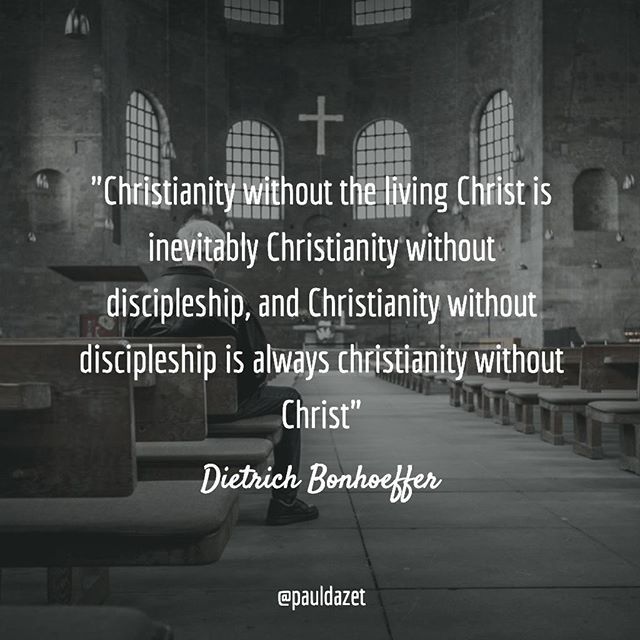
Is there Christianity without our Living, Loving, the Life of Christ? John 13:34-35

John 13:34-35 Amplified Bible

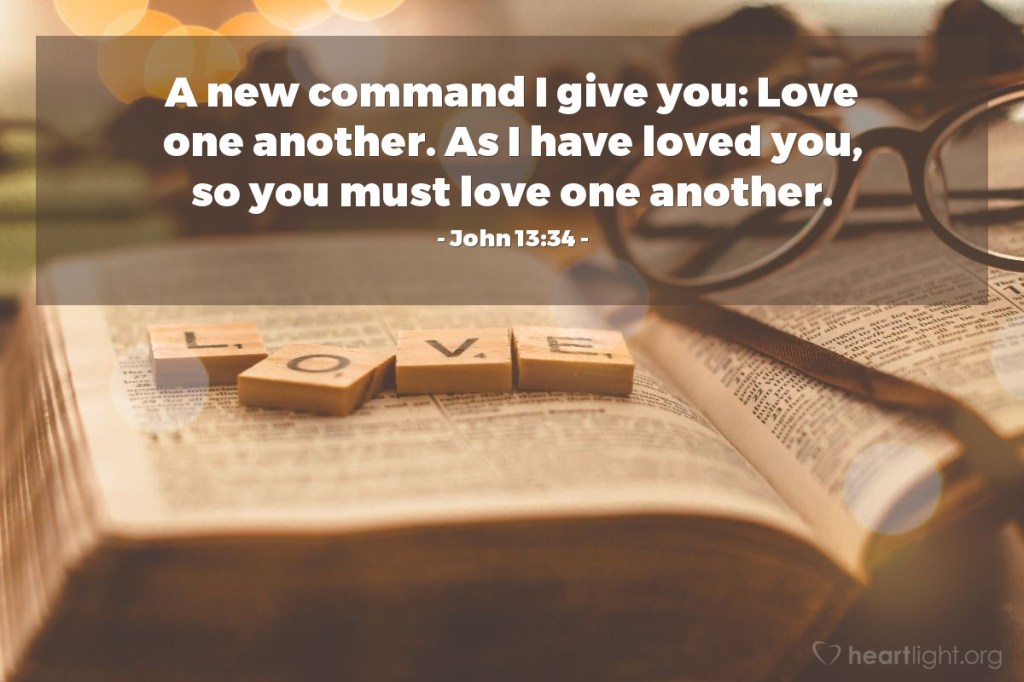
34 I am giving you a new commandment, that you [a]love one another. Just as I have loved you, so you too are to love one another. 35 By this everyone will know that you are My disciples, if you have love and unselfish concern for one another.”

The Word of God for the Children of God.

Adeste Fidelis! Venite Adoremus! Dominum.

Gloria! In Excelsis Deo! Alleluia! Alleluia! Alleluia! Amen.

There is something Jesus said that I want you to seriously think about.

Jesus said to those who followed Him: “By this all will know that you are My disciples, if you have love for one another.

As we see a war-torn nations–a nations which are economically, socially, and politically sick and pained with out of control poverty, oppressed, confused and bewildered–we have to believe that this is the hour for the church to speak out.

This is the hour for the the Body of Christ, the church, to show forth the love and grace of God in Christ!

This is the hour for the nations to hear Christ saying throughout the church, “I am the way, the truth, and the life” (John 14:6).

There is something Jesus said I want you to seriously, severely think a lot about.

Jesus said to those who followed Him: “By this all will know that you are My disciples, if you have love for one another” (John 13:35).

That verse of Scripture is tremendously important at this hour in history.

In another part of the Bible we find the same thing stated by John:

“Beloved, let us love one another, for love is of God; and everyone who loves is born of God and knows God. He who does not love does not know God, for God is love. In this the love of God was manifested toward us, that God has sent His only begotten Son into the world, that we might live through Him. In this is love, not that we loved God, but that He loved us and sent His Son to be the propitiation for our sins” (1 John 4:7-10).

The Bible repeatedly declares in no uncertain terms we who follow Jesus Christ should be just as much in love with each other, without exception, as God was in love with us when He sent His Son to die on the cross.

I want you to see what it means to love as God loves, because the Bible says, “God is love” (1 John 4:16).

The basic attribute of God is holiness, but love is another basic attribute of God.

It is a part of God’s nature to love, and all who know Jesus Christ as Savior also have this supernatural love instilled within their hearts by the Holy Spirit.

The greatest demonstration of the fact we are Christians is we love one another.

1 Corinthians 13, we have first a description of a man who does not possess love.

The Apostle Paul emphatically says,

“Though I speak with the tongues of men and of angels, but have not love, I have become sounding brass or a clanging cymbal” (1 Corinthians 13:1).

The Late Reverend Dr. Billy Graham puts it succinctly ….

“In other words, suppose I could speak with the oratorical strength of a William Jennings Bryan. Suppose I could speak with cryptic language like Winston Churchill. Suppose I could speak with the power of Franklin Roosevelt, in which he used to sway an entire nation in war and in peace. Suppose I could sing opera like the great Enrico Caruso. Suppose I had a thousand tongues that could speak a thousand languages all at the same time. The Bible says all that is nothing, and I am nothing, unless I have this divine, supernatural love that God gives.

The apostle Paul goes on to write,

Though I have the gift of prophecy, and understand all mysteries and all knowledge … but have not love, I am nothing” (1 Corinthians 13:2).

“I could be a man of tremendous knowledge; I could understand all the mysteries and all of history, and be able to put all the patterns together. I could know the Bible from one end to the other; memorize thousands of verses of Scripture. I could be a great Bible teacher; I could even be a preacher from the pulpit–and have not love. I know people in this country who are conservative in their theology–people who would die contending for the inspiration of the Bible–and yet there is so little love. I might know the Bible from Genesis to Revelation, but if I had not love, it would mean absolutely nothing in the sight of God.

“I might be a man of great faith. The Bible says that I might have faith so that I could move mountains, but if I have not love, it is nothing. Suppose I could stand here today and say to that mountain, “Move into the sea,” and it would move! You would say, “Well, Billy Graham is certainly a man of tremendous faith to pray a mountain into the sea.” The Bible says that is absolutely nothing unless my faith is tempered with love.”

“I could be a man of great charity. The Bible says, “though I bestow all my goods to feed the poor … it profits me nothing” (1 Corinthians 13:3) unless I have this divine love that God gives. I could give everything I have to charity, but if the motive were not divine love, it means nothing in the sight of almighty God.”

Here in this country we give billions of dollars away, but sometimes I wonder if our motive is not selfish. We are always asking the other nations and the other people, “What return is America going to get?” The motive of all giving and all charity should be love. I could also be a man of consuming zeal. Paul continues, “though I give my body to be burned, but have not love, it profits me nothing” (1 Corinthians 13:3). Suppose I were like many Korean pastors during the Korean War. Seventeen hundred Korean pastors paid with their blood for their faith in Jesus Christ. Suppose I died at a stake or was shot for my faith in Jesus Christ. You would say, “Billy Graham is a man of consuming zeal. He died as a martyr.” God says it is nothing, unless I am filled with the love of God.”

What a brilliant life this man lived–this mythical man the Bible describes. He was a man of eloquence, knowledge, power, charity, zeal, but the Bible says he was absolutely nothing without love.”

“What a powerful thing love must be! How much stock God puts in love.”

“You say, “Well, Billy, what do you mean by love? What is a demonstration of love?” We have it demonstrated in 1 Corinthians 13. This might cut some of us to the heart. It is going to probe down deep, because one thing that the church of Christ in America lacks is the demonstration of love, and Jesus said, “By this all will know that you are My disciples, if you have love for one another” (John 13:34-35).

This love that the Bible is talking about in 1 Corinthians 13 “suffers long” (verse 5). In other words, it is patient. It is kind. It “does not envy.” There is no jealousy in this divine love that God gives. It “does not parade itself.” It is “not puffed up,” gives itself no airs. It is a love that demands humility. It never pushes itself to the top, never tries to promote itself, never tries to advertise itself. It is always in the background, truly humble. The thing that we need in the church today is genuine, old-fashioned humility.

Then, again in 1 Corinthians 13:5, the Bible says love “does not behave rudely.” It is always courteous and gracious at every turn. It “seeks not its own,” is never selfish. God looks after you, and you are to look after others, the Bible says. It is not easily provoked–not touchy or irritable. If people have to handle you with kid gloves, have to watch out what they say to you, you don’t know anything about this love that God is talking about.”

Love “thinks no evil” (1 Corinthians 13:5). It never holds a grudge–never has malice. It rejoices not in iniquity, but in the truth (1 Corinthians 13:6). It is never glad when another falls. I know so many Christians today who, when they hear that another Christian has fallen, say, “Isn’t that too bad?” but they don’t mean it! They are happy that the other Christian has fallen because that places them just a little higher on the ladder of estimation in other people’s eyes.”

“Then the Bible says that this love “bears all things, believes all things, hopes all things, endures all things” (1 Corinthians 13:7). It is slow to expose the evils and faults in others. It is eager to believe the best, and it is always hopeful and optimistic concerning the future. The Bible teaches that love is greater than faith and hope (1 Corinthians 13:13). Love is the greatest thing in all the world.

I will never forget when singer and composer Redd Harper came to Christ in Hollywood. He said that to him the most amazing and thrilling thing after he came to Christ was this fact: “I found that I loved everybody, no matter what race or color or creed they might be. I just wanted to go hug the whole world.”

“When radio broadcaster Stuart Hamblen came to Christ, he said the same thing: “I fell in love with the whole world. There were certain people who had different racial characteristics from myself that I did not like before I was converted, but after I gave my heart to Christ, I fell in love with every one of them.”

Only this divine love that God gives will make us love others, and before we have revival in America we must have that kind of love among God’s people.”

However, the greatest demonstration of love was God sending His own Son to die for you. You did not deserve to have Him die for you. You are a sinner!”

“The Bible says that you know nothing about this love if you are outside of Christ. It is impossible for you to have this divine love, because it is a gift of God only to those who love Christ.”

But–God loves you! It makes no difference how deep in the mire of sin and transgression you have gone. God loves you today! He proved it by sending His Son, Jesus Christ, to die for you on the cross.”

“At this exact moment you can receive Christ into your heart. God will give you this supernatural love until you too love the whole world. That is the solution to the international problems that we face at this hour. It is the solution to your personal problems–to let Jesus Christ come in. When Jesus Christ comes in, His love comes in, His Life enters in, the love of God shines out everywhere you are.

Romans 5:8-10Amplified Bible

But God clearly shows and proves His own love for us, by the fact that while we were still sinners, Christ died for us. Therefore, since we have now been justified [declared free of the guilt of sin] by His blood, [how much more certain is it that] we will be saved from the [a]wrath of God through Him. 10 For if while we were enemies we were reconciled to God through the death of His Son, it is much more certain, having been reconciled, that we will be saved [from the consequences of sin] by His life [that is, we will be saved because Christ lives today].

I am reminded of the comprehensiveness of these words by so renowned a preacher, teacher, the stature, influence of Late Reverend Dr. Billy Graham.

Indeed, when I remind myself of them from time to time by reading, listening to his evangelistic crusades on the internet and You Tube, I am reminded of one more truth – as much as these words continually reach me, and I pray would too reach you the reader of this blog, “If I had not the love of Jesus in my heart ….?”

The same love of Jesus which He had in His Heart to do what He did for us …..

Even though we were at constant enmity with each other and with Him too …..

What then is “My Christianity?”

What then is my “Sermon in Shoes?”

— Turn the Volume of Your Computer or Your Phone to MAXIMUM! —

MY CHRISTIANITY ABSENT MY LIVING THE LOVE OF CHRIST.
MY CHRISTIANITY ABSENT MY LOVING THE LIVING CHRIST?

Christianity absent Living and Loving the Living Love of Christ is pointless! 

It is infinitely worse than nothing, it negatively affects the world around us. 

Have you ever had someone talk at you? 

Not talk to you or with you, but at you. 

Where it becomes evident that the person that is supposed to be conversing with you is not actually involving you in the exchange. 

They are just expressing their love of and preoccupation with themselves all over you. 

It is like a verbal vomiting attack. 

They have no interest in any response from you or your feeling about what they are saying.

They are just in getting their “two cents worth” out of what they want to say.

How does that make you feel?

It is really hard to have any interest in the subject that person is talking at you about, right? 

You want to pull the ripcord and get out of there as quickly as you can. 

Loved is just about the last emotion that comes to mind, isn’t it? 

This is Christianity without love. 

It is lots of words and thoughts coming at people, but it is missing the part that makes it alive and vibrant.

Have you ever heard a really unpleasant noise? 

Like hearing someone scratch their nails on a chalkboard or the sound of a dentist’s drill in your ear as they stand over you and drill out your tooth. 

It is terrible, terrifying, annoying and effects you down to your very bones. 

The louder it gets the worse it is.

This is the picture of religion without love from the Bible. 

Christianity is no exception. 

It is an expression of selfishness that comes off as really monstrously bothersome, unpleasant, unsettling and unnerving to those around. 

Yikes, it sounds kind of harsh, doesn’t it?

1 Corinthians 13:1-3Amplified Bible

The Excellence of Love

13 If I speak with the tongues of men and of angels, but have not [a]love [for others growing out of God’s love for me], then I have become only a noisy gong or a clanging cymbal [just an annoying distraction]. And if I have the gift of prophecy [and speak a new message from God to the people], and understand all mysteries, and [possess] all knowledge; and if I have all [sufficient] faith so that I can remove mountains, but do not have love [reaching out to others], I am nothing. If I give all my possessions to feed the poor, and if I surrender my body [b]to be burned, but do not have love, it does me no good at all.

This is the idea that Paul is getting at in his first letter to the church at Corinth.

Paul is often called the Apostle to the Gentiles but it is even more obvious from his writings in this thirteenth chapter, that love is equally as important to him.

SAVIOR JESUS WITHOUT LOVE … IS NOT SAVIOR JESUS

Religiosity without love is nothing! 

It is also really annoying! 

This is what Paul says in these verses.

C’mon, say what you really mean Paul!

He compares loveless Christianity to two really annoying discordant sounds of his day.  

We don’t hear noisy gongs or clanging cymbals much today but the idea is something making a ton of noise and is deafening, jarring and irritating. 

Think of perhaps a fire engine’s siren, though less rhythmic. 

If the Apostle was writing today, he might have written if you don’t have love it is like a thousand nails moving up and down and all over upon the chalkboard. 

It is a sound that is clear and not easily misunderstood. 

One that is so wrong that no matter how loud you make it doesn’t come close to getting any better or less bothersome and irritating – it is just louder bad noise.

Paul was writing to Christians who were noisy gongs. 

Their lives had become so caught up in themselves they had lost sight of love in the following of Jesus. 

Their church was acting like 1000 ancient religious nails on the chalkboard.

Much like a person talking at you, they had made everything about them and their expressions of self. 

They were supposed to be following Jesus but in fact, their church was about their pride. 

Their faith was self-centered and self-serving.

Church became a contest to see who could speak the loudest or in the best tongue.

Without His Love, No One Sees Jesus…Even in Church

Since they made life all about them rather than Jesus, it was impossible for them to demonstrate true love for others. 

Loving yourself that much precludes loving others with any authenticity. 

You just care too much about taking care of yourself to care much for others.

The flesh is a greedy beast to feed.

The Corinthians were so prideful and self-focused in their walks with Jesus, even their use of the gifts of the Holy Spirit was worthless. 

Paul says it is nothing to prophesy or speak in tongues if we don’t have love.

Even worse, their actions were like the noisy gong or clanging cymbal. 

They were creating an unmistakable, discordant, and annoying impression for everyone around them. 

Paul goes so far as to say that it would have been better if they did not meet as a church for all the damage they were doing.

For their lack of love, they were changing the beauty of God’s own gifts given through His will through His Spirit into something worthless and off-putting.

What was meant to be the Body of Christ moving perfectly together throughout the known world to testify to God’s glory became one uncoordinated hot mess.  

Simultaneous Love for the Lord and love for each other is what is supposed to keep the Body of Christ in harmony. 

Since it was nowhere to be found, the Corinthian church was stumbling around like a newborn colt. 

They were doing a lot but not everyone would call it beautiful at the same time.

The Love of Christ, Love of His Life is Supposed to be our Calling Card

John 13:34-35Amplified Bible

34 I am giving you a new commandment, that you [a]love one another. Just as I have loved you, so you too are to love one another. 35 By this everyone will know that you are My disciples, if you have love and unselfish concern for one another.”

We may be shocked by this idea, or not shocked enough by this idea, but look around at some portions of the church today. 

You don’t have to go far on the internet to see pastors preaching with such anger and hatred, that what comes across is quite ugly and lacking in power.

There are others who are doctrinally sound but so intellectually focused that the Gospel that they preach comes across as being cold, aloof and forbidding. 

They have the truth of the Bible but without the love of God, it is creating and introducing and delivering a really confusing picture into where chaos reigns. 

They have lost sight of God’s love so they have completely lost the message brought to us by Jesus Himself.  For God so loved the world He sent His Son.

God is love. 

Jesus is God and is also therefore love. 

Jesus was sent into this world as a man because God so loved the world. 

Jesus said that the greatest commandments were to love God and love our neighbors while we are loving ourselves as God sacrificially first loved us. 

Jesus said that the world would know us as disciples by our love. 

Love is so essential to who God is and to what we are as Christians that Paul makes his really strong statement. 

Without love, even Christianity is nothing. 

We can never lose sight of love and still live the life that Jesus has for us in Him.

God is love. 

A life lived absent the first love of Christ, is a life without God prominently in it. 

So if we have gotten far down a path that looks like Christianity but is not filled with love, do a 180 degree turn – dare to turn around – to face God – facing you. 

If we are working really hard for the church but are doing it in anger and spite and resentment, or out of our “duty and obligation – that is, works” stop it. 

If we are so busy with “serving others” we have no time to love the people we are supposed to be serving…just stop. 

It profits us nothing and creates a jarring discordant sound. 

Only start again when we are able to say for certain that it is the love of Jesus compelling us and the love of the Holy Spirit coming through us.

No matter what it looks like to our eyes, if we don’t have love we are nothing.

Why? 

Great Question … I am very glad you asked it in such a Kairos timely manner!

1 John 4:7-8Amplified Bible

God Is Love

Beloved, let us [unselfishly] [a]love and seek the best for one another, for love is from God; and everyone who loves [others] is born of God and knows God [through personal experience]. The one who does not love has not become acquainted with God [does not and never did know Him], for God is love. [He is the originator of love, and it is an enduring attribute of His nature.]

Because Scripture is clear – if there is no love then Savior Jesus is not with us. 

He is love and brings love wherever He walks.

He is love and brings love wherever He Talks.

He is love and brings love wherever He Ministers to God’s Children.

We all want to be something, someone like Christ in the Body of Christ, right?

RIGHT?

How do you recognize Jesus’ followers?

How do you find Christians?

Jesus said they love each other just as he loved the disciples.

In the immediate context this means he is willing to give sacrificially and extravagantly by dying for them at the cross, and he is also willing to love selflessly and practically by washing every single one their “filthy” feet.

His ministry reveals he will do almost anything in between extravagant and practical.

Imagine if we all gathered in fellowship to read and study and pray the Gospels and committed to love each other in the same way Jesus first showed his love!

Envision that first Love displayed through yourselves and the Body of Christ.

What do you anticipate seeing?

What do you expectantly hope and pray to see?

What do you actually see?

BETTER YET … WHO DO YOU SEE?

So, for the sake of God, the Father and God the Son and God the Holy Spirit,

Go Live and Live greatly! 

Go Love and Love greatly!

In the name of God, the Father and God the Son and God the Holy Spirit,

Let us Pray,

Father of all Charity and Compassion and God of all grace, I thank you for teaching me to love through the words and teachings and example of my SAVIOR Jesus. May my words and actions reflect his love toward your people today, tomorrow, and until you bring us all home to you. In the name of Christ, my Great Example, I pray. Amen.

Adeste Fidelis! Venite Adoremus! Dominum.

Gloria! In Excelsis Deo! Alleluia! Alleluia! Alleluia! Amen.

https://translate.google.com/

Daring to ask ourselves the Question: Take the Broad Road or Narrow Road, – Is Salvation Easy? Matthew 7:13-14

Matthew 7:13-14The Message

Being and Doing

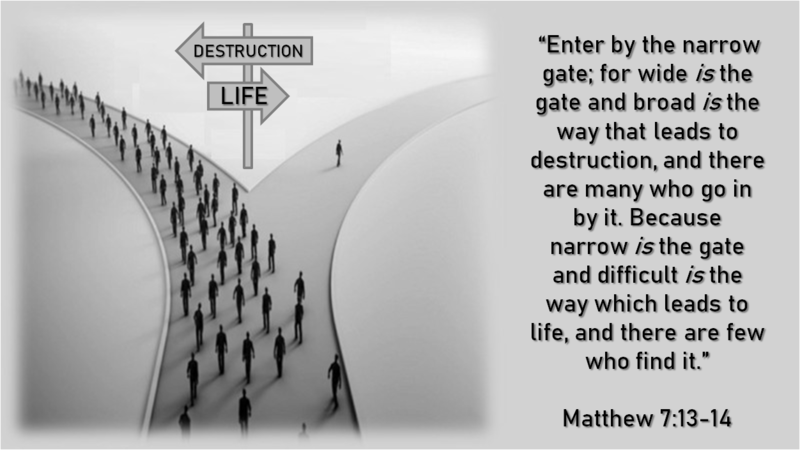
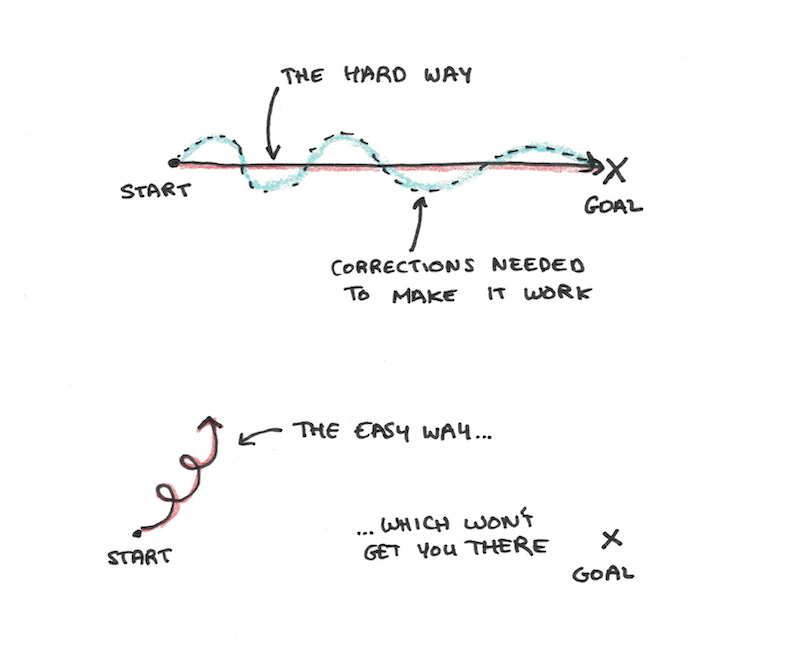
13-14 “Don’t look for shortcuts to God. The market is flooded with surefire, easygoing formulas for a successful life that can be practiced in your spare time. Don’t fall for that stuff, even though crowds of people do. The way to life—to God!—is vigorous and requires total attention.

The Word of God for the Children of God

Adeste Fidelis! Venite Adoremus! Dominum.

Gloria! In Excelsis Deo! Alleluia! Alleluia! Alleluia! Amen.

The people who have gathered around him are so many, hundreds, perhaps by now, as the Sermon on the Mount has continued for an extended period of time, and as Rabbi Jesus continues to sit and speak and teach even into the thousands.

However many people have gathered around that Mount, the people remain very interested in what this man, Jesus is saying – it is radically different!

It is a new teaching they have not heard before from their Temple leaders.

This blessing is pronounced upon their lives and then another and another.

Each one seemingly more contrary and more counter – Temple traditions.

Each one is more thought provoking than the previous one, taking all these listeners on a journey from traditional thought into one of Kingdom thought.

Rabbi Jesus is teaching this gathering the obvious, that there is a “traditional way”, a more or less “relatively easy, acceptable way” of moving through life.

Now, Rabbi is introducing a new thought process he wants each of us to begin considering, to begin devoting some time to discussion and debate amongst themselves – but not just amongst themselves – but their families, neighbors.

Jesus lays out another clear “a-traditional” choice that each of us can make.

It is in no way a covenant command or “a do right it now or else” demand.

But a “new” teaching meant to encourage listeners to a new pattern of thought.

Question: What effects, if any, did this “new” teaching have upon the thoughts, actions upon those 1st century listeners, upon their choices of faith, hope, love?

The Gospels are not too specific in this regard other than to repeatedly mention that this Rabbi consistently had large followings and gatherings everywhere he walked, that hundreds and even thousands came when he had entered a village.

When he had left those villages, the people would “move heaven and earth” to follow him through storms and over waves an waters which threatened to end their very lives, wherever he went, they did, for more of his radically teachings.

Radically different, the thought there is a wide, easy road leads to destruction. And there is a decisively harder, narrower road of discipleship leading unto life.

It can be easy to assume that the broad road includes only people who do not believe in God, or maybe people of some other faith who do not “know” Jesus.

So, today, we might ­assume that Jesus is drawing a contrast between people in the church and those who, for some reason, are now completely outside of it.

But in light of Jesus’ teaching in the Sermon on the Mount, there’s another way to think about this passage.

Jesus has been teaching his listeners that they need to move from outward religion and ritual into a true relationship with God, our need to go beyond merely “behaving” ourselves to ­actually walking in union with the Father.

So, today, as we read this passage again, as we refresh ourselves with truth, we seek a new anointing of wisdom greater than our own, we need to realize Rabbi Jesus is describing, for those who ARE listening, and DOING. not only a choice between choice or no choice, faith or no faith, hope no hope, love and no love.

There is also a choice to be made between empty, surface-level religion and genuine hardcore “walk the walk, talk the talk, living the life” discipleship.

The call of this passage is to move “beyond” rituals or cultural faith and to truly enter a full-life, full throated relationship with God, a connection marked by our maximum dependence and maximum an utter submission unto his will.

IS THE CHOICE OF SALVATION AN EASY CHOICE?

Matthew 7:13-14Easy-to-Read Version

The Way to Heaven and the Way to Hell

13 “You can enter true life only through the narrow gate. The gate to hell is very wide, and there is plenty of room on the road that leads there. Many people go that way. 14 But the gate that opens the way to true life is narrow. And the road that leads there is hard to follow. Only a few people find it.

Here is the appeal to which Jesus has been moving through the whole sermon.

He gives those who had gathered that day, those who were listening, the call to choose, decide now about becoming a citizen of God’s kingdom and inheriting eternal life, or remaining a citizen of this fallen world and receiving damnation.

The way to life is on God’s terms alone; the way to destruction is on any terms a person wants to contrive, because every way but God’s leads unto the same fate.

Rabbi Jesus has been teaching the people to begin thinking of, about, God’s own standards throughout the sermon, standards that are holy and perfect and that are a-traditional, diametrically opposed to the self-righteous, self-sufficient, hypocritical standards of man-typified by those of the scribes and Pharisees.

He introduces to them the very real possibility of what God’s kingdom is like and having them compare, contrast, what its people are like-and are not like.

Now, here, Rabbi Jesus presents the choice of entering the kingdom or not.

Rabbi Jesus focuses upon the inevitable decision every person must make, the crossroads where he must decide on the gate he will enter, the way he will go.

Our lives are filled with “brutally” complicated internet driven decisions-what to wear, colors in vogue, what to eat, where to go, what to do, what to say, what not to say, what to buy, whom to marry, what career to follow, and on and on.

Many so called- and allegedly complicated decisions are actually “trivial and insignificant,” and some are beyond critically essential and life-changing.

The most critical of all is our decision about Jesus Christ and His kingdom.

That is the ultimate choice that determines our eternal destiny.

It is that decision that Rabbi Jesus introduces here and calls upon us to make.

In perfect harmony with His absolute sovereignty, God has always allowed men to choose Him or not, to “follow Him or walk away” and He has always pleaded with them to decide for Him or face the consequences of a choice against Him.

Since mankind has consistently turned their backs on Him from the Fall, God has bent every effort, spared no cost in wooing His creatures back to Himself.

He has provided and shown the way, leaving nothing to man but the choice. God made His choice by providing the way of redemption.

The choice is now and forever more present before the entirety of mankind.

While Israel was in the wilderness the Lord instructed Moses to tell the people,

“I call heaven and earth to witness against you today, that I have set before you life and death, the blessing and the curse. So choose life in order that you may live, you and your descendants, by loving the Lord your God, by obeying His voice, and by holding fast to Him” (Deuteronomy 30:19–20).

After Israel came into the Promised Land, at the end of his long life, Joshua confronted the people again with a choice: of continuing to serve the Egyptian and the Canaanite gods they had adopted or of turning to the Lord who had delivered them from Egypt and given them the land promised to Abraham.

“Choose for yourselves this today whom you will serve ….” Joshua pleaded (Joshua 24:13–15).

On Mount Carmel the prophet Elijah asked the people of Israel,

“How long will you hesitate between two opinions? If the Lord is God, follow Him; but if Baal, follow him” (1 Kings 18:21).

The Lord commanded Jeremiah to set the choice again before His people:

“Thus says the Lord, ‘Behold, I set before you the way of life and the way of death’ ” (Jeremiah 21:8).

In John 6:66–69, Jesus called for a choice from all of the people who gathered:

“As a result of this many of His disciples withdrew, and were not walking with Him anymore. Jesus said therefore to the twelve, ‘You do not want to go away also, do you?’ Simon Peter answered Him, ‘Lord, to whom shall we go? You have words of eternal life. And we have believed and have come to know that You are the Holy One of God.’ ”

That is the choice to compare and contrast call God has been making to men since they turned away from Him, and it is the supreme appeal of His Word.

In his poem The Ways, late British poet, hymnwriter John Oxenham wrote,   

To every man there openeth
    A Way, and Ways, and a Way,
    And the High Soul climbs the High Way,
    And the Low Soul gropes the Low,
    And in between, on the misty fiats,
    The rest drift to and fro.
    But to every man there openeth
    A High Way and a Low,
    And every man decideth
    The Way his soul shall go.

He also writes the hymn “In Christ There is No East or West.” (1908)

1 In Christ there is no east or west,
in him no south or north,
but one great fellowship of love
throughout the whole wide earth.

2 In Christ shall true hearts ev’rywhere
their high communion find.
His service is the golden cord
close binding humankind.

3 Join hands, then, people of the faith,
whate’er your race may be.
All children of the living God
are surely kin to me.

4 In Christ now meet both east and west,
in him meet south and north.
All Christly souls are joined as one
throughout the whole wide earth.

The not so simple process of making the compare and contrast, world versus God choice we are asked by Rabbi Jesus to make is complicated by being simply somewhere in between the poem and the hymn, our souls and His eternal life.

In the name of God, the Father and God the Son, and God the Holy Spirit,

Let us Pray,

Psalm 16The Message

16 1-2 Keep me safe, O God,
    I’ve run for dear life to you.
I say to God, “Be my Lord!”
    Without you, nothing makes sense.

And these God-chosen lives all around—
    what splendid friends they make!

Don’t just go shopping for a god.
    Gods are not for sale.
I swear I’ll never treat god-names
    like brand-names.

5-6 My choice is you, God, first and only.
    And now I find I’m your choice!
You set me up with a house and yard.
    And then you made me your heir!

7-8 The wise counsel God gives when I’m awake
    is confirmed by my sleeping heart.
Day and night I’ll stick with God;
    I’ve got a good thing going and I’m not letting go.

9-10 I’m happy from the inside out,
    and from the outside in, I’m firmly formed.
You canceled my ticket to hell—
    that’s not my destination!

11 Now you’ve got my feet on the life path,
    all radiant from the shining of your face.
Ever since you took my hand,
    I’m on the right way.

Adeste Fidelis! Venite Adoremus! Dominum.

Gloria! In Excelsis Deo! Alleluia! Alleluia! Alleluia! Amen.

https://translate.google.com/

Asking Ourselves the Easy and Hard Questions About Walking Upon the Broad or Straight and Narrow Paths. Matthew 7:13-14

Matthew 7:13-14The Message

Being and Doing

13-14 “Don’t look for shortcuts to God. The market is flooded with surefire, easygoing formulas for a successful life that can be practiced in your spare time. Don’t fall for that stuff, even though crowds of people do. The way to life—to God!—is vigorous and requires total attention.

The Word of God for the Children of God.

Adeste Fidelis! Venite Adoremus! Dominum

Gloria! In Excelsis Deo! Alleluia! Alleluia! Alleluia! Amen.

When given the chance, I will argue to no end that much of life’s success boils down to one simple maxim: do the real thing and stop doing fake alternatives.

DOING THE “REAL THINGS” NOT THE “FAKE ALTERNATIVES”

Knowing the “differences” always begins by our daring to ask ourselves:

“How would I do this, if doing it well and good were all that mattered?”

“How would I do this, if convenience made all the difference in doing it well?”

“How would I do this, if I had all the time in the world to draft the best plan?”

“How would I do this, if I had a matter of a few hours to draft the best plan?”

“How would I do this, if this situation was life or death and I need a plan now?”

Do I still do the absolute best that I can or do I start looking for “shortcuts”?

Do I throw all caution into the tornadic whirlwinds of inconceivable change?

The Easy Way or The Hard Way?

The High Road or the Low Road?

The Paved Road over the Mountains or the Rained out, Rutted out Dirt Path?

Which will get me to the place I want to be? I need to be? – with the least risk?

How desirous, am I to going all out to get there, risking life, limb and liberty?

Which will get me to the one single place which Jehovah God requires me to be?

My asking each of us these poignant questions this soon in the New Year ….

Now, in answering them, you might object: “You don’t have enough time. You have two jobs, kids and responsibilities – Doing it well sounds too daunting.”

This is okay.

The point of this thought experiment is not to deny that obstacles to living into the Christian life under the all watchful eyes and presence of God do fully exist.

Rather it is an effort to open your eyes, in this moment, to begin thinking about how connected to God or distracted from God, to stop and consider the road you are on, the road you need to be on, the road which Jehovah God requires of you.

Rather, it’s to start with the best plan and make accommodations as needed.

The “Christian life” never remains an easy one.

The “Christian life” is never going to stop happening.

Sometimes, our “Christian life” is absolutely going to spiral out of our control.

Apathy and Complacency become a threat, what results is usually much closer to not the ideal than if you simply start with something that feels easy enough.

The Good News is this:

JEHOVAH GOD IS ALWAYS IN CONTROL!

As we seek out our God, as we meditate daily (do we meditate daily?) about our immersing ourselves in our life journey with Jesus, the Way, I so fervently pray that we find that Rabbi Jesus offers to each of us lots of helpful guidelines for us.

Our Scripture for today from Matthew 7:13-14, comes at the end of his “Sermon on the Mount,” which is like a guidebook for everyday living in God’s kingdom.

Sometimes this style of living is called “the Christian counter-culture.”

That’s because the God-honoring lifestyle of following Jesus often goes against popular opinion – In other words, reality check – we take the road less traveled.

Taking the narrow road doesn’t mean we are narrow-minded or we just prefer to go against what “everyone else is doing.”

It means, simply, we do what we do because God calls us to do what is right.

Jesus indicates that many people want to follow an “anything goes” lifestyle.

But in that kind of world people tend to be selfish, uninhibited, putting their own desires ahead of everything else, and lots of other people will get hurt.

Eventually that kind of life leads to self-destruction, so, in the end, it hurts the selfish individual too.

How many lives, marriages, families, communities, and societies have been harmed, even destroyed because people have insisted on going their own way?

Rabbi Jesus calls us to choose which way we will walk

…..“the seldom taken high risk, straight and narrow gate … that leads to life.”

….”the easiest path with least amount of risk and the least level of resistance” which will inevitably lead us down the pathway to our inevitable destruction.

In John 10:7 he calls himself “the gate.”

He alone opens the way to life—now and for eternity!

“Outside” the Presence of Jehovah God ….

FIRST:

Ask yourself the easy, easier and the easiest questions.

Ask yourself the hard, harder and hardest questions.

THEN ULTIMATELY – IN THE PRESENCE OF JEHOVAH GOD ….

Ask yourself the “easy, easier and the easiest” questions.

Ask yourself the hard, harder and hardest” questions.

Now contemplate ….

Choose this day where your heart and soul genuinely rest ….

Self …. Now you’ve got my feet on the life path,
    all radiant from the shining of your face.
Ever since you took my hand,
    I’m on the right way.

Jehovah God …. Now you’ve got my feet on the life path,
    all radiant from the shining of your face.
Ever since you took my hand,
    I’m on the right way.

WALK ON THE PATH THAT SERVES YOU BEST!

In the name of God, the Father and God the Son and God the Holy Spirit,

Let us Pray,

Most Merciful God, You are invisible to us, Your salvation is opaque to us, and Your grace is an enduring mystery. Who is it who can actually plumb the depths of Your wonders? Who has seen Your face and yet lived? Lord, let me comprehend You. Help me to understand the astonishing depths of Your love and grace. Forgive us, Lord, for wanting to go our own “easy, easier, an easiest” way. Have your way with us; mold us and remake us, guiding us to do what is right in all we do. Help me to continue to grow up into this infinite affection, that I may walk upon Your pathway to life, that I may serve you and your neighbors more, and become “more” pleasing to You. Amen.

Adeste Fidelis! Venite Adoremus! Dominum

Gloria! In Excelsis Deo! Alleluia! Alleluia! Alleluia! Amen.

https://translate.google.com/

Being A Sermon in Shoes: Living Out Our Lives Walking, Wearing the Sandals of our Rabbi Jesus: Walking by Faith Upon His Straight, and Narrow Path. Matthew 7:13-14

Matthew 7:13-14New King James Version

The Narrow Way

13 “Enter by the narrow gate; for wide is the gate and broad is the way that leads to destruction, and there are many who go in by it. 14 [a]Because narrow is the gate and [b]difficult is the way which leads to life, and there are few who find it.

The Word of God for the Children of God.

Adeste Fidelis! Venite Adoremus! Dominum.

Gloria! In Excelsis Deo! Alleluia! Alleluia! Alleluia! Amen.

Every child of God walks by “faith,” each and every step that we take reveals to God’s neighborhood, to all God’s neighbors, the visible measure of our “faith.”

Our Christianity is our most visible part and we must have the willingness to hear, a doubtless heart to believe, godly sorrow to repent, be unashamed to confess, the obedience to be baptized, the moral strength to endure till the end.

When we are willing to take up our cross and follow after Christ, we are taking the right steps on the straight and narrow path that leads to life everlasting.

At one time or another, I can practically guarantee that every Christian has heard another person tell them – (truth be told – this was my favorite line.)

“I do not need God, I do not need Jesus, I do not need church, I don’t really need anyone’s religion; I just try to be that good person and live by the Golden Rule.”

It’s not uncommon to hear people talk like this, usually they are trying to say “not interested” “go away” minimize God’s demand for how we should “live.”

As long as our visible “lifestyle” communicates to everyone around us, that we innately treat others as we want to be treated, God should accept us—right?

And usually this is enough to dissuade us from furthering the conversation.

We may never even start that conversation because we have assured ourselves beforehand that that is exactly the “automatic” response we will each receive.

The Question then becomes, If our Rabbi Jesus were to turn around in the exact moment we had that thought, looked us straight and narrowly into our eyes,

What would those soul piercing eyes immediately, not so subtly communicate?

Do you know, Oh Christian, you’re a sermon in shoes?
Jesus calls upon you, to spread the gospel news,
(1) So walk it, and talk it, a sermon in shoes.
(2) Live it, and give it, a sermon in shoes.
(3) Teach it, and preach it, a sermon in shoes.
(4) Know it, and show it, a sermon in shoes.
(Ruth Harms Calkin)

Rabbi Jesus most likely wore very simple sandals ….

So, without Rabbi Jesus ever using any words, can we hear his eyes tell us ….

“Do you know, Oh Christian, I am a sermon in very simple sandals ….?”

“Do you know, Oh Christian, I am a sermon in very simple sandals ….?”

“I am calling upon you, to spread the gospel news ….

“(1) So I walk it, and talk it, a sermon in very simple sandals ….”

“(2) So I live it an give it, a sermon in very simple sandals ….”

“(3) So I teach it, and preach it, a sermon in very simple sandals ….”

“(4) Because I know it, therefore I show it, a sermon in very simple sandals ….”

Matthew 7:13-14 The Message

Being and Doing

13-14 “Don’t look for shortcuts to God. The market is flooded with surefire, easygoing formulas for a successful life that can be practiced in your spare time. Don’t fall for that stuff, even though crowds of people do. The way to life—to God!—is vigorous and requires total attention.

Have we ever stopped to consider how demanding Jesus’ words truly are?

How challenging is it to meet the needs of others with the same creativity, the same energy, the spontaneity, the same devotion that we want from others?

No wonder the man Rabbi Jesus describes this way of life as narrow and small.

The man Rabbi Jesus poignantly points out only a few are walking on this road.

When we are walking down any paved or gravel or well trod path through the middle of a forest – we will probably see signs everywhere along the way which sternly tell us to “stay on the path, protect our forests and protect our wildlife.”

We definitely want to see the forest through the trees so we walk the pathway which is before us, prepared by somebody before us that we might enjoy it all.

We want to keep the rest of the forest pristine for those who are coming after us, that they too may enjoy the enormous beauty God has placed before them.

We do not want to be the one person who ruins someone else’s experience.

We make every effort we can to stay on the pathway someone else prepared.

As tempting as it is to wander through forest glades, through flowing streams.

Christianity is like that …. staying on the moral and ethical path Jesus gave us by his giving up quite literally everything of “value” to him (Philippians 2:5-11).

Romans 5:6-8The Message

6-8 Christ arrives right on time to make this happen. He didn’t, and doesn’t, wait for us to get ready. He presented himself for this sacrificial death when we were far too weak and rebellious to do anything to get ourselves ready. And even if we hadn’t been so weak, we wouldn’t have known what to do anyway. We can understand someone dying for a person worth dying for, and we can understand how someone good and noble could inspire us to selfless sacrifice. But God put his love on the line for us by offering his Son in sacrificial death while we were of no use whatever to him.

Despite all of the opposition he would receive, despite all the plots against his life, all the violence, humiliations he had to endure from both friend and foe, to walking out the straight and narrow pathway leading to a place called Golgotha.

To Communicate, for our “attentive(?)” listening ears the Immortal Words …

“Father, forgive them – for they know not what they do ….” Luke 23:33-35

“It is Finished….” John 19:28-30

After His resurrection … to receive the motivation of all motivations ….

John 21:15-17Amplified Bible

The Love Motivation

15 So when they had finished breakfast, Jesus said to Simon Peter, “Simon, son of John, do you love Me more than these [others do—with total commitment and devotion]?” He said to Him, “Yes, Lord; You know that I [a]love You [with a deep, personal affection, as for a close friend].” Jesus said to him, “Feed My lambs.” 16 Again He said to him a second time, “Simon, son of John, do you love Me [with total commitment and devotion]?” He said to Him, “Yes, Lord; You know that I love You [with a deep, personal affection, as for a close friend].” Jesus said to him, “Shepherd My sheep.” 17 He said to him the third time, “Simon, son of John, do you love Me [with a deep, personal affection for Me, as for a close friend]?” Peter was grieved that He asked him the third time, “Do you [really] [b]love Me [with a deep, personal affection, as for a close friend]?” And he said to Him, “Lord, You know everything; You know that I love You [with a deep, personal affection, as for a close friend].” Jesus said to him, “Feed My sheep.

Are you and I willing to receive, to immerse ourselves into such a motivation, prepared to love, say, your overbearing employer with kindness and courtesy?

Are you and I willing to sacrificially meet the needs of your spouse, children, and neighbors even if your needs aren’t the ones which not about to be met?

Will you and I care for the least lovely persons around us without expecting anything in return?

Psalm 23:4-6Amplified Bible


Even though I walk through the [sunless] [a]valley of the shadow of death,
I fear no evil, for You are with me;
Your rod [to protect] and Your staff [to guide], they comfort and console me.

You prepare a table before me in the presence of my enemies.
You have anointed and refreshed my head with [b]oil;
My cup overflows.

Surely goodness and mercy and unfailing love shall follow me all the days of my life,
And I shall dwell forever [throughout all my days] in the house and in the presence of the Lord.

How about those who are truly difficult to love – like your own “enemies?”

Preparing a table before them ….

with the prospect of “anointing and refreshing their heads with oil ….

extending the invitation to God’s “goodness and mercy and unfailing love” which will absolutely follow them for all of the remaining days of their lives ….”

to dwell forever, throughout all their remaining days, in the house and in the presence of the Lord – who could, on confession, be their everlasting salvation.

When we are being transformed by the enormity of the love of Jesus, who is our Savior, we can definitely, but with difficulty, walk on this narrowed way of life.

Rabbi Jesus alone lived and loved this way….

Rabbi Jesus alone live and loved and died for us this way ….

Jesus walked the narrow way out his sealed tomb,

Peter, John and Mary Magdalene walked the narrow way down and through the narrow opening of the tomb – witnessed and testified to its eternal emptiness.

Jesus is Resurrected, Jesus is ALIVE!

He calls us to follow, the narrow path, serving not in our own strength but in his.

How will his love empower you to walk, love others with his kindness today?

In the name of God, the Father and God the Son and God the Holy Spirit,

Let us Pray,

Heavenly Father, thank You for sending Your Son to us that we may come to know Your greater and ever more wiser and eternal ways, that through His teachings we may experience the only meaningful pathway to everlasting life, that in Christ Jesus, my Savior, I have been saved by grace and have an eternal inheritance kept for me in heaven. I pray that I may be disciplined enough to die daily to all that is of self and live every day of my life for Christ. Help me to choose to enter the narrow gate of disciplined, dedicated discipleship, which leads to an abundant life here on earth.

Adeste Fidelis! Venite Adoremus! Dominum

Gloria! In Excelsis Deo! Alleluia! Alleluia! Alleluia! Amen.

https://translate.google.com/

“Coram Deo” Living Our Lives in the Presence of Christ Who is Our Savior: Six Biblical Essentials For Christian Maturity. Selected Verses Hebrews 12

Hebrews 12:1-3Amplified Bible

Jesus, the Example

12 Therefore, since we are surrounded by so great a cloud of [a]witnesses [who by faith have testified to the truth of God’s absolute faithfulness], stripping off every unnecessary weight and the sin which so easily and cleverly entangles us, let us run with endurance and active persistence the race that is set before us, [looking away from all that will distract us and] focusing our eyes on Jesus, who is the Author and Perfecter of faith [the first incentive for our belief and the One who brings our faith to maturity], who for the joy [of accomplishing the goal] set before Him endured the cross, [b]disregarding the shame, and sat down at the right hand of the throne of God [revealing His deity, His authority, and the completion of His work].

Just consider and meditate on Him who endured from sinners such bitter hostility against Himself [consider it all in comparison with your trials], so that you will not grow weary and lose heart.

The Word of God for the Children of God.

Adeste Fidelis! Venite Adoremus! Dominum.

Gloria! In Excelsis Deo! Alleluia! Alleluia! Alleluia! Amen.

My parents did what they could to provide a “religious experience” for me.

The thing that they didn’t really do was provide a spiritual experience.

The religious experience that I had was a mixed one where I participated in some of the traditions of the Catholic Church, the Sunday School of the Church of the Brethren and finally Saturdays in the Synagogue and Hebrew School.

Most of the time, being as child like as I was I didn’t know why I did what I did; I just did it because a whole bunch of adults in authority over me had told me to.

The bulk of the participation was confined to Saturday mornings, and twice a week Hebrew School for which it was forbidden of me to speak about to friends.

It didn’t really matter what happened during the other other days.

There was my Bar Mitzvah in 1974 which mattered very deeply to me.

We celebrated The High Holidays of Rosh Hashana, Yom Kippur, Passover and growing up celebrating the eight days of Chanukah over the one day of Xmas.

However, being that I was not “born” of the Jewish Faith, I was never really taught how to take the teachings of the “faith” and develop a set of spiritual principles that should have become my life’s value system as I grew older.

20/20 hindsight, I can say that I never really believed I matured spiritually.

It was mostly a collection of “disjointed” “disconnected” teachings from some a whole series very well educated, very well intentioned people – My Rabbi is someone who I remember with the utmost fondness for his great compassion.

But there was never really anything anybody taught me, book wise, experience wise, which gave me the necessary foundation to “seek God first and foremost.”

For most of my teenage years and well into my adulthood, God was virtually nothing to me, as my Father, as my Creator, my help in my troubles, my friend or my redeemer, prayer partner, sustainer, maintainer, or even my Savior.

I had little experience or knowledge of Jesus whose name was not mentioned in our household because a whole lot of people told me Jews did not believe in him.

No one ever “invited me” – Isaiah 55:1-3 – to turn to God and freedom in Him. So consequently, I learned overmuch how to turn to me and my survival skills.

Turning unto God for anything was simply the furthest thought from my mind.

I simply did not know how and there were precious few people I would listen to.

I always sensed that there was something inside me which kept me on a path of sound morals and ethics – knowing right from wrong, my personal convictions.

Something inside me which told me to weigh out the pro and con of my choices.

Though I would never dare to assign them to God or His Son or the Holy Spirit.

I guess that God was always somewhere in the very deepest recesses of my soul.

Just never allowed to get close enough to the forefront to be even minimally acknowledged or permitted any measure of relevance to my day to day living.

Hebrews 12:1-3Easy-to-Read Version

We Also Should Follow Jesus’ Example

12 We have all these great people around us as examples. Their lives tell us what faith means. So we, too, should run the race that is before us and never quit. We should remove from our lives anything that would slow us down and the sin that so often makes us fall. We must never stop looking to Jesus. He is the leader of our faith, and he is the one who makes our faith complete. He suffered death on a cross. But he accepted the shame of the cross as if it were nothing because of the joy he could see waiting for him. And now he is sitting at the right side of God’s throne. Think about Jesus. He patiently endured the angry insults that sinful people were shouting at him. Think about him so that you won’t get discouraged and stop trying.

There were no “great people” around me to show me the ways of the faithful.

There were no “great clouds of witnesses” lingering anywhere nearby or even in the heavens above – just rain clouds and thunder storms flooding my cellar.

I never knew to look for Jesus, at Jesus, towards Jesus – never heard his name.

Consequently, I never spent any measure of time thinking or believing on Jesus.

Over time, things changed …. I literally had to almost die to call out unto God.

I can say now people will usually turn to God for help when their foundations are shaking, only to learn that it is God, through Christ, who is shaking them.

Sometimes God needs to do things to us to get our attention.

The spiritually mature person does not have to turn to God when things get tough, because they believe God is standing right next to them.

They do not scream Oh God, when they are fearful of suddenly losing their life, they only have to “whisper” and they have the faith that He hears their words.

Why do some people have this ability to be at peace even in the face of greatest adversity, and tragedy?

By experience, I don’t believe spiritual maturity is something that just happens.

A person does not wake up one morning and find themselves with a renewed outlook on life.

It is definitely something that has to be cultivated from the bottom up.

The roots have to be developed and then a person will begin to see the flowers.

In my case I did not start this process until I was 40 years old.

From the time I was 14 years old I never could figure out what I believed in.  

I believed there was a “God,” but I didn’t have a value system or a commitment to any one source helping me to connect, inspire, or uplift me on a regular basis.

Whenever a wave of life hit me I would reach into the chambers of my soul and discover there wasn’t anything I could use to help me deal with life’s problems. 

I never made the connection between spiritual maturity and overall maturity as a person of faith.

A spiritually mature person knows how to take the spiritual dimension and apply the principles of their belief system to their life on a daily basis.

I have always enjoyed The Serenity Prayer.

“God grant me the serenity to accept the things I cannot change, the courage to change the things I can, and the wisdom to know the difference.” 

In order for me to accept things I could not change and to develop wisdom I needed to plug into a daily source to draw from and to gain daily inspiration.

With a discipline born from years, I found the daily reading of the scriptures helped me gain insights into the battles of life and offered answers to questions that I otherwise never would have been able to come up with on my own device.

Working to establish a discipline of reading, I would discover verses in scripture that I would meditate on and make them part of my prayer and thought life.

From such a discipline, God, through Christ and the Holy Spirit, has born much spiritual fruit with in me – as I daily read, study, pray and write these devotions.

The evangelist Martin Luther once said, “I have so much to do today, that I will have to spend two hours praying instead of one.”

Scripture reading and prayer and writing these devotions have become for me a necessary source of Jehovah God for me to draw energy from, to attain wisdom from, to get the daily emotional strength I need to prayerfully manage my day.

Many people gain energy and insights from other areas.

Inspirational literature, walks in the park, or even melodious music can inspire some.

A fundamental belief system that gives a person a path to follow and that can make them almost unflappable and have inner peace is very private and very different for each person – each of us needs to resolve to find God in Scripture.

There are core principles spiritually immature people need to work on to make them their own, which spiritually mature people have adopted as a part of life.

These essential principles are already resting deep inside the silent chambers of a person’s heart, placed by God, and I believe they are universal to everyone.

When the ground starts to quake a person who has a strong core understands the reason for the earth quake and has the confidence that there is a way out.

The Christian life is not a series of a few special performances; it is steady persistence for a lifetime.

Many of us can produce a burst of enthusiasm now and then.

That’s not particularly difficult.

The real challenge is to stay the course over the long haul—not a flash in the pan but steady, stable, and persevering in the essentials of maturing faith.

I believe that Reading, Studying, Praying, through the second half of Hebrews 12 presents us all with a “beginning” to-do list of sorts for the Christian life.

It’s not by any means any quick-fix, three-easy-steps-to-success kind of list, but it does offer us six important ways to walk in enduring Christian maturity.

Hebrews 12:12-13 Easy-to-Read Version

Be Careful How You Live

12 You have become weak, so make yourselves strong again. 13 Live in the right way so that you will be saved and your weakness will not cause you to be lost.

Keep Strong and Straight

Despondency is one of the great avenues of attack from the Evil One.

Our disconnections, our discouragements are his delight, and he can uses them to great effect, for Christians in daily living, even for those involved in ministry.

To serve Christ is not to walk around in blissful unawareness of life’s realities.

The Christian life involves serious struggle.

Therefore,

this call to step forward—in “the strength that God supplies” (1 Peter 4:11), as it were—must not only ring in our ears but quake and reverberate in our hearts.

Those who seek to follow Christ must be prepared to declare, I absolutely refuse to gratify the devil by staying downhearted.

He would love nothing more than to see our arms enfeebled, our quaking knees buckling under his devices, and our paths veering off the course of obedience.

Pursue Harmony and Holiness

Hebrews 12:14Easy-to-Read Version

14 Try to live in peace with everyone. And try to keep your lives free from sin. Anyone whose life is not holy will never see the Lord.

“Strive” is probably a more appropriate translation for the imperative here.

It communicates concentrated, vigorous effort.

The author is saying, 

I want you to pursue this with the passion of a hound pursuing a fox.

And the fox we are to pursue is the twofold goal of harmony and holiness.

Maintaining peace requires serious striving.

Christ purchased peace, and “he himself is our peace” (Ephesians 2:14).

Discord is inevitable in our fractured age, even in the church—but this is no reason to ever consider giving up!

We strive to grow in harmony and to shed the burdens and sins that hold us back from it.

Jesus Himself told us, “By this all people will know that you are my disciples, if you have love for one another” (John 13:35).

We won’t have perfect harmony before Christ returns, but in reliance on the Holy Spirit, we can each strive to be a small taste of heavenly community.

And how do we foster such harmony?

Well, holiness provides the steady framework, the fertile soil, for the harmony that we enjoy.

As we grow in holiness together from the shared wellspring of the Holy Spirit at work in our hearts, we will also grow in harmony with one another, with God.

Neither harmony nor holiness is an optional extra – they come from the work of Christ’s Spirit in us and within us thus are evidence we all really belong to Him.

Grow in God’s Grace Not in Humanity’s Bitterness

Hebrews 12:15Easy-to-Read Version

15 Be careful that no one fails to get God’s grace. Be careful that no one loses their faith and becomes like a bitter weed growing among you. Someone like that can ruin your whole group.

How can we miss the grace of God?

We may be surprised how easy it is to do so!

When the Scriptures are taught, when the sacraments of the Lord’s Supper and baptism are practiced, when the church fellowships together, it is still possible for us to sit around, wipe the dust off our bibles, sit with our fingers in our ears.

The phrases “bitter weed” “root of bitterness” in this verse draws its language from Deuteronomy 29, in which Moses warns Israel about their hearts:

“Beware lest there be among you a root bearing poisonous and bitter fruit” (verse 18).

This is someone “who, when he hears the words of this sworn covenant, blesses himself in his heart, saying, ‘I shall be safe, though I walk in the stubbornness of my heart’” (v. 19, emphasis added).

James echoes this warning with the command to “be doers of the word, and not hearers only, deceiving yourselves” (James 1:22, emphasis added).

When we hear without really listening, then we end up having all the trappings of Christianity while worldliness is still rooted in our hearts.

Envy, bitterness, anger, rage, and despondency begin to make our souls numb, impervious to what God really wants for us.

We must pull these destructive weeds up by the root and instead let the grace of God fill our hearts so that we can be disciplined hearers and doers of His Word.

Reject Immorality and Godlessness

Hebrews 12:15-17Easy-to-Read Version

15 Be careful that no one fails to get God’s grace. Be careful that no one loses their faith and becomes like a bitter weed growing among you. Someone like that can ruin your whole group. 16 Be careful that no one commits sexual sin. And be careful that no one is like Esau and never thinks about God. As the oldest son, Esau would have inherited everything from his father. But he sold all that for a single meal. 17 You remember that after Esau did this, he wanted to get his father’s blessing. He wanted that blessing so much that he cried. But his father refused to give him the blessing, because Esau could find no way to change what he had done.

The original hearers of the Epistle to the Hebrews lived in an overwhelmingly pagan society—perhaps an not unlike our own, in which promiscuity outpaces modesty nearly everywhere they walked and talked and we, today, now look.

In such a sexually charged setting, it is imperative God’s people demonstrate how we are both set apart to God and set apart from sin.

As the apostle Paul commends, we must “flee from sexual immorality” (1 Corinthians 6:18).

How does Esau fit in?

His story serves as a parable of an outsized physical appetite.

In the heat of the moment, he exchanged his heritage and home for something quick and easy and potentially appealing and probably appetizing and cheap.

Like him, you can build your life for decades, throw it away in five minutes in a fit of unchecked lust—or rage, pride, or greed, or cheapened, for that matter.

We must not sell out to sin.

The tradeoff is simply never worth it, never going to be worth it, no matter what we self actualize, rationalize or temptation promises in the moment.

Discipline Yourselves to Listen Only to God

Hebrews 12:25-26Easy-to-Read Version

25 Be careful and don’t refuse to listen when God speaks. Those people refused to listen to him when he warned them on earth. And they did not escape. Now God is speaking from heaven. So now it will be worse for those who refuse to listen to him. 26 When he spoke before, his voice shook the earth. But now he has promised, “Once again I will shake the earth, but I will also shake heaven.”[a]

By reading, studying and praying through the OT, time and again, God sent prophets to warn His people—and all too often, the people refused to listen.

Their willful ignorance eventually resulted in 70 years of exile.

If God did that to people who refused His earthly prophets, then we surely should think twice before we refuse the word of His very Son from heaven.

Luke 16:19-31New Living Translation

Parable of the Rich Man and Lazarus

19 Jesus said, “There was a certain rich man who was splendidly clothed in purple and fine linen and who lived each day in luxury. 20 At his gate lay a poor man named Lazarus who was covered with sores. 21 As Lazarus lay there longing for scraps from the rich man’s table, the dogs would come and lick his open sores.

22 “Finally, the poor man died and was carried by the angels to sit beside Abraham at the heavenly banquet.[a] The rich man also died and was buried, 23 and he went to the place of the dead.[b] There, in torment, he saw Abraham in the far distance with Lazarus at his side.

24 “The rich man shouted, ‘Father Abraham, have some pity! Send Lazarus over here to dip the tip of his finger in water and cool my tongue. I am in anguish in these flames.’

25 “But Abraham said to him, ‘Son, remember that during your lifetime you had everything you wanted, and Lazarus had nothing. So now he is here being comforted, and you are in anguish. 26 And besides, there is a great chasm separating us. No one can cross over to you from here, and no one can cross over to us from there.’

27 “Then the rich man said, ‘Please, Father Abraham, at least send him to my father’s home. 28 For I have five brothers, and I want him to warn them so they don’t end up in this place of torment.’

29 “But Abraham said, ‘Moses and the prophets have warned them. Your brothers can read what they wrote.’

30 “The rich man replied, ‘No, Father Abraham! But if someone is sent to them from the dead, then they will repent of their sins and turn to God.’

31 “But Abraham said, ‘If they won’t listen to Moses and the prophets, they won’t be persuaded even if someone rises from the dead.’”

From this Parable in Luke, we certainly can learn to point to specific steps of obedience for clarity’s sake, but generally speaking, we always return to this foundation of the faith: hearing what GOD says and putting it into practice.

It’s profoundly simple, and simply profound: do not dismiss God who speaks.

Worship God and God alone with Reverence and Awe

Hebrews 12:28-29Easy-to-Read Version

28 So we should be thankful because we have a kingdom that cannot be shaken. And because we are thankful, we should worship God in a way that will please him. We should do this with respect and fear, 29 because our God is like a fire that can destroy us.

The final essential of Hebrews 12 is to worship God acceptably and properly, “with reverence and awe.”

We ought to set aside superficial and trivial controversies about worship style to experience and declare the glory of God with His people.

And beyond our corporate gatherings, our very lives should be becoming a “living sacrifice, holy and acceptable to God, which is your spiritual worship” (Romans 12:1).

Our God, a great and “consuming fire” (Deuteronomy 4:24), is absolutely worthy to have our entire lives devoted to Him.

To give our whole selves to God and practice these six essentials isn’t a responsibility to be carried out grudgingly.

It is our privilege and pleasure to live as God intends us to.

He has written the whole of His story, of His glory across time and space, and—wonder upon wonder!—all who confess Christ Jesus as Lord and will Savior find themselves an abundant, essential, critically important part of His master plan.

When we live and act in accord with what He sets forth and pursue obedience over a lifetime, He will use us to His Abundance to keep writing His story and to keep inviting and to keep drawing others into His kingdom on Earth.

Are these essentials our duty?

Sure they are.

They are also our delight as we “Coram Deo” live to display Christ’s greatness.

In the name of God, the Father and God the Son and God the Holy Spirit,

Let us Pray,

Lord of Power, Lord of my Life, sometimes I feel weak and crushed. I feel like I am trying to run a race with sprained or broken ankles. I do not know how I can go on like this. Please, make haste to bring strength to my legs so that despite the pain of this life, I can keep moving forward. Give me hope, wisdom and faith, keeping my eyes on the prize and looking forward to eternal life in Your heavenly kingdom.

Adeste Fidelis! Venite Adoremus! Dominum.

Gloria! In Excelsis Deo! Alleluia! Alleluia! Alleluia! Amen.

https://translate.google.com/

We Are All A Sermon in Shoes – “Coram Deo” – Our Living Into the Abundance of Our Lives in the Presence of Our God Who Is Our Savior. 1 Corinthians 3:1-4

1 Corinthians 3:1-4Amplified Bible

Foundations for Living

However, brothers and sisters, I could not talk to you as to spiritual people, but [only] as to [a]worldly people [dominated by human nature], mere infants [in the new life] in Christ! I fed you with milk, not solid food; for you were not yet able to receive it. Even now you are still not ready. You are still [b]worldly [controlled by ordinary impulses, the sinful capacity]. For as long as there is jealousy and strife and discord among you, are you not [c]unspiritual, and are you not walking like ordinary men [unchanged by faith]? For when one of you says, “I am [a disciple] of Paul,” and another, “I am [a disciple] of Apollos,” are you not [proving yourselves unchanged, just] ordinary people?

The Word of God for the Children of God.

Adeste Fidelis! Venite Adoremus! Dominum

Gloria! In Excelsis Deo! Alleluia! Alleluia! Alleluia! Amen.

I remember very vividly those moments in my young life when Mama standing in front of me, her hands poised on her hips, her eyes glaring with hot coals of fire and saying in no nonsense tones, “Just what is the big idea, young man?”

Instinctively I definitely knew that my mother was not asking me an abstract question about any theory outside of her own regarding right versus wrong.

Her question was not a question at all—it was a thinly veiled, soul piercing, “wait until your father gets home” accusation.

Her words were easily translated to mean,

“Why are you doing what you are doing?”

She was challenging me to justify my behavior with a valid idea.

Obviously, I had none – and knew better than to even try and offer one.

Some years ago, several “friends” asked myself and a whole “likeminded” group of “interested Christian’s” – in all earnestness – essentially the exact same question with the same exact intensity and purpose of the stare.

It was just the beginning of the New Year ….

They asked, “What’s the big idea of the Christian life anyway?”

They were interested in the overarching, ultimate goal of the Christian life.

To answer his question,

In my lay person’s mind, several thoughts came to the forefront as I just “watched” this group of people espouse their individual thoughts and those of their friends and their Pastors.

I fell back onto the theologian’s prerogative and gave them a Latin term I had just encountered, but not yet began to understand, in my own personal studies.

I said, to myself and to “them” as I read the Facebook conversation unfold:

From my own “youthful” Christian experience, I commented back to them;

“The big idea of the Christian life is Coram Deo – Life in our Savior Christ Jesus. 

Coram Deo captures the essence of the Christian life.”

It was not long before that group of “like-minded Christians” had me banned entirely from commenting or posting any further – clearly, I got someone mad.

Clearly, I got a whole bunch of somebodies mad, offended a whole lot of souls.

In all likelihood, I offended people with what they perceived as “my hypocrisy.”

Clearly they were not going to give me any chance of redemption, were not the least bit interested in offering me mercy or forgiveness so to God be the Glory!

Over the intervening years of independent study of the scriptures and also the writing of these devotions, and an abundantly fervent effort at my prayer life,

I have since learned more about “Coram Deo”

It is nowhere near a thorough understanding because it is such a broad term.

It will mean different things to different people based on their experiences.

If you are reading this and you have been academically trained, and educated through Seminary or Schools of Theology and also have your degrees and your ordinations in hand – you will obviously have a higher understanding than I do.

Please feel free to enlighten me further on my “understanding” of this matter if my own “uninformed” and “uneducated” efforts at explaining it here fall a bit short.

What I have “discovered” is briefly this ….

This phrase literally refers to something that takes place in the presence of, or before the face of, God.

To live Coram Deo is to live one’s entire life in the presence of God, under the authority of God, to the glory of God.

To live in the presence of God is to understand that whatever we are doing and wherever we are doing it, we are all acting under the all judging gaze of God.

God is omnipresent.

There is no place so remote, so invisible to the naked eye of human kind, that we can escape His penetrating gaze. (Psalm 139:1-13)

To be aware of the presence of God is also to be acutely aware of His complete sovereignty.

The uniform experience of the saints is to recognize that if God is God, then He is indeed sovereign.

When Saul was suddenly confronted by the full refulgent glory of the risen Christ on the road to Damascus, his immediate question, “Who Are You, Lord?”

He wasn’t the least bit sure who was suddenly speaking to him, but he knew that whomever it was, was abundantly and certainly far sovereign over him.

Our Living under divine sovereignty involves more than a reluctant submission to sheer sovereignty which is suddenly motivated out of a fear of punishment.

It involves recognizing that there is no higher goal than offering honor to God.

Our lives, in that very instant of being in the Presence of our Savior are to be, become living sacrifices, oblations offered in a spirit of adoration and gratitude.

To live all of life Coram Deo is to live a life of integrity.

It is a life of wholeness that finds its unity and coherency in the majesty of God.

A fragmented life is a life of disintegration.

It is marked by inconsistency, disharmony, division, divisiveness, disunity, confusion, conflict, contradiction, spiritual immaturity, hypocrisy and chaos.

The Christian who compartmentalizes his or her life into two sections of the religious and the nonreligious has failed to grasp the big idea.

The big idea is that either all of our life is religious or none of life is religious.

To divide life between the religious and the nonreligious is itself a sacrilege.

I believe this means that if a person fulfills his or her vocation as a steelmaker, attorney, or laborer or homemaker Coram Deo, then that person is acting every bit as religiously as a soul-winning evangelist who lives to fulfill his vocation.

It means that David was as religious when he obeyed God’s call to be a shepherd and Warrior as he was when he was anointed with the special grace of kingship.

It means that Jesus was every bit as religious when He worked in His father’s carpenter shop, ministered to people, as He was in the Garden of Gethsemane.

There is much truth in our making the statement that integrity and maturity is found where men and women try to live their lives in a pattern of consistency.

It is a pattern that functions the same basic way in church and out of church.

It is a life that is open before God.

It is a life in which all that is done is done as “unto the Lord.”

It is a life lived by principle, not personality or expediency; by humility before God, obedience to the covenant precepts of God not prideful, blatant defiance.

A life lived under the tutelage of conscience, imprisoned by the Word of God.

Coram Deo . . . before the face of God. That’s the big idea. Next to this idea our other goals and ambitions become mere trifles.

Life lived fully, completely, abundantly in the presence of Savior Jesus Christ!

We are each “Sermons in Our Shoes” ….

Do you know, Oh Christian, you’re a sermon in shoes?
Jesus calls upon you, to spread the gospel news,
(1) So walk it, and talk it, a sermon in shoes.
(2) Live it, and give it, a sermon in shoes.
(3) Teach it, and preach it, a sermon in shoes.
(4) Know it, and show it, a sermon in shoes.
(Ruth Harms Calkin)

A “Coram Deo” reminder courtesy of the Holy Spirit, that where ever a Christian walks, whenever he or she talks, is expected to share the Gospel news to others.

Whether it be by one’s actions, attitudes, or personal testimony,

Coram Deo – by their baptism, a Christian is always “A Sermon In Shoes.”

Again and again as it is necessary in our immaturity to repeat it It goes along with something American evangelist Dwight L. Moody (1837-1899) once said:

“The preaching that this world most needs most is the sermons in shoes that are walking and talking with Jesus Christ.”

Coram Deo . . . in the presence and under the max authority of Jehovah God ….

Coram Deo … looking square into His eyes and lived before the face of God.

That’s the big idea.

Next to this idea all of our other goals and ambitions become mere trifles.

So, from within your own life experiences what is your understanding of;

Coram Deo ….”

Is it what you “thought it was?”

Is it where you believed it was?

Be it RESOLVED then, this is what needs to be addressed to make it RIGHT

In the name of God, the Father and God the Son and God the Holy Spirit,

Let us Pray,

THE COVENANT PRAYER IN THE WESLEYAN TRADITION ….

“I am no longer my own, but thine.
Put me to what thou wilt, rank me with whom thou wilt.
Put me to doing, put me to suffering.
Let me be employed by thee or laid aside for thee,
exalted for thee or brought low for thee.
Let me be full, let me be empty.
Let me have all things, let me have nothing.
I freely and heartily yield all things
to thy pleasure and disposal.
And now, O glorious and blessed God,
Father, Son, and Holy Spirit,
thou art mine, and I am thine. So be it.
And the covenant which I have made on earth,
let it be ratified in heaven. Amen.”

Adeste Fidelis! Venite Adoremus! Dominum

Gloria! In Excelsis Deo! Alleluia! Alleluia! Alleluia! Amen.

https://translate.google.com/