Romans 15:4 "For whatever was written in earlier times was written for our instruction, so that through perseverance and the encouragement of the Scriptures we might have hope."
14-16 Jesus instructed him, “Don’t talk about this all over town. Just quietly present your healed self to the priest, along with the offering ordered by Moses. Your cleansed and obedient life, not your words, will bear witness to what I have done.” But the man couldn’t keep it to himself, and the word got out. Soon a large crowd of people had gathered to listen and be healed of their sicknesses. As often as possible Jesus withdrew to out-of-the-way places for prayer.
The Word of God for the Children of God.
Adeste Fidelis! Venite Adoremus! Dominum.
Gloria! In Excelsis Deo! Alleluia! Alleluia! Alleluia! Amen.
Sometimes we each find that our hearts and our souls get crowded out by life.
This way, that way, every way, by someway outside of our sphere of influence, life envelops us, immerses us in tornado force whirlwinds and deep whirlpools.
Surrounded By Souls – A Poem
I’m in touch with the thought, the idea’s in my mind, This fleeting dream, doesn’t leave me behind.
I need to hold on, to these glimpses of pure life, To bypass the confusion, the agony, the strife.
The simple life is there, just there, now gone, Between the bursts of light, I think I’m alone.
But alone in the sense of being comfortable with me, Not lost in a desert of all that I see.
But now I feel that I’m not alone at all, The world’s full of souls, I just need to call.
Why is meeting with God in the “solitary places” so important?
Until we gain an understanding of the immense value and the opportunity of encountering the shekinah Glory, the presence of our Living God, we will never consistently engage in this foundational, vital practice: “Time Alone With God.”
As we prayerfully come together, discover God’s heart to meet with us in order that we might experience the depths of his love, I pray that our lives would be marked by a new grace to consistently and powerfully encounter the living God.
Luke 5:14-16 Amplified Bible
14 Jesus ordered him to tell no one [that he might happen to meet], “But go and show yourself to the priest, and make an offering for your purification, just as Moses commanded, as a testimony (witness) to them [that this is a work of Messiah].” 15 But the news about Him was spreading farther, and large crowds kept gathering to hear Him and to be healed of their illnesses. 16 But Jesus Himself would often slip away to the wilderness and pray [in seclusion].
Why is time alone with God so important?
Why can’t just going to church, a community group, or a Bible study be enough?
Those of you who have grown up in church or have been going to church for many years have been told and repeatedly taught that time exclusively spent alone with God is indescribably vital to our connection, relationship with him.
Many of you, including me, however, were never given a reason why.
And in order for us to consistently and effectively engage in this abundantly life giving, life sustaining crucial practice, must understand why it is so important.
Here’s what we learn from Scripture about having time alone with God.
Scripture makes it abundantly clear that Jesus spent time alone with his heavenly Father.
Luke 5:16 states, “Jesus often withdrew to lonely places and prayed.”
Mark 1:35 states, “And rising very early in the morning, while it was still dark, he departed and went out to a desolate place, and there he prayed.”
Often in Scripture, Jesus withdrew from the crowd to pray.
So the first reason to spend time alone with God is because Jesus did.
If Jesus needed time alone with his heavenly Father, we can all be sure we need it even more.
Jesus walked in God’s presence constantly.
Jesus constantly responded to God’s will for his life.
He is our perfect example.
And even still, He needed time alone with God.
God–seekers welcome lonely places at times.
They will sometimes go miles in any direction just to find a place where open sky, wide spaces, and the starry heavens and winds are their only companions.
Even though God’s presence is clearly to be found among his children (as our Lord promised when two or three gather in his name—Matthew 18:20), God also meets us in those far away places, miles from humanity, in times of solitude.
Jesus often sought solitude.
He began his ministry by spending forty days in the desert (Matthew 4:1–11).
He spent a whole night in the desert hills before calling his twelve disciples (Luke 6:12–15).
After a powerful healing mission, he called his disciples to come with him “to a quiet place” (Mark 6:31).
For his transfiguration, he found a lonely mountain (Matthew 17:1–8).
And to find strength to face his death for us, he sought out the solitude of the Garden of Gethsemane (Matthew 26:36–46).
Solitude rescues the lonely from loneliness.
As Richard Foster, a teacher and writer on Christian spirituality, points out, “Loneliness is inner emptiness; solitude is inner fulfillment.”
Solitude is the discipline of tuning our hearts to hear nothing but the voice of God, whether it comes to us in a whisper or a roar.
When we “pick ourselves up” to move into solitude, we seek to silence all other voices which clamor for all our attention, just to be attuned to hear God’s voice.
Psalm 19:1-5The Message
19 1-2 God’s glory is on tour in the skies, God-craft on exhibit across the horizon. Madame Day holds classes every morning, Professor Night lectures each evening.
3-4 Their words aren’t heard, their voices aren’t recorded, But their silence fills the earth: unspoken truth is spoken everywhere.
4-5 God makes a huge dome for the sun—a superdome! The morning sun’s a new husband leaping from his honeymoon bed, The daybreaking sun an athlete racing to the tape.
We also see from Jesus’ example that time alone with God empowers us and inspires, refreshes, invigorates us, to carry out God’s purpose for our life.
It was after withdrawing into the wilderness in Luke 4 that we read he began performing miracles.
Jesus entered the Garden of Gethsemane filled with grief and sorrow, asking God for a way other than his own death to achieve salvation for his people.
After spending time alone with God, he came out of the garden empowered to endure the worst atrocity in history.
Spending time alone with God empowers us, quickens us to live a life filled with a knowledge of God’s purposes and the ability to faithfully see them through.
Lastly, Jesus is clear in Matthew 6:5-6 how we are to pray.
Scripture says,
“And when you pray, you must not be like the hypocrites. For they love to stand and pray in the synagogues and at the street corners, that they may be seen by others. Truly, I say to you, they have received their reward. But when you pray, go into your room and shut the door and pray to your Father who is in secret. And your Father who sees in secret will reward you.”
God rewards time spent alone with him in prayer.
It’s by praying in secret we clearly and tangibly encounter God’s love for us.
It’s by spending meaningful, quality time alone, in solitude, in quiet, thru engaging in quiet conversation with the Spirit that we learn what his voice sounds like, who it is we are responding with the entirety of our lives to.
It is only by asking God questions we come to discover His solitary, abundant will.
And it’s by spending time alone with him that our lives gradually become laser focused, centered not around our lonely, but around his nearness and goodness.
All of the money in the world cannot buy the rewards God longs to give you.
All the favor of men will not satisfy your insatiable desire to be fully known and fully loved more and greater and best by someone, something other than “self.”
God’s desire to spend time alone with you is not meant to add stress or pressure to your life but to relieve you from it.
He is not a God who is after you religiously checking off a quiet time box, but a good, good Father who longs to fill our lives with his grace, power, and love.
Receive right now, in this exact and exacting the best gift you could be offered, one-on-one communion, one-on-one Koinonia, with your heavenly Father.
In the name of God, the Father and God the Son and God the Holy Spirit,
Guided Prayer:
1. Wherever you are, find a place to get alone and pray.
Seek out a place that you can find solitude that will be uninterrupted.
“Jesus often withdrew to lonely places and prayed.” Luke 5:16
“And rising very early in the morning, while it was still dark, he departed and went out to a desolate place, and there he prayed.” Mark 1:35
2. Read and pray through this Scripture.
May God give you a revelation of his provision and love for you as you pray Jesus’s model prayer.
“Our Father in heaven, hallowed be your name. Your kingdom come, your will be done, on earth as it is in heaven. Give us this day our daily bread, and forgive us our debts, as we also have forgiven our debtors. And lead us not into temptation, but deliver us from evil.” – Matthew 6:9-13
3. Engage in conversation with God.
Ask him how he feels about you.
Come before him with anything which is weighing you down and lay your burdens at his feet.
Rest in the peace that comes from his singularly unique, peaceful presence.
“Come to me, all who labor and are heavy laden, and I will give you rest. Take my yoke upon you, and learn from me, for I am gentle and lowly in heart, and you will find rest for your souls. For my yoke is easy, and my burden is light.” Matthew 11:28-30
Father God, giver of every good and perfect gift, by thy grace and mercy, give me a heart that welcomes solitude and quiet places as openings for your voice to be heard and your glory to shine. Keep me quiet, keep me quietly in tune with you, I pray.
Adeste Fidelis! Venite Adoremus! Dominum.
Gloria! In Excelsis Deo! Alleluia! Alleluia! Alleluia! Amen.
39 And He came out and went, as was His habit, to the Mount of Olives; and the disciples followed Him. 40 When He arrived at the place [called Gethsemane], He said to them, “Pray continually that you may not fall into temptation.” 41 And He withdrew from them about a stone’s throw, and knelt down and prayed, 42 saying, “Father, if You are willing, remove this cup [of divine wrath] from Me; yet not My will, but [always] Yours be done.” 43 [a]Now an angel appeared to Him from heaven, strengthening Him. 44 And being in agony [deeply distressed and anguished; almost to the point of death], He prayed more intently; and His [b]sweat became like drops of blood, falling down on the ground. 45 When He rose from prayer, He came to the disciples and found them sleeping from sorrow, 46 and He said to them, “Why are you sleeping? Get up and pray that you may not fall into temptation.”
The Word of God for the Children of God.
Adeste Fidelis! Venite Adoremus! Dominum
Gloria! In Excelsis Deo! Alleluia! Alleluia! Amen.
Jesus’ final hours of suffering and death were the weakest moments of his life.
They were the weakest moments ever experienced by any human being.
Jesus drank the bitterest cup any human ever drank.
His closest friends betrayed him, denied him, fled from him.
Jesus was convicted in a sham trial, mocked and flogged, tortured and stabbed.
While on the cross, it seemed that even his Father in heaven had abandoned him. He cried out, “My God, my God, why have you forsaken me?”
Finally he gave up his spirit and died. He knew all this was coming.
How did he prepare?
How could anyone prepare for the ultimate torture?
AS WAS HIS HABIT ….
Jesus turned to the source of his strength: his Father.
Jesus pleaded with God he would not have to face the horror of death on a cross.
But there was only one thing he wanted more than avoiding the cross; it was obedience to God.
At the conclusion of his prayer, Jesus set aside his own desire for safety, comfort, and peace.
“Not my will, but yours be done.”
Can there be any better way to turn weakness to strength?
Jesus himself modeled for us the very kind of habits and rhythms of life we need in any age.
Even as God in human flesh, he prioritized time alone with his Father.
Imagine what “good” he might otherwise have done with all those hours.
But he chose again and again, in perfect wisdom and love, to give his first and best moments to seeking his Father’s face.
If Jesus, even Jesus, in the Garden of Gethsemane, in his coming anguish carved out such space in the demands of his human life, should not we all the more?
Our own struggles and suffering will never compare to the titanic struggle between good and evil that Jesus willingly chose.
But his prayerful solitary choice to steadfastly obey his Father over any other choice comforts and strengthens me as I fervently pray it strengthens you too.
His victory is mine.
His victory is yours!
We may have but glimpses of Jesus’s habits and personal spiritual practices in the Gospels, but what we do have is by no accident, and it is not scant.
We know exactly what God means for us to know, in just the right detail — and we have far more about Jesus’s personal spiritual rhythms than we do about anyone else in Scripture.
And the picture we have of Christ’s habits is not one that is foreign to our world and lives and experience.
We find timeless and trans-cultural postures that can be replicated, and easily applied, by any follower of Jesus, anywhere in the world, at any time in history.
How many of us have the presence of mind, and heart, and soul, and spirit, to discern and prioritize, genuinely actualize, solitary prayer time as Jesus did?
The account of Jesus praying in the Garden of Gethsemane before being taken away to be crucified is one of the most personal glimpses into the relationship between Jesus and his Father, God.
It shows us the close relationship and trust Jesus had with his Father.
Jesus went to the Father with his deepest troubles, honestly cried out to Him.
Not only did Jesus trust God with his fears, sadness, and requests, he also trusted the perfect plan God had for his future.
Even when it would cost him his life, Jesus trusted the will of his Father and even prayed for it.
Jesus lived on Earth as a man for 33 years.
In the Gospels, we have a record of the three years he spent in ministry.
As he traveled preaching the gospel, healing the sick, and training up disciples, all the while Jesus knew what was coming and how his life would end.
He knew that his purpose on Earth was to become the perfect lamb to be sacrificed for the sins of the world.
He understood to become that perfect sacrifice he would suffer greatly, be put to death, have the relationship between him and the Father broken for a time.
In these verses, we get a glimpse of Jesus as being fully man and fully God.
We see his anguish, fear, and dread.
He was overwhelmed and sorrowful as he is betrayed and abandoned.
Jesus was suffering in his soul as well as in his body.
It was a sorrow that leads to death.
A sorrow that you and I couldn’t survive; soul sorrow; even agony.
Every one of us can identify with deep sorrow on some level.
At some point in our lives, most of us have felt these deep emotions, maybe even to the point of wishing we would die instead of suffering so much.
These feelings are human.
There is nothing sinful about any of them.
Even Jesus felt this way.
It’s what we choose to do with these feelings that matters most.
Just Go Away to A Solitary Place ….
P.U.S.H. – Pray Until Something Happens – against the Gates of Heaven.
Luke 22:45-46Amplified Bible
45 When He rose from prayer, He came to the disciples and found them sleeping from sorrow, 46 and He said to them, “Why are you sleeping? Get up and pray that you may not fall into temptation.”
Take a minute, read and observe what happened in the Garden of Gethsemane.
Notice the actions, and then notice the LACK of actions of the disciples ….
We Need Each Other’s Times of Solitary Prayers ….
The gospel accounts describe Jesus as being in a type of agony.
He was sorrowful and very heavy; signifying a sorrow that makes a man neither fit for company nor desirous of it.
Even so, the first thing we see Jesus do is to gather his closest friends for support.
He doesn’t bring all twelve disciples to Gethsemane, only three; the closest three, Peter, James, and John.
These were the ones who also had witnessed his glory in his transfiguration.
Peter, James, and John have witnessed Jesus’ glory as no one else had.
Because of their witness, they are probably the most prepared of all the disciples to witness his agony.
They know Jesus in a different way than the others.
So Jesus chooses them to share in his emotional agony.
He rallies them for companionship and asks them to pray.
This is a lesson for us. Jesus gathered his friends and expresses his sorrow.
We need friends too; not as a substitute for God, but as an earthly comfort.
There’s a delicate balance between oversharing and putting on a happy face to suffer in silence.
In times of greatest heartbreak, grief, and sadness, we need our closest friends to surround us.
We need to share our feelings with them asking for support, companionship, and prayer.
But, as we read the Gospel account, the disciples fell asleep ….
Friends may fall asleep on us, but God does not!
Jesus returns to the three disciples he has brought with him and finds them sleeping.
He has brought them along so that they would keep their solitary watch and pray with him, and thoroughly fatigued from the day, they have fallen short.
Once again, a lesson for us. Our closest friends and family are important resources for us, especially when we are going through tough times.
However, they can never replace the perfect comfort, reliability, and peace that only God can supply.
As humans, we fall short, we fail each other all the time.
Our intentions are good and honest, but sadly, our own emotions, priorities, schedules, and opinions get in the way of being ‘everything’ for someone else.
ONLY GOD can do that.
God is always awake and aware ….
Psalm 121The Message
121 1-2 I look up to the mountains; does my strength come from mountains? No, my strength comes from God, who made heaven, and earth, and mountains.
3-4 He won’t let you stumble, your Guardian God won’t fall asleep. Not on your life! Israel’s Guardian will never doze or sleep.
5-6 God’s your Guardian, right at your side to protect you— Shielding you from sunstroke, sheltering you from moonstroke.
7-8 God guards you from every evil, he guards your very life. He guards you when you leave and when you return, he guards you now, he guards you always.
It appears that God didn’t answer Jesus’ prayers.
At the very least, it would seem that Jesus was told, “No. I will not stop this punishment by death.”
It’s true, God’s perfect will was for Jesus to die and become the sacrificial lamb for the sins of the world.
He did not stop that from happening.
But he did answer Jesus’ prayer.
He sent an angel to strengthen Jesus to give him the encouragement, the ability to carry through the most daunting task in history which awaited before him.
Also, he rescued Jesus from death.
Although Jesus would suffer greatly and it would be painful for a time, he didn’t allow Jesus to stay dead.
He brought him back to life, took him to heaven to sit a the right hand of the Father.
Thankfully, for our sakes and for all of humanity, Jesus’ solitary prayer was answered in the perfect will of our sovereign God.
Because of Jesus’ solitary, steadfast obedience to the will of His Father we have a singularly unique solitary and prayerful relationship with Jesus Christ today.
As it was HIS Habit, Let it also become OUR Habit
That’s why I love this account of Jesus in the Garden so much.
It shows me the humanity of Jesus, his agony in trusting, obeying the Father.
It shows me that it’s OK to struggle and plead with God.
It shows me that trusting God is hard work and won’t always come easily.
It also shows me that trusting and obeying is between me and God – no one else can do the hard work for me.
I see that even though I may not understand God’s will for me at the moment, God has a single, solitary, uniquely mine plan for all my future circumstances.
Even when he answers my prayers differently, singularly, uniquely, solitarily, than I had hoped, this Gospel Narrative teaches me that His plan is always best.
So, let’s take this example from Jesus.
Let’s worship Him for how he trusted and obeyed the Father so that we could be saved and have a relationship with him forever.
And, let’s continue to work on our own trust issues, as we work on trusting and obeying Him, even when we do not understand the plan – It is our only HOPE.
In the name of God, the Father and God the Son and God the Holy Spirit,
Let us Pray,
Psalm 42The Message
42 1-3 A white-tailed deer drinks from the creek; I want to drink God, deep drafts of God. I’m thirsty for God-alive. I wonder, “Will I ever make it— arrive and drink in God’s presence?” I’m on a diet of tears— tears for breakfast, tears for supper. All day long people knock at my door, Pestering, “Where is this God of yours?”
4 These are the things I go over and over, emptying out the pockets of my life. I was always at the head of the worshiping crowd, right out in front, Leading them all, eager to arrive and worship, Shouting praises, singing thanksgiving— celebrating, all of us, God’s feast!
5 Why are you down in the dumps, dear soul? Why are you crying the blues? Fix my eyes on God— soon I’ll be praising again. He puts a smile on my face. He’s my God.
6-8 When my soul is in the dumps, I rehearse everything I know of you, From Jordan depths to Hermon heights, including Mount Mizar. Chaos calls to chaos, to the tune of whitewater rapids. Your breaking surf, your thundering breakers crash and crush me. Then God promises to love me all day, sing songs all through the night! My life is God’s prayer.
9-10 Sometimes I ask God, my rock-solid God, “Why did you let me down? Why am I walking around in tears, harassed by enemies?” They’re out for the kill, these tormentors with their obscenities, Taunting day after day, “Where is this God of yours?”
11 Why are you down in the dumps, dear soul? Why are you crying the blues? Fix my eyes on God— soon I’ll be praising again. He puts a smile on my face. He’s my God.
Adeste Fidelis! Venite Adoremus! Dominum.
Gloria! In Excelsis Deo! Alleluia! Alleluia! Alleluia! Amen.
55 1-3 Open your ears, God, to my prayer; don’t pretend you don’t hear me knocking. Come close and whisper your answer. I really need you. I shudder at the mean voice, quail before the evil eye, As they pile on the guilt, stockpile angry slander.
4-8 My insides are turned inside out; specters of death have me down. I shake with fear, I shudder from head to foot. “Who will give me wings,” I ask— “wings like a dove?” Get me out of here on dove wings; I want some peace and quiet. I want a walk in the country, I want a cabin in the woods. I’m desperate for a change from rage and stormy weather.
The Word of God for the Children of God.
Adeste Fidelis! Venite Adoremus! Dominum.
Gloria! In Excelsis Deo! Alleluia! Alleluia! Alleluia! Amen.
Our inner storms can be intense when we are immersed in situations which are far beyond our abilities to cope with using our own limited devices and manage.
Personal situations, family situations, work situations, financial situations, health situations, personal safety and security, school situations – all on the warpath, steadily accumulating, building momentum, all at once!
In perfect and not so perfect storms like that, we often cannot think straight.
We are surrounded by people we do not need nor want to be surrounded by.
We are in a place which we would not otherwise choose to be if we had one more choice to make – homeless, or being at risk of being homeless, addictions, the unemployment line – again and again again, the hospital – over and over again.
We question everything.
Stop the cycle ….
Shut the merry go round off …. no more spinning in the ceaseless circles going nowhere as fast as the mind and soul can conceive or better yet, not conceive.
Better still, stop the world – build me a rocket ship to anywhere in the universe!
Where can a solution be found?
The writer of this psalm wanted the same solution we would—to get away.
How wonderful it would be to fly away like a bird to the furthest reaches of “who cares where – just not here” when we are faced with such an array of circumstances coming at us all at once from every known compass direction.
Such situations are not far fetched in this age of rapid change and technology.
It would be such a relief to be able to go somewhere, anywhere, just to be alone for a little while, leave all our troubles behind, unplug from all the challenges.
Conventional wisdom might suggest losing yourself in the wide array of video games you can find online or with any game system, become someone else for a while, spend hours taking out the host of frustrations upon some fantasy quest.
Get behind the wheel of your car and go for a long drive with the radio blasting or take a long walk in any direction that makes itself available in the moment.
Still others just want to “sprout wings like a dove” and fly into the sunset of life.
Still others will do anything to get away from the whirlwind: drugs and alcohol.
The whole point is this … they know they just want to be, they need to be alone and they need that “alone time” right in this very exact and exacting moment!
Have you felt the sting of the “tempest”?
Perhaps these words have discovered you living in that kind of storm right now.
Perhaps, and please ponder this, I am not the “one” who has just “found you.”
Perhaps, the One who has just “found you” is yourself in need of the Lord God?
Perhaps, its your soul, the anguished part, the languishing part, the all seeking part, silently, not so silently, subtly or nor quite so subtly, starts looking in not so quiet desperation, outward and heavenward, looking far outside your spaces.
Uttering words you cannot hear, words which you would not otherwise conceive saying to yourself, to any other human being, hidden words stuck in “tempest.”
Words uttered, muttered behind your back, spoken without your permission.
Words which would never consider seeking out your authorization to speak of.
Words which when they become known to you – would shock you to the core.
Words which require an extended explanation, direct confrontation with and from your soul – for daring to go outside your own “established parameters!”
Words from your soul, when your soul looks directly into your “eyes” and says straight into what you know is your “you are in no place to argue with me, life:
YOU NEED GOD RIGHT NOW!
Psalm 27:4-6 The Message
4 I’m asking God for one thing, only one thing: To live with him in his house my whole life long. I’ll contemplate his beauty; I’ll study at his feet.
5 That’s the only quiet, secure place in a noisy world, The perfect getaway, far from the buzz of traffic.
6 God holds me head and shoulders above all who try to pull me down. I’m headed for his place to offer anthems that will raise the roof! Already I’m singing God-songs; I’m making music to God.
“But, I have my own way of doing things, I need no help!”
“Yes! I know, I have seen how well you don’t handle things.”
“But, who else could possibly know me even better than I do?”
“I’m Asking for Time Alone With God!” Sincerely, Your soul.
I am going to pause this devotional right here to give you, your soul some much needed time outside of yourselves, even more needed space alone.
Has this plea from your soul caught you by surprise?
Has this plea from deep within your “tempest” achieved or attained even 0.01% of your undivided attention?
To ponder for a time the actual relevance and significance, of these words?
I NEED TIME ALONE WITH GOD!
In the name of God, the Father and God the Son and God the Holy Spirit,
Let us Pray,
Psalm 42 The Message
42 1-3 A white-tailed deer drinks from the creek; I want to drink God, deep drafts of God. I’m thirsty for God-alive. I wonder, “Will I ever make it— arrive and drink in God’s presence?” I’m on a diet of tears— tears for breakfast, tears for supper. All day long people knock at my door, Pestering, “Where is this God of yours?”
4 These are the things I go over and over, emptying out the pockets of my life. I was always at the head of the worshiping crowd, right out in front, Leading them all, eager to arrive and worship, Shouting praises, singing thanksgiving— celebrating, all of us, God’s feast!
5 Why are you down in the dumps, dear soul? Why are you crying the blues? Fix my eyes on God— soon I’ll be praising again. He puts a smile on my face. He’s my God.
6-8 When my soul is in the dumps, I rehearse everything I know of you, From Jordan depths to Hermon heights, including Mount Mizar. Chaos calls to chaos, to the tune of whitewater rapids. Your breaking surf, your thundering breakers crash and crush me. Then God promises to love me all day, sing songs all through the night! My life is God’s prayer.
9-10 Sometimes I ask God, my rock-solid God, “Why did you let me down? Why am I walking around in tears, harassed by enemies?” They’re out for the kill, these tormentors with their obscenities, Taunting day after day, “Where is this God of yours?”
11 Why are you down in the dumps, dear soul? Why are you crying the blues? Fix my eyes on God— soon I’ll be praising again. He puts a smile on my face. He’s my God.
Adeste Fidelis! Venite Adoremus! Dominum.
Gloria! In Excelsis Deo! Alleluia! Alleluia! Alleluia! Amen.
23 The Lord is my Shepherd [to feed, to guide and to shield me], I shall not want. 2 He lets me lie down in green pastures; He leads me beside the still and quiet waters. 3 He refreshes and restores my soul (life); He leads me in the paths of righteousness for His name’s sake.
4 Even though I walk through the [sunless] [a]valley of the shadow of death, I fear no evil, for You are with me; Your rod [to protect] and Your staff [to guide], they comfort and console me. 5 You prepare a table before me in the presence of my enemies. You have anointed and refreshed my head with [b]oil; My cup overflows. 6 Surely goodness and mercy and unfailing love shall follow me all the days of my life, And I shall dwell forever [throughout all my days] in the house and in the presence of the Lord.
The Word of God for the Children of God.
Adeste Fidelis! Venite Adoremus! Dominum.
Gloria! In Excelsis Deo! Alleluia! Alleluia! Alleluia! Amen.
Most everyone has heard of the 23rd Psalm even if they can’t quote it correctly.
It’s a poem with no peer and has been called the sweetest psalm ever written.
Abraham Lincoln read it to cure his blues, and President George W. Bush read it publicly to calm our nation’s fears after 9-11.
We could very easily and simply call it the psalm that calms the savaged soul.
Since this psalm is so familiar, we are in danger of missing the depth of its meaning.
Because its setting is in the world of sheep and shepherds, many of us can slide right past its richness.
Are you aware the Bible refers to us as sheep nearly two hundred times?
This is not usually a compliment because sheep are smelly, stubborn, and prone to wander.
One commentary explains that this passage is a hymn of resting confidently in the Lords care.
It uses two images: the first is the Lord as a shepherd who cares for the sheep.
We see this in verses 1 through four.
The Lord is my shepherd – He makes me lie down in green pastures, do you know what green pastures in Israel looked like?
They are not the image that may come to your mind of rolling meadows and hills of green with alfalfa waist high but they are rather more like this:
The regions in Israel where shepherds live are predominantly wilderness areas.
They have two seasons:
First is the rainy season from November through March (when even the desert becomes green), and then the dry season from April through October when the landscape is brown.
Even during the rainy season, the wilderness grasses remain short.
Blades of grass grow in the shade of rocks, where moisture is trapped.
At first glance, the “green pastures” of Israel look like a barren, rocky wasteland.
But each day, a few blades of grass grow and there is enough to nourish the flocks for another day
The Lord providing and giving provision for the sheep (or for us) is not giving us more than we will ever need but rather providing our needs for the moment.
The shepherd will take care of his flock, and the sheep are not worried about tomorrow,
They are not worried about an hour from now, they are definitely not worried about the current circumstance for they are taken care of by the Shepherd.
The truth is that the Good Shepherd will lead you in green pastures and by the still waters.
This psalm paints the peaceful picture of the Lord’s care for his children.
Ask the Lord to refresh your soul and guide you along righteous paths of healing and restoration.
Experiencing this rest requires submission to the shepherd
Louie Giglio writes in his book, Don’t give the enemy a seat at your table,
“You may be surrounded by pressures and troubles and uncertainties and misunderstandings, but God has set a table for you in the middle of all this. God’s got your back. He is the Lord of all creation. All strength and power and authority belong to Him. He’s king of the universe. When God is walking you through the valley, you can stop worrying about managing all the outcomes. You can stop looking over your shoulder.”
Which leads us into the second image in verses 5 and 6.
Where we see the Lord as Host who cares for his guest.
These two images are familiar experiences in David’s life but they also elicit and evoke other ideas which were common in the ancient Near East, with the chief deity as shepherd of his people and also the deity as chief host of the meal.
In worship, the faithful celebrate God’s greatness and majesty; and when they sing this psalm, they see the magnitude of His majesty in the way he personally attends to each and every one of his covenant lambs.
A single flock can have as few as 10 animals or as much as hundreds of them.
A good Shepherd knows each and every sheep in the flock regardless of how big the numbers could be, (John 10:3-5).
“To him the gatekeeper opens. The sheep hear his voice, and he calls his own sheep by name and leads them out. When he has brought out all his own, he goes before them, and the sheep follow him, for they know his voice. A stranger they will not follow, but they will flee from him, for they do not know the voice of strangers.””
Likewise, David when he uses the metaphor of the Shepherd to describe God, talks not just about a designation or a name for the Lord, but the relationship between God and his covenant children.
He is the shepherd for Israel as a whole; and in being such, He is the shepherd for each faithful Israelite as well.
Verse 4 says, “even though I walk through the valley of the shadow of death, I will fear no evil for you are with me, your rod and your staff, they comfort me.”
The shadow of death itself may be the shadow that death casts or it may be what scholars say is “deep darkness”.
In Job 10:21-22 it’s written, before I go–never to return–to a land of darkness and gloom, to a land of utter darkness, of deep shadow and disorder, where even the light is like darkness.”
In the ESV Study Bible that the shadow of death is perhaps the idea that in a valley in the desert in Judah one can encounter deep shadows, and cannot know for sure who (whether bandits) or what (animals, flash floods) lurks in them.
Even in such periods of suspense and danger, the faithful find assurance that God is with them, and thus they need not fear.
Greg Morse, staff writer from DesiringGod writes this,
“We do not often consider who leads us into the valley. This path of deathly shadows was not self-chosen. The sheep, sheepish as they are, do not walk willingly into unlit places. They aren’t a lion to be so careless; dark paths are where sheep die. So how did David end up walking there of all places? His Shepherd led him. Christ, the good Shepherd, lays us down in green pastures, leads beside still waters, and guides us through dark valleys.”
How important to realize this?
When life overwhelms us, we are tempted to believe that — if we were truly his — we would never travel into such places.
But David thinks otherwise.
When he writes, “I shall fear no evil for you are with me,” David does not see a Shepherd scratching his head wondering where they took a wrong turn.
David trusts that his Shepherd meant for him to pass this way!
Even though there are challenges in life,
God goes before us into and through all the blind bends and corners.
God is with us in all the North, East, South, West twists and turns.
God is 100% reliable, faithful and just and trustworthy and true.
God is worth thanking in highs and lows.
This looks different for everyone, but we see in scripture that the Lord fulfills his promises and his faithfulness is certain.
We see that Even though Abraham and Sarah were far beyond childbearing age, God gave them a child to fulfill His promise. (Genesis 18:13-14, 21:1-2)
a. God declared his name Abraham, which means “Father of many nations” and yet at the age of 99 he had never had a single child with his wife Sarah who was 90 years old at the time – no heirs to legitimately carry on the family lineage.
They were visited by three men and one of them told Abraham that Sarah would bear a child in the next year.
Despite laughing, Sarah soon became pregnant and bore a son to Abraham, at the very moment which had been predicted.
Abraham, then a hundred years old, named the child “Isaac.”
Isaac would go on to become a crucial character in the biblical narrative, fathering Jacob the eventual Patriarch of Twelve Tribes of the Israelites.
God used this to test Abraham and Sarah but used them mightily through their trust and His faithfulness. When you are tempted to give up while you wait, look at the examples in scripture of God’s faithfulness to deliver, even when the circumstance seems to point otherwise.
Or how about this? Even though building an ark seemed odd, it saved Noah’s family and God’s faithfulness was revealed. (Genesis 6:11-14; 7:22, 6-7)
Now the earth was corrupt in God’s sight, and the earth was filled with violence. 12 And God saw the earth, and behold, it was corrupt, for all flesh had corrupted their way on the earth. 13 And God said to Noah, “I have determined to make an end of all flesh,[a] for the earth is filled with violence through them. Behold, I will destroy them with the earth. 14 Make yourself an ark of gopher wood.[b] Make rooms in the ark, and cover it inside and out with pitch.
The Lord was bringing destruction to the Earth yet he was faithful in his promise to Noah.
Noah endured and in the end God was right about the flood He was bringing, and He saved Noah and his family just like He promised.
Even though all of Job’s possessions and health were taken, he stayed faithful to God. (Job 1:13-22)
13 One day when Job’s sons and daughters were feasting and drinking wine at the oldest brother’s house, 14 a messenger came to Job and said, “The oxen were plowing and the donkeys were grazing nearby, 15 and the Sabeans attacked and made off with them. They put the servants to the sword, and I am the only one who has escaped to tell you!”
16 While he was still speaking, another messenger came and said, “The fire of God fell from the heavens and burned up the sheep and the servants, and I am the only one who has escaped to tell you!”
17 While he was still speaking, another messenger came and said, “The Chaldeans formed three raiding parties and swept down on your camels and made off with them. They put the servants to the sword, and I am the only one who has escaped to tell you!”
18 While he was still speaking, yet another messenger came and said, “Your sons and daughters were feasting and drinking wine at the oldest brother’s house, 19 when suddenly a mighty wind swept in from the desert and struck the four corners of the house. It collapsed on them and they are dead, and I am the only one who has escaped to tell you!”
20 At this, Job got up and tore his robe and shaved his head. Then he fell to the ground in worship 21 and said:
“Naked I came from my mother’s womb,
and naked I will depart.[a]
The Lord gave and the Lord has taken away;
may the name of the Lord be praised.”
22 In all this, Job did not sin by charging God with wrongdoing.
Job was faithful to God and served Him.
Even so, he greatly suffered. Job knew though that his suffering was not worth comparing to the blessing of not cursing God but continue following God.
What an affirmation of faith, what an incredible example this is, to serve and stand firm in our faith in Jesus Christ no matter the circumstance or suffering.
Let’s look back at Psalm 23 verse 4 again,
5. “Even though I walk through the valley of the shadow of death, I will fear no evil.”(Psalm 23:4)
This verse reminds me of another long forgotten message — now blessedly, thanks be to God for Holy Spirit, gratefully recalled to the forefront of my soul:
I appreciated the insight of another pastor who once preached to me one Lenten Season,
“Moses teaches us how to thank God for giving us a whole myriad of blessings.”
Let me say that again,
“Moses teaches us how to thank God for giving us a whole myriad of blessings.”
Deuteronomy 8:1-10Amplified Bible
God’s Gracious Dealings
8 “Every commandment that I am commanding you today you shall be careful to do, so that you may live and multiply, and go in and possess the land which the Lord swore [to give] to your fathers. 2 And you shall remember [always] all the ways which the Lord your God has led you these forty years in the wilderness, so that He might humble you and test you, to know what was in your heart (mind), whether you would keep His commandments or not. 3 He humbled you and allowed you to be hungry and fed you with manna, [a substance] which you did not know, nor did your fathers know, so that He might make you understand [by personal experience] that man does not live by bread alone, but man lives by every word that proceeds out of the mouth of the Lord. 4 Your clothing did not wear out on you, nor did your feet swell these forty years. 5 Therefore, know in your heart (be fully cognizant) that the Lord your God disciplines and instructs you just as a man disciplines and instructs his son. 6 Therefore, you shall keep the commandments of the Lord your God, to walk [that is, to live each and every day] in His ways and fear [and worship] Him [with awe-filled reverence and profound respect]. 7 For the Lord your God is bringing you into a good land, a land of brooks of water, of fountains and springs, flowing forth in valleys and hills; 8 a land of wheat and barley, and vines and fig trees and pomegranates, a land of olive oil and honey; 9 a land where you will eat bread without shortage, in which you will lack nothing; a land whose stones are iron, and out of whose hills you can dig copper. 10 When you have eaten and are satisfied, then you shall bless the Lord your God for the good land which He has given you.
He then continues by saying, “David comes along and teaches us how to thank God not just for the myriad and myriads of blessings but also “even though….”
Psalm 23:4-5
Even though I walk through the valley of the shadow of death, I will fear no evil, for you are with me; your rod and your staff, they comfort me. You prepare a table before me in the presence of my enemies; you anoint my head with oil; my cup overflows.
This remembered pastor wrote,
“This is a graduated form of gratitude. This is the remedial level. Again, Moses taught us to Thank God “ for the” blessing . But this is the place where you learn to praise God even through every single “even though” we can think of.”
This is where you could have everything of the very worst kind of mess breaking loose in one area of your life, but say,
“Even though I walk through the valley of the shadow of death, I will not fear …
— it is well with my soul when peace like a river which attendeth my way, when sorrow like sea billows roll,
— even though my heart is broken,
it is still well well with my soul.
— even though you and I are in the direst straights, grieving the loss of a job, grieving the loss of our health and wellness, or grieving the loss of loved ones,
it is yet an still well with our souls.
— even though I’m going through ____,
it is now and forever well with my soul and God is still forever and ever, faithful
“EVEN THOUGH.”
This is the table where you learn to thank God for what you can see.
This is the table where you learn to trust God with what you cannot.
Even though I walk through the darkest valley.
We see the “Even though ___, God is faithful theme” continue throughout scripture.
John 6:1-14Amplified Bible
Five Thousand Fed
6 After this, Jesus went to the other side of the Sea of Galilee (or [a]Sea of Tiberias). 2 A large crowd was following Him because they had seen the signs (attesting miracles) which He continually performed on those who were sick. 3 And Jesus went up on the mountainside and sat down there with His disciples. 4 Now the Passover, the feast of the Jews, was approaching. 5 Jesus looked up and saw that a large crowd was coming toward Him, and He said to Philip, “Where will we buy bread for these people to eat?” 6 But He said this to test Philip, because He knew what He was about to do. 7 Philip answered, “Two hundred denarii (200 days’ wages) worth of bread is not enough for each one to receive even a little.” 8 One of His disciples, Andrew, Simon Peter’s brother, said to Him, 9 “There is a little boy here who has five barley loaves and two fish; but what are these for so many people?” 10 Jesus said, “Have the people sit down [to eat].” Now [the ground] there was [covered with] an abundance of grass, so the men sat down, about [b]5,000 in number. 11 Then Jesus took the loaves, and when He had given thanks, He distributed them to those who were seated; the same also with the fish, as much as they wanted. 12 When they had eaten enough, He said to His disciples, “Gather up the leftover pieces so that nothing will be lost.” 13 So they gathered them up, and they filled twelve large baskets with pieces from the five barley loaves which were left over by those who had eaten. 14 When the people saw the sign (attesting miracle) that He had done, they began saying, “This is without a doubt the promised Prophet who is to come into the world!”
6. John Chapter 6:1-14 gives the picture of how 5,000 men and their families ate and ate and ate until they were full with food leftover …..
EVEN THOUGH there were only five loaves of bread and two fish!
An author describes John chapter 6:1-14 like this,
When the disciples saw the crowds and their lack of resources, they were each overwhelmed and knew there was an unsolvable problem.
But when they looked to Jesus, the problem was solved and the Lord provided.
There is never too large of a lack that God cannot provide.
But similar to before, God will be glorified whether that means He provides, or He doesn’t intervene.
If He doesn’t intervene, it doesn’t mean that he can’t, but that it’s not in line with his will.
Know that He is able. He is infinite in resources, while we are finite in ours.
7. Even though Jesus was put to death, He was raised from the dead. (Matthew 28:6)
God’s power is able to do the unthinkable—raise the Lord Jesus Christ, the promised Messiah from the dead to fulfill His ultimate plan from before the foundation of the world.
8. Even though Paul was a persecutor of Jesus and the church, his heart was turned and God saved him. (Acts 9:1-19)
God can change any heart, even the hardest stone heart that you know of.
The beauty of the Gospel is that Jesus is the only savior of sinners and He is all-powerful, not incapable to save because the coldness of one’s heart.
His power is able to turn the greatest wretch into a radical lover of Jesus.
9. Even though Peter was in chains and bound by guards, he miraculously escaped from the prison. (Acts 12:5-19)
And possibly the biggest one,
10. Even though we are sinners, God came to save us. (Romans 5:8)
Many people miss the truth implied by the fact that Christ died for us while we were still sinners.
The chronology is important. Christ did not wait for us to “clean up our act”; He sacrificed Himself even though we were still actively, vigorously opposed to Him
Salvation does not depend on our meeting God halfway, on our all keeping the commandments, or trying to be as good as we can.
No, God completed the work of our salvation even though we were in a state of open rebellion against Him.
That’s grace.
Even though Shadrach, Meshach and Abednego were thrown into the fiery furnace, God delivered them from it,
You see this is the even though….
God is faithful, for each and every single depth of faith that we want to have.
Let me give some context on this passage from Daniel 3,
Three young men named Shadrach, Meschach and Abednego were taken from their homes in Israel when they were children.
They, along with Daniel, became important men in Babylon.
The king of Babylon had created a huge statue as an idol.
This was to be used for people to worship the king.
He had made a law that said that all who did not bow down and worship the idol would be thrown into a furnace of fire.
Shadrach, Meshach and Abednego had become governors in the kingdom.
But they did not allow their position to keep them from obeying God.
They refused to bow down to the idol. As a result they were put into the fiery furnace.
However, they did not burn up and die.
In fact, the Bible says they were walking around in the furnace.
And, there was a fourth person in the fire with them.
The king said that it appeared to be the Son of God!
The fire is extinguished.
They were brought out of the furnace and the king repented of his pride and worshiped God.
Their faith inflated and they said to the kind, “even though we are thrown into the blazing furnace, the God we serve is able to deliver us from it, and he will deliver us from Your Majesty’s hand.
But even if he does not, we want you to know, Your Majesty, that we will not serve your gods or worship the image of gold you have set up.”
Whether or not they were rescued, the faith that they showed is the depth that we want. Even though, stayed faithful to God regardless of the circumstances.
What is the commonality in all these things?
The power of God.
And, God works through our obedience: our obedience to trust him within the most impossible circumstances,
the obedience to rely on him even in tough times, and the obedience to worship him even when the most unexplainable things happen to us.
In all these “EVEN THOUGH” things, we can trust in him and we can faithfully say that He is 100% faithful.
Look at the ending verses of the book of God’s Prophet Habakkuk,
Habakkuk 3:16-19Amplified Bible
16 I heard and my whole inner self trembled; My lips quivered at the sound. Decay and rottenness enter my bones, And I tremble in my place. Because I must wait quietly for the day of distress, For the people to arise who will invade and attack us. 17 Though the fig tree does not blossom And there is no fruit on the vines, Though the yield of the olive fails And the fields produce no food, Though the flock is cut off from the fold And there are no cattle in the stalls, 18 Yet I will [choose to] rejoice in the Lord; I will [choose to] shout in exultation in the [victorious] God of my salvation! 19 The Lord God is my strength [my source of courage, my invincible army]; He has made my feet [steady and sure] like hinds’ feet And makes me walk [forward with spiritual confidence] on my [a]high places [of challenge and responsibility].
For the choir director, on my stringed instruments.
The Sovereign Lord is my strength;
he makes my feet like the feet of a deer, he enables me to tread on the heights.
The phrases we see in Habakkuk’s prayer lay out a strong cause and effect relationship for us as an example to follow.
Even though bad things happen, I will still praise the Lord.
Even though bad things happen, I will not let my mind be lost to the enemy and even though _______, God is faithful.
This past Veterans Day, I heard an Iraqi War veteran say ….
Even Though I cannot walk, and I am confined to a wheelchair;
Even Though half my face is paralyzed, and I cannot even smile;
Even Though I am extremely impaired, and I cannot take care of my kids;
Yet I will rejoice in the Lord,
I will be joyful in God my savior!
He finishes by saying;
“This is not the faith of a Christian who “believes” in God only when the sun shines. This is not a faith that easily wilts under pressure. This faith flourishes even though the pressure is on. This faith says, Even though bad things are still happening, and they will continue until the day I die, I will still forever praise the Lord.”
Like this veteran, how might we personalize Habakkuk’s prayer?
Even thoughI am under intense (_________) pressure….
Even though my body walks through the valley of the shadow of (_____)
Even though my spirit wanders through the valley of the shadow of (_____)
Even though ______
Yet I will rejoice in the Lord
I will be joyful in God my Savior
Brothers and sisters, Fix your eyes on the good shepherd today.
No matter what circumstances, tell yourself
Even though I am Blessed and Highly Favored and Successful ….
Even though failure seems to define every single move that I make ….
“Even though … I will choose to obey God”
What is your blank space you are dealing with that even in the midst of these circumstances, you are choosing to say yes to God, surrender your life to him.
What act of obedience is God calling you to do in regards to that circumstance?
Is he asking you to Trust or wait or go?
Could God be asking you to worship or seek Him or give to Him all of those “even though” moments or how about even submitting each of them to Him?
Seek God today through His Word and in prayer, and wait upon him for
He. Is. Faithful.
He. Is. True.
He. Is. Life.
He is the Lord, who is our Shepherd and we have all that we will ever need!
EVEN THOUGH ….
EVEN THROUGH ….
In the name of God, the Father and God the Son and God the Holy Spirit,
Let us Pray,
Thank You Father that You are the faithful, good and righteous God. You are the Lord who always keeps Your promises.
You are gracious and merciful in salvation.
We thank You for Your faithfulness throughout the centuries, throughout all the millennia; You have always kept Your promises, Your plans for our salvation have been unwavering.
We thank You Father that You are the God who makes promises out of a character of love and grace, and keeps those promiseswith all faithfulnesseven though we will all continue to sin mightily against you.
We thank you for all that you are continually doing in our homes, in our lives, in our communities, in our church. God, we are abundantly blessed by your faithfulness and your continuous goodness to us. We ask that this devotional message be impactful for us as we inspect ourselves and find the blank space that we need to surrender to you. God, we fervently seek after you in prayer, in your word and we now wait upon you.
Adeste Fidelis! Venite Adoremus! Dominum.
Gloria! In Excelsis Deo! Alleluia! Alleluia! Alleluia! Amen.
5-8 Those who think they can do it on their own end up obsessed with measuring their own moral muscle but never get around to exercising it in real life. Those who trust God’s action in them find that God’s Spirit is in them—living and breathing God! Obsession with self in these matters is a dead end; attention to God leads us out into the open, into a spacious, free life. Focusing on the self is the opposite of focusing on God. Anyone completely absorbed in self ignores God, ends up thinking more about self than God. That person ignores who God is and what he is doing. And God isn’t pleased at being ignored.
The Word of God for the Children of God.
Adeste Fidelis! Venite Adoremus! Dominum.
Gloria! In Excelsis Deo! Alleluia! Alleluia! Alleluia! Amen.
Lately, I have been focusing my devotional efforts on success and failure, being in an living out the “balanced” “Sermon in Shoes” God devoted Christian life –
In my search and study of the Scriptures, learning an praying over the idea of flesh vs. spirit, I’ve been reading through Paul’s letter to the Romans recently.
And I am stuck on one passage that I keep coming back to over and over.
I am kind of stuck on it, not because it is particularly difficult to understand.
But because it has just grabbed hold of my heart and my soul and won’t let go.
Am I “a Sermon in Shoes” living according to the Spirit?
Or am I “a Sermon in Shoes” living according to the flesh?
Is there supposed to be some kind of balance between the two mindsets?
Not to be “so heavenly minded to be no earthly good ….”
Not to be “so earthly minded to be no heavenly good ….”
Living in the Flesh or Living in the Spirit?
Romans 8:5-8 New International Version
5 Those who live according to the flesh have their minds set on what the flesh desires; but those who live in accordance with the Spirit have their minds set on what the Spirit desires. 6 The mind governed by the flesh is death, but the mind governed by the Spirit is life and peace. 7 The mind governed by the flesh is hostile to God; it does not submit to God’s law, nor can it do so. 8 Those who are in the realm of the flesh cannot please God.
This passage provides a test.
Am I living according to the flesh, or according to the Spirit?
In this passage the flesh refers to my own nature, who I just naturally am.
In our natural state we all live according to the flesh.
And in that state our minds are set on what the flesh desires.
Is this necessarily a bad thing?
Is this necessarily a good thing?
The best answer to either one is probably …. Not in and of itself.
It is just what we are.
For some, the flesh desires things that are hurtful to self and others.
And we condemn the expression of those desires.
For others, the flesh desires things that are helpful to self and others.
Things of beauty, wisdom, knowledge and understanding, peace and love.
We rightfully, righteously hold these in high regard and set them as examples.
But what both of these extremes, and any middle ground, hold in common, is that they are hostile to God.
They are unable to please him, and lead to death.
It is not too challenging to apply this to an icy path on the “broad road leading us to our own inevitable and eternal destruction. (Matthew 7:13-14)
We find it altogether different to apply it to a great humanitarian who dedicates his life to helping the helpless.
But Paul is clear that if I am following the desires of my own nature I am in deep trouble – stunningly it makes no difference where those desires might lead us.
Paul contrasts this person with the one whose mind is set, not on what they want, but on what God’s Spirit wants.
That one will experience life and peace in relationship with their Creator.
It is ironic that only in dying to self will I find true life.
Only in giving up will I discover what I was created to be.
Life in the Flesh, Life in the Spirit: Taking the Test
It is so easy to read and study this passage without actually taking the test.
I have done it for several decades.
But it is demanding an answer now.
As I walk through my day, do I do what I want, or what the Spirit wants of me?
Do I take any quantity or quality time to inquire of the Spirit what he wants?
Or do I just take my own quantity, quality time to just act on my own desires?
Am I trying to please God?
Or am I doing what I want and hoping and praying that it is pleasing to him?
According to Paul’s teachings here, if my response is the latter, then I am not pleasing him, but I am actually using my time to be more, more hostile to him.
No matter how good my actions might be, if it is in response to my own desire rather than at the Spirit’s leading, then, guess what folks, I have fallen short.
I am afraid too much of my life is lived without regard for the Spirit’s leading.
But this passage is stuck on a continuous replay cycle in my mind and soul.
It rigorously, vigorously challenges me every single day to change the channel, listen to the Spirit rather than to my own success vs. failure nature and desires.
Will I dare to let go of the tightly held reins of my success vs. failure mindset and lifestyle, which I have continuously, purposely, tightly held for so long?
What Are The Two Lives Referring To?
Paul shifts from preaching (second-person) to teaching (third-person) so that you an I can better understand the message of this passage more clearly.
He elaborates on two types of people — those who live according to the flesh vs. those who live according to the Spirit.
In describing these two groups of “spiritual” people, Paul establishes a key spiritual principle.
In verse 5, we notice 2 verbs laid out — “set” and “live”.
What is the implicit connection between these 2 verbs?
Paul is saying that we live according to what we set our minds on.
What does it mean to set?
It carries with it the idea of choosing to build upon something only after careful inspection.
It is a simple, but very important principle.
Many of us think that we are autonomous, self-sovereign, rational human beings, but this is not true.
We are the sum of our choices, and so much of who we are is a result of what we chose yesterday.
Romans is helping us see that those who live in the Spirit have set their mind on things in the Spirit, and those who do not, have made the choice not to.
We need to set our minds on something.
There’s no way we can choose not to set our minds on anything.
Yet, many of us have neglected this simple truth.
So, what have you set your mind on?
What have you fixed your thoughts on?
What have you chosen to be the site of your daydreaming, imagination and fantasizing?
A simple way of identifying it, would be to think about the things that have succeeded and disappointed and failed you, encouraged you, given you hope.
After all, Romans 8:5 remind us that the way we live reflect where we have set our thoughts and minds.
Let’s press it a bit further.
What is one implication of this verse?
If you are a “Sermon in Shoes” Christian today, it means that there was a time when you lived in the flesh and set your mind on things of the flesh, but there was a turning point to mark the change to the mind, to mark life in the Spirit.
It could be that moment when you realized the greatness of God and His love became real and evident when told to you.
It could also be that heart warming moment when before, church, Bible study, sermons and prayer were all boring and did not make sense, but then they did.
What marks the Christian and what changes in the mind of a Christian?
The Christian sees truths about his or her true state, and has a fundamental awareness of his or her inability to do what God requires.
Or, as Reverend Dr. Timothy Keller aptly describes it, we suddenly realize that
“we are more sinful and flawed in ourselves than we ever dared believe, yet at the very same time we are more loved and accepted in Jesus Christ than we would have ever dared ourselves to hope before.”
The good news of what our Savior Jesus Christ did became the very wisest of good news indeed, and the truths of the gospel becomes ever more clear and truly results in transformative actions such as gratitude, forgiveness, love, etc.
Dear “Sermon in Shoes” Christian, does this begin to describe your journey?
Whether our life has been abundantly blessed with life’s successes …
Whether our life has been abundantly weighed down with life’s failures …
Do you know, Oh Christian, you’re a sermon in shoes? Do you know, Oh Christian, you’re a sermon in shoes? Jesus calls upon you, to spread the gospel news, (1) So walk it, and talk it, a sermon in shoes. (2) Live it, and give it, a sermon in shoes. (3) Teach it, and preach it, a sermon in shoes. (4) Know it, and show it, a sermon shoes. (Ruth Harms Calkin)
In the name of God, the Father and God the Son and God the Holy Spirit,
Let us Pray,
Psalm 16 The Message
16 1-2 Keep me safe, O God, I’ve run for dear life to you. I say to God, “Be my Lord!” Without you, nothing makes sense.
3 And these God-chosen lives all around— what splendid friends they make!
4 Don’t just go shopping for a god. Gods are not for sale. I swear I’ll never treat god-names like brand-names.
5-6 My choice is you, God, first and only. And now I find I’m your choice! You set me up with a house and yard. And then you made me your heir!
7-8 The wise counsel God gives when I’m awake is confirmed by my sleeping heart. Day and night I’ll stick with God; I’ve got a good thing going and I’m not letting go.
9-10 I’m happy from the inside out, and from the outside in, I’m firmly formed. You canceled my ticket to hell— that’s not my destination!
11 Now you’ve got my feet on the life path, all radiant from the shining of your face. Ever since you took my hand, I’m on the right way.
Adeste Fidelis! Venite Adoremus! Dominum.
Gloria! In Excelsis Deo! Alleluia! Alleluia! Alleluia! Amen.
5-9 Test yourselves to make sure you are solid in the faith. Don’t drift along taking everything for granted. Give yourselves regular checkups. You need firsthand evidence, not mere hearsay, that Jesus Christ is in you. Test it out. If you fail the test, do something about it. I hope the test won’t show that we have failed. But if it comes to that, we’d rather the test showed our failure than yours. We’re rooting for the truth to win out in you. We couldn’t possibly do otherwise.
We don’t just put up with our limitations; we celebrate them, and then go on to celebrate every strength, every triumph of the truth in you. We pray hard that it will all come together in your lives.
The Word of God for the Children of God.
Adeste Fidelis! Venite Adoremus! Dominum.
Gloria In Excelsis Deo! Alleluia! Alleluia! Alleluia! Amen.
We all make mistakes. We all have failures in our lives.
Do you define yourself by your failures? For your sake I fervently PRAY not.
Our failures don’t define us, it’s how we rise after we fall that defines us.
Failing is not bad.
When we try something new there is a very good chance it won’t go as planned.
Those with the courage to try, should definitely expect, will occasionally meet, with disappointment or even apparent failure.
When things don’t go as planned, we must take the time to pray, evaluate what went wrong with God and together, try to figure out what we need to do better.
With God, If we are willing to learn from our failures, they aren’t failures at all.
Isaiah 40:27-29Amplified Bible
27 Why, O Jacob, do you say, and declare, O Israel, “My way is hidden from the Lord, And the justice due me escapes the notice of my God”? 28 Do you not know? Have you not heard? The Everlasting God, the Lord, the Creator of the ends of the earth Does not become tired or grow weary; There is no searching of His understanding. 29 He gives strength to the weary, And to him who has no might He increases power.
The essential message from this passage from Isaiah is this:
The only difference between a failure and a lesson is the way we choose to look at it, the way we acknowledge the Presence and Sovereignty of God in our life.
Am I afraid of failure? Absolutely!
Are you afraid of failure? Probably – Absolutely!
Or do you an I always try to not make any mistakes? Probably – Absolutely!
Well, probably, absolutely, both mistakes and failures are a big part of our lives.
However, neither can or should be allowed or given permission to define us.
Why mistakes and failures cannot define us
1. Mistakes and Failures Should Not Be Personalized.
Both mistakes and failures are just events that naturally happen during our journey in life. Trust yourself, take risks, and make mistakes. Step out of your comfort zone and translate your failures as “God steps” leading unto success.
The way you choose to translate failure either moves you forward or holds you back. See everything as a God lesson from which you can gain something new.
2. Sometimes We All Suck in Life and That is OK.
Accept that it is inevitable, at some point, we all mess things up. We will make awful mistakes and appear less than what we wanted to. Truth is that we are all humans and nobody is perfect – we are all allowed to make mistakes and fail.
To fail and to make mistakes means you are trying to do something new and as long as you are alive, you always try to do your best.
Just pray to God because sometimes our best is not good enough, and that is OK.
3. If we Make Mistakes and we Fail it is Most Possible, With God, and through Christ, We will Eventually Make it Right or Succeed.
I used to have an Elementary School teacher who every time I would make a mistake (frequently) would tell me it is ok and that the only person who makes no mistakes is the only one who will never make an effort to do something.
Yes, making mistakes and failing means that there is room available for you to grow into something better and bigger.
It is most possible at some point, with God you will make it right and succeed.
4.You are Much More Than Your Mistakes or Your Failures.
Sometimes you have this tendency to call mistakes the things that happened that did not turn out the way you had planned them and wanted them to be.
Even if they were mistakes, accept them and do not let them define you and your value as an individual.
Sometimes those mistakes or failures exist to show you the way to something different, the way of life of our Savior Jesus, which would be a better fit for you.
5. Mistakes and Failure Can Teach You about God’s Forgiveness
Maybe the most valuable lesson we can take from our failures and mistakes is how to be gentle with ourselves, accept God’s mercy and to forgive ourselves.
We usually find it easier to forgive others than we find it to forgive ourselves.
Pray to God, the Father and God the Son and God the Holy Spirit ….
Fervently …. and Without Ceasing ….
Psalm 25:5-7 The Message
5 Take me by the hand; Lead me down the path of truth. You are my Savior, aren’t you?
6 Mark the milestones of your mercy and love, God; Rebuild the ancient landmarks!
7 Forget that I sowed wild oats; Mark me with your sign of love. Plan only the best for me, God!
6. Through Mistakes We Can Overcome Your Fears
People are usually afraid of making mistakes or trying to do new things.
How could we ever come to understand whether something is a good fit for us or not without ever trying, without trial and error, without success or failure?
And how could we ever become good at something without being the total, inconceivably inept and clumsy amateur – that is, really bad at it at first?
We are all afraid, but through daring choices, running headlong into mistakes, and into full throttle failures, we push our lives forward and grow as persons.
Pray to God, the Father and God the Son and God the Holy Spirit ….
Fervently …. and Without Ceasing ….
Psalm 27:12-14The Message
11-12 Point me down your highway, God; direct me along a well-lighted street; show my enemies whose side you’re on. Don’t throw me to the dogs, those liars who are out to get me, filling the air with their threats.
13-14 I’m sure now I’ll see God’s goodness in the exuberant earth. Stay with God! Take heart. Don’t quit. I’ll say it again: Stay with God.
7. If We Make Mistakes We Have No Regrets
Most people, as they mature, as they grow older and presumably wiser, think back on their lives, remember things they regret and wish they were not that coward and attempted to do this crazy thing they kept on thinking about.
If they had attempted it even though it might have succeeded in some measure, not turned out as well, at least they would have taken it out of their systems.
This choice that they never made would not return to their minds as regret.
Psalm 16:7-11The Message
7-8 The wise counsel God gives when I’m awake is confirmed by my sleeping heart. Day and night I’ll stick with God; I’ve got a good thing going and I’m not letting go.
9-10 I’m happy from the inside out, and from the outside in, I’m firmly formed. You canceled my ticket to hell— that’s not my destination!
11 Now you’ve got my feet on the life path, all radiant from the shining of your face. Ever since you took my hand, I’m on the right way.
Failures and mistakes are all part of our journey in life.
We all make mistakes and we will all fail some time during our lives.
None of them should be taken personally.
When we meet them, treat them as stepping stones onto our narrow road to something, someone significantly bigger – Road to Salvation in Christ Jesus.
Identify them as what they are, events that occur in order to teach us a lesson.
Often, we can become stuck in the present by our past mistakes and failures.
How can we move forward effectively, learning and growing from our mistakes, and letting them go at the same time?
Learning how to forgive ourselves starts with accepting the grace which states quite clearly that God has already forgiven you through Christ’s atoning love.
We each need to better understand a few things when it comes to seeing failure through God’s eyes:
We are human and will make mistakes; we all have weaknesses. Therefore, we must learn to live with our failures. Strong character is developed in accordance with how we deal with our mistakes and move on from them.
Remember that failure is actually important for our spiritual development. Mistakes can teach us vital lessons about what to do differently in the future, which helps us avoid repeating them!
It is from within our greatest weaknesses that Jesus is best able to teach and strengthen you: (2 Corinthians 12:7-10) Realize God’s Grace and Work is never limited by any of our failures. He does not reject us in our weakness but rather embraces us so that we can each receive strength to be all He intended us to be.
God doesn’t hold our failures and mistakes over us; he gives us limitless grace and mercy. His love totally outweighs any mistake we have made, so we can begin to forgive yourself in this knowledge. And He designed you and me to have a loving relationship with him. Thus, “failure” in God’s sight is our living outside of the way He intended us live. Our biggest mistakes would be to reject our loving Creator and Savior. As such, this kind of failure is genuinely hard to achieve for those who genuinely strive every day to keep both their eyes on Him.
Our histories and our mistakes do not even minimally define who we are.
Our maximum identity is in Christ, not in any event or words said in the past.
Letting go and moving on from failure can be achieved through the love of God, which leads to our acceptance and pursuit of the person He intended us to be.
In the name of God, the Father and God the Son and God the Holy Spirit,
Let us Pray,
Psalm 23 The Message
23 1-3 God, my shepherd! I don’t need a thing. You have bedded me down in lush meadows, you find me quiet pools to drink from. True to your word, you let me catch my breath and send me in the right direction.
4 Even when the way goes through Death Valley, I’m not afraid when you walk at my side. Your trusty shepherd’s crook makes me feel secure.
5 You serve me a six-course dinner right in front of my enemies. You revive my drooping head; my cup brims with blessing.
6 Your beauty and love chase after me every day of my life. I’m back home in the house of God for the rest of my life.
Adeste Fidelis! Venite Adoremus! Dominum.
Gloria! In Excelsis Deo! Alleluia! Alleluia! Alleluia! Amen.
13-14 “Don’t look for shortcuts to God. The market is flooded with surefire, easygoing formulas for a successful life that can be practiced in your spare time. Don’t fall for that stuff, even though crowds of people do. The way to life—to God!—is vigorous and requires total attention.
The Word of God for the Children of God
Adeste Fidelis! Venite Adoremus! Dominum.
Gloria! In Excelsis Deo! Alleluia! Alleluia! Alleluia! Amen.
The people who have gathered around him are so many, hundreds, perhaps by now, as the Sermon on the Mount has continued for an extended period of time, and as Rabbi Jesus continues to sit and speak and teach even into the thousands.
However many people have gathered around that Mount, the people remain very interested in what this man, Jesus is saying – it is radically different!
It is a new teaching they have not heard before from their Temple leaders.
This blessing is pronounced upon their lives and then another and another.
Each one seemingly more contrary and more counter – Temple traditions.
Each one is more thought provoking than the previous one, taking all these listeners on a journey from traditional thought into one of Kingdom thought.
Rabbi Jesus is teaching this gathering the obvious, that there is a “traditional way”, a more or less “relatively easy, acceptable way” of moving through life.
Now, Rabbi is introducing a new thought process he wants each of us to begin considering, to begin devoting some time to discussion and debate amongst themselves – but not just amongst themselves – but their families, neighbors.
Jesus lays out another clear “a-traditional” choice that each of us can make.
It is in no way a covenant command or “a do right it now or else” demand.
But a “new” teaching meant to encourage listeners to a new pattern of thought.
Question: What effects, if any, did this “new” teaching have upon the thoughts, actions upon those 1st century listeners, upon their choices of faith, hope, love?
The Gospels are not too specific in this regard other than to repeatedly mention that this Rabbi consistently had large followings and gatherings everywhere he walked, that hundreds and even thousands came when he had entered a village.
When he had left those villages, the people would “move heaven and earth” to follow him through storms and over waves an waters which threatened to end their very lives, wherever he went, they did, for more of his radically teachings.
Radically different, the thought there is a wide, easy road leads to destruction. And there is a decisively harder, narrower road of discipleship leading unto life.
It can be easy to assume that the broad road includes only people who do not believe in God, or maybe people of some other faith who do not “know” Jesus.
So, today, we might assume that Jesus is drawing a contrast between people in the church and those who, for some reason, are now completely outside of it.
But in light of Jesus’ teaching in the Sermon on the Mount, there’s another way to think about this passage.
Jesus has been teaching his listeners that they need to move from outward religion and ritual into a true relationship with God, our need to go beyond merely “behaving” ourselves to actually walking in union with the Father.
So, today, as we read this passage again, as we refresh ourselves with truth, we seek a new anointing of wisdom greater than our own, we need to realize Rabbi Jesus is describing, for those who ARE listening, and DOING. not only a choice between choice or no choice, faith or no faith, hope no hope, love and no love.
There is also a choice to be made between empty, surface-level religion and genuine hardcore “walk the walk, talk the talk, living the life” discipleship.
The call of this passage is to move “beyond” rituals or cultural faith and to truly enter a full-life, full throated relationship with God, a connection marked by our maximum dependence and maximum an utter submission unto his will.
IS THE CHOICE OF SALVATION AN EASY CHOICE?
Matthew 7:13-14Easy-to-Read Version
The Way to Heaven and the Way to Hell
13 “You can enter true life only through the narrow gate. The gate to hell is very wide, and there is plenty of room on the road that leads there. Many people go that way. 14 But the gate that opens the way to true life is narrow. And the road that leads there is hard to follow. Only a few people find it.
Here is the appeal to which Jesus has been moving through the whole sermon.
He gives those who had gathered that day, those who were listening, the call to choose, decide now about becoming a citizen of God’s kingdom and inheriting eternal life, or remaining a citizen of this fallen world and receiving damnation.
The way to life is on God’s terms alone; the way to destruction is on any terms a person wants to contrive, because every way but God’s leads unto the same fate.
Rabbi Jesus has been teaching the people to begin thinking of, about, God’s own standards throughout the sermon, standards that are holy and perfect and that are a-traditional, diametrically opposed to the self-righteous, self-sufficient, hypocritical standards of man-typified by those of the scribes and Pharisees.
He introduces to them the very real possibility of what God’s kingdom is like and having them compare, contrast, what its people are like-and are not like.
Now, here, Rabbi Jesus presents the choice of entering the kingdom or not.
Rabbi Jesus focuses upon the inevitable decision every person must make, the crossroads where he must decide on the gate he will enter, the way he will go.
Our lives are filled with “brutally” complicated internet driven decisions-what to wear, colors in vogue, what to eat, where to go, what to do, what to say, what not to say, what to buy, whom to marry, what career to follow, and on and on.
Many so called- and allegedly complicated decisions are actually “trivial and insignificant,” and some are beyond critically essential and life-changing.
The most critical of all is our decision about Jesus Christ and His kingdom.
That is the ultimate choice that determines our eternal destiny.
It is that decision that Rabbi Jesus introduces here and calls upon us to make.
In perfect harmony with His absolute sovereignty, God has always allowed men to choose Him or not, to “follow Him or walk away” and He has always pleaded with them to decide for Him or face the consequences of a choice against Him.
Since mankind has consistently turned their backs on Him from the Fall, God has bent every effort, spared no cost in wooing His creatures back to Himself.
He has provided and shown the way, leaving nothing to man but the choice. God made His choice by providing the way of redemption.
The choice is now and forever more present before the entirety of mankind.
While Israel was in the wilderness the Lord instructed Moses to tell the people,
“I call heaven and earth to witness against you today, that I have set before you life and death, the blessing and the curse. So choose life in order that you may live, you and your descendants, by loving the Lord your God, by obeying His voice, and by holding fast to Him” (Deuteronomy 30:19–20).
After Israel came into the Promised Land, at the end of his long life, Joshua confronted the people again with a choice: of continuing to serve the Egyptian and the Canaanite gods they had adopted or of turning to the Lord who had delivered them from Egypt and given them the land promised to Abraham.
“Choose for yourselves this today whom you will serve ….” Joshua pleaded (Joshua 24:13–15).
On Mount Carmel the prophet Elijah asked the people of Israel,
“How long will you hesitate between two opinions? If the Lord is God, follow Him; but if Baal, follow him” (1 Kings 18:21).
The Lord commanded Jeremiah to set the choice again before His people:
“Thus says the Lord, ‘Behold, I set before you the way of life and the way of death’ ” (Jeremiah 21:8).
In John 6:66–69, Jesus called for a choice from all of the people who gathered:
“As a result of this many of His disciples withdrew, and were not walking with Him anymore. Jesus said therefore to the twelve, ‘You do not want to go away also, do you?’ Simon Peter answered Him, ‘Lord, to whom shall we go? You have words of eternal life. And we have believed and have come to know that You are the Holy One of God.’ ”
That is the choice to compare and contrast call God has been making to men since they turned away from Him, and it is the supreme appeal of His Word.
In his poem The Ways, late British poet, hymnwriter John Oxenham wrote,
To every man there openeth A Way, and Ways, and a Way, And the High Soul climbs the High Way, And the Low Soul gropes the Low, And in between, on the misty fiats, The rest drift to and fro. But to every man there openeth A High Way and a Low, And every man decideth The Way his soul shall go.
He also writes the hymn “In Christ There is No East or West.” (1908)
1 In Christ there is no east or west, in him no south or north, but one great fellowship of love throughout the whole wide earth.
2 In Christ shall true hearts ev’rywhere their high communion find. His service is the golden cord close binding humankind.
3 Join hands, then, people of the faith, whate’er your race may be. All children of the living God are surely kin to me.
4 In Christ now meet both east and west, in him meet south and north. All Christly souls are joined as one throughout the whole wide earth.
The not so simple process of making the compare and contrast, world versus God choice we are asked by Rabbi Jesus to make is complicated by being simply somewhere in between the poem and the hymn, our souls and His eternal life.
In the name of God, the Father and God the Son, and God the Holy Spirit,
Let us Pray,
Psalm 16The Message
16 1-2 Keep me safe, O God, I’ve run for dear life to you. I say to God, “Be my Lord!” Without you, nothing makes sense.
3 And these God-chosen lives all around— what splendid friends they make!
4 Don’t just go shopping for a god. Gods are not for sale. I swear I’ll never treat god-names like brand-names.
5-6 My choice is you, God, first and only. And now I find I’m your choice! You set me up with a house and yard. And then you made me your heir!
7-8 The wise counsel God gives when I’m awake is confirmed by my sleeping heart. Day and night I’ll stick with God; I’ve got a good thing going and I’m not letting go.
9-10 I’m happy from the inside out, and from the outside in, I’m firmly formed. You canceled my ticket to hell— that’s not my destination!
11 Now you’ve got my feet on the life path, all radiant from the shining of your face. Ever since you took my hand, I’m on the right way.
Adeste Fidelis! Venite Adoremus! Dominum.
Gloria! In Excelsis Deo! Alleluia! Alleluia! Alleluia! Amen.
13-14 “Don’t look for shortcuts to God. The market is flooded with surefire, easygoing formulas for a successful life that can be practiced in your spare time. Don’t fall for that stuff, even though crowds of people do. The way to life—to God!—is vigorous and requires total attention.
The Word of God for the Children of God.
Adeste Fidelis! Venite Adoremus! Dominum
Gloria! In Excelsis Deo! Alleluia! Alleluia! Alleluia! Amen.
When given the chance, I will argue to no end that much of life’s success boils down to one simple maxim: do the real thing and stop doing fake alternatives.
DOING THE “REAL THINGS” NOT THE “FAKE ALTERNATIVES”
Knowing the “differences” always begins by our daring to ask ourselves:
“How would I do this, if doing it well and good were all that mattered?”
“How would I do this, if convenience made all the difference in doing it well?”
“How would I do this, if I had all the time in the world to draft the best plan?”
“How would I do this, if I had a matter of a few hours to draft the best plan?”
“How would I do this, if this situation was life or death and I need a plan now?”
Do I still do the absolute best that I can or do I start looking for “shortcuts”?
Do I throw all caution into the tornadic whirlwinds of inconceivable change?
The Easy Way or The Hard Way?
The High Road or the Low Road?
The Paved Road over the Mountains or the Rained out, Rutted out Dirt Path?
Which will get me to the place I want to be? I need to be? – with the least risk?
How desirous, am I to going all out to get there, risking life, limb and liberty?
Which will get me to the one single place which Jehovah God requires me to be?
My asking each of us these poignant questions this soon in the New Year ….
Now, in answering them, you might object: “You don’t have enough time. You have two jobs, kids and responsibilities – Doing it well sounds too daunting.”
This is okay.
The point of this thought experiment is not to deny that obstacles to living into the Christian life under the all watchful eyes and presence of God do fully exist.
Rather it is an effort to open your eyes, in this moment, to begin thinking about how connected to God or distracted from God, to stop and consider the road you are on, the road you need to be on, the road which Jehovah God requires of you.
Rather, it’s to start with the best plan and make accommodations as needed.
The “Christian life” never remains an easy one.
The “Christian life” is never going to stop happening.
Sometimes, our “Christian life” is absolutely going to spiral out of our control.
Apathy and Complacency become a threat, what results is usually much closer to not the ideal than if you simply start with something that feels easy enough.
The Good News is this:
JEHOVAH GOD IS ALWAYS IN CONTROL!
As we seek out our God, as we meditate daily (do we meditate daily?) about our immersing ourselves in our life journey with Jesus, the Way, I so fervently pray that we find that Rabbi Jesus offers to each of us lots of helpful guidelines for us.
Our Scripture for today from Matthew 7:13-14, comes at the end of his “Sermon on the Mount,” which is like a guidebook for everyday living in God’s kingdom.
Sometimes this style of living is called “the Christian counter-culture.”
That’s because the God-honoring lifestyle of following Jesus often goes against popular opinion – In other words, reality check – we take the road less traveled.
Taking the narrow road doesn’t mean we are narrow-minded or we just prefer to go against what “everyone else is doing.”
It means, simply, we do what we do because God calls us to do what is right.
Jesus indicates that many people want to follow an “anything goes” lifestyle.
But in that kind of world people tend to be selfish, uninhibited, putting their own desires ahead of everything else, and lots of other people will get hurt.
Eventually that kind of life leads to self-destruction, so, in the end, it hurts the selfish individual too.
How many lives, marriages, families, communities, and societies have been harmed, even destroyed because people have insisted on going their own way?
Rabbi Jesus calls us to choose which way we will walk
…..“the seldom taken high risk, straight and narrow gate … that leads to life.”
….”the easiest path with least amount of risk and the least level of resistance” which will inevitably lead us down the pathway to our inevitable destruction.
In John 10:7 he calls himself “the gate.”
He alone opens the way to life—now and for eternity!
“Outside” the Presence of Jehovah God ….
FIRST:
Ask yourself the easy, easier and the easiest questions.
Ask yourself the hard, harder and hardest questions.
THEN ULTIMATELY – IN THE PRESENCE OF JEHOVAH GOD ….
Ask yourself the “easy, easier and the easiest” questions.
Ask yourself the hard, harder and hardest” questions.
Now contemplate ….
Choose this day where your heart and soul genuinely rest ….
Self …. Now you’ve got my feet on the life path, all radiant from the shining of your face. Ever since you took my hand, I’m on the right way.
Jehovah God …. Now you’ve got my feet on the life path, all radiant from the shining of your face. Ever since you took my hand, I’m on the right way.
WALK ON THE PATH THAT SERVES YOU BEST!
In the name of God, the Father and God the Son and God the Holy Spirit,
Let us Pray,
Most Merciful God, You are invisible to us, Your salvation is opaque to us, and Your grace is an enduring mystery. Who is it who can actually plumb the depths of Your wonders? Who has seen Your face and yet lived? Lord, let me comprehend You. Help me to understand the astonishing depths of Your love and grace. Forgive us, Lord, for wanting to go our own “easy, easier, an easiest” way. Have your way with us; mold us and remake us, guiding us to do what is right in all we do. Help me to continue to grow up into this infinite affection, that I may walk upon Your pathway to life, that I may serve you and your neighbors more, and become “more” pleasing to You. Amen.
Adeste Fidelis! Venite Adoremus! Dominum
Gloria! In Excelsis Deo! Alleluia! Alleluia! Alleluia! Amen.
13 “Enter through the narrow gate. For the gate is wide and the road is broad that leads to destruction, and there are many who go through it. 14 How narrow is the gate and difficult the road that leads to life, and only a few find it.
The Word of God for the Children of God.
Adeste Fidelis! Venite Adoremus! Dominum
Gloria! In Excelsis Deo! Alleluia! Alleluia! Alleluia! Amen.
To a newspaper inquiry asking what is wrong with the world, the writer and philosopher and Christian Apologist and Literary Critic, G. K. Chesterton sent back the shortest letter the editor had ever received:
Dear Sir, Regarding your article “What’s wrong with the world?”—I am. Yours truly, G. K. Chesterton
This demonstrates a humility that is lacking in most people.
Frankly, most of us would much rather note to the utmost detail someone else’s shortcomings rather than their own.
However, it is worth a minute or two of our attention to note the first step to transformation is for us to discover our own faults and face up to our sins.
Rather than denying our failures and getting too defensive about the foolish choices we’ve made, we must admit we have wandered from God’s pathway.
The road to God is narrow.
The way of heaven is straight.
I have learned this from reading, studying and praying over and through the Word of God and from personal experience, as well as from divine revelations.
It is literally a straight and narrow path.
It is straighter, narrower, and more difficult than most Christians realize.
Let’s look at what the Scriptures say about this topic.
Straight is Jehovah God’s Divine Order
As it is written in the book of the words of Isaiah the prophet: “A voice of one calling in the wilderness, ‘Prepare the way for the Lord, make straight paths for him. Every valley shall be filled in, every mountain and hill made low. The crooked roads shall become straight, the rough ways smooth.'” (Luke 3:4-5)
“They have left the straight way and wandered off to follow the way of Balaam son of Bezer, who loved the wages of wickedness.” (2 Peter 2:15)
“Who have left the straight paths to walk in dark ways,” (Proverbs 2:13)
“I instruct you in the way of wisdom and lead you along straight paths.” (Proverbs 4:11).
“He led them by a straight way to a city where they could settle.” (Psalm 107:7).
“In all your ways submit to him, and he will make your paths straight.” (Proverbs 3:6).
“Whoever has understanding keeps a straight course.” (Proverbs 15:21b).
“Do not turn to the right or the left; keep your foot from evil.” (Proverbs 4:27; cf., Joshua 1:7).
The apostle Paul said the ways of the Lord are straight (Acts 13:10).
The Scripture says, “Trust in the LORD with all your heart And do not lean on your own understanding. In all your ways acknowledge Him, And He will make your paths straight.” (Proverbs 3:5-6).
Also see the following Scriptures in the NASB version: Deuteronomy 32:5; Psalm 5:8. Psalm 18:26; 125:5; Proverbs. 2:15; 3:5-6; 8:9; 17:20; 21:8; 28:6, 18; Isaiah 40:3, 59:8; Ecclesiastes 7:13, Jeremiah 31:9, Ezekiel 1:9,12; 10:22; 46:9; Philippians 2:15.
Narrow is Jehovah God’s Divine Order
Rabbi Jesus said, “Enter through the narrow gate. For wide is the gate and broad is the road that leads to destruction, and many enter through it. But small is the gate and narrow the road that leads to life, and only a few find it.” (Matthew 7:13-14).
He said this at the end of His sermon on the mount, which summarizes the content of that sermon recorded in Matthew 5-7.
In that sermon, He taught that something you say can put you in danger of the fire of hell (Matthew 5:22).
The sin of adultery can be committed in your heart without even having physical contact with the other person (Matthew 5:28).
He taught the need for radical obedience to God at all costs (Matthew 5:29-30).
Indeed, it is not only our outward actions that must be perfect, but also our thoughts, motives, and words (Matthew 5:48).
As much as possible for any person, self must be denied, the body kept under subjection, corruptions put to death; temptations must be resisted on a daily basis; duties must be carried out that are against our natural tendencies.
We must wrestle, with ourselves, against cultural and worldly ways which morally and ethically distract us from God, we must watch in everything, and walk with care and prudence, wary of that which would endanger our souls.
We must change and transform our attitudes and perceptions of how life works to pass through our many trials and tribulations (John 16:33; 1 Peter 4:12-19).
Radically new attitudes, thoughts and perceptions and new ways of addressing how we approach living life in the presence of God come to the forefront of life.
Fruits of the Holy Spirit
22 For we know that the whole creation has been moaning together as in the pains of childbirth until now. 23 And not only this, but we too, who have the first fruits of the Spirit [a joyful indication of the blessings to come], even we groan inwardly, as we wait eagerly for [the sign of] our adoption as sons—the redemption and transformation of our body [at the resurrection]. 24 For in this hope we were saved [by faith]. But hope [the object of] which is seen is not hope. For who hopes for what he already sees?(Romans 8:22-24Amplified)
16 But I say, walk habitually in the [Holy] Spirit [seek Him and be responsive to His guidance], and then you will certainly not carry out the desire of the [a] sinful nature [which responds impulsively without regard for God and His precepts]. 17 For the sinful nature has its desire which is opposed to the Spirit, and the [desire of the] Spirit opposes the [b]sinful nature; for these [two, the sinful nature and the Spirit] are in direct opposition to each other [continually in conflict], so that you [as believers] do not [always] do whatever [good things] you want to do. 18 But if you are guided and led by the Spirit, you are not subject to the Law. 19 Now the practices of the [c] sinful nature are clearly evident: they are sexual immorality, impurity, sensuality (total irresponsibility, lack of self-control), 20 [d]idolatry, [e]sorcery, hostility, strife, jealousy, fits of anger, disputes, dissensions, factions [that promote heresies], 21 envy, drunkenness, riotous behavior, and other things like these. I warn you beforehand, just as I did previously, that those who practice such things will not inherit the kingdom of God. 22 But the fruit of the Spirit [the result of His presence within us] is love [unselfish concern for others], joy, [inner] peace, patience [not the ability to wait, but how we act while waiting], kindness, goodness, faithfulness, 23 gentleness, self-control. Against such things there is no law. 24 And those who belong to Christ Jesus have crucified the [f]sinful nature together with its passions and appetites. (Galatians 5:16-24 Amplified)
We must go through many hardships to enter the kingdom of God (Acts 14:22).
We must learn and practice and weave God into our life, discipline ourselves to more fully rely upon God, the Father and God the Son and God the Holy Spirit.
This is definitely not the way that the majority of the “self reliant” people go.
Most people go through the wide gate and take the broad road that leads to destruction.
But only a few seek, find, the small gate and the narrow road that leads to life.
All too many are going to their destruction, but only a few are going to heaven.
He also said, “Make every effort to enter through the narrow door, because many, I tell you, will try to enter and will not be able to.” (Lk 13:24).
If many try and are unable to enter through this narrow door, then it must be very narrow.
It’s difficult to find and difficult to get through, so every effort must be made to do so.
It’s hard but not impossible by God’s grace if we strive.
We will not be able to enter if you are complacent or half-hearted, because there are many Sins that will keep you and me from Heaven.
The devil has set many traps for you to try and capture you into hell.
We must avoid all the side roads.
It’s easy to be lured away from the straight path by the ways of seductive materialism, pride, and sensual satisfaction.
To avoid these and more, we have to name sin for what it is and not allow its evil influence to sidetrack us.
A relatively recent hymn based on Psalm 23 offers divine encouragement:
1 The Lord my shepherd rules my life
and gives me all I need;
he leads me by refreshing streams,
in pastures green I feed.
2 The Lord revives my failing strength,
he makes my joy complete;
and in right paths, for his name's sake,
he guides my faltering feet.
How Jehovah God Brings it All Together For Our Sakes
Alive, we are constantly and continuously staring at an upcoming crossroads.
Alive, we are constantly and continuously confronted by “forks” in our paths.
The Scriptures clearly teach that in everything the straight way is God’s way.
Indeed, the way to heaven is both straight and narrow.
In fact, it is more so than even either you and I actually think it is.
But even one second, one minute, hour in heaven will make it all worthwhile.
Therefore, we must study and pray and strive to enter the Kingdom of God on the way of righteousness, holiness, and truth.
It’s long past the divinely allowable time we cease from standing in the broad and crooked path of sinners, and going along with the crowd.
It’s high time we consecrate ourselves to our Savior Jesus, and follow Him with pure and simple devotion (2 Corinthians 11:3).
Continuously Seek Him earnestly (Psalm 63:1), stay close to Him (Psalm 63:8).
Let neither our Hearts nor our Souls be Troubled this day nor any other day;
Cling to God! All you His people, let’s Pray for the Ancient Paths once again.
In the name of God, the Father and God the Son and God the Holy Spirit,
Let us Pray …. (Psalm 40 the Message)
40 1-3 I waited and waited and waited for God. At last he looked; finally he listened. He lifted me out of the ditch, pulled me from deep mud. He stood me up on a solid rock to make sure I wouldn’t slip. He taught me how to sing the latest God-song, a praise-song to our God. More and more people are seeing this: they enter the mystery, abandoning themselves to God.
4-5 Blessed are you who give yourselves over to God, turn your backs on the world’s “sure thing,” ignore what the world worships; The world’s a huge stockpile of God-wonders and God-thoughts. Nothing and no one compares to you! I start talking about you, telling what I know, and quickly run out of words. Neither numbers nor words account for you.
6 Doing something for you, bringing something to you— that’s not what you’re after. Being religious, acting pious— that’s not what you’re asking for. You’ve opened my ears so I can listen.
7-8 So I answered, “I’m coming. I read in your letter what you wrote about me, And I’m coming to the party you’re throwing for me.” That’s when God’s Word entered my life, became part of my very being.
9-10 I’ve preached you to the whole congregation, I’ve kept back nothing, God—you know that. I didn’t keep the news of your ways a secret, didn’t keep it to myself. I told it all, how dependable you are, how thorough. I didn’t hold back pieces of love and truth For myself alone. I told it all, let the congregation know the whole story.
11-12 Now God, don’t hold out on me, don’t hold back your passion. Your love and truth are all that keeps me together. When troubles ganged up on me, a mob of sins past counting, I was so swamped by guilt I couldn’t see my way clear. More guilt in my heart than hair on my head, so heavy the guilt that my heart gave out.
13-15 Soften up, God, and intervene; hurry and get me some help, So those who are trying to kidnap my soul will be embarrassed and lose face, So anyone who gets a kick out of making me miserable will be heckled and disgraced, So those who pray for my ruin will be booed and jeered without mercy.
16-17 But all who are hunting for you— oh, let them sing and be happy. Let those who know what you’re all about tell the world you’re great and not quitting. And me? I’m a mess. I’m nothing and have nothing: make something of me. You can do it; you’ve got what it takes— but God, don’t put it off.
Adeste Fidelis! Venite Adoremus! Dominum
Gloria! In Excelsis Deo! Alleluia! Alleluia! Alleluia! Amen.
13 “Enter by the narrow gate; for wide is the gate and broad is the way that leads to destruction, and there are many who go in by it. 14 [a]Because narrow is the gate and [b]difficult is the way which leads to life, and there are few who find it.
The Word of God for the Children of God.
Adeste Fidelis! Venite Adoremus! Dominum.
Gloria! In Excelsis Deo! Alleluia! Alleluia! Alleluia! Amen.
Every child of God walks by “faith,” each and every step that we take reveals to God’s neighborhood, to all God’s neighbors, the visible measure of our “faith.”
Our Christianity is our most visible part and we must have the willingness to hear, a doubtless heart to believe, godly sorrow to repent, be unashamed to confess, the obedience to be baptized, the moral strength to endure till the end.
When we are willing to take up our cross and follow after Christ, we are taking the right steps on the straight and narrow path that leads to life everlasting.
At one time or another, I can practically guarantee that every Christian has heard another person tell them – (truth be told – this was my favorite line.)
“I do not need God, I do not need Jesus, I do not need church, I don’t really need anyone’s religion; I just try to be that good person and live by the Golden Rule.”
It’s not uncommon to hear people talk like this, usually they are trying to say “not interested” “go away” minimize God’s demand for how we should “live.”
As long as our visible “lifestyle” communicates to everyone around us, that we innately treat others as we want to be treated, God should accept us—right?
And usually this is enough to dissuade us from furthering the conversation.
We may never even start that conversation because we have assured ourselves beforehand that that is exactly the “automatic” response we will each receive.
The Question then becomes, If our Rabbi Jesus were to turn around in the exact moment we had that thought, looked us straight and narrowly into our eyes,
What would those soul piercing eyes immediately, not so subtly communicate?
Do you know, Oh Christian, you’re a sermon in shoes? Do you know, Oh Christian, you’re a sermon in shoes? Jesus calls upon you, to spread the gospel news, (1) So walk it, and talk it, a sermon in shoes. (2) Live it, and give it, a sermon in shoes. (3) Teach it, and preach it, a sermon in shoes. (4) Know it, and show it, a sermon in shoes. (Ruth Harms Calkin)
Rabbi Jesus most likely wore very simple sandals ….
So, without Rabbi Jesus ever using any words, can we hear his eyes tell us ….
“Do you know, Oh Christian, I am a sermon in very simple sandals ….?”
“Do you know, Oh Christian, I am a sermon in very simple sandals ….?”
“I am calling upon you, to spread the gospel news ….“
“(1) So I walk it, and talk it, a sermon in very simple sandals ….”
“(2) So I live it an give it, a sermon in very simple sandals ….”
“(3) So I teach it, and preach it, a sermon in very simple sandals ….”
“(4) Because I know it, therefore I show it, a sermon in very simple sandals ….”
Matthew 7:13-14 The Message
Being and Doing
13-14 “Don’t look for shortcuts to God. The market is flooded with surefire, easygoing formulas for a successful life that can be practiced in your spare time. Don’t fall for that stuff, even though crowds of people do. The way to life—to God!—is vigorous and requires total attention.
Have we ever stopped to consider how demanding Jesus’ words truly are?
How challenging is it to meet the needs of others with the same creativity, the same energy, the spontaneity, the same devotion that we want from others?
No wonder the man Rabbi Jesus describes this way of life as narrow and small.
The man Rabbi Jesus poignantly points out only a few are walking on this road.
When we are walking down any paved or gravel or well trod path through the middle of a forest – we will probably see signs everywhere along the way which sternly tell us to “stay on the path, protect our forests and protect our wildlife.”
We definitely want to see the forest through the trees so we walk the pathway which is before us, prepared by somebody before us that we might enjoy it all.
We want to keep the rest of the forest pristine for those who are coming after us, that they too may enjoy the enormous beauty God has placed before them.
We do not want to be the one person who ruins someone else’s experience.
We make every effort we can to stay on the pathway someone else prepared.
As tempting as it is to wander through forest glades, through flowing streams.
Christianity is like that …. staying on the moral and ethical path Jesus gave us by his giving up quite literally everything of “value” to him (Philippians 2:5-11).
Romans 5:6-8The Message
6-8 Christ arrives right on time to make this happen. He didn’t, and doesn’t, wait for us to get ready. He presented himself for this sacrificial death when we were far too weak and rebellious to do anything to get ourselves ready. And even if we hadn’t been so weak, we wouldn’t have known what to do anyway. We can understand someone dying for a person worth dying for, and we can understand how someone good and noble could inspire us to selfless sacrifice. But God put his love on the line for us by offering his Son in sacrificial death while we were of no use whatever to him.
Despite all of the opposition he would receive, despite all the plots against his life, all the violence, humiliations he had to endure from both friend and foe, to walking out the straight and narrow pathway leading to a place called Golgotha.
To Communicate, for our “attentive(?)” listening ears the Immortal Words …
“Father, forgive them – for they know not what they do ….” Luke 23:33-35
“It is Finished….” John 19:28-30
After His resurrection … to receive the motivation of all motivations ….
John 21:15-17Amplified Bible
The Love Motivation
15 So when they had finished breakfast, Jesus said to Simon Peter, “Simon, son of John, do you love Me more than these [others do—with total commitment and devotion]?” He said to Him, “Yes, Lord; You know that I [a]love You [with a deep, personal affection, as for a close friend].” Jesus said to him, “Feed My lambs.” 16 Again He said to him a second time, “Simon, son of John, do you love Me [with total commitment and devotion]?” He said to Him, “Yes, Lord; You know that I love You [with a deep, personal affection, as for a close friend].” Jesus said to him, “Shepherd My sheep.” 17 He said to him the third time, “Simon, son of John, do you love Me [with a deep, personal affection for Me, as for a close friend]?” Peter was grieved that He asked him the third time, “Do you [really] [b]love Me [with a deep, personal affection, as for a close friend]?” And he said to Him, “Lord, You know everything; You know that I love You [with a deep, personal affection, as for a close friend].” Jesus said to him, “Feed My sheep.
Are you and I willing to receive, to immerse ourselves into such a motivation, prepared to love, say, your overbearing employer with kindness and courtesy?
Are you and I willing to sacrificially meet the needs of your spouse, children, and neighbors even if your needs aren’t the ones which not about to be met?
Will you and I care for the least lovely persons around us without expecting anything in return?
Psalm 23:4-6Amplified Bible
4 Even though I walk through the [sunless] [a]valley of the shadow of death, I fear no evil, for You are with me; Your rod [to protect] and Your staff [to guide], they comfort and console me. 5 You prepare a table before me in the presence of my enemies. You have anointed and refreshed my head with [b]oil; My cup overflows. 6 Surely goodness and mercy and unfailing love shall follow me all the days of my life, And I shall dwell forever [throughout all my days] in the house and in the presence of the Lord.
How about those who are truly difficult to love – like your own “enemies?”
Preparing a table before them ….
with the prospect of “anointing and refreshing their heads with oil ….
extending the invitation to God’s “goodness and mercy and unfailing love” which will absolutely follow them for all of the remaining days of their lives ….”
to dwell forever, throughout all their remaining days, in the house and in the presence of the Lord – who could, on confession, be their everlasting salvation.
When we are being transformed by the enormity of the love of Jesus, who is our Savior, we can definitely, but with difficulty, walk on this narrowed way of life.
Rabbi Jesus alone lived and loved this way….
Rabbi Jesus alone live and loved and died for us this way ….
Jesus walked the narrow way out his sealed tomb,
Peter, John and Mary Magdalene walked the narrow way down and through the narrow opening of the tomb – witnessed and testified to its eternal emptiness.
Jesus is Resurrected, Jesus is ALIVE!
He calls us to follow, the narrow path, serving not in our own strength but in his.
How will his love empower you to walk, love others with his kindness today?
In the name of God, the Father and God the Son and God the Holy Spirit,
Let us Pray,
Heavenly Father, thank You for sending Your Son to us that we may come to know Your greater and ever more wiser and eternal ways, that through His teachings we may experience the only meaningful pathway to everlasting life, that in Christ Jesus, my Savior, I have been saved by grace and have an eternal inheritance kept for me in heaven. I pray that I may be disciplined enough to die daily to all that is of self and live every day of my life for Christ. Help me to choose to enter the narrow gate of disciplined, dedicated discipleship, which leads to an abundant life here on earth.
Adeste Fidelis! Venite Adoremus! Dominum
Gloria! In Excelsis Deo! Alleluia! Alleluia! Alleluia! Amen.

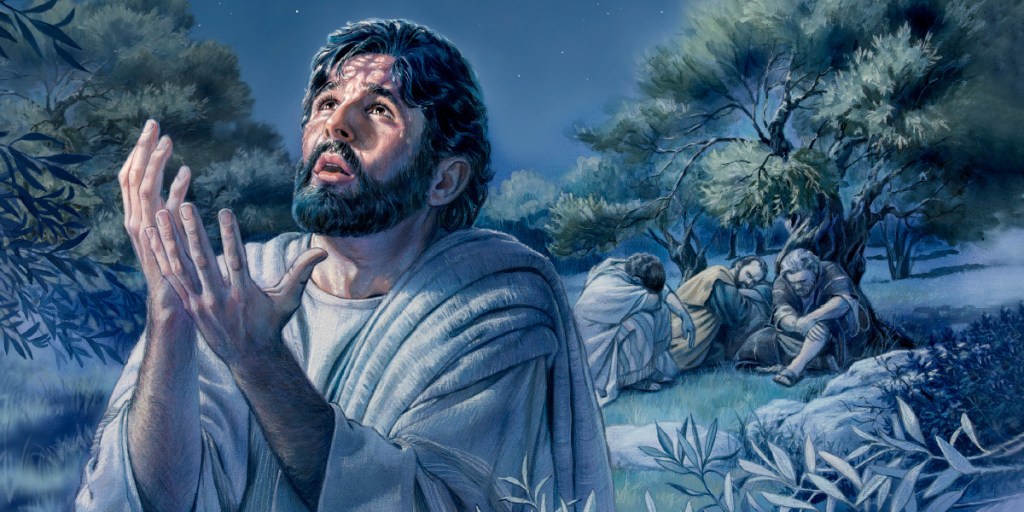


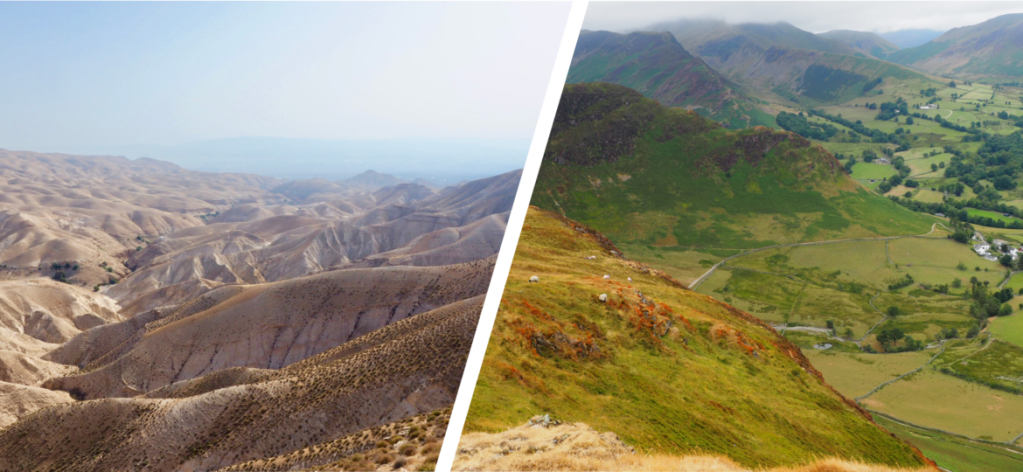



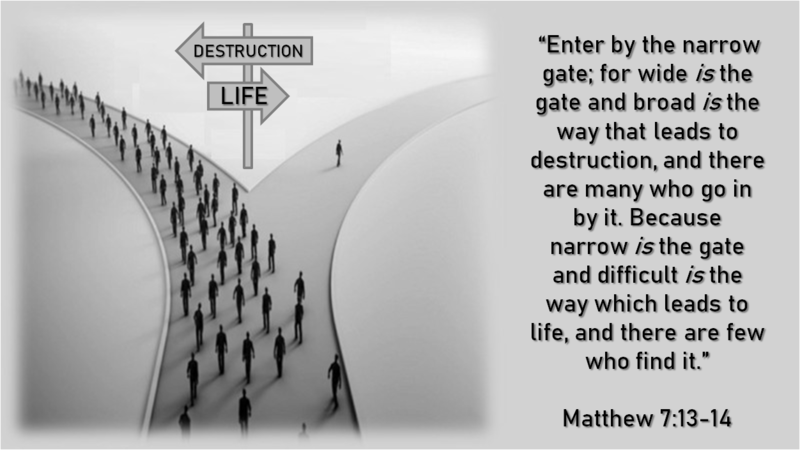
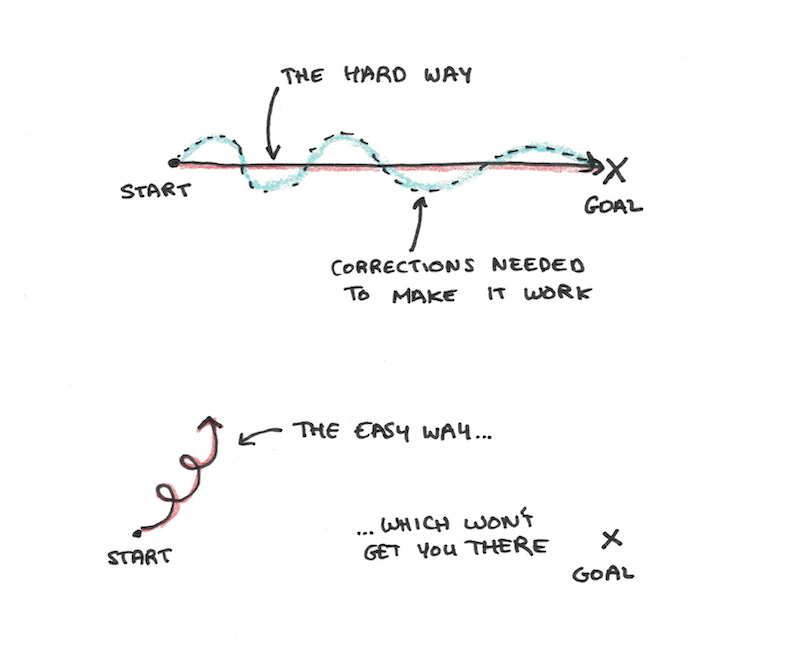


 Loving God, Living God, Loving Hope, Living Hope, Loving Living Life His Way! "Many things are possible for the person who has hope. Even more is possible for the person who has faith. And still more is possible for the person who knows how to love. But everything is possible for the person who practices all three virtues." - Brother Lawrence (1605-1691), Practicing the Presence of God (1692).