Romans 15:4 "For whatever was written in earlier times was written for our instruction, so that through perseverance and the encouragement of the Scriptures we might have hope."
13 Let love of your fellow believers continue. 2 Do not neglect to extend hospitality to strangers [especially among the family of believers—being friendly, cordial, and gracious, sharing the comforts of your home and doing your part generously], for by this some have entertained angels without knowing it. 3 Remember those who are in prison, as if you were their fellow prisoner, and those who are mistreated, since you also are in the body [and subject to physical suffering].
The Word of God for the Children of God.
Adeste Fidelis! Venite Adoremus! Dominum.
Gloria! In Excelsis Deo! Alleluia! Alleluia! Alleluia! Amen.
Love’s Generous Expression
Hebrews 13:1-3 Common English Bible
Our acts of service and sacrifice
13 Keep loving each other like family. 2 Don’t neglect to open up your homes to guests, because by doing this some have been hosts to angels without knowing it. 3 Remember prisoners as if you were in prison with them, and people who are mistreated as if you were in their place.
Keep Loving each other like family.
Do not neglect to open your homes to guests.
Remember the prisoners as if you were in prison with them.
What an incredibly interesting array of both ancient, contemporary ideas!
Loving each other like family – respecting and honoring one another!
Respecting the home, respecting the life of the family and their belongings.
By showing kindness to strangers, you could be showing kindness to a messenger of God.
Paying it forward, buying an extra burger to share with a homeless person, helping someone change a flat tire on their car, offering a ride to a colleague who needs one—in these ways and countless more, our God often gives us all opportunities to show hospitality and compassion for someone who has a need.
As I encounter people who are not part of a faith community, it saddens me when they describe Christians as less-than-compassionate people.
Words I often hear in these conversations are that Christians are aloof,not friendly or forthcoming; cool and distant.and judgmental and condescending.
Many people see church buildings in their communities as little more than social clubs, entertainment centers or worse, only occupied on any Sunday.
Any other day, the parking lots are 99.99% empty of cars and any activity.
They hear church people speak out mostly about what the members oppose.
Where is that sound of “little children of all ages” glorifying God and Jesus?
The world needs to see the Body of Christians as people of compassion—good-news people who minister and act like Jesus.
That will happen only when we finally nurture a habit of practicing compassion.
It is not by accident that the writer of Hebrews urges readers to love each other and to look out for the needs of strangers.
It’s easy to overlook the unusual or the unfamiliar.
It takes the love of Christ to step out, move out and reach out to the stranger who might just bring a singularly unique blessing that you never saw coming.
Learning, Growing, Living, in the Family of Faith
There’s all the difference in the world between describing what it means to ride a bicycle and actually helping somebody learn to get on the seat and pedal away.
Making a layer cake seems to be fairly straightforward when I look at the recipe books, but I haven’t had much success in making one that actually tastes right!
What I need is hands-on guidance: somebody to actually take the time to teach me to do it in front of me and then patiently allow me to try my hand at it too.
The moral instruction provided for us in Hebrews 13 is to be trained and formed in our lives not by learning to apply abstract principles but as a result of seeing these principles successfully or erroneously worked out in the family of faith.
We can read, for example, about what it means to love one another, but it is far better to observe such love in the lives of loving people.
We can understand that we are supposed to care for strangers, but we can experience it firsthand if we are brought up and raised in a home where such care, consideration and compassion for one another is faithfully practiced.
We can read the principles and hear sermons, demands for sexual purity, but we will do far better if we are raised in a flourishing home where they are modeled or we are even able to sit in such homes as we visit other families in our church.
Praise God, the list of mission and ministry opportunities goes on and on.
Establishing these ethical norms is demanding.
It takes the first love of God, our time, effort and patience, and involvement.
The miracles wrought through purposeful discipleship, transformation cannot be achieved by searching the internet, watching a video or reading an article.
If information was enough to bring about transformation, then all we would need to do is write it down or say it.
But you can’t learn love, honor, and faithfulness from the content on a screen.
No, if you are to be content, pure, loving, and hospitable, then that is going to have to be proactively discovered and actively worked out in the family of faith.
Look, then, to your brothers and sisters who exemplify Christ-likeness in these ways.
Read Hebrews 13:1-3 again, praise God for those you know who live these verses out, then be sure to learn from them so in these ways you become like them.
Make it your aim to follow their example that you, like Paul, might humbly be able to say to others, “Be imitators of me, as I am of Christ” (1 Corinthians 11:1).
Easter is but a short time away.
Celebrating the ultimate act of agape love and sacrifice and service.
What will your efforts at discipleship and transformation in preparation for this coming Easter look like, sound like, be more Christ like in these coming weeks?
I have heard repeatedly: “it takes an entire community, an entire village.”
According to Wikipedia, the original quote “it takes a village to raise a child” is an African proverb meaning it takes a whole community of people interacting with a child to ensure he or she grows in a healthy and safe environment.
Regardless of which stage of life we are all in: parents raising children, married with no children, single, or late adulthood, even a church, we need community.
In these times of recovery, perhaps we need to go back to the essential basics of the Gospel to learn it all over again – to teach it unto each other all over again?
In the name of God, the Father and God the Son and God the Holy Spirit,
Let us Pray,
Heavenly Father, thank You that while we were yet sinners You loved us and gave Christ to be the propitiation for our sins. Help us in word and deed to increase and abound in brotherly love for one another, just as we also do for You. Give us wisdom as we enter into mission and ministry to our brothers and sisters in Christ and may we speak the truth in love to Your praise and glory. This we ask in Jesus name, AMEN.
Adeste Fidelis! Venite Adoremus! Dominum.
Gloria! In Excelsis Deo! Alleluia, Alleluia, Alleluia, Amen.
13-16 So roll up your sleeves, get your head in the game, be totally ready to receive the gift that’s coming when Jesus arrives. Don’t lazily slip back into those old grooves of evil, doing just what you feel like doing. You didn’t know any better then; you do now. As obedient children, let yourselves be pulled into a way of life shaped by God’s life, a life energetic and blazing with holiness. God said, “I am holy; you be holy.”
The Word of God for the Children of God.
Adeste Fidelis! Venite Adoremus! Dominum.
Gloria! In Excelsis Deo! Alleluia, Alleluia, Alleluia, Amen.
Transformation of Any Kind Takes Effort
We often prize the wonders of ability.
We prize more highly the wonders of those abilities who exceed our own and are even more highly prized are those whose abilities go far beyond everyone else’s.
But if we don’t put our abilities to work, we won’t accomplish much.
If we want change, we have to be willing to work for it.
If we don’t put in enough effort, we won’t bring about any positive change.
Authors who have written a stack of books will tell you that the secret ingredient was the effort it took to get up earlier each day to write.
Great inventors will relate the measures and degrees of “maximum” effort and commitment and dedication it took to bring an idea unto its finished product.
Sports figures will tell you to practice, practice, practice.
The Christian life is 100 percent God’s work.
The resurrection of Christ runs through our veins.
But the Christian life is also 100 percent human effort.
Apostle Peter here urges us to first prepare our minds for action.
The Greek expression here literally means to pull up one’s robe and get ready for action.
Then Peter instructs us to persevere all the way to the end through self-control.
We have to continue to be obedient to our Savior through responsible effort.
The Christian life is definitely going to be hard work from beginning to end.
The pull of the world is unquestionably significant, and will never go away.
Greater is He who is in us than who is in the world, but the pull of the world sometimes seems to be too insurmountable and our balance of thought shifts.
Keeping up and Letting down our biblical guards becomes a great struggle.
Spiritual Transformation is quite the balance act between the Word of God and word of man, and takes all our mental power, our willpower, our muscle power.
But thankfully our balance is the very Cross of our Savior and is a gift of God.
1 Corinthians 1:18-25 Amplified Bible
The Wisdom of God
18 For the message of the cross is foolishness [absurd and illogical] to those who are perishing and spiritually dead [because they reject it], but to us who are being saved [by God’s grace] it is [the manifestation of] the power of God. 19 For it is written and forever remains written,
“I will destroy the wisdom of the wise [the philosophy of the philosophers], And the cleverness of the clever [who do not know Me] I will nullify.”
20 Where is the wise man (philosopher)? Where is the scribe (scholar)? Where is the debater (logician, orator) of this age? Has God not exposed the foolishness of this world’s wisdom? 21 For since the world through all its [earthly] wisdom failed to recognize God, God in His wisdom was well-pleased through the [a]foolishness of the message preached [regarding salvation] to save those who believe [in Christ and welcome Him as Savior]. 22 For Jews demand signs (attesting miracles), and Greeks pursue [worldly] wisdom and philosophy, 23 but we preach Christ crucified, [a message which is] to Jews a stumbling block [that provokes their opposition], and to Gentiles foolishness [just utter nonsense], 24 but to those who are the called, both Jews and Greeks (Gentiles), Christ is the power of God and the wisdom of God. 25 [This is] because the foolishness of God [is not foolishness at all and] is wiser than men [far beyond human comprehension], and the weakness of God is stronger than men [far beyond the limits of human effort].
Three Keys to a Hope-Filled Spiritual Mindset.
1 Peter 1:13 English Standard Version
Called to Be Holy
13 Therefore, preparing your minds for action,[a] and being sober-minded, set your hope fully on the grace that will be brought to you at the revelation of Jesus Christ.
The words in 1 Peter resound with the sound of hope.
This verse provides a three-step plan for living hope-filled lives.
Peter walks with us through the definition of hope, its nature, and how to be determined in hope.
As a follower of Christ, we live future-minded.
We govern our present choices and actions by training our minds in three areas knowing we will see Jesus face to face someday.
First, we cultivate a disciplined mind.
Outlook influences outcome, and attitude determines action.
I have to keep a source of sugar nearby because my diabetes is in constant need of close and frequent personal monitoring, regular, steady, medical attention.
Sometimes walking through this life is a little like picking up dirt and debris along the way, and soon hope gets lost in the mess.
Centering the thoughts of our minds on the message and wisdom of the Cross, and the promised return of our Savior Jesus helps us to maintain our hope.
Second, we develop a sober mind.
This means to have a steady, calm, and controlled mind by guarding what we think about or expose ourselves to.
It’s listening and obeying God’s Word through the disappointments and discouragements we face.
When we have a sober mind, we stay aware of our range of thoughts, and when hopelessness creeps in, we remind ourselves of God’s faithful, steadfast nature.
Our hope is present and future-minded, so we can strengthen it when we meditate on God’s Word and worship him, which keeps our minds steady.
Third, we pursue an optimistic mind.
“High Energy Positive” comes easily for some people.
It’s like they ooze glitter, and they sparkle.
We can look at that type of person and wonder if they understand pain exists.
As a positive person, let me assure you: I am aware of pain.
Pain has stolen my breath and turned my world dark.
But I’m also aware that God’s heart is abundantly good and trustworthy.
When our hope seems lost, and our outlook is gloomy, look up.
Find something good to focus on.
Maybe it’s the sunrise or the sound of birds singing, the greening of the trees in the coming promise of a new Spring season or your perhaps your child’s smile.
When you see it, hold onto it, lock onto it, “Fort Knox” it, and thank God for it.
Intersecting Faith and Life:
A “God” disciplined, sober, and optimistic mind creates a hope-filled spiritual mindset that allows you to experience the hope of God in the day-to-day grind of life.
We have the blessed assurance of seeing Jesus face to face in the second coming, we can see evidence of him in all our today’s as we all fix your minds upon him.
Look up at the Cross of our Savior instead of down “at your grave site” when hope just leaks from your heart, and let God bring you through to fresh hope.
When Jesus came the first time, he came to reveal God (John 1:18).
As wonderful, powerful, and gracious as he was in his earthly ministry, he did not fully reveal all who he is.
Our hope is tied to his return.
When He comes this time, He won’t come to reveal God, but to reveal himself — the conquering Lord, the Rider on the white horse.
Every knee will bow.
We will get to see him as he really and fully is — Emmanuel in power and grace, triumphant in every way.
When we set our hope on Jesus’ grace when he returns, we can be confidently ready for active service to our king today.
We can live in His hope, under his leadership with obedience and praise today.
In the name of God, the Father and God the Son and God, the Holy Spirit,
Let us Pray,
O Almighty God, You know exactly how much I long for the day when I get to see My Savior Jesus face to face coming with the angels in power. Until that time, fasten my heart and my thoughts in living hope to the glory Jesus will share with me on that day, and please empower me to live as one who knows that victory is mine in Jesus.
Adeste Fidelis! Venite Adoremus! Dominum.
Gloria! In Excelsis Deo! Alleluia, Alleluia, Alleluia, Amen.
Honoring your father and your mother is the only commandment out of the Ten Commandments that is followed by a promise, Honor your father and your mother, as the Lord your God has commanded you, that your days may be long, and that it may be well with you in the land which the Lord your God is giving you. (Deuteronomy 5:16)
Exodus 20:12Amplified Bible
12 “Honor (respect, obey, care for) your father and your mother, so that your days may be prolonged in the land the Lord your God gives you.
The Word of God for the Children of God.
Adeste Fidelis. Venite Adoremus. Dominum.
Gloria. In Excelsis Deo. Alleluia, Alleluia, Alleluia, Amen.
Most Christians are very familiar with the verse “honor your father and mother”, but few actually know of it’s origin in the Bible.
The command to honor your father and mother actually comes from the Old Testament book of Exodus 20 in the story of the 10 Commandments.
However, it is also a command that is repeated several times in both the Old and New Testament.
Chapter 20 of the Book of Exodus serves as a powerful reminder of the intimate relationship God has with humankind.
This passage specifically reveals the intense care and concern that God shows toward His Children.
Today this chapter remains popular because of a very special occurrence – the Ten Commandments.
At eighty plus years old, after venturing up to Mount Sinai, Moses, a father, brought down the Ten Commandments, rules given Him directly from God.
The Ten Commandments described ten precepts for how God expected His people to behave.
This monumental moment follows after the Israelites fled Egypt.
Chapter 19 in the Book of Exodus details how the Israelites camped in the wilderness, now living a life outside of slavery for a few months.
God informs Moses that He desires to bless the nation of Israel.
However, He also wants them to keep a covenant with Him (Exodus 19:5-6).
The Ten Commandments serve as part of that covenant.
One of these commandments spoke to the relationship between a child and parent and is a guideline we as Christians still ought to be following today.
Exodus 20:12The Message
12 Honor your father and mother so that you’ll live a long time in the land that God, your God, is giving you.
The reason this commandment in addition to the other nine is still relevant today is because Jesus indicated such to later believers (Matthew 5:17-20).
Jesus did not abolish the law, but rather came to fulfill it.
The Apostle Paul wrote to the followers at the church at Ephesus;
Ephesians 5:1-2 Amplified Bible
Be Imitators of God
5 Therefore become imitators of God [copy Him and follow His example], as well-beloved children [imitate their father]; 2 and walk continually in love [that is, value one another—practice empathy and compassion, unselfishly seeking the best for others], just as Christ also loved you and gave Himself up for us, an offering and sacrifice to God [slain for you, so that it became] a sweet fragrance.
We are to do our part yet today in abiding in Jesus, by these commandments.
Today, I do not believe there is little to no controversy about whether or not the Ten Commandments are still relevant.
What has been up for rather contentious debate in the meaning of “honor” in the context of parents and children.
There are many instances of children being the victims of incest, abandonment, neglect, or other severe and seriously exploitive forms of ultra damaging abuse.
In these situations, how does a child honor a parent, when the parent lacks any concept or context of abiding in God, His Son Jesus and have honor for the child.
To understand this commandment, we have to examine the original context.
What Is the Original Meaning of Honor Your Father and Mother in Exodus 20?
The commandment to honor our father and mother is the fifth of the ten mentioned.
The commandment to precedes this one is honoring the Sabbath, followed by the commandment to not murder.
Scripture explains the reason why the commandment should be followed.
Exodus 20:12Amplified Bible
12 “Honor (respect, obey, care for) your father and your mother, so that your days may be prolonged in the land the Lord your God gives you.
The benefit of abiding by this commandment is longer life, specifically for the Israelites venturing on toward the Promised Land.
Dennis Prager [https://dennisprager.com/] emphasizes that though this could be viewed as a reward, this is also a reason.
And many of the other commandments are not given explicit reasons to be followed.
Prager suggests in a society where parents are honored by children, the society is bound to survive longer, than a society with a weaker family structure.
This commandment in Exodus is mentioned a number of other times in the Bible, each time as an admonishment to God’s people to better establish them.
Deuteronomy 5:16 tells us, “Honor your father and your mother, as the LORD your God has commanded you, so that your days may be long and that it may go well with you in the land that the LORD your God is giving you.”
Ephesians 6:2 states: “Honor your father and mother” – which is the first commandment with a promise”
God blesses the people when their parents are honored, but the people are punished when they do not.
To honor is to hold someone in high regard or reverence.
The word honor does not mean agree with or even obey, but does suggest in this context a child should hold the highest utmost respect for both of their parents.
Now that we better understand the original context and interpretation of the commandment to honor thy mother and father, we can try to discern how this precept applies to modern-day life.
How Can Christians ‘Honor Your Father and Mother’ Today?
With an understanding of the word honor, there need not be a change in how parents are respected by children today.
However, with modern cultural shifts, this commandment for some has taken on a different interpretation.
We can perhaps better, more prayerfully understand the proper ways of honoring parents by first understanding how honoring should not appear.
As Dennis Prager discusses in his video analysis of the commandment, some parents yearn to be loved, rather than honored.
The visual example given in his video is that of a parent showering their child with gifts in order to receive affection.
This same parent when trying to discipline their child instead receives severe retaliation from them.
This is definitively not an example of a child honoring their parent because instead of respecting them as an “authority” figure, they are simply seeking what else, exactly how much more they can manipulate, gain from the parent.
Much like the Bible commands us to love others, the call to honor our parents is an outward action – something we do for others.
Honoring our parents is therefore not contingent upon what they give in return.
Within the Ten Commandments, verse 12 of Exodus 20 gives no clarification as to what parents are to be honored or even how.
We can conclude then that all parents are deserving of honor, and we can use the context of love within the Bible to discern appropriate ways to show honor.
We can even in some instances see how people have honored God as Father as an example.
Ways we can appropriately honor our parents include:
Expressing Gratitude Parents invest time and effort into raising children.
Those reasons alone are enough to show them gratitude for the sacrifices they make.
Parents provide shelter, food, clothing.
For every action they do in their support of their child is in itself a far more than sufficient reason for expressing their appreciation and gratitude.
Spending Time Together When physically possible, children can and should get together with their parents.
This acknowledges their existence and places a level of importance upon the relationship.
If being together physically is not an option, calling a parent on the phone for a check-in is also beneficial.
Dennis Prager shares with fellow believers he called his parents once a week.
Serve Another way for children to honor their parents is to find creative ways to serve their desires, wants and needs, much like parents perform on behalf of children.
To Honor or Not to Honor
It goes without saying and preaching to the choir that modern parenting is not equivalent to the parenting in ancient biblical Jewish culture.
Children today learn differently and have certain responsibilities such as owning a cell phone [I never did], which was not true for past generations.
No matter the time, parents should always be honored.
One concern followers, nonbelievers have with the commandment is the issue of bad parents, individuals who have abused their children by various means.
The Bible does not qualify which parents deserve honoring.
Additionally, Jesus mentions we are to love others as ourselves (Matthew 22:39) and to bless those who persecute us (Romans 12:14).
We, therefore, know that even when seemingly impossible, we should all do our best to express love for our parents, our children as we express love for our God.
This fifth commandment, however, does not advocate for putting ourselves in danger with bad parents.
Applying this commandment for children who have been abused will look different in terms of how they show their honoring.
Spending time together may be an impossibility but talking on the phone or writing a letter could prayerfully be an option depending on the circumstance.
Sometimes we have to set boundaries in relationships, and whenever that is the case we have to pray unto our ABBA God for wisdom, so that we may honor His commandment and honor our parents while keeping ourselves safe (James 1:5).
There are no easy or set human answers how to be complete, perfect parents.
As Mom’s and Dad’s together …
The very best we can do is diligently consult the Word of God for His Children.
Study it …
Like Jesus did, intentionally plumb its depths, its ways, its truths and its life.
Pray without ceasing over every aspect of it, revelation from it …
Koinonia, Fellowship with our ABBA Father, His Son Jesus, Holy Spirit, other Parents …
Finally,
Be Still, Be Quiet, know only God is God, and can, should be, exalted as God.
Matthew 6:25-33New King James Version
Do Not Worry
25 “Therefore I say to you, do not worry about your life, what you will eat or what you will drink; nor about your body, what you will put on. Is not life more than food and the body more than clothing? 26 Look at the birds of the air, for they neither sow nor reap nor gather into barns; yet your heavenly Father feeds them. Are you not of more value than they? 27 Which of you by worrying can add one [a]cubit to his [b] stature?
28 “So why do you worry about clothing? Consider the lilies of the field, how they grow: they neither toil nor spin; 29 and yet I say to you that even Solomon in all his glory was not [c]arrayed like one of these. 30 Now if God so clothes the grass of the field, which today is, and tomorrow is thrown into the oven, will He not much more clothe you, O you of little faith?
31 “Therefore do not worry, saying, ‘What shall we eat?’ or ‘What shall we drink?’ or ‘What shall we wear?’ 32 For after all these things the Gentiles seek. For your heavenly Father knows that you need all these things. 33 But seek first the kingdom of God and His righteousness, and all these things shall be added to you.
In the name of God, the Father and God the Son and God the Holy Spirit,
Let us Pray,
Heavenly Father, thank You for my parents and for giving me life. Thank You for the pleasant and harsh lessons I have learned and the good times and the bad we have shared together. Forgive me for the times when I have not sufficiently honored my father and mother as I ought – for I am now acutely aware that this is dishonoring to You. From this day forward, I pray that I should honour You in all my interactions with my own family and with my friends, and may my life be honoring to You.
Adeste Fidelis. Venite Adoremus. Dominum.
Gloria. In Excelsis Deo. Alleluia, Alleluia, Alleluia, Amen.
12 “Honor (respect, obey, care for) your father and your mother, so that your days may be prolonged in the land the Lord your God gives you.
The Word of God for the Children of God.
Adeste Fidelis. Venite Adoremus. Dominum.
Gloria. In Excelsis Deo. Alleluia, Alleluia, Alleluia, Amen.
The fifth commandment is simultaneously a simple instruction and an indispensable element of the well-being of entire societies.
When the Lord gives the command “Honor your father and mother,” He is laying down the essential blueprint for maintaining the stability of families, communities, the Body of Christ and His churches and hosts of all nations.
What does it mean to honor your parents?
The word for “honor” carries the notion of weight and heaviness; children ought to feel the weight of respect for their parents.
By this fifth commandment, God places the full weight of responsibility for the lifetime of moral and ethical upbringing of the children and their instruction in righteous living, firmly and squarely on the shoulders of the father and mother.
By this “God” weight, this weight of God, Parents are owed such high regard because God has placed upon them in their roles, the stewardship of such a role, accountability to such a role, to raise the next generation of children, is worth many times over, far beyond its utmost maximum possible weight in honor.
While children are in view here, the Bible also has much to say about parenting that honors God (see also Ephesians 6:4; Colossians 3:21). — More on this later.
How does a child display this honor?
In several ways.
For one, a child ought to show practical respect to his or her parents.
This can be as simple as speaking well of our parents, showing them courtesy, looking them in the eye, and addressing them with a due sense of deference.
Second, it involves genuine love; there should be heartfelt expressions of affection between parents and their children.
Third, unless it would involve disobeying God, a child ought to obey what his or her mom and dad say.
This expectation is found all over Proverbs: for example, “Hear, my son, your father’s instruction, and forsake not your mother’s teaching” (Proverbs 1:8).
Fourth, a child should submit to their parents’ discipline and authority.
All good parents discipline their children (though it must not be done in anger nor vindictively or disproportionately), and children should ought to be taught to implicitly trust such discipline is for their long-term good (Hebrews 12:5-11).
In ancient Israel, respect for ones parents was valued so highly that those who disregarded it flagrantly or persistently faced the death penalty (Deuteronomy 21:18-21).
Why such a significant consequence?
Because the home provides the most essential and vital training ground, the success of which affects how the child will relate to authorities of all kinds.
We never outrun authority in our lives.
There are political authorities we are called to obey (Romans 13:1-7).
Spiritual authorities we are to respect (Hebrews 13:17; 1 Thessalonians 5:12).
And those of advanced years we are commanded to honor (Leviticus 19:32).
Most significantly, when children are taught how, when they learn over time to honor their parents, even despite their parents’ many imperfections, they learn what it too means to learn how to honor our ABBA, our perfect heavenly Father.
Reverence for parents is an integral part of reverence for God.
Because parental authority is God-given, for children to learn to honor their parents is to come to that place of spiritual maturity and honor God Himself.
So if you are a parent [age not specific] with children [age?] at home, it is not loving (though it may be easier) to fail to insist that your children honor you.
If you are an adult with parents still living, it is a matter of obedience to God you still show them the honor they are due, not according to how well (or other- wise) you feel they raised you but according to the position the Lord gave them.
As you honor them, you will be pleasing Him and showing those around you that God-given authority, when exercised in a godly way, is a blessing to all.
Honoring Parents …
It may come as a surprise to many of us this commandment is not age-specific.
It’s a commandment not just for the young but for children of all ages.
God asks parents be worthy of honor in the way they relate to their children.
And God commands that children obey and show respect for their parents in line with doing what is right.
This means both are to act appropriately at each stage of their lives together.
This commandment came to a society without the support systems that many of us are used to.
Adult children were totally responsible to look after aging parents.
God reminds us that as long as we have parents, we are to honor them, seeing that their living is respectable and they are well cared for.
It’s not just a matter of doing what our parents tell us to do when we are young.
It’s a matter of showing our utmost respect, life-long honor to the parents who gave us life, sacrificed incredibly all to raise us, launched us upon life’s journey.
The apostle Paul calls this “the first commandment with a promise.”
God indicates when we honor the parents with whom we are in relationship, he will honor us and He will surely and certainly bless us.
Some parents are easier to honor than others.
But respecting to the utmost those whom the Lord has chosen to place over us opens a door to abundant blessings.
By honoring our parents and others whom God places in authority over us, we honor and glory and our utmost worship and praise unto our Father in heaven.
Which is what each and everyone of us were created, shaped by God, to do …
In the name of God, the Father and God the Son and God the Holy Spirit.
Let us Pray,
Heavenly Father, ABBA Father, thank You for my parents and for giving me life. My First ABBA, Thank You for the lessons I have learned and the good times we have shared together. Forgive me for the times when I have not honored my father and mother as I ought – for I am aware that this is dishonoring to You. From this day forward, I pray that I may honour You in all my interactions with my family and my friends, and may my whole life be honoring unto You. This I pray in Jesus’ name.
Adeste Fidelis. Venite Adoremus. Dominum.
Gloria. In Excelsis Deo. Alleluia, Alleluia, Alleluia, Amen.
62 1-2 God, the one and only— I’ll wait as long as he says. Everything I need comes from him, so why not? He’s solid rock under my feet, breathing room for my soul, An impregnable castle: I’m set for life.
3-4 How long will you gang up on me? How long will you run with the bullies? There’s nothing to you, any of you— rotten floorboards, worm-eaten rafters, Anthills plotting to bring down mountains, far gone in make-believe. You talk a good line, but every “blessing” breathes a curse.
5-6 God, the one and only— I’ll wait as long as he says. Everything I hope for comes from him, so why not? He’s solid rock under my feet, breathing room for my soul, An impregnable castle: I’m set for life.
7-8 My help and glory are in God —granite-strength and safe-harbor-God— So trust him absolutely, people; lay your lives on the line for him. God is a safe place to be.
9 Man as such is smoke, woman as such, a mirage. Put them together, they’re nothing; two times nothing is nothing.
10 And a windfall, if it comes— don’t make too much of it.
11 God said this once and for all; how many times Have I heard it repeated? “Strength comes Straight from God.”
12 Love to you, Lord God! You pay a fair wage for a good day’s work!
The Word of God for the Children of God.
Adeste Fidelis. Venite Adoremus. Dominum.
Gloria. In Excelsis Deo. Alleluia, Alleluia, Alleluia, Amen.
Psalm 62 … God and God Alone is Our Only Rest and Salvation
When you wait on God, you find He is your salvation and provider of all you need. Only God can fill the need of your soul.
Your Salvation
If you are like me, my first response when faced with a significant problem is to gather up all my resources and do everything I can to fix it.
The bigger the problem, the more frantic and anxious I become.
King David wrote this psalm during a particularly difficult time in his life.
He was facing constant attacks from his son, who was trying to overthrow his rule as king.
Instead of gathering his army and advisors, the first thing he did was go to the Lord.
David understood that trusting in men was foolish.
It was not about his strength or wisdom but God’s deliverance.
David saw God as his only true source of salvation.
He stopped everything to get with the Lord.
David didn’t come to God with loud cries or pleas for help.
He came to God in silence.
He waited before the Lord without speaking.
When I face a problem, I want to tell God all about it.
Too often, I come before Him filled with fear and anxiety.
David came before God in complete rest.
David had a quiet confidence that God would see him through.
So often, we think prayer is about what we say and how we say it.
If we can just use the right words, God will surely see our needs and answer our prayers.
David understood it was not about his words but his faith.
When you set your mind and soul to wait silently before the Lord, it’s not only an expression of your openness to God but a complete dependence on Him.
Salvation and deliverance are always gifts of grace from God and God alone.
David didn’t trust in his strength or the wisdom of others.
He didn’t panic and try to fix everything.
He went to the source of his salvation and waited silently for Him to provide.
One of the great truths of life—if not perhaps the greatest truth—is that when all else fails, when everything else falls apart, there is one and only one person on whom you and I and everyone else can absolutely rely.
And that person is not yourself: it is God. God and God alone.
That is the theme of this psalm. “For God alone my soul waits in silence”(62:1).
“He alone is my rock and salvation” (62:2).
“For God alone, O my soul, wait in silence” (62:5).
“He alone is my rock and my salvation” (62:6).
“Yes, my soul, find rest in God; my H.O.P.E. comes from him.” Psalm 62:5
As Christians, we are called to hope.
Not wishful thinking, imagining things, or pining for better days.
Hope.
Hope is not a pipe dream or a fairy tale.
It is a strong action instead of a reaction.
Hope is always alive in Christ Jesus, Our Lord and Savior.
When we choose to live in Christ Jesus …
When we choose to live and choose live in our Savior’s complete hope we:
H – Heed His Word. Hang onto encouraging verses in Scripture in times of trouble, stress or doubt. Recall His promises, read, mark and memorize helpful verses, and repeat them often.
O – Obey. Sometimes we have to do things simply because someone in authority says so. If we can trust God and obey, then in hindsight we may look back and see more clearly why He told us.
P – Pray. Instead of fretting, if we can drop to our knees and lay it at the cross we will find an inner peace which, as Paul states, surpasses our understanding. Much better than jogging in a hamster wheel of worry and churning it over and over in our minds. Pray, lay it down, walk away.
E – Expect. The more we rely on God’s promises and His timing, then experience will show us things work out for the best when we “let go and let God” handle it.
So pry your fingers off the situation and relax.
A Prayer for the Sabbath – Your Daily Prayer
Exodus 20:8-11 Amplified Bible
8 “Remember the Sabbath (seventh) day to keep it holy (set apart, dedicated to God). 9 Six days you shall labor and do all your work,10 but the seventh day is a Sabbath [a day of rest dedicated] to the Lord your God; on that day you shall not do any work, you or your son, or your daughter, or your male servant, or your female servant, or your livestock or the temporary resident (foreigner) who stays within your [city] gates. 11 For in six days the Lord made the heavens and the earth, the sea and everything that is in them, and He rested (ceased) on the seventh day. That is why the Lord blessed the Sabbath day and made it holy [that is, set it apart for His purposes].
Rest is so important to God that he put it in the Ten Commandments.
He wants you to take a day off every week.
That’s called the Sabbath, which literally means a day of rest, and God wants us to do it every seventh day.
The day isn’t important.
It doesn’t have to be a certain day, just every seventh day.
It’s so important that even God rested on the seventh day when he created everything — not because He was tired but to give us the ultimate example of how we should be more like God and take that gift of the seventh day to rest.
What do you do on this Sabbath day to actually have it be a day of rest?
1. Rest your body.
God has made us so that we need rest.
If your car engine heat light were showing red, you would stop because you would know it’s going to damage the engine.
God says if you don’t take one day out of seven to rest, if you keep pumping the adrenaline all day, every day, seven days a week, your engine is going to break.
So for your heart to be at its best, your body, mind and soul all requires rest.
You have to take the time to rest.
2. Recharge your emotions.
Just Be Still and Know only God can be, and is God … Psalm 46:10-11
Just be quiet before the Lord!
David’s Prayer
18 Then King David went in and sat [in prayer] before the Lord, and said, “Who am I, O Lord [a]God, and what is my house (family), that You have brought me this far? 19 Yet this was very insignificant in Your eyes, O Lord God, for You have spoken also of Your servant’s house (royal dynasty) in the distant future. And this is the law and custom of man, O Lord God. 20 What more can David say to You? For You know (acknowledge, choose) Your servant, O Lord God. [2 Samuel 7:18-20 AMP]
Like King David, take time for God, just sit still, be quiet before the Lord God.
Maybe you need to reconnect in your relationships.
Maybe there’s some kind of recreation that rejuvenates you.
I’m not talking about competitive recreation.
Some of you are not recharging your emotions out on the golf course.
You are just getting angry at your golf clubs or at the other guys golf clubs!
3. Refocus your spirit.
During your Sabbath, you do not take a day off from God.
You worship!
Worship puts life into perspective.
If you’re too busy for God, you’re just too busy.
To make this happen, you have to schedule it.
Psalm 127:2 “It’s useless to rise early and go to bed late, and work your worried fingers to the bone. Don’t you know he enjoys giving rest to those he loves?” (MSG)
God enjoys giving rest to those he loves.
Be intentional about taking your Sabbath, and make it count!
62 1-2 God, the one and only— I’ll wait as long as he says. Everything I need comes from him, so why not? He’s solid rock under my feet, breathing room for my soul, An impregnable castle: I’m set for life.
5-6 God, the one and only— I’ll wait as long as he says. Everything I hope for comes from him, so why not? He’s solid rock under my feet, breathing room for my soul, An impregnable castle: I’m set for life.
11 God said this once and for all; how many times Have I heard it repeated? “Strength comes Straight from God.”
12 Love to you, Lord God! You pay a fair wage for a good day’s work!
be quiet, sit still, Make these confessions.
My salvation comes only from the Lord.
When I face troubles, I look to the Lord.
It’s not about my words but about God’s grace.
I will sit still in the Presence of God my Savior.
I will wait quietly before the God of my salvation.
I will shut my mouth, close both my eyes and open my ears.
Thanksgiving for the Lord’s Favor.
A Psalm of David.
138 I will give You thanks with all my heart; I sing praises to You before the [pagan] gods. 2 I will bow down [in worship] toward Your holy temple And give thanks to Your name for Your lovingkindness and Your truth; For You have magnified Your word together with Your name. 3 On the day I called, You answered me; And You made me bold and confident with [renewed] strength in my life.
4 All the kings of the land will give thanks and praise You, O Lord, When they have heard of the promises of Your mouth [which were fulfilled]. 5 Yes, they will sing of the ways of the Lord [joyfully celebrating His wonderful acts], For great is the glory and majesty of the Lord. 6 Though the Lord is exalted, He regards the lowly [and invites them into His fellowship]; But the proud and haughty He knows from a distance.
7 Though I walk in the midst of trouble, You will revive me; You will stretch out Your hand against the wrath of my enemies, And Your right hand will save me. 8 The Lord will accomplish that which concerns me; Your [unwavering] lovingkindness, O Lord, endures forever— Do not abandon the works of Your own hands.
Have faith God will see you through it, and claim His promise as your own.
In the name of God the Father and God, the Son and God the Holy Spirit,
Let us Pray,
Father God, let us always choose to hope in You instead of fretting, or getting stressed over things we have no control over. Replace our qualms with quiet, our fears with faith, and our worries with wisdom. Dear Lord, help us make every Sabbath about you alone. Quiet my heart, give rest to my soul, refocus my spirit—for true renewal, true revival, comes only from you. Holy Spirit please help me to be intentional with my time and worship, and encourage me to find rest in you alone. In Jesus’ name.
Adeste Fidelis. Venite Adoremus. Dominum
Gloria. In Excelsis Deo. Alleluia, Alleluia, Alleluia, Amen.
8 “Remember the Sabbath (seventh) day to keep it holy (set apart, dedicated to God). 9 Six days you shall labor and do all your work, 10 but the seventh day is a Sabbath [a day of rest dedicated] to the Lord your God; on that day you shall not do any work, you or your son, or your daughter, or your male servant, or your female servant, or your livestock or the temporary resident (foreigner) who stays within your [city] gates. 11 For in six days the Lord made the heavens and the earth, the sea and everything that is in them, and He rested (ceased) on the seventh day. That is why the Lord blessed the Sabbath day and made it holy [that is, set it apart for His purposes].
The Word of God for the Children of God.
Adeste Fidelis. Venite Adoremus. Dominum.
Gloria. In Excelsis Deo. Alleluia, Alleluia, Alleluia, Amen.
Keep the Sabbath [verse 8]
Remember the Sabbath day, to keep it holy. Exodus 20:8
Throughout history there have been well-meaning, earnest Christians who have, perhaps without their ever knowing it, who have come to functionally believe the Ten Commandments are really only the Nine Commandments.
Somewhere along the way, some have decided the fourth commandment is not like the rest of the commandments but rather as a relic that belongs in the past.
In truth, though, the ancient command to remember the Sabbath and keep it holy has abiding significance for us all, even today.
Why has this simple command fallen on such hard times?
Some have claimed that its regulations and penalties were tied to the old covenant, so it must no longer be relevant.
Yet we do not treat the other commandments this way.
Others have said that the way Jesus spoke of being “lord of the Sabbath” (Matthew 12:8) diminished the commandment’s significance and force.
What about Jesus’ apparent intent here?
What the man Rabbi Jesus sought to overturn was not the Sabbath itself but the host of hypocritical external rules of the Pharisees.
I have long suspected what keeps most Christians from thinking of the fourth commandment as we ought to is simply that we do not like its implications.
We do not like, nor appreciate all of the subtle and not so subtle ways it intrudes into our lives, into our leisure and whatever else takes precedence in our hearts.
So we act as though this command is in a different category from the other nine.
However, If we truly want to grasp the significance of the Sabbath and respond to it in a God-honoring way, we must all embrace, as a conviction, the real truth that God has intentionally set aside the Sabbath day as distinct from the rest.
This was the case in the week of creation, with God resting on the seventh day and declaring it sanctified.
The church, in the age of the new covenant, then changed the day from the seventh day of the week to the first day to mark the resurrection of Christ.
In both cases, we see that the distinction of the day is woven into God’s work of creation and redemption.
With that conviction in place, we can see that the day is not simply a day set apart from other days, but it is, in Gospel Truth, a day set apart unto the Lord.
By not seeing it this way, we’ll be tempted to view our spiritual exercises on the Lord’s Day as something to “get over with” in order to “get on with” our week.
If this is our mentality, we stand condemned by the fourth commandment.
The Sabbath ought to be treasured for what it is: a gift of a day on which we enjoy, uninterrupted by leisure commitments or (if possible) by employment, the privilege of God’s presence, the study of God’s word, and the fellowship of God’s people.
Seen like that, this command becomes an invitation: not only to just something we should do but something we will each come to learn how to love to do.
If this is not how you have been viewing God’s Sabbath, then ask yourself:
What’s preventing you from honoring the Lord’s Day?
Take stock of your habits and receive the gift of the Sabbath.
From that next Sunday, be sure that your priority is not to make the Lord’s Day convenient but to make the Lord’s day exclusively about God, to keep it holy.
Keep the Sabbath [verses 9-10]
9 Six days you shall labor and do all your work, 10 but the seventh day is a Sabbath [a day of rest dedicated] to the Lord your God; on that day you shall not do any work, you or your son, or your daughter, or your male servant, or your female servant, or your livestock or the temporary resident (foreigner) who stays within your [city] gates.[verses 9, 10]
Having established the fourth commandment remains what it has always been—a commandment of the Lord—and as such it is relevant to our lives, we can now turn our hearts, souls, minds, to thinking profitably about how to keep it.
But we must be careful as we get specific about honoring the Sabbath.
The Lord Jesus, after all, had some very harsh, strong words for the Pharisees regarding the way their moral specificity had become a means not of obedience but of self-righteousness (Mark 2:23 – 3:6).
With “quaking and trembling knees” and maturing humility, let’s take some quality time to consider how are we to remember the Sabbath and keep it holy.
Let us try to explore: How do we prevent worldly concerns—those of leisure, recreation, and work—from infringing on our enjoyment and worship of God?
Let’s think first of public worship.
What kinds of conversations do you typically have prior to the worship service?
Are they concerned at any point with exclusively the things of God, or only ever with sports – making it to the home team game, family, and every other thing?
It takes a conscious and a thoroughly intentional act of the will to give eternal matters the very highest measure of maxed priority in our minds and mouths.
If you were to determine that in your preparation for worship you would set aside every priority which looms, loomed so large on other days, I guarantee the focus of your time at church would be changed.
The same goes for after the service.
When the last song has been sung and the service is over, how long does it take for your mind and conversation to return to worldly matters?
If we were instead to:
commit to spending time after the service speaking to one another about the greatness of God, the truth of His word, and the wonder of His dealings with us,
and praying with one another about the week ahead and the trials we face, then we would begin to understand better the “one another” passages in the New Testament about:
encouraging one another (Hebrews 10:25),
speaking the truth to one another (Ephesians 4:25), and
building one another up (1 Thessalonians 5:11)
—for we would then be prioritizing ourselves to actually living them out.
Similarly, in our private affairs on the Lord’s Day, spiritual improvement should still take priority.
That may mean additional family worship, reading edifying books, prayer, discussion of what was preached that morning, and more—but whatever it means, we should make it our aim not to let the cares of the other six days push into our efforts of growing our spiritual enjoyment of the first day of the week.
If we want to profit from keeping the Sabbath, and if we want to take the fourth commandment more seriously, then our convictions must fuel our actions, and our daily aspirations must turn into daily practices.
Avoid making unique rules that only serve to foster self-righteousness, but consider whether anything worldly needs to change, be re-prioritized Godly.
How would, should, could you change to keep the Sabbath holy the next time Sunday comes round, then Monday, then Tuesday then Wednesday and so on?
Our Sabbath Rest as Our Witness
[sermon illustrations]
The college student broke down in tears over his coffee.
Driven by competition for limited space in a pre-law program, he had just poured himself into studying virtually nonstop, eight hours a day seven days a week. After seven months he found he lost the ambition for learning—and nearly for life itself.
Driven by the desire for promotion and the prospect for more money for him an his growing family, [……….] takes extra work home every single night to get the one up on his fellow workers – he stays up till midnight every night for weeks. Taking no time for dinner with his wife or leisure time his young kids, he hears them crying.
Our reading today states that “in six days the LORD made the heavens and the earth … but he rested on the seventh day.”
The ambition and creativity we bring to work is a reflection of our mindset on our Creator’s sovereignty over our lives and over the lives we genuinely value.
It’s part of how we reflect his image and a big part of how we serve as witnesses for him.
God also rested on the seventh day, however, and he calls us to do the same.
For us, good work hinges on good rest.
Without good rest our good work suffers.
The discipline of regular rest is a witness in our fast-paced world, especially when that time is focused on enjoying our Creator.
It speaks of God’s love to command what’s good for us.
Our ambitions would otherwise serve only to distract us from him and drive us into the ground if we let them.
How will you take our rest the rest of this week and this next weekend?
For the sake of good work later, let’s rest.
For the sake of sanity, let’s rest.
For the sake of glory to God in regular worship and fellowship, let’s rest.
God blesses those who “work hard” at resting in the Lord Jesus Christ.
Let’s trust him to establish the work and rest of our hands (see Psalm 90:17).
In the name of God, the Father and God the Son and God the Holy Spirit,
Let us Pray,
God, grant us and all our loved ones true rest on this Sabbath Day. May Your Holy and Sacred Presence drive out from among us anger and fear, worry and regret. Send your blessing upon us, that we may be people of the Word. Lord of work and of rest, thank you for these gifts. Help us to work hard and rest well. Please provide work where we need it. Please also bless whatever years of retirement rest we may have.
Adeste Fidelis. Venite Adoremus. Dominum.
Gloria. In Excelsis Deo. Alleluia, Alleluia, Alleluia, Amen.
א 2 “I am Adonai your God, who brought you out of the land of Egypt, out of the abode of slavery.
The Word of God for the Children of God.
Adeste Fidelis. Venite Adoremus. Dominum.
Gloria. In Excelsis Deo. Alleluia, Alleluia, Alleluia, Amen.
The Ten Commandments are some of the most recognizable words in the entire Biblical Canon, yet they are often among the most misunderstood.
How has the coming of Jesus transformed these ancient laws?
Do these commandments still matter to Christians today in 2023?
What does it look like to obey them in today’s world?
What do they tell us about God and His Love for His beloved Children?
In this devotional message we see in verses 1-2 three truths about the Law: it’s given by God, it follows the Gospel, and it’s the path of freedom.
Loved By and Belonging to God
Adonai, The Lord who claims our allegiance is God, our Creator and Savior.
God delivered Israel when he brought them out of Egypt.
They had been slaves there for hundreds of years.
Faithful to his covenant promises to Abraham, Isaac, and Jacob (Genesis 12:1-3; 15:13-21; Exodus 3), God called this people his own and continued his work of making them into a nation through which all other nations would be blessed.
Then, many years later, through Jesus, a descendant of Abraham, God brought salvation to the world—and today God includes all who believe in Christ as his people, his worldwide family.
So if we believe in our Savior Christ, we belong to God, and we are His alone.
1 Peter 2:9-10 Complete Jewish Bible
9 But you are a chosen people,[a]the King’s cohanim,[b]a holy nation,[c]a people for God to possess![d] Why? In order for you to declare the praises of the One who called you out of darkness into his wonderful light. 10 Once you were not a people, but now you are God’s people; before, you had not received mercy, but now you have received mercy.[e]
1 Peter 2 puts it, we are a holy nation set apart to be “God’s special possession.”
From the beginning, it was love that created us and has bound us to God.
And since our relationship with God is based on love, God’s law is not a burden but a means of unconventional liberty towards showing love to our neighbors.
God, The Giver of Law and Liberty
Exodus 20:1-2King James Version
20 And God spake all these words, saying,
2 I am the Lord thy God, which have brought thee out of the land of Egypt, out of the house of bondage.
To faithfully read and respond to the Ten Commandments, we must first make a diligent effort to pray and study them, understand what they are and are not.
We find clarity in the truth that lies at their head: “I am the LORD your God.”
This poignant reminder of who God is precedes the instructions that follow.
In other words, the I am of God’s person grounds the you shall of His commands.
He can command us because of who He is.
The psalmist further expresses this:
“Know that the LORD, he is God! It is he who made us, and we are his” (Psalm 100:3).
God created us, and His being our Creator grants Him rights and authority over His creation.
Regardless of the efforts of our world to reject the creational handiwork of God, thus His authority over our lives, His role as our Ruler remains unthreatened.
He has made us; we are His.
When we should remember who spoke the law, we are in a position to grasp the purpose of the Ten Commandments as well as to understand what they are not.
First, the commandments are not a formal list of dos and don’ts given to restrict our personal freedoms.
God is NOT the Ultimate Cosmic Killjoy
God is not the Ultimate cosmic killjoy.
In fact, if you wanted to provide a heading for the Ten Commandments, you could instead call them “The Ultimate Guidelines to Freedom and Joy.”
They do not restrict our freedom but rather give us a blueprint for joy, showing us how life works best.
Second, the commandments are not intended as a ladder up which we climb to attain acceptance with God.
No such ladder has ever existed!
God brought His people out of slavery—from Egypt in the exodus, and from sin and death at the cross—before He called us to obey Him.
So we obey God because we have been “brought out by God,” not in order for us to somehow believe we could ever persuade Him to do so on our own time line.
If that were the case, why then did the bondage last as long as it did despite all the years of crying, pleading by the generations of Israelites held in bondage?
Until Moses had been prepared by 80 years of life at the pinnacle of authority, then at the bottom of authority for His “Burning Bush” encounter with God.
Rather than being rules that save us, the Ten Commandments serve as a mirror in which we should see ourselves, revealing the depths of our sin and our need for a Savior—and they show how we can all live every day to please our Savior.
Third, the Ten Commandments have not been rendered anywhere near obsolete by the coming of our Lord and Savior Jesus Christ.
When Jesus said the two greatest commandments were to love God and love our neighbor, He was summarizing the Ten Commandments (Mark 12:28-31 AKJV).
28 And one of the scribes came, and having heard them reasoning together, and perceiving that he had answered them well, asked him, Which is the first commandment of all? 29 And Jesus answered him, The first of all the commandments is, Hear, O Israel; The Lord our God is one Lord: 30 and thou shalt love the Lord thy God with all thy heart, and with all thy soul, and with all thy mind, and with all thy strength: this is the first commandment. 31 And the second is like, namely this, Thou shalt love thy neighbour as thyself. There is none other commandment greater than these.
What does it mean to love God with our heart, soul, mind, and strength?
The first four commandments tell us. [Exodus 20 verses 3-11]
What does it look like to love our neighbor as ourselves?
The final six commandments flesh that out. [Exodus 20 verses 12-17]
Jesus, master teacher that He was, summed up the ten with the two.
When we see all this, we are ready to read the Ten Commandments and let them transform our lives.
We must see the sin that the commandments reveal and respond in repentance and faith in the only One who fulfilled the law and offers Himself as our Savior.
He, the Lord Jesus Christ, will ensure that this law is not merely etched into our conscience but also inscribed upon our hearts and upon our souls.
Give yourselves unto the Lord our God and His way, and His Truth and His Life you and I will find everlasting love, everlasting joy and His everlasting liberty.
In the name of God, the Father and God the Son and God the Holy Spirit …
Let us Pray,
Psalm 40The Message
40 1-3 I waited and waited and waited for God. At last he looked; finally he listened. He lifted me out of the ditch, pulled me from deep mud. He stood me up on a solid rock to make sure I wouldn’t slip. He taught me how to sing the latest God-song, a praise-song to our God. More and more people are seeing this: they enter the mystery, abandoning themselves to God.
4-5 Blessed are you who give yourselves over to God, turn your backs on the world’s “sure thing,” ignore what the world worships; The world’s a huge stockpile of God-wonders and God-thoughts. Nothing and no one compares to you! I start talking about you, telling what I know, and quickly run out of words. Neither numbers nor words account for you.
6 Doing something for you, bringing something to you— that’s not what you’re after. Being religious, acting pious— that’s not what you’re asking for. You’ve opened my ears so I can listen.
7-8 So I answered, “I’m coming. I read in your letter what you wrote about me, And I’m coming to the party you’re throwing for me.” That’s when God’s Word entered my life, became part of my very being.
9-10 I’ve preached you to the whole congregation, I’ve kept back nothing, God—you know that. I didn’t keep the news of your ways a secret, didn’t keep it to myself. I told it all, how dependable you are, how thorough. I didn’t hold back pieces of love and truth For myself alone. I told it all, let the congregation know the whole story.
11-12 Now God, don’t hold out on me, don’t hold back your passion. Your love and truth are all that keeps me together. When troubles ganged up on me, a mob of sins past counting, I was so swamped by guilt I couldn’t see my way clear. More guilt in my heart than hair on my head, so heavy the guilt that my heart gave out.
13-15 Soften up, God, and intervene; hurry and get me some help, So those who are trying to kidnap my soul will be embarrassed and lose face, So anyone who gets a kick out of making me miserable will be heckled and disgraced, So those who pray for my ruin will be booed and jeered without mercy.
16-17 But all who are hunting for you— oh, let them sing and be happy. Let those who know what you’re all about tell the world you’re great and not quitting. And me? I’m a mess. I’m nothing and have nothing: make something of me. You can do it; you’ve got what it takes— but God, don’t put it off.
Adeste Fidelis. Venite Adoremus. Dominum.
Gloria. In Excelsis Deo. Alleluia, Alleluia, Alleluia, Amen
5 Then the Lord descended in the cloud and stood there with Moses as he proclaimed the Name of the Lord. 6 Then the Lord passed by in front of him, and proclaimed, “The Lord, the Lord God, compassionate and gracious, slow to anger, and abounding in lovingkindness and truth (faithfulness); 7 keeping mercy and lovingkindness for thousands, forgiving iniquity and transgression and sin; but He will by no means leave the guilty unpunished, visiting (avenging) the iniquity (sin, guilt) of the fathers upon the children and the grandchildren to the third and fourth generations [that is, calling the children to account for the sins of their fathers].” 8 Moses bowed to the earth immediately and worshiped [the Lord]. 9 And he said, “If now I have found favor and lovingkindness in Your sight, O Lord, let the Lord, please, go in our midst, though it is a stiff-necked (stubborn, rebellious) people, and pardon our iniquity and our sin, and take us as Your possession.”
The Word of God for the Children of God.
Adeste Fidelis. Venite Adoremus. Dominum.
Gloria. In Excelsis Deo. Alleluia, Alleluia, Alleluia, Amen.
What is God Like?
A little boy was working hard on drawing a picture from his Sunday School and his daddy came up from behind, asked him what he was working so hard on.
The son replied, “Drawing a picture of God.”
His daddy said, “You can’t do that, son, Nobody knows what God looks like.”
But the little boy remained undeterred, continued to draw for several minutes.
Without stopping his work, he looked at his picture with satisfaction and said very matter-of-factly, held it in his daddy’s face : “They will in a few minutes.”
We may never know what God’s physical features are, but from the beginning, He does reveal His attributes to us so we can each know what He is about, like.
In Exodus 34:6-7, rather than painting a picture a visual description of God, he writes a list about God’s invisible qualities.
From this, we learn God is merciful and gracious.
Keeping mercy and lovingkindness for the thousands.
He is slow to anger and abounding in steadfast love.
He is abounding in goodness and truth
He is longsuffering and willing to forgive.
Forgiving iniquity, transgression and sin.
We also learn that God will not spare the wicked from punishment.
We also learn that God expects us to automatically respond to who He is with an attitude of repentance and with worship that is worthy of being in His Presence.
“Show Me Your Ways Lord, That I May Find Favor”
Exodus 33:12-13Amplified Bible
Moses Intercedes
12 Moses said to the Lord, “See, You say to me, ‘Bring up this people,’ but You have not let me know whom You will send with me. Yet You have said, ‘I know you by name, and you have also found favor in My sight.’ 13 Now therefore, I pray you, if I have found favor in Your sight, let me know Your ways so that I may know You [becoming more deeply and intimately acquainted with You, recognizing and understanding Your ways more clearly] and that I may find grace and favor in Your sight. And consider also, that this nation is Your people.”
In Exodus 33:12-13, Moses asked God to teach him more about God’s ways.
Moses said,
“See, You say to me, ‘Bring up this people.’ But You have not let me know whom You will send with me. Yet You have said, ‘I know you by name, and you have also found grace in My sight.’ Now therefore, I pray, if I have found grace in Your sight, show me now Your way, that I may know You and that I may find grace in Your sight.”
In gracious response to Moses’ request for God to show him more about who He was, God shows Moses favor, God passes by Moses and proclaims the attributes about Himself, revealing to a much humbled Moses more about His character.
God wanted Moses (and us) to know that He is not an angry, impersonal God.
Instead, He is a God that loves us, unconventionally, while also being a just God who will hold His Children to account for their words and deeds and punish sin.
The result of God’s revelation to Moses was that Moses bowed to the ground at once and worshiped God because Moses knew all he needed to accomplish the task God had called him to do was to be in and remain in, the presence of God.
“Hear My Cry Lord, Show Me More of Your Ways”
When was the last time we cried out to God and said,
“Lord show me more of your ways?”
Just as God answered Moses, God will answer us today.
It might be through the Words of truth and life found through scripture that you read and study or in a sermon from your pastor or a song on the radio.
When our desire to know more about God is a longing that is from the heart, God will most abundantly, decisively, definitely and directly reveal Himself.
Where are the “Crying Christians?”
Isaiah 2:2-3 Amplified Bible
2 Now it will come to pass that In the last days The mountain of the house of the Lord Will be [firmly] established as the [a]highest of the mountains, And will be exalted above the hills; And all the nations will stream to it. 3 And many peoples shall come and say, “Come, let us go up to the mountain of the Lord, To the house (temple) of the God of Jacob; That He may teach us His ways And that we may walk in His paths.” For the law will go out from Zion And the word of the Lord from Jerusalem.
“All nations” is one of my favorite phrases in the Bible.
God is an inclusive God. When he established a beachhead in our fallen world by starting a little nation called Israel, he was already thinking big.
God’s plan was to reach out through Israel to call all nations to himself.
Now, in 2023, Revival has broken out quite literally all over the world.
Thousands upon thousands are responding … they are crying out to God …
Onto the street Corners, into the streets of cities all across the globe …
Into College Campuses …
Into Churches whose pews had more accumulated dust than congregants.
Into malls and supermarkets …
Into the maximum security prisons …
Into the incarcerated for life hearts of violent life long criminals …
Into countries where Jesus Christ is not necessarily the most favored name.
The Word of God for the Children of God goes forth …
Repentance and Baptisms …
“Show us Your Ways, O’ Lord, that we may find Grace and Favor IN THY sight.”
Transformations …
The Message of Salvation through Christ and Christ alone.
God has a Plan …
Jeremiah 29:11-14Amplified Bible
11 For I know the plans and thoughts that I have for you,’ says the Lord, ‘plans for peace and well-being and not for disaster, to give you a future and a hope. 12 Then you will call on Me and you will come and pray to Me, and I will hear [your voice] and I will listen to you. 13 Then [with a deep longing] you will seek Me and require Me [as a vital necessity] and [you will] find Me when you search for Me with all your heart. 14 I will be found by you,’ says the Lord, ‘and I will restore your fortunes and I will [free you and] gather you from all the nations and from all the places where I have driven you,’ says the Lord, ‘and I will bring you back to the place from where I sent you into exile.’
Jeremiah 29:13 says,
“You will seek me and find me, when you seek me with all your heart.”
How bad do you really want to know more about the Exodus 34:6-7 God?
How badly do you want people to know more about the Exodus 34:6-7 God?
How much do you long for the presence of the Exodus 34:6-7 God to lead you to what He’s called you to do?
With what effort do you seek the Goodness and Mercy, the Slow to Anger and abounding in Steadfast Love, the Faithful and Forgiving and Max Truth of God?
What effort do you bring your Worship, cry out to God: “Show Me Your Ways?”
What strength of plea arises from your heart and soul: “If I have found Favor?”
What percentage of your prayer life includes … “That I May Know God’s Grace?”
What percentage of your heart is “firmly prostrated” before the Lord, your God?
What percentage of thy soul is “squarely grounded” in the life of Savior Christ?
Percentage of thy only hope is saturated in nothing less than the blood of Jesus?
God’s promise of a gospel that reaches “to the ends of the earth” is being realized (Acts 1:8).
All nations are streaming toward the mountain of the Lord’s temple—not by pilgrimage to a physical temple in Jerusalem, but by coming to Jesus, the one alone who fulfills the temple’s deepest meaning of God’s presence among us.
Praise God for the amazing things He alone is doing right now within us.
Praise God for the amazing things He alone is doing right now among us.
Praise God for the amazing things He alone is doing within our homes.
Praise God for the amazing things He alone is doing within our families.
Praise God for the amazing things He alone is doing among our friends.
Praise God for the amazing things He alone is doing among our neighbors.
Praise God for the amazing things He alone is doing within our schools.
Praise God for the amazing things He alone is doing upon, within our streets.
Praise God for the amazing things He alone is doing upon, within our prisons.
Praise God for the amazing things He alone is doing within our communities.
Praise God for all the amazing things He alone is doing within our country.
Praise God for the amazing things He alone is doing right now in our world.
And thank Him that in a tragically shrinking world we can yet experience, be a thriving community with fellow believers from across all cultures and nations.
In the name of God, the Father and God the Son and God the Holy Spirit,
Let us Pray,
Psalm 150 The Message
150 1-6 Hallelujah! Praise God in his holy house of worship, praise him under the open skies; Praise him for his acts of power, praise him for his magnificent greatness; Praise with a blast on the trumpet, praise by strumming soft strings; Praise him with castanets and dance, praise him with banjo and flute; Praise him with cymbals and a big bass drum, praise him with fiddles and mandolin. Let every living, breathing creature praise God! Hallelujah!
Adeste Fidelis. Venite Adoremus. Dominum.
Gloria. In Excelsis Deo. Alleluia, Alleluia, Alleluia, Amen.
4 After this I looked, and behold, [a]a door standing open in heaven! And the first voice which I had heard, like the sound of a [war] trumpet speaking with me, said, “Come up here, and I will show you what must take place after these things.” 2 At once I was in [special communication with] the Spirit; and behold, a throne stood in heaven, with One seated on the throne. 3 And He who sat there appeared like [the crystalline sparkle of] [b]a jasper stone and [the fiery redness of] a sardius stone, and encircling the throne there was a rainbow that looked like [the color of an] emerald.4 Twenty-four [other] thrones surrounded the throne; and seated on these thrones were [c]twenty-four elders dressed in white clothing, with crowns of gold on their heads.
The Word of God for the Children of God.
Adeste Fidelis. Venite Adoremus. Dominum.
Gloria! In Excelsis Deo! Alleluia! Alleluia! Alleluia! Amen.
Once John was charged to write the book of Revelation, when he met with the resurrected, glorified Lord Jesus in chapter 1, and having received Christ’s 7 letters to the 7 churches in chapters 2-3, he is given a vision of the throne room of God and commanded to, “Come up hither, and I will shew thee things which must be hereafter.”
Not only was John given important information for the Churches, but he was also commanded to ‘see’ and to ‘hear’ what was going to happen beyond the current Church age, “after these things.”
After acting as God’s heavenly, High Priest to the Church-age saints and interceding as heaven’s Mediator between God and man, John is shown how Christ will begin to take on His role of Judge, before returning to earth to claim His position as King of kings and Lord of lords.
“I looked, and, behold, a door was opened in heaven,” John writes,“and the first voice which I heard was as it were of a trumpet talking with me.”
The angel who met John in the prologue was the same angel who accompanied him throughout the entire revelation of Jesus Christ – which the Father gave to His Son… to give to John through His angel.
The apostle John was about to receive a preview of the future, which began with a vision of heaven in chapter 4 and moved to the worship of the Lamb of God in chapter 5.
He saw One seated on the throne which had the appearance of crystal-clear jasper and a blood-red Sardis stone, and John recorded that there was a rainbow surrounding the throne that reminded him of a brilliant green emerald.
Twice he was summoned to, “come up here.”
The same voice which sounded like that of a trumpet in chapter 1, commanded him to join the heavenly host of angelic beings that surrounded the throne of God, by means of a door which was standing open in heaven.
And being, “in the spirit on the Lord’s day,” John was given an amazing insight into the future.. and greater revelation of Jesus Christ the Lamb of God and Lion of the tribe of Judah.
After Christ’s revelation to the Churches ended, John’s vison changed, and he was ushered into heaven – in spirit and in truth.
He discovered that the heavenly scene into which he had been brought, was preparing to unseal a special scroll which had been securely sealed by God Himself with seven seals.
As the heavenly scene unfolded, John discovered that he was witnessing to the precursor of the prophesied judgement on earth – the Day of the Lord which he recorded in chapters 6-19 when the wrath of God is revealed from heaven against all ungodliness and unrighteousness of men who hold the truth in unrighteousness.
The sight that John saw during chapters 4-5, were the heavenly preparation for that future time of Great Tribulation, recorded in chapters 6-19, which is to fall on a Christ-rejecting sinful world and which will bring Israel to national repentance and punishment to the God-hating, Christ-rejecting, sinful world.
While John’s body remained on earth, his spirit was translated into heaven where he witnessed a vision of the angelic host that surround the throne of Almighty God – the Ancient of Days.
As he looked, John was introduced to four living creatures who worship God day and night and 24 elders who were clothed in white raiment with crowns of gold on their heads.
The vison of the throne-room of God, the worship of the Lamb Who was slain, and the presentation of a seven-sealed scroll, which no-one but Lamb could break, are all part-and-parcel of the heavenly vision John saw in chapters 4 and 5.
It was after he had received Christ’s revelation to the Church (chapters 1-3) but before the revelation of Christ to the world in His role as Judge (chapters 6-19) when the wrath of God is poured out upon the children of disobedience, that the aged apostle John looked,
“and behold, a door was standing open in heaven, and the first voice which I had heard, like the sound of a trumpet speaking with me, said to him, ‘Come up here, and I will show you what must take place after these things.'”
In chapters 4 and 5 of Revelation, the focus shifts to a new and powerful story of God’s ongoing mission.
This new section begins with John seeing “a door standing open in heaven.”
This picture surprises us because we know that an open door often extends an invitation to come in.
This is an enticing opportunity to believe because heaven is often considered a place of mysteries that we do not have access to.
For the most part, it is God’s secret—at least from our day-to-day living in this life.
But here Jesus opens heaven’s door.
And in a voice like a trumpet, he welcomes us, saying, “Come up here.”
The invitation promises to reveal “what must take place after this.”
But as John tells the story of walking through heaven’s open door, the future is not the first thing that catches his attention.
Instead, he sees “a throne in heaven with someone sitting on it.”
Heaven’s open door has us standing before the throne of all thrones, from which everything in heaven and on earth is loved and cared for.
Still today, the Holy Spirit opens heaven’s door wide so that we can visualize, believe, this scene and let its story encourage us to live by faith in Jesus today.
Considering Reasons to Believe in Heaven
Let us strive to remember that the one who reads, hears, and takes to heart this amazing revelation is blessed.
“Blessed is he that reads, and those that hear the words of this prophecy, and keep those things which are written therein, for the time is at hand.”
Believing in Heaven …
“Heaven is a fairy tale for people afraid of the dark.” –Stephen Hawking
I’m afraid of the dark.
If we are talking about the endless kind of darkness which offers us no light anywhere, no hope ever, and nothing but nothingness, who among us would not panic at the thought of that?
I expect people like Mr. Hawking simply find the idea of Heaven too good to be true, and thus conclude that it must be a product of man’s delusional yearning for “pie in the sky by and by.”
And yet, there are solid reasons for reasonable people to believe in the concept of a Heavenly home after this earthly life.
Here are some that mean a lot to me.
By no means is this list exhaustive.
It’s simply my laymen’s thinking on the subject.
The God who made us created us with a longing for Himself and a satisfaction in nothing less. {Ecclesiastes 3:1-22}
When we get to Heaven, we will finally be satisfied, but not until then.
“I shall be satisfied with Thy likeness when I awake” (Psalm 17:15).
“I go to prepare a place for you,” said our Lord. “And if I go and prepare a place for you, I will come again and receive you unto myself, that where I am, there you may be also.” (John 14:3).
If it were not so, I would have told you.
Jesus said that.
I believe Him.
I choose to believe.
1. Jesus Believed in Heaven
In fact, He claimed to be a native.
The Lord said to Nicodemus, “No one has been to Heaven except the One who came from there, even the Son of Man.” (John 3:13). No one knows a place like a native.
Jesus told the dying thief, “Today you will be with me in Paradise.” (Luke 23:43).
So, wherever we go when we die, it’s a paradise.
True, He left us a thousand unanswered questions on the subject, but what He told us is pure gold.
For instance, when He returns, the dead in Christ accompany Him (I Thessalonians 4:14).
It appears that our eventual destination is somewhere different from the initial, intermediate place called “Paradise,” but we should have no trouble leaving the details to Him – after all, we can trust the One who died for us.
2. Scripture consistently teaches the existence of Heaven.
We must not let people get by with saying the Old Testament knew nothing of Heaven.
“I shall dwell in the house of the Lord forever,”said David in everyone’s favorite psalm.
Or this one:“As for me, I shall behold thy face in righteousness; I will be satisfied with Thy likeness when I awake” (Psalm 17:15).
Job said,“My Redeemer liveth and at last shall stand upon the earth; yet even after my skin is destroyed, yet from my flesh I shall see God; whom I myself shall behold, and whom my eyes shall see and not another” (Job 19:25-27).
Neither must we cave to those who say the only way to understand such verses is to get inside the mind of the one who said those words originally, as if what they said is determinative and authoritative.
Peter said the prophets said more than they understood and even angels could not fathom some of these things. (I Peter 1:12).
3. I believe in Heaven because I believe in earth.
It’s so wonderful.
There is nothing else like it in the universe.
Suppose we lived in some distant world and all we knew was the planets we have seen–the barren, rocky planets that are molten in the day and frigid at night, those covered with acidic clouds or endless hurricanes–
and if someone told us about earth, with its steadiness, its atmosphere, its lovely scenery and its plant life and the richness of its minerals and a thousand other delights, we would find it hard to believe.
And yet here it is.
We are residents of this amazing planet.
We take the earth in stride because it’s all we know.
4. There has to be a heaven to even up the earthly hell God’s most faithful sometimes endure for Jesus’ sake.
Those of us who are “carried to the skies on flowery beds of ease,” to use Isaac Watts’ unforgettable image, have little idea of the price some have paid for their loyalty to Jesus Christ through the centuries.
Many live under oppressive regimes in our day, punished for doing nothing more than meeting in someone’s living room to worship or giving a friend a Bible.
I’m tempted to say “God owes them, big time,” but I don’t believe I want to be presumptuous or blasphemous.
“God is not unjust so as to forget your work and the love that you have shown toward His name in having ministered to the saints, and in still ministering” is how Hebrews 6:10 puts it.
If God were not to reward the faithfulness of the most loyal, it would be sin on His part.
After all, “this momentary light affliction is working for us an exceeding weight of glory far beyond all comparison” says 2 Corinthians 4:17.
5. Every caterpillar/butterfly testifies to our heavenly future.
Suppose we could inform that caterpillar crawling across a leaf of the glorious future just ahead of him (it?).
Would that humble creature believe he (it) would someday have gorgeous wings and flit through the sky?
So, why do we have such difficulty believing in the destiny God has planned for and promised to His own?
6. I believe in Heaven because the alternative belief is in despair.
“I would have despaired had I not believed I would see the goodness of God in the land of the living”(Psalm 27:13).
This world, by the way, is not the land of the living, but is the land of the dying.
The “land of the living” is just over the next ridge, immediately following our final breath here.
Jesus said, “Because I live, you too shall live.”
Who among us has not grieved at the thought of never seeing a precious loved one again, as we have left the cemetery.
The alternative to faith is despair.
7. I believe in Heaven because some of the best people who ever lived believed in Heaven.
Pick up a Bible and read it ….
A whole lot of formerly ordinary people from literally all walks of life had come to faith in God, the Father, Son and Holy Spirit long before I was ever even told there was a God, the Father, Son and Holy Spirit. [Hebrews 11, Hebrews 12:1-2.]
8. I believe in Heaven because I believe in hell.
Luke 16:27-28Amplified Bible
27 So the rich man said, ‘Then, father [Abraham], I beg you to send Lazarus to my father’s house— 28 for I have five brothers—in order that he may solemnly warn them and witness to them, so that they too will not come to this place of torment.’
There has to be a hell.
I don’t like to think much about hell.
But I have to because God’s Word teaches about it.
The plain truth is that hell is real, and real people go there forever.
Several times in the Gospels we read Jesus was grieved when people turned away from him–grieved because he knew they were walking down the road that eventually would lead to hell.
The message Jesus brought is simple: Unless you turn and put your trust in me, you will die in your sins and face an eternity without me.
In Jesus’ parable of the rich man and Lazarus, we see the rich man begging for a little relief from his suffering.
Father Abraham explains that this kind of relief is not possible.
The rich man then turns his attention toward his brothers who are still living.
“Then I beg you … send Lazarus… Let him warn them, so that they will not also come to this place of torment.”
Notice a short time in hell turned this unbeliever into a motivated evangelist.
In a sense the rich man is saying,
“Someone has got to warn people that hell is real and that real people go there.”
How tragic that the man in this story found out too late.
What’s it going to take for you to become motivated?
Pray God’s grace, not his wrath, will fill your heart with a passion to save the lost.
9. I believe in Heaven because it’s a great incentive to responsible living and compassionate everything.
Skeptics will point to the shallow sayings of some believers that for the Heaven-bound this world does not matter, and that improving life on Earth is just so much arranging the deck chairs on the Titanic.
Those who say such are wrong, their thinking unbiblical, their teachings are misleading.
We have great responsibilities here in this life, and it’s not just to get people to (ahem) “pray the sinner’s prayer” so they can go to heaven.
We were commissioned to make disciples, a far bigger thing.
“The heavens are the heavens of the Lord,” says Psalm 115:16, “but the earth He has given to the sons of men.”
We are stewards of this planet, and thus answerable to Him.
I’ll go so far as to say those who are working to give the planet clean air and pure water, safe streets, are also doing the work of the Lord in their own way.
10. I believe in Heaven because of reasons I’m yet to discover.
There is so much more.
As some have said, we are “hard-wired” to believe in God and likewise in Heaven.
I willingly accept that and see it as residue of the creation.
The God who made us created us with a longing for Himself and a satisfaction in nothing less.
When we get to Heaven, we will finally be satisfied, but not until then. “I shall be satisfied with Thy likeness when I awake”(Psalm 17:15).
“I go to prepare a place for you,” said our Lord. “And if I go and prepare a place for you, I will come again and receive you unto myself, that where I am, there you may be also.” (John 14:3).
“If it were not so, I would have told you.”
Jesus said that. I believe Him.
I simply choose to believe.
God, the Father …
God, the Son …
God, the Holy Spirit …
The Revealed Word of God …
The Resurrection ….
In Heaven …
In the name of God, the Father and God the Son and God the Holy Spirit,
Let us Pray,
Heavenly Father, thank You for the book of Revelation and for the greater insight and understanding it gives us into the Person and Work of the Lord Jesus, of what is to take place after He comes to take the members of His mystic Body to be with Himself, and how we should live in this present age. I pray that You would bless me as I read and take to heart all that is written in this final book of Scripture. Thank You that You are the eternal and immutable God Whose plans and purposes can never fail. Thank You for the Cross of Christ and His glorious Resurrection, which secured for us an eternal inheritance, by faith. I pray that all I say and do would give glory to You and that one day I may cast my crown before His feet. Thank you for all Your goodness and grace to me and to all men. This I pray in Jesus’ wonderful name.
Adeste Fidelis. Venite Adoremus. Dominum.
Gloria. In Excelsis Deo. Alleluia, Alleluia, Alleluia, Amen
22 Wives, be subject [a]to your own husbands, as [a service] to the Lord. 23 For the husband is head of the wife, as Christ is head of the church, Himself being the Savior of the body. 24 But as the church is subject to Christ, so also wives should be subject to their husbands in everything [respecting both their position as protector and their responsibility to God as head of the house].
25 Husbands, love your wives [seek the highest good for her and surround her with a caring, unselfish love], just as Christ also loved the church and gave Himself up for her, 26 so that He might sanctify the church, having cleansed her by the washing of water with the word [of God], 27 so that [in turn] He might present the church to Himself in glorious splendor, without spot or wrinkle or any such thing; but that she would be holy [set apart for God] and blameless. 28 Even so husbands should and are morally obligated to love their own wives as [being in a sense] their own bodies. He who loves his own wife loves himself. 29 For no one ever hated his own body, but [instead] he nourishes and protects and cherishes it, just as Christ does the church, 30 because we are members (parts) of His body. 31 For this reason a man shall leave his father and his mother and shall be joined [and be faithfully devoted] to his wife, and the two shall become [b]one flesh. 32 This mystery [of two becoming one] is great; but I am speaking with reference to [the relationship of] Christ and the church.
The Word of God for the Children of God.
Adeste Fidelis Venite Adoremus! Dominum.
Gloria! In Excelsis Deo! Alleluia! Alleluia! Alleluia! Amen.
My Reflections on Saint Valentine’s Day
You are all probably acutely aware of all the pink and red an whites decorating many of our stores in the month of February.
I have been thinking a lot about what it represents, and what we can learn.
It occurred to me that many of us Christians will preach lovely messages on Thanksgiving, Mother’s Day, Father’s Day, Easter, and even Christmas.
Yet, I find when it come to Valentine’s Day, we usually pass that one over.
I had to ask myself the question, “why?”
I can’t speak for others, but I think the answer for myself is that this seems too worldly to merit preaching a message related to it.
But is God completely silent on the themes this day brings to us?
You can’t avoid it.
The commercials, the decorations in the stores, the parties in school, the gifts at the office, and many other things confront us all whether we like it or not.
We are talking about romantic love.
Why do we Christians avoid that topic so much at church and in religious settings?
Is it completely worldly?
Is it ungodly?
Does the Bible condemn it?
Maybe the Bible ignores it?
I think what we will find it that it is far from worldly.
In fact, it is a reflection of our God.
1. Love divine, all loves excelling, joy of heaven, to earth come down; fix in us thy humble dwelling; all thy faithful mercies crown! Jesus thou art all compassion, pure, unbounded love thou art; visit us with thy salvation; enter every trembling heart. [Charles Wesley, 1707-1788]
My Reflections on the Sure Love of God
God is love.
When I say love, I am not talking about the little miniature fat guy Cupid that goes around shooting people with arrows.
That is almost too cute for my taste.
In fact, it can make romantic love seem almost silly or frivolous.
What I am talking about is the special love a man and a woman have for each other.
The love a man and woman have for each other is part of God’s design from the very beginning when he saw that it was not good for man to be alone.
If you never read the Song of Solomon, which is really titled the “Song of Songs” in the first chapter, which means “The Best of Songs,” then you are definitely and decisively missing out on the best love poetry ever written.
Key Words throughout the Book are: “Love” and “Marriage.”
The Song of Solomon beautifully portrays the qualities of a pure “love” and the ingredients for a “successful marriage.”
To develop this kind of a relationship requires total honesty, unselfishness and unconditional an unconventional support.
The whole book is a love poem between a betrothed couple, who later appear to have gotten married.
It is romantic, sensual and is part of the word of God.
The couple refers to each other as the “one whom my soul loves.”
It speaks of being faint with love.
It describes the admiration for and the delight they have in each other.
In poetically describes the precious beauty that they see in each other.
Some people have had a real problem with taking this book literally, as if romantic love poetry is not worthy of scripture.
As a result, they interpret it as an allegory of God’s love for his bride Israel or as an allegory of Christ’s love for the church.
But that doesn’t eliminate the fact that it is still romantic love poetry.
If it were merely figurative of God’s love for us, the conclusion is still the same.
Romantic love is not worldly but comes from God. In fact, if it were figurative, then the case is even stronger that romantic love is godly, good, and beautiful.
It is a reflection of the love that God has for us.
Imagine that!
God describing is love for his people in romantic love poetry!
However, I think we should take it as what it is. It is simply beautiful and romantic love poetry.
Romantic love does not originate from the world.
It comes from the God of love.
In fact, all throughout the Bible, God presents himself as the greatest lover of all.
God fondly recalls the early days of his marriage to his bride, Israel.
Look at this passage of scripture:
“Then I passed by you and saw you, and behold, you were at the time for love; so I spread My skirt over you and covered your nakedness. I also swore to you and entered into a covenant with you so that you became Mine,” declares the Lord GOD.
Then I bathed you with water, washed off your blood from you, anointed you with oil. I also clothed you with embroidered cloth and put sandals of porpoise skin on your feet; and I wrapped you with fine linen and covered you with silk.
I adorned you with ornaments, put bracelets on your hands and a necklace around your neck. I also put a ring in your nostril, earrings in your ears and a beautiful crown on your head. Thus you were adorned with gold and silver, and your dress was of fine linen, silk and embroidered cloth. You ate fine flour, honey and oil; so you were exceedingly beautiful and advanced to royalty. Then your fame went forth among the nations on account of your beauty, for it was perfect because of My splendor which I bestowed on you,” declares the Lord GOD” (Ezekiel 16:8-14)
God loves his bride passionately.
He showered all of the symbols of his love on her.
Nothing was too good for her.
God is the lover of lovers.
When God loves, He loves very passionately, and with passionate love can come intense anger and fury, jealousy and pain when the one whom your soul loves is unfaithful to you.
Notice what happens next in this passage:
“But you trusted in your beauty and played the harlot because of your fame, and you poured out your harlotries on every passer-by who might be willing. You took some of your clothes, made for yourself high places of various colors and played the harlot on them, which should never come about nor happen. You also took your beautiful jewels {made} of My gold and of My silver, which I had given you, and made for yourself male images that you might play the harlot with them…” (Ezekiel 16:15-17).
And God continues for many more verses describing how his perfect bride was unfaithful to him using the very jewels, clothes, other things God gave to her.
It was as if his “perfect bride committed adultery in their own bed! After going into more details about how he beloved was unfaithful to him, He concludes:
“Thus I will judge you like women who commit adultery or shed blood are judged; and I will bring on you the blood of wrath and jealousy. I will also give you into the hands of your lovers, and they will tear down your shrines, demolish your high places, strip you of your clothing, take away your jewels, and will leave you naked and bare. They will incite a crowd against you and they will stone you and cut you to pieces with their swords. They will burn your houses with fire and execute judgments on you in the sight of many women. Then I will stop you from playing the harlot, and you will also no longer pay your lovers” (Ezekiel 16:38-41).
Do you think God is angry?
Of course!
Wouldn’t you be angry and hurt if the one your soul loves cheated on you?
In fact, many of us would divorce our spouse in a heartbeat.
But God does no such thing.
In his passionate, relentless, undying love, God does not close the book on his beloved bride.
His love never dies.
Notice:
“Therefore, behold, I will allure her (or “woo” her), Bring her into the wilderness And speak kindly to her. Then I will give her her vineyards from there, And the valley of Achor as a door of hope. And she will sing there as in the days of her youth, As in the day when she came up from the land of Egypt. It will come about in that day,” declares the LORD, “That you will call Me Ishi And will no longer call Me Baali” (Hosea 2:14-16).
Maybe some of the flavor of this is lost in translation.
God woos his bride back to him after a period of anger and wrath.
He puts a song in her heart again.
In that day, she will no longer call him “Ba-ali,” which translated means “my Lord.”
No longer will God be “my Lord,” but “Ishi,” which means “my husband.”
Do you see the kind of love that God has for his bride?
In fact, one of the final pictures we have in scripture of the consummation of God’s plan is that of a marriage feast.
In Revelation 19:7-9, God uses the image of a wedding to describe the time when his heart’s desire will be fulfilled.
We, God’s people, are the bride, and he is eagerly anticipating that wedding day when we will be together forever.
“Let us rejoice and be glad and give the glory to Him, for the marriage of the Lamb has come and His bride has made herself ready. It was given to her to clothe herself in fine linen, bright and clean; for the fine linen is the righteous acts of the saints. Then he said to me, Write, ‘Blessed are those who are invited to the marriage supper of the Lamb.’ And he said to me, ‘These are true words of God'” (Revelation 19:7-9).
In the next scene is the arrival of the groom.
But it is unlike anything you have ever seen.
Notice:
“And I saw heaven opened, and behold, a white horse, and He who sat on it is called Faithful and True, and in righteousness He judges and wages war. His eyes are a flame of fire, and on His head are many diadems; and He has a name written on Him which no one knows except Himself. He is clothed with a robe dipped in blood, and His name is called The Word of God. And the armies which are in heaven, clothed in fine linen, white and clean, were following Him on white horses. From His mouth comes a sharp sword, so that with it He may strike down the nations, and He will rule them with a rod of iron; and He treads the wine press of the fierce wrath of God, the Almighty. And on His robe and on His thigh He has a name written, “KING OF KINGS, AND LORD OF LORDS” (Revelation 19:11-16).
The groom comes riding in on a white horse.
His robe is dipped in blood, his own blood.
Jesus died and was willing to go to Hades and back for his bride.
Even though she has been unfaithful, he will come riding in, swoop her up on his steed and ride off into Heaven with her arms around his waist.
Yes, Jesus loves his bride with an undying love.
You know, love does strange things.
It makes people look past the warts and the rough edges.
Sometimes people will say, “I just don’t understand what he sees in her!”
Maybe she is a “Plain Jane” with several flaws.
Maybe she is overweight.
Maybe her hair is stringy.
Maybe her clothes are out of style.
Maybe she is mismatched.
Maybe her nose is too big.
Maybe she is nothing to look at.
Maybe she is a mess.
But to her man she is the most beautiful thing in the world.
Love causes him to look past those things to see who she really is.
Isn’t that what God does?
He looks past all of our rough edges, all of our filth, all of the ugliness in us.
He sees what we can truly become.
They say that “true love is blind.”
I disagree with this.
Oh, I know that there can be the star struck person who is no longer capable of thinking with good judgment, but that is not what I am talking about.
I am talking about true love.
True love is not unaware of the flaws, the warts, and the dirt.
Instead, true love looks beyond these things.
Now, please turn in your bibles to our devotional text from Ephesians 5:22-32.
Ephesians 5:22-33The Message
22-24 Wives, understand and support your husbands in ways that show your support for Christ. The husband provides leadership to his wife the way Christ does to his church, not by domineering but by cherishing. So just as the church submits to Christ as he exercises such leadership, wives should likewise submit to their husbands.
25-28 Husbands, go all out in your love for your wives, exactly as Christ did for the church—a love marked by giving, not getting. Christ’s love makes the church whole. His words evoke her beauty. Everything he does and says is designed to bring the best out of her, dressing her in dazzling white silk, radiant with holiness. And that is how husbands ought to love their wives. They’re really doing themselves a favor—since they’re already “one” in marriage.
29-33 No one abuses his own body, does he? No, he feeds and pampers it. That’s how Christ treats us, the church, since we are part of his body. And this is why a man leaves father and mother and cherishes his wife. No longer two, they become “one flesh.” This is a huge mystery, and I don’t pretend to understand it all. What is clearest to me is the way Christ treats the church. And this provides a good picture of how each husband is to treat his wife, loving himself in loving her, and how each wife is to honor her husband.
A Beautiful Bride ….
In many weddings, the moment a bride begins her walk down the aisle is very important.
Everyone stands to join the groom in watching her as she processes to meet him.
That moment is important for the groom too, of course.
He loves his bride and longs to have her with him.
Her walk down the aisle is a picture of the approach that began before they met.
And their meeting at the end of the aisle symbolizes the beginning of their new life together, which they pledge before God to continue throughout their lives.
Jesus loves his bride too.
Our text makes that clear even as it calls earthly husbands to give themselves up in loving service to their wives.
After all, for all to see, Jesus gave himself up for his bride, the church, at the cross at Calvary.
Christians are not frigid prudes that do not know what love is.
Christians are passionate people full of life that comes from the giver of life.
Remember this, the next time your anniversary comes up, or the next time your beloved’s birthday comes, or any time when you are driving on your way home.
We serve a God who is full of passionate love, and nothing is godlier when you display the same passionate love of God toward the one whom your soul loves.
Rejoice! Together we are the one for whom Christ waits at the end of the aisle.
The toughest love
Valentine’s Day, also known as the “day of love”, is one of the most widely celebrated holidays.
It’s the day when we’re supposed to tell those near and dear to us how much we cherish them.
Because everyone needs to feel loved.
Love is powerful.
So powerful, Jesus summarized the greatest Commandments using only love:
Mark 12:28-34Amplified Bible
28 Then one of the scribes [an expert in Mosaic Law] came up and listened to them arguing [with one another], and noticing that Jesus answered them well, asked Him, “Which commandment is first and most important of all?” 29 Jesus answered, “The first and most important one is: ‘Hear, O Israel, the Lord our God is one Lord; 30 and you shall love the Lord your God with all your heart, and with all your soul (life), and with all your mind (thought, understanding), and with all your strength.’ 31 This is the second: ‘You shall [unselfishly] [a]love your neighbor as yourself.’ There is no other commandment greater than these.” 32 The scribe said to Him, “Admirably answered, Teacher; You truthfully stated that He is One, and there is no other but Him; 33 and to love Him with all the heart and with all the understanding and with all the strength, and to [unselfishly] love one’s neighbor as oneself, is much more than all burnt offerings and sacrifices.” 34 When Jesus saw that he answered thoughtfully and intelligently, He said to him, “You are not far from the kingdom of God.” And after that, no one would dare to ask Him any more questions.
Now, when it comes to loving those closest to us, we should, of course, tell those people that we love them—and often.
However, in reality, doing so requires very little faith on our part because chances are our love will be returned to us in equal measure. (Luke 6:32–33)
Once we have experienced the true nature of God’s unending, unconditional love, the only reasonable response is to share that love with others who have not yet experienced it.
But this is where Jesus asks us to lean on our faith.
He gave another commandment that often seems quite illogical and at times, impossible.
“Love your enemies, do good to those who hate you (Luke 6:27).”
We are also called to love the unlovable.
This selfless love He’s describing can only be expressed with the supernatural help of the Holy Spirit.
When we put aside our emotions and trust the healing power of the Holy Spirit to help us and work through us for the benefit of those on the receiving end, we become a sure and certain eye witness of God’s transforming love and power.
Today,
“My beloved is mine and I am his; He pastures his flock among the lilies…..”Song of Solomon 2:16
In addition to telling your special someone how much they mean to you, maybe we should also reach out to those who wouldn’t normally come to mind on Valentine’s Day – Cherish Christ’s church, even when church is not so lovable.
You will be loving what Christ himself loves!
In the name of God, the Father and God the Son and God the Holy Spirit,
Let us Pray,
A Valentine’s Day Prayer for True Love
Dear God, Help me today to understand what love really means.
I need a love that’s big enough to include all of us. Big enough for the dating and engaged couples, of course, with their giddy daydreams of a future together. But also big enough for the married folks, whether their passion for each other is still blazing brightly or barely more than a smoldering wick. Big enough for the singles toasting their independence, and for the singles wishing someone would come along and make that independence disappear. For the lonely and widowed and brokenhearted, I need a love that understands, a love that welcomes in hurt and sorrow instead of excluding them.
The love I need more than anything is Your love. Without Your love, no other love will ever be sufficient. And with it, every other love becomes richer and truer and more life-giving than it could have been otherwise. We have learned all our best loves from You: the love of faithful friends, of spouses and significant others, of parents and siblings and children. Love that commits. Love that sacrifices. Love that lays down its life. You authored each of these loves, taught us how to recognize them and long for them and give them away. Our best efforts at Valentine’s Day are just a fraction of the wholeness of love.
Father, Son and Holy Spirit, Today, let everything I see remind me of Your great love for all of God’s Children.Let today be a day for love. Real love. Big love. Your love.
Adeste Fidelis! Venite Adoremus! Dominum.
Gloria! In Excelsis Deo! Alleluia! Alleluia! Alleluia! Amen.





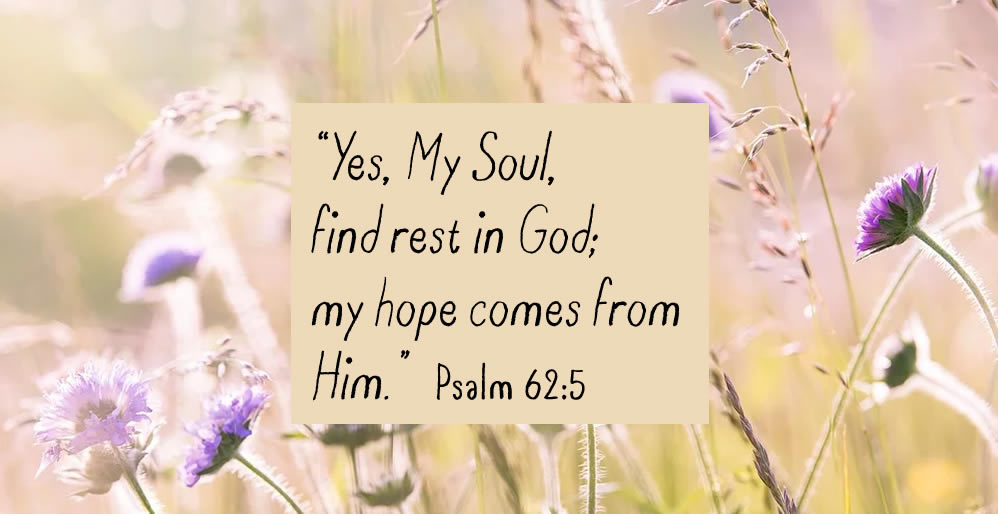

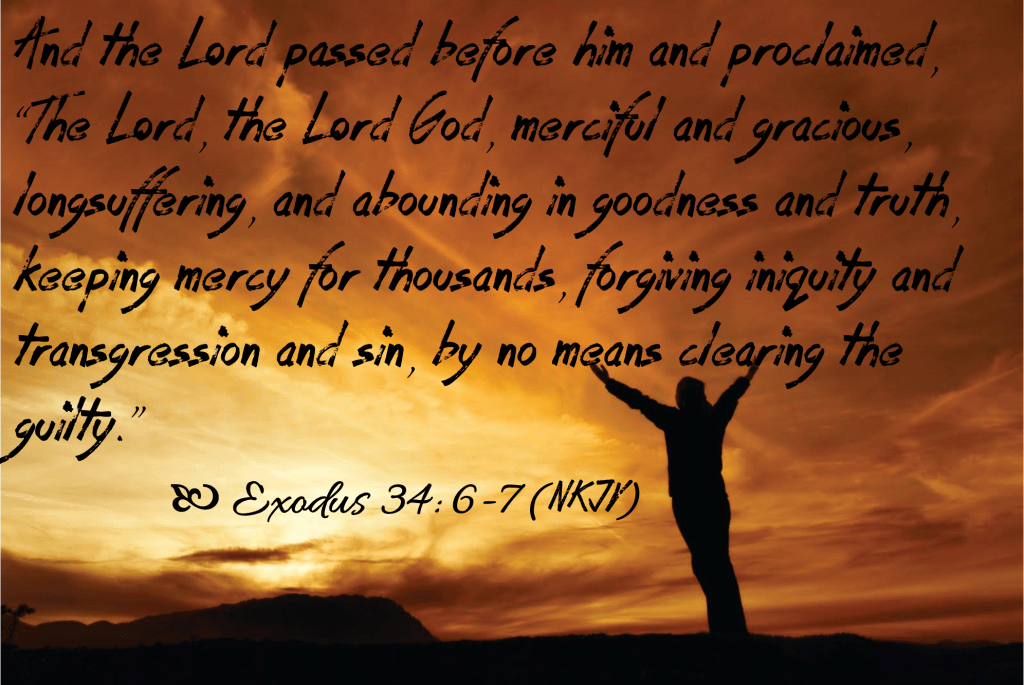






 Loving God, Living God, Loving Hope, Living Hope, Loving Living Life His Way! "Many things are possible for the person who has hope. Even more is possible for the person who has faith. And still more is possible for the person who knows how to love. But everything is possible for the person who practices all three virtues." - Brother Lawrence (1605-1691), Practicing the Presence of God (1692).