Romans 15:4 "For whatever was written in earlier times was written for our instruction, so that through perseverance and the encouragement of the Scriptures we might have hope."
47 Now when the centurion saw what had taken place, he began praising and honoring God, saying, “Certainly this Man was innocent.”
Word of God for the Children of God
Glory be to the Father, and to the Son, and to the Holy Ghost; as it was in the beginning, is now, and ever shall be, world without end. Amen, amen.
We cannot, have not understood the cross unless it has changed us personally.
After Jesus “breathed his last” (Luke 23:46), Luke records for us the reactions of those who witnessed the crucifixion.
“All the crowds that had assembled for this spectacle, when they saw what had taken place, returned home beating their breasts” (v 48).
Yes, there was sadness, but once the spectacle was over, they left to get on with their lives.
Verse 49 then informs us that “all his acquaintances … stood at a distance watching”—and we can only imagine what was running through their minds.
But the most striking and the most personal reaction that
Luke captures is that of the Roman centurion, who, seeing what had happened, “praised God, saying, ‘Certainly this man was innocent!’”—or, as the NIV renders it, “Surely this was a righteous man.”
Here, amid the darkness of hypocritical religious leaders, cynical rulers, and callous passersby, is a glimmer of light.
Perhaps the last person we would expect to see the truth—a man with no previous connection to Jesus, no background in Old Testament studies, and no predisposition to the things of God—This Roman Centurion, not only grasped the significance of what he was looking at but responded personally to it too!
He saw “what had taken place”—heard the words of Jesus, saw the darkness overhead, the manner of His death—and realized,
Here is no ordinary man. Here is a man who is different from every other man. Here is a man who is entirely innocent, wholly righteous.
Indeed, Mark adds that the centurion confessed that the man on the cross was “the Son of God” (Mark 15:39).
With his eye for detail, Luke places a clear emphasis on seeing what took place on the cross.
He probably hoped that some readers would remember that when Jesus had read from the scroll of Isaiah earlier in His ministry, He had said, “The Spirit of the Lord … has anointed me to proclaim good news to the poor … to proclaim liberty to the captives and recovering of sight to the blind” (Luke 4:18).
Indeed, a great theme found throughout the Gospel of Luke is that of darkness being invaded by light—the confusion and rock hardness of people’s hearts and their minds being invaded by this vision of the liberating power of God’s truth.
Any attempt to articulate Christianity that denies the centrality of the cross can never lead to saving faith.
And while we do not always understand how the Spirit moves in leading men and women to be born again, our message must always and ever be the same: “Christ crucified” (1 Corinthians 1:23).
It is beholding the cross that brings life for anyone who responds to the man who hung there by confessing who He is and praising God for His saving work.
Unless and until the cross becomes 100% personal to us, it is useless for us.
So, when was the last time you simply looked at your Savior on the cross and tried to grasp the fullest magnitude of this moment and knelt to praised God?
In the name of God, the father and God the son and God the Holy Spirit
Praying …
The Works and the Word of God.
To the Chief Musician. A Psalm of David.
19 The heavens are telling of the glory of God; And the expanse [of heaven] is declaring the work of His hands. 2 Day after day pours forth speech, And night after night reveals knowledge. 3 There is no speech, nor are there [spoken] words [from the stars]; Their voice is not heard. 4 Yet their voice [in quiet evidence] has gone out through all the earth, Their words to the end of the world. In them and in the heavens He has made a tent for the sun, 5 Which is as a bridegroom coming out of his chamber; It rejoices as a strong man to run his course. 6 The sun’s rising is from one end of the heavens, And its circuit to the other end of them; And there is nothing hidden from its heat.
7 The law of the Lord is perfect (flawless), restoring and refreshing the soul; The statutes of the Lord are reliable and trustworthy, making wise the simple. 8 The precepts of the Lord are right, bringing joy to the heart; The commandment of the Lord is pure, enlightening the eyes. 9 The fear of the Lord is clean, enduring forever; The judgments of the Lord are true, they are righteous altogether. 10 They are more desirable than gold, yes, than much fine gold; Sweeter also than honey and the drippings of the honeycomb. 11 Moreover, by them Your servant is warned [reminded, illuminated, and instructed]; In keeping them there is great reward. 12 Who can understand his errors or omissions? Acquit me of hidden (unconscious, unintended) faults. 13 Also keep back Your servant from presumptuous (deliberate, willful) sins; Let them not rule and have control over me. Then I will be blameless (complete), And I shall be acquitted of great transgression. 14 Let the words of my mouth and the meditation of my heart Be acceptable and pleasing in Your sight, O Lord, my [firm, immovable] rock and my Redeemer.
Glory be to the Father, and to the Son, and to the Holy Ghost; as it was in the beginning, is now, and ever shall be, world without end. Amen, amen.
46 Three days later they found Him in the [court of the] temple, sitting among the teachers, both listening to them and asking them questions. 47 All who heard Him were amazed by His intelligence and His understanding and His answers. 48 When they saw Him, they were overwhelmed; and His mother said to Him, “Son, why have You treated us like this? Listen, Your [a]father and I have been [greatly distressed and] anxiously looking for You.” 49 And He answered, “Why did you have to look for Me? Did you not know that I had to be [b]in My Father’s house?” 50 But they did not understand what He had said to them.
The Word of God for the Children of God.
Glory be to the Father, and to the Son, and to the Holy Ghost; as it was in the beginning, is now, and ever shall be, world without end. Amen, amen.
Ponder their thoughts, picture the aged faces of the religious Doctors in the Jerusalem temple courtyard for those three days. They reveal to us a wide eyed mixture of astonishment, bewilderment, curiosity, true mystery and delight.
Some even show the beginning shades of alarm. These men are used to having all the answers, teaching all the answers, and giving all the answers, daily to be impressing others with their knowledge, and finding special fellowship with one another as members of the elite teaching class. But now listen to all those questions a 12-year-old boy, pushing them into places where no one else goes.
Eventually these experts start asking Jesus questions. At first their questions are fairly simple, aiming to gauge the depth of the boy’s knowledge. But then the questions get harder, intending to humble the boy and put him in his place.
At some point the answers he gives and the budding authority with which he speaks lead them to voice questions they themselves have wondered about.
A whole day of scholarly discussion flies by, and then another, and another.
Eventually the boy’s mother and father show up. The anxious parents hardly dare enter the circle of experts, but after three days of looking for Jesus, Mary can’t keep still. She demands to know: “Son, why have you treated us like this?”
Jesus’ answer likely surprises the religious Doctors even more, as it stirs up something deep inside Mary’s wondering heart hearing: “Didn’t you know I had to be in my Father’s house?” Clearly, this boy is someone worth watching!
Jesus doesn’t tell Anyone: “I am staying behind in the Temple!”
A disquieting situation is it not? Was 12 years old Jesus being willful, simply distracted, or purposeful when He stayed behind in the Temple at a young age?
What was going through His mind at the time? Was there something greater working within His young heart that motivated Him to linger in Jerusalem?
Let’s examine the backstory and some clues we see in Scripture.
1. Jesus Chose to Cultivate His Understanding
Why did Jesus stay behind in the Temple?
He chose to remain there because He was a good Jewish boy who desired to cultivate His understanding of the Scriptures.
Every year, Jewish believers are covenanted to celebrate the Passover.
Jesus’ hometown of Nazareth was about 80 miles from the Temple.
The narrative in Luke 2:41-52 likely did not describe Jesus’ first Passover trip to Jerusalem; but at the inquisitive age of 12, He was finally old enough to take His own place as a young law-keeping adult male in the thriving religious Temple community. Jesus would become a bar mitzvah, or “son of the commandment.”
At the Temple, Jesus would see the priests sacrificing innocent lambs to cover the sins of God’s people. We don’t know whether Jesus understood that these Temple sacrifices pointed to a future sacrifice as described by Isaiah. But Jesus’ parents and teachers likely taught Him about the promised “seed of a woman” that would crush the head of Satan (Genesis 3:15).
Whether or not the Synagogue and Sabbath school at Nazareth were fully constructed when Jesus was a child, He likely had ample religious training in His hometown.
Raised as an ordinary Jewish boy, He would learn about the Jewish feast days and the stories, commands, and God’s promises written in the Old Testament.
Knowing their son’s unique birth and calling, Joseph and Mary probably did all they could to promote His spiritual growth; but Jesus appears to have taken the initiative, without His parent’s awareness, to independently learn on His own.
2. Jesus is Acutely Aware of, committed to his Father’s Business
Why did Jesus stay behind in the Temple?
He was committed to tending to the Father’s business wherever it would lead.
When His parents asked why He caused them so much pain in looking for Him, Jesus asked them, “Why did you seek Me? why did you not know that I must be about My Father’s business?” (Luke 2:49).
In The Message version, this verse reads,
“Why were you looking for me? Didn’t you know that Ihad to be here, dealing with the things of my Father?”
Wondering; Why didn’t they automatically know He absolutely had to be there?
Didn’t they know all the habits, and ways of their son?
In His response, Jesus did not downplay His parents’ feelings or the time they had spent rigorously, vigorously, searching for Him. He was not disrespectful.
Rather, something profound was at work in His life. He wanted Joseph and Mary to know that He didn’t want to miss a moment of doing His Father’s business.
By this time, Jesus knew about His real Father: He called God “my Father” (verse 49).]
Perhaps Jesus learned about God’s plan for His life from His parents.
Maybe the Holy Spirit directly spoke to Him about His calling.
Jesus may have understood that His Father in heaven was preparing Him for a great and wondrous task, and even as a twelve-year-old, he was stirred enough to get busy, desired to increase His own understanding of His Father God’s will.
The young Messiah would grow in knowledge to follow God’s calling, even if no one understood, and even if it brought Him and those He loved personal pain.
Joseph and Mary were very baffled by Jesus’ response to them, yet there was no mention of their taking him aside and scolding Him.
Mary had pondered long and hard of many things, she knew well her son was born of the Spirit (Luke 1:35) and God had a specific purpose in sending Him.
Perhaps, like most Jews, Mary pondered everything but did not understand the Messiah’s two advents; but she fully rejoiced in God as Savior and for honoring her in God’s blessing her to be the birth mother of the Messiah (Luke 1:46-55).
From Simeon’s announcement (Luke 2:35), Mary also knew God’s purpose for Jesus would eventually, deeply wound her soul. She likely did not completely understand Jesus’ mission, He had come to sacrifice everything, die as the Lamb of God, but she knew He would someday rule over an everlasting kingdom.
3. Forewarning: Jesus’ intent to Confound the Religious Leaders
Why did Jesus Stay Behind in the Temple?
He had some questions. But He volunteered some answers to the religious leaders’ and teachers’ questions too. His responses deeply confounded them.
Jesus was probably a good student of the Scriptures in His childhood, listening carefully to His teachers. He learned to read, recite, memorize portions of the Tanakh.
Perhaps Mary and Joseph had created other ingenious ways to encourage His natural curiosity.
In the Luke 2 account, Jesus sat with the teachers in the Temple and absorbed their teachings.
His questions likely were highly thought-provoking.
And as if that were not enough, Jesus answered their probing questions.
Imagine the elders scratching their collective heads or stroking their beards as He spoke. They were confounded and amazed, Luke says, by Jesus’ wisdom and authority and understanding. That doesn’t mean they approved of His words.
In “The Son of God at 12 Years Old,” John Piper noted that Jesus knew and loved the law from an early age.
Piper also wrote, “Maybe the teachers of the law did not care for the implication of Jesus’ answers; but then a 12 year old is no threat. They can pat him on the head and say, ‘Smart kid,’ and return to their hair splitting and their hypocrisy.”
At this most crucial time in His young Jewish life, Jesus demonstrated that the far reaching scope of His bar mitzvah was indescribably far from ordinary.
Fully God and fully man, Jesus still continues to confound our finite thinking.
How, for example, can someone who is fully God, who already knows it all, “increase in wisdom” and “in favor with God” as Jesus did (Luke 2:52)?
Young Jesus’ insight into the Scriptures, His relationship with Father God were unique and telling. Sadly, although the elders marveled at His wisdom at age twelve, only two decades later the religious leaders despised and crucified Him.
4. Jesus Displayed Godly Character
Why did Jesus stay behind in the Temple?
In the will of God, to display not only His wisdom but also His humility and obedience.
In His childhood, Jesus observed how Joseph and Mary loved and obeyed the law of God, and His parents likely taught Jesus and His earthly siblings how to be godly, faith-filled, humble and obedient to the Commandments of God..
When Joseph and Mary believed that Jesus was missing after one day of their journey home, they searched for Him.
We know from verse 44 that they assumed Jesus was safe with relatives or friends in their traveling group, or perhaps with some playmates.
But when Jesus didn’t show up in their search they were rightly upset, worried Jesus was lost or even hurt. They immediately searched, returned to Jerusalem to look. Now, imagine how panicked they rushed to Jesus’ side in the Temple.
Jesus could have become argumentative, emphasizing that He was now an “adult.” Instead, He respectfully illustrated His submissive spirit and godly character as He obeyed Joseph and Mary in returning home with them.
Perhaps the religious leaders watched this scene, observing that Jesus obeyed the commandment of Exodus 20:12 to honor His parents. The whole experience would be yet another situation for Mary to treasure and ponder.
Jesus seemed mature for His age, but He still had to grow in the knowledge of the Scriptures. He would yet have many opportunities to practice the Word, will, and ways of His Father before He would be fully prepared for ministry.
Unlike young Samuel, who grew up in the Temple, Jesus returned to Nazareth.
In God’s plan, Jesus rubbed shoulders with the common people and observed their struggles with temptation and sin’s curse. The Bible says He was tempted in all ways like all humans, yet was without sin (Hebrews 4:15).
His character was impeccable.
Jesus developed physically after the Temple experience, but He continued to grow in other ways as well (Luke 2:52): mentally (with wisdom), socially (in favor with people), and spiritually (in favor with God).
Jesus’ encounter with the Temple elders was the last time we read about Him until His storyline jumps to His baptism by his cousin John (Matt. 3:13-17).
From His temple experience, the young Jesus teaches us many things — things Christians are instructed to do in the New Testament.
We are to choose (take the initiative) to learn more about God and His purposes in Scripture; to commit to obey the Father’s will in our calling from Him; to ask questions to grow in the grace and knowledge of God—even though our so many questions may confound or even surprise our spiritual leaders; and to shine with a growing, and maturing godly characterinside an ever closely watching world.
In the name of God, the Father and God the Son and God the Holy Spirit,
Psalm 19 Amplified Bible
The Works and the Word of God.
To the Chief Musician. A Psalm of David.
19 The heavens are telling of the glory of God; And the expanse [of heaven] is declaring the work of His hands. 2 Day after day pours forth speech, And night after night reveals knowledge. 3 There is no speech, nor are there [spoken] words [from the stars]; Their voice is not heard. 4 Yet their voice [in quiet evidence] has gone out through all the earth, Their words to the end of the world. In them and in the heavens He has made a tent for the sun, 5 Which is as a bridegroom coming out of his chamber; It rejoices as a strong man to run his course. 6 The sun’s rising is from one end of the heavens, And its circuit to the other end of them; And there is nothing hidden from its heat.
7 The law of the Lord is perfect (flawless), restoring and refreshing the soul; The statutes of the Lord are reliable and trustworthy, making wise the simple. 8 The precepts of the Lord are right, bringing joy to the heart; The commandment of the Lord is pure, enlightening the eyes. 9 The fear of the Lord is clean, enduring forever; The judgments of the Lord are true, they are righteous altogether. 10 They are more desirable than gold, yes, than much fine gold; Sweeter also than honey and the drippings of the honeycomb. 11 Moreover, by them Your servant is warned [reminded, illuminated, and instructed]; In keeping them there is great reward. 12 Who can understand his errors or omissions? Acquit me of hidden (unconscious, unintended) faults. 13 Also keep back Your servant from presumptuous (deliberate, willful) sins; Let them not rule and have control over me. Then I will be blameless (complete), And I shall be acquitted of great transgression. 14 Let the words of my mouth and the meditation of my heart Be acceptable and pleasing in Your sight, O Lord, my [firm, immovable] rock and my Redeemer.
Glory be to the Father, and to the Son, and to the Holy Ghost; as it was in the beginning, is now, and ever shall be, world without end. Amen, amen.
5 When Jesus came to where Zacchaeus was, he looked up and saw him in the tree. Jesus said, “Zacchaeus, hurry! Come down! I must stay at your house today.”
6 Zacchaeus hurried and came down. He was happy to have Jesus in his house.
The Word of God for the Children of God.
Glory be to the Father, and to the Son, and to the Holy Ghost; as it was in the beginning, is now, and ever shall be, world without end. Amen, amen.
The story of Zacchaeus always fascinates me.
Zacchaeus heard that Jesus was coming to town. Word had spread about Jesus, and Zacchaeus wanted to get a glimpse of him. The crowds were so thick that Zacchaeus had to climb a tree in order to see Jesus pass by. But then Jesus stopped right in front of the tree little Zacchaeus was in, looked up at him, and said, “Zacchaeus, come down immediately. I must stay at your house today.”
The crowd overhearing this exchange was surprised—and not in a good way!
Zacchaeus was a tax collector for the Romans, and the people saw tax collectors as greedy collaborators who took advantage of the hardworking local citizens.
But then the crowd heard Jesus look and call up to only Zacchaeus.
But then the crowd witnessed Zacchaeus come down from the tree, ignoring the crowd, and what they were saying, the complaints they were voicing about him.
Then the crowd witnessed Jesus giving his full attention to Zacchaeus and not to anyone of them. None of them were being called to open their homes to Him.
Then the crowds witnessed Jesus walking and talking with Zacchaeus, walking away from the crowds and straight into the Roman Collaborators lavish home.
And not surprisingly they began to grumble and complain, get agitated at the offense of not being noticed, not being acknowledged, not even being invited.
And then finally, perhaps the last straw, they saw the door to Zacchaeus’ home being closed, probably being locked a hundred ways to Sunday, left out by Jesus.
Then they witnessed Jesus and Zacchaeus opening the door, hearing the locks being released, watching the two of them smiling, and conversing together.
But then in the days and weeks which followed, the crowd watched Zacchaeus transform. He gave generously to the poor, showed up at his neighbors’ doors, knocked, apologized, paid back four times what he had cheated from people.
This whole scene was unlike so many of Jesus’ other interactions with people.
Jesus didn’t heal Zacchaeus from a physical illness. He didn’t give Zacchaeus food or water. In fact, Jesus asked Zacchaeus for something—a place to stay.
In fact, Jesus offered Zacchaeus something he had probably given up on, had never been invited by anyone to receive hospitably – invitation to have hope.
If you’re like me, in these divided days, these suspicious days, these days when people are afraid to speak with for fear of giving offense, using all of the wrong pronouns, you might tend to wait for an invitation from someone to spend time with them—speak about Jesus to them, especially when you are “busy.” But is there anyone whom God might be prompting you to connect with Jesus today?
Risking what Jesus Risked, Reaching out in Prayer
John 17:20-26 Easy-to-Read Version
20 “I pray not only for these followers but also for those who will believe in me because of their teaching. 21 Father, I pray that all who believe in me can be one. You are in me and I am in you. I pray that they can also be one in us. Then the world will believe that you sent me. 22 I have given them the glory that you gave me. I gave them this glory so that they can be one, just as you and I are one. 23 I will be in them, and you will be in me. So they will be completely one. Then the world will know that you sent me and that you loved them just as you loved me.
24 “Father, I want these people you have given me to be with me in every place I am. I want them to see my glory—the glory you gave me because you loved me before the world was made. 25 Father, you are the one who always does what is right. The world does not know you, but I know you, and these followers of mine know that you sent me. 26 I showed them what you are like, and I will show them again. Then they will have the same love that you have for me, and I will live in them.”
With the indescribable exuberance of this new found faith, belief in Jesus, Zacchaeus had a new mission to fulfill, a new calling from God on his life.
Our own calling—our kingdom bound mission—starts with prayer. God works ever so powerfully through prayer, and we all can always go to God in prayer.
With deep faith in God, we can spend time with the Lord any time of the day.
In one of the best-known prayers in all the Bible, Jesus prays alone before His Father for you and me in John 17. What a comfort it is to read these words, see him reaching out to us. And what a role model he is for us in our life of prayer.
Many Christians and churches receive prayer requests regularly. Praying for neighbors or others (sometimes enemies?) in our life, whether for a specific request or general blessing, is a great way to participate in the work of the Lord.
We do not actually read of it happening in Luke’s Narrative, but I can envision both Zacchaeus and Jesus stopping before, in the midst of the angered crowd, to settle them down, bring peace into their lives and homes and community, and praying with and for and on behalf of those in the crowd who were stirred up.
And I can envision that the remaining life of Zacchaeus was spent leading in prayer, in community, in harmony, with his fellow villagers – in God’s name!
But I also want to encourage you to be a leader in prayer. Reaching out to others and asking “Come down from your sin and tell me How can I pray for you?” can be the exact moment of God, for God, words, exactly what people need to hear.
Joining God’s mission doesn’t necessarily mean moving to a different region or country; you can be in ministry, a missionary, right in your own neighborhood!
Many believers are often surprised that people who don’t seem to be religious will often welcome our invitation to be in prayer if they are actually being asked.
Being invited to come down from our Sycamore Trees to be a part of prayer with others reminds them that they matter, are seen not just by you, but also by God.
In the name of God, the Father and God the Son and God the Holy Spirit,
Let us Pray,
Psalm 84 Easy-to-Read Version
To the director: On the gittith. A song of praise from the Korah family.
84 Lord All-Powerful, the place where you live is so beautiful! 2 Lord, I cannot wait to enter your Temple. I am so excited! Every part of me cries out to be with the Living God. 3 Lord All-Powerful, my King, my God, even the birds have found a home in your Temple. They make their nests near your altar, and there they have their babies. 4 Great blessings belong to those who live at your Temple! They continue to praise you. Selah
5 Great blessings belong to those who depend on you for strength! Their heart’s desire is to make the trip to your Temple. 6 They travel through Baca Valley, which God has made into a place of springs. Autumn rains form pools of water there. 7 The people travel from town to town[a] on their way to Zion, where they will meet with God.
8 Lord God All-Powerful, listen to my prayer. God of Jacob, listen to me. Selah
9 God, watch over the king, our protector.[b] Be kind to him, the one you have chosen. 10 One day in your Temple is better than a thousand days anywhere else. Serving as a guard at the gate of my God’s house is better than living in the homes of the wicked. 11 The Lord God is our protector and glorious king.[c] He blesses us with kindness and honor. The Lord freely gives every good thing to those who do what is right. 12 Lord All-Powerful, great blessings belong to those who trust in you!
Glory be to the Father, and to the Son, and to the Holy Ghost; as it was in the beginning, is now, and ever shall be, world without end. Amen, amen.
25 “Now his older son was in the field, and when he came and approached the house, he heard music and dancing. 26 And he summoned one of the servants and began inquiring what these things could be. 27 And he said to him, ‘Your brother has come, and your father has killed the fattened calf because he has received him back safe and sound.’ 28 But he became angry and was not willing to go in; and his father came out and began pleading with him. 29 But he answered and said to his father, ‘Look! For so many years I have been serving you and I have never [a]neglected a command of yours; and yet you have never given me a young goat, so that I might celebrate with my friends; 30 but when this son of yours came, who has devoured your [b] wealth with prostitutes, you killed the fattened calf for him.’ 31 And he said to him, ‘Son, you [c]have always been with me, and all that is mine is yours. 32 But we had to celebrate and rejoice, for this brother of yours was dead and has begun to live, and was lost and has been found.’”
The Word of God for the Children of God.
Glory be to the Father, and to the Son, and to the Holy Ghost; as it was in the beginning, is now, and ever shall be, world without end. Amen, amen.
Overlooked No More – Eyeing A Different Kind of Lost
Romans 3:21-26 The Message
God Has Set Things Right
21-24 But in our time something new has been added. What Moses and the prophets witnessed to all those years has happened. The God-setting-things-right that we read about has become Jesus-setting-things-right for us. And not only for us, but for everyone who believes in him. For there is no difference between us and them in this. Since we’ve compiled this long and sorry record as sinners (both us and them) and proved that we are utterly incapable of living the glorious lives God wills for us, God did it for us. Out of sheer generosity he put us in right standing with himself. A pure gift. He got us out of the mess we’re in and restored us to where he always wanted us to be. And he did it by means of Jesus Christ.
25-26 God sacrificed Jesus on the altar of the world to clear that world of sin. Having faith in him sets us in the clear. God decided on this course of action in full view of the public—to set the world in the clear with himself through the sacrifice of Jesus, finally taking care of the sins he had so patiently endured. This is not only clear, but it’s now—this is current history! God sets things right. He also makes it possible for us to live in his rightness.
Let’s take time today to think about the older son in this parable.
This “GOOD OBEDIENT” son never leaves the family farm or breaks any rules, but he here breaks the father’s heart. While the father celebrates the restoration of his younger son, the older son’s heart simmers with anger and bitterness.
The father leaves the celebration for the return of the Prodigal Son and goes out to his older son and tries to reason with him – to join the party – but he refuses.
Ask yourself if our view of sin can be too limited!
We always label the younger son as the sinner while the older son strikes us as a obedient deserving saint, the kind of hardworking person God would be pleased with and would want us to be like – but why else might Dr. Luke mention him?
What lesson or lessons does Dr. Luke have on his spirit that we should observe?
That was Jesus’ second main point in this story.
Everyone thought that God wanted people to be like the teachers of the law and Pharisees—“good,” “obedient” “lawful” “conscientious” hardworking people.
But grace is unearned favor.
The Pharisees lived often graceless lives, so focused on obeying the rules and minding the traditions of man they no longer experienced the Father’s love.
They kept all kinds of rules, preached about all kinds of rules, lived and walked by all kinds of rules, but too broke God’s heart in their judgmentalism of others.
Do we observe the older son is just as much a sinner as the younger, and the prodigal Father offers him the same grace? Jesus died for all kinds of sinners?
If you are obediently slaving away for God’s favor, cone inside, accept the gift of Christ, party and celebrate grace. There’s plenty of room at God’s banquet table!
Shifting our “Obedient” Gaze – Respectable and Lost
Luke 15:28-32 The Message
28-30 “The older brother stomped off in an angry sulk and refused to join in. His father came out and tried to talk to him, but he wouldn’t listen. The son said, ‘Look how many years I’ve stayed here serving you, never giving you one moment of grief, but have you ever thrown a party for me and my friends? Then this son of yours who has thrown away your money on whores shows up and you go all out with a feast!’
31-32 “His father said, ‘Son, you don’t understand. You’re with me all the time, and everything that is mine is yours—but this is a wonderful time, and we just had to celebrate. This brother of yours was dead, and he’s alive! He was lost, and now he’s found!’”
Can we say the older brother is being a wee bit selfish, obstinate and stubborn?
We all know this type of attitude … we have all seen this type of attitude … we have lived with someone with this type of attitude and sometimes he/she is us!
Well, now, regardless of your intellects, philosophies, ideologies and theologies we are each confronted by the events and outcomes of our General Conference.
If your ideologies and theologies are more left leaning, in your spirit perhaps you’re the one’s being wildly celebrated by the Father with the “fattened calf.”
“God has finally welcomed you home and is celebrating the events of Charlotte.
Those of us whose ideologies and theologies are more right leaning are being seen, if not accused as the obstinate stubborn perhaps sulking older brother.
Refusing to acknowledge the works, wonders of God, the Father because the events of Charlotte did not meet your expectations, did not reward you with what you felt you deserved for your always being obedient and being loyal.
We all can identify with the rebellious son who went into the far country.
In all likelihood, we were once that zealous, rebellious son God celebrated.
But now some, if not most of us find ourselves standing and walking in the shoes of this obstinate sulking elder brother – outside of God’s celebration.
There is not one among us who has at sometime, including exactly right now not felt what this brother felt when he found himself gripped by jealous rage.
Perhaps it would help to analyze this a bit, to more clearly recognize the symptoms of this reaction.
Three characteristics are always present when this attitude is expressed.
The first one is a sense of being treated unfairly, of being ignored, forgotten or disregarded.
This feeling of unfair treatment is always the initial mark of a self-centered attitude.
It is the sign of crushed pride — a wounded ego — revealing the centrality of self.
The second mark is that of an over-inflated view of self.
Notice how the older brother distinctly describes his own moral superiorities.
Self-righteousness is always full of self-praise:
“Look! All these years I’ve been slaving for you.“
There is no recognition whatsoever of what he has learned through these many years, or exactly how much he has profited by the relationship with his father.
In his view it is all one way.
“And I never disobeyed your orders.”
Certainly that is not true.
No one has ever or will ever live up to that kind of a standard. Romans 3:23-24,
1 John 1:8-9 New American Standard Bible 1995
8 If we say that we have no sin, we are deceiving ourselves and the truth is not in us. 9 If we confess our sins, He is faithful and righteous to forgive us our sins and to cleanse us from all unrighteousness.
It is remarkable how conveniently he forgets the many times the father has forgiven him. Yet his view of himself is that of being completely and wholly and obediently and loyally in the right. That is always a mark of self-righteousness.
The third mark is his blame of and contempt for others.
“This son of yours…”
Can you hear and feel the deep cutting edge of contempt in that?
He does not call him his brother, and there is no gladness at his return.
He views him as someone vile and contemptible.
Also there is no love or respect for his father.
Oddly enough, the father ends up with all the blame.
“You never gave me a goat, that I might make merry with my friends; but you killed the fatted calf for this son of yours, …”
Do we right now just want to jump into the face of this contemptible wretch!
How many times have we heard that reaction expressed?
How many times have we taken no small amount of offense at that reaction?
These are the three marks of self-righteousness — the world’s most deadly sin.
Our Lord spoke of this more frequently and dealt with it more severely than of any other sin.
He could be tender and gracious toward those who were involved in adultery or drunkenness, but when he faced those self-righteous Pharisees in their smug complacency, his face reddened, his eyes widened, his words burn and scorch.
This sin is so insidious, so deadly because it is so easily disguised as justifiable.
It reveals that this older son is actually far more lost than the other was.
He, too, is in a far country — a far country of the spirit — far far removed from the father’s heart. He has never learned to share the same spirit his Father has.
As we mull over and stew over and gloat over, lament over General Conference,
Have I seen in my “older brother” self this feeling of being treated unfairly?
Of an overly obedient and loyal inflated view of myself? Of contempt for others?
Can I find even one reason, however tiny, and however insignificant, however dangerous to self, to join my Father and my brothers and sisters in celebration?
Isaiah 55:1-7 New American Standard Bible 1995
The Free Offer of Mercy
55 “Ho! Every one who thirsts, come to the waters; And you who have no [a]money come, buy and eat. Come, buy wine and milk Without money and without cost. 2 “Why do you [b]spend money for what is not bread, And your wages for what does not satisfy? Listen carefully to Me, and eat what is good, And delight yourself in abundance. 3 “Incline your ear and come to Me. Listen, that [c]you may live; And I will make an everlasting covenant with you, According to the faithful mercies [d]shown to David. 4 “Behold, I have made him a witness to the peoples, A leader and commander for the peoples. 5 “Behold, you will call a nation you do not know, And a nation which knows you not will run to you, Because of the Lord your God, even the Holy One of Israel; For He has glorified you.”
6 Seek the Lord while He may be found; Call upon Him while He is near. 7 Let the wicked forsake his way And the unrighteous man his thoughts; And let him return to the Lord, And He will have compassion on him, And to our God, For He will abundantly pardon.
God’s invitation to celebrate Him as much as He celebrates us is always open!
In the name of God, the Father and God the Son and God the Holy Spirit,
Let us Pray,
Forgive us, Lord, when we, like the older brother, turn religion into rules instead of a relationship with you. Search us, Fill us with your forgiveness and love for everyone.
1 O Lord, I give my life to you. 2 I trust in you, my God! Do not let me be disgraced, or let my enemies rejoice in my defeat. 3 No one who trusts in you will ever be disgraced, but disgrace comes to those who try to deceive others.
4 Show me the right path, O Lord; point out the road for me to follow. 5 Lead me by your truth and teach me, for you are the God who saves me. All day long I put my hope in you. 6 Remember, O Lord, your compassion and unfailing love, which you have shown from long ages past. 7 Do not remember the rebellious sins of my youth. Remember me in the light of your unfailing love, for you are merciful, O Lord.
8 The Lord is good and does what is right; he shows the proper path to those who go astray. 9 He leads the humble in doing right, teaching them his way. 10 The Lord leads with unfailing love and faithfulness all who keep his covenant and obey his demands.
11 For the honor of your name, O Lord, forgive my many, many sins. 12 Who are those who fear the Lord? He will show them the path they should choose. 13 They will live in prosperity, and their children will inherit the land. 14 The Lord is a friend to those who fear him. He teaches them his covenant. 15 My eyes are always on the Lord, for he rescues me from the traps of my enemies.
16 Turn to me and have mercy, for I am alone and in deep distress. 17 My problems go from bad to worse. Oh, save me from them all! 18 Feel my pain and see my trouble. Forgive all my sins. 19 See how many enemies I have and how viciously they hate me! 20 Protect me! Rescue my life from them! Do not let me be disgraced, for in you I take refuge. 21 May integrity and honesty protect me, for I put my hope in you.
22 O God, ransom Israel from all its troubles.
Glory be to the Father, and to the Son, and to the Holy Ghost; as it was in the beginning, is now, and ever shall be, world without end. Amen, amen.
15 Now all the tax collectors and the [a]sinners were coming near Him to listen to Him. 2 Both the Pharisees and the scribes began to grumble, saying, “This man receives sinners and eats with them.”
3 So He told them this parable, saying, 4 “What man among you, if he has a hundred sheep and has lost one of them, does not leave the ninety-nine in the [b]open pasture and go after the one which is lost until he finds it? 5 When he has found it, he lays it on his shoulders, rejoicing. 6 And when he comes home, he calls together his friends and his neighbors, saying to them, ‘Rejoice with me, for I have found my sheep which was lost!’ 7 I tell you that in the same way, there will be more joy in heaven over one sinner who repents than over ninety-nine righteous persons who need no repentance.
The Word of God for the Children of God.
Glory be to the Father, and to the Son, and to the Holy Ghost; as it was in the beginning, is now, and ever shall be, world without end. Amen, amen.
Ninety-nine and One
Luke 15:1-2 Amplified Bible
The Lost Sheep
15 Now all the tax collectors and sinners [including non-observant Jews] were coming near Jesus to listen to Him. 2 Both the Pharisees and the scribes began muttering and complaining, saying, “This man accepts and welcomes sinners and eats with them.”
There is this famous saying among Jewish rabbis:
“Whoever saves one soul, saves the whole world.”
Its wisdom is deeper than what is called “common sense.”
It is deeper than the famous Zen saying,
“Imagine the sound of one hand clapping,” which is designed to jar a person into moving beyond the limits of reason.
Some people are “numbers people,” and their contribution to the orderly functioning of society and the body of Christ is indispensable.
But in order to understand Luke’s Gospel narrative, Jesus’ story of the shepherd who leaves a flock of 99 to go search for just one lost sheep, we must remember how God made each of us in his own image.
From the first words of Genesis to the last words of Revelation, holy scripture repeatedly emphasizes and speaks about the infinite value of one single human being because each and every single one of us humans are made in God’s image.
C. S. Lewis rightly criticized the vulgarity of those who will seek to make us feel as insignificant as the dust because the universe is so huge and we are so small.
Christian Missionaries definitely treasure this single parable because they must sometimes work many years in a stubborn land to lead one lost person to Christ.
Never allow yourself to think that you count for nothing.
Think instead upon: Christ who lived, ministered among us and died to rekindle the spark of the image of God placed within His church that makes us human.
God and all of those Unthinking Sheep of His Pasture
Luke 15:3-7 Amplified Bible
3 So He told them this parable: 4 “What man among you, if he has a hundred sheep and loses one of them, does not leave the ninety-nine in the wilderness and go after the one which is lost, [searching] until he finds it? 5 And when he has found it, he lays it on his shoulders, rejoicing. 6 And when he gets home, he calls together his friends and his neighbors, saying to them, ‘Rejoice with me, because I have found my lost sheep!’ 7 I tell you, in the same way there will be more joy in heaven over one sinner who repents than over ninety-nine righteous people who have no need of repentance.
There is something unusual about sheep.
Unlike other animals they do not often deliberately run away.
A cat or dog who wants to be free, given a chance, will leave, just like that.
But sheep do not.
They only wander away.
They do not mean to.
This is the picture our Lord gives us of certain people who do not intend to get lost; they do not originally intend to wander or run away and waste their lives.
They do not intend to wander off into something dangerous and destructive.
But, little by little, concentrating only on the now, present, they wander away.
Eventually they wake up to realize they are lost, that life is suddenly empty, that their hearts are burdened, heavy with guilt — will not know how it happened.
They are not happy to be lost; they hate it.
They long to belong.
There are millions like this today.
Some are poor and obscure.
Some are intent on simply making a living, on feeding themselves.
Some are rich and prominent.
All over this vast globe, people are suffering from destination sickness, i.e. the sickness of those who have already arrived at their destination, who have all they want; but they sadly discover that they do not want anything they have.
Notice the shepherd’s response.
He left the ninety and nine in the wilderness and went after the one.
That pictures the activity of God, as expressed in the person of the Lord Jesus himself. He left everything to come and find us.
As Paul states it so wonderfully in the letter to the Philippians, he did not count the fact that he was equal with God a thing to be held on to, but instead emptied himself, took upon himself the form of a servant, and was found in the likeness of men (Philippians 2:6-7). He left, and he came.
Philippians 2:5-11 Amplified Bible
5 Have this same attitude in yourselves which was in Christ Jesus [look to Him as your example in selfless humility], 6 who, although He existed in the form and unchanging essence of God [as One with Him, possessing the fullness of all the divine attributes—the entire nature of deity], did not regard equality with God a thing to be grasped or asserted [as if He did not already possess it, or was afraid of losing it]; 7 but emptied Himself [without renouncing or diminishing His deity, but only temporarily giving up the outward expression of divine equality and His rightful dignity] by assuming the form of a bond-servant, and being made in the likeness of men [He became completely human but was without sin, being fully God and fully man]. 8 After He was found in [terms of His] outward appearance as a man [for a divinely-appointed time], He humbled Himself [still further] by becoming obedient [to the Father] to the point of death, even death on a cross. 9 For this reason also [because He obeyed and so completely humbled Himself], God has highly exalted Him and bestowed on Him the name which is above every name, 10 so that at the name of Jesus [a]every knee shall bow [in submission], of those who are in heaven and on earth and under the earth, 11 and that every tongue will confess and openly acknowledge that Jesus Christ is Lord (sovereign God), to the glory of God the Father.
In worship services it is common to sing songs of praise and hymns to God our Savior.
In many ways, the Apostles’ Creed is like a hymn, and many songs have been composed from the words of this creed.
The Bible includes many song texts as well, and this reading from Philippians 2 includes one of them.
This text in verses 6-11 appears to be a hymn (or part of one) that was recited and sung by early Christians in the first century.
And the apostle Paul uses it to summarize a number of important teachings as he urges readers to “have the same mindset as Christ Jesus.”
In some ways like the Apostles’ Creed, this ancient hymn tells us who Jesus is, what he willingly sacrificed for us, and what will happen when he comes again.
Imagine yourself in a worship service 2,000 years ago, surrounded by sisters and brothers in the Lord and singing these words together.
Then reread (or even sing) this ancient hymn that has echoed down through the centuries. Reflect long and meditate much upon the deep, life-changing truths we can each celebrate only because of “Jesus, Christ, God’s only Son, our Lord.”
This hymn in Scripture, like the Apostle’s Creed, allows God’s Word to settle deep into our hearts and souls. And it calls us to humble ourselves like Jesus in all our relationships as we seek to live for God by loving and serving each other.
Finally, notice Luke emphasizes all the rejoicing over the recovery of the lost.
Luke 15:5-7 Amplified Bible
5 And when he has found it, he lays it on his shoulders, rejoicing. 6 And when he gets home, he calls together his friends and his neighbors, saying to them, ‘Rejoice with me, because I have found my lost sheep!’ 7 I tell you, in the same way there will be more joy in heaven over one sinner who repents than over ninety-nine righteous people who have no need of repentance.
This reveals the high value that God sets his sights on all lost men and women.
They are never worthless in his sight. They are made in his image and are of unspeakable value to God. They bear his own image, marred and ruined as that image may be, and he longs to find them and reach them all, restore them all.
Do I feel the same spirit of compassion as the God who longs to reach the lost?
Am I involving myself in this greatest enterprise of God to find these people?
Matthew 28:16-20 Amplified Bible
The Great Commission
16 Now the eleven disciples went to Galilee, to the mountain which Jesus had designated. 17 And when they saw Him, they worshiped Him; but some doubted [that it was really He]. 18 Jesus came up and said to them, “All authority (all power of absolute rule) in heaven and on earth has been given to Me. 19 Go therefore and make disciples of all the nations [help the people to learn of Me, believe in Me, and obey My words], baptizing them in the name of the Father and of the Son and of the Holy Spirit, 20 teaching them to observe everything that I have commanded you; and lo, I am with you always [remaining with you perpetually—regardless of circumstance, and on every occasion], even to the end of the age.”
To what degree, measure of Spirit does the Body of Christ, the Church which is supposed to go to all the ends of the earth (Acts 1:8) authentically participate?
To what degree, measure of Spirit does the Body of Christ, the Church which is supposed to go to all the ends of the earth (Acts 1:8) authentically value all life?
IF, and that is definitely a GOD sized IF, we ARE the authentic Body of Christ …
What of all those “99’s?”
What of all those “1’s?”
What of our 100% rejoicing for God with the same measure God rejoices for us?
In the name of God, the Father and God the Son and God the Holy Spirit,
Let us Pray,
For the ninety nine and the one. Jesus, out of love, you poured out your life for us; now help us, out of love, to pour out our lives for each other. In your name, Amen.
Psalm 139 New American Standard Bible 1995
God’s Omnipresence and Omniscience.
For the choir director. A Psalm of David.
139 O Lord, You have searched me and known me. 2 You know [a]when I sit down and [b]when I rise up; You understand my thought from afar. 3 You [c]scrutinize my [d]path and my lying down, And are intimately acquainted with all my ways. 4 [e]Even before there is a word on my tongue, Behold, O Lord, You know it all. 5 You have enclosed me behind and before, And laid Your hand upon me. 6 Such knowledge is too wonderful for me; It is too high, I cannot attain to it.
7 Where can I go from Your Spirit? Or where can I flee from Your presence? 8 If I ascend to heaven, You are there; If I make my bed in [f]Sheol, behold, You are there. 9 If I take the wings of the dawn, If I dwell in the remotest part of the sea, 10 Even there Your hand will lead me, And Your right hand will lay hold of me. 11 If I say, “Surely the darkness will [g]overwhelm me, And the light around me will be night,” 12 Even the darkness is not dark [h]to You, And the night is as bright as the day. Darkness and light are alike to You.
13 For You formed my [i]inward parts; You wove me in my mother’s womb. 14 I will give thanks to You, for [j]I am fearfully and wonderfully made; Wonderful are Your works, And my soul knows it very well. 15 My [k]frame was not hidden from You, When I was made in secret, And skillfully wrought in the depths of the earth; 16 Your eyes have seen my unformed substance; And in Your book were all written The days that were ordained for me, When as yet there was not one of them.
17 How precious also are Your thoughts to me, O God! How vast is the sum of them! 18 If I should count them, they would outnumber the sand. When I awake, I am still with You.
19 O that You would slay the wicked, O God; Depart from me, therefore, men of bloodshed. 20 For they speak [l]against You wickedly, And Your enemies [m]take Your name in vain. 21 Do I not hate those who hate You, O Lord? And do I not loathe those who rise up against You? 22 I hate them with the utmost hatred; They have become my enemies.
23 Search me, O God, and know my heart; Try me and know my anxious thoughts; 24 And see if there be any [n]hurtful way in me, And lead me in the everlasting way.
Glory be to the Father, and to the Son, and to the Holy Ghost; as it was in the beginning, is now, and ever shall be, world without end. Amen, amen.
19 Pilate then took Jesus and [a]scourged Him. 2 And the soldiers twisted together a crown of thorns and put it on His head, and put a purple robe on Him; 3 and they began to come up to Him and say, “Hail, King of the Jews!” and to give Him slaps in the face. 4 Pilate came out again and *said to them, “Behold, I am bringing Him out to you so that you may know that I find no guilt in Him.” 5 Jesus then came out, wearing the crown of thorns and the purple robe. Pilate *said to them, “Behold, the Man!” 6 So when the chief priests and the officers saw Him, they cried out saying, “Crucify, crucify!” Pilate *said to them, “Take Him yourselves and crucify Him, for I find no guilt in Him.” 7 The Jews answered him, “We have a law, and by that law He ought to die because He made Himself out to be the Son of God.”
8 Therefore when Pilate heard this statement, he was even more afraid; 9 and he entered into the [b]Praetorium again and *said to Jesus, “Where are You from?” But Jesus gave him no answer. 10 So Pilate *said to Him, “You do not speak to me? Do You not know that I have authority to release You, and I have authority to crucify You?” 11 Jesus answered, “You would have no authority [c]over Me, unless it had been given you from above; for this reason he who delivered Me to you has the greater sin.” 12 As a result of this Pilate [d]made efforts to release Him, but the Jews cried out saying, “If you release this Man, you are no friend of Caesar; everyone who makes himself out to be a king [e] opposes Caesar.”
13 Therefore when Pilate heard these words, he brought Jesus out, and sat down on the judgment seat at a place called [f]The Pavement, but in [g]Hebrew, Gabbatha. 14 Now it was the day of preparation for the Passover; it was about the [h]sixth hour. And he *said to the Jews, “Behold, your King!” 15 So they cried out, “Away with Him, away with Him, crucify Him!” Pilate *said to them, “Shall I crucify your King?” The chief priests answered, “We have no king but Caesar.”
The Word of God for the Children of God.
Glory be to the Father, and to the Son, and to the Holy Ghost; as it was in the beginning, is now, and ever shall be, world without end. Amen, amen.
Whose praise will you live for?
When Christ was put on trial before Pilate, the Roman governor repeatedly declared His innocence—and yet he paired his declarations with dreadful acts against Him.
Pilate said, “I find no guilt in him”—and then handed Jesus over to be brutally flogged, a beating so intense that it sometimes caused gashes and lacerations where veins, arteries, and internal organs would be exposed.
Pilate said, “I find no guilt in him”—and then let the soldiers humiliate Jesus with a mock coronation, placing a crown of thorns upon His head, dressing Him up, and scornfully “worshiping” Him.
Pilate said, “I find no guilt in him”—but did he release Jesus?
No, he surrendered Jesus to a vicious execution squad to be killed.
There was never a more tormented individual that met Christ than Pilate.
Here was a man who possesses great authority, everyone around him is afraid, a man of great power who utterly lacked the courage to stand by his convictions.
Here was a man with great political influence, with the power of life and death in his words, of great success but who also ultimately compromised all of his authority, showing himself under the trappings of his position to be a coward.
Here was a governor who was governed on the outside by his office, his uniform and an Emperors appointment, edict, but in the inside by his own weaknesses.
We cannot be neutral nor passive or indecisive regarding who Christ is to us.
We cannot be neutral nor passive or indecisive regarding who the world is and what the world represents to us and to what the world would prefer to do to us.
Is He the Savior or is He no one?
To abstain from a decision about this, to not be accountable, to not be even minimally responsible as Pilate sought to do and be, in the presence of those crowds who wrongfully brought Christ, is to abstain from Christ altogether.
Pilate stands as a great challenge to each of us.
Matthew 16:24-27 Amplified Bible
Discipleship Is Costly
24 Then Jesus said to His disciples, “If anyone wishes to follow Me [as My disciple], he must deny himself [set aside selfish interests], and take up his cross [expressing a willingness to endure whatever may come] and follow Me [believing in Me, conforming to My example in living and, if need be, suffering or perhaps dying because of faith in Me]. 25 For whoever wishes to save his life [in this world] will [eventually] lose it [through death], but whoever loses his life [in this world] for My sake will find it [that is, life with Me for all eternity]. 26 For what will it profit a man if he gains the whole world [wealth, fame, success], but forfeits his soul? Or what will a man give in exchange for his soul? 27 For the Son of Man is going to come in the glory and majesty of His Father with His angels, and then He will repay each one in accordance with what he has done.
Mark 8:34-38 Amplified Bible
34 Jesus called the crowd together with His disciples, and said to them, “If anyone wishes to follow Me [as My disciple], he must deny himself [set aside selfish interests], and [a]take up his cross [expressing a willingness to endure whatever may come] and follow Me [believing in Me, conforming to My example in living and, if need be, suffering or perhaps dying because of faith in Me]. 35 For whoever wishes to save his life [in this world] will [eventually] lose it [through death], but whoever loses his life [in this world] for My sake and the gospel’s will save it [from the consequences of sin and separation from God]. 36 For what does it benefit a man to gain the whole world [with all its pleasures], and forfeit his soul? 37 For what will a man give in exchange for his soul and eternal life [in God’s kingdom]? 38 For whoever is ashamed [here and now] of Me and My words in this adulterous and sinful generation, the Son of Man will also be ashamed of him when He comes in the glory of His Father with the holy angels.”
Luke 9:18-26 Amplified Bible
18 Now it happened that as Jesus was praying privately, the disciples were with Him, and He asked them, “Who do the crowds say that I am?” 19 They answered, “John the Baptist, and some say, Elijah; but others, that one of the ancient prophets has come back to life.” 20 And He said to them, “But who do you say that I am?” Peter replied, “The Christ (the Messiah, the Anointed) of God!” 21 But He strictly warned and admonished them not to tell this to anyone, 22 saying, “The Son of Man must suffer many things and be rejected [as the Messiah] by the elders and chief priests and scribes (Sanhedrin, Jewish High Court), and be put to death, and on the third day be raised up [from death to life].”
23 And He was saying to them all, “If anyone wishes to follow Me [as My disciple], he must deny himself [set aside selfish interests], and take up his cross daily [expressing a willingness to endure whatever may come] and follow Me [believing in Me, conforming to My example in living and, if need be, suffering or perhaps dying because of faith in Me]. 24 For whoever wishes to save his life [in this world] will [eventually] lose it [through death], but whoever loses his life [in this world] for My sake, he is the one who will save it [from the consequences of sin and separation from God]. 25 For what does it profit a man if he gains the whole world [wealth, fame, success], and loses or forfeits himself? 26 For whoever is ashamed [here and now] of Me and My words, the Son of Man will be ashamed of him when He comes in His glory and the glory of the [heavenly] Father and of the holy angels.
Pilate’s conduct compels us to ask ourselves some very serious questions:
In what situations do I, do we, like Pilate, know the right thing to do in some way and yet fear what other people will say if I do it?
In what situations do we, the church, like Pilate, know the right thing to do in some way and yet fear more what the world will do to us, crucify us publicly for?
Are there ways in which my words or conduct or convictions are governed more by the expectations and reaction of great clouds of others, or by considerations of wealth, position, or promotion, than by God’s uncompromising commands?
Let’s not compromise on our position regarding Christ.
If we let the opinions of our colleagues, our neighbors, or our families concern us too much, we may find ourselves giving up forgiveness, peace, heaven, and Christ Himself in exchange for an easier life now. Instead, let’s be courageous.
Joshua 1:1-9 New American Standard Bible 1995
God’s Charge to Joshua
1 Now it came about after the death of Moses the servant of the Lord, that the Lord spoke to Joshua the son of Nun, Moses’ [a]servant, saying, 2 “Moses My servant is dead; now therefore arise, cross this Jordan, you and all this people, to the land which I am giving to them, to the sons of Israel. 3 Every place on which the sole of your foot treads, I have given it to you, just as I spoke to Moses. 4 From the wilderness and this Lebanon, even as far as the great river, the river Euphrates, all the land of the Hittites, and as far as the Great Sea toward the setting of the sun will be your territory. 5 No man will be able to stand before you all the days of your life. Just as I have been with Moses, I will be with you; I will not fail you or forsake you. 6 Be strong and courageous, for you shall give this people possession of the land which I swore to their fathers to give them. 7 Only be strong and very courageous; [b]be careful to do according to all the law which Moses My servant commanded you; do not turn from it to the right or to the left, so that you may [c]have success wherever you go. 8 This book of the law shall not depart from your mouth, but you shall meditate on it day and night, so that you may [d]be careful to do according to all that is written in it; for then you will make your way prosperous, and then you will [e]have success. 9 Have I not commanded you? Be strong and courageous! Do not tremble or be dismayed, for the Lord your God is with you wherever you go.”
Look again at Christ: flogged, mocked, and killed out of love for you.
Then look at those who, perhaps vociferously or perhaps politely, scoff at His truth. Who would you rather offend? Whose “well done” would you rather hear?
“the Emperor is the ONLY King that matters to us!” “crucify! crucify! crucify!
Do we even want to hear or listen to the words of Pilate: “Not guilty!”
“Not Guilty!” “I Can Find No Guilt in Him!”
That’s the true verdict on Jesus.
However, he assumed our guilt and sin on the cross so that we can be freed from them.
He lived, loved, died as a sacrifice for our sins and the sins of the whole world so that everyone who truly comes to him can be declared “not guilty” before God.
Praise God for his incredible grace, and praise Jesus for his incredible sacrifice!
Christ is continuously beckoning us to Him so we all might go out, live for Him.
1. “Are ye able,” said the Master, “to be crucified with me?” “Yea,” the sturdy dreamers answered, “to the death we follow thee.” Refrain: Lord, we are able. Our spirits are thine. Remold them, make us, like thee, divine. Thy guiding radiance above us shall be a beacon to God, to love, and loyalty.Text: Earl Marlatt, 1892-
Will you come?
and will you go?
or will you do exactly nothing?
Or will you turn your back, join the crowds, run with the cultural masses?
How long do you need to think about what actions you are going to take?
Whose love and attention do you crave more?
God, the Father God the Son God the Holy Spirit …. or something someone else?
In the name of God, the Father and God the Son and God the Holy Spirit,
Let us Pray,
Psalm 16 New American Standard Bible 1995
The Lord the Psalmist’s Portion in Life and Deliverer in Death.
16 Preserve me, O God, for I take refuge in You. 2 [b]I said to the Lord, “You are [c]my Lord; I have no good besides You.” 3 As for the [d]saints who are in the earth, [e]They are the majestic ones in whom is all my delight. 4 The [f]sorrows of those who have [g]bartered for another god will be multiplied; I shall not pour out their drink offerings of blood, Nor will I take their names upon my lips.
5 The Lord is the portion of my inheritance and my cup; You support my lot. 6 The lines have fallen to me in pleasant places; Indeed, my heritage is beautiful to me.
7 I will bless the Lord who has counseled me; Indeed, my [h]mind instructs me in the night. 8 I have set the Lord continually before me; Because He is at my right hand, I will not be shaken. 9 Therefore my heart is glad and my glory rejoices; My flesh also will dwell securely. 10 For You will not abandon my soul to [i]Sheol; Nor will You [j]allow Your [k]Holy One to [l]undergo decay. 11 You will make known to me the path of life; In Your presence is fullness of joy; In Your right hand there are pleasures forever.
Father, I praise you and your Son for the incredible gift of forgiveness and freedom from sin that are mine through Jesus bearing my sins on the cross. May my life show that I appreciate this incredible gift and that I take sin very seriously and commit to learning more of Your truth and staying away from it. In Jesus’ name, I pray. Amen.
Glory be to the Father, and to the Son, and to the Holy Ghost; as it was in the beginning, is now, and ever shall be, world without end. Amen, amen.
18 Now He was telling them a parable to show that at all times they ought to pray and not to lose heart, 2 saying, “In a certain city there was a judge who did not fear God and did not respect man. 3 There was a widow in that city, and she kept coming to him, saying, ‘[a]Give me legal protection from my opponent.’ 4 For a while he was unwilling; but afterward he said to himself, ‘Even though I do not fear God nor respect man, 5 yet because this widow bothers me, I will [b] give her legal protection, otherwise by continually coming she will [c]wear me out.’” 6 And the Lord said, “Hear what the unrighteous judge *said; 7 now, will not God bring about justice for His elect who cry to Him day and night, [d]and will He delay long over them? 8 I tell you that He will bring about justice for them quickly. However, when the Son of Man comes, will He find [e]faith on the earth?”
The Word of God for the Children of God.
Glory be to the Father, and to the Son, and to the Holy Ghost; as it was in the beginning, is now, and ever shall be, world without end. Amen, amen.
Have you ever been stuck?
Not behind a massive traffic jam, or in the mud or a blizzard or snow drift – but stuck in life – you cannot go backwards, the present is super glued to the floors.
Imagine you have an adversary who is making your life extremely difficult.
Certified letters come in the mail, and you are summoned to a court hearing.
You receive a letter in the mail and it is the tax man wondering about the math.
You are in a job, there is either no or very limited prospects for advancement.
You are a Pastor and your church is not growing, the congregation is dwindling, the building is in need of uncountable numbers of both minor and major repairs and there is little to no prospect of the budget supporting repairs and the salary.
Pick your own scenario and create that one worst possible story surrounding it.
You have prayed, and it seems that God is not acting on your behalf.
You ask God, “If you are my Father, why don’t you help me?”
In the court room, the judge adds insults to your injury and has no empathy for you – you know the tax man will not be any kind of empathetic or sympathetic.
Where do you turn?
Jesus told a parable about a woman in a situation like that, to show his followers that they should “always pray and not give up.”
The woman wanted what was rightfully hers.
And yet she appeared to be powerless, without money or connections to bail her out, and she lost case after case – but she still continued to bother the judge.
This harsh judge, who didn’t care what God or people thought, relented, finally surrendered and acted on her behalf, and she received what was rightfully hers.
In the midst of hopelessness in this world, Jesus promises hope in a far greater courtroom, where he defends his own.
He says,
“Will not God bring about justice for his chosen ones, who cry out to him day and night? Will he keep putting them off? I tell you, he will see that they get justice, and quickly.”
Followers of Christ are called to be persistent in the midst of adversity, for we have a mighty Advocate who comes to our defense!
Never Give Up through Unanswered Prayers
Luke 18:1-8 The Message
The Story of the Persistent Widow
18 1-3 Jesus told them a story showing that it was necessary for them to pray consistently and never quit. He said, “There was once a judge in some city who never gave God a thought and cared nothing for people. A widow in that city kept after him: ‘My rights are being violated. Protect me!’
4-5 “He never gave her the time of day. But after this went on and on he said to himself, ‘I care nothing what God thinks, even less what people think. But because this widow won’t quit badgering me, I’d better do something and see that she gets justice—otherwise I’m going to end up beaten black-and-blue by her pounding.’”
6-8 Then the Master said, “Do you hear what that judge, corrupt as he is, is saying? So what makes you think God won’t step in and work justice for his chosen people, who continue to cry out for help? Won’t he stick up for them? I assure you, he will. He will not drag his feet. But how much of that kind of persistent faith will the Son of Man find on the earth when he returns?”
Some believe if you ask God once, you don’t need to ask Him again.
However, Jesus taught His disciples to always pray and not give up (Luke 18:1).
In one of His parables on prayer, Jesus proposed what you might do if a friend comes to you in the middle of the night seeking food for an unexpected guest.
You might be tempted to tell him to go away because it’s late, and you and your family are in bed.
However, because he’s your friend and has so boldly approached and asked you for help, you most likely will get up and give him all He needs (Luke 11:5-8).
Luke 11:5-8 New American Standard Bible 1995
5 Then He said to them, “[a]Suppose one of you has a friend, and goes to him at midnight and says to him, ‘Friend, lend me three loaves; 6 for a friend of mine has come to me from a journey, and I have nothing to set before him’; 7 and from inside he answers and says, ‘Do not bother me; the door has already been shut and my children [b]and I are in bed; I cannot get up and give you anything.’ 8 I tell you, even though he will not get up and give him anything because he is his friend, yet because of his [c]persistence he will get up and give him as much as he needs.
In summing it up, Jesus said,
“So I say to you; Ask and it will be given to you; seek and you will find; know and the door will be opened to you. For everyone who asks receives; the one who seeks finds; and to the one who knocks, the door will be opened” (Luke 11: 9,10).
Jesus tells in another parable of a godless judge’s dealings with a widow who refused to accept his unwillingness to grant her justice from her adversary.
After relentlessly pursuing the judge with her case, he gave into her merely because she refused to give up.
To His followers, Jesus reassures that if an unjust judge who doesn’t fear God will bring about justice to a widow simply because she kept bothering him, how much more will God do for His chosen ones who cry out to Him day and night?(Luke 18:2-8).
Philippians 2:1-4 New American Standard Bible 1995
Be Like Christ
2 Therefore if there is any encouragement in Christ, if there is any consolation of love, if there is any fellowship of the Spirit, if any [a]affection and compassion, 2 make my joy complete [b]by being of the same mind, maintaining the same love, united in spirit, intent on one purpose. 3 Do nothing [c]from [d] selfishness or empty conceit, but with humility of mind regard one another as more important than yourselves; 4 do not merely look out for your own personal interests, but also for the interests ofothers.
Jesus also urges in Matthew 7:7 to, “Ask and it will be given to you; seek and you will find; knock and the door will be opened to you.”
So instead of seeing unanswered prayer as a reason to stop praying, view it as a motivator to not ever give up.
As Romans 12:9-13 admonishes us …
Romans 12:9-13 New American Standard Bible 1995
9 Let love be without hypocrisy. Abhor what is evil; cling to what is good. 10 Be devoted to one another in brotherly love; [a]give preference to one another in honor; 11 not lagging behind in diligence, fervent in spirit, serving the Lord; 12 rejoicing in hope, persevering in tribulation, devoted to prayer, 13 contributing to the needs of the [b]saints, [c]practicing hospitality.
As Thessalonians 5:17 encourages, “Pray continually.”
Keep Praying!
If you’ve been struggling with unanswered prayers, find comfort in knowing God has not forgotten you.
So instead of withdrawing from Him when it seems like He isn’t answering, consider what He might be teaching you during these times, knowing as you draw closer to Him, He will draw closer to you (James 4:8).
How Can We Get Close to God?
James 4:8 New American Standard Bible 1995
8 Draw near to God and He will draw near to you. Cleanse your hands, you sinners; and purify your hearts, you double-minded.
What do you do when you can’t find God?
The Christian author C. S. Lewis searched for God during the illness of his wife without finding him.
In his book A Grief Observed, Lewis wrote, “Meanwhile, where is God? … Go to him when your need is desperate … and what do you find? A door slammed in your face, and a sound of bolting and double-bolting on the inside. After that, silence. You may as well turn away.”
Many believers have searched for God without being able to find him.
David, who wrote of the wonderful comfort of God in Psalm 23, also cried out in Psalm 22:1,“My God, my God, why have you forsaken me?” Jesus said those same words on the cross (Matthew 27:46).
If for some reason you can’t seem to find God, let him know you can’t find him—and then listen.
God is right where he always is.
C.S. Lewis found that perhaps his own cries deafened him “to the voice [he] hoped to hear.”
He wrote later, “I have gradually been coming to feel that the door is no longer shut and bolted. Was it my own frantic need that slammed it in my face?”
Accept God’s invitation: “Come near to God and he will come near to you.”
Come as you are, empty handed, with weary souls, and with a simple prayer.
Psalm 23 Authorized (King James) Version
Psalm 23
A Psalm of David.
1 The Lord is my shepherd; I shall not want. 2 He maketh me to lie down in green pastures: he leadeth me beside the still waters. 3 He restoreth my soul: he leadeth me in the paths of righteousness for his name’s sake. 4 Yea, though I walk through the valley of the shadow of death, I will fear no evil: for thou art with me; thy rod and thy staff they comfort me. 5 Thou preparest a table before me in the presence of mine enemies: thou anointest my head with oil; my cup runneth over. 6 Surely goodness and mercy shall follow me all the days of my life: and I will dwell in the house of the Lord for ever.
God is where we are.
Says Jesus in John 6:37, “Whoever comes to me I will never drive away.”
It’s a sure promise!
Do You Believe This?
In the name of God, the Father and God the Son and God the Holy Spirit,
Let us Pray,
Psalm 13 New American Standard Bible 1995
Prayer for Help in Trouble.
For the choir director. A Psalm of David.
13 How long, O Lord? Will You forget me forever? How long will You hide Your face from me? 2 How long shall I take counsel in my soul, Having sorrow in my heart all the day? How long will my enemy be exalted over me?
3 Consider and answer me, O Lord my God; Enlighten my eyes, or I will sleep the sleep of death, 4 And my enemy will say, “I have overcome him,” And my adversaries will rejoice when I am shaken.
5 But I have trusted in Your lovingkindness; My heart shall rejoice in Your salvation. 6 I will sing to the Lord, Because He has dealt bountifully with me.
Lord Jesus, thank you for giving us hope in our dark times as we wrestle against adversaries. Hear our prayer and act quickly on our behalf. Lord our God, show us your presence in our lives. Savior Jesus, Help us to trust that you will never let go of us. BFF Jesus, As you have always promised, you will never forsake us. Alleluia Amen

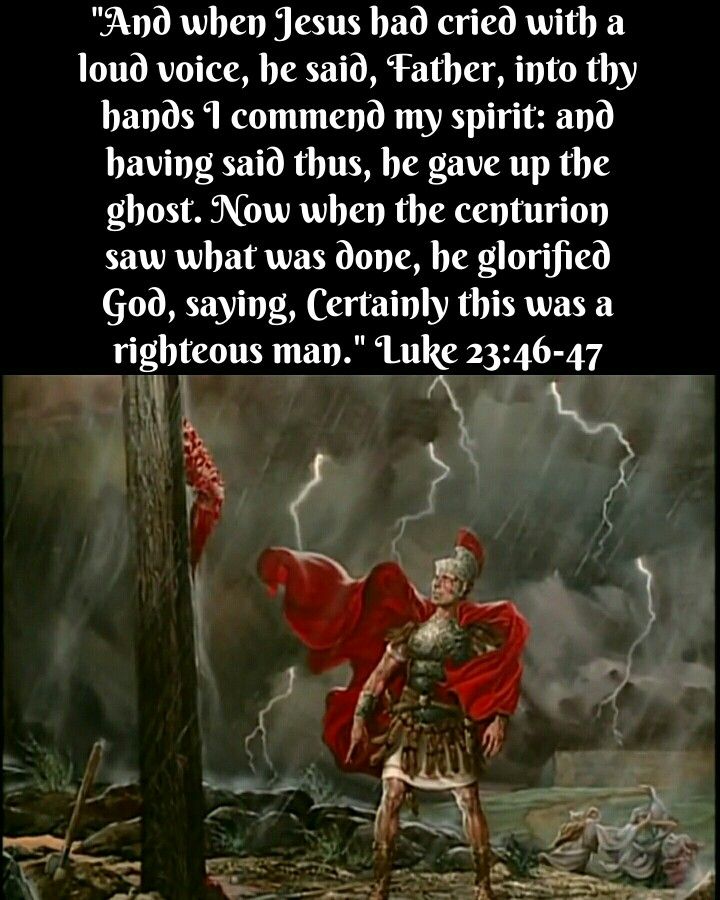

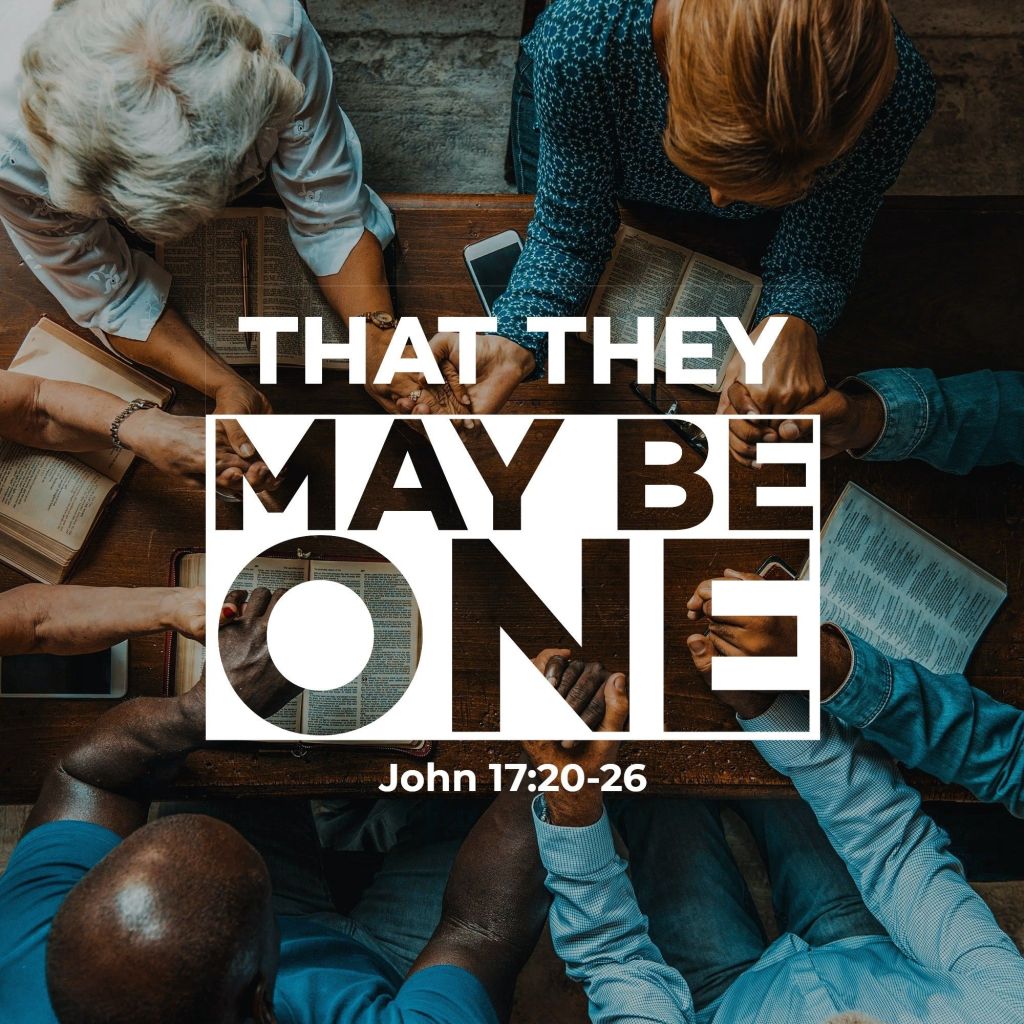



 Loving God, Living God, Loving Hope, Living Hope, Loving Living Life His Way! "Many things are possible for the person who has hope. Even more is possible for the person who has faith. And still more is possible for the person who knows how to love. But everything is possible for the person who practices all three virtues." - Brother Lawrence (1605-1691), Practicing the Presence of God (1692).