
A Psalm of Life: It is Never All About You, Neither Will It Ever Be All About Me. Hebrews 7:23-25

Hebrews 7:23-25 Amplified Bible

23 The [former successive line of] priests, on the one hand, existed in greater numbers because they were each prevented by death from continuing [perpetually in office]; 24 but, on the other hand, Jesus holds His priesthood permanently  and without change, because He lives on forever. 25 Therefore He is able also to save forever (completely, perfectly, for eternity) those who come to God through Him, since He always lives to intercede and intervene on their behalf [with God].

The Word of God for the Children of God.

Adeste Fidelis. Venite Adoremus. Dominum.

Gloria. In Excelsis Deo. Alleluia, Alleluia, Alleluia, Amen.

A Psalm of Life

BY HENRY WADSWORTH LONGFELLOW [October 1838]

What The Heart Of The Young Man Said To The Psalmist.

Tell me not, in mournful numbers,

   Life is but an empty dream!

For the soul is dead that slumbers,

   And things are not what they seem.

Life is real! Life is earnest!

   And the grave is not its goal;

Dust thou art, to dust returnest,

   Was not spoken of the soul.

Not enjoyment, and not sorrow,

   Is our destined end or way;

But to act, that each to-morrow

   Find us farther than to-day.

Art is long, and Time is fleeting,

   And our hearts, though stout and brave,

Still, like muffled drums, are beating

   Funeral marches to the grave.

In the world’s broad field of battle,

   In the bivouac of Life,

Be not like dumb, driven cattle!

   Be a hero in the strife!

Trust no Future, howe’er pleasant!

   Let the dead Past bury its dead!

Act,— act in the living Present!

   Heart within, and God o’erhead!

Lives of great men all remind us

   We can make our lives sublime,

And, departing, leave behind us

   Footprints on the sands of time;

Footprints, that perhaps another,

   Sailing o’er life’s solemn main,

A forlorn and shipwrecked brother,

   Seeing, shall take heart again.

Let us, then, be up and doing,

   With a heart for any fate;

Still achieving, still pursuing,

   Learn to labor and to wait.

A Highly Offensive Contemporary Psalm for Life.

It’s not all about you.

But, then again, neither is it about me.

Urgently Needed Reminder: God’s Psalm for Life.

I would say that the question most frequently asked by Christians is this: is it possible for me to lose my salvation?

It bothers so many of us.

We know the stakes.

And the possibility of having got it wrong, haunts so many believers.

This message is the first of at least two in a small series that are stand- alone messages but which, I pray will all bear upon the question of eternal security.

Do we believe that the Blood of Christ cleanses us from sin?

Absolutely – no problem there – just read 1 John 1:9.

Do we accept that no-one can snatch us away from God?

Of course we do – the Bible says so.

No one can snatch us out of the Father’s hand – John 10:28-29 makes that one quite clear

But here’s where agreement ends and doubts begin!

We hear so many things that can make us insecure – particularly if we’re really struggling to the live the lives we know we should.

So many doubts.

So many fears and apprehensions.

So many different slants and theories.

When do we get saved?

Is it at a particular point in time?

Or does it develop over a certain measure of time?

Is it possible to stop believing and lose it all?

Can we blow it by persisting in willful sin?

Or does that willful sin show that we’ve already blown it in the first place?

After all – the tree is known by its fruit! [Psalm 1, Matthew 7:15-19, 12:33-35]

So – to extend that principle a little – can we forfeit Eternal Life – not just by sinning – but by being unfruitful and unproductive in our lives?

Carelessly allowing our salvation to slip straight through our very own fingers – as Hebrews 2:1-4 seems to suggest?

Give Heed

[a]For this reason [that is, because of God’s final revelation in His Son Jesus and because of Jesus’ superiority to the angels] we must pay much closer attention than ever to the things that we have heard, so that we do not [in any way] drift away from truth. For if the message given [b]through angels [the Law given to Moses] was authentic and unalterable, and every violation and disobedient act received an appropriate penalty, how will we escape [the penalty] if we ignore such a great salvation [the gospel, the new covenant]? For it was spoken at first by the Lord, and it was confirmed to us and proved authentic by those who personally heard [Him speak], [and besides this evidence] God also testifying with them [confirming the message of salvation], both by signs and wonders and by various miracles [carried out by Jesus and the apostles] and by [granting to believers the] gifts of the Holy Spirit according to His own will.

We’re going to examine these fears and see if they have any basis in reality.

What does the Word of God actually teach?

But don’t just take my word for it. Like the Bereans – examine this subject for yourself.

I’m confident that when you understand the principles by which God operates – understand His motivations in relation to your salvation, you’ll put to rest these doubts, fears; you’ll appreciate the yawning gulf that divides human reasoning from Divine wisdom and Infinite Love and Grace.

This first devotion is entitled: ‘It’s not all about you’

We’ll discuss this in a moment – but first let’s address a couple of the concerns we mentioned at the beginning.

Among the various positions adopted on the question of eternal security, what undisputed facts can we all agree on – if we take the Word of God at face value?

What does the Bible clearly teach about eternal life?

Well – the first thing we find is that:

Eternal life is a present possession!

It’s not something we have to wait to receive;

It is not something we grow into;

And not something that develops gradually.

The Bible does talk about aspects of our salvation that still lie in the future – but entering into a relationship with God – and receiving the gift of eternal life – is something that happens at a particular point in our lives!

In John 5:24 Jesus said these words:

“Very truly I tell you, whoever hears my word and believes him who sent me has eternal life and will not be judged but has crossed over from death to life.

Then in Ephesians 2:4-5 we read:

But because of his great love for us, God, who is rich in mercy, made us alive with Christ even when we were dead in transgressions—it is by grace you have been saved.

And finally, Paul says in Romans 5:1-2

Therefore, since we have been justified through faith, we have peace with God through our Lord Jesus Christ, through whom we have gained access by faith into this grace in which we now stand. And we boast in the hope of the glory of God.

So that’s quite clear.

Salvation isn’t something we’re looking forward to – it’s something that occurs in one point of time!

So you and I are either saved right now or we’re not saved at all!

So what’s the next thing we can agree on?

It’s this.

It appears that we can be sure that we have eternal life.

God intends for us to have confidence – to be able to rest quietly in the knowledge and complete assurance of salvation – no shadow of a doubt!

John writes in his first epistle, chapter 5:13:

I write these things to you who believe in the name of the Son of God so that you may know that you have eternal life.

In Romans 8:16 Paul says:

The Spirit himself testifies with our spirit that we are God’s children.

And in 2 Timothy 1:12, we hear Paul’s stirring words:

I know whom I have believed, and am convinced that he is able to guard what I have entrusted to him until that day.

Some people would – of course – say that this confidence is conditional upon us showing the fruits of salvation in our lives.

They say, in other words, that we can be sure of our salvation as long as we have it – but that’s no guarantee that we can’t lose it!

So the questions which remain to be answered are this:

Is it possible for us to lies lose our salvation?

Is it possible to cease being a Christian?

Can we be saved one minute – but lost the next?

Ok. If we want to get down to what the Bible actually says, we’ll need to scrap some of this misleading terminology once and for all.

Losing your salvation is not a term used in Scripture at all!

And for very good reason!

Certainly salvation is spoken of as a gift – but not as an object: a thing that can be dropped, given away or lost.

This gift is nothing less than the gift of new life – eternal life!

So can you lose your Salvation?

Well – what happens if you lose your life?

You die, of course!

So the real question should be this:

If a man is reborn (through the process of the new birth) and consequently has eternal life – can he die again?

And that puts an entirely different complexion on things!

Can a life be described as eternal if it can end – and you can die again?

Christ is our life.

Can He die again?

Well – actually He can’t!

Romans 6:8-11 Amplified Bible

Now if we have died with Christ, we believe that we will also live [together] with Him, because we know [the self-evident truth] that Christ, having been raised from the dead, will never die again; death no longer has power over Him. 10 For the death that He died, He died to sin [ending its power and paying the sinner’s debt] once and for all; and the life that He lives, He lives to [glorify] God [in unbroken fellowship with Him]. 11 Even so, consider yourselves to be dead to sin [and your relationship to it broken], but alive to God [in unbroken fellowship with Him] in Christ Jesus.

When you think it through – it’s actually nonsense to talk about losing salvation – because of the very meaning of the word.

In certain circumstance I can save myself – but if I’m saved by someone else – by very definition I’m not contributing to the action.

Christ saves me!

If I were to perish for any reason – then in actual fact he wouldn’t have saved me.

But let’s start from the beginning

As we said before: it’s not all about you, neither is it about me!

Salvation is not all about us.

What do I mean by that – and what bearing does it have on our eternal security?

In the Garden of Eden, Satan had effectively stolen God’s creation from him.

We belonged to God – we were created differently from the animals.

Mankind was His special creation – formed in His image so that He could enjoy fellowship with us forever – loving Him and being loved by Him for all eternity.

Now you can’t force a person to love you.

The relationship for which God created us, had to be based on our willingness to have, continue fellowship with Him, to freely offer Him our love and devotion.

So in that sense – maintaining a continuous relationship with God was man’s responsibility.

We were born with a self-determining free-will and this privilege and dignity is something God would never over-ride.

So, ultimately, He had to risk losing us.

He had to take the chance of us turning our backs on Him.

And that’s exactly what happened!

Adam and Eve transferred their allegiance to Satan.

They passed from God’s control to Satan’s authority.

But Satan wasn’t going to win.

God already had a plan – a plan of Salvation – in order to regain what Satan had been allowed to steal from him; a plan to repossess that which He had lost.

Luke 19:10: For the Son of Man came to seek and to save what was lost.

Lost by whom?

Once again we make it all about us.

We were lost – we say – in sin.

But surely a natural reading of what Christ said would be we were lost to God – He had lost us – and that He had come to recover us: to save us – to get us back.

And that’s what redemption is all about!

In the OT the word translated “redeem” is pa^da^h and it means: to ransom, redeem, rescue, or deliver. [Isaiah 50:2 ESV]

https://www.blueletterbible.org/esv/isa/50/2/t_conc_729002

https://www.blueletterbible.org/lexicon/h6304/esv/wlc/0-1/

In the NT the word is exagorazo. [Galatians 4:5]

https://www.blueletterbible.org/esv/gal/4/5/t_conc_1095005

https://www.blueletterbible.org/lexicon/g1805/esv/mgnt/0-1/

In the Roman world, the market place was called the agora.

Exagorazo therefore literally means – to take out of the market place – hence – to purchase.

According to Strongs Concordance, it means: To recover from the power of another, to ransom by paying a price.

Of course, being recovered or ransomed implies that we formerly belonged to someone else – who then paid a price to get us back.

And that’s what our English word redeem conveys.

It comes from two Latin words meaning: to buy again or to buy back.

So – if I redeem something, I recover or ransom something that once belonged to me.

God did that – He once owned us because He created us.

He then lost us when we sinned – so He set out to recover which was lost – to ransom us – to buy us back – to redeem us – the price He paid was staggering:

it was the life of His own beloved Son!

The life blood of Jesus Christ was the currency that was used.

1 Peter 1:18-19 says this:

For you know that it was not with perishable things such as silver or gold that you were redeemed from the empty way of life handed down to you from your ancestors, but with the precious blood of Christ, a lamb without blemish or defect.

We were redeemed from the slave market of sin and are now twice-owned!

You and I are twice owned.

God created us – lost us and bought us back.

We are now his treasured possession – He purchased us.

A transaction has taken place and the highest possible price was paid:

the full asking price demanded by the law to free us from sin – the life blood of Jesus Christ, God’s only Son.

So 1 Corinthians 6:19-20 says.

You are not your own; you were bought at a price.

That’s redemption!

Do we get that?

We no longer belong to ourselves.

God paid the highest possible price to get us back.

We are now His property!

Titus 2:14 says that he:

gave himself for us to redeem us from all wickedness and to purify for himself a people that are his very own, eager to do what is good.

It’s not all about us.

It’s not purely for our benefit!

We are now his inheritance!

Paul says to the Ephesians in chapter 1:18:

I pray that the eyes of your heart may be enlightened in order that you may know the hope to which he has called you, the riches of his glorious inheritance in his holy people….

As Israel was continually referred to as God’s inheritance, we are His spiritual people – His glorious inheritance – His new creation.

2 Corinthians 5:17:

Therefore, if anyone is in Christ, he is a new creation: Old things have gone, new things are here!

We’ve already seen that in the first creation, man was responsible for maintaining fellowship with God and he failed.

But do you believe that God will allow Satan to once again usurp him successfully?

To once again frustrate His purposes and steal away his possession?

One that He paid for with the death of his Son?

And that would happen if just one believer were to lose his Salvation – because effectively Christ would have died again.

Grace wouldn’t be reigning through righteousness – sin would once again be reigning through death (at least in that one life)!

A death, by the way, which has been destroyed by the death and resurrection of the Lord Jesus Christ.

Not a chance!

Things are different now.

In the new creation, the responsibility of maintaining our relationship with God is now His responsibility – not ours.

And why? Because He bought us and we are His possession.

Remember 1 Corinthians 6:19b-20

You are not your own; you were bought at a price.

This involves ownership.

We actually don’t have the right to give ourselves away again – in any way shape or form.

We’re God’s property!

In fact, God made certain that we couldn’t blow it again – either as a new race or as individuals.

Let us now look at how he protected us as individuals – how he has further guaranteed that we’ll never die again.

It’s found in Romans 4:16.

Here the Apostle Paul writes these wonderful words:

Therefore, the promise comes by faith, so that it may be by grace and may be guaranteed to all Abraham’s offspring-not only to those who are of the law but also to those who are of the faith of Abraham. He is the father of us all.

Notice here what God has done.

So that the responsibility for our salvation might be taken out of our hands altogether –

in other words, so that it might be by grace, entirely on the basis of a free gift – with us contributing nothing at all,

he made its acquisition conditional upon upon faith – simply believing – so that we have no active part to play – just to receive what is offered!

Ephesians 2:8-9 therefore says:

For it is by grace you have been saved, through faith-and this not from yourselves, it is the gift of God-not by works, so that no-one can boast.

So God took on the responsibility for the whole thing so that the promise could be guaranteed.

He had to!

Sin had to be paid for – that took the death of Christ.

We had no part in that – except, of course, in the fact He was representing us.

And our new life had to be perfect forever.

To those who say that we can lose our salvation by sin in our lives, I would remind them that it only took one sin to sink the whole human race!

I mean, what estimation do we have of God?

Do we think that He can tolerate a certain level of sinning and then if it gets beyond that, He’ll say: “Ok, that’s enough!”

It took one sin to sink the human race!

You think you can lose your salvation by sinning?

Then fine – but remember this: you lost it with the first sin you committed after you got saved!!

What is good enough for God is absolute and total perfection or nothing at all!!

And He guaranteed that too – by imparting to us the life of Christ by way of the new birth!

As I said, our salvation consisted of God taking back what belonged to him.

And doing so by paying the price for our freedom.

I mean – Consider what happened at the moment of our salvation.

A transaction took place.

A deposit was paid on us.

We were set aside as his property.

That’s pretty much a guarantee of eternal life isn’t it?

14 The Spirit is the [a]guarantee [the first installment, the pledge, a foretaste] of our inheritance until the redemption of God’s own [purchased] possession [His believers], to the praise of His glory. [Ephesians 1:14 Amplified]

In fact, Ephesians 1:14 describes the Holy Spirit as: a deposit guaranteeing our inheritance until the redemption of those who are God’s possession—to the praise of his glory.

There’s the guarantee.

It’s because a deposit has been paid. And this deposit is the Holy Spirit.

https://www.blueletterbible.org/esv/eph/1/14/t_conc_1098014

https://www.blueletterbible.org/lexicon/g728/esv/mgnt/0-1/

The word deposit here is the word arrhabon.

It’s a word of Hebrew origin and means: a pledge – that is, part of the purchase money or property given in advance as security for the rest.

It’s the money which, when a purchase takes place, is given as a down-payment – in effect, a pledge that the full amount will subsequently be paid!

When you were saved – did you receive the Holy Spirit??

Of course you did!

And if you did – then God’s already paid a deposit on you.

The Holy Spirit is the down-payment!

The Holy Spirit is also a seal on God’s property!

In ancient times, when property was purchased, it was sealed by the new owner with his own distinctive mark – just like cattle was branded in the old West.

This was to protect the goods and to ensure that nobody else could claim them or interfere with them.

In our case, we were also branded or sealed, just to make sure that we were His – that no-one else could claim us.

The Bible says – in Ephesians 1:13:

When you believed, you were marked in him with a seal, the promised Holy Spirit.

https://www.blueletterbible.org/esv/eph/1/13/t_conc_1098013

https://www.blueletterbible.org/lexicon/g4972/esv/mgnt/0-1/

The word for seal is the noun from the Greek verb sphragizō – and it’s used 13 times in the Bible.

It means: to stamp for security or preservation – usually with a signet ring or private mark.

That happened when you believed!

It’s not a hope; it’s not a promise.

It’s a done deal!

It doesn’t say ‘if you continue to believe’

Having believed – the verb here is in what is called the aorist tense.

It’s a one-time process that’s already been completed in your life if you’ve come to Christ!

You and I have been sealed.

The seal signified that the goods belonged to the owner of seal or the mark.

Remember – it’s not all about you.

You’re his property now.

And the seal – the Holy Spirit in our case – is a guarantee that the goods will reach their destination in the same condition that they left!

Nobody can get at you except by breaking the seal!

Is there something out there that is greater than the love of God?

More effective than the blood of Christ?

More powerful than the indwelling Holy Spirit?

Doesn’t the Bible say: greater is He that is in you than He that is in the world.?

The Holy Spirit can’t be overcome.

He can’t be ejected from the believer.

In other words – the seal can’t be broken.

It’s His seal – we are His property!

In fact His seal is an absolute guarantee!!

2 Corinthians 1:21-22:

Now it is God who makes both us and you stand firm in Christ. He anointed us, set his seal of ownership on us, and put his Spirit in our hearts as a deposit, guaranteeing what is to come.

How could our salvation be guaranteed if it was up to us in any way whatsoever?

Adam and Eve were created perfect, in idyllic surroundings and in personal contact and communion with God every day.

Yet they still blew it.

But God has purchased or redeemed us and put his personal seal within us.

Make no mistake about this.

If one sealed soul were to be lost, then the seal will have been broken!

The promise and guarantee of God will have been made void!

And God is very serious about keeping His Word.

It abides forever.

He warns us about making oaths because in doing so, we’re undertaking something that only God Himself is able to do – absolutely guarantee the fulfillment of an oath.

And if one saved soul were to be lost:

Satan would have won again!

The deposit would have been lost!

Good faith in purchase destroyed!

And no power in universe can do that!

God has his own plans for His possession

Nothing and nobody is going to steal us away again.

No power in the universe is going to thwart and frustrate His purposes!

Examine what is known as the Golden chain in Romans 8:30:

And those he predestined, he also called; those he called, he also justified; those he justified, he also glorified.

And so Paul says in Romans 8:38-39:

For I am convinced that neither death nor life, neither angels nor demons, neither the present nor the future, nor any powers, neither height nor depth, nor anything else in all creation, will be able to separate us from the love of God that is in Christ Jesus our Lord.

But sometimes it sounds counter – intuitive, doesn’t it!

As human beings, seeing everything from a humanistic perspective, we’ve been so ingrained with concepts like:

There’s no such thing as a free lunch!

If it sounds too good to be true – it probably is!

You only get out of something what you put in!

And so forth!

So Christians, without realizing it, often rebel against the principle of Grace – the free unconditional love of God, His gift of Grace – Eternal Life in Christ.

They might say – and you’ve all heard these objections:

Sure – nothing can snatch us out of the Father’s hand – but surely we can:

by our own choice.

or our own actions.

lose our salvation.

I mean – there has to be consequences for how we live our lives!

So there’s the question.

Salvation is free, but can we, by free choice, stop being covered by blood of Christ?

Can we ourselves break the seal?

Void the contract?

Undo God’s work in us.

Make ineffective the blood of Christ.

Reverse the effects of the death of Christ in our lives?

See how silly that starts to sound!

Well – Some say that we can and they will give a variety of reasons:

Living a sinful life.

No longer believing.

Not persevering with works of righteousness.

Well, you’ll find each of these objections will resolve itself from the Word of God.

For the moment, just remember one important thing:

Man had a relationship with God.

The maintenance of that relationship was man’s responsibility.

Man failed to live up to the terms of that relationship.

Because of this, he passed from communion with God into the power of Satan.

God, by the death of Christ, went to amazing lengths to buy back or redeem His lost possession.

We now belong to Him – signed, sealed and delivered.

Our safety and maintenance in that relationship is now up to Him – and Him alone!!

May God bless His Word to each one of us! Amen

In the name of God, the Father and God the Son and God the Holy Spirit,

Let us Pray,

Almighty God, you are the source of all light. You divinely separated light from darkness so that we may have the beauty of the light of day. Dear Lord, illuminate this day and enlighten us as we seek to know you through your word. May we be led by your light so our hearts may be opened to your word. We pray that we receive every word you speak to us today. Holy and gracious God, you are the greatest of all. You are full of wonders that no mere human can comprehend. Lord, I seek to understand you and your ways so that I can live according to your commandments. I pray for your divine illumination in my heart and mind. Help me see what you intend for me to see. Help me understand what you intend for me to understand. Open my eyes and my ears, my mouth, to see you and hear, speak your whispers.

Adeste Fidelis. Venite Adoremus. Dominum.

Gloria. In Excelsis Deo. Alleluia, Alleluia, Alleluia, Amen.

https://translate.google.com/

Jesus Christ is Able to Save Completely Because He Has Permanent Priesthood. Hebrews 7:23-25

Hebrews 7:23-25 Amplified Bible

23 The [former successive line of] priests, on the one hand, existed in greater numbers because they were each prevented by death from continuing [perpetually in office]; 24 but, on the other hand, Jesus holds His priesthood permanently and without change, because He lives on forever. 25 Therefore He is able also to save forever (completely, perfectly, for eternity) those who come to God through Him, since He always lives to intercede and intervene on their behalf [with God].

The Word of God for the Children of God.

Adeste Fidelis. Venite Adoremus. Dominum

Gloria. In Excelsis Deo. Alleluia, Alleluia, Alleluia, Amen.

Daylight Savings time is here which means Spring is just around the corner.

A time of freshly blooming flowers and the appearance of green leaves on trees.

Which means for those with a taste for something and someplace other than the insides of their homes after a cold winter – a new fresh taste for being outdoors.

During a nature hike, it can be exciting, refreshing and rewarding to follow side trails that veer away from the main trail looking for the signs of the new Spring.

Finding hidden parts of freshly leaved trees and patches of wild flowers, forests or meadows, valley’s, mountains that few have seen before can be exhilarating.

But traveling in unmarked territory can sometimes be dangerous.

Authorities put up boundary signs for good reasons – [Poison Ivy anyone?].

We should obey those signs because they are usually posted to help keep us safe.

Unfortunately, we will sometimes hear about people who were hurt or killed because they ignored warning signs and went into the places of great danger.

Warning signs also exist in our spiritual life.

In particular, Scripture points us to Jesus Christ as “the way and the truth and the life” (John 14:6).

In our reading from Hebrews 7 today we see that through Jesus we have access to God.

He is not any temporary Savior; He continually intercedes for us—that is, He continues to mark a clear and 100% safe trail for us in this life and into the next.

Our pilgrimage as Christians is not simply for a period in this life.

It is a journey that stretches forward into the joys and exciting discoveries God has prepared for us with him in eternity.

Are you walking safely today—that is, with God?

Completely Safe

Hebrews 7:23-25New American Standard Bible

23 [a]The former priests, on the one hand, existed in greater numbers because they were prevented by death from continuing; 24 [b]Jesus, on the other hand, because He continues forever, holds His priesthood permanently. 25 Therefore He is also able to save [c]forever those who come to God through Him, since He always lives to make intercession for them.

One of the most amazing truths in the Bible is Jesus is able to save completely, perfectly, to the uttermost because of His resurrection from the dead.

In fact our entire belief system hinges on this truth.

Without the resurrection we would die in our sin, shame and guilt.

Apostle Paul said in Romans 4, “He was delivered over to death for our sins and was raised to life for our justification” (Romans 4:25)

meaning that His resurrection is the positive proof that we have been restored to a state as if we had never sinned in the first place. 

The payment for sin was satisfied once for all when Jesus was delivered over to death to make atonement.

Since it was satisfied and all debts forgiven, death no longer had claim on Jesus and had to release him from the grave.

This has incredible implications for us, because through Jesus, the grave has no claim on us either. 

Jesus has been appointed by God as our High Priest on oath that He would remain as such eternally.

Before this time, death had been a problem in the Levitical priesthood because it continually interrupted this office.

The position of High Priest was a lifetime position (Numbers 35:25).

So it was like starting over every time a new High Priest was appointed following the death of the previous High Priest. 

However, since death has no claim on Jesus (Romans 6:9), His priesthood cannot be interrupted, therefore He is able to complete the work assigned to Him as High Priest.

The High Priest’s job was to make atonement for the people once a year.

He was mankind’s representative before God in all things.

The problem was that he first had to sacrifice for his own sins, disqualifying him from approaching God to make atonement in the first place.

Jesus on the other hand was sinless so His sacrifice for sin, when offering himself as payment, was more than enough to permanently wipe out the debt that sin created. 

In fact the writer of Hebrews has stated over and over that our sins are paid for, forgiven and forgotten (Hebrews 9:12, Hebrews 9:14, Hebrews 9:26, Hebrews 9:28, Hebrews 10:10, Hebrews 10:12, Hebrews 10:14, Hebrews 10:18, Hebrews 10:22).

Which means Jesus’ atonement as High Priest worked the first and only time it was given.

And if it worked, then by no means does it need to be made again (Hebrews 10:10-14).

In fact, Jesus now sits at the right hand of God the Father because His work is finished and complete (Hebrews 1:3, Hebrews 10:12).

Since this work is finished and death has no claim on Jesus, he resides as High Priest forever.

And if He lives forever with this office, He is also able to save for all time and eternity those who come to Him by faith.

In fact, God promised Jesus on oath this would always be the case which is why he promised Him He would provide a High Priest, not after the Levitical line perpetuated by death, but after Melchizedek who had no such record of death.

(Hebrews 7:1-3 NASB)

Melchizedek’s Priesthood like Christ’s

For this Melchizedek, king of Salem, priest of the Most High God, who met Abraham as he was returning from the slaughter of the kings and blessed him, to whom also Abraham apportioned a tenth of all the spoils, was first of all, by the translation of his name, king of righteousness, and then also king of Salem, which is king of peace. Without father, without mother, without genealogy, having neither beginning of days nor end of life, but made like the Son of God, he remains a priest perpetually.

This is incredible news and very important to know because it assures our hearts before God.

In fact these things have been written to give us insight and confidence in approaching God by faith (John 20:31, 1 John 5:13).

Knowing we have been saved, forgiven and restored to a state where we are justified and righteous before God should give us boldness in approaching Him without the consciousness of sin and resulting guilt (Hebrews 4:16, 10:22 ).

Then knowing Jesus lives forever to assure this relationship, making petitions and intercession on our behalf, should prayerfully usher each and every single one of us into a state of heart peace and empower us to live a life like no other.

These blessed and unyielding truths have been written for our eternal benefit; so that we may all understand all we have access to is only through Christ Jesus.

In the name of God, the Father and God the Son and God the Holy Spirit,

Let us Pray,

Father in heaven,
You made humanity in Your image
that we might show forth who You are to the world.
Thank You that although we fell into sin
and failed in our created calling,
You sent Your Son, Jesus, to redeem us
as both the once-for-all Sacrifice
and the Eternal Priest who offers that great gift.
Our lives have been bought with a price –
they are Yours, our God –
so fill us with Your Holy Spirit
that we might live in the fullness of Your power
and display the fullness of Your character
to the far reaches of this world
until the fullness of Your kingdom.

All this we pray, through Jesus Christ your Son our Lord
to whom, with You and the Holy Spirit
be honor and glory, now and forever. Amen.

https://translate.google.com/

Distant or Delighted? Not Feeling the Love of God? How About Learning to See Jesus With a Smile? 1 John 3:1-3

1 John 3:1-3 Amplified Bible

Children of God Love One Another

See what an incredible quality of love the Father has shown to us, that we would [be permitted to] be named and called and counted the children of God! And so we are! For this reason the world does not know us, because it did not know Him. Beloved, we are [even here and] now children of God, and it is not yet made clear what we will be [after His coming]. We know that when He comes and is revealed, we will [as His children] be like Him, because we will see Him just as He is [in all His glory]. And everyone who has this hope [confidently placed] in Him purifies himself, just as He is pure (holy, undefiled, guiltless).

The Word of God for the Children of God.

Adeste Fidelis. Venite Adoremus. Dominum.

Gloria. In Excelsis Deo. Alleluia, Alleluia, Alleluia, Amen.
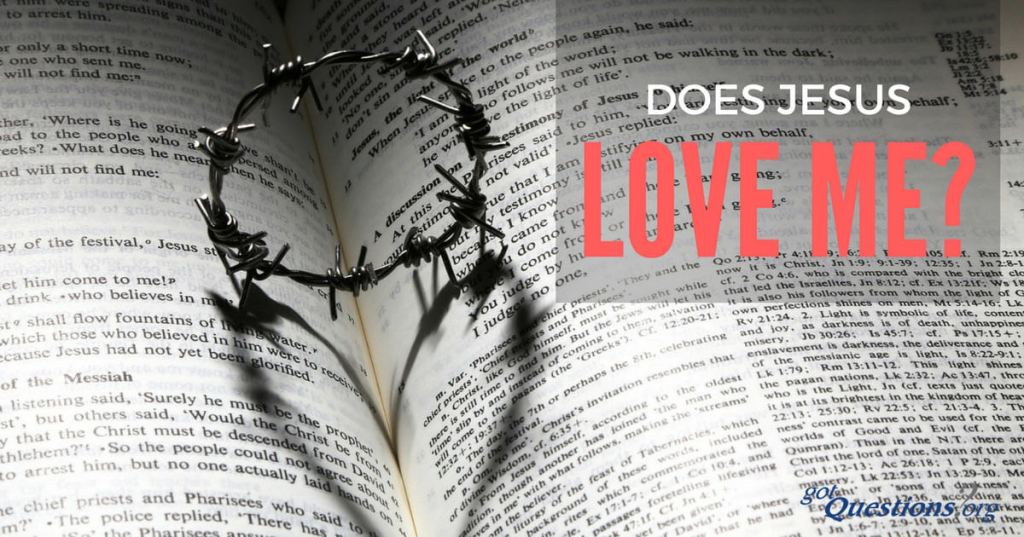
See How Well We Are Lavished With Love?

1 John 3:1 New International Version

See what great love the Father has lavished on us, that we should be called children of God! And that is what we are! The reason the world does not know us is that it did not know him.

The word lavish presents a picture of extravagant abundance.

It is almost too much, too generous and luxurious.

Being lavish borders on being wasteful.

But the Father has lavished his love on us.

God’s love is even more than what a wonderful mother showers on her infant.

Isaiah 66:12-14 New International Version

12 For this is what the Lord says:

“I will extend peace to her like a river,
    and the wealth of nations like a flooding stream;
you will nurse and be carried on her arm
    and dandled on her knees.
13 As a mother comforts her child,
    so will I comfort you;
    and you will be comforted over Jerusalem.”

14 When you see this, your heart will rejoice
    and you will flourish like grass;
the hand of the Lord will be made known to his servants,
    but his fury will be shown to his foes.

God’s love and care are supplied all the time.

God’s love is a constant bombardment of affection and care.

We may be as oblivious as an infant to the presence of his love, but God still continues to pour his love into our lives.

God’s love flows into us deeply, redefines who we are at the very core of our heart, mind and soul.

When we open our hearts to God’s love, we are transformed by it.

We are remade, regenerated into children of God.

It is God who makes us his children, not us.

We cannot earn that status.

It is a gift of God’s great love.

Because we are sinners, we do not understand God’s love for us at first.

We don’t even know we need him until we realize we are stuck in sin and cannot save ourselves.

We become God’s children when we receive Jesus as our Savior (John 1:12).

Not one of us is worthy of God’s love.

We cannot earn it.

God just loves us.

We would not be God’s children if he were not already deeply in love with us.

How amazing is that!

Being said with an exclamation mark, what if we turned that into a question?

“How Amazing Is That?”

I Really Do Not Feel God’s Love.

Psalm 13 Authorized (King James) Version

Psalm 13

To the chief Musician, A Psalm of David.

How long wilt thou forget me, O Lord? for ever?
how long wilt thou hide thy face from me?
How long shall I take counsel in my soul,
having sorrow in my heart daily?
how long shall mine enemy be exalted over me?
Consider and hear me, O Lord my God:
lighten mine eyes, lest I sleep the sleep of death;
lest mine enemy say, I have prevailed against him;
and those that trouble me rejoice when I am moved.
But I have trusted in thy mercy;
my heart shall rejoice in thy salvation.
I will sing unto the Lord,
because he hath dealt bountifully with me.

Have you ever said or thought these words in public or in private?

If so, you’re not alone.

Truth Be Told, Too many times I have really struggled with the disconnect between knowing that God loves me and actually seeing, and feeling His love.

It might be tempting to brush aside the discomfort of this disconnect and get on with the responsibilities of life.

“After all,” some will pat you on the back, say, “love is an action, not a feeling.”

But if you look closely at the love displayed in the Bible, it’s clear that it’s not just automatic rote Christian responsibility—it’s also passionate emotion.

God doesn’t just act lovingly toward us, He feels love for us.

And He doesn’t want us to only understand His love, but to experience it in a deep way, a deeply visual and tactile way – to visualize it and touch it daily.

If, like me, you’ve struggled with a disconnect between knowing about God’s love and actually seeing, feeling it, accept your feelings as being quite real.

Sometimes, like the Psalmist who penned Psalm 13, we will not feel loved.

Sometimes, like the Psalmist who penned Psalm 13, we will not see God’s love.

Psalm 13 is someone’s deepest expression of a heart and soul in angry anguish.

It has remained in the Bible through countless edits because God wants you the reader to know, the maximum extent to which God feels, visualizes our hearts.

Heart Distant or Delighted? Learning to See Jesus With a Smile …

Psalm 13:5-6 Authorized (King James) Version

But I have trusted in thy mercy;
my heart shall rejoice in thy salvation.
I will sing unto the Lord,
because he hath dealt bountifully with me.

1 John 3:3 Amplified Bible

And everyone who has this hope [confidently placed] in Him purifies himself, just as He is pure (holy, undefiled, guiltless).

I recall many years ago sitting in a circle with the other members of my Bible study group when our leader invited us to imagine what Jesus’ face looks like.

Dutifully, I closed my eyes and tried to picture Him.

The image that appeared was of a man with long, greyish silver locks and dull, piercing brown eyes.

His unsmiling lips were hard set in a neutral line.

He didn’t look disapproving, but he didn’t look very happy either.

As I studied His face, I felt sad, fearful, and unsure of how He felt about me.

I was deeply troubled by this experience because, intellectually, I knew God always loved me deeply and felt positively—even passionately—about me.

Throughout the Bible, God describes His love in the most tender terms known to humankind.

He compares His love for us to the love a parent has for their child—a warm, welcoming, compassionate love (Isaiah 66:13; 1 John 3:1).

He also describes His love for us as the love a groom has for his bride—a passionate, ardent, sacrificial love (Revelation 19:7; Ephesians 5:25-27).

Yet, my picture of Jesus that evening revealed that, deep down, I also perceived Him as uppermost serious and restrained, maybe even a little depressed at me.

It also highlighted my fear that I was not a source of joy or pleasure to God, and that, though He loved me, it suddenly felt more being with a distant, aloof love.

I knew this isn’t how God wanted me to view Him.

Ephesians 3:18, the apostle Paul prayed, “May you have the power to understand, as all God’s people should, how wide, how long, how high, and how deep his love is. May you experience the love of Christ, though it is too great to understand fully” (NLT).

More than anything, I wanted to experience the love of God—I wanted to feel it, not just know about it.

So I started asking God to take my understanding beyond intellect and into a more studious, scriptural, deep heart knowing of my value to Him.

1 John 3:1 Amplified Bible

Children of God Love One Another

See what an incredible quality of love the Father has shown to us, that we would [be permitted to] be named and called and counted the children of God! And so we are! For this reason the world does not know us, because it did not know Him.

Truth be told, sometimes it’s so much easier to notice the love people have for you than the love God has for you.

Why?

Because you can physically see them and the way they express love.

But when it comes to God, it can be challenging to see, understand, the extent to which He loves you.

After all, none of us can physically see Him on this side of Heaven.

That’s why God gave us His Word… to help us to see, feel, and understand who He is and how much He really does love us. 

See, throughout the Bible, God is described as an all-powerful and eternally just God, but also as deeply loving to those He created.

In the entire biblical story, God is presented as a character who strongly cares for us… so much so that He even allowed His Son, Jesus Christ, to enter this world to bring about a redeemed and restored relationship with humanity.

In fact, Jesus is the physical embodiment of God’s eternal love, showing us that His love is a real, tangible being we can cling to and put our hope in rather than just an abstract concept we cannot ever hope to even begin to .01% understand.

Now, before we dive further into how Jesus loves us, first let’s clarify the meaning of biblical love.

BIBLICAL LOVE

1 Corinthians 13:4-7 Amplified Bible

Love endures with patience and serenity, love is kind and thoughtful, and is not jealous or envious; love does not brag and is not proud or arrogant. It is not rude; it is not self-seeking, it is not provoked [nor overly sensitive and easily angered]; it does not take into account a wrong endured. It does not rejoice at injustice, but rejoices with the truth [when right and truth prevail]. Love bears all things [regardless of what comes], believes all things [looking for the best in each one], hopes all things [remaining steadfast during difficult times], endures all things [without weakening].

There are many different kinds of love.

There is parental love, brotherly love, and romantic love.

When anyone says the word love, we often first associate it with anything from dating to sex.

But, the word is so much more broad than we often think.

According to the above passage, biblical love is simply putting the needs of others before your own. 

All of us fall short of the expectation set by this passage at some point, because selflessness does not come naturally to us (Romans 3:23).

But, the good news of the Gospel is that God perfectly embodies these four verses.

He is the one that created love in the first place!

In turn, this means that God is LOVE itself (1 John 4:8).

And because He is love, He displays this quality not only through His words, but through His actions as well.

GOD’S DEVOTED LOVE

Psalm 103:12-14 Amplified Bible

12 
As far as the east is from the west,
So far has He removed our transgressions from us.
13 
Just as a father loves his children,
So the Lord loves those who fear and worship Him [with awe-filled respect and deepest reverence].
14 
For He knows our [mortal] frame;
He remembers that we are [merely] dust.

As any good father would, God feels sentiment and shows affection toward His children.

This picture of God as the perfect Father is a deeply intimate one because it illustrates how far [east from west], He would go to keep us safe and secure.

Another illustration of God’s love is seen in Hosea 2:14-23.

Rather than a father this time, this Bible story describes a faithful husband that comforts and treasures his wife – which is also meant to be seen as a metaphor for God’s devoted love to an unfaithful Israel.

Despite Israel’s unfaithfulness, God expressed His infinite love for His people all the more through love poetry, painting a beautiful image of God’s extreme devotion and affection towards His Bride, the Church.

LOVE AS AN ACTION

Romans 5:8-10 Amplified Bible

But God clearly shows and proves His own love for us, by the fact that while we were still sinners, Christ died for us. Therefore, since we have now been justified [declared free of the guilt of sin] by His blood, [how much more certain is it that] we will be saved from the [a]wrath of God through Him. 10 For if while we were enemies we were reconciled to God through the death of His Son, it is much more certain, having been reconciled, that we will be saved [from the consequences of sin] by His life [that is, we will be saved because Christ lives today].

But, love is not merely a feeling.

Love is also an action… that God shows from the very beginning of the Bible.

Out of His love, God established a rescue plan for humanity in the wake of Adam and Eve’s sin (Genesis 3:15).

Out of His great love, God freed Israel from slavery in Egypt – not because they earned it, but because they were His people (Exodus 12-14).

Out of His love, God became fully human, yet fully God through the person of Jesus Christ – living a perfect life and dying a death we deserved so that we could all be restored into unto, a right relationship with Him (John 3:16-17).

In each scenario, all of God’s actions toward His people are motivated by pure love. He doesn’t just say He loves us, but He actually does something about it.

THE LOVE OF JESUS

John 15:13-16Amplified Bible

13 No one has greater love [nor stronger commitment] than to lay down his own life for his friends. 14 You are my friends if you keep on doing what I command you. 15 I do not call you servants any longer, for the servant does not know what his master is doing; but I have called you [My] friends, because I have revealed to you everything that I have heard from My Father. 16 You have not chosen Me, but I have chosen you and I have appointed and placed and purposefully planted you, so that you would go and bear fruit and keep on bearing, and that your fruit will remain and be lasting, so that whatever you ask of the Father in My name [as My representative] He may give to you.

By coming into the world and sacrificing his own life for us, Jesus demonstrated the ultimate love of God.

He died for us because He considered us friends worth dying for (John 15:15).

This is the radical love that Jesus showed during his time on Earth… and still shows us today even if we do not see it in quite the same way we see the love of our friends and family.

So, when asking the question “Does Jesus love me?” the simple answer is “yes.”

Jesus really does love you not because of anything you have done, but because of who He is!

In the name of God, the Father and God the Son and God the Holy Spirit,

Let us Pray,

Almighty God, we praise and thank you for making us children of God, not through our own power and piety but through our baptism into crucified and risen Lord Jesus Christ. We turn daily to you, and in that turning we find peace, courage and purpose. Make your whole church a witness to the great good news of Christ’s resurrection. Father God, may we have the grace and the power of the Holy Spirit to grasp how immeasurable wide and deep and high and long is your love for us, expressed in all that Savior Jesus has done for us, that we may be your children. In his name, Amen.

Adeste Fidelis. Venite Adoremus. Dominum.

Gloria. In Excelsis Deo. Alleluia, Alleluia, Alleluia, Amen.
https://translate.google.com/

Pondering the Word of God: What Does it Mean For Us to Say, and to Believe and to Also Act Upon, ‘God Is Love’? 1 John 4:7-8?

1 John 4:7-8 Amplified Bible

God Is Love

Beloved, let us [unselfishly] [a]love and seek the best for one another, for love is from God; and everyone who loves [others] is born of God and knows God [through personal experience]. The one who does not love has not become acquainted with God [does not and never did know Him], for God is love. [He is the originator of love, and it is an enduring attribute of His nature.]

The Word of God for the Children of God.

Adeste Fidelis. Venite Adoremus. Dominum.

Gloria. In Excelsis Deo. Alleluia, Alleluia, Alleluia, Amen.

I want you to take a few seconds or minutes, preferably the rest of forever, and meditate, ponder, and just think about the depths of love that Jesus has for you.

Depending on the day, perhaps you may perceive or you genuinely feel a barrier, because we may know all too well, how we often fail, falter, take our eyes off our King, and at times maybe even want nothing to do with Him.

But I’m here to tell you that in those exact moments, Christ’s all-encompassing love is yet all the more present and there to sustain you!

For He has chosen you, though you will most definitely fail, and falter and too, stumble, He called you his own, though you and I will flinch, and we all have a place at His table even when your gaze is not perfectly fixed on the divine host. 

So do meditate, ponder and think about how Christ’s love for you and me is like an all consuming ocean that you and I cannot ever swim away from. 

Do think about that He is the greatest joy in times of triumph. 

Do think about that He is your deepest comfort in your utmost trying of times and sorrows. 

Pray – Oh, what love He has for his children…Oh, what love He has for you!

So please join me today in praising God, and His Word, for his persistent love.

Praise God, that He continually shows us what love is even right now.

Praise God, that He first loved us which enables us to, therefore, go and love on others exactly where they are. 

So today, the remainder of this week, and continually, let there be no shortage of love from the children of God especially during times we are all experiencing.

Ask Jesus right now, through prayer and study of His Word, through fellowship, to love others through you as He has so graciously covered all of you in his love.

What Does it Mean That ‘God Is Love’ in 1 John 4:8?

1 John 4:8 Amplified Bible

8 The one who does not love has not become acquainted with God [does not and never did know Him], for God is love. [He is the originator of love, and it is an enduring attribute of His nature.]

Love is a word that has taken on many meanings throughout the ages.

Innumerable writers, movie directors, music and dance choreographers and hosts and myriads artists alike have tried their best to convey the idea of love.

Though almost no one has the same definition, there is an underlying thought.

Love is a feeling and an action.

Love is what one person feels and does for someone else.

Even in the Christian faith, love entails many qualities. 

1 Corinthians 13 is an entire passage devoted to the idea of love.

The chapter ends on the notion that love is both greater than hope and surprisingly greater than faith.

Here too we see that love is how one person relates to another, both in feeling and action.

The dictionary definition also describes how people relate.

With so many perspectives on the idea of love, an entire biblical passage dedicated to the idea, and too many songs, stories, and movies to count, love must be very important.

Moreover, this proves without a shadow of doubt we have all been affected by love in one way or another – love touches everyone – without any exceptions.

We also know that God values the idea of love because of how many times the word is used in the Bible.

In the original King James Version (KJV) the word love appears 310 times.

The frequency of the word will largely depend on the translation.

Important to note, the English word for love is split into different words in the original writing of the Bible.

The original languages used words to describe love including phileo, pragma, and agape.

When love is evoked in Scripture, the term is used to describe the way we talk, act, and our mindset toward others.

In the Bible though, love is by no means limited to human relationships.

In fact, the Bible informs us that the reason why we love other people, the reason we can understand love, is exactly this: because God first loved us.

1 John 4:19 Amplified Bible

19 We love, because [a]He first loved us.

God gave us the example and the how-to guide.

This verse comes shortly after the aforementioned verse from 1 John 4.

To understand the context of the words here, we have to first identify the passage’s author – John, an apostle of Jesus.

In this chapter, John draws a comparison between people of the world and people of God.

More specifically, he identifies that some people will claim to purport God, but do so falsely.

These are “false prophets” (1 John 4:1).

We can identify these people by testing their spirit.

One way to test the spirit is by examining someone’s ability to love.

After John makes clear the difference between false prophets and true believers, he admonishes us to love one another.

How do we accomplish this?

We look at what God has done for us.

John makes the claim that love is first and foremost defined by God’s choosing to love us, His children.

With this powerful and inspiring truth into mind, we should then in response, turn our heart to love one another (God’s children), the way our Father loves us.

He speaks confidently in detailing that God loves us, so we ought to love one another, but what does John mean when he says, “God is love”?

What Did John Mean When He Said ‘God Is Love’?

1 John 4:8Authorized (King James) Version

He that loveth not knoweth not God; for God is love.

In this verse, we see that John equates God with love.

This metaphorical statement takes on a literal meaning when we consider the evidence of John’s claim.

In this passage, John mentions the sacrifice of Jesus for humanity–an act of love (1 John 4:10).

Since the Garden of Eden, God has acted on behalf of humanity, showing His love and support for His followers.

There have been consequences such as the banishment from Eden (Genesis 3), but God has maintained a loving relationship with people since the Fall.

Why?

The answer is evident in God’s love and all the stories that follow in the Bible where God acts on behalf of humanity.

These events culminate into the eventual Second Coming of Christ.

As God has remained an ever-present constant in the lives of humanity, so too are we supposed to show ever-present love to one another on an ongoing basis.

John states that we cannot love God and hate someone else (1 John 4:20).

If God has already chosen to love each of us despite our fallen nature since the beginning of time, why should or would we choose not to love someone despite an offense in the present time?

Obviously, this is easier said than done, but John makes clear “God is love.”

He drives this point further by stating we remain in love when we draw close to God, and as we draw close to God, the love of God abides in us (1 John 4:16).

The way God perpetually treats us in love, we should strive to treat other people.

How Does This Verse Affect How We Give and Receive Love?

John’s message to followers of Christ is a message echoed throughout the Bible.

A significant area where this is shown occurs when Jesus is questioned by a Pharisee.

“When the Pharisees heard that he had silenced the Sadducees, they came together. And one of them, an expert in the law, asked a question to test him: ‘Teacher, which command in the law is the greatest?’

He said to him, ‘Love the Lord your God with all your heart, with all your soul, and with all your mind. This is the greatest and most important command. The second is like it: Love your neighbor as yourself. All the Law and the Prophets depend on these two commands.’” (Matthew 22:34-40)

Jesus lets us know that the second greatest act we can do daily as Christians is love other people, while the greatest commandment is to love God.

If we are abiding in God, as John admonishes us to do, then we will not only seek to love God as Himself but will see loving others as an extension of that.

Interestingly, the Bible does not tell us to love ourselves, possibly because that action comes so naturally for believers and nonbelievers alike.

We can use this awareness then to change how we view other people.

Instead of maintaining a mindset of “me versus you” or “them versus us,” we can acknowledge the fact that we are all image-bearers of God (Psalm 139:13).

No matter our difference in faith, behavior, or physical appearance, we are God’s children and we should definitely strive to treat each other accordingly.

Three Ways to Love Others by Knowing that God Is Love
1. Encourage One Another

Proverbs 16:24 Amplified Bible

24 
Pleasant words are like a honeycomb,
Sweet and delightful to the soul and healing to the body.

The words we speak carry weight, for better or for worse.

When we choose to speak in a godly fashion, we can use words to encourage those around us: family, friends, coworkers, even strangers.

Pleasant words include gratitude, compliments, and any other type of speech that benefits the person hearing.

As we know that God is love, our love is not by any means limited to words.

We can also show love through actions that bring about health to the body of the person receiving.

2. Forgive One Another

Matthew 6:14-15 Amplified Bible

14 For if you forgive [a]others their trespasses [their reckless and willful sins], your heavenly Father will also forgive you. 15 But if you do not forgive others [nurturing your hurt and anger with the result that it interferes with your relationship with God], then your Father will not forgive your trespasses.

Holding resentment against another is not the proper way to act as a Christian.

God has chosen to forgive humanity despite our constant sinful nature.

Likewise, God wants us to exercise forgiveness for those people who offend us.

3. Pray For and With One Another

James 5:13-16 Amplified Bible

13 Is anyone among you suffering? He must pray. Is anyone joyful? He is to sing praises [to God]. 14 Is anyone among you sick? He must call for the elders (spiritual leaders) of the church and they are to pray over him, anointing him with [a]oil in the name of the Lord; 15 and the prayer of faith will restore the one who is sick, and the Lord will raise him up; and if he has committed sins, he will be forgiven. 16 Therefore, confess your sins to one another [your false steps, your offenses], and pray for one another, that you may be healed and restored. The heartfelt and persistent prayer of a righteous man (believer) can accomplish much [when put into action and made effective by God—it is dynamic and can have tremendous power].

A lot of people say expressions like, “I’ll pray for you.”

How many of them will stop and pray in that moment?

Scripture informs us that prayer has miraculous power.

If the words we speak to one another can bring health to the body, surely the words we say in prayer are even stronger.

When we love like God, we pray for those we love, and those we don’t feel as fondly toward because the Lord watches over us all.

If God is omnipresent, then the Lord is present in all of our lives, whether we feel or even acknowledge His presence.

Acquiring this disposition of love will push us to serve and love others even when we may feel like their faith is not where we prefer, and may even bring others closer to God.

Once we perfect loving people, we would have perfected and fulfilled the second greatest commandment.

This will prove not only God is love, but God is always with us and within us.

In the name of God, the Father and God the Son and God the Holy Spirit,

Let us Pray,

May I Recognize Your Words Prayer

God of truth, sometimes I not sure if I’m actually hearing your voice, or if it’s just my own thoughts or even another spirit. Sharpen my spiritual hearing, Lord, so I can recognize your words when you are speaking to me. Help me know it’s really you, with no doubt or second-guessing. When I’m asking for your guidance in important decisions, give me your peace that surpasses understanding with your answer. Help me remember that your words to me will never go against your written word in the Bible. Please, Give unto me a clear mind and push out all my confusion. Amen.

Adeste Fidelis. Venite Adoremus. Dominum.

Gloria. In Excelsis Deo. Alleluia, Alleluia, Alleluia, Amen.

https://translate.google.com/

Question for Today: What Does it Mean Today to Love Our Neighbors as We All Love Ourselves? Mark 12:30-31 [28-34]

Mark 12:28-34 Amplified Bible

28 Then one of the scribes [an expert in Mosaic Law] came up and listened to them arguing [with one another], and noticing that Jesus answered them well, asked Him, “Which commandment is first and most important of all?” 29 Jesus answered, “The first and most important one is: ‘Hear, O Israel, the Lord our God is one Lord; 30 and you shall love the Lord your God with all your heart, and with all your soul (life), and with all your mind (thought, understanding), and with all your strength.’ 31 This is the second: ‘You shall [unselfishly] [a]love your neighbor as yourself.’ There is no other commandment greater than these.” 32 The scribe said to Him, “Admirably answered, Teacher; You truthfully stated that He is One, and there is no other but Him; 33 and to love Him with all the heart and with all the understanding and with all the strength, and to [unselfishly] love one’s neighbor as oneself, is much more than all burnt offerings and sacrifices.” 34 When Jesus saw that he had answered thoughtfully and intelligently, He said to him, “You are not far from the kingdom of God.” And after that, no one would dare to ask Him any more questions.

The Word of God for the Children of God.

Adeste Fidelis. Venite Adoremus. Dominum.

Gloria. In Excelsis Deo. Alleluia, Alleluia, Alleluia, Amen.

Sometimes, the most important things aren’t difficult to grasp. 

If they seem difficult to grasp, it is most likely because we ourselves, in our all too clumsy humanity have made it so because we ourselves have deemed it to be infinitely more important to be complex than simplified – it just feels “better.”

God desires us to be exclusively devoted to Him with all of our being, and to also be loving to others who surround us. 

The covenant demands of God placed square upon our character boil down to the observance of these two fundamental principles that go echelons beyond laws and reveal God’s character [God IS Love] to the very hearts of all people.

Love Your Neighbor As Yourself

Mark 12:29-31Authorized (King James) Version

29 And Jesus answered him, The first of all the commandments is, Hear, O Israel; The Lord our God is one Lord: 30 and thou shalt love the Lord thy God with all thy heart, and with all thy soul, and with all thy mind, and with all thy strength: this is the first commandment. 31 And the second is like, namely this, Thou shalt love thy neighbour as thyself. There is none other commandment greater than these.

We learn many rules growing up:

Brush your teeth,

Look both ways before crossing the street,

Always tell the truth.

Which of these is most important?

What do you believe is the single most important Truth you have ever heard?

Rabbi Jesus was asked a similar question by an expert in the Mosaic Law: Of the many commands and regulations in the law of God, which one tops the list?

Jesus did not hesitate: “Love God above all”—and he quickly added the second: “Love your neighbor as yourself.”

And what kind of love does this refer to?

In connection with God’s love for us, this is unconditional, unconventional, love—totally gracious, totally generous, and totally with no strings attached.

Notice especially that Jesus says, “Love your neighbor as yourself.”

This means that if we are to love our neighbors unconditionally and generously, we will be required by God to love ourselves that self same way too!

God does not make junk.

God does not make mistakes.

We are created in God’s image; we are his masterpieces.

It’s not to just okay to love myself: God expects me to celebrate the person he created me to be – every moment celebrate God exactly as God celebrates us!

The Golden Rule Jesus gave us—“Do to others what you would have them do to you” (Matthew 7:12)—is another way of saying this command to love God and honor God and love and honor our neighbor as we love and honor ourselves.

Loving others well depends at least partly on our capacity to love ourselves.

What Does it Mean to Love Your Neighbor as Yourself?

Would it, Should it, Could it, surprise you to learn that loving your neighbor as yourself is found eight times in the Bible.

Not once, Not even twice but Eight times.

Go ahead and search for them – Seek Ye First the Kingdom of God.

Loving your neighbor as yourself is so important to God that He not only repeats Himself, He makes it a command.

And not just one in a list of many commands.

Rabbi Jesus coupled the command to love your neighbor as yourself with loving God with all our heart, all our soul, all our mind, and with all of our strength. 

James calls it the royal law.

It sounds beautiful, and it is when we obey it.

But loving your neighbor as yourself isn’t always easy.

That’s why God made it a command.

He knew we’d struggle.

Making it a commandment is actually to our benefit.

How is that?

We have to be reverently and deliberately obedient

We have to do it on purpose.

We have to be intentional about it.

Sometimes even out of our need.

But if we love God as God love us … obedience just flows from us naturally.  

This is what it means to love your neighbor as yourself:
1. Loving your neighbor means receiving God’s love.

Too begin to love your neighbor as yourself, you need to know two things:

you need to know what love is and that you are loved. 

The Bible tells us “this is love. Not that we loved God but that He loved us and sent his Son as a propitiation…” (1 John 4:10).

You and I are the object of this love.

God loves you.

God loves me.

Knowing this is imperative.

And not just that we are loved in a general kind of way, but deeply loved and unconditionally and unconventionally loved.

We tap into this when we understand that God loved us first. [John 3:16-17]

He’s the source of our love.

God loved us even before Jesus gave Himself for us.

God the Father is the source of all love.

Before we can give this love we need to receive it for ourselves.

You cannot give to someone what you yourself do not have.

2. Loving your neighbor means loving ourselves as well.

To love your neighbor as yourself as commanded, you need to measure love correctly.

The measurement within this command is—as yourself.

To love your neighbor as yourself you need to love yourself.

This is something that gets badly misunderstood in the body of Christ often.

It gets mixed up with dying to self and denying self as if we need to destroy our self.

This is not true. 

Jesus died for each and every one of us.

If Jesus valued us enough to go through what He went through, we each have a sacred responsibility to Him to value what He values exactly as He valued it .

We need to love what He loves – us.

The Bible tells us the Father loves us as much as He loves Jesus (John 17:20-23).

20 Neither pray I for these alone, but for them also which shall believe on me through their word; 21 that they all may be one; as thou, Father, art in me, and I in thee, that they also may be one in us: that the world may believe that thou hast sent me. 22 And the glory which thou gavest me I have given them; that they may be one, even as we are one: 23 I in them, and thou in me, that they may be made perfect in one; and that the world may know that thou hast sent me, and hast loved them, as thou hast loved me. [Authorized King James Version]

When we dare to simplify it: How dare we not love what the Father loves?

Learning to love ourselves prepares and helps us to love our neighbor.  

3. Loving your neighbor means showing grace.

Knowing God is love and that this love is for you is not enough.

It needs to be developed and matured.

Imagine if you had a field of good soil and a bag of top notch seeds.

Would they produce a crop all by themselves?

No. The seeds must be planted and cared for.

Grace takes the seed of His love and the soils of our hearts and souls and creates fruit for the kingdom of God. 

The Bible says, “it’s God who works in us both to will and to do of His good pleasure” (Philippians 2.13).

Loving Him and our neighbor pleases Him.

Grace helps us do this.

Grace teaches us proper love, honor and respect for ourselves and for our neighbor – our freely receiving His grace empowers us all to freely give it.  

4. Loving your neighbor means acting with compassion.

From Luke’s Narrative of the Gospel, when Jesus was asked, “Who is my neighbor?” He responded with a story: the Good Samaritan [10:25-37].

Even those who have no love for God see the value of the story.

What is the bottom line of this story?

Who did Jesus say was being a neighbor?

The one who had compassion. 

Compassion is not simply a warm fuzzy feeling in our hearts.

Compassion does something.

A heart moved by compassion cannot sit idly by while someone suffers a need.

Loving God and Loving your neighbor as you are Loving yourself is being moved by God, the Father, Son and Holy Spirit to help to the full extent of your ability.

5. Loving your neighbor means looking out for their wellbeing.

The NIV translation of 1 Corinthians 13 says, “love protects.” 

In Philippians 2:4 it says, “Let each of you look not only to his own interests, but also to the interests of others.” 

Loving your neighbor as yourself is to look out for other people’s wellbeing. 

To look out for them is to pay attention.

You notice if they need something and then you help.

For example, their clothing tag is sticking out or they have food on their face so you let them know.

Or something more serious like when a neighbor has surgery or becomes sick.

Concerned for their health, well-being, I head over to their home with a meal or a loaded gift card so if they aren’t able to cook, they won’t have to cook, can eat.

6. Loving your neighbor means serving them.

Serving from the heart is kindness in action.

Kindness is one of the attributes of love listed in 1 Corinthians 13.

The surprisingly wonderful thing about kindness, though, is you can do acts of kindness without kindness residing in your heart.

If the kind thing is done out of duty then it isn’t love. 

Jesus said he came to serve (Mark 10:45, Luke 19:10, Matthew 20:28).

God, who is love, came to serve.

Love serves.

For you to love your neighbor as yourself, you’ll have a heart to serve them.

Let them know you’re there for them.

If they need a ride somewhere, you drive them.

If they need their dog or cat checked on while out of town, you do that for them.

Other examples are getting their mail for them or taking them a meal if they’re not well.

Examples in a public setting are to let people in front of you in line at the store or in traffic.

7. Loving your neighbor means speaking kindly.

The childhood rhyme about sticks and stones versus words is not true.

Words build up or tear down.

God created the world using words.

The Bible says Jesus IS the Word (John 1:1). 

To love your neighbor as yourself is to use words to build them up.

Speaking words of encouragement to someone who’s down is the most obvious example but there are hosts upon hosts and myriads and myriads of others.

We can be more intentional with our words by looking for and magnifying the good.

We can always find something good if we’ll take the time to look for it.

Examples of this are giving someone a simple smile, a simple compliment and simply telling someone how much you genuinely appreciate them.  

8. Loving your neighbor means making allowances for other people’s humanity.

We live in a day and age when offense is as common as breathing.

Criticism is running rampant.

Love is not easily offended or critical.

Everyone does dumb things; no one is always right or knows everything.

We’re all a work in progress. 

I remember sitting through a green light.

I wasn’t trying to inconvenience anyone.

I got stuck in grieving daze because a family member might die.

I remember that when I encounter people driving too slow, sitting at lights, or even cutting me off.

Maybe they have a reason.

Maybe they’re just being human.

We’re imperfect beings that do perfectly dumb things often. 

Giving people the benefit of the doubt is loving your neighbor.

For example, I had someone honking their truck horn flailing their arms and cursing because I didn’t speed through an almost red light.

They were behind me and so they got stuck at the red light with me.

I don’t know why they were so angry but they may have had other pressing circumstances surrounding them that day – I prayed for them.

9. Loving your neighbor means sharing in their joys and sorrows.

The Bible says we are to “rejoice with those who rejoice, mourn with those who mourn” (Romans 12:15). 

Celebrating can be difficult for us at times, especially if our neighbor is getting something we have longed for.

For example, a new job, a raise, or a pregnancy.

Celebrating with them in spite of our own pain is a strong show of love. 

Likewise, mourning with our neighbor can be hard if we don’t know what to say, or have recently lost something or someone ourselves.

Loving God, Loving your neighbor as yourself is showing up and being there with your heart open, allowing them to be what they are, and support them.

10. Loving your neighbor means forgiving.

Forgiveness is a big deal to God.

Bible says He planned it for us from the foundation of the world (Ephesians 1:4).

Jesus frequently spoke forgiveness over others that resulted in the healing of their bodies. 

Forgiveness is freely given to us and to love your neighbor as yourself you’ll pass the forgiveness on.

Jesus highlighted this in His story in Matthew 18 when Peter asks how many times is he to forgive.

He tells the story of a king who forgave an enormous debt to one of his servants.

This servant failed to pass the forgiveness on.

He demanded payment of a small debt from his neighbor.

When the king heard of it, he had his servant remanded for his debt, revoking the debt cancellation.

Jesus’ story tells us that love always forgives.

We all need forgiveness, so loving your neighbor is to forgive them as you have been forgiven.

In both the Hebrew [Old] and New Testaments we are commanded by God to love our neighbors as ourselves.

On several occasions Jesus himself says that is a part of fulfilling God’s law.

Again and again God shows us how to love others.

The call to love our neighbor is not complicated, but it can be challenging to follow.

It means more than being hospitable, tolerant, patient, and kind.

It means more than showing respect and honoring others.

It also means more than just being civil with people you disagree with—even though it also means all of that.

Loving our neighbor implies that the well-being of others matters—so we should work for justice, protection, and opportunities for others to thrive.

It means listening to others.

It also shows that the possibilities for showing love and care for our neighbors is endless and could leave us overwhelmed by all the needs for neighborly love!

Yet all of us can love our neighbors in the name of Jesus Christ.

We can honor, love and respect them enough to show how the love of Jesus is forever shaping us to love God with all our heart, soul, mind, and strength.

As you are loved, Jesus says, so love one another (see John 13:34).

In the name of God, the Father and God the Son and God the Holy Spirit,

Let us Pray,

Dear God, thank You for Your unconditional love. Lord, help me to know myself and to love myself. If I don’t feel self-worth, how can I expect someone else to cherish me? Help me to develop a healthy self-identity, remembering that I am a child of the King, created in Your image. Help me know who I really am, what I really want from life, and what I want in the person I will spend my life with. Thank you, Lord, for loving me so completely that I am being completely changed! Help me to be more aware of your Love so I may love my neighbor with the love you have for the world.

Adeste Fidelis. Venite Adoremus. Dominum

Gloria. In Excelsis Deo. Alleluia, Alleluia, Alleluia, Amen.

 https://translate.google.com/

Living our Life and Honoring Our God, Living Our Life, Respecting, Honoring Generations of our Families, Honoring and Respecting Our Grand Parents. Proverbs 17:6

Proverbs 17:6Amplified Bible


Grandchildren are the crown of aged men,
And the glory of children is their fathers [who live godly lives].

The Word of God for the Children of God.

Adeste Fidelis. Venite Adoremus. Dominum.

Gloria. In Excelsis Deo. Alleluia, Alleluia, Alleluia, Amen.
What our Grand parents are to us …

“What children need most are the essentials that grandparents provide in abundance. They give unconditional love, kindness, patience, humor, comfort, lessons in life. Most importantly, milk and cookies and plenty of Ice Cream.”

“A grandfather is someone with silver in his hair and gold in his heart.”—Anonymous

If nothing is going well, call your grandmother. —Italian Proverb

“When Grand Ma smiles, the lines in her face become epic narratives that trace the stories of generations that no book can replace.” Anonymous

To a small child, the perfect granddad is unafraid of big dogs and fierce storms but absolutely terrified of the word “boo.” Anonymous

I still remember the simple lessons taught to me by my grandmother Lou. She taught me how special I was simply by telling me what a coconut looked like.

The time she spent with me, and the things she passed on with her simple, yet gentle words, pats upon my head, are still invaluable treasures that I cherish.

Throughout history, grandparents have played a central role in the lives of their children and grandchildren.

There is even a Grandparents Day the first Sunday after Labor day, put into its place by President Carter in 1978, to genuinely celebrate how important the contribution and impact our grandparents make to families, communities.

Today, let’s give honor where honor is long overdue, to take a few moments to stop and reflect on the value of grandparents—past or present and future.

Let’s dive into a few Scriptures that offer beautiful words of affirmation about the aged—timely words that show just how important grandparents truly are.

Does the Bible say anything about Honoring Our Grandparents?

When most of the books of the Bible were written, parents and grandparents held positions of high honor in the life of the family and of the community.

Children were expected to revere their elders and learn from them.

When God introduced the Law to the Israelite nation, He even included a commandment to “honor your father and your mother” (Exodus 20:12).

God also made it part of His Law that the younger person should stand in the presence of the elderly as a sign of respect (Leviticus 19:32).

Implied within this command is a multi-generational attitude of respect and honor toward a family and communities senior relatives.

As children observed their parents honoring the grandparents, they, in turn, at some point in life, would shoulder that responsibility when their time came.

Proverbs 17:6 says that “children’s children are the crown of old people.”

Every grandparent understands that comparison.

There is a special kind of bond between a grandparent and a grandchild that benefits both.

Someone has humorously stated that “grandchildren are God’s reward for not killing your own children when they were teenagers.”

Humor aside, there is some truth to that.

Grandchildren, like children, are a reward—a blessing from the Lord and one way that He is good to us (Psalm 127:3).

“Grandchildren are the crown of the aged, and the glory of children is their fathers.” – Proverbs 17:6

What a picture of God’s design for the good of families.

Think about it.

There’s three generations here.

You have got grandparents, parents, and children.

All of us fit into this spectrum in some sense.

We all are children with parents.

We all are grandchildren.

Some of us are parents or step parents of children who pray about being blessed with Grand Children, perhaps even Great Grand Children.

Some are grandparents with grandchildren.

This Proverb Calls Us to Honor Generations of Our Families

And the picture here is ABBA Father God has designed our lives to honor and respect our own parents and our grandparents.

God has designed our lives as parents and grandparents to be glorified in the way we love and raise our children, in the very way we love our grandchildren.

So, as we see these three generations, I just want to encourage you to think about life and think about how you can honor your parents, even just to thank God for them, to pray for them, and grand and great grand parents, as well.

How can you honor them?

How can you pray for them?

I think in my own life, none of my grandparents are living.

My mom and my dad have long gone to be the Lord.

So when it comes to these groups in my life, I think about my mom.

I thank God so much for my mom and my dad and their parents, and by God’s grace, for the legacy, blossoming revelation of faith, they’ve passed on to me.

I could go on and on and on far, far beyond the scope of this devotional just talking about God’s grace toward me.

God, I want to honor all generations of my parents, I’m so thankful for them.

Proverbs 17:6 Encourages Us to Glorify God in Our Families

And then I look the other way and think about my stepson.

I think about how precious he is, what a gift he is, and how much I pray for him.

I want to glorify God by loving him and caring for him well, and then I pray for his growing son.

So I pray for my grandson all the time.

I have no children of my own, but my sister does so I pray for her grandkids.

I pray that they would know God, they would love God, they would know God’s love for them and model God’s love for others.

So, just think about your life and where you are right now in the spectrum, whether you are single, married, a parent, or a grandparent, So I just pray.

1 Timothy 5:1-5 Common English Bible

Caring for God’s family

Don’t correct an older man, but encourage him like he’s your father; treat younger men like your brothers, treat older women like your mother, and treat younger women like your sisters with appropriate respect.

Take care of widows who are truly needy. But if a particular widow has children or grandchildren, they should first learn to respect their own family and repay their parents, because this pleases God. A widow who is truly needy and all alone puts her hope in God and keeps on going with requests and prayers, night and day.

In the New Testament, the duty of an adult grandchild is made explicit:

“If a widow has children or grandchildren, they should learn to serve God by taking care of her, as she once took care of them. This is what God wants them to do” (1 Timothy 5:4, CEB).

So the honor shown to a grandparent in need is more than mere respect; it is taking practical steps to support the grandparent and doing whatever it takes to meet his or her needs.

Doing so is a natural part of honoring and serving and giving glory to the Lord.

Grand Parent Responsibility Towards Grand Children

Proverbs 13:22 Christian Standard Bible

22 A good man leaves an inheritance to his[a] grandchildren,
but the sinner’s wealth is stored up for the righteous.

Just as grandchildren have sacred obligations to love, honor, and assist their grandparents, so do grandparents have responsibilities toward their children’s children. 

Proverbs 13:22 says that “a good man leaves an inheritance to his children’s children.”

Righteous people live wisely and pass on their wisdom, their knowledge, and their material blessings to their grandchildren.

In our day, it has become common for grandparents to have full custody of their grandchildren from the parents’ inability [drugs, alcohol, mental illness, legal issues] or their unwillingness to rear their own children.

While this is sad, it also demonstrates the unique love grandparents have that creates a willingness to begin the task of bringing up a child just when child-rearing was supposed to be finished.

Few retirees would volunteer for the emotional, financial, and physical burden of rearing children again, but, because they are grandparents, they’ll set aside their own desires for the needs of a grandchild.

Honoring and Respecting All Grand Parents?

The Bible gives examples of grandparents, and some of those grandparents were wicked: 

2 Kings 11 recounts the sad story of Athaliah, mother of King Ahaziah of Judah.

When Ahaziah died, the Queen Mother ordered the execution of all her royal family so that she could take the throne.

Unknown to her, one of Ahaziah’s sisters, Jehosheba, hid a baby grandson, Joash, in a bedroom so that he escaped his grandmother’s bloody rampage.

He and his nurse remained hidden in the temple for six years while his grandmother ruled Judah.

When Joash was seven years old, the high priest brought him out, anointed him, put the crown on his head, and proclaimed little Joash king of Judah.

When Athaliah saw this, she flew into a rage, but the godly high priest ordered her to be executed.

Thus, it was the murder of his entire family by his own grandmother that had ushered in the forty-year reign of King Joash of Judah.

Did Joash, at some point in his 4o year kingly reign privately or publicly forgive the scriptures do not say.

If there is some reason, legitimate or otherwise, and you are at severe odds with your grandparents, the matter of extending or not extending mercy, granting or not granting forgiveness is between Father God, Jesus, the Holy Spirit and you.

Scripture repeatedly says mercy and forgiveness are always the right choices.

Matthew 5:7Christian Standard Bible

Blessed are the merciful,
for they will be shown mercy.

Matthew 9:13 Christian Standard Bible

13 Go and learn what this means: I desire mercy and not sacrifice.[a] For I didn’t come to call the righteous, but sinners.”[b]

Kinsman Redeemer

Leviticus 25:25-27 Christian Standard Bible

25 If your brother becomes destitute and sells part of his property, his nearest relative may come and redeem what his brother has sold. 26 If a man has no family redeemer, but he prospers[a] and obtains enough to redeem his land, 27  he may calculate the years since its sale, repay the balance to the man he sold it to, and return to his property.

Ruth 4:14-17 Christian Standard Bible

14 The women said to Naomi, “Blessed be the Lord, who has not left you without a family redeemer today. May his name become well known in Israel. 15 He will renew your life and sustain you in your old age. Indeed, your daughter-in-law, who loves you and is better to you than seven sons, has given birth to him.” 16 Naomi took the child, placed him on her lap, and became a mother to him. 17 The neighbor women said, “A son has been born to Naomi,” and they named him Obed. He was the father of Jesse, the father of David.

An unusual grandparenting relationship is found in the book of Ruth.

The story of Ruth is a beautiful tale of love and loyalty between a young widow and her bereaved mother-in-law, Naomi.

Although her husband is dead, Ruth chooses to stay with her mother-in-law to care for her.

She even leaves her own people, the Moabites, to follow Naomi back to Israel where she meets and marries Boaz.

When their first child is born, the townspeople congratulate Naomi, saying, “Naomi has a son!” (Ruth 4:14–17).

The child was no blood relation to Naomi, but, because of the great love and connection between her and Ruth, she adopted the baby as her own grandchild.

This reminds us that grandparenting can come in many forms.

In this day of broken and dysfunctional families, divorce, and step-parenting, godly men and women who will prayerfully step forward, adopt their children’s step-children as their own grandchildren are blessed, as Naomi was blessed.

Her adopted grandchild, Obed, became the grandfather of King David.

When God designed this world, He instituted the ministry of the family as His means of propagating the earth and teaching us about love and relationship.

He intended for the elder to teach the younger and for the younger to revere the elder.

Grandparents, Great Grandparents play a uniquely special role in this design.

Free from the responsibility to train and discipline a child, grandparents can offer open arms, acceptance, and a safe place for a child to run when things are not going well with Mom and Dad.

Grandparents can provide wisdom beyond that of the parents, since they have already walked this road many years before.

A wise grandparent, though, will never intrude upon a parental decision in front of the child.

A grandparent’s role is not to supersede the parent but to support, encourage, and counsel as needed.

When parents, grandparents, and children are living out their roles as God first designed, the entire family, entire generations of families, communities thrive.

If I could give gold crowns to each one of my wonderful grandparents, I would.

They have invested so much into my life, and made such an impact,

I believe they ought to be treated like royalty.

However, I pray, that the way in which I’ve lived my life, would be such an abundant blessing to them, it feels like a crown of honor.

Not only are grandchildren a crown to the aged, the aged are the pride of their family – What a truly excellent reminder of the importance of grandparents!

In the name of God, the Father and God the Son and God the Holy Spirit,

Let us Pray,

ABBA Father, Every good and perfect gift comes from You. I thank you, Lord, for the joy and happiness, the moments of learning, and the guidance and care you have brought to us through our wonderful grandparents. I truly appreciate the kind of life, love, and nurturing they have given our parents, for through these, I was taught to depend on You by faith, and I was raised with the morals and values to respect others and be concerned for their welfare. Thank you, Lord, for our godly grandparents.

Gracious God, I pray also that each and every grandparent would be able to see their grandchildren as crowns of joy. I also ask that every child would be able to see their grandparents as people of steadfast faith they can look up to. Thank you, Lord, for the beautiful legacies they leave behind. I pray these things in Jesus’ name. Amen.

https://translate.google.com/

For Grace to Grow Up: What is God’s Greatest Desire for Us and Our Lives? Psalm 139:13-18

Psalm 139:13-18 Amplified Bible

13 
For You formed my innermost parts;
You knit me [together] in my mother’s womb.
14 
I will give thanks and praise to You, for I am fearfully and wonderfully made;
Wonderful are Your works,
And my soul knows it very well.
15 
My frame was not hidden from You,
When I was being formed in secret,
And intricately and skillfully formed [as if embroidered with many colors] in the depths of the earth.
16 
Your eyes have seen my unformed substance;
And in Your book were all written
The days that were appointed for me,
When as yet there was not one of them
[even taking shape].

17 
How precious also are Your thoughts to me, O God!
How vast is the sum of them!
18 
If I could count them, they would outnumber the sand.
When I awake, I am still with You.

The Word of God for the Children of God.

Adeste Fidelis. Venite Adoremus. Dominum.

Gloria. In Excelsis Deo. Alleluia, Alleluia, Alleluia, Amen.

Finding God’s Purpose for My Life

I can remember being a young teenager, on summer vacation at my family’s country place. 

A lot of time was spent in the back of my Dad’s old 1968 International Pick Up truck, staring out into the vast fields and meadows and trees and ponds beyond wondering: WHAT my purpose in life was. 

I fully knew that God created me for a reason, but I couldn’t understand what he wanted me to do with my life. 

I was so busy trying to think my own way to live my own life, not finding God’s purpose for my life, that I had basically immobilized myself in that idyllic place.

It was naïve of me to think at that time that this feeling of uncertainty would disappear as I got older and smarter and wiser and I thought far more mature. 

“It’s only teenagers who struggle with the big life questions,” I thought to myself – adults [Mom and Dad] have it made in the shade with their careers.

After – all, Mom and Dad had bought this great 40 acre place in the country.

I laugh now, thinking about how much I had to learn then. 

Now, as a 60 plus year old adult, I find myself thinking and praying through so many of life’s biggest questions I never thought to ask myself then. 

A lot of those questions, I’m no more certain of the answer now than I was as a teenager. 

But I am more confident in God’s word, and I’m able to rest in that more than I did back then.

God’s word has been the biggest answer for me on my quest to finding God’s purpose for my life.

Does God Have a Purpose For Me and My Life?

If you’re asking yourself this question, I know from experience that it’s likely causing you some stress. 

I want you to know that God wants you to rest in the knowledge of something beautiful:

“For you formed my inward parts; you knitted me together in my mother’s womb.  I praise you , for I am fearfully and wonderfully made.” – Psalm  139:13-14

Does that sound like a God who wants you to live in stress and toil away about missing your purpose? 

It certainly doesn’t sound that way to me. 

The God described in that beautiful psalm (my personal favorite psalm) is an intricately and intimately involved God. 

That is not the kind of God who doesn’t have a plan for us, or is content to let us waste away our remaining days in the worry of being unsure of your purpose.

Life Makes Sense: God’s Story of You

Psalm 139:15-16Amplified Bible

15 
My frame was not hidden from You,
When I was being formed in secret,
And intricately and skillfully formed [as if embroidered with many colors] in the depths of the earth.
16 
Your eyes have seen my unformed substance;
And in Your book were all written
The days that were appointed for me,
When as yet there was not one of them [even taking shape].

We love stories, but it’s surprising how easily we can end up missing the stories God has written for our lives.

Winston Churchill once famously claimed that history was simply “one big years long collection of one thing after another.”

In other words, he was claiming there was no “just one” story behind our experiences in life, only a years long weaving of numerous series of events.

Few things are more deadening to your soul than thinking that your life ulti­mately means little more than we live through several one thing after another.

Yet that’s how we often find ourselves feeling – no matter how old we are in life.

On many days we view our jobs or careers or families as where we have “ended up” in life.

In fact, it can seem a bit overly presumptuous to think there’s only one master plan and master planner behind whatever situation you and I are in right now.

But the Bible tells us that the events of our lives make sense because they are part of a much larger story.

The struggles of last month or the victories of yesterday that we may claim in the next few weeks are not simply chance occurrences.

They are part of a intricately weaved story line that is going somewhere.

The work you do, the people you share life with, the abilities you have, and the weaknesses you struggle with are all part of a collection of ele­ments intended to make for a really good story—the story of you – that’s really God’s story of you. 

Do you believe this?

What Does God’s Living Word Say About Purpose?

I want to share a couple more Bible verses about purpose with you. 

I’m sharing them in a specific order as it’s going to help round out the edges of this devotional, and I pray will truly help you to be able to say with confidence,  “God has a purpose for my life.”

“For I know the plans I have for you,” declares the Lord, “plans to prosper you and not to harm you, plans to give you a hope and a future.” – Jeremiah 29:11

God has a plan for your life… and what’s better, it’s a good plan.  There’s nothing in that plan that says God intends harm or unhappiness for your life.  God KNOWS the plans he has for you, and that includes plans to prosper you, keep you safe, give you beautiful hope, and the promise of a future.

Now, I want you to keep that knowledge and promise in mind as we read the next couple verses together.

“I know you can do all things; no purpose of yours can be thwarted.” – Job 42:2

That verse is referring to God, not us. 

God can do all things. 

His plans cannot be thwarted. 

So when you’re trying to find your God-given purpose, take comfort in the fact that there is NOTHING that can ruin God’s plans. 

Not even your own indecision, or fear, or pride… NOTHING. 

I want you to whisper that to yourself and pray thanks to God for that fact. 

God has a purpose for my life, and God has a purpose for your life.  

There’s absolutely, positively nothing we (or our circumstances can do) to ruin, or destroy or ever erase that purpose.

Now when David had served God’s purpose in his own generation, he fell asleep; he was buried with his ancestors and his body decayed.” –Acts 13:36

There’s a couple really interesting things in this Bible verse about purpose.

As I’ve struggled through finding God’s purpose for my life, I’ve forgotten a couple key things that this verse makes very clear:

  1. We are serving God’s purpose... not our own.  Did you notice that in the verse above?  It says David had served God’s purpose in his life.  I think often (whether innocent or not), we end up searching for and serving our own purposes instead of God’s.  This is something we need to avoid.
  2. The other thing I want to pull out of that verse is that David didn’t pass away until he had fulfilled God’s purpose in his life.  So when you think about fulfilling your God given purpose, know with confidence that the purpose is actually God’s, and he’ll keep you on this earth until that purpose is fulfilled.

How to Know God’s Purpose For Our Lives

“For in him all things were created: things in heaven and on earth, visible and invisible, whether thrones or powers or rulers or authorities; all things have been created through him and for him.” –Colossians 1:16

This Bible verse about purpose, like the one above about David, is also helpful as I find myself, along with you, on the journey of finding God’s purpose for my life.

This verse makes it clear again, that the purpose is ultimately God’s, and not our own. 

This doesn’t mean we are devoid of purpose… in fact, our purpose is FOR him.

We were created through him and for him. 

This is where the lights, for me, started to come on while I was finding God’s purpose for my life.  

Check out this next Bible verse about purpose:

“But you are a chosen people, a royal priesthood, a holy nation, God’s special possession, that you may declare the praises of him who called you out of darkness into his wonderful light.” –1st Peter 2:9

Isn’t that beautiful? 

If we know Jesus as our Savior, we are chosen, royal, holy… his special possession.  

And why do we get this privilege? 

So that we can declare his praises!  Bingo! 

Right there we have uncovered and discovered our main purpose for God.

We do each have different and unique ways of living out our purpose.

Down at the root of it all, as Christ followers, our main purpose is to glorify God and to declare his praises and to point our neighbors to Christ through our love.

If you seek to do this in everything you do… you won’t miss out on fulfilling your God given purpose.

Identifying Your Unique Purpose

16 I do not cease to give thanks for you, remembering you in my prayers; 17 [I always pray] that the God of our Lord Jesus Christ, the Father of glory, may grant you a spirit of wisdom and of revelation [that gives you a deep and personal and intimate insight] into the true knowledge of Him [for we know the Father through the Son]. 18 And [I pray] that the eyes of your heart [the very center and core of your being] may be enlightened [flooded with light by the Holy Spirit], so that you will know and cherish the [a]hope [the divine guarantee, the confident expectation] to which He has called you, the riches of His glorious inheritance in the [b]saints (God’s people), 19 and [so that you will begin to know] what the immeasurable and unlimited and surpassing greatness of His [active, spiritual] power is in us who believe. These are in accordance with the working of His mighty strength 20 which He [c]produced in Christ when He raised Him from the dead and seated Him at His own right hand in the heavenly places, 21 far above all rule and authority and power and dominion [whether angelic or human], and [far above] every name that is named [above every title that can be conferred], not only in this age and world but also in the one to come. Ephesians 1:16-21 Amplified

God’s Desire and Purpose: Our Growing in Wisdom

Growing in wisdom is about cultivating a character that is Christlike.

If we want that wisdom, then the words of Ephesians 1 are a great discovery and and an even greater source of divine encouragement.

What is striking about these verses is how they tell us we don’t have to figure this all out on our own.

It’s not a project for which God gives us a textbook and tests us with a final exam at the end of life.

God, the Father, Son and Holy Spirit is absolutely never a “hands off” teacher.

In Ephesians 1 Paul explains that he prays for people to have wisdom, and he asks God to be involved in the process—because that is what God promises. Paul goes on to mention “the Spirit of wisdom,” and he isn’t asking only for the Spirit to help us; Paul asks that the Spirit of wisdom be given to us.

Why? So that we may know God better.

Suddenly this matter of gaining wisdom is not just about anyone or everyone learning some Christian way of living.

It is about an interactive God who wants to live in interaction with and within us and be the absolute most vital part of our faith growth by becoming part of us.

We can simplify all that to this: God wants us to have wisdom.

So we can make this prayer our own, saying, “I want to have the Spirit of wisdom and revelation because I absolutely want to know my God better.”

God’s Desire For Us: Eyes Open, Mind Illuminated

Ephesians 1:18-21Amplified Bible

18 And [I pray] that the eyes of your heart [the very center and core of your being] may be enlightened [flooded with light by the Holy Spirit], so that you will know and cherish the [a]hope [the divine guarantee, the confident expectation] to which He has called you, the riches of His glorious inheritance in the [b]saints (God’s people), 19 and [so that you will begin to know] what the immeasurable and  unlimited and surpassing greatness of His [active, spiritual] power is in us who believe. These are in accordance with the working of His mighty strength 20 which He [c]produced in Christ when He raised Him from the dead and seated Him at His own right hand in the heavenly places, 21 far above all rule and authority and power and dominion [whether angelic or human], and [far above] every name that is named [above every title that can be conferred], not only in this age and world but also in the one to come.

What a blessing it is to read this prayer of the apostle Paul!

He asks that God will open, or enlighten, the eyes of our hearts.

Why?

That we may “know him better,” have “the Spirit of wisdom and revelation,” and know the hope of all that God promises to us.

With hearts open to the wonder of all that God has done, we are empowered by his Spirit to live faithfully and purposely and wisely for him, as Jesus did.

When we are open to God’s working in and through our lives, we are like a blank page on which he writes his poetry, a blank empty canvas on which he works his artistry, softened clay with which he molds, shapes and transforms his vessels.

Perhaps the right combination is openheartedness and singlemindedness—our heart and mind, hands and feet, equally devoted to the God of infinite wisdom.

Lent is an excellent time to have the eyes of our hearts opened and our ears and our minds illuminated to absolutely all of that our Lord has done, all that he can do in our lives, and all that we can look absolutely look forward to in sure hope.

In the name of God, the Father and God the Son and God the Holy Spirit,

Let us Pray,

God of ALL truth, sometimes I not sure if I’m actually hearing your voice, or if it’s just my own thoughts or even another spirit. Sharpen my spiritual hearing, Lord, so I can recognize your words when you are speaking to me. Help me know it’s really you, with no doubt or second-guessing. When I’m asking for your guidance in important decisions, give me your peace that surpasses understanding with your answer. Help me remember that your words to me will never go against your written word in the Bible. Give me a clear mind and push out all my confusion. Savior Jesus, encourage us in the single minded pursuit of being open and opened up to your greater wisdom and your working and your desires and purposes in our lives. In your name we live.

Adeste Fidelis. Venite Adoremus. Dominum.

Gloria. In Excelsis Deo. Alleluia, Alleluia, Alleluia, Amen.
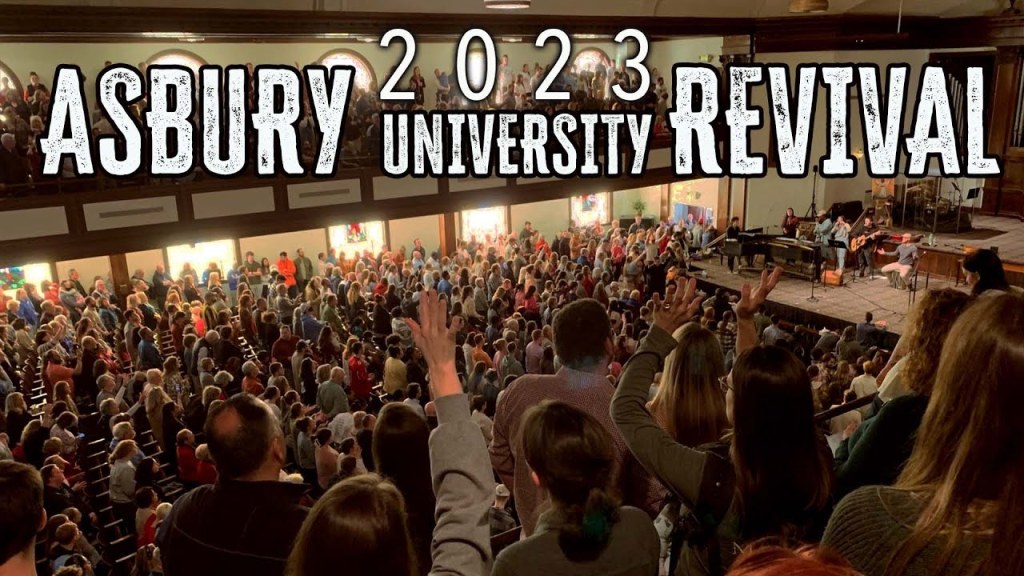
Psalm 46 Be Still and Ponder Upon the Importance of How We Each View God.

Psalm 46 Amplified Bible

God the Refuge of His People.

To the Chief Musician. A Psalm of the sons of Korah, set to soprano voices. A Song.

46 God is our refuge and strength [mighty and impenetrable],
A very present and well-proved help in trouble.

Therefore we will not fear, though the earth should change
And though the mountains be shaken and slip into the heart of the seas,

Though its waters roar and foam,
Though the mountains tremble at its roaring. Selah.


There is a river whose streams make glad the city of God,
The holy dwelling places of the Most High.

God is in the midst of her [His city], she will not be moved;
God will help her when the morning dawns.

The nations made an uproar, the kingdoms tottered and were moved;
He raised His voice, the earth melted.

The Lord of hosts is with us;
The God of Jacob is our stronghold [our refuge, our high tower]. Selah.


Come, behold the works of the Lord,
Who has brought desolations and wonders on the earth.

He makes wars to cease to the end of the earth;
He breaks the bow into pieces and snaps the spear in two;
He burns the chariots with fire.
10 
“Be still and know (recognize, understand) that I am God.
I will be exalted among the nations! I will be exalted in the earth.”
11 
The Lord of hosts is with us;
The God of Jacob is our stronghold [our refuge, our high tower]. Selah.

The Word of God for the Children of God.

Adeste Fidelis. Venite Adoremus. Dominum.

Gloria. In Excelsis Deo. Alleluia, Alleluia, Alleluia, Amen.

Be Still and Know that I Am God.

We will tend to believe of being “busy” as something positive—something of a measure of our true success in life, maybe even a compliment—especially when we consider the negative implications of its opposites, being “idle” or “lazy.”

But we should not always assume, consider “busyness” as a Christian virtue.

Have you ever thought that busyness might just be a sign of Christian betrayal rather than Christian commitment?

We should definitely be thankful that many believers are busy for the Lord.

Giving, sacrificing our time and ourselves in service to God’s kingdom is an absolutely essential part of the believer’s life and the Christian experience.

But mere busyness does not necessarily equal faithfulness in the Christian life.

In a time of great social economic political upheaval and national crisis, God emphatically urged his people to simply “be still” and know that he was God.

Twice in Psalm 46, God’s people heard the assurance that the Lord Almighty was with them.

He would be their comfort and mighty fortress.

The key to experiencing that assurance, though, would be to approach God with a stilled heart and quiet trust.

When we actually withdraw from our busy lives to spend time with God, we find ourselves discovering, enjoying, experiencing the truest reality of his presence.

While we are not called by God to be either lazy or idle, neither are we called to a life of non-stop activity and service.

God’s gently emphatic invitation, “be still” unlocks for us the opportunity to experience the maximum allowable joy of actually, genuinely, knowing him.

What a blessed comfort this verse has been to multitudes of believers in Christ, down through the ages, who have heeded God’s invitation and rested on these words of the Psalmist and had their hearts stilled in the presence of the Lord.

What refreshment these simple words have bestowed on many little lambs who have listened to the voice of their Good Shepherd – that Great Shepherd of the sheep Who opens His arms wide to embrace all who will truly trust in His name.

But in context, we see another component to these words of reassurance.

We see a genuine plan to glorify His Name and to exult His Person among the nations of the world who rage against the God of heaven and His anointed King.

He is our Defense and our Defender against the enemies of our soul, and all who rest in Him find courage and strength.

He is our impenetrable refuge from the storms of life and our shelter in the midst of oppression, and we are called to be still and to know that He is God – for His purposes will never fail, He will be glorified throughout the whole earth.

It is of the greatest encouragement, both to His people Israel, and to His children of every age, that men who follow their own atheistic ‘will’ and construct their own anti-God plans, will finally be brought to nothing.

For God, and God alone will be exulted among the heathen and His purposes alone will come to fruition – but we who have trusted Him for salvation are to sit serenely in His presence, in quiet assurance, confidence and in godly trust.

Like the people of Israel in times past, Church-age believers are invited, called upon to ponder, remember the mighty deeds that God has done and to recall the myriad beyond myriads of miraculous, wondrous works that He has performed.

We are to rest confidently in the knowledge that He is our faithful God – the supreme Creator of all and Commander of the armies of heaven Who redeems us by faith in the shed blood of Christ, and will never leave us nor forsake us.

We are to:

rest peacefully in the truth of His Word and be still in His holy presence.

We are to know in our heart, by faith with thanksgiving, that He is the Lord our God Who alone pardons all our iniquities, heals all our diseases, Who redeems our life from the pit, and Who crowns us with lovingkindness and compassion.

He alone is our God Who satisfies our years with good things, renews our youth like the eagle.

He performs righteous deeds and judgments for all who are oppressed.

The LORD is compassionate and gracious… slow to anger and abounding in steadfast and immovable lovingkindness.

He is our Redeemer our Saviour and Friend.

He alone is our hope and strength, He will be exalted, for it is He who has made us, not we ourselves, for we are His beloved people, the sheep of His pasture.

Although the nations rage like the billows of the sea and the people imagine a vain thing against the Lord God Almighty, we are invited, called to be still in the presence of the Lord and to know Him in our heart by faith, with thanksgiving.

May we ponder what it means to be still in His presence and cease from all our strivings… and truly be at peace in His company – Whom to know is life eternal.

The Importance of How I View God

In light of the past few weeks’ of worldwide revival events, I have been taking more time to reflect and ponder.

My emotions have created a mixed bag, from skepticism to doubt, disbelief, questions, and indescribable awe. 

On one hand, I decisively, definitely praise God if He is using these services to truly speak and to deeply ignite and inspire and move to transform lives.

I have not been to any of the services, but I have watched many of the streams and videos and I have been “stilled” and moved to tears of indescribable joy.

I know that God is powerful and can do anything He chooses, especially when we are not expecting it – but witnessing those students, images of people into the streets of our nation’s cities, into prisons and many international cities?

Such an inexplicably powerful experience to see the people acting on their belief that God, the Father and God the Son and God the Holy Spirit is “on the move.”

On the other, however, I think it’s a good and righteous thing to be cautious and careful with what we quickly interpret as come to believe to be the Spirit of God. 

Even the Bereans in Acts 17 do this when Paul presents the gospel message to them.

Though eager to hear Paul’s teachings, they move to test them themselves in the Holy Scriptures, Study, Pray, Ponder, and then decide what is from God. 

“As soon as it was night, the believers sent Paul and Silas away to Berea. On arriving there, they went to the Jewish synagogue. Now the Berean Jews were of more noble character than those in Thessalonica, for they received the message with great eagerness and examined the Scriptures every day to see if what Paul said was true. As a result, many of them believed, as did also a number of prominent Greek women and many Greek men” (Acts 17:10-12, NIV). 

Paul was known as an excellent teacher and an even better friend.

He truly cared that every person heard and had access to the Bible after his conversion from Saul to Paul.

This is why Paul felt called to attend as many missionary journeys as he did!

But no matter how great the speaker, one’s credibility and ability to represent the gospel should always be prudently studied analyzed in light of the Bible.

People are not the source of light themselves but are the ones pointing to the Light. 

For this reason, 1 Thessalonians 5:19-22 further notes,

“Do not quench the Spirit. Do not treat prophecies with contempt but test them all; hold on to what is good, reject every kind of evil” (NIV). 

While I am not one to debate or judge if these revival services are real or not, their appearance has caused me to think about how I view God.

And more importantly, if I understand Him. 

How Do You View God?

I was born into the Evangelical United Church of the Brethren.

Growing up, I was raised in a traditional EUB Church until 1968 when the churches merged to become the United Methodist Church.

I remember every service, worship session, and layout for an event looked exactly the same.

Over time, I didn’t know why I was doing or saying what I did.

Being so young as I was [7 years old] I didn’t even understand the Apostle’s Creed that I recited by heart every Sunday.

Quickly, God and my relationship with Him became routine, just rehearsed words that needed to be prayed to maintain my perfection status. 

By the time I reached high school, my father had remove us from the Methodist Church and we then became members of a local conservative Jewish Synagogue.

My view of a God as my father became fractured was immensely distorted, and I truly started to wonder and ask, where is God, Jesus in the midst of my separation? 

Verses that call God our Abba, or Father, have been an enormous challenge for me to understand and accept.

I have wrestled for years with how God can be “One God,” for everyone, angry and loving, forgiving and punishing, reachable, yet above and beyond us all. 

But it wasn’t until a recent “live” revival streaming session that I realized I should give my current view of God so much more contemplation – and that led me to todays verse, to ask these questions: “Be Still?” “Do I Understand Him?”

Do I Understand Him?

While I might dare to believe we would all like to say we know and understand God fully, from how He works to why things happen the way they do, I do not think nor do I believe that “understanding God” is even remotely possible. 

It is possible to know and have an intimate, close, and personal relationship with Jesus Christ.

This is why Jesus came and died for us, so we could partake in this personal relationship with Him.

That’s the core essence of the gospel message.

However, God never expected us to try and figure out all His ways. 

Isaiah 55:8-9 notes, “For my thoughts are not your thoughts, neither are your ways my ways, declares the Lord. For as the heavens are higher than the earth, so are my ways higher than your ways and my thoughts than your thoughts” (Isaiah 55:8-9, ESV). 

1 Corinthians 2:15-16 furthers this point when it says:

“The spiritual person judges all things, but is himself to be judged by no one. “For who has understood the mind of the Lord so as to instruct him?” But we have the mind of Christ” (ESV). 

While we can obtain a mind like Christ’s, in purity, hope, and love, this does not mean that we will know and understand all that He does.

He is still God, and we are not.

He is still all-powerful, and we are not.

His ways are not our ways, and that is for a reason.

Should We Know It All?

When I was younger, and far more naïve than I am right now, I used to believe that if I knew “everything that would happen to me”, my life would be better.

If I always knew exactly what God wanted me to do, where He wanted me to go, and what He was doing, my life would be easier.

I look back now over the course of the last 43 years and I can only laugh. 

As an anxious person, not only would I find all of this information to be rather overwhelming and paralyzing, but I’m confident that if I indeed “knew it all,”

two things would happen:

one, I would not rely on God to get through them,

two, I would try to convince Him, like Moses or Jonah, that I was never ever going to be the right person for whatever task He “dared” called me into. 

In Jonah 1, beginning in verse 1, Jonah runs from God because of his fears.

God calls him to a high-caliber task, but Jonah doesn’t feel up for the journey.

Even later, when he runs back to God, he becomes angry at God for His grace, the same grace that was given to him earlier in the chapter. 

Countless people in the Bible tried to understand God.

From Abraham, to Moses to Aaron, Job, and David and all the biblical writers.

But if I’ve learned anything from their interactions, it’s that God cannot be entirely understood, and while we can have a close fellowship with Him, He will still be above and beyond anything we could fully comprehend here on earth.

What Have I Learned About How I View God?

So what have I learned about how I view God?

I have learned that while God is a loving Father figure.

He is also so much more than I will ever be able to grasp. 

He is unpredictable. 

He is unlikely. 

He moves in ways we’d think He would and ways we wouldn’t. 

He is a quiet, still whisper but also a mighty and powerful storm.

He’s an oxymoron to those who don’t believe in Him and a mystery to those who do.

Today, I am learning that I have many more years of learning to go.

I will not understand Him entirely, but I’m choosing every day to grow closer to Him through prayer, reading the Bible, studying, meditating, and experiencing Him as I live – and something tells me that it’s okay-This is a life-long process.

How I view God is still growing.

I anticipate your view of God is growing as well.

I want to know Him as a Father.

I want you the reader to know Him as a Father.

I’ve known Him as a Friend.

I want you the reader to know Him as a Friend.

And I want to know and view Him for all that He is.

And I want you the reader to know and view Him for all that He is.

Even if it takes the maxed our entirety of a thousand lifetimes to experience:

“Be still and know (recognize, understand) that I am God. I will be exalted among the nations! I will be exalted in the earth.” 11 The Lord of hosts is with us; The God of Jacob is our stronghold [our refuge, our high tower]. Selah. [Psalm 46:10-11 AMP]

The predicted and the unpredicted. 

The known and the unknown.

However He is, that’s how I want to know and view Him.

Why ever He is, that is how I want to know and view Him.

Whenever He is, that is how I want to know and view Him.

Where ever He is, that is how I want to know and view Him.

Perhaps, you the reader, from wherever you are, will join in the joy?

In the name of God, the Father and God the Son and God the Holy Spirit,

Let us Pray,

Lord God Almighty, we rejoice that you are with us. Teach us to be still so that increasingly we can experience your presence in our lives through your Holy Spirit within. Father, I praise You that Your Word stands fast for ever and ever and that Your precious promises encourage me to rest in Your love and drink deeply from the Rock of my salvation. Draw near to every member of Christ’s Body and protect Your people Israel against the increasing roar of the nations. I pray for the salvation of the lost and for Your soon return, when Your name be exalted throughout all the earth and the nations will KNOW that You are God. I ask in the name of my Savior Jesus.

https://translate.google.com/

Asking Ourselves the Hard Questions, Preparing for Lent, How Is God’s Power Made Perfect in All of Our Weaknesses? 2 Corinthians 12:7-10

2 Corinthians 12:7-10Amplified Bible

A Thorn in the Flesh

Because of the surpassing greatness and extraordinary nature of the revelations [which I received from God], for this reason, to keep me from thinking of myself as important, a thorn in the flesh was given to me, a messenger of Satan, to torment and harass me—to keep me from exalting myself! Concerning this I pleaded with the Lord three times that it might leave me; but He has said to me, “My grace is sufficient for you [My lovingkindness and My mercy are more than enough—always available—regardless of the situation]; for [My] power is being perfected [and is completed and shows itself most effectively] in [your] weakness.” Therefore, I will all the more gladly boast in my weaknesses, so that the power of Christ [may completely enfold me and] may dwell in me. 10 So I am well pleased with weaknesses, with insults, with distresses, with persecutions, and with difficulties, for the sake of Christ; for when I am weak [in human strength], then I am strong [truly able, truly powerful, truly drawing from God’s strength].

The Word of God for the Children of God.

Adeste Fidelis. Venite Adoremus. Dominum.

Gloria. In Excelsis Deo. Alleluia, Alleluia, Alleluia, Amen.

A Thorn in the Flesh …

The apostle Paul was dedicated to God.

But Paul had a “thorn in the flesh”—possibly a persistently challenging and spiritually demanding circumstance or disease that bothered him quite a lot.

He called it “a messenger of Satan, to torment” him.

We don’t know exactly what it was, but somehow it made Paul physically or spiritually [or both] weaker than he wanted to be.

Thorns prick, scratch, and wound.

However, the point of Paul’s example is that because of his thorn in the flesh, God was able to work through him and his weaknesses ever more powerfully.

Although Paul had pleaded three times with the Lord to take his thorn away, the Lord only responded saying to Paul,

“My grace is sufficient for you, for my power is made perfect in weakness.”

Paul notes that he was given his thorn “in order to keep . . . from becoming conceited.”

This means Paul knew if he did not have this thorn, he could have become self-reliant and proud of his ability to “power through anything by his own will.”

So Paul is teaching us that his thorn in the flesh was actually a good thing.

It was a sign of God’s grace to keep him focused on God, dependent on God, reliant on God and away from his becoming a proud “iron willed” follower.

And we can surely thank God for that.

This does not mean we should ask God to give us a thorn in the flesh.

We can trust that God knows what is best for us.

But if God does allow us to have a particular kind of suffering, we can also trust that he can use it to do good.

As Paul writes in another place,

“We know that in all things God works for the good of those who love him, who have been called according to his purpose” (Romans 8:28).

How Is God’s Power Made Perfect in Weakness?

Although being a Christian doesn’t grant us the power to endure every physical difficulty, it does grant us ready access to the Holy Spirit who abides within us.

His Holy Spirit may not be a superpower, but it’s a genuine supernatural power.

It may not enable us to look like the Hulk when it comes to both spiritual and physical challenges, but Holy Spirit provides us with an otherworldly strength to live into our oncoming circumstances and to conquer the challenges of life.

This is the kind of strength that can only be manifested in our weaknesses.

In 2 Corinthians 12:9, Paul wrote, “But he said to me, ‘My grace is sufficient for you, for my power is made perfect in weakness.’” 

So what is this power, and how can we, as believers, come to access it during the up and coming Post-Pandemic Lenten season and strenuous challenges of life?

What Does ‘My Power Is Made Perfect in Weakness’ Mean?

We often try to come across as the I-can-do-it-all Christian—making perfect grades in school or raising well-behaved children while maintaining the ultra squeaky-clean Christian reputation in church.

If we come across a challenge that seems too much for us to handle, we often blame ourselves for not being “strong enough.”

As though we some how an in some way believe that God automatically expects us to do all the things with “ease” and never cave beneath the pressures of life.

But we were simply never created to bear this life through our own strength.

In fact, we don’t even have within ourselves the ability to bear its weight!

So why should we or do we, try so hard to look like Miss or Mr. Independent “Iron” Christian when, really, God frowns upon this type of approach to life?

It is impossible for us to conquer anything apart from God’s sufficient grace.

Writing this, I wonder if God purposely created our bodies to cave beneath pressure—so we could realize we can do nothing apart from Him (see John 15:5).

But rather than allowing this to make us frustrated, get all of our faults and all failures and failings all bunched up inside our heads, perhaps we should instead use these weaknesses to propel us closer to our Savior Jesus Christ, and drawing supernatural strength from the power of the Holy Spirit – to rely more on God?.

God intended us to rely on this Holy Spirit day-by-day, moment-by-moment.

This is why Jesus said this to His disciples before He was crucified:

“But in fact, it is best for you that I go away, because if I don’t, the Advocate won’t come. If I do go away, then I will send him to you.” [John 16:7]

John 16:7Amplified Bible

But I tell you the truth, it is to your advantage that I go away; for if I do not go away, the [a]Helper (Comforter, Advocate, Intercessor—Counselor, Strengthener, Standby) will not come to you; but if I go, I will send Him (the Holy Spirit) to you [to be in close fellowship with you].

It is for our benefit that Jesus left the “Advocate,” which is the Holy Spirit.

If we did not have the Spirit abiding within us, then we would not have access to this power.

We would struggle through life, relying only on our own mental an physical muscles to face life’s battles.

But we do have the Holy Spirit.

This means as we abide in Him, we can draw strength from Him rather than ourselves.

We can ask Him to give us what we need to overcome this life.

Confessing ourselves before Him: “No, me, myself, I, simply cannot do it all.”

That’s a good thing!

If we could, then we would never have the opportunity to allow God’s power—which is far stronger than any human strength—to be made apparent within us.

We would continue through life as Miss or Mrs. or Mr. Iron Clad Independent Christian, never having a need to depend on God alone and gain access to His grave-conquering power.

What Is the Context of 2 Corinthians 12:9?

In this chapter, Paul shares about a heavenly vision God gave him that gained him access to spiritual revelations.

He was not permitted to share these insights with anyone and did not want to receive the credit for them.

To keep him humble, he says that God intentionally allowed him to have a “thorn in the flesh” (see verse 7).

Paul goes on to discuss the pain of this suffering, as well as its eventual advantage, in verses 8-10:

“Three times I pleaded with the Lord to take it away from me. But he said to me, ‘My grace is sufficient for you, for my power is made perfect in weakness.’ Therefore I will boast all the more gladly about my weaknesses, so that Christ’s power may rest on me. That is why, for Christ’s sake, I delight in weaknesses, in insults, in hardships, in persecutions, in difficulties. For when I am weak, then I am strong.”

Obviously, the strength he refers to in the final verse is not human strength but a supernatural strength.

And it is only through experiencing the weakness that he was he able to receive this power.

In other words, Paul recognized that it was not through an independent attitude that he could boast, but rather a complete dependency, reliance upon God.

It was this dependency and reliance on God that kept him humble as well.

It is also interesting to take a look at the meaning of the Greek words used in this passage.

The phrase “is sufficient” is arkei, which means to assist, benefit, and to be satisfied.

Christ’s grace benefits us in our weaknesses by allowing us to grow stronger—not in our might, but in His.

Thus, we are more equipped to face the challenges and sufferings of life.

The word “power” here is dynamis, which implies a force and miraculous power.

It is pretty miraculous when His strength becomes manifested in our weaknesses!

“Is perfected” is teleitai, which implies bringing to completion, to accomplish and fulfill.

When we receive His miraculous power to strengthen us, we don’t just receive a portion of it.

We can receive it to the full—and all for the singular purpose of accomplishing His perfect will.

Finally, the phrase “may rest” is episkēnōsē.

This is translated to mean to pitch a tent upon or to dwell and abide within.

How interesting is that?

So, If you like camping out under the stars …

So, if you like staying dry against the rains …

In a strong, dependable, reliable, long lasting, enduring, well staked tent,

Psalm 19Amplified Bible

The Works and the Word of God.

To the Chief Musician. A Psalm of David.

19 The heavens are telling of the glory of God;
And the expanse [of heaven] is declaring the work of His hands.

Day after day pours forth speech,
And night after night reveals knowledge.

There is no speech, nor are there [spoken] words [from the stars];
Their voice is not heard.

Yet their voice [in quiet evidence] has gone out through all the earth,
Their words to the end of the world.
In them and in the heavens He has made a tent for the sun,

Which is as a bridegroom coming out of his chamber;
It rejoices as a strong man to run his course.


The sun’s rising is from one end of the heavens,
And its circuit to the other end of them;
And there is nothing hidden from its heat.


The law of the Lord is perfect (flawless), restoring and refreshing the soul;
The statutes of the Lord are reliable and trustworthy, making wise the simple.

The precepts of the Lord are right, bringing joy to the heart;
The commandment of the Lord is pure, enlightening the eyes.

The fear of the Lord is clean, enduring forever;
The judgments of the Lord are true, they are righteous altogether.

10 
They are more desirable than gold, yes, than much fine gold;
Sweeter also than honey and the drippings of the honeycomb.
11 
Moreover, by them Your servant is warned [reminded, illuminated, and instructed];
In keeping them there is great reward.
12 
Who can understand his errors or omissions? Acquit me of hidden (unconscious, unintended) faults.
13 

Also keep back Your servant from presumptuous (deliberate, willful) sins;
Let them not rule and have control over me.
Then I will be blameless (complete),
And I shall be acquitted of great transgression.
14 
Let the words of my mouth and the meditation of my heart
Be acceptable and pleasing in Your sight,
O Lord, my [firm, immovable] rock and my Redeemer.

Let that love for camping become one more “JEHOVAH” sized reminder …

Christ’s power can literally descend upon us as we dwell and abide in Him.

This “tent” of Christ can remain our safe place of refuge.

It’s interesting to note, too, how the phrase “may rest” in this passage compares to the phrase “made His dwelling” in John 1:14:

“The Word became flesh and made his dwelling among us.”

The passage “made His dwelling” is translated eskēnōsen, which means to dwell in a tent, to occupy or to reside.

So, Jesus came to earth so that He could dwell with us—and when He departed, He gave us the Holy Spirit so that He could continue to do the same.

He still dwells with us, and we can dwell in Him.

But we must crucify our desires to work and face this life apart from Christ.

After all, it is only as we abide and dwell in Him that we will display His full power within us, bearing “much fruit,” as mentioned in John 15.

What Does the Bible Have to Say about Weakness?

The word “weakness” in 2 Corinthians 12:9 implies suffering, insults, and persecution.

These aren’t exactly physical limitations but rather limitations we face in our everyday lives, such as the temptation to sin, heartache, and distress.

It is evident throughout the Bible that God does not intend to remove these weaknesses from our life.

If He did, then we would never have the pleasure of witnessing His power overcome.

We would never have the privilege of allowing our weaknesses to find their rest and completion in His strength.

Sadly, the idea of depending on someone may look like a weakness itself to our society.

We love to come across as strong, independent, and self-reliant, needing nothing and no one.

It is true humans are strong and intelligent—but this type of “Iron and Steel” independent mentality is frowned upon in God’s eyes.

And our strength is nothing to boast about, because according to 1 Corinthians 1:25, “God’s weakness is stronger than the greatest of human strength.”

So if God’s weakness is even stronger than our greatest strength, then why shouldn’t we willingly want to receive His power?

One of the reasons why God allowed His Son to come to earth was so that He could understand our human condition.

Basically, He wanted to become familiar with our weaknesses. 

Hebrews 4:15-16 makes this clear:

For we do not have a high priest who is unable to sympathize with our weaknesses, but one who in every respect has been tempted as we are, yet without sin. Let us then with confidence draw near to the throne of grace, that we may receive mercy and find grace to help in time of need.”

Jesus understands our sufferings.

Why, then, should we try to stubbornly fix our issues by ourselves when the One who has already conquered this world invites each and every single one of us to completely, utterly, and fully, rely on Him?

It is only when we relent in our own efforts and apply the above Scripture to our lives that we will then fully appreciate and abundantly receive the help we need.

God’s power being made evident in our weaknesses is also illustrated in stories throughout the Old Testament, such as David conquering Goliath, as well as in the following verses:

“He gives power to the weak, And to those who have no might He increases strength” Isaiah 40:29.

“So he said to me, “This is the word of the Lord to Zerubbabel: ‘Not by might nor by power, but by my Spirit,’ says the Lord Almighty” Zechariah 4:6.

Apostle Paul also spoke of God’s strength being made known in his weakness in Philippians 4:11-13: 

“Not that I was ever in need, for I have learned how to be content with whatever I have. I know how to live on almost nothing or with everything. I have learned the secret of living in every situation, whether it is with a full stomach or empty, with plenty or little. For I can do everything through Christ, who gives me strength.”

When I read these passages of scripture, enormous joy arises within me because I realize just exactly how empowered I am.

Whatever trials or temptations God allows into my life, I can overcome.

Not in my own strength, of course, but in God’s power being made perfect in my weakness.

Another reference to our fragility finding completion in God’s strength is in 2 Corinthians 4:7, where Paul wrote: 

“We now have this light shining in our hearts, but we ourselves are like fragile clay jars containing this great treasure. This makes it clear that our great power is from God, not from ourselves.”

Perhaps this is why God often uses the weak of the world to demonstrate His greatest power and to “shame the wise” (see 1 Corinthians 1:27):

So that more of His glory can be on display.

When we overcome a weakness we would not be able to conquer on our own, then it is obvious, just like the above verse says, the great power came from God and not from ourselves.

And shouldn’t that remain our main goal as Christians?

To spread more of His glory rather than our own? 

But the only way we can gain this strength is to give up our independent tendencies and learn how to rely on the Holy Spirit within us. 

Ephesians 3:16 says, “I ask that out of the riches of His glory He may strengthen you with power through His Spirit in your inner being.”

I believe God is searching for Christians who can admit their weaknesses and shortcomings, because only in doing that will His purposes be accomplished.

This is why Jesus left behind the Holy Spirit, after all.

So as we dwell in Him, we could be empowered to embrace the uncomfortable, including sufferings and persecution.

All for the sake of extending His Kingdom.

This means that the weaker we are, the more His power can be displayed within us and through us.

Apostle Paul was right—we now have every right to boast in our weaknesses!

This Lenten Season, Let’s choose to Go ‘camping’ with God, Son, Holy Spirit.

In the name of God, the Father and God the Son and God the Holy Spirit,

Let us Pray,

Heavenly Father, thank You that Your grace is sufficient for all my needs. Help me to recognise and rejoice in the knowledge that Your power is made perfect in my own weakness. Help me to boast all the more gladly in my inabilities so that Your great ability may be manifest in my life. By thy Holy Spirit, May everything I do be to Your praise and glory, my Lord and my God. Creating and eternal God, whose grace is sufficient for us and whose power is made perfect in weakness, in our weakness and insufficiency, we offer our lives and the gifts of our living for the work of your mustard seed kingdom; in our Lord, King and Savior Jesus’ name. AMEN.

https://translate.google.com/