Romans 15:4 "For whatever was written in earlier times was written for our instruction, so that through perseverance and the encouragement of the Scriptures we might have hope."
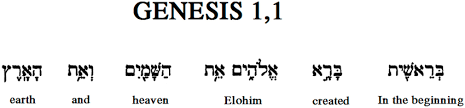
1 In the beginning Elohim created hashomayim (the heavens, Himel) and haaretz (the earth).
2 And the earth was tohu vavohu (without form, and void); and darkness was upon the face of the deep. And the Ruach Elohim was hovering upon the face of the waters.
3 And Elohim said, Let there be light: and there was light [Tehillim 33:6,9].
4 And Elohim saw the light, that it was tov (good); and Elohim divided the ohr (light) from the choshech (darkness).
5 And Elohim called the light Yom (Day), and the darkness He called Lailah (Night). And the erev (evening) and the boker (morning) were Yom Echad (Day One, the First Day, Mk 16:2).
6 And Elohim said, Let there be a raki’a (expanse, dome, firmament) in the midst of the mayim (waters), and let it divide the mayim from the mayim.
Word of God for the Children of God
Glory be to the Father, and to the Son, and to the Holy Ghost; as it was in the beginning, is now, and ever shall be, world without end. Amen, amen.
In the Bible we have God’s great story of the world from its beginning to its end.
This story includes not only mind numbing complexity and wondrous beauty but also great tragedy and sorrow.
One of the golden threads woven into this story focuses on the world’s true King. Who is this King, and what does true kingship look like on the earth?
In the Bible’s opening verses we can hear God speaking.
In the ancient world, no one could make things happen the way a king could by just speaking.
If the king said, “Let there be a banquet,” the obedient servants jumped into action. “Your wish is our command,” they would say.
In Genesis, God speaks as King, and the cosmos itself springs into being.
God can even make something out of nothing!
Light and darkness, day and night, water and sky, sun and moon, vegetation and creatures.
Whole arenas of life are formed and filled.
And the King says, “It is good.”
This Creator King builds by speaking, and his lordship over all things is put on display.
Ancient kings in their earthly kingdoms would build temples, palaces, and vast gardens. Creator King has spoken, built the marvelous temple-palace-garden complex that is creation, the whole universe, including our own earthly home.
The world in which we “live and move and have our being” exists because our King continues to speak and uphold its existence (Colossians 1:16-17). Amazing!
Appreciate this thought: There is, was will never a time when God did not exist. Before there was time, before there was anything at all, there was always God.
Hebrews 13:8 Douay-Rheims 1899 American Edition
8 Jesus Christ, yesterday, and to day; and the same for ever.
And since His nature is unchanging, so He has also always existed in the Trinity—God the Father, God the Son, and God the Holy Spirit. Amen!
When we are reading the Bible, we discover each member of the Holy Trinity was involved in creation: God the Father took the initiative, God the Holy Spirit is described as “hovering over” the proceedings, and God the Son was the agent of creation in all that was made (Genesis 1:2-3; John 1:3).
“All things bright and beautiful, all creatures great and small”[1]should leave us in awe; they were all fashioned by God’s command.
1 Cecil F. Alexander, “All Things Bright and Beautiful” (1848).
And He is not only the Creator of all; He is also the King, the Lord of all that He has created. All of nature is quite literally, by, in His hands, under His control.
As we visually try to picture waves crashing against ancient shorelines, it’s wonderfully encouraging to know each one is there as a direct result of God’s sovereign rule. He hasn’t stepped away from His creation, nor will He ever.
It’s so vitally important to remember God is also transcendent. He is sitting on His throne, above, beyond, fully unique and distinct from all that He has made.
This is what distinguishes Christianity from pantheism.
It is the idea that the natural world is a manifestation of God and therefore literally every single thing is somehow a part of Him.
With this belief, we dare not kill a fly, step on an ant – those insects are divine.
Similarly, we should not chop down a tree or eat meat, because these too are “parts of God.”
Teachings like these are mistaken and misguided and tend to lead to idolatry.
Scripture makes it crystal clear that time and time again that people will choose to worship “the creature rather than the Creator” (Romans 1:25).
When we see a great painting, we rightly admire and enjoy the painting, and then we praise the painter. All of creation is God’s canvas, and all of it speaks of “his invisible attributes, namely, his eternal power and divine nature” (v 20).
Only God is to be worshiped, for creation exists by His power and for His glory.
His existence knows no beginning or end, and He will reign forever.
He is the King.
Today, exalt Him as He alone deserves.
Go for a walk or look out of the window and sing praises to Him as you see His beauty displayed in what He has made.
Humble yourselves! Praise Him, Honor Him, Glorify Him, Worship Him, as He continues to rule over His creation, and for holding you in His sovereign hand.
In the name of the Father, and of the Son, and of the Holy Spirit …
Praying ….
Psalm 23 Douay-Rheims 1899 American Edition
23 On the first day of the week, a psalm for David. The earth is the Lord’s and the fulness thereof: the world, and all they that dwell therein.
2 For he hath founded it upon the seas; and hath prepared it upon the rivers.
3 Who shall ascend into the mountain of the Lord: or who shall stand in his holy place?
4 The innocent in hands, and clean of heart, who hath not taken his soul in vain, nor sworn deceitfully to his neighbour.
5 He shall receive a blessing from the Lord, and mercy from God his Saviour.
6 This is the generation of them that seek him, of them that seek the face of the God of Jacob.
7 Lift up your gates, O ye princes, and be ye lifted up, O eternal gates: and the King of Glory shall enter in.
8 Who is this King of Glory? the Lord who is strong and mighty: the Lord mighty in battle.
9 Lift up your gates, O ye princes, and be ye lifted up, O eternal gates: and the King of Glory shall enter in.
10 Who is this King of Glory? the Lord of hosts, he is the King of Glory.
Glory be to the Father, and to the Son, and to the Holy Ghost; as it was in the beginning, is now, and ever shall be, world without end. Amen, amen.
1 1-2 Before anything else existed,[a] there was Christ, with God. He has always been alive and is himself God. 3 He created everything there is—nothing exists that he didn’t make. 4 Eternal life is in him, and this life gives light to all mankind. 5 His life is the light that shines through the darkness—and the darkness can never extinguish it.
Word of God for the Children of God
Glory be to the Father, and to the Son, and to the Holy Ghost; as it was in the beginning, is now, and ever shall be, world without end. Amen, amen.
In Him Was Life
The first of these theme-words appears at the beginning of John 1:4, “In him was life.”
The wordlife appears 36 times in the gospel of John, far more than any other New Testament book. It is one of his most important themes.
The preceding verses say that “the Word was with God” and “was God,” and that “all things were made through him” (John 1:1–3).
The second person of the Godhead, the “Word,” who is the subject of this gospel, is the source of all life in this universe.
Not merely does he possess life, but life itself is found in him and also comes through him. Jesus said, “For as the Father has life in himself, so he has granted the Son also to have life in himself” (John 5:26).
This is what John wants us to see in Christ: “In him was life.”
Are you and I really truly living?
Do you and I feel that our lives matter for something important?
Are you and I excited about things, or just keeping occupied?
Jesus has life to give to those who trust in him. “I came that they may have life,” he said, “and have it abundantly” (John 10:10).
So, just how much or how little do you and I actually, authentically, trust Him?
The Light Shining
This is the very connection John makes, that the life in Christ comes as a light shining in the darkness.
“In him was life, and the life was the light of men. The light shines in the darkness”(John 1:4–5).
Light is another of John’s great themes.
The first recorded words of God are, “Let there be light” (Gen. 1:3). Light is an image that everyone understands, and it brings a rich array of meaning.
The first thing light does is reveal.
When you walk into a dark room, you turn on the light to see.
This is what Isaiah prophesied about the coming of Jesus: “The people who walked in darkness have seen a great light; those who dwelt in a land of deep darkness, on them has light shined” (Isa. 9:2).
Man was living in a spiritual darkness, ignorant about God and living in superstition.
So Jesus came to reveal God. “Whoever has seen me has seen the Father,” he said (John 14:9).
“Jesus is revealed as the One who knows God the Father and who makes him known.… Before Christ came into the world, the world was in darkness. The world did not know God. Christ came. His light shone before men. Then men had light of the knowledge of the glory of God in the face of Jesus Christ.”
Do you and I know God?
Do you and I know what God is like?
Do you or I know Jesus came to reveal God to us.
Do you and I know God by personal acquaintance, by his presence within your spirit?
Do you and I know Jesus came also to bring us into fellowship with God as worshipers in spirit and in truth?
Light not only reveals but it also warms.
To “walk in the darkness” is to walk in sin and moral depravity, but the light of Christ warms the heart so that it is changed.
This spiritual transformation is what Jesus meant in John 12:46, “I have come into the world as light, so that whoever believes in me may not remain in darkness.”
Thirdly, light not only reveals and warms, but it also guides.
We think of the glory cloud of light that guided Israel through the desert during the exodus from Egypt.
Psalm 119:105 says, “Your word is a lamp to my feet and a light to my path.”
Likewise, Jesus said, “I am the light of the world. Whoever follows me will not walk in darkness, but will have the light of life” (John 8:12).
If you come to Jesus Christ in faith and follow as his disciple, he will be a light to guide you “in paths of righteousness for his name’s sake” (Ps. 23:3).
Fourthly, light conveys and stimulates life.
If you want a plant to grow, you place it in the sunshine.
Likewise, you will grow upward as the light of Christ’s Word shines in you.
His light shines with the power of his life through his Word.
“In him was life, and the life was the light of men”(John 1:4).
This great verse summarizes what it means for us to be Christ-like.
Jesus wants you to be a lamp that reflects his light in the world.
He wants you to reveal God to those around you; he wants you to warm others so they will seek after truth and love; he wants you to be a guide to others; and he wants his light shining in and through you to bring others to life.
He said: “Let your light shine before others, so that they may see your good works and give glory to your Father who is in heaven” (Matt. 5:16).
Darkness against the Light
The third image John uses is darkness.
This is the absence of light.
If light stands for the knowledge of God, darkness represents the fullness of all our spiritual ignorance in which the world is perishing.
If light stands for warmth and goodness, then the darkened world is that which is enslaved in sin and evil.
If the light breaks through, leads us in good paths, darkness is the realm of the lost and blind. If light brings true life, then darkness is the true realm of death.
Darkness is opposed to light.
John 1:5 says, “The light shines in the darkness, but the darkness has not overcome it.”
This indicates that the coming of Christ as the light meets the opposition of the darkened world.
Jesus said, “This is the judgment: the light has come into the world, and people loved the darkness rather than the light because their deeds were evil” (John 3:19).
Nothing has ever condemned this world more than its response to the coming of Jesus Christ.
If people tell you the world or the human race is basically good, remind them what it did to Jesus.
He came without any sin, healing and teaching the way to God.
He was a light shining in the darkness.
But for that very reason the world hated him.
The hypocritical Pharisees resented him for exposing their legalism.
The priests and scribes envied his popularity.
The power-hungry Romans thought him a threat to their military domination.
And it wasn’t just the elite, for the ordinary people also called out for Jesus’ blood: “Away with him, away with him, crucify him!” they demanded of Pontius Pilate (John 19:15).
When God’s Son came into the world, the world nailed him to a cross—the cruelest form of execution they could possibly devise—to suffer and die.
For our 21st century People today similarly despise Jesus; for all their supposed “admiration” they refuse, refute, mock and scorn his exclusive claim to be our Savior and Lord and resent his holy example that exposes their sin.
The Light of Christ
“In him was life, and the life was the light of men. The light shines in the darkness and the darkness has not overcome it.”
These are great themes that John unfolds all through his gospel: life, light, and darkness.
But remember that John is really pointing to Jesus.
What matters in life, then, is not what we are and have been, not what others have done, not what challenges or trials the future might hold.
What matters is that Christ has come with life through his light that shines in the world, and the darkness cannot overcome it.
That is the way to life and light: to cease trusting in yourself or in anything else of this world that might commend you to God, and surrender your case into the hands of Jesus.
“I have come into the world as light,” he said, “so that whoever believes in me may not remain in darkness” (John 12:46).
That light is still shining, and through him you can have life everlasting, life abundant, life in Christ.
Jesus Christ, the Word of God, created the world with God in the beginning.
He also came into the world to save it, because it was broken by the curse of sin and death.
When Adam and Eve disobeyed God in Eden, they brought this curse on all of God’s creation (Genesis 3).
The world that God once called “good” has been afflicted with chaos, conflict, isolation, sickness, and grief ever since. And sin has estranged us from the God who created us. Even worse, no matter how hard we try, we cannot make things right. Our sin continually forms a barrier between us and our Creator.
Maybe you are reading this devotion because you are feeling sin’s effects in your life.
Perhaps something has happened which has left you feeling lost or confused.
Maybe you feel you are groping in the dark, looking for light to guide your way.
The Bible promises that the darkness you face—whatever it might be—will never overcome the light of Christ.
Like a lighthouse on a rocky shore, Jesus offers us hope and a clear path to God.
There is no sin or enemy of God big enough, powerful enough to snuff out the light of Christ.
He will always shine brightest, always be victorious, and if we place our fullest measure of authentic faith in him, he invites all of us to share in his victory.
In the name of God, the Father, God the Son and God the Holy Spirit,
Praying, …
Psalm 19 Complete Jewish Bible
19 (0) For the leader. A psalm of David:
2 (1) The heavens declare the glory of God, the dome of the sky speaks the work of his hands. 3 (2) Every day it utters speech, every night it reveals knowledge. 4 (3) Without speech, without a word, without their voices being heard, 5 (4) their line goes out through all the earth and their words to the end of the world.
In them he places a tent for the sun, 6 (5) which comes out like a bridegroom from the bridal chamber, with delight like an athlete to run his race. 7 (6) It rises at one side of the sky, circles around to the other side, and nothing escapes its heat.
8 (7) The Torah of Adonai is perfect, restoring the inner person. The instruction of Adonai is sure, making wise the thoughtless. 9 (8) The precepts of Adonai are right, rejoicing the heart. The mitzvah of Adonai is pure, enlightening the eyes. 10 (9) The fear of Adonai is clean, enduring forever. The rulings of Adonai are true, they are righteous altogether, 11 (10) more desirable than gold, than much fine gold, also sweeter than honey or drippings from the honeycomb. 12 (11) Through them your servant is warned; in obeying them there is great reward.
13 (12) Who can discern unintentional sins? Cleanse me from hidden faults. 14 (13) Also keep your servant from presumptuous sins, so that they won’t control me. Then I will be blameless and free of great offense.
15 (14) May the words of my mouth and the thoughts of my heart be acceptable in your presence, Adonai, my Rock and Redeemer.
Glory be to the Father, and to the Son, and to the Holy Ghost; as it was in the beginning, is now, and ever shall be, world without end. Amen, amen.
1 In the beginning God ([a]Elohim) [b]created [by forming from nothing] the heavens and the earth. 2 The earth was [c]formless and void or a waste and emptiness, and darkness was upon the face of the deep [primeval ocean that covered the unformed earth]. The Spirit of God was moving (hovering, brooding) over the face of the waters.
The Word of God for the Children of God.
Glory be to the Father, and to the Son, and to the Holy Ghost; as it was in the beginning, is now, and ever shall be, world without end. Amen, amen.
Beginnings are important. Backgrounds about characters in novels and movies help us see the start of situations that have helped shaped them. Sometimes we introduce ourselves by telling about our ancestors or about relevant events that have shaped our family history. We pray that we recognize that who we are has a lot to do with the array of situations, the diverse people who came before us.
We ourselves have no memory of our beginnings. Memories do not begin to take shape until we are 4 years old-mine is the memory of my mom making my bed.
However, God was there at our very beginning when we were conceived in the darkness inside our mother’s womb (Psalm 139) in greatest detail, weaving us together within that darkness into who and where we all are walking today.
Similarly, the Bible’s first words about the earth are that it was “formless and empty” and that indescribable “darkness was over the surface of the deep”—a poetic way of saying that the world did not exist before God started creating.
Have you ever been in a cave without any flash lights on? It can be so dark that you can’t see your hands even when you touch your nose. The Bible begins with a darkness that is deeper than that. It’s the deepest darkness the Bible writers could possibly imagine: the depths, empty darkness, of the world not existing.
As we begin our time through this Advent 2024, looking forward to the light of Jesus’ coming, there is something very comforting about the Bible’s beginning.
John 1:1-5 Amplified Bible
The Deity of Jesus Christ
1 In the beginning [before all time] was the Word ([a]Christ), and the Word was with God, and [b]the Word was God Himself. 2 He was [continually existing] in the beginning [co-eternally] with God. 3 All things were made and came into existence through Him; and without Him not even one thing was made that has come into being. 4 In Him was life [and the power to bestow life], and the life was the Light of men. 5 The Light shines on in the [c]darkness, and the darkness did not understand it or overpower it or appropriate it or absorb it [and is unreceptive to it].
However heavy and impossible our current circumstances may feel, the Bible reminds us that our story begins with the God who creates life in the midst of the deepest darkness imaginable. In other words, with God there is always hope the light of our salvation is already there, has always been there, will always be there and there is nothing even the darkest of darkness can do to change that.
Contemplate the Darkness as it was in the beginning of all things before God spoke and Creation responded – How the darkness could do nothing about it.
Contemplate the Hope before God spoke creation into being, the hope that began to be revealed as creation responded and the hope which surged like biggest Tsunami we could ever conceive of in our finite minds that despite the greatest efforts of the darkness to overcome that surging hope, it did not work.
Even in the greatest darkness anyone could conceive today – God has long since proven that hope has existed from the very beginning, Jesus is alive, is eternal!
In the name of God, the Father and God the Son and God the Holy Spirit,
Let us Pray,
Psalm 19 Amplified Bible
The Works and the Word of God.
To the Chief Musician. A Psalm of David.
19 The heavens are telling of the glory of God; And the expanse [of heaven] is declaring the work of His hands. 2 Day after day pours forth speech, And night after night reveals knowledge. 3 There is no speech, nor are there [spoken] words [from the stars]; Their voice is not heard. 4 Yet their voice [in quiet evidence] has gone out through all the earth, Their words to the end of the world. In them and in the heavens He has made a tent for the sun, 5 Which is as a bridegroom coming out of his chamber; It rejoices as a strong man to run his course. 6 The sun’s rising is from one end of the heavens, And its circuit to the other end of them; And there is nothing hidden from its heat.
7 The law of the Lord is perfect (flawless), restoring and refreshing the soul; The statutes of the Lord are reliable and trustworthy, making wise the simple. 8 The precepts of the Lord are right, bringing joy to the heart; The commandment of the Lord is pure, enlightening the eyes. 9 The fear of the Lord is clean, enduring forever; The judgments of the Lord are true, they are righteous altogether. 10 They are more desirable than gold, yes, than much fine gold; Sweeter also than honey and the drippings of the honeycomb. 11 Moreover, by them Your servant is warned [reminded, illuminated, and instructed]; In keeping them there is great reward. 12 Who can understand his errors or omissions? Acquit me of hidden (unconscious, unintended) faults. 13 Also keep back Your servant from presumptuous (deliberate, willful) sins; Let them not rule and have control over me. Then I will be blameless (complete), And I shall be acquitted of great transgression. 14 Let the words of my mouth and the meditation of my heart Be acceptable and pleasing in Your sight, O Lord, my [firm, immovable] rock and my Redeemer.
Glory be to the Father, and to the Son, and to the Holy Ghost; as it was in the beginning, is now, and ever shall be, world without end. Amen, amen.
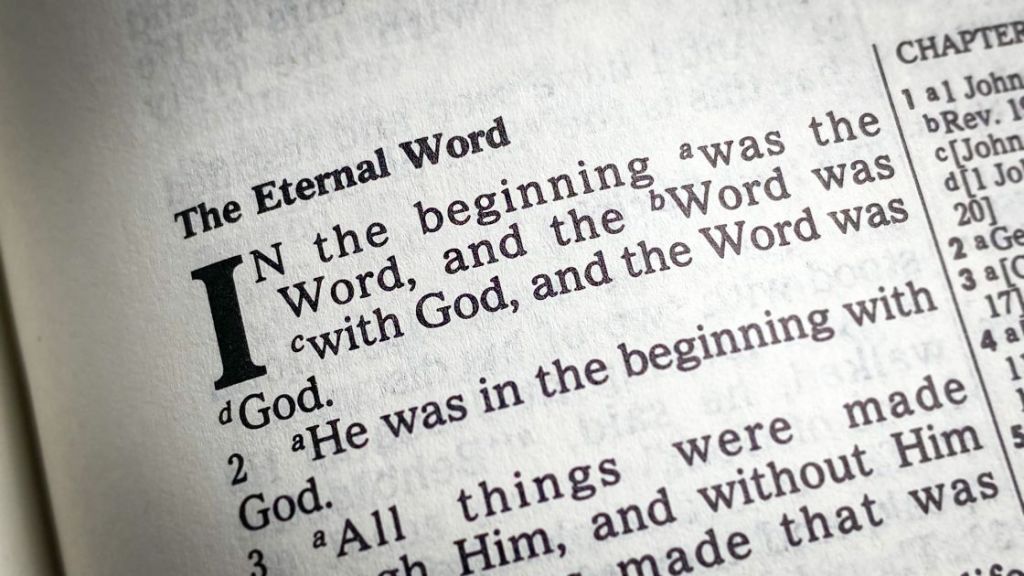
1 In the beginning [before all time] was the Word ([a]Christ), and the Word was with God, and [b]the Word was God Himself. 2 He was [continually existing] in the beginning [co-eternally] with God. 3 All things were made and came into existence through Him; and without Him not even one thing was made that has come into being. 4 In Him was life [and the power to bestow life], and the life was the Light of men. 5 The Light shines on in the [c]darkness, and the darkness did not understand it or overpower it or appropriate it or absorb it [and is unreceptive to it].
The Word of God for the Children of God.
Glory be to the Father, and to the Son, and to the Holy Ghost; as it was in the beginning, is now, and ever shall be, world without end. Amen, amen.
In John 1 the Greek term for “Word” is logos. John chose this word carefully.
In Greek philosophy the word logos referred to divine reason, or the power that made order out of chaos.
This idea fits well with the scriptural teaching that God—whose word is always faithful and true, and who created all things—has now, once and for all of time, revealed himself in a new way through his Son, the Word of God, who “became flesh and made his dwelling among us.”
God has long been communicating with us—through creation, through the patriarchs, the prophets, the Kings and the Psalmists and the Scriptures.
But with the coming of “the Word”—that is, Jesus—God revealed himself even more – “in the flesh.” Earlier forms of communication were less clear. Since the logos became flesh, however, we can see, hear, listen to and know that we have physically met God. Jesus is the best and the only perfect representation of God.
This contradicts the teachings of other religions that claim they have a better or additional revelation of God. Why would you want or need to hear more about God once you have heard from the Word himself? Jesus showed that God is love and “the light [that] shines in the darkness,” light overwhelming the darkness.
What an absolutely incredible revelation! We need to recognize that the true and complete Word of God has come into the world. That Word is Jesus Christ, “the ONE and only Son, who came from the Father, full of grace and truth.”
1 John 1:1-4 Amplified Bible
Introduction, The Incarnate Word
1 [I am writing about] what existed from the beginning, what [a]we have heard, what we have seen with our eyes, what we have looked at and touched with our hands, concerning the Word of Life [the One who existed even before the beginning of the world, Christ]— 2 and the Life [an aspect of His being] was manifested, and we have seen [it as eyewitnesses] and testify and declare to you [the Life], the eternal Life who was [already existing] with the Father and was [actually] made visible to us [His followers]— 3 what we have seen and heard we also proclaim to you, so that you too may have fellowship [as partners] with us. And indeed our fellowship [which is a distinguishing mark of born-again believers] is with the Father, and with His Son Jesus Christ. 4 We are writing these things to you so that our joy [in seeing you included] may be made complete [by having you share in the joy of salvation].
A revelation which needs to be fully uncovered from under our baskets of sin.
In the name of God, the Father and God the Son and God the Holy Spirit,
Let us Pray,
Psalm 46 Amplified Bible
God the Refuge of His People.
To the Chief Musician. A Psalm of the sons of Korah, set to soprano voices. A Song.
46 God is our refuge and strength [mighty and impenetrable], A very present and well-proved help in trouble. 2 Therefore we will not fear, though the earth should change And though the mountains be shaken and slip into the heart of the seas, 3 Though its waters roar and foam, Though the mountains tremble at its roaring. Selah.
4 There is a river whose streams make glad the city of God, The holy dwelling places of the Most High. 5 God is in the midst of her [His city], she will not be moved; God will help her when the morning dawns. 6 The nations made an uproar, the kingdoms tottered and were moved; He raised His voice, the earth melted. 7 The Lord of hosts is with us; The God of Jacob is our stronghold [our refuge, our high tower]. Selah.
8 Come, behold the works of the Lord, Who has brought desolations and wonders on the earth. 9 He makes wars to cease to the end of the earth; He breaks the bow into pieces and snaps the spear in two; He burns the chariots with fire. 10 “Be still and know (recognize, understand) that I am God. I will be exalted among the nations! I will be exalted in the earth.” 11 The Lord of hosts is with us; The God of Jacob is our stronghold [our refuge, our high tower]. Selah.
Glory be to the Father, and to the Son, and to the Holy Ghost; as it was in the beginning, is now, and ever shall be, world without end. Amen, amen.
When Christians answer the question “Who is Jesus Christ?” they build their answer on the Bible – on things Jesus said about Himself, on prophecies from the Old Testament that foretold His coming, and the doctrines laid out about Jesus Christ and His Church through the rest of the New Testament.
There is little historical question that Jesus Christ existed, but people do often wonder about everything else: His divine nature, His miracles, God’s offer of eternal salvation by grace through Jesus Christ “first to the Jew and also to the Gentile” (Romans 1:16)… in other words, to all of mankind who would believe.
Because the love Jesus offers comes in the form of an “intimately personal relationship, intimately connectional relationship” with Him, many believers have particular definitions, understandings about who Jesus Christ is to them.
I want to try to give you the Biblical basics about this amazing, paradoxical Savior who purports to be simultaneously the Son of God and Son of Man.
The gospel of Jesus is literally “good news,” so we hope you enjoy exploring the miracle and wonder of what the God of all creation did for you through His Son.
John 1:1-5 Amplified Bible
The Deity of Jesus Christ
1 In the beginning [before all time] was the Word ([a]Christ), and the Word was with God, and [b]the Word was God Himself. 2 He was [continually existing] in the beginning [co-eternally] with God. 3 All things were made and came into existence through Him; and without Him not even one thing was made that has come into being. 4 In Him was life [and the power to bestow life], and the life was the Light of men. 5 The Light shines on in the [c]darkness, and the darkness did not understand it or overpower it or appropriate it or absorb it [and is unreceptive to it].
Gloria! In Excelsis Deo! Alleluia, Alleluia, Alleluia, Amen.
I believe in God, the Father Almighty, Creator of heaven and earth, and in Jesus Christ, his only Son, our Lord,
Who is Jesus?
The Deity of Jesus Christ
1 In the beginning [before all time] was the Word ([a]Christ), and the Word was with God, and [b]the Word was God Himself. 2 He was [continually existing] in the beginning [co-eternally] with God. 3 All things were made and came into existence through Him; and without Him not even one thing was made that has come into being.
John’s Gospel Narrative says without any doubt that Jesus is God.
He declares that Jesus is the Creator of all things.
This accounts for Jesus’ singularly unique and remarkable personality.
He is the originator of all things.
Eight times in the opening chapter of Genesis it says, “And God said.”
God said, Let there be light, and there was light.
God said, Let there be a firmament between the heavens and the earth and there was.
God said, Let the earth bring forth trees and vegetation, and these sprang into being.
The Son of God, was speaking into being, what the Father had designed in that amazingly, incredibly, indescribably and also infinitely complex mind of his.
Any scientist who gears their education, who directs their lives into the studies in the natural realm always seem to be astonished when they come to conclude the complexity of life, the marvelous symmetry of things, what lies behind all visible matter, the molecules, the atom, the make-up of a flower or of a star.
The obvious order, design and symmetry of every created thing is astonishing.
We have all sat back at one time or another and wondered at what we have seen through some of the discoveries of science, looked at the stars thru a telescope.
All of that and more was in the thoughts of God, but it never would have been expressed until the Son said it; He spoke and all these things came into being.
So this amazing Man, Jesus of Nazareth, in the mystery of his being, was not only a human being here on earth with us, John’s narrative says, but was the One who in the beginning spoke the very universe we “see” into its existence.
He understands it!
He knows exactly how it functions!
He is able to direct it!
He is able to guard it and to guide it!
He spoke it into being!
Furthermore, John says, Jesus sustains it:
Without him was not anything made that was made.
He is essential to it;!
He is what keeps it going!
He is who holds it in existence!
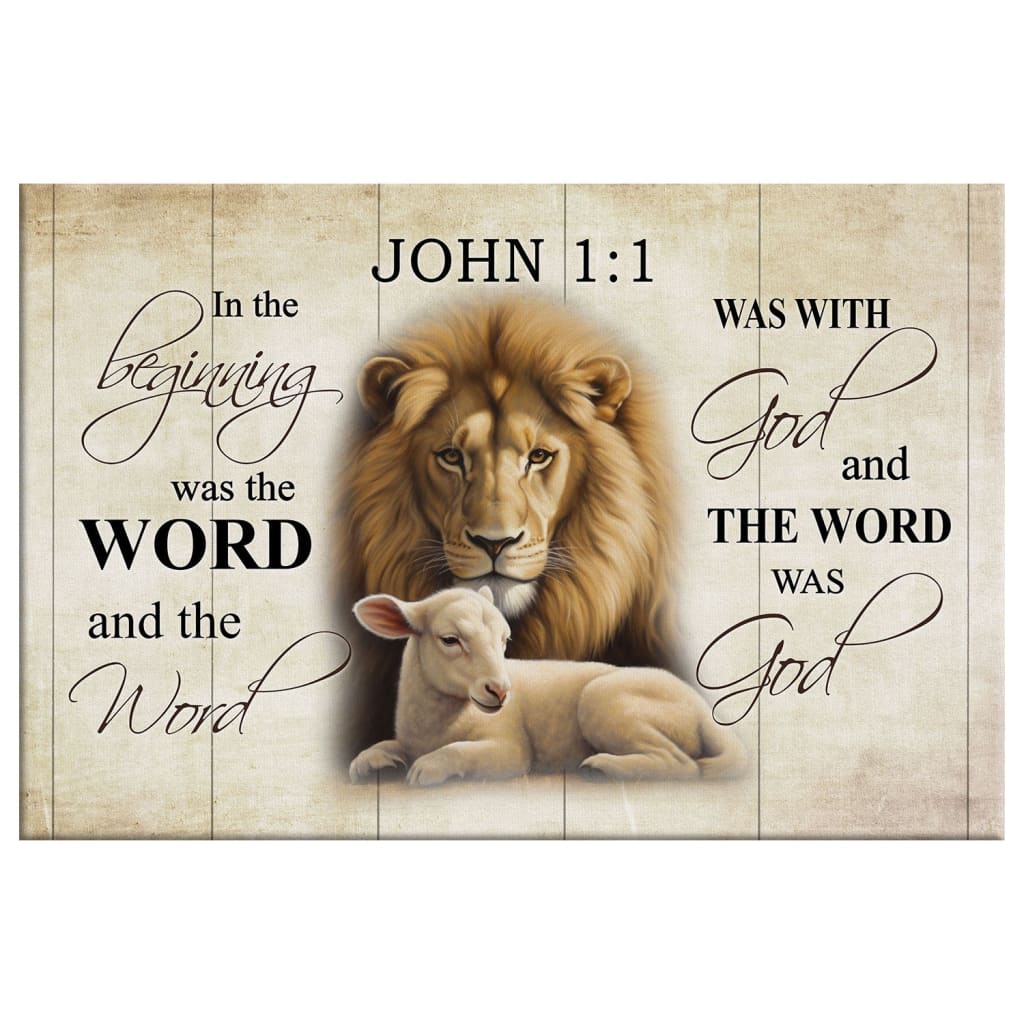
In the first chapter of John, we immediately read: “In the beginning was the Word, and the Word was with God, and the Word was God” (John 1:1).
Throughout the centuries, many have pondered this statement.
What does this mean?
How can somebody be with someone and also be that someone?
So the Overarching Question: Who is Jesus?
Immanuel God with us … Christ the Messiah… The Prince of Peace… The Word made Man… Savior and Lord… The King of Kings… The Lion of Judah… The Lamb of God
When Christians answer the question “Who is Jesus Christ?” they build their answer on the Bible – on things Jesus said about Himself, on prophecies from the Old Testament that foretold His coming, and the doctrines laid out about Jesus Christ and His Church through the rest of the New Testament.
There is little historical question that Jesus Christ existed, but people do often wonder about everything else: His divine nature, His miracles, God’s offer of eternal salvation by grace through Jesus Christ “first to the Jew and also to the Gentile” (Romans 1:16)… in other words, to all of mankind who would believe.
Because the love Jesus offers comes in the form of an “intimately personal relationship, intimately connectional relationship” with Him, many believers have particular definitions, understandings about who Jesus Christ is to them.
I want to try to give you the Biblical basics about this amazing, paradoxical Savior who purports to be simultaneously the Son of God and Son of Man.
The gospel of Jesus is literally “good news,” so we hope you enjoy exploring the miracle and wonder of what the God of all creation did for you through His Son.
Who do we say Jesus Christ is?
Matthew 16:13-17 Amplified Bible
Peter’s Confession of Christ
13 Now when Jesus went into the [a]region of Caesarea Philippi, He asked His disciples, “Who do people say that the Son of Man is?” 14 And they answered, “Some say John the Baptist; others, Elijah; and still others, Jeremiah, or [just] one of the prophets.” 15 He said to them, “But who do you say that I am?” 16 Simon Peter replied, “You are the Christ (the Messiah, the Anointed), the Son of the living God.” 17 Then Jesus answered him, “Blessed [happy, spiritually secure, favored by God] are you, Simon son of Jonah, because flesh and blood (mortal man) did not reveal this to you, but My Father who is in heaven.
The same questions are being asked to this day:
Who does everyone else say Jesus Christ is, but then, who do we say He is?
We must ultimately decide.
It is the perhaps the most important question to settle during our lifetimes, for reasons we will try to examine shortly.
The New Testament book of Hebrews is another source that attempted to answer the same question.
As the Ryrie Study Bible states, “The theme of the book is the superiority of Jesus Christ and thus of Christianity.”
Superior to what?
Among other things: prophets, angels, Moses/The Law, priests, and other powers.
In other words, Jesus Christ is supreme among any thing or any one – even things and people that issue from or are beloved of God.
“For this reason we must pay much closer attention to what we have heard, lest we drift away from it,” says Hebrews 2:1 about the nature of the Messiah’s identity.
This is why even Christians of all theologies continually study these precepts.
It is not merely skeptics, seekers, and unbelievers who benefit from asking the question, “Who is Jesus Christ?”
The Apostle Paul, before his sudden Damascus Road conversion, was known as Saul, a very legalistic Jew who persecuted Christians… until he was confronted with the answer to our question in a most dramatic way, a way that changed his life and the course of history (Please read and study about it in Acts Chapter 9).
After that miraculous conversion experience, Paul would then often refer to himself as a “bond-servant of Christ Jesus,” someone who is little more than a voluntary slave, but one sharing in the same servitude.
In Philippians 1:21 Paul would express his secure devotion to the Lord as well as give another clue towards answering our question when he would write: “For to me, to live is Christ, and to die is gain.”
You see, finding the answer to “Who Jesus Is to us?” can be an incredibly jarring, topsy-turvy, and life-altering experience – one that sends us back on our heels.
It can also be one which will fill what has always seemed to be missing inside you, since the Father sent His Son to reconcile you to your original purpose – communion with a wonderful, holy Creator.
So as you pursue knowledge of the Savior, consider yourself joyfully warned.
Who Jesus Said He Was
1. He claimed to be the Son of God, equal with God, and with authority from the Father.
“Then they all said, ‘Are You then the Son of God?’ So He said to them, ‘You rightly say that I am’”(Luke 22:70).
“For whoever does the will of My Father in heaven is My brother and sister and mother” (Matthew 12:50).
“Jesus came and spoke to them, saying, ‘All authority has been given to Me in heaven and on earth’”(Matthew 28:18).
“Therefore the Jews sought all the more to kill Him, because He not only broke the Sabbath, but also said that God was His Father, making Himself equal with God”(John 5:17-22).
“27 The sheep that are My own hear My voice and listen to Me; I know them, and they follow Me. 28 And I give them eternal life, and they will never, ever [by any means] perish; and no one will ever snatch them out of My hand. 29 [a]My Father, who has given them to Me, is greater and mightier than all; and no one is able to snatch them out of the Father’s hand. 30 I and the Father are One [in essence and nature].”(John 10:27-30)
Bear in mind that while a man claiming to be God is a radical thought, Jesus is the only leader of a world religion to have made the claim – not to mention to have also completely, fully and utterly backed it up.
How?
2. Incredibly, He claimed to live a sinless life.
“Can any one of you convict me of a single misleading word, a single sinful act? But if I’m telling the truth, why don’t you believe me?” (John 8:46, The Message).
Jesus had the ability to sin; if He weren’t able to sin, He could not have been tempted genuinely and would be unable to be our sympathetic High Priest (Hebrews 4:15).
When He was tempted by the devil, He always rebuked the thought with scripture. (Matthew 4:1-11)
Because He didn’t sin, God was able to accept His sacrifice.
1 Peter 3:18 says,“Christ also suffered once for sins, the just for the unjust, that He might bring us to God, being put to death in the flesh but made alive by the Spirit.”
3. He claimed to be the one and only way to God.
“I am the way, the truth, and the life. No one comes to the Father but by me” (John 14:6).
It’s also interesting to me to note that Jesus did not call himself the destination, but the way, indicating that our Christian walk is a journey.
4. He claimed He had the power to forgive sins and provide everlasting life
“Jesus said to her, ‘I am the resurrection and the life. He who believes in me will live, even though he dies; and whoever lives and believes in me will never die” (John 11:25).
“When Jesus saw their faith, He said, ‘Friend, your sins are forgiven.’ The Pharisees and the teachers of the law began thinking to themselves, ‘Who is this fellow who speaks blasphemy? Who can forgive sins but God alone?’”(Luke 5:20-21).
“For my Father’s will is that everyone who looks to the Son and believes in him shall have eternal life, and I will raise him up at the last day.” John 6:40
“I tell you the truth, he who believes has everlasting life.”(John 6:47).
5. He predicted his own death and resurrection.
“Jesus took the Twelve aside and told them, ‘We are going up into Jerusalem, and everything that is written by the prophets about the Son of Man will be fulfilled. He will be handed over to the Gentiles. They will mock him, insult him, spit on him, flog him and kill him. On the third day he will rise again’”(Luke 18:31-33).
6. He’s said He would come back.
Matthew 24:27-30“So as the lightening comes from the east and flashes to the west, so will be the coming of the Son of Man… At that time the sign of the Son of Man will appear in the sky, and all the nations of the earth will mourn. They will see the Son of Man coming on the clouds of the sky, with power and great glory.”
Mark 14:61-62“Again the high priest asked him, ‘Are you the Christ, the Son of the Blessed One?’ ‘I am,’ said Jesus. ‘And you will see the Son of Man sitting at the right hand of the Mighty One and coming on the clouds of heaven.'”
Jesus clearly knew He was the Lamb of God, the Messiah spoken of in the Old Testament.
He knew He had to live a life without sin, no matter what.
When He returns, He will judge the sins of the world… except for those who have already acknowledged conviction, entered a plea of guilty, and sought His forgiveness and mercy by believing on Christ. (Psalms 32, 51, Romans 10:9-13)
How the New Testament Answers “Who Is Jesus?”
“So Jesus tried again. ‘When you raise up the Son of Man, then you will know who I am – that I’m not making this up, but speaking only what the Father taught Me. The One who sent Me stays with Me. He doesn’t abandon Me. He sees how much joy I take in pleasing Him’”(John 8:28-29, The Message).
“In the beginning was the Word, and the Word was with God, and the Word was God. He was in the beginning with God. All things came into being by Him, and apart from Him nothing came into being that has come into being” (John 1:1-3, NASB).
“For God so loved the world that he gave his only Son, so that everyone who believes in him will not perish but have eternal life” (John 3:16, NLT).
From The Book of Acts
The Book of the Acts of the Apostles describes how Christianity moved from being seen as a new radical fringe sect of Judaism now into a world religion because the spirit of God moved in the lives of those who had physically witnessed Jesus, and who now carried His message of salvation for all into all the world.
At Pentecost, Peter preaches,
“Let all the house of Israel know for certain that God has made Him both Lord and Christ – this Jesus whom you crucified” (Acts 2:22-36).
From Paul’s Letters
The Apostle Paul wrote numerous letters to the churches he helped establish in southern Europe and Asia Minor, helping to answer questions or solve disputes over Christian theology.
“Therefore having been justified by faith, we have peace with God through our Lord Jesus Christ” (Romans 5:1).
“For no man can lay a foundation other than the one which is laid, which is Jesus Christ” (1 Corinthians 3:11).
“Just as the sufferings of Christ are ours in abundance, so also our comfort is abundant through Christ” (2 Corinthians 1:5).
“It was for freedom that Christ set us free” (Galatians 5:1).
“Husbands, love your wives, just as Christ also loved the church and gave Himself up for her”(Ephesians 5:25).
“Have this attitude in yourselves which was also in Christ Jesus, who, although He existed in the form of God, did not regard equality with God a thing to be grasped, but emptied Himself, taking the form of a bond-servant, and being made in the likeness of men” (Philippians 2:5-7).
“And He is the image of the invisible God, the first-born of all creation” (Colossians 1:15).
From The Book of Hebrews
The Book of Hebrews is about the superiority of Christ – over prophets, angels, Moses, and priests.
He made Himself our High Priest, so that we can all become priests with our own access to the Father.
“God… has spoken to us in His Son, whom He appointed heir of all things” (Hebrews 1:1-2).
From The Book of Revelation
“Jesus Christ, the faithful witness, the first-born of the dead, and the ruler of the kings of the earth” (Revelation 1:5).
The Significance of Christ’s Humanity
Living on earth for 33 years, Jesus experienced every temptation we face, which is why “the Lord knows how to rescue the godly from temptation” (2 Peter 2:9).
He also showed us how to model our behavior.
1 Peter 2:21 says,“Christ also suffered for you, leaving you an example for you to follow in His steps.”
So, He knows what we go through.
A God-Savior could forgive sins but would not be able to relate to the sinners.
A man-savior would be able to relate to our humanity but would not have the authority or power to forgive sins or return from the dead.
It was necessary that Jesus be both.
In doing so, he became “the New Adam.”
“For as in Adam [the first man, through whom sin entered the world] all die, so also in Christ all shall be made alive. So also it is written, ‘The first man, Adam, became a living soul.’ The last Adam became a life-giving spirit” (1 Corinthians 15:22, 45; NASB).
To All Who Believe
John 1:14-18Amplified Bible
The Word Made Flesh
14 And the Word (Christ) became flesh, and lived among us; and we [actually] saw His glory, glory as belongs to the [One and] only begotten Son of the Father, [the Son who is truly unique, the only One of His kind, who is] full of grace and truth (absolutely free of deception). 15 John testified [repeatedly] about Him and [a]has cried out [testifying officially for the record, with validity and relevance], “This was He of whom I said, ‘He who comes after me [b]has a higher rank than I and has priority over me, for He existed before me.’” 16 For out of His fullness [the superabundance of His grace and truth] we have all received grace upon grace [spiritual blessing upon spiritual blessing, favor upon favor, and gift heaped upon gift]. 17 For the Law was given through Moses, but grace [the unearned, undeserved favor of God] and truth came through Jesus Christ. 18 No one has seen God [His essence, His divine nature] at any time; the [One and] only begotten God [that is, the unique Son] who is in the intimate presence of the Father, He has explained Him [and interpreted and revealed the awesome wonder of the Father].
As we have seen, a major part of the story of Jesus is the shocking, history of how the Son of God is despised, rejected, and betrayed, crucified, dead, buried.
But, as each of today’s verses also remind us, from the beginning, God’s light shone in the darkness, and (good news!) “the darkness has not overcome it.”
Instead, the reverse is true: the light overcomes the darkness.
And the darkness was clueless as to what to do about it.
Amazingly, the Holy Spirit can use darkness to lead us to the light.
This is the light that brings us back into God’s presence as his loved children—the light of life that lasts forever.
At the end of John’s gospel, after he tells the story of Jesus’ life, suffering, death, and resurrection, John clarifies why he has told Jesus’ story:
“that you may believe that Jesus is the Messiah, the Son of God, and that by believing you may have life in his name” (John 20:31).
That opportunity to receive Jesus, to believe in him, is for everyone.
Revelation 7:9 describes “a great multitude. . . from every nation, tribe, people and language, standing before the throne and before the Lamb.”
Will we be a part of that vast uncountable multitude on the day when our Savior Christ returns, or when our Shepherd calls each of unto our eternal homes?
So, we all, as sinners, have to turn to God for forgiveness of sin, and trust Jesus died to give us new life that we may be “born again” (John 3:3; 1 Peter 1:23).
Faith is the key.
It’s the cause and effect of our hope for salvation.
If there is truly “no other name under heaven that has been given among men, by which we must be saved” (Acts 4:12), then our acceptance of God’s gift, our own admission that we are a sinner, our repentance (changing mind), and our faith in the real and alive saving Lord is all that can bring eternal and abundant life.
If knowing about Jesus has stirred your heart to read, study, hear even more, receive forgiveness for your sins, renew your Christian walk, receive a fresh anointing of the Holy Spirit and get involved in mission and in ministry.
In the name of God the Father and God the Son and God the Holy Spirit,
Let us Pray,
Lord God, thank you for loving me enough to send your one and only Son to die for me. I know I am a sinner, and that Jesus was crucified and raised to life to pay a debt I was unable to pay, in order that I may live with You forever. I want to turn from my way of life and follow Jesus. I invite Jesus into my heart as the Lord of my life. Thank you muchly, Father, for giving me new life in the name of my Savior Jesus. Amen!
Lord Jesus, I receive you as my God; I believe in you as my Savior; I embrace your Father as my Father, through the power of the Holy Spirit. Amen.
21 When they approached Jerusalem and had reached Bethphage, at the Mount of Olives, Jesus sent two disciples [ahead], 2 saying to them, “Go into the village opposite you, and at once you will find a donkey tied, and a colt with her; untie them and bring them to Me. 3 If anyone says anything to you, you should say, ‘The Lord needs them,’ and without delay the owner will send them [with you].” 4 This happened so that what was spoken by the prophet would be fulfilled, saying:
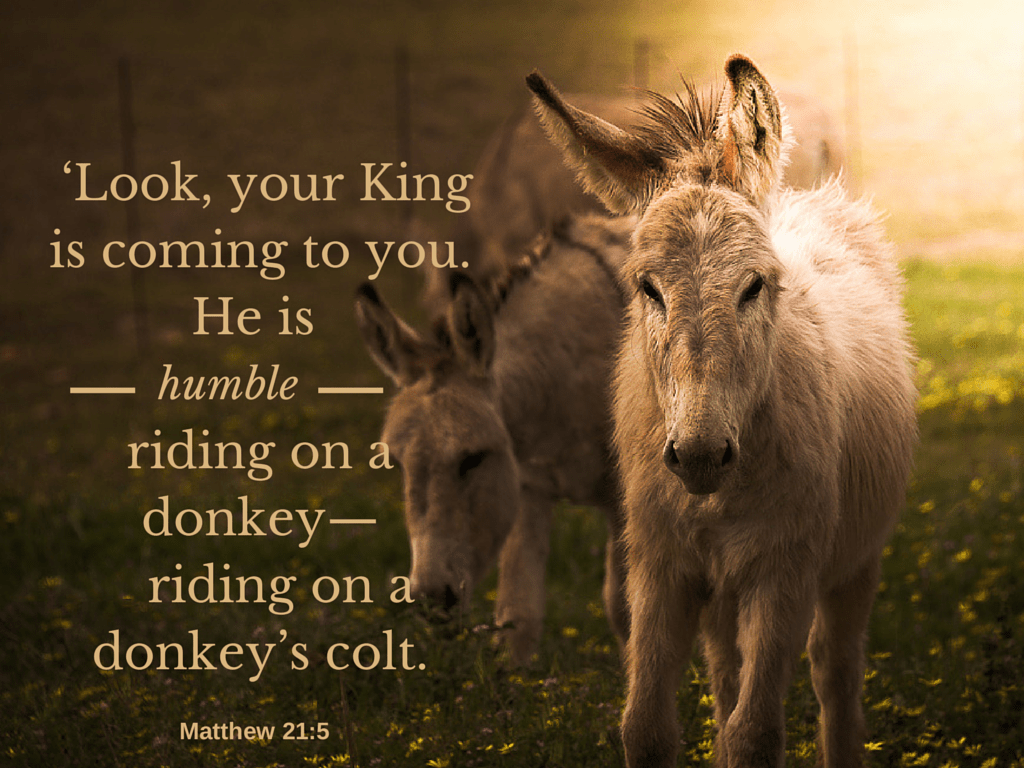
5 “Tell the daughter of Zion (the people of Jerusalem), ‘Behold, your King is coming to you, Gentle and mounted on a donkey, Even on a colt, the foal of a beast of burden.’”
6 Then the disciples went and did as Jesus had instructed them, 7 and they brought the donkey and [a]the colt, and [b]placed their coats on them; and Jesus sat on the coats. 8 Most of the crowd spread their coats on the road [as before a king], while others were cutting branches from the trees and spreading them on the road. 9 The crowds that went ahead of Him, and those that followed Him, were shouting [in praise and adoration],
“[c]Hosanna to the Son of David (Messiah); Blessed [praised, glorified] is He who comes in the name of the Lord; Hosanna in the highest [heaven]!”
10 When He entered Jerusalem, all the city was trembling [with excitement], saying, “Who is this?” 11 And the crowds were saying, “This is the prophet Jesus, from Nazareth in Galilee.”
The Word of God for the Children of God.
Adeste Fidelis! Venite Adoremus! Dominum.
Gloria! In Excelsis Deo! Alleluia, Alleluia, Alleluia, Amen.
Triumphal Entry? Great Expectations? A King on His Donkey?
At first observation after a few readings of this narrative account of the entry of Jesus into Jerusalem, I realized something about the two images disconnected.
The picture would have been perfect if Jesus had been riding a white horse, used in those days by warrior kings to symbolize conquering power, decisive victory.
But the narrator Matthew specifically highlighted: Jesus rode on the back of a donkey – the disciples celebrated and paraded their Messiah King on a donkey.
Why?
What image were they hoping, planning to project to the gathered crowds?
What were they expecting the gathering crowds to see and understand of this?
What of the gathering crowds at the gates of the city of Jerusalem?
What were their expectations of the coming of their “Messiah King?”
What were we expecting to see?
What “coming new thing” were we expecting to learn about or be reminded of?
An unarmed conquering warrior Itinerant Master Rabbi?
Long ago, prophet Zechariah said the Messiah would come in righteousness, riding on a donkey, a symbol of humility and peace (Zechariah 9:9 Amplified).
Rejoice greatly, O Daughter of Zion! Shout aloud, O Daughter of Jerusalem! Behold, your King (Messianic King) is coming to you; He is righteous and endowed with salvation, [a]Humble and unassuming [in submission to the will of the Father] and riding on a [b]donkey, Upon a colt, the foal of a donkey.
Though most of the people would have probably seen Jesus fulfilling this prophecy as their Messiah (see also Psalm 118:25-26 Amplified),
25 O Lord, save now, we beseech You; O Lord, we beseech You, send now prosperity and give us success! 26 Blessed is the one who comes in the name of the Lord; We have blessed you from the house of the Lord [you who come into His sanctuary under His guardianship].
Jesus came in triumph into His city under God’s guardianship, they expected him to announce the arrival of a war of rebellion against Roman oppressors.
But he didn’t.
Instead he had no army behind him, nobody is waving any swords or spears.
He was not even armed with a spear or a sword nor did anyone hand him one!
Perhaps with expectations crushed that’s why the chanting crowds changed their tune from “Hosanna” to “Crucify him!” 5 days later (Matthew 27:22-23).
Matthew 27:22-23 Amplified Bible
22 Pilate said to them, “Then what shall I do with Jesus who is called Christ?” They all replied, “Let Him be crucified!” 23 And he said, “Why, what has He done that is evil?” But they continued shouting all the louder, “Let Him be crucified!”
Considering our state of current events, I don’t guess, and I wont prophesize that things will have actually changed much from then until now, have they?
People are still willing to rally around the banner of Christ if it goes along with their own interests, if their expected understanding of Christ comes to them as they always expected, approved because their expectations have been fully met.
We also desire, even to go so far as to expect we can maintain a good Christian confession while trying to avoid standing too close to the lingering shadows of the cross, or getting too close to actually running to the tomb to see emptiness.
But Jesus, the King who actually rode on an actual donkey, calls us to actually examine our much paraded walk with him as we come to the cross this Friday.
Center yourselves and dig deep and CRY,
“Am I just here for the Parade?“
Am I just coming along side of everyone else, because everyone else is here right now or everyone else is going along for the ride because it all looks so very interesting and might even be a measure of fun or something I and my business might profit from?
If I have to actually get serious about all this, to decide between God and my job, my reputation, something else in my life—will I also change my expectations?”
The celebration of Palm Sunday is about King Jesus riding to the cross in total obedience to his Father – about His grace and peace come by way of the cross.
Will we with our packed luggage of preconceived expectations receive him in the same way he was presented by the Gospel narrator Matthew in chapter 21?
Our Expectations – A Humble, Triumphant King?
Matthew 21:5-11 Amplified Bible
5 “Tell the daughter of Zion (the people of Jerusalem), ‘Behold, your King is coming to you, Gentle and mounted on a donkey, Even on a colt, the foal of a beast of burden.’”
6 Then the disciples went and did as Jesus had instructed them, 7 and they brought the donkey and [a]the colt, and [b]placed their coats on them; and Jesus sat on the coats. 8 Most of the crowd spread their coats on the road [as before a king], while others were cutting branches from the trees and spreading them on the road. 9 The crowds that went ahead of Him, and those that followed Him, were shouting [in praise and adoration],
“[c]Hosanna to the Son of David (Messiah); Blessed [praised, glorified] is He who comes in the name of the Lord; Hosanna in the highest [heaven]!”
10 When He entered Jerusalem, all the city was trembling [with excitement], saying, “Who is this?” 11 And the crowds were saying, “This is the prophet Jesus, from Nazareth in Galilee.”
Jesus was getting near the end of His ministry.
He had been telling the disciples that He would be killed.
Now He comes riding into the city, sitting on donkey’s foal.
This was to fulfill a prophecy made by Zechariah.
Kings, leaders, presidents and others in high authority are known for arriving with a lot of pomp and circumstance – it is expected to show them great respect.
There is always a lot of fanfare going on to bring in someone of high leadership.
Whenever the President of the United States arrives at a building where he is going to speak, he arrives with a great fanfare and a great entourage of people.
There are multiple vehicles in front and behind him.
When he walks out into a room, there is always some music playing, people rise up for him, and He is announced.
The same goes for famous celebrities.
Standing room only crowds
There is a lot of pictures and videos being taken.
All kinds of busyness, posting and sharing activity across social media outlets.
Celebrities arrive in a large limousine.
There is flashing of jewelry and expensive clothing.
There are red carpets.
There are lots and lots of television and journalists, and paparazzi’s.
It is a show of pride and luxury, with no sign of humility.
In many countries, when their leader arrives, there is also a great show of their military power.
Soldiers, weapons, and military equipment tour d’ force go paraded before the visiting leader to show who is in control and who exactly has all the power .
Jesus did not do any of this.
He came in riding on a baby donkey.
In the biblical times, a king would arrive on a horse showing great power.
Jesus did not show any of that, even though He had more power than all the kings on the earth combined.
He created the earth and all who are in it (John 1:1-5).
John 1:1-5 Amplified Bible
The Deity of Jesus Christ
1 In the beginning [before all time] was the Word ([a]Christ), and the Word was with God, and [b]the Word was God Himself. 2 He was [continually existing] in the beginning [co-eternally] with God. 3 All things were made and came into existence through Him; and without Him not even one thing was made that has come into being. 4 In Him was life [and the power to bestow life], and the life was the Light of men. 5 The Light shines on in the [c]darkness, and the darkness did not understand it or overpower it or appropriate it or absorb it [and is unreceptive to it].
The purpose of His arriving in that way, was to show love and compassion.
He is a king who can understand where people are, so He comes in humility.
Most people do not have the grand horse to ride on, but just have the donkey.
Even today, our Savior, our King Jesus comes to you in love and compassion.
He does have the power, but will not show a force of threat to get you to follow.
Jesus wants you and me to want to follow Him.
He understands where we and our “great expectations” are and is there for you.
As we proceed through this Holy Week,
Let’s take a slightly longer look at our “great expectations,”
our Godly versus Worldly priorities;
Matthew 6:33Amplified Bible
33 But first and most importantly seek (aim at, strive after) His kingdom and His righteousness [His way of doing and being right—the attitude and character of God], and all these things will be given to you also.
He is not unapproachable.
He is not unknowable.
He is not unreachable.
He is not untouchable.
Do not fear your king.
Do not fear your Savior.
He is gentle.
He is always and forever in and within our very midst …
In the name of God, the Father and God the Son and God the Holy Spirit,
Let us Pray,
1. Come, thou long expected Jesus, born to set thy people free; from our fears and sins release us, let us find our rest in thee. Israel’s strength and consolation, hope of all the earth thou art; dear desire of every nation, joy of every longing heart.
2. Born thy people to deliver, born a child and yet a King, born to reign in us forever, now thy gracious kingdom bring. By thine own eternal spirit rule in all our hearts alone; by thine all sufficient merit, raise us to thy glorious throne.
___Charles Wesley___ 1707-1788
I pray today that you will know this Jesus riding on the donkey’s back as your king; you will know Jesus is gentle and loving; that you and I will seek him as he seeks you and me to find Jesus in our life; that we will show His love and humility in your life. Lord Jesus, may we ever so lovingly and willingly obey you and joyfully follow you, the King of kings, the Lord of lords, Savior of us all, in whose name we pray. Amen.
Adeste Fidelis! Venite Adoremus! Dominum.
Gloria! In Excelsis Deo! Alleluia, Alleluia, Alleluia, Amen.


 Loving God, Living God, Loving Hope, Living Hope, Loving Living Life His Way! "Many things are possible for the person who has hope. Even more is possible for the person who has faith. And still more is possible for the person who knows how to love. But everything is possible for the person who practices all three virtues." - Brother Lawrence (1605-1691), Practicing the Presence of God (1692).