Romans 15:4 "For whatever was written in earlier times was written for our instruction, so that through perseverance and the encouragement of the Scriptures we might have hope."
13-19 Now I’m returning to you. I’m saying these things in the world’s hearing So my people can experience My joy completed in them. I gave them your word; The godless world hated them because of it, Because they didn’t join the world’s ways, Just as I didn’t join the world’s ways. I’m not asking that you take them out of the world But that you guard them from the Evil One. They are no more defined by the world Than I am defined by the world. Make them holy—consecrated—with the truth; Your word is consecrating truth. In the same way that you gave me a mission in the world, I give them a mission in the world. I’m consecrating myself for their sakes So they’ll be truth-consecrated in their mission.
Word of God for the Children of God
Glory be to the Father, and to the Son, and to the Holy Ghost; as it was in the beginning, is now, and ever shall be, world without end. Amen, amen.
John 17:15-17 Amplified Bible
15 I do not ask You to take them out of the world, but that You keep them and protect them from the evil one. 16 They are not of the world, just as I am not of the world. 17 Sanctify them in the truth [set them apart for Your purposes, make them holy]; Your word is truth.
Jesus makes it good and clear those who have set their hopes in Him and gone on to follow Him are not going to fit in too well with the world around them.
If we think about it does it make sense?
Those so bold as to devote themselves to seeking Christ are shifting their center interest away from all that the worldly men will chase.
Yet there may be a growing trend developing in many churches to blend in with our society as Christians.
The religious concept behind this movement may appear to have good motives.
We might think we could reach more people by rubbing shoulders with them.
We could imagine ourselves to be more effective witnesses if we do not stand out as freaks to society.
Although true to some degree could these kinds of sentiments hide clever tricks intelligently placed within the path of the true servants of the Lord?
Could Jesus be bracing us for this movement by deliberately praying for us not to be taken out of the world, but to be shielded, be protected while we are in it?
For many years Christians were pleased to stand out on their faith in the Scriptures.
They saw that a higher level of morals and going to church brought their hearts better in tune with God.
For them, to wear the mantra of Christian meant to make this great distinction.
Some took it further and ran to the hills in their devout effort to please God and prepare for Jesus´ second coming.
They figured why flee in some future day when we can get out of society early by finding a more remote setting in which to live.
They, like the Christian who embraces society with the idea of witnessing to it would like to think they are doing what they do to please God.
So which one is right?
Neither? Or both?
If we dig a little deeper we could argue both extremes.
Christians today could seek to remove themselves from their society and there are sufficient texts in the Bible to give them the notion that they should.
At the same time the opposite is also clearly asked of Jesus´ followers to go to the world and give their testimony.
So what does this mean?
Do we have a contradiction?
Are God´s children given conflicting instructions?
Or would the Lord have us know what we are talking about when we are not of the world but must be in it?
The answer of our race is still the same.
Jesus is our answer.
He always was needed and He is still needed now.
Old Testament religion looked forward to His day.
New Testament religion heralded His arrival and His Sacrifice.
Modern time religion will have to take its stand upon nothing less.
Therefore our brothers and sisters who live in the big cities need their Savior just as much as those who are living in the most removed corners of the world.
Everyone will need to come humbly to Christ.
This is not a stand on doctrines but a real and personal, intimate encounter!
Our distinction will never save us if it is a distinction of geographic, social or denominational sort.
Our distinction can place us under the protection of God through Jesus´ priestly prayer only if we are truly right with Him. What then should we pray for today?
“As you sent me into the world, I have sent them into the world.” John 17:18
Many churches send teams of young people on short-term mission trips.
As they serve, God uses them to bless others, but these young people often note that they are the ones who benefit most from the experience.
Their eyes are opened to the physical and spiritual needs of people of different cultures and races.
They also learn that we don’t need to get on an airplane to visit a mission field.
Jesus prays for his followers in John 17.
He asks not that we be taken out of the world but that God would protect us as he sends us into the world around us.
The call may be to another far off country, but let’s be careful not to ignore our classrooms, workplaces, neighborhoods which we already know many people.
As you manage your business, or teach the students in your class, or serve on a committee in your community, or follow up with a co-worker in the lunchroom about a rebellious child, be aware that that is our primary places of our mission.
People today are hungry for God.
We need to know how to engage people in conversations and relationships that don’t have a fake worldly “agenda” other than to simply show the love of Jesus.
Ask God today to give you listening ears and to give others an open heart that will respond. As he sends you, know that Jesus continues to work through you.
In the name of God, the Father the Son and the Holy Spirit,
Praying …
Psalm 121 English Standard Version
My Help Comes from the Lord
A Song of Ascents.
121 I lift up my eyes to the hills. From where does my help come? 2 My help comes from the Lord, who made heaven and earth.
3 He will not let your foot be moved; he who keeps you will not slumber. 4 Behold, he who keeps Israel will neither slumber nor sleep.
5 The Lord is your keeper; the Lord is your shade on your right hand. 6 The sun shall not strike you by day, nor the moon by night.
7 The Lord will keep you from all evil; he will keep your life. 8 The Lord will keep your going out and your coming in from this time forth and forevermore.
Glory be to the Father, and to the Son, and to the Holy Ghost; as it was in the beginning, is now, and ever shall be, world without end. Amen, amen.
12 1-2 Honor and enjoy your Creator while you’re still young, Before the years take their toll and your vigor wanes, Before your vision dims and the world blurs And the winter years keep you close to the fire.
3-5 In old age, your body no longer serves you so well. Muscles slacken, grip weakens, joints stiffen. The shades are pulled down on the world. You can’t come and go at will. Things grind to a halt. The hum of the household fades away. You are wakened now by bird-song. Hikes to the mountains are a thing of the past. Even a stroll down the road has its terrors. Your hair turns apple-blossom white, Adorning a fragile and impotent matchstick body. Yes, you’re well on your way to eternal rest, While your friends make plans for your funeral.
6-7 Life, lovely while it lasts, is soon over. Life as we know it, precious and beautiful, ends. The body is put back in the same ground it came from. The spirit returns to God, who first breathed it.
8 It’s all smoke, nothing but smoke. The Quester says that everything’s smoke.
Word of God for the Children of God
Glory be to the Father, and to the Son, and to the Holy Ghost; as it was in the beginning, is now, and ever shall be, world without end. Amen, amen.
Today, we will explore an intriguing question raised by a passage of Scripture:
Why should young people remember God and serve Him in their youth?
Let us delve into Ecclesiastes 12:1, which urges us to remember our Creator in the days of our youth, before the challenges of old age arise.
Reason 1: The Vision – Knowing Your Creator
Understanding that there is a God who loves us, created us, and has a purpose for our lives is crucial.
Having this vision for our lives is wise and helps us make the most of our time on earth.
Many young people who have dedicated their lives to the Lord have never regretted doing so.
Conversely, older individuals who come to faith often express regret for not having done so earlier.
Reason 2: The Vigor – Bringing Energy to the Church
Young people inject vitality and enthusiasm into the church.
They play a vital role in its programs and activities.
The Apostle Paul encouraged a young man named Timothy to be an example to believers in word, conduct, love, spirit, faith, and purity.
Young people are not just the future of the church; they are an active part of it right now.
Reason 3: The Venture – Finding Fulfillment in Christ
Living for Jesus brings joy, encouragement, fulfillment, and contentment that no other lifestyle can provide.
It is an exciting adventure that brings daily excitement and anticipation.
Choosing to live as a child of God is the path to an abundant life filled with purpose and meaning.
Reason 4: The Victory – Experiencing Triumph in Christ
Paul reveals the secret to total victory in 2 Timothy 4:6-8.
He declares that he has fought the good fight, finished his course, and kept the faith. As a result, he anticipates receiving a crown of righteousness from the Lord.
Imagine standing before Jesus on that final day, knowing that you walked faithfully with Him throughout your life.
This is the ultimate victory.
Conclusion
Many people today want to “get high” on God, in a big crowd, with big music, in an experience as mesmerizing as the effects of a powerful drug.
While true worship should never be dull or monotonous, it’s meaningless to pursue feelings of ecstasy.
God calls us to be devoted to his Word and to follow the example of Jesus, taking up the cross of kingdom service.
Being found in Christ is what perfects human life.
When found in Christ, we come to terms with his death as well as our own.
Christ’s wisdom grounds us like embedded nails, helping us to make peace with our frailties even when we are young and we feel immortal.
In Christ, we also find life to the fullest— with freedom from fear, shame, and soul-crushing perplexities.
Life becomes a meaningful adventure, a race, a journey filled with awareness of God’s love for us all.
Don’t get lost in your high powered, neon flashing bright light, loud religion.
Get found in Savior Christ.
Young people should Honor and enjoy their Creator while they are still young, to serve God because it provides them with a vision for their lives, brings energy and vitality to the church, offers fulfillment in Christ, leads to ultimate victory.
Living for Jesus is an exciting and purposeful journey that brings abundant life.
So, let us honor, remember our Creator in our youth, serve Him wholeheartedly.
So, let us honor, remember our Creator in our maturity, serve our youth and Him wholeheartedly.
Discussion Questions for our Youth
1. How has knowing your Creator impacted your life and decisions?
Share a personal experience where your faith guided you. (Proverbs 3:5-8)
2. In what ways can you contribute your energy and enthusiasm to serve the church and its community?
Discuss your talents and how they can be used for God’s glory. (1 Peter 4:10)
3. Share a moment when you experienced fulfillment and joy in your walk with Christ. How can you encourage others to find the same fulfillment? (John 10:10)
John 15:18-25 The Message
Hated by the World
18-19 “If you find the godless world is hating you, remember it got its start hating me. If you lived on the world’s terms, the world would love you as one of its own. But since I picked you to live on God’s terms and no longer on the world’s terms, the world is going to hate you.
20 “When that happens, remember this: Servants don’t get better treatment than their masters. If they beat on me, they will certainly beat on you. If they did what I told them, they will do what you tell them.
21-25 “They are going to do all these things to you because of the way they treated me, because they don’t know the One who sent me. If I hadn’t come and told them all this in plain language, it wouldn’t be so bad. As it is, they have no excuse. Hate me, hate my Father—it’s all the same. If I hadn’t done what I have done among them, works no one has ever done, they wouldn’t be to blame. But they saw the God-signs and hated anyway, both me and my Father. Interesting—they have verified the truth of their own Scriptures where it is written, ‘They hated me for no good reason.’
4. What challenges – (peer pressure for example) have you faced in your faith journey, and how did you contend with it and plan to overcome them?
How can our youth empower, encourage, inspire, support, mentor, each other in their pursuit of victory in Christ? (1 Corinthians 15:57-58)
In the name of God, the Father the Son and the Holy Spirit,
Praying …
Psalm 119 The Message
119 1-8 You’re blessed when you stay on course, walking steadily on the road revealed by God. You’re blessed when you follow his directions, doing your best to find him. That’s right—you don’t go off on your own; you walk straight along the road he set. You, God, prescribed the right way to live; now you expect us to live it. Oh, that my steps might be steady, keeping to the course you set; Then I’d never have any regrets in comparing my life with your counsel. I thank you for speaking straight from your heart; I learn the pattern of your righteous ways. I’m going to do what you tell me to do; don’t ever walk off and leave me.
* * *
9-16 How can a young person live a clean life? By carefully reading the map of your Word. I’m single-minded in pursuit of you; don’t let me miss the road signs you’ve posted. I’ve banked your promises in the vault of my heart so I won’t sin myself bankrupt. Be blessed, God; train me in your ways of wise living. I’ll transfer to my lips all the counsel that comes from your mouth; I delight far more in what you tell me about living than in gathering a pile of riches. I ponder every morsel of wisdom from you, I attentively watch how you’ve done it. I relish everything you’ve told me of life, I won’t forget a word of it.
Glory be to the Father, and to the Son, and to the Holy Ghost; as it was in the beginning, is now, and ever shall be, world without end. Amen, amen.
15 till the Spirit is poured out on us from above, and the desert becomes a fertile field, with the fertile field regarded as a forest. 16 Then justice will dwell in the desert, and righteousness abide in the fertile field. 17 The effect of righteousness will be peace; the result of righteousness, quiet trust forever. 18 My people will live in a peaceful place, in secure neighborhoods and tranquil dwellings. 19 Just as the forest will surely come down, the city will surely be laid low. 20 Happy are you who sow by all streams, letting oxen and donkeys roam freely.
Word of God for the Children of God
Glory be to the Father, and to the Son, and to the Holy Ghost; as it was in the beginning, is now, and ever shall be, world without end. Amen, amen.
In Isaiah 32, God shares a wonderful announcement.
This comes in the midst of warnings to God’s people, who have turned away from him to rely on the power of other nations (see Isaiah 28-31).
But even though the people have been unfaithful, Isaiah reminds them that God has promised a kingdom of righteousness.
Today we know that the King who “will reign in righteousness” is Jesus, and leaders who follow his ways will rule with justice.
This means that everyone—young and old, men and women, parents and children—all will be able to flourish and learn, mature and grow in peace.
God’s kingdom is a refuge from the storms and troubles of life.
The Savior, Jesus, has given us new life and promises it “to the full”(John 10:10).
We need not fear or dread the future.
Families and communities can thrive.
And our King invites us to welcome others in from the storm.
Isaiah 32:18 declares: ‘My people will live in peaceful homes, in secure dwellings, and in undisturbed places of rest.’
In this verse, the prophet Isaiah foretells of a future time when God’s people will experience peace and security in their homes and dwellings. The imagery evokes a lasting sense of tranquility, safety, and well-being, contrasting with the chaos, turmoil and uncertainty that often characterize human existence.
The phrase “peaceful dwelling places” clearly speaks to the absence of conflict, violence, and fear. It describes an environment where God’s people can live in harmony with one another and with their surroundings, free from the threat of harm or disturbance.
The mention of “secure homes” emphasizes the idea of stability and protection.
God’s people will dwell in homes that are fortified and safeguarded, providing a sense of security and refuge in times of trouble.
Isaiah 32:18 reflects the longing of God’s people for a world characterized by peace, security, and rest.
It points to a future reality that God promises to bring about, where His people will dwell in the fullness of His shalom, or peace.
This vision serves as a lasting source of hope and encouragement for believers, reminding them of God’s faithfulness, His promise to bring about the ultimate restoration and renewal of all things.
Ultimately, Isaiah 32:18 invites us to implicitly trust in God’s promises and to live in anticipation of the day when His kingdom of peace will be fully realized on earth.
It inspires believers to work towards promoting peace and justice in the world, as they eagerly await the fulfillment of God’s kingdom, the actual realization of His perfect peace.
With all the unsettledness taking place in our world over the past years, some individuals find it difficult to feel safe and secure in their own homes, even with the installation and use of security systems, electric fences, lighting, alarms, big guard dogs, ring cameras, surveillance cameras, deadbolts, and more.
Nightly, many families find it difficult to lay their heads on their pillows for a good night’s rest.
Yet, despite living in an unstable world, God offers us His peace, calling us to keep close and find our rest in Him, so we can sleep calmly and secure in the middle of a restless world that offers no peace of its own.
He is the One who is our fortress, our security in troubled times.
Psalm 46:1 reminds us “God is our refuge and strength, an ever-present help in trouble.”
So what does it take on our part to find this restful calmness in order to sleep during the long, dark nights?
Nahum 1:7 spells it out for us, letting us know it involves trusting Him. “The Lord is good, a refuge in times of trouble. He cares for those who trust in Him.”
Trusting sounds so simple, yet it is where many of us trip up, trying to convince ourselves that we trust God to take care of us, while still holding on to our fears.
It takes us to purposefully choose to let go of our fears and trust what God tells us in His word, we need to do.
Isaiah 26:3 assures us, “You will keep in perfect peace those whose minds are steadfast, because they trust in You.”
In a changing, shaky, unreliable world, there is only one place where we can go to find shelter from its terror and craziness; one completely secure.
Proverbs 18:10 explains, “The name of the Lord is a fortified tower; the righteous run to it and are safe.”
Running to and standing on the name of the Lord is where we find our peace, security, and rest.
As Psalm 20:7 proclaims, “Some trust in chariots and some in horses, but we trust in the name of the Lord our God.”
In the name of God, the Father the Son and God the Holy Spirit
Praying ….
Psalm 20 Complete Jewish Bible
20 (0) For the leader. A psalm of David:
2 (1) May Adonai answer you in times of distress, may the name of the God of Ya‘akov protect you. 3 (2) May he send you help from the sanctuary and give you support from Tziyon. 4 (3) May he be reminded by all your grain offerings and accept the fat of your burnt offerings. (Selah) 5 (4) May he grant you your heart’s desire and bring all your plans to success.
6 (5) Then we will shout for joy at your victory and fly our flags in the name of our God. May Adonai fulfill all your requests.
7 (6) Now I know that Adonai gives victory to his anointed one — he will answer him from his holy heaven with mighty victories by his right hand.
8 (7) Some trust in chariots and some in horses, but we praise the name of Adonai our God. 9 (8) They will crumple and fall, but we will arise and stand erect.
10 (9) Give victory, Adonai! Let the King answer us the day we call.
Glory be to the Father, and to the Son, and to the Holy Ghost; as it was in the beginning, is now, and ever shall be, world without end. Amen, amen.
15 God, who gets invited to dinner at your place? How do we get on your guest list?
2 “Walk straight, act right, tell the truth.
3-4 “Don’t hurt your friend, don’t blame your neighbor; despise the despicable.
5 “Keep your word even when it costs you, make an honest living, never take a bribe.
“You’ll never get blacklisted if you live like this.”
Word of God for the Children of God
Glory be to the Father, and to the Son, and to the Holy Ghost; as it was in the beginning, is now, and ever shall be, world without end. Amen, amen.
O Lord, who shall sojourn in your tent? Who shall dwell on your holy hill? He who walks blamelessly and does what is right and speaks truth in his heart?
Who are the invited?
Who may dwell in your sanctuary?
Where are the invited who may dwell in your sanctuary?
Where is that Heavenly Angelic chorus singing …?
Psalm 23:6Authorized (King James) Version
6 Surely goodness and mercy shall follow me all the days of my life: and I will dwell in the house of the Lord for ever.
What is God’s sanctuary?
Probably too many of us think of it only as a church building.
In its widest, richest sense, God’s sanctuary is wherever we experience God.
It is the place where our heart is.
On Sunday a church building becomes a sanctuary as God’s people gather, make up the building blocks of God’s spiritual temple (2 Corinthians 6:16; 1 Peter 2:5).
There we are strengthened for another week of work, another week of serving God—out in the sanctuary of God’s vast world.
Psalm 15 reminds us that what pleases God is not rituals but a life that seeks to live God’s way.
When we walk with God on a daily basis, we will do what is right, speak the truth, refuse to slander others, and not harm our neighbors in any way.
What’s more, we won’t be impressed by people who delight in doing wrong or in mocking God, and we will honor those who faithfully serve God.
We will keep our promises, even when it hurts. And we will help the poor and protect the innocent, taking no part in any bribery, fraud, or other corruption.
When we live as the psalmist describes, we experience God’s presence.
This happens not only in church gatherings but also in our everyday activities.
Those who live God’s way are building the foundation of a life which cannot be shaken—regardless of uninvited trials try shifting the ground under our feet!
Who Shall Dwell on Your Holy Hill?
“Who shall dwell on your holy hill?”
The question David poses in the first verse is of the utmost importance. It may strike us as a question that’s tied only to worship in ancient Israel, but in truth it takes us to the very doorstep of heaven and asks us, Who will enter these gates?
While the answer is explained in the rest of Psalm 15, the general point is one we find throughout Scripture.
The writer of Hebrews advised his readers to “strive for … the holiness without which no one will see the Lord” (Hebrews 12:14).
The Lord Jesus similarly instructed that “the gate is narrow and the way is hard that leads to life, and those who find it are few” (Matthew 7:14).
Isaiah 2:1-5 Lexham English Bible
The Mountain of Yahweh
2 The word that Isaiah son of Amoz saw concerning Judah and Jerusalem:
2 And it shall happen in the future of the days the mountain of the house[a] of Yahweh shall be established; it will be among the highest[b] of the mountains, and it shall be raised from the hills. All of the nations shall travel to him; 3 many peoples shall come. And they shall say, “Come, let us go up to the mountain of Yahweh, to the house[c] of the God of Jacob, and may he teach us part of his ways, and let us walk in his paths.” For instruction shall go out from Zion, and the word of Yahweh from Jerusalem. 4 He shall judge between the nations and he shall arbitrate for many peoples. They shall beat their swords into ploughshares and their spears into pruning hooks. A nation shall not lift up a sword against a nation, and they shall not learn war again.
Those who’ll stand on the holy hill of the Lord, enjoy His presence for eternity, then, are those who arrive there by the narrow way, striving after holiness.
The sad truth is that too many assume they will dwell on God’s holy hill because they once said a prayer, walked down an aisle, or are a member of a church.
It is a grave mistake to think that those acts on their own will merit eternal life if they are accompanied with a way of life that gives no evidence of knowing Christ as Lord.
Charles Spurgeon once preached,
“If the man does not live differently from what he did before … his repentance needs to be repented of, and his conversion is a fiction.”[1]
1“What Is It to Win a Soul?,” The Sword and the Trowel (December 1879), p 561.
So, who will ascend the hill of the Lord?
It is the one who “walks blamelessly,”
In a way that cannot be confused with that of an unbeliever, and whose life manifests the reality that God has saved him or her.
It is the one whose talk is not marked by slander but who “speaks truth in his heart.” This is someone who doesn’t merely say what is correct but says what is correct and true, with no gap between what is said and what is lived, is done.
The combination of reading Psalm 15 and looking honestly at ourselves will very likely be discouraging.
Only the Lord Jesus embodies the psalm’s portrayal of holiness to perfection.
John 3:19-21 Amplified Bible
19 This is the judgment [that is, the cause for indictment, the test by which people are judged, the basis for the sentence]: the Light has come into the world, and people loved the [a]darkness rather than the Light, for their deeds were evil. 20 For every wrongdoer hates the Light, and does not come to the Light [but shrinks from it] for fear that his [sinful, worthless] activities will be exposed and condemned. 21 But whoever practices truth [and does what is right—morally, ethically, spiritually] comes to the Light, so that his works may be plainly shown to be what they are—accomplished in God [divinely prompted, done with God’s help, in dependence on Him].”
He deserves to dwell on His Father’s holy hill,
and only because He chose to die for His people’s sins and clothe them with His perfection are we invited to live with Him there.
It is always good and right to let the light of God’s word shine on our hearts and expose, and reveal, against the desires of the darkness what is there, for it will steadily move us towards authentic repentance and to gratitude to our Savior.
And those who know they will stand there because of Him will seek to be like Him. Consider your walk and your words, and pray that you would be ever more conformed to the image of Christ until you dwell with Him on God’s holy hill.
In the name of God, the Father the Son and the Holy Spirit …
Praying …
Psalm 14 New King James Version
Folly of the Godless, and God’s Final Triumph
To the Chief Musician. A Psalm of David.
14 The fool has said in his heart, “There is no God.” They are corrupt, They have done abominable works, There is none who does good.
2 The Lord looks down from heaven upon the children of men, To see if there are any who understand, who seek God. 3 They have all turned aside, They have together become corrupt; There is none who does good, No, not one.
4 Have all the workers of iniquity no knowledge, Who eat up my people as they eat bread, And do not call on the Lord? 5 There they are in great fear, For God is with the generation of the righteous. 6 You shame the counsel of the poor, But the Lord is his refuge.
7 Oh,[a] that the salvation of Israel would come out of Zion! When the Lord brings back [b]the captivity of His people, Let Jacob rejoice and Israel be glad.
28 “Come to Me, all [a]who are weary and heavy-laden, and I will give you rest. 29 Take My yoke upon you and learn from Me, for I am gentle and humble in heart, and you will find rest for your souls. 30 For My yoke is [b]easy and My burden is light.”
Word of God for the Children of God
Glory be to the Father, and to the Son, and to the Holy Ghost; as it was in the beginning, is now, and ever shall be, world without end. Amen, amen.
Confession time …
Oh man, am I the king of all kings of setting unrealistic expectations or what!
Almost every day, I wake up with a mental to-do list that far exceeds the time the day ahead offers.
I often feel I’m starting at a deficit, enormously stressing myself out before my mind is alert, aware, my feet haven’t had the chance to hit my hardwood floors.
And then those special days, when things are supposed to be a little bit over-the-top, things are made even worse by my heightened sense of urgency.
Too many times, I’ve spent every available moment of my day in a “panicked ” state before realizing my lofty expectations did not match what the day held.
The sad part is that I missed out on what good the day offered because of grief over incomplete, unspoken, unrealistic, unfinished unnecessary expectations.
It’s so easy to over rationalize, imagine and even believe that our lives should be much grander than simply goal directed achievable practical realistic ones.
I like to imagine a much tidier life than what is possible with recovering from Open Heart Surgery and I am constantly struggling between what I want to see our home look like and what is possible with more organization in living space.
Ultimately, living with these overwhelming expectations is a part of our pride manifesting; we live with a clearly mistaken, premature belief that we are super people, able to do so much more than what we were designed to do, or that we should be served or of service in ways that we, others, may not be able to oblige.
Realistically, we must bring our plans to the Lord to find rest and contentment.
We are far too accustomed to laboring in vain on our own, but with Jesus, we can more closely trust him with the details, embrace his gracious gift of rest.
Are You Tired Out?
Matthew 11:25-30 The Message
25-26 Abruptly Jesus broke into prayer: “Thank you, Father, Lord of heaven and earth. You’ve concealed your ways from sophisticates and know-it-alls, but spelled them out clearly to ordinary people. Yes, Father, that’s the way you like to work.”
27 Jesus resumed talking to the people, but now tenderly. “The Father has given me all these things to do and say. This is a unique Father-Son operation, coming out of Father and Son intimacies and knowledge. No one knows the Son the way the Father does, nor the Father the way the Son does. But I’m not keeping it to myself; I’m ready to go over it line by line with anyone willing to listen.
28-30 “Are you tired? Worn out? Burned out on religion? Come to me. Get away with me and you’ll recover your life. I’ll show you how to take a real rest. Walk with me and work with me—watch how I do it. Learn the unforced rhythms of grace. I won’t lay anything heavy or ill-fitting on you. Keep company with me and you’ll learn to live freely and lightly.”
Jesus had been busy teaching, healing people, answering questions, and mentoring his followers.
Yet in spite of all his efforts, challenges remained.
There was not enough help to get the work done (see Matthew 9:37).
Even John the Baptist began to have doubts about him (see Matthew 11:3),
and in those places where Jesus had done most of his miracles, people refused to repent of their sins (Matthew 11:20).
It has been said,
“It’s not what life throws at you; it’s how you deal with it that makes all the difference.”
How did Jesus deal with discouragement?
In the moment, He drew close to God.
He praised God for his goodness and grace.
Jesus, whom the Bible says is “the exact representation of [God’s] being” (Hebrews 1:3), clearly knows the pressures and frustrations of our lives.
He constantly, continuously, invites us to come to him and learn from him, so that we too may have rest for our souls.
Life is not easy, but God is always good.
Let him lead, guide and direct your steps and give you the rest you need today.
In the name of God, the Father the Son and the Holy Spirit,
Praying …
Psalm 61 The Message
61 1-2 God, listen to me shout, bend an ear to my prayer. When I’m far from anywhere, down to my last gasp, I call out, “Guide me up High Rock Mountain!”
3-5 You’ve always given me breathing room, a place to get away from it all, A lifetime pass to your safe-house, an open invitation as your guest. You’ve always taken me seriously, God, made me welcome among those who know and love you.
6-8 Let the days of the king add up to years and years of good rule. Set his throne in the full light of God; post Steady Love and Good Faith as lookouts, And I’ll be the poet who sings your glory— and live what I sing every day.
Glory be to the Father, and to the Son, and to the Holy Ghost; as it was in the beginning, is now, and ever shall be, world without end. Amen, amen.
Philippians 2:1-4 New Revised Standard Version Updated Edition
Imitating Christ’s Humility
2 If, then, there is any comfort in Christ, any consolation from love, any partnership in the Spirit, any tender affection and sympathy, 2 make my joy complete: be of the same mind, having the same love, being in full accord and of one mind. 3 Do nothing from selfish ambition or empty conceit, but in humility regard others as better than yourselves. 4 Let each of you look not to your own interests but to the interests of others.
Word of God for the Children of God
Glory be to the Father, and to the Son, and to the Holy Ghost; as it was in the beginning, is now, and ever shall be, world without end. Amen, amen.
You know the feeling when you’re in a room full of people, each one struggling to be heard, and the pressure builds in your chest, a quiet, metallic fear. You keep hearing a whisper in your heart that says if you don’t speak a little louder, laugh a little quicker, or sell your story a little better, you will simply… vanish. You’ll become a ghost in your own life.
So you straighten your back, summon your accomplishments like a shield, and perform. And at the end of the night, you come home to the quiet, and the exhaustion is a different kind—a hollow one. Well, that’s the tiredness of a soul that has been working overtime to just be seen.
But what if the very thing we’re fighting for—that undeniable, magnetic attraction we feel toward certain people—is found not in building ourselves up or bragging about our accomplishments, but in the sacred, counterintuitive act of letting go?
If we are being honest, you would realize that the people who have drawn you in have done so not with flash or noise but with a profound and quiet presence. These are the ones who listen in a way that makes you feel like you are the only person in the world. They don’t need to prove their intelligence; it reveals itself in thoughtful questions.
They don’t demand your respect; they quietly command it by giving theirs so freely. Their strength isn’t loud, but it’s a deep, still river. This isn’t weakness. This is the rarest form of strength. And that, everyone, is true humility. And trust me, it is utterly attractive.
You may wonder; isn’t humility just thinking I’m worthless?”
I bet many of us feel that when you practice humility, it means you think you’re worthless. And society does a great deal in projecting this feeling. But the truth is that we’ve all collectively gotten this so terribly wrong.
We’ve confused humility with humiliation.
With thinking less of ourselves.
With walking around with slumped shoulders, muttering about our own inadequacies.
That’s not humility; that’s pride wearing a mask of insecurity.
It’s still all about us. It’s just a different costume.
My dear believers, true humility isn’t thinking less of yourself. It is thinking of yourself less. C. S. Lewis
Proverbs 22:4 Amplified Bible
4 The true reward of humility [that is, having a realistic view of one’s importance] and the [reverent, worshipful] fear of the Lord Is riches, honor, and life.
It’s the liberation of no longer being the star, the victim, or the hero of your own exhausting movie.
It’s the unshackling of your attention so it can finally flow outward—toward another person, a moment of beauty, most importantly, toward the divine.
It’s the posture the Apostle Paul pointed to when he wrote in
Philippians 2:3, “Let nothing be done through strife or vainglory; but in lowliness of mind let each esteem other better than themselves.”
That word, “lowliness of mind,” doesn’t mean a self-hating mind.
Rather, it means a mind that is free from the fever of rivalry.
A mind that isn’t constantly keeping score.
It’s the ability to see the other person—their struggles, their image-bearing glory, their inherent worth—and to esteem them. To hold them in high regard.
This isn’t a downgrading of self; it’s an upgrading of everything else.
Where Did This Heavy Yoke of Pride Come From?
For us as christians to truly cultivate humility, we have to first understand what we’re pulling up by the roots.
That knot in your stomach before you walk into a party?
The urge to namedrop?
The quickness to share your side of the story first in a conflict?
That’s not you.
That’s an ancient, primal algorithm for survival.
It’s the flesh crying out, as stated in
1 John 2:16, “For all that is in the world, the lust of the flesh, and the lust of the eyes, and the pride of life, is not of the Father, but is of the world.”
The pride of life.
What a perfect phrase.
This is basically the operating system of an ancient.
Pride is the belief that our life is our resume.
Our value is our valuation.
Our safety is in our status. It’s a heavy yoke, and we are the beasts of burden, constantly pulling the weight of our own imagined insignificant importance.
This worldly system known as pride teaches us that to be humble is to lose.
To be quiet is to be overlooked.
To serve is to be subservient.
But have you ever thought to yourself, what if the opposite is true?
What if laying down that weight is the only way to truly stand?
So What Does Humility Actually Feel Like?
We all need to understand that humility isn’t a theory; It’s a practice.
A felt experience.
It’s what happens in the mundane moments when the spotlight is off and no one is watching.
Humility in the purest form feels like the ability to say “I was wrong” without the world ending.
It feels like listening to someone’s story without mentally composing your own, better one.
It’s the quiet confidence to celebrate a friend’s success without a single, secret pang of jealousy comparing it to your own.
It’s asking for help.
It’s receiving a compliment with a simple “thank you,” without needing to deflect it or use it as a springboard to list more accomplishments of yours in that very moment.
It is, as the prophet Micah described, walking in a certain way.
Micah 6:8 , “He hath shewed thee, O man, what is good; and what doth the LORD require of thee, but to do justly, and to love mercy, and to walk humbly with thy God?”
To walk humbly.
Not to run frantically.
Not to stride arrogantly.
To walk.
A steady, grounded, present-tense pace.
This is that special kind of walk that notices the cracks in the pavement, the person next to you, and the sky above you, all at once.
Because you’re not looking at your own reflection in every window you pass.
How Do We Cultivate Genuine Humility?
The big question is, how can we achieve this genuine humility?
Well, we don’t achieve humility; rather, we attend to it.
We create the conditions for it to grow, like preparing soil for a seed.
It’s a daily, gentle practice of pulling weeds and planting truth.
1. Practice Curious Listening.
Next conversation you have, go in with a mission:
to be fascinated. Your only job is to discover one new thing about the person you’re talking to.
Ask a question that goes beyond the weather. “What’s something that’s made you smile recently?” “What’s been the biggest challenge in your project?”
Listen to their answer. Then listen to the answer behind the answer.
This act of focused attention is an act of warfare against the pride of life.
It dethrones you and crowns the other person with dignity.
2. Seek Out the Small and Hidden.
We are trained all our lives by the worldly system to chase the big, the loud, and the celebrated.
So, counteract this.
Deliberately find beauty in what the world ignores.
The precise engineering of a spiderweb on a dewy morning.
The patient, unseen work of a root system.
The quiet faithfulness of a person who shows up, day after day, with no fanfare.
This recalibrates your value system.
It whispers that importance isn’t measured in decibels.
3. Embrace the Gift of Limits.
Our culture screams that limits are to be overcome.
But what if they are to be embraced?
Your fatigue, your finitude, and your inability to be everywhere and know everything—these are not curses.
They are gentle reminders that you are a creature, not the Creator.
They are invitations to depend, to rest, and to receive.
So, the next time you fail, instead of spiraling into self-condemnation, try a quieter prayer: “I am human. And that is okay.”
4. Sit With the Prose of Others.
We live in a world of hot takes and reactive opinions.
If you must learn humility, then choose to immerse yourself in the deep, patient wisdom of those who have walked before.
Read the old books.
The poetry of the Psalms, where every human emotion is laid bare before God.
There is a humbling effect in realizing your deepest anxieties and greatest joys were felt by people thousands of years ago.
You are part of a grand, human story, not a solo act.
5. Follow the Pattern.
At its heart, humility is not a self-help technique.
It is a reflection.
It is seeing the ultimate act of strength in laying down and realizing it is the most attractive force in the history of the world.
Philippians 2:5-8 says about our Lord and savior Jesus,“
Let this mind be in you, which was also in Christ Jesus: Who, being in the form of God, thought it not robbery to be equal with God: But made himself of no reputation and took upon him the form of a servant… he humbled himself.”
Christ made himself of no reputation.
He unwrote his own press release.
He didn’t clutch his status; he released it. And in that downward motion, he became the most magnetic center of love the world has ever known.
The path to humility is not upward.
It is inward and downward, into the quiet, solid ground of your own beloved humanity.
And it is only after you have let go of your need to be great that you will finally feel weightless.
And attractive.
Not because you are shining, but because you are finally reflecting a light that is not your own.
Ecclesiastes 5:1-2 Amplified Bible
Your Attitude Toward God
5 Guard your steps and focus on what you are doing as you go to the house of God and draw near to listen rather than to offer the [careless or irreverent] sacrifice of fools; for they are too ignorant to know they are doing evil. 2 Do not be hasty with your mouth [speaking careless words or vows] or impulsive in thought to bring up a matter before God. For God is in heaven and you are on earth; therefore let your words be few.
So, I’ll leave you with this question.
What might you selflessly lay down today to feel lighter?
In the name of God, the Father the Son and the Holy Spirit …
Praying …
Psalm 113 Amplified Bible
The Lord Exalts the Humble.
113 [a]Praise the Lord! ([b]Hallelujah!) Praise, O servants of the Lord, Praise the name of the Lord. 2 Blessed be the name of the Lord From this time forth and forever. 3 From the rising of the sun to its setting The name of the Lord is to be praised [with awe-inspired reverence]. 4 The Lord is high above all nations, And His glory above the heavens.
5 Who is like the Lord our God, Who is enthroned on high, 6 Who humbles Himself to regard The heavens and the earth? 7 He raises the poor out of the dust And lifts the needy from the ash heap, 8 That He may seat them with princes, With the princes of His people. 9 He makes the barren woman live in the house As a joyful mother of children. Praise the Lord! (Hallelujah!)
Glory be to the Father, and to the Son, and to the Holy Ghost; as it was in the beginning, is now, and ever shall be, world without end. Amen, amen.
10 Now Jesus was teaching in one of the synagogues on the Sabbath. 11 And [a] there was a woman who for eighteen years had had a [b]sickness caused by a spirit; and she was bent over double, and could not straighten up at all. 12 When Jesus saw her, He called her over and said to her, “Woman, you are freed from your sickness.” 13 And He laid His hands on her; and immediately she stood up straight again, and began glorifying God. 14 But the synagogue leader, indignant because Jesus had healed on the Sabbath, began saying to the crowd in response, “There are six days during which work should be done; so come during them and get healed, and not on the Sabbath day.” 15 But the Lord answered him and said, “You hypocrites, does each of you on the Sabbath not untie his ox or donkey from the stall and lead it away to water it? 16 And this woman, a daughter of Abraham as she is, whom Satan has bound for [c]eighteen long years, should she not have been released from this restraint on the Sabbath day?” 17 And as He said this, all His opponents were being [d] humiliated; and the entire crowd was rejoicing over all the glorious things being done by Him.
Word of God for the Children of God
Glory be to the Father, and to the Son, and to the Holy Ghost; as it was in the beginning, is now, and ever shall be, world without end. Amen, amen.
Everyone probably knew her as the bent-over woman.
She came to worship at the synagogue regularly.
But she was recognized by her condition, not her identity as a child of God or even by her name.
Her neighbors saw her through eyes of pity.
The religious leaders saw her as an example of someone who was not right with God and deserved her plight.
She came into the synagogue every Sabbath crippled with pain, bent over in her shame and humiliation, lack of self esteem, and thirsty for the living water of healing from God. Yet no one paid, no one paying attention or really saw her.
For an astonishing eighteen years the religious leaders, one after the other neglected their office, failed to pray with her on the six days when they had every opportunity to comfort, anoint her with oil and pray for God’s healing.
They were more focused on keeping their religious rules than seeing the need to be compassionate, kind, bring a daughter of Israel before the mercy seat of God.
But Jesus saw her.
When he called her forward, she might have thought he meant someone else.
But Jesus was speaking to her, and she slowly shuffled toward him, who saw her as a reject in need of being set free from her unimaginable measure of burden.
Do we see people this way—burdened and distressed?
Do we bring them to Jesus for healing?
In what ways can you offer comfort and prayer for someone like that today?
As we look closer we should also notice this woman, along with the woman with the 12 year issue of blood had one of the worst illnesses recorded in the Bible.
She had a severe illness; she was stricken by a severe infectious disease.1
But beside her having issues going on in her body, she had just got healed, she really had some other problems going on, specifically problems with the people.
But if you notice the problems didn’t arise because our Lord Jesus healed her, but the primary problem arose because the Lord healed her on the Sabbath day.
They were upset because this healing that the Lord was doing was not just a onetime deal, but because the Lord healing of people on the Sabbath day was a reoccurring source of big contention between Himself and the religious rulers.
And if we really looked at this, the rulers of the synagogue were a bunch of hypocrite because they treated animals better than he treated people. They would rather take extra care of animals then the men and women of God.
And let’s be honest here.
Because suppose the woman would have come to the synagogue on another day.
Could Jesus had healed her on another day without any issues?
Of course not, because there are some people that no matter what you do, or what you say they will always have something bad to say.
No matter how many people are getting healed, no matter how many people are getting saved, no matter how many people are being delivered there will always be some haters in the crowd.
And that makes me wonder.
I wonder how many needy people come to church looking for love, looking help and relief, and go away disappointed because of some hypocrites and some hell raisers, or people keeping up dissension or discord.
How many people are leaving the church because church members are fighting against one another? Lying on one another and just being too hypocritical?
And one of the great tragedies of religion is that religious needs are often placed before man and their needs. But what I love is Jesus met this problem head-on.
My question is, when are we going to trust God, and not how things look. When are we going to believe the Word of God, and not lean to our on understanding?
This woman had a spirit of infirmity that had plagued her for eighteen years.
Dr. Luke described her condition as “this spirit of infirmity” as thou she had a curvature, a curving, a bend, a twisting or a bending of the spine.
This really sounds like some form of arthritis where the joints of the spine were fused together.
Her illness was chronic, and incurable, and because of it she was bowed down low by Satan or, you could say “bent double.”
This poor woman could not lift herself up.
Here was a woman in a desperate condition.
She was an unfortunate victim who was an object of pity. This was probably one of the most terrible cases of physical infirmity that the Lord dealt with on earth.
And only Luke mentions this bent-over woman who had spent the previous eighteen years staring at the floor.
She was unable to stand up, sit up, look up, or even straighten up.
Her back was crooked, arched and humped.
Here is the text.
Jesus and His disciples had traveled through her city on their way from Galilee to Judea.
They entered the synagogue on the Sabbath to teach, that was the Lord’s practice; to be in the Synagogue, or in church if you will every Sabbath. (pause)
Notice that when Jesus saw her, he called her to him.
It does not appear she made any request to him for healing, or that she expected anything from him; but Jesus called her and she answered.
And I think that’s where we’ve got to get to today.
And that is whenever the Lord calls us we’ve got to learn to answer the call.
We’ve got to learn to move when the Lord is beckoning for us, because if God is calling us then that means that there is a blessing in the call. There is a blessing on the way; and there is a blessing in the response to Jesus.
She came to Jesus, and after Jesus tender touch, he spoke the words, women thou art loose, for the first time in eighteen years, this “daughter of Abraham” straightened her back, stretched to her full height.
So, among the sons of Abraham, who perhaps now hung their heads in shame, here she held her head high to the glory of God.
What an amazing word, when the Lord touches us things will straighten up in our life. And then we need to give God the glory.
And the second word for you this morning, knowing some of you have been going through some issues down through the years, I’ve come to tell you this day that thou are loose.
Turn to your neighbor and help me free somebody in here this morning, tell them neighbor you art free.
3X’s neighbor you are healed, come on tell you neighbor that you are delivered.
Whatever you are going through thou are free, whatever is ailing you thou are free, whatever is keeping you down thou are free, whatever has you bound thou are free, has you bent over, straighten up because thou are loose, and set free.
And watch this: nothing honors the Savior any more than a heart of gratitude and a spirit of praise.
And there is something I think that you all ought to know about this woman.
And that is before Jesus healed this woman, this woman was a worshipping.
Despite her agony, it remained her habit to worship, and to seek the face of God.
In other words, she was where she was supposed to be there on this particular Sabbath: she was supposed to be there in worship. She was supposed to be at church. She was scheduled to be in praise and worship – no agony too great!
And because she was there that she received this special touch from God.
Somebody might ask why her, why did she receive the blessing.
Why did she get the Lord attention?
It was because she was so sincere in seeking God and His care.
And this blessing was fulfilling what the scripture said in Psalms 146:8 which says, “The Lord raiseth them that are bowed down.”
And for somebody who is bowed this morning, I tell you are in the right place at the right time, you might be bowed down in your body, in your spirit, but if you are sincere in seeking the Lord, His promise is to lift up your bowed down head.
Psalm 113:7-9 New King James Version
7 He raises the poor out of the dust, And lifts the needy out of the ash heap, 8 That He may seat him with princes— With the princes of His people. 9 He grants the [a]barren woman a home, Like a joyful mother of children.
Praise the Lord!
I don’t know why this woman had been bound by Satan.
Because apparently she was not a wicked person, she was not a immoral person, she was not known for showing up every not every now and then, but she was known as a regular steady attendant at the synagogue despite her condition.
She didn’t care about how she looked or felt, she showed up for worship, she didn’t care who liked her and who didn’t like her, she showed up for church.
She didn’t worry about the gossipers, she showed up in the house of the Lord.
It was at the synagogue that the Great Physician (the Lord himself) said to her, “Be loosed.”
And then He laid His hands on her and immediately she was made straight and glorified God.
The bible said that he touched her. The reason He touched her was to aid her faith. And I believe that somebody just need a touch for the Lord this morning.
But here was the amazing part.
After such a good day at church here comes the hater.
Has anyone ever had a great worship experience at church and before you get home it just seems like there is someone with their negative attitude, spoiled and all with their messy, extra messy self, and they just ruin all of the goodness that you just receive that day?
Look at the haters after she has received, her miracle that she had been waiting on for over eighteen years, the ruler of the synagogue rebuked her sharply.
The reaction of the religious ruler was strange.
Because they were more interested in the rule, than the fact a poor woman, who had been shackled for eighteen long years with an infirmity, had been freed.
The Sabbath rules were far more important issue to these religious rulers then the healing of a poor soul.
And still until there are people who are more concerned about paper work than they are souls.
This day the Sabbath question is still one of heated debate today.
Jesus’ reply was that the Sabbath was not intended to prevent the works of necessity or mercy.
But I love what the Lord said.
The Lord then answered him, and said, Thou hypocrite, doth not each one of you on the Sabbath loose his ox, or their asses from the stall, and lead him away to watering? And ought not this woman, being a daughter of Abraham, whom Satan hath bound these eighteen years shouldn’t she be loosed from this bond on the Sabbath day?
It is odd that Jesus referred to the woman as “a daughter of Abraham,” since such a description is usually reserved for the “sons” of Abraham.
But in front of all the upright religious people, Jesus gave this humble woman a place of honor when He confirmed she, too, belonged to the family of Abraham.
(Luke 13:17) And when he had said these things, all of his enemies were ashamed: and all the people of God rejoiced for all the glorious things that were done by him.
And I write to tell somebody this day, don’t let nobody get in the way of you being blessed by God.
Don’t let nobody get in the way of you receiving your miracle.
I came to tell you woman
I came to tell you man
I came to tell child
I came to tell you boy
And I came to tell you girl
You are freed in the Lord
And I don’t know who you are this day but if you need a touch from the Lord just reach up and grab it.
If you need a blessing from the Lord please just reach up and grab it.
If you need some burden just lifted up of your hands unto the Lord and just reach up and grab.
Because I heard when praises goes up blessing will come down.
Is there anybody in the room that needs a blessing?
Please don’t let nobody get in your way from a blessing, don’t let anybody hold you back from receiving what God has for you.
Because the haters will come and hate whatever and the haters will go but just know that as long as you have got Jesus on your side you are in good shape.
In fact that’s what he died on an old rugged cross.
And if Jesus can heal this woman surly he can heal you.
In the name of God, the Father the Son and the Holy Spirit …
Praise the Lord, O my soul! 2 While I live I will praise the Lord; I will sing praises to my God while I have my being.
3 Do not put your trust in princes, Nor in [b]a son of man, in whom there is no [c]help. 4 His spirit departs, he returns to his earth; In that very day his plans perish.
5 Happy is he who has the God of Jacob for his help, Whose hope is in the Lord his God, 6 Who made heaven and earth, The sea, and all that is in them; Who keeps truth forever, 7 Who executes justice for the oppressed, Who gives food to the hungry. The Lord gives freedom to the prisoners.
8 The Lord opens the eyes of the blind; The Lord raises those who are bowed down; The Lord loves the righteous. 9 The Lord watches over the strangers; He relieves the fatherless and widow; But the way of the wicked He [d]turns upside down.
10 The Lord shall reign forever— Your God, O Zion, to all generations.
Praise the Lord!
Glory be to the Father, and to the Son, and to the Holy Ghost; as it was in the beginning, is now, and ever shall be, world without end. Amen, amen.
18 While he was saying these things to them, behold, a ruler came in and knelt before him, saying, “My daughter has just died, but come and lay your hand on her, and she will live.” 19 And Jesus rose and followed him, with his disciples. 20 And behold, a woman who had suffered from a discharge of blood for twelve years came up behind him and touched the fringe of his garment, 21 for she said to herself, “If I only touch his garment, I will be made well.” 22 Jesus turned, and seeing her he said, “Take heart, daughter; your faith has made you well.” And instantly[a] the woman was made well. 23 And when Jesus came to the ruler’s house and saw the flute players and the crowd making a commotion, 24 he said, “Go away, for the girl is not dead but sleeping.” And they laughed at him. 25 But when the crowd had been put outside, he went in and took her by the hand, and the girl arose. 26 And the report of this went through all that district.
Word of God for the Children of God
Glory be to the Father, and to the Son, and to the Holy Ghost; as it was in the beginning, is now, and ever shall be, world without end. Amen, amen.
Jesus’s regard for women was much different from that of his contemporaries.
Jesus’s approach to women as “revolutionary” for his era.
But was his treatment of women out of character with Old Testament revelation, or with later New Testament practice?
For Christ, women have an intrinsic value equal to that of men.
Scripturally, Jesus said, “. . . at the beginning the Creator ‘made them male and female’” (Matt. 19:4; cf. Gen. 1:27). Women are created in the image of God just as men are. Like men, they have self-awareness, personal freedom, a measure of self-determination, and likewise, personal responsibility for their actions.
Scholars point out that Jesus came to earth not primarily as a male but as a person. He treated women not primarily as females but as human beings.
Jesus recognized women as fellow human beings.
Disciples come in two sexes, male and female.
Females are seen by Jesus as genuine persons, not simply as the objects of male desire.
Scholars believe the foundation-stone of Jesus’s attitude toward women was his vision of them as persons to whom and for whom he had come. He did not perceive them primarily in terms of their sex, age, or marital status; he seems to have considered them in terms of their relation (or lack of one) to God.
Three Clear Examples
Examples of this even-handed treatment of women by Jesus are found in the four Gospels.
First, Jesus regularly addressed women directly while in public.
This was unusual for a man to do (John 4:27).
The disciples were amazed to see Jesus talking with the Samaritan woman at the well of Sychar (John 4:7-26).
He also spoke freely with the woman taken in adultery(John 8:10–11).
Luke, who gives ample attention to women in his Gospel, notes that Jesus spoke publicly with the widow of Nain (Luke 7:12–13), the woman with the bleeding disorder (Luke 8:48; cf. Matt. 9:22; Mark 5:34), and a woman who called to him from a crowd (Luke 11:27–28).
Similarly, Jesus addressed a woman bent over for eighteen years (Luke 13:12) a group of women on the route to the cross (Luke 23:27-31) also giving Mary Magdalen the first preeminent mission at the empty tomb. (John chapter 20)
A second aspect of Jesus’s regard for the full intrinsic value of women is seen in how he spoke to the women he addressed.
He spoke in a thoughtful, caring manner.
Each synoptic writer records Jesus addressing the woman with the bleeding disorder tenderly as “daughter” (references above) and referring to the bent woman as a “daughter of Abraham” (Luke 13:16).
Also notice that Jesus called the Jewish women ‘daughters of Abraham’ (Luke 13:16), thereby according them a spiritual status equal to that of men.
Third, Jesus did not gloss over sin in the lives of the women he met. He held women personally responsible for their own sin as seen in his dealings with the woman at the well (John 4:16–18), the woman taken in adultery (John 8:10–11), and the sinful woman who anointed his feet (Luke 7:44–50).
Their sin was not condoned, but confronted.
Each woman had the personal freedom and a measure of self-determination to deal with the issues of sin, repentance, and forgiveness.
Jesus’s Valuation of Women Today
Even though clear role distinction is seen in Christ’s choice of the apostles and in the exclusive type of work they were given to perform, no barriers need exist between a believer and the Lord Jesus Christ, regardless of gender.
Jesus demonstrated only the highest regard for women, in both his life and teaching. He recognized the intrinsic equality of men and women, and Jesus continually showed the inherent worth and dignity of women as persons.
Jesus valued their fellowship, friendship, prayers, service, financial support, testimony and witness. He honored women, taught women, and ministered to women in thoughtful ways.
As a result, women responded warmly to Jesus’s ministry.
Have things changed too drastically today for us to see this same Jesus?
Not at all. Modern women can find the same rich fulfillment in serving Christ as did the Mary’s and Martha’s of Judea, or the Joanna’s and Susanna’s of Galilee.
Why and How He Healed
Luke 8:40-48 English Standard Version
Jesus Heals a Woman and Jairus’s Daughter
40 Now when Jesus returned, the crowd welcomed him, for they were all waiting for him. 41 And there came a man named Jairus, who was a ruler of the synagogue. And falling at Jesus’ feet, he implored him to come to his house, 42 for he had an only daughter, about twelve years of age, and she was dying.
As Jesus went, the people pressed around him. 43 And there was a woman who had had a discharge of blood for twelve years, and though she had spent all her living on physicians,[a] she could not be healed by anyone. 44 She came up behind him and touched the fringe of his garment, and immediately her discharge of blood ceased. 45 And Jesus said, “Who was it that touched me?” When all denied it, Peter[b] said, “Master, the crowds surround you and are pressing in on you!” 46 But Jesus said, “Someone touched me, for I perceive that power has gone out from me.” 47 And when the woman saw that she was not hidden, she came trembling, and falling down before him declared in the presence of all the people why she had touched him, and how she had been immediately healed. 48 And he said to her, “Daughter, your faith has made you well; go in peace.”
When Jesus came to live among us, he brought healing.
Jairus’ daughter was only 12 years old and she was dying.
The woman we read about today is another example of that healing power.
She crawled, snuck around the crowd touched Jesus and was instantly healed.
Jesus turned around and asked who had touched him.
He had felt healing power go out from him.
The woman came forward trembling, and “in the presence of all the people, she told Jesus why she had touched him and how she had been instantly healed.”
She was desperate in her approach, She testified to the healing power of Christ.
If you are a Christian, whether man or woman, you too have been healed by Christ in some way.
Even if you haven’t been healed physically, you have been healed spiritually.
The Bible tells us that at one time we (man and woman) were all dead in sin and blind to the truth of God.
As the hymn Amazing Grace states, “I once … was blind but now I see.”
We were all spiritually blind without Christ.
But he healed the eyes of our hearts (Ephesians 1:18) so that we can see.
Christ also calls all of us who are Christians to give testimony to his healing power in our lives.
That isn’t always easy.
We may be ashamed or embarrassed by the sins and character flaws that have infected our hearts before Christ healed us.
But without pointing to what was wrong with us, we can’t point back to his greatness and healing power.
In the name of God, the Father the Son and the Holy Spirit
Praying …
Psalm 113 English Standard Version
Who Is like the Lord Our God?
113 Praise the Lord! Praise, O servants of the Lord, praise the name of the Lord!
2 Blessed be the name of the Lord from this time forth and forevermore! 3 From the rising of the sun to its setting, the name of the Lord is to be praised!
4 The Lord is high above all nations, and his glory above the heavens! 5 Who is like the Lord our God, who is seated on high, 6 who looks far down on the heavens and the earth? 7 He raises the poor from the dust and lifts the needy from the ash heap, 8 to make them sit with princes, with the princes of his people. 9 He gives the barren woman a home, making her the joyous mother of children. Praise the Lord!
Glory be to the Father, and to the Son, and to the Holy Ghost; as it was in the beginning, is now, and ever shall be, world without end. Amen, amen.
57 As they were going along the road, someone said to Him, “I will follow You wherever You go.” 58 And Jesus told him, “Foxes have holes and the birds of the air have nests, but the Son of Man has no place to lay His head.” 59 He said to another, “Follow Me [accepting Me as Master and Teacher].” But he said, “Lord, allow me first to go and [a]bury my father.” 60 But He said to him, “Allow the [spiritually] dead to bury their own dead; but as for you, go and spread the news about the kingdom of God.” 61 Another also said, “I will follow You, Lord [as Your disciple]; but first let me say goodbye to those at my home.” 62 But Jesus said to him, “No one who puts his hand to the plow and looks back [to the things left behind] is fit for the kingdom of God.”
Word of God for the Children of God
Glory be to the Father, and to the Son, and to the Holy Ghost; as it was in the beginning, is now, and ever shall be, world without end. Amen, amen.
It is time to get serious.
It is time to commit to a course of action.
Jesus was on His way to Jerusalem, and He was showing us what it really means to be His follower.
Following Jesus is not always easy or comfortable.
It may mean giving up things that feel safe or easy in our lives so we can do what God asks us to do.
As we look at these verses, we are invited to think about how our own journey with Jesus means stepping out of our comfort zones and facing challenges for His sake.
This devotion reminds us following Jesus can be hard and may require major League life transforming sacrifices. Jesus teaches us that true devotion to Him is more than just words- It means being 100% willing to make difficult choices.
Luke 9:51-56
The cost of…
1. Surrendering personal plans.
Jesus shows us how important it is to let go of our own plans to follow God’s purpose. Jesus knew He would face suffering, but He chose to go to Jerusalem anyway, showing that He trusted God’s plan more than His own comfort.
The Disciples wanted to call fire down on the Samaritan villagers because they misunderstood Jesus’ mission- They thought justice meant revenge; but Jesus’ way is different; it’s about sacrifice and humility.
This teaches us that being a follower of Jesus sometimes means giving up our personal dreams and our comfort to do what God asks. True discipleship means trusting that God’s plan is much better, even when it’s hard or uncomfortable.
From a spiritual point of view, surrendering our plans is an act of faith.
It means trusting that God’s wisdom and love are greater than our own ideas.
Jesus shows us that real commitment to God involves making a choice to focus on His Kingdom rather than our own safety or comfort.
Surrender is not just giving up but actively choosing to follow God’s will.
It’s about copying Jesus’ example, even if it means facing difficulties or hardship.
When we do this, we join in God’s work of saving and transforming lives.
We find true purpose and fulfillment not in personal comfort, but in a life of sacrifice, service, and trusting God’s perfect plan.
Luke 9:57-58
The cost of…
2. Prioritizing God’s mission over worldly attachments.
Jesus shows us that following Him requires more than just words; it involves real commitment, even if it means giving up some comforts.
When someone wants to follow Jesus, Jesus points out that He doesn’t have a permanent home or treasured possessions like other people- He is focused on God’s mission.
This teaches us that putting God’s work 1st might mean letting go of things we treasure, like money, comfort, gourmet foods or living standards, social status.
True discipleship means changing what we care about so that God’s plans become more important than temporary worldly things that can distract us from what truly matters forever.
Jesus’ words also remind us that following Him can come with a cost.
We are called to let go of attachments to our possessions, comfort, or even our personal plans if they stand in the way of God’s purpose.
The Bible teaches that our main allegiance should be to God’s Kingdom, not worldly things.
This passage encourages us to examine what we value most, (whether it’s possessions, popularity, or comfort)to ask if we are 0.01% willing to give those up to do God’s work.
Being a true follower of Jesus means being ready to face down challenges and sacrifices, just as Jesus Himself did, so His mission can go forward in our lives.
Luke 9:59-60
The cost of…
3. Total devotion and uncompromising obedience.
Jesus is calling people to follow Him wholeheartedly.
He wants us to be completely committed, even if it means giving up things that are important to us, like comfort, status, or family.
Jesus’s words remind us that being His disciple isn’t about doing things just when it’s easy or convenient.
Instead, it’s about making a firm decision to put God’s Kingdom 1st in our lives, no matter what it costs. Jesus Himself showed this kind of total obedience to God, and He asks us to do the same- Being above and beyond willing to leave behind anything that might keep us from fully following Him.
From a spiritual point of view, this passage shows us that following Jesus is not always easy or without sacrifice.
It’s a calling to live a life of complete devotion- Giving everything we are to God’s will.
True obedience means choosing to follow Jesus even when it’s difficult or costly, just like Jesus obeyed His Father’s plan for salvation.
It’s about surrendering ourselves completely, (heart, mind, soul, strength) and trusting that the reward of following Jesus is worth any sacrifice we make.
This kind of devotion reflects Jesus’s own life and mission and shows us that genuine discipleship involves a deep commitment that goes above and beyond comfort and convenience.
Luke 9:61-62
The cost of…
4. Unwavering commitment despite distractions and setbacks.
Following Jesus requires a strong and steady commitment, no matter what distractions or setbacks we face.
Spiritually, it shows us that being His disciple means putting Him 1st, even when other things in life try to pull us away.
Jesus’ reply to the person who wants to follow Him but 1st wants to say goodbye to family reminds us following Jesus might require significant deeply personal sacrifices that push us out of our comfort zones.
Trusting in God’s plan helps us stay focused on what truly matters, even when life gets tough or tempting things try to distract us from our spiritual purpose.
This teaching also shows us that true discipleship is about staying faithful during difficult times.
Jesus Himself stayed committed to His mission, even when faced with suffering and temptations.
As His followers, we are called to be just as faithful, knowing that setbacks and challenges are natural part of our journey. Our love for Jesus and obedience to Him should keep us steady, trusting that God’s plan will win in the end.
Being fully committed to Jesus means giving Him our whole heart, choosing to follow Him beyond comfort and convenience, and remaining faithful no matter what obstacles come our way.
Closing Thoughts …
Jesus is asking us to follow Him with all our hearts, even when it’s hard and we have to leave our comfort behind.
His trip to Jerusalem shows us that being His disciple means we might have to make sacrifices, stay committed, and trust Him no matter what.
We are called to put God’s Kingdom 1st, instead of always choosing what’s easy and comfortable.
Remember, the good things Jesus gives us are worth any difficulty, and His grace will help us through every challenge.
Today, I want to invite you to answer Jesus’s call with a willing heart.
If you feel Him speaking to you, encouraging you to go beyond comfort and get closer to Him, now is the time to respond.
Whether you are taking that 1st step of faith or need to come back to Him, I encourage you to come forward and pray.
Ask Jesus to help and guide you.
Don’t wait- His love and plan for your life are waiting for you.
Come, and let’s walk together far beyond comfort and convenience into the wonderful, abundant life Jesus offers.
In the name of God, the Father the Son and the Holy Spirit …
Praying …
Psalm 16 Complete Jewish Bible
16 (0) Mikhtam. By David:
(1) Protect me, God, for you are my refuge. 2 I said to Adonai, “You are my Lord; I have nothing good outside of you.” 3 The holy people in the land are the ones who are worthy of honor; all my pleasure is in them.
4 Those who run after another god multiply their sorrows; To such gods I will not offer drink offerings of blood or take their names on my lips.
5 Adonai, my assigned portion, my cup: you safeguard my share. 6 Pleasant places were measured out for me; I am content with my heritage.
7 I bless Adonai, my counselor; at night my inmost being instructs me. 8 I always set Adonai before me; with him at my right hand, I can never be moved; 9 so my heart is glad, my glory rejoices, and my body too rests in safety; 10 for you will not abandon me to Sh’ol, you will not let your faithful one see the Abyss. 11 You make me know the path of life; in your presence is unbounded joy, in your right hand eternal delight.
Glory be to the Father, and to the Son, and to the Holy Ghost; as it was in the beginning, is now, and ever shall be, world without end. Amen, amen.
God Speaks Both Good Things and Hard Things into Being
37-39 Who do you think “spoke and it happened”? It’s the Master who gives such orders. Doesn’t the High God speak everything, good things and hard things alike, into being? And why would anyone gifted with life complain when punished for sin?
40-42 Let’s take a good look at the way we’re living and reorder our lives under God. Let’s lift our hearts and hands at one and the same time, praying to God in heaven: “We’ve been contrary and willful, and you haven’t forgiven.
Word of God for the Children of God
Glory be to the Father, and to the Son, and to the Holy Ghost; as it was in the beginning, is now, and ever shall be, world without end. Amen, amen.
How often do we actually take the time to humbly examine our ways?
Seriously. This is a serious question for these serious days we are navigating!
Think about it.
How often do we sit down and put our lives under God’s microscope?
We can glance over our everyday lives and not think much about them.
Yet, if we consider each passing thought, each insensitive or thoughtless word that comes spewing out of our mouth, every careless action that we do out of habit, how would they hold up against the Word?
Don’t we think, don’t we .01% believe it might be a good idea to actually make it a practice to regularly scrutinize our lives?
Yes, I said “”scrutinize”.
To judge ourselves.
Not in the way of condemning ourselves, but rather in the way of cleaning out our lives.
Even Paul said in 1 Corinthians 11:29-32.
1 Corinthians 11:29-32 The Message
29-32 If you give no thought (or worse, don’t care) about the broken body of the Master when you eat and drink, you’re running the risk of serious consequences. That’s why so many of you even now are listless and sick, and others have gone to an early grave. If we get this straight now, we won’t have to be straightened out later on. Better to be confronted by the Master now than to face a fiery confrontation later.
How do you know if someone has truly repented?
Does it involve more than simply feeling sorry?
One of the most common misconceptions about biblical repentance is that it is primarily an emotion.
We tend to measure the legitimacy of repentance by how badly the person feels about themselves. Lamentations offers a different view.
The mark of genuine repentance is more a matter of understanding than emotion.
Verse 40 describes the nature of true repentance: “Let us examine our ways and test them, and let us return to the LORD.”
Many people who are not yet Christians may have a hard time imagining themselves accepting Christ.
Maybe they have had some bad experiences with Christians in the past and can’t imagine themselves being one of “them.”
Perhaps they carry hurts or shame and they can’t imagine letting go of what happened a long time ago.
In situations like that, it can be helpful to provide someone with chances to “borrow” your faith for a while to try it on.
For instance, offering to pray for someone can be a great way to let people embrace your faith without strings attached.
You could say something like,
“When I’m feeling stressed, I find that prayer (just talking to God) really helps. Would you like me to pray for you?”
Most people are fairly open to being prayed for by someone else, even if they haven’t prayed much or aren’t sure what they believe about God or prayer.
Each situation of prayer and conversation about God registers in a person’s mind as a little faith experience.
Every time someone hears a good rumor of things God has done, or every time God’s Word somehow influences their own life story, they’ll begin to imagine what God might do in their whole life. And that’s a step in the right direction.
Repentance begins when we carefully consider our attitudes and actions, agree with God’s assessment, and then maybe turn ourselves around to face the Lord.
What is more, the engine that drives true repentance is hope.
The nature of this hope is expressed in verses 31–32.
It is the conviction that “no one is cast off by the Lord forever” if they come to Him in true repentance.
This assurance springs from God’s own compassion, an “unfailing love” that cannot be exhausted.
God’s unfailing love provides the theological framework for understanding the afflictions and sorrows that will continue to be the subject of this devotional.
Although there is a divine hand behind them (vv. 37–39),
God takes no pleasure in the injustices inflicted by the agents who enact His discipline or from the suffering experienced by His people (vv. 33–36).
Repentance is not stoic resignation that dispassionately accepts suffering.
Nor is it necessarily a kind of spiritual depression that fills us with self- loathing. Repentance is a biblically informed view of ourselves that has been enlightened by God’s goodness and holiness. We may be grieved by what we learn, but the ultimate goal is to compel us to lift our gaze to God’s mercy.
Go Deeper …
Have you confused repentance with regret?
Have you spent so much time dwelling on your regret you have forgotten grace?
32 Blessed is he whose transgression is forgiven, Whose sin is covered. 2 Blessed is the man to whom the Lord does not [b]impute iniquity, And in whose spirit there is no deceit.
In the name of God, the Father the Son and the Holy Spirit ….
32 Blessed is he whose transgression is forgiven, Whose sin is covered. 2 Blessed is the man to whom the Lord does not [b]impute iniquity, And in whose spirit there is no deceit.
3 When I kept silent, my bones grew old Through my groaning all the day long. 4 For day and night Your hand was heavy upon me; My vitality was turned into the drought of summer. Selah 5 I acknowledged my sin to You, And my iniquity I have not hidden. I said, “I will confess my transgressions to the Lord,” And You forgave the iniquity of my sin. Selah
6 For this cause everyone who is godly shall pray to You In a time when You may be found; Surely in a flood of great waters They shall not come near him. 7 You are my hiding place; You shall preserve me from trouble; You shall surround me with songs of deliverance. Selah
8 I will instruct you and teach you in the way you should go; I will guide you with My eye. 9 Do not be like the horse or like the mule, Which have no understanding, Which must be harnessed with bit and bridle, Else they will not come near you.
10 Many sorrows shall be to the wicked; But he who trusts in the Lord, mercy shall surround him. 11 Be glad in the Lord and rejoice, you righteous; And shout for joy, all you upright in heart!
Glory be to the Father, and to the Son, and to the Holy Ghost; as it was in the beginning, is now, and ever shall be, world without end. Amen, amen.

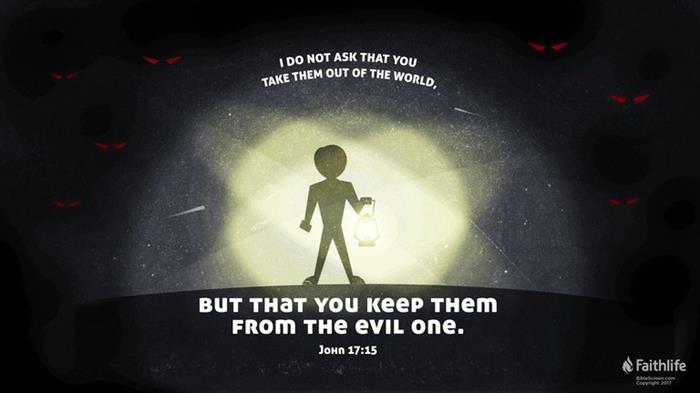
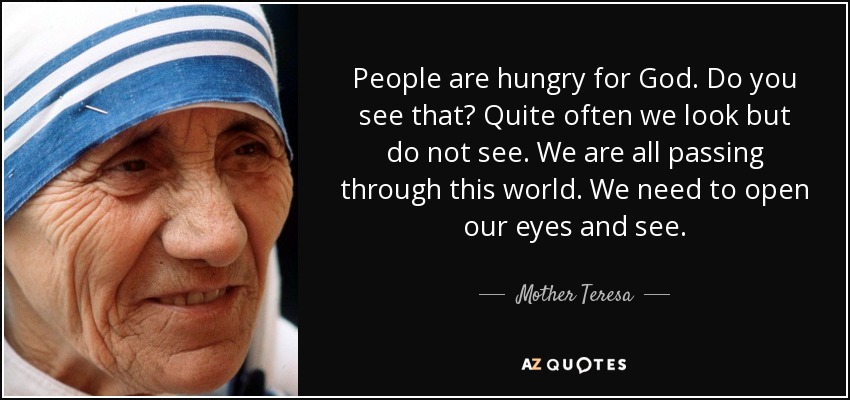
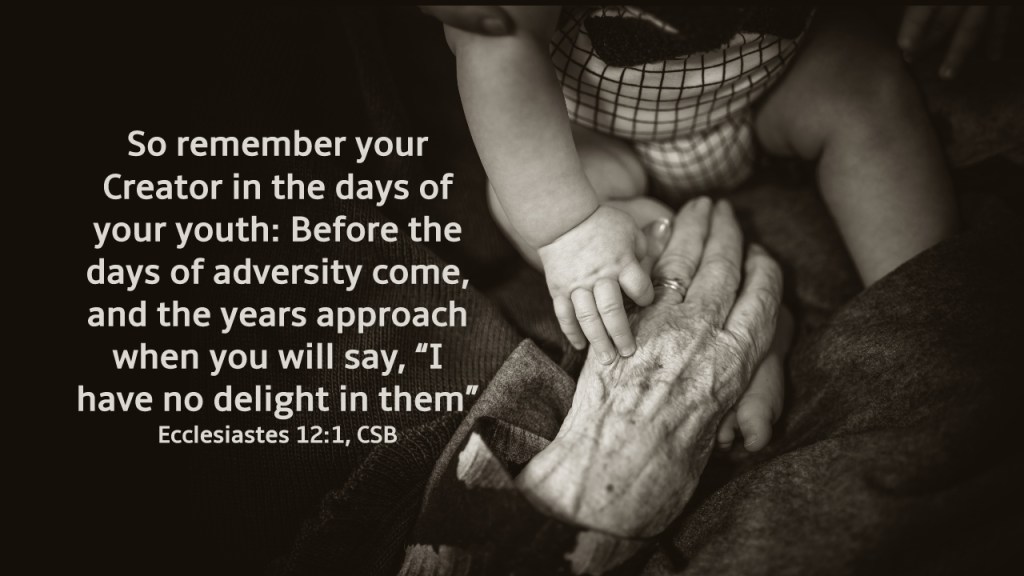








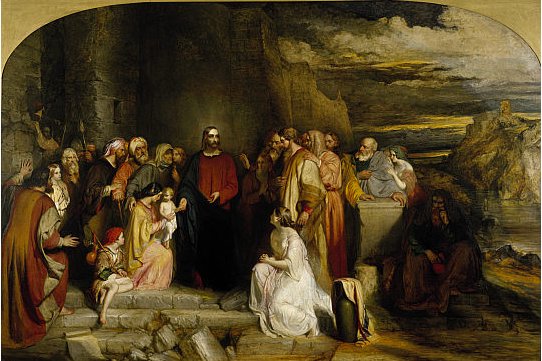

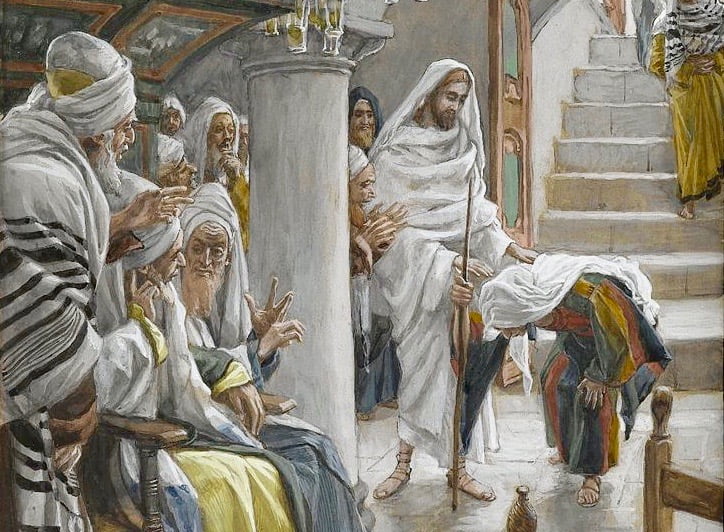







 Loving God, Living God, Loving Hope, Living Hope, Loving Living Life His Way! "Many things are possible for the person who has hope. Even more is possible for the person who has faith. And still more is possible for the person who knows how to love. But everything is possible for the person who practices all three virtues." - Brother Lawrence (1605-1691), Practicing the Presence of God (1692).