Romans 15:4 "For whatever was written in earlier times was written for our instruction, so that through perseverance and the encouragement of the Scriptures we might have hope."
16 Get wisdom—it’s worth more than money; choose insight over income every time.
17 The road of right living bypasses evil; watch your step and save your life.
18 First pride, then the crash— the bigger the ego, the harder the fall.
19 It’s better to live humbly among the poor than to live it up among the rich and famous.
20 It pays to take life seriously; things work out when you trust in God.
21 A wise person gets known for insight; gracious words add to one’s reputation.
Word of God for the Children of God
Glory be to the Father, and to the Son, and to the Holy Ghost; as it was in the beginning, is now, and ever shall be, world without end. Amen, amen.
I would describe today’s proverbs as “general proverbs” that offer counsel to those who desire the best of life.
Proverbs 16:16 states a value system that runs contrary to the world.
Proverbs 16:16 – “How much better [precious; pleasant; favorable] is it to get [acquire] wisdom [godly wisdom; spiritual discernment] than gold! and to get understanding [knowledge] rather to be chosen [selected] than silver!”
It is the fallen nature of man to pursue temporal riches over eternal rewards.
In the same way Eve was tantalized by forbidden fruit (Genesis 3:6), mankind lusts after gold and silver, diamonds and rubies and pearls of greatest quality.
Matthew 13:45-46 The Message
45-46 “Or, God’s kingdom is like a jewel merchant on the hunt for exquisite pearls. Finding one that is flawless, he immediately sells everything and buys it.
Let’s take a practical approach to verse 16, consider its application to our lives.
What is the “end goal” of your life and daily pursuits?
Are we numbered among those poor souls who rise from bed, go to work and pursue gold, pearls and silver with little, if any thought of God, the eternal destiny of your soul?
King Solomon challenged his son to learn that his pursuit of godly wisdom, understanding, insight and discernment were of far greater value than all of those temporal possessions of gold and silver and pearls and precious gems.
Proverbs 16:17 – “The highway [course; way; path] of the upright [just; righteous] is to depart [turn] from evil [sin; wickedness]: he that keepeth [guard; watch] his way [journey; course of life] preserveth [guard; put a hedge about] his soul.”
Men instinctively, impulsively pursue many highways and byways and winding paths and dirt roads in life; however, only one path, one way keeps, preserves a man’s eternal soul—that way is through Jesus Christ and Him alone. (John 14:6)
Solomon warned his son there are ways and paths men take that seem right and prefect to them; however, recall “the end thereof are the ways of death” (Proverbs 14:12; 16:25).
There are many religions, but only one way.
John 14:6 – “Jesus saith unto him, I am the way, the truth, and the life: no man cometh unto the Father, but by me.”
The way of the upright is to turn from sin, trust Jesus Christ as Savior, the Only Begotten Son of God crucified for our sin, buried raised from the dead by God, the Father on the third day.
Proverbs 16:18-19 – “Pride [arrogance] goeth before destruction [calamity; breach in an ocean wall], and an haughty [proud; self-sufficient] spirit before a fall [ruin]. 19Better [pleasing; good as pure gold] it is to be of an humble [low; modest] spirit with the lowly [humble means, weak, meek], than to divide [apportion; distribute] the spoil [plunder; booty] with the proud [arrogant].”
Pride and humility are the subject of Proverbs 16:18-19.
Pride, that spirit of self-sufficiency independent of one’s Creator, sows the seeds of self-destruction.
Pride precedes calamity and a “haughty spirit” is too proud to seek counsel and too pre-occupied with self to look to the end of its way.
Arrogance is the complete opposite of humility.
Humility means to have a modest view of one’s own importance.
But when someone has an over-inflated opinion of himself or herself, they will often act out in an overbearing way.
That is called arrogance, which is always an irritating unattractive quality.
Did you know for every 100 successful people, there is maybe one who can deal with great success and keep his/her head on straight?
The temptation to give into prideful arrogance is huge.
Arrogance and pride are one and the same!
So how can people blessed with success not be overcome with pride?
Gratitude: Remember all good things come from God: this includes your talents, abilities, and opportunities.
Humility: There’s really no such thing as a self-made man. Every successful person had some help along the way. It’s important to remember the journey.
Self-Awareness: The people with the biggest pride problems often don’t recognize that they have a problem. It’s an inability to self-reflect and identify their areas of growth or weakness; this attitude can stunt personal growth.
PursueChrist-likeness: We are most like the Devil when we are filled with arrogant pride. We are most like Jesus when we are fulfilling God’s will for God’s glory.
If you are struggling with arrogant pride, ask God for forgiveness.
Ask Him to help you leave pride behind and learn to walk in gratitude, and in humility, to become more self-aware as you pursue a life walking with Christ.
It might not happen overnight, it most certainly won’t always be an easy road, but you’ll be a better person for it.
Then as the world around you starts to take notice, you’ll have a great platform to point toward your relationship with Jesus.
There’s no time like the present to begin.
As Jesus’ earthly life set the standard for Christians: It is far better to live by humble means than share the lifestyle of the wicked who divide the spoil of ill-gotten gain among themselves with little to no thought of God’s justice.
In the name of God, the Father the Son and the Holy Spirit,
Praying ….
Psalm 1 The Message
1 How well God must like you— you don’t walk in the ruts of those blind-as-bats, you don’t stand with the good-for-nothings, you don’t take your seat among the know-it-alls.
2-3 Instead you thrill to God’s Word, you chew on Scripture day and night. You’re a tree replanted in Eden, bearing fresh fruit every month, Never dropping a leaf, always in blossom.
4-5 You’re not at all like the wicked, who are mere windblown dust— Without defense in court, unfit company for innocent people.
6 God charts the road you take. The road they take leads to nowhere.
Glory be to the Father, and to the Son, and to the Holy Ghost; as it was in the beginning, is now, and ever shall be, world without end. Amen, amen.
Philippians 2:1-4 New Revised Standard Version Updated Edition
Imitating Christ’s Humility
2 If, then, there is any comfort in Christ, any consolation from love, any partnership in the Spirit, any tender affection and sympathy, 2 make my joy complete: be of the same mind, having the same love, being in full accord and of one mind. 3 Do nothing from selfish ambition or empty conceit, but in humility regard others as better than yourselves. 4 Let each of you look not to your own interests but to the interests of others.
Word of God for the Children of God
Glory be to the Father, and to the Son, and to the Holy Ghost; as it was in the beginning, is now, and ever shall be, world without end. Amen, amen.
You know the feeling when you’re in a room full of people, each one struggling to be heard, and the pressure builds in your chest, a quiet, metallic fear. You keep hearing a whisper in your heart that says if you don’t speak a little louder, laugh a little quicker, or sell your story a little better, you will simply… vanish. You’ll become a ghost in your own life.
So you straighten your back, summon your accomplishments like a shield, and perform. And at the end of the night, you come home to the quiet, and the exhaustion is a different kind—a hollow one. Well, that’s the tiredness of a soul that has been working overtime to just be seen.
But what if the very thing we’re fighting for—that undeniable, magnetic attraction we feel toward certain people—is found not in building ourselves up or bragging about our accomplishments, but in the sacred, counterintuitive act of letting go?
If we are being honest, you would realize that the people who have drawn you in have done so not with flash or noise but with a profound and quiet presence. These are the ones who listen in a way that makes you feel like you are the only person in the world. They don’t need to prove their intelligence; it reveals itself in thoughtful questions.
They don’t demand your respect; they quietly command it by giving theirs so freely. Their strength isn’t loud, but it’s a deep, still river. This isn’t weakness. This is the rarest form of strength. And that, everyone, is true humility. And trust me, it is utterly attractive.
You may wonder; isn’t humility just thinking I’m worthless?”
I bet many of us feel that when you practice humility, it means you think you’re worthless. And society does a great deal in projecting this feeling. But the truth is that we’ve all collectively gotten this so terribly wrong.
We’ve confused humility with humiliation.
With thinking less of ourselves.
With walking around with slumped shoulders, muttering about our own inadequacies.
That’s not humility; that’s pride wearing a mask of insecurity.
It’s still all about us. It’s just a different costume.
My dear believers, true humility isn’t thinking less of yourself. It is thinking of yourself less. C. S. Lewis
Proverbs 22:4 Amplified Bible
4 The true reward of humility [that is, having a realistic view of one’s importance] and the [reverent, worshipful] fear of the Lord Is riches, honor, and life.
It’s the liberation of no longer being the star, the victim, or the hero of your own exhausting movie.
It’s the unshackling of your attention so it can finally flow outward—toward another person, a moment of beauty, most importantly, toward the divine.
It’s the posture the Apostle Paul pointed to when he wrote in
Philippians 2:3, “Let nothing be done through strife or vainglory; but in lowliness of mind let each esteem other better than themselves.”
That word, “lowliness of mind,” doesn’t mean a self-hating mind.
Rather, it means a mind that is free from the fever of rivalry.
A mind that isn’t constantly keeping score.
It’s the ability to see the other person—their struggles, their image-bearing glory, their inherent worth—and to esteem them. To hold them in high regard.
This isn’t a downgrading of self; it’s an upgrading of everything else.
Where Did This Heavy Yoke of Pride Come From?
For us as christians to truly cultivate humility, we have to first understand what we’re pulling up by the roots.
That knot in your stomach before you walk into a party?
The urge to namedrop?
The quickness to share your side of the story first in a conflict?
That’s not you.
That’s an ancient, primal algorithm for survival.
It’s the flesh crying out, as stated in
1 John 2:16, “For all that is in the world, the lust of the flesh, and the lust of the eyes, and the pride of life, is not of the Father, but is of the world.”
The pride of life.
What a perfect phrase.
This is basically the operating system of an ancient.
Pride is the belief that our life is our resume.
Our value is our valuation.
Our safety is in our status. It’s a heavy yoke, and we are the beasts of burden, constantly pulling the weight of our own imagined insignificant importance.
This worldly system known as pride teaches us that to be humble is to lose.
To be quiet is to be overlooked.
To serve is to be subservient.
But have you ever thought to yourself, what if the opposite is true?
What if laying down that weight is the only way to truly stand?
So What Does Humility Actually Feel Like?
We all need to understand that humility isn’t a theory; It’s a practice.
A felt experience.
It’s what happens in the mundane moments when the spotlight is off and no one is watching.
Humility in the purest form feels like the ability to say “I was wrong” without the world ending.
It feels like listening to someone’s story without mentally composing your own, better one.
It’s the quiet confidence to celebrate a friend’s success without a single, secret pang of jealousy comparing it to your own.
It’s asking for help.
It’s receiving a compliment with a simple “thank you,” without needing to deflect it or use it as a springboard to list more accomplishments of yours in that very moment.
It is, as the prophet Micah described, walking in a certain way.
Micah 6:8 , “He hath shewed thee, O man, what is good; and what doth the LORD require of thee, but to do justly, and to love mercy, and to walk humbly with thy God?”
To walk humbly.
Not to run frantically.
Not to stride arrogantly.
To walk.
A steady, grounded, present-tense pace.
This is that special kind of walk that notices the cracks in the pavement, the person next to you, and the sky above you, all at once.
Because you’re not looking at your own reflection in every window you pass.
How Do We Cultivate Genuine Humility?
The big question is, how can we achieve this genuine humility?
Well, we don’t achieve humility; rather, we attend to it.
We create the conditions for it to grow, like preparing soil for a seed.
It’s a daily, gentle practice of pulling weeds and planting truth.
1. Practice Curious Listening.
Next conversation you have, go in with a mission:
to be fascinated. Your only job is to discover one new thing about the person you’re talking to.
Ask a question that goes beyond the weather. “What’s something that’s made you smile recently?” “What’s been the biggest challenge in your project?”
Listen to their answer. Then listen to the answer behind the answer.
This act of focused attention is an act of warfare against the pride of life.
It dethrones you and crowns the other person with dignity.
2. Seek Out the Small and Hidden.
We are trained all our lives by the worldly system to chase the big, the loud, and the celebrated.
So, counteract this.
Deliberately find beauty in what the world ignores.
The precise engineering of a spiderweb on a dewy morning.
The patient, unseen work of a root system.
The quiet faithfulness of a person who shows up, day after day, with no fanfare.
This recalibrates your value system.
It whispers that importance isn’t measured in decibels.
3. Embrace the Gift of Limits.
Our culture screams that limits are to be overcome.
But what if they are to be embraced?
Your fatigue, your finitude, and your inability to be everywhere and know everything—these are not curses.
They are gentle reminders that you are a creature, not the Creator.
They are invitations to depend, to rest, and to receive.
So, the next time you fail, instead of spiraling into self-condemnation, try a quieter prayer: “I am human. And that is okay.”
4. Sit With the Prose of Others.
We live in a world of hot takes and reactive opinions.
If you must learn humility, then choose to immerse yourself in the deep, patient wisdom of those who have walked before.
Read the old books.
The poetry of the Psalms, where every human emotion is laid bare before God.
There is a humbling effect in realizing your deepest anxieties and greatest joys were felt by people thousands of years ago.
You are part of a grand, human story, not a solo act.
5. Follow the Pattern.
At its heart, humility is not a self-help technique.
It is a reflection.
It is seeing the ultimate act of strength in laying down and realizing it is the most attractive force in the history of the world.
Philippians 2:5-8 says about our Lord and savior Jesus,“
Let this mind be in you, which was also in Christ Jesus: Who, being in the form of God, thought it not robbery to be equal with God: But made himself of no reputation and took upon him the form of a servant… he humbled himself.”
Christ made himself of no reputation.
He unwrote his own press release.
He didn’t clutch his status; he released it. And in that downward motion, he became the most magnetic center of love the world has ever known.
The path to humility is not upward.
It is inward and downward, into the quiet, solid ground of your own beloved humanity.
And it is only after you have let go of your need to be great that you will finally feel weightless.
And attractive.
Not because you are shining, but because you are finally reflecting a light that is not your own.
Ecclesiastes 5:1-2 Amplified Bible
Your Attitude Toward God
5 Guard your steps and focus on what you are doing as you go to the house of God and draw near to listen rather than to offer the [careless or irreverent] sacrifice of fools; for they are too ignorant to know they are doing evil. 2 Do not be hasty with your mouth [speaking careless words or vows] or impulsive in thought to bring up a matter before God. For God is in heaven and you are on earth; therefore let your words be few.
So, I’ll leave you with this question.
What might you selflessly lay down today to feel lighter?
In the name of God, the Father the Son and the Holy Spirit …
Praying …
Psalm 113 Amplified Bible
The Lord Exalts the Humble.
113 [a]Praise the Lord! ([b]Hallelujah!) Praise, O servants of the Lord, Praise the name of the Lord. 2 Blessed be the name of the Lord From this time forth and forever. 3 From the rising of the sun to its setting The name of the Lord is to be praised [with awe-inspired reverence]. 4 The Lord is high above all nations, And His glory above the heavens.
5 Who is like the Lord our God, Who is enthroned on high, 6 Who humbles Himself to regard The heavens and the earth? 7 He raises the poor out of the dust And lifts the needy from the ash heap, 8 That He may seat them with princes, With the princes of His people. 9 He makes the barren woman live in the house As a joyful mother of children. Praise the Lord! (Hallelujah!)
Glory be to the Father, and to the Son, and to the Holy Ghost; as it was in the beginning, is now, and ever shall be, world without end. Amen, amen.
7 Submit therefore to God. Resist the devil and he will flee from you. 8 Draw near to God and He will draw near to you. Cleanse your hands, you sinners; and purify your hearts, you double-minded. 9 Be miserable and mourn and weep; let your laughter be turned into mourning and your joy to gloom. 10 Humble yourselves in the presence of the Lord, and He will exalt you.
Word of God for the Children of God
Glory be to the Father, and to the Son, and to the Holy Ghost; as it was in the beginning, is now, and ever shall be, world without end. Amen, amen.
Today, we explore a profound, yet too often untouched truth:
“Every person is as close to God as they think they want to be.”
This statement challenges us to reflect on our personal relationship with God.
Our main text today is James 4:8 (NLT):
“Come close to God, and God will come close to you. Wash your hands, you sinners; purify your hearts, for your loyalty is divided between God and the world.”
James addresses believers, urging them to draw near to God.
The Greek word for “come close” is “engizo”, which means to approach or draw near. This is a call to intimate fellowship with God.
James emphasizes the reciprocal nature of our relationship with God.
When we take steps towards Him, He responds by drawing closer to us.
This verse also highlights the need for repentance and purity, symbolized by washing hands and purifying hearts.
Evaluate your daily walk with God.
Are you taking intentional steps to draw nearer to Him?
This may involve prayer, reading the Bible, or worship.
As you do, you will experience His presence more profoundly.
Psalm 145:18 (NLT): “The Lord is close to all who call on him, yes, to all who call on him in truth.”
This verse reassures us God is near to those who earnestly seek Him in truth.
Commit to seeking God sincerely and truthfully.
Make calling upon Him a daily practice.
How to Get Close to God: Come
Dr. A.W. Tozer said, “The man who has God for his treasure has all things in One.”
It sounds so good on paper: all of God is exactly where all of who we are – are!
But what do you do when you can’t find God?
What if God doesn’t seem to be there for you?
Some Christians struggle with that question.
“What do you do when God seems far very away, and you’re praying to an empty chair, and you’re reading the Bible for your devotions, but you do it only because you know dad said you should, and it does not mean anything to you?”
What do you do if you feel like?
Here’s one idea: read and reread Psalm 139, and let it sink in.
Then come near to the God who loves you and knows everything about you.
That’s what James says: “Come near to God and he will come near to you.”
Throughout the Bible God invites us to come.
The Lord invites us to come and reason together (Isaiah 1:18).
Isaiah 55:1-3 New American Standard Bible 1995
The Free Offer of Mercy
55 “Ho! Every one who thirsts, come to the waters; And you who have no [a]money come, buy and eat. Come, buy wine and milk Without money and without cost. 2 “Why do you [b]spend money for what is not bread, And your wages for what does not satisfy? Listen carefully to Me, and eat what is good, And delight yourself in abundance. 3 “Incline your ear and come to Me. Listen, that [c]you may live; And I will make an everlasting covenant with you, According to the faithful mercies [d]shown to David.
Jesus invites the weary to come to him and find rest (Matthew 11:28-29), and he promises that he will never drive us away (John 6:37).
The only caveat is first, we have to come just exactly as we are–empty-handed.
Come and believe in the Lord Jesus Christ, who died to save us from our sins.
Before you go to sleep tonight, pray, plead, for Jesus to draw near to your heart.
If you really want him to, he will respond.
The Turn of the Heart
James 4:1-4 New American Standard Bible 1995
Things to Avoid
4 [a]What is the source of quarrels and conflicts among you? [b]Is not the source your pleasures that wage war in your members? 2 You lust and do not have; so you commit murder. You are envious and cannot obtain; so you fight and quarrel. You do not have because you do not ask. 3 You ask and do not receive, because you ask [c]with wrong motives, so that you may spend it [d]on your pleasures. 4 You adulteresses, do you not know that friendship with the world is hostility toward God? Therefore whoever wishes to be a friend of the world makes himself an enemy of God.
Prayer connects our heart with God’s heart. For many people, the wordheart represents only their emotions, especially feelings like love, sadness, and hope.
It’s in the mind that logic resides, many will say.
The heart is for feeling and the brain is for thinking, and the two are often too pitted against each other.
The Bible teaches, however, that the heart is the center of every aspect of being human: our reason, our emotions, and our will. The heart directs our affections, molds, shapes our decision making, and determines our ultimate allegiances.
This is why Jesus said, “Where your treasure is, there your heart will be also” (Matthew 6:21).
Today’s Bible reading contains a harsh rebuke of people whose hearts have turned away from God.
It affects all their thinking, decision making, motives, emotions, and behaviors.
The spiritual fallout of a broken relationship with God is that prayer is rendered ineffective.
But nestled in this passage are words of hope.
No matter how far our hearts may wander from God, he promises to be near when we turn to him.
That’s because he is always near and caring for us (see Matthew 28:20; Philippians 4:4-6).
One renewing encounter with God can change everything.
And it’s always just one prayer away.
The One who died for you will never drive you away.
In the name of God, the Father, God the Son and God the Holy Spirit,
Praying …
Psalm 113 New American Standard Bible 1995
The Lord Exalts the Humble.
113 [a]Praise [b]the Lord! Praise, O servants of the Lord, Praise the name of the Lord. 2 Blessed be the name of the Lord From this time forth and forever. 3 From the rising of the sun to its setting The name of the Lord is to be praised. 4 The Lord is high above all nations; His glory is above the heavens.
5 Who is like the Lord our God, Who is enthroned on high, 6 Who [c]humbles Himself to behold The things that are in heaven and in the earth? 7 He raises the poor from the dust And lifts the needy from the ash heap, 8 To make them sit with [d]princes, With the [e]princes of His people. 9 He makes the barren woman abide in the house As a joyful mother of children. [f]Praise [g]the Lord!
Glory be to the Father, and to the Son, and to the Holy Ghost; as it was in the beginning, is now, and ever shall be, world without end. Amen, amen.
5 Therefore, I strongly urge the elders among you [pastors, spiritual leaders of the church], as a fellow elder and as an eyewitness [called to testify] of the sufferings of Christ, as well as one who shares in the glory that is to be revealed: 2 shepherd and guide and protect the flock of God among you, exercising oversight not under compulsion, but voluntarily, according to the will of God; and not [motivated] for shameful gain, but with wholehearted enthusiasm; 3 not lording it over those assigned to your care [do not be arrogant or overbearing], but be examples [of Christian living] to the flock [set a pattern of integrity for your congregation]. 4 And when the Chief Shepherd (Christ) appears, you will receive the [conqueror’s] unfading crown of glory. 5 Likewise, you younger men [of lesser rank and experience], be subject to your elders [seek their counsel]; and all of you, clothe yourselves with humility toward one another [tie on the servant’s apron], for God is opposed to the proud [the disdainful, the presumptuous, and He defeats them], but He gives grace to the humble.
6 Therefore humble yourselves under the mighty hand of God [set aside self-righteous pride], so that He may exalt you [to a place of honor in His service] at the appropriate time, 7 casting all your cares [all your anxieties, all your worries, and all your concerns, once and for all] on Him, for He cares about you [with deepest affection, and watches over you very carefully].
Word of God for the Children of God
Glory be to the Father, and to the Son, and to the Holy Ghost; as it was in the beginning, is now, and ever shall be, world without end. Amen, amen.
As Peter gives final instructions at the close of his letter, he addresses both old and young, leaders and followers, shepherds and sheep. Leaders should lead out of generosity and not for gain, he warns, because the flock belongs to God.
What does it mean to humble myself under the mighty hand of God?
In other words, don’t try to deal with your feelings and fears from your limited human perspective; surrender them to the Power of God within you.
Don’t brood and dwell on perceived wrongs that are being done to you, because that kind of negative thought energy can pull us back into fear-base
Followers should follow with a teachable spirit. All should wear humility visibly, as if it were clothing. Humility should be like a uniform that God’s people wear.
Humility starts with an acknowledgment of our complete dependence on God.
When the Heidelberg Catechism asks, “What is your only comfort in life and in death?” the answer shows our dependence:
“I am not my own, but belong—body and soul, in life and in death—to my faithful Savior, Jesus Christ.” We rely completely on Jesus for our salvation and our very existence. What a relief that it does not depend on our own strength!
That humility should shape how we treat one another. We all belong to God, so we have neither an authority of our own nor a right to profit from other people.
That same ancient catechism draws out the implications of our dependence: “Because I belong to him, Christ, by his Holy Spirit, assures me of eternal life and makes me wholeheartedly willing and ready from now on to live for him.”
What does 1 Peter 5 5 teach us?
All of us must live in humility toward each other and toward God, who opposes the proud.
the Bible, those who do not know Christ are called “workers of lawlessness” (Matthew 7:23). Unbelievers are marked by lawlessness (Matthew 23:28), and will increase in the end times (Matthew 24:12). Lawlessness was associated with those who broke the Law of Moses (the Torah) and were therefore sinners.
How do I humble myself biblically?
Thank God often and always. Thankfulness stops pride growing. …
Confess your sins regularly. Confession is a reality check as it reminds us who we are. …
Be ready to accept humiliations. …
Don’t worry about status. …
Have a sense of humour. …
Listen to others. …
Ask questions. …
Consider others before yourself.
May we in humility serve God by serving one another!
In the name of God, the Father and God the Son and God, the Holy Spirit,
Praying …
Psalm 25 Holman Christian Standard Bible
Psalm 25
Dependence on the Lord
Davidic.
1 Lord,[a] I turn to You.[b] 2 My God, I trust in You. Do not let me be disgraced; do not let my enemies gloat over me. 3 No one who waits for You will be disgraced; those who act treacherously without cause will be disgraced.
4 Make Your ways known to me, Lord; teach me Your paths. 5 Guide me in Your truth and teach me, for You are the God of my salvation; I wait for You all day long. 6 Remember, Lord, Your compassion and Your faithful love, for they have existed from antiquity.[c] 7 Do not remember the sins of my youth or my acts of rebellion; in keeping with Your faithful love, remember me because of Your goodness, Lord.
8 The Lord is good and upright; therefore He shows sinners the way. 9 He leads the humble in what is right and teaches them His way. 10 All the Lord’s ways show faithful love and truth to those who keep His covenant and decrees. 11 Because of Your name, Yahweh, forgive my sin, for it is great.
12 Who is the man who fears the Lord? He will show him the way he should choose. 13 He will live a good life, and his descendants will inherit the land.[d] 14 The secret counsel of the Lord is for those who fear Him, and He reveals His covenant to them. 15 My eyes are always on the Lord, for He will pull my feet out of the net.
16 Turn to me and be gracious to me, for I am alone and afflicted. 17 The distresses of my heart increase;[e] bring me out of my sufferings. 18 Consider my affliction and trouble, and take away all my sins. 19 Consider my enemies; they are numerous, and they hate me violently. 20 Guard me and deliver me; do not let me be put to shame, for I take refuge in You. 21 May integrity and what is right watch over me, for I wait for You.
22 God, redeem Israel, from all its distresses.
Glory be to the Father, and to the Son, and to the Holy Ghost; as it was in the beginning, is now, and ever shall be, world without end. Amen, amen.
5-8 Think of yourselves the way Christ Jesus thought of himself. He had equal status with God but didn’t think so much of himself that he had to cling to the advantages of that status no matter what. Not at all. When the time came, he set aside the privileges of deity and took on the status of a slave, became human! Having become human, he stayed human. It was an incredibly humbling process. He didn’t claim special privileges. Instead, he lived a selfless, obedient life and then died a selfless, obedient death—and the worst kind of death at that—a crucifixion.
The Word of God for the Children of God.
Glory be to the Father, and to the Son, and to the Holy Ghost; as it was in the beginning, is now, and ever shall be, world without end. Amen, amen.
In the beginning, it began looking allot like Christmas …
Do any of us plan on taking the time this Christmas to tell your children or our friends about the real purpose of Christmas? If so, what will we tell them?
Although we usually meditate on the birth narratives of Jesus from Luke and Matthew’s Gospels at this time of the year, His true purpose in coming to earth was not to give us the sweet picture of a baby in a Bethlehem manger. That little baby was born to die for you and for me and thus pay for the forgiveness of our sins. He was announced by the angels, the Messengers of God, conceived of the Holy Spirit, Immanuel, God with us, born with a singularly unique purpose no one else would ever have-die on the Cross that we might be reconciled to God.
That is a whole lot to absorb when we are too busy trying to absorb all the food list we will have to go shopping for, for all of the people who will be coming to our lunch or dinner tables from everywhere across the world where there is a place to travel from. Shall we similarly receive Christ who came from eternity?
For this reason, as the opportunity arises, declare to folks, “Don’t just think of a baby in a manger” at Christmastime, don’t just brag and boast and gloat over all the effort it took just to travel through all kinds of terrible weather conditions. I would not want to be first to brag about all the sacrifices I always have to make!
Christmas is about so much more than that. It is about God coming to earth in human flesh so He could die on the Cross to pay for our salvation and destroy all the sinister works of the devil in your lives! That is what Christmas is all about!
People rarely think of the Cross at Christmastime because it is the time set aside to celebrate Jesus’ birth. But in Philippians 2, Paul connects those two thoughts.
As Paul writes about God becoming a man, he goes on to express the ultimate reason God chose to take this amazing action.
Paul says in verse 8, “And being found in fashion as a man, he humbled himself, and became obedient unto death, even the death of the cross.”
Because today is one day closer to family and friends gathering for Christmas Eve, I want to use this Sparkling Gem of a moment to share that real reason for Christmas, which is contained in the truths carefully weaved into this verse.
Philippians 2:8 says that Jesus was “…found in fashion as a man….” That word “fashion” is the Greek word schema. This is extremely important, for this was precisely the same word that was used in ancient times to depict a king who exchanged his kingly garments for a brief period of time for the clothing of a beggar.
How wonderful that the Holy Spirit would inspire the apostle Paul to use this exact word! Did, would, anyone of us, take the time to teach others this truth?
When Jesus came to earth, it really was a moment when God Almighty shed His glorious appearance and exchanged it for the clothing of human flesh.
Although man is fearfully and wonderfully made, his earthly frame is nothing more than temporal dust and cannot be compared to the eternal and glorious appearance of God.
However, for the sake of an indescribable measure of love, for the sake of our redemption, God laid aside all of His radiant glory, He sacrificed, took upon Himself human flesh, was manifested in the very likeness of a human being.
This is the true story of a King who traded His kingly garments and took upon Himself the clothing of a servant.
But the story doesn’t stop there. Jesus – our King who sacrificed His royal robes for the itchy, tattered temporary clothing of flesh – loved us so much that He “…humbled himself, became obedient unto death, even the death of the cross”!OMG
The word used here “humbled” is the Greek word tapeinao, and it means to be humble, to be lowly, and to be willing to stoop to any measure that is needed.
This describes the attitude God had when He took upon Himself human flesh.
Think of how much humility would be required for God to shed His glory and lower Himself to become like a member of His creation.
Consider the indescribable greatness of God’s love that drove Him to divest Himself of all His splendor and become like a man. This is amazing to me, particularly when I think of how often the flesh recoils at the thought of being humble or preferring someone else above itself. God sent His Son, Jesus who humbled Himself “became obedient unto death, even the death of the cross.”
The word “obedient” tells me that this was not a pleasurable experience that Jesus looked forward to in anticipation. To have humbled Himself to this extent, from eternity down to fragile humanity required Jesus’ deliberate obedience.
As preexistent God, Jesus came to earth for this purpose. But as man dressed in flesh, He despised the thought of the Cross (Hebrews 12:2) and could only endure its shame because He knew of the results that would follow. For Jesus to be 100% obedient as a man, He had to choose to obey the eternal plan of God.
The word “obedient” is used to describe Jesus is the Greek word hupakouo, from the word hupo, which means under, and the word akouo, which meansI hear.
When these two words are compounded together, they picture someone who is hupo – under someone else’s strictest authority, and akouo – listening to what that superior is speaking to him. After listening and taking these instructions to heart, this person then always carries out the exacting orders of his superior.
Thus, the word hupakouo tells us that obedient people are
1) alwaysunder authority, 2) alwayslistening to what their superior is saying, and 3) alwayscarrying out the very exacting orders that have been given to them.
This is what the word “obedient” means in this verse, and this is what truest obedience means for you and me. But how many of us are teaching this truth?
You see, even Jesus had to come to this place of obedience. Although He knew that He was the perfect Lamb slain before the foundation of the world, that didn’t mean His flesh was excited about dying as the Lamb of God on the Cross.
According to this verse in Philippians 2:8, Jesus had to humble Himself and become “obedient” in order to follow God’s very exact and exacting plan.
He wasn’t looking forward to the experience of death on a Cross; He made a choice to humble Himself, to go to any and every single measure in order to exactingly, obediently accomplish the complexity of His Father’s great plan.
Part of the Father’s plan was for Jesus to humble Himself “…unto death, even the death of the cross.”
The word “unto” is from the Greek word mechri, which is a Greek word that really means to such an extent.
The Greek word mechri is sufficient in itself to dramatize the point, but the verse goes on to say that Jesus humbled Himself unto death, “…even the death of the cross.”
The word “even” is the Greek word de, which emphatically means EVEN!
The Greek carries this idea:
“Can you imagine it! Jesus humbled Himself to such a lowly position and became so obedient that He even stooped low enough to die the miserable death of a Cross!”
I heartily recommend you take the time today to read the Passion Narratives again inorder to refresh your memory on the full extent, process of crucifixion.
It was genuinely the worst death a person could ever endure. For Jesus to choose to humble Himself to the point of gruesome death, EVEN the death of the Cross, demonstrates how much He was willing to humble Himself to redeem you, me.
Just think of it
– Almighty God, clothed in radiant glory from eternity past, came to this earth formed as a human being in the womb of a human mother for one purpose: so He could one day die a miserable death on a Cross to purchase our salvation!
All of this required humility on a level far beyond anything we could ever want to comprehend or anything that has ever been remotely requested of any of us.
Yet this was the reason Jesus came; therefore, He consciously chose to be 100% obedient to the very end, humbling Himself to the point of dying a humiliating death on a Cross and thereby purchasing our eternal salvation.
So as we go to every imaginable extravagance to celebrate Christmas, be sure to go to similar lengths to extravagantly remember the real purpose of Christmas.
It isn’t just a time to reflect on the quality or quantity or hilarity of our gifts.
But on quality and quantity of the gift of baby boy who was born in Bethlehem so long ago. That baby was God manifest in the flesh. He was born to die for you and for me. Jesus was so willing to do whatever was required in order to redeem us from Satan and sin that He humbled Himself even unto death on a Cross!
That is what Christmas is all about!
MY PRAYER FOR TODAY
Lord, I thank You for the sacrifices you made – coming to earth so You could redeem me. When I think of the extent to which You were willing to go in order to save me, it makes me want to shout, to celebrate, and to cry with thankfulness. You love me so much, and I am so grateful for that love. Without You, I would still be lost and in sin. But because of everything You have done for me, today I am free; my life is blessed; Jesus is my Lord; Heaven is my home; and Satan has no right to control me. I will be eternally, extra extravagantly thankful to You for everything You did to save me!
I pray this in Jesus’ name!
MY CONFESSION FOR TODAY
I sacrifice my ego to now confess that Jesus Christ loves me! He demonstrated His love to me by leaving behind Heaven’s glory and taking upon Himself human flesh. And He did it for one purpose: so that one day He could go to the Cross and die for me and thus reconcile me unto God. There is no need for me to ever feel unloved or unwanted, because Jesus went the ultimate distance to prove that He loves me!
I declare this by faith in Jesus’ name!
Psalm 100 The Message
100 1-2 On your feet now—applaud God! Bring a gift of laughter, sing yourselves into his presence.
3 Know this: God is God, and God, God. He made us; we didn’t make him. We’re his people, his well-tended sheep.
4 Enter with the password: “Thank you!” Make yourselves at home, talking praise. Thank him. Worship him.
5 For God is sheer beauty, all-generous in love, loyal always and ever.
Glory be to the Father, and to the Son, and to the Holy Ghost; as it was in the beginning, is now, and ever shall be, world without end. Amen, amen.
13 Someone from the crowd said to Him, “Teacher, tell my brother to divide the family inheritance with me.” 14 But He said to him, “Man, who appointed Me a judge or an arbitrator over [the two of] you?” 15 Then He said to them, “Watch out and guard yourselves against every form of greed; for not even when one has an overflowing abundance does his life consist of nor is it derived from his possessions.”
Parable of the Wealthy Fool
16 Then He told them a parable, saying, “There was a rich man whose land was very fertile and productive. 17 And he began thinking to himself, ‘What shall I do, since I have no place [large enough in which] to store my crops?’ 18 Then he said, ‘This is what I will do: I will tear down my storehouses and build larger ones, and I will store all my grain and my goods there. 19 And I will say to my soul, “Soul, you have many good things stored up, [enough] for many years; rest and relax, eat, drink and be merry (celebrate continually).”’ 20 But God said to him, ‘You fool! This very night your soul is required of you; now who will own all the things you have prepared?’ 21 So it is for the one who continues to store up and hoard possessions for himself, and is not rich [in his relationship] toward God.”
The Word of God for the Children of God.
Glory be to the Father, and to the Son, and to the Holy Ghost; as it was in the beginning, is now, and ever shall be, world without end. Amen, amen.
“You Fool!” Ambition is both a blessing and a curse
Luke 12:18-21 Amplified Bible
18 Then he said, ‘This is what I will do: I will tear down my storehouses and build larger ones, and I will store all my grain and my goods there. 19 And I will say to my soul, “Soul, you have many good things stored up, [enough] for many years; rest and relax, eat, drink and be merry (celebrate continually).”’ 20 But God said to him, ‘You fool! This very night your soul is required of you; and now who will own all the things you have prepared?’ 21 So it is for the one who continues to store up and hoard possessions for himself, and is not rich [in his relationship] toward God.”
Ambition is both a blessing and a curse. When it is God-directed and also Holy Spirit-managed, it can bear tremendous fruit. When it is restrained by humility, ambition can be a powerful motivator and also a Kingdom Builder. But when it is hijacked by self and ego, it can leave a wide wake of destruction in its path.
I have wrestled with this issue for most of my life. If you have leadership gifts, you know what it is to be captivated and held captive by vision. You know what it is to have dreams of what is possible and what “possible” could truthfully be. You know what it is to pray, to want to do something significant with your life.
Here’s where it gets too sticky. Is whether of not this drive and desire and this motivation about me or about God? If we’re honest, we would have to admit our hearts are entangled with true God-directed motives and self-directed motives.
Sorting them out is complex. A debate, discussion, of motives and ambition takes us to an inner place hidden from everyone except God. Part of what makes ambition so dangerous is that it resides in the deep, unseen, world of our souls.
God hot wired into every one of us a creative tension. On the one hand, we have what the ancients referred to as a “fire in the belly.” This is our inner source of vision, our longing to make a difference, our will to achieve. In recent years in the ministry world we have been pouring not enough gasoline on these fires.
At the same time, God also has hardwired into us the need for quiet, solitude, rest, and reflection (a healthy soul). This is one reason God established the Sabbath: to teach us there is covenanted a healthy rhythm of life. I like to refer to this part of us as a “spiritual recliner.” It’s a place of rest and peace. It’s more about being a soul intentionally refreshing itself than grasping, catching, wind.
God covenanted this when He took a Sabbath day (Genesis 2:3). You and I need both a fire in the belly and a spiritual recliner to be healthy. In fact, you must have both. The problem is that these two realities create strain in our lives.
2 And by the seventh day God completed His work which He had done, and He rested (ceased) on the seventh day from all His work which He had done. 3 So God blessed the seventh day and sanctified it [as His own, that is, set it apart as holy from other days], because in it He rested from all His work which He had created and done.
Think of it like this.
Imagine that the fire in your belly (ambition) is as raw unharnessed electricity.
It’s alive, energetic, powerful, exciting and full of potential, but it can also be dangerous and potentially fatal. Then think of a healthy soul as a transformer.
A transformer serves to regulate, channel, and direct, and control electricity.
A transformer takes what’s potentially harmful and deadly and turns it into something safe useful and helpful when handled with the respect it deserves.
It seems to me we are reaping the results of a generation in the church where it has been all about raw and unchanneled electricity. We need to be just as serious about building and installing transformers, as about generating raw electricity.
My first pastorate was in a suburban church in Baltimore. We were a small hospice, legacy church of less than ten in a bustling town that had been the steadily growing and developing in size and prestige for a generation or more.
I came out of my home church with lots of ambition and drive. Why couldn’t we be a church that could grow again by ministering to the many nearby colleges?
But all my ambition and hard work didn’t translate into any growth. I fully remember going to denominational meetings or occasionally running into a few clergy more experienced friends. I dreaded those conversations because I knew the drill. Sooner or later (usually sooner) we would get to the “How are things going at your church?” question. I would try to change the subject as soon as possible. I always walked away feeling inadequate and discouraged.
God’s Kingdom is supposed to be about growth, with God all we have to do is pray for growth and believe in that growth and all the possibilities of growth.
The emotion and the pressure were mostly self-imposed. The emotions I felt had to do with my own ambition. In my mind the only successful pastor was the pastor of a kingdom building-kingdom growing church. My own obsession with size and church growth had set up unmatched strongholds of sheer frustration.
Now, let me reveal the other side of my struggle with ambition. Fast forward a few years to a time when I was a member of a new church plant that was planted in a rural area community. All indicators were up and to the right. By everyone’s measuring stick, we were working, praying hard, were moving toward success.
Unlike before, I found myself anxious to talk to other friends and neighbors. I could not wait to get to the “How are things going at your church?” question.
I’m ashamed to admit this, but I would find myself in a conversation looking for any way to turn, manipulate the dialogue so that I could talk about our church.
This was a whole different set of emotions than what I experienced in my small, hospice church in Baltimore, but, truly, it was nonetheless related to ambition.
Ultimately, God’s purpose for that hospice church far exceeded all my ambition.
Thanks be to God for His good and wondrous, wonderful gifts from His throne!
God’s vision of Kingdom building, Kingdom growth was far and away greater and more ambitious than my own – we deeded the property to a Korean Church which now ministers and serves the needs of their growing Asian Community.
As Scripture says “Fire tests the purity of silver and gold, but a person is tested by being praised.” Proverbs 27:21
21 The refining pot is for silver and the furnace for gold [to separate the impurities of the metal], And each is tested by the praise given to him [and his response to it, whether humble or proud].
Success with and without accolades can be just as challenging a test as failure.
I’m not quite sure when, but somewhere along the way, the measuring stick for what it means to be an effective pastor got switched. The target was no longer personal faithfulness, it became external fruitfulness. My concern is that the measuring stick of size alone can fuel a kind of ambition that is destructive.
If there is one thing I’ve learned in recent years, it’s this: numerical growth alone is no useful indicator of God’s grace and favor or from godly leadership.
In the introduction to Purpose-Driven Church, Rick Warren talks about catching spiritual waves. It is God who creates waves and movements of his Spirit. We don’t get to decide when the wave comes, where it comes, or how big it will be.
But it’s our privilege to ride a great wave and participate in what God is doing.
My fear is that Christian leaders will no longer quietly, boldly stand on the shore looking for and pray for, a wave of God’s Spirit. When ambition does not have a healthy soul attached to it, we can start trying to create waves ourselves.
Humble Ambitions, Humble Patterns, Humble Service
Philippians 2:1-4 Amplified Bible
Be Like Christ
2 Therefore if there is any encouragement and comfort in Christ [as there certainly is in abundance], if there is any consolation of love, if there is any fellowship [that we share] in the Spirit, if [there is] any [great depth of] affection and compassion, 2 make my joy complete by being of the same mind, having the same [a]love [toward one another], knit together in spirit, intent on one purpose [and living a life that reflects your faith and spreads the gospel—the good news regarding salvation through faith in Christ]. 3 Do nothing from selfishness or empty conceit [through factional motives, or strife], but with [an attitude of] humility [being neither arrogant nor self-righteous], regard others as more important than yourselves. 4 Do not merely look out for your own personal interests, but also for the interests of others.
Philippians is one of the warmest and friendliest of Paul’s letters in the Bible.
The church in Philippi seems to have been quite healthy, source of joy for Paul.
But it was not perfect. No church is.
As we read along in Philippians, we see hints and whispers that Paul knows a few unhappy and unhealthy things about people in this congregation. There are some cracks in their unity, some struggles with “whose right” ambition, pride.
In Philippians 2, Paul begins to address this. And he lays it on pretty thick.
“If you are even remotely Christian,” Paul says, in effect, “then make me even more joyful by being about “of one mind – Jesus’ and embracing his humility.”
Many theologians teach that ambitious humility is the core Christian virtue, the characteristic that makes us most like Jesus.
Ambitious Humility helps us realize that even though we all have gifts and talents to do many things, that does not make us any better than anyone else.
Instead, we try to see life as a level playing field on which each person does her or his part. At the end of the day, pay more attention to others than to ourselves.
Let someone else compliment us for our work while we are too busy focusing on building up others. We all need each other. Each of us needs to be thankful for the next person. This is, as Paul explains next (in verses 5-8), the true pattern of life established by a humbly ambitious Jesus—so this is the pattern to follow.
5 Have this same attitude in yourselves which was in Christ Jesus [look to Him as your example in selfless humility], 6 who, although He existed in the form and unchanging essence of God [as One with Him, possessing the fullness of all the divine attributes—the entire nature of deity], did not regard equality with God a thing to be grasped or asserted [as if He did not already possess it, or was afraid of losing it]; 7 but emptied Himself [without renouncing or diminishing His deity, but only temporarily giving up the outward expression of divine equality and His rightful dignity] by assuming the form of a bond-servant, and being made in the likeness of men [He became completely human but was without sin, being fully God and fully man]. 8 After He was found in [terms of His] outward appearance as a man [for a divinely-appointed time], He humbled Himself [still further] by becoming obedient [to the Father] to the point of death, even death on a cross.
Are we, as committed, covenanted Christians, more about Kingdom building for our building our self esteem through our own accolades or giving God the glory?
Pray, take a few moments to reflect on this serious issue of ambition. Are there any “signs” of unhealthy ambition. Ask God to purify your heart and motives!
In the name of God, the Father and God the Son and God the Holy Spirit,
Let us Pray,
Psalm 15 Amplified Bible
Description of a Citizen of Zion.
A Psalm of David.
15 O Lord, who may lodge [as a guest] in Your tent? Who may dwell [continually] on Your holy hill? 2 He who walks with integrity and strength of character, and works righteousness, And speaks and holds truth in his heart. 3 He does not slander with his tongue, Nor does evil to his neighbor, Nor takes up a reproach against his friend; 4 In his eyes an evil person is despised, But he honors those who fear the Lord [and obediently worship Him with awe-inspired reverence and submissive wonder]. He keeps his word even to his own disadvantage and does not change it [for his own benefit]; 5 He does not put out his money at interest [to a fellow Israelite], And does not take a bribe against the innocent. He who does these things will never be shaken.
Glory be to the Father, and to the Son, and to the Holy Ghost; as it was in the beginning, is now, and ever shall be, world without end. Amen, amen.
6 Hear now what the Lord is saying, “Arise, plead your case before the mountains, And let the hills [as witnesses] hear your voice. 2 “Hear, O mountains, the indictment of the Lord, And you enduring foundations of the earth, For the Lord has a case (a legal complaint) against His people, And He will dispute (challenge) Israel. 3 “O My people, what have I done to you [since you have turned away from Me]? And how have I wearied you? Answer Me. 4 “For I brought you up from the land of Egypt And ransomed you from the house of slavery, And I sent before you Moses [to lead you], Aaron [the high priest], and Miriam [the prophetess]. 5 “My people, remember now What Balak king of Moab devised [with his evil plan against Israel] And what Balaam the son of Beor answered him [turning the curse into blessing for Israel], [Remember what the Lord did for you] from [a]Shittim to Gilgal, So that you may know the righteous and saving acts [displaying the power] of the Lord.”
What God Requires of Man
6 With what shall I come before the Lord [to honor Him] And bow myself before God on high? Shall I come before Him with burnt offerings, With yearling calves? 7 Will the Lord be delighted with thousands of rams, Or with ten thousand rivers of oil? Shall I present my firstborn for my acts of rebellion, The fruit of my body for the sin of my soul? 8 He has told you, O man, what is good; And what does the Lord require of you Except to be just, and to love [and to diligently practice] kindness (compassion), And to walk humbly with your God [setting aside any overblown sense of importance or self-righteousness]?
The Word of God for the Children of God.
Glory be to the Father, and to the Son, and to the Holy Ghost; as it was in the beginning, is now, and ever shall be, world without end. Amen, amen.
God’s Case Against His People
What God Is Looking For
6 1-2 Listen now, listen to God:
“Take your stand in court. If you have a complaint, tell the mountains; make your case to the hills. And now, Mountains, hear God’s case; listen, Jury Earth— For I am bringing charges against my people. I am building a case against Israel.
3-5 “Dear people, how have I done you wrong? Have I burdened you, worn you out? Answer! I delivered you from a bad life in Egypt; I paid a good price to get you out of slavery. I sent Moses to lead you— and Aaron and Miriam to boot! Remember what Balak king of Moab tried to pull, and how Balaam son of Beor turned the tables on him. Remember all those stories about Shittim and Gilgal. Keep all God’s salvation stories fresh and present.”
An important part of many court decisions is known as “restitution.”
Restitution means that a guilty person’s sentence includes making amends for the wrong that was done. So that when someone is found guilty of theft, he is not only punished for his crime but is also ordered to repay what he stole.
Today’s Bible reading portrays the ultimate courtroom drama. God has a case against his people, and the entire creation is called in as the Lord’s witness. In the first five verses of Micah 6, God pours out his heart like a rejected lover.
“Hear, O mountains, the indictment of the Lord, And you enduring foundations of the earth,
Shouting at the mountaintops unto the enduring foundations of the earth, What did God ever do to you, deserve the way he was treated by his unfaithful people?
The people stand silent before God, their Judge. Their guilt is obvious, and no defense argument can be offered. So verses 6-7 move right into the matter of restitution. But how can sinful people ever repay a holy God? Micah confirms that no sacrifice on our part can ever sufficiently provide restitution to God.
How fully wonderful that the good news of Jesus announces God’s provision of the sacrifice we could never make. In Paul’s words, Jesus is the one who “loved us and gave himself up for us as a fragrant offering and sacrifice unto God” (Ephesians 5:2).
Nothing we could offer would be enough to make restitution.
But the offering of Jesus, who laid down his life for us, is.
So, what is it that we are supposed to offer at least as a show of good faith?
Justice.
Kindness.
Mercy.
On the same measure as God as when God sent His only Son to us. (John 3:16)
Except, where is it?
God searches for it, searches everywhere, God never stops searching for it.
But, even at the minimal discernable, detectable levels, they are not found!
We know how God feels about this … we have the words of Micah 6:1 – 5.
But, what we do not have is what is man’s response to this grievous crime?
Sitting in our witness chair, being questioned, silence, We have no response.
We knew what was going on, we knew we were guilty, we have no legal defense to protect us, yet we would plead our innocence before God, righteous judge.
Just what were we thinking?
Were we thinking at all?
“And are we yet disproportionately alive in ourselves versus alive in God?”
Detectable Degrees: Justice, Kindness, and Humility?
Micah 6:6-8 The Message
6-7 How can I stand up before God and show proper respect to the high God? Should I bring an armload of offerings topped off with yearling calves? Would God be impressed with thousands of rams, with buckets and barrels of olive oil? Would he be moved if I sacrificed my firstborn child, my precious baby, to cancel my sin?
* * *
8 But he’s already made it plain how to live, what to do, what God is looking for in men and women. It’s quite simple: Do what is fair and just to your neighbor, be compassionate and loyal in your love, And don’t take yourself too seriously— take God seriously.
It is quite simple: Do what is fair and just to your neighbor, be compassionate and loyal in your love, do not take yourself too seriously, take God seriously!
So, God, through His words of truth, to the ancient Prophet Micah says;
It is quite simple …
Do not take ourselves too seriously. (How hard can this possibly be?)
What is that supposed to mean to me?
What is that supposed to mean to you, the reader of this devotional?
What is that supposed to mean to the church, to not take itself too seriously?
And if God’s word teaches us that “Truth be Told, It is really quite easy,” then what are we missing here … easy for God – but isn’t everything easy for God?”
When John Newton, the 18th-century hymn writer and pastor, preached on this verse, he entitled his sermon “No Access to God but by the Gospel of Christ.”
Why would he use a title that seems to lack any connection to the verse?!
Newton himself commented, “There is hardly any one passage in the Bible more generally misunderstood.”[1]
1The Works of the Rev. John Newton (1808), Vol. 2, p 543.
His sermon title, it seems, was prophetically aimed at correcting the common misunderstandings.
Reverend Newton’s title alerts us to the danger of reading the virtues described here, justice, kindness, humility, then attempting to live them out without the gospel, or proclaiming them in place of the gospel, as a means of access to God.
Neither of these does justice to what the prophet—and the Lord—intended.
The best way to understand Micah 6:8 is not to just give us, a list of things, that contribute to our justification, but as evidences of our justification.
When we view it this way, with the proper motivation and goals established, we can truly understand what the Lord was calling Israel, and is calling us, to do.
The Lord, through Micah, tells us first to “do justice.”
This means a commitment to act in accord with God’s will and purpose.
For example, in Deuteronomy,
Moses says that God “executes justice for the fatherless and the widow, and loves the sojourner, giving him food and clothing”(Deuteronomy 10:18).
We want to care about the things God cares about, which means taking such priorities seriously, seeking to never get tired to “do good to everyone, and especially to those who are of the household of faith” (Galatians 6:10).
Second, the Lord tells us to “love kindness.”
If doing justice is the action, then loving kindness is the heart attitude that fuels it. It’s deep warm-hearted compassion, ensuring that we pursue justice not as a big media circus performance of some duty but as a glad action of benevolence.
Third, we are to “walk humbly.”
In other words, we are to surrender our inflated self image, walk in submission to God’s will, to embracing our utter dependence on Him every step of the way.
Why does Micah end this verse with humility?
First, because humility is what is required to acknowledge that we do not perfectly obey the call to love kindness and do justice—and so we need the Lord’s mercy and forgiveness of the Lord and not just His commands.
Proverbs 15:33 The Message
33 Fear-of-God is a school in skilled living— first you learn humility, then you experience glory.
Proverbs 18:12 The Message
12 Pride first, then the crash, but humility is precursor to honor.
Proverbs 29:23 The Message
23 Pride lands you flat on your face; humility prepares you for honors.
And second, because even as we do obey Him in the way Micah 6:8 calls us to, the fruitfulness of our labors is ultimately not up to us.
You and I cannot fix the world; we must instead entrust the solution to the world’s King and Judge.
Doing so both motivates and sustains us, with God’s help, to live out the gospel that has saved us, through expressions of justice, kindness, and humility, for the good of our neighbors, for the witness of the church, for the glory of Christ.
Across the centuries, Ancient words of Micah calls us today to reflect humbly on our need for the gospel, to look deep into your heart and ask the Spirit to grow it in Christlike kindness, then to look to your world and actively pursue what God reveals through the ministry of our Savior Jesus Christ to be fairness to be just.
Ephesians 4:1-3 The Message
To Be Mature
4 1-3 In light of all this, here’s what I want you to do. While I’m locked up here, a prisoner for the Master, I want you to get out there and walk—better yet, run!—on the road God called you to travel. I don’t want any of you sitting around on your hands. I don’t want anyone strolling off, down some path that goes nowhere. And mark that you do this with humility and discipline—not in fits and starts, but steadily, pouring yourselves out for each other in acts of love, alert at noticing differences and quick at mending fences.
James 1:26-27 The Message
26-27 Anyone who sets himself up as “religious” by talking a good game is self-deceived. This kind of religion is hot air and only hot air. Real religion, the kind that passes muster before God the Father, is this: Reach out to the homeless and loveless in their plight, and guard against corruption from the godless world.
We are assured by the truth of God through Christ, revealed by Micah 6:8 that
It’s quite simple: Do what is fair and just to your neighbor, be compassionate and loyal in your love, And don’t take yourself too seriously— take God seriously.
So, what do you believe?
Easy peasy, led, guided and directed by God, the Father, Son and Holy Spirit?
Infinitely too complex, immeasurably too Complicated because of our agendas?
In the name of God, the Father and God, the Son and God the Holy Spirit,
Let us Pray,
Psalm 65 The Message
65 1-2 Silence is praise to you, Zion-dwelling God, And also obedience. You hear the prayer in it all.
2-8 We all arrive at your doorstep sooner or later, loaded with guilt, Our sins too much for us— but you get rid of them once and for all. Blessed are the chosen! Blessed the guest at home in your place! We expect our fill of good things in your house, your heavenly manse. All your salvation wonders are on display in your trophy room. Earth-Tamer, Ocean-Pourer, Mountain-Maker, Hill-Dresser, Muzzler of sea storm and wave crash, of mobs in noisy riot— Far and wide they’ll come to a stop, they’ll stare in awe, in wonder. Dawn and dusk take turns calling, “Come and worship.”
9-13 Oh, visit the earth, ask her to join the dance! Deck her out in spring showers, fill the God-River with living water. Paint the wheat fields golden. Creation was made for this! Drench the plowed fields, soak the dirt clods With rainfall as harrow and rake bring her to blossom and fruit. Snow-crown the peaks with splendor, scatter rose petals down your paths, All through the wild meadows, rose petals. Set the hills to dancing, Dress the canyon walls with live sheep, a drape of flax across the valleys. Let them shout, and shout, and shout! Oh, oh, let them sing!
Glory be to the Father, and to the Son, and to the Holy Ghost; as it was in the beginning, is now, and ever shall be, world without end. Amen, amen.
Philippians 2:1-4 New American Standard Bible 1995
Be Like Christ
2 Therefore if there is any encouragement in Christ, if there is any consolation of love, if there is any fellowship of the Spirit, if any [a]affection and compassion, 2 make my joy complete [b]by being of the same mind, maintaining the same love, united in spirit, intent on one purpose. 3 Do nothing [c]from [d] selfishness or empty conceit, but with humility of mind regard one another as more important than yourselves; 4 do not merely look out for your own personal interests, but also for the interests of others.
The Word of God for the Children of God.
Glory be to the Father, and to the Son, and to the Holy Ghost; as it was in the beginning, is now, and ever shall be, world without end. Amen, amen.
As followers of Christ, we are called to embrace a servant attitude, putting the needs of others far before our own.
This humility echoes the very heart of Jesus, who came not “to be served, but to serve, and to give his life as a ransom for many” (Mark 10:45).
In a world that far too often exalts self-promotion and personal gain, we stand apart by valuing others far above ourselves. Our mindsets; we seek to meet the needs of people around us, extending all kindness, empathy, and compassion.
A servant attitude begins with a heart shaped and transformed by God’s love.
As we live in all the selfishness around us, in God’s presence, we learn how to lay down our ambitions and egos, making room for selflessness and sacrificial love. We act with grace and with love toward others, just as God has done for us.
By Paul’s words in Philippians, in every interaction, let’s consider the interests of others, seeking greater opportunities to serve in the both big and small ways.
Contrasting against worldly selfishness, may we be better known not by our alleged accomplishments and achievements and successes but by our love and by our humility and by our servant hearts that follow only the example of Jesus.
Disciples and the World and Lights in the Darkness?
Matthew 5:13-16New American Standard Bible 1995
Disciples and the World
13 “You are the salt of the earth; but if the salt has become tasteless, how [a]can it be made salty again? It is no longer good for anything, except to be thrown out and trampled under foot by men.
14 “You are the light of the world. A city set on a [b]hill cannot be hidden; 15 nor does anyone light a lamp and put it under a [c]basket, but on the lampstand, and it gives light to all who are in the house. 16 Let your light shine before men in such a way that they may see your good works, and glorify your Father who is in heaven.
In response to knowing the heart of God we are called to share the wonders of his invisible nature with a world in desperate need of him. God has chosen to use us to reveal himself. He’s filled us with the Spirit and empowered us to proclaim the good news of salvation and restored relationship with our Creator.
Jesus’ teaching on salt and light in the Sermon on the Mount is truly one of my favorite passages of Scripture related to sharing the heart of God with the world around us.
In Matthew 5:13-16The Message Jesus taught:
Salt and Light
13 “Let me tell you why you are here. You’re here to be salt-seasoning that brings out the God-flavors of this earth. If you lose your saltiness, how will people taste godliness? You’ve lost your usefulness and will end up in the garbage.
14-16 “Here’s another way to put it: You’re here to be light, bringing out the God-colors in the world. God is not a secret to be kept. We’re going public with this, as public as a city on a hill. If I make you light-bearers, you don’t think I’m going to hide you under a bucket, do you? I’m putting you on a light stand. Now that I’ve put you there on a hilltop, on a light stand—shine! Keep open house; be generous with your lives. By opening up to others, you’ll prompt people to open up with God, this generous Father in heaven.
One of the most powerful, empowering aspects of this passage is how Jesus begins by speaking identity over us.
God doesn’t tell us to go get some salt and share it.
He says we are salt.
He doesn’t tell us to go get a light and shine it.
He says we are a light.
Sharing God’s heart is a part of who we are.
As believers we’ve been redeemed—washed clean of our sins—that we might proclaim the excellencies of our Savior by living in line with our new identity.
The world is a dark place.
It is without hope.
It’s filled with the blind leading the blind and the needy seeking fulfillment from the needy. Our only hope is Jesus. The one, true Guide is the Holy Spirit.
We are called to a humble lifestyle of expelling the darkness around us with the powerful proclamation of God’s heart to love, provide for, and redeem all those who would simply say yes to him. We are each called to respond to Jesus’ call
We are summoned to cease putting a basket over the light he’s placed within us.
We don’t have to be apologetic for the hope we have.
We don’t have to fear the opinion of man.
We can love relentlessly, offer grace unexpectedly, and sacrifice ourselves so that others might see a glimpse of God’s heart.
“Let your light shine before others”today.
Don’t cover up who you are in Christ.
Seek to reveal God’s heart in all say and you do. And watch as the world around you is drawn to the light of God’s unconditional love revealed through your life.
Guided Prayer:
1. Meditate on Jesus’ words in the Sermon on the Mount.
Renew your mind to who you are in Christ.
Matthew 5:13-16 Easy-to-Read Version
You Are Like Salt and Light
13 “You are the salt of the earth. But if the salt loses its taste, it cannot be made salty again. Salt is useless if it loses its salty taste. It will be thrown out where people will just walk on it.
14 “You are the light that shines for the world to see. You are like a city built on a hill that cannot be hidden. 15 People don’t hide a lamp under a bowl. They put it on a lampstand. Then the light shines for everyone in the house. 16 In the same way, you should be a light for other people. Live so that they will see the good things you do and praise your Father in heaven.
2. In what ways are you covering up your light?
In what ways are you living in fear or according to the ways of the world?
Take time to engage in confession and receive God’s forgiveness and love.
3. Receive courage from God to live in accordance with your new identity as salt and light.
Ask God how you can be light in the darkness today. Ask him for specific ways you can reveal the hope you have in Jesus to others. Journal his response.
Oftentimes we see the things of God as a part of our life.
As soon as God starts trying to change the way we live day-to-day, we put a wall up over our hearts so we don’t have to change.
But to sequester God is to value this life over eternity.
To care more about the world’s opinion of us than who God says we are is to try and make God a servant of the world and its systems.
God is the Creator.
He alone is King.
And he alone knows best as our loving Father.
To section off your life and allow God only into parts is to live foolishly.
Crown God as King over every part of you.
Choose to live as salt and light. And experience life where God is allowed to manifest himself, bless you in every way he can, and use your life to change the world for the better. May your day today be filled with all the fullness of God.
In the name of God, the Father and God the Son and God the Holy Spirit,
Let us Pray,
Spirit of God, mold my heart in humility and love to imitate the Lord Jesus. Help me to value others above myself and to serve selflessly. May I reflect Christ’s love for the benefit of others in this world each day. In Jesus’ name, Alleluia! Alleluia! Amen.
Psalm 46 New American Standard Bible 1995
God the Refuge of His People.
For the choir director. A Psalm of the sons of Korah, [a]set to Alamoth. A Song.
46 God is our refuge and strength, [b]A very present help in [c]trouble. 2 Therefore we will not fear, though the earth should change And though the mountains slip into the heart of the [d]sea; 3 Though its waters roar and foam, Though the mountains quake at its swelling pride. [e]Selah.
4 There is a river whose streams make glad the city of God, The holy dwelling places of the Most High. 5 God is in the midst of her, she will not be moved; God will help her [f]when morning dawns. 6 The [g]nations made an uproar, the kingdoms tottered; He [h]raised His voice, the earth melted. 7 The Lord of hosts is with us; The God of Jacob is our stronghold. Selah.
8 Come, behold the works of the Lord, [i]Who has wrought desolations in the earth. 9 He makes wars to cease to the end of the earth; He breaks the bow and cuts the spear in two; He burns the chariots with fire. 10 “[j]Cease striving and know that I am God; I will be exalted among the [k]nations, I will be exalted in the earth.” 11 The Lord of hosts is with us; The God of Jacob is our stronghold. Selah.
Glory be to the Father, and to the Son, and to the Holy Ghost; as it was in the beginning, is now, and ever shall be, world without end. Amen, amen.
Today is Holy Thursday, also called Maundy Thursday, one of the holiest days in the Church year. We are in the Upper Room with the man, Rabbi Jesus and his disciples. We will celebrate Passover. We will recite the ancient story and we will sing the ancient hymns all over again. But as we sit with our Rabbi, we become surprised at sone of his words – he takes the bread and says, “this is my body broken for you” and then he takes the cup of wine and says, “this is my blood poured out for you and for many for the forgiveness of sin.” What is all this?
In just a short while, he will raise from the table with a pitcher of water and a bowl and a towel. He kneels at our feet, and as the lowest of house slaves, he washes our feet. Soon after that, he will cry tears of red. We will next watch him be betrayed and arrested and given a sham trial. He will be condemned to die on a Cross he will have to carry on his back and wide across his bloodied shoulders.
He will be raised up, nails hammered into his body to suffer. We will watch him suffer humiliation as no other man ever has in history. We will celebrate the greatest act of love ever performed: Jesus’s death on the cross for our salvation.
But first, in our Gospel text for today, Jesus demonstrates for us the humbled, humbling act of the washing of the disciples’ feet. He is the example for all Christian acts of servanthood, but more importantly, servants of their people. That being said, this reading really made me think about humility, love and service—not just on this single day of the Christian Calendar but every day.
John 13:1-17Easy-to-Read Version
Jesus Washes His Followers’ Feet
13 It was almost time for the Jewish Passover festival. Jesus knew that the time had come for him to leave this world and go back to the Father. Jesus had always loved the people in the world who were his. Now was the time he showed them his love the most.
2 Jesus and his followers were at the evening meal. The devil had already persuaded Judas Iscariot to hand Jesus over to his enemies. (Judas was the son of Simon.) 3 The Father had given Jesus power over everything. Jesus knew this. He also knew that he had come from God. And he knew that he was going back to God. 4 So while they were eating, Jesus stood up and took off his robe. He got a towel and wrapped it around his waist. 5 Then he poured water into a bowl and began to wash the followers’ feet.[a] He dried their feet with the towel that was wrapped around his waist.
6 He came to Simon Peter. But Peter said to him, “Lord, you should not wash my feet.”
7 Jesus answered, “You don’t know what I am doing now. But later you will understand.”
8 Peter said, “No! You will never wash my feet.”
Jesus answered, “If I don’t wash your feet, you are not one of my people.”
9 Simon Peter said, “Lord, after you wash my feet, wash my hands and my head too!”
10 Jesus said, “After a person has a bath, his whole body is clean. He needs only to wash his feet. And you are clean, but not all of you.” 11 Jesus knew who would hand him over to his enemies. That is why he said, “Not all of you are clean.”
12 When Jesus finished washing their feet, he put on his clothes and went back to the table. He asked, “Do you understand what I did for you? 13 You call me ‘Teacher.’ And you call me ‘Lord.’ And this is right, because that is what I am. 14 I am your Lord and Teacher. But I washed your feet. So, you also should wash each other’s feet. 15 I did this as an example for you. So, you should serve each other just as I served you. 16 Believe me, servants are not greater than their master. Those who are sent to do something are not greater than the one who sent them. 17 If you know these things, great blessings will be yours if you do them.
The Word of God for the Children of God. Gloria! In Excelsis Deo! Alleluia! Amen.
The Humbled, Humbling Humility of His Great Love for US! …….
We live in a very proud and egotistical generation.
It is now considered acceptable and even normal for people to promote themselves, to praise themselves, and to put themselves first. Pride is considered a virtue by many. Humility, on the other hand, is considered a weakness. Everyone, it seems, is screaming for his or her own rights and seeking to be recognized as someone important.
The preoccupation with self-esteem, self-love, and self-glory is destroying the very foundations upon which our society was built. No culture can survive pride run rampant, for all of society depends on relationships. When all people are committed first of all to themselves, relationships disintegrate. And that is just what is happening, as friendships, marriages, and families fall apart.
Sadly, the preoccupation with self has found its way into the church.
Perhaps the fastest growing phenomenon in modern Christianity is the emphasis on pride, self-esteem, self-image, self-fulfillment, and other manifestations of selfism. Out of it is emerging a new religion of self-centeredness, pride—even arrogance. Voices from every part of the theological spectrum call us to join the self-esteem cult.
Scripture is clear, however, that selfism has no place in Christian theology.
The man, Rabbi Jesus repeatedly taught against pride, and with His life and teaching He constantly exalted the virtue of humility. Nowhere is that clearer than in John chapter 13.
John 13 marks a turning point in John’s gospel and the ministry of Jesus Christ. Jesus’ public ministry to the nation of Israel had run its course and ended in his complete and final rejection of Him as Messiah.
On the first day of the week, Jesus had entered Jerusalem in triumph to the enthusiastic shouts of the people. Those people nevertheless misunderstood His ministry and His message. The Passover season had arrived, and by Friday He would be utterly rejected and executed. God, however, would turn that execution into the great and final sacrifice for sin, and Jesus would die as the true Passover Lamb.
He had come unto His own people, the Jews, “and those who were His own did not receive Him” (John 1:11). So He had turned away from His public ministry to the intimate fellowship of His disciples.
Now it is the day before Jesus’ death, and rather than being preoccupied with thoughts of His death, sin-bearing, and glorification, He is totally consumed with His love for the disciples. Knowing that He would soon go to the cross to die for the sins of the world, He is still concerned with the needs of twelve men, including his betrayer! His love is never impersonal—that’s the mystery of it.
In what were literally the last hours before His death, Jesus kept showing them His love over and over. John relates this graphic demonstration of it:
Now before the Feast of the Passover, Jesus knowing that His hour had come that He should depart out of this world to the Father, having loved His own who were in the world, He loved them to the end. During supper, the devil having already put into the heart of Judas Iscariot, the son of Simon, to betray him, Jesus, knowing that the Father had given all things into His hands, and that He had come forth from God and was going back to God, got up from supper, and laid aside His garments; and taking a towel, He girded Himself. Then He poured water into the basin and began to wash the disciples’ feet and to wipe them with the towel with which He was girded.
So He came to Simon Peter. He said to him, “Lord, do You wash my feet?” Jesus answered and said to him, “What I do you do not realize now, but you will understand hereafter.”
Peter said to Him, “Never shall You wash my feet!”
Jesus answered him, “If I do not wash you, you have no part with Me.”
Simon Peter said to Him, “Lord, then wash not only my feet, but also my hands and my head.”
Jesus said to him, “He who has bathed needs only to wash his feet, but is completely clean; and you are clean, but not all of you.” For He knew the one who was betraying Him; for this reason, He said, “Not all of you are clean.”
So when He had washed their feet, and taken His garments and reclined at the table again, He said to them, “Do you know what I have done to you? You call Me Teacher and Lord; and you are right, for so I am. If I then, the Lord and the Teacher, washed your feet, you also ought to wash one another’s feet. For I gave you an example that you also should do as I did to you. Truly, truly, I say to you, a slave is not greater than his master, nor is one who is sent greater than the one who sent Him. If you know these things, you are blessed if you do them.” (John 13:1-17)
It is very likely that Jesus and the disciples had been hiding at Bethany during this final week before the crucifixion. Having come from there (or from anywhere near Jerusalem), they would have had to travel on extremely dirty roads. Naturally, by the time they arrived, their feet were covered with dust and Lord knows what else from the road.
Everyone in that culture faced the same problem. Sandals did little to keep dirt off the feet, and the roads were either a thick layer of dust or deep masses of mud. At the entrance to every Jewish home was a large pot of water to wash dirty feet. Normally, foot washing was the duty of the lowliest slave.
When guests came, he had to go to the door and wash their feet—not a pleasant task. In fact, washing feet was probably his most abject duty, and only slaves performed it for others. Even the disciples of rabbis were not to wash the feet of their masters—that was singularly and most uniquely the task of a lowly slave.
As Jesus and His disciples all arrived in the upper room, they found that there was no servant to wash their feet.
Only days before, Jesus had said to the twelve, “Whoever wishes to become great among you shall be your servant, and whoever wishes to be first among you shall be your slave” (Matthew 20:26-27).
If they had given mind and heart to His teaching, one of the twelve would have washed the others’ feet, or they would have mutually shared the task. It could have been a beautiful thing, but it never occurred to them because of their selfishness. A parallel passage in Luke 22 gives us an idea just how selfish they were and what they were thinking about that evening:
And there arose also a loud dispute among them as to which one of them was regarded to be greatest. And He said to them, “The kings of the Gentiles lord it over them; and those who have authority over them are called ‘Benefactors.’ But it is not this way with you, but the one who is the greatest among you must become like the youngest, and the leader like the servant.” (vv. 24-26)
What a sickening picture this is! They were bickering about who was the greatest. And in an argument about who is the greatest, no one is going to get down to the ground and wash feet. The basin was there, the towel was there, and everything was ready. But no one moved to wash the others’ feet.
If anyone in that room should have been thinking about the glory that would be his in the Kingdom, it was Jesus. John 13:1 says that Jesus knew His hour was come. He was on a divine time schedule, and He knew He was going to be with the Father. He was very conscious of the fact that He soon would be glorified:
“Jesus [knew] that the Father had given all things into His hands, and that He had come forth from God and was going back to God” (v. 3).
But instead of their being more concerned with His glory, and in spite their selfishness, He was totally conscious of revealing clearly His personal love to the twelve that they might be secure in it. They might be a part of His Kingdom.
Verse 1 says, “Having loved His own who were in the world, He loved them to the end.”
“To the end” in the Greek is ‘eis’ telos, and it means this:
He loved to them to perfection. He loved them to the uttermost. He loved them with total fullness of love. That is the nature of Christ’s love, and He showed it repeatedly—even in His death.
When He was arrested, He arranged that the disciples would not be arrested.
While He was on the cross, He made sure that John would give Mary a home and care in years to come.
He reached out to a dying thief and saved him.
It is most amazing that in those last hours of carrying the sins of the world, in the midst of all the pain and suffering He was bearing, He was conscious of that one would-be disciple hanging next to him.
He loves humbly, utterly, absolutely, to perfection, totally, completely, without reservation. At the moment when most men would have been wholly concerned with self, He selflessly humbled Himself to meet the most basic needs of others.
Genuine humble, humbled, humbling love is EXACTLY like that.
And here is the great lesson of this whole account:
Only absolute humility can generate absolute love.
It is the nature of love to be selfless, giving. In 1 Corinthians 13:5, Paul said that love “does not seek its own.” In fact, to distill all the truth of 1 Corinthians 13 into one statement, we might say that the greatest virtue of love is its humility, for it is the humility of love that proves it and makes it visible.
Christ’s love and His humility are inseparable.
He could not have been so consumed with a passion for serving others if He had been primarily concerned with Himself.
“Love…in Deed and Truth”
How could anyone reject that kind of love? Men do it all the time. Judas did.
“During supper, the devil [had] already put into the heart of Judas Iscariot, the son of Simon, to betray Him” (v. 2).
Do you see the tragedy of Judas?
He was constantly basking in the light, yet living in darkness, experiencing the love of Christ, yet hating Him at the same time.
The contrast between Jesus and Judas is striking. And perhaps that is the very reason the Holy Spirit included verse 2 in this passage. Set against the backdrop of Judas’ hatred, Jesus’ love shines even brighter. We can better understand its magnitude when we understand that in the heart of Judas was the blackest kind of hatred and rejection.
The words of love by which Jesus gradually drew the hearts of the other disciples to Himself only pushed Judas further and further away. The teaching by which He uplifted the souls of the other disciples just seemed to drive a stake into the heart of Judas.
Everything Jesus said in terms of love must have become like chafing shackles to Judas. From his fettered greed and his disappointed ambition began to spring jealousy, spite, and hatred—and now he was ready to destroy Christ, if need be.
But the more men hated Jesus and desired to hurt Him, the more it seemed He manifested love to them. It would be easy to understand resentment. It would be easy to understand bitterness. But all Jesus had was love—He even met the greatest injury with supreme love. In a little while He would be kneeling at the feet of Judas, washing them.
Jesus waited until everyone was seated and supper was served. Then, in a devastating act of humility that must have stunned the disciples,
[Jesus] got up from supper and laid aside His garments; and taking a towel, He girded Himself. Then He poured water into the basin and began to wash the disciples’ feet and to wipe them with the towel with which He was girded. (Verses 4-5)
With calmness and majesty, in total silence, Jesus surprised everyone except himself, stood up, walked over and took the pitcher, and poured the water into the basin. He then removed his outer robe, His belt, and very likely His inner tunic—leaving Him clothed like a slave—put a towel around His waist and knelt down to wash the feet of His disciples, one by one – without exception!
Can you imagine how that must have stung the disciples’ hearts? Do you feel the pain, the regret, and the sorrow that must have shot through them? One of them could have had the joy of kneeling and washing the feet of Jesus. I’m sure they were dumb-founded and broken-hearted. What a painful and profound lesson this was for them!
We, too, can learn from this incident.
Sadly, the church is full of people who are standing on their dignity when they ought to be kneeling at the feet of their brother. The desire for prominence is death to love, death to humility, and death to service. One who is proud and self-centered has no capacity for love or humility. Consequently, any service he may think he is performing for the Lord is a waste.
When you are tempted to think of your dignity, your prestige, or your rights, open your Bible to John 13 and get a good look at Jesus—clothed like a slave, kneeling, washing dirt off the feet of sinful men who are utterly indifferent to His impending death.
To go from being God in glory (v. 3) to washing the feet of sinful, inglorious disciples (vv. 4-5) is a long step. Think about this: the majestic, glorious God of the universe comes to earth—that’s humility. Then He kneels on the ground to wash the feet of sinful men—that’s indescribable humility.
You see, for a fisherman to wash the feet of another fisherman is a relatively small sacrifice of dignity.
But that Jesus Christ, in whose heart beats the very pulse of eternal deity, would humbly stoop down and wash the worse than filthy feet of lowly men, that’s the greatest kind of humiliation.
And that is the nature of genuine humility, as well as the proof of genuine love.
Love has to be more than words. The apostle John wrote, “Let us not love with word or with tongue, but in deed and in truth” (1 John 3:18). Love that is real is love expressed in activity, not just words.
“If I Do Not Wash You, You Have No Part with Me”
Here we have one of the most interesting insights into Peter we see anywhere in Scripture. As Jesus loves from disciple to disciple, He finally arrives at Peter, who must have been completely broken.
He said with a mixture of remorse and incredulity, “Lord, do You wash my feet?” (v. 6), and perhaps he pulled back his feet.
Jesus replied to Peter, “What I do you do not realize now, but you will understand hereafter” (v. 7).
At this point, Peter was still thinking that the Kingdom of God was coming, and Jesus was the coming King of that Kingdom. Exactly how could he ever allow the King of kings to leave his throne and be seen stooping down and wash his feet?
It wasn’t until after Jesus’ death, resurrection, and ascension that Peter understood the total humiliation of Jesus.
Peter got bolder. In verse 8, he says, “Never shall You wash my feet!”
To emphasize his words, Peter uses the strongest form of negation in the Greek language. He calls Jesus Lord but acts as if he is lord. This is not praiseworthy modesty on Peter’s part – this is Peter’s overzealous over-protective selfism.
Jesus bluntly answered him, “If I do not wash you, you have no part with Me.” Simon Peter said to Him, “Lord, then wash not only my feet, but also my hands and my head.” (vv. 8-9)
That is typical of Peter—he goes from one extreme (“Never shall You wash my feet!”) to the other (“Not only my feet, but also my hands and my head.”).
There is profound meaning in Jesus’ words, “If I do not wash you, you have no part with Me.”
You see, the typical Jewish mindset could not accept the Messiah humiliated. In Peter’s own mind, there was no place for the coming Christ to be humiliated like this. He must be made to realize that Christ came to be humiliated.
If Peter could not accept this act of humiliation, he would certainly have trouble accepting what Jesus would do for him on the cross.
There is yet another, more profound, truth in Jesus’ words. He has moved from the physical illustration of washing feet to the spiritual truth of washing the inner man. Throughout John’s gospel, when He dealt with people, Jesus spoke of spiritual truth in physical terms. He did it when He spoke to Nicodemus, the Samaritan woman at the well, and the Pharisees. Now He does it with Peter.
He is saying, “Peter, unless you allow Me to wash you in a spiritual way, you are not clean and you have no part with Me.”
All cleansing in the spiritual realm comes from Christ, and the only way anyone can be clean is if he is washed by regeneration through Jesus Christ (Titus 3:5).
No man has a relationship with Jesus Christ unless Christ has cleansed his sins. And no one can enter into the presence of the Lord unless he first submits the whole of his and her heart and soul unto that humble, humbling cleansing.
Peter learned that truth—he preached it himself in Acts 4:12: “And there is salvation in no one else; for there is no other name under heaven that has been given among men by which we must be saved.”
When a man puts his faith in Jesus Christ, he’s clean, and not until then.
“He Who Has Bathed…Is Completely Clean”
Thinking that the Lord was speaking of physical cleansing, Peter offered his hands and head—everything.
He still did not see the full spiritual meaning, but he said in essence, “Whatever washing you’ve got to offer me that makes me a part of You, I want it.”
Jesus, still speaking of spiritual washing, said, “He who has bathed needs only to wash his feet, but is completely clean; and you are clean” (v.10).
There is a difference between a bath and a foot washing. In the culture of that day, a man would take a bath in the morning to get himself completely clean. As he went through the day, he had to wash his feet from time to time, because of the dusty roads, but he didn’t have to keep taking baths. All he needed was to wash the dust and the dirt off both his feet when he entered someone’s home.
Jesus is saying this: once your inner man has been bathed in redemption, you are clean. From that point on, you do not need a new bath—you do not need to be redeemed again—every time you commit a sin.
All God has to do is daily get the dust off your feet. Positionally, you are clean (as He told Peter in 13 verse 10), but on the practical side, you need washing every day, as you walk through the world and get dirty feet.
That spiritual washing of the feet is what 1 John 1:9 refers to:
“If we confess our sins, He is faithful and righteous to forgive us our sins and to cleanse us [literally, keep on cleansing us] from all unrighteousness.”
Jesus knew which of the disciples were truly cleansed by redemption.
Furthermore, He knew what Judas’ plans for the evening were: “For He knew the one who was betraying Him; for this reason, He said, ‘Not all of you are clean'” (v. 11). That should have pricked the darkened heart of Judas.
Judas knew what He meant. Those words, combined with Jesus’ washing his feet, constituted what would be the last loving appeal for Judas not to do what he was planning to do. What was going through the mind of Judas as Jesus knelt washing his feet? Whatever it was, it had no deterring effect on Judas.
“You also Ought to Wash One Another’s Feet”
Notice what happened after Jesus finished washing their feet:
So, when He had washed their feet, and taken His garments and reclined at the table again, He said to them, “Do you know what I have done to you? You call Me Teacher and Lord; and you are right, for so I am. If I then, the Lord and the Teacher, washed your feet, you also ought to wash one another’s feet. For I gave you an example that you also should do as I did to you. Truly, truly, I say to you, a slave is not greater than his master, nor is one who is sent greater than the one who sent him. If you know these things, you are blessed if you do them.” (vv. 12-17)
Having inserted a parenthetical lesson on salvation—a sort of theological interlude—Jesus gets back to the real point He is teaching His disciples: that they need to begin to experience, practice, operate on the basis of humility.
He argues from the greater to the lesser.
If the Lord of glory is willing to gird Himself with a towel, take upon Him the form of a servant, act like a slave, and wash the dirty feet of sinful disciples, it is reasonable that the disciples might be willing to wash each other’s feet.
The visual example Jesus taught surely did more good than a lecture on humility ever would have. It was something they never forgot. (Perhaps from then on they had a contest to see who got to the water first!)
Many people believe that Jesus was instituting an ordinance for the church.
Some churches practice foot washing in a ritual similar to the way we have baptism and communion.
I have no quarrel with that, but I do not feel that it is being taught in this passage. Jesus was not advocating a formal, ritualistic foot washing service.
Verse 15 says, “I gave you an example that you also should do as I did to you.”
The word “as” is a translation of the Greek word kathos, which means “according as.”
If He were establishing foot washing as a pattern of ritual to be practiced in the church, He would have used the Greek word ho, which means “that which.”
Then He would have been saying, “I have given you an example that you should do what I have done to you.”
He is not saying “Do the same thing I have done”; He is saying, “Behave in the same manner as I have behaved.”
The example we are to follow is not the washing of feet, it is His humility. Do not minimize the lesson by trying to make foot washing the important point of John 13. Jesus’ humility is the real lesson—and it is a practical humility that governs every area of life, everyday practice of life, in every experience of life.
The result of that kind of humility is always loving service—doing the menial and humiliating tasks for the glory of Jesus Christ. That demolishes most of the popular ideas of what constitutes spirituality.
Some people seem to think the nearer you get to God the further you must be from men, but that’s not true. Actual proximity to God is to serve someone else.
In terms of sacrificing to serve others, there was never anything Jesus was unwilling to do. Why should we be different? We are not greater than the Lord:
“Truly, truly, I say to you, a slave is not greater than his master; nor is one who is sent greater than the one who sent him. If you know these things, you are blessed [happy] if you do them” (vv. 16-17).
Do you want to be blessedly fulfilled and happy? Develop a servant’s heart.
We are His bondservants, and a servant is not greater than his master.
If Jesus can step down from a position of deity to become a man, and then even further humble Himself to be a servant and wash the feet of twelve undeserving sinners, we also ought to be willing to suffer any indignity to serve Him.
It should then come to be a surprise to no one ……
that is truer than true love, and truer than true humbled, humbling humility.
In the name of God, the Father and God the Son and God the Holy Spirit,
Let us Pray,
Heavenly Father, thank You for this precious picture in the upper room, when in humble submission to the Father’s will, the Lord Jesus laid aside His garment and began to wash the feet of His bewildered disciples. Lord there are too many times in my finite life I simply do not understand the reason that You would allow certain things to happen but help me to simply trust You in all things and enable me to pray, thy will not mine be done. Open my understanding to all You are seeking to teach me, and may I grow in grace as I submit to Your will for my life – in Jesus’ name I pray, Gloria! In Excelsis Deo! Alleluia! Alleluia! AMEN.
Today, I want to try to tell you a short story about two men and their wheat.
One man had a grain of wheat and he loved it very much. He spent the majority of his time and energies on securing the best possible container for his wheat.
When it came to moving his wheat from one place to another, he spared no expense. He loved his wheat, so he bought the best. He made sure his grain of wheat stayed out of harm’s way; if wheat gets wet you know it will quickly spoil.
So, he was very careful to be sure to always do what the wheat experts told him to do in order to see his grain of wheat stay strong even into old age. This man was sold out for his wheat, and it showed. Then the man died.
The other man also had a grain of wheat but what he did was very different.
He went out into the backyard, dug a hole, threw his wheat in to it, covered it with dirt, and poured water all over it thus completely ruining the wheat.
Then the man died.
Sometime after both men were dead and buried a news reporter got wind of these two unusual men and their wheat. The reporter decided to do a follow up.
Where the first man had lived the grain of wheat was easily spotted surrounded by the best. But when the lid was removed, and the cameras pulled in close the sight was saddening; that grain of wheat though greatly prized and protected had been ruined. Stuck away in the dark of selfishness that wheat had spoiled
The reporter got back in her car and assumed she was about to go from bad to worse. If the first man had done everything to protect his wheat and it had all been for nothing, then what would there be to show for the other man who just threw his in the ground and wasted it?
As she drove closer, she noticed these tall and vibrant green plants along the side of the road; very strange. As she pulled into the driveway the entire yard of the second man was covered in three-foot-tall green grass. Now filled with curiosity the reporter asked the neighbor, “What are all these plants.” And he responded, “It’s this man’s wheat”
One man protected his wheat and lost it all.
The other man threw his wheat into the ground, and it produced much fruit.
Christ’s life is that single grain of wheat. He is glorious and he has done many glorious things. But if he doesn’t die there is no salvation for you or for me. If Jesus is not the suffering Servant/Savior of Isaiah 53, then he is no savior at all.
But if he did come to die and if he did die and rise again, then he will produce much fruit. There will be lives changed. There will be a great harvest of joy-filled Christ-followers. Jesus came to die, and he died so to bear much fruit.
John 12:20-26 Holman Christian Standard Bible
Jesus Predicts His Crucifixion
20 Now some Greeks were among those who went up to worship at the festival. 21 So they came to Philip, who was from Bethsaida in Galilee, and requested of him, “Sir, we want to see Jesus.”
22 Philip went and told Andrew; then Andrew and Philip went and told Jesus. 23 Jesus replied to them, “The hour has come for the Son of Man to be glorified.
24 “I assure you: Unless a grain of wheat falls to the ground and dies, it remains by itself. But if it dies, it produces a large crop. [a]25 The one who loves his life will lose it, and the one who hates his life in this world will keep it for eternal life. 26 If anyone serves Me, he must follow Me. Where I am, there My servant also will be. If anyone serves Me, the Father will honor him.
The Word of God for the Children of God. Gloria! In Excelsis Deo! Alleluia! Amen.
I. Eternal life requires more than fearing God and being interested in Jesus (20-23)
As we look into these verses from John, we need to realize that we are at a turning point in salvation history. God’s plan to reconcile the world to himself through the seed of the woman is about to advance at a rapid pace.
Here’s the point
A. The glorification of Jesus Christ is required for the salvation of the nations.
The Pharisees in verse 19 make the observation that, “the world has gone after [Jesus].” In the triumphal entry and in the people’s loud praises the Pharisees see the popularity of Jesus. That confession in verse 19 leads us to the account of “some Greeks” in verses 20-22.
Now among those who went up to worship at the feast were some Greeks. So these came to Philip, and asked him, “Sir, we wish to see Jesus.” Philip went and told Andrew; Andrew and Philip went and told Jesus.
Literally the people and nations are coming to Jesus. They want to see him. Now this phrase means more than look at him. These Greeks want to talk with Jesus.
They are hesitant. Possibly because they have just witnessed Jesus clean out the court of the Gentiles when he cleansed the temple; that’s a bit intimidating. So, they instead go to Philip who probably spoke Greek and asked for an audience with Jesus. The people and the nations are mightily curious coming to Christ.
And Jesus responds with a surprising and an unexpected word, verse 23, “The hour has come for the Son of Man to be glorified.”
Up to this point in the life of Christ when Jesus has spoken of “his hour” it has always been in the future tense.
In John 2:4 he told Mary, “My hour has not yet come.”
In John 7:30 we read, “So they were seeking to arrest him, but no one laid a hand on him, because his hour had not yet come.”
In John 8:20 we read, “These words he spoke in the treasury, as he taught in the temple; but no one arrested him, because his hour had not yet come.”
From here on, from the coming of the Greeks on, Jesus will emphasize the fact that his hour is here.
In John 12:27,“Father, save me from this hour? But for this purpose, I am come to this hour.”
Using the language of the time to glorify the Son Jesus says in John 13:31, “Now is the Son of Man glorified, and God is glorified in him. If God is glorified in him, God will also glorify him in himself, and glorify him at once.”
It is possible that Jesus is only 4 days from the cross. Jesus is fully aware that his death his required for the salvation of the people and the nations.
And Jesus is fully aware that now is the appointed time of his glorification. He must be glorified in order for these Greeks to be saved. He must be glorified in order for you, me to be saved. No one from Adam to the last of God’s children will see eternal life if Jesus does not fulfill the Father’s plan of redemption.
Let’s drive this point home
B. Your salvation depends upon Jesus’ glorification
Let’s bring in some of the terminology from verse 23. Unless Jesus is glorified, unless the grain of wheat is put into the ground, he will not bear fruit. Unless Jesus be glorified no one will be saved.
That’s how crucial the cross is. That’s how important this hour is; salvation depends on it.
We should expect the theme of glory to be central from here on in John and it is. We’ll unpack this more, Lord willing, I just want you to see what glorification is.
Look down to verses 28-33.
‘Father, glorify your name.’ Then a voice came from heaven: ‘I have glorified it, and I will glorify it again… verse 31…’Now is the judgment of this world; now will the ruler of this world be cast out. And I, when I am lifted up from the earth, will draw all people to myself’ He said this to show by what kind of death he was going to die.
The glorification of God is displayed through the judgment of sin when God’s wrath for poured out on Jesus. The glorification of God is displayed through the defeat of Satan when his power is broken through the resurrection of Jesus.
The glory of God is about to be displayed through Jesus’ finished work on the cross, resurrection from the grave, ascension back to God’s glorious right hand, and the salvation of the people and the nations who come to Him.
Our salvation and the salvation of the nations, depends on the Son of man being glorified. The death, resurrection, and ascension of Jesus do not just show us something they secure something. The glorious work of Jesus Christ on your behalf secures your salvation.
If this hour doesn’t ever come, then we are lost and hopeless but if Jesus has been glorified then we are saved and we are all born again into a living hope.
These Greeks in John 12 were God-fearers who were willing to submit to God’s laws. They were interested in meeting and learning from Jesus.
But that’s not what is required for salvation. We must be connected by faith, by hope and by love, to the glorified Jesus crucified, resurrected, and ascended.
Where are you today? Does our religion consist only of some rule keeping and occasional interest in Jesus?
If so, you and I would do well to fear that we are missing salvation all together (Hebrews 4:1). Salvation depends on you being connected to the glorified Jesus.
By faith you and I are joined to him. And with him we are as righteous as God and have power over the grave. Jesus has been glorified. There is salvation and eternal life for you. But you and I must absolutely be connected to him by faith.
Salvation is a promise because salvation depends on the completed work of Jesus Christ. Jesus’ death is a necessity. – The Single Seed must Be Planted!
II. Nature proves that a harvest requires death (24)
A. Jesus illustrates the necessity of his death by pointing to the planting and harvesting of wheat. Verse 24
Truly, truly, I say to you, unless a grain of wheat falls into the earth and dies, it remains alone; but if it dies, it bears much fruit.
We grow vast fields of wheat to make bread.
Here is what a grain of wheat looks like.
If you do nothing with this single wheat, then as a whole, it is 100% worthless.
But if you plant that wheat there comes a miracle. By continual harvesting and sowing, one grain of wheat can produce millions of grains of wheat. But what is required to make that harvest happen? You absolutely have to plant the wheat.
You must make it for the moment ruined. Once that grain of wheat is put in the ground and watered you cannot dig it up, grind it up, and make bread out of it.
But when it dies it bears much fruit.
Jesus obviously isn’t giving us instructions for our gardens.
He’s giving us hope for our souls.
If Jesus skips the cross, if he does not die, then there is no salvation.
But since Jesus endured the cross dying in our place then there is salvation.
Just as millions of grains of wheat come from the death of one grain so the salvation of the people, the nations, comes from the death of the only Son of God. Eternal life depends on the death of Jesus Christ.
All of the Realm of Nature illustrates this clearly.
Here’s our third point that comes out of Jesus’ death on our behalf.
III. You are the fruit (24-25)
A. God, The Father is the Lord of the harvest, Jesus the Son is the single grain which starts the harvest, and all that we are and do is a part of the harvest
You and I must fight to keep the call of verses 25 and26 grounded in the work of Christ explained in verse 23 and 24. You and I will live life rightly, enjoy eternal life, serve Jesus, follow Jesus, be with Jesus, and be honored by God as we cling to the glorified Jesus.
All that we are as a Christian is a direct product of all that Jesus has done. God doesn’t demand our death for your salvation. God saves only those who have the glorification of Jesus credited to their souls.
B. I was quite surprised! Verse 25 is not what I expect
I thought verse 25 should read, “Whoever loves his life loses it, and whoever hates his life in this world bears much fruit.”
But the teaching here is not that you and I should die to bear fruit.
That is true and Jesus is going to teach us all about that in John 15.
But before we get to chapter 15, we need to get this point.
Our redeemed life, our experience of eternal life this very moment, is the produce of Jesus’ death, resurrection, and ascension.
If we get our place wrong when you think about God’s will for all of creation, then we’ll get our life wrong, and we’ll be frustrated by a lack of fruit bearing.
Let’s lay a foundation and hold fast to it. Our salvation and the salvation of others realized through our good works is ultimately the result of Jesus’ work.
Since Jesus is the grain of wheat that fell into the earth and died, and since Jesus bears much fruit, we are saved and so are others. Eternal life today is the result of the glorification of Jesus Christ 2000 years ago.
C. Your Christian Life is “found” not by protecting yourself but in your gaining the Life of Jesus Christ
Look at John 12:25, Whoever loves his life loses it, and whoever hates his life in this world will keep it for eternal life.
When we read the bible there is a repetition of someone loving a person and hating another person.
Romans 9:13 reiterates the facts that God loved Jacob and hated Esau.
Now let us read and study and pray over Genesis 29:30 – 32
30 So Jacob…loved Rachel more than Leah and served Laban for another seven years. 31 When the Lord saw that Leah was hated, he opened her womb, but Rachel was barren.
Hate is not necessarily the emotional disgust that we feel when we say we hate something. Love and hate in this context have more to do with priorities.
Think about it this way, “Whoever focuses on his life loses it, and whoever forgets his life in this world will keep it for eternal life.”
Have you and I ever been so focused on one thing that we completely forget everything else? That’s the idea. If you focus on your life, your wants, your plans, and yourself then you will also forget, lose your focus on Christ.
But as we focus on Christ, his wants, his plans, and his self then we will forget our life.
Look at God’s promised product: if we love our life, we will destroy our life.
We are like Lennie from Of Mice and Men by John Steinbeck.
Our thinking is off and so we end up destroying the thing we love the most.
By protecting ourselves and looking out for ourselves and taking care of numeral uno we ultimately end up destroying ourselves. That is warning.
But here is the promise of John chapter 12: whoever hates his life in this world will keep it for eternal life.
I believe it’s important that the verbs loving, loses, hating, and keeping are present active indicatives. That means they keep right on happening.
These are not one-time events but characteristics, a way of living.
A life primarily focused on Christ will necessarily be a life which neglects self.
You can’t love yourself and Christ. You will love the one and hate the other.
Please do not be fooled into thinking there is a healthy balance between loving self and loving Jesus. There is no such place as a “middle ground.” To attempt to be there is to be disgusting. Jesus promises to vomit you out of his mouth.
We love Jesus.
So, here’s how to pursue this self-hating Christ loving life: follow Christ.
We must never set out to hate or neglect our lives.
What we must set out to do is focus on, prioritize, and follow Christ.
This is the connection between verses 25 and 26. It leads to our final point.
IV. Following Christ entails serving now, and gaining heaven and honor then (26)
A. Following Christ is forgetting self
You can’t protect yourself and follow Christ because going after Christ means following the One who came to die.
Look at verse 26, “If anyone serves me; he must follow me.”
This is Christianity: finding life not in yourself but in the glorified Jesus.
Adopt his plans as your plans.
Do the things he did. Care about the things he cared about.
Christianity is not keeping the rules and being somewhat interested in Jesus.
Please notice something.
Twice the word ‘serve’ is repeated in these two verses.
Christians are those people who see the glorified Jesus and serve him.
We are those who are changed by the work of Christ so that we give ourselves to the work of Christ.
Christians work the works God sent Jesus to do.
Christians serve Christ and follow Christ by joining in the grain harvest. Serving and following Jesus demand our everything.
This is why in a similar passage Jesus tells us to count the cost (Luke 14:25-33).
Notice, eternal life is not something we get after we die because of a decision we made as a kid with little consequence for the time in between.
Eternal life is the time span in which we will enjoy the life Christ has given us.
When we forget ourselves and follow Christ, we will gain a life that is worth living and enjoying for all of eternity. Our self-centered lives would make for a miserable eternity. God’s Christ-centered life makes for an amazing eternity.
Here’s the promise of heaven, verse 26, “and where I am, there will my servant be also.”
Jesus said in John 14:3, “If I go and prepare a place for you, I will come again and will take you to myself, that where I am you may be also.”
The promise of heaven, everlasting life and joy in the presence of God, is held out to both you and to me today.
Follow Christ.
Serve Christ.
Ground yourself in the glorification of the only Son.
Heaven is for you.
Plant your hopes in the death, resurrection, and ascension of Jesus.
You will not be disappointed.
There’s more.
Verse 26, Jesus promises, “If anyone serves me, the Father will honor him.”
Jesus knows nothing of bait-and-switch. Hating your life is not going to turn out to be a bad idea. If you trust Christ and let him shape your desires and your direction, then look what you’ll get.
Do you see it in verse 26? God himself will honor you.
Every honor bestowed on man by man goes no farther than this earth and our graves and that appointed day we are all laid therein – never to be seen again.
But every honor bestowed on the servants of Christ is eternal and unceasing.
The honor given by God to you because of Christ cannot be taken away, revoked, or destroyed. There is a meaningful substantial life for you and for me,
and it all depends on Jesus.
V. Imagine with me that your lunch plans have changed and instead of what you had planned you’re going to sit down with Jesus on a public park bench and review your life
Would it become evident that the reason you do what you do and have a family and come to worship and live where you live is so that you can get something for yourself?
Or would it become evident that the reason for everything you do is because you are caught up in the great harvest that depends on the glorified Jesus?
Do you do what you do because of you?
Or do you do what you do because Jesus has been glorified?
Jesus has been glorified. Your salvation, your life, and your future can be secure but only if you give your life over to him. Turn from your sin and insufficiency and utterly trust in the Jesus who makes you pure and is himself Sufficiency.
There is an amazing harvest going on all over this globe and in our community.
We are a people who have faith in the work of Jesus and will get engaged in his works. Because Jesus is glorified giving us eternal life we serve him, follow him, and look forward to the honor of eternal life.
Look around your neighborhood and your work and the grocery store. the fields are indescribably vast and white for harvest. Let’s plant the seed of Jesus! Let’s praise the Lord of the harvest and go from this place to be a part of the harvest.
In the name of God, the Father and God the Son and God the Holy Spirit,
Let us Pray,
Dear Heavenly Father, how I praise and thank You for Your amazing plan of redemption and that the Lord Jesus was ready and willing to forgo all human glory and praise and be led as a lamb to the Cross, so that His death could pay the price for my sin and the sin of the whole world.
Thank You that Jesus lived a perfect life, foregoing any honor, in order to be made sin on my account and died a cruel death on Calvary’s Cross so that by faith in Him I might be forgiven of my sin and receive life everlasting. Praise Your Holy Name, and thank You, Lord Jesus, Alleluia! Alleluia! Alleluia! AMEN.

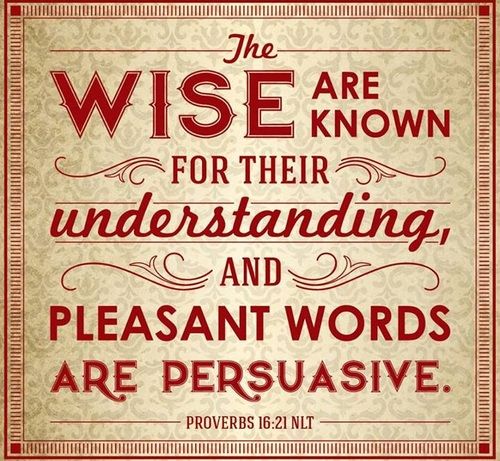
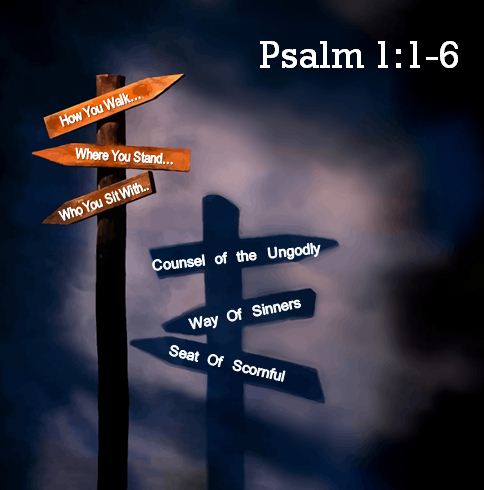

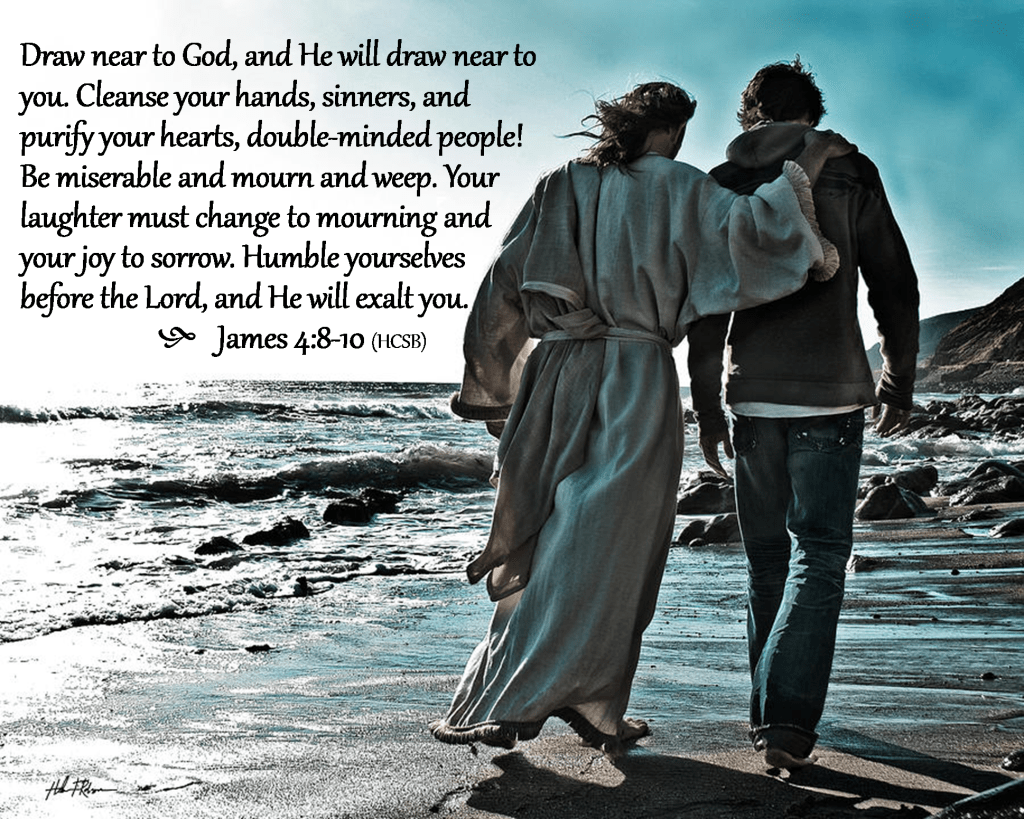






 Loving God, Living God, Loving Hope, Living Hope, Loving Living Life His Way! "Many things are possible for the person who has hope. Even more is possible for the person who has faith. And still more is possible for the person who knows how to love. But everything is possible for the person who practices all three virtues." - Brother Lawrence (1605-1691), Practicing the Presence of God (1692).