Romans 15:4 "For whatever was written in earlier times was written for our instruction, so that through perseverance and the encouragement of the Scriptures we might have hope."
Majestic Steppe Eagle Spreading Wings on Grassy Field. A majestic steppe eagle spreads its wings wide while perched on a grassy field, showcasing its impressive wingspan and regal presence. Aquila nipalensis
Isaiah 40:27-31 Living Bible
27 O Jacob, O Israel, how can you say that the Lord doesn’t see your troubles and isn’t being fair? 28 Don’t you yet understand? Don’t you know by now that the everlasting God, the Creator of the farthest parts of the earth, never grows faint or weary? No one can fathom the depths of his understanding. 29 He gives power to the tired and worn out, and strength to the weak. 30 Even the youths shall be exhausted, and the young men will all give up. 31 But they that wait upon the Lord shall renew their strength. They shall mount up with wings like eagles; they shall run and not be weary; they shall walk and not faint.
Word of God for the Children of God
Glory be to the Father, and to the Son, and to the Holy Ghost; as it was in the beginning, is now, and ever shall be, world without end. Amen, amen.
The Steppe Eagle is a powerful symbol representing strength, freedom, and resilience, particularly in Kazakh culture.
It embodies the spirit of Kazakhstan, appearing in folklore, national symbols, the traditional practice of berkutchi (eagle hunting).
The eagle is also seen as a symbol of wisdom and endurance, reflecting the long-standing relationship between Kazakh nomads and these majestic birds.
Here’s a more detailed look at its symbolic meanings:
Wisdom and Resilience: The Steppe Eagle’s long lifespan and ability to adapt to various environments represents wisdom, the ability to endure difficult times.
Strength and Power: The Steppe Eagle’s physical attributes, like its piercing gaze and powerful wings, are seen as reflections of its strength and dominance.
Freedom and Independence: The eagle’s ability to effortlessly soar high above the steppes symbolizes freedom and the ability to rise high above challenges.
Isaiah 40:31 is a favorite verse for many believers: “But those who hope in the LORD will renew their strength. They will soar on wings like eagles.”
This verse speaks a profound promise of God’s unending strength and the renewal only He can provide.
It acknowledges that all of us, regardless of our age, can experience weariness and exhaustion.
While we are all limited in our human ability, God has only infinite power. God’s promise is clear: Those who truly hope in Him will have their strength renewed.
There is some scholarly discussion about the original word translated eagle in most Bible versions as it is also the same word used for vultures, which is another bird of prey.
The griffon vulture is native to Israel, known for its long wingspan and soaring capabilities. So, its probable Isaiah was referencing that bird instead of an eagle.
While we may not like to think of ourselves as soaring on wings like “vultures,” the verse is not focusing on the bird’s appearance or diet.
Rather, the Bible is highlighting its smooth soaring capability and the calmness with which it takes to the air.
Eagles and vultures are well known for their ability to fly high above storms, using turbulent winds to lift them higher, rather than being battered by them.
Eagles are truly majestic creatures that symbolize strength and independence.
Catching sight of an eagle as it soars high above the earth can be breathtaking, and watching one swoop and maneuver its immense wings is awe-inspiring.
The reference to eagles in Isaiah 40 is a comfort for God’s people in a time of weariness and struggle.
Our matchless Creator and Sustainer gives us his strength and glory, filling us with the capacity to do far more than we think is possible.
We may feel weak and powerless in our current circumstances, but because of who we are in Christ, we can endure, persevere, hold tightly on to the promise that in his strength, God’s limitless strength we’ll “soar on wings like eagles.”
Similarly, when we place our hope and trust in God, we too can rise above life’s challenges and difficulties. Instead of being overwhelmed, threatened, we also can find strength and endurance to keep going beyond our best previous efforts.
Go Deeper
What are some areas in your life where you feel you are at your last gasp, weary, beatn or exhausted? How can Isaiah 40:31 be an encouragement to you today?
In the name of God, the Father and God the Son and God the Holy Spirit,
Praying,
Psalm 28 English Standard Version
The Lord Is My Strength and My Shield
Of David.
28 To you, O Lord, I call; my rock, be not deaf to me, lest, if you be silent to me, I become like those who go down to the pit. 2 Hear the voice of my pleas for mercy, when I cry to you for help, when I lift up my hands toward your most holy sanctuary.[a]
3 Do not drag me off with the wicked, with the workers of evil, who speak peace with their neighbors while evil is in their hearts. 4 Give to them according to their work and according to the evil of their deeds; give to them according to the work of their hands; render them their due reward. 5 Because they do not regard the works of the Lord or the work of his hands, he will tear them down and build them up no more.
6 Blessed be the Lord! For he has heard the voice of my pleas for mercy. 7 The Lord is my strength and my shield; in him my heart trusts, and I am helped; my heart exults, and with my song I give thanks to him.
8 The Lord is the strength of his people;[b] he is the saving refuge of his anointed. 9 Oh, save your people and bless your heritage! Be their shepherd and carry them forever.
Glory be to the Father, and to the Son, and to the Holy Ghost; as it was in the beginning, is now, and ever shall be, world without end. Amen, amen.
19 Remember my affliction and my wanderings, the wormwood and the gall! 20 My soul continually remembers it and is bowed down within me. 21 But this I call to mind, and therefore I have hope:
22 The steadfast love of the Lord never ceases;[b] his mercies never come to an end; 23 they are new every morning; great is your faithfulness. 24 “The Lord is my portion,” says my soul, “therefore I will hope in him.”
25 The Lord is good to those who wait for him, to the soul who seeks him. 26 It is good that one should wait quietly for the salvation of the Lord. 27 It is good for a man that he bear the yoke in his youth.
28 Let him sit alone in silence when it is laid on him; 29 let him put his mouth in the dust— there may yet be hope; 30 let him give his cheek to the one who strikes, and let him be filled with insults.
31 For the Lord will not cast off forever, 32 but, though he cause grief, he will have compassion according to the abundance of his steadfast love; 33 for he does not afflict from his heart or grieve the children of men.
The Word of God for the Children of God.
Glory be to the Father, and to the Son, and to the Holy Ghost; as it was in the beginning, is now, and ever shall be, world without end. Amen, amen.
A Prayer for Steadfast Patience for the Good God Promises
Lamentations 3:22-27 Easy-to-Read Version
22 We are still alive because the Lord’s faithful love never ends. 23 Every morning he shows it in new ways! You are so very true and loyal! 24 I say to myself, “The Lord is my God, and I trust him.”[a]
25 The Lord is good to those who wait for him. He is good to those who look for him. 26 It is good to wait quietly for the Lord to save them. 27 It is good for a man to wear his yoke from the time he is young.
How is it with your soul, today?
I have to confess that it’s been a really hard year for me and my wife.
One of the hardest we can remember actually.
And right now, our inner sense is that the hope-light within us seems to be dimming a little more each day.
We know God is good.
We know He has us both etched in the palm of his righteous hands. But, as the disappointment and difficulties linger longer and longer, our patience thins.
How do we hold on?
How do we swell with hope and joy, peace and love when our shared hurts seems to overpower all the encouragement we desperately try to cling to?
I don’t know about you, but as a whole, humanity is really good at wearing an “all is well” smile.”
I mean, who wants to be hanging around with a perpetual frowner anyway? But on the inside, regardless of how justified we seem to feel defeated and deflated, the long depressing struggles of life over these last 18 months can eat us alive.
Do any of you readers feel any of this as we enter both Advent and Christmas?
Getting through Thanksgiving was a tough ride. Do you know God is good and still trust he has good in store for you, but right now, through a tough season or situation, you’re really struggling to rest in patience for his promises to prevail?
For specks of the promised goodness and peace you long for.
For relief from the struggle and deep breaths of refreshment to renew your sorrowful soul?
I know.
My Wife knows.
My Wife and Me echo this longing too. We all want the good God has promised.
And we all wish we could be more patient.
So what do we do? I believe we need to keep clinging… to God.
Patience is extremely difficult for us too, but we must keep clinging.
I recently placed a bookmark in my Bible, in Lamentations 3, highlighting verses 24 and 25 to remind us both that the Lord is our portion.
We all need to remember this.
Holding on to reassurance that he is and will provide our exact needs each day.
True, maybe not all of our wants—though some may come our way—but God provides the perfect portions of “perfect peace” we all need now, and he will assuredly provide every necessary portion for all our tomorrows. Those days and places ahead that deep down we question will hold any speck of light at all.
Therefore, we are to wait for him. Because we know—and his trustworthy word says so— that God’s portion is now and then.
This is the surest hope we can cling to. He is the surest hope we can cling to.
A sure and certain hope that will fortify our patience as we hold tight to it.
Proverbs 27:17 Complete Jewish Bible
17 Just as iron sharpens iron, a person sharpens the character of his friend.
And we keep seeking him.
Because these words of truth also remind us the Lord is good to those who do.
And yes, we will find goodness even today as we seek him, day to day cling to him, and moment by precious moment we still keep placing our hope in him.
In the name of God, the Father and God the Son and God the Holy Spirit,
16 Preserve me, O God, for in you I take refuge. 2 I say to the Lord, “You are my Lord; I have no good apart from you.”
3 As for the saints in the land, they are the excellent ones, in whom is all my delight.[b]
4 The sorrows of those who run after[c] another god shall multiply; their drink offerings of blood I will not pour out or take their names on my lips.
5 The Lord is my chosen portion and my cup; you hold my lot. 6 The lines have fallen for me in pleasant places; indeed, I have a beautiful inheritance.
7 I bless the Lord who gives me counsel; in the night also my heart instructs me.[d] 8 I have set the Lord always before me; because he is at my right hand, I shall not be shaken.
9 Therefore my heart is glad, and my whole being[e] rejoices; my flesh also dwells secure. 10 For you will not abandon my soul to Sheol, or let your holy one see corruption.[f]
11 You make known to me the path of life; in your presence there is fullness of joy; at your right hand are pleasures forevermore.
Glory be to the Father, and to the Son, and to the Holy Ghost; as it was in the beginning, is now, and ever shall be, world without end. Amen, amen.
25 At that time Jesus said, “I praise You, Father, Lord of heaven and earth [I openly and joyfully acknowledge Your great wisdom], that You have hidden these things [these spiritual truths] from the wise and intelligent and revealed them to infants [to new believers, to those seeking God’s will and purpose]. 26 Yes, Father, for this way was well-pleasing in Your sight. 27 All things have been handed over to Me by My Father; and no one fully knows and accurately understands the Son except the Father; and no one fully knows and accurately understands the Father except the Son, and anyone to whom the Son [deliberately] wills to reveal Him.
28 “Come to Me, all who are weary and heavily burdened [by religious rituals that provide no peace], and I will give you rest [refreshing your souls with salvation]. 29 Take My yoke upon you and learn from Me [following Me as My disciple], for I am gentle and humble in heart, and you will find rest (renewal, blessed quiet) for your souls. 30 For My yoke is easy [to bear] and My burden is light.”
The Word of God for the Children of God.
Glory be to the Father, and to the Son, and to the Holy Ghost; as it was in the beginning, is now, and ever shall be, world without end. Amen, amen.
Jesus, the True Refuge
Life is never going to be a summer camp but a battlefield full of struggles.
In this long and hard journey, we will inevitably be distressed and tired.
Maybe we are groaning under the weight of a virtual steamroller of anguish, and we feel surrounded, hemmed in everywhere, just do not know what to do.
Jesus says, “Do not despair; come to me.”
He is our refuge, he invites us into a refreshing time of trust and fellowship.
He can relieve us of that heavy burden, remove grief from our hearts, and heal our wounds.
He invites us to share with him a deeply personal, deeply intimate experience: “Come to me, all you who are weary and burdened, and I will give you rest.”
Jesus’ command is for each of us: “Take my yoke upon you and learn from me.”
To do this requires a commitment to stop being surrounded, to submit, learn.
Pick up His Holy Scriptures, surround yourself with His resurrected presence.
Jesus even repeats his promise to you and me, and the church: not only does he say, “I will give you rest,” but he also says, “You will find rest” for your soul.
Do not walk hunched over under the weight of despair.
Turn to Jesus, because he has the resurrected power to relieve you, relieve me and relieve the church of their burdens and carry us in his omnipotent arms.
“Come to Me!” Always remember that the Son of God is our only true refuge.
Jesus is My True Yoke of Freedom
Matthew 11:28-30 The Message
28-30 “Are you tired? Worn out? Burned out on religion? Come to me. Get away with me and you’ll recover your life. I’ll show you how to take a real rest. Walk with me and work with me—watch how I do it. Learn the unforced rhythms of grace. I won’t lay anything heavy or ill-fitting on you. Keep company with me and you’ll learn to live freely and lightly.”
A yoke is a stout wooden frame placed across the back of oxen or other strong animals, joining them together in order to slowly, carefully haul a heavy load.
The yoke’s purpose is to evenly distribute the weight on both sides, making it possible for the animals to walk together, in unison, while bearing its weight.
Jesus uses this illustration to offer those who might follow Him the chance to find unparalleled freedom under His yoke. With His personal invitation to take His “easy” and “light” yoke, Jesus announces an easier way, he distinguishes Himself from mere religion, with its heavy burden of rules and regulations.
The Pharisees of Jesus’ time were consumed with doing what was right—not only seeking to abide by God’s law but adding a great number of their own rules as well. Such man-made obligations and expectations create crushing burdens.
Repeatedly saying, with the millstone of rules on your back; “Come on now, try harder; come on, you can do this,” will figuratively wear down anyone’s neck.
But Jesus’ yoke is different.
To be under the yoke—the authority—of Jesus is not a burden; it is a delight.
How can this be?
There is a definitely different freedom found in Christ—not a freedom to do what we want but a freedom to do what we ought. Since by nature we cannot do what we ought, we’re yoked to our own desires, promising much, delivers little.
We need somebody—Jesus—to set us free from our bondage to sin so that we might live in freedom and obedience to God’s will: to become the people we were designed to be.
So it is that Christ’s commands are “the perfect law that gives freedom,” and so it is those who obey them “will be blessed in what they do” (James 1:25, NIV).
James 1:25 The Message
25 But whoever catches a glimpse of the revealed counsel of God—the free life!—even out of the corner of his eye, and sticks with it, is no distracted scatterbrain but a man or woman of action. That person will find delight and affirmation in the action.
Jesus is My Lord
This is why we declare with joy, “Jesus is my Lord.”
This is His identity—and because of His lordship, when we respond to His invitation and receive His yoke upon our shoulders, we accept a newfound obligation to live freely under His perfect will.
The issues of ethics, morality, sexuality, business, family—all these things and more are gathered under the yoke, the true authority, of the Lord Jesus Christ.
For those who still feel yoked to a burdensome weight, be it impossible rules or sinful desires, Jesus extends the invitation to come, let Him lift these burdens.
You absolutely need to hear this today.
Where are you struggling with sin?
How are you seeing the commands of the Lord as burdensome?
In what ways might you be struggling against His ways?
Hear Him again:
Hear Him again:
Come to Me. I’m humble. I’m gentle. Your burden is so severe that I had to die on the cross for you, and I did so willingly. Come, be yoked to Me. My burden is light.
Matthew 11:28-30 Amplified Bible
28 “Come to Me, all who are weary and heavily burdened [by religious rituals that provide no peace], and I will give you rest [refreshing your souls with salvation]. 29 Take My yoke upon you and learn from Me [following Me as My disciple], for I am gentle and humble in heart, and you will find rest (renewal, blessed quiet) for your souls. 30 For My yoke is easy [to bear] and My burden is light.”
In the name of God, the Father and God the Son and God the Holy Spirit,
Let us Pray,
Lord of the Sabbath,In times of weakness and hour of need, yours is the strength by which we carry on, the shoulder we rest our head upon. When our load is heavy and too much to bear, yours are the arms stretched out to help us the true grace that we depend on. In times of weakness and hour of need, your truest voice is heard over the turmoil, ‘Come… find rest.’ This is grace divine, the path we tread to wholeness of body and spirit, the path that leads to you, for which we offer our offering of praise.
Psalm 119:9-16 Amplified Bible
Beth.
9 How can a young man keep his way pure? By keeping watch [on himself] according to Your word [conforming his life to Your precepts]. 10 With all my heart I have sought You, [inquiring of You and longing for You]; Do not let me wander from Your commandments [neither through ignorance nor by willful disobedience]. 11 Your word I have treasured and stored in my heart, That I may not sin against You. 12 Blessed and reverently praised are You, O Lord; Teach me Your statutes. 13 With my lips I have told of All the ordinances of Your mouth. 14 I have rejoiced in the way of Your testimonies, As much as in all riches. 15 I will meditate on Your precepts And [thoughtfully] regard Your ways [the path of life established by Your precepts]. 16 I will delight in Your statutes; I will not forget Your word.
Glory be to the Father, and to the Son, and to the Holy Ghost; as it was in the beginning, is now, and ever shall be, world without end. Amen, amen.
For the choir director. A [a]Maskil of the sons of Korah.
42 As the deer [b]pants for the water brooks, So my soul [c]pants for You, O God. 2 My soul thirsts for God, for the living God; When shall I come and [d]appear before God? 3 My tears have been my food day and night, While they say to me all day long, “Where is your God?” 4 These things I remember and I pour out my soul within me. For I used to go along with the throng and [e]lead them in procession to the house of God, With the voice of joy and thanksgiving, a multitude keeping festival.
5 Why are you [f]in despair, O my soul? And why have you become disturbed within me? [g]Hope in God, for I shall [h]again praise [i]Him For the [j]help of His presence. 6 O my God, my soul is [k]in despair within me; Therefore I remember You from the land of the Jordan And the [l]peaks of Hermon, from Mount Mizar. 7 Deep calls to deep at the sound of Your waterfalls; All Your breakers and Your waves have rolled over me. 8 The Lord will command His lovingkindness in the daytime; And His song will be with me in the night, A prayer to the God of my life.
9 I will say to God my rock, “Why have You forgotten me? Why do I go mourning [m]because of the oppression of the enemy?” 10 As a shattering of my bones, my adversaries revile me, While they say to me all day long, “Where is your God?” 11 Why are you [n]in despair, O my soul? And why have you become disturbed within me? [o]Hope in God, for I shall yet praise Him, The [p]help of my countenance and my God.
The Word of God for the Children of God.
Glory be to the Father, and to the Son, and to the Holy Ghost; as it was in the beginning, is now, and ever shall be, world without end. Amen, amen.
Doesn’t Anybody Hear Me? My Soul Thirsts for God!
3 My tears have been my food day and night, While they say to me all day long, “Where is your God?”
5 Why are you [f]in despair, O my soul? And why have you become disturbed within me?
9 I will say to God my rock, “Why have You forgotten me? Why do I go mourning [m]because of the oppression of the enemy?”
10 As a shattering of my bones, my adversaries revile me, While they say to me all day long, “Where is your God?”
11 Why are you [n]in despair, O my soul? And why have you become disturbed within me?
Does anyone get the obvious gest of the Psalmists state of mind?
What is NOT happening in the Psalmists life he would not immediately if not sooner exchange it out or run away as fast as he could in any other direction?
Been there, done that, too many times to try and count?
Right there, right now – world is just a whirling and a swirling and a twirling?
If not you the reader, then someone you know, someone you love a whole lot?
Psalm 42 New King James Version
BOOK TWO
Psalms 42–72
Yearning for God in the Midst of Distresses
To the Chief Musician. A [a]Contemplation of the sons of Korah.
42 As the deer [b]pants for the water brooks, So pants my soul for You, O God. 2 My soul thirsts for God, for the living God. When shall I come and [c]appear before God? 3 My tears have been my food day and night, While they continually say to me, “Where is your God?”
4 When I remember these things, I pour out my soul within me. For I used to go with the multitude; I went with them to the house of God, With the voice of joy and praise, With a multitude that kept a pilgrim feast.
5 Why are you [d]cast down, O my soul? And why are you disquieted within me? Hope in God, for I shall yet praise Him [e]For the help of His countenance.
6 [f]O my God, my soul is cast down within me; Therefore I will remember You from the land of the Jordan, And from the heights of Hermon, From [g]the Hill Mizar. 7 Deep calls unto deep at the noise of Your waterfalls; All Your waves and billows have gone over me. 8 The Lord will command His lovingkindness in the daytime, And in the night His song shall be with me— A prayer to the God of my life.
9 I will say to God my Rock, “Why have You forgotten me? Why do I go mourning because of the oppression of the enemy?” 10 As with a [h]breaking of my bones, My enemies [i]reproach me, While they say to me all day long, “Where is your God?”
11 Why are you cast down, O my soul? And why are you disquieted within me? Hope in God; For I shall yet praise Him, The [j]help of my countenance and my God.
The author of Psalm 42 is mired in the quicksand’s of deep distress.
He is longing for God, and people around him have been taunting him, saying, “Where is your God?”
People in this world also taunt and judge us sometimes.
But we should not let that bother us, because people judge others by their own standards.
God’s standards are infinitely more important.
Isaiah 55:8-9 New King James Version
8 “For My thoughts are not your thoughts, Nor are your ways My ways,” says the Lord. 9 “For as the heavens are higher than the earth, So are My ways higher than your ways, And My thoughts than your thoughts.
The psalmist also didn’t see any sign of help from anyone and could not go to worship God in the sanctuary—and that caused him to feel forgotten by God.
It made the psalmist ache inside.
If we are not able to worship God with his people, we too can feel lonely and hurt inside.
The poet longed to be with God and to meet with God.
“As the deer pants for streams of water, so my soul pants for you, my God.”
This Psalm helps us to see that our faith can be jostled around, so badly shaken, wildly stirred up – our faith’s dizziness scale might never seem to stop raising.
Within this Psalm are many issues and concerns which have been left inside the pressure cooker for too long, might just lead us to disastrous results-giving up!
This psalm also helps us to envision that God is giving us his permission to be optimistic-possibly keep faith despite the stresses of feeling distant from God.
In God’s strength, the psalmist keeps talking to his soul, saying, “Why, my soul, are you downcast? Why so disturbed within me? Put your hope in God, for I will yet praise him, my Savior and my God” (42:5, 10; see also Psalm 43:5).
When Someone Seems to Walk Away from the Faith
Psalm 42 The Message
42 1-3 A white-tailed deer drinks from the creek; I want to drink God, deep drafts of God. I’m thirsty for God-alive. I wonder, “Will I ever make it— arrive and drink in God’s presence?” I’m on a diet of tears— tears for breakfast, tears for supper. All day long people knock at my door, Pestering, “Where is this God of yours?”
4 These are the things I go over and over, emptying out the pockets of my life. I was always at the head of the worshiping crowd, right out in front, Leading them all, eager to arrive and worship, Shouting praises, singing thanksgiving— celebrating, all of us, God’s feast!
5 Why are you down in the dumps, dear soul? Why are you crying the blues? Fix my eyes on God— soon I’ll be praising again. He puts a smile on my face. He’s my God.
6-8 When my soul is in the dumps, I rehearse everything I know of you, From Jordan depths to Hermon heights, including Mount Mizar. Chaos calls to chaos, to the tune of whitewater rapids. Your breaking surf, your thundering breakers crash and crush me. Then God promises to love me all day, sing songs all through the night! My life is God’s prayer.
9-10 Sometimes I ask God, my rock-solid God, “Why did you let me down? Why am I walking around in tears, harassed by enemies?” They’re out for the kill, these tormentors with their obscenities, Taunting day after day, “Where is this God of yours?”
11 Why are you down in the dumps, dear soul? Why are you crying the blues? Fix my eyes on God— soon I’ll be praising again. He puts a smile on my face. He’s my God.
From the very beginning, people walked away from the faith.
Even one of Jesus’ closest disciples, Judas, betrayed him for money.
The apostle Paul talks about those who have rejected truth and left the church.
In the end, the Bible tells us many will fall away, what many call the Great Apostasy.
2 Timothy 4:1-5 New American Standard Bible 1995
“Preach the Word”
4 I solemnly charge you in the presence of God and of Christ Jesus, who is to judge the living and the dead, and by His appearing and His kingdom: 2 preach the word; be ready in season and out of season; reprove, rebuke, exhort, with [a]great patience and instruction. 3 For the time will come when they will not endure sound doctrine; but wanting to have their ears tickled, they will accumulate for themselves teachers in accordance to their own desires, 4 and will turn away their ears from the truth and will turn aside to myths. 5 But you, be sober in all things, endure hardship, do the work of an evangelist, fulfill your ministry.
Part of living a life of faith is watching others fall away.
People who we felt followed Jesus with all their hearts one day reject their faith, usually after a process of compromise and doubt.
A young man I discipled in Christ once sat with me at lunch and admitted he was now an atheist.
I appealed to him in love, of course, but he made up his mind. It broke my heart.
And it should break our hearts.
But what should we do about it?
1. Ask Questions to Understand
When someone we love appears to be straying from their faith, it’s essential to engage them with compassion and understanding.
Begin by asking questions and seeking to understand their perspective and journey better.
This method not only demonstrates care and empathy but also provides an opportunity for meaningful dialogue and support.
Proverbs 20:5 states,
“The purposes of a person’s heart are deep waters, but one who has insight draws them out.”
We need to prioritize discerning individuals’ underlying motivations and struggles, especially when it comes to matters of faith.
By asking questions with genuine curiosity and openness, we can help uncover the root causes behind their doubts or struggles, paving the way for authentic conversation and connection.
Asking questions allows us to listen actively and attentively to their perspective without judgment or condemnation.
Instead of imposing our own beliefs or attempting to provide quick solutions, we create a safe space for them to express thoughts, feelings, and uncertainties openly.
Generally, someone giving up on their faith has come to the decision with some grief, great struggle, they may feel unsure or awkward sharing with someone of faith.
This approach prayerfully fosters building trust and respect in the relationship, building and edifying a foundation for deeper understanding, mutual support.
Not only does this help us engage with compassion, but the person walking away from God may not fully understand their journey yet.
Asking questions encourages self-reflection and introspection, prompting them to articulate their beliefs and values more clearly.
2. Keep Conversation Going
After asking questions to understand better, it’s crucial to maintain an ongoing conversation with those who walk away from the faith, with the goal fostering an atmosphere of openness, understanding, and support.
This approach not only demonstrates our genuine care and concern but also provides an opportunity to journey alongside them through their spiritual struggles and uncertainties.
In Galatians 6:1-2, the apostle Paul exhorts believers,
“Brothers and sisters, if someone is caught in a sin, you who live by the Spirit should restore that person gently. But watch yourselves, or you also may be tempted. Carry each other’s burdens, and in this way, you will fulfill the law of Christ.”
The principle here can apply to entering into their picture, walking alongside our loved ones in their times of spiritual struggle, offering gentle and careful support as they try to sort out how they can again navigate their faith journey.
Many who begin to fall away from the faith may fear losing relationships with family or close friends. Being willing to keep that conversation going assures people we aren’t ending associations or relationships.
Keeping the conversation going involves creating a safe and non-judgmental space for them to express the weight of their doubts, questions, and concerns openly, knowing that they are being heard and they are likewise being valued.
In addition, continuing the conversation allows us to demonstrate our own unconditional love and acceptance, regardless of spiritual beliefs or choices.
This continued conversation provides an opportunity to share our own faith journey and experiences, offering a perspective of hope and encouragement.
3. As much as possible, Stay Involved in Their Lives
Along with keeping the conversation going, we must continue to be active in their life, attending events and always willing to offer support in major areas.
In Hebrews 10:24-25, believers are urged,
“And let us consider how we may spur one another on toward love and good deeds, not giving up meeting together, as some are in the habit of doing, but encouraging one another—and all the more as you see the Day approaching.”
By staying involved, we can continue to spur them on toward love and good deeds, offering encouragement and support along the way.
Staying involved in their lives entails remaining present and attentive to their needs, concerns, and experiences.
It involves actively participating in their day-to-day activities, celebrations, and challenges, demonstrating our commitment to walking alongside them through every season of life.
There may be times and decisions we can’t support or attend, but there will be several other opportunities to show we love them.
By investing time and energy in building and nurturing our relationship, we can work to create a safe and supportive environment for them to open up, to share their doubts, questions, and struggles openly.
Staying involved also provides an opportunity to model Christ-like love and compassion in action.
Through completely random acts of kindness, service, and generosity, we can demonstrate the transformative power of the gospel in our lives, inspiring our loved ones to one day re-think, reconsider their faith and draw closer to God.
4. Continue to Invite Them into Your Life
As we stay involved in their lives, we also need to keep inviting them into ours, demonstrating hospitality and acceptance.
In 1 Peter 4:9, believers are encouraged,
“Offer hospitality to one another without grumbling.”
If these are people we genuinely and authentically love, we should demonstrate God’s brand of hospitality and extend God’s brand of kindness and His brand of generosity to them, even if we don’t have even share the same spiritual beliefs.
By inviting them into our lives, we create a welcoming space for them to feel loved, valued, and accepted.
This entails extending invitations to spend time together, share meals, and engage in meaningful conversations.
It involves demonstrating genuine interest and care in their well-being, making them feel included and they are cherished as part of our community and family.
Showing hospitality allows us to cultivate deeper connections and relationships with our loved ones, fostering trust, openness, vulnerability in the relationship.
Furthermore, showing hospitality provides an opportunity to model Christ-like love and compassion in action.
Through random acts of kindness, service, and generosity, we exemplify the transformative power of the gospel in our lives, inspiring our loved ones to re-think and one day reconsider their faith and draw closer to God.
Also, as we keep inviting them to events important to us, our church activities are one of many.
Remember, we can invite them, but that doesn’t ensure they will respond or attend.
However, others may walk away from the faith; we should show love even if they never come back to God.
This hospitality demonstrates our commitment to Christ-like love, as encouraged in 1 Peter 4:9.
1 Peter 4:9-11 The Message
7-11 Everything in the world is about to be wrapped up, so take nothing for granted. Stay wide-awake in prayer. Most of all, love each other as if your life depended on it. Love makes up for practically anything. Be quick to give a meal to the hungry, a bed to the homeless—cheerfully. Be generous with the different things God gave you, passing them around so all get in on it: if words, let it be God’s words; if help, let it be God’s hearty help. That way, God’s bright presence will be evident in everything through Jesus, and he’ll get all the credit as the One mighty in everything—encores to the end of time. Oh, yes!
5. Keep Speaking Truth in Love
Through the previous actions—asking questions, keeping the conversation going, and continuing to be involved in various aspects of life—we will have the trust and relational capital to share truth in love.
In Ephesians 4:15, believers are urged to
“Speak the truth in love.”
The idea isn’t simply to share a Bible verse but to share truth in love.
Love means desiring the best for a person, even at our own expense.
Because we are spiritual beings with an eternal destiny, the greatest love shares truth for eternal good.
Christ revealed this type of love, sacrificing and humbling himself to share the eternal gospel of the Kingdom of God.
We communicate with honesty, sincerity, and compassion, especially when it comes to matters of faith.
By speaking truth in love, we can offer prayerful gentle correction, guidance, and encouragement to our loved ones, helping them navigate their spiritual journey with wisdom and discernment.
We also don’t randomly share verses.
Since we continue having relationships, our conversations, including faith, will be relevant, relatable, and accessible to our loved ones.
With established open conversation, we encourage addressing doubts, questions and struggles with grace.
Additionally, our conversations allow us to confront misconceptions, misunderstandings, falsehoods that may lead our loved ones astray from faith.
Gently guiding them back to the foundational truths of the Bible, we help them rediscover the hope, peace, and joy that come from a vibrant relationship with Christ.
6. Pray Regularly, Pray Ceaselessly
None of this works without prayer.
We must commit to praying regularly for those who have fallen away from the faith, seeking God’s guidance, comfort, and intervention in their lives.
This demonstrates our dependence on God’s power and sovereignty to do his work and acknowledges our loved one’s need for His divine intervention and transformation.
In James 5:16, believers are encouraged,
“Therefore confess your sins to each other and pray for each other so that you may be healed. The prayer of a righteous person is powerful and effective.”
This biblical exhortation emphasizes the significance of prayer in believers’ lives and underscores the transformative impact of intercession on the spiritual well-being of others.
The verse includes a specific type of person whose prayers are effective—a righteous person.
Our actions and lives must reflect faith, this integrity gives our prayers power.
Praying regularly for our loved ones entails lifting them up before the throne of grace and interceding on their behalf with fervency and perseverance.
It involves an ongoing pouring out of our hearts to God and expressing our concerns, hopes, and our desires for their spiritual restoration and renewal.
Moreover, regular prayer allows us to align our hearts and minds with God’s will, seeking His wisdom, discernment, and guidance in how best to support and encourage our loved ones in their faith journey.
By surrendering our concerns and burdens to God in prayer, we acknowledge he is the one who saves and trusts his perfect timing and plan for their lives.
From the very beginning, people walked away from the faith. Even one of Jesus’ closest disciples, Judas, betrayed him for money. The apostle Paul talks about those who have rejected truth and left the church. In the end, the Bible tells us many will fall away, what many call the Great Apostasy.
Part of living a life of faith is watching others fall away. People who we felt followed Jesus with all their hearts one day reject their faith, usually after a process of compromise and doubt.
A young man I discipled in Christ once sat with me at lunch and admitted he was now an atheist. I appealed to him in love, of course, but he had made up his mind. It broke my heart.
And it should break our hearts. But what should we do about it?
Here are seven things to do when someone you love seems to walk away from the faith.
Photo Credit: @Pexels/Ankit Sihag
1. Ask Questions to Understand
When someone we love appears to be straying from their faith, it’s essential to engage them with compassion and understanding. Begin by asking questions and seeking to understand their perspective and journey better. This method not only demonstrates care and empathy but also provides an opportunity for meaningful dialogue and support. Proverbs 20:5 states,
“The purposes of a person’s heart are deep waters, but one who has insight draws them out.”
We need to prioritize discerning individuals’ underlying motivations and struggles, especially when it comes to matters of faith. By asking questions with genuine curiosity and openness, we can help uncover the root causes behind their doubts or struggles, paving the way for authentic conversation and connection.
Asking questions allows us to listen actively and attentively to their perspective without judgment or condemnation. Instead of imposing our own beliefs or attempting to provide quick solutions, we create a safe space for them to express their thoughts, feelings, and uncertainties openly. Generally, someone giving up on their faith has come to the decision with some grief and great struggle, and they may feel unsure or awkward sharing with someone of faith. This approach fosters trust and respect in the relationship, building a foundation for deeper understanding and support.
Not only does this help us engage with compassion, but the person walking away from God may not fully understand their journey yet. Asking questions encourages self-reflection and introspection, prompting them to articulate their beliefs and values more clearly.
After asking questions to understand better, it’s crucial to maintain an ongoing conversation with those who walk away from the faith, fostering an atmosphere of openness, understanding, and support. This approach not only demonstrates our genuine care and concern but also provides an opportunity to journey alongside them through their spiritual struggles and uncertainties. In Galatians 6:1-2, the apostle Paul exhorts believers,
“Brothers and sisters, if someone is caught in a sin, you who live by the Spirit should restore that person gently. But watch yourselves, or you also may be tempted. Carry each other’s burdens, and in this way, you will fulfill the law of Christ.”
The principle here can apply to walking alongside our loved ones in their times of spiritual struggle, offering gentle and careful support as they navigate their faith journey.
Many who begin to fall away from the faith may fear losing relationships with family or close friends. Being willing to keep the conversation going assures people we aren’t ending associations or relationships.
Keeping the conversation going involves creating a safe and non-judgmental space for them to express their doubts, questions, and concerns openly, knowing that they are heard and valued.
In addition, continuing the conversation allows us to demonstrate our unconditional love and acceptance, regardless of their spiritual beliefs or choices. This continued conversation provides an opportunity to share our own faith journey and experiences, offering a perspective of hope and encouragement.
Along with keeping the conversation going, we must continue to be active in their life, attending events and willing to offer support in major areas. In Hebrews 10:24-25, believers are urged,
“And let us consider how we may spur one another on toward love and good deeds, not giving up meeting together, as some are in the habit of doing, but encouraging one another—and all the more as you see the Day approaching.”
By staying involved, we can continue to spur them on toward love and good deeds, offering encouragement and support along the way. Staying involved in their lives entails remaining present and attentive to their needs, concerns, and experiences. It involves actively participating in their day-to-day activities, celebrations, and challenges, demonstrating our commitment to walking alongside them through every season of life. There may be times and decisions we can’t support or attend, but there will be several other opportunities to show we love them. By investing time and energy in building and nurturing our relationship, we create a safe and supportive environment for them to share their doubts, questions, and struggles openly.
Staying involved also provides an opportunity to model Christ-like love and compassion in action. Through acts of kindness, service, and generosity, we can demonstrate the transformative power of the gospel in our lives, inspiring our loved ones to reconsider their faith and draw closer to God.
As we stay involved in their lives, we also need to keep inviting them into ours, demonstrating hospitality and acceptance. In 1 Peter 4:9, believers are encouraged,
“Offer hospitality to one another without grumbling.”
If these are people we love, we should demonstrate hospitality and extend kindness and generosity to them, even if we don’t have the same spiritual beliefs. By inviting them into our lives, we create a welcoming space for them to feel loved, valued, and accepted. This entails extending invitations to spend time together, share meals, and engage in meaningful conversations. It involves demonstrating genuine interest and care in their well-being, making them feel included and cherished as part of our community and family.
Showing hospitality allows us to cultivate deeper connections and relationships with our loved ones, fostering trust, openness, and vulnerability in the relationship. Furthermore, showing hospitality provides an opportunity to model Christ-like love and compassion in action. Through acts of kindness, service, and generosity, we exemplify the transformative power of the gospel in our lives, inspiring our loved ones to reconsider their faith and draw closer to God. Also, as we keep inviting them to events important to us, our church activities are one of many.
Remember, we can invite them, but that doesn’t ensure they will respond or attend. However, others may walk away from the faith; we should show love even if they never come back to God. This hospitality demonstrates our commitment to Christ-like love, as encouraged in 1 Peter 4:9.
Through the previous actions—asking questions, keeping the conversation going, and continuing to be involved in various aspects of life—we will have the trust and relational capital to share truth in love. In Ephesians 4:15, believers are urged to
“Speak the truth in love.”
The idea isn’t simply to share a Bible verse but to share truth in love. Love means desiring the best for a person, even at our own expense. Because we are spiritual beings with an eternal destiny, the greatest love shares truth for eternal good. Christ revealed this type of love, sacrificing and humbling himself to share the eternal gospel of the Kingdom of God. We communicate with honesty, sincerity, and compassion, especially when it comes to matters of faith. By speaking truth in love, we can offer gentle correction, guidance, and encouragement to our loved ones, helping them navigate their spiritual journey with wisdom and discernment.
We also don’t randomly share verses. Since we continue having relationships, our conversations, including faith, will be relevant, relatable, and accessible to our loved ones. With established open conversation, we encourage addressing doubts, questions and struggles with grace. Additionally, our conversations allow us to confront misconceptions, misunderstandings, and falsehoods that may lead our loved ones astray from faith. Gently guiding them back to the foundational truths of the Bible, we help them rediscover the hope, peace, and joy that come from a vibrant relationship with Christ.
None of this works without prayer. We must commit to praying regularly for those who have fallen away from the faith, seeking God’s guidance, comfort, and intervention in their lives. This demonstrates our dependence on God’s power and sovereignty to do his work and acknowledges our loved one’s need for divine intervention and transformation. In James 5:16, believers are encouraged,
“Therefore confess your sins to each other and pray for each other so that you may be healed. The prayer of a righteous person is powerful and effective.”
This biblical exhortation emphasizes the significance of prayer in believers’ lives and underscores the transformative impact of intercession on the spiritual well-being of others. The verse includes a specific type of person whose prayers are effective—a righteous person. Our actions and lives must reflect faith, and this integrity gives our prayers power.
Praying regularly for our loved ones entails lifting them up before the throne of grace and interceding on their behalf with fervency and perseverance. It involves pouring out our hearts to God and expressing our concerns, hopes, and desires for their spiritual restoration and renewal.
Moreover, regular prayer allows us to align our hearts and minds with God’s will, seeking His wisdom, discernment, and guidance in how best to support and encourage our loved ones in their faith journey. By surrendering our concerns and burdens to God in prayer, we acknowledge he is the one who saves and trusts his perfect timing and plan for their lives.
Paul, when describing the divine love of God, finishes with love, hopes, and believes all things (1 Corinthians 13).
There is still hope in God.
Romans 15:1-6 New American Standard Bible 1995
Self-denial on Behalf of Others
15 Now we who are strong ought to bear the weaknesses of those without strength and not just please ourselves. 2 Each of us is to please his neighbor [a] for his good, to his edification. 3 For even Christ did not please Himself; but as it is written, “The reproaches of those who reproached You fell on Me.” 4 For whatever was written in earlier times was written for our instruction, so that through perseverance and the encouragement of the Scriptures we might have hope. 5 Now may the God [b]who gives perseverance and encouragement grant you to be of the same mind with one another according to Christ Jesus, 6 so that with one accord you may with one [c] voice glorify the God and Father of our Lord Jesus Christ.
It’s essential not to give up hope on people but instead to persistently extend invitations and offer resources that may help reignite their spiritual journey.
This approach demonstrates our unwavering commitment to their well-being and also acknowledges the transformative power of community and spiritual guidance.
In Hebrews 10:24-25, believers are encouraged,
“And let us consider how we may spur one another on toward love and good deeds, not giving up meeting together, as some are in the habit of doing, but encouraging one another—and all the more as you see the Day approaching.”
Through maintaining fellowship and community, especially in times of spiritual struggle, we continue to engage and create opportunities to show and share the love of Christ.
As time goes on, it becomes easy to give up on a person on a destructive path.
However, God doesn’t give up on us, even when we continue in our rebellion.
Remember the story of the Prodigal Son?
The younger son technically wished his father (God) dead and wanted his inheritance now. As final as that seemed, the father in the story was waiting at the window, expectantly, for the son to return. There’s always hope with God.
Through our relationship with them, we can exhibit this continual hope in God’s work and love. We can only accomplish this through his power and Spirit.
We have all walked away from the Father at some point or another; each of us rebels against God and is deserving of wrath and rejection.
However, God is love; in that abundant love, he bestowed mercy and grace upon us, reaching out to us and saving us by his power.
Lamentations 3:19-23 New American Standard Bible 1995
Hope of Relief in God’s Mercy
19 Remember my affliction and my [a]wandering, the wormwood and bitterness. 20 Surely my soul remembers And is bowed down within me. 21 This I recall to my mind, Therefore I have hope. 22 The Lord’s lovingkindnesses [b]indeed never cease, For His compassions never fail. 23 They are new every morning; Great is Your faithfulness.
We couldn’t save ourselves; neither can we save anyone else.
Salvation belongs to God alone.
Repentance and faith are both spoken of as gifts in the Bible (2 Timothy 2:25; Ephesians 2:8-9), granted by the Father.
Let us pray for those we love, God will grant them the gifts of repentance and faith, and when they return, we will receive them back as sons and daughters once again.
It may take awhile to feel close to God again, especially if we cannot worship God with his people.
But God is always with us, watching over us. Our souls are in his hands. Our own destiny is safe in his care. Like the psalmist, we can keep reminding ourselves of these good truths in faith. We can praise the Lord, for he is our Savior and God.
In the name of God, the Father and God the Son and God the Holy Spirit,
Let us Pray,
Psalm 23 New American Standard Bible 1995
The Lord, the Psalmist’s Shepherd.
A Psalm of David.
23 The Lord is my shepherd, I [a]shall not want. 2 He makes me lie down in green pastures; He leads me beside [b]quiet waters. 3 He restores my soul; He guides me in the [c]paths of righteousness For His name’s sake.
4 Even though I walk through the [d]valley of the shadow of death, I fear no [e]evil, for You are with me; Your rod and Your staff, they comfort me. 5 You prepare a table before me in the presence of my enemies; You [f]have anointed my head with oil; My cup overflows. 6 [g]Surely goodness and lovingkindness will follow me all the days of my life, And I will [h]dwell in the house of the Lord [i]forever.
Glory be to the Father, and to the Son, and to the Holy Ghost; as it was in the beginning, is now, and ever shall be, world without end. Amen, amen.
For the choir director. A [a]Maskil of the sons of Korah.
42 As the deer [b]pants for the water brooks, So my soul [c]pants for You, O God. 2 My soul thirsts for God, for the living God; When shall I come and [d]appear before God? 3 My tears have been my food day and night, While they say to me all day long, “Where is your God?” 4 These things I remember and I pour out my soul within me. For I used to go along with the throng and [e]lead them in procession to the house of God, With the voice of joy and thanksgiving, a multitude keeping festival.
5 Why are you [f]in despair, O my soul? And why have you become disturbed within me? [g]Hope in God, for I shall [h]again praise [i]Him For the [j]help of His presence. 6 O my God, my soul is [k]in despair within me; Therefore I remember You from the land of the Jordan And the [l]peaks of Hermon, from Mount Mizar. 7 Deep calls to deep at the sound of Your waterfalls; All Your breakers and Your waves have rolled over me. 8 The Lord will command His lovingkindness in the daytime; And His song will be with me in the night, A prayer to the God of my life.
9 I will say to God my rock, “Why have You forgotten me? Why do I go mourning [m]because of the oppression of the enemy?” 10 As a shattering of my bones, my adversaries revile me, While they say to me all day long, “Where is your God?” 11 Why are you [n]in despair, O my soul? And why have you become disturbed within me? [o]Hope in God, for I shall yet praise Him, The [p]help of my countenance and my God.
The Word of God for the Children of God.
Glory be to the Father, and to the Son, and to the Holy Ghost; as it was in the beginning, is now, and ever shall be, world without end. Amen, amen.
In our lives we can often face times of discouragement.
Our spirits can feel heavy and our hearts burdened.
When that happens, however, we can either turn it against ourselves or we can turn it to God and lean on him, finding hope in his promises and unfailing love.
Disappointment, discouragement and its consequences can come from various sources—poor decisions, poor choices, failures all sizes, prolonged challenges.
Yet even in the midst of such trials we can choose to put our hope in God. He is our surest refuge and strength, the one who sustains us through every season.
Yesterday my devotional message was that when discouragement threatens to overwhelm us, we can decisively and will definitely find solace in God’s Word.
His mighty acts and daily provisions remind us of his faithfulness, and his promises give us hope for the future.
God is always present to help in times of trouble, and his love and grace are sufficient for us (Psalm 46:1-11; 2 Corinthians 12:9).
As we anchor (Hebrews 6:17-20) our hope in God, our perspective shifts.
17 [a]In the same way God, desiring even more to show to the heirs of the promise the unchangeableness of His purpose, [b]interposed with an oath, 18 so that by two unchangeable things in which it is impossible for God to lie, we who have [c]taken refuge would have strong encouragement to take hold of the hope set before us. 19 [d]This hope we have as an anchor of the soul, a hope both sure and steadfast and one which enters [e]within the veil, 20 where Jesus has entered as a forerunner for us, having become a high priest forever according to the order of Melchizedek.
As we anchor ourselves in God’s promises, we begin to see beyond our present circumstances, and we focus on the unchanging nature of our heavenly Father.
He is the source of true joy and peace, and in him we find strength to persevere.
Today, if you find yourself discouraged, turn to God in prayer.
Pour out your whole heart before him and listen for his still comforting voice.
Trust in his perfect timing and purposes, knowing that he is working all things together for your good.
Anchoring Your Soul and Keeping a Grateful Heart
Colossians 3:15-17 The Message
15-17 Let the peace of Christ keep you in tune with each other, in step with each other. None of this going off and doing your own thing. And cultivate thankfulness. Let the Word of Christ—the Message—have the run of the house. Give it plenty of room in your lives. Instruct and direct one another using good common sense. And sing, sing your hearts out to God! Let every detail in your lives—words, actions, whatever—be done in the name of the Master, Jesus, thanking God the Father every step of the way.
Having a grateful heart seems to be rare these days and at a premium to find.
Social media is full and overflowing with discontented hearts–hearts that are angry, disappointed, hurt, grieving, and more. Still, God calls us to be thankful.
So where and how do we gain gratefulness in such an ungrateful world?
Many individuals are living with an outlook of lack, seeing all things they don’t have because it’s much easier to look at our glasses half-empty than half-full.
Seeing our lives as lacking leads us to believe if we only have more—more of the things we believe we need to be happy— our lives our attitudes would be utterly different.
But it’s not even close to being minimally true.
Matthew 6:25-34 The Message
25-26 “If you decide for God, living a life of God-worship, it follows that you don’t fuss about what’s on the table at mealtimes or whether the clothes in your closet are in fashion. There is far more to your life than the food you put in your stomach, more to your outer appearance than the clothes you hang on your body. Look at the birds, free and unfettered, not tied down to a job description, careless in the care of God. And you count far more to him than birds.
27-29 “Has anyone by fussing in front of the mirror ever gotten taller by so much as an inch? All this time and money wasted on fashion—do you think it makes that much difference? Instead of looking at the fashions, walk out into the fields and look at the wildflowers. They never primp or shop, but have you ever seen color and design quite like it? The ten best-dressed men and women in the country look shabby alongside them.
30-33 “If God gives such attention to the appearance of wildflowers—most of which are never even seen—don’t you think he’ll attend to you, take pride in you, do his best for you? What I’m trying to do here is to get you to relax, to not be so preoccupied with getting, so you can respond to God’s giving. People who don’t know God and the way he works fuss over these things, but you know both God and how he works. Steep your life in God-reality, God-initiative, God-provisions. Don’t worry about missing out. You’ll find all your everyday human concerns will be met.
34 “Give your entire attention to what God is doing right now, and don’t get worked up about what may or may not happen tomorrow. God will help you deal with whatever hard things come up when the time comes.
Grateful hearts don’t come from comparing ourselves to those front covers on magazines or to owning things, holding positions, or having everyone love us.
In an ever-changing world, there is no guarantee of hanging onto earthly possessions, especially in the shadow of natural disasters, wars, and more.
It’s Up to Us to Choose
Whether we believe it or not, especially as Christians, it’s up to us to choose to where or how we gain our self-esteem, we focus on what God has so graciously given us rather than what the sinful world gives and takes away on a daily basis.
Godly gratefulness is not dependent on what we own; yet, God has given us so much to be thankful for in life.
Colossians 3:15-17 New American Standard Bible 1995
15 Let the peace of Christ [a]rule in your hearts, to which [b]indeed you were called in one body; and [c]be thankful. 16 Let the word of [d]Christ richly dwell within you, [e]with all wisdom teaching and admonishing [f]one another with psalms and hymns and spiritual songs, singing [g]with thankfulness in your hearts to God. 17 Whatever you do in word or deed, do all in the name of the Lord Jesus, giving thanks through Him to God the Father.
Even if we have nothing to our names, we have incredibly valid reasons to thank Him daily.
Things, positions, locations, and more don’t bring authentic happiness; rather, true gratitude comes from deep within us.
Gratefulness as a Sacrifice
Sadly, life sometimes brings tragic losses of loved ones, homes, jobs, and more, but still God calls us to be thankful.
He knows our weaknesses and understands how it can be difficult for us to do so when we’re disappointed, discouraged, suffering, or grieving.
Although 1 Thessalonians 5:18 instructs us to “Give thanks in all circumstances; for this is God’s will for you in Christ Jesus,” it doesn’t mean we thank God for the sad situations, but thank Him in the midst of them.
Some believers are confused by this verse, thinking God expects us to thank Him for the sad and tragic situations and losses that bring us disappointment, discouragement, suffering, and grief.
But He’s not.
God’s given us so many spiritual blessings, which are not dependent on our circumstances, we can praise Him and give Him thanks no matter our situation.
He is compassionate, recognizes this kind of gratitude as a sweet sacrifice to Him.
Psalm 116:17 encourages our sacrificial thankfulness. “I will sacrifice a thank offering to You and call on the name of the Lord.”
Psalm 116:12-19 New American Standard Bible 1995
12 What shall I render to the Lord For all His benefits [a]toward me? 13 I shall lift up the cup of salvation And call upon the name of the Lord. 14 I shall pay my vows to the Lord, Oh may it be in the presence of all His people. 15 Precious in the sight of the Lord Is the death of His godly ones. 16 O Lord, [b]surely I am Your servant, I am Your servant, the son of Your handmaid, You have loosed my bonds. 17 To You I shall offer a sacrifice of thanksgiving, And call upon the name of the Lord. 18 I shall pay my vows to the Lord, Oh may it be in the presence of all His people, 19 In the courts of the Lord’s house, In the midst of you, O Jerusalem. [c]Praise [d]the Lord!
When we do, God responds, as recorded in Psalm 50:23. “Those who sacrifice thank offerings honor Me, and to the blameless I will show My salvation.”
In uncertain times, God calls us to focus on Him and His faithfulness instead of our situations, to remind ourselves of His promise to never leave or forsake us (Hebrews 13:5) and to trust Him to help us through everything we face in life.
O God, when disappointed and discouraged, in our failures, may we turn around to find hope, peace, strength in you. Fill our hearts with praise. In Jesus’ name, Amen.
In the name of God, the Father and God the Son and God the Holy Spirit,
Let us Pray,
Psalm 19 New American Standard Bible 1995
The Works and the Word of God.
For the choir director. A Psalm of David.
19 The heavens are telling of the glory of God; And their expanse is declaring the work of His hands. 2 Day to day pours forth speech, And night to night reveals knowledge. 3 There is no speech, nor are there words; Their voice is not heard. 4 Their [a]line has gone out through all the earth, And their utterances to the end of the world. In them He has placed a tent for the sun, 5 Which is as a bridegroom coming out of his chamber; It rejoices as a strong man to run his course. 6 Its rising is from [b]one end of the heavens, And its circuit to the [c]other end of them; And there is nothing hidden from its heat.
7 The law of the Lord is [d]perfect, restoring the soul; The testimony of the Lord is sure, making wise the simple. 8 The precepts of the Lord are right, rejoicing the heart; The commandment of the Lord is pure, enlightening the eyes. 9 The fear of the Lord is clean, enduring forever; The judgments of the Lord are true; they are righteous altogether. 10 They are more desirable than gold, yes, than much fine gold; Sweeter also than honey and the drippings of the honeycomb. 11 Moreover, by them Your servant is warned; In keeping them there is great reward. 12 Who can discern his errors? Acquit me of hidden faults. 13 Also keep back Your servant from presumptuous sins; Let them not rule over me; Then I will be [e]blameless, And I shall be acquitted of great transgression. 14 Let the words of my mouth and the meditation of my heart Be acceptable in Your sight, O Lord, my rock and my Redeemer.
Glory be to the Father, and to the Son, and to the Holy Ghost; as it was in the beginning, is now, and ever shall be, world without end. Amen, amen.
A Song. A Psalm of the sons of Korah. To the Chief Musician. Set to “Mahalath Leannoth.” A [a]Contemplation of Heman the Ezrahite.
88 O Lord, God of my salvation, I have cried out day and night before You. 2 Let my prayer come before You; [b]Incline Your ear to my cry.
3 For my soul is full of troubles, And my life draws near to the grave. 4 I am counted with those who go[c] down to the pit; I am like a man who has no strength, 5 [d]Adrift among the dead, Like the slain who lie in the grave, Whom You remember no more, And who are cut off from Your hand.
6 You have laid me in the lowest pit, In darkness, in the depths. 7 Your wrath lies heavy upon me, And You have afflicted me with all Your waves. Selah 8 You have [e]put away my acquaintances far from me; You have made me an abomination to them; I am shut up, and I cannot get out; 9 My eye wastes away because of affliction.
Lord, I have called daily upon You; I have stretched out my hands to You. 10 Will You work wonders for the dead? Shall [f]the dead arise and praise You? Selah 11 Shall Your lovingkindness be declared in the grave? Or Your faithfulness in the place of destruction? 12 Shall Your wonders be known in the dark? And Your righteousness in the land of forgetfulness?
13 But to You I have cried out, O Lord, And in the morning my prayer comes before You. 14 Lord, why do You cast off my soul? Why do You hide Your face from me? 15 I have been afflicted and ready to die from my youth; I suffer Your terrors; I am distraught. 16 Your fierce wrath has gone over me; Your terrors have [g]cut me off. 17 They came around me all day long like water; They engulfed me altogether. 18 Loved one and friend You have put far from me, And my acquaintances into darkness.
The Word of God for the Children of God.
Glory be to the Father, and to the Son, and to the Holy Ghost; as it was in the beginning, is now, and ever shall be, world without end. Amen, amen.
Who Knows This Measure of Agony?
We come now to psalm 88, the lowest point of lament and despair in the entire psalter, it is the only psalm which does not have any ‘yet’ or a ‘nevertheless’ to redeem its pain, but, considered as a psalm in itself, ends in the same agony and loneliness with which it began:
“My lovers and friends hast thou put away from me: and hid mine acquaintance out of my sight.” Verse 18 AKJV
That is the end of the psalm, but not the end of the psalter, the book of praises.
In fact, as Paula Gooder points out in the Introduction to David’s Crown, it is, in terms of the number of verses in total, the exact mid-point of the psalter, it is the middle, and not the end of the story.
This is vital for us to remember: both that we can freely tell God our worst fears and feelings, as the psalmist does here, and also that we can know that those fears and doubts are not the end of our story, any more than they are the close of the psalter, for the psalter re-ascends from this darkness, closes with praise.
It is this, which enables us, in this devotional response to psalm 88 to trust God with the uppermost uncensored bleakness of our own personal experienced of spiritual darkness and depression-maybe even give insight into Jesus’ Calvary.
Hello Darkness my old friend, again I come to talk …
We may be more used to the idea of darkness as a friend from that Simon and Garfunkel classic the sound of silence with its opening line “hello darkness my old friend, I’ve come to talk with you again”… than the closing line of a psalm, but that is exactly how psalm 88 finishes ..with the psalmist saying darkness…it is the darkness which is my closest confidant, my dearest most trusted friend.
It is the ‘saddest and darkest psalm in the whole psalter.
IT is one wail of sorrow from beginning to end.
You could say that from go to woe… well it’s just all woe.
Another commentator says… its uniqueness is in its bleakness.
“Psalm 88 is unmatched in its tone of darkness and despair”.
The only glimmer of light is the first line, “Lord, you are the God who saves me”, kind of like the last comforting rays of the sunset before the long dark night envelops the psalmist as he waits and waits and waits for God to help.
One of the amazing things about the psalms is that within them the whole of human experience is raised up before God.
AS such it is “proper that it should contain the record of an hour so dark that no relief comes” (EM Blaiklock).
From the introduction to this psalm we see it was put to a tune, it was a song that was designed for corporate worship, so it was meant not only as a personal expression of suffering and waiting for God to act but as a corporate one as well, drawing together people, acknowledge a shared pain and longing and disquiet.
I could imagine the exiles by the rivers of Babylon singing this sort of psalm as they wept, as they remembered Zion (Psalm 137).
It reverberates with the loudest cries of people who have suffered oppression down through the ages.
It echoes the cries of people of faith who have wrestled with unanswered prayer.
In fact the psalm comes from a place where there seems to be no simple answer, it’s part of the wisdom literature in the Hebrew Scriptures that wrestles with the deep question of good versus evil, why bad things happen to good people.
It has many similarities with the book of Job, the Psalmist is sick and facing death and disaster, he feels like Job, God is unjustly turned away from him and he finds no comfort in friends or neighbors, they simply add to his suffering.
While there are good theological answers to the question of suffering and evil in the end, it is the greatest testimony to the strength of faith in God, the people of God resort to poetry, to song to bring out the depth of that suffering. (Psalm 23)
Praying, Finding Hope in the Darkest Psalm
Psalm 88:1-2 New Living Translation
Psalm 88
For the choir director: A psalm of the descendants of Korah. A song to be sung to the tune “The Suffering of Affliction.” A psalm[a] of Heman the Ezrahite.
1 O Lord, God of my salvation, I cry out to you by day. I come to you at night. 2 Now hear my prayer; listen to my cry.
One of the most difficult seasons we can endure is when we feel God is silent, especially if we’re already going through challenging situations.
When it seems everything is going wrong and your Help seems to be nowhere in sight, sadly too leaves a person feeling forgotten, in disparity, simply rejected.
Our major frustrations from these harsh times and seasons come not from simply being in this pit but thinking that God’s silence means His absence.
If this is you, you’re not alone.
The author of Psalm 88 has not only been through this type of heartbreaking situation, he wrote about.
As I said, Psalm 88 appears to be one of the saddest and most dismal chapters in the Bible. Dare yourself, just feel free to check it out and I’m sure you will agree.
The writer expresses feelings of being overwhelmed, cut off, forgotten, grieved, rejected, terrified, and despaired.
Worst of all, he is crying out to God wondering where God is in all his suffering.
The Psalm ends saying, “darkness is my closest friend” (Psalm 88:18 NIV).
However, the hope this Psalm offers is not in its ending, but in its beginning.
“LORD, you are the God who saves me; day and night I cry out to you.” (Psalm 88:1 NIV)
Before his laundry list of everything that’s going wrong, the Psalmist acknowledges that there is hope for salvation in the Lord, even when God appears silent.
We learn that just because God is silent does not mean He is absent, and it certainly does not mean He is not working behind the scenes on our behalf.
Do not be deceived by the darkness in your life, it is never greater than where your help comes from. (John 1:1-5)
Even when you feel you are in an inescapable pit, as the writer of Psalm 88 describes, God is there with you.
One of the things this psalm does is allow us to know we are not alone in wrestling with God, we are not alone in facing seemingly insurmountable difficulties, we are not alone in feeling alone and unloved.
We are not alone in still having redeeming faith and trusting in God even in the face of what may seem like God’s absence.
Four times in this Psalm the writer calls out to God.
His plea echoes through time, reminds me of Jesus suffering horribly on the cross crying out in his darkest moment to the Father.
About three in the afternoon Jesus cried out in a loud voice, “Eli, Eli, lema sabachthani?” (which means “My God, my God, why have you forsaken me? –Matthew 27:46 NIV
I want to ask, do you think God stopped loving Jesus because He was dying a horrible death on the cross? Was Jesus’ suffering a sign God dismissed His Son?
Absolutely not!
If God didn’t stop loving Jesus on the cross then no matter what dark season you are in He has not, and will not stop loving you.
And if He’s promised to never leave you for forsake you (Deuteronomy 31:6) please trust He’s right in the darkness with you friend.
He walks through the valley of the show of death with us (Psalm 23:4).
We may not always feel or hear God but we can always believe His promise is greater than our darkness.
This darkest season only served to push the writer of Psalm 88 closer to God.
He was not calling out to another person or thing for help.
He called out to the ONLY One he knew could save.
This Psalm reminds us that our dark seasons don’t serve to show us that God is absent but actually, emphatically, just how desperately we need His presence.
The Psalmist felt his life was near death so he cries out to the very One who raises the dead.
He does not look for salvation from people or things.
When you’re near death you cry out to the One who overcame death.
There is purpose in our pain and hope in our dark season to push us to the light.
I encourage each of you readers to pray to God just as the writer of Psalm 88.
John 14:1-4 New Living Translation
Jesus, the Way to the Father
14 “Don’t let your hearts be troubled. Trust in God, and trust also in me. 2 There is more than enough room in my Father’s home.[a] If this were not so, would I have told you that I am going to prepare a place for you?[b]3 When everything is ready, I will come and get you, so that you will always be with me where I am. 4 And you know the way to where I am going.”
In my own experience, I’ve learned that sometimes God empties us so He can fill us back up. Sometimes He’s silent so we can learn to listen. Sometimes He allows the deepest darkness so we can see that He is the true light of our life.
In the name of God, the Father and God the Son and God the Holy Spirit,
Let us Pray,
Psalm 27 New American Standard Bible 1995
A Psalm of Fearless Trust in God.
A Psalm of David.
27 The Lord is my light and my salvation; Whom shall I fear? The Lord is the [a]defense of my life; Whom shall I dread? 2 When evildoers came upon me to devour my flesh, My adversaries and my enemies, they stumbled and fell. 3 Though a host encamp against me, My heart will not fear; Though war arise against me, In spite of this I [b]shall be confident.
4 One thing I have asked from the Lord, that I shall seek: That I may dwell in the house of the Lord all the days of my life, To behold the [c]beauty of the Lord And to [d]meditate in His temple. 5 For in the day of trouble He will conceal me in His [e]tabernacle; In the secret place of His tent He will hide me; He will lift me up on a rock. 6 And now my head will be lifted up above my enemies around me, And I will offer in His tent sacrifices [f]with shouts of joy; I will sing, yes, I will sing praises to the Lord.
7 Hear, O Lord, when I cry with my voice, And be gracious to me and answer me. 8 When You said, “Seek My face,” my heart said to You, “Your face, O Lord, I shall seek.” 9 Do not hide Your face from me, Do not turn Your servant away in anger; You have been my help; Do not abandon me nor forsake me, O God of my salvation! 10 [g]For my father and my mother have forsaken me, But the Lord will take me up.
11 Teach me Your way, O Lord, And lead me in a level path Because of [h]my foes. 12 Do not deliver me over to the [i]desire of my adversaries, For false witnesses have risen against me, And such as breathe out violence. 13 [j]I would have despaired unless I had believed that I would see the goodness of the Lord In the land of the living. 14 Wait for the Lord; Be strong and let your heart take courage; Yes, wait for the Lord.
Glory be to the Father, and to the Son, and to the Holy Ghost; as it was in the beginning, is now, and ever shall be, world without end. Amen, amen.
Lamentations 3:19-24 New American Standard Bible 1995
Hope of Relief in God’s Mercy
19 Remember my affliction and my [a]wandering, the wormwood and bitterness. 20 Surely my soul remembers And is bowed down within me. 21 This I recall to my mind, Therefore I have hope. 22 The Lord’s lovingkindnesses [b]indeed never cease, For His compassions never fail. 23 They are new every morning; Great is Your faithfulness. 24 “The Lord is my portion,” says my soul, “Therefore I have hope in Him.”
The Word of God for the Children of God.
Glory be to the Father, and to the Son, and to the Holy Ghost; as it was in the beginning, is now, and ever shall be, world without end. Amen, amen.
When have you ever felt like your soul was screaming in pain?
Sure, on the outside, you look the same.
You show up, dress up, and tell yourself to hurry up and move past this … but deeper inside, you feel a deeper chasm of grief that shouts, This is not fair!
For you, maybe it’s a broken heart you never expected or a season where it feels like the hard things never end.
Maybe you’re longing for days gone by and wondering if life will ever be good again.
Psalm 13 New American Standard Bible 1995
Prayer for Help in Trouble.
For the choir director. A Psalm of David.
13 How long, O Lord? Will You forget me forever? How long will You hide Your face from me? 2 How long shall I take counsel in my soul, Having sorrow in my heart all the day? How long will my enemy be exalted over me?
3 Consider and answer me, O Lord my God; Enlighten my eyes, or I will sleep the sleep of death, 4 And my enemy will say, “I have overcome him,” And my adversaries will rejoice when I am shaken.
5 But I have trusted in Your lovingkindness; My heart shall rejoice in Your salvation. 6 I will sing to the Lord, Because He has dealt bountifully with me.
As you go through your day, you cannot help but wonder, God, where exactly are You in those moments when I need you the very most?
As you lie in bed at night, you can’t help but wonder, God where are You in this?
For me, it was depression. I didn’t want to cry, but I couldn’t stop. I wanted to get better, but I didn’t know how. I wanted to have more faith and pull myself out of it, but I felt helpless.
I was screaming inwardly because I didn’t want to be the burden that I felt I was to God and others. I wanted to be carefree and full of hope, but instead I was broken and unsure of how to move forward in faith.
As I turned to Scripture for encouragement, I came to Lamentations 3.
The author poured out his own sorrow as he shared how he had seen affliction, bitterness and hardship.
I found comfort in the fact that he was so honest about his pain.
This whole book in the Bible is about lament, which means “a passionate expression of grief or sorrow.”
Yet right smack in the middle of his cries, he made this bold statement: “Yet this I call to mind and therefore I have hope: Because of the LORD’s great love we are not consumed, for his compassions never fail” (Lamentations 3:21-22).
These verses opened a crack of light into my darkness that day, and I felt my faith slowly stir up once again.
I didn’t have to deny my suffering — in fact, it was good to acknowledge it.
But even in the midst of post surgery depression, I could call truth to my mind.
I pray this encouragement from Lamentations stirs up your faith as well.
Even when our souls scream for relief, we’re tempted to wonder if God has left us alone, we can know His great compassion never has failed and never will fail.
Yes, our circumstances may be painful, but because of God’s great love, the pain will not consume us.
We can both acknowledge our pain and remember God’s goodness.
When we choose to remember who God is, we find hope to hold on to.
Audacious Hope
Lamentations 3:19-24 Easy-to-Read Version
19 Remember, I am very sad, and I have no home. Remember the bitter poison that you gave me. 20 I remember well all my troubles, and I am very sad. 21 But then I think about this, and I have hope: 22 We are still alive because the Lord’s faithful love never ends. 23 Every morning he shows it in new ways! You are so very true and loyal! 24 I say to myself, “The Lord is my God, and I trust him.”[a]
Hope is a Christian virtue. It’s a good and positive thing.
We need hope because the world is not yet the way God intends it to be.
We need hope because we are waiting for things to get better.
Hope means believing in the light even when we are in the darkness.
Psalm 9:18 Easy-to-Read Version
18 It may seem that those who are poor and needy have been forgotten, but God will not forget them. He will not leave them without hope.
Psalm 39:6-8 Easy-to-Read Version
6 Our life is like an image in a mirror.[a] We rush through life collecting things, but we don’t know who will get them after we die.
7 So, Lord, what hope do I have? You are my hope! 8 Save me from the bad things I did. Don’t let me be treated like a fool.
Psalm 62:5-6 Easy-to-Read Version
5 I must calm down and turn to God; he is my only hope. 6 He is my Rock, the only one who can save me. He is my high place of safety, where no army can defeat me.
Romans 12:9-13 Easy-to-Read Version
9 Your love must be real. Hate what is evil. Do only what is good. 10 Love each other in a way that makes you feel close like brothers and sisters. And give each other more honor than you give yourself. 11 As you serve the Lord, work hard and don’t be lazy. Be excited about serving him! 12 Be happy because of the hope you have. Be patient when you have troubles. Pray all the time. 13 Share with God’s people who need help. Look for people who need help and welcome them into your homes.
Hope opens us to have joy whatever the facts may be.
The facts around us show that the world can be a scary place.
But Christian hope is bold to say that even in the darkest times, God’s light still shines -even when we are afraid, God remains in absolute control of the entire universe, and he absolutely loves and cares for us more than we can imagine.
To those who do not know the Lord, having hope might seem like a crazy virtue.
If we consider the facts, we could be frightened about our lives and our world.
But because of the great love God has for us, we have sufficient reason for hope.
We have sufficient reason to believe that we are safe in the care of a faithful and powerful God. We can boldly hope in God and in the promises God makes to us.
In the name of God, the Father and God the Son and God the Holy Spirit,
Let us Pray,
Psalm 23 Authorized (King James) Version
Psalm 23
A Psalm of David.
1 The Lord is my shepherd; I shall not want. 2 He maketh me to lie down in green pastures: he leadeth me beside the still waters. 3 He restoreth my soul: he leadeth me in the paths of righteousness for his name’s sake. 4 Yea, though I walk through the valley of the shadow of death, I will fear no evil: for thou art with me; thy rod and thy staff they comfort me. 5 Thou preparest a table before me in the presence of mine enemies: thou anointest my head with oil; my cup runneth over. 6 Surely goodness and mercy shall follow me all the days of my life: and I will dwell in the house of the Lord for ever.
Glory be to the Father, and to the Son, and to the Holy Ghost; as it was in the beginning, is now, and ever shall be, world without end. Amen, amen.
35 On that day, when evening came, He *said to them, “Let us go over to the other side.” 36 [a]Leaving the crowd, they *took Him along with them in the boat, just as He was; and other boats were with Him. 37 And there *arose a fierce gale of wind, and the waves were breaking over the boat so much that the boat was already filling up. 38 Jesus Himself was in the stern, asleep on the cushion; and they *woke Him and *said to Him, “Teacher, do You not care that we are perishing?” 39 And He got up and rebuked the wind and said to the sea, “Hush, be still.” And the wind died down and [b]it became perfectly calm. 40 And He said to them, “Why are you [c]afraid? Do you still have no faith?” 41 They became very much afraid and said to one another, “Who then is this, that even the wind and the sea obey Him?”
The Word of God for the Children of God.
Glory be to the Father, and to the Son, and to the Holy Ghost; as it was in the beginning, is now, and ever shall be, world without end. Amen, amen.
Anyone who has lived for much time at all knows that in life storms will surely come – these are not just the blizzards of winter or thunderous rains of spring.
Sometimes, other kinds of “thunder storms” make their presence felt and then seemingly out of nowhere, we are faced with an unexpected loss, be it our jobs, be it our marriages, a long standing BFF, a grim diagnosis, the painful passing of a loved one, or the sorrow of goodbyes – perhaps we are all here right now.
Looking for answers, looking for some kind of greater truth to sort out the host of negative thoughts, prayerfully turning first to our Bibles, to the Word of God for His Children, we pray to the Holy Spirit for any direction to locate our Jesus.
Mark 4:35-41 New King James Version
Wind and Wave Obey Jesus
35 On the same day, when evening had come, He said to them, “Let us cross over to the other side.” 36 Now when they had left the multitude, they took Him along in the boat as He was. And other little boats were also with Him. 37 And a great windstorm arose, and the waves beat into the boat, so that it was already filling. 38 But He was in the stern, asleep on a pillow. And they awoke Him and said to Him, “Teacher, do You not care that we are perishing?”
39 Then He arose and rebuked the wind, and said to the sea, “Peace,[a] be still!” And the wind ceased and there was a great calm. 40 But He said to them, “Why are you so fearful? How[b]is it that you have no faith?” 41 And they feared exceedingly, and said to one another, “Who can this be, that even the wind and the sea obey Him!”
Like the disciples caught in the storm on the Sea of Galilee, going from calm to the storm we can feel overwhelmed by these trials, as if our boat were sinking.
Mark 4:35-36 Easy-to-Read Version
Jesus’ Followers See His Power
35 That day, at evening, Jesus said to his followers, “Come with me across the lake.” 36 So they left the crowd behind and went with Jesus in the boat he was already in. There were also other boats that went with them.
Hearing the Word of God, convincing our hearts and souls toward listening to and choosing to follow Jesus does not insulate us from life’s storms, but we can take comfort from knowing that God promises to hold us fast through them.
He can give rest to our hearts, He may even quiet the very storms themselves.
Mark 4:37-39 Easy-to-Read Version
37 A very bad wind came up on the lake. The waves were coming over the sides and into the boat, and it was almost full of water. 38 Jesus was inside the boat, sleeping with his head on a pillow. The followers went and woke him. They said, “Teacher, don’t you care about us? We are going to drown!”
39 Jesus stood up and gave a command to the wind and the water. He said, “Quiet! Be still!” Then the wind stopped, and the lake became calm.
When storms come, we are often tempted to panic first, lose sight of our senses, freeze – or stumble over ourselves, watch the boat fill with water, to doubt God.
The thoroughly panicked disciples, most of them well trained fisherman, quite knowledgeable about the ways of the seas, hard questioned the ability of Jesus to care about them, even though they had each seen His miracles firsthand.
They looked Jesus in the eye with their souls, and they shared meals with Him every day—but when the storm arose, their raging souls took to panic stations of unbelief as if they’d forgotten who He was or what He was capable of doing.
Don’t we often find ourselves there too? As soon as the turbulence hits—as soon as life’s winds and waves rise—our doubts and weaknesses burst forth, and we forget who it is who dwells within us and what He is capable of doing.
God does not prevent storms from coming.
A sleeping Jesus did not prevent the storms from coming, from threatening the very lives of the disciples in his boat nor the lives of everyone else who followed.
But God is a God who is both present through them and sovereign over them.
Jesus not only stayed with the disciples during the storm, stood up in the face of the raging storm but, calmly, quietly, He displayed His full power by calming it.
John 1:1-5 New American Standard Bible 1995
The Deity of Jesus Christ
1 In the beginning was the Word, and the Word was with God, and the Word was God. 2 [a]He was in the beginning with God. 3 All things came into being through Him, and apart from Him nothing came into being that has come into being. 4 In Him was life, and the life was the Light of men.5 The Light shines in the darkness, and the darkness did not [b]comprehend it.
As God, in the beginning, He was there, He had created the very sea itself.
Why would the sea, resting or raging, ever be a problem for Him?
Mark 4:40-41 New American Standard Bible 1995
40 And He said to them, “Why are you [a]afraid? Do you still have no faith?” 41 They became very much afraid and said to one another, “Who then is this, that even the wind and the sea obey Him?”
Did Jesus deliberately want them to become fearful?
Did Jesus intentionally want to test their so called confidence in themselves?
We are all quick to admit our allegedly high degree, measures of self confidence.
Our typical mindset is too often “we can be self assured” that we “always know what we are doing and can get through the day and any situation so long as we are not confronted by that moment of sudden upheaval we will survive the day.
But, sometimes, even for us, too, even circumstances that seem hopeless and insurmountable unfold exactly as He has planned – will we notice our Jesus?.
When difficulties, fear, pain persist, we can trust Him to give us a peace that “surpasses all understanding” (Philippians 4:7) and bring us through to a place of calm, whether it arrives in this life or only beyond the final tempest of death.
Reading this passage, the first question storming out of our mouths, then should not be “Who then is this, that even the wind and the sea obey Him?
The question, then, is also not “Will storms come in my life?” They surely will.
Rather, we must ask, “When the storms come, will I believe that Jesus Christ is able to deal with them—and will I let Him do that?”
He can lift the clouds of doubt fogging our minds.
He can mend broken hearts.
He can soothe our longings for love.
He can revive weary spirits. He can calm anxious souls.
When we read the Word of God, reassure ourselves with His truth, we see Jesus as the Creator of the universe, the one who calmed the sea, as the one in whom everything holds together, then we too can experience the calming of the storm.
In the name of God, the Father and God the Son and God the Holy Spirit,
Let us Pray,
Psalm 107:23-32 New American Standard Bible 1995
23 Those who go down to the sea in ships, Who do business on great waters; 24 They have seen the works of the Lord, And His [a]wonders in the deep. 25 For He spoke and raised up a stormy wind, Which lifted up the waves [b]of the sea. 26 They rose up to the heavens, they went down to the depths; Their soul melted away in their misery. 27 They reeled and staggered like a drunken man, And [c]were at their wits’ end. 28 Then they cried to the Lord in their trouble, And He brought them out of their distresses. 29 He caused the storm to be still, So that the waves [d]of the sea were hushed. 30 Then they were glad because they were quiet, So He guided them to their desired haven. 31 Let them give thanks to the Lord for His lovingkindness, And for His [e]wonders to the sons of men! 32 Let them extol Him also in the congregation of the people, And praise Him at the seat of the elders.
Glory be to the Father, and to the Son, and to the Holy Ghost; as it was in the beginning, is now, and ever shall be, world without end. Amen, amen.
10-14 I’m glad in God, far happier than you would ever guess—happy that you’re again showing such strong concern for me. Not that you ever quit praying and thinking about me. You just had no chance to show it. Actually, I don’t have a sense of needing anything personally. I’ve learned by now to be quite content whatever my circumstances. I’m just as happy with little as with much, with much as with little. I’ve found the recipe for being happy whether full or hungry, hands full or hands empty. Whatever I have, wherever I am, I can make it through anything in the One who makes me who I am. I don’t mean that your help didn’t mean a lot to me—it did. It was a beautiful thing that you came alongside me in my troubles.
The Word of God for the Children of God.
Glory be to the Father, and to the Son, and to the Holy Ghost; as it was in the beginning, is now, and ever shall be, world without end. Amen, amen.
Sometimes we have the distinct pleasure of meeting a non believer or Christian who just exudes calm, peace, and contentment even though they are living with physical, mental, spiritual limitations or ailments that are difficult and painful.
Or maybe they are facing, have faced heart-wrenching tragedy in the past—and yet there they are, almost serene in their faith and utterly joyful on every level.
When we see such people, we sometimes conclude that God must have wired them really well.
We figure that such people must have been born right side, sunny-side up with a personality and disposition that naturally lends itself to a contented nature.
But if we think or believe that way, we are usually wrong.
Talk to such folks long enough, and you will discover what Paul wrote to the Philippian followers: their contentment is a hardcore, hard learned behavior.
You are not born with it. It does not come easily for anyone. But by grace we grow, we learn, we mature. And as we do, contentment becomes a way of life.
But it is not inevitable.
Many of us know someone who got trapped by their suffering long ago.
For a time, they turned inward and curdled into an angry, resentful person.
Not one of us can ever avoid some level of pain, hardship, or deprivation in life.
Our prayer is that when we find ourselves facing such difficult times, we can learn what Paul learned over the long haul: a contentment anchored in Christ.
Have I Really Learned How to be Contented in Christ?
Philippians 4:11-13 New Living Translation
11 Not that I was ever in need, for I have learned how to be content with whatever I have. 12 I know how to live on almost nothing or with everything. I have learned the secret of living in every situation, whether it is with a full stomach or empty, with plenty or little. 13 For I can do everything through Christ,[a] who gives me strength.
From something to nothing.
From nothing to something.
From everything back to nothing.
From nothing thrust into everything.
But, can we really expect to have quite literally everything?
And still genuinely claim that we are content with our measure of success?
We live in a society permeated by discontent.
All kinds of Commercials condition us to be envious.
Can we be happy and content if we cannot afford those $$$$$$ Tesla vehicles?
Can we be content with even those “pseudo-cheap” electric cars or hybrids that are not big enough to hold a growing family and all of those groceries they need that will not travel more than a couple of hundred miles without recharging it?
Can we stand to be so limited in our abilities to go on those nice vacations which are well beyond the driving range of those tiny electric cars, and the insufficient numbers of charging stations for us to plug into when we’ll finally get ourselves to the middle of nowhere where there is nothing but peace, joy, contentment?
Can we be content with living in apartments when our dream is to buy a house but we cannot afford even an “as is house” because “as is” costs far too much?
The real issue, though, is not so much how we are limited or not limited by the financial bounds of society we live in but the state of our own hearts and minds.
Truth: we are drawn away from contentment by so much of “what our hearts desire” which clamors for our attention: titles, possessions, influence, or fame.
Yet all of these and more seek to rob us of any sense of joy in what our God has given us, persuading us that it will never be enough -the chase is never-ending.
Paul, though, from chief Pharisee to Roman jails could say not only that he was merely content but that he could be fully content “in whatever situation I am.”
This is what everyone is searching for!
What was the secret, then?
It was to ground his sense of self and his outlook on life in the sufficiency of the Lord Jesus Christ.
Paul didn’t champion a stiff upper lip in the face of hardship or offer a false gospel of self-sufficiency.
No, his contentment was the removing himself from everything, a result of bowing his heart and mind to God’s will, no matter what conditions he faced.
Philippians 3:7-9 New Living Translation
7 I once thought these things were valuable, but now I consider them worthless because of what Christ has done. 8 Yes, everything else is worthless when compared with the infinite value of knowing Christ Jesus my Lord. For his sake I have discarded everything else, counting it all as garbage, so that I could gain Christ 9 and become one with him. I no longer count on my own righteousness through obeying the law; rather, I become righteous through faith in Christ.[a] For God’s way of making us right with himself depends on faith.
Not everyone has lived on both sides of the street.
Not everyone wants to live on both sides of the street.
Not everyone knows how the other half lives.
Not everyone wants to know how the other half lives on the other side.
Not everyone needs to know how the other half lives on the other side.
But Paul did.
He knew what it was to be successful, rich, educated, respected, warm and fed, he knew what it was to be cold and naked, beaten many times to within an inch of his life, threatened with his life, to be killed, and thrown into a Roman jail.
If he had derived contentment from his circumstances, his life would have been a constant roller-coaster ride, leaving him intoxicated by all of those wonderful luxuries one minute and thoroughly overwhelmed by their absence in the next. (Acts 9:1-19)
Under the weight of such an extreme life condition and transition, such a fickle spirit could, would have, neutralized Paul, making him unable to serve Christ.
Paul was a normal man with normal needs.
In a letter to Timothy from a dungeon in Rome, Paul wrote, “Do your best to come to me soon ….. Bring the cloak ..… the books, and above all the parchments” (2 Timothy 4:9, 13).
He had been deserted by others and lacked certain possessions.
Yes, Paul wanted things like clothing, books, and company—but he knew he would be fine without them, for his peace rested in something much greater.
Like the Apostle Paul, my own contentment, your contentment can and should ultimately be grounded in your union with our Lord and Savior Jesus Christ.
Refuse any worldly ambition other than the eternal ambition of belonging to Him alone remaining entirely unequivocally in His will and at His full disposal.
When you know Christ, how wonderful He is—that He is your all in all, more precious than silver, more costly than gold, more beautiful than diamonds, and nothing you have compares to Him[1]—the way you view your circumstances, and the measure of your contentment will be completely, finally transformed.
1 Lynn DeShazo, “More Precious Than Silver” (1982).
In the name of God, the Father and God the Son and God the Holy Spirit,
16 Preserve me, O God, for in you I take refuge. 2 I say to the Lord, “You are my Lord; I have no good apart from you.”
3 As for the saints in the land, they are the excellent ones, in whom is all my delight.[b]
4 The sorrows of those who run after[c] another god shall multiply; their drink offerings of blood I will not pour out or take their names on my lips.
5 The Lord is my chosen portion and my cup; you hold my lot. 6 The lines have fallen for me in pleasant places; indeed, I have a beautiful inheritance.
7 I bless the Lord who gives me counsel; in the night also my heart instructs me.[d] 8 I have set the Lord always before me; because he is at my right hand, I shall not be shaken.
9 Therefore my heart is glad, and my whole being[e] rejoices; my flesh also dwells secure. 10 For you will not abandon my soul to Sheol, or let your holy one see corruption.[f]
11 You make known to me the path of life; in your presence there is fullness of joy; at your right hand are pleasures forevermore.
Some days, dear God, we confess that our needs seem to outnumber our resources. But whatever the day brings, whether in our richness or from our poverty, from our healthiness or infirmity, in the end, help us to be content and joyful in you. In Christ, Amen.
Glory be to the Father, and to the Son, and to the Holy Ghost; as it was in the beginning, is now, and ever shall be, world without end. Amen, amen.
2 [a] The people who walked in darkness have seen a great light; those who dwelt in a land of deep darkness, on them has light shone. 3 You have multiplied the nation; you have increased its joy; they rejoice before you as with joy at the harvest, as they are glad when they divide the spoil. 4 For the yoke of his burden, and the staff for his shoulder, the rod of his oppressor, you have broken as on the day of Midian. 5 For every boot of the tramping warrior in battle tumult and every garment rolled in blood will be burned as fuel for the fire. 6 For to us a child is born, to us a son is given; and the government shall be upon[b] his shoulder, and his name shall be called[c] Wonderful Counselor, Mighty God, Everlasting Father, Prince of Peace. 7 Of the increase of his government and of peace there will be no end, on the throne of David and over his kingdom, to establish it and to uphold it with justice and with righteousness from this time forth and forevermore. The zeal of the Lord of hosts will do this.
The Word of God for the Children of God.
Glory be to the Father, and to the Son, and to the Holy Ghost; as it was in the beginning, is now, and ever shall be, world without end. Amen, amen.
From Alpha to Omega, the Bible never ever disguises just how dark life can get.
The Scriptures are clear that when sins multiply, when evil is celebrated, when God is left out, darkness ensues, darkness spreads to every corner it can reach.
And yet, over and over in the Bible’s storyline, we are abundantly reminded that God is not afraid of, not shy about His thoughts of or defeated by such darkness.
In fact, He makes an everlasting habit of drawing near and turning it into light.
We see Him drawing near in the third chapter of Genesis.
Sin had entered the world; the only two people alive had rebelled against their Maker, and when God came near to them they ran, they were hiding in shame.
Thinking about it, it would have been completely understandable for God to have shown up in Eden, dropped a hammer of His hardcore judgment on Adam and Eve, picked up more dust, and started over with another man and woman.
But that’s not what He did.
That is not what we read and learn in the Word of God for His Children.
He arrived in the garden, came near and asked, “Where are you?” (Genesis 3:9).
And when He found them naked and ashamed, He stayed on the scene, and He put enmity, open hostility, between the serpent and all mankind in mercy, He provided animal skin covering for them, and expelled them from the Garden.
So, too, with His people Israel.
By the time Isaiah began his ministry, there was again an established history of the people forgetting God and ignoring His prophets – all would lead to exile.
As a result, they labored long and hard under the wicked kings they deserved and found themselves “greatly distressed and hungry,” leading them to “speak contemptuously against their king and their God” (Isaiah 8:21).
Again, it would have been reasonable for the Lord to have done away with His people at this point, start over – leaving them to experience the “distress and darkness, the gloom of anguish and defeat” (v 22), without a hope or a future.
After all, by their words and their actions, they were communicating that they didn’t want Him around in their garden of the knowledge of both good and evil.
Imagine God’s thought process here – Why would He, should He, stick around?
But the next chapter of Isaiah begins with a glorious, even miraculous reversal:
“There will be no more gloom for her who was in anguish” (Isaiah 9:1).
The Lord would not leave His people, and He would not allow them to remain in misery – No, for these people in darkness, “on them has a great light shone.”
The light of the grace of God was breaking into their self-inflicted gloom of sin.
Centuries after the words of Isaiah were written, spoken, preached and taught, that endless cycle of sin – the people of God again found themselves in anguish.
There were again foreign rulers over them, and now came something different from God – there had been no prophetic word heard for too many, many years.
Imagine the thought of the people – “Perhaps He’s really finally done it this time, the people may have thought – the Lord has finally had enough of us, turned His back.
In these contemporary of days, we know better.
We believe that into this darkness a child was born.
We believe a glorious once in a lifetime has light shone in the sky, leading to the discovery of a baby who would prove to all to be the light of the entire world.
The question for us this Advent season, in any season, is whether the light has dawned in our own hearts or whether we have let the darkness of sin creep in.
The good news of this season of Advent and Christmas is that the God of the Bible is the God of grace, the God of Light who comes into the darkness and emptiness of our hearts to bring His light, His love, His joy, and His peace.
It is a great certainty we are each walking in darkness today, whether that is the darkness of our own sin, our fear or the darkness caused by the sin of others.
God’s promise is this: God is neither afraid of nor defeated by, these things.
In Immanuel, God with us, God is within us – in Jesus, He has drawn near.
By His Spirit, He can bring light to the dark.
Look to Him and look for Him for He wants to be found – and walk in His light.
In the name of God, the Father and God the Son and God the Holy Spirit,
Psalm 8 Names of God Bible
Psalm 8
For the choir director; on the gittith;[a] a psalm by David.
1 O Yahweh, our Adonay, how majestic is your name throughout the earth!
Your glory is sung above the heavens.[b] 2 From the mouths of little children and infants, you have built a fortress against your opponents to silence the enemy and the avenger.
3 When I look at your heavens, the creation of your fingers, the moon and the stars that you have set in place— 4 what is a mortal that you remember him or the Son of Man that you take care of him? 5 You have made him a little lower than yourself. You have crowned him with glory and honor. 6 You have made him rule what your hands created. You have put everything under his control: 7 all the sheep and cattle, the wild animals, 8 the birds, the fish, whatever swims in the currents of the seas.
9 O Yahweh, our Adonay, how majestic is your name throughout the earth!
Glory be to the Father, and to the Son, and to the Holy Ghost; as it was in the beginning, is now, and ever shall be, world without end. Amen, amen.


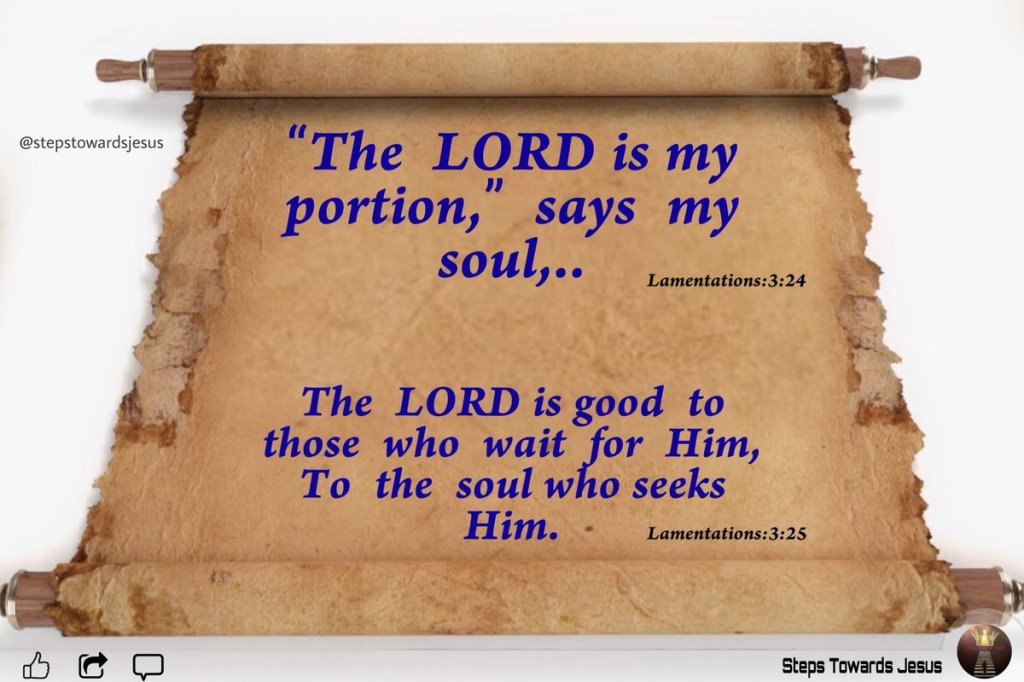











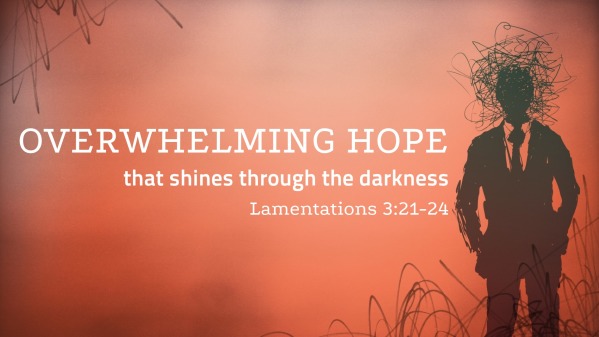



 Loving God, Living God, Loving Hope, Living Hope, Loving Living Life His Way! "Many things are possible for the person who has hope. Even more is possible for the person who has faith. And still more is possible for the person who knows how to love. But everything is possible for the person who practices all three virtues." - Brother Lawrence (1605-1691), Practicing the Presence of God (1692).