Romans 15:4 "For whatever was written in earlier times was written for our instruction, so that through perseverance and the encouragement of the Scriptures we might have hope."
1 Corinthians 10:31-33 Disciples’ Literal New Testament
In Summary, Do All For God’s Glory. Be Blameless To All And Seek Their Benefit
31 Therefore, whether you are eating or drinking or doing anything, be doing all for the glory of God. 32 Be blameless[a] both to Jews and Greeks, and to the church of God— 33 just as I also am pleasing all people as to all things, not seeking the benefit of myself, but the benefit of the many, in order that they might be saved.
The Word of God for the Children of God.
Glory be to the Father, and to the Son, and to the Holy Ghost; as it was in the beginning, is now, and ever shall be, world without end. Amen, amen.
In his discussion on Christian freedom, the apostle Paul touches on some important principles for following Jesus.
While emphasizing our personal freedom in Christ, he urges that we respect where others are in their spiritual maturity.
Embedded in this discussion is the most important principle for Christian living: that in everything we do, we are to live for God’s glory.
The Westminster Shorter Catechism lays out this lasting principle using the question “What is the chief end of man?”
And it decisively succinctly answers with a timeless, bedrock declaration: “Man’s chief end is to glorify God, and to enjoy him forever.”
In these days, though we have all been created to glorify God, because of our sin and rebellion against him we live only to glorify, enjoy ourselves. And the high tyranny of self-glorification brings us no enjoyment, just unending misery.
But, praise God, when we’ve been saved by grace through faith, the Holy Spirit begins to reorient our lives, elbowing us in our ribcages, nudging, prompting, stirring us to live not for ourselves but for God. And as we grow in glorifying our Lord and Savior, we discover our true, lasting joy and purpose in God alone.
Therefore, whether we are eating or drinking, whatever we are going to be doing today—from the most mundane of daily chores to making the most weightiest of decisions—let this be your Mantra “do it all for God’s glory.”
“If then you are wise, you will show yourself rather as a reservoir than as a canal. For a canal spreads abroad water as it receives it, but a reservoir waits until it is filled before overflowing, and thus communicates, without loss to itself, its superabundant water. In the Church at the present day, we have many canals, too few reservoirs.”
Bernard of Clairvaux
What does 1 Corinthians 10-31 teach us?
Paul is specifically teaching each and every one of us that each and every moment of our day, including those moments that seem too insignificant, presents an opportunity to be glorifying God.
Our actions to glorify God are NOT confined to the grandiose. Instead, even in the teeny little “tasks” each day, like eating and drinking, we can glorify God!
What does it mean to eat and drink to the glory of God?
We should strive to do everything in our lives for the greater glory of God–and this absolutely includes eating and drinking! Eating and drinking for the glory of God involves eating wisely, drinking temperately rather than immoderately. We need to take reasonable care of our health by exercising, eating healthfully.
So, give all the honor to God, eat your meals heartily, not worrying about what others say about you – you’re eating to God’s glory, after all, not to please them. As a matter of fact, do everything that way, heartily and freely to God’s glory.
In the name of God, the Father and God the Son and God the Holy Spirit,
Let us Pray,
115 Not to us, Adonai, not to us, but to your name give glory, because of your grace and truth.
2 Why should the nations ask, “Where is their God?” 3 Our God is in heaven; he does whatever pleases him. 4 Their idols are mere silver and gold, made by human hands. 5 They have mouths, but they can’t speak; they have eyes, but they can’t see; 6 they have ears, but they can’t hear; they have noses, but they can’t smell; 7 they have hands, but they can’t feel; they have feet, but they can’t walk; with their throats they can’t make a sound. 8 The people who make them will become like them, along with everyone who trusts in them.
9 Isra’el, trust in Adonai! He is their help and shield. 10 House of Aharon, trust in Adonai! He is their help and shield. 11 You who fear Adonai, trust in Adonai! He is their help and shield. 12 Adonai has kept us in mind, and he will bless. He will bless the house of Isra’el; he will bless the house of Aharon; 13 he will bless those who fear Adonai, great and small alike.
14 May Adonai increase your numbers, both yours and those of your children. 15 May you be blessed by Adonai, the maker of heaven and earth. 16 Heaven belongs to Adonai, but the earth he has given to humankind.
17 The dead can’t praise Adonai, not those who sink down into silence. 18 But we will bless Adonai from now on and forever.
Halleluyah!
Glory be to the Father, and to the Son, and to the Holy Ghost; as it was in the beginning, is now, and ever shall be, world without end. Amen, amen.
1 God, having spoken to the fathers long ago in [the voices and writings of] the prophets in many separate revelations [each of which set forth a portion of the truth], and in many ways, 2 has in these last days spoken [with finality] to us in [the person of One who is by His character and nature] His Son [namely Jesus], whom He appointed heir and lawful owner of all things, through whom also He created the universe [that is, the universe as a space-time-matter continuum]. 3 The Son is the radiance and only expression of the glory of [our awesome] God [reflecting God’s [a]Shekinah glory, the Light-being, the brilliant light of the divine], and the exact representation and perfect imprint of His [Father’s] essence, and upholding and maintaining and propelling all things [the entire physical and spiritual universe] by His powerful word [carrying the universe along to its predetermined goal]. When He [Himself and no other] had [by offering Himself on the cross as a sacrifice for sin] accomplished purification from sins and established our freedom from guilt, He sat down [revealing His completed work] at the right hand of the Majesty on high [revealing His Divine authority], 4 having become as much superior to angels, since He has inherited a more excellent and glorious [b]name than they [that is, Son—the name above all names].
The Word of God for the Children of God.
Glory be to the Father, and to the Son, and to the Holy Ghost; as it was in the beginning, is now, and ever shall be, world without end. Amen, amen.
Hebrews begins by making some big statements in its first three verses. Each day we are reminded, that we will focus on one of those primary statements and we refresh ourselves, refresh our spirits, what “supremacy of Christ” means for us.
Christ is the “heir of all things.”
Prophets were sent to speak to God’s people.
They ancient people brought important news and teachings from God, but they were merely His messengers. Now God has come into the works of man, and has spoken, to his people, directly through his Son, who is the “heir of all things.”
This reference points back to Psalm 2:7-8, which says,
“He said to me, ‘You are my son; today I have become your father. Ask me, and I will make the nations your inheritance, the ends of the earth your possession.’”
In Jesus, God fulfills this amazing promise.
Jesus is the heir who receives all that the Father has.
Peter says that this inheritance “can never perish, spoil or fade. This inheritance is kept in heaven for you” (1 Peter 1:4).
So what does this mean for us in these 21st century times of disastrous, divisive, upheaval, people openly mocking God with their positions on ‘living for Jesus.’
God is a fairy tale, a fable, made up by those abusing some mind altering drugs.
The bible is a book of wild delusions, hallucinations penned by the drug addled.
There is “no such thing as God,” “no such a thing as a Resurrection, no such a thing as salvation,” “no such thing as sin.” “such a thing as salvation from sin.
As followers of Christ, we are graciously adopted into God’s family as his own children, and we are “co-heirs with Christ” (Romans 8:17).
As co-heirs with Christ, we are set to inherit all that Christ inherits—namely, salvation from sin and eternal life with him.
The Writings to the Hebrews starts out by laying the unshakeable foundation to debunk those who chose to spread erroneous teachings, man’s erroneous use of words like “sovereignty, supremacy” that they held man had an ironclad grip.
The Word which now comes to us in Jesus Christ, both by what he said and what he was, is a significantly stronger, more comprehensive, far more intimate and inclusive word than God ever originally spoke through those ancient prophets .
When you are studying the Old Testament, you are studying the Word of God.
The voice of God is heard through various forms and circumstances. (Psalm 19)
All of it is of God, but all of it is incomplete.
It never brings us to ultimate’s and absolutes.
But when you open the pages of the New Testament, read and study the fourfold picture of Jesus Christ, you find all the Old Testament writings merges into one voice, life, ministry, mission, works, His Passion, by the true voice of His Son.
The words by which God spoke in the Old Testament are merged into one complete discourse in Jesus Christ.
Therefore, God’s word to man has been fully, finally, uttered in the Son.
There is nothing more to be said. Jesus Christ is God’s own final Word to man.
Therefore, the word through the Son is greater than that through the prophets because it includes and surpasses theirs.
It is also greater because the Son created, established, the boundaries of history.
The writer says Jesus has been appointed the heir of all things, and through him God made the universe.
Further, his Word has greater power than the prophets’ because he sustains the matter of the universe.
He reflects the Shekinah glory of God and bears the very stamp of his nature, upholding the universe by his word of power.
In the hills behind Stanford University there is a linear accelerator, some two miles long, a gigantic instrument.
Scientists built it to be a great lever by which they can pry the lid off the secrets that lie behind matter.
They are trying to find what makes the universe tick, what holds it together.
And as man probes deeper into the secrets of the universe around him, he discovers more and more that he is confronting the mystery of an untouchable, unfathomable force; that he Himself stands face to face with His pure force.
What is that force?
Scientists never name it, in fact they cannot name it, but the Scripture does. (Psalm 29)
The Scripture says that force is Jesus Christ, that he holds everything in place, whether it be large or small.
The reason we can sit or stand, though our earth is whirling at a furious rate, and not being randomly, sporadically, hurled off into space, is simply because he sustains the universe. Jesus Himself is the ultimate, the final spoken secret behind everything that exists. (John 1:1-5, Colossians 1:15-23, 1John 1:1-9)
The book of Hebrews is a part of the New Testament and is filled with rich theological teachings and insights.
The authorship of the book is not definitively known, but it is traditionally attributed to the Apostle Paul.
The specific audience and historical context of Hebrews are also somewhat uncertain, but it was likely written to a group of Jewish Christians who were facing persecution and considering reverting back to the ways of Judaism.
We live in a culture which is always force feeding, pitching us all manner of stuff which is better, greater, more superior than anything that’s come before. It turns out that “far better” is one of the Book of Hebrews’ favorite words.
Right from the start, the author is trying to convince us that Jesus is better.
Overall, this passage from Hebrews serves to exalt Jesus Christ as the supreme revelation of God to humanity.
By emphasizing His role in creation, His divine nature, and His redemptive work, the author establishes the unmatched significance and authority of Jesus.
The theological themes of Christ’s divinity, His role as Savior, and His infinite superiority over all other beings are central to the passage, and they continue to be foundational to Christian beliefs.
Ultimately, this passage serves to deepen our understanding, appreciation, of the person and work of Jesus Christ, inviting us to respond in faith and worship.
What is our response …
How can our response be more impactful, magnified, beyond God’s Kingdom?
In the name of God, the Father and God the Son and God the Holy Spirit,
Let us Pray,
Psalm 24
A psalm by David.
1 The earth and everything it contains are Yahweh’s. The world and all who live in it are his. 2 He laid its foundation on the seas and set it firmly on the rivers.
3 Who may go up Yahweh’s mountain? Who may stand in his holy place? 4 The one who has clean hands and a pure heart and does not long for what is false[a] or lie when he is under oath. 5 This person will receive a blessing from Yahweh and righteousness from Elohim, his savior. 6 This is the person who seeks him, who searches for the face of the El of Jacob.[b] Selah
7 Lift your heads, you gates. Be lifted, you ancient doors, so that the Melek of glory may come in.
8 Who is this Melek of glory? Yahweh, strong and mighty! Yahweh, heroic in battle!
9 Lift your heads, you gates. Be lifted, you ancient doors, so that the Melek of glory may come in.
10 Who, then, is this Melek of glory? Yahweh Tsebaoth is the Melek of glory! Selah
Glory be to the Father, and to the Son, and to the Holy Ghost; as it was in the beginning, is now, and ever shall be, world without end. Amen, amen.
8 Remember Jesus Christ, risen from the dead, descendant of David, according to my gospel, 9 [a]for which I suffer hardship even to imprisonment as a criminal; but the word of God is not imprisoned. 10 For this reason I endure all things for the sake of those who are chosen, so that they also may obtain the salvation which is in Christ Jesus and with it eternal glory. 11 It is a trustworthy statement:
For if we died with Him, we will also live with Him; 12 If we endure, we will also reign with Him; If we [b]deny Him, He also will deny us; 13 If we are faithless, He remains faithful, for He cannot deny Himself.
An Unashamed Workman
14 Remind them of these things, and solemnly charge them in the presence of God not to wrangle about words, which is useless and leads to the ruin of the hearers. 15 Be diligent to present yourself approved to God as a workman who does not need to be ashamed, accurately handling the word of truth.
The Word of God for the Children of God.
Glory be to the Father, and to the Son, and to the Holy Ghost; as it was in the beginning, is now, and ever shall be, world without end. Amen, amen.
Way back, just before I graduated from Senior High School, I remember an old saying from my final meeting with my guidance counselor about mentoring and being mentored, then mentoring and apprenticeships goes something like this:
“first we meet, then I do, you watch; I do, you help; You do, I help; You do, I watch.”
Rabbi Jesus called, trained his disciples in much the same way as this, and they passed along to others what they learned from him. An apprentice commits to learning from a master and then becomes experienced and able to teach others.
In our Scripture reading for today, Apostle Paul urges Timothy to remember his training and to teach it, pass it along, to reliable people who can teach others.
By his grace, God wants to be in relationship with us in Christ, to fill us with his Holy Spirit, and to show us how to live fully, lie impactfully, edifyingly, so that we share all this with generations of others. God wants us to be his apprentices.
A powerful image in TheScrewtape Letters by C.S. Lewis illustrates this well.
This unusual book is written from the perspective of a demon (or devil) who is attempting to explain God’s great plan for humankind:
“One must face the fact that all the talk about [God’s] love for men, and His service being perfect freedom, is not (as one would just gladly believe) mere propaganda, but an appalling truth. [God] really does want to fill the universe with a lot of loathsome little replicas of Himself—creatures whose life, on its miniature scale, will be qualitatively like His own . . . because their wills freely conform to His.”
What does 2 Timothy 2:9 mean?
8 Remember Jesus Christ [the ever-living Lord who has] risen from the dead, [as the prophesied King] descended from David [king of Israel], according to my gospel [the good news that I preach], 9 for that [gospel] I am suffering even to [the point of] wearing chains like a criminal; but the word of God is not chained or neither is it imprisoned![Amplified Version]
Verse 9 continues Paul’s sentence from verse 8, noting that it is the gospel “for which I am suffering.” He had done nothing illegal except to proclaim Christ. Yet he was “bound with chains as a criminal.”
Paul has already mentioned his chains (2 Timothy 1:16).
In this particular case, this likely means literal chains on his hands and/or feet, similar to Peter in Acts 12:6.
Unlike Paul’s 1st Roman imprisonment, in which he lived in his own apartment for two years under house arrest, this imprisonment was much more serious.
Paul expected he would not live much longer, that at any time Emperor Nero will summarily remove his head, but rather would suffer till the end for Christ.
In contrast to Paul’s situation, he expresses his joy in knowing that the truth of the gospel, under no circumstances could not be restrained! Even from his cell and in heavy chains, Paul communicated God’s truth that influenced Timothy, his congregation, other early churches, and became part of the New Testament.
Today, If we were the one’s bound by the heaviest chains, being imprisoned in the most inescapable of prisons, would we be able to say Paul’s message here is a continued cycle-“that Great Cloud of Witnesses leading generations forward?
Exodus 13:20-22 Easy-to-Read Version
The Lord Leads His People
20 The Israelites left Succoth and camped at Etham. Etham was near the desert. 21 The Lord led the way. During the day, he used a tall cloud to lead the people. And during the night, he used a tall column of fire to lead the way. This fire gave them light so that they could also travel at night. 22 The cloud was always with them during the day, and the column of fire was always with them at night.
As millions of Jews were led forward out of bondage in Egypt by a continuous line of clouds to the Mountain of God where they would receive their teachings?
“first we meet, then I do, you watch; I do, you help; You do, I help; You do, I watch.”
Still today, the Word of God given through Paul impacts lives around the world.
Hebrews 4:11-13 Amplified Bible
11 Let us therefore make every effort to enter that rest [of God, to know and experience it for ourselves], so that no one will fall by following the same example of disobedience [as those who died in the wilderness]. 12 For the word of God is living and active and full of power [making it operative, energizing, and effective]. It is sharper than any two-edged [a]sword, penetrating as far as the division of the [b] soul and spirit [the completeness of a person], and of both joints and marrow [the deepest parts of our nature], exposing and judging the very thoughts and intentions of the heart. 13 And not a creature exists that is concealed from His sight, but all things are open and exposed, and revealed to the eyes of Him with whom we have to give account.
Hebrews 4:12 clearly teaches, “For the word of God is living and active, sharper than any two-edged sword, piercing to the division of soul and of spirit, of joints and of marrow, and discerning the thoughts and intentions of the heart.”
Kingdom Transformation Through Excellence
We are highly motivated when reaching toward a goal. Our adrenaline flows, our creative juices churn, and our mind works overtime at solving the problems that stand higher than sky high in the way of achieving God’s vision for our life.
In our biblical text today, Paul sternly instructs his apprentice Timothy,
“Do your best to present yourself to God as one approved, a workman who does not need to be ashamed.”
Paul was not content, nor satisfied, with anything but the best. He highly valued repetition, instructing Pastor Timothy to “just keep reminding” his listeners.
Repetition really works for me.
There are certain messages I must hear over and over again.
The saying “the early bird gets the worm” nudges me out of bed each morning to feast on God’s manna.
A worn out, torn card in my wallet said, “Prayer changes things,” reminds me to pray before I attempt to fix a problem in my own strength. A sign on my wall, “God is forever, Hallelujah!” calls me to put God first before projects no matter how inconvenient it may seem at times. God + Repetition produces excellence.
In the name of God, the Father and God the Son and God the Holy Spirit,
Let us Pray,
Psalm 18:31-32 Complete Jewish Bible
31 (30) “As for God, his way is perfect, the word of Adonai has been tested by fire; he shields all who take refuge in him.
32 (31) “For who is God but Adonai? Who is a Rock but our God?
Psalm 119:1-16 Complete Jewish Bible
א (Alef)
119 How happy are those whose way of life is blameless, who live by the Torah of Adonai! 2 How happy are those who observe his instruction, who seek him wholeheartedly! 3 They do nothing wrong but live by his ways. 4 You laid down your precepts for us to observe with care. 5 May my ways be steady in observing your laws. 6 Then I will not be put to shame, since I will have fixed my sight on all your mitzvot. 7 I thank you with a sincere heart as I learn your righteous rulings. 8 I will observe your laws; don’t completely abandon me!
ב (Bet)
9 How can a young man keep his way pure? By guarding it according to your word. 10 I seek you with all my heart; don’t let me stray from your mitzvot. 11 I treasure your word in my heart, so that I won’t sin against you. 12 Blessed are you, Adonai! Teach me your laws. 13 I proclaim with my mouth all the rulings you have spoken. 14 I rejoice in the way of your instruction more than in any kind of wealth. 15 I will meditate on your precepts and keep my eyes on your ways. 16 I will find my delight in your regulations. I will not forget your word.
Psalm 139:23-24 Complete Jewish Bible
23 Examine me, God, and know my heart; test me, and know my thoughts. 24 See if there is in me any hurtful way, and lead me along the eternal way.
Glory be to the Father, and to the Son, and to the Holy Ghost; as it was in the beginning, is now, and ever shall be, world without end. Amen, amen.
3 Not many [of you] should become teachers [serving in an official teaching capacity], my brothers and sisters, for you know that we [who are teachers] will [a]be judged by a higher standard [because we have assumed greater accountability and more condemnation if we teach incorrectly]. 2 For we all stumble and sin in many ways. If anyone does not stumble in what he says [never saying the wrong thing], he is a perfect man [fully developed in character, without serious flaws], able to bridle his whole body and rein in his entire nature [taming his human faults and weaknesses]. 3 Now if we put bits into the horses’ mouths to make them obey us, we guide their whole body as well. 4 And look at the ships. Even though they are so large and are driven by strong winds, they are still directed by a very small rudder wherever the impulse of the helmsman determines. 5 In the same sense, the tongue is a small part of the body, and yet it boasts of great things.
See [by comparison] how great a forest is set on fire by a small spark! 6 And the tongue is [in a sense] a fire, the very world of injustice and unrighteousness; the tongue is set among our members as that which contaminates the entire body, and sets on fire the course of our life [the cycle of man’s existence], and is itself set on fire by [b]hell (Gehenna).
The Word of God for the Children of God.
Glory be to the Father, and to the Son, and to the Holy Ghost; as it was in the beginning, is now, and ever shall be, world without end. Amen, amen.
Doesn’t it seem at times, that modern life has become a three ring circus?
Sometimes we’re the clowns making people laugh, juggler, trying to manage all the family, career and life responsibilities, or the tightrope walker, trying to walk that line between living for Christ and the constant pull of the world.
Other times we are the strongman, muscled, wrestling with heavy burdens and temptations that are never-ending. And don’t forget the clowns that surround us everywhere with their colorful make-up, their clumsy, and too goofy antics!
Their insanity drains our time and energy, but we simply must deal with them.
Yet, against this backdrop, God is there as ring master,orchestrating the whole thing, making order out of all the chaos – to the extent we turn it over to Him.
“Ladies and Gentlemen and boys and girls, young and old Children of all ages”
Deuteronomy 6:4-7 Amplified Bible
4 “Hear, O Israel! The Lord is our God, the Lord is one [the only God]! 5 You shall all love the Lord your God with all your heart and mind and with all your soul and with all your strength [your entire being].6 These words, which I am commanding you today, shall be [written] on your heart and mind. 7 You shall teach them diligently to your [a]children [impressing God’s precepts on their minds and penetrating their hearts with His truths] and shall speak of them when you sit in your house and when you walk on the road and when you lie down and when you get up.
In the more contemporary sense we should add “drive your cars, trucks, busses, motorcycles, atv’s, recreational vehicles, 18 wheelers, fly your planes, private jets.
Let’s not forget those who make their livings and take their vacations upon the vast oceanic seas, rivers, and waterways, in their fishing boats and their yachts,the row boats and motor boats, our Navies, the Navy’s of the world, the gargantuan tankers and container ships, tug boats, cruise ships of all sizes and elegance and luxury.
The Lord God desires that all may come to know Him and share a relationship.
Psalm 46:10 Amplified Bible
10 “Be still and know (recognize, understand) that I am God. I will be exalted among the nations! I will be exalted in the earth.”
Psalm 100:3 Amplified Bible
3 Know and fully recognize with gratitude that the Lord Himself is God; It is He who has made us, [a]not we ourselves [and we are His]. We are His people and the sheep of His pasture.
Psalm 139:1-6 Amplified Bible
God’s Omnipresence and Omniscience.
To the Chief Musician. A Psalm of David.
139 O Lord, you have searched me [thoroughly] and have known me. 2 You know when I sit down and when I rise up [my entire life, everything I do]; You understand my thought from afar. 3 You scrutinize my path and my lying down, And You are intimately acquainted with all my ways. 4 Even before there is a word on my tongue [still unspoken], Behold, O Lord, You know it all. 5 You have enclosed me behind and before, And [You have] placed Your hand upon me. 6 Such [infinite] knowledge is too wonderful for me; It is too high [above me], I cannot reach it.
And one of the best ways we can experience victory with Him is to become a big cat tamer and take control of that most vicious of beasts – the human tongue!
We know how difficult it is to tame a real lion, even one raised from a cub.
Just remember the tragic account of Siegfried and Roy, the famous Las Vegas magic act featuring white tigers.
In 2003 one such tiger, Manticore, suddenly bit Roy in the neck and dragged him offstage, ending his career and nearly his life. Which makes us ask – can a lion, or tiger or the human tongue, really be tamed even by “trained experts?”
James 3:2-6 Disciples’ Literal New Testament
2 For we all stumble many[a] ways. If one does not stumble in speech, this one is a perfect man able to bridle[b] also the whole body. 3 Now if we put bridles into the mouths of horses so-that they obey us, we also guide their whole body. 4 Behold also ships being so large and being driven by hard winds— they are guided by a very small rudder where the impulse of the one steering wants. 5 So also the tongue is a small body-part, and boastfully-declares great things. Behold how-small a fire kindles how-great a forest!
An Untamed Tongue Stains And Burns And Poisons Life
6 And the tongue is a fire! The[c] tongue is made[d] the world of [e] unrighteousness among our body-parts— the thing staining the whole body and setting-on-fire the course of our existence, and being set-on-fire by Gehenna[f].
Lions and tigers are strong, magnificent creatures, but dangerous. They can turn on you suddenly, in a split-second, cause untold damage or kill you. Yet when they are under the control of the lion tamer, they are beautiful to behold.
Just like our tongues …
Proverbs 18:17-21 Easy-to-Read Version
17 The first person to speak always seems right until someone comes and asks the right questions.
18 The best way to settle an argument between two powerful people may be to use lots.
19 An insulted brother is harder to win back than a city with strong walls. Arguments separate people like the strong bars of a palace gate.
20 Your words can be as satisfying as fruit, as pleasing as the food that fills your stomach.
21 The tongue can speak words that bring life or death. Those who love to talk must be ready to accept what it brings.
Matthew 12:33-37 Easy-to-Read Version
What You Do(say) Shows What You Are
33 “If you want good fruit, you must make the tree good. If your tree is not good, it will have bad fruit. A tree is known by the kind of fruit it produces. 34 You snakes! You are so evil. How can you say anything good? What people say with their mouths comes from what fills their hearts. 35 Those who are good have good things saved in their hearts. That’s why they say good things. But those who are evil have hearts full of evil, and that’s why they say things that are evil. 36 I tell you that everyone will have to answer for all the careless things they have said. This will happen on the day of judgment. 37 Your words will be used to judge you. What you have said will show whether you are right or whether you are guilty.”
Our taming the tongue is vital so we don’t stumble, experience unnecessary relationship damage, or get pushed off the course that God set for our lives.
Indeed, what comes out of our mouths in an absent-minded moment can cause severe, irreparable damage.
Our “oops” words can have unintended consequences: weakening our marriage relationship, creating division between friends and distrust among colleagues, and alienating our children. They can cost us our jobs, our reputations, and our families and our homes, untold opportunities to keep ourselves out of prison.
What comes out of our mouth can cause us to experience a lifetime of regret, especially if they are so severe, knock us off the course God has for our lives.
In other words, our lives follow the direction of our words.
If we are always saying things like: I’ll never…I can’t…my life is over…I won’t recover…I don’t get any breaks…
Don’t be surprised if that is exactly how your life turns out!
Just as absent-minded words spoken to others can damage the course of that relationship, what we continuously, constantly say about ourselves and our lives has a profound effect on our own decision making minds. And these self-imposed limiting beliefs and crippling mindsets can completely alter the course that our lives take, far away from God’s intent. Which, by the way, is amazing.
But if the masters Siegfried and Roy ultimately failed in taming their lion, well-fed, well-treated, and raised from a cub, how can we hope to master, to take control of the wildest of all wildest of beasts we have called the human tongue?
In the name of God, the Father and God the Son and God the Holy Spirit,
Let us Pray,
Psalm 19 Easy-to-Read Version
To the director: A song of David.
19 The heavens tell about the glory of God. The skies announce what his hands have made. 2 Each new day tells more of the story, and each night reveals more and more about God’s power.[a] 3 You cannot hear them say anything. They don’t make any sound we can hear. 4 But their message goes throughout the world. Their teaching reaches the ends of the earth.
The sun’s tent is set up in the heavens. 5 It comes out like a happy bridegroom from his bedroom. It begins its path across the sky like an athlete eager to run a race. 6 It starts at one end of the sky and runs all the way to the other end. Nothing can hide from its heat.
7 The Lord’s teachings are perfect. They give strength to his people. The Lord’s rules can be trusted. They help even the foolish become wise. 8 The Lord’s laws are right. They make people happy. The Lord’s commands are good. They show people the right way to live.
9 Learning respect for the Lord is good. It will last forever. The Lord’s judgments are right. They are completely fair. 10 His teachings are worth more than pure gold. They are sweeter than the best honey dripping from the honeycomb. 11 His teachings warn his servants, and good things come to those who obey them.
12 People cannot see their own mistakes, so don’t let me commit secret sins. 13 Don’t let me do what I know is wrong. Don’t let sin control me. If you help me, I can be pure and free from sin. 14 May my words and thoughts please you. Lord, you are my Rock—the one who rescues me.
Psalm 139:23-24 Easy-to-Read Version
23 God, examine me and know my mind. Test me and know all my worries. 24 Make sure that I am not going the wrong way.[a] Lead me on the path that has always been right.[b]
Glory be to the Father, and to the Son, and to the Holy Ghost; as it was in the beginning, is now, and ever shall be, world without end. Amen, amen.
1 The heavens declare the glory of El, and the sky displays what his hands have made. 2 One day tells a story to the next. One night shares knowledge with the next 3 without talking, without words, without their voices being heard. 4 Yet, their sound has gone out into the entire world, their message to the ends of the earth. He has set up a tent in the heavens for the sun, 5 which comes out of its chamber like a bridegroom. Like a champion, it is eager to run its course. 6 It rises from one end of the heavens. It circles around to the other. Nothing is hidden from its heat.
7 The teachings of Yahweh are perfect. They renew the soul. The testimony of Yahweh is dependable. It makes gullible people wise. 8 The instructions of Yahweh are correct. They make the heart rejoice. The command of Yahweh is radiant. It makes the eyes shine. 9 The fear of Yahweh is pure. It endures forever. The decisions of Yahweh are true. They are completely fair. 10 They are more desirable than gold, even the finest gold. They are sweeter than honey, even the drippings from a honeycomb. 11 As your servant I am warned by them. There is a great reward in following them.
12 Who can notice every mistake? Forgive my hidden faults. 13 Keep me from sinning. Do not let anyone gain control over me. Then I will be blameless, and I will be free from any great offense.
14 May the words from my mouth and the thoughts from my heart be acceptable to you, O Yahweh, my rock and my Go’el.
The Word of God for the Children of God.
Glory be to the Father, and to the Son, and to the Holy Ghost; as it was in the beginning, is now, and ever shall be, world without end. Amen, amen.
Psalm 19:7-14 Easy-to-Read Version
7 The Lord’s teachings are perfect. They give strength to his people. The Lord’s rules can be trusted. They help even the foolish become wise. 8 The Lord’s laws are right. They make people happy. The Lord’s commands are good. They show people the right way to live.
9 Learning respect for the Lord is good. It will last forever. The Lord’s judgments are right. They are completely fair. 10 His teachings are worth more than pure gold. They are sweeter than the best honey dripping from the honeycomb. 11 His teachings warn his servants, and good things come to those who obey them.
12 People cannot see their own mistakes, so don’t let me commit secret sins. 13 Don’t let me do what I know is wrong. Don’t let sin control me. If you help me, I can be pure and free from sin. 14 May my words and thoughts please you. Lord, you are my Rock—the one who rescues me.
David, summing up all that he said about the Word of God, declares that the only thing which can interfere with the Word having its full effect is us.
We are the problem.
If we cannot benefit from the Word, it is not because there is anything wrong with it. It is us who are the problem. Who can discern their own errors?
We are all victims of hidden failure in our lives.
Psalm 139:23-24 Easy-to-Read Version
23 God, examine me and know my mind. Test me and know all my worries. 24 Make sure that I am not going the wrong way.[a] Lead me on the path that has always been right.[b]
Contemplate for a time if these ancient words of scripture excluded “God”
23 ME, examine me and know my mind. ME Test me and know all my worries. 24 ME Make sure that I am not going the wrong way.[a] ME Lead me on the path that has always been right.[b]
If we are the only one’s who are examining ourselves …
If we are the only one’s who are trying to know our own minds …
If we are the only one’s testing ourselves to get at the core of our worries?
If we are the only one’s who are investigating our own “wicked ways?”
Then making sure we where smart enough, wise enough, brutally honest enough, tough enough on ourselves, to hardcore “tough love” ourselves, to accept, heartfelt confess, the .0000001% chance we are going the wrong way?
“Knowing” exactly how much a PhD we are in knowing ourselves, caring for ourselves, instantly perfectly completely correcting, and directing ourselves?
What gets accomplished?
Who accomplishes what?
Who makes sure they get all of the credit for what was accomplished?
If we examine ourselves, we usually look fine – in our view of our facts, we are perfectly fine – no worries – no anxieties – as we set off to swim all the oceans?
Everybody, including themselves, thinks what he does is right. We cannot see, refuse to see, our own errors, we won’t acknowledge these errors, yet these hidden errors are constantly affecting us so we cannot see truth the way it is.
How big a 100% fool can we make of ourselves in the privacy of our homes?
Strutting around in public like some fluorescent tie dyed Peacock in full bloom, How big a 100% fool can we put on the world’s biggest most vivid movie screen?
If we aren’t ourselves becoming even .0000001% self conscious of these errors?
Therefore, we desperately need to be delivered from hidden errors by someone eternally, infinitely, more wise, more honest, more sacrificing of self than we are capable of being or would even entertain one thought we would want to be.
That is what severely hinders our desire for the Word — these hidden errors.
The Psalmist faces the fact that something is wrong with us, so he concludes this Psalm with a wonderful prayer: Forgive my hidden faults (Psalms 19:12b).
Are you so fully and completely contrite of heart to confess with all of your soul and all of your so called strength all of your alleged might that is your prayer?
We know what will happen to ourselves, by ourselves, by our indomitable self wills, dare ourselves to pray for that forgiveness, wait on ourselves to answer.
NOTHING OF ANY AUTHENTIC VALUE OR ANYTHING OF ETERNAL WORTH!
Do you know what will happen when you pray that way AND also include God?
One might allow themselves to fantasize that God will take a sponge and wipe around inside you so that you will not even know what those hidden faults were.
But God does not do that.
Isaiah 55:8-11 Easy-to-Read Version
People Cannot Understand God
8 The Lord says, “My thoughts are not like yours. Your ways are not like mine. 9 Just as the heavens are higher than the earth, so my ways are higher than your ways, and my thoughts are higher than your thoughts.
10 “Rain and snow fall from the sky and don’t return until they have watered the ground. Then the ground causes the plants to sprout and grow, and they produce seeds for the farmer and food for people to eat. 11 In the same way, my words leave my mouth, and they don’t come back without results. My words make the things happen that I want to happen. They succeed in doing what I send them to do.
His way of dealing with hidden faults is either to send somebody to point them out to you – someone like Nathan who entered David’s throne unannounced.
To bring them out, shake them out through some circumstance in which they are suddenly confronted with what they have done or said, and suddenly realize that it is 1000% ugly and they have been caught not by man, but by God himself.
2 Samuel 12:1-14 Easy-to-Read Version
Nathan Speaks to David
12 The Lord sent Nathan to David. Nathan went to him and said, “There were two men in a city. One man was rich, but the other man was poor. 2 The rich man had lots of sheep and cattle. 3 But the poor man had nothing except one little female lamb that he bought. The poor man fed the lamb, and the lamb grew up with this poor man and his children. She ate from the poor man’s food and drank from his cup. The lamb slept on the poor man’s chest. The lamb was like a daughter to the poor man.
4 “Then a traveler stopped to visit the rich man. The rich man wanted to give food to the traveler, but he did not want to take any of his own sheep or cattle to feed the traveler. No, the rich man took the lamb from the poor man and cooked it for his visitor.”
5 David became very angry with the rich man. He said to Nathan, “As the Lord lives, the man who did this should die! 6 He must pay four times the price of the lamb because he did this terrible thing and because he had no mercy.”
Nathan Tells David About His Sin
7 Then Nathan said to David, “You are that rich man! This is what the Lord, the God of Israel, says: ‘I chose[a] you to be the king of Israel. I saved you from Saul. 8 I let you take his family and his wives, and I made you king of Israel and Judah. As if that had not been enough, I would have given you more and more. 9 So why did you ignore my command? Why did you do what I say is wrong? You let the Ammonites kill Uriah the Hittite, and you took his wife. It is as if you yourself killed Uriah in war. 10 So your family will never have peace! When you took Uriah’s wife, you showed that you did not respect me.’
11 “This is what the Lord says: ‘I am bringing trouble against you. This trouble will come from your own family. I will take your wives from you and give them to someone who is very close to you. He will have sexual relations with your wives, and everyone will know it![b]12 You had sexual relations with Bathsheba in secret, but I will punish you so that all the people of Israel can see it.’”[c]
13 Then David said to Nathan, “I have sinned against the Lord.”
Nathan said to David, “The Lord will forgive you, even for this sin. You will not die. 14 But you did things that made the Lord’s enemies lose their respect for him, so your new baby son will die.”
That is the way God cleanses us from hidden faults.
He hardcore pries open the secret places.
Usually he does it through other people, because we cannot see ourselves but other people can see us.
These faults are hidden to us but not to others.
They see them very plainly.
And we can see their hidden faults better than they can.
You say, I don’t see how they can be so blind.
Well, someone is thinking that very same way about you.
We do not see ourselves.
That is why it is always proper to say, Lord, forgive my hidden faults.
Help me to see myself through the eyes of a friend who loves me enough to tell me the truth.
David closes this psalm with these often quoted words which are so wonderfully penetrating that we should pray them often:
May these words of my mouth and this meditation of my heart be pleasing in your sight, Lord, my Rock and my Redeemer (Psalms 19:14).
That is a wonderful prayer, is it not?
This is the attitude that will open the Word of God to us.
When you pray that kind of prayer before you read the Word, you will find that God will (gently in God’s way, hardcore our way) talk to us in a marvelous way.
Deliver Me From Evil
Psalm 19:12 Amplified Bible
12 Who can understand his errors or omissions? Acquit me of hidden (unconscious, unintended) faults.
When I was in grade school, there were many times that I thought a teacher or a parent had eyes in the back of their head.
I could not get away with anything I was not supposed to be doing.
Sometimes my hidden thoughts were identified by those who were not even looking at me. And to prevent me from even trying something out of line, they loudly whispered for all to hear, “Just remember, God sees everything you do.”
Having someone watching our every move can help to keep our secret actions in check, but what about our thoughts and the things we are tempted to say?
When we allow the bright light of God’s law to shine into our inner self, it truly illuminates our hidden faults and lights up a warning.
Without God’s law we are blind to what separates us from God.
The psalmist knows that he cannot see his faults by looking into a mirror.
He looks instead into God’s law and asks God to forgive not only his visible sins but also his hidden faults.
And the God of the Bible does forgive.
Knowing the fact of God’s forgiveness assures the psalmist that he will be blameless in God’s sight. Not completely perfect yet, but blameless now.
In the name of God, the Father and God the Son and God the Holy Spirit,
Let us Pray,
Psalm 40 Amplified Bible
God Sustains His Servant.
To the Chief Musician. A Psalm of David.
40 I waited patiently and expectantly for the Lord; And He inclined to me and heard my cry. 2 He brought me up out of a horrible pit [of tumult and of destruction], out of the miry clay, And He set my feet upon a rock, steadying my footsteps and establishing my path. 3 He put a new song in my mouth, a song of praise to our God; Many will see and fear [with great reverence] And will trust confidently in the Lord.
4 Blessed [fortunate, prosperous, and favored by God] is the man who makes the Lord his trust, And does not regard the proud nor those who lapse into lies. 5 Many, O Lord my God, are the wonderful works which You have done, And Your thoughts toward us; There is none to compare with You. If I would declare and speak of your wonders, They would be too many to count.
6 Sacrifice and meal offering You do not desire, nor do You delight in them; You have opened my ears and given me the capacity to hear [and obey Your word]; Burnt offerings and sin offerings You do not require. 7 Then I said, “Behold, I come [to the throne]; In the scroll of the book it is written of me. 8 “I delight to do Your will, O my God; Your law is within my heart.”
9 I have proclaimed good news of righteousness [and the joy that comes from obedience to You] in the great assembly; Behold, I will not restrain my lips [from proclaiming Your righteousness], As You know, O Lord. 10 I have not concealed Your righteousness within my heart; I have proclaimed Your faithfulness and Your salvation. I have not concealed Your lovingkindness and Your truth from the great assembly.
11 Do not withhold Your compassion and tender mercy from me, O Lord; Your lovingkindness and Your truth will continually preserve me. 12 For innumerable evils have encompassed me; My sins have overtaken me, so that I am not able to see. They are more numerous than the hairs of my head, And my heart has failed me.
13 Be pleased, O Lord, to save me; O Lord, make haste to help me. 14 Let those be ashamed and humiliated together Who seek my life to destroy it; Let those be turned back [in defeat] and dishonored Who delight in my hurt. 15 Let those be appalled and desolate because of their shame Who say to me, “Aha, aha [rejoicing in my misfortune]!” 16 Let all who seek You rejoice and be glad in You; Let those who love Your salvation say continually, “The Lord be magnified!” 17 Even though I am afflicted and needy, Still the Lord takes thought and is mindful of me. You are my help and my rescuer. O my God, do not delay.
Glory be to the Father, and to the Son, and to the Holy Ghost; as it was in the beginning, is now, and ever shall be, world without end. Amen, amen.
14 So he sent horses, chariots and a large army there; they came by night and surrounded the city. 15 The servant of the man of God got up early in the morning; on going outside, he saw an army with horses and chariots surrounding the city. His servant said to him, “Oh, my master, this is terrible! What are we going to do?” 16 He answered, “Don’t be afraid — those who are with us outnumber those who are with them!” 17 Elisha prayed, “Adonai, I ask you to open his eyes, so that he can see.” Then Adonai opened the young man’s eyes, and he saw: there before him, all around Elisha, the mountain was covered with horses and fiery chariots. 18 When they came down to him, Elisha prayed to Adonai, “Please strike these people blind”; and he struck them blind, as Elisha had asked. 19 Next, Elisha told them, “You’ve lost your way, and this isn’t even the right city. Follow me, and I’ll take you to the man you’re looking for.” Then he led them to Shomron. 20 On their arrival in Shomron, Elisha said, “Adonai, open the eyes of these men, so that they can see.” Adonai opened their eyes, and they saw: there they were, in the middle of Shomron.
The Word of God for the Children of God.
Glory be to the Father, and to the Son, and to the Holy Ghost; as it was in the beginning, is now, and ever shall be, world without end. Amen, amen.
Prophet Elisha’s servant was looking but not seeing. He saw only hopelessness. He saw the army of Aram surrounding their town, but he did not see the host of the angel Army protecting God’s people. He was walking in spiritual blindness.
We can be the same way.
We might see only disappointments, or discouragements, or hopelessness, our spiritual enemies descending with all their might, all around us, our dark souls.
We might fear the stranger, complain about the lazy, and point fingers at those who disagree. We might fear that the world is lost to the devil, and we are the ones who suffer. We might be baited, shackled to the idea of putting God aside so we all can earn our fortune and have fun, only to experience everlasting loss.
Elisha’s prayer is a great way to address our blindness to God’s sovereignty. We can pray, “Open our eyes, Lord, that we may see.” When our eyes are opened, we see our sin as the chief of sins and the lust of the flesh as rebellion against God.
And we finally see that Jesus has already won the victory. Christ already rules in heaven. This world is all in his hands. Have no fear, for we know that God wins.
When the Lord opened the servant’s eyes, “he looked up and saw the hills full of horses and chariots of fire all around Elisha.” All these angelic heavenly hosts were surrounding and protecting them. The servant’s fear melted away. If there is an Elisha warrior praying for us, God is on our side, who can stand against us?
Ephesians 1:15-21 Amplified Bible
15 For this reason, because I have heard of your faith in the Lord Jesus and your love for all God’s people, 16 I do not cease to give thanks for you, remembering you in my prayers; 17 [I always pray] that the God of our Lord Jesus Christ, the Father of glory, may grant you a spirit of wisdom and of revelation [that gives you a deep and personal and intimate insight] into the true knowledge of Him [for we know the Father through the Son]. 18 And [I pray] that the eyes of your heart [the very center and core of your being] may be enlightened [flooded with light by the Holy Spirit], so that you will know and cherish the [a]hope [the divine guarantee, the confident expectation] to which He has called you, the riches of His glorious inheritance in the [b]saints (God’s people), 19 and [so that you will begin to know] what the immeasurable and unlimited and surpassing greatness of His [active, spiritual] power is in us who believe. These are in accordance with the working of His mighty strength 20 which He [c]produced in Christ when He raised Him from the dead and seated Him at His own right hand in the heavenly places, 21 far above all rule and authority and power and dominion [whether angelic or human], and [far above] every name that is named [above every title that can be conferred], not only in this age and world but also in the one to come.
In order to go deeper in God, we must allow him to open the eyes of our hearts to see him as he truly is.
So often we settle in our relationship with him for that which can only be seen with our physical eyes.
We settle for community apart from unity in the Spirit, God’s word apart from revelation from the Spirit, and look to “open” or “closed” doors as our guide rather than making space to ask for the Holy Spirit’s leadership.
It’s time for us as the body of Christ to truly live in the fullness of relationship afforded to us by his sacrifice.
It’s for this reason, in Ephesians 1:16-19, Paul told the Church in Ephesus,
I do not cease to give thanks for you, remembering you in my prayers, that the God of our Lord Jesus Christ, the Father of glory, may give you the Spirit of wisdom and of revelation in the knowledge of him, having the eyes of your hearts enlightened, that you may know what is the hope to which he has called you, what are the riches of his glorious inheritance in the saints, and what is the immeasurable greatness of his power toward us who believe.
We need the “eyes of our hearts” to be enlightened today.
We need the Holy Spirit to come and do a mighty work that we might no longer live only for that which is seen, but by faith pursue the unseen.
Hebrews 11:1 says, “Now faith is the assurance of things hoped for, the conviction of things not seen.”
God longs for us to pursue the deeper things of him in faith. He longs for us to grow in our relationship with the Holy Spirit and learn to live life with his presence, leadership, voice, and love as the foundation for everything we do.
To live only by the things we can physically see is to live only for that which is temporal and fleeting.
Psalm 101:3 says, “I will not set before my eyes anything that is worthless. I hate the work of those who fall away; it shall not cling to me.”
God has worthwhile work in store for us. He has a plan to bring heaven to earth through our lives every day. But in order to make an impact on eternity we must be able to see, know the heart of God. We must become, as Elisha, increasingly aware of exactly how God feels and what he wants to do moment-by-moment.
Growing in our relationship with the Holy Spirit is the foundation of seeking the deeper things of God.
Learning to live by and with him is the only way to advance his kingdom.
Take time in guided prayer today to ask the Holy Spirit to open the eyes of your heart. Ask him to lead, guide and direct you into a deeper, far more connected relationship with him. And choose Elisha’s prayer today, to pursue a life marked by deep connection with your heavenly Father and powerful works of his Spirit.
17 Then Elisha prayed and said, “Lord, please, open his eyes that he may see.” And the Lord opened the servants eyes and he saw; and behold, the mountain was full of horses and chariots of fire surrounding Elisha.
Guided Prayer:
1. Ask the Holy Spirit to open the eyes of your heart. Meditate on Scripture and take time to rest in his presence.
“Having the eyes of your hearts enlightened, that you may know what is the hope to which he has called you, what are the riches of his glorious inheritance in the saints.” Ephesians 1:18
“Then Elisha prayed and said, ‘O Lord, please open his eyes that he may see.’ So the Lord opened the eyes of the young man, and he saw, and behold, the mountain was full of horses and chariots of fire all around Elisha.” 2 Kings 6:17
“The hearing ear and the seeing eye, the Lord has made them both.” Proverbs 20:12
2. Where have you been doing life apart from connectivity to the Spirit? Where have you been living temporally instead of for eternity?
“And I will ask the Father, and he will give you another Helper, to be with you forever, even the Spirit of truth, whom the world cannot receive, because it neither sees him nor knows him. You know him, for he dwells with you and will be in you.” John 14:16-17
“Do not lay up for yourselves treasures on earth, where moth and rust destroy and where thieves break in and steal, but lay up for yourselves treasures in heaven, where neither moth nor rust destroys and where thieves do not break in and steal. For where your treasure is, there your heart will be also.” Matthew 6:19-21
3. Ask the Holy Spirit to help you live connected to him today.
“Be filled with the Spirit.” Ephesians 5:18
“For in one Spirit we were all baptized into one body—Jews or Greeks, slaves or free—and all were made to drink of one Spirit.”1 Corinthians 12:13
“Or do you not know that your body is a temple of the Holy Spirit within you, whom you have from God? You are not your own” 1 Corinthians 6:19
Jesus promised us in Matthew 7:7, “Ask, and it will be given to you; seek, and you will find; knock, and it will be opened to you.”
When we authentically seek all the blessings which God has to give such as being loved, being known, being provided for, and being filled with the Spirit, we can know that we will find what we seek.
The door to going deeper in God will always be opened whenever we come to it and knock.
God will never withhold himself from us when we purely desire more of him.
Have faith today in the perfect goodness of your heavenly Father and deeply pursue the deeper things of him that you might live in greater union with him.
In the name of God, the Father and God the Son and God the Holy Sprit,
Let us Pray,
Psalm 42 Complete Jewish Bible
Book II: Psalms 42–72
42 (0) For the leader. A maskil of the descendants of Korach:
2 (1) Just as a deer longs for running streams, God, I long for you. 3 (2) I am thirsty for God, for the living God! When can I come and appear before God?
4 (3) My tears are my food, day and night, while all day people ask me, “Where is your God?” 5 (4) I recall, as my feelings well up within me, how I’d go with the crowd to the house of God, with sounds of joy and praise from the throngs observing the festival.
6 (5) My soul, why are you so downcast? Why are you groaning inside me? Hope in God, since I will praise him again for the salvation that comes from his presence. 7 (6) My God, when I feel so downcast, I remind myself of you from the land of Yarden, from the peaks of Hermon, from the hill Mizar. 8 (7) Deep is calling to deep at the thunder of your waterfalls; all your surging rapids and waves are sweeping over me. 9 (8) By day Adonai commands his grace, and at night his song is with me as a prayer to the God of my life. 10 (9) I say to God my Rock, “Why have you forgotten me? Why must I go about mourning, under pressure by the enemy? 11 (10) My adversaries’ taunts make me feel as if my bones were crushed, as they ask me all day long, ‘Where is your God?’ ”
12 (11) My soul, why are you so downcast? Why are you groaning inside me? Hope in God, since I will praise him again for being my Savior and God.
Glory be to the Father, and to the Son, and to the Holy Ghost; as it was in the beginning, is now, and ever shall be, world without end. Amen, amen.
6 But now that Timothy has come back to us from [his visit with] you, and has brought us good news of your [steadfast] faith and [the warmth of your] love, and [reported] that you always think kindly of us and treasure your memories of us, longing to see us just as we long to see you, 7 for this reason, brothers and sisters, during all our distress and suffering we have been comforted and greatly encouraged about you because of your faith [your unwavering trust in God—placing yourselves completely in His loving hands]; 8 because now we really live [in spite of everything], if you stand firm in the Lord. 9 For what [adequate] thanks can we offer to God for you in return for all the joy and delight we have before our God on your account? 10 We continue to pray night and day most earnestly that we may see you face to face, and may complete whatever may be imperfect and lacking in your faith.
11 Now may our God and Father Himself, and Jesus our Lord guide our steps to you [by removing the obstacles that stand in our way]. 12 And may the Lord cause you to increase and excel and overflow in love for one another, and for all people, just as we also do for you; 13 so that He may strengthen and establish your hearts without blame in holiness in the sight of our God and Father at the coming of our Lord Jesus with all His [a]saints (God’s people).
The Word of God for the Children of God.
Glory be to the Father, and to the Son, and to the Holy Ghost; as it was in the beginning, is now, and ever shall be, world without end. Amen, amen.
When reading this chapter, the firmness of the joy Paul had stood out to me.
During his entire Apostleship, Paul faced challenge after challenge, obstacle after obstacle as he walked worked to spread the gospel, yet he’s still full of joy.
Paul starts the chapter by talking about how he feared that the Thessalonians would be led astray by the temptations and afflictions they would face.
He says that for this reason, he asked someone to report on their faith, hoping that all his ministry and mission work there wouldn’t have been done in vain.
But when Timothy returned with a report about the Thessalonians, it became clear they had stood firm in their faith through all the persecution they faced.
In verse 7, Paul writes that he and his companions were comforted by the news that Timothy brought.
The good news about the Thessalonians was so great that it provided comfort in the midst of their bodily and spiritual afflictions!
Paul states they now really live if the Thessalonians stand firm in their faith.
The Thessalonians provided so much magnitude of joy to the lives of Paul and his companions that it feels like they had just started to really live in Christ!
In verse 9, Paul asks what expressions of thanks they can extend to God for all the joy he has about the steadfast faith and perseverance of the Thessalonians.
There is so much joy running through his heart and through their spirits that he a man of many words, doesn’t even know how to put it to words to thank God.
This magnitude of joy is so overwhelming that he can’t even start to understand or comprehend completely just exactly how much thanks he needs to give God.
Are we filling others with as much joy as Paul is full of from the Thessalonians?
Are those who taught us the Bible filled with that self same magnitude of joy from the way it has changed their lives and id now firmly working your life?
Paul’s joy came from his spirit seeing that he was able to make this impact on the Thessalonian followers and that they were able to continue standing firm.
We each need to be firm in God’s immutable truths like the Thessalonians, providing encouraging joy to our teachers, our neighbors, others like the non believing souls as we are encouraged continue to walk in the way of the Lord.
Are you filled with joy like Paul?
God has provided each of us with much more than we ever deserved.
None of us deserve salvation, but God offered it to each one of us.
Our lives should be full of joy because of this great gift.
I can’t even begin to thank God enough for everything that He has given me!
I have to stand up and firmly echo Paul’s response to this joy shown in verse 10.
He says that he and his companions are earnestly praying that they may see the Thessalonians again and that they may yet continue to strengthen their faith.
He doesn’t claim that his job is now done, as the Thessalonians were able to stand up to opposition. Instead, he says that he wants to visit to teach them even more, to make them even firmer, stronger, lacking nothing in their faith.
Paul thanked God for his Thessalonian friends, who, despite knowing they would suffer imprisonment, persecution and even a very painful death in the arena’s for their faith in Jesus, were sure of the security they would find in him.
What a witness they were to the Savior!
The Thessalonians were persecuted, they were arrested, tortured and killed but they remained steadfast in their faith to the end—and that is not always easy.
It can be difficult to remain faithful, especially when life presents unexpected challenges. When Paul sent Timothy to check on the Thessalonians, he was encouraged and filled with joy that their faith had remained strong. He said, “For now we really live, since you are standing firm in the Lord.”
Remaining firm in Christ is not always easy when you know you will be hurt—both physically and spiritually but God tells us about the peace, comfort, and redemption he provides when we stay near to him despite our challenges.
No matter what year it is, no matter the culture or society, life can bring grief, instant worry, fear, and a host of other difficult and uncomfortable emotions.
It can be hard to accept circumstances that are unpredictable and far outside of our own control, especially when our hearts, souls, yearn to make things better.
But when we draw near to God as He draws near to us, he promises to give us his peace that surpasses all understanding.
Psalm 73:28 Amplified Bible
28 But as for me, it is good for me to draw near to God; I have made the Lord God my refuge and placed my trust in Him, That I may tell of all Your works.
Ecclesiastes 5:1 Amplified Bible
Your Attitude Toward God
5 Guard your steps and focus on what you are doing as you go to the house of God and draw near to listen rather than to offer the [careless or irreverent] sacrifice of fools; for they are too ignorant to know they are doing evil.
Hebrews 7:18-20 Amplified Bible
18 For, on the one hand, a former commandment is cancelled because of its weakness and uselessness [because of its inability to justify the sinner before God] 19 (for the Law never made anything perfect); while on the other hand a better hope is introduced through which we now continually draw near to God. 20 And indeed it was not without the taking of an oath [that Christ was made priest]
James 4:1-10 Amplified Bible
Things to Avoid
4 What leads to [the unending] [a]quarrels and conflicts among you? Do they not come from your [hedonistic] desires that wage war in your [bodily] members [fighting for control over you]? 2 You are jealous and covet [what others have] and [b] your lust goes unfulfilled; so you [c]murder. You are envious and cannot obtain [the object of your envy]; so you fight and battle. You do not have because you do not ask [it of God]. 3 You ask [God for something] and do not receive it, because you ask [d]with wrong motives [out of selfishness or with an unrighteous agenda], so that [when you get what you want] you may spend it on your [hedonistic] desires. 4 You adulteresses [disloyal sinners—flirting with the world and breaking your vow to God]! Do you not know that being the world’s friend [that is, loving the things of the world] is being God’s enemy? So whoever chooses to be a friend of the world makes himself an enemy of God. 5 Or do you think that the Scripture says to no purpose [e] that the [human] spirit which He has made to dwell in us lusts with envy? 6 But He gives us more and more grace [through the power of the Holy Spirit to defy sin and live an obedient life that reflects both our faith and our gratitude for our salvation]. Therefore, it says, “God is opposed to the proud and haughty, but [continually] gives [the gift of] grace to the humble [who turn away from self-righteousness].” 7 So submit to [the authority of] God. Resist the devil [stand firm against him] and he will flee from you. 8 Come close to God [with a contrite heart] and He will come close to you. Wash your hands, you sinners; and purify your [unfaithful] hearts, you double-minded [people]. 9 Be miserable and grieve and weep [over your sin]. Let your [foolish] laughter be turned to mourning and your [reckless] joy to gloom. 10 Humble yourselves [with an attitude of repentance and insignificance] in the presence of the Lord, and He will exalt you [He will lift you up, He will give you purpose].
Drawing nearer, and nearer still to God’s presence strengthens our weary storm battered hearts through our firmest perseverance through hardcore challenges, persecution, and unforeseen circumstances—and for that we must praise him!
What is our response to being filled with joy, with above beyond exuberant joy?
We need to be constantly giving thanks for all that we have been given, night and day praising God.
Are you asking God that we can continue to do the hard work of ministry and the hard work of mission which He has prepared for us or are you saying that we have reached or exceeded our definition of our limits, that our job is done?
This Spirit ignited joy should cause us to want to do even more, spreading the good news to all those around you so that they too might experience this joy.
Questions for Reflection and Discussion
Spend an extra ten minutes in prayer today thanking God.
What is the biggest challenge you face in standing firm in the Lord?
How can you ask for help from your brothers and sisters in Christ? (If you don’t have a church family yet – make it your first priority to find one!)
Are there brothers and sisters or children in the faith that give you great joy when you see how they are standing firm in the faith even in the midst of trials?
Let them know.
Look to make friends with them as Christ made friends with you. John 15:15-16
John 14:11-14 Amplified Bible
11 Believe Me that I am in the Father and the Father is in Me; otherwise believe [Me] because of the [very] works themselves [which you have witnessed]. 12 I assure you and most solemnly say to you, anyone who believes in Me [as Savior] will also do the things that I do; and he will do even greater things than these [in extent and outreach], because I am going to the Father. 13 And I will do whatever you ask in My name [[a]as My representative], this I will do, so that the Father may be glorified and celebrated in the Son. 14 If you ask Me anything in My name [as My representative], I will do it.
Do you wishy washy, firmly, believe in Jesus Christ as you One and Only Savior?
Do you wishy washy, firmly, believe in Jesus’ words to His disciples of their firm ability of accomplishing “greater things?” What are those “greater things?”
There is much to pray about – how firm is our foundation in Savior Jesus Christ?
In the name of God the Father and God the Son and God the Holy Spirit,
Let us Pray,
Psalm 19 Amplified Bible
The Works and the Word of God.
To the Chief Musician. A Psalm of David.
19 The heavens are telling of the glory of God; And the expanse [of heaven] is declaring the work of His hands. 2 Day after day pours forth speech, And night after night reveals knowledge. 3 There is no speech, nor are there [spoken] words [from the stars]; Their voice is not heard. 4 Yet their voice [in quiet evidence] has gone out through all the earth, Their words to the end of the world. In them and in the heavens He has made a tent for the sun, 5 Which is as a bridegroom coming out of his chamber; It rejoices as a strong man to run his course. 6 The sun’s rising is from one end of the heavens, And its circuit to the other end of them; And there is nothing hidden from its heat.
7 The law of the Lord is perfect (flawless), restoring and refreshing the soul; The statutes of the Lord are reliable and trustworthy, making wise the simple. 8 The precepts of the Lord are right, bringing joy to the heart; The commandment of the Lord is pure, enlightening the eyes. 9 The fear of the Lord is clean, enduring forever; The judgments of the Lord are true, they are righteous altogether. 10 They are more desirable than gold, yes, than much fine gold; Sweeter also than honey and the drippings of the honeycomb. 11 Moreover, by them Your servant is warned [reminded, illuminated, and instructed]; In keeping them there is great reward. 12 Who can understand his errors or omissions? Acquit me of hidden (unconscious, unintended) faults. 13 Also keep back Your servant from presumptuous (deliberate, willful) sins; Let them not rule and have control over me. Then I will be blameless (complete), And I shall be acquitted of great transgression. 14 Let the words of my mouth and the meditation of my heart Be acceptable and pleasing in Your sight, O Lord, my [firm, immovable] rock and my Redeemer.
Glory be to the Father, and to the Son, and to the Holy Ghost; as it was in the beginning, is now, and ever shall be, world without end. Amen, amen.
15-17 Don’t love the world’s ways. Don’t love the world’s goods. Love of the world squeezes out love for the Father. Practically everything that goes on in the world—wanting your own way, wanting everything for yourself, wanting to appear important—has nothing to do with the Father. It just isolates you from him. The world and all its wanting, wanting, wanting is on the way out—but whoever does what God wants is set for eternity.
The Word of God for the Children of God.
Glory be to the Father, and to the Son, and to the Holy Ghost; as it was in the beginning, is now, and ever shall be, world without end. Amen, amen.
What the World Says
Some people belittle the Christian faith by dumbing it down to a list of dos and don’ts. They find religion to be too rule based, restrictive and punitive. Funny how the world launches such a criticism of the faith when the world itself has a significantly longer, significantly more comprehensive list of dos and don’ts.
Do be diverse, equitable, body-positive, and sex-positive. Don’t be against abortion, homosexuality, and transgenderism. Be Politically not Biblically correct. The Bible was never meant to make an impact beyond its own times.
If you aren’t steadfast, strong in your convictions, then being name-called or challenged by the world in any way will more than likely be too intimidating. You’ll be left with a fear of cancellation, being ostracized, or something worse
The truth is, much like our flesh is at war with the spirit, the Word of GOD, our faith is constantly being scorned and mocked, ridiculed, at war with the world.
That’s why in the length and breadth of Scripture, we see time and time again how there is a contrast between God’s people and the surrounding cultures.
God has called us to live in a certain way, and the world feels enmity toward that ideal. That’s always been true. And as always, the temptation we face as staunch believers is neglecting what God wants, instead opting to fit in with the world.
That’s normal.
We’re sinful by nature and likewise, we each desire to be a part of a community.
Sometimes, fellowship with the world just looks more appealing, prosperous, significantly less stressful, much simpler to manipulate and shape in our image.
However, we can’t call ourselves Christian and still live like those around us.
We can’t choose to follow God only when convenient, in those moments when the world isn’t watching because God is continually watching, investigating us.
Not if we’re a believer, because being a Christian means something specific.
But how exactly do we ensure that we ascribe to God and not unto the world?
Psalm 29 Complete Jewish Bible
29 (0) A psalm of David:
(1) Give Adonai his due, you who are godly; give Adonai his due of glory and strength; 2 give Adonai the glory due his name; worship Adonai in holy splendor.
3 The voice of Adonai is over the waters; the God of glory thunders, Adonai over rushing waters, 4 the voice of Adonai in power, the voice of Adonai in splendor.
5 The voice of Adonai cracks the cedars; Adonai splinters the cedars of the L’vanon 6 and makes the L’vanon skip like a calf, Siryon like a young wild ox.
7 The voice of Adonai flashes fiery flames; 8 the voice of Adonai rocks the desert, Adonai convulses the Kadesh Desert. 9 The voice of Adonai causes deer to give birth and strips the forests bare — while in his temple, all cry, “Glory!” 10 Adonai sits enthroned above the flood! Adonai sits enthroned as king forever! 11 May Adonai give strength to his people! May Adonai bless his people with shalom!
How can we be in the world, but not of the world?
To answer that, we turn to Scripture.
Intersecting Faith and Life:
Within Scripture, we find a multitude of ways to separate ourselves from the surrounding culture, but here are three we can implement in our lives today.
Find the Right People
The Bible talks about being unequally yoked, a principle which we often apply to marriage, but one that relates to all of our relationships.
When we decide to follow Christ, we are explicitly agreeing to become like Him.
That applies to the way we talk, dress, act, and think. Certain people will not appreciate this growth and will want us to be more like them, less like Christ.
This isn’t the right kind of company to keep.
Ultimately, believers should not try to fit in with the culture, not if it calls for us to forfeit our values. Instead, choose to find a godly community that will not ask you to give up what’s good, but rather the things holding you back from God.
Focus on Heaven
With all the chaos, division, bills, relationships, and commitments here on Earth, we can naturally find ourselves distracted from what matters most.
When that happens, we may find ourselves preoccupied with the world and forgetful of God.
The solution is not to fill our heads with worldly things but instead, focus on the things above.
Know Your Worth
Another reason we find ourselves gravitating towards the world’s approval is that we falsely believe our worth comes from people.
We tell ourselves that if we get married, then we’re worthy; if we have a ton of friends and money, then we’re worthy, and on and on.
Biblically, None of that is true.
Our worth comes from God, and our worth has existed since He first created us.
All of the relationships we have on this Earth will one day end, whether through conflict, separation or death. The things we do for people and what they do for us will one day cease. What never ends is God’s authentic love for His children.
1 Corinthians 15:57-58 Amplified Bible
57 but thanks be to God, who gives us the victory [as conquerors] through our Lord Jesus Christ.
58 Therefore, my beloved brothers and sisters, be steadfast, immovable, always excelling in the work of the Lord [always doing your best and doing more than is needed], being continually aware that your labor [even to the point of exhaustion] in the Lord is not futile nor wasted [it is never without purpose].
Recall that the next time you believe the world has your best interest at heart.
In the name of God, the Father and God the Son and God the Holy Spirit,
Let us Pray.
Psalm 15 Complete Jewish Bible
15 (0) A psalm of David:
(1) Adonai, who can rest in your tent? Who can live on your holy mountain?
2 Those who live a blameless life, who behave uprightly, who speak truth from their hearts 3 and keep their tongues from slander; who never do harm to others or seek to discredit neighbors; 4 who look with scorn on the vile, but honor those who fear Adonai; who hold to an oath, no matter the cost; 5 who refuse usury when they lend money and refuse a bribe to damage the innocent.
Those who do these things never will be moved.
Glory be to the Father, and to the Son, and to the Holy Ghost; as it was in the beginning, is now, and ever shall be, world without end. Amen, amen.
(1) Adonai, who can rest in your tent? Who can live on your holy mountain?
2 Those who live a blameless life, who behave uprightly, who speak truth from their hearts 3 and keep their tongues from slander; who never do harm to others or seek to discredit neighbors; 4 who look with scorn on the vile, but honor those who fear Adonai; who hold to an oath, no matter the cost; 5 who refuse usury when they lend money and refuse a bribe to damage the innocent.
Those who do these things never will be moved.
The Word of God for the Children of God.
Glory be to the Father, and to the Son, and to the Holy Ghost; as it was in the beginning, is now, and ever shall be, world without end. Amen, amen.
“Who shall dwell on your holy hill?”
Though these questions were inspired by God, running deep through the very heart and soul of David, asked, spoken and recorded 3000 years ago, were not edited out of the canon centuries later by scholars and scribes, the questions which David poses in the first verse of this psalm are of utmost importance.
They may strike us as questions that are tied only to times of worship in ancient Israel, but as they have survived and inspired for thousands of years, in His own truth they take us to the very doorstep of heaven asking, Who will enter these gates?Who will enter the Tabernacle of the Lord, Who will rest upon His mountain?
While the answer is explained in the rest of Psalm 15, the general point is one we find throughout New Testament Scripture.
Matthew 5:1-12 Complete Jewish Bible
5 Seeing the crowds, Yeshua walked up the hill. After he sat down, his talmidim came to him, 2 and he began to speak. This is what he taught them:
3 “How blessed are the poor in spirit! for the Kingdom of Heaven is theirs.
4 “How blessed are those who mourn! for they will be comforted.
5 “How blessed are the meek! for they will inherit the Land![a]
6 “How blessed are those who hunger and thirst for righteousness! for they will be filled. 7 “How blessed are those who show mercy! for they will be shown mercy.
8 “How blessed are the pure in heart! for they will see God.
9 “How blessed are those who make peace! for they will be called sons of God.
10 “How blessed are those who are persecuted because they pursue righteousness! for the Kingdom of Heaven is theirs.
11 “How blessed you are when people insult you and persecute you and tell all kinds of vicious lies about you because you follow me! 12 Rejoice, be glad, because your reward in heaven is great — they persecuted the prophets before you in the same way.
Matthew 11:27-30 Complete Jewish Bible
27 “My Father has handed over everything to me. Indeed, no one fully knows the Son except the Father, and no one fully knows the Father except the Son and those to whom the Son wishes to reveal him.
28 “Come to me, all of you who are struggling and burdened, and I will give you rest. 29 Take my yoke upon you and learn from me, because I am gentle and humble in heart, and you will find rest for your souls.[a]30 For my yoke is easy, and my burden is light.”
Mark 2:13-17 English Standard Version
Jesus Calls Levi
13 He went out again beside the sea, and all the crowd was coming to him, and he was teaching them. 14 And as he passed by, he saw Levi the son of Alphaeus sitting at the tax booth, and he said to him, “Follow me.” And he rose and followed him.
15 And as he reclined at table in his house, many tax collectors and sinners were reclining with Jesus and his disciples, for there were many who followed him. 16 And the scribes of[a] the Pharisees, when they saw that he was eating with sinners and tax collectors, said to his disciples, “Why does he eat[b] with tax collectors and sinners?” 17 And when Jesus heard it, he said to them, “Those who are well have no need of a physician, but those who are sick. I came not to call the righteous, but sinners.”
John 17:22-26 Complete Jewish Bible
22 The glory which you have given to me, I have given to them; so that they may be one, just as we are one — 23 I united with them and you with me, so that they may be completely one, and the world thus realize that you sent me, and that you have loved them just as you have loved me.
24 “Father, I want those you have given me to be with me where I am; so that they may see my glory, which you have given me because you loved me before the creation of the world. 25 Righteous Father, the world has not known you, but I have known you, and these people have known that you sent me. 26 I made your name known to them, and I will continue to make it known; so that the love with which you have loved me may be in them, and I myself may be united with them.”
In addition, The anonymous writer of Hebrews advised his readers to “strive for … the holiness without which no one will see the Lord” (Hebrews 12:14).
The Lord Jesus similarly instructed that “the gate is narrow and the way is hard that leads to life, and those who find it are few” (Matthew 7:14).
Those who stand on the holy hill of the Lord, enjoy His presence for eternity, then, are those who arrive there by the narrow way, striving after holiness.
Philippians 3:12-21 New American Standard Bible
12 Not that I have already [a]grasped it all or have already become perfect, but I press on if I may also take hold of that [b]for which I was even taken hold of by Christ Jesus. 13 Brothers and sisters, I do not regard myself as having taken hold of it yet; but one thing I do: forgetting what lies behind and reaching forward to what lies ahead, 14 I press on toward the goal for the prize of the upward call of God in Christ Jesus. 15 Therefore, all who are [c]mature, let’s have this attitude; and if in anything you have a different attitude, God will reveal that to you as well; 16 however, let’s keep [d]living by that same standard to which we have attained.
17 Brothers and sisters, join in following my example, and observe those who walk according to the pattern you have in us. 18 For many walk, of whom I often told you, and now tell you even as I weep, that they are the enemies of the cross of Christ, 19 whose end is destruction, whose god is their [e]appetite, and whose glory is in their shame, who have their minds on earthly things. 20 For our [f]citizenship is in heaven, from which we also eagerly wait for a Savior, the Lord Jesus Christ; 21 who will transform the body of our lowly condition into conformity with [g]His glorious body, by the exertion of the power that He has even to subject all things to Himself.
The sad truth is that too many assume they will dwell on God’s holy hill because they once said a prayer, tithed, walked down an aisle, are a member of a church.
It is a grave mistake to think that those acts on their own will merit eternal life if they are accompanied with living a way of life which gives no evidence of our knowing Christ as Lord.
Matthew 6:1-4 Amplified Bible
Giving to the Poor and Prayer
6 “Be [very] careful not to do your [a]good deeds publicly, to be seen by men; otherwise you will have no reward [prepared and awaiting you] with your Father who is in heaven.
2 “So whenever you give to the poor and do acts of kindness, do not blow a trumpet before you [to advertise it], as the hypocrites do [like actors acting out a role] in the synagogues and in the streets, so that they may be honored and recognized and praised by men. I assure you and most solemnly say to you, they [already] have their reward in full. 3 But when you give to the poor and do acts of kindness, do not let your left hand know what your right hand is doing [give in complete secrecy], 4 so that your charitable acts will be done in secret; and your Father who sees [what is done] in secret will reward you.
Reverend Charles Haddon Spurgeon once preached,
“If the man does not live differently from what he did before … his repentance needs to be repented of, and his conversion is a fiction.”[1]
1“What Is It to Win a Soul?,” The Sword and the Trowel (December 1879), p 561.
So, who will ascend the hill of the Lord?
It is the one who “walks blamelessly,” in a way which cannot be confused with that of an unbeliever, whose life manifests the reality God has saved him or her.
It is the one whose talk is not marked by slander but who “speaks truth in his heart.”
This is someone who doesn’t merely say what is correct but says what is true, with no gap between what is said and what is lived.
The combination of reading Psalm 15 and looking honestly at ourselves will very likely be discouraging.
Only the Lord Jesus embodies the psalm’s portrayal of holiness to perfection; only He deserves to dwell on His Father’s holy hill, and only because He chose to die for His people’s sins and clothe them with His perfection are we invited, here and now, in this precise moment, in these seasons to live with Him there.
But it is good and right to let the light of God’s Word shine on our hearts and expose what is there, for it’ll move us to repentance, to gratitude to our Savior.
And those who know they will stand there because of Him will seek to be like Him. Consider your walk and your words, and pray that you would be ever more conformed to the image of Christ until you dwell with Him on God’s Holy Hill.
Dwelling in God’s Sanctuary
What is God’s sanctuary?
Probably too many of us think of it only as a church building.
In its widest, richest sense, God’s sanctuary is wherever we experience God.
It is the place where our heart is.
On Sunday, on whatever day meets to read, study, pray over God’s Word, a church building becomes a sanctuary as God’s people gather and make up the building blocks of God’s spiritual temple (2 Corinthians 6:16; 1 Peter 2:5).
There we are inspired, empowered, refreshed, strengthened for another week of work, another week of serving God—out in the sanctuary of God’s vast world.
Psalm 15 reminds us that what pleases God is not rituals but a life that seeks to live God’s way.
When we walk with God on a daily basis, we will do what is right, speak the truth, refuse to slander others, and not harm our neighbors in any way.
What’s more, we won’t be impressed by people who delight in doing wrong or act immorally, mocking God, and we will honor those who faithfully serve God.
We will keep our promises, even when it hurts. And we will help the poor and protect the innocent, taking no part in bribery, fraud, or other corruption.
When we live as the psalmist describes, we experience God’s presence.
This happens not only in church gatherings but also in our everyday activities.
Those who live God’s way are building a life that cannot be shaken—regardless of the way uninvited trials can try to shake up, shift the ground under our feet!
In the name of God, the Father and God the Son and God the Holy Spirit,
Let us Pray,
Psalm 16 Complete Jewish Bible
16 (0) Mikhtam. By David:
(1) Protect me, God, for you are my refuge. 2 I said to Adonai, “You are my Lord; I have nothing good outside of you.” 3 The holy people in the land are the ones who are worthy of honor; all my pleasure is in them.
4 Those who run after another god multiply their sorrows; To such gods I will not offer drink offerings of blood or take their names on my lips.
5 Adonai, my assigned portion, my cup: you safeguard my share. 6 Pleasant places were measured out for me; I am content with my heritage.
7 I bless Adonai, my counselor; at night my inmost being instructs me. 8 I always set Adonai before me; with him at my right hand, I can never be moved; 9 so my heart is glad, my glory rejoices, and my body too rests in safety; 10 for you will not abandon me to Sh’ol, you will not let your faithful one see the Abyss. 11 You make me know the path of life; in your presence is unbounded joy, in your right hand eternal delight.
Glory be to the Father, and to the Son, and to the Holy Ghost; as it was in the beginning, is now, and ever shall be, world without end. Amen, amen.
(1) Adonai, you have probed me, and you know me. 2 You know when I sit and when I stand up, you discern my inclinations from afar, 3 you scrutinize my daily activities. You are so familiar with all my ways 4 that before I speak even a word, Adonai, you know all about it already. 5 You have hemmed me in both behind and in front and laid your hand on me. 6 Such wonderful knowledge is beyond me, far too high for me to reach.
The Word of God for the Children of God.
Glory be to the Father, and to the Son, and to the Holy Ghost; as it was in the beginning, is now, and ever shall be, world without end. Amen, amen.
Sometimes it may seem like we can’t see the path just ahead of us, and we’re afraid to take the next step which for us may just become the first step into the right direction to God. Rest assured and be encouraged knowing that God knows your path, He knows your lying down, and He is acquainted with all your ways.
The ancient words of the Psalmist from Psalm 119:105 tells us that God’s Word is “a lamp for my feet, a light on my path.” If we’ve ever held a candle-lit lamp, along a dark rainy path at midnight, we understand it doesn’t provide a whole lot of light. Rather, provides just enough light for the steep steps in front of us.
That’s the beauty of having a relationship with God. We don’t need to see all the steepest steps waiting for us ahead in the dark; we can trust God’s in complete control, will provide the level of light we require. Just like we’re told in Psalm 139:3-4, God knows all our paths, He knows all our ways. We can rest in that.
“You comprehend my path and my lying down, and are acquainted with all my ways. For there is not a word on my tongue, but behold, O LORD, You know it altogether.” Psalm 139:3-4
139 6 Such wonderful knowledge is beyond me, far too high for me to reach.
Psalm 139:3 in the King James Version reads, “Thou compassest my path and my lying down, and art acquainted with all my ways.”
This verse comes from a larger passage known as “A Psalm of David,” in which David exuberantly sings, praises, the omniscience and omnipresence of God.
In this particular verse, David expresses awe and gratitude for God’s intimate knowledge, watchfulness and understanding of every single aspect of his life.
The theme of God’s omniscience is central to this verse.
To “compassest my path and my lying down, and art acquainted with all my ways” suggests God is intimately familiar with every moment and aspect of one’s life.
The image of God “compassing” or surrounding one’s path and lying down indicates a continuous presence, encompassing every part of our existence.
This portrayal of God as all-knowing and ever-present is a #1 source of comfort and reassurance for believers, as it demonstrates God’s unceasing attentiveness and limitless resources for caring for His creation – 24 hours a day, everyday.
The context of this verse is also significant.
David, the author of this Psalm, was a man who experienced both triumph and tribulation throughout his life.
He was well acquainted with the lightning quick challenges and uncertainties of life, as well as the great faithfulness and great provision of God.
In this Psalm, David reflects on God’s unwavering presence and guidance, even in the midst of adversity. This verse serves as a reminder for us even today that no single aspect of our lives ever escapes God’s attention, and He is intimately involved in all details, whether in times of joy or sorrow or in deep background.
Additionally, the symbolism used in this verse emphasizes the depth of God’s knowledge and understanding of His people.
The imagery of God always being intimately acquainted with “all my ways” illustrates His profound familiarity with our thoughts, actions, and intentions.
This symbolizes not only God’s omniscience but also His deeply personal investment in the lives of His children.
This depiction of God as intimately involved in the intricacies of our lives underscores the intimacy of the relationship between God and His people.
In contemporary times, the message of Psalm 139:3 continues to offer us all encouragement and reassurance to believers. In a world filled with uncertainty and challenges, the knowledge that God is intimately acquainted with every aspect of our lives provides comfort and strength. It serves as a reminder that we are never alone, and God’s presence encompasses every step we take.
In conclusion, Psalm 139:3 in the King James Version encapsulates the profound truth of God’s never-failing presence and knowledge of His people.
This verse highlights the theme of God’s omniscience, the context of David’s exuberant reflections on God’s unrelenting faithfulness, and the symbolism of God’s intimate understanding of His people – from our conception unto death.
It continues to resonate with believers today, serving as a reminder of God’s unwavering care and 10000% involvement in the lives of all of His children.
God knows our ways, our condition, and our conduct. The Hebrew verb zarah, translated as “search out,” or “scrutinize,” is used of a farmer winnowing his crops to separate the wheat from the chaff. In other words, God examines our ways, 100% investigates our ways so thoroughly that he doesn’t miss a thing.
Thou compassest my path and my lying down
His walk in the daytime, and every step he took, and his lying down at night. It denotes his perfect knowledge of all his actions, day and night; surrounds every single path of man, wide and narrow that they can’t ever escape his knowledge.
1. What emotions or thoughts does God’s omniscience stir in you?
2. How does the omnipresence of God provide comfort in times of loneliness or hardship?
3. How do you respond to the concept of God knowing every detail of your life?
4. How does knowing you are “fearfully and wonderfully made” impact your sense of self-worth?
5. In what ways have you experienced God’s presence in your own life?
6. How does understanding God’s intimate knowledge of you influence your decisions and actions?
7. If God knows our every thought, why do you think prayer is important?
8. David invites God to search and test him. How comfortable are you with this idea and why?
9. What does it mean to be led in the ‘everlasting way’? How does this apply to your life?
10. How can you apply the self-examination David exhibits in your own spiritual journey?
11. David speaks of darkness not being dark to God. How does this alter your perspective of ‘dark’ times in your life?
12. How can you better recognize and appreciate God’s presence in all places and circumstances of your life?
13. How does acknowledging that God knew your unformed substance impact your view on the sanctity of life?
14. How does this Psalm encourage you to respond to those who are hostile towards God or His people?
15. How does understanding God’s omniscience influence your understanding of sin and forgiveness?
16. What can you learn from David’s attitude towards God in this Psalm? How can you adopt a similar mindset?
17. What steps can you take to ensure your words and thoughts are pleasing to God, knowing He is always aware of them?
18. How does the truth of God’s constant presence influence your actions when you’re alone or think no one is watching?
19. How can we apply the concept of being ‘fearfully and wonderfully made’ in our interactions with others?
20. In what ways does the truth of Psalm 139 shape your approach to life’s challenges and opportunities?
In the name of God, the Father and God the Son and God the Holy Spirit,
Let us Pray,
Psalm 121 Complete Jewish Bible
121 (0) A song of ascents:
(1) If I raise my eyes to the hills, from where will my help come? 2 My help comes from Adonai, the maker of heaven and earth. 3 He will not let your foot slip — your guardian is not asleep. 4 No, the guardian of Isra’el never slumbers or sleeps.
5 Adonai is your guardian; at your right hand Adonai provides you with shade — 6 the sun can’t strike you during the day or even the moon at night.
7 Adonai will guard you against all harm; he will guard your life. 8 Adonai will guard your coming and going from now on and forever.
Glory be to the Father, and to the Son, and to the Holy Ghost; as it was in the beginning, is now, and ever shall be, world without end. Amen, amen.




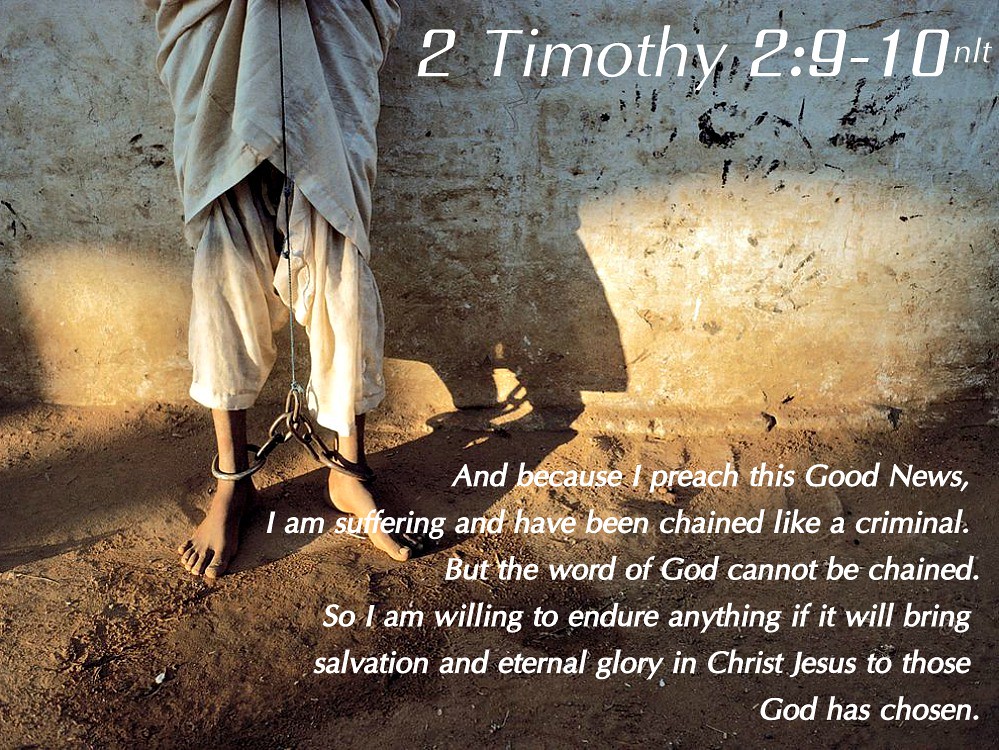
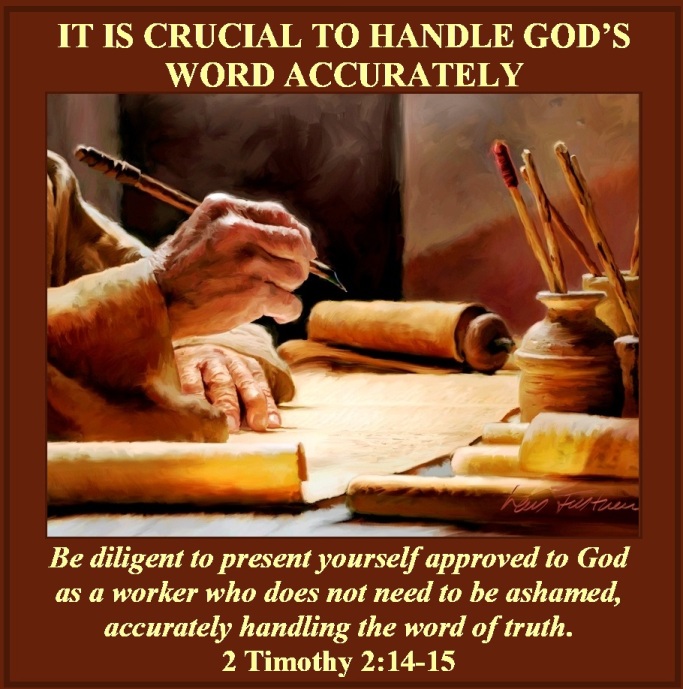


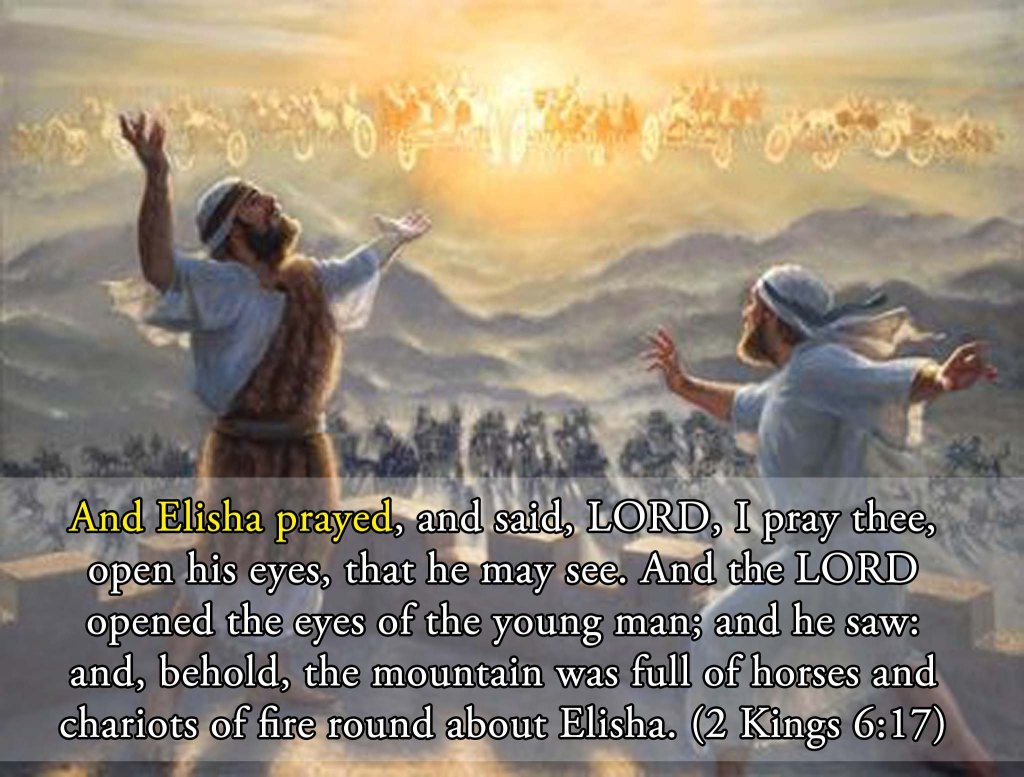

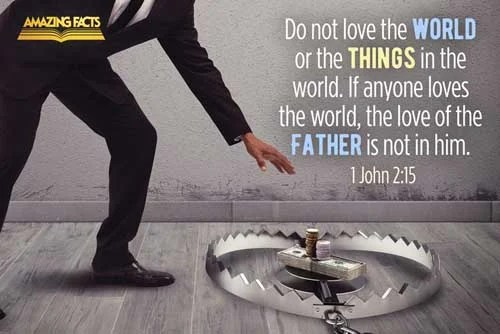


 Loving God, Living God, Loving Hope, Living Hope, Loving Living Life His Way! "Many things are possible for the person who has hope. Even more is possible for the person who has faith. And still more is possible for the person who knows how to love. But everything is possible for the person who practices all three virtues." - Brother Lawrence (1605-1691), Practicing the Presence of God (1692).