Visitation and Care Ministry: “I was Sick, and You Cared for Me.” Some Really Hard Lessons We Must Learn from those efforts of Job’s 3 Friends. Job 2:11-13

x1952-391, Job and His Three Friends , Artist: Tissot, Photographer: Richard Goodbody, Photo © The Jewish Museum, New York

Job 2:11-13 Amplified Bible

11 Now when Job’s three friends heard of all this adversity that had come upon him, each one came from his own place, Eliphaz the Temanite, Bildad the Shuhite, and Zophar the Naamathite; for they had made an appointment together to come to sympathize with him and to comfort him. 12 When they looked from a distance and did not recognize him [because of his disfigurement], they raised their voices and wept; and each one tore his robe [in grief] and they threw dust over their heads toward the sky [in sorrow]. 13 So they sat down on the ground with Job for seven days and seven nights and no one spoke a word to him, for they saw that his pain was very great.

The Word of God for the Children of God.

Glory be to the Father,
and to the Son, and to the Holy Ghost;
as it was in the beginning,
is now, and ever shall be,
world without end. Amen, amen.

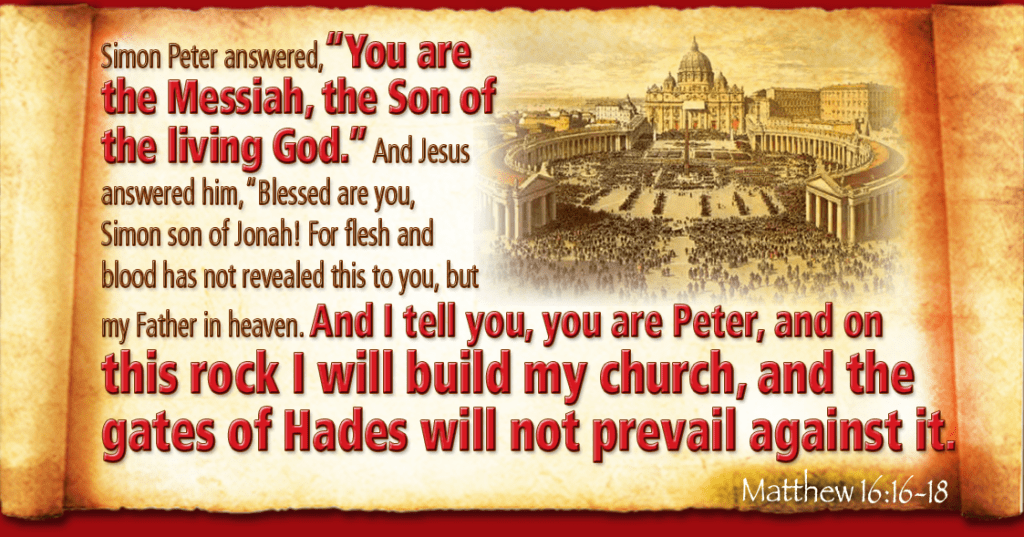
When you saw I was Sick, and You Cared for Me

Matthew 25:35-40 Amplified Bible

35 For I was hungry, and you gave Me something to eat; I was thirsty, and you gave Me something to drink; I was a stranger, and you invited Me in; 36 I was naked, and you clothed Me; I was sick, and you visited Me [with help and ministering care]; I was in prison, and you came to Me [ignoring personal danger].’ 37 Then the righteous will answer Him, ‘Lord, when did we see You hungry, and feed You, or thirsty, and give You something to drink? 38 And when did we see You as a stranger, and invite You in, or naked, and clothe You? 39 And when did we see You sick, or in prison, and come to You?’ 40 The King will answer and say to them, ‘I assure you  and most solemnly say to you, to the extent that you did it for one of these brothers of Mine, even the least of them, you did it for Me.’

There are so many excuses people make for paying little or no attention to those who are sick:

“I don’t like visiting people in the hospital, it makes me feel uncomfortable.”

“I can’t take the smell in the nursing home. There is a lady there who keeps yelling, ‘Take me home!’ and I can’t handle it.”

“I don’t know or wont know what to say when I am with that person.”

“Actually, isn’t that the pastor’s job? And, besides, I am too busy.”

Sad to have to confess this, I have tried to make these excuses as well.

Jesus simply cuts through all of the excuses and he says, “I was sick and you looked after me,” or, “I was sick and . . . you did not care to look after me.”

While our health-care systems can help with just about most of a sick person’s physical needs, their critical need for spiritual and emotional needs remain.

Visiting a person who is sick will often make a greater impact than we know.

Other patients, Family, health care workers, and staff also definitely notice when the sick are and are not being visited.

Yes, visiting with people who are ill can sometimes be challenging ministry.

It pushes us outside of our comfort zones.

But, as with many things, it usually gets easier with practice.

And we will often find that we are blessed by making a visit!

And what greater blessing can there be than to hear the Lord say, “When you saw that I was sick and you came to me, ministered to me, looked after me”!

Engaging Visitation Ministry: Hard Lessons We Must Learn from Observing the Actions of Job’s Friends.

Job 2:11-13 The Message

Job’s Three Friends

11-13 Three of Job’s friends heard of all the trouble that had fallen on him. Each traveled from his own country—Eliphaz from Teman, Bildad from Shuhah, Zophar from Naamath—and went together to Job to keep him company and comfort him. When they first caught sight of him, they couldn’t believe what they saw—they hardly recognized him! They cried out in lament, ripped their robes, and dumped dirt on their heads as a sign of their grief. Then they sat with him on the ground. Seven days and nights they sat there without saying a word. They could see how rotten he felt, how deeply he was suffering.

Some of my very biggest regrets stem from not responding to friends’ and family members’ pain with the true compassion and support they needed.

Unfortunately, there’ve been one too many uncomfortable times when I’ve attempted to “easily fix” a situation rather than simply remaining present.

The problem is, when I focus on solutions, I tend to feed my pride and form inaccurate assumptions. Worse, such behavior usually causes the other person to feel judged, imposed upon, unheard, and likely, very minimized and alone.

Perhaps this is why I’m so intrigued by Job’s friends in the book of Job.

I find their sincere efforts, words and conclusions convicting, not because of their accuracy, but rather, because of the discomfort they reveal within me.

Maybe you can also relate? Many of us long to love like Jesus but, sadly, find ourselves clumsily acting like Job’s friend’s Eliphaz, Bildad, and Zophar.

Here are four lessons we can learn from Job’s friends about Visitation Ministry.

1. Recognize and Remain Alert to Compassion Fatigue

Galatians 6:9-10 The Message

9-10 So let’s not allow ourselves to get fatigued doing good. At the right time we will harvest a good crop if we don’t give up, or quit. Right now, therefore, every time we get the chance, let us work for the benefit of all, starting with the people closest to us in the community of faith.

When someone we care about experiences hardship, we often reach out with heartfelt empathy.

Initially, we might even operate well from that sympathetic place.

Over time, however, our discomfort with discomfort can trigger within us a strong desire to escape our own unpleasant emotions.

This, in turn, can cause us to become dismissive, callus, or judgmental.

Evaluating Job’s friend’s behavior, I wonder if they suffered from compassion fatigue.

This occurs when someone else’s trauma leads us to become spiritually and emotionally exhausted.

I could understand why Eliphaz, Bildad, and Zophar might have felt this way.

They obviously cared a great deal for Job.

After all, they each planned for, traveled some distance to offer him solace.

Notice their reaction upon arriving. 

Job 2:11-13 NIV says,

“When they saw him from a distance, they could hardly recognize him; they began to weep aloud, and they tore their robes and sprinkled dust on their heads. Then they sat on the ground with him for seven days and seven nights. No one said a word to him, because they saw how great his suffering was.”

They expressed intense, unfiltered emotion.

Then they sat with him, in silence, for a full week — 168 hours.

I’ve never remained present with someone for even half that time, or one tenth of that time let alone trying such a marathon visit without ever even speaking.

How long can anyone really maintain a marathon of silence when with friends?

But then, perhaps feeling a degree of safety with his friends, Job expressed the depth of his grief.

Eliphaz, Bildad, and Zophar listened for 26 verses, without interrupting or correcting.

By chapter four, however, it appears as if Eliphaz reached his empathetic limit.

He spent the next two chapters, 48 verses, sermonizing and chastising Job.

I can understand why he might have felt compelled to do this.

It hurts to sit with those who are in pain.

Our empathy makes us want to do something!

If, as was the case with Job, there’s nothing we can do to ease the person’s sorrow, we might try to argue it away.

However, when we enter the situation alert to our shortcomings, we’re more apt to kindly excuse ourselves from the room to regain our emotional capacity.

Then, we can return with a renewed ability to remain present.

Or, we might recognize that we’re unable to quietly sit with them in their pain.

If so, it’s often kinder to ourselves to excuse ourselves, offer condolences and pray with them, leave than to speak words that will cause further wounding.

2. Don’t just Assume God Wants You to Speak for Him

Job 4:12-21 The Message

12-16 “A word came to me in secret—
    a mere whisper of a word, but I heard it clearly.
It came in a scary dream one night,
    after I had fallen into a deep, deep sleep.
Dread stared me in the face, and Terror.
    I was scared to death—I shook from head to foot.
A spirit glided right in front of me—
    the hair on my head stood on end.
I couldn’t tell what it was that appeared there—
    a blur . . . and then I heard a muffled voice:

17-21 “‘How can mere mortals be more righteous than God?
    How can humans be purer than their Creator?
Why, God doesn’t even trust his own servants,
    doesn’t even cheer his angels,
So how much less these bodies composed of mud,
    fragile as moths?
These bodies of ours are here today and gone tomorrow,
    and no one even notices—gone without a trace.
When the tent stakes are ripped up, the tent collapses—
    we die and are never the wiser for having lived.’”

In Job 4, we see an additional reason for Eliphaz’s prideful statements.

He tells of a “secret word” he received in the middle of the night and a “spirit” that “glided past [his] face” (v. 15).

This supernatural being told him, in essence, that no mortal, all of whom God charges with error, can be more righteous than God (vs. 17-19).

While this is true, that doesn’t mean the Lord wanted Eliphaz to speak these words to Job.

Considering the self-righteousness and pride evident in Eliphaz’s lengthy monologue, it seems more likely God meant this revelation for him.

In my experience, the Lord much prefers to speak to His children directly.

That doesn’t mean He never calls us to share truth. But may this always come only from extensive prayer, self-evaluation, and a humble and cleansed heart.

I’m likewise reminded of Jesus words in Matthew 7:1-5, where He said,

A Simple Guide for Behavior

1-5 “Don’t pick on people, jump on their failures, criticize their faults—unless, of course, you want the same treatment. That critical spirit has a way of boomeranging. It’s easy to see a smudge on your neighbor’s face and be oblivious to the ugly sneer on your own. Do you have the nerve to say, ‘Let me wash your face for you,’ when your own face is distorted by contempt? It’s this whole traveling road-show mentality all over again, playing a holier-than-thou part instead of just living your part. Wipe that ugly sneer off your own face, and you might be fit to offer a washcloth to your neighbor.

Notice, He didn’t say ignore your brother’s sawdust.

But He did tell us to deal decisively with our “holier than thou” selves first.

This helps remove our self-deception and biases and correct our perspective.

3. Check Your Theology against the Holy Scriptures

2 Timothy 2:8-18 New American Standard Bible 1995

Remember Jesus Christ, risen from the dead, descendant of David, according to my gospel, 9 [a]for which I suffer hardship even to imprisonment as a criminal; but the word of God is not imprisoned. 10 For this reason I endure all things for the sake of those who are chosen, so that they also may obtain the salvation which is in Christ Jesus and with it eternal glory. 11 It is a trustworthy statement:

For if we died with Him, we will also live with Him;
12 If we endure, we will also reign with Him;
If we [b]deny Him, He also will deny us;
13 If we are faithless, He remains faithful, for He cannot deny Himself.

An Unashamed Workman

14 Remind them of these things, and solemnly charge them in the presence of God not to wrangle about words, which is useless and leads to the ruin of the hearers.  15 Be diligent to present yourself approved to God as a workman who does not need to be ashamed, accurately handling the word of truth. 16  But avoid worldly and  empty chatter, for [c]it will lead to further ungodliness, 17 and their [d]talk will spread like  [e]gangrene. Among them are Hymenaeus and Philetus, 18 men who have gone astray from the truth saying that the resurrection has already taken place, and they upset the faith of some.

Based on what we read in Job, his friends adhered to what scholars refer to as retribution theology.

In short, they believed God punished the sinful through suffering and always showered the righteous with blessings.

According to this, a person deserved their afflictions.

Sadly, many today hold the same view, often referred to as the prosperity gospel.

This biblical distortion claims that God longs for all of His children to enjoy a bountiful, pain-and-sickness-free life.

Therefore, one only needs to pray with faith to receive total healing from whatever ails them.

Often, this perspective stems from building a worldview around a few passages, such as Isaiah 53:5, while ignoring or downplaying other sections of Scripture, such as when Jesus said all His followers would forever experience suffering.

John 16:29-33 New American Standard Bible 1995

29 His disciples *said, “Lo, now You are speaking plainly and are not [a]using a figure of speech. 30 Now we know that You know all things, and have no need for anyone to question You; by this we believe that You came from God.” 31 Jesus answered them,  “Do you now believe? 32 Behold, an hour is coming, and has already come, for you to be scattered, each to his own home, and to leave Me alone; and yet I am not alone, because the Father is with Me. 33 These things I have spoken to you, so that in Me you may have peace. In the world you have tribulation, but take courage; I have overcome the world.”

I’m convinced this is one of the reasons God included the book of Job in Scripture.

He wanted us to see a “blameless and upright” man endure more trauma than most of us will ten times over.

I’m certain He intended for us to gain comfort in Job’s spiritual wrestling, and to recognize how this increased his intimacy with God.

And through his friends’ callous responses, He exposes and convicts our inner Pharisees — the parts of us too quick to pass judgment and slow to show mercy.

4. Unburden your heart, Trust Jesus to Be the Savior

John 14:1-6 New American Standard Bible 1995

Jesus Comforts His Disciples

14 “Do not let your heart be troubled; [a]believe in God, believe also in Me. In My Father’s house are many dwelling places; if it were not so, I would have told you; for I go to prepare a place for you. If I go and prepare a place for you, I will come again and receive you to Myself, that where I am, there you may be also. And you know the way where I am going.” Thomas *said to Him, “Lord, we do not know where You are going, how do we know the way?” Jesus *said to him, “I am the way, and  the truth, and the life; no one comes to the Father but through Me.

This was something I struggled with as an only son.

When my mom was dying from heart attacks, I longed to take and shield her from all the pain and to quickly eradicate whatever suffering she did experience.

God continually reminded me, however, of the unbridled joy He was building into her soul. While He never restored her, He did use this to transform her children into the godly, courageous, compassionate adults we each are today.

It was in my darkest seasons that I most needed to trust and believe that God held her close, led her to his side, and had far more beautiful plans for her.

While my role as her son indeed was to nurture and protect her, my greatest task was to point her to Jesus. I am not, was not, never could be her Savior.

That role belongs to Christ and Him alone, and He’s more than capable of tending to my daughter’s deepest needs — and of caring for all mankind.

Job’s friends seemed to experience something of a role reversal.

Instead of their encouraging Job to pray, continue to seek and wrestle with God, they rushed in with all their extremely primitive self help “logical” solutions.

If only Job would follow their advice, repent of whatever unconfessed sin they felt certain led to his heartache, God would restore him to health and wealth.

Imagine how different their conversation might have looked and sounded had they simply prayed first, asked Job, “What is God saying to you in this season?”

And, instead of blasting Job with all manner and measure and burden of illogic; “What do you most need from me now?”

What if they had first determined to listen to Job, pray with Job, intercede for Job and then did the Psalm 46:10: wait for the gentle whisper of the Holy Spirit.

I recognize this isn’t easy.

It is not supposed to be easy.

It is just supposed to be most humble and more Christ like than man made.

Proverbs 3:5-12 New American Standard Bible 1995

Trust in the Lord with all your heart
And do not lean on your own understanding.
In all your ways acknowledge Him,
And He will make your paths straight.
Do not be wise in your own eyes;
Fear the Lord and turn away from evil.
It will be healing to your [a]body
And refreshment to your bones.
Honor the Lord from your wealth
And from the first of all your produce;
10 So your barns will be filled with plenty
And your vats will overflow with new wine.
11 My son, do not reject the [b]discipline of the Lord
Or loathe His reproof,
12 For whom the Lord loves He reproves,
Even as a father corrects the son in whom he delights.

It’s hard to see those we love hurt.

In our shrinking congregations, in diminishing and disappearing churches, our “get-fixed-quick” culture, we can easily fall into the same traps as Job’s well intentioned friends, which will only risk leading us into a further wounding.

Or we can pray to God, process and deal with our discomfort and compassion fatigue and to resist trying to act like the Holy Spirit in someone else’s life.

May we also study scripture, consider where we might have holes or distortions in our theology and remember that our friends and family don’t need us to be their Savior because they’ve already got one in Jesus. And may we remember, when someone is hurting, they all need our presence more than our solutions.

In the name of God, the Father and God the Son and God the Holy Spirit,

Let us Pray,

Jesus, we are experts at making excuses. Please fill us with compassion instead of excuses, and help us to truly care for one another. We pray in your name. Amen.

Psalm 8 New American Standard Bible 1995

The Lord’s Glory and Man’s Dignity.

For the choir director; on the Gittith. A Psalm of David.

O Lord, our Lord,
How majestic is Your name in all the earth,
Who have [a]displayed Your splendor above the heavens!
From the mouth of infants and nursing babes You have established [b]strength
Because of Your adversaries,
To make the enemy and the revengeful cease.

When I [c]consider Your heavens, the work of Your fingers,
The moon and the stars, which You have [d]ordained;
What is man that You [e]take thought of him,
And the son of man that You care for him?
Yet You have made him a little lower than [f]God,
And You crown him with glory and majesty!
You make him to rule over the works of Your hands;
You have put all things under his feet,
All sheep and oxen,
And also the [g]beasts of the field,
The birds of the heavens and the fish of the sea,
Whatever passes through the paths of the seas.

O Lord, our Lord,
How majestic is Your name in all the earth!

https://translate.google.com/

Caring for People in Need: Ways by which our Actions will Speak Louder Than our Words. Matthew 25:31-46

Matthew 25:31-46 New American Standard Bible 1995

The Judgment

31 “But when the Son of Man comes in His glory, and all the angels with Him, then He will sit on His glorious throne. 32 All the nations will be gathered before Him; and He will separate them from one another, as the shepherd separates the sheep from the goats; 33 and He will put the sheep on His right, and the goats on the left.

34 “Then the King will say to those on His right, ‘Come, you who are blessed of My Father, inherit the kingdom prepared for you from the foundation of the world. 35  For I was hungry, and you gave Me something to eat; I was thirsty, and you gave Me something to drink; I was a stranger, and you invited Me in; 36  naked, and you clothed Me; I was sick, and you visited Me; I was in prison, and you came to Me.’ 37  Then the righteous will answer Him, ‘Lord, when did we see You hungry, and feed You, or thirsty, and give You something to drink? 38 And when did we see You a stranger, and invite You in, or naked, and clothe You? 39  When did we see You sick, or in prison, and come to You?’ 40 The King will answer and say to them, ‘Truly I say to you, to the extent that you did it to one of these brothers of Mine, even the least of them, you did it to Me.’

41 “Then He will also say to those on His left, ‘Depart from Me, accursed ones, into the eternal fire which has been prepared for the devil and his angels; 42 for I was hungry, and you gave Me nothing to eat; I was thirsty, and you gave Me nothing to drink; 43 I was a stranger, and you did not invite Me in; naked, and you did not clothe Me; sick, and in prison, and you did not visit Me.’ 44 Then they themselves also will answer, ‘Lord, when did we see You hungry, or thirsty, or a stranger, or naked, or sick, or in prison, and did not [a]take care of You?’ 45 Then He will answer them, ‘Truly I say to you, to the extent that you did not do it to one of the least of these, you did not do it to Me.’ 46 These will go away into eternal punishment, but the righteous into eternal life.”

The Word of God for the Children of God.

Glory be to the Father,
and to the Son, and to the Holy Ghost;
as it was in the beginning,
is now, and ever shall be,
world without end. Amen, amen.

In a Season of Missions: Caring for People in Need

Matthew 25:35-36 New American Standard Bible 1995

35 For I was hungry, and you gave Me something to eat; I was thirsty, and you gave Me something to drink; I was a stranger, and you invited Me in; 36 naked, and you clothed Me; I was sick, and you visited Me; I was in prison, and you came to Me.’

Summer is just around the corner which means schools are off until the fall and the children have three months or so of fun in the sun or freedom of mountains.

It is a time families will spend all year planning for those well earned vacations.

Please do enjoy yourselves in whatever those fun and freedom adventures are.

However, fun stuff is never going to be the only business opportunity in town.

For churches, it is also the time to be about the business of helping and caring for others – whether it be in local missions, driving or flying to another region or state for in country missions or going abroad to another country to help out.

News reports have noted that the world has an overabundance of used clothing.

In many ways, that is a good thing. Even the poorest of the poor can have access to clothing! But does that make Jesus’ statement irrelevant in the 21st century?

No. The clothing that people may have is not always suitable. A warm parka in subzero weather is a necessity! There is also another sense in which people who sleep inside a wet cardboard box in the dead of winter are in need of “clothing.”

We do not have to walk far, extreme poverty still exists. There are countless people in the world with insufficient resources to pay for housing, buy food, and access medical care—not to mention paying for education and other costs to maintain a livelihood. What should our response be in the face of poverty?

The world is blessed with many organizations that strive to meet urgent needs and to uproot the causes of poverty. Issues are complex, and solutions are difficult to find. Though we may feel, and maybe often be, powerless to create completely effective solutions to these issues, a godly love for mercy calls for prayerful compassion, a missional heart when tempted to turn two blind eyes .

We genuinely need to seek God’s help and wisdom in caring for people in need.

Matthew 25:40. The fragrant aroma of your heart

40 The King will answer and say to them, ‘I assure you and most solemnly say to you, to the extent that you did it for one of these brothers of Mine, even the least of them, you did it for Me.’

This verse is often used in teaching that we are to aid, help the poor and less fortunate people — and we absolutely should at every Kingdom opportunity.

However, there’s a part of this verse that is almost not noticeable. 

Jesus says, “inasmuch [to the extent] that as you did it to one of the least of these My brethren…” 

So, who exactly are His brethren?

Did He mean the disciples?

His half-brothers that Mary and Joseph had after Him?

His earthly relatives?

Those who sat down on and around the Mount of Beatitudes to hear his words?

Those whom Jesus had compassion for, whom he told his disciples: “you feed them!” those thousands upon thousands who came, showed up to receive the abundance of bread and fish from the meagerness which the disciples brought?

All those whom the Gospel Narrative identified, considered to be, untouchable?

How about all those folks called “Samaritans” who were avoided at all costs?

And if we were to go over to Matthew 12:50, we find that “Whoever does the will of My Father in heaven is My brother and sister and mother.” 

His brethren are His followers who seek to do God’s will – just about everyone.

We should care for all those “least of these.” We should treat His brethren with humble compassion as we recognize they are His servants carrying out His will.

How we treat them expresses our love for and commitment to Jesus Himself.

But when we treat them harshly, it exposes our lack of devotion to Him.

Jesus holds us accountable in how we live our lives.

If we claim to live for Christ but our actions demonstrate differently, we need to examine the validity of our salvation.

With Christ living in us, we should be a mirrored reflection of His character.

Jesus cared, treated others with love, kindness and grace – and so should we.

When His character shows through our actions, we put Him on display to the world around us.

Jesus commanded too in John 13:34-35, “A new commandment I give to you, that you love one another: just as I have loved you, you also are to love another. By this all people will know that you are my disciples, if you have love for one another.”

Ways our Actions will Speak Louder Than our Words

James 1:19-25Amplified Bible

19 Understand this, my beloved brothers and sisters. Let everyone be quick to hear [be a careful, thoughtful listener], slow to speak [a speaker of carefully chosen words and], slow to anger [patient, reflective, forgiving]; 20 for the [resentful, deep-seated] anger of man does not produce the righteousness of God [that standard of behavior which He requires from us]. 21 So get rid of all uncleanness and [a]all that remains of wickedness, and with a humble spirit receive the word [of God] which is implanted [actually rooted in your heart], which is able to save your souls. 22 But prove yourselves doers of the word [actively and continually obeying God’s precepts], and not merely listeners [who hear the word but fail to internalize its meaning], deluding yourselves [by unsound reasoning contrary to the truth]. 23 For if anyone only listens to the word [b]without obeying it, he is like a man who looks very carefully at his natural face in a mirror; 24 for once he has looked at himself and gone away, he immediately forgets [c]what he looked like. 25 But he who looks carefully into the perfect law, the law of liberty, and faithfully abides by it, not having become a [careless] listener who forgets but [d]an active doer [who obeys], he will be blessed  and favored by God in what he does [in his life of obedience].

Most of us are familiar with the saying, “Actions speak louder than words.”

This is a true saying and something that we need to reflect on in our daily lives.

Although this saying is not in the Bible, it is in full agreement with the Bible.

As James tells us, we cannot only read the Bible; we have to also do what it says. (James 1:19-25).

In this way, we can see that our actions speak louder than our words.

Just as James says that we need to do what the Bible says rather than to just read it, we also need to also convey in, and through our actions, what our words say.

Words don’t mean as much if our actions fall flat, fail to show them to be true.

If we claim we love someone, yet we are mean to them, put them down, and speak badly of them, then we are not really showing them love. Instead, we are merely claiming we love them while our actions are doing the exact opposite.

As Christians, can we see how this can get dangerous.

We need to always ensure that our actions and our words are in alignment with the commandment of God; to Love God and each other with all of our strength.

In other words, we don’t need to say one thing and do the exact opposite.

This is true for our dealings with loved ones, acquaintances, people we don’t know, and God.

In everything we say and everything we do, we need to make sure our words and actions are in maximum agreement with God and each other.

With this said, there are also times when our actions speak louder than words.

This can be seen as both a good thing and bad thing, depending on the context.

If your actions are speaking louder than your words in a good way, then it is going to be something positive in your life. However, if your actions are speaking louder than your words in a negative way, then it is going to be a negative thing in your life.

As we look at these things, we can see that your actions speaking louder than your words may or may not be a good thing.

Depending on the circumstances and the situation, you should be able to tell if it is a good thing or a bad thing.

As Christians, we need to always strive that our actions speak louder than our words in a good way.

Here are five suggested ways our actions are speaking louder than our words.

1. In Apologies

Phillipians 2:1-4 amplified

Be Like Christ

2 Therefore if there is any encouragement and comfort in Christ [as there certainly is in abundance], if there is any consolation of love, if there is any fellowship [that we share] in the Spirit, if [there is] any [great depth of] affection and compassion,  make my joy complete by being of the same mind, having the same [a]love [toward one another], knit together in spirit, intent on one purpose [and living a life that reflects your faith and spreads the gospel—the good news regarding salvation through faith in Christ]. Do nothing from selfishness or empty conceit [through factional motives, or strife], but with [an attitude of] humility [being neither arrogant nor self-righteous], regard others as more important than yourselves. Do not merely look out for your own personal interests, but also for the interests of others.

Considering the weight and the burdens of the fallout from General Conference 2024, the weight of the negativity of rhetoric, accusations being thrown about and the vast ranges of offence perceived and emotionally delivered, expressed, it is probably not a bad idea that someone break into those impasses that now exist between all sides and simply humble themselves before God and repent.

One way your actions speak louder than your words is in your apologies to God the Father and God the Son and God the Holy Spirit for grieving them so badly.

Anybody can cry, say, and repeat ad nauseum “I’m sorry,” but your actions before God and His throne room are what determines if you actually mean it.

Crying, Saying, “I’m sorry” does not prove anything. Many of us are taught to say “I’m sorry” from the time we are children, even if we don’t mean it at all.

This is something we need to exercise greatest initiative to change because we should not be saying we are sorry if we don’t actually repent and truly mean it. (Individual and Corporate Church Psalm 51 measure of genuine repentance!)

If we are truly sorry, we will show it in our actions. As an example, maybe a man was unfaithful to his wife. He couldn’t just come up to her and say he was sorry.

Apologizing is appreciated, but it doesn’t help in his case-it must go far deeper.

Instead, he has to repent before God whom he offended, show in his prayers, his humility and actions exactly how sorry he is. He should still apologize to all aggrieved parties; however, he also has to authentically show it in his actions.

He can do this by being extra caring with his wife, taking any steps she needs to heal, and going to couples therapy if this is something she wants to do. He also has to be willing to step aside and accept her decision to end the marriage.

While this would be painful for both of them, he has to absolutely respect her decision, continue to show in his actions how sorry he is, even after the divorce if that is how they decide their relationship comes to a mutual conclusion.

It could be that if he showed in his actions how much he loves his wife and is sorry for what he had done, perhaps she will be able to forgive him, and he will forgive her, they’ll be able to continue to work on the hardcore healing  process.

2. Being There for Others, Bearing others burdens.

Proverbs 27:17-18 Amplified Bible

17 
As iron sharpens iron,
So one man sharpens [and influences] another [through discussion].
18 
He who tends the fig tree will eat its fruit,
And he who faithfully protects and cares for his master will be honored.

A second way your actions speak louder than your words is when you are there for someone.

After we have gone through a difficult time, we often need someone to be there for us while we are just trying to make heads or tails out of all of that adversity.

We can say all day that we would be there for someone, but when the time would actually come, would we really be there?

I had many friends who said they would be there for me no matter what, only to have no visible source of support in my early days of my heart surgery recovery.

As you can see, their words and actions did not match. Through their actions, I was hearing the message that I didn’t always matter to them the way they did to me. Maybe you have also been through the same thing, and it really hurts you.

Know that your feelings are valid even if other people have invalidated them in the past. It was wrong of your friends not to be there as, when you needed them and as you can see, in that moment their actions spoke louder than their words.

This is why we need to ensure our actions are speaking louder than our words in a good way. Being there for others can be difficult, but as much as we truly love them, we should make every possible effort not see them as an inconvenience.

At times I saw myself an inconvenience because of how my friends treated me.

Pray! We need to ensure that we never make anyone feel bad about themselves through our actions. This is what happens when our actions hurt others. People observe us, assess us, pay attention to what we all do — not to just what we say.

3. In our steady march towards the Faith of Abraham

Hebrews 11:17-19 Amplified Bible

17 By faith Abraham, when he was tested [that is, as the testing of his faith was still in progress], [a]offered up Isaac, and he who had received the promises [of God] was ready to sacrifice his only son [of promise]; 18 to whom it was said, “Through Isaac your descendants shall be called.” 19 For he considered [it reasonable to believe] that God was able to raise Isaac even from among the dead. [Indeed, in the sense that he was prepared to sacrifice Isaac in obedience to God] Abraham did receive him back [from the dead] figuratively speaking.

A third way our actions speak louder than your words is in our faith journey.

The Apostle John tells us, “Dear children, let us not love with words or speech but with actions and in truth” (1 John 3:18).

1 John 3:18-20 Amplified Bible

18 Little children (believers, dear ones), let us not love [merely in theory] with word or with tongue [giving lip service to compassion], but in action and in truth [in practice and in sincerity, because practical acts of love are more than words]. 19 By this we will know [without any doubt] that we are of the truth, and will assure our heart and quiet our conscience before Him 20 whenever our heart convicts us [in guilt]; for God is greater than our heart and He knows all things [nothing is hidden from Him because we are in His hands].

As the Apostle John teaches us, we do not need to love only with words but in action and in truth. This applies to all areas of our lives, including in our faith. We can’t claim to be a follower of God if we are denying Him in our actions.

We have to listen to what the Bible says and obey it.

It is of no benefit if we do not follow what the Bible says.

If our actions are speaking louder than our words, then we should be showing in our lives our love for Christ rather than occasionally saying we are Christians.

Individuals should know we are Christians based on our actions.

As the Gospels teach us, following Jesus means loving others, respecting them, and extending  forgiveness to them as God extended His forgiveness unto us.

Matthew 9:10-13 Amplified Bible

10 Then as Jesus was reclining at the table in Matthew’s house, many tax collectors and [a]sinners [including non-observant Jews] came and ate with Him and His disciples. 11 When the Pharisees saw this, they asked His disciples, “Why does your Master eat with tax collectors and sinners?” 12 But when Jesus heard this, He said, “Those who are healthy have no need for a physician, but [only] those who are sick. 13 Go and learn what this [Scripture] means: ‘I desire compassion [for those in distress], and not [animal] sacrifice,’ for I did not come to call [to repentance] the [self-proclaimed] righteous [who see no need to change], but sinners [those who recognize their sin and actively seek forgiveness].”

Through all these things, we will be able to ensure our actions speak louder than our simple words. We would not be known as followers of Christ just by “proclaiming” ourselves to be true Christians in the New Testament times.

Rather, the Lord tells us by their fruit we will recognize them (Matthew 7:16).

Matthew 7:15-20Amplified Bible

A Tree and Its Fruit

15 “Beware of the false prophets, [teachers] who come to you dressed as sheep [appearing gentle and innocent], but inwardly are ravenous wolves. 16 By their fruit you will recognize them [that is, by their contrived doctrine and self-focus]. Do people pick grapes from thorn bushes or figs from thistles? 17 Even so, every healthy tree bears good fruit, but the unhealthy tree bears bad fruit. 18 A good tree cannot bear bad fruit, nor can a bad tree bear good fruit. 19 Every tree that does not bear good fruit is cut down and thrown into the fire. 20  Therefore, by their fruit you will recognize them [as false prophets].

If we take our faith in Jesus seriously, it will decisively show in our daily lives.

However, if we choose to not take our faith seriously, we will be giving a bad name to our Savior and Lord.

4. Listening to Others

James 1:19-22Amplified Bible

19 Understand this, my beloved brothers and sisters. Let everyone be quick to hear [be a careful, thoughtful listener], slow to speak [a speaker of carefully chosen words and], slow to anger [patient, reflective, forgiving]; 20 for the [resentful, deep-seated] anger of man does not produce the righteousness of God [that standard of behavior which He requires from us]. 21 So get rid of all uncleanness and [a]all that remains of wickedness, and with a humble spirit receive the word [of God] which is implanted [actually rooted in your heart], which is able to save your souls. 22 But prove yourselves doers of the word [actively and continually obeying God’s precepts], and not merely listeners [who hear the word but fail to internalize its meaning], deluding yourselves [by unsound reasoning contrary to the truth].

A fourth way your actions speak louder than your words is in your listening skills. If you are truly listening to others, you will respect what they say.

On the other hand, if you only say you are listening to others, but deny it in your actions, your negative actions will be conveyed in your dealings with others.

People are quick to notice if you are not truly listening to them. If a loved one kindly asks you to be respectful of their space and you claim to say you will, yet then later invade their personal space, you are not really listening to them.

In the same way, if a wife tells her husband she feels she is not being heard, he needs to start paying attention to what she is saying.

His wife is saying she is not feeling heard because her husband is not displaying in his actions what she has spoken to him about.

As we can see, yet again, it is important that our actions speak louder than our words because they can easily go in the opposite direction.

Listening to others is a good way to show that you are truly taking time out of your day to be present with your loved ones.

Don’t only listen to them — fully engage yourself in what they are saying and allow your actions to reflect what you listened to.

If your loved one asked you to give them a drive home from work, do this.

In the same way, if your loved one asked you to pick up some groceries from the supermarket or medicine from the pharmacy, you will show in your actions you were listening when you returned home with the bags of groceries, medicine.

All of these things cause our actions to be louder than our words.

We just have to make sure they are louder than our words in a good way.

Never allow your actions to speak louder than your words in a negative way because it can really hurt people in your life.

Invest in spending time with your loved ones and truly listen to them.

By listening to them, it will shape your actions in a way that you can fully show them you love them.

5. Serving God together in Mission and Ministry

Acts 2:43-47 Amplified Bible

43 A sense of awe was felt by [a]everyone, and many wonders and signs (attesting miracles) were taking place through the apostles. 44 And all those who had believed [in Jesus as Savior] [b]were together and had all things in common [considering their possessions to belong to the group as a whole].  45 And they began selling their property and possessions and were sharing the proceeds with all [the other believers], as anyone had need. 46 Day after day they met in the temple [area] continuing with one mind, and breaking bread in various private homes. They were eating their meals together with joy and generous hearts, 47 praising God continually, and having favor with all the people. And the Lord kept adding to their number daily those who were being saved.

A fifth way your actions speak louder than your words is in the way you serve God. If we claim to be serving God, we must likewise prove it in our actions.

Anybody could say they are a follower of God, but their actions for the Kingdom of God are what will truly tell us if they are or are not serious about serving God.

Living for God is not a one-time thing.

Rather, it is an everyday life decision.

If we are truly focused on serving God, we will show it in our actions.

If you want your actions to be louder than your words in your service to God, you have to obey God’s teachings in the Bible.

They should become part of your life and it will not be a burden if you are genuine in the way you want to serve God.

The Lord tells us to not lie, cheat, steal, or endorse sin.

We cannot say we are truly living in a way for our actions to speak louder than our words if we are doing these very things.

Living for God by serving our neighbors in their neighborhood , will be shown in our actions if you are genuinely wanting to serve Him. Don’t only claim to serve God — make sure you are actually serving Him with your entire heart.

You will have a much better life , a more abundantly blessed life if we choose to serve God with our life rather than just “claiming” to know Him in your words.

Your actions will speak louder than your words if you are faithfully living in accordance with God’s Word.

God will take definitely notice of this and He will be pleased with your actions.

Matthew 25:14-28 Amplified Bible

Parable of the Talents

14 “For it is just like a man who was about to take a journey, and he called his servants together and entrusted them with his possessions. 15 To one he gave five [a]talents, to another, two, and to another, one, each according to his own ability; and then he went on his journey. 16 The one who had received the five talents went at once and traded with them, and he [made a profit and] gained five more.  17  Likewise the one who had two [made a profit and] gained two more. 18 But the one who had received the one went and dug a hole in the ground and hid his master’s money.

19 “Now after a long time the master of those servants returned and settled accounts with them. 20 And the one who had received the five talents came and brought him five more, saying, ‘Master, you entrusted to me five talents. See, I have [made a profit and] gained five more talents.’ 21 His master said to him, ‘Well done, good and faithful servant. You have been faithful and trustworthy over a little, I will put you in charge of many things; share in the joy of your master.’

22 “Also the one who had the two talents came forward, saying, ‘Master, you entrusted two talents to me. See, I have [made a profit and] gained two more talents.’ 23 His master said to him, ‘Well done, good and faithful servant. You have been faithful and trustworthy over a little, I will put you in charge of many things; share in the joy of your master.’

24 “The one who had received one talent also came forward, saying, ‘Master, I knew you to be a harsh and demanding man, reaping [the harvest] where you did not sow and gathering where you did not scatter seed. 25 So I was afraid [to lose the talent], and I went and hid your talent in the ground. See, you have what is your own.’

26 “But his master answered him, ‘You wicked, lazy servant, you knew that I reap  [the harvest] where I did not sow and gather where I did not scatter seed. 27 Then you ought to have put my money with the bankers, and at my return I would have received my money back with interest. 28 So take the talent away from him, and give it to the one who has the ten talents.’

Obey His teachings, such as the Great Commission (Matthew 28:18-20).

Considering the weight of current circumstances of the church, this can be a challenging daunting subject for many, yet it is something Jesus calls us to do.

Concerning ministry and missions, we can only serve Him by either going ourselves, sending/being with others, or donating to mission organizations.

God wants us to be involved with missions because it involves helping the lost come to know Him. You can demonstrate in your actions that you are truly serving God by obeying all aspects of His teachings, including the hard ones.

Your actions always speak louder than your words, and this is why we need to ensure that our actions are speaking louder than our words in a positive way.

In the name of God, the Father and God the Son and God the Holy Spirit,

Let us Pray,

Psalm 133 Amplified Bible

The Excellency of Brotherly Unity.

A Song of [a]Ascents. Of David.

133 Behold, how good and how pleasant it is
For brothers to dwell together in unity!

It is like the precious oil [of consecration] poured on the head,
Coming down on the beard,
Even the beard of Aaron,
Coming down upon the edge of his [priestly] robes [consecrating the whole body].

It is like the dew of [Mount] Hermon
Coming down on the hills of Zion;
For there the Lord has commanded the blessing: life forevermore.

Glory be to the Father,
and to the Son, and to the Holy Ghost;
as it was in the beginning,
is now, and ever shall be,
world without end. Amen, amen.
https://translate.google.com/

God’s Unchanging Word: Abraham, Visible Traces of his Trusting Heart. Hebrews 11:17-19

Hebrews 11:17-19 Amplified Bible

17 By faith Abraham, when he was tested [that is, as the testing of his faith was still in progress], [a]offered up Isaac, and he who had received the promises [of God] was ready to sacrifice his only son [of promise]; 18 to whom it was said, “Through Isaac your descendants shall be called.” 19 For he considered [it reasonable to believe] that God was able to raise Isaac even from among the dead. [Indeed, in the sense that he was prepared to sacrifice Isaac in obedience to God] Abraham did receive him back [from the dead] figuratively speaking.

The Word of God for the Children of God.

Glory be to the Father,
and to the Son, and to the Holy Ghost;
as it was in the beginning,
is now, and ever shall be,
world without end. Amen, amen.

There are many times the LORD has promised me great things, but for some reason, I have always received things that I thought were just too mediocre.

I try to be content with all that the LORD has given. But, it always bothered me why am I not receiving the great things that the LORD has promised, why do I always end up with the things that are not what actually the LORD promised…

Recently few things happened in our family and by the grace of our LORD, we will be able to provide witness to those events for the glory of our LORD. Still, it bothered me  we did not receive the promises of the LORD as He has promised.

When I asked the LORD, the only answer was: “Have the faith of Abraham.”

Okay, first of all, I don’t think nor believe that I can have a faith like Abraham.

I mean, he is called the father of all faithful for a reason, right? I mean, even today, after knowing all I know about our LORD, I don’t think I would be willing to ever sacrifice my children, but Abraham, he could, he would and he sure did.  

But then the LORD made me realize that He was talking about some other angle.

Isaac was born when both Abraham and his wife Sarah were really old.

Now, the LORD was asking Abraham to sacrifice his only son Isaac.

We all talk about the unquestioning obedience of Abraham and how he did not hesitate to do the LORD’s command, then to have Isaac gather up the kindling.

The LORD is not expecting us to do the same. But there is something else we must learn from this. Till then, no one had ever be risen from dead, so Abraham had no reason to believe that. What would then be the best alternative to that?

It would have been easier for me in 2024 to believe that even if young Isaac was killed, the LORD would be able to give another child to Abraham and Sarah. That would obviously be a whole lot easier than resurrecting someone from death.

But Abraham did not seek an alternative. He believed in the Word of the LORD. He believed in the Word of the LORD as it was. The LORD’s original promise was that it was through Isaac, his offspring would be reckoned. (Hebrews 11:18)

If Isaac was sacrificed, then God could always give another child for Abraham and start a new covenant. But Abraham did not budge from his obedience. He believed the original promise of the LORD. So, his faith was on only one thing: even if I had to sacrifice Isaac today, the LORD would assuredly resurrect him.

That’s exactly the steadfastness of faith the LORD is directly asking from us.

Say the LORD has given you a promise, you are waiting eagerly for that promise.

But somehow things go unexpectedly wrong, the doors are shut and instead of great things the LORD has promised, you receive some lesser thing. It is not as great as the LORD has promised, but it is still better than what you had before.

What could you, would you, suggest to do?

What could you, would you, recommend?

Will you automatically or begrudgingly settle for this, that, and thank the LORD for providing at least this? Or, will you hardcore hold on to the original promise, keep moving forward with faith that the LORD will fulfill His Word as He has promised?

Your well considered answer will decide the blessings you receive in your life. 

Believe in the Word of the LORD and believe in every letter of the Word.

The Business of Being in God’s Unchanging Word

Hebrews 4:11-16 Amplified Bible

11 Let us therefore make every effort to enter that rest [of God, to know and experience it for ourselves], so that no one will fall by following the same example of disobedience [as those who died in the wilderness]. 12 For the word of God is living and active and full of power [making it operative, energizing, and effective]. It is sharper than any two-edged [a]sword, penetrating as far as the division of the [b] soul and spirit [the completeness of a person], and of both joints and marrow [the deepest parts of our nature], exposing and judging the very thoughts and intentions of the heart. 13 And not a creature exists that is concealed from His sight, but all things are open and exposed, and revealed to the eyes of Him with whom we have to give account.

14 Inasmuch then as we [believers] have a great High Priest who has [already ascended and] passed through the heavens, Jesus the Son of God, let us hold fast our confession [of faith and cling tenaciously to our absolute trust in Him as Savior].  15 For we do not have a High Priest who is unable to sympathize and  understand our weaknesses and temptations, but One who has been tempted [knowing exactly how it feels to be human] in every respect as we are, yet without [committing any] sin.  16 Therefore let us [with privilege] approach the throne of grace [that is, the throne of God’s gracious favor] with confidence and without fear, so that we may receive mercy [for our failures] and find [His amazing] grace to help in time of need [an appropriate blessing, coming just at the right moment].

In too many ways, from too many directions, life can feel overwhelming.

Every day brings new challenges even as old ones continue without resolution.

It’s easy to allow our faith to trip on the stumbling block of our own lack of understanding of our circumstances—to take the baton of faith, as it were, toss it to the ground, saying, “no more steps, I’m finished. I can’t run any further.”

1 Corinthians 15:50-58 Amplified Bible

The Mystery of Resurrection

50 Now I say this, believers, that flesh and blood cannot inherit nor be part of the kingdom of God; nor does the perishable (mortal) inherit the imperishable (immortal). 51 Listen very carefully, I tell you a mystery [a secret truth decreed by God and previously hidden, but now revealed]; we will not all sleep [in death], but we will all be [completely] changed [wondrously transformed], 52 in a moment, in the twinkling of an eye, at [the sound of] the last trumpet call. For a trumpet will sound, and the dead [who believed in Christ] will be raised imperishable, and we will be [completely] changed [wondrously transformed]. 53 For this perishable [part of us] must put on the imperishable [nature], and this mortal [part of us that is capable of dying] must put on immortality [which is freedom from death]. 54 And when this perishable puts on the imperishable, and this mortal puts on immortality, then the Scripture will be fulfilled that says, “Death is swallowed up in victory (vanquished forever). 55 O death, where is your victory? O death, where is your sting?” 56 The sting of death is sin, and the power of sin [by which it brings death] is the law; 57 but thanks be to God, who gives us the victory [as conquerors] through our Lord Jesus Christ.

58 Therefore, my beloved brothers and sisters, be steadfast, immovable, always excelling in the work of the Lord [always doing your best and doing more than is needed], being continually aware that your labor [even to the point of exhaustion] in the Lord is not futile nor wasted [it is never without purpose].

In those moments, God’s word speaks directly and decisively, encourages us to remember that the witness of the Christian faith is a testimony, enduring faith that remains resolute. It is so possible to remain obedient to God’s commands even when everything around us seems to contradict what He has promised.

Until the cross, perhaps nowhere in Scripture do we find a more hardcore, thoroughly overwhelming moment than with Isaac in the life of Abraham.

It was a moment that occurred entirely at the instigation of God:

“[God] said, ‘Take your son, your only son Isaac, whom you love, and go to the land of Moriah, and offer him there as a burnt offering on one of the mountains of which I shall tell you’ … When they came to the place of which God had told him, Abraham built the altar there and laid the wood in order and bound Isaac his son and laid him on the altar, on top of the wood. Then Abraham reached out his hand and took the knife to slaughter his son” (Genesis 22:2, 9-10).

God’s command to Abraham was clear—and yet it seemed to contradict God’s sure and ironclad promise that through Abraham’s offspring

“all the nations of the earth” would “be blessed” and that “through Isaac shall your offspring be named” (Genesis 22:18; 21:12).

Believe it! The fulfillment of God’s promises depended upon Isaac’s survival.

If Isaac was to die, how could the promise possibly be fulfilled?

Yet Abraham still obeyed. Even though his circumstances could have led him to doubt and question God’s word, by faith Abraham said, 

God has a plan in this. His promise is that through Isaac all the nations of the earth will be blessed. Therefore, He must be going to resurrect him—to raise him up from the dead (Hebrews 11:19).

This is why earlier, as Abraham had left to perform the commanded sacrifice, he had said to his servants, “Stay here with the donkey; I and the boy will go over there and worship and come again to you” (Genesis 22:5, emphasis added).

What an expression of faith! Do not miss this: when the command was given to Abraham, he obeyed it. Although it seemed to directly contradict the promises God had made, Abraham did his business, and he determined to let God do His.

We can do so too.

As difficult as it is do not allow your circumstances, however daunting they may be, to lessen your obedience or cause you to call God’s promises into question.

Centuries after Abraham and Isaac climbed up, and down, this mountain, and carried their wood, God’s own Son rose from the grave on the side of that same mountain, as the ultimate testimony to the truth that God keeps His promises.

So you and I and the Church in all of its rancor and rhetoric can face whatever today brings confidently, hopefully, and prayerfully, saying, “I can keep going. I’m not finished, God is not finished. God will do His part, so I can do mine.”

In the name of God, the Father and God the Son and God the Holy Spirit,

Let us Pray,

Psalm 46 Amplified Bible

God the Refuge of His People.

To the Chief Musician. A Psalm of the sons of Korah, set to soprano voices. A Song.

46 God is our refuge and strength [mighty and impenetrable],
A very present and well-proved help in trouble.

Therefore we will not fear, though the earth should change
And though the mountains be shaken and slip into the heart of the seas,

Though its waters roar and foam,
Though the mountains tremble at its roaring. Selah.


There is a river whose streams make glad the city of God,
The holy dwelling places of the Most High.

God is in the midst of her [His city], she will not be moved;
God will help her when the morning dawns.

The nations made an uproar, the kingdoms tottered and were moved;
He raised His voice, the earth melted.

The Lord of hosts is with us;
The God of Jacob is our stronghold [our refuge, our high tower]. Selah.


Come, behold the works of the Lord,
Who has brought desolations and wonders on the earth.

He makes wars to cease to the end of the earth;
He breaks the bow into pieces and snaps the spear in two;
He burns the chariots with fire.
10 
“Be still and know (recognize, understand) that I am God.
I will be exalted among the nations! I will be exalted in the earth.”
11 
The Lord of hosts is with us;
The God of Jacob is our stronghold [our refuge, our high tower]. Selah.

Glory be to the Father,
and to the Son, and to the Holy Ghost;
as it was in the beginning,
is now, and ever shall be,
world without end. Amen, amen.

https://translate.google.com/

Are We Skipping Over the Incredible Verses which Surround John 3:16??? 2Timothy 3:10-17

2 Timothy 3:10-17 New American Standard Bible 1995

10 Now you followed my teaching, conduct, purpose, faith, patience, love, [a] perseverance, 11 persecutions, and sufferings, such as happened to me at Antioch, at Iconium and at Lystra; what persecutions I endured, and out of them all the Lord rescued me! 12 Indeed, all who desire to live godly in Christ Jesus will be persecuted. 13 But evil men and impostors will proceed from bad to worse, deceiving and being deceived. 14 You, however, continue in the things you have learned and become convinced of, knowing from whom you have learned them, 15 and that from childhood you have known the sacred writings which are able to give you the wisdom that leads to salvation through faith which is in Christ Jesus. 16 All Scripture is [b]inspired by God and profitable for teaching, for reproof, for correction, for [c] training in righteousness; 17 so that the man of God may be adequate, equipped for every good work.

The Word of God for the Children of God.

Glory be to the Father,
and to the Son, and to the Holy Ghost;
as it was in the beginning,
is now, and ever shall be,
world without end. Amen, amen.

Transformation Through the Word

2 Timothy 3:16-17 New American Standard Bible 1995

16 All Scripture is [a]inspired by God and profitable for teaching, for reproof, for correction, for [b]training in righteousness; 17 so that the man of God may be adequate, equipped for every good work.

The study of God’s Word is the secret discipline for spiritual formation.

Other books may be useful for information, but the Bible was given for transformation.

Timothy had the privilege of reading, studying, and memorizing God’s Word from infancy. He learned firsthand how the much Scriptures transform us.

Paul explains that God’s Word is profitable “for teaching, rebuking, correcting and training in righteousness.”

It is a guide that helps us fine-tune every part of our being.

Teaching focuses our mind and shapes our thinking.

Rebuking pricks our conscience so that we don’t travel the wrong direction.

Correction molds our will so that we see the wisdom of God’s plans.

Training in righteousness shows us how to act more like Christ.

In this way the Word of God initiates a four-step process of transformation.

Put simply, teaching tells us what is right, rebuking tells us what is not right, correction tells us how to get right, and training shows us how to stay right.

The Holy Scriptures are the breath of God.

If you want to be productive, useful, and fertile as a Christian, get into the Word of God. Reading the Bible for its teaching, studying Scripture systematically, meditating on God’s Word devotionally, and memorizing it faithfully—each of these are invaluable transforming activities that you will truly not want to miss.

For Example: Those Verses Surrounding John 3:16

John 3:16 Amplified Bible

16 “For God so [greatly] loved and dearly prized the world, that He [even] gave His [One and] [a]only begotten Son, so that whoever believes and trusts in Him [as Savior] shall not perish, but have eternal life.

One of the most well-known Bible verses is John 3:16.

This is such a powerful message, but it is always important to look at the context. If we just focus on John 3:16, then we miss out on the whole picture. Have you ever wondered what was said right before and after John 3:16? Today, we are going to learn about the incredible verses which surround John 3:16.

John 3:1-21 is often titled, “Born Again.”

The famous verse comes smack dab in the middle of the conversation between Jesus and Nicodemus.

Nicodemus was a dedicated Jewish Pharisee who would have known the law and the Old Testament accounts.

Nicodemus was looking for the Messiah, but missed the fact that Jesus was ultimately who he was searching.

In this secret meeting, Jesus revealed the truth:

John 3:13 Amplified Bible

13 No one has gone up into heaven, but there is One who came down from heaven, the Son of Man [Himself—whose home is in heaven].

Jesus says here that He is God.

This is a huge deal.

Sometimes people will argue that Jesus never claimed to be God.

But, this verse is one example He, the Son of Man, came down from heaven.

This is also significant because He uses the phrase “no one has ascended.”

At that point in history, not a single person had gone up to heaven.

There was no forgiveness for sins by the Messiah.

No person could get back to God without the help of God Himself.

We could no longer approach Him after the garden; we were exiles.

However, Jesus came to us.

Here we read of Jesus revealing His deity and salvation plan without Nicodemus even minimally catching on to the huge significance of what he had just heard.

John 3:14-15 Amplified Bible

14 Just as Moses lifted up the [bronze] serpent in the desert [on a pole], so must the Son of Man be lifted up [on the cross], 15 so that whoever believes will in Him have eternal life [after physical death, and will actually live forever].

Here, Jesus points Nicodemus toward Old Testament Prophesy.

Jesus knew His audience. Nicodemus was a scholarly Jew.

He would have known the story of Moses backwards and forwards.

Jesus refers to Numbers 21 when the Israelites were bitten by venomous snakes in the wilderness.

The only solution was to look at the snake on the cross.

Everyone who did not look at the cross died. Everyone who gazed upon the bronze snake on the cross lived. This is such a powerful representation of the living gospel. Jesus became sin for us so we could have His righteousness.

2 Corinthians 5:20-21 Amplified Bible

20 So we are ambassadors for Christ, as though God were making His appeal through us; we [as Christ’s representatives] plead with you on behalf of Christ to be reconciled to God. 21 He made Christ who knew no sin to [judicially] be sin on our behalf, so that in Him we would become the righteousness of God [that is, we would be made acceptable to Him and placed in a right relationship with Him by His gracious lovingkindness].

Jesus was perfect, but He took on our sins so we could be freed and forgiven.

When we ponder the parallels of the garden here – the snake, the bite, and death – we cannot help but be amazed at the fulfillment of His covenant.

Jesus was revealing Himself as the Savior in how He was about to fulfill the prophecy of the past and provide the way to eternal life in the future.

During this current moment, He was on this earth well before His death and resurrection. He was in the middle of His time on earth. Nicodemus was given the true answers to His greatest questions, but he had a response to decide.

Jesus Gives Nicodemus the Promise of Eternal Life

John 3:16 Amplified Bible

16 “For God so [greatly] loved and dearly prized the world, that He [even] gave His [One and] [a]only begotten Son, so that whoever believes and trusts in Him [as Savior] shall not perish, but have eternal life.

After this, John 3:16 says,

“For God loved the world in this way: He gave his one and only Son, so that everyone who believes in him will not perish but have eternal life.”

Jesus shares that God loved the entire world in the way that this snake on the cross was provided for the Jewish people.

God gave His only Son for everyone who believes in Him.

There is a promise of eternal life.

Just like the people with the snake bites were all doomed for death, we are all doomed for hell and eternity away from God.

However, Jesus became the “snake” for us and everyone who looks to Him (Jew or Gentile) will have eternal life with Him and be spared eternal death.

This is a huge deal.

We need to realize the weight of what Jesus is saying.

We need to be busy pointing others towards the cross of Christ in hopes that they too will look and be rescued from the coming death.

Just like a venomous snake bite means death unless we receive the antidote, we are hopeless. 

Science Nordic reveals that it takes on average between 20 minutes and 72 hours to die from a venomous snake bite.

This means that when we ponder the time of the Israelites in the wilderness, death was occurring all around them at different rates.

Just like here on earth, we are all destined to die, but Jesus steps in and provides the way to eternal life.

We all have the “bite” of sin, but we do not all have to die and go to hell.

Jesus provides a way for all who look to Him to go to heaven and be restored.

This is the hope of the gospel.

Jesus Has Already Given Us the Victory

John 3:17-18Amplified Bible

17 For God did not send the Son into the world to judge and condemn the world [that is, to initiate the final judgment of the world], but that the world might be saved through Him. 18 Whoever believes and has decided to trust in Him [as personal Savior and Lord] is not judged [for this one, there is no judgment, no rejection, no condemnation]; but the one who does not believe [and has decided to reject Him as personal Savior and Lord] is judged already [that one has been convicted and sentenced], because [a]he has not believed and trusted in the name of the [One and]  only begotten Son of God [the One who is truly unique, the only One of His kind, the One who alone can save him].

Here we read of God’s heart. He did this not to send judgment, but to send salvation. We read of another visit from Jesus in the second coming, which will be a time of judgement, but this visit to earth was for hope and forgiveness.

Jesus makes it clear that anyone, meaning any person who believes in Him, is not condemned.

I love how this is present tense.

There is a peace that every believer can have right now that Jesus has already given them the victory. There is no reason to wait to celebrate.

Instead, we invite others.

Jesus here describes Himself as the one and only Son of God. In other words, He is the only God. He is the only Way to heaven (John 14:6).

Jesus said to him, “[a]I am the [only] Way [to God] and the [real] Truth and the [real] Life; no one comes to the Father but through Me.

Jesus Shares the Ultimate Truth

John 3:19-21 Amplified Bible

19 This is the judgment [that is, the cause for indictment, the test by which people are judged, the basis for the sentence]: the Light has come into the world, and people loved the [a]darkness rather than the Light, for their deeds were evil. 20 For every wrongdoer hates the Light, and does not come to the Light [but shrinks from it] for fear that his [sinful, worthless] activities will be exposed and condemned. 21  But whoever practices truth [and does what is right—morally, ethically, spiritually]  comes to the Light, so that his works may be plainly shown to be what they are—accomplished in God [divinely prompted, done with God’s help, in dependence on Him].”

Jesus does not hide this truth.

He shares that darkness is real and the light (Himself) has come into the world.

People chose sin, but He is the truth that sets them free.

His life and sacrifice would be done so that people would know that He Himself truly was who He claimed.

Jesus was and is and always will be God.

These verses surrounding John 3:16 are powerful.

As we reflect on the beauty of Jesus claiming to be God, acknowledging the fulfillment of the Old Testament prophecies, the salvation plan is revealed.

The gospel is, no exceptions for everyone, and Jesus is the Light of this world.

Glory to Jesus our Savior and thank you Lord for Your Holy and Perfect Bible. 

In the name of God, the Father and God the Son and God the Holy Spirit,

Let us Pray,

Psalm 119:1-16 The Message

119 1-8 You’re blessed when you stay on course,
    walking steadily on the road revealed by God.
You’re blessed when you follow his directions,
    doing your best to find him.
That’s right—you don’t go off on your own;
    you walk straight along the road he set.
You, God, prescribed the right way to live;
    now you expect us to live it.
Oh, that my steps might be steady,
    keeping to the course you set;
Then I’d never have any regrets
    in comparing my life with your counsel.
I thank you for speaking straight from your heart;
    I learn the pattern of your righteous ways.
I’m going to do what you tell me to do;
    don’t ever walk off and leave me.

* * *

9-16 How can a young person live a clean life?
    By carefully reading the map of your Word.
I’m single-minded in pursuit of you;
    don’t let me miss the road signs you’ve posted.
I’ve banked your promises in the vault of my heart
    so I won’t sin myself bankrupt.
Be blessed, God;
    train me in your ways of wise living.
I’ll transfer to my lips
    all the counsel that comes from your mouth;
I delight far more in what you tell me about living
    than in gathering a pile of riches.
I ponder every morsel of wisdom from you,
    I attentively watch how you’ve done it.
I relish everything you’ve told me of life,
    I won’t forget a word of it.

Glory be to the Father,
and to the Son, and to the Holy Ghost;
as it was in the beginning,
is now, and ever shall be,
world without end. Amen, amen.

https://translate.google.com/

Dearest Church, About Your Casting All Your Cares aside; Instead, seeking first His kingdom and Considering How We Grow and Mature in Christ. 1 Peter 5:1-7

1 Peter 5:1-7 The Message

He’ll Promote You at the Right Time

1-3 I have a special concern for you church leaders. I know what it’s like to be a leader, in on Christ’s sufferings as well as the coming glory. Here’s my concern: that you care for God’s flock with all the diligence of a shepherd. Not because you have to, but because you want to please God. Not calculating what you can get out of it, but acting spontaneously. Not bossily telling others what to do, but tenderly showing them the way.

4-5 When God, who is the best shepherd of all, comes out in the open with his rule, he’ll see that you’ve done it right and commend you lavishly. And you who are younger must follow your leaders. But all of you, leaders and followers alike, are to be down to earth with each other, for—

God has had it with the proud,
But takes delight in just plain people.

6-7 So be content with who you are, and don’t put on airs. God’s strong hand is on you; he’ll promote you at the right time. Live carefree before God; he is most careful with you.

The Word of God for the Children of God.

Glory be to the Father,
and to the Son, and to the Holy Ghost;
as it was in the beginning,
is now, and ever shall be,
world without end. Amen, amen.

A Word to the Church: Seeking His Kingdom First?

1 Peter 5:1-7 Amplified Bible

Serve God Willingly

5 Therefore, I strongly urge the elders among you [pastors, spiritual leaders of the church], as a fellow elder and as an eyewitness [called to testify] of the sufferings of Christ, as well as one who shares in the glory that is to be revealed: shepherd and guide and protect the flock of God among you, exercising oversight not under compulsion, but voluntarily, according to the will of God; and not [motivated] for shameful gain, but with wholehearted enthusiasm; not lording it over those assigned to your care [do not be arrogant or overbearing], but be examples [of Christian living] to the flock [set a pattern of integrity for your congregation]. And when the Chief Shepherd (Christ) appears, you will receive the [conqueror’s] unfading crown of glory. Likewise, you younger men [of lesser rank and experience], be subject to your elders [seek their counsel]; and all of you, clothe yourselves with humility toward one another [tie on the servant’s apron], for God is opposed to the proud [the disdainful, the presumptuous, and He defeats them], but He gives grace to the humble.

Therefore humble yourselves under the mighty hand of God [set aside self-righteous pride], so that He may exalt you [to a place of honor in His service] at the appropriate time, casting all your cares [all your anxieties, all your worries, and all your concerns, once and for all] on Him, for He cares about you [with deepest affection, and watches over you very carefully].

Anxiety can creep up at times when we least expect it and quickly overwhelm us.

Or it can take up unwelcome and apparently permanent residence in our lives.

Few people do not experience it; few Churches will not have to contend with it.

All those inevitable cares and concerns will take on different faces, manifest themselves very deeply throughout the life of the church and may be propelled by different circumstances, but overall, the issue itself is remarkably common.

When we face anxiety, we often try to ignore it by distracting our minds:

“Let me listen to some different liturgy, or to worship music. Let me go for a drive, look for a church that meets my vision of the correct Kingdom of God. Let me run one mile or a marathon. Let me do something… just let me run away!”

Notice, though, that in verses 6 and 7, Peter does not say we are to deny, ignore, or flee from anxiety. Instead, we should be “casting all [our] anxieties on him.”

The Greek word for “cast” here is a decisive, energetic action word.

It could be used to describe vigorously throwing out a heaping bag of trash.

We don’t put painstaking effort into moving it; we simply grab it and hurl it with great force into the bin. Likewise, instead of going through our days pressed down by the burden of anxiety, we throw it, we hurl it, upon the Lord.

To do this requires us to give up our pride—our desire to control and triumph over circumstances – seek Ye first the Kingdom of God and His righteousness.

Being humble is what enables us to give our worries to God: humility’s presence leads to anxiety’s absence.

When, with our own perverted righteousness, we attempt to take matters into our own hands through too much worry, we indicate an absence of humility.

We are significantly more concerned with ourselves than with our heavenly Father, or more determined to navigate our own course than to leave it to Him.

There will always be a circumstance that can make we the Church very anxious.

Peter doesn’t address any specific circumstances, though; rather, he addresses the anxiety produced by the circumstances which are specific to his own time.

Considering How We Grow and Mature in Christ?

Luke 12:13-34 English Standard Version

The Parable of the Rich Fool

13 Someone in the crowd said to him, “Teacher, tell my brother to divide the inheritance with me.” 14 But he said to him, “Man, who made me a judge or arbitrator over you?” 15 And he said to them, “Take care, and be on your guard against all covetousness, for one’s life does not consist in the abundance of his possessions.” 16 And he told them a parable, saying, “The land of a rich man produced plentifully, 17 and he thought to himself, ‘What shall I do, for I have nowhere to store my crops?’ 18 And he said, ‘I will do this: I will tear down my barns and build larger ones, and there I will store all my grain and my goods. 19 And I will say to my soul, “Soul, you have ample goods laid up for many years; relax, eat, drink, be merry.”’ 20 But God said to him, ‘Fool! This night your soul is required of you, and the things you have prepared, whose will they be?’ 21 So is the one who lays up treasure for himself and is not rich toward God.”

Do Not Be Anxious

22 And he said to his disciples, “Therefore I tell you, do not be anxious about your life, what you will eat, nor about your body, what you will put on. 23 For life is more than food, and the body more than clothing. 24 Consider the ravens: they neither sow nor reap, they have neither storehouse nor barn, and yet God feeds them. Of how much more value are you than the birds! 25 And which of you by being anxious can add a single hour to his span of life?[a] 26 If then you are not able to do as small a thing as that, why are you anxious about the rest? 27 Consider the lilies, how they grow: they neither toil nor spin,[b] yet I tell you,  even Solomon in all his glory was not arrayed like one of these. 28 But if God so clothes the grass, which is alive in the field today, and tomorrow is thrown into the oven, how much more will he clothe you, O you of little faith! 29 And do not seek what you are to eat and what you are to drink, nor be worried. 30 For all the nations of the world seek after these things, and your Father knows that you need them. 31 Instead, seek his[c] kingdom, and these things will be added to you.

32 “Fear not, little flock, for it is your Father’s good pleasure to give you the kingdom. 33 Sell your possessions, and give to the needy. Provide yourselves with moneybags that do not grow old, with a treasure in the heavens that does not fail, where no thief approaches and no moth destroys. 34 For where your treasure is, there will your heart be also.

We the Church of today, have to navigate with God, the Father and God the Son and God the Holy Spirits guidance and direction – the complexities of our stuff.

The vast complexities of our anxieties being gender issues, sexual orientation, racism, clergy sex abuse and the Boy Scouts sex abuse against our children, the shrinking and closure of our churches, and left – right theological extremism, the right to life, the freedom of choice, abortion, false teachers, and much more.

Our mountains and oceans of anxiety itself is what we ought to be casting upon the Lord, doing exactly what the Bible says to do: repenting, bowing, kneeling, humbling ourselves under God’s hand, saying, “My Father knows best. He cares for me better than I can care for myself.” When worries weigh us down, we can refuse to be burdened by them by calling to mind the Lord’s willingness to help.

Churches, their leaders and their congregations are very definitely struggling through today, seriously wondering how they’re going to make it to tomorrow.

Perhaps it’s been a long time since they knelt beside their altars and truly cast their burdens upon the only One who is able to carry it, saying, “God, I cannot, my Church cannot live its life with this burden on our back. Take it. It’s all Yours.”

If that’s you, if that’s your Church, for Kingdom’s sake don’t hesitate any more.

Pray, seek God’s Will, Kingdom first, Cast your anxieties into the loving arms of your heavenly Father and to experience the freedom, peace only He can provide.

In the name of God, the Father and God the Son and God the Holy Spirit,

Let us Pray,

Psalm 91 tHE MESSAGE

91 1-13 You who sit down in the High God’s presence,
    spend the night in Shaddai’s shadow,
Say this: “God, you’re my refuge.
    I trust in you and I’m safe!”
That’s right—he rescues you from hidden traps,
    shields you from deadly hazards.
His huge outstretched arms protect you—
    under them you’re perfectly safe;
    his arms fend off all harm.
Fear nothing—not wild wolves in the night,
    not flying arrows in the day,
Not disease that prowls through the darkness,
    not disaster that erupts at high noon.
Even though others succumb all around,
    drop like flies right and left,
    no harm will even graze you.
You’ll stand untouched, watch it all from a distance,
    watch the wicked turn into corpses.
Yes, because God’s your refuge,
    the High God your very own home,
Evil can’t get close to you,
    harm can’t get through the door.
He ordered his angels
    to guard you wherever you go.
If you stumble, they’ll catch you;
    their job is to keep you from falling.
You’ll walk unharmed among lions and snakes,
    and kick young lions and serpents from the path.

14-16 “If you’ll hold on to me for dear life,” says God,
    “I’ll get you out of any trouble.
I’ll give you the best of care
    if you’ll only get to know and trust me.
Call me and I’ll answer, be at your side in bad times;
    I’ll rescue you, then throw you a party.
I’ll give you a long life,
    give you a long drink of salvation!”

Glory be to the Father,
and to the Son, and to the Holy Ghost;
as it was in the beginning,
is now, and ever shall be,
world without end. Amen, amen.

https://translate.google.com/

What Do You Want Me to do For You? “I Need to be Seen, I Want to be Seen, I Want to be Heard, Need to be Seen!” Mark 10:46-52

Mark 10:46-52 New American Standard Bible 1995

Bartimaeus Receives His Sight

46 Then they *came to Jericho. And as He was leaving Jericho with His disciples and a large crowd, a blind beggar named Bartimaeus, the son of Timaeus, was sitting by the road. 47 When he heard that it was Jesus the Nazarene, he began to cry out and say, “Jesus, Son of David, have mercy on me!” 48 Many were sternly telling him to be quiet, but he kept crying out all the more, “Son of David, have mercy on me!” 49 And Jesus stopped and said, “Call him here.” So they *called the blind man, saying to him, “Take courage, stand up! He is calling for you.” 50 Throwing aside his cloak, he jumped up and came to Jesus. 51 And answering him, Jesus said, “What do you want Me to do for you?” And the blind man said to Him, “[a]Rabboni, I want to regain my sight!” 52 And Jesus said to him, “Go; your faith has [b]made you well.” Immediately he regained his sight and began following Him on the road.

The Word of God for the Children of God.

Glory be to the Father,
and to the Son, and to the Holy Ghost;
as it was in the beginning,
is now, and ever shall be,
world without end. Amen, amen.

What Do You Want Me to do For You?

Bartimaeus was in the dark, a blind man who had to beg—until the day Jesus came by on his way to be crucified in Jerusalem (Mark 10:32-34).

32 They were on the road going up to Jerusalem, and Jesus was walking on ahead of them; and they were amazed, and those who followed were fearful. And again He took the twelve aside and began to tell them what was going to happen to Him, 33  saying, “Behold, we are going up to Jerusalem, and the Son of Man will be [a] delivered to the chief priests and the scribes; and they will condemn Him to death and will [b]hand Him over to the Gentiles. 34 They will mock Him and  spit on Him, and scourge Him and kill Him, and three days later He will rise again.”

Shouting above the crowd, Bartimaeus calls to the Savior,

“Jesus, Son of David, have mercy on me!”

People tell him to be quiet, but he shouts all the louder,

“Son of David, have mercy on me!”

Graciously Jesus responds: “What do you want me to do for you?”

Jesus had just asked James and John the same question (Mark 10:35-39).

35 [a]James and John, the two sons of Zebedee, *came up to Jesus, saying, “Teacher, we want You to do for us whatever we ask of You.” 36 And He said to them, “What do you want Me to do for you?” 37 They said to Him, “[b]Grant that we may sit, one on Your right and one on Your left, in Your glory.” 38 But Jesus said to them, “You do not know what you are asking. Are you able to drink the cup that I drink, or to be baptized with the baptism with which I am baptized?” 39 They said to Him, “We are able.” And Jesus said to them, “The cup that I drink you shall drink; and you shall be baptized with the baptism with which I am baptized.

They had said they wanted places of honor in heaven with Jesus.

And he had replied, “You don’t know what you are asking.”

But Bartimaeus only pleads,

“Rabbi, I want to see.”

And Jesus does not disappoint.

Bartimaeus knew what he needed; Jesus’ followers were the ones in the dark.

They wouldn’t see the light of Jesus until later.

This incident has raised a question ever since: Who is truly blind, anyway?

And after Jesus restores Bartimaeus’s sight and sends him away, the man sees what he must do next.

Bartimaeus is a model disciple. No longer blind, he unhesitatingly follows Jesus.

Jesus’s question echoes through history: “What do you want me to do for you?”

As we consider his words, can we say, “Rabbi, we want to follow your way”?

“Take Courage, Stand Up! He is Calling For You!”

Mark 10:46-49 New American Standard Bible 1995

Bartimaeus Receives His Sight

46 Then they *came to Jericho. And as He was leaving Jericho with His disciples and a large crowd, a blind beggar named Bartimaeus, the son of Timaeus, was sitting by the road. 47 When he heard that it was Jesus the Nazarene, he began to cry out and say, “Jesus, Son of David, have mercy on me!” 48 Many were sternly telling him to be quiet, but he kept crying out all the more, “Son of David, have mercy on me!” 49 And Jesus stopped and said, “Call him here.” So they *called the blind man, saying to him, “Take courage, stand up! He is calling for you.”

All around the blind man, the Passover was approaching, and the crowd was building.

There was a great sense of anticipation.

For most in the crowd, there was no time for stopping—certainly not for the ever-present beggars that lay around at the city gates.

They were always there, known well to the people on the outskirts of Jericho.

Many of the crowd likely would have seen this blind man, Bartimaeus, so often that they didn’t even notice him anymore.

The crowd was so consumed with Jesus that Bartimaeus was probably regarded as a dreadful inconvenience.

Their reaction to his cries for mercy—to rebuke him and attempt to silence him—suggests that they thought this marginalized member of society clearly could make no useful contribution to what Jesus was doing – so give him no chance.

In seeking to quieten him, seeking to push him aside, out of the way, however, they became a barrier to the mission of Jesus—to the very one they claimed to be following and the very cause they claimed to be so very zealously pursuing.

This long bullied, ignored marginalized particular blind man didn’t have merely a minor interest in Jesus, though, so he continued his crying out louder to Him.

Mark’s narrative demonstrates Christ’s perfect compassion with a simple phrase: “Jesus stopped”—two words of grace.

Can you imagine the crowd’s reaction when Jesus said to the people who had been rebuking the man, “Call him”?

That surely brought a measure of deserved embarrassment!

Perhaps there are people in your life for whom you struggle to pray.

Maybe there are some you just want to rebuke or ignore.

Maybe you just don’t want to deal with the inconvenience.

It can seem like such a nuisance to invite somebody to church, sit with them, eat with them, and be involved in their lives.

It is messy, and it demands time and effort.

We’d rather such people heard the gospel from someone else.

It is so easy to slip into this way of thinking without really noticing; but when we do, we become just like the crowd: a barrier to people meeting their Savior.

Jesus says to us, Don’t rebuke them. Call them. This is precisely why I came.

May God forgive us when we, the contemporary church like the excited crowd, are full of high indignation at the interference to our plans and inconvenience to our traditional preferences caused by those who are crying out for His mercy.

Christ alone does the work of opening blind eyes, but He has entrusted us with the missional responsibility and privilege of ministry of our proclaiming these words: “Take heart he is calling you!” Take Heart he has heard you, seen you!”

Dear Church, be on notice, take heart Jesus is calling you, Jesus has heard you, Jesus has most definitely seen you – take that all in for what it is worth to you!

“What Do You Want Me to do For You?”

Good, bad or indifferent, logical or illogical, rational or irrational, right, wrong,

Considering the state of being we believe it is in,

What could be the churches response

What should the churches response be?

What will be the churches “politically correct” response?

Just my thought … “Jesus, remember me when you come into your kingdom?”

In the name of God, the Father and God the Son and God the Holy Spirit,

Let us Pray,

Son of David, like Barti­maeus we cry, “Have mercy on us!” Give us eyes to see your way, ears to hear your Word so that we can live as your disciples. In your holy name, Amen.

Psalm 42 New American Standard Bible 1995

BOOK 2

Thirsting for God in Trouble and Exile.

For the choir director. A [a]Maskil of the sons of Korah.

42 As the deer [b]pants for the water brooks,
So my soul [c]pants for You, O God.
My soul thirsts for God, for the living God;
When shall I come and [d]appear before God?
My tears have been my food day and night,
While they say to me all day long, “Where is your God?”
These things I remember and I pour out my soul within me.
For I used to go along with the throng and [e]lead them in procession to the house of God,
With the voice of joy and thanksgiving, a multitude keeping festival.

Why are you [f]in despair, O my soul?
And why have you become disturbed within me?
[g]Hope in God, for I shall [h]again praise [i]Him
For the [j]help of His presence.
O my God, my soul is [k]in despair within me;
Therefore I remember You from the land of the Jordan
And the [l]peaks of Hermon, from Mount Mizar.
Deep calls to deep at the sound of Your waterfalls;
All Your breakers and Your waves have rolled over me.
The Lord will command His lovingkindness in the daytime;
And His song will be with me in the night,
A prayer to the God of my life.

I will say to God my rock, “Why have You forgotten me?
Why do I go mourning [m]because of the oppression of the enemy?”
10 As a shattering of my bones, my adversaries revile me,
While they say to me all day long, “Where is your God?”
11 Why are you [n]in despair, O my soul?
And why have you become disturbed within me?
[o]Hope in God, for I shall yet praise Him,
The [p]help of my countenance and my God.

Glory be to the Father,
and to the Son, and to the Holy Ghost;
as it was in the beginning,
is now, and ever shall be,
world without end. Amen, amen.

https://translate.google.com/

Serving Ourselves, Serving Culture, or Serving God; Our Choice No Matter What Else May Happens. 2 Timothy 3

2 Timothy 3:1-8 New American Standard Bible 1995

“Difficult Times Will Come”

But realize this, that in the last days difficult times will come. For men will be lovers of self, lovers of money, boastful, arrogant, revilers, disobedient to parents, ungrateful, unholy, unloving, irreconcilable, malicious gossips, without self-control, brutal, [a]haters of good, treacherous, reckless, conceited, lovers of pleasure rather than lovers of God, holding to a form of [b]godliness, although they have denied its power; Avoid such men as these. For among them are those who [c]enter into households and captivate [d]weak women weighed down with sins, led on by various impulses, always learning and never able to come to the [e] knowledge of the truth. Just as Jannes and Jambres opposed Moses, so these men also oppose the truth, men of depraved mind, rejected in regard to the faith.

10 Now you followed my teaching, conduct, purpose, faith, patience, love, [g] perseverance, 11 persecutions, and sufferings, such as happened to me at Antioch, at Iconium and at Lystra; what persecutions I endured, and out of them all the Lord rescued me! 12 Indeed, all who desire to live godly in Christ Jesus will be persecuted. 13 But evil men and impostors will proceed from bad to worse, deceiving and being deceived. 14 You, however, continue in the things you have learned and become convinced of, knowing from whom you have learned them, 15 and that from childhood you have known the sacred writings which are able to give you the wisdom that leads to salvation through faith which is in Christ Jesus. 16 All Scripture is [h]inspired by God and profitable for teaching, for reproof, for correction, for [i] training in righteousness; 17 so that the man of God may be adequate, equipped for every good work.

The Word of God for the Children of God.

Glory be to the Father,
and to the Son, and to the Holy Ghost;
as it was in the beginning,
is now, and ever shall be,
world without end. Amen, amen.

What do we believe is the meaning of 2Timothy 3:1-5?

2 Timothy 3:1-5Amplified Bible

“Difficult Times Will Come”

3 But understand this, that in the last days dangerous times [of great stress and trouble] will come [difficult days that will be hard to bear]. For people will be lovers of self [narcissistic, self-focused], lovers of money [impelled by greed], boastful, arrogant, revilers, disobedient to parents, ungrateful, unholy and profane, [and they will be] unloving [devoid of natural human affection, calloused and inhumane], irreconcilable, malicious gossips, devoid of self-control [intemperate, immoral], brutal, haters of good, traitors, reckless, conceited, lovers of [sensual] pleasure rather than lovers of God, holding to a form of [outward] godliness (religion), although they have denied its power [for their conduct nullifies their claim of faith]. Avoid such people and keep far away from them.

What is the meaning of 2 Timothy 3:1-5? I don’t know about you, but I have too often heard people recite these verses as evidence that we are living in the End Times. If you look at this following list, you would be hard-pressed to disagree.

Let’s go through the list quickly:

  • Difficult times – certainly many would say our 2024 times are difficult
  • Lovers of self – people sure do look out for number one over everything else
  • Lovers of money – we are a money loving world
  • Boastful, arrogant, revilers – all true of people today
  • Disobedient to parents – scarily true, thanks to Dr. Spock for this one
  • Ungrateful, unholy, unloving – yes, yes and yes
  • Irreconcilable, malicious gossips – Unforgiving? Check. Gossips? Check.
  • Without self-control – absolutely
  • Brutal, haters of good, treacherous, reckless, conceited – all true
  • Lovers of pleasure rather than lovers of God – It’s all about what makes people feel good and God has been removed from all areas of life
  • Holding to a form of godliness although they have denied its power – Everyone thinks they’re good people and going to heaven, though they want nothing to do with the God who is in Heaven.

There we have it. These verses are evidence that we are living in the End Times.

There’s only one problem.

These verses are not speaking about society in general. They are speaking about a very specific group of people.

The People Mentioned in 2 Timothy 3

Here’s the reality: people have always been like this. Go through the list again and think of a time that those types of people did not exist.

We see them today, for sure, but they were around 100 years ago as well.

They were there in the time of Jesus; just look at the Pharisees.

They were there in the times of the Jewish Kings and the Jewish Judges.

They were there when Joseph was thrown into the pit and then sold into slavery.

They were there when Noah was building the Ark.

So if these people have always been around, then why would God give us this passage from Timothy ?

It’s like saying, “The End Times will come about when people are walking and talking.”

The whole entire world itself cannot be the subject of these verses.

Although it is sufficient to acknowledge there is no shortage of these people living amongst us as our neighbors, governing authorities, business leaders. and a whole host of other common places including of our own workplaces.

But, the “whole world,” It makes no sense.

We just cannot rationally lump everybody into these categories Paul mentions.

He must have something else in mind.

God gives us these verses to look at ourselves, The Church.

Christians are the subject God has in focus in these verses.

The Church in History

Throughout her history, the Church has been known as sanctified.

In other words, she was separated out from the world.

She did not look like the world, sound like the world, or act like the world.

This was why people were drawn to her in the first place.

She was different from anything else in the world.

Here is one view of what Christians looked like, from a Greek convert named Aristides:

They love one another. They never fail to help widows; they save orphans from those who will hurt them. If they have something, they give freely to the man who has nothing; if they see a stranger, they take him home and are happy, as though he were a real brother. They don’t consider themselves brothers and sisters in the usual sense, but brothers instead through the Spirit, in God.

Chuck Colson, in his book, The Faith writes:

The Christians’ God expected that His followers would acknowledge His love by sacrificing themselves for others. They were to extend God’s love not merely to their families and friends but to their enemies as well. “Love one another” became their standard… (Regarding those who had fallen ill due to the plague) The care Christians showed often did result in their succumbing to the plague themselves. But paradoxically, their compassion did not deplete Christian ranks in the long term – quite the reverse. Tending to the sick increased the disease survival rate by as much as two-thirds and this witness attracted many new converts. By acting on the teachings of Christ, without regard to their own welfare, these Christians, against all expectations, progressed from being a small sect to the dominant cultural group.

This is what the church looked like – loving selflessly, persecuted unto death, giving sacrificially.

Testing Ourselves and Testing the Church

2 Timothy 3:10-17 Amplified Bible

10 Now you have diligently followed [my example, that is] my teaching, conduct, purpose, faith, patience, love, steadfastness, 11 persecutions, and sufferings—such as happened to me at Antioch, at Iconium, and at Lystra; what persecutions I endured, but the Lord rescued me from them all! 12 Indeed, all who delight in pursuing righteousness and are determined to live godly lives in Christ Jesus will be hunted and persecuted [because of their faith]. 13 But evil men and impostors will go on from bad to worse, deceiving and being deceived. 14 But as for you, continue in the things that you have learned and of which you are convinced [holding tightly to the truths], knowing from whom you learned them, 15 and how from childhood you have known the sacred writings (Hebrew Scriptures) which are able to give you the wisdom that leads to salvation through faith which is in Christ Jesus [surrendering your entire self to Him and having absolute confidence in His wisdom, power and goodness]. 16 All Scripture is God-breathed [given by divine inspiration] and is profitable for instruction, for conviction [of sin], for correction [of error and restoration to obedience], for training in righteousness [learning to live in conformity to God’s will, both publicly and privately—behaving honorably with personal integrity and moral courage]; 17 so that the [a]man of God may be complete and proficient, outfitted  and thoroughly equipped for every good work.

We go back to the passage in 2 Timothy 3 and review these aspects again.

However, this time with an eye to the Church today rather than the world as the subject of Paul’s writing:

  • Difficult times – Christians are the most persecuted people group in the world, even now in America
  • Lovers of self – Unfortunately, most Christians now look like the world, putting themselves and their families before others
  • Lovers of money – As Christians look more like the world, they also act like the world. Ask them to put all the money that is in their wallet into the offering. Good luck with that.
  • Boastful, arrogant, revilers – just check out the social media of many Christians
  • Disobedient to parents – scarily most Christians raise their children using the wisdom of the world rather than the wisdom of the Bible, resulting in Christians who always spare the rod
  • Ungrateful, unholy, unloving – Can you be a Christian and be ungrateful, unholy and unloving? Look at the members of your nearest megachurch and it will be easy to find them.
  • Irreconcilable, malicious gossips – I’ve met many Christians who are unforgiving and gossips
  • Without self-control – Ask a Christian to fast for a day. How about pray for an hour? Or study the Bible for an hour? Too hard, can’t do it. Zero discipline.
  • Brutal, haters of good, treacherous, reckless, conceited – Christians hate those who disagree with them. They can be brutal in their thought, words and deeds. Most Christians hate the idea of Discipline, Humility, Meekness and Sacrifice – all good things. Many are thoughtless. Most are proud.
  • Lovers of pleasure rather than lovers of God – How many Christians would rather go to a 3-hour church service or prayer meeting than to a movie or ball game?
  • Holding to a form of godliness although they have denied its power – Most Christians more resemble the Pharisees of Jesus’ time than they resemble Jesus. Jesus called them white washed tombs.

Matthew 23:25-28 Amplified Bible

25 “Woe to you, [self-righteous] scribes and Pharisees, hypocrites! For you clean the outside of the cup and of the plate, but inside they are full of extortion and robbery and self-indulgence (unrestrained greed). 26 You [spiritually] blind Pharisee, first clean the inside of the cup and of the plate [examine and change your inner self to conform to God’s precepts], so that the outside [your public life and deeds] may be clean also.

27 “Woe to you, [self-righteous] scribes and Pharisees, hypocrites! For you are like whitewashed tombs which look beautiful on the outside, but inside are full of dead men’s bones and everything unclean. 28 So you, also, outwardly seem to be just and  upright to men, but inwardly you are full of hypocrisy and lawlessness.

What is to be our Response

Are we in the End Times?

Does the Church, our home church, look like 2 Timothy 3, Matthew 23:25-28?

Maybe, maybe not.

The more important question is what are we to BIBLICALLY do about this?

2 Timothy 3:14-17 Amplified Bible

14 But as for you, continue in the things that you have learned and of which you are convinced [holding tightly to the truths], knowing from whom you learned them, 15  and how from childhood you have known the sacred writings (Hebrew Scriptures) which are able to give you the wisdom that leads to salvation through faith which is in Christ Jesus [surrendering your entire self to Him and having absolute confidence in His wisdom, power and goodness]. 16 All Scripture is God-breathed [given by divine inspiration] and is profitable for instruction, for conviction [of sin], for correction [of error and restoration to obedience], for training in righteousness [learning to live in conformity to God’s will, both publicly and privately—behaving honorably with personal integrity and moral courage]; 17 so that the [a]man of God may be complete and proficient, outfitted and thoroughly equipped for every good work.

If we think or believe that the Church today indelibly proves we are living in the End Times, how then will you and I and the Church conduct ourselves today?

Will you reach out to a lost person to share the gospel before it’s too late?

Will you or I or we the church repent and confess and decide to become obedient to the word of God in all ways, not only just those things that you can do easily?

Here’s the truth: whether we are in the End Times or not, Jesus has given us a playbook to live by.

Matthew 9:35-38 Amplified Bible

35 Jesus went throughout all the cities and villages [in Galilee], teaching in their synagogues and proclaiming the good news (gospel) of the kingdom, and healing every kind of disease and every kind of sickness [His words and His works reflecting His Messiahship].

36 When He saw the crowds, He was moved with compassion and pity for them, because they were dispirited and distressed, like sheep without a shepherd. 37 Then He said to His disciples, “The harvest is [indeed] plentiful, but the workers are few. 38 So pray to the Lord of the harvest to send out workers into His harvest.”

He expects that we will follow it regardless of how soon His coming might be.

The reason He did not give us a Time and Date of His coming is so that every day, we might live as if it was the last day.

Acts 2:43-47 Amplified Bible

43 A sense of awe was felt by [a]everyone, and many wonders and signs (attesting miracles) were taking place through the apostles. 44 And all those who had believed [in Jesus as Savior] [b]were together and had all things in common [considering their possessions to belong to the group as a whole].  45 And they began selling their property and possessions and were sharing the proceeds with all [the other believers], as anyone had need. 46 Day after day they met in the temple [area] continuing with one mind, and breaking bread in various private homes. They were eating their meals together with joy and generous hearts, 47 praising God continually, and having favor with all the people. And the Lord kept adding to their number daily those who were being saved.

If every Christian did these things, the Church would look completely different.

It would look more like the early church that we read about earlier.

We may not be able to change the Church in a day, but we can change ourselves.

Let’s live like Biblical Christians (Acts 2), even as we watch, wait for His return.

In the name of God, the Father and God the Son and God the Holy Spirit,

Let us Pray,

Psalm 84 The Message

84 1-2 What a beautiful home, God-of-the-Angel-Armies!
    I’ve always longed to live in a place like this,
Always dreamed of a room in your house,
    where I could sing for joy to God-alive!

3-4 Birds find nooks and crannies in your house,
    sparrows and swallows make nests there.
They lay their eggs and raise their young,
    singing their songs in the place where we worship.
God-of-the-Angel-Armies! King! God!
    How blessed they are to live and sing there!

5-7 And how blessed all those in whom you live,
    whose lives become roads you travel;
They wind through lonesome valleys, come upon brooks,
    discover cool springs and pools brimming with rain!
God-traveled, these roads curve up the mountain, and
    at the last turn—Zion! God in full view!

8-9 God-of-the-Angel-Armies, listen:
    O God of Jacob, open your ears—I’m praying!
Look at our shields, glistening in the sun,
    our faces, shining with your gracious anointing.

10-12 One day spent in your house, this beautiful place of worship,
    beats thousands spent on Greek island beaches.
I’d rather scrub floors in the house of my God
    than be honored as a guest in the palace of sin.
All sunshine and sovereign is God,
    generous in gifts and glory.
He doesn’t scrimp with his traveling companions.
    It’s smooth sailing all the way with God-of-the-Angel-Armies.

Glory be to the Father,
and to the Son, and to the Holy Ghost;
as it was in the beginning,
is now, and ever shall be,
world without end. Amen, amen.

https://translate.google.com/

God’s Growing Kingdom 2024: Let us just talk a little about some of those Radical Demands of Following Jesus. Acts 2: 1-13

Acts 2:1-13 New American Standard Bible 1995

The Day of Pentecost

When the day of Pentecost [a]had come, they were all together in one place. And suddenly there came from heaven a noise like a violent rushing wind, and it filled the whole house where they were sitting. And there appeared to them tongues as of fire [b]distributing themselves, and [c]they  [d] rested on each one of them. And they were all filled with the Holy Spirit and began to speak with other [e]tongues, as the Spirit was giving them [f]utterance.

Now there were Jews living in Jerusalem, devout men from every nation under heaven. And when this sound occurred, the crowd came together, and were bewildered because each one of them was hearing them speak in his own [g] language. They were amazed and astonished, saying, “[h]Why, are not all these who are speaking Galileans? And how is it that we each hear them in our own [i] language [j]to which we were born? Parthians and Medes and Elamites, and residents of Mesopotamia, Judea and Cappadocia, Pontus and [k]Asia, 10 Phrygia and Pamphylia, Egypt and the districts of Libya around Cyrene, and [l]visitors from Rome, both Jews and [m]proselytes, 11 Cretans and Arabs—we hear them in our own tongues speaking of the mighty deeds of God.” 12 And they all continued in amazement and great perplexity, saying to one another, “What does this mean?” 13 But others were mocking and saying, “They are full of [n] sweet wine.”

The Word of God for the Children of God.

Glory be to the Father,
and to the Son, and to the Holy Ghost;
as it was in the beginning,
is now, and ever shall be,
world without end. Amen, amen.

God’s Growing Kingdom 2024

On the day of Pentecost, God-fearing Jews from many nations were staying in Jerusalem.

They were gathering to celebrate the Feast of Weeks that God had established for his people Israel some 1,500 years earlier (Deuteronomy 16:9-12).

“You shall count seven weeks for yourself; you shall begin to count seven weeks from the time you begin to put the sickle to the standing grain. 10 Then you shall [a] celebrate the Feast of Weeks to the Lord your God with a tribute of a freewill offering of your hand, which you shall give just as the Lord your God blesses you; 11 and you shall rejoice before the Lord your God, you and your son and your daughter and your male and female servants and the Levite who is in your [b]town, and the stranger and the [c]orphan and the widow who are in your midst, in the place where the Lord your God chooses to establish His name. 12 You shall remember that you were a slave in Egypt, and you shall be careful to observe these statutes.

They all converged on the temple on Pentecost (fifty days after the Feast of Passover) to bring their offerings of the best firstfruits of their harvests.

That day people from many nations heard the good news of Jesus for the first time. And about 3,000 believed and were baptized (Acts 2:41).

Scholars estimate that the world population was about 300 million people at that time.

That is 1/27th of today’s population.

At the time of his birth, the earth’s entire population was just 300 million, smaller than the U.S. by itself today. The United States 2023 population is estimated at 339,996,563 people at mid year. the United States population is equivalent to 4.23% of the total world population. the U.S.A. ranks number 3 in the list of countries (and dependencies) by population.

In biblical times it is estimated that about 45 million of those people, including Jesus himself, had lived in the Roman Empire, whose borders stretched in Jesus’ time from modern-day Portugal in the west to Turkey in the east.

From there, it took 1,800 years for the world’s population to grow to a billion.

Prior to the 1800s there were few formal immigration laws.

But with the world’s population at over 8 billion today, almost every country has decided to regulate immigration.

Christians are free to differ and disagree over the details of immigration laws.

However, as immigrants, migrants, refugees, and others cross borders today, many hear the gospel for the first time.

God’s people have the opportunity and responsibility to share the gospel with them. As the gospel is shared, many people continue to enter God’s kingdom each day! That of course is a good thing—regardless of views on immigration.

What Are those Radical Demands of Following Jesus?

Luke 14:25-35 The Message

Figure the Cost

25-27 One day when large groups of people were walking along with him, Jesus turned and told them, “Anyone who comes to me but refuses to let go of father, mother, spouse, children, brothers, sisters—yes, even one’s own self!—can’t be my disciple. Anyone who won’t shoulder his own cross and follow behind me can’t be my disciple.

28-30 “Is there anyone here who, planning to build a new house, doesn’t first sit down and figure the cost so you’ll know if you can complete it? If you only get the foundation laid and then run out of money, you’re going to look pretty foolish. Everyone passing by will poke fun at you: ‘He started something he couldn’t finish.’

31-32 “Or can you imagine a king going into battle against another king without first deciding whether it is possible with his ten thousand troops to face the twenty thousand troops of the other? And if he decides he can’t, won’t he send an emissary and work out a truce?

33 “Simply put, if you’re not willing to take what is dearest to you, whether plans or people, and kiss it good-bye, you can’t be my disciple.

34-35 “Salt is excellent. But if the salt goes flat, it’s useless, good for nothing.

“Are you listening to this? Really listening?”

Without any doubt, there are a great number of the teachings of Jesus that are often easy to remember and even memorize, a bit more difficult perhaps to understand, discern, then extremely challenging to live out in our daily lives.

These lessons are frequently, but not always, described by Jesus through parables, as was his way of teaching. For example:

  • The parable of the talents. (Matthew 25:14-30; Luke 19:12-28)
  • The rich young ruler. (Matthew 19:16-23; Mark 10:17-27; Luke 18:18-30)
  • God or money – we each have to choose. (Matthew 5:38-42)
  • Forgive others, or God won’t forgive you. (Matthew 6:14-15)
  • Serve the poor and needy – or go to hell. (Matthew 25:41-46)
  • Blessed are the poor, the hungry, those who weep, and those who are hated. (Luke 6:20-23)
  • Woe to the rich, and those who are well fed, and those who laugh now, and when everyone speaks well of you. (Luke 6:23-26)

And we could go on. “Turn the other cheek.” “Love your enemies.”

In these and many—perhaps most—of Jesus’ parables, he taught about the life we are called to live—the real terms of discipleship.

He taught about what it would mean to truly follow him.

Perhaps, though, one of the most compelling is when Jesus taught that we must count the cost of becoming his disciples.

Luke 14:25-35 New International Version

The Cost of Being a Disciple

25 Large crowds were traveling with Jesus, and turning to them he said: 26 “If anyone comes to me and does not hate father and mother, wife and children, brothers and sisters—yes, even their own life—such a person cannot be my disciple. 27 And whoever does not carry their cross and follow me cannot be my disciple.

28 “Suppose one of you wants to build a tower. Won’t you first sit down and estimate the cost to see if you have enough money to complete it? 29 For if you lay the foundation and are not able to finish it, everyone who sees it will ridicule you, 30 saying, ‘This person began to build and wasn’t able to finish.’

31 “Or suppose a king is about to go to war against another king. Won’t he first sit down and consider whether he is able with ten thousand men to oppose the one coming against him with twenty thousand? 32 If he is not able, he will send a delegation while the other is still a long way off and will ask for terms of peace. 33 In the same way, those of you who do not give up everything you have cannot be my disciples.

34 “Salt is good, but if it loses its saltiness, how can it be made salty again? 35 It is fit neither for the soil nor for the manure pile; it is thrown out.

“Whoever has ears to hear, let them hear.”

Wait…what? Hate father and mother, wife and children? Hate our own life?

If those are the terms of discipleship, then we would certainly each be smart to measure that cost, wouldn’t we? But…is that really what Jesus meant?

An Argument Against Cultural Christianity

During his ministry, Jesus had a great many crowds following him, very often thousands upon thousands.

Everyone had heard about the miracles, the healings, and free food!

But Jesus knew their hearts were not always with him. He knew they desired the benefits of what he did.

They wanted to reap the rewards.

They loved his gifts—but not him.

They loved the idea of Jesus without understanding who he truly was. 

We see them even today.

Jesus is the one who is going to get us into paradise when we die, right?

He died on the cross to pay for our sins and to give us our forever home in heaven. Right? That’s all, folks! We have our mansion in the sky waiting for us!

Leave it to Jesus to mess up our comfortable lives. Jesus knows our hearts; clearly, a comfortable easy chair life here on earth was not his expectation.

How many today speak the words yet don’t live them out?

How many today can memorize the teachings but not apply them to their lives?

How many put on the show of performing deeds in and for church yet don’t know Christ in their hearts?

We see them even in church.

They have the verses memorized and repeat them as if they believe the words to be true. And maybe they do believe them – but the words don’t move from their heads to their hearts. But God will not be mocked, and Jesus will not be fooled:

Matthew 7:21-29 New International Version

True and False Disciples

21 “Not everyone who says to me, ‘Lord, Lord,’ will enter the kingdom of heaven, but only the one who does the will of my Father who is in heaven.  22 Many will say to me on that day, ‘Lord, Lord, did we not prophesy in your name and in your name drive out demons and in your name perform many miracles?’ 23 Then I will tell them plainly, ‘I never knew you. Away from me, you evildoers!’

The Wise and Foolish Builders

24 “Therefore everyone who hears these words of mine and puts them into practice is like a wise man who built his house on the rock. 25 The rain came down, the streams rose, and the winds blew and beat against that house; yet it did not fall, because it had its foundation on the rock. 26 But everyone who hears these words of mine and does not put them into practice is like a foolish man who built his house on sand. 27 The rain came down, the streams rose, and the winds blew and beat against that house, and it fell with a great crash.”

28 When Jesus had finished saying these things, the crowds were amazed at his teaching, 29 because he taught as one who had authority, and not as their teachers of the law.

The lesson certainly seems directed at those who do the work and go through the motions but have never given their hearts to Christ.

Or perhaps they made the claim, knowing the expectation, but had never actually lived out the words.

After all, if indeed they had prophesied, cast out demons, and performed miracles in his name, then Jesus would indeed have known them.

Either way, the lesson is that mere words or mere acts without faith—without heart—are not the discipleship Jesus is looking for.

James, the brother of Jesus, put it this way:

James 2:14-24 New International Version

Faith and Deeds

14 What good is it, my brothers and sisters, if someone claims to have faith but has no deeds? Can such faith save them? 15 Suppose a brother or a sister is without clothes and daily food. 16 If one of you says to them, “Go in peace; keep warm and well fed,” but does nothing about their physical needs, what good is it? 17 In the same way, faith by itself, if it is not accompanied by action, is dead.

18 But someone will say, “You have faith; I have deeds.”

Show me your faith without deeds, and I will show you my faith by my deeds. 19 You believe that there is one God. Good! Even the demons believe that—and shudder.

20 You foolish person, do you want evidence that faith without deeds is useless[a]? 21 Was not our father Abraham considered righteous for what he did when he offered his son Isaac on the altar? 22 You see that his faith and his actions were working together, and his faith was made complete by what he did. 23 And the scripture was fulfilled that says, “Abraham believed God, and it was credited to him as righteousness,”[b] and he was called God’s friend. 24 You see that a person is considered righteous by what they do and not by faith alone.

In other words, if you claim to have faith but it has no impact on how you live your life, your faith is worthless.

If your life isn’t following the teachings of Christ, then you are still lost despite your words.

So many today say they believe.

They love the idea of eternal life, escaping hell, and being able to pray whenever they need anything.

But they are unwilling to give up their earthly desires and the life they now live.

They are more in love with their sinful habits than with Jesus.

1 John 2:15-17 New International Version

On Not Loving the World

15 Do not love the world or anything in the world. If anyone loves the world, love for the Father[a] is not in them. 16 For everything in the world—the lust of the flesh, the lust of the eyes, and the pride of life—comes not from the Father but from the world. 17 The world and its desires pass away, but whoever does the will of God lives forever.

The Cost of Discipleship

So what is it that Jesus expects of us…really?

Jesus often uses hyperbole to make his point.

Clearly, Jesus would not expect us to “gouge out our eye” or “cut off our hand” if they cause us to sin. (Matthew 5:29-32)

Neither are we to truly “hate” our father and mother, our wife and children, or our brothers and sisters.

We know this, as we are called to hate no one.

But Jesus is unmistakable in what he does expect: He wants everything from us.

He wants our full commitment, our entire hearts, entire souls, all our strengths.

Luke 9:21-25 New International Version

Jesus Predicts His Death

21 Jesus strictly warned them not to tell this to anyone. 22 And he said, “The Son of Man must suffer many things and be rejected by the elders, the chief priests and the teachers of the law, and he must be killed and on the third day be raised to life.”

23 Then he said to them all: “Whoever wants to be my disciple must deny themselves and take up their cross daily and follow me. 24 For whoever wants to save their life will lose it, but whoever loses their life for me will save it. 25 What good is it for someone to gain the whole world, and yet lose or forfeit their very self?

We often tend to understate the meaning of “bearing our cross.”  

But when Jesus spoke those words, his listeners thought of the cross only as a means of execution.  

We use it as a metaphor.

Jesus was asking them to put to death their prior lives and follow him.

To die to themselves, to life as they know it, to everything they hold near and dear – to follow him to the cross. 

Jesus often spoke volumes with just a few words – this being one of those times.

When he calls us to “count the cost,” he does not want us to think we can go halfway naively or be surprised later with the expectations.

And there is no negotiating.

The gift of eternal life is free to anyone who asks and believes (John 3:16) – but it is not a free welfare program.

It requires a commitment on our part – a transfer of ownership of our lives, if you will, to him.

To follow him and follow his commands and teachings.

We can no longer simply follow our own selfish desires – we must give up our “me-first” attitudes and approach to life.

Jesus once described the kingdom of heaven in this way:

Matthew 13:44-51 New International Version

The Parables of the Hidden Treasure and the Pearl

44 “The kingdom of heaven is like treasure hidden in a field. When a man found it, he hid it again, and then in his joy went and sold all he had and bought that field.

45 “Again, the kingdom of heaven is like a merchant looking for fine pearls. 46 When he found one of great value, he went away and sold everything he had and bought it.

The Parable of the Net

47 “Once again, the kingdom of heaven is like a net that was let down into the lake and caught all kinds of fish. 48 When it was full, the fishermen pulled it up on the shore. Then they sat down and collected the good fish in baskets, but threw the bad away. 49 This is how it will be at the end of the age. The angels will come and separate the wicked from the righteous 50 and throw them into the blazing furnace, where there will be weeping and gnashing of teeth.

51 “Have you understood all these things?” Jesus asked.

“Yes,” they replied.

Yes! They Replied … Reality would later prove radically different in the Garden of Gethsemane and again in the courtyard and again at the Hill called Calvary.

In each parable, the man sold everything he had.

Each gave up everything to gain the valuable treasure he had found.

That is what Jesus asks of us – to give up all we have, all we are, to be called his disciple.

What Is the Reward?

The disciples of Jesus are either all in—or they are not in at all.

Jesus has laid down some pretty high costs, but with those costs come some incredible rewards.

Matthew 7:24-29 New International Version

The Wise and Foolish Builders

24 “Therefore everyone who hears these words of mine and puts them into practice is like a wise man who built his house on the rock. 25 The rain came down, the streams rose, and the winds blew and beat against that house; yet it did not fall, because it had its foundation on the rock. 26 But everyone who hears these words of mine and does not put them into practice is like a foolish man who built his house on sand. 27 The rain came down, the streams rose, and the winds blew and beat against that house, and it fell with a great crash.”

28 When Jesus had finished saying these things, the crowds were amazed at his teaching, 29 because he taught as one who had authority, and not as their teachers of the law.

When we simply give lip service to giving our lives to Christ, the words become like political talking points written on cardboard.

They have no strength, no foundation.

Like a house built on sand and cardboard, Christianity cannot stand against the storms of life.

But when we build the house—build our lives—on the rock of faith in Jesus Christ, we can withstand anything and everything that comes against us and will not fall.

We will not fall because our faith is built on the foundation of Jesus Christ.

By losing our lives, we save them. (Luke 9:24) 

When we give up ourselves and give up our lives, we will be repaid at the resurrection of the righteous. (Luke 14:14)

In other words, what we think we lose here is nothing compared to what we gain with Jesus in eternity.

Paul expressed it very well when he said:

Philippians 3:7-11 New International Version

But whatever were gains to me I now consider loss for the sake of Christ. What is more, I consider everything a loss because of the surpassing worth of knowing Christ Jesus my Lord, for whose sake I have lost all things. I consider them garbage, that I may gain Christ and be found in him, not having a righteousness of my own that comes from the law, but that which is through faith in[a] Christ—the righteousness that comes from God on the basis of faith.  10 I want to know Christ—yes, to know the power of his resurrection and participation in his sufferings, becoming like him in his death, 11 and so, somehow, attaining to the resurrection from the dead.

This Pentecost Day of 2024 and in the days, months ahead, May we each say,

“I consider everything I have lost garbage that I may gain Christ.”

In the name o God, the Father and God the Son and God the Holy Spirit,

Let us Pray,

Psalm 16 The Message

16 1-2 Keep me safe, O God,
    I’ve run for dear life to you.
I say to God, “Be my Lord!”
    Without you, nothing makes sense.

And these God-chosen lives all around—
    what splendid friends they make!

Don’t just go shopping for a god.
    Gods are not for sale.
I swear I’ll never treat god-names
    like brand-names.

5-6 My choice is you, God, first and only.
    And now I find I’m your choice!
You set me up with a house and yard.
    And then you made me your heir!

7-8 The wise counsel God gives when I’m awake
    is confirmed by my sleeping heart.
Day and night I’ll stick with God;
    I’ve got a good thing going and I’m not letting go.

9-10 I’m happy from the inside out,
    and from the outside in, I’m firmly formed.
You canceled my ticket to hell—
    that’s not my destination!

11 Now you’ve got my feet on the life path,
    all radiant from the shining of your face.
Ever since you took my hand,
    I’m on the right way.

Glory be to the Father,
and to the Son, and to the Holy Ghost;
as it was in the beginning,
is now, and ever shall be,
world without end. Amen, amen.

https://translate.google.com/

“The Lord be With You, And May The Lord bless You and keep You As Well” Ruth 2:1-4

Ruth 2:1-4 New American Standard Bible 1995

Ruth Gleans in Boaz’ Field

Now Naomi had [a]a kinsman of her husband, a [b]man of great wealth, of the family of Elimelech, whose name was Boaz. And Ruth the Moabitess said to Naomi, “Please let me go to the field and glean among the ears of grain after one in whose sight I may find favor.” And she said to her, “Go, my daughter.” So she departed and went and gleaned in the field after the reapers; and [c]she happened to come to the portion of the field belonging to Boaz, who was of the family of Elimelech. Now behold, Boaz came from Bethlehem and said to the reapers, “May the Lord be with you.” And they said to him, “May the Lord bless you.”

The Word of God for the Children of God.

Glory be to the Father,
and to the Son, and to the Holy Ghost;
as it was in the beginning,
is now, and ever shall be,
world without end. Amen, amen.

Boaz said to his servants: “May the LORD be with you.”

Servants’ response: “May the LORD bless you.”

In this exchange of greetings and pleasantries “in the Lord,” I truly believe the implication is that Boaz and his servants lived lives suffused in the presumption that God would be with them in every action, in every step along every path.

Think about it further: Boaz and his servants were not going to war or going on a trip; they were simply going to the fields for the ordinary work of the day. Yet, it seems automatically, begins the day of labor with a blessing on his servants.

In today’s ‘hands off, don’t talk to me don’t offend me’ culture, we increasingly compartmentalize our lives, even our spiritual lives.

With single-minded purpose, we work for some hours of the day, we take care of our daily obligations, and, hopefully, go home and we set aside time to relax.

More than likely times of devotion study and prayer are a “carved out” time and time reading scripture with family may have to be scheduled well in advance.

The alternative is to suffuse the entire day with the recognition that God is with us at every moment, and that prayer can and should be spontaneous and simple – ordinary. That we can take any moment to request God’s blessing on another.

Automatically Greeting with “The Lord Be With You!”

Ruth 2:1-4The Message

2 It so happened that Naomi had a relative by marriage, a man prominent and rich, connected with Elimelech’s family. His name was Boaz.

One day Ruth, the Moabite foreigner, said to Naomi, “I’m going to work; I’m going out to glean among the sheaves, following after some harvester who will treat me kindly.”

Naomi said, “Go ahead, dear daughter.”

3-4 And so she set out. She went and started gleaning in a field, following in the wake of the harvesters. Eventually she ended up in the part of the field owned by Boaz, her father-in-law Elimelech’s relative. A little later Boaz came out from Bethlehem, greeting his harvesters, “God be with you!” They replied, “And God  bless you!”

Truth is you and I and the church can learn a lot about the character of a person from their simple hellos and shared greetings and exchanges of pleasantries .

When Boaz entered his field (and the book of Ruth) and greeted his workers, the enormous depth of his character and of his relationship with God became clear.

Boaz lived with the awareness of God’s presence, and it showed in his daily routines. The same was true of many saints throughout the Old Testament.

Almost naturally they saw no separation between the sacred and the secular; rather, all of life was to be naturally lived and labored before the face of God.

When you and I live with similar measure of natural devotion, we experience radical transformation and blessing in both our words and our relationships.

Notice that when Boaz showed up, he didn’t simply throw the name of the Lord around casually or profanely.

He intentionally, reverently used God’s name in his greeting, acknowledging the highest place of authority and intimacy that God had inside his whole life.

Such reverence curbs superficiality in our talk and encourages us to seek God’s blessing in every circumstance—when we lie down, get up, walk along the road, or converse with others (Deuteronomy 6:7).

Deuteronomy 6:6-9 The Message

6-9 Write these commandments that I’ve given you today on your hearts. Get them inside of you and then get them inside your children. Talk about them wherever you are, sitting at home or walking in the street; talk about them from the time you get up in the morning to when you fall into bed at night. Tie them on your hands and foreheads as a reminder; inscribe them on the doorposts of your homes and on your city gates.

Upon his daily entrance into the field, Boaz set the tone for the whole day for his workers by blessing them and praying for them.

Perhaps his example should provoke us all to ask ourselves, “What tone am I setting in my workplace, in my home, at the grocery store and in my church?”

If the blessing and contentment of the Lord attend your life, whether you are a CEO or an intern, whether your work involves balancing the books or changing countless diapers, you can return blessing with blessing by pointing the people back to Him in all you do and say and prayerfully, their response will bless you.

Ephesians 3:14-21 The Message

14-19 My response is to get down on my knees before the Father, this magnificent Father who parcels out all heaven and earth. I ask him to strengthen you by his Spirit—not a brute strength but a glorious inner strength—that Christ will live in you as you open the door and invite him in. And I ask him that with both feet planted firmly on love, you’ll be able to take in with all followers of Jesus the extravagant dimensions of Christ’s love. Reach out and experience the breadth! Test its length! Plumb the depths! Rise to the heights! Live full lives, full in the fullness of God.

20-21 God can do anything, you know—far more than you could ever imagine or guess or request in your wildest dreams! He does it not by pushing us around but by working within us, his Spirit deeply and gently within us.

Glory to God in the church!
Glory to God in the Messiah, in Jesus!
Glory down all the generations!
Glory through all millennia! Oh, yes!

If Christ has truly come into my life, into your life, into the life of the Church, as the Only Lord and Savior, our deepest faith should echo through every moment.

For this to be across the board truth, be manifested and revealed across the whole Kingdom of God, don’t approach “our time with God” only as a fifteen-minute daily meetings, hoping that that will sustain you for the rest of the day.

Truth is you and I and the whole universal church will never be able to bring others into the sacred presence of a God in whose presence you do not live.

Speak of Him in your conversation.

Let this flow from you naturally, bring His presence, promises to mind in the small triumphs and difficulties of your day. Seek to form a single minded habit of conversing with Him throughout your waking hours. Live with an awareness of God’s presence, and it will show with God, in all your routines and reactions.

Only, O Lord, in Thy dear love
Fit us for perfect rest above;
And help us, this and every day,
To live more nearly as we pray.[1]

1 John Keble, “New Every Morning Is the Love” (1822).

In the name of God, the Father and God the Son and God the Holy Spirit,

Let us Pray,

Psalm 25 New American Standard Bible 1995

Prayer for Protection, Guidance and Pardon.

A Psalm of David.

25 To You, O Lord, I lift up my soul.
O my God, in You I trust,
Do not let me be ashamed;
Do not let my enemies exult over me.
Indeed, none of those who wait for You will be ashamed;
[a]Those who deal treacherously without cause will be ashamed.

Make me know Your ways, O Lord;
Teach me Your paths.
Lead me in Your truth and teach me,
For You are the God of my salvation;
For You I wait all the day.
Remember, O Lord, Your compassion and Your lovingkindnesses,
For they have been [b]from of old.
Do not remember the sins of my youth or my transgressions;
According to Your lovingkindness remember me,
For Your goodness’ sake, O Lord.

Good and upright is the Lord;
Therefore He instructs sinners in the way.
He leads the [c]humble in justice,
And He teaches the [d]humble His way.
10 All the paths of the Lord are lovingkindness and truth
To those who keep His covenant and His testimonies.
11 For Your name’s sake, O Lord,
Pardon my iniquity, for it is great.

12 Who is the man who fears the Lord?
He will instruct him in the way he should choose.
13 His soul will abide in [e]prosperity,
And his [f]descendants will inherit the [g]land.
14 The [h]secret of the Lord is for those who fear Him,
[i]And He will make them know His covenant.
15 My eyes are continually toward the Lord,
For He will [j]pluck my feet out of the net.

16 Turn to me and be gracious to me,
For I am lonely and afflicted.
17 [k]The troubles of my heart are enlarged;
Bring me out of my distresses.
18 Look upon my affliction and my [l]trouble,
And forgive all my sins.
19 Look upon my enemies, for they are many,
And they hate me with violent hatred.
20 Guard my soul and deliver me;
Do not let me be ashamed, for I take refuge in You.
21 Let integrity and uprightness preserve me,
For I wait for You.
22 Redeem Israel, O God,
Out of all his troubles.

Glory be to the Father,
and to the Son, and to the Holy Ghost;
as it was in the beginning,
is now, and ever shall be,
world without end. Amen, amen.

https://translate.google.com/

Why Do I, Might I, Should I, Would I, EVER Desire to Doubt My Salvation? Psalm 37:34-40

Psalm 37:34-40 New American Standard Bible 1995

34 Wait for the Lord and keep His way,
And He will exalt you to inherit the land;
When the wicked are cut off, you will see it.

35 I have seen a wicked, violent man
Spreading himself like a luxuriant [a]tree in its native soil.
36 Then [b]he passed away, and lo, he was no more;
I sought for him, but he could not be found.
37 Mark the [c]blameless man, and behold the upright;
For the man of peace will have a [d]posterity.
38 But transgressors will be altogether destroyed;
The [e]posterity of the wicked will be cut off.
39 But the salvation of the righteous is from the Lord;
He is their strength in time of trouble.
40 The Lord helps them and delivers them;
He delivers them from the wicked and saves them,
Because they take refuge in Him.

The Word of God for the Children of God.

Glory be to the Father,
and to the Son, and to the Holy Ghost;
as it was in the beginning,
is now, and ever shall be,
world without end. Amen, amen.

What have I to dread, what have I to fear,
leaning on the everlasting arms?
I have blessed peace with my Lord so near,
leaning on the everlasting arms. Text: Elisha A. Hoffman

Most of us have had frightening times during our Christian walk where we doubt our salvation and the salvation of our family members and friends.

Knowing what they believe, knowing what they think, knowing their mindset, in comparison and contrast to what I know I believe, what I think, my mindset.

In light of events from the recent General Conference of the United Methodist Church, the seismic shift of beliefs, of orthodoxy, leaves many to wonder if a whole portion of the Body of Christ has just turned their backs on Salvation.

Isaiah 53:1-6 New American Standard Bible 1995

The Suffering Servant

53 Who has believed our message?
And to whom has the arm of the Lord been revealed?
For He grew up before Him like a tender [a]shoot,
And like a root out of parched ground;
He has no stately form or majesty
That we should look upon Him,
Nor appearance that we should [b]be attracted to Him.
He was despised and forsaken of men,
A man of [c]sorrows and acquainted with [d]grief;
And like one from whom men hide their face
He was despised, and we did not esteem Him.

Surely our [e]griefs He Himself bore,
And our [f]sorrows He carried;
Yet we ourselves esteemed Him stricken,
[g]Smitten of God, and afflicted.
But He was [h]pierced through for our transgressions,
He was crushed for our iniquities;
The chastening for our [i]well-being fell upon Him,
And by His scourging we are healed.
All of us like sheep have gone astray,
Each of us has turned to his own way;

But the Lord has caused the iniquity of us all
To [j]fall on Him.

“All of us like sheep have gone astray, each of us has turned to our own way”

Rather than feeling secure in our salvation, going astray to our own way, do we now feel somehow that we are not really saved. Maybe we feel we didn’t believe “enough” or we feel we wouldn’t doubt our salvation if we were truly saved.

If we are going through this or have gone through this, or know somebody is, or wonder if someone or a whole group of someone’s, or suddenly become aware there are others whom God sees, has compassion for where we ourselves are lacking or ignoring because of our deeply seeded biases and prejudices or self imposed legalistic “do not touch” avoidance measures, know you are not alone.

With words and phrases such as “who has believed our message, And to whom has the arm of the Lord been revealed?” and Romans 10:14How then will they call on Him in whom they have not believed? How will they believe in Him  whom they have not heard? And how will they hear without a preacher? in the Word of God,

It’s probably very common for believers to doubt their salvation at least once during our lives, non believers to wonder about another Christians salvation. 

Micah 6:6-8 New American Standard Bible 1995

What God Requires of Man

With what shall I come to the Lord
And bow myself before the God on high?
Shall I come to Him with burnt offerings,
With yearling calves?
Does the Lord take delight in thousands of rams,
In ten thousand rivers of oil?
Shall I present my firstborn for my rebellious acts,
The fruit of my body for the sin of my soul?
He has told you, O man, what is good;
And what does the Lord require of you
But to do justice, to love [a]kindness,
And to walk [b]humbly with your God?

Knowing what God Requires of me, am I Really Saved?

Personally, I have faced the question of “Am I actually saved?” countless times.

Just last week I had the same question come into my mind after finishing the Gospel of Matthew.

Rather than focusing on the salvation that Jesus has given us,

I was focused on all of Jesus’ statements on hell, of weeping and gnashing of teeth, on “begone I knew you not,” the very foreboding words of Matthew 25.

All the admonishments of “always being ready, the Parables of the Talents, and the soils and always investing myself into the work of laboring, planting toiling harvesting” of the Kingdom of God but find myself too biased, too hesitant, too fearful of too many unproven self imposed prejudices and untouchable beliefs.

I started connecting salvation with works, which is never very good to do.

While Jesus does talk more about hell than any other topic during His earthly ministry, he never tells us that if we place faith in Him, we will go to hell. 

There is so much irrational over rationalization coming from too many places.

What have I to dread, what have I to fear,
leaning on the everlasting arms?
I have blessed peace with my Lord so near,
leaning on the everlasting arms. Text: Elisha A. Hoffman

Salvation is based solely on placing faith in Jesus (Ephesians 2:8-9).

Placing faith in Jesus means believing that Jesus died for your sins, was buried, and rose again (1 Corinthians 15:1-4).

The Lord tells us, “For God so loved the world that he gave his one and only Son, that whoever believes in him shall not perish but have eternal life. For God did not send his Son into the world to condemn the world, but to save the world through him” (John 3:16-17).

As Jesus tells us, the Father loves us so much that He sent His Son to die for us. 

Moreover, Jesus tells us that whoever believes in Him will not perish, but have eternal life.

Now, if you’re like me and have been told John 3:16-17 too many times for you to count, most likely the effect of the verse has been watered down, washed out.

Since you’ve heard it so many times, John 3:16-17 has become mindless words.

If it has become mindless words to you, the all encompassing truth of the verses have become muddied, have become an ocean of quicksand, I then challenge all of us to carefully read and pray John 3:16-17 just as I did, see how it highlights the deeper truths of God’s love, how we have eternal life by believing in Jesus.

Our heartfelt believing in Jesus is sufficient for salvation. (Romans 10:9-13)

We don’t have to follow the law in its completeness, nor are we required to be the “perfect” Christian people.

By the words of truth contained in Acts 4:8-12, rather, believing in Jesus and accepting Him as your Savior and Lord is all that is required for salvation.

Then Peter, [a]filled with the Holy Spirit, said to them, “[b]Rulers and elders of the people, if we are [c]on trial today for a benefit done to a sick man, [d]as to how this man has been made well, 10 let it be known to all of you and to all the people of Israel, that [e]by the name of Jesus Christ the Nazarene, whom you crucified, whom God raised from the dead—[f]by [g]this name this man stands here before you in good health. 11 [h]He is the stone which was rejected by you, the builders, but which became the chief corner stone. 12 And there is salvation in no one else; for there is no other name under heaven that has been given among men by which we must be saved.”

We cannot earn salvation in any other way. Salvation is by grace through faith (Ephesians 2:8-10).

For by grace you have been saved through faith; and [a]that not of yourselves, it is the gift of God; not as a result of works, so that no one may boast. 10 For we are His workmanship, created in Christ Jesus for good works, which God prepared beforehand so that we would walk in them.

There is nothing we can do to earn salvation, and there is nothing we can do to lose it. There are many people who spread the lie that one can lose salvation, but this isn’t true. Once you have placed faith in Jesus, you are eternally saved.

Doubting Salvation 

Truth is we don’t have to know the exact moment when we were saved in order to be saved. As long as we have placed our heartfelt faith in Him, we are saved.

Yet, even with this being established, we can still often doubt our salvation.

Even many strong Christians I know also have doubted their salvation at some point. I have been around Christian pastors, professors and read from Christian authors how they, have doubted their salvation at least once in their lifetime.

What of the Samaritan woman at the well who has been divorced five times?

What of the woman with the chronic years long issue of blood for whom no cure could be found no matter how much money was spent, which doctor treated her in that chronic never ending state of “hopelessly unclean and untouchable?”

If mankind wants nothing to do with me, wont talk to me, wont even touch me, ignores me, ignores my family and friends, my people, go so far and treats me like the Leper’s walling me off from society trying to separate me from my God?

Those thoughts, beliefs and actions have not disappeared in thousands of years!

No one would stand innocent of these grievous sins before the judgment of God!

Doubts are ever before me, crashing into my thoughts

Truth also is (Genesis 3) The one who plants these seeds of doubt is Satan.

The devil wants to make us unproductive for the Lord and cause us to stumble.

By planting uncountable numbers of the seeds of doubt in our minds, it is the perfect way to make us unfruitful for the Lord. Instead of going out and making disciples or growing in our own walk with Jesus, we are being plagued by the lies of Satan—that we aren’t ever saved or that we didn’t believe “enough.”

These doubts are enough to paralyze or make you question your entire beliefs.

As someone who has been there, know you are not alone.

Know also that these lies are but lies, and they are not true.

If you have placed your heartfelt faith in Jesus, you are saved.

You believe, and you believe enough.

My Pastor in my Lay Speaking and Licensing classes talked deeply about this subject as it was something he freely confessed also had struggled with during his early years of walking with the Lord and in his call into ordained ministry.

He shared his epiphany that there is no point in someone believing more than someone else.

As long as you heartfelt believe in Jesus, you are saved.

There are no differing degrees of belief, nor are there people who believed more than you or knew more than you, were older wiser that would nullify your faith. 

When you believe, you believe.

You did not have “not enough” faith when you placed faith in Christ.

The devil wants to cause these doubts to rise in our minds, but we can talk back to them. Whenever you doubt your salvation, pray to God, talk back to the lies.

Tell them that Jesus saved you and that you are saved.

Nothing and nobody can take away your salvation.

Remind yourself that you are eternally saved by God, and this will never change.

Acts 4:12 tells us, “Salvation is found in no one else, for there is no other name under heaven given to mankind by which we must be saved.”

Jesus is the ONLY Name we are saved by.

We are not saved based on our works.

Rather, we are saved by the Name of Jesus.

When doubts circle your mind too much, and you find yourself paralyzed, call out to God and ask Him for His help. It’s God alone who reads all of our hearts.

1 Samuel 16:7 New American Standard Bible 1995

But the Lord said to Samuel, “Do not look at his appearance or at the height of his stature, because I have rejected him; for [a]God sees not as man sees, for man looks at the outward appearance, but the Lord looks at the heart.”

As Psalm 51 so rightfully teaches; Tell Him you are struggling with assurance of your salvation and that you need exactly Him to fill your heart with the blessed assurance of knowing you are completely and unconditionally saved in Him.

While these thoughts may return, you can talk back to them and ask God for His help again and then by Psalm 32, communicate the truth about His forgiveness.

Psalm 32 New American Standard Bible 1995

Blessedness of Forgiveness and of Trust in God.

A Psalm of David. A [a]Maskil.

32 How blessed is he whose transgression is forgiven,
Whose sin is covered!
How blessed is the man to whom the Lord does not impute iniquity,
And in whose spirit there is no deceit!

When I kept silent about my sin, my [b]body wasted away
Through my [c]groaning all day long.
For day and night Your hand was heavy upon me;
My [d]vitality was drained away as with the fever heat of summer. [e]Selah.
I acknowledged my sin to You,
And my iniquity I did not hide;
I said, “I will confess my transgressions to the Lord”;
And You forgave the [f]guilt of my sin. Selah.
Therefore, let everyone who is godly pray to You [g]in a time when You may be found;
Surely in a flood of great waters they will not reach him.
You are my hiding place; You preserve me from trouble;
You surround me with [h]songs of deliverance. Selah.

I will instruct you and teach you in the way which you should go;
I will counsel you with My eye upon you.
Do not be as the horse or as the mule which have no understanding,
Whose trappings include bit and bridle to hold them in check,
Otherwise they will not come near to you.
10 Many are the sorrows of the wicked,
But he who trusts in the Lord, lovingkindness shall surround him.
11 Be glad in the Lord and rejoice, you righteous ones;
And shout for joy, all you who are upright in heart.

Causing you to doubt your salvation is a common tactic of Satan because he knows it is efficient.

Don’t allow Satan the pleasure of doubting your salvation or feeding into it. If you have placed heartfelt faith in Jesus and accepted Him as your Savior and Lord, you are eternally saved. You are given forgiveness of sins, the gift of the Holy Spirit, and eternal life. None of these things will ever be taken from you. 

Confide in God

Matthew 11:28-30 New American Standard Bible 1995

28 “Come to Me, all [a]who are weary and heavy-laden, and I will give you rest. 29 Take My yoke upon you and learn from Me, for I am gentle and humble in heart, and you will find rest for your souls. 30 For My yoke is [b]easy and My burden is light.”

Whenever you begin doubting your salvation, turn to God.

Tell Him your doubts and ask Him to help you overcome your unbelief.

He is faithful, and He will help you in your time of need.

As you continue to grow in your walk with Christ, you might have these doubts rise again, but talk back to them and return to the Bible.

Remind yourself of John 3:16-17 and how salvation is only found in the Lord.

Placing faith exclusively in Christ is the only requirement for salvation.

There is no way for someone to be saved apart from Christ.

A person cannot earn their own salvation nor do other faith systems save a person.

The Source of Salvation

Psalm 37:34-40 The Message

34 Wait passionately for God,
    don’t leave the path.
He’ll give you your place in the sun
    while you watch the wicked lose it.

35-36 I saw Wicked bloated like a toad,
    croaking pretentious nonsense.
The next time I looked there was nothing—
    a punctured bladder, vapid and limp.

37-38 Keep your eye on the healthy soul,
    scrutinize the straight life;
There’s a future
    in strenuous wholeness.
But the willful will soon be discarded;
    insolent souls are on a dead-end street.

39-40 The spacious, free life is from God,
    it’s also protected and safe.
God-strengthened, we’re delivered from evil—
    when we run to him, he saves us.

Every person wants a life that is rich, full, abundant, and free.

These good things satisfy the deepest longings of our heart.

We receive these gifts by focusing on our creator God.

St. Augustine of Hippo, an early church leader, wrote these words to God:

“Our hearts are restless until they find rest in you.”

Our inner peace comes when we turn our life over to God, who made us.

By the revealed Word of God, by the revealed truth inside, We yearn for a special relationship with God, but it can be hard for us to rest in him. We don’t see God; we don’t hear, smell him or talk with him the way we do with people around us.

Our relationship with God is different from every other relationship in life.

God is absolutely unique.

How do I find and focus on God?

Where do I get faith in God?

What makes me feel that God and I belong together?

Thankfully, knowing God is a gift from him.

He reveals himself freely.

David discovered that and wrote about it in Psalm 37.

You want the great life with God?

Just ask for it. Jesus said, “Ask and you will receive, and your joy will be complete” (John 16:24).

John 16:21-24 The Message

21-23 “When a woman gives birth, she has a hard time, there’s no getting around it. But when the baby is born, there is joy in the birth. This new life in the world wipes out memory of the pain. The sadness you have right now is similar to that pain, but the coming joy is also similar. When I see you again, you’ll be full of joy, and it will be a joy no one can rob from you. You’ll no longer be so full of questions.

23-24 “This is what I want you to do: Ask the Father for whatever is in keeping with the things I’ve revealed to you. Ask in my name, according to my will, and he’ll most certainly give it to you. Your joy will be a river overflowing its banks!

God wants us to ask for all kinds of things like this that are within his will for us (see 1 John 5:14).

1 John 5:14-15The Message

The Reality, Not the Illusion

13-15 My purpose in writing is simply this: that you who believe in God’s Son will know beyond the shadow of a doubt that you have eternal life, the reality and not the illusion. And how bold and free we then become in his presence, freely asking according to his will, sure that he’s listening. And if we’re confident that he’s listening, we know that what we’ve asked for is as good as ours.

Ask God to make himself known to you.

He did that already when his Son, Jesus, died for you.

This is the time for a right relationship with God!

Only Jesus died for our sins and was resurrected three days later.

Only Jesus is God in the flesh (John 1:14; Philippians 2:6-8).

The Lord has the victory, defeated death, and all who will place faith in Him, too, will overcome death and spend eternity with Him. (1 Corinthians 15:50-57)

In the name of God, the Father and God the Son and God the Holy Spirit,

Let us Pray,

How desperately I want a rich and right relationship with you, dear God. Thank you for giving it as a gift through the death and resurrection of your son, Jesus. Amen.

Psalm 24 The Message

24 1-2 God claims Earth and everything in it,
    God claims World and all who live on it.
He built it on Ocean foundations,
    laid it out on River girders.

3-4 Who can climb Mount God?
    Who can scale the holy north-face?
Only the clean-handed,
    only the pure-hearted;
Men who won’t cheat,
    women who won’t seduce.

5-6 God is at their side;
    with God’s help they make it.
This, Jacob, is what happens
    to God-seekers, God-questers.

Wake up, you sleepyhead city!
Wake up, you sleepyhead people!
    King-Glory is ready to enter.

Who is this King-Glory?
    God, armed
    and battle-ready.

Wake up, you sleepyhead city!
Wake up, you sleepyhead people!
    King-Glory is ready to enter.

10 Who is this King-Glory?
    God-of-the-Angel-Armies:
    he is King-Glory.

Glory be to the Father,
and to the Son, and to the Holy Ghost;
as it was in the beginning,
is now, and ever shall be,
world without end. Amen, amen.

https://translate.google.com/