“Look, That Serpent Deceived Me!” How to Recognize and Defeat 5 Lies the Enemy Wants You, Me, to Believe. Genesis 3:1-13

Genesis 3:1-13 Complete Jewish Bible

Now the serpent was more crafty than any wild animal which Adonai, God, had made. He said to the woman, “Did God really say, ‘You are not to eat from any tree in the garden’?” The woman answered the serpent, “We may eat from the fruit of the trees of the garden, but about the fruit of the tree in the middle of the garden God said, ‘You are neither to eat from it nor touch it, or you will die.’” The serpent said to the woman, “It is not true that you will surely die;  because God knows that on the day you eat from it, your eyes will be opened, and you will be like God, knowing good and evil.” When the woman saw that the tree was good for food, that it had a pleasing appearance and that the tree was desirable for making one wise, she took some of its fruit and ate. She also gave some to her husband, who was with her; and he ate. Then the eyes of both of them were opened, and they realized that they were naked. So they sewed fig leaves together to make themselves loincloths.

They heard the voice of Adonai, God, walking in the garden at the time of the evening breeze, so the man and his wife hid themselves from the presence of  Adonai, God, among the trees in the garden. Adonai, God, called to the man, “Where are you?” 10 He answered, “I heard your voice in the garden, and I was afraid, because I was naked, so I hid myself.” 11 He said, “Who told you that you were naked? Have you eaten from the tree from which I ordered you not to eat?” 12 The man replied, “The woman you gave to be with me — she gave me fruit from the tree, and I ate.” 13  Adonai, God, said to the woman, “What is this you have done?” The woman answered, “The serpent tricked me, so I ate.”

The Word of God for the Children of God.

Glory be to the Father,
and to the Son, and to the Holy Ghost;
as it was in the beginning,
is now, and ever shall be,
world without end. Amen, amen.
Believing that the Battle is Real

The battle is real.

The Enemy is constantly on the prowl looking for ways to fill your mind with subtle lies to gain access at the table of fellowship God has prepared for you.

It’s a table described famously in Psalm 23 intended only for the Lord and you to dine. But this table isn’t set in a beautiful, peaceful meadow. No, as verse five states, it’s a table placed in the presence of your enemies. They see you seated there with the King of the Universe, and they want a piece of the action.

The Enemy will do anything to slide into a seat and begin to tell you lies that will make you doubt your rightful place at the table, or try to convince you that there are better options elsewhere.

But, when the Devil is whispering lies in your ear, you need to know Jesus is there with you in the midst of the temptation and pressure.

He’s there to rescue you when necessary, to protect you at all costs, and to fill your cups to over-flowing.

With all of his conniving and deceiving, it can be hard to recognize the Enemy’s voice for what it is.

It’s important to be able to spot the enemy’s lies—not so you can focus on the lies, but so you can avoid them, fix your gaze back toward the Good Shepherd.

While there are seemingly countless lies the Enemy can tell you, I’ve found that most of them fall into five broader categories.

And if you are able to spot them as they’re coming your direction, you can overcome them and win the battle for your mind with truth in Jesus’ name.

Stay sober, stay alert! Your enemy, the Adversary, stalks about like a roaring  lion looking for someone to devour. 1 Peter 5:8 Complete Jewish Bible

1. The Lie of Deception

First, if you’ve heard recently that it’s better at another table, then you can be certain the Enemy is at your table. 

Jesus’ table, the one He prepares for you, is about life, life abundantly (John 10:10). Any table other than God’s table is about abundantly stealing, killing, and destroying. When the Devil sits at your table, he often points to another table and talks about how amazing it is somewhere else.

He points to a place that’s not the table where God is and says, That, over there.

That’s the solution to your problem.

Don’t give in to this lie.

The Devil loves for you to look at your life and compare it with somebody else’s, so you wish you had what they had.

He’ll mix in a little jealousy, sift in a little coveting and add a dash of woe is me and throw in a few lines about how God must love that person more than you.

Or about how God is blessing that person more than He’s blessing you. Or about how surely God has withheld something you need. Pretty soon the Devil has you convinced God isn’t good. God hasn’t blessed you, ergo, God doesn’t love you.

You missed out on something good, because God is mean, or God forgot about you, or God’s been lying to you all this time.

I have called this “the grass is always greener” syndrome. If you’re not firmly seated at the table with the Almighty, if your eyes are not locked on those of the Good Shepherd, then you’re too easily distracted by the tyranny of comparison.

The Enemy always paints a great picture of freedom.

It’s over there—where the grass is always greener.

These thoughts that you can shirk commitments and have it your way don’t come from Jesus. He comes to give life in abundance, and give it to the fullest.

2. The Lie that You’re Doomed

So often when we are asked how things are going, we reply something like, “Man, I don’t know if I’m going to make it through this season. I’m not sure I’m going to survive this semester. I don’t know if we’re going to get through this time.”

Have you ever heard yourself saying something like that? Where did you get that kind of thinking? Where did you hear those words of gloom and doubt? Not from your Good Shepherd. You likely heard them from the Enemy at your table.

See, your God has just told you that even though you walk through the valley of the shadow of death, you don’t need to fear any evil.

Did you catch the operative word in this sentence: through. Your Shepherd didn’t just say you’re going to the valley. He said you are going through the valley. In other words—you are going to make it to the other side.

You will not find the Good Shepherd telling you that you’re not going to make it.

You will never find the Good Shepherd telling you that life is hopeless, there’s no way out. May as well chuck it all, quit, and die.

That is not the voice of the Good Shepherd. The Good Shepherd says, We’re going through this valley, and I’m going to be with you all the way through. And guess what—we’re going to have a story to tell on the other side.

This is how God delivered His people from bondage in Egypt. He didn’t build a giant bridge over the Red Sea; He parted the sea so they could walk through it.

Oftentimes God’s plan is not to build a bridge over troubled waters. Instead, His miracle plan is to give you the grace and the power to miraculously go through the troubled waters. “Your road led through the sea, your pathway through the mighty waters—a pathway no one knew was there!” (Psalm 77:19 NLT)

You are going through whatever circumstance you’re currently in.

And your Shepherd is going through it with you.

Have you ever believed the lie that you’re hopeless?

You are not hopeless. Jesus lives in you!

Do you believe this?

3. The Lie of Worthlessness

Now, we’ve got to be really careful about this lie, because Scripture calls us to be humble. But as it’s been well said: humility is not thinking less of yourself; humility is thinking of yourself less. We easily get these confused by thinking it honors God for us to think less of ourselves. But nothing could be further from the truth.

Maybe someone told you you’d never amount to anything. Or maybe a spouse walked away. A parent bailed. Or the right man or woman you’ve longed for never walked through the door. Maybe you’ve always wished you looked like someone else. Or had the gifts that a friend has. Or maybe a dump truck of guilt just backed into your story at some point and unloaded a pile of shame on you.

Here’s the thing: you need to know the “I am not or never enough” anthem was composed in the pit of hell. It’s crippling. Debilitating. Paralyzing. Suffocating.

It didn’t come from the Good Shepherd.

This lie isn’t a reflection of true humility.

It’s a club that beats you over the head.

This lie whispers to you that you’re useless.

You will never have what it takes.

Have you been called to lead a small group at your church?

This lie insists it can’t be done.

Have you been called to lead your family with integrity and compassion and kindness and strength as a wife and mother who follows God?

This lie tells you that you’re not good enough; you’re never going to amount to anything, so don’t even bother trying.

In the beautiful comparative picture,

we have of the Good Shepherd in John 10, Scripture tells us Jesus “lays down his life for the sheep” (v. 11). Jesus has already put it all on the line for you!

Romans 5:8-10 Complete Jewish Bible

But God demonstrates his own love for us in that the Messiah died on our behalf while we were still sinners. Therefore, since we have now come to be considered righteous by means of his bloody sacrificial death, how much more will we be delivered through him from the anger of God’s judgment! 10 For if we were reconciled with God through his Son’s death when we were enemies, how much more will we be delivered by his life, now that we are reconciled!

4. The Lie of Me Against the World

When you believe the lie that everybody is against you, that you stand alone, no one will come to your defense, you are convinced everybody 100% hates you.

Everybody at your job hates you. Everybody in your family hates you. Everybody in your church. Your pastors. Your professors. Your parents. Your children. Your friends. Your colleagues. Your neighbors. Even the politicians spit in your soul.

This is the voice of fear-based illogic, of paranoia, a voice that encourages you to mistrust everybody in your life.

Certainly, there are subtler forms of this lie.

The Enemy is great at sowing seeds of doubt, at working to undermine your confidence about what God says is true about you.

You might not exactly hear the word hate, but maybe you are hearing yourself say words like this:

“Well, that person didn’t even look up when I walked into the office—I bet she doesn’t like me. See those people talking over there—I guarantee you they’re talking about me. They are out to get me. Look at that friend—I bet she never wants to talk to me ever again. I don’t have any friends. All my friends do things without me. No one ever invites me anywhere. Nobody likes me.”

What’s the truth?

Well, it’s possible that somebody hates you. Sure. But it’s not likely that everybody’s against you.

What’s more likely if you’re hearing that lie is that you’ve got your fist clenched and you’re ready to strike.

Somewhere in the past you developed a defensive posture, an untrusting nature, and now it has become your default position. Your walls are up.

People have hurt you in the past, so you’re not going to let them ever get close to you again.

The truth is that you need to let the Good Shepherd lead you by still waters.

When God is walking you through the valley, you can stop worrying about managing all the outcomes.

You can stop looking over your shoulder. You can take the boxing gloves off.

2 Corinthians 3:16-18 Complete Jewish Bible

16 “But,” says the Torah, “whenever someone turns to Adonai, the veil is taken away.”[a] 17 Now, “Adonai” in this text means the Spirit. And where the Spirit of Adonai is, there is freedom. 18 So all of us, with faces unveiled, see as in a mirror the glory of the Lord; and we are being changed into his very image, from one degree of glory to the next, by Adonai the Spirit.

5. The Lie that There’s Never Any Way Out

This is a classic lie of the Enemy.

It’s that ultimate lie that combines several of the lies we’ve already addressed. The Enemy convinces you there’s nowhere to turn. Nowhere to run. No way forward. No chance you’re ever going to live free again.

The consequences of your bad decisions are closing in from one side, the betrayal of one friend to another.

Your reputation is toast. You’re going to lose your job. You can’t go back to your community. You can’t trust anyone. You’ve played your last card. The pressure is too great. Give up. Cash out. Get out of town, or worse, get out of this life.

I’ve been through enough storms to know the harsh reality of those feelings, so I’m not going to pretend following the advice I’m giving you is any cakewalk.

If you feel like you’re surrounded and there’s no way out, I’ve got game-changing news for you—you are surrounded! But it’s better than you think.

It may be true that circumstances are closing in.

Enemies have taken up their position in the night. Your whole world is surrounded by threats, accusations, missiles, and hate.

But here’s the thing:

That’s only half the story.

The Enemy wants you to believe you are doomed.

That there is no way out.

But the Spirit of God is interceding for you: Lord, open their spiritual eyes; Father, let them see with the eyes of faith.

God has everyone and everything that’s surrounding you surrounded.

2 Kings 6:14-20 Complete Jewish Bible

14 So he sent horses, chariots and a large army there; they came by night and surrounded the city. 15 The servant of the man of God got up early in the morning; on going outside, he saw an army with horses and chariots surrounding the city. His servant said to him, “Oh, my master, this is terrible! What are we going to do?” 16 He answered, “Don’t be afraid — those who are with us outnumber those who are with them!” 17 Elisha prayed, “Adonai, I ask you to open his eyes, so that he can see.” Then Adonai opened the young man’s eyes, and he saw: there before him, all around Elisha, the mountain was covered with horses and fiery chariots. 18 When they came down to him, Elisha prayed to Adonai, “Please strike these people blind”; and he struck them blind, as Elisha had asked. 19 Next, Elisha told them, “You’ve lost your way, and this isn’t even the right city. Follow me, and I’ll take you to the man you’re looking for.” Then he led them to Shomron. 20 On their arrival in Shomron, Elisha said, “Adonai, open the eyes of these men, so that they can see.” Adonai  opened their eyes, and they saw: there they were, in the middle of Shomron.

Defeating the Lies

John 16:12-15 Complete Jewish Bible

12 “I still have many things to tell you, but you can’t bear them now. 13 However, when the Spirit of Truth comes, he will guide you into all the truth; for he will not speak on his own initiative but will say only what he hears. He will also announce to you the events of the future. 14 He will glorify me, because he will receive from what is mine and announce it to you. 15 Everything the Father has is mine; this is why I said that he receives from what is mine and will announce it to you.

When the Enemy tells you you’re not smart enough, you’re not strong enough, you don’t have the right background, you’re not pretty enough, you just don’t matter enough, never be good enough . . . look up and lock eyes with the King.

Hear Him say, Daughter—Son—I wouldn’t want to be anywhere else than at this table with you.

His words are the words of life (John 6:68).

John 6:63-69 Complete Jewish Bible

63 It is the Spirit who gives life, the flesh is no help. The words I have spoken to you are Spirit and life, 64 yet some among you do not trust.” (For Yeshua knew from the outset which ones would not trust him, also which one would betray him.) 65  “This,” he said, “is why I told you that no one can come to me unless the Father has made it possible for him.”

66 From this time on, many of his talmidim turned back and no longer traveled around with him. 67 So Yeshua said to the Twelve, “Don’t you want to leave too?” 68 Shim‘on Kefa answered him, “Lord, to whom would we go? You have the word of eternal life. 69 We have trusted, and we know that you are the Holy One of God.”

His voice thunders from heaven (Psalm 68:33). His voice drowns out every Enemy lie. By His grace, you can start taking authority over the voices at your table and kick the Devil out of your dinner party. He has to flee in Jesus’ name.

Psalm 68:33-36 Complete Jewish Bible

33 (32) Sing to God, kingdoms of the earth!
Sing praises to Adonai, (Selah)
34 (33) to him who rides on the most ancient heavens.
Listen, as he utters his voice, a mighty voice!
35 (34) Acknowledge that strength belongs to God,
with his majesty over Isra’el and his strength in the skies.
36 (35) How awe-inspiring you are, God,
from your holy places,
the God of Isra’el, who gives strength
and power to the people.
Blessed be God!

Imagine that your mind is a garden. Seeds can float in on the wind or be dropped by birds or be scattered in your garden by any number of things.

But you as the gardener are responsible for what grows there. You have the power to water the good seeds, cultivate the good seeds, and pull out any weeds that come from seeds you don’t want.

How do you cultivate, weed, and water the garden of your mind? 

Romans 12:2 says, “Do not conform to the pattern of this world, but be transformed by the renewing of your mind.

Then you will be able to test and approve what God’s will is— his good, pleasing and perfect will.” Whatever you give shelter and sustenance to in your mind is ultimately what will grow in your garden. You’re going to reap what you sow.

The way you renew your mind is to wrap your thoughts around Scripture.

You can take control of what you think about. You deliberately plant the good seeds/thoughts of God in your mind. As these thoughts take root and grow, they will help remove the destructive weeds the Enemy tries to plant in your mind.

Don’t give the Enemy a seat at your table.

You can win the battle for your mind.

Do not give in to sin, despair, or darkness. Take every thought captive.

Bind every thought in Jesus’ name that doesn’t come from God. Fill your mind with the goodness and richness of Scripture. Memorize Scripture, and become the DJ of your mind, letting thoughts of God consistently fill your heart and life.

Surrender your life completely to Jesus. He will lead you to green pastures and quiet waters. He will lead you through dark valleys, but you don’t ever need to fear. You will not be in want, because Jesus will restore your soul.

Jesus will lead you to a table in the presence of your enemies, but there’s truly nothing to worry about, because your head is overflowing with oil, and your cup overflows, and goodness and mercy are following you all the days of your life.

In the name of God, the Father and God the Son and God the Holy Spirit,

Let us Pray,

Psalm 23 Complete Jewish Bible

23 (0) A psalm of David:

(1) Adonai is my shepherd; I lack nothing.
He has me lie down in grassy pastures,
he leads me by quiet water,
he restores my inner person.
He guides me in right paths
for the sake of his own name.
Even if I pass through death-dark ravines,
I will fear no disaster; for you are with me;
your rod and staff reassure me.

You prepare a table for me,
even as my enemies watch;
you anoint my head with oil
from an overflowing cup.

Goodness and grace will pursue me
every day of my life;
and I will live in the house of Adonai
for years and years to come.

Glory be to the Father,
and to the Son, and to the Holy Ghost;
as it was in the beginning,
is now, and ever shall be,
world without end. Amen, amen.

https://translate.google.com/

A simple (?) question Jesus would still ask us this very day: “Who Do YOU Say that I Am?” Mark 8:27-30

Mark 8:27-30 New American Standard Bible 1995

Peter’s Confession of Christ

27 Jesus went out, along with His disciples, to the villages of Caesarea Philippi; and on the way He questioned His disciples, saying to them, “Who do people say that I am?”  28 They told Him, saying, “John the Baptist; and others say Elijah; but others, one of the prophets.” 29 And He continued by questioning them, “But who do you say that I am?” Peter *answered and *said to Him, “You are [a]the Christ.” 30 And He [b] warned them to tell no one about Him.

The Word of God for the Children of God.

Glory be to the Father,
and to the Son, and to the Holy Ghost;
as it was in the beginning,
is now, and ever shall be,
world without end. Amen, amen.

So much of our Christian life is devoted, not to learning new things, but to remembering things that we’ve already come to know and believe. And as we come together week after week, much of our time is given to reminding one another what is the truth and encouraging one another to keep on believing.

Mark begins his Gospel by announcing that he is writing the Gospel of Jesus Christ, the Son of God. In the very first verse He makes some bold claims: That Jesus is the promised, anointed One of God and that Jesus is in fact, God is in flesh.  Mark makes this declaration and then he writes the Gospel to show the real true evidence of this claim. It’s true: Jesus is the Christ, the Son of God.

Through the first eight chapters of the Gospel, Mark records miracle after miracle and proof after proof that Jesus is no ordinary man, but that He is in fact the Son of God. And while many come to Jesus and even say positive things about Him, no one up to this point has actually confessed Jesus as the Christ.

Now, in Mark 8:27-30 we come to a significant transition as Peter makes this great confession of faith: You are the Christ.

Jesus Opens Blind Eyes

The 12 disciples’ dullness of faith and their slowness to believe has been well documented throughout the Gospel, but it now becomes particularly evident in chapter 8.

Mark 8:17-21 New American Standard Bible 1995

17 And Jesus, aware of this, *said to them, “Why do you discuss the fact that you have no bread? Do you not yet see or understand? Do you have a [a]hardened heart? 18  Having eyes, do you not see? And having ears, do you not hear? And do you not remember, 19 when I broke the five loaves for the five thousand, how many baskets full of broken pieces you picked up?” They *said to Him, “Twelve.”  20 “When I broke the seven for the four thousand, how many large baskets full of broken pieces did you pick up?” And they *said to Him, “Seven.” 21 And He was saying to them, “Do you not yet understand?”

In 8:17-21 Jesus rebukes the disciples for their blindness and deafness. After this rebuke and before Peter’s confession Mark records that Jesus heals a blind man. Jesus came to open blind eyes and to enable us to see Him for who He truthfully is and this is what happens with the disciples: their eyes are opened.

The First Question – A General Assessment (8:27)

  • Questions on the way– As Jesus and His disciples travel from Bethsaida to Caesarea Philippi (about 25 miles) Jesus takes an opportunity to ask the disciples some questions. It’s important to remember that these questions come right on the heels of 8:17-21. Jesus has rebuked them for their dullness of heart and knowledge, and now He inquires about the nature of their faith.
  • A broader question – Before asking the more personal question Jesus asks a general question: Who do people say that I am? This isn’t really an attempt by Jesus to gain information; instead Jesus is helping His disciples to consider and ponder carefully the majority opinions about what they’ve heard of who He is.

The Response: An Insufficient Assessment (8:28)

The disciples share with Jesus that many people think positively of Him. They consider Him to be like one of the great prophets of the Old Testament or perhaps He’s continuing the ministry of John the Baptist – who was also well respected. Jesus greatly impressed the crowds but in the end their assessment of who He is proves to be woefully insufficient. He is far more than a prophet.

The Second Question – A Personal Inquiry (8:29a)

After beginning with the more general question Jesus moves to the personal. It’s no longer a question about the views of others or of public consensus. Jesus is asking them who they hardcore believe He truly is: Who do you say that I am? 

An Unprecedented Confession (8:29)

After all we’ve read about the disciples dullness of faith we may suspect that they will adopt one of the same positions as the crowds, but their response reveals that a change has occurred. Peter, on behalf of the others, makes this declaration: that Jesus is the Christ – the promised and anointed One of God. 

The gift of sight– How do the disciples go from lacking understanding to this bold confession of faith? As we consider the testimony of the blind man who was healed we are reminded that God opens blind eyes. In Matthew’s account Jesus tells Peter that the truth has been revealed to him by God (Mt. 16:15-16).

A Strict Warning (8:30)

Until the work of Jesus on the cross is completed Jesus continues to command complete total silence from those who believe. It’s not until after the cross that the people will be able to truthfully understand the work of the Messiah fully.

Observations to Consider

  • The necessity of a right confession – The crowds thought well of Jesus, but only good thoughts of Jesus are not enough. It’s not enough to acknowledge Jesus as a good teacher or leader. Only those who see Jesus as the Christ and their Lord and Savior trust in His sacrifice on their behalf will be saved.
  • Confession as a starting point – While a right confession of Christ is essential it is only the starting point in the journey of faith. Peter’s confession wasn’t an end, but a beginning. We must be a steadfast people of ongoing and unswerving allegiance to Christ and Christ alone (Acts 4:8-12).
  • A confession that costs everything – As we make claims that differ from public consensus we will definitely face opposition. Jesus makes it clear that following Him is extraordinarily costly (Mark 8:34-38) – but this is the way of our faith.
  • A confession that gains you everything – While there may be much sacrifice in following Christ, the gain far outweighs the loss. In Christ we have rest, hope, joy and peace both for today and for eternity. (Psalm 23, Psalm 139, John 14:1-14)

Test Yourself! Who Do You Say (Believe) Jesus Is?

When we are out in public, we meet people and get to know them a bit, it’s not unusual to ask each other about work or hobbies or other interests. We look for information to learn about others and to see what we might have in common.

It would be very rare, indeed, though, to hear a question like this one that Jesus asked: “Who do you say I am?” “Who do you say Jesus is?” And yet this is one of Jesus’ most important questions because it focuses on his identity, purpose.

Today, Jesus asks this question of each of us too. And it is not an easy question. It takes deep thought and reflection because our response will reveal how we go about our everyday life and in whom (or what) we believe and have faith.

Peter answered Jesus by saying, “You are the Messiah”—that is, the Christ, the Son of God, who came to save us from sin and death. And if we say the same, we heartily declare that our steadfast faith and life are grounded in Jesus Christ.

This affects how we pray, how we interact with others—how we live our whole lives. It also guides and directs us to find that place of peace and security in the Lord our God alone who completely loves us and has this world in his hands.

If we merely think that maybe Jesus is the Messiah, that will affect our lives too, and our foundation will feel less secure. Hopefully it will prompt us to ask Jesus himself, “Dear God, just how do you want me to live?” (Matthew 7:24 – 29).

In the name of God, the Father and God the Son and God the Holy Spirit,

Let us Pray,

Psalm 24 The Message

24 1-2 God claims Earth and everything in it,
    God claims World and all who live on it.
He built it on Ocean foundations,
    laid it out on River girders.

3-4 Who can climb Mount God?
    Who can scale the holy north-face?
Only the clean-handed,
    only the pure-hearted;
Men who won’t cheat,
    women who won’t seduce.

5-6 God is at their side;
    with God’s help they make it.
This, Jacob, is what happens
    to God-seekers, God-questers.

Wake up, you sleepyhead city!
Wake up, you sleepyhead people!
    King-Glory is ready to enter.

Who is this King-Glory?
    God, armed
    and battle-ready.

Wake up, you sleepyhead city!
Wake up, you sleepyhead people!
    King-Glory is ready to enter.

10 Who is this King-Glory?
    God-of-the-Angel-Armies:
    he is King-Glory.

Glory be to the Father,
and to the Son, and to the Holy Ghost;
as it was in the beginning,
is now, and ever shall be,
world without end. Amen, amen.
https://translate.google.com/

Let’s join with all nature in manifold witness to Reveal the true Wonders of God’s Character. Romans 1:19 – 20

Romans 1:18-23 The Message

Ignoring God Leads to a Downward Spiral

18-23 But God’s angry displeasure erupts as acts of human mistrust and wrongdoing and lying accumulate, as people try to put a shroud over truth. But the basic reality of God is plain enough. Open your eyes and there it is! By taking a long and thoughtful look at what God has created, people have always been able to see what their eyes as such can’t see: eternal power, for instance, and the mystery of his divine being. So nobody has a good excuse. What happened was this: People knew God perfectly well, but when they didn’t treat him like God, refusing to worship him, they trivialized themselves into silliness and confusion so that there was neither sense nor direction left in their lives. They pretended to know it all, but were illiterate regarding life. They traded the glory of God who holds the whole world in his hands for cheap figurines you can buy at any roadside stand.

The Word of God for the Children of God.

Glory be to the Father,
and to the Son, and to the Holy Ghost;
as it was in the beginning,
is now, and ever shall be,
world without end. Amen, amen.

The created world bears witness to the evidence of a Creator!

Some people can’t find God, do not want to find God, for the same reason that a criminal will not look for nor they can’t find a police man! They don’t want to!

God also knows I’m not the smartest person, will never be as smart as He is. I am so deeply grateful that his love for me is not based on how wise or foolish I am (Romans 1:14). But God does draw some lines that I need to understand.

I don’t know everything there is to know about God, but what if I suppress what I do know, or if I don’t take God seriously, or if I live in ways that deny the truth or undermine what God has said is truth? Then I will surely stir up God’s wrath.

That’s because truth is infinitely more important. In fact, Jesus said he is “the way and the truth and the life,” to which he added, “No one comes to the Father except through me” (John 14:6). This means that when we are “suppressing the truth,” we block our way to God.

God knows the eternal consequences, the everlasting damage that our suppression of the truth can cause; he lost his Son once because of it.

“Smart, smarter, smartest” is not what God is asking of me; allegiance to the truth is what he demands. It’s the true starting place on the track of salvation.

Nature Reveals the Wonders of God’s Character

Romans 1:19-20 Complete Jewish Bible

19 because what is known about God is plain to them, since God has made it plain to them. 20 For ever since the creation of the universe his invisible qualities — both his eternal power and his divine nature — have been clearly seen, because they can be understood from what he has made. Therefore, they have no excuse;

Our Creator’s qualities are on display in creation. Every time we go outside to discover, explore nature, we can learn something awe-inspiring about God.

Romans 1:19-20 explains that those who want to know more about God can discover his qualities in the natural world:

“For what may be known about God is plain to them, because God has made it plain to them. For since the creation of the world God’s invisible qualities – his eternal power and divine nature – have been clearly seen, being understood from what has been made, so that people are without excuse.”

Whenever we’re immersed in the wonder of nature, we’re reminded we have a wise and loving Creator who maintains, sustains all of creation – including us – in powerful ways.

Example: five aspects of nature commonly found around the world – the sun, water, rocks, trees, and flowers – revealing the wonder of God’s character;  

1. The Sun Reveals God’s Life, Hope, and Wisdom

God is the ultimate light, and the sun shines a spotlight on that reality.

The sun symbolizes life which comes from a loving Creator who cares for creation. It shows us God’s fiery love, which motivates him to give us life and sustain our lives.

The Bible calls God the “sun of righteousness” in Malachi 4:2, “true light” in John 1:9, “light of the world” also in John 8:12, as a “consuming fire” in  Deuteronomy 4:24 and Hebrews. 12:29, “refiner’s fire” in Malachi 3:2, and “bright morning star” in Revelation 22:16.

Just as all forms of life on Earth need sunlight to grow physically, we need the light of loving relationships with God to grow spiritually.

The sun sheds light on how God shines hope into the darkness of this fallen world.

The Bible uses light imagery in Ephesians 1:18-19 when describing the hope God offers:

“I pray that the eyes of your heart may be enlightened in order that you may know the hope to which he has called you.”

Physically, light always overpowers darkness. The photons in light can dispel darkness, but darkness cannot dispel light. You can see this by entering a dark room and turning on a flashlight there. The light will be visible in the darkness, even if there’s just a small amount of light in a great amount of darkness.

This same principle applies spiritually, as the light of hope is always stronger than the darkness of chaos, discouragement and despair. No matter how dark and chaotic our circumstances are, God can truly change them for the better by shining his very brightest light of hope into our lives.

Also, the sun reveals how God enlightens us with wisdom to know the truth and make the best choices.

The Bible connects light with wisdom in 2 Corinthians 4:6, proclaiming that God “made his light shine in our hearts to give us the light of the knowledge of God’s glory displayed in the face of Christ.”

Jesus says he is the source of enlightenment:

“‘I am the light of the world. Whoever follows me will never walk in darkness but will have the light of life’” (John 8:12).

2. Water Reveals God’s Salvation Work, Clarity, Purity, and Mercy

John 4:9-14 Complete Jewish Bible

The woman from Shomron said to him, “How is it that you, a Jew, ask for water from me, a woman of Shomron?” (For Jews don’t associate with people from Shomron.) 10 Yeshua answered her, “If you knew God’s gift, that is, who it is saying to you, ‘Give me a drink of water,’ then you would have asked him; and he would have given you living water.”

11 She said to him, “Sir, you don’t have a bucket, and the well is deep; so where do you get this ‘living water’? 12 You aren’t greater than our father Ya‘akov, are you? He gave us this well and drank from it, and so did his sons and his cattle.” 13 Yeshua answered, “Everyone who drinks this water will get thirsty again, 14  but whoever drinks the water I will give him will never be thirsty again! On the contrary, the water I give him will become a spring of water inside him, welling up into eternal life!”

Water splashes God’s salvation work into our focus.

In John 4:10, Jesus uses the term “living water” to declare his role as the world’s Savior.

A few verses later, Jesus uses the imagery of water to describe his gift of salvation: “but whoever drinks the water I give them will never thirst. Indeed, the water I give them will become in them a spring of water welling up to eternal life.” (John 4:14). Water, which is absolutely essential for our bodies to thrive, points us toward saving relationships with God so our souls can thrive.

Water is constantly moving around our planet through natural cycles such as precipitation; evaporation; freezing, melting; currents in oceans, rivers, and lakes; the flow of groundwater, etc.

God is moving in our lives in every moment, often unseen but always at work. Water contains wondrous power that people tap into for hydropower energy, which reminds us of God’s even greater power to transform our lives.

Water, which has reflective qualities, also shows how the Holy Spirit counsels us with wise guidance.

God does so when we reflect on our lives and ask for his help to live well.

Water symbolizes clarity and purity. It inspires us to look clearly at our lives and purify them by working with God for positive change to happen. 

Finally, water symbolizes God’s great mercy toward us.

Just as water cleanses our bodies from dirt, God cleanses our souls from sin.

The ancient practice of baptism in water shows this.

As people immerse themselves underwater, they accept God’s forgiveness and let their sins be washed away. As they rise from the water, they celebrate God’s salvation gift through Christ, made possible by his resurrection.

3. Rocks Reveal God’s Trustworthiness, Handiwork, and Eternal Yet Dynamic Nature

Rocks, which are reliably strong, point to the fact God is trustworthy.

The Bible calls God “rock” in First Corinthians 10:4, “living stone” in 1 Peter 2:4, and “cornerstone” in Isaiah 28:16.

Any type of rock can inspire awe in us, which deepens our trust in God.

As Deuteronomy 32:4 declares: “He is the Rock, his works are perfect, and all his ways are just. A faithful God who does no wrong, upright and just is he.”

The wonder of God’s handiwork is on display in every rock – from small pebbles at a creek to huge boulders on a mountain.

Beautiful gemstone rocks called crystals display God’s craftmanship in special ways. Chapter 28 of the Book of Exodus describes how God instructed Moses to have the Hebrew people make a breastplate with 12 different gemstones.

Each stone represented one of 12 tribes of Israel and included crystals with beauty that people continue to admire today: amethyst, ruby, sapphire, emerald, topaz, turquoise, and more.

Rocks also reflect God’s eternal yet dynamic nature.

The 3 different types of rocks on Earth all have long-lasting durability yet are formed through dynamic processes.

Metamorphic rocks come from intense heat and pressure, igneous rocks result from volcanic explosions, sedimentary rocks, form when layers of sediments compact together and harden.

Rocks literally set the history of our planet in stone. 

4. Trees Reveal God’s Wisdom, Protection, and Connected Presence

Jeremiah 33:14-18 Complete Jewish Bible

14 “Here, the days are coming,” says Adonai, “when I will fulfill this good promise which I have proclaimed for the house of Isra’el and the house of Y’hudah.

15 When those days come, at that time,
I will cause to spring up for David
a Branch of Righteousness.
He will do what is just and right in the land.
16 When those days come, Y’hudah will be saved,
Yerushalayim will live in safety,
and the name given to her will be
Adonai Tzidkenu [Adonai our Righteousness].”

17 For this is what Adonai says: “There will never be cut off from David a man to occupy the throne of the house of Isra’el. 18 Nor will there ever be cut off from the cohanim who are L’vi’im a man before me to offer burnt offerings, burn grain offerings and offer sacrifices every day.”

Trees grow our perspective so we can understand more of God’s wisdom and protection for us. 

Jeremiah 33:15 uses tree imagery in a prophecy about Jesus coming to Earth in the future.

“In those days and at that time I will make a righteous Branch sprout from David’s line; he will do what is just and right in the land.”

Trees, which stand tall as silent guardians, sentinels of all around them, can help us put roots into the solid ground of God’s loving care for us.

Experiencing the wonder of trees can teach us valuable lessons when we take the time to learn them. Trees, which tower over us and exceed our lifespans, enlarge our perspective. They show we are each part of something much bigger than ourselves, so we can look beyond our circumstances to God.

Since trees stand in the same places for years, they also reflect God’s constant presence in our lives. God’s love constantly flows through the branches of relationships between us and other people. Trees remind us that our personal stories are all connected to a greater story of what God is doing on Earth. 

5. Flowers Reveal God’s Order, Fun, and Beauty

Flowers make our minds blossom with an awareness of God’s beauty.

They display the mix of God’s orderly intelligence with fun, playful ideas.

The wonder of flowers reminds us that God is the ultimate gardener.

God formed the first human being out of soil (Genesis 2:7) – the same environment that nourishes flowers – and loves to see us grow and bloom.

Jesus empowers that to happen when we’re in relationship with him.

He compares himself to a flowering plant (a vine) when he says, “I am the true vine and my father is the gardener” (John 15:1) and “I am the vine; you are the branches. If you remain in me and I in you, you will bear much fruit; apart from me you can do nothing” (John 15:5). Jesus was resurrected from a garden tomb, redeeming humanity’s fall that had happened in the Garden of Eden.

All flowers have short lives.

They bloom briefly, only to decay soon afterward.

Yet God sees value in the wonder of all creation – even a lowly flower.

The Bible compares people to flowers numerous times and describes God’s care for both:

“Consider how the wildflowers grow. They do not labor or spin. Yet I tell you, not even Solomon in all his splendor was dressed like one of these. If that is how God clothes the grass of the field, which is here today, and tomorrow is thrown into the fire, how much more will he clothe you – you of little faith!” (Luke 12:27-28).

Flowers are living reminders of the beauty of our Creator’s love for creation, and the wonderful joy we can experience when we’re connected to him.

The wild beauty of nature resonates deep in our souls, reminding us that a powerful Creator cares for us.

Whether we’re hiking through a forest, climbing a mountain, swimming in a lake, or sniffing a rose, God will meet us there. Simply going outdoors in any natural setting can reveal something wonderful to us about God’s character!

In the name of God, the Father and God the Son and God the Holy Spirit,

Let us Pray,

Psalm 19 Complete Jewish Bible

19 (0) For the leader. A psalm of David:

2 (1) The heavens declare the glory of God,
the dome of the sky speaks the work of his hands.
3 (2) Every day it utters speech,
every night it reveals knowledge.
4 (3) Without speech, without a word,
without their voices being heard,
5 (4) their line goes out through all the earth
and their words to the end of the world.

In them he places a tent for the sun,
6 (5) which comes out like a bridegroom from the bridal chamber,
with delight like an athlete to run his race.
7 (6) It rises at one side of the sky,
circles around to the other side,
and nothing escapes its heat.

8 (7) The Torah of Adonai is perfect,
restoring the inner person.
The instruction of Adonai is sure,
making wise the thoughtless.
9 (8) The precepts of Adonai are right,
rejoicing the heart.
The mitzvah of Adonai is pure,
enlightening the eyes.
10 (9) The fear of Adonai is clean,
enduring forever.
The rulings of Adonai are true,
they are righteous altogether,
11 (10) more desirable than gold,
than much fine gold,
also sweeter than honey
or drippings from the honeycomb.
12 (11) Through them your servant is warned;
in obeying them there is great reward.

13 (12) Who can discern unintentional sins?
Cleanse me from hidden faults.
14 (13) Also keep your servant from presumptuous sins,
so that they won’t control me.
Then I will be blameless
and free of great offense.

15 (14) May the words of my mouth
and the thoughts of my heart
be acceptable in your presence,
Adonai, my Rock and Redeemer.

Glory be to the Father,
and to the Son, and to the Holy Ghost;
as it was in the beginning,
is now, and ever shall be,
world without end. Amen, amen.

https://translate.google.com/

May I Suggest; Let Nature Teach You about God being revealed in Creation, to Knowing God’s Power and Nature? Job 12:7-12  

Job 12:7-12 Complete Jewish Bible

“But ask the animals — they will teach you —
and the birds in the air — they will tell you;
or speak to the earth — it will teach you —
and the fish in the sea will inform you:
every one of them knows
that the hand of Adonai has done this!
10 In his hand is the life of every living thing
and the spirit of every human being.
11 Shouldn’t the ear test words,
just as the palate tastes food?
12 Is wisdom [only] with aged men?
discernment [only] with long life?

The Word of God for the Children of God.

Glory be to the Father,
and to the Son, and to the Holy Ghost;
as it was in the beginning,
is now, and ever shall be,
world without end. Amen, amen.
All year round, we have many opportunities to immerse ourselves in the beauty and grandeur of nature. From hiking in majestic forests and swimming in clear lakes to simply basking in the warmth of the sun, our seasons invites us to step outside and experience the world around us.

These precious moments in nature help us discover more about God because every last part of creation displays evidence of our Creator’s wondrous work. 

The Bible often points us to nature as a way to learn more about God.

In this ancient passage from Job, the scriptures encourages us to look to the animals, the birds, the fields of earth, and the fish to renew our perspective by remembering that God has made every creature and natural setting we enjoy.

When we encounter God’s wonder in nature and feel awe, we’re experiencing more than just admiration for the grandeur, beauty around us.

We’re also sensing, witnessing to something infinitely greater, which points us infinitely beyond ourselves and inspires, encourages, motivates us to seek God. 

Aspects of nature that inspire us with awe – such as the vastness of the sky, the the power of the thunder and lightning storm streaking across the vastness of the heavens, intricacy of a butterfly alighting on a flower, and the rhythm of ocean waves – can all lead us to contemplate the Creator who designed them.

Nature’s grandeur speaks untold numbers of volumes about God’s power and creativity. The great expanses of an ocean reminds us of God’s infinite love.

Towering mountains show us God’s powerful strength. The sun directs our attention to the light of hope God shines in the darkness of our broken world.

These incredibly diverse elements of nature are not just beautiful; they are deep and true revelations of God’s character, inviting us to know God more deeply. 

Whenever we experience God’s wonder, we feel awe – a feeling that expands our perspective, allows us to see beyond our immediate circumstances to God.

This shift in perspective reminds us of our Creator’s caring presence with us.

It also reminds us of our finite place in the grand scheme of creation, showing us that we don’t have to become preoccupied with our worries and stresses, and we can implicitly trust our caring God to help us overcome our challenges and give us a sense of true peace. The wonderful God who holds all of creation in his hands, gave us the gift of order from chaos also holds our lives with loving care. 

Regularly taking breaks from our daily routines to spend time in nature can be a powerful, disciplined, practice to relieve stress. In the middle of our busy lives, it can be too easy to become consumed by our responsibilities and challenges.

But when we step outside and allow ourselves to be captivated by the beauty of God’s creation, we are reminded that we are not ever going to be left alone.

The same God who cares for the birds of the sky, the fish of the sea cares for us.

Matthew 6:25-34 Complete Jewish Bible

25 “Therefore, I tell you, don’t worry about your life — what you will eat or drink; or about your body — what you will wear. Isn’t life more than food and the body more than clothing? 26 Look at the birds flying about! They neither plant nor harvest, nor do they gather food into barns; yet your heavenly Father feeds them. Aren’t you worth more than they are? 27 Can any of you by worrying add a single hour to his life?

28 “And why be anxious about clothing? Think about the fields of wild irises, and how they grow. They neither work nor spin thread, 29 yet I tell you that not even Shlomo in all his glory was clothed as beautifully as one of these. 30 If this is how God clothes grass in the field — which is here today and gone tomorrow, thrown in an oven — won’t he much more clothe you? What little trust you have!

31 “So don’t be anxious, asking, ‘What will we eat?,’ ‘What will we drink?’ or ‘How will we be clothed?’ 32 For it is the pagans who set their hearts on all these things. Your heavenly Father knows you need them all. 33 But seek first his Kingdom and his righteousness, and all these things will be given to you as well. 34 Don’t worry about tomorrow — tomorrow will worry about itself! Today has enough tsuris already!

https://www.chabad.org/library/article_cdo/aid/4171638/jewish/What-Does-Tsuris-Mean.htm

As we let God’s peace wash over us during nature breaks, we can notice God’s presence more clearly, free from distractions. Nature provides a sanctuary where we can meet with God, lay down our burdens, and receive his peace. 

So, enjoy as much time in nature as possible this year. Let all the animals, the birds, the winds, the waters, the whole breadth of the earth, and the fish teach you more about God and his wonderful care for everyone and everything. Enjoy feeling the ceaseless feelings of awe, allow it to renew your perspective on life! 

In the name of God, the Father and God the Son and God the Holy Spirit,

Let us Pray,

Creator God, Author and Giver of all life, as I look at the wonder of your work in creation, I’m filled with awe. Thank you for the beauty of nature that surrounds me and for the way it reveals your power and love. Help me take time to immerse myself in your creation, to listen to the lessons it teaches, and to be reminded of your ever constant presence and care. When I feel overwhelmed by the stresses and challenges of life, draw me back to the peace of your creation. Help me to see so far beyond my circumstances and trust you as you hold all things together. May the beauty of nature be a constant reminder of your wonder and your loving care for me. Show, teach me through the animals, the birds, and the sea. Open my eyes to see all your wonderful work and my heart to receive your peace. I trust you, my Creator. Thank you, amen.

Psalm 29 Complete Jewish Bible

29 (0) A psalm of David:

(1) Give Adonai his due, you who are godly;
give Adonai his due of glory and strength;
give Adonai the glory due his name;
worship Adonai in holy splendor.

The voice of Adonai is over the waters;
the God of glory thunders,
Adonai over rushing waters,
the voice of Adonai in power,
the voice of Adonai in splendor.

The voice of Adonai cracks the cedars;
Adonai splinters the cedars of the L’vanon
and makes the L’vanon skip like a calf,
Siryon like a young wild ox.

The voice of Adonai flashes fiery flames;
the voice of Adonai rocks the desert,
Adonai convulses the Kadesh Desert.
The voice of Adonai causes deer to give birth
and strips the forests bare —
while in his temple, all cry, “Glory!”
10 Adonai sits enthroned above the flood!
Adonai sits enthroned as king forever!
11 May Adonai give strength to his people!
May Adonai bless his people with shalom!

Glory be to the Father,
and to the Son, and to the Holy Ghost;
as it was in the beginning,
is now, and ever shall be,
world without end. Amen, amen.

https://translate.google.com/

The Fullness of God’s glory is on tour across the skies, God-craft on exhibit across the greatest horizon. Psalm 19

Psalm 19 Complete Jewish Bible

19 (0) For the leader. A psalm of David:

2 (1) The heavens declare the glory of God,
the dome of the sky speaks the work of his hands.
3 (2) Every day it utters speech,
every night it reveals knowledge.
4 (3) Without speech, without a word,
without their voices being heard,
5 (4) their line goes out through all the earth
and their words to the end of the world.

In them he places a tent for the sun,
6 (5) which comes out like a bridegroom from the bridal chamber,
with delight like an athlete to run his race.
7 (6) It rises at one side of the sky,
circles around to the other side,
and nothing escapes its heat.

8 (7) The Torah of Adonai is perfect,
restoring the inner person.
The instruction of Adonai is sure,
making wise the thoughtless.
9 (8) The precepts of Adonai are right,
rejoicing the heart.
The mitzvah of Adonai is pure,
enlightening the eyes.
10 (9) The fear of Adonai is clean,
enduring forever.
The rulings of Adonai are true,
they are righteous altogether,
11 (10) more desirable than gold,
than much fine gold,
also sweeter than honey
or drippings from the honeycomb.
12 (11) Through them your servant is warned;
in obeying them there is great reward.

13 (12) Who can discern unintentional sins?
Cleanse me from hidden faults.
14 (13) Also keep your servant from presumptuous sins,
so that they won’t control me.
Then I will be blameless
and free of great offense.

15 (14) May the words of my mouth
and the thoughts of my heart
be acceptable in your presence,
Adonai, my Rock and Redeemer.

The Word of God for the Children of God.

Glory be to the Father,
and to the Son, and to the Holy Ghost;
as it was in the beginning,
is now, and ever shall be,
world without end. Amen, amen.

Then Sings My Soul, My Savior God to Thee …

The hymn “How Great Thou Art” is a timeless worship song, cherished by generations of believers for its inspiring description of God’s greatness.

Its verses resonate deeply in our souls, leading us into moments of awe as we contemplate the wonder of who God is and how God works in our world.

“How Great Thou Art” is a classic hymn that remains popular today because it invites us to marvel in fresh ways at our Creator’s beautifully designed creation and his wonderful presence in our lives.

Each verse of this song serves as a gateway to understanding God more deeply and celebrating our great God in worship. When we are all singing this most beloved hymn “How Great Thou Art,” we truly grow closer to our great God.

The hymn originated as a poem written by Swedish pastor Carl Boberg in 1885. Boberg was inspired to write the poem after experiencing a wondrous sight in nature: a sudden thunderstorm followed by a clear, beautiful view over a bay.

The poem was set to music in Sweden, and the song later went through various translations. In the 20th century, British missionary Stuart Hine translated the hymn into English and expanded it with additional verses. Hine’s version of “How Great Thou Art” became popular around the world after George Beverly Shea sang it during the Billy Graham’s evangelistic crusades in the 1950s.

Here are five truths “How Great Thou Art” reveals about God.

1. God’s great glory in creation.

The opening lines of “How Great Thou Art” exclaim:

“O Lord my God,/when I in awesome wonder,/consider all the worlds thy hands have made./I see the stars/I hear the rolling thunder,/Thy power throughout the universe displayed.”

This echoes Psalm 19:1, which declares: “The heavens declare the glory of God; the skies proclaim the work of his hands.”

It also evokes the imagery in Psalm 29:3-4: “The voice of the Lord is over the waters; the God of glory thunders, the Lord thunders over the mighty waters. The voice of the Lord is powerful; the voice of the Lord is majestic.”

As we enjoy God’s creation – from the sparkling stars to the powerful thunder – we can’t help but marvel at the wondrous beauty of its precise design, power. 

Nature itself is evidence of God’s glory and creativity. 

Romans 1:20 points out: “For since the creation of the world God’s invisible qualities – his eternal power and divine nature – have been clearly seen, being understood from what has been made, so that people are without excuse.”

Psalm 104:24 celebrates God’s creative power: “How many are your works, LORD! In wisdom you made them all; the earth is full of your creatures.” 

Job 9:10 says about God: “He performs wonders that cannot be fathomed, miracles that cannot be counted.”

Throughout the entire song, “How Great Thou Art” emphasizes the importance of noticing the wonder of God’s work around us.

Every single part of God’s creation shows us something valuable about God that can inspire us with awe.

Singing “How Great Thou Art” can motivate us to spend time in nature as often as possible, experiencing environments that help us discover God’s greatness.

2. God’s holiness and righteousness.

Another profound truth “How Great Thou Art” reveals about God is his perfect holiness and righteousness.

The awe expressed in the hymn’s refrain, “Then sings my soul, My Savior God, to Thee,/How great Thou art, How great Thou art!” reminds us of the vision of God’s holiness the Bible describes in Isaiah 6:3, where the seraphim angels call to one another: “Holy, holy, holy is the Lord Almighty; the whole earth is full of his glory.”

God’s holiness means that he is absolutely uncorrupted by sin and completely morally pure.

As Psalm 145:17 says: “The Lord is righteous in all his ways and faithful in all he does.” The hymn’s refrain captures the full reverent awe we feel when we think, search Scriptures and meditate about God’s great holiness and righteousness.

In 2 Corinthians 5:21, we read that God’s holiness and righteousness are accessible to us through relationships with Jesus: “God made him who had no sin to be sin for us, so that in him we might become the righteousness of God.”

This profound truth should inspire us to praise God like the hymn’s refrain does. It should also motivate us to live lives that reflect God’s character by growing to be more holy ourselves. (1 Peter 1:15-16)

15 But like the Holy One who called you, be holy yourselves in all your conduct [be set apart from the world by your godly character and moral courage]; 16  because it is written, “You shall be holy (set apart), for I am holy.”

Ephesians 4:24 encourages us to: “… put on the new self, created to be like God in true righteousness and holiness.” The refrain of “How Great Thou Art” calls us to a deeper reverence for God’s majesty. It highlights a grateful response to God’s perfect nature and inspires us, motivates us, to make that response our own.

3. God’s constant presence with us.

“How Great Thou Art” reflects on God’s constant presence with us as it describes experiencing the extraordinary presence of God during ordinary moments like walking in nature: “When through the woods and forest glades I wander,/and hear the birds sing sweetly in the trees./ When I look down, from lofty mountain grandeur/And see the brook, and feel the gentle breeze.”

In Psalm 23:4, King David also uses the imagery of walking to describe the power of God’s constant presence: “Even though I walk through the darkest valley, I will fear no evil, for you are with me; your rod and your staff, they comfort me.”

Throughout the Bible, God promises us to be present with us.

In Exodus 33:14, God assures Moses, “My presence will go with you, and I will give you rest.”

In Matthew 28:20, Jesus promises his disciples: “…And surely I am with you always, to the very end of the age.” 

God’s presence is a tangible reality we can experience regularly through prayer, meditation, and other spiritual practices.

In fact, if we have saving relationships with Jesus, God’s Holy Spirit comes to live right inside our souls, as 1 Corinthians 3:16 points out: “Don’t you know that you yourselves are God’s temple and that God’s Spirit dwells in your midst?”

Psalm 139 beautifully describes God’s presence with us everywhere, pointing out in verses 7-10: “Where can I go from your Spirit? Where can I flee from your presence? If I go up to the heavens, you are there; if I make my bed in the depths, you are there. If I rise on the wings of the dawn, if I settle on the far side of the sea, even there your hand will guide me, your right hand will hold me fast.”

In its refrain, “How Great Thou Art” encourages us to notice God’s loving presence with us wherever we go.

4. God’s plan to save us.

One of the most moving verses in “How Great Thou Art” declares: “And when I think that God, his Son not sparing, sent him to die, I scarce can take it in./That on the cross, my burden gladly bearing,/He bled and died to take away my sin.”

This verse reminds us of what is perhaps the most famous Bible verse of all, John 3:16: “For God so loved the world that he gave his one and only Son, that whoever believes in him shall not perish but have eternal life.”

The hymn’s reflection on God’s profound love for us through Jesus’s ultimate sacrifice invites us to feel awe at God’s wondrous plan to save our souls from sin and death.

Jesus’ death on the cross made it possible for humanity to connect with God again, as 2 Corinthians 5:17-18:

“Therefore, if anyone is in Christ, the new creation has come: The old has gone, the new is here! All this is from God, who reconciled us to himself through Christ and gave us the ministry of reconciliation.”

In Ephesians 1:7-8, The Bible highlights the enormous generosity of God’s grace through his plan to save us:

“In him we have redemption through his blood, the forgiveness of sins, in accordance with the riches of God’s grace that he lavished on us…”.

Isaiah 53:5 prophesies about Jesus’ healing work for us on the cross:

“But he was pierced for our transgressions, he was crushed for our iniquities; the punishment that brought us peace was on him, and by his wounds we are healed.”

Jesus offers forgiveness from sins to all who place their faith in him, fulfilling God’s plan to save us.

Singing “How Great Thou Art” can help us focus on the greatest gift of all that God has given us through Jesus, the world’s Savior. Just like the song says, we “scarce can take it in,” but it’s still important to remember it on a regular basis.

5. God’s promise of eternal life.

“How Great Thou Art” concludes with a triumphant declaration of hope:

“When Christ shall come with shout of acclamation/And take me home, what joy shall fill my heart./ Then I shall bow, in humble adoration,/And then proclaim: ‘My God, how great Thou art!’”

This evokes the promise of Revelation 21:4, which envisions our future joy in heaven, saying about God:

“He will wipe every tear from their eyes. There will be no more death or mourning or crying or pain, for the old order of things has passed away.”

Jesus describes our eternal life with him when he says in John 14:2-3:

“My Father’s house has many rooms; if that were not so, would I have told you that I am going there to prepare a place for you? And if I go and prepare a place for you, I will come back and take you to be with me that you also may be where I am.” 

Titus 1:2 assures us that we have “…the hope of eternal life, which God, who does not lie, promised before the beginning of time.”

When we sing the song “How Great Thou Art,” we joyfully celebrate the reality of this hope. “How Great Thou Art” reminds us that our great God has prepared great joy for us to experience in heaven with him for eternity. 

In conclusion, “How Great Thou Art” is a powerful worship hymn that declares and celebrates God’s greatness.

It beckons us, it invites us, it empowers us. to explore, to discover, the wonders of God’s glory displayed in creation, God’s perfect holiness and righteousness, God’s constant presence with us, God’s loving plan to save each of us, and also God’s total promise of eternal life for all who choose relationships with him.

As we sing “How Great Thou Art,” we can perceive so much more of God’s awe-inspiring greatness and worship him with reverence and with gratitude.

Gather with your friends, start a hymn sing to the tune “row, row your boat.”

Lose yourself, fully and completely and utterly in the fullness of our God …

In the name of God the Father and God the Son and God the Holy Spirit,

Let us Pray,

Psalm 29 Complete Jewish Bible

29 (0) A psalm of David:

(1) Give Adonai his due, you who are godly;
give Adonai his due of glory and strength;
give Adonai the glory due his name;
worship Adonai in holy splendor.

The voice of Adonai is over the waters;
the God of glory thunders,
Adonai over rushing waters,
the voice of Adonai in power,
the voice of Adonai in splendor.

The voice of Adonai cracks the cedars;
Adonai splinters the cedars of the L’vanon
and makes the L’vanon skip like a calf,
Siryon like a young wild ox.

The voice of Adonai flashes fiery flames;
the voice of Adonai rocks the desert,
Adonai convulses the Kadesh Desert.
The voice of Adonai causes deer to give birth
and strips the forests bare —
while in his temple, all cry, “Glory!”
10 Adonai sits enthroned above the flood!
Adonai sits enthroned as king forever!
11 May Adonai give strength to his people!
May Adonai bless his people with shalom!

Glory be to the Father,
and to the Son, and to the Holy Ghost;
as it was in the beginning,
is now, and ever shall be,
world without end. Amen, amen.

https://translate.google.com/

Unshakable, Immovable, Unchanging Traits of God to Quell and Quiet Fear. Hebrews 13:8-14

Hebrews 13:8-14 Amplified Bible

Jesus Christ is [eternally changeless, always] the same yesterday and today and forever. Do not be carried away by diverse and strange teachings; for it is good for the heart to be established and strengthened by grace and not by foods [rules of diet and ritualistic meals], which bring no benefit or spiritual growth to those who observe them. 10 We have an altar from which those who serve the tabernacle (sacred tent) have no right to eat. 11 For the bodies of those animals whose blood is brought into the sanctuary by the high priest as an offering for sin, are burned outside the camp. 12 Therefore Jesus also suffered and died outside the [city] gate so that He might sanctify and set apart for God as holy the people [who believe] through [the shedding of] His own blood. 13 So, let us go out to Him outside the [a]camp, bearing His contempt [the disgrace and shame that He had to suffer]. 14 For here we have no lasting city, but we are seeking the city which is to come.

The Word of God for the Children of God.

Glory be to the Father,
and to the Son, and to the Holy Ghost;
as it was in the beginning,
is now, and ever shall be,
world without end. Amen, amen.
When my world feels uncertain and my circumstances too overwhelming, I intentionally bolster my peace by reflecting upon the unchanging attributes of God. The more I extend myself to understand and contemplate who God is, in all of His great vastness, the less frightening my greatest challenges appear.

Scripture assures me He is alert to every danger, present in my crises, the inexhaustible source for all I need, more powerful than my greatest foe, and the Supreme Ruler who always retains full control.

What’s more, the Mighty Creator of all that ever has or ever will exist loves You and I with an indelibly perfect, fierce, and relentless love. To put it simply, the Commander of heaven’s armies, Yahweh Sabaoth in Hebrew, is f100% for us.

While numerous Bible passages reveal these truths, I find particular comfort in historical accounts that reveal God’s hand demonstrating these traits in action.

1. God Knows All

Numerous places in Scripture demonstrate what scholars refer to as God’s omniscience, His perfect knowledge of all things, past, present and future.

One example I’ve reflected on in uncomfortable seasons comes from Exodus 13.

This was immediately after the Lord rescued His people from 400 years of slavery and oppression in Egypt.

Verses 17-18 state, “When Pharaoh let the people go, God did not lead them on the road through the Philistine country, though that was shorter. For God said, ‘If they face war, they might change their minds and return to Egypt.’ So God led the people around by the desert road toward the Red Sea. The Israelites went up out of Egypt ready for battle.”

1 Samuel 9-10 provides another example of God’s perfect foreknowledge in the circumstances surrounding the anointing of ancient Israel’s second king.

This story begins when a man named Saul, along with a family servant, went in search of his father’s donkey.

After an extensive journey, he wanted to give up and return home, but his servant convinced him to visit “a man of God” in the nearby town (1 Sam. 9:6).

Meanwhile, God told this man, named Samuel, to expect someone “from the land of Benjamin,” whom he was to anoint as ruler. Saul appeared, as the Lord had said, and Samuel did as commanded. 

These passages remind me of two important truths.

First, God uses His wisdom for my benefit.

Second, I am usually oblivious to the dangers ahead. With these things in mind, I’m less apt to quickly respond to life’s apparent detours and delays with angst.

No matter what we encounter, we can trust that God has good, hope-filled plans for us (Jer. 29:11), ordained by Him before we took our first breath (Eph. 2:10). He has already forged our path, alert to our every challenge and mistake, and already accounted for each fork, obstacle, personal weakness on my road.

2. God Remains Close to His Children

One of the most obvious examples of God’s constant presence occurred during what scholars refer to as ancient Israel’s 40 long years of desert wanderings.

Once again, this was directly following their liberation from Egypt.

In Exodus 13:21-22 we read,

“By day the Lord went ahead of them in a pillar of cloud to guide them on their way and by night in a pillar of fire to give them light, so that they could travel by day or night. Neither the pillar of cloud by day nor the pillar of fire by night left its place in front of the people.”

God could’ve led His people in numerous ways. He could have whispered His guidance to Moses, their earthly leader. He could have instructed someone to give them a map designating their steps from Northern Africa to the Promised Land. Or, He could have simply instructed Moses through dreams and visions.

While He may indeed have done that, He also ensured that everyone in the group – from young to old – could visibly see His presence going before them.

This tells me that He wanted more than external obedience. The Lord wanted His people to know and trust Him. No doubt He understood how overwhelming their desert travels felt, and so He fed them, comforted them, with Himself.

At night, when anxious thoughts threatened to steal their sleep, they could look to the light emanating above them and rest assured the Lord was always near.

During the day, when the sandy expanse stretching before them elicited a sense of panic, they could once again glance up and know they weren’t ever alone.

Their Creator, Redeemer, and Provider would never leave.

He makes the same promise to us.

In Hebrews 13:5, we’re told that “God has said, ‘Never will I leave you; never will I forsake you.’”

Jesus spoke the same assurance in Matthew 28:20 when He said, “And surely I am with you always, to the very end of the age.”

3. God Provides

When financial struggles come, my fear and anxiety tempts me to develop a survivalist mentality. This, in turn, drives me to hoard my resources rather than live with peace and generosity. When our income sources seem too unstable or unexpected bills flood our mailbox, I find solace in His unchanging faithfulness.

As Scripture proclaims, “He owns the cattle on a thousand hills” (Psalm 50:10), He “causes his sun to rise on the evil and the good, and sends rain on the righteous and the unrighteous” (Matthew 5:45), and He “will meet all [our] needs according to the riches of his glory in Christ Jesus” (Phil. 4:19).

He is not and never will be limited by our circumstances, bank account, or ever-shifting economy.

My favorite biblical accounts of His abundance and care comes from 1 Kings 17.

During this time, an evil king named Ahab ruled Judah. He married a Sidonian princess named Jezebel and began to worship pagan deities (Baal and Asherah).

Because of their shared wicked behavior, God caused a devastating drought that extended throughout Judah and beyond to Sidon, Jezebel’s birthplace and the city that manufactured Baal idols.

The Lord told His prophet Elijah to “go at once” to a widow living there who would supply him with food.

God’s directive couldn’t have been more unexpected. Not only was He sending Elijah to a pagan land, but He was promising to provide through one of the most destitute people in the ancient world.

In 1 Kings 17:10-12, we read

“When he came to the town gate, a widow was there gathering sticks. He called to her and asked, ‘Would you bring me a little water in a jar so I may have a drink?’ As she was going to get it, he called, ‘And bring me, please, a piece of bread.’ ‘As surely as the Lord your God lives,’ she replied, ‘I don’t have any bread — only a handful of flour in a jar and a little olive oil in a jug. I am gathering a few sticks to take home and make a meal for myself and my son, that we may eat it — and die.’

But Elijah knew God’s provisional power extended well beyond the meager staples this woman possessed.

Therefore, he said to her, “Don’t be afraid. Go home and do what you have said. But first make a small loaf of bread for me from what you have and bring it to me, and then make something for yourself and your son. For this is what the Lord, the God of Israel says, ‘the jar of flour will not be used up and the jug of oil will not run dry until the day the Lord sends rain on the land’” (1 Kings 17:13-14).

She did as Elijah asked, and God provided food for her, her family, and His prophet, just exactly as He’d promised.

Our Father can multiply our meager resources into abundance and withhold the figurative pestilence that might otherwise deplete them. He owns all, has power overall, and faithfully cares for all – us and our loved ones included.

4. God Holds All Authority

2 Chronicles 20 records a time when a vast army invaded the northern kingdom of Judah and was advancing toward the capital city of Jerusalem.

By the time the king, Jehoshaphat, learned of this, the enemies had already reached the vast oasis at En Gedi, a mere 30 miles away. Terrified, the king immediately sought the Lord, gathered his people, and declared a national fast.

He stood before them in front of the Temple courtyard and prayed, addressing the Lord as the God of their ancestors who resided in heaven and ruled over all kingdoms and nations.

At this point in history, most individuals believed deities ruled over, and were largely limited to, certain areas or city states. Whenever war broke out and one group of people prevailed against another, they assumed this also meant that their god had prevailed, thereby conquering and seizing the land.

But the Almighty had made it clear, way back when he liberated His people from Egypt and its numerous manmade “deities,” that He alone reigned over all of humanity. In his desperate prayer, King Jehoshaphat proclaimed this truth.

God wasn’t confined to one particular local or community.

The One who always had and always would remain with His people also existed in heaven, and therefor, above all. From there, He reigned over all, and no one and nothing could ever hope to overcome, withstand Him or thwart His plans.

In the events that followed, the Lord verified every word the king uttered when He alone defeated Judah’s attackers. The ancient Israelites didn’t have to raise an arrow or a sword. They’d faced their enemies, in faith, singing God’s praises, and He fought their battle and secured the victory.

This is as true to today as it was during the time of King Jehoshaphat. Our God is for us, and as Romans 8:31 states, “If God is for us, who can be against us?”

1 Timothy 6:11-16 Amplified Bible

11 But as for you, [a]O man of God, flee from these things; aim at and pursue righteousness [true goodness, moral conformity to the character of God], godliness [the fear of God], faith, love, steadfastness, and gentleness. 12 Fight the good fight of the faith [in the conflict with evil]; take hold of the eternal life to which you were called, and [for which] you made the good confession [of faith] in the presence of many witnesses. 13 I solemnly charge you in the presence of God, who gives life to all things, and [in the presence] of Christ Jesus, who made the good confession [in His testimony] before Pontius Pilate,  14 to keep all His precepts without stain or reproach until the appearing of our Lord Jesus Christ, 15 which He will bring about in His own time—He who is the blessed and only Sovereign [the absolute Ruler], the King of those who reign as kings and Lord of those who rule as lords, 16 He alone possesses immortality [absolute exemption from death], lives in unapproachable light, whom no man has ever seen or can see. To Him be honor and eternal power and  dominion! Amen.

Although our news channels tell us today’s leaders have the capacity to destroy the foundations upon which our country rests, Scripture assures us that our Savior always retains full control. May we consistently shift our focus off the world’s fearmongering and onto our loving, all-knowing, ever-present God of abundance who unquestionably reigns over all and will never be dethroned.

In the name of God, the Father and God the Son and God the Holy Spirit,

Let us Pray,

Psalm 46 The Message

46 1-3 God is a safe place to hide,
    ready to help when we need him.
We stand fearless at the cliff-edge of doom,
    courageous in seastorm and earthquake,
Before the rush and roar of oceans,
    the tremors that shift mountains.

    Jacob-wrestling God fights for us,
    God-of-Angel-Armies protects us.

4-6 River fountains splash joy, cooling God’s city,
    this sacred haunt of the Most High.
God lives here, the streets are safe,
    God at your service from crack of dawn.
Godless nations rant and rave, kings and kingdoms threaten,
    but Earth does anything he says.

    Jacob-wrestling God fights for us,
    God-of-Angel-Armies protects us.

8-10 Attention, all! See the marvels of God!
    He plants flowers and trees all over the earth,
Bans war from pole to pole,
    breaks all the weapons across his knee.
“Step out of the traffic! Take a long,
    loving look at me, your High God,
    above politics, above everything.”

11     Jacob-wrestling God fights for us,
    God-of-Angel-Armies protects us.

Glory be to the Father,
and to the Son, and to the Holy Ghost;
as it was in the beginning,
is now, and ever shall be,
world without end. Amen, amen.
https://translate.google.com/

When has God ever made a promise which could, should, would, ever be deemed to be too good to be utterly, completely true? Matthew 8:8-12

Matthew 8:5-13 AMPLIFIED

As Jesus went into Capernaum, a [a]centurion came up to Him, begging Him [for help], and saying, “Lord, my servant is lying at home paralyzed, with intense and  terrible, tormenting pain.” Jesus said to him, “I will come and heal him.” But the centurion replied to Him, “Lord, I am not worthy to have You come under my roof, but only say the word, and my servant will be healed. For I also am a man subject to authority [of a higher rank], with soldiers subject to me; and I say to one, ‘Go!’ and he goes, and to another, ‘Come!’ and he comes, and to my slave, ‘Do this!’ and he does it.” 10 When Jesus heard this, He was amazed and said to those who were following Him, “I tell you truthfully, I have not found such great faith [as this]  with anyone in Israel. 11 I say to you that many [Gentiles] will come from east and west, and will sit down [to feast at the table, and enjoy God’s promises] with Abraham, Isaac, and Jacob in the kingdom of heaven [because they accepted Me as Savior], 12 while the sons and heirs of the kingdom [the descendants of Abraham who will not recognize Me as Messiah] will be thrown out into the outer darkness; in that place [which is farthest removed from the kingdom] there will be weeping [in sorrow and pain] and grinding of teeth [in distress and anger].” 13 Then Jesus said to the centurion, “Go; it will be done for you as you have believed.” And the servant was restored to health at that very hour.

The Word of God for the Children of God.

Glory be to the Father,
and to the Son, and to the Holy Ghost;
as it was in the beginning,
is now, and ever shall be,
world without end. Amen, amen.

But I Have Promises to Make … (and to Break?)

As Jesus went into Capernaum, a [a]centurion came up to Him, begging Him [for help], and saying, “Lord, my servant is lying at home paralyzed, with intense and terrible, tormenting pain.” Jesus said to him, “I will come and heal him.” But the centurion replied to Him, “Lord, I am not worthy to have You come under my roof, but only say the word, and my servant will be healed. For I also am a man subject to authority [of a higher rank], with soldiers subject to me; and I say to one, ‘Go!’ and he goes, and to another, ‘Come!’ and he comes, and to my slave, ‘Do this!’ and he does it.”

The woods are lovely, dark and deep.
But I have promises to keep,
And miles to go before I sleep,
And miles to go before I sleep. Robert Frost 1922

When the poet Robert Frost wrote “But I have promises to keep”; he means that

(a) He has to make promises to make his and other lives successful
(b) He has a certain authority, duties, which he must discharge
(c) He has to make promises, follow what he has said to his friends
(d) Promises: He has to make certain people happy and others sad.​

The purpose of the passage is simple: Jesus has just taught with great authority; God then uses a Roman centurion to give the insight that the authority comes from God Himself. We learn from this exchange not to overestimate our own place in eternity, not to underestimate the promise of Jesus’ place in eternity.

We’ve all seen great scenes where the little guy confronts the big bad guys, and because he brought some support, the bad guys don’t mess with him.

Seriously—is anyone truly going to mess with the little kid with the giant dog?

Of course not!

If you mess with one, you mess with the other.

While you can probably overcome the little child without too much trouble … but overcoming a big dog – say a German Shepherd or a Doberman, Pitbull, is another matter entirely – you most certainly risk painful significant injuries.

We have seen the movies. It’s a great movie trope (a funny variation of it is the “scared of what’s behind you” trope), and it has great real-world application.

How do you confront a bully? With a bunch of friends at your back, that’s how!

Preferably really big and tough friends.

Here’s where I’m going.

The Roman Centurion in this week’s passage understood how that worked.

When he said something, he had an entire army to back him up. If anyone had messed with him, his authority, they messed with the authority 0f Rome itself.

Likewise, he realized that when Jesus spoke, He had the authority, backing, of God almighty. [Then you can make the application: “Shouldn’t that be the kind of support we have from our church family? If something happens to one of our class members, by God’s authority, will the rest step in to defend or support?”]

My Word Is My Bond.

There’s another way you can go with this if you want to—talk about promises.

The Centurion understood that when Jesus spoke, things happened. Literally.

When Jesus gave His word, it was done.

What kind of reputation do we have? Are we known for having good intentions to get a thing done, for promising more than we can deliver, for being people of our word, or not? With Jesus, His word is always good. The Centurion got that!

The centurion met Jesus.

Our prayers to God can be modeled after the way this man approached Jesus.

First, he asked for help simply by stating a fact: “Lord, my servant lies at home paralyzed, suffering terribly.”

This Roman-army commander didn’t make an official request or ask politely for anything from Jesus. He just cried out to Jesus in his need. When our prayers are no more than a heartfelt deep cry of pain, Jesus hears those prayers too.

Second, the centurion trusted in the sure promise of Jesus’ power to respond.

Even though Jesus offered to come in person and heal the servant, the centurion surprisingly, humbly replied, “Just say the word, my servant will be healed.”

The centurion knew that Jesus was so powerful that he could heal people, even Romans, even Romans with sharp swords, even if he was not physically present.

We too can publicly exhibit that kind of trust that Jesus will answer our prayers.

Sometimes Jesus heals us physically, and other times Jesus heals us emotionally or spiritually. Sometimes Jesus promises us future healing and asks us to wait until the right time. No matter what, Jesus’ words are powerful enough to heal.

Jesus was amazed at the faith of the Roman, healed the centurion’s servant and praised the faith of the centurion. We are invited to trust in Jesus, just as this man did. Jesus does listen to our prayers with love, answer prayers with power.

Seeking, Discovering Finding Hope in God’s Promises

Psalm 42:5-11 Amplified Bible


Why are you in despair, O my soul?
And why have you become restless and disturbed within me?
Hope in God and wait expectantly for Him, for I shall again praise Him
For the help of His presence.

O my God, my soul is in despair within me [the burden more than I can bear];
Therefore I will [fervently] remember You from the land of the Jordan
And the peaks of [Mount] Hermon, from Mount Mizar.

Deep calls to deep at the [thundering] sound of Your waterfalls;
All Your breakers and Your waves have rolled over me.

Yet the Lord will command His lovingkindness in the daytime,
And in the night His song will be with me,
A prayer to the God of my life.


I will say to God my rock, “Why have You forgotten me?
Why do I go mourning because of the oppression of the enemy?”
10 
As a crushing of my bones [with a sword], my adversaries taunt me,
While they say continually to me, “Where is your God?”
11 
Why are you in despair, O my soul?
Why have you become restless and disquieted within me?
Hope in God and wait expectantly for Him, for I shall yet praise Him,
The [a]help of my countenance and my God.

Like the Centurion, in our lives we can often face times of discouragement.

Our spirits can feel overwhelmingly heavy and our hearts heavily burdened.

When that happens, and God’s promise is that it will happen. however, we can turn to God and lean on him, finding hope in his promises and unfailing love.

Discouragement can come from various sources—economic disappointments, the wide assortment of personal failures, prolonged healthcare challenges too.

Yet even in the midst of such trials we can choose to put our hope in God. He is our refuge and strength, the one who always sustains us through every season.

When such great measures of discouragement threatens to overwhelm us, we can find solace in God’s Word. His mighty acts and daily provisions remind us of his faithfulness, and his promises give us hope for the future. God is always present to help in times of trouble, and his love and grace are sufficient for us (Psalm 46:1-11; 2 Corinthians 12:9).

Hebrews 6:17-20 Amplified Bible

17 In the same way God, in His desire to show to the heirs of the promise the unchangeable nature of His purpose, intervened and guaranteed it with an oath, 18 so that by two unchangeable things [His promise and His oath] in which it is impossible for God to lie, we who have fled [to Him] for refuge would have strong encouragement and indwelling strength to hold tightly to the hope set before us. 19  This hope [this confident assurance] we have as an anchor of the soul [it cannot slip and it cannot break down under whatever pressure bears upon it]—a safe and steadfast hope that enters within the veil [of the heavenly temple, that most Holy Place in which the very presence of God dwells], 20  where Jesus has entered [in advance] as a forerunner for us, having become a High Priest forever according to the order of [a]Melchizedek.

As we read and study and pray the Word of God, we anchor our hope in God, our perspective subtly shifts into His wisdom. We begin to see beyond our present circumstances, and we focus on the unchanging nature of our heavenly Father.

He is the source of true joy and peace, and in him we find strength to persevere.

Today, if you find yourself discouraged, turn to God in prayer. Pour out your heart before him and listen for his promising voice. Trust in his perfect timing and purposes, knowing that he is working all things together for your good.

In the name of God, the Father and God the Son and God the Holy Spirit,

Let us Pray,

Psalm 42 The Message

42 1-3 A white-tailed deer drinks
    from the creek;
I want to drink God,
    deep drafts of God.
I’m thirsty for God-alive.
I wonder, “Will I ever make it—
    arrive and drink in God’s presence?”
I’m on a diet of tears—
    tears for breakfast, tears for supper.
All day long
    people knock at my door,
Pestering,
    “Where is this God of yours?”

These are the things I go over and over,
    emptying out the pockets of my life.
I was always at the head of the worshiping crowd,
    right out in front,
Leading them all,
    eager to arrive and worship,
Shouting praises, singing thanksgiving—
    celebrating, all of us, God’s feast!

Why are you down in the dumps, dear soul?
    Why are you crying the blues?
Fix my eyes on God—
    soon I’ll be praising again.
He puts a smile on my face.
    He’s my God.

6-8 When my soul is in the dumps, I rehearse
    everything I know of you,
From Jordan depths to Hermon heights,
    including Mount Mizar.
Chaos calls to chaos,
    to the tune of whitewater rapids.
Your breaking surf, your thundering breakers
    crash and crush me.
Then God promises to love me all day,
    sing songs all through the night!
    My life is God’s prayer.

9-10 Sometimes I ask God, my rock-solid God,
    “Why did you let me down?
Why am I walking around in tears,
    harassed by enemies?”
They’re out for the kill, these
    tormentors with their obscenities,
Taunting day after day,
    “Where is this God of yours?”

11 Why are you down in the dumps, dear soul?
    Why are you crying the blues?
Fix my eyes on God—
    soon I’ll be praising again.
He puts a smile on my face.
    He’s my God.

Glory be to the Father,
and to the Son, and to the Holy Ghost;
as it was in the beginning,
is now, and ever shall be,
world without end. Amen, amen.

https://translate.google.com/

Guarding Against Unbelief – The One True Ultimate Challenge to Change. Hebrews 3:1-11

Hebrews 3:7-11 The Message

The Centerpiece of All We Believe

1-6 So, my dear Christian friends, companions in following this call to the heights, take a good hard look at Jesus. He’s the centerpiece of everything we believe, faithful in everything God gave him to do. Moses was also faithful, but Jesus gets far more honor. A builder is more valuable than a building any day. Every house has a builder, but the Builder behind them all is God. Moses did a good job in God’s house, but it was all servant work, getting things ready for what was to come. Christ as Son is in charge of the house.

6-11 Now, if we can only keep a firm grip on this bold confidence, we’re the house! That’s why the Holy Spirit says,

Today, please listen;
    don’t turn a deaf ear as in “the bitter uprising,”
    that time of wilderness testing!
Even though they watched me at work for forty years,
    your ancestors refused to let me do it my way;
    over and over they tried my patience.
And I was provoked, oh, so provoked!
    I said, “They’ll never keep their minds on God;
    they refuse to walk down my road.”
Exasperated, I vowed,
    “They’ll never get where they’re going,
    never be able to sit down and rest.”

The Word of God for the Children of God.

Glory be to the Father,
and to the Son, and to the Holy Ghost;
as it was in the beginning,
is now, and ever shall be,
world without end. Amen, amen.

The Holy Spirit says (and keeps on eternally saying)

Today, please listen;
    don’t turn a deaf ear as in “the bitter uprising,”
    that time of wilderness testing!

For an untold number of years, the Holy Spirit has been repeating the exact same requests over and over again; “Please Listen!” “Don’t turn a deaf ear!”

Yet, after all the uncountable accumulated requests over the same accumulation of uncountable years who is it who has actually heard the requests and listened?

Who is it who has actually heard the requests, listened and actually changed?

God has spoken to the hearts of his children over the centuries inviting them back into relationship with him. These Spirit-inspired messages came in many and various forms, but the clearest came through Jesus (Hebrews 1:1-3). 

Through Jesus and the Holy Spirit, God eternally speaks to us and to those around us, inviting us to come home to him. We must respond, or our hearts will surely harden, and we lose any possible sensitivity to the message of grace.

The message from the Holy Spirit, uttered over and over through the centuries, now comes to you and me in today’s verses: “Hear God’s voice! Do not harden your hearts as in the days of the rebellion!” How will we respond today 2024?

How Well Do We Guard Ourselves Against Unbelief?

Hebrews 3:7-9 Christian Standard Bible

Warning against Unbelief

Therefore, as the Holy Spirit says:

Today, if you hear his voice,
do not harden your hearts as in the rebellion,
on the day of testing in the wilderness,
where your ancestors tested me, tried me,
and saw my works

Before the Israelites entered the promised land, God had them send twelve spies into Canaan on a reconnaissance mission.

Two of those spies, Joshua and Caleb, are famous for their “minority report,” which concluded that the land was ripe for the taking.

The people, though, would not listen to them, demonstrating their distrust of God. Despite all the very visible evidence they had had of God’s reliability, the Israelites hardened, quickly reverted to trusting only in their own judgment.

In a moment of unbelief, the people feared they would die if, as Caleb and Joshua were urging them to, they chose to rely on God’s power to overcome a great enemy (Numbers 13:25 – 14:4). God responded with judgment: instead of enjoying the promised land, an entire generation spent the remainder of their lives in the wilderness, never experiencing the joy God offered them (14:21-23).

Like the Israelites, you and I have a propensity for hardened hardcore unbelief.

The writer of Hebrews warns us, “Take care, brothers, lest there be in any of you an evil, unbelieving heart, leading you to fall away from the living God” (Hebrews 3:12).

Such an exhortation wouldn’t be necessary if it weren’t possible for us to have hardcore sinful, hardened unbelieving hearts! We do want to sin. We do want to go our own way. We do not wish to trust. Do not want any will other than ours.

Unbelief hardens us so that when the Bible is preached and taught and prayed, instead of God’s word coming into our hearts and minds like seeds sown in the ready earth, our hearts and minds become like old rusted corrugated tin roofs.

The more the Bible is read, taught, and prayed, the more its truths effects on us becomes like a hard rain storm hitting against that which it cannot permeate.

Matthew 6:19-21 Amplified Bible

19 “Do not store up for yourselves [material] treasures on earth, where moth and rust destroy, and where thieves break in and steal. 20 But store up for yourselves treasures in heaven, where neither moth nor rust destroys, and where thieves do not break in and steal; 21 for where your treasure is, there your heart [your wishes, your desires; that on which your life centers] will be also.

So be on guard, lest your heart become impervious to the truth of Scripture.

Be hyper cautious, hyper vigilant, hyper wary that you don’t become someone who defends the Bible, tells other people about it, and quotes from it, but all the while hardening your heart against what hard truths God is saying to you in it.

How do we protect ourselves against such unbelief?

Exhort others to remember what God has done in and through Christ, and ask them to do the same for you (Colossians 3:16). And ask the same Holy Spirit who authored Scripture to work in your whole heart as you hear His voice.

The Never Ending Hardcore Challenge to Change

2 Corinthians 3:1-8 Amplified Bible

Ministers of a New Covenant

3 Are we starting to commend ourselves again? Or do we need, like some [false teachers], letters of recommendation to you or from you? [No!] You are our letter [of recommendation], written in our hearts, recognized and read by everyone. You show that you are a letter from Christ, delivered by us, written not with ink but with the Spirit of the living God, not on tablets of stone but on tablets of human hearts.

Such is the confidence and steadfast reliance and absolute trust that we have through Christ toward God. Not that we are sufficiently qualified in ourselves to claim anything as coming from us, but our sufficiency and qualifications come from God. He has qualified us [making us sufficient] as ministers of a new covenant [of salvation through Christ], not of the letter [of a written code] but of the Spirit; for the letter [of the Law] kills [by revealing sin and demanding obedience], but the Spirit gives life.

Now if the ministry of death, engraved in letters on stones [the covenant of the Law which led to death because of sin], came with such glory and splendor that the Israelites were not able to look steadily at the face of Moses because of its glory, [a brilliance] that was fading, how will the ministry of the Spirit [the new covenant which allows us to be Spirit-filled] fail to be even more glorious and splendid?

Times are tough, spiritually tough.

In many parts of the world it’s harder to live as a Christian than it was years ago. I find that hard, fast and true for myself. The Christian virtues of humility and contentment are out of step with the culture I live in. But thankfully there are those other parts of the world where it is now easier to live as a Christian.

Whether our culture makes it easier or harder to be a Christian, we are all yet challenged to soften our hearts so the Spirit may shape us to become like Jesus.

That was the challenge for God’s ancient people (Psalm 95), and our verses for today quotes those same words so that none of us misses the point personally.

But how soft is my heart? How soft is your heart? How open am I to the Spirit’s work? How easily do I accept the place God has for me in his world? How do I react when I am spiritually tested and I hardily fail by giving in to temptation?

If we are honest, we’ll admit we are often like the Israelites who grumbled against God. After all, we are yet today as primitive and as human as they.

We need to continually take stock of our openness to God’s Holy Spirit.

The spiritual disciplines of fasting, reading, studying prayer and meditation on the whole of Scripture will help prepare the soil of our hearts for God’s leading.

As you are reminded of God’s power and care and as the Holy Spirit goes to work in you, your hard heart will be softened to receive the seeds of His word.

In the name of God, the Father and God the Son and God the Holy Spirit,

Let us Pray,

O Father, I want to have a tender heart that responds to the Holy Spirit’s invitation to hear your voice and respond to your grace. I ask that the Holy Spirit convict me of my sins, help me take notice of and avoid my vulnerabilities, overcome my weaknesses, and empower me to be like Jesus, in whose name I pray. O Holy Spirit, make my heart warm, soft, and pliable; open to your work. Heal my spiritual hard-heartedness for my Savior Jesus’ sake. Amen. Amen.

Psalm 95 Amplified Bible

Praise to the Lord, and Warning against Unbelief.

95 O come, let us sing joyfully to the Lord;
Let us shout joyfully to the rock of our salvation.

Let us come before His presence with a song of thanksgiving;
Let us shout joyfully to Him with songs.

For the Lord is a great God
And a great King above all gods,

In whose hand are the depths of the earth;
The peaks of the mountains are His also.

The sea is His, for He made it [by His command];
And His hands formed the dry land.


O come, let us worship and bow down,
Let us kneel before the Lord our Maker [in reverent praise and prayer].

For He is our God
And we are the people of His pasture and the sheep of His hand.
Today, if you will hear His voice,

Do not harden your hearts and become spiritually dull as at Meribah [the place of strife],
And as at Massah [the place of testing] in the wilderness,

“When your fathers tested Me,
They tried Me, even though they had seen My work [of miracles].
10 
“For forty years I was grieved and disgusted with that generation,
And I said, ‘They are a people who err in their heart,
And they do not acknowledge or regard My ways.’
11 
“Therefore I swore [an oath] in My wrath,
‘They absolutely shall not enter My rest [the land of promise].’”

Glory be to the Father,
and to the Son, and to the Holy Ghost;
as it was in the beginning,
is now, and ever shall be,
world without end. Amen, amen.

https://translate.google.com/

What More Does God Really Want Me to Do? Who Precisely Do We Believe We Are Living and Witnessing For? Matthew 5:13-16, 6:30-34

Matthew 6:30-34 The Message

30-33 “If God gives such attention to the appearance of wildflowers—most of which are never even seen—don’t you think he’ll attend to you, take pride in you, do his best for you? What I’m trying to do here is to get you to relax, to not be so preoccupied with getting, so you can respond to God’s giving. People who don’t know God and the way he works fuss over these things, but you know both God and how he works. Steep your life in God-reality, God-initiative, God-provisions. Don’t worry about missing out. You’ll find all your everyday human concerns will be met.

34 “Give your entire attention to what God is doing right now, and don’t get worked up about what may or may not happen tomorrow. God will help you deal with whatever hard things come up when the time comes.

The Word of God for the Children of God.

Glory be to the Father,
and to the Son, and to the Holy Ghost;
as it was in the beginning,
is now, and ever shall be,
world without end. Amen, amen.

We Are God’s Coworkers: Redemption Agents

Matthew 5:13-16 The Message

Salt and Light

13 “Let me tell you why you are here. You’re here to be salt-seasoning that brings out the God-flavors of this earth. If you lose your saltiness, how will people taste godliness? You’ve lost your usefulness and will end up in the garbage.

14-16 “Here’s another way to put it: You’re here to be light, bringing out the God-colors in the world. God is not a secret to be kept. We’re going public with this, as public as a city on a hill. If I make you light-bearers, you don’t think I’m going to hide you under a bucket, do you? I’m putting you on a light stand. Now that I’ve put you there on a hilltop, on a light stand—shine! Keep open house; be generous with your lives. By opening up to others, you’ll prompt people to open up with God, this generous Father in heaven.

We are the salt of the earth …

We are the salt seasoning the earth …

Unseasoned food tends to taste rather bland, and even unpalatable too.

An unseasoned earth tastes like ____________ (fill in the blank)

Today’s verse is simple: you and I are like salt crystals that God sprinkles into a fallen world. When Jesus spoke these words, salt was used as a preservative to keep meat from spoiling. Salt was also used in Jewish religious ceremonies to remind Israel that God had made a commitment to preserve his fallen world.

Jesus was saying to the gathered crowd that we are each the means God is using to make good taste, to preserve this broken world. You and I have opportunities to labor, work as God’s agents of redemption, keeping this world from spoiling.

We know that God works through our work to accomplish his purposes.

In many ways our daily work is like salt in an unseasoned world.

I had a friend who was a mechanic working for the state government. He said that it can be difficult to work and serve among people who did not share his worldview. Yet he saw his labor, his work as a calling to bring Jesus’ voice of commitment, service, grace and truth into his arena of state government.

You may work in this way too. Perhaps you are a social worker or a family therapist. Some of us work as addiction counselors or in the prison system or in the school systems, maybe you are a customer service representative in a drug store, or a super market, a Home Depot or Lowes or Target or in a busy bank.

These can be dark, unpredictable places where the effects of sin are painfully obvious when customers get frustrated and screaming dramatically angry at staff. Yet God is the God of redemption, and Jesus, the one who accomplished the supreme work of redemption, continues to work through us, his salt.

A Christian auto mechanic once told me, “People come to me for car repairs, but sometimes they’re really looking for &lsquopeople repair.’ My business is more than cars.”

Somehow, somewhere, God, by His authority, in his sovereignty arranges things “even the very hairs of your head are all numbered” (Matthew 10:30).

So it’s entirely possible that what we see as drudgery “just our daily work” may in truth include some carefully planned times, behind the scenes arranging, by God thru which he aims to bless people, call them to a relationship with him.

Many Christians miss significant opportunities when they can tell stories of how they have been able to serve God in their work—not only by acting with integrity but also by telling how God has richly blessed them in their lives.

The New Testament gives us many windows into the work-a-day world of believers. Peter James and John were fisherman, Matthew was a tax collector and Luke was a doctor, Martha a homemaker, Paul is a tentmaker, and Lydia a cloth dealer. Jesus himself worked in construction alongside of his father.

Many of his parables drew from people’s experiences at home and work. The kingdom of God is not only good news for all parts of life but also through them.

Matthew 10:38-42 The Message

38-39 “If you don’t go all the way with me, through thick and thin, you don’t deserve me. If your first concern is to look after yourself, you’ll never find yourself. But if you forget about yourself and look to me, you’ll find both yourself and me.

40-42 “We are intimately linked in this harvest work. Anyone who accepts what you do, accepts me, the One who sent you. Anyone who accepts what I do accepts my Father, who sent me. Accepting a messenger of God is as good as being God’s messenger. Accepting someone’s help is as good as giving someone help. This is a large work I’ve called you into, but don’t be overwhelmed by it. It’s best to start small. Give a cool cup of water to someone who is thirsty, for instance. The smallest act of giving or receiving makes you a true apprentice. You won’t lose out on a thing.”

Where has God placed you to labor for Him?

Where is God trying to place you to labor for Him?

You have been given talents so that his blessing can abound through you!

Even one single bottle of water randomly, kindly, gracefully, handed out!

There are many things you can seek to live for in life.

You can live for a lot of things.

You can live for your physical appearance.

You can live for a successful career.

You can live for pleasure.

But here is what Jesus said: “Seek the Kingdom of God above all else, and live righteously, and he will give you everything you need” (Matthew 6:33).

How can you honor God and tell others about him in your everyday work?

In the name of God the Father and God the Son and God the Holy Spirit,

Let us Pray,

Lord, thank you for your resolve to redeem the world you made. We praise you for continuing to bring your redemptive mercy; help us live and work as your preserving life in this world. Sovereign God, let me pursue, see and seek your kingdom and thy righteousness in every part of my life. Give me my share of wisdom to know when and how I can be a blessing in the places you have put me. For your glory, Amen.

Psalm 18:20-24 The Message

20-24 God made my life complete
    when I placed all the pieces before him.
When I got my act together,
    he gave me a fresh start.
Now I’m alert to God’s ways;
    I don’t take God for granted.
Every day I review the ways he works;
    I try not to miss a trick.
I feel put back together,
    and I’m watching my step.
God rewrote the text of my life
    when I opened the book of my heart to his eyes.

Glory be to the Father,
and to the Son, and to the Holy Ghost;
as it was in the beginning,
is now, and ever shall be,
world without end. Amen, amen.
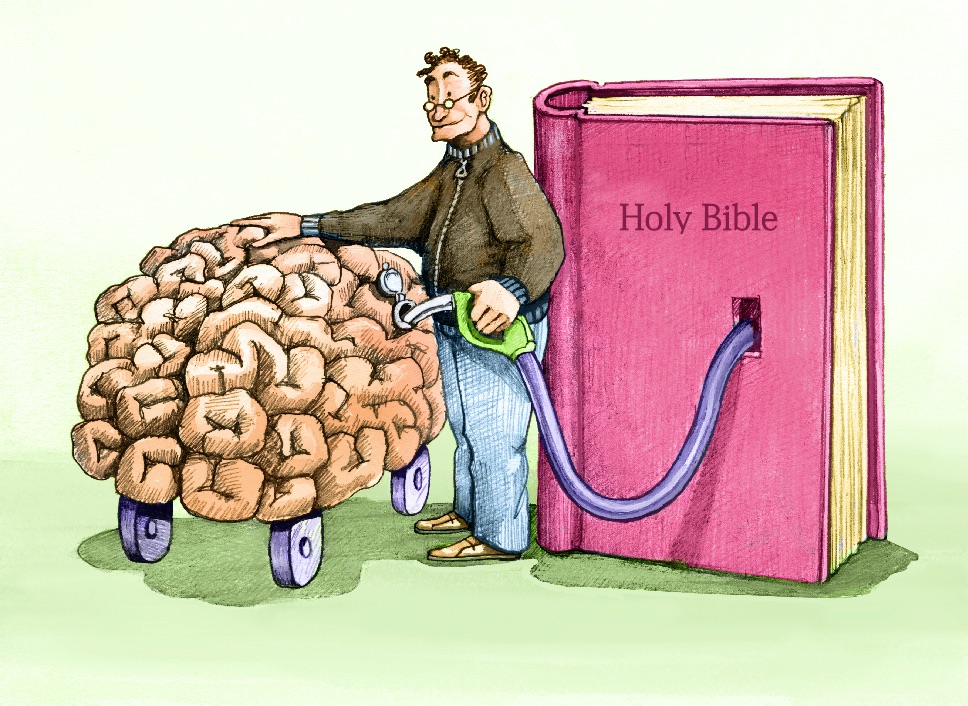
https://translate.google.com/

So, Are we Considering the Question: Why we Bother with Church Anyway? Matthew 16:13-20

Matthew 16:13-20 Amplified Bible

Peter’s Confession of Christ

13 Now when Jesus went into the [a]region of Caesarea Philippi, He asked His disciples, “Who do people say that the Son of Man is?” 14 And they answered, “Some say John the Baptist; others, Elijah; and still others, Jeremiah, or [just] one of the prophets.” 15 He said to them, “But who do you say that I am?” 16 Simon Peter replied, “You are the Christ (the Messiah, the Anointed), the Son of the living God.”  17 Then Jesus answered him, “Blessed [happy, spiritually secure, favored by God] are you, Simon son of Jonah, because flesh and blood (mortal man) did not reveal this to you, but My Father who is in heaven. 18 And I say to you that you are [b]Peter, and on this [c]rock I will build My church; and the [d]gates of Hades (death) will not overpower it [by preventing the resurrection of the Christ]. 19 I will give you the keys (authority) of the kingdom of heaven; and whatever you bind [forbid, declare to be improper and unlawful] on earth [e]will have [already] been bound in heaven, and whatever you loose [permit, declare lawful] on earth [f]will have [already] been loosed in heaven.” 20 Then He gave the disciples strict orders to tell no one that He was the Christ (the Messiah, the Anointed).

The Word of God for the Children of God.

Glory be to the Father,
and to the Son, and to the Holy Ghost;
as it was in the beginning,
is now, and ever shall be,
world without end. Amen, amen.

Debating: Why Does Anyone Bother with Church?

In his book Church: Why Bother? Philip Yancey tells a story about a prostitute who had reached the end of the road.

She was desperate and did not know where to turn. Someone then suggested connecting with a local church. She answered, “Why would I do that? I feel bad enough about myself already. They’d only make me feel worse.”

When I asked someone once why he had given up on going to church, he said, “There’s nothing there for me.”

With the current state of division and disarray and disaffiliation, it is not at all unreasonable or irrational to keep right on asking “Why bother with church?”

The answer to that hot button question is found in today’s Bible reading and is summed up in just one phrase, where Jesus says, “I will build my church.”

The church is not any ordinary organization founded by just anyone. The church is founded by Jesus Christ, the Lord and Savior who is the head of the church. According to the Bible, the church is the body of Christ. Belonging to the church is a sacred privilege, a high responsibility never to be taken for granted.

Matthew 6:32-33 Amplified Bible

32 For the [pagan] Gentiles eagerly seek all these things; [but do not worry,] for your heavenly Father knows that you need them. 33 But first and most importantly seek (aim at, strive after) His kingdom and His righteousness [His way of doing and being right—the attitude and character of God], and all these things will be given to you also.

The church is here to continue the work of Christ on earth and to build God’s kingdom. You and I need the church in order to be equipped for service, to enjoy the fellowship of other believers, to honor our Lord through faithful worship.

Can, Should We, Believe The Church Is Here to Stay?

Hebrews 10:22-25 The Message

22-25 So let’s do it—full of belief, confident that we’re presentable inside and out. Let’s keep a firm grip on the promises that keep us going. He always keeps his word. Let’s see how inventive we can be in encouraging love and helping out, not avoiding worshiping together as some do but spurring each other on, especially as we see the big Day approaching.

The first one ever to use the word church was not the apostle Paul. Rather, it was Jesus Himself. He said, “Upon this rock I will build my church, and all the powers of hell will not conquer it” (Matthew 16:18 NLT).

When Jesus walked this earth, He started only one organization, and that, of course, was the church.

By emphatically stating the gates of Hell will not conquer His church, Jesus was saying, “Listen, this church is here to stay. Against all odds, it will prevail.”

Interestingly, Jesus made this statement at a place called Caesarea Philippi. We could miss the significance of that altogether. But Caesarea Philippi was a place of paganism and false belief. In fact, the Greeks had dedicated Caesarea Philippi to Pan, one of their gods. And if you were to go there today, you would see what is left of a site dedicated to false gods and idols.

In contrast, the foundation of the church is Christ Himself.

He will build His church, and the gates of Hell will not conquer it.

This reminds us that the church will face hostility and opposition.

The word church comes from the Greek word ecclesia.

And ecclesia consists of two other terms that mean “out from” and “called.”

When we put them together, the meaning of ecclesia, or church, is “called out from.”

From what is the church called out? We are called out from this world and this culture. Jesus was saying, “My followers should be separate from this culture.”

But we also are called to.

God has called us to Himself and to one another.

Wherever God’s people gather together, that place turns into a sanctuary.

That’s because the church is not a building; it is people.

Jesus said, “For where two or three gather together as my followers, I am there among them” (Matthew 18:20 NLT). That is what the church is.

When we love God, we also will love His children.

And when we don’t love His children, then the question arises as to how much we really love God.

It is popular today to criticize the church. But understand this: when you speak critically of the church, you are speaking critically of those whom Jesus loves.

Some people claim to be Christians, but they don’t attend church. However, if you really are a Christian, then you should long to be seated with God’s people.

The Bible says,

“And let us not neglect our meeting together, as some people do, but encourage one another, especially now that the day of his return is drawing near.” (Hebrews 10:25 NLT)

If you love God, then you will love His people.

As Christians, we need to live up to our name, which means “Christ followers.” And we need to be Christlike.

Colossians 3:1-4 The Message

He Is Your Life

1-2 So if you’re serious about living this new resurrection life with Christ,  act like it. Pursue the things over which Christ presides. Don’t shuffle along, eyes to the ground, absorbed with the things right in front of you. Look up, and be alert to what is going on around Christ—that’s where the action is. See things from only his  perspective.

3-4 Your old life is dead. Your new life, which is your real life—even though invisible to spectators—is with Christ in God. He is your life. When Christ (your real life, remember) shows up again on this earth, you’ll show up, too—the real you, the glorious you. Meanwhile, be content with obscurity, like Christ.

Colossians 3:12-17 The Message

12-14 So, chosen by God for this new life of love, dress in the wardrobe God picked out for you: compassion, kindness, humility, quiet strength, discipline. Be even-tempered, content with second place, quick to forgive an offense. Forgive as quickly and completely as the Master forgave you. And regardless of what else you put on, wear love. It’s your basic, all-purpose garment. Never be without it.

15-17 Let the peace of Christ keep you in tune with each other, in step with each other. None of this going off and doing your own thing. And cultivate thankfulness. Let the Word of Christ—the Message—have the run of the house. Give it plenty of room in your lives. Instruct and direct one another using good common sense. And sing, sing your hearts out to God! Let every detail in your lives—words, actions, whatever—be done in the name of the Master, Jesus, thanking God the Father every step of the way.

When we read Matthew 16:18, some think that God was saying that He would build His church through Peter. Certainly God used Peter to build the church.

However, the “rock” that Jesus was referring to was the truth of what Peter had said just before this.

In Matthew 16:13, Jesus had asked the disciples, “Whom do men say that I the Son of man am?” The disciples give various answer and then Jesus asked the disciples, “Whom do you say I am?”

In verse 16, Peter answers, “Thou are the Christ, the Son of the living God.”

It is this truth on which God built and established the church. It the most basic foundational truth about which we build our spiritual beliefs as Christians.

In fact, I believe that you cannot be a Christian until you first settle and answer Jesus’ question for yourself against the reality of sin: “Who do you say I am?”

Peter understood Jesus’ true identity as God had revealed it to him.

It was this foundational truth that Peter took with him as he preached and played a critically important role in the kingdom, the spread of Christianity.

However, it’s also important to note that Jesus said, I will build my church. 

It wasn’t Peter’s responsibility to build the church.

Peter’s job was to tell others about Jesus and then Jesus alone holds the real responsibility for the growth and expansion of the church. Peter’s job was to “go and tell.” Jesus’ job is to build the church through our own generations .

As followers of Christ, We have the same job today that Peter had – to go and tell. Then we leave the rest up to God and allow Christ to build His church.

We are all responsible for telling others about our Savior. But first we must settle in our hearts the answer to the question that Jesus asked the disciples.

So, if Jesus were to look you directly in your 20/20 eyes and asked you today:

“Who do you say that I am?” When do you, what would be your answer?

Would Jesus’ response to your answer be “I know you believe you understand what you think I said, but I’m not sure you realize that what you heard it not what I meant” or would He say to you, like Peter: “Blessed are you, for flesh and blood has not revealed this to you, but My Father alone who is in heaven. And I also say to you that on this rock I will build My church.”

If each of us would be what we ought to be as followers of Jesus and as a part of the church, what a difference it would make in our homes, neighborhoods, our communities, our schools, our playgrounds, streets, country, and the world.

In the name of God, the Father and God the Son and God the Holy Spirit,

Let us Pray,

Ephesians 4:1-6 The Message

To Be Mature

1-3 In light of all this, here’s what I want you to do. While I’m locked up here, a prisoner for the Master, I want you to get out there and walk—better yet, run!—on the road God called you to travel. I don’t want any of you sitting around on your hands. I don’t want anyone strolling off, down some path that goes nowhere. And mark that you do this with humility and discipline—not in fits and starts, but steadily, pouring yourselves out for each other in acts of love, alert at noticing differences and quick at mending fences.

4-6 You were all called to travel on the same road and in the same direction, so stay together, both outwardly and inwardly. You have one Master, one faith, one baptism, one God and Father of all, who rules over all, works through all, and is present in all. Everything you are and think and do is permeated with Oneness.

Prayer for God’s People (Ephesians 1:17-19)

God of our Lord Jesus, the Liberating King, Father of Glory:

I call out to You on behalf of Your people, the Body of Christ, the Church in the world. Give them one mind, ready to receive thy wisdom and revelation so they will truly know You. Open the eyes of their hearts and let the light of Your truth flood in. Show them all what You have promised them. Shine Your light on the hope You are calling them to embrace. Reveal to them the truly glorious riches You are preparing as their inheritance. Let them see the full extent of Your power that is at work in those of us who believe, and may it be done according to Your might and power alone. Amen.

Glory be to the Father,
and to the Son, and to the Holy Ghost;
as it was in the beginning,
is now, and ever shall be,
world without end. Amen, amen.

https://translate.google.com/