Romans 15:4 "For whatever was written in earlier times was written for our instruction, so that through perseverance and the encouragement of the Scriptures we might have hope."
1 In the beginning Elohim created hashomayim (the heavens, Himel) and haaretz (the earth).
2 And the earth was tohu vavohu (without form, and void); and darkness was upon the face of the deep. And the Ruach Elohim was hovering upon the face of the waters.
3 And Elohim said, Let there be light: and there was light [Tehillim 33:6,9].
4 And Elohim saw the light, that it was tov (good); and Elohim divided the ohr (light) from the choshech (darkness).
5 And Elohim called the light Yom (Day), and the darkness He called Lailah (Night). And the erev (evening) and the boker (morning) were Yom Echad (Day One, the First Day, Mk 16:2).
6 And Elohim said, Let there be a raki’a (expanse, dome, firmament) in the midst of the mayim (waters), and let it divide the mayim from the mayim.
Word of God for the Children of God
Glory be to the Father, and to the Son, and to the Holy Ghost; as it was in the beginning, is now, and ever shall be, world without end. Amen, amen.
In the Bible we have God’s great story of the world from its beginning to its end.
This story includes not only mind numbing complexity and wondrous beauty but also great tragedy and sorrow.
One of the golden threads woven into this story focuses on the world’s true King. Who is this King, and what does true kingship look like on the earth?
In the Bible’s opening verses we can hear God speaking.
In the ancient world, no one could make things happen the way a king could by just speaking.
If the king said, “Let there be a banquet,” the obedient servants jumped into action. “Your wish is our command,” they would say.
In Genesis, God speaks as King, and the cosmos itself springs into being.
God can even make something out of nothing!
Light and darkness, day and night, water and sky, sun and moon, vegetation and creatures.
Whole arenas of life are formed and filled.
And the King says, “It is good.”
This Creator King builds by speaking, and his lordship over all things is put on display.
Ancient kings in their earthly kingdoms would build temples, palaces, and vast gardens. Creator King has spoken, built the marvelous temple-palace-garden complex that is creation, the whole universe, including our own earthly home.
The world in which we “live and move and have our being” exists because our King continues to speak and uphold its existence (Colossians 1:16-17). Amazing!
Appreciate this thought: There is, was will never a time when God did not exist. Before there was time, before there was anything at all, there was always God.
Hebrews 13:8 Douay-Rheims 1899 American Edition
8 Jesus Christ, yesterday, and to day; and the same for ever.
And since His nature is unchanging, so He has also always existed in the Trinity—God the Father, God the Son, and God the Holy Spirit. Amen!
When we are reading the Bible, we discover each member of the Holy Trinity was involved in creation: God the Father took the initiative, God the Holy Spirit is described as “hovering over” the proceedings, and God the Son was the agent of creation in all that was made (Genesis 1:2-3; John 1:3).
“All things bright and beautiful, all creatures great and small”[1]should leave us in awe; they were all fashioned by God’s command.
1 Cecil F. Alexander, “All Things Bright and Beautiful” (1848).
And He is not only the Creator of all; He is also the King, the Lord of all that He has created. All of nature is quite literally, by, in His hands, under His control.
As we visually try to picture waves crashing against ancient shorelines, it’s wonderfully encouraging to know each one is there as a direct result of God’s sovereign rule. He hasn’t stepped away from His creation, nor will He ever.
It’s so vitally important to remember God is also transcendent. He is sitting on His throne, above, beyond, fully unique and distinct from all that He has made.
This is what distinguishes Christianity from pantheism.
It is the idea that the natural world is a manifestation of God and therefore literally every single thing is somehow a part of Him.
With this belief, we dare not kill a fly, step on an ant – those insects are divine.
Similarly, we should not chop down a tree or eat meat, because these too are “parts of God.”
Teachings like these are mistaken and misguided and tend to lead to idolatry.
Scripture makes it crystal clear that time and time again that people will choose to worship “the creature rather than the Creator” (Romans 1:25).
When we see a great painting, we rightly admire and enjoy the painting, and then we praise the painter. All of creation is God’s canvas, and all of it speaks of “his invisible attributes, namely, his eternal power and divine nature” (v 20).
Only God is to be worshiped, for creation exists by His power and for His glory.
His existence knows no beginning or end, and He will reign forever.
He is the King.
Today, exalt Him as He alone deserves.
Go for a walk or look out of the window and sing praises to Him as you see His beauty displayed in what He has made.
Humble yourselves! Praise Him, Honor Him, Glorify Him, Worship Him, as He continues to rule over His creation, and for holding you in His sovereign hand.
In the name of the Father, and of the Son, and of the Holy Spirit …
Praying ….
Psalm 23 Douay-Rheims 1899 American Edition
23 On the first day of the week, a psalm for David. The earth is the Lord’s and the fulness thereof: the world, and all they that dwell therein.
2 For he hath founded it upon the seas; and hath prepared it upon the rivers.
3 Who shall ascend into the mountain of the Lord: or who shall stand in his holy place?
4 The innocent in hands, and clean of heart, who hath not taken his soul in vain, nor sworn deceitfully to his neighbour.
5 He shall receive a blessing from the Lord, and mercy from God his Saviour.
6 This is the generation of them that seek him, of them that seek the face of the God of Jacob.
7 Lift up your gates, O ye princes, and be ye lifted up, O eternal gates: and the King of Glory shall enter in.
8 Who is this King of Glory? the Lord who is strong and mighty: the Lord mighty in battle.
9 Lift up your gates, O ye princes, and be ye lifted up, O eternal gates: and the King of Glory shall enter in.
10 Who is this King of Glory? the Lord of hosts, he is the King of Glory.
Glory be to the Father, and to the Son, and to the Holy Ghost; as it was in the beginning, is now, and ever shall be, world without end. Amen, amen.
8 Philip said to Him, “Lord, show us the Father and then we will be satisfied.” 9 Jesus said to him, “Have I been with you for so long a time, and you do not know Me yet, Philip, nor recognize clearly who I am? Anyone who has seen Me has seen the Father. How can you say, ‘Show us the Father?’ 10 Do you not believe that I am in the Father, and the Father is in Me? The words I say to you I do not say on My own initiative or authority, but the Father, abiding continually in Me, does His works [His attesting miracles and acts of power].
Word of God for the Children of God
Glory be to the Father, and to the Son, and to the Holy Ghost; as it was in the beginning, is now, and ever shall be, world without end. Amen, amen.
When have we felt closest to God? When have we felt most distant from God?
You might be doing “all the right things”—attending worship, reading the Bible, praying, studying, helping others—yet God still doesn’t seem very close.
Maybe we have felt this way in a crisis—or even in the midst of daily routines.
We just wish that God would show us unequivocally who he is and he is active.
Philip seems to show that sentiment, saying, “Lord, show us the Father and that will be enough for us.”
But Jesus appeared surprised by this; saying, “Don’t you know me, Philip, even after I have been among you such a long time?”
Jesus had revealed the Father throughout his entire ministry!
Jesus “is himself God and . . . has made him known”(John 1:18).
He taught that he is “equal with God” (John 5:18).
He also said, “I and the Father are one”(John 10:30).
Jesus makes “I am” statements, using the Lord’s special name “I am who I am”(Exodus 3:13-15).
He had walked on water, fed many thousands, spoke, stilled the storms, and had raised people from the dead.
That night, Jesus also ate his last supper with his disciples, telling them he would soon die and rise again (John 13).
Yet Philip still desperately wanted more revelation!
Would it really be enough?
John 14:8-10 Christian Standard Bible
Jesus Reveals the Father
8 “Lord,” said Philip, “show us the Father, and that’s enough for us.”
9 Jesus said to him, “Have I been among you all this time and you do not know me, Philip? The one who has seen me has seen the Father. How can you say, ‘Show us the Father’? 10 Don’t you believe that I am in the Father and the Father is in me? The words I speak to you I do not speak on my own. The Father who lives in me does his works.
One day in an art class, the teacher was going around the various paintings to look at what the children were doing, she asked a boy what it was he was painting.
The small boy said to her, “I’m painting a picture of God.”
“But we don’t know what God looks like,” the teacher replied.
“Well,” said the boy, “come back when I’ve finished and you’ll find out!”
With the birth of the infant Lord Jesus in Bethlehem, God took a brush and painted on the largest canvas of history what He Himself was really like.
Hebrews 1:1-4 New King James Version
God’s Supreme Revelation
1 God, who [a]at various times and in various ways spoke in time past to the fathers by the prophets, 2 has in these last days spoken to us by His Son, whom He has appointed heir of all things, through whom also He made the [b]worlds; 3 who being the brightness of His glory and the express image of His person, and upholding all things by the word of His power, when He had [c]by Himself [d] purged [e]our sins, sat down at the right hand of the Majesty on high, 4 having become so much better than the angels, as He has by inheritance obtained a more excellent name than they.
When Christ appeared, He rendered obsolete all previous guesses about God’s nature, and He rendered arrogant all subsequent ones.
The writer to the Hebrews put it this way:
“At many times and in many ways, God spoke to our fathers by the prophets, but in these last days he has spoken to us by his Son” (Hebrews 1:1-2).
In other words, through the prophets of old, God had spoken a multifaceted and varied word, weaving His character and His nature all through the pages of the Old Testament.
But in Bethlehem, God spoke in a personified Word.
The long-awaited Messiah, the Light of the nations, appeared—and in that tiny little baby, God made manifest His reality.
Just think: in that Bethlehem manger lay God… wiggling His toes!
The baby that nursed at the breast of Mary and was rocked to sleep in the arms of Joseph was God, and He remains God.
Is it any wonder that the shepherds went out and spread the word?
Is it any wonder that the wise men of His day bowed in worship before Him?
Jesus came to make the Father known.
May our hearts be so humbled by the incarnation that we come to know God personally, not merely intellectually.
Like the shepherds, we have the message of Christ’s advent to share with our society.
As we spread the good news of Jesus’ coming as the Messiah, as the one who is God and has come to make God known, pray that the wisdom of our world may bow before His glory.
Do you know Jesus as your Lord?
Our Lord’s Words to Philip seem to drip with discouragement.
Certainly Philip should have known better.
From reading this portion of John’s narrative, it appears John strongly believed it should be the natural wish of man in every age for some extraordinary vision, revelation of the Father – for an earnest desire for further light – a yearning for the miraculous. “Let us see the Father.”
Philip’s plea here reveals not only the weakness of his faith but the lack of his grasping, understanding, actualizing, the gospel way of making God known.
Jesus came to flesh out the Father for our eyes to see and subsequently as His 21st century followers we are covenanted to flesh out Jesus for the world to see.
To see with bodily eyes is one thing yet to see with eyes of faith is quite another.
Then—praise God—you have seen, and believe in His Father as Thomas stated.
In the name of the Father, and of the Son, and of the Holy Spirit …
Praying …..
Psalm 19 English Standard Version
The Law of the Lord Is Perfect
To the choirmaster. A Psalm of David.
19 The heavens declare the glory of God, and the sky above[a] proclaims his handiwork. 2 Day to day pours out speech, and night to night reveals knowledge. 3 There is no speech, nor are there words, whose voice is not heard. 4 Their voice[b] goes out through all the earth, and their words to the end of the world. In them he has set a tent for the sun, 5 which comes out like a bridegroom leaving his chamber, and, like a strong man, runs its course with joy. 6 Its rising is from the end of the heavens, and its circuit to the end of them, and there is nothing hidden from its heat.
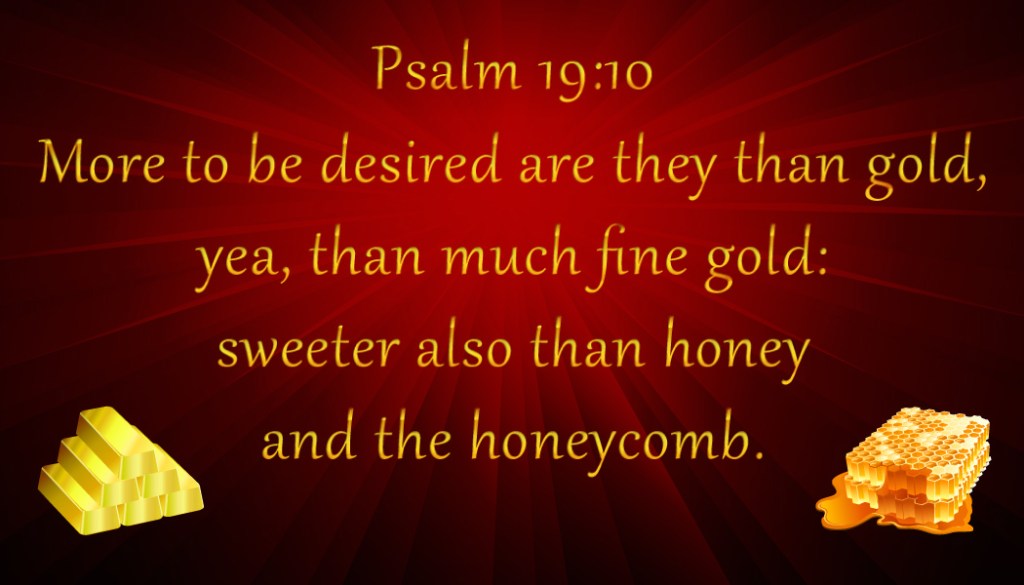
7 The law of the Lord is perfect,[c] reviving the soul; the testimony of the Lord is sure, making wise the simple; 8 the precepts of the Lord are right, rejoicing the heart; the commandment of the Lord is pure, enlightening the eyes; 9 the fear of the Lord is clean, enduring forever; the rules[d] of the Lord are true, and righteous altogether. 10 More to be desired are they than gold, even much fine gold; sweeter also than honey and drippings of the honeycomb. 11 Moreover, by them is your servant warned; in keeping them there is great reward.
12 Who can discern his errors? Declare me innocent from hidden faults. 13 Keep back your servant also from presumptuous sins; let them not have dominion over me! Then I shall be blameless, and innocent of great transgression.
14 Let the words of my mouth and the meditation of my heart be acceptable in your sight, O Lord, my rock and my redeemer.
Glory be to the Father, and to the Son, and to the Holy Ghost; as it was in the beginning, is now, and ever shall be, world without end. Amen, amen.
10 You, however, have followed my teaching, my conduct, my aim in life, my faith, my patience, my love, my steadfastness, 11 my persecutions and sufferings that happened to me at Antioch, at Iconium, and at Lystra—which persecutions I endured; yet from them all the Lord rescued me. 12 Indeed, all who desire to live a godly life in Christ Jesus will be persecuted, 13 while evil people and impostors will go on from bad to worse, deceiving and being deceived. 14 But as for you, continue in what you have learned and have firmly believed, knowing from whom[a] you learned it 15 and how from childhood you have been acquainted with the sacred writings, which are able to make you wise for salvation through faith in Christ Jesus. 16 All Scripture is breathed out by God and profitable for teaching, for reproof, for correction, and for training in all righteousness, 17 that the man of God[b] may be complete, equipped for every good work.
Word of God for the Children of God.
Glory be to the Father, and to the Son, and to the Holy Ghost; as it was in the beginning, is now, and ever shall be, world without end. Amen, amen.
Church, let me ask you a serious question which has echoed across centuries, whispered in classrooms, the subject of many sermons, scholarly papers, and shouted in debates and studies, whispered in hearts during nights of doubt:
“What is the best proof that the Bible and Christianity are real?”
Some will point to archaeological discoveries, research—yes, the stones cry out.
Some point towards high %age of fulfilled prophecy—yes, God keeps His Word.
Some point directly to the historical resurrection—yes, the tomb is still empty.
But the greatest proof … the most unshakeable evidence…
is a Person—Jesus Christ Himself—revealed in Scripture and living, residing in, His redeemed people by the power of the Holy Spirit. (John 14:23)
Christianity is not merely a set of ideas.
It is the revelation of the living God who speaks, saves, transforms, and reigns.
And today, from Scripture, I want to show you:
Why the Bible is trustworthy
Why Christianity is true
Why Jesus Christ is the ultimate proof
Why you must respond to His call today
Let’s begin with our key passage.
2 TIMOTHY 3:16–17 (NLT): “All Scripture is inspired by God and is useful to teach us what is true and to make us realize what is wrong in our lives. It corrects us when we are wrong and teaches us to do what is right.
God uses it to prepare and equip his people to do every good work.”
POINT 1 — THE BIBLE IS SUPERNATURALLY INSPIRED
Paul writes to Timothy from a Roman prison cell.
His execution is approaching.
This is his final letter.
And of all the things he could say, he says: “Timothy, the Scriptures are God-breathed.”
The Greek phrase is theopneustos—literally God-breathed.
Not human-improved.
Not spiritually-inspired poetry.
But breathed out from the very mouth of God.
At this time, Timothy had:
The Old Testament Scriptures
The apostolic teaching (much of which became the New Testament)
Paul is declaring: All of it is the Word of God.
2 Peter 1:20–21 (NLT): “Above all, you must realise that no prophecy in Scripture ever came from the prophet’s own understanding, or from human initiative. No, those prophets were moved by the Holy Spirit, and they spoke from God.”
The phrase “moved by the Holy Spirit” in Greek is pheromenoi—meaning “carried along”, “propelled”, like a ship moved by the wind.
The Bible is not man reaching up to God.
The Bible is God reaching down to man.
Dr. John Piper wrote: “The Scriptures are the place where God has chosen to reveal Himself with final authority.”
Yes—if the Bible is God’s own revelation, it is the final word on truth.
Not culture. Not opinion. Not feeling. Not politics. God Himself has spoken.
If Scripture is God-breathed:
We must read it daily.
We must obey it fully.
We must trust its authority above the world’s voices.
When you open your Bibles, you are breathing in the very breath of God.
POINT 2 — TRANSFORMING POWER OF JESUS IS PROOF CHRISTIANITY IS REAL
Do you want to know the greatest evidence Christianity is true?
Dead sinners come to life. Lost people are found. Broken people are restored.
Christ still lives, still saves, still changes, still redeems.
2 Corinthians 5:17 (NLT): “This means that anyone who belongs to Christ has become a new person. The old life is gone; a new life has begun!”
Word Study
Greek for “new person” is kaine ktisis — meaning not “improved”, not “renovated”, but new in nature and quality.
Only the living Christ can do that.
The Watchmaker
A man once doubted Christianity.
He said, “I’ll believe in God when I see Him.”
His pastor held up a watch.
“Do you believe this watch has a maker?”
“Of course,” said the man.
“Though you’ve never seen him?”
“Yes, because the watch exists.”
Then the pastor said: “And when I see a man whose life was broken, enslaved by sin, restored by Christ, walking in grace and holiness—that is evidence of the Master Watchmaker working in lives today.”
John 20:24-29
Changed lives are undeniable evidence.
Tim Keller wrote: “The gospel is not just the ABC of the Christian life; it is the A to Z. It transforms everything.”
The evidence that the Bible is true is not merely intellectual—it is observable. A transformed heart is a miracle only God can perform.
POINT 3 — THE RESURRECTION IS HISTORICAL, RELIABLE, AND UNDENIABLE
If Jesus is alive, Christianity is true.
If Jesus is not alive, Christianity collapses.
1 Corinthians 15:3–6 (NLT): “Christ died for our sins, just as the Scriptures said. He was buried, and he was raised from the dead on the third day, just as the Scriptures said. He was seen by Peter and then by the Twelve. After that, he was seen by more than 500 of his followers at one time…”
Paul is writing within 20–25 years of the resurrection.
Many eyewitnesses were still alive.
If resurrection were false, Christianity would never have survived. Acts 5:33-42
Word Study
“Raised” is Greek egegertai — perfect tense, meaning: “He was raised… and remains alive.”
Every apostle died refusing to deny the resurrection.
The tomb was empty.
No body was ever found.
Women were the first witnesses (not something you’d fabricate in that culture).
Chuck Colson, involved in the Watergate scandal, said:
“Twelve men kept a lie for two weeks? The disciples kept the truth for a lifetime, even under the very real threat of death. People don’t die for a lie they created.”
Charles Stanley wrote: “The resurrection of Jesus Christ is the chief proof that He is exactly who He claimed to be.”
The empty tomb isn’t just a historical event—it is the heartbeat of Christianity.
A dead Savior cannot save. But a risen Savior transforms eternity.
POINT 4 — THE BIBLE’S FULFILLED PROPHECY PROVES ITS DIVINE ORIGIN
Isaiah 46:9–10 (NLT): “Remember the things I have done in the past. For I alone am God! I am God, and there is none like me. Only I can tell you the future before it even happens. Everything I plan will come to pass, for I do whatever I wish.”
Only God can declare the future with exacting precision.
Examples of fulfilled prophecy:
Messiah would be born in Bethlehem (Micah 5:2) — fulfilled in Luke 2.
He would be betrayed for 30 pieces of silver (Zechariah 11:12–13) — fulfilled in Matthew 26:15.
He would die by crucifixion centuries before it was invented (Psalm 22).
Word Study
Hebrew “declare” in Isaiah 46:10 is nagad — “to announce with certainty”.
Reverend Dr. R.T. Kendall: “Fulfilled prophecy is God’s signature upon history.”
Yes!
It is the handwriting of God across time, verifying His Word and revealing His power.
If God kept every prophecy, He will keep His promises to you:
He will forgive those who repent.
He will save those who trust in Christ.
He will return for His people.
POINT 5 — THE GOSPEL IS THE ULTIMATE PROOF
Romans 1:16 (NLT):
“For I am not ashamed of this Good News about Christ. It is the power of God at work, saving everyone who believes—the Jew first and also the Gentile.”
The Gospel is not advice.
It is not good ideas.
It is not religious inspiration.
It is power. Greek word: dynamis — where we get “dynamite”.
The Gospel breaks chains, shatters darkness, and transforms eternity.
Max Lucado: “God loves you just the way you are, but He refuses to leave you that way.”
That is the Gospel’s proof.
God does not simply accept us—He transforms us through Christ’s saving power.
THE GOSPEL PRESENTATION — THE HEART OF THE MESSAGE
Church, listen carefully:
Christ really lived.
Christ really died.
Christ really rose again.
Christ really saves.
Here is the Gospel:
We have all sinned (Romans 3:23).
Sin separates us from God (Isaiah 59:2).
Jesus came to die in our place (Isaiah 53:5–6).
He rose again (1 Corinthians 15:4).
Salvation is a free gift (Ephesians 2:8–9).
We must repent and trust in Jesus as Lord and Savior (Romans 10:9–10).
You do not need to earn salvation.
You cannot buy salvation.
You cannot achieve salvation.
You can only receive it through Christ.
CALL TO ACTION — A RESPONSE OF FAITH AND OBEDIENCE:
Because the Bible is true…
Because Jesus is alive…
Because Christianity is real…
You must respond.
Believer:
Return to Scripture daily.
Build your life on God’s Word.
Share the Gospel with urgency.
Obey Christ wholeheartedly.
Unbeliever or unsure listener:
Today is the day of salvation.
Not tomorrow.
Not “one day”.
Today.
Jesus is calling you.
He loves you.
He came for you.
He died for you.
He rose for you.
He will forgive you.
But you must repent. (Job 42:1-6, Psalm 51, Mark 1:15, Acts 2:38, Romans 10:9-13,
Turn from sin.
Turn to Christ.
Trust Him as your Savior and Lord.
INVITATION TO SALVATION:
If you want to give your life to Christ today, pray from your heart:
“Lord Jesus, I admit I am a sinner.
I believe You died for my sins and rose again.
I turn from my sin and trust You alone as my Lord and Savior.
Make me new.
Fill me with Your Spirit.
Help me follow You.
Amen.”
In the name of the Father and of the Son and of the Holy Spirit. Amen
Praying ….
The Works and the Word of God.
For the music director. A Psalm of David.
19 The heavens tell of the glory of God; And their expanse declares the work of His hands. 2 Day to day pours forth speech, And night to night reveals knowledge. 3 There is no speech, nor are there words; Their voice is not heard. 4 Their [a]line has gone out into all the earth, And their words to the end of the world. In them He has placed a tent for the sun, 5 Which is like a groom coming out of his chamber; It rejoices like a strong person to run his course. 6 Its rising is from [b]one end of the heavens, And its circuit to the [c]other end of them; And there is nothing hidden from its heat.
7 The Law of the Lord is [d]perfect, restoring the soul; The testimony of the Lord is sure, making wise the simple. 8 The precepts of the Lord are right, rejoicing the heart; The commandment of the Lord is pure, enlightening the eyes. 9 The fear of the Lord is clean, enduring forever; The judgments of the Lord are true; they are righteous altogether. 10 They are more desirable than gold, yes, than much pure gold; Sweeter also than honey and drippings of the honeycomb. 11 Moreover, Your servant is warned by them; In keeping them there is great reward. 12 Who can discern his errors? Acquit me of hidden faults. 13 Also keep Your servant back from presumptuous sins; Let them not rule over me; Then I will be innocent, And I will be blameless of great wrongdoing. 14 May the words of my mouth and the meditation of my heart Be acceptable in Your sight, Lord, my rock and my Redeemer.
Glory be to the Father, and to the Son, and to the Holy Ghost; as it was in the beginning, is now, and ever shall be, world without end. Amen, amen.
1 Corinthians 15:20-28 New American Standard Bible
The Order of Resurrection
20 But the fact is, Christ has been raised from the dead, the first fruits of those who are asleep. 21 For since by a man death came, by a Man also came the resurrection of the dead. 22 For as in Adam all die, so also in [a]Christ all will be made alive. 23 But each in his own order: Christ the first fruits, after that those who are Christ’s at His coming, 24 then comes the end, when He hands over the kingdom to our God and Father, when He has abolished all rule and all authority and power. 25 For He must reign until He has put all His enemies under His feet. 26 The last enemy that will be abolished is death. 27 For He has put all things in subjection under His feet. But when He says, “All things are put in subjection,” it is clear that [b]this excludes the Father who put all things in subjection to Him. 28 When all things are subjected to Him, then the Son Himself will also be subjected to the One who subjected all things to Him, so that God may be all in all.
Word of God for the Children of God
Glory be to the Father, and to the Son, and to the Holy Ghost; as it was in the beginning, is now, and ever shall be, world without end. Amen, amen.
Scripture abounds with examples of what I call the Divine Adversative.
This is about God directly intervening to reverse the effects of our sin.
We note the example of this in the resurrection of Jesus.
Christ’s resurrection has reversed everything!
Life conquered death, good conquered evil, and love conquered all.
As Paul explains, if Christianity is no more than a “feel-good” faith that helps us behave better in this life, we’re pathetically hopeless.
If that is the case, then we have no help from God in this life and no hope for the next, if there is life after death.
So it would be better to abandon all hope for ourselves as well as for those who have already died.
All of this would mean the resurrection is merely a figment of desperate faith.
But then comes this thunderous Divine Adversative: “But Christ has indeed been raised from the dead, the firstfruits of those who have fallen asleep.”
Hallelujah! We have a hope that extends from our life here on earth to eternity itself. Rather than being defeated by the curse of sin and death, “in Christ all will be made alive,” just as Christ himself is alive for eternity.
All of our hope—and indeed all of our life—is certain, because God said, “But Christ!”
1 Corinthians 15:14 is referred to as “the lynchpin of the gospel.” As Paul writes, “If Christ has not been raised, our preaching is useless and so is your faith.”
Without the resurrection, we have nothing on which to build our faith.
All we have is a famous person who taught noble ideas about life and an ethical system on which to build our society.
But that’s just for this life. Without the resurrection, we have no hope for surviving death. And if that’s the case, then why bother believing in Jesus?
Paul goes on, “But Christ has indeed been raised from the dead.”
And in the first sermon of the New Testament church, Peter preached, “God has raised this Jesus to life, and we all are witnesses of it” (Acts 2:32).
Paul wrote that the resurrected Jesus “appeared to more than five hundred of the brothers and sisters at the same time.”
We are called not only to profess our faith that Jesus was raised but also to understand that this is the lynchpin of our faith.
Everything hangs together on Christ’s resurrection!
You and I Can Face Tomorrow
Every once in a while, someone comes along and claims that we don’t need to believe in the bodily resurrection of Jesus Christ.
We can still be Christians without the miraculous or supernatural elements of the Christian faith, they say.
But the tragedy for them and for anyone who follows such a claim is that the implications of there being no resurrection don’t just make the Christian life difficult; they make it immeasurably ridiculous.
If there is no resurrection, Paul pointed out, then those who have died trusting Jesus have utterly perished, and there is no hope of ever seeing them again.
If we try to live a Christian life without the resurrection, then “we are of all people most to be pitied.”
In fact, Paul says, “If the dead are not raised, ‘Let us eat and drink, for tomorrow we die’” (1 Corinthians 15:32).
If we don’t believe in the resurrection, then we ought to buy into all the clichés that so many say (but few truly believe)— “This life is what you make it” and “He who dies with the most toys wins!”
Enticing as such platitudes may be, we all have a sneaking suspicion that death is not the end.
God has put eternity into our hearts (Ecclesiastes 3:11), and there is no scraping it out—no matter what force of rational skepticism or what indulgent hedonism we may apply to it. We know, by design, that there is more to life than life itself.
We also know that tomorrow, and in every tomorrow, there will be sadness, pain, loss, fear, and disappointment.
How can anyone cope?
Without the resurrection, we can’t.
That is why Paul reminded the Ephesians before being brought near to Christ, they had “no hope” and were “without God in the world” (Ephesians 2:12).
“But Christ has been raised.”
And those five words make all the difference, not only to eternal life but also to life today.
If you take God at His word and trust Him in faith, then there is never any reason for hopelessness.
You have “a living hope through the resurrection of Jesus Christ from the dead” (1 Peter 1:3).
No matter what difficulties await you—and today, and tomorrow, there will be some—you will always have “an inheritance that is imperishable, undefiled, and unfading, kept in heaven for you” (v 4).
“Because he lives, I can face tomorrow,” goes the song.[1]
So can you—and you can do so with joy.
In the name of the Father, and of the Son, and of the Holy Spirit ….
Praying ….
Psalm 145 Complete Jewish Bible
145 (0) Praise. By David:
(1) I will praise you to the heights, my God, the king; I will bless your name forever and ever. 2 Every day I will bless you; I will praise your name forever and ever. 3 Great is Adonai and greatly to be praised; his greatness is beyond all searching out. 4 Each generation will praise your works to the next and proclaim your mighty acts. 5 I will meditate on the glorious splendor of your majesty and on the story of your wonders. 6 People will speak of your awesome power, and I will tell of your great deeds. 7 They will gush forth the fame of your abounding goodness, and they will sing of your righteousness. 8 Adonai is merciful and compassionate, slow to anger and great in grace. 9 Adonai is good to all; his compassion rests on all his creatures. 10 All your creatures will thank you, Adonai, and your faithful servants will bless you. 11 They will speak of the glory of your kingship, and they will tell about your might; 12 to let everyone know of your mighty acts and the glorious majesty of your kingship. 13 Your kingship is an everlasting kingship, your reign continues through all generations. 14 Adonai supports all who fall and lifts up all who are bent over. 15 The eyes of all are looking to you; you give them their food at the right time. 16 You open your hand and satisfy the desire of every living thing. 17 Adonai is righteous in all his ways, full of grace in all he does. 18 Adonai is close to all who call on him, to all who sincerely call on him. 19 He fulfills the desire of those who fear him; he hears their cry and saves them. 20 Adonai protects all who love him, but all the wicked he destroys. 21 My mouth will proclaim the praise of Adonai; all people will bless his holy name forever and ever.
Glory be to the Father, and to the Son, and to the Holy Ghost; as it was in the beginning, is now, and ever shall be, world without end. Amen, amen.
4 But when [in God’s plan] the proper time had fully come, God sent His Son, born of a woman, born under the [regulations of the] Law, 5 so that He might redeem and liberate those who were under the Law, that we [who believe] might be adopted as sons [as God’s children with all rights as fully grown members of a family]. 6 And because you [really] are [His] sons, God has sent the Spirit of His Son into our hearts, crying out, [a]“Abba! Father!” 7 Therefore you are no longer a slave (bond-servant), but a son; and if a son, then also an heir through [the gracious act of] God [through Christ].
Word of God for the Children of God
Glory be to the Father, and to the Son, and to the Holy Ghost; as it was in the beginning, is now, and ever shall be, world without end. Amen, amen.
Contrary to the festive and joyous and uplifting songs of the season, sadly sometimes, for some, Christmas doesn’t feel merry or worth celebrating.
You listen and say to yourself,
“But, Christmas time doesn’t feel that way. This year Christmas doesn’t feel merry at all!”
I’ve never heard anyone say it, but have felt it profoundly:
“I just don’t feel Christmas-y.”
This feeling can mean so many things:
I’m not feeling the emotions that are supposed to go along with this holiday.
I don’t feel worthy to participate in the celebrations and gifts.
I hurt, but Christmas doesn’t have room for my pain with its bright lights and happy songs.
God is not going to listen to my crying, nor touch my tears, care about my soul.
Maybe your heart aches, too.
We struggle under the weight of brokenness, grief, acute chronic debilitating health illness, or even sin, carrying the effects of the fall around like a blanket.
We miss loved ones!
Maybe the engagement ring we’ve been hoping for (and the young man to go with it) still hasn’t shown up.
Our arms are still empty and our heart cries out for our distant family.
Maybe our marriage is struggling and there isn’t “peace on earth” in our home.
This could be our first year without a parent, spouse, or child because of death or relational collapse.
Maybe our beloved has been deployed by the armed forces and cannot be home for the holidays.
We, or someone we love, may have been diagnosed with a devastating disability or debilitating illness.
Maybe a history of abuse, addiction, injury, or trauma colors over the bright lights of mirth.
MAYBE it’s “just” hormones leaving you feeling grumpy and not in the mood for lights, tinsel, and Christmas festivities, delicious cookies, and the turkey’s.
My friends and readership, I have no idea the trials you face this year as you put up decorations, consume copious amounts of sugar, choose the perfect present, drink eggnog or whatever or however your cultural traditions celebrate .
But, I want you to know you are not alone.
And you are not outcast, because you don’t feel “Merry and Bright.”
God hears you loud and clear!
Psalm 40 The Message
40 1-3 I waited and waited and waited for God. At last he looked; finally he listened. He lifted me out of the ditch, pulled me from deep mud. He stood me up on a solid rock to make sure I wouldn’t slip. He taught me how to sing the latest God-song, a praise-song to our God. More and more people are seeing this: they enter the mystery, abandoning themselves to God
1. Remember, Christmas is especially for the heart that doesn’t feel merry.
The ache of our souls dims the glitter and glamor of the season, allowing the light of the Savior to shine through.
Suffering requires us to pray constantly, feel our need for Savior in fresh ways.
If (or when) we don’t feel worthy of the specialness and gifts that come in the holiday season, the truth of the Gospel becomes more real.
I desperately need my Savior.
I need someone to heal the brokenness wracked by the fall. I need someone to to trust, walk with me as I navigate my pain, helping me carry these burdens.
The celebration of Jesus’ birth is undeniably beautiful because He is beautiful.
My weakness, frailty, and woundedness cannot harm the message of the love, hope and joy this season brings. Instead, the fact that Christmas wont always feel merry, allows me to look again at the wonder of Emmanuel, God with us.
Nothing in me brought about Christmas, and nothing in me detracts from God’s greatest heaven sent experience gifted to us, born with all its angelic splendor.
Luke 2:8-18 English Standard Version
The Shepherds and the Angels
8 And in the same region there were shepherds out in the field, keeping watch over their flock by night. 9 And an angel of the Lord appeared to them, and the glory of the Lord shone around them, and they were filled with great fear. 10 And the angel said to them, “Fear not, for behold, I bring you good news of great joy that will be for all the people. 11 For unto you is born this day in the city of David a Savior, who is Christ the Lord. 12 And this will be a sign for you: you will find a baby wrapped in swaddling cloths and lying in a manger.” 13 And suddenly there was with the angel a multitude of the heavenly host praising God and saying,
14 “Glory to God in the highest, and on earth peace among those with whom he is pleased!”[a]
15 When the angels went away from them into heaven, the shepherds said to one another, “Let us go over to Bethlehem and see this thing that has happened, which the Lord has made known to us.” 16 And they went with haste and found Mary and Joseph, and the baby lying in a manger. 17 And when they saw it, they made known the saying that had been told them concerning this child. 18 And all who heard it wondered at what the shepherds told them.
In those Christmas moments where we don’t feel merry, God has gives us hope.
Our joy and affection for Him can grow stronger in this time of year, even if we feel ostracized from the merriment that’s supposed to be the daily experience.
2. When Christmas does not feel merry, accept the reality of brokenness.
Your ache this Christmas stems from the brokenness. We feel the weight of fractured relationships, abuse, addiction, trauma, death, loss, uncertainty, illness, caregiver overload, and exhaustion. We live in a sin-scarred world.
You were created for paradise.
Our souls know we were not created for a broken world.
We long for Eden intensely, especially when hearing refrains of “peace on earth, goodwill toward men” drift through the air.
The deep desire of your soul for connection, safety, love, and peace point to a greater reality. Jesus does not intend to leave his people in a place of ruin and suffering from all the recurring visions of unsightly wreckage all around us.
Yet, for many, such visions of ugliness and the measures of pain and difficulty are our day-to-day realities. This is why we need Emmanuel – God with us.
Our desperate need for redemption and salvation began in the beginning, at the Fall (Genesis 2-3), when everything completely unraveled in an instant, tearing away true life in God alone from the souls of Adam and Eve (thereby all of us).
Yet, in that moment, God answered, promising a Messiah, a Savior who would soon come to reorder the world, and to create everything anew.
Isaiah 61:1-7 English Standard Version
The Year of the Lord’s Favor
61 The Spirit of the Lord God is upon me, because the Lord has anointed me to bring good news to the poor;[a] he has sent me to bind up the brokenhearted, to proclaim liberty to the captives, and the opening of the prison to those who are bound;[b] 2 to proclaim the year of the Lord’s favor, and the day of vengeance of our God; to comfort all who mourn; 3 to grant to those who mourn in Zion— to give them a beautiful headdress instead of ashes, the oil of gladness instead of mourning, the garment of praise instead of a faint spirit; that they may be called oaks of righteousness, the planting of the Lord, that he may be glorified.[c] 4 They shall build up the ancient ruins; they shall raise up the former devastations; they shall repair the ruined cities, the devastations of many generations.
5 Strangers shall stand and tend your flocks; foreigners shall be your plowmen and vinedressers; 6 but you shall be called the priests of the Lord; they shall speak of you as the ministers of our God; you shall eat the wealth of the nations, and in their glory you shall boast. 7 Instead of your shame there shall be a double portion; instead of dishonor they shall rejoice in their lot; therefore in their land they shall possess a double portion; they shall have everlasting joy.
Jesus’ birth answers the groans of all creation, ours included (Romans 8:19-23).
He saw all the pain, and grief and suffering resulting from the brokenness of sin, and came to start the process of restoration.
That which is broken will be restored, the wounded healed.
The problem of sin, brokenness, suffering, and injustice solved once and for all.
Results of His coming leaves believers in Him in the oft-time uncomfortable already-not-yet, where we have the final promises of restoration but do not yet see it playing out completely in our lives, hearts, and circumstances.
So, in the difficulties of each season, we cling to God’s gift of our Savior who came to save us bringing His always faithful promises to bring us life anew.
Galatians 4:4-7 English Standard Version
4 But when the fullness of time had come, God sent forth his Son, born of woman, born under the law, 5 to redeem those who were under the law, so that we might receive adoption as sons. 6 And because you are sons, God has sent the Spirit of his Son into our hearts, crying, “Abba! Father!” 7 So you are no longer a slave, but a son, and if a son, then an heir through God.
Our souls yearn for the glorious destiny He is planning for us, while we wait.
Look directly at your pain and suffering (no matter how “trivial” it seems).
Psalm 139:23-24 Amplified Bible
23 Search me [thoroughly], O God, and know my heart; Test me and know my anxious thoughts; 24 And see if there is any wicked or hurtful way in me, And lead me in the everlasting way.
To bask in the comfort of Jesus anytime of the year, Pray! Allow yourself to acknowledge the brokenness of the world and your own soul. Don’t gloss over the pain, throwing tinsel and glitter till it shines. Be honest with yourself.
Call hurt what it is – name it. Examine the hurt. Allow (or force) yourself to stop (Psalm 46:10) long enough to acknowledge what you are feeling and why.
For many, our natural tendency is to gloss over our suffering and sin.
Perhaps, a coat of royal icing, glitter will distract us from the pain underneath.
If we occupy ourselves with Hallmark movies and caroling, maybe we won’t feel the ache so deep, so heavy in our hearts.
Maybe we can enjoy the festivities without having to look beneath the surface.
Yet, we can only walk in truth when we acknowledge our pain, suffering, hurt, and brokenness.
Denial only serves, keeps us, separated from God, and thereby, from the truth of the Gospel.
“In the name of the Father and of the Son and of the Holy Spirit. Amen”
24 The earth [b]is the Lord’s, and the fullness of it, The world, and those who dwell in it. 2 For He has founded it upon the seas And established it upon the streams and the rivers. 3 Who may ascend onto the [c]mountain of the Lord? And who may stand in His holy place? 4 He who has clean hands and a pure heart, Who has not lifted up his soul to what is false, Nor has sworn [oaths] deceitfully. 5 He shall receive a blessing from the Lord, And righteousness from the God of his salvation. 6 This is the generation (description) of those who diligently seek Him and require Him as their greatest need, Who seek Your face, even [as did] Jacob. Selah.
7 Lift up your heads, O gates, And be lifted up, ancient doors, That the King of glory may come in. 8 Who is the King of glory? The Lord strong and mighty, The Lord mighty in battle. 9 Lift up your heads, O gates, And lift them up, ancient doors, That the King of glory may come in. 10 Who is [He then] this King of glory? The Lord of hosts, He is the King of glory [who rules over all creation with His heavenly armies]. Selah.
Glory be to the Father, and to the Son, and to the Holy Ghost; as it was in the beginning, is now, and ever shall be, world without end. Amen, amen.
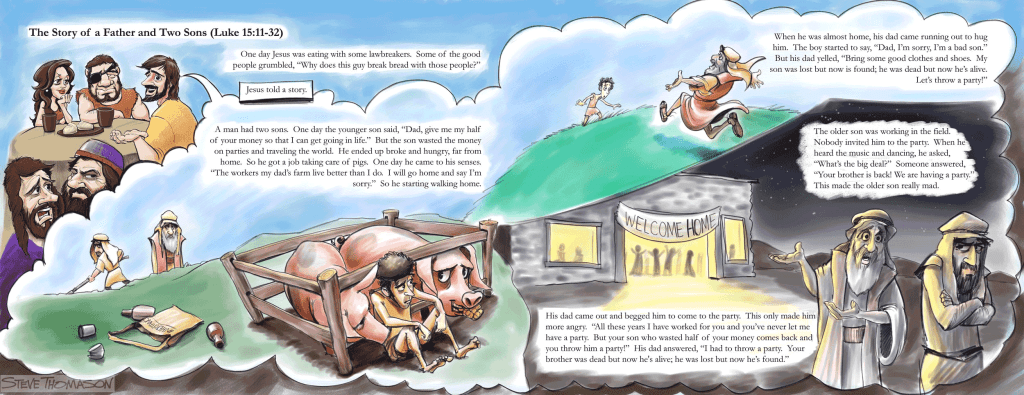
24-25 So God said, in effect, “If that’s what you want, that’s what you get.” It wasn’t long before they were living in a pigpen, smeared with filth, filthy inside and out. And all this because they traded the true God for a fake god, and worshiped the god they made instead of the God who made them—the God we bless, the God who blesses us. Oh, yes!
Word of God for the Children of God
Glory be to the Father, and to the Son, and to the Holy Ghost; as it was in the beginning, is now, and ever shall be, world without end. Amen, amen.
In the 18th century, Jonathan Edwards preached a sermon called “Sinners in the Hands of an Angry God.”
This sermon included vivid illustrations of hell and declared only the mercy of God—a God furious about our sin—keeps any of us sinners out of hell.
People who heard that message were so gripped by it that they sat on the edge of their seat; they held the bench in front of them so tightly that their knuckles turned white.
Even before the sermon was finished, people were hanging heads, moaning and crying out, “What shall I do to be saved?”
How to celebrate holidays is always a difficult decision in our household.
To various degrees my wife and I both grew up in a home where God was at the center. In general, both our families, at their core, shared the same values, but their ideological approach to life, and specifically holidays, was quite different.
One of the most significant discrepancies is I was raised in a Jewish home from about the age of 7 with a half hearted belief in Santa Claus – not God nor Jesus. From the of 14, I angrily walked away from anything that hinted at religious. If anyone either floated or preached the notion of God, church, I’d instantly rebel.
In an attempt to keep the holiday focused on the birth of Jesus, my wife’s own parents made it clear there was a big jolly man in a red suit bringing gifts but only in department stores or riding on top of fire trucks looking like her father.
Truth is God gave us centuries ago the only gift we need, in the form of a baby conceived by the Holy Spirit, born of a virgin in a manger in Bethlehem of Judea.
And, any other material presents we received are as a result of God’s providence (as stewarded by parents). Conversely, my wife’s family celebrated Santa Claus, the “musical magic of Christmas,” and played St. Nick on Christmas morning.
Neither way to celebrate Christmas is wrong; both can promote the message of the gospel and provide a fun seasonal experience. However, it created a bit of a dilemma when we had reconcile, when deciding how to approach the holiday.
Through much deliberation, we reached a compromise that worked well for our family, allowing children to believe in Santa while also engaging in Scripture daily that focused the prophetic readings pointing toward the birth of Christ.
And, just when we thought we had it down, God blessed us with our grandchild. I share this detail because, while we tried to mitigate the focus of Christmas being on presents, it became increasingly complex when we had a child who cherished gifts by the bushels with a bright culturally commercial holiday tree.
And so, if your family, if like mine, is trying to keep the Christ in Christmas, as well as engage in celebrations with family, church members that involve gifts, let me offer the “solution” that the Lord had laid on my heart a few years ago.
Romans is a book filled with profound theology and an abundance of practical wisdom for living a godly life.
Paul begins his letter to the Christians in the Roman church by calling out the ways that they have allowed the culture to distract them from worshiping God.
Specifically, they were worshiping the created over the Creator.
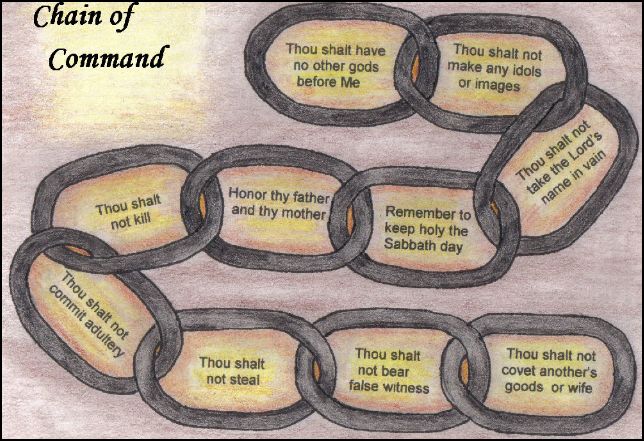
God hates idolatry to the extent that the first and second commandments focus on the concept that God is the only one deserving of our worship.
He tells us we should have no other God before Him, and we shouldn’t make idols.
“An idol is anything more important to you than God. Anything that absorbs your heart and imagination more than God. Anything you seek to give you what only God can give. Anything so central and essential to your life that you should lose it, your life would feel hardly worth living.”
Paul tells us the early church “exchanged the truth of God for a lie.”
We do the same thing today; the culture tells us that the answer to our problems is one click away. Yet, when once we get that shiny new toy, it’s not long before that emptiness is felt again. The creation can’t give what only the Creator can.
This holiday season, think less about how you celebrate, more about the why.
What is your heart’s posture?
Are you using stuff to fill a void, to mask your emptiness?
Or, are you stewarding God’s blessings over your life well?
As we approach this season, may we be mindful, no matter how we choose to celebrate, we must always place God first.
Intersecting Faith & Life:
Psalm 139:23-24 Amplified Bible
23 Search me [thoroughly], O God, and know my heart; Test me and know my anxious thoughts; 24 And see if there is any wicked or hurtful way in me, And lead me in the everlasting way.
Take a moment today to pray the Lord to search your heart and give you clarity and guidance on how your family should celebrate the holidays, so that you and the Body of Christ may avoid a trap: worshiping the creation over the Creator.
Many churches today will purposely avoid teaching about the wrath of God and his judgment and punishment for sin. God is too often portrayed as easygoing and excessively tolerant of our offenses. But that is not the God of the Bible.
As in Jonathan Edwards’ day, we too need a reawakening to recover a right understanding of the wrath of God.
Edwards stated that if we are outside of the new life in Christ, a dreadful storm with the soul quaking shaking thunder of God’s wrath hangs over our heads.
Unsaved sinners are holding on by just a thread over the great furnace of hell’s punishment. If we have no interest in praying for a Mediator, we can do nothing to save ourselves. Our only true hope is to believe in the Lord Jesus for salvation.
Romans 10:9-13 Amplified Bible
9 because if you acknowledge and confess with your mouth that Jesus is Lord [recognizing His power, authority, and majesty as God], and believe in your heart that God raised Him from the dead, you will be saved. 10 For with the heart a person believes [in Christ as Savior] resulting in his justification [that is, being made righteous—being freed of the guilt of sin and made acceptable to God]; and with the mouth he acknowledges and confesses [his faith openly], resulting in and confirming [his] salvation. 11 For the Scripture says, “Whoever believes in Him [whoever adheres to, trusts in, and relies on Him] will not be disappointed [in his expectations].” 12 For there is no distinction between Jew and Gentile; for the same Lord is Lord over all [of us], and [He is] abounding in riches (blessings) for all who call on Him [in faith and prayer]. 13 For “whoever calls on the name of the Lord [in prayer] will be saved.”
God can rescue us and can turn away evil.
God can spread a lavish banquet even in the presence of our enemies.
God can bring salvation—shadow of light in darkness, comfort in grief, peace in bitterness, healing in brokenness, and strength in weakness, authentic wisdom.
Why should we hope?
Because we have a shepherd who will lay down his life for his sheep in order to protect us.
Because we have a Savior who can travel down into the deepest, darkest hell any of us can imagine and come out alive.
Because there isn’t a single valley in the shadow of death that our shepherd cannot walk us through.
Because he claims us as his own and will never let us go.
That is why we can hope.
That is why we are prophets.
We have been given the message of hope and are told to share it.
How will others believe the good news unless they hear it, and how will they hear it unless they are told?
We have our assignment—go and bring the good news of Jesus Christ so that others too can have this hope.
Do you have that hope of Salvation?
Do you love the Lord Jesus Christ as your only Lord and Savior?
In the name of God, the Father, and of the Son, and of the Holy Spirit. Amen.
Praying …..
Psalm 15
A Description of the Godly
A psalm of David.
1 Lord, who can dwell in your tent? Who can live on your holy mountain?
2 The one who lives blamelessly, practices righteousness, and acknowledges the truth in his heart— 3 who does not slander with his tongue, who does not harm his friend or discredit his neighbor, 4 who despises the one rejected by the Lord[a] but honors those who fear the Lord, who keeps his word whatever the cost, 5 who does not lend his silver at interest or take a bribe against the innocent— the one who does these things will never be shaken.
Glory be to the Father, and to the Son, and to the Holy Ghost; as it was in the beginning, is now, and ever shall be, world without end. Amen, amen.
5 From my being hemmed in I called on Yah; he answered and gave me more room. 6 With Adonai on my side, I fear nothing — what can human beings do to me? 7 With Adonai on my side as my help, I will look with triumph at those who hate me.
8 It is better to take refuge in Adonai than to trust in human beings; 9 better to take refuge in Adonai than to put one’s trust in princes.
10 The nations all surrounded me; in the name of Adonai I cut them down. 11 They surrounded me on every side in the name of Adonai I cut them down. 12 They surrounded me like bees but were extinguished [as quickly] as a fire in thorns; in the name of Adonai I cut them down.
13 You pushed me hard to make me fall, but Adonai helped me. 14 Yah is my strength and my song, and he has become my salvation.
15 The sound of rejoicing and victory is heard in the tents of the righteous: “Adonai’s right hand struck powerfully! 16 Adonai’s right hand is raised in triumph! Adonai’s right hand struck powerfully!”
Word of God for the Children of God
Glory be to the Father, and to the Son, and to the Holy Ghost; as it was in the beginning, is now, and ever shall be, world without end. Amen, amen.
Psalm 118 is chock full of verses that many church-goers will know.
It’s a truly inspirational Psalm in its hope, joy, optimism, and faith.
Yet, we often isolate verses from this Psalm and miss out on the richness of them within the context of the whole Psalm.
Psalm 118 invites us to testify, witness to the goodness and sovereignty of God as complimentary attributes that implicitly invites all of us to assess our trust.
It is the combination of these attributes that makes God great.
His sovereignty alone would not invite trust, but rather fear.
For, if God is not good but can do all things then we may rightly fear what He will cause and bring about in our lives.
If, however, God is only good and not sovereign then we may know his love for us but it feels largely sentimental.
For, God cares but is incapable of intervening to help us in our time of need.
That God is both sovereign and good is truly remarkable and encouraging.
The dual attributes invites to surrender, unlock our long self imprisoned trust.
The Psalmist begins with the repeated phrase “the steadfast love of the Lord endures forever” (v. 1-4).
These verses invited Israel as a whole, the house of Aaron in particular, and all those who fear the Lord in general to trust, believe, in the goodness of this God.
He has an enduring love that can never be shaken, dissolved, or depleted.
It endures through all generations, through all magnitudes of storms through all of time, through all circumstances. Trust this God because He loves forever!
Then, the Psalmist gets personal.
He speaks of a time when the Psalmist called out to the Lord in distress (v. 5) and God in fact, answered Him. In fact, more pointedly, the Lord set him free.
He describes the Lord as being “on my side” or as his “helper.”
The confidence He has in God enables him to be fearless in the face of man.
“What can man do to me?” (v. 6).
Pushed to the wall, I called to God; from the wide open spaces, he answered. God’s now at my side and I’m not afraid; who would dare lay a hand on me? God’s my strong champion; I flick off my enemies like flies.(Psalm 118:5-7 The Message)
We are getting a glimpse from the Psalmist as to just how powerful and capable this God is.
Verses 8-9 give us a comparison to show us just how reliable the Lord is. The Psalmist says plainly:
Psalm 118:8-9 English Standard Version
8 It is better to take refuge in the Lord than to trust in man. 9 It is better to take refuge in the Lord than to trust in princes.
God is ultimately greater than us all.
God is our ultimate Judge …
Matthew 12:33-37English Standard Version
A Tree Is Known by Its Fruit
33 “Either make the tree good and its fruit good, or make the tree bad and its fruit bad, for the tree is known by its fruit. 34 You brood of vipers! How can you speak good, when you are evil? For out of the abundance of the heart the mouth speaks. 35 The good person out of his good treasure brings forth good, and the evil person out of his evil treasure brings forth evil. 36 I tell you, on the day of judgment people will give account for every careless word they speak, 37 for by your words you will be justified, and by your words you will be condemned.”
2 Corinthians 5:6-10 Amplified Bible
6 So then, being always filled with good courage and confident hope, and knowing that while we are at home in the body we are absent from the Lord— 7 for we walk by faith, not by sight [living our lives in a manner consistent with our confident belief in God’s promises]— 8 we are [as I was saying] of good courage and confident hope, and prefer rather to be absent from the body and to be at home with the Lord. 9 Therefore, whether we are at home [on earth] or away from home [and with Him], it is our [constant] ambition to be pleasing to Him. 10 For we [believers will be called to account and] must all appear before the [a]judgment seat of Christ, so that each one may be repaid for what has been done in the body, whether good or [b]bad [that is, each will be held responsible for his actions, purposes, goals, motives—the use or misuse of his time, opportunities and abilities].
Including those who consider themselves to be “untouchably above, beyond the scrutiny of the long arm of the Law, shielded from punishment’s” powerful men.
The Psalmist is not only free from the fear of man but he is free from ultimate dependence of man. God is more reliable. The combination of sovereignty and goodness makes Him a much better advocate, a better Savior, a better “refuge.”
What Does Faith Over Fear Really Mean?
Psalm 118:1-9 Legacy Standard Bible
Yahweh’s Lovingkindness Endures Forever
118 Give thanks to Yahweh, for He is good; For His lovingkindness endures forever. 2 Oh let Israel say, “His lovingkindness endures forever.” 3 Oh let the house of Aaron say, “His lovingkindness endures forever.” 4 Oh let those who [a]fear Yahweh say, “His lovingkindness endures forever.”
5 From my distress I called upon Yah; Yah answered me and set me in a large place. 6 Yahweh is for me; I will not fear; What can man do to me? 7 Yahweh is for me among those who help me; Therefore I will look in triumph on those who hate me. 8 It is better to take refuge in Yahweh Than to trust in man. 9 It is better to take refuge in Yahweh Than to trust in nobles.
Having faith over fear involves considering the situation, weighing the options, and understanding the danger but then making the choice to fight through the fear and trust God anyway.
Luke 12:1-7 Legacy Standard Bible
Fear Only God
12 At this time, after [a]so many thousands of the crowd had gathered together that they were trampling on one another, He began saying to His disciples first, “Be on your guard for the leaven of the Pharisees, which is hypocrisy. 2 But there is nothing covered up that will not be revealed, and hidden that will not be known. 3 Accordingly, whatever you have said in the dark will be heard in the light, and what you have [b]whispered in the inner rooms will be proclaimed upon the housetops.
4 “But I say to you, My friends, do not fear those who kill the body and after that have no more that they can do. 5 But I will show you whom to fear: fear the One who, after He has killed, has authority to cast into [c]hell; yes, I tell you, fear Him! 6 Are not five sparrows sold for two [d]assaria? Yet not one of them is forgotten before God. 7 Indeed, the very hairs of your head are all numbered. Do not fear; you are more valuable than many sparrows.
It means pushing our fears to the side, permitting God to throw them into the sea of forgetfulness and replacing it with that faith which moves mountains.
The phrase “faith over fear” is quite a popular Christian saying that reflects a common sentiment found in biblical teachings.
It conveys the idea that faith in God should be significantly stronger and more influential in a person’s life than fear or anxiety. It encourages believers to trust God, His unfailing covenant promises rather than succumbing to fear or doubt.
One of the most incredible and inspiring passages in Scripture for believers is the story of when the Apostle Peter was called out of boat and invited by Jesus to walk upon the surface of the sea toward Jesus during a storm in Matthew 14.
In some ways, it is the “scary story” of the gospels because (at least in my mind) it seems like it could have started with the classic introduction,
“It was a dark and stormy night.”
The writer records the events like this:
And in the fourth watch of the night he came to them, walking on the sea. But when the disciples saw him walking on the sea, they were terrified, and said, “It is a ghost!” and they cried out in fear. But immediately Jesus spoke to them, saying, “Take heart; it is I. Do not be afraid” (Matthew 14:25-27, ESV).
This story is, primarily about the divinity of Jesus Christ.
It’s easy to mock Peter for his lapse in faith at the end of the story.
However, this amazing passage gives a miraculous glimpse into what is possible when we implicitly trust in God also have faith in the face of fear.
Additional Faith Over Fear Bible Verses
2 Timothy 1:7 – For God gave us a spirit not of fear but of power and love and self-control.
Psalm 27:1 – The Lord is my light and my salvation; whom shall I fear? The Lord is the stronghold of my life; of whom shall I be afraid?
Psalm 23:4 – Even though I walk through the valley of the shadow of death, I will fear no evil, for you are with me; your rod and your staff, they comfort me.
Psalm 56:3-4 – When I am afraid, I put my trust in you. In God, whose word I praise, in God I trust; I shall not be afraid. What can flesh do to me?
Proverbs 29:25 – The fear of man lays a snare, but whoever trusts in the Lord is safe.
John 14:27 – Peace I leave with you; my peace I give to you. Not as the world gives do I give to you. Let not your hearts be troubled, neither let them be afraid.
This means that fear itself, including the fear of death, can potentially be more paralyzing and harmful than the actual dangers we face. President Roosevelt encouraged people to face challenges bravely rather than be overcome by fear.
Eleanor Roosevelt later suggested, when asked, presumed that the original source was American naturalist, essayist, poet, and philosopher Henry David Thoreau (1817-1862), who wrote in his journal entry on September 7, 1851: “Nothing is so much to be feared as fear”.
I will take it for granted that we have all heard the famous phrase, “There is nothing to fear but fear itself.”
I think we all know what it is like to fear something or someone legitimately.
Fear is our mind’s reaction to a perceived threat, and it comes in all shapes and sizes and affects people in different ways.
It might just cause stress in our bodies, or it might leave us breathless in panic.
Because it causes reactions, fear even sells tickets!
That’s why there are haunted houses, scary movies, and why kids tell scary bedtime stories.
In general, though, fear is a God-given feeling that motivates us to either advance and fight, turn and run away, or shrink down and hide.
Different situations may elicit one or more of those responses from us.
There are times that a healthy response of fear can help us and keep us safe or alive, but other times fear can paralyze us and put us in a worse or even more dangerous position than we were already in.
According to one study, some of the most common fears are of:
the dark, spiders, mice and snakes, of heights and flying, of dogs, of being underwater, humiliated in front of others, of germs or dirt, and of storms.
You could probably sum up all of these fears into a couple of general categories like fear of the unknown or fear of harm.
Whether we like to admit it or not, everyone desperately fears something.
The irony of many kinds of fears (including the ones we just mentioned), is that they are normally not based on reality.
For example, while the bite from certain kinds of spiders or snakes could be dangerous, the chances of it being fatal is extremely low; even though many people are afraid of flying, it is much more common to get in a car crash; and although many people obsessively wash their hands, staying away from all germs would actually be significantly harmful for our health, ergo, not good.
Nevertheless, some situations (such as the ones Peter found himself in as his boat was so easily tossed around on the waves) are absolutely dangerous, and responding in fear is undeniably necessary understandable for our survival.
How Can Our Faith Overcome Our Fear?
The implicit faith and trust we have in God is based on what is “unseen and untouched” and is a “conviction of several layers of beliefs.” (Hebrews 11)
That means while we might fear something we can see or sense in front of us, our faith is in something which we cannot see nor sense in a physical way.
This is what the author of Hebrews meant when he wrote,
“Now faith is the assurance of things hoped for, the conviction of things not seen”(Hebrews 11:1, ESV).
Hebrews 11:1 Amplified Bible
The Triumphs of Faith
11 Now faith is the assurance (title deed, confirmation) of things hoped for (divinely guaranteed), and the evidence of things not seen [the conviction of their reality—faith comprehends as fact what cannot be experienced by the physical senses].
Hebrews 11:1-2 The Message
Faith in What We Don’t See
11 1-2 The fundamental fact of existence is that this trust in God, this faith, is the firm foundation under everything that makes life worth living. It’s our handle on what we can’t see. The act of faith is what distinguished our ancestors, set them above the crowd.
Notice in Matthew 14 Jesus didn’t chastise Peter or the other disciples for being fearful of the tumultuous storm or the darkness (or thinking that Jesus was a ghost!); he chastised them for not having enough faith to overcome their fear.
So, having faith in God’s provision or protection does not mean that it will eliminate our fear.
Nor is it blind acceptance of something you have not thought about or know nothing about — that is clearly blissful ignorance.
It is not saying you believe something that you’re not actually acting on — that is hypocrisy. And faith over fear is not making decisions without any doubts or concerns of those anticipated outcomes — that is carelessness or foolishness.
Instead, having significantly more faith in God over fear involves considering the situation, weighing the options, understanding the danger but then making the choice to fight through the fear and trust God anyway.
It means pushing our fear to the side and replacing it with faith.
Often, this involves an action (as when Peter literally and physically takes a few steps on top of the water), other times it is as simple as a mental state or inward decision to replace our anxiety with peace by “prayer and supplication with thanksgiving [letting] your requests be made known to God” (Philippians 4:5-7).
Faith over fear means we still participate in the things we value even if there is potential danger, because we have faith in God we believe it is worth the risk.
Those who highly value corporate worship still gather with fellow believers in the midst of high magnitude fear of persecution, discomfort, or even sickness.
Faith over fear is continuing to read Scripture or prayer in public, regardless of potential legal action, public scorn or physical harm such as Daniel in Daniel 6.
Hebrews 10:19-25 Amplified Bible
A New and Living Way
19 Therefore, [a]believers, since we have confidence and full freedom to enter the Holy Place [the place where God dwells] by [means of] the blood of Jesus, 20 by this new and living way which He initiated and opened for us through the veil [as in the Holy of Holies], that is, through His flesh, 21 and since we have a great and wonderful Priest [Who rules] over the house of God, 22 let us approach [God] with a true and sincere heart in unqualified assurance of faith, having had our hearts sprinkled clean from an evil conscience and our bodies washed with pure water. 23 Let us seize and hold tightly the confession of our hope without wavering, for He who promised is reliable and trustworthy and faithful [to His word]; 24 and let us consider [thoughtfully] how we may encourage one another to love, good deeds, 25 not forsaking our meeting together [as believers for worship and instruction], as is the habit of some, but encouraging one another; and all the more [faithfully] as you see the day [of Christ’s return] approaching.
Faith over fear is continuing to take children to church services, public bible studies even though you know an unbelieving crowd will verbally abuse you.
It is believing the Bible’s account of Creation and the Fall, Jesus’ death and his resurrection, salvation, while being berated by atheistic students in schools.
There are many more models in Scripture of this concept of having faith that overcomes our fear we can learn from. In fact, the encouragement from God to “fear not” is one of the most common statements from the mouth of God!
For example, Moses still went to confront the Pharaoh despite his great fear and excuses. Joshua and the Israelites still marched around Jericho and faced other nations in battle despite their fear of larger and more equipped armies. Esther still approached her king even though she knew she could die for it.
What Does This Mean?
God places in our paths the most empowering and impactful opportunities to exercise our faith over fear as Christians.
James 4:6-9 Amplified Bible
6 But He gives us more and more grace [through the power of the Holy Spirit to defy sin and live an obedient life that reflects both our faith and our gratitude for our salvation]. Therefore, it says, “God is opposed to the proud and haughty, but [continually] gives [the gift of] grace to the humble [who turn away from self-righteousness].” 7 So submit to [the authority of] God. Resist the devil [stand firm against him] and he will flee from you. 8 Come close to God [with a contrite heart] and He will come close to you. Wash your hands, you sinners; and purify your [unfaithful] hearts, you double-minded [people]. 9 Be miserable and grieve and weep [over your sin]. Let your [foolish] laughter be turned to mourning and your [reckless] joy to gloom.
“draw near to God with a true heart in full assurance of faith”
even though God is the fearful, holy judge who will not even look on our sin because “our hearts [are] sprinkled clean from an evil conscience and our own bodies washed with pure water” (Hebrews 10:22, ESV).
Because of our victory over the grave through the Resurrection of Jesus Christ, we implicitly believe we have steadfast, immovable faith to move aside our fear.
Let us not be ones who “cower, shrink back and are destroyed;” let us be “those who have His strength of faith and preserve [our] souls” (Hebrews 10:39, ESV).
In the name of God, the Father, and of the Son, and of the Holy Spirit ….
Praying ….
Psalm 4 Amplified Bible
Evening Prayer of Trust in God.
To the Chief Musician; on stringed instruments. A Psalm of David.
4 Answer me when I call, O God of my righteousness! You have freed me when I was hemmed in and relieved me when I was in distress; Be gracious to me and hear [and respond to] my prayer.
2 O sons of men, how long will my honor and glory be [turned into] shame? How long will you [my enemies] love worthless (vain, futile) things and seek deception and lies? Selah. 3 But know that the Lord has set apart for Himself [and dealt wonderfully with] the godly man [the one of honorable character and moral courage—the one who does right]. The Lord hears and responds when I call to Him.
4 Tremble [with anger or fear], and do not sin; Meditate in your heart upon your bed and be still [reflect on your sin and repent of your rebellion]. Selah. 5 Offer righteous sacrifices; Trust [confidently] in the Lord.
6 Many are saying, “Oh, that we might see some good!” Lift up the light of Your face upon us, O Lord. 7 You have put joy in my heart, More than [others know] when their wheat and new wine have yielded abundantly. 8 In peace [and with a tranquil heart] I will both lie down and sleep, For You alone, O Lord, make me dwell in safety and confident trust.
Glory be to the Father, and to the Son, and to the Holy Ghost; as it was in the beginning, is now, and ever shall be, world without end. Amen, amen.
5 [a] Now muster your troops, O daughter[b] of troops; siege is laid against us; with a rod they strike the judge of Israel on the cheek. 2 [c] But you, O Bethlehem Ephrathah, who are too little to be among the clans of Judah, from you shall come forth for me one who is to be ruler in Israel, whose coming forth is from of old, from ancient days. 3 Therefore he shall give them up until the time when she who is in labor has given birth; then the rest of his brothers shall return to the people of Israel. 4 And he shall stand and shepherd his flock in the strength of the Lord, in the majesty of the name of the Lord his God. And they shall dwell secure, for now he shall be great to the ends of the earth. 5 And he shall be their peace.
Word of God for the Children of God
Glory be to the Father, and to the Son, and to the Holy Ghost; as it was in the beginning, is now, and ever shall be, world without end. Amen, amen.
If you had lived in the first century, this text would have sounded all wrong.
When Jewish people spoke of “going up” to Judea, the destination they had in mind was Jerusalem.
And when they spoke of a city connected with the great King David, what came to mind was again Jerusalem. Jerusalem was where the palace and temple were.
Jerusalem was the natural birthplace of anyone destined for a throne.
But Micah had prophesied a different birthplace for this future king.
Though Bethlehem was “small among the clans of Judah,” it was big in the eyes of God.
Bethlehem illustrates God’s method of operation.
“God chose the weak things of the world to shame the strong” (1 Corinthians 1:27). Why?
“So that no one may boast before him” (1:29).
Boasting is fueled by pride.
We climb the ladder of success pulling others down from the rung ahead of us.
We want to prove that we are big stuff.
But at Christmas we are on our way to Bethlehem, not Jerusalem.
When the prophet Micah announced a coming hope for the discouraged people of God, he opened with a surprising statement: revealing the promised Messiah would come not from Jerusalem—the royal city from which most of his original Jewish hearers would have anticipated a king to hail—but from Bethlehem.
From this small, unexpected town, God’s work would unfold before His people.
Jerusalem was the most prominent city in Israel.
It was the city of the great King David, the location of the temple, and the primary focus of God’s people.
Bethlehem would not have been on anyone’s radar.
It was “too little to be among the clans of Judah.”
It wouldn’t have made their Top 100 list, and it certainly wouldn’t have been in their Top 10. The significance of this Bethlehem is found in its insignificance.
Thinking about the rest of the Bible story, we realize this makes perfect sense.
This is how God works!
When Goliath taunted the people of Israel, the strong and brave soldiers of Israel fled.
Instead of “great” soldiers, God used an insignificant shepherd boy—from Bethlehem, of all places!—with five stones and a sling to deliver God’s people.
When the good news of the Messiah’s birth came, we might have expected that the cultural elite of the day would have been the first to hear of it, but instead, God brought the good news to a few insignificant shepherds. This is God’s way.
Those who dismiss the message of the Bible often stumble over the fact that God’s answer for the world lay in a baby who was born in cold dark obscurity.
This is not a message anyone would ever invent!
Yet it was into this insignificant place that the Messiah came to rule.
The tiny newborn boy who lay in a Bethlehem food trough was the one with a never-ending kingdom which far surpasses all other kingdoms.
Isaiah 61:1-8 English Standard Version
The Year of the Lord’s Favor
61 The Spirit of the Lord God is upon me, because the Lord has anointed me to bring good news to the poor;[a] he has sent me to bind up the brokenhearted, to proclaim liberty to the captives, and the opening of the prison to those who are bound;[b] 2 to proclaim the year of the Lord’s favor, and the day of vengeance of our God; to comfort all who mourn; 3 to grant to those who mourn in Zion— to give them a beautiful headdress instead of ashes, the oil of gladness instead of mourning, the garment of praise instead of a faint spirit; that they may be called oaks of righteousness, the planting of the Lord, that he may be glorified.[c] 4 They shall build up the ancient ruins; they shall raise up the former devastations; they shall repair the ruined cities, the devastations of many generations.
5 Strangers shall stand and tend your flocks; foreigners shall be your plowmen and vinedressers; 6 but you shall be called the priests of the Lord; they shall speak of you as the ministers of our God; you shall eat the wealth of the nations, and in their glory you shall boast. 7 Instead of your shame there shall be a double portion; instead of dishonor they shall rejoice in their lot; therefore in their land they shall possess a double portion; they shall have everlasting joy.
8 For I the Lord love justice; I hate robbery and wrong;[d] I will faithfully give them their recompense, and I will make an everlasting covenant with them.
Seeking, Searching, Recognizing, Implementing the pattern of God’s ways in those ancient days enables us to recognize the Messiah now that He has come.
It readies us for the reality that the one upon whom all God’s promises rested would die a humiliating death on a cross.
It reminds us that this is God’s way and always has been and always will be.
And it therefore changes the way we look at our lives. If you consider yourself of significance, beware: for such a view is often the precursor to being humbled.
If you consider yourself of little import, ability, influence, then be encouraged, for God works through insignificant people in insignificant places.
So be of no doubt that God can do great things through your insignificance.
That has always been His way.
Many of us struggle because we don’t have much to boast about.
But may I again remind you that God uses people (Luke 1:26-38) whose names would never appear in any papers to accomplish great things for his kingdom?
Truth is we’ll understand that better when we stand before God’s throne and hear his “Well done!” for those insignificant things that have truly mattered.
In the name of God, the Father the Son and the Holy Spirit,
Praying ….
Psalm 61
For the choir director; on a stringed instrument; by David.
1 Listen to my cry for help, O Elohim. Pay attention to my prayer. 2 From the ends of the earth, I call to you when I begin to lose heart. Lead me to the rock that is high above me. 3 You have been my Machseh, a Migdal-Oz against the enemy. 4 I would like to be a guest in your tent forever and to take refuge under the protection of your wings. Selah 5 O Elohim, you have heard my vows. You have given me the inheritance that belongs to those who fear your name. 6 Add days upon days to the life of the king. May his years endure throughout every generation. 7 May he sit enthroned in the presence of Elohim forever. May mercy and truth protect him. 8 Then I will make music to praise your name forever, as I keep my vows day after day.
Glory be to the Father, and to the Son, and to the Holy Ghost; as it was in the beginning, is now, and ever shall be, world without end. Amen, amen.
57 Now the time came for Elizabeth to give birth, and she bore a son. 58 And her neighbors and relatives heard that the Lord had shown great mercy to her, and they rejoiced with her. 59 And on the eighth day they came to circumcise the child. And they would have called him Zechariah after his father, 60 but his mother answered, “No; he shall be called John.” 61 And they said to her, “None of your relatives is called by this name.” 62 And they made signs to his father, inquiring what he wanted him to be called. 63 And he asked for a writing tablet and wrote, “His name is John.” And they all wondered. 64 And immediately his mouth was opened and his tongue loosed, and he spoke, blessing God. 65 And fear came on all their neighbors. And all these things were talked about through all the hill country of Judea, 66 and all who heard them laid them up in their hearts, saying, “What then will this child be?” For the hand of the Lord was with him.
Word of God for the Children’s of God
Glory be to the Father, and to the Son, and to the Holy Ghost; as it was in the beginning, is now, and ever shall be, world without end. Amen, amen.
The story of Jesus’ birth is intertwined with another miraculous birth—that of John, who was born to Elizabeth and Zechariah in their old age.
Though Zechariah did not believe at first that this could happen, God fulfilled his promise.
And when Zechariah named the child John, as the angel had instructed, he was able to speak again (see Luke 1:11-20). The name Johnmeans “God is gracious.”
While we might be used to thinking of God’s grace in the birth and life of Jesus, we should also ask about other ways we see God’s grace at work in this season.
Maybe you have seen a strained relationship restored, or an illness healed.
Maybe you have noticed temptations lifted, or fears relieved.
Can we name such gifts as illustrations of God’s grace?
Not only did Zechariah and Elizabeth receive God’s mercy; they invited their neighbors and relatives to share in their joy in what God had done for them.
Psalm 23 Authorized (King James) Version
Psalm 23
A Psalm of David.
1 The Lord is my shepherd; I shall not want. 2 He maketh me to lie down in green pastures: he leadeth me beside the still waters. 3 He restoreth my soul: he leadeth me in the paths of righteousness for his name’s sake. 4 Yea, though I walk through the valley of the shadow of death, I will fear no evil: for thou art with me; thy rod and thy staff they comfort me. 5 Thou preparest a table before me in the presence of mine enemies: thou anointest my head with oil; my cup runneth over. 6 Surely goodness and mercy shall follow me all the days of my life: and I will dwell in the house of the Lord for ever.
During the Christmas season, many of us have opportunities to gather with family and friends.
Do we also sacrifice time with others in ministry and mission, to share with them our experiences of God’s mercy to us?
Luke 15:31-32 The Message
31-32 “His father said, ‘Son, you don’t understand. You’re with me all the time, and everything that is mine is yours—but this is a wonderful time, and we had to celebrate. This brother of yours was dead, and he’s alive! He was lost, and he’s found!’”
As members of the Body of Christ, we are called to a deeper level of connection with one another. Empathy is a vital aspect of this connection, allowing us to understand and enter into each other’s feelings.
In 1 Corinthians 12:26, the apostle Paul writes, “If one member suffers, all the members suffer with it.”
Ephesians 4:1-6 The Message
To Be Mature
4 1-3 In light of all this, here’s what I want you to do. While I’m locked up here, a prisoner for the Master, I want you to get out there and walk—better yet, run!—on the road God called you to travel. I don’t want any of you sitting around on your hands. I don’t want anyone strolling off, down some path that goes nowhere. And mark that you do this with humility and discipline—not in fits and starts, but steadily, pouring yourselves out for each other in acts of love, alert at noticing differences and quick at mending fences.
4-6 You were all called to travel on the same road and in the same direction, so stay together, both outwardly and inwardly. You have one Master, one faith, one baptism, one God and Father of all, who rules over all, works through all, and is present in all. Everything you are and think and do is permeated with Oneness.
This command grows out of the doctrine that the church is one, with one interest, and therefore, we should have common sympathy in its joys and sorrows.
Christmas is a season for reflecting on God’s grace and mercy to his people.
For Christ’s glory may you name, and celebrate, and share that mercy today.
In the name of God, the Father the Son and the Holy Spirit ….
Praying ….
Psalm 28 English Standard Version
The Lord Is My Strength and My Shield
Of David.
28 To you, O Lord, I call; my rock, be not deaf to me, lest, if you be silent to me, I become like those who go down to the pit. 2 Hear the voice of my pleas for mercy, when I cry to you for help, when I lift up my hands toward your most holy sanctuary.[a]
3 Do not drag me off with the wicked, with the workers of evil, who speak peace with their neighbors while evil is in their hearts. 4 Give to them according to their work and according to the evil of their deeds; give to them according to the work of their hands; render them their due reward. 5 Because they do not regard the works of the Lord or the work of his hands, he will tear them down and build them up no more.
6 Blessed be the Lord! For he has heard the voice of my pleas for mercy. 7 The Lord is my strength and my shield; in him my heart trusts, and I am helped; my heart exults, and with my song I give thanks to him.
8 The Lord is the strength of his people;[b] he is the saving refuge of his anointed. 9 Oh, save your people and bless your heritage! Be their shepherd and carry them forever.
Glory be to the Father, and to the Son, and to the Holy Ghost; as it was in the beginning, is now, and ever shall be, world without end. Amen, amen.
5 Therefore, since we have been made righteous through his faithfulness,[a] we have peace with God through our Lord Jesus Christ. 2 We have access by faith into this grace in which we stand through him, and we boast in the hope of God’s glory. 3 But not only that! We even take pride in our problems, because we know that trouble produces endurance, 4 endurance produces character, and character produces hope. 5 This hope doesn’t put us to shame, because the love of God has been poured out in our hearts through the Holy Spirit, who has been given to us.
Word of God for the Children of God
Glory be to the Father, and to the Son, and to the Holy Ghost; as it was in the beginning, is now, and ever shall be, world without end. Amen, amen.
Past 2 1/2 years, I’ve been through several seasons of struggle and suffering.
And there’s something I really wrestle with when I am in the thick of it.
It’s a verse and a call to action in the Bible, actually.
That simultaneously perplexes and convicts me.
It’s the odd encouragement to rejoice and be glad in our hurts and hardships. Of course, I want to be filled with joy at all times, regardless of what surrounds me.
To be completely honest, my heart seems to resist finding its way to stepping more purposely, less tentatively, deliberately shifting my outlook from “why bother?” into positive and pleasant perspectives when it’s tossed into turmoil.
Romans 5:3-5 Amplified Bible
3 And not only this, but [with joy] let us exult in our sufferings and rejoice in our hardships, knowing that hardship (distress, pressure, trouble) produces patient endurance; 4 and endurance, proven character (spiritual maturity); and proven character, hope and confident assurance [of eternal salvation]. 5 Such hope [in God’s promises] never disappoints us, because God’s love has been abundantly poured out within our hearts through the Holy Spirit who was given to us.
One instance the Bible encourages this behavior is in Romans 5:3-5, when it tells us to rejoice when we run into problems. And this frankly can feel like a sharp smack in the face, punch to my solar plexus and adding insult to injury.
We may already be feeling pretty down, and likely far from rejoicing, and then we are being told to rejoice in it!?
Which may knock us further down with self-disappointment.
But, regardless of the joy we may or may not muster in the mud of a problem, I bet we can kind of agree we both want the result referenced at the latter part of the verse, acknowledging, thru Christ we’ll receive endurance from these trials.
2 Corinthians 12:7-10 New American Standard Bible
A Thorn in the Flesh
7 Because of the extraordinary greatness of the revelations, for this reason, to keep me from exalting myself, there was given to me a thorn in the flesh, a messenger of Satan to [a]torment me—to keep me from exalting myself! 8 Concerning this I pleaded with the Lord three times that it might leave me. 9 And He has said to me, “My grace is sufficient for you, for power is perfected in weakness.” Most gladly, therefore, I will rather boast [b]about my weaknesses, so that the power of Christ may dwell in me. 10 Therefore I delight in weaknesses, in [c]insults, in distresses, in persecutions, in difficulties, in behalf of Christ; for when I am weak, then I am strong.
Personally speaking, in order to motivate me to seek and see the positive in my difficulties, it helps to understand the benefit of doing so.
It helps to understand the benefit of the promised result.
In this case, sufficientendurance, grace, strength.
And friend, we definitely need all God’s endurance in this life laid out for us.
Nowadays people are too eager to give up in the face of changes or hardships.
People give up on their education, career, marriage, and friends all too easily when things do not go their way. Sadly, people treat spiritual matters similarly.
People leave their church over a minor disagreement.
Others give up on their faith because of socio-economic, political, cultural pressure or overwhelming feeling God does not, will not answer their prayers.
Let us not lose heart.
“Though outwardly we are wasting away, yet inwardly we are being renewed day by day. For our light and momentary troubles are achieving for us an eternal glory that far outweighs them all” (2 Corinthians 4:16-17).
A quick Google search defined endurance as “the power of enduring an unpleasant or difficult process or situation without giving way,” and “the capacity of something to last or to withstand wear and tear.”
And because life is hard, difficult, and unpleasant at times, of course, we need endurance.
The beautiful blessing for us Christians, who lean on the Lord through our problems, is we develop this endurance one season of dependence at a time.
We are increasing our capacity to withstand the wear and tear of life, which we know is inevitable. Meaning our problems are one by one strengthening us.
By the power of God, strengthening our character, strengthening our ability to take on the next trial with more of God’s peace and grace, and his increased patience and love. All the while reflecting more of him into a watchful world.
Do you struggle to see joy in your suffering?
But can you see .01% the value in gaining endurance to continue to withstand the inevitable, unending flow, floods of tribulations and trials in this world?
And isn’t that what we all want?
To be able to better handle what comes our way?
Because we know so much tough stuff will keep coming.
I don’t know about you, but one of my greatest fears is that I won’t be able to handle the hard things on the horizon or that will unexpectedly come my way.
So, if you could assure me the hard thing I’m going through now will allow me to better “find God first!” pray to patiently contend with the things I will face in the future. Finding God first, foremost, isn’t that reason to rejoice? I believe so.
Intersecting Faith & Life:
It certainly isn’t always natural, or even comfortable.
In fact, it can be really hard when you’re walking through a dark valley.
But I believe there is still a good reason to rejoice and praise God for what he is doing through it.
He is the author of all things and has authority over all things surrounding you.
This includes your problems, your trials, and your suffering.
He will use it to strengthen you; he will use your struggles to serve you and serve others.
And though no, it isn’t pleasant to walk through hard things, we can walk those hard paths and valley’s, knowing they will create new strength and goodness.
And that is always something worth rejoicing and thanking God for.
Let this encourage you today when you consider the difficulties swarming around you.
Know that through this very thing, God will bring about the person in you who will better deal with tomorrow’s difficulties.
Opening wide the door to greater ease and peace along the journey of your life.
And we can all figure out why we rejoice and praise God for today and every day.
In the name of God, the Father the Son and the Holy Spirit ….
Praying ….
Psalm 61 New American Standard Bible
Confidence in God’s Protection.
For the music director; on a stringed instrument. A Psalm of David.
61 Hear my cry, God; Give Your attention to my prayer. 2 From the end of the earth I call to You when my heart is faint; Lead me to the rock that is higher than I. 3 For You have been a refuge for me, A tower of strength against the enemy. 4 Let me [a]dwell in Your tent forever; Let me take refuge in the shelter of Your wings. Selah
5 For You have heard my vows, God; You have given me the inheritance of those who fear Your name. 6 You will [b]prolong the king’s [c]life; His years will be like generations. 7 He will [d]sit enthroned before God forever; Appoint faithfulness and truth that they may watch over him. 8 So I will sing praise to Your name forever, That I may pay my vows day by day.
Glory be to the Father, and to the Son, and to the Holy Ghost; as it was in the beginning, is now, and ever shall be, world without end. Amen, amen.