
Distant or Delighted? Not Feeling the Love of God? How About Learning to See Jesus With a Smile? 1 John 3:1-3

1 John 3:1-3 Amplified Bible

Children of God Love One Another

See what an incredible quality of love the Father has shown to us, that we would [be permitted to] be named and called and counted the children of God! And so we are! For this reason the world does not know us, because it did not know Him. Beloved, we are [even here and] now children of God, and it is not yet made clear what we will be [after His coming]. We know that when He comes and is revealed, we will [as His children] be like Him, because we will see Him just as He is [in all His glory]. And everyone who has this hope [confidently placed] in Him purifies himself, just as He is pure (holy, undefiled, guiltless).

The Word of God for the Children of God.

Adeste Fidelis. Venite Adoremus. Dominum.

Gloria. In Excelsis Deo. Alleluia, Alleluia, Alleluia, Amen.

See How Well We Are Lavished With Love?

1 John 3:1 New International Version

See what great love the Father has lavished on us, that we should be called children of God! And that is what we are! The reason the world does not know us is that it did not know him.

The word lavish presents a picture of extravagant abundance.

It is almost too much, too generous and luxurious.

Being lavish borders on being wasteful.

But the Father has lavished his love on us.

God’s love is even more than what a wonderful mother showers on her infant.

Isaiah 66:12-14 New International Version

12 For this is what the Lord says:

“I will extend peace to her like a river,
    and the wealth of nations like a flooding stream;
you will nurse and be carried on her arm
    and dandled on her knees.
13 As a mother comforts her child,
    so will I comfort you;
    and you will be comforted over Jerusalem.”

14 When you see this, your heart will rejoice
    and you will flourish like grass;
the hand of the Lord will be made known to his servants,
    but his fury will be shown to his foes.

God’s love and care are supplied all the time.

God’s love is a constant bombardment of affection and care.

We may be as oblivious as an infant to the presence of his love, but God still continues to pour his love into our lives.

God’s love flows into us deeply, redefines who we are at the very core of our heart, mind and soul.

When we open our hearts to God’s love, we are transformed by it.

We are remade, regenerated into children of God.

It is God who makes us his children, not us.

We cannot earn that status.

It is a gift of God’s great love.

Because we are sinners, we do not understand God’s love for us at first.

We don’t even know we need him until we realize we are stuck in sin and cannot save ourselves.

We become God’s children when we receive Jesus as our Savior (John 1:12).

Not one of us is worthy of God’s love.

We cannot earn it.

God just loves us.

We would not be God’s children if he were not already deeply in love with us.

How amazing is that!

Being said with an exclamation mark, what if we turned that into a question?

“How Amazing Is That?”

I Really Do Not Feel God’s Love.

Psalm 13 Authorized (King James) Version

Psalm 13

To the chief Musician, A Psalm of David.

How long wilt thou forget me, O Lord? for ever?
how long wilt thou hide thy face from me?
How long shall I take counsel in my soul,
having sorrow in my heart daily?
how long shall mine enemy be exalted over me?
Consider and hear me, O Lord my God:
lighten mine eyes, lest I sleep the sleep of death;
lest mine enemy say, I have prevailed against him;
and those that trouble me rejoice when I am moved.
But I have trusted in thy mercy;
my heart shall rejoice in thy salvation.
I will sing unto the Lord,
because he hath dealt bountifully with me.

Have you ever said or thought these words in public or in private?

If so, you’re not alone.

Truth Be Told, Too many times I have really struggled with the disconnect between knowing that God loves me and actually seeing, and feeling His love.

It might be tempting to brush aside the discomfort of this disconnect and get on with the responsibilities of life.

“After all,” some will pat you on the back, say, “love is an action, not a feeling.”

But if you look closely at the love displayed in the Bible, it’s clear that it’s not just automatic rote Christian responsibility—it’s also passionate emotion.

God doesn’t just act lovingly toward us, He feels love for us.

And He doesn’t want us to only understand His love, but to experience it in a deep way, a deeply visual and tactile way – to visualize it and touch it daily.

If, like me, you’ve struggled with a disconnect between knowing about God’s love and actually seeing, feeling it, accept your feelings as being quite real.

Sometimes, like the Psalmist who penned Psalm 13, we will not feel loved.

Sometimes, like the Psalmist who penned Psalm 13, we will not see God’s love.

Psalm 13 is someone’s deepest expression of a heart and soul in angry anguish.

It has remained in the Bible through countless edits because God wants you the reader to know, the maximum extent to which God feels, visualizes our hearts.

Heart Distant or Delighted? Learning to See Jesus With a Smile …

Psalm 13:5-6 Authorized (King James) Version

But I have trusted in thy mercy;
my heart shall rejoice in thy salvation.
I will sing unto the Lord,
because he hath dealt bountifully with me.

1 John 3:3 Amplified Bible

And everyone who has this hope [confidently placed] in Him purifies himself, just as He is pure (holy, undefiled, guiltless).

I recall many years ago sitting in a circle with the other members of my Bible study group when our leader invited us to imagine what Jesus’ face looks like.

Dutifully, I closed my eyes and tried to picture Him.

The image that appeared was of a man with long, greyish silver locks and dull, piercing brown eyes.

His unsmiling lips were hard set in a neutral line.

He didn’t look disapproving, but he didn’t look very happy either.

As I studied His face, I felt sad, fearful, and unsure of how He felt about me.

I was deeply troubled by this experience because, intellectually, I knew God always loved me deeply and felt positively—even passionately—about me.

Throughout the Bible, God describes His love in the most tender terms known to humankind.

He compares His love for us to the love a parent has for their child—a warm, welcoming, compassionate love (Isaiah 66:13; 1 John 3:1).

He also describes His love for us as the love a groom has for his bride—a passionate, ardent, sacrificial love (Revelation 19:7; Ephesians 5:25-27).

Yet, my picture of Jesus that evening revealed that, deep down, I also perceived Him as uppermost serious and restrained, maybe even a little depressed at me.

It also highlighted my fear that I was not a source of joy or pleasure to God, and that, though He loved me, it suddenly felt more being with a distant, aloof love.

I knew this isn’t how God wanted me to view Him.

Ephesians 3:18, the apostle Paul prayed, “May you have the power to understand, as all God’s people should, how wide, how long, how high, and how deep his love is. May you experience the love of Christ, though it is too great to understand fully” (NLT).

More than anything, I wanted to experience the love of God—I wanted to feel it, not just know about it.

So I started asking God to take my understanding beyond intellect and into a more studious, scriptural, deep heart knowing of my value to Him.
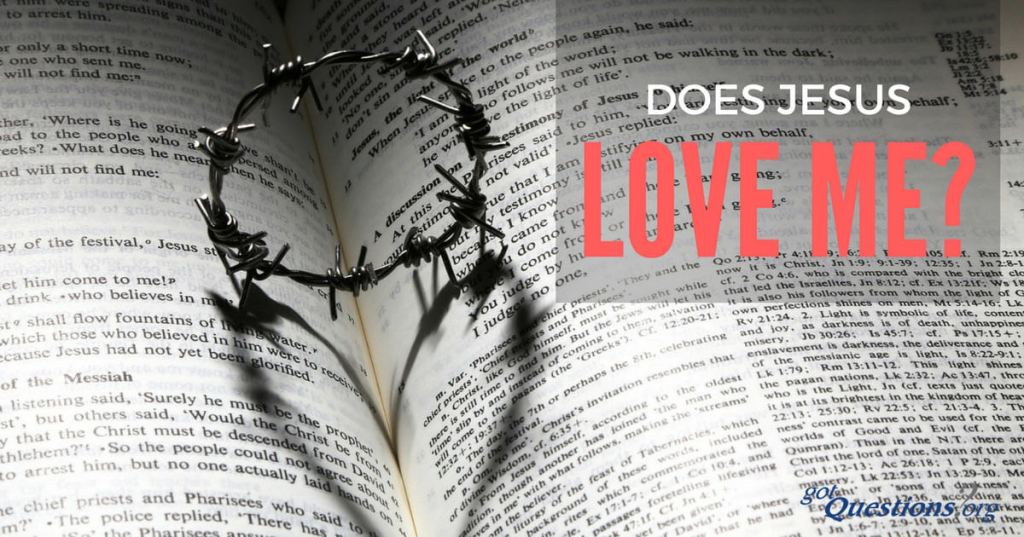
1 John 3:1 Amplified Bible

Children of God Love One Another

See what an incredible quality of love the Father has shown to us, that we would [be permitted to] be named and called and counted the children of God! And so we are! For this reason the world does not know us, because it did not know Him.

Truth be told, sometimes it’s so much easier to notice the love people have for you than the love God has for you.

Why?

Because you can physically see them and the way they express love.

But when it comes to God, it can be challenging to see, understand, the extent to which He loves you.

After all, none of us can physically see Him on this side of Heaven.

That’s why God gave us His Word… to help us to see, feel, and understand who He is and how much He really does love us. 

See, throughout the Bible, God is described as an all-powerful and eternally just God, but also as deeply loving to those He created.

In the entire biblical story, God is presented as a character who strongly cares for us… so much so that He even allowed His Son, Jesus Christ, to enter this world to bring about a redeemed and restored relationship with humanity.

In fact, Jesus is the physical embodiment of God’s eternal love, showing us that His love is a real, tangible being we can cling to and put our hope in rather than just an abstract concept we cannot ever hope to even begin to .01% understand.

Now, before we dive further into how Jesus loves us, first let’s clarify the meaning of biblical love.

BIBLICAL LOVE

1 Corinthians 13:4-7 Amplified Bible

Love endures with patience and serenity, love is kind and thoughtful, and is not jealous or envious; love does not brag and is not proud or arrogant. It is not rude; it is not self-seeking, it is not provoked [nor overly sensitive and easily angered]; it does not take into account a wrong endured. It does not rejoice at injustice, but rejoices with the truth [when right and truth prevail]. Love bears all things [regardless of what comes], believes all things [looking for the best in each one], hopes all things [remaining steadfast during difficult times], endures all things [without weakening].

There are many different kinds of love.

There is parental love, brotherly love, and romantic love.

When anyone says the word love, we often first associate it with anything from dating to sex.

But, the word is so much more broad than we often think.

According to the above passage, biblical love is simply putting the needs of others before your own. 

All of us fall short of the expectation set by this passage at some point, because selflessness does not come naturally to us (Romans 3:23).

But, the good news of the Gospel is that God perfectly embodies these four verses.

He is the one that created love in the first place!

In turn, this means that God is LOVE itself (1 John 4:8).

And because He is love, He displays this quality not only through His words, but through His actions as well.

GOD’S DEVOTED LOVE

Psalm 103:12-14 Amplified Bible

12 
As far as the east is from the west,
So far has He removed our transgressions from us.
13 
Just as a father loves his children,
So the Lord loves those who fear and worship Him [with awe-filled respect and deepest reverence].
14 
For He knows our [mortal] frame;
He remembers that we are [merely] dust.

As any good father would, God feels sentiment and shows affection toward His children.

This picture of God as the perfect Father is a deeply intimate one because it illustrates how far [east from west], He would go to keep us safe and secure.

Another illustration of God’s love is seen in Hosea 2:14-23.

Rather than a father this time, this Bible story describes a faithful husband that comforts and treasures his wife – which is also meant to be seen as a metaphor for God’s devoted love to an unfaithful Israel.

Despite Israel’s unfaithfulness, God expressed His infinite love for His people all the more through love poetry, painting a beautiful image of God’s extreme devotion and affection towards His Bride, the Church.

LOVE AS AN ACTION

Romans 5:8-10 Amplified Bible

But God clearly shows and proves His own love for us, by the fact that while we were still sinners, Christ died for us. Therefore, since we have now been justified [declared free of the guilt of sin] by His blood, [how much more certain is it that] we will be saved from the [a]wrath of God through Him. 10 For if while we were enemies we were reconciled to God through the death of His Son, it is much more certain, having been reconciled, that we will be saved [from the consequences of sin] by His life [that is, we will be saved because Christ lives today].

But, love is not merely a feeling.

Love is also an action… that God shows from the very beginning of the Bible.

Out of His love, God established a rescue plan for humanity in the wake of Adam and Eve’s sin (Genesis 3:15).

Out of His great love, God freed Israel from slavery in Egypt – not because they earned it, but because they were His people (Exodus 12-14).

Out of His love, God became fully human, yet fully God through the person of Jesus Christ – living a perfect life and dying a death we deserved so that we could all be restored into unto, a right relationship with Him (John 3:16-17).

In each scenario, all of God’s actions toward His people are motivated by pure love. He doesn’t just say He loves us, but He actually does something about it.

THE LOVE OF JESUS

John 15:13-16Amplified Bible

13 No one has greater love [nor stronger commitment] than to lay down his own life for his friends. 14 You are my friends if you keep on doing what I command you. 15 I do not call you servants any longer, for the servant does not know what his master is doing; but I have called you [My] friends, because I have revealed to you everything that I have heard from My Father. 16 You have not chosen Me, but I have chosen you and I have appointed and placed and purposefully planted you, so that you would go and bear fruit and keep on bearing, and that your fruit will remain and be lasting, so that whatever you ask of the Father in My name [as My representative] He may give to you.

By coming into the world and sacrificing his own life for us, Jesus demonstrated the ultimate love of God.

He died for us because He considered us friends worth dying for (John 15:15).

This is the radical love that Jesus showed during his time on Earth… and still shows us today even if we do not see it in quite the same way we see the love of our friends and family.

So, when asking the question “Does Jesus love me?” the simple answer is “yes.”

Jesus really does love you not because of anything you have done, but because of who He is!

In the name of God, the Father and God the Son and God the Holy Spirit,

Let us Pray,

Almighty God, we praise and thank you for making us children of God, not through our own power and piety but through our baptism into crucified and risen Lord Jesus Christ. We turn daily to you, and in that turning we find peace, courage and purpose. Make your whole church a witness to the great good news of Christ’s resurrection. Father God, may we have the grace and the power of the Holy Spirit to grasp how immeasurable wide and deep and high and long is your love for us, expressed in all that Savior Jesus has done for us, that we may be your children. In his name, Amen.

Adeste Fidelis. Venite Adoremus. Dominum.

Gloria. In Excelsis Deo. Alleluia, Alleluia, Alleluia, Amen.
https://translate.google.com/

Pondering the Word of God: What Does it Mean For Us to Say, and to Believe and to Also Act Upon, ‘God Is Love’? 1 John 4:7-8?

1 John 4:7-8 Amplified Bible

God Is Love

Beloved, let us [unselfishly] [a]love and seek the best for one another, for love is from God; and everyone who loves [others] is born of God and knows God [through personal experience]. The one who does not love has not become acquainted with God [does not and never did know Him], for God is love. [He is the originator of love, and it is an enduring attribute of His nature.]

The Word of God for the Children of God.

Adeste Fidelis. Venite Adoremus. Dominum.

Gloria. In Excelsis Deo. Alleluia, Alleluia, Alleluia, Amen.

I want you to take a few seconds or minutes, preferably the rest of forever, and meditate, ponder, and just think about the depths of love that Jesus has for you.

Depending on the day, perhaps you may perceive or you genuinely feel a barrier, because we may know all too well, how we often fail, falter, take our eyes off our King, and at times maybe even want nothing to do with Him.

But I’m here to tell you that in those exact moments, Christ’s all-encompassing love is yet all the more present and there to sustain you!

For He has chosen you, though you will most definitely fail, and falter and too, stumble, He called you his own, though you and I will flinch, and we all have a place at His table even when your gaze is not perfectly fixed on the divine host. 

So do meditate, ponder and think about how Christ’s love for you and me is like an all consuming ocean that you and I cannot ever swim away from. 

Do think about that He is the greatest joy in times of triumph. 

Do think about that He is your deepest comfort in your utmost trying of times and sorrows. 

Pray – Oh, what love He has for his children…Oh, what love He has for you!

So please join me today in praising God, and His Word, for his persistent love.

Praise God, that He continually shows us what love is even right now.

Praise God, that He first loved us which enables us to, therefore, go and love on others exactly where they are. 

So today, the remainder of this week, and continually, let there be no shortage of love from the children of God especially during times we are all experiencing.

Ask Jesus right now, through prayer and study of His Word, through fellowship, to love others through you as He has so graciously covered all of you in his love.

What Does it Mean That ‘God Is Love’ in 1 John 4:8?

1 John 4:8 Amplified Bible

8 The one who does not love has not become acquainted with God [does not and never did know Him], for God is love. [He is the originator of love, and it is an enduring attribute of His nature.]

Love is a word that has taken on many meanings throughout the ages.

Innumerable writers, movie directors, music and dance choreographers and hosts and myriads artists alike have tried their best to convey the idea of love.

Though almost no one has the same definition, there is an underlying thought.

Love is a feeling and an action.

Love is what one person feels and does for someone else.

Even in the Christian faith, love entails many qualities. 

1 Corinthians 13 is an entire passage devoted to the idea of love.

The chapter ends on the notion that love is both greater than hope and surprisingly greater than faith.

Here too we see that love is how one person relates to another, both in feeling and action.

The dictionary definition also describes how people relate.

With so many perspectives on the idea of love, an entire biblical passage dedicated to the idea, and too many songs, stories, and movies to count, love must be very important.

Moreover, this proves without a shadow of doubt we have all been affected by love in one way or another – love touches everyone – without any exceptions.

We also know that God values the idea of love because of how many times the word is used in the Bible.

In the original King James Version (KJV) the word love appears 310 times.

The frequency of the word will largely depend on the translation.

Important to note, the English word for love is split into different words in the original writing of the Bible.

The original languages used words to describe love including phileo, pragma, and agape.

When love is evoked in Scripture, the term is used to describe the way we talk, act, and our mindset toward others.

In the Bible though, love is by no means limited to human relationships.

In fact, the Bible informs us that the reason why we love other people, the reason we can understand love, is exactly this: because God first loved us.

1 John 4:19 Amplified Bible

19 We love, because [a]He first loved us.

God gave us the example and the how-to guide.

This verse comes shortly after the aforementioned verse from 1 John 4.

To understand the context of the words here, we have to first identify the passage’s author – John, an apostle of Jesus.

In this chapter, John draws a comparison between people of the world and people of God.

More specifically, he identifies that some people will claim to purport God, but do so falsely.

These are “false prophets” (1 John 4:1).

We can identify these people by testing their spirit.

One way to test the spirit is by examining someone’s ability to love.

After John makes clear the difference between false prophets and true believers, he admonishes us to love one another.

How do we accomplish this?

We look at what God has done for us.

John makes the claim that love is first and foremost defined by God’s choosing to love us, His children.

With this powerful and inspiring truth into mind, we should then in response, turn our heart to love one another (God’s children), the way our Father loves us.

He speaks confidently in detailing that God loves us, so we ought to love one another, but what does John mean when he says, “God is love”?

What Did John Mean When He Said ‘God Is Love’?

1 John 4:8Authorized (King James) Version

He that loveth not knoweth not God; for God is love.

In this verse, we see that John equates God with love.

This metaphorical statement takes on a literal meaning when we consider the evidence of John’s claim.

In this passage, John mentions the sacrifice of Jesus for humanity–an act of love (1 John 4:10).

Since the Garden of Eden, God has acted on behalf of humanity, showing His love and support for His followers.

There have been consequences such as the banishment from Eden (Genesis 3), but God has maintained a loving relationship with people since the Fall.

Why?

The answer is evident in God’s love and all the stories that follow in the Bible where God acts on behalf of humanity.

These events culminate into the eventual Second Coming of Christ.

As God has remained an ever-present constant in the lives of humanity, so too are we supposed to show ever-present love to one another on an ongoing basis.

John states that we cannot love God and hate someone else (1 John 4:20).

If God has already chosen to love each of us despite our fallen nature since the beginning of time, why should or would we choose not to love someone despite an offense in the present time?

Obviously, this is easier said than done, but John makes clear “God is love.”

He drives this point further by stating we remain in love when we draw close to God, and as we draw close to God, the love of God abides in us (1 John 4:16).

The way God perpetually treats us in love, we should strive to treat other people.

How Does This Verse Affect How We Give and Receive Love?

John’s message to followers of Christ is a message echoed throughout the Bible.

A significant area where this is shown occurs when Jesus is questioned by a Pharisee.

“When the Pharisees heard that he had silenced the Sadducees, they came together. And one of them, an expert in the law, asked a question to test him: ‘Teacher, which command in the law is the greatest?’

He said to him, ‘Love the Lord your God with all your heart, with all your soul, and with all your mind. This is the greatest and most important command. The second is like it: Love your neighbor as yourself. All the Law and the Prophets depend on these two commands.’” (Matthew 22:34-40)

Jesus lets us know that the second greatest act we can do daily as Christians is love other people, while the greatest commandment is to love God.

If we are abiding in God, as John admonishes us to do, then we will not only seek to love God as Himself but will see loving others as an extension of that.

Interestingly, the Bible does not tell us to love ourselves, possibly because that action comes so naturally for believers and nonbelievers alike.

We can use this awareness then to change how we view other people.

Instead of maintaining a mindset of “me versus you” or “them versus us,” we can acknowledge the fact that we are all image-bearers of God (Psalm 139:13).

No matter our difference in faith, behavior, or physical appearance, we are God’s children and we should definitely strive to treat each other accordingly.

Three Ways to Love Others by Knowing that God Is Love
1. Encourage One Another

Proverbs 16:24 Amplified Bible

24 
Pleasant words are like a honeycomb,
Sweet and delightful to the soul and healing to the body.

The words we speak carry weight, for better or for worse.

When we choose to speak in a godly fashion, we can use words to encourage those around us: family, friends, coworkers, even strangers.

Pleasant words include gratitude, compliments, and any other type of speech that benefits the person hearing.

As we know that God is love, our love is not by any means limited to words.

We can also show love through actions that bring about health to the body of the person receiving.

2. Forgive One Another

Matthew 6:14-15 Amplified Bible

14 For if you forgive [a]others their trespasses [their reckless and willful sins], your heavenly Father will also forgive you. 15 But if you do not forgive others [nurturing your hurt and anger with the result that it interferes with your relationship with God], then your Father will not forgive your trespasses.

Holding resentment against another is not the proper way to act as a Christian.

God has chosen to forgive humanity despite our constant sinful nature.

Likewise, God wants us to exercise forgiveness for those people who offend us.

3. Pray For and With One Another

James 5:13-16 Amplified Bible

13 Is anyone among you suffering? He must pray. Is anyone joyful? He is to sing praises [to God]. 14 Is anyone among you sick? He must call for the elders (spiritual leaders) of the church and they are to pray over him, anointing him with [a]oil in the name of the Lord; 15 and the prayer of faith will restore the one who is sick, and the Lord will raise him up; and if he has committed sins, he will be forgiven. 16 Therefore, confess your sins to one another [your false steps, your offenses], and pray for one another, that you may be healed and restored. The heartfelt and persistent prayer of a righteous man (believer) can accomplish much [when put into action and made effective by God—it is dynamic and can have tremendous power].

A lot of people say expressions like, “I’ll pray for you.”

How many of them will stop and pray in that moment?

Scripture informs us that prayer has miraculous power.

If the words we speak to one another can bring health to the body, surely the words we say in prayer are even stronger.

When we love like God, we pray for those we love, and those we don’t feel as fondly toward because the Lord watches over us all.

If God is omnipresent, then the Lord is present in all of our lives, whether we feel or even acknowledge His presence.

Acquiring this disposition of love will push us to serve and love others even when we may feel like their faith is not where we prefer, and may even bring others closer to God.

Once we perfect loving people, we would have perfected and fulfilled the second greatest commandment.

This will prove not only God is love, but God is always with us and within us.

In the name of God, the Father and God the Son and God the Holy Spirit,

Let us Pray,

May I Recognize Your Words Prayer

God of truth, sometimes I not sure if I’m actually hearing your voice, or if it’s just my own thoughts or even another spirit. Sharpen my spiritual hearing, Lord, so I can recognize your words when you are speaking to me. Help me know it’s really you, with no doubt or second-guessing. When I’m asking for your guidance in important decisions, give me your peace that surpasses understanding with your answer. Help me remember that your words to me will never go against your written word in the Bible. Please, Give unto me a clear mind and push out all my confusion. Amen.

Adeste Fidelis. Venite Adoremus. Dominum.

Gloria. In Excelsis Deo. Alleluia, Alleluia, Alleluia, Amen.
https://translate.google.com/

Question for Today: What Does it Mean Today to Love Our Neighbors as We All Love Ourselves? Mark 12:30-31 [28-34]

Mark 12:28-34 Amplified Bible

28 Then one of the scribes [an expert in Mosaic Law] came up and listened to them arguing [with one another], and noticing that Jesus answered them well, asked Him, “Which commandment is first and most important of all?” 29 Jesus answered, “The first and most important one is: ‘Hear, O Israel, the Lord our God is one Lord; 30 and you shall love the Lord your God with all your heart, and with all your soul (life), and with all your mind (thought, understanding), and with all your strength.’ 31 This is the second: ‘You shall [unselfishly] [a]love your neighbor as yourself.’ There is no other commandment greater than these.” 32 The scribe said to Him, “Admirably answered, Teacher; You truthfully stated that He is One, and there is no other but Him; 33 and to love Him with all the heart and with all the understanding and with all the strength, and to [unselfishly] love one’s neighbor as oneself, is much more than all burnt offerings and sacrifices.” 34 When Jesus saw that he had answered thoughtfully and intelligently, He said to him, “You are not far from the kingdom of God.” And after that, no one would dare to ask Him any more questions.

The Word of God for the Children of God.

Adeste Fidelis. Venite Adoremus. Dominum.

Gloria. In Excelsis Deo. Alleluia, Alleluia, Alleluia, Amen.

Sometimes, the most important things aren’t difficult to grasp. 

If they seem difficult to grasp, it is most likely because we ourselves, in our all too clumsy humanity have made it so because we ourselves have deemed it to be infinitely more important to be complex than simplified – it just feels “better.”

God desires us to be exclusively devoted to Him with all of our being, and to also be loving to others who surround us. 

The covenant demands of God placed square upon our character boil down to the observance of these two fundamental principles that go echelons beyond laws and reveal God’s character [God IS Love] to the very hearts of all people.

Love Your Neighbor As Yourself

Mark 12:29-31Authorized (King James) Version

29 And Jesus answered him, The first of all the commandments is, Hear, O Israel; The Lord our God is one Lord: 30 and thou shalt love the Lord thy God with all thy heart, and with all thy soul, and with all thy mind, and with all thy strength: this is the first commandment. 31 And the second is like, namely this, Thou shalt love thy neighbour as thyself. There is none other commandment greater than these.

We learn many rules growing up:

Brush your teeth,

Look both ways before crossing the street,

Always tell the truth.

Which of these is most important?

What do you believe is the single most important Truth you have ever heard?

Rabbi Jesus was asked a similar question by an expert in the Mosaic Law: Of the many commands and regulations in the law of God, which one tops the list?

Jesus did not hesitate: “Love God above all”—and he quickly added the second: “Love your neighbor as yourself.”

And what kind of love does this refer to?

In connection with God’s love for us, this is unconditional, unconventional, love—totally gracious, totally generous, and totally with no strings attached.

Notice especially that Jesus says, “Love your neighbor as yourself.”

This means that if we are to love our neighbors unconditionally and generously, we will be required by God to love ourselves that self same way too!

God does not make junk.

God does not make mistakes.

We are created in God’s image; we are his masterpieces.

It’s not to just okay to love myself: God expects me to celebrate the person he created me to be – every moment celebrate God exactly as God celebrates us!

The Golden Rule Jesus gave us—“Do to others what you would have them do to you” (Matthew 7:12)—is another way of saying this command to love God and honor God and love and honor our neighbor as we love and honor ourselves.

Loving others well depends at least partly on our capacity to love ourselves.

What Does it Mean to Love Your Neighbor as Yourself?

Would it, Should it, Could it, surprise you to learn that loving your neighbor as yourself is found eight times in the Bible.

Not once, Not even twice but Eight times.

Go ahead and search for them – Seek Ye First the Kingdom of God.

Loving your neighbor as yourself is so important to God that He not only repeats Himself, He makes it a command.

And not just one in a list of many commands.

Rabbi Jesus coupled the command to love your neighbor as yourself with loving God with all our heart, all our soul, all our mind, and with all of our strength. 

James calls it the royal law.

It sounds beautiful, and it is when we obey it.

But loving your neighbor as yourself isn’t always easy.

That’s why God made it a command.

He knew we’d struggle.

Making it a commandment is actually to our benefit.

How is that?

We have to be reverently and deliberately obedient

We have to do it on purpose.

We have to be intentional about it.

Sometimes even out of our need.

But if we love God as God love us … obedience just flows from us naturally.  

This is what it means to love your neighbor as yourself:
1. Loving your neighbor means receiving God’s love.

Too begin to love your neighbor as yourself, you need to know two things:

you need to know what love is and that you are loved. 

The Bible tells us “this is love. Not that we loved God but that He loved us and sent his Son as a propitiation…” (1 John 4:10).

You and I are the object of this love.

God loves you.

God loves me.

Knowing this is imperative.

And not just that we are loved in a general kind of way, but deeply loved and unconditionally and unconventionally loved.

We tap into this when we understand that God loved us first. [John 3:16-17]

He’s the source of our love.

God loved us even before Jesus gave Himself for us.

God the Father is the source of all love.

Before we can give this love we need to receive it for ourselves.

You cannot give to someone what you yourself do not have.

2. Loving your neighbor means loving ourselves as well.

To love your neighbor as yourself as commanded, you need to measure love correctly.

The measurement within this command is—as yourself.

To love your neighbor as yourself you need to love yourself.

This is something that gets badly misunderstood in the body of Christ often.

It gets mixed up with dying to self and denying self as if we need to destroy our self.

This is not true. 

Jesus died for each and every one of us.

If Jesus valued us enough to go through what He went through, we each have a sacred responsibility to Him to value what He values exactly as He valued it .

We need to love what He loves – us.

The Bible tells us the Father loves us as much as He loves Jesus (John 17:20-23).

20 Neither pray I for these alone, but for them also which shall believe on me through their word; 21 that they all may be one; as thou, Father, art in me, and I in thee, that they also may be one in us: that the world may believe that thou hast sent me. 22 And the glory which thou gavest me I have given them; that they may be one, even as we are one: 23 I in them, and thou in me, that they may be made perfect in one; and that the world may know that thou hast sent me, and hast loved them, as thou hast loved me. [Authorized King James Version]

When we dare to simplify it: How dare we not love what the Father loves?

Learning to love ourselves prepares and helps us to love our neighbor.  

3. Loving your neighbor means showing grace.

Knowing God is love and that this love is for you is not enough.

It needs to be developed and matured.

Imagine if you had a field of good soil and a bag of top notch seeds.

Would they produce a crop all by themselves?

No. The seeds must be planted and cared for.

Grace takes the seed of His love and the soils of our hearts and souls and creates fruit for the kingdom of God. 

The Bible says, “it’s God who works in us both to will and to do of His good pleasure” (Philippians 2.13).

Loving Him and our neighbor pleases Him.

Grace helps us do this.

Grace teaches us proper love, honor and respect for ourselves and for our neighbor – our freely receiving His grace empowers us all to freely give it.  

4. Loving your neighbor means acting with compassion.

From Luke’s Narrative of the Gospel, when Jesus was asked, “Who is my neighbor?” He responded with a story: the Good Samaritan [10:25-37].

Even those who have no love for God see the value of the story.

What is the bottom line of this story?

Who did Jesus say was being a neighbor?

The one who had compassion. 

Compassion is not simply a warm fuzzy feeling in our hearts.

Compassion does something.

A heart moved by compassion cannot sit idly by while someone suffers a need.

Loving God and Loving your neighbor as you are Loving yourself is being moved by God, the Father, Son and Holy Spirit to help to the full extent of your ability.

5. Loving your neighbor means looking out for their wellbeing.

The NIV translation of 1 Corinthians 13 says, “love protects.” 

In Philippians 2:4 it says, “Let each of you look not only to his own interests, but also to the interests of others.” 

Loving your neighbor as yourself is to look out for other people’s wellbeing. 

To look out for them is to pay attention.

You notice if they need something and then you help.

For example, their clothing tag is sticking out or they have food on their face so you let them know.

Or something more serious like when a neighbor has surgery or becomes sick.

Concerned for their health, well-being, I head over to their home with a meal or a loaded gift card so if they aren’t able to cook, they won’t have to cook, can eat.

6. Loving your neighbor means serving them.

Serving from the heart is kindness in action.

Kindness is one of the attributes of love listed in 1 Corinthians 13.

The surprisingly wonderful thing about kindness, though, is you can do acts of kindness without kindness residing in your heart.

If the kind thing is done out of duty then it isn’t love. 

Jesus said he came to serve (Mark 10:45, Luke 19:10, Matthew 20:28).

God, who is love, came to serve.

Love serves.

For you to love your neighbor as yourself, you’ll have a heart to serve them.

Let them know you’re there for them.

If they need a ride somewhere, you drive them.

If they need their dog or cat checked on while out of town, you do that for them.

Other examples are getting their mail for them or taking them a meal if they’re not well.

Examples in a public setting are to let people in front of you in line at the store or in traffic.

7. Loving your neighbor means speaking kindly.

The childhood rhyme about sticks and stones versus words is not true.

Words build up or tear down.

God created the world using words.

The Bible says Jesus IS the Word (John 1:1). 

To love your neighbor as yourself is to use words to build them up.

Speaking words of encouragement to someone who’s down is the most obvious example but there are hosts upon hosts and myriads and myriads of others.

We can be more intentional with our words by looking for and magnifying the good.

We can always find something good if we’ll take the time to look for it.

Examples of this are giving someone a simple smile, a simple compliment and simply telling someone how much you genuinely appreciate them.  

8. Loving your neighbor means making allowances for other people’s humanity.

We live in a day and age when offense is as common as breathing.

Criticism is running rampant.

Love is not easily offended or critical.

Everyone does dumb things; no one is always right or knows everything.

We’re all a work in progress. 

I remember sitting through a green light.

I wasn’t trying to inconvenience anyone.

I got stuck in grieving daze because a family member might die.

I remember that when I encounter people driving too slow, sitting at lights, or even cutting me off.

Maybe they have a reason.

Maybe they’re just being human.

We’re imperfect beings that do perfectly dumb things often. 

Giving people the benefit of the doubt is loving your neighbor.

For example, I had someone honking their truck horn flailing their arms and cursing because I didn’t speed through an almost red light.

They were behind me and so they got stuck at the red light with me.

I don’t know why they were so angry but they may have had other pressing circumstances surrounding them that day – I prayed for them.

9. Loving your neighbor means sharing in their joys and sorrows.

The Bible says we are to “rejoice with those who rejoice, mourn with those who mourn” (Romans 12:15). 

Celebrating can be difficult for us at times, especially if our neighbor is getting something we have longed for.

For example, a new job, a raise, or a pregnancy.

Celebrating with them in spite of our own pain is a strong show of love. 

Likewise, mourning with our neighbor can be hard if we don’t know what to say, or have recently lost something or someone ourselves.

Loving God, Loving your neighbor as yourself is showing up and being there with your heart open, allowing them to be what they are, and support them.

10. Loving your neighbor means forgiving.

Forgiveness is a big deal to God.

Bible says He planned it for us from the foundation of the world (Ephesians 1:4).

Jesus frequently spoke forgiveness over others that resulted in the healing of their bodies. 

Forgiveness is freely given to us and to love your neighbor as yourself you’ll pass the forgiveness on.

Jesus highlighted this in His story in Matthew 18 when Peter asks how many times is he to forgive.

He tells the story of a king who forgave an enormous debt to one of his servants.

This servant failed to pass the forgiveness on.

He demanded payment of a small debt from his neighbor.

When the king heard of it, he had his servant remanded for his debt, revoking the debt cancellation.

Jesus’ story tells us that love always forgives.

We all need forgiveness, so loving your neighbor is to forgive them as you have been forgiven.

In both the Hebrew [Old] and New Testaments we are commanded by God to love our neighbors as ourselves.

On several occasions Jesus himself says that is a part of fulfilling God’s law.

Again and again God shows us how to love others.

The call to love our neighbor is not complicated, but it can be challenging to follow.

It means more than being hospitable, tolerant, patient, and kind.

It means more than showing respect and honoring others.

It also means more than just being civil with people you disagree with—even though it also means all of that.

Loving our neighbor implies that the well-being of others matters—so we should work for justice, protection, and opportunities for others to thrive.

It means listening to others.

It also shows that the possibilities for showing love and care for our neighbors is endless and could leave us overwhelmed by all the needs for neighborly love!

Yet all of us can love our neighbors in the name of Jesus Christ.

We can honor, love and respect them enough to show how the love of Jesus is forever shaping us to love God with all our heart, soul, mind, and strength.

As you are loved, Jesus says, so love one another (see John 13:34).

In the name of God, the Father and God the Son and God the Holy Spirit,

Let us Pray,

Dear God, thank You for Your unconditional love. Lord, help me to know myself and to love myself. If I don’t feel self-worth, how can I expect someone else to cherish me? Help me to develop a healthy self-identity, remembering that I am a child of the King, created in Your image. Help me know who I really am, what I really want from life, and what I want in the person I will spend my life with. Thank you, Lord, for loving me so completely that I am being completely changed! Help me to be more aware of your Love so I may love my neighbor with the love you have for the world.

Adeste Fidelis. Venite Adoremus. Dominum

Gloria. In Excelsis Deo. Alleluia, Alleluia, Alleluia, Amen.

 https://translate.google.com/

Our God is Truly an Awesome God: We Are All Fearfully and Wonderfully Made. Genesis 1:27, Psalm 139:14

Genesis 1:27 Authorized (King James) Version

27 So God created man in his own image, in the image of God created he him; male and female created he them.

Psalm 139:14Authorized (King James) Version

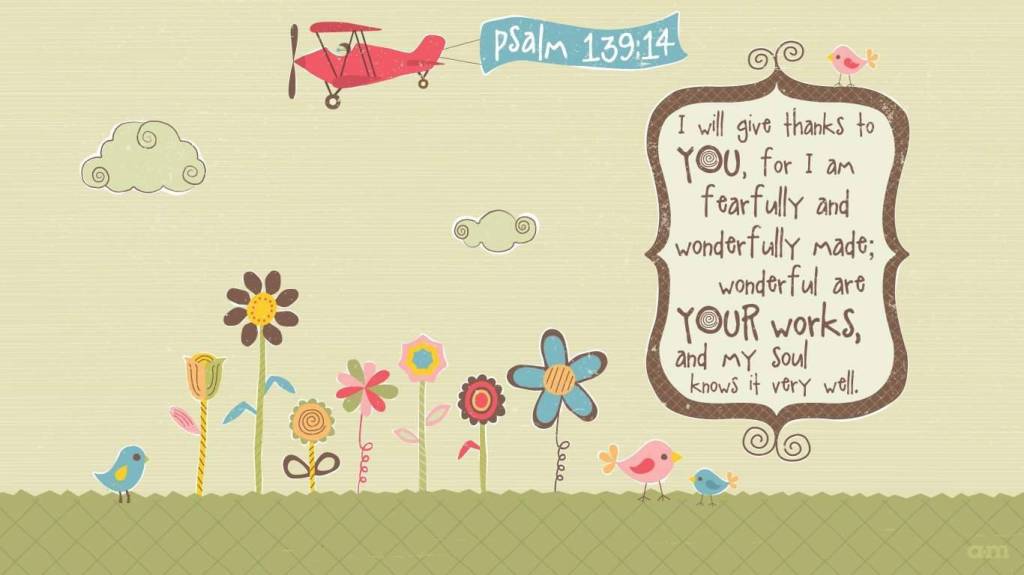
14 I will praise thee; for I am fearfully and wonderfully made:
marvellous are thy works;
and that my soul knoweth right well.

The Word of God for the Children of God.

Adeste Fidelis. Venite Adoremus. Dominum.

Gloria. In Excelsis Deo. Alleluia, Alleluia, Alleluia, Amen.

The Infinite, Personal God

After God flung the galaxies into the vast universe; after He created the sun, earth, and moon, the sea, dry land, plants, and animals, God made humankind.

God made us like himself in many ways—in his image.

He gave us a soul/spirit and a physical body.

Each of us has a heart, a mind, a personality, and power to rule the earth and to make it fruitful and beautiful.

We each have inalienable dignity, something which cannot be taken from us, because we are made in the image of God – in His Image we are fearfully and most wonderfully made – and our hearts, souls ought to know this quite well.

God’s infinite, intimate and personal nature showed itself when the Creator nit just created us but He too, walked and talked with Adam and Eve in the garden.

It showed itself when God came to Abraham as a traveler, ate lunch with him.

God desires to be our friend because He is personal.

At the same time God is infinitely powerful, the Master of the universe who created it all by his word.

What an amazing God we serve!

So great, so mightily amazing—and yet He loves each one of us personally!

Wonderfully Made—and Remade

I praise you because I am fearfully and wonderfully made. . . . Search me, God. . . See if there is any offensive way in me, and lead me in the way everlasting. —  Psalm 139:14, 23-24

These verses from Psalm 139 ought to remind each and every single one of us that while each one of us is a beautiful creation of the Lord, there are likewise offensive ways inside us that need to be dealt with.

After the fall into sin (Genesis 3), we human beings continue to live as precious works of the Creator while also needing to be redeemed from sin, brokenness.

So in his great and amazing love for us, God sent his Son, Jesus Christ, to pay the price for our sin and to give us new life forever with him.

And now the Spirit of God lives in us, guiding us to become like Jesus.

He leads us “in the way everlasting.”

The apostle Paul describes it this way: “I no longer live, but Christ lives in me” (Galatians 2:20), giving each and every single one of us, one of the very clearest statements in the Bible about dying to live.

The fact that we are fearfully and wonderfully made—and remade—leads us to some of the most glorious announcements in Scripture, like this one:

“You are a chosen people, a royal priesthood, a holy nation, God’s special possession, that you may declare the praises of him who called you out of darkness into his wonderful light. Once you were not a people, but now you are the people of God; once you had not received mercy, but now you have received mercy” (1 Peter 2:9-10).

Question of the day: What Does it Mean to Be Fearfully and Wonderfully Made? Psalm 139:14

Psalm 139:14 says that God made all the delicate, inner parts of my body.

He knit me together within my mother’s womb.

I was made Infinitely, Intimately, Wonderfully complex.

God knew me as He was painstakingly designing me with much loving care.

I didn’t just evolve into what I am.

I was created and designed with a purpose.

And the blueprints of me are similar to other human beings but they’re not exactly the same.

I am unique—and so are you.

Our human body is a unique design of multiple systems that all work intricately together.

The cardiovascular system gives you the heart and lungs to pump our blood to carry oxygen through veins and arteries, throughout our whole body to move.

The muscular system gives you the ability to move, lift, and hold things.

The digestive system processes food into energy and discards waste.

The immune system keeps you healthy.

The DNA determines your gender.

The eyes cause you to see.

The nose lets you smell.

The tongue and mouth let you eat and taste.

The ears enable you to hear.

And your skin enables you to feel textures. 

You have the ability to uniquely encounter an incredibly unique diverse world with an equally amazing diverse body!

Then you were also blessed with a brain so you can think, process, and create.

Isaac Asimov said the brain is “the most complex and orderly arrangement of matter in the universe.”

Your emotions help you to relate to other people and feel compassion.

All of these systems (plus many more) were uniquely designed to make you who you are.  

God Created You and Me With Love On Purpose

You have the innate ability to discern right from wrong.

Although, that ability is hindered somewhat until we connect with your Creator.

He didn’t just design you to do your own thing.

He created you so you would desire an ongoing relationship with Him.

You were made with a hole in the center of your soul that only one thing fits.

Until you find that very specific something, you will never be fulfilled.

And that very specific something is God Himself.

You were designed with an intense need of your Creator, God.

Without a relationship with Him, you will always be searching for something to fill that void. 

Drugs, alcohol, food, money, sex, material goods, occupations, hobbies, travel, success, fame—these are just some of the myriad of ways in which we try to fill that empty space inside.

But none of those things will ever, can ever fill it.

They are like round pegs in square holes.

The vacant areas at the edges will still leave you desiring more of something else.

Whatever we attempt to put in there will dissipate because it never completely fills the space.

Those things were never meant to fill the space; they never can.

Sadly, many continue to shove mismatched pegs into that hole.

A little of this, a little of that… hoping that one day they will feel complete.

They surmise that this thing over here didn’t work but maybe this other thing will do it.

They just have not found the one right thing yet but one day they hope they will.

One day…

  • I’ll have enough money to feel safe and secure.
  • I’ll find the perfect spouse that will complete me.
  • I’ll get my dream sports car and life will be grand.
  • I’ll be on television and people will know my name.
  • I’ll be the best in my field and people will scout me out.

“One day” will never come.

If you’re not happy with who you are today, right here and right now, you’ll never be.

You’ll never be happy with who you are today unless you begin to praise God for creating us just as we are – male, female, both fearfully and wonderfully made. [Genesis 1:27]

Stop Looking at Everyone Else, Look Only Unto God

Isaiah 64:7-8Authorized (King James) Version

And there is none that calleth upon thy name,
that stirreth up himself to take hold of thee:
for thou hast hid thy face from us,
and hast consumed us, because of our iniquities.
But now, O Lord, thou art our father;
we are the clay, and thou our potter;
and we all are the work of thy hand.

When you do finally realize that without God you are unable to make the most of yourself, that’s when those things of old subtly, suddenly begin to change.

The clay cannot mold itself no matter how hard it tries.

However, God, the Potter, cannot only mold His clay but He also knows what His original design of you was.

He is both a Master Potter and a Master Architect with an Infinite Master Plan.

Sometimes in this fallen world, people are born with birth defects that disrupt one or more of the intricate systems of the body.

God foresaw even those defects and uses them for good when we look to Him. 

Even our weaknesses are fearfully and wonderfully made. [2Corinthians 12:7-10]

A blind person can develop hearing beyond the normal capacity.

Conjoined twins can teach us about getting along with one another, for they have to do it 24/7.

Someone born without arms develops the ability to use their feet in wondrous ways.

Another born without legs develops the upper body strength to get around smoothly.

We all have weaknesses that sometimes make us feel like we are of no use.

But God’s grace is sufficient to cover our weaknesses.

More than that, God’s power is made perfect in our weaknesses.

Weaknesses keep me humble and leaning on God’s strength which is much more sufficient than my own.

One More Question for Today: Should I always feel like I am “Fearfully and Wonderfully” made?

No. Sin and pride always want to drag me back into my own way of thinking.

The same thinking that kept me reaching for those mismatched pegs.

Those thoughts tell me that I can do whatever I want, by myself, without God.

They lie and they don’t even make sense.

They say I can do anything but then turn around and also say that I’m not good enough to do what I want to do.

Feelings can’t be trusted unless they line up with the Word of God.

And the Word of God tells me that I’m fearfully and wonderfully made for a specific purpose.

Therefore, with God’s help, I will love walking in that purpose as often as I can.

Whether I always feel it or not, I can trust God and His plans for my very life.

“For we are God’s masterpiece. He has created us anew in Christ Jesus, so we can do the good things he planned for us long ago.” (Ephesians 2:10)

God doesn’t call us his children because we measure up to some standard of behavior.

God adopts us as his children because he has chosen us in love.

It’s that simple.

The Apostle Paul wrote,

“Because of his great love for us, God, who is rich in mercy, made us alive with Christ even when we were dead in transgressions—it is by grace you have been saved.”

In other words, God created us, fearfully, wonderfully, weaved us together.

God made us alive in Christ before there was any spiritual fruit in our lives!

We were as good as dead before God’s grace touched our lives, and dead trees certainly can’t bear any fruit.

Soil that has no nutrients isn’t any good for growing a crop.

It’s not the growth of fruit in our life that saves us; it’s simply the gracious favor of our Creator God shown to us in the life, resurrection of his Son, Jesus.

Our God is an Awesome God.

With Wisdom Power and Love,

He Reigns from Heaven Above,

With Wisdom, Power and Love,

Our God is an Awesome God.

In the name of God, the Father and God the Son and God the Holy Spirit,

Dear Lord, Thank You for fearfully and wonderfully creating each of us. Thank You for our uniqueness, thank You for giving us worth in Your eyes. Help us live as the one You uniquely intended us to be. Help us abide instead of strive, living peacefully, fully and joyfully as heirs to Your Kingdom and co-heirs with Christ. In Jesus’ Name.

Adeste Fidelis. Venite Adoremus. Dominum.

Gloria. In Excelsis Deo. Alleluia, Alleluia, Alleluia, Amen.

https://translate.google.com/

Living our Life and Honoring Our God, Living Our Life, Respecting, Honoring Generations of our Families, Honoring and Respecting Our Grand Parents. Proverbs 17:6

Proverbs 17:6Amplified Bible


Grandchildren are the crown of aged men,
And the glory of children is their fathers [who live godly lives].

The Word of God for the Children of God.

Adeste Fidelis. Venite Adoremus. Dominum.

Gloria. In Excelsis Deo. Alleluia, Alleluia, Alleluia, Amen.

What our Grand parents are to us …

“What children need most are the essentials that grandparents provide in abundance. They give unconditional love, kindness, patience, humor, comfort, lessons in life. Most importantly, milk and cookies and plenty of Ice Cream.”

“A grandfather is someone with silver in his hair and gold in his heart.”—Anonymous

If nothing is going well, call your grandmother. —Italian Proverb

“When Grand Ma smiles, the lines in her face become epic narratives that trace the stories of generations that no book can replace.” Anonymous

To a small child, the perfect granddad is unafraid of big dogs and fierce storms but absolutely terrified of the word “boo.” Anonymous

I still remember the simple lessons taught to me by my grandmother Lou. She taught me how special I was simply by telling me what a coconut looked like.

The time she spent with me, and the things she passed on with her simple, yet gentle words, pats upon my head, are still invaluable treasures that I cherish.

Throughout history, grandparents have played a central role in the lives of their children and grandchildren.

There is even a Grandparents Day the first Sunday after Labor day, put into its place by President Carter in 1978, to genuinely celebrate how important the contribution and impact our grandparents make to families, communities.

Today, let’s give honor where honor is long overdue, to take a few moments to stop and reflect on the value of grandparents—past or present and future.

Let’s dive into a few Scriptures that offer beautiful words of affirmation about the aged—timely words that show just how important grandparents truly are.

Does the Bible say anything about Honoring Our Grandparents?

When most of the books of the Bible were written, parents and grandparents held positions of high honor in the life of the family and of the community.

Children were expected to revere their elders and learn from them.

When God introduced the Law to the Israelite nation, He even included a commandment to “honor your father and your mother” (Exodus 20:12).

God also made it part of His Law that the younger person should stand in the presence of the elderly as a sign of respect (Leviticus 19:32).

Implied within this command is a multi-generational attitude of respect and honor toward a family and communities senior relatives.

As children observed their parents honoring the grandparents, they, in turn, at some point in life, would shoulder that responsibility when their time came.

Proverbs 17:6 says that “children’s children are the crown of old people.”

Every grandparent understands that comparison.

There is a special kind of bond between a grandparent and a grandchild that benefits both.

Someone has humorously stated that “grandchildren are God’s reward for not killing your own children when they were teenagers.”

Humor aside, there is some truth to that.

Grandchildren, like children, are a reward—a blessing from the Lord and one way that He is good to us (Psalm 127:3).

“Grandchildren are the crown of the aged, and the glory of children is their fathers.” – Proverbs 17:6

What a picture of God’s design for the good of families.

Think about it.

There’s three generations here.

You have got grandparents, parents, and children.

All of us fit into this spectrum in some sense.

We all are children with parents.

We all are grandchildren.

Some of us are parents or step parents of children who pray about being blessed with Grand Children, perhaps even Great Grand Children.

Some are grandparents with grandchildren.

This Proverb Calls Us to Honor Generations of Our Families

And the picture here is ABBA Father God has designed our lives to honor and respect our own parents and our grandparents.

God has designed our lives as parents and grandparents to be glorified in the way we love and raise our children, in the very way we love our grandchildren.

So, as we see these three generations, I just want to encourage you to think about life and think about how you can honor your parents, even just to thank God for them, to pray for them, and grand and great grand parents, as well.

How can you honor them?

How can you pray for them?

I think in my own life, none of my grandparents are living.

My mom and my dad have long gone to be the Lord.

So when it comes to these groups in my life, I think about my mom.

I thank God so much for my mom and my dad and their parents, and by God’s grace, for the legacy, blossoming revelation of faith, they’ve passed on to me.

I could go on and on and on far, far beyond the scope of this devotional just talking about God’s grace toward me.

God, I want to honor all generations of my parents, I’m so thankful for them.

Proverbs 17:6 Encourages Us to Glorify God in Our Families

And then I look the other way and think about my stepson.

I think about how precious he is, what a gift he is, and how much I pray for him.

I want to glorify God by loving him and caring for him well, and then I pray for his growing son.

So I pray for my grandson all the time.

I have no children of my own, but my sister does so I pray for her grandkids.

I pray that they would know God, they would love God, they would know God’s love for them and model God’s love for others.

So, just think about your life and where you are right now in the spectrum, whether you are single, married, a parent, or a grandparent, So I just pray.

1 Timothy 5:1-5 Common English Bible

Caring for God’s family

Don’t correct an older man, but encourage him like he’s your father; treat younger men like your brothers, treat older women like your mother, and treat younger women like your sisters with appropriate respect.

Take care of widows who are truly needy. But if a particular widow has children or grandchildren, they should first learn to respect their own family and repay their parents, because this pleases God. A widow who is truly needy and all alone puts her hope in God and keeps on going with requests and prayers, night and day.

In the New Testament, the duty of an adult grandchild is made explicit:

“If a widow has children or grandchildren, they should learn to serve God by taking care of her, as she once took care of them. This is what God wants them to do” (1 Timothy 5:4, CEB).

So the honor shown to a grandparent in need is more than mere respect; it is taking practical steps to support the grandparent and doing whatever it takes to meet his or her needs.

Doing so is a natural part of honoring and serving and giving glory to the Lord.

Grand Parent Responsibility Towards Grand Children

Proverbs 13:22 Christian Standard Bible

22 A good man leaves an inheritance to his[a] grandchildren,
but the sinner’s wealth is stored up for the righteous.

Just as grandchildren have sacred obligations to love, honor, and assist their grandparents, so do grandparents have responsibilities toward their children’s children. 

Proverbs 13:22 says that “a good man leaves an inheritance to his children’s children.”

Righteous people live wisely and pass on their wisdom, their knowledge, and their material blessings to their grandchildren.

In our day, it has become common for grandparents to have full custody of their grandchildren from the parents’ inability [drugs, alcohol, mental illness, legal issues] or their unwillingness to rear their own children.

While this is sad, it also demonstrates the unique love grandparents have that creates a willingness to begin the task of bringing up a child just when child-rearing was supposed to be finished.

Few retirees would volunteer for the emotional, financial, and physical burden of rearing children again, but, because they are grandparents, they’ll set aside their own desires for the needs of a grandchild.

Honoring and Respecting All Grand Parents?

The Bible gives examples of grandparents, and some of those grandparents were wicked: 

2 Kings 11 recounts the sad story of Athaliah, mother of King Ahaziah of Judah.

When Ahaziah died, the Queen Mother ordered the execution of all her royal family so that she could take the throne.

Unknown to her, one of Ahaziah’s sisters, Jehosheba, hid a baby grandson, Joash, in a bedroom so that he escaped his grandmother’s bloody rampage.

He and his nurse remained hidden in the temple for six years while his grandmother ruled Judah.

When Joash was seven years old, the high priest brought him out, anointed him, put the crown on his head, and proclaimed little Joash king of Judah.

When Athaliah saw this, she flew into a rage, but the godly high priest ordered her to be executed.

Thus, it was the murder of his entire family by his own grandmother that had ushered in the forty-year reign of King Joash of Judah.

Did Joash, at some point in his 4o year kingly reign privately or publicly forgive the scriptures do not say.

If there is some reason, legitimate or otherwise, and you are at severe odds with your grandparents, the matter of extending or not extending mercy, granting or not granting forgiveness is between Father God, Jesus, the Holy Spirit and you.

Scripture repeatedly says mercy and forgiveness are always the right choices.

Matthew 5:7Christian Standard Bible

Blessed are the merciful,
for they will be shown mercy.

Matthew 9:13 Christian Standard Bible

13 Go and learn what this means: I desire mercy and not sacrifice.[a] For I didn’t come to call the righteous, but sinners.”[b]

Kinsman Redeemer

Leviticus 25:25-27 Christian Standard Bible

25 If your brother becomes destitute and sells part of his property, his nearest relative may come and redeem what his brother has sold. 26 If a man has no family redeemer, but he prospers[a] and obtains enough to redeem his land, 27  he may calculate the years since its sale, repay the balance to the man he sold it to, and return to his property.

Ruth 4:14-17 Christian Standard Bible

14 The women said to Naomi, “Blessed be the Lord, who has not left you without a family redeemer today. May his name become well known in Israel. 15 He will renew your life and sustain you in your old age. Indeed, your daughter-in-law, who loves you and is better to you than seven sons, has given birth to him.” 16 Naomi took the child, placed him on her lap, and became a mother to him. 17 The neighbor women said, “A son has been born to Naomi,” and they named him Obed. He was the father of Jesse, the father of David.

An unusual grandparenting relationship is found in the book of Ruth.

The story of Ruth is a beautiful tale of love and loyalty between a young widow and her bereaved mother-in-law, Naomi.

Although her husband is dead, Ruth chooses to stay with her mother-in-law to care for her.

She even leaves her own people, the Moabites, to follow Naomi back to Israel where she meets and marries Boaz.

When their first child is born, the townspeople congratulate Naomi, saying, “Naomi has a son!” (Ruth 4:14–17).

The child was no blood relation to Naomi, but, because of the great love and connection between her and Ruth, she adopted the baby as her own grandchild.

This reminds us that grandparenting can come in many forms.

In this day of broken and dysfunctional families, divorce, and step-parenting, godly men and women who will prayerfully step forward, adopt their children’s step-children as their own grandchildren are blessed, as Naomi was blessed.

Her adopted grandchild, Obed, became the grandfather of King David.

When God designed this world, He instituted the ministry of the family as His means of propagating the earth and teaching us about love and relationship.

He intended for the elder to teach the younger and for the younger to revere the elder.

Grandparents, Great Grandparents play a uniquely special role in this design.

Free from the responsibility to train and discipline a child, grandparents can offer open arms, acceptance, and a safe place for a child to run when things are not going well with Mom and Dad.

Grandparents can provide wisdom beyond that of the parents, since they have already walked this road many years before.

A wise grandparent, though, will never intrude upon a parental decision in front of the child.

A grandparent’s role is not to supersede the parent but to support, encourage, and counsel as needed.

When parents, grandparents, and children are living out their roles as God first designed, the entire family, entire generations of families, communities thrive.

If I could give gold crowns to each one of my wonderful grandparents, I would.

They have invested so much into my life, and made such an impact,

I believe they ought to be treated like royalty.

However, I pray, that the way in which I’ve lived my life, would be such an abundant blessing to them, it feels like a crown of honor.

Not only are grandchildren a crown to the aged, the aged are the pride of their family – What a truly excellent reminder of the importance of grandparents!

In the name of God, the Father and God the Son and God the Holy Spirit,

Let us Pray,

ABBA Father, Every good and perfect gift comes from You. I thank you, Lord, for the joy and happiness, the moments of learning, and the guidance and care you have brought to us through our wonderful grandparents. I truly appreciate the kind of life, love, and nurturing they have given our parents, for through these, I was taught to depend on You by faith, and I was raised with the morals and values to respect others and be concerned for their welfare. Thank you, Lord, for our godly grandparents.

Gracious God, I pray also that each and every grandparent would be able to see their grandchildren as crowns of joy. I also ask that every child would be able to see their grandparents as people of steadfast faith they can look up to. Thank you, Lord, for the beautiful legacies they leave behind. I pray these things in Jesus’ name. Amen.

https://translate.google.com/

What Does it Really Look Like to ‘Honor Your Father and Mother’? Exodus 20:12, Deuteronomy 5:16

    Honoring your father and your mother is the only commandment out of the Ten Commandments that is followed by a promise, Honor your father and your mother, as the Lord your God has commanded you, that your days may be long, and that it may be well with you in the land which the Lord your God is giving you. (Deuteronomy 5:16)

    Exodus 20:12Amplified Bible

    12 “Honor (respect, obey, care for) your father and your mother, so that your days may be prolonged in the land the Lord your God gives you.

    The Word of God for the Children of God.

    Adeste Fidelis. Venite Adoremus. Dominum.

    Gloria. In Excelsis Deo. Alleluia, Alleluia, Alleluia, Amen.

    Most Christians are very familiar with the verse “honor your father and mother”, but few actually know of it’s origin in the Bible.

    The command to honor your father and mother actually comes from the Old Testament book of Exodus 20 in the story of the 10 Commandments.

    However, it is also a command that is repeated several times in both the Old and New Testament. 

    Chapter 20 of the Book of Exodus serves as a powerful reminder of the intimate relationship God has with humankind.

    This passage specifically reveals the intense care and concern that God shows toward His Children.

    Today this chapter remains popular because of a very special occurrence – the Ten Commandments.

    At eighty plus years old, after venturing up to Mount Sinai, Moses, a father, brought down the Ten Commandments, rules given Him directly from God.

    The Ten Commandments described ten precepts for how God expected His people to behave.

    This monumental moment follows after the Israelites fled Egypt. 

    Chapter 19 in the Book of Exodus details how the Israelites camped in the wilderness, now living a life outside of slavery for a few months.

    God informs Moses that He desires to bless the nation of Israel.

    However, He also wants them to keep a covenant with Him (Exodus 19:5-6).

    The Ten Commandments serve as part of that covenant.

    One of these commandments spoke to the relationship between a child and parent and is a guideline we as Christians still ought to be following today.

    Exodus 20:12The Message

    12 Honor your father and mother so that you’ll live a long time in the land that God, your God, is giving you.

    The reason this commandment in addition to the other nine is still relevant today is because Jesus indicated such to later believers (Matthew 5:17-20).

    Jesus did not abolish the law, but rather came to fulfill it.

    The Apostle Paul wrote to the followers at the church at Ephesus;

    Ephesians 5:1-2 Amplified Bible

    Be Imitators of God

    Therefore become imitators of God [copy Him and follow His example], as well-beloved children [imitate their father]and walk continually in love [that is, value one another—practice empathy and compassion, unselfishly seeking the best for others], just as Christ also loved you and gave Himself up for us, an offering and sacrifice to God [slain for you, so that it became] a sweet fragrance.

    We are to do our part yet today in abiding in Jesus, by these commandments.

    Today, I do not believe there is little to no controversy about whether or not the Ten Commandments are still relevant.

    What has been up for rather contentious debate in the meaning of “honor” in the context of parents and children.

    There are many instances of children being the victims of incest, abandonment, neglect, or other severe and seriously exploitive forms of ultra damaging abuse.

    In these situations, how does a child honor a parent, when the parent lacks any concept or context of abiding in God, His Son Jesus and have honor for the child.

    To understand this commandment, we have to examine the original context.

    What Is the Original Meaning of Honor Your Father and Mother in Exodus 20?

    The commandment to honor our father and mother is the fifth of the ten mentioned.

    The commandment to precedes this one is honoring the Sabbath, followed by the commandment to not murder.

    Scripture explains the reason why the commandment should be followed.

    Exodus 20:12Amplified Bible

    12 “Honor (respect, obey, care for) your father and your mother, so that your days may be prolonged in the land the Lord your God gives you.

    The benefit of abiding by this commandment is longer life, specifically for the Israelites venturing on toward the Promised Land.

    Dennis Prager [https://dennisprager.com/] emphasizes that though this could be viewed as a reward, this is also a reason.

    And many of the other commandments are not given explicit reasons to be followed.

    Prager suggests in a society where parents are honored by children, the society is bound to survive longer, than a society with a weaker family structure.

    This commandment in Exodus is mentioned a number of other times in the Bible, each time as an admonishment to God’s people to better establish them. 

    Deuteronomy 5:16 tells us, “Honor your father and your mother, as the LORD your God has commanded you, so that your days may be long and that it may go well with you in the land that the LORD your God is giving you.”

    Ephesians 6:2 states: “Honor your father and mother” – which is the first commandment with a promise”

    God blesses the people when their parents are honored, but the people are punished when they do not.

    To honor is to hold someone in high regard or reverence.

    The word honor does not mean agree with or even obey, but does suggest in this context a child should hold the highest utmost respect for both of their parents.

    Now that we better understand the original context and interpretation of the commandment to honor thy mother and father, we can try to discern how this precept applies to modern-day life.

    How Can Christians ‘Honor Your Father and Mother’ Today?

    With an understanding of the word honor, there need not be a change in how parents are respected by children today.

    However, with modern cultural shifts, this commandment for some has taken on a different interpretation.

    We can perhaps better, more prayerfully understand the proper ways of honoring parents by first understanding how honoring should not appear.

    As Dennis Prager discusses in his video analysis of the commandment, some parents yearn to be loved, rather than honored.

    The visual example given in his video is that of a parent showering their child with gifts in order to receive affection.

    This same parent when trying to discipline their child instead receives severe retaliation from them.

    This is definitively not an example of a child honoring their parent because instead of respecting them as an “authority” figure, they are simply seeking what else, exactly how much more they can manipulate, gain from the parent.

    Much like the Bible commands us to love others, the call to honor our parents is an outward action – something we do for others.

    Honoring our parents is therefore not contingent upon what they give in return.

    Within the Ten Commandments, verse 12 of Exodus 20 gives no clarification as to what parents are to be honored or even how.

    We can conclude then that all parents are deserving of honor, and we can use the context of love within the Bible to discern appropriate ways to show honor.

    We can even in some instances see how people have honored God as Father as an example.

    Ways we can appropriately honor our parents include:

    Expressing Gratitude
    Parents invest time and effort into raising children.

    Those reasons alone are enough to show them gratitude for the sacrifices they make.

    Parents provide shelter, food, clothing.

    For every action they do in their support of their child is in itself a far more than sufficient reason for expressing their appreciation and gratitude.

    Spending Time Together
    When physically possible, children can and should get together with their parents.

    This acknowledges their existence and places a level of importance upon the relationship.

    If being together physically is not an option, calling a parent on the phone for a check-in is also beneficial.

    Dennis Prager shares with fellow believers he called his parents once a week.

    Serve
    Another way for children to honor their parents is to find creative ways to serve their desires, wants and needs, much like parents perform on behalf of children.

    To Honor or Not to Honor

    It goes without saying and preaching to the choir that modern parenting is not equivalent to the parenting in ancient biblical Jewish culture.

    Children today learn differently and have certain responsibilities such as owning a cell phone [I never did], which was not true for past generations.

    No matter the time, parents should always be honored.

    One concern followers, nonbelievers have with the commandment is the issue of bad parents, individuals who have abused their children by various means.

    The Bible does not qualify which parents deserve honoring.

    Additionally, Jesus mentions we are to love others as ourselves (Matthew 22:39) and to bless those who persecute us (Romans 12:14).

    We, therefore, know that even when seemingly impossible, we should all do our best to express love for our parents, our children as we express love for our God.

    This fifth commandment, however, does not advocate for putting ourselves in danger with bad parents.

    Applying this commandment for children who have been abused will look different in terms of how they show their honoring.

    Spending time together may be an impossibility but talking on the phone or writing a letter could prayerfully be an option depending on the circumstance.

    Sometimes we have to set boundaries in relationships, and whenever that is the case we have to pray unto our ABBA God for wisdom, so that we may honor His commandment and honor our parents while keeping ourselves safe (James 1:5).

    There are no easy or set human answers how to be complete, perfect parents.

    As Mom’s and Dad’s together …

    The very best we can do is diligently consult the Word of God for His Children.

    Study it …

    Like Jesus did, intentionally plumb its depths, its ways, its truths and its life.

    Pray without ceasing over every aspect of it, revelation from it …

    Koinonia, Fellowship with our ABBA Father, His Son Jesus, Holy Spirit, other Parents …

    Finally,

    Be Still, Be Quiet, know only God is God, and can, should be, exalted as God.

    Matthew 6:25-33New King James Version

    Do Not Worry

    25 “Therefore I say to you, do not worry about your life, what you will eat or what you will drink; nor about your body, what you will put on. Is not life more than food and the body more than clothing? 26 Look at the birds of the air, for they neither sow nor reap nor gather into barns; yet your heavenly Father feeds them. Are you not of more value than they? 27 Which of you by worrying can add one [a]cubit to his [b] stature?

    28 “So why do you worry about clothing? Consider the lilies of the field, how they grow: they neither toil nor spin; 29 and yet I say to you that even Solomon in all his glory was not [c]arrayed like one of these. 30 Now if God so clothes the grass of the field, which today is, and tomorrow is thrown into the oven, will He not much more clothe you, O you of little faith?

    31 “Therefore do not worry, saying, ‘What shall we eat?’ or ‘What shall we drink?’ or ‘What shall we wear?’ 32 For after all these things the Gentiles seek. For your heavenly Father knows that you need all these things. 33 But seek first the kingdom of God and His righteousness, and all these things shall be added to you.

    In the name of God, the Father and God the Son and God the Holy Spirit,

    Let us Pray,

    Heavenly Father, thank You for my parents and for giving me life. Thank You for the pleasant and harsh lessons I have learned and the good times and the bad we have shared together. Forgive me for the times when I have not sufficiently honored my father and mother as I ought – for I am now acutely aware that this is dishonoring to You. From this day forward, I pray that I should honour You in all my interactions with my own family and with my friends, and may my life be honoring to You.

    Adeste Fidelis. Venite Adoremus. Dominum.

    Gloria. In Excelsis Deo. Alleluia, Alleluia, Alleluia, Amen.

    https://translate.google.com/