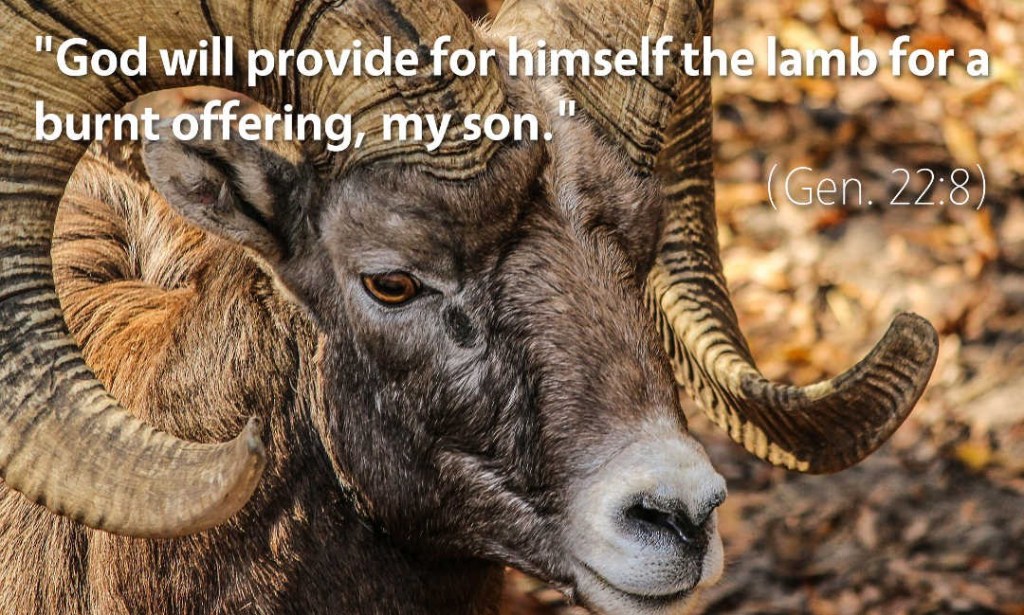
Romans 15:4 "For whatever was written in earlier times was written for our instruction, so that through perseverance and the encouragement of the Scriptures we might have hope."
15 It’s true that some are preaching out of jealousy and rivalry. But others preach about Christ with pure motives. 16 They preach because they love me, for they know I have been appointed to defend the Good News. 17 Those others do not have pure motives as they preach about Christ. They preach with selfish ambition, not sincerely, intending to make my chains more painful to me. 18 But that doesn’t matter. Whether their motives are false or genuine, the message about Christ is being preached either way, so I rejoice. And I will continue to rejoice.
The Word of God for the Children of God.
Glory be to the Father, and to the Son, and to the Holy Ghost; as it was in the beginning, is now, and ever shall be, world without end. Amen, amen.

The March of the Gospel
In this missionary letter to the Philippian church, Paul gets real. Though he shares encouraging news, the whole picture is not all rosy. The motivations some people had for sharing the gospel were downright bad—were driven not by good will so much as by rivalry and a desire to stir up trouble for the apostle.
The wrong motives of other people didn’t become the determining element in Paul’s attitude, however. Their selfishly motivated preaching did not keep him awake at night nor mar his true commitment to seeing the kingdom advance.
He passionately wanted the true gospel to be preached, so he wasn’t primarily concerned about the reasons others had for preaching, as long as they were still preaching Christ. His concern was for the Lord’s glory to be paramount, not for his own stature or even for his safety.
Perhaps we find ourselves relating to Paul, surrounded by those who share God’s Word, who share stories, their witness, their faith, out of false motives.
Then we will spend a ridiculous amount of time and effort and resources trying to debate, nit pick, critique, criticize whether or not their Christianity is valid.
But if we allow these failings to determine our own attitude or actions, we will risk spiritually crippling ourselves.
We will spend too much of our time and energy either constantly questioning the intentions of others or continually refuting, rebutting what they’re doing.
That would be to give the devil a great gain, in that we would then be distracted from our own covenant summons to proclaiming the good news of Jesus Christ.
It’s a huge temptation!
But Paul didn’t fall into that trap.
It is true that “where God sends reformation, Satan works deformation.”
What God builds, Satan seeks to destroy.
When God leads people forward in his grace, Satan tries to push them back into misery.
Yet this truth also remains: The forward march of the gospel cannot be stopped!
The assaults against the gospel are many.
For Paul, they included his imprisonment, and envy and rivalry among fellow missionaries, and the use of Jesus’ name for self-promotion.
For us, it may be the rejection of Christ as the only true Savior, or it may be a matter of giving in to the mixed-up moralities of our time.
But there is good news. The forward march of the gospel cannot be stopped!
Satan’s goal is to push us back into the cesspool of shame, the dungeon of guilt, the prison of fear.
But, to paraphrase a line from a Hollywood movie, that’s a “whole lot of ugly coming from a parade of stupid.”
The forward march of the gospel announces that Jesus bore our human shame, removed our guilt, and freed us from sin’s punishment.
He daily parades his love in order to nourish life.
Nothing can ultimately stop the forward march of the gospel.
There is great joy, then, for all who keep in step with Jesus.
Alternatively, you and I may wrestle with our own wrong motives for sharing the gospel.
One of the most significant challenges we all face is the potential for dreadful self-centeredness and pride.
Even in hard core, hot button, contentious matters of our faith, we will often wrongly want others to recognize us, and so we do the right thing but for all of the wrong motives, reasons (or, more usually, a mix of right, wrong reasons).
At the same time, we would find that envy prevents us from rejoicing in the fruitfulness of another’s life and ministry. But thanks be to God: He still uses broken vessels like us to carry forth the great gift of His Gospel message.
So, like Paul, fix your eyes on the goodness of Jesus and the advancement of His gospel, no matter the circumstances surrounding you or the flawed motives you suspect in others or see in yourself.
Seek to set aside your own pride and ambition so that your greatest concern will be the Lord’s glory—and as you do so, continue to share Him with those around you. What matters most is that Christ is preached, and in that we can all rejoice.
In the name of God, the Father and God the Son and God the Holy Spirit,
Let us Pray,
Psalm 119:105-112 The Message
105-112 By your words I can see where I’m going; they throw a beam of light on my dark path. I’ve committed myself and I’ll never turn back from living by your righteous order. Everything’s falling apart on me, God; put me together again with your Word. Adorn me with your finest sayings, God; teach me your holy rules. My life is as close as my own hands, but I don’t forget what you have revealed. The wicked do their best to throw me off track, but I don’t swerve an inch from your course. I inherited your book on living; it’s mine forever— what a gift! And how happy it makes me! I concentrate on doing exactly what you say— I always have and always will.
Glory be to the Father, and to the Son, and to the Holy Ghost; as it was in the beginning, is now, and ever shall be, world without end. Amen, amen.

13 Consider God’s work! Who can straighten what God has made crooked? 14 When times are good, enjoy the good; when times are bad, consider: God has made the former as well as the latter so that people can’t discover anything that will come to be after them.
15 I have seen everything in my pointless lifetime: the righteous person may die in spite of their righteousness; then again, the wicked may live long in spite of their wickedness. 16 Don’t be too righteous or too wise, or you may be dumbfounded.[a]17 Don’t be too wicked and don’t be a fool, or you may die before your time. 18 It’s good that you take hold of one of these without letting go of the other because the one who fears God will go forth with both.
19 Wisdom makes a wise person stronger than ten rulers who are in a city. 20 Remember: there’s no one on earth so righteous as to do good only and never make a mistake.[b]
The Word of God for the Children of God.
Glory be to the Father, and to the Son, and to the Holy Ghost; as it was in the beginning, is now, and ever shall be, world without end. Amen, amen.
Severe weather events across the USA, unrelenting severe flooding wiping out roads, homes, businesses, severe snow storms, white outs, and ice, blizzards.
Roadways are impassable or completely shut down. Airplanes are grounded.
Commerce is effected, goods are indeterminably delayed getting to the stores.
Suddenly, untold numbers of government workers have been fired and laid off in masse – so as if the weather events have not caused enough grief, the loss of a job, the loss of income, threatening a family’s health, housing, well-being.
All kinds of rapid fire changes are occurring – rules and regulations, routines.
Who can keep up with it all?
Whose praying their prayers with an explicit yearning they stay unaffected?
Disappointment is knocking on too many doors, trying to kick down doors, in the hope it may take up a long term residence or become a parasitic squatter.
Disappointment is a natural part of living-it is not meant, was never meant to become an all encompassing life draining malignancy. However, circumstances can arise where such severe feelings of disappointments become all too real.
There are not too many places in the bible where disappointment is absent.
Ways to Recover After Disappointment
Matthew 11:28-30 New King James Version
28 Come to Me, all you who labor and are heavy laden, and I will give you rest. 29 Take My yoke upon you and learn from Me, for I am [a]gentle and lowly in heart, and you will find rest for your souls. 30 For My yoke is easy and My burden is light.”
There are many things in this world that can cause us to feel disappointed. Maybe you applied for your dream job and didn’t get it. Or maybe your significant other called off your engagement. Things such as these can cause heartache. Not only this, but it can also create depression, hopelessness, and feelings of failure. If you have struggled with disappointment and don’t know how to deal with it, know that you aren’t alone.
While many people want you to normalize feeling disappointment, it is also helpful to know how to recover in the aftermath of it all. Disappointment can cause us to feel bad about ourselves, especially if an employer, our spouse, or a friend rejects us. These things can ignite negative thoughts inside our minds. Rather than allowing these negative feelings and thoughts to drain us, we need to know how to properly recover after something disappointing happens.
Here are five ways to recover after disappointment:
1. Pour Your Feelings Out to God
One way to recover after disappointment is to pour out your feelings to God.
The first person we need to go to when we are feeling disappointed is God. He understands all of our feelings and none of our feelings will ever turn God away from us. The Lord knows what we are feeling and wants to help you process them. Right away, after you have witnessed the disappointment, go to God.
Every time when I face disappointment, I do not face it on my own, and neither should you. We can go to God. Tell Him about how you are disappointed, the pain you are feeling, and how it weighs heavy on your heart and mind.
Recently, I have been badly disappointed by my ability to stay healthy. I had caught Covid for the second time, and it stole my appetite for over a week , I lost 10 plus pounds in less than 10 days, miserable all over, on top of my diabetes and my triple bypass (total weight loss of fifty pounds since July 17, 2023.)
Then my wife caught the Covid and flu viruses and the two of us have been down for almost a month now. We are both excruciatingly tired, worn out.
But, still we prayed with and for each other.
I was proud of my courage to pray despite my fears and doubts; however, after all the time and energy I put into my getting healthy, getting the wife healthy.
We still felt crestfallen, hurt, tired, at the slower that slow recovery process.
We went to God with our feelings. We told Him how disappointed we were and how much grief we were going through. If you are experiencing these feelings too, know you are not alone. We live in a high stress difficult world and will not achieve all the consecutive days of perfect health we try to do. When faced with disappointments, we just need to turn to God and trust Him with our feelings.
2. Get Your Mind Off Things
A second way to recover after disappointment is to get your mind off things.
This can be done by yourself or with others. If you choose the former, go for a walk, listen to an interesting podcast, or curl up with your favorite book.
If you choose the latter, spend some time with a loved one who will be there for you and knows how to get your mind off things.
This could be a sibling, your spouse, or a friend. These people know you well and understand what will help best to get your mind off the disappointment.
By getting your mind off things, you will stop dwelling on the disappointing situation. As mentioned earlier, if we dwell on disappointment, it will only make us feel worse about ourselves and fill our minds with many bad thoughts.
Even though this disappointment was difficult, that does not mean everything you put your hand to will end in disappointment.
Trust God with the process of healing and restoration and use the present time to distract yourself from the issue. There is nothing wrong with taking some good time for self-care, recharging, relaxation—away from your problems.
3. Remember Your Worth in Christ
Third way to recover after disappointment is to remember your worth in Christ.
The world will try to teach us our worth is found in other things, this is not true.
Our worth is not tied to our appearance, our paycheck, or the car we drive.
Rather, our worth is in Christ alone.
Remind yourself of this truth when you are recovering after a disappointing situation. Even if you didn’t land the job you wanted or get accepted into your dream college or job or home, know that you are still worthy just as you are.
Your worth does not change based on your financial status, where you live, or your appearance. Your worth stays the same because it is found only in Christ.
In Christ, you are 100% worthy, loved, valuable, and cherished. None of these qualities will ever be taken from you because you are a redeemed child of God.
When disappointments are ever-abounding, remind yourself of your worth in Christ. No matter what else does happen, you are still more than enough.
4. Talk It Out with a Loved One
A fourth way to recover after disappointment is to talk it out with a loved one.
This is something that can be beneficial in affirming your feelings as well as getting things off your chest.
Talk with your spouse, your sibling, or a parent about these feelings.
Don’t bottle these feelings up or try to push them down into your heart.
You need to allow these feelings to be expressed, your thoughts to be heard, and your pain to be validated.
Your loved one will be able to do all these things for you as they will be a source of encouragement.
Loved ones have a way of bringing us back to reality and reminding us of all the positive qualities we have.
Disappointment can make us feel as though we are failures, hopeless, and lost causes. Our loved ones will be able to help us change the narrative and get our minds focused on the truth that we are beloved by God, we are still more than enough, and we are great at many things.
When your loved ones tell you these things, don’t shrug them off. Accept them and allow them to comfort your heart.
5. Allow Yourself to Grieve
A fifth way to recover after disappointment is to allow yourself to grieve.
As mentioned earlier, I was trying to get healthy for a long time. I had to take time to grieve after this instance because it was a very hart time for me.
I felt as though my health was taking too long to achieve health and wellness.
In other words, I had to have time to mourn the loss of what good health I had hoped for. This is true for you also—you have to give yourself time to grieve.
You cannot reasonably expect yourself to instantly bounce back after a hard disappointing situation. Instead, you need to give yourself permission, extend extravagant grace to yourself and not push yourself beyond your boundaries.
Try to allow yourself to grieve and don’t pass judgment on yourself as it seems to drag on. We often think grieving is okay only after the death of a loved one, but you can grieve for any reason that has brought pain, heartache, and tears.
Dealing with disappointment is difficult, but it is possible. Do your best to recover from the disappointment rather than letting it eat away at your heart.
Pour your feelings out to God, get your mind off things, remember your worth in Christ, talk it out with a loved one, and allow yourself to grieve. It’s more than okay to take all the time you need to recover after a disappointment.
Be ever so extra gentle with yourself and treat yourself as you would a friend.
In the name of God, the Father and God the Son and God the Holy Spirit,
Let us Pray,
Psalm 80 Complete Jewish Bible
80 (0) For the leader. Set to “Lilies.” A testimony. A psalm of Asaf:
2 (1) Shepherd of Isra’el, listen! You who lead Yosef like a flock, you whose throne is on the k’ruvim, shine out! 3 (2) Before Efrayim, Binyamin and M’nasheh, rouse your power; and come to save us. 4 (3) God, restore us! Make your face shine, and we will be saved.
5 (4) Adonai, God of armies, how long will you be angry with your people’s prayers? 6 (5) You have fed them tears as their bread and made them drink tears in abundance. 7 (6) You make our neighbors fight over us, and our enemies mock us. 8 (7) God of armies, restore us! Make your face shine, and we will be saved.
9 (8) You brought a vine out of Egypt, you expelled the nations and planted it, 10 (9) you cleared a space for it; then it took root firmly and filled the land. 11 (10) The mountains were covered with its shade, the mighty cedars with its branches; 12 (11) It put out branches as far as the sea and shoots to the [Euphrates] River.
13 (12) Why did you break down [the vineyard’s] wall, so that all passing by can pluck [its fruit]? 14 (13) The boar from the forest tears it apart; wild creatures from the fields feed on it.
15 (14) God of armies, please come back! Look from heaven, see, and tend this vine! 16 (15) Protect what your right hand planted, the son you made strong for yourself. 17 (16) It is burned by fire, it is cut down; they perish at your frown of rebuke. 18 (17) Help the man at your right hand, the son of man you made strong for yourself.
19 (18) Then we won’t turn away from you — if you revive us, we will call on your name. 20 (19) Adonai, God of armies, restore us! Make your face shine, and we will be saved.
Glory be to the Father, and to the Son, and to the Holy Ghost; as it was in the beginning, is now, and ever shall be, world without end. Amen, amen.
12 I want you to know, brothers,[a] that what has happened to me has really served to advance the gospel, 13 so that it has become known throughout the whole imperial guard[b] and to all the rest that my imprisonment is for Christ. 14 And most of the brothers, having become confident in the Lord by my imprisonment, are much more bold to speak the word[c] without fear.
15 Some indeed preach Christ from envy and rivalry, but others from good will. 16 The latter do it out of love, knowing that I am put here for the defense of the gospel. 17 The former proclaim Christ out of selfish ambition, not sincerely but thinking to afflict me in my imprisonment. 18 What then? Only that in every way, whether in pretense or in truth, Christ is proclaimed, and in that I rejoice.
The Word of God for the Children of God.
Glory be to the Father, and to the Son, and to the Holy Ghost; as it was in the beginning, is now, and ever shall be, world without end. Amen, amen.
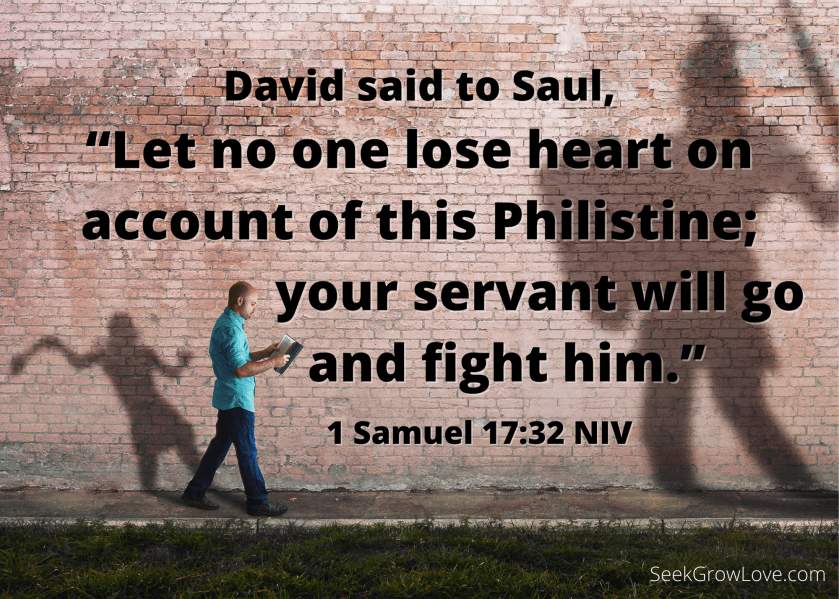
As we read through our bibles, do we notice how our God uses the most absurd equipment, seemingly inappropriate, barely noticeable objects, circumstances as the catalyst to spread the gospel of Christ in the most unexpected places?
Just as He used Abraham’s tent, the Walls of Jericho, David’s sling, Gideon’s pots, Balaam’s donkey, and the staff of Moses, God used the chains that bound Paul and his imprisonment in Rome as the most effective tool to spread the good news of the death and Resurrection of our Savior Jesus Christ to many Roman guards. Paul’s witness even invaded the household of Caesar himself.
God is able to bring down every stronghold, rebuild any wall, open any prison door as well as anyone else’s heart when a man or woman is ready and willing and committed to becoming a prisoner in chains for Jesus Christ and become a living sacrifice, ready and willing to witness to the truth of the gospel of God.
One benefit of the various imprisonments to which Paul was subjected were the numbers and varieties of people with whom he was able to share the good news of salvation (Roman guards and soldiers, every day to day ordinary citizens).
And of course, the various ‘prison’ epistles he wrote during his detentions, are all profitable for our own instruction, reproof, doctrine, correction, discipline, godly obedience, discipleship, training in righteousness (2 Timothy 3:10-17).
But one amazing and exciting by-product of Paul’s imprisonment was the effect that it had on most of his Christian brothers and sisters.
Rather than causing them to become shy, timid, fearful and faint-hearted, they were inspired, empowered, gathered themselves together, courage and began to speak out boldly about their faith in Christ. They started to live increasingly confident, as they fearlessly and confidently shared the message of God’s grace.
Certainly, in these contemporary technology driven times, we each live in increasingly changeable , discouraging and distressing and war like times and none of us know what life tomorrow may bring to our home or to our country,
However, never should we forget that the Triune God is in ultimate control and can use the most absurd equipment and seemingly inappropriate circumstances as catalyst to spread wide the gospel of Christ in His most unexpected places.
Let us be ready to board that unstoppable Gospel Train, willing to be a prisoner in chains for Christ and become a living sacrifice, to the glory of God the Father.
In the name of God, the Father and God the Son and God the Holy Spirit,
Let us Pray,
Psalm 91 Complete Jewish Bible
91 You who live in the shelter of ‘Elyon, who spend your nights in the shadow of Shaddai, 2 who say to Adonai, “My refuge! My fortress! My God, in whom I trust!” — 3 he will rescue you from the trap of the hunter and from the plague of calamities; 4 he will cover you with his pinions, and under his wings you will find refuge; his truth is a shield and protection.
5 You will not fear the terrors of night or the arrow that flies by day, 6 or the plague that roams in the dark, or the scourge that wreaks havoc at noon. 7 A thousand may fall at your side, ten thousand at your right hand; but it won’t come near you. 8 Only keep your eyes open, and you will see how the wicked are punished.
9 For you have made Adonai, the Most High, who is my refuge, your dwelling-place. 10 No disaster will happen to you, no calamity will come near your tent; 11 for he will order his angels to care for you and guard you wherever you go. 12 They will carry you in their hands, so that you won’t trip on a stone. 13 You will tread down lions and snakes, young lions and serpents you will trample underfoot. 14 “Because he loves me, I will rescue him; because he knows my name, I will protect him. 15 He will call on me, and I will answer him. I will be with him when he is in trouble. I will extricate him and bring him honor. 16 I will satisfy him with long life and show him my salvation.”
Glory be to the Father, and to the Son, and to the Holy Ghost; as it was in the beginning, is now, and ever shall be, world without end. Amen, amen.
17 A friend is always loyal, and a brother is born to help in time of need.
The Word of God for the Children of God.
Glory be to the Father, and to the Son, and to the Holy Ghost; as it was in the beginning, is now, and ever shall be, world without end. Amen, amen.
Saint Valentine’s life is a powerful example of what it means to love at all times.
In the third century, when Roman Emperor Claudius II outlawed marriages for young men — believing that single strong men made for much better soldiers — Valentine, instead, chose to act out of love rather than fear.
As a priest, Valentine defied this unjust rule by marrying people in secret.
But this led to him going to prison.
Valentine befriended his jailer, Asterious, and Asterious became impressed by Valentine’s wisdom.
So, Asterious asked Valentine to help educate his blind daughter, Julia.
Valentine quickly agreed, and he became a friend and mentor to Julia as well, as he read to her and guided her studies. Valentine’s character as a true friend intrigued Emperor Claudius so much that he offered to free Valentine from prison if he would publicly renounce Christianity and embrace Roman gods.
However, Valentine refused. He shared the Gospel with Claudius instead.
Unfortunately, Claudius responded to Valentine’s loving choice by sentencing Valentine to death for his faith.
Before his execution, Valentine wrote a note to Julia, urging her to remain strong in her faith and thanking her for their friendship.
He signed the note simply, “From your Valentine.”
That loving note from a friend during a time of intense adversity inspired the tradition of exchanging loving messages on February 14, the day of Valentine’s martyrdom.
Eventually, that tradition grew to become the St. Valentine’s Day holiday we know today.
Are you willing to love sacrificially, as Valentine did?
As Proverbs 17:17 rightly points out, true friends stand by one another in every situation – even the most challenging circumstances that are full of adversity.
True friends inspire hope and draw one another closer to God at all times.
If you’re authentically willing to love your friends no matter what, God’s love will flow through your friendships, strengthening you all.
Two famous friends from the Bible – David and Jonathan – showed what this looks like. Jonathan risked his own life to protect David. He gave David his loyal friendship even when he had to openly defy his father, King Saul, to do so.
In the end, by remaining friends even through tragedies, all worked out for the best for their faith. Just like Valentine’s friendships, the friendship between David and Jonathan revealed a BFF friend is 100% loyal in all circumstances, BFFs loves at all times – even when a friendship is tested during difficult times.
Here are some key ways you can love at all times in your own friendships.:
Pray for your friends. When you lift your friends to God in prayer, God will answer your prayers and bless your friends with whatever is best for them.
Be fully present when your friends are going through challenges. Being there for your friends when they need you the most shows them that you truly care. Ask them what you can do for them, and then go beyond your best to give them whatever you can, whenever you can – such as practical help – running errands, grocery shopping, preparing meals careful listening, and encouragement.
Don’t let adversity distance you from your friends. If you’re going through a challenge, don’t neglect your friendships. Stay in touch and be honest with your friends about what you need. If you encounter a conflict with a friend, please do whatever you can to resolve the conflict and forgive each other for mistakes. Try your best to understand each other and care for each other, so you can enjoy friendship and peace between you. Always seek God’s best for each other.
Celebrate good times together as well as helping each other during difficult times. Cheer each other on when you and your friends should experience God’s blessings, and congratulate each other on your successes. Encourage each other continuously, constantly, to find joy every day in your relationships with God.
Friendships are too often superficial in this fallen world.
This Valentine’s Day, choose to pursue friendships that reflect God’s deep love.
True friendship will sometimes require you to make sizable sacrifices, but those sacrifices are worth it, because God will bring something that has eternal value out of your efforts. Choose to be a friend who loves at all times. When you do, you can look forward to God’s love flowing through your life in powerful ways!
Intersecting Faith and Life:
As you consider how to be a friend, how to be a Proverbs 17:17 friend, who loves at all times, reflect on these questions:
Are you present and supportive when your friends face challenges (however serious, however severe, or do you shy away from uncomfortable situations?
Do you verbally forgive your friends, ask forgiveness from God when they make mistakes, when you make mistakes and try to resolve conflicts between you? Do you have humility to ask your friends to forgive you when you make mistakes?
How can you show more sacrificial love in your friendships when your friends need you?
In what ways can you better encourage your friends’ faith, spiritual growth?
In the name of God, the Father and God the Son and God the Holy Spirit,
Let us Pray,
Psalm 23 Authorized (King James) Version
Psalm 23
A Psalm of David.
1 The Lord is my shepherd; I shall not want. 2 He maketh me to lie down in green pastures: he leadeth me beside the still waters. 3 He restoreth my soul: he leadeth me in the paths of righteousness for his name’s sake. 4 Yea, though I walk through the valley of the shadow of death, I will fear no evil: for thou art with me; thy rod and thy staff they comfort me. 5 Thou preparest a table before me in the presence of mine enemies: thou anointest my head with oil; my cup runneth over. 6 Surely goodness and mercy shall follow me all the days of my life: and I will dwell in the house of the Lord for ever.
Glory be to the Father, and to the Son, and to the Holy Ghost; as it was in the beginning, is now, and ever shall be, world without end. Amen, amen.
11 He has made everything suited to its time; also, he has given human beings an awareness of eternity; but in such a way that they can’t fully comprehend, from beginning to end, the things God does. 12 I know that there is nothing better for them to do than to be happy and enjoy themselves as long as they live. 13 Still, the fact that everyone can eat and drink and enjoy the good that results from all his work, is a gift of God.
The Word of God for the Children of God.
Glory be to the Father, and to the Son, and to the Holy Ghost; as it was in the beginning, is now, and ever shall be, world without end. Amen, amen.

There are so many profound truths throughout the book of Ecclesiastes, and Ecclesiastes 3:11 is a great reminder of God’s perfect timing. So often in life, we put a prayer in motion for exactly how we want and envision things to work out.
We think we’ve got things figured out, like we know what’s best for our future.
We pray and we pray!
We wait and we wait!
We are good and pious Christians and we believe we have a strong relationship, a strong connection to God, the Father and God the Son and God the Holy Spirit.
Except … How long are we actively, patiently, genuinely ‘waiting for the Lord’ before our prayers begin to sound like: “Lord, exactly how long is eternity?”
In our frail humanity, it’s easy to forget that God’s perfect timing for our lives can turn out to be completely different from what we imagine as being right.
In Isaiah 55:8-9, we’re told,
“For my thoughts are not your thoughts, neither are your ways my ways, saith the LORD. For as the heavens are higher than the earth, so are my ways higher than your ways, and my thoughts than your thoughts.”
Our thoughts and ways are always vastly different from our Lord’s, aren’t they?
I also really like how Ecclesiastes 11:5 talks about the wonders of God: “Just as you do not know the path of the wind, or how the body is formed in a mother’s womb, so you cannot understand the work of God, the Maker of all things.”
How many times have you and I been in a fluid situation, prayed and prayed, anticipated how circumstances would work out, as though we were in control?
How many times do you and I think that we are the one who’s in control, that we can climb any mountain with your own joy and our own strength, that we can persevere better and change someone’s heart through your own actions?
Faith Under Pressure
2-4 Consider it a sheer gift, friends, when tests and challenges come at you from all sides. You know that under pressure, your faith-life is forced into the open and shows its true colors. So don’t try to get out of anything prematurely. Let it do its work so you become mature and well-developed, not deficient in any way.
5-8 If you don’t know what you’re doing, pray to the Father. He loves to help. You’ll get his help, and won’t be condescended to when you ask for it. Ask boldly, believingly, without a second thought. People who “worry their prayers” are like wind-whipped waves. Don’t think you’re going to get anything from the Master that way, adrift at sea, keeping all your options open.
9-11 When down-and-outers get a break, cheer! And when the arrogant rich are brought down to size, cheer! Prosperity is as short-lived as a wildflower, so don’t ever count on it. You know that as soon as the sun rises, pouring down its scorching heat, the flower withers. Its petals wilt and, before you know it, that beautiful face is a barren stem. Well, that’s a picture of the “prosperous life.” At the very moment everyone is looking on in admiration, it fades away to nothing.
12 Anyone who meets a testing challenge head-on and manages to stick it out is mighty fortunate. For such persons loyally in love with God, the reward is life and more life.
13-15 Don’t let anyone under pressure to give in to evil say, “God is trying to trip me up.” God is impervious to evil, and puts evil in no one’s way. The temptation to give in to evil comes from us and only us. We have no one to blame but the leering, seducing flare-up of our own lust. Lust gets pregnant, and has a baby: sin! Sin grows up to adulthood, and becomes a real killer.
16-18 So, my very dear friends, don’t get thrown off course. Every desirable and beneficial gift comes out of heaven. The gifts are rivers of light cascading down from the Father of Light. There is nothing deceitful in God, nothing two-faced, nothing fickle. He brought us to life using the true Word, showing us off as the crown of all his creatures. (The Message)
The reality is, if we are 1% patient enough to accept that God is in control, it’s a real reality check for us that only through Him we accomplish anything at all!
In Matthew Henry’s commentary, he says the following about Ecclesiastes 3:11:
“Every thing is as God made it; not as it appears to us. We have the world so much in our hearts, are so taken up with thoughts and cares of worldly things, that we have neither time nor spirit to see God’s hand in them. The world has not only gained possession of the heart, but has formed thoughts against the true beauty of God’s works.”
When I find myself getting impatient or experiencing disappointment, or when things don’t work out as I think they should, it’s a great reminder to look at verses such as Ecclesiastes 3:11 about God’s promise of His perfect timing.
It may not make sense right now, but try praying, believing, God’s got a reason.
Our task, like Job, is to continue praising Him even when things don’t make sense, and to continue trusting Him and growing our Faith. “Who does great and unsearchable things, Wonders without number.” [Job 5:9]
Job experienced more echelons beyond hardcore testing circumstances and situations throughout his life, yet he never once questioned what God was doing. He knew God had a plan and would work every thing out in His timing.
Job 19:13-29 The Message
I Know That God Lives
13-20 “God alienated my family from me; everyone who knows me avoids me. My relatives and friends have all left; houseguests forget I ever existed. The servant girls treat me like a deadbeat off the street, look at me like they’ve never seen me before. I call my attendant and he ignores me, ignores me even though I plead with him. My wife can’t stand to be around me anymore. I’m repulsive to my family. Even street urchins despise me; when I come out, they taunt and jeer. Everyone I’ve ever been close to abhors me; my dearest loved ones reject me. I’m nothing but a bag of bones; my life hangs by a thread.
21-22 “Oh, friends, dear friends, take pity on me. God has come down hard on me! Do you have to be hard on me, too? Don’t you ever tire of abusing me?
23-27 “If only my words were written in a book— better yet, chiseled in stone! Still, I know that God lives—the One who gives me back my life— and eventually he’ll take his stand on earth. And I’ll see him—even though I get skinned alive!— see God myself, with my very own eyes. Oh, how I long for that day!
28-29 “If you’re thinking, ‘How can we get through to him, get him to see that his trouble is all his own fault?’ Forget it. Start worrying about yourselves. Worry about your own sins and God’s coming judgment, for judgment is most certainly on the way.”
Wherever you are today, however like Job you feel like, whether you’re waiting, wondering, or worrying, or anxious take heart. God’s perfect timing is worth the wait! God is in control, and He hath made every thing beautiful in His time.
Restoration will come to you …
An over and above abundance of Blessings will shower down upon your life … (Job 42:7-17)
In the name of God, the Father and God the Son and God the Holy Spirit,
Let us Pray,
Psalm 27 New King James Version
An Exuberant Declaration of Faith
A Psalm of David.
27 The Lord is my light and my salvation; Whom shall I fear? The Lord is the strength of my life; Of whom shall I be afraid? 2 When the wicked came against me To eat[a] up my flesh, My enemies and foes, They stumbled and fell. 3 Though an army may encamp against me, My heart shall not fear; Though war may rise against me, In this I will be confident.
4 One thing I have desired of the Lord, That will I seek: That I may dwell in the house of the Lord All the days of my life, To behold the [b]beauty of the Lord, And to inquire in His temple. 5 For in the time of trouble He shall hide me in His pavilion; In the secret place of His tabernacle He shall hide me; He shall set me high upon a rock.
6 And now my head shall be [c]lifted up above my enemies all around me; Therefore I will offer sacrifices of [d]joy in His tabernacle; I will sing, yes, I will sing praises to the Lord.
7 Hear, O Lord, when I cry with my voice! Have mercy also upon me, and answer me. 8 When You said, “Seek My face,” My heart said to You, “Your face, Lord, I will seek.” 9 Do not hide Your face from me; Do not turn Your servant away in anger; You have been my help; Do not leave me nor forsake me, O God of my salvation. 10 When my father and my mother forsake me, Then the Lord will take care of me.
11 Teach me Your way, O Lord, And lead me in a smooth path, because of my enemies. 12 Do not deliver me to the will of my adversaries; For false witnesses have risen against me, And such as breathe out violence. 13 I would have lost heart, unless I had believed That I would see the goodness of the Lord In the land of the living.
14 Wait[e] on the Lord; Be of good courage, And He shall strengthen your heart; Wait, I say, on the Lord!
Glory be to the Father, and to the Son, and to the Holy Ghost; as it was in the beginning, is now, and ever shall be, world without end. Amen, amen.
11 For the grace of God that brings salvation has appeared to all men, 12 teaching us that, denying ungodliness and worldly lusts, we should live soberly, righteously, and godly in the present age, 13 looking for the blessed hope and glorious appearing of our great God and Savior Jesus Christ, 14 who gave Himself for us, that He might redeem us from every lawless deed and purify for Himself His own special people, zealous for good works.
The Word of God for the Children of God.
Glory be to the Father, and to the Son, and to the Holy Ghost; as it was in the beginning, is now, and ever shall be, world without end. Amen, amen.

What are your thoughts about this statement?
Living into God’s Great Commandment; The grace that saves is the grace that works through our relationship with ourselves, with neighbors and with God.
When we hear the Gospel or the Good News, what comes to our mind?
Do we think of a heavenly real estate deal that after signing up we are now assured of a place in heaven?
Do we think of a divine fire insurance that after putting our name on the dotted line we can now heave a deep sigh of relief because we are skipping hell?
Is it as simple as ABC?
Accept Believe and Confess?
Is that all there is to the Good News?
In studies of contemporary religion in America, sociologists have found a disturbing trend among teenagers.
For them, “God does not need to be particularly involved in one’s life except when God is needed to resolve a problem…
The central goal of life is to be happy and to feel good about oneself.” [1]
Simply put, relationship with God became a religion about Him.
But I think that point of view is not just held by teenagers and it is not just found among Americans. Is that it? Is that what the Good News is all about?
So, when that one person asks; What’s so good about the Good News, anyway?
Of course, when we put our faith in our Lord Jesus as Savior, we have eternal life. But there’s more to the Good News than just making sure we would enjoy heaven and won’t endure hell.
Yes, when we believe, we will find peace. But the Good News is not just about peace. It’s not at all just about feeling good. There’s more to the Good News than that. There’s more to it than just making a decision for Christ and then proceeding with our lives as usual. So, what’s so good about the Good News?
Titus 2:11-14 gives us the answer.
“For the grace of God that brings salvation has appeared to all men. It teaches us to say ‘No’ to ungodliness and worldly passions, and to live self-controlled, upright and godly lives in this present age, while we wait for the blessed hope—the glorious appearing of our great God and Savior, Jesus Christ, who gave himself for us to redeem us from all wickedness and to purify for himself a people that are his very own, eager to do what is good.”
Here we see that the reason the good news is good is because the Good News involves all aspects of our life.
Why? Because the grace that SAVES is the grace that WORKS.
In the Greek, Titus chapter 2 verses 11 to 14 are actually one long sentence.
Titus was the pastor of the church in that place called Crete.
The Cretans or those who live in Crete have a bad reputation.
In Titus 1:12, we read that “Even one of their own prophets has said, ‘Cretans are always liars, evil brutes, lazy gluttons.’”
Now that they became believers, they should live differently. But there are some people who “claim to know God, but by their actions they deny him. They are so detestable, disobedient and unfit for doing anything good.”
There are people like that today. People who claim they are believers yet we wonder as we look at their lives if they really are believers. Now before we think I am referring to that person to your left or to your right, consider first if the person sitting where you are seated right now is genuinely a Christ follower.
First, let us talk about the grace that saves.
Verse 11 tells us, “For the grace of God that brings salvation has appeared to all men.” Circle the phrase “the grace of God.”
Grace is God’s kindness that He freely gives us even if we are not worthy to receive it.
His grace “brings salvation”.
We read this in Ephesians 2:8-9. “For it is by grace you have been saved, through faith—and this not from yourselves, it is the gift of God—not by works, so that no one can boast.”
We can’t do anything to earn salvation.
It is only made possible by grace not by good works.
We receive it through faith in our Lord Jesus.
If that is not clear enough, look at Romans 11:6. “And if by grace, then it is no longer by works; if it were, grace would no longer be grace.”
Grace is God’s gift. If you have to pay for a gift, if you have to earn it, you wont, if you have to deserve it, you never will. (Romans 3:21-24) it’s no longer a gift.
We are saved by grace, not by works.
What does it mean that “the grace of God… has APPEARED to all men”?
We got the word “epiphany” from the Greek word used here for “appeared,” which either means “the sudden realization or leap in understanding” or “the appearance of manifestation of God.”
In the Greek, it means “the dawning of light upon darkness” or “to become visible or known.”
But the grace that appeared here is not just an idea we suddenly understood.
Paul used the same Greek word in verse 13: “the glorious APPEARING of our great God and Savior, Jesus Christ”.
Here in our context, the grace that has already appeared refers to our Lord Jesus.
Verse 11 talks about His first coming and verse 13 refers to His second coming.
He is grace in the flesh.
When we talk of grace here we are talking of a person, not a principle.
We don’t just talk about the Lord.
We connect with Him.
That’s what so good about the Good News. Christianity is a relationship, not a religion… an intimate relationship with Jesus Christ.
Here He is called “our great God and Savior”. This is one of the clearest and strongest verses to prove that Jesus is equal with the Father, that He is God.
Some people would say that “great God” refers to the Father and “Savior” refers to the Son. But it did not say “our great God and OUR Savior”.
If the verse is phrased as such, that would mean that Paul was referring to two persons. But it says “OUR great God AND Savior.”
Literally in the Greek, it goes like this: “the great God and Savior of us Jesus Christ”. Thus, it refers to one person, “Jesus Christ”.
Jesus was not the Father but He is equal with God. And the fact that He is God means that He is Lord, the Master and the Boss of our entire lives.
Verse 14 tell us Christ “gave himself for us to redeem us from all wickedness and to purify for himself a people that are his very own, eager to do what is good.”
Note that it says He “gave himself for us”.
He voluntarily gave Himself for us.
People did not have to force Him on the cross.
He willingly died for our sins.
Circle the conjunction “to.” It can be translated “in order that” or “so that.”
It gave us the reason why Christ gave Himself for us. He did it in order that He can “redeem us”.
In the Greek, the word “redeem” means “to obtain release by the payment of a price, to ransom”.
For slaves, that word is very precious.
We are no longer bound by sin or wickedness. Christ has set us free.
He Himself is the ransom.
We deserve death.
But He died in our place.
We can’t save ourselves.
He saved us.
Notice here too He Himself redeemed us from sin with Himself as the price for Himself. That other than redeeming us from wickedness, another reason He gave Himself for us is “to purify for himself a people that are his very own”.
Literally, “his very own” is “his own possession”.
We now belong to Jesus.
He Himself redeemed us from sin with Himself as the price for Himself.
We are now His prized possessions Who would do His bidding.
It is clear here that there is a dual purpose why Christ gave Himself for us.
It is “to redeem us from all wickedness and to purify for himself a people that are his very own, eager to do what is good.”
He saved us from wickedness or bad works.
And He saved us for good works.
Underline the last clause: “eager to do what is good.”
The word “eager” means we are to be zealous in doing what is right.
We are to be passionate for good works.
Good works do not save us.
But once we are saved, the moment we belong to Him, that means He saved us for good works – living into and outward from God’s Greatest Commandment.
Matthew 22:34-40 Revised Standard Version
The Greatest Commandment
34 But when the Pharisees heard that he had silenced the Sad′ducees, they came together. 35 And one of them, a lawyer, asked him a question, to test him. 36 “Teacher, which is the great commandment in the law?” 37 And he said to him, “You shall love the Lord your God with all your heart, and with all your soul, and with all your mind. 38 This is the great and first commandment. 39 And a second is like it, You shall love your neighbor as yourself. 40 On these two commandments depend all the law and the prophets.”
Let us now talk about the grace that works.
Grace makes works possible.
Note that “the grace of God… teaches us”.
It means that grace instructs or disciplines us.
It is like how a parent trains a child.
Grace leads, guides and directs us to do good works.
We can’t accept Christ and still live the way we once lived.
Now that we are in Christ, we live according to His ways on His terms.
If a person claims to be a believer and yet we don’t see any change at all in his life, we have reasons to doubt his claim.
I am not saying that we become sinless but we look at our lives and see that we sin less.
That’s why the book of James tell us “faith by itself, if it is not accompanied by action, is dead… faith without deeds is dead.”
If Jesus is our Lord, we are to obey Him.
The call to faith in Christ is the call to follow Him.
That’s a pattern in the book of Titus.
In his greeting to Titus, Paul talked about “the knowledge of the truth that leads to godliness”.
Later, in Titus 3:8, Paul gave this instruction to Titus:
“I want you to stress these things, so that those who have trusted in God may be careful to devote themselves to doing what is good.”
So, the grace that saves is the grace that works.
It’s not that we need to become holy and pure by our own efforts in order to earn salvation.
Rather, the salvation Jesus freely gives to us also teaches us and forms us into people who live holy lives out of gratitude.
Salvation comes first, and holy living is a result.
The good news for people everywhere is that Jesus gives salvation to all who confess with all their It’s not that we need to become holy and pure by our own efforts in order to earn salvation. Rather, the salvation that Jesus freely gives to us also teaches us and forms us into people who live holy lives out of gratitude. Salvation comes first, and holy living is a result.
The good news for people everywhere is that Jesus gives salvation to all who confess with their whole heart their belief in him. But the good news gets even better. In addition to giving us salvation, Jesus gives us new life right now.
The gospel is not just about living with God after we die; it’s also about living in holiness and purity with God right now. We can receive the grace of holy living as we follow Jesus each day. believe in him. But the good news gets even better than that. In addition to giving us salvation, Jesus gives us new life right now.
The gospel is not just about living with God after we die; it’s also about living into and outward from our holiness and purity with God right now. We can receive the grace of holy living as we follow Jesus each day if we’ll accept it.
In the name of God, the Father and God the Son and God the Holy Spirit,
Let’s Pray,
Psalm 119:1-16 Revised Standard Version
The Glories of God’s Law
119 Blessed are those whose way is blameless, who walk in the law of the Lord! 2 Blessed are those who keep his testimonies, who seek him with their whole heart, 3 who also do no wrong, but walk in his ways! 4 Thou hast commanded thy precepts to be kept diligently. 5 O that my ways may be steadfast in keeping thy statutes! 6 Then I shall not be put to shame, having my eyes fixed on all thy commandments. 7 I will praise thee with an upright heart, when I learn thy righteous ordinances. 8 I will observe thy statutes; O forsake me not utterly!
9 How can a young man keep his way pure? By guarding it according to thy word. 10 With my whole heart I seek thee; let me not wander from thy commandments! 11 I have laid up thy word in my heart, that I might not sin against thee. 12 Blessed be thou, O Lord; teach me thy statutes! 13 With my lips I declare all the ordinances of thy mouth. 14 In the way of thy testimonies I delight as much as in all riches. 15 I will meditate on thy precepts, and fix my eyes on thy ways. 16 I will delight in thy statutes; I will not forget thy word.
Glory be to the Father, and to the Son, and to the Holy Ghost; as it was in the beginning, is now, and ever shall be, world without end. Amen, amen.
7 For what great nation is there that has God as close to them as Adonai our God is, whenever we call on him? 8 What great nation is there that has laws and rulings as just as this entire Torah which I am setting before you today? 9 Only be careful, and watch yourselves diligently as long as you live, so that you won’t forget what you saw with your own eyes, so that these things won’t vanish from your hearts. Rather, make them known to your children and grandchildren — 10 the day you stood before Adonai your God at Horev, when Adonai said to me, ‘Gather the people to me, and I will make them hear my very words, so that they will learn to hold me in awe as long as they live on earth, and so that they will teach their children.’
The Word of God for the Children of God.
Glory be to the Father, and to the Son, and to the Holy Ghost; as it was in the beginning, is now, and ever shall be, world without end. Amen, amen.
The title of my devotion today is “Hindsight, Insight, Foresight: The critical Importance of acknowledging HIS story (God’s story) as everyone’s story.”
This effort is my contribution toward the celebration of Black History Month.
In the US of America, February is the month when we celebrate Black History.
This celebration originally began as Negro History Week in 1926 and took place during the second week of February as it coincided with the birthdates of both Frederick Douglass and Abraham Lincoln.
In 1976, the bicentennial of the United States, former President Gerald R. Ford expanded the week into a full month.
In doing so he said the country needed to “seize the opportunity to honor the too-often neglected accomplishments of black Americans in every area of endeavor throughout history.”
While Black History Month has been heavily criticized by both black people and people of other races for its unfairness in devoting an entire month to a single group of people, there are significant lessons to be learned from remembering our history, especially as it relates to everyone’s faith, hope and love in God.
During this celebratory month we have the opportunity to share stories, reflect on our rich history (good and bad and devastating) and remember the highest of prices paid by others for us to have the privileges of community that we have.
Celebrating this month gives us the opportunity to remember the best of our history and culture while remembering that it is HIS Story and OUR history.
The remainder of This month I pray that you to really take some time and think about what we have and the rather ugly road travelled and how we all got here.
Talk to some older folks and listen to their stories as they tell you what was available to them sixty years ago, hear the stories they were told by their parents and grandparents and what “life” they had experienced “back then.”
When we hear and understand their stories we can hopefully, prayerfully and humbly, appreciate their sacrifices so we would have more what we have today.
As I said, history is first and foremost HIS (God’s) story we have a long history of active participation and it cannot be remembered if we do not talk about it.
So today, we are going to examine active passive hindsight, and insight and foresight, how our acknowledgement and understanding of HIS story impacts our own story as we try to learn how we live in community today and tomorrow.
Let’s start with a review of the definitions of hindsight, insight and foresight.
Hindsight is “the ability to understand a situation or event after it has already happened or developed.”
It’s our ability to remember what has happened previously which gives us the opportunity to learn from those past experiences.
An example of this is someone learning from a past mistake.
They experience the failure, look back on it and learn from it.
The process and learning from past experiences give us what we call insight.
Insight is discernment; “the ability to see clearly and intuitively into the nature of a complex person, situation or subject.”
Insight actually encompasses both hindsight and foresight. Foresight is “the action of predicting what will happen or what needs to happen in the future.”
It’s the ability to see what is coming.
Foresight moves us forward into taking an action and it makes sure we do not get too complacent, comfortable about taking that action. It demands we move.
Working together, hindsight, insight and foresight allows us to learn from the past, adapt to the present and plan for our future.
Think of it like this, a person with no foresight, hindsight or insight goes for a walk in the street. They see a car coming. They stay in the street. The car keeps coming and they remain in the street. The car runs over them. They had no foresight, hindsight or insight which led them to get out of the way of the car.
When they get out of the hospital, they decide to go for another walk.
This time, however, after getting run over by a car, they learned some things.
First they have foresight. They know that cars move on the streets and they should really anticipate seeing them. Secondly, they have hindsight as they reflect on getting run over by a car previously and take precautions to ensure it does not happen again. Lastly, they have insight as they decide the best way to go for the walk is to stay on the sidewalk, being more aware of their fragility.
Now, these three working instantaneously together, keeps the person safe.
But let me be clear, there are many people walking on this earth with no sight.
These people see the car coming; get run over by the car; forget what it felt like the first time to get run over; and continues to walk in the middle of the street only to be run over again. If not learning from out past we are like this person walking down the middle of the street repeatedly getting run over by cars.
Having hindsight, insight and foresight keeps us from constantly getting run over by life’s circumstances.
I want to share with you why the understanding of our history is so important.
Turn to Deuteronomy 4:7-10.
“For what great nation is there that has a god so near to it as is the LORD our God whenever we call on Him? Or what great nation is there that has statutes and judgments as righteous as this whole law which I am setting before you today? Only give heed to yourself and keep your soul diligently, so that you do not forget the things which your eyes have seen and they do not depart from your heart all the days of your life; but make them known to your sons and your grandsons. Remember the day you stood before the LORD your God at Horeb, when the LORD said to me, ‘Assemble the people to Me, that I may let them hear My words so they may learn to fear Me all the days they live on the earth, and that they may teach their children.”
Now turn over to Deuteronomy chapter six and let’s begin with verse six.
“You shall love the LORD your God with all your heart and with all your soul and with all your might. These words, which I am commanding you today, shall be on your heart. You shall teach them diligently to your sons and shall talk of them when you sit in your house and when you walk by the way and when you lie down and when you rise up. You shall bind them as a sign on your hand and they shall be as frontals on your forehead. You shall write them on the doorposts of your house and on your gates. Then it shall come about when the LORD your God brings you into the land which He swore to your fathers, Abraham, Isaac and Jacob, to give you, great and splendid cities which you did not build, and houses full of all good things which you did not fill, and hewn cisterns which you did not dig, vineyards and olive trees which you did not plant, and you eat and are satisfied, then watch yourself, that you do not forget the LORD who brought you from the land of Egypt, out of the house of slavery.” (Deuteronomy 6:5-12)
Moses brought the people together to give them the laws of God, with clarity and a conviction that spoke to the hearts of everyone.
In chapter four Moses told the people to remember and to teach their children otherwise they would forget.
In chapter six he goes a step farther.
He tells them to diligently teach their children.
That word diligently means to show persistence and hard word work in doing something.
In other words, Moses was telling the people to make teaching their kids about everything God had done for them as an “daily at every opportunity” priority.
He told them to talk about what God had done and His laws when they sat in their homes, when they walked down the street, when they went to bed and when they got up.
The image that he was painting was that they should always (persistently) be teaching their children and their children’s children about God and everything He had done for them. They were to always be talking about it. Finally he told them that they should write the words on the doorposts of their homes and on their gates. This was to ensure that the words were forever before their eyes.
We need to teach our history so that those who are enjoying the fruits of those who went before them understand the price that was paid.
You see, there are many making good money and we never once picked cotton.
We live in nice homes in mixed subdivisions (not on the other side of the railroad tracks as the old people used to say) and we are treated as equals.
We don’t recall those times when many people were not allowed to own homes.
We can eat at any restaurant that we choose (as long as we are willing to pay for it) don’t remember the signs that said go around to the back door to be served.
There are many of us who go shopping wherever we want and try on all the clothes in the stores and do not remember the times when many were not allowed to try on clothes unless it was purchased from a black owned store on the farthest outskirts of town stocked with out of date second hand fashions.
There were many who never voted because they never had the equal right to vote or because of Jim Crowe laws, they (ballots) were segregated, tainted.
Because voting was something already available to some of us when we reach the appropriate age, the high importance of equal access was utterly lost on us.
There are many of us who approach learning as if learning is a chore because we do not remember a time when blacks were not allowed to go to the same schools as white children to learn – do we recall when President Eisenhower ordered the 101st Airborne troops to Little Rock, Arkansas to enforce school desegregation?
There are some of us who to this day who dislike other races because we do not remember those of other races who stood, marched and died with us during the Civil Rights movement so we could all have everything we have access to today.
Mark 3:31-35 Amplified Bible
31 Then His mother and His brothers arrived, and standing outside they sent word to Him and called for Him. 32 A crowd was sitting around Him, and they said to Him, “Look! Your mother and Your brothers are outside asking for You.” 33 And He replied, “Who are My mother and My brothers?” 34 Looking at those who were sitting in a circle around Him, He said, “Here are My mother and My brothers! 35 For [a] whoever does the will of God [by believing in Me, and following Me], he is My brother and sister and mother.”
Galatians 3:28-29 Amplified Bible
28 There is [now no distinction in regard to salvation] neither Jew nor Greek, there is neither slave nor free, there is neither male nor female; for you [who believe] are all one in Christ Jesus [no one can claim a spiritual superiority]. 29 And if you belong to Christ [if you are in Him], then you are Abraham’s descendants, and [spiritual] heirs according to [God’s] promise.
133 Behold, how good and how pleasant it is For brothers to dwell together in unity! 2 It is like the precious oil [of consecration] poured on the head, Coming down on the beard, Even the beard of Aaron, Coming down upon the edge of his [priestly] robes [consecrating the whole body]. 3 It is like the dew of [Mount] Hermon Coming down on the hills of Zion; For there the Lord has commanded the blessing: life forevermore.
Glory be to the Father, and to the Son, and to the Holy Ghost; as it was in the beginning, is now, and ever shall be, world without end. Amen, amen.

25 And when their hearts were merry, they said, “Call Samson, that he may make sport for us.” So they called Samson out of the prison, and he made sport before them. They made him stand between the pillars; 26 and Samson said to the lad who held him by the hand, “Let me feel the pillars on which the house rests, that I may lean against them.” 27 Now the house was full of men and women; all the lords of the Philistines were there, and on the roof there were about three thousand men and women, who looked on while Samson made sport.
28 Then Samson called to the Lord and said, “O Lord God, remember me, I pray thee, and strengthen me, I pray thee, only this once, O God, that I may be avenged upon the Philistines for one of my two eyes.” 29 And Samson grasped the two middle pillars upon which the house rested, and he leaned his weight upon them, his right hand on the one and his left hand on the other. 30 And Samson said, “Let me die with the Philistines.” Then he bowed with all his might; and the house fell upon the lords and upon all the people that were in it. So the dead whom he slew at his death were more than those whom he had slain during his life.
The Word of God for the Children of God.
Glory be to the Father, and to the Son, and to the Holy Ghost; as it was in the beginning, is now, and ever shall be, world without end. Amen, amen.

In our lives, desires can be both beautiful and dangerous, life giving, life taking.
Samson was a strong man who struggled with his feelings and choices.
He became attracted to a Philistine woman, which set off a conflict between what he is meant to do and what he wanted. This important part of Samson’s story reminds us that our desires can sometimes lead us away from our true purpose, causing us to make choices that compromise who we really are.
Today, think about your own desires and how they influence your decisions.
Last night, The Super Bowl 59 was played in New Orleans. Two professional football teams played for the privilege of being hailed as “World Champion.”
Players on the winning side receive the championship trophy, a large sum of money and a great big ticker tape parade in their home city – Philadelphia.
Players and coaches too, can parlay their championship moments into all manner of lucrative endorsements, contract extensions with more money.
No condemnation by any means is intended towards the players or coaches.
It is a laudable goal for youth and teenagers and young and older adults to be able to play a sport or game compete at high levels, achieving goals, success, to learn about competition, fairness, sportsmanship along with winning, losing.
Such lessons develop one’s character, self esteem, self confidence, humility.
Like the Judge Samson, we often find ourselves drawn to things that seem appealing- Such as relationships, goals, or material possessions- That can attract us or distract us, or turn ourselves away or off, from our true calling.
By looking closely at Samson’s experiences, we can discover and explore the risks of letting our desires control us.
We’ll explore how to manage our feelings and seek what truly fulfills us by aligning our desires with God’s will.
Together, let’s try to find God’s wisdom and strength to break free from the distractions that lead us away from God and deepen our relationship with Him.
Desires that…
1. Dazzle.
Samson’s focused desires highlight the struggle between following God’s path and our own wants. Samson is drawn to a Philistine woman, which not only shows his personal attraction but also marks a break from God’s commands.
His single minded, single directed, strong desire blinds him to those important cultural and spiritual consequences of his choice, demonstrating how even the mightiest, and thereby the most vulnerable, can be led astray by their desires.
This serves as a reminder that our own worship, desires need to match what God requires, or we risk ending up in situations that put our faith to the test.
Proverbs 3:5-12 The Message
5-12 Trust God from the bottom of your heart; don’t try to figure out everything on your own. Listen for God’s voice in everything you do, everywhere you go; he’s the one who will keep you on track. Don’t assume that you know it all. Run to God! Run from evil! Your body will glow with health, your very bones will vibrate with life! Honor God with everything you own; give him the first and the best. Your barns will burst, your wine vats will brim over. But don’t, dear friend, resent God’s discipline; don’t sulk under his loving correction. It’s the child he loves that God corrects; a father’s delight is behind all this.
On a practical level, Samson’s story teaches us how we should each be able to recognize our desires in a world that often focuses on quick satisfaction.
As Samson was trapped by something that looked good on the surface, we too can find ourselves chasing desires that seem joyful but ultimately lead to harm.
To avoid getting caught up in these distractions, we should take time for prayer and reflection, which helps us see the difference between fleeting temptations and true fulfillment.
This can include praying, studying the Bible, and seeking advice from wise people. By doing this, we can guide our desires to align with what truly honors God. In turn, we not only protect ourselves from dangerous temptations but we also pursue desires that bring growth, purpose, and a closer connection to God.
Desires that…
2. Deceive, Betray.
Samson’s desire for a Philistine woman highlights the struggle between what God wants for us and our own human desires.
Samson’s wish to marry someone outside his people shows how our desires can lead us away from God’s plan.
It reminds us when our wants drift away from God’s teachings, they can pull us towards choices that seem good but actually harm our relationship with Him.
Samson’s desire for Delilah cost him his strength, credibility, and sight. He also betrayed God as Samson reveals his secret to his strength and God pulled away.
Deception and betrayal inevitably lead to Samson being mocked and scorned. He was chained and bound to hard prison labor, eventually destroying himself.
Just like Samson, who was caught up in his attraction, we need to continually examine our own desires carefully and cautiously, making sure they align with God’s will instead of just our own things that rust away, our temporary wishes.
On a practical level, this issue of deceptive desires can have a huge impact upon our daily lives. Our immediate impulsive desires often disguise themselves as good or harmless, leading us down paths that can distract us from our faith.
Things like online shopping, certain relationships, or career goals can seem like positive pursuits, but they can also take our focus, resources, away from God.
Like Samson, we must be careful and watchful about the desires that might pull us away from our commitments.
We should take time to think about where our desires are leading us and ask, “Are they helping us grow spiritually or are they dragging us into distractions?”
Through prayer and seeking advice from others, we can better understand our desires, making sure they guide, lead us to what truly fulfills us, honors God.
Desires that…
3. Distract.
Samson encountered a lion and later found honey inside its dead body.
This story shows us how our desires can distract us from what really matters.
Although Samson may have started with good intentions, he got sidetracked by his cravings.
The honey looked sweet and appealing, but it came from a source of death.
This reminds us that our desires can lead us away from God’s plan for us.
When we chase after things like pleasure, approval, or power, we risk getting caught up in distractions that pull us away from our true purpose in life.
Today, we need to take a moment to check ourselves.
We live in a world full of competing desires, from wanting “likes” on social media to chasing after money and success.
It’s important to think about what truly feeds our spirits. Are we, like Samson, going after things that seem attractive but keep us from getting closer to God?
By taking time for self-reflection and prayer, we can uncover those distractions before they take over our hearts. We should strive to nurture desires that match God’s purpose for us and set aside the temptations that surely lead us astray.
If we focus on our spiritual well-being and stay alert to distractions, we can reach our full potential and discover the true sweetness that comes from our efforts at aligning our lives with Him.
Desires that…
4. Divide.
Proverbs 16:18-20 English Standard Version
18 Pride goes before destruction, and a haughty spirit before a fall. 19 It is better to be of a lowly spirit with the poor than to divide the spoil with the proud. 20 Whoever gives thought to the word[a] will discover good, and blessed is he who trusts in the Lord.
We see how uncontrolled desires can lead to serious problems, as shown in the short, impulsive life of Samson. Each time Samson acted based on his personal wants- Like when he chose to marry a Philistine woman- He moved further away from his agreement with God and created division among his people.
This story teaches us that our desires can create all manner and degrees of hardcore conflict and inevitably pull us apart from God’s plan for our lives.
Samson’s desire for what was forbidden caused confusion and strife, showing us that when we let our wants take the lead instead of following God’s guidance, we risk creating divides that can weaken our relationship with God, with others.
As followers of Christ, we need to be careful and aware that unchecked desires can lead us to isolation, distancing us from God and from our community.
To be practical, understanding how desires can cause division encourages us to look closely at our own motivations.
Every day, we face continuous temptations that can harm our relationships with family, friends, and the Church. To counteract this, it’s important to find trusted friends who can help us stay on track with God’s will.
Engaging in prayer and study and fellowship and seeking the Holy Spirit’s guidance will help us, guide us to manage our desires in a positive way.
When our desires align with God’s purposes, we create unity instead of division.
This allows us to lift each other up in our spiritual growth and mission together.
By focusing on desires that honor only God, we can turn potential conflicts into chances for deep healing, bringing ‘lusty’ people back together in the Church.
Psalm 16 The Message
16 1-2 Keep me safe, O God, I’ve run for dear life to you. I say to God, “Be my Lord!” Without you, nothing makes sense.
3 And these God-chosen lives all around— what splendid friends they make!
4 Don’t just go shopping for a god. Gods are not for sale. I swear I’ll never treat god-names like brand-names.
5-6 My choice is you, God, first and only. And now I find I’m your choice! You set me up with a house and yard. And then you made me your heir!
7-8 The wise counsel God gives when I’m awake is confirmed by my sleeping heart. Day and night I’ll stick with God; I’ve got a good thing going and I’m not letting go.
9-10 I’m happy from the inside out, and from the outside in, I’m firmly formed. You canceled my ticket to hell— that’s not my destination!
11 Now you’ve got my feet on the life path, all radiant from the shining of your face. Ever since you took my hand, I’m on the right way.
As we reflect on the story of Samson, we see how his desire for Delilah has become an entangling force in his life.
He is caught up in the moment, blinded by his passions, and unable or unwilling to see the harm that his desires are causing him and those around him.
This is a stark reminder of how easily we can become entangled by our desires, whether it’s for a person, a substance, a status, or a feeling.
Our desires can all too easily lead us down a path of self-destruction, just like Samson’s did; but the good news is that it’s never too late to break free from the entanglements of our desires. With repentance and a renewed commitment to following God, we can all find freedom and live the life He has called us to live.
Hebrews 12:1-3 The Message
Discipline in a Long-Distance Race
12 1-3 Do you see what this means—all these pioneers who blazed the way, all these veterans cheering us on? It means we’d better get on with it. Strip down, start running—and never quit! No extra spiritual fat, no parasitic sins. Keep your eyes on Jesus, who both began and finished this race we’re in. Study how he did it. Because he never lost sight of where he was headed—that exhilarating finish in and with God—he could put up with anything along the way: Cross, shame, whatever. And now he’s there, in the place of honor, right alongside God. When you find yourselves flagging in your faith, go over that story again, item by item, that long litany of hostility he plowed through. That will shoot adrenaline into your souls!
So, let us ask ourselves,
“What are the desires that are entangling us today?
Is it the desire for validation, or for power, or for control?”
Whatever it is, whatever they are, I want to strongly subtly encourage you to take a significantly closer look, exclusively, seek the Lord’s help to break free.
May we not be like Samson, entangled by our desires and powerless to change.
May we instead be like those who have been set free, and walk in the power of the Holy Spirit, living a life that is not controlled by our desires, but controlled by our love for God.
May we receive grace in the same Spirit it was bestowed, to be free to serve and worship Him, without the burdens of our entangling desires weighing us down.
In the name of God, the Father and God the Son and God the Holy Spirit,
Let us Pray,
Psalm 103 The Message
103 1-2 O my soul, bless God. From head to toe, I’ll bless his holy name! O my soul, bless God, don’t forget a single blessing!
3-5 He forgives your sins—every one. He heals your diseases—every one. He redeems you from hell—saves your life! He crowns you with love and mercy—a paradise crown. He wraps you in goodness—beauty eternal. He renews your youth—you’re always young in his presence.
6-18 God makes everything come out right; he puts victims back on their feet. He showed Moses how he went about his work, opened up his plans to all Israel. God is sheer mercy and grace; not easily angered, he’s rich in love. He doesn’t endlessly nag and scold, nor hold grudges forever. He doesn’t treat us as our sins deserve, nor pay us back in full for our wrongs. As high as heaven is over the earth, so strong is his love to those who fear him. And as far as sunrise is from sunset, he has separated us from our sins. As parents feel for their children, God feels for those who fear him. He knows us inside and out, keeps in mind that we’re made of mud. Men and women don’t live very long; like wildflowers they spring up and blossom, But a storm snuffs them out just as quickly, leaving nothing to show they were here. God’s love, though, is ever and always, eternally present to all who fear him, Making everything right for them and their children as they follow his Covenant ways and remember to do whatever he said.
19-22 God has set his throne in heaven; he rules over us all. He’s the King! So bless God, you angels, ready and able to fly at his bidding, quick to hear and do what he says. Bless God, all you armies of angels, alert to respond to whatever he wills. Bless God, all creatures, wherever you are— everything and everyone made by God.
And you, O my soul, bless God!
Glory be to the Father, and to the Son, and to the Holy Ghost; as it was in the beginning, is now, and ever shall be, world without end. Amen, amen.
22 Now, compelled by the Spirit, I’m going to Jerusalem. I don’t know what will happen to me there. 23 What I do know is that the Holy Spirit testifies to me from city to city that prisons and troubles await me. 24 But nothing, not even my life, is more important than my completing my mission. This is nothing other than the ministry I received from the Lord Jesus: to testify about the good news of God’s grace.
The Word of God for the Children of God.
Glory be to the Father, and to the Son, and to the Holy Ghost; as it was in the beginning, is now, and ever shall be, world without end. Amen, amen.
Compelled to Count My Life as Nothing?
Acts 20:24 Amplified Bible
24 But I do not consider my life as something of value or dear to me, so that I may [with joy] finish my course and the ministry which I received from the Lord Jesus, to testify faithfully of the good news of God’s [precious, undeserved] grace [which makes us free of the guilt of sin and grants us eternal life].
What an incredible 180 degree we are witnessing with Paul!
Earlier in Acts 9, Luke wrote that a young Pharisee named Saul had made it his only life’s mission to utterly eradicate all those who believed in Jesus as God.
Now, here in Acts 20:22-24 we read where he now counts his only life mission to be his freely going into harm’s way – not to arrest anyone, but, at all costs, up to and including his own arrest, even his own death, to be a faithful and true and overly joyful minister and preacher and a teacher of the Gospel of Christ.
As many times as I have studied this passage, for the first time I find myself as being in genuine awe of Paul’s transformation – 180 degree change is awesome.
Have you thought about what can hold people back from a deep sense of awe?
We could answer that question in a general way by saying that sin is what keeps us from enjoying a deeply compelling , full life of ministry and mission with God. But have you also wondered about how compelling, how subtle sin can be?
Sometimes we don’t realize how much our sinful tendencies can deceive us.
For example, I’ve noticed one thing that has a strong hold on many, many people, myself included: individualism. If you live in the West, you know that this frequently shows up in a phrase like “Do whatever makes you happy.”
I’m all for being happy, but what happens when that “happy” is taken too far?
We end up putting ourselves first in everything we do.
One of the hardest addictions to recover from is the selfie life.
Paul taught that he counted his life as nothing in comparison to what he had gained by following Jesus.
His deep sense of awe was grounded in setting aside his own plans, dreams, and desires so he could devote 100% of himself to God’s greater purpose for his life.
Paul was not consumed with creature comforts or conveniences, and he found contentment in focusing on the life Jesus had in store for him.
The greatest battle we might be drawn into fighting in developing, maturing our faith can be against holding back from giving Jesus everything in our life.
For Paul, this was not masochism—some strange hatred of happiness, health, or physical life.
So what, then, did Paul mean by declaring his life valueless? Simply this: that he did not regard his life as so precious a possession as to be held on to at all costs.
People will too often say, “Well, as long as you’ve got your health, that’s all that matters!”
But that is not all that matters! Our bodies are passing away.
We’re crumbling even as we live and breathe.
We may have our health today, but a day will come when we do or will not.
Unless we’re able to say with Paul, “To live is Christ,” we cannot legitimately affirm with him, “and to die is gain” (Philippians 1:21).
The only way that death can be gain is if Christ is everything.
And if Christ is everything, as Paul says He is, then we can declare with him,
My life is not ultimate. I don’t need to protect it as the most precious thing I have. I want to spend it for the most precious person I know.
What mattered most to Paul was that he finished his life trusting Christ and carried out to the best of his abilities the ministry Christ had given him.
He felt a compelling resolve to complete the task of testifying to “the gospel of the grace of God” everywhere he could reach.
There’s a God sized task!
There’s a God sized purpose, significance, an agenda, a God sized calling!
And this is a task that has been entrusted to all of us—the Great Commission to let everyone we meet to learn, to know the good news of God’s amazing grace.
In today’s context, how are any of us, like Paul, to live a life of urgency so that you might keep going until the end?
You must run your race with all your might, with the finish line in view.
Don’t look for an opportunity to bow out or slow down before the final lap is over. Run with all of your strength and run right through the tape, gripped by Christ’s compelling love, energized by God’s Spirit, and guided by God’s word.
In the name of God, the Father and God the Son and God the Holy Spirit,
Praying,
Psalm 23
A Psalm of David.
1 The Lord is my shepherd; I shall not want. 2 He maketh me to lie down in green pastures: he leadeth me beside the still waters. 3 He restoreth my soul: he leadeth me in the paths of righteousness for his name’s sake. 4 Yea, though I walk through the valley of the shadow of death, I will fear no evil: for thou art with me; thy rod and thy staff they comfort me. 5 Thou preparest a table before me in the presence of mine enemies: thou anointest my head with oil; my cup runneth over. 6 Surely goodness and mercy shall follow me all the days of my life: and I will dwell in the house of the Lord for ever.
Glory be to the Father, and to the Son, and to the Holy Ghost; as it was in the beginning, is now, and ever shall be, world without end. Amen, amen.

3 [a]Indeed, we put bits in horses’ mouths that they may obey us, and we turn their whole body. 4 Look also at ships: although they are so large and are driven by fierce winds, they are turned by a very small rudder wherever the pilot desires. 5 Even so the tongue is a little member and boasts great things.
See how great a forest a little fire kindles! 6 And the tongue is a fire, a world of [b] iniquity. The tongue is so set among our members that it defiles the whole body, and sets on fire the course of [c]nature; and it is set on fire by [d]hell.
The Word of God for the Children of God.
Glory be to the Father, and to the Son, and to the Holy Ghost; as it was in the beginning, is now, and ever shall be, world without end. Amen, amen.
Have you ever seen a roast?
I’m talking about the comedy performance, not the cut of beef.
A roast is when several comedians and celebrities “pay tribute” to a featured guest. The way they pay tribute is through insults.
The tradition started over a century ago at the Friars Club in New York City.
In the 1970s, Actor, Singer Comedian Dean Martin hosted several celebrity hosts as part of his television show. In recent years, however, celebrity roasts have gained notoriety for their quite literally anything-goes atmosphere.
It seems that nothing is sacred anymore, not when there’s roasting to be done.
No topic is off-limits.
No insult is too vile.
The further you push the envelope, the more memorable you are as a roaster.
Some comedians have become famous because of their funny, rather off beat, obnoxious no holds barred, barbs barred, tongues clamped roasting routines.
It makes you wonder why someone would volunteer to be roasted.
Those who do are praised as good sports and being able to take a joke.
Because, after all, it’s all in good fun.
Everything is said in jest.
So there’s no reason for anyone to get offended or take things personally.
But, of course, that’s not reality.
And in recent years, roast participants have talked about how they couldn’t really laugh off some of the things that were said about them. How a single comment had wrecked their self-confidence and even their mental health.
Their experiences highlight the truth of what James says in James 3:5:
“In the same way, the tongue is a small thing that makes grand speeches. But a tiny spark can set a great forest on fire” (NLT).
People will come back and snidely say, “Sticks and stones may break my bones, but words will never hurt me.”
But, from personal experience that is so not true.
You can probably remember words that hurt you deeply.
Maybe someone said you would never amount to anything. Or that there is something very wrong with your appearance. Those things are hard to forget.
The good news is, so are heartfelt compliments and words of encouragement.
Think of some of the beautiful things your spouse—or your family members or other loved ones—said that still resonate with you today.
That’s the point Proverbs 18:21 makes: “The tongue can bring death or life; those who love to talk will reap the consequences” (NLT).
The choice is always going to be our own – what is said, what is heard, believed.
Proverbs 25:11 says, “The right word at the right time is like precious gold set in silver” (CEV).
Saying the right thing at the right time is a gift whose value will increase over time. Your words and my words have the greatest potential to change lives. Ask God, cry out, plead with God, for the wisdom to use them to the best advantage.
Your tongue can leave a wide path of destruction in its wake—or it can leave a cherished legacy of encouragement, healing, confidence-building, and love.
In the name of God, the Father and God the Son and God the Holy Spirit,
Lets Pray,
Glory from Heaven and Torah
Psalm 19
1 For the music director, a psalm of David.
2 The heavens declare the glory of God, and the sky shows His handiwork. 3 Day to day they speak, night to night they reveal knowledge. 4 There is no speech, no words, where their voice goes unheard. 5 Their voice has gone out to all the earth and their words to the end of the world.[a] In the heavens He pitched a tent for the sun. 6 It is like a bridegroom coming out of his bridal chamber. It is like a strong man rejoicing to run his course. 7 It rises at one end of the heavens and makes its circuit to the other end. Nothing is hidden from its heat.
8 The Torah of Adonai is perfect, restoring the soul. The testimony of Adonai is trustworthy, making the simple wise. 9 The precepts of Adonai are right, giving joy to the heart. The mitzvot of Adonai are pure, giving light to the eyes. 10 The fear of Adonai is clean, enduring forever. The judgments of Adonai are true and altogether righteous.
11 They are more desirable than gold, yes, more than much pure gold! They are sweeter than honey and drippings of the honeycomb. 12 Moreover by them Your servant is warned. In keeping them there is great reward. 13 Who can discern his errors? Cleanse me of hidden faults. 14 Also keep Your servant from willful sins. May they not have dominion over me. Then I will be blameless, free from great transgression. 15 May the words of my mouth and the meditation of my heart be acceptable before You, Adonai, my Rock and my Redeemer.
Glory be to the Father, and to the Son, and to the Holy Ghost; as it was in the beginning, is now, and ever shall be, world without end. Amen, amen.