For What Was Written in Former Days …….. Part 3: May the God of Steadfastness and Encouragement Grant Believers a Spirit of Unity.

One of the hardest things in life is to get along with others. We are all different, we are all singularly unique in our personalities and we will surely have our own opinions. We will have disagreements and disapproving of what others may do. 

Sadly, in our impossibly fractured culture, we live with the tension of disunity every waking moment. Hate, dissension, and contempt flood our news feeds daily. Whether we are discussing politics, racism, cultures, parenting, church practices, or “social justice,” we set up divisions, demand everyone take a side.

We freely do the “slice and dice” thing against our “opponents” with snarky wit and verbal ingenuity but only leave behind a trail of broken relationships. 

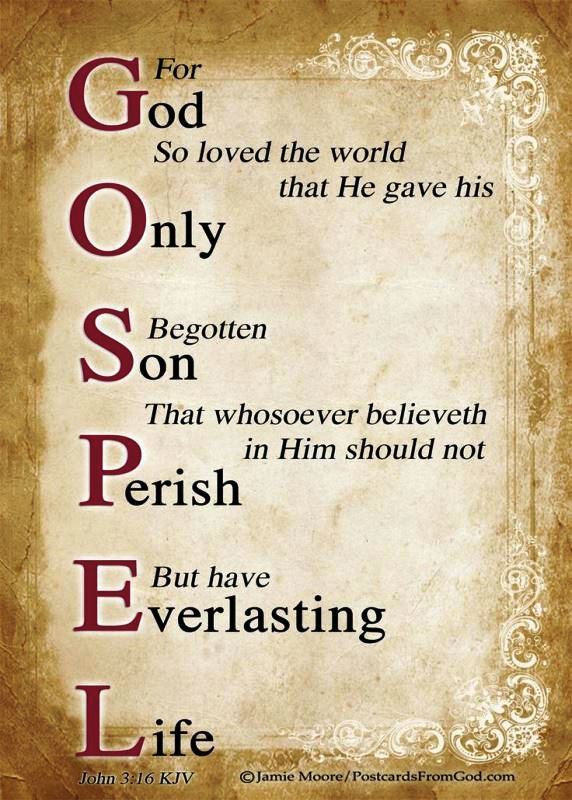
While this may come across as being normative of the social media culture, as believers, this should not be so! Our unity is crucial for the sake of the Gospel. From Genesis through Revelation there is only one overarching message we all should be remembering and striving for: We Love God, Love Neighbor and Self.

If one is claiming to be a Christian, we should be getting along with all others, especially those non believers. After one is born-again into the family of God, one has an obligation and is commanded to get along with all fellow Christians. But, somewhere along the space time continuum, it all got seriously messed up!

And God, through His Son Jesus Christ and the ministry and works of the Holy Spirit has been trying everything under the sun to restore that unity of purpose.

There is much in God’s Word about getting along – even with those who seem our alleged enemies – those who would hate, divide, sow dissension among us.

We even get a sense of what that experience of His Unity is supposed to feel like.

Psalm 133 NRSV

Psalm 133

The Blessedness of Unity

A Song of Ascents.

How very good and pleasant it is
    when kindred live together in unity!
It is like the precious oil on the head,
    running down upon the beard,
on the beard of Aaron,
    running down over the collar of his robes.
It is like the dew of Hermon,
    which falls on the mountains of Zion.
For there the Lord ordained his blessing,
    life forevermore.

The Word of God for the Children of God. In Excelsis Deo! Amen.

Today, Let Us Each Ponder This Thought:
“Love is the doorway through which the human soul passes from selfishness to service and from solitude to kinship with all mankind.” — Author Unknown

There is something both truly delightful and refreshing about unity among the Children of God. When our senseless divisions are removed and long-standing conflicts are resolved, unity breaks through and love finally wins. For example, most people delight in beautiful ambiance, romantic music, fine wines, and a sumptuous meal. These are considered the finer things of life. But God defines the very finest of all delights—the unity of the Body of Christ – The Church.

What does the Psalm say to us today? 

Verse 1

What are the best delights for God and man? What are the highest achievements a human can have on this earth? Only the right values can tell us the right answers to these questions, and only God Himself can establish these values. Man impresses himself with his military prowess, his intellectual capacities, technological developments. Henry Ford and Albert Einstein are heroes to many because they developed technology and greatly expanded the bounds of science.

But what does God’s Word define as the highest values of all? What is Jesus Christ’s perspective on this? What was His primary prayer petition while He was here on earth? “I in them, and Thou in me, that they may be made perfect in one” (John 17:23). He repeats this petition three times in His wonderful prayer spoken at the end of His earthly ministry. Jesus loves oneness in His body. He desires it. He preaches it, He intercedes, prays for it, and nurtures it.

Truly, sustained unity among men is a supernatural thing. It is a refreshing, beautiful reality in the Church of Jesus Christ. If there is restored relationship and peace between a holy God and the believer and the non believing who are still our neighbors, there had better be some reflection of a living unifying hope between the professing communities of believers and non professing neighbor.

If church-going professing Christians have lost the unity between themselves entirely and all is unreconciled, then they must still need to be reconciled with God. If they have no love of the brethren or affinity for uniting with those who are still their neighbors, the love of God must not reside in them (1 John 4:20).

Thus, the miracle of Christ’s reconciling work must be witnessed first and foremost within the body of the church. Nothing on earth is of higher value than the love between brethren. David and Jonathan seem to have experienced it (1 Samuel 18). Within the Church established by Jesus Christ, friendship and unity should be normative, a tremendous testimony into the world around us.

Verses 2-3

Two analogies are used in these verses to help us understand the beauty of true biblical unity. It is like precious ointment poured upon Aaron’s head at his installation as High Priest in Israel (Exodus 29:7, 30:23, Leviticus 18:12).

Like a fragrant oil that creates an extremely pleasant and peaceful atmosphere, genuine unity between brothers and sisters in the church makes the church a comfortable and attractive place to be. Disunity in the church, especially among the leadership, or between laity and leadership results in extreme discomfort, loss, pain, spiritual decay, and sometimes even the collapse of entire churches.

The second analogy describes unity between brothers as something like the well spring of life. Without the morning dew from the heavens watering down upon our earth, no vegetation will ever grow, no life sustained (Deuteronomy 33:28). That is what distinguishes all those green covered hills of Zion from the desert. Typically, water runoff from the highest mountains (such as Mount Hermon at 9,230 ft.), served as a major source of irrigation for the fields and hills below.

Without unity in the body, we will have dried up, untillable or dry rocky fields, withered fruit, and a languishing kingdom work. May God give us this blessing of unity in rich abundance, here and now! When the early church gathered with one accord, with a unified faith in the risen Christ, the Spirit of God came upon them and filled the place with His power (Acts 2) and many souls came to belief. Unity is the precursor to powerful work in the church of our Lord Jesus Christ.

Not only does our Lord Jesus Christ desire the blessing of unity, He commands it. It is more than a directive. It is a certain reality, because He will ordain that unity. One way or another, He will bring it to pass in Zion. You can count on it.

Of course, He may bring it about through persecution, trials, and by pruning the vine (John 15:1-17). Our local churches may face obstacles along the way, such as -false brothers, divisive factions, and heretical schisms. But, do please mark these Gospel words well. Our Lord commands the blessing and He will have it.

How should I apply Psalm 133 to My life? 

Let us appreciate unity and seek unity in the church body. We ought to strive to keep the unity of the Holy Spirit in the bond of peace (Ephesians 4:1-3 NRSV).

Unity in The Body of Christ

I therefore, the prisoner in the Lord, beg you to lead a life worthy of the calling to which you have been called, with all humility and gentleness, with patience, bearing with one another in love, making every effort to maintain the unity of the Spirit in the bond of peace.

This text may come about by humbling ourselves, confessing our sins, and sacrificing and imprisoning our own pride and comforts in the process. We may need to go the extra ten miles to open up communication channels and resolve conflicts with our brothers and sisters. Unity 101 happens within the Christian family. Whenever there are offenses, we should be less about anger, carrying a grudge, quick to confess our own sins, and even quicker to forgive one another.

Does Psalm 133 teach me to worship God? 

Corporate worship pleasing to God is based upon Truth, genuine love for one’s neighbor and self, and one unified confession (John 4:19-24). We have the greatest basis for unity on earth, because we know that we are undeserving, wretched sinners who have all been wonderfully saved by the same Savior.

We ought to have a special appreciation for the gifts that the Spirit of God pours out upon Aaron, and any other person who ministers in the church. To despise prophesying or any other gift in the church is to despise the Spirit who is the Giver of these gifts (1 Thessalonians 5:20, James 1:17-18, Hebrews 2:1-4).

Hebrews 2:1-4 NRSV Warning to Pay Attention

Therefore we must pay greater attention to what we have heard, so that we do not drift away from it. For if the message declared through angels was valid, and every transgression or disobedience received a just penalty, how can we escape if we neglect so great a salvation? It was declared at first through the Lord, and it was attested to us by those who heard him, while God added his testimony by signs and wonders and various miracles, and by gifts of the Holy Spirit, distributed according to his will.

When we are despising the preaching, the prayers, or any other contribution to the church, we quench the Spirit of God. Why should He pour out any more gifts upon a congregation that despises the gifts He has already given? The oil which is pouring off of Aaron’s head represents the unity of the Spirit in the bond of peace (Ephesians 4:1-3). This unity is complemented by a multiplicity of gifts that will only come from the outpouring of the Spirit of God upon the church.

Family and Koinonia Discussion Questions:

1. What are the things that create disunity in our families? in our communities? and in our church? Did we play a role? Have we witnessed any of these things?

2. Do we appreciate the gifts which God has given our family, our communities our churches? Who are the generous ones in our family? In our community? Who has been sharing gifts lately in our church, how can we appreciate them?

In the name of the Father and the Son and the Holy Spirit, Let us, in Unity, pray!

Father, Son and Holy Spirit, I pray that I may learn to live together with all my brothers and sisters in Christ in godly love and unity, and to Your praise and honor and glory. Protect me, protect us, from wanton discord, disunity or division and help all Your children to stand firm in the faith, once offered to the saints through the death and resurrection of our Lord Jesus Christ, Who has caused us to be united together in Him – in Whose name I now do pray, AMEN.

For Whatever was Written in Former Days ….. Part 2: Through Endurance, Through Encouragement, We Might Reap and Sow Hope from the Ruins!

The question I have for each of us today is this: Are we an optimist, or are we a pessimist? Are we a glass half-empty person, or are we a glass half-full person?

Do we complain that rose bushes have thorns, or do we rejoice because thorns have roses? Do we see the storm clouds, or do you see the silver lining coming?

There are various activities and things in life that can show us whether we are either optimistic, or pessimistic. There are many things from life’s experiences that can pull this trait out. Perhaps, the thing that does this best is gardening.

The pessimist surely says, “Why plant anything if nothing results because birds, bunnies, insects, deer, weeds, creeping Charlie, blight, the hail, or bad weather can and truly ruin and kill what I’m trying to grow?! What is the point? Why take the risk and waste the time? Why expend the energy, spend money?”

The optimist, despite potential failure, plants. Why? Because there is a good possibility that both New Life, Good Food and Fresh Hope will eventually emerge from the untilled ground. A good farmer, or an avid gardener, lives in the confident hope of a rewarding harvest. Not every seed will produce, but enough effort will make it worth all the while. That is the parable of the Sower.

Today’s devotional looks at the hope and promise of sowing God’s Word. It deals with the failures, but also the joys that we can experience with this! It reaches back to Isaiah’s words and goes through Jesus’ parable of the sower.

Matthew 13:1-9 NASB

Jesus Teaches in Parables

13 On that day Jesus had gone out of the house and was sitting by the sea. And large crowds gathered to Him, so He got into a boat and sat down, and the whole crowd was standing on the beach.

And He told them many things in parables, saying, “Behold, the sower went out to sow; and as he sowed, some seeds fell beside the road, and the birds came and ate them up. Others fell on the rocky places, where they did not have much soil; and they sprang up immediately, because they had no depth of soil. But after the sun rose, they were scorched; and because they had no root, they withered away. Others fell [a]among the thorns, and the thorns came up and choked them out. But others fell on the good soil and yielded a crop, some a hundred, some sixty, and some thirty times as muchThe one who has ears, [b]let him hear.”

Word of God for the Children of God. In Excelsis Deo! Alleluia! Alleluia! Amen.

In our Gospel reading, Jesus compares sharing God’s Word to planting a field. He uses worldly realism that alert us to the potential failures, but He still calls us to faith and to action which leads us to potential success. He promises and teaches, that “If you are willing to work hard at it, to plant it, it will grow.” Our goal is to sow and grow in faith that produces the fruit of the Spirit, including the desire to be tillers of all types of ground, planters of the seed of God’s Word.

Except, we each have our own individually unique life experiences, whether we consider ourselves optimists or pessimists, what is it which will give us a secure and certain enough foundation to risk taking that very first step into the fields? We know what will move us forward without hesitation, but we all know what will give each and everyone of us the greatest rationales and reasons to pause. So, where can we place our confidence, our trust in the surety of our first step?

I suggest we all direct our faith unto the ancient words of God’s Prophet Isaiah;

Isaiah 55:10-13 New American Standard Bible

10 For as the rain and the snow come down from heaven,
And do not return there without watering the earth
And making it produce and sprout,
And providing seed to the sower and bread to the eater;
11 So will My word be which goes out of My mouth;
It will not return to Me empty,
Without accomplishing what I desire,
And without succeeding in the purpose for which I sent it.
12 For you will go out with joy
And be led in peace;
The mountains and the hills will break into shouts of joy before you,
And all the trees of the field will clap their hands.
13 Instead of the thorn bush, the juniper will come up,
And instead of the stinging nettle, the myrtle will come up;
And [a]it will be a [b]memorial to the Lord,
An everlasting sign which will not be eliminated.”

From Isaiah’s ancient text, we read Isaiah’s testimony, we witness the sure foundation and confidence for such a promise, “if you plant it, it will grow.”

God starts by using a simile to introduce His promise.

He says, “For as the rain and the snow come down from heaven and do not return there but water the earth, making it bring forth and sprout, giving seed to the sower and bread to the eater,”.

Before the rain and snow are taken back up into the sky (as mist), they achieve the purpose for which they are sent. God then makes His point and gives His promise. “…so shall my word be that goes out from my mouth; it shall not return to me empty, but it shall accomplish that which I purpose, and shall succeed in the thing for which I sent it.”

God’s living Word (Hebrews 4:12) will do the same! Whether we are either an optimist or a pessimist or perhaps somewhere in between, His living Word both accomplishes and will accomplish that task which God alone sends it out for!

It is an all-powerful word He sends forth! His Word spoke all of creation into existence. “Let there be…and there was….” This powerful word tears down and make alive, it strengthens, sustains, pardons, justifies, enlightens, and guides.

In Matthew, Jesus’ word brings people to faith, forgives sins, heals diseases, casts out demons, calms a storm, multiplies bread and fish, and calms anxious hearts. It is a word that does exactly what it says! This is no ordinary Word! This all-powerful Word will accomplish what it is sent out to do. Plant the Word, and it will grow! To teach this point, Rabbi Jesus gives us the Parable of the Sower.

Jesus says the Sower goes out to sow, and he throws seeds everywhere! Some seed fell alongside the path. The birds then came, and they picked and pecked that path clean. Not a single seed remained to be found. Jesus says that these people hear the Word, but they do not exercise a choice: to listen to the Word.

Jesus says the devil, the evil one, snatches away that seed, that word. “Snatch” evokes a powerful image. It is an overpowering, a wrestling away, a show of force. It is a ripping out of someone’s hands. It is a disregard for someone else.

I envision a bully ripping something out of the hand of a weaker individual. It is never a pleasant experience to have something maliciously snatched from you.

Sad to say, there are too many things in our modern culture that provide open ground for the devil, our sinful flesh, and our evil world, to rob people of the Gospel message before it ever takes root. It gets snatched from them, and with deadly consequence. But, the sower continues on. He still spreads that seed.

Jesus says some seed fell on rocky ground.

Believe it or not, soil can be quite rocky. Growing up, my father had a corner lot on a busy thoroughfare. For several years, we would have family gardens there. The first year we set the boundaries of our garden. The ground had never been tilled prior to this effort. So with my garden shovel in hand, I set to working in the hardened unworked soil. Almost immediately, I struck rocks – big rocks just underneath the surface of the grass. My garden shovel just stopped right there.

It took a whole lot more effort and a bigger shovel and still I had little success. We borrowed a rototiller from a neighbor to see what progress we could make. The only reward for me was a sore chin when those handles crashed upwards. It became an all hands on deck effort – two with shovels, one rock mover and me! We were all anxious and excited to see what success our first efforts will bring. So, we just kept right at it until virtually our whole front yard became a garden.

Some seed fell on rocky ground, where there wasn’t much soil. The seed quickly sprouted, but since there wasn’t much depth, it withered away once the sun hit it. Jesus says these people will hear and listen to the Word, but only for a while.

Their faith blossoms quickly, but then just as fast wilts and withers, often when under pressure. When my father was in and out of the hospital, I remember my Mom commenting, “You see a lot of people searching and calling out for Jesus, here.” She was right. You would see many people praying or talking about faith.

But, I often wondered, how many people continued to do so once they left! Once their crisis passes, faith can disappear. Once the need is gone, they have no need for Jesus. Their seed withers away. But, despite of this, the sower continues on.

Jesus says some seed fell among thorns. To the sower, this seemed like good ground. The perennial thorn roots weren’t visible. Initially, it looked promising. But, once the seed sprouted up, the thorns grew faster and grew first, and they eventually, inevitably choked the seed, limiting it, killing it. It was unfruitful.

Jesus says these people hear and listen to the Word, but imagine that God does not somehow and in some way continue to need their undivided attention and devotion. Jesus presents the challenge of faith in good times, as well as the bad.

Notice the word He uses: “choke.” It is a brutal and violent word. Being choked is a slow process, where you lose all power, life, awareness, and ability to resist.

It is where you tense and shrivel up. Jesus does not mince words here. What is it that chokes? The cares of the world and the deceitfulness of pride. Jesus says these things can slowly choke and kill off that seed, kill that Word. This is the context we find ourselves in. This is the soil of too great degree of our world!

With the lack of success so far, it is enough to make this optimistic sower a truly pessimistic one! It is enough to make anyone go home, throw the bag of seeds, and say, “What is the use? It seems pointless! Nothing is working!” But, hold on. The harvest is to be expected. All is not lost. This Word does that for which it is sent. Work the ground! Plant the seed (Word), and it will grow. God promises!

The harvest is to be expected! Be the optimistic gardener! Some seed fell on good ground, and it produced an extravagant harvest! It produces 100x, 60x, 30x, what was sown. The sower’s work wasn’t in vain. Jesus says these are those who keep on hearing and listening to the Word. They grow in their faith and sanctification. The Gospel always bears fruit. It will always make a harvest.

This Word makes a harvest within us. God’s Word does not come back empty or void; it does exactly what it is sent to do. This word delivers Jesus Christ. It gives all that He has and all He is: His righteousness, His works, and His merits. It gives us all what Jesus gives and does: His grace, forgiveness, life, salvation, won at the cross, confirmed at the Tomb. Jesus comes in that Word through baptism and His Supper. Jesus comes in that Word that is spoken and read. This Word, this Gospel message, always produces a harvest. It always bears fruit.

What does this look like? Paul gives us this picture in Galatians 5:22-25.

Galatians 5:22-25 AKJV

22 But the fruit of the Spirit is love, joy, peace, longsuffering, gentleness, goodness, faith, 23 meekness, temperance: against such there is no law. 24 And they that are Christ’s have crucified the flesh with the affections and lusts. 25 If we live in the Spirit, let us also walk in the Spirit.

The Holy Spirit produces this fruit, this harvest in us through the Word. He also produces another fruit, too, good works.

In Matthew 25, Jesus tells the sheep, the elect, some of their good works.

He says, “For I was hungry and you gave me food, I was thirsty, and you gave me drink, I was a stranger, and you welcomed me, I was naked and you clothed me, I was sick and you visited me, I was in prison, and you came to me….as you did it to one of the least of these my brothers, you did it to me.”

Talk about difficult places to both plant and sow seeds. Talk about difficult places to work the hardest soils beneath your feet. Talk about a harvest! God produces a harvest in others through us, through His Word, by the Spirit.

Work the ground. Plant the Word, Sow the seeds of God’s truth and it will surely grow. This promise and reality encourages, emboldens, and also empowers us! It encourages us to be patient sowers, so others can enjoy the same harvest, too.

Let’s all now contemplate the Word of God as it has now been planted and sown within us. Let us move that much closer to Jesus Christ – our ONLY living HOPE!

Holy God, you are the wisest teacher. I pray that through your living Word you will instruct me in such a way that I show wisdom to others. I pray to ask for patience so that I can understand information and not get defensive. Help my words to matter. Help them to plant seeds in the hearts of other people. Work in the hearts and minds of them so that wisdom grows in them. Alleluia! Amen.


For Whatever was Written in Former Days ….. Part 1, Can we Claim the Old Testament Covenant in these Times?

Not too long ago, this question came up in a bible study. Can an Old Testament Covenant promise of God made specifically to Israel be claimed by Christians?

On the surface, it would seem rather obvious the answer is; “of course we can!”

Perhaps, what seems rather obvious today, may not be really that. A new phrase has been introduced and sledge hammered into our psyche lately; “Fake News!”

While the obvious may remain exactly that despite that phrase, Claiming one of God’s Covenants in our 21st century, requires further discovery and exploration.

Let’s turn to the Word of God to a familiar text from Genesis – Noah’s Covenant.

Genesis 9:8-17 NKJV

Then God spoke to Noah and to his sons with him, saying: “And as for Me, behold, I establish My covenant with you and with your [a]descendants after you, 10 and with every living creature that is with you: the birds, the cattle, and every beast of the earth with you, of all that go out of the ark, every beast of the earth. 11 Thus I establish My covenant with you: Never again shall all flesh be cut off by the waters of the flood; never again shall there be a flood to destroy the earth.”

12 And God said: “This is the sign of the covenant which I make between Me and you, and every living creature that is with you, for perpetual generations: 13 I set My rainbow in the cloud, and it shall be for the sign of the covenant between Me and the earth. 14 It shall be, when I bring a cloud over the earth, that the rainbow shall be seen in the cloud; 15 and I will remember My covenant which is between Me and you and every living creature of all flesh; the waters shall never again become a flood to destroy all flesh. 16 The rainbow shall be in the cloud, and I will look on it to remember the everlasting covenant between God and every living creature of all flesh that is on the earth.” 17 And God said to Noah, “This is the sign of the covenant which I have established between Me and all flesh that is on the earth.”

The Word of God for the Children of God. Thanks be to God! Alleluia! Amen.

There are many promises of God in the Biblical text. Some are given to specific individuals, such as Abraham, Noah, Abraham, Moses, David, and Solomon. There are also many promises given to entire groups of people and even unto nations. God would seal His promises by making a covenant, which is a conditional contract, with them.

I am one of those who believes that the Bible is not written to us but is for us. People often fall into the trap of what is known as eisegesis, which is reading words and passages in the Bible and applying them to their own circumstances and surroundings without looking at the grammatical and historical context, which is known as exegesis. I was once told by a Pastor mentor that the three major rules of diligently studying the Bible are context, context, and context.

The word “covenant” (Heb:berith) means alliance, a divine ordinance with signs or pledges between God and humanity and first appears in Genesis 6. The word is used with reference to God’s creative and providential activity where He showed Himself to be completely faithful (Jeremiah 33:20,25; Genesis 8:22).

The standard Hebrew phrase (ka·ra berith) is used of God’s covenant with humanity (Genesis 15:18; Exodus 24:8; Deuteronomy 4:23; 5:2; 2 Kings 17:15; Jeremiah 11:10; Ezekiel 34:25),

but the emphasis is laid on the initiative of God by the use of the verbs;

“Establish” in Genesis 6:18; 9:11; 17:7; etc.,

“Grant” in Genesis 9:12; 17:2; Numbers 25:12,

“Set Down” in 2 Samuel 23:5,

“Command” in Joshua 7:11; 23:16; 1 Kings 11:11.

All these verbs at times have as their objects the noun ‘berith’ (https://www.blueletterbible.org/lexicon/h1285/kjv/wlc/0-1/.

In addition, there are numerous references to GOD having “commanded” and given only Israel a “law,” “statutes,” “commandments,” “judgments,” etc. Israel alone was expected to “obey” God’s word of command, to “keep” His covenant, to “remember” it, to “do” it, and to “walk in” it.

However, the Bible shows that Israel “forgot” the covenant, “broke” it, “sinned against” it, “rejected” it, “transgressed” it, and “profaned” it, and as a result, experienced the curses of the broken covenant in the form of natural calamities, war, sickness, exile, and death. Had Israel kept the covenant, it might have enjoyed the blessings of the covenant instead (Lev 26; Deuteronomy 27-28).

God made covenants with individuals such as Noah that affected the entire Earth. God was so pleased with Noah that He said in His heart “I will never again curse the ground because of man, for the intention of man’s heart is evil from his youth. Neither will I ever again strike down every living creature as I have done. While the Earth remains, seedtime and harvest, cold and heat, summer and winter, day and night, shall not cease.”

God blessed Noah and his sons and said only to them,

“Be fruitful and multiply and fill the Earth. (Genesis 9:7)

It was God who took the initiative to make a covenant with Noah. God’s single promise to Noah was there would never again be a rainstorm causing a FLOOD that would cover the entire Earth, and He signed His promise with a rainbow.

God also made a single covenant with Abraham where He promised a land and descendants to him as numerous as the stars in the sky and the grains of sands upon the sea shores. and he was summarily commanded to “keep” the covenant (Genesis 15:7-21, Genesis 17:1-14, Genesis 22:15-19).

When Abraham was ninety-nine years old, God said to Him, “I am God Almighty; walk before me, and be blameless,” so that He would make a covenant with Abraham that would multiply him greatly.”

Abraham fell on his face before God, who then said to him that His covenant was with him alone, and that he would be the father of many offspring and give him all the land he traveled, including all the land of Canaan, as an everlasting possession, and that he would be their God.

God also told Abraham that he and his offspring must keep His everlasting covenant by having every male be circumcised when they are eight days and if they are not throughout the generations they shall be cut off from his people because they broke the covenant. The faith obedience of Abraham was not a condition of the covenant but rather his expected response inside a religious relationship. There could be no blessings and no fellowship without obedience.

God also made a covenant with Israel at Mt. Sinai (Horeb) after He reminded them of His divine acts and His call to obey Him. Then, GOD established Israel alone as a “peculiar treasure,” a “kingdom of priests,” and a “holy nation,” and gave them stipulations that would guarantee the continuance of fellowship between them and He. The covenant was ratified by an animal sacrifice and the sprinkling of blood (Exodus 24:4-8).

God established a covenant with King David and promised him that his direct descendants would have an everlasting kingdom and be known as his sons (2 Samuel 7:12-17; Psalm 89:3,26,34; Psalm 132:11; 2 Samuel 23:5; Isaiah 55:3).

God kept His Covenant Promise – Our Savior Jesus came from the line of David.

God made a promise to King David’s son, Solomon. He appeared to Solomon at the dedication of the Temple and declared it would be the place where all Israelites were to bring their burnt-offerings and sacrifices. God tells Solomon that has heard his prayer and says after he built and dedicated the Temple to the Lord (2 Chronicles 6, 7:1-22).

“If my people who are called by my name humble themselves, and pray and seek my face and turn from their wicked ways, then I will hear from heaven and will forgive their sin and heal their land” (2 Chronicles 7:14).

The words “my name” refers specifically to the entire nation which was called by God (El), Isra-El, translated “those who struggled with El” or God.

They were a Theocratic nation and not a minority of true believers within the nation. Isra-El had a unique supernatural covenant with God that He initiated from His side. No other nation had that privilege. Their laws and constitution were the first 5 books of Moses called Torah. Any citizen that worshipped another God or prophesied in the name of another God was killed as part of their theocratic covenant.

In the immediate context of the verse noted, God spoke to Israel’s king, saying Israel should obey the Lord’s covenant. God was specifically pointing him back to the covenant that He made with his forefather Abraham. At a specific point in the history of Israel, God told Abraham about his descendants, saying, “I will be their God” and “They will be my people.” That’s what “My people” means.

God reminded a people who had been exiled, enslaved, and defeated that a rebuilt temple or a displaced nation cannot change who they were. They were God’s chosen people and would definitely see the future God has for them.

God had chosen the Temple built by Solomon to be a house of sacrifice (verse 7:12, 15-16) for the people, Israel He had chosen (descendants of Abraham). If there were to come a time when God withholds rain or sends plagues on the land (v7:13), the people are covenanted to pray, with the text seeming to imply this time of covenanted community prayer would happen there specifically.

If the people prayed, did as God commanded, then He would respond, and they would enjoy the abundant blessings of the covenant which included the healing/restoration and fruitfulness of the physical land itself (verse 7:14).

However, if they disobeyed, God would “shut up the heavens so that there is no rain, or command the locust to devour the land, or send pestilence among my people” (verses 19-20). This is part of the covenant that God made through the ministry of Moses with the people.

A similar promise of physical blessings was made by God previously to Israel if they remained faithfully obedient to His covenant and also what the negative consequences were if they did not (Deuteronomy 28:1-6, 8, also Leviticus 26). The King of Israel and his people are to keep the covenant with God, and in doing so, He would abundantly bless them, even the very land of Israel itself.

The Old Testament is about Hebrews in ancient Israel who receive Old Covenant promises. The New Testament is about people receiving God’s New Covenant promises. The book of John demonstrates that the promises and blessings given to New Covenant people, those who are Born-Again, are fulfilled in Jesus Christ, who is the better Temple, people, sacrifice, high priest, etc. God made the New Testament Covenant which builds upon the Old Testament covenants, which were given to different peoples of God that were dealt with differently by God.

It was at the Cross where Jesus died, and then was raised from the dead after three days, that the old covenant of Law passed away in its entirety, and every person who becomes Born-Again are then under the new Covenant of grace (Jeremiah 31:31-34; Galatians 3:15-4:7; Romans 6:14-15; 7:4-6; Hebrews 8:1-10:18). The Old Testament is still the Word of God, and along with the Gospel and the New Testament writings of Paul, Peter, Jude, James, John, are the final authority as the infallible, inerrant Word that was divinely breathed out by God.

The Born-Again Christian is no longer under the requirements of the Law and stipulations of the old covenant (Jeremiah 31:31-34; Ezekiel 36:26-27; 2 Corinthians 3:6; Hebrews 8:8-13).

They are grafted into the vine of Israel (John 15:1-11), the people of God, and become with them, “a chosen race, a royal priesthood, a holy nation, a people for his own possession” because they were once not His people, but, through Jesus Christ, they become “God’s people” (Romans 11:17-24; 1 Peter 2:9-10).

Rabbi Jesus said that all 613 laws of the Old Testament (365 thou shalt not’s and 248 thou shalt’s, or thou art surely in big trouble!) depend on just two laws which are really one and the same, “You shall love the Lord your God with all your heart and with all your soul and with all your mind”… and “You shall love your neighbor as yourself” (Matthew 22:34-40, Mark 12:28-34). The law all pointed to fulfillment in Jesus, and it still functions as a moral standard for every Born-Again Christian to live their life in the love of God (Romans 13:8–10; Galatians 5:14; 6:2; 1 Corinthians 9:20–21).

Out of all the nations on the Earth, God chose to covenant with Israel. They did not choose to covenant with God. Every person of that individual nation was required to repent just like every person in Nineveh, from the king down to all the citizens, and even all the animals, were required to wear sackcloth, fast and repent, which they did, and God spared them all (Jonah 3). There has never been another nation in the long history of the world or seen in the Bible that had a covenant with God.

The New Covenant that we see promised in the Old Testament texts and made through Jesus is not about a nation but about a community of people who have a steadfast and unyielding faith in God, and the goal of this covenant is not about wealth and prosperity. It is more about the mission of bringing God’s message to the world and for every Born-Again Christian to live as always God intended.

In the name of the Father, the Son and the Holy Spirit, Let us take time to Pray,

Loving heavenly Father, thank You for Your many precious promises – and Lord, when the storm-clouds of life are thundering in on all sides, help me to trust Your Word and remember the precious promises You have made to all Your children – for Your Word cannot be broken in Jesus name I pray, Alleluia! Alleluia! Alleluia! Amen.

That We Might Have Hope

Psalm 121 Authorized (KJV)

Psalm 121

A Song of degrees.

I will lift up mine eyes unto the hills,
from whence cometh my help.
My help cometh from the Lord,
which made heaven and earth.
He will not suffer thy foot to be moved:
he that keepeth thee will not slumber.
Behold, he that keepeth Israel
shall neither slumber nor sleep.

The Lord is thy keeper:
the Lord is thy shade upon thy right hand.
The sun shall not smite thee by day,
nor the moon by night.
The Lord shall preserve thee from all evil:
he shall preserve thy soul.
The Lord shall preserve thy going out and thy coming in
from this time forth, and even for evermore.

The Word of God for the Children of God. Alleluia! Alleluia! Alleluia! Amen.

A journey of a thousand miles will always begins when we take that first step.

However, who is it who has ever told you how big that first step had to be or by what sophistry of reason we should even contemplate why we want to journey the thousand miles in the first place. Is it not less risky just to stay in one place? I mean who is it who has ever been seriously injured by remaining a homebody? I mean too, who is it who will give that iron clad guarantee of “it will be okay?” We all need blessed assurance our journey of a thousand miles will be ‘worth it.’

What is the risk to our souls if we risk nothing to go anywhere else in the world? What is the risk to our hearts and our physical beings if we just decide to be that “stay at home” person? The risk is probably minimal to us because we do not in any fashion challenge our physical or spiritual selves – time will still march on. What hope is there beyond the hope which already exists, never changes in day to day drudgery? Is our hope only sourced from the day to day bubble we live in?

Risk nothing! Accomplish nothing! Place all of our hopes in allowing our status quo remain just that – OUR STATUS QUO! All of our hopes for the present time, our hopes for the future are defined and delineated quite nicely by Status Quo! By all means if you are content and happy with your status quo – “march on!” You have every right in the world to let your status quo define your whole life. I pray fervently that your status quo will provide you all the necessary comforts. The journey of a thousand miles remains that other guys hopeless adventure!

Why not try to just sort this thousand mile journey of hope or hopelessness out. Let us dare to contemplate taking that first step towards hope or hopelessness. It cannot hurt us that much to move one of our two feet forward even one inch. One foot in front of the other is a natural thing for us to do to move from point ‘A’ out to point ‘B.’ In our “static” status quo we do it all day, everyday anyway.

So, you are now reading these words and without moving an inch, you have now taken that very first step and have just started that journey of a thousand miles. Your status quo has just been interrupted for perhaps your first time in forever! Ask yourself now, since that miraculous moment when your journey began, did you stumble at all? Did you remain safely and securely upright on your two feet? Are you wheelchair bound? Need another assistive device to help you get around your home or elsewhere, it’s the same. You just risked moving yourself forward.

Well now, imagine that! Without even thinking twice about it, You took that 1st step toward you know not what and you did not stumble or fall flat on your face. Hope has just been conceived within you. One Hope is now being given a chance to grow and mature within you – as an embryo grows within its mothers womb! How about that, new life, a new status quo has begun to take shape within you! And you personally expended little to no energy in the effort – maybe 1 calorie?

What is this new life? What is this new and emerging “status quo” growing in your inward parts (Psalm 139:13-18) and who put it there without your input?

What exactly is this new life, this new and emerging status quo called? HOPE! And I personally hope and pray this devotion will increase your understanding of a genuinely great principle of the Christian faith: “God IS our only hope!”

The first thing we have to do is to answer the question, “WHAT IS HOPE?”

One answer to this question is “hope” is our desire for a future significantly or even marginally or minimally better than our own present one. Its object, just like faith, is our moving ourselves forward, towards something yet unseen. It is different than expectation, because an expectation lacks that element of desire.

Try to frame HOPE as a progression of events which begins with our first vision, an observation of the ground we are walking on. Our very first “untrained” look at the ground we might observe a tiny ant hill with the ants moving in and out to find and then return carrying food to nourish their Queen. (Proverbs 6:6-9) What little you see of the ant hill on the surface, is significant under the ground. In other words there’s infinitely more to HOPE than what we see on the surface.

Now as the Psalmist did in Psalm 121:1 “I will lift up mine eyes unto the hills, from whence cometh my help.” Lift up your eyes from the tiny, barely visible anthill, upward towards the hills somewhere off in the distance but getting Oh so much closer with every step you take. Fixate both of your eyes upon those far distant hills observing how much bigger they get the more steps forward taken, how much taller they seem to become the closer your steps move to get to them. Then you arrive at the base of the hills to look up feeling gratified “I made it!”

Now look to the further distant mountains echelons beyond the hills. You have made it from the ant hill, to the hills, and now the mountains beyond beckon to you: “Come unto me! You made it this far! You have conquered the worst of it!” An invitation to further cast away our old stale and all too worldly “status quo,” invitation to discover the truth of our Christian faith: “God IS our only hope!”

Isaiah 2:1-5 AKJV

And it shall come to pass in the last days,
that the mountain of the Lord’s house shall be established
in the top of the mountains,
and shall be exalted above the hills;
and all nations shall flow unto it.
And many people shall go and say,
Come ye, and let us go up to the mountain of the Lord,
to the house of the God of Jacob;
and he will teach us of his ways,
and we will walk in his paths:
for out of Zion shall go forth the law,
and the word of the Lord from Jerusalem.
And he shall judge among the nations,
and shall rebuke many people:
and they shall beat their swords into plowshares,
and their spears into pruninghooks:
nation shall not lift up sword against nation,
neither shall they learn war any more.
O house of Jacob, come ye,
and let us walk in the light of the Lord.

I have never been to the mountains and hills of Israel. I know not what they physically look like so I cannot fully conceptualize climbing them like these Israelites did and continue to do everyday of their lives. It helps me to frame these first steps taken in my grinding and winding personal thousand mile journey towards God’s HOPE: a “once in a lifetime” Mountain Top Experience.

Every continent on earth has mountains. Some are cold, rugged, and too, very difficult to climb. Others are favorite vacation spots. Still others are sources of water, timber, and other natural resources. Those of us who live within view of a mountain range are reminded daily of God’s greatness and our smallness.

Psalm 121 asks us to consider that same contrast.

Setting out for their long trips to Jerusalem for a festival, pilgrims often sang this song to remind each other of the dangers of the journey ahead and of the assurances of God’s protection. God is greater than any so-called god of the hills or mountains—the Lord God is earth’s Creator. God is more powerful than any force of the sun or moon—the Lord created them too. The false gods of other ­nations might have had to take “cat naps” during their days, vacations to refresh themselves, but not Lord God Almighty, who never slumbers or sleeps.

Whenever we set off on a journey—whether it is a trip of hundreds of miles or only a few steps—we can remind ourselves, as those pilgrims did, that we travel with God. We need not fear the dangers of the road or threats from others; every step of our way towards God’s Mountain is seen by God, who watches over us.

Our God, the Creator of earth’s highest mountains and deepest valleys—and everything in between—is also the protector of ALL the HOPE of our small lives.

In the name of the Father, the Son and the Holy Spirit, Let us take the 1st step;

Thank you Lord, that you are my hope and my future. Thank you for the truth of this Bible verse, that my help and my hope comes only from you. Thank you Father, that you are always there. I lift my eyes up to you. I thank you that I can turn to you at any moment. Today Lord, I bring you all of my situations. Where does my help come from? It comes from you – the maker of heaven and earth!

Please guide me as I take each step of faith towards you, as I work with the people whom you have brought across my path today. Help me to respond in a way that reflects my hope and trust in you. In all my difficult stuff today, Lord, please help me. Give me wisdom and understanding for each situation. I trust you Lord, to be with me through each and every moment of my day. In Jesus’ name, Amen.

Can One Have Hope Without God?

Romans 15:13 Amplified Bible

13 May the God of hope fill you with all joy and peace in believing [through the experience of your faith] that by the power of the Holy Spirit you will abound in hope and overflow with confidence in His promises.

The Word of God for the Children of God. In Excelsis Deo! Alleluia! Alleluia! Amen.

We live upon a globe, where for the most part, too many people have lost hope. We see it in this country, through social media we see the isolative effects of the Covid19 pandemic, we cannot help but notice poverty, homelessness, high rates of violent crime and drugs in our streets. We look to the borders between the United States and Mexico and witness the human tragedy of massive waves of people trying to enter the United States from Mexico and Central and South America. Whole families leaving their homes behind them for America’s Hope.

If we all could go to Mexico, South America, Central America, even Africa, the Middle East, or Asia we would find huge numbers of people who feel they have no hope. Even here, in America, as I have already noted, there is hopelessness among those who are sick, or poor, or homeless. I believe there are some there where you live, who feel the same way. But we must have hope! Life without a hope is nothing but undefinable misery. Hope is the subject for today. And there is a question that we will strive to answer; “Can one have hope without God?”

Here is our Hope that God hears us because He hears Christ, and He loves us the way He loves Christ. In a nutshell, identity in Christ means every child of God can point unto Jesus and before the Father’s throne testify: “I am with Him.”

That is a significant promise of hope for the present and for the future for those who identify themselves as “Children of God,” professing Christ as their Savior.

There are those, however, as we all know, who for one rationale or another have not made not chosen to make their heartfelt profession of Christ as their Savior.

Why? They do not accept Christ as being anything but a myth. They are mad at God and they have “cancelled” out God as having zero influence over their lives. Or as might genuinely be the case, they were never introduced to God or Jesus and now they find themselves where they are in a most acute state of “I want!”

Psalm 13:1-2 New American Standard Bible

Prayer for Help in Trouble.

For the music director. A Psalm of David.

13 How long, Lord? Will You forget me forever?
How long will You hide Your face from me?
How long am I to feel anxious in my soul,
With grief in my heart all the day?
How long will my enemy be exalted over me?

King David had far more than his “fair share” of moments when David’s heart and soul grieved and perceived that God was “not there” in the midst of his life.

We too get into those places and spaces along the long concourse of our lives where our hearts and souls feel severely grieved with no outlook for any hope.

Psalm 42:1-3 New American Standard Bible

BOOK 2

Thirsting for God in Trouble and Exile.

For the music director. A Maskil of the sons of Korah.

42 As the deer pants for the water brooks,
So my soul pants for You, God.
My soul thirsts for God, for the living God;
When shall I come and appear before God?
My tears have been my food day and night,
While they say to me all day long, “Where is your God?”

It begs the question which ever so desperately needs to be asked in these 21st century technology driven days, “Can one have genuine hope without God?”

This is the over arching question we will seek to answer through a process of discovery, exploration and diligent search and study of God’s Holy Scriptures.

The overarching goal of these writings is through these devotionals, readers may come to have a “transformational experience” with the ever living God. Our hope in God becomes an ever dynamic, ever inspiring ever living moment. That one “God in Christ” moment becomes two, then multiplied exponentially!

Genesis 22:15-18 New American Standard Bible

15 Then the angel of the Lord called to Abraham a second time from heaven, 16 and said, “By Myself I have sworn, declares the Lord, because you have done this thing and have not withheld your son, your only son, 17 indeed I will greatly bless you, and I will greatly multiply your seed as the stars of the heavens and as the sand, which is on the seashore; and your seed shall possess the gate of their enemies. 18 And in your seed all the nations of the earth shall be blessed, because you have obeyed My voice.”

It is fervently prayed that through God’s wisdom alone, our standing in the long shadow of the empty cross, standing firmly upon the Rock of our Salvation who is Christ Jesus, Reminded by the Holy Spirit of God of His unchangeable truths, that we come to a deeper understanding of what hope means for God’s Children.

In the name of the Father and the Son and the Holy Spirit, Let us now stop what we are doing for the world, to give ourselves over to the Will of God and to pray;

Psalm 91 New American Standard Bible

Security of One Who Trusts in the Lord.

91 One who dwells in the shelter of the Most High
Will lodge in the shadow of the Almighty.
I will say to the Lord, “My refuge and my fortress,
My God, in whom I trust!”
For it is He who rescues you from the net of the trapper
And from the deadly plague.
He will cover you with His pinions,
And under His wings you may take refuge;
His faithfulness is a shield and wall.

You will not be afraid of the terror by night,
Or of the arrow that flies by day;
Of the plague that stalks in darkness,
Or of the destruction that devastates at noon.
A thousand may fall at your side
And ten thousand at your right hand,
But it shall not approach you.
You will only look on with your eyes
And see the retaliation against the wicked.
For you have made the Lord, my refuge,
The Most High, your dwelling place.
10 No evil will happen to you,
Nor will any plague come near your tent.

11 For He will give His angels orders concerning you,
To protect you in all your ways.
12 On their hands they will lift you up,
So that you do not strike your foot against a stone.
13 You will walk upon the lion and cobra,
You will trample the young lion and the serpent.

14 “Because he has loved Me, I will save him;
I will set him securely on high, because he has known My name.
15 He will call upon Me, and I will answer him;
I will be with him in trouble;
I will rescue him and honor him.
16 I will satisfy him with a long life,
And show him My salvation.”