

John 11:32-37 Authorized (King James) Version
32 Then when Mary was come where Jesus was, and saw him, she fell down at his feet, saying unto him, Lord, if thou hadst been here, my brother had not died. 33 When Jesus therefore saw her weeping, and the Jews also weeping which came with her, he groaned in the spirit, and was troubled, 34 and said, Where have ye laid him? They said unto him, Lord, come and see. 35 Jesus wept. 36 Then said the Jews, Behold how he loved him! 37 And some of them said, Could not this man, which opened the eyes of the blind, have caused that even this man should not have died?
The Word of God for the Children of God.
Glory be to the Father,
and to the Son, and to the Holy Ghost;
as it was in the beginning,
is now, and ever shall be,
world without end. Amen, amen.
I’ve always pondered why Jesus wept.
My confusion about this nugget of information is very telling.
When I examine my confusion, I realize it’s because I don’t believe God to be particularly compassionate even though the Bible tells us that He is.
Many scriptures describe God as compassionate, but the truth is, it’s difficult for me to believe.
I don’t believe God is unnecessarily cruel; He has shown His love to me and others countless times that I can witness and testify to.
I have my doubts of His compassion because He’s perfect and omniscient. If you already know how it all comes about, what is the sense of writing Jesus cried?
My ‘opinion’ on the matter is dead wrong, but I was inspired to write this piece because I am confident others share similar doubts about God’s compassion.
God Keeps Track of Our Tears
The Bible tells us that when we cry, God cares by keeping track of our tears (Psalm 56:8).

We know Jesus was moved to tears when his friend Lazarus died (John 11:35), but Jesus knew He would raise Lazarus from the dead, so why shed tears?
It has legitimately puzzled me for many years now. The death of a loved one is excruciating, but for Jesus to cry has always been odd to me. Not only was He going to raise up Lazarus body, but He was the conqueror of death itself.
The only logical explanation I can come to is that Jesus wept because He has compassion for us.
He is a compassionate God, and His compassion is deeper than I’ll probably ever be able to fathom.
We know that if Jesus has compassion, so does God the Father because He and the Father are one (John 10:30.)
Even though the Bible describes God as compassionate, it can be difficult to see between all the wrath and slaughtering in the Old Testament.
This is the second reason it’s difficult for me to believe He is compassionate.
The evidence is there, but to see it, we need the right lens.
It’s much easier to see God’s compassion in Jesus when He walked on earth, and because of that, many Christians will separate the much older, harder to grasp, text of the Old Testament from the New, which gives us an incomplete picture.
Since it’s more difficult to see God’s compassion in the Old Testament, we’ll start there.
God Is Compassionate
The word compassion shows up 41 times in the Bible.
The first time we see the word is in Exodus 2:6 when Pharaoh’s daughter takes pity (chamal, in Hebrew) on Moses. She spared the baby; she took him in.
She felt bad for Moses and was moved to action. That is what compassion is, feeling for others in their tragic situation and being moved to action.
That action could be a prayer, a hug, an act of service, or, like Jesus, we are moved to tears.
In Exodus 34:6 God is described as compassionate and gracious, slow to anger, and abounding in lovingkindness and truth. The Bible tells us that God is 100% compassionate (Psalm 32, Psalm 103), but can we see it in these stories?
When I learned about the Hebrew word chamal, it made me remember God’s regret in Genesis 6:6-7 (NASB) when He destroyed the earth with a flood.
The scripture says, “The LORD was sorry that He had made man on the earth, and He was grieved in His heart. The LORD said, ‘I will blot out man whom I have created from the face of the land, from man to animals to creeping things and to birds of the sky; for I am sorry that I have made them.’”
I looked up the word “sorry” to see if it meant pity or compassion in Hebrew just like the word chamal.
The Hebrew word used here is nacham, and it often means regret.
The idea, the thought, that God regretted making humans is extremely disturbing because it may lead people to believe that God makes mistakes, which is why we know that can’t be the true meaning because if God makes mistakes, He wouldn’t be the perfect God.
As I suspected, the word can often mean pity or compassion, and that certainly changes things.
I believe that all things work together for good for those who love the Lord and are called according to His purpose (like Romans 8:28 tells us), but in times of suffering, can be mighty difficult to believe in the existence of that compassion.
There is a lot of destruction in the Old Testament, as I mentioned, but when we apply the lesson about destruction in Genesis and see the earth was flooded out of pity and compassion, it begins to change the colors of the lens from which we see compassion.
God is the Creator of all things. He is the one who defines everything.
To see things correctly we must find what is true in His Word.
God’s compassion or pity shown in Genesis is a great example of how it can appear confusing from the surface. But other examples of compassion make more sense to us.
One of those examples is in Jeremiah 14:17-18.
God says to Jeremiah:
“Now, Jeremiah, say this to them: ‘Night and day my eyes overflow with tears. I cannot stop weeping, for my virgin daughter—my precious people—has been struck down and lies mortally wounded. If I go out into the fields, I see the bodies of people slaughtered by the enemy. If I walk the city streets, I see people who have died of starvation. The prophets and priests continue with their work, but they don’t know what they’re doing.’”
In this passage, God feels sorrow for the state of His people being mortally wounded and defiled, even though it was the consequences of their actions.
This example feels extremely similar to Jesus weeping for Lazarus. God knew how things would work out for Israel, yet He took the time to feel sorrow.
I find this comforting.
Sometimes we must suffer because we are called to it like Christ.
Sometimes it’s because we’ve made the wrong choice.
Either way, God has compassion for us, He feels our pain, just like the scripture suggests in Psalm 56:8 (NLT): “You keep track of all my sorrows. You have collected all my tears in your bottle. You have recorded each one in your book.”
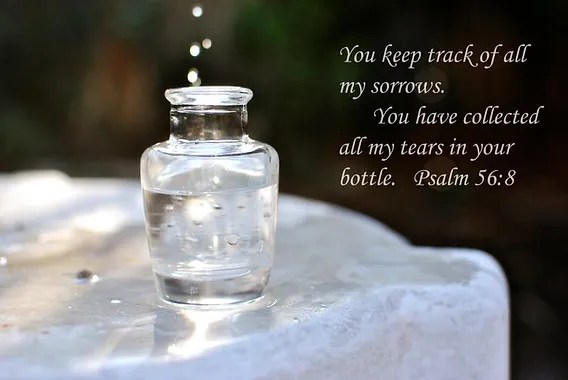
Christ Cares for Us
God sees our life in the context of creation: beginning, middle, and end, yet He takes time to feel sorrow for us and with us.
It’s still a difficult concept for me to accept, just like His love for us is difficult for me to accept, but through faith, we believe it.
When you break faith down it seems insane, but it’s by our faith that we have salvation in Christ!
It’s in our best interest to believe in God’s love and compassion for us.
As I’ve already admitted, I struggle with it through painful times, but God tells us to have faith and not doubt Him.
Jesus weeping is supposed to make us pause—and for very good reason.
The fact that He wept over his friend’s temporary death is shocking because Jesus knew Lazarus would be back, but He wept anyway.
I believe now more than ever that He visibly wept to show us how much He cares for every one of us.
He wanted us to see His compassion and trust in it so that we would lean on Him in all things and thereby teach and model for others to aid in recovery.

In the name of God, the Father and God the Son and God the Holy Spirit,
Let us Pray,
Psalm 13 New King James Version
Trust in the Salvation of the Lord
To the Chief Musician. A Psalm of David.
13 How long, O Lord? Will You forget me forever?
How long will You hide Your face from me?
2 How long shall I take counsel in my soul,
Having sorrow in my heart daily?
How long will my enemy be exalted over me?
3 Consider and hear me, O Lord my God;
Enlighten my eyes,
Lest I sleep the sleep of death;
4 Lest my enemy say,
“I have prevailed against him”;
Lest those who trouble me rejoice when I am moved.
5 But I have trusted in Your mercy;
My heart shall rejoice in Your salvation.
6 I will sing to the Lord,
Because He has dealt bountifully with me.
Glory be to the Father,
and to the Son, and to the Holy Ghost;
as it was in the beginning,
is now, and ever shall be,
world without end. Amen, amen.

 Loving God, Living God, Loving Hope, Living Hope, Loving Living Life His Way! "Many things are possible for the person who has hope. Even more is possible for the person who has faith. And still more is possible for the person who knows how to love. But everything is possible for the person who practices all three virtues." - Brother Lawrence (1605-1691), Practicing the Presence of God (1692).
kyndelmässodagen 40 dagar efter jul tar man ner dekorationen . Candlemas in Croatia – Svijećnica, Prikazanje Gospodnje
svijećnica
Svijećnica, image by Gerd Altmann at Pixabay
Svijećnica (Candlemas), with another name Prikazanje Gospodnje (Presentation of the Lord), is an important Catholic holiday in Croatia. It is celebrated on February 2, exactly 40 days after Christmas.
While rooted in religious tradition, Svijećnica is also rich in cultural practices, particularly in Croatia, where it carries both spiritual and folkloric significance. It also signifies the end of the Christmas season and brings celebrations to the coldest month of the year.
In this article, we cover:
What is Svijećnica
History of Svijećnica
Svijećnica customs
How to celebrate
Frequently asked questions
The facts are these…
What is Svijećnica
Svijećnica is a Christian feast day that commemorates Jesus’ presentation at the Temple in Jerusalem. According to Jewish tradition, firstborn sons were to be consecrated to the Lord, and mothers underwent a purification ritual 40 days after childbirth. For Marija (Mary) and Josip (Joseph), this meant presenting Isus (Jesus) in the Temple and offering a sacrifice.
The feast takes its name from the word svijeća (candle), as it is also closely associated with the blessing of candles in church. These blessed candles are believed to symbolize Christ as the Svjetlost svijeta (Light of the World) and are often kept by families to use during times of prayer or when seeking protection during storms.
Some parts of Croatia have different names for this holiday. In Dalmatia, they call it Kandelora, while in Slavonia, they call it Svitlomarinje. Croatians from Bosnia and Herzegovina call this holiday Kalandora. Although terms seem different, they all translate the same: Candlemas.
Svijećnica is a beautiful example of how faith and culture intertwine, offering a glimpse into the spiritual and everyday lives of Croatian people. From the blessing of candles to agricultural rituals and weather folklore, this feast day serves as a reminder of the enduring power of tradition to connect communities and sustain their heritage.
[Read: Understanding folklore in Croatia: Tradition, ensembles, and events]
History of Svijećnica
Svijećnica origins
The roots of Svijećnica can be traced back to early Christianity, with its origins tied to Jewish traditions. The feast is celebrated 40 days after Božić (Christmas) every year. In 386, it was observed in Jerusalem under the name Quadragesima de Epiphania and included a procession with the antiphon Svjetlost na prosvjetljenje naroda (A Light to Enlighten the Nations).
Svijećnica through centuries
By the 6th century, the feast was introduced in Constantinople under the name Susret (Hypapante). In Rome, by the 7th century, it was celebrated as the Dan sv. Šimuna (Feast of St. Simeon), incorporating a candlelit procession with a penitential character.
During the Middle Ages, particularly in Frankish territories, the feast gained the name Očišćenje Blažene Djevice Marije (Purification of the Blessed Virgin Mary). This title, adopted in the Tridentski misal (Tridentine Missal) of 1570, remained until the reforms of the 20th century. The Tridentine Missal is the book that sets rules on how Mass was celebrated in the Roman Catholic Church after the Council of Trent in 1570. Despite its Marian designation, the liturgical texts primarily focused on the presentation of Jesus in the Temple.
In the renewed liturgy of the Novi misal (New Missal) from 1970, the feast was aptly renamed Prikazanje Gospodnje (The Presentation of the Lord), emphasizing its Christological significance. This title first appeared in some French missals as early as the 17th century.
Significance of Svijećnica for Christians
The event commemorated by Svijećnica is described in the Evanđelje po Luki (Gospel of Luke) 2:22-40. According to Jewish law, Mary and Joseph brought Jesus to the Temple to fulfill two commandments: the purification of the mother after childbirth and the redemption of the firstborn son. While Mary’s purification could have been completed with a simple offering, and Jesus’ redemption could have been fulfilled anywhere in Israel, theologians suggest that Jesus was not “redeemed” but “presented” in the Temple.
This interpretation aligns with the belief that Jesus is the true pashalno janje or vazmeno janje (paschal lamb), destined to be sacrificed for the salvation of humanity. The liturgical tradition of the feast underscores this by focusing on Jesus’ presentation rather than Mary’s purification or his redemption.
Svijećnica today
The celebration connects Christmas and Uskrs (Easter), bridging the joy of Jesus’ birth with the foreshadowing of his ultimate sacrifice. The renewed liturgy emphasizes this continuity by using white vestments instead of penitential purple and framing the feast as a celebration of Christ as the Svjetlost na prosvjetljenje naroda (Light to enlighten the nations).
[Read: How Croatia celebrates Easter]
Liturgical celebrations on Svijećnica include the blessing of candles and a procession, symbolizing the faithful’s journey toward the light of Christ. Depending on local customs, the procession may begin outside the church or at its doors, accompanied by hymns inspired by Šimunov himan (Simeon’s canticle). This integration of Scripture and tradition highlights the profound theological and communal aspects of Svijećnica.
Svijećnica customs in Croatia
The customs surrounding Svijećnica in Croatia are a vibrant mix of religious ceremony and cultural tradition. Here are some of the most notable practices.
Blessing of candles
At the heart of Svijećnica is the blessing of candles during church services. Parishioners bring candles to be blessed by the priest, often decorating them with ribbons or flowers. These candles are then taken home and kept as sacred objects, believed to protect the household and bring blessings throughout the year.
Processions and gatherings
In some Croatian regions, like Slavonia or Dalmatia, Svijećnica is marked by processions. Participants carry their blessed candles as they walk through the streets or around the church, symbolizing the spreading of Christ’s light. These processions are often accompanied by hymns and prayers, creating a sense of communal worship.
Agricultural blessings
In rural areas, Svijećnica is closely linked to the agricultural calendar. Farmers bring seeds like wheat and corn or tools like seed spreaders to church to be blessed, seeking divine favor for the upcoming planting season. This practice highlights the integration of faith with the rhythms of nature and everyday life.
[Read: Croatian culture of gardening – the most common vegetables, herbs, and flowers]
Culinary traditions
Like many feast days in Croatia, Svijećnica is also an occasion for sharing special meals. Families often gather to enjoy traditional dishes, with recipes varying by region. While there are no specific foods universally associated with Svijećnica, the emphasis is on communal dining and gratitude.
[Read: A local’s guide to buying food at Croatia’s farmer’s market]
Weather predictions
An intriguing folkloric custom tied to Svijećnica involves weather predictions. According to an old saying, Ako sunce sije na Svijećnicu, snijeg će padati na Jurjevo (If the sun shines on Candlemas, it will snow on St. George’s Day), which is on April 23. People observe the weather on February 2nd to forecast conditions for the coming weeks, blending superstition with tradition.
How to celebrate Svijećnica in Croatia
Celebrating Svijećnica in Croatia is a great way to dive into local customs and become part of the community. Here are some of the ways to take part in this special day.
Attend a church service
The day begins with a solemn Mass that includes the blessing of candles. Churches across Croatia hold these services, where the people gather to have their candles blessed, symbolizing Christ as the Light of the World.
Participate in a Candlelight Procession
Many communities organize processions where participants hold their lit candles. The sight of the flickering candlelight moving through the streets or within church grounds creates a serene and spiritual atmosphere. These processions often include hymns and prayers that reflect the significance of the feast.
[Read: Croatia’s national anthem: Lijepa naša domovino]
Bring blessed candles home
Families bring their blessed candles back home, where they are often placed on altars or in special spots. These candles are lit during times of need, such as severe weather, illness, or family prayers, as a way of invoking God’s protection.
Take down Christmas decorations
In many Croatian households, Svijećnica marks the official end of the Christmas season. This is the day when nativity scenes and other festive decorations are carefully packed away until next year.
[Read: Croatian Christmas dishes and cakes for winter holidays]
Explore local customs
Different regions in Croatia may have unique ways of marking the day. Svijećnica might include blessings for crops or animals in rural areas, reflecting the intertwining of religious and agricultural traditions. If you live in a smaller community and you love traditions, it is best to talk to your neighbors and friends and join them in their celebration, or create your own traditions with Croatia in mind.
[Read: National symbols of Croatia]
View our other Croatian holiday articles
Advent celebrations across Croatia
All Saints’ Day in Croatia – Svi sveti
Anti-Fascist Struggle Day in Croatia – Dan antifašističke borbe
Assumption of Mary in Croatia – Velika Gospa
Day of Remembering the Victims of the Croatian War of Independence and Vukovar and Škabrnja
Day of Remembrance of Missing Persons in the Croatian War of Independence
Day of the Unification of Međimurje and International Recognition and Reintegration of Croatian Danube Region
Epiphany in Croatia – Bogojavljenje, Sveta tri kralja
Feast of Corpus Christi in Croatia – Tijelovo
Guide to public national holidays in Croatia
How Croatia celebrates Easter – customs and food
Independence Day (Dan Neovisnosti)
Labor Day in Croatia – Međunarodni praznik rada
New Year’s Eve in Croatia – Silvestrovo
Saint Lucy’s Day in Croatia – Sveta Lucija
Saint Martin’s Day in Croatia – Martinje
Statehood Day in Croatia – Dan državnosti
Victory and Homeland Thanksgiving Day and the Day of Croatian Defenders
Frequently asked questions
What happens during Candlemas in Croatia?
Candlemas, celebrated on February 2, marks the day Jesus was presented at the Temple in Jerusalem, symbolizing his recognition as the light of the world. In Croatia, people bring candles to church to be blessed on this day. It’s a meaningful tradition that offers a unique way to connect with Croatian culture and faith.
Is Candlemas a part of Epiphany?
No, Candlemas is not part of Epiphany. It falls on February 2, marking the 40th day after Christmas and traditionally concluding the Christmas and Epiphany season.
Is Candlemas always on February 2?
Yes, Candlemas is always celebrated on February 2nd, precisely 40 days after Christmas.
What is a popular festival in Croatia in February?
One of the most prominent February events in Croatia is Fešta svetoga Vlaha (Festival of St. Blaise), honoring Dubrovnik’s patron saint. Held on February 3rd, this festival features processions and religious ceremonies. The streets of Dubrovnik have a vibrant and unique atmosphere on this day, and if you are in the area, you should not miss it.
What is the most important holiday in Croatia?
As a predominantly Catholic country, Croatia celebrates Božić (Christmas) as its most significant holiday. For Croatians, it is a deeply spiritual and family-centered occasion, marked by Advent traditions, midnight Mass, festive meals, and the exchange of gifts. Other important holidays include Uskrs (Easter) and
Dan državnosti
(Statehood Day) on May 30th, which commemorates Croatia’s declaration of independence.
Sources:Što je uopće Svijećnica? by Will Wright/Catholic LinkZnate li što je Svijećnica? Evo zašto slavimo blagdan kojim završava božićno slavlje by Jasmina Grgurić ZanzeSvijećnica – Prikazanje Gospodinovo u Hramu by Laudato/zupajastrebarsko.hr/I.D.Što slavimo na Svijećnicu by Vjeronaučni portalSvijećnica – Prikazanje Gospodnje by prof. dr. vlč. Zvonko PažinPrema tradiciji neki danas raskićuju bor. Slavi se Svijećnica, a svećenik nam je objasnio što taj blagdan predstavlja by Jakov SedlarDanas je Svijećnica – Znate li što znači ovaj blagdan? by E.M.Svijećnica: Posvećena svijeća čuva od munje, leda i groma, ali i uroka by Renata Prusina
Forwarded this email? Subscribe here for more
The Feast of the Presentation of the Lord
Gospel Reflection for February 2, 2025 – Luke 2:22-40
And after the days of her purification, according to the law of Moses, were accomplished, they carried him to Jerusalem, to present him to the Lord:
As it is written in the law of the Lord: Every male opening the womb shall be called holy to the Lord:
And to offer a sacrifice, according as it is written in the law of the Lord, a pair of turtledoves, or two young pigeons:
And behold there was a man in Jerusalem named Simeon, and this man was just and devout, waiting for the consolation of Israel; and the Holy Ghost was in him.
And he had received an answer from the Holy Ghost, that he should not see death, before he had seen the Christ of the Lord.
And he came by the Spirit into the temple. And when his parents brought in the child Jesus, to do for him according to the custom of the law,
He also took him into his arms, and blessed God, and said:
Now thou dost dismiss thy servant, O Lord, according to thy word in peace;
Because my eyes have seen thy salvation,
Which thou hast prepared before the face of all peoples:
A light to the revelation of the Gentiles, and the glory of thy people Israel.
And his father and mother were wondering at those things which were spoken concerning him.
And Simeon blessed them, and said to Mary his mother: Behold this child is set for the fall, and for the resurrection of many in Israel, and for a sign which shall be contradicted;
And thy own soul a sword shall pierce, that, out of many hearts, thoughts may be revealed.
And there was one Anna, a prophetess, the daughter of Phanuel, of the tribe of Aser; she was far advanced in years, and had lived with her husband seven years from her virginity.
And she was a widow until fourscore and four years; who departed not from the temple, by fastings and prayers serving night and day.
Now she, at the same hour, coming in, confessed to the Lord; and spoke of him to all that looked for the redemption of Israel.
And after they had performed all things according to the law of the Lord, they returned into Galilee, to their city Nazareth.
And the child grew, and waxed strong, full of wisdom; and the grace of God was in him. (Luke 2:22-40 DRA)
Today is the Feast of the Presentation of the Lord, also called Candlemas and traditionally the last day of the Christmas season. As with His Baptism, Christ had no need to be purified, according to the usual requirements of the Mosaic Law, since He is both utterly sinless and perfectly clean – nor did the Blessed Virgin Mary, who remained immaculate and wholly consecrated to God throughout her life – yet both still fulfilled the requirements expected of them. They did so in order “to fulfill all justice” (Mt 3:15) before the people and in perfect obedience to the Father. They showed that Christ did not come “to destroy the law, or the prophets… but to fulfill.” (Mt 5:17) The Law of God is good, and by Christ’s grace through the gifts of the Holy Ghost, we are enabled to obey it more perfectly, so that now, in the Sacrament of Baptism, we fulfill the law of circumcision, and in the whole sacramental life of the Church the rites of the Jews are raised up to their true meaning as efficacious signs of the mysteries of the Trinity.
But what exactly was the purpose of Christ’s presentation in the Temple? As the prophecy quoted by St. Luke demonstrates, Jesus, as the firstborn male, was “called holy,” i.e. “set apart” or consecrated for service to God. In a word, Candlemas is the revelation of Christ’s divine priesthood, in which God restores the true purpose of man, one that was forfeited by Adam and subsequently reinstated and lost by the patriarchs and the Levitical priests: to be a priest, for every man and woman to offer all of Creation and their very selves to God as a pure sacrifice, an oblation of love expressing man’s nature as incarnate spirit and body and fulfilling his destiny to be divinized as a child of God in Christ.
As St. Paul said in the Epistle, through His Incarnation Christ became our high priest, participating fully in our humanity, and because He is God, He thus makes our humanity into the perfect likeness of God, a likeness lost in original sin but restored in Him. Now, as He offers all things to the Father, through our baptismal priesthood we are enabled to join in His unending sacrifice, both at Mass, where the ministerial priesthood of the apostles trains us in the ways of liturgy and lifts up Creation to meet the descent of God on the Cross upon every altar, and in our daily life, where through the theological virtues of faith, hope and charity we can sanctify all things, purifying them and ourselves of sin and transforming them into sacraments of God.
This is the true mystery of Candlemas, one which may escape us on a cursory reading of this Gospel passage but which is key to unlocking its enduring truth. The Presentation, like the Baptism, is not just one event in Christ’s life forever locked in history: no, like everything else He said and did, it has eternal application for all of us, especially those incorporated into His Body the Church and called to imitate Him as a mirror of God to the world. Christ is the true image of God, not only as the Son of God perfectly reflecting the Father but also in His sacred humanity, elevating the imago Dei given to all men and acting as our Archetype. By conforming ourselves to Him, we can reflect God as He did and thus merit a share in His divine life. This is the supernatural hope of the Gospel and the true meaning of salvation.
As priests of God in Christ, every Mass, and indeed every moment of our life can act as our own Presentation. What do we bring to the altar when we assist at the Divine Liturgy, sharing in the action of the ministerial priest who shepherds us in persona Christi? Do we lift up our own sufferings, our fears and anxieties, our temptations and weaknesses, our aspirations and achievements, as the priest elevates the Host? Like the Blessed Virgin and St. Joseph, we are called to offer a sacrificial gift to God – no longer the substitutes of animals but all things in Creation and our very selves which, in Christ, have become sacraments, channels of grace by which we are divinized, even those times of great pain and loss which pierce our hearts like the affliction of Our Lady who, though preserved from labor pains, shared in the agony of the Cross with her Son. Are we willing to become a “sign of contradiction” to the world, as Christ did, most of all when we “convince the world of sin, and of justice, and of judgment” (Jn 16:8), and offer our persecutions to God as a sharing in the Cross?
We should leave nothing behind when we go to Mass but instead Sursum Corda, as we are commanded, lifting up our hearts with the priest and offering all things back to God. In this way, when we are sent in the great Ite, missa est concluding the liturgy, we will be ready to live every day for Christ, presenting all things to Him in prayer so that, when we finally pass from this life, we will be refined, as Malachi described, into the purest silver through the fire of asceticism, freed from the fool’s gold of sin with all of its false pomp and glamour and finally welcomed into the Church Triumphant with all the angels and saints.
World Day of Prayer for Consecrated Life
February 2, 2025
(Celebrated in Parishes February 1-2, 2025)
In 1997, Pope Saint John Paul II instituted a day of prayer for women and men in consecrated life. This celebration is attached to the Feast of the Presentation of the Lord on February 2nd. This Feast is also known as Candlemas Day; the day on which candles are blessed symbolizing Christ who is the light of the world. So too, those in consecrated life are called to reflect the light of Jesus Christ to all peoples. The celebration of World Day for Consecrated Life is transferred to the following Sunday in order to highlight the gift of consecrated persons for the whole Church. We hope that you find the following resources helpful for your own celebrations of World Day of Prayer for Consecrated Life!
Letter from CICSAL on the Occasion of World Day of Prayer for Consecrated Life on February 2, 2021
Prayer Card – World Day for Consecrated Life
Prayers of the Faithful
For those consecrated to God by the vows of chastity, poverty and obedience that they may seek to live their baptismal promises more intensely and have the grace to persevere in their commitment to the Lord and serve with open hearts and willing spirits. We pray to the Lord…
For those who have responded to the prompting of the Holy Spirit to be a consecrated person that they may experience the support of the Church as they continue their growth in holiness. We pray to the Lord…
More Prayers of the Faithful
Short bulletin quote
World Day for Consecrated Life will be celebrated in the Church on Sunday, February 2, 2025, and in parishes over the weekend of February 1-2, 2025. Please pray for all those who have made commitments in the consecrated life, and be sure to thank them on their special day. May they continue to be inspired by Jesus Christ and respond generously to God’s gift of their vocation.
Sick for 38 years and healed by Jesus, John 5:14
What could be worse than being sick/paralyzed for 38 years?
We can read below from the NKJV about a very sick man in Jerusalem who was healed by Jesus (at the Sheep Gate) despite that the man had been very sick for 38 years. The text describes a pool, or a reservoir, with porticoes where large numbers of sick people were waiting for the chance to get down to the healing water in the pool. It was not only a matter of getting down to the water itself, because the water could potentially only heal a person if it was stirred in a certain way.
John 5:2 Now there is in Jerusalem by the Sheep Gate a pool, which is called in Hebrew, Bethesda, having five porches. 3In these lay a great multitude of sick people, blind, lame, paralyzed, waiting for the moving of the water. 4For an angel went down at a certain time into the pool and stirred up the water; then whoever stepped in first, after the stirring of the water, was made well of whatever disease he had. 5Now a certain man was there who had an infirmity thirty-eight years. 6When Jesus saw him lying there, and knew that he already had been in that condition a long time, He said to him, “Do you want to be made well?”7The sick man answered Him, “Sir, I have no man to put me into the pool when the water is stirred up; but while I am coming, another steps down before me.”8Jesus said to him, “Rise, take up your bed and walk.” 9And immediately the man was made well, took up his bed, and walked. And that day was the Sabbath. 10The Jews therefore said to him who was cured, “It is the Sabbath; it is not lawful for you to carry your bed.”11He answered them, “He who made me well said to me, ‘Take up your bed and walk.’ ”12Then they asked him, “Who is the Man who said to you, ‘Take up your bed and walk’?” 13But the one who was healed did not know who it was, for Jesus had withdrawn, a multitude being in that place. 14Afterward Jesus found him in the temple, and said to him, “See, you have been made well. SIN NO MORE, LEST A WORSE THING COME TO YOU.”15The man departed and told the Jews that it was Jesus who had made him well.
What could be worse than being sick, such as being paralyzed or bedridden for 38 years? Yet, Jesus warns the healed man that unless he stops sinning something worse til happen to him. I does not necessarily mean that the man could not afford to sin one more time in his life before he would be doomed to hell for eternity, because there is always a chance to repent, be forgiven and cleansed. Still, if someone believes he can serve two masters (by mixing sin with righteousness) and still be saved, he is fooling himself. He has not truly repented. Jesus words show us that it is better to have a saved soul than a non-functional body, if you really must choose. Most people must not choose either or (and this man had no choice when it comes to his body) but if there must be a choice a person’s soul is the most precious thing to take care of. It will last for eternity.
Matt. 16:26For what is a man profited, if he shall gain the whole world, and lose his own soul? or what shall a man give in exchange for his soul?
Not all of us will get really sick such as this man, but many of us will grow very old and might have to endure increasingly more pain, and even loneliness (which is also painful albeit not physical pain). These scriptures provide assurance of that something better is in store for us. Something that is not temporary but will be a permanent home:
2 Corinthians 4:18 While we look not at the things which are seen, but at the things which are not seen: for the things which are seen are temporal; but the things which are not seen are eternal.
2 Corinthians 5:1 For we know that if our earthly house of this tabernacle were dissolved, we have a building of God, an house not made with hands, eternal in the heavens.2 For in this we groan, earnestly desiring to be clothed upon with our house which is from heaven:
Matt. 619 Lay not up for yourselves treasures upon earth, where moth and rust doth corrupt, and where thieves break through and steal:20 But lay up for yourselves treasures in heaven, where neither moth nor rust doth corrupt, and where thieves do not break through nor steal:
1 Peter 1:24 For all flesh is as grass, and all the glory of man as the flower of grass. The grass withereth, and the flower thereof falleth away.25 But the word of the Lord endureth for ever. And this is the word which by the gospel is preached unto you.
2 Peter 312 Looking for and hasting unto the coming of the day of God, wherein the heavens being on fire shall be dissolved, and the elements shall melt with fervent heat?13 Nevertheless we, according to his promise, look for new heavens and a new earth, wherein dwelleth righteousness.14 Wherefore, beloved, seeing that ye look for such things, be diligent that ye may be found of him in peace, without spot, and blameless.
1 John 217 And the world passeth away, and the lust thereof: but he that doeth the will of God abideth for ever.
Hebrews 11:13 These all died in faith, not having received the promises, but having seen them afar off, and were persuaded of them, and embraced them, and confessed that they were strangers and pilgrims on the earth.—16 But now they desire a better country, that is, an heavenly: wherefore God is not ashamed to be called their God: for he hath prepared for them a city.
Romans 12:2 And be not conformed to this world: but be ye transformed by the renewing of your mind, that ye may prove what is that good, and acceptable, and perfect, will of God.
Proverbs 31:30 Charm is deceptive, and beauty is fleeting; but a woman who fears the Lord is to be praised.
Psalms 39:12 Hear my prayer, O Lord, and give ear unto my cry; hold not thy peace at my tears: for I am a stranger with thee, and a sojourner, as all my fathers were.
John 18:36 Jesus answered, My kingdom is not of this world: if my kingdom were of this world, then would my servants fight, that I should not be delivered to the Jews: but now is my kingdom not from hence.
Rev. 21:1 And I saw a new heaven and a new earth: for the first heaven and the first earth were passed away; and there was no more sea.–4 And God shall wipe away all tears from their eyes; and there shall be no more death, neither sorrow, nor crying, neither shall there be any more pain: for the former things are passed away.
There are occasions where pain and suffering might cause a person to seek God more passionately. Read the story about Job.
LikeLiked by 1 person