Romans 15:4 "For whatever was written in earlier times was written for our instruction, so that through perseverance and the encouragement of the Scriptures we might have hope."
144 Blessed be the Lord, my Rock and my great strength, Who trains my hands for war And my fingers for battle; 2 My [steadfast] lovingkindness and my fortress, My high tower and my rescuer, My shield and He in whom I take refuge, Who subdues my people under me.
The Word of God for the Children of God. Gloria! In Excelsis Deo! Alleluia! Amen.
Do you ever feel like you’re in the middle of a war?
The Christian life isn’t always a warm and fuzzy experience.
Sometimes we find ourselves on an actual battlefield in the mist of an actual war either fighting to stay alive against an enemy who desires nothing more than to take away our life or trying to help the local populace as they fight it as they also struggle mightily just to survive and live their everyday lives within it.
My own father and my wife’s father both fought in the killing fields of Korea.
More contemporary – we think of the long conflict in Iraq and Afghanistan which which lasted twenty years, just concluded approximately 2 years ago.
More contemporary – we think of the ongoing War in the country of Ukraine.
In peace, sons bury their fathers. In war, fathers bury their sons. Herodotus
War does not determine who is right – only who is left. Bertrand Russell
Only the dead have seen the end of the war. George Santayana
I know not with what weapons World War III will be fought, but World War IV will be fought with sticks and stones. Albert Einstein
The more you sweat in peace, the less you bleed in war. Norman Schwarzkopf
The two most powerful warriors on earth are patience and time. Leo Tolstoy
The most powerful, only undefeated warrior of all time is Almighty God.
The most vulnerable warriors of all time is by far – All of Mankind who bears the brunt of the war, the widows, the orphans who are inevitable left behind.
But even in peace there are always the sounds of battle and of great wars ….
Sometimes we find ourselves in a spiritual battle.
It’s easy to feel vulnerable and exposed at times like these.
We must remember, however, we are not fighting these battles in our own strength.
God offers unshakable security for his people – Psalm 46, 61, 62, Psalm 121.
In faith, and in war we struggle to grasp the tremendous contrast between God’s almighty power and the weakness of even the mightiest of warriors.
Micah 6:6-8ESV
What Does the Lord Require?
6 “With what shall I come before the Lord, and bow myself before God on high? Shall I come before him with burnt offerings, with calves a year old? 7 Will the Lord be pleased with[a] thousands of rams, with ten thousands of rivers of oil? Shall I give my firstborn for my transgression, the fruit of my body for the sin of my soul?” 8 He has told you, O man, what is good; and what does the Lord require of you but to do justice, and to love kindness,[b] and to walk humbly with your God?
While we are cognizant of the dangers and deceits and vulnerabilities of our human flesh and of this world, we are far more impressed by the power of God.
Then, we respond with gratefulness as we pray and think of all those abundant blessings that come to families who are covenanted to God, the Father an God the Son, God the Holy Spirit, and are purged from the influences of the world.
What a joy to see children walking in the indomitable strength of God’s truth!
What more blessed state can there be in this world than to witness generations of children and grandchildren faithfully fighting injustice and serving the Lord?
To hear the beloved children of God singing and chanting for all nations to hear:
Psalm 144:1-2 ESV
My Rock and My Fortress
Of David.
144 Blessed be the Lord, my rock, who trains my hands for war, and my fingers for battle; 2 he is my steadfast love and my fortress, my stronghold and my deliverer, my shield and he in whom I take refuge, who subdues peoples[a] under me.
God’s Boot Camp
In Psalm 144:1-2, King David praised the Lord, recognizing that it was God who had enabled him to win the victory over his enemies.
Moreover, the Lord had taught him how to fight and protected him in battle.
David used similar language in Psalm 18:
The Lord is my rock, my fortress, and my savior; my God is my rock, in whom I find protection. He is my shield, the power that saves me, and my place of safety … He trains my hands for battle; he strengthens my arm to draw a bronze bow. (Psalm 18:2, 34, (NLT)
Psalm 18:2,34 NLT
What does God’s boot camp entail?
How does he train us for war?
The term “trains” here refers to an exercise in learning.
Consider this nugget of truth from the passage: you may not know why you’re in a battle, but you can be absolutely sure God wants to teach you something.
He’s walking you through an exercise in learning.
God’s boot camp involves teaching us to depend on him.
If we never faced a battle, we’d never learn to lean on God for strength and protection.
What does Psalm 144 seek to teach us?
Verses 1-2
This psalm brings together war and peace—the complete destruction of God’s enemies and the absolute protection of all of God’s people—at the same time.
Biblically, these are not unusual themes, especially when we look at the history of redemption. At the Red Sea, there is both the destruction of God’s enemies and the preservation of God’s people. The same thing can be said for Noah’s ark and the worldwide flood. These are pictures of God’s redemption for the church.
This psalm introduces David as the great warrior whom God has taught to fight.
Battle language is not unusual for God’s men.
Towards the end of his life, the Apostle Paul claimed that he had “fought a good fight for the faith (2 Timothy 4:6-8).”
While it is true that God fights for us, He also teaches us to fight.
We learn that our weaponry is not carnal (2 Corinthians 10:1-6),
Paul Defends His Ministry
10 I, Paul, myself entreat you, by the meekness and gentleness of Christ—I who am humble when face to face with you, but bold toward you when I am away!— 2 I beg of you that when I am present I may not have to show boldness with such confidence as I count on showing against some who suspect us of walking according to the flesh. 3 For though we walk in the flesh, we are not waging war according to the flesh. 4 For the weapons of our warfare are not of the flesh but have divine power to destroy strongholds. 5 We destroy arguments and every lofty opinion raised against the knowledge of God, and take every thought captive to obey Christ,6 being ready to punish every disobedience, when your obedience is complete.
and our enemy is not flesh and blood (Ephesians 6:10-12).
Put on The Whole Armor of God
10 Finally, be strong in the Lord and in the strength of his might. 11 Put on the whole armor of God, that you may be able to stand against the schemes of the devil. 12 For we do not wrestle against flesh and blood, but against the rulers, against the authorities, against the cosmic powers over this present darkness, against the spiritual forces of evil in the heavenly places.
Between here and heaven, there is a battle to wage. Every Christian must face his Goliath in the Valley of Elah, and Apollyon in the Valley of the Humiliation.
Our enemies are demonic powers, the rulers of the darkness of this world, and spiritual wickedness that hyper-dominates in powerful institutions of men.
We can only battle in the power of His might, in the strength that He gives us.
If we attempt to take on these terrifying enemies in our own strength, we will most certainly be decimated.
Any believer who has attempted it can testify to that.
Psalm 144:2 Common English Bible
2 God is my loyal one, my fortress, my place of safety, my rescuer, my shield, in whom I take refuge, and the one who subdues people before me.
Although David is thankful for his God given ability to fight Israel’s battles, his focus is almost (he is human) exclusively upon God’s defense and intervention.
Therefore, he refers to God as his only strength, fortress, high tower, shield, and deliverer – (see also Psalm 18:1-3, Psalm 46, Psalms 61 and 62).
From the exact and exacting moment we put our full and complete faith in God for our redemption and our . salvation, we are to depend on him for everything:
Trust in the Lord with all your heart, and do not lean on your own understanding. In all your ways acknowledge him, and he will make straight your paths. (Proverbs 3:5–6, ESV)
Spiritual battles teach us to pray:
Do not be anxious about anything, but in every situation, by prayer and petition, with thanksgiving, present your requests to God. And the peace of God, which transcends all understanding, will guard your hearts and your minds in Christ Jesus. (Philippians 4:6–7, NIV)
Philippians 4:6-7 NIV
The Lord Is Your Rock
Don’t let the battle shake you from your firm foundation in Jesus Christ.
God wants to teach us that Jesus is our rock.
The Hebrew word for “rock” used here is tsur.
It highlights the stability and protection that God supplies whenever we are in the battle.
God’s got us solidly covered.
He won’t hesitate or weaken from one day to the next.
The word translated as “fortress” in the original language means “a fortified defensive structure.”
As our stronghold, God surrounds us like a heavily armed and fortified military camp.
Nothing harmful can get through the high-walled fortress that God has built around us.
The Lord is loving, kind, and loyal; he will provide a fortress for us in the storms of life. He is our high tower, our deliverer, our shield, and our refuge.
God promises that he is the one who will subdue our enemies.
The battle cannot be fought and won using flesh and blood weapons:
For the weapons of our warfare are not of the flesh but have divine power to destroy strongholds. (2 Corinthians 10:4, ESV)
For we are not fighting against flesh-and-blood enemies, but against evil rulers and authorities of the unseen world, against mighty powers in this dark world, and against evil spirits in the heavenly places. (Ephesians 6:12, NLT)
In Ephesians 6:10-18, the Apostle Paul outlines a six-piece set of armor, our spiritual defense against the enemy of our souls. The armor of God may be invisible, but it’s just as real as military equipment. When we use it properly and wear it daily, it provides rock solid protection against the enemy’s onslaught.
Let God train your hands for war and you will be supernaturally equipped with the only firepower needed against Satan’s attacks.
And remember, God is your protection and shield.
Bless him and praise him! You don’t have to fight the battle alone.
Because all battles and all wars belong exclusively unto the Lord, our God!
It is God who goes before us – He who created the heavens and the earth!
It is into God’s hands unto which we are grateful for those who fought for us:
To care for Him who hath borne the brunt of battle, for his widow, his orphan.
closeup of a rusty dog tag with the text thank you veterans written in it, on a rustic gray surface
In the name of God, the Father and God the Son and God the Holy Spirit,
Let us Pray,
Dear Lord, Today we honor our veterans, worthy men and women who gave their best when they were called upon to serve and protect their country. We pray that you will bless them for their unselfish service in the continual struggle to preserve our freedoms, our safety, and our country’s heritage, for all of us. Lord God, Almighty Father, creator of mankind and author of peace, as we are ever mindful of the cost paid for the liberty we possess, we ask you to bless the members of our armed forces. Give them courage, hope and strength. May they ever experience your firm support, gentle love and compassionate healing. Be their power and protector, leading them from darkness to light. To you be all glory, honor and praise, now and forever. Amen.
4 This is the history of [the origin of] the heavens and of the earth when they were created, in the day [that is, days of creation] that the [a]Lord God made the earth and the heavens— 5 no shrub or plant of the field was yet in the earth, and no herb of the field had yet sprouted, for the Lord God had not caused it to rain on the earth, and there was no man to [b]cultivate the ground, 6 but a [c]mist (fog, dew, vapor) used to rise from the land and water the entire surface of the ground— 7 then the Lord God [d]formed [that is, created the body of] man from the [e]dust of the ground, and breathed into his nostrils the breath of life; and the man became a living being [an individual complete in body and spirit]. 8 And the Lord God [f]planted a garden (oasis) in the east, in Eden (delight, land of happiness); and He put the man whom He had formed (created) there. 9 And [in that garden] the Lord God caused to grow from the ground every tree that is desirable and pleasing to the sight and good (suitable, pleasant) for food; the tree of life was also in the midst of the garden, and the tree of the [experiential] knowledge (recognition) of [the difference between] good and evil.
The Word of God for the Children of God. Gloria! In Excelsis Deo! Alleluia! Amen.
In the beginning, as God created and then developed his new world, he formed a perfect garden in which he could live in loving relationship with human beings.
Because of His Everlasting Love for us, God wanted humans to flourish, and He wanted all of this creation to flourish through their care and stewardship for it.
In that perfect Garden of Eden human beings lived together in harmony with the rest of creation, happily, joyously, serving and communing with God.
There humans were free to eat from any tree they wanted—except from the one which God specifically identified: “the Tree of the knowledge of good and evil.”
What did God know of the “Tree of the knowledge of good and evil” which He deliberately withheld from humanity ears?
What exactly did God know of the power of the “Tree of the knowledge of good and evil” should humanity ever become partakers of the fruit on that one Tree?
Why did God even create that Tree in the first place if He knew the enormous risk He was taking by even placing the Tree before their eyes and taste buds?
Surely God already knew the magnitude of both the “good and evil” outcomes which would manifest itself – should mankind become aware of good and evil.
Maybe you know how this story goes by now—humans disobeyed God and ate the forbidden fruit, bringing great chaos into God’s good world (Genesis 3).
Why did they eat the fruit when they were told not to?
Well, it all began with the unceremonious arrival of temptation and desire.
They were coerced, tempted to think that the fruit would make them like God, knowing good and evil, thus began temptation, desiring what was forbidden.
They were tempted to think that God was keeping good things from them.
Temptation is just the uncompromising inner feeling that we are the most independent people on the face of this planet called Earth.
That we know quite literally everything there is the ability for us all to know.
That’s something that we all go through as a kid.
Now, this lifestyle that I’m in, the same thing exists!
But it’s 10 times worse, because I am 10 times older but not so much the wiser, because of the internet, the “information super highway,” literally everything “good and evil” is right at mine and our own children’s fingertips and disposal.
When you’re in the limelight, when the full magnitude of the limelight is always available to anyone with a desire to “know” and you can get anything you want, whenever you want it and you can “encode” this limelight and keep it “secret,”
Label it “My Eyes Only” and store it in clouds behind highly complex passwords known only to users and owners of those clouds, the most intrepid of hackers.
And of course, the knowledge of God, the Father and God the Son and the Holy Spirit, from whom there is no such thing as secrets which can never be known
But we know that only because of our Heavenly Fathers everlasting love for us, He continually and continuously desires to keep His connection to His children.
Temptation and desire will always continue their efforts at singing their songs deep into our vulnerable souls – constantly enticing us to stay away from God.
It is a song and dance show they know quite expertly – ticket sales at an all time high every single moment of every single day – directly into every last ear drum.
And we listen …. and listen …. and listen …. and listen some more
So, our desire to return to God’s perfect Garden gets further and further eroded.
But perhaps we also end up forgetting, while we and our hearts and our souls are exclusively tuned in to, listening to temptation and desires radio station,
God has His own radio station ….
Psalm 19:1-5Amplified Bible
The Works and the Word of God.
To the Chief Musician. A Psalm of David.
19 The heavens are telling of the glory of God; And the expanse [of heaven] is declaring the work of His hands. 2 Day after day pours forth speech, And night after night reveals knowledge. 3 There is no speech, nor are there [spoken] words [from the stars]; Their voice is not heard. 4 Yet their voice [in quiet evidence] has gone out through all the earth, Their words to the end of the world. In them and in the heavens He has made a tent for the sun, 5 Which is as a bridegroom coming out of his chamber; It rejoices as a strong man to run his course.
And it too is continually and continuously playing its message ….
Proverbs 1:8-19Amplified Bible
The Enticement of Sinners
8 My son, hear the instruction of your father, And do not reject the teaching of your mother. 9 For they are a garland of grace on your head, And chains and ornaments [of gold] around your neck. 10 My son, if sinners entice you, Do not consent. 11 If they say, “Come with us; Let us lie in wait to shed blood, Let us ambush the innocent without cause; 12 Let us swallow them alive like Sheol (the place of the dead), Even whole, as those who go down to the pit [of death]; 13 We will find and take all kinds of precious possessions, We will fill our houses with spoil; 14 Throw in your lot with us [they insist]; We will all have one money bag [in common],” 15 My son, do not walk on the road with them; Keep your foot [far] away from their path, 16 For their feet run to evil, And they hurry to shed blood. 17 Indeed, it is useless to spread the baited net In the sight of any bird; 18 But [when these people set a trap for others] they lie in wait for their own blood; They set an ambush for their own lives [and rush to their destruction]. 19 So are the ways of everyone who is greedy for gain; Greed takes away the lives of its possessors.
When Rabbi Jesus taught his disciples to pray, “Lead us not into temptation, but deliver us from the evil one” (Matthew 6:13), he was not casually suggesting it was all about someone else or something else is drawing us into temptation.
We are responsible too.
Dealing with life’s temptations and desires calls for an acute awareness of the high energy tempting power of sin. It includes recognizing that others, like the proverb writer and our parents, acknowledge the powerful temptation of sin.
The words of the tempter can seem so impossibly enticing or desirable, and they will eventually, inevitably wear us down. Temptation is everywhere in our lives. A wise person knows this. A wise person hears the proverb writer say, in effect, “temptation and desire takes away the lives of those who give in to it.”
Temptation and Desire will always, forever, play and sing their enticing songs.
Truth: Sin always will remain an impossibly self-destructive irresistible force.
Victorious living through Christ Jesus our Savior does not mean freedom from temptation’s desire, nor does it mean freedom from mistakes. E. Stanley Jones
We all have many vulnerabilities that can sidetrack us from reaching our goals.
Pray! Recognize the times when you’re most likely to give into temptation, and make it harder for a single moment of weakness to sabotage your best efforts.
It’s terribly sad when we continuously and continually, irresistibly, succumb to the songs of temptation desire and we just end up hurting others and ourselves.
Truth also is that the Word of God for the Children of God is also irresistible, always and forever an continually and continuously playing its powerful song.
Hebrews 4:12Amplified Bible
12 For the word of God is living and active and full of power [making it operative, energizing, and effective]. It is sharper than any two-edged [a]sword, penetrating as far as the division of the [b]soul and spirit [the completeness of a person], and of both joints and marrow [the deepest parts of our nature], exposing and judging the very thoughts and intentions of the heart.
Listening continually, continuously, everlastingly, to that particular ‘GOD’ song, however, will enticingly, inevitably, leads us to life as God intended it.
Master Rabbi Jesus put it this way: “I have come that they may have life, and have it to the full” (John 10:10).
For the everlasting love of us …
Consider Jesus’ temptation. First, the Spirit drove him into the desert.
That reminds us that Father, Son and Holy Spirit are one God with one purpose for us, and that purpose is the redemption of the entire creation.
Why the wilderness? Because the wilderness is the barren habitation of lizards, snakes, scorpions, barbed plants, buzzards and such like. It is representative of the world of sin, the world of the devil, the world of lies, deception and death.
It was there, on the devil’s own turf, so to speak, that Jesus encountered the devil and defanged his power to tempt, entice and to overpower humanity.
Jesus was at his weakest, physically speaking, after 40 days without food, but even at his weakest, he made short work of the devil’s best stuff—satisfaction of physical appetites (“turn these stones into bread”), power, and wealth and influence (“rule all the kingdoms of the world”), and self-indulgent arrogance (“show how important you are by jumping off the temple wall and making the angels catch you”).
When it was over, the angels waited on him. He ate a legitimate meal, provided from the Father by the angels, not a meal the devil offered. And all this was only the starting point of his long journey to Jerusalem to be crucified, killed, buried and and three days later to be resurrected unto glory — as one of us for all of us.
What more could we ask? The very God we are afraid doesn’t like us, is fed up with us and won’t forgive us again, is the God who loved us so much that he sent his Son, not to condemn the world, but to save the world (John 3:16-17).
Take heart
In Christ Jesus, God has done for us what we could never do for ourselves.
He has taken our sins on himself, forgiven us, reconciled us with himself and made us a new creation in Christ—redeemed, healed in mind, spirit and body and perfectly unified with him.
Though we do not yet see what he has made us to be in Christ Jesus our Savior, we can trust his word that at his appearing, we will be like him (1 John 3:2).
In constant and continual conflict against our own desires and temptations, then, we can each take heart. Christ is with us and for us, drawing us to him and away from sin, but when we do sin, we have an advocate with the Father, Jesus Christ, the Righteous One, who not only set the example for us, but also made atonement for the sins of the whole world, including ours (1 John 2:1-2).
The lyrics neither Temptation and Desire don’t want you to hear God singing is,
“No, my children, I am not keeping good things from you. See, just as I did long ago, I give you good things to eat, to love you, to heal you and to nourish you. By this gift from my hand, may you realize that you cannot flourish apart from my love.”
“First and foremost Consult God, not your fears but your hopes and your dreams. Think neither long nor hard about your frustrations, but about your unfulfilled potential. Concern yourself not with what you were tempted to do but tried and failed in, but concern yourself instead, with what it is still possible for you to do.” Pope Saint John XXIII
The Christian life is not about making one better at resisting temptation. It’s about making you new. Many people struggle to overcome temptation because they do not see the distinction between the two. But when you become a new creation in Christ, everything is possible for Christ becomes possible for you.
Trust him. He did it for you!
In the name of God the Father and God the Son and God the Holy Spirit,
Let us Pray,
God, my Father, Beautiful One, Your grace is awe-inspiring, and every day, I see more and more how wonderful Your salvation is to me. Lord, mold me, shape me into Your image. Change my heart. Conquer my mind. Fill my soul. Control my hands and my lips. I do not want to abuse the grace You bought for me on the cross. Guide me to use my freedom, not for sin, but for love and good deeds. Pray I will never ever forget how precious the grace is that You have given to me. Fix my eyes upon the cross and on the day my lowly body will be transformed to be like Your glorious body. Angus Dei! Gloria! In Excelsis Deo! Alleluia! Alleluia! Alleluia! Amen.
12 Immediately the [Holy] Spirit forced Him out into the wilderness. 13 He was in the wilderness forty days being tempted [to do evil] by Satan; and He was with the wild animals, and the angels ministered continually to Him.
The Word of God for the Children of God. Gloria! In Excelsis Deo! Alleluia! Amen.
“I can resist everything but temptation!” says the Irish Poet Oscar Wilde.
“I generally avoid temptation unless I cannot resist it any longer.” Mae West
“I can resist anything but temptation!” says the bumper sticker.
“Temptation is the devil looking through our keyholes. Yielding is opening the door, inviting him in to stay and live with us for awhile.” Billy Sunday
As Christians, we know that temptation toward sinful, illegal or destructive things needs to be resisted, and yet we often find ourselves losing the battle.
That is not only frustrating, it can get downright depressing, it can even make us start to raise inner doubts, question whether God still loves, cares about us.
The promised land was just across the Jordan River, but the land on the near side of the river looked good for grazing.
So the tribes of Reuben and Gad petitioned Moses to let them settle in that area.
In doing so, they faced the temptation of settling in a place determined by their possessions rather than by the Lord’s promise.
When Moses challenged them, choose their “stuff or choose God” the tribes relented, agreed to go with the others across the Jordan to conquer the land.
Settling down and being content an being fulfilled merely with the things of this earth around us is so tempting.
The more we have, the easier it is to focus solely on this life.
Rather than keeping our eyes on the promises of God, we tend to see the things around us and be satisfied with them.
Christian faith is supposedly marked by our measures and our degrees of holy discontent with earthly treasures.
That choice, that decision and those affirmation are easy when things are easy.
That array of things, perhaps not no easy to live with when things are difficult.
But as Christians, we need to long for Christ and his kingdom even when things are good, because we know Jesus is the greatest example, the greatest mentor.
Mark 1:9-13Common English Bible
Jesus is baptized and tempted
9 About that time, Jesus came from Nazareth of Galilee, and John baptized him in the Jordan River. 10 While he was coming up out of the water, Jesus saw heaven splitting open and the Spirit, like a dove, coming down on him. 11 And there was a voice from heaven: “You are my Son, whom I dearly love; in you I find happiness.”
12 At once the Spirit forced Jesus out into the wilderness. 13 He was in the wilderness for forty days, tempted by Satan. He was among the wild animals, and the angels took care of him.
We all face temptation.
No one is immune from temptation.
The bad news about temptation is that it usually doesn’t happen when we’re ready for it.
It usually happens in those moments when we’re tired, or sad or disappointed about something.
And while we all face temptation, when we give into it, we often feel really bad.
We wish we were better about fighting it or saying no to the things tempting us.
Immediately after being baptized by John, immediately after hearing all of the wonderful all thumbs up accolades and affirmations from His Father in Heaven, we read that Jesus is immediately driven into the wilderness by the Holy Spirit.
What prior planning and preparation did he have?
Complete Faith and Trust in His Father God and the Holy Scriptures!
What preparation did he ask for as a precondition to entering the wilderness?
Complete Faith and Trust in His Father God and the Holy Scriptures!
What time did His Father God give him to “pray and study himself into shape?”
Complete Faith and Trust in His Father God, His perfect understanding and interpretation of the Holy Scriptures as taught to Him! Psalm 119:1-16
What resistance did Jesus offer up to His Father in Heaven before His entering?
None but implicit and innate trust in the truth found in God’s Holy Scriptures!
Hebrews 4:11-16Amplified Bible
11 Let us therefore make every effort to enter that rest [of God, to know and experience it for ourselves], so that no one will fall by following the same example of disobedience [as those who died in the wilderness]. 12 For the word of God is living and active and full of power [making it operative, energizing, and effective]. It is sharper than any two-edged [a]sword, penetrating as far as the division of the [b] soul and spirit [the completeness of a person], and of both joints and marrow [the deepest parts of our nature], exposing and judging the very thoughts and intentions of the heart. 13 And not a creature exists that is concealed from His sight, but all things are open and exposed, and revealed to the eyes of Him with whom we have to give account.
14 Inasmuch then as we [believers] have a great High Priest who has [already ascended and] passed through the heavens, Jesus the Son of God, let us hold fast our confession [of faith and cling tenaciously to our absolute trust in Him as Savior]. 15 For we do not have a High Priest who is unable to sympathize and understand our weaknesses and temptations, but One who has been tempted [knowing exactly how it feels to be human] in every respect as we are, yet without [committing any] sin. 16 Therefore let us [with privilege] approach the throne of grace [that is, the throne of God’s gracious favor] with confidence and without fear, so that we may receive mercy [for our failures] and find [His amazing] grace to help in time of need [an appropriate blessing, coming just at the right moment].
Jesus is so much more than a role model
The fact that Jesus was tempted in all points like as we are teaches us at least three things.
One thing is Jesus’ perfect reliance on the Power of God through Scriptures.
One thing it teaches us is that just as Jesus overcame every temptation, so we need to follow his example, make every effort not to fall to temptation either.
But there is so much more here to acknowledge, and it makes all the difference.
If Jesus were merely a great role model that we should follow, there would be no hope for us.
Following Jesus would then just be another of the world’s many religions — humanly devised systems of coping with bad behavior and plagued consciences.
The other thing these temptation passages teach us is Jesus overcame every temptation in our place, as one of us, both representing us and substituting for us before God.
Notice where Hebrews 4 places the emphasis:
First, Jesus is presented as an incomparable High Priest (v. 14).
The job of a high priest is to mediate on behalf of the people toward God.
He offers the sacrifices and acts as the go-between to get everything straightened out between sinning people and God.
In religion, this concept keeps people mindful of the need to behave better and establishes a hierarchy of humans that can exercise control over the masses.
The Gospel is not, can never become, another religion
But the gospel is not another religion.
The gospel tells us that the real and true High Priest is God himself, the Second Person of the triune God — the one who became Jesus Christ. He died and rose from the dead in glory, and now is in heaven as a glorified man and the Son of God at once, making actual peace between sinning humans and God.
Jesus did not sin; he took all the sin of humanity onto his own shoulders.
But all the sin in the world was no match for the Son of God. In him, sin, all sin, found its demise. In Christ, God destroyed the work of the devil and defeated sin — our sin — once and for all. This is not religion; it is the gospel of our Savior.
That is why Hebrews 4 emphasizes the truth that Jesus sympathizes with us in our weaknesses, and the truth because of Jesus doing what he did regarding sin, we can come forth with a holy discontent for the world and a holy boldness to the throne of grace to receive mercy and find grace to help in time of need.
We find the same emphasis in Hebrews 2:17-18.
He became like us humans in every respect for the express purpose of being a merciful and faithful high priest in the service of God.
He can help those who are being tested because he was tested like they are.
How does he help them?
By his sacrifice of atonement (restoration to fellowship with God) and by being merciful (He forgives you) and faithful (He will do it every time).
Hebrews 3:12-19Amplified Bible
The Peril of Unbelief
12 Take care, brothers and sisters, that there not be in any one of you a wicked, unbelieving [a]heart [which refuses to trust and rely on the Lord, a heart] that turns away from the living God. 13 But continually encourage one another every day, as long as it is called “Today” [and there is an opportunity], so that none of you will be hardened [into settled rebellion] by the deceitfulness of sin [its cleverness, delusive glamour, and sophistication]. 14 For we [believers] have become partakers of Christ [sharing in all that the Messiah has for us], if only we hold firm our newborn confidence [which originally led us to Him] until the end, 15 while it is said,
“Today [while there is still opportunity] if you hear His voice, Do not harden your heart, as when they provoked Me [in the rebellion in the desert at Meribah].”
16 For who were they who heard and yet provoked Him [with rebellious acts]? Was it not all those who came out of Egypt led by Moses? 17 And with whom was He angry for forty years? Was it not with those who sinned, whose dead bodies were scattered in the desert? 18 And to whom did He swear [an oath] that they would not enter His rest, but to those who disobeyed [those who would not listen to His word]? 19 So we see that they were not able to enter [into His rest—the promised land] because of unbelief and an unwillingness to trust in God.
If we will only 100% fully and completely Trust him
Influenced by all this temptation, how do you get in on all this grace and mercy?
With such an astoundingly horrible track record of disobedience to rely upon,
I believe what makes resisting temptation difficult for many people is they don’t want to expend any of the necessary effort to discourage it completely.
Hebrews 3 says, “Take care, brothers and sisters, that none of you may have an evil, unbelieving heart that turns away from the living God” (v. 12, NRSV)
It goes on to say, “But encourage one another daily, as long as it is called Today, so that none of you may be hardened by sin’s deceitfulness” (v. 13).
How does sin deceive us?
One way is by telling us, in effect: “Ha! God won’t forgive you this time. You’ve crossed the line, pal, and the jig’s up. His mercy only goes so far, you know, and frankly, it’s reserved for those who clean up their act and stay in shape — not for the likes of you, you old filthy worn out completely useless ugly bag of sin.”
Look how verse 14 puts it: “For we have become partners of Christ, if only we hold our first confidence firm to the end” (NRSV).
In other words, trust him.
Trust him to do what he says he does for you — forgives you. Trust him to be what he says he is for you — faithful.
Trust him to know what he’s doing.
Trust him to love you the way he says he loves you.
Trust him to be the Creator, the Redeemer of his Creation that he claims to be.
How can you lose out on such a great salvation?
The same way you would lose out on a million dollars if you got a letter from the bank telling you someone had put it in your account, but you did not believe the bank and never went to take it out — by not believing, by not trusting in God.
By not trusting the giver of the gift. By not trusting God to love you and forgive you and transform you and make you his own child like he tells you he has already done (Ephesians 2:4-6; Colossians 1:13-14, 22; 2:13; 1 John 3:2).
Good news
The gospel really is good news!
Trouble is, for many of us, it seems too good to be true.
We want to have at least a short list of “do’s and don’ts” to separate the wheat from the chaff.
But God gave us no list.
God’s purpose in creation was to let us prove ourselves.
The plan was explained to us within the Psalms (139) before we were born.
We were weaved enough there to qualify for the opportunity to choose against temptation here to prepare for eternal life, the greatest of all the gifts of God.
He gave us himself.
In Christ, I thoroughly believe we have everything we need for salvation.
John 16:29-33Amplified Bible
29 His disciples said, “Ah, now You are speaking plainly to us and not in figures of speech! 30 Now we know that You know all things, and have no need for anyone to question You; because of this we believe [without any doubt] that you came from God.” 31 Jesus answered them, “Do you now [at last] believe? 32 Take careful notice: an hour is coming, and has arrived, when you will all be scattered, each to his own home, leaving Me alone; and yet I am not alone, because the Father is with Me. 33 I have told you these things, so that in Me you may have [perfect] peace. In the world you have tribulation and distress and suffering, but be courageous [be confident, be undaunted, be filled with joy]; I have overcome the world.” [My conquest is accomplished, My victory abiding.]
We are not worth caring about or saving because we convince him we are; we’re worth caring about and saving because he decided we are and he did it by Christ.
In the name of God the Father and God the Son and God the Holy Spirit,
Let us Pray,
Father God, my only believable and faithful Way Maker, My Chain-Breaker, My Promise Keeper, My Light of my life in the Darkness of sin, I know that You want me to resist temptation. I know You have not allowed any temptation to befall me which is beyond my strength to resist. In You, I have the freedom to choose not to sin, and You have given me Your Spirit to stand firm against temptation. When I am tempted to sin, help me instead to focus on Your goodness to me that is demonstrated by the cross. Fill me with Your Spirit and make me hate sin as much as You do. You have bought my life with the precious blood of Your Son and in His name, I pray. Amen.
1 The beginning of the good news about Jesus Christ, God’s Son, 2 happened just as it was written about in the prophecy of Isaiah:
Look, I am sending my messenger before you. He will prepare your way, 3 a voice shouting in the wilderness: “Prepare the way for the Lord; make his paths straight.”[a]
John’s preaching
4 John the Baptist was in the wilderness calling for people to be baptized to show that they were changing their hearts and lives and wanted God to forgive their sins. 5 Everyone in Judea and all the people of Jerusalem went out to the Jordan River and were being baptized by John as they confessed their sins. 6 John wore clothes made of camel’s hair, with a leather belt around his waist. He ate locusts and wild honey. 7 He announced, “One stronger than I am is coming after me. I’m not even worthy to bend over and loosen the strap of his sandals. 8 I baptize you with water, but he will baptize you with the Holy Spirit.”
The Word of God for the Children of God. Gloria! In Excelsis Deo! Alleluia! Amen.
The 66 books of the Bible include diverse and various kinds of literature, but the Four Gospels may be the most unique literary genre included in God’s Word.
So how should we seek to handle these four amazing and awesome books?
Please, keep reading to discover a few tips for understanding the Gospels.
The book of Mark begins like this: “The beginning of the gospel of Jesus Christ, the Son of God.”
The Greek noun translated “gospel” is euangelion.
The word refers to an announcement of good news or “glad tidings.”
It was in common use in the Roman world when Mark connected it to his account of Jesus.
However, Mark claimed it and redefined it, declaring the ultimate good news to be Jesus Christ and His message of salvation.
(Note: Most scholars believe Mark was the first Gospel written.)
Sometime around the end of the 1st century, the church formally began to use the word “gospel” to identify the written accounts of Jesus’ life.
The Gospels became a new and unique literary genre.
The Gospels share some similarities with biographies since they focus on the multi-faceted life of one person.
However, the Gospels don’t cover all of Jesus’ life, but instead focus primarily on His ministry, death, and resurrection.
They also feature the teachings of Jesus.
As a literary genre, the Gospels uniquely blend history and theology.
They combine a narrative of Jesus’ life with large blocks of His teachings.
And each is presented from a different eye-witness account.
4 Tips for Gospel Interpretation
The following tips will equip us for more properly understanding the Gospels!
1. Read Horizontally
Since many of the actions and teachings of Jesus appear in more than one Gospel, we can expand our understanding by reading the different accounts.
Scholars refer to this as “reading horizontally” or reading across the Gospels.
For instance, the miracle of the feeding of the 5,000 is recorded in all four Gospels (Matthew 4:13-12, Mark 6:32-44, Luke 9:10-17, and John 6:1-15.)
Keep in mind, that each Gospel writer brings their own distinctiveness to the account. Each chose to highlight different aspects of an event of teaching for a specific purpose. Differences between the Gospels don’t equal contradictions.
For a good resource to help you read horizontally, look for a synopsis or parallel of the four Gospels.
2. Think Vertically
Each passage must be kept in the larger context of that individual Gospel.
Ancient Jewish writers were more concerned about overall structure and theme than they were strict chronological order.
The Gospel writer strategically placed each event and teaching in a particular order within the book for a reason. Pull back from your primary passage and look for and examine themes and similarities in the larger surrounding context.
3. Keep the Purpose and Audience in Mind
The apostle John ended his Gospel like this: “Now there are also many other things that Jesus did. Were every one of them written, I suppose that the world itself could not contain the books that would be written” (John 21:25).
None of the Gospel writers recorded the whole story.
Each selected the specific events and teachings to include, arranged them in a particular order, and presented them in such a way to fulfill a writing goal and connect to his audience and their needs.
For instance, John’s purpose was theological. (See John 20:30-31). That’s why John’s Gospel contains more of Jesus’ teachings than any other Gospel.
Matthew’s Gospel is very “Jewish” and Luke’s is more oriented to the Gentile reader. This kind of background helps us better appreciate the author’s intent.
4. Recognize the Genres within the Genre
As mentioned above, the Gospels uniquely combine historical narrative and Jesus’ teaching. Even Jesus’ teaching includes a variety of styles and literary devices like parables, metaphors, hyperbole, and more. To properly understand a passage, we need to correctly identify and deal with interpreting each style.
Example: Consider one possible approach to communicating the Gospel.
THE GOSPELS: MARK 1:1-8 – A LESSON IN TRANSITION
How would you describe the message of John the Baptist?
Mark said that John preached “a baptism of repentance for the forgiveness of sins,” but that his message was, “After me will come one more powerful than I, the thongs of whose sandals I am not worthy to stoop down and untie. I baptize you with water, but he will baptize you with the Holy Spirit.”
To set the context, Mark cites the words of Isaiah, combining them with a well-known prophecy from Malachi 3:1, about the messenger whom God would send to “prepare the way for the Lord.”
Mark 1:1-8 Christian Standard Bible
The Messiah’s Herald
1 The beginning of the gospel of Jesus Christ, the Son of God.[a]2 As it is written in Isaiah the prophet:[b]
See, I am sending my messengerahead of you; he will prepare your way.[c][d] 3 A voice of one crying out in the wilderness: Prepare the way for the Lord; make his paths straight![e]
4 John came baptizing[f] in the wilderness and proclaiming a baptism of repentance for the forgiveness of sins. 5 The whole Judean countryside and all the people of Jerusalem were going out to him, and they were baptized by him in the Jordan River, confessing their sins. 6 John wore a camel-hair garment with a leather belt around his waist and ate locusts and wild honey.
7 He proclaimed, “One who is more powerful than I am is coming after me. I am not worthy to stoop down and untie the strap of his sandals. 8 I baptize you with [g] water, but he will baptize you with the Holy Spirit.”
A Logical Series of Questions which might come to your mind and may be asked:
What is the connection between preparing the way for the Lord and repentance for the forgiveness of sins? And what does that have to do with Mark’s statement of John’s message: one more powerful than he would come, one who would baptize with the Holy Spirit?
Let’s begin with the message from God’s Prophet Malachi.
Time to Repent
The prophecy the Evangelist Mark quoted from Malachi warned about a coming day of great judgment against unfaithful Israel and Judah.
In Malachi 2:17, the prophet declared, “You have wearied the Lord with your words … By saying, “All who do evil are good in the eyes of the LORD, and he is pleased with them” or “Where is the God of justice?”
The next verse, Malachi 3:1, is the one Mark used in describing the role of John the Baptist. It is the answer to the rhetorical question just posed by Israel.
Here is what the God of justice is going to do:
“’I will send my messenger, who will prepare the way before me. Then suddenly the Lord you are seeking will come to his temple; the messenger of the covenant, whom you desire, will certainly come,” says the LORD Almighty.”
But, says verses 2-5, the Lord’s coming will entail a harsh, powerful cleansing and purifying of his people. He will come, He will set things right and He will deliver the weak and disadvantaged and the lost from their cruel oppressors.
The Lord Himself declares His intent, sets the stage for future generations:
One day soon, His Judgement will come and who will dare stand against it:
“But who can endure the day of his coming? Who can stand when he appears? For he will be like a refiner’s fire or a launderer’s soap.”
What can this mean, considering God’s unchanging faithfulness, but a call to repentance — a call to turn back to God?
Our God will never turn away from his covenant faithfulness despite Israel’s unfaithfulness, and for this reason Israel will not be destroyed (v. 6).
Therefore God will, in his grace and love, save all who will turn to him (v. 7).
It may have appeared for a time that there was nothing to gain by serving God and that only evildoers prosper (vs. 14-15), but that was never really the case (v. 16). God never leaves nor forsakes those who put their trust in him (vs. 16-18).
Therefore, God says, before this great and dreadful day of judgment comes, he would send them “the prophet Elijah”, who would bring together as one the hearts of the fathers, the children, that is, the hearts of Abraham, Isaac and Jacob unite with the hearts of the generation upon which this judgment falls.
Transitions
In this righteous way (Psalm 69:9, Romans 3:21-22, Matthew 3:15), through the sudden coming of the Lord, His Zealousness for His House, to his temple in cleansing judgment and forgiving grace, preceded by the voice of preparation crying deep into the wilderness, God would bring together the old with the new.
The Genesis creation would find its redemption in its transition into the new creation in Jesus Christ.
The old covenant would find its fulfillment in its transition into the new covenant in Jesus Christ (see Jeremiah 31:31; 2 Corinthians 3:14).
The prophets of Israel would find their climax in John the Baptist (see Matthew 11:11 and Luke 16:16) and their fulfillment in the transition to the One whose sandals John knew he was “not worthy to stoop down and untie” (Mark 1:7).
And utterly wretched sinners like you and me would find love, forgiveness and redemption in the welcoming arms of the Father as he transitions us into his new creation in Jesus Christ (see 2 Corinthians 5:17 and Romans 8:38-39).
The “beginning of the good news about Jesus Christ” (Mark 1:1), rooted in creation itself and expressing itself unceasingly throughout history in God’s faithfulness to his covenant promises, finds its grand consummation in the One who is “here walking among us” and “will baptize you with Holy Spirit” (v. 8).
In Christ Jesus, God has brought together all things in heaven and earth and reconciled them to himself in his new creation (see Colossians 1:19-20 and Ephesians 1:9-10).
That is why the Apostle Paul instructed the church at Galatia,
“Neither circumcision nor uncircumcision means anything; what counts is the new creation” (Galatians 6:15).
New Creation
Let’s be brutally honest for a necessary change of pace.
It might be encouraging or even inspiring to hear that we are a new creation, but the truth is, we don’t often feel very much like a new creation.
We usually feel more like a continuously struggling creation, a tired, worried, depressed, bipolar, barely-hanging-on-by-our-toe and fingernails creation.
I encourage you today – PLEASE do not let that get you down.
That is how things are right now, but it will not always be so.
The day will come when the new creation God has already made you to be in Christ will be fully unveiled (Colossians 3:1-4). And when that happens, there will be no more crying, no more pain and no more death (Revelation 21:4).
Even now, our hope lies in this: God has proven in Christ his love for us and his faithfulness to us (consider the much deeper implications of Romans 5:6-8).
He has made our cause his own.
He has taken responsibility for us, sins and all.
He has taken us under his wing, and he will never let us go.
That is why we trust him.
God, who proved himself faithful to faithless Israel, is exactly the same God who is faithful to faithless you and me.
He is the same from the beginning, which means he has and always will be for you, working to help and to heal, and not to condemn (consider John 3:17).
If you have turned your back on God, please do not think nor believe for very long that He has turned his back on you. Quite the contrary. He’s got the porch light on and dinner on the table, waiting for you to come home. (Luke 15:20-24)
Individual Reflections: Begin Pondering “Transition”
How was John the Baptist related to the beginning of the gospel of Jesus Christ (v. 1)?
How did John fulfill the prophecies about preparing the way for the Lord (vs. 2-4)?
What does Mark say is the connection between forgiveness and judgment?
What about Mark’s opening words – “the beginning of facts regarding the Good News of Jesus Christ , the Son of God” has you thinking about past experiences?
What about the physical appearance of John the Baptist which repels you from Him that draws you unto him, to his message of repentance and return to God?
What does John’s message about a greater one to come mean for you?
Where do you believe God is leading you through these first 8 verses of Mark?
In the name of God, the Father and God the Son and God the Holy Spirit,
Let us Pray,
God who is my Father,My God of encouragement, there are so many philosophies and conflicting views out there. Give me an understanding of your truth, so I can discern, know what is right. May the Holy Spirit of God guide me into all truth. May I also be taught by Spirit-filled ministers and teachers of your word. I pray that I will, day by day, be purer in heart, soul and mind, so that I don’t hinder or block your truth through my sin and stubbornness. Jesus is my Cornerstone! I know your truth is my foundation for spiritual maturity and for wisdom in all facets, parts of my life. As I walk in your truth, help me better live out your daily purpose for my life. Amen.
18 But [as surely as] God is faithful and means what He says, our message to you is not “Yes” and “No” [at the same time]. 19 For the Son of God, Jesus Christ, who was preached among you by us, by me, Silvanus, and Timothy, was not “Yes” and “No,” but has proved to be “Yes” in Him [true and faithful, the divine “Yes” affirming God’s promises]. 20 For as many as are the promises of God, in Christ they are [all answered] “Yes.” So through Him we say our “Amen” to the glory of God. 21 Now it is God who establishes and confirms us [in joint fellowship] with you in Christ, and who has anointed us [empowering us with the gifts of the Spirit]; 22 it is He who has also put His seal on us [that is, He has appropriated us and certified us as His] and has given us the [Holy] Spirit in our hearts as a pledge [like a security deposit to guarantee the fulfillment of His promise of eternal life].
The Word of God for the Children of God. Gloria! In Excelsis Deo! Alleluia! Amen.
When we endeavor to look more closely at where many Christians are at in their lives, and what they are (or are not) successfully accomplishing, or miserably failing at, we inevitably realize we do have to keep encouraging one another to enable us to successfully fulfill the calling and purpose of God for our lives.
He has not called us to walk and live in defeat; to be discouraged; to give-up and become negative and defeated about life generally.
Jesus came to give us much more than that!
He came, that we might know Him, to give us “Life, and life more abundantly (“super-abundant, excessive, above the ordinary measure”)” (John 10:10).
Know that the life Jesus gives us is so totally different ~ and far better ~ than any other kind of life that can be found this side of eternity. Do not forget that.
Far too often we give in too quickly.
Far too quickly we give up on God, the Father, God the Son and the Holy Spirit.
The great cacophony of “Yes!” and “Amen!” loses its deeper meanings to us.
If it does not work out exactly right the first time, we often do not try again, thinking it is not God’s will for us, or that the devil is trying to deceive us, etc.
Faith is something that supposedly causes us to press onwards, upwards and outwards ~ to persevere and to press through until we see the required result.
I am here reminded of what Elijah said to his servant in 1 Kings 18:43-46.
Elijah the Prophet had declared that “there is a sound of abundance of rain” ~ but there was no evidence at all of any clouds or signs of rain (after three-and-a-half years of no rain – James 5:17-18).
He sent his servant up a hill to look for the clouds.
He returned with a negative word ~ there was nothing to be seen.
Elijah the Prophet was not going to to be put-off by that report and sent him again, even seven times – there would be no quitting on God’s Promises here!
Six times there was nothing to be seen.
Maybe Elijah the Prophet had got it wrong?
But no!
No Quit Here!
On the seventh time the servant came back with a report of a little cloud in the sky the size of a man’s hand.
That was all the goo news Elijah required.
He jumped into action and it was not long before the sky was black with rain clouds and heavy rain began to pour down. He prevailed!
We, too, need to have the word of the Lord in our hearts, in our souls and in our strengths in such a way that we know, without any questions or errors, it is God.
1 Samuel 17:41-47Amplified Bible
41 The Philistine came and approached David, with his shield-bearer in front of him. 42 When the Philistine looked around and saw David, he derided and disparaged him because he was [just] a young man, with a ruddy complexion, and a handsome appearance. 43 The Philistine said to David, “Am I a dog, that you come to me with [shepherd’s] staffs?” And the Philistine cursed David by his gods. 44 The Philistine also said to David, “Come to me, and I will give your flesh to the birds of the sky and the beasts of the field.” 45 Then David said to the Philistine, “You come to me with a sword, a spear, and a [a]javelin, but I come to you in the name of the Lord of hosts, the God of the armies of Israel, whom you have taunted. 46 This day the Lord will hand you over to me, and I will strike you down and cut off your head. And I will give the corpses of the army of the Philistines this day to the birds of the sky and the wild beasts of the earth, so that all the earth may know that there is a God in Israel, 47 and that this entire assembly may know that the Lord does not save with the sword or with the spear; for the battle is the Lord’s and He will hand you over to us.”
Often, when He speaks to us, there is no physical or outward evidence it is so.
But faith comes with the hearing and responding an actually acting upon the voice of the Lord, and when we choose to press on through regardless of what our mind tries to communicate to us, what other people tell us, circumstances tell us, etc., we will find that we inherit the promises. (David versus Goliath)
They will come to pass!
Know also that God uses these “delays” to work something precious into our spirits, so that we are prepared and equipped for even greater things ahead.
We have to be refined for His purposes.
It is easy to give up, but giving up does not accomplish anything in God.
Naaman the Syrian was told by Elisha to go and wash seven times in the Jordan River.
It greatly offended him and touched his pride, causing him to “storm off” in indignation.
But when he humbled himself and did as the prophet declared, he was healed of his leprosy.
I am simple enough to believe that if he only dipped five or six times, he would not have been healed (see 2 Kings 5:1-14).
He had to persevere in spite of his pride and arrogance. God used it to humble the man and cause him to acknowledge that there is no god like Elisha’s God.
CONSIDER JESUS
We are exhorted to be like Jesus and to “lay aside every weight, and the sin which so easily ensnares us, and let us run with endurance the race that is set before us, looking unto Jesus, the Author and Finisher of our faith, Who for the joy that was set before Him endured the Cross, despising the shame, and has sat down at the right hand of the throne of God. For consider Him Who endured such hostility from sinners against Himself, lest you become weary and discouraged in your souls” (Hebrews 12:1-3).
Christianity is a marathon race, not a sprint. It calls for endurance (“to stay, stand fast, continue, abide; to remain behind after others have gone; to keep one’s ground, hold out; a brave bearing up against sufferings.”
It is keeping focused and keeping going in that which God has called us to. “And let us not grow weary while doing good, for in due season we shall reap if we do not lose heart” (Galatians 6:9-10).
If Jesus Himself needed to endure, then so do we. Have we got our eyes focused on what is ahead, or are we allowing present, natural, negative circumstances to discourage us and make us give up?
WHAT has GOD PROMISED YOU?
What has God promised you that is yet unfulfilled in your life?
Have you given-up on it, thought it was too difficult, caused too much criticism and opposition against you, etc.?
What God promises He desires to deliver on.
He wants to fulfill His sure promises in your life in our Savior Jesus Christ.
Be encouraged to pick up those promises again and to press on until you see the victory.
Know that He does not change His mind about you.
Do not allow negative thoughts, things, people, circumstances, criticisms, opposition, persecutions, etc., rob you of the blessings of a Super-Abundant God Who wants only the very best for you.
Press in and press through until the victory is yours!
It is so worth it and you will accomplish so much more as you keep pressing through, enduring and not giving up on that which God has promised YOU!
Even believers get discouraged. Rediscover what leads to true joy.
The Bible tells us that even believers struggle with trusting God because life is hard and cruel at times.
But we know there is hope and we know that immeasurable, indescribable joy is possible because of the eternal life we have through our Savior Jesus Christ.
Therefore, God wants each of us to be full of lively faith and grow in His divine direction, comforted by the Holy Spirit. In this complete trust of our Lord and Savior, we can share the Gospel message of real life with true peace and joy.
One day, When you and I feel like giving up?
The answers are all in the Bible – the Word of God for the Children of God.
It is in the Bible,2 Timothy 2:16-17 Amplified
16 All Scripture is God-breathed [given by divine inspiration] and is profitable for instruction, for conviction [of sin], for correction [of error and restoration to obedience], for training in righteousness [learning to live in conformity to God’s will, both publicly and privately—behaving honorably with personal integrity and moral courage]; 17 so that the [a]man of God may be complete and proficient, outfitted and thoroughly equipped for every good work.
Challenge yourself and wrestle with God for the truth(s) you need to be healed.
It is in the Bible,Genesis 32:24-28 Amplified
Jacob Wrestles
24 So Jacob was left alone, and a [a]Man [came and] wrestled with him until daybreak. 25 When the Man saw that He had not prevailed against Jacob, He touched his hip joint; and Jacob’s hip was dislocated as he wrestled with Him. 26 Then He said, “Let Me go, for day is breaking.” But Jacob said, “I will not let You go unless You declare a blessing on me.” 27 So He asked him, “What is your name?” And he said, “Jacob.” 28 And He said, “Your name shall no longer be Jacob, but [b]Israel; for you have struggled with God and with men and have prevailed.”
Team up with God and challenge yourself to wrestle with the Word of God against what is generating the thoughts and feelings of quitting on God.
It is in the Bible, Psalm 119:9-16 Amplified
Beth.
9 How can a young man keep his way pure? By keeping watch [on himself] according to Your word [conforming his life to Your precepts]. 10 With all my heart I have sought You, [inquiring of You and longing for You]; Do not let me wander from Your commandments [neither through ignorance nor by willful disobedience]. 11 Your word I have treasured and stored in my heart, That I may not sin against You. 12 Blessed and reverently praised are You, O Lord; Teach me Your statutes. 13 With my lips I have told of All the ordinances of Your mouth. 14 I have rejoiced in the way of Your testimonies, As much as in all riches. 15 I will meditate on Your precepts And [thoughtfully] regard Your ways [the path of life established by Your precepts]. 16 I will delight in Your statutes; I will not forget Your word.
Let it ALL go, Go Hardcore –Be brutally honest with God about your feelings.
It’s in the Bible, Psalm 13:1-2, NIV.
“How long, Lord? Will you forget me forever? How long will you hide your face from me? How long must I wrestle with my thoughts and day after day have sorrow in my heart? How long will my enemy triumph over me?”
Ready to Give up because of a very negative experience with your Church?
It is in the Bible,Psalm 42, English Standard Version
Why Are You Cast Down, O My Soul?
To the choirmaster. A Maskil[a] of the Sons of Korah.
42 As a deer pants for flowing streams, so pants my soul for you, O God. 2 My soul thirsts for God, for the living God. When shall I come and appear before God?[b] 3 My tears have been my food day and night, while they say to me all the day long, “Where is your God?” 4 These things I remember, as I pour out my soul: how I would go with the throng and lead them in procession to the house of God with glad shouts and songs of praise, a multitude keeping festival.
5 Why are you cast down, O my soul, and why are you in turmoil within me? Hope in God; for I shall again praise him, my salvation[c]6 and my God.
My soul is cast down within me; therefore I remember you from the land of Jordan and of Hermon, from Mount Mizar. 7 Deep calls to deep at the roar of your waterfalls; all your breakers and your waves have gone over me. 8 By day the Lord commands his steadfast love, and at night his song is with me, a prayer to the God of my life. 9 I say to God, my rock: “Why have you forgotten me? Why do I go mourning because of the oppression of the enemy?” 10 As with a deadly wound in my bones, my adversaries taunt me, while they say to me all the day long, “Where is your God?”
11 Why are you cast down, O my soul, and why are you in turmoil within me? Hope in God; for I shall again praise him, my salvation and my God.
God has promised strength when we need it.
It’s in the Bible, Colossians 1:11-12, NKJV.
“Strengthened with all might, according to His glorious power, for all patience and longsuffering with joy; giving thanks to the Father who has qualified us to be partakers of the inheritance of the saints in the light.”
Giving up often causes us to miss the best God has to offer.
It’s in the Bible, 2 Corinthians 4:16-17, NKJV.
“Therefore we do not lose heart. Even though our outward man is perishing, yet the inward man is being renewed day by day. For our light affliction, which is but for a moment, is working for us a far more exceeding and eternal weight of glory”
When our hearts condemn us, we should not give up.
It’s in the Bible, 1 John 3:19-20, NKJV.
“And by this we know that we are of the truth, and shall assure our hearts before Him. For if our heart condemns us, God is greater than our heart, and knows all things.”
God’s presence is not always a glorious, fantastic, awesome display—He might be in a still small voice.
It’s in the Bible, 1 Kings 19:11-12, NKJV.
“Then He said, ‘Go out, and stand on the mountain before the LORD.’ And behold, the LORD passed by, and a great and strong wind tore into the mountains and broke the rocks in pieces before the LORD, but the LORD was not in the wind; and after the wind an earthquake, but the LORD was not in the earthquake; and after the earthquake a fire, but the LORD was not in the fire; and after the fire a still small voice.”
You are not alone.
It is in the Bible, Deuteronomy 31:6, NKJV.
“Be strong and of good courage, do not fear nor be afraid of them; for the LORD your God, He is the One who goes with you. He will not leave you nor forsake you.”
Though we make mistakes, we are still in God’s hands.
It is in the Bible, Psalm 37:23-24, NKJV.
“The steps of a good man are ordered by the LORD, and He delights in his way. Though he fall, he shall not be utterly cast down; for the LORD upholds him with His hand.”
Mistakes happen and sometimes we fall—don’t give up, get back up.
It’s in the Bible, Proverbs 24:16,
NKJV. “For a righteous man may fall seven times and rise again, but the wicked shall fall by calamity.”
Nothing can separate us from God’s love.
It’s in the Bible, Romans 8:38-39, NKJV.
“For I am persuaded that neither death nor life, nor angels nor principalities nor powers, nor things present nor things to come, nor height nor depth, nor any other created thing, shall be able to separate us from the love of God which is in Christ Jesus our Lord.”
Trust God and wait on Him.
It’s in the Bible, Isaiah 25:9, NKJV.
“And it will be said in that day: ‘Behold, this is our God; We have waited for Him, and He will save us. This is the LORD; We have waited for Him; We will be glad and rejoice in His salvation.'”
God will not fail you in your day of adversity.
It’s in the Bible,Psalm 57:2-3, NKJV.
“I will cry out to God Most High, to God who performs all things for me. He shall send from heaven and save me; He reproaches the one who would swallow me up. God shall send forth His mercy and His truth.”
Nothing is apparently more helpless, yet really more invincible, than the soul that feels its nothingness and relies wholly on God.
It’s in the Bible, 2 Corinthians 12:9-10 NKJV.
“And He said to me, ‘My grace is sufficient for you, for My strength is made perfect in weakness.’ Therefore most gladly I will rather boast in my infirmities, that the power of Christ may rest upon me. Therefore I take pleasure in infirmities, in reproaches, in needs, in persecutions, in distresses, for Christ’s sake. For when I am weak, then I am strong.”
Today, you and I have the opportunity to renew our eternal perspectives.
God is a redeemer and restorer and rebuilder of all our most “ancient ruins.”
It is in the Bible, Isaiah 58:6-12 English Standard Version
6 “Is not this the fast that I choose: to loose the bonds of wickedness, to undo the straps of the yoke, to let the oppressed[b] go free, and to break every yoke? 7 Is it not to share your bread with the hungry and bring the homeless poor into your house; when you see the naked, to cover him, and not to hide yourself from your own flesh? 8 Then shall your light break forth like the dawn, and your healing shall spring up speedily; your righteousness shall go before you; the glory of the Lord shall be your rear guard. 9 Then you shall call, and the Lord will answer; you shall cry, and he will say, ‘Here I am.’ If you take away the yoke from your midst, the pointing of the finger, and speaking wickedness, 10 if you pour yourself out for the hungry and satisfy the desire of the afflicted, then shall your light rise in the darkness and your gloom be as the noonday. 11 And the Lord will guide you continually and satisfy your desire in scorched places and make your bones strong; and you shall be like a watered garden, like a spring of water, whose waters do not fail. 12 And your ancient ruins shall be rebuilt; you shall raise up the foundations of many generations; you shall be called the repairer of the breach, the restorer of streets to dwell in.
The compassionate invitation to Rebuild, Restore and Redeem is Always Open.
It is in the Bible, Isaiah 55:1-3English Standard Version
The Compassion of the Lord
55 “Come, everyone who thirsts, come to the waters; and he who has no money, come, buy and eat! Come, buy wine and milk without money and without price. 2 Why do you spend your money for that which is not bread, and your labor for that which does not satisfy? Listen diligently to me, and eat what is good, and delight yourselves in rich food. 3 Incline your ear, and come to me; hear, that your soul may live; and I will make with you an everlasting covenant, my steadfast, sure love for David.
Be Persistent
It is in the Bible, Luke 18:1-8
The Parable of the Persistent Widow
18 And he told them a parable to the effect that they ought always to pray and not lose heart. 2 He said, “In a certain city there was a judge who neither feared God nor respected man. 3 And there was a widow in that city who kept coming to him and saying, ‘Give me justice against my adversary.’ 4 For a while he refused, but afterward he said to himself, ‘Though I neither fear God nor respect man, 5 yet because this widow keeps bothering me, I will give her justice, so that she will not beat me down by her continual coming.’” 6 And the Lord said, “Hear what the unrighteous judge says. 7 And will not God give justice to his elect, who cry to him day and night? Will he delay long over them? 8 I tell you, he will give justice to them speedily. Nevertheless, when the Son of Man comes, will he find faith on earth?”
Be encouraged and learn to walk through the Word of God for the Children of God each day, searching for old truth with a joyful spirit and a refocused mind.
It is in the Bible,Colossians 2:1-4 English Standard Version
2 For I want you to know how great a struggle I have for you and for those at Laodicea and for all who have not seen me face to face, 2 that their hearts may be encouraged, being knit together in love, to reach all the riches of full assurance of understanding and the knowledge of God’s mystery, which is Christ, 3 in whom are hidden all the treasures of wisdom and knowledge. 4 I say this in order that no one may delude you with plausible arguments.
Because in the name of God, the Father, God the Son and God the Holy Spirit,
For you are constantly and continuously being prayed for by the saints.
It is in the Bible,Ephesians 3:14-21English Standard Version
Prayer for Spiritual Strength
14 For this reason I bow my knees before the Father, 15 from whom every family[a] in heaven and on earth is named, 16 that according to the riches of his glory he may grant you to be strengthened with power through his Spirit in your inner being, 17 so that Christ may dwell in your hearts through faith—that you, being rooted and grounded in love, 18 may have strength to comprehend with all the saints what is the breadth and length and height and depth, 19 and to know the love of Christ that surpasses knowledge, that you may be filled with all the fullness of God.
20 Now to him who is able to do far more abundantly than all that we ask or think, according to the power at work within us, 21 to him be glory in the church and in Christ Jesus throughout all generations, forever and ever. Amen.
11 Now a certain man named Lazarus was sick. He was from [a]Bethany, the village where Mary and her sister Martha lived. 2 It was the Mary who anointed the Lord with perfume and wiped His feet with her hair, whose brother Lazarus was sick. 3 So the sisters sent word to Him, saying, “Lord, he [our brother and Your friend] whom You love is sick.” 4 When Jesus heard this, He said, “This sickness will not end in death; but [on the contrary it is] for the glory and honor of God, so that the Son of God may be glorified by it.” 5 Now Jesus loved and was concerned about Martha and her sister and Lazarus [and considered them dear friends]. 6 [b]So [even] when He heard that Lazarus was sick, He stayed in the same place two more days. 7 Then He said to His disciples, “Let us go back to Judea.”
The Word of God for the Children of God. Gloria! In Excelsis Deo! Alleluia! Amen.
We are not sure how it happened.
We are not sure how such an occurrence was even conceivable.
It is echelons beyond our ability to even begin to try to frame it adequately.
But the reality of the situation was still the reality of the situation.
None of our expectations were being met when we required them to be met.
Then the inevitable happened – and we cannot begin to fathom it.
But here it is, moment by moment, things were definitely getting worse.
In truth, things were getting significantly worse.
The Teacher had not come as he promised and the sickness was progressing.
Messengers were rushing sent ahead – had the message not reached Him?
Their brother Lazarus lay dying in his bed.
In the greatest of urgencies they sent for Jesus.
And they waited for Jesus to come.
And they waited for Jesus to arrive.
They looked unto the hills from whence they expected their help to come from.
And they kept looking and they kept waiting and they kept anticipating.
And the looking and the waiting and the anticipation just kept right on going.
They knew deep in their hearts Jesus loved Martha and Mary. He loved Lazarus.
So when they urgently sent word to Him that Lazarus was sick . . . Jesus waited.
Somewhere in all of that waiting on the Lord to be immediately there for them:
Their Brother Lazarus – DIED ….
What a giant God sized belly drop – a hardcore face plant into the hard earth.
Now we are told in our narrative that a certain man was ill, Lazarus of Bethany, the village of Mary and her sister Martha.
It was Mary who anointed the Lord with ointment and wiped his feet with her hair, whose brother Lazarus was ill.
So the sisters sent to him, saying, “Lord, he whom you love is ill.”
With such a love for them as they knew Jesus had for them and their family, they expected Jesus to immediately pack up all of his belongings and Come!
But instead of the righteous “reasonably expected” response, when Jesus heard it he immediately turned, said unto his disciples, “This illness does not lead to death. It is for the glory of God, so that the Son of God may be glorified through it.”
Now Jesus loved Martha and her sister and Lazarus.
So, when he heard that Lazarus was ill, he instead stayed two days longer in the place where he was (John 11:1–6).
When the message reached Jesus, He waited. He stayed two days longer.
He didn’t rush. He didn’t run. He didn’t even heal from a distance like He did with the centurion’s servant.
Jesus waited.
We do not even read in the Gospel text where Jesus sent one of His disciples running and rushing ahead to notify Mary, Martha and Lazarus of his delay.
Jesus and his disciples just stayed in their camp by the fire and did what?
We are not told – but on the surface, the response seems to be unusually cold.
A response that we who have the 20/20 hindsight today would call fully and completely and utterly out of Character for the Jesus we know and love today.
The word “disappointed” is never penned in this text, but it is clearly written all over the story, weaved into and between every single word and every sentence.
Can we even begin to ponder being even minimally disappointed in God?
Can we even begin to ponder being even minimally disappointed in Jesus?
Can we even begin to ponder being even minimally disappointed in God the Holy Spirit?
Yes or No?
Conceivable or Inconceivable?
Not What They Hoped For Nor Expected
I am reasonably sure Mary and Martha were disappointed. They knew Jesus could heal their brother. They knew it would be no problem for Him. They told Him as much, as soon as He had showed up (four days late according to them).
I can just see Martha’s arms crossed and her stern glare as she rebukes Jesus: “Lord, if you had been here, my brother would not have died” (John 11:21).
She angrily lays every last ounce of blame for Lazarus’ death square at His feet.
She poured out her heart with an urgent request, she expected an immediate and loving response and shockingly Jesus failed her and didn’t come through.
He let her down.
He tripped her up.
Perhaps there were even thoughts and feelings an sharp words of betrayal.
Can you and I relate to any of this story?
I have unanswered prayers. I have urgent requests, and too, requirements that haven’t been attended to, loved ones who are dying without hope of eternal life.
“I am desperate for any answer which will lift this “nearly impossible” burden off of my shoulders and out of my life – I need immediate relief and freedom.”
Where is God, my Father – who never slumbers nor sleeps, night and day, keeps me from stumbling, protects me from the burning rays of the sun and my foes?
Where is Jesus? Why is He delaying? Doesn’t He care? Isn’t He listening? Where is He?
Where is God the Holy Spirit, who is supposedly continually, continuously interceding on my behalf, 24 hours a day, seven days a week, all year long?
Waiting for the Greater
God was still, as promised by scriptures, still wide awake!
The Holy Spirit, as promised by scriptures, was still interceding!
Jesus is exactly, as promised by scriptures, where He was supposed to be.
He loved them, as promised by scriptures, with an everlasting love,
So, He waited.
His heart was always for their best, so He waited. His vision was beyond the expected, so He waited. His obedience was to the Father’s plan, so He waited.
Jesus was in no hurry to move because in the waiting there is always great purpose.
John provides the details, so there is no mistaking who “this Lazarus” is. He is Lazarus of Bethany, “the village of Mary and her sister Martha.” But to add to that emphasis, John includes this detail: “It was Mary who anointed the Lord with ointment and wiped his feet with her hair, whose brother Lazarus was ill.”
Note that detail.
The Holy Spirit through John is signifying to us that He knows which Mary it is;
we should pay attention to the fact that this is no “common Mary.”
This is the Mary who prepared Jesus for His burial.
The anointing would take place later, after this incident, but John wants the reader to realize this was the Mary who was deeply devoted to the Savior, the same Mary who sat at His feet to soak up every word an lesson from His lips.
The sisters sent the message, not with the bare facts “Lazarus is ill” but framed the message with a touching urgency as they relayed “he whom you love is ill.”
So God waited.
So the Holy Spirit waited.
So Jesus waited.
Jesus waited because this was about far more than sweet Mary. This was about more than faithful Martha. This was about even more than the beloved Lazarus.
Jesus waited for the glory of God.
Jesus waited so that the greater “than we can hope to imagine” would occur.
If Jesus had come exactly when Martha called for Him, there would have been no stretching, testing of their faith. There would’ve been no crowd of mourners on hand to bear true witness to the Life-Giver in action. There would’ve been no resurrection to astound the Jewish community and stir up a death sentence.
If God, Jesus and Holy Spirit had responded exactly when the sisters first called, the greater moment would’ve been sacrificed for what Mary thought was best.
But because He loved them, because He desired God’s max glory, Jesus waited.
He Knows Your Heart
Beloved Child of God, what are you and I asking Him for today?
Have we been crying out for a very long time without any sign of response?
Be disappointed – YES! But please, I pray of you – do not lose heart.
Be discouraged – But please do not think nor believe even for one moment, God, the Father, Son and Holy Spirit does not see, or does not know, or does not care.
God, the Father knows and cares; He will never turn a blind eye to those who cry out to Him for mercy and forgiveness … but He may still wait for the exact time.
Jesus knows and cares; He will not turn a blind eye to those who cry out to Him for mercy an forgiveness . . . but He may wait for exactly the right God moment.
Because He loves you, Jesus may wait. For God’s glory, Jesus may wait. For God’s greater work, Jesus may wait.
Go the Holy Spirit knows and cares; He will not turn a blind eye to those who cry out to Him for mercy and forgiveness … but He may wait for the right God time.
While you wait, turn your heart in full devotion to Him knowing that all that He does is good:
Psalm 13:5Amplified Bible
5 But I have trusted and relied on and been confident in Your lovingkindness and faithfulness; My heart shall rejoice and delight in Your salvation.
Psalm 16:9-10Amplified Bible
9 Therefore my heart is glad and my glory [my innermost self] rejoices; My body too will dwell [confidently] in safety,
10 For You will not abandon me to Sheol (the nether world, the place of the dead), Nor will You allow Your Holy One to undergo decay.
Psalm 27:3Amplified Bible
3 Though an army encamp against me, My heart will not fear; Though war arise against me, Even in this I am confident.
Psalm 27:14Amplified Bible
14 Wait for and confidently expect the Lord; Be strong and let your heart take courage; Yes, wait for and confidently expect the Lord.
Psalm 40:3Amplified Bible
3 He put a new song in my mouth, a song of praise to our God; Many will see and fear [with great reverence] And will trust confidently in the Lord.
Psalm 56:11Amplified Bible
11 In God have I put my trust and confident reliance; I will not be afraid. What can man do to me?
Isaiah 43:1-3Amplified Bible
Israel Redeemed
43 But now, this is what the Lord, your Creator says, O Jacob, And He who formed you, O Israel, “Do not fear, for I have redeemed you [from captivity]; I have called you by name; you are Mine! 2 “When you pass through the waters, I will be with you; And through the rivers, they will not overwhelm you. When you walk through fire, you will not be scorched, Nor will the flame burn you. 3 “For I am the Lord your God, The Holy One of Israel, your Savior; I have given Egypt [to the Babylonians] as your ransom, Cush (ancient Ethiopia) and Seba [its province] in exchange for you.
Nahum 1:7Amplified Bible
7 The Lord is good, A strength and stronghold in the day of trouble; He knows [He recognizes, cares for, and understands fully] those who take refuge and trust in Him.
Philippians 1:3-6Amplified Bible
3 I thank my God in every remembrance of you, 4 always offering every prayer of mine with joy [and with specific requests] for all of you, 5 [thanking God] for your participation and partnership [both your comforting fellowship and gracious contributions] in [advancing] the good news [regarding salvation] from the first day [you heard it] until now. 6 I am convinced and confident of this very thing, that He who has begun a good work in you will [continue to] perfect and complete it until the day of Christ Jesus [the time of His return].
At all times and in all places and under every given circumstances … we will wait and sometimes we will be disappointed and discouraged by all our failed efforts.
As the Holy Scriptures have given expression to God’s indescribable love for us, so we too must give adequate expression of and unto our witness to God’s Glory.
In the name of God, the Father and God the Son and God the Holy Spirit,
Let us Pray,
Father, Son and Holy Spirit, Builder of all things, giver of life, reminder of all things of God and not of myself, I know that when in my whole heart and in my whole life I fully and completely acknowledge your authority and your power that you will make my paths straight in front of me. Please empower me to live a greater life in Christ. May your Holy Spirit who lives in me draw me closer to you. Give me a mind of understanding. I Pray, Let me see as you see, and not as the world sees. I trust your judgment fully and know that my own judgment is severely limited. I believe you have everything in control, and you will guide me exactly where you want me to go. All Glory and Honor be unto the Father and to the Son and the Holy Spirit Amen.
14 Now after John [the Baptist] was arrested and [a]taken into custody, Jesus went to Galilee, preaching the good news of [the kingdom of] God, 15 and saying, “The [appointed period of] time is fulfilled, and the kingdom of God is at hand; repent [change your inner self—your old way of thinking, regret past sins, live your life in a way that proves repentance; seek God’s purpose for your life] and believe [with a deep, abiding trust] in the good news [regarding salvation].”
The Word of God for the Children of God. Gloria! In Excelsis Deo! Alleluia! Amen.
How are you as a communicator—are you direct, or subtle?
Are you interesting or dull?
Are you gracious or harsh?
One husband really lacked tact–he just couldn’t say anything graciously.
So while his wife was gone on a trip, leaving him at home alone with the dog she adored and his mother-in-law, she called and asked her husband, “How are things, Honey?”
The first thing out of his mouth was, “The dog’s dead!” She was devastated.
After collecting her emotions, she asked her man again,
“Honey, why can’t you be more tactful?”
He humbly replied, “I’m sorry dear–how could I have said that differently?”
“Well,” she said, “You could say when I called, ‘The dog is on the roof.’ Then the next time I called you could say, ‘The dog fell off the roof and had to go to the vet.’ Then when I called again you could say, ‘The dog is not doing well.’
Then finally, when I called again you could say, ‘Honey, brace yourself–our wonderful dog has died.’” He responded with, “Oh, okay, Honey–I will try!”
So the wife then asked her man, “By the way, how’s my mother?”
The husband said, “She was up on the roof trying to carry the dog down.”
Communication is a difficult task, but it is one God excels at.
God communicates to us primarily through His Word, and He has communicated to us through His Son, Jesus Christ.
As Mark has begun His gospel of go immediately, he’s been proving to you that Jesus is sent from God to provide the only way you can be right with God.
Jesus brings you good news.
And so far in Mark, we have seen that Christ’s coming was planned before the foundation of the world, announced by the forerunner, affirmed by God the Father, empowered by the Spirit and victorious over sin and evil, defeating the devil in the wilderness.
Now as Mark continues his description of Jesus, the God man, in verses 14 to 15, he tells us what Jesus preached, what He taught, that Jesus was well known for communicating to the crowds.
What was the message of Jesus Christ?
Open your Bibles to Mark 1:14 and follow along in your outline, and embrace the passion of Christ for the message of good news, and be prepared to be offended.
He is about to share with you good news, but it’s not, easy news.
The good news doesn’t say you are good, but the Gospel starts with, you are all bad–far worse than you can begin to imagine.
The good news describes you as an evil rebel, sinful to the core.
You do not merely do bad things, you are utterly sickening in your vileness.
Can you recall a person you met who really made you mad, sick, or disgusted?
I remember becoming disdained by a beggar in a “Tent City”.
I would see him almost every trip I made into work in the city.
He was dirty, with ragged clothes, smelly, ugly and “in your face.” trying to hand you a newspaper and reach his other hand into the car for his money.
What made me disdain him was his hypocrisy–I was around enough that I could observe him talking to friends, laughing it up, looking just like a normal guy.
Then when he saw the light turn red and cars arriving, he’d mess himself up more, hunch over, turn his head to crick his neck, put his hand out, widen his puppy dog eyes, beg with his “anything will help” sign–it was all fake, a game.
Yet the Gospel says you are just as bad as that beggar.
The way you talk to friends, make yourself look like the victim, talk about others, the greed, jealousy, anger and lust in your heart make you just as sinful and just as guilty before a holy God.
And what is equally sad about sin is we carry our own signs, can’t fix ourselves up, hand out newspapers advertising to everyone who can see us: we cannot repair ourselves, clean our own selves up or take care of our evil motives at all.
Oh, we may be able to alter our outward behavior, but just like a leopard can’t change his spots, none of us can transform our hearts, fix our motives or clean up our thoughts.
There are many who try through religion, but sadly religion is the story of what a sinful man tried to do for a holy God.
But Jesus brings us the Gospel, which is the good news of what a holy God has done for sinful man.
The Gospel is not a human plan for reaching up to God, but a divine plan for reaching down to man.
The Bible is unashamedly blunt–because you and I are 100% a filthy sinner, you and I are dead, poor, blind, naked, condemned and so guilty, God is completely ready to just to throw us into the eternal, conscious, burning tortures of hell.
This is why we need God to rescue us.
We need good news.
And this is what Jesus is proclaiming in verses 14 to 15.
As you read it with me aloud, notice the mention of good news two times.
“Now after John was arrested, Jesus came to Galilee, proclaiming the good news of God, 15 and saying, ‘The time is fulfilled, and the kingdom of God has come near; repent, and believe in the good news.’”
The message of good news is the Messenger Himself–God is the good news.
The Gospel is the message of the work of Christ for His own.
And this message is the most important truth, you’ll ever know.
And this message is the most powerful truth you and I will ever embrace.
Think about it—J.C. Ryle said, “There are no incurable cases under the gospel. Any and every single sinner may be healed, if he will only come to Christ.”
But beware–there are many attenders who don’t know Christ—they are those churchgoers who have a “Christianity” without Jesus.
There are people in our churches who have prayed a prayer, walked an aisle, made a decision once, but still are not regenerate.
To fully embrace the Gospel, you must understand it, be utterly crushed by it, then transformed by it. So, to help the church-going “lost”, from your kids to your friends, you must clearly hear what Mark is saying in verses 14 and 15.
#1 The Timing of Christ’s Proclaiming Good News
Read verse 14, “Now after John was arrested . . . “–in your Bibles, between verses 13 and 14, write “one year later.”
For Mark’s purposes, most of Jesus’s first year, called the year of obscurity, is left out.
During this first year of public ministry, Jesus traveled between Galilee in the north, where he did some of his miracles, and Judea in the south, where He did his earliest teaching.
We would not really know about this early period except for The Gospel of John, who informs us this first year is when Jesus first meets his disciples, attends the wedding at Cana, interacts with Nicodemus, and impacts the woman at the well.
Now nearly a year has passed since those events–so verse 14 says, “Now after John was arrested.”
John, the immersing one–John the Baptist was taken into custody for his scathing comment against Herod for taking His brother’s wife.
Nothing more is said at this point, though later Mark 6 will give us more clarification about John the Baptizer’s arrest and beheading by Herod.
But now, John was arrested, meaning taken into custody–the Greek word arrested has the idea of handing someone over, just like our Lord would be handed over.
But unlike Jesus, instead of six immediate unjust trials overnight, leading to His crucifixion on a cross at 9 am the next morning, John would be placed in a deep, deep, dark terrible prison hole, in the fortress of Machaerus on the southeast border of Israel, and be held there for ten long and lonely months.
Amazing, isn’t it?
The last Old Testament prophet, a mighty man of God is now in jail for speaking the “in your face” hardcore truth to the unrepentant.
The Gospel does not always result in comfort–life is not always easier when we follow Christ, but life is always better–not easier, but better, joyful, restful.
But to simply view John’s arrest and ultimate beheading as the cruel scheme of a wicked man and his spiteful wife is to distort what God is teaching here.
The verb arrested, put in prison, is passive, implying God’s sovereign purpose was being acted out in John’s arrest.
Think about it.
But now verse 14 says John has done his job, John has prepared the people of Israel for the coming of their Savior.
And once John the Baptizer’s mission is established as “complete”, Jesus moves immediately from semi-obscurity, directly and decisively, into the public eyes.
From this point, everyone will know who Jesus is.
Once John is arrested, the ministry of Jesus was fully, immediately activated.
The good news is going to be spread like never before–the author and content of the good news is going to be known.
After “the soft opening” of the first year, here is “the grand opening,”
the spreading of the Gospel like never before. And where will it begin?
#2 The Location of Christ’s Proclaiming Good News
Verse 14, “Jesus came to Galilee, proclaiming the good news of God.”
This is it–Mark says Jesus came to Galilee.
He has been here before, but now He comes to spread the message–Galilee was His home region.
There were three major regions of Israel in New Testament times–
Judea in the south, Samaria in the middle, and Galilee in the north, and Christ focused most of his ministry here.
Galilee was the most fruitful, and had the largest population.
But there is more to Jesus’ focus on Galilee.
Mark moves directly, immediately from the temptation in verse 13, to Galilee in verse 14—but only Gospel Narrators John and Matthew will relate to us Jesus’ reason for leaving Judea after His first year of semi-obscure public ministry.
John 4:1, “Now when Jesus learned that the Pharisees had heard, ‘Jesus is making and baptizing more disciples than John.’” Verse 2 —although it was not Jesus himself but his disciples who baptized, verse 3–he left Judea and started back to Galilee.
Jesus went to Galilee because it was not as priest-ridden and Pharisee-dominated as Judea, and would offer a freer environment to proclaim a non-religious, no works, humble path to salvation.
The priests and Pharisees taught a path of human achievement, but Jesus was teaching a path of divine accomplishment.
Jesus was announcing that God Himself had provided a way for people to be cleansed and forgiven of their sins–the very best of all possible good news.
At the end of verse 14, Jesus was proclaiming the good news of God.
Proclaiming is preaching, to announce or publicly proclaim.
It is what a herald did, and heralds were those in Greek culture that were the voice of their king, known for their strong voice.
These men were the ancient microphones of rulers, who would cry out loud, shouting to make something known–like giving directions, presiding over competitions, announcing awards, making kingly proclamations and edicts.
And the Greek word “proclaiming” remained in use during New Testament times to give us the same sense, to be the voice of the kind–to proclaim His will and communicate the king’s word.
And now in Galilee, the verb “proclaiming” tells us Jesus is continually preaching–and every place He goes and at every time, Jesus is continually taking every opportunity at announcing the message of God’s Kingdom.
The King’s Word is being made known. And what is that message?
Verse 14, “the good news of God.”
Good news is the word euangelion in Greek and combines angelos, the word for one announcing news, and the prefix eu, which means joyful.- Gospel means news that brings joy.
The word “Gospel” had currency when Mark used it, but it was not religious currency.
It meant history-making, life-shaping news, as opposed to merely the daily news.
Reverend Dr. Tim Keller writes of an ancient Roman inscription from about the same time as Jesus, which starts,
“The beginning of the gospel of Caesar Augustus,” which is the story of the birth and coronation of the Roman Emperor.
A gospel was news of some event that changed things in a meaningful way.
When the people of Greece were delivered from the cruel invading Persian army, heralds or evangelists were sent to every Greek city with the message of freedom from slavery.
Had the Greeks lost, every citizen would have lost his freedom, he’d have lost his family to slavery, and many would have lost their lives.
But now they had been delivered by a victory–that was gospel.
A gospel is an announcement of something that happened in history–something that’s been done for you that changes your status forever.
That is a major difference between Christianity and all other religions, including no religion.
The essence of religion is advice.
But Christianity is essentially news.
Religion says, “This is what you do in order to connect to God–this is how you have to live in order to earn your way to God.”
But the gospel says, “This is what has already been done “for you” in history–this is how Jesus lived and died and lived again to earn the way to God for you.”
Christianity is completely different–it is joyful news.
Some of you do not feel the difference, but you should.
How do you feel when you’re given good advice on how to live?
Here is a hero, a teacher, a principle to follow–and this is how you ought to live, or the way you can love.
Maybe you feel inspired, but you don’t feel the way the Greek listeners who heard those heralds felt when their victory was announced and they would no longer watch their wives be ravaged, or their children made into slaves.
Can you or I imagine the indescribable relief of that news–the burden lifted?
The Gospel of Christ is that kind of news–your burdens fall away and you are not a slave anymore.
The Gospel is the good news God connects to you, not on the basis of what you have done or haven’t done, but on the basis of what Jesus has already done in history for you.
And that makes it absolutely different from every religion or philosophy.
So Jesus is in Galilee proclaiming the good news of God.
It literally is the good news FROM God, BY God, FOR God–ABOUT God.
This joyful news is so unique, instead of the normal religious message of an array of accusations, it’s a message of genuine living hope, mercy and grace.
Because the Gospel of God is the message from God to people, this message is declaring the work of God on your behalf. On the basis of Christ’s life, death and resurrection for you, you can have full life now and life eternal with God.
This good news is overwhelming for it is God Himself seeking to save.
Our Lord continually preached this Gospel, as He was the Gospel–Jesus is both the subject and object of the good news.
And Jesus’s Gospel message was the same message as John the Baptist, and it’s the same message the apostles preached.
As we move from the gospels to the epistles, the Early Church continued to proclaim this same good news. Romans 1:1, “Paul, . . . set apart for the gospel of God,” Romans 15:16, “to be a minister of Christ Jesus . . . in . . . service of the gospel of God,” 2 Corinthians 11:7, “I proclaimed God’s good news to you free of charge?”
The Gospel is the same message all healthy churches today live and proclaim.
And it is this commitment to this Gospel that’s the dividing line between what a true church is and what is not.
Jesus didn’t preach pop psychology–this is the good news of God not of man.
God has the authority to forgive sins, heal the sick and defeat demonic forces.
Jesus was not driven by any tradition, personality, finances, family, programs, buildings, events, food or the incredible need to be inoffensive or feeling good.
Though Jesus taught on almost every topic at some level, He didn’t focus on fun series about sex, money, family or relationships, but Christ was driven to share and live this good news.
Why?
Because unless people understand this good news, they cannot be saved, they cannot know forgiveness, they cannot know God, they cannot go to heaven, and they cannot be right with God.
Ask yourself this, what good does it ultimately do if people support biblical marriage, believe in a godly morality, want small government, stop feeling entitled, know desire to help the poor, think man’s ways are “good enough?”
What good does it do if they spend eternity separated from God in hell forever?
That is why Jesus was driven to proclaim the good news.
In fact, Mark tells us Christ was determined to share this news.
#3 The Urgency of Christ’s Proclaiming Good News
Look at verse 15, “The time is fulfilled, and the kingdom of God has come near.”
Notice the first two words of verse 15.
Jesus is saying, Jesus is continually uttering definitive words.
Jesus is continually putting this message before the Galileans.
You can’t stop Jesus.
For now, instead of a world in rebellion to God’s perfect rule, now Jesus is announcing a message that can restore people and this planet to its intended design under God.
Jesus says, “The time is fulfilled.” Fulfilled is emphatic—literally, “fulfilled is the time–we are ready.
It has begun–here we go!”
The Greek word “fulfilled” is in a tense telling us, the time God had appointed for the Messiah’s arrival has now fully come.
And the Greek word “time” is actually favorable season, the appropriate time, the golden time, the door is open, it is the opportune moment for the world to meet God in the flesh, and for the establishment of His kingdom.
This is the exact season–the time is exactly right, everything is exactly set.
All the Old Testament prophecies and promises are going to begin to be fulfilled.
What’s coming?
The kingdom of God has come near.
The Jews hearing this were very familiar with these terms, and were expecting a future messianic kingdom to be established.
Mark 11:10, “Blessed is the coming kingdom of our ancestor David! Hosanna in the highest heaven!”
Mark 15:43, “Joseph of Arimathea, a respected member of the council, who was also himself waiting expectantly for the kingdom of God.”
Luke 1:31 to 33, ”And now, you will conceive in your womb and bear a son, and you will name him Jesus. 32 He will be great, and will be called the Son of the Most High, and the Lord God will give to him the throne of his ancestor David. 33 He will reign over the house of Jacob forever, and of his kingdom there will be no end.”
The Jews in Galilee were aware that the Scriptures teach the Lord is King, who in Exodus 15:8 will reign forever and ever.
And as the Creator of the world, our God is exalted above the heavens and all its creatures.
He reigns in splendor. This reign was manifested to Israel, but it would be supremely seen in the coming Messiah, who would usher in the reign of God.
What is the kingdom of God?
The kingdom of God is God’s sovereign, kingly reign over a people and a realm.
It is seen today in the hearts and lives of believers, and will one day be seen on this planet as God’s realm.
The kingdom of God has two facets to it.
First The kingdom of God is a present reality–now
Jesus said in verse 15, “the kingdom of God has come near”–it’s at hand.
We know the kingdom is a present reality from what Jesus taught us in:
Matthew 5:3, “Blessed are the poor in spirit, for theirs is the kingdom of heaven.”
Matthew 12:28, “But if it is by the Spirit of God that I cast out demons, then the kingdom of God has come to you.”
Mark 10:14, “Let the little children come to me; do not stop them; for it is to such as these that the kingdom of God belongs.”
Mark 12:34, “Jesus said to him, ‘You are not far from the kingdom of God.’”
Luke 17:20 and 21, Jesus was asked . . . “when the kingdom of God was coming, He answered them and said, ‘The kingdom of God is not coming with things that can be observed; 21 nor will they say, “Look, here it is!” or “There it is!” For, in fact, the kingdom of God is among you.’”
Romans 14:17, “For the kingdom of God is not food and drink but righteousness and peace and joy in the Holy Spirit.”
The kingdom is taught as a present reality in the Scripture, and it is seen as God’s rule is manifested in the hearts of His children.
Do you and I live as one who appears to live under the rule of Christ?
Do you and I do what He says?
But the Bible also promises Israel and all God’s children that . . .
Second The kingdom of God is a future promise—not yet
God is a God of His word.
He does not lie.
He promised He would physically come to rule this planet–He would rule in Israel, and God keeps His promises.
Just as God promised Christ would come in His first coming, and all the details of that promise were literally fulfilled.
So Christ will come again and set up His physical, literal kingdom, and all those details will be fulfilled literally.
Ezekiel 36:26 and 28, “A new heart I will give you, and a new spirit I will put within you; 28 Then you shall live in the land that I gave to your ancestors; and you shall be my people, and I will be your God.”
Ezekiel 37:21, “I will take the people of Israel from the nations among which they have gone, and will gather them from every quarter, and bring them to their own land.”
Daniel 7:27, “The kingship and dominion and the greatness of the kingdoms under the whole heaven shall be given to the people of the holy ones of the Most High; their kingdom shall be an everlasting kingdom, and all dominions shall serve and obey them.”
Zechariah 14:9, “And the Lord will become king over all the earth.”
And this coming literal, physical kingdom is also promised in the New Testament.
At the last supper, our Lord said in Luke 22:18, “I will not drink of the fruit of the vine until the kingdom of God comes.”
Matthew 6:10, “Your kingdom come. Your will be done, on earth as it is in heaven.”
Matthew 8:11, “I tell you, many will come from east and west and will eat with Abraham and Isaac and Jacob in the kingdom of heaven.”
Matthew 25:34, “Inherit the kingdom prepared for you from the foundation of the world.”
Acts 1:6 to 7, “’Lord, is this the time when you will restore the kingdom to Israel?’ 7 He replied, ‘It is not for you to know the times or periods that the Father has set by his own authority.’” Christ did not deny a literal coming kingdom, but only that they would not know the time.
Revelation 20:4 to 5, “They came to life and reigned with Christ a thousand years. 5 The rest of the dead did not come to life until the thousand years were ended.”
The kingdom of God is the rule of God in the hearts of believers, and it is also the coming literal thousand year rule of Christ on a restored planet earth.
The kingdom is now, and it’s not yet.
And this kingdom is verse 15, “Of God”–it belongs to Him, it’s His rule, it is the kingdom He establishes and rules over.
It is a kingdom God gives, and not something men build.
And this coming kingdom is perfect–glorified saints live forever, children rarely die at 100 years, animals all get along again, and the land returns to an Eden-like state.
And Jesus is calling for an urgent response to this Gospel, since God’s rule is currently taking place in people’s hearts and will one day take place on this planet, beginning with only believers.
Only those who have responded to the good news of Christ are now a part of God’s kingdom, and will later rule with Him in His literal, physical 1,000 year reign on earth.
So Jesus is continually saying, “The time is fulfilled,” and “The kingdom is at hand, the Kingdom has come near.”
In other words, this anticipated kingdom is now so near that the King of God’s kingdom is now present among you.
Therefore, the hearers of Christ’s preaching, then and now, are urged to enter into God’s kingdom by responding now with two crucial conditions.
#4 The required response to Christ’s good news
Verse 15 ends with two strong commands—“repent”, and “believe in the good news.”
There’re people in our churches who say, “to call sinners to repent is heresy.”
They say “it adds works to the Gospel of grace.
They teach an “easy-believism” and a shallow gospel, that results in phony self-deceived believers and a weak and weakened church.
Let me ask you again, one more time
–what makes a great church?
Not a fancy or dilapidated brick building, not a great or mediocre preacher, not a snappy techno program, not any cool ministry leaders or happening worship music that reaches a few – what makes a great church is genuine Christians.
And what’s killing the Church today–it’s loaded with make-believers.
Friends, all genuine Christians have, verse 15 “repented and believed.”
Make-believers have bought into a cheap, easy gospel message–one that does not call for genuine faith and true repentance.
They believe “repentance is a false addition to faith when it is made a condition for salvation. Others alter the meaning of repentance to merely be a change of mind about who Jesus Christ is, making repentance only a mental affirmation.
But true, biblical repentance is totally different–what is it?
When you have saving faith in Christ, it means you believe, trust, and obey Jesus.
You cannot turn to Jesus unless you turn away from sin.
Turning from sin is the negative aspect of repentance–faith and obedience are the positive aspects of repentance.
But if there is no turning from sin, then there is no repentance and there is no saving faith.
Repentance and belief are two sides of the same coin.
They go together.
In fact, they are used together in Acts 20:21, “Testifying to both Jews and Greeks of repentance toward God and faith in our Lord Jesus Christ.”
The Bible teaches that repentance is a sovereign gift of God.
Acts 11:18, “God has granted to the Gentiles also the repentance that leads to life.”
2 Timothy 2:25, “Perhaps God may grant them repentance leading to the knowledge of the truth.”
So repentance is a gift of God, but it is also a command to obey.
Mark 6:12, “They went out and preached that men should repent.”
Acts 17:30, “God is now declaring to men that all people everywhere should repent.”
So what is repentance?
The Greek word is metanoia—meta is “after”, and noeo “to understand”.
Literally it means change of mind, in a decisive, life-changing manner.
Repentance is not merely an idea change, it is a direction change.
Repentance, always results in a change of lifestyle, a turning from sin to the pursuit of Christ-likeness.
Prove it.
Okay, I will. Acts 26:20, “kept declaring . . . even to the Gentiles, that they should repent and turn to God, performing deeds appropriate to repentance.”
Repentance results in a different lifestyle–deeds are changed.
When you are truly repentant, you don’t keep sinning the same way.
Berkoff, in his Systematic Theology describes three elements of repentance.
1 There is an intellectual element to repentance
You recognize your own sin, and “own” your personal guilt, defilement and helplessness.
You become aware of sin, grow sick of sin, and in your sickness, realize you need a physician.
You’re completely undone in the presence of Christ.
Like the prodigal,
“who came to himself” and saw his own sin,
or David who said, “Against you, you alone I have sinned.” You’re not merely sad for sin, but realize you have offended God.
2 There is also an emotional element to repentance
You are emotionally broken over what you’ve done.
Instead of the Pharisee who prayed, “God, I think you that I am not like other people,” you pray like the tax gatherer, “God be merciful to me the sinner,” in Luke 18.
True repentance is much more than a fear of punishment, or sadness you were caught in sin.
It is deep contrition, where you would say with David, “There is no health in my bones because of my sin,” in Psalm 38.
It is a “sorrow according to the will of God which leads to salvation,” in 2 Corinthians 7 it’s a sadness that always leads to obedience.
3 The volitional element to repentance
There is a turning away from sin through a life-altering determination.
Like Luke 19:8, “Zaccheus said, ‘Lord, Lord, half of my possessions I will give to the poor, and if I have defrauded anyone of anything, I will give back four times as much.’”
Or like the prodigal in Luke 15:18 to 21, “I will get up and go to my father, and will say to him, ‘Father, I have sinned against heaven, and in your sight; 19 I am no longer worthy to be called your son; make me as one of your hired men.’ . . . 21 And the son said to him, ‘Father, I have sinned against heaven and in your sight.’”
Often in the New Testament, the Greek word repentance is linked with the Greek word epistrepho, which means to turn around, to return.
Like in Acts 3:19, “Therefore repent and return, so that your sins may be wiped away, in order that times of refreshing may come from the presence of the Lord.”
Or Acts 11:21, “The hand of the Lord was with them, and a large number who believed, turned to the Lord.”
Or Acts 26:20, “Declaring . . . they should repent and turn to God, performing deeds appropriate to repentance.”
Repentance leads to lifestyle change–disobedience is terminated.
Kittle, in his dictionary, defined this word repentance as a radical conversion, a transformation of nature, a definitive turning from evil, a resolute turning unto God in total obedience.
Repentance affects the inner man, which leads to an observable change in thoughts, words and deeds, from sin toward obedience.
All three elements are a necessary part of true repentance.
You can see them clearly in 2 Corinthians 7:10-11, “For the sorrow that is according to the will of God produces a repentance without regret, leading to salvation, 11 for behold what earnestness this very thing, this godly sorrow, has produced in you: what vindication of yourselves, what indignation, what fear, what longing, what zeal, what avenging of wrong! In everything you demonstrated yourselves to be innocent in the matter.”
Foundational to your salvation and yours and mine Christian life now is genuine repentance.
Are you and I genuinely saved?
Have you or I genuinely Psalm 51 repented?
Do you and I live genuine repentance?
When Martin Luther nailed his 95 theses to the Wittenberg door, sparking the Reformation, the very first point of the 95 was this,
“When our Lord and Master Jesus Christ said, ‘Repent’, He willed the entire life of believers to be one of repentance.”
Mark tells us, as Jesus preached, He urgently proclaimed repentance and belief.
Verse 15, “Repent and believe in the good news.”
Believe is to trust, to depend, to rely upon, have confidence in.
Instead of depending on yourself, or relying on some form of religion, you totally depend on God’s Person to save you.
You depend on God’s path as the only way.
You trust your life exclusively, solely to God’s provision.
You commit your life and eternal future to the good news that God has made a way for you to be forgiven now and forever.
Repentance is to change directions–you turn from sin to follow Christ alone.
Belief or trust or faith in the New Testament is a change of dependence–you stop trusting in yourself and others, and you depend on Christ alone.
Have you? Do you have a passion for God’s good news?
To embrace good news, you and I first have to admit you and I are really bad.
Have you and I actually been given the gift of repentance?
Are you and I a part of His kingdom now, and will we be in the future?
Do you and I genuinely follow God’s Word alone?
Or are you following your own form of casual Christianity,
which is a false religion, where you serve if you feel like it, give only if it’s not a sacrifice or you’re not in debt (which you always are), love others only when it makes you feel good, “attend church” only if you can get up on time, and think preaching is good only when it makes you smile, lifts you up, warms your heart.
Or have you and I really surrendered your life to Jesus Christ in salvation, where He is your first love–you want to please Him in everything, you are willing to do anything He asks you to do, and your worship is as a living sacrifice to Christ, who quite literally sacrificed everything He was all for us. (Philippians 2:5-11)
And you and I live our lives humbly and repentantly, always seriously turning from sin, and trustingly always seeking to depend on God’s living Word alone.
In the name of God, the Father and God the Son and God the Holy Spirit,
Let us Pray,
God of all truth an wisdom, sometimes I not sure if I’m actually hearing your voice, or if it’s just my own ideas or my own unrepentant thoughts or even another spirit. I do now Pray! Please God of my entire life, Sharpen my spiritual hearing, Lord, so I can recognize your words when you are speaking to me. Help me know it’s really you, with no doubt or second-guessing. When considering the Words of your Gospel, the gravity of all the truths contained therein, When I’m asking for your guidance in important decisions, give me your peace that surpasses understanding with your answer alone. Help me remember that your words to me will never go against your written word in the Bible. Give me a clear mind and push out all my confusion. For Christ my Savior alone. Gloria! In Excelsis Deo! Alleluia! Alleluia! Alleluia! Amen.
14 Now after John [the Baptist] was arrested and [a]taken into custody, Jesus went to Galilee, preaching the good news of [the kingdom of] God, 15 and saying, “The [appointed period of] time is fulfilled, and the kingdom of God is at hand; repent [change your inner self—your old way of thinking, regret past sins, live your life in a way that proves repentance; seek God’s purpose for your life] and believe [with a deep, abiding trust] in the good news [regarding salvation].“
The Word of God for the Children of God. Gloria! In Excelsis Deo! Alleluia! Amen.
John’s message of repentance was over; he was in Herod’s prison and soon his life would come to an end and then; time had come for Jesus’ message to begin.
Jesus’ message is not identical to John’s.
John preached about a time to come; Jesus preached that the time had come.
John preached a baptism of repentance for the remission of sins; Jesus preached that the kingdom itself was at hand, so believe the gospel.
John did not preach the gospel; he preached that the gospel bearer was coming.
Jesus was the greatest preacher who ever lived.
Do you know the main topic of his sermons?
Jesus’ most important theme: announce the good news of the kingdom of God.
This captured the core of his teaching.
He immediately grabbed the people’s attention – Turn to Him and Him Alone!
By his Baptism, his completed temptation experiences, He boldly announced God had broken into human history and through Jesus himself God’s rightful reign over creation, and human history, and every human being had arrived.
Mark 1:14-15Common English Bible
Jesus’ message
14 After John was arrested, Jesus came into Galilee announcing God’s good news, 15 saying, “Now is the time! Here comes God’s kingdom! Change your hearts and lives, and trust this good news!”
All of Jesus’ sermons, talks, healings revolved around this good news of God’s kingdom coming – “change your hearts and lives, fully trust this good news.”
Mark 1:14-15Authorized (King James) Version
14 Now after that John was put in prison, Jesus came into Galilee, preaching the gospel of the kingdom of God, 15 and saying, The time is fulfilled, and the kingdom of God is at hand: repent ye, and believe the gospel.
Repentance and faith
Jesus preached the gospel, the good news that God had fulfilled his promises to Israel by sending the Messiah, or the Anointed One, to save the people.
As a whole, however, the nation of Israel rejected Jesus as Messiah, because he did not fit the commonly accepted profile of what the Messiah should do.
The Messiah was expected to militarily lead the Jews to victory over the Roman occupation forces and restore the nation to a place of dominance in the world.
Jesus showed no signs of becoming such a military minded genius Messiah.
From his prison cell, even John the Baptist finally began to wonder whether Jesus was really the one sent by God or was another to come (Matthew 11:3).
The Messiah God sent was different from the one the people expected, because God’s purpose in the world was different from what the people expected.
The people expected God to vanquish their enemies by mighty armies of heavily armed followers – utterly crushing all oppressors and make their nation great.
But God’s sole purpose for His Messiah was to make a new covenant with the people, to write his laws in their hearts – to visualize final fulfillment of the law.
In the very midst of their rejection of God’s Messiah, a rejection in which every human shares, God chose to bring all sin to a head, destroy it once and for all.
In that one singular and utterly radical act of turning the pinnacle of all human rebellion and opposition to himself into the means of human salvation, God not only fulfilled all his promises to Israel for their redemption (Acts 13:32-33), but also his word of promise for all the world (Genesis 22:18).
In other words, we are saved by God’s act of salvation on our behalf, not by our repentance and faith.
Were it not for the righteousness and the faith of the Son of God, we would not have repentance and faith.
Our repentance and our faith have meaning only because they are taken up into Jesus’ righteousness and faith on our behalf and given meaning in him, for they neither have even minimal meaning or any identifiable substance on their own.
Not a transaction
It is a popular notion that repentance and faith are two different things.
The idea is that all any person has to do is repent of all his sins, then ask Jesus to come into his life, and then, on the basis of this repentance and commitment to Jesus, God will forgive the person’s sins and grant him eternal salvation.
That is not the gospel.
The gospel is not a transaction.
It is not a deal.
It is not a tit for tat, nor any I’ll-do-this-if-you-do-that arrangement.
When we believe the gospel we are not causing God to save us.
We are not satisfying some prerequisite.
What we are doing when we believe the gospel is trusting God’s word that he has already saved us through what he has already done for us in Jesus Christ.
Our faith enables us to finally and fully and completely and utterly realize, enjoy and 100% embrace the gift we already have; it doesn’t cause God to give it to us.
The gospel is good news.
It is the good news that God loved everybody so much that he did something so completely unexpected to save them from the destruction and alienation of sin.
What God did — send his Son — he did purely and simply because he wanted to, not because we expected something of that nature to happen, did something, or said something, or thought something in our hearts to actually bring it about.
We are saved because God already, in Christ, did everything necessary to make our salvation the reality that it is.
Jesus said, “God so loved the world,” not “God so loved several carefully picked ones.”
For us to repent and believe the gospel is to turn from our empty lives, ignorant of God’s love and grace, and turn to belief in God’s word about who he is for us and what he has done for us in Christ. It is a matter of believing a thing that is already true. And it is a matter of believing it because God tells us that it is true.
From the very beginning (Genesis 1:1) the message of God is always been there!
From the very early days of God’s Prophet Isaiah – we learn of God’s desire for a restoration of our relationship with Him – God’s expressed desire to reconnect:
Isaiah 1:18-20Authorized (King James) Version
18 Come now, and let us reason together, saith the Lord: though your sins be as scarlet, they shall be as white as snow; though they be red like crimson, they shall be as wool. 19 If ye be willing and obedient, ye shall eat the good of the land: 20 but if ye refuse and rebel, ye shall be devoured with the sword: for the mouth of the Lord hath spoken it.
That is not a transaction.
It is not a matter of the gospel not applying to us unless or until we do the right thing.
Salvation is not remuneration for repentance.
It is not remuneration for faith.
It is not remuneration for anything.
It is a FREE gift, a FREE gift given to the world is ours, whether we like it or not.
It is a matter of our coming to the senses lost to our sin in the Garden of Eden.
It is a matter of activating our God, the Father, Son and Holy Spirit awareness.
Role of faith
To believe that God has given you a gift is not a pathway to receive the gift.
It’s a gift, and it is given by grace, not by saying the magic words. But believing is the path to taking up, using and enjoying the gift. If you do not believe you have a gift, you’ll never take it up and use it, and you’ll never enjoy its benefits.
So it is with the gospel.
The gospel is true for us because God made it true for us.
It does not suddenly become true when we repent and believe.
It does, however, suddenly become plain to us what God has given us when we repent and believe.
And in belief, or faith, or trust, we can walk in the light of our Savior Christ, where we once walked in mindless empty darkness because of our unbelief.
Our unbelief did not mean the gospel was not so for us; it only meant we could not sense it. We were imprisoned in the dark about it, did not know beyond our sin born prison bars, God redeemed us in Christ long before we were ever born.
Redemption
The gospel was fulfilled when the Son of God became one of us for our sakes.
He was the undeniable fulfillment of all the prophecies promised unto Israel (Acts13:32-33), and the very means by which Israel became a blessing to all other nations (Genesis 22:18;Galatians 3:8).
He transformed the meaning of human life, human history and human time.
All times, from the creation to the end of the world, are redeemed in him.
All of human history — past, present and future — including your personal history, are redeemed in him. Human life itself, including your human life, is redeemed in him, made new, saved (see Colossians 1:19-20; Ephesians 1:9-10).
This is not something we are waiting for — it is fulfilled already, though we do not yet experience its fullness.
We still wait for the redemption of our bodies, as Paul said, when “this mortal shall put on immortality.”
We still wait for the revealing of the new, clean and righteous us, which is hidden with Christ in God and will be revealed with him in glory when he is revealed (Colossians 3:3-4).
But please permit the Holy Spirit to remind you of this: we already walk by faith in the light of the knowledge of the Son of God, tasting and drawing upon today the 100% fulfillment of the reality that awaits us with Christ in the age to come.
Christ has wrought a new creation (see 2 Corinthians 5:17; Galatians 6:15), which we do not, and indeed cannot, yet see in full, but we are definitely part of it. In Christian believers, the age to come has already begun to manifest itself.
Approach
It is this light, the light of the gospel, that we seek to share with all those who still walk in the darkness of unbelief.
When we share the gospel, we are not saying,
“You are hanging by a thread over the fires of hell; say these words and God will change his mind about you.”
Instead we are saying, as Scottish Theologian Rev. Thomas F. Torrance put it,
“Jesus Christ died for you precisely because you are sinful and utterly unworthy of him, and has thereby already made you his own before and apart from your ever believing in him…. He has believed for you, fulfilled your human response to God, even made your personal decision for you, so that he acknowledges you before God as one who has already responded to God in him, who has already believed in God through him…in all of which he has been fully and completely accepted by the Father, so that in Jesus Christ you are already accepted by him. Therefore, renounce yourself, take up your cross and follow Jesus as your Lord and Saviour” (The Mediation of Christ, page 94).
When we understand the gospel of the unconditional grace of God, we no longer rely upon our faith or our commitment, but upon what Christ has done for us.
Indeed, as Mark’s narrative immediately, succinctly informs and teaches us:
Jesus said in Mark 1:1-14-15, the time is fulfilled, and the kingdom of God is at hand. Repent, change your hearts, and change your life and believe the gospel.
Two thousand years ago, Jesus himself spoke these words immediately before he fully and completely and utterly gave his life for us and died upon Calvary:
John 19:28-30Amplified Bible
28 After this, Jesus, knowing that all was now finished, said in fulfillment of the Scripture, “I am thirsty.” 29 A jar full of [a]sour wine was placed there; so they put a sponge soaked in the sour wine on [a branch of] hyssop and held it to His mouth. 30 When Jesus had received the sour wine, He said, “It is finished!” And He bowed His head and [voluntarily] [b]gave up His spirit.
We just need re-ignite our awareness: reason this Gospel truth out with God!
In the name of God, the Father and God the Son and God the Holy Spirit,
Let us Pray,
God of all truth and wisdom, sometimes I not sure if I’m actually hearing your voice, or if it’s just my own thoughts or even another spirit. Sharpen my spiritual hearing, Lord, so I can recognize your words when you are speaking to me. Help me know it’s really you, with no doubt or second-guessing. When I’m asking for your guidance in important decisions, grant me your peace that surpasses understanding with your answer alone. Help me remember your words to me will never go against your living written Word in the Bible. Give me a clear mind, push out all of my confusion. Amen.
25 They asked him, “Why then are you baptizing, if you are not the Christ, nor Elijah, nor the Prophet?” 26 John answered them, “I baptize [only] [a]in water, but among you there stands One whom you do not recognize and of whom you know nothing. 27 It is He [the preeminent One] who comes after me, the [b]strap of whose sandal I am not worthy to untie [even as His slave].” 28 These things occurred in Bethany across the Jordan [at the Jordan River crossing], where John was baptizing.
29 The next day he saw Jesus coming to him and said, “Look! The Lamb of God [c]who takes away the sin of the world! 30 This is He on behalf of whom I said, ‘After me comes a Man who has a higher rank than I and has priority over me, for He existed before me.’ 31 [d]I did not recognize Him [as the Messiah]; but I came baptizing [e]in water so that He would be [publicly] revealed to Israel.” 32 John gave [further] evidence [testifying officially for the record, with validity and relevance], saying, “I have seen the [f]Spirit descending as a dove out of heaven, and He remained upon Him. 33 I did not recognize Him [as the Messiah], but He who sent me to baptize [g]in water said to me, ‘He upon whom you see the Spirit descend and remain, this One is He who baptizes with the Holy Spirit.’ 34 I myself have [actually] seen [that happen], and my testimony is that this is the Son of God!”
The Word of God for the Children of God. Gloria! In Excelsis Deo! Alleluia! Amen.
John, the Baptizer was born miraculously to aged parents (Luke 1:11-18), had the mission of preparing the way for Christ, the Messiah.
As a Charismatic preacher, he drew great crowds. He denounced people’s sins, called for immediate repentance, and baptized many who turned back to God.
The high point in John’s life came when he was baptizing at the Jordan River and Jesus approached him. John called out, “Look, the Lamb of God, who takes away the sin of the world!” He also had exclaimed, “This is the Son of God.”
A low point came, however, when John was in prison and began to wonder if Jesus really was the Messiah (Matthew 11:1-5).
From deep within his prison cell John the Baptist sent friends to find out, and Jesus assured him by saying that the sick were being healed, the dead were being raised, and the good news of God’s kingdom was being preached.
The first time we read the word “lamb” in the Hebrew Testament, the speaker is Isaac, is asking his father Abraham, “Where is the lamb for the [sacrifice]?” (Genesis 22:7).
In the New Testament at the beginning of Jesus’ ministry, we see this word again as John announces, “Look, the Lamb of God …”
John pointed us to Jesus, the Son of God, instead of himself, as the Lamb who came to meet our very deepest need by becoming the sacrifice for all our sin.
What truly matters to us is that John identified Jesus not once but twice before others as the Lamb of God and that we understand the meaning. Only through Jesus do we receive salvation. Jesus, God’s son, died a sacrificial lamb for all.
Why Did John Say, ‘Behold the Lamb of God’?
For any devout Jew in the time of Jesus, a lamb would have evoked powerful religious meaning.
Far more than a typical food source in that day, a lamb was considered the most appropriate sin-substitute when it came to making ritual sacrifices, which were a huge part of the role of the Jewish Temple and community tradition back then.
Jesus himself was raised Jewish and came from a long line of Israelites dating back to Abraham, the first major patriarch in the Bible.
Abraham’s son was Isaac, and his grandson was Jacob, from whom the 12 tribes of Israel came. Jesus was descended from the tribe of Judah, a son of Jacob.
They all would have been very familiar with the need to regularly make animal sacrifices to the Lord as a way to atone for their sins, particularly the sacrifice of an unblemished lamb as a way of cleansing, purifying, and honoring the Lord (Exodus 12:3-13; Leviticus 14:10-25).
But when John the Baptist encounters the man Jesus walking towards him in the wilderness, as Jesus is walking toward him, John announces, “Behold, the Lamb of God, who takes away the sin of the world!” (John 1:29, ESV).
Why would John refer to Jesus as a lamb, which was a typical religious sacrifice?
In the original Greek used by the Apostle John, who wrote the Book of John, he uses the Greek word ide for behold, meaning “look,” “see here,” or “consider.”
Essentially, what John the Baptizer is communicating to everyone nearby:
Essentially, what John the Baptizer is communicating to generations to come:
“Look, it’s God’s lamb who gets rid of the wrongdoings of the entire universe.”
Who among us, right in this exact moment, do not long to hear these words?
Who among us, right in this exact moment, does not need to hear these words ringing and resounding through, into every last empty cell of their their souls?
We’re in constant state of need to hear someone exclaiming “Hope is Possible!”
Hope, indeed our Living Hope is Here – And he is Jesus Christ – The Son of God!
This would have been a powerful and revelatory statement to make about Jesus.
Why Were Sacrifices Important to Jewish Culture Then?
Sacrifices had been prioritized in the Bible since the very first days. Genesis 4:4 talks about how Abel gave the Lord the very best firstborn of his flock of sheep (that is, a lamb), which greatly pleased God.
We also know Jesus’ descendant Abraham was severely tested by God and asked to sacrifice his only son. heir, Isaac, with whom God had promised to establish His covenant and bring forth a multitude of offspring.
Isaac’s apparently innocent question to his father, “Where is the lamb for a burnt offering?” (Genesis 22:7) is a poignant moment between them, for only Abraham knew he was supposed to be sacrificing Isaac upon the mountain.
Father Abraham insisted to Isaac that God would provide, and God did indeed, providing a ram at the last moment for him to sacrifice instead of his own son.
Exodus, Leviticus, and Deuteronomy further prescribe animal sacrifices, usually a lamb but also other animals, as a way for the Jewish people to make up for their wrongdoings, providing forgiveness and the removal of sin.
But these were temporary sacrifices.
They had to be done repeatedly — yearly or whenever a person was in need of cleansing from unrighteousness — to ensure good standing with the Lord.
What Was the Context of This Verse, ‘Behold, the Lamb of God’?
In this first chapter of John, we are introduced to John the Baptist, whom the Bible here calls “a man sent from God, whose name was John. He came as a witness, to bear witness about the light, that all might believe through him” (John 1:6-7).
But Scripture is extraordinarily careful to note that John himself admitted he was not the light but rather the precursor to that light, the one who introduced, the one who announced, who pointed us to the light or bore witness in advance.
Like the person, the Master of Ceremonies, asked to introduce the main speaker onstage, John was the introducer; and Jesus was the “keynote,” the main event.
Later in this first chapter of John’s narrative, we are told priests and Levites from Jerusalem asked John who he was, for he’d been baptizing people in the wilderness and urging them to turn from sin.
They asked if he was a prophet or even if he was the great prophet of old Elijah.
No, John said, adding, “I am the voice of one crying out in the wilderness, ‘Make straight the way of the Lord,’ as the prophet Isaiah said” (John 1:23).
He further added that he was baptizing with water as a way of forging the path to Jesus, so he could bear witness and point Jesus out when the time came.
And indeed, John emphatically added, “I have seen and have borne witness that this is the Son of God” (John 1:34).
Does John Actually Say Jesus Is the Lamb of God?
John reiterates twice that Jesus is the Lamb of God, first here, when he’s with the priests and Levites and sees Jesus walking toward him, and then the next day, when he’s standing with two disciples and sees Jesus, he points this out again: “Behold, the Lamb of God” (John 1:36).
Those two disciples included Andrew, who immediately followed Jesus and then went to fetch his brother, Simon Peter.
The two were Jesus’ first disciples and among the 12 apostles.
Make no mistake, John is saying: Jesus is the Lamb of God.
The Apostle Paul describes him later as “Christ, our Passover lamb, (who) has been sacrificed” (1 Corinthians 5:7).
What Does ‘Lamb of God’ Mean?
There are two key inferences here. One is that Jesus, as the “lamb” of God, is God’s perfect sacrifice.
Sacrificial lambs were required by Levitical Code to be unblemished, typically the best of the best, pure, and perfect.
They also were innocent — blood, and lives, were exchanged as debt payment.
In His willing sacrifice on the cross, Jesus paid our sin debt penalty “once for all” (Colossians 2:14).
It’s a substitute for sin, the way the people could enter the presence of God, to atone for wrongdoing, and what God was willing to accept to make things right.
John was perhaps referring to Scripture foretold in Isaiah 53:7, where the prophet described the savior of the world as one oppressed and inflicted, a “lamb that is led to the slaughter.”
The other meaning is the lamb being described in the Book of Revelation, the triumphant “Lamb standing, as though it had been slain, with seven horns and with seven eyes, which are the seven spirits of God sent out into all the earth” (Revelation 5:6).
Did John Know What He Meant Here?
We aren’t told whether John knew what he was alluding to by calling Jesus the “Lamb of God,” especially as later he seemed doubtful and sent word asking if Jesus really was the one who was to come (Matthew 11:3).
That doesn’t really matter, though, for sometimes people speak words of the Lord without understanding what they fully mean, such as in prophecy.
What matters is that John the Baptizer clearly identified Jesus not once but twice before others as the Lamb of God and that we understand the meaning.
John the Baptizer’s intent and meaning are very clear! Only through Jesus do we receive salvation. Jesus, God’s son, died a sacrificial lamb for all (John 3:16), but only those who genuinely repent, believe and follow Him receive that salvation.
We must understand that Jesus is the only way — indeed, as the Apostle John later notes Jesus as stating, “The way and the truth and the life” (John 14:6).
So, behold, all reading this piece — Jesus is Lord, Word become flesh, the Living God, our living Hope whose innocence, purity and perfect, divine nature paid the price of our sins forevermore so we who believe may live forever with Him.
He did this for you, for me, and for us all.
He is the Lamb of God, and we are His.
John the Baptizer repeatedly proclaimed him ….
Can any of us here claim that we repeatedly proclaim the exact same sentiment?
In the name of God, the Father and God the Son and God the Holy Spirit,
Let us Pray,
Most Holy and Gracious God,
You have enriched and enlightened us by the revelation of your eternal Christ.
Comfort us in our mortality
and strengthen us to walk the path of your desire,
so that by word and deed we may manifest the gracious news
of your faithfulness and love.
Most Holy God, Giver of every Good and Perfect Gift,
Divine Father of the man Jesus who asked the disciples,
“What are you looking for,”
and who offered the invitation to “Come and See,”
open our hearts to what you reveal and give us the courage to follow.
By Your Spirit aid us in our journey,
so that like John the Baptizer, our words and deeds point to the Lamb of God.
For those who are suffering, let us likewise point to Christ through comfort.
For those who are hungry, let us point to Christ through the giving of bread.
For those in the grip of despair, let us point to Christ through our example of hope.
Almighty God,
whose Son our Savior Jesus Christ is the light of the world:
Grant that your people, illumined by your Word,
may shine with the radiance of Christ’s glory,
that he may be known, worshiped, and obeyed to the ends of the earth.
We pray this in the name of Jesus Christ,
who lives and reigns with you and the Holy Spirit,
One God in Three – now and forever, Alleluia! Alleluia! Alleluia! Amen.
9 One day Jesus came from Nazareth in Galilee, and John baptized him in the Jordan River. 10 As Jesus came up out of the water, he saw the heavens splitting apart and the Holy Spirit descending on him[a] like a dove. 11 And a voice from heaven said, “You are my dearly loved Son, and you bring me great joy.”
The Word of God for the Children of God. Gloria! In Excelsis Deo! Alleluia! Amen.
We might think that the world-changing and history-making beginning of Jesus’ ministry would begin with a major announcement.
We might even reasonably expect that this history making event would come out as a big deal—like when a nation’s president or prime minister is elected.
But the heavenly declaration that opens Jesus’ ministry is rather low key.
It is also rather private, personal and extraordinarily intimate—Jesus had not announced himself yet gathered any disciples or followers to witness this event.
It was a deeply personal event exclusively meant for exchange between a father and his son – a father and son moment – with meanings deeper than we know.
What’s more, the heavenly power does not swoop in like a great eagle with exposed talons, swooping in while it is shrieking at the very top of its lungs.
You do not get the idea it was meant to be observed by human eyes and ears.
Instead it is described as gently arriving like a dove.
The Spirit of God, who had hovered over the waters of creation (Genesis 1:2), similarly graces the person of Jesus, giving us an unmistakable sign that a new creation is getting under way and this new effort will also be good, very good.
Mark’s gospel has an emphasis on showing the reading audience who Jesus is.
He is the Servant of All and He is about to immediately begin His ministry and His mission of making a difference, if not THE difference in the affairs of man.
The first eight verses of Mark focused on the immediate anticipation of Jesus’ arrival.
Remember that the gospel opens calling for people to literally drop every last priority they have, immediately begin to prepare the way for the king’s arrival.
The blessings of the Heavenly King … Humbly Clothed in His Divine Majesty …
Let all the Earth Rejoice … Let all the Earth Rejoice …
Everything, if not everybody in your life is immediately about to be changed.
Every circumstance is about to become immediately subjected to redemption.
Your life is about to be strengthened – thy self-esteem about to be maxed out.
Get hyper-excited because thy salvation is about to become genuine reality.
Immediately answer for yourselves this question: HOW GREAT IS OUR GOD?
Get your hearts and souls ready by confessing your sins because the mightier, indeed very the mightiest One is coming who will baptize with the Holy Spirit.
One question that we have when we come to the baptism of Jesus is why was he even needed to baptized?
The answer is in verse 9: we see the humble king of all created things quietly arriving, slowly processing into humanity, for his royal coronation ceremony.
Open your versions of God’s word to Mark 1:9-11 to see this coronation scene.
Here in the Gospel of Mark we are given the heavenly insight that Jesus is the unique and truly loved Son with whom His Father God is beyond well pleased.
Today’s highlighted verses tell us about God’s great love for His Son Jesus and how, as He came up, out from the water He has expressed His love for His Son.
We see God’s wonderful expression of deep affection and deep pride in Jesus.
It must have been a beautiful, inspiring moment and blessing to each of them.
The great thing about this event is this: Jesus has immediately provided each of us with the blessed assurance of both God’s great favor and abundant delight.
Christ’s death on the Cross not only paid the price for our sins, it also opened up the way to the loving-kindness and great goodness of God. Just as the Father was proud of His Son, God can now cherish and embrace us in the same way.
Are not these the words we all need to hear from the ones we love the most?
Look at what was being said by Father God: “I completely claim you as my child! I completely, utterly love you! I am fully, utterly completely max pleased with you!”
The Father shared these incredible affirmations with his Son.
And by extension, our Father God shares these incredible affirmations with us.
In the subsequent verses, the man Jesus will face the temptations of Satan in the wilderness armed with the understanding his Heavenly Father lovingly and proudly claims him as his child – those words infusing Jesus with God’s might.
You know, when we were baptized,
I cannot help but believe my God immediately quietly expressing the very same fatherly sentiments about you and me – with the exact same degree of His love!
In this moment, what does that thought immediately do for your self-esteem?
No matter what you or I think of or about ourselves, here is a wonderful hint:
OPEN WIDEST THOSE EYES OF YOURS, GIVE GOD YOUR “GOD” SMILE NOW …
God has entered the affairs of all mankind, come into the world with the loving intention of bringing about a new creation that includes you. What in your life needs to be re-created by the transformation and blessings of Savior Jesus Christ?
Jesus himself declares inChapter One verse 15: “The time has come. . . . The kingdom of God has come near. Repent and (hardcore) believe the good news!”
No matter who you are or what you’ve done; no matter how you’re feeling or what you’re going through right in this exact moment, please know this: You are a beloved child of God, lifted up by His grace, and cherished by Him forever.
Just a Quiet, Timely Reminder of Exactly Whose Beloved Child You Are?
He was the Son of God.
He was the Son of Man.
He came down from heaven. He was born in a stable.
Kings came to his cradle. His first home was a cave.
He was born to be a king. He was a child of Mary.
He was the greatest among rulers. He was the least among servants.
He was loved and honored. He was despised and rejected.
He was gentle and loving. He made many enemies.
He counseled perfection. He was a friend of sinners.
He was a joyful companion. He was a man of sorrows.
He said, “Rejoice.” He said, “Repent.”
“Love God with all your heart.” “Love your neighbor as yourself.”
“Don’t be anxious.” “Count the cost.”
“Deny yourself.” “Ask and receive.”
In him was life. He died on a cross.
He was a historic person. He lives today.
He was Jesus of Nazareth. He is Christ the Lord.
He was with God in the beginning of all created things because He is God!
And there is exactly NOTHING the darkness of sin and death can do about it!
In the name of God, the Father and God the Son and God the Holy Spirit,
Let us Pray,
ABBA, My Loving and adoring Father, I know I do not merit your love and grace. Yet, dear Heavenly Father of mine, I am completely and utterly overwhelmed with them and beyond thankful for the abundance of them. As your beloved child, please know that I love and adore you… even in those times when I make wrong choices and also when I succumb to temptation’s power. Father, do not ever let the evil one strip my love for you from me or let him cloud my eyes to your love. In Jesus’ name. Amen.

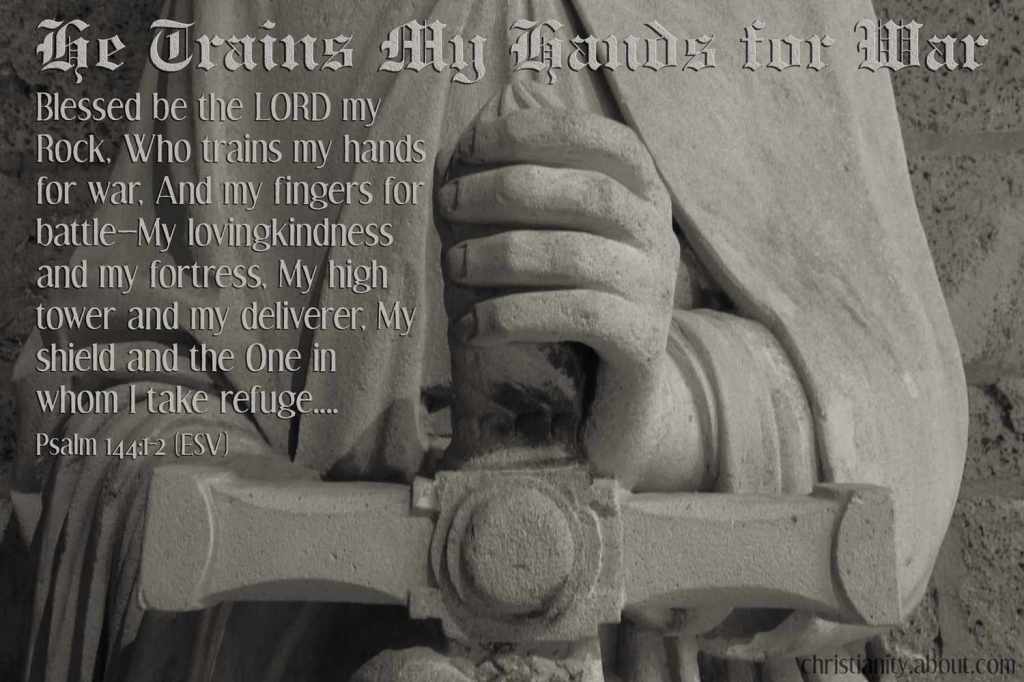







 Loving God, Living God, Loving Hope, Living Hope, Loving Living Life His Way! "Many things are possible for the person who has hope. Even more is possible for the person who has faith. And still more is possible for the person who knows how to love. But everything is possible for the person who practices all three virtues." - Brother Lawrence (1605-1691), Practicing the Presence of God (1692).