Romans 15:4 "For whatever was written in earlier times was written for our instruction, so that through perseverance and the encouragement of the Scriptures we might have hope."
22 Now Joseph lived [remained] in Egypt, he and his father’s household, and Joseph lived a hundred and ten years. 23 Joseph saw the third generation of Ephraim’s children; also the children of Machir, the son of Manasseh, were born and raised on Joseph’s knees. 24 Joseph said to his brothers, “I am about to die, but God will surely take care of you and bring you up out of this land to the land which He promised to Abraham, to Isaac, and to Jacob [to give you].” 25 Then Joseph made the sons of Israel (Jacob) swear [an oath], saying, “God will surely visit you and take care of you [returning you to Canaan], and [when that happens] you shall carry my bones up from here.”
The Word of God for the Children of God. Gloria! In Excelsis Deo! Alleluia! Amen.
As near as I can calculate, roughly 65 years of Joseph’s later life are summarized by Genesis 50verse 22: “Joseph lived [remained] in Egypt…..”
Presumably, these were quieter times than the recorded drama of his early days.
But these 65 “remaining” years are definitely not to be considered pointless.
Considering these “remaining” years in the life of Joseph causes us to reflect:
Whatever age we are in this exact moment, we must ask ourselves; “What, Who, are we living for? What are we planning to do with the time God has given us?”
It’s far too easy to spend our lives chasing earthbound horizons such as career success, financial stability, or comfortable luxuries.
The myths of these things is seductive: life is about slaving at your job as long as you can in order to build, edify, add on to the nest in which you plan to settle down—that the most essential purpose of life is to prepare for our retirements.
Just at the point when believers are often in a position—financially, physically, emotionally, socially—to free up that incredibly elusive amount of time to serve God’s kingdom, they start to talk “just wanting a period of rest, hibernation.”
As devoted, obedient and steadfast followers of our Lord, Savior and King Jesus, we must ‘minimize our footprint’, to not live as though this world is all there is.
John 3:28-30 admonishes and teaches us we have a humble, limited role in life.
“28 You yourselves are my witnesses that I stated, ‘I am not the Christ (the Messiah, the Anointed),’ but, ‘I have [only] been sent ahead of Him [as His appointed forerunner and messenger to announce and proclaim His coming].’ 29 He who has the bride is the bridegroom; but the friend of the bridegroom, who stands by and listens to him, rejoices greatly because of the bridegroom’s voice. So this pleasure and joy of mine is now complete. 30 He must increase [in prominence], but I must decrease.“
Yet some of us cannot, will not say with integrity, “There is more than just this life,” because everything we are doing with our time, talents, and money seems to be saying, “This is it! Done! That’s why I am working up to 60 hours a week.”
“That’s why I don’t come home or take a vacation.”
“That’s why I missed church again last Sunday.”
“That’s why I don’t make time and take risks to serve and to share the gospel with my neighbors.”
“Because this is it.”
Being “my working myself into the grave for a lifetime of rust worthy material things which I can never hope to ‘stuff into my coffin’ to take with me anyway.”
It is wonderful thing to have a dynamic, hard core, faith-filled, vibrant and unwavering faith when we are in the center of a whirlwind of a battle; it’s a whole new challenge to live a life of steady obedience through daily routine.
For a life to be well spent—especially as it relates to our resources and legacy—we must consider not just what we want in life but what we ought to do with life.
We need a vision of the heavenly horizon.
Joseph had a purpose for his life and for those final, quieter years.
His vision was set for a time and place and ‘life’ beyond the borders of Egypt.
He was neither centered or focused on himself; he was responsible for ensuring his children and his children’s children did not settle down too comfortably in Egypt but instead remained unsettled enough so they would be more desirous of a significantly better life and might truly settle one day in the promised land.
24 Joseph said to his brothers, “I am about to die, but God will surely take care of you and bring you up out of this land to the land which He promised to Abraham, to Isaac, and to Jacob [to give you].” 25 Then Joseph made the sons of Israel (Jacob) swear [an oath], saying, “God will surely visit you and take care of you [returning you to Canaan], and [when that happens] you shall carry my bones up from here.”
Joseph said to his brothers:
“but God will surely take care of you and bring you up out of this land which He promised to Abraham, to Isaac and to Jacob [to give you.]”
then Joseph made the sons of Israel (Jacob) to swear [an oath] saying to future generations – God will surely visit you and God will surely take care of you and surely be returning you to Canaan – the promised land – God WILL do all this!
God turned an early life of great life threatening negativity, given him peace, prestige, and prosperity in Egypt—everything that so many of us chase today.
Yet he had always kept his eyes and his soul and heart, looking beyond Egypt.
He truly knew Egypt was not where he, or any of God’s people, truly belonged.
The man, Master Rabbi Jesus, communicated this, his “last will and testament” to His disciples in the Upper Room during those fateful final hours of his life:
John 14:1-3Amplified Bible
Jesus Comforts His Disciples
14 “Do not let your heart be troubled (afraid, cowardly). Believe [confidently] in God and trust in Him, [have faith, hold on to it, rely on it, keep going and] believe also in Me. 2 In My Father’s house are many dwelling places. If it were not so, I would have told you, because I am going there to prepare a place for you. 3 And if I go and prepare a place for you, I will come back again and I will take you to Myself, so that where I am you may be also.
Apostle Paul would, just several years later, would echo the very same thought:
Philippians 3:12-14Amplified Bible
12 Not that I have already obtained it [this goal of being Christlike] or have already been made perfect, but I actively press on [a]so that I may take hold of that [perfection] for which Christ Jesus took hold of me and made me His own. 13 [b]Brothers and sisters, I do not consider that I have made it my own yet; but one thing I do: forgetting what lies behind and reaching forward to what lies ahead, 14 I press on toward the goal to win the [heavenly] prize of the upward call of God in Christ Jesus.
Joseph knew by his steadfast and immovable faith that he was not yet home!
The man, Master Rabbi Jesus knew we were not yet home – Just believe on Him!
Apostle Paul knew, communicated – we can live with eternity deep in our souls.
We too must live in such a prophetic way that we help our loved ones and our own hearts to “desire a better country, that is, a heavenly one” (Hebrews 11:16).
Whatever you have or do not have ‘rusting away’ today, you are not yet home.
John 10:9-10Amplified Bible
9 I am the Door; anyone who enters through Me will be saved [and will live forever], and will go in and out [freely], and find pasture (spiritual security). 10 The thief comes only in order to steal and kill and destroy. I came that they may have and enjoy life, and have it in abundance [to the full, till it overflows].
There is absolutely abundantly more, absolutely, abundantly better, than this.
Be sure that your abundance of time, talents, and money reflect that knowledge.
This place called planet earth is not, was never meant to be, our forever home!
In the name of God, the Father and God the Son and God the Holy Spirit,
Let us Pray,
Lord, my teacher, I’m often confused when I need to make important decisions about my work, my relationships, my health, or finances. Show me the way I should go when I don’t know which way to turn. Help me remember to come to you, rather than trying to figure everything out on my own. Guide me along the best pathway for my life. Advise me and watch over me. Help me to listen to your guidance and not resist it. I thank you that your unfailing love surrounds those who trust you. Amen
11 Then I looked, and I heard the voice of many angels around the throne and [the voice] of the living creatures and the elders; and they numbered myriads of myriads, and thousands of thousands (innumerable), 12 saying in a loud voice,
“Worthy and deserving is the Lamb that was sacrificed to receive power and riches and wisdom and might and honor and glory and blessing.”
13 And I heard every created thing that is in heaven or on earth or under the earth [in Hades, the realm of the dead] or on the sea, and everything that is in them, saying [together],
“To Him who sits on the throne, and to the Lamb (Christ), be blessing and honor and glory and dominion forever and ever.”
14 And the four living creatures kept saying, “Amen.” And the elders fell down and worshiped [Him who lives forever and ever].
The Word of God for the Children of God. Gloria! In Excelsis Deo! Alleluia! Amen.
The Bible makes it crystal clear that history is moving purposefully towards a definite conclusion.
That reality is one of the distinctive features of the biblical worldview.
One way that Christianity distinguishes itself, in other words, is in the matter of how all things come to a close.
Sometimes, in looking at old historical photographs we may just find ourselves asking,
“Where am I in this picture?”—or, “Am I even in this picture?”
“Do I recognize the person, the people or the place or the moment?”
“Is it a random small piece of history or a very specific and significant one?
“I wonder what is really happening in the picture – what is its real story?”
Is there enough personal interest in the story for me to do more research, to want to know every single detail of the time, the people, the place, the events?
When it comes to our envisioning or picturing God’s plan, though, every single person, people and place on earth is included in Revelation’s picture of history.
No one is missing from the story.
Everyone who believed or did not believe on Jesus as their Savior are included.
And when history comes to a close, it will surely end in division and separation.
Jesus spoke about this separation when He said that the sheep and goats will be divided (Matthew 25:31-46): light and darkness will be delineated, and those who believed on Jesus as their Savior will be set apart from those who do not.
No one will be left out, though tragically some will have chosen to be shut out.
Therefore, our position in this big picture matters.
All of history’s ebb and flow is to be viewed in light of the fact that there is a throne in heaven and that throne is not empty; rather, it is occupied by God, who is in control. Jesus is King, and He is seated at the right hand of the throne.
Although many do not yet recognize His kingdom, many refuse to recognize His Kingdom, or have not been introduced, it doesn’t alter the reality He yet reigns.
From humanity’s fall to the end of time there exist, as the great fourth-century theologian Augustine of Hippo put it, two rival cities—two rival loves.
By our sinful human nature, we are involved in the city of man, and only by God’s grace will we ever be involved in and ever be devoted to the city of God.
2 Corinthians 5:1-5Amplified Bible
The Temporal and Eternal
5 For we know that if the earthly tent [our physical body] which is our house is torn down [through death], we have a building from God, a house not made with hands, eternal in the heavens. 2 For indeed in this house we groan, longing to be clothed with our [immortal, eternal] celestial dwelling, 3 so that by putting it on we will not be found naked. 4 For while we are in this tent, we groan, being burdened [often weighed down, oppressed], not that we want to be unclothed [separated by death from the body], but to be clothed, so that what is mortal [the body] will be swallowed up by life [after the resurrection]. 5 Now He who has made us and prepared us for this very purpose is God, who gave us the [Holy] Spirit as a pledge [a guarantee, a down payment on the fulfillment of His promise].
The Word of God says The earthly city, the city of man, our earthly tent, our physical body is destined to be torn down by time, pass away through death.
But the heavenly city, God’s kingdom, will absolutely go on forever and ever!
Reading our text from Revelation 5:11-14, the many Angels around the throne and the voice of the living creature and the Elders, who numbered “myriads of myriads, and thousands of thousands – innumerable (verse 11) recognized Him.
Saying in a loud voice –
“Worthy and deserving is the Lamb that was sacrificed to receive power and riches and wisdom and might and honor and glory and blessing.” (verse 12)
From within the context of our own 21st jumble of our own “Christian-ality”
Our own personal expressions of devotion, personal expressions of obedience, adherence to the precepts and commandments and covenants set by our God,
In our ministries and missions, our forays into all the streets and back alley ways, all the highways and byways and boulevards of God’s Neighborhood, Luke 10:1-3, Acts 2:43-47, 1 Corinthians 12:14-26, and Galatians 3:27-29)
Enemies or Friends, Faults, Failures, Fears, Flaws, Sins not withstanding …
In the eyes of God, we are ALL Children of God …. Without any Exceptions,
From the fears, failures and faults of mankind, however, exceptions okayed,
Do ALL Lives absolutely, unequivocally, without exception, equally Matter?
Do we recognize with our whole hearts our souls, our voices – Jesus as King?
How each of us give God in Christ an answer is a matter of eternal significance.
And how we give an answer to God is also a matter of present consequence. (Matthew 5:13-16, Matthew 23:23-33, Mark 3:31-35, Mark 4:21-29, Mark 7:1-16, Luke 10:25-37, Luke 11:33-36, Luke 19:1-10, John 5:1-15, and Acts 3:1-10)
If Jesus is your One and Only true King, then you will live as His subject, seeking to obey Him even when His command cuts against all your biases, preferences.
If Jesus is your King, you will be loyal and obedient to Him above all others, for this world is not yours or mine home and you and I are just passing through.
As the Apostle Paul wrote, “Our citizenship is in heaven, and from it we await a Savior, the Lord Jesus Christ” (Philippians 3:20).
Be sure to live as a citizen of a better country and a subject of a greater King.
When our earthly tents take their last breaths, will we spend eternity joining with Angels and Elders in bringing Him honor and glory, praise and worship?
I pray we may give a good answer to God, do so in our words and conduct today.
In the name of God, the Father and God the Son and God the Holy Spirit,
Let us Pray,
God of ALL truth, sometimes I not sure if I’m actually hearing your voice, or if it’s just my own thoughts or even another spirit. Sharpen my spiritual hearing, Lord, so I can recognize your words when you are speaking to me. Help me know it’s really, only you, with no doubt or second-guessing. When I’m asking for your guidance in important decisions, give me your peace that surpasses understanding with your answer alone. Help me remember that your words to me will never go against your written word in the Bible. Give me a clear mind and push out all my confusion. I pray this in the name of Jesus Christ, My King and My Savior and Best Friend Amen.
The core Truth of the whole matter for believers is this: God means what he says. From the first line to the last line of the Word of God, what God says goes. His powerful Word is sharp as a surgeon’s scalpel, cutting through everything, whether doubt or defense, laying us open to listen and obey.
Nothing and no one can resist the revelation of God’s Word.
There is absolutely no escape from the revelation of God’s Word.
We cannot avoid it, nor can we get away from it—no matter what.
1 Samuel 3:1-11Easy-to-Read Version
God Calls Samuel
3 The boy Samuel was Eli’s helper and served the Lord with him. At that time the Lord did not speak directly to people very often. There were very few visions.
2 Eli’s eyes were getting so weak that he was almost blind. One night he went to his room to go to bed. 3 The special lamp in the Lord’s temple[a] was still burning, so Samuel lay down in the temple near where the Holy Box was. 4 The Lord called Samuel, and Samuel answered, “Here I am.” 5 Samuel thought Eli was calling him, so he ran to Eli and said, “Here I am. You called me.”
But Eli said, “I didn’t call you. Go back to bed.”
So Samuel went back to bed. 6 Again the Lord called, “Samuel!” Again Samuel ran to Eli and said, “Here I am. You called me.”
Eli said, “I didn’t call you. Go back to bed.”
7 Samuel did not yet know the Lord because the Lord had not spoken directly to him before.[b]
8 The Lord called Samuel the third time. Again Samuel got up and went to Eli and said, “Here I am. You called me.”
Finally, Eli understood that the Lord was calling the boy. 9 Eli told Samuel, “Go to bed. If he calls you again, say, ‘Speak, Lord. I am your servant, and I am listening.’”
So Samuel went back to bed. 10 The Lord came and stood there. He called as he did before, saying, “Samuel, Samuel!”
Samuel said, “Speak. I am your servant, and I am listening.”
11 The Lord said to Samuel, “I will soon do things in Israel that will shock anyone who hears about them.
The Word of God for the Children of God. Gloria! In Excelsis Deo! Alleluia! Amen
Every Single Day, The Word of God for the Children of God reveals Truth ….
The heavens tell about the glory of God. The skies announce what his hands have made. Each new day tells more of the story, and each night reveals more and more about God’s power. You cannot hear them say anything. They don’t make any sound we can hear.
Except, in the days of Eli the Judge, we read 1 Samuel 3:1 when the central truth of the day was – “the word of the Lord was [indeed] precious but there were no open visions.” God was still revealing Himself, but the people had gone numb.
The Judge Eli had grown old and was nearly blind – both physically, spiritually.
I can particularly relate to the opening verse of the reading from 1 Samuel.
“During the time young Samuel was minister to the Lord under Eli, a revelation of the Lord was uncommon and vision infrequent.”
For Judge Eli it took several tries before the source of the message to Samuel became apparent. In today’s world perhaps we have come not to expect such revelation.
Perhaps this lack of expectation has led us to become bad listeners. (I know this is one trait which is lacking in my prayer and in my family interactions as well.)
Perhaps it’s the incredible effort it takes to be a Godly family (Ephesians 6:1-3), to raise children according to Proverbs 22:6Train up a child in the way he should go [teaching him to seek God’s wisdom and will for his abilities and talents], Even when he is old he will not depart from it, contrary to the noise of counter-culture.
It is perhaps all of the continuous distractions and extraneous noise we hear as we walk or ride or drive down the street with both our ear buds stuck in our ears blaring and blasting all of our favorite music collections over all of the car horns telling us to move or turn faster – we don’t hear the siren directly behind us, so, in disobedience, we do not pull over to the side of the road as the law requires.
Then, as fate and luck would have it, we also fail to notice the police car who has turned their lights on, who pulls in behind us, then gives us a blast of his siren.
Perhaps it is our 21st century Being Christian and Being Church and Doing Life.
It is impossible for one person to reach the whole world. What about people groups reaching people groups? What about communities of faith reaching out together to other communities? Indeed, there are no lone-ranger Christians.
Being Church is not about personal devotions or individual heroics.
It is about 21st century living as a Church by God weaving together visible faith through “gospel communities.”
This means doing church isn’t about activities within a church building. It means flourishing Christian witnesses all over our world.
In sum total, considering 1 Samuel 3:1 as it communicates and relates to us, we fail to notice the obvious things which makes God the biggest difference in life.
As the blind and aged and spiritually numbed Eli failed to recognize God’s voice when the youthful Samuel came rushing from his place of sleep to Eli’s room.
I fail, you fail, we all fail to recognize the voice of God because, perhaps, in our own day and age, visions and revelations are too easily believed to be much too infrequent or even more significantly, (GASP) non-existent.
How do we hear God when He speaks?
First Samuel 3:1 shows us a picture of God’s faithfulness to speak to us even when we have ignored Him in the past.
When God Speaks
In 1 Samuel 3, we read that Samuel was serving God without yet knowing Him. The very same thing happens today, doesn’t it? Many people are “religious”, and they adhere to perfunctory rules without having a relationship with Him.
The people of Israel had cut themselves off from the Lord, and so the Lord had cut Himself off from them.
For this reason, we read in 1 Samuel 3:1,
“Word from the Lord was rare in those days.” He no longer communicated with His people because they turned a whole society, a whole community, a whole culture of collective deaf ears to Him. They just did not listen to Him.
Even Samuel did not recognize the voice of God when God called him.
But Eli, as dim as he had grown spiritually, realized that God was speaking.
Even through his own spiritual numbness, He told Samuel to respond to God and listen to whatever He had to say. Samuel obeyed, listening as God told him that the line of Eli would be destroyed as a result of sin.
This prophecy reveals a major transition in the history of Israel, marking the moment Samuel became a true servant of the Lord, a recipient of His word.
Today, a keyway we hear from God is through reading the Word and through prayer. God is not silent when we read Scripture; He is faithful to teach us.
Because of God’s immeasurable measure of faithfulness, through our own sin of spiritual numbness, spiritual unawareness, we should turn to God, “shake out the cobwebs” train ourselves to hear His voice, listening when God speaks to us.
In the time of Samuel revelations and visitation from God were uncommon. So much so that when the Lord called Samuel, he did not recognize that it was the Lord. He thought his teacher was saying his name.
He couldn’t even imagine that the Lord would call to him. But once he realized that it was, in truth, the Lord, he was of course happy to do the Lord’s bidding.
I’m afraid we are in times like Samuel’s. Revelations and visitations from God seem uncommon now. In fact, today if people would say that God spoke out loud to them, they would be viewed as insane. People seem to think that God is far away, or at least does not directly and physically interact with people.
Someone like Samuel, hearing his name called out loud, might himself suspect insanity instead of a visitation from God. But I truthfully believe God does call to us and does reveal himself and visit. Maybe not with an audible voice, but in far more subtle ways in our everyday lives.
All the time, all around us there are opportunities to help others physically and spiritually. In the Gospel, Jesus is healing people, and when others ask for him, he says “Let us move on to the neighboring villages so that I may proclaim the good news there also. That is what I have come to do.”(Mark 1:38, Luke Chapter 15)
Every day there are opportunities for us to proclaim the good news. We are here to do his will, and that is to help people however we can.
Last month during the Easter season, I saw many opportunities from God to help someone heal. Every day God was asking me to make a sacrifice and help. And so, every day, I would re-devote myself to God’s Word by these devotions I send out literally into the whole world so God can “shake out our cobwebs!”
It’s not a lot, but whatever I can do. And I am grateful for this opportunity from God to be able to help in whatever way I can. From my dining room into God’s Kingdom, it’s only a tiny bit, but when God calls, we should all do what we can.
Every day we look around us at all the opportunities there are to proclaim the good news, we need to hear Samuel when he realized he was being called. We need to look around us and say, “Speak, for your servant is listening.”
We need to hear the Lord when he calls.
When we hear or see vast numbers of the opportunities for doing good for God’s sake, we need to do God’s bidding.
“Here am I, Lord, I will come to do your will.”
“Here am I, Lord; I have come to do your will.”
In the name of God, the Father and God the Son and God the Holy Spirit,
Let us Pray,
I am no longer my own, but thine. Put me to what thou wilt, rank me with whom thou wilt. Put me to doing, put me to suffering. Let me be employed for thee or laid aside for thee, exalted for thee or brought low for thee. Let me be full, let me be empty. Let me have all things, let me have nothing. I freely and heartily yield all things to thy pleasure and disposal. And now, O glorious and blessed God, Father, Son and Holy Spirit, thou art mine, and I am thine. So be it. And the covenant which I have made on earth, let it be ratified in heaven. Alleluia! Alleluia! Alleluia! Amen
1. Ye servants of God, your Master proclaim, and publish abroad his wonderful name; the name all-victorious of Jesus extol, his kingdom is glorious and rules over all.
2. God ruleth on high, almighty to save, and still he is nigh, his presence we have; the great congregation his triumph shall sing, ascribing salvation to Jesus, our King.
3. “Salvation to God, who sits on the throne!” Let all cry aloud and honor the Son; the praises of Jesus the angels proclaim, fall down on their faces and worship the Lamb.
4. Then let us adore and give him his right, all glory and power, all wisdom and might; all honor and blessing with angels above, and thanks never ceasing and infinite love.
Hebrews 10:19-25Disciples’ Literal New Testament
Therefore, Let Us Approach God in Full Assurance of Faith and Hold on Without Wavering
19 Therefore, brothers, having confidence for the entering of the Holies by the blood of Jesus— 20 which fresh[a] and living way He inaugurated for us through [b] the curtain, that is[c], His flesh— 21 and having a great Priest over the house of God, 22 let us be approaching God with a true heart in full-assurance of faith, having our hearts sprinkled[d] from an evil conscience, and having our body washed[e]with clean water. 23 Let us be holding-on- to the confession of our hope without-wavering, for the One having promised is faithful. 24 And let us be considering[f] one another for the provoking love and good works, 25 not forsaking the gathering-together of ourselves as is a habit with some, but exhorting[h]one another, and so-much more by-as-much-as you see the day drawing-near.
The Word of God for the Children of God. Gloria! In Excelsis Deo! Alleluia! Amen.
Ye Servants of God, What Exactly Are We Doing with our Life Which Points to Jesus?
When you get up in the morning and you face a day, what do you say to yourself about your hopes for the day? What do you do to motivate yourself? When you look from the beginning of the day to the end of the day, what do you want to happen because you have lived? What difference do you want your life to make?
If you say, I don’t even think like that, I just get up and do what I’ve got to do, then you are cutting yourself off from a basic means of grace and a source of guidance and strength and fruitfulness and joy.
It is crystal clear throughout the Bible, including this text from Hebrews, that God means for us to aim consciously at something significant in our days.
Gods revealed will for us is that when we get up in the morning, we don’t drift aimlessly through the day letting mere circumstances alone dictate what we do, but that we aim at something — that we focus on a certain kind of purpose.
I’m talking about children here, and teenagers, and adults — single, married, widowed, moms, every age, every season of life and every walk, every trade.
Aimlessness is akin to lifelessness. Dead leaves in the back yard may move around more than anything else — more than the dog, more than the children.
The wind blows this way, they go this way. The wind blows that way, they go that way. They tumble, they bounce, they skip, they press against a fence, but they have no aim whatsoever. They are full of motion and empty of real life.
God did not create humans in his image to be aimless, purposeless wanderers, like a mound of lifeless leaves blown around in the backyard of life. He created us to be motivated, purposeful — to have a focus and an aim for all our days.
And this is not the least bit oppressive. It’s not slavery. It’s not depleting.
To find what we were made for and to do it with all God’s might (Colossians 1:29), is freeing (Galatians 5:13) and energizing. Jesus said, “My food is to do the will of Him who sent Me” (John 4:34). Food! Aiming day by day to do what we were meant to do is like eating: it gives and nourishes life and energy, rather than taking it away. You will eventually die if you do what you were meant to do.
You and I may be young, or we may be old. That is God’s choice, not ours. But when live and die doing what we were meant to do, we live, die well and full.
Ye Servants of God, what do we consider the Aim, Focus of Our Lives as Christians?
Would you please consider with me what these verses from Hebrew teach us about the aim and focus of our lives as Christians?
I fervently pray God may use them to bring crystal-clear focus to your life. He may use them to blow away all the confusion and fog, the excuses and fear, and shall give a lucid, bright, crisp, spring-morning clarity to the aim of your days.
1. Ye Servants of God, Embrace Your Living Hope
First, verse 23 says, “Let us hold fast the confession of our hope without wavering, for He who promised is faithful.”
Now that is not something you do with your hands or your feet. You don’t go to the kitchen to do this, or to the den or across the street or to the office or to school. This is not done where anyone can see. This is an affair of the heart.
Embrace your living hope.
Hold fast to your living hope.
Be a hopeful, hope-filled person. Hope in God.
Because God has made promises to you, and he is faithful.
He has promised to write the law on your heart (Hebrews 10:16) and work in you what is pleasing in his sight (Hebrews 13:21);
He has promised to remember your sins no more (Hebrews 10:17);
He has promised that we will be perfected for all time by a single sacrifice (Hebrews 10:14);
He has promised never to leave us or forsake us (Hebrews 13:59);
He has promised to bring good from all our pain (Hebrews 12:10).
And so, Ye Servants of God, believe with all your heart God keeps his word.
But that does not provide you with a sufficient focus for the day?
God did not create you to curl up under the covers and hope in God all day in bed. Without some effect on your life, hope in God would be invisible and bring no public glory to God’s power and wisdom and goodness and trustworthiness.
If the act of hoping in God were all that he created you to aim at, then verse 24 would be wasted words.
But they are not.
God created you first to hope in him, and then to make that hope visible by the effect that it has on your life. And that effect is given in verse 24, and it is to be the aim of your daily life. This is why God wakes everyone up in the morning.
2. Ye Servants of God, Motivate yourself to Motivate others – Stir Up Each Other to Love and Good Deeds
Let’s read it. Verse 24: “Let us consider how to stimulate one another to love and good deeds.”
Here is the focus for our life. Here is what we aim at from morning till night as a Christian. Notice carefully: it is not what you might expect. It is not: consider how to love each other and do good deeds. That would be Biblical and right.
But it’s different: “Consider how to stimulate each other to love and good deeds.” Focus on helping others become loving people. Aim at stirring up others to do good deeds.
And of course, the implication would then also be that if others need help and stirring, we do too, and so we would be aiming at what diverse sorts of ways we can think and feel and talk and act that will likewise stir each other up to love and to do good deeds. The true aim of our lives is not just loving and doing good deeds but likewise helping to stir up others to love and to good deeds.
3. Ye Servants of God, Consider Each Other
But let’s be more precise. There is something in this text that is very hard to bring over into English.
The word “consider,” (“Let us consider how to . . .”) is used one other time in the book, namely, Hebrews 3:1, where the writer says, “Consider Jesus.”
That is, look at him; think about him, focus on him, study him, let your mind be occupied with him.
“Jesus” is the direct object of the verb “consider.” “Consider Jesus.”
Consider what? Consider Jesus. Well, in Hebrews 10:24 the grammar is the same: the direct object of the word “consider” is “one another.” Literally, it says, “Consider the Savior Jesus Christ in one another.”
Ye Servants of God – God’s Call for Everyone
Consider one another. But this is almost impossible to bring over into English with the rest of the sentence, because it would be so awkward.
It would have to go something like this: “Consider one another toward the stimulating of love and good works.” Now that is terrible English — good Greek word order but terrible English. The best we can do, it seems, is to say, “Consider how to stimulate one another to love and good deeds.”
But I want you to get this nuance of the original so you can feel the force of this as a daily aim and focus for your life.
Literally, this is God’s call on each of us to consider one another, that is, to look at one another, think about one another, focus on one another, to study one another, to let your mind be occupied with one another. And the goal of this focus on others is to think of ways of stimulating them to love and good deeds.
I ever so strongly urge you to hear God’s word in Hebrews 10:24. When you get up in the morning, Consider — think about, ponder, deliberate, meditate, mull over — other people, with this conscious goal: what can I do today so that they will be stirred up to radical, random, Christian acts love and to good deeds?
Now there is a reason to live and a focus for every day that will never be boring.
Every day is new and different. People change. Their circumstances change. You change. But the call remains the same: consider, consider, consider these people you will be around today.
What are they like? What am I like? What will the situation be like?
What helps a person become more loving?
What is the origin of genuine good deeds?
This is a reason for living that is focused enough to be practical and big enough to last a lifetime.
Ye Servants of God, Motivate yourself to Get Together, to Encourage One Another in God.
So, let’s look at the text to find the answer to how we go about this. Verse 24 gives the focus and aim: “Let us consider how to stimulate one another to love and good deeds.” Then verse 25 gives us instructions how. It says, “not forsaking our own assembling together, as is the habit of some, but also encouraging one another.” Two things. First, don’t neglect to get together.
Second, encourage one another.
When I was growing up, I heard this text referred to most often as an argument for regular attendance at worship services. “Do not forsake the assembling of yourselves together — come to church regularly.”
And that is not a wrong application of the text since one of the most important kinds of encouragements and exhortations we get is from our preaching and our sharing, fellowship and talking of God’s word in the power of God’s Spirit.
(Hebrews 13:22 calls the book of Hebrews a “word of encouragement.”)
But in the context, the kind of coming together in view seems to be one where the members “encourage one another.” Verse 25 is explicit: come together and encourage one another. The “one another” implies that there is something mutual going on. One is encouraging another, and another is encouraging one. Each is doing or saying something that encourages.
If you ask what that corresponds to in our church, I would say the closest thing is the small groups — which is why I regard this ministry as so utterly crucial.
I am a great believer in preaching. There is something about the word of God that begs to be heralded and trumpeted and exulted over — as well as discussed and taught. But I have no illusions preaching is enough in the life of a believer.
The New Testament — and especially this book of Hebrews — calls us again and again to a specific kind of mutual ministry that involves all the believers in encouraging others.
So, I ask you to take stock of your life: Where are you in verse 25?
There are two groups: those who gather to encourage each other, and those who have formed the habit of not gathering.
See that little phrase in verse 25: “Not forsaking our own assembling together, as is the habit of some.” Non-participation in a fellowship group can be habit-forming and rather nonproductive to God’s Kingdom aims.
How are we doing?
Ye Servants of God, Consider What Kind of Encouragement Motivates & Stimulates?
Which leaves one last question remaining for us to ask ourselves:
What kind of encouragement stimulates others to love and good deeds? It’s not obvious to some that this question has anything to do with God.
Lots of people think that love and good deeds are a good thing to seek after, and many would say that encouraging others is the way to do it — and they might not even be Christians. Or they might be Christians who put little focus on God.
For example, I have repeatedly read where one church was described like this:
“While [the pastor] spoke of sending out missionaries, the feeling was that his congregation existed to heighten only to edify the self-esteem of its members.”
Whether or not that’s an accurate description of that church, the point is this: a lot of churches would try to stimulate love and good deeds that way.
But it’s not even close to being the biblical way.
The key to encouraging love biblically is given in verse 23: “Let us hold fast the confession of our hope without wavering, for He who promised is faithful.”
The key to love, in the New Testament — the kind of love that magnifies God and not man — is hope rooted in the faithfulness of God. Embrace your hope! Cherish your hope! Because I know God is faithful. He keeps all his promises.
Without this kind of faith and hope, sustaining us day by day through all the disheartening frustrations and crushing disappointments, we would not have any strength or energy or joy to stir anybody up to love and good deeds.
But if we bank on God, not on ourselves, we always have that extra something encouraging and hope-giving to say, namely, “God can be absolutely trusted, God can be utterly trusted. I have no strength, but God can be 100% trusted.”
Ye Servants of God, Do This All the More
Make the aim of your life to consider others — study them, know them, figure them out — to the end that you stimulate them to love and good deeds.
Be sure that you do this by getting together often with other believers for the specific purpose of encouraging each other.
And let the heart of that encouragement be reminders of how great our hope is in Christ and that God can be trusted.
And as you see the end of the age drawing near, verse 25 says, do this all the more, not less.
Why?
As Jesus said, “Because lawlessness is increased, most people’s love will grow cold. But the one who endures to the end, he shall be saved” (Matthew 24:12).
In the name of God, the Father and God the Son and God the Holy Spirit,
Let us Pray,
Heavenly Father, thank You for loving me so much that while I was still dead in my trespasses and sins, Christ completed His finished work on the cross… so that by grace through faith in Him, I might have forgiveness of sin and life everlasting.
Thank You, my Savior, for those who taught me about the Lord Jesus and who demonstrated the love of Christ in their own lives – provoking me to love and good works in my own life. Help me to be so in tune with You that others may be provoked unto love and good works through my witness, as Christ lives in me and I in Him. Gloria! In Excelsis Deo! Alleluia! Alleluia! Alleluia! AMEN.
May the Word of God speak unto “Our Excuses and Our Mighty Mouths”
All of us attempt to justify our actions at one time or another with excuses. When people give an excuse, they give a reason or explanation to defend or justify an action or an inaction, a fault or offense; Usually we will give others a reason for NOT doing something, or a reason why something went wrong.
“Excuse” comes from the Latin meaning “out of cause”: We offer a cause or a reason for not doing something that we should…. we give a bizarre “excuse.”
Billy Sunday, the baseball star turned evangelist who lived from 1862 – 1935, said that “An excuse is the Skin of a Reason, Stuffed with a Lie.” Today, we are going to look at a few excuses Apostle Paul states Israel used for not believing.
Romans 10:15-21Disciples’ Literal New Testament
15 And how may they proclaim if they are not sent-forth?— just as it has been written[a] [in Isaiah 52:7]: “How beautiful are the feet of the ones announcing-good-news–of good things!” 16 But[b] they did not all obey the good-news, for Isaiah says [in Isaiah 53:1], “Lord, who put-faith-in our report?” 17 So[c] the faith[d]comes from a report-hearing[e], and the report-hearing through a word[f]about[g] Christ.
But It Is Not As Though Israel Did Not Hear
18 But I say[h]— it is not that they did not hear[i], is it ? On the contrary: “Their voice went-out into all the earth, and their words to the ends of the world” [Psalm 19:4].
And It Is Not As Though Israel Did Not Know
19 But I say— it is not that Israel did not know[j], is it? First, Moses says [in Deuteronomy 32:21] “I will provoke you to jealousy over what is not a nation. I will provoke you to anger over a nation without-understanding[k]”. 20 And Isaiah is very bold and says [in Isaiah 65:1] “I was found by the ones not seeking Me. I became visible[l]to the ones not asking-for Me”. 21 But with-regard-to Israel He says [in Isaiah 65:2], “I held-out[m] My hands the whole day toward a disobeying[n] and contradicting[o] people”.
The Word of God for the Children of God. Gloria! In Excelsis Deo! Alleluia! Amen.
The most meticulous and thorough presentation of the glorious Gospel of Christ is found in the book of Romans. It also meticulously details man’s own depravity, humanities estrangement from God and man’s reconciliation back to God. The book of Romans could be called the seedbed for all Christian doctrine… giving us a systematic, step-by-step teaching of the fundamentals of our faith.
Paul pounds home the truth that God’s gracious offer of righteousness is by faith. He points out that it is equally accessible to Jew and Gentile alike… for all are sinners and have fallen short of the Glory of God (Romans 3:23).
All have the sentence of death over their heads.. and without exception, all of us need a Savior. Paul points out that no-one, Jew or Gentile alike, is exempt from God’s condemnation for all have sinned and are in need of a Savior – all need to be justified by grace, through an abiding faith in the Son of God – Christ Jesus.
It baffles the mind of those that have taken up God’s free gift of salvation.. that His offer of reconciliation should be quickly, summarily rejected by so many.
It is astonishing that so many refuse to believe on His name and be rescued from condemnation and an eternity in hell.
And yet throughout the old and new testaments we discover with no small amount of astonishment.. the foolish depravity to which the human race has fallen and man’s arrogant refusal to accept God’s free gift of salvation.
Prophets like Jeremiah grieved at the unbelief in the heart of man when his call for Israel to return to the Lord was treated with such blind, malicious contempt.
Isaiah mourned at the hardness of men’s heart, when he wrote:
LORD: who has believed our report?’
Who has believed the saving message that God has tried to deliver through so many prophets?
Who has believed the word of the Lord and who is willing to admit that there are none that are righteous – not even one.
How few see the need to turn from their sins and believe on the Word of the Lord – and the gospel of grace?
In the first part of chapter 10 of Romans, God tells us what happens to a heart that calls on, believes in, and confesses the name of the Lord Jesus Christ .
We concluded with the prophecy which was first fulfilled in Christ and now is fulfilled in us as the Church in Romans 10:15: “Just as it is written, “HOW BEAUTIFUL ARE THE FEET OF THOSE WHO BRING GOOD NEWS (the Gospel) OF GOOD THINGS!” (Quoted from Isaiah. 52:7)
The Lord Jesus set His feet on this earth from His Heaven and proclaimed the Gospel in His Life, Death, Resurrection and Ascension.
His Ministry of miracles and healing proved beyond the shadow of a doubt, that no one but God could do those things! He proved over and over again HE WAS MESSIAH, THE ONE PROMISED from God, who would DIE FOR OUR SINS.
But, still, there was disbelief, there was unacceptance of the Gospel message.
Excuse #1: A Hearing Problem?
WHO COULD POSSIBLY REJECT THE Power and Clarity of the GOSPEL of God’s Grace in Jesus Christ?
Paul, under the inspiration of the Holy Spirit continues in Romans 10:16: “However, (UH-oh!) they did not all heed the good news; for Isaiah says, “LORD, WHO HAS BELIEVED OUR REPORT?”
The truth is that VERY FEW believed the report. Israel killed the prophets who preached God’s Word, and then they killed THE ONE, the LORD JESUS, which the prophets had foretold. But that does not change the way that God works:
Romans 10:17 “So faith comes from hearing, and hearing by the word of Christ.” 18 But I say, surely they have never heard, have they?”
Paul is saying: With such clear and powerful prophecy, could it at all be possible that Israel never heard the MESSAGE of the Gospel? Could it be possible that MOST of Israel had a “self-centered” hearing problem? Can Israel honestly stand up and give the excuse: We didn’t hear the message of salvation?
Paul responds with the second half of verse 18: Indeed they have; (NO WAY! NO EXCUSE; THEY HAVE HEARD THE MESSAGE) “THEIR VOICE HAS GONE OUT INTO ALL THE EARTH, AND THEIR WORDS TO THE ENDS OF THE WORLD.”
Here Paul quotes Psalm 19:4: “Their sound has gone out through all the earth, And their utterances to the end of the world.” Psalm 19:1 begins: “The heavens are telling of the glory of God; And their expanse is declaring the work of His hands.” Day and night, CREATION SPEAKS LOUDLY AND CLEARLY of the Glory and the power and the work of the Almighty God.
The excuse does not stand because Creation sings the Father’s song:
Romans 1:18-23Disciples’ Literal New Testament
God’s Wrath Is Upon All Sin
18 For the wrath of God is revealed from heaven against all ungodliness[a] and unrighteousness[b]of people holding-down[c] the truth in[d] unrighteousness.
Because God Revealed Enough of Himself In Creation For The World To Be Without Excuse
19 Because the thing known of God is evident[e] in[f] them, for God made it [self] evident to them. 20 For His invisible things— both His eternal power and divine-nature— are clearly-seen, being understood since the creation of the world in the things made, so that they are without-excuse.
And Having Known This Truth About God, The World Did Not Honor Him As God
21 Because having known God, they did not glorify Him as God or give-thanks, but became futile in their thoughts, and their senseless heart was darkened.
They Turned From The Glory of The Immortal God To Their Crafted Images of God
22 While claiming to be wise, they became-foolish 23 and exchanged the glory of the immortal God for a likeness— an image of a mortal person and of birds and of four-footed-animals and of reptiles.
If you go back to the beginning of Romans, read Romans 2-3, you find that NO ONE IS RIGHTEOUS and there is not one single usable excuse, and everyone is liable! No one can say: I don’t believe because I never heard.
Excuse # 2: Lack of Understanding?
Here’s excuse number two:
Romans 10:19 “But I say, surely Israel did not KNOW, did they?”
OK let’s bury deep the first excuse: We can admit Israel heard the word, but maybe they just didn’t UNDERSTAND (know) the Word. Could that be valid?
That they heard it but didn’t understand it? Could Israel’s excuse be that over the long course of years, “we just didn’t understand the message of salvation?”
“First Moses says, “I WILL MAKE YOU JEALOUS BY THAT WHICH IS NOT A NATION, BY A NATION WITHOUT UNDERSTANDING WILL I ANGER. (YOU)”
Paul’s response comes from:
Deuteronomy 32:21-22 New American Standard Bible
21 They have made Me jealous with what is not God; They have provoked Me to anger with their [a]idols. So I will make them jealous with those who are not a people; I will provoke them to anger with a foolish nation, 22 For a fire has flared in My anger, And it burns to the lowest part of [b]Sheol, And devours the earth with its yield, And sets on fire the foundations of the mountains.
In essence, Israel caused God to be jealous by going after other gods, so God’s hope is to arouse jealousy within them, not by rejecting them, but by drawing other people outside of Israel to come to His Salvation.
How could anyone possibly not understand the message of salvation?
Not only did God give Israel the general revelation which He gave to EVERY CREATURE on this planet, but He gave to them HIS WORD and LAW, and they still disobeyed and followed other Gods.
We looked at the first part of Psalm 19 where the theme of God’s General revelation in creation is explained.
If you look at the second half of Psalm 19, you hear that Israel received the Perfect WORD and LAW of God, and they STILL rejected God.
So both of Israel’s excuses are groundless: They HEARD and UNDERSTOOD and still rejected God’s Grace. God’s response is heard in Roman 10:20:
Romans 10: 20 And Isaiah is very bold and says, “I WAS FOUND BY THOSE WHO DID NOT SEEK ME, I BECAME MANIFEST TO THOSE WHO DID NOT ASK FOR ME.” (from Isaiah 65:1: “I permitted Myself to be sought by those who did not ask for Me; I permitted Myself to be found by those who did not seek Me. I said, ‘Here am I, here am I,’ To a nation which did not call on My name.”
The overwhelming majority of the nation of Israel both heard and understood the message of God’s salvation of justification faith, but did not believe God’s promise, and when His Promised ONE arrived, they rejected and crucified Him.
They would NOT admit they needed God’s salvation nor submit by faith and grace. They were offended by the hearing and understanding of God’s Word and Grace and by a righteousness which comes by faith.
They were quite content to remain in their own self-righteousness and sin.
Their response to Deuteronomy 32 was basically: “Go ahead, give your grace to the Gentiles; at least we have our Judaism and we’re happy with that! We don’t want or need anything else.”
Romans 10:16 Disciples’ Literal New Testament
16 But[a] they did not all obey the good-news, for Isaiah says [in Isaiah 53:1], “Lord, who put-faith-in our report?”
What a disheartening thing to know that not everyone will accept Christ Jesus as Lord. Eventually they will confess this with their mouths (Philippians 2:11) but the timeframe to accept this gospel message is while we are in the world.
Christ came to redeem the world, although he knew, not everyone would accept him.
John said,
John 1:11-13 Disciples’ Literal New Testament
11 He came to His own things, and His own ones did not accept Him. 12 But all who did receive Him, He gave them— the ones believing in His name— the right[a] to become children of God, 13 who were born not of bloods[b], nor of the will of the flesh, nor of the will of a husband, but of God[c].
Jesus came first to the nation of Israel and proclaimed peace between them and God. However, they received him not.
Paul says the same thing in today’s passage,
“not all the Israelites accepted the good news. For Isaiah says, “Lord, who has believed our message?” (Romans 10:16).
Isaiah foretold that the Israelites would reject Jesus.
Paul is quoting from Isaiah 53, which is a passage about Jesus. This is one of the most powerful chapters in the entire Old Testament.
It foretold everything Jesus would suffer on the cross. Isaiah starts out this beautiful word with saying,
“Who has believed our message and to whom has the arm of the LORD been revealed? He grew up before him like a tender shoot, and like a root out of dry ground. He had no beauty or majesty to attract us to him, nothing in his appearance that we should desire him. He was despised and rejected by men, a man of sorrows, and familiar with suffering. Like one from whom men hide their faces he was despised, and we esteemed him not. (Isaiah 53:1-3).
Christ knew that his own people would reject him and esteem him not. Yet he still came to redeem them, what a marvelous thing.
Why did the 1st Century Israelites reject Jesus?
For us, in 2022, we can look back through the Hebrew (Old) Testament with Jesus as our filter and identify every passage that was spoken about him. We can even read these passages out loud to others without telling them where they were found and the listener can tell you that it is talking about Christ, often the assumption is that the passage is actually the New Testament.
However, the Israelites read these same passages but looked for something entirely different than what Christ turned out to be.
They were looking for a warrior king and not a servant.
When the Word became flesh and dwelt among us, that Word fell on deaf ears, fulfilling what Isaiah prophesied about them.
” ‘Be ever hearing, but never understanding; be ever seeing, but never perceiving.’ Make the heart of this people calloused; make their ears dull and close their eyes. Otherwise, they might see with their eyes, hear with their ears, understand with their hearts, and turn and be healed.” (Isaiah 6:9-10).
Jesus spoke about the same truth in the parable of the Sower of the seed.
There are four kinds of soil to sow and depending on the condition of the soil is whether or not the seed grows and bears’ fruit. Jesus spoke this parable to this nation and when the disciples asked him what was meant by it, he quoted this passage in Isaiah. He spoke to them in parables because of the condition of their heart which kept them blind and deaf to these amazing truths. If their heart would have been ready to hear it, he would have turned and healed them.
The Israel of the 1st Century in this case was the first kind of soil.
The farmer went out to sow seed, but it fell upon the path and the birds ate it up quickly. When Jesus told this parable to the disciples, he explained…
“This is the meaning of the parable: The seed is the word of God. Those along the path are the ones who hear, and then the devil comes and takes away the word from their hearts, so that they may not believe and be saved” (Luke 8:11-12, Mark 4:13-18).
Jesus told in Matthew’s version the reason the seed is quickly stolen,
“When anyone hears the message about the kingdom and does not understand it, the evil one comes and snatches away what was sown in his heart. This is the seed sown along the path” (Matthew 13:18-19).
Now the condition of the soil made it easy for the seed to be eaten up by the birds, because the soil fell upon a path. A worn path is hard and compacted. In many cases it is impenetrable by something like a seed. For a seed to germinate it has to get down into the soil. But when it falls upon hard ground germination is not possible. The seed can be easily eaten because it is lying upon the surface.
Jesus said the seed was the word of God and Satan comes to steal it. If we don’t understand the word and the word falls upon deaf ears and the condition of the heart is impenetrable than stealing the word takes no effort.
In this case, 1st Century Israel was the first kind of soil. They were expecting a Messiah that was entirely different than Jesus, so their notions blinded them to the truth of God’s word.
Like Isaiah said, their hearts are calloused, their ears dull and their eyes are closed (Isaiah 6:10). As Jesus spoke to them, Satan walked right behind him and picked up the seeds of eternal life that he spoke.
They allowed him to steal the word of God that had the power to save them because they had not prepared their hearts to receive it.
What a discouraging thing this must have been.
But this stands as a warning for us.
Paul said in the very next verse of Romans 10 that “Faith comes from hearing the message, and the message is heard through the word of Christ” (Romans 10:17).
This is how faith comes, by hearing the gospel and believing and receiving it.
This message comes from Christ and just like the hard condition of the heart blocked the words of life, the fourth kind of soil received it with gladness and produced an abundant crop.
“But the one who received the seed that fell on good soil is the man who hears the word and understands it. He produces a crop, yielding a hundred, sixty or thirty times what was sown” (Matthew 13:23, Mark 4:20, Luke 8:15).
When called, separated by God, we will always have our excuses to either act on that calling or not act on that calling. Invariably, our first choice is to reject the Word of the Lord as Samuel did, but with help and guidance from others, we will respond to God as He needs, requires us, to respond. (1 Samuel 3:1-10)
The Word of God is the Word of God. The seed is the seed, but the condition of the soil determines the abundance of the crop or even whether it sprouts at all.
Praise God the message of salvation continues to be equally efficacious for Jew and Gentile alike, and in his epistle to the Roman followers, the Apostle Paul presents in minute detail every aspect of God’s righteous condemnation of sinful man… and his gracious offer of reconciliation through the death burial and resurrection of Christ our God and Savior.
Let us undertake to read, mark, learn, inwardly digest its truth and tell others the message of reconciliation and redemption – although sadly the are likely to be those who do not obey the message through pride, unbelief and rebellion.
This is a good word for us today; we can hear the Word of God; we can prepare our hearts to receive the Word of God, then speak of them. It is my prayer that we keep your heart soft and pliable before the Lord ready to receive his word.
Be the fourth kind of cultivated soil and receive this word with gladness. Let this seed penetrate and germinate in your heart yielding much eternal fruit, amen.
In the name of God, the Father and God the Son and God the Holy Spirit,
Let us Pray,
God, from the beginning, you were the word. You sent your only son to save us all and he even allowed himself to be tortured and crucified to obey you. Bless me with the gift of understanding and of unshaken faith in you. Let me know the meaning of your words in the Bible and how to live accordingly. Open up to me the door of my heart and fill me with your light and understanding. Amen.
Father, thank you so much for Your Word, that we have the record of what You have to say to us as permanently recorded. And as we now open these pages of Scripture, we ask that Your Holy Spirit would be the Instructor, the Teacher.
I pray that You would bless these readers, that You would build them up in their faith as we look into Your Word. I pray for those who are going to come to the moment when they read these words of devotion, that You alone would meet with them right where they are. So, put Your hand upon me strongly for good, use me now to teach Your Word. I pray this in my Savior Christ’s name, Amen.
Romans 10:14-15 Disciples’ Literal New Testament
This Is Why God Sent Forth His Messengers With The Report About Christ
14 How then[a] may they[b] call-upon the One in Whom they did not believe? And how may they believe the One Whom[c] they did not hear? And how may they hear without one proclaiming? 15 And how may they proclaim if they are not sent-forth? — just as it has been written[d] [in Isaiah 52:7]: “How beautiful are the feet of the ones announcing-good-news–of good things!”
The Word of God for the Children of God. Gloria! In Excelsis Deo! Alleluia! Amen.
All right my brothers and sisters, we are still in Romans chapter 10. So, I hope your Bible just automatically flops open to the book of Romans right now.
My pages in Romans are about to come out right now as we have proceeded from verse one till right now. I already had them once re-stitched back in, but that is a good problem to have. Romans chapter 10 is critically important to us.
We are in Romans chapter 10, and to put a title on this lesson, it is “Gospel Preaching,” gospel preaching. And we are going to look at verses 14 through 17 this morning as we keep working our way through the book of Romans, and I think you will see why I am calling this devotional effort, “Gospel Preaching.”
Beginning in verse 14,
“How then will they call on Him in whom they have not believed? How will they believe in Him whom they have not heard? And how will they hear without a preacher? How will they preach unless they are sent? Just as it is written, ‘How beautiful are the feet of those who bring good news of good things!’
However,
they did not all heed the good news; for Isaiah says, ‘Lord, who has believed our report?’ So, faith comes from hearing, and hearing by the word of Christ.”
The central idea of these verses is the preaching of the gospel.
And the importance of the preaching of the gospel cannot be overstated.
From cover to cover throughout the entire Bible, God has sent waves and legions of preachers to preach the gospel. It is God’s primary means to get the Word of God out. It is by the preaching of the Word.
The prophets of old were gospel preachers. Moses was a gospel preacher. David was a gospel psalmist. Isaiah was a gospel preacher. Jeremiah, Ezekiel were gospel preachers. And as we come to the New Testament, it is just more the same. John the Baptist was a gospel preacher. Jesus Christ Himself was a gospel preacher. God had only one Son and He made Him a gospel preacher.
Jesus for three years trained gospel preachers, and He sent them out to preach the gospel. Peter was a gospel preacher. On the day of Pentecost, he just picked up where Jesus had left off. Stephen was a gospel preacher. Paul was a gospel preacher. John was a gospel preacher. And when you trace church history, the greatest eras of church history are when God has raised up gospel preachers, and the low valleys of church history is when God has withheld His preachers.
So, the passage that we have before us in some ways is a snapshot of the entire Bible. And in some ways, it is a snapshot of the entirety of church history. So, we are not surprised as we come to these verses to read what Paul states, the chief importance of gospel preaching.
It is what the Puritans used to refer to as the primary ordinary means of grace.
There are many other means of grace.
The means of grace comes through one-on-one witnessing. It comes through parents teaching their children the gospel. It comes through counseling. The gospel comes through singing. The gospel comes through teaching venues.
But those are secondary to what is primary, and what has always been primary from the beginning of the Bible to the end of the Bible and throughout church history has been the preaching of the Word of God.
So, as we look at these verses, and I know most of us reading here today are not preachers, but you are dependent upon preachers, and this is a very important passage in your spiritual life. And there are some readers here today who are even praying about, “Has God called me to preach His Word?”
So, this is a very relevant passage.
So, I want you to note first as we walk through this text, the necessity of gospel preaching, the necessity of gospel preaching, and we see it in verse 14 and the beginning of verse 15.
Now, let me comment on this verse and a half before we begin to look at it.
What we have here is a series of questions.
It is a series of four rhetorical questions. A rhetorical question is really a statement. A rhetorical question raises a question, and the answer is so obvious that the one who raises it does not bother to answer it because the answer is self-evident.
That is what we have here. And in these four questions, they all begin with the word “how.” You will see the word “how” mentioned four consecutive times, and they are all linked together. They are inseparably linked like links in a chain. And what Paul does is Paul starts at the end and works backwards to the front. So, what he is arguing for here is the necessity of gospel preaching.
So, the first question is at the beginning of verse 14 and he says, “How will they call on Him in whom they have not heard?” The answer is obvious. No one can call on the name of the Lord until they have believed in the Lord.
Now, “call.” “How will they call on Him?” That is synonymous with saving faith, and it is mentioned in the previous verse, verse 13,“Whoever will call on the name of the Lord will be saved.” And it is mentioned in the verse previous to that at the end of verse 12 that “He is Lord of all abounding in riches for all who call on Him.” So, that is synonymous with saving faith. That starts at the end, the connecting point when someone calls upon the name of the Lord.
Now, to be distinguished is the word “believed” at the end of that question, because here Paul uses “believe” in a way that is less than saving faith. He uses it here really for just head knowledge. No one can call on the name of the Lord with saving faith until they have the head knowledge about Christ.
Really, it is to believe about Christ. That is how Paul is using the word here. It is to be distinguished from “call on Him.” In order to call upon Christ, you must know about Christ. You must know who He is. You must know why He came into this world. And more than just know it, you must be persuaded of it. You must be convinced of it by really the work of the Holy Spirit inside of your heart.
And so, believing the facts about the gospel precedes calling upon the name of the Lord. Saving faith never takes place within an intellectual vacuum.
There must always be the cognitive facts of the gospel, the absolute truth of the gospel that Christ Jesus came into this world to save sinners, that He is the virgin born, sinless, crucified, sin-bearing Savior who was buried, who was raised on the third day, who ascended back to heaven, who is seated at the right hand of God the Father.
And as verse 13 says, “And whosoever shall call upon the name of the Lord shall be saved.” You must believe that in your heart before you can call upon Him for salvation. That is where Paul begins his series of questions here. “How can you call on Him in whom you have not believed?” And the answer is “You cannot.”
So, now with the second question, he will take another step backwards. And he will then say, “How will they believe in Him whom they have not heard?”
Again, the answer is, “They cannot.” No one can believe the facts of the gospel until they hear the facts of the gospel. And so, preceding believing the facts of the gospel, you must hear the facts of the gospel.
And it is interesting he doesn’t say, “In whom you have not read,” but “whom you have not heard.” And again, the emphasis is it is expected that the gospel would primarily go out preached in order to be heard, not so much written in order to be read, but preached in order to be heard.
Martin Luther, during the Reformation, once said that the church is not to be a “pen house,” but to be a “mouth house.”
In other words, it is not to be a reading club, though obviously we read our Bibles and we read books that help us understand the Bible, but the tip of the spear primarily when you come to church is not to have someone read something to you; it is to have someone preach something to you.
The gospel is designed in the genius of God to be heralded, to be proclaimed, because there is an energy level and a depth of convictions that comes when the Word of God is to be preached.
And so, the highest rung on the ladder for how the gospel is to go out, it is to be preached and it is to be heard. And so that is why Paul continues to make this emphasis: “How will they believe in Him whom they have not heard?” And the answer again is a negative. No one can believe the facts about the gospel until they have heard the facts about the gospel being preached from the pulpits.
Now, I want to show you something here in that question that would easily escape our looking at this, but to be very specific, this does not say that they heard about Christ.
Please note how it reads in your Bible. It actually says that they actually heard Christ. Now, that is an important distinction because in every act of preaching there is really to be two preachers, one who is seen, but One who is unseen.
And when the written Word is preached, it is actually the living Word, Jesus Christ, who is speaking through this Word.
And for someone to call on the name of the Lord, you must actually realize it is Jesus Christ Himself who is speaking through His written Word and that the authority of Christ Himself is coming through the preaching of the Word of God. You are not merely hearing a man; you are hearing Jesus Christ Himself!
Now, you see the man and you hear the man, but behind the man stands Jesus Christ. And in reality, though you are not hearing the audible voice of Christ, you nevertheless in your heart are hearing the authority of Christ Himself and you are hearing the truth of Christ Himself.
You are hearing more than a man. You are hearing Christ Himself. And I trust that even this moment as I am teaching this that God is giving you ears to hear Christ Himself speak through the pages of His Word as I am opening this up.
This isn’t me speaking. This is Christ Himself who is speaking, and that needs to be brought to your attention as we even look at that question. You must hear more than a human preacher. You must hear Christ Himself who is calling out and who is speaking to you. And I would say to you, with all humility, Christ is speaking His Truth right now through me to you by means of His written Word.
But when people stand up with an open Bible and they read our passages and they explain the passages and then they exhort with the passages, Christ is in that, He is speaking through His written Word.
So that is the second question that Paul raises, “How will they call on Him in whom they have not believed?”
And the answer is that they cannot. But if you truly believe and if you truly call on the name of the Lord, you discern the power of Christ in that message.
Now, the third question.
And Paul is working his way backwards to the beginning.
And the third question is, “How will they hear without a preacher?”
And this underscores that God has chosen to work through means. He has chosen to work through human means.
God could have it written in the skies. God could have gospel tracts dropped out of the clouds. God could send legions of angels. But that is not how God has chosen to work.
God has chosen to work by raising up incredibly fallible, undeniably weak human instruments so the power belongs to God and the power does not belong to the frail human instrument. The power is in the message and the power is in the Holy Spirit who is working through the message through a very weak vessel.
So, look at the third question. “How will they hear without a preacher?” And the answer again is a negative. They cannot hear Christ preach through His written Word except there be a preacher who takes the written Word and opens it up and proclaims it.
Now, “preacher” here is really in a verb form, and it really literally is translated “without one preaching.” And it is a Greek word. It is the most prominent Greek word in the New Testament for “preaching.” It is a Greek word kerysso,and it actually means to lift up the voice and to announce and proclaim and to declare.
It would be much like what we would think of a town crier who would be going through the streets of a town and lifting up his voice so that everyone can hear.
The word does not mean “to share.” The word does not mean “to talk.” The word means actually “to announce and proclaim.”
And it is drawn from the culture of the day where Caesar had his heralds in the palace, and Caesar would issue to his heralds his imperial decree. And he would then dispatch and commission his heralds to go throughout the Roman Empire.
It was the only way of communication. And they would go into the towns. They would gather the people around them. They would cup their hands, lift up their voice, and say something like this, “Hear ye, hear ye this day. Rome has won a great victory. Rome has annexed another kingdom into the Empire.”
There was to be no negotiation. They were not allowed to withhold any part of the message. They were not allowed to add any of their own personal opinion or perspective to the message.
Or today, the message would be something like this, “Hear ye, hear ye, this day,” as the people gathered around. “Caesar has a son. There is an heir to the throne of Rome.”
As soon as the message was given, as he represented Caesar in each of these cities, he was then to report back to Rome. He was to go back into the palace, and he would give an account of himself to Caesar, had there been a full disclosure of the message that had been entrusted to him.
And if they were faithless or feckless and tried to tone down the message or withhold any part or add anything to it, it would cost them their life, and they would be immediately executed. That is the very word keryssohere.
Beautiful Are the Feet of Those Who Bring Good News—Romans 10:14-15
The good news is not just good news, it’s great news.
The nuance of the Greek for the word gospel literally means that this news is ‘almost too good to be true’.
In our world when something seems too good to be true, it usually is.
But this is not the case with the gospel of Jesus Christ. This news is true and incredible. And Paul reminds us that beautiful are the feet of those who bring this good news and announce it to the world.
Throughout the book of Romans, Paul refers to the gospel as his gospel. This is because this revelation came directly to him by Jesus.
He said in Galatians, “I want you to know, brothers, that the gospel I preached is not something that man made up. I did not receive it from any man, nor was I taught it; rather, I received it by revelation from Jesus Christ” (Galatians 1:11-12).
Paul wrote so extensively about the gift of God’s grace offered to mankind through the person of Jesus Christ that he claimed this gospel as his own.
He lived and breathed this message because it was the power of God for the salvation of everyone who believes (Romans 1:16).
Paul was set apart, called and ordained to be a minister of the gospel by the will of God. This is an amazing thing when you realize that before his conversion he literally hunted and killed Christians.
He considered himself the chief of sinners but after he experienced God’s incredible grace and mercy, he knew that this good news wasn’t too good to be true, that is why he said,
“Everyone who calls on the name of the Lord will be saved” (Romans 10:13).
In today’s text from verses 14 and 15, Paul is reminding us that this news has to be passed on and received before its power is released.
People cannot look to Jesus for eternal life if they don’t believe in him. They can’t believe in him unless they have heard about him, and they can’t hear about him unless someone tells them.
People need to be sent before anyone can call upon the name of the Lord and find salvation.
This may seem like a quandary but to use a baseball metaphor; the bases are loaded. God has sent messengers of the gospel forth to preach the good news throughout the entire world.
We merely have to step up to the plate and start swinging and hitting the ball.
The first thing to consider is that this gospel message originated with God.
John said, “For God so loved the world that he gave his one and only Son, that whoever believes in him shall not perish but have eternal life. For God did not send his Son into the world to condemn the world, but to save the world through him” (John 3:16-17).
God sent his Son Jesus to save the world. This is the good news for which Paul was in chains. God initiated and provided the means whereby we can be reconciled to him. Sin stood in the way, but God sent Jesus to bridge the gap.
Paul said in Corinthians, “All this is from God, who reconciled us to himself through Christ and gave us the ministry of reconciliation: that God was reconciling the world to himself in Christ, not counting men’s sins against them. And he has committed to us the message of reconciliation” (II Corinthians 5:18-19).
God was the one speaking peace over the world through the blood of Christ.
He sent Jesus to save the world. His feet were beautiful!
Secondly, after Jesus died to pay the penalty for our sins and was raised again to life to secure our justification before God, he then turned around and sent us to spread this message of reconciliation.
We call this the Great Commission.
“Then Jesus came to them and said, “All authority in heaven and on earth has been given to me. Therefore, go and make disciples of all nations, baptizing them in the name of the Father and of the Son and of the Holy Spirit, and teaching them to obey everything I have commanded you. And surely I am with you always, to the very end of the age.” (Matthew 28:18-20, Mark 16:15-18).
He won back all the authority and power that was transferred to Satan in the fall, and look what he did, He gave it back to us. He commissioned us to be the beautiful feet that preached the good news around the world.
What a remarkable thing this is. God has entrusted us with the words of life.
We have the power over death through the blood of Jesus and we have been equipped and assigned to share this wonderful news with the world.
Paul said, this news was
“the power of God for the salvation of everyone who believes” (Romans 1:16).
We are entrusted with a tremendous thing.
God trusts and believes in us to fulfill this great commission.
Isaiah said, “How beautiful on the mountains are the feet of those who bring good news, who proclaim peace, who bring good tidings, who proclaim salvation, who say to Zion, “Your God reigns!” (Isaiah 52:7).
What an incredible thing to share with those around us.
God’s brand of peace towards mankind, his love for us, his gift of grace and his overwhelming mercy.
We have the words that bring life and Jesus has placed His faith in us to share it.
Paul said, “Faith comes from hearing the message, and the message is heard through the word of Christ” (Romans 10:17).
The Messiah of reconciliation came from the very lips of Christ himself.
God was not holding mankind’s sins against them, and He came to bring us peace with God.
It’s almost too good to be true but the fact remains that it is true, and God calls our feet beautiful because he has sent us forward so to proclaim this message!
In the name of God, the Father and God the Son and God the Holy Spirit,
Let us Pray,
As we are gathered here today, we ask you, our living God, to shower onto us your wisdom and knowledge. We pray that as we listen to your word, we may have the ability to clearly see what God has called us to do. We seek to live to fulfill your purpose so that we can see your kingdom. Illuminate our eyes and reveal to us your glory alone. Gloria! In Excelsis Deo! Alleluia! Alleluia! Amen.


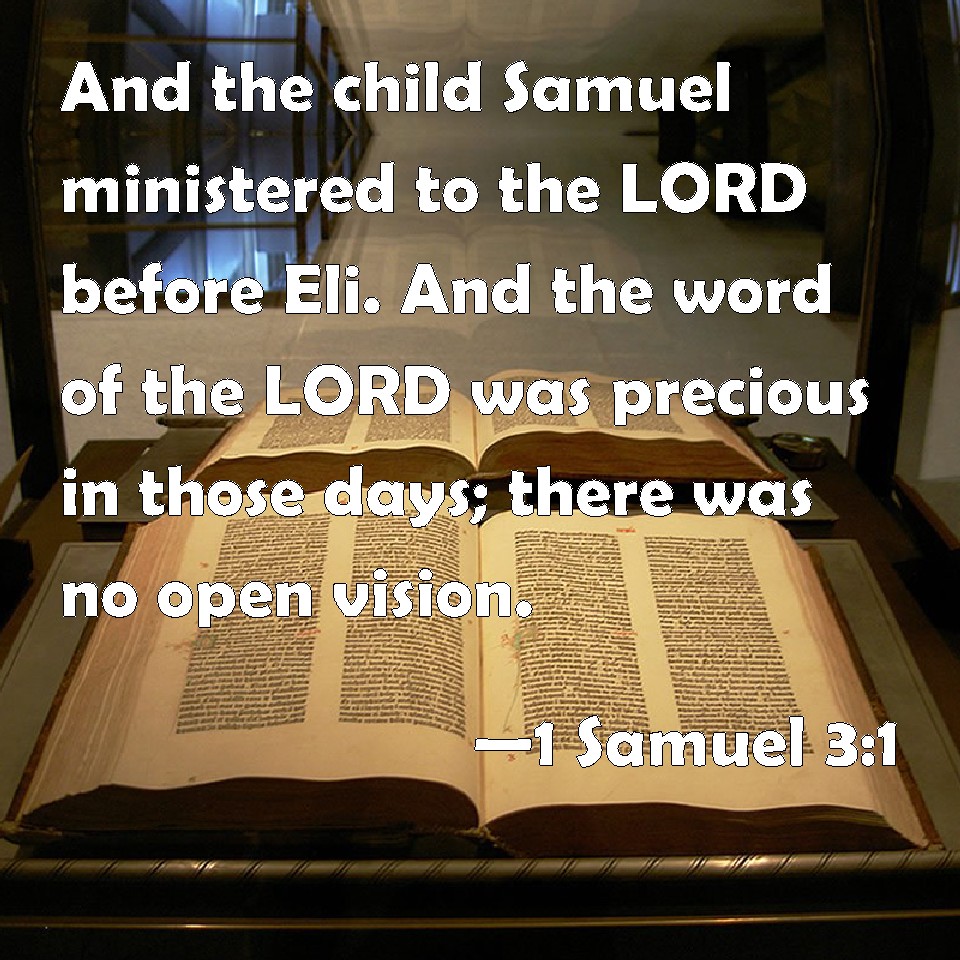
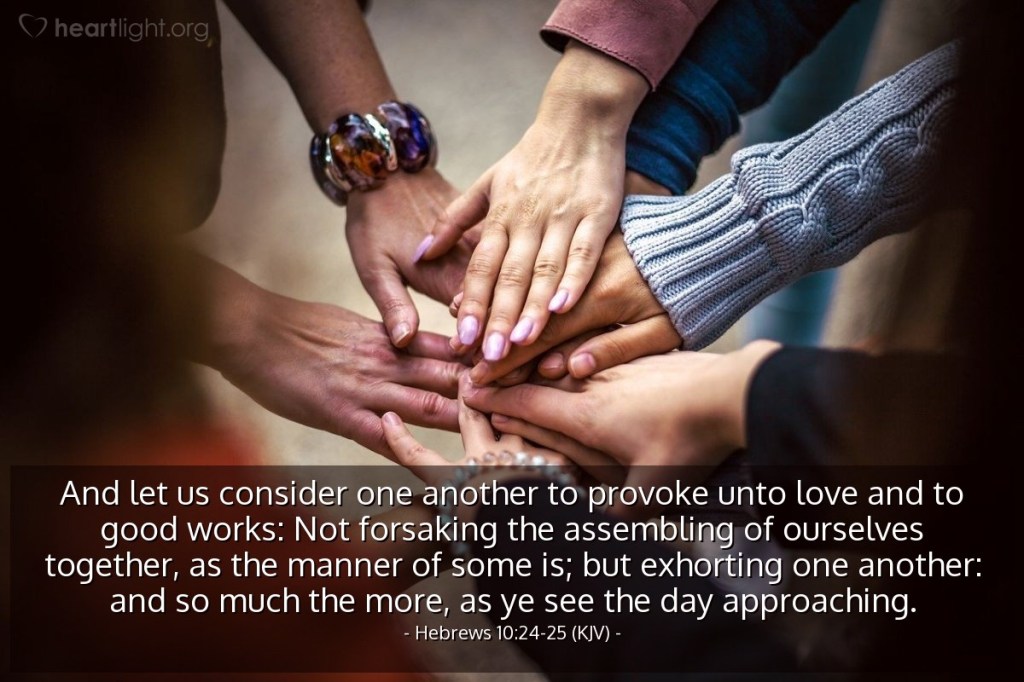
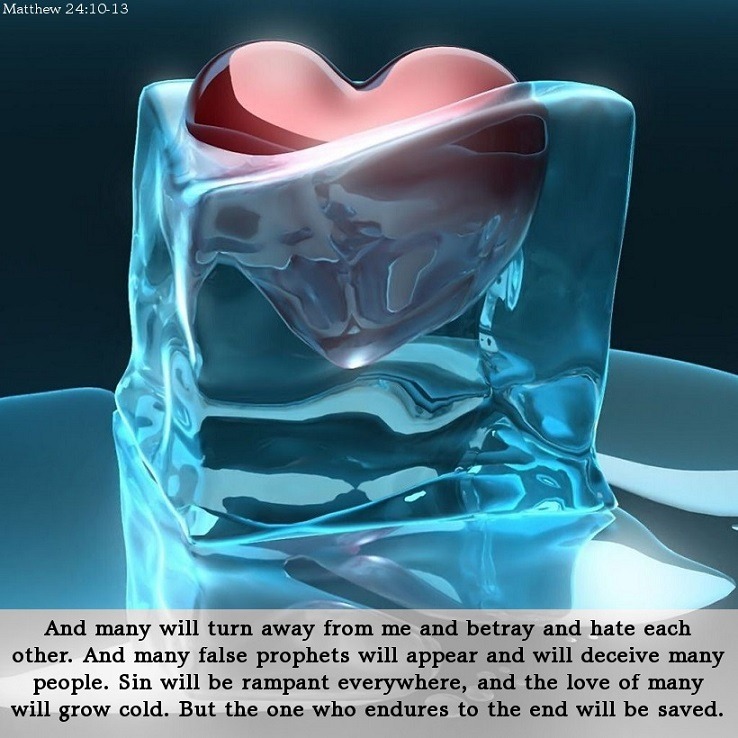


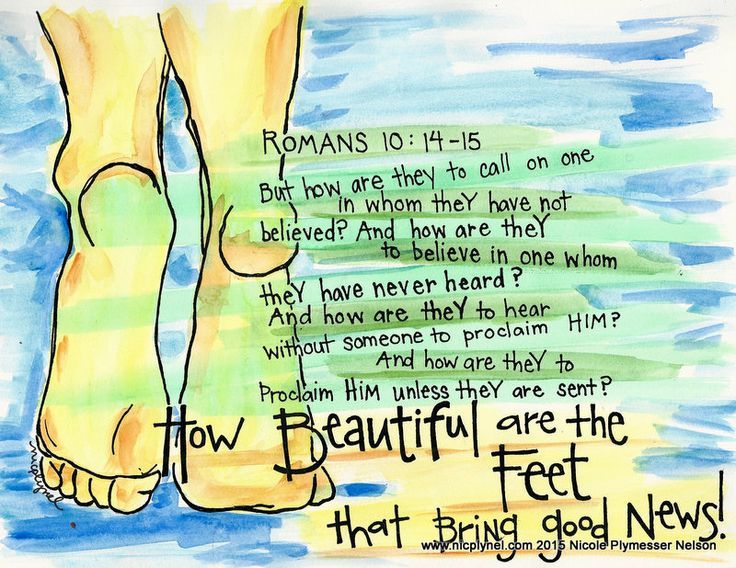
 Loving God, Living God, Loving Hope, Living Hope, Loving Living Life His Way! "Many things are possible for the person who has hope. Even more is possible for the person who has faith. And still more is possible for the person who knows how to love. But everything is possible for the person who practices all three virtues." - Brother Lawrence (1605-1691), Practicing the Presence of God (1692).