
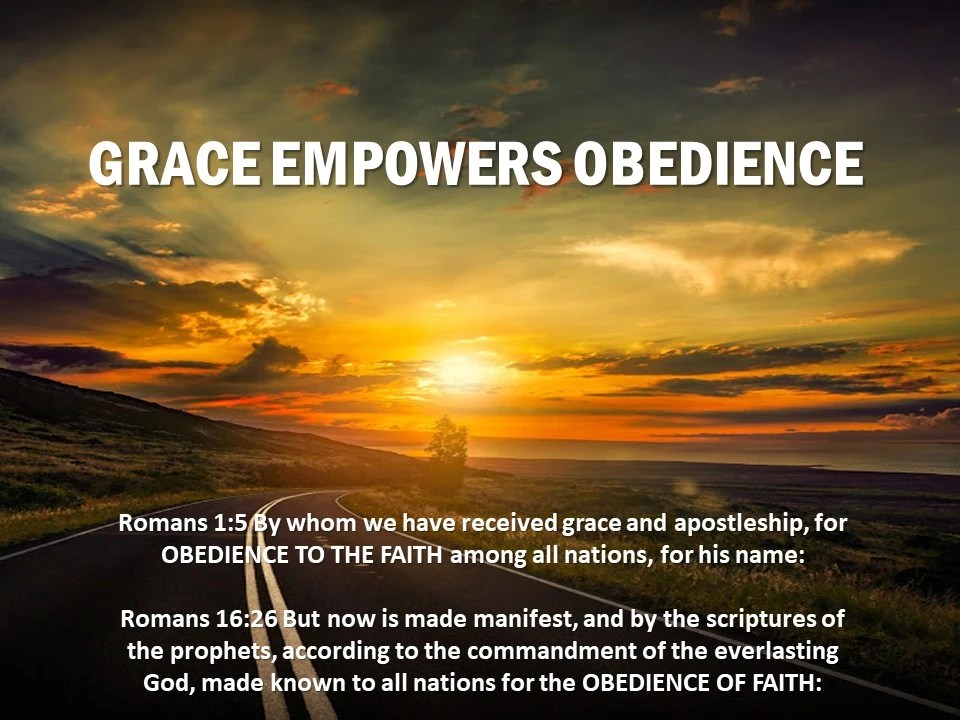
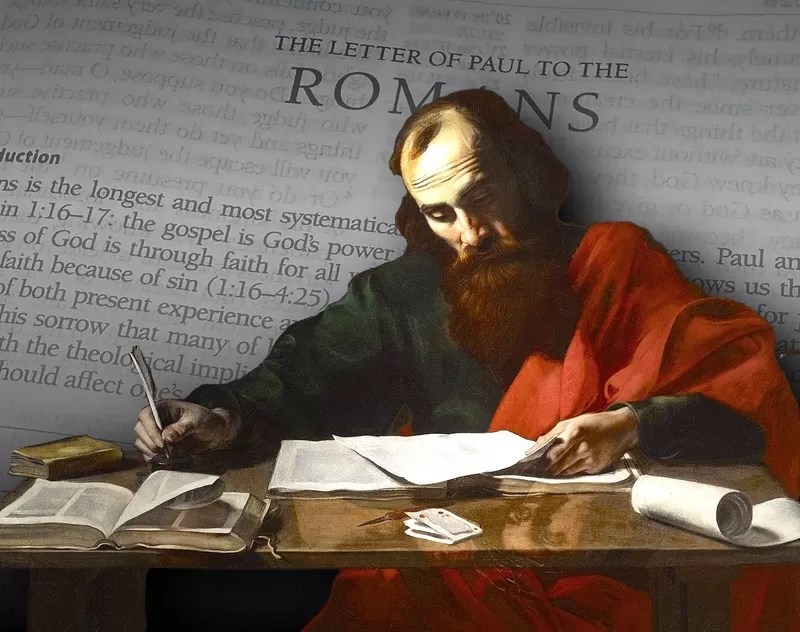
Romans 1:1-7 Lexham English Bible
Greeting
1 Paul, a slave of Christ Jesus, called to be an apostle, set apart for the gospel of God, 2 which he promised previously through his prophets in the holy scriptures, 3 concerning his Son, who was born a descendant[a] of David according to the flesh, 4 who was declared Son of God in power according to the Holy Spirit[b] by the resurrection from the dead of Jesus Christ our Lord, 5 through whom we have received grace and apostleship for the obedience of faith among all the Gentiles[c] on behalf of his name, 6among whom you also are the called of Jesus Christ. 7 To all those in Rome who are loved by God, called to be saints. Grace to you and peace from God our Father and the Lord Jesus Christ.
Word of God for the Children of God
Glory be to the Father,
and to the Son, and to the Holy Ghost;
as it was in the beginning,
is now, and ever shall be,
world without end. Amen, amen.
We can become too familiar with some phrases in the Bible, like this one: “a servant of Christ.” When that happens, it’s easy not to pay much attention.
Eugene Petersen, in The Message, his contemporary language version of the Bible, treats those words this way: “I, Paul, am a devoted slave of Jesus Christ on assignment. . . .” That phrasing should definitely catch hold of our attention.
Calling himself a servant says something about Paul. He knew better than we do what servants were and how they fit into the culture of his time. But hearing Paul introduce himself as “a devoted slave on assignment” gives me pause too.
Paul wasn’t just a member in some new movement. He wasn’t just a theologian trying to make sense of new ideas he had come across. He wasn’t just a preacher or a teacher looking for any audience. Paul was a devoted slave of Someone who was not just anyone but the Lord of heaven and earth itself.
For a Roman citizen—which Paul was—to begin a letter to people in Rome that way, rightly demands all our attention. Paul is unabashedly connected to Jesus— even enslaved to Him by the message of the Gospel. His opening identification highlights his intimate covenant relationship with Christ as Lord.
I now meditate, ponder upon; does that makes us ask, “How do I identify with Jesus?”—because that’s what the Christian faith is all about, first and foremost.
Truthfully, many factors contribute to the formation of our worldview. Our family background. The teaching we received. The community we experienced.
Our education. Our culture. Our media, our obsessive Social media usage and music. The people we admire. The experiences we survived. Each plays a role.
Ultimately, the book of Romans is about worldview.
It is a richly doctrinal letter to the Christians in Rome (mostly Gentiles), but also to us.
Throughout the letter, Paul explains what it means to be justified by faith and the transforming power of the gospel.
When carefully studied and prayerfully received, Romans can rightly anchor our worldview in the most important truths.
In today’s passage, Paul introduces himself by explaining his position and his purpose. Paul was a servant of Christ Jesus, “called to be an apostle” (v. 1).
The word called here is kletos, derived from kaleo.
https://www.blueletterbible.org/lexicon/g2822/kjv/tr/0-1/
God placed a special calling on Paul’s life when He appeared to him in a blinding light on the Damascus Road (Acts 9). As an apostle, Paul’s purpose would be to proclaim the gospel of God, the good news of redemption found only in Jesus.
In verses 2–4, Paul elaborates on the gospel message, which is rooted in the Old Testament prophets (v. 2). This good news is dependent on the identity of Jesus—who was both fully human (v. 3) and the divine, resurrected Son of God (v. 4).
Paul’s apostolic calling was not just for his own benefit (vv. 5–6).
Rather, he received this grace in order to directly call (kletos) the Gentiles to a relationship with Christ—
a life of obedience that grows out of faith (v. 5), a position of belonging (v. 6), a relationship of love, and the designation of “holy people” or “saints” (v. 7)—with all of the privileges and promises that God bestows upon His people.
Dare We To Go Deeper Yet?
Verses 5–7 help us understand the general call that Jesus extends to all who believe. If we are a devote Christ-follower, He calls us to that life of obedience, that position of belonging, that relationship of love, and designation of “saint.”
In the name of God, the Father and God the Son and God the Holy Spirit …
Praying …
Psalm 27 Lexham English Bible
A Declaration of Trust
Of David.[a]
27 Yahweh is my light and my salvation;
whom shall I fear?
Yahweh is the refuge of my life;
of whom shall I be afraid?
2 When evildoers drew near against me to eat my flesh—
my adversaries and my enemies who drew near to me—
they themselves stumbled and fell.
3 Though an army encamp against me,
my heart will not fear.
Though war arise against me,
even in this I will remain confident.
4 One thing I have asked from Yahweh;
it I will seek:
that I may dwell in the house[b] of Yahweh all the days of my life,
to behold the beauty of Yahweh,
and to consider[c] his temple.
5 Because he will hide me in his shelter in the day of trouble.
He will conceal me in the hiding place of his tent.
He will set me high upon a rock.
6 And now my head will be high over my enemies round about me.
And I will offer in his tent sacrifices with shouts of joy.
I will sing, yes, I will sing praises to Yahweh.
7 Hear, O Yahweh, my voice when I call,
and be gracious to me and answer me.
8 On your behalf my heart says, “Seek my face.”
Your face, O Yahweh, I do seek.
9 Do not hide your face from me;
do not turn your servant away in anger.
You have been my help; do not abandon nor forsake me,
O God of my salvation.
10 If my father or my mother forsake me,
then Yahweh will receive me.
11 Teach me, O Yahweh, your way,
and lead me on a level path because of my enemies.
12 Do not give me over to the desire of my enemies,
because false witnesses have arisen against me,
and each breathing out violence.[d]
13 Surely[e] I believe that I will see the goodness of Yahweh
in the land of the living.
14 Wait for Yahweh.
Be strong and let your heart show strength,
and wait for Yahweh.
Glory be to the Father,
and to the Son, and to the Holy Ghost;
as it was in the beginning,
is now, and ever shall be,
world without end. Amen, amen.
 Loving God, Living God, Loving Hope, Living Hope, Loving Living Life His Way! "Many things are possible for the person who has hope. Even more is possible for the person who has faith. And still more is possible for the person who knows how to love. But everything is possible for the person who practices all three virtues." - Brother Lawrence (1605-1691), Practicing the Presence of God (1692).