Let Us All Give Thanks To God For Our Foundation of Hope! Colossians 1:3-8

Colossians 1:3-8 Amplified Bible

We give thanks to God, the Father of our Lord Jesus Christ, as we pray always for you, for we have heard of your faith in Christ Jesus [how you lean on Him with absolute confidence in His power, wisdom, and goodness], and of the [unselfish] [a]love which you have for all the saints (God’s people); because of the [confident] hope [of experiencing that] which is reserved and waiting for you in heaven. You previously heard of this hope in the message of truth, the gospel [regarding salvation] which has come to you. Indeed, just as in the whole world the gospel is constantly bearing fruit and spreading [by God’s power], just as it has been doing among you ever since the day you first heard of it and understood the grace of God in truth [becoming thoroughly and deeply acquainted with it]. You learned it from [our representative] Epaphras, our beloved fellow bond-servant, who is a faithful minister of Christ on our behalf and he also has told us of your love [well-grounded and nurtured] in the [Holy] Spirit.

The Word of God for the Children of God.

Adeste Fidelis! Venite Adoremus! Dominum.

Gloria! In Excelsis Deo! Alleluia, Alleluia, Alleluia, Amen.

The Root Of Our Hope Is Our Savior Jesus

It’s wonderful when someone comes into the kingdom of God.

That person receives God’s gift of grace through faith in Jesus, and they begin a new life of walking with the Holy Spirit.

The new believer realizes that the full measure of their “sacred cow” plans for their old life of selfish pursuits offers them nothing that will ever satisfy them.

By their new hope in Christ Jesus, they have turned their back on the darkness and are enjoying the light of the world, Savior Jesus – Praise God for his love!

Paul is filled with thanks to hear that the people of Colossae have come to faith in Christ Jesus and are showing their love for all God’s people.

He even says, “We always thank God . . . when we pray for you . . .”

They have become wonderful examples of living by faith in Jesus.

They believe and trust, they love, and they hope in what God has already stored up in heaven for them.

Drawing all this together, today we can echo with great assurance with Paul that the new faith of the Colossian believers is decisively rooted in Jesus Christ.

Friends, my prayer is you will have faith in Christ Jesus; my hope for you is that in Jesus’ name you are loving others, giving yourself up for them, and growing in hope in all that God has promised and is storing up for you and me in heaven.

Stay rooted in Christ, stay united in His hope anticipating the reality of our own resurrection, the reality of God’s coming kingdom on earth as it is in heaven.

The Hope of Resurrection Brings Us All Together

What is the basis for Christian unity?

What is the basis for being able to correct another believers doctrine?

What is the foundation of love and faith in the Christian life?

Paul answers these questions in the beginning of his letter to the church at Colossae.

In the beginning of Colossians, Paul teaches that the basis of Christian faith and love is hope.

We can view hope as elemental to the gospel message, proclaimed to all who believe.

This foundation of hope in the gospel unites us with other believers, for all believers share the same foundation of the message of Christ.

From those foundations proceed faith and love, essential to the character of believers.

Faith And Love As Reasons For Giving Our Thanks

Paul thanks God for the faith and love evident in the church at Colossae.

The believers at Colossae were believers in Christ Jesus, found in Him and known by Him.

Their faith set them on the side of light.

For, Christians have been rescued from darkness and transferred to the Kingdom of the Son, Jesus Christ (Colossians 1:13-14).

The Incomparable Christ

13 For He has rescued us and has drawn us to Himself from the dominion of darkness, and has transferred us to the kingdom of His beloved Son, 14 in whom we have redemption [because of His sacrifice, resulting in] the forgiveness of our sins [and the cancellation of sins’ penalty].

Faith is what made these believers dwell in a new understanding about life, truth, what matters on this earth, and what matters for times to come.

And Paul even heard about the faith of the Colossians, so completely notable was their expression of it.

Paul also heard about the love that believers had for the saints.

The believers had love for their fellow believers, and this was an outworking of the eternal truths of the gospel.

Their love is further identified in the letter as being “in the Spirit” (Colossians 1:8), the mark of its veracity.

Paul notes the rich and beautiful Christian love of the Colossian church:

Colossians 2:1-3 Amplified Bible

You Are Built Up in Christ

For I want you to know how great a struggle I have for you and for those [believers] at [a]Laodicea, and for all who [like yourselves] have never seen me face to face.  [For my hope is] that their hearts may be encouraged as they are knit together in [unselfish] [b]love, so that they may have all the riches that come from the full assurance of understanding [the joy of salvation], resulting in a true [and more intimate] knowledge of the [c]mystery of God, that is, Christ, in whom are hidden all the treasures of wisdom and knowledge [regarding the word and purposes of God].

Paul will ultimately write to the church at Colossae about heresy creeping in, and with that in mind, he writes he desires the body of Christ to be encouraged together with hearts unified in love.

This is Paul’s desired way for the church to have reception of truth and correction of error: to write to a church about these matters who is knit together in the love of Christ.

Then, they would be able to further share in the genuine message of Christ, separate truth from error, and have the full experience of Christ leading and guiding in truth amidst His very own body at Colossae.

No wonder Paul thanks God for the love he sees in the saints at Colossae: it gave him genuine confidence about the message of correction he would be sharing.

That love in the context of faith was made possible by the foundation of hope in Christ and Christ alone present in the church.

The Hope of the Gospel in Us

Hope as a Foundation

Paul credits hope as the foundation for the believers’ virtues. Hope is the basis for Christian faith and love.

Hope is the basic element of the faith — that we have a future with Christ through the truth of the gospel.

And hope is the basis for Christian love — that we have a future with One who unites all believers.

Faith springs from the message of hope. Love flows through the message of hope because the message is what unites the church, one to another.

Hope from the Gospel

Hope comes from the gospel, the word of truth.

The hope of the gospel is restored union and communion with Jesus Christ, the God who made us. 

Colossians 1:27 says that Jesus Christ in us is the hope of glory.

Surely this is the center of Paul’s message in the opening words of his letter.

Hope is the basis for faith and love — and the basis for this hope is that we have restored relationship with Jesus Christ.

This relationship means we have a future of even closer communion with Jesus when we are one day with Him in glory.

Hope Passed On

The word of truth is learned through the teaching of another.

The gospel is passed from person to person through teaching.

Hope becomes passed through the fellowship and instruction of other believers.

Not only had Paul and this church not met face-to-face, so it was with many believers spread throughout the world.

The gospel — the hope of Christ — spreading is an encouraging point of union between Paul and the church a Colossae.

Their shared hope is spread by Jesus Christ who would surely build His church (Matthew 16:18).

Hope is the foundation from which virtues spring and is testified to in the gospel of Christ.

The Blessed Unity of Believers’ Shared Foundation of Hope

Because Paul and his fellow believers at Colossae had a strong foundation of hope — with evidence he could hear about — he is solidified in his union with them through Christ.

Paul’s Connection with the Church at Colossae

Paul uses this expression of prayer-filled thanks to establish his unity with the church at Colossae.

He would be writing to warn against heresy creeping into the church.

But at this juncture, He is establishing truths about the faith, love, and hope that are basic to the Christian message.

He heard about this church’s faith through Epaphras, not being a church that he planted.

But he had thanksgiving-filled unity with this church nonetheless because of the message of the gospel.

Paul’s Connection with All Churches

With thanks, Paul indicates that the message of the gospel was spreading throughout the world — and not only through Paul’s ministry.

What joy that these Christians could receive a message of warning through Paul based on Christian gospel unity — and not based upon personal connection.

Many could, and indeed would, be wary to receive correction from someone not personally known, but Paul would deliver this message faithfully and with great hope that it would prayerfully be received well by those he had never even met.

Through the unity of the gospel and on the basis of broad Christian unity through Jesus Christ, Paul would be proceeding with his message of correction.

Suggested Points of Meditation and Application

As we consider Paul’s opening comments of the letter to the Colossians, we can note hope as the central theme, and basis for his commitment and unity with the church members.

This commitment and unity comes from a heart that shares the indwelling of Christ Jesus through the ministry of the Holy Spirit with fellow believers.

As you take these teachings to heart, pray over the following application points:

1. Strengthen your understanding with conviction in the hope that you have

2. Ensure that you are loving others in the church because of the hope that you share from the hope to be found only in resurrection of our Savior Christ Jesus.

3. Know that your hope means your faith is in a different world, for a different life to come. John 17:6-12 Amplified.

“I have manifested Your name [and revealed Your very self, Your real self] to the people whom You have given Me out of the world; they were Yours and You gave them to Me, and they have kept and obeyed Your word. Now [at last] they know [with confident assurance] that all You have given Me is from You [it is really and truly Yours]. For the words which You gave Me I have given them; and they received and accepted them and truly understood [with confident assurance] that I came from You [from Your presence], and they believed [without any doubt] that You sent Me. I pray for them; I do not pray for the world, but for those You have given Me, because they belong to You; 10 and all things that are Mine are Yours, and [all things that are] Yours are Mine; and I am glorified in them. 11 I am no longer in the world; yet they are still in the world, and I am coming to You. Holy Father, keep them in Your name, the name which You have given Me, so that they may be one just as We are. 12 While I was with them, I was keeping them in Your name which You have given Me; and I guarded them and protected them, and not one of them was lost except [a]the son of destruction, so that the Scripture would be fulfilled.

4. Trust a shared foundation of hope with other believers provides a foundation for doctrinal correction—should you ever be placed in the position of giving or receiving such correction

5. Be ever more thankful to God than to humanity for the unity of the gospel being spread throughout the world.

Resurrection of Hope

It’s not the experience of hope but the object of hope that is stored up for us in heaven–and that gives rise to faith and love, says the apostle Paul.

Colossians 1:27, Paul talks about “the hope of glory,” meaning the final unveiling of our salvation, when “righteousness and peace kiss each other” (Psalm 85:10). 

This grand source of hope does not mean we ignore this present life.

Instead, this hope encourages love.

In a sermon on this text, author John Piper says,

“Only one thing satisfies the heart whose treasure is in heaven: doing the works of heaven. And heaven is a world of love.”

He adds, “It’s not the cords of heaven that bind the hands of love. It is the love of money and leisure and comfort that do that, and the power to sever those cords is Christian hope.”

To live in the utter certainty, centrality of the hope of His coming glory, frees us all from greed and bitterness, despair and laziness, from impatience and envy.

Being fully captivated by this future Paul says we’ve heard about in the gospel empowers, inspires, moves us forward against the tsunami’s of culture, to give us grace to live in faith and in love to become examples of God’s new creation.

In the name of God, the Father and God the Son and God the Holy Spirit,

Let us Pray,

In your kingdom, Lord,
there are no favourites,
all are equal,
all carry the image
of the one who made all things,
and all are welcome in your home.
You forgive those who in humility
make the journey to repentance,
even those who now reject you.
Such love,
Such faith, Such hope,
beyond our imagining.
Such love, Such faith, Such hope,
that could die for us.
Such love, Such faith, Such hope,
sown into hearts,
that we might display its beauty
through hopeful lives and hope-filled words.
Thank you Lord!

Adeste Fidelis! Venite Adoremus! Dominum.

Gloria! In Excelsis Deo! Alleluia, Alleluia, Alleluia, Amen.
https://translate.google.com/

Hearing God’s Voice? 1 Samuel 3:1-10

1 Samuel 3:1-10 English Standard Version

The Lord Calls Samuel

Now the boy Samuel was ministering to the Lord in the presence of Eli. And the word of the Lord was rare in those days; there was no frequent vision.

At that time Eli, whose eyesight had begun to grow dim so that he could not see, was lying down in his own place. The lamp of God had not yet gone out, and Samuel was lying down in the temple of the Lord, where the ark of God was.

Then the Lord called Samuel, and he said, “Here I am!” and ran to Eli and said, “Here I am, for you called me.” But he said, “I did not call; lie down again.” So he went and lay down.

And the Lord called again, “Samuel!” and Samuel arose and went to Eli and said, “Here I am, for you called me.” But he said, “I did not call, my son; lie down again.” Now Samuel did not yet know the Lord, and the word of the Lord had not yet been revealed to him.

And the Lord called Samuel again the third time. And he arose and went to Eli and said, “Here I am, for you called me.” Then Eli perceived that the Lord was calling the boy. Therefore Eli said to Samuel, “Go, lie down, and if he calls you, you shall say, ‘Speak, Lord, for your servant hears.’” So Samuel went and lay down in his place.

10 And the Lord came and stood, calling as at other times, “Samuel! Samuel!” And Samuel said, “Speak, for your servant hears.”

The Word of God for the Children of God.

Adeste Fidelis! Venite Adoremus! Dominum.

Gloria! In Excelsis Deo! Alleluia, Alleluia, Alleluia, Amen.

Hearing the voice of God is something that everyone, Christian or not, wants to experience.

Although we all want to hear God, actually doing it, for most of us, is sort of a mysterious process.

We often don’t know how to hear God consistently, if at all.

Yet hearing and understanding what God is saying is critical for our spiritual development.

As we look at people in the Bible who heard from God, Samuel was one of the best.

The story of Samuel is found in 1 Samuel 3:1-10.

Samuel, who was just a boy, was living and serving the priest in the temple.

We are told that, “the word of the LORD was rare in those days” (v.1 ESV).

Not many people were hearing the voice of God.

Yet this rare young man was about to experience something people in the land of Israel had not seen nor had heard for quite some time; Samuel was about to clearly and succinctly hear his name called from the LORD three times.

As we look at this story about Samuel, we can discern there are six steps which can take some of the mystery out of clearly, succinctly hearing the voice of God:

1. Position Yourself Close to God

Samuel set his bed up in the temple, “where the ark of God was(v.3 ESV).

Samuel had never heard God speak before.

Samuel did not know what to expect, but what he did know was that if he hung around the temple, God would eventually show up.

Through Bible Study, personal devotions, times of fellowship, and regular church attendance, are we now putting ourselves in a place where God is?

2. Find a Place of Regular Service to God

In v.1 it says, “Samuel was ministering to the LORD in the presence of Eli(ESV).

If we want to hear the voice of God, we have to be doing the things of God.

If we’re not serving, don’t wonder why we are not hearing the voice of God.

3. Listen for God’s voice

Eli was “lying down in his usual place(v.2 NIV), too set in his own ways, too set, too accepting in the past lack, the rarity of revelation, too preoccupied with his own, son’s interests, his own physical and spiritual limitations to hear God.

When God began speaking, he was not used to listening.

He too easily accepted the unchangeable; the precious rarity of God’s voice.

Status Quo was the Status Quo …

Who before him had taught and mentored him on how to listen for God?

Many times to hear what God is saying we have to slow down and take time to get close to God.

We have to put aside our interests and lean in to hear what God is saying.

How close was Eli to God?

How accepting was Eli that even at his current season and stage and condition of life, he could still get closer to God – “teaching an old soul new ‘God’ truths?

How accepting are we ourselves, in our current seasons, stages and conditions of life, that we too can still get closer to God – “teaching us new ‘God’ truths?

4. When God Calls, Respond Eagerly

When we hear our parents calling to us, we look to respond eagerly.

When we hear our spouses calling to us, we look to respond eagerly.

When we hear our children calling to us, we look to respond eagerly.

When Samuel first heard his name called, even in the middle of the night he got out of his bed, rushed to Eli’s bedside to inquire of Eli: “why have you called?”

This repeated itself three times until Eli finally realized it was truly God calling.

When Samuel heard, recognized the voice of the Lord he was immediately up and moving (v.4) and declaring – “Speak Lord, for Your Servant is Listening!”

If we want to hear the voice of God, we need to be not just ready to put ourselves into action eager to do what He tells us – we need to be obedient enough to do it!

James 1:17-22 English Standard Version

17 Every good gift and every perfect gift is from above, coming down from the Father of lights, with whom there is no variation or shadow due to change.[a]  18 Of his own will he brought us forth by the word of truth, that we should be a kind of first fruits of his creatures.

Hearing and Doing the Word

19 Know this, my beloved brothers: let every person be quick to hear, slow to speak, slow to anger; 20 for the anger of man does not produce the righteousness of God. 21 Therefore put away all filthiness and rampant wickedness and receive with meekness the implanted word, which is able to save your souls.

22 But be doers of the word, and not hearers only, deceiving yourselves.

5. When God Speaks, Obey Him

Starting in this passage and throughout the rest of his life, Samuel consistently obeyed the Lord.

No matter what God told him, Samuel did it.

From that point on, “the LORD was with him and let none of his words fall to the ground(1 Samuel 3:19 ESV).

For us, probably the quickest way to turn off God’s voice is to disobey him.

6. Read and Study the Word of God

After God spoke to him in this passage, the Bible tells us,

The LORD continued to appear at Shiloh, and there He revealed Himself to Samuel through His Word (1 Samuel 3:21 NIV).

If you want to hear from God, you have to know what the Bible says.

God is speaking.

God wonders to what extent we are genuinely listening.

God wonders to what extent we are genuinely hearing Him.

He wants to give you wisdom to lead your family, at your job, in your church, and in every area of life.

The questions we have to be asking ourselves is not whether God is speaking, but whether or not we are hearing Him, and whether or not we are listening?

In the name of God, the Father and God the Son and God the Holy Spirit,

Let us Pray,

Savior Jesus, Giver of boundless peace and wisdom, I so easily get distracted when I’m trying to focus and hear your Holy Spirit. Help me to quiet my mind in the middle of my busy life. Help me to pause and to make space to listen to the most important voice of all. Empower me to be a good listener to the gentle whispers of your Spirit. Help me follow the example of Jesus, who would slip away in the evening or the early morning to be alone with you. Teach me to listen, to hear and to abide in you. Amen.

https://translate.google.com/

Distant or Delighted? Not Feeling the Love of God? How About Learning to See Jesus With a Smile? 1 John 3:1-3

1 John 3:1-3 Amplified Bible

Children of God Love One Another

See what an incredible quality of love the Father has shown to us, that we would [be permitted to] be named and called and counted the children of God! And so we are! For this reason the world does not know us, because it did not know Him. Beloved, we are [even here and] now children of God, and it is not yet made clear what we will be [after His coming]. We know that when He comes and is revealed, we will [as His children] be like Him, because we will see Him just as He is [in all His glory]. And everyone who has this hope [confidently placed] in Him purifies himself, just as He is pure (holy, undefiled, guiltless).

The Word of God for the Children of God.

Adeste Fidelis. Venite Adoremus. Dominum.

Gloria. In Excelsis Deo. Alleluia, Alleluia, Alleluia, Amen.
See How Well We Are Lavished With Love?

1 John 3:1 New International Version

See what great love the Father has lavished on us, that we should be called children of God! And that is what we are! The reason the world does not know us is that it did not know him.

The word lavish presents a picture of extravagant abundance.

It is almost too much, too generous and luxurious.

Being lavish borders on being wasteful.

But the Father has lavished his love on us.

God’s love is even more than what a wonderful mother showers on her infant.

Isaiah 66:12-14 New International Version

12 For this is what the Lord says:

“I will extend peace to her like a river,
    and the wealth of nations like a flooding stream;
you will nurse and be carried on her arm
    and dandled on her knees.
13 As a mother comforts her child,
    so will I comfort you;
    and you will be comforted over Jerusalem.”

14 When you see this, your heart will rejoice
    and you will flourish like grass;
the hand of the Lord will be made known to his servants,
    but his fury will be shown to his foes.

God’s love and care are supplied all the time.

God’s love is a constant bombardment of affection and care.

We may be as oblivious as an infant to the presence of his love, but God still continues to pour his love into our lives.

God’s love flows into us deeply, redefines who we are at the very core of our heart, mind and soul.

When we open our hearts to God’s love, we are transformed by it.

We are remade, regenerated into children of God.

It is God who makes us his children, not us.

We cannot earn that status.

It is a gift of God’s great love.

Because we are sinners, we do not understand God’s love for us at first.

We don’t even know we need him until we realize we are stuck in sin and cannot save ourselves.

We become God’s children when we receive Jesus as our Savior (John 1:12).

Not one of us is worthy of God’s love.

We cannot earn it.

God just loves us.

We would not be God’s children if he were not already deeply in love with us.

How amazing is that!

Being said with an exclamation mark, what if we turned that into a question?

“How Amazing Is That?”

I Really Do Not Feel God’s Love.

Psalm 13 Authorized (King James) Version

Psalm 13

To the chief Musician, A Psalm of David.

How long wilt thou forget me, O Lord? for ever?
how long wilt thou hide thy face from me?
How long shall I take counsel in my soul,
having sorrow in my heart daily?
how long shall mine enemy be exalted over me?
Consider and hear me, O Lord my God:
lighten mine eyes, lest I sleep the sleep of death;
lest mine enemy say, I have prevailed against him;
and those that trouble me rejoice when I am moved.
But I have trusted in thy mercy;
my heart shall rejoice in thy salvation.
I will sing unto the Lord,
because he hath dealt bountifully with me.

Have you ever said or thought these words in public or in private?

If so, you’re not alone.

Truth Be Told, Too many times I have really struggled with the disconnect between knowing that God loves me and actually seeing, and feeling His love.

It might be tempting to brush aside the discomfort of this disconnect and get on with the responsibilities of life.

“After all,” some will pat you on the back, say, “love is an action, not a feeling.”

But if you look closely at the love displayed in the Bible, it’s clear that it’s not just automatic rote Christian responsibility—it’s also passionate emotion.

God doesn’t just act lovingly toward us, He feels love for us.

And He doesn’t want us to only understand His love, but to experience it in a deep way, a deeply visual and tactile way – to visualize it and touch it daily.

If, like me, you’ve struggled with a disconnect between knowing about God’s love and actually seeing, feeling it, accept your feelings as being quite real.

Sometimes, like the Psalmist who penned Psalm 13, we will not feel loved.

Sometimes, like the Psalmist who penned Psalm 13, we will not see God’s love.

Psalm 13 is someone’s deepest expression of a heart and soul in angry anguish.

It has remained in the Bible through countless edits because God wants you the reader to know, the maximum extent to which God feels, visualizes our hearts.

Heart Distant or Delighted? Learning to See Jesus With a Smile …

Psalm 13:5-6 Authorized (King James) Version

But I have trusted in thy mercy;
my heart shall rejoice in thy salvation.
I will sing unto the Lord,
because he hath dealt bountifully with me.

1 John 3:3 Amplified Bible

And everyone who has this hope [confidently placed] in Him purifies himself, just as He is pure (holy, undefiled, guiltless).

I recall many years ago sitting in a circle with the other members of my Bible study group when our leader invited us to imagine what Jesus’ face looks like.

Dutifully, I closed my eyes and tried to picture Him.

The image that appeared was of a man with long, greyish silver locks and dull, piercing brown eyes.

His unsmiling lips were hard set in a neutral line.

He didn’t look disapproving, but he didn’t look very happy either.

As I studied His face, I felt sad, fearful, and unsure of how He felt about me.

I was deeply troubled by this experience because, intellectually, I knew God always loved me deeply and felt positively—even passionately—about me.

Throughout the Bible, God describes His love in the most tender terms known to humankind.

He compares His love for us to the love a parent has for their child—a warm, welcoming, compassionate love (Isaiah 66:13; 1 John 3:1).

He also describes His love for us as the love a groom has for his bride—a passionate, ardent, sacrificial love (Revelation 19:7; Ephesians 5:25-27).

Yet, my picture of Jesus that evening revealed that, deep down, I also perceived Him as uppermost serious and restrained, maybe even a little depressed at me.

It also highlighted my fear that I was not a source of joy or pleasure to God, and that, though He loved me, it suddenly felt more being with a distant, aloof love.

I knew this isn’t how God wanted me to view Him.

Ephesians 3:18, the apostle Paul prayed, “May you have the power to understand, as all God’s people should, how wide, how long, how high, and how deep his love is. May you experience the love of Christ, though it is too great to understand fully” (NLT).

More than anything, I wanted to experience the love of God—I wanted to feel it, not just know about it.

So I started asking God to take my understanding beyond intellect and into a more studious, scriptural, deep heart knowing of my value to Him.

1 John 3:1 Amplified Bible

Children of God Love One Another

See what an incredible quality of love the Father has shown to us, that we would [be permitted to] be named and called and counted the children of God! And so we are! For this reason the world does not know us, because it did not know Him.

Truth be told, sometimes it’s so much easier to notice the love people have for you than the love God has for you.

Why?

Because you can physically see them and the way they express love.

But when it comes to God, it can be challenging to see, understand, the extent to which He loves you.

After all, none of us can physically see Him on this side of Heaven.

That’s why God gave us His Word… to help us to see, feel, and understand who He is and how much He really does love us. 

See, throughout the Bible, God is described as an all-powerful and eternally just God, but also as deeply loving to those He created.

In the entire biblical story, God is presented as a character who strongly cares for us… so much so that He even allowed His Son, Jesus Christ, to enter this world to bring about a redeemed and restored relationship with humanity.

In fact, Jesus is the physical embodiment of God’s eternal love, showing us that His love is a real, tangible being we can cling to and put our hope in rather than just an abstract concept we cannot ever hope to even begin to .01% understand.

Now, before we dive further into how Jesus loves us, first let’s clarify the meaning of biblical love.

BIBLICAL LOVE

1 Corinthians 13:4-7 Amplified Bible

Love endures with patience and serenity, love is kind and thoughtful, and is not jealous or envious; love does not brag and is not proud or arrogant. It is not rude; it is not self-seeking, it is not provoked [nor overly sensitive and easily angered]; it does not take into account a wrong endured. It does not rejoice at injustice, but rejoices with the truth [when right and truth prevail]. Love bears all things [regardless of what comes], believes all things [looking for the best in each one], hopes all things [remaining steadfast during difficult times], endures all things [without weakening].

There are many different kinds of love.

There is parental love, brotherly love, and romantic love.

When anyone says the word love, we often first associate it with anything from dating to sex.

But, the word is so much more broad than we often think.

According to the above passage, biblical love is simply putting the needs of others before your own. 

All of us fall short of the expectation set by this passage at some point, because selflessness does not come naturally to us (Romans 3:23).

But, the good news of the Gospel is that God perfectly embodies these four verses.

He is the one that created love in the first place!

In turn, this means that God is LOVE itself (1 John 4:8).

And because He is love, He displays this quality not only through His words, but through His actions as well.

GOD’S DEVOTED LOVE

Psalm 103:12-14 Amplified Bible

12 
As far as the east is from the west,
So far has He removed our transgressions from us.
13 
Just as a father loves his children,
So the Lord loves those who fear and worship Him [with awe-filled respect and deepest reverence].
14 
For He knows our [mortal] frame;
He remembers that we are [merely] dust.

As any good father would, God feels sentiment and shows affection toward His children.

This picture of God as the perfect Father is a deeply intimate one because it illustrates how far [east from west], He would go to keep us safe and secure.

Another illustration of God’s love is seen in Hosea 2:14-23.

Rather than a father this time, this Bible story describes a faithful husband that comforts and treasures his wife – which is also meant to be seen as a metaphor for God’s devoted love to an unfaithful Israel.

Despite Israel’s unfaithfulness, God expressed His infinite love for His people all the more through love poetry, painting a beautiful image of God’s extreme devotion and affection towards His Bride, the Church.

LOVE AS AN ACTION

Romans 5:8-10 Amplified Bible

But God clearly shows and proves His own love for us, by the fact that while we were still sinners, Christ died for us. Therefore, since we have now been justified [declared free of the guilt of sin] by His blood, [how much more certain is it that] we will be saved from the [a]wrath of God through Him. 10 For if while we were enemies we were reconciled to God through the death of His Son, it is much more certain, having been reconciled, that we will be saved [from the consequences of sin] by His life [that is, we will be saved because Christ lives today].

But, love is not merely a feeling.

Love is also an action… that God shows from the very beginning of the Bible.

Out of His love, God established a rescue plan for humanity in the wake of Adam and Eve’s sin (Genesis 3:15).

Out of His great love, God freed Israel from slavery in Egypt – not because they earned it, but because they were His people (Exodus 12-14).

Out of His love, God became fully human, yet fully God through the person of Jesus Christ – living a perfect life and dying a death we deserved so that we could all be restored into unto, a right relationship with Him (John 3:16-17).

In each scenario, all of God’s actions toward His people are motivated by pure love. He doesn’t just say He loves us, but He actually does something about it.

THE LOVE OF JESUS

John 15:13-16Amplified Bible

13 No one has greater love [nor stronger commitment] than to lay down his own life for his friends. 14 You are my friends if you keep on doing what I command you. 15 I do not call you servants any longer, for the servant does not know what his master is doing; but I have called you [My] friends, because I have revealed to you everything that I have heard from My Father. 16 You have not chosen Me, but I have chosen you and I have appointed and placed and purposefully planted you, so that you would go and bear fruit and keep on bearing, and that your fruit will remain and be lasting, so that whatever you ask of the Father in My name [as My representative] He may give to you.

By coming into the world and sacrificing his own life for us, Jesus demonstrated the ultimate love of God.

He died for us because He considered us friends worth dying for (John 15:15).

This is the radical love that Jesus showed during his time on Earth… and still shows us today even if we do not see it in quite the same way we see the love of our friends and family.

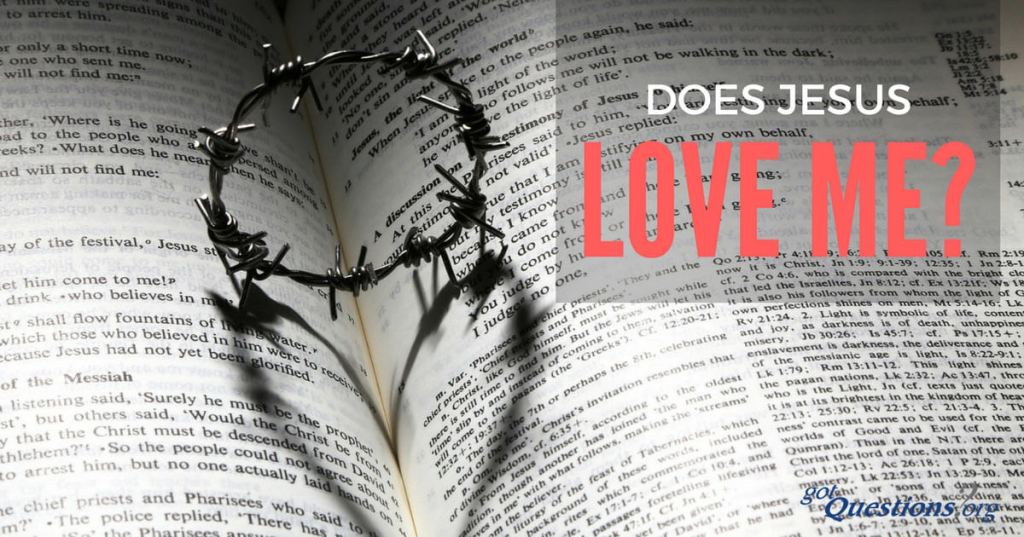
So, when asking the question “Does Jesus love me?” the simple answer is “yes.”

Jesus really does love you not because of anything you have done, but because of who He is!

In the name of God, the Father and God the Son and God the Holy Spirit,

Let us Pray,

Almighty God, we praise and thank you for making us children of God, not through our own power and piety but through our baptism into crucified and risen Lord Jesus Christ. We turn daily to you, and in that turning we find peace, courage and purpose. Make your whole church a witness to the great good news of Christ’s resurrection. Father God, may we have the grace and the power of the Holy Spirit to grasp how immeasurable wide and deep and high and long is your love for us, expressed in all that Savior Jesus has done for us, that we may be your children. In his name, Amen.

Adeste Fidelis. Venite Adoremus. Dominum.

Gloria. In Excelsis Deo. Alleluia, Alleluia, Alleluia, Amen.
https://translate.google.com/

Pondering the Word of God: What Does it Mean For Us to Say, and to Believe and to Also Act Upon, ‘God Is Love’? 1 John 4:7-8?

1 John 4:7-8 Amplified Bible

God Is Love

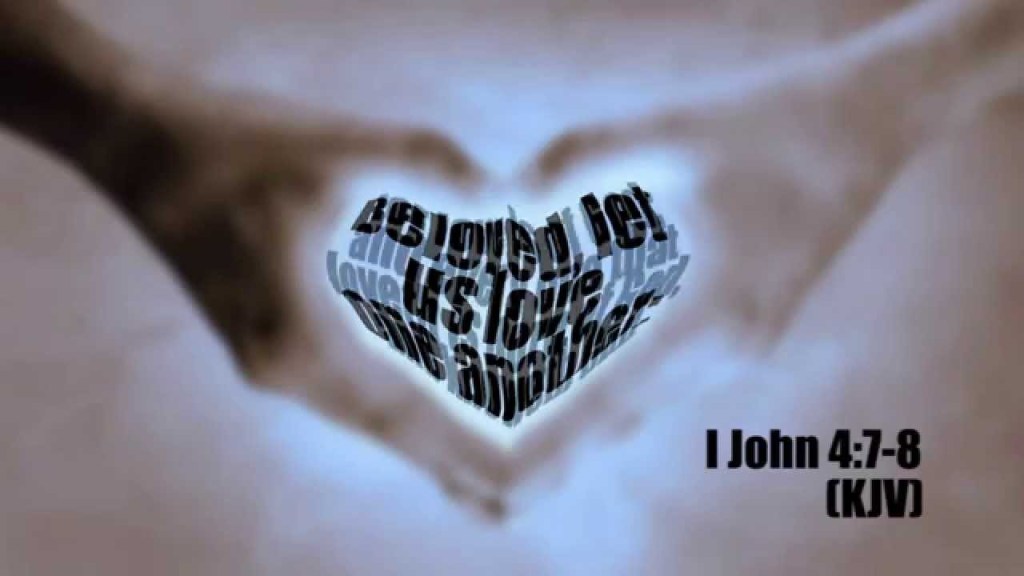
Beloved, let us [unselfishly] [a]love and seek the best for one another, for love is from God; and everyone who loves [others] is born of God and knows God [through personal experience]. The one who does not love has not become acquainted with God [does not and never did know Him], for God is love. [He is the originator of love, and it is an enduring attribute of His nature.]

The Word of God for the Children of God.

Adeste Fidelis. Venite Adoremus. Dominum.

Gloria. In Excelsis Deo. Alleluia, Alleluia, Alleluia, Amen.

I want you to take a few seconds or minutes, preferably the rest of forever, and meditate, ponder, and just think about the depths of love that Jesus has for you.

Depending on the day, perhaps you may perceive or you genuinely feel a barrier, because we may know all too well, how we often fail, falter, take our eyes off our King, and at times maybe even want nothing to do with Him.

But I’m here to tell you that in those exact moments, Christ’s all-encompassing love is yet all the more present and there to sustain you!

For He has chosen you, though you will most definitely fail, and falter and too, stumble, He called you his own, though you and I will flinch, and we all have a place at His table even when your gaze is not perfectly fixed on the divine host. 

So do meditate, ponder and think about how Christ’s love for you and me is like an all consuming ocean that you and I cannot ever swim away from. 

Do think about that He is the greatest joy in times of triumph. 

Do think about that He is your deepest comfort in your utmost trying of times and sorrows. 

Pray – Oh, what love He has for his children…Oh, what love He has for you!

So please join me today in praising God, and His Word, for his persistent love.

Praise God, that He continually shows us what love is even right now.

Praise God, that He first loved us which enables us to, therefore, go and love on others exactly where they are. 

So today, the remainder of this week, and continually, let there be no shortage of love from the children of God especially during times we are all experiencing.

Ask Jesus right now, through prayer and study of His Word, through fellowship, to love others through you as He has so graciously covered all of you in his love.

What Does it Mean That ‘God Is Love’ in 1 John 4:8?

1 John 4:8 Amplified Bible

8 The one who does not love has not become acquainted with God [does not and never did know Him], for God is love. [He is the originator of love, and it is an enduring attribute of His nature.]

Love is a word that has taken on many meanings throughout the ages.

Innumerable writers, movie directors, music and dance choreographers and hosts and myriads artists alike have tried their best to convey the idea of love.

Though almost no one has the same definition, there is an underlying thought.

Love is a feeling and an action.

Love is what one person feels and does for someone else.

Even in the Christian faith, love entails many qualities. 

1 Corinthians 13 is an entire passage devoted to the idea of love.

The chapter ends on the notion that love is both greater than hope and surprisingly greater than faith.

Here too we see that love is how one person relates to another, both in feeling and action.

The dictionary definition also describes how people relate.

With so many perspectives on the idea of love, an entire biblical passage dedicated to the idea, and too many songs, stories, and movies to count, love must be very important.

Moreover, this proves without a shadow of doubt we have all been affected by love in one way or another – love touches everyone – without any exceptions.

We also know that God values the idea of love because of how many times the word is used in the Bible.

In the original King James Version (KJV) the word love appears 310 times.

The frequency of the word will largely depend on the translation.

Important to note, the English word for love is split into different words in the original writing of the Bible.

The original languages used words to describe love including phileo, pragma, and agape.

When love is evoked in Scripture, the term is used to describe the way we talk, act, and our mindset toward others.

In the Bible though, love is by no means limited to human relationships.

In fact, the Bible informs us that the reason why we love other people, the reason we can understand love, is exactly this: because God first loved us.

1 John 4:19 Amplified Bible

19 We love, because [a]He first loved us.

God gave us the example and the how-to guide.

This verse comes shortly after the aforementioned verse from 1 John 4.

To understand the context of the words here, we have to first identify the passage’s author – John, an apostle of Jesus.

In this chapter, John draws a comparison between people of the world and people of God.

More specifically, he identifies that some people will claim to purport God, but do so falsely.

These are “false prophets” (1 John 4:1).

We can identify these people by testing their spirit.

One way to test the spirit is by examining someone’s ability to love.

After John makes clear the difference between false prophets and true believers, he admonishes us to love one another.

How do we accomplish this?

We look at what God has done for us.

John makes the claim that love is first and foremost defined by God’s choosing to love us, His children.

With this powerful and inspiring truth into mind, we should then in response, turn our heart to love one another (God’s children), the way our Father loves us.

He speaks confidently in detailing that God loves us, so we ought to love one another, but what does John mean when he says, “God is love”?

What Did John Mean When He Said ‘God Is Love’?

1 John 4:8Authorized (King James) Version

He that loveth not knoweth not God; for God is love.

In this verse, we see that John equates God with love.

This metaphorical statement takes on a literal meaning when we consider the evidence of John’s claim.

In this passage, John mentions the sacrifice of Jesus for humanity–an act of love (1 John 4:10).

Since the Garden of Eden, God has acted on behalf of humanity, showing His love and support for His followers.

There have been consequences such as the banishment from Eden (Genesis 3), but God has maintained a loving relationship with people since the Fall.

Why?

The answer is evident in God’s love and all the stories that follow in the Bible where God acts on behalf of humanity.

These events culminate into the eventual Second Coming of Christ.

As God has remained an ever-present constant in the lives of humanity, so too are we supposed to show ever-present love to one another on an ongoing basis.

John states that we cannot love God and hate someone else (1 John 4:20).

If God has already chosen to love each of us despite our fallen nature since the beginning of time, why should or would we choose not to love someone despite an offense in the present time?

Obviously, this is easier said than done, but John makes clear “God is love.”

He drives this point further by stating we remain in love when we draw close to God, and as we draw close to God, the love of God abides in us (1 John 4:16).

The way God perpetually treats us in love, we should strive to treat other people.

How Does This Verse Affect How We Give and Receive Love?

John’s message to followers of Christ is a message echoed throughout the Bible.

A significant area where this is shown occurs when Jesus is questioned by a Pharisee.

“When the Pharisees heard that he had silenced the Sadducees, they came together. And one of them, an expert in the law, asked a question to test him: ‘Teacher, which command in the law is the greatest?’

He said to him, ‘Love the Lord your God with all your heart, with all your soul, and with all your mind. This is the greatest and most important command. The second is like it: Love your neighbor as yourself. All the Law and the Prophets depend on these two commands.’” (Matthew 22:34-40)

Jesus lets us know that the second greatest act we can do daily as Christians is love other people, while the greatest commandment is to love God.

If we are abiding in God, as John admonishes us to do, then we will not only seek to love God as Himself but will see loving others as an extension of that.

Interestingly, the Bible does not tell us to love ourselves, possibly because that action comes so naturally for believers and nonbelievers alike.

We can use this awareness then to change how we view other people.

Instead of maintaining a mindset of “me versus you” or “them versus us,” we can acknowledge the fact that we are all image-bearers of God (Psalm 139:13).

No matter our difference in faith, behavior, or physical appearance, we are God’s children and we should definitely strive to treat each other accordingly.

Three Ways to Love Others by Knowing that God Is Love
1. Encourage One Another

Proverbs 16:24 Amplified Bible

24 
Pleasant words are like a honeycomb,
Sweet and delightful to the soul and healing to the body.

The words we speak carry weight, for better or for worse.

When we choose to speak in a godly fashion, we can use words to encourage those around us: family, friends, coworkers, even strangers.

Pleasant words include gratitude, compliments, and any other type of speech that benefits the person hearing.

As we know that God is love, our love is not by any means limited to words.

We can also show love through actions that bring about health to the body of the person receiving.

2. Forgive One Another

Matthew 6:14-15 Amplified Bible

14 For if you forgive [a]others their trespasses [their reckless and willful sins], your heavenly Father will also forgive you. 15 But if you do not forgive others [nurturing your hurt and anger with the result that it interferes with your relationship with God], then your Father will not forgive your trespasses.

Holding resentment against another is not the proper way to act as a Christian.

God has chosen to forgive humanity despite our constant sinful nature.

Likewise, God wants us to exercise forgiveness for those people who offend us.

3. Pray For and With One Another

James 5:13-16 Amplified Bible

13 Is anyone among you suffering? He must pray. Is anyone joyful? He is to sing praises [to God]. 14 Is anyone among you sick? He must call for the elders (spiritual leaders) of the church and they are to pray over him, anointing him with [a]oil in the name of the Lord; 15 and the prayer of faith will restore the one who is sick, and the Lord will raise him up; and if he has committed sins, he will be forgiven. 16 Therefore, confess your sins to one another [your false steps, your offenses], and pray for one another, that you may be healed and restored. The heartfelt and persistent prayer of a righteous man (believer) can accomplish much [when put into action and made effective by God—it is dynamic and can have tremendous power].

A lot of people say expressions like, “I’ll pray for you.”

How many of them will stop and pray in that moment?

Scripture informs us that prayer has miraculous power.

If the words we speak to one another can bring health to the body, surely the words we say in prayer are even stronger.

When we love like God, we pray for those we love, and those we don’t feel as fondly toward because the Lord watches over us all.

If God is omnipresent, then the Lord is present in all of our lives, whether we feel or even acknowledge His presence.

Acquiring this disposition of love will push us to serve and love others even when we may feel like their faith is not where we prefer, and may even bring others closer to God.

Once we perfect loving people, we would have perfected and fulfilled the second greatest commandment.

This will prove not only God is love, but God is always with us and within us.

In the name of God, the Father and God the Son and God the Holy Spirit,

Let us Pray,

May I Recognize Your Words Prayer

God of truth, sometimes I not sure if I’m actually hearing your voice, or if it’s just my own thoughts or even another spirit. Sharpen my spiritual hearing, Lord, so I can recognize your words when you are speaking to me. Help me know it’s really you, with no doubt or second-guessing. When I’m asking for your guidance in important decisions, give me your peace that surpasses understanding with your answer. Help me remember that your words to me will never go against your written word in the Bible. Please, Give unto me a clear mind and push out all my confusion. Amen.

Adeste Fidelis. Venite Adoremus. Dominum.

Gloria. In Excelsis Deo. Alleluia, Alleluia, Alleluia, Amen.
https://translate.google.com/

Our God is Truly an Awesome God: We Are All Fearfully and Wonderfully Made. Genesis 1:27, Psalm 139:14

Genesis 1:27 Authorized (King James) Version

27 So God created man in his own image, in the image of God created he him; male and female created he them.

Psalm 139:14Authorized (King James) Version

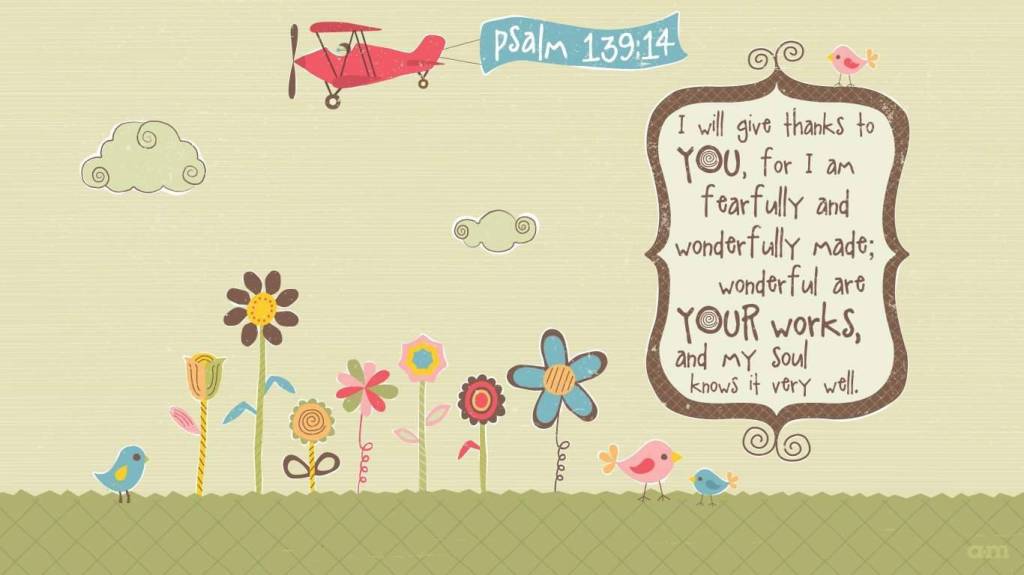
14 I will praise thee; for I am fearfully and wonderfully made:
marvellous are thy works;
and that my soul knoweth right well.

The Word of God for the Children of God.

Adeste Fidelis. Venite Adoremus. Dominum.

Gloria. In Excelsis Deo. Alleluia, Alleluia, Alleluia, Amen.

The Infinite, Personal God

After God flung the galaxies into the vast universe; after He created the sun, earth, and moon, the sea, dry land, plants, and animals, God made humankind.

God made us like himself in many ways—in his image.

He gave us a soul/spirit and a physical body.

Each of us has a heart, a mind, a personality, and power to rule the earth and to make it fruitful and beautiful.

We each have inalienable dignity, something which cannot be taken from us, because we are made in the image of God – in His Image we are fearfully and most wonderfully made – and our hearts, souls ought to know this quite well.

God’s infinite, intimate and personal nature showed itself when the Creator nit just created us but He too, walked and talked with Adam and Eve in the garden.

It showed itself when God came to Abraham as a traveler, ate lunch with him.

God desires to be our friend because He is personal.

At the same time God is infinitely powerful, the Master of the universe who created it all by his word.

What an amazing God we serve!

So great, so mightily amazing—and yet He loves each one of us personally!

Wonderfully Made—and Remade

I praise you because I am fearfully and wonderfully made. . . . Search me, God. . . See if there is any offensive way in me, and lead me in the way everlasting. —  Psalm 139:14, 23-24

These verses from Psalm 139 ought to remind each and every single one of us that while each one of us is a beautiful creation of the Lord, there are likewise offensive ways inside us that need to be dealt with.

After the fall into sin (Genesis 3), we human beings continue to live as precious works of the Creator while also needing to be redeemed from sin, brokenness.

So in his great and amazing love for us, God sent his Son, Jesus Christ, to pay the price for our sin and to give us new life forever with him.

And now the Spirit of God lives in us, guiding us to become like Jesus.

He leads us “in the way everlasting.”

The apostle Paul describes it this way: “I no longer live, but Christ lives in me” (Galatians 2:20), giving each and every single one of us, one of the very clearest statements in the Bible about dying to live.

The fact that we are fearfully and wonderfully made—and remade—leads us to some of the most glorious announcements in Scripture, like this one:

“You are a chosen people, a royal priesthood, a holy nation, God’s special possession, that you may declare the praises of him who called you out of darkness into his wonderful light. Once you were not a people, but now you are the people of God; once you had not received mercy, but now you have received mercy” (1 Peter 2:9-10).

Question of the day: What Does it Mean to Be Fearfully and Wonderfully Made? Psalm 139:14

Psalm 139:14 says that God made all the delicate, inner parts of my body.

He knit me together within my mother’s womb.

I was made Infinitely, Intimately, Wonderfully complex.

God knew me as He was painstakingly designing me with much loving care.

I didn’t just evolve into what I am.

I was created and designed with a purpose.

And the blueprints of me are similar to other human beings but they’re not exactly the same.

I am unique—and so are you.

Our human body is a unique design of multiple systems that all work intricately together.

The cardiovascular system gives you the heart and lungs to pump our blood to carry oxygen through veins and arteries, throughout our whole body to move.

The muscular system gives you the ability to move, lift, and hold things.

The digestive system processes food into energy and discards waste.

The immune system keeps you healthy.

The DNA determines your gender.

The eyes cause you to see.

The nose lets you smell.

The tongue and mouth let you eat and taste.

The ears enable you to hear.

And your skin enables you to feel textures. 

You have the ability to uniquely encounter an incredibly unique diverse world with an equally amazing diverse body!

Then you were also blessed with a brain so you can think, process, and create.

Isaac Asimov said the brain is “the most complex and orderly arrangement of matter in the universe.”

Your emotions help you to relate to other people and feel compassion.

All of these systems (plus many more) were uniquely designed to make you who you are.  

God Created You and Me With Love On Purpose

You have the innate ability to discern right from wrong.

Although, that ability is hindered somewhat until we connect with your Creator.

He didn’t just design you to do your own thing.

He created you so you would desire an ongoing relationship with Him.

You were made with a hole in the center of your soul that only one thing fits.

Until you find that very specific something, you will never be fulfilled.

And that very specific something is God Himself.

You were designed with an intense need of your Creator, God.

Without a relationship with Him, you will always be searching for something to fill that void. 

Drugs, alcohol, food, money, sex, material goods, occupations, hobbies, travel, success, fame—these are just some of the myriad of ways in which we try to fill that empty space inside.

But none of those things will ever, can ever fill it.

They are like round pegs in square holes.

The vacant areas at the edges will still leave you desiring more of something else.

Whatever we attempt to put in there will dissipate because it never completely fills the space.

Those things were never meant to fill the space; they never can.

Sadly, many continue to shove mismatched pegs into that hole.

A little of this, a little of that… hoping that one day they will feel complete.

They surmise that this thing over here didn’t work but maybe this other thing will do it.

They just have not found the one right thing yet but one day they hope they will.

One day…

  • I’ll have enough money to feel safe and secure.
  • I’ll find the perfect spouse that will complete me.
  • I’ll get my dream sports car and life will be grand.
  • I’ll be on television and people will know my name.
  • I’ll be the best in my field and people will scout me out.

“One day” will never come.

If you’re not happy with who you are today, right here and right now, you’ll never be.

You’ll never be happy with who you are today unless you begin to praise God for creating us just as we are – male, female, both fearfully and wonderfully made. [Genesis 1:27]

Stop Looking at Everyone Else, Look Only Unto God

Isaiah 64:7-8Authorized (King James) Version

And there is none that calleth upon thy name,
that stirreth up himself to take hold of thee:
for thou hast hid thy face from us,
and hast consumed us, because of our iniquities.
But now, O Lord, thou art our father;
we are the clay, and thou our potter;
and we all are the work of thy hand.

When you do finally realize that without God you are unable to make the most of yourself, that’s when those things of old subtly, suddenly begin to change.

The clay cannot mold itself no matter how hard it tries.

However, God, the Potter, cannot only mold His clay but He also knows what His original design of you was.

He is both a Master Potter and a Master Architect with an Infinite Master Plan.

Sometimes in this fallen world, people are born with birth defects that disrupt one or more of the intricate systems of the body.

God foresaw even those defects and uses them for good when we look to Him. 

Even our weaknesses are fearfully and wonderfully made. [2Corinthians 12:7-10]

A blind person can develop hearing beyond the normal capacity.

Conjoined twins can teach us about getting along with one another, for they have to do it 24/7.

Someone born without arms develops the ability to use their feet in wondrous ways.

Another born without legs develops the upper body strength to get around smoothly.

We all have weaknesses that sometimes make us feel like we are of no use.

But God’s grace is sufficient to cover our weaknesses.

More than that, God’s power is made perfect in our weaknesses.

Weaknesses keep me humble and leaning on God’s strength which is much more sufficient than my own.

One More Question for Today: Should I always feel like I am “Fearfully and Wonderfully” made?

No. Sin and pride always want to drag me back into my own way of thinking.

The same thinking that kept me reaching for those mismatched pegs.

Those thoughts tell me that I can do whatever I want, by myself, without God.

They lie and they don’t even make sense.

They say I can do anything but then turn around and also say that I’m not good enough to do what I want to do.

Feelings can’t be trusted unless they line up with the Word of God.

And the Word of God tells me that I’m fearfully and wonderfully made for a specific purpose.

Therefore, with God’s help, I will love walking in that purpose as often as I can.

Whether I always feel it or not, I can trust God and His plans for my very life.

“For we are God’s masterpiece. He has created us anew in Christ Jesus, so we can do the good things he planned for us long ago.” (Ephesians 2:10)

God doesn’t call us his children because we measure up to some standard of behavior.

God adopts us as his children because he has chosen us in love.

It’s that simple.

The Apostle Paul wrote,

“Because of his great love for us, God, who is rich in mercy, made us alive with Christ even when we were dead in transgressions—it is by grace you have been saved.”

In other words, God created us, fearfully, wonderfully, weaved us together.

God made us alive in Christ before there was any spiritual fruit in our lives!

We were as good as dead before God’s grace touched our lives, and dead trees certainly can’t bear any fruit.

Soil that has no nutrients isn’t any good for growing a crop.

It’s not the growth of fruit in our life that saves us; it’s simply the gracious favor of our Creator God shown to us in the life, resurrection of his Son, Jesus.

Our God is an Awesome God.

With Wisdom Power and Love,

He Reigns from Heaven Above,

With Wisdom, Power and Love,

Our God is an Awesome God.

In the name of God, the Father and God the Son and God the Holy Spirit,

Dear Lord, Thank You for fearfully and wonderfully creating each of us. Thank You for our uniqueness, thank You for giving us worth in Your eyes. Help us live as the one You uniquely intended us to be. Help us abide instead of strive, living peacefully, fully and joyfully as heirs to Your Kingdom and co-heirs with Christ. In Jesus’ Name.

Adeste Fidelis. Venite Adoremus. Dominum.

Gloria. In Excelsis Deo. Alleluia, Alleluia, Alleluia, Amen.

https://translate.google.com/

What Does it Really Look Like to ‘Honor Your Father and Mother’? Exodus 20:12, Deuteronomy 5:16

    Honoring your father and your mother is the only commandment out of the Ten Commandments that is followed by a promise, Honor your father and your mother, as the Lord your God has commanded you, that your days may be long, and that it may be well with you in the land which the Lord your God is giving you. (Deuteronomy 5:16)

    Exodus 20:12Amplified Bible

    12 “Honor (respect, obey, care for) your father and your mother, so that your days may be prolonged in the land the Lord your God gives you.

    The Word of God for the Children of God.

    Adeste Fidelis. Venite Adoremus. Dominum.

    Gloria. In Excelsis Deo. Alleluia, Alleluia, Alleluia, Amen.

    Most Christians are very familiar with the verse “honor your father and mother”, but few actually know of it’s origin in the Bible.

    The command to honor your father and mother actually comes from the Old Testament book of Exodus 20 in the story of the 10 Commandments.

    However, it is also a command that is repeated several times in both the Old and New Testament. 

    Chapter 20 of the Book of Exodus serves as a powerful reminder of the intimate relationship God has with humankind.

    This passage specifically reveals the intense care and concern that God shows toward His Children.

    Today this chapter remains popular because of a very special occurrence – the Ten Commandments.

    At eighty plus years old, after venturing up to Mount Sinai, Moses, a father, brought down the Ten Commandments, rules given Him directly from God.

    The Ten Commandments described ten precepts for how God expected His people to behave.

    This monumental moment follows after the Israelites fled Egypt. 

    Chapter 19 in the Book of Exodus details how the Israelites camped in the wilderness, now living a life outside of slavery for a few months.

    God informs Moses that He desires to bless the nation of Israel.

    However, He also wants them to keep a covenant with Him (Exodus 19:5-6).

    The Ten Commandments serve as part of that covenant.

    One of these commandments spoke to the relationship between a child and parent and is a guideline we as Christians still ought to be following today.

    Exodus 20:12The Message

    12 Honor your father and mother so that you’ll live a long time in the land that God, your God, is giving you.

    The reason this commandment in addition to the other nine is still relevant today is because Jesus indicated such to later believers (Matthew 5:17-20).

    Jesus did not abolish the law, but rather came to fulfill it.

    The Apostle Paul wrote to the followers at the church at Ephesus;

    Ephesians 5:1-2 Amplified Bible

    Be Imitators of God

    Therefore become imitators of God [copy Him and follow His example], as well-beloved children [imitate their father]and walk continually in love [that is, value one another—practice empathy and compassion, unselfishly seeking the best for others], just as Christ also loved you and gave Himself up for us, an offering and sacrifice to God [slain for you, so that it became] a sweet fragrance.

    We are to do our part yet today in abiding in Jesus, by these commandments.

    Today, I do not believe there is little to no controversy about whether or not the Ten Commandments are still relevant.

    What has been up for rather contentious debate in the meaning of “honor” in the context of parents and children.

    There are many instances of children being the victims of incest, abandonment, neglect, or other severe and seriously exploitive forms of ultra damaging abuse.

    In these situations, how does a child honor a parent, when the parent lacks any concept or context of abiding in God, His Son Jesus and have honor for the child.

    To understand this commandment, we have to examine the original context.

    What Is the Original Meaning of Honor Your Father and Mother in Exodus 20?

    The commandment to honor our father and mother is the fifth of the ten mentioned.

    The commandment to precedes this one is honoring the Sabbath, followed by the commandment to not murder.

    Scripture explains the reason why the commandment should be followed.

    Exodus 20:12Amplified Bible

    12 “Honor (respect, obey, care for) your father and your mother, so that your days may be prolonged in the land the Lord your God gives you.

    The benefit of abiding by this commandment is longer life, specifically for the Israelites venturing on toward the Promised Land.

    Dennis Prager [https://dennisprager.com/] emphasizes that though this could be viewed as a reward, this is also a reason.

    And many of the other commandments are not given explicit reasons to be followed.

    Prager suggests in a society where parents are honored by children, the society is bound to survive longer, than a society with a weaker family structure.

    This commandment in Exodus is mentioned a number of other times in the Bible, each time as an admonishment to God’s people to better establish them. 

    Deuteronomy 5:16 tells us, “Honor your father and your mother, as the LORD your God has commanded you, so that your days may be long and that it may go well with you in the land that the LORD your God is giving you.”

    Ephesians 6:2 states: “Honor your father and mother” – which is the first commandment with a promise”

    God blesses the people when their parents are honored, but the people are punished when they do not.

    To honor is to hold someone in high regard or reverence.

    The word honor does not mean agree with or even obey, but does suggest in this context a child should hold the highest utmost respect for both of their parents.

    Now that we better understand the original context and interpretation of the commandment to honor thy mother and father, we can try to discern how this precept applies to modern-day life.

    How Can Christians ‘Honor Your Father and Mother’ Today?

    With an understanding of the word honor, there need not be a change in how parents are respected by children today.

    However, with modern cultural shifts, this commandment for some has taken on a different interpretation.

    We can perhaps better, more prayerfully understand the proper ways of honoring parents by first understanding how honoring should not appear.

    As Dennis Prager discusses in his video analysis of the commandment, some parents yearn to be loved, rather than honored.

    The visual example given in his video is that of a parent showering their child with gifts in order to receive affection.

    This same parent when trying to discipline their child instead receives severe retaliation from them.

    This is definitively not an example of a child honoring their parent because instead of respecting them as an “authority” figure, they are simply seeking what else, exactly how much more they can manipulate, gain from the parent.

    Much like the Bible commands us to love others, the call to honor our parents is an outward action – something we do for others.

    Honoring our parents is therefore not contingent upon what they give in return.

    Within the Ten Commandments, verse 12 of Exodus 20 gives no clarification as to what parents are to be honored or even how.

    We can conclude then that all parents are deserving of honor, and we can use the context of love within the Bible to discern appropriate ways to show honor.

    We can even in some instances see how people have honored God as Father as an example.

    Ways we can appropriately honor our parents include:

    Expressing Gratitude
    Parents invest time and effort into raising children.

    Those reasons alone are enough to show them gratitude for the sacrifices they make.

    Parents provide shelter, food, clothing.

    For every action they do in their support of their child is in itself a far more than sufficient reason for expressing their appreciation and gratitude.

    Spending Time Together
    When physically possible, children can and should get together with their parents.

    This acknowledges their existence and places a level of importance upon the relationship.

    If being together physically is not an option, calling a parent on the phone for a check-in is also beneficial.

    Dennis Prager shares with fellow believers he called his parents once a week.

    Serve
    Another way for children to honor their parents is to find creative ways to serve their desires, wants and needs, much like parents perform on behalf of children.

    To Honor or Not to Honor

    It goes without saying and preaching to the choir that modern parenting is not equivalent to the parenting in ancient biblical Jewish culture.

    Children today learn differently and have certain responsibilities such as owning a cell phone [I never did], which was not true for past generations.

    No matter the time, parents should always be honored.

    One concern followers, nonbelievers have with the commandment is the issue of bad parents, individuals who have abused their children by various means.

    The Bible does not qualify which parents deserve honoring.

    Additionally, Jesus mentions we are to love others as ourselves (Matthew 22:39) and to bless those who persecute us (Romans 12:14).

    We, therefore, know that even when seemingly impossible, we should all do our best to express love for our parents, our children as we express love for our God.

    This fifth commandment, however, does not advocate for putting ourselves in danger with bad parents.

    Applying this commandment for children who have been abused will look different in terms of how they show their honoring.

    Spending time together may be an impossibility but talking on the phone or writing a letter could prayerfully be an option depending on the circumstance.

    Sometimes we have to set boundaries in relationships, and whenever that is the case we have to pray unto our ABBA God for wisdom, so that we may honor His commandment and honor our parents while keeping ourselves safe (James 1:5).

    There are no easy or set human answers how to be complete, perfect parents.

    As Mom’s and Dad’s together …

    The very best we can do is diligently consult the Word of God for His Children.

    Study it …

    Like Jesus did, intentionally plumb its depths, its ways, its truths and its life.

    Pray without ceasing over every aspect of it, revelation from it …

    Koinonia, Fellowship with our ABBA Father, His Son Jesus, Holy Spirit, other Parents …

    Finally,

    Be Still, Be Quiet, know only God is God, and can, should be, exalted as God.

    Matthew 6:25-33New King James Version

    Do Not Worry

    25 “Therefore I say to you, do not worry about your life, what you will eat or what you will drink; nor about your body, what you will put on. Is not life more than food and the body more than clothing? 26 Look at the birds of the air, for they neither sow nor reap nor gather into barns; yet your heavenly Father feeds them. Are you not of more value than they? 27 Which of you by worrying can add one [a]cubit to his [b] stature?

    28 “So why do you worry about clothing? Consider the lilies of the field, how they grow: they neither toil nor spin; 29 and yet I say to you that even Solomon in all his glory was not [c]arrayed like one of these. 30 Now if God so clothes the grass of the field, which today is, and tomorrow is thrown into the oven, will He not much more clothe you, O you of little faith?

    31 “Therefore do not worry, saying, ‘What shall we eat?’ or ‘What shall we drink?’ or ‘What shall we wear?’ 32 For after all these things the Gentiles seek. For your heavenly Father knows that you need all these things. 33 But seek first the kingdom of God and His righteousness, and all these things shall be added to you.

    In the name of God, the Father and God the Son and God the Holy Spirit,

    Let us Pray,

    Heavenly Father, thank You for my parents and for giving me life. Thank You for the pleasant and harsh lessons I have learned and the good times and the bad we have shared together. Forgive me for the times when I have not sufficiently honored my father and mother as I ought – for I am now acutely aware that this is dishonoring to You. From this day forward, I pray that I should honour You in all my interactions with my own family and with my friends, and may my life be honoring to You.

    Adeste Fidelis. Venite Adoremus. Dominum.

    Gloria. In Excelsis Deo. Alleluia, Alleluia, Alleluia, Amen.

    https://translate.google.com/

    “It is For God Alone My Soul Waits in Silence.” Psalmists Invitation to Pray a Prayer of Rest for Our Sabbath Days. Psalm 62. 

    Psalm 62 The Message

    62 1-2 God, the one and only—
        I’ll wait as long as he says.
    Everything I need comes from him,
        so why not?
    He’s solid rock under my feet,
        breathing room for my soul,
    An impregnable castle:
        I’m set for life.

    3-4 How long will you gang up on me?
        How long will you run with the bullies?
    There’s nothing to you, any of you—
        rotten floorboards, worm-eaten rafters,
    Anthills plotting to bring down mountains,
        far gone in make-believe.
    You talk a good line,
        but every “blessing” breathes a curse.

    5-6 God, the one and only—
        I’ll wait as long as he says.
    Everything I hope for comes from him,
        so why not?
    He’s solid rock under my feet,
        breathing room for my soul,
    An impregnable castle:
        I’m set for life.

    7-8 My help and glory are in God
        —granite-strength and safe-harbor-God—
    So trust him absolutely, people;
        lay your lives on the line for him.
        God is a safe place to be.

    Man as such is smoke,
        woman as such, a mirage.
    Put them together, they’re nothing;
        two times nothing is nothing.

    10 And a windfall, if it comes—
        don’t make too much of it.

    11 God said this once and for all;
        how many times
    Have I heard it repeated?
        “Strength comes
    Straight from God.”

    12 Love to you, Lord God!
        You pay a fair wage for a good day’s work!

    The Word of God for the Children of God.

    Adeste Fidelis. Venite Adoremus. Dominum.

    Gloria. In Excelsis Deo. Alleluia, Alleluia, Alleluia, Amen.

    Psalm 62 … God and God Alone is Our Only Rest and Salvation

    When you wait on God, you find He is your salvation and provider of all you need. Only God can fill the need of your soul.

    Your Salvation

    If you are like me, my first response when faced with a significant problem is to gather up all my resources and do everything I can to fix it.

    The bigger the problem, the more frantic and anxious I become.

    King David wrote this psalm during a particularly difficult time in his life.

    He was facing constant attacks from his son, who was trying to overthrow his rule as king.

    Instead of gathering his army and advisors, the first thing he did was go to the Lord.

    David understood that trusting in men was foolish.

    It was not about his strength or wisdom but God’s deliverance.

    David saw God as his only true source of salvation.

    He stopped everything to get with the Lord.

    David didn’t come to God with loud cries or pleas for help.

    He came to God in silence.

    He waited before the Lord without speaking.

    When I face a problem, I want to tell God all about it.

    Too often, I come before Him filled with fear and anxiety.

    David came before God in complete rest. 

    David had a quiet confidence that God would see him through. 

    So often, we think prayer is about what we say and how we say it.

    If we can just use the right words, God will surely see our needs and answer our prayers.

    David understood it was not about his words but his faith.

    When you set your mind and soul to wait silently before the Lord, it’s not only an expression of your openness to God but a complete dependence on Him.

    Salvation and deliverance are always gifts of grace from God and God alone.

    David didn’t trust in his strength or the wisdom of others.

    He didn’t panic and try to fix everything.

    He went to the source of his salvation and waited silently for Him to provide.

    One of the great truths of life—if not perhaps the greatest truth—is that when all else fails, when everything else falls apart, there is one and only one person on whom you and I and everyone else can absolutely rely.

    And that person is not yourself: it is God. God and God alone.

    That is the theme of this psalm. “For God alone my soul waits in silence” (62:1).

    “He alone is my rock and salvation” (62:2).

    “For God alone, O my soul, wait in silence” (62:5).

    “He alone is my rock and my salvation” (62:6).

    “Yes, my soul, find rest in God; my H.O.P.E. comes from him.” Psalm 62:5

    As Christians, we are called to hope.

    Not wishful thinking, imagining things, or pining for better days.

    Hope.

    Hope is not a pipe dream or a fairy tale.

    It is a strong action instead of a reaction.

    Hope is always alive in Christ Jesus, Our Lord and Savior.

    When we choose to live in Christ Jesus …

    When we choose to live and choose live in our Savior’s complete hope we:

    H – Heed His Word.
    Hang onto encouraging verses in Scripture in times of trouble, stress or doubt. Recall His promises, read, mark and memorize helpful verses, and repeat them often.

    O – Obey.
    Sometimes we have to do things simply because someone in authority says so. If we can trust God and obey, then in hindsight we may look back and see more clearly why He told us.

    P – Pray.
    Instead of fretting, if we can drop to our knees and lay it at the cross we will find an inner peace which, as Paul states, surpasses our understanding. Much better than jogging in a hamster wheel of worry and churning it over and over in our minds. Pray, lay it down, walk away.

    E – Expect.
    The more we rely on God’s promises and His timing, then experience will show us things work out for the best when we “let go and let God” handle it.

    So pry your fingers off the situation and relax.

    A Prayer for the Sabbath – Your Daily Prayer

    Exodus 20:8-11 Amplified Bible

    “Remember the Sabbath (seventh) day to keep it holy (set apart, dedicated to God). Six days you shall labor and do all your work, 10 but the seventh day is a Sabbath [a day of rest dedicated] to the Lord your God; on that day you shall not do any work, you or your son, or your daughter, or your male servant, or your female servant, or your livestock or the temporary resident (foreigner) who stays within your [city] gates11 For in six days the Lord made the heavens and the earth, the sea and everything that is in them, and He rested (ceased) on the seventh day. That is why the Lord blessed the Sabbath day and made it holy [that is, set it apart for His purposes].

    Rest is so important to God that he put it in the Ten Commandments.

    He wants you to take a day off every week.

    That’s called the Sabbath, which literally means a day of rest, and God wants us to do it every seventh day.

    The day isn’t important.

    It doesn’t have to be a certain day, just every seventh day.

    It’s so important that even God rested on the seventh day when he created everything — not because He was tired but to give us the ultimate example of how we should be more like God and take that gift of the seventh day to rest.

    What do you do on this Sabbath day to actually have it be a day of rest?

    1. Rest your body.

    God has made us so that we need rest.

    If your car engine heat light were showing red, you would stop because you would know it’s going to damage the engine.

    God says if you don’t take one day out of seven to rest, if you keep pumping the adrenaline all day, every day, seven days a week, your engine is going to break.

    So for your heart to be at its best, your body, mind and soul all requires rest.

    You have to take the time to rest.

    2. Recharge your emotions.

    Just Be Still and Know only God can be, and is God … Psalm 46:10-11

    Just be quiet before the Lord!

    David’s Prayer

    18 Then King David went in and sat [in prayer] before the Lord, and said, “Who am I, O Lord [a]God, and what is my house (family), that You have brought me this far? 19  Yet this was very insignificant in Your eyes, O Lord God, for You have spoken also of Your servant’s house (royal dynasty) in the distant future. And this is the law and custom of man, O Lord God. 20 What more can David say to You? For You know (acknowledge, choose) Your servant, O Lord God. [2 Samuel 7:18-20 AMP]

    Like King David, take time for God, just sit still, be quiet before the Lord God.

    Maybe you need to reconnect in your relationships.

    Maybe there’s some kind of recreation that rejuvenates you.

    I’m not talking about competitive recreation.

    Some of you are not recharging your emotions out on the golf course.

    You are just getting angry at your golf clubs or at the other guys golf clubs!

    3. Refocus your spirit.

    During your Sabbath, you do not take a day off from God.

    You worship!

    Worship puts life into perspective.

    If you’re too busy for God, you’re just too busy.

    To make this happen, you have to schedule it. 

    Psalm 127:2 “It’s useless to rise early and go to bed late, and work your worried fingers to the bone. Don’t you know he enjoys giving rest to those he loves?” (MSG)

    God enjoys giving rest to those he loves.

    Be intentional about taking your Sabbath, and make it count!

    62 1-2 God, the one and only—
        I’ll wait as long as he says.
    Everything I need comes from him,
        so why not?
    He’s solid rock under my feet,
        breathing room for my soul,
    An impregnable castle:
        I’m set for life.

    5-6 God, the one and only—
        I’ll wait as long as he says.
    Everything I hope for comes from him,
        so why not?
    He’s solid rock under my feet,
        breathing room for my soul,
    An impregnable castle:
        I’m set for life.

    11 God said this once and for all;
        how many times
    Have I heard it repeated?
        “Strength comes
    Straight from God.”

    12 Love to you, Lord God!
        You pay a fair wage for a good day’s work!

    be quiet, sit still, Make these confessions.

    • My salvation comes only from the Lord.
    • When I face troubles, I look to the Lord.
    • It’s not about my words but about God’s grace.
    • I will sit still in the Presence of God my Savior.
    • I will wait quietly before the God of my salvation.
    • I will shut my mouth, close both my eyes and open my ears.

    Thanksgiving for the Lord’s Favor.

    A Psalm of David.

    138 I will give You thanks with all my heart;
    I sing praises to You before the [pagan] gods.

    I will bow down [in worship] toward Your holy temple
    And give thanks to Your name for Your lovingkindness and Your truth;
    For You have magnified Your word together with Your name.

    On the day I called, You answered me;
    And You made me bold and confident with [renewed] strength in my life.


    All the kings of the land will give thanks and praise You, O Lord,
    When they have heard of the promises of Your mouth [which were fulfilled].


    Yes, they will sing of the ways of the Lord [joyfully celebrating His wonderful acts],
    For great is the glory and majesty of the Lord.

    Though the Lord is exalted,
    He regards the lowly [and invites them into His fellowship];
    But the proud and haughty He knows from a distance.


    Though I walk in the midst of trouble, You will revive me;
    You will stretch out Your hand against the wrath of my enemies,
    And Your right hand will save me.


    The Lord will accomplish that which concerns me;
    Your [unwavering] lovingkindness, O Lord, endures forever—
    Do not abandon the works of Your own hands.

    Have faith God will see you through it, and claim His promise as your own.

    In the name of God the Father and God, the Son and God the Holy Spirit,

    Let us Pray,

    Father God, let us always choose to hope in You instead of fretting, or getting stressed over things we have no control over. Replace our qualms with quiet, our fears with faith, and our worries with wisdom. Dear Lord, help us make every Sabbath about you alone. Quiet my heart, give rest to my soul, refocus my spirit—for true renewal, true revival, comes only from you. Holy Spirit please help me to be intentional with my time and worship, and encourage me to find rest in you alone. In Jesus’ name. 

    Adeste Fidelis. Venite Adoremus. Dominum

    Gloria. In Excelsis Deo. Alleluia, Alleluia, Alleluia, Amen.

    https://translate.google.com/

    Lenten Preparation for Repentance: When Our Defenses Crumble, Where Will We Run to take Refuge? Psalm 11

    Psalm 11 Amplified Bible

    The Lord a Refuge and Defense.

    To the Chief Musician. A Psalm of David.

    11 In the Lord I take refuge [and put my trust];
    How can you say to me, “Flee like a bird to your mountain;

    For look, the wicked are bending the bow;
    They take aim with their arrow on the string
    To shoot [by stealth] in darkness at the upright in heart.

    “If the foundations [of a godly society] are destroyed,
    What can the righteous do?”


    The Lord is in His holy temple; the Lord’s throne is in heaven.
    His eyes see, His eyelids test the children of men.

    The Lord tests the righteous and the wicked,
    And His soul hates the [malevolent] one who loves violence.

    Upon the wicked (godless) He will rain coals of fire;
    Fire and [a]brimstone and a dreadful scorching wind will be the portion of their cup [of doom].

    For the Lord is [absolutely] righteous, He loves righteousness (virtue, morality, justice);
    The upright shall see His face.

    The Word of God for the Children of God.

    Adeste Fidelis. Venite Adoremus. Dominum.

    Gloria. In Excelsis Deo. Alleluia, Alleluia, Alleluia, Amen.

    What does it mean to ‘rend the heart,’ and not just the clothing?

    Much more than simply giving a whole array of apologies for bad behaviour.

    David the Psalmist is urging the people to remember God’s covenant promises.

    It’s easy to make outward shows of penitence without reaching inward to the heart.

    David calls for the same depth of repentance which Jesus calls for.

    To that end, as we once again prepare ourselves for tomorrow, Ash Wednesday for me to reminds each of us that Lent is so very much more than simply a time apologize for our “weaknesses” so just to ‘get my life back on track,’ as it were.

    Lent is a time of focusing what ought to be our habit of seeing the heart anyway.

    Above all, Lent reminds us of the character of God, which we all too easily lose sight of when we stray from those habits of the heart: forgiving and gracious, merciful and compassionate, slow to anger and abounding in steadfast love.

    But, once we commit ourselves to the works of God, the Father, Son and Holy Spirit, once we send our hearts into engaging with the sword of God’s Word,

    It is promised by the Lord that changes and transformations will take place.

    When those changes and transformations start and God is getting under our skins, into our souls, there is no stopping God from achieving His desired ends.

    It is only a matter of choosing our desired response – run to self or run to God.

    Build our own Castles, taking safe refuge in our own self defense mechanisms, or as the Prophet Isaiah predicted would one day have to happen to humanity;

    Isaiah 2:2-5Amplified Bible


    Now it will come to pass that
    In the last days
    The mountain of the house of the Lord
    Will be [firmly] established as the [a]highest of the mountains,
    And will be exalted above the hills;
    And all the nations will stream to it.


    And many peoples shall come and say,
    “Come, let us go up to the mountain of the Lord,
    To the house (temple) of the God of Jacob;
    That He may teach us His ways
    And that we may walk in His paths.”
    For the law will go out from Zion
    And the word of the Lord from Jerusalem.


    And He will judge between the nations,
    And will mediate [disputes] for many peoples;
    And they will beat their swords into plowshares and their spears into pruning hooks.
    Nation will not lift up the sword against nation,
    And never again will they learn war.


    O house of Jacob, come, let us walk in the light of the Lord.

    In our hearts an in our souls …

    The Mountain of the Lord is firmly established as the Highest Mountain.

    When the people say … come, let us go up to the Mountain of the Lord,

    To the House of the God of Jacob;

    That He may teach us His ways …

    That we may walk in His paths…”

    Then the Revival of our Hearts and our Souls may truly have their re-birth.

    O’ House of Jacob …

    O’ Body of Christ …

    O’ Child of God …

    COME …

    Choose This Day Where You Should Run For Refuge

    11 In the Lord I take refuge [and put my trust];
    How can you say to me, “Flee like a bird to your mountain;
    [Psalm 11:1]

    When it comes to degrees and measures of crises in our life, it is not a matter of whether they will come but when and then just how hardcore they will be.

    When they do arrive in whatever capacity and catastrophe, our response will be to flee to a safe refuge— a safe haven somewhere or something or someone we implicitly trust will keep us safe and protect us from all the pounding storms.

    So the question then will not be whether we will flee but where we will flee to.

    Some of us will take the advice of David’s friends in Psalm 11.

    These advisors urged him to “flee like a bird to your mountain.”

    Difficulty had come for David, seemingly in the form of threats to his life, with wicked people preparing to aim their arrows at him (Psalm 11:2).

    The counsel he received was essentially to head for the hills, to get away, to go somewhere that removed him from adversity as fast as he could if not faster.

    David did not heed this advice.

    But what about you?

    But what about me?

    While you and I likely will never face armed foes threatening you with violence, and for those whose lives intersected with combat zones, crisis will come to you someday, in one form or another, in some measure and some degree or another.

    It could be social pressure, peer pressure, to compromise biblical convictions, an unwanted diagnosis, or intense relational or financial or an personal strife.

    Where will you flee?

    Where will I flee?

    Will we too head for the hills, finding some form of escapism, be it an effort at numbing yourself with endless media consumption or abusing a substance, or throwing yourself into hyperdrive, frenetic activity in another part of your life?

    Or will you and I be able to say with David, “In the LORD I take refuge”?

    David had seen God deliver him from bears, lions, and a Philistine giant.

    The Lord had more than sufficiently proven Himself to be a trustworthy refuge, and David remembered those moments and took that to heart, relying on God.

    David knew the Lord was a mighty refuge; that had been borne out again and again in his life – his trust in God was grounded and rooted deep in experience, making it sturdy enough to withstand life’s darkness and the Evil One’s darts.

    Have your eyes been opened to God’s trustworthiness?

    Have you trusted Him in response?

    If you are a Christian, remember that your new life began by taking refuge in the Lord Jesus Christ.

    Once, you were facing the wrath of an eternal God, with no hope to be found.

    The only hope you had was to cast yourself on God’s mercy and embrace the salvation offered in Christ, and so you fled to Him and found eternal refuge.

    God desires for you and me to seek refuge in Him not only at the beginning of the journey but until Christ returns or calls us home, and not only for eternal salvation but in the measures and degrees of storms of this concourse of life.

    Trouble will come—and when it does, you can either head for the hills or you can lift up your eyes beyond the hills and to the Lord “who made heaven and earth” (Psalm 121:2), facing the crisis with 100% confidence and, yes, even joy.

    100% Trust, Confidence and yes, even Joy … in God, the Father.

    100% Trust, Confidence and yes, even Joy … in God, the Son.

    100% Trust, Confidence and yes, even Joy … in God, the Holy Spirit.

    In the name of God, the Father and God the Son and God the Holy Spirit,

    Let us Pray,

    Lord God Almighty, shaper and ruler of all creatures, we pray for your great mercy, that you guide us towards you, for we cannot find our way. And guide us to your will, to the need of our soul, for we cannot do it ourselves. And make our mind steadfast in your will and aware of our soul’s need. Pray, Lord, to shield us against our foes, seen and unseen. Teach us to do your will, that we may inwardly love you before all things with a pure mind. For you alone are our maker and our redeemer, our help, our very best friend, comfort, our trust, our hope; praise and glory be to you now and forever.

    Adeste Fidelis. Venite Adoremus. Dominum.

    Gloria. In Excelsis Deo. Alleluia, Alleluia, Alleluia, Amen.

    https://translate.google.com/