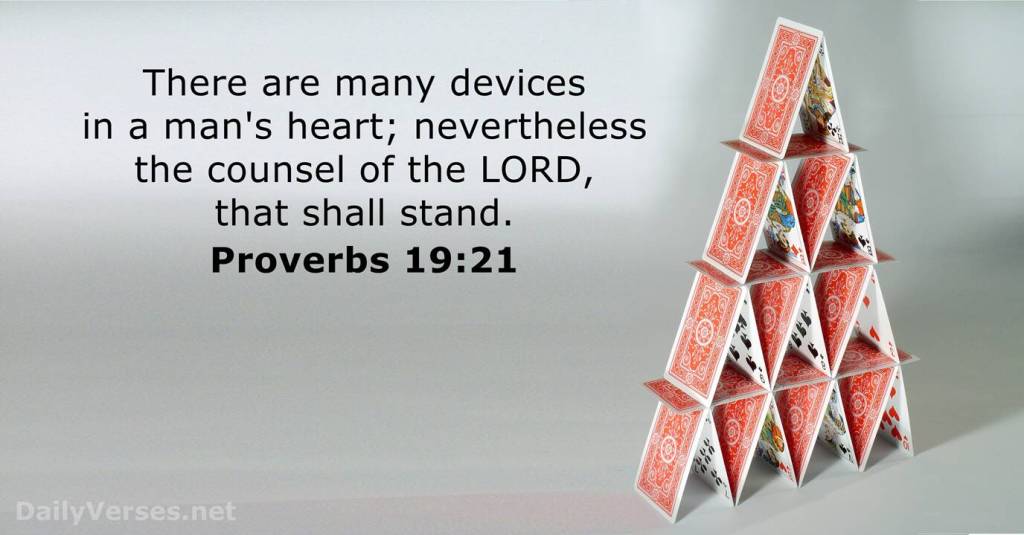
Authentically, Genuinely, Faithfully, Following God and Graduating Into Our God’s Life Long Desires for Us. Proverbs 19:20-21

It is graduation season.

It is a time for celebrating God and celebrating families, celebrating what we have learned and the prospect of living into our life’s dreams and aspirations for our soon to future.

Every true follower of Jesus Christ says he wants to do the will of God, yet most Christians think of God’s will as something that is imposed on them — something distasteful and difficult that they are forced to do.

They picture God demanding that they give in to a hard set of rules and conditions: “Do it my way or you’re on your own!”

How very wrong they are.

When a believer knows the glory of doing the Lord’s perfect will, he embraces it with joy and hope. To embrace means “to clasp, as in your arms” as an expression of love and affection.

God’s will is not just for ministers or deeply spiritual saints, but for all his children.

The New Testament exhorts us, “[God makes] you complete in every good work to do His will, working in you what is well pleasing in His sight” (Hebrews 13:21).

God desires that you enter into his plan and will today.

The early apostles had one desire for all the churches — that every single member know God’s perfect will and embrace it.

Paul wrote of a brother named Epaphras “who is one of you, a bondservant of Christ … always laboring fervently for you in prayers, that you may stand perfect and complete in all the will of God” (Colossians 4:12).

Epaphras knew God had a perfect will for everyone in the congregation and that if they entered into it, they would find joy and have their needs met.

Christ told his disciples, “I do not seek My own will but the will of the Father who sent Me” (John 5:30).

“For I have come down from heaven, not to do My own will, but the will of Him who sent Me” (6:38).

There was never a moment in Jesus’ life when he wasn’t aware that his purpose on earth was to do the will of the Father. And this ought to be true of you and me as well.

Once you and I explore, discover, then embrace the will of God, something incredible happens—Jesus manifests himself to you and me in new ways!

Proverbs 19:20-21 The Message

20 Take good counsel and accept correction—
    that’s the way to live wisely and well.

21 We humans keep brainstorming options and plans,
    but God’s purpose prevails.

The Word of God for the Children of God.

Adeste Fideles! Laeti Triumphantes! Venite Adoremus! Dominum.

Gloria! In Excelsis Deo! Alleluia, Alleluia, Alleluia, Amen.

Life Is No Different than Building a Mansion of Cards

Proverbs 19:20-21 Amplified Bible

20 
Listen to counsel, receive instruction, and accept correction,
That you may be wise in the time to come.
21 
Many plans are in a man’s mind,
But it is the Lord’s purpose for him that will stand (be carried out).

We all have dreams and high aspirations for our lives.

Now that Graduation season is upon us in full force, dreams and aspirations are practically all that is being talked about, dreamt about, extensively planned out.

Some may dream of being a ballerina, a singer, an actress, a teacher, a doctor or a lawyer, successful business person, an accountant, a nurse or a social worker.

As many jobs and opportunities as there are, possibilities are literally endless.

As many careers and career paths there are we are only too limited by ourselves.

If you can think of it, they say, you can quite literally do anything when you put your heart, body, soul, mind and strength and resources to do that something.

High School and College students are often encouraged to have a 5-year or 10-year plan for their life, a backup plan if their first career goal doesn’t happen.

No matter what our age group, we all have dreams and aspirations we have high hopes of accomplishing – being successful, going into business for ourselves.

We do not want to be stagnant nor stagnated in our career paths – we deeply desire to prosper at what we set out to do in life and we will work very hard.

Sometimes we get the itch to try dream higher, aspire higher, to something completely different, something more exciting and challenging and fun too.

We will then plan our resources to go back into school for new career paths.

New vocational opportunities are always presenting themselves at various points in our life – we consider them – then decide on if it is the right time.

Ultimately, we are encouraged to go for our dreams and not to be distracted. 

But what happens when we struggle, when our dreams are slow or slower to develop to bear our desired fruits, or slowed or in the end, do not come true?

Is all hope lost?

Should we just give up on our dreams and aspirations and throw in the towel?

Should we necessarily settle for a life dream far less than what we imagined?

I believe that depends on your perspective – worldly view or heavenly view.

There is a transition going on here which we may not be fully appreciating.

Aside from high school or university guidance and career counselors, are we “faithfully” making our own plans without consulting our faithful God first?

Are we faithfully praying to the Lord, asking Him to align our will with His?

As parents or step parents or grandparents of these new graduates, are any of us faithfully counselling the graduate to pray or are we praying with, for them?

The Bible says, “But seek first his kingdom and his righteousness, and all these things will be given to you as well” (Matthew 6:33 NIV).

Are we teaching our children from the Word of God about making wise choices?

Are we teaching our children from the Word of God about making hard choices?

Are we teaching our children from the Word of God the meaning, the wisdom of and behind the admonition of Jesus: “let your YES be YES and your NO be NO?”

Are we teaching children from the Word of God about God’s wisdom over ours?

Over-all, are parents teaching their children about life from the Word of God?

I believe those things include teaching children about the dreams of our hearts.

Then again, are we teaching and admonishing each other from the Word of God as adults to adults from and within whatever age groups these biblical truths?

How to raise children (of whatever their ages are) in the “way they should go?”

Teenagers are still somebody’s children and have to navigate an extraordinary level of life’s complexities – as do the young adults in their college age years.

Even more mature adults well into their careers and family’s require parental guidance from time to time as they make their own major life path decisions.

However, as much as our own life lessons taught us about pursuing our dreams, for graduates, it can be a great adventure that will only work if we put God first. 

A few days ago, I remembered I heard a sermon from Pastor Steven Furtick.

In it, he said something that still resonates with me today.

When I heard it a few years ago, I recall in so many words, he explained,

“The Bible doesn’t tell us to follow our dreams. It tells us to follow God!” 

After many fruitless efforts of trying it on my own, I found that to be true.

Raised in the USA, I have always heard phrases like, “Follow your heart” and “No pain – No Gain” “Take your passion and by all means, make it happen!” 

But the older I got, the more I remembered my life’s “best efforts” then recalled how the Bible says that “the heart is deceitful above all things” (Jeremiah 17:9).

So, why are we so focused on what our heart desires?

The circumstances of life can change in less time than it takes for one heartbeat.

In the time it takes for us to take one short or long breath, our world, our own dreams, our own aspirations are undone, thoroughly being turned upside down.

Just ask the Patriarch Abram when He was commanded to leave his home and his family behind for some far off place which he had not one single clue where.

Just ask the Patriarch Job whose entire life was upended.

Just ask the Patriarch Noah when all of a sudden God told him to build an ark of immense proportions and do it alone- Did Noah possess those carpentry skills?

Just ask the Prophet Jonah when God commanded him to travel to Nineveh and to become everyone’s evangelist – demanding repentance and transformation?

And with Jonah, what if those desires of God were not even minimally believed to be any part of our own destinies – do we flat out reject God and all His ideas?

Whether we are teaching our children the way they should go (Proverbs 22:6) or as we are growing older and more mature we are planning for our retirements, we can easily be led astray by self if we let our hearts lead us instead of Jesus.

However, the Bible also advises all of His beloved Children to delight ourselves in the Lord (not self), and He will give us the desires of our hearts. (Psalm 37:4)

So there is hope – in the Lord much more so than hope in ourselves, right?

God cares about everything that affects us, including our 5-to-10-year plan.

He wants you and me to dream, not by following your heart but by following His heart first and foremost.

The Bible does not say we need to have everything single thing figured out.

But it does say we need to trust God in everything, more than we do ourselves and He’ll make our paths straight, it will be health to thy navel refreshment for our bones (Proverbs 3:5-8 KJV). 

It gives me comfort and hopes to know God cares about my children’s dreams and my own and my wife’s and that He’s willing to give all of us the desires of our hearts according to His will – not one centimeter according to our own.

If my dreams and plans are outside God’s will for my life, they will not happen.

I am more than okay with that because the Bible says in Proverbs 14:12, “What you think is the right road may lead to death.” (GNT)

What a powerful point!

It helps me remember God knows best.

That the will of God is more faithful, more genuine, more authentic than mine!

The Genuine Article, The Authenticity of God’s Will

Sometimes the dream we desperately want to come true could end our lives.

We cannot see that from our limited human perspective.

However, we serve a God who can see the end from the beginning (Isaiah 46:10), so counselling each other toward asking Him for His plans for our lives is vital.

You and I can rest assured God knows you better than you know yourself.

He knows what path will bring you the most joy and peace.

He knows the gifts and talents He’s given us and the best way those blessings can be discovered and explored, developed and encouraged, and be shared too. 

Remember, God’s dreams for you and me are not just to help you and me to be an individual success story but also help the world by edifying God’s Kingdom.

If we encourage each other, ask Him to align our will with His, we will want to align, then realign our Kingdom dreams the same Kingdom dreams He wants.

Often, you and I may actually discover the dream God has for you and me is far greater than you or I could ever possibly imagine and will make us the happiest.

Our Authentic, Genuine, Faithful Alignment With God

1 Peter 1:6-7 The Message

6-7 I know how great this makes you feel, even though you have to put up with every kind of aggravation in the meantime. Pure gold put in the fire comes out of it proved pure; genuine faith put through this suffering comes out proved genuine. When Jesus wraps this all up, it’s your faith, not your gold, that God will have on display as evidence of his victory.

Some things can only be tested by time.

If you have ever attempted to buy a new car, a house, or a dresser or cabinet at a reasonable price, perhaps you’ve considered whether to buy a used vehicle first, a secondhand piece for nearly the same price, a new piece from a discount store.

The problems associated with a new vehicle are obvious – you do not know how it was driven, how well it was maintained, traded in because of a nuisance issue.

The drawback is that such pieces of furniture may prove, when they’re opened and closed, have doors and drawers that are warped, won’t go back into place.

The vehicle may be clean and wonderful on the outside – but when driven off the lot for a couple of hundred miles – may quickly become a mechanical WOW!

We may find ourselves paying our favorite mechanic more than we first paid.

The item of furniture quickly becomes a real mess.

It may look good on the outside on first inspection, but the real issue is with its day-by-day use and what the test of time will show, which will prove whether you and I have the genuine article or an authentic unsellable, unusable, mess.

On the same note, how do we know whether or not our faith is the real thing?

The answer, at least in part, is that authentic, genuine faith is to be discovered in our day-by-day “opening and closing” “success and failure responses—in facing up to the subtle, not so subtle challenges and trials that come our way.

Some suggest, even teach and worse preach that victorious Christian living means the absence of trials—that if we are really men and women of authentic, genuine faith, then trials will be an uncommon experience because of “grace.”

Peter says the exact opposite is true: the experience of trials and difficulties is not uncommon, unusual, or unproductive in a Christian’s life, but is purposeful and an authentic and essential, absolutely genuine component, of God’s plan.

We must rigorously, vigorously teach this as preparation for Kingdom living.

We prove to ourselves and those who may be watching that our faith is genuine when we face challenges and refuse to run away, instead holding on to our trust in Christ’s goodness no matter how difficult the path He is leading us all along.

By such preparation, when (not if,) trials come and everything goes askew, we find out whether our testimonies and the professions we’ve made about God’s grace, peace, and securing providence are authentic, genuine, faithful to God.

Reverend Charles Haddon Spurgeon wrote in Morning and Evening,

“The one who would glorify his God must be prepared to meet with many trials. No one can be illustrious before the Lord unless his conflicts are many. If, then, yours is a much-tried path”—that is, a path of many trials—“rejoice in it, because you will be better able to display the all-sufficient grace of God. As for His failing you, never dream of it—hate the thought. The God who has been sufficient until now should be trusted to the end.

Will your faith, will my own faith, will your graduates faith in God over self prove authentic, genuine through life’s current, coming greatest challenges?

By learning from success and learning from our failures, it is not only possible to hold on by God’s grace, but it is also profitable on account of God’s grace.

As we learn from success and failure, as we fall, but then learn how to raise again, as we trust in His grace, we will discover we can rejoice, because our happiness ultimately is not tied to circumstances but found in persevering in your faith—in knowing the sufficiency of Christ in circumstances would never would have chosen, in looking forward to the day when your Savior is revealed.

When I Survey the Wondrous Cross with my Children

What dreams and aspirations has God placed on your heart?

What dreams and aspirations has God placed on your graduates heart?

How does it bring you hope to know following God’s plan for your life is best?

How does it bring the promise of hope to your graduate to know God’s will?

What hopes and aspirations and dreams does it raise up inside my own heart?

What about all the opportunities, possibilities, the Holy Spirit just revealed?

“Come Holy Ghost My Heart is Now Inspired – Come, Let us Build a Mansion.”

In the name of God, the Father and God the Son and God the Holy Spirit,

Let us Pray,

Father God, We pray for graduates in their walks with You. Give them a hunger to know You more deeply, more intimately, and more personally than they ever have before. We know that You are the Living Water that can quench their spirits, and Lord we pray that You would pour out Your Spirit upon them.  We pray that they would see their lives in the present and in retrospect with the full comprehension that You are working and weaving things together for their good. We pray for them to have a strong relationship with You that will withstand any storms life throws at them.

Adeste Fideles! Laeti Triumphantes! Venite Adoremus! Dominum.

Gloria! In Excelsis Deo! Alleluia, Alleluia, Alleluia, Amen.

https://translate.google.com/

Where Can We Find Hope if ‘All Is Vanity’ According to Ecclesiastes? Ecclesiastes 1:1-11

Ecclesiastes 1:1-11 The Message

The Quester

These are the words of the Quester, David’s son and king in Jerusalem:

2-11 Smoke, nothing but smoke. [That’s what the Quester says.]
    There’s nothing to anything—it’s all smoke.
What’s there to show for a lifetime of work,
    a lifetime of working your fingers to the bone?
One generation goes its way, the next one arrives,
    but nothing changes—it’s business as usual for old planet earth.
The sun comes up and the sun goes down,
    then does it again, and again—the same old round.
The wind blows south, the wind blows north.
    Around and around and around it blows,
    blowing this way, then that—the whirling, erratic wind.
All the rivers flow into the sea,
    but the sea never fills up.
The rivers keep flowing to the same old place,
    and then start all over and do it again.
Everything’s boring, utterly boring—
    no one can find any meaning in it.
Boring to the eye,
    boring to the ear.
What was will be again,
    what happened will happen again.
There’s nothing new on this earth.
    Year after year it’s the same old thing.
Does someone call out, “Hey, this is new”?
    Don’t get excited—it’s the same old story.
Nobody remembers what happened yesterday.
    And the things that will happen tomorrow?
Nobody’ll remember them either.
    Don’t count on being remembered.

The Word of God for the Children of God.

Adeste Fideles! Laeti Triumphantes! Venite Adoremus! Dominum.

Gloria! In Excelsis Deo! Alleluia, Alleluia, Alleluia, Amen.

The timelessness of Ecclesiastes is evident in our modern, existential age of excess with every possible pursuit, pleasure, and provision readily available through the click of a mouse or touch screen, and yet, people are still miserable.

Money cannot buy happiness.

The Preacher in Ecclesiastes clearly demonstrates this point by cataloging all his attempts to gain meaning and joy in life, and still concludes, “All is vanity” (Ecclesiastes 1:2).

But what is vanity?

Is vanity just a piece of bathroom furniture with a countertop and mirror for getting ready in the morning? 

My mental image for vanity is the witch in Snow White, seeking affirmation for her beauty and worth with her magic mirror every morning, expecting to be the center of attention to her daily request of “Who is the fairest of them all?”

Does vanity mean that life is empty, worthless, or meaningless?

It is like washing your car in the rain or polishing the brass on the Titanic as it sinks – “What’s the point?”

The first chapter of Ecclesiastes seems to present a hopeless image of life, reporting “I have seen everything that is done under the sun, and behold, all is vanity and striving after the wind” (Ecclesiastes 1:14). 

All Is Vanity

The author explains the cycle of life, noting how each generation will come and go, striving and seeking meaning and purpose, but die all the same, not even leaving behind a lasting memory (Ecclesiastes 1:11).

The author proceeds to detail his vast wealth and pursuits for pleasure and meaning, describing how nothing was outside his access or ability, and yet, he concludes this pursuit of pleasure by saying,

“What has a man from all the toil and striving of heart with which he toils beneath the sun? For all his days are full of sorrow, and his work is a vexation. Even in the night, his heart does not rest. This also is vanity” (Ecclesiastes. 2:22-23).

If all of life is meaningless and we simply strive to suffer and struggle each day, what is the point?

Where is our hope and where is our purpose to be found in life if ultimately life is meaningless?

There seems to be no hope in life.

If this were the meaning of vanity, life would be meaningless, but the Preacher is instead explaining a critical truth that we have yet to grasp these thousands of years later.

Vanity does not refer to absolute meaninglessness, but instead to a cyclical repetitiveness.

Our experience of life is such a small slice across all of human history, the value of our contribution and purpose for living gets utterly lost in this broader scope without an anchor for context to the bigger plan across time. 

Hope is found in the meaning and purpose God provides to connect us to His story as integral players for His purpose and glory.

The theme of Ecclesiastes is that life is short, death is certain, and seeking meaning apart from God is like attempting to grasp the wind or wrangle vapor.

Meaning is not something we can control. Hope is found in the meaning and purpose provided as a free gift in love from God through His Son.

The Genre and Authorship of Ecclesiastes

Ecclesiastes sits at the end of the Wisdom literature in Scripture, preceded by Job and Proverbs, but all three tied together to provide critical lessons about the meaning of life.

Mirroring the virtues of faith, hope, and love, with love as the greatest (1 Corinthians 13:13), Ecclesiastes, Job, and Proverbs provide meaning to these ultimate questions of boredom or empty pursuit with the necessity of faith in God’s provision (Ecclesiastes), suffering is resolved through hope in God’s care (Job), and love as the ultimate meaning of life (Song of Solomon) demonstrated through God’s pursuit of us as His beloved.

Proverbs unites all these themes with a contrast between Wisdom and folly, or pursuit of God versus pursuit of self, proclaiming faith, hope, and love are found in a life lived in pursuit of Wisdom (Proverbs. 3:1-8).

Historically attributed to Solomon because of the opening credential of the author as “the son of David, king in Jerusalem” (Ecclesiastes. 1:1), the writing style, language differ from Proverbs and Song of Solomon, which are directly attributed to Solomon within the texts (Proverbs. 1:1; Song of Solomon 1:1).

While the exact dating and authorship are uncertain, the timelessness of Ecclesiastes is evident in its vivid descriptions of our modern struggle for meaning and purpose.

The book introduces the content of the book as “the words of the Preacher” (1:1), used alternatively throughout the book as Qoheleth (which is the Hebrew word for preacher, convener, or collector), suggesting that an editor or disciple of Qoheleth has compiled his teaching for this book at an uncertain date.

This authorship does not negate the possible influence or content from Solomon, but just that the book is not directly from Solomon but compiled and edited by another to provide a call to elevate faith in God for the people of Israel.

How Does Hope Play a Part in a World of Vanities?

If life is just vapor or breath, like “chasing after the wind” (Ecclesiastes. 1:14), from where does our hope come from?

The Preacher described his ceaseless pursuit for knowledge, self-indulgence, and pleasure, wisdom for wisdom’s sake, and work, concluding that everything comes from the hand of God and attempting to live apart from God is “vanity and a striving after wind” (Ecclesiastes 2:26).

Ecclesiastes 3:9-13 provides the context and answer to this issue.

The Preacher combats the cyclical repetitiveness inherent in vanity by proclaiming there is a fixed and appointed time for everything and it is according to this timeframe, which is outside of our control, that God orchestrates His purpose and plan provided to us as a gift (Ecclesiastes 3:13). 

Life is short with our appearance on the planet like a breath compared to eternity, but this awareness of scope is given to us by God to provide an unsettling or discomfort in this place as a distant reminder of a home we have lost, a motivation to pursue God who controls time, place, purpose (3:14-15).

As C. S. Lewis stated, “If we find ourselves with a desire that nothing in this world can satisfy, the most probable explanation is that we were made for another world” (Mere Christianity).

Eternity in our hearts is the echo of the Garden, the place of perfect relationship with God, self, others, and creation.

We were made in the image of God, designed to be “naked and unashamed” (Genesis 2:25) with the purpose to image God through our creating, ordering, and sustaining His creation (Genesis 1:28).

Hope is the recognition of this glimmer, this reminder of God’s continued connection, continued relationship with all of us, as is realized through the incarnation and provision of new life through Christ’s death and resurrection. 

Ecclesiastes is the echo of the Gospel message that we are more sinful than we ever thought but more loved than we could ever imagine.

In the Fall, we sought independence from God in desiring to define good and evil for ourselves, seeking meaning and purpose apart from our Creator.

God demonstrated mercy and grace by limited our lives in this empty pursuit in blocking continued access to the Tree of Life (Genesis 3:24), providing hope in the promise of a Savior (Genesis 3:15).

The message of the Gospel is the message of an upside kingdom because our values and desires have flipped with the influence of sin. 

Our pursuit of independence and pleasure leaves us isolated and in despair while our dependence on God provides a connection to Him in His love for us and for the world (John 15:9-12).  

Mark 8:35-37 summarizes Ecclesiastes well by noting,

“For whoever would save his life will lose it, but whoever loses his life for my sake and the gospel’s will save it. For what does it profit a man to gain the whole world and forfeit his soul? For what can a man give in return for his soul?”

While our lives feel short and quick, our hope is found in the timing and plan of God, who has ordered our lives and “every matter under heaven” (Ecclesiastes 3:1).

How to Live with Hope in the ‘Already but Not Yet’

Hebrews 11 provides a glorious parade of faithful followers of God designed to bolster the endurance of the author’s audience and reinforce their faith in God’s promises.

The author of Hebrews is speaking to an audience struggling to retain the truth of God’s promises within the overwhelming appearance of reality as enveloped by meaninglessness and vanity.

Suffering and struggles are real and in the midst of these experiences we lose sight of the bigger picture and the “now” feels all-consuming.

The author of Hebrews seeks to encourage his audience by reminding them of God’s bigger plan and purpose while providing concrete examples of those who lived according to this faith and assurance in unseen things.

Hebrews demonstrates scope and context for God’s provision and plan, opening our eyes again to the hope of our calling to something greater (Ephesians 1:18). 

The suffering, struggle, and death of these saints did not consume their vision.

They did not lose sight of the bigger purpose of God even when the breath of their life exhausted without receiving what was promised, their faith remained (Hebrews 11:39) because their hope was on something more permanent, an “anchor within the veil” (Hebrews 6:19).

The faith and hope of these saints looked backward to the promise of the Messiah (Genesis 3:15) with a culmination in their future, fulfilled in Jesus Christ (Mark 8:29).

Our faith and hope also look backward to Christ’s death and resurrection and forward to His return (1 Peter 5:10-11; Revelation 22:20).

We live in the joyful expectancy of the “already but not yet.”

We live in the Saturday of passion week, assured in the provision of redemption through the cross and resurrection while awaiting our own resurrection and glorification to follow Christ (1 Corinthians 15:20-23).

In the same way that the saints of Hebrews 11 endured in their faith, waiting in “the assurance of things hoped for” (Hebrews 11:1), we retain our purpose and meaning in time, awaiting our own resurrection, looking to Jesus as the anchor point to “run with endurance the race that is set before us” (Hebrews 12:1).

Because we only perceive life through this finite experience, it is so easy for anyone and everyone to get caught up inside the vanity of repetitive pursuit, feeding our desire for independence and pleasure.

The Preacher calls us to attention, however, to remind us that because life is short, this reality should spark our motivation to get working and make sure our direction and desires align with God’s purpose and plan for us.

It is easy to become distracted and lose sight of the hope of our calling and the author and perfecter of our faith.

The scope of our task and role is bigger than us and extends beyond us.

Just as we have the hopeful, hope-filled example and encouragement of a great crowd of witnesses who have gone before us (Hebrews 12:1), so too we are all now leading others in the hopeful, hope-filled treads of our footsteps as well.

Maintain your hopeful, hope-filled, faithful faith-filled perspective as meaning it all comes from God and in spite of all the “vapor-ness” of life, motivates us all to significantly fruitful, fruit-filled Kingdom of God action in this short time.

Our hope in God is unaffected by circumstance or situation because God is always in control and we receive what He provides as from His hand, both, whether good or bad or completely catastrophic all is for His glory alone. (Ecclesiastes 7:13-15; Job 2:10; Romans 9:22-24).

Keep your eyes on Jesus.

Look full into His Wonderful Face.

And the Things of This Earth Grow Strangely Dim.

In the Light of His Glory and Strength.

In the name of God the Father and God the Son and God the Holy Spirit,

Let us Pray,

Lord, my teacher, I’m often confused when I need to make important decisions about my life, my family, my work, my relationships, my health, or finances. Show me the way I should go when I don’t know which way to turn. Help me remember to come to you, rather than trying to figure everything out on my own. Guide me along the best pathway, your pathway for my life. Lead me and Advise me and watch over me. Help me to give both of my ears to listen to your guidance and not resist it as much as I have been. I thank you that your unfailing love surrounds those who trust you. Amen.

https://translate.google.com/

Today’s Legitimate Dose of Life’s Reality: When God is Excluded from our Life, All Our Things Are Vanity. Ecclesiastes 1:1-11

Ecclesiastes 1:1-11 English Standard Version

All Is Vanity

The words of the Preacher,[a] the son of David, king in Jerusalem.

Vanity[b] of vanities, says the Preacher,
    vanity of vanities! All is vanity.
What does man gain by all the toil
    at which he toils under the sun?
A generation goes, and a generation comes,
    but the earth remains forever.
The sun rises, and the sun goes down,
    and hastens[c] to the place where it rises.
The wind blows to the south
    and goes around to the north;
around and around goes the wind,
    and on its circuits the wind returns.
All streams run to the sea,
    but the sea is not full;
to the place where the streams flow,
    there they flow again.
All things are full of weariness;
    a man cannot utter it;
the eye is not satisfied with seeing,
    nor the ear filled with hearing.
What has been is what will be,
    and what has been done is what will be done,
    and there is nothing new under the sun.
10 Is there a thing of which it is said,
    “See, this is new”?
It has been already
    in the ages before us.
11 There is no remembrance of former things,[d]
    nor will there be any remembrance
of later things[e] yet to be
    among those who come after.

The Word of God for the Children of God.

Adeste Fideles! Laeti Triumphantes! Venite Adoremus! Dominum.

Gloria! In Excelsis Deo! Alleluia, Alleluia, Alleluia, Amen

When God is Excluded All of Our Things Are Vanity

From start to finish, the book of Ecclesiastes declares the utter futility and complete meaninglessness of life without God.

Whether it is referring to work or pleasure, or wisdom or wealth, power or prestige, entertainment or virility, life or death, ALL is considered futile and worthless whenever God is excluded from the equation.

It is Solomon who is credited with the authorship of Ecclesiastes.

He was chosen by God to succeed his father, King David as Israel’s anointed king, and when faced with the great responsibility of leading the nation, he humbly confessed that he was unable to do so without help from the Lord.

Despite his humble confession to God and his magnificent prayer at the dedication of the Temple, Solomon set out to discover the meaning of life using his own reasoning power and without the leading, guidance, direction of God.

The conclusion he was forced to reach was: “Vanity of vanities! All is vanity.”

At the end of his life, Solomon discovered his long search for fulfilment through his many accomplishments, was nothing more than just chasing after the wind.

Despite his great wisdom, power, fame, and fortune, his search for the meaning in life proved completely, ultimately profitless – because he had chosen to set out to explore the meaning of life, its significance, in his own human strength.

The entire book of Ecclesiastes amounts to Solomon’s discovery that when God is excluded from one’s existence, the benefits of wisdom and learning are futile.

Small achievements, great achievements, vast possessions, no possessions skillful work, also linguistic expertise, and various accomplishments prove to be ultimately profitless and quite futile when that is ALL that life has to offer.

Solomon recognized that death is the ultimate equalizer of both the king in his palace and the beggar at his gate.

He realized that competition between one person and another is profitless and life is very transitory, like the grass of the field which is here today but come a single moment of next tomorrow is almost immediately cast into the bonfires. 

“Vanity of vanities,” says the Preacher, “Vanity of vanities! All is vanity.”

In Romans, Paul reminds us that the whole of the creation was made subject to vanity because of sin and its consequences.

The whole premise of the Preacher of Ecclesiastes is true – for there is truly NOTHING that can be pursued or gained on earth that can provide everlasting fulfilment for a man’s soul.

The Preacher in Ecclesiastes states his conclusion that “all is vanity,” at the very beginning of his dialogue and again at the end.

Were it not for a little verse tucked away in the middle of Ecclesiastes, his whole treaties could become very depressing for anyone who reads it, because without God, literally everything is vain and futile for this is the condition of every man.

Yet, there is one last verse that identifies well the meaning and purpose of life:

“When all has been heard, the conclusion of the matter under consideration is: fear God and keep His commands, for this is the whole duty of all mankind.”  (12:13-14)

A Legitimate Dose of Reality Regarding Change

Twenty years ago when I was visiting an ancient abbey on the Isle of Iona in Scotland, I wandered upon an ancient graveyard with many Celtic Crosses.

As I walked among the tombstones, I observed a variety of ages chiseled into their surfaces.

As near as I could tell with many stones barely or nearly unreadable, some of the people appeared to had lived to be quite old, while others not live past 30.

Yet when all these ages were taken together, it seemed that the average life span was around 65-70—just as the Bible says:

“The years of our life are seventy, or even by reason of strength eighty” (Psalm 90:10).

And more time than that had gone by since most of these people had passed.

This sobering reminder of life’s brevity returned me to a question that all of us ask at one point or another: Is this pursuit of all things in life all there is?

The book of Ecclesiastes addresses this deep question by giving us a solid dose of legitimate reality.

Truthfully, most of us don’t do well with reality; we prefer fantasy, mirage, and distraction.

Yet the author of Ecclesiastes, Solomon, begins his discourse by encouraging us to carefully, thoughtfully and completely reflect upon the absolutely mindless, utter meaninglessness of life, stating bluntly, “Vanity of vanities! All is vanity.”

Solomon seeks to prove his thesis by showing us life is marked by drudgery:

“What does man gain by all the toil at which he toils under the sun? A generation goes, and a generation comes, but the earth remains forever” (Ecclesiastes 1:3-4).

Life, in other words, is just a perpetual series of clocking in and clocking out until we die.

No matter who you are—whether you are an executive, a schoolteacher, or a stay-at-home mom—life “under the sun” contains much toil, and then it ends.

Does this leave you thoroughly depressed?

It should—if you rule out the existence of God.

When God is taken out of the equation, life truly has no meaning.

There is a reason why some people desire to escape reality through a drug-induced stupor or through mindless indulgence in pleasure and entertainment.

What may seem like strange behavior to us may actually be the best considered response of the one who has gotten a heavy, albeit incomplete, dose of reality.

Studying the book of Ecclesiastes forces us to try and consider the deep, deeper, deepest implications, meanings of life without God, in view of inevitable death.

But such an image is seldom if ever given even the most minimal measure or degree of consideration because nowadays too many Christians discount God.

Not just discount God but openly state in a pulpit that “God is 100% nothing!”

Not just declare from a church pulpit on a regular Sunday morning worship service that “God is 100% nothing!” but God never existed or is “100% dead.”

But read the rest of the Bible and you will discover that you may receive eternal life by trusting in Him, Him being Jesus, who said, “I am the way, and the truth, and the life. No one comes to the Father except through me” (John 14:6).

Only through God, the Father, God the Son, our Savior Jesus and the Holy Spirit will we 100% discover life’s true meaning, find the reason why all is not vanity.

Only if you remember the undeniable reality of Christ’s Resurrection, there absolutely is life beyond the grave, will we be able to live with joy, meet with all the ups and downs of life with a healthy perspective, on this side of the grave.

Life Changing Dose of Legitimate Reality: Everything Absolutely Revolves Around Father God, Son, Spirit.

Ecclesiastes 1:1-3 New American Standard Bible
The Futility of All Endeavors

The words of the Preacher, the son of David, king in Jerusalem.

“Futility of futilities,” says the Preacher,
“Futility of futilities! All is futility.”

What advantage does a person have in all his work
Which he does under the sun?

And thus begins one of the more depressing books in all of the Bible, but I would submit depressing in a good way, and here’s the reason I would say that.

When we come to Ecclesiastes, we read in these words, in these dispassionate chapters, a picture of life lived apart and separate from belief God.

Of life apart, of life separate from the reality of who God is, and all that’s in His character, of His love, His forgiveness, His justice, His mercy, His power, of His incomparable presence and indomitable and unsearchable wisdom.

Apart from the wisdom, power, love, justice, mercy of God, indeed, all is vain.

Ecclesiastes 1:2–3 Teaches Us Our Life is Vain Apart from God

The author of Ecclesiastes says this five times in one verse.

“Vanity of vanities. All is vanity.”

The point is clear, that all is in vain, everything lacks meaning apart from the reality of who God is.

The world revolves around God.

You take away the center around which the world revolves, and everything falls apart and so as you read through Ecclesiastes, as we likewise pray study and we pray through these different verses in Ecclesiastes, let’s all be reminded of the God-centeredness of the universe, and the need in each of our lives for God to be at the center of it all, knowing everything is meaningless apart from him.

The complete absence of God in our life is the Ultimate expression of Vanity!

Ecclesiastes 1:2–3 Reminds Us God is Our Rest

And so let’s pray based on Ecclesiastes 1:2–3.

Oh God, you are our everything, and we fix our eyes, our minds, our hearts on you today and we say that apart from you, everything is vain. You are our life, you are the author of our life, you are the Creator of our lives, you’re the sustainer of our lives, you’re the only one who can satisfy our lives. God, you are everything to us, oh God. You are our Creator, our Savior, our One and Only true King, our Ruler, our Lord.

You are literally everything and we are as nothing without you. And we pray that you would help us to live today with our intemperate minds and sin laden hearts and tiny attention span and fickle affections centered around you, as we do for you, oh God to infuse meaning and purpose into everything we do. And fulfillment in our hearts. Our hearts, as Saint Augustine said years ago, are restless until they find their rest in you.

In the name of God, the Father and God the Son and God the Holy Spirit,

Let us Pray,

Our Heavenly Father, thank You for this honest assessment and exploration of living life in this fallen world, without our ever living Savior Jesus Christ. I pray this day to please keep me from chasing after any of the inevitably vain things this world offers, knowing that there is nothing on earth that has lasting value except to know You. May I place You in the center of my life, knowing that the whole duty and delight of man is to worship and praise You for Your goodness, grace to all men. In Jesus’ name.

Adeste Fideles! Laeti Triumphantes! Venite Adoremus! Dominum.

Gloria! In Excelsis Deo! Alleluia, Alleluia, Alleluia, Amen

https://translate.google.com/

Can We Give Any Timely Answer: What About the Kingdom of God? Mark 1:14-15

Mark 1:14-15 Common English Bible

Jesus’ message

14 After John was arrested, Jesus came into Galilee announcing God’s good news, 15 saying, “Now is the time! Here comes God’s kingdom! Change your hearts and lives, and trust this good news!”

The Word of God for the Children of God.

Adeste Fideles! Laeti Triumphantes! Venite Adoremus! Dominum.

Gloria! In Excelsis Deo! Alleluia, Alleluia, Alleluia, Amen.

Your Kingdom Come

Mark 1:15 Amplified Bible

15 and saying, “The [appointed period of] time is fulfilled, and the kingdom of God is at hand; repent [change your inner self—your old way of thinking, regret past sins, live your life in a way that proves repentance; seek God’s purpose for your life] and believe [with a deep, abiding trust] in the good news [regarding salvation].”

Jesus was the greatest preacher who ever lived.

Do we know the main topic of his sermons?

Jesus’ most important theme, undoubtedly His most important message, was to announce the good news of the kingdom of God.

This declaration captured the core of his teaching.

He boldly announced God had broken into the affairs of human history, that through Jesus himself God’s rightful reign over creation, human history, and every human being had arrived – and was now ready to be personally engaged.

All of Jesus’ sermons, talks, and healings revolved around this good news of God’s kingdom coming.

When we pray the second petition of the Lord’s Prayer, “Your kingdom come” (Matthew 6:10), we long for God’s rule to be more fully realized in our world.

As Jesus Himself taught us – we pray, we plead, we cry out, we ask, God to show everyone who He is through his Word and through his Holy Spirit.

We ask that the Body of Christ, His church in the World, His children spread throughout the world, may prosper and grow.

We ask God to push away and protect against any power that works against his good and perfect will.

Jesus announced that the kingdom has come, but we are still waiting for the kingdom to come fully.

How do we know that will happen?

We know because Jesus has risen from the dead, has ascended to rule in heaven, and will come again to bring his kingdom fully on the earth (Revelation 21-22).

In all our work and prayer today, the longing for God’s kingdom should be in our hearts and on our lips as we pray, “Your kingdom come.”

Can We Give Any Timely Answer to the Question: What About the Kingdom of God?

What is the Kingdom of God really?

Where will it be established?

When will it come?

How can we prepare for the Kingdom of God and enter into it?

Is the Kingdom of God a literal place?

Yes!

The Kingdom of God is an actual Kingdom that will be established on the earth after Christ’s second coming.

What is the Kingdom of God in the Bible?

In short, the Kingdom of God is the central theme of Jesus’ teaching and the fundamental message of the Church founded by Him through His disciples.

As Mark explains in his Gospel account,

“Now after John was put in prison, Jesus came to Galilee, preaching the gospel of the kingdom of God, and saying, ‘The time is fulfilled, and the kingdom of God is at hand. Repent, and believe in the gospel.’”

The Gospel of the Kingdom of God

Matthew and Luke likewise record that Jesus’ message was the “gospel,” or “glad tidings,” of the Kingdom (Matthew 4:23; Luke 8:1).

Even though Matthew referred to it as “the kingdom of heaven” (Matthew 4:17; Matthew 5:3, 10, 19-20) and Paul once called it “the kingdom of Christ and God” (Ephesians 5:5), the predominant name in Scripture is “the kingdom of God.”

Jesus consistently taught this same message of hope—“gospel” means good news—of the Kingdom throughout His ministry.

His parables—stories with spiritual lessons—often dealt with this Kingdom, which God the Father and His Son had prepared prior to the existence of man at “the foundation of the world’” (Matthew 25:34).

Preaching the Kingdom of God

After training His 12 disciples, Jesus sent them out “to preach the kingdom of God and to heal the sick” (Luke 9:2).

After His crucifixion and resurrection, Jesus appeared before His disciples and continued “speaking of the things pertaining to the kingdom of God” (Acts 1:3).

Later, the apostle Paul likewise many times described his ministry as preaching “the kingdom of God” (Acts 14:22; Acts 19:8; Acts 20:25; Acts 28:31; 1 Corinthians 6:9-10; 1 Corinthians 15:24) and referred to his fellow ministers as “workers for the kingdom of God” (Colossians 4:11).

Kingdom of God a Literal or a Figurative Kingdom?

What is the real meaning of the Kingdom of God?

Is it a literal or a figurative kingdom?

Since Jesus came preaching the Kingdom was “at hand” (Mark 1:15), some think it is literally here on earth through the Church or figuratively in our hearts.

Others, recognizing that “flesh and blood cannot inherit the kingdom of God” (1 Corinthians 15:50), say it is not yet here.

“And in the days of these kings the God of heaven will set up a kingdom which shall never be destroyed; and the kingdom shall not be left to other people; it shall break in pieces and consume all these kingdoms, and it shall stand forever” (Daniel 2:44).

The Kingdom of God will thus replace the governments of this earth. Jesus himself termed it a “mystery.”

Mark 4:11-12 Amplified Bible

11 He said to them, “The mystery of the kingdom of God has been given to you [who have teachable hearts], but those who are outside [the unbelievers, the spiritually blind] get everything in parables, 12 so that they will continually look but not see, and they will continually hear but not understand, otherwise they might turn [from their rejection of the truth] and be forgiven.”

So what did the disciples understand?

What did Jesus and the prophets foretell?

The Bible answers the question, What is the Kingdom of God?

The Kingdom of God is a literal kingdom. 

God gave King Nebuchadnezzar a dream of an image of a man with a head of gold, chest and arms of silver, belly and thighs of bronze, legs of iron and feet partly of iron and partly of clay.

God revealed the meaning of the dream through Daniel, showing that there would be four world-ruling empires (Daniel 2:31-43).

History has shown these to be the Babylonian, Medo-Persian, Greco-Macedonian and Roman empires.

Concluding this explanation, Daniel wrote: “And in the days of these kings the God of heaven will set up a kingdom which shall never be destroyed; and the kingdom shall not be left to other people; it shall break in pieces and consume all these kingdoms, and it shall stand forever” (verse 44).

The Kingdom of God is a real government that will thus replace the governments of this earth.

The Kingdom of God will be established on earth when Jesus returns. 

The time that the Kingdom is established will be after Christ’s return to earth. Revelation 11:15 states: “Then the seventh angel sounded: And there were loud voices in heaven, saying, ‘The kingdoms of this world have become the kingdoms of our Lord and of His Christ, and He shall reign forever and ever!’”

Jesus told His disciples that when the Kingdom is established, they will

“sit on twelve thrones, judging the twelve tribes of Israel” (Matthew 19:28, also compare Luke 22:30).

We prepare for the Kingdom by living according to the rules of the Kingdom now. 

Explaining how one might enter the Kingdom of God, Jesus told Nicodemus that one must be “born again” (John 3:1-8).

This process begins with baptism, which signifies the death of the former sinful man and the beginning of a new life dedicated to Christ (Romans 6:1-4).

It culminates in a change from mortal flesh and blood to immortal spirit at Christ’s return (1 Corinthians 15:50-53; 1 Thessalonians 4:16-17).

Once we embark on this process, we are symbolically “conveyed” into the Kingdom (Colossians 1:13), and our “citizenship” is now described as being in heaven (Philippians 3:20).

At the completion of the process of being born again, we will be changed into immortal beings and become kings and priests serving in God’s Kingdom on earth (Revelation 1:6; Revelation 5:10).

What is the Kingdom of God like?  

An insightful overview of Christ’s rule in the coming Kingdom of God is found in Isaiah 2:2-4:

“Now it shall come to pass in the latter days that the mountain of the LORD’s house shall be established on the top of the mountains, and shall be exalted above the hills; and all nations shall flow to it.

“Many people shall come and say, ‘Come, and let us go up to the mountain of the LORD, to the house of the God of Jacob; He will teach us His ways, and we shall walk in His paths.’ For out of Zion shall go forth the law, and the word of the LORD from Jerusalem.

“He shall judge between the nations, and rebuke many people; they shall beat their swords into plowshares, and their spears into pruning hooks; nation shall not lift up sword against nation, neither shall they learn war anymore.”

This prophecy—also repeated in Micah 4:1-3—describes a time when God’s laws will be the standard of conduct for all peoples.

People will want to learn God’s ways because they will see the many benefits of doing so.

Peaceful Kingdom

The world will truly be at peace; human sicknesses and ailments will be healed (Isaiah 35:5-6); and the ground will become abundantly productive (Isaiah 35:1-2; Amos 9:13).

More importantly, Christ’s rule on earth will offer all humans the opportunity to receive God’s Spirit and have a relationship with Him leading to eternal life (Jeremiah 31:31-34).

Worship of God in the Kingdom of God

Worship of God during this 1,000-year period will include the same basic practices God expects of people today.

God states the seventh day of the week, the Sabbath will be the weekly day of worship.

Speaking of this time, God says, “And it shall come to pass … from one Sabbath to another, all flesh shall come to worship before Me” (Isaiah 66:23).

God’s annual holy days, the ones given to ancient Israel and the ones observed by Jesus and His apostles, will also be observed.

As Zechariah notes, “And it shall come to pass that everyone who is left of all the nations which came against Jerusalem shall go up from year to year to worship the King, the LORD of hosts, and to keep the Feast of Tabernacles” (Zechariah 14:16).

How To Enter The Kingdom of God

In the Kingdom parables of the Bible (ones that often begin, “The kingdom of heaven is like …”), Jesus explained what the Kingdom will be like and what we must do to enter the Kingdom.

Some of the lessons include understanding the universal rule of God’s coming Kingdom (Matthew 13:33) and the importance of valuing one’s invitation to be in that Kingdom (verses 44-46).

Believing and following Jesus’ instructions about how to live is our pathway to eternal life (John 3:15-16; 14:15; Matthew 19:17).

Our understanding this point is critically important in terms of entering the Kingdom of God because “flesh and blood cannot inherit the kingdom of God” (1 Corinthians 15:50).

Even though Jesus will establish the Kingdom of God on earth and rule over physical human beings, only those who have been changed into spirit will be able to actually inherit His Kingdom.

Seek Ye First the Kingdom of God

Now that we prayerfully have an expanded knowledge of what the Kingdom of God is, we need to come to understand how to follow Jesus’ command to seek first the Kingdom of God and His righteousness (Matthew 6:33).

Your task is to learn what God’s laws are and then to begin living in accordance with the rules of His Kingdom.

Faith—How We Look At Things

In the atrium of our church one Sunday, I noticed one of our senior members standing quietly just off to the side, all alone and obviously, deep in thought.

His face wasn’t happy, but it was welcoming.

I understood the look of tiredness and concern he showed.

His wife was now permanent resident in a long term memory-care center.

He had taken care of her for several years, but now, he no longer could.

His own health was not robust having had at least two heart attacks.

And yet he was there, at church fellowshipping among the worshipers.

I reached out to shake his hand and asked, “How are you doing?”

His less-than-enthusiastic response: “Okay, I guess.”

After a pause he stated bluntly,

“I don’t really believe I care about anything anymore as much as I did my wife.”

Surprised, I asked, “Nothing?”

He shifted a bit and then said,

“There was a time when we liked boats, sailing and cars and randomly traveling anywhere a tank of gas would take us and lots and lots of things. We got excited about them. But right now, they do not mean anything to me or her anymore.”

I began to understand.

Material things no longer grabbed his attention.

Desire for stuff no longer preoccupied him.

As his wife of 65 years lost her ability to relate to others, and as she increasingly depended on others to care for her most basic needs, he realized he had grown used to her memory loss, feeling the wearing, weary­ing effects of caring for her.

His perspective on life had changed.

Outside of caring for her, things decreased in importance, and relationships—with God, with family, with church—slowly, achingly became his new priority.

This brother in Christ was learning more deeply the meaning of seeking first the kingdom of God and his righteousness.

Even in his obvious weariness, His quiet strength was felt, was a heartwarming testimony to those of us who had grown to know him and his wife’s zest for life.

Then he bowed his head and quietly broke into song,

O soul are you weary and troubled
No light in the darkness you see
There’s light for a look at the Savior
And life more abundant and free

Turn your eyes upon Jesus
Look full in his wonderful face
And the things of earth will grow strangely dim
In the light of his glory and grace

Mark wanted us to see that Jesus’ baptism by John, Jesus’ temptations in the wilderness, John’s arrest immediately led to the beginning of Jesus’ ministry.

Jesus went to Galilee, the place of ministry in Mark’s Gospel.

He began to preach “God’s Good News” about the nearness of God’s Kingdom.

This nearness of the Kingdom and this presentation of Good News means that people must respond by their repenting, and the turning away from their sins.

God’s will must reign in our hearts if we are to receive this Kingdom.

God’s Good News must call us from our sin if we are to experience the power of this Kingdom in our own lives.

So the question comes to you and to me: Have I welcomed Jesus and the Good News of eternal salvation and turned from my sins?

Perhaps it is time we each considered our own search for the Kingdom of God.

For the Kingdom of God has come near to us.

For the Kingdom of God is always very near to us.

“Turn Your Eyes Upon Jesus …”

“Turn Your Ears Upon Jesus …”

“Turn Your Hearts Upon Jesus …”

“Release Your Souls Upon Jesus …”

In the name of God, the Father and God the Son and God the Holy Spirit,

Let us Pray,

Holy and righteous Father, God of mercy and grace, I believe that your Son has brought to my ears the message of your Good News. I believe you want to have the power of your Kingdom reign in my heart and be seen in the fruit of righteousness produced in my life. I gladly offer you my heart, soul, strength, and mind to show you my love for you and for others and show you my desire to honor you. In Jesus’ name.

Adeste Fideles! Laeti Triumphantes! Venite Adoremus! Dominum.

Gloria! In Excelsis Deo! Alleluia, Alleluia, Alleluia, Amen.
https://translate.google.com/

For God’s Sake, Let Us Speak! Testify! Witness! Let us Be Holy! For the Lord Our God is Holy. Leviticus 19:1-4

Leviticus 19:1-4 Common English Bible

Living as holy people

19 The Lord said to Moses, Say to the whole community of the Israelites: You must be holy, because I, the Lord your God, am holy. Each of you must respect your mother and father, and you must keep my sabbaths; I am the Lord your God. Do not turn to idols or make gods of cast metal for yourselves; I am the Lord your God.

The Word of God for the Children of God.

Adeste Fideles! Laeti Triumphantes! Venite Adoremus! Dominum.

Gloria! In Excelsis Deo! Alleluia, Alleluia, Alleluia, Amen.

Though it is often ridiculed by those that have not read it, or misunderstood by those who do not have spiritual discernment, the fourth book of the Torah, Leviticus, is a book that directly concentrates its readers upon holiness – the 100% ultimate holiness of God and the need for the nation of Israel to be holy. 

“You shall be holy,”  God informed His chosen nation through Moses.

“You shall be holy, for I the LORD your God am holy.” Leviticus 19:2

From start to finish, Leviticus is a book that points the faithful to Christ.

He is pictured in the perfect Law of Moses in many ways, and by careful reading and studying its words, He can be identified in the various sacrificial offerings.

The person and work of Christ can also be seen in the holy articles of the Tabernacle, the function of the priesthood, and the feasts of the Lord.

The book of Leviticus points to Christ in many ways – for His “One and Done” atoning sacrifice of his own blood alone forever takes away the sin of the world.

Jesus is the Second Person of the Trinity, Who was fully and finally, ultimately revealed to the world through the birth, life, death, and Resurrection, Ascension of the Lord Jesus Christ.

He is undeniably the eternal Son of God, Who did tabernacle among us, for a time and a season while He walked and talked and who had taught, healed and ministered unto the ancient people of the early first century Israel.

He is the perfect Word of God made flesh, through Whom the world was made and in Whom is life eternal, through which darkness and death have no power.

He is the eternal Lamb of God, Who takes away the sin of the world.

And He is the sinless Son of Man, Who was sent by His Father to live among us, to set the example of life, set aside His heavenly glory to become like one of us.

Jesus is the Second Person of the immortal, invisible, almighty, HOLY God.

He is the only Member of the Holy Trinity Who was clothed in human flesh, so sinful men and women might be saved by grace – through faith in His sacrificial work at Calvary.

Throughout the Hebrew [Old] Testament, God gradually revealed His character, His attributes, His name, His miraculous redemptive plan for mankind, through the writings of specifically anointed holy men of God, many prophetic voices.

But in these last days, God has spoken to us in His Son, Whom He appointed Heir of all things, and through Whom also He made the world.

However, hidden deep within the pages of the Hebrew [Old] Testament, are many concealed references to Christ Jesus.

For those with eyes to see and a teachable spirit, we discover many ‘types’ and pictures of His person, His mission, His atoning work, and His supernatural life.

Numerous prophecies give details of His coming to earth as a newborn babe in a manger in Bethlehem, His ministry on earth, His sacrificial death, His glorious Resurrection, His ultimate victory over sin, over death and ultimately, Satan.

And Scripture records His coming millennial rule as King of kings and Lord of lords, for He is God’s appointed Messiah of Israel, He is the Savior of the world.

Moses was one such prophetic voice in Scripture, and he was inspired by God to write the book of Leviticus.

He was the man that God chose to become the first great leader of His people.

He was God’s anointed mouthpiece unto Pharaoh and the one who finally led millions of God’s redeemed people out of Egypt, on that first Passover night.

It was Moses through whom the Law was first written down and given to God’s chosen nation, and it was Moses who led, guided, directed, and instructed His people how to live as God’s own people, if they were to receive God’s blessings.

It was Moses who warned them what would happen if they disobeyed the Lord’s command and Moses was instructed by God to

“Speak to all the congregation of the sons of Israel and say to them, ‘You shall be holy, for I the LORD your God am holy.'”

Israel was to be set apart from the gentile nations.

They were to be a separated nation, a covenanted people, an atypical race that was holy to the Lord.

They were to be God’s unique nation and a people for His own possession.

They were chosen out of all the people groups who live on the face of the earth, to have a holy relationship with the one and only, holy God.

Israel was to be a holy people unto the Lord their God.

They were to be sanctified unto the Lord – a peculiar people unto Himself.

They were to be an example of a nation that was consecrated to God.

Israel was to be God’s earthly light to the pagan nations and an example of a holy community, who honored the Lord.

They had seen God move before them as pillars of fire and smoke and they had witnessed the mighty miracles that decimated their proud Egyptian overlords.

They had made a covenant with the Lord and had promised to do all that the Lord had commanded – which is why God said to Moses, 

“speak to all the congregation of the sons of Israel and say to them, ‘You shall be holy, for I the LORD your God am holy.'”

The call to holiness still stands for Christians in this epoch of the grace of God.

Like Israel, we are also instructed to be obedient children who are to be holy unto the Lord.

Like them, we are not to be conformed to the lusts of the flesh and pride of life.

Like Israel we are also instructed to be holy ourselves also in all of our behaviors – because as it was covenanted and written then and is still covenanted, written for us today, “You shall be holy, for I am holy.”

As God’s “Holy” People in the World Today?

Proverbs 27:17-19 Common English Bible

17 As iron sharpens iron,
    so one person sharpens a friend.
18 Those who tend a fig tree will eat its fruit,
    and those who look after their master will be honored.
19 As water reflects the face,
    so the heart reflects one person to another.

When God created us, He created us in His image.

Because we are, we should reflect every aspect of who He is because His image in stamped and engraved in us.

In Leviticus 19:2 God instructs Moses to tell the Children of Israel to be holy because God is holy.

That applies to us today as well.

Our words should be holy.

Our actions should be holy.

Our thoughts should be holy.

The way we live should be holy.

Other characteristics of God includes: merciful, forgiving, grace, truthful, keeps his promises, righteous, just, faithful, and unconditional and unfailing love.

As beings created in our Creator’s image, we should reflect these attributes in our everyday lives.

Colossians 3:10 says, “And have put on the new self, which is being renewed in knowledge after the image of its creator.”

And in Ephesians 4:24, Paul wrote, “And to put on the new self, created after the likeness of God in true righteousness and holiness.”

In Proverbs 27:19, Solomon wrote, “As water reflects the face, so the heart reflects the person.”

Whatever is living in and within our hearts is what is reflected in our lives.

Is our heart reflecting the holiness of God and His attributes/characteristics?

In the name of God, the Father and God the Son and God the Holy Spirit,

Let us Pray,

God, my Heavenly Father, thank You for the uncountable, invaluable lessons that Your Church can learn through the history of Israel and for the many types and pictures of Jesus that are hidden within the sacred pages of Scripture. Thank You that like Israel, I have also been called to be holy, because You are holy. It is humbling to realize that as part of Christ’s Body, we have also been chosen, in Him, to be kings and priests unto God – to be a chosen people, who tell the world that Jesus died for their sin and rose again, so that by faith in Him we may be holy, as He is holy. Thank You that by faith in Christ, I have been called to be Your very own, and to proclaim the wonderful deeds of Him Who called me out of darkness into His marvelous light. May I live and work from this day forward, to be more like Jesus, and to live a holy life that is separated from this fallen world system. In Jesus’ name I pray, AMEN.

Adeste Fideles! Laeti Triumphantes! Venite Adoremus! Dominum.

Gloria! In Excelsis Deo! Alleluia, Alleluia, Alleluia, Amen.

https://translate.google.com/

A Lesson about Wholly Refreshing Our Priorities: What is the significance to us to make, take time, with the Holy One? Mark 1:35-39

Mark 1:35-39 New International Version

Jesus Prays in a Solitary Place

35 Very early in the morning, while it was still dark, Jesus got up, left the house and went off to a solitary place, where he prayed. 36 Simon and his companions went to look for him, 37 and when they found him, they exclaimed: “Everyone is looking for you!”

38 Jesus replied, “Let us go somewhere else—to the nearby villages—so I can preach there also. That is why I have come.” 39 So he traveled throughout Galilee, preaching in their synagogues and driving out demons.

The Word of God for the Children of God.

Adeste Fideles! Laeti Triumphantes! Venite Adoremus! Dominum

Gloria! In Excelsis Deo! Alleluia, Alleluia, Alleluia! Amen.

What’s least important?

What’s most important?

What has no priority whatsoever?

We usually consider whatever is the most urgent to be the most important.

When we need to use the bathroom, for example, that particular need becomes both urgent and important, something that must for the moment take priority over everything else lest we risk great personal, perhaps public embarrassment.

For a Diabetic individual, monitoring their blood sugar levels throughout the day on a regular basis is quite important as is meal planning and Insulin shots.

Many things take a top priority spot in our lives.

Many things take a low priority spot in our lives.

Higher priority items might sometimes be a classic movie or television show we watched in our youths and now we’ve been waiting to see the reruns streamed.

It might be planning, a “bucket list” trip we want to take, or a special event we want to arrange – a wedding anniversary or attend – your child’s violin recital.

Sometimes it might be something we want to buy, maybe some new music, a pair of jeans, a computer, or have been saving a long time for: a car or a house.

The priority might be education, a relationship, a job, a job promotion, a fun long term project.

It might be recovery, rest and rehabilitation from an illness, an accident, a crime, tragedy or a difficult ordeal – a parent or spouse or child passed away.

Making Time, Taking Time, Giving Time Away

In the streaming series The Chosen, one episode depicts Jesus returning to a camp where he and his disciples are staying for the night.

It is late, and Jesus has spent the day healing crowds of people.

He stumbles into camp, exhausted from the day’s ministry.

The disciples can only watch him, surprised at how tired he is.

His teaching and healing work must have been exhausting.

Though he was fully God, Jesus was also fully human, so he still got tired and still needed his sleep to recover from the days busyness. (Mark 4:38; John 4:6).

A Lesson About Assessing Reassessing Our Priorities

Mark 1:35-39 New Living Translation

Jesus Preaches in Galilee

35 Before daybreak the next morning, Jesus got up and went out to an isolated place to pray. 36 Later Simon and the others went out to find him. 37 When they found him, they said, “Everyone is looking for you.”

38 But Jesus replied, “We must go on to other towns as well, and I will preach to them, too. That is why I came.” 39 So he traveled throughout the region of Galilee, preaching in the synagogues and casting out demons.

Prayer is a Priority

Prayer is the kind of priority that lies at the root of all the others — at the root of life itself.

It’s a lot like eating; if we rarely eat, our physical health will suffer.

We’ll be weak and sick.

It will affect our ability to carry on the activities of life.

In a similar way, if we rarely pray, our spiritual life will lack vitality.

We will approach the challenges and successes of life on our own, as though we are not totally dependent on God even for life itself.

Without prayer, we prioritize pride, begin to take credit for the good things in our lives, chalking them all up to our skill, knowledge, wisdom and hard work.

We begin to forget that all our skill, knowledge, wisdom and hard work are gifts of God—God alone gave us the mind, body and circumstances of life which have enabled us to have and develop those attributes.

On the other hand, without the discipline of prayer, we fall into fear, anxious worry and even despair at the failures, frustrations and bad events in our lives.

We become unsure of God’s love for us, unsure that God stands with us, God is always accessible and always available, always receptive in each our problems.

The length and breadth of God’s Word reminds us we will definitely feel alone and afraid, doubtful about our ability to cope with what life is heaping onto us.

The disciplined practice of Prayer is the grease, we might say, which keeps the gears and wheels of life well and sufficiently lubricated, in good working order.

Without prayer, we see ourselves as alone against the world, left to fend off the storms of life on our own wits and brawn.

It is in the course of bending our souls in prayer we learn to see the true state of things — that we are all creatures within God’s creation, creatures dependent on our Maker, on all of the other parts of the creation, and as such, never alone.

Hard to Find Time

It’s a crowded, hectic world for most people.

Opportunities for time alone, much less for prayer, are more and more limited.

Life already has its cascade of immediate demands, its already duly scheduled priorities lined up to overwhelm us and keep us forever playing catch-up—jobs, classes, homework, housework, yard work, kids, church, health problems, car repairs, home repairs, accidents, ants, traffic, crowds, lines, appointments and, oh yes, hopefully prayerfully enough time to experience that good quality sleep.

Of course, there might well also be a considerable amount of time that we could devote to prayer that we use on other things — things that don’t really have the kind or measure of priority that the discipline of prayer should should receive.

For example, most of us have our favorite television show, and that’s fine.

But how often do we find ourselves sitting in front of the television — watching shows we do not really care about, just “lazy television” — just because nobody had the proper measure of motivation to get up and turn the infernal thing off?

We make priorities out of things we care about.

It isn’t that we don’t care about the discipline of regular prayer, it’s just that it often seems like it just becomes one more chore on top of all the other chores we have to get done around the house, and since God does not cry or whine when God does not get his dinner or send collection agents out to repossess the washing machine, we’ll automatically put prayer farther down the priority list.

It might be helpful to see the discipline of prayer in a different light from that of one more chore to get done before supper (or after) turn off the light at night.

Time with God is different from all other time.

It defuses the stress, refreshes and rejuvenates the heart, spirit and the soul.

It relaxes the mind and body to release unto God our worries, our anger, fear and anxieties.

It’s a better antidote to frustration than nibbling on donuts or chocolate bars.

It sufficiently fills our need for intimacy better than affairs or pornography.

It’s a far more productive way to handle anger than exploding at our spouses and children. It lasts; those alternatives don’t.

Therapy, Not a Duty

It’s easy to view prayer as a duty, an obligation.

When we do that, prayer becomes hard, something to put off, a burden and pressure all by itself.

What a tragedy.

We would hardly consider talking to our best friends a duty.

We talk to them because we like them.

It’s a spiritual lift to talk to them.

It helps us feel better, reminds us we are actually not alone in this world, gives us strength to carry on.

It’s harder with God.

God’s invisible.

And God does verbally not say much.

Sometimes we wonder if God’s even there at all.

We have the Bible, but a book is not the actually same as an oral conversation.

Talking to God takes place, you could say, in our heads, by faith, not by sight, taste or touch or sound.

We cannot look God in the eye, smell him, shake his hand or pat his back.

Instead, we “sense” his presence in some spiritual, unseen way.

We believe.

We trust.

We have faith.

The Holy Spirit, also invisible, tasteless and odorless, communicates God’s reality to us on a level other than our five physical senses.

We do not understand it; we can only experience it.

Spending this quality time with God is great therapy.

Therapy is necessary remedial treatment of a bodily disorder, whether physical, emotional or psychological.

When we think of prayer as much needed therapy, rather than as “our Christian duty,” it puts prayer into a clearer perspective, I personally believe.

When we go through our daily, weekly, monthly routines without consciously acknowledging God as the root and core of our lives (which he is), our attitudes, emotions, psyche, even the bones in our bodies (Psalm 6:2, Psalms 31:10, 32:3, Psalm 42:10, Psalm 102:3) suffer the ill effects of trying to live as though we are self-existent — not dependent on God and his creation for our life and being.

To hand over our concerns to God, whether for ourselves or for others, reminds us that our present lives and the remaining future of our life are in God’s hands.

Even our past, with all its baggage of sin, selfishness and ignorance, is in God’s redemptive hands.

The act of acknowledging God as the loving, wise and powerful Being that he is is remedial treatment for fear, worry and frustration.

It’s like an expert massage, removing tension and stress from our muscles, only better.

Who would not appreciate a great massage from God’s own hands every day?

Prayer is the perfect therapy for our tense, knotted and stressed spirits, and the best thing about it … it’s absolutely free!

We can take a moment for a quick spiritual “rubdown” in the form of silent prayer just about any time we want during the day.

And we can set aside time for a good, long session at times that work with our schedules.

Think about it: if we had an unlimited valued gift certificate for a free full-body massage every day, we would likely find a way to work it into our schedules as regularly as possible — even if we had to get up set our alarms before everybody else and hightail it down to the gym or the spa before it opened up at 5:30 a.m.

We would do that because we know what good therapy it is and how good it makes us feel.

Not a Substitute For Action

There is another thing we can learn and appreciate from Jesus’ early morning hike to a solitary place for prayer.

When it’s time for action, it’s time for action.

When your child or your spouse needs your attention, it is not the time to go off and play a round of golf, but is an absolute time for us to stop, drop and to pray.

And the again, when you need to repair a faucet, or make a call, or to prepare a meal, it’s not the time make excuses and to disappear for an hour in a closet.

We can and should be able to pray any time, any place, while we go about our business – but we absolutely need to attend to the business of caring for home.

The time to go to a solitary place for extended prayer is a time when we don’t have other more pressing priorities, duties, responsibilities and obligations.

How did Jesus do it?

In the instance cited in this passage, he got up early, before the regular day’s activities began.

You might find that other times work better for you.

The point is, see prayer as a priority that will make all your other priorities more manageable and less stressful.

Let your prayer time be a time to relax, to let God’s love bathe and salve your frayed nerves, your taut emotions, your exhausted and frightened heart.

Let prayer time be your time to rest in God, to let him renew your strength, brighten your hope, sharpen your faith.

Has prayer slipped to the bottom of your “to do” list? Why not set aside some time today for an overdue therapy session with the Master Therapist?

For reflection:

  • Does prayer seem like a chore to you? Why or why not?
  • Do you have trouble thinking of things to pray about? Have you thought of sitting quietly with God as a valuable part of your prayer time?
  • What are some of the ways prayer has helped you?
  • How would you describe “answered prayer”?
  • What is your favorite place for prayer?

Take Time for the Holy One

Mark 1:35-37 New International Version
Jesus Prays in a Solitary Place

35 Very early in the morning, while it was still dark, Jesus got up, left the house and went off to a solitary place, where he prayed. 36 Simon and his companions went to look for him, 37 and when they found him, they exclaimed: “Everyone is looking for you!”

Our reading for today explains that after a long day of teaching and healing, Jesus rose early in the morning to pray. Jesus needed time to connect with his Father in prayer, resting in his Father’s presence and focusing on his purpose.

He had come to do much more than heal people in Capernaum, even though that was clearly important while he was there.

When the disciples went out and found him, he said, “Let us go somewhere else—to the nearby villages—so I can preach there also. That is why I have come.”

Jesus deliberately, intentionally, purposely moved off quietly, spent time alone in prayer with his Father in Heaven, and he remained focused upon his purpose.

If this was important to Jesus, it is certainly important for his followers too.

There is perhaps no better gage of a man’s spiritual maturity than his secret devotion to God in prayer.

You show me someone that is lax in private prayer, I will show you someone that is a spiritual infant.

I don’t care how long they have known Christ, if they have no secret devotion to God; they remain in a stage of immaturity.

Our public prayers will tend to be ritualistic; they will tend to be mechanical, often repetitious, and sometimes ostentatious.

We will have no appetite for the Word; we will have no burden for the lost.

We will be infatuated with the pleasures of this world.

People without a private prayer life will lack power in ministry.

The theme of Christ will seldom be prominent in their conversations because it’s not dominant in their heart.

In fact I have never met a person with a robust private prayer life who struggles with debilitating depression, addictions, or some life-dominating sin.

I have never heard a spouse complain about a husband or wife who is faithful in private prayer.

I’ve never heard a child weep because they have a father or mother that prays too much.

I would ask everyone, do they only prayer before meals or do they ever pray before dawn?

Most if they are honest, would say their prayer life is limited to before meals.

Or when some great crisis comes into their lives.

But frankly, most people are unfamiliar with the mercy seat.

They are strangers to the throne of grace.

Communing with the Savior of their souls is just not as high priority as it should be because it is not the first and foremost desire of their hearts.

And why is this?

Well partly because we are a very undisciplined people, but primarily also it’s because we prioritize love of other things more than we love the Lord our God.

I have learned that prayer is the drill that bores deep into the caverns of living water.

I have learned that prayer is what calls upon the Spirit to give fresh life to the spiritually dead and dissolve hardened hearts.

As a Lay Pastor, I have learned that it is prayer that ignites a preacher with holy zeal and transforms his clumsy long winded rhetoric into tongues of holy fire.

I have learned, beloved, that it is the personal exercise of prayer, disciplined, fervent, private, persistent prayer that transforms weak, shallow, cowardly Christians, and their “skin and bones” Christianity into mighty warriors of the Cross and that is what Christ wants, I want for you, that is what I want for me.

Dear Christian, secret prayer was our Savior’s habit, the question is, is it ours?

If not, why not?

If the Son of God who had no sin had such an indescribably intense desire to labor in private prayer, how much more should we being so prone to our sin?

Frankly most Christians are mere “spiritual loiterers”, they are not laborers in prayer, and yet this is not the example of the Lord.

As we look at verse 35, again, where we read, “In the morning, while it was still dark, Jesus got up, left the house, and went away to a secluded place, and was praying there.”

I believe there are 4 great lessons emerging from this text which I pray each of us will take some quality and quantity of time to focus carefully upon:

  1. Prayer reveals an intense longing to commune with God
  2. Prayer should be the first priority to prepare our day.
  3. Solitude is the Sanctuary of prayer.
  4. Prayer is as important in times of blessing as it is in times of distress.

So first, Prayer reveals an intense longing to commune with God.

Let’s look at this more closely.

Now any of us who have ever spent time teaching know it is an exhausting task especially when you are interacting with people as the Lord had done that day.

Then if we have ever experienced intense, powerful healing encounters, and certainly I have never experienced it like Jesus, we cannot appreciate tiredness.

My friends that is utterly exhausting.

Yet, we see here,

He doesn’t give up, He doesn’t stay in bed and sleep.

Instead, we see the incarnate Christ who was without sin, therefore without any need for confession, He had no pleading, no need for forgiveness of sin, and no need for restoration, instead He longs to be with His Father and the Holy Spirit.

Remember, Jesus knew that His source of strength (certainly the place where He would go to supplicate for all that the Father had given Him) was His Father.

But we see in this text from Mark’s narrative that His intense longing for intimate communion was motivated primarily by His perfect love and His intimate enjoyment of “taking time away” his sweet fellowship with Him.

Again, does this describe you?

Hopefully you’ve experienced this at some human level.

Just think of your husband or you wife, those of you that are married.

I know that the times that I have that I can spend with my dear wife is done not out of duty, but out of intense love and intense desire.

It’s motivated by my love for her and her love for me, which results in the true oneness of fellowship and the joy that flows from that.

How much more the soul satisfying perfections of the triune Godhead.

Now think about it very long and very deeply and very intently and purposely,

no man—save the God-man Jesus—has ever known the soul satisfying joy of perfect fellowship and communion with God the Father and the Holy Spirit.

While every saint enjoys some level of faith, joy and fellowship, because of the varying places we are with respect to our walk with Christ, we still, even though our fellowship is imperfect, we still enjoy spending time with the Lord.

How much more so the Lord Jesus?

I think about the imperfect fellowship that we have right now.

Our communion is hampered because of remaining sin, because of our unredeemed bodies that await their final glorification.

That is why Paul said in 1 Corinthians 13:9:

“we (only) know in part…but when the perfect comes (eternal state), the partial will be done away…For now we see in a mirror dimly, but then face to face; (can you imagine what that will be like), now I know in part, but then I shall know fully just as I also have been fully known.”

But folks even now in our state of unredeemed humanness, chronic sin, that sweetness, that ineffable joy of communing with the lover of our souls is the single greatest experience that we have available to us this side of heaven.

If that does not ring true of you, then you know nothing of a secret devotion to God in prayer.

All who have truly tasted of the Lord, who have experienced the inexpressible joy of being in His presence, have experienced His power, want more and more.

We are never satisfied – that is why David declared in Psalm 34:8. “O taste and see that the LORD is good; how blessed is the man who takes refuge in Him.”

Be sure to spend personal time with the Father, Son, and Holy Spirit each day.

Joyful Rest in a Frantic World

Psalm 4:6-8 English Standard Version

There are many who say, “Who will show us some good?
    Lift up the light of your face upon us, O Lord!”
You have put more joy in my heart
    than they have when their grain and wine abound.

In peace I will both lie down and sleep;
    for you alone, O Lord, make me dwell in safety.

The great majority of humans are forever striving after the four winds.

We chase all sorts of things to satisfy our souls but keep ending up empty-handed.

We wonder, “Who will show us some good?”

Put differently, as Mark’s gospel narrative intimates; “Where can I find joy, meaning, and hope in the frenetic pace and frustrating pursuits of this life?”

Thankfully, the psalmist does not leave us to wonder about what we need most:

“Lift up the light of your face upon us, O LORD.”

The great need of David’s day—and our day, thousands of years later—is to embrace and be embraced by the living God.

So David points out just how the greatest pleasures pale in comparison to finding the one true, living God.

Abounding in life’s good gifts, be they grain or wine or anything else, is certainly no bad thing.

But knowing God through the discipline of prayer is infinitely, gloriously better.

How many people today live in the hope that the experience of tomorrow will bring the joy they seem to lack today?

“Just a little more money; then I can be happy. Just a little more of this or that, and then I will be satisfied.”

But it’s not the promise of a nicer car, a bigger house, a perfect spouse, or a better job that truly gives us lasting peace and rest.

There is only one way to be able to lie down and sleep in peace, content and secure.

What makes such rest possible?

“You alone, O Lord, make me dwell in safety.”

Only when we find all we need in studying scripture, knowing the Lord and know He is smiling at us will we be able to lie down without anxiety or regret.

As we lie down on our bed at night (as Jesus did) and reflect on the day (as Jesus did), or as all of tomorrow’s to-dos race through your mind (as Jesus did), how will we possibly hold it together (again as Jesus did) that very next morning?

What will give you the stability and security that every human being in the world longs for?

In the end, it won’t be the money in your account.

It won’t be the home-security system.

It won’t be enjoying admiration from your community.

It is the example of the disciplined practice of prayer set before us by the Lord Jesus alone, who leads all His beloved children to true peace, rest, and security.

In the arms of the Good Shepherd, you can dwell in safety and rest in peace.

Be sure, when you lie down tonight (as Jesus did) or when worries rear their heads today, to remember our Savior prays for you and is looking after you.

Jesus had a regular, disciplined time to be alone with his Father each day.

His quiet time with his Father was intentional; it was a priority he himself built into his day, and it required his fullest effort — effort to wake up early before everyone else, and effort to go out away from everyone else so he could talk with the Father by himself.

How intentional and how disciplined is your daily prayer time with the Father?

That is where our rest and peace are truly and faithfully, eternally to be found.

In the name of God, the Father and God the Son and God the Holy Spirit,

Let us Pray,

O loving and tender Father, God Almighty who has the power to save, forgive me for those periods in my life when I have let my time with you suffer. I now confess that I let other things and the hectic pace of my life steal away my time with you. It is my prayer that you Empower, inspire, my resolve to fully and faithfully and finally place you first in my whole heart and hard set in my daily schedule. In Jesus’ name, I pray.

https://translate.google.com/

What Does it Mean for those who are Unsaved, Us as Christians that God Is Available and that God is Accessible? Psalm 90

Psalm 90 Amplified Bible

Book Four

God’s Eternity and Man’s Transitoriness.

A Prayer of Moses the man of God.

90 Lord, You have been our dwelling place [our refuge, our sanctuary, our stability] in all generations.

Before the mountains were born
Or before You had given birth to the earth and the world,
Even from everlasting to everlasting, You are [the eternal] God.


You turn man back to dust,
And say, “Return [to the earth], O children of [mortal] men!”

For a [a]thousand years in Your sight
Are like yesterday when it is past,
Or as a watch in the night.


You have swept them away like a flood, they fall asleep [forgotten as soon as they are gone];
In the morning they are like grass which grows anew—

In the morning it flourishes and springs up;
In the evening it wilts and withers away.


For we have been consumed by Your anger
And by Your wrath we have been terrified.

You have placed our wickedness before you,
Our secret sins [which we tried to conceal, You have placed] in the [revealing] light of Your presence.


For all our days pass away in Your wrath;
We have finished our years like a whispered sigh.
10 
The days of our life are [b]seventy years—
Or even, if because of strength, eighty years;
Yet their pride [in additional years] is only labor and sorrow,
For it is soon gone and we fly away.

11 
Who understands the power of Your anger? [Who connects this brevity of life among us with Your judgment of sin?]

And Your wrath, [who connects it] with the [reverent] fear that is due You?
12 
So teach us to number our days,
That we may cultivate and bring to You a heart of wisdom.

13 
Turn, O Lord [from Your fierce anger]; how long will it be?
Be compassionate toward Your servants—revoke Your sentence.
14 
O satisfy us with Your lovingkindness in the morning [now, before we grow older],
That we may rejoice and be glad all our days.

15 
Make us glad in proportion to the days You have afflicted us,
And the years we have suffered evil.
16 
Let Your work [the signs of Your power] be revealed to Your servants
And Your [glorious] majesty to their children.
17 
And let the [gracious] favor of the Lord our God be on us;
Confirm for us the work of our hands—
Yes, confirm the work of our hands.

The Word of God for the Children of God.

Adeste Fideles! Laeti Triumphantes! Venite Adoremus! Dominum.

Gloria! In Excelsis Deo! Alleluia, Alleluia, Alleluia, Amen.
“So, Lord God, Teach Us to Number Our Days,”

Often in life we think we are heading in the general direction of our goal, our life is moving steadily along on cruise control, we finally get to that somewhere , we look around and survey the landscape of all the success, but we still end up lost.

Though we might start out well, we might achieve what we feel is the best, but we can quickly realize that the best was not in fact, the best, then lose interest in seriously considering everything but exactly the next actions we must take.

A sudden barrage of questions arise within – are we living up to our potential?

Are we being “all we can be?”

Are we being “all we can be” for those who need us to be their “all we can be?”

Living unto, into our full potential, Living up and into to a set of standards?

Have you ever felt like you are not living up to your God potential?

Ever felt like you ought to be closer to God than you are?

Or that you ought to know God better than you do?

We all get to a point in life when we have seen so much of life, where we have experienced so much of life, or where we have sinned against God and how we believe God wants us to live. 

We succeed and then we fail.

We glorify God when we succeed and when we think we have done too many wrong things, have failed one too many times for God to continue to bless us.

We conclude we have sinned too much.

We have been too disobedient and we have wandered too far.

We have grown too old and too set in our ways, too inflexible in our thoughts.

Therefore God is done with us – change and transformation are not possible.

God won’t use me anymore.

God can’t use me anymore.

God will not use me anymore

God is through with me, God is certainly going to be washing His hands of me.

God is no longer available to me because I am no longer usable, available to God.

Have you been there?

Are you there right now?

Have I been there?

Am I there right now?

Without Exception

Without Purpose of Evasion

– Resoundingly, Undeniably, Undoubtedly, Absolutely – YES! YES! YES!

Here is some good news.

God is a 24 hour a day, 7 day a week God.

God is always available – ever vigilant, no slumber nor sleep, eyes always open!

God is always accessible!

The Kingdom of God is always going to be available.

The Kingdom of God is always going to be there.

The Kingdom of God is always going to be accessible.

The Question: will we ourselves always be available and accessible to God as God and the Kingdom of God is always and forever available, accessible to us?

Is our Prayer anything close to sounding like… (Psalm 90:12)

12 
So teach us to number our days,
That we may cultivate and bring to You a heart of wisdom
?

In order not to lose track of where we are going and why we are going there, the psalmist encourages us to “ask God to teach us to number our days.”

The writer is not talking about any exercise of basic, simple nor complex math—that being our counting the number of days that we might potentially live.

No one knows “the number of our days” but God himself.

Rather, the psalmist wants us to realize that nothing in this life except living for God should be our ultimate goal, or the ultimate treasure we have in mind.

Money, fame, possessions—none of that will last.

As a popular sayings go,

“When you die, you can’t take it with you.”

“Ain’t never seen any U-Haul trailers hauled behind no Hearses.”

“That We May Cultivate and Bring to You a Heart of Wisdom.”

God is not done with you.

One more time – God is not done with you.

God is not done with me.

God is not done with any of us. 

God has not quit on you.

God has not quit on me.

God has not given up on any of us. 

God is still available to you.

God is still available to me.

God is still at work.

God still speaks and God still wants to be known.

Four key insights into God’s availability from Moses’s encounter with God.

Key 1 – Avoid being so consumed with life that you miss what God is doing.

Let’s turn to the Scripture and pick up with Moses, who is still far from God.

One day Moses was tending the flock of his father-in-law, Jethro, the priest of Midian. He led the flock far into the wilderness and came to Sinai, the mountain of God. There the angel of the Lord appeared to him in a blazing fire from the middle of a bush. Moses stared in amazement. Though the bush was engulfed in flames, it didn’t burn up. “This is amazing,” Moses said to himself. “Why isn’t that bush burning up? I must go see it.” Exodus 3:1-3

Moses wasn’t so consumed with his job that he didn’t notice the burning bush.

Now many of us might wonder what Moses has to be consumed with.

He was herding sheep, which is exhausting, mainly because they would have had some Rams in it.

Female sheep are called Ewes.

Male sheep are called Rams.

According to most farmers, the Rams are evil.

While ewes (the female sheep) are generally docile, non-aggressive animals, this is not usually the case with rams (the male sheep), especially during the breeding season.

Rams can be very aggressive and have been known to cause serious injuries, even the death of people.

Therefore, a ram should never be trusted, even if it is friendly or was raised as a pet.

It is essential always to know where the ram is and to never turn your back on him.

Moses sees this burning bush.

Common sense would tell a sheepherder to move the sheep away from the fire.

But Moses didn’t let the business of watching sheep keep him from noticing the God thing.

He did not turn away from the God thing.

Instead, he turned toward it, which leads to the following key.

Key 2 – Allow curiosity to lead you toward God – even when uncomfortable.

Our most significant victories and achievements rarely happen when we are comfortable.

Instead, they occur when we are willing to step outside our comfort zone.

They happen when we take what little faith we may have and trust God.

Moses noticed something was up.

He saw something out of place and unusual, a bush that wasn’t being consumed by the fire.

So he chose to move closer and find out what was going on.

The Scripture continues:

When the Lord saw Moses coming to take a closer look, God called to him from the middle of the bush, “Moses! Moses!” “Here I am!” Moses replied. The Lord responded, “Take off your sandals, for you are standing on holy ground. I am the God of your father — the God of Abraham, the God of Isaac, and the God of Jacob.” When Moses heard this, he covered his face because he was afraid to look at God. Then the Lord told him, “I have certainly seen the oppression of my people in Egypt. I have heard their cries of distress because of their harsh slave drivers. Yes, I am aware of their suffering. The cry of the people of Israel has reached me, and I have seen how harshly the Egyptians abuse them. Now go, for I am sending you to Pharaoh. You must lead my people Israel out of Egypt.” Exodus 3:4-7,10

Moses had to be freaking out that God was speaking to Him.

But he is also leaning in.

So it seems to me that there are a set of God things happening around us today.

A spiritual awakening of sorts is happening on some college campuses, in micro-church and church planting movements.

Don’t run away.

Lean in. Check it out.

Key 3 – After you begin to investigate what God is doing, expect God to speak.

There is so much in this passage.

Let’s reread a piece of it.

So, we can take a closer look.

When the Lord saw Moses coming to take a closer look, God called to him from the middle of the bush, “Moses! Moses!” “Here I am!” Moses replied. The Lord responded, “Take off your sandals, for you are standing on holy ground. I am the God of your father — the God of Abraham, the God of Isaac, and the God of Jacob.” Exodus 3:4-5

God did not speak to Moses until after Moses began to investigate.

Did you catch that?

God didn’t speak until AFTER Moses took a tangible step toward God. 

God often waits for us to move closer to Him before He reveals more of Himself to us.

Here is the challenge.

We can get lost in our routine.

One of my favorite sayings goes like this:

“The problem with life is that it is so daily.” 

Life in the wilderness as a shepherd would have been way routine.

First, take care of the sheep.

Next, find grass for the sheep.

Then, find water for the sheep.

Repeat.

A bush on fire would have been unusual.

But what made it way unusual?

What made it unique?

  • The bush is not being consumed – it is burning but not burning up.
  • There is a divine presence in the bush – it is holy ground.
  • God speaks from the bush. 

Moses could have run away fast and furious.

But he chose to move in instead.

He chose to move toward God.

What’s the result of his moving closer to the things of God?

That leads to the fourth and final key.

Key 4 – Assume that continually moving closer to God will help you and me discover God more fully.

Moses discovers his purpose for the next phase of his life.

Moses gets the next step of his life laid out because of this connection with God.

“Now go, for I am sending you to Pharaoh. You must lead my people Israel out of Egypt.” Exodus 3:10

God being near to us isn’t just an old testament concept.

We see it all throughout the New Testament as well.

As Paul was reasoning with a crowd of atheists and people of other religions, he explained that God put people in specific times and places during history.

Check out Paul’s words:

“His purpose is for the nations to seek after God and perhaps feel their way toward him and find him — though he is not far from any one of us.” Acts 17:27

James – the leader of the early church – said it this way:

“Draw near to God, and he will draw near to you.” James 4:8

Here is what it means to me:

God is as available to you and me as you and I are to Him. 

Take advantage of that.

God is available to you as you are to Him. 

Check out the promise in the Old Testament that is repeated often:

“If you seek him, you will find him.” 1 Chronicles 28:9

Jesus says this as well:

“Keep on asking, and you will receive what you ask for. Keep on seeking, and you will find. Keep on knocking, and the door will be opened to you.” Matthew 7:7

Don’t miss this:

We serve a God who wants to be found. 

We serve a God who wants to be known. 

We serve a God who wants to be discovered.

If you and I are far from God, it is because you and I have chosen to be far from God.

If you and I are not as close to God as you and I wish, that is all on you and me.

When we discipline ourselves to number each day with God as our main focus and guide and guardian, we gain deep wisdom for this life and the life to come.

Draw close to God, and God will draw near to you and close to me.

Take a step toward God, and God steps toward you.

Of course, I can’t and wont promise that if you and I do this, all our problems, hurts, and pains will be solved.

But I can promise you that if you move toward God, God will move toward you.

God will be with you and me as we journey through the ups and downs of life.

God is available.

God is accessible.

Are you?

Am I?

Hmmmmmmmmmmmmmmmmmm …..

In the name of God, the Father and God the Son and God the Holy Spirit,

Let us Pray,

Almighty God, you are the source of all life. We know each day of our lives is a gift from your hand. Help us live each day in the light of your Word. Heavenly Father, thank You for each day of life and for the opportunities You have given me to live a life unto You. May each day of my life, from this day forward, be exercised in a way pleasing to You so that in all I say and do You may be glorified. In Jesus’ name I pray,

Adeste Fideles! Laeti Triumphantes! Venite Adoremus! Dominum.

Gloria! In Excelsis Deo! Alleluia, Alleluia, Alleluia, Amen.
https://translate.google.com/

Living the Risen Life: Sharing God, Caring For Our Neighbors, Because God’s Heart Does Not Stop With Us. Colossians 3:1-4

Colossians 3:1-4 New Living Translation

Living the New Life

Since you have been raised to new life with Christ, set your sights on the realities of heaven, where Christ sits in the place of honor at God’s right hand. Think about the things of heaven, not the things of earth. For you died to this life, and your real life is hidden with Christ in God. And when Christ, who is your[a] life, is revealed to the whole world, you will share in all his glory.

The Word of God for the Children of God.

Adeste Fideles! Laeti Triumphantes! Venite Adoremus! Dominum.

Gloria! In Excelsis Deo! Alleluia, Alleluia, Alleluia, Amen.
In the miracle of conversion, a number of things happen.

Our sins are forgiven, we are adopted into God’s family, and we are given the status of sons and daughters.

Not only that, but we are also given a new location with Christ in the heavenly places.

There is for the Christian a radical change in our spiritual environment as a result of our union with the risen Christ—and it is our place in Christ that securely establishes our priorities.

It is because we have been “raised with Christ” that we are to “seek the things that are above.”

This reality was important for the new followers of the Colossian church to try to grasp.

As Paul was writing to them, they were being influenced by deceptive doctrine.

False teachers were imposing man-made rules upon them, saying, “Do not handle, Do not taste, Do not touch” (Colossians 2:21).

Yet these external rules, which were intended to improve their moral behavior, ironically were “of no value in stopping the indulgences of the flesh” (v 23).

The same remains true for us: even when we attempt to remove ourselves from sin, we will not ever be able to completely stop our own propensity towards that which is truly impure, unholy, and untrue.

This form of external religion was a bad virus that was threatening to embed itself within the Colossian church, combining doctrinal confusion with moral carelessness. (The two go hand in hand.)

So Paul addressed the issue by reminding his Colossian readers that the way to get to begin getting a grip with our behavior is by beginning to understand who and whose we are—what our lives have become through the Lord Jesus Christ.

As Christians, our lives are wrapped up in Jesus. We are in Him, and He is in us.

We have been raised to live outward with Christ, our lives are hidden in Him.

This fact alone is the only sure basis of our security—our confidence in the face of our own propensity to do wrong things.

Are are we trying to live the Christian life alone, the “shy Christian” the “best intentions Christian” by your own efforts and fight our sin in our own strength?

Are we seeking to be a better Christian and wondering why it is proving elusive—or, worse, are we beginning to wonder whether we are a Christian at all or whether it is worth the effort to share our Savior with another human being?

God’s Heart Does Not, Must Not, Ever Stop With Us

One of the greatest privileges as a child of God is that with our Savior Jesus Christ living in and within us, we all have the heart of our heavenly Father.

We do not have to wonder how God feels about us.

We do not have to wonder if God will guide us.

We do not have to question whether God loves us or God cares for, about, us.

Through the Holy Spirit we have continual, free access to the heart of God.

By sharing God, and caring for our neighbors our relationship with God will grow deeper, become freer as we learn how to have God’s heart in this life.

1 John 4:7-10 Easy-to-Read Version

Love Comes From God

Dear friends, we should love each other, because love comes from God. Everyone who loves has become God’s child. And so everyone who loves knows God. Anyone who does not love does not know God, because God is love. This is how God showed his love to us: He sent his only Son into the world to give us life through him. 10 True love is God’s love for us, not our love for God. He sent his Son as the way to take away our sins.

As wonderful and life-giving as it is to access the heart of God for ourselves, having God’s heart beating within, is not, was not ever meant to stop with us.

His heart is meant to fill us, empower us, and transform us, pour forth from us unto our neighbors, to surely live in such a way we are “light in the darkness”.

Matthew 5:14-16 Easy-to-Read Version

14 “You are the light that shines for the world to see. You are like a city built on a hill that cannot be hidden. 15 People don’t hide a lamp under a bowl. They put it on a lampstand. Then the light shines for everyone in the house. 16 In the same way, you should be a light for other people. Live so that they will see the good things you do and praise your Father in heaven.

As a believer you and I can reveal the heart of God to others.

We’ve been given access to a deep, revelatory knowledge of God’s love that you might shine the light of God’s goodness to a world that only knows darkness.

You and I can reveal the heart of God through the very way you and I honor yours and mine neighbors rather than speaking ill intent of our neighbors.

You and I can represent the humility of Jesus by serving our neighbor rather than being self-seeking.

Lifting the basket off of ourselves, we can reveal the light of God’s grace in our lives by offering compassion when others treat you or your neighbor poorly.

And you can display the courage that comes from a true understanding of God’s unconditional love by living authentically rather than building up a false image.

You and I were made to share God’s heart.

You and I were made to reveal God’s heart.

You and I were made to co-labor with God, our Savior Jesus and the Holy Spirit in seeing the truth of the gospel proclaimed and bear fruit in the lives of others. 

Ephesians 2:10 says, “For we are his workmanship, created in Christ Jesus for good works, which God prepared beforehand, that we should walk in them.” 

God has critically important work prepared for you and me today.

Look for opportunities to share what God, through Christ is doing in our life.

Look continuously, constantly for ways we can be that more genuine reflection of the aspects of God’s heart He is revealing to you and me every single day.

Do not let the love of God be hidden with us, contained within us like a super top classified “eyes only” secret, but “blow all whistled,” unveil it, share it freely, knowing His love never runs out, is what every human heart, is searching for.

Make a Friend, Be a Friend, Bring a Friend to Christ

Have you ever had the joy of sharing Christ with someone and actually seeing that person sit beside you and come to know the Lord as their personal Savior?

There is nothing quite the same in this world like it!

We know that resurrected Jesus said, ye shall be witnesses unto me(Acts 1:8).

How do we do what Jesus said?

Colossians 3:1-4 The Message

He Is Your Life

1-2 So if you’re serious about living this new resurrection life with Christ, act like it. Pursue the things over which Christ presides. Don’t shuffle along, eyes to the ground, absorbed with the things right in front of you. Look up, and be alert to what is going on around Christ—that’s where the action is. See things from his perspective.

3-4 Your old life is dead. Your new life, which is your real life—even though invisible to spectators—is with Christ in God. He is your life. When Christ (your real life, remember) shows up again on this earth, you’ll show up, too—the real you, the glorious you. Meanwhile, be content with obscurity, like Christ.

He is so much a complete part of my life, I need to constantly “pray it forward.”

I need to be constantly aware of that the basket over my life needs to be lifted.

I need to be living a life which is more “God forward” than it is “me behind.”

to just go ahead and unleash this thought and this prayer from within me …

Psalm 19:11-14 The Message

11-14 There’s more: God’s Word warns us of danger
    and directs us to hidden treasure.
Otherwise how will we find our way?
    Or know when we play the fool?
Clean the slate, God, so we can start the day fresh!
    Keep me from stupid sins,
    from thinking I can take over your work;
Then I can start this day sun-washed,
    scrubbed clean of the grime of sin.
These are the words in my mouth;
    these are what I chew on and pray.
Accept them when I place them
    on the morning altar,
O God, my Altar-Rock,
    God, Priest-of-My-Altar.

Getting to the Point of Asking: “Excuse Me, How is it With Your Soul?”

This is the sort of “self talk” which constantly runs through any too shy spirit:

“Everywhere I go people say to me, it is the old familiar story –

“I really want to bring someone to Christ, but I just don’t know where to start.”

I know it is true because I can confess my own guilty thoughts in this manner.

Please, Let me give you a few ideas that you may try to put into practice today…

  • Create a soul winning prayer list. Write down the names of those that you know need Christ and commit to pray for them every day. Ask the Lord to use you to personally reach them. Remember, we cannot pray if we are not willing to obey.
  • Commit gospel Scriptures to memory. We are to be ready always to give an explanation of the gospel (Ephesians 6:15; 1 Peter 3:15). The greatest thing you can give to others is God’s Word. Begin with John 3:16 and great salvation verses out of Romans. Memorize them. Meditate on them. Minister them to others.
  • Share your story. If you are a believer you have a story to tell! It is the story of how you came to know Christ and what He means to you. Next to the Scriptures it is the most powerful resource you have. Practice giving it to someone and prepare to give it to as many people as possible. Those who will never listen to a sermon will listen to your story.
  • Demonstrate the love of Christ. The gospel message begins with “For God so loved the world that He gave…” His love breaks down barriers and removes prejudices. Ask the Lord to help you show kindness to others. A little kindness may open a big door for the gospel.
  • Give gospel literature to others wherever you go. So many people I have met through the years were brought to Christ when reading a gospel tract. Never underestimate the power of the printed Word. As available, carry literature with you in a back pack. Accompany it with a personal word. God can use simple tools to accomplish His work.
  • Bring someone with you to a church service specifically to hear the gospel. Communicate to your pastor that you are prayerfully bringing someone with you who needs the Lord. Pray God will open their heart as they hear the truth.
  • Have a Bible study in your home or on the job. Starting, Inviting, Hosting an informal Bible study will give opportunities to get acquainted, discuss spiritual truths with neighbors and co-workers. Many people who would not “feel right” going to a church service or prayer meeting would come to a friend’s home.
  • Ask people to read the Gospel of John and to tell you what they think. I have had the greatest joy of seeing people come to faith in Christ through simply reading the Scriptures. At the very least, it opens the conversation about who Christ is. The Word of God for the Children of God is living, active, dynamic, powerful!
  • Pray daily, together as much as possible for divine appointments. Ask the Holy Spirit to give you both someone to talk to. That is a powerful prayer He will answer in His time! When answered, then the both of you live expectantly, looking everywhere for people that you can share the good news with.
  • Actually Begin. (Acts 2:37-47, Acts 3:1-10)No one becomes an effective witness by only reading about it. It is time to get off the pews, our couches, and get in the game! We all get nervous, but as we obey the Lord He has promised to help us.

Ask the Lord to prepare your heart and the the heart of some soul and give you a divine appointment today!

Some will respond positively.

Some will respond politely.

Some will respond politically.

Some will respond correctly.

Still more will respond out and out with vast amounts of negativity.

As we live, love and move and have our being in this world, don’t dwell upon your failures or look to your own performance as the basis of your security.

Be encouraged, keep trying as the Apostles did through out the Book of Acts.

Perhaps a study of the Book of Acts is the encouragement needed right now.

You have been raised with Christ.

He alone is your hope.

Make His glory, and not your own goodness, the focus of your days and you will find our behavior will certainly bear testimony to His life-transforming power.

Glory be to the Father and to the Son and to the Holy Spirit for as it was in the beginning is now and ever shall be – risen lives, risen souls, worlds without end.

In the name of God the Father and God the Son and God the Holy Spirit,

Let us Pray,

Guided Prayer:

1. Meditate on the importance of sharing God’s heart with the world. Allow Scripture to fill you with a desire to be a reflection of God’s heart.

“For we are his workmanship, created in Christ Jesus for good works, which God prepared beforehand, that we should walk in them.” Ephesians 2:10

“Beloved, let us love one another, for love is from God, and whoever loves has been born of God and knows God.” 1 John 4:7

“In the same way, let your light shine before others, so that they may see your good works and give glory to your Father who is in heaven.” Matthew 5:16

2. What aspect of God’s heart can you share with someone today? What part of God’s character can you reflect to the world around you?

3. Ask the Holy Spirit to put a person or group of people on your heart that he wants you to love well today. Ask him how he wants to use you to reveal the heart of God.

An important aspect of sharing God’s heart is trusting in faith, remembering that God will surely, certainly use your heart beat to inspire other heart beats.

When you choose to live a life co-laboring with your heavenly Father you get to experience the supernatural.

It’s miraculous when people choose to accept Jesus.

It’s astounding when our service, compassion, and love tears down walls around people’s hearts that they might be more open to God.

Don’t just live a normal life today.

Live a “I Am risen in Christ life today.”

Allow God to use you by sharing his heart.

May your day be filled with an abundance of miracles, signs and wonder and a ceaseless unrelenting awe at your heavenly Father who will unhesitatingly use you, me, us, in mighty and powerful ways – to build up His Kingdom on Earth.

Adeste Fideles! Laeti Triumphantes! Venite Adoremus! Dominum.

Gloria! In Excelsis Deo! Alleluia, Alleluia, Alleluia, Amen.

https://translate.google.com/

Becoming More Like Christ; Comfort and Encourage: God Shows Through Our Experiences. 2 Corinthians 1:3-7

2 Corinthians 1:3-7 Amplified Bible

Blessed [gratefully praised and adored] be the God and Father of our Lord Jesus Christ, the Father of mercies and the God of all comfort, who comforts and encourages us in every trouble so that we will be able to comfort and encourage those who are in any kind of trouble, with the comfort with which we ourselves are comforted by God. For just as Christ’s sufferings are ours in abundance [as they overflow to His followers], so also our comfort [our reassurance, our encouragement, our consolation] is abundant through Christ [it is truly more than enough to endure what we must]. But if we are troubled and distressed, it is for your comfort and salvation; or if we are comforted and encouraged, it is for your comfort, which works [in you] when you patiently endure the same sufferings which we [a]experience. And our [b]hope for you [our confident expectation of good for you] is firmly grounded [assured and unshaken], since we know that just as you share as partners in our sufferings, so also you share as partners in our comfort.

The Word of God for the Children of God.

Adeste Fideles! Laeti Triumphantes! Venite Adoremus! Dominum.

Gloria! In Excelsis Deo! Alleluia, Alleluia, Alleluia, Amen.

Come! Listen! Let Me Tell You What My Savior Has Done For Me.
Psalm 66:16-20 The Message

16-20 All believers, come here and listen,
    let me tell you what God did for me.
I called out to him with my mouth,
    my tongue shaped the sounds of music.
If I had been cozy with evil,
    the Lord would never have listened.
But he most surely did listen,
    he came on the double when he heard my prayer.
Blessed be God: he didn’t turn a deaf ear,
    he stayed with me, loyal in his love.

The writer of Psalm 66  wants to tell us his “GOD story” when he says, “Come and hear, all you who fear God; let me tell you what he has done for me.”

The psalmist does not want to talk about his accomplishments or achievements.

The Psalmist wants to talk about what God has done for him throughout his life.

His life had not been easy.

He had been tested and refined like silver.

He had experienced many burdens.

But through it all God had been with him and by listening to his cries for help,

God had led him, guided him, directed him to “a place of abundance.”

Like the Psalmist, each and every one of us has a strikingly similar story to tell.

All of us can bear great witness to the weight of burdens we have had to carry.

All of us can testify to hardships in our lives—but also to the one irrefutable fact that God, and God alone, has always been there and always acted on our behalf.

We must make sure we tell our story.

We must make sure you tell about God’s presence in our life and about his amazing grace in the midst of our much diverse and various degrees of trials.

We must wake sure we tell, re-tell it to our children and our grandchildren.

Someone once said to me,

“If something were to ever happen to you, I am sure I would not know anything about any legitimate kind of relationship to God or His Son or the Holy Spirit.”

Don’t let that happen to you.

Start contemplating your story.

Start writing or telling your story today!

A story which begins with (Song by Bill & Gloria Gaither and Ladye Love Smith)

Days are filled with sorrow
Days are filled with sorrow and care
Hearts are lonely and drear
Burdens are lifted at Calvary
Jesus is very near

Troubled soul, the Savior can see
Every heartache and tear
Burdens are lifted at Calvary
Jesus is very near

and ends with ….

A repetition of this guided affirmation of faith in our Savior Jesus Christ ….

Burdens are lifted at Calvary
Calvary, Calvary
Burdens are lifted at Calvary
Jesus is very near

Burdens are lifted at Calvary
Calvary, Calvary
Burdens are lifted at Calvary
Jesus is very near

Burdens are lifted at Calvary
Calvary, Calvary
Burdens are lifted at Calvary
Jesus is very near

Let Us Now Lift Up Our Hearts Unto Calvary Because Jesus is Very Near

I want us to imagine that we are each standing at the end of a long hallway.

The hallway represents the entirety of our life so far on earth.

To begin with, look down to your feet, where you are standing is todays date; all the way down at the far distant other end of the hallway is the day of your birth.

Now, just begin walking – please do not run, skip or jog or sprint or fast walk, Neither get on your skateboards, roller blades or roller skates or your bicycles.

Leave your car keys, your truck keys, your mini-van, your hybrid or EV car keys.

You are not driving anywhere – you are only and just walking with Savior Jesus.

Go outside of self and stretch your legs a bit, start working that heart muscle.

As you begin walking down the hallway heading back in your life, I want you to take notice of all of the notice various and diverse sizes of pictures on the wall.

These pictures are all of the “events” from your life; it’s like a photo album of your entire life which someone has taken the time to paint or print and hang.

Some are large framed pictures; they are the most significant experiences you have had so far.

Some are good; some are bad; some are happy; some are sad.

As you steadily walk down this hallway of your life, I want you to take a long and considered look at the content and context of all of these large pictures.

What significant events from your life do you see that stand out?

Is there a wedding?

The successful purchase of your first home?

The Birth of your first child?

Are there family vacations or sporting events pictured on the walls?

Is there an achievement like a high school or college diploma or an award?

Is there a significant milestone depicted – high professional achievements?

Is there a significant milestone depicted – your long awaited retirement?

Are there spiritual experiences like your coming to faith in Christ or a time God miraculously entered into your sub-conscience, especially touched your life?

Are there significantly painful experiences—a divorce, the death of someone you really loved, a failure, a betrayal, abuse, alcoholism, a difficult to care for child which leads to a hardcore challenging, difficult marriage, a significantly threatening health diagnosis, an over abundance of “no money,” an addiction?

Take some time now to walk beyond all of that, walk all the way to the end of this hallway of your, notice “self-portraits” in all these significant experiences in your life… contemplate, take notice of all the ones named “my aloneness.”

[NOW TAKE SOME QUALITY TIME WITH GOD IN SILENT REFLECTION].

As I pray, for you like the Psalmist did, I plead with you to realize that all these experiences have actually shaped who you are today, whether you like it or not.

I pray for you to realize there is no time for self-blame, or blame God, He didn’t cause all of these hard things to happen, but did allow them to happen to you.

What GOD wants to do with us, within us, is to use all of these experiences–Good and Bad–to grow us spiritually and mold us into the likeness of our Lord and Savior Jesus and to shape us for the unique purposes He has for our lives.

His intent is not to cause us any harm (1 John 4:7-12 The Message)

God Is Love

7-10 My beloved friends, let us continue to love each other since love comes from God. Everyone who loves is born of God and experiences a relationship with God. The person who refuses to love doesn’t know the first thing about God, because God is love—so you can’t know him if you don’t love. This is how God showed his love for us: God sent his only Son into the world so we might live through him. This is the kind of love we are talking about—not that we once upon a time loved God, but that he loved us and sent his Son as a sacrifice to clear away our sins and the damage they’ve done to our relationship with God.

11-12 My dear, dear friends, if God loved us like this, we certainly ought to love each other. No one has seen God, ever. But if we love one another, God dwells deeply within us, and his love becomes complete in us—perfect love!

By the unmeasurable enormity of this love He expressed through Calvary,

He does not intend nor want even one of our life experiences to be wasted.

With a very God the Father, Son, and Holy Spirit specific long term intention:

Romans 8:28-30 Amplified Bible

28 And we know [with great confidence] that God [who is deeply concerned about us] causes all things to work together [as a plan] for good for those who love God, to those who are called according to His plan and purpose. 29 For those whom He foreknew [and loved and chose beforehand], He also predestined to be conformed to the image of His Son [and ultimately share in His complete sanctification], so that He would be the firstborn [the most beloved and honored] among many believers.  30 And those whom He predestined, He also called; and those whom He called, He also justified [declared free of the guilt of sin]; and those whom He justified, He also glorified [raising them to a heavenly dignity].

God takes every single one of our life experiences—whether positive or painful, intentional or accidental, known or unknown, avoided or not, caused by you or by someone else, to shape all His Children for His unique calling in their lives.

Romans 8:28-30 may be, for some of us, the most personal verses in the Bible:

We know that in all things God works for the good of those who love Him, who have been called according to His purpose.

Your life experience and my own are one of the most overlooked ways that God uses to mold, shape, and transform us for the way He wants each of us to serve Him and others in this world, to edify, that is, to build up, His Kingdom alone.

The Bible says that God is working in every experience you have—our mistakes, our decisions, our successes and failures, our education or lack thereof, all of our different jobs, relationships, our lack of relationships, our unemployment, our disabilities, our marriages, our health issues, our finances—you name it.

God is working in every single thing in our lives—even in and through our own continued and continuous bent to our sins–to accomplish His purpose for you.

What Is The “God Specific” Purpose For Which God Is Even Now Working In Every Single Thing In Our life?

He is always working for the good in our lives.

Reverend Rick Warren puts it this way:

God can take the mess in our lives and bring a message out of it.

He can take the tests in our lives and create a testimony out of it.

He can take any crisis and show all of our Savior Jesus Christ through them.

GOD does not, never will, waste any experience any one of His Children have.

Moses murdered a man and had to flee into the wilderness between Egypt and Israel to save his life.

Some 40 years later God came to him in the vision of a burning bush and said, Moses, I have chosen you to go back down to Egypt to set my people free from slavery and guide and lead them through the wilderness to the Promised Land.

Moses knew the wilderness; he had lived there, learned its ways for 40 years.

Likewise, as Moses did, that through God, not our wits, God wants to use the wildernesses of our lives to help guide others, to find God’s way for their lives.

Joseph, his father Jacob’s favorite, was conspired against, thrown down a well and eventually sold to merchants into slavery by his hyper jealous brothers.

He ended up a slave and a prisoner in Egypt, but God gifted him and made a way for him to become the Prime Minister of Egypt and second only to the Pharaoh.

When famine threatened the very existence of God’s people, God used Joseph to plant, grow, harvest, store, manage the supply the grain that His people needed.

And when his brothers came to him starving, Joseph said to them: You intended to harm me, but God long intended it for good to accomplish what is now being done, the housing, settling and feeding, ultimately the saving of many lives.

But notice carefully God does not just do this for everybody.

God works His good for those who love Him and follow His plan.

The promise of Romans 8:28 is not for everybody.

God does not work His good in our lives when we don’t love Him or we turn our backs on Him.

It’s not that God turns His back on those who don’t follow His plan for their lives – God loves everybody, but He cannot help and use those who close their hearts, souls, minds, strengths and lives to Him and His plan for their lives.

One of the most common ways God uses our life experiences for good is to help others – to empathize, give comfort and encouragement while God works.

God can and does take each and everyone of our experiences, especially the painful ones, and turns them around, transforming them in a positive way.

Who better to help someone who is struggling than another person who has gone through the same struggle?

2 Corinthians 1:4 says, God, through Christ at Calvary, comforts and encourages us in all of our troubles so we can then, in turn, comfort and encourage others.

From Calvary then, when others are troubled, we will be able to reciprocate, to give them the same comfort and encouragement from Calvary God has given us.

Our troubles can become the very ministry God will use to help other people.

That uniquely painful experience in your life that you keep locked in the inner recesses of your soul could become your singularly unique, greatest ministry.

God has used the failures and hurtful experiences of my own life more than anything else to mold, shape and transform me exclusively for His purposes.

Those bad life experiences of my have helped me grow uniquely, spiritually.

Truthfully, in the good and happy times of my life, I have usually just coasted spiritually, taking God’s grace for granted that He will always, forever be there.

I have to see, from the long shadow extending outward from Calvary, and into eternity, God does not want me to allow my experiences to count for nothing.

I have to become the better person, through Christ, God needs me to become.

Now, it is my relationship with God which continues to keep me looking more forward versus more backwards, instead, a day at a time – Sweet Savior Jesus.

He was my Best Forever friend, much better than a brother I never had.

I was so “at ease, more comforted, more encouraged” with my Sweet Savior Jesus, stark comparison to the “disease of sin” I was struggling to recover from.

He truly brought wholeness to my life, an indescribable joy and immeasurable degrees of comfort that will always and forever be etched deep in my memory.

In His time on earth; Jesus had completed God’s mission for His life; and there is no doubt God touched uncountable many lives through him.

Through Calvary, by my walk to Calvary, My Sweet Savior Jesus helped me to see how life is supposed to be lived—in tune with my GOD and the Holy Spirit.

He helped me to find God and my family, the church to which my wife and I go.

On more than one occasion, the Bible says that God chooses to use weaker vessels to do His work so that He may get the glory.

In 2 Corinthians 12:9, God says: “My grace is sufficient for you, for my power is made perfect in weakness.”

Paul responds: “Therefore I will boast all the more gladly about my weaknesses, so that Christ’s power may rest on me.”

God can help people more through their weakness than we can through our strengths.

That’s why we need each other; it’s why we need the supportive fellowship of the church.

You can learn from others who have gone or who are going through the same struggles you are.

Perfection, if we could achieve it, would help nobody.

What experiences have we had to confront in our own lives which GOD could use to help comfort and encourage others?

“I Thirst” and then “It is Finished”

John 19:28-30 Amplified Bible

28 After this, Jesus, knowing that all was now finished, said in fulfillment of the Scripture, “I am thirsty.” 29 A jar full of [a]sour wine was placed there; so they put a sponge soaked in the sour wine on [a branch of] hyssop and held it to His mouth. 30 When Jesus had received the sour wine, He said, “It is finished!” And He bowed His head and [voluntarily] [b]gave up His spirit.

At Golgotha, the Place of the Skull, At Calvary, the death of the perfect Son of God was the darkest moment in world history, but look back at the portraits in the length and breadth and width of your hallway at how God used Jesus’ death.

Jesus’ death atoned for every single one our sins and everybody else’s sins and made for each of us an unobstructed way back to God, into heaven when we die.

Out of Christ’s crucifixion, God brought to all mankind the ultimate comfort and encouragement – God brought salvation for all who trust and follow Jesus.

This is our hope in Jesus Christ!

On that first Easter Sunday two millennia ago, God brought life out of death.

Jesus Christ died, three days later he arose from the dead and is now a living presence among us right now— forgiving us, delivering us, shaping us, guiding us, loving us, living in and among us and wanting to use us for His purposes.

God can use all your life experiences, good and bad, to shape you for His unique calling in your life—if forego any resistance to any, all change, if we let Him.

Hebrews 3:12-16 Amplified Bible

The Peril of Unbelief

12 Take care, brothers and sisters, that there not be in any one of you a wicked, unbelieving [a]heart [which refuses to trust and rely on the Lord, a heart] that turns away from the living God. 13 But continually encourage one another every day, as long as it is called “Today” [and there is an opportunity], so that none of you will be hardened [into settled rebellion] by the deceitfulness of sin [its cleverness, delusive glamour, and sophistication]. 14 For we [believers] have become partakers of Christ [sharing in all that the Messiah has for us], if only we hold firm our newborn confidence [which originally led us to Him] until the end, 15 while it is said,

“Today [while there is still opportunity] if you hear His voice,
Do not harden your heart, as when they provoked Me [in the rebellion in the desert at Meribah].”

16 For who were they who heard and yet provoked Him [with rebellious acts]? Was it not all those who came out of Egypt led by Moses?

“Today, while there is still opportunity, if we WILL hear His voice …”

“Do not harden your hearts again and again, with further acts of open rebellion …”

God’s Call and Invitation to each and everyone of us through Mount Calvary:

God has 3 callings in the lives of each and everyone of His Children:

(1) He calls you to salvation and a new life in Jesus Christ;

(2) He calls you to be an active part of His church;

(3) He calls you to serve Him and comfort and encourage others in the unique way He has gifted and shaped you.

Encouraging one another is an important part of our daily walk with Christ.

Comforting one another is an important part of our daily walk with Christ.

We live in a world corrupted by unbelief, sin, and, at times, persecution.

How can we stay firm in our faith?

Scripture gives us this recipe:

Comfort, Love, Encourage, and Daily Pray for one another.

In God’s grace, the Holy Spirit uses these acts of mutual and shared comfort, care and encouragement to guide us, see us, through the most trying of times.

When fellow believers are struggling, be quick to extend your helpful, sharing hand.

Be graceful and be generous.

Be gentle and be merciful as unto the Lord.

Be comforting and be encouraging.

Offer words of comfort and prayer, as well as tangible acts of help, encourage people around you, and be surprised by how much you are encouraged yourself!

In the name of God, the Father and God the Son and God the Holy Spirit,

Would you pray this prayer with me?

Almighty God and my Everlasting Father, Lord of my life, I offer back my life to You. Everything I’ve been through, Lord, use it for Your glory. Jesus, I give You my all. In your name I pray and commit myself to Your continuing work in this world. Lead, Guide and Direct my Steps back towards Calvary from whence comes my Savior. That I may be a comfort as I was comforted, I may be an encourager as I was encouraged. For indeed, there is no other name under heaven through which mankind is saved.

Adeste Fideles! Laeti Triumphantes! Venite Adoremus! Dominum.

Gloria! In Excelsis Deo! Alleluia, Alleluia, Alleluia, Amen.

https://translate.google.com/

Remember The Root Command: We Are All Rooted in Christ, Unto Each Other: Abiding in Love into a Hurting World. Colossians 1:1-8, John 15:15-17

Colossians 1:1-8 The Message

1-2 I, Paul, have been sent on special assignment by Christ as part of God’s master plan. Together with my friend Timothy, I greet the Christians and stalwart followers of Christ who live in Colossae. May everything good from God our Father be yours!

Working in His Orchard

3-5 Our prayers for you are always spilling over into thanksgivings. We can’t quit thanking God our Father and Jesus our Messiah for you! We keep getting reports on your steady faith in Christ, our Jesus, and the love you continuously extend to all Christians. The lines of purpose in your lives never grow slack, tightly tied as they are to your future in heaven, kept taut by hope.

5-8 The Message is as true among you today as when you first heard it. It doesn’t diminish or weaken over time. It’s the same all over the world. The Message bears fruit and gets larger and stronger, just as it has in you. From the very first day you heard and recognized the truth of what God is doing, you’ve been hungry for more. It’s as vigorous in you now as when you learned it from our friend and close associate Epaphras. He is one reliable worker for Christ! I could always depend on him. He’s the one who told us how thoroughly love had been worked into your lives by the Spirit.

The Word of God for the Children of God.

Adeste Fidelis! Laeti Triumphantes! Venite Adoremus! Dominum.

Gloria! In Excelsis Deo! Alleluia, Alleluia, Alleluia, Amen.

It is wonderful when someone comes into the kingdom of God.

That person receives God’s gift of grace through faith in Jesus, and they begin a new life of walking with the Holy Spirit.

The new believer realizes that their old life of selfish pursuits offers nothing that will ever satisfy.

They have turned their back on the darkness and are enjoying the light of the world, Jesus. Praise God for his love!

Paul is filled with thanks to hear that the people of Colossae have come to faith in Christ Jesus and are showing their love for all God’s people.

He even says, “We always thank God . . . when we pray for you . . .”

They have become wonderful examples of living by faith in Jesus.

They believe and trust, they love, and they hope in what God has already stored up in heaven for them.

Drawing all this together, we can witness and testify with Paul that the faith of the new Colossian believers was rooted in Jesus Christ.

But What of the Root Witness and Testimony of a More Mature Community of Faith Such as Today’s?

John 15:15-17 Amplified Bible

15 I do not call you servants any longer, for the servant does not know what his master is doing; but I have called you [My] friends, because I have revealed to you everything that I have heard from My Father. 16 You have not chosen Me, but I have chosen you and I have appointed and placed and purposefully planted you, so that you would go and bear fruit and keep on bearing, and that your fruit will remain and be lasting, so that whatever you ask of the Father in My name [as My representative] He may give to you. 17 This [is what] I command you: that you love and unselfishly seek the best for one another.

John 15:16-17 The Message

16 “You didn’t choose me, remember; I chose you, and put you in the world to bear fruit, fruit that won’t spoil. As fruit bearers, whatever you ask the Father in relation to me, he gives you.

17 “But remember the root command: Love one another.

The Bible is often referred to as a love letter or love story; an incomparable history of hearts laid bare, broken, hurting and taking great pains, believing.

Filled with incomparable songs of love, promises of love, and commands to love, God’s Word is clear – Love, rooted in Christ is our purpose, our mission.

I believe we embrace the Bible as a love story in no small part because the Bible shows us, testifies to us exactly and exactingly who, whose we are—sins and all.

It pulls us up by our roots, from the dirt and dust in Genesis through a far off cataclysm of warfare unto final victory through our Savior Christ in Revelation.

And yet, at the heart of it is still the refrain that God so loves the world, anyway.

It’s most interesting to note that although Jesus talks about loving God, your neighbor, enemies and more all throughout Scripture, he wraps his message of love in John 15 in that of abiding in him, even though the world may not love us.

He begins with the image of himself as the vine we draw sustenance from His roots and yet ends with the reality that the world will hate those who love him.

As he paints a picture of humanity stretching forth into the Kingdom of God, bearing fruit only by the power of the vine rooted securely in Christ, he says in John 15:12, “My command is this: Love each other as I have loved you.”

To be sure the importance of his command is felt, he says it again in John 15:17, with greater clarity:

This is my command: Love each other.

Or as the Message Bible states it:

“Remember the Root Command: Love One Another.

John 15:1-10 The Message

The Vine and the Branches

15 1-3 “I am the Real Vine and my Father is the Farmer. He cuts off every branch of me that doesn’t bear grapes. And every branch that is grape-bearing he prunes back so it will bear even more. You are already pruned back by the message I have spoken.

“Live in me. Make your home in me just as I do in you. In the same way that a branch can’t bear grapes by itself but only by being joined to the vine, you can’t bear fruit unless you are joined with me.

5-8 “I am the Vine, you are the branches. When you’re joined with me and I with you, the relation intimate and organic, the harvest is sure to be abundant. Separated, you can’t produce a thing. Anyone who separates from me is deadwood, gathered up and thrown on the bonfire. But if you make yourselves at home with me and my words are at home in you, you can be sure that whatever you ask will be listened to and acted upon. This is how my Father shows who he is—when you produce grapes, when you mature as my disciples.

9-10 “I’ve loved you the way my Father has loved me. Make yourselves at home in my love. If you keep my commands, you’ll remain intimately at home in my love. That’s what I’ve done—kept my Father’s commands and made myself at home in his love.

Let’s note some general observations about how we each grow as Christians.

Let’s consider how our spiritual growth is gracious, gradual, and guaranteed.

One of the most important things we ought to notice about spiritual growth and wellness is that spiritual growth and wellness is the result of God’s work in us.

Though we each definitely have a critically important role to play, even our determination to flourish with the fruit of the Spirit is evidence of God’s grace.

The Holy Spirit is the one who empowers, inspires, stimulates our inner desire to grow in Christ, to stay rooted in Christ and to branch out from Christ alone.

Growth is gracious.

Growth is slow and steady and sometimes painful to watch and to experience.

As we watch the new sprouts emerge from the cold of winter into the spring, it takes a great deal of time and effort for that sprout to emerge from the branch.

But those new sprouts will emerge, will grow, will be nourished to full bloom only from the truest quality and quantity of the trees centralized root system.

We water the ground under the tree to give it a chance to grow deep and strong.

We fertilize the ground around the tree to provide additional growth nutrients.

Creator God does the rest underground where we cannot see, have any control.

Jesus is offering himself here, as he does for eternity, as our unseen root source of true, abundant life when our winterized lives requires us to re-emerge in the spring season, to choose to reach for the “Son-light”, choose love over death.

He is assuring us that we draw our ability to draw our nourishment, our love from Him—the only vine that makes our inept winterized branches bear fruit.

Without him, we wither and amount to nothing as he describes in verse 6.

The one who loves us so much that he gives his very lifeblood to reconcile us to our Creator knows…that as his followers, we’re up against a world of hatred.

So, he commands us: root ourselves to hatred or to love, to choose love anyway!

How?

Remain in him.

Remember His words. And, as he says in John 15:10, “keep my commands.”

So, What Did This Look Like In That Upper Room?

Luke 24:36-43 New King James Version

Jesus Appears to His Disciples

36 Now as they said these things, Jesus Himself stood in the midst of them, and said to them, “Peace to you.” 37 But they were terrified and frightened, and supposed they had seen a spirit. 38 And He said to them, “Why are you troubled? And why do doubts arise in your hearts? 39 Behold My hands and My feet, that it is I Myself. Handle Me and see, for a spirit does not have flesh and bones as you see I have.”

40 [a]When He had said this, He showed them His hands and His feet. 41 But while they still did not believe for joy, and marveled, He said to them, “Have you any food here?” 42 So they gave Him a piece of a broiled fish [b]and some honeycomb. 43 And He took it and ate in their presence.

What does this “Stay Rooted in the Vine” “Stay Rooted in Christ” look like for an imperfect human, a group of imperfect human beings, in a hurting world?

It often takes surrendering your perceptions of what being rooted in an agenda really means – rooted to the Kingdom of God versus the kingdom of our enemy.

The resurrected Jesus Himself came and stood among His frightened disciples.

And the first words out of His mouth were: “Peace to You!”

Then to further settle the moment further: He asks, “Why are you troubled?”

The resurrected Jesus takes immediate command of the moment.

Immediately turns everyone’s eyes, ears, hearts spirits and souls to Him alone.

Away from their fear of everything external over which they have zero control.

40 [a]When He had said this, He showed them His hands and His feet. 41 But while they still did not believe for joy, and marveled, He said to them, “Have you any food here?” 42 So they gave Him a piece of a broiled fish [b]and some honeycomb. 43 And He took it and ate in their presence.

For the disciples to respond, it definitely required a willingness to claim utter dependence on a love supply greater than any of them, and perfect in its plan.

It definitely required them to step away from themselves in moment of their gravest doubts and concerns over their futures – to consider sharing with their resurrected Messiah, a meal of fish and honeycomb, then to watch Him eat it!

We have to give our doubts and our fears and our brokenness permission to see the entrance of our resurrected Savior, hear His words of peace and of comfort over our paralyzing words of anxiety, our self-deprecating words of abject fear.

When Peace Like a River Attendeth our Ways and Sorrows like Sea Billows Roll, Welcome His Presence, Welcome His Words, Welcome His offer of a good meal.

Remaining Rooted in the Love of Christ, remembering to remain rooted in His Love involves our consciously seeking Him in our prayers when hatred prowls around, like a crouching lion seeking to rip away and to burn up our branches.

It means our crying, asking God for the wisdom to choose love, instead of hate.

It means overcoming, our seeing even those who hate us as needing love, too.

Does Jesus say to set those haters straight?

Does Jesus say to bear a grudge, go passive -aggressive, angry, rotten fruit?

Not at all. He later says in John 15:27 that in presence of hate, we testify.

By judging?

By dividing and conquering and failing at both?

By divisiveness?

By poking “sharp sticks” into each other’s eyes?

By casting stones and sometimes even boulders at each other?

Performing on a stage whose audience is waiting for the “last one standing?”

Well, In this passage, there’s only way – By remaining rooted in Christ’s loving.

Philippians 2:1-4 New King James Version

Unity Through Humility

2 Therefore if there is any [a]consolation in Christ, if any comfort of love, if any fellowship of the Spirit, if any affection and mercy, fulfill my joy by being like-minded, having the same love, being of one accord, of one mind. Let nothing be done through selfish ambition or conceit, but in lowliness of mind let each esteem others better than himself. Let each of you look out not only for his own interests, but also for the interests of others.

So, rather than get our branches in a twist, and risk breaking off from the One strong enough to grow us, let’s not respond to the reality of hate with hate.

Let’s abide, by asking what the vine would have us do to show His love instead.

Friends, my prayer is we will have faith in Christ Jesus; my hope for us is, that in Jesus’ name we are loving others, giving ourselves up for them, and growing in hope in all that God has promised and Christ is storing up for us in heaven.

Remember the Root Command: Stay rooted in Christ,

Let’s abide, by asking what the vine would have us do to show His love instead.

Anticipating the reality of God’s kingdom on earth as it is in heaven.

In the name of God, the Father and God the Son and God the Holy Spirit,

Let us Pray,

Psalm 46 The Message

46 1-3 God is a safe place to hide,
    ready to help when we need him.
We stand fearless at the cliff-edge of doom,
    courageous in sea storm and earthquake,
Before the rush and roar of oceans,
    the tremors that shift mountains.

    Jacob-wrestling God fights for us,
    God-of-Angel-Armies protects us.

4-6 River fountains splash joy, cooling God’s city,
    this sacred haunt of the Most High.
God lives here, the streets are safe,
    God at your service from crack of dawn.
Godless nations rant and rave, kings and kingdoms threaten,
    but Earth does anything he says.

    Jacob-wrestling God fights for us,
    God-of-Angel-Armies protects us.

8-10 Attention, all! See the marvels of God!
    He plants flowers and trees all over the earth,
Bans war from pole to pole,
    breaks all the weapons across his knee.
“Step out of the traffic! Take a long,

    loving look at me, your High God,
    above politics, above everything.”

11     Jacob-wrestling God fights for us,
    God-of-Angel-Armies protects us.

Adeste Fidelis! Laeti Triumphantes! Venite Adoremus! Dominum.

Gloria! In Excelsis Deo! Alleluia, Alleluia, Alleluia, Amen.

https://translate.google.com/