Asking Ourselves the Hard Questions, Preparing for Lent, How Is God’s Power Made Perfect in All of Our Weaknesses? 2 Corinthians 12:7-10

2 Corinthians 12:7-10Amplified Bible

A Thorn in the Flesh

Because of the surpassing greatness and extraordinary nature of the revelations [which I received from God], for this reason, to keep me from thinking of myself as important, a thorn in the flesh was given to me, a messenger of Satan, to torment and harass me—to keep me from exalting myself! Concerning this I pleaded with the Lord three times that it might leave me; but He has said to me, “My grace is sufficient for you [My lovingkindness and My mercy are more than enough—always available—regardless of the situation]; for [My] power is being perfected [and is completed and shows itself most effectively] in [your] weakness.” Therefore, I will all the more gladly boast in my weaknesses, so that the power of Christ [may completely enfold me and] may dwell in me. 10 So I am well pleased with weaknesses, with insults, with distresses, with persecutions, and with difficulties, for the sake of Christ; for when I am weak [in human strength], then I am strong [truly able, truly powerful, truly drawing from God’s strength].

The Word of God for the Children of God.

Adeste Fidelis. Venite Adoremus. Dominum.

Gloria. In Excelsis Deo. Alleluia, Alleluia, Alleluia, Amen.

A Thorn in the Flesh …

The apostle Paul was dedicated to God.

But Paul had a “thorn in the flesh”—possibly a persistently challenging and spiritually demanding circumstance or disease that bothered him quite a lot.

He called it “a messenger of Satan, to torment” him.

We don’t know exactly what it was, but somehow it made Paul physically or spiritually [or both] weaker than he wanted to be.

Thorns prick, scratch, and wound.

However, the point of Paul’s example is that because of his thorn in the flesh, God was able to work through him and his weaknesses ever more powerfully.

Although Paul had pleaded three times with the Lord to take his thorn away, the Lord only responded saying to Paul,

“My grace is sufficient for you, for my power is made perfect in weakness.”

Paul notes that he was given his thorn “in order to keep . . . from becoming conceited.”

This means Paul knew if he did not have this thorn, he could have become self-reliant and proud of his ability to “power through anything by his own will.”

So Paul is teaching us that his thorn in the flesh was actually a good thing.

It was a sign of God’s grace to keep him focused on God, dependent on God, reliant on God and away from his becoming a proud “iron willed” follower.

And we can surely thank God for that.

This does not mean we should ask God to give us a thorn in the flesh.

We can trust that God knows what is best for us.

But if God does allow us to have a particular kind of suffering, we can also trust that he can use it to do good.

As Paul writes in another place,

“We know that in all things God works for the good of those who love him, who have been called according to his purpose” (Romans 8:28).

How Is God’s Power Made Perfect in Weakness?
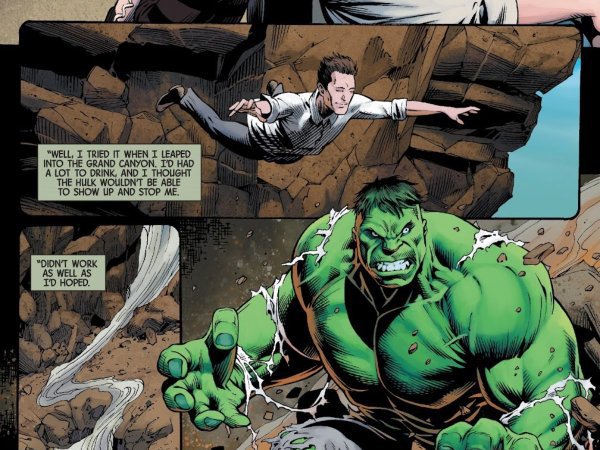
Although being a Christian doesn’t grant us the power to endure every physical difficulty, it does grant us ready access to the Holy Spirit who abides within us.

His Holy Spirit may not be a superpower, but it’s a genuine supernatural power.

It may not enable us to look like the Hulk when it comes to both spiritual and physical challenges, but Holy Spirit provides us with an otherworldly strength to live into our oncoming circumstances and to conquer the challenges of life.

This is the kind of strength that can only be manifested in our weaknesses.

In 2 Corinthians 12:9, Paul wrote, “But he said to me, ‘My grace is sufficient for you, for my power is made perfect in weakness.’” 

So what is this power, and how can we, as believers, come to access it during the up and coming Post-Pandemic Lenten season and strenuous challenges of life?

What Does ‘My Power Is Made Perfect in Weakness’ Mean?

We often try to come across as the I-can-do-it-all Christian—making perfect grades in school or raising well-behaved children while maintaining the ultra squeaky-clean Christian reputation in church.

If we come across a challenge that seems too much for us to handle, we often blame ourselves for not being “strong enough.”

As though we some how an in some way believe that God automatically expects us to do all the things with “ease” and never cave beneath the pressures of life.

But we were simply never created to bear this life through our own strength.

In fact, we don’t even have within ourselves the ability to bear its weight!

So why should we or do we, try so hard to look like Miss or Mr. Independent “Iron” Christian when, really, God frowns upon this type of approach to life?

It is impossible for us to conquer anything apart from God’s sufficient grace.

Writing this, I wonder if God purposely created our bodies to cave beneath pressure—so we could realize we can do nothing apart from Him (see John 15:5).

But rather than allowing this to make us frustrated, get all of our faults and all failures and failings all bunched up inside our heads, perhaps we should instead use these weaknesses to propel us closer to our Savior Jesus Christ, and drawing supernatural strength from the power of the Holy Spirit – to rely more on God?.

God intended us to rely on this Holy Spirit day-by-day, moment-by-moment.

This is why Jesus said this to His disciples before He was crucified:

“But in fact, it is best for you that I go away, because if I don’t, the Advocate won’t come. If I do go away, then I will send him to you.” [John 16:7]

John 16:7Amplified Bible

But I tell you the truth, it is to your advantage that I go away; for if I do not go away, the [a]Helper (Comforter, Advocate, Intercessor—Counselor, Strengthener, Standby) will not come to you; but if I go, I will send Him (the Holy Spirit) to you [to be in close fellowship with you].

It is for our benefit that Jesus left the “Advocate,” which is the Holy Spirit.

If we did not have the Spirit abiding within us, then we would not have access to this power.

We would struggle through life, relying only on our own mental an physical muscles to face life’s battles.

But we do have the Holy Spirit.

This means as we abide in Him, we can draw strength from Him rather than ourselves.

We can ask Him to give us what we need to overcome this life.

Confessing ourselves before Him: “No, me, myself, I, simply cannot do it all.”

That’s a good thing!

If we could, then we would never have the opportunity to allow God’s power—which is far stronger than any human strength—to be made apparent within us.

We would continue through life as Miss or Mrs. or Mr. Iron Clad Independent Christian, never having a need to depend on God alone and gain access to His grave-conquering power.

What Is the Context of 2 Corinthians 12:9?

In this chapter, Paul shares about a heavenly vision God gave him that gained him access to spiritual revelations.

He was not permitted to share these insights with anyone and did not want to receive the credit for them.

To keep him humble, he says that God intentionally allowed him to have a “thorn in the flesh” (see verse 7).

Paul goes on to discuss the pain of this suffering, as well as its eventual advantage, in verses 8-10:

“Three times I pleaded with the Lord to take it away from me. But he said to me, ‘My grace is sufficient for you, for my power is made perfect in weakness.’ Therefore I will boast all the more gladly about my weaknesses, so that Christ’s power may rest on me. That is why, for Christ’s sake, I delight in weaknesses, in insults, in hardships, in persecutions, in difficulties. For when I am weak, then I am strong.”

Obviously, the strength he refers to in the final verse is not human strength but a supernatural strength.

And it is only through experiencing the weakness that he was he able to receive this power.

In other words, Paul recognized that it was not through an independent attitude that he could boast, but rather a complete dependency, reliance upon God.

It was this dependency and reliance on God that kept him humble as well.

It is also interesting to take a look at the meaning of the Greek words used in this passage.

The phrase “is sufficient” is arkei, which means to assist, benefit, and to be satisfied.

Christ’s grace benefits us in our weaknesses by allowing us to grow stronger—not in our might, but in His.

Thus, we are more equipped to face the challenges and sufferings of life.

The word “power” here is dynamis, which implies a force and miraculous power.

It is pretty miraculous when His strength becomes manifested in our weaknesses!

“Is perfected” is teleitai, which implies bringing to completion, to accomplish and fulfill.

When we receive His miraculous power to strengthen us, we don’t just receive a portion of it.

We can receive it to the full—and all for the singular purpose of accomplishing His perfect will.

Finally, the phrase “may rest” is episkēnōsē.

This is translated to mean to pitch a tent upon or to dwell and abide within.

How interesting is that?

So, If you like camping out under the stars …

So, if you like staying dry against the rains …

In a strong, dependable, reliable, long lasting, enduring, well staked tent,

Psalm 19Amplified Bible

The Works and the Word of God.

To the Chief Musician. A Psalm of David.

19 The heavens are telling of the glory of God;
And the expanse [of heaven] is declaring the work of His hands.

Day after day pours forth speech,
And night after night reveals knowledge.

There is no speech, nor are there [spoken] words [from the stars];
Their voice is not heard.

Yet their voice [in quiet evidence] has gone out through all the earth,
Their words to the end of the world.
In them and in the heavens He has made a tent for the sun,

Which is as a bridegroom coming out of his chamber;
It rejoices as a strong man to run his course.


The sun’s rising is from one end of the heavens,
And its circuit to the other end of them;
And there is nothing hidden from its heat.


The law of the Lord is perfect (flawless), restoring and refreshing the soul;
The statutes of the Lord are reliable and trustworthy, making wise the simple.

The precepts of the Lord are right, bringing joy to the heart;
The commandment of the Lord is pure, enlightening the eyes.

The fear of the Lord is clean, enduring forever;
The judgments of the Lord are true, they are righteous altogether.

10 
They are more desirable than gold, yes, than much fine gold;
Sweeter also than honey and the drippings of the honeycomb.
11 
Moreover, by them Your servant is warned [reminded, illuminated, and instructed];
In keeping them there is great reward.
12 
Who can understand his errors or omissions? Acquit me of hidden (unconscious, unintended) faults.
13 

Also keep back Your servant from presumptuous (deliberate, willful) sins;
Let them not rule and have control over me.
Then I will be blameless (complete),
And I shall be acquitted of great transgression.
14 
Let the words of my mouth and the meditation of my heart
Be acceptable and pleasing in Your sight,
O Lord, my [firm, immovable] rock and my Redeemer.

Let that love for camping become one more “JEHOVAH” sized reminder …

Christ’s power can literally descend upon us as we dwell and abide in Him.

This “tent” of Christ can remain our safe place of refuge.

It’s interesting to note, too, how the phrase “may rest” in this passage compares to the phrase “made His dwelling” in John 1:14:

“The Word became flesh and made his dwelling among us.”

The passage “made His dwelling” is translated eskēnōsen, which means to dwell in a tent, to occupy or to reside.

So, Jesus came to earth so that He could dwell with us—and when He departed, He gave us the Holy Spirit so that He could continue to do the same.

He still dwells with us, and we can dwell in Him.

But we must crucify our desires to work and face this life apart from Christ.

After all, it is only as we abide and dwell in Him that we will display His full power within us, bearing “much fruit,” as mentioned in John 15.

What Does the Bible Have to Say about Weakness?

The word “weakness” in 2 Corinthians 12:9 implies suffering, insults, and persecution.

These aren’t exactly physical limitations but rather limitations we face in our everyday lives, such as the temptation to sin, heartache, and distress.

It is evident throughout the Bible that God does not intend to remove these weaknesses from our life.

If He did, then we would never have the pleasure of witnessing His power overcome.

We would never have the privilege of allowing our weaknesses to find their rest and completion in His strength.

Sadly, the idea of depending on someone may look like a weakness itself to our society.

We love to come across as strong, independent, and self-reliant, needing nothing and no one.

It is true humans are strong and intelligent—but this type of “Iron and Steel” independent mentality is frowned upon in God’s eyes.

And our strength is nothing to boast about, because according to 1 Corinthians 1:25, “God’s weakness is stronger than the greatest of human strength.”

So if God’s weakness is even stronger than our greatest strength, then why shouldn’t we willingly want to receive His power?

One of the reasons why God allowed His Son to come to earth was so that He could understand our human condition.

Basically, He wanted to become familiar with our weaknesses. 

Hebrews 4:15-16 makes this clear:

For we do not have a high priest who is unable to sympathize with our weaknesses, but one who in every respect has been tempted as we are, yet without sin. Let us then with confidence draw near to the throne of grace, that we may receive mercy and find grace to help in time of need.”

Jesus understands our sufferings.

Why, then, should we try to stubbornly fix our issues by ourselves when the One who has already conquered this world invites each and every single one of us to completely, utterly, and fully, rely on Him?

It is only when we relent in our own efforts and apply the above Scripture to our lives that we will then fully appreciate and abundantly receive the help we need.

God’s power being made evident in our weaknesses is also illustrated in stories throughout the Old Testament, such as David conquering Goliath, as well as in the following verses:

“He gives power to the weak, And to those who have no might He increases strength” Isaiah 40:29.

“So he said to me, “This is the word of the Lord to Zerubbabel: ‘Not by might nor by power, but by my Spirit,’ says the Lord Almighty” Zechariah 4:6.

Apostle Paul also spoke of God’s strength being made known in his weakness in Philippians 4:11-13: 

“Not that I was ever in need, for I have learned how to be content with whatever I have. I know how to live on almost nothing or with everything. I have learned the secret of living in every situation, whether it is with a full stomach or empty, with plenty or little. For I can do everything through Christ, who gives me strength.”

When I read these passages of scripture, enormous joy arises within me because I realize just exactly how empowered I am.

Whatever trials or temptations God allows into my life, I can overcome.

Not in my own strength, of course, but in God’s power being made perfect in my weakness.

Another reference to our fragility finding completion in God’s strength is in 2 Corinthians 4:7, where Paul wrote: 

“We now have this light shining in our hearts, but we ourselves are like fragile clay jars containing this great treasure. This makes it clear that our great power is from God, not from ourselves.”

Perhaps this is why God often uses the weak of the world to demonstrate His greatest power and to “shame the wise” (see 1 Corinthians 1:27):

So that more of His glory can be on display.

When we overcome a weakness we would not be able to conquer on our own, then it is obvious, just like the above verse says, the great power came from God and not from ourselves.

And shouldn’t that remain our main goal as Christians?

To spread more of His glory rather than our own? 

But the only way we can gain this strength is to give up our independent tendencies and learn how to rely on the Holy Spirit within us. 

Ephesians 3:16 says, “I ask that out of the riches of His glory He may strengthen you with power through His Spirit in your inner being.”

I believe God is searching for Christians who can admit their weaknesses and shortcomings, because only in doing that will His purposes be accomplished.

This is why Jesus left behind the Holy Spirit, after all.

So as we dwell in Him, we could be empowered to embrace the uncomfortable, including sufferings and persecution.

All for the sake of extending His Kingdom.

This means that the weaker we are, the more His power can be displayed within us and through us.

Apostle Paul was right—we now have every right to boast in our weaknesses!

This Lenten Season, Let’s choose to Go ‘camping’ with God, Son, Holy Spirit.

In the name of God, the Father and God the Son and God the Holy Spirit,

Let us Pray,

Heavenly Father, thank You that Your grace is sufficient for all my needs. Help me to recognise and rejoice in the knowledge that Your power is made perfect in my own weakness. Help me to boast all the more gladly in my inabilities so that Your great ability may be manifest in my life. By thy Holy Spirit, May everything I do be to Your praise and glory, my Lord and my God. Creating and eternal God, whose grace is sufficient for us and whose power is made perfect in weakness, in our weakness and insufficiency, we offer our lives and the gifts of our living for the work of your mustard seed kingdom; in our Lord, King and Savior Jesus’ name. AMEN.

https://translate.google.com/

Blessings From God’s Word: Bless Me and Revive Me, O’ God. Make Your Face to Shine Bright Upon Me, Your Servant. Psalm 119:129-136

Psalm 119:129-136 Amplified Bible

Pe.

129 
Your testimonies are wonderful;
Therefore my soul keeps them.
130 
The unfolding of Your [glorious] words give light;
Their unfolding gives understanding to the simple (childlike).
131 
I opened my mouth and panted [with anticipation],
Because I longed for Your commandments.
132 
Turn to me and be gracious to me and show me favor,
As is Your way to those who love Your name.
133 
Establish my footsteps in [the way of] Your word;
Do not let any human weakness have power over me [causing me to be separated from You].
134 

Redeem me from the oppression of man;
That I may keep Your precepts.
135 
Make Your face shine [with pleasure] upon Your servant,
And teach me Your statutes.
136 
My eyes weep streams of water
Because people do not keep Your law.

The Word of God for the Children of God.

Adeste Fidelis. Venite Adoremus. Dominum.

Gloria, In Excelsis Deo, Alleluia, Alleluia, Alleluia, Amen.

Blessings From God’s Word …

Make your face shine with pleasure on your servant and teach me your decrees.

—  Psalm 119:135

The words of the Psalmist from verse 135 “Make your face shine on your servant” echoes the great blessing found in the High Aaronic prayer Numbers 6:24-26.

There God explains how to give his people a blessing, saying:

“The Lord bless you and keep you; the Lord make his face shine on you and be gracious to you; the Lord turn his face toward you and give you peace.”

Here God conveys to his people that He has turned His face upon them, sees them and promises to be gracious to them, to love and vigilantly protect them.

In our reading from the Psalms for today, the psalmist sees the light of God’s Word, and his passion for God grows, leading to a greater thirst for God’s Word.

As he reads and meditates, ponders and absorbs, the writer’s understanding of God’s love, mercy, and compassion deepens and his longing for God increases.

The intensity of his passion for God leads him even to pant for God’s Word!

Another important thing to note here is that the psalmist calls himself God’s servant.

Connecting God’s blessing with service, the psalmist reminds us that blessings do not stop when they land on our doorstep.

God blesses us—his servants—so that we can serve and be a blessing to the people around us.

Go ahead and ask God for his blessing, because God wants to bless you.

He also wants us to be keenly attentive to his Word, to praise Him, to pray and to worship Him and to learn His statutes, to revive, actively serve in his world.

Teach Me Your Statutes, O God …

God’s word is a treasure filled with fine riches that teach us about the God who created us and how to live in a way that pleases Him.

Often, we can disconnect God’s word from our lives and make reading His word a mere intellectual pursuit or religious practice.

Psalm 119 is a beautiful prayer that asks God to deeply connect the psalmist’s life with the word of God.

One of the most oft repeated phrases the psalmist passionately prays is for God to teach him to live by his statutes, which appears Psalm 119 at least ten times:

Blessed are you, O LORD; teach me your statutes!” Psalm 119:12

Open my eyes, that I may behold wondrous things out of your law.Psalm 119:18

When I told of my ways, you answered me; teach me your statutes!” Psalm 119:26

Teach me, O LORD, the way of your statutes; and I will keep it to the end.” Psalm 119:33 

The earth, O LORD, is full of your steadfast love; teach me your statutes!” Psalm 119:64

You are good and do good; teach me your statutes.Psalm 119:68

Your hands have made and fashioned me; give me understanding that I may learn your commandments.Psalm 119:73

Deal with your servant according to your steadfast love, and teach me your statutes.Psalm 119:124

I am your servant; give me understanding, that I may know your testimonies!Psalm 119:25

Make your face shine upon your servant, and teach me your statutes.Psalm 119:135

Let my cry come before you, O LORD; give me understanding according to your word! Psalm 119:169

We could, would, should be all be the wiser to make these verses (and the whole psalm) an essential element of our daily prayer life, our heart cry to our Savior.

Ah, the Sweetest Mystery of Life …

Ecclesiastes 8:16-9:6Amplified Bible

16 When I applied my mind to know wisdom and to see the activities [of mankind] that take place upon the earth—how some men seem to sleep neither day nor night— 17 and I saw all the work of God, I concluded that man cannot discover the work that is done under the sun. Even though man may labor in seeking, he will not discover; and [more than that], though a wise man thinks and claims he knows, he will not be able to find it out.

Men Are in the Hand of God

For I have taken all this to heart, exploring and examining it all, how the righteous (those in right standing with God) and the wise and their deeds are in the hands of God. No man knows whether it will be love or hatred; anything awaits him.

It is the same for all. There is one fate for the righteous and for the wicked; for the good, for the clean and for the unclean; for the man who offers sacrifices and for the one who does not sacrifice. As the good man is, so is the sinner; as he who swears an oath is, so is he who is afraid to swear an oath. This evil is in all that is done under the sun, that one fate comes to all. Also, the hearts of the sons of men are full of evil, and madness is in their hearts while they live, and afterwards they go to the dead. [There is no exemption,] but whoever is joined with all the living, has hope; surely a live dog is better than a dead lion. For the living know that they will die; but the dead know nothing, and they no longer have a reward [here], for the memory of them is forgotten. Indeed their love, their hatred and their zeal have already perished, and they will no longer have a share [in this age] in anything that is done under the sun.

The Searcher’s claim is quite clear: life is too complicated, too vast, too filled with conflicting elements for any one of us to figure out all the answers.

Though we stay up all night and day, trying to think through and understand the complicated events that bring to pass the circumstances of our lives, we will never fully understand.

The Bible attaches no stigma to trying to understand life.

Rather, the pursuit of knowledge is everywhere encouraged in Scripture.

We must never adopt the attitude of anti-intellectualism that characterizes some segments of Christianity today.

We are to reason and think about what God is doing and what life gives us.

But we must always remember that no matter how much we try to think about life, mysteries will still remain.

We do not have enough data, nor do we have enough ability to see life in its totality to answer all the questions.

We must be content with some degree of mystery.

Though the wisest man of the ancient world wrote these words, he admits that humans cannot know all the answers.

He even says that diligence in labor will not unravel life’s mysteries: Despite all his efforts to search it out, man cannot discover its meaning. 

We will still be left collectively knitting our brows, collectively scratching our heads, and asking the eternally unanswerable question: “Why, Me, Lord”?

Even when people claim to know the answers behind what happens to us, they are really only deceiving themselves.

Many people are unwilling to accept the truth of the precepts of Scripture until they can “come to fully, completely, utterly,” understand everything in it.

But if you and I are waiting for that, you will never make it -“failure to thrive” .

Although this book Ecclesiastes was written almost 2,500 years ago, it is still true, even in our age of advanced knowledge, no one can find all the answers.

We must diligently search out the statutes of God – through prayer and study.

When you and I think about our own life, about how many of the things that have happened to us have been determined by events over which we had zero control—events that had to fall together in a certain pattern before they could ever come to pass [by God’s Plan]—you, I, can see how true these words are.

No one can find out all the answers.

The sweetest mystery to life is that the destiny of our lives may all hung upon a simple decision to go or not to go to a church on a particular Sunday because we had some sort of “issue, grievance, grudge etcetera,” against the church itself.

Learning something about God’s precepts for our “Christian living” may just be revealed on that day during the course of praise, worship, reading of scripture.

We have to continuously place ourselves directly in the path of the Word of God.

We have to continuously stay passionate about letting God work in us and also through us by means of the unmatched power of His transformative Word.

How can we understand that strange merging of simplicity and complexity?

The Searcher of Ecclesiastes continuously and constantly argues that life is too complicated without the Word of God, for us ever to answer all the questions.

We will inevitably run out of brain power when, all by ourselves, we keep trying to be “a Sermon in Shoes Christian” finding our answers to the mystery of life.

Is understanding everything in Scripture necessary before accepting it as truth?

A Puzzle and a Song …

Romans 11:30-12:3Amplified Bible

30 Just as you once were disobedient and failed to listen to God, but have now obtained mercy because of their disobedience, 31 so they too have now become disobedient so that they too may one day receive mercy because of the mercy shown to you. 32 For God has imprisoned all in disobedience so that He may show mercy to all [Jew and Gentile alike].

33 Oh, the depth of the riches and wisdom and knowledge of God! How unsearchable are His judgments and decisions and how unfathomable and untraceable are His ways! 34 For who has known the mind of the Lord, or who has been His counselor? 35 Or who has first given to Him that it would be paid back to him? 36 For from Him [all things originate] and through Him [all things live and exist] and to Him are all things [directed]. To Him be glory and honor forever! Amen.

Dedicated Service

12 [a]Therefore I urge you, [b]brothers and sisters, by the mercies of God, to present your bodies [dedicating all of yourselves, set apart] as a living sacrifice, holy and well-pleasing to God, which is your rational (logical, intelligent) act of worship. 2 And do not be conformed to this world [any longer with its superficial values and customs], but be [c]transformed and progressively changed [as you mature spiritually] by the renewing of your mind [focusing on godly values and ethical attitudes], so that you may prove [for yourselves] what the will of God is, that which is good and acceptable and perfect [in His plan and purpose for you].

For by the grace [of God] given to me I say to everyone of you not to think more highly of himself [and of his importance and ability] than he ought to think; but to think so as to have sound judgment, as God has apportioned to each a degree of faith [and a purpose designed for service].

I love puzzles but it bothers me and it frustrates me to no end the challenge of sitting still long enough and putting together any 1,000-piece jig­saw puzzle.

Like my wife, some people will go online, just to do the most complex Sudoku.

She has developed a system whereby she just systematically “breezes through.”

That is not me, either …

I like Sudoku … but I cannot just “breeze through” them like she does.

I watch her, admire her ability to “order and sort out” all of the numbers.

I just need take my time and pray I finish without too many mistakes.

Too many mistakes … I just shut the game down as quickly as possible.

Revealing that sometimes our puzzles can end up puzzling us.

That’s how it was for the apostle Paul.

Paul wrestled with a very personal problem.

By God’s grace he had come to know Jesus as his Savior.

As he went about doing his missionary work, many Gentiles came to faith in Jesus as Lord.

But many of his own Jewish people rejected Jesus.

It was mind boggling to him.

Were they not God’s special people chosen to share God’s love with the world?

Nevertheless, Paul was so confident of God’s great mercy he broke into song.

Paul confesses that we can never fully grasp God’s eternal plan.

Our efforts to understand God, define him, or reduce him to our level will ultimately fail.

God owes us no explanation; nor is he accountable to us—for he is God.

There is something we can do—in fact, two things.

First, Paul implies that we should keep praising God because all glory belongs to him forever.

Then Paul goes on to say that the only reasonable response to all this is to offer ourselves in complete service to God and to be completely available for his use.

Are we doing that?

By Praise and Worship, by Prayer and Meditation and Study of God’s Word,

Are we looking to God for answers to even the most uncomplicated of puzzles?

“Reviving” the “Lost Art” of “Knowing God better than we Know Ourselves?”

Do you desire to continually learn and be taught God’s word and statues?

Does your heart yearn to be taught the path of God and to fix the gaze of your heart and your soul upon Him?

How say Ye to this …?

In the name of God, the Father and God the Son and God the Holy Spirit,

Let us Pray, ….

Lord, often we are as puzzled as the Psalmist, the Teacher and the Apostle Paul about the host of ways you deal with us. Even so, may we stand in awe of your amazing grace and respond to you with songs of praise and acts of service. Lord, cause us to continually grow in our understanding and learning of your statutes, making us wise and obedient to you. Cause us to fear your name and pursue an obedient and joyful life as Bible-saturated people who look to you for wisdom, grace, and life. Teach us your statutes and may our lives be characterized by joyful obedience to your word and by demonstrating constant dependence on you. And may you fill us ever more increasingly with your Holy Spirit, who alone, can truly teach us all your statutes.

Adeste Fidelis. Venite Adoremus. Dominum.

Gloria. In Excelsis Deo. Alleluia, Alleluia, Alleluia, Amen.

https://translate.google.com/

Are we Looking Through Heaven’s Open Door? 10 Reasons We Should Believe in Heaven. Revelation 4:1-4

Revelation 4:1-4Amplified Bible

Scene in Heaven

After this I looked, and behold, [a]a door standing open in heaven! And the first voice which I had heard, like the sound of a [war] trumpet speaking with me, said, “Come up here, and I will show you what must take place after these things.” At once I was in [special communication with] the Spirit; and behold, a throne stood in heaven, with One seated on the throne. And He who sat there appeared like [the crystalline sparkle of] [b]a jasper stone and [the fiery redness of] a sardius stone, and encircling the throne there was a rainbow that looked like [the color of an] emerald. Twenty-four [other] thrones surrounded the throne; and seated on these thrones were [c]twenty-four elders dressed in white clothing, with crowns of gold on their heads.

The Word of God for the Children of God.

Adeste Fidelis. Venite Adoremus. Dominum.

Gloria! In Excelsis Deo! Alleluia! Alleluia! Alleluia! Amen.

Once John was charged to write the book of Revelation, when he met with the resurrected, glorified Lord Jesus in chapter 1, and having received Christ’s 7 letters to the 7 churches in chapters 2-3, he is given a vision of the throne room of God and commanded to, “Come up hither, and I will shew thee things which must be hereafter.”

Not only was John given important information for the Churches, but he was also commanded to ‘see’ and to ‘hear’ what was going to happen beyond the current Church age, “after these things.”

After acting as God’s heavenly, High Priest to the Church-age saints and interceding as heaven’s Mediator between God and man, John is shown how Christ will begin to take on His role of Judge, before returning to earth to claim His position as King of kings and Lord of lords.

“I looked, and, behold, a door was opened in heaven,” John writes, “and the first voice which I heard was as it were of a trumpet talking with me.”

The angel who met John in the prologue was the same angel who accompanied him throughout the entire revelation of Jesus Christ – which the Father gave to His Son… to give to John through His angel.

The apostle John was about to receive a preview of the future, which began with a vision of heaven in chapter 4 and moved to the worship of the Lamb of God in chapter 5.

He saw One seated on the throne which had the appearance of crystal-clear jasper and a blood-red Sardis stone, and John recorded that there was a rainbow surrounding the throne that reminded him of a brilliant green emerald. 

Twice he was summoned to, “come up here.”

The same voice which sounded like that of a trumpet in chapter 1, commanded him to join the heavenly host of angelic beings that surrounded the throne of God, by means of a door which was standing open in heaven.

And being, “in the spirit on the Lord’s day,” John was given an amazing insight into the future.. and greater revelation of Jesus Christ the Lamb of God and Lion of the tribe of Judah.

After Christ’s revelation to the Churches ended, John’s vison changed, and he was ushered into heaven – in spirit and in truth.

He discovered that the heavenly scene into which he had been brought, was preparing to unseal a special scroll which had been securely sealed by God Himself with seven seals.

As the heavenly scene unfolded, John discovered that he was witnessing to the precursor of the prophesied judgement on earth – the Day of the Lord which he recorded in chapters 6-19 when the wrath of God is revealed from heaven against all ungodliness and unrighteousness of men who hold the truth in unrighteousness. 

The sight that John saw during chapters 4-5, were the heavenly preparation for that future time of Great Tribulation, recorded in chapters 6-19, which is to fall on a Christ-rejecting sinful world and which will bring Israel to national repentance and punishment to the God-hating, Christ-rejecting, sinful world.

While John’s body remained on earth, his spirit was translated into heaven where he witnessed a vision of the angelic host that surround the throne of Almighty God – the Ancient of Days.

As he looked, John was introduced to four living creatures who worship God day and night and 24 elders who were clothed in white raiment with crowns of gold on their heads. 

The vison of the throne-room of God, the worship of the Lamb Who was slain, and the presentation of a seven-sealed scroll, which no-one but Lamb could break, are all part-and-parcel of the heavenly vision John saw in chapters 4 and 5.

It was after he had received Christ’s revelation to the Church (chapters 1-3) but before the revelation of Christ to the world in His role as Judge (chapters 6-19) when the wrath of God is poured out upon the children of disobedience, that the aged apostle John looked,

“and behold, a door was standing open in heaven, and the first voice which I had heard, like the sound of a trumpet speaking with me, said to him, ‘Come up here, and I will show you what must take place after these things.'”

In chapters 4 and 5 of Reve­la­tion, the focus shifts to a new and powerful story of God’s ongoing mission.

This new section begins with John seeing “a door standing open in heaven.”

This picture surprises us because we know that an open door often extends an invitation to come in.

This is an enticing opportunity to believe because heaven is often considered a place of mysteries that we do not have access to.

For the most part, it is God’s secret—at least from our day-to-day living in this life.

But here Jesus opens heaven’s door.

And in a voice like a trumpet, he welcomes us, saying, “Come up here.”

The invitation promises to reveal “what must take place after this.”

But as John tells the story of walking through heaven’s open door, the future is not the first thing that catches his attention.

Instead, he sees “a throne in heaven with someone sitting on it.”

Heaven’s open door has us standing before the throne of all thrones, from which everything in heaven and on earth is loved and cared for.

Still today, the Holy Spirit opens heaven’s door wide so that we can visualize, believe, this scene and let its story encourage us to live by faith in Jesus today.

Considering Reasons to Believe in Heaven

Let us strive to remember that the one who reads, hears, and takes to heart this amazing revelation is blessed.

“Blessed is he that reads, and those that hear the words of this prophecy, and keep those things which are written therein, for the time is at hand.”

Believing in Heaven …

“Heaven is a fairy tale for people afraid of the dark.” –Stephen Hawking

I’m afraid of the dark.

If we are talking about the endless kind of darkness which offers us no light anywhere, no hope ever, and nothing but nothingness, who among us would not panic at the thought of that?

I expect people like Mr. Hawking simply find the idea of Heaven too good to be true, and thus conclude that it must be a product of man’s delusional yearning for “pie in the sky by and by.”

And yet, there are solid reasons for reasonable people to believe in the concept of a Heavenly home after this earthly life.

Here are some that mean a lot to me.

By no means is this list exhaustive.

It’s simply my laymen’s thinking on the subject.

The God who made us created us with a longing for Himself and a satisfaction in nothing less. {Ecclesiastes 3:1-22}

When we get to Heaven, we will finally be satisfied, but not until then.

“I shall be satisfied with Thy likeness when I awake” (Psalm 17:15).

“I go to prepare a place for you,” said our Lord. “And if I go and prepare a place for you, I will come again and receive you unto myself, that where I am, there you may be also.” (John 14:3).

If it were not so, I would have told you.

Jesus said that.

I believe Him.

I choose to believe.

1. Jesus Believed in Heaven

In fact, He claimed to be a native.

The Lord said to Nicodemus, “No one has been to Heaven except the One who came from there, even the Son of Man.” (John 3:13). No one knows a place like a native.

Jesus told the dying thief, “Today you will be with me in Paradise.” (Luke 23:43).

So, wherever we go when we die, it’s a paradise.

True, He left us a thousand unanswered questions on the subject, but what He told us is pure gold.

For instance, when He returns, the dead in Christ accompany Him (I Thessalonians 4:14).

It appears that our eventual destination is somewhere different from the initial, intermediate place called “Paradise,” but we should have no trouble leaving the details to Him – after all, we can trust the One who died for us.

2. Scripture consistently teaches the existence of Heaven.

We must not let people get by with saying the Old Testament knew nothing of Heaven. 

“I shall dwell in the house of the Lord forever,” said David in everyone’s favorite psalm.

Or this one: “As for me, I shall behold thy face in righteousness; I will be satisfied with Thy likeness when I awake” (Psalm 17:15).

Job said, “My Redeemer liveth and at last shall stand upon the earth; yet even after my skin is destroyed, yet from my flesh I shall see God; whom I myself shall behold, and whom my eyes shall see and not another” (Job 19:25-27).

Neither must we cave to those who say the only way to understand such verses is to get inside the mind of the one who said those words originally, as if what they said is determinative and authoritative.

Peter said the prophets said more than they understood and even angels could not fathom some of these things. (I Peter 1:12).

3. I believe in Heaven because I believe in earth.

It’s so wonderful.

There is nothing else like it in the universe.

Suppose we lived in some distant world and all we knew was the planets we have seen–the barren, rocky planets that are molten in the day and frigid at night, those covered with acidic clouds or endless hurricanes–

and if someone told us about earth, with its steadiness, its atmosphere, its lovely scenery and its plant life and the richness of its minerals and a thousand other delights, we would find it hard to believe.

And yet here it is.

We are residents of this amazing planet.

We take the earth in stride because it’s all we know.

4. There has to be a heaven to even up the earthly hell God’s most faithful sometimes endure for Jesus’ sake.

Those of us who are “carried to the skies on flowery beds of ease,” to use Isaac Watts’ unforgettable image, have little idea of the price some have paid for their loyalty to Jesus Christ through the centuries.

Many live under oppressive regimes in our day, punished for doing nothing more than meeting in someone’s living room to worship or giving a friend a Bible.

I’m tempted to say “God owes them, big time,” but I don’t believe I want to be presumptuous or blasphemous.

“God is not unjust so as to forget your work and the love that you have shown toward His name in having ministered to the saints, and in still ministering” is how Hebrews 6:10 puts it.

If God were not to reward the faithfulness of the most loyal, it would be sin on His part.

After all, “this momentary light affliction is working for us an exceeding weight of glory far beyond all comparison” says 2 Corinthians 4:17.

5. Every caterpillar/butterfly testifies to our heavenly future.

Suppose we could inform that caterpillar crawling across a leaf of the glorious future just ahead of him (it?).

Would that humble creature believe he (it) would someday have gorgeous wings and flit through the sky?

So, why do we have such difficulty believing in the destiny God has planned for and promised to His own?

6. I believe in Heaven because the alternative belief is in despair.

“I would have despaired had I not believed I would see the goodness of God in the land of the living” (Psalm 27:13).

This world, by the way, is not the land of the living, but is the land of the dying.

The “land of the living” is just over the next ridge, immediately following our final breath here.

Jesus said, “Because I live, you too shall live.”

Who among us has not grieved at the thought of never seeing a precious loved one again, as we have left the cemetery.  

The alternative to faith is despair.

7. I believe in Heaven because some of the best people who ever lived believed in Heaven.

Pick up a Bible and read it ….

A whole lot of formerly ordinary people from literally all walks of life had come to faith in God, the Father, Son and Holy Spirit long before I was ever even told there was a God, the Father, Son and Holy Spirit. [Hebrews 11, Hebrews 12:1-2.]

8. I believe in Heaven because I believe in hell.

Luke 16:27-28Amplified Bible

27 So the rich man said, ‘Then, father [Abraham], I beg you to send Lazarus to my father’s house— 28 for I have five brothers—in order that he may solemnly warn them and witness to them, so that they too will not come to this place of torment.’

There has to be a hell.

I don’t like to think much about hell.

But I have to because God’s Word teaches about it.

The plain truth is that hell is real, and real people go there forever.

Several times in the Gospels we read Jesus was grieved when people turned away from him–grieved because he knew they were walking down the road that eventually would lead to hell.

The message Jesus brought is simple: Unless you turn and put your trust in me, you will die in your sins and face an eternity without me.

In Jesus’ parable of the rich man and Lazarus, we see the rich man begging for a little relief from his suffering.

Father Abraham explains that this kind of relief is not possible.

The rich man then turns his attention toward his brothers who are still living.

“Then I beg you … send Lazarus… Let him warn them, so that they will not also come to this place of torment.”

Notice a short time in hell turned this unbeliever into a motivated evangelist.

In a sense the rich man is saying,

“Someone has got to warn people that hell is real and that real people go there.”

How tragic that the man in this story found out too late.

What’s it going to take for you to become motivated?

Pray God’s grace, not his wrath, will fill your heart with a passion to save the lost.

9. I believe in Heaven because it’s a great incentive to responsible living and compassionate everything.

Skeptics will point to the shallow sayings of some believers that for the Heaven-bound this world does not matter, and that improving life on Earth is just so much arranging the deck chairs on the Titanic.

Those who say such are wrong, their thinking unbiblical, their teachings are misleading.  

We have great responsibilities here in this life, and it’s not just to get people to (ahem) “pray the sinner’s prayer” so they can go to heaven.

We were commissioned to make disciples, a far bigger thing.

“The heavens are the heavens of the Lord,” says Psalm 115:16, “but the earth He has given to the sons of men.” 

We are stewards of this planet, and thus answerable to Him.

I’ll go so far as to say those who are working to give the planet clean air and pure water, safe streets, are also doing the work of the Lord in their own way.

10. I believe in Heaven because of reasons I’m yet to discover.

There is so much more.

As some have said, we are “hard-wired” to believe in God and likewise in Heaven.

I willingly accept that and see it as residue of the creation.

The God who made us created us with a longing for Himself and a satisfaction in nothing less.

When we get to Heaven, we will finally be satisfied, but not until then. “I shall be satisfied with Thy likeness when I awake” (Psalm 17:15).

“I go to prepare a place for you,” said our Lord. “And if I go and prepare a place for you, I will come again and receive you unto myself, that where I am, there you may be also.” (John 14:3).

“If it were not so, I would have told you.”

Jesus said that. I believe Him.

I simply choose to believe.

God, the Father …

God, the Son …

God, the Holy Spirit …

The Revealed Word of God …

The Resurrection ….

In Heaven …

In the name of God, the Father and God the Son and God the Holy Spirit,

Let us Pray,

Heavenly Father, thank You for the book of Revelation and for the greater insight and understanding it gives us into the Person and Work of the Lord Jesus, of what is to take place after He comes to take the members of His mystic Body to be with Himself, and how we should live in this present age. I pray that You would bless me as I read and take to heart all that is written in this final book of Scripture. Thank You that You are the eternal and immutable God Whose plans and purposes can never fail. Thank You for the Cross of Christ and His glorious Resurrection, which secured for us an eternal inheritance, by faith. I pray that all I say and do would give glory to You and that one day I may cast my crown before His feet. Thank you for all Your goodness and grace to me and to all men. This I pray in Jesus’ wonderful name.

Adeste Fidelis. Venite Adoremus. Dominum.

Gloria. In Excelsis Deo. Alleluia, Alleluia, Alleluia, Amen

https://translate.google.com/

What Does the Bible Teach us About Sexual Orientation? What is our God’s Answer for the Complex Question of our Sexual Orientation? Genesis 1:26-28

When a baby is born, the first thing usually said is, “It’s a boy!” or “It’s a girl!”

The sex of a child is based on biology-anatomy and chromosomes. But, for some individuals, their sense of gender does not always match their sex.

That mismatch was brought to our attention in 2015 when Olympic superstar Bruce Jenner announced that he no longer wanted to be Bruce. Several months later he was introduced on the front cover of Vanity Fair as Caitlyn Jenner.

That same year, same sex marriage was legalized in all fifty states on June 26, 2015, by an act of the United States Supreme Court.

Who would have thought that momentous decision was possible but just a few short years earlier?

But the speed at which our culture’s view on gender and sexuality has changed with lightning speed.

I remember reading that the Facebook in the U.S. used to list over 50 gender alternatives, if the word ‘alternatives’ are the right terminology whereas in the United Kingdom. a person has over 70 gender alternatives!

However, I believe that now one is able to custom list one’s gender preference throughout social media. So, I do not know how many options there are today?

When I was praying and considering what topic my devotional time to today, I felt directed to this one on Sexual Orientation and what God has to say about it.

I believe this extraordinarily complex topic was important for us to examine in light of the current socio-cultural conditions.

Not only is there real divisive pressure in the contemporary culture to accept modern conceptions of sex and gender, but children are also being taught that at school too. “Drag Queens” are reading books to children in Public Libraries.

Where young children are involved, parents become, rightly so, very protective.

While I could write a multitude of sessions on this topic, I am going to cover it in only one session.

Therefore, this devotional will be necessarily cursory.

However, I believe, at least I pray I believe, it will be sufficient (by the grace of God) to give a biblical answer to the issue of sexual (and gender) orientation.

I have become aware of the book; The Gospel & Sexual Orientation by Michael Lefebvre (2012) and I am going to my Kindle to read it to better educate myself.

I have also become aware of the book; Gender as Calling: The Gospel & Gender Identity (2017) and I am going to my Kindle to read it to better educate myself.

I encourage my readers to read them to better educate and inform themselves.

I should also mention that I have no University Degrees, expertise in medicine, biological sciences, or any branch of social work or psychology or counseling.

My perspective on this is this – 40 years ago, the circumstances of my life required me to “fight this battle of intimacy and orientation” with my soul.

I fought it very privately for the first twenty years with no thought of God other than extreme anger and even stronger feelings of the absolute worst betrayal.

Then, circumstances changed drastically, and I accepted Christ as my Savior.

I spent the next eight years privately trying to sort things out with God and then in 2008 I met the woman who in 2010 became my wife of twelve + years now.

There are reasons and rationales galore why I remained a bachelor for 48 years.

God alone knows them all.

God alone collected and recorded in His Book, every single one of my tears.

Psalm 56: 8 Amplified.

You have taken account of my wanderings;
Put my tears in Your bottle.
Are they not recorded in Your book?

It’s only but by the Grace of God, My Savior

– I fought the wars, I ‘bled,’ carried the scars, cried the tears and then

ULTIMATELY GOD WON!

I leave the details, for obvious reasons, strictly between my God and Me and those I have learned by time and tragedy and betrayal to implicitly trust.

I also will point out that I have no Seminary training nor Ordination license.

My training is “limited” to what I try to read and grasp in God’s Scriptures.

And so, I believe my approach to this topic is more theological and pastoral.

My concern in this devotional is what the Bible teaches about this topic, and also how we as Christians and as the Body of Christ – the church should help, counsel, those wrestling with issues related to sexual and gender orientation.

As the Body of Christ, God’s Church in the world, it is a very righteous effort to rigorously and vigorously examine the Word of God as it relates to such issues.

“One God – Father, Son and Holy Spirit – One Faith – One Baptism.” Amen!

God is absolutely Sovereign over His own Creation.

God is the Author of all life – Psalm 139:13-18 Amplified.

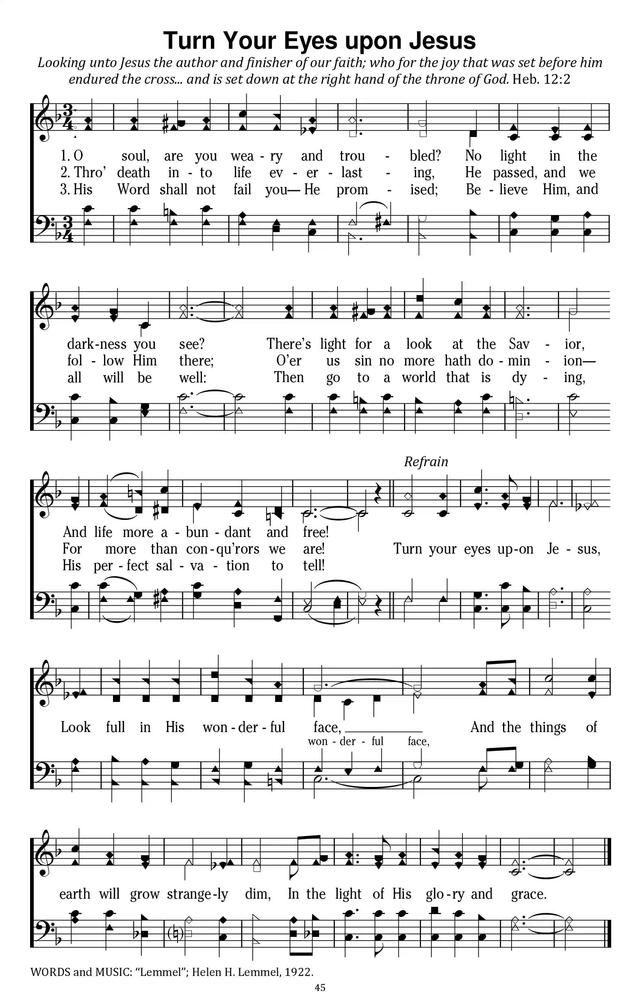
Turn your eyes upon Jesus
Look full in his wonderful face
And the things of earth will grow strangely dim
In the light of his glory and grace

Genesis 1:26-28Amplified Bible

26 Then God said, “Let Us (Father, Son, Holy Spirit) make man in Our image, according to Our likeness [not physical, but a spiritual personality and moral likeness]; and let them have complete authority over the fish of the sea, the birds of the air, the cattle, and over the entire earth, and over everything that creeps and crawls on the earth.” 27 So God created man in His own image, in the image and likeness of God He created him; male and female He created them. 28 And God blessed them [granting them certain authority] and said to them, “Be fruitful, multiply, and fill the earth, and subjugate it [putting it under your power]; and rule over (dominate) the fish of the sea, the birds of the air, and every living thing that moves upon the earth.”

The Word of God for the Children of God. Gloria! In Excelsis Deo! Alleluia! Amen.

Let me briefly define a few terms so that we are thinking about the same thing:

* Sex-refers to the biological classification of a person as male or female based on physical features.

* Gender-refers to the social and psychological classification of a person as male or female based on personal perception.

There are a few instances in which a person’s physical anatomy is different from his or her chromosome make-up. That is very rare, and very difficult emotionally, very difficult pastorally, and beyond the scope of this writing.

Historically, a person’s physical sex and social gender were regarded as unified.

So, a physical male was also a social male, and physical female was also social female.

Today, however, this historical view has been challenged.

A person’s sex and gender are no longer regarded as necessarily matching.

Today, a physical male may be gendered as a female, or vice versa.

That is where the term transgender comes in: a transgender is a person whose sex and gender do not match.

Lesson

What is God’s answer for the issue of sexual orientation?

Let’s use the following outline:

1. Current Concerns about the Issue of Sexual Orientation

2. Culture’s Answers to the Issue of Sexual Orientation

3. God’s Answer to the Issue of Sexual Orientation

I. Current Concerns about the Issue of Sexual Orientation

First, let’s look at current concerns about the issue of sexual orientation. Why do we even need to examine this issue?

Sexual orientation and gender identity are at the forefront of today’s culture. A tremendous amount has been written about it. Laws have been changed. The media accepts that sex and gender do not need to match for people. And as I said, even social media, like Facebook, allows people to self-identify.

People who wrestle with sexual orientation and gender identity issues often struggle very deeply, and very privately although admittedly not all do.

A Transgender Remembrance Day poster stated,

“34% of trans people attempt suicide. 64% are bullied. 73% of trans people are harassed in public. 21% of trans people avoid going out in public due to fear.”

If these numbers are accurate, even if they are not close, that is sad testimony.

Our culture has been pressing very hard, especially in recent years, to accept whatever sexual orientation or gender identity a person chooses.

However, as we consider issues of sexual orientation and gender identity, we must be sure that any answers are in complete agreement with God’s Word.

We must not capitulate to “political correctness,” social media posts, medicine, science, or psychology unless its propositions are consistent with God’s Word.

Second, notice culture’s answers to the issue of sexual orientation.

One current view promoted is sexual orientation is determined by our biological make-up. They say sexual orientation is akin to eye color or left-handedness.

And with regard to gender, transgender activist and entertainer, Chaz Bono, said,

“There’s a gender in your brain and a gender in your body. For 99% of people, those things are in alignment. For transgender people, they’re mismatched. That’s all it is. It’s not complicated, it’s not a neurosis. It’s a mix-up. It’s a birth defect, like a cleft palate.”

The Question is being asked, researched and only relatively briefly studied:

Is Homosexuality in our Genetic make- up? I have no Idea whatsoever.

Is there a “Homosexual Gene?” Again, I have no Idea whatsoever.

It is far beyond my expertise ergo I can give no answers, nor I can offer one.

I suppose it is possible that future science will more thoroughly demonstrate that the biological factors associated with such conditions are truly causative.

I suppose that even the opposite may eventually be scientifically demonstrated.

Eventually it may even be discovered that there is indeed a “gay gene,” so that even homosexuality can be said to be congenital.

Again, this is beyond my expertise, and I leave it to the scientific community to do all of the necessary research and studies and the certainly inevitable debates.

The answers to these questions are extremely important; however, I believe they do not in and of themselves call for any reform of the church’s historic doctrine of man, of human sexuality, the undeniable impact of original sin.

Another current view promoted is that sexual orientation is determined by psychological and environmental factors.

Alfred Kinsey eventually stated,

“I have come to the conclusion that homosexuality is largely a matter of conditioning.”

Perhaps this is why sex authorities Masters and Johnson emphasized,

“It is of vital importance that all professionals in the mental health field keep in mind that the homosexual man or woman is basically a man or woman by genetic determination and homosexually oriented by learned preference.”

There are people who have “same-sex attraction” (SSA).

And there are also people who have what is known as “gender dysphoria,”

which is defined as an experience of clinically significant distress due to a “marked incongruence between one’s experienced/expressed gender and assigned gender, of at least six months duration.”

Our culture’s answers to the issue of sexual orientation and gender identity are inadequate. The vast majority of people dealing with these issues still struggle.

So, then, the question: what is God’s answer to the Body of Christ – HIS Church?

Matthew 28:18-20 Amplified Bible

18 Jesus came up and said to them, “All authority (all power of absolute rule) in heaven and on earth has been given to Me. 19 Go therefore and make disciples of all the nations [help the people to learn of Me, believe in Me, and obey My words], baptizing them in the name of the Father and of the Son and of the Holy Spirit, 20 teaching them to observe everything that I have commanded you; and lo, I am with you always [remaining with you perpetually—regardless of circumstance, and on every occasion], even to the end of the age.”

Matthew 10:16Amplified Bible

A Hard Road before Them

16 “Listen carefully: I am sending you out like sheep among wolves; so be wise as serpents, and innocent as doves [have no self-serving agenda].

So, what is God’s answer?

III. God’s Answer to the Issue of Sexual Orientation

Third, let’s examine God’s answer to the issue of sexual orientation.

Biblically, a person’s social gender is identified with his or her anatomical sex.

People are created by God with a male or female anatomical sex, and that sexual identity marks the person’s gender identity.

(There are, however, a very small number of people born with ambiguous anatomy, but that is echelons beyond the scope of this devotional message.)

The Bible’s foundational statement on sexual orientation and gender identity is Genesis 1:26-28:

“Then God said, ‘Let us make man in our image, after our likeness. And let them have dominion over the fish of the sea and over the birds of the heavens and over the livestock and over all the earth and over every creeping thing that creeps on the earth.’ So, God created man in his own image, in the image of God he created him; male and female he created them. And God blessed them. And God said to them, ‘Be fruitful and multiply and fill the earth and subdue it and have dominion over the fish of the sea and over the birds of the heavens and over every living thing that moves on the earth.'”

Note this passage of text introduces God’s design for humanity as “male” and “female.”

These two categories are not merely descriptive of all humans; they are prescriptive.

These are not the two outer ranges, with a gradation between them.

No, there are only two categories: male and female.

This passage of text also conflates sex and gender.

The biological classification is exactly the same as the social classification.

The reproductive and social duties of the man is presented within the same gender, as it is for the woman.

Lefebvre notes,

“Nowhere in Scripture are men or women exhorted to question their gender identity based on tastes or mannerisms-let alone their sexual orientation.”

Modern proponents for the sexual revolution say the Bible does not condemn homosexuality when it is properly understood.

They say that homosexual promiscuity in the Bible related to cultic prostitution or to rape or to pederasty.

They argue that the Bible approves of homosexual relationships, if they are true committed, life-long, monogamous relationships.

The theological problem is Scripture simply does not teach what they assert.

There are a number of passages in Scripture dealing with the complex issue of homosexuality.

These are: 

Genesis 19:1-29 (the account of Sodom and Gomorrah), 

Judges 19:1-30 (the Levite’s concubine), 

Leviticus 18:22; 20:13 (the Mosaic prohibitions), 

Romans 1:26-27 (Paul on unnatural desire), 

1 Corinthians 6:9-11 (Paul’s list of defilements), 

1 Timothy 1:8-11 (Paul’s application of the Ten Commandments), 

Jude 5-7 (Sodom and Gomorrah remembered).

We don’t have time to examine each of these texts, but I do definitely invite readers to do their own process of discernment and independent studies.

God’s answer, however, must also, by necessity, be given pastorally.

First, the Bible clearly teaches that there are only two sexes: male and female.

There are two genders, and these genders correspond to our biological sex.

Second, if you are experiencing sexual orientation or gender identity issues, please find qualified professional help, talk with someone whom you trust.

Third, grace is available to all.

All of us deal with sin and suffering in our lives.

Paul struggled with an unnamed affliction that God never removed from him (2 Corinthians 12:8-10). But God did promise that his grace was sufficient for him.

Fourth, the gospel provides the only hope for us to fulfill the Great Commission.

Luke 18:9-14 Amplified Bible

The Pharisee and the Tax Collector

He also told this parable to some people who trusted in themselves and were confident that they were righteous [posing outwardly as upright and in right standing with God], and who viewed others with contempt: 10 “Two men went up into the temple [enclosure] to pray, one a Pharisee and the other a tax collector. 11 The Pharisee stood [ostentatiously] and began praying to himself [in a self-righteous way, saying]: ‘God, I thank You that I am not like the rest of men—swindlers, unjust (dishonest), adulterers—or even like this tax collector. 12 I fast twice a week; I pay tithes of all that I get.’ 13 But the tax collector, standing at a distance, would not even raise his eyes toward heaven, but was striking his chest [in humility and repentance], saying, ‘God, be merciful and gracious to me, the [especially wicked] sinner [that I am]!’ 14 I tell you, this man went to his home justified [forgiven of the guilt of sin and placed in right standing with God] rather than the other man; for everyone who exalts himself will be humbled, but he who humbles himself [forsaking self-righteous pride] will be exalted.”

God promises the total redemption of our whole man in Christ Jesus, our Savior.

In this life, we must continually make humble use of the means of grace, gifted to us by God, to Scripturally deal with our sin, grow, mature in Christlikeness.

John 8:1-11 Amplified Bible

The Adulterous Woman

8 But Jesus went to the Mount of Olives. Early in the morning He came back into the temple [court], and all the people were coming to Him. He sat down and began teaching them. Now the scribes and Pharisees brought a woman who had been caught in adultery. They made her stand in the center of the court, and they said to Him, “Teacher, this woman has been caught in the very act of adultery. Now in the Law Moses commanded us to stone such women [to death]. So, what do You say [to do with her—what is Your sentence]?” They said this to test Him, hoping that they would have grounds for accusing Him. But Jesus stooped down and began writing on the ground with His finger. However, when they persisted in questioning Him, He straightened up and said, “He who is without [any] sin among you, let him be the first to throw a stone at her.” Then He stooped down again and started writing on the ground. They listened [to His reply], and they began to go out one by one, starting with the oldest ones, until He was left alone, with the woman [standing there before Him] in the center of the court. 10 Straightening up, Jesus said to her, “Woman, where are they? Did no one condemn you?” 11 She answered, “No one, Lord!” And Jesus said, “I do not condemn you either. Go. From now on sin no more.”]

2 Corinthians 5:17-21Amplified Bible

17 Therefore if anyone is in Christ [that is, grafted in, joined to Him by faith in Him as Savior], he is a new creature [reborn and renewed by the Holy Spirit]; the old things [the previous moral and spiritual condition] have passed away. Behold, new things have come [because spiritual awakening brings a new life]. 18 But all these things are from God, who reconciled us to Himself through Christ [making us acceptable to Him] and gave us the ministry of reconciliation [so that by our example we might bring others to Him], 19 that is, that God was in Christ reconciling the world to Himself, not counting people’s sins against them [but canceling them]. And He has committed to us the message of reconciliation [that is, restoration to favor with God].

20 So we are ambassadors for Christ, as though God were making His appeal through us; we [as Christ’s representatives] plead with you on behalf of Christ to be reconciled to God. 21 He made Christ who knew no sin to [judicially] be sin on our behalf, so that in Him we would become the righteousness of God [that is, we would be made acceptable to Him and placed in a right relationship with Him by His gracious lovingkindness].

Finally, let us be a fellowship of God’s people who love all people, regardless of the issue with which they are struggling.

It grieves my heart greatly when I hear people make off-color comments about those struggling with sexual orientation gender identity issues.

May we celebrate and love others as God first celebrated and loved Us. Amen.

In the name of God, the Father and God the Son and God the Holy Spirit,

Let us Pray,

Heavenly Father, thank you that nothing is impossible for you. Hear my prayer for a miracle. Fill me with faith that you can answer. What seems impossible to me is within your power. When I can’t think of a solution, you are still able to act. Please help me believe that nothing I face in life can compare to you. You are the God of the impossible. Neither death or life, angels or rulers, things present or future, height or depth, or anything else in all creation, will be able to separate me from your love. Through Jesus Christ, our Lord, Alleluia! Amen.

 https://translate.google.com/

Imagine the Possibility! I am Finding Myself at a Loss for Words! Escaping the Thought Trap!!! |Joshua 1:7 – 9|

Wonderful Words of Life (Philip P. Bliss, 1838-1876)

1. Sing them over again to me,
wonderful words of life;
let me more of their beauty see,
wonderful words of life;
words of life and beauty
teach me faith and duty.
Refrain:
Beautiful words, wonderful words,
wonderful words of life.
Beautiful words, wonderful words,
wonderful words of life.

2. Christ, the blessed one, gives to all
wonderful words of life;
sinner, list to the loving call,
wonderful words of life;
all so freely given,
wooing us to heaven.
(Refrain)

3. Sweetly echo the gospel call,
wonderful words of life;
offer pardon and peace to all,
wonderful words of life;
Jesus, only Savior,
sanctify forever.
(Refrain)

Joshua 1:7-9 English Standard Version

Only be strong and very courageous, being careful to do according to all the law that Moses my servant commanded you. Do not turn from it to the right hand or to the left, that you may have good success[a] wherever you go. This Book of the Law shall not depart from your mouth, but you shall meditate on it day and night, so that you may be careful to do according to all that is written in it. For then you will make your way prosperous, and then you will have good success. Have I not commanded you? Be strong and courageous. Do not be frightened, and do not be dismayed, for the Lord your God is with you wherever you go.”

The Word of God for the Children of God. Gloria! In Excelsis Deo! Alleluia! Amen.

Someone, somewhere at some point in time, began to ponder and pray …..

They have probably been pondering these questions for quite some time …..

So, we have been gazing at the unsearchable beauty of the Lord our God.

We have been craning our necks upward – mightily focusing on His face.

We have been craning our necks and eyes upwards until it now hurts us.

Not just our necks hurt, not just a struggle against keeping our eyes open,

But now we also find steadily creeping into our heads – new thoughts we do not recognize – or as much as we recognize them – we deem them 100% unwanted.

We search for God, turning our faces and our thoughts away from the world.

Now, without our permission, our day-to-day thoughts are being muddled.

We like it- we like it (maybe) – we like it not – we realize it – we are not sure?

We cannot stop these thoughts – we try to re-shape them – but no success?

Are we struggling against our worldly thoughts leaving our heads?

Might this be true?

Without realizing – are we struggling against God trying to get into our heads?

Struggling with negative thoughts? Maybe low self-esteem? Self-putdowns?

When I think about these thought struggles, I am both awed, amazed and (gasp) very scared at how easy it is to adopt or fall into a bad thought habit.

That’s right I said it, “habit.” All our thought patterns are, in fact, habits.

Our whole lives, we have all been taught, trained on how to think and what to think and why to think what we should think until they become 100% natural.

And these habits can even impact our ability to problem solve and our ability to decide how, what we use to filter truth vs untruth. Even learned helplessness is copied and can gradually develop into (negative) thought and behavioral habits.

Sometimes, these thoughts become a significant burden we know not what to do with the breadth of them. Scratch heads? Move forward? Stand still? Retreat?

We are looking for the indescribable, unknowable, unsearchable, face of God anywhere and everywhere we can. We want to cannot look upon His face, to look upon His visage, crawl or walk up to Him – look directly into His eyes!

But that is not possible to do and survive.

But survivability is not our concern – we only want to be eye to eye with Him.

Beholding His face – Looking into His eyes – knowing His thoughts for us, is very much where we all prefer to be. We will brave everything for this chance.

We cannot know the thoughts of God for us and that disturbs us – we are all called to look upon Him, but reality is we cannot do so – but our thoughts are still on God – YET our eyes and our souls our thoughts remain 100% fixated.

We are now fixated on God despite our thought habits! This is great news because just as we develop bad habits, we can retrain our thinking and learn new habits. It’s really pretty simple but requires truth, faith, commitment.

Let me introduce you to the one presenting us with this array of questions.

He is Joshua, Son of Nun …. His reality has just been seriously altered ….

Before him, the prospect of replacing Moses as leader of millions of people.

Prepared to lead? Prepared to stand still? Prepared instead to retreat?

Prepared to think, act and believe according to his understanding?

And what would that accomplish for him, his family, his people, His nation?

God knows all of our thoughts before we even have them – but in the midst of our sorting out our own stuff – are we realizing that God is trying to overcome, overwhelm the unrelenting burden of our thoughts at the exact same time?

How? God persistently speaks His greater thoughts over our lesser thoughts …

Only be strong and very courageous, being careful to do according to all the law that Moses my servant commanded you. Do not turn from it to the right hand or to the left, that you may have good success[a] wherever you go. (Joshua 1:7 ESV)

“This Book of the Law shall not depart from your mouth, but you shall meditate on it day and night, so that you may be careful to do according to all that is written in it. For then you will make your way prosperous, and then you will have good success.” (Joshua 1:8, ESV)

What are we to make of this seldom considered, thought-provoking revelation?

Whatever the time, whenever the season of life, it’s 100% safe to say we are the sum total of our habits. If you want to know your future, just look at your habits today! It will show you where your thoughts and behaviors will be tomorrow.

God says ….

For my thoughts are not your thoughts,
    neither are your ways my ways, declares the Lord.
For as the heavens are higher than the earth,
    so are my ways higher than your ways
    and my thoughts than your thoughts.

10 “For as the rain and the snow come down from heaven
    and do not return there but water the earth,
making it bring forth and sprout,
    giving seed to the sower and bread to the eater,
11 so shall my word be that goes out from my mouth;
    it shall not return to me empty,
but it shall accomplish that which I purpose,
    and shall succeed in the thing for which I sent it.
(Isaiah 55:8-11 ESV)

The finite Mind and wayward Thoughts of Man Repeat ….

Trust in the Lord with all your heart,
    and do not lean on your own understanding.
In all your ways acknowledge him,
    and he will make straight your paths.
Be not wise in your own eyes;
    fear the Lord, and turn away from evil.
It will be healing to your flesh[a]
    and refreshment[b] to your bones.
(Proverbs 3:5-8 ESV)

Thorns and snares are in the way of the crooked;
    whoever guards his soul will keep far from them.
Train up a child in the way he should go;
    even when he is old he will not depart from it.
(Proverbs 22:5-6 ESV)

Set your minds on things that are above, not on things that are on earth.” (Colossians 3:2)

When I allow myself to think about setbacks, hurts and the many different pains of life we experience through people, places, things or events, I realize there is ever a choice we can make; there is a crossroad before us; a decision:

Do I hand myself and my emotions over to my own thoughts, hardships of life and allow them to define me? To permit my thought to dictate how I should feel and ought to live? Or do I, in my pain, bring it to God and find healing and rest?

I guess that’s the difference between freedom and chains. You may be afraid and have it in great abundance, but fear doesn’t have to have abound in you.

Over seasons. the stories and scripts we tell ourselves are powerful. What we tell ourselves not only threatens to define our behavior but also predicts our future.

Do we speak negativity and lies in opposition to the Word of God, or do we speak the truth of God as medicine over our hurting souls and against the lies and narratives we have been taught? Being set free is to experience the truth of the gospel showing up in every area of our lives, even in our thought life.

To fight my thought battles, I use Scripture to correct false assumptions and to confront bad behaviors. When our experiences and thoughts don’t line up with biblical truth, we should always yield our thoughts and accept the 100% truth of Scripture in all its authoritative truth. Make it our filter and meditate on it over and over until God develops our new thought habits. It will replace the old one!

The Truth Will Set You Free (John 8:31-32 ESV)

31 So Jesus said to the Jews who had believed him, “If you abide in my word, you are truly my disciples, 32 and you will know the truth, and the truth will set you free.”

Our thought habits can be such a pervasive trap. Or they can be the source of a pure spring that flows from the Word of God, deposited deep into our lives.

We are not to be continuously chained to negative thinking anymore. Living Word of God: We no longer have to be. Yield to the truth that can set you free.

In the name of God, the Father and God the Son and God the Holy Spirit,

God, my Wisdom, Speak, them over again to me, thy Wonderful Words of Life ….

Lord of wisdom, I sometimes finding understanding the Bible to be difficult. I know you want me to apply your word to my life. I thank you for giving me your word so I can grow in my relationship with you. Help me grasp what you want me to know as I read your revealed word. Open my eyes so to see the wonderful truths in your instructions. Be my teacher, be my wisdom, be my truth, so I can live and obey your word. Thank you for your wise advice. Gloria! Alleluia! Amen.

https://translate.google.com/

Walking Upon God’s Well-Trodden Path (Meditation on Psalm 119:15-16)

Psalm 119:9-16 The Message

9-16 How can a young person live a clean life?
    By carefully reading the map of your Word.
I’m single-minded in pursuit of you;
    don’t let me miss the road signs you’ve posted.
I’ve banked your promises in the vault of my heart
    so I won’t sin myself bankrupt.
Be blessed, God;
    train me in your ways of wise living.
I’ll transfer to my lips
    all the counsel that comes from your mouth;
I delight far more in what you tell me about living
    than in gathering a pile of riches.
I ponder every morsel of wisdom from you,
    I attentively watch how you’ve done it.
I relish everything you’ve told me of life,
    I won’t forget a word of it.

The Word of God for the Children of God. Gloria! In Excelsis Deo! Alleluia! Amen.

Have you ever had to walk a distance in the deep cold of winter or in the hottest hot of the summer months? It is a discipline to keep doing either one or even both depending upon the seasons where-ever you choose to call your home. I knew that if I had to discipline on learning how to do that – day in and day out – for the sake of I familiarity, I always tried to remember to take the same path.

It is easiest to walk a path that has been heavily tread, one in which the snow has already been compacted or the dried hard ground is hard, tamped down.

The Psalmist writes that he will fix his eyes on God’s ways. The word “ways” is translated from orach, referring to a well-trodden path. This is a path walked by many and clearly visible; having been taken many times before, the outcome is predictable. Author God makes His ways clearly known to us through scripture, including the quality of outcome for those who choose His well-trodden path.

Think about the flattened snow path: you don’t have to lift your legs as high to walk, and you don’t sink down into the powder with every step. Walking upon dry and compressed, well-trodden paths worn down over time, will take you to your destination, using less energy. Such is the discipline of “meditating” upon the Word of God for the Children of God. God has already done the hard work for you – He gave us His Word, fulfilled the law. His is the path you want to be on.

The phrase “fix my eyes” comes from the root word nabatmeaning to look intently at something, regarding it with pleasure, favor, or care. The Psalmist is determined to fix his eyes on the well-trodden path that God has provided for him. Just as a horse might wear blinders to keep it focused on the path ahead with no peripheral distraction, we should be looking so intently at God’s way, regarding it with so much favor and pleasure, that the cares of the world would disappear from our peripheral. Let our hearts and our souls, let our eyes be so utterly GOD fixed that no distraction could pull us off of the well-trodden path.

How can we keep our gaze affixed on God’s ways? First, the Psalmist states that he will mediate on God’s precepts. Meditate is translated from the word siyach and means to ponder or converse with oneself. Scripture calls us to meditate on the word day and night (Joshua 1:8, Psalm 1:2). The Psalmist’s daily goal (as ours ought, should be) is to fill his thoughts with scripture, with things above (Colossians 3:2), and with all that is good (Philippians 4:8).

Second, the Psalmist determines to 100% delight in God’s statutes. Delight is translated from sha’a’, which means to be fond of, or pleased with. We must renew our minds (Romans 12:2) and not to think of scripture as only a list of rules that we must strictly adhere to and follow. Instead, we can delight in the freedom of God’s way – the freedom to sin no more and the freedom to do what is right. His commandments are not burdensome (John 8:1-11, 1 John 5:3).

Lastly, the Psalmist declares that he will not forget God’s word. Forget can also be translated as “mislay” (as in misplacing your car keys) or “obliviousness due to lack of attention.”

When it is time to act, when there is a decision to be made, and even as day to day routines are being lived out, we do not want to be blatantly oblivious to God’s ways because we have each neglected (given no attention to) His word.

We want the sword of the Spirit, which is the word of God (Ephesians 6:17), ready at our side at all times. When it’s go-time we do not want to be searching for God’s word like misplaced car keys. We want it at the forefront of our mind and on the tip of our tongue. How can we obey the word if we do not know it?

How can we know God’s plan, intentions and purpose if we know not His Word?

“Do all the good you can,
By all the means you can,
In all the ways you can,
In all the places you can,
At all the times you can,
To all the people you can,
As long as ever you can.”

― John Wesley

Let us be equipped for every good work (2 Timothy 3:17).

Today I encourage you start disciplining yourself into beginning a new daily habit. That to daily examine whether you are on God’s well-trodden path or if you are trying to forge your own path through the snow or over the sunbaked ground, whether you are expending needless energy or learning stewardship of the Word of God. Either way, you can choose to follow the Psalmist’s example:

Day and night, fix your eyes on God’s way, study, mediate and pray on and over and above, through His word, delight in His word, and do not forget His word.

Why is quality meditation so important?  Joshua 1:8 tells us why: This book of the law shall not depart from your mouth, but you shall meditate on it day and night, so that you may be careful to do according to all that is written in it; for then you will make your way prosperous, and then you will have success. (NASB)

Our Christian responsibility and duty to each other? To ponder and meditate on God’s word for by it we become obedient to Him. We cannot hope to succeed without carefully doing all that is written in the Bible.  Now this does not mean that if we do not meditate on God’s word like this that we are somehow not saved, but I cannot stress enough how much fuller our lives will be if we give ourselves quality time to ponder what God is saying to us through His word.

Psalm 119:9-16 New American Standard Bible

Beth

How can a young man keep his way pure?
By keeping it according to Your word.
10 With all my heart I have sought You;
Do not let me wander from Your commandments.
11 I have treasured Your word in my heart,
So that I may not sin against You.
12 Blessed are You, Lord;
Teach me Your statutes.
13 With my lips I have told of
All the ordinances of Your mouth.
14 I have rejoiced in the way of Your testimonies,
[a]As much as in all riches.
15 I will meditate on Your precepts
And [b]regard Your ways.
16 I shall [c]delight in Your statutes;
I will not forget Your word.

The Word of God for the Children of God. Gloria! In Excelsis Deo! Alleluia! Amen.

In the name of God, the Father and God the Son and God the Holy Spirit,

Let us pray,

Jesus, Giver of peace, I so easily get distracted when I’m trying to focus and hear your Holy Spirit. Help me quiet my mind in the middle of my busy life. Help me to pause and to make space to listen to the most important voice of all. God, empower me to be a more disciplined listener to the gentle whispers of your Spirit. Help me follow the example of Jesus, who would slip away in the evening or the early morning to be alone with you. Teach me to abide in you. Amen.

https://translate.google.com/