Do We Really ‘Feel’ What This Means Anymore: “We Love Because He First Loved Us?” 1 John 4:17-21

Sometimes, one too many times, believing God loves us so deeply can be hard.

When we mess up, we make bad choices, it can be difficult to believe God cares.

We are likely to ask of ourselves “why should God care about me anyway, I know what I have done, surely God knows what I have done, so why should He love me?”

The thing of it is – we are only likely to be asking this of ourselves, to ourselves.

In the real world we encounter today, we do not openly express such thoughts in an outward manner – we are not likely to be shouting this on the city streets.

We will be internalizing these ideas, blasting them against the walls of our souls until even the most ardent believer will find themselves poking very substantial holes, if not trying to dig vast canyons into their steadfast and immovable faith.

When we see all our failures and flaws we can often think that we’re unlovable.

Vulnerability overtakes us – we can’t help it nor can we seen to slow it or stop it.

However, in the midst of all our failures and shortcomings, and sudden onsets of unconquerable vulnerabilities – guess what – God chooses to love us anyway!

1 John 4:17-21 The Message

To Love, to Be Loved

17-18 God is love. When we take up permanent residence in a life of love, we live in God and God lives in us. This way, love has the run of the house, becomes at home and mature in us, so that we’re free of worry on Judgment Day—our standing in the world is identical with Christ’s. There is no room in love for fear. Well-formed love banishes fear. Since fear is crippling, a fearful life—fear of death, fear of judgment—is one not yet fully formed in love.

19 We, though, are going to love—love and be loved. First we were loved, now we love. He loved us first.

20-21 If anyone boasts, “I love God,” and goes right on hating his brother or sister, thinking nothing of it, he is a liar. If he won’t love the person he can see, how can he love the God he can’t see? The command we have from Christ is blunt: Loving God includes loving people. You’ve got to love both.

The Word of God for the Children of God.

Adeste Fideles! Laeti Triumphantes! Venite Adoremus! Dominum.

Gloria! In Excelsis Deo! Alleluia, Alleluia, Alleluia, Amen.

Sometimes, one too many times, believing God loves us so deeply can be hard.

When we mess up, we make bad choices, it can be difficult to believe God cares.

We are likely to ask of ourselves “why should God care about me anyway, I know what I have done, surely God knows what I have done, so why should He love me?”

The thing of it is – we are only likely to be asking this of ourselves, to ourselves.

In the real world we encounter today, we do not openly express such thoughts in an outward manner – we are not likely to be shouting this on the city streets.

We will be internalizing these ideas, blasting them against the walls of our souls until even the most ardent believer will find themselves poking very substantial holes, if not trying to dig vast canyons into their steadfast and immovable faith.

When we see all our failures and flaws we can often think that we’re unlovable.

Vulnerability overtakes us – we can’t help it nor can we seen to slow it or stop it.

However, in the midst of all our failures and shortcomings, and sudden onsets of unconquerable vulnerabilities – guess what – God chooses to love us anyway!

God’s love for us should energize us to love other people.

When we focus on all God has done for us, it makes loving other people easier.

God’s love is empowering.

God’s love is an overcoming love.

It gives us the strength and motivation to truly love others.

So when you have those onset moments when you struggle with vulnerability, struggle with loving a “someone” who is less than lovable (including yourself), realize that you have got the power to yet do “love” because God loved you first.

When you were your own first and worst enemy, when you were convinced that didn’t deserve anybody’s “first love” and were an enemy of God, God loved you.

That knowledge gives you first burst of knowing what you need to love others.

What Does the Word of God Say of “First Loves?”

First love. 

The phrase evokes powerful feelings.

For many this phrase evokes the image of a newborn baby just placed on its mothers chest immediately after birth and the two make their “first contact.”

For some this phrase evokes the image of a new father looking at their very first newborn child for the very first time, and all the love in his world becomes real.

For many, the term conjures images of a first crush when a toddler recognizes mom for the first time or as a teenager, or impressions of “love at first sight.”

But first love is a much more intimate concept than simply a first recognition of of mom or dad or any raging hormones and pictures of pulsing cartoon hearts.

It’s God, Himself. 

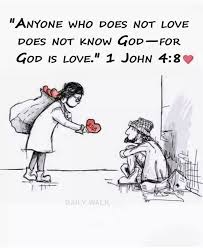
1 John 4:8 tells us that God is love.

This means that any worldly love falls short of the true definition.

Think about the most dynamic couples, real or fictional, that are well known throughout history—Romeo and Juliet, Robert and Elizabeth Barrett Browning, Billy and Ruth Graham, President Jimmy and, Rosalynn Carter to name a few.

Now think about current celebrity match-ups in the media that make you sort of swoon – Bob and Betty Hope, George Burns and Gracie Allen, Fred Astaire and the incomparable Ginger Rogers, Humphry Bogart and Lauren Bacall.

As romantic as any of those might seem right now, those examples aren’t true love.

Without God involved in the process, without that cord of three strands that is not so easily broken (Ecclesiastes 4:9-12), no human relationship could ever be real love – it will always and forever “miss the mark.” 

1 Corinthians 13, known as the “love chapter,” states that “faith, hope, and love abide, these three; but the greatest of these is love.” 

I believe it’s important to note the greatest of these character traits only comes from God!

He is the source of love—not romance novels, not sonnets and poetry, and certainly not Hollywood.

Here are three things the Word of God reveals to each of us about “first loves.”

1. God Loved Us First

Everything springs from this. 

Such a beautiful message of hope is found in 1 John 4:19.

“We love, because He first loved us.” 

We don’t love because we manage to “dig deep down” and “conjure up our best effort”—no, we love because God put it in us first, via the Holy Spirit, to do so.

Any desires toward love, holiness, purity, etc. toward others or toward the Lord only come from God.

We are incapable of love on our own—yet we love because God first loved us.

What a relief!

Don’t you feel the burden rolling off your shoulders?

Love is a gift from God, who is love Himself—Who became love in the flesh through Jesus Christ, who came to “deliver us from the domain of darkness and transfer us to the kingdom of His beloved Son” (Colossians 1:13).

“You did not choose Me but I chose you, and appointed you that you would go and bear fruit, and that your fruit would remain, so that whatever you ask of the Father in My name He may give to you.” (John 15:16)

Let the depth of this truth saturate your weary and vulnerable soul… let it seep in, let it comfort you and hug you with all the coziness of your favorite quilt. 

You are held.

You are loved. A

nd it has nothing to do with you or what you bring to the table, and everything to do with the God who created you, who knew you from before the foundations of time (Jeremiah 1:5), planned every one of your days way long before you were even in your mother’s womb (Psalm 139:16).

2. We Often Leave Our First Love (GOD)

As comforting as it is to sit and bask in the reality of God’s love for us, we must also acknowledge and recognize the sobering concept of leaving our first love.

“But I have this against you, that you have left your first love.” (Revelation 2:4)

Even as believers, we are not immune to apathy.

Sometimes, we lose our fervor and passion for the things of the Lord.

When we are busy catering to our sin rather than confessing it, we are blocking communication with the Holy Spirit.

Conviction becomes fewer and farther between.

We grow farther away from Christ.

We stop praying, we stop reading and studying the Word, disciplining our lives and start listening to the lies that we can never love or worse—be loved—again.

Rather than heeding the dark deceptions from the enemy, we should recognize our behavior, turn, and repent.

Do we have unconfessed sin in your life?

Admit it already.

God already knows.

Avoiding prayer will only keep you feeling more and more disconnected, leaving ample room for the enemy to continue to tempt you.

There have been times in my Christian walk where it felt like my prayers hit the ceiling and stopped and splattered there and it made me prone to not pray at all.

In those times, the only prayer we need is “Lord, give me the want to want to.”

Rather than hide in our vulnerability and shame when we’re “prone to wander” and aren’t feeling a desire toward the things of God, we must shine truth on those dark thoughts, bring them to the light, simply ask for God’s desires again.

The Holy Spirit is infinitely more than capable of filling us back up.

In my experience, believers tend to occasionally disregard various disciplines of the faith because “that’s not what saves them.”

I agree—it’s not.

But I also realize when we only go through the motions of daily Bible reading, daily prayer, consistent fellowship with the church, we’re more prone to stay in communion with the Holy Spirit and on the right path in our Christian walk.

Sometimes, sitting down with the Word of God despite “not wanting to” will be exactly what’s needed to bring forth the desire.

Actions often breed feelings, and this is one of the greatest offenses we have against spiritual warfare.

The Word of God is our sword! 

Ephesians 6:17 says, “Take the helmet of salvation and the sword of the Spirit, which is the word of God.”

“For the word of God is living and active, sharper than any two-edged sword, piercing to the division of soul and of spirit, of joints and of marrow, and discerning the thoughts and intentions of the heart…” (Hebrews 4:12)

Even when we don’t feel like it—maybe especially when we don’t feel like it—pick up your sword anyway and start swinging it against your vulnerabilities.

Psalm 84: 8-9 The Message

8-9 God-of-the-Angel-Armies, listen:
    O God of Jacob, open your ears—I’m praying!
Look at our shields, glistening in the sun,
    our faces, shining with your gracious anointing.

Standing tall, Steadfast and Immovable, Protect and Fight for your first love.

3. We’re to Stay with Our Second “First Love”

“Let your fountain be blessed, And rejoice with the wife of your youth.” (Proverbs 5:18)

Christ is and should always be our first love.

But on earth, we are granted the blessing of marriage between a man and a woman (that won’t be recognized in heaven –Mark 10:5-9) that reflects the union of Christ and His bride—the church.

It’s a holy and sacred covenant before the Lord himself, because it reflects His relationship with His beloved.

To participate in that reflection is a gift and an honor.

It’s not to be taken lightly.

Unfortunately, in our current culture, marriage today is often considered to be “open to man’s socio-cultural interpretation” or an extreme version of dating, where choices of divorce are made as recklessly as high schoolers speed dating.

Mark 10:9 says, “What therefore God has joined together, let not man separate.”

This verse does not mean that all divorce is forbidden.

There are unfortunately circumstances of abandonment where spouses didn’t have a choice (Malachi 2:16), or marriages of physical abuse and unrepentant adultery (Matthew 5:31-32), the Bible allows for the dissolving of a marriage.

It’s impossibly painful to those involved and indescribably messy, regardless of the circumstances, and every story is unique to the person who then carries it.

But far too often, marriages dissolve solely for the lack of commitment and desire to keep them going—lack of reverence for the covenant they represent.

“For I feel a divine jealousy for you, since I betrothed you to one husband, to present you as a pure virgin to Christ.” (2 Corinthians 11:2)

“Let us rejoice and exult and give him the glory, for the marriage of the Lamb has come, and his Bride has made herself ready; it was granted her to clothe herself with fine linen, bright and pure”—for the fine linen is the righteous deeds of the saints.” (Revelation 19:7-8)

While our ultimate first love is the Lord, our first love on earth—or what I’ve termed our “second first love” is our spouse.

They deserve to be respected and treated as such.

They are worthy to the utmost to be maximally protected, cherished, guarded, and loved for as long as both spouses shall live.

It’s so vitally and critically important to remember that it’s impossible to follow through with our role in a godly marriage if the very first truth of our very first love, about first love isn’t recognized—that “God is love, that He first loved us.”

In the name of God, the Father and God the Son and God the Holy Spirit,

Let us Pray,

God, you are LOVE! Absolute, from everlasting to everlasting , perfect, unconditional, incomparable, pure, incomprehensible. And all creation is of your love. We are all born of this love. And your splendored love, ever existent, commands us to love you unceasingly, wholly, with all our minds, hearts, souls, strength. And to love our neighbor as ourselves. Lord, we are your chosen people and as Christians, who are born again, of the Spirit, as your children, we are set apart and identified by our love.

Jesus, in obedience of your Will, has taught us the meaning of true love, in serving our fellowmen with humility, and with compassion, without prejudice and without judgement. Father, you are the fountain of love, which emanates from you to us, and if we love as you do, it is because you are the source and origin of selfless love. Love, not just to our own, but also to our detractors, our enemies and our persecutors.

Loving Father, Precious Savior, Intercessor Holy Spirit, nothing more animates and inflames our love, than the One truth of the existence of your love for us, before ours, which shows that it is free, true, sovereign, and unmerited. Living in Savior Christ, aspiring to work and obtain salvation by our faith and your free grace, we know that when we stand before you, it will be because we have lived in obedience to your Will, have finally risen above pride, arrogance, ego, and have decreased ourselves in the purity of love, thereby increasing Christ, living in the counsel of the Spirit, in Christ.

Adeste Fideles! Laeti Triumphantes! Venite Adoremus! Dominum.

Gloria! In Excelsis Deo! Alleluia, Alleluia, Alleluia, Amen.

https://translate.google.com/

Seeking, Growing Intimacy in Your Relationships. Deuteronomy 4:29-31

Deuteronomy 4:29-31 Amplified Bible

29 But from there you will seek the Lord your God, and you will find Him if you search for Him with all your heart and all your soul. 30 When you are in distress and tribulation and all these things come on you, in the latter days you will return to the Lord your God and listen to His voice. 31 For the Lord your God is a merciful and compassionate God; He will not fail you, nor destroy you, nor forget the covenant with your fathers which He swore to them.

The Word of God for the Children of God.

Adeste Fidelis! Venite Adoremus! Dominum.

Gloria! In Excelsis Deo! Alleluia, Alleluia, Alleluia, Amen.

“I can’t stand Sundays!”

The woman holding her newborn son shouted deep into the church angrily.

She rose from her pew and shared that on Sundays she often felt so lonely and empty because many of her friends were busy with families and ball games.

She was a single woman, new to the church saying she was not a member there.

She is unhappy about her situation and asked the congregation for prayer.

The congregation surrounded her, her young child and laid hands upon them.

Together, they prayed for a good fifteen minutes.

Following the service, she sat down, met privately with the Pastor and his wife.

She said she was separated, divorce papers had been filed with the courthouse.

The father of the child was caught being unfaithful.

she confessed that she felt her sense of intimacy had been badly betrayed.

She had tried dating in the past several weeks but didn’t find the “right” man.

She also went to a few ­churches but felt they weren’t “loving” enough either.

In their response to the woman,

the Pastor and his wife suggested perhaps she shouldn’t focus mainly on searching for the right man, or seeking even the right “loving” congregation.

The Bible teaches that everyone’s main concern should be about seeking the first love of the Lord first – cultivating and growing in their intimacy with God.

That’s the first step on our journey to a loving and secure peace and happiness.

In our passage from Deuteronomy for today we hear a call to earnestly seek the Lord with all of your heart and all of your soul.

This prophetic word was originally spoken to God’s people who would come to repeatedly betray the love of the Lord and be scattered in exile many years later.

The call is followed by a promise that those who are earnest in their search will find the Lord.

Please note that the act of earnestly seeking the intimate love of God is more than just taking a few or several first steps or a phase in our spiritual growth.

Rather, it is a lifelong quest.

The continued search for God, leading to the deepening experience of his love, is the foundation of securing our inner peace in the only One who never betrays.

Growing Intimacy in Your Relationships.

Psalm 63:1-3 Amplified Bible

The Thirsting Soul Satisfied in God.

A Psalm of David; when he was in the wilderness of Judah.

63 O God, You are my God; with deepest longing I will seek You;
My [a]soul [my life, my very self] thirsts for You, my flesh longs and sighs for You,
In a dry and weary land where there is no water.


So I have gazed upon You in the sanctuary,
To see Your power and Your glory.

Because Your lovingkindness is better than life,
My lips shall praise You.

Intimacy is something that each of our souls deeply desires.

Intimacy is defined as close familiarity or friendship; closeness.

Intimacy in marriage includes physical acts of intimacy, but we yearn for intimacy in every close relationship we have in our lives.

Our longing for closeness is a part of our created design.

In Psalm 63 it is articulated this way,

“O God, you are my God; earnestly I seek you; my soul thirsts for you; my flesh faints for you, as in a dry and weary land where there is no water. So I have looked upon you in the sanctuary, beholding your power and glory. Because your steadfast love is better than life, my lips will praise you.”

We long to be and remain close to God our Creator! [Psalm 139, Romans 8:35-39]

We long to be close to God, our Great Shepherd! [Psalm 23]

We long to be close to our Savior, the Resurrected Jesus! [John 21:15-17]

We were created by God for relationships.

Yet, we all know how difficult it is to create safe spaces for true intimacy in our lives.

Humans are imperfect, and we so easily hurt each other.

Hurt, disappointment, insecurity, and grief lead to walls going up in our hearts.

Only God is made of perfect love that we can trust with our whole hearts.

Nonetheless, we need each other and can’t give up on the work of tearing down the walls and trying again to build safe, long-lasting, and close relationships.  

Intimacy requires a commitment to forgiveness. 

Intimacy requires a radical commitment to forgiveness.

Please note that forgiveness does not mean you are called to remain present in an abusive or unhealthy relationship.

Forgiveness is a daily requirement to remain close to other very flawed humans.

Guess what, you need to be forgiven that much too because you bring just as much selfishness and brokenness to your home each day too!

It is so easy to see the ways one’s spouse lacks empathy, love, and kindness, but while we are worried about pointing out their failures, the question needs to be asked of ourselves: exactly what size plank am I missing that is in my own eye?

I have to lay down my right to be right if I want to feel close to this person who is my spouse, my life-long soulmate and embrace a life of radical forgiveness.

Unity is the foundation to an intimate relationship. 

1 Corinthians 1:4-10 Amplified Bible

I thank my God always for you because of the grace of God which was given you in Christ Jesus, so that in everything you were [exceedingly] enriched in Him, in all speech [empowered by the spiritual gifts] and in all knowledge [with insight into the faith]. In this way our testimony about Christ was confirmed  and established in you, so that you are not lacking in any spiritual gift [which comes from the Holy Spirit], as you eagerly wait [with confident trust] for the revelation of our Lord Jesus Christ [when He returns]. And He will also confirm you to the end [keeping you strong and free of any accusation, so that you will be] blameless and beyond reproach in the day [of the return] of our Lord Jesus Christ. God is faithful [He is reliable, trustworthy and ever true to His promise—He can be depended on], and through Him you were called into fellowship with His Son, Jesus Christ our Lord.

10 But I urge you, believers, by the name of our Lord Jesus Christ, that all of you be in full agreement in what you say, and that there be no divisions or factions among you, but that you be perfectly united in your way of thinking and in your judgment [about matters of the faith].

1 Corinthians 1:10 instructs, “I appeal to you, brothers, by the name of our Lord Jesus Christ, that all of you agree, and that there be no divisions among you, but that you be united in the same mind and the same judgment.”

God communicates with us that we are to relate with, interact with our brothers and sisters in Christ with a whole and earnest heart and soul which seeks unity.

He likens us to a body, each of us different in our skills, gifts, and uses but we all work together towards one mission which is to keep the body alive!

We do not have to see eye-to-eye on every issue in our relationships to live in unity, but we do have to be humble enough not to let divisions grow among us.  

Intimacy with God and each other is built when we earnestly seek to spend much quality time together. 

Psalm 24:5-7 Amplified Bible


He shall receive a blessing from the Lord,
And righteousness from the God of his salvation.


This is the generation (description) of those who diligently seek Him and require Him as their greatest need,
Who seek Your face, even [as did] Jacob. Selah.


Lift up your heads, O gates,
And be lifted up, ancient doors,
That the King of glory may come in.

Psalm 27 Amplified Bible

A Psalm of Fearless Trust in God.

A Psalm of David.

27 The Lord is my light and my salvation—
Whom shall I fear?
The Lord is the refuge and fortress of my life—
Whom shall I dread?


When the wicked came against me to eat up my flesh,
My adversaries and my enemies, they stumbled and fell.

Though an army encamp against me,
My heart will not fear;
Though war arise against me,
Even in this I am confident.


One thing I have asked of the Lord, and that I will seek:
That I may dwell in the house of the Lord [in His presence] all the days of my life,
To gaze upon the beauty [the delightful loveliness and majestic grandeur] of the Lord
And to meditate in His temple.

For in the day of trouble He will hide me in His shelter;
In the secret place of His tent He will hide me;
He will lift me up on a rock.

And now my head will be lifted up above my enemies around me,
In His tent I will offer sacrifices with shouts of joy;
I will sing, yes, I will sing prais
es to the Lord.


Hear, O Lord, when I cry aloud;
Be gracious and compassionate to me and answer me.

When You said, “Seek My face [in prayer, require My presence as your greatest need],” my heart said to You,
“Your face, O Lord, I will seek [on the authority of Your word].”

Do not hide Your face from me,
Do not turn Your servant away in anger;
You have been my help;
Do not abandon me nor [a]leave me,
O God of my salvation!

1
Although my father and my mother have abandoned me,
Yet the Lord will take me up [adopt me as His child].

11 
Teach me Your way, O Lord,
And lead me on a level path
Because of my enemies [who lie in wait].
12 
Do not give me up to the will of my adversaries,
For false witnesses have come against me;
They breathe out violence.
13 
I would have despaired had I not believed that I would see the goodness of the Lord
In the land of the living.

14 
Wait for and confidently expect the Lord;
Be strong and let your heart take courage;
Yes, wait for and confidently expect the Lord.

Building intimacy requires time spent sharing the same space with open ears and having an open heart ready to connect.

One tip for time together is to commit to making some of this time screen-free time – time for family bible study, family devotions, family prayer sessions.

When we seriously want to really hear our spouse, friends, family members, or children’s hearts, we have to deliberately, intentionally, remove distractions such as our phones, video game boxes, our televisions, so we can fully engage.

We grow closer to God, Jesus, Holy Spirit and in our personal relationships as, when we are intentional about being present with each other when we interact.  

Intersecting Faith and Life.

Habakkuk 3:17-19 Amplified Bible

17 
Though the fig tree does not blossom
And there is no fruit on the vines,
Though the yield of the olive fails
And the fields produce no food,
Though the flock is cut off from the fold
And there are no cattle in the stalls,
18 
Yet I will [choose to] rejoice in the Lord;
I will [choose to] shout in exultation in the [victorious] God of my salvation!
19 
The Lord God is my strength [my source of courage, my invincible army];
He has made my feet [steady and sure] like hinds’ feet

And makes me walk [forward with spiritual confidence] on my [a]high places [of challenge and responsibility].

For the choir director, on my stringed instruments.

What connections, relationships do you feel covenanted and called upon by God to be a bit more considered and intentional about cultivating more intimacy in?

What is one way you can push yourself to be more present and available in this relationship in the coming weeks, as we move closer to celebrating our Easter?

Are there things that you need to release to the Lord and forgive before moving forward?

Carve out some family time, time with friends, write out a prayer of forgiveness and share them, allow God to start healing the broken relationships in your life.

In the name of God, the Father and God the Son and God the Holy Spirit,  

Let us Pray,

139 1-6 God, investigate my life;
    get all the facts firsthand.
I’m an open book to you;
    even from a distant sight.
You know everything I’m going to say
    before I start the first sentence.
I look behind me and you’re there,
    then up ahead and you’re there, too—
    your reassuring presence, coming and going.
This is too much, too wonderful—
    I can’t take it all in!

7-12 Is there anyplace I can go to avoid your Spirit?
    to be out of your sight?
If I climb to the sky, you’re there!
    If I go underground, you’re there!
If I flew on morning’s wings
    to the far western horizon,
You’d find me in a minute—
    you’re already there waiting!
Then I said to myself, “Oh, he even sees me in the dark!
    At night I’m immersed in the light!”
It’s a fact: darkness isn’t dark to you;
    night and day, darkness and light, they’re all the same to you.

13-16 Oh yes, you shaped me first inside, then out;
    you formed me in my mother’s womb.
I thank you, High God—you’re breathtaking!
    Body and soul, I am marvelously made!
    I worship in adoration—what a creation!
You know me inside and out,
    you know every bone in my body;
You know exactly how I was made, bit by bit,
    how I was sculpted from nothing into something.
Like an open book, you watched me grow from conception to birth;
    all the stages of my life were spread out before you,
The days of my life all prepared
    before I’d even lived one day.

17-22 Your thoughts—how rare, how beautiful!
    God, I’ll never comprehend them!
I couldn’t even begin to count them—
    any more than I could count the sand of the sea.
Oh, let me rise in the morning and live always with you!

Father, Son and Holy Spirit, guide us and lead us, shepherd us to you in faith, obedience, and love. Guide us each day, teach us to be fully committed to you.

Adeste Fidelis! Venite Adoremus! Dominum

Gloria! In Excelsis Deo! Alleluia, Alleluia, Alleluia, Amen.

https://translate.google.com/

Distant or Delighted? Not Feeling the Love of God? How About Learning to See Jesus With a Smile? 1 John 3:1-3

1 John 3:1-3 Amplified Bible

Children of God Love One Another

See what an incredible quality of love the Father has shown to us, that we would [be permitted to] be named and called and counted the children of God! And so we are! For this reason the world does not know us, because it did not know Him. Beloved, we are [even here and] now children of God, and it is not yet made clear what we will be [after His coming]. We know that when He comes and is revealed, we will [as His children] be like Him, because we will see Him just as He is [in all His glory]. And everyone who has this hope [confidently placed] in Him purifies himself, just as He is pure (holy, undefiled, guiltless).

The Word of God for the Children of God.

Adeste Fidelis. Venite Adoremus. Dominum.

Gloria. In Excelsis Deo. Alleluia, Alleluia, Alleluia, Amen.

See How Well We Are Lavished With Love?

1 John 3:1 New International Version

See what great love the Father has lavished on us, that we should be called children of God! And that is what we are! The reason the world does not know us is that it did not know him.

The word lavish presents a picture of extravagant abundance.

It is almost too much, too generous and luxurious.

Being lavish borders on being wasteful.

But the Father has lavished his love on us.

God’s love is even more than what a wonderful mother showers on her infant.

Isaiah 66:12-14 New International Version

12 For this is what the Lord says:

“I will extend peace to her like a river,
    and the wealth of nations like a flooding stream;
you will nurse and be carried on her arm
    and dandled on her knees.
13 As a mother comforts her child,
    so will I comfort you;
    and you will be comforted over Jerusalem.”

14 When you see this, your heart will rejoice
    and you will flourish like grass;
the hand of the Lord will be made known to his servants,
    but his fury will be shown to his foes.

God’s love and care are supplied all the time.

God’s love is a constant bombardment of affection and care.

We may be as oblivious as an infant to the presence of his love, but God still continues to pour his love into our lives.

God’s love flows into us deeply, redefines who we are at the very core of our heart, mind and soul.

When we open our hearts to God’s love, we are transformed by it.

We are remade, regenerated into children of God.

It is God who makes us his children, not us.

We cannot earn that status.

It is a gift of God’s great love.

Because we are sinners, we do not understand God’s love for us at first.

We don’t even know we need him until we realize we are stuck in sin and cannot save ourselves.

We become God’s children when we receive Jesus as our Savior (John 1:12).

Not one of us is worthy of God’s love.

We cannot earn it.

God just loves us.

We would not be God’s children if he were not already deeply in love with us.

How amazing is that!

Being said with an exclamation mark, what if we turned that into a question?

“How Amazing Is That?”

I Really Do Not Feel God’s Love.

Psalm 13 Authorized (King James) Version

Psalm 13

To the chief Musician, A Psalm of David.

How long wilt thou forget me, O Lord? for ever?
how long wilt thou hide thy face from me?
How long shall I take counsel in my soul,
having sorrow in my heart daily?
how long shall mine enemy be exalted over me?
Consider and hear me, O Lord my God:
lighten mine eyes, lest I sleep the sleep of death;
lest mine enemy say, I have prevailed against him;
and those that trouble me rejoice when I am moved.
But I have trusted in thy mercy;
my heart shall rejoice in thy salvation.
I will sing unto the Lord,
because he hath dealt bountifully with me.

Have you ever said or thought these words in public or in private?

If so, you’re not alone.

Truth Be Told, Too many times I have really struggled with the disconnect between knowing that God loves me and actually seeing, and feeling His love.

It might be tempting to brush aside the discomfort of this disconnect and get on with the responsibilities of life.

“After all,” some will pat you on the back, say, “love is an action, not a feeling.”

But if you look closely at the love displayed in the Bible, it’s clear that it’s not just automatic rote Christian responsibility—it’s also passionate emotion.

God doesn’t just act lovingly toward us, He feels love for us.

And He doesn’t want us to only understand His love, but to experience it in a deep way, a deeply visual and tactile way – to visualize it and touch it daily.

If, like me, you’ve struggled with a disconnect between knowing about God’s love and actually seeing, feeling it, accept your feelings as being quite real.

Sometimes, like the Psalmist who penned Psalm 13, we will not feel loved.

Sometimes, like the Psalmist who penned Psalm 13, we will not see God’s love.

Psalm 13 is someone’s deepest expression of a heart and soul in angry anguish.

It has remained in the Bible through countless edits because God wants you the reader to know, the maximum extent to which God feels, visualizes our hearts.

Heart Distant or Delighted? Learning to See Jesus With a Smile …

Psalm 13:5-6 Authorized (King James) Version

But I have trusted in thy mercy;
my heart shall rejoice in thy salvation.
I will sing unto the Lord,
because he hath dealt bountifully with me.

1 John 3:3 Amplified Bible

And everyone who has this hope [confidently placed] in Him purifies himself, just as He is pure (holy, undefiled, guiltless).

I recall many years ago sitting in a circle with the other members of my Bible study group when our leader invited us to imagine what Jesus’ face looks like.

Dutifully, I closed my eyes and tried to picture Him.

The image that appeared was of a man with long, greyish silver locks and dull, piercing brown eyes.

His unsmiling lips were hard set in a neutral line.

He didn’t look disapproving, but he didn’t look very happy either.

As I studied His face, I felt sad, fearful, and unsure of how He felt about me.

I was deeply troubled by this experience because, intellectually, I knew God always loved me deeply and felt positively—even passionately—about me.

Throughout the Bible, God describes His love in the most tender terms known to humankind.

He compares His love for us to the love a parent has for their child—a warm, welcoming, compassionate love (Isaiah 66:13; 1 John 3:1).

He also describes His love for us as the love a groom has for his bride—a passionate, ardent, sacrificial love (Revelation 19:7; Ephesians 5:25-27).

Yet, my picture of Jesus that evening revealed that, deep down, I also perceived Him as uppermost serious and restrained, maybe even a little depressed at me.

It also highlighted my fear that I was not a source of joy or pleasure to God, and that, though He loved me, it suddenly felt more being with a distant, aloof love.

I knew this isn’t how God wanted me to view Him.

Ephesians 3:18, the apostle Paul prayed, “May you have the power to understand, as all God’s people should, how wide, how long, how high, and how deep his love is. May you experience the love of Christ, though it is too great to understand fully” (NLT).

More than anything, I wanted to experience the love of God—I wanted to feel it, not just know about it.

So I started asking God to take my understanding beyond intellect and into a more studious, scriptural, deep heart knowing of my value to Him.

1 John 3:1 Amplified Bible

Children of God Love One Another

See what an incredible quality of love the Father has shown to us, that we would [be permitted to] be named and called and counted the children of God! And so we are! For this reason the world does not know us, because it did not know Him.

Truth be told, sometimes it’s so much easier to notice the love people have for you than the love God has for you.

Why?

Because you can physically see them and the way they express love.

But when it comes to God, it can be challenging to see, understand, the extent to which He loves you.

After all, none of us can physically see Him on this side of Heaven.

That’s why God gave us His Word… to help us to see, feel, and understand who He is and how much He really does love us. 

See, throughout the Bible, God is described as an all-powerful and eternally just God, but also as deeply loving to those He created.

In the entire biblical story, God is presented as a character who strongly cares for us… so much so that He even allowed His Son, Jesus Christ, to enter this world to bring about a redeemed and restored relationship with humanity.

In fact, Jesus is the physical embodiment of God’s eternal love, showing us that His love is a real, tangible being we can cling to and put our hope in rather than just an abstract concept we cannot ever hope to even begin to .01% understand.

Now, before we dive further into how Jesus loves us, first let’s clarify the meaning of biblical love.

BIBLICAL LOVE

1 Corinthians 13:4-7 Amplified Bible

Love endures with patience and serenity, love is kind and thoughtful, and is not jealous or envious; love does not brag and is not proud or arrogant. It is not rude; it is not self-seeking, it is not provoked [nor overly sensitive and easily angered]; it does not take into account a wrong endured. It does not rejoice at injustice, but rejoices with the truth [when right and truth prevail]. Love bears all things [regardless of what comes], believes all things [looking for the best in each one], hopes all things [remaining steadfast during difficult times], endures all things [without weakening].

There are many different kinds of love.

There is parental love, brotherly love, and romantic love.

When anyone says the word love, we often first associate it with anything from dating to sex.

But, the word is so much more broad than we often think.

According to the above passage, biblical love is simply putting the needs of others before your own. 

All of us fall short of the expectation set by this passage at some point, because selflessness does not come naturally to us (Romans 3:23).

But, the good news of the Gospel is that God perfectly embodies these four verses.

He is the one that created love in the first place!

In turn, this means that God is LOVE itself (1 John 4:8).

And because He is love, He displays this quality not only through His words, but through His actions as well.

GOD’S DEVOTED LOVE

Psalm 103:12-14 Amplified Bible

12 
As far as the east is from the west,
So far has He removed our transgressions from us.
13 
Just as a father loves his children,
So the Lord loves those who fear and worship Him [with awe-filled respect and deepest reverence].
14 
For He knows our [mortal] frame;
He remembers that we are [merely] dust.

As any good father would, God feels sentiment and shows affection toward His children.

This picture of God as the perfect Father is a deeply intimate one because it illustrates how far [east from west], He would go to keep us safe and secure.

Another illustration of God’s love is seen in Hosea 2:14-23.

Rather than a father this time, this Bible story describes a faithful husband that comforts and treasures his wife – which is also meant to be seen as a metaphor for God’s devoted love to an unfaithful Israel.

Despite Israel’s unfaithfulness, God expressed His infinite love for His people all the more through love poetry, painting a beautiful image of God’s extreme devotion and affection towards His Bride, the Church.

LOVE AS AN ACTION

Romans 5:8-10 Amplified Bible

But God clearly shows and proves His own love for us, by the fact that while we were still sinners, Christ died for us. Therefore, since we have now been justified [declared free of the guilt of sin] by His blood, [how much more certain is it that] we will be saved from the [a]wrath of God through Him. 10 For if while we were enemies we were reconciled to God through the death of His Son, it is much more certain, having been reconciled, that we will be saved [from the consequences of sin] by His life [that is, we will be saved because Christ lives today].

But, love is not merely a feeling.

Love is also an action… that God shows from the very beginning of the Bible.

Out of His love, God established a rescue plan for humanity in the wake of Adam and Eve’s sin (Genesis 3:15).

Out of His great love, God freed Israel from slavery in Egypt – not because they earned it, but because they were His people (Exodus 12-14).

Out of His love, God became fully human, yet fully God through the person of Jesus Christ – living a perfect life and dying a death we deserved so that we could all be restored into unto, a right relationship with Him (John 3:16-17).

In each scenario, all of God’s actions toward His people are motivated by pure love. He doesn’t just say He loves us, but He actually does something about it.

THE LOVE OF JESUS

John 15:13-16Amplified Bible

13 No one has greater love [nor stronger commitment] than to lay down his own life for his friends. 14 You are my friends if you keep on doing what I command you. 15 I do not call you servants any longer, for the servant does not know what his master is doing; but I have called you [My] friends, because I have revealed to you everything that I have heard from My Father. 16 You have not chosen Me, but I have chosen you and I have appointed and placed and purposefully planted you, so that you would go and bear fruit and keep on bearing, and that your fruit will remain and be lasting, so that whatever you ask of the Father in My name [as My representative] He may give to you.

By coming into the world and sacrificing his own life for us, Jesus demonstrated the ultimate love of God.

He died for us because He considered us friends worth dying for (John 15:15).

This is the radical love that Jesus showed during his time on Earth… and still shows us today even if we do not see it in quite the same way we see the love of our friends and family.

So, when asking the question “Does Jesus love me?” the simple answer is “yes.”

Jesus really does love you not because of anything you have done, but because of who He is!

In the name of God, the Father and God the Son and God the Holy Spirit,

Let us Pray,

Almighty God, we praise and thank you for making us children of God, not through our own power and piety but through our baptism into crucified and risen Lord Jesus Christ. We turn daily to you, and in that turning we find peace, courage and purpose. Make your whole church a witness to the great good news of Christ’s resurrection. Father God, may we have the grace and the power of the Holy Spirit to grasp how immeasurable wide and deep and high and long is your love for us, expressed in all that Savior Jesus has done for us, that we may be your children. In his name, Amen.

Adeste Fidelis. Venite Adoremus. Dominum.

Gloria. In Excelsis Deo. Alleluia, Alleluia, Alleluia, Amen.
https://translate.google.com/

Pondering the Word of God: What Does it Mean For Us to Say, and to Believe and to Also Act Upon, ‘God Is Love’? 1 John 4:7-8?

1 John 4:7-8 Amplified Bible

God Is Love

Beloved, let us [unselfishly] [a]love and seek the best for one another, for love is from God; and everyone who loves [others] is born of God and knows God [through personal experience]. The one who does not love has not become acquainted with God [does not and never did know Him], for God is love. [He is the originator of love, and it is an enduring attribute of His nature.]

The Word of God for the Children of God.

Adeste Fidelis. Venite Adoremus. Dominum.

Gloria. In Excelsis Deo. Alleluia, Alleluia, Alleluia, Amen.

I want you to take a few seconds or minutes, preferably the rest of forever, and meditate, ponder, and just think about the depths of love that Jesus has for you.

Depending on the day, perhaps you may perceive or you genuinely feel a barrier, because we may know all too well, how we often fail, falter, take our eyes off our King, and at times maybe even want nothing to do with Him.

But I’m here to tell you that in those exact moments, Christ’s all-encompassing love is yet all the more present and there to sustain you!

For He has chosen you, though you will most definitely fail, and falter and too, stumble, He called you his own, though you and I will flinch, and we all have a place at His table even when your gaze is not perfectly fixed on the divine host. 

So do meditate, ponder and think about how Christ’s love for you and me is like an all consuming ocean that you and I cannot ever swim away from. 

Do think about that He is the greatest joy in times of triumph. 

Do think about that He is your deepest comfort in your utmost trying of times and sorrows. 

Pray – Oh, what love He has for his children…Oh, what love He has for you!

So please join me today in praising God, and His Word, for his persistent love.

Praise God, that He continually shows us what love is even right now.

Praise God, that He first loved us which enables us to, therefore, go and love on others exactly where they are. 

So today, the remainder of this week, and continually, let there be no shortage of love from the children of God especially during times we are all experiencing.

Ask Jesus right now, through prayer and study of His Word, through fellowship, to love others through you as He has so graciously covered all of you in his love.

What Does it Mean That ‘God Is Love’ in 1 John 4:8?

1 John 4:8 Amplified Bible

8 The one who does not love has not become acquainted with God [does not and never did know Him], for God is love. [He is the originator of love, and it is an enduring attribute of His nature.]

Love is a word that has taken on many meanings throughout the ages.

Innumerable writers, movie directors, music and dance choreographers and hosts and myriads artists alike have tried their best to convey the idea of love.

Though almost no one has the same definition, there is an underlying thought.

Love is a feeling and an action.

Love is what one person feels and does for someone else.

Even in the Christian faith, love entails many qualities. 

1 Corinthians 13 is an entire passage devoted to the idea of love.

The chapter ends on the notion that love is both greater than hope and surprisingly greater than faith.

Here too we see that love is how one person relates to another, both in feeling and action.

The dictionary definition also describes how people relate.

With so many perspectives on the idea of love, an entire biblical passage dedicated to the idea, and too many songs, stories, and movies to count, love must be very important.

Moreover, this proves without a shadow of doubt we have all been affected by love in one way or another – love touches everyone – without any exceptions.

We also know that God values the idea of love because of how many times the word is used in the Bible.

In the original King James Version (KJV) the word love appears 310 times.

The frequency of the word will largely depend on the translation.

Important to note, the English word for love is split into different words in the original writing of the Bible.

The original languages used words to describe love including phileo, pragma, and agape.

When love is evoked in Scripture, the term is used to describe the way we talk, act, and our mindset toward others.

In the Bible though, love is by no means limited to human relationships.

In fact, the Bible informs us that the reason why we love other people, the reason we can understand love, is exactly this: because God first loved us.

1 John 4:19 Amplified Bible

19 We love, because [a]He first loved us.

God gave us the example and the how-to guide.

This verse comes shortly after the aforementioned verse from 1 John 4.

To understand the context of the words here, we have to first identify the passage’s author – John, an apostle of Jesus.

In this chapter, John draws a comparison between people of the world and people of God.

More specifically, he identifies that some people will claim to purport God, but do so falsely.

These are “false prophets” (1 John 4:1).

We can identify these people by testing their spirit.

One way to test the spirit is by examining someone’s ability to love.

After John makes clear the difference between false prophets and true believers, he admonishes us to love one another.

How do we accomplish this?

We look at what God has done for us.

John makes the claim that love is first and foremost defined by God’s choosing to love us, His children.

With this powerful and inspiring truth into mind, we should then in response, turn our heart to love one another (God’s children), the way our Father loves us.

He speaks confidently in detailing that God loves us, so we ought to love one another, but what does John mean when he says, “God is love”?

What Did John Mean When He Said ‘God Is Love’?

1 John 4:8Authorized (King James) Version

He that loveth not knoweth not God; for God is love.

In this verse, we see that John equates God with love.

This metaphorical statement takes on a literal meaning when we consider the evidence of John’s claim.

In this passage, John mentions the sacrifice of Jesus for humanity–an act of love (1 John 4:10).

Since the Garden of Eden, God has acted on behalf of humanity, showing His love and support for His followers.

There have been consequences such as the banishment from Eden (Genesis 3), but God has maintained a loving relationship with people since the Fall.

Why?

The answer is evident in God’s love and all the stories that follow in the Bible where God acts on behalf of humanity.

These events culminate into the eventual Second Coming of Christ.

As God has remained an ever-present constant in the lives of humanity, so too are we supposed to show ever-present love to one another on an ongoing basis.

John states that we cannot love God and hate someone else (1 John 4:20).

If God has already chosen to love each of us despite our fallen nature since the beginning of time, why should or would we choose not to love someone despite an offense in the present time?

Obviously, this is easier said than done, but John makes clear “God is love.”

He drives this point further by stating we remain in love when we draw close to God, and as we draw close to God, the love of God abides in us (1 John 4:16).

The way God perpetually treats us in love, we should strive to treat other people.

How Does This Verse Affect How We Give and Receive Love?

John’s message to followers of Christ is a message echoed throughout the Bible.

A significant area where this is shown occurs when Jesus is questioned by a Pharisee.

“When the Pharisees heard that he had silenced the Sadducees, they came together. And one of them, an expert in the law, asked a question to test him: ‘Teacher, which command in the law is the greatest?’

He said to him, ‘Love the Lord your God with all your heart, with all your soul, and with all your mind. This is the greatest and most important command. The second is like it: Love your neighbor as yourself. All the Law and the Prophets depend on these two commands.’” (Matthew 22:34-40)

Jesus lets us know that the second greatest act we can do daily as Christians is love other people, while the greatest commandment is to love God.

If we are abiding in God, as John admonishes us to do, then we will not only seek to love God as Himself but will see loving others as an extension of that.

Interestingly, the Bible does not tell us to love ourselves, possibly because that action comes so naturally for believers and nonbelievers alike.

We can use this awareness then to change how we view other people.

Instead of maintaining a mindset of “me versus you” or “them versus us,” we can acknowledge the fact that we are all image-bearers of God (Psalm 139:13).

No matter our difference in faith, behavior, or physical appearance, we are God’s children and we should definitely strive to treat each other accordingly.

Three Ways to Love Others by Knowing that God Is Love
1. Encourage One Another

Proverbs 16:24 Amplified Bible

24 
Pleasant words are like a honeycomb,
Sweet and delightful to the soul and healing to the body.

The words we speak carry weight, for better or for worse.

When we choose to speak in a godly fashion, we can use words to encourage those around us: family, friends, coworkers, even strangers.

Pleasant words include gratitude, compliments, and any other type of speech that benefits the person hearing.

As we know that God is love, our love is not by any means limited to words.

We can also show love through actions that bring about health to the body of the person receiving.

2. Forgive One Another

Matthew 6:14-15 Amplified Bible

14 For if you forgive [a]others their trespasses [their reckless and willful sins], your heavenly Father will also forgive you. 15 But if you do not forgive others [nurturing your hurt and anger with the result that it interferes with your relationship with God], then your Father will not forgive your trespasses.

Holding resentment against another is not the proper way to act as a Christian.

God has chosen to forgive humanity despite our constant sinful nature.

Likewise, God wants us to exercise forgiveness for those people who offend us.

3. Pray For and With One Another

James 5:13-16 Amplified Bible

13 Is anyone among you suffering? He must pray. Is anyone joyful? He is to sing praises [to God]. 14 Is anyone among you sick? He must call for the elders (spiritual leaders) of the church and they are to pray over him, anointing him with [a]oil in the name of the Lord; 15 and the prayer of faith will restore the one who is sick, and the Lord will raise him up; and if he has committed sins, he will be forgiven. 16 Therefore, confess your sins to one another [your false steps, your offenses], and pray for one another, that you may be healed and restored. The heartfelt and persistent prayer of a righteous man (believer) can accomplish much [when put into action and made effective by God—it is dynamic and can have tremendous power].

A lot of people say expressions like, “I’ll pray for you.”

How many of them will stop and pray in that moment?

Scripture informs us that prayer has miraculous power.

If the words we speak to one another can bring health to the body, surely the words we say in prayer are even stronger.

When we love like God, we pray for those we love, and those we don’t feel as fondly toward because the Lord watches over us all.

If God is omnipresent, then the Lord is present in all of our lives, whether we feel or even acknowledge His presence.

Acquiring this disposition of love will push us to serve and love others even when we may feel like their faith is not where we prefer, and may even bring others closer to God.

Once we perfect loving people, we would have perfected and fulfilled the second greatest commandment.

This will prove not only God is love, but God is always with us and within us.

In the name of God, the Father and God the Son and God the Holy Spirit,

Let us Pray,

May I Recognize Your Words Prayer

God of truth, sometimes I not sure if I’m actually hearing your voice, or if it’s just my own thoughts or even another spirit. Sharpen my spiritual hearing, Lord, so I can recognize your words when you are speaking to me. Help me know it’s really you, with no doubt or second-guessing. When I’m asking for your guidance in important decisions, give me your peace that surpasses understanding with your answer. Help me remember that your words to me will never go against your written word in the Bible. Please, Give unto me a clear mind and push out all my confusion. Amen.

Adeste Fidelis. Venite Adoremus. Dominum.

Gloria. In Excelsis Deo. Alleluia, Alleluia, Alleluia, Amen.

https://translate.google.com/

“Jesus Loved Even Me.” 1 John 4:7-10

1 John 4:7-10Authorized (King James) Version

Beloved, let us love one another: for love is of God; and every one that loveth is born of God, and knoweth God. He that loveth not knoweth not God; for God is love. In this was manifested the love of God toward us, because that God sent his only begotten Son into the world, that we might live through him. 10 Herein is love, not that we loved God, but that he loved us, and sent his Son to be the propitiation for our sins.

The Word of God for the Children of God.

Adeste Fidelis. Venite Adoremus. Dominum.

Gloria. In Excelsis Deo. Alleluia, Alleluia, Alleluia, Amen.

As believers in Jesus, we should be loving other people.

Yes, even those that are unlovely.

Why?

Because God loves us and forgives us even when we don’t deserve it.

And out of that love that we have been given, we should be loving others and leading them closer to Jesus.

1 John 4:8 Amplified Bible

The one who does not love has not become acquainted with God [does not and never did know Him], for God is love. [He is the originator of love, and it is an enduring attribute of His nature.]

Part of knowing God, and being His follower is developing love in your life.

And it might take a little effort on your part.

And it might take a substantial effort on your part.

And it might even take a miraculous effort on your part.

Somewhere there might a hurt so unconscionable, it is beyond redemption.

You might be holding onto a grudge whose origin is utterly lost to the ages.

You might be used to gossiping, maybe even spreading rumors about others.

If you are reading this and can find no of God, love for God and for others, love bears all things at all times and perseveres for as long as forever lasts for You.

The encouragement is to keep praying even when praying is too difficult and keep hoping even when hope is the furthest thing from your mind, your soul –

God will always wait.

God will always and forever come to you when you choose to come to Him.

Luke 15:17-24 English Standard Version

17 “But when he came to himself, he said, ‘How many of my father’s hired servants have more than enough bread, but I perish here with hunger! 18 I will arise and go to my father, and I will say to him, “Father, I have sinned against heaven and before you. 19 I am no longer worthy to be called your son. Treat me as one of your hired servants.”’ 20 And he arose and came to his father. But while he was still a long way off, his father saw him and felt compassion, and ran and embraced him and kissed him. 21 And the son said to him, ‘Father, I have sinned against heaven and before you. I am no longer worthy to be called your son.’[a] 22 But the father said to his servants,[b] ‘Bring quickly the best robe, and put it on him, and put a ring on his hand, and shoes on his feet. 23 And bring the fattened calf and kill it, and let us eat and celebrate. 24 For this my son was dead, and is alive again; he was lost, and is found.’ And they began to celebrate.

And God will forever feel compassion for, to embrace, to celebrate, your life.

Psalm 42:1-3 English Standard Version

Book Two

Why Are You Cast Down, O My Soul?

To the choirmaster. A Maskil[a] of the Sons of Korah.

42 As a deer pants for flowing streams,
    so pants my soul for you, O God.
My soul thirsts for God,
    for the living God.
When shall I come and appear before God?[b]
My tears have been my food
    day and night,
while they say to me all the day long,
    “Where is your God?”

“Christ Loved Me – Yes, Even Me.”

The distinguishing mark of a Christian is their measure of confidence in their Savior Christ’s love for him and in the offering of his love to their Savior Christ.

First, faith sets her seal upon the person by enabling their heart and soul to say with the apostle John, “Christ loved me and gave himself for me.” 

Then love gives the countersign and stamps upon the heart and soul gratitude and love to Jesus in return. “We love because he first loved us.”

In those grand old ages, which are the heroic period of the Christian religion, this double mark was clearly seen in all believers in Jesus.

They were men and women who knew the love of Christ and rested upon it as a man leans upon a staff whose trustworthiness Christ, the Shepherd has proved.

The love they felt toward the Lord was not a quiet emotion that they hid within themselves in the secret place of their souls and that they only spoke about in private or when they met on the first day of the week and sang hymns in honor of Christ Jesus the crucified.

It was a limitless passion with them of such a vehement and an all-consuming energy that it was visible in all their actions, evident in their conversation, and unmistakably seen in their eyes, even in their casual glances – Boy, what a Love.

Love for Jesus was a flame that fed upon the core and heart of their being and therefore by its own force burned its way into their demeanor and shone there.

Zeal for the glory of King Jesus was the seal and mark of all genuine Christians.

Because of their dependence upon Christ’s love they dared much, and because of their love for Christ they did much, and it is the same now.

The children of God are ruled in their inmost powers by love.

The love of Christ constrains them; they rejoice divine love is set upon them, they feel it shed abroad in their hearts by the Holy Spirit, who is given to them, and then by force of gratitude they love the Savior with a pure and fervent heart.

My reader, do you love Him with that self same passion He first had for You?

Before you sleep, give your Savior an honest answer to that weighty question!

When you wake up again, then give unto your Savior an honest answer to this next weighty question –

For waking me up, how will I give all my Love to my Savior today?

In the name of God, the Father and God the Son and God the Holy Spirit,

Let us Pray,

Prayer to Love Others as God Loves Me

Heavenly Father, I am so utterly blessed to be Your child, and that I can call You “My Abba Father,” for You are my loving Daddy! My heart overflows with gratitude. You have made me a partaker of Your divine nature, and Your love for me is so wide, so deep – it is beyond my comprehension. May the truth of my identity in You sink deep into my psyche, and impact my relationship with others. Dear Loving Father, may I come to love others as You have first loved me, with compassion and care. Amen.

Adeste Fidelis. Venite Adoremus. Dominum.

Gloria. In Excelsis Deo. Alleluia, Alleluia, Alleluia, Amen.

https://translate.google.com/

Question for Today: What Does it Mean Today to Love Our Neighbors as We All Love Ourselves? Mark 12:30-31 [28-34]

Mark 12:28-34 Amplified Bible

28 Then one of the scribes [an expert in Mosaic Law] came up and listened to them arguing [with one another], and noticing that Jesus answered them well, asked Him, “Which commandment is first and most important of all?” 29 Jesus answered, “The first and most important one is: ‘Hear, O Israel, the Lord our God is one Lord; 30 and you shall love the Lord your God with all your heart, and with all your soul (life), and with all your mind (thought, understanding), and with all your strength.’ 31 This is the second: ‘You shall [unselfishly] [a]love your neighbor as yourself.’ There is no other commandment greater than these.” 32 The scribe said to Him, “Admirably answered, Teacher; You truthfully stated that He is One, and there is no other but Him; 33 and to love Him with all the heart and with all the understanding and with all the strength, and to [unselfishly] love one’s neighbor as oneself, is much more than all burnt offerings and sacrifices.” 34 When Jesus saw that he had answered thoughtfully and intelligently, He said to him, “You are not far from the kingdom of God.” And after that, no one would dare to ask Him any more questions.

The Word of God for the Children of God.

Adeste Fidelis. Venite Adoremus. Dominum.

Gloria. In Excelsis Deo. Alleluia, Alleluia, Alleluia, Amen.

Sometimes, the most important things aren’t difficult to grasp. 

If they seem difficult to grasp, it is most likely because we ourselves, in our all too clumsy humanity have made it so because we ourselves have deemed it to be infinitely more important to be complex than simplified – it just feels “better.”

God desires us to be exclusively devoted to Him with all of our being, and to also be loving to others who surround us. 

The covenant demands of God placed square upon our character boil down to the observance of these two fundamental principles that go echelons beyond laws and reveal God’s character [God IS Love] to the very hearts of all people.

Love Your Neighbor As Yourself

Mark 12:29-31Authorized (King James) Version

29 And Jesus answered him, The first of all the commandments is, Hear, O Israel; The Lord our God is one Lord: 30 and thou shalt love the Lord thy God with all thy heart, and with all thy soul, and with all thy mind, and with all thy strength: this is the first commandment. 31 And the second is like, namely this, Thou shalt love thy neighbour as thyself. There is none other commandment greater than these.

We learn many rules growing up:

Brush your teeth,

Look both ways before crossing the street,

Always tell the truth.

Which of these is most important?

What do you believe is the single most important Truth you have ever heard?

Rabbi Jesus was asked a similar question by an expert in the Mosaic Law: Of the many commands and regulations in the law of God, which one tops the list?

Jesus did not hesitate: “Love God above all”—and he quickly added the second: “Love your neighbor as yourself.”

And what kind of love does this refer to?

In connection with God’s love for us, this is unconditional, unconventional, love—totally gracious, totally generous, and totally with no strings attached.

Notice especially that Jesus says, “Love your neighbor as yourself.”

This means that if we are to love our neighbors unconditionally and generously, we will be required by God to love ourselves that self same way too!

God does not make junk.

God does not make mistakes.

We are created in God’s image; we are his masterpieces.

It’s not to just okay to love myself: God expects me to celebrate the person he created me to be – every moment celebrate God exactly as God celebrates us!

The Golden Rule Jesus gave us—“Do to others what you would have them do to you” (Matthew 7:12)—is another way of saying this command to love God and honor God and love and honor our neighbor as we love and honor ourselves.

Loving others well depends at least partly on our capacity to love ourselves.

What Does it Mean to Love Your Neighbor as Yourself?

Would it, Should it, Could it, surprise you to learn that loving your neighbor as yourself is found eight times in the Bible.

Not once, Not even twice but Eight times.

Go ahead and search for them – Seek Ye First the Kingdom of God.

Loving your neighbor as yourself is so important to God that He not only repeats Himself, He makes it a command.

And not just one in a list of many commands.

Rabbi Jesus coupled the command to love your neighbor as yourself with loving God with all our heart, all our soul, all our mind, and with all of our strength. 

James calls it the royal law.

It sounds beautiful, and it is when we obey it.

But loving your neighbor as yourself isn’t always easy.

That’s why God made it a command.

He knew we’d struggle.

Making it a commandment is actually to our benefit.

How is that?

We have to be reverently and deliberately obedient

We have to do it on purpose.

We have to be intentional about it.

Sometimes even out of our need.

But if we love God as God love us … obedience just flows from us naturally.  

This is what it means to love your neighbor as yourself:
1. Loving your neighbor means receiving God’s love.

Too begin to love your neighbor as yourself, you need to know two things:

you need to know what love is and that you are loved. 

The Bible tells us “this is love. Not that we loved God but that He loved us and sent his Son as a propitiation…” (1 John 4:10).

You and I are the object of this love.

God loves you.

God loves me.

Knowing this is imperative.

And not just that we are loved in a general kind of way, but deeply loved and unconditionally and unconventionally loved.

We tap into this when we understand that God loved us first. [John 3:16-17]

He’s the source of our love.

God loved us even before Jesus gave Himself for us.

God the Father is the source of all love.

Before we can give this love we need to receive it for ourselves.

You cannot give to someone what you yourself do not have.

2. Loving your neighbor means loving ourselves as well.

To love your neighbor as yourself as commanded, you need to measure love correctly.

The measurement within this command is—as yourself.

To love your neighbor as yourself you need to love yourself.

This is something that gets badly misunderstood in the body of Christ often.

It gets mixed up with dying to self and denying self as if we need to destroy our self.

This is not true. 

Jesus died for each and every one of us.

If Jesus valued us enough to go through what He went through, we each have a sacred responsibility to Him to value what He values exactly as He valued it .

We need to love what He loves – us.

The Bible tells us the Father loves us as much as He loves Jesus (John 17:20-23).

20 Neither pray I for these alone, but for them also which shall believe on me through their word; 21 that they all may be one; as thou, Father, art in me, and I in thee, that they also may be one in us: that the world may believe that thou hast sent me. 22 And the glory which thou gavest me I have given them; that they may be one, even as we are one: 23 I in them, and thou in me, that they may be made perfect in one; and that the world may know that thou hast sent me, and hast loved them, as thou hast loved me. [Authorized King James Version]

When we dare to simplify it: How dare we not love what the Father loves?

Learning to love ourselves prepares and helps us to love our neighbor.  

3. Loving your neighbor means showing grace.

Knowing God is love and that this love is for you is not enough.

It needs to be developed and matured.

Imagine if you had a field of good soil and a bag of top notch seeds.

Would they produce a crop all by themselves?

No. The seeds must be planted and cared for.

Grace takes the seed of His love and the soils of our hearts and souls and creates fruit for the kingdom of God. 

The Bible says, “it’s God who works in us both to will and to do of His good pleasure” (Philippians 2.13).

Loving Him and our neighbor pleases Him.

Grace helps us do this.

Grace teaches us proper love, honor and respect for ourselves and for our neighbor – our freely receiving His grace empowers us all to freely give it.  

4. Loving your neighbor means acting with compassion.

From Luke’s Narrative of the Gospel, when Jesus was asked, “Who is my neighbor?” He responded with a story: the Good Samaritan [10:25-37].

Even those who have no love for God see the value of the story.

What is the bottom line of this story?

Who did Jesus say was being a neighbor?

The one who had compassion. 

Compassion is not simply a warm fuzzy feeling in our hearts.

Compassion does something.

A heart moved by compassion cannot sit idly by while someone suffers a need.

Loving God and Loving your neighbor as you are Loving yourself is being moved by God, the Father, Son and Holy Spirit to help to the full extent of your ability.

5. Loving your neighbor means looking out for their wellbeing.

The NIV translation of 1 Corinthians 13 says, “love protects.” 

In Philippians 2:4 it says, “Let each of you look not only to his own interests, but also to the interests of others.” 

Loving your neighbor as yourself is to look out for other people’s wellbeing. 

To look out for them is to pay attention.

You notice if they need something and then you help.

For example, their clothing tag is sticking out or they have food on their face so you let them know.

Or something more serious like when a neighbor has surgery or becomes sick.

Concerned for their health, well-being, I head over to their home with a meal or a loaded gift card so if they aren’t able to cook, they won’t have to cook, can eat.

6. Loving your neighbor means serving them.

Serving from the heart is kindness in action.

Kindness is one of the attributes of love listed in 1 Corinthians 13.

The surprisingly wonderful thing about kindness, though, is you can do acts of kindness without kindness residing in your heart.

If the kind thing is done out of duty then it isn’t love. 

Jesus said he came to serve (Mark 10:45, Luke 19:10, Matthew 20:28).

God, who is love, came to serve.

Love serves.

For you to love your neighbor as yourself, you’ll have a heart to serve them.

Let them know you’re there for them.

If they need a ride somewhere, you drive them.

If they need their dog or cat checked on while out of town, you do that for them.

Other examples are getting their mail for them or taking them a meal if they’re not well.

Examples in a public setting are to let people in front of you in line at the store or in traffic.

7. Loving your neighbor means speaking kindly.

The childhood rhyme about sticks and stones versus words is not true.

Words build up or tear down.

God created the world using words.

The Bible says Jesus IS the Word (John 1:1). 

To love your neighbor as yourself is to use words to build them up.

Speaking words of encouragement to someone who’s down is the most obvious example but there are hosts upon hosts and myriads and myriads of others.

We can be more intentional with our words by looking for and magnifying the good.

We can always find something good if we’ll take the time to look for it.

Examples of this are giving someone a simple smile, a simple compliment and simply telling someone how much you genuinely appreciate them.  

8. Loving your neighbor means making allowances for other people’s humanity.

We live in a day and age when offense is as common as breathing.

Criticism is running rampant.

Love is not easily offended or critical.

Everyone does dumb things; no one is always right or knows everything.

We’re all a work in progress. 

I remember sitting through a green light.

I wasn’t trying to inconvenience anyone.

I got stuck in grieving daze because a family member might die.

I remember that when I encounter people driving too slow, sitting at lights, or even cutting me off.

Maybe they have a reason.

Maybe they’re just being human.

We’re imperfect beings that do perfectly dumb things often. 

Giving people the benefit of the doubt is loving your neighbor.

For example, I had someone honking their truck horn flailing their arms and cursing because I didn’t speed through an almost red light.

They were behind me and so they got stuck at the red light with me.

I don’t know why they were so angry but they may have had other pressing circumstances surrounding them that day – I prayed for them.

9. Loving your neighbor means sharing in their joys and sorrows.

The Bible says we are to “rejoice with those who rejoice, mourn with those who mourn” (Romans 12:15). 

Celebrating can be difficult for us at times, especially if our neighbor is getting something we have longed for.

For example, a new job, a raise, or a pregnancy.

Celebrating with them in spite of our own pain is a strong show of love. 

Likewise, mourning with our neighbor can be hard if we don’t know what to say, or have recently lost something or someone ourselves.

Loving God, Loving your neighbor as yourself is showing up and being there with your heart open, allowing them to be what they are, and support them.

10. Loving your neighbor means forgiving.

Forgiveness is a big deal to God.

Bible says He planned it for us from the foundation of the world (Ephesians 1:4).

Jesus frequently spoke forgiveness over others that resulted in the healing of their bodies. 

Forgiveness is freely given to us and to love your neighbor as yourself you’ll pass the forgiveness on.

Jesus highlighted this in His story in Matthew 18 when Peter asks how many times is he to forgive.

He tells the story of a king who forgave an enormous debt to one of his servants.

This servant failed to pass the forgiveness on.

He demanded payment of a small debt from his neighbor.

When the king heard of it, he had his servant remanded for his debt, revoking the debt cancellation.

Jesus’ story tells us that love always forgives.

We all need forgiveness, so loving your neighbor is to forgive them as you have been forgiven.

In both the Hebrew [Old] and New Testaments we are commanded by God to love our neighbors as ourselves.

On several occasions Jesus himself says that is a part of fulfilling God’s law.

Again and again God shows us how to love others.

The call to love our neighbor is not complicated, but it can be challenging to follow.

It means more than being hospitable, tolerant, patient, and kind.

It means more than showing respect and honoring others.

It also means more than just being civil with people you disagree with—even though it also means all of that.

Loving our neighbor implies that the well-being of others matters—so we should work for justice, protection, and opportunities for others to thrive.

It means listening to others.

It also shows that the possibilities for showing love and care for our neighbors is endless and could leave us overwhelmed by all the needs for neighborly love!

Yet all of us can love our neighbors in the name of Jesus Christ.

We can honor, love and respect them enough to show how the love of Jesus is forever shaping us to love God with all our heart, soul, mind, and strength.

As you are loved, Jesus says, so love one another (see John 13:34).

In the name of God, the Father and God the Son and God the Holy Spirit,

Let us Pray,

Dear God, thank You for Your unconditional love. Lord, help me to know myself and to love myself. If I don’t feel self-worth, how can I expect someone else to cherish me? Help me to develop a healthy self-identity, remembering that I am a child of the King, created in Your image. Help me know who I really am, what I really want from life, and what I want in the person I will spend my life with. Thank you, Lord, for loving me so completely that I am being completely changed! Help me to be more aware of your Love so I may love my neighbor with the love you have for the world.

Adeste Fidelis. Venite Adoremus. Dominum

Gloria. In Excelsis Deo. Alleluia, Alleluia, Alleluia, Amen.

 https://translate.google.com/