Romans 15:4 "For whatever was written in earlier times was written for our instruction, so that through perseverance and the encouragement of the Scriptures we might have hope."
2 It is the glory of God to conceal a matter, But the glory of kings is to search out a matter.
The Word of God for the Children of God. Gloria! In Excelsis Deo! Alleluia! Amen.
I don’t believe it to be coincidence that C. S. Lewis started with a simple game of hide-and-seek when he penned The Lion, The Witch, and the Wardrobe.
Please remember, The land of Narnia was only revealed in all its glory through Lucy’s participation in the process of intentional concealment and discovery.
Although Lewis may or may not have intended it as such, his story depicts the process of hide-and-seek that God often uses to reveal both His glory and ours:
Proverbs 25:2Authorized (King James) Version
2 It is the glory of God to conceal a thing: but the honour of kings is to search out a matter.
The Process of Mutual Glory
He does not have to do it, but with an undefinable charity, God chooses to most fully glorify Himself by involving us, His Children, in the glorification process.
Lest we be overly concerned, it’s not as if we are snatching away glory rightly due Him by uncovering out what He has hidden. Instead, we bask in the glow of His glory when we do so, and become blessed by our closer proximity to Him.
Think of when God concealed Himself from Moses on Mount Sinai, for example.
God hid Himself from Moses, yet Moses’ face beamed after the experience.
Though no one an see God and live, God revealed only a backward glimpse of Himself to Moses, yet his servant radiated with a glory of his own because of it.
We could call it a process of mutual glory. God gets glory by hiding. We get glory by seeking – and finding our greatest satisfaction when we find Him. As John Piper put it, “God is most magnified in us when we are most satisfied in him.”
Do you ever wonder if God is playing hide-and-seek with you?
Even if it does feel like it sometimes, God does not play games with us.
Not even “peek-a-boo I see you, do you see me?” or “I hide-and-you seek.”
Or maybe it is you and I who are playing “peek-a-boo” and hiding from God?
Let me tell you, hiding from God does not work either.
This world does not give much attention to things eternal and invisible.
It is unfashionable, uncool, and extremely odd to be interested in God.
But I am with C.S. Lewis: “How little people know who think that holiness is dull. When one meets the real thing, it is irresistible.”
When you meet God, there is nothing that compares to him. There is nothing that could replace him. There is nothing that could be better than him.
Acts 17:24-29The Message
24-29 “The God who made the world and everything in it, this Master of sky and land, doesn’t live in custom-made shrines or need the human race to run errands for him, as if he couldn’t take care of himself. He makes the creatures; the creatures don’t make him. Starting from scratch, he made the entire human race and made the earth hospitable, with plenty of time and space for living so we could seek after God, and not just grope around in the dark but actually find him. He doesn’t play hide-and-seek with us. He’s not remote; he’s near. We live and move in him, can’t get away from him! One of your poets said it well: ‘We’re the God-created.’ Well, if we are the God-created, it doesn’t make a lot of sense to think we could hire a sculptor to chisel a god out of stone for us, does it?
God does not play peek-a-boo or hide-and-seek with us.
Because he wants to be found.
He wants to be in real relationship with us.
God is not remote, he is near.
In fact, we cannot get away from him!
Being in the presence of God is irresistible once you’ve experienced it. Being in the presence of God is a renewing experience. Being in the presence of God is as good as it gets in this life.
St. Ignatius of Loyola has said “He who carries God in his heart bears heaven with him wherever he goes.”
Hiding and Seeking Forever
Only the One who already knows can hide.
That’s the whole point of the hide-and-seek game isn’t it?
The one who conceals knows where he or she is hidden, but no one else.
It would not be all that much fun if the seeker began with infinite knowledge of the exact location of all those have hidden.
But if the Hider had infinite knowledge, He could systematically share it, piece by piece, with the seekers.
If the seeker was created with an innate instinct for seeking – and finding – the process would be the most mutually fulfilling one imaginable.
Psalm 119:17-24The Message
17-24 Be generous with me and I’ll live a full life; not for a minute will I take my eyes off your road. Open my eyes so I can see what you show me of your miracle-wonders. I’m a stranger in these parts; give me clear directions. My soul is starved and hungry, ravenous!— insatiable for your nourishing commands. And those who think they know so much, ignoring everything you tell them—let them have it! Don’t let them mock and humiliate me; I’ve been careful to do just what you said. While bad neighbors maliciously gossip about me, I’m absorbed in pondering your wise counsel. Yes, your sayings on life are what give me delight; I listen to them as to good neighbors!
Sometimes I genuinely wonder if that is what Jesus wants us to learn when He taught us to pray for God’s Kingdom on earth as it is in heaven, it will be like?
Could it be an endless process of God hiding –wisdom, truth, reason for praise, beauty, complexity, or the depths of His love – and of our seeking Him out with all faces glowing, hearts burning, and voices gratefully proclaiming His praises?
I hope so.
I Fervently Pray it to be so … to the Glory of God the Father, Son and Holy Spirit.
Psalm 119:1-8The Message
119 1-8 You’re blessed when you stay on course, walking steadily on the road revealed by God. You’re blessed when you follow his directions, doing your best to find him. That’s right—you don’t go off on your own; you walk straight along the road he set. You, God, prescribed the right way to live; now you expect us to live it. Oh, that my steps might be steady, keeping to the course you set; Then I’d never have any regrets in comparing my life with your counsel. I thank you for speaking straight from your heart; I learn the pattern of your righteous ways. I’m going to do what you tell me to do; don’t ever walk off and leave me.
So, let’s get interested in God! Let’s dig deeper, let’s seek God with our whole heart and soul! No matter what is our situation, no matter how materialistic the world around us is, no matter how odd the world thinks we are, let’s seek God!
But even there, if you seek God, your God, you’ll be able to find him if you’re serious, looking for him with your whole heart and soul. (Deuteronomy.4:29, MSG)
Let’s get “crazy” interested in seeking God and finding God.
Let’s ask God to reveal and ignite our faith, refuel our faith, and renew our faith.
Psalm 119:49-56The Message
49-56 Remember what you said to me, your servant— I hang on to these words for dear life! These words hold me up in bad times; yes, your promises rejuvenate me. The haters hate me without mercy, but I don’t budge from your revelation. I watch for your ancient landmark words, and know I’m on the right track. But when I see the wicked ignore your directions, I’m beside myself with anger. I set your instructions to music and sing them as I walk this pilgrim way. I meditate on your name all night, God, treasuring your revelation, O God. Still, I walk through a rain of derision because I live by your Word and counsel.
Let’s get interested in what God is doing in this world and how we can partner with him. Let’s get interested in God and his wisdom, his grace, his love, his peace, and his plan for this world! Let’s get interested in the ways of God.
Psalm 119:9-16The Message
9-16 How can a young person live a clean life? By carefully reading the map of your Word. I’m single-minded in pursuit of you; don’t let me miss the road signs you’ve posted. I’ve banked your promises in the vault of my heart so I won’t sin myself bankrupt. Be blessed, God; train me in your ways of wise living. I’ll transfer to my lips all the counsel that comes from your mouth; I delight far more in what you tell me about living than in gathering a pile of riches. I ponder every morsel of wisdom from you, I attentively watch how you’ve done it. I relish everything you’ve told me of life, I won’t forget a word of it.
Because there is nothing else in the world that can satisfy our needs, our wants, and our desires than God. There is nothing else in the world that can ignite our spirit. There is nothing else in the world that can hold our interest for eternity.
In the name of God, the Father and God the Son and God the Holy Spirit,
Let us Pray,
To our God and soon coming Savior, I give You thanks. God, I pray today that You will reveal yourself to me and those in my life. May we have an encounter from the true and living God. I pray that the desires of our hearts shall be to seek after You that we may find You finding us, that we may know You as You know us and that we will be men and women after God’s own heart, who diligently, faithfully and over zealously seek after the maximum magnitude of their great God’s glory before our own. Amen.
12 For the word of God is living and active and full of power [making it operative, energizing, and effective]. It is sharper than any two-edged [a]sword, penetrating as far as the division of the [b]soul and spirit [the completeness of a person], and of both joints and marrow [the deepest parts of our nature], exposing and judging the very thoughts and intentions of the heart. 13 And not a creature exists that is concealed from His sight, but all things are open and exposed, and revealed to the eyes of Him with whom we have to give account.
14 Inasmuch then as we [believers] have a great High Priest who has [already ascended and] passed through the heavens, Jesus the Son of God, let us hold fast our confession [of faith and cling tenaciously to our absolute trust in Him as Savior]. 15 For we do not have a High Priest who is unable to sympathize and understand our weaknesses and temptations, but One who has been tempted [knowing exactly how it feels to be human] in every respect as we are, yet without [committing any] sin.
The Word of God for the Children of God. Gloria! In Excelsis Deo! Alleluia! Amen.
“Nothing in all creation is hidden from God’s sight. Everything is uncovered and laid bare before the eyes of him to whom we must give account” (Hebrews 4:13).
He who created all things seen and unseen, is present to all things seen or unseen at all times.
It is he who sustains all things in their being in every moment.
Nothing can hide or be hidden from his gaze.
Human beings, of course, are the only creatures in God’s creation who can conceive of the idea of hiding from God.
And there is a good reason for this.
We are the only creatures who have been given an intellect with which we can come to know the difference between what is morally good and what is morally evil, along with a moral will, the freedom to choose to do what is right, good and true, or refuse to go along with that knowledge for our own selfish reasons.
When we sin we are, quite literally, choosing to deny the truth.
And most of the time we know it.
But here is the kicker for us.
We have also been given a conscience.
God has written the instinct for the good into every human heart. And when we choose to go against that natural, God-given instinct, that is called sin.
Our conscience works in two ways:
Before the choice to sin, we experience the inner struggle between knowing that a given choice is wrong, which is matched against, and often overwhelmed by, the immediate desire for some kind of perceived immediate pleasure, or gain.
The second way conscience is experienced is after the chosen act is done.
If we have chosen to remain true to God’s law, we experience the peace and the satisfaction of knowing we did what was right, even if the result was suffering.
If, on the other hand, we choose to go against our conscience, we experience the bitter, burning pangs of sorrow and guilt.
Our greatest danger is in the fact that we can “numb” our consciences into silence by getting into the habit of sinning to the point that our conscience no longer stirs.
When this happens our souls are in real danger of losing all hope of eternal happiness with the Lord in heaven.
This is why a daily examination of conscience and prayerful reflection is a good habit to develop.
The brutal truth is, it is for our own good for us to develop, activate the habits of choosing the good and recognizing and turning away from all of the undeniably powerful temptations of immediate gratification we are constantly exposed to.
It is in choosing to defy our consciences that we also fall into the folly of trying to hide our actions, and our guilts.
We may be able to successfully “pull the wool” over the eyes of those we have sinned against, temporarily, or even permanently, but God, who sees all and knows all, cannot be hidden from, not matter how we try.
Our every action is before him and we will have to give an account for willful actions in defiance of his law on the Last Day.
All choices have their unavoidable and undeniable consequences.
They come whether we want them or not.
We are reminded here of the admonition in Deuteronomy 30:15-20 Amplified
Choose Life
15 “Listen closely, I have set before you today life and prosperity (good), and death and adversity (evil); 16 in that I command you today to love the Lord your God, to walk [that is, to live each and every day] in His ways and to keep His commandments and His statutes and His judgments (precepts), so that you will live and multiply, and that the Lord your God will bless you in the land which you are entering to possess. 17 But if your heart turns away and you will not hear and obey, but are drawn away and worship other gods and serve them, 18 I declare to you today that you will certainly perish. You will not live long in the land which you cross the Jordan to enter and possess. 19 I call heaven and earth as witnesses against you today, that I have set before you life and death, the blessing and the curse; therefore, you shall choose life in order that you may live, you and your descendants, 20 by loving the Lord your God, by obeying His voice, and by holding closely to Him; for He is your life [your good life, your abundant life, your fulfillment] and the length of your days, that you may live in the land which the Lord promised (swore) to give to your fathers, to Abraham, Isaac, and Jacob.”
Is it not wise, then, listen to God, to read and to study and pray over His Living, Active Word, to choose life and blessing, and foolish to choose death and curse?
If we choose life and blessing, there will be no reason to hide.
If we choose to do God’s will, to live in accord with his divine law written into our hearts, we will never have to hide.
But choose sin and no amount of hiding, no amount of trying to bury our heads deep within the sand will keep us from God’s eyes and his righteous judgement.
In the name of God, the Father and God the Son and God the Holy Spirit,
Let us Pray,
Holy and gracious God, you are the greatest of all. You are full of wonders that no mere human can ever hope to comprehend or understand. Lord, I seek to understand you, your Living and Active Word and your ways so that I can live according to your commandments. I pray for your divine illumination in my heart and mind. Help me see what you intend for me to see. Help me understand what you intend for me to understand. Open my eyes and my ears to see you and hear your whispers. Amen.
A psychology professor at a Midwestern University recently asked faculty members for the ‘most unusual, bizarre, and amazing student excuses’ they had ever heard. He got dozens of responses from his fellow professors:
* Grandparent death:
an old favorite, but one professor’s class established some sort of record when 14 of 250 students reported their grandmother’s death just before final exams.
In another class a student reported that he could not take a test because of his grandmother’s death.
When the professor expressed condolences a week later, the student replied, ‘Don’t worry, she was almost terminal, but she is feeling much better now.’
* Car Problems: “I had an accident, the police impounded the car, and my paper is in the glove compartment.”
* Animal Trauma: “I can’t be at the exam because my cat is having kittens and I am her coach.”
* More Animal Trauma: “At dinner last night, my dog ate all of my study notes, and he has not pooped yet this morning – can we postpone this until he does?”
We seem to have an excuse for everything, don’t we?
There are even websites on the internet that will help you generate an excuse!
It is true… you type in the type of excuse you need, and it generates one for you (www.zompist.com/excuse.html).
Also, you can even learn about how to
“Deliver a Fake Doctor’s Note and Making It Stick: 6 Must-Use Tips!”
I find that totally amazing!
What exactly is an excuse?
In a court of law, “an excuse is a defense in which a defendant argues that he or she was not liable for his or her actions at the time a law was broken and thus he or she should not be held liable for a crime. Excuses include diminished responsibility, duress, infancy, insanity, involuntary intoxication, mistake, provocation, and unconsciousness (http://en.wikipedia.org/wiki/Excuse).
I think my favorite excuse from that list is ‘infancy.’
“I was a baby when the crime happened… it wasn’t me!”
Excuse is a reason we give when something happens that does not go our way.
It is the ‘why’ we did something when we get caught.
It is our reasons for not doing something we know we should do.
The Bible is full of people making excuses and making excuses is as old as human beings.
You know the story from Genesis chapter 3. Adam ate the forbidden fruit, then when confronted about it, he came up with an excuse: “The woman you put here with me– she gave me some fruit from the tree, and I ate it” (verse 12).
Then the blame was shifted to Eve. What did Eve have to say? Genesis 3:13 records her excuse: “The serpent deceived me, and I ate.”
It was the serpent’s turn, and guess what – he didn’t have a leg to stand on!
Exodus 32 shares with us the story of the Golden Calf.
The people of God finally arrived from Egypt and settled at the mountain of God to receive the Ten Commandments.
Moses was gone a long time and the people became restless.
The people wanted Aaron, Moses’ brother, to make idols they could worship.
They gave him gold. Aaron made a calf. They were persistent in their request.
Moses returned with the Ten Commandments in hand and asked Aaron if he had made the idol.
What was Aaron’s response? Aaron is trying to explain himself and says,
“So, I told them, ’Whoever has any gold jewelry, take it off.’ Then they gave me the gold, and I threw it into the fire, and out came this calf!” (Exodus 32:24).
Aaron was not to blame… the fire was. Ridiculous and almost comical if the sin were not so grave, have such a bitter taste and have such lethal consequences.
God wants to have a relationship with us, and He wants that relationship to be the most important.
But we default to our sinful unrighteous humanity, and we make our excuses.
It is the great conundrum of mankind – We always have excuses after excuses.
We are going to look at a parable today where the invited guests made excuses.
Let’s read this story from Jesus.
Luke 14:16-24Amplified Bible
Parable of the Dinner
16 But Jesus said to him, “A man was giving a big dinner, and he invited many guests; 17 and at the dinner hour he sent his servant to tell those who had been invited, ‘Come, because everything is ready now.’ 18 But they all alike began to make excuses. The first one said to him, ‘I have purchased a piece of land and I have to go out and see it; please consider me excused.’ 19 Another one said, ‘I have purchased five yoke of oxen, and I am going to try them out; please consider me excused.’ 20 And another said, ‘I have [recently] married a wife, and for that reason I am unable to come.’ 21 So the servant came back and reported this to his master. Then [his master,] the head of the household, became angry [at the rejections of his invitation] and said to his servant, ‘Go out quickly into the streets and the lanes of the city and bring in here the poor and the disabled and the blind and the lame.’ 22 And the servant [after returning] said, ‘Sir, what you commanded has been done, and still there is room.’ 23 Then the master told the servant, ‘Go out into the highways and along the hedges, and compel them to come in, so that my house may be filled [with guests]. 24 For I tell you, not one of those who were invited [and declined] will taste my dinner.’”
The Word of God for the Children of God. Gloria! In Excelsis Deo! Alleluia! Amen.
The parable from Luke’s narrative describes for us a great banquet to which the master of the house had extended invitations far and wide.
No time had been noted in the invitation, but the understanding of the day was, once all was ready, notification would go out to all who accepted.
The moment arrived.
The servants were dispatched to gather the guests.
The minimal, if not automatic expectation would be that those invited would drop what they were doing and simply come, because to accept the invitation beforehand and then make an excuse when the day came was a grave insult.
And yet the excuses come.
Everyone knew that the banquet was being prepared and they were supposed to have cleared their schedules.
All who were invited gave excuses.
Other things and other people were subtly, suddenly taking priority over the banquet that was prepared.
Excuse One:
One man said he was too involved in his business.
The man had bought a piece of ground and needed to look after it.
A person can become too involved in any business, not just the business of developing property or farming.
A person’s business, profession, and affairs can often consume all of life.
Other things fall away, and the business is all that matters.
Excuse Two:
Another man said that he was too wrapped up in new purchases.
The oxen had just been purchased.
They were a new possession and the owner wanted to try them out.
So, it is with new purchases such as houses, cars, bikes, records and CDs, books, radios, televisions, and a host of other material things.
The Bible tells us over and over again, over emphasizes material things can take root in our lives and the love of things can become most important in our lives.
Excuse Three:
Still another man said that he was too wrapped up with his family.
This man had just got married.
We know that marriage is ordained by God and that getting married is certainly a good thing.
I think the master of the banquet would have liked it if preparations had been made to attend. Maybe this man could have brought his new wife along, but just says, “I can’t come.” Family can also become an all-consuming issue in our life.
ONE INTERPRETATION
So what does this parable mean?
As in all parables, there is a surface story and then the spiritual meaning underneath.
This is a story about a prepared banquet and all the guests excuse themselves from coming.
The key to interpreting this parable comes in Luke 14:15 right before Jesus gives the parable.
Jesus is eating in a pharisee’s house (Luke 14:1-14) and is discussing spiritual matters with those attending.
One of the people at the table says,
“Blessed is the man who will eat at the feast in the kingdom of God.” (Verse 15)
Who is the one preparing the banquet in the parable? God.
What is the banquet?
The Kingdom of God / Christian Faith and Life / Christianity
Who are those invited? Us / People / Believers / Non-Believers
ONE APPLICATION?
How does this parable apply to us?
What is the meaning of Jesus’ story about this banquet and the excuses?
How are we to strive to understand the complexities of this parable in our lives?
One 2022 application for this parable comes I believe, in looking at our own personal application of our daily Christianity in the different excuses given.
You see, God absolutely wants us to make Him a priority.
Except, too any of us absolutely do not want God being their #1 priority!
The parable is all about this prepared banquet that all of these people were supposed to attend and were supposed to make a priority.
God wants to be a priority in our lives.
He wants His Word to be the primary influence in our lives.
He wants our Sabbaths to be dedicated to Him.
He wants our worship to be directed at only Him.
He wants the “first fruits” of our resources to honor Him first.
God absolutely wants to have a relationship with us, and absolutely He fully wants that relationship to be the most important of all of our relationships.
But we default to our sinful and unrighteous humanity – and we make excuses.
* Maybe your business has taken over your life and you have no time for God. What is your excuse?
* Maybe the ‘things’ of life and the pursuit of them is more important than God in this moment, this time and this season. What is your excuse?
* Maybe you haven’t cracked open your Bible in quite a while. Have not had a conversation with Father, Son and Holy Spirit lately. What is your excuse?
* Maybe you are holding onto a grudge and just won’t forgive someone. What is your excuse?
* Maybe you are living like a “Christian” on Sundays, but on Monday through Saturday, you are not so sure you can account for “faith.” What is your excuse?
* Maybe all the effort you expend in your devotion and obedience to God has “tired you out,” “completely exhausted your spirit.” What is your excuse?
* Maybe you have decided not to give of your “first fruits” and your tithing. What is your excuse?
A whole lot of “Maybe’s” are going on all around us – so, our excuses are flying.
We are struggling to generate “just one more excuse” to get through our day.
There is no one alive right now who can deny “wanting just one more excuse!”
You see the Christian life is an exhausting one, all about giving God the priority and living and loving and moving forth in ministry under His Lordship alone.
When you accept Jesus Christ into your life, you accept Him as Savior and Lord.
Most of us have no problem with accepting Jesus as Savior.
We know that we cannot earn our way into Heaven, and we need God, and we need our sins washed away. We need Jesus. Yet, we cannot forget that He is Lord of our life as well. He is our priority, and it’s His will that should be sought after.
I have no idea what your excuse is for God or what the issue is. We all do it. We all give God excuses of why we can’t be faithful. I want to encourage you this day to rid yourself of your excuse and commit yourself to being faithful to God.
As tired and exhausted as we all undoubtedly are in these 2022 times, seasons, there is no excusing our way out of our innate needs for connections with God.
God is absolutely aware of these needs.
There is no time when He is not absolutely aware of these needs.
Isaiah 1:18-20Amplified Bible
“Let Us Reason”
18 “Come now, and let us reason together,” Says the Lord. “[a]Though your sins are like scarlet, They shall be as white as snow; Though they are red like crimson, They shall be like wool. 19 “If you are willing and obedient, You shall eat the best of the land; 20 But if you refuse and rebel, You shall be devoured by the sword.” For the mouth of the Lord has spoken.
The “Invitation to Come and Let Us Reason” is always there.
It has been in the Scriptures for thousands of years.
Ancient Biblical Editors have had uncountable opportunities to remove it.
What if they had removed those words all those thousands of years ago …?
Would that have given us “that one more final excuse” to give to God for why we are such prolific excuse makers – “It was nowhere in your Word, God!”
“Since it was not there in the first place – how can I be held accountable now?”
Do you believe our Lord God has a severe, chronic case of: “exhausted ears?”
His invitation has, in absolute fact, withstood the test of time and mankind.
It is our choice to stop – even for a few brief moments – “why all the excuses?”
There’re definite consequences for not stopping – “but if you refuse, God says.”
There are very definitely, decisively, eternally, consequences to continuing.
One day, Church – All of our excuses will have to absolutely have to stop!
One day, Church – All of our excuses will stop – then God our righteous Judge ….
In the name of God, the Father and God the Son and God the Holy Spirit,
Let us Pray,
Lord God, my Way-maker, I know you have a destiny for me to achieve in this life. I want to follow the plan that you have laid out. Help me to understand and follow your call. Show me your will for my life and what I need to do right now to get started. Enable me to know who I am in Christ, and the special gifts and abilities you have given me. Give me the spirit of wisdom and revelation as I seek to know you more intimately. Alleluia! Alleluia! Alleluia! Amen.
A friend of mine told me her son just could not take any tests. He excels in his classwork, but when it comes to test-taking, his mind goes blank, and he fails.
That was the reason he failed his classes. That was the reason he would do so poorly in his academic classes. As hard as he tried, he could not take any tests.
Discouraged, he moved from one menial job after another until he latched onto a mechanic friend of his who took him under his tutelage for several long years.
He never became a success as he had always hoped he would be. He always seemed to fall short of where he knew he could be and indeed, should be. It always became for him a long litany of one “same old” excuse after another
His mom told me he never developed the self-confidence or self-esteem. It discouraged her enormously because she knew her son could always be more.
Somewhere along the line, her son decided to believe this lie. Over the years, defeat became etched into his mind like a river carves itself through a mountain base. Deeper and deeper, it flows. Then it became a Bonafide reality gripping itself to his leg like a ball and chain, and eventually, become an excuse to fail.
Excuses in our lives give us permission to settle for less than God’s best and justify our shortcomings. We blame something or someone else for our less-than-stellar lot in life. It is never our fault. Sadly, we brand our insecurities.
We declare this is how it always is and always must be for us, for our families.
We inhale the status quo and exhale the mundane.
Most failures come from a history of old excuses and a lack of perseverance.
Closed doors don’t always mean NO. Most of the time they mean that God has a bigger and better door. No more excuses! Move forward and keep knocking.
“Ask, and it will be given to you; seek, and you will find; knock, and it will be opened to you.” (Matthew 7:7 ESV)
Do we get so fully and completely immersed inside our past we can’t see hope staring at us through the dirty windows of our own self-appointed limitations?
We construct imaginary walls with bricks labeled “excuses,” confine ourselves.
We can get so stuck in the rut of excuses we even make excuses for our excuses.
Genesis 3:8-13Amplified Bible
8 And they heard the sound of the Lord God walking in the garden in the cool [afternoon breeze] of the day, so the man and his wife hid and kept themselves hidden from the [a]presence of the Lord God among the trees of the garden. 9 But the Lord God called to Adam, and said to him, “Where are you?” 10 He said, “I heard the sound of You [walking] in the garden, and I was afraid because I was naked; so, I hid myself.” 11 God said, “Who told you that you were naked? Have you eaten [fruit] from the tree of which I commanded you not to eat?” 12 And the man said, “The woman whom You gave to be with me—she gave me [fruit] from the tree, and I ate it.” 13 Then the Lord God said to the woman, “What is this that you have done?” And the woman said, “The serpent beguiled and deceived me, and I ate [from the forbidden tree].”
The Word of God for the Children of God. Gloria! In Excelsis Deo! Alleluia! Amen.
The Lord God called out to Adam – “Where are You?”
Adam’s response: 10 He said, “I heard the sound of You [walking] in the garden, and I was afraid because I was naked; so, I hid myself.”
When Mom and Dad called out to me and asked; “Where am I? ….”
When my Mom or Dad asked me that question of me, if I said anything at all except; “Here I am, I am right here.” I got into enormous trouble because they expected me to account for myself exactly in that moment – out of my respect.
By Adam’s response, God could easily discern something was seriously amiss.
Verse 10: Bibles very first excuse – Adam’s excuse for not being accountable.
The Lord God pushed the conversation:
verse 11:11 God said, “Who told you that you were naked? Have you eaten [fruit] from the tree of which I commanded you not to eat?”
Adam’s response – verse 12: 12 And the man said, “The woman whom You gave to be with me—she gave me [fruit] from the tree, and I ate it.”
The Bibles second excuse: “Blame the Woman whom YOU gave to be with me.”
Can we sense a raising crescendo here on the Lord God’s part?
The Lord God turned His attention to Eve, pushed her for truth in the matter.
Verse 13a: Then the Lord God said to the woman, “What is this that you have done?”
Eve responds with the Bibles third excuse –
Verse 13b: And the woman said, “The serpent beguiled and deceived me, and I ate [from the forbidden tree].”
Eve responds not with words of “accountability and responsibility” but with ….
Her Excuse – “the devil made me do it.” ergo, God, “Blame the Other Guy!”
Do we think or believe or maybe actually know the Lord God had heard enough from both of them in that moment?
Do we think or believe or maybe actually know the Lord God had heard enough dishonesty and disrespect for those brief moments the conversation took place?
As we read these passages for ourselves, and try to insert our own rationales for why those very first words from the mouths of Adam and Eve were “excuses?”
Are we now rationalizing with our own 21st century vernacular – saying -?
“Oh, they did not know any better? How could they have known better?”
“Oh, being unaware or unknowledgeable of the truth ….” “Expectations …?”
“Oh, never having been introduced to what honesty and integrity were …?”
“Oh. never having been taught the difference between telling a lie or the truth?
“Oh, being inexperienced in telling the truth ….”
“Oh, they were just young and immature and naive.”
“Oh, just give them a chance … they will learn, they will do better next time?”
And whatever other rationale(s) we can derive from our own “Life’s efforts ….
“It is not, it was not, it never will be my fault because …. someone else failed.
Ergo, blame the devil – “the devil made me do it.”
Ergo – blame God for being the bad parent – not teaching His Children.
Excuses! Excuses! Excuses!
We make excuses because we do not want to take on responsibilities or face consequences. Similarly, afraid of punishment, Adam blamed Eve, and Eve in quick response then blamed the serpent after they disobeyed God’s command.
What are our excuses?
Are they the same or different or more naive or more simple or complex?
What has God NOT heard us say when he “asked” us: “Where are you?”
Do we think or believe or rationalize our relationship with God might change, but then again, it may not or even won’t because we have confessed Christ as our personal Savior and therefore, we will automatically be forgiven 100%?
Our accountability to God, the Father, Son and Holy Spirit ends when we make our most sincere, most heartfelt confessions of faith to God? (Romans 10:9-13)
We now have all the rationale we need to “take the grace of God for granted?”
Personal accountability to God therefore becomes immaterial and irrelevant?
Do not our Honesty, Integrity, Personal Accountability come naturally to us?
For Adam, Eve, by excusing, their relationship with God changed completely.
The formerly close relationship of walking with God changed into one of hiding and deceiving then to divine punishment for all (Genesis 3:14-19, Isaiah 59:2).
Whether dealing with God or with people, the best and only way to live is to come clean, not hide behind excuses, no matter how carefully crafted they are.
Excuses don’t fool anyone.
Excuses do not fool God, our Creator!
Excuses do not fool Jesus our Savior!
Excuses do not fool God the Holy Spirit, our Guide, our Guardian, our Teacher.
Will you, or I ask our God for a session or two of personal accountability today?
In the name of God, the Father and God the Son and God the Holy Spirit,
If our “Christianity” is all about true and genuine Accountability to God,
Let us Pray,
My Savior Jesus, Giver of peace, I so easily get distracted when I’m trying to focus and hear your Holy Spirit. Help me quiet my mind in the middle of my busy life. Help me to pause and to make space to listen to the most important voice of all. Empower me to be a good listener to the gentle whispers of your Spirit. Help me follow the example of Jesus, who would slip away in the evening or the early morning to be alone with you. Teach me to abide in you. Amen.
An old proverb states that truth is the best advertising, propaganda and public relations tool.
Fact-supported truth is a powerful narrative.
Unfortunately, the truth can be hidden, ignored, obscured or inundated by error, creating what is identified as a weaponized narrative.
The concept of a narrative has become increasingly popular in contemporary society.
One American President popularized the idea of the narrative in political and social discussions.
This concept of “the narrative” has been trumpeted by talk-show hosts and politicians of various stripes during the past decade.
Promoting the idea of a narrative implies manipulation of perception to ensure a particular outcome during any debate between proponents of opposing views.
Narratives as currently employed have a tangential relationship to truth, at the best.
Increasingly, the idea of a narrative is being weaponized in contemporary society.
I suppose this movement to weaponize the narrative was inevitable since the concept has been aggressively promoted by the media in support of favored political views.
Narrative warfare embraces more than Public Relations and propaganda campaigns.
Narrative warfare employs “weaponized narratives” which are spun from “highly selective truth,” outright lies, false accusations, distorted and altered quotations, emotional appeals, sensational outrage, fear mongering, blame-shifting, intimidating threats, victim posturing, virtue signaling and fabricated imagery. These are all facets of contemporary argument.
Indeed, these disruptive and often destructive techniques have been in the human political and psychological warfare tool kit since our first parents first appeared in the Garden of Eden.
Tragically, modern mass media and digital communications can quickly and pervasively spread the weaponized narrative, often without challenge.
Emotional arguments tend to overwhelm logic and reason.
Narrative warfare advocates argue that a powerful psychological weapon is capable of many things, including influencing national and international opinion. Worse still, weaponized narratives are employed among the faithful.
The inevitable result is devastating to the Faith.
When I speak of weaponized narratives, I am speaking of the creation and employment of a narrative driving the activity of those who hear the narrative.
Among the faithful, we witness an increasing appeal to narratives rather than the truth.
The narratives sound reasonable, though they are false; they have the ring of truthiness, though they lack either evidence or logic.
Ofttimes, the narratives have the ring of veracity, though they do not tell the whole story; they are partial truths.
Remember, a half-truth is a total lie.
That is what makes them so dangerous!
The unwary are susceptible to succumbing to the error promoted by these false narratives.
Romans 3:5-8Amplified Bible
5 But if our unrighteousness demonstrates the righteousness of God, what shall we say? God is not wrong to inflict His wrath [on us], is He? (I am speaking in purely human terms.)6 Certainly not! For otherwise, how will God judge the world? 7 But [as you might say] if through my lie God’s truth was magnified and abounded to His glory, why am I still being judged as a sinner? 8 And why not say, (as some slanderously report and claim that we teach) “Let us do evil so that good may come of it”? Their condemnation [by God] is just.
The Word of God for the Children of God. Gloria! In Excelsis Deo! Alleluia! Amen.
The devotional message I am bringing today is intended to challenge us to think Christianly.
I want us to give some consideration of the narratives which are mistakenly treated as valid in the realm of the Faith.
I am challenging each of us to weigh what is promoted through such narratives in light of what is revealed in the Word of God.
I am asking and indeed, challenging, God’s people to lay a foundation for solid Christian service that equips us for honorable and truthful service to the cause of Christ the Lord, the Son of God. I do want to encourage believers to think, to act with discretion, and then to serve as God would have His people serve.
NARRATIVES THAT MARGINALISE REVEALED TRUTH —
“If our unrighteousness serves to show the righteousness of God, what shall we say? That God is unrighteous to inflict wrath on us? (I speak in a human way)” [Romans 3:5].
The Apostle Paul has presented a solemn truth.
We are unrighteous.
However, our unrighteousness reveals the righteousness of God.
If we are recognizing our condition, it means there is a standard by which we ourselves are able to gauge our actions. If there is a standard, and we recognise that standard, we are accountable to the One who judges by that standard.
Breaking this down, the particular point the Apostle makes in this verse is sobering for anyone who actually grapples with the thought we must give an accounting to the One who is qualified by His inherent righteousness to judge.
It means there is a judgement.
It means that we are held to a standard outside of our own condition.
It means that judgement is pending for all mankind.
Thus, it should not be surprising that almost all the narratives constructed for millennia revolves around our vain attempt to evade responsibility for our own character. The narratives constructed by us, humankind, seek to reduce God to a mere caricature, easily dismissing the wickedness of man’s fallen character.
Ultimately, all narratives attempt to avoid facing our pending, well deserved and well-justified, judgement by God who is our ultimate Judge.
Since time immemorial, sinful people have endeavored to marginalize God.
No doubt, well-meaning individuals are just as guilty of constructing narratives to fit their particular point of view.
Nevertheless, a favorite effort of sinful people is to construct a narrative that sounds reasonable, so long as the narrative is not examined too closely.
The narrative we construct presents a god who is pleasant and nice; this god is inclined to grant mankind’s desires rather than being holy and righteous.
What people want is “good;” holiness and righteousness are “bad.”
This newly constructed god is a fantasy of mankind, a fabrication of minds enamored of this dying world without commitment to the True and Living God.
However, the construct is dangerous precisely because it is attractive.
What are some of these narratives?
The first narrative to be considered was popularized some years ago, having been pushed hard by one major campus organization:
“God loves you and has a wonderful plan for your life.”
This particular narrative is popular; it is undoubtedly loved by many who have repeated it during past years.
The narrative certainly has an appeal, beginning as it does with the love of God.
In Scripture, we are taught,
“By this we know that we abide in him and he in us, because he has given us of his Spirit. And we have seen and testify that the Father has sent his Son to be the Savior of the world. Whoever confesses that Jesus is the Son of God, God abides in him, and he in God. So, we have come to know and to believe the love that God has for us. God is love, and whoever abides in love abides in God, and God abides in him. By this is love perfected with us, so that we may have confidence for the day of judgment, because as he is, so also are we in this world. There is no fear in love, but perfect love casts out fear. For fear has to do with punishment, and whoever fears has not been perfected in love. We love because he first loved us. If anyone says, “I love God,” and hates his brother, he is a liar; for he who does not love his brother whom he has seen cannot love God whom he has not seen. And this commandment we have from him: whoever loves God must also love his brother” [1 John 4:13-21].
None of us would ever argue against the truth that God loves mankind.
After all, God created mankind; He gave us life.
God does love the creature He made.
The evidence for this affirmation is that He sent His Son to be the Saviour of the world. Everyone has heard JOHN 3:16:
“This is the way God loved the world: He gave his one and only Son, so that everyone who believes in him will not perish but have eternal life.”
God’s love is not that icky, treacle-sweet sort of emotion that supposedly gives people a warm, fuzzy feeling from the top of their head to the soles of their feet.
God’s love is real, practical, tangible.
God’s love is muscular.
Above all else, God’s love is transformative. Those who receive the love of God cannot remain as they were, for the Spirit of God will take up residence in the life of those who have received that love, and HE will change the individual!
One great problem with this particular narrative is the revelation of God’s hatred. Perhaps you will recall this statement from the Prophecy of Malachi.
“‘I have loved you,’ says the LORD. But you say, ‘How have you loved us?’ ‘Is not Esau Jacob’s brother?’ declares the LORD. ‘Yet I have loved Jacob, but Esau I have hated. I have laid waste his hill country and left his heritage to jackals of the desert’” [Malachi 1:2-3].
Later, the Apostle Paul would cite this passage when teaching of God’s election of the righteous. Paul would write,
“As it is written, ‘Jacob I loved, but Esau I hated’” [Romans 9:13].
As an example that the LORD is capable of hatred, the Wise Man informs us,
“There are six things that the LORD hates,
seven that are an abomination to him:
haughty eyes, a lying tongue,
and hands that shed innocent blood,
a heart that devises wicked plans,
feet that make haste to run to evil,
a false witness who breathes out lies,
and one who sows discord among brothers.”
[Proverbs 6:16-19]
The Psalmist gives us startling insight into God’s character when he writes,
“God is a righteous judge,
and a God who feels indignation every day.
If a man does not repent, God will whet his sword;
he has bent and readied his bow;
he has prepared for him his deadly weapons,
making his arrows fiery shafts.”
[Psalm 7:11-13]
Indeed, God is love; but we must never forget that God is holy, and His holiness excludes unrighteousness from His presence.
Any who fail to receive the grace of God, that one who has never been made righteous through faith in the Son of God, must face God’s wrath.
Jesus warns, “I will warn you whom to fear: fear him who, after he has killed, has authority to cast into hell. Yes, I tell you, fear him” [Luke 12:5]!
Let me be very clear on this. I do not want anyone to conclude from the knowledge that God does hate that He is some sort of cosmic killjoy, a celestial ogre constantly glaring down at mankind while seeking opportunity to strike down anyone who expresses joy or who happens to engage in pleasant acts.
God seeks the best for mankind, and that includes our joy.
We so easily confuse happiness with joy; we constantly and fruitlessly pursue “happiness.”
But happiness is never promised in the Word of God;
joy is the heritage of the children of the Living God.
Jesus promised His disciples,
“If you keep my commandments, you will abide in my love, just as I have kept my Father’s commandments and abide in his love. These things I have spoken to you, that my joy may be in you, and that your joy may be full” [John 15:10-11].
Jesus is concerned that His followers possess joy, and He intends for that joy to be full, overflowing.
OVERFLOWING JOY IS THE HERITAGE OF THOSE WHO LOVE THE MASTER.
Again, preparing those who followed Him for His departure, Jesus said,
“Truly, truly, I say to you, you will weep and lament, but the world will rejoice. You will be sorrowful, but your sorrow will turn into joy. When a woman is giving birth, she has sorrow because her hour has come, but when she has delivered the baby, she no longer remembers the anguish, for joy that a human being has been born into the world. So also, you have sorrow now, but I will see you again, and your hearts will rejoice, and no one will take your joy from you. In that day you will ask nothing of me. Truly, truly, I say to you, whatever you ask of the Father in my name, he will give it to you. Until now you have asked nothing in my name. Ask, and you will receive, that your joy may be full” [John 16:20-24].
The Master promised to pour out His goodness so that His followers may overflow with an abundance of joy! That is genuine joy!
Yet another narrative which has been weaponized states, “God is too good to judge a person.”
This narrative is an expression of the philosophy that we have come to know as universalism.
Though you may not have heard the term universalism, you will no doubt recognise it as a variant of the Apostle’s statement in the fifth verse of the text.
There, the Apostle has written, “If our unrighteousness serves to show the righteousness of God, what shall we say? That God is unrighteous to inflict wrath on us? (I speak in a human way.)” [Romans 3:5].
The instruction is crafted in such a way that we must answer in the affirmative concerning God’s judgement.
Throughout the New Testament are warnings concerning “the wrath of God.”
Here are just a few examples to illustrate the point.
As he opens the Letter to the Saints in Rome, Paul warns,
“The wrath of God is revealed from heaven against all ungodliness and unrighteousness of men, who by their unrighteousness suppress the truth. For what can be known about God is plain to them, because God has shown it to them. For his invisible attributes, namely, his eternal power and divine nature, have been clearly perceived, ever since the creation of the world, in the things that have been made. So, they are without excuse” [Romans 1:18-20].
After listing a dark catalogue of wicked acts (sexual immorality, all impurity, greed, filthiness, foolish talk and crude joking), the Word of God solemnly warns,
“Let no one deceive you with empty words, for because of these things the wrath of God comes upon the sons of disobedience” [Ephesians 5:6].
Those who engage in such practices or who tolerate them are identified as “the sons of disobedience.” Clearly, God means to punish those so identified.
A similar passage warning against such acts is found in the Letter to Christians in Colossae.
There, Paul has written, “Put to death therefore what is earthly in you: sexual immorality, impurity, passion, evil desire, and covetousness, which is idolatry. On account of these the wrath of God is coming” [Colossians 3:5-6].
Clearly, if Scripture is held to be authoritative, the Lord not only disapproves of such acts, but He holds those who engage in these acts 100% responsible for all of their own actions. His wrath will be poured out on sinful people.
Let’s come right out and everyone admit we are fearful of a God who is holy.
Intuitively, we prefer a god characterized by what we might call “benevolent neglect.”
We want a god who delights to give us what we want, a god who doesn’t interfere with our mad pursuit of getting what we want, a god who keeps his hands off our lives, allowing us to do whatever it is that we want.
Because our desires dictate the sort of god, we imagine we want, we choose to focus on God’s goodness to the exclusion of recognizing His holiness.
By exalting our own desires over the character of God, we craft a narrative that shields us from the harsh reality that our holy God demands of us our holiness.
I freely acknowledge and confess that I am speaking in sweeping generalities when I make such a statement.
Nevertheless, the most of mankind is greatly and heavily and mightily angered at the mere thought we are not in control of our lives, we should need to give an account to anyone, especially unto the Living God! We want a “genial god” who smilingly approves of our choices, doting upon us, giving us what we all want.
Peter’s words have proven to be a source of consternation for every single one of us in this modern world.
You will remember that Peter instructed Christ’s followers,
“Preparing your minds for action, and being sober-minded, set your hope fully on the grace that will be brought to you at the revelation of Jesus Christ. As obedient children, do not be conformed to the passions of your former ignorance, but as he who called you is holy, you also be holy in all your conduct, since it is written, ‘You shall be holy, for I am holy.’ And if you call on him as Father who judges impartially according to each one’s deeds, conduct yourselves with fear throughout the time of your exile, knowing that you were ransomed from the futile ways inherited from your forefathers, not with perishable things such as silver or gold, but with the precious blood of Christ, like that of a lamb without blemish or spot. He was foreknown before the foundation of the world but was made manifest in the last times for the sake of you who through him are believers in God, who raised him from the dead and gave him glory, so that your faith and hope are in God” [1 Peter 1:13-21].
Among one prominent group of cultists, and tragically even among a surprising number of allegedly “professed Christians,” who are obviously untaught, we will often hear the vehement protests,
“Why, I wouldn’t I throw firebombs at police cars – they are the enemy.”
“If my “cause is just” I know God won’t condemn sinners to eternal flames.”
Undoubtedly, none of us would throw firebombs at police cars.
Such an action betrays a sick mind to even contemplate such a thing.
Police are not the ultimate enemy. I don’t want to see anyone come to harm.
You will recognise this narrative as a variant of the previous narrative.
Essentially, this narrative argues that because I am kind (at least according to my own standards), God is at least as good as me! I don’t believe that I would torment anyone; and those holding to this particular narrative take this to mean that God won’t pronounce judgement that causes eternal pain to anyone.
What is not so immediately apparent is those who are advancing this “cause – effect” argument have, without any authority whatsoever, brought God down to the level of a mere human rather than raising people up to God’s level of living.
I must reiterate—I would never throw any firebombs anywhere at any time.
The implication is that eternal judgment is somehow gratuitous torture, and no one will accuse God of delighting in torture!
The Lord God has no pleasure in the death of sinners.
God, speaking through Ezekiel, declares,
“Cast away from you all the transgressions that you have committed and make yourselves a new heart and a new spirit! Why will you die, O house of Israel? For I have no pleasure in the death of anyone, declares the Lord GOD; so, turn, and live” [Ezekiel 18:31-32].
We know that the immediate focus of God’s pleading was Israel, however, the overarching emphasis is applicable to anyone.
Again, God pleads with lost people when He appeals through the same prophet,
“As I live, declares the Lord GOD, I have no pleasure in the death of the wicked, but that the wicked turn from his way and live; turn back, turn back from your evil ways, for why will you die” [Ezekiel 33:11]
What is missed, or ignored, when people appeal to this narrative is that God does not send anyone to hell.
Let me iterate: GOD CASTS NO ONE INTO THE FIRES OF HELL.
People who have rejected the grace of God have positioned themselves with the devil and the demons who are opposed to God and under sentence of eternal condemnation.
The fact is that people do choose to pursue their own desires, knowing that the consequences of what is chosen leads to eternal death.
Is that not the warning presented in the Word?
We read, “All have sinned and fall short of the glory of God” [Romans 3:23].
Because this is true, the warning must be announced,“The wages of sin is death” [Romans 6:23a].
I am so grateful there is a corollary to that warning when God promises,
“The free gift of God is eternal life in Christ Jesus our Lord” [Romans 6:23b].
Should an individual stumble into hell, that person will stumble into eternal damnation having stepped over the grace of God, having ignored the pleas of the godly and the warnings of those who are saved.
The lost will have decided, if only through deliberate neglect, they prefer the prospect of eternity without the mercy of God to the glory that flows from the grace of God.
Therefore, lost people choose, they receive, the consequences of their choice.
Yet another narrative says, When you’re dead, that’s it—you’re finished, you’re done.
Again, this is a variant of an earlier narrative already considered.
Nevertheless, it is necessary to address the narrative, if for no other reason than that the unthinking imagine it is unanswerable.
This narrative is wishful thinking, a case of people whistling past the graveyard.
It is assuredly not a matter of conviction growing out of what is written in the Word.
Does death end it all?
However much an individual may wish that was the case, every expectation leads us to reject that view.
We demand accountability of those who do evil.
Since we are incapable of exacting retribution on the wicked of this world after death, we expect justice beyond this existence.
Sometime past, we watched a situation illustrating the danger of adopting a narrative rather than seeking truth.
A native activist supposedly advocating for native rights accused a group of youth from a Catholic School of “stealing his narrative.”
This is the language of the social justice warrior and not the language of reason, it is not the language of logic.
There was scant logic in his complaint and no logic whatsoever. This activist felt the youths had “stolen his narrative,” so, he refused to sit down with them to seek a peaceful resolution to the situation his own actions had precipitated.
It soon became apparent that this man was only casually acquainted with the truth. This illustrates one major tragedy of a narrative—those holding the narrative become wed to what they have created rather than seeking the truth.
As though such narratives are the “hot as hell-button” stuff of our modern journalism, we have also witnessed an actor who fabricated a story of being assaulted simply because he is black and/or because he is a homosexual.
He claimed he was assaulted by two men whom he identified as “far right thugs.” However, the Chicago police demonstrated that this man was lying.
Here is the narrative that is so hurtful!
The story became the means for news outlets, for politicians and for Hollywood stars and starlets to very publicly and very verbally attack and threaten those whom they fervently considered to be politically right of their own positions.
The narrative became the story. Even after it was demonstrated that the actor had lied, apologists continue to argue for the necessity of the story. Thus, a lie enters into the “stinking” thinking of the populace as though it was the truth.
Narratives almost always mask reality, deceiving those who buy into the narrative. Grave as that situation is for us, the adoption of narratives among the people of God creates a real and present danger that threatens righteousness.
GOD’S TRUTH — The real danger of narratives is that they so easily become substitutes for facts.
When narratives are substituted for facts, those individuals that have become wedded to a narrative tend to deny what they are hearing because it doesn’t fit exactly, politically and precisely into their ever so carefully crafted narrative.
What I happen to believe is ultimately immaterial—what matters is the truth, and truth is, by absolute necessity, completely independent of my assessment.
What God has written in His Word is truth. As a young Christian, a saying often heard among the saints stated, “God said it. I believe it. That settles it for me.”
Undoubtedly, those reciting this couplet thought it sounded impressive—at first glance it was impressive.
Nevertheless, my own analytical mind forced me to correct the couplet to say, “God said it. THAT SETTLES IT!”
It does not matter what I believe about a given issue. What matters is what God has said. I need to know what God says, and not what others wish He had said.
The smallest words recorded in the Bible, words that some might argue are insignificant, are given for our sake by God who seeks what’s best for us.
You may recall Jesus’ affirmation concerning the Word.
The Master said, “Do not think that I have come to abolish the Law or the Prophets; I have not come to abolish them but to fulfill them. For truly, I say to you, until heaven and earth pass away, not an iota, not a dot, will pass from the Law until all is accomplished” [Matthew 5:17-18].
Elsewhere, the Saviour is recorded as saying,
“Heaven and earth will pass away, but my words will not pass away” [Matthew 24:35].
I believe all that has been recorded as the Word of God for the Children of God is morally essential toward a fuller understanding of the mind of the Living God.
God has provided a perfect revelation of His character and of His will in His Holy Word.
The seemingly least significant words are essential for a complete revelation of the Person of God.
This is apparent in multiple instances, but at one point when the Apostle is presenting an argument in his Letter to the Christians in Rome this truth is emphasized in dramatic fashion.
Paul had just made the argument that Abraham’s faith was counted to him as righteousness. Then, ensuring that we grasp the correct application of what he had presented, the Apostle wrote,
“The words ‘it was counted to him’ were not written for his sake alone, but for ours also. It will be counted to us who believe in him who raised from the dead Jesus our Lord, who was delivered up for our trespasses and raised for our justification” [Romans 4:23-25].
Paul’s point is that we must not pass over seemingly insignificant words such as these, “it was counted to him.”
God carefully guided the writers as they penned the words we now read in the Bible.
Peter emphasized this precise truth when he wrote,
“We did not follow cleverly devised myths when we made known to you the power and coming of our Lord Jesus Christ, but we were eyewitnesses of his majesty. For when he received honor and glory from God the Father, and the voice was borne to him by the Majestic Glory, ‘This is my beloved Son, with whom I am well pleased,’ we ourselves heard this very voice borne from heaven, for we were with him on the holy mountain. And we have the prophetic word more fully confirmed, to which you will do well to pay attention as to a lamp shining in a dark place, until the day dawns and the morning star rises in your hearts” [2 PETER 1:16-19].
More germane to the issue now before us, the Big Fisherman informed readers,
“No prophecy of Scripture ever comes about by the prophet’s own imagination, for no prophecy was ever borne of human impulse; rather, men carried along by the Holy Spirit spoke from God” [2 Peter 1:20b-21 Net BIBLE].
“Men carried along by the Holy Spirit spoke from God.”
We are informed that the Holy Spirit of God was both the motivator and the divine guide ensuring what God wanted to be recorded was what was written.
God did this for our benefit, so that we would have a firm foundation on which to base our faith.
In the Letter to Roman Christians, we are taught that Abraham’s faith was sufficient for salvation.
The point of this information is that if Abraham’s faith sufficed for salvation, then our own faith in God’s promise is enough for salvation.
God was showing by this means that He is not attempting to mask what He has done for fallen people.
The Living God has acted openly so that no one need feel that God somehow was unfair or unjust.
All people alike are invited to come to life in the Beloved Son of God.
In other words, we are instructed by God with the very thoughts of God because the Spirit of God was overseeing Paul, directing Him as he wrote, to ensure that what was written would be precisely what God wanted to be written.
This was done to ensure what is written would be beneficial for His redeemed people. God did this so we would not fall into the trap of crafting a narrative, but that we would reflect His perfect will.
Therefore, we are not attempting to construct a narrative, we are carefully presenting what God has revealed through His Word.
This is the truth expressed through the Apostle’s plea,
“Do your best to present yourself to God as an approved worker who has nothing to be ashamed of, handling the word of truth with precision” [2 Timothy 2:15 ISV].
Our responsibility as witnesses is not to make the teaching of the Word “more” palatable or acceptable to those who hear us, our responsibility is to strive for accuracy in declaring what God has already revealed.
The Spirit of God will work in the hearts of those who hear us as we teach.
He will “prov[e] the world wrong concerning sin and righteousness and judgement” [John 16:8 Net BIBLE].
It is instructive to observe how the arch-deceiver of mankind operates.
We have an example of Satan’s methods revealed when he approached Eve.
Satan did not begin by calling God a liar; he raised doubt in Eve’s mind. Satan approached Eve with the seemingly innocuous question, “Did God actually say, ‘You shall not eat of any tree in the garden’” [Genesis 3:1b]?
This was not a direct attack against God’s warning—it was tangential, asymptotic, it was Satan’s sidling up to the woman in an attempt to disarm her.
Satan couldn’t topple God with one question, though toppling God was the ultimate goal.
Satan sought only to generate doubt in Eve’s mind.
The devil seldom will come to the child of God and say, “God is a liar!”
No! He will seek to create lingering doubt, which leads to dishonoring God in our mind. The ultimate goal of Satan is to cause us to cease worshipping God; but the immediate act will always seem quite completely innocuous.
Having raised the question of what God said, or what He might have meant, Satan then dismissed God’s warning, saying
“You will not surely die. For God knows that when you eat of it your eyes will be opened, and you will be like God, knowing good and evil” [Genesis 3:4b-5].
Eve sinned.
The text makes it apparent that she walked into sin knowingly; nevertheless, she was deceived, just as people continue to be deceived.
John warns believers,
“All that is in the world—the desires of the flesh and the desires of the eyes and pride of life—is not from the Father but is from the world. And the world is passing away along with its desires, but whoever does the will of God abides forever” [1 John 2:16-17].
The world can offer “the desires of the flesh and the desires of the eyes and pride of life,” but the world cannot offer life.
The world can promise complete satisfaction, but the world can never deliver.
Perhaps you will recall the proverb that states:
“Sheol and Abaddon are never satisfied,
and never satisfied are the eyes of man.”
[Proverbs 27:20]
How many ways to our Sunday Worship does that proverb condemns us?
Nothing ever satisfies the desires that bubble up from within!
The human condition seems to create a thirst for more.
Whatever acquisition we believe will satisfy the longing that drives us, it is certain that obtaining that thing will not satisfy.
What we believe will satisfy can never quench the thirst driving us in our mad pursuit to acquire more.
Later in this same collection of sayings of the wise, we read,
“The leech has two daughters:
‘Give! Give!’
There are three things that are never satisfied,
four that never say, ‘Enough’—
the grave, the barren womb,
land that is not satisfied with water,
and fire that never says, ‘Enough!’”
[Proverbs 30:15-16 NET BIBLE]
Eve sinned in the areas that plague us to this day.
Therefore, Scripture reveals, “So when the woman saw that the tree was good for food, and that it was a delight to the eyes, and that the tree was to be desired to make one wise, she took of its fruit and ate” [Genesis 3:6a].
We are told that Eve saw “that the tree was good for food.”
What is described is nothing less than the desire of the flesh.
She also saw that “[the fruit of the tree] was a delight to the eyes.”
What can this be other than the desire of the eyes?
Then, Eve saw “that the tree was to be desired to make one wise.”
She succumbed to “the pride of life.”
What is described are the same elements that cause us to stumble to this day.
The great need for each one who follows the Risen Son of God is to ensure that he or she is conversant with the truth.
This means that we must know the Word, we must know what the Lord has caused to be written, especially since it was given for our benefit.
We know the Word when we are familiar with the Word; and this means that we have actually read the Word.
We are not to be content with reading about the Word, we are to read the Word.
We allow the Spirit of God to guide us as we read so that we are instructed by Him.
Then, having more than a passing familiarity with the Word, we must invest time speaking with the Author of the Word.
This is nothing less than getting back to basics!
THE CONCLUSION OF MAN’S PUERILE EFFORTS
— Followers of the Christ are responsible to know the Word He has given.
We are susceptible to being put off stride primarily because we are ignorant of what the Master has said.
We fail to have a viable theology, and that is the most dangerous theology of all.
The theology we espouse too often consists or a few trite phrases divorced from daily life.
Our theology is most often stale and flaccid at best, or utterly detrimental and dangerous at the worst.
We want a theology that makes our life easy now, with Heaven thrown in as a bonus. We want to live as though our reward for our obedience was given now!
Much as was true for the Corinthians, so it is true for too many of the saints in this day.
Paul confronted these saints with their discordant attitude that dishonored the Spirit of Christ when he wrote,
“Already you have all you want! Already you have become rich! Without us you have become kings! And would that you did reign, so that we might share the rule with you” [1 CORINTHIANS 4:8]!
They seemingly held the attitude that being a Christian was all about fulfilling their desires. Perhaps they saw Jesus Christ as some sort of genie in a bottle. Certainly, that attitude is not unheard of among professed saints in this day.
Paul concludes the passage that serves as our devotional text today by observing of those who rely on narratives,
“Their condemnation is just” [Romans 3:8b].
That is significantly more than a dismissive remark, it is an acknowledgement that God holds us accountable for what we teach by His word and by our lives.
When we distort the Word of God, whatever the reason, we place ourselves in conflict with the Lord who is holy.
Should we turn others away from pursuing righteousness, we must answer God.
If we fail to receive the grace that He offers, we will have ensured that our soul is in eternal danger.
There is no recovery from the disaster of presumptuous sin.
David pleaded with God,
“Who can discern his errors?
Declare me innocent from hidden faults.
Keep back your servant also from presumptuous sins;
let them not have dominion over me!
Then I shall be blameless,
and innocent of great transgression.”
[Psalm 19:12-13]
The Psalmist realized how easy it is to drift into error, which is bad enough in its own right; however, he truly feared presuming against the LORD.
To act in such a manner is to exalt oneself against God; and there is scant chance that one can recover from such sin.
Do you recall the pronouncement against Saul that Samuel voiced when the king had spared the life of Agag, king of Amalek?
“Has the LORD as great delight in burnt offerings and sacrifices,
as in obeying the voice of the LORD?
Behold, to obey is better than sacrifice,
and to listen than the fat of rams.
For rebellion is as the sin of divination,
and presumption is as iniquity and idolatry.”
[1 Samuel 15:22-23a]
That is a frightful thought.
A choice that fails to consider the will of the Lord, a choice which exalts our own self-interest above the will of the Savior, means we’ve all positioned ourselves as inviting divine judgement.
The Apostle Paul wrote of his fear that after preaching to others, he himself could be disqualified [see 1 CORINTHIANS 9:27].
I confess that I have the same fear.
I constantly check what I am writing, investing time in prayer as I seek God’s guidance.
I do not want to lapse into delivering narratives. Rather, my concern is that together we may know the truth and thus honor the Lord who redeems us.
I struggle for the redeemed to walk in holiness, to pursue a life that honors the Lord. I am convinced that God redeems us, giving us eternal life.
We cannot be cast away when we sin, but we can dishonor Him.
We can lose rewards and cease to be effective in our service to His cause.
Few thoughts distress me more than the thought that I may act in a manner that dishonors the Lord who redeems me.
Therefore, I seek what pleases Him.
I want to know what His will is and how I can glorify Him.
And that is what I want for His holy people.
I want you to walk in holiness, to learn to choose and speak wisely how to respond to the challenges of life.
Paul voiced his concern for the saints in Corinth, just as I have concerns for you, for your walk with the Master.
The Apostle revealed his heart when he wrote these saints,
“I feel a divine jealousy for you, since I betrothed you to one husband, to present you as a pure virgin to Christ. But I am afraid that as the serpent deceived Eve by his cunning, your thoughts will be led astray from a sincere and pure devotion to Christ” [2 Corinthians 11:2-3].
I want you, for whom Christ gave me charge, to walk in purity before the Lord, to avoid adopting your own narratives, choosing rather to pursue truth through knowledge of the Word and through talking and walking with the Risen Savior.
My desire is to so live that I need not be ashamed and so that you will not be ashamed of me. Above all, I want to honors Christ the Lord by a holy life.
To the lost, this is the call of God: “Believe on the Lord Jesus, and you will be saved” [Acts 16:31].
Here is life.
“If you confess with your mouth that Jesus is Lord and believe in your heart that God raised Him from the dead, you will be saved. For with the heart, one believes and is justified, and with the mouth one confesses and is saved” [Romans 10:9-10].
Salvation is this simple:
“Everyone who calls on the Name of the Lord will be saved” [Romans 10:13].
Here is life, if you are willing to receive it.
In Christ, you will find hope and the forgiveness of sin.
Do this now. Believe Him and be saved. Alleluia! Alleluia! Alleluia! Amen.
In the name of God, the Father and God the Son and God the Holy Spirit,
Let us Pray,
Father, my Guide and Guardian, illuminate my mind so I can understand how you want me to live. Your word tells me that people of integrity who follow your instructions are joyful. You have said that those who obey your laws and search for you with all their hearts are blessed and happy. I want that joy! Holy Spirit, please guard me against allowing evil to influence what I believe and do. Help me walk only in your paths. May my actions consistently reflect what you have said is right and good. Alleluia! Alleluia! Alleluia! Amen.
It is so endearing at times to see little children in a big supermarket or shopping mall. They come in crying with mom or dad, but as soon as they see something interesting—toys, candies, pets, or anything else that moves—their moods are in change mode, they go their own way and forget everything else around them.
And then at some point, suddenly, they look up and look around and realize that their mom or dad are not there anymore. They look mystified, turn around, first carefully walking, then running and checking out places. and then when they cannot find their parents, they start shouting, crying, “Mommy!!! Daddy!!!”
And when even that doesn’t help, you see their faces change from hope to fear and then to a sense of rejection. They think that they will never see mommy or daddy again. The result is a heart-rending crying that won’t stop until their parents have found them, or someone from the store comes to comfort them.
Eventually, there will be a message over the store’s call system asking the mom and dad to return to the customer service area – “that someone very special is waiting for them there.”
Mom and Dad are also likewise in a high state of fear because they cannot find their child. Of course, we know they would not ever reject their child just like that – the child not rejecting mom and dad, “wanders off” after some candy!
Eventually, Mom and Dad and Child are re-united, and everything is all “hugs and kisses, smiles and “don’t worry (_____), Mommy and Daddy love You!”
All is as it should be! The store is happy! Family is back together again!
And life in the “big city” “small town” neighborhood can go on as before.
All is bliss and blessed ……
The Good News is Mommy and Daddy did not reject their child after all.
Perhaps the Better News is their child did not reject their Mommy and Daddy when they were reunited.
Parents will give the best years of their lives to their children.
They give whatever they can, sacrifice their time, their strength, their resources—everything—in order to give all of their children all the best possible in life.
But then, when they in turn start being in need of their children, they may just find a stunning lack of gratitude, a stunning lack of a “return” commitment.
They are just expected to understand that the children have a life of their own.
They need their privacy. They need time and energy to develop their careers. They now have children of their own that take up so many of their resources.
And the parents try to understand, I am sure.
They explain to others with an air of pride how their kids are so busy, because they have such a responsible job and are taking so good care of their own kids.
But deep down inside, there may just be the maturing, searing pain of rejection, too great and too deep to describe, too shameful to freely share with any others.
It is certainly not true in all families –
But it is true is many families and too often goes un-noticed – except by God.
but here also lies an injustice – the rejection of our God, who is our Father!
We can call ourselves Christians, go to church, give our tithes, etc. and yet have rejected God effectively.
The picture God’s Prophet Jeremiah gives of life in Judah comes close to our life in the Christian West, with several gods competing for our loyalty.
Jeremiah 7:16-26Amplified Bible
16 “Therefore, do not pray for this people [of Judah] or lift up a cry or entreaty for them or make intercession to Me, for I do not hear you. 17 Do you not see what they are doing in the cities of Judah and in the streets of Jerusalem? 18 The children gather wood, the fathers kindle the fire, and the women knead the dough to make cakes for the [a]queen of heaven; and they pour out drink offerings to other gods that they may offend and provoke Me to anger. 19 Do they offend and provoke Me to anger?” says the Lord. “Is it not themselves [they offend], to their own shame?” 20 Therefore thus says the Lord God, “Behold, My anger and My wrath will be poured out on this place, on man and beast, on the trees of the field and the fruit of the ground; and it will burn and [the fire will] not be quenched.”
21 Thus says the Lord of hosts, the God of Israel, “Add your burnt offerings to your sacrifices and eat the meat. 22 For in the day that I brought them out of the land of Egypt, I did not speak to your fathers or command them concerning burnt offerings or sacrifices. 23 But this thing I did command them: ‘Listen to and obey My voice, and I will be your God, and you shall be My people; and you will walk in all the way which I command you, so that it may be well with you.’ 24 But they did not obey Me or bend their ear [to hear Me], but followed the counsels and the stubbornness of their [own] evil heart (mind), and [they turned and] went backward instead of forward. 25 Since the day that your fathers came out of the land of Egypt until this day, I have [persistently] sent you all My servants the prophets, sending them daily, early [and late]. 26 Yet they did not listen to Me and obey Me or bend their ear [to hear Me] but stiffened their neck; they did more evil and behaved worse than their fathers.
The Word of God for the Children of God. Gloria! In Excelsis Deo! Alleluia! Amen.
God is like a rejected parent.
Jeremiah 7 reveals to our souls the “anger” which “burns inside” a God who has been repeatedly rejected by his people—their Father in heaven whose children have repeatedly let him down, repeatedly turned their backs on him.
There are some seriously dramatic words in Jeremiah 7—even shocking—when God speaks to Jeremiah:
“Don’t pray for this people! Don’t offer any plea or petition for them! Don’t plead with me, for I will not listen!”
Wow! That’s tough language, isn’t it? Jeremiah is told that he is no longer allowed to pray for the people of God. And if he does, God will simply put his fingers in his ears, so to say, and make sure he does not hear a single word.
Have you ever seen parents doing that to their children? I have.
My father did that to me several times – he just turned off his hearing aids. If I tried to carry on our conversation or our arguments – he reached up to his ears and he simply, one by one, removed both of his hearing aids from his ears.
Again, we need not go further than the supermarket to see it happening all the time. Kids find their way to the candy department and start begging for candies.
Mom and dad will answer with a firm “no”.
“Today is not candy day. Some other time.”
But kids are not good at taking “no” for an answer.
So, they keep on asking, they insist, they become stubborn and impossible to handle. Everyone is now at a place where they all need to have “their space!”
And that is where many parents lose their patience.
It doesn’t mean that they stop loving their kids.
It doesn’t mean that they stop caring for them.
It doesn’t mean that they don’t want to give their very best to their children.
It only means at that point they come to the conclusion that their kids now need a firm foundational teaching on the need to hear, listen, respect their parents.
They need to understand that sometimes “no” really, truly, fully means “no”. They need to “straighten up,” obey their parents and accept their authority.
Jeremiah lived in a time when the people of Israel had turned away from God.
They did not think of him any longer as “the” God of Israel. At best, he was “a” god—one among a lot of colleagues and competitors.
For Israel, God’s law and parental authority had become “highly negotiable.”
People felt they were no longer dependent on him.
After all, they could always turn to other gods who were more amendable, more apt to condescend, to compromise, simply adjust to their needs and demands.
Look, for example, at how Jeremiah 7 describes life in the towns of Judah and the streets of Jerusalem:
(Verse 18) “The children gather wood, the fathers light the fire, and the women knead the dough and make cakes to offer to the Queen of Heaven. They pour out drink offerings to other gods to arouse my anger.”
What we see here is this: The people of Judah had broken faith with God.
They had committed spiritual adultery with other gods, which they had adopted from the cultures around them.
They still went to the temple to bring petty sacrifices.
They had a little time set apart for God. But it was not quality time. Their offerings did not come from the heart. They were just a routine ritual.
They thought by going through the motions of ritual, they could make God happy; They could make God believe they still loved and respected him.
But when the duties in the temple were done with, the families gathered together for quality time—a sort of barbeque party, you could say.
The kids went to pick twigs and branches for the fire. Dad lit the fire—after all, that was the man’s job. And mom was in the kitchen baking delicacies.
The cakes she made had the form of a woman.
It was the goddess Asherah, the “Queen of Heaven”.
You may have read that after the reign of king Solomon, the Jewish nation had been divided into a northern kingdom, Israel, and a southern kingdom, Judah.
By the time that God called Jeremiah, the northern kingdom of Israel had already ceased to exist.
Almost a century earlier, the Assyrian army had come and conquered the nation.
Many of the people had been killed or taken into exile, and groups of Assyrians came and settled in Samaria.
That should have been a clear warning sign for Judah in the south.
But everything shows that Judah had not learned its lesson. How come?
Why was it so hard for the Jews to stay faithful to the God who—as they firmly believed—had led them out of slavery in Egypt, given them the Promised Land?
Why did they ever so eagerly embrace other gods—the Queen of Heaven, the Assyrian goddess of the family; or Mammon, the Aramaic god of wealth and trade; or Baal, the Canaanite god of agriculture?
Why did they reject their own God Yahweh, the Creator of heaven and earth?
When I look at the life of Israel, from the moment they left Egypt to the time of Jeremiah and even beyond, I can come up with two answers.
First, their God was “too limited.”
And second, he was “too demanding.”
Let me try to spell that out for you.
Throughout the history of Israel, God appears as a very patriarchal God.
He was the God of Abraham, Isaac and Jacob, not the God of Sarah, Rebekah, Leah and Rachel. He was the God of Moses and Aaron, not the God of Miriam.
The creation story depicts God as inherently both male and female.
But in the history and tradition of his people, he seemed to communicate primarily from man to man, and take sides with the men.
He assigned all worship duties to male Levites and priests.
God seemed to endorse a strongly patriarchal society, where women were owned by their father or husband.
In the law he gave to Moses, women were given lesser rights than the men, even though, we must admit, in Israel women were treated with far, far more respect and equality than anywhere else in the Middle East.
But of course, they did not know, nor would they ever come to acknowledge it.
At times, God threatened to abandon his people in the desert.
At other times he threatened to wipe them from the face of the earth altogether.
He was distant.
They couldn’t see him; He would not allow to have pictures or statues made of him.
They couldn’t hear him, because he would only “speak through his prophets.”
To make things worse, he put a lot of demands on the people.
I don’t mean the ritual worship and sacrifices.
I mean the demands for moral integrity, for love and respect for one another and even for the foreigners living among them or traveling through their land.
God demanded that they take care of the needy, especially the widows and orphans, since there were no institutional social services.
God demanded at regular intervals debts were cancelled and slaves set free.
In short: God demanded the highest form of personal integrity and social justice.
But for those in power—the kings and tribal chiefs, the landowners and those who had made a fortune in trade—these demands were appalling.
The idea one day out of seven they were not allowed to do business or make their slaves and hired hands work on the land felt like a terrible waste of time and resources.
No wonder, then, that the people grew tired of God.
No wonder, then, that they looked for alternatives.
There was an obvious demand for a woman god—a goddess—who was more empathetic, easier to approach, and closer to the life of the family—a goddess with whom particularly the women could identify.
There was an obvious demand for a god who blessed business and trade and allowed a great measure of moral freedom, as long as you made money.
I believe in that respect our time is not so different from the time of Jeremiah.
Our Christian Church is not so far removed from the Jewish nation in Jeremiah’s time.
In the west, New Age spirituality has mixed with the faith of many Christians.
People go shopping, as it were, to fill their religious shopping cart with a nice religious mix that they feel good about.
These are the obvious forms of idolatry—the obvious ways in which God is being rejected as the one and only true God.
But there are also less obvious parallels between Jeremiah’s time and ours.
Every Christian knows the Great Commandment:
“Love the Lord your God with all your heart and with all your soul and with all your mind. And love your neighbor as yourself.”
But how many of us are really serious about this?
Oh, I know, it is easy to come to worship on Sunday and sing or pray: “Oh, Lord God! How Great thou Art! How I love you! Oh Lord Jesus! or How I adore you!”
But when it comes down to all the choices and decisions we make Monday through Saturday, to the way we deal with our family and friends,
with the people at school or at work, in the bus or the metro; with the beggars in the streets or the customers on the phone
… can everybody see that our lives are maybe not so much actually, genuinely driven by steadfast, immovable commitments to the Great Commandment?
Look at the way you spend your time and your money.
Look at the friends you choose and the friendships you neglect.
Look at your priorities. Listen to your words when you are angry or excited.
What do these tell you, others about your love for God and for your neighbor and for yourself? That is a question we should all ask ourselves—every day!
I see yet another parallel in the way we respect or disrespect the authority of God in our lives.
The simple truth is that God’s won’t necessarily always coincide with ours.
More often than not there seems to be a conflict of interests between God and us.
Just like the little kid in the supermarket, who is determined that she must have an ice cream right now.
To her great disappointment, she may find that her parents have a very different, and most disagreeable view on the matter.
God speaks with authority through the Bible, which we often call the Word of God. Luther called the Bible the supreme authority in matters of faith and living. That does not mean that everything we read in the Bible is normative.
Not everything that is normative is unambiguous and self-explanatory.
Not everything that is unambiguous and self-explanatory is independent of time, place or culture.
But it doesn’t really matter.
Isaiah 6:8-12Amplified Bible
Isaiah’s Commission
8 Then I heard the voice of the Lord, saying, “Whom shall I send, and who will go for Us?” Then I said, “Here am I. Send me!” 9 And He said, “Go, and tell this people:
‘Keep on listening, but do not understand; Keep on looking, but do not comprehend.’ 10 “Make the heart of this people insensitive, Their ears dull, And their eyes dim, Otherwise, they might see with their eyes, Hear with their ears, Understand with their hearts, And return and be healed.”
11 Then I said, “Lord, how long?” And He answered,
“Until cities are devastated and without inhabitant, And houses are without people And the land is utterly desolate, 12 The Lord has removed [His] people far away, And there are many deserted places in the midst of the land.
The question is: when we recognize God speaking to us through the Bible, do we try to “genuinely” hear Him, “actually” listen to Him, to respect his authority?
Is it our heart’s desire and our will’s determination to seek to obey him?
Or are we selective in applying only what we are comfortable with and what we feel good about?
Think of the events in the Garden of Eden in Genesis 3.
Adam and Eve heard God loud and clear: “Don’t eat from that tree.”
But they chose to ignore him and disobey what they knew was God’s command.
First, there was doubt creeping in: “Did God really say that?”
Then, there was distortion of God’s command: “He said we cannot touch the tree.”
It all stems from a hugely distorted image of God as a stern and bossy and unreasonable God who wants to make our lives miserable by denying us the good side of life, and who demands the impossible from us day and night.
As individual believers, and as the Body of Christ—the Church in God’s own neighborhood, and, if possible, as a society built upon the foundation of the Christian faith and tradition—we should take God’s authority seriously.
We should pay heed to his voice crying out in a broken world against social injustice, various forms of abuse and exploitation, discrimination and racism.
And it is not enough that we just refrain from going along with them.
As Christians, we should echo that voice and obey it.
We should encourage one another to live our lives the way God meant our lives to be (Philippians 2:1-4).
And perhaps, the best way to do so is to be imitators of Christ: to love like he loved, to care like he cared, to heal like he healed, and to sacrifice ourselves for others the way he sacrificed his life for us. (Ephesians 5:1-2, 1 John 4:7-21)
We can call ourselves Christians, go to church, give our tithes, etc. and yet have rejected God effectively. The picture Jeremiah gives of life in Judah comes close to life in the Christian West, with several “gods” competing for our loyalty.
Psalm 2:1-3Amplified Bible
The Reign of the Lord’s Anointed.
2 Why are the [a]nations in an [b]uproar [in turmoil against God], And why do the people devise a vain and hopeless plot? 2 The kings of the earth take their stand; And the rulers take counsel together Against the Lord and His Anointed (the Davidic King, the Messiah, the Christ), saying, 3 “Let us break apart their [divine] bands [of restraint] And cast away their cords [of control] from us.”
Three Consequences of Rejecting God’s Authority
If you’ve ever been on a road trip with a toddler, you’ve probably experienced the struggle of trying to keep them buckled in their car seat for hours on end.
They don’t have the necessary maturity to understand that the restraints are keeping them safe, and that ultimately, you love them and know what is best.
So it is with mankind and their Maker.
From the beginning of creation until now, people have tried to cast off every restraint placed on them by the loving hand of God.
Not willing to yield to the perfect will of the Father, nations have rejected God’s authority again and again.
Though the Lord remains faithful, He also maintains justice, and there are consequences to rejecting His authority. Here are 3 of them listed in the Bible:
1. They get what they ask for.
They soon forgot His works; they did not wait for His counsel, but lusted exceedingly in the wilderness, and tested God in the desert. And He gave them their request but sent leanness into their soul. Psalm 106:13-15 NKJV
Nations that disregard God’s counsel in favor of their own lusts eventually get what they ask for. Sadly, though their flesh is satisfied, their soul is parched like a dry and thirsty land with no water.
Let us come to the Fountain of Living Water—to the well that never runs dry—and drink to the full of God’s goodness and mercy! (John 4:10)
2. They suffer unnecessarily.
Therefore, as the fire devours the stubble, and the flame consumes the chaff, so their root will be as rottenness, and their blossom will ascend like dust; because they have rejected the law of the Lord of hosts and despised the word of the Holy One of Israel. Isaiah 5:24
The horrendous aftermath of a wildfire may be an accurate word picture of the consequences that a nation without God will suffer. Consumed by their own falsehoods, those who reject the Word of the Lord will suffer unnecessarily.
However! The Lord is faithful and just to forgive. (1 John 1:9)
He longs for us to return to Him with all of our heart, mind, soul, and strength.
He longs to cover us with His mighty hand and be our Protector.
Let us repent and humble our hearts before Him that He might come and heal our land! (2 Chronicles 7:14)
3. They are left to their own devices.
Of the Rock of Ages who begot you, you are unmindful, and have forgotten the God who fathered you. (Psalm 139:13-18, 23 and 24)
And when the Lord saw it, He spurned them, because of the provocation of His sons and His daughters.
And He said:
‘I will hide My face from them, I will see what their end will be, for they are a perverse generation, children in whom is no faith. Deuteronomy 32:18-20 NKJV
Rejection of the Lord’s sovereignty and provision only leads to a desolate ending.
Without faith in the One who made us, we are empty, lacking, and ultimately left to our own devices.
Let us turn back to our Rock and remember our Maker.
Just like the father, who was waiting at the window for the return of his prodigal son, so the Lord is waiting for us to return to Him!
“In an acceptable time, I have heard you, and in the day of salvation I have helped you.”
Behold, now is the accepted time; behold, now is the day of salvation. 2 Corinthians 6:2 NKJV
Psalm 34:8-11Amplified Bible
8 O taste and see that the Lord [our God] is good; How blessed [fortunate, prosperous, and favored by God] is the man who takes refuge in Him. 9 O [reverently] fear the Lord, you His saints (believers, holy ones); For to those who fear Him there is no want. 10 The young lions lack [food] and grow hungry, But they who seek the Lord will not lack any good thing. 11 Come, you children, listen to me; I will teach you to fear the Lord [with awe-inspired reverence and worship Him with obedience].
Proverbs 9:10 says, “The fear of the Lord is the beginning of wisdom.”
The Hebrew word for “fear” in this expression refers to a loving reverence and awe of God, coupled with our own actual and genuine willingness to obey him, knowing that he always wants what is best for us.
Our relationship with the Lord is built not on terror but on appropriate respect and awe for our Father.
A healthy respect and understanding of God as loving Creator, faithful Lord, and righteous Judge is the foundation of wisdom. (Psalm 111:10; Proverbs 1:7.)
People who lack reverence for God are like children who do not honor their parents.
They throw a tantrum to try to manipulate God into giving them what they want.
When that fails, they storm off defiantly to do their own thing, ignoring the wisdom and authority of their Father God.
Of course, we are all inclined toward such childish rebellion.
On the cross Jesus paid for our sin of dishonoring God.
And when we accept the gift of his death for our sin, we enter into a new and intimate relationship with ABBA, the Father.
But God is not our pal. He cannot be outsmarted, used, or tricked.
God is the Creator of the universe, infinite, eternal, and all knowing.
The very essence of his being, though, is love (1 John 4:8).
Are you growing to know your loving Father?
In the name of God, the Father and God the Son and God the Holy Spirit,
Let us Pray,
ABBA, Father, teach me to do your will, for you are my God. May your Holy Spirit lead me on level ground. I see your faithfulness and goodness in what you have done for me throughout my life. I think about these things, and I thirst for you. Let me hear of your unfailing love every morning, for I am learning how to listen, learning the blessings of trusting you. Show me where to walk, for I give myself to you. Keep me on firm footing for the glory of your name. Amen.
There is no shortage of issues dividing our country and our church today.
Here is a list.
Feel free to add to it: gun control, abortion – pro-life and pro-choice, vaccines – my body – my choice, climate change, drug legalization, gay marriage, equality, immigration, transgender rights, universal healthcare, policing, death penalty, racial inequality, income inequality, required masks, tax cuts, poverty, justice of every sort and every description, mass incarceration, women’s ordination.
Should we, as Christians get involved in these issues?
And to what extent should we get involved?
What does the Bible teach?
Let’s see.
Isaiah 1:10-17Amplified Bible
God Has Had Enough
10 Hear the word of the Lord [rulers of Jerusalem], You rulers of [another] Sodom, Listen to the law and instruction of our God, You people of [another] Gomorrah. 11 “What are your multiplied sacrifices to Me [without your repentance]?” Says the Lord. “I have had enough of [your] burnt offerings of rams And the fat of well-fed cattle [without your obedience]; And I take no pleasure in the blood of bulls or lambs or goats [offered without repentance]. 12 “When you come to appear before Me, Who requires this of you, this trampling of My [temple] courts [by your sinful feet]? 13 “Do not bring worthless offerings again, [Your] incense is repulsive to Me; [Your] New Moon and Sabbath [observances], the calling of assemblies— I cannot endure wickedness [your sin, your injustice, your wrongdoing] and [the squalor of] the festive assembly. 14 “I hate [the hypocrisy of] your New Moon festivals and your appointed feasts. They have become a burden to Me; I am weary of bearing them. 15 “So when you spread out your hands [in prayer, pleading for My help], I will hide My eyes from you; Yes, even though you offer many prayers, I will not be listening. Your hands are full of blood!
16 “Wash yourselves, make yourselves clean; Get your evil deeds out of My sight. Stop doing evil, 17 Learn to do good. Seek justice, Rebuke the ruthless, Defend the fatherless, Plead for the [rights of the] widow [in court].
The Word of God for the Children of God. Gloria! In Excelsis Deo! Alleluia! Amen.
In Jesus’ long list of rebukes and woes against the Pharisees and teachers of the law (Matthew 23:13-36), he rebukes them for neglecting “the weightier matters of the law: justice, mercy and faithfulness” (v.23).
There it is first in a list of the top 3.
Jesus was essentially quoting Micah 6:8 in which the prophet says what the Lord requires of us is to “do justice, love mercy, and walk humbly with your God.”
In the Hebrew (Old) Testament alone, “justice” is mentioned hundreds of times in reference to the systemic oppression of vulnerable populations (widows and orphans and the poor and impoverished) at the hands of the rich and powerful.
Here is a very small sampling:
“Learn to do right; seek justice. Defend the oppressed. Take up the cause of the fatherless; plead the case of the widow.” (Isaiah 1:17)
“Is not this the kind of fasting I have chosen: to loose the chains of injustice and untie the cords of the yoke, to set the oppressed free…” (Isaiah 58:6)
“This is what the Lord says: Do what is right and just. Rescue from the hand of the oppressor the one who has been robbed. Do no wrong or violence to the foreigner, the fatherless or the widow, and do not shed innocent blood in this place.” (Jeremiah 22:3)
“Woe to him who builds his palace by unrighteousness, his upper rooms by injustice, making his own people work for nothing, not paying them for their labor.” (Jeremiah 22:13)
“There are those who oppress the innocent and take bribes and deprive the poor of justice in the courts…But let justice roll on like a river, righteousness like a never-failing stream!” (Amos 5:12, 24)
From these verses it seems clear to me that the Christian should protect the vulnerable and oppressed.
But to what extent?
Are these commands given for me to carry out as an individual? Are they given for the church to carry out corporately? Are they given to the government to carry out? If so, should Christians work politically to compel the government.
There is strong Biblical evidence that each of us is to individually care for the vulnerable and oppressed.
Jesus story in Matthew 25:31-46 about the sheep and the goats and caring for “the least of these” it is pretty clear.
There is strong Biblical evidence that our church should care for the vulnerable and oppressed.
In Acts 4 the early church members donated, the church cared for those in need.
In Acts 6 the early church was caring for so many widows the apostles did not have time to preach. Our church should care for the vulnerable and oppressed.
Do these commands apply to governments?
On that question the evidence is less clear.
In Biblical times the idea that governments would help the vulnerable and oppressed was non-existent.
There is no Bible text that says,
“And Peter and John formed a political action committee to raise money to run ads in the Jerusalem Times and to lobby the Sanhedrin to care for the poor.”
So, we need to look at the principle behind these texts and see if we can apply it to our time.
Is it enough for me to help orphans and widows I personally, see?
My wife is a widow – so perhaps there is something biblical to consider here.
What we should see in these passages is not just a clear concern for vulnerable populations, but also that they are identifying large scale, systemic issues that are not solved by way of mission trips, church service projects, or benevolence.
These verses and many others mention relevant things like wages, taxes, greed among the rich, corruption of all levels and measures and degrees and bribery.
Many Christians say individuals and churches are supposed to help the poor and needy, but never make an effort to do so through political processes (separation of church and state) of nor impose, coerce, demand, that the government do so.
This ignores the critical context of these Bible passages and the problems they mention. Injustices caused (and propagated and maintained and sustained) by political forces cannot be easily, quickly remedied by individuals and churches.
Following the logic of these verses, it rather seems clear to me that the Bible commands Christians to personally protect the vulnerable in their sphere of influence and allows the Christian to convince others and the government to protect the vulnerable and oppressed…
So, take another look back at your list of divisive issues.
Circle all the ones that deal with protecting the vulnerable and oppressed.
Those are the issues the Bible commands Christians to be personally involved in and allows Christians to “work” to convince others, including the government.
What if the Christian works to convince and not enough people listen?
Should the Christian go even farther and engage in “acts” of protests or civil disobedience for this or any just cause?
How clear is the Word of God for the Children of God on this critical question?
Romans 13:1-7Amplified Bible
Be Subject to Government
13 Let every person be subject to the governing authorities. For there is no authority except from God [granted by His permission and sanction], and those which exist have been put in place by God. 2 Therefore whoever [a]resists [governmental] authority resists the ordinance of God. And those who have resisted it will bring judgment (civil penalty) on themselves. 3 For [civil] authorities are not a source of fear for [people of] good behavior, but for [those who do] evil. Do you want to be unafraid of authority? Do what is good and you will receive approval and commendation. 4 For he is God’s servant to you for good. But if you do wrong, [you should] be afraid; for he does not carry the [executioner’s] sword for nothing. He is God’s servant, an avenger who brings punishment on the wrongdoer. 5 Therefore one must be subject [to civil authorities], not only to escape the punishment [that comes with wrongdoing], but also as a matter of principle [knowing what is right before God]. 6 For this same reason you pay taxes, for civil authorities are God’s servants, devoting themselves to governance. 7 Pay to all what is due: tax to whom tax is due, customs to whom customs, respect to whom respect, honor to whom honor.
To give proper historical context, when Paul wrote this the emperor of Rome was Nero Claudius Caesar Augustus Germanicus, also known simply as Nero.
The emperor was not known for being a moral and ethical person, to say the very least.
In AD 64 the great Roman fire occurred, with Nero himself suspected of arson.
In his writings, the Roman senator and historian Tacitus recorded,
“To get rid of the report [that he had started the fire], Nero fastened the guilt and inflicted the most exquisite tortures on a class hated for their abominations, called Christians by the populace” (Annals, XV).
“To prevent Rome and the Emperor from breaking down your door – keep a civil tongue in your head – live in peace by giving to Nero what is Nero’s.”
Even under the reign of a ruthless and godless emperor, Paul, writing under the inspiration of the Holy Spirit, tells his Roman readers to be in subjection to the government. Moreover, he additionally states no authority exists other than that established by God, and that rulers are serving God in their political office.
Mark well this exchange between Pilate and Jesus and “Government Authority.”
John 19:9-11Amplified Bible
9 He went into the Praetorium again and said to Jesus, “Where are You from?” But Jesus did not answer him. 10 So Pilate said to Him, “You do not speak to me? Do You not know that I have authority to release You, and I have authority to crucify You?” 11 Jesus answered, “You would have no authority over Me at all if it had not been given to you from above. For this reason, the sin and guilt of the [a]one who handed Me over to you is greater [than your own].”
Peter writes nearly the same thing in one of his two New Testament letters:
“Submit yourselves for the Lord’s sake to every human institution, whether to a king as the one in authority, or to governors as sent by him for the punishment of evildoers and the praise of those who do right. For such is the will of God that by doing right you may silence the ignorance of foolish men. Act as free men, and do not use your freedom as a covering for evil but use it as bondslaves of God. Honor all people, love the brotherhood, fear God, honor the king” (1 Peter 2:13–17).
Both Paul’s and Peter’s teachings have led to quite a few questions from Christians where civil disobedience is concerned.
Do Paul and Peter mean that Christians are always to submit to whatever the government commands, no matter what is asked of them?
Yes, IF that was all the Bible said on the matter.
But the Bible says more.
What do these people in the Bible have in common:
Hebrew midwives defying Pharoah, Rahab, Saul’s soldiers, Obediah, Jehosheba, Vashti, Daniel, Shadrach, Meshach, Abendigo, Peter, James and John and all of the original Apostles have in common?
They broke the law of the land.
Let’s look at some examples of civil disobedience in the Bible and see if we might both discover the principle of when civil disobedience is appropriate.
In Exodus 1, the Egyptian Pharaoh gave the clear command to two Hebrew midwives that they were to kill all male Jewish babies.
An extreme patriot would have carried out the government’s order, yet the Bible says the midwives disobeyed Pharaoh and “feared God and did not do as the king of Egypt had commanded them, but let the boys live” (Exodus 1:17).
The Bible goes on to say
the midwives lied to Pharaoh about why they were letting the children live; yet even though they lied and disobeyed their government, “God was good to the midwives, and the people multiplied, and became very mighty. Because the midwives feared God, He established households for them” (Exodus 1:20–21).
Its Biblically OK to nonviolently break laws that require you to kill someone.
In Joshua 2, Rahab disobeyed a command from the king of Jericho to produce the Israelite spies who had entered the city to gain intelligence for battle.
Instead, she let them down via a rope so they could escape.
Even though Rahab had received a clear order from the top government official, she resisted the command and was redeemed from the city’s destruction when Joshua and the Israeli army destroyed it.
Its Biblically OK to non-violently break laws to bring down evil governments
1 Samuel records a command given by King Saul during a military campaign that no one could eat until Saul had won his battle with the Philistines.
However, Saul’s son Jonathan, who had not heard the order, ate honey to refresh himself from the hard battle the army had waged.
When Saul found out about it, he ordered his son to die.
However, the people resisted Saul and his command and saved Jonathan from being put to death (1 Samuel 14:45).
Its Biblically OK to non-violently break laws capricious laws that kill people
Another example of civil disobedience in keeping with biblical submission is found in 1 Kings 18.
That chapter briefly introduces a man named Obadiah who “feared the Lord greatly.” When the queen Jezebel was killing God’s prophets, Obadiah took a hundred of them and hid them from her so they could live.
Such an act was in clear defiance of the ruling authority’s wishes. Its Biblically OK to non-violently break laws to prevent the innocent from being killed.
In 2 Kings 12. Athaliah, the mother of Ahaziah, began to destroy the royal offspring of the house of Judah.
However, Joash, son of Ahaziah was taken by the king’s daughter, Jehosheba, and hidden from Athaliah so that the Davidic bloodline would be preserved.
Its Biblically OK to non-violently break laws to prevent the innocent from being killed.
Esther 1:10-12, “On the seventh day, when the heart of the king was merry with wine, he commanded Mehuman, Biztha, Harbona, Bigtha, and Abagtha, Zethar, and Carcas, the seven chamberlains that served in the presence of Ahasuerus the king, to bring Vashti the queen before the king with the crown royal, to shew the people and the princes her beauty: for she was fair to look on. But the queen Vashti refused to come at the king’s commandment by his chamberlains: therefore, was the king very wroth, and his anger burned in him.”
Its Biblically OK to non-violently break laws to protect your modesty.
Daniel records a number of civil disobedience examples.
In chapter 3 Shadrach, Meshach and Abednego refused to bow down to the golden idol in disobedience to King Nebuchadnezzar’s command.
Chapter 6 where Daniel defies King Darius’ decree to not pray to anyone other than the king.
In both cases, God rescued His people from the death penalty that was imposed, signaling His approval of their actions.
Its Biblically OK to non-violently break laws that force you to worship false gods.
In the New Testament, the book of Acts records the civil disobedience of Peter and John towards the authorities that were in power at the time.
After Peter healed a man born lame, Peter and John were arrested for preaching about Jesus and put in jail.
The religious authorities were determined to stop them from teaching about Jesus; however, Peter said, “Whether it is right in the sight of God to give heed to you rather than to God, you be the judge; for we cannot stop speaking about what we have seen and heard” (Acts 4:19–20).
Later, the rulers confronted the apostles again and reminded them of their command to not teach about Jesus, but Peter responded, “We must obey God rather than men” (Acts 5:29).
Its Biblically OK to non-violently break laws that prevent you from spreading the gospel
One last example of civil disobedience is found in the book of Revelation where the Antichrist speaks, commands all those who are alive during the end times to worship an image of himself.
But the apostle John, who wrote Revelation, states that those who become Christians at the time will disobey the Antichrist and his government and refuse to worship the image (Revelation 13:15) just as Daniel’s companions violated Nebuchadnezzar’s decree to worship his idol.
Its Biblically OK to non-violently break laws that require you to worship false gods.
What conclusions can be drawn from the above biblical examples?
The guidelines for a Christian’s civil disobedience can be summed as follows:
1, Christians should resist a government that commands or compels evil and should work nonviolently within the laws of the land to change a government that permits evil.
2, Civil disobedience is permitted when the government’s laws or commands are in direct violation of God’s laws and commands.
3, If a Christian disobeys an evil government, unless he can flee from the government, he should accept that government’s punishment for his actions.
4. Christians are certainly permitted to non-violently work to install new government leaders within the election laws which have been established.
Back to my original question.
Should Christians engage in civil disobedience to convince the government to care for the vulnerable and oppressed?
I personally struggle with this one because there are so many significant issues of injustice, mankind’s inhumanity to man, which I am quite passionate about.
Government laws and policies may not protect the vulnerable and oppressed, but the laws and policies do not require the Christian to break God’s laws and mankind’s laws and commands, so the Christian should “subtly” obey them.
(S)He should keep ministering to the people whom God has placed before them in their neighborhoods, to work to change laws, yet to obey them, nonetheless.
Should the Christian engage in political protests?
The Bible does not prohibit it, peaceful protests are not against the law of the land or God’s law.
Christians should not, however, ever engage in violent or destructive behavior.
Such protests damaging property are in violation of the eighth commandment.
Protests that injure police officers or other individuals violate God’s commands to, “Love the Lord your God as you Love your neighbor as you love yourself.”
While working for justice for the vulnerable and oppressed is important to the Christian, I believe there are factors that lessen the Christian’s involvement.
One limiting factor may be priorities.
In Matthew Jesus says the second command is “Love your neighbor as yourself.”
What is the first command? It is to, “love the Lord your God with all your heart, mind, and soul.”
Loving God is more important than loving your neighbor.
We must take care of our relationship with Jesus first. If our involvement in justice for the vulnerable interferes with our own relationship with Jesus, we reconsider our #1 priorities relevant to the fight for justice in God’s Kingdom.
First things first, “Seek ye first the Kingdom of God…”
Matthew 6:33Amplified Bible
33 But first and most importantly seek (aim at, strive after) His kingdom and His righteousness [His way of doing and being right—the attitude and character of God], and all these things will be given to you also.
Another limiting factor may be gospel effectiveness.
In I Corinthians 8 Paul talks about not being a stumbling block to the weak.
Even though there is nothing wrong with eating meat, Paul says, “Therefore, if what I eat causes my brother or sister to fall into sin, I will never eat meat again, so that I will not cause them to fall.”
And in the next chapter, “To the weak I became weak, to win the weak. I have become all things to all people so that by all possible means I might save some.”
It is our right to work for any just cause.
But if exercising those rights cause some to be physically or economically or socially harmed (lose their businesses, their jobs, cancelled out by culture) and we ourselves do not heed to the Gospel Truth, then we have made a mistake.
John 13:34-35Amplified Bible
34 I am giving you a new commandment, that you [a]love one another. Just as I have loved you, so you too are to love one another. 35 By this everyone will know that you are My disciples, if you have love and unselfish concern for one another.”
We must ask ourselves, “Will my involvement in this cause harm to so many people that I cannot, with the mind of Savior Christ, witness for the Gospel?”
Justice now is not the primary goal, saving people eternally is.
Definitely, absolutely, there were many enormous injustices in Jesus’ time: slavery, income inequality, racial inequality, torture, corrupt government.
Jesus did not spend a lot of time fixing those ills.
John 3:16-17Amplified Bible
16 “For God so [greatly] loved and dearly prized the world, that He [even] gave His [One and] [a]only begotten Son, so that whoever believes and trusts in Him [as Savior] shall not perish but have eternal life. 17 For God did not send the Son into the world to judge and condemn the world [that is, to initiate the final judgment of the world], but that the world might be saved through Him.
He did, though, spend 100% of his maximum effort drawing people to Himself.
In the name of God, the Father and God the Son and God the Holy Spirit,
Let us Pray,
Father, you have given all peoples one common origin. It is your sovereign will that they be gathered together as one Body of Christ, one family shaped into your image. Fill the hearts of mankind with the Holy fires of your love and with the desire to work and labor, ensure justice for all. By sharing the abundance of good things, you give us, may we work and labor to peacefully secure an equality for all our brothers and sisters in our neighborhoods, throughout the world. May there be an end to socio-economic political division, strife and war. May there be a genuine Christ Minded dawning of a truly human society built only upon thy grace and mercy, love and forgiveness and thy peace. We ask this in the name of Immanuel, Jesus, our Risen Lord and Savior. Alleluia! Alleluia! Alleluia! Amen.
There is a song whose lyrics go something like this,
“Shyness is nice, and Shyness can stop you from doing all the things in life You’d like to… Coyness is nice, and Coyness can stop you from saying all the things in life you’d like to. So, if there’s something you’d like to try. If there’s something you’d like to try. Ask me, I won’t say no, how could I?”
Rather cute lyrics, to a lovely and funny and very interesting song.
…I love the people who are courageous enough to ask me…
But where are the people who are courageous enough to ask me?
Summer Vacation? It is that long awaited time and season of the year.
Spread all over the globe.
Spread all over God’s creation having their own special and unique kind of fun.
We are never shy about our having our fun. We want and need our family time.
Yep! We are never shy about having our fun. We earn our fun – are entitled to it!
“Shyness is nice, and Shyness can stop you from doing all the things in life You’d like to… Coyness is nice, and Coyness can stop you from saying all the things in life you’d like to. So, if there’s something you’d like to try. If there’s something you’d like to try. Ask me, I won’t say no, how could I?”
Rather cute lyrics, to a lovely and funny and interesting and intriguing song.
…I love the people who are courageous enough to ask me…
But where are the people who are courageous enough ……
To ask me about MY SOUL and the Gospel of our Lord and Savior Jesus Christ?
2 Timothy 1:3-12Amplified Bible
3 I thank God, whom I worship and serve with a clear conscience the way my forefathers did, as I constantly remember you in my prayer’s night and day, 4 and as I recall your tears, I long to see you so that I may be filled with joy. 5 I remember your sincere and unqualified faith [the surrendering of your entire self to God in Christ with confident trust in His power, wisdom and goodness, a faith] which first lived in [the heart of] your grandmother Lois and your mother Eunice, and I am confident that it is in you as well. 6 That is why I remind you to [a]fan into flame the gracious gift of God, [that inner fire—the special endowment] which is in you through the laying on of my hands [with those of the elders at your ordination]. 7 For God did not give us a spirit of timidity or cowardice or fear, but [He has given us a spirit] of power and of love and of sound judgment and personal discipline [abilities that result in a calm, well-balanced mind and self-control].
8 So do not be ashamed to testify about our Lord or about me His prisoner, but with me take your share of suffering for the gospel [continue to preach regardless of the circumstances], in accordance with the power of God [for His power is invincible], 9 for He delivered us and saved us and called us with a holy calling [a calling that leads to a consecrated life—a life set apart—a life of purpose], not because of our works [or because of any personal merit—we could do nothing to earn this], but because of His own purpose and grace [His amazing, undeserved favor] which was granted to us in Christ Jesus before the world began [eternal ages ago], 10 but now [that extraordinary purpose and grace] has been fully disclosed and realized by us through the appearing of our Savior Christ Jesus who [through His incarnation and earthly ministry] abolished death [making it null and void] and brought life and immortality to light through the gospel, 11 for which I was appointed a preacher and an apostle and a teacher [of this good news regarding salvation]. 12 This is why I suffer as I do. Still, I am not ashamed; for I know Him [and I am personally acquainted with Him] whom I have believed [with absolute trust and confidence in Him and in the truth of His deity], and I am persuaded [beyond any doubt] that He is able to guard that which I have entrusted to Him until [b]that day [when I stand before Him].
The Word of God for the Children of God. Gloria! In Excelsis Deo! Alleluia! Amen.
Personal Shyness can be excruciating debilitating at times.
It has definitely affected and impacted my life negatively over the years. How many times has shyness stopped me accepting the invitation of life, too many?
Some folks might find this hard to believe, but I can be embarrassingly shy. It takes me time to feel comfortable enough to be myself in new environments.
There is a very definite and palpable shyness about me.
I’m better than I used to be.
Or at least I like to believe I am ….
Or maybe I am still playing myself for the king’s fool ….
Doing better or doing worse?
Some days it is almost impossible for me to tell myself there is a difference.
I’m sure folks who see me in my day-to-day stuff find this hard to believe, but it is true all the same. It takes me time to feel comfortable in my own being, in new company, with my neighbors and new situations. Thank God though that, by His Grace alone, these days it rarely leads me to turn down the invitation.
There have been times when I have hidden myself from view, literally hidden my face, afraid to pop my head above the parapet for fear of being shot down.
My mother and my kindergarten teacher knew this and saw how different and silent I was towards my fellow students on my first days at elementary school.
She took us all to school on our first days, but I reacted differently from my siblings who just so easily ran and freely joined the other children. I did not,
I walked through the doors of my new classroom, swallowed hard and sat down in the corner utterly overwhelmed and bewildered by it all. I did in time adjust and found a level of comfort in the crowd, but it took time. It has been the same throughout my life. I do eventually become a part of the whole, but it takes time.
I do not seriously believe I am alone in these feelings; in fact, I know I am not.
We all experience shyness in some form or another, especially when invited and take the first steps into something new, particularly if is something that might be wonderful, but will definitely make them feel uncomfortable and vulnerable.
By the way we are always uncomfortable, vulnerable, that is the nature of life.
Think about the first time and that last time you walked into a new community, a new neighborhood or a new school or new classroom you became a part of. It takes time to feel you belong and can be wholly yourself. I know it does for me.
For those about to go to college, away from home, for the first time, far away in another state or in another state – you are moving into the university’s dorms, about to move in with another human being who will be your roommate for the four years or even more – yes! shyness can be good – In the beginning of it all.
Shyness is a beautiful thing, so long as it does not stop or short circuit us from doing those things our hearts and our souls’ desire. It’s ok to feel the trembling excitement of shyness, but it can become unhealthy if it burdens, enslaves us.
The Irish Poet David Whyte writes that “Shyness is the sense of a great unknown, suddenly about to be known. It is the exquisite and vulnerable frontier between what we think is possible and what we think we deserve”.
This is an exciting feeling actually. Yes, there is fear there, but perhaps also an excited kind of anticipated joy too. It is not in and of itself a negative feeling.
To me these feelings are the essence of the spiritual journey, which is not a safety-first way of living and breathing by the way.
No, it compels us to deal with powerful feelings and discover new ways of being in the world. This can feel quite daunting at times but should not cause shame.
It is natural, healthy and necessary actually. To just brashly step into anything without any shyness can lead to problems not only for ourselves but others too.
These uncomfortable feelings are needed as we explore the great new mysteries life is offering us. This is the invitational nature of life and the Gospel of Jesus.
That said we are not alone in these feelings, no matter how alone we might feel, this is why it is so vital, so critical, to be a part of a community that journeys on through these adventures, inviting us onto the great unknown that is our lives.
2 Timothy 1:7-8 Amplified Bible
7 For God did not give us a spirit of timidity or cowardice or fear, but [He has given us a spirit] of power and of love and of sound judgment and personal discipline [abilities that result in a calm, well-balanced mind and self-control].
8 So do not be ashamed to testify about our Lord or about me His prisoner, but with me take your share of suffering for the gospel [continue to preach regardless of the circumstances], in accordance with the power of God [for His power is invincible],
Spiritual shyness is that uncomfortable feeling or sense of anxiety that grips you and me when we have an opportunity to talk with someone about the Lord.
We have all been there, haven’t we?
The opportunity presents itself, even on vacation, but we choke under pressure.
We are on vacation to have fun, relax, decompress from all the stress of work.
We need to be with our family and our friends to quite simply: max out our fun!
Most everyone we encounter – campers etcetera, are there to do the very same!
We are the last ones who want or desire to interrupt our fun and someone else’s.
We do not want, nor do we desire to be a “killjoy” of someone else’s fun times.
We kind of tell God the Father, Son and Holy Spirit “its ok to take a break, find Shalom, take several Sabbath Days or weeks of rest from having to deal all of the time with all of our moaning, groaning, perpetual bent towards sinning.”
It is okay, God! Take Your Rest! Because that is exactly what we are going to do.
We take our rest! We seek or Shalom! and gave God permission to seek His Rest!
So, we then unexpectedly encounter that “stirring deep within our souls.”
Our hearts subtly, suddenly, become “strangely warmed” by a close encounter.
It is God who refused our “invitation” to go on His much-deserved vacation.
God is whispering into our pursuit of Shalom:
“HOW IS IT WITH YOUR SOUL?”
“HOW IS IT WITH “YOUR NEIGHBORS” SOUL?” sitting alone with their drink at the bar, with their feet propped up on the ottoman by the nice warm fire?
And we effectively – DO NOTHING to respond to the stirring within our souls.
Spiritual shyness afflicts all of us at times.
In these situations, we never quite get around to asking someone “the big question” about their soul or offering “the invitation” to come, seek Jesus.
Matthew 10:40-42Amplified Bible
The Reward of Service
40 “He who receives and welcomes you receives Me, and he who receives Me receives Him who sent Me. 41 He who receives and welcomes a prophet because he is a prophet will receive a prophet’s reward; and he who receives a righteous (honorable) man because he is a righteous man will receive a righteous man’s reward. 42 And whoever gives to one of these little ones [these who are humble in rank or influence] even a cup of cold water to drink because he is my disciple, truly I say to you, he will not lose his reward.”
Back in the early 1900s, Henry Ford purchased a large insurance policy for all his employees. A newspaper got wind of the story and publicized the details.
One of Ford’s close friends, who was an insurance salesman, read about it and became quite upset. He called Ford and asked why he hadn’t purchased a policy from his company. Henry Ford simply replied, “Because you never asked me.”
How many of our family, friends, coworkers, and acquaintances could say to us, “I never believed in Jesus because you nor anyone else never dared asked me to?
“I never joined God’s family because you never invited me to.”
What is our vacationing God trying to communicate to us about our neighbor nursing their drink all alone at the bar or with both their feet up, by the fire?
Paul reminds us “God did not give us a spirit of timidity, but a spirit of power.”
God is the One who can be on vacation and at the same time “tame” our fears about whatever it is we are fearful of or whatever it is we believe we are being shy about. With prayer and discipline, we can vacation as an effective witness.
“Shyness is nice, and Shyness can stop you from doing all the things in life You’d like to… Coyness is nice, and Coyness can stop you from saying all the things in life you’d like to. So, if there’s something you’d like to try. If there’s something you’d like to try. Ask me, I won’t say no, how could I?”
In the name of God, the Father and God the Son and God the Holy Spirit,
Let us Pray,
Here we are again, Lord,
At thy Invitation, we are here again ……
With much timidity and with much trembling ……
on our knees, trying, pleading, seeking thy Face, Crying mercy. Mercy for our souls, Mercy for one another, Mercy for our churches, Mercy for our nation, mercy for our world.
Here we are again, at thy invitation, Standing in your presence in awe of you your holiness, your otherness, your mystery, and your incarnation
With much Timidity and with much Trembling,
seeking Your Holiness,
seeking to be more like You
and less and less like our true and embarrassingly timid selves,
Acts 1:8 Amplified Bible
8 But you will receive power and ability when the Holy Spirit comes upon you; and you will be My witnesses [to tell people about Me] both in Jerusalem and in all Judea, and Samaria, and even to the ends of the earth.”
From my wholehearted timidity into and unto thy resurrection courage ……
Give “thy teeth” today unto, into my prayer and my affirmation of faith ……
A Covenant Prayer in the Wesleyan Tradition
I am no longer my own, but thine. Put me to what thou wilt, rank me with whom thou wilt. Put me to doing, put me to suffering. Let me be employed by thee or laid aside by thee. Exalted for thee or brought low for thee. Let me be full, let me be empty. Let me have all things, let me have nothing. I freely and heartily yield all things to thy pleasure and disposal. And now, O glorious and blessed God, Father, Son, and Holy Spirit, thou art mine, and I am thine. So be it. And the covenant which I have made on earth, Let it be ratified in heaven. Amen.
“Cause and effect” are a relationship between events or things, where one is the result of the other or others. This is a combination of an action and a reaction.
Something happens (a cause) that leads to an effect.
For Example ……
Cause: As we were waiting for a bus, we received 7 inches of rain in 4 hours.
Effect: My Umbrella did not keep me dry. The roadways were flooded.
Cause: I flipped the light switch.
Effect: The light came on and I saw the mess I made last night all over again.
Cause: The boss was busy.
Effect: Their secretary rolled their eyes skyward, took a telephone message.
THE REALITIES OF CAUSE AND EFFECT
From the time you are a child until you die, you understand cause and effect.
“Cause” is the action that produces a result or consequence.
And “effect” is the product, result, or consequence of that action.
As a baby you learn that if you cry, mom or dad will change you, feed you, or hold you.
As you grow into a toddler you learn that if you drop something from your highchair, somebody will pick it up.
As a kid working your way through school, you learn that if you study hard, you will earn good grades and increase the likelihood you will receive scholarships.
As a college student you learn that if you study hard, you increase the likelihood of receiving great grades and Latin Honors and the likelihood of that great job.
As a young adult you learn that hard work pays great dividends and increases the likelihood you will gain an excellent reputation and promotions on the job.
As an adult, you also learn that if you are not a particularly hard worker and are making excuses, chronically late to work, you get into trouble and lose your job.
Proverbs 24:30-34 The Message
One day I walked by the field of an old lazybones, and then passed the vineyard of a slob; They were overgrown with weeds, thick with thistles, all the fences broken down. I took a long look and pondered what I saw; the fields preached me a sermon and I listened: “A nap here, a nap there, a day off here, a day off there, sit back, take it easy—do you know what comes next? Just this: You can look forward to a dirt-poor life, with poverty as your permanent houseguest!”
This thought comes to King Solomon after he considers the fields of a lazy man:
The field is overgrown and in general disrepair.
He sees the danger in staying in bed too long, although most of us might enjoy more of this practice. Poverty and lack attack if this behavior is not conquered.
There is always a cause and effect.
This same principal is found in the kingdom of Heaven:
The Cause: God loves you with an everlasting love. God gave His Son as a sacrifice so that you could be reconciled to Him. Love has victory over death.
The Effect: You experience the love of our Father, which fulfills you in a way that nothing else can. You share in His victory over death. You desire to share God’s love with others, so they, too, will experience His 100% love for them.
There can be no effect without a cause. God’s love for you should always be the cause for your walking with, for Him. If it’s not, then your work will be in vain.
Without faith in God, it is impossible to please God.
Without hope in God, it is impossible to please God.
Without love for God, it is impossible to please God.
Without faith, hope and love in and for God, it is impossible to walk with Him.
Walking with God does not lead to God’s favor, but God’s favor leads to walking in favor with God. If I walk with the world, can I genuinely say I walk with God?
Deuteronomy 5:32-33Amplified Bible
32 Therefore you shall pay attention and be careful to do just as the Lord your God has commanded you; you shall not turn aside to the right or to the left [deviating from My commandments]. 33 You shall walk [that is, live each and every day] in all the ways which the Lord your God has commanded you, so that you may live and so that it may be well with you, and that you may live long in the land which you will possess.
Deuteronomy 5:32-33 The Message
32-33 So be very careful to act exactly as God commands you. Don’t veer off to the right or the left. Walk straight down the road God commands so that you’ll have a good life and live a long time in the land that you’re about to possess.
The Word of God for the Children of God. Gloria! In Excelsis Deo! Alleluia! Amen.
After Moses instructed God’s people in the Ten Commandments, he added the Cause: they must walk “obediently in God’s way.” Then added the Effect, he said, God would bless them richly and make them prosper in the promised land.
To interpret this promise wisely, we need to know that prosperity in the Bible has more to do with spiritual blessings than material or physical things.
All over the world there are people who interpret God’s blessing mainly as a promise to make them healthy and wealthy and wise. But that is a mistake.
While some people do experience blessings of “never having spent a day in the hospital” or “never worrying about how to pay the bills.”
There are also those who have experienced the blessing of “having spent time in an ICU Bed, an Oncology ward or other long term care facility, their health in a critical state of flux: of life versus death.” Likewise, there are those who have experienced day to day struggles with how to pay the bills and feed their kids.
Trying to survive on our own strength and our own wit and wisdom is costly.
Frankly, genuinely walking with God can be even more significantly costly.
So many have lost their jobs and their health and their marriages. Have found themselves struggling through circumstances in life for which only the biblical Patriarch Job could Identify with, give the best counsel for surviving day to day.
Yet, amazingly, these same Christians will declare that in the midst of deep sacrifice they were blessed. Even Job declared his blessings. (Job 1:20-22)
When we walk with God, we live in community with our Lord. We feel God’s delight in all things good, and we sense his pain in the face of sin and evil. Such a close walk with God is itself a blessing. The joys and peace that flows from our relationship with God far outweigh the cost of being a follower of Jesus Christ.
Living our lives with God in it, makes things easier and gives us hope.
We may not be the most cognizant.
We may take God for granted, not realize it, not consider it for one moment, not pray over it, but walking with God is so much better than walking without him.
and here is why.
1. Walking With God Makes Things Possible
The Lord never said that our lives here on earth would be easy.
We are all absolutely going to go through hard times, and we are absolutely going to have our struggles. But our time here on earth will be worth it.
We are here to spread the Truth of God’s Gospel, the Truth of God’s love and light to others and spread the absolute greatest news ever that he is our Savior.
When we walk with God, it may not make things any easier, but it certainly and surely makes them infinitely more possible.
Walking with him gives us blessed assurance of his presence and power in our lives. Our God is powerful! With him all things are possible. We can endure trials and heartache. Because of Christ’s resurrection power in us, we can overcome.
“I will also walk among you and be your God, and you shall be my people” – Leviticus 26:12
2. He Is Our Comfort
The Lord is always walking beside you.
The Lord is always walking beside me.
He is going through every situation with you.
He is going through every situation with me.
He loves and cares for you and will always stand by your side.
He loves and cares for me and will always stand by myside.
Walking with Him will give you and me the absolute comfort of knowing that He is always there for you and me. He is always with you and me when we need someone to lean on and a shoulder to cry on; He is always there with open arms.
“Even though I walk through the darkest valley, I will fear no evil, for you are with me; your rod and your staff, they comfort me.” – Psalm 23: 4
3. He Will Help You
No matter what you and I are going through, God will help you and God will help me. We can always cry out to him for help. When we are frustrated and angry, cry out to him. When we are upset, feel like we cannot go on any longer, cry out to him. He will always be there to pick us up and move us ever forward.
“For we do not have a high priest who is unable to empathize with our weaknesses, but we have one who has been tempted in every way, just as we are—yet he did not sin. Let us then approach God’s throne of grace with confidence, so that we may receive mercy and find grace to help us in our time of need.” – Hebrews 4:15-16
4. Walking Without Him Is an Unnecessary Struggle
When we are not walking with God, we are going to struggle even more because we are completely on our own. We feel we have no other choice but to just figure things out for ourselves, we are the only ones with all the right questions, all the correct, viable answers, and it will be much more difficult than it should be.
God is the only genuine light illuminating our path.
He will show us the way, but without him, we have to find our way through the darkness. Why do we permit the struggle, when we can have God to guide us?
“When Jesus spoke again to the people, he said, “I am the light of the world. Whoever follows me will never walk in darkness but will have the light of life.” – John 8:12
Hebrews 11:1-6Amplified Bible
The Triumphs of Faith
11 Now faith is the assurance (title deed, confirmation) of things hoped for (divinely guaranteed), and the evidence of things not seen [the conviction of their reality—faith comprehends as fact what cannot be experienced by the physical senses]. 2 For by this [kind of] faith the [a]men of old gained [divine] approval.
3 By faith [that is, with an inherent trust and enduring confidence in the power, wisdom and goodness of God] we understand that the worlds (universe, ages) were framed and created [formed, put in order, and equipped for their intended purpose] by the word of God, so that what is seen was not made out of things which are visible. 4 By faith Abel offered to God a more acceptable sacrifice than Cain, through which it was testified of him that he was righteous (upright, in right standing with God), and God testified by accepting his gifts. And though he died, yet through [this act of] faith he still speaks. 5 By faith [that pleased God] Enoch was caught up and taken to heaven so that he would not have a glimpse of death; and he was not found because God had taken him; for even before he was taken [to heaven], he received the testimony [still on record] that he had walked with God and pleased Him. 6 But without faith it is impossible to [walk with God and] please Him, for whoever comes [near] to God must [necessarily] believe that God exists and that He rewards those who [earnestly and diligently] seek.
We know very little about Enoch.
His father was Jared, and his son was Methuselah, who lived longer than anyone else.
The most surprising thing about Enoch is that he did not die.
“By faith Enoch was taken from this life, so that he did not experience death: ‘He could not be found, because God had taken him away.’ For before he was taken, he was commended as one who pleased God.”
Enoch was one of two people in the Bible who never experienced death.
The other was Elijah. (See 2 Kings 2:1-14.)
Enoch’s walk with God made him stand out from the crowd.
Only a few generations later, God would send a flood to wipe away a humanity that no longer understood what it meant to live close with God.
Only Enoch’s great-grandson Noah and his family would be spared so that human beings could make a new beginning.
God’s special gift to Enoch reminds us walking with God is the way to true life.
Of course, unless the Lord returns in our lifetime, we will all face death.
But Jesus, who identifies himself as the way to God (John 14:6), also said,
“I am the resurrection and the life. Anyone who believes in me will live, even though they die” (John 11:25).
Then Jesus turns that belief around and against us – “Do we Believe this?”
With Faith pleasing to God ….
With Hope pleasing to God ….
With Love pleasing to God ….
Do we believe the cause: walking with God in faith has this effect: puts us on a level road that moves us forward and takes us beyond death to life eternal?
In the name of God, the Father and God the Son and God the Holy Spirit,
Let us Pray,
God, my Guide and my Guardian,
Take me to task today,
Search me, and know me …..
Hold me accountable to thy Gospel Truth,
I am no longer my own, but thine. Put me to what thou wilt, rank me with whom thou wilt. Put me to doing, put me to suffering. Let me be employed by thee or laid aside for thee, Exalted for thee or brought low for thee. Let me be full, let me be empty. Let me have all things, let me have nothing. I freely and heartily yield all things to thy pleasure and disposal. And now, O Glorious and blessed God, Father, Son, and Holy Spirit, Thou art mine, and I am thine. So be it. And the covenant which I have made on earth, Let it be ratified in heaven. Amen
As we look into this story again today, let’s now focus on the one question Jesus asks Bartimaeus, the man who is blind: “What do you want me to do for you?”
Since Bartimaeus has been customarily begging by the roadside, we would expect him to ask for handout—some bread or money, perhaps.
But in response to Jesus’ sudden question, the marginalized man is bold enough to ask for much more than what he might have originally asked for. He asks to be able to see—and that means he is asking to have his life completely changed.
If this, were you, in that exact moment Jesus spoke to you, asked you that one question you never expected to hear come from anyone’s mouth, how would you now respond to Jesus’ question “What do you want me to do for you?”
You have just been given a blank check with Jesus’ signature with full authority to ask for whatever you want in that exact moment, what is your first answer?
We all could use a little help, or a little healing, or some additional resources to get us through another hour or day, right? And surely, we would be thankful for whatever small amount of help the man Rabbi Jesus would give to balance life.
But let’s not forget who is asking. Just as Bartimaeus could see that Jesus was the Son of David, the promised deliverer who could make all things right, we need to see that Jesus is the Lord and Savior who offers us full, new life forever.
Jesus invites us, right here and right exactly NOW to be 10000% GENUINE and honest about our single greatest need: the mercy of God for sinners. So, we need to ask him for our miracle, and a new life, that we may serve with him forever.
Mark 10:46-52Amplified Bible
Bartimaeus Receives His Sight
46 Then they came to Jericho. And as He was leaving Jericho with His disciples and a large crowd, a blind beggar, Bartimaeus, the son of Timaeus, was sitting beside the road [as was his custom]. 47 When Bartimaeus heard that it was Jesus of Nazareth, he began to shout and say, “Jesus, [a]Son of David (Messiah), have mercy on me!” 48 Many sternly rebuked him, telling him to keep still and be quiet; but he kept on shouting out all the more, “Son of David (Messiah), have mercy on me!”49 Jesus stopped and said, “Call him.” So, they called the blind man, telling him, “Take courage, get up! He is calling for you.” 50 Throwing his cloak aside, he jumped up and came to Jesus. 51 And Jesus said, “What do you want Me to do for you?” The blind man said to Him, “Rabboni (my Master), let me regain my sight.” 52 Jesus said to him, “Go; your faith [and confident trust in My power] has made you well.” Immediately he regained his sight and began following Jesus on the road.
The Word of God for the Children of God. Gloria! In Excelsis Deo! Alleluia! Amen.
This word has been on my heart for quite some time.
Today, for whatever reason, for whatever purpose, to whatever end God has set aside by His own sovereign Authority, I felt specifically moved by the Lord God, who literally woke me up from a sound sleep, release it into your soul today.
The specifics in this word won’t be for everybody, although the principles in this word are truly for everybody. But if the specifics of this word are for you, you’ll recognize yourself described below.
The message the Lord gave me for those of you to whom Holy Spirit bears witness today is:
You and I have a blank check with God.
Inserting ourselves into the Gospel Conversation between Bartimaeus and Jesus. We are saved, and we are healed. We share with Bartimaeus, a holy and miraculous life transforming experience, which at first, neither could believe.
We both know it has happened and it was Jesus alone who came, summoned us. Two Thousands of years apart, Jesus still lives and miraculously, blessedly, we are His witnesses, both ancient and contemporary. How much more real can it possibly get for us? Far more real for Bartimaeus because he stood face to face.
I find myself wanting to know from Bartimaeus himself – Face to Face! Face to Face with Rabbi Jesus – 100% Physically, not spiritually as is the case with me.
I find myself contemplating actually, genuinely, having that conversation in my living room – sharing my food and sharing my drink and sharing OUR Jesus!
So, this is how I have contemplated having, sharing that conversation with him.
“You AND I have sought God with all your heart for many years. We have loved Him; we still continue to do forever. Along the way, we have done everything possible to bring every aspect of our life into full maximum obedience to Jesus.
We have been healed, and the Lord has refined you in His fire. We have been through hell and back three times. (I heard the Lord say that very specifically: “three times.”) This triple refining has removed the dross from your life and mine in greater ways than you or I could ever know or think to ever imagine.
Listening! What measure and degree of absolute JOY fills my heart right now!
Now the Lord says: “I am pleased with you.”
Then eye to eye, The Lord looks at you. The Lord says to you, “I am pleased with you. I love the way you love Me. I love the way you faithfully serve Me. I TRUST YOU. I trust you to obey My Word, follow My instructions, to pull back if you get ahead, to keep pace with Me, and to venture out where and when I send you.”
So now Jesus says to you, “I want you to know that you have a blank check with Me.”
My Word is true, and I told you over and over in My Word that you have a blank check with Me when you are obedient. I have refined you as silver; yes, I have refined you as gold. I have searched you and found nothing amiss. You have been weighed in the balances and found NOT WANTING.
Now, beloved, I want to know what burdens you.
The aspirations in your heart are there because I placed them there; but I desire not to work alone, but to co-labor with you. I am moved by what moves you. I will be burdened for what burdens you, for you are My hands, feet on the earth.
So, I want you to please tell Me: Bartimaeus, (insert your name) what do you want to do?
What would you like to accomplish next for the building and strengthening and taking of My Kingdom? Where would you like to go? What would you like to do?
Surely, (insert your name) “I know your heart already, but I desire for you to tell Me anyway. I want to converse with you; to talk with you; to plan and dream with you. We are friends, you and I; and I just love to see what matters to you.”
You have a blank check with Me.
I say it again: ‘You have a blank check with Me.’ If you get ahead of Me, I will tell you; I will make it plain. If you are in step with Me, and I with you, you will know that too. There are no secrets between you and Me; I am keeping nothing from you. You are My friend, and there is open communication between us.
Matthew 9:35-38Amplified Bible
35 Jesus went throughout all the cities and villages [in Galilee], teaching in their synagogues and proclaiming the good news (gospel) of the kingdom and healing every kind of disease and every kind of sickness [His words and His works reflecting His Messiahship].
36 When He saw the crowds, He was moved with compassion and pity for them, because they were dispirited and distressed, like sheep without a shepherd. 37 Then He said to His disciples, “The harvest is [indeed] plentiful, but the workers are few. 38 So pray to the Lord of the harvest to send out workers into His harvest.”
We have no idea what this man Bartimaeus did with his Miracle of Healing. We are only told that after he regained his sight, he followed Jesus “on the road.”
How Bartimaeus engaged with the ancient Roman world we do not know. How he came to fulfill his ministry, mission part in the Great Commission, Acts 1:8, is not known nor can it really be stated with any certainty how he Shared Jesus.
However, we can definitely say he played a significant role for John Mark in his writing of this Gospel Narrative which carries his name and Christ’s life to us.
Thanks be to God that those two came together somewhere, somehow. John Mark and Bartimaeus were introduced to each other by someone. Brought together to share a common miraculous experience, Salvation in Jesus alone!
Does this word resonate with you today?
Does Holy Spirit bear witness in your spirit that this word is for you?
So, now, I pray that God, the Father and God the Son and God the Holy Spirit have revealed themselves to you, and you are now ready to have that talk with them – to do that face to face, eye to eye, voice to voice thing, hear them say:
So, (insert your name) let’s move. Let’s go forth together. Let’s co-labor on the earth.
“What do you want to do? You have a blank check with Me. Ask, and you shall receive. There will be a process of discovery as I move with you; you will learn as you go; I will teach you what to say. We will labor, and we will work together.”
In the name of God, the Father and God the Son and God the Holy Spirit,
Let us Pray,
Psalm 146Amplified Bible
The Lord an Abundant Helper.
146 Praise the Lord! (Hallelujah!) Praise the Lord, O my soul! 2 While I live I will praise the Lord; I will sing praises to my God as long as I live. 3 Do not trust in princes, In mortal man, in whom there is no salvation (help). 4 When his spirit leaves him, he returns to the earth; In that very day his thoughts and plans perish. 5 How blessed and graciously favored is he whose help is the God of Jacob (Israel), Whose hope is in the Lord his God, 6 Who made heaven and earth, The sea, and all that is in them, Who keeps truth and is faithful forever, 7 Who executes justice for the oppressed, Who gives food to the hungry. The Lord sets free the prisoners.
8 The Lord opens the eyes of the blind; The Lord lifts up those who are bowed down; The Lord loves the [a]righteous [the upright in heart]. 9 The Lord protects the strangers; He supports the fatherless and the widow; But He makes crooked the way of the wicked. 10 The Lord shall reign forever, Your God, O Zion, to all generations. Praise the Lord! (Hallelujah!)

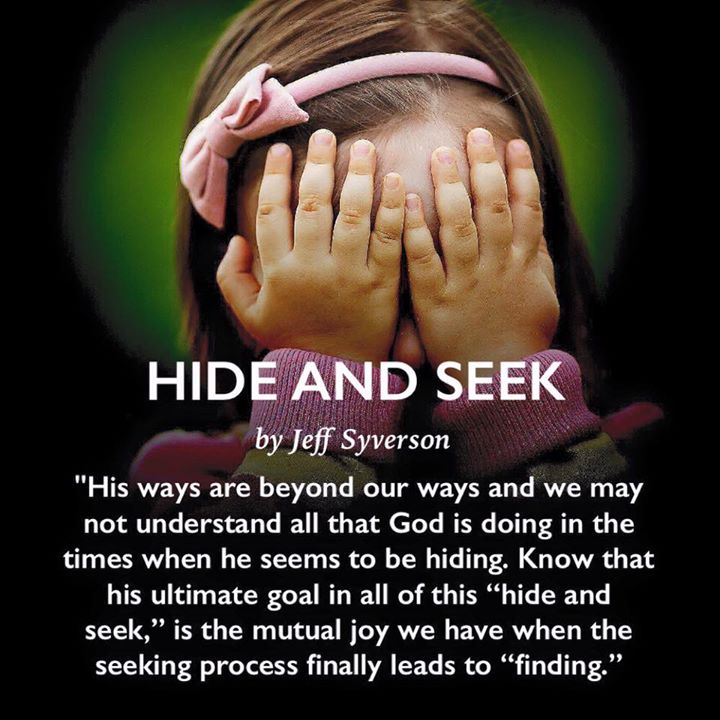








 Loving God, Living God, Loving Hope, Living Hope, Loving Living Life His Way! "Many things are possible for the person who has hope. Even more is possible for the person who has faith. And still more is possible for the person who knows how to love. But everything is possible for the person who practices all three virtues." - Brother Lawrence (1605-1691), Practicing the Presence of God (1692).