Romans 15:4 "For whatever was written in earlier times was written for our instruction, so that through perseverance and the encouragement of the Scriptures we might have hope."
55 1-3 Open your ears, God, to my prayer; don’t pretend you don’t hear me knocking. Come close and whisper your answer. I really need you. I shudder at the mean voice, quail before the evil eye, As they pile on the guilt, stockpile angry slander.
4-8 My insides are turned inside out; specters of death have me down. I shake with fear, I shudder from head to foot. “Who will give me wings,” I ask— “wings like a dove?” Get me out of here on dove wings; I want some peace and quiet. I want a walk in the country, I want a cabin in the woods. I’m desperate for a change from rage and stormy weather.
The Word of God for the Children of God.
Adeste Fidelis! Venite Adoremus! Dominum.
Gloria! In Excelsis Deo! Alleluia! Alleluia! Alleluia! Amen.
Our inner storms can be intense when we are immersed in situations which are far beyond our abilities to cope with using our own limited devices and manage.
Personal situations, family situations, work situations, financial situations, health situations, personal safety and security, school situations – all on the warpath, steadily accumulating, building momentum, all at once!
In perfect and not so perfect storms like that, we often cannot think straight.
We are surrounded by people we do not need nor want to be surrounded by.
We are in a place which we would not otherwise choose to be if we had one more choice to make – homeless, or being at risk of being homeless, addictions, the unemployment line – again and again again, the hospital – over and over again.
We question everything.
Stop the cycle ….
Shut the merry go round off …. no more spinning in the ceaseless circles going nowhere as fast as the mind and soul can conceive or better yet, not conceive.
Better still, stop the world – build me a rocket ship to anywhere in the universe!
Where can a solution be found?
The writer of this psalm wanted the same solution we would—to get away.
How wonderful it would be to fly away like a bird to the furthest reaches of “who cares where – just not here” when we are faced with such an array of circumstances coming at us all at once from every known compass direction.
Such situations are not far fetched in this age of rapid change and technology.
It would be such a relief to be able to go somewhere, anywhere, just to be alone for a little while, leave all our troubles behind, unplug from all the challenges.
Conventional wisdom might suggest losing yourself in the wide array of video games you can find online or with any game system, become someone else for a while, spend hours taking out the host of frustrations upon some fantasy quest.
Get behind the wheel of your car and go for a long drive with the radio blasting or take a long walk in any direction that makes itself available in the moment.
Still others just want to “sprout wings like a dove” and fly into the sunset of life.
Still others will do anything to get away from the whirlwind: drugs and alcohol.
The whole point is this … they know they just want to be, they need to be alone and they need that “alone time” right in this very exact and exacting moment!
Have you felt the sting of the “tempest”?
Perhaps these words have discovered you living in that kind of storm right now.
Perhaps, and please ponder this, I am not the “one” who has just “found you.”
Perhaps, the One who has just “found you” is yourself in need of the Lord God?
Perhaps, its your soul, the anguished part, the languishing part, the all seeking part, silently, not so silently, subtly or nor quite so subtly, starts looking in not so quiet desperation, outward and heavenward, looking far outside your spaces.
Uttering words you cannot hear, words which you would not otherwise conceive saying to yourself, to any other human being, hidden words stuck in “tempest.”
Words uttered, muttered behind your back, spoken without your permission.
Words which would never consider seeking out your authorization to speak of.
Words which when they become known to you – would shock you to the core.
Words which require an extended explanation, direct confrontation with and from your soul – for daring to go outside your own “established parameters!”
Words from your soul, when your soul looks directly into your “eyes” and says straight into what you know is your “you are in no place to argue with me, life:
YOU NEED GOD RIGHT NOW!
Psalm 27:4-6 The Message
4 I’m asking God for one thing, only one thing: To live with him in his house my whole life long. I’ll contemplate his beauty; I’ll study at his feet.
5 That’s the only quiet, secure place in a noisy world, The perfect getaway, far from the buzz of traffic.
6 God holds me head and shoulders above all who try to pull me down. I’m headed for his place to offer anthems that will raise the roof! Already I’m singing God-songs; I’m making music to God.
“But, I have my own way of doing things, I need no help!”
“Yes! I know, I have seen how well you don’t handle things.”
“But, who else could possibly know me even better than I do?”
“I’m Asking for Time Alone With God!” Sincerely, Your soul.
I am going to pause this devotional right here to give you, your soul some much needed time outside of yourselves, even more needed space alone.
Has this plea from your soul caught you by surprise?
Has this plea from deep within your “tempest” achieved or attained even 0.01% of your undivided attention?
To ponder for a time the actual relevance and significance, of these words?
I NEED TIME ALONE WITH GOD!
In the name of God, the Father and God the Son and God the Holy Spirit,
Let us Pray,
Psalm 42 The Message
42 1-3 A white-tailed deer drinks from the creek; I want to drink God, deep drafts of God. I’m thirsty for God-alive. I wonder, “Will I ever make it— arrive and drink in God’s presence?” I’m on a diet of tears— tears for breakfast, tears for supper. All day long people knock at my door, Pestering, “Where is this God of yours?”
4 These are the things I go over and over, emptying out the pockets of my life. I was always at the head of the worshiping crowd, right out in front, Leading them all, eager to arrive and worship, Shouting praises, singing thanksgiving— celebrating, all of us, God’s feast!
5 Why are you down in the dumps, dear soul? Why are you crying the blues? Fix my eyes on God— soon I’ll be praising again. He puts a smile on my face. He’s my God.
6-8 When my soul is in the dumps, I rehearse everything I know of you, From Jordan depths to Hermon heights, including Mount Mizar. Chaos calls to chaos, to the tune of whitewater rapids. Your breaking surf, your thundering breakers crash and crush me. Then God promises to love me all day, sing songs all through the night! My life is God’s prayer.
9-10 Sometimes I ask God, my rock-solid God, “Why did you let me down? Why am I walking around in tears, harassed by enemies?” They’re out for the kill, these tormentors with their obscenities, Taunting day after day, “Where is this God of yours?”
11 Why are you down in the dumps, dear soul? Why are you crying the blues? Fix my eyes on God— soon I’ll be praising again. He puts a smile on my face. He’s my God.
Adeste Fidelis! Venite Adoremus! Dominum.
Gloria! In Excelsis Deo! Alleluia! Alleluia! Alleluia! Amen.
23 The Lord is my Shepherd [to feed, to guide and to shield me], I shall not want. 2 He lets me lie down in green pastures; He leads me beside the still and quiet waters. 3 He refreshes and restores my soul (life); He leads me in the paths of righteousness for His name’s sake.
4 Even though I walk through the [sunless] [a]valley of the shadow of death, I fear no evil, for You are with me; Your rod [to protect] and Your staff [to guide], they comfort and console me. 5 You prepare a table before me in the presence of my enemies. You have anointed and refreshed my head with [b]oil; My cup overflows. 6 Surely goodness and mercy and unfailing love shall follow me all the days of my life, And I shall dwell forever [throughout all my days] in the house and in the presence of the Lord.
The Word of God for the Children of God.
Adeste Fidelis! Venite Adoremus! Dominum.
Gloria! In Excelsis Deo! Alleluia! Alleluia! Alleluia! Amen.
Most everyone has heard of the 23rd Psalm even if they can’t quote it correctly.
It’s a poem with no peer and has been called the sweetest psalm ever written.
Abraham Lincoln read it to cure his blues, and President George W. Bush read it publicly to calm our nation’s fears after 9-11.
We could very easily and simply call it the psalm that calms the savaged soul.
Since this psalm is so familiar, we are in danger of missing the depth of its meaning.
Because its setting is in the world of sheep and shepherds, many of us can slide right past its richness.
Are you aware the Bible refers to us as sheep nearly two hundred times?
This is not usually a compliment because sheep are smelly, stubborn, and prone to wander.
One commentary explains that this passage is a hymn of resting confidently in the Lords care.
It uses two images: the first is the Lord as a shepherd who cares for the sheep.
We see this in verses 1 through four.
The Lord is my shepherd – He makes me lie down in green pastures, do you know what green pastures in Israel looked like?
They are not the image that may come to your mind of rolling meadows and hills of green with alfalfa waist high but they are rather more like this:
The regions in Israel where shepherds live are predominantly wilderness areas.
They have two seasons:
First is the rainy season from November through March (when even the desert becomes green), and then the dry season from April through October when the landscape is brown.
Even during the rainy season, the wilderness grasses remain short.
Blades of grass grow in the shade of rocks, where moisture is trapped.
At first glance, the “green pastures” of Israel look like a barren, rocky wasteland.
But each day, a few blades of grass grow and there is enough to nourish the flocks for another day
The Lord providing and giving provision for the sheep (or for us) is not giving us more than we will ever need but rather providing our needs for the moment.
The shepherd will take care of his flock, and the sheep are not worried about tomorrow,
They are not worried about an hour from now, they are definitely not worried about the current circumstance for they are taken care of by the Shepherd.
The truth is that the Good Shepherd will lead you in green pastures and by the still waters.
This psalm paints the peaceful picture of the Lord’s care for his children.
Ask the Lord to refresh your soul and guide you along righteous paths of healing and restoration.
Experiencing this rest requires submission to the shepherd
Louie Giglio writes in his book, Don’t give the enemy a seat at your table,
“You may be surrounded by pressures and troubles and uncertainties and misunderstandings, but God has set a table for you in the middle of all this. God’s got your back. He is the Lord of all creation. All strength and power and authority belong to Him. He’s king of the universe. When God is walking you through the valley, you can stop worrying about managing all the outcomes. You can stop looking over your shoulder.”
Which leads us into the second image in verses 5 and 6.
Where we see the Lord as Host who cares for his guest.
These two images are familiar experiences in David’s life but they also elicit and evoke other ideas which were common in the ancient Near East, with the chief deity as shepherd of his people and also the deity as chief host of the meal.
In worship, the faithful celebrate God’s greatness and majesty; and when they sing this psalm, they see the magnitude of His majesty in the way he personally attends to each and every one of his covenant lambs.
A single flock can have as few as 10 animals or as much as hundreds of them.
A good Shepherd knows each and every sheep in the flock regardless of how big the numbers could be, (John 10:3-5).
“To him the gatekeeper opens. The sheep hear his voice, and he calls his own sheep by name and leads them out. When he has brought out all his own, he goes before them, and the sheep follow him, for they know his voice. A stranger they will not follow, but they will flee from him, for they do not know the voice of strangers.””
Likewise, David when he uses the metaphor of the Shepherd to describe God, talks not just about a designation or a name for the Lord, but the relationship between God and his covenant children.
He is the shepherd for Israel as a whole; and in being such, He is the shepherd for each faithful Israelite as well.
Verse 4 says, “even though I walk through the valley of the shadow of death, I will fear no evil for you are with me, your rod and your staff, they comfort me.”
The shadow of death itself may be the shadow that death casts or it may be what scholars say is “deep darkness”.
In Job 10:21-22 it’s written, before I go–never to return–to a land of darkness and gloom, to a land of utter darkness, of deep shadow and disorder, where even the light is like darkness.”
In the ESV Study Bible that the shadow of death is perhaps the idea that in a valley in the desert in Judah one can encounter deep shadows, and cannot know for sure who (whether bandits) or what (animals, flash floods) lurks in them.
Even in such periods of suspense and danger, the faithful find assurance that God is with them, and thus they need not fear.
Greg Morse, staff writer from DesiringGod writes this,
“We do not often consider who leads us into the valley. This path of deathly shadows was not self-chosen. The sheep, sheepish as they are, do not walk willingly into unlit places. They aren’t a lion to be so careless; dark paths are where sheep die. So how did David end up walking there of all places? His Shepherd led him. Christ, the good Shepherd, lays us down in green pastures, leads beside still waters, and guides us through dark valleys.”
How important to realize this?
When life overwhelms us, we are tempted to believe that — if we were truly his — we would never travel into such places.
But David thinks otherwise.
When he writes, “I shall fear no evil for you are with me,” David does not see a Shepherd scratching his head wondering where they took a wrong turn.
David trusts that his Shepherd meant for him to pass this way!
Even though there are challenges in life,
God goes before us into and through all the blind bends and corners.
God is with us in all the North, East, South, West twists and turns.
God is 100% reliable, faithful and just and trustworthy and true.
God is worth thanking in highs and lows.
This looks different for everyone, but we see in scripture that the Lord fulfills his promises and his faithfulness is certain.
We see that Even though Abraham and Sarah were far beyond childbearing age, God gave them a child to fulfill His promise. (Genesis 18:13-14, 21:1-2)
a. God declared his name Abraham, which means “Father of many nations” and yet at the age of 99 he had never had a single child with his wife Sarah who was 90 years old at the time – no heirs to legitimately carry on the family lineage.
They were visited by three men and one of them told Abraham that Sarah would bear a child in the next year.
Despite laughing, Sarah soon became pregnant and bore a son to Abraham, at the very moment which had been predicted.
Abraham, then a hundred years old, named the child “Isaac.”
Isaac would go on to become a crucial character in the biblical narrative, fathering Jacob the eventual Patriarch of Twelve Tribes of the Israelites.
God used this to test Abraham and Sarah but used them mightily through their trust and His faithfulness. When you are tempted to give up while you wait, look at the examples in scripture of God’s faithfulness to deliver, even when the circumstance seems to point otherwise.
Or how about this? Even though building an ark seemed odd, it saved Noah’s family and God’s faithfulness was revealed. (Genesis 6:11-14; 7:22, 6-7)
Now the earth was corrupt in God’s sight, and the earth was filled with violence. 12 And God saw the earth, and behold, it was corrupt, for all flesh had corrupted their way on the earth. 13 And God said to Noah, “I have determined to make an end of all flesh,[a] for the earth is filled with violence through them. Behold, I will destroy them with the earth. 14 Make yourself an ark of gopher wood.[b] Make rooms in the ark, and cover it inside and out with pitch.
The Lord was bringing destruction to the Earth yet he was faithful in his promise to Noah.
Noah endured and in the end God was right about the flood He was bringing, and He saved Noah and his family just like He promised.
Even though all of Job’s possessions and health were taken, he stayed faithful to God. (Job 1:13-22)
13 One day when Job’s sons and daughters were feasting and drinking wine at the oldest brother’s house, 14 a messenger came to Job and said, “The oxen were plowing and the donkeys were grazing nearby, 15 and the Sabeans attacked and made off with them. They put the servants to the sword, and I am the only one who has escaped to tell you!”
16 While he was still speaking, another messenger came and said, “The fire of God fell from the heavens and burned up the sheep and the servants, and I am the only one who has escaped to tell you!”
17 While he was still speaking, another messenger came and said, “The Chaldeans formed three raiding parties and swept down on your camels and made off with them. They put the servants to the sword, and I am the only one who has escaped to tell you!”
18 While he was still speaking, yet another messenger came and said, “Your sons and daughters were feasting and drinking wine at the oldest brother’s house, 19 when suddenly a mighty wind swept in from the desert and struck the four corners of the house. It collapsed on them and they are dead, and I am the only one who has escaped to tell you!”
20 At this, Job got up and tore his robe and shaved his head. Then he fell to the ground in worship 21 and said:
“Naked I came from my mother’s womb,
and naked I will depart.[a]
The Lord gave and the Lord has taken away;
may the name of the Lord be praised.”
22 In all this, Job did not sin by charging God with wrongdoing.
Job was faithful to God and served Him.
Even so, he greatly suffered. Job knew though that his suffering was not worth comparing to the blessing of not cursing God but continue following God.
What an affirmation of faith, what an incredible example this is, to serve and stand firm in our faith in Jesus Christ no matter the circumstance or suffering.
Let’s look back at Psalm 23 verse 4 again,
5. “Even though I walk through the valley of the shadow of death, I will fear no evil.”(Psalm 23:4)
This verse reminds me of another long forgotten message — now blessedly, thanks be to God for Holy Spirit, gratefully recalled to the forefront of my soul:
I appreciated the insight of another pastor who once preached to me one Lenten Season,
“Moses teaches us how to thank God for giving us a whole myriad of blessings.”
Let me say that again,
“Moses teaches us how to thank God for giving us a whole myriad of blessings.”
Deuteronomy 8:1-10Amplified Bible
God’s Gracious Dealings
8 “Every commandment that I am commanding you today you shall be careful to do, so that you may live and multiply, and go in and possess the land which the Lord swore [to give] to your fathers. 2 And you shall remember [always] all the ways which the Lord your God has led you these forty years in the wilderness, so that He might humble you and test you, to know what was in your heart (mind), whether you would keep His commandments or not. 3 He humbled you and allowed you to be hungry and fed you with manna, [a substance] which you did not know, nor did your fathers know, so that He might make you understand [by personal experience] that man does not live by bread alone, but man lives by every word that proceeds out of the mouth of the Lord. 4 Your clothing did not wear out on you, nor did your feet swell these forty years. 5 Therefore, know in your heart (be fully cognizant) that the Lord your God disciplines and instructs you just as a man disciplines and instructs his son. 6 Therefore, you shall keep the commandments of the Lord your God, to walk [that is, to live each and every day] in His ways and fear [and worship] Him [with awe-filled reverence and profound respect]. 7 For the Lord your God is bringing you into a good land, a land of brooks of water, of fountains and springs, flowing forth in valleys and hills; 8 a land of wheat and barley, and vines and fig trees and pomegranates, a land of olive oil and honey; 9 a land where you will eat bread without shortage, in which you will lack nothing; a land whose stones are iron, and out of whose hills you can dig copper. 10 When you have eaten and are satisfied, then you shall bless the Lord your God for the good land which He has given you.
He then continues by saying, “David comes along and teaches us how to thank God not just for the myriad and myriads of blessings but also “even though….”
Psalm 23:4-5
Even though I walk through the valley of the shadow of death, I will fear no evil, for you are with me; your rod and your staff, they comfort me. You prepare a table before me in the presence of my enemies; you anoint my head with oil; my cup overflows.
This remembered pastor wrote,
“This is a graduated form of gratitude. This is the remedial level. Again, Moses taught us to Thank God “ for the” blessing . But this is the place where you learn to praise God even through every single “even though” we can think of.”
This is where you could have everything of the very worst kind of mess breaking loose in one area of your life, but say,
“Even though I walk through the valley of the shadow of death, I will not fear …
— it is well with my soul when peace like a river which attendeth my way, when sorrow like sea billows roll,
— even though my heart is broken,
it is still well well with my soul.
— even though you and I are in the direst straights, grieving the loss of a job, grieving the loss of our health and wellness, or grieving the loss of loved ones,
it is yet an still well with our souls.
— even though I’m going through ____,
it is now and forever well with my soul and God is still forever and ever, faithful
“EVEN THOUGH.”
This is the table where you learn to thank God for what you can see.
This is the table where you learn to trust God with what you cannot.
Even though I walk through the darkest valley.
We see the “Even though ___, God is faithful theme” continue throughout scripture.
John 6:1-14Amplified Bible
Five Thousand Fed
6 After this, Jesus went to the other side of the Sea of Galilee (or [a]Sea of Tiberias). 2 A large crowd was following Him because they had seen the signs (attesting miracles) which He continually performed on those who were sick. 3 And Jesus went up on the mountainside and sat down there with His disciples. 4 Now the Passover, the feast of the Jews, was approaching. 5 Jesus looked up and saw that a large crowd was coming toward Him, and He said to Philip, “Where will we buy bread for these people to eat?” 6 But He said this to test Philip, because He knew what He was about to do. 7 Philip answered, “Two hundred denarii (200 days’ wages) worth of bread is not enough for each one to receive even a little.” 8 One of His disciples, Andrew, Simon Peter’s brother, said to Him, 9 “There is a little boy here who has five barley loaves and two fish; but what are these for so many people?” 10 Jesus said, “Have the people sit down [to eat].” Now [the ground] there was [covered with] an abundance of grass, so the men sat down, about [b]5,000 in number. 11 Then Jesus took the loaves, and when He had given thanks, He distributed them to those who were seated; the same also with the fish, as much as they wanted. 12 When they had eaten enough, He said to His disciples, “Gather up the leftover pieces so that nothing will be lost.” 13 So they gathered them up, and they filled twelve large baskets with pieces from the five barley loaves which were left over by those who had eaten. 14 When the people saw the sign (attesting miracle) that He had done, they began saying, “This is without a doubt the promised Prophet who is to come into the world!”
6. John Chapter 6:1-14 gives the picture of how 5,000 men and their families ate and ate and ate until they were full with food leftover …..
EVEN THOUGH there were only five loaves of bread and two fish!
An author describes John chapter 6:1-14 like this,
When the disciples saw the crowds and their lack of resources, they were each overwhelmed and knew there was an unsolvable problem.
But when they looked to Jesus, the problem was solved and the Lord provided.
There is never too large of a lack that God cannot provide.
But similar to before, God will be glorified whether that means He provides, or He doesn’t intervene.
If He doesn’t intervene, it doesn’t mean that he can’t, but that it’s not in line with his will.
Know that He is able. He is infinite in resources, while we are finite in ours.
7. Even though Jesus was put to death, He was raised from the dead. (Matthew 28:6)
God’s power is able to do the unthinkable—raise the Lord Jesus Christ, the promised Messiah from the dead to fulfill His ultimate plan from before the foundation of the world.
8. Even though Paul was a persecutor of Jesus and the church, his heart was turned and God saved him. (Acts 9:1-19)
God can change any heart, even the hardest stone heart that you know of.
The beauty of the Gospel is that Jesus is the only savior of sinners and He is all-powerful, not incapable to save because the coldness of one’s heart.
His power is able to turn the greatest wretch into a radical lover of Jesus.
9. Even though Peter was in chains and bound by guards, he miraculously escaped from the prison. (Acts 12:5-19)
And possibly the biggest one,
10. Even though we are sinners, God came to save us. (Romans 5:8)
Many people miss the truth implied by the fact that Christ died for us while we were still sinners.
The chronology is important. Christ did not wait for us to “clean up our act”; He sacrificed Himself even though we were still actively, vigorously opposed to Him
Salvation does not depend on our meeting God halfway, on our all keeping the commandments, or trying to be as good as we can.
No, God completed the work of our salvation even though we were in a state of open rebellion against Him.
That’s grace.
Even though Shadrach, Meshach and Abednego were thrown into the fiery furnace, God delivered them from it,
You see this is the even though….
God is faithful, for each and every single depth of faith that we want to have.
Let me give some context on this passage from Daniel 3,
Three young men named Shadrach, Meschach and Abednego were taken from their homes in Israel when they were children.
They, along with Daniel, became important men in Babylon.
The king of Babylon had created a huge statue as an idol.
This was to be used for people to worship the king.
He had made a law that said that all who did not bow down and worship the idol would be thrown into a furnace of fire.
Shadrach, Meshach and Abednego had become governors in the kingdom.
But they did not allow their position to keep them from obeying God.
They refused to bow down to the idol. As a result they were put into the fiery furnace.
However, they did not burn up and die.
In fact, the Bible says they were walking around in the furnace.
And, there was a fourth person in the fire with them.
The king said that it appeared to be the Son of God!
The fire is extinguished.
They were brought out of the furnace and the king repented of his pride and worshiped God.
Their faith inflated and they said to the kind, “even though we are thrown into the blazing furnace, the God we serve is able to deliver us from it, and he will deliver us from Your Majesty’s hand.
But even if he does not, we want you to know, Your Majesty, that we will not serve your gods or worship the image of gold you have set up.”
Whether or not they were rescued, the faith that they showed is the depth that we want. Even though, stayed faithful to God regardless of the circumstances.
What is the commonality in all these things?
The power of God.
And, God works through our obedience: our obedience to trust him within the most impossible circumstances,
the obedience to rely on him even in tough times, and the obedience to worship him even when the most unexplainable things happen to us.
In all these “EVEN THOUGH” things, we can trust in him and we can faithfully say that He is 100% faithful.
Look at the ending verses of the book of God’s Prophet Habakkuk,
Habakkuk 3:16-19Amplified Bible
16 I heard and my whole inner self trembled; My lips quivered at the sound. Decay and rottenness enter my bones, And I tremble in my place. Because I must wait quietly for the day of distress, For the people to arise who will invade and attack us. 17 Though the fig tree does not blossom And there is no fruit on the vines, Though the yield of the olive fails And the fields produce no food, Though the flock is cut off from the fold And there are no cattle in the stalls, 18 Yet I will [choose to] rejoice in the Lord; I will [choose to] shout in exultation in the [victorious] God of my salvation! 19 The Lord God is my strength [my source of courage, my invincible army]; He has made my feet [steady and sure] like hinds’ feet And makes me walk [forward with spiritual confidence] on my [a]high places [of challenge and responsibility].
For the choir director, on my stringed instruments.
The Sovereign Lord is my strength;
he makes my feet like the feet of a deer, he enables me to tread on the heights.
The phrases we see in Habakkuk’s prayer lay out a strong cause and effect relationship for us as an example to follow.
Even though bad things happen, I will still praise the Lord.
Even though bad things happen, I will not let my mind be lost to the enemy and even though _______, God is faithful.
This past Veterans Day, I heard an Iraqi War veteran say ….
Even Though I cannot walk, and I am confined to a wheelchair;
Even Though half my face is paralyzed, and I cannot even smile;
Even Though I am extremely impaired, and I cannot take care of my kids;
Yet I will rejoice in the Lord,
I will be joyful in God my savior!
He finishes by saying;
“This is not the faith of a Christian who “believes” in God only when the sun shines. This is not a faith that easily wilts under pressure. This faith flourishes even though the pressure is on. This faith says, Even though bad things are still happening, and they will continue until the day I die, I will still forever praise the Lord.”
Like this veteran, how might we personalize Habakkuk’s prayer?
Even thoughI am under intense (_________) pressure….
Even though my body walks through the valley of the shadow of (_____)
Even though my spirit wanders through the valley of the shadow of (_____)
Even though ______
Yet I will rejoice in the Lord
I will be joyful in God my Savior
Brothers and sisters, Fix your eyes on the good shepherd today.
No matter what circumstances, tell yourself
Even though I am Blessed and Highly Favored and Successful ….
Even though failure seems to define every single move that I make ….
“Even though … I will choose to obey God”
What is your blank space you are dealing with that even in the midst of these circumstances, you are choosing to say yes to God, surrender your life to him.
What act of obedience is God calling you to do in regards to that circumstance?
Is he asking you to Trust or wait or go?
Could God be asking you to worship or seek Him or give to Him all of those “even though” moments or how about even submitting each of them to Him?
Seek God today through His Word and in prayer, and wait upon him for
He. Is. Faithful.
He. Is. True.
He. Is. Life.
He is the Lord, who is our Shepherd and we have all that we will ever need!
EVEN THOUGH ….
EVEN THROUGH ….
In the name of God, the Father and God the Son and God the Holy Spirit,
Let us Pray,
Thank You Father that You are the faithful, good and righteous God. You are the Lord who always keeps Your promises.
You are gracious and merciful in salvation.
We thank You for Your faithfulness throughout the centuries, throughout all the millennia; You have always kept Your promises, Your plans for our salvation have been unwavering.
We thank You Father that You are the God who makes promises out of a character of love and grace, and keeps those promiseswith all faithfulnesseven though we will all continue to sin mightily against you.
We thank you for all that you are continually doing in our homes, in our lives, in our communities, in our church. God, we are abundantly blessed by your faithfulness and your continuous goodness to us. We ask that this devotional message be impactful for us as we inspect ourselves and find the blank space that we need to surrender to you. God, we fervently seek after you in prayer, in your word and we now wait upon you.
Adeste Fidelis! Venite Adoremus! Dominum.
Gloria! In Excelsis Deo! Alleluia! Alleluia! Alleluia! Amen.
20 There is precious treasure and oil in the house of the wise [who prepare for the future], But a short-sighted and foolish man swallows it up and wastes it. 21 He who earnestly seeks righteousness and loyalty Finds life, righteousness, and honor.
The Word of God for the Children of God.
Adeste Fidelis! Venite Adoremus! Dominum.
Gloria! In Excelsis Deo! Alleluia! Alleluia! Alleluia! Amen.
Should Christians Be Pursuing Success?
“It is, of course, always a joyful thing to succeed. But the joy is very deceptive if it comes from the satisfaction of an ambition that is contrary to the will of God. What is success and what is failure? The answer of the Bible is, ‘What is the will of God? Are you obeying Him?’” Paul Tournier, Breakfast for the Soul
Should “Sermon in Shoes” Christians be pursuing success?
The answer is an emphatic “yes” if we understand that a successful life is one that is intent on knowing God as He has revealed Himself, seeks to believe and obey all that the Word of God proclaims, views life through the lens of eternity.
The answer is, however, as should be expected, a tad bit more complicated if we are defining the single minded pursuit of our success only by the world’s terms.
At its core, the word “success” is quite ambiguous, defined rather simply as a favorable or desired outcome.
It means to reach one’s expectations, to accomplish a predefined goal.
Today’s culture sees a successful person as one who is either famous, wealthy, or comfortable, or has a certain level of influence and power.
We succeed when we make good grades, earn high honors, or earn promotions, lifetime achievements, start and successfully build, grow our own businesses, gain material possessions which set us apart from those less-successful peers.
Success is achieved when we we can “retire early,” no longer need to work hard, ride around in private airplanes, and still have all of our desires and wants met.
The world also acknowledges success as accomplishing humanitarian goals – becoming missionaries, disaster relief workers, feeding the hungry, providing for the sick or mentally ill or homeless, or helping people overcome addictions.
None of these would necessarily make a person rich or famous, but they would certainly be considered successful in Christian life for their accomplishments.
However, if our focus is simply on the physical needs of this world without concern for the eternal souls of men, does God interpret this as “success?”
What Does God Say About Success?
If we are ourselves tempted to pursue the kind of success as the world defines it, we should first examine what God says about success.
One of the more familiar passages about success in the Hebrew Testament was given to Joshua.
God’s words to Joshua as he humbles himself, accepts an important assignment are a good place to begin.
Joshua 1:7-8 Amplified Bible
7 Only be strong and very courageous; be careful to do [everything] in accordance with the entire law which Moses My servant commanded you; do not turn from it to the right or to the left, so that you may prosper and be successful wherever you go. 8 This Book of the Law shall not depart from your mouth, but you shall read [and meditate on] it day and night, so that you may be careful to do [everything] in accordance with all that is written in it; for then you will make your way prosperous, and then you will be [a]successful.
To the New Testament writers, success is defined by the eternal – the prosperity of the soul.
Health and prosperity in the physical world would be meaningless if one’s soul languished in the pursuit of temporal, earthly things.
Matthew 16:26Amplified Bible
26 For what will it profit a man if he gains the whole world [wealth, fame, success], but forfeits his soul? Or what will a man give in exchange for his soul?
Mark 8:36 Amplified Bible
36 For what does it benefit a man to gain the whole world [with all its pleasures], and forfeit his soul?
Luke 9:25 Amplified Bible
25 For what does it profit a man if he gains the whole world [wealth, fame, success], and loses or forfeits himself?
Rabbi Jesus made this distinction clear as he addressed both His disciples, the unbelieving Pharisees, and to the crowds pursuing Him for physical provision after He fed five thousand with a small boy’s rather meager lunch.
John 6:27-29 Amplified Bible
27 Do not work for food that perishes, but for food that endures [and leads] to eternal life, which the Son of Man will give you; for God the Father has authorized Him and put His seal on Him.” 28 Then they asked Him, “What are we to do, so that we may habitually be doing the works of God?” 29 Jesus answered, “This is the work of God: that you believe [adhere to, trust in, rely on, and have faith] in the One whom He has sent.”
Success Through Obedience and Service
God defines success as living in obedience to His commands and seeing our physical work as ultimately serving Him.
1 Chronicles 22:9-12 Amplified Bible
9 Behold, a son will be born to you, who will be a man of peace. I will give him rest from all his enemies on every side; for his name shall be Solomon, and I will give peace and quiet to Israel in his days. 10 He shall build a house for My Name (Presence). He shall be My son and I will be his father; and I will establish his royal throne over Israel forever.’ 11 Now, my son, may the Lord be with you so that you may be successful and build the house of the Lord your God, just as He has spoken concerning you. 12 Only may the Lord give you wisdom and understanding, and give you charge over Israel, so that you may keep the law of the Lord your God.
Proverbs 6:6-8 Amplified Bible
6 Go to the ant, O lazy one; Observe her ways and be wise, 7 Which, having no chief, Overseer or ruler, 8 She prepares her food in the summer And brings in her provisions [of food for the winter] in the harvest.
Proverbs 21:20 Amplified Bible
20 There is precious treasure and oil in the house of the wise [who prepare for the future], But a short-sighted and foolish man swallows it up and wastes it.
God often gives physical and spiritual success to His people as they employ their talents and spiritual gifts.
Missionaries would not be on the field without the financial generosity of those who have a talent for business and the gift of giving.
The gospel can be proclaimed with great influence as we live with a kingdom perspective while succeeding in our earthly work.
Humanitarian work can be a great blessing to a hurting world, but is successful when we see past physical needs to the spiritual needs of those we are serving.
The very real danger comes actualized, and too realized when the success of the work of our hands and its benefits distracts us from the higher purpose of God’s glory and the proclamation of the gospel of our Lord and Savior Jesus Christ.
Proverbs 16:1-3Amplified Bible
Contrast the Upright and the Wicked
16 The plans and reflections of the heart belong to man, But the [wise] answer of the tongue is from the Lord. 2 All the ways of a man are clean and innocent in his own eyes [and he may see nothing wrong with his actions], But the Lord weighs and examines the motives and intents [of the heart and knows the truth]. 3 [a]Commit your works to the Lord [submit and trust them to Him], And your plans will succeed [if you respond to His will and guidance].
The Word of God: The Rewards of Working Hard
2 Thessalonians 3:7-10Amplified Bible
7 For you yourselves know how you ought to follow our example, because we did not act in an undisciplined or inappropriate manner when we were with you [we were never idle or lazy, nor did we avoid our duties], 8 nor did we eat anyone’s bread without paying for it, but with labor and hardship we worked night and day [to pay our own way] so that we would not be a financial burden on any of you [for our support]; 9 not because we do not have a right to such support, but [we provided our own financial support] to offer ourselves as a model for you, so that you would follow our example. 10 For even while we were with you, we used to give you this order: if anyone is not willing to work, then he is [a]not to eat, either.
Warning Against The Love of Money
God also gives us guidance on the purpose of wealth, and the dangers of the love of money and possessions.
Luke 12:13-21 Amplified Bible
Covetousness Denounced
13 Someone from the crowd said to Him, “Teacher, tell my brother to divide the family inheritance with me.” 14 But He said to him, “Man, who appointed Me a judge or an arbitrator over [the two of] you?” 15 Then He said to them, “Watch out and guard yourselves against every form of greed; for not even when one has an overflowing abundance does his life consist of nor is it derived from his possessions.”
Parable of the Wealthy Fool
16 Then He told them a parable, saying, “There was a rich man whose land was very fertile and productive. 17 And he began thinking to himself, ‘What shall I do, since I have no place [large enough in which] to store my crops?’ 18 Then he said, ‘This is what I will do: I will tear down my storehouses and build larger ones, and I will store all my grain and my goods there. 19 And I will say to my soul, “Soul, you have many good things stored up, [enough] for many years; rest and relax, eat, drink and be merry (celebrate continually).”’ 20 But God said to him, ‘You fool! This very night your soul is required of you; and now who will own all the things you have prepared?’ 21 So it is for the one who continues to store up and hoard possessions for himself, and is not rich [in his relationship] toward God.”
I didn’t think I was greedy until I read this passage again.
Jesus warns us to watch out for all kinds of greed.
The kind of greed I usually thought about had to do with very wealthy people always wanting more – but Jesus does not focus on that kind of greed here.
In the context of this passage, a man is arguing with his brother over their inheritance.
The family has enough to hand down, but Rabbi Jesus sees that this man is still worried if he will truly have enough.
He is greedy not for luxury but for security.
In the second Parable, the wealthy man looks to build “bigger storehouses” to 19 And I will say to my soul, “Soul, you have many good things stored up, [enough] for many years; rest and relax, eat, drink and be merry (celebrate continually).”’
Kind of sounds like “Just in case of the worst possible scenario” or “Just in Case I might actually find one use for it ten or twenty years from now” Hoarding.
It’s in this context that Jesus goes on to teach some familiar lessons.
Be faithful in the little things, so that God can trust you with the big things.
Don’t fall into the trap of serving and living and striving and possessing for money; it will master you and you will be unfaithful to your Master, Jesus.
Ouch! I didn’t even realize the extent of that kind of unfaithfulness existed.
But many of us have it and do not realize how deeply we are entrenched in it.
We want a little bit more so that we don’t have to worry.
Jesus points us away from greed based on worry.
So long as we aim to live God’s way, aligning ourselves with God’s purpose for us in this world (seeking his kingdom), and so long as it is not yet time for our heavenly inheritance, God will give us what we need to live for him each day.
Wanting more than that is a type of greed.
And that will distract us from fully living the life of joy, peace we are created for.
So let’s remember this admonition, learn to let go of our worry-based greed.
Hebrews 13:5-6 Amplified Bible
5 Let your character [your moral essence, your inner nature] be free from the love of money [shun greed—be financially ethical], being content with what you have; for He has said, “I will never [under any circumstances] desert you [nor give you up nor leave you without support, nor will I in any degree leave you helpless], nor will I forsake or let you down or relax My hold on you [assuredly not]!” 6 So we take comfort and are encouraged and confidently say,
“The Lord is my Helper [in time of need], I will not be afraid. What will man do to me?”
Summarizing: Should Christians Pursue Success?
By all means.
Work hard where God has put you.
Be a faithful, dependable, honest employee.
Use the influence and position God gives you to boldly proclaim the gospel.
Be generous with your material possessions and financial blessings and use them wisely and prudently for kingdom purposes.
Take care of your spouses, your loved ones and leave your children and your grandchildren an “inheritance” – including a spiritual one – your witness!
Psalm 119:9-16Amplified Bible
Beth.
9 How can a young man keep his way pure? By keeping watch [on himself] according to Your word [conforming his life to Your precepts]. 10 With all my heart I have sought You, [inquiring of You and longing for You]; Do not let me wander from Your commandments [neither through ignorance nor by willful disobedience]. 11 Your word I have treasured and stored in my heart, That I may not sin against You. 12 Blessed and reverently praised are You, O Lord; Teach me Your statutes. 13 With my lips I have told of All the ordinances of Your mouth. 14 I have rejoiced in the way of Your testimonies, As much as in all riches. 15 I will meditate on Your precepts And [thoughtfully] regard Your ways [the path of life established by Your precepts]. 16 I will delight in Your statutes; I will not forget Your word.
Live your life to glorify God alone, and according to Him, you WILL find success.
In the name of God, the Father and God the Son and God the Holy Spirit,
Let us Pray,
Psalm 23 The Message
23 1-3 God, my shepherd! I don’t need a thing. You have bedded me down in lush meadows, you find me quiet pools to drink from. True to your word, you let me catch my breath and send me in the right direction.
4 Even when the way goes through Death Valley, I’m not afraid when you walk at my side. Your trusty shepherd’s crook makes me feel secure.
5 You serve me a six-course dinner right in front of my enemies. You revive my drooping head; my cup brims with blessing.
6 Your beauty and love chase after me every day of my life. I’m back home in the house of God for the rest of my life.
Adeste Fidelis! Venite Adoremus! Dominum.
Gloria! In Excelsis Deo! Alleluia! Alleluia! Alleluia! Amen.
5-8 Those who think they can do it on their own end up obsessed with measuring their own moral muscle but never get around to exercising it in real life. Those who trust God’s action in them find that God’s Spirit is in them—living and breathing God! Obsession with self in these matters is a dead end; attention to God leads us out into the open, into a spacious, free life. Focusing on the self is the opposite of focusing on God. Anyone completely absorbed in self ignores God, ends up thinking more about self than God. That person ignores who God is and what he is doing. And God isn’t pleased at being ignored.
The Word of God for the Children of God.
Adeste Fidelis! Venite Adoremus! Dominum.
Gloria! In Excelsis Deo! Alleluia! Alleluia! Alleluia! Amen.
Lately, I have been focusing my devotional efforts on success and failure, being in an living out the “balanced” “Sermon in Shoes” God devoted Christian life –
In my search and study of the Scriptures, learning an praying over the idea of flesh vs. spirit, I’ve been reading through Paul’s letter to the Romans recently.
And I am stuck on one passage that I keep coming back to over and over.
I am kind of stuck on it, not because it is particularly difficult to understand.
But because it has just grabbed hold of my heart and my soul and won’t let go.
Am I “a Sermon in Shoes” living according to the Spirit?
Or am I “a Sermon in Shoes” living according to the flesh?
Is there supposed to be some kind of balance between the two mindsets?
Not to be “so heavenly minded to be no earthly good ….”
Not to be “so earthly minded to be no heavenly good ….”
Living in the Flesh or Living in the Spirit?
Romans 8:5-8 New International Version
5 Those who live according to the flesh have their minds set on what the flesh desires; but those who live in accordance with the Spirit have their minds set on what the Spirit desires. 6 The mind governed by the flesh is death, but the mind governed by the Spirit is life and peace. 7 The mind governed by the flesh is hostile to God; it does not submit to God’s law, nor can it do so. 8 Those who are in the realm of the flesh cannot please God.
This passage provides a test.
Am I living according to the flesh, or according to the Spirit?
In this passage the flesh refers to my own nature, who I just naturally am.
In our natural state we all live according to the flesh.
And in that state our minds are set on what the flesh desires.
Is this necessarily a bad thing?
Is this necessarily a good thing?
The best answer to either one is probably …. Not in and of itself.
It is just what we are.
For some, the flesh desires things that are hurtful to self and others.
And we condemn the expression of those desires.
For others, the flesh desires things that are helpful to self and others.
Things of beauty, wisdom, knowledge and understanding, peace and love.
We rightfully, righteously hold these in high regard and set them as examples.
But what both of these extremes, and any middle ground, hold in common, is that they are hostile to God.
They are unable to please him, and lead to death.
It is not too challenging to apply this to an icy path on the “broad road leading us to our own inevitable and eternal destruction. (Matthew 7:13-14)
We find it altogether different to apply it to a great humanitarian who dedicates his life to helping the helpless.
But Paul is clear that if I am following the desires of my own nature I am in deep trouble – stunningly it makes no difference where those desires might lead us.
Paul contrasts this person with the one whose mind is set, not on what they want, but on what God’s Spirit wants.
That one will experience life and peace in relationship with their Creator.
It is ironic that only in dying to self will I find true life.
Only in giving up will I discover what I was created to be.
Life in the Flesh, Life in the Spirit: Taking the Test
It is so easy to read and study this passage without actually taking the test.
I have done it for several decades.
But it is demanding an answer now.
As I walk through my day, do I do what I want, or what the Spirit wants of me?
Do I take any quantity or quality time to inquire of the Spirit what he wants?
Or do I just take my own quantity, quality time to just act on my own desires?
Am I trying to please God?
Or am I doing what I want and hoping and praying that it is pleasing to him?
According to Paul’s teachings here, if my response is the latter, then I am not pleasing him, but I am actually using my time to be more, more hostile to him.
No matter how good my actions might be, if it is in response to my own desire rather than at the Spirit’s leading, then, guess what folks, I have fallen short.
I am afraid too much of my life is lived without regard for the Spirit’s leading.
But this passage is stuck on a continuous replay cycle in my mind and soul.
It rigorously, vigorously challenges me every single day to change the channel, listen to the Spirit rather than to my own success vs. failure nature and desires.
Will I dare to let go of the tightly held reins of my success vs. failure mindset and lifestyle, which I have continuously, purposely, tightly held for so long?
What Are The Two Lives Referring To?
Paul shifts from preaching (second-person) to teaching (third-person) so that you an I can better understand the message of this passage more clearly.
He elaborates on two types of people — those who live according to the flesh vs. those who live according to the Spirit.
In describing these two groups of “spiritual” people, Paul establishes a key spiritual principle.
In verse 5, we notice 2 verbs laid out — “set” and “live”.
What is the implicit connection between these 2 verbs?
Paul is saying that we live according to what we set our minds on.
What does it mean to set?
It carries with it the idea of choosing to build upon something only after careful inspection.
It is a simple, but very important principle.
Many of us think that we are autonomous, self-sovereign, rational human beings, but this is not true.
We are the sum of our choices, and so much of who we are is a result of what we chose yesterday.
Romans is helping us see that those who live in the Spirit have set their mind on things in the Spirit, and those who do not, have made the choice not to.
We need to set our minds on something.
There’s no way we can choose not to set our minds on anything.
Yet, many of us have neglected this simple truth.
So, what have you set your mind on?
What have you fixed your thoughts on?
What have you chosen to be the site of your daydreaming, imagination and fantasizing?
A simple way of identifying it, would be to think about the things that have succeeded and disappointed and failed you, encouraged you, given you hope.
After all, Romans 8:5 remind us that the way we live reflect where we have set our thoughts and minds.
Let’s press it a bit further.
What is one implication of this verse?
If you are a “Sermon in Shoes” Christian today, it means that there was a time when you lived in the flesh and set your mind on things of the flesh, but there was a turning point to mark the change to the mind, to mark life in the Spirit.
It could be that moment when you realized the greatness of God and His love became real and evident when told to you.
It could also be that heart warming moment when before, church, Bible study, sermons and prayer were all boring and did not make sense, but then they did.
What marks the Christian and what changes in the mind of a Christian?
The Christian sees truths about his or her true state, and has a fundamental awareness of his or her inability to do what God requires.
Or, as Reverend Dr. Timothy Keller aptly describes it, we suddenly realize that
“we are more sinful and flawed in ourselves than we ever dared believe, yet at the very same time we are more loved and accepted in Jesus Christ than we would have ever dared ourselves to hope before.”
The good news of what our Savior Jesus Christ did became the very wisest of good news indeed, and the truths of the gospel becomes ever more clear and truly results in transformative actions such as gratitude, forgiveness, love, etc.
Dear “Sermon in Shoes” Christian, does this begin to describe your journey?
Whether our life has been abundantly blessed with life’s successes …
Whether our life has been abundantly weighed down with life’s failures …
Do you know, Oh Christian, you’re a sermon in shoes? Do you know, Oh Christian, you’re a sermon in shoes? Jesus calls upon you, to spread the gospel news, (1) So walk it, and talk it, a sermon in shoes. (2) Live it, and give it, a sermon in shoes. (3) Teach it, and preach it, a sermon in shoes. (4) Know it, and show it, a sermon shoes. (Ruth Harms Calkin)
In the name of God, the Father and God the Son and God the Holy Spirit,
Let us Pray,
Psalm 16 The Message
16 1-2 Keep me safe, O God, I’ve run for dear life to you. I say to God, “Be my Lord!” Without you, nothing makes sense.
3 And these God-chosen lives all around— what splendid friends they make!
4 Don’t just go shopping for a god. Gods are not for sale. I swear I’ll never treat god-names like brand-names.
5-6 My choice is you, God, first and only. And now I find I’m your choice! You set me up with a house and yard. And then you made me your heir!
7-8 The wise counsel God gives when I’m awake is confirmed by my sleeping heart. Day and night I’ll stick with God; I’ve got a good thing going and I’m not letting go.
9-10 I’m happy from the inside out, and from the outside in, I’m firmly formed. You canceled my ticket to hell— that’s not my destination!
11 Now you’ve got my feet on the life path, all radiant from the shining of your face. Ever since you took my hand, I’m on the right way.
Adeste Fidelis! Venite Adoremus! Dominum.
Gloria! In Excelsis Deo! Alleluia! Alleluia! Alleluia! Amen.
13-14 “Don’t look for shortcuts to God. The market is flooded with surefire, easygoing formulas for a successful life that can be practiced in your spare time. Don’t fall for that stuff, even though crowds of people do. The way to life—to God!—is vigorous and requires total attention.
The Word of God for the Children of God
Adeste Fidelis! Venite Adoremus! Dominum.
Gloria! In Excelsis Deo! Alleluia! Alleluia! Alleluia! Amen.
The people who have gathered around him are so many, hundreds, perhaps by now, as the Sermon on the Mount has continued for an extended period of time, and as Rabbi Jesus continues to sit and speak and teach even into the thousands.
However many people have gathered around that Mount, the people remain very interested in what this man, Jesus is saying – it is radically different!
It is a new teaching they have not heard before from their Temple leaders.
This blessing is pronounced upon their lives and then another and another.
Each one seemingly more contrary and more counter – Temple traditions.
Each one is more thought provoking than the previous one, taking all these listeners on a journey from traditional thought into one of Kingdom thought.
Rabbi Jesus is teaching this gathering the obvious, that there is a “traditional way”, a more or less “relatively easy, acceptable way” of moving through life.
Now, Rabbi is introducing a new thought process he wants each of us to begin considering, to begin devoting some time to discussion and debate amongst themselves – but not just amongst themselves – but their families, neighbors.
Jesus lays out another clear “a-traditional” choice that each of us can make.
It is in no way a covenant command or “a do right it now or else” demand.
But a “new” teaching meant to encourage listeners to a new pattern of thought.
Question: What effects, if any, did this “new” teaching have upon the thoughts, actions upon those 1st century listeners, upon their choices of faith, hope, love?
The Gospels are not too specific in this regard other than to repeatedly mention that this Rabbi consistently had large followings and gatherings everywhere he walked, that hundreds and even thousands came when he had entered a village.
When he had left those villages, the people would “move heaven and earth” to follow him through storms and over waves an waters which threatened to end their very lives, wherever he went, they did, for more of his radically teachings.
Radically different, the thought there is a wide, easy road leads to destruction. And there is a decisively harder, narrower road of discipleship leading unto life.
It can be easy to assume that the broad road includes only people who do not believe in God, or maybe people of some other faith who do not “know” Jesus.
So, today, we might assume that Jesus is drawing a contrast between people in the church and those who, for some reason, are now completely outside of it.
But in light of Jesus’ teaching in the Sermon on the Mount, there’s another way to think about this passage.
Jesus has been teaching his listeners that they need to move from outward religion and ritual into a true relationship with God, our need to go beyond merely “behaving” ourselves to actually walking in union with the Father.
So, today, as we read this passage again, as we refresh ourselves with truth, we seek a new anointing of wisdom greater than our own, we need to realize Rabbi Jesus is describing, for those who ARE listening, and DOING. not only a choice between choice or no choice, faith or no faith, hope no hope, love and no love.
There is also a choice to be made between empty, surface-level religion and genuine hardcore “walk the walk, talk the talk, living the life” discipleship.
The call of this passage is to move “beyond” rituals or cultural faith and to truly enter a full-life, full throated relationship with God, a connection marked by our maximum dependence and maximum an utter submission unto his will.
IS THE CHOICE OF SALVATION AN EASY CHOICE?
Matthew 7:13-14Easy-to-Read Version
The Way to Heaven and the Way to Hell
13 “You can enter true life only through the narrow gate. The gate to hell is very wide, and there is plenty of room on the road that leads there. Many people go that way. 14 But the gate that opens the way to true life is narrow. And the road that leads there is hard to follow. Only a few people find it.
Here is the appeal to which Jesus has been moving through the whole sermon.
He gives those who had gathered that day, those who were listening, the call to choose, decide now about becoming a citizen of God’s kingdom and inheriting eternal life, or remaining a citizen of this fallen world and receiving damnation.
The way to life is on God’s terms alone; the way to destruction is on any terms a person wants to contrive, because every way but God’s leads unto the same fate.
Rabbi Jesus has been teaching the people to begin thinking of, about, God’s own standards throughout the sermon, standards that are holy and perfect and that are a-traditional, diametrically opposed to the self-righteous, self-sufficient, hypocritical standards of man-typified by those of the scribes and Pharisees.
He introduces to them the very real possibility of what God’s kingdom is like and having them compare, contrast, what its people are like-and are not like.
Now, here, Rabbi Jesus presents the choice of entering the kingdom or not.
Rabbi Jesus focuses upon the inevitable decision every person must make, the crossroads where he must decide on the gate he will enter, the way he will go.
Our lives are filled with “brutally” complicated internet driven decisions-what to wear, colors in vogue, what to eat, where to go, what to do, what to say, what not to say, what to buy, whom to marry, what career to follow, and on and on.
Many so called- and allegedly complicated decisions are actually “trivial and insignificant,” and some are beyond critically essential and life-changing.
The most critical of all is our decision about Jesus Christ and His kingdom.
That is the ultimate choice that determines our eternal destiny.
It is that decision that Rabbi Jesus introduces here and calls upon us to make.
In perfect harmony with His absolute sovereignty, God has always allowed men to choose Him or not, to “follow Him or walk away” and He has always pleaded with them to decide for Him or face the consequences of a choice against Him.
Since mankind has consistently turned their backs on Him from the Fall, God has bent every effort, spared no cost in wooing His creatures back to Himself.
He has provided and shown the way, leaving nothing to man but the choice. God made His choice by providing the way of redemption.
The choice is now and forever more present before the entirety of mankind.
While Israel was in the wilderness the Lord instructed Moses to tell the people,
“I call heaven and earth to witness against you today, that I have set before you life and death, the blessing and the curse. So choose life in order that you may live, you and your descendants, by loving the Lord your God, by obeying His voice, and by holding fast to Him” (Deuteronomy 30:19–20).
After Israel came into the Promised Land, at the end of his long life, Joshua confronted the people again with a choice: of continuing to serve the Egyptian and the Canaanite gods they had adopted or of turning to the Lord who had delivered them from Egypt and given them the land promised to Abraham.
“Choose for yourselves this today whom you will serve ….” Joshua pleaded (Joshua 24:13–15).
On Mount Carmel the prophet Elijah asked the people of Israel,
“How long will you hesitate between two opinions? If the Lord is God, follow Him; but if Baal, follow him” (1 Kings 18:21).
The Lord commanded Jeremiah to set the choice again before His people:
“Thus says the Lord, ‘Behold, I set before you the way of life and the way of death’ ” (Jeremiah 21:8).
In John 6:66–69, Jesus called for a choice from all of the people who gathered:
“As a result of this many of His disciples withdrew, and were not walking with Him anymore. Jesus said therefore to the twelve, ‘You do not want to go away also, do you?’ Simon Peter answered Him, ‘Lord, to whom shall we go? You have words of eternal life. And we have believed and have come to know that You are the Holy One of God.’ ”
That is the choice to compare and contrast call God has been making to men since they turned away from Him, and it is the supreme appeal of His Word.
In his poem The Ways, late British poet, hymnwriter John Oxenham wrote,
To every man there openeth A Way, and Ways, and a Way, And the High Soul climbs the High Way, And the Low Soul gropes the Low, And in between, on the misty fiats, The rest drift to and fro. But to every man there openeth A High Way and a Low, And every man decideth The Way his soul shall go.
He also writes the hymn “In Christ There is No East or West.” (1908)
1 In Christ there is no east or west, in him no south or north, but one great fellowship of love throughout the whole wide earth.
2 In Christ shall true hearts ev’rywhere their high communion find. His service is the golden cord close binding humankind.
3 Join hands, then, people of the faith, whate’er your race may be. All children of the living God are surely kin to me.
4 In Christ now meet both east and west, in him meet south and north. All Christly souls are joined as one throughout the whole wide earth.
The not so simple process of making the compare and contrast, world versus God choice we are asked by Rabbi Jesus to make is complicated by being simply somewhere in between the poem and the hymn, our souls and His eternal life.
In the name of God, the Father and God the Son, and God the Holy Spirit,
Let us Pray,
Psalm 16The Message
16 1-2 Keep me safe, O God, I’ve run for dear life to you. I say to God, “Be my Lord!” Without you, nothing makes sense.
3 And these God-chosen lives all around— what splendid friends they make!
4 Don’t just go shopping for a god. Gods are not for sale. I swear I’ll never treat god-names like brand-names.
5-6 My choice is you, God, first and only. And now I find I’m your choice! You set me up with a house and yard. And then you made me your heir!
7-8 The wise counsel God gives when I’m awake is confirmed by my sleeping heart. Day and night I’ll stick with God; I’ve got a good thing going and I’m not letting go.
9-10 I’m happy from the inside out, and from the outside in, I’m firmly formed. You canceled my ticket to hell— that’s not my destination!
11 Now you’ve got my feet on the life path, all radiant from the shining of your face. Ever since you took my hand, I’m on the right way.
Adeste Fidelis! Venite Adoremus! Dominum.
Gloria! In Excelsis Deo! Alleluia! Alleluia! Alleluia! Amen.
13-14 “Don’t look for shortcuts to God. The market is flooded with surefire, easygoing formulas for a successful life that can be practiced in your spare time. Don’t fall for that stuff, even though crowds of people do. The way to life—to God!—is vigorous and requires total attention.
The Word of God for the Children of God.
Adeste Fidelis! Venite Adoremus! Dominum
Gloria! In Excelsis Deo! Alleluia! Alleluia! Alleluia! Amen.
When given the chance, I will argue to no end that much of life’s success boils down to one simple maxim: do the real thing and stop doing fake alternatives.
DOING THE “REAL THINGS” NOT THE “FAKE ALTERNATIVES”
Knowing the “differences” always begins by our daring to ask ourselves:
“How would I do this, if doing it well and good were all that mattered?”
“How would I do this, if convenience made all the difference in doing it well?”
“How would I do this, if I had all the time in the world to draft the best plan?”
“How would I do this, if I had a matter of a few hours to draft the best plan?”
“How would I do this, if this situation was life or death and I need a plan now?”
Do I still do the absolute best that I can or do I start looking for “shortcuts”?
Do I throw all caution into the tornadic whirlwinds of inconceivable change?
The Easy Way or The Hard Way?
The High Road or the Low Road?
The Paved Road over the Mountains or the Rained out, Rutted out Dirt Path?
Which will get me to the place I want to be? I need to be? – with the least risk?
How desirous, am I to going all out to get there, risking life, limb and liberty?
Which will get me to the one single place which Jehovah God requires me to be?
My asking each of us these poignant questions this soon in the New Year ….
Now, in answering them, you might object: “You don’t have enough time. You have two jobs, kids and responsibilities – Doing it well sounds too daunting.”
This is okay.
The point of this thought experiment is not to deny that obstacles to living into the Christian life under the all watchful eyes and presence of God do fully exist.
Rather it is an effort to open your eyes, in this moment, to begin thinking about how connected to God or distracted from God, to stop and consider the road you are on, the road you need to be on, the road which Jehovah God requires of you.
Rather, it’s to start with the best plan and make accommodations as needed.
The “Christian life” never remains an easy one.
The “Christian life” is never going to stop happening.
Sometimes, our “Christian life” is absolutely going to spiral out of our control.
Apathy and Complacency become a threat, what results is usually much closer to not the ideal than if you simply start with something that feels easy enough.
The Good News is this:
JEHOVAH GOD IS ALWAYS IN CONTROL!
As we seek out our God, as we meditate daily (do we meditate daily?) about our immersing ourselves in our life journey with Jesus, the Way, I so fervently pray that we find that Rabbi Jesus offers to each of us lots of helpful guidelines for us.
Our Scripture for today from Matthew 7:13-14, comes at the end of his “Sermon on the Mount,” which is like a guidebook for everyday living in God’s kingdom.
Sometimes this style of living is called “the Christian counter-culture.”
That’s because the God-honoring lifestyle of following Jesus often goes against popular opinion – In other words, reality check – we take the road less traveled.
Taking the narrow road doesn’t mean we are narrow-minded or we just prefer to go against what “everyone else is doing.”
It means, simply, we do what we do because God calls us to do what is right.
Jesus indicates that many people want to follow an “anything goes” lifestyle.
But in that kind of world people tend to be selfish, uninhibited, putting their own desires ahead of everything else, and lots of other people will get hurt.
Eventually that kind of life leads to self-destruction, so, in the end, it hurts the selfish individual too.
How many lives, marriages, families, communities, and societies have been harmed, even destroyed because people have insisted on going their own way?
Rabbi Jesus calls us to choose which way we will walk
…..“the seldom taken high risk, straight and narrow gate … that leads to life.”
….”the easiest path with least amount of risk and the least level of resistance” which will inevitably lead us down the pathway to our inevitable destruction.
In John 10:7 he calls himself “the gate.”
He alone opens the way to life—now and for eternity!
“Outside” the Presence of Jehovah God ….
FIRST:
Ask yourself the easy, easier and the easiest questions.
Ask yourself the hard, harder and hardest questions.
THEN ULTIMATELY – IN THE PRESENCE OF JEHOVAH GOD ….
Ask yourself the “easy, easier and the easiest” questions.
Ask yourself the hard, harder and hardest” questions.
Now contemplate ….
Choose this day where your heart and soul genuinely rest ….
Self …. Now you’ve got my feet on the life path, all radiant from the shining of your face. Ever since you took my hand, I’m on the right way.
Jehovah God …. Now you’ve got my feet on the life path, all radiant from the shining of your face. Ever since you took my hand, I’m on the right way.
WALK ON THE PATH THAT SERVES YOU BEST!
In the name of God, the Father and God the Son and God the Holy Spirit,
Let us Pray,
Most Merciful God, You are invisible to us, Your salvation is opaque to us, and Your grace is an enduring mystery. Who is it who can actually plumb the depths of Your wonders? Who has seen Your face and yet lived? Lord, let me comprehend You. Help me to understand the astonishing depths of Your love and grace. Forgive us, Lord, for wanting to go our own “easy, easier, an easiest” way. Have your way with us; mold us and remake us, guiding us to do what is right in all we do. Help me to continue to grow up into this infinite affection, that I may walk upon Your pathway to life, that I may serve you and your neighbors more, and become “more” pleasing to You. Amen.
Adeste Fidelis! Venite Adoremus! Dominum
Gloria! In Excelsis Deo! Alleluia! Alleluia! Alleluia! Amen.
13 “Enter through the narrow gate. For the gate is wide and the road is broad that leads to destruction, and there are many who go through it. 14 How narrow is the gate and difficult the road that leads to life, and only a few find it.
The Word of God for the Children of God.
Adeste Fidelis! Venite Adoremus! Dominum
Gloria! In Excelsis Deo! Alleluia! Alleluia! Alleluia! Amen.
To a newspaper inquiry asking what is wrong with the world, the writer and philosopher and Christian Apologist and Literary Critic, G. K. Chesterton sent back the shortest letter the editor had ever received:
Dear Sir, Regarding your article “What’s wrong with the world?”—I am. Yours truly, G. K. Chesterton
This demonstrates a humility that is lacking in most people.
Frankly, most of us would much rather note to the utmost detail someone else’s shortcomings rather than their own.
However, it is worth a minute or two of our attention to note the first step to transformation is for us to discover our own faults and face up to our sins.
Rather than denying our failures and getting too defensive about the foolish choices we’ve made, we must admit we have wandered from God’s pathway.
The road to God is narrow.
The way of heaven is straight.
I have learned this from reading, studying and praying over and through the Word of God and from personal experience, as well as from divine revelations.
It is literally a straight and narrow path.
It is straighter, narrower, and more difficult than most Christians realize.
Let’s look at what the Scriptures say about this topic.
Straight is Jehovah God’s Divine Order
As it is written in the book of the words of Isaiah the prophet: “A voice of one calling in the wilderness, ‘Prepare the way for the Lord, make straight paths for him. Every valley shall be filled in, every mountain and hill made low. The crooked roads shall become straight, the rough ways smooth.'” (Luke 3:4-5)
“They have left the straight way and wandered off to follow the way of Balaam son of Bezer, who loved the wages of wickedness.” (2 Peter 2:15)
“Who have left the straight paths to walk in dark ways,” (Proverbs 2:13)
“I instruct you in the way of wisdom and lead you along straight paths.” (Proverbs 4:11).
“He led them by a straight way to a city where they could settle.” (Psalm 107:7).
“In all your ways submit to him, and he will make your paths straight.” (Proverbs 3:6).
“Whoever has understanding keeps a straight course.” (Proverbs 15:21b).
“Do not turn to the right or the left; keep your foot from evil.” (Proverbs 4:27; cf., Joshua 1:7).
The apostle Paul said the ways of the Lord are straight (Acts 13:10).
The Scripture says, “Trust in the LORD with all your heart And do not lean on your own understanding. In all your ways acknowledge Him, And He will make your paths straight.” (Proverbs 3:5-6).
Also see the following Scriptures in the NASB version: Deuteronomy 32:5; Psalm 5:8. Psalm 18:26; 125:5; Proverbs. 2:15; 3:5-6; 8:9; 17:20; 21:8; 28:6, 18; Isaiah 40:3, 59:8; Ecclesiastes 7:13, Jeremiah 31:9, Ezekiel 1:9,12; 10:22; 46:9; Philippians 2:15.
Narrow is Jehovah God’s Divine Order
Rabbi Jesus said, “Enter through the narrow gate. For wide is the gate and broad is the road that leads to destruction, and many enter through it. But small is the gate and narrow the road that leads to life, and only a few find it.” (Matthew 7:13-14).
He said this at the end of His sermon on the mount, which summarizes the content of that sermon recorded in Matthew 5-7.
In that sermon, He taught that something you say can put you in danger of the fire of hell (Matthew 5:22).
The sin of adultery can be committed in your heart without even having physical contact with the other person (Matthew 5:28).
He taught the need for radical obedience to God at all costs (Matthew 5:29-30).
Indeed, it is not only our outward actions that must be perfect, but also our thoughts, motives, and words (Matthew 5:48).
As much as possible for any person, self must be denied, the body kept under subjection, corruptions put to death; temptations must be resisted on a daily basis; duties must be carried out that are against our natural tendencies.
We must wrestle, with ourselves, against cultural and worldly ways which morally and ethically distract us from God, we must watch in everything, and walk with care and prudence, wary of that which would endanger our souls.
We must change and transform our attitudes and perceptions of how life works to pass through our many trials and tribulations (John 16:33; 1 Peter 4:12-19).
Radically new attitudes, thoughts and perceptions and new ways of addressing how we approach living life in the presence of God come to the forefront of life.
Fruits of the Holy Spirit
22 For we know that the whole creation has been moaning together as in the pains of childbirth until now. 23 And not only this, but we too, who have the first fruits of the Spirit [a joyful indication of the blessings to come], even we groan inwardly, as we wait eagerly for [the sign of] our adoption as sons—the redemption and transformation of our body [at the resurrection]. 24 For in this hope we were saved [by faith]. But hope [the object of] which is seen is not hope. For who hopes for what he already sees?(Romans 8:22-24Amplified)
16 But I say, walk habitually in the [Holy] Spirit [seek Him and be responsive to His guidance], and then you will certainly not carry out the desire of the [a] sinful nature [which responds impulsively without regard for God and His precepts]. 17 For the sinful nature has its desire which is opposed to the Spirit, and the [desire of the] Spirit opposes the [b]sinful nature; for these [two, the sinful nature and the Spirit] are in direct opposition to each other [continually in conflict], so that you [as believers] do not [always] do whatever [good things] you want to do. 18 But if you are guided and led by the Spirit, you are not subject to the Law. 19 Now the practices of the [c] sinful nature are clearly evident: they are sexual immorality, impurity, sensuality (total irresponsibility, lack of self-control), 20 [d]idolatry, [e]sorcery, hostility, strife, jealousy, fits of anger, disputes, dissensions, factions [that promote heresies], 21 envy, drunkenness, riotous behavior, and other things like these. I warn you beforehand, just as I did previously, that those who practice such things will not inherit the kingdom of God. 22 But the fruit of the Spirit [the result of His presence within us] is love [unselfish concern for others], joy, [inner] peace, patience [not the ability to wait, but how we act while waiting], kindness, goodness, faithfulness, 23 gentleness, self-control. Against such things there is no law. 24 And those who belong to Christ Jesus have crucified the [f]sinful nature together with its passions and appetites. (Galatians 5:16-24 Amplified)
We must go through many hardships to enter the kingdom of God (Acts 14:22).
We must learn and practice and weave God into our life, discipline ourselves to more fully rely upon God, the Father and God the Son and God the Holy Spirit.
This is definitely not the way that the majority of the “self reliant” people go.
Most people go through the wide gate and take the broad road that leads to destruction.
But only a few seek, find, the small gate and the narrow road that leads to life.
All too many are going to their destruction, but only a few are going to heaven.
He also said, “Make every effort to enter through the narrow door, because many, I tell you, will try to enter and will not be able to.” (Lk 13:24).
If many try and are unable to enter through this narrow door, then it must be very narrow.
It’s difficult to find and difficult to get through, so every effort must be made to do so.
It’s hard but not impossible by God’s grace if we strive.
We will not be able to enter if you are complacent or half-hearted, because there are many Sins that will keep you and me from Heaven.
The devil has set many traps for you to try and capture you into hell.
We must avoid all the side roads.
It’s easy to be lured away from the straight path by the ways of seductive materialism, pride, and sensual satisfaction.
To avoid these and more, we have to name sin for what it is and not allow its evil influence to sidetrack us.
A relatively recent hymn based on Psalm 23 offers divine encouragement:
1 The Lord my shepherd rules my life
and gives me all I need;
he leads me by refreshing streams,
in pastures green I feed.
2 The Lord revives my failing strength,
he makes my joy complete;
and in right paths, for his name's sake,
he guides my faltering feet.
How Jehovah God Brings it All Together For Our Sakes
Alive, we are constantly and continuously staring at an upcoming crossroads.
Alive, we are constantly and continuously confronted by “forks” in our paths.
The Scriptures clearly teach that in everything the straight way is God’s way.
Indeed, the way to heaven is both straight and narrow.
In fact, it is more so than even either you and I actually think it is.
But even one second, one minute, hour in heaven will make it all worthwhile.
Therefore, we must study and pray and strive to enter the Kingdom of God on the way of righteousness, holiness, and truth.
It’s long past the divinely allowable time we cease from standing in the broad and crooked path of sinners, and going along with the crowd.
It’s high time we consecrate ourselves to our Savior Jesus, and follow Him with pure and simple devotion (2 Corinthians 11:3).
Continuously Seek Him earnestly (Psalm 63:1), stay close to Him (Psalm 63:8).
Let neither our Hearts nor our Souls be Troubled this day nor any other day;
Cling to God! All you His people, let’s Pray for the Ancient Paths once again.
In the name of God, the Father and God the Son and God the Holy Spirit,
Let us Pray …. (Psalm 40 the Message)
40 1-3 I waited and waited and waited for God. At last he looked; finally he listened. He lifted me out of the ditch, pulled me from deep mud. He stood me up on a solid rock to make sure I wouldn’t slip. He taught me how to sing the latest God-song, a praise-song to our God. More and more people are seeing this: they enter the mystery, abandoning themselves to God.
4-5 Blessed are you who give yourselves over to God, turn your backs on the world’s “sure thing,” ignore what the world worships; The world’s a huge stockpile of God-wonders and God-thoughts. Nothing and no one compares to you! I start talking about you, telling what I know, and quickly run out of words. Neither numbers nor words account for you.
6 Doing something for you, bringing something to you— that’s not what you’re after. Being religious, acting pious— that’s not what you’re asking for. You’ve opened my ears so I can listen.
7-8 So I answered, “I’m coming. I read in your letter what you wrote about me, And I’m coming to the party you’re throwing for me.” That’s when God’s Word entered my life, became part of my very being.
9-10 I’ve preached you to the whole congregation, I’ve kept back nothing, God—you know that. I didn’t keep the news of your ways a secret, didn’t keep it to myself. I told it all, how dependable you are, how thorough. I didn’t hold back pieces of love and truth For myself alone. I told it all, let the congregation know the whole story.
11-12 Now God, don’t hold out on me, don’t hold back your passion. Your love and truth are all that keeps me together. When troubles ganged up on me, a mob of sins past counting, I was so swamped by guilt I couldn’t see my way clear. More guilt in my heart than hair on my head, so heavy the guilt that my heart gave out.
13-15 Soften up, God, and intervene; hurry and get me some help, So those who are trying to kidnap my soul will be embarrassed and lose face, So anyone who gets a kick out of making me miserable will be heckled and disgraced, So those who pray for my ruin will be booed and jeered without mercy.
16-17 But all who are hunting for you— oh, let them sing and be happy. Let those who know what you’re all about tell the world you’re great and not quitting. And me? I’m a mess. I’m nothing and have nothing: make something of me. You can do it; you’ve got what it takes— but God, don’t put it off.
Adeste Fidelis! Venite Adoremus! Dominum
Gloria! In Excelsis Deo! Alleluia! Alleluia! Alleluia! Amen.
Ladies and Gentlemen, we are all on top of the world! The glittering prizes of “our wealth and honor – our fame and fortune – of intellectual prowess our great importance” is highly prized in today’s world system but can too often bedazzle the eyes of believers as well, and even Christ’s own disciples were not exempt.
How petty and self-serving can we get? How petty and self-serving were these two disciples – James and John? They wanted special favors from their Rabbi.
They were arguing about who was to be the most important in their little group and were jostling for the highest and best position in Christ’s coming kingdom.
James and John? They thought more highly of themselves. But what a shocking silence must have descending on each person, when Rabbi Jesus stunned them into silence with these head scratching words: that even the Son of Man did not come to be served, but to serve, and to give His life -as a ransom for many.
SELF-SERVING
How are the decisions we make impacting those around us?
Rabbi Jesus said that we should seek to love others as we would love ourselves (Matthew.22:39). Nothing could be more central to that command than for us to spend more time considering how our plans, actions, and words will either serve us or serve others, help, hurt, hinder, the people in our circle of influence.
As Christians we no longer “live to serve ourselves” (Romans14:7)—or at least we shouldn’t. God’s will for us is to see our lives as instruments of Christ to aid, build up, positively enhance the well-being of all the ‘neighbors’ in our lives.
Having been called by the humility of our Savior Jesus, to no longer simply look out for our own interests, but also for the interests of others (Philippians 2:4), we should instead be driven to carefully ponder how pursuing our desires in that purchase, this move, or that meeting is going to affect and benefit others.
The world will continue to tell us to “Look out for number one!”
I’m all for that—as long as we remember that we’re not number one! Christ is.
And he has directed us to look out for the interests of the people with whom he has sovereignly surrounded us. Yes, every day we will make decisions for our own good, but they should all be evaluated with a willingness to modify them or even abandon them as we prayerfully consider their impact on others.
Sometimes we allow ourselves to think we are the centre of the universe. We get so wrapped up in our own world and issues of daily life, we forget about others and their struggles. The incredibly little word ‘me’ becomes most important. We somehow think all of ‘everything’ revolves (or should revolve) around ourselves.
All too often we think all of our feelings and ideas are the most important in all of the world. But guess what: often times, others probably have better ideas than we do. Life has a habit of jolting us into reality, and a lot of things don’t work out as we expect them to. We need to learn we can be wrong sometimes.
Some people love to talk, mainly about themselves, and can be quite dismissive about the point of view of others.
They are not all that interested in what you’ve got to say—they have already worked out their response before you can say too much.
You know people like that?
Does my opinion matter? Probably not.
The New American Webster Dictionary has a really great definition for selfish people:
“they are much too busy absorbing their whole selves into themselves.”
It’s like everything revolves around them, and no-one else. It’s all about me, myself and I. The self-centered person loves no-one else except themselves.
James and John, Sons of Thunder, tried to bargain with their Rabbi for quite the most prominent places in the Kingdom Jesus is leaving behind, for themselves.
James and John, sons of Thunder, were in pursuit of all the wrong things – and even after they heard the words of their Rabbi, could not begin to understand the staggering implication of His words: “Give my Life as a Ransom for Many!”
Mark 10:35-45Amplified Bible
35 James and John, the two sons of Zebedee, came to Him, saying, “Teacher, we want You to do for us whatever we ask of You.” 36 And He replied to them, “What do you want Me to do for you?” 37 They said to Him, “Grant that we may sit [with You], one on Your right and one on Your left, in Your glory [Your majesty and splendor in Your kingdom].” 38 But Jesus said to them, “You do not know what you are asking. Are you able to drink the cup that I drink, or to be baptized with the baptism [of suffering and death] with which I am baptized?” 39 And they replied to Him, “We are able.” Jesus told them, “The cup that I drink you will drink, and you will be baptized with the baptism with which I am baptized. 40 But to sit on My right or left, this is not Mine to give; but it is for those for whom it has been prepared [by My Father].”
41 Hearing this, the [other] ten became indignant with James and John. 42 Calling them to Himself, Jesus said to them, “You know that those who are recognized as rulers of the Gentiles lord it over them; and their powerful men exercise authority over them [tyrannizing them]. 43 But this is not how it is among you; instead, whoever wishes to become great among you must be your servant, 44 and whoever wishes to be first and most important among you must be slave of all. 45 For even the Son of Man did not come to be served, but to serve, and to give His life as a [a]ransom for many.”
The Word of God for the Children of God. Gloria! In Excelsis Deo! Alleluia! Amen.
We are going to take a step back in time today to conceptualize, contextualize what Jesus meant when He asked Bartimaeus: “Come. What Can I Do for You?”
Jesus was asking Bartimaeus, “How will you, then, serve the Kingdom of God?”
When Bartimaeus receives his miraculous healing from Jesus – whom will he be most grateful to, whom will he follow and serve – His Savior God or himself?
45 For even the Son of man came not to be ministered unto, but to minister, and to give his life a ransom for many.
Here is the heart of our Lord and Savior, Jesus, given in one simple statement.
The foundation and basis of servanthood is giving – and Jesus gave His life as a ransom for all who believe in Him.
No one “took” His life – He willingly gave it up.
Jesus, with all of His power and might did not come to be served as He deserves, but by His love and grace, came down to serve us.
He served us by giving us a way to spend eternal life with Him even though we do not deserve it, nor can we earn it on our own merit.
He gave His life freely so that we might have eternal life.
He served us by being the payment for our sins.
Romans 6:23 tells us that the wages of sin is death, but Jesus paid the price for us. He was our “ransom.”
The word “ransom” refers to the price one paid in Jesus’ day to release a slave.
We are slaves to sin, but Jesus’ life became our ransom that set us free from the bonds of sin.
To be a servant of Jesus, as Jesus himself modeled servanthood, means we must be willing to give up all rights to our life and to do anything God wants us to do.
When we look at Jesus’ ministry, we can see how Jesus served others, just as the disciples had seen Him do: they saw Him touch those that were unclean.
Without any partiality or bias, they saw him heal the sick, deaf, blind, and mute.
Without any partiality or prejudices, they saw Him raise people back to life.
Without any single thought given as to how they were different from him, they saw their Rabbi Jesus feed thousands with just a small amount of bread and fish.
Without biases or prejudices, knowing all their hearts down to the most finite of details, even knowing who would betray him, they saw Him wash all their feet.
They saw Him beaten and nailed to a cross.
Face to Face, Eye to Eye, Soul to Soul, Heart to Heart;
they quite literally watched Him die – for them.
Over and over again Jesus – the only Son of God – for the JOY, which was before Him, placed Himself in humble service to others – even death on a CROSS!
After he was arrested in Gethsemane, Jesus told Peter after Peter had struck the Temple Servant, Malchus:
“He had ten thousand angels at His disposal if his true intention was to call them down to ultimately “Subdue, and then Lord Himself over his Captors.”
He was in the Beginning! He was the Creator of the world!
He shared in the glory of the Father and the Holy Spirit.
Yet He gave up all of Heaven to come to earth, born to a poor virgin girl in a stable with only an animal feeding trough for a bed.
He gave up his own majesty for the humility of needing his diaper changed.
For JOY, He willingly accepted the humiliation and torture of the cross.
And we esteemed Him not?
And He went to the Cross ANYWAY?
Luke 16:15 AKJV 15 And he said unto them, Ye are they which justify yourselves before men; but God knoweth your hearts: for that which is highly esteemed among men is abomination in the sight of God.
Romans 5:8-10 AKJV 8 But God commendeth his love toward us, in that, while we were yet sinners, Christ died for us. 9 Much more then, being now justified by his blood, we shall be saved from wrath through him. 10 For if, when we were enemies, we were reconciled to God by the death of his Son, much more, being reconciled, we shall be saved by his life.
Why would He do that for you and me?
Why should He do that for you and me?
Why did He do that for you and me?
His only reason for doing so, was to utterly and completely minister, utterly serve all of humanity throughout all the ages through His willing sacrificial death in our place so we could all one day spend eternity in Heaven with Him.
The greatest servant of all gave us the greatest gift of all because of His greatest expression of unconditional love for us. (Matthew 22:34-40, Mark 12:28-34)
We often talk today about our desire to utterly and completely “serve” God.
And certainly, we should be completely obedient to do what He asks us to do.
But we also need to remember Jesus did not come to earth to be ministered to.
He came so that he could utterly and completely minister unto us.
He still wants to utterly and completely minister to us today.
We don’t have to do life on our own.
He ready to utterly and completely help us.
When we are utterly and completely exhausted or anxious or fearful,
He tells us to cast all our care on Him because He cares for us (1 Peter 5:7).
When we need wisdom, He tells us to ask Him for it and He will give it to us generously (James 1:5).
When life gets busy and overwhelming, Jesus says, “Be still and know that I am God.” (Psalm 46:10).
Whatever it is we face in life, Jesus utterly, completely, stands ready to minister to us.
If He utterly and completely loves us enough to die for us, you can bet it all He stands completely ready to help us through every single moment of our life.
How utterly humbling it is to know the Son of God longs to serve one like me.
“Even the Son of Man did not come to be served, but to serve, and to give his life as a ransom for many.” Mark 10:45
Jesus is speaking in broad terms as he describes what people in power can be like. They can freely coerce, intimidate, bully, threaten, and seek to control.
In contrast, Jesus says, we are called to live differently.
We must not follow the way of the world with its structures of riches, privilege, race, class castes, culture, nationalities, influence, politics, or religious elitism.
Jesus says we are to be counter cultural servants, following HIS example. He came not to be served but to serve and “to give his life as a ransom for many.”
All our relationships—parent-child, wife-husband, pastor-congregation, teacher-student—need to be refreshed from tendencies to control and manipulate. Instead, the focus should be on serving others, helping people to flourish, and empowering everyone to honor, worship, and follow Christ.
Are you a servant in the example of Christ in your circles of influence?
In what ways are you serving others as a neighbor, friend, spouse, parent, family member, teacher, or church member?
We are children of the heavenly Father and disciples of Jesus, who did not consider glory a thing to be grasped, but who humbled himself to die on a cross (Philippians 2:5-11).
Christ’s life was the exemplary witness to the truth of these words.
He was the eternal Son of God – the King of kings and Lord of lords.
All power in heaven and earth had been entrusted to Him, but He did not demand the service of others but knelt to wash His disciple’s feet.
The One before Whom all creation will one day bow in humble adoration, came to be Servant to all…
and His final act of Service to the children of men, was to become the pivotal point in the history of the universe –
when for the JOY which was before Him, He gave His life as a ransom for many.
Because of Jesus, we offer ourselves as living sacrifices so that the name and kingdom of God are made known.
His words must be our legacy. His example must be the pattern for our lives.
By His death and Resurrection, Jesus bought us out of Satan’s grasp and brought us to an everlasting freedom through the ransom price he paid.
We are now called to follow his example and live his life in our world. We are to serve and sacrifice for others. Living to serve others is the Jesus-way of life!
May we, in these radically challenging contemporary times we must navigate, be endowed with the mind of Christ – for although He was the Son of God,
He learned obedience by the things that He suffered – and humbled Himself by becoming obedient to the point of death, even death on a cross, to pay the price for the sin of humanity – and to ransom ALL of those who trust in His name.
In the name of God, the Father and God the Son and God the Holy Spirit,
Let us Pray,
Jesus, thank you for you dying in my place so that my sins could be forgiven. Help me to live my life so that it brings honor and glory to you. May I learn from your example of servanthood to serve others that you have placed in my life so that your love shines through every act of service and every spoken word. Help me, please, Holy Spirit so to remember you stand ready to serve, to minister to me in every situation, I face in life.
Lord God, Author of my life, I pray for wisdom and grace to know how to suffer with You in this life and to give my life in service to others and to You. Keep me from my hankering after every glitz and glamour of this world and may I, like Christ humble myself, become truly obedient to Your word, selflessly follow in Your footsteps – so that Your name may be glorified, in Jesus’ name I pray, Alleluia! Alleluia! AMEN.
The Love of God. It’s a complicated thing. Every generation tries to understand love, fall in love, and explain love. People have gone to extremes to display their love for others, and thousands of years ago God did just that for each one of us.
In Romans 5:8, Paul tells us God demonstrated His love for us this way: “While we were still sinners, Christ died for us.” Out of the abundance of God’s great love for us He sent His only Son to pay the debt for our sins, even though we were all His enemies, powerless and ungodly. God’s display of love was not conditional.
It was not based on anything we had done or could ever do for Him. God knew that without His timely intervention we would be forever separated from Him.
Jesus’ obedience displayed grace in an amazing way. Jesus poured out His life for the forgiveness of our sins so we could be reconciled with God. Each of us, through faith, can have the opportunity to enter into a relationship with Jesus Christ and experience peace with God, hope in every situation, and eternal life.
Having a relationship with Jesus doesn’t mean life is always easy. Rather, it provides us with the ability to face anything that comes our way. We can have hope in all situations, confident of God’s grace, His faithfulness, and His 100% willingness to do whatever it takes to fully restore our relationship with Him.
Romans 5:6-8 Amplified Bible
6 While we were still helpless [powerless to provide for our salvation], at the right time Christ died [as a substitute] for the ungodly. 7 Now it is an extraordinary thing for one to willingly give his life even for an upright man, though perhaps for a good man [one who is noble and selfless and worthy] someone might even dare to die. 8 But God clearly shows and proves His own love for us, by the fact that while we were still sinners, Christ died for us.
The Word of God for the Children of God. Gloria! In Excelsis Deo! Alleluia! Amen.
The Apostle Paul tells us here in Romans 5:8 that God has shown us his love in the death of Christ. The One who created the heavens and the earth, the One who rules overall, the One who is in the heavens and does whatever he pleases—this One has shown his love to us in the death of his only Son. John 3:16 rings gracefully in our ears, “For God so loved the world that he gave his only Son.”
This verse explains what Jesus said in John 15:13 when he told his disciples, “Greater love has no one than this, that someone lay down his life for his friends.”
What Jesus says in John 15 he accomplishes at the cross in John 19 and Paul explains it to us here in Romans 5:8. This is the single most important story the world has ever known. The scale of this sacrifice is still being weighed today.
In fact, for all eternity we will see that the cost and the prize do not seem to balance, but there is glory in this gospel that fills up the throne room of heaven and shoots joy down to our hearts like lightening. This is a surprising gospel.
Romans 5:8 explains this surprising gospel by revealing how God shows his love to us in a surprising way, to a surprising people, and at surprising cost.
God shows his love in a surprising way.
I want us to linger here for quite a few minutes. Let this sink in, because this is abundantly and completely glorious. God shows. God is not a quiet, reserved, no-big-deal king. He’s not afraid to shake the world. He’s ambitious and he’s bold, he loves radically. The very expanse of heaven declares the glory of God.
Why else do stars exist? Why are sunsets as beautiful as they are? What purpose do they serve outside of lighting your heart on fire? God puts on display his love.
These two words, “God shows”, speak to both camps of people, those who think they are too good, those who believe they are too unworthy for the love of God.
From every which direction of our circumstances, we are confronted here with what God does. He shows. He is a relentless lover. He is always inviting us, not just so that we will agree on a limited intellectual level that we are loved, but also beckoning all of us to feel deep in our hearts we are both invited and loved.
It’s as if he is speaking to each one of us from the depths of eternity, “Look. I know some of you think you don’t need me. Some of you think you can’t have any part of me. What made you doubt my love?” “What can I do to change your mind?”
Do we realize the surprising ways in which God loves each and everyone of us?
He doesn’t stop with mere words we may never read or study, he does not stop with parting seas, he doesn’t stop at pillars of fire, or clouds of glory, he doesn’t stop with breaking down walls at the sounds of hundreds of great trumpets, he doesn’t stop with voices from heaven or angels standing before us. He doesn’t stop with a promise we’re just as likely as not to completely, abundantly ignore.
He doesn’t stop with a great or lesser earthly king. He doesn’t stop with one nation, mighty or weak. He doesn’t stop with only one people group. He doesn’t stop with “just good enough”. He doesn’t stop with perfect teaching or with amazing miracles. No, he stops with the death of the Son on the cross. God the Father loves so intensely that he could not give anything less than the absolute best that he had to offer himself in the person of Jesus Christ, the Son.
God shows his love to us in a multitude of ways but the supreme way he shows his love to us is in the death of Christ for us. What greater love is there?
We, in all our sin and all our messiness – WE – were loved enough by God that he would die for you. He did not just tell us that. He showed it two thousand years ago at 3:00 in the afternoon on a hill called Calvary outside of Jerusalem.
And, even more surprising,heyet, he still shows his love in the death of Christ.
These words are in the present active tense. God, today, now in this moment, is showing us the love, he has for us through the death of his Son, Jesus Christ.
What we see right here in our Bibles – this black text on a white page – is lifting Jesus up before us right now so that we can see with the eyes of our heart the very love of God for us. Do you see it? Oh, I pray you do! Father, open our eyes!
Now, in this exact and exacting moment, that’s the kind of Gospel love we need, the kind of surprise we each need, that’s the unrelenting kind of love God has.
Is not that even 0.01% surprising to you?
Today, surprise yourself and surprise a friend or two or three and Reflect:
Have you ever seriously asked Jesus into your life? If so, take some time to thank God for His grace. If not, please surprise God, learn more about His salvation.
How can you surprise someone – show grace to someone today?
Do you have hope God can get you through any situation? Why or why not?
In the name of God, the Father and God the Son and God the Holy Spirit,
Let us Pray,
God, from the beginning, you were the word. You sent your only son to save us all and he even allowed himself to be tortured and crucified to obey you. Bless me with the gift of understanding and of unshaken faith in you. Let me know the meaning of your words in the Bible and how to live accordingly. Open the door of my heart, fill me with your light and understanding. Alleluia! Amen.
Another Part Tomorrow …… Struggling with the Surprise
It was perfect LOVE that caused the almighty God act in the affairs of mankind, to send His only begotten Son into the world to become the sin-sacrifice for the entire race of humanity and it was perfect love that caused the Lord Jesus Christ to lay down His life for us. It was perfect love which caused the Lord Jesus to be a perfectly willing sacrifice, to talk the talk and walk the walk all the long and humiliating and painful way to be crucified upon the cruelest criminal’s cross… willingly, so all who believe on Him might not perish but have everlasting life.
Ponder for a while in your 21st century heart those words “perfect love.” What comes into your mind? What thoughts come rushing into your soul that either say; “I can hold my head up high to that one!” or “my head now “comfortably” rests on my knees and my “perfect” shame are resting ever before mine eyes.” Be vigorously and rigorously honest with yourself – God is right beside you!!! Whose standard of “Yeah, I got this love thing down perfectly” “Hallelujah”” are you living, loving, placing before Jesus as your standard of Christianity?
Read and reread Psalm One. Place your standard of “Hallelujah” before God!!!
Now, let us examine today’s text,
1 John 3:16-24 The Message
16-17 This is how we have come to understand and experience love: Christ sacrificed his life for us. This is why we ought to live sacrificially for our fellow believers, and not just be out for ourselves. If you see some brother or sister in need and have the means to do something about it but turn a cold shoulder and do nothing, what happens to God’s love? It disappears. And you made it disappear.
When We Practice Real Love
18-20 My dear children, let’s not just talk about love; let’s practice real love. This is the only way we’ll know we’re living truly, living in God’s reality. It’s also the way to shut down debilitating self-criticism, even when there is something to it. For God is greater than our worried hearts and knows more about us than we do ourselves.
21-24 And friends, once that’s taken care of and we’re no longer accusing or condemning ourselves, we’re bold and free before God! We’re able to stretch our hands out and receive what we asked for because we’re doing what he said, doing what pleases him. Again, this is God’s command: to believe in his personally named Son, Jesus Christ. He told us to love each other, in line with the original command. As we keep his commands, we live deeply and surely in him, and he lives in us. And this is how we experience his deep and abiding presence in us: by the Spirit he gave us.
The Word of God for the Children of God. Gloria! In Excelsis Deo! Alleluia! Amen.
In the most perfect example of love in all history, God sent His only Son into the affairs and works of mankind. For the sake of love alone, the Lord Jesus offered for mankind’s consideration the supreme example of ultimate love when He willingly laid down His life for friends and enemies alike. Jesus’ Perfect Love is made manifest in its highest measure at the cross of Calvary and as His children we might ponder our own hyper dramatic, self-serving standard of perfect love.
Mankind is steadily crumpling under the weight of sin and collapsing under the satanic influence of evil, which is suffocating a world in distress, but the true character of the spiritual Christian is based on a godly love and stands in stark contrast with the evil hatred that reigns supreme over this fallen world system.
From our 21st century context we cannot begin to imagine what it cost God the Father to turn His back on His only begotten Son and pour out the full force of His holy hatred of sin… upon HIM. It was for love of us that God the Father poured out the full force of His holy wrath for the accumulated sin of the whole world, upon His innocent and dearly beloved Son – Whom He had loved from before the conception of the universe. And He did it out of LOVE… for the world.
From our 21st century “smart phone” applications we cannot dare presume to comprehend what it cost the innocent Lord Jesus, Who as God incarnate… had to freely lay aside His eternal majesty and supreme glory and be clothed in our decaying human flesh… and then be made indescribable sin for you and for me.
The eternal Creator God demonstrated His perfect standard of love towards us in that while we were yet sinners (Romans 5:6-8), He laid down His perfect life for us and became a perfect curse and a perfect hissing – as the weight of the accumulated sin of the world was laid perfectly upon His shoulders – and He did it for perfect LOVE of an imperfect you and for perfect LOVE of an imperfect me.
When we look at the cross of Christ and the blood that He shed for us at Calvary – we see incarnate LOVE. and we know what real godly love is by this: that the only Son of God, Christ Jesus perfectly laid down His perfect life for us. Ought not we for HIS sake, imperfectly lay down our lives for our imperfect brethren?
One “soul grabbing” “spiritually sobering” passage of biblical text which grabs our attention in this regard is the message of 1 John 3:16-18, where it is written:
1 John 3:16-18 Amplified Bible
16 By this we know [and have come to understand the depth and essence of His precious] love: that He [willingly] laid down His life for us [because He loved us]. And we ought to lay down our lives for the believers. 17 But whoever has the [a] world’s goods (adequate resources), and sees his brother in need, but has no compassion for him, how does the love of God live in him? 18 Little children (believers, dear ones), let us not love [merely in theory] with word or with tongue [giving lip service to compassion], but in action and in truth [in practice and in sincerity, because practical acts of love are more than words].
What a marvelous, memorable message that is! Let us look at those words and the surrounding context to learn about God’s will for love in our lives.
Love – a recurring theme in this letter. Love for our fellow Christians is one of the dominant themes of this epistle, especially in chapters three and four.
From a whole heavenly host number of angles, the Spirit through John appealed to these first-century disciples to love one another. That is just a part of whom God’s children are, recognizing this truth: “. . . we should love one another” (3:11). Would it be correct to say that God commands members of His church in our own troubled 21st century context to love each other? Read for yourself: “And this is His commandment: that we should believe on the name of His Son Jesus Christ and love one another, as He gave us commandment” (3:23).
Love in word – When we read, “. . . let us not love in word or in tongue” (3:18), that is not a divine decree forbidding children of God from verbalizing their love for one another. The point being made here is that we ought to do 100% more than talk about love – we need to show it in our action. Jesus told His apostles,
“. . . I have loved you” (John 13:1-17, 34-35, John 15:9-17). Paul wrote the same thing to the saints in Corinth, saying, “. . . though the more abundantly I love you, the less I am loved” (2 Corinthians 12:14-15). When it comes from our sincere sacrificial heart, saying, “I love you” doesn’t violate Jesus’ teachings.
Love “in deed and in truth” – Again, that is the plain point of 1 John 3:18. Genuine love for other humans is something that we put into practice.
In this context, we see that such love was exemplified. It was shown by none other than the Lord Himself. What was His greatest manifestation of love for humanity? “By this we know love, because He laid down His life for us” (3:16). What kind of perfect love was that? It was perfect love in perfect action, love sacrificing, love doing what always will be in the very best interest of others.
In this context, we also see that such love is expected of every single follower of the Christ. He exemplified it and He expect it from us, too. In view of what He did for us, we know, “And we also ought to lay down our lives for the brethren” (3:16). In this matter, Cain seriously failed his brother (3:12). We must not do the same. When we see our brother in need of material goods, we need to have compassion, open our hearts and our stockpile of blessings, and help! (3:17). Until we grow to the point of putting love into helpful action, we are just talking and tinkering, prancing and dancing around and maybe, deceiving ourselves.
Love in deed and in truth – love from the heart. Immediately following the charge for you and me to love in deed and in truth (3:18), in each of the next three statements/sentences there is reference made to a Christian’s heart. Look at them: “our hearts before Him” (3:19), “our heart” (3:20), and “our heart” (3:21). Our heart may or may not condemn us (3:20,21). God sees! God knows!
Words are words. Action is action. But do the words and/or action come from the heart? Are they sincere before God and man, or are we like the hypocrites of Jesus’ day who looked great on the outside but were a mess within? (Matthew 23:27,28). Yes, God calls us to put love into action, but none of us should believe the faulty notion that all action shows true love. Such is not the case. Action without proper motivation (love!) is empty, fraudulent and seriously fruitless.
Lack of love – This is not a very pretty picture, but it is one which John sets forth before us. If I fail to love my brother in the Lord, which is the same as hating him, that makes me a murderer (1 John 3:15). Is that relevant today? That is what the Bible says, and such language gets my attention. What else?
If a child of God does not love his brother, he is “not of God” (3:10). Such a disciple of Jesus is acting like Cain (3:12). Raise your hand if you want that label (“Acts Just Like Cain”) for your conduct. The world hates us, and we expect that (3:13), but we do not expect to see such among God’s family. What else?
One who does not love his brother abides in death, which is separation from God (3:14). The saint who hates his brother is a murderer, and the consequence of being a murderer is one does not possess eternal life (3:15). You see, my own relationship with God, depends on exactly “how do I treat other people now?”
Think about it.
Ponder it in your heart.
Ponder it in your soul.
Ponder it in your strength.
Ponder it in your weakness.
Ponder it in all of your imperfections.
In the name of God, the Father and God the Son and God the Holy Spirit,
Let us pray,
Today, O’ God, this is my perfect plea, Lead Me out upon thy Level Ground!
Loving Father of mine, teach me to do your will, for you are my God. May your Holy Spirit lead me forth on level ground. I see your faithfulness and goodness in what you have done for me throughout my life. I think about all these things, and I thirst for you. Let me hear of your unfailing love every morning, for I am trusting you. Show me how to talk. Show me where to walk, for I give my whole self to you. Keep me on firm footing for the glory of your name. Alleluia! Amen.








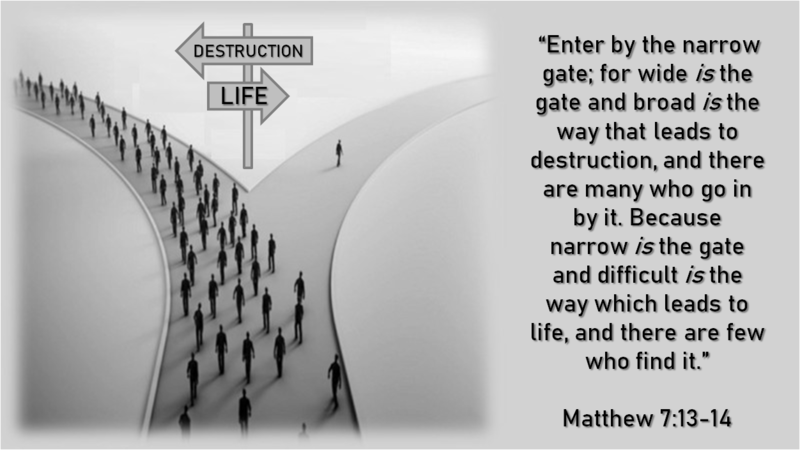
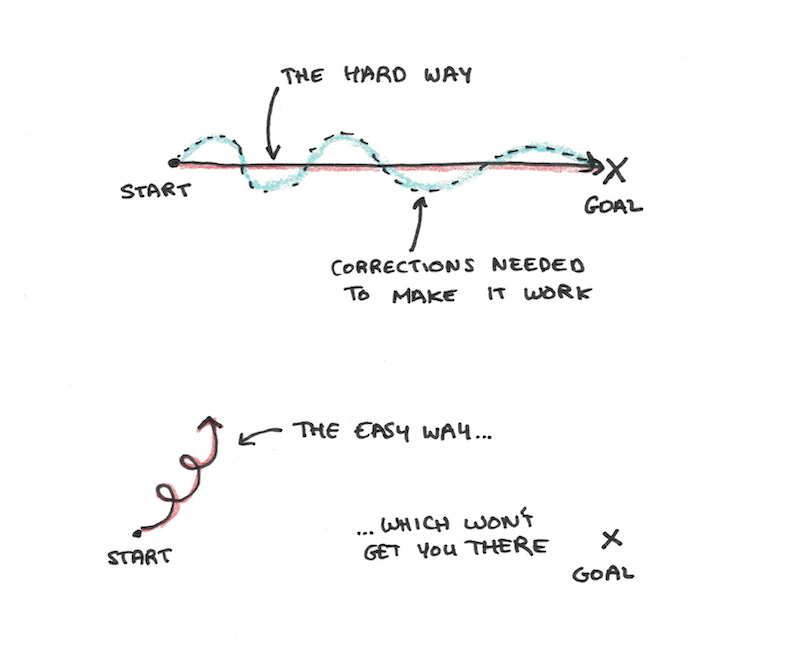


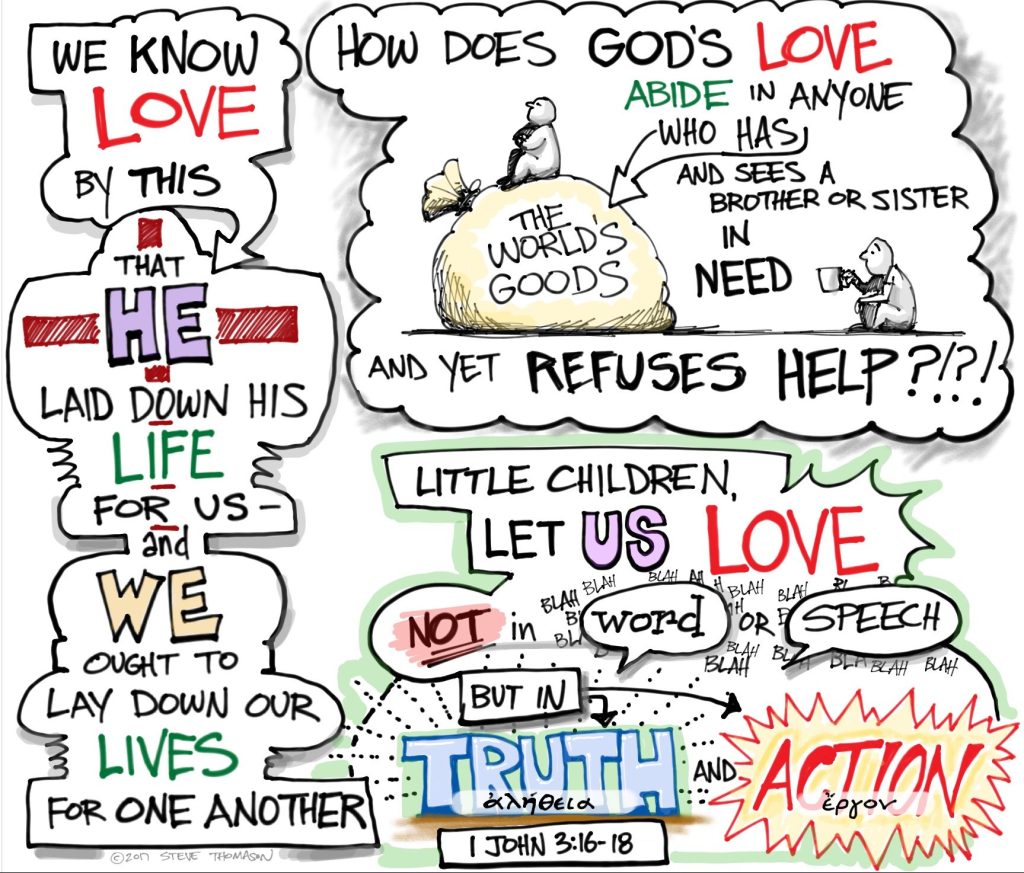
 Loving God, Living God, Loving Hope, Living Hope, Loving Living Life His Way! "Many things are possible for the person who has hope. Even more is possible for the person who has faith. And still more is possible for the person who knows how to love. But everything is possible for the person who practices all three virtues." - Brother Lawrence (1605-1691), Practicing the Presence of God (1692).